Digital age
T H E B B C
History of BBC
• The British Broadcasting Company
known as the BBC was originally
formed on 18 October 1922 by a
group of leading wireless
manufacturers including Marconi.
Daily broadcasting by the BBC began in Marconi's London
studio on November 14, 1922. John Reith, a 33-year-old
Scottish engineer, was appointed General Manager of the
BBC at the end of 1922.
• Following the closure of numerous amateur stations, the BBC started its
first daily radio service in London this soon developed to be much more.
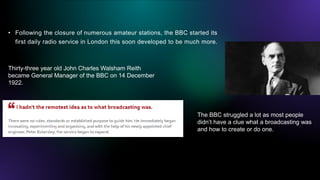
Thirty-three year old John Charles Walsham Reith
became General Manager of the BBC on 14 December
1922.
The BBC struggled a lot as most people
didn’t have a clue what a broadcasting was
and how to create or do one.
Septemb
er 1923 -
Radio
Times
first
edition
• The first edition of The Radio Times listed the few
programmed on offer. This became popular and made
BBC radio popular and this is when the BBC started to
get noticed by everyone.
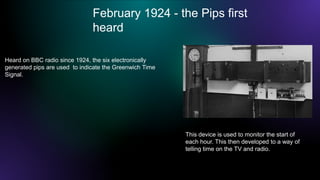
February 1924 - the Pips first
heard
This device is used to monitor the start of
each hour. This then developed to a way of
telling time on the TV and radio.
Heard on BBC radio since 1924, the six electronically
generated pips are used to indicate the Greenwich Time
Signal.
BBC Digital age 2000s
The digital age refers to the time-period in which personal
computers and other subsequent technologies were
introduced to provide users the ability to easily and rapidly
transfer information.
Since the start of 21st century digital BBC TV channels
and radio services have increased and HDTV has become
the new standard.
July 2007 - BBC iPlayer
By the mid 2000s streaming technology had developed to
offer whole TV programmes online.
Designed by BBC developers as a simple way of catching
up on missed programmes the BBC iPlayer is a
complement to TV viewing.
This was a start for the BBC as it started to progress
through the Digital age and develop along side it.
November 2008 - Red Button -
extends television viewing
Replacing the earlier BBCi services,
BBC Red Button took its name directly
from the red button viewers used to
select the service on their TV remote
controls. This allows people to see
information about the programme and
also allows them to join in and answer
quiz questions and little features like
that.
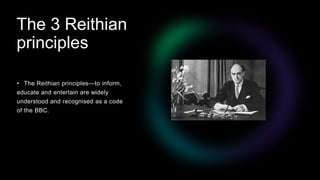
The 3 Reithian
principles
• The Reithian principles—to inform,
educate and entertain are widely
understood and recognised as a code
of the BBC.
Funding the
BBC
• The BBC is funded by a license fee
which is currently £159 that's paid
annually by every U.K. household that
tunes in to BBC services which rises
every year.
OFCOM
• Ofcom has wide-ranging powers
across the television, radio, telecoms
and postal sectors. This controls
inappropriate content which now gets
casted on tv after 9pm.

Bbc

  • 1.
  • 2.
    History of BBC •The British Broadcasting Company known as the BBC was originally formed on 18 October 1922 by a group of leading wireless manufacturers including Marconi. Daily broadcasting by the BBC began in Marconi's London studio on November 14, 1922. John Reith, a 33-year-old Scottish engineer, was appointed General Manager of the BBC at the end of 1922.
  • 3.
    • Following theclosure of numerous amateur stations, the BBC started its first daily radio service in London this soon developed to be much more. Thirty-three year old John Charles Walsham Reith became General Manager of the BBC on 14 December 1922. The BBC struggled a lot as most people didn’t have a clue what a broadcasting was and how to create or do one.
  • 4.
    Septemb er 1923 - Radio Times first edition •The first edition of The Radio Times listed the few programmed on offer. This became popular and made BBC radio popular and this is when the BBC started to get noticed by everyone.
  • 5.
    February 1924 -the Pips first heard This device is used to monitor the start of each hour. This then developed to a way of telling time on the TV and radio. Heard on BBC radio since 1924, the six electronically generated pips are used to indicate the Greenwich Time Signal.
  • 6.
    BBC Digital age2000s The digital age refers to the time-period in which personal computers and other subsequent technologies were introduced to provide users the ability to easily and rapidly transfer information. Since the start of 21st century digital BBC TV channels and radio services have increased and HDTV has become the new standard.
  • 7.
    July 2007 -BBC iPlayer By the mid 2000s streaming technology had developed to offer whole TV programmes online. Designed by BBC developers as a simple way of catching up on missed programmes the BBC iPlayer is a complement to TV viewing. This was a start for the BBC as it started to progress through the Digital age and develop along side it.
  • 8.
    November 2008 -Red Button - extends television viewing Replacing the earlier BBCi services, BBC Red Button took its name directly from the red button viewers used to select the service on their TV remote controls. This allows people to see information about the programme and also allows them to join in and answer quiz questions and little features like that.
  • 9.
    The 3 Reithian principles •The Reithian principles—to inform, educate and entertain are widely understood and recognised as a code of the BBC.
  • 10.
    Funding the BBC • TheBBC is funded by a license fee which is currently £159 that's paid annually by every U.K. household that tunes in to BBC services which rises every year.
  • 11.
    OFCOM • Ofcom haswide-ranging powers across the television, radio, telecoms and postal sectors. This controls inappropriate content which now gets casted on tv after 9pm.