
Renal Tubular Processing
Dr Faiza
Assistant Professor of Physiology
MBBS (Best Graduate, AIMC Lahore)
FCPS Physiology,
ICMT, CHPE, DHPE (STMU)
MPH (GC University, Faisalabad)
MBA (Virtual University of Pakistan)
Learning Objectives:
• Describe reabsorption and secretion by the renal tubules.
• Differentiate between filtered load, reabsorption rate, and
secretion rate.
• Describe location, functions, and importance of renal
transporters along the tubules.
• Discuss the pathophysiology of Glucosuria in poorly controlled
diabetes.
• Analyze the transport maximum (Tm) concept and renal threshold
differences.
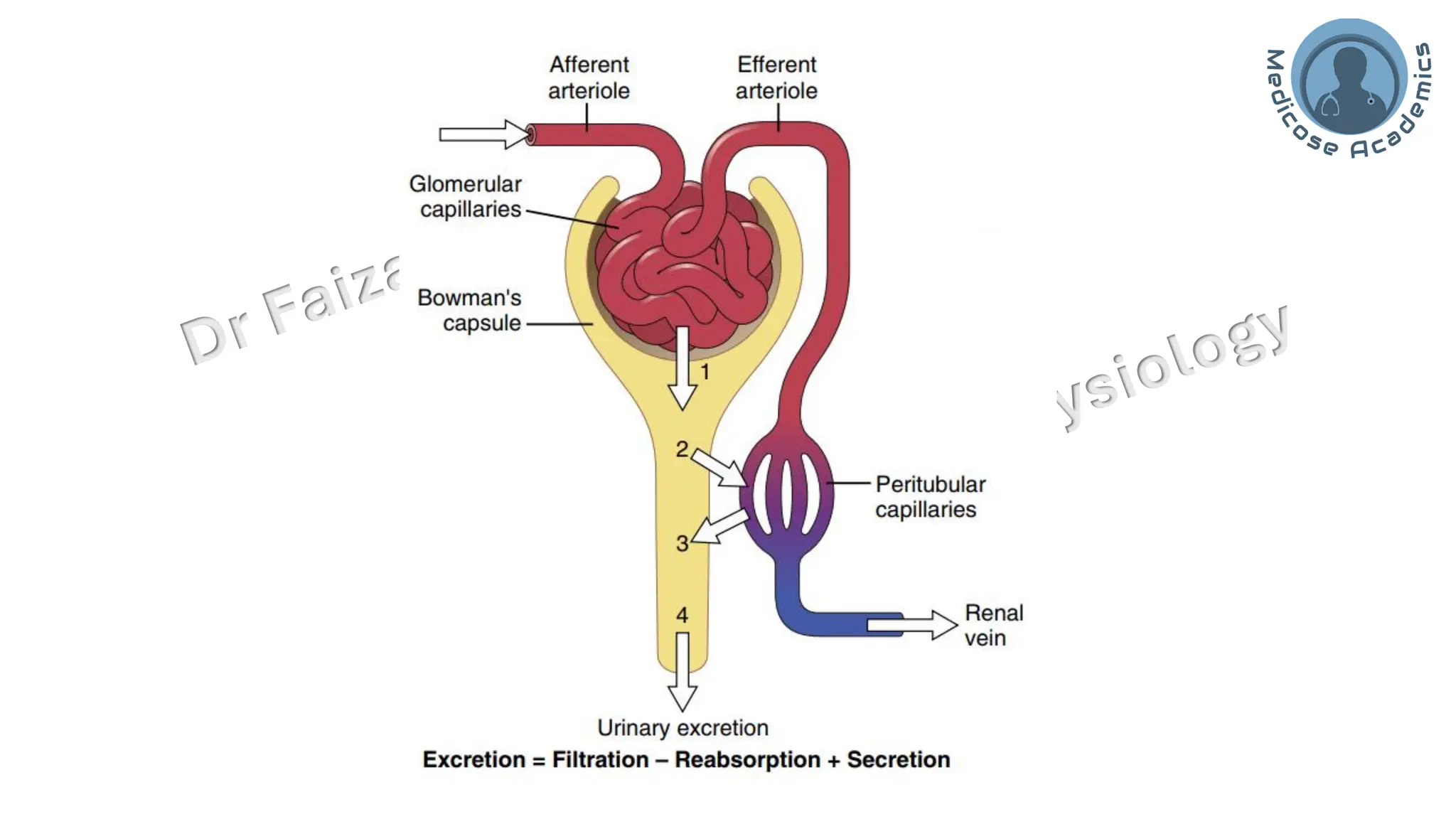
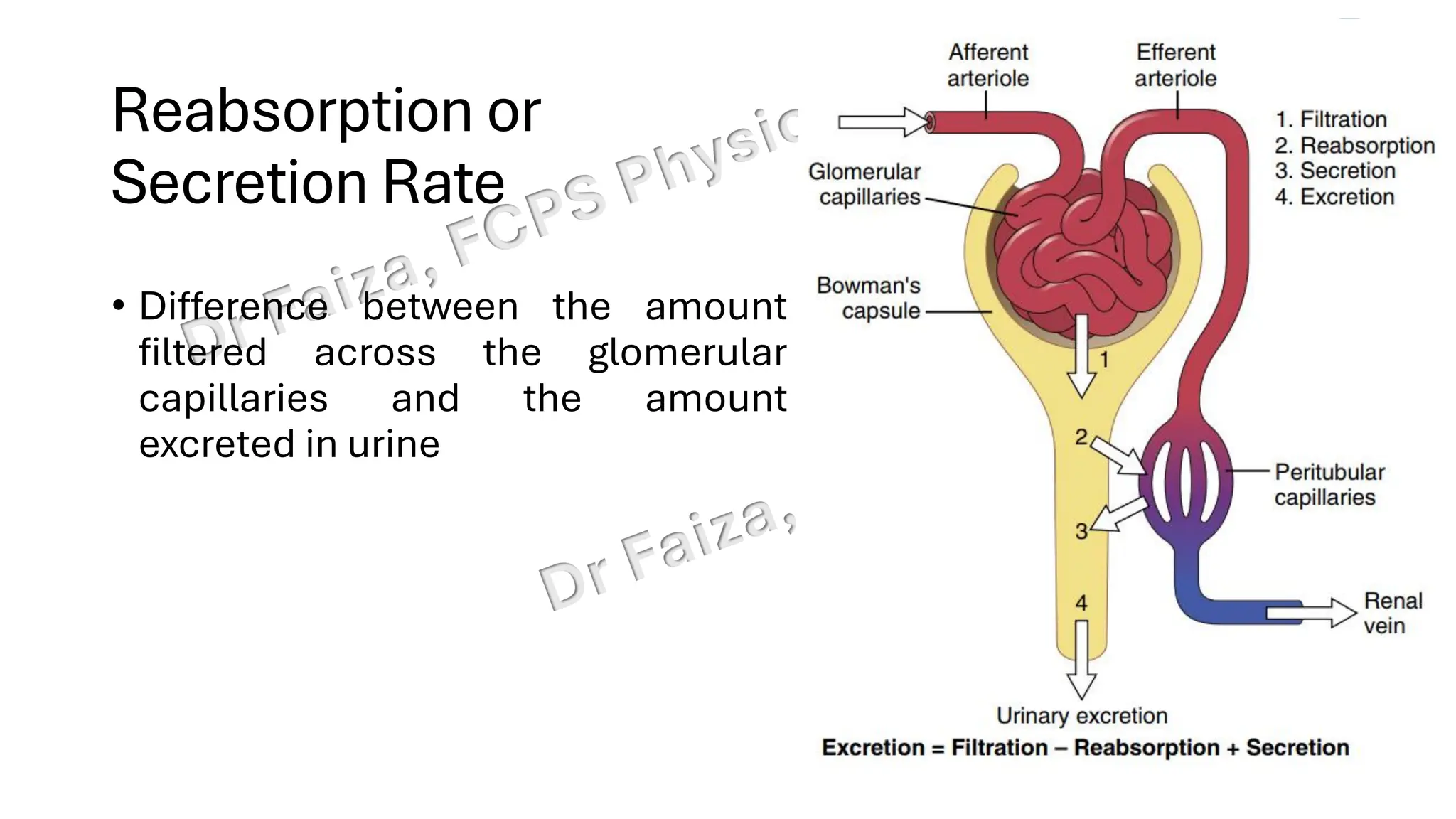
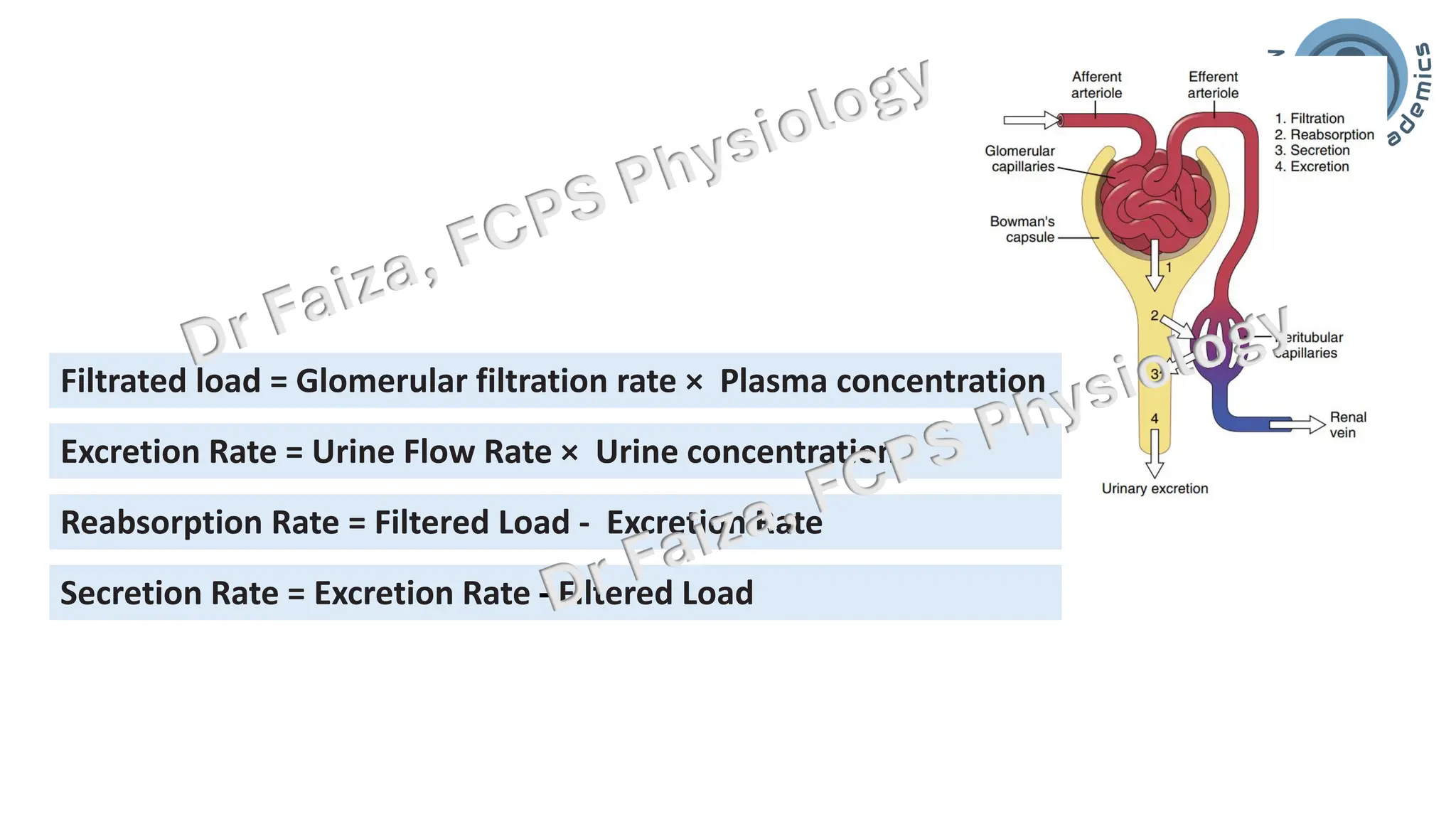
Reabsorption or
Secretion Rate
• Difference between the amount
filtered across the glomerular
capillaries and the amount
excreted in urine
Filtrated load = Glomerular filtration rate × Plasma concentration
Excretion Rate = Urine Flow Rate × Urine concentration
Reabsorption Rate = Filtered Load - Excretion Rate
Secretion Rate = Excretion Rate - Filtered Load
Net Secretion or Reabsorption….?
• If the filtered load is less than excretion rate
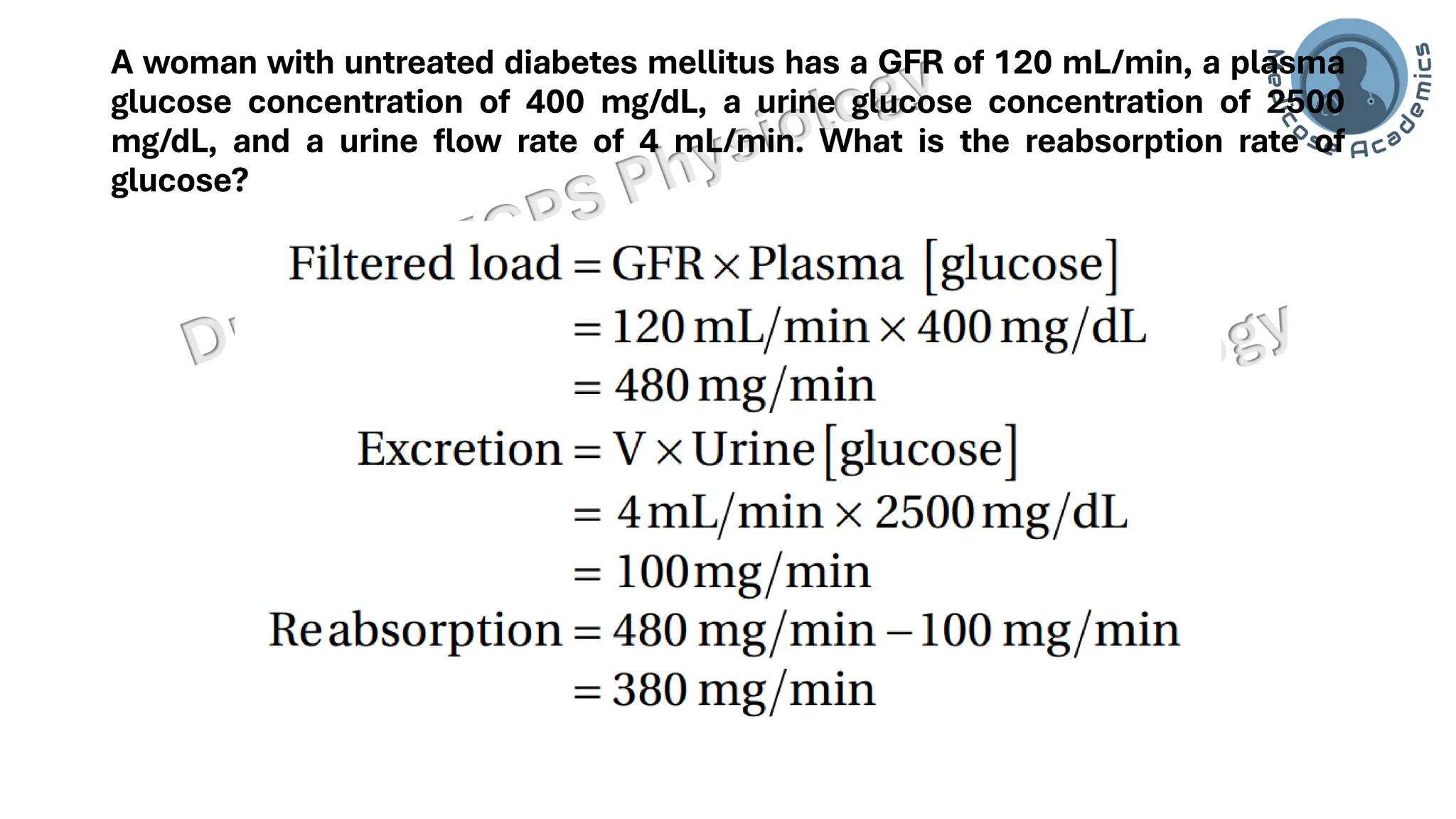
A woman with untreated diabetes mellitus has a GFR of 120 mL/min, a plasma
glucose concentration of 400 mg/dL, a urine glucose concentration of 2500
mg/dL, and a urine flow rate of 4 mL/min. What is the reabsorption rate of
glucose?
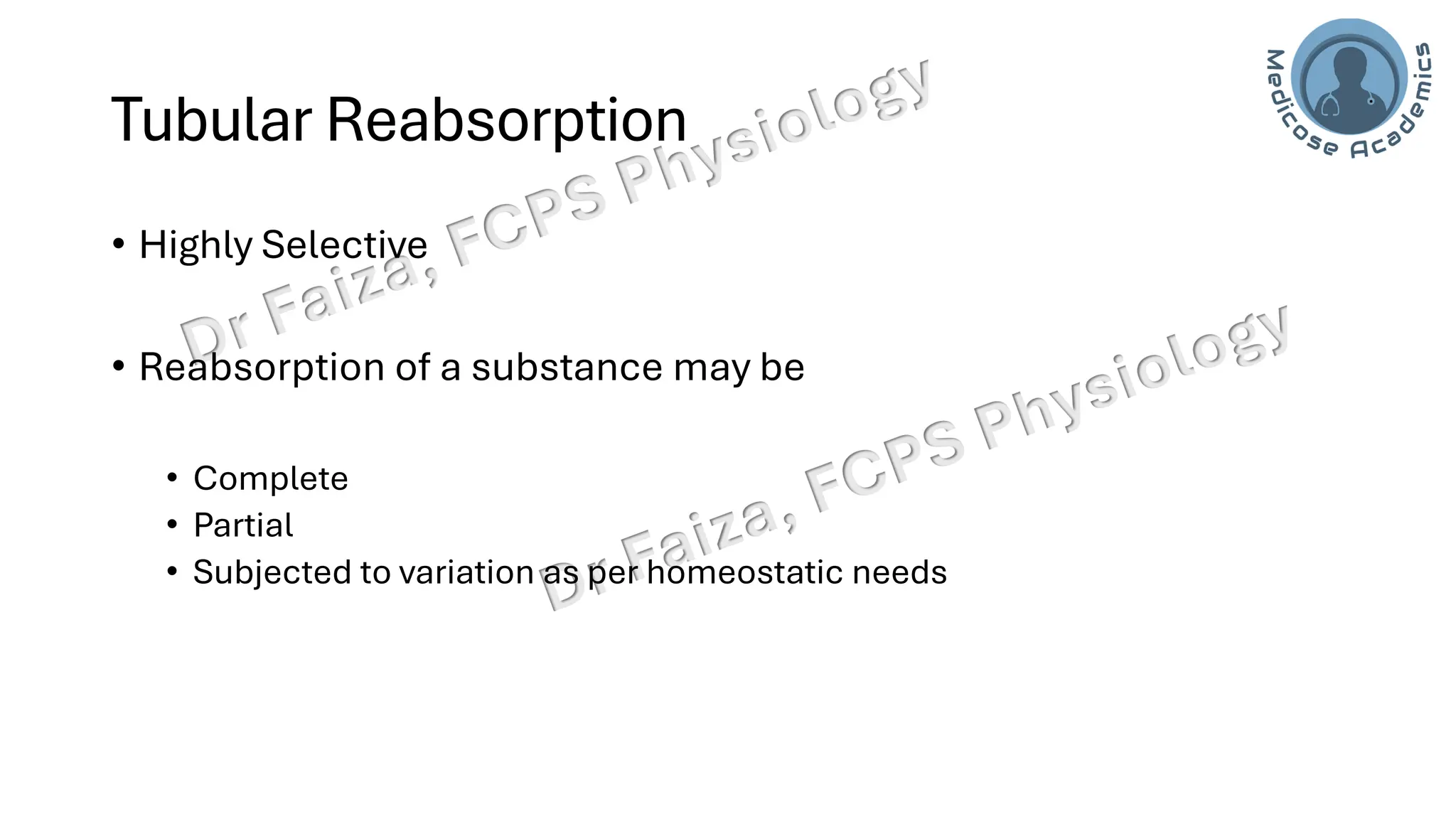
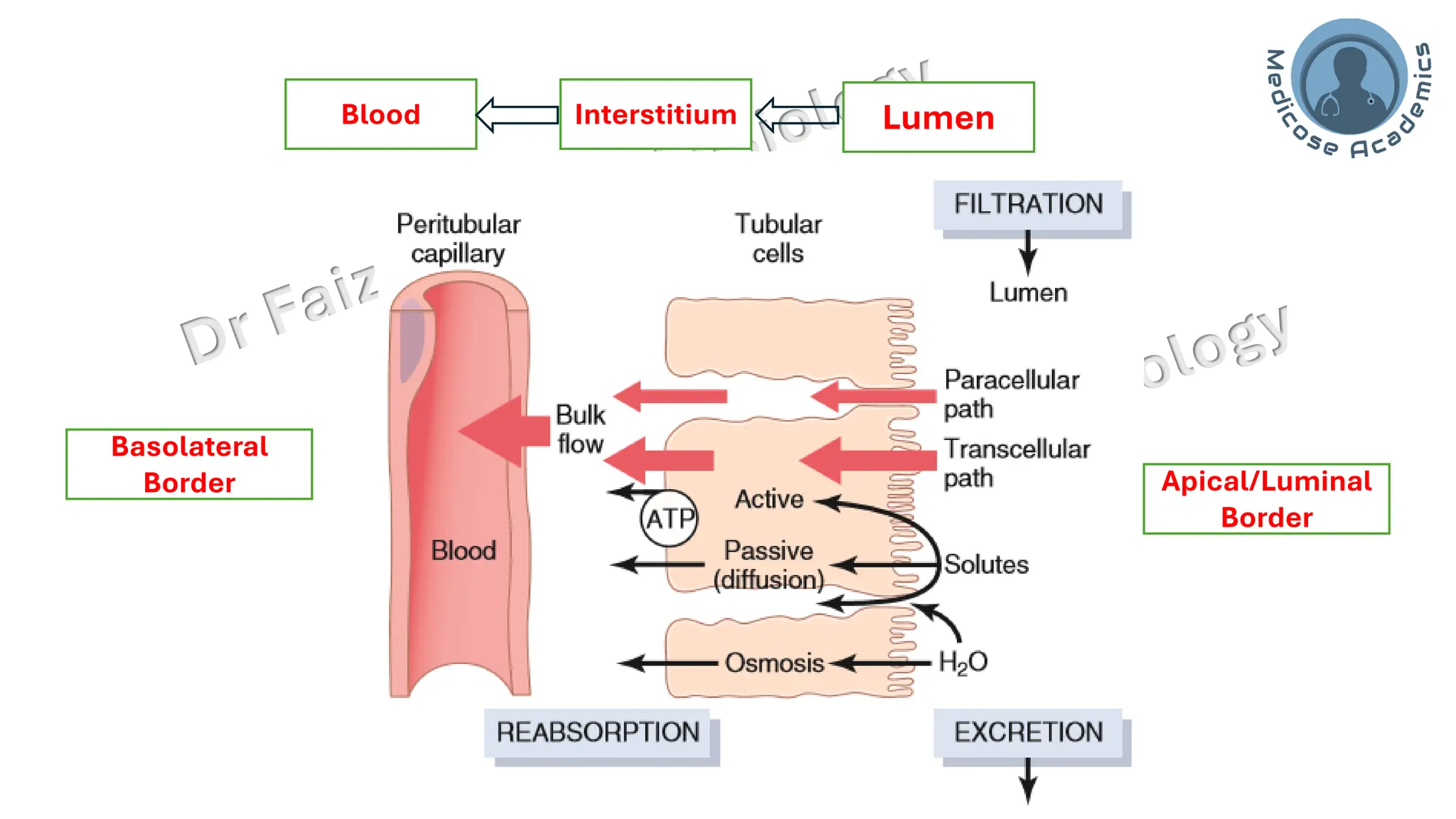
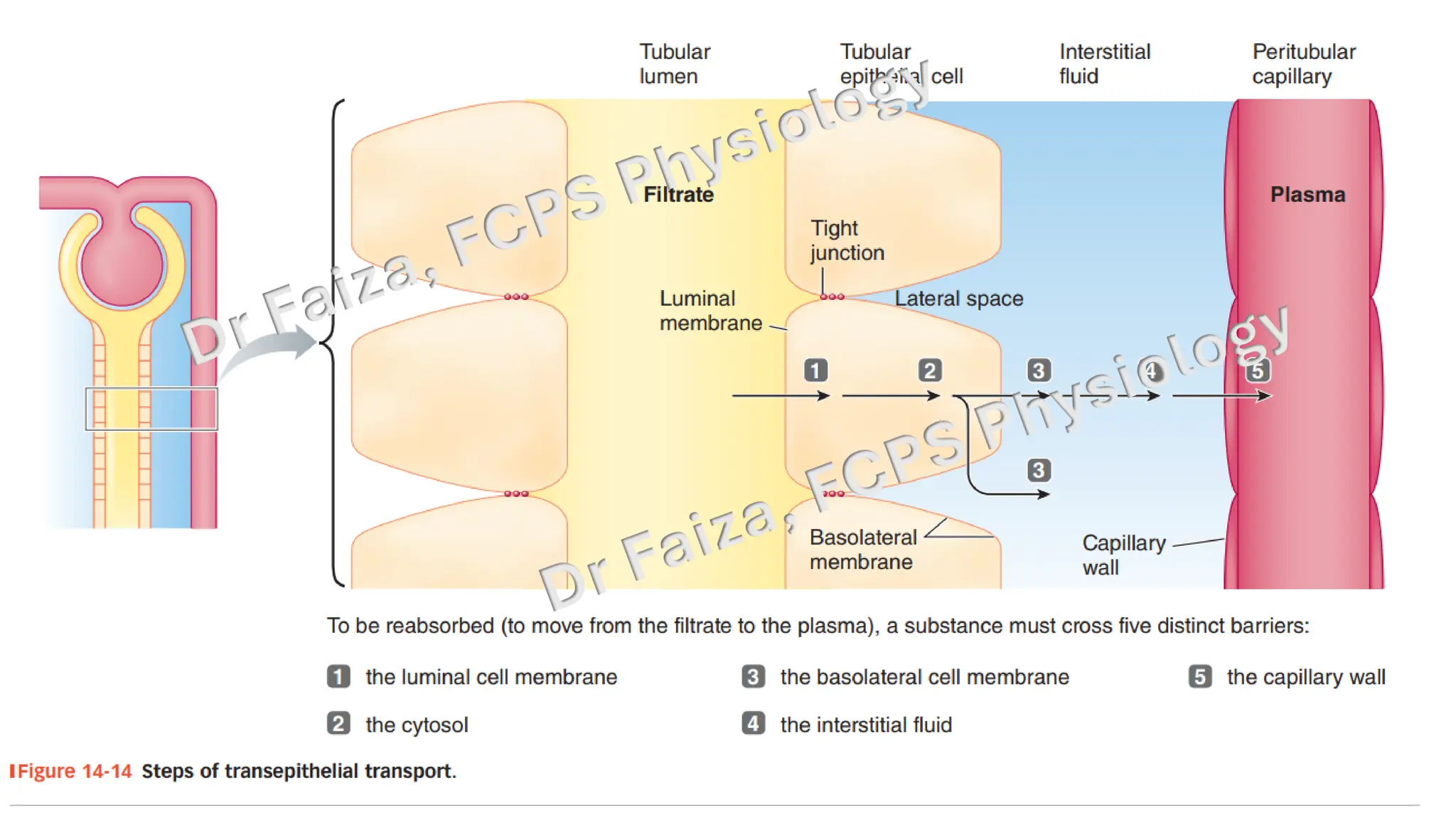
Tubular Reabsorption
• Highly Selective
• Reabsorption of a substance may be
• Complete
• Partial
• Subjected to variation as per homeostatic needs
Lumen
Interstitium
Blood
Apical/Luminal
Border
Basolateral
Border
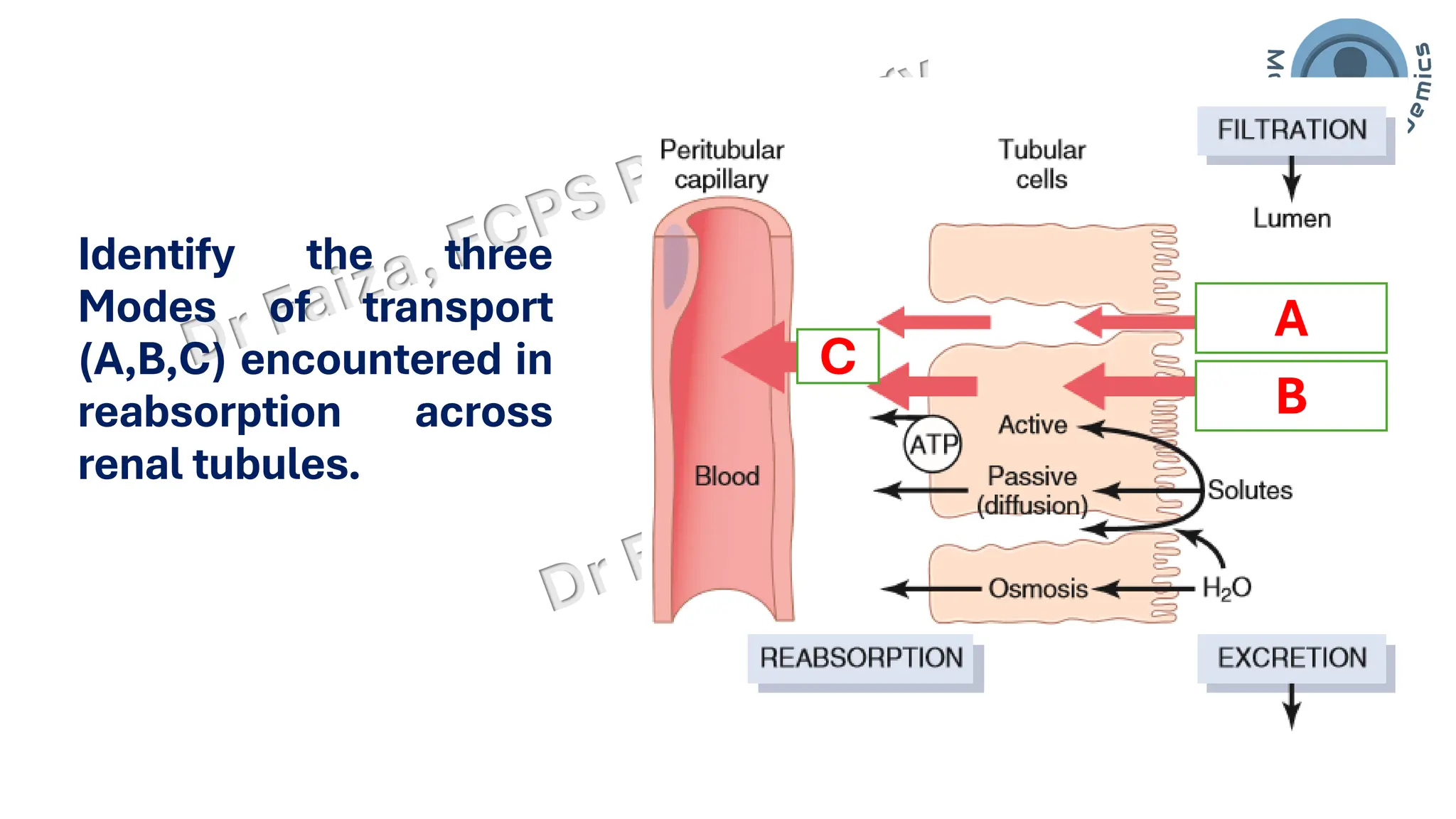
Identify the three
Modes of transport
(A,B,C) encountered in
reabsorption across
renal tubules.
A
B
C
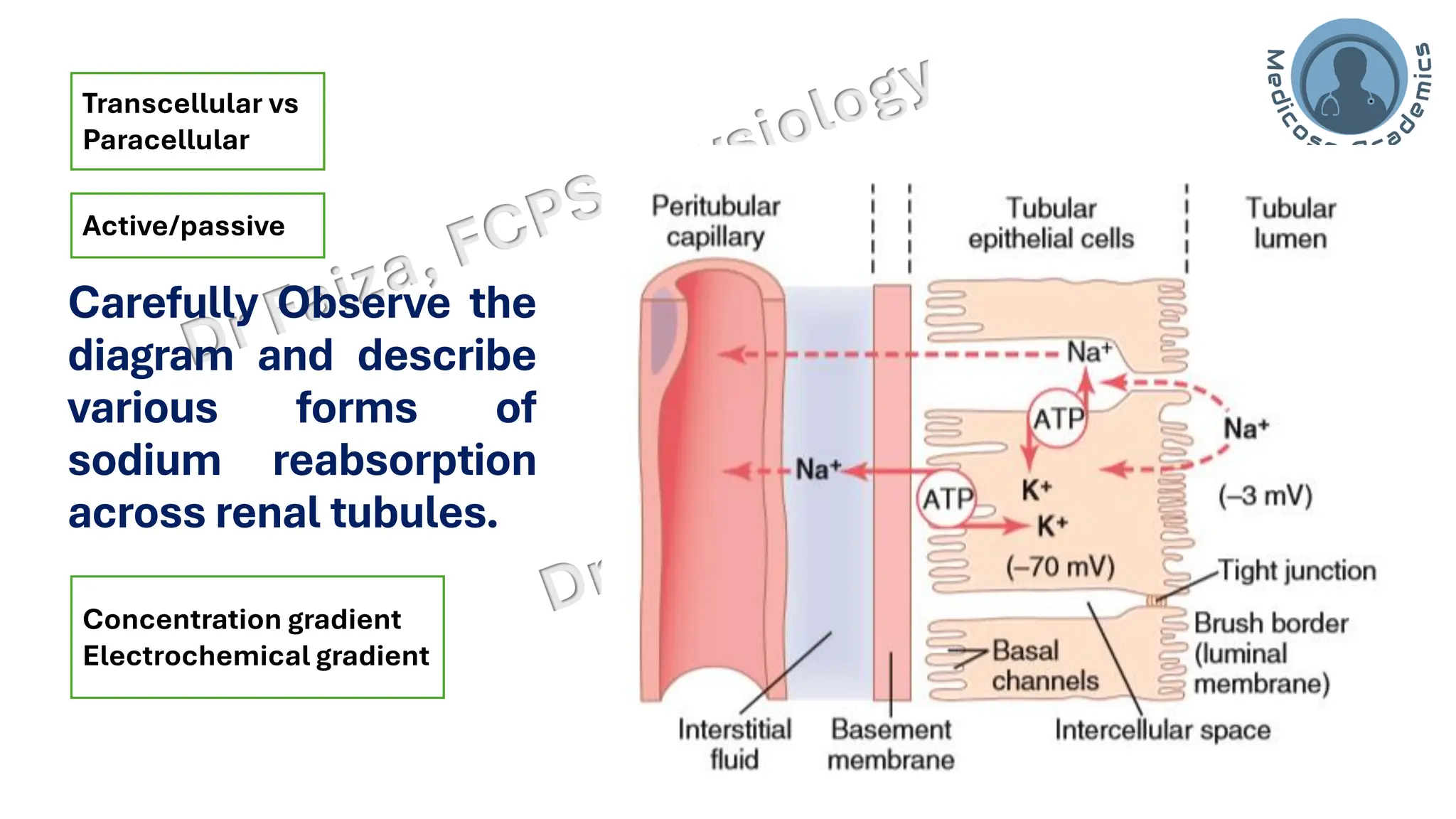
Carefully Observe the
diagram and describe
various forms of
sodium reabsorption
across renal tubules.
Transcellular vs
Paracellular
Active/passive
Concentration gradient
Electrochemical gradient
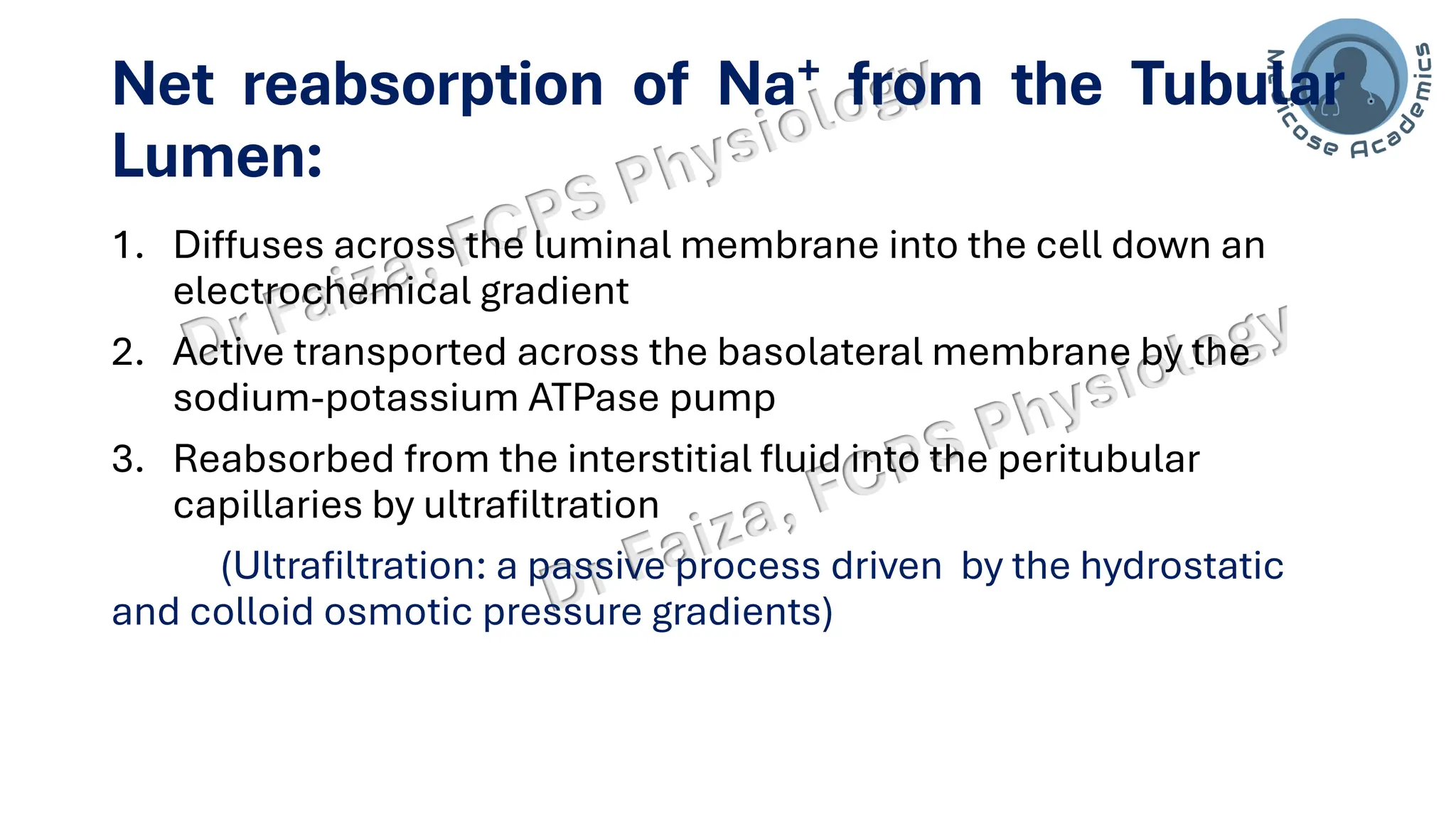
Net reabsorption of Na+ from the Tubular
Lumen:
1. Diffuses across the luminal membrane into the cell down an
electrochemical gradient
2. Active transported across the basolateral membrane by the
sodium-potassium ATPase pump
3. Reabsorbed from the interstitial fluid into the peritubular
capillaries by ultrafiltration
(Ultrafiltration: a passive process driven by the hydrostatic
and colloid osmotic pressure gradients)
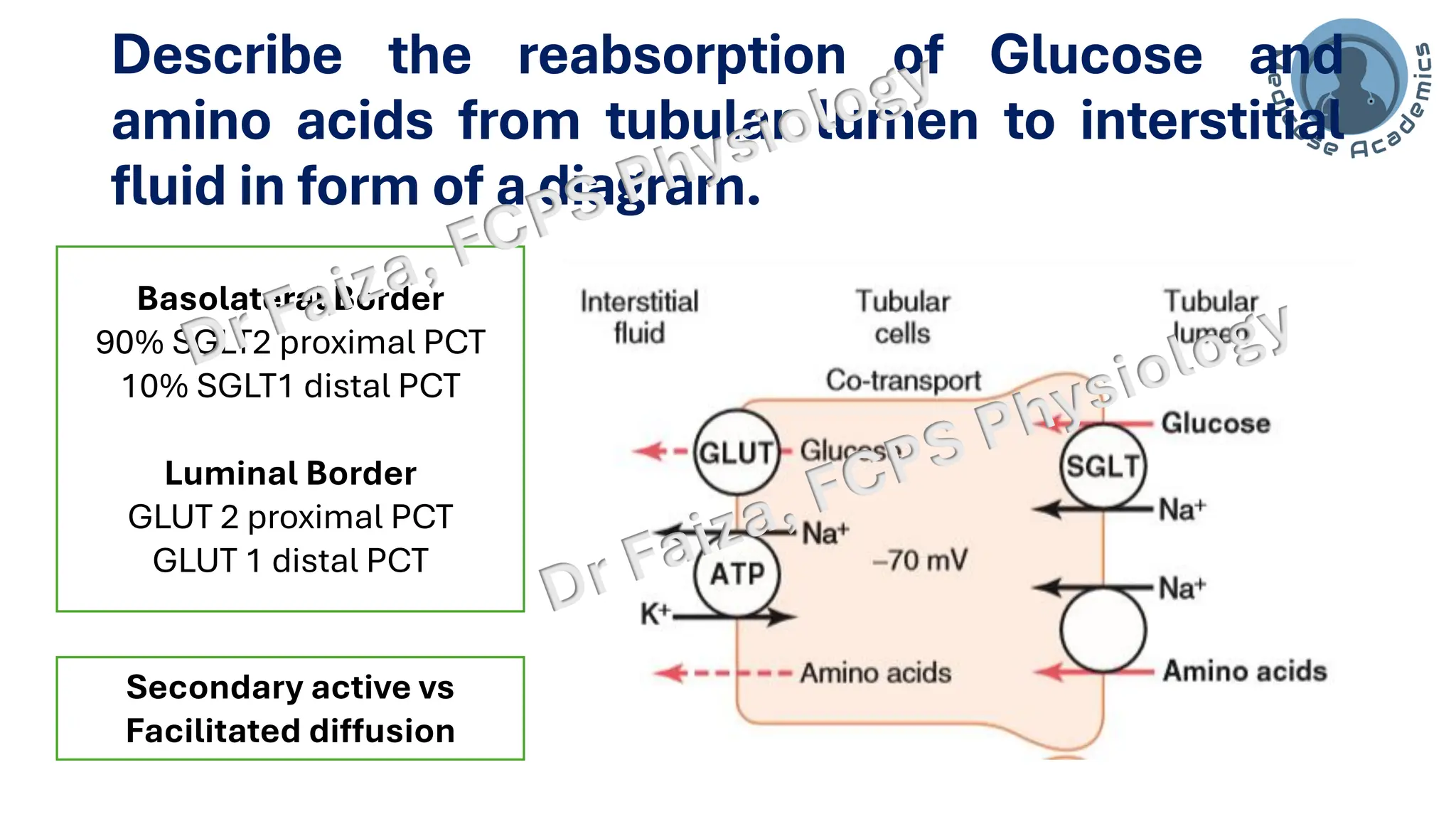
Describe the reabsorption of Glucose and
amino acids from tubular lumen to interstitial
fluid in form of a diagram.
Basolateral Border
90% SGLT2 proximal PCT
10% SGLT1 distal PCT
Luminal Border
GLUT 2 proximal PCT
GLUT 1 distal PCT
Secondary active vs
Facilitated diffusion
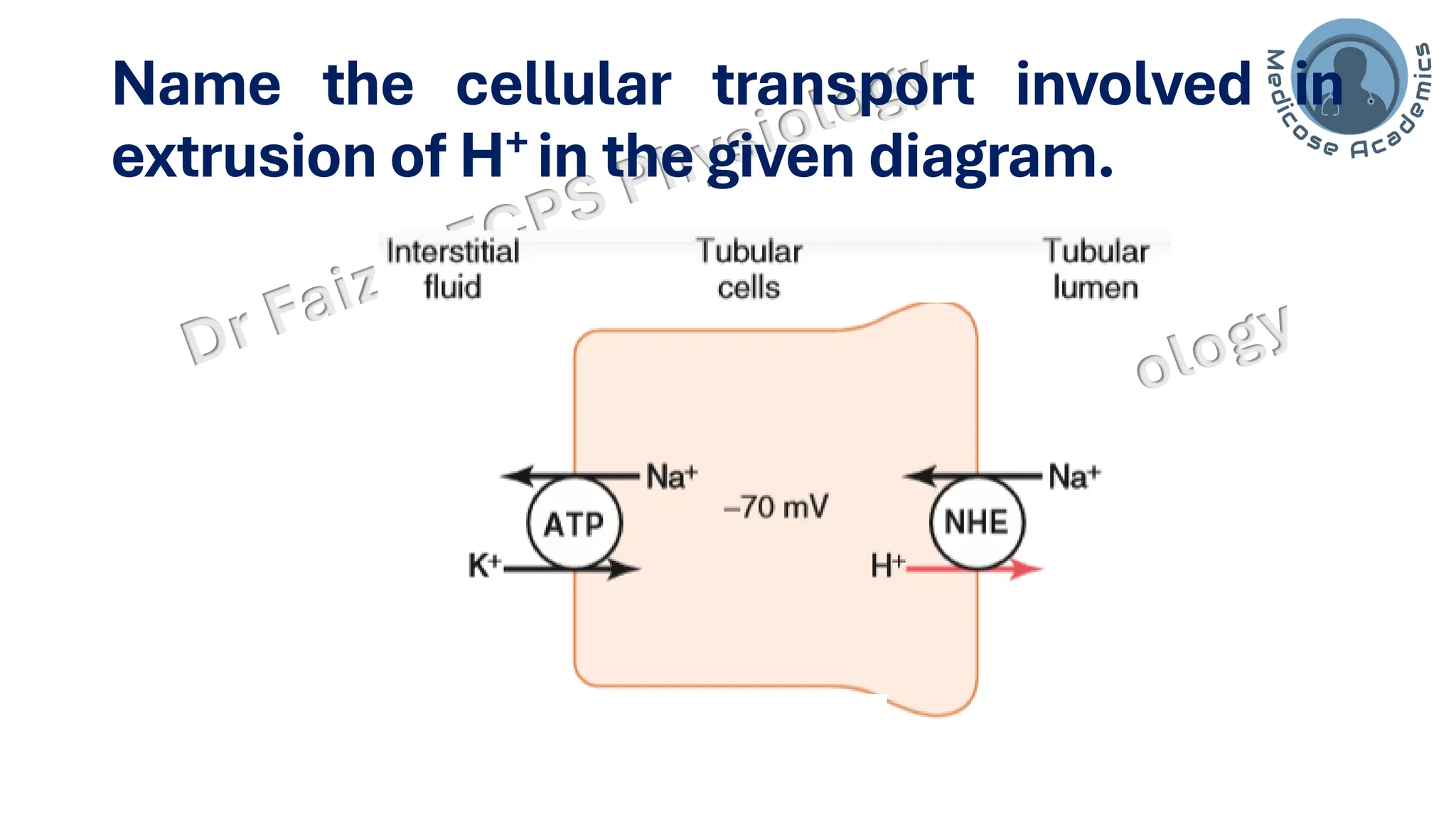
Name the cellular transport involved in
extrusion of H+ in the given diagram.
Characters of Actively Transported Substances
1. Transport Maximum
2. Gradient time transport
Transport Maximum
• For substances that are actively reabsorbed or secreted
Limit to the rate at which the solute can be transported
due to saturation of the specific transport systems
• Capacity of the carrier proteins
• Specific enzymes in the transport process
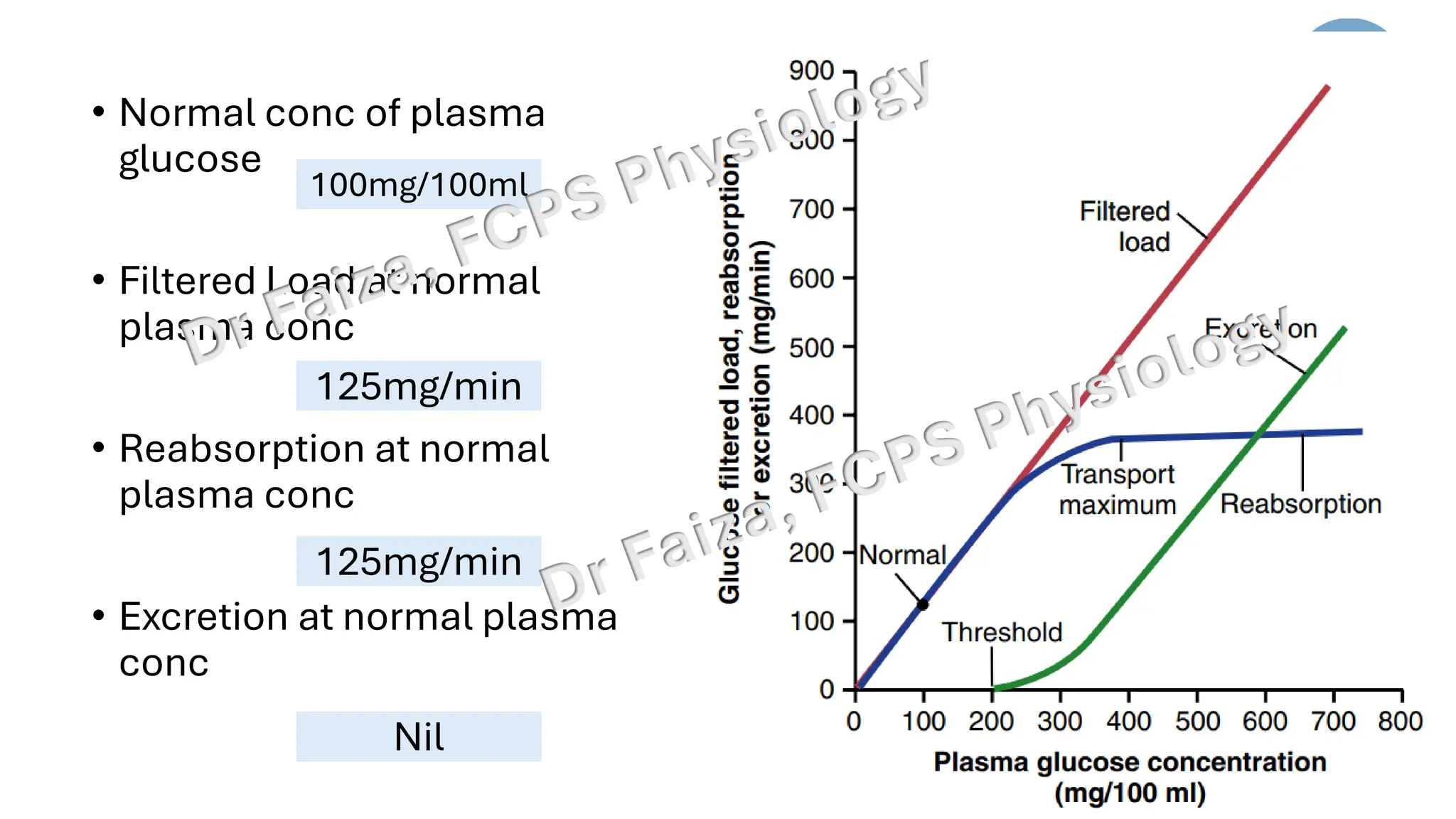
• Normal conc of plasma
glucose
• Filtered Load at normal
plasma conc
• Reabsorption at normal
plasma conc
• Excretion at normal plasma
conc
100mg/100ml
125mg/min
125mg/min
Nil
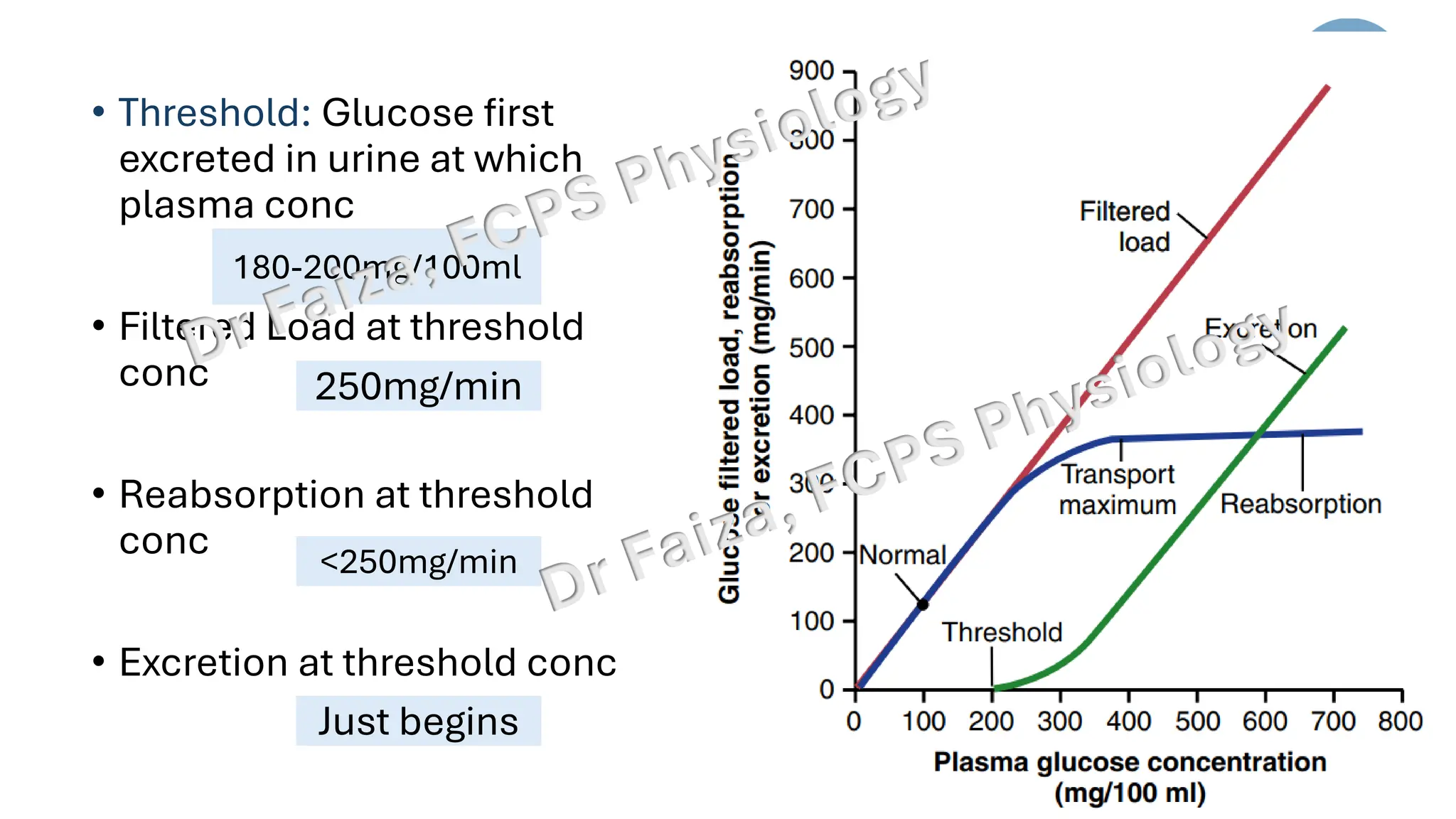
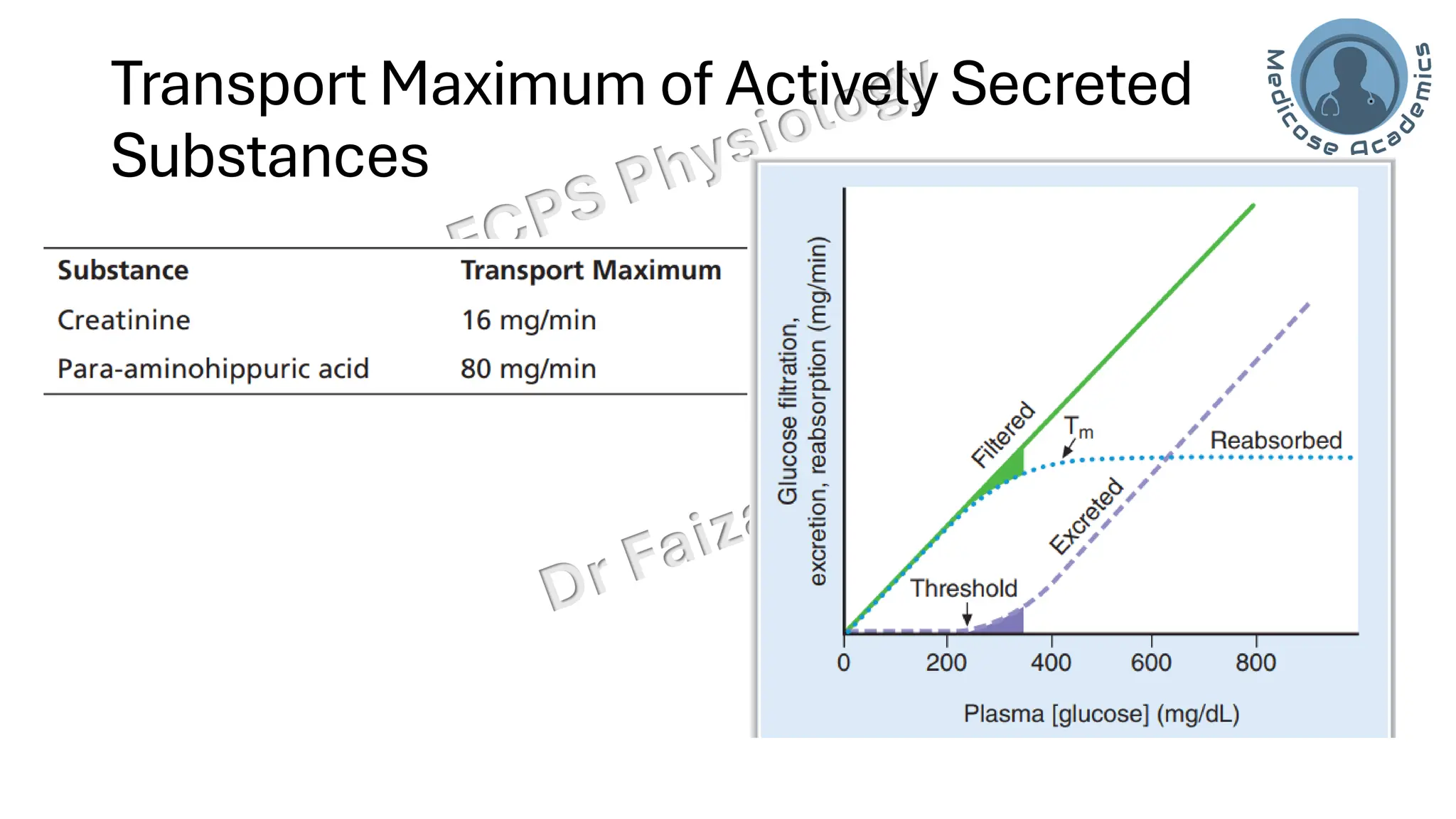
• Threshold: Glucose first
excreted in urine at which
plasma conc
• Filtered Load at threshold
conc
• Reabsorption at threshold
conc
• Excretion at threshold conc
180-200mg/100ml
250mg/min
<250mg/min
Just begins
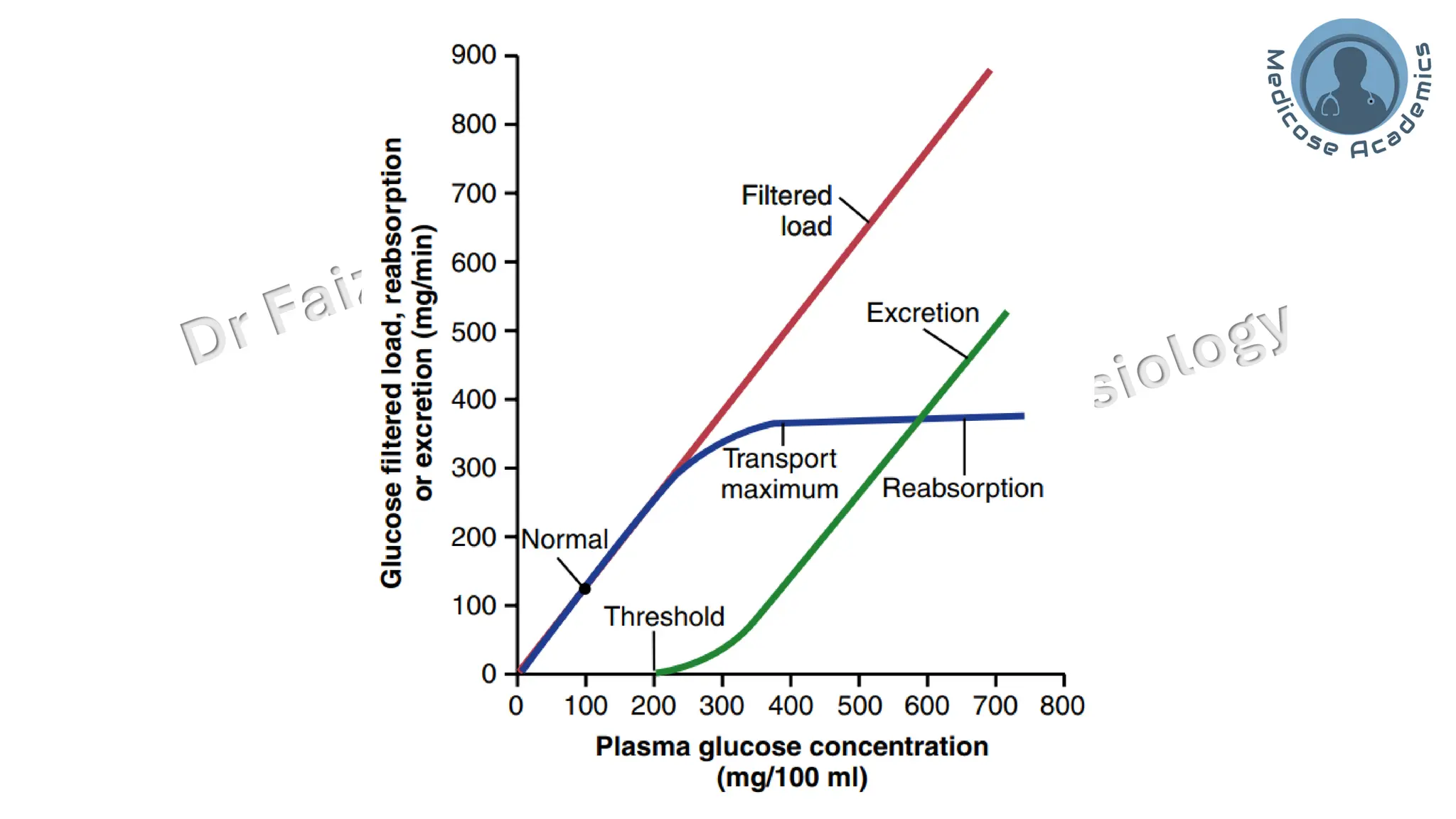
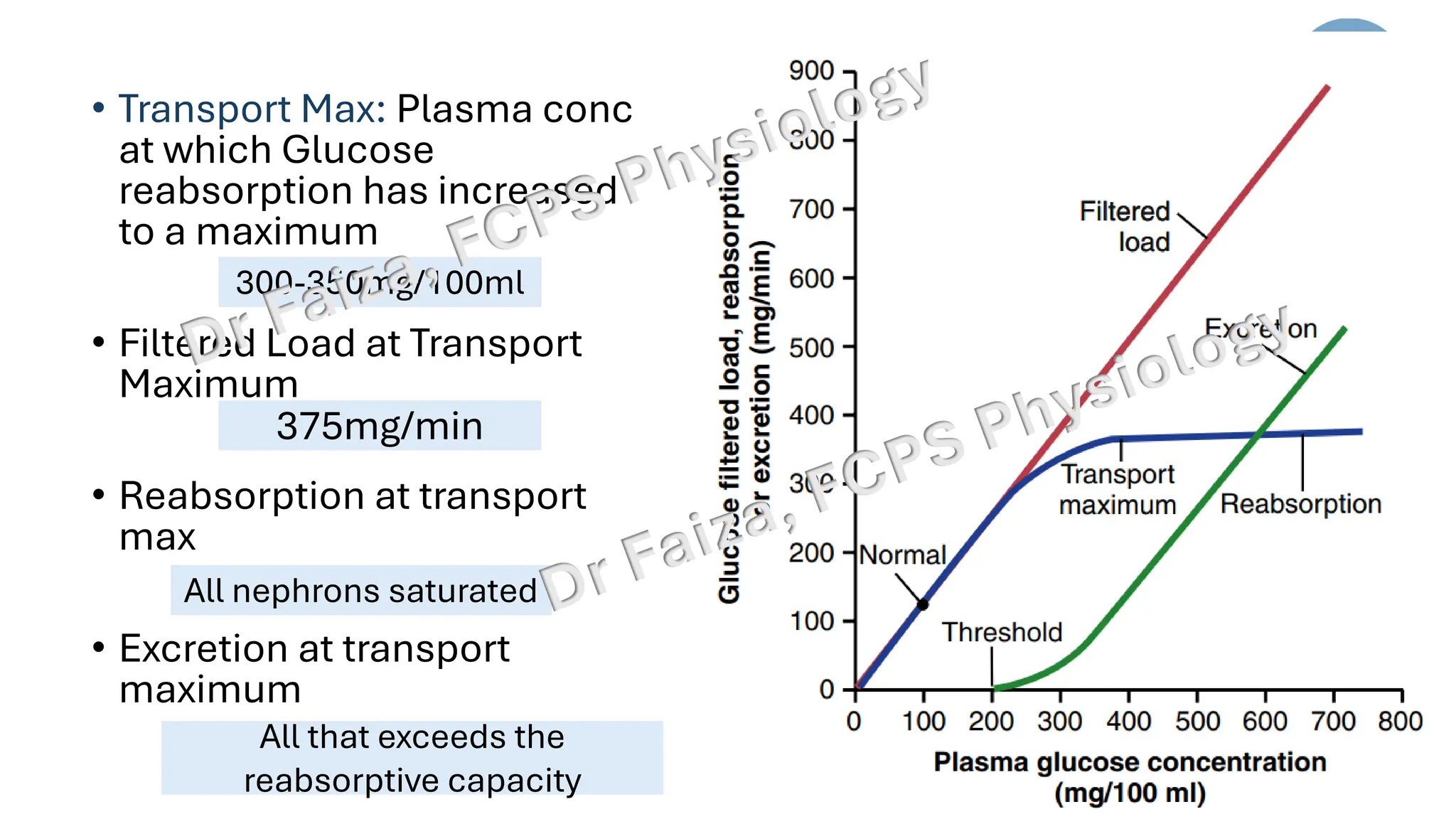
• Transport Max: Plasma conc
at which Glucose
reabsorption has increased
to a maximum
• Filtered Load at Transport
Maximum
• Reabsorption at transport
max
• Excretion at transport
maximum
300-350mg/100ml
375mg/min
All nephrons saturated
All that exceeds the
reabsorptive capacity
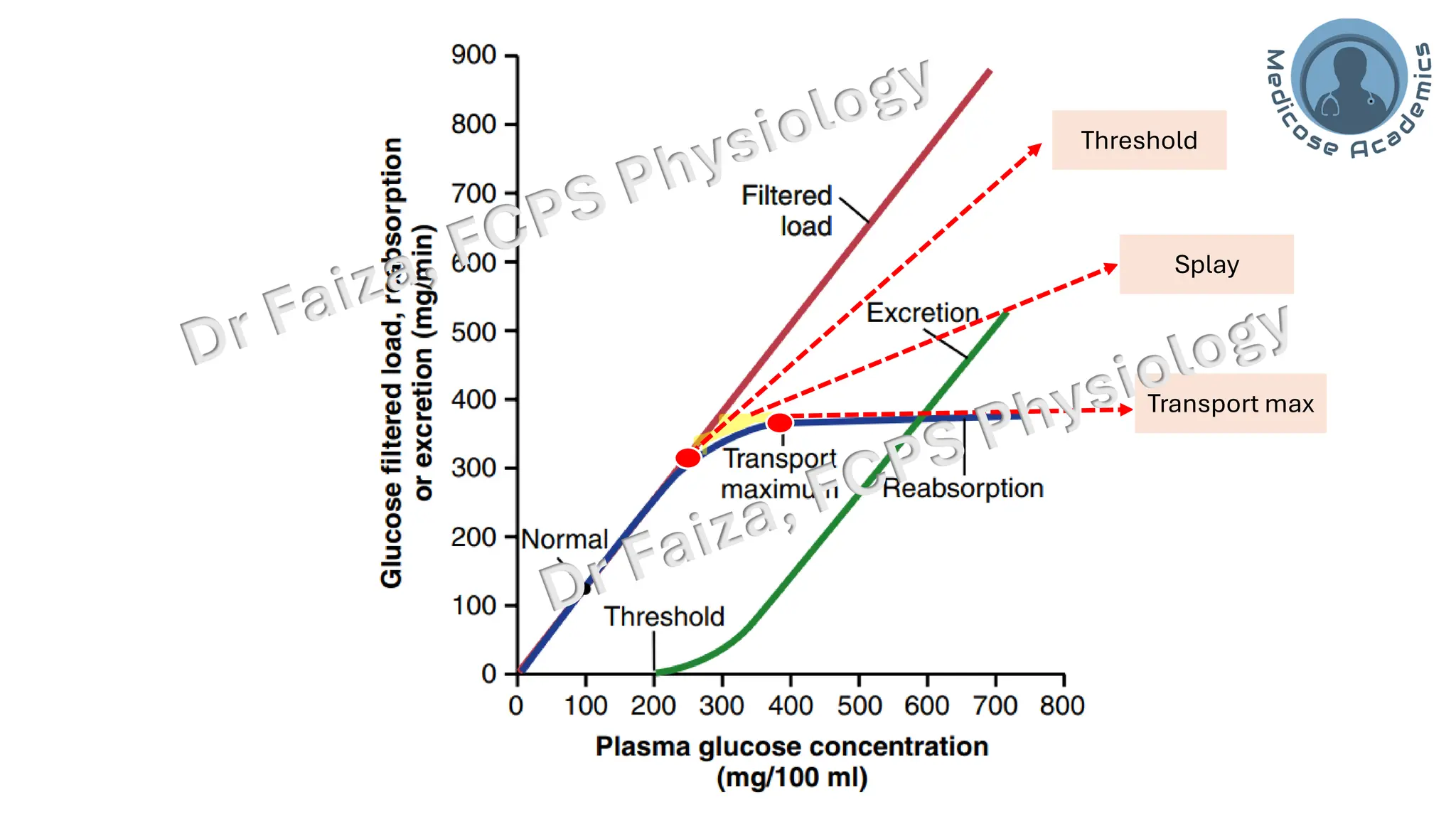
Threshold
Transport max
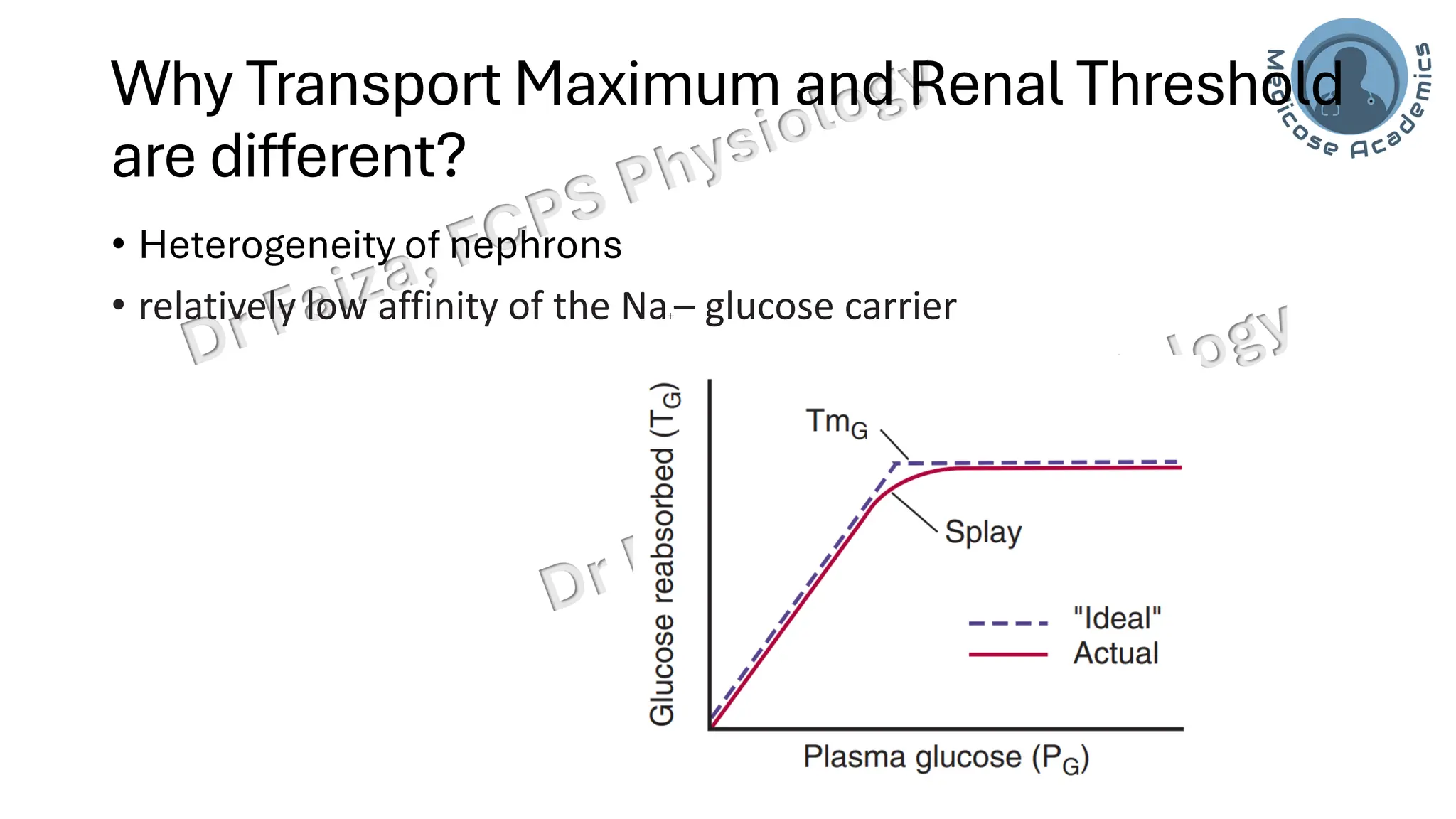
Splay
Why Transport Maximum and Renal Threshold
are different?
• Heterogeneity of nephrons
• relatively low affinity of the Na+– glucose carrier
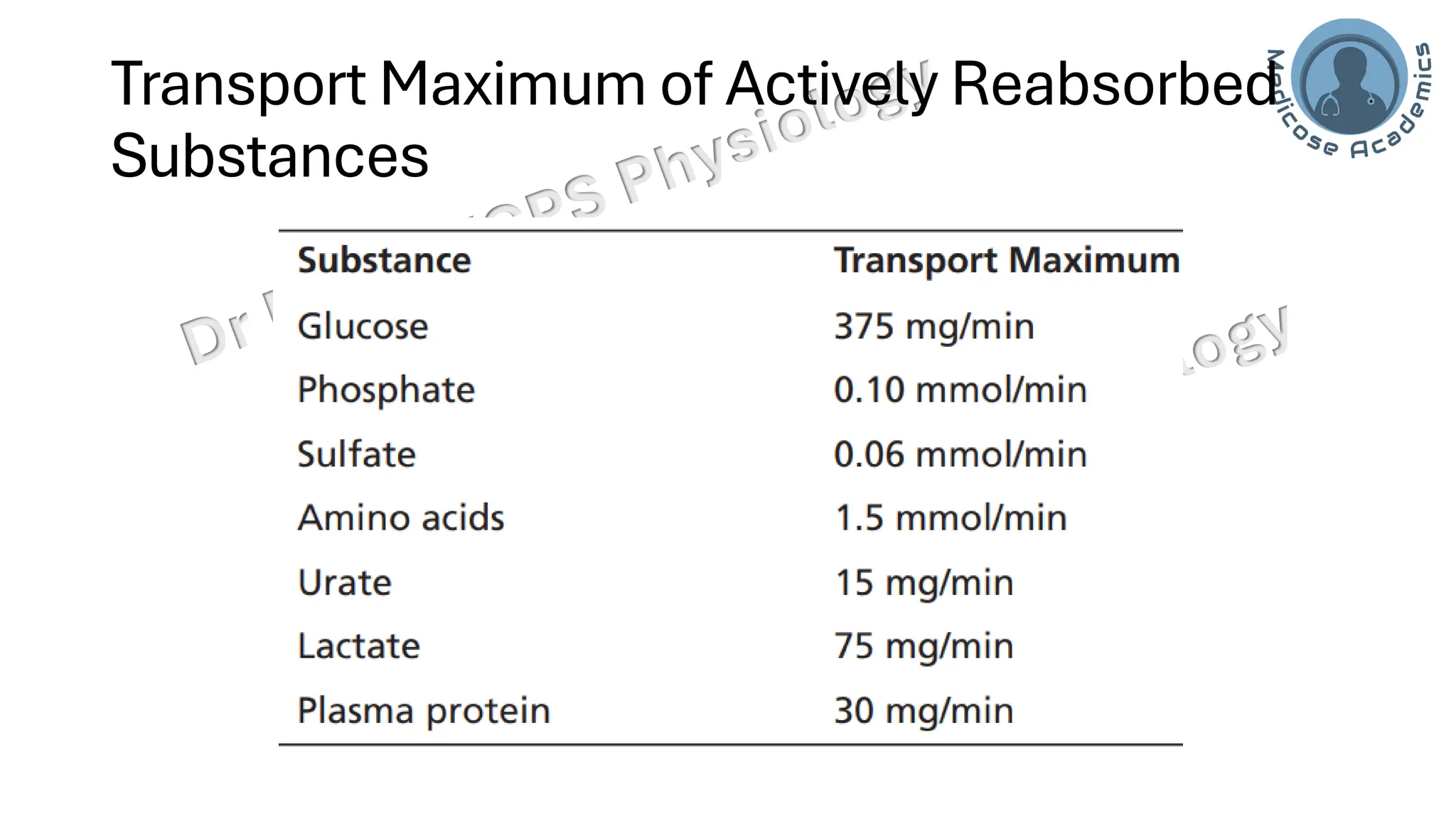
Transport Maximum of Actively Reabsorbed
Substances
Transport Maximum of Actively Secreted
Substances
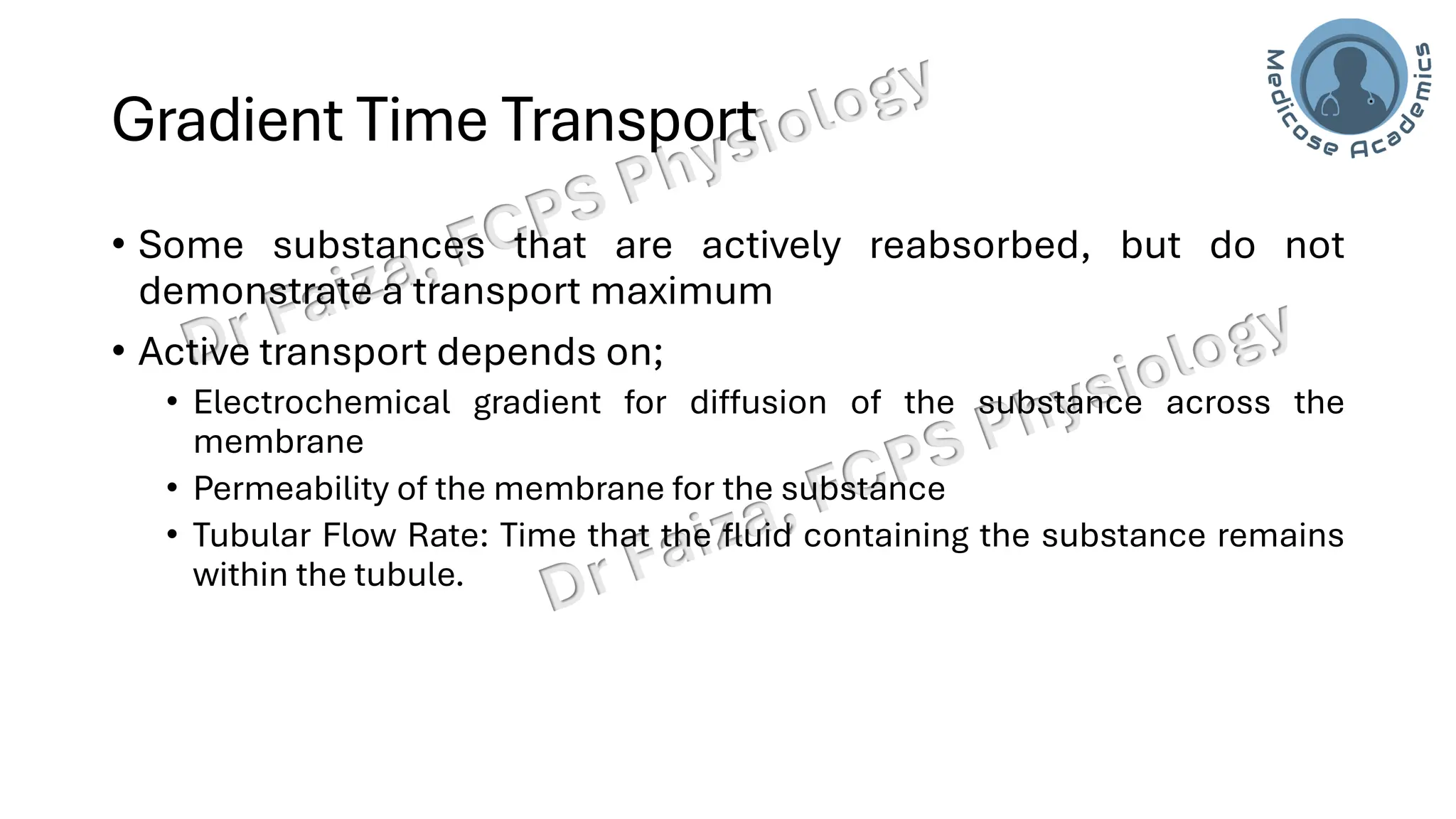
Gradient Time Transport
• Some substances that are actively reabsorbed, but do not
demonstrate a transport maximum
• Active transport depends on;
• Electrochemical gradient for diffusion of the substance across the
membrane
• Permeability of the membrane for the substance
• Tubular Flow Rate: Time that the fluid containing the substance remains
within the tubule.
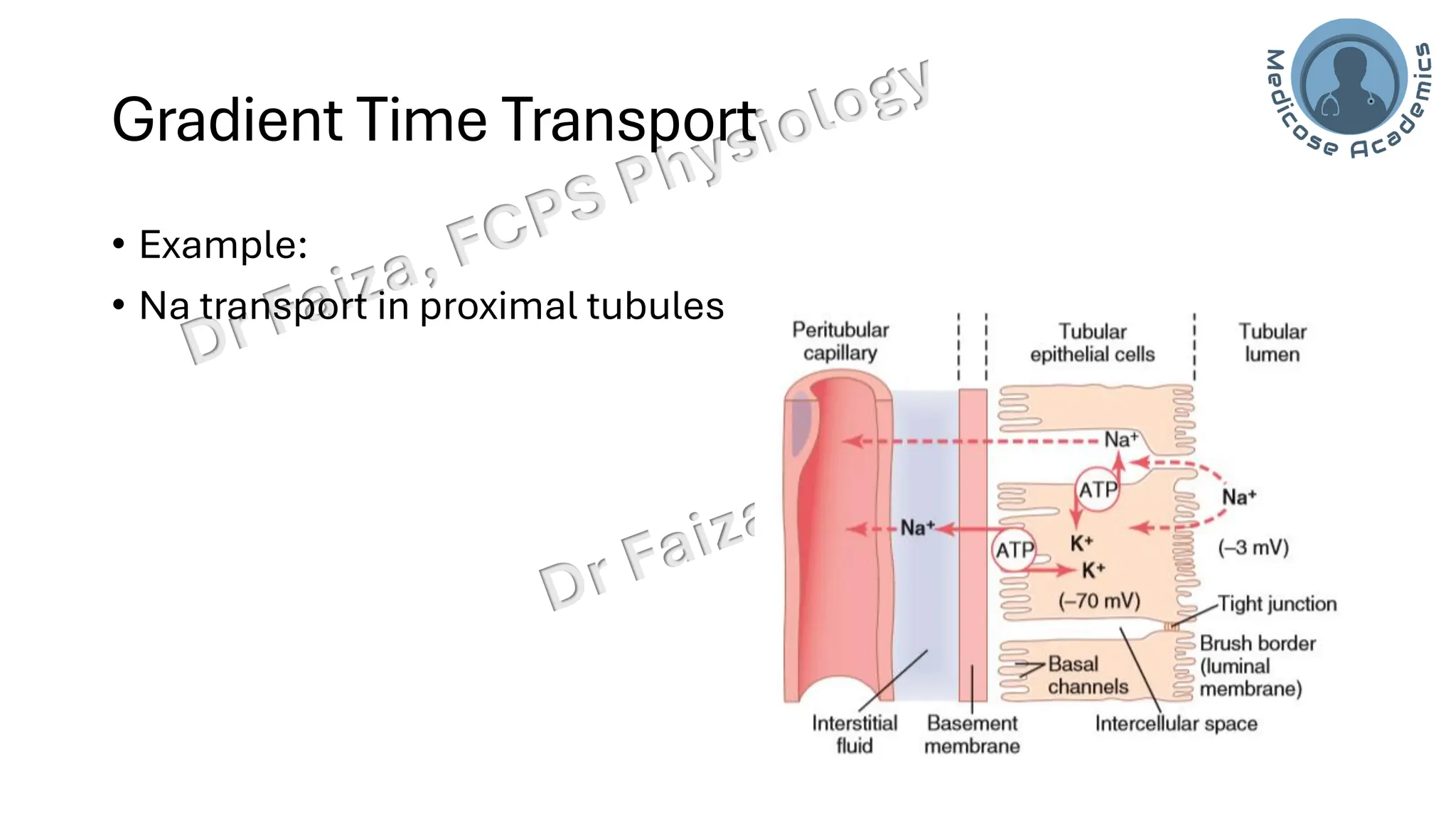
Gradient Time Transport
• Example:
• Na transport in proximal tubules
Thank You

Basics of tubular processing across renal tubule

  • 1.
    Renal Tubular Processing DrFaiza Assistant Professor of Physiology MBBS (Best Graduate, AIMC Lahore) FCPS Physiology, ICMT, CHPE, DHPE (STMU) MPH (GC University, Faisalabad) MBA (Virtual University of Pakistan)
  • 2.
    Learning Objectives: • Describereabsorption and secretion by the renal tubules. • Differentiate between filtered load, reabsorption rate, and secretion rate. • Describe location, functions, and importance of renal transporters along the tubules. • Discuss the pathophysiology of Glucosuria in poorly controlled diabetes. • Analyze the transport maximum (Tm) concept and renal threshold differences.
  • 4.
    Reabsorption or Secretion Rate •Difference between the amount filtered across the glomerular capillaries and the amount excreted in urine
  • 5.
    Filtrated load =Glomerular filtration rate × Plasma concentration Excretion Rate = Urine Flow Rate × Urine concentration Reabsorption Rate = Filtered Load - Excretion Rate Secretion Rate = Excretion Rate - Filtered Load
  • 6.
    Net Secretion orReabsorption….? • If the filtered load is less than excretion rate
  • 7.
    A woman withuntreated diabetes mellitus has a GFR of 120 mL/min, a plasma glucose concentration of 400 mg/dL, a urine glucose concentration of 2500 mg/dL, and a urine flow rate of 4 mL/min. What is the reabsorption rate of glucose?
  • 8.
    Tubular Reabsorption • HighlySelective • Reabsorption of a substance may be • Complete • Partial • Subjected to variation as per homeostatic needs
  • 9.
  • 11.
    Identify the three Modesof transport (A,B,C) encountered in reabsorption across renal tubules. A B C
  • 12.
    Carefully Observe the diagramand describe various forms of sodium reabsorption across renal tubules. Transcellular vs Paracellular Active/passive Concentration gradient Electrochemical gradient
  • 13.
    Net reabsorption ofNa+ from the Tubular Lumen: 1. Diffuses across the luminal membrane into the cell down an electrochemical gradient 2. Active transported across the basolateral membrane by the sodium-potassium ATPase pump 3. Reabsorbed from the interstitial fluid into the peritubular capillaries by ultrafiltration (Ultrafiltration: a passive process driven by the hydrostatic and colloid osmotic pressure gradients)
  • 14.
    Describe the reabsorptionof Glucose and amino acids from tubular lumen to interstitial fluid in form of a diagram. Basolateral Border 90% SGLT2 proximal PCT 10% SGLT1 distal PCT Luminal Border GLUT 2 proximal PCT GLUT 1 distal PCT Secondary active vs Facilitated diffusion
  • 15.
    Name the cellulartransport involved in extrusion of H+ in the given diagram.
  • 16.
    Characters of ActivelyTransported Substances 1. Transport Maximum 2. Gradient time transport
  • 17.
    Transport Maximum • Forsubstances that are actively reabsorbed or secreted Limit to the rate at which the solute can be transported due to saturation of the specific transport systems • Capacity of the carrier proteins • Specific enzymes in the transport process
  • 19.
    • Normal concof plasma glucose • Filtered Load at normal plasma conc • Reabsorption at normal plasma conc • Excretion at normal plasma conc 100mg/100ml 125mg/min 125mg/min Nil
  • 20.
    • Threshold: Glucosefirst excreted in urine at which plasma conc • Filtered Load at threshold conc • Reabsorption at threshold conc • Excretion at threshold conc 180-200mg/100ml 250mg/min <250mg/min Just begins
  • 21.
    • Transport Max:Plasma conc at which Glucose reabsorption has increased to a maximum • Filtered Load at Transport Maximum • Reabsorption at transport max • Excretion at transport maximum 300-350mg/100ml 375mg/min All nephrons saturated All that exceeds the reabsorptive capacity
  • 22.
  • 23.
    Why Transport Maximumand Renal Threshold are different? • Heterogeneity of nephrons • relatively low affinity of the Na+– glucose carrier
  • 24.
    Transport Maximum ofActively Reabsorbed Substances
  • 25.
    Transport Maximum ofActively Secreted Substances
  • 26.
    Gradient Time Transport •Some substances that are actively reabsorbed, but do not demonstrate a transport maximum • Active transport depends on; • Electrochemical gradient for diffusion of the substance across the membrane • Permeability of the membrane for the substance • Tubular Flow Rate: Time that the fluid containing the substance remains within the tubule.
  • 27.
    Gradient Time Transport •Example: • Na transport in proximal tubules
  • 28.