Developing
Marketing Strategies
and a Marketing
Plan
Josh McCamish
Target Markets
A firm must find its target market if it
plans to have a successful sales strategy.
Once a market has been identified, it
must be segmented into demographics to
further specialize the advertisements
targeted at this market
Four P’s of Marketing
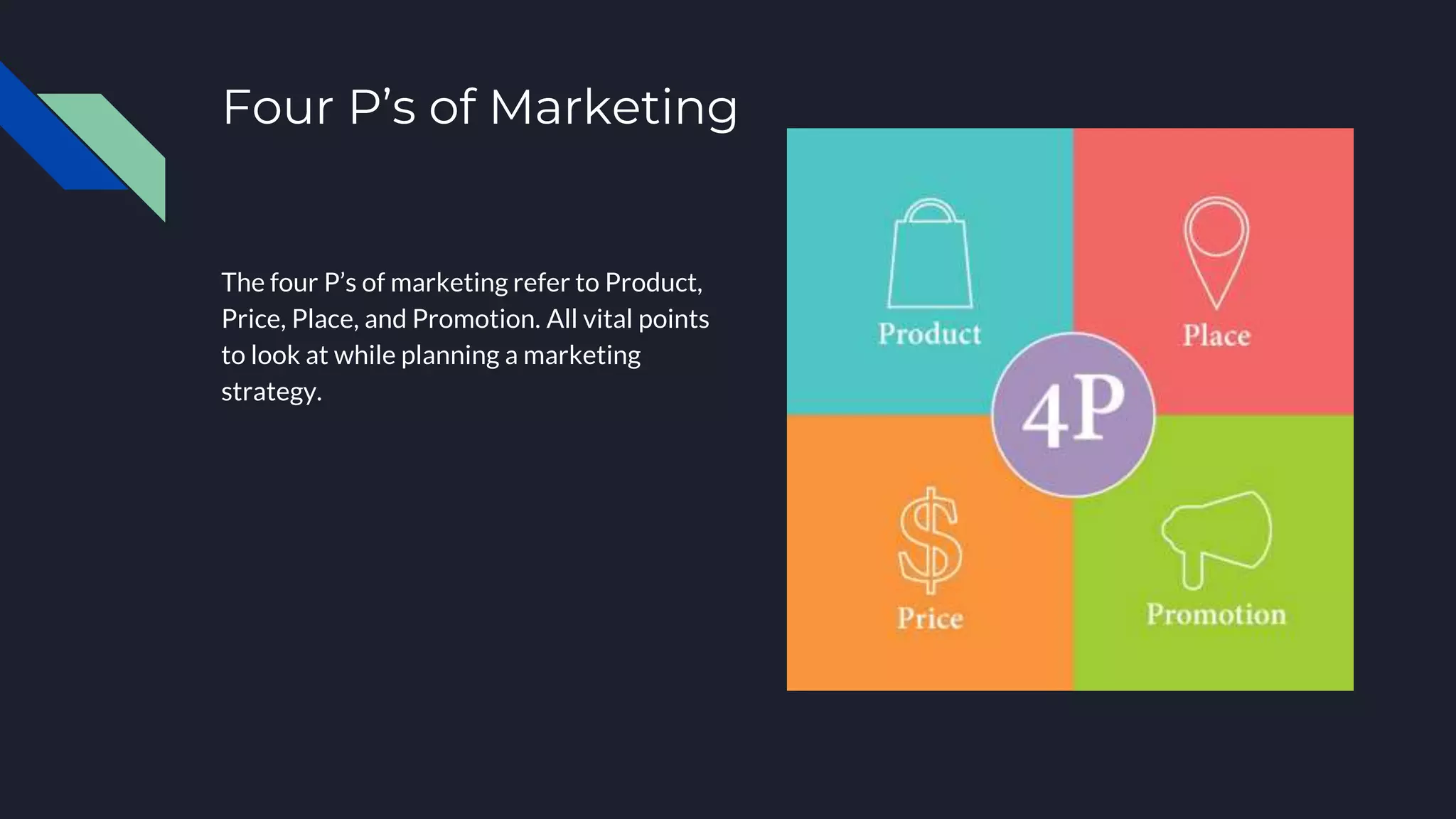
The four P’s of marketing refer to Product,
Price, Place, and Promotion. All vital points
to look at while planning a marketing
strategy.
Product
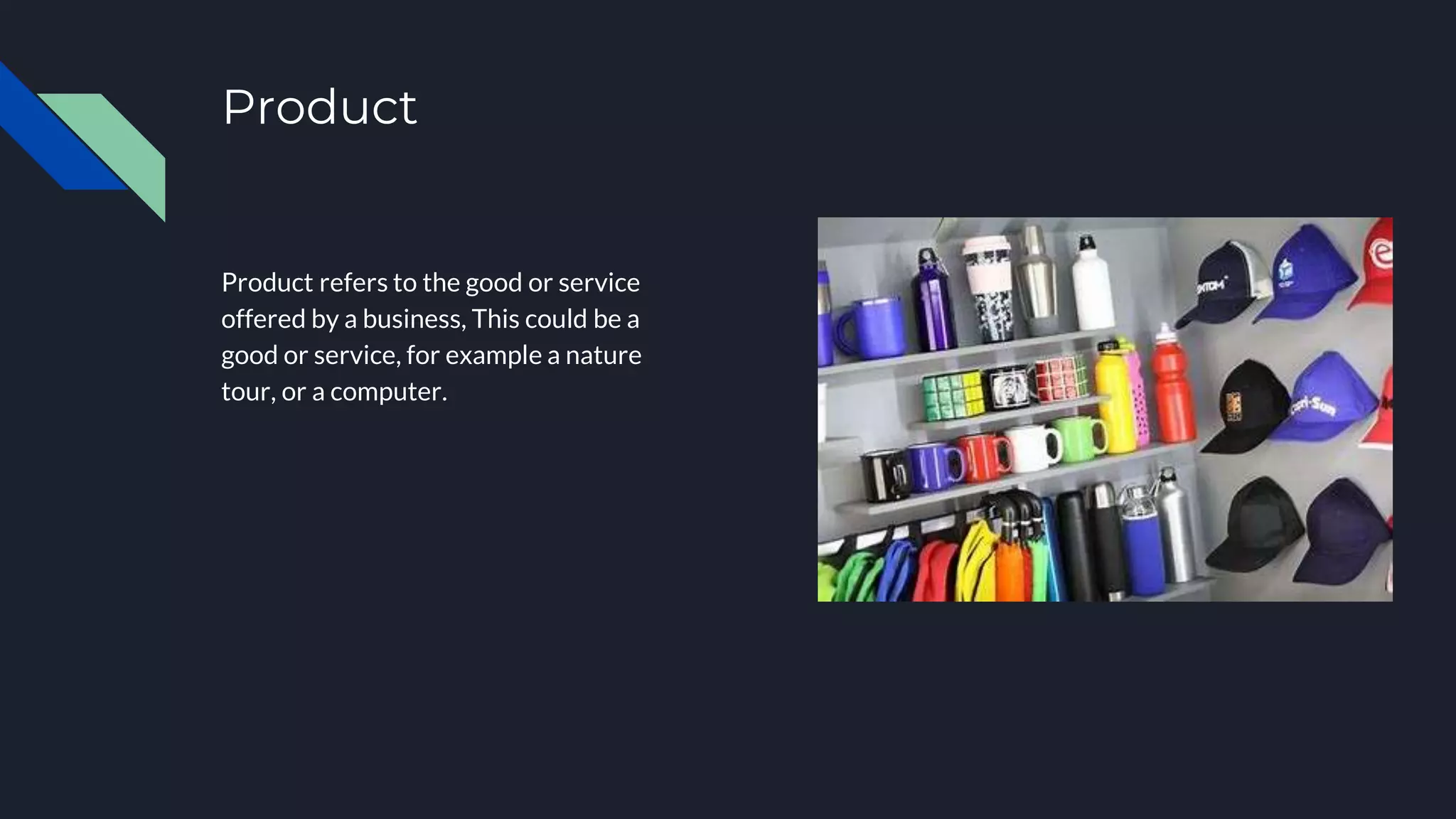
Product refers to the good or service
offered by a business, This could be a
good or service, for example a nature
tour, or a computer.
Price
Price refers to the amount of money
a good or service is sold for. Prices
have various ranges, but they real
way to calculate price is by the
perceived value of product by the
consumer.
Place
This refers to the location of the
business, the environment in which the
product is sold.
Promotion
This is not a job promotion. This is
advertisement. How a company can
get the word out about their
product and raise awareness of it.
This can be done by billboards or
news ads, but nowadays, businesses
are utilizing social media to
advertise their products.
SWOT Analysis
Another helpful tool is a SWOT
analysis. This four step program helps
define a firm's Strengths, Weaknesses,
Opportunities, and Threats. Hence the
name SWOT. Defining weaknesses can
help generate ideas on how to build
strengths to combat them, and looking
at opportunities can lead to ways to
bypass any threats a company might
find.
Mission Statement
A mission statement is an important
part of creating a business. This is a
short statement that describes the
purpose of an organization. The ‘why’
behind why they are there. Usually
invoking words like ‘Teamwork’ or
‘Vision’.
Positioning Statement
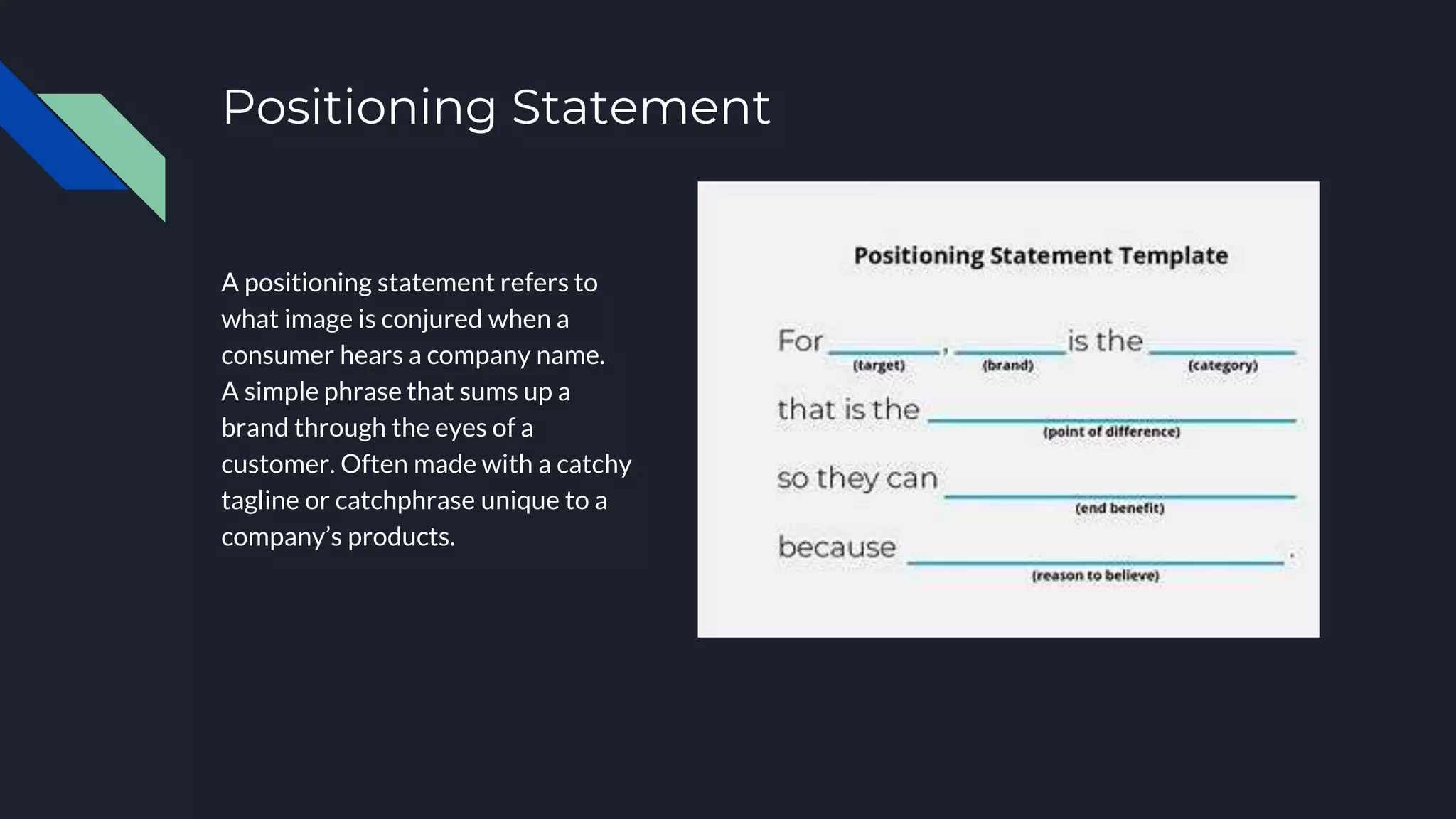
A positioning statement refers to
what image is conjured when a
consumer hears a company name.
A simple phrase that sums up a
brand through the eyes of a
customer. Often made with a catchy
tagline or catchphrase unique to a
company’s products.
Portfolios
Portfolios are a great way to showcase
products. A good portfolio will organize a
business’s products into easily
distinguishable categories. From there
they can easily be evaluated.
End of Slideshow

Basics of a Marketing Strategy

  • 1.
    Developing Marketing Strategies and aMarketing Plan Josh McCamish
  • 2.
    Target Markets A firmmust find its target market if it plans to have a successful sales strategy. Once a market has been identified, it must be segmented into demographics to further specialize the advertisements targeted at this market
  • 3.
    Four P’s ofMarketing The four P’s of marketing refer to Product, Price, Place, and Promotion. All vital points to look at while planning a marketing strategy.
  • 4.
    Product Product refers tothe good or service offered by a business, This could be a good or service, for example a nature tour, or a computer.
  • 5.
    Price Price refers tothe amount of money a good or service is sold for. Prices have various ranges, but they real way to calculate price is by the perceived value of product by the consumer.
  • 6.
    Place This refers tothe location of the business, the environment in which the product is sold.
  • 7.
    Promotion This is nota job promotion. This is advertisement. How a company can get the word out about their product and raise awareness of it. This can be done by billboards or news ads, but nowadays, businesses are utilizing social media to advertise their products.
  • 8.
    SWOT Analysis Another helpfultool is a SWOT analysis. This four step program helps define a firm's Strengths, Weaknesses, Opportunities, and Threats. Hence the name SWOT. Defining weaknesses can help generate ideas on how to build strengths to combat them, and looking at opportunities can lead to ways to bypass any threats a company might find.
  • 9.
    Mission Statement A missionstatement is an important part of creating a business. This is a short statement that describes the purpose of an organization. The ‘why’ behind why they are there. Usually invoking words like ‘Teamwork’ or ‘Vision’.
  • 10.
    Positioning Statement A positioningstatement refers to what image is conjured when a consumer hears a company name. A simple phrase that sums up a brand through the eyes of a customer. Often made with a catchy tagline or catchphrase unique to a company’s products.
  • 11.
    Portfolios Portfolios are agreat way to showcase products. A good portfolio will organize a business’s products into easily distinguishable categories. From there they can easily be evaluated.
  • 12.