Basic Practice of Statistics 8th Edition Moore Test Bank
Basic Practice of Statistics 8th Edition Moore Test Bank
Basic Practice of Statistics 8th Edition Moore Test Bank
Basic Practice of Statistics 8th Edition Moore Test Bank
Basic Practice of Statistics 8th Edition Moore Test Bank
1.
Visit https://testbankdeal.com todownload the full version and
explore more testbank or solutions manual
Basic Practice of Statistics 8th Edition Moore
Test Bank
_____ Click the link below to download _____
https://testbankdeal.com/product/basic-practice-of-
statistics-8th-edition-moore-test-bank/
Explore and download more testbank or solutions manual at testbankdeal.com
2.
Here are somerecommended products that we believe you will be
interested in. You can click the link to download.
Introduction to the Practice of Statistics 9th Edition
Moore Test Bank
https://testbankdeal.com/product/introduction-to-the-practice-of-
statistics-9th-edition-moore-test-bank/
Practice of Statistics for Business and Economics 4th
Edition Moore Test Bank
https://testbankdeal.com/product/practice-of-statistics-for-business-
and-economics-4th-edition-moore-test-bank/
Practice of Statistics for Business and Economics 3rd
Edition Moore Test Bank
https://testbankdeal.com/product/practice-of-statistics-for-business-
and-economics-3rd-edition-moore-test-bank/
Electric Circuits 1st Edition Kang Test Bank
https://testbankdeal.com/product/electric-circuits-1st-edition-kang-
test-bank/
3.
Strategic Management TheoryAn Integrated Approach 9th
Edition Hill Solutions Manual
https://testbankdeal.com/product/strategic-management-theory-an-
integrated-approach-9th-edition-hill-solutions-manual/
Work Systems The Methods Measurement and Management of
Work 1st Edition Groover Solutions Manual
https://testbankdeal.com/product/work-systems-the-methods-measurement-
and-management-of-work-1st-edition-groover-solutions-manual/
Materials Science and Engineering Properties 1st Edition
Charles Gilmore Solutions Manual
https://testbankdeal.com/product/materials-science-and-engineering-
properties-1st-edition-charles-gilmore-solutions-manual/
Economics Today The Macro View Canadian 15th Edition
Miller Test Bank
https://testbankdeal.com/product/economics-today-the-macro-view-
canadian-15th-edition-miller-test-bank/
Transportation A Global Supply Chain Perspective 8th
Edition Coyle Test Bank
https://testbankdeal.com/product/transportation-a-global-supply-chain-
perspective-8th-edition-coyle-test-bank/
4.
Modern Physics 2ndEdition Harris Solutions Manual
https://testbankdeal.com/product/modern-physics-2nd-edition-harris-
solutions-manual/
5.
Page 1
1. Astudy was conducted on horses to identify factors that might contribute to the
formation of enteroliths—stones that form in the colon of the horse and eventually lead
to blockage and death. The table below summarizes disease status by sex (gelding,
mare, and stallion).
Disease Status
Sex Case Control Total
Gelding 29 41 70
Mare 28 32 60
Stallion 5 2 7
Total 62 75 137
What percent of geldings had enteroliths?
A) 41%
B) 47%
C) 21%
D) 56%
2. A study was conducted on horses to identify factors that might contribute to the
formation of enteroliths—stones that form in the colon of the horse and eventually lead
to blockage and death. The table below summarizes disease status by sex (gelding,
mare, and stallion).
Disease Status
Sex Case Control Total
Gelding 29 41 70
Mare 28 32 60
Stallion 5 2 7
Total 62 75 137
Which of the following statements is not supported by the data?
A) Mares are more likely than geldings to develop enteroliths.
B) Less than half of geldings develop enteroliths.
C) Stallions are the least likely to develop enteroliths.
D) Female horses are slightly more likely to develop enteroliths.
6.
Page 2
3. Anadministrator in charge of residential life services recently conducted a survey of
undergraduate college students at a small university. A random sample of 300 students
was selected from each class level (freshman, sophomore, junior, or senior). Each
student was asked to complete and return a short questionnaire on the quality of campus
residences. Some students returned the questionnaire; some did not. This is summarized
in the table below.
Class Returned Nonresponse Total
Freshman 110 190 300
Sophomore 130 170 300
Junior 170 130 300
Senior 160 140 300
What percent of freshmen returned the questionnaire?
A) 50%
B) 47.5%
C) 36.7%
D) 63.3%
4. An administrator in charge of residential life services recently conducted a survey of
undergraduate college students at a small university. A random sample of 300 students
was selected from each class level (freshman, sophomore, junior, or senior). Each
student was asked to complete and return a short questionnaire on the quality of campus
residences. Some students returned the questionnaire; some did not. This is summarized
in the table below.
Class Returned No response Total
Freshman 110 190 300
Sophomore 130 170 300
Junior 170 130 300
Senior 160 140 300
Which of the following conclusions seems to be supported by the data?
A) Juniors and seniors appear to be more likely to return the survey than freshmen and
sophomores.
B) Juniors and seniors are happier with the quality of campus residences than
freshman and sophomores.
C) Students who did not return the questionnaire are unhappy with the quality of
campus residences.
D) The percent of students returning the questionnaire is the same for each class.
7.
Page 3
5. Anadministrator in charge of residential life services recently conducted a survey of
undergraduate college students at a small university. A random sample of 300 students
was selected from each class level (freshman, sophomore, junior, or senior). Each
student was asked to complete and return a short questionnaire on the quality of campus
residences. Some students returned the questionnaire; some did not. This is summarized
in the table below.
Class Returned No response Total
Freshman 110 190 300
Sophomore 130 170 300
Junior 170 130 300
Senior 160 140 300
What percent of all students surveyed returned the questionnaire?
A) 50%
B) 52.5%
C) 47.5%
D) None of the answer options is correct.
6. An administrator in charge of residential life services recently conducted a survey of
undergraduate college students at a small university. A random sample of 300 students
was selected from each class level (freshman, sophomore, junior, or senior). Each
student was asked to complete and return a short questionnaire on the quality of campus
residences. Some students returned the questionnaire; some did not. This is summarized
in the table below.
Class Returned No response Total
Freshman 110 190 300
Sophomore 130 170 300
Junior 170 130 300
Senior 160 140 300
How many different marginal distributions could be plotted from these data?
A) 0
B) 1
C) 2
D) None of the answer options is correct.
8.
Page 4
7. Astudy was conducted on horses to identify factors that might contribute to the
formation of enteroliths—stones that form in the colon of the horse and eventually lead
to blockage and death. The table below summarizes disease status by sex (gelding,
mare, and stallion).
Disease Status
Sex Case Control Total
Gelding 29 41 70
Mare 28 32 60
Stallion 5 2 7
Total 62 75 137
The proportion calculated as p = (62/137) = 0.4526 is:
A) the inverse proportion.
B) the marginal proportion of cases.
C) the restricted proportion of cases that are geldings among the cases.
D) None of the answer options is correct.
8. An administrator in charge of residential life services recently conducted a survey of
undergraduate college students at a small university. A random sample of 300 students
was selected from each class level (freshman, sophomore, junior, or senior). Each
student was asked to complete and return a short questionnaire on the quality of campus
residences. Some students returned the questionnaire; some did not. This is summarized
in the table below:
Class Returned No response Total
Freshman 110 190 300
Sophomore 130 170 300
Junior 170 130 300
Senior 160 140 300
How many different conditional distributions could be plotted from these data?
A) 2
B) 4
C) 6
D) None of the answer options is correct.
9.
Page 5
9. Astudy was conducted on horses to identify factors that might contribute to the
formation of enteroliths—stones that form in the colon of the horse and eventually lead
to blockage and death. The table below summarizes disease status by sex (gelding,
mare, and stallion).
Disease Status
Sex Case Control Total
Gelding 29 41 70
Mare 28 32 60
Stallion 5 2 7
Total 62 75 137
How many conditional distributions for disease status p (being a case, given sex) can be
calculated for these data?
A) 1
B) 2
C) 3
D) 4
10. A study was conducted on horses to identify factors that might contribute to the
formation of enteroliths—stones that form in the colon of the horse and eventually lead
to blockage and death. The table below summarizes disease status by sex (gelding,
mare, and stallion).
Disease Status
Sex Case Control Total
Gelding 29 41 70
Mare 28 32 60
Stallion 5 2 7
Total 62 75 137
How many conditional distributions for gender p (being a mare, given disease status)
can be calculated for these data?
A) 1
B) 2
C) 3
D) 4
10.
Page 6
11. Thefollowing table describes the opinions of the 570 people who returned a residential
life services questionnaire to researchers at a small university. Students were classified
by class (freshman, sophomore, junior, or senior) and by their opinion of campus
residence quality (high quality, medium quality, or low quality).
Class High Medium Low Total
Freshman 65 25 20 110
Sophomore 55 30 45 130
Junior 60 40 70 170
Senior 30 60 70 160
Total 210 155 205 570
What percent of seniors feel that the quality of campus residences is not high?
A) 37.5%
B) 43.8%
C) 81.3%
D) 63.2%
12. The following table describes the opinions of the 570 people who returned a residential
life services questionnaire to researchers at a small university. Students were classified
by class (freshman, sophomore, junior, or senior) and by their opinion of campus
residence quality (high quality, medium quality, or low quality).
Class High Medium Low Total
Freshman 65 25 20 110
Sophomore 55 30 45 130
Junior 60 40 70 170
Senior 30 60 70 160
Total 210 155 205 570
What percent of all students who responded are sophomores?
A) 25%
B) 19.3%
C) 22.8%
D) 29.8%
11.
Page 7
13. Thefollowing table describes the opinions of the 570 people who returned a residential
life services questionnaire to researchers at a small university. Students were classified
by class (freshman, sophomore, junior, or senior) and by their opinion of campus
residence quality (high quality, medium quality, or low quality).
Class High Medium Low Total
Freshman 65 25 20 110
Sophomore 55 30 45 130
Junior 60 40 70 170
Senior 30 60 70 160
Total 210 155 205 570
Of the students who feel campus residences are of high quality, what percent are
seniors?
A) 14.3%
B) 18.8%
C) 28.1%
D) 33.3%
14. The following table describes the opinions of the 570 people that returned a residential
life services questionnaire to researchers at a small university. Students were classified
by class (freshman, sophomore, junior, or senior) and by their opinion of campus
residence quality (high quality, medium quality, or low quality).
Class High Medium Low Total
Freshman 65 25 20 110
Sophomore 55 30 45 130
Junior 60 40 70 170
Senior 30 60 70 160
Total 210 155 205 570
Which marginal or conditional distribution would you use to determine the percent of
all students who responded that are sophomores?
A) the marginal distribution of class
B) the marginal distribution of opinion of residence quality
C) the conditional distribution of opinion of residence quality, given that class is
“sophomore”
D) None of the answer options is correct.
12.
Page 8
15. Thefollowing table describes the opinions of the 570 people who returned a residential
life services questionnaire to researchers at a small university. Students were classified
by class (freshman, sophomore, junior, or senior) and by their opinion of campus
residence quality (high quality, medium quality, or low quality).
Class High Medium Low Total
Freshman 65 25 20 110
Sophomore 55 30 45 130
Junior 60 40 70 170
Senior 30 60 70 160
Total 210 155 205 570
Which marginal or conditional distribution would you use to determine the percent of
the students who feel campus residences are of high quality that are seniors?
A) the marginal distribution of class
B) the marginal distribution of opinion of residence quality
C) the conditional distribution of class, given that opinion of residence quality is high
D) None of the answer options is correct.
16. If X and Y are categorical variables, one way to identify whether there is a relationship
between them is to:
A) calculate the correlation between X and Y.
B) draw a scatterplot of the X and Y values.
C) make a two-way table of the X and Y values.
D) All of the answer options are correct.
13.
Page 9
17. Ina study of the link between high blood pressure and cardiovascular disease, a group
of white men aged 35 to 64 was followed for five years. At the beginning of the study,
each man had his blood pressure measured, and it was classified as either low systolic
blood pressure (less than 140 mm Hg) or high blood pressure (140 mm Hg or higher).
The following table gives the number of men in each blood pressure category and the
number of deaths from cardiovascular disease during the five-year period.
Blood Pressure Deaths Total
Low 10 2000
High 50 3500
Based on these data, which of the following statements is correct?
A) These data are consistent with the idea that there is a link between high blood
pressure and death from cardiovascular disease.
B) The mortality rate (proportion of deaths) for men with high blood pressure is five
times that of men with low blood pressure.
C) These data probably understate the link between high blood pressure and death
from cardiovascular disease, because men will tend to understate their true blood
pressure.
D) All of the answer options are correct.
18. Since 2000, the median wage in the United States has risen by 1%, while the median
wage for every educational subgroup (high school dropouts, high school graduates,
college graduates, and people with advanced degrees) has decreased. This apparent
contradiction is an example of:
A) extrapolation.
B) Simpson's paradox.
C) causation.
D) correlation.
14.
Page 10
19. Astudy was conducted on horses to identify factors that might contribute to the
formation of enteroliths—stones that form in the colon of the horse and eventually lead
to blockage and death. The table below summarizes disease status by sex (gelding,
mare, and stallion).
Disease Status
Sex Case Control Total
Gelding 29 41 70
Mare 28 32 60
Stallion 5 2 7
Total 62 75 137
If you want to check whether there is an association between sex and case status, you
should:
A) compare the conditional probabilities of being a case, given sex.
B) make a scatterplot of case status versus sex.
C) compare the marginal probability for case status and sex.
D) All of the answer options are correct.
20. In a recent round of layoffs in a company, the percent of employees 50 and older who
were laid off was much higher than the percent younger than 50 who were laid off.
However, when the data were analyzed separately in each job category, the percent of
employees 50 and older who were laid off was lower than the percent of employees
younger than 50 who were laid off in each job category. This reversal of direction of the
association between age and being laid off, when job category is taken into account, is
called:
A) Simpson's paradox.
B) least-squares regression.
C) negative association.
D) a residual plot.
15.
Page 11
21. Applicantslooking for a job at a restaurant chain may apply to be a server or a kitchen
worker. The table below summarizes the number of male and female applicants hired
for the jobs for which they applied.
Server Kitchen worker
Male Female Male Female
Not hired 80 120 Not hired 30 15
Hired 20 50 Hired 80 25
The proportion of male applicants for a job as server that were hired is:
A) 0.067.
B) 0.133.
C) 0.2.
D) 0.4.
22. Applicants looking for a job at a restaurant chain may apply to be a server or a kitchen
worker. The table below summarizes the number of male and female applicants hired
for the jobs for which they applied.
Server Kitchen worker
Male Female Male Female
Not hired 80 120 Not hired 30 15
Hired 20 50 Hired 80 25
The proportion of female applicants for a job as kitchen worker that were hired is:
A) 0.1.
B) 0.375.
C) 0.4.
D) 0.625.
16.
Page 12
23. Astudy was conducted on horses to identify factors that might contribute to the
formation of enteroliths—stones that form in the colon of the horse and eventually lead
to blockage and death. The table below summarizes disease status, cases that have
enteroliths by whether a horse has been altered (geldings have been castrated, mares and
stallions have not been altered) and by whether the horse gets the majority of its feed as
alfalfa.
Alfalfa
Yes No
Altered Altered Total
Yes No Yes No
Case 4 3 41 14 62
Control 16 47 6 6 75
Total 20 50 47 20 137
To study whether being fed alfalfa has any effect on the relationship between case status
and having been altered, we should:
A) calculate the conditional probabilities of having been altered for those who are fed
alfalfa and for those who are not fed alfalfa.
B) calculate the conditional probabilities of being a case for those fed alfalfa and for
those not fed alfalfa.
C) calculate the conditional probabilities of being a case, given being fed alfalfa or not
and being altered or not.
D) All of the answer options are correct.
17.
Page 13
24. Astudy was conducted on horses to identify factors that might contribute to the
formation of enteroliths—stones that form in the colon of the horse and eventually lead
to blockage and death. The table below summarizes disease status, cases that have
enteroliths by whether a horse has been altered (geldings have been castrated, mares and
stallions have not been altered) and by whether the horse gets the majority of its feed as
alfalfa.
Alfalfa
Yes No
Altered Altered Total
Yes No Yes No
Case 4 3 41 14 62
Control 16 47 6 6 75
Total 20 50 47 20 137
In the above table, when we look at the conditional probabilities of being a case, given
being altered or not, we find that among those not fed alfalfa, horses that are not altered
have a probability of being a case 3.3 times that of geldings. We find a similar ratio for
the probabilities of horses fed alfalfa. When we calculate the ratio of those probabilities,
combining the two tables when data are broken down by alfalfa feeding status, we find
the probability of being a case, given a horse is not altered, is 6.4 times that of an altered
horse. This is an example of:
A) a lurking variable.
B) Simpson's paradox.
C) Options (a) and (b) are correct.
D) None of the answer options is correct.
25. Applicants looking for a job at a restaurant chain may apply to be a server or a kitchen
worker. The table below summarizes the number of male and female applicants hired
for the jobs for which they applied.
Server Kitchen worker
Male Female Male Female
Not hired 80 120 Not hired 30 15
Hired 20 50 Hired 80 25
The proportion of all male applicants hired is:
A) 0.091.
B) 0.476.
C) 0.523.
D) 0.909.
18.
Page 14
26. Applicantslooking for a job at a restaurant chain may apply to be a server or a kitchen
worker. The table below summarizes the number of male and female applicants hired
for the jobs for which they applied.
Server Kitchen worker
Male Female Male Female
Not hired 80 120 Not hired 30 15
Hired 20 50 Hired 80 25
The proportion of female hires who are servers is:
A) 0.2.
B) 0.333.
C) 0.667.
D) 0.8.
27. Applicants looking for a job at a restaurant chain may apply to be a server or a kitchen
worker. The table below summarizes the number of male and female applicants hired
for the jobs for which they applied.
Server Kitchen worker
Male Female Male Female
Not hired 80 120 Not hired 30 15
Hired 20 50 Hired 80 25
From these data, we may conclude that:
A) men are advantaged in applying for kitchen jobs, whereas women are advantaged
in applying to be servers.
B) overall, the proportion of male applicants hired is greater than that for women
overall.
C) the restaurant hires more servers than kitchen workers.
D) All of the answer options are correct.
19.
Page 15
28. Acompany exploring ways to help its employees improve work/life balance conducted
a survey of 360 of its workers that asked (among other things) about the number of
hours typically spent on Facebook each day and about their stress level.
Stress Level
Hours/Day on
Facebook
High Medium Low Total
Less than 2 12 40 56 108
2 to 6 45 101 43 189
More than 6 19 8 36 63
Total 76 149 135 360
What percent of all employees who responded have a high stress level?
A) 15.7%
B) 21.1%
C) 22.8%
D) 25.0%
29. A company exploring ways to help its employees improve work/life balance conducted
a survey of 360 of its workers that asked (among other things) about the number of
hours typically spent on Facebook each day and about their stress level.
Stress Level
Hrs/Day on Facebook High Medium Low Total
Less than 2 12 40 56 108
2 to 6 45 101 43 189
More than 6 19 8 36 63
Total 76 149 135 360
Of the employees who spend the most time on Facebook, what percent have a high
stress level?
A) 21.1%
B) 23.8%
C) 30.2%
D) 59.2%
20.
Page 16
30. Asociologist studying freshmen carried out a survey, asking (among other questions)
how often students went out per week, how many hours they studied per day, and how
many hours they slept at night. The table below provides the answers on the time slept
and the time spent studying.
Hours/day
studied
less than 6
hours slept
6 to 8 hours
slept
more than 8
hours slept
Total
less than 2 20 40 20 80
2 to 3 10 30 10 50
3 to 4 20 20 20 60
more than 4 20 20 10 50
Total 70 110 60 240
What proportion of students slept less than 6 hours per night?
A) 0.286
B) 0.292
C) 0.25
D) 0.333
31. A sociologist studying freshmen carried out a survey, asking (among other questions)
how often students went out per week, how many hours they studied per day, and how
many hours they slept at night. The table below provides the answers on the time slept
and the time spent studying.
Hours/day
studied
less than 6
hours slept
6 to 8 hours
slept
more than 8
hours slept
Total
less than 2 20 40 20 80
2 to <3 10 30 10 50
3 to <4 20 20 20 60
4 or more 20 20 10 50
Total 70 110 60 240
What proportion of students studied 3 hours or more?
A) 0.25
B) 0.46
C) 0.21
D) 0.67
21.
Page 17
32. Asociologist studying freshmen carried out a survey, asking (among other questions)
how often students went out per week, how many hours they studied per day, and how
many hours they slept at night. The table below provides the answers on the time slept
and the time spent studying.
Hours/day
studied
less than 6
hours slept
6 to 8 hours
slept
more than 8
hours slept
Total
less than 2 20 40 20 80
2 to <3 10 30 10 50
3 to <4 20 20 20 60
4 or more 20 20 10 50
Total 70 110 60 240
What proportion of freshman slept at least 6 hours?
A) 1
B) 0.46
C) 0.71
D) 0.25
33. A sociologist studying freshmen carried out a survey, asking (among other questions)
how often students went out per week, how many hours they studied per day, and how
many hours they slept at night. The table below provides the answers on the time slept
and the time spent studying.
Hours/day
studied
less than 6
hours slept
6 to 8 hours
slept
more than 8
hours slept
Total
less than 2 20 40 20 80
2 to <3 10 30 10 50
3 to <4 20 20 20 60
4 or more 20 20 10 50
Total 70 110 60 240
What proportion of students slept at least 6 hours and studied 4 or more hours?
A) 0.6
B) 0.4
C) 0.78
D) 0.125
22.
Page 18
34. Asociologist studying freshmen carried out a survey, asking (among other questions)
how often students went out per week, how many hours they studied per day, and how
many hours they slept at night. The table below provides the answers on the time slept
and the time spent studying.
Hours/day
studied
less than 6
hours slept
6 to 8 hours
slept
more than 8
hours slept
Total
less than 2 20 40 20 80
2 to <3 10 30 10 50
3 to <4 20 20 20 60
4 or more 20 20 10 50
Total 70 110 60 240
What proportion, among the students who slept more than 8 hours, studied 4 hours or
more?
A) 0.2
B) 0.1
C) 0.17
D) 0.25
35. A sociologist studying freshmen carried out a survey, asking (among other questions)
how often students went out per week, how many hours they studied per day, and how
many hours they slept at night. The table below provides the answers on the time slept
and the time spent studying.
Hours/day
studied
less than 6
hours slept
6 to 8 hours
slept
more than 8
hours slept
Total
less than 2 20 40 20 80
2 to <3 10 30 10 50
3 to <4 20 20 20 60
4 or more 20 20 10 50
Total 70 110 60 240
Among the students who studied 4 or more hours, what proportion slept less than 6
hours a night?
A) 0.29
B) 0.08
C) 0.4
D) 0.2
23.
Page 19
36. Asociologist studying freshmen carried out a survey, asking (among other questions)
how often students went out per week, how many hours they studied per day, and how
many hours they slept at night. The table below provides the answers on the time slept
and the time spent studying.
Hours/day
studied
less than 6
hours slept
6 to 8 hours
slept
more than 8
hours slept
Total
less than 2 20 40 20 80
2 to <3 10 30 10 50
3 to <4 20 20 20 60
4 or more 20 20 10 50
Total 70 110 60 240
Among the students who slept at most 8 hours, what proportion studied at least 3 hours?
A) 0.67
B) 0.36
C) 0.73
D) 0.44
37. A sociologist studying freshmen carried out a survey, asking (among other questions)
how often students went out per week, how many hours they studied per day, and how
many hours they slept at night. The table below provides the answers on the time slept
and the time spent studying.
Hours/day
studied
less than 6
hours slept
6 to 8 hours
slept
more than 8
hours slept
Total
less than 2 20 40 20 80
2 to <3 10 30 10 50
3 to <4 20 20 20 60
4 or more 20 20 10 50
Total 70 110 60 240
Did students who studied 3 or more hours sleep less?
A) Yes, because if someone studies more they have less time to sleep.
B) No, because students who study more party less.
C) Yes, because the proportion of students who slept at most 8 hours among those
studying 3 hours or more is 0.73, while the proportion who slept at most 8 hours
among those studying less than 3 hours is 0.769.
D) There is not enough information to answer this question.
24.
Page 20
38. Asociologist studying freshmen carried out a survey, asking (among other questions)
how often students went out per week, how many hours they studied per day, and how
many hours they slept at night. The table below provides the answers on the time slept
and the time spent studying.
Hours/day studied less than 6
hours slept
6 to 8 hours
slept
more than 8
hours slept
Total
less than 2 20 40 20 80
2 to <4 30 50 30 110
4 or more 20 20 10 50
Total 70 110 60 240
Is there an association between the number of hours studied and the number of hours
slept?
A) Yes, because the proportions sleeping less than 6 hours increases as the number of
hours studied increases.
B) No, because there is no reason to sleep less if a student studies more.
C) No, because a sleep-deprived student cannot study many hours.
D) Yes, because the more a student studies, the less time there is for sleeping.
39. A sociologist studying freshmen carried out a survey, asking (among other questions)
how often students went out per week, how many hours they studied per day, and how
many hours they slept at night. The tables below provide the answers on the time slept
and the time spent studying by whether or not students went out.
Go out Hours slept Stay in
dorm
Hours slept
Hours/day
studied
less than
6
6 or
more
Total Hours/day
studied
less than
6
6 or
more
Total
less than 2 3 9 12 less than 2 40 120 160
2 or more 14 14 28 2 or more 20 20
Total 17 23 40 Total 60 140 200
For both groups of students, those who go out and those who stay in the dorm, students
who study more:
A) sleep less.
B) sleep more.
C) sleep the same.
D) Sleeping and studying are unrelated.
CHAPTER XIX.
LETTSOM.
High amongstliterary, and higher yet amongst benevolent, physicians
must be ranked John Coakley Lettsom, formerly president of the
Philosophical Society of London. A West Indian, and the son of a
planter, he was born on one of his father's little islands, Van Dyke, near
Tortola, in the year 1744. Though bred a Quaker, he kept his heart so
free from sectarianism, and his life so entirely void of the formality and
puritanic asceticism of the Friends, that his ordinary acquaintance
marvelled at his continuing to wear the costume of the brotherhood. At
six years of age he was sent to England for education, being for that
purpose confided to the protection of Mr. Fothergill, of Warrington, a
Quaker minister, and younger brother of Dr. John Fothergill. After
receiving a poor preparatory education, he was apprenticed to a
Yorkshire apothecary, named Sutcliffe, who, by industry and
intelligence, had raised himself from the position of a weaver to that of
the first medical practitioner of Settle. In the last century a West Indian
was, to the inhabitants of a provincial district, a rare curiosity; and
Sutcliffe's surgery, on the day that Lettsom entered it in his fifteenth
year, was surrounded by a dense crowd of gaping rustics, anxious to
see a young gentleman accustomed to walk on his head. This
extraordinary demonstration of curiosity was owing to the merry
humour of Sutcliffe's senior apprentice, who had informed the people
that the new pupil, who would soon join him, came from a country
where the feet of the inhabitants were placed in an exactly opposite
direction to those of Englishmen.
Sutcliffe did not find his new apprentice a very handy one. "Thou
mayest make a physician, but I think not a good apothecary," the old
man was in the habit of saying; and the prediction in due course
turned out a correct one. Having served an apprenticeship of five
27.
years, and walkedfor two the wards of St. Thomas's Hospital, where
Akenside was a physician, conspicuous for supercilious manner and
want of feeling, Lettsom returned to the West Indies, and settled as a
medical practitioner in Tortola. He practised there only five months,
earning in that time the astonishing sum of £2000; when, ambitious of
achieving a high professional position, he returned to Europe, visited
the medical schools of Paris and Edinburgh, took his degree of M.D. at
Leyden on the 20th of June, 1769, was admitted a licentiate of the
Royal College of Physicians of London in the same year, and in 1770
was elected a fellow of the Society of Antiquaries.
From this period till his death, in 1815 (Nov. 20), he was one of the
most prominent figures in the scientific world of London. As a physician
he was a most fortunate man; for without any high reputation for
professional acquirements, and with the exact reverse of a good
preliminary education, he made a larger income than any other
physician of the same time. Dr. John Fothergill never made more than
£5000 in one year; but Lettsom earned £3600 in 1783—£3900 in 1784
—£4015 in 1785-and £4500 in 1786. After that period his practice
rapidly increased, so that in some years his receipts were as much as
£12,000. But although he pocketed such large sums, half his labours
were entirely gratuitous. Necessitous clergymen and literary men he
invariably attended with unusual solicitude and attention, but without
ever taking a fee for his services. Indeed, generosity was the ruling
feature of his life. Although he burdened himself with the public
business of his profession, was so incessantly on the move from one
patient to another that he habitually knocked up three pairs of horses
a-day, and had always some literary work or other upon his desk, he
nevertheless found time to do an amount of labour, in establishing
charitable institutions and visiting the indigent sick, that would by itself
have made a reputation for an ordinary person.
To give the mere list of his separate benevolent services would be to
write a book about them. The General Dispensary, the Finsbury
Dispensary, the Surrey Dispensary, and the Margate Sea-bathing
Infirmary, originated in his exertions; and he was one of the first
projectors of—the Philanthropic Society, St. Georges-in-the-Fields, for
the Prevention of Crimes, and the Reform of the Criminal Poor; the
28.
Society for theDischarge and Relief of Persons Imprisoned for Small
Debts; the Asylum for the Indigent Deaf and Dumb; the Institution for
the Relief and Employment of the Indigent Blind; and the Royal
Humane Society, for the recovery of the apparently drowned or dead.
And year by year his pen sent forth some publication or other to
promote the welfare of the poor, and succour the afflicted. Of course
there were crowds of clever spectators of the world's work, who smiled
as the doctor's carriage passed them in the streets, and said he was a
deuced clever fellow to make ten thousand a-year so easily; and that,
after all, philanthropy was not a bad trade. But Lettsom was no
calculating humanitarian, with a tongue discoursing eloquently on the
sufferings of mankind, and an eye on the sharp look-out for his own
interest. What he was before the full stare of the world, that he was
also in his own secret heart, and those private ways into which
hypocrisy cannot enter. At the outset of his life, when only twenty-
three years old, he liberated his slaves—although they constituted
almost his entire worldly wealth, and he was anxious to achieve
distinction in a profession that offers peculiar difficulties to needy
aspirants. And when his career was drawing to a close, he had to part
with his beloved countryseat because he had impoverished himself by
lavish generosity to the unfortunate.
There was no sanctimonious affectation in the man. He wore a drab
coat and gaiters, and made the Quaker's use of Thou and Thee; but he
held himself altogether apart from the prejudices of his sect. A poet
himself of some respectability, he delighted in every variety of
literature, and was ready to shake any man by the hand—Jew or
Gentile. He liked pictures and works of sculpture, and spent large sums
upon them; into the various scientific movements of the time he threw
himself with all the energy of his nature; and he disbursed a fortune in
surrounding himself at Camberwell with plants from the tropics. He
liked good wine, but never partook of it to excess, although his
enemies were ready to suggest that he was always glad to avail
himself of an excuse for getting intoxicated. And he was such a
devoted admirer of the fair sex, that the jealous swarm of needy men
who envied him his prosperity, had some countenance for their slander
that he was a Quaker debauchee. He married young, and his wife
29.
outlived him; butas a husband he was as faithful as he proved in every
other relation of life.
Saturday was the day he devoted to entertaining his friends at Grove
Hill, Camberwell; and rare parties there gathered round him—
celebrities from every region of the civilized world, and the best "good
fellows" of London. Boswell was one of his most frequent guests, and,
in an ode to Charles Dilly, celebrated the beauties of the physician's
seat and his humane disposition:—
"My cordial Friend, still prompt to lend
Your cash when I have need on't;
We both must bear our load of care—
At least we talk and read on't."
"Yet are we gay in ev'ry way,
Not minding where the joke lie;
On Saturday at bowls we play
At Camberwell with Coakley."
"Methinks you laugh to hear but half
The name of Dr. Lettsom:
From him of good—talk, liquors, food—
His guests will always get some."
"And guests has he, in ev'ry degree,
Of decent estimation:
His liberal mind holds all mankind
As an extended Nation.
"O'er Lettsom's cheer we've met a peer—
A peer—no less than Lansdowne!
Of whom each dull and envious skull
Absurdly cries—'The man's down!'
"Down do they say? How then, I pray,
His king and country prize him!
Through the whole world known, his peace alone
30.
Is sure t'immortalize him.
"Lettsom we view a Quaker true,
'Tis clear he's so in one sense:
His spirit, strong, and ever young,
Refutes pert Priestley's nonsense.
"In fossils he is deep, we see;
Nor knows Beasts, Fishes, Birds ill;
With plants not few, some from Pelew,
And wondrous Mangel Wurzel!
"West India bred, warm heart, cool head,
The city's first physician;
By schemes humane—want, sickness, pain,
To aid in his ambition.
"From terrace high he feasts his eye,
When practice grants a furlough;
And, while it roves o'er Dulwich groves,
Looks down—even upon Thurlow."
The concluding line is an allusion to the Lord Chancellor's residence at
Dulwich.
In person, Lettsom was tall and thin—indeed, almost attenuated: his
face was deeply lined, indicating firmness quite as much as
benevolence; and his complexion was of a dark yellow hue. His
eccentricities were numerous. Like the founder of his sect, he would
not allow even respect for royalty to make an alteration in his costume
which his conscience did not approve; and George III., who
entertained a warm regard for him, allowed him to appear at Court in
the ordinary Quaker garb, and to kiss his hand, though he had neither
powder on his head, nor a sword by his side. Lettsom responded to his
sovereign's courtesy by presenting him with some rare and
unpurchasable medals.
Though his writings show him to have been an enlightened physician
for his time, his system of practice was not of course free from the
31.
violent measures whichwere universally believed in during the last
century. He used to say of himself,
32.
"When patients sickto me apply,
I physics, bleeds and sweats 'em;
Then—if they choose to die,
What's that to me—I lets 'em."—(I. Lettsom.)
But his prescriptions were not invariably of a kind calculated to depress
the system of his patient. On one occasion an old American merchant,
who had been ruined by the rupture between the colonies and the
mother country, requested his attendance and professional advice. The
unfortunate man was seventy-four years of age, and bowed down with
the weight of his calamities.
"Those trees, doctor," said the sick man, looking out of his bed-room
window over his lawn, "I planted, and have lived to see some of them too
old to bear fruit; they are part of my family: and my children, still dearer
to me, must quit this residence, which was the delight of my youth, and
the hope of my old age."
The Quaker physician was deeply affected by these pathetic words, and
the impressive tone with which they were uttered. He spoke a few words
of comfort, and quitted the room, leaving on the table as his prescription
—a cheque for a large sum of money. Nor did his goodness end there. He
purchased the house of his patient's creditors, and presented it to him for
life.
As Lettsom was travelling in the neighbourhood of London, a
highwayman stopped his carriage, and, putting a pistol into the window,
demanded him to surrender his money. The faltering voice and hesitation
of the robber showed that he had only recently taken to his perilous
vocation, and his appearance showed him to be a young man who had
moved in the gentle ranks of life. Lettsom quickly responded that he was
sorry to see such a well-looking young man pursuing a course which
would inevitably bring him to ruin; that he would give him freely all the
money he had about him, and would try to put him in a better way of
life, if he liked to call on him in the course of a few days. As the doctor
said this, he gave his card to the young man, who turned out to be
another victim of the American war. He had only made one similar
attempt on the road before, and had been driven to lawless action by
33.
unexpected pennilessness. Lettsomendeavoured in vain to procure aid
for his protégé from the commissioners for relieving the American
sufferers; but eventually the Queen, interested in the young man's case,
presented him with a commission in the army; and in a brief military
career, that was cut short by yellow fever in the West Indies, he
distinguished himself so much that his name appeared twice in the
Gazette.
On one of his benevolent excursions the doctor found his way into the
squalid garret of a poor woman who had seen better days. With the
language and deportment of a lady she begged the physician to give her
a prescription. After inquiring carefully into her case, he wrote on a slip of
paper to the overseers of the parish—
"A shilling per diem for Mrs Moreton. Money, not physic, will cure her.
"Lettsom."
Of all Lettsom's numerous works, including his contributions to the
Gentleman's Magazine, under the signature of "Mottles," the anagram of
his own name, the one most known to the general reader, is the "History
of some of the Effects of Hard Drinking." It concludes with a scale of
Temperance and Intemperance, in imitation of a thermometer. To each of
the two conditions seventy degrees are allotted. Against the seventieth
(or highest) degree of Temperance is marked "Water," under which, at
distances of ten degrees, follow "Milk-and-Water," "Small Beer," "Cyder
and Perry," "Wine," "Porter," "Strong Beer." The tenth degree of
Intemperance is "Punch"; the twentieth, "Toddy and Crank"; the thirtieth,
"Grog and Brandy and Water"; the fortieth, "Flip and Shrub"; the fiftieth,
"Bitters infused in Spirits, Usquebaugh, Hysteric Water"; the sixtieth,
"Gin, Aniseed, Brandy, Rum, and Whisky," in the morning; the seventieth,
like the sixtieth, only taken day and night. Then follow, in tabular order,
the vices, diseases, and punishments of the different stages of
Intemperance. The mere enumeration of them ought to keep the most
confirmed toper sober for the rest of his days:—
"Vices.—Idleness, Peevishness, Quarrelling, Fighting, Lying, Swearing,
Obscenity, Swindling, Perjury, Burglary, Murder, Suicide.
34.
"Diseases.—Sickness, Tremors ofthe Hands in the Morning, Bloatedness,
Inflamed Eyes, Red Nose and Face, Sore and Swelled Legs, Jaundice,
Pains in the Limbs, Dropsy, Epilepsy, Melancholy, Madness, Palsy,
Apoplexy, Death.
"Punishments.—Debt, Black Eyes, Rags, Hunger, Hospital, Poor-house,
Jail, Whipping, the Hulks, Botany Bay, Gallows!"
This reads like Hogarth's Gin Lane.
35.
CHAPTER XX.
A FEWMORE QUACKS.
The term quack is applicable to all who, by pompous pretences,
mean insinuations, and indirect promises, endeavour to obtain that
confidence to which neither education, merit, nor experience entitles
them.—Samuel Parr's Definition.
Of London's modern quacks, one of the most daring was James Graham,
M. D., of Edinburgh, who introduced into England the juggleries of
Mesmer, profiting by them in this country scarcely less than his master
did on the Continent. His brother married Catherine Macaulay, the author
of the immortal History of England, which no one now-a-days reads; the
admired of Horace Walpole; the lady whose statue during her life-time,
was erected in the chancel of the church of St. Stephen's, Walbrook.
Graham's sister was married to Dr. Arnold, of Leicester, the author of a
valuable book on Insanity.
With a little intellect and more knavery, Dr. Graham ran a course very
similar to Mesmer. Emerging from obscurity in or about the year 1780, he
established himself in a spacious mansion in the Royal Terrace, Adelphi,
overlooking the Thames, and midway between the Blackfriars and
Westminster Bridges. The river front of the house was ornamented with
classic pillars; and inscribed over the principal entrance, in gilt letters on
a white compartment, was "Templum Æsculapio Sacrum." The "Temple of
Health," as it was usually spoken of in London, quickly became a place of
fashionable resort. Its spacious rooms were supplied with furniture made
to be stared at—sphynxes, dragons breathing flame, marble statues,
paintings, medico-electric apparatus, rich curtains and draperies, stained
glass windows, stands of armour, immense pillars and globes of glass,
and remarkably arranged plates of burnished steel. Luxurious couches
were arranged in the recesses of the apartments, whereon languid
visitors were invited to rest; whilst the senses were fascinated with
strains of gentle music, and the perfumes of spices burnt in swinging
36.
censers. The mostsacred shrine of the edifice stood in the centre of "The
Great Apollo Apartment," described by the magician in the following
terms:—"This room is upwards of thirty feet long, by twenty wide, and
full fifteen feet high in the ceiling; on entering which, words can convey
no adequate idea of the astonishment and awful sublimity which seizes
the mind of every spectator. The first object which strikes the eye,
astonishes, expands, and ennobles the soul of the beholder, is a
magnificent temple, sacred to health, and dedicated to Apollo. In this
tremendous edifice are combined or singly dispensed the irresistible and
salubrious influences of electricity, or the elementary fire, air, and
magnetism; three of the greatest of those agents of universal principles,
which, pervading all created being and substances that we are
acquainted with, connect, animate, and keep together all nature;—or, in
other words, principles which constitute, as it were, the various faculties
of the material soul of the universe: the Eternally Supreme Jehovah
Himself being the essential source—the Life of that Life—the Agent of
those Agents—the Soul of that Soul—the All-creating, all-sustaining, all-
blessing God!—not of this world alone—not of the other still greater
worlds which we know compose our solar system! Not the creator, the
soul, the preserver of this world alone—or of any of those which we have
seen roll with uninterrupted harmony for so many thousands of years!—
not the God of the millions of myriads of worlds, of systems, and of
various ranks and orders of beings and intelligences which probably
compose the aggregate of the grand, the vast, the incomprehensible
system of the universe!—but the eternal, infinitely wise, and infinitely
powerful, infinitely good God of the whole—the Great Sun of the
Universe!"
This blasphemy was regarded in Bond Street and Mayfair as inspired
wisdom. It was held to be wicked not to believe in Dr. Graham. The
"Temple" was crowded with the noble and wealthy; and Graham,
mingling the madness of a religious enthusiast with the craft of a
charlatan, preached to his visitors and prayed over them with the zeal of
Joanna Southcote. He composed a form of prayer to be used in the
Temple, called "the Christian's Universal Prayer," a long rigmarole of
spasmodic nonsense, to the printed edition of which the author affixed
the following note: "The first idea of writing this prayer was suggested by
hearing, one evening, the celebrated Mr Fischer play on the hautboy, with
37.
inimitable sweetness, hislong-winded variations on some old tunes. I
was desirous to know what effect that would have when extended to
literary composition. I made the experiment as soon as I got home, on
the Lord's Prayer, and wrote the following in bed, before morning:"
About the "Temple of Health" there are a few other interesting particulars
extant. The woman who officiated in the "Sanctum Sanctorum" was the
fair and frail Emma—in due course to be the wife of Sir William Hamilton,
and the goddess of Nelson. The charges for consulting the oracle, or a
mere admission in the Temple, were thus arranged. "The nobility, gentry,
and others, who apply through the day, viz., from ten to six, must pay a
guinea the first consultation, and half a guinea every time after. No
person whomsoever, even personages of the first rank, need expect to be
attended at their own houses, unless confined to bed by sickness, or to
their room through extreme weakness; and from those whom he attends
at their houses two guineas each visit is expected. Dr Graham, for
reasons of the highest importance to the public as well as to himself, has
a chymical laboratory and a great medicinal cabinet in his own house;
and in the above fixed fees either at home or abroad, every expense
attending his advice, medicines, applications, and operations, and
influences, are included—a few tedious, complex, and expensive
operations in the Great Apollo apartment only excepted."
But the humour of the man culminated when he bethought himself of
displaying the crutches and spectacles of restored patients, as trophies of
his victories over disease. "Over the doors of the principal rooms, under
the vaulted compartments of the ceiling, and in each side of the centre
arches of the hall, are placed walking-sticks, ear-trumpets, visual glasses,
crutches, &c., left, and here placed as most honourable trophies, by deaf,
weak, paralytic, and emaciated persons, cripples, &c., who, being cured,
have happily no longer need of such assistances."
Amongst the furniture of the "Temple of Health" was a celestial bed,
provided with costly draperies, and standing on glass legs. Married
couples, who slept on this couch, were sure of being blessed with a
beautiful progeny. For its use £100 per night was demanded, and
numerous persons of rank were foolish enough to comply with the terms.
Besides his celestial bed and magnetic tomfooleries, Graham vended an
"Elixir of Life," and subsequently recommended and superintended earth-
38.
bathing. Any onewho took the elixir might live as long as he wished. For
a constant supply of so valuable a medicine, £1000, paid in advance, was
the demand. More than one nobleman paid that sum. The Duchess of
Devonshire patronized Graham, as she did every other quack who came
in her way; and her folly was countenanced by Lady Spencer, Lady
Clermont, the Comtesse de Polignac, and the Comtesse de Chalon.
Of all Dr. Graham's numerous writings one of the most ridiculous is "A
clear, full, and faithful Portraiture, or Description, and ardent
Recommendation of a certain most beautiful and spotless Virgin Princess,
of Imperial descent! To a certain youthful Heir-Apparent, in the
possession of whom alone his Royal Highness can be truly, permanently,
and supremely happy. Most humbly dedicated to his Royal Highness,
George, Prince of Wales, and earnestly recommended to the attention of
the Members of both Houses of Parliament." When George the Third was
attacked for the first time with mental aberration, Graham hastened
down to Windsor, and obtaining an interview there with the Prince
Regent, with thrilling earnestness of manner assured his Royal Highness
that he would suffer in the same way as his father unless he married a
particular princess that he (Dr. Graham) was ready to introduce to him.
On the Prince inquiring the name of the lady, Graham answered,
"Evangelical Wisdom." Possibly the royal patient would have profited, had
he obeyed the zealot's exhortation. The work, of which we have just
given the title, is a frantic rhapsody on the beauties and excellence of the
Virgin Princess Wisdom, arranged in chapters and verses, and begins
thus:—
"CHAP. 1."
"Hear! all ye people of the earth, and understand; give ear attentively, O
ye kings and princes, and be admonished; yea, learn attentively, ye who
are the rulers and the judges of the people."
"2. Let the inhabitants of the earth come before me with all the
innocency and docility of little children; and the kings and governors, with
all purity and simplicity of heart.
"3. For the Holy Spirit of Wisdom! or celestial discipline! flees from
duplicity and deceit, and from haughtiness and hardness of heart; it
39.
removes far fromthe thoughts that are without understanding; and will
not abide when unrighteousness cometh in."
The man who was fool enough to write such stuff as this had, however,
some common sense. He detected the real cause of the maladies of half
those who consulted him, and he did his utmost to remove it. Like the
French quack Villars, he preached up "abstinence" and "cleanliness." Of
the printed "general instructions" to his patients, No. 2 runs thus:—"It will
be unreasonable for Dr Graham's patients to expect a complete and
lasting cure, or even great alleviation of their peculiar maladies, unless
they keep their body and limbs most perfectly clean with frequent
washings, breathe fresh open air day and night, be simple in the quality
and moderate in the quantity of their food and drink, and totally give up
using deadly poisons and weakeners of both body and soul, and the
canker-worms of estates, called foreign tea and coffee, red port wine,
spirituous liquors, tobacco and snuff, gaming and late hours, and all sinful
and unnatural and excessive indulgence of the animal appetites, and of
the diabolical and degrading mental passions. On practising the above
rules, and a widely-open window day and night, and on washing with
cold water, and going to bed every night by eight or nine, and rising by
four or five, depends the very perfection of bodily and mental health,
strength, and happiness."
Many to whom this advice was given thought that ill-health, which made
them unable to enjoy anything was no worse an evil than health brought
on terms that left them nothing to enjoy. During his career Graham
moved his "Temple of Health" from the Adelphi to Pall-Mall. But he did
not prosper in the long-run. His religious extravagances for a while
brought him adherents, but when they took the form of attacking the
Established Church, they brought on him an army of adversaries. He
came also into humiliating collision with the Edinburgh authorities.
Perhaps the curative means employed by Graham were as justifiable and
beneficial as the remedies of the celebrated doctors of Whitworth in
Yorkshire, the brothers Taylor. These gentlemen were farriers, by
profession, but condescended to prescribe for their own race as well,
always, however, regarding the vocation of brute-doctor as superior in
dignity to that of a physician. Their system of practice was a vigorous
one. They made no gradual and insidious advances on disease, but
40.
opened against ita bombardment of shot and shell from all directions.
They bled their patients by the gallon, and drugged them by the stone.
Their druggists, Ewbank and Wallis of York, used to supply them with a
ton of Glauber's salts at a time. In their dispensary scales and weights
were regarded as the bugbears of ignoble minds. Every Sunday morning
they bled gratis any one who liked to demand a prick from their lancets.
Often a hundred poor people were seated on the surgery benches at the
same time, waiting for venesection. When each of the party had found a
seat the two brothers passed rapidly along the lines of bared arms, the
one doctor deftly applying the ligature above the elbow, and the other
immediately opening the vein, the crimson stream from which was
directed to a wooden trough that ran round the apartment in which the
operations were performed. The same magnificence of proportion
characterized their administration of kitchen physic. If they ordered a
patient broth, they directed his nurse to buy a large leg of mutton, and
boil it in a copper of water down to a strong decoction, of which a quart
should be administered at stated intervals.
When the little Abbé de Voisenon was ordered by his physician to drink a
quart of ptisan per hour he was horrified. On his next visit the doctor
asked,
"What effect has the ptisan produced?"
"Not any," answered the little Abbé.
"Have you taken it all?"
"I could not take more than half of it."
The physician was annoyed, even angry that his directions had not been
carried out, and frankly said so.
"Ah, my friend," pleaded the Abbé, "how could you desire me to swallow
a quart an hour?—I hold but a pint!"
This reminds us of a story we have heard told of an irascible physician
who died, after attaining a venerable age, at the close of the last century.
The story is one of those which, told once, are told many times, and
affixed to new personages, according to the whim or ignorance of the
narrator.
41.
"Your husband isvery ill—very ill—high fever," observed the Doctor to the
poor labourer's wife; "and he's old, worn, emaciated: his hand is as dry
as a Suffolk cheese. You must keep giving him water—as much as he'll
drink; and, as I am coming back to-night from Woodbridge, I'll see him
again. There—don't come snivelling about me!—my heart is a deuced
deal too hard to stand that sort of thing. But, since you want something
to cry about, just listen—your husband isn't going to die yet! There, now
you're disappointed. Well, you brought it on yourself. Mind lots of water—
as much as he'll drink"
The doctor was ashamed of the feminine tenderness of his heart, and
tried to hide it under an affectation of cynicism, and a manner at times
verging on brutality. Heaven bless all his descendants, scattered over the
whole world, but all of them brave and virtuous! A volume might be
written on his good qualities; his only bad one being extreme irascibility.
His furies were many, and sprung from divers visitations; but nothing was
so sure to lash him into a tempest as to be pestered with idle questions.
"Water, sir?" whined Molly Meagrim. "To be sure, your honour—water he
shall have, poor dear soul! But, your honour, how much water ought I to
give him?"
"Zounds, woman! haven't I told you to give him as much as he'll take?—
and you ask me how much! How much?—give him a couple of pails of
water, if he'll take 'em. Now, do you hear me, you old fool? Give him a
couple of pails."
"The Lord bless your honour—yes," whined Molly.
To get beyond the reach of her miserable voice the Doctor ran to his
horse, and rode off to Woodbridge. At night as he returned, he stopped
at the cottage to inquire after the sick man.
"He's bin took away, yer honour," said the woman, as the physician
entered. "The water didn't fare to do him noan good—noan in the
lessest, sir. Only then we couldn't get down the right quantity, though we
did our best. We got down better nor a pail and a half, when he slipped
out o' our hands. Ah, yer honour! if we could but ha' got him to swaller
the rest, he might still be alive! But we did our best, Doctor!"
42.
Clumsy empirics, however,as the Taylors were, they attended people of
the first importance. The elder Taylor was called to London to attend
Thurlow, Bishop of Durham, the brother of Lord Chancellor Thurlow. The
representative men of the Faculty received him at the bishop's residence,
but he would not commence the consultation till the arrival of John
Hunter. "I won't say a word till Jack Hunter comes," roared the Whitworth
doctor; "he's the only man of you who knows anything." When Hunter
arrived, Taylor proceeded to his examination of the bishop's state, and, in
the course of it, used some ointment which he took from a box.
"What's it made of?" Hunter asked.
"That's not a fair question," said Taylor, turning to the Lord Chancellor,
who happened to be present. "No, no, Jack. I'll send you as much as you
please, but I won't tell you what it's made of."
43.
CHAPTER XXI.
ST. JOHNLONG.
In the entire history of charlatanism, however, it would be difficult to
point to a career more extraordinary than the brilliant though brief one of
St. John Long, in our own cultivated London, at a time scarcely more
than a generation distant from the present. Though a pretender, and
consummate quack, he was distinguished from the vulgar herd of cheats
by the possession of enviable personal endowments, a good address, and
a considerable quantity of intellect. The son of an Irish basket-maker, he
was born in or near Doneraile, and in his boyhood assisted in his father's
humble business. His artistic talents, which he cultivated for some time
without the aid of a drawing-master, enabled him, while still quite a lad,
to discontinue working as a rush-weaver. For a little while he stayed at
Dublin, and had some intercourse with Daniel Richardson the painter;
after which he moved to Limerick county, and started on his own account
as a portrait-painter, and an instructor in the use of the brush. That his
education was not superior to what might be expected in a clever youth
of such lowly extraction, the following advertisement, copied from a
Limerick paper of February 10, 1821, attests:—
"Mr John Saint John Long, Historical and Portrait Painter, the only pupil of
Daniel Richardson, Esq., late of Dublin, proposes, during his stay in
Limerick, to take portraits from Ittalian Head to whole length; and parson
desirous of getting theirs done, in historical, hunting, shooting, fishing, or
any other character; or their family, grouped in one or two paintings from
life-size to miniature, so as to make an historical subject, choseing one
from history."
"The costume of the period from whence it would be taken will be
particularly attended to, and the character of each proserved."
"He would take views in the country, terms per agreement. Specimens to
be seen at his Residence, No. 116, Georges Street, opposite the Club-
44.
house, and atMr James Dodds, Paper-staining Warehouse, Georges
Street.
"Mr Long is advised by his several friends to give instructions in the Art of
Painting in Oils, Opeak, Chalk, and Water-colours, &c., to a limited
number of Pupils of Respectability two days in each week at stated
hours."
"Gentlemen are not to attend at the same hour the Ladies attend at. He
will supply them in water-colours, &c."
How the young artist acquired the name of St. John is a mystery. When
he blazed into notoriety, his admirers asserted that it came to him in
company with noble blood that ran in his veins; but more unkind
observers declared that it was assumed, as being likely to tickle the ears
of his credulous adherents. His success as a provincial art-professor was
considerable. The gentry of Limerick liked his manly bearing and lively
conversation, and invited him to their houses to take likenesses of their
wives, flirt with their daughters, and accompany their sons on hunting
and shooting excursions. Emboldened by good luck in his own country,
and possibly finding the patronage of the impoverished aristocracy of an
Irish province did not yield him a sufficient income, he determined to try
his fortune in England. Acting on this resolve, he hastened to London,
and with ingratiating manners and that persuasive tongue which nine
Irishmen out of ten possess, he managed to get introductions to a few
respectable drawing-rooms. He even obtained some employment from Sir
Thomas Lawrence, as colour-grinder and useful assistant in the studio;
and was elected a member of the Royal Society of Literature, and also of
the Royal Asiatic Society. But like many an Irish adventurer, before and
after him, he found it hard work to live on his impudence, pleasant
manners, and slender professional acquirements. He was glad to colour
anatomical drawings for the professors and pupils of one of the minor
surgical schools of London; and in doing so picked up a few pounds and
a very slight knowledge of the structure of the human frame. The
information so obtained stimulated him to further researches, and, ere a
few more months of starvation had passed over, he deemed himself
qualified to cure all the bodily ailments to which the children of Adam are
subject.
45.
He invented alotion or liniment endowed with the remarkable faculty of
distinguishing between sound and unsound tissues. To a healthy part it
was as innocuous as water; but when applied to a surface under which
any seeds of disease were lurking, it became a violent irritant, creating a
sore over the seat of mischief, and stimulating nature to throw off the
morbid virus. He also instructed his patients to inhale the vapour which
rose from a certain mixture compounded by him in large quantities, and
placed in the interior of a large mahogany case, which very much
resembled an upright piano. In the sides of this piece of furniture were
apertures, into which pipe-stalks were screwed for the benefit of afflicted
mortals, who, sitting on easy lounges, smoked away like a party of
Turkish elders.
With these two agents St. John Long engaged to combat every form of
disease—gout, palsy, obstructions of the liver, cutaneous affections; but
the malady which he professed to have the most complete command
over was consumption. His success in surrounding himself with patients
was equal to his audacity. He took a large house in Harley Street, and
fitted it up for the reception of people anxious to consult him; and for
some seasons every morning and afternoon (from 8 a.m. to 4 p.m.) the
public way was blocked up with carriages pressing to his door. The old
and the young alike flocked to him; but nine of his patients out of every
ten were ladies. For awhile the foolish of every rank in London seemed to
have but one form in which to display their folly. Needy matrons from
obscure suburban villages came with their guineas to consult the new
oracle; and ladies of the highest rank, fashion, and wealth, hastened to
place themselves and their daughters at the mercy of a pretender's
ignorance.
Unparalleled were the scenes which the reception-rooms of that
notorious house in Harley Street witnessed. In one room were two
enormous inhalers, with flexible tubes running outwards in all directions,
and surrounded by dozens of excited women—ladies of advanced years,
and young girls giddy with the excitement of their first London season—
puffing from their lips the medicated vapour, or waiting till a mouth-piece
should be at liberty for their pink lips. In another room the great
magician received his patients. Some he ordered to persevere in
inhalation, others he divested of their raiment, and rubbed his miraculous
liniment into their backs, between their shoulders or over their bosoms.
46.
Strange to say,these lavations and frictions—which invariably took place
in the presence of third persons, nurses or invalids—had very different
results. The fluid, which, as far as the eye could discern, was taken out of
the same vessel, and was the same for all, would instantaneously
produce on one lady a burning excoriation, which had in due course to be
dressed with cabbage-leaves; but on another would be so powerless that
she could wash in it, or drink it copiously, like ordinary pump-water, with
impunity. "Yes," said the wizard, "that was his system, and such were its
effects. If a girl had tubercles in her lungs, the lotion applied to the
outward surface of her chest would produce a sore, and extract the virus
from the organs of respiration. If a gentleman had a gouty foot, and
washed it in this new water of Jordan, at the cost of a little temporary
irritation the vicious particles would leave the affected part. But on any
sound person who bathed in it the fluid would have no power whatever."
The news of the wonderful remedy flew to every part of the kingdom;
and from every quarter sick persons, wearied of a vain search after an
alleviation of their sufferings, flocked to London with hope renewed once
more. St. John Long had so many applicants for attention that he was
literally unable to give heed to all of them; and he availed himself of this
excess of business to select for treatment those cases only where there
seemed every chance of a satisfactory result. In this he was perfectly
candid, for time after time he declared that he would take no one under
his care who seemed to have already gone beyond hope. On one
occasion he was called into the country to see a gentleman who was in
the last stage of consumption; and after a brief examination of the poor
fellow's condition, he said frankly—
"Sir, you are so ill that I cannot take you under my charge at present. You
want stamina. Take hearty meals of beefsteaks and strong beer; and if
you are better in ten days, I'll do my best for you and cure you."
It was a safe offer to make, for the sick man lived little more than forty-
eight hours longer.
But, notwithstanding the calls of his enormous practice, St. John Long
found time to enjoy himself. He went a great deal into fashionable
society, and was petted by the great and high-born, not only because he
was a notoriety, but because of his easy manners, imposing carriage,
47.
musical though hesitatingvoice, and agreeable disposition. He was tall
and slight, but strongly built; and his countenance, thin and firmly set,
although frank in expression, caused beholders to think highly of his
intellectual refinement, as well as of his decision and energy. Possibly his
personal advantages had no slight influence with his feminine applauders.
But he possessed other qualities yet more fitted to secure their esteem—
an Irish impetuosity of temperament and a sincere sympathy with the
unfortunate. He was an excellent horseman, hunting regularly, and riding
superb horses. On one occasion, as he was cantering round the Park, he
saw a man strike a woman, and without an instant's consideration he
pulled up, leaped to the ground, seized the fellow bodily, and with one
enormous effort flung him slap over the Park rails.
But horse-exercise was the only masculine pastime he was very fond of.
He was very temperate in his habits; and although Irish gentlemen used
to get tipsy, he never did. Painting, music, and the society of a few really
superior women, were the principal sources of enjoyment to which this
brilliant charlatan had recourse in his leisure hours. Many were the ladies
of rank and girls of gentle houses who would have gladly linked their
fortunes to him and his ten thousand a year.[20] But though numerous
matrimonial overtures were made to him, he persevered in his bachelor
style of life; and although he was received with peculiar intimacy into the
privacy of female society, scandal never even charged him with a want of
honour or delicacy towards women, apart from his quackery. Indeed, he
broke off his professional connection with one notorious lady of rank,
rather than gratify her eccentric wish to have her likeness taken by him in
that remarkable costume—or no costume at all—in which she was wont
to receive her visitors.
In the exercise of his art he treated women unscrupulously. Amidst the
crowd of ladies who thronged his reception-rooms he moved, smiling,
courteous, and watchful, listening to their mutual confidences about their
maladies, the constitutions of their relations, and their family interests.
Every stray sentence the wily man caught up and retained in his memory,
for future use. To induce those to become his patients who had nothing
the matter with them, and consequently would go to swell the list of his
successful cases, he used the most atrocious artifices.
48.
Welcome to ourwebsite – the ideal destination for book lovers and
knowledge seekers. With a mission to inspire endlessly, we offer a
vast collection of books, ranging from classic literary works to
specialized publications, self-development books, and children's
literature. Each book is a new journey of discovery, expanding
knowledge and enriching the soul of the reade
Our website is not just a platform for buying books, but a bridge
connecting readers to the timeless values of culture and wisdom. With
an elegant, user-friendly interface and an intelligent search system,
we are committed to providing a quick and convenient shopping
experience. Additionally, our special promotions and home delivery
services ensure that you save time and fully enjoy the joy of reading.
Let us accompany you on the journey of exploring knowledge and
personal growth!
testbankdeal.com





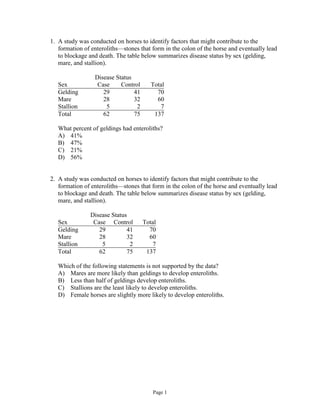
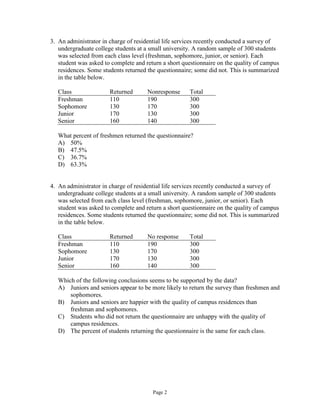
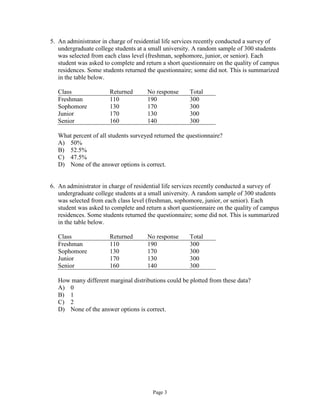
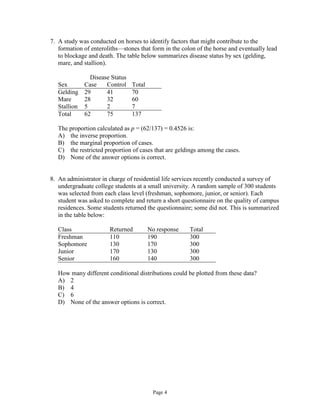
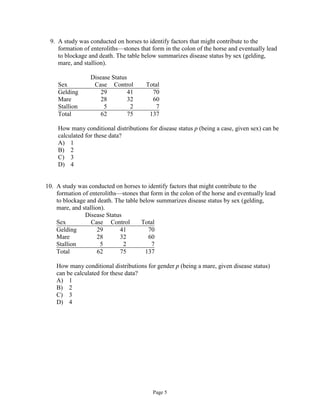
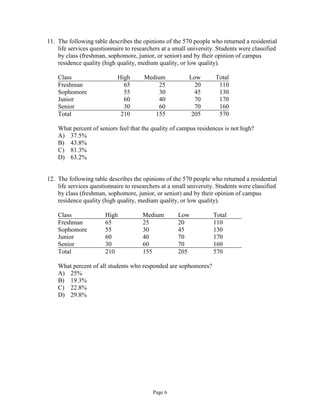
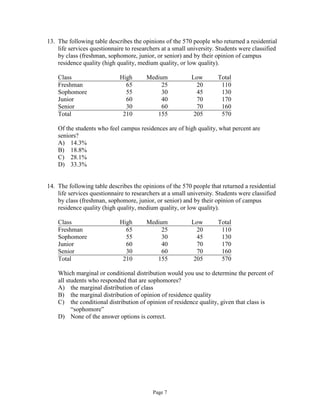
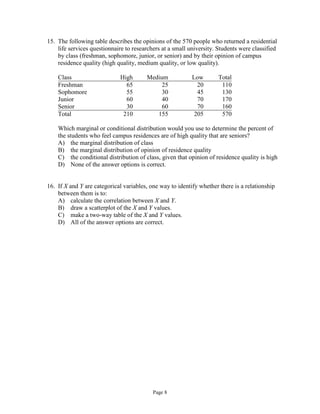
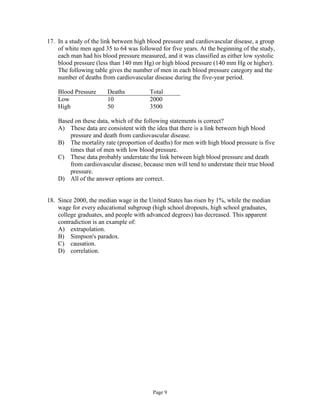
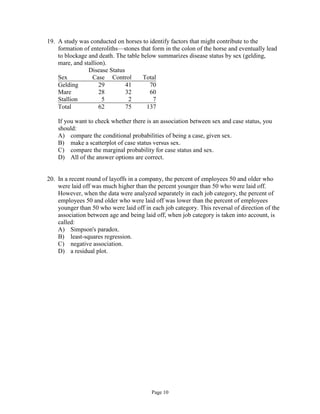

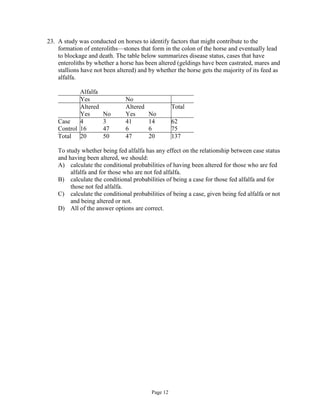
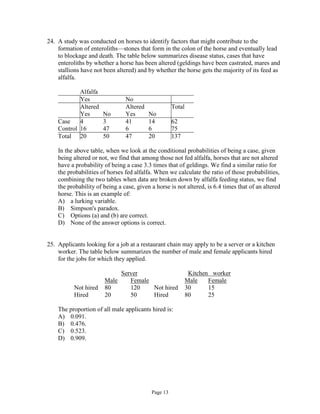

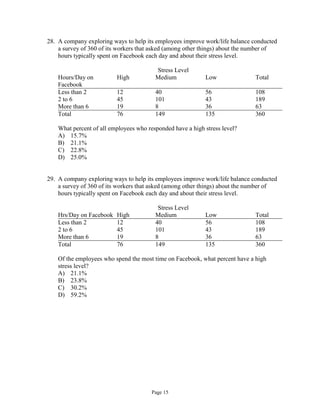
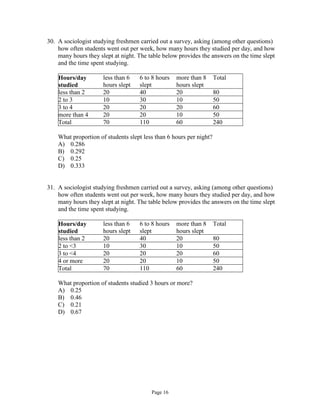
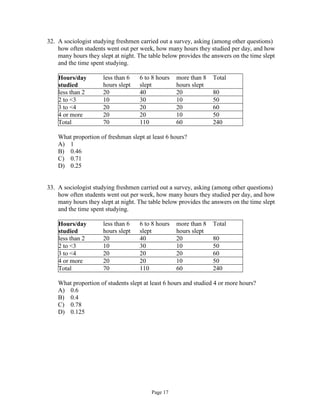
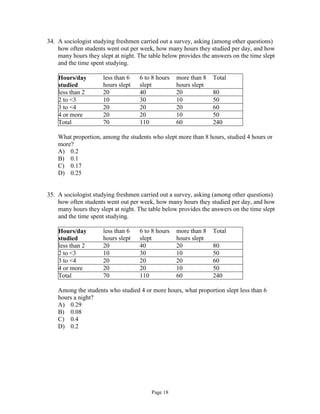
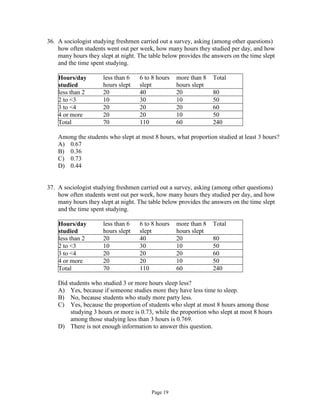
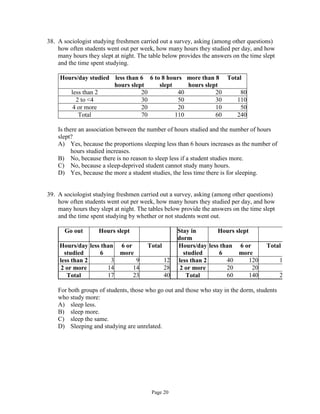

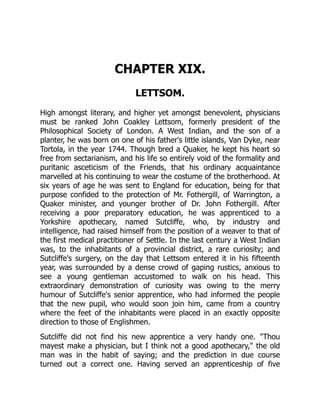
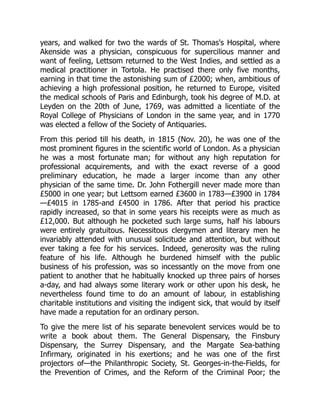

![musical though hesitating voice, and agreeable disposition. He was tall
and slight, but strongly built; and his countenance, thin and firmly set,
although frank in expression, caused beholders to think highly of his
intellectual refinement, as well as of his decision and energy. Possibly his
personal advantages had no slight influence with his feminine applauders.
But he possessed other qualities yet more fitted to secure their esteem—
an Irish impetuosity of temperament and a sincere sympathy with the
unfortunate. He was an excellent horseman, hunting regularly, and riding
superb horses. On one occasion, as he was cantering round the Park, he
saw a man strike a woman, and without an instant's consideration he
pulled up, leaped to the ground, seized the fellow bodily, and with one
enormous effort flung him slap over the Park rails.
But horse-exercise was the only masculine pastime he was very fond of.
He was very temperate in his habits; and although Irish gentlemen used
to get tipsy, he never did. Painting, music, and the society of a few really
superior women, were the principal sources of enjoyment to which this
brilliant charlatan had recourse in his leisure hours. Many were the ladies
of rank and girls of gentle houses who would have gladly linked their
fortunes to him and his ten thousand a year.[20] But though numerous
matrimonial overtures were made to him, he persevered in his bachelor
style of life; and although he was received with peculiar intimacy into the
privacy of female society, scandal never even charged him with a want of
honour or delicacy towards women, apart from his quackery. Indeed, he
broke off his professional connection with one notorious lady of rank,
rather than gratify her eccentric wish to have her likeness taken by him in
that remarkable costume—or no costume at all—in which she was wont
to receive her visitors.
In the exercise of his art he treated women unscrupulously. Amidst the
crowd of ladies who thronged his reception-rooms he moved, smiling,
courteous, and watchful, listening to their mutual confidences about their
maladies, the constitutions of their relations, and their family interests.
Every stray sentence the wily man caught up and retained in his memory,
for future use. To induce those to become his patients who had nothing
the matter with them, and consequently would go to swell the list of his
successful cases, he used the most atrocious artifices.](https://image.slidesharecdn.com/20929-250306233409-10183fe5/85/Basic-Practice-of-Statistics-8th-Edition-Moore-Test-Bank-47-320.jpg)