1. CAN MAKE DECISIONS
ON THEIR OWN
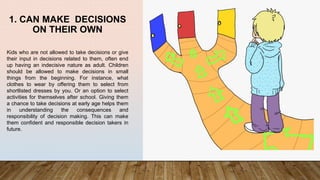
Kids who are not allowed to take decisions or give
their input in decisions related to them, often end
up having an indecisive nature as adult. Children
should be allowed to make decisions in small
things from the beginning. For instance, what
clothes to wear by offering them to select from
shortlisted dresses by you. Or an option to select
activities for themselves after school. Giving them
a chance to take decisions at early age helps them
in understanding the consequences and
responsibility of decision making. This can make
them confident and responsible decision takers in
future.
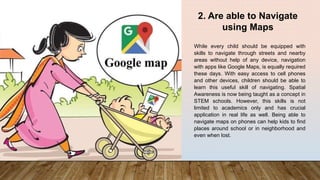
While every child should be equipped with
skills to navigate through streets and nearby
areas without help of any device, navigation
with apps like Google Maps, is equally required
these days. With easy access to cell phones
and other devices, children should be able to
learn this useful skill of navigating. Spatial
Awareness is now being taught as a concept in
STEM schools. However, this skills is not
limited to academics only and has crucial
application in real life as well. Being able to
navigate maps on phones can help kids to find
places around school or in neighborhood and
even when lost.
2. Are able to Navigate
using Maps
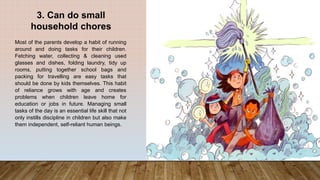
Most of the parents develop a habit of running
around and doing tasks for their children.
Fetching water, collecting & cleaning used
glasses and dishes, folding laundry, tidy up
rooms, putting together school bags and
packing for travelling are easy tasks that
should be done by kids themselves. This habit
of reliance grows with age and creates
problems when children leave home for
education or jobs in future. Managing small
tasks of the day is an essential life skill that not
only instills discipline in children but also make
them independent, self-reliant human beings.
3. Can do small
household chores
4. Prepare Basic Meals and
Breakfast
Parents nowadays are more protective of their
children when it comes to cooking. While we do
not recommend unsupervised use of stove ovens
for children even at 7-10 years of age, it is
extremely important for them to learn making small
meals for themselves in case you are not around
or cannot prepare meals for them. Basic cooking
skills like boiling eggs or making omelets, using
toaster for bread, making sandwiches, tea, warm
milk, pancakes, putting together milk and cereal,
baking under supervision and defrosting meals
from refrigerator are definitely within capacity of
young children. This also helps them in future
when they have to live alone. Start with basic
meals and let them progress under your
supervision.
5. They know how to do
Basic Budgeting
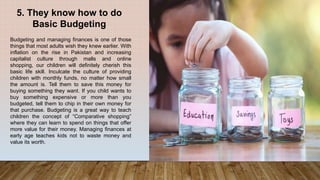
Budgeting and managing finances is one of those
things that most adults wish they knew earlier. With
inflation on the rise in Pakistan and increasing
capitalist culture through malls and online
shopping, our children will definitely cherish this
basic life skill. Inculcate the culture of providing
children with monthly funds, no matter how small
the amount is. Tell them to save this money for
buying something they want. If you child wants to
buy something expensive or more than you
budgeted, tell them to chip in their own money for
that purchase. Budgeting is a great way to teach
children the concept of “Comparative shopping”
where they can learn to spend on things that offer
more value for their money. Managing finances at
early age teaches kids not to waste money and
value its worth.
6. Know how to use First-Aid
box
Parents cannot be around children all the time and
thus, cannot attend them each time they get hurt.
Learning to respond to injuries is an important step for
their development and resilience. Keep a first-aid box
at home with basic medical supplies. Teach your child
about what is a health emergency and which injuries
can be treated at home like pressing on wound to stop
bleeding, cleaning them and using Band-Aid. There is
a plethora of videos available online for basic first-aid
steps and guide that can be shared with children.
Concept of hygiene in general as well as in case of
cuts and bruises should be taught to children from
early age. Moreover, they should be taught about
every essential tool in the first-aid kit to use in
emergency scenario.
7. Know basic Etiquettes &
Social Manners
Every child has a unique nature and personality.
Some kids are introverts, some are extroverts
while some display limited social interaction as
and when needed. In order to survive as adults,
both men and women require basic social norms
to comply with and as kids should not be ignored
by parents.
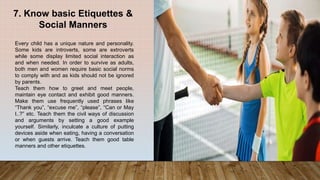
Teach them how to greet and meet people,
maintain eye contact and exhibit good manners.
Make them use frequently used phrases like
“Thank you”, “excuse me”, “please”, “Can or May
I..?” etc. Teach them the civil ways of discussion
and arguments by setting a good example
yourself. Similarly, inculcate a culture of putting
devices aside when eating, having a conversation
or when guests arrive. Teach them good table
manners and other etiquettes.

Basic Life Skills for Children

  • 1.
    1. CAN MAKEDECISIONS ON THEIR OWN Kids who are not allowed to take decisions or give their input in decisions related to them, often end up having an indecisive nature as adult. Children should be allowed to make decisions in small things from the beginning. For instance, what clothes to wear by offering them to select from shortlisted dresses by you. Or an option to select activities for themselves after school. Giving them a chance to take decisions at early age helps them in understanding the consequences and responsibility of decision making. This can make them confident and responsible decision takers in future.
  • 2.
    While every childshould be equipped with skills to navigate through streets and nearby areas without help of any device, navigation with apps like Google Maps, is equally required these days. With easy access to cell phones and other devices, children should be able to learn this useful skill of navigating. Spatial Awareness is now being taught as a concept in STEM schools. However, this skills is not limited to academics only and has crucial application in real life as well. Being able to navigate maps on phones can help kids to find places around school or in neighborhood and even when lost. 2. Are able to Navigate using Maps
  • 3.
    Most of theparents develop a habit of running around and doing tasks for their children. Fetching water, collecting & cleaning used glasses and dishes, folding laundry, tidy up rooms, putting together school bags and packing for travelling are easy tasks that should be done by kids themselves. This habit of reliance grows with age and creates problems when children leave home for education or jobs in future. Managing small tasks of the day is an essential life skill that not only instills discipline in children but also make them independent, self-reliant human beings. 3. Can do small household chores
  • 4.
    4. Prepare BasicMeals and Breakfast Parents nowadays are more protective of their children when it comes to cooking. While we do not recommend unsupervised use of stove ovens for children even at 7-10 years of age, it is extremely important for them to learn making small meals for themselves in case you are not around or cannot prepare meals for them. Basic cooking skills like boiling eggs or making omelets, using toaster for bread, making sandwiches, tea, warm milk, pancakes, putting together milk and cereal, baking under supervision and defrosting meals from refrigerator are definitely within capacity of young children. This also helps them in future when they have to live alone. Start with basic meals and let them progress under your supervision.
  • 5.
    5. They knowhow to do Basic Budgeting Budgeting and managing finances is one of those things that most adults wish they knew earlier. With inflation on the rise in Pakistan and increasing capitalist culture through malls and online shopping, our children will definitely cherish this basic life skill. Inculcate the culture of providing children with monthly funds, no matter how small the amount is. Tell them to save this money for buying something they want. If you child wants to buy something expensive or more than you budgeted, tell them to chip in their own money for that purchase. Budgeting is a great way to teach children the concept of “Comparative shopping” where they can learn to spend on things that offer more value for their money. Managing finances at early age teaches kids not to waste money and value its worth.
  • 6.
    6. Know howto use First-Aid box Parents cannot be around children all the time and thus, cannot attend them each time they get hurt. Learning to respond to injuries is an important step for their development and resilience. Keep a first-aid box at home with basic medical supplies. Teach your child about what is a health emergency and which injuries can be treated at home like pressing on wound to stop bleeding, cleaning them and using Band-Aid. There is a plethora of videos available online for basic first-aid steps and guide that can be shared with children. Concept of hygiene in general as well as in case of cuts and bruises should be taught to children from early age. Moreover, they should be taught about every essential tool in the first-aid kit to use in emergency scenario.
  • 7.
    7. Know basicEtiquettes & Social Manners Every child has a unique nature and personality. Some kids are introverts, some are extroverts while some display limited social interaction as and when needed. In order to survive as adults, both men and women require basic social norms to comply with and as kids should not be ignored by parents. Teach them how to greet and meet people, maintain eye contact and exhibit good manners. Make them use frequently used phrases like “Thank you”, “excuse me”, “please”, “Can or May I..?” etc. Teach them the civil ways of discussion and arguments by setting a good example yourself. Similarly, inculcate a culture of putting devices aside when eating, having a conversation or when guests arrive. Teach them good table manners and other etiquettes.