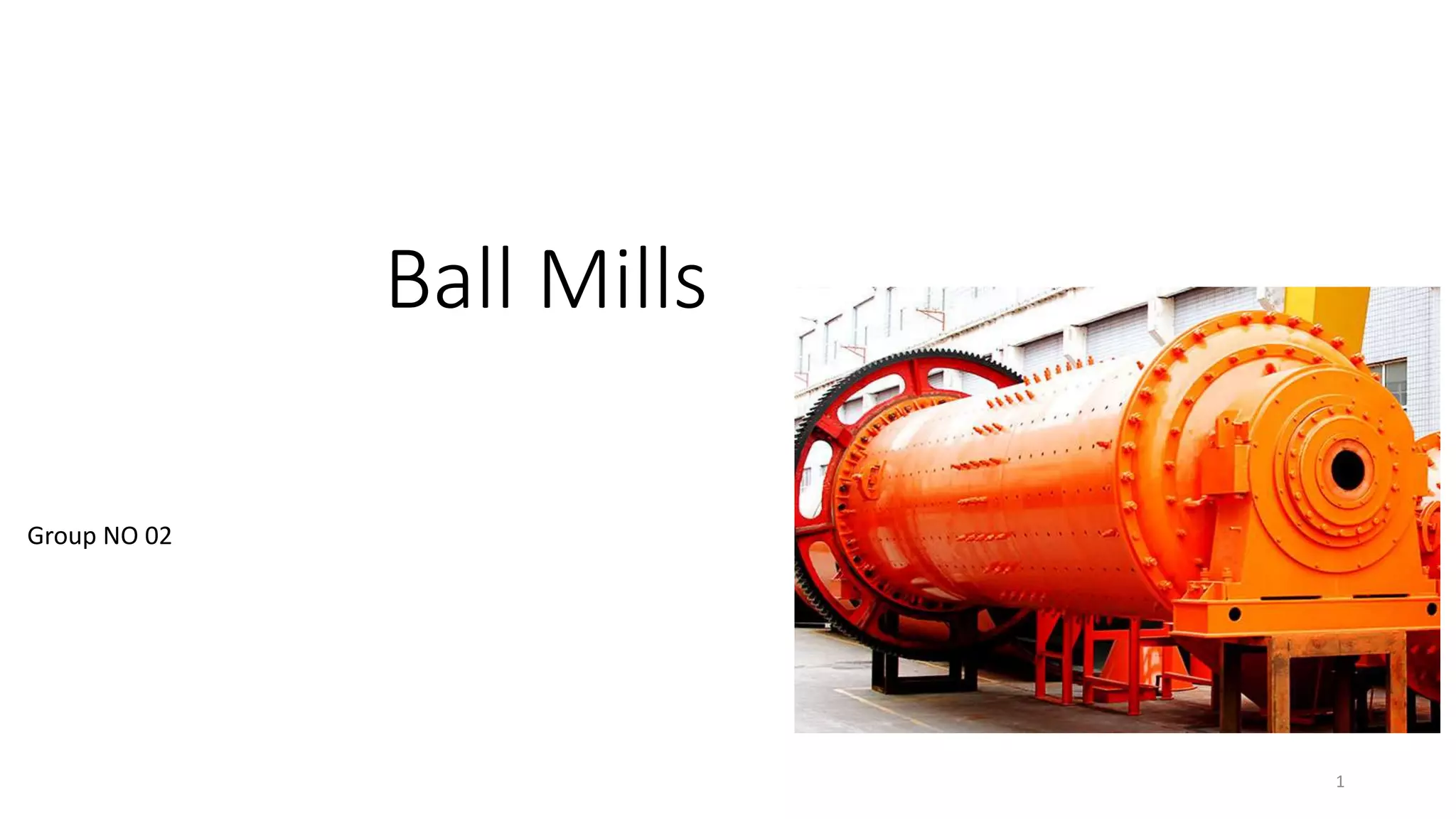
Ball Mills
1
Group NO 02
Contents
• Introduction
• Structure
• Principle
• Advantages
• Disadvantages
• Applications
• Manufacturers
• Questions
2
Introduction
• Mostly used grinding equipment with high efficiency
• Grinding can be carried out either wet or dry
• hollow cylindrical shell rotating about its axis and Length of the mill is
approximately equal to its diameter
• partially filled with balls made up of Steel, Stainless steel or rubber
• resistant materials such as Manganese, Steel or rubber
• Balls occupy about 30-50% of the volume and dia of the ball 12 mm-
125 mm
3
Structure
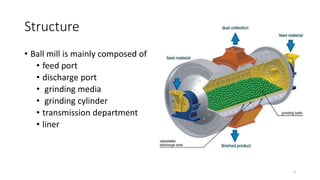
• Ball mill is mainly composed of
• feed port
• discharge port
• grinding media
• grinding cylinder
• transmission department
• liner
4
How does a Ball Mill Work?
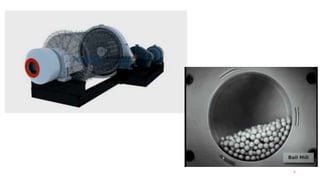
• The material uniformly enters the first chamber of the ball mill by the
feeding device through the hollow shaft.
• The chamber has stepped lining or corrugated lining, which is filled with
steel balls of different specifications.
• Then the rotation of the grinding cylinder generates centrifugal force to
bring the grinding media to a certain height.
• After falling, they hit and grind the material.
• When the material is coarsely ground in the first warehouse, it enters the
second warehouse through a single-layer compartment board.
• The powder is discharged through the discharge raft to complete the
grinding operation
5
6
Advantages
• The cost of installation is low
• The cost of Production is low
• It is suitable for materials of all degree of hardness
• The grinding Meduim is cheap
• Used for the grinding of explosive materials
• Suitable for both batch &continuous operations
7
Disadvantages
• High machine noise level especially if the hollow cylinder is made of
metal, but much less if rubber is used.
• Relatively long milling time.
• It is difficult to clean the machine after use.
• Contamination of product may occur as a result of wear and tear
which occurs principally from the balls and partially from the casing
8
Application
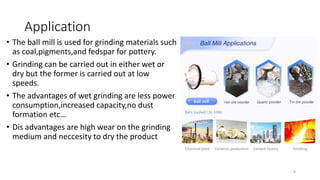
• The ball mill is used for grinding materials such
as coal,pigments,and fedspar for pottery.
• Grinding can be carried out in either wet or
dry but the former is carried out at low
speeds.
• The advantages of wet grinding are less power
consumption,increased capacity,no dust
formation etc…
• Dis advantages are high wear on the grinding
medium and neccesity to dry the product
9
Manufacturers
10
Container Products Corporation
Maag Automatik Inc
Questions
11
12

ball mills.pptx

  • 1.
  • 2.
    Contents • Introduction • Structure •Principle • Advantages • Disadvantages • Applications • Manufacturers • Questions 2
  • 3.
    Introduction • Mostly usedgrinding equipment with high efficiency • Grinding can be carried out either wet or dry • hollow cylindrical shell rotating about its axis and Length of the mill is approximately equal to its diameter • partially filled with balls made up of Steel, Stainless steel or rubber • resistant materials such as Manganese, Steel or rubber • Balls occupy about 30-50% of the volume and dia of the ball 12 mm- 125 mm 3
  • 4.
    Structure • Ball millis mainly composed of • feed port • discharge port • grinding media • grinding cylinder • transmission department • liner 4
  • 5.
    How does aBall Mill Work? • The material uniformly enters the first chamber of the ball mill by the feeding device through the hollow shaft. • The chamber has stepped lining or corrugated lining, which is filled with steel balls of different specifications. • Then the rotation of the grinding cylinder generates centrifugal force to bring the grinding media to a certain height. • After falling, they hit and grind the material. • When the material is coarsely ground in the first warehouse, it enters the second warehouse through a single-layer compartment board. • The powder is discharged through the discharge raft to complete the grinding operation 5
  • 6.
  • 7.
    Advantages • The costof installation is low • The cost of Production is low • It is suitable for materials of all degree of hardness • The grinding Meduim is cheap • Used for the grinding of explosive materials • Suitable for both batch &continuous operations 7
  • 8.
    Disadvantages • High machinenoise level especially if the hollow cylinder is made of metal, but much less if rubber is used. • Relatively long milling time. • It is difficult to clean the machine after use. • Contamination of product may occur as a result of wear and tear which occurs principally from the balls and partially from the casing 8
  • 9.
    Application • The ballmill is used for grinding materials such as coal,pigments,and fedspar for pottery. • Grinding can be carried out in either wet or dry but the former is carried out at low speeds. • The advantages of wet grinding are less power consumption,increased capacity,no dust formation etc… • Dis advantages are high wear on the grinding medium and neccesity to dry the product 9
  • 10.
  • 11.
  • 12.