Baker’s Dozen
13 tips for
cooking
up tasty
reports
Liz Van Patten
QRCA Annual Conference
October 2012
Recipe
• Framing
• Storytelling
• Crafting insights
• Making it accessible
1. Understand client’s
objectives and choices
• Plan to answer the objectives
• Consider the available options
2. Get agreement on
reporting methods
• How will report be used?
• What format(s) is best solution?
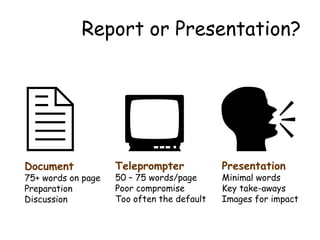
Report or Presentation?
Teleprompter
50 – 75 words/page
Poor compromise
Too often the default
Document
75+ words on page
Preparation
Discussion
 Presentation
Minimal words
Key take-aways
Images for impact

3. Create a template from
project objectives
• Build a structure for the report
• Start with issues in the guide
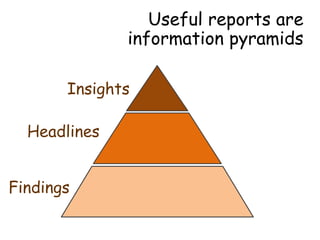
Useful reports are
information pyramids
Insights
Headlines
Findings
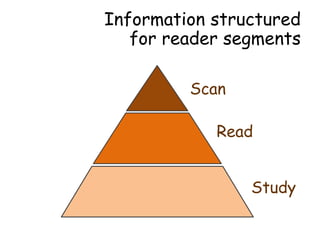
Information structured
for reader segments
Scan
Read
Study
4. Start writing before
fieldwork begins
• Write objectives and method in advance
• Gives stronger focus during interviewing
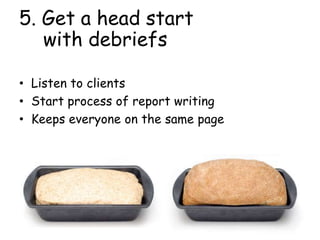
5. Get a head start
with debriefs
• Listen to clients
• Start process of report writing
• Keeps everyone on the same page
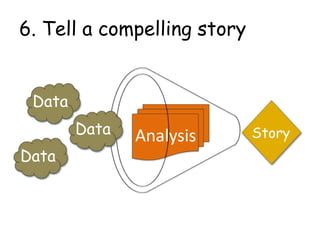
Analysis
Story
6. Tell a compelling story
StoryData
Data
Data
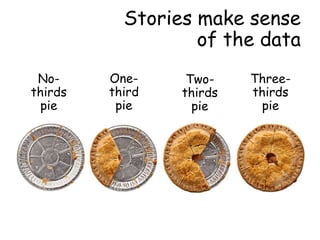
One-
third
pie
Two-
thirds
pie
Three-
thirds
pie
No-
thirds
pie
Stories make sense
of the data
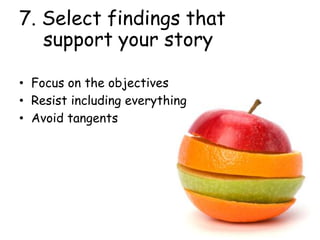
7. Select findings that
support your story
• Focus on the objectives
• Resist including everything
• Avoid tangents
8. Add value with analysis
• Incorporate your own unique insights
9. Make information
easy to access
• Write headlines not labels
• Scan in ten minutes
10. Craft insights
that lead to action
• Write action-oriented insights
• Use verbs
What is an insight anyway?
• Below the surface
• Not common knowledge
• Leads to new opportunities
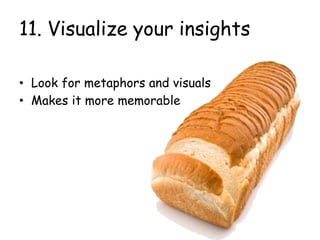
11. Visualize your insights
• Look for metaphors and visuals
• Makes it more memorable
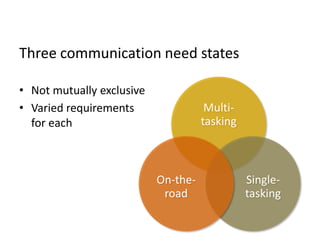
Three communication need states
• Not mutually exclusive
• Varied requirements
for each
Multi-
tasking
Single-
tasking
On-the-
road
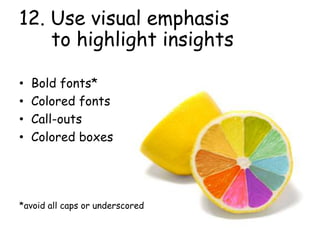
12. Use visual emphasis
to highlight insights
• Bold fonts*
• Colored fonts
• Call-outs
• Colored boxes
*avoid all caps or underscored
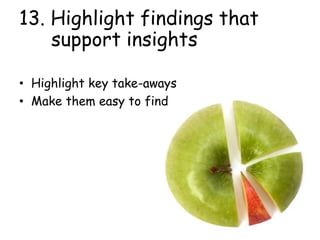
• Highlight key take-aways
• Make them easy to find
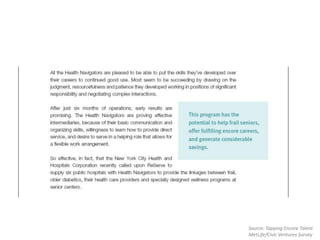
13. Highlight findings that
support insights
Source: Tapping Encore Talent
MetLife/Civic Ventures Survey
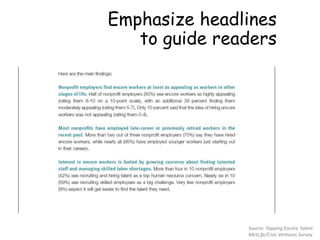
Emphasize headlines
to guide readers
Source: Tapping Encore Talent
MetLife/Civic Ventures Survey
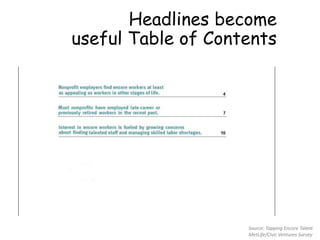
Headlines become
useful Table of Contents
Source: Tapping Encore Talent
MetLife/Civic Ventures Survey
Recipe for better reports
• Understand client needs
• Get a head start
• Write from the objectives
• Think like a mystery writer
• Craft insights
• Make information accessible
Thank you!
Liz Van Patten
631-283-7842
Lvanpatten@aol.com

Baker's Dozen: 13 Tips for Better Reports and Presentations

Editor's Notes

  • #4 A good report begins with a good understanding of the client’s needs and available options. The objectives are the touchstone for developing the report.A good report requires a balance of answering the objectives within the available options.
  • #5 Find out what format the client needs Find out how the report will be used
  • #7 Make a template based on the objectivesA roadmap for developing the reportObjectives come from the discussion guide
  • #10 Write out the research objectives and methodology first (saves time later)Strengthens focus while moderating
  • #11 Consider debriefs the beginning of the report writing processListen to clients and engage them in conversation (priorities can change/evolve)Debrief daily to make sure the research stays on trackHelps ensure you and the clients all go home on the same page
  • #13 Think like a journalist – curiosity – think like CSI – solving problemsListeners are the main character – take them from A to B; from business question to insightBuild stories from beginning to endThink like a mystery writer
  • #14 Findings should address the objectivesNo need to play back everything -- “I don’t read.”Avoid “interesting” tangents
  • #15 Bring in relatedinsights from other projects and past experiencesWhat is an insight?
  • #16 Headlines should concisely state a finding, rather only be a labelYou should be able to flip through the report in 10 minutes and get the key insightsThe reader should be able to thumb through and get the gist of the report from the headlines
  • #17 Write action-oriented insightsUse verbs so they read like recommendationsExamples???1. An insight is invariably below the surface. It isn’t immediately visible or apparent.2. An insight isn’t already common knowledge or part of prevailing wisdom3. An insight leads to a new opportunity or growth potential that can be effectively exploited.Examples of insights:Coffee marketing discovered that the smell of coffee was the most important factor even though you drink coffee, it’s not a perfume. This lead to a focus on the celebration of aroma.Washing up liquid: the focus on the sparkle of glasses (wine glasses) came from the insight that you can most clearly and easily see with glass if it’s really clean or not. It’s about light, not dirt.Are Market Researchers good at uncovering Insights? We all know about fulfilling a brief – hitting the objectives.I’d say that almost every project I’ve ever worked on in market research has uncovered an insight that actually wasn’t in the brief – road-side stuff, so to speak.Maybe we should consider documenting not just what was asked for in a brief, but point out side-insights that weren’t expected.
  • #19 Think in terms of metaphors and visuals. Visuals save you words and are memorable.
  • #21 Educate yourself on visual thinkingPay attention to magazines and graphic designers as examples of how to highlight key insights
  • #22 Don’t hint at findings Highlight them to make sure that findings are exaggerated/easy to skim
  • #26 Speak to your client beforehandDebrief oftenUse journalistic instincts to make sure findings pop