05/12/20
24
BAHS 201 1
DATABASES
Lecture 3
05/12/2024
BAHS 201 2
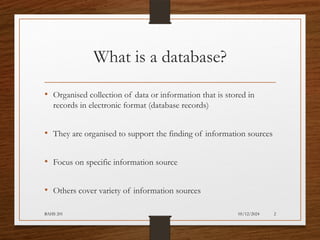
What is a database?
• Organised collection of data or information that is stored in
records in electronic format (database records)
• They are organised to support the finding of information sources
• Focus on specific information source
• Others cover variety of information sources
05/12/2024
BAHS 201 3
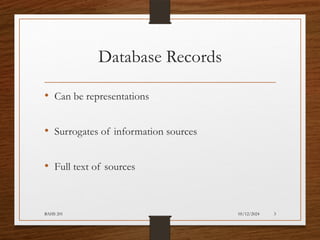
Database Records
• Can be representations
• Surrogates of information sources
• Full text of sources
05/12/2024
BAHS 201 4
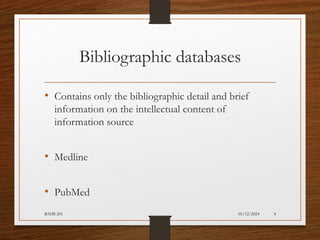
Bibliographic databases
• Contains only the bibliographic detail and brief
information on the intellectual content of
information source
• Medline
• PubMed
05/12/2024
BAHS 201 5
Types of Databases
1. Bibliographic databases
2. Full-text databases
05/12/2024
BAHS 201 6
Full-text databases
• Cover range of content
05/12/2024
BAHS 201 7
Databases cont.
• When you search a database, the results display three
options:
1. Bibliographic description
2. Bibliographic description with a link to the full text of
the journal article or book
3. Full-text
05/12/2024
BAHS 201 8
Databases cont.
• A record can include a brief descriptions of the
intellectual content of the information source
• Some databases refer to these descriptors as subject
headings, major descriptors or indexing terms
05/12/2024
BAHS 201 9
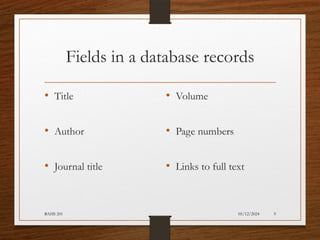
Fields in a database records
• Title
• Author
• Journal title
• Volume
• Page numbers
• Links to full text
05/12/2024
BAHS 201 10
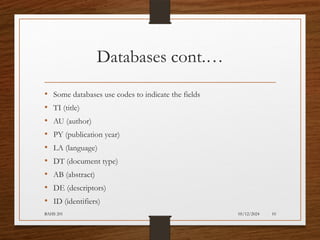
Databases cont.…
• Some databases use codes to indicate the fields
• TI (title)
• AU (author)
• PY (publication year)
• LA (language)
• DT (document type)
• AB (abstract)
• DE (descriptors)
• ID (identifiers)
05/12/2024
BAHS 201 11
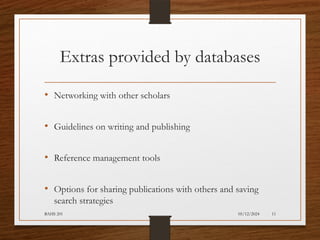
Extras provided by databases
• Networking with other scholars
• Guidelines on writing and publishing
• Reference management tools
• Options for sharing publications with others and saving
search strategies
05/12/2024
BAHS 201 12
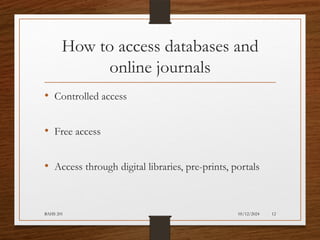
How to access databases and
online journals
• Controlled access
• Free access
• Access through digital libraries, pre-prints, portals
05/12/2024
BAHS 201 13
Controlled access databases
• Databases and online journals to which libraries of
academic institutions subscribe
• Accessed through the library of the institution’s
website
• University of Ghana E-Resources (library website)
05/12/2024
BAHS 201 14
Free access on the web
• No need for passwords
• Free journals on the web
• Open-access repositories
• Some can be accessed independently
• Eg. PubMed, Medline free version
05/12/2024
BAHS 201 15
Access through digital libraries, preprint
archives, subject gateways and portals
• Preprints include pre-publication drafts of journal articles,
technical communications, scholarly papers, other documents
• Eg. E-print network, ScienceDirect
05/12/2024
BAHS 201 16
Subject gateways and Portals
• Collection of websites on a particular subject
• Contain web resources that has been evaluated by subject specialists
• They contain e-journals, books, government reports etc.
• They usually follow a principle of open access
• Eg: BIOME (http://biome.ac.uk/)
• Academic Info (http://www.academicinfo.com/)
• SciCentral (https://www.scicentral.com)
05/12/2024
BAHS 201 17
Subject gateways and Portals
• Presents subject specific information
• Portals brings information from diverse sources
• Eg: Excite, MSN, AOL
05/12/2024
BAHS 201 18
Choosing a database
• It is important to know the topic you are looking for and discipline it falls
under
• Eg. Medline – medical database
• CINHAL-nursing science
• ERIC- education
• ScienceDirect- multidisciplinary
05/12/2024
BAHS 201 19
Criteria for choosing a database
• Topics covered
• Availability of full text
• Types of publications
covered
• Time span/period covered
• Fields available to refine the
search strategy
• Descriptions of intellectual
content (descriptors,
abstracts)
• Links to other relevant
publications
05/12/2024
BAHS 201 20
Why databases
• Research
• Businesses
• Time and cost effective
than print publication
• Space saving
• Easy updating, modification
and duplication
• Easy dissemination and
distribution of information
• Multiuser accessibility
• Available anytime
05/12/2024
BAHS 201 21
Demerits
• very few people can use and adopt it
• Requires relatively advance technology
• Necessary skill, training and experience require
• Non compatibility of software and hardware
• Rapid invention and development can cripple the use

BAHS201L3 computer applications and properties.pptx

  • 1.
  • 2.
    05/12/2024 BAHS 201 2 Whatis a database? • Organised collection of data or information that is stored in records in electronic format (database records) • They are organised to support the finding of information sources • Focus on specific information source • Others cover variety of information sources
  • 3.
    05/12/2024 BAHS 201 3 DatabaseRecords • Can be representations • Surrogates of information sources • Full text of sources
  • 4.
    05/12/2024 BAHS 201 4 Bibliographicdatabases • Contains only the bibliographic detail and brief information on the intellectual content of information source • Medline • PubMed
  • 5.
    05/12/2024 BAHS 201 5 Typesof Databases 1. Bibliographic databases 2. Full-text databases
  • 6.
    05/12/2024 BAHS 201 6 Full-textdatabases • Cover range of content
  • 7.
    05/12/2024 BAHS 201 7 Databasescont. • When you search a database, the results display three options: 1. Bibliographic description 2. Bibliographic description with a link to the full text of the journal article or book 3. Full-text
  • 8.
    05/12/2024 BAHS 201 8 Databasescont. • A record can include a brief descriptions of the intellectual content of the information source • Some databases refer to these descriptors as subject headings, major descriptors or indexing terms
  • 9.
    05/12/2024 BAHS 201 9 Fieldsin a database records • Title • Author • Journal title • Volume • Page numbers • Links to full text
  • 10.
    05/12/2024 BAHS 201 10 Databasescont.… • Some databases use codes to indicate the fields • TI (title) • AU (author) • PY (publication year) • LA (language) • DT (document type) • AB (abstract) • DE (descriptors) • ID (identifiers)
  • 11.
    05/12/2024 BAHS 201 11 Extrasprovided by databases • Networking with other scholars • Guidelines on writing and publishing • Reference management tools • Options for sharing publications with others and saving search strategies
  • 12.
    05/12/2024 BAHS 201 12 Howto access databases and online journals • Controlled access • Free access • Access through digital libraries, pre-prints, portals
  • 13.
    05/12/2024 BAHS 201 13 Controlledaccess databases • Databases and online journals to which libraries of academic institutions subscribe • Accessed through the library of the institution’s website • University of Ghana E-Resources (library website)
  • 14.
    05/12/2024 BAHS 201 14 Freeaccess on the web • No need for passwords • Free journals on the web • Open-access repositories • Some can be accessed independently • Eg. PubMed, Medline free version
  • 15.
    05/12/2024 BAHS 201 15 Accessthrough digital libraries, preprint archives, subject gateways and portals • Preprints include pre-publication drafts of journal articles, technical communications, scholarly papers, other documents • Eg. E-print network, ScienceDirect
  • 16.
    05/12/2024 BAHS 201 16 Subjectgateways and Portals • Collection of websites on a particular subject • Contain web resources that has been evaluated by subject specialists • They contain e-journals, books, government reports etc. • They usually follow a principle of open access • Eg: BIOME (http://biome.ac.uk/) • Academic Info (http://www.academicinfo.com/) • SciCentral (https://www.scicentral.com)
  • 17.
    05/12/2024 BAHS 201 17 Subjectgateways and Portals • Presents subject specific information • Portals brings information from diverse sources • Eg: Excite, MSN, AOL
  • 18.
    05/12/2024 BAHS 201 18 Choosinga database • It is important to know the topic you are looking for and discipline it falls under • Eg. Medline – medical database • CINHAL-nursing science • ERIC- education • ScienceDirect- multidisciplinary
  • 19.
    05/12/2024 BAHS 201 19 Criteriafor choosing a database • Topics covered • Availability of full text • Types of publications covered • Time span/period covered • Fields available to refine the search strategy • Descriptions of intellectual content (descriptors, abstracts) • Links to other relevant publications
  • 20.
    05/12/2024 BAHS 201 20 Whydatabases • Research • Businesses • Time and cost effective than print publication • Space saving • Easy updating, modification and duplication • Easy dissemination and distribution of information • Multiuser accessibility • Available anytime
  • 21.
    05/12/2024 BAHS 201 21 Demerits •very few people can use and adopt it • Requires relatively advance technology • Necessary skill, training and experience require • Non compatibility of software and hardware • Rapid invention and development can cripple the use