PHILIPPINE
CLIMATE
DATA
THE
CHRISTIAN C. BAGO
Midterm
Assignment #1
E2R
2
CLIMATE IN THE
PHILLIPINES
The Climate of the Philippines is tropical and maritime. It is
characterized by relatively high temperature, high
humidity and abundant rainfall. It is similar in many
respects to the climate of the countries of Central
America. Temperature, humidity, and rainfall, which are
discussed hereunder, are the most important elements of
the country's weather and climate.
3
HUMIDITY
Humidity refers to the moisture content of the atmosphere. Due to high
temperature and the surrounding bodies of water, the Philippines has a
high relative humidity. The average monthly relative humidty varies
between 71 percent in March and 85 percent in September. The
combination of warm temperature and high relative and absolute
humidities give rise to high sensible temperature throughout the
archipelago. It is especially uncomfortable during March to May, when
temperature and humidity attain their maximum levels.
4
TEMPERATURE
Based on the average of all weather stations in the Philippines, excluding Baguio, the mean annual temperature is 26.6o
C. The coolest months fall in January with a mean temperature of 25.5oC while the warmest month occurs in May with
a mean temperature of 28.3oC. Latitude is an insignificant factor in the variation of temperature while altitude shows
greater contrast in temperature. Thus, the mean annual temperature of Baguio with an elevation of 1,500 meters is
18.3oC. This makes the temperature of Baguio comparable with those in the temperate climate and because of this, it
is known as the summer capital of the Philippines.
The difference between the mean annual temperature of the southernmost station in Zamboanga and that of the
northermost station in Laoag is insignificant. In other words, there is essentially no difference in the mean annual
temperature of places in Luzon, Visayas or Mindanao measured at or near sea level.
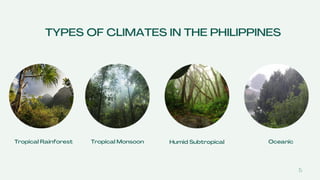
Tropical Rainforest Humid Subtropical Oceanic
5
TYPES OF CLIMATES IN THE PHILIPPINES
Tropical Monsoon
6
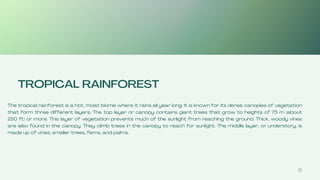
TROPICAL RAINFOREST
The tropical rainforest is a hot, moist biome where it rains all year long. It is known for its dense canopies of vegetation
that form three different layers. The top layer or canopy contains giant trees that grow to heights of 75 m (about
250 ft) or more. This layer of vegetation prevents much of the sunlight from reaching the ground. Thick, woody vines
are also found in the canopy. They climb trees in the canopy to reach for sunlight. The middle layer, or understory, is
made up of vines, smaller trees, ferns, and palms.
7
TROPICAL MONSOON
Tropical monsoon climates have monthly mean temperatures above 18 °C (64
°F) in every month of the year and a dry season. Tropical monsoon climates is
the intermediate climate between the wet Af (or tropical wet climate) and the
drier Aw (or tropical savanna climate).
8
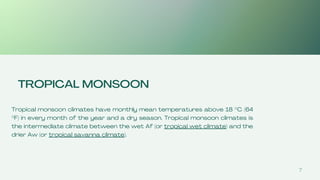
HUMID SUBTROPICAL
A humid subtropical climate is a zone of climate characterized by hot and
humid summers, and cool to mild winters. These climates normally lie on the
southeast side of all continents (except Antarctica), generally between
latitudes 25° and 40° and are located poleward from adjacent tropical
climates. It is also known as warm temperate climate in some climate
classifications.
9
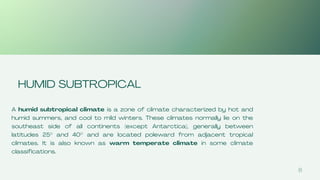
OCEANIC
An oceanic climate (also known as a marine or maritime climate) is characterized
by cool summers and cool winters, with a narrow annual temperature range
and few extremes due to maritime influence. Oceanic climates can be found
between 35° and 60° north and south of the equator, primarily on the western
sides of continents and in isolated locations.
Oceanic climates have a monthly mean temperature below 22 °C (72 °F) in the
warmest month, and above 0 °C (32 °F) (or −3 °C (27 °F)) in the coldest month.
SEASONAL
FORECAST
A seasonal forecast provides
forecast information about the
general weather conditions at
seasonal timescales up to several
months ahead. Long range
predictions rely on predicting
components of the atmosphere and
the oceans which show variations
at large spatial and temporal scales.
10
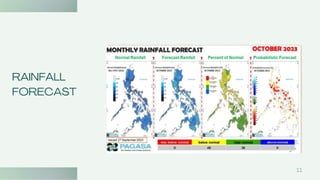
RAINFALL
FORECAST
11
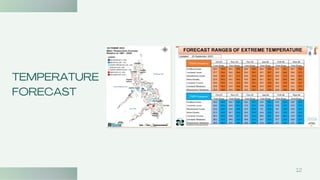
TEMPERATURE
FORECAST
12
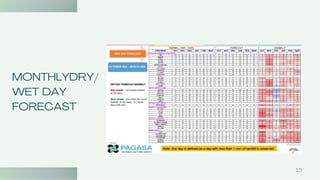
MONTHLYDRY/
WET DAY
FORECAST
13
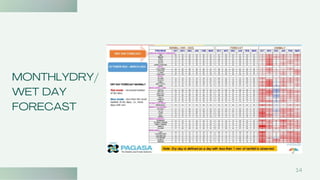
MONTHLYDRY/
WET DAY
FORECAST
14
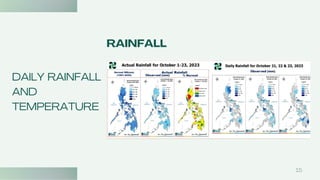
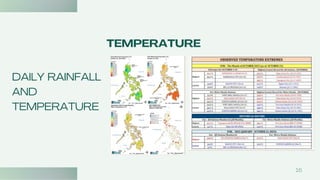
DAILY RAINFALL
AND
TEMPERATURE
15
RAINFALL
DAILY RAINFALL
AND
TEMPERATURE
16
TEMPERATURE
REGIONAL
FORECAST
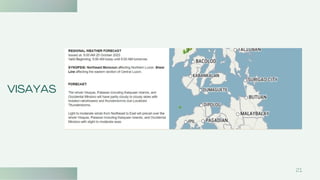
A regional forecast is like a weather
prediction for a specific area, such as
a city, state, or part of a country. It
tells you what the weather will be like
in that particular place, including
things like temperature, rain, and
sunshine, for a certain period, usually
a few days ahead. It helps people
plan for outdoor activities or know
what to expect in their local area.
17
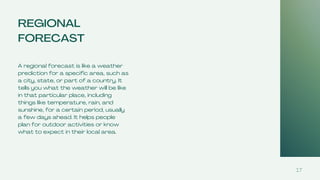
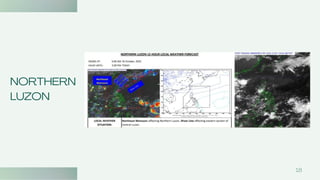
NORTHERN
LUZON
18
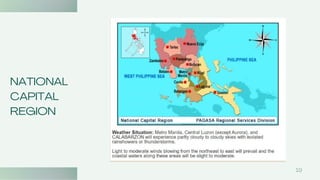
NATIONAL
CAPITAL
REGION
19
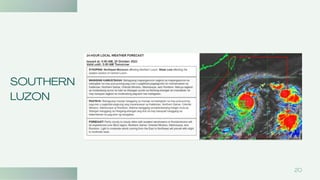
SOUTHERN
LUZON
20
VISAYAS
21
MINDANAO
22
WEATHER
TERMINOLOGIES
CLOUD
DEFINITION
23
WIND
DEFINITION
24
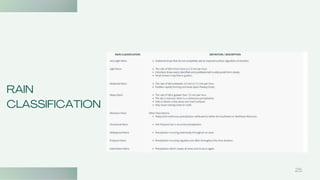
RAIN
CLASSIFICATION
25
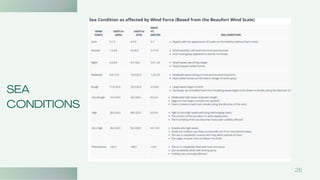
SEA
CONDITIONS
26
REFERENCES
26
https://soilhealth.ucdavis.edu/climatic-zones/oceanic
https://www.britannica.com/science/tropical-rainforest
https://skybrary.aero/articles/tropical-monsoon-climate-am
https://www.pagasa.dost.gov.ph/
--- END OF SLIDE ---

Bago_Christian_E2R_ARC-212_Philippine-Climate.pdf

  • 1.
  • 2.
    2 CLIMATE IN THE PHILLIPINES TheClimate of the Philippines is tropical and maritime. It is characterized by relatively high temperature, high humidity and abundant rainfall. It is similar in many respects to the climate of the countries of Central America. Temperature, humidity, and rainfall, which are discussed hereunder, are the most important elements of the country's weather and climate.
  • 3.
    3 HUMIDITY Humidity refers tothe moisture content of the atmosphere. Due to high temperature and the surrounding bodies of water, the Philippines has a high relative humidity. The average monthly relative humidty varies between 71 percent in March and 85 percent in September. The combination of warm temperature and high relative and absolute humidities give rise to high sensible temperature throughout the archipelago. It is especially uncomfortable during March to May, when temperature and humidity attain their maximum levels.
  • 4.
    4 TEMPERATURE Based on theaverage of all weather stations in the Philippines, excluding Baguio, the mean annual temperature is 26.6o C. The coolest months fall in January with a mean temperature of 25.5oC while the warmest month occurs in May with a mean temperature of 28.3oC. Latitude is an insignificant factor in the variation of temperature while altitude shows greater contrast in temperature. Thus, the mean annual temperature of Baguio with an elevation of 1,500 meters is 18.3oC. This makes the temperature of Baguio comparable with those in the temperate climate and because of this, it is known as the summer capital of the Philippines. The difference between the mean annual temperature of the southernmost station in Zamboanga and that of the northermost station in Laoag is insignificant. In other words, there is essentially no difference in the mean annual temperature of places in Luzon, Visayas or Mindanao measured at or near sea level.
  • 5.
    Tropical Rainforest HumidSubtropical Oceanic 5 TYPES OF CLIMATES IN THE PHILIPPINES Tropical Monsoon
  • 6.
    6 TROPICAL RAINFOREST The tropicalrainforest is a hot, moist biome where it rains all year long. It is known for its dense canopies of vegetation that form three different layers. The top layer or canopy contains giant trees that grow to heights of 75 m (about 250 ft) or more. This layer of vegetation prevents much of the sunlight from reaching the ground. Thick, woody vines are also found in the canopy. They climb trees in the canopy to reach for sunlight. The middle layer, or understory, is made up of vines, smaller trees, ferns, and palms.
  • 7.
    7 TROPICAL MONSOON Tropical monsoonclimates have monthly mean temperatures above 18 °C (64 °F) in every month of the year and a dry season. Tropical monsoon climates is the intermediate climate between the wet Af (or tropical wet climate) and the drier Aw (or tropical savanna climate).
  • 8.
    8 HUMID SUBTROPICAL A humidsubtropical climate is a zone of climate characterized by hot and humid summers, and cool to mild winters. These climates normally lie on the southeast side of all continents (except Antarctica), generally between latitudes 25° and 40° and are located poleward from adjacent tropical climates. It is also known as warm temperate climate in some climate classifications.
  • 9.
    9 OCEANIC An oceanic climate(also known as a marine or maritime climate) is characterized by cool summers and cool winters, with a narrow annual temperature range and few extremes due to maritime influence. Oceanic climates can be found between 35° and 60° north and south of the equator, primarily on the western sides of continents and in isolated locations. Oceanic climates have a monthly mean temperature below 22 °C (72 °F) in the warmest month, and above 0 °C (32 °F) (or −3 °C (27 °F)) in the coldest month.
  • 10.
    SEASONAL FORECAST A seasonal forecastprovides forecast information about the general weather conditions at seasonal timescales up to several months ahead. Long range predictions rely on predicting components of the atmosphere and the oceans which show variations at large spatial and temporal scales. 10
  • 11.
  • 12.
  • 13.
  • 14.
  • 15.
  • 16.
  • 17.
    REGIONAL FORECAST A regional forecastis like a weather prediction for a specific area, such as a city, state, or part of a country. It tells you what the weather will be like in that particular place, including things like temperature, rain, and sunshine, for a certain period, usually a few days ahead. It helps people plan for outdoor activities or know what to expect in their local area. 17
  • 18.
  • 19.
  • 20.
  • 21.
  • 22.
  • 23.
  • 24.
  • 25.
  • 26.
  • 27.
  • 28.