Activity 1: Who Am I
Directions:
Search and then loop the
words from the
Badminton Word Bank.
Do it horizontally,
vertically, or diagonally.
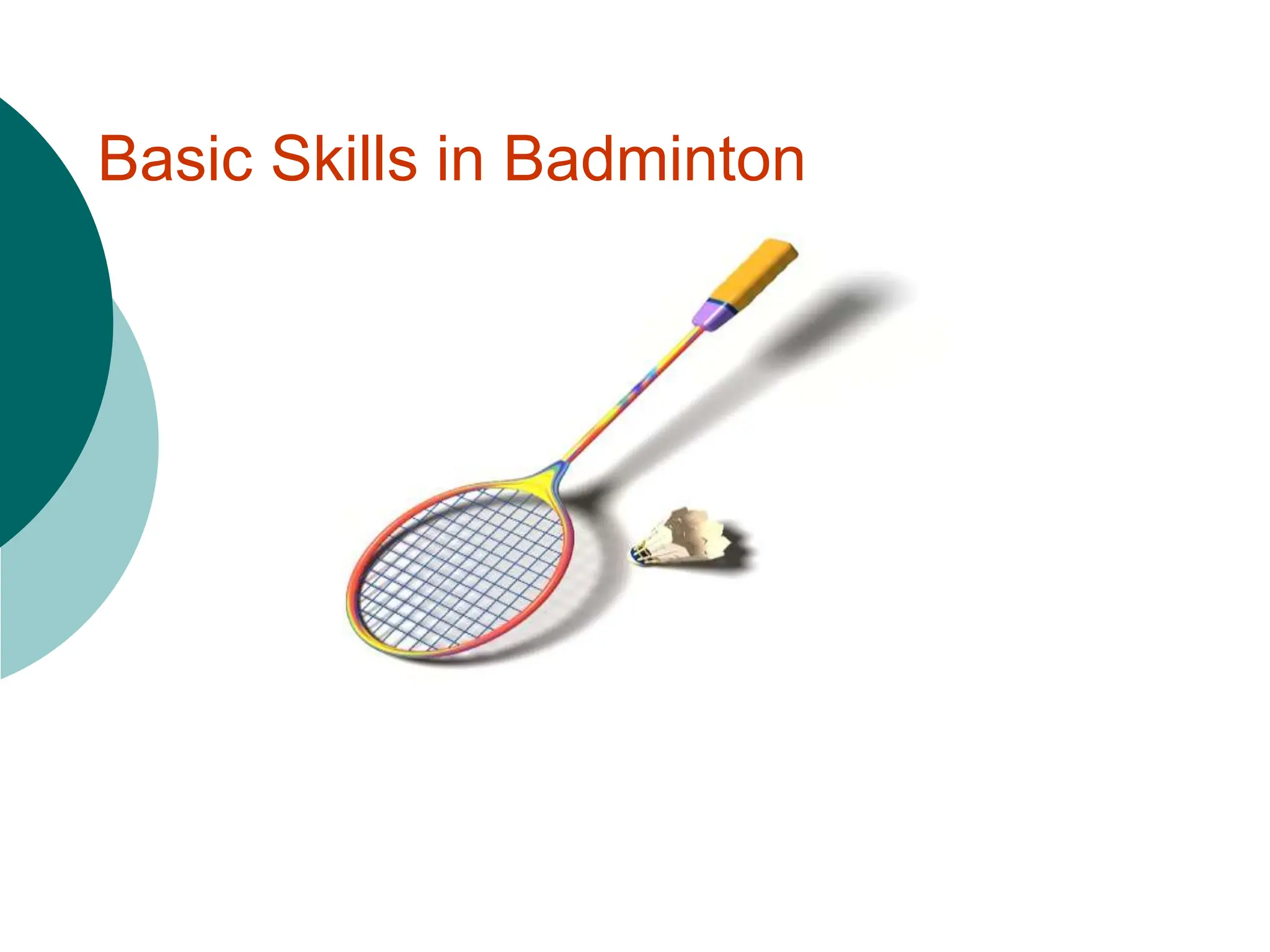
Basic Skills in Badminton
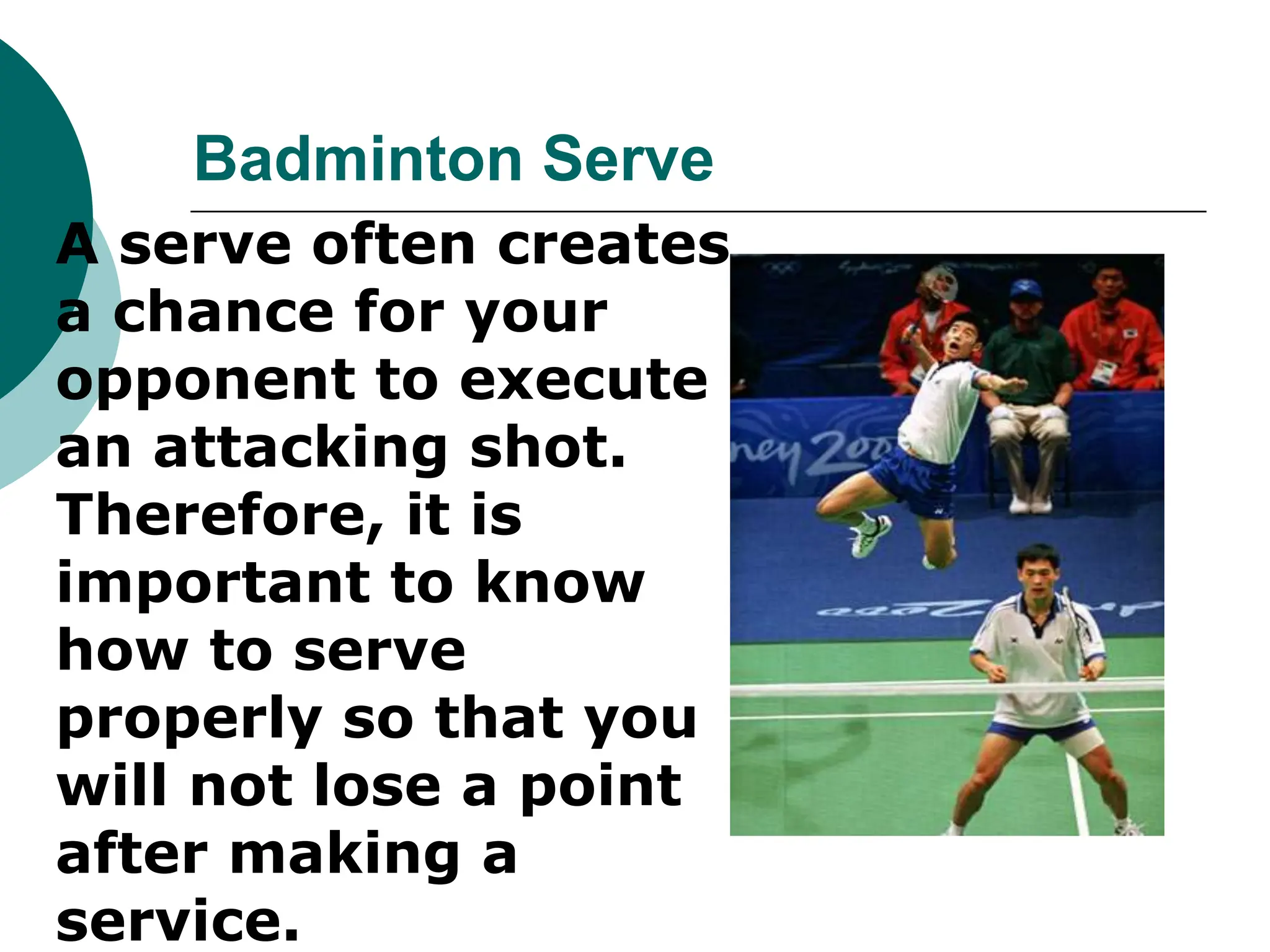
Badminton Serve
 A serve often creates
a chance for your
opponent to execute
an attacking shot.
Therefore, it is
important to know
how to serve
properly so that you
will not lose a point
after making a
service.
TYPES OF SERVE
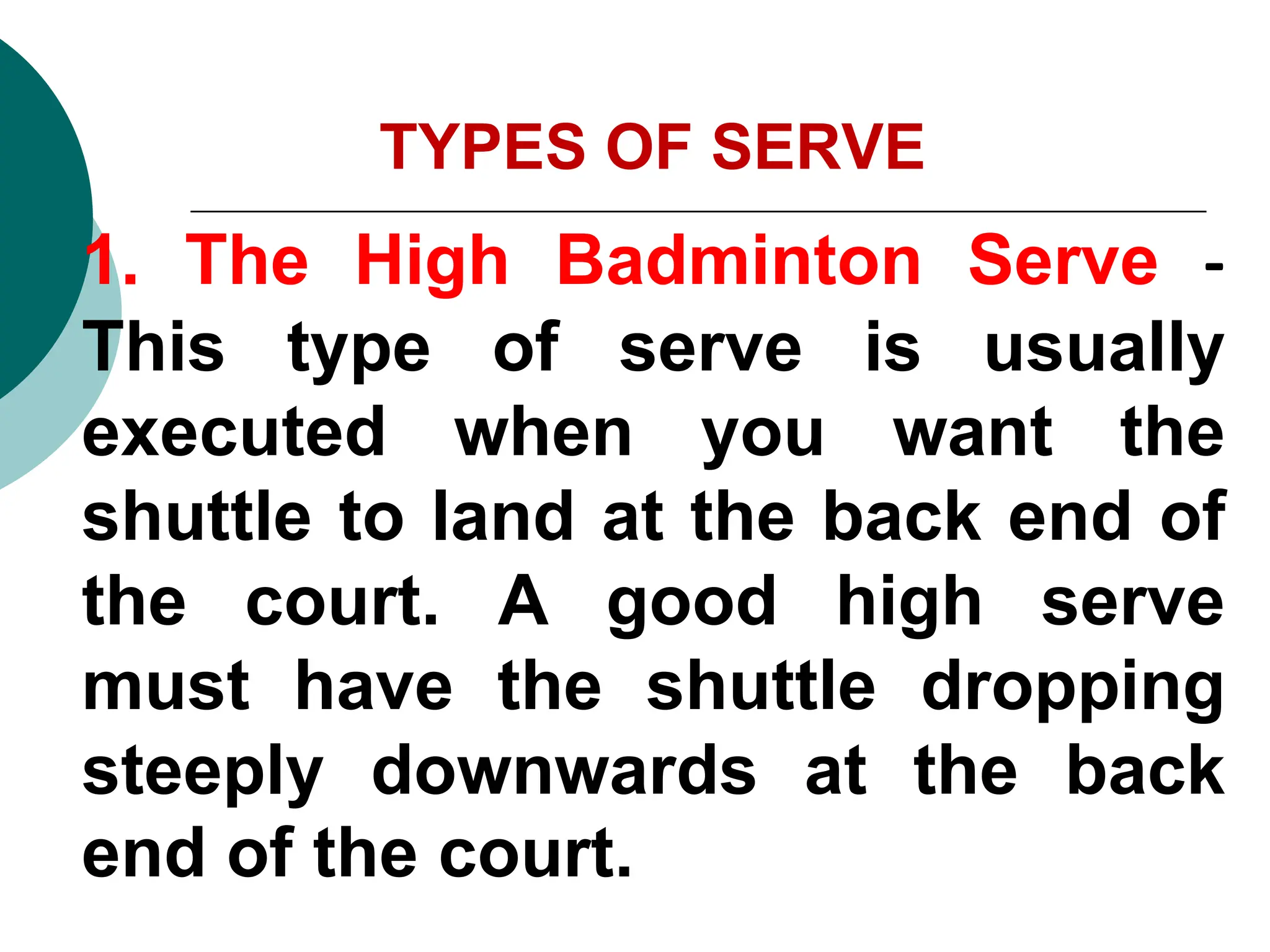
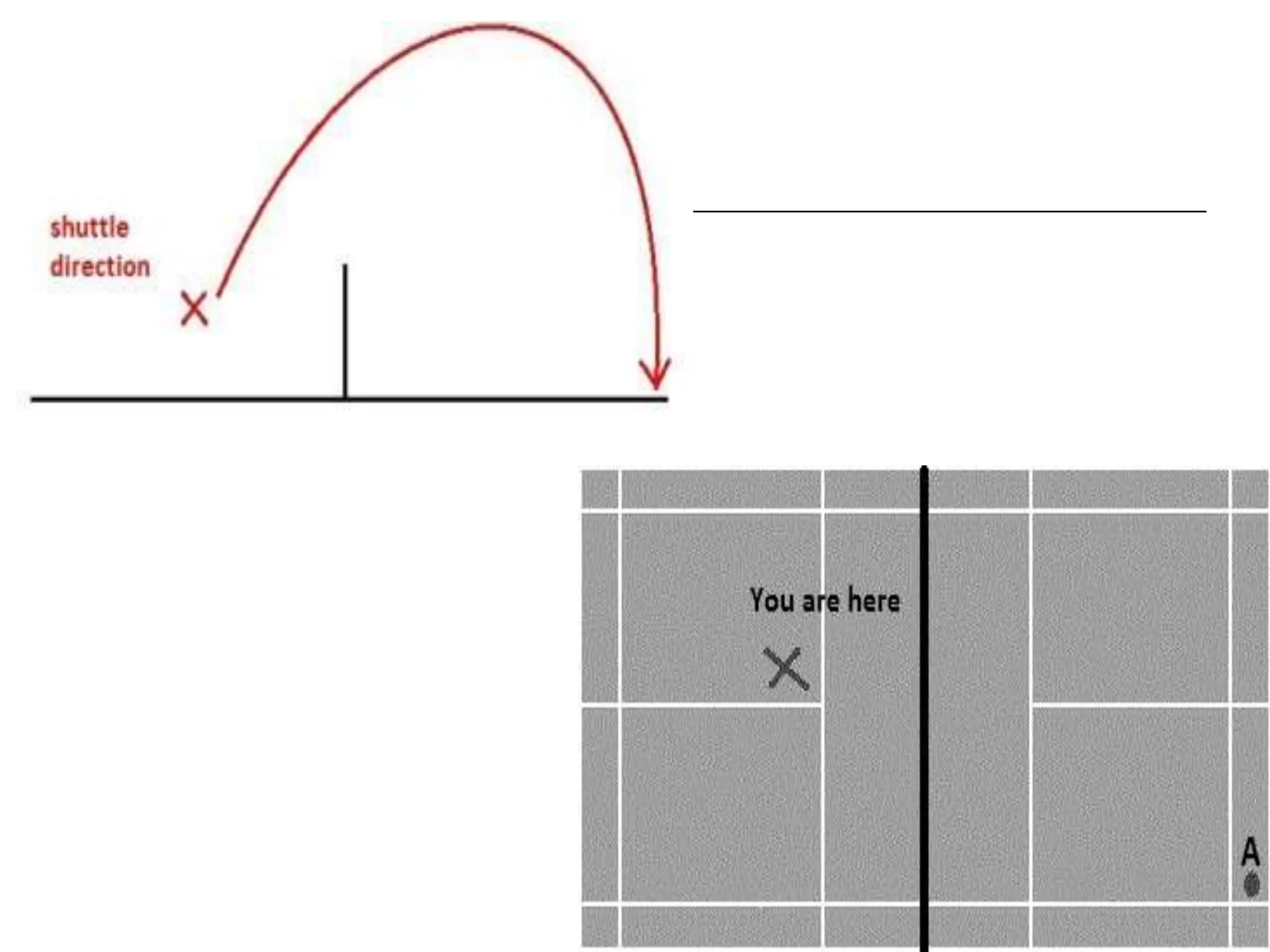
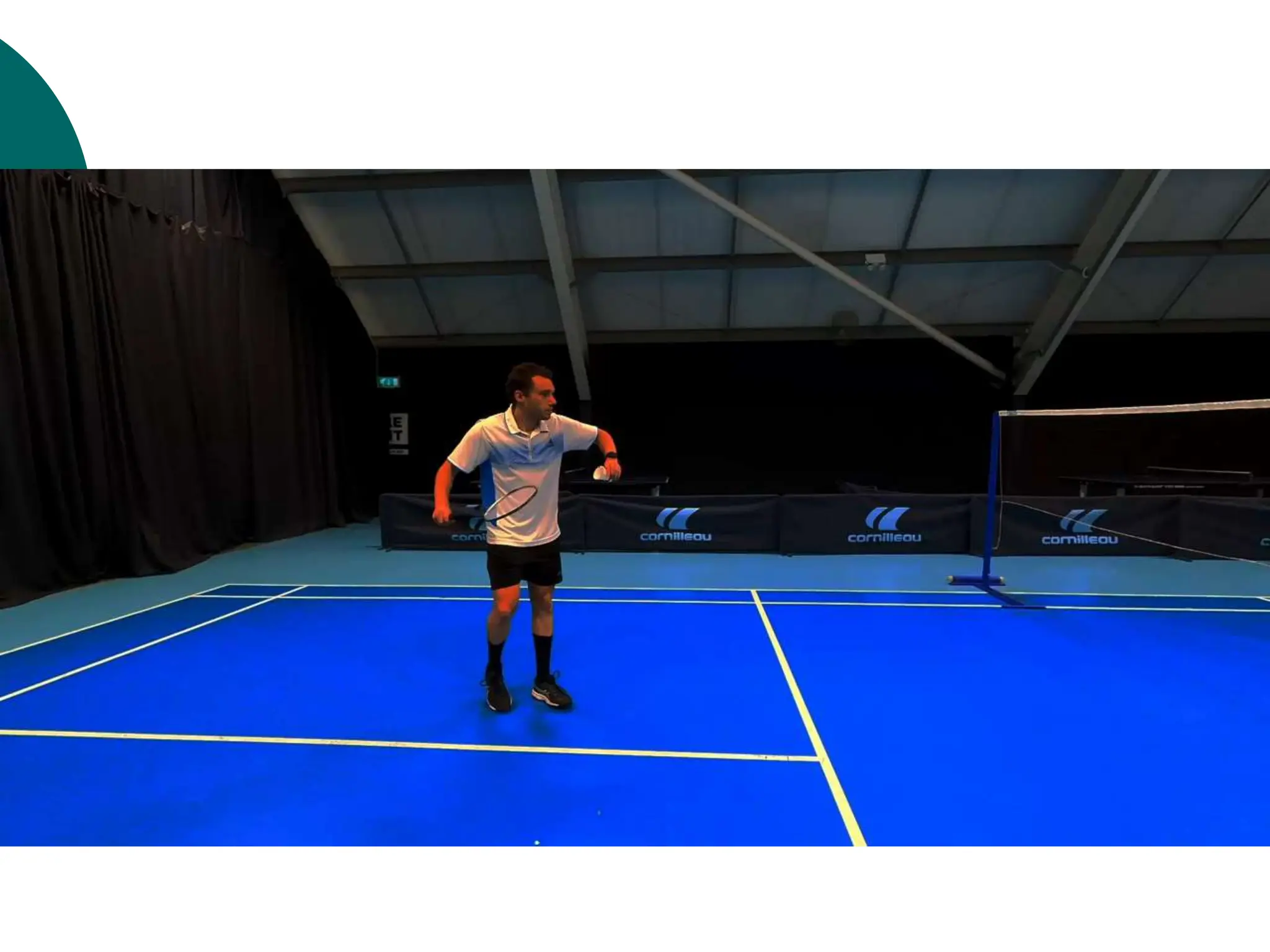
1. The High Badminton Serve -
This type of serve is usually
executed when you want the
shuttle to land at the back end of
the court. A good high serve
must have the shuttle dropping
steeply downwards at the back
end of the court.
2. The Low Badminton
Serve
The low serve is used
when you want the
shuttlecock to land in
front of the court (in
front of your opponent).
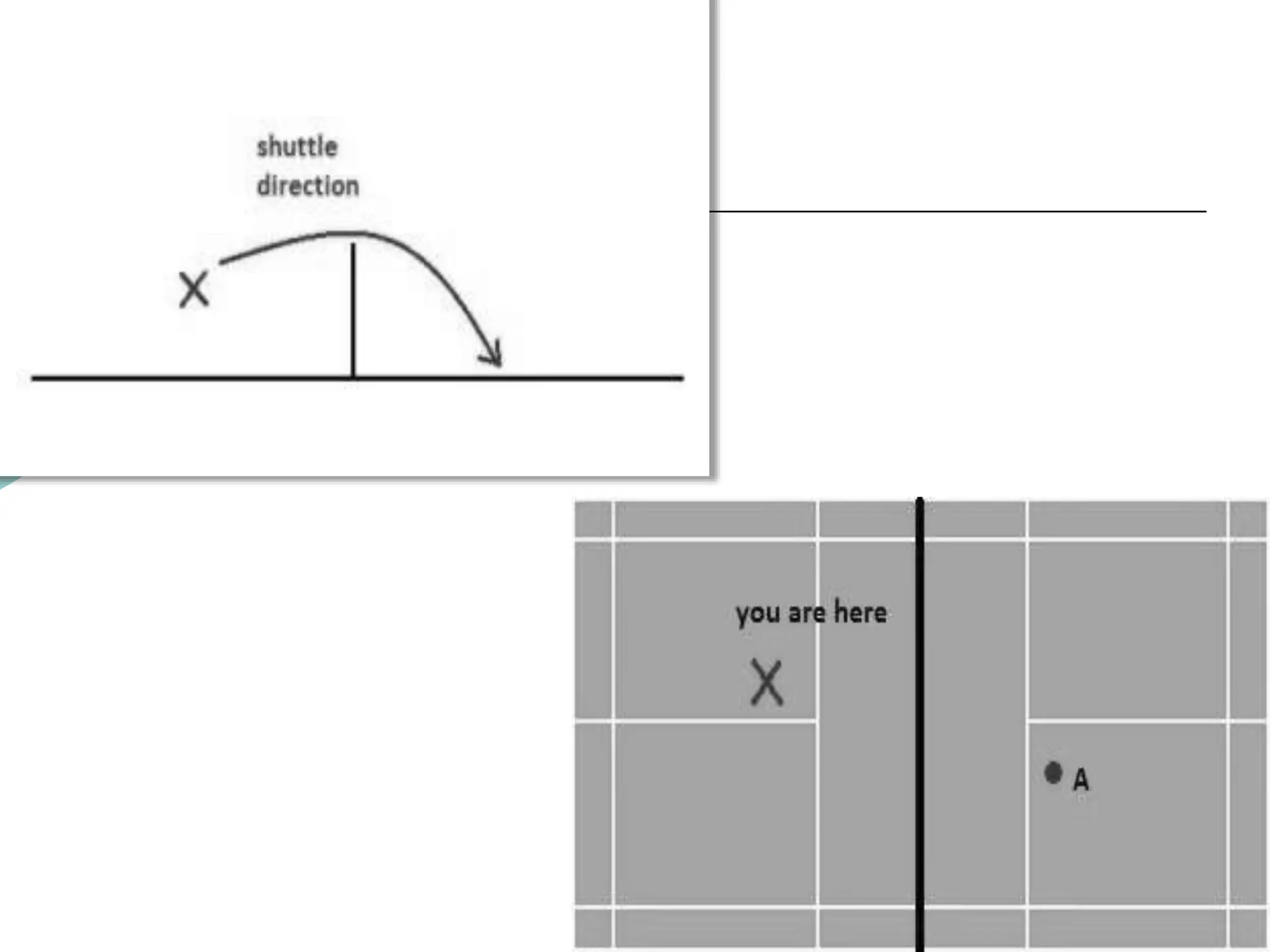
3. The Flick Serve (“Fake” Low
Serve)
The “fake” low badminton
serve can also be used to trick
your opponent (deceive your
opponent to expect a low
serve).
1.Overhead Forehand Stroke
A type of forehand stroke
in which the arm is raised
slightly over the head to hit
the shuttlecock.
BADMINTON STROKE
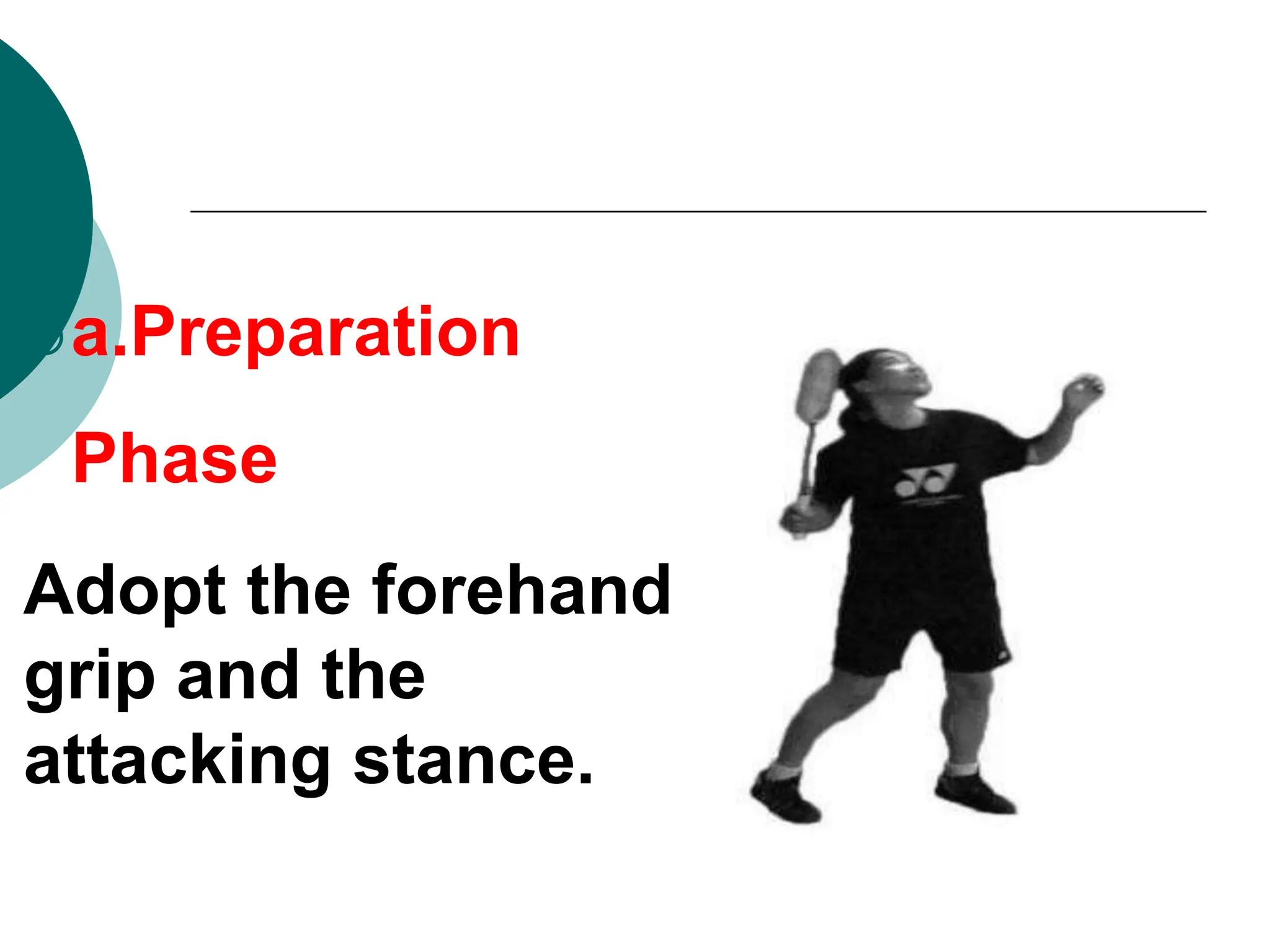
a.Preparation
Phase
Adopt the forehand
grip and the
attacking stance.
b.Aiming Phase
Your body
should face
sideways, not the
front.
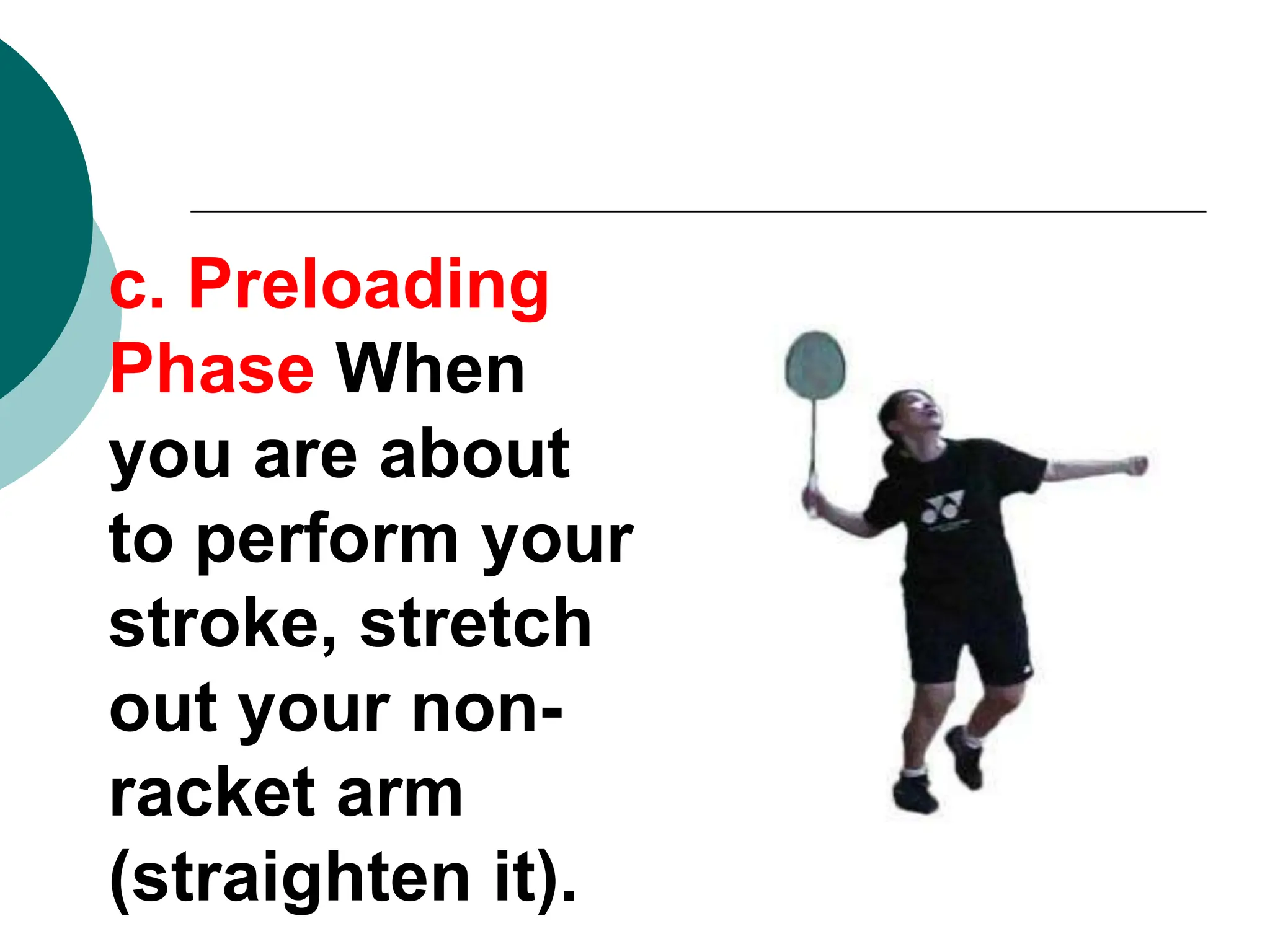
c. Preloading
Phase When
you are about
to perform your
stroke, stretch
out your non-
racket arm
(straighten it).
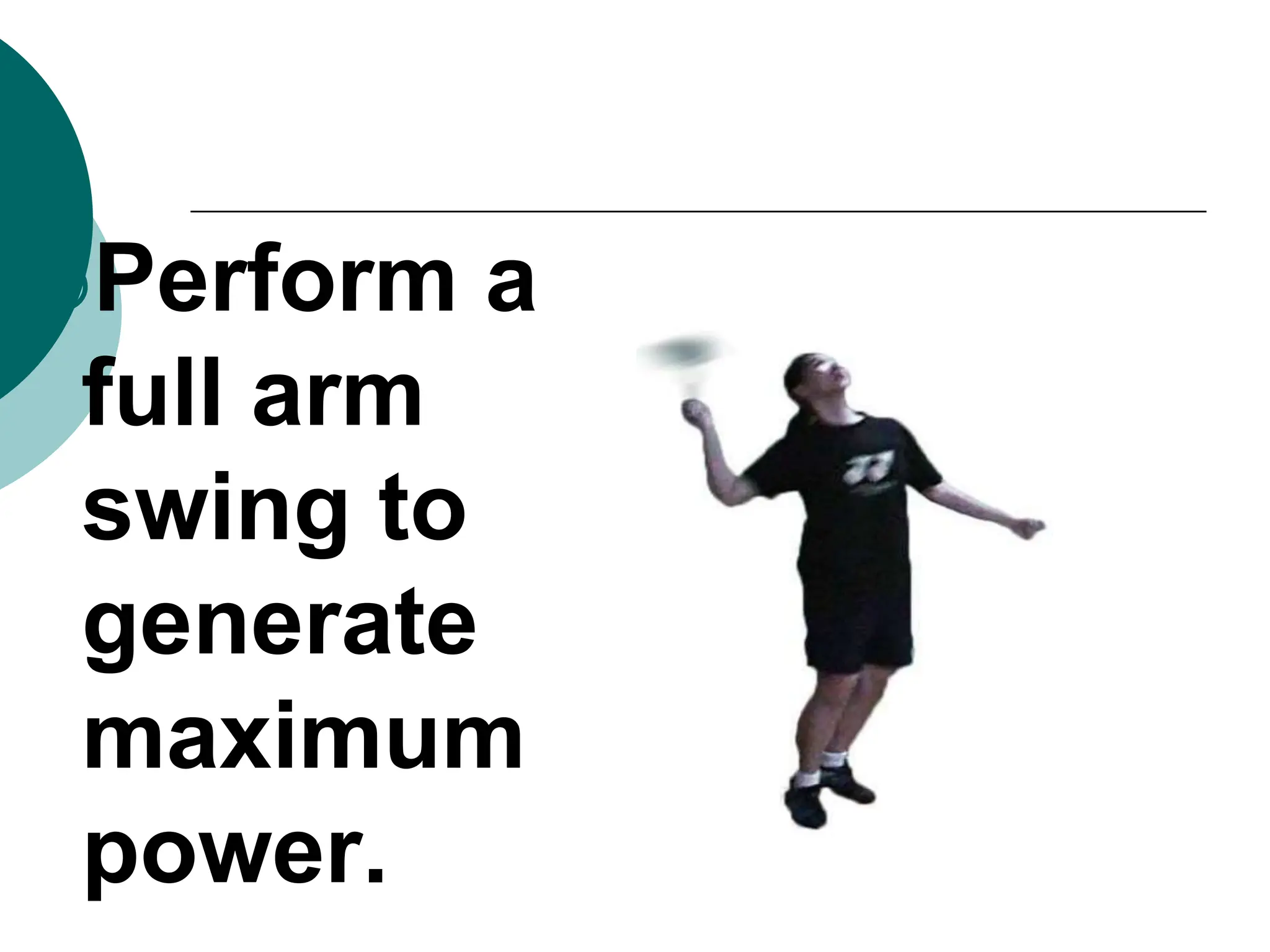
Perform a
full arm
swing to
generate
maximum
power.
When you
complete a full
swing, your
body should be
facing the front
(no longer
facing
sideways).
1.Overhead Backhand
Stroke
A stroke in which it
involves turning upward
the hand over the head
across your body to hit the
shuttlecock.
Things to Know
Backhand Grip: In order
to perform a good
badminton backhand
stroke, use the
backhand grip.
Wrist action: Wrist action in
badminton contributes a lot of
power into your shots.
Practice the correct way of
flicking your wrist to generate
the power. Do not hold your
racket too tightly and do not
tense your arm muscles.
a. Preparation and
Aiming Phase
Adopt the
backhand grip.
You would be
facing the front of
the court at your
initial position.
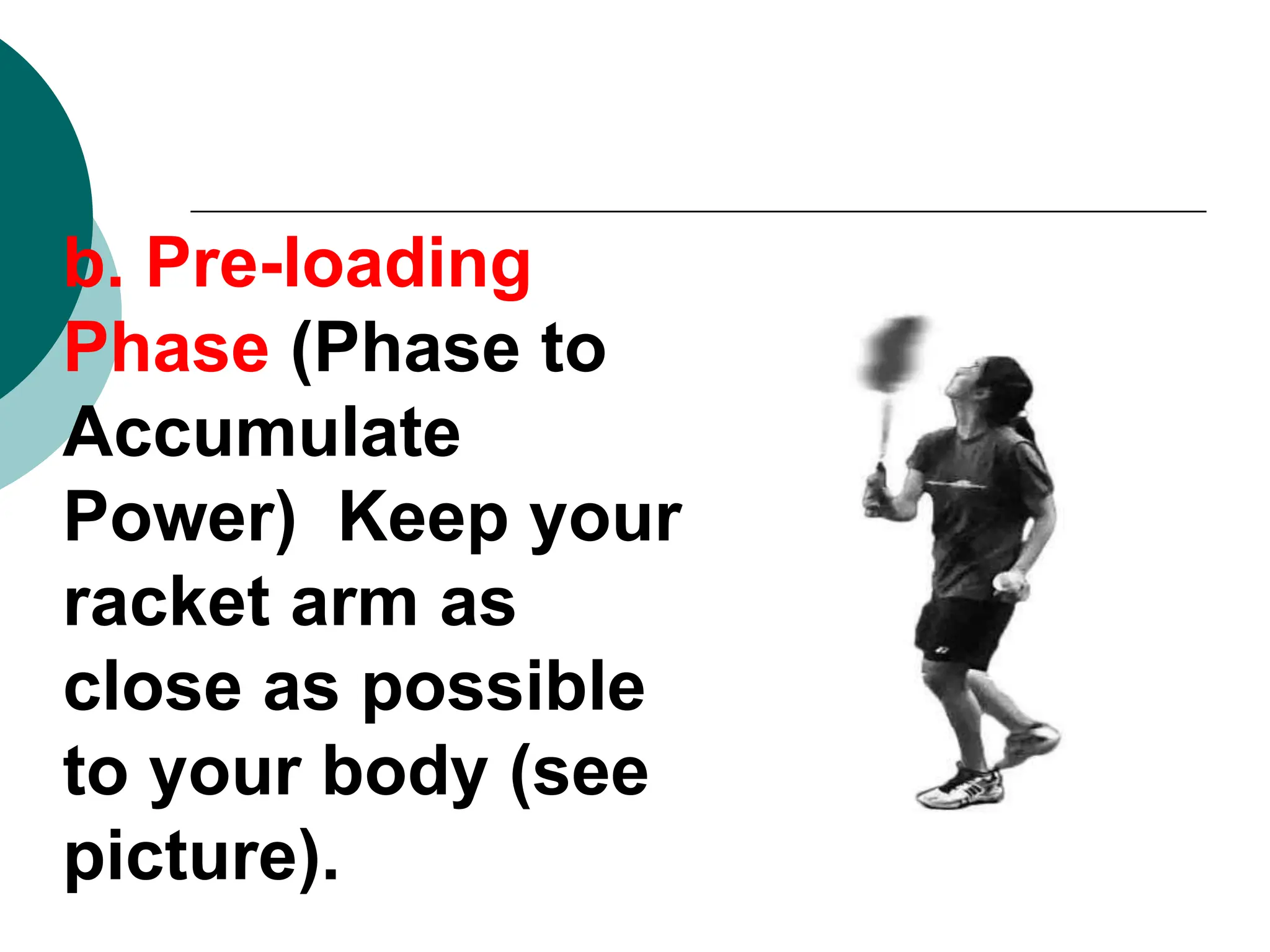
b. Pre-loading
Phase (Phase to
Accumulate
Power) Keep your
racket arm as
close as possible
to your body (see
picture).
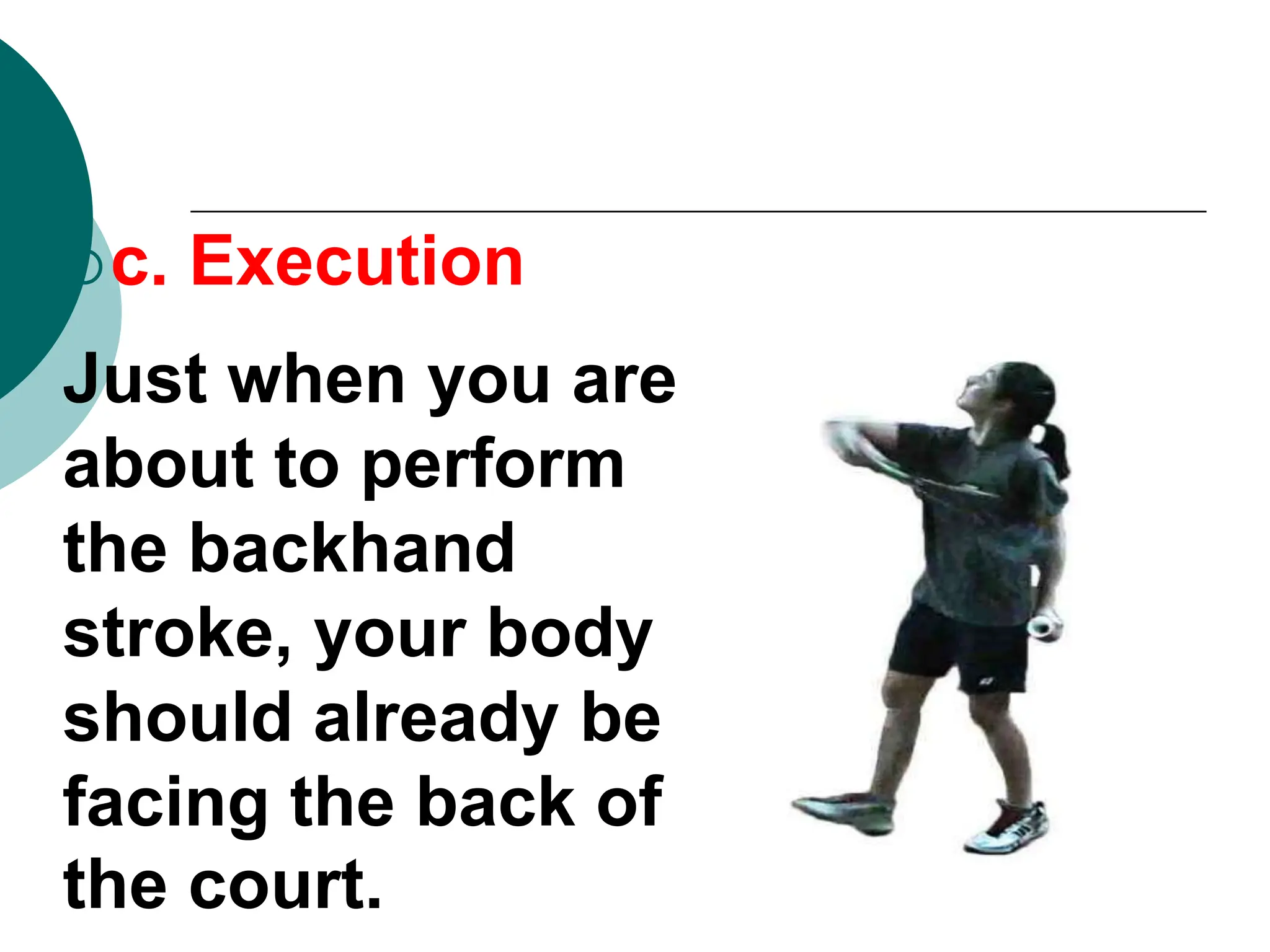
c. Execution
Just when you are
about to perform
the backhand
stroke, your body
should already be
facing the back of
the court.
3.Underarm
Forehand
Stroke
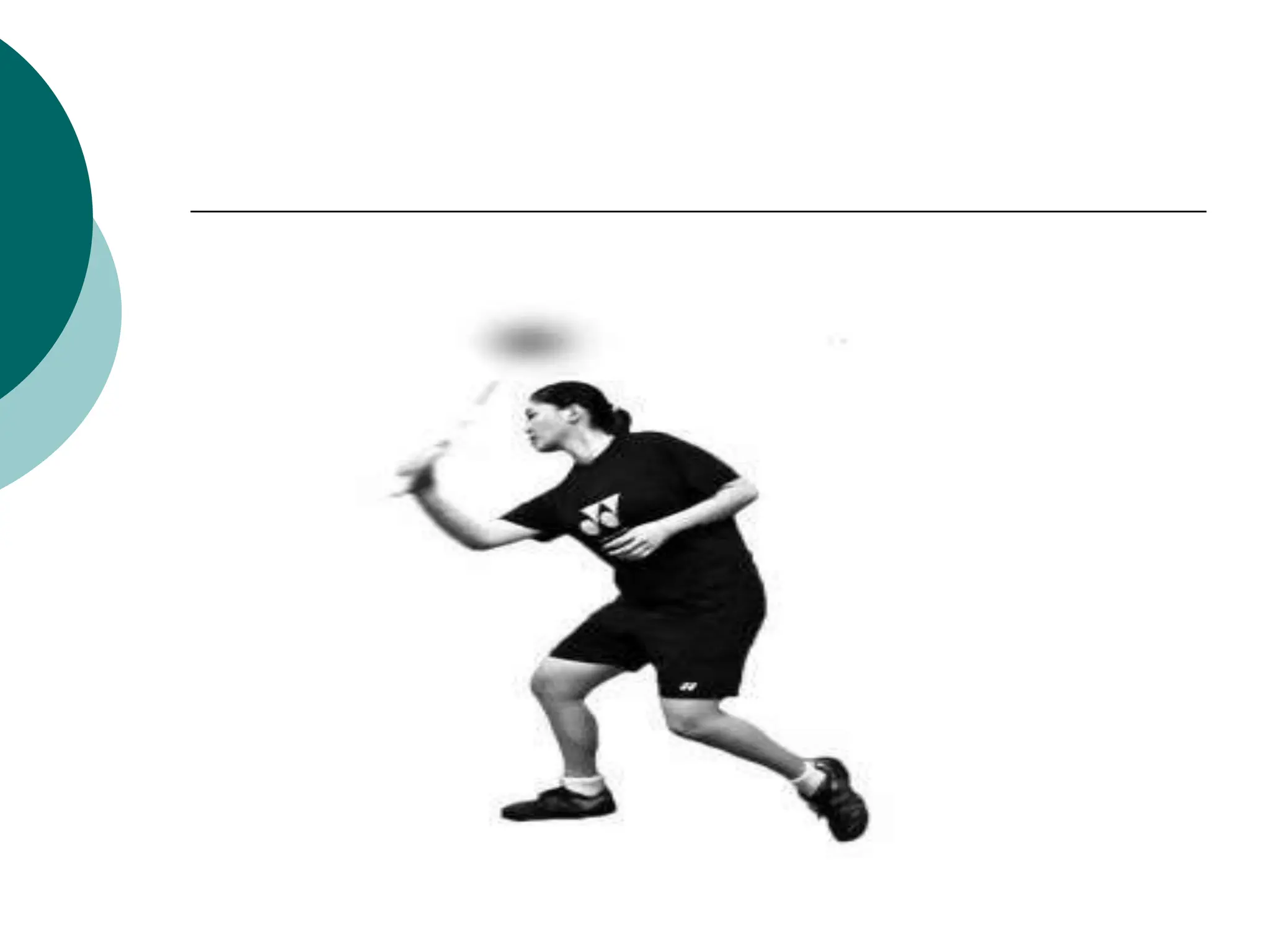
 a. Preparation
Phase
 From a ready
position, lunge
forward to your
forehand area with
your dominant leg.
(see picture)
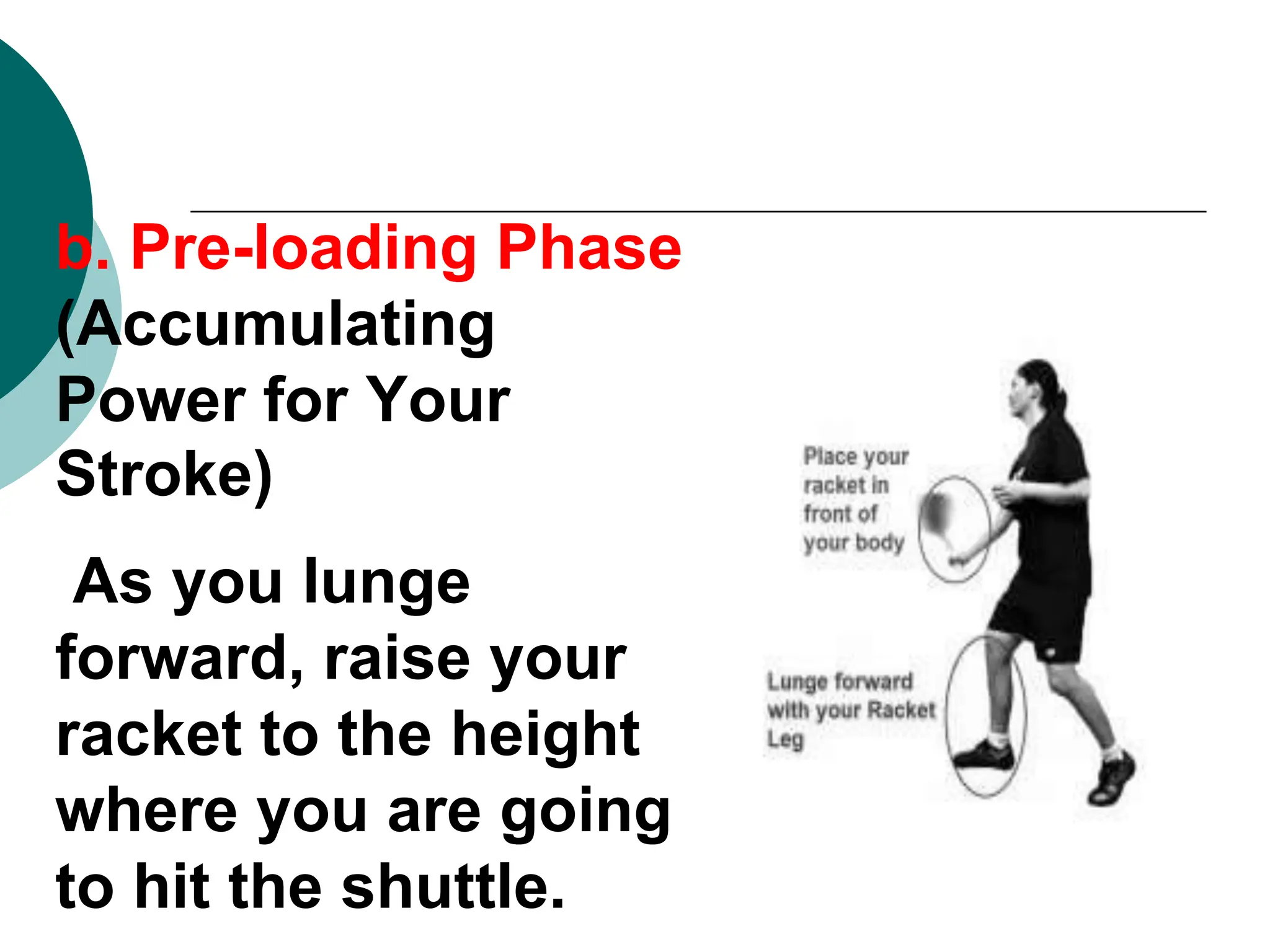
b. Pre-loading Phase
(Accumulating
Power for Your
Stroke)
As you lunge
forward, raise your
racket to the height
where you are going
to hit the shuttle.
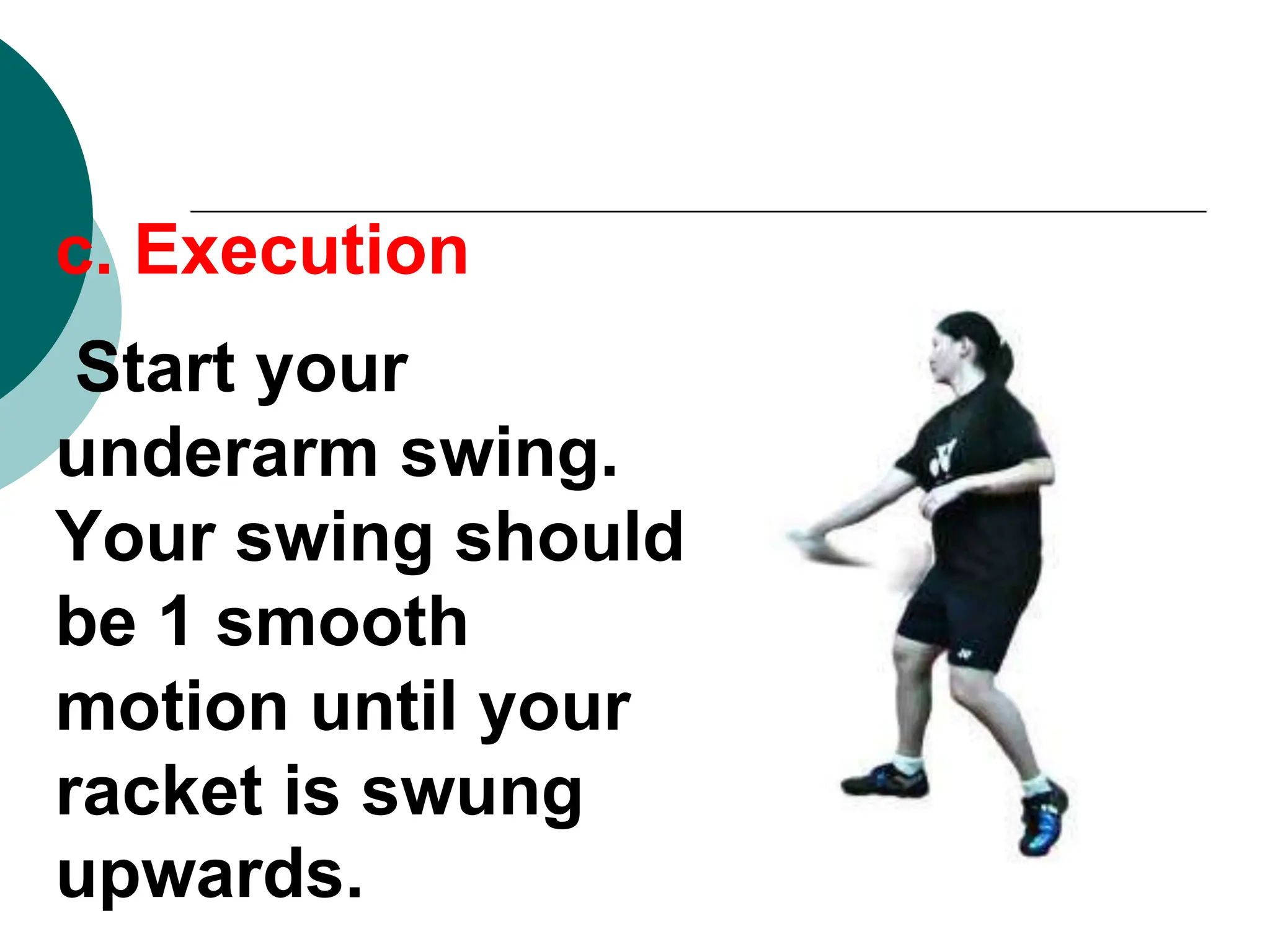
c. Execution
Start your
underarm swing.
Your swing should
be 1 smooth
motion until your
racket is swung
upwards.
4. Underarm
Backhand
Stroke
a. Preparation
Phase
Since you will be
hitting the shuttle
IN FRONT of you,
lunge forward to
your backhand
area.
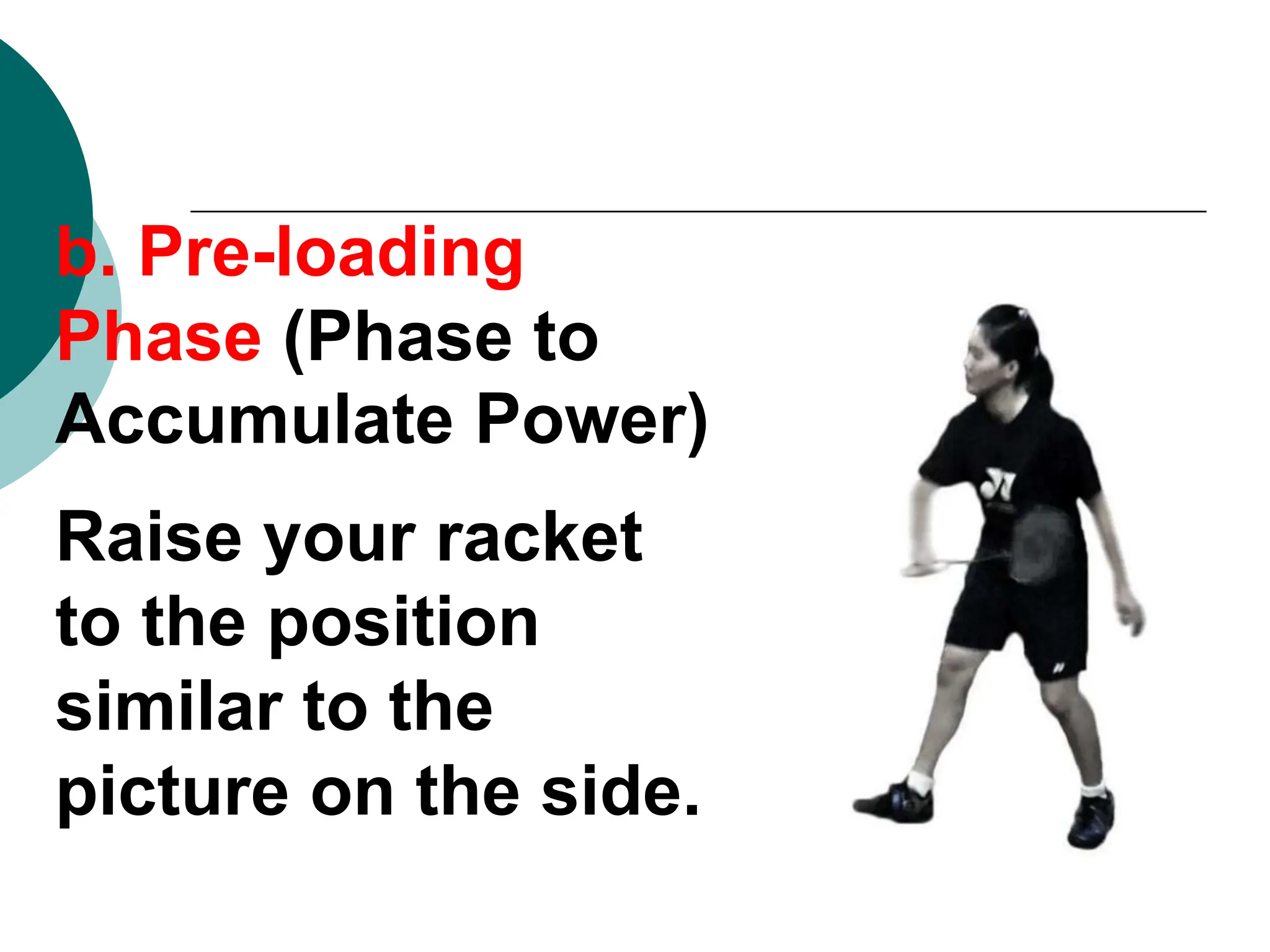
b. Pre-loading
Phase (Phase to
Accumulate Power)
Raise your racket
to the position
similar to the
picture on the side.
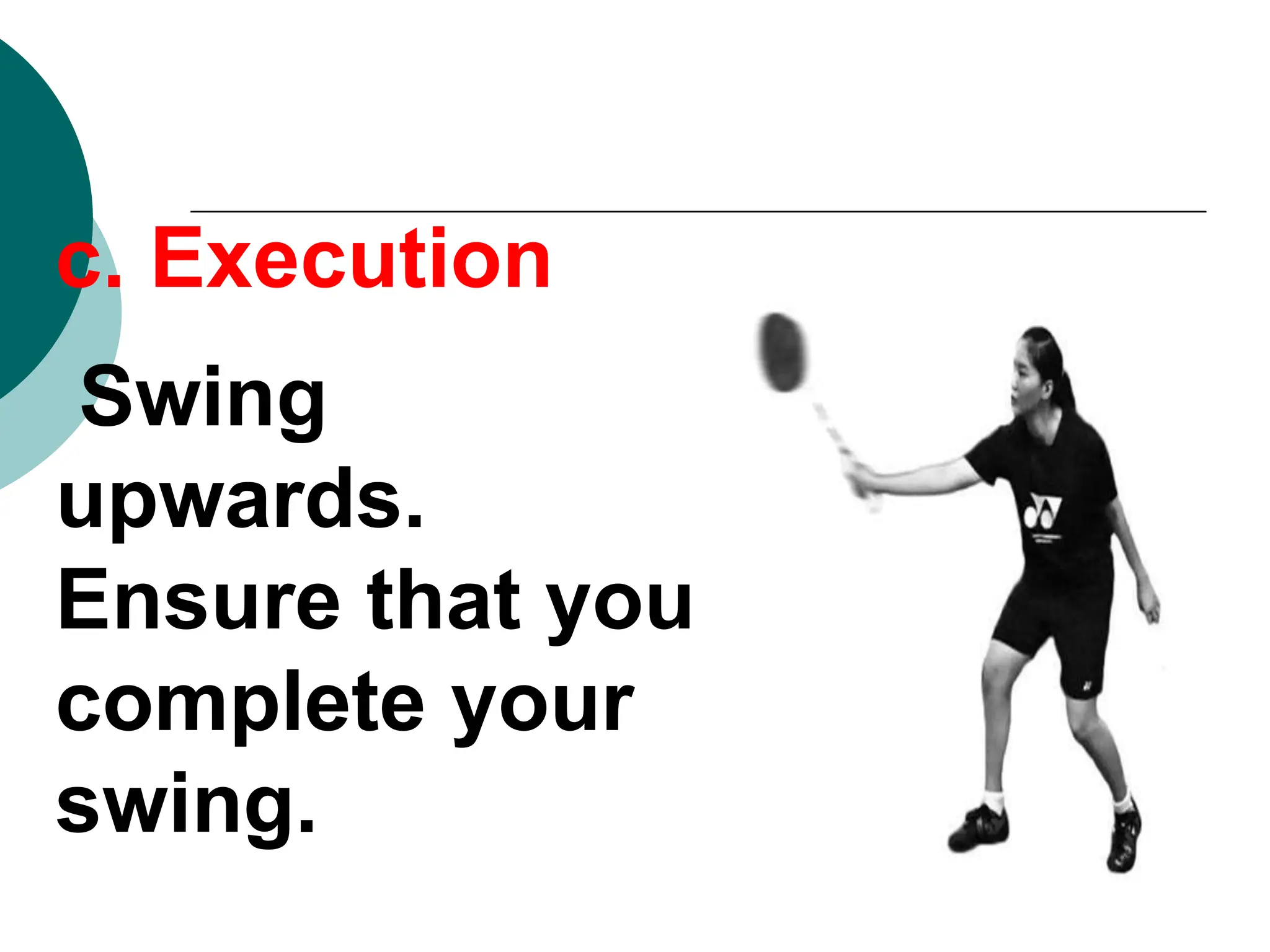
c. Execution
Swing
upwards.
Ensure that you
complete your
swing.
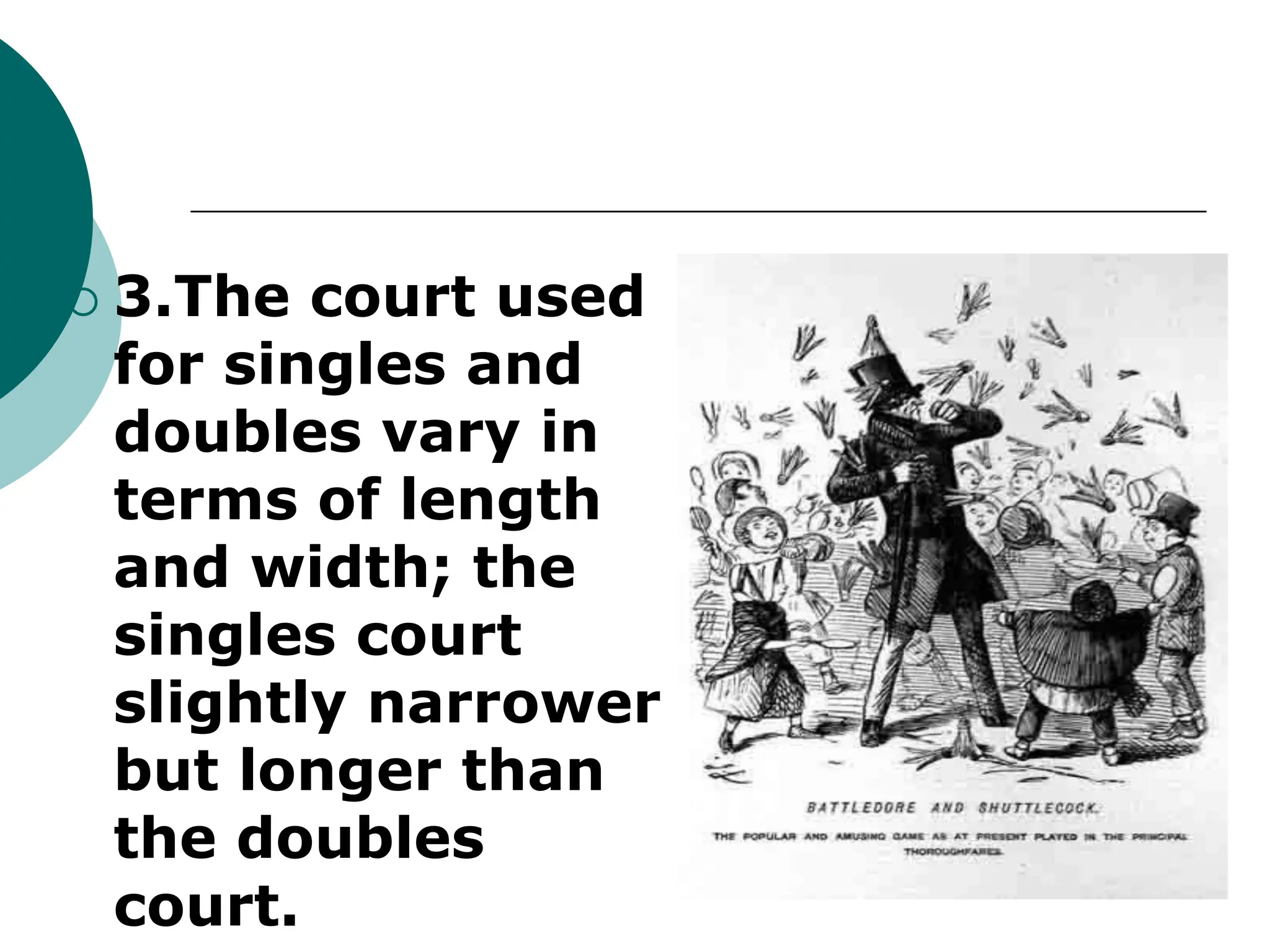
 3.The court used
for singles and
doubles vary in
terms of length
and width; the
singles court
slightly narrower
but longer than
the doubles
court.
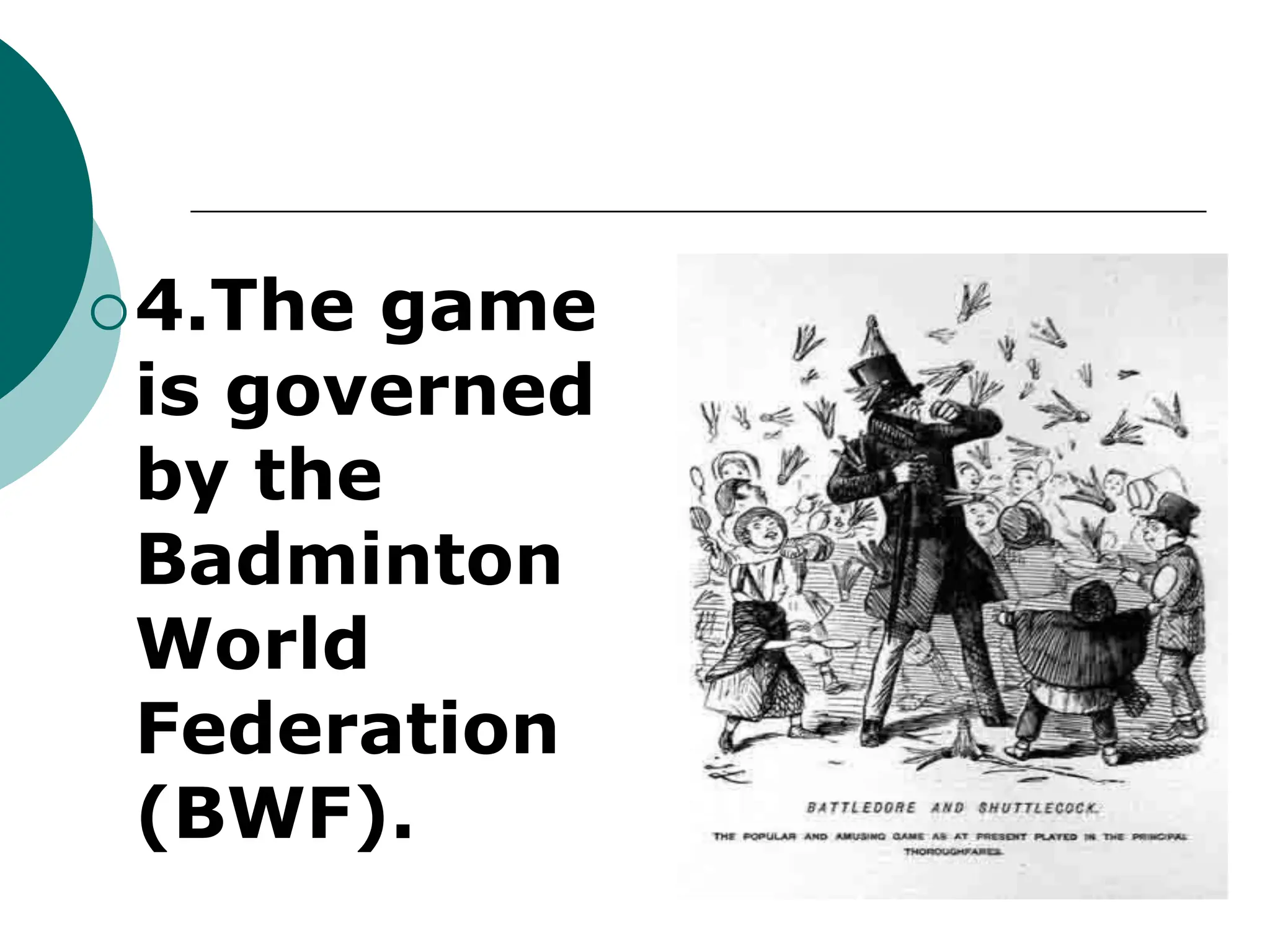
4.The game
is governed
by the
Badminton
World
Federation
(BWF).
FACILITIES AND EQUIPMENT
Badminton Court Dimensions
THE NET
THE SHUTTLECOCK
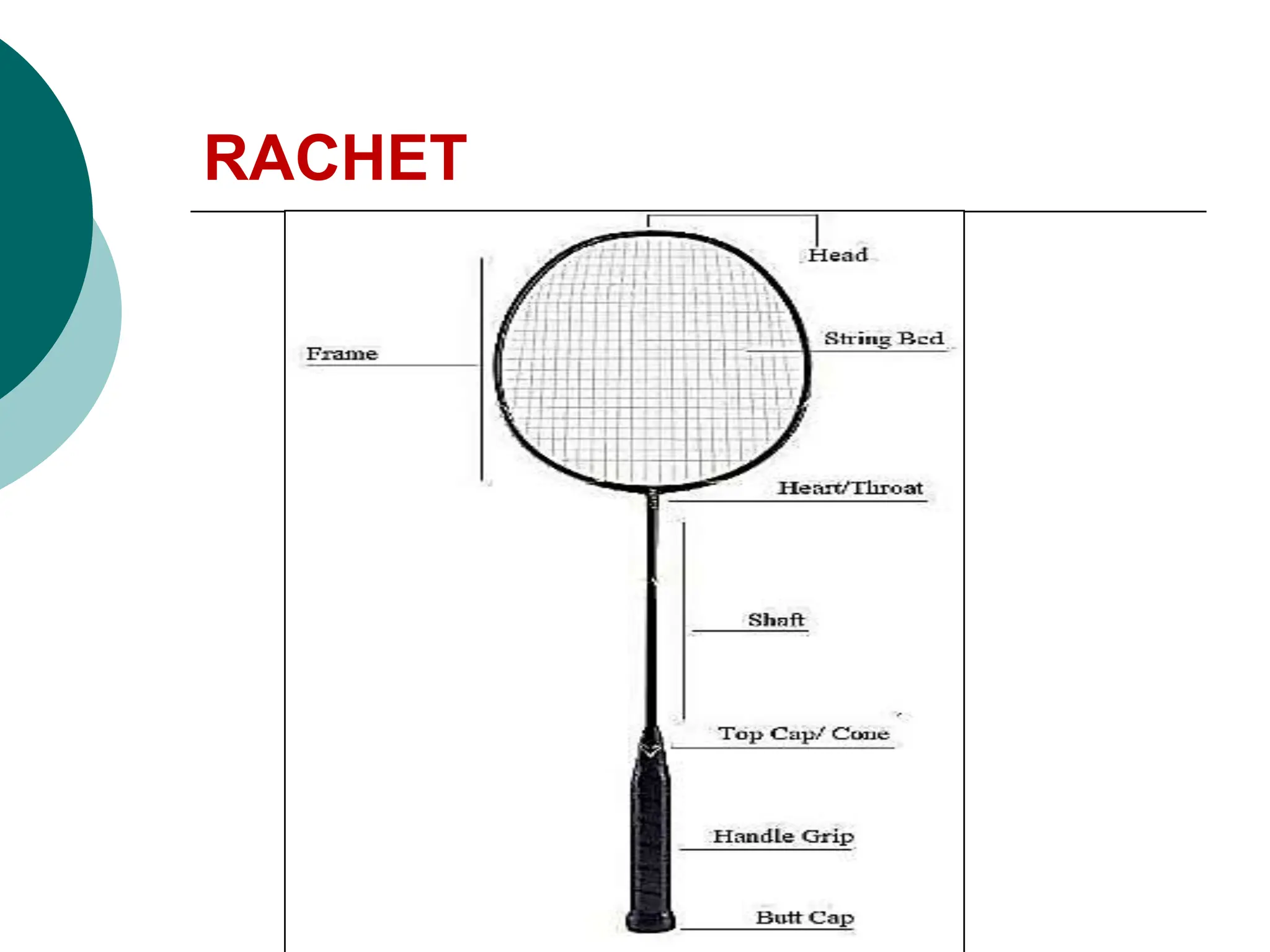
RACHET
BADMINTON GRIPS
 1.Forehand is also known as
handshake
 grip. The thumb and pointing
fingers wrapped around the
handle forming a letter V
while the rest of the fingers
are spread, supporting the
bottom part of the handle.
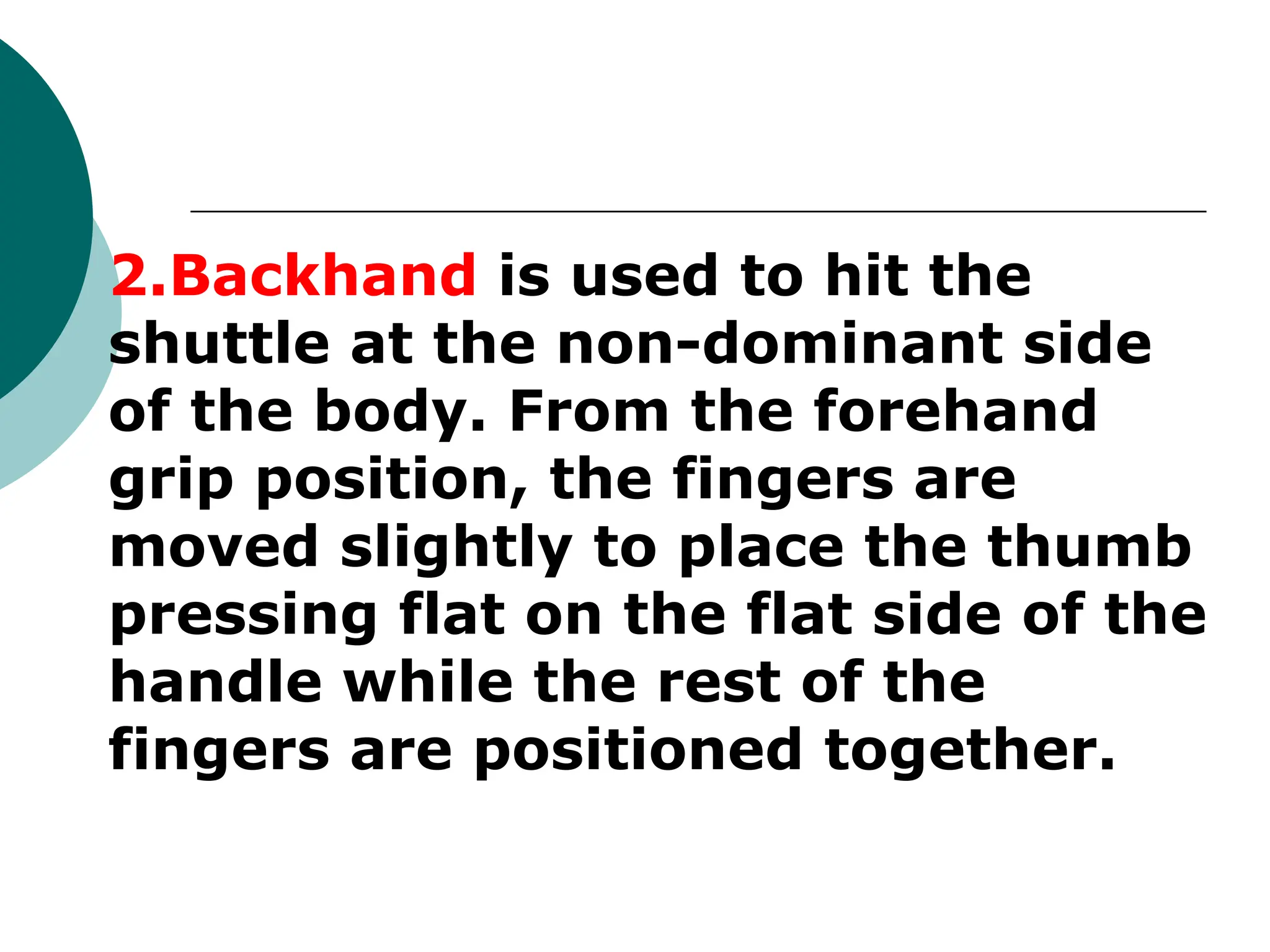
2.Backhand is used to hit the
shuttle at the non-dominant side
of the body. From the forehand
grip position, the fingers are
moved slightly to place the thumb
pressing flat on the flat side of the
handle while the rest of the
fingers are positioned together.
ASSIGNMENT
Read about the
basic skills of
playing
badminton.
Scoring System
 A match consists of the
best of 3 games of 21.
 Every time there is a
serve a point is scored.
 The side winning the rally
adds a point to it’s score.
 Each game must be won
by a 2 point advantage.
 At 29 all – the team to
score the 30th point will
win.
 A side winning a game
will serve in the next
game.
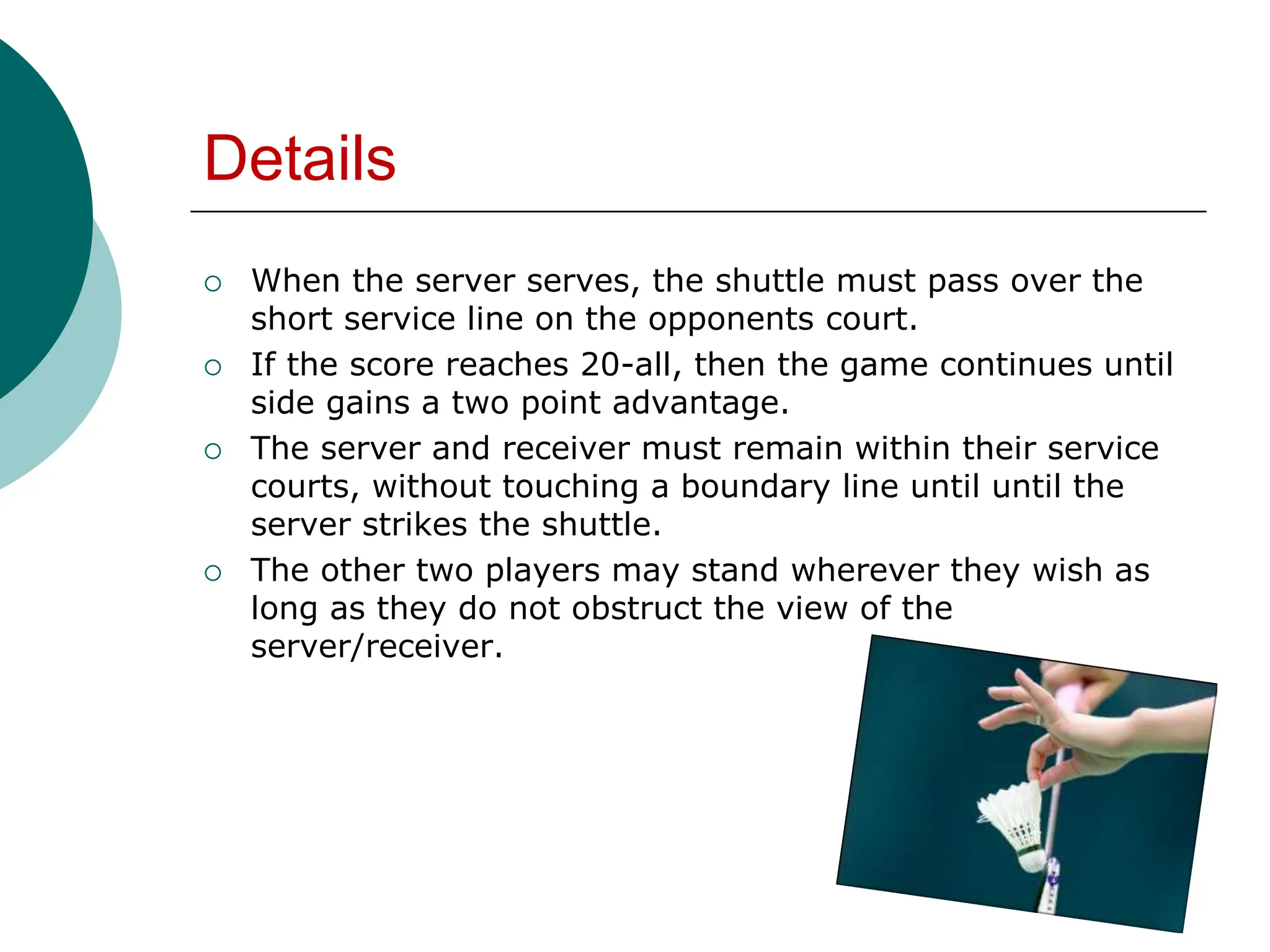
Details
 When the server serves, the shuttle must pass over the
short service line on the opponents court.
 If the score reaches 20-all, then the game continues until
side gains a two point advantage.
 The server and receiver must remain within their service
courts, without touching a boundary line until until the
server strikes the shuttle.
 The other two players may stand wherever they wish as
long as they do not obstruct the view of the
server/receiver.
Faults
 Players win a rally if their opponents commit a fault.
 The most common fault in badminton is when
players fail to return the suttlecock so that it passes
over the net and lands inside the opponents court.
 Neither the server or receiver may lift a foot until
the suttlecock has been struck by the server.
 The server must hit the base or cork of the
suttlecock.
 Each side may only hit the suttlecock once before it
passes back over the net.
 It is also a fault if the suttlecock hits the ceiling.
Let
 If a let is called, the
rally is stopped and
replayed with no
change in score.
 Lets may occur when
there is an unexpected
disturbance.
EX. – a shuttle landing on
your court which was hit
from an adjacent court.
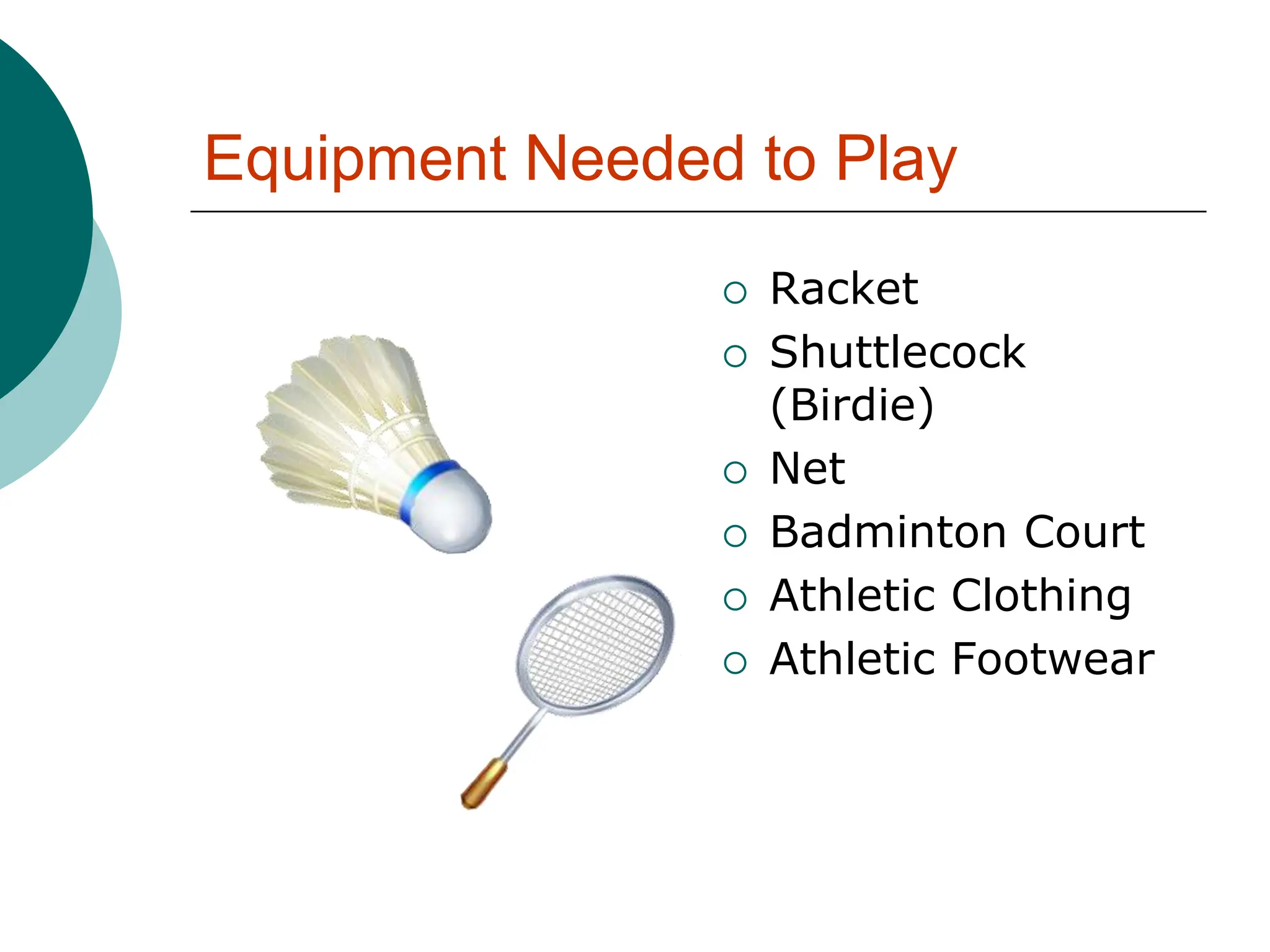
Equipment Needed to Play
 Racket
 Shuttlecock
(Birdie)
 Net
 Badminton Court
 Athletic Clothing
 Athletic Footwear

Badminton power point presentation for Physical Education

  • 2.
    Activity 1: WhoAm I Directions: Search and then loop the words from the Badminton Word Bank. Do it horizontally, vertically, or diagonally.
  • 3.
    Basic Skills inBadminton
  • 4.
    Badminton Serve  Aserve often creates a chance for your opponent to execute an attacking shot. Therefore, it is important to know how to serve properly so that you will not lose a point after making a service.
  • 5.
    TYPES OF SERVE 1.The High Badminton Serve - This type of serve is usually executed when you want the shuttle to land at the back end of the court. A good high serve must have the shuttle dropping steeply downwards at the back end of the court.
  • 8.
    2. The LowBadminton Serve The low serve is used when you want the shuttlecock to land in front of the court (in front of your opponent).
  • 11.
    3. The FlickServe (“Fake” Low Serve) The “fake” low badminton serve can also be used to trick your opponent (deceive your opponent to expect a low serve).
  • 13.
    1.Overhead Forehand Stroke Atype of forehand stroke in which the arm is raised slightly over the head to hit the shuttlecock. BADMINTON STROKE
  • 15.
  • 16.
    b.Aiming Phase Your body shouldface sideways, not the front.
  • 17.
    c. Preloading Phase When youare about to perform your stroke, stretch out your non- racket arm (straighten it).
  • 18.
    Perform a full arm swingto generate maximum power.
  • 20.
    When you complete afull swing, your body should be facing the front (no longer facing sideways).
  • 21.
    1.Overhead Backhand Stroke A strokein which it involves turning upward the hand over the head across your body to hit the shuttlecock.
  • 23.
    Things to Know BackhandGrip: In order to perform a good badminton backhand stroke, use the backhand grip.
  • 24.
    Wrist action: Wristaction in badminton contributes a lot of power into your shots. Practice the correct way of flicking your wrist to generate the power. Do not hold your racket too tightly and do not tense your arm muscles.
  • 25.
    a. Preparation and AimingPhase Adopt the backhand grip. You would be facing the front of the court at your initial position.
  • 26.
    b. Pre-loading Phase (Phaseto Accumulate Power) Keep your racket arm as close as possible to your body (see picture).
  • 27.
    c. Execution Just whenyou are about to perform the backhand stroke, your body should already be facing the back of the court.
  • 29.
  • 31.
     a. Preparation Phase From a ready position, lunge forward to your forehand area with your dominant leg. (see picture)
  • 32.
    b. Pre-loading Phase (Accumulating Powerfor Your Stroke) As you lunge forward, raise your racket to the height where you are going to hit the shuttle.
  • 33.
    c. Execution Start your underarmswing. Your swing should be 1 smooth motion until your racket is swung upwards.
  • 35.
  • 37.
    a. Preparation Phase Since youwill be hitting the shuttle IN FRONT of you, lunge forward to your backhand area.
  • 38.
    b. Pre-loading Phase (Phaseto Accumulate Power) Raise your racket to the position similar to the picture on the side.
  • 39.
  • 41.
     3.The courtused for singles and doubles vary in terms of length and width; the singles court slightly narrower but longer than the doubles court.
  • 42.
    4.The game is governed bythe Badminton World Federation (BWF).
  • 43.
  • 44.
  • 46.
  • 47.
  • 48.
  • 49.
    BADMINTON GRIPS  1.Forehandis also known as handshake  grip. The thumb and pointing fingers wrapped around the handle forming a letter V while the rest of the fingers are spread, supporting the bottom part of the handle.
  • 51.
    2.Backhand is usedto hit the shuttle at the non-dominant side of the body. From the forehand grip position, the fingers are moved slightly to place the thumb pressing flat on the flat side of the handle while the rest of the fingers are positioned together.
  • 53.
    ASSIGNMENT Read about the basicskills of playing badminton.
  • 54.
    Scoring System  Amatch consists of the best of 3 games of 21.  Every time there is a serve a point is scored.  The side winning the rally adds a point to it’s score.  Each game must be won by a 2 point advantage.  At 29 all – the team to score the 30th point will win.  A side winning a game will serve in the next game.
  • 55.
    Details  When theserver serves, the shuttle must pass over the short service line on the opponents court.  If the score reaches 20-all, then the game continues until side gains a two point advantage.  The server and receiver must remain within their service courts, without touching a boundary line until until the server strikes the shuttle.  The other two players may stand wherever they wish as long as they do not obstruct the view of the server/receiver.
  • 56.
    Faults  Players wina rally if their opponents commit a fault.  The most common fault in badminton is when players fail to return the suttlecock so that it passes over the net and lands inside the opponents court.  Neither the server or receiver may lift a foot until the suttlecock has been struck by the server.  The server must hit the base or cork of the suttlecock.  Each side may only hit the suttlecock once before it passes back over the net.  It is also a fault if the suttlecock hits the ceiling.
  • 57.
    Let  If alet is called, the rally is stopped and replayed with no change in score.  Lets may occur when there is an unexpected disturbance. EX. – a shuttle landing on your court which was hit from an adjacent court.
  • 58.
    Equipment Needed toPlay  Racket  Shuttlecock (Birdie)  Net  Badminton Court  Athletic Clothing  Athletic Footwear