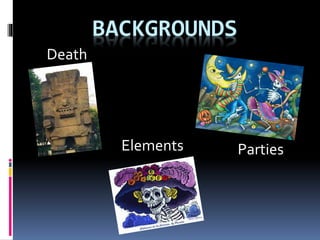
BACKGROUNDS
Death
PartiesElements
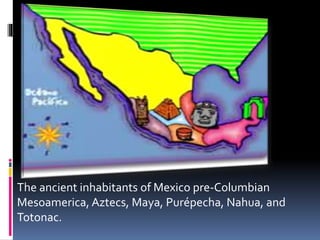
The ancient inhabitants of Mexico pre-Columbian
Mesoamerica, Aztecs, Maya, Purépecha, Nahua, and
Totonac.
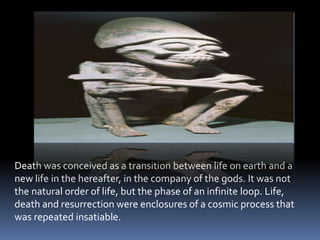
Death was conceived as a transition between life on earth and a
new life in the hereafter, in the company of the gods. It was not
the natural order of life, but the phase of an infinite loop. Life,
death and resurrection were enclosures of a cosmic process that
was repeated insatiable.
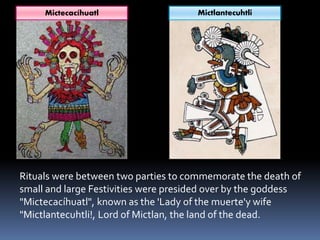
Rituals were between two parties to commemorate the death of
small and large Festivities were presided over by the goddess
"Mictecacíhuatl", known as the 'Lady of the muerte'y wife
"Mictlantecuhtli!, Lord of Mictlan, the land of the dead.
Mictecacíhuatl Mictlantecuhtli
They believed that the directions for the souls of the
dead were determined by the type of death they had
had, and not by their conduct in life.
Thus, the directions that the dead are:
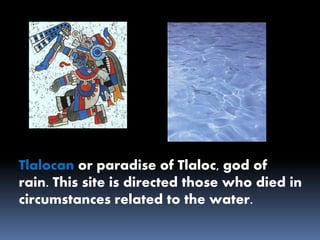
Tlalocan or paradise of Tlaloc, god of
rain. This site is directed those who died in
circumstances related to the water.
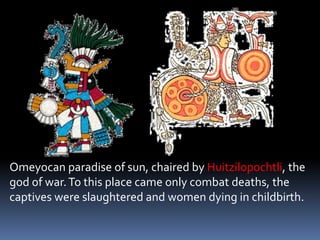
Omeyocan paradise of sun, chaired by Huitzilopochtli, the
god of war.To this place came only combat deaths, the
captives were slaughtered and women dying in childbirth.
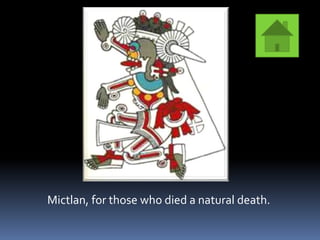
Mictlan, for those who died a natural death.
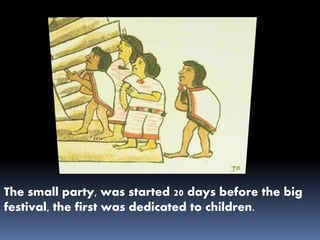
The small party, was started 20 days before the big
festival, the first was dedicated to children.
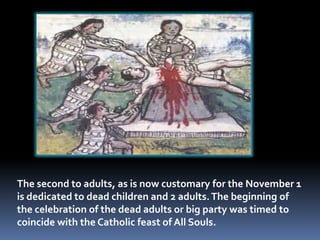
The second to adults, as is now customary for the November 1
is dedicated to dead children and 2 adults.The beginning of
the celebration of the dead adults or big party was timed to
coincide with the Catholic feast of All Souls.
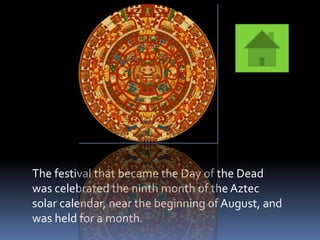
The festival that became the Day of the Dead
was celebrated the ninth month of the Aztec
solar calendar, near the beginning of August, and
was held for a month.
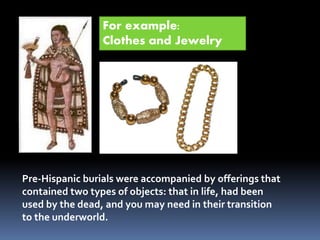
Pre-Hispanic burials were accompanied by offerings that
contained two types of objects: that in life, had been
used by the dead, and you may need in their transition
to the underworld.
For example:
Clothes and Jewelry
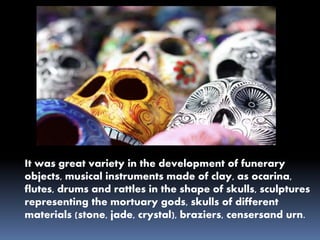
It was great variety in the development of funerary
objects, musical instruments made of clay, as ocarina,
flutes, drums and rattles in the shape of skulls, sculptures
representing the mortuary gods, skulls of different
materials (stone, jade, crystal), braziers, censersand urn.
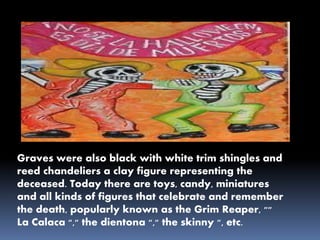
Graves were also black with white trim shingles and
reed chandeliers a clay figure representing the
deceased. Today there are toys, candy, miniatures
and all kinds of figures that celebrate and remember
the death, popularly known as the Grim Reaper, ""
La Calaca "," the dientona "," the skinny ", etc.
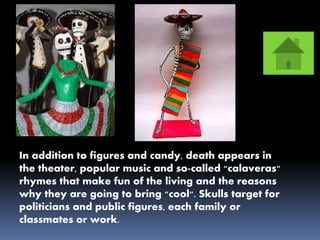
In addition to figures and candy, death appears in
the theater, popular music and so-called "calaveras"
rhymes that make fun of the living and the reasons
why they are going to bring "cool". Skulls target for
politicians and public figures, each family or
classmates or work.

Backgrounds

  • 1.
  • 2.
    The ancient inhabitantsof Mexico pre-Columbian Mesoamerica, Aztecs, Maya, Purépecha, Nahua, and Totonac.
  • 3.
    Death was conceivedas a transition between life on earth and a new life in the hereafter, in the company of the gods. It was not the natural order of life, but the phase of an infinite loop. Life, death and resurrection were enclosures of a cosmic process that was repeated insatiable.
  • 4.
    Rituals were betweentwo parties to commemorate the death of small and large Festivities were presided over by the goddess "Mictecacíhuatl", known as the 'Lady of the muerte'y wife "Mictlantecuhtli!, Lord of Mictlan, the land of the dead. Mictecacíhuatl Mictlantecuhtli
  • 5.
    They believed thatthe directions for the souls of the dead were determined by the type of death they had had, and not by their conduct in life. Thus, the directions that the dead are:
  • 6.
    Tlalocan or paradiseof Tlaloc, god of rain. This site is directed those who died in circumstances related to the water.
  • 7.
    Omeyocan paradise ofsun, chaired by Huitzilopochtli, the god of war.To this place came only combat deaths, the captives were slaughtered and women dying in childbirth.
  • 8.
    Mictlan, for thosewho died a natural death.
  • 9.
    The small party,was started 20 days before the big festival, the first was dedicated to children.
  • 10.
    The second toadults, as is now customary for the November 1 is dedicated to dead children and 2 adults.The beginning of the celebration of the dead adults or big party was timed to coincide with the Catholic feast of All Souls.
  • 11.
    The festival thatbecame the Day of the Dead was celebrated the ninth month of the Aztec solar calendar, near the beginning of August, and was held for a month.
  • 12.
    Pre-Hispanic burials wereaccompanied by offerings that contained two types of objects: that in life, had been used by the dead, and you may need in their transition to the underworld. For example: Clothes and Jewelry
  • 13.
    It was greatvariety in the development of funerary objects, musical instruments made of clay, as ocarina, flutes, drums and rattles in the shape of skulls, sculptures representing the mortuary gods, skulls of different materials (stone, jade, crystal), braziers, censersand urn.
  • 14.
    Graves were alsoblack with white trim shingles and reed chandeliers a clay figure representing the deceased. Today there are toys, candy, miniatures and all kinds of figures that celebrate and remember the death, popularly known as the Grim Reaper, "" La Calaca "," the dientona "," the skinny ", etc.
  • 15.
    In addition tofigures and candy, death appears in the theater, popular music and so-called "calaveras" rhymes that make fun of the living and the reasons why they are going to bring "cool". Skulls target for politicians and public figures, each family or classmates or work.