BACK TO ZERO
Understanding who our
Customers really are and
what to do with them
Kenny Ong
2
Before We Start…
BACK TO ZERO: CX 0.0 EDITION
Understanding our role in the whole scheme of things
5
Philosophy
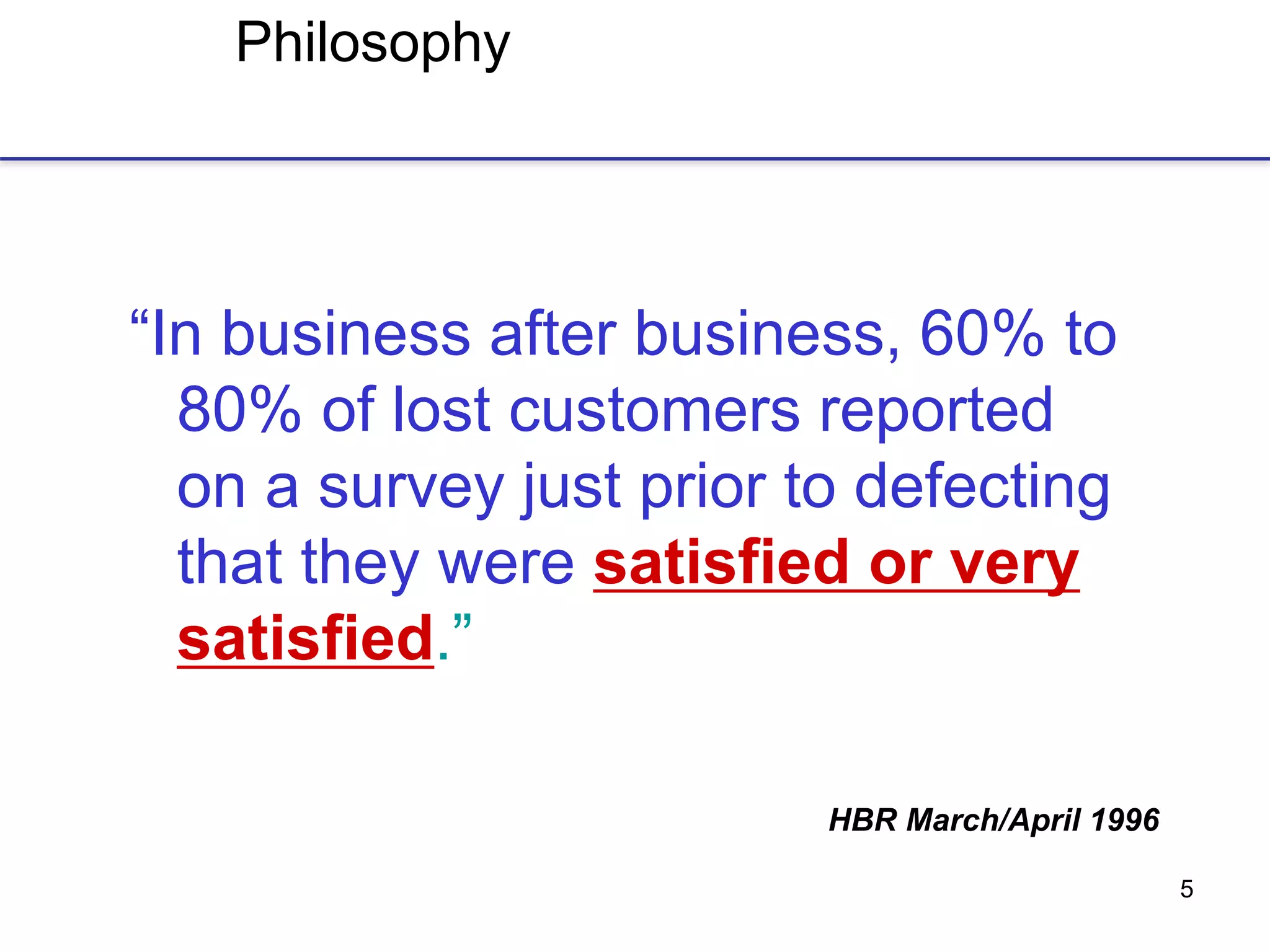
“In business after business, 60% to
80% of lost customers reported
on a survey just prior to defecting
that they were satisfied or very
satisfied.”
HBR March/April 1996
6
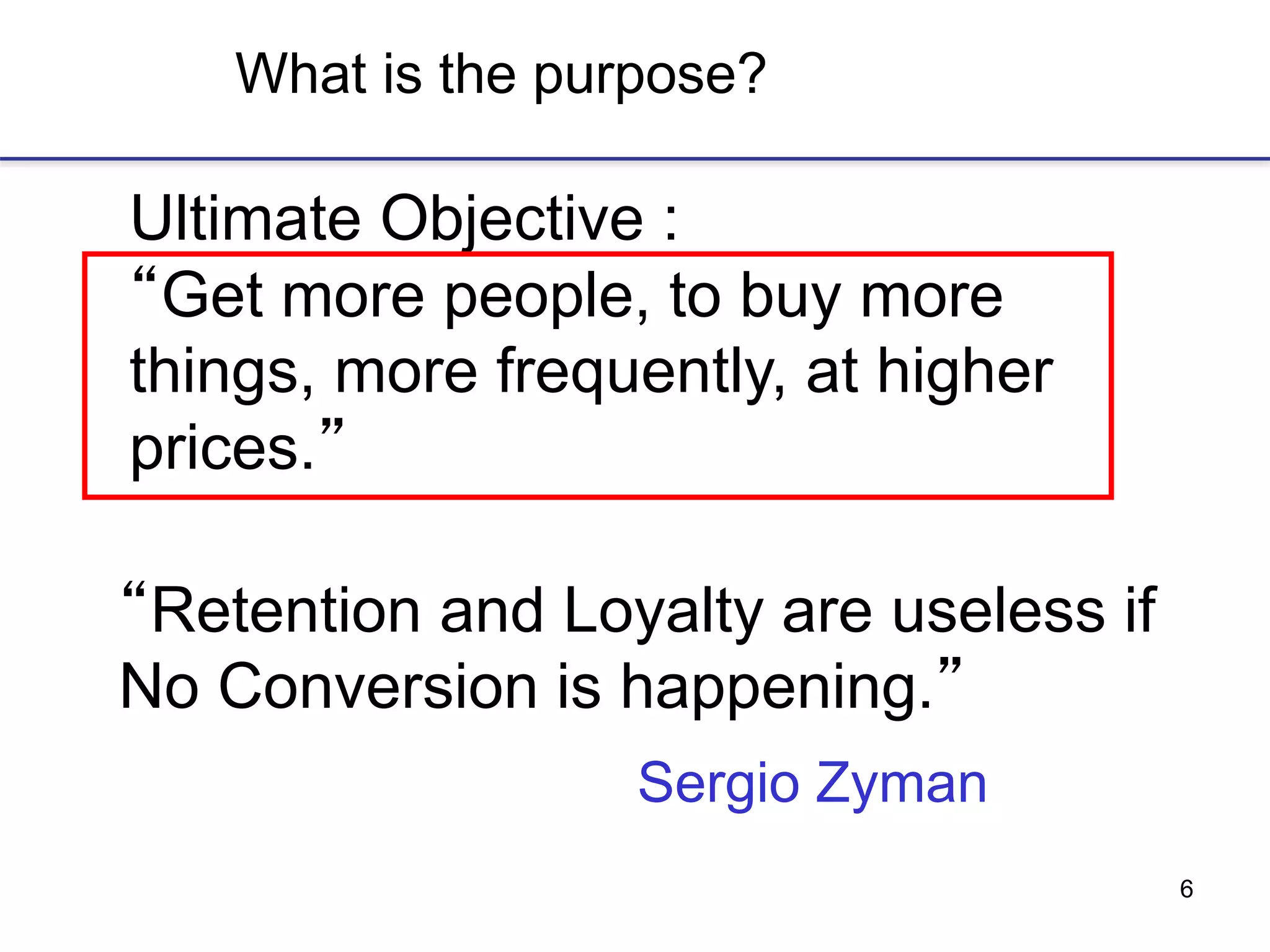
What is the purpose?
Ultimate Objective :
“Get more people, to buy more
things, more frequently, at higher
prices.”
Sergio Zyman
“Retention and Loyalty are useless if
No Conversion is happening.”
7
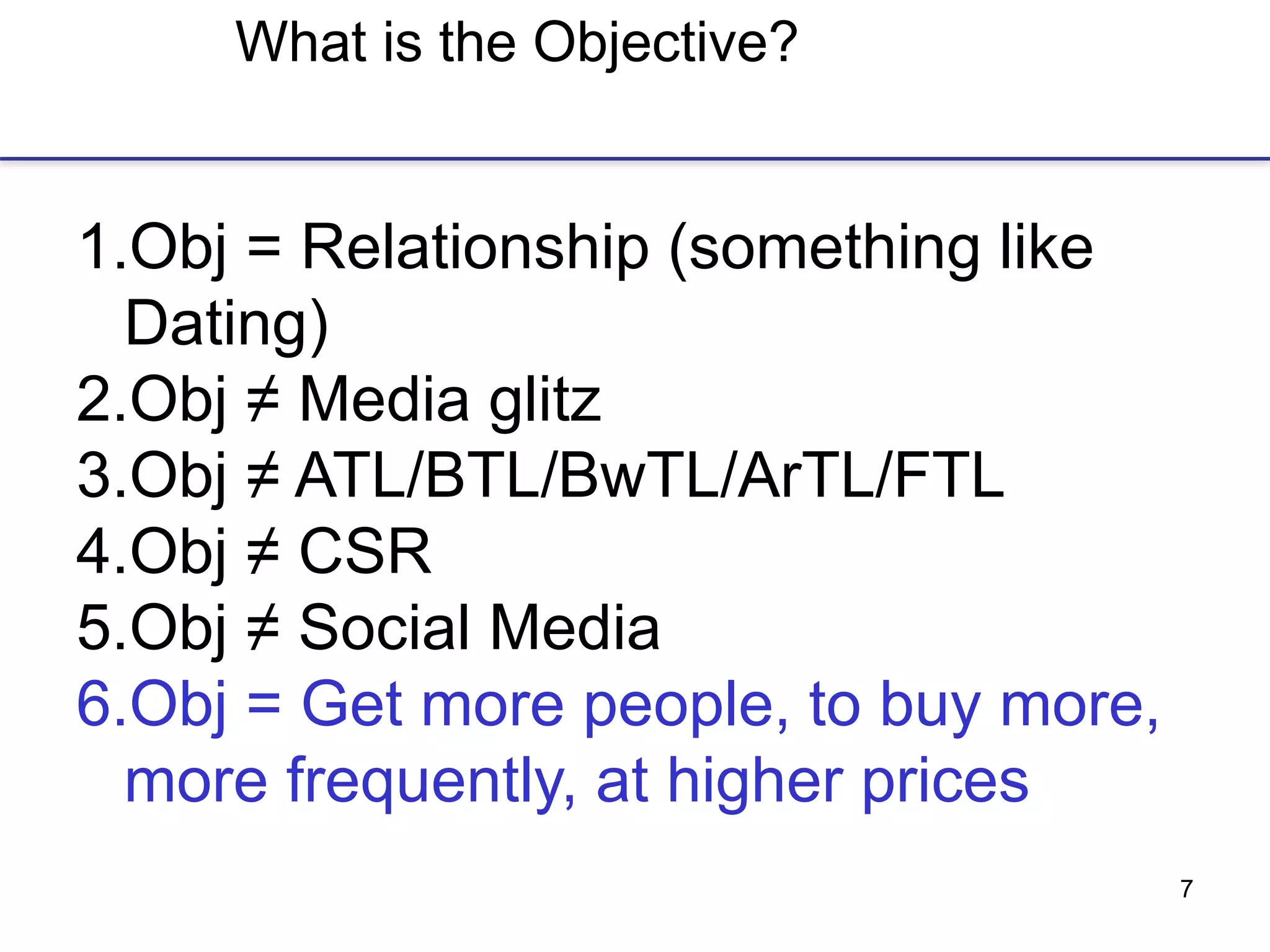
What is the Objective?
1.Obj = Relationship (something like
Dating)
2.Obj ≠ Media glitz
3.Obj ≠ ATL/BTL/BwTL/ArTL/FTL
4.Obj ≠ CSR
5.Obj ≠ Social Media
6.Obj = Get more people, to buy more,
more frequently, at higher prices
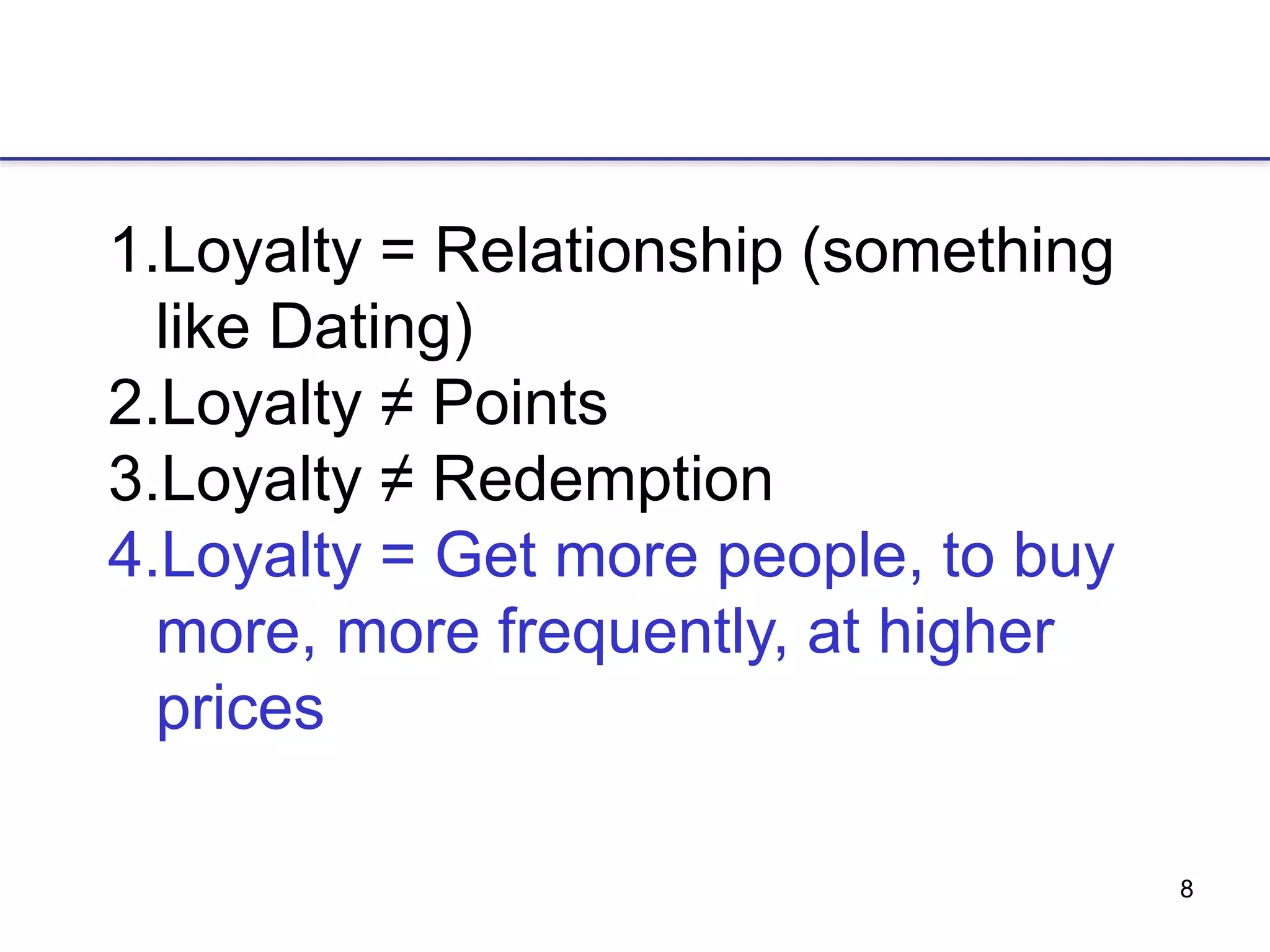
8
1.Loyalty = Relationship (something
like Dating)
2.Loyalty ≠ Points
3.Loyalty ≠ Redemption
4.Loyalty = Get more people, to buy
more, more frequently, at higher
prices
KNOW WHO YOU ARE TALKING TO
Loyalty and Experience mean different things to different people
http://totallyunrelatedrandomanddebatable.blogspot.com/
10
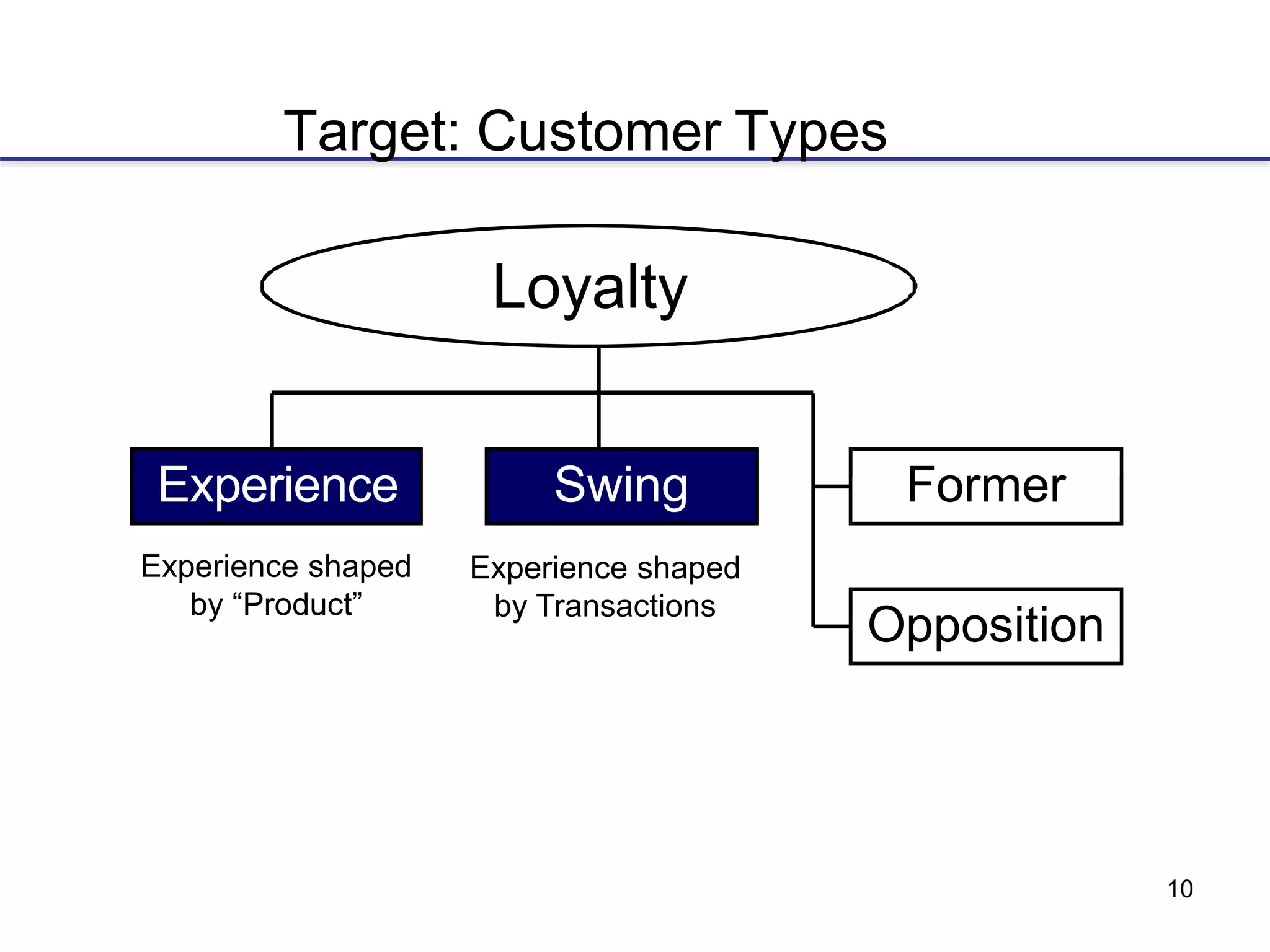
Target: Customer Types
Loyalty
Experience Swing Former
Opposition
Experience shaped
by “Product”
Experience shaped
by Transactions
11
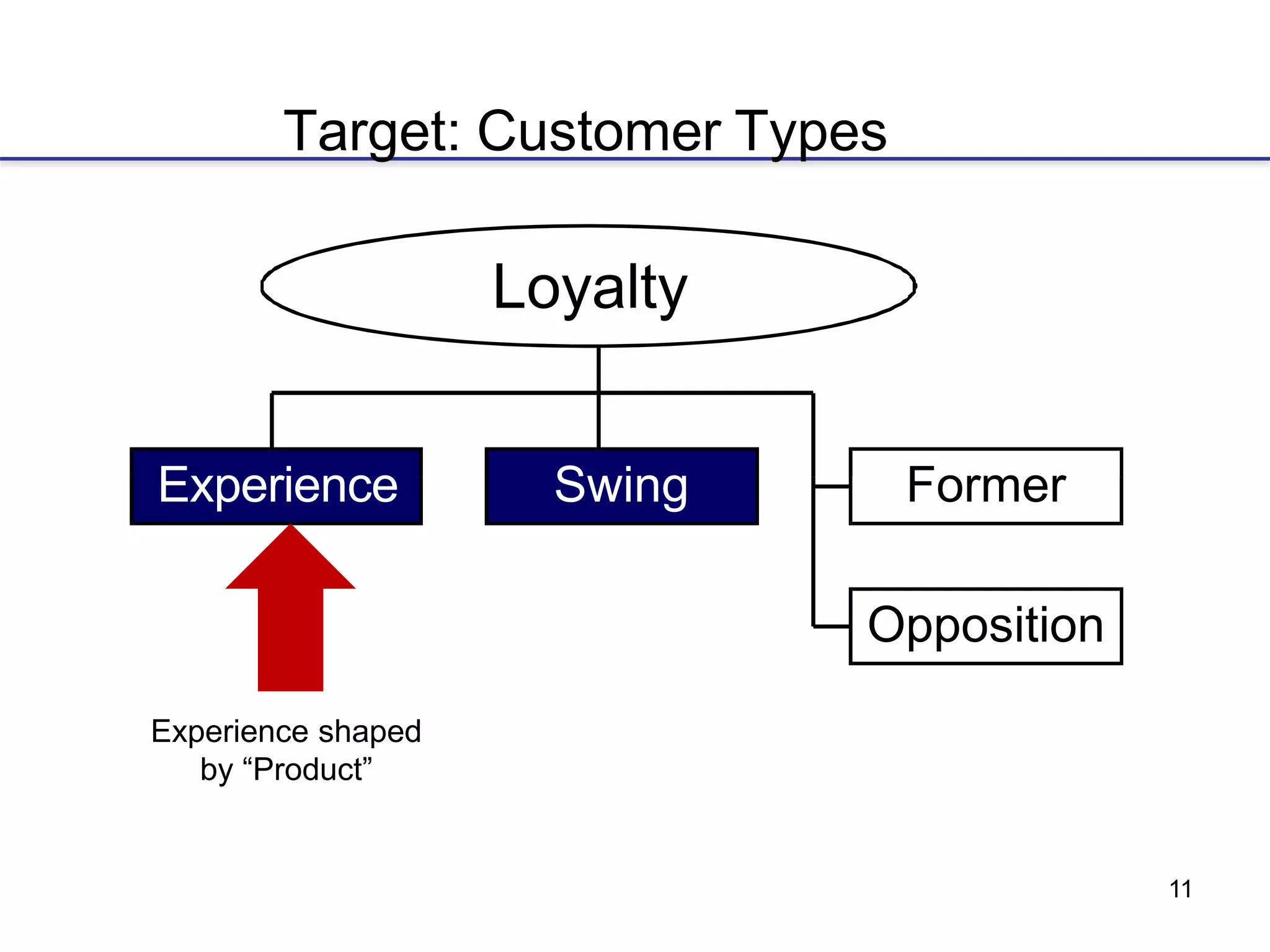
Target: Customer Types
Loyalty
Experience Swing Former
Opposition
Experience shaped
by “Product”
12
Zig Ziglar
“Most prospects that
don’t buy are confused
about the offer”
13
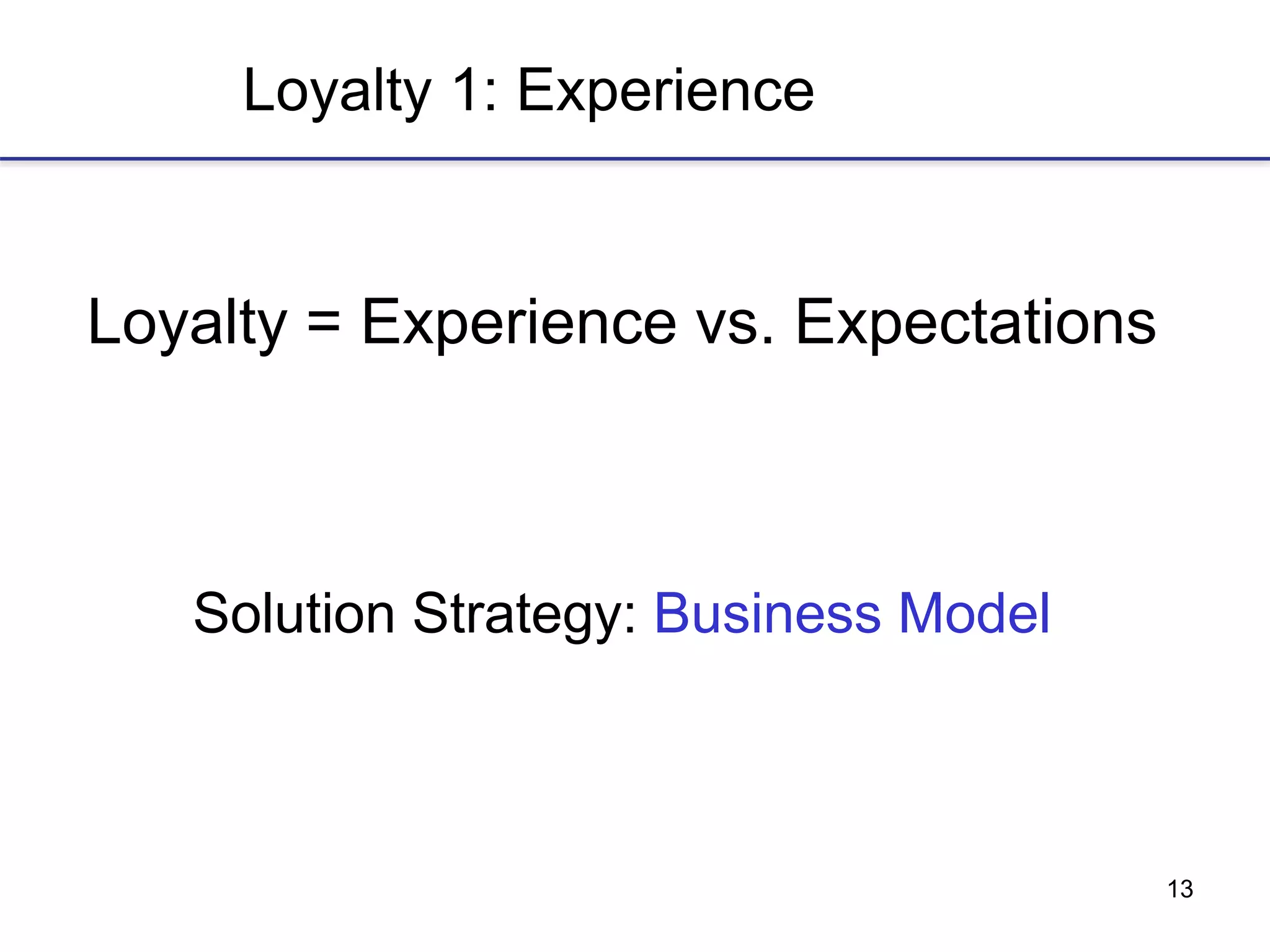
Loyalty 1: Experience
Loyalty = Experience vs. Expectations
Solution Strategy: Business Model
15
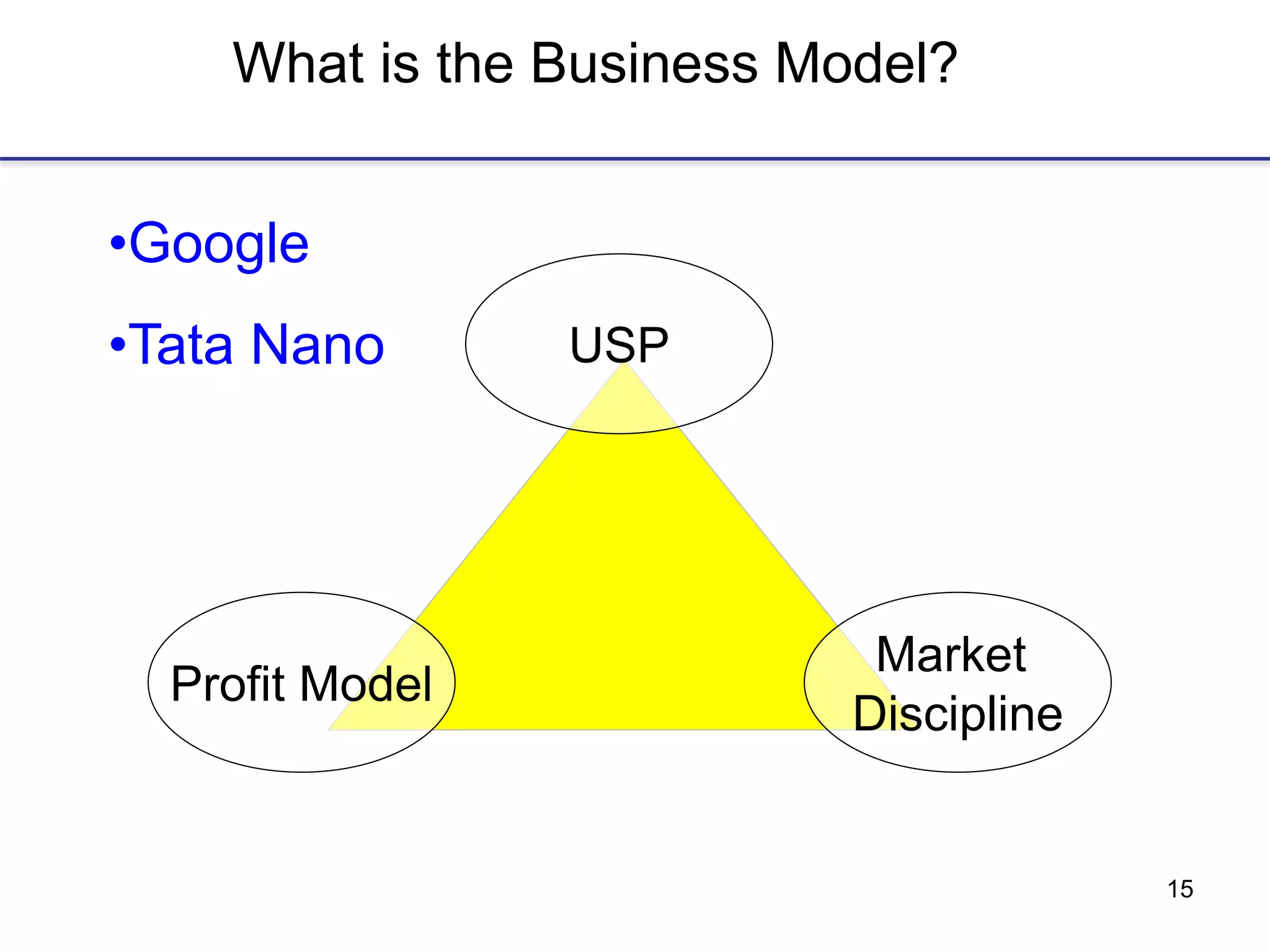
What is the Business Model?
USP
Market
Discipline
Profit Model
•Google
•Tata Nano
16
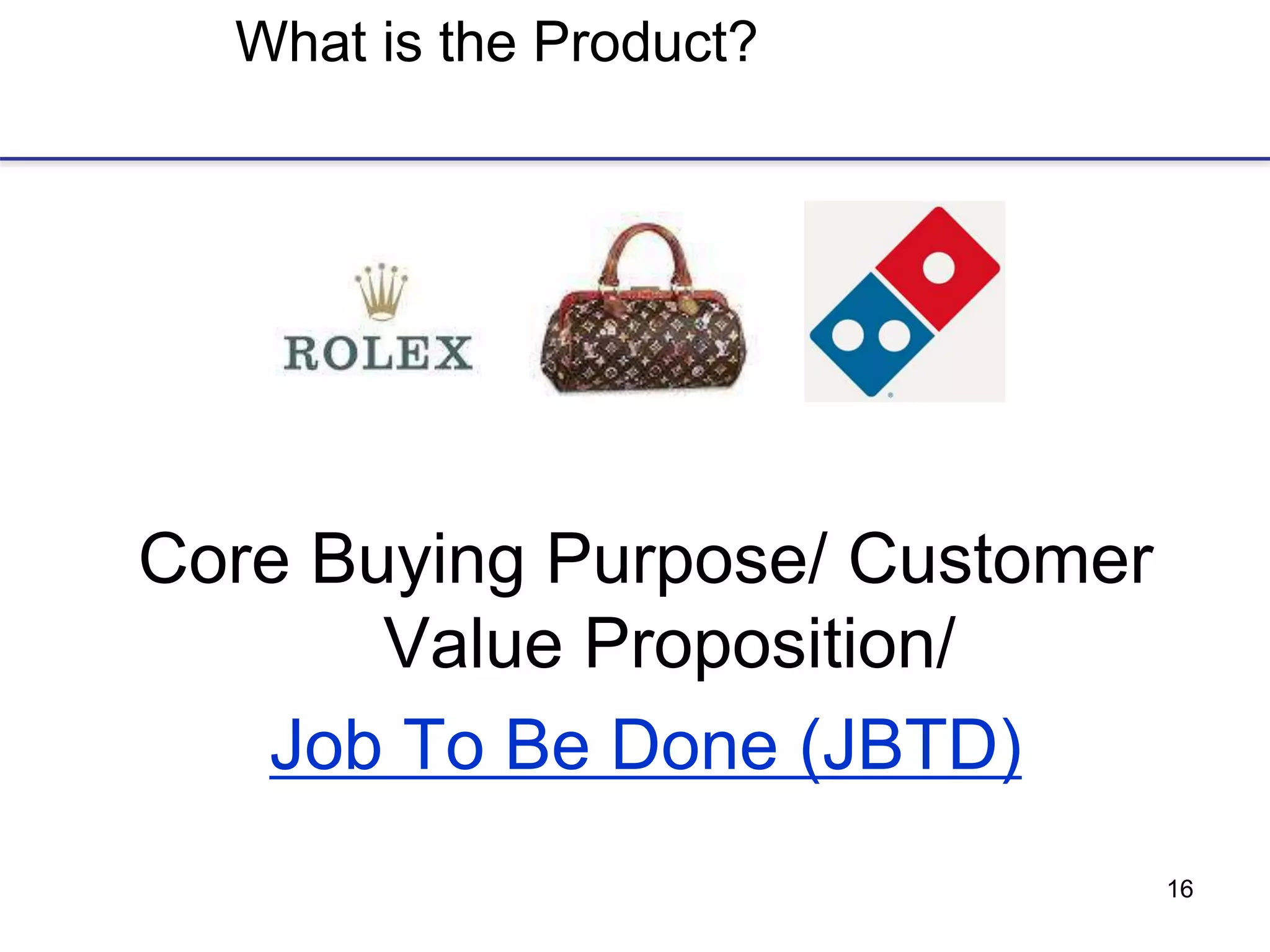
What is the Product?
Core Buying Purpose/ Customer
Value Proposition/
Job To Be Done (JBTD)
17
“The Product is Not the Product”
• What is the customer really buying?
• What is the “Core Buying Purpose”?
18
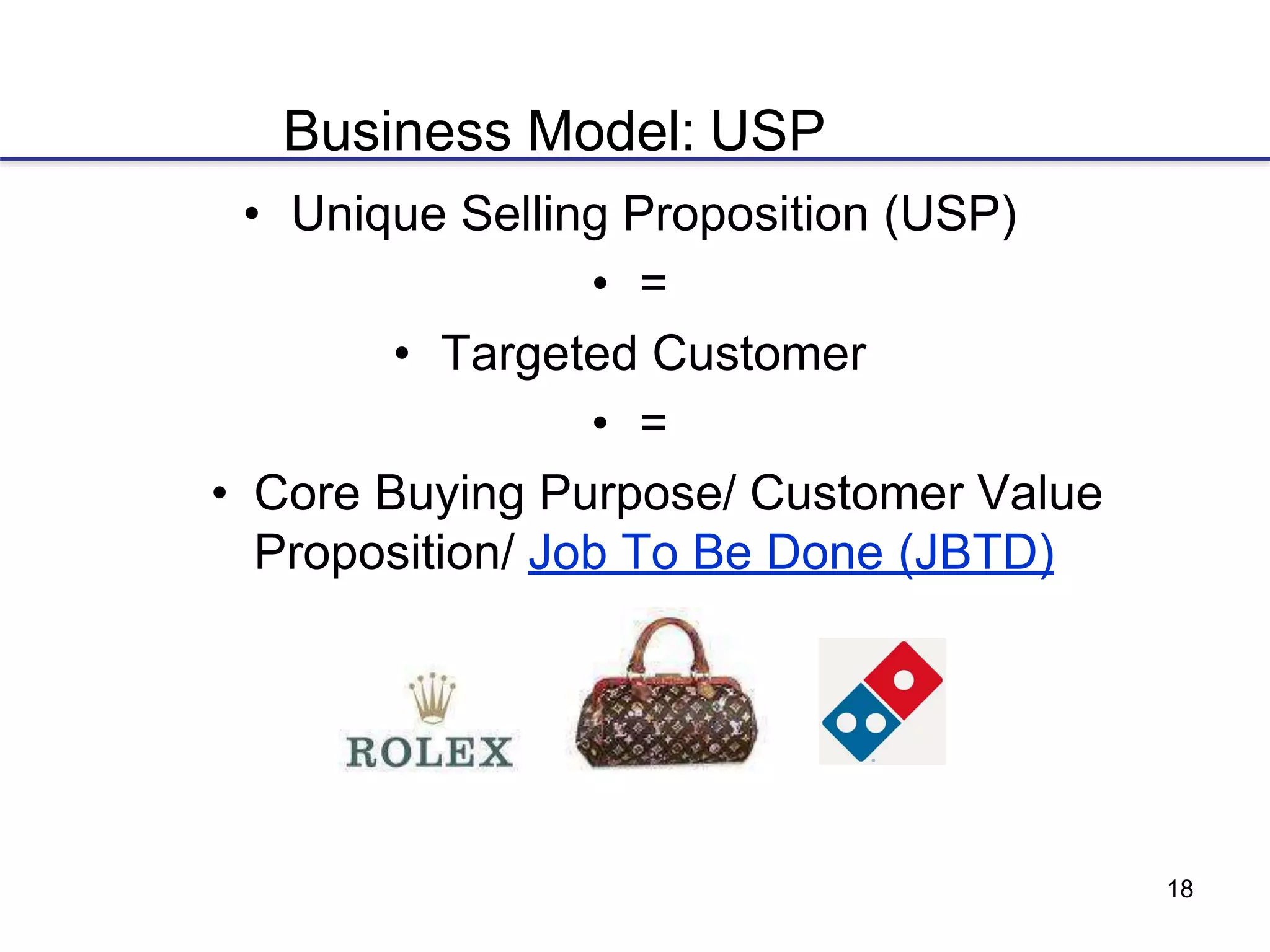
Business Model: USP
• Unique Selling Proposition (USP)
• =
• Targeted Customer
• =
• Core Buying Purpose/ Customer Value
Proposition/ Job To Be Done (JBTD)
19
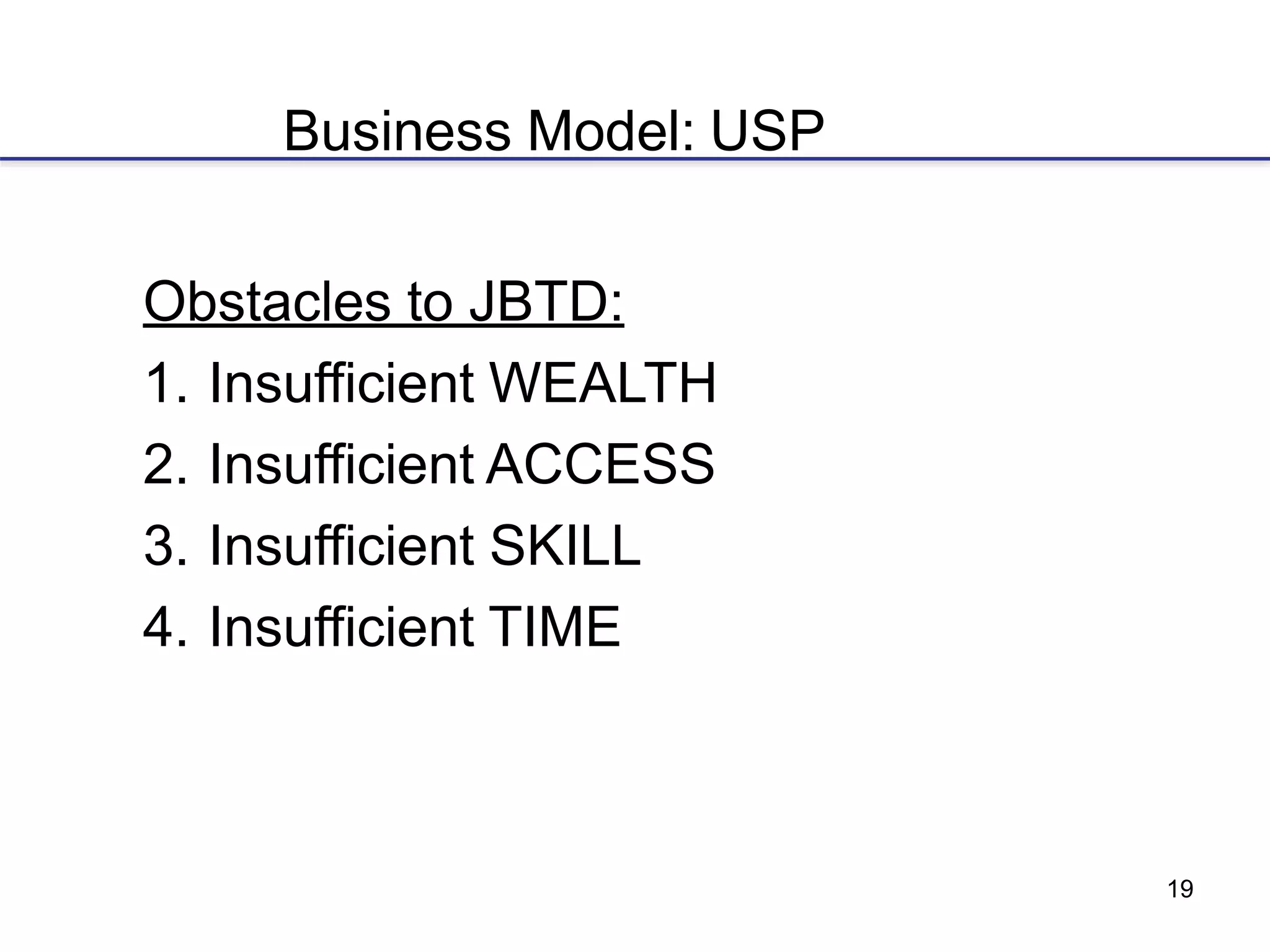
Business Model: USP
Obstacles to JBTD:
1. Insufficient WEALTH
2. Insufficient ACCESS
3. Insufficient SKILL
4. Insufficient TIME
20
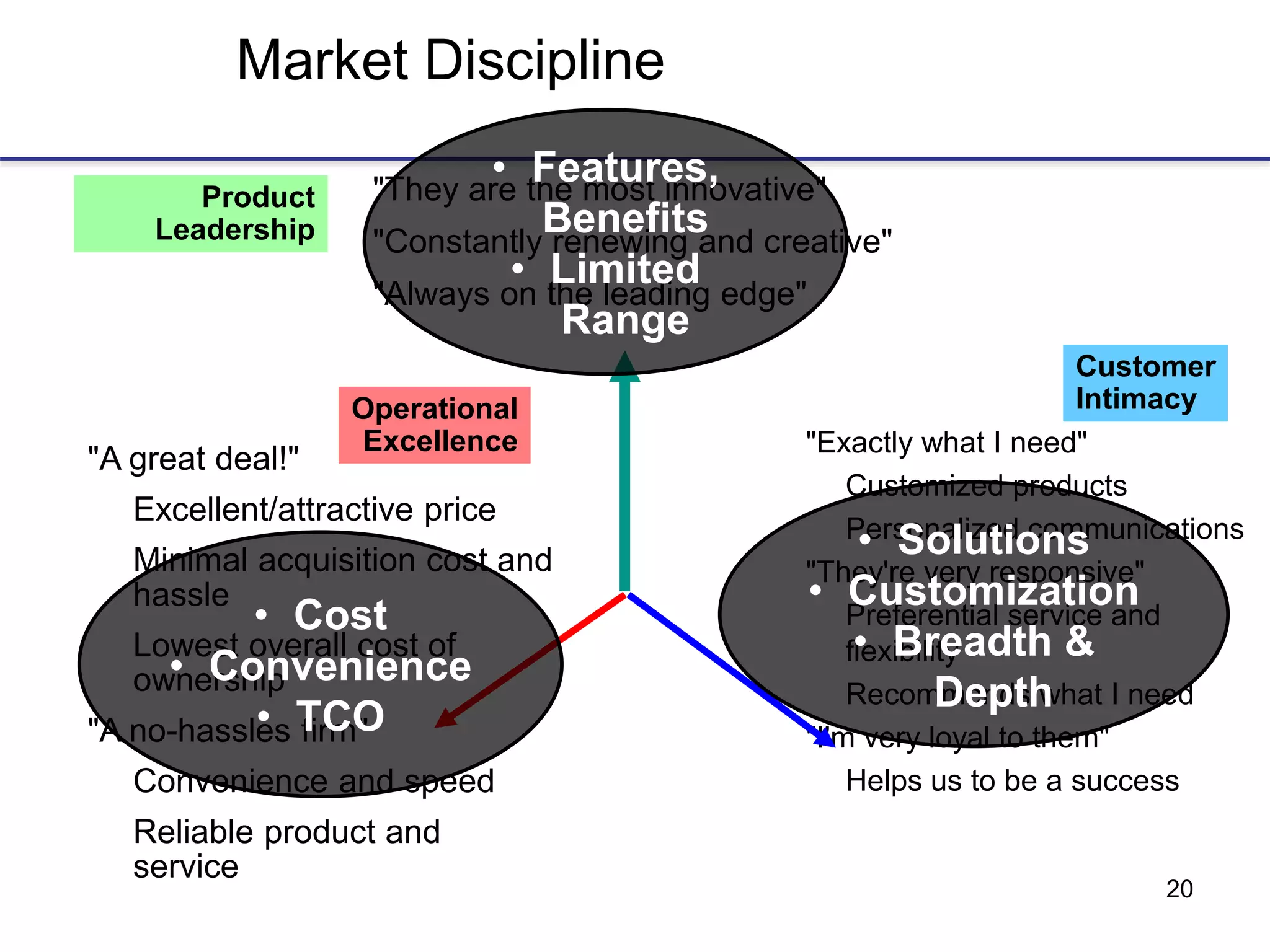
Market Discipline
"They are the most innovative"
"Constantly renewing and creative"
"Always on the leading edge"
"A great deal!"
Excellent/attractive price
Minimal acquisition cost and
hassle
Lowest overall cost of
ownership
"A no-hassles firm"
Convenience and speed
Reliable product and
service
"Exactly what I need"
Customized products
Personalized communications
"They're very responsive"
Preferential service and
flexibility
Recommends what I need
"I'm very loyal to them"
Helps us to be a success
Product
Leadership
Operational
Excellence
Customer
Intimacy
• Cost
• Convenience
• TCO
• Features,
Benefits
• Limited
Range
• Solutions
• Customization
• Breadth &
Depth
21
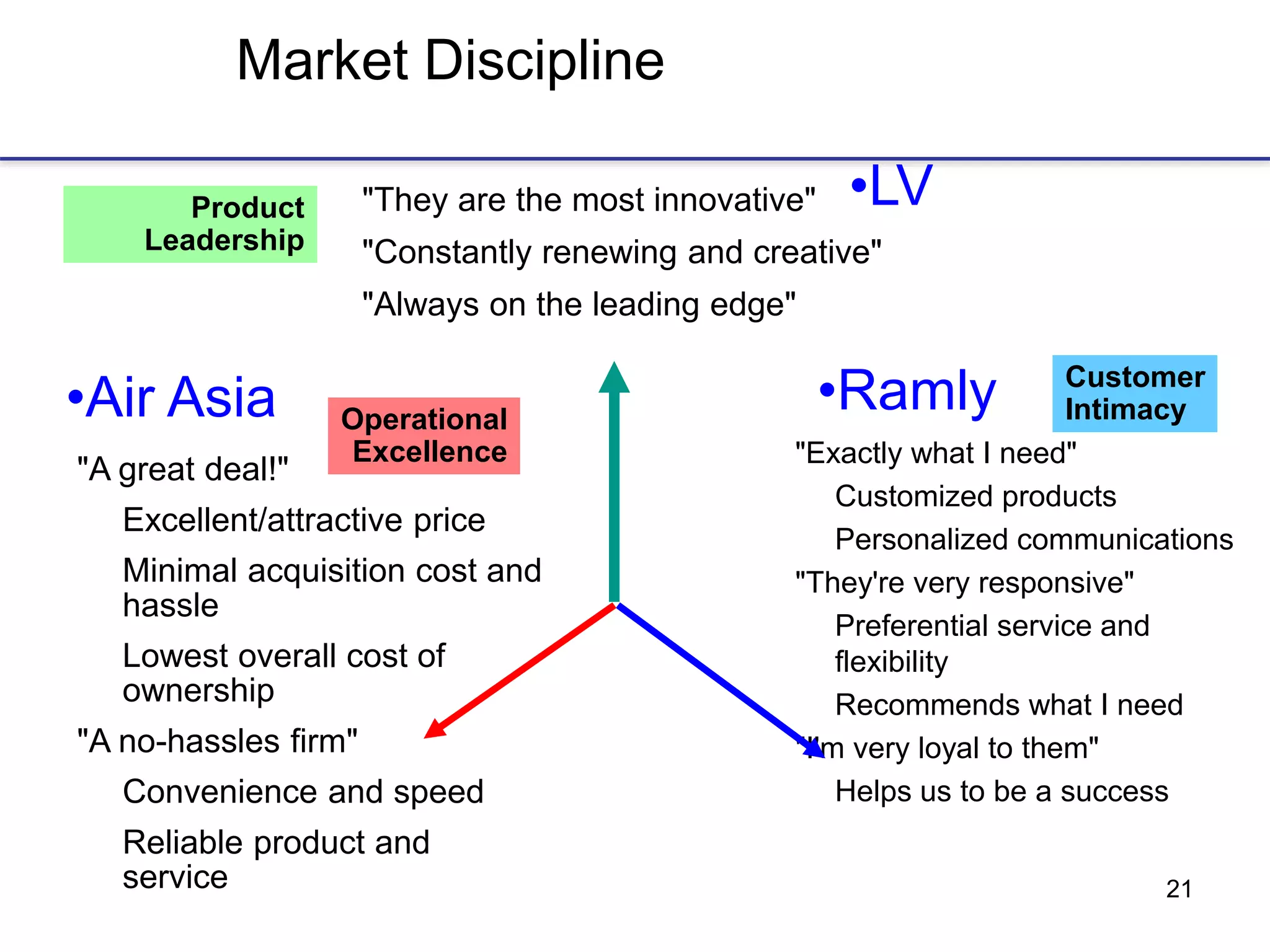
Market Discipline
"They are the most innovative"
"Constantly renewing and creative"
"Always on the leading edge"
"A great deal!"
Excellent/attractive price
Minimal acquisition cost and
hassle
Lowest overall cost of
ownership
"A no-hassles firm"
Convenience and speed
Reliable product and
service
"Exactly what I need"
Customized products
Personalized communications
"They're very responsive"
Preferential service and
flexibility
Recommends what I need
"I'm very loyal to them"
Helps us to be a success
Product
Leadership
Operational
Excellence
Customer
Intimacy•Air Asia
•LV
•Ramly
22
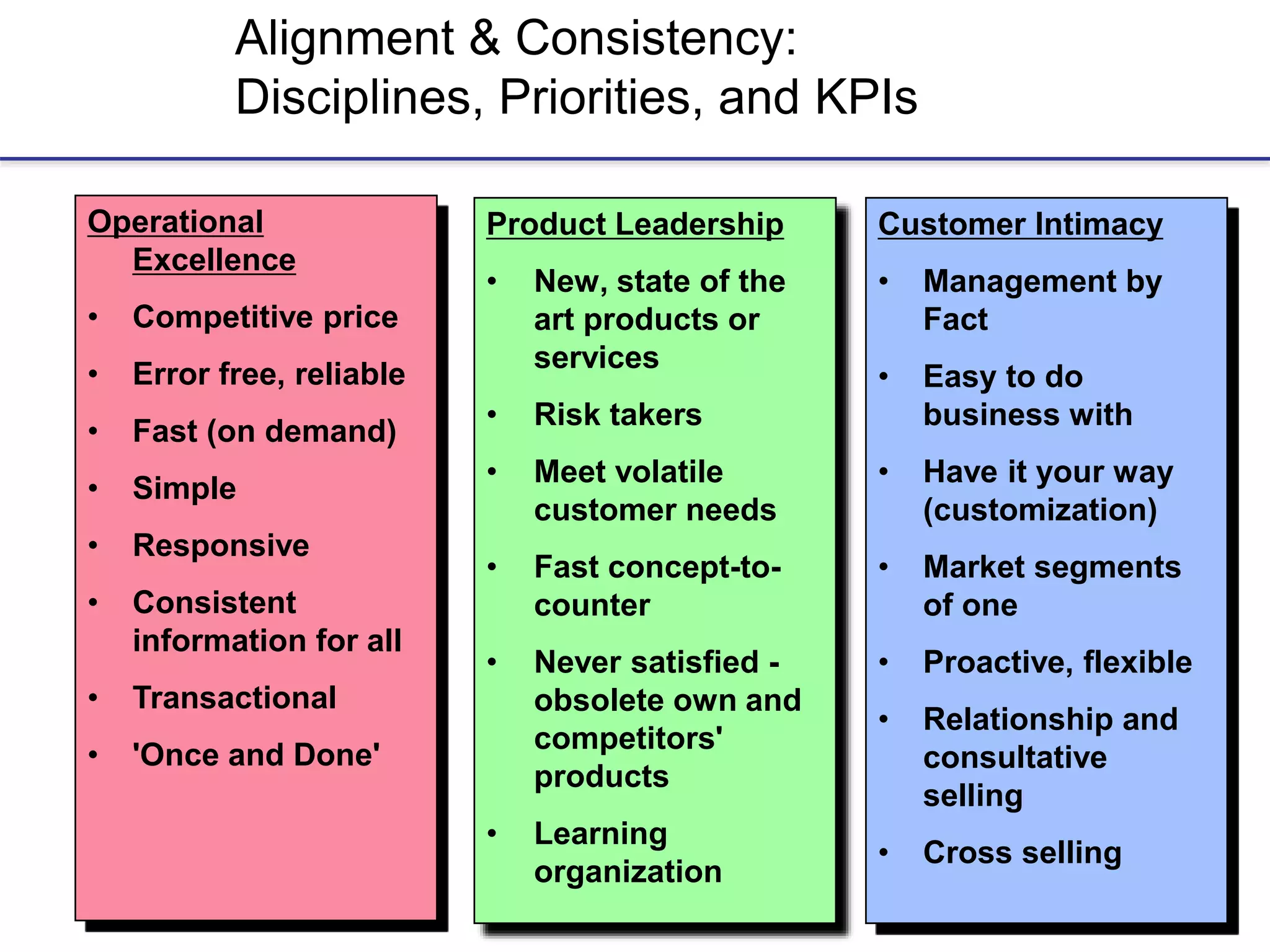
Operational
Excellence
• Competitive price
• Error free, reliable
• Fast (on demand)
• Simple
• Responsive
• Consistent
information for all
• Transactional
• 'Once and Done'
Customer Intimacy
• Management by
Fact
• Easy to do
business with
• Have it your way
(customization)
• Market segments
of one
• Proactive, flexible
• Relationship and
consultative
selling
• Cross selling
Product Leadership
• New, state of the
art products or
services
• Risk takers
• Meet volatile
customer needs
• Fast concept-to-
counter
• Never satisfied -
obsolete own and
competitors'
products
• Learning
organization
Alignment & Consistency:
Disciplines, Priorities, and KPIs
23
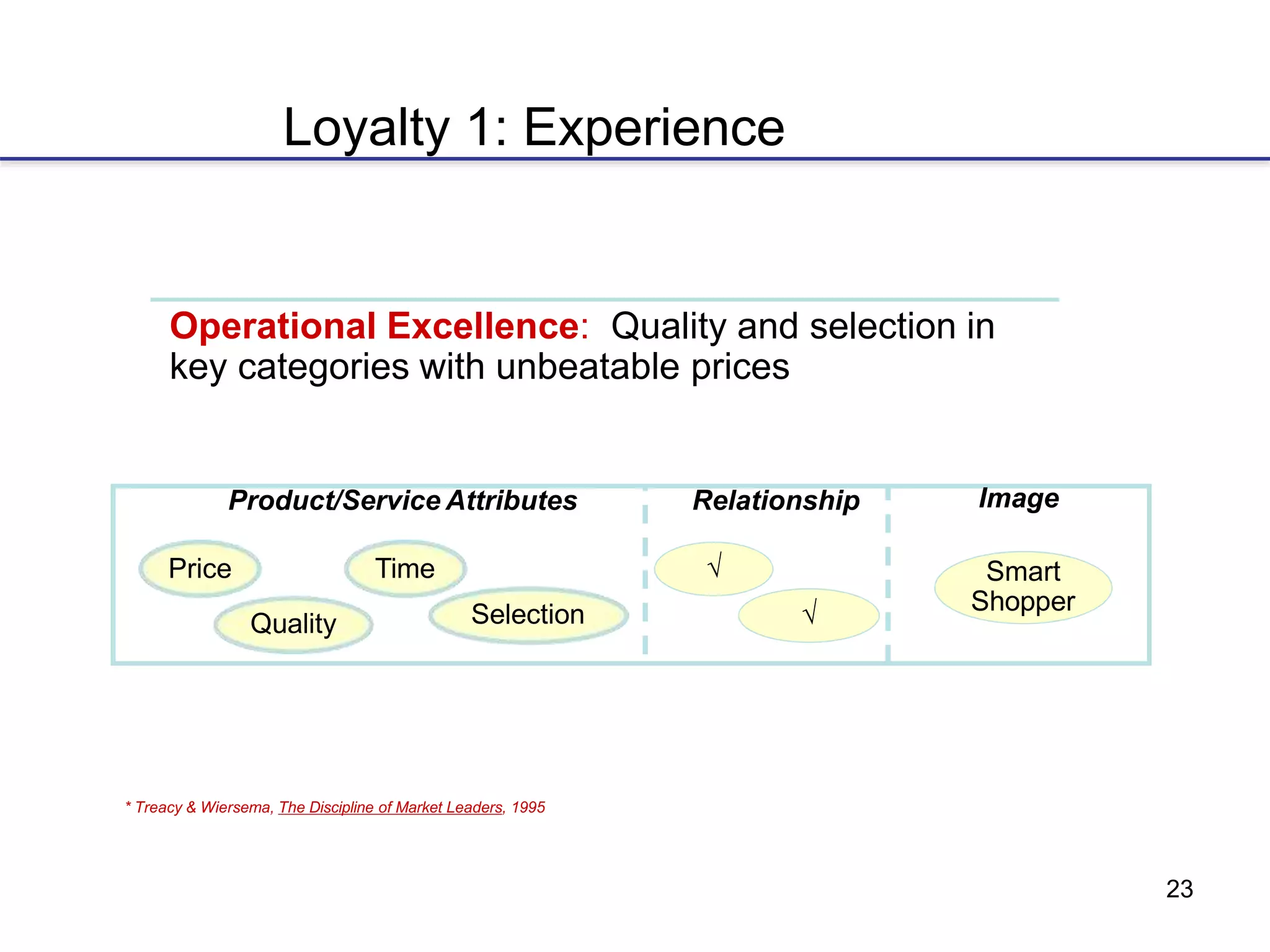
Loyalty 1: Experience
Operational Excellence: Quality and selection in
key categories with unbeatable prices
* Treacy & Wiersema, The Discipline of Market Leaders, 1995
Quality
Product/Service Attributes
Price Time
Selection
√
√
Smart
Shopper
Relationship Image
24
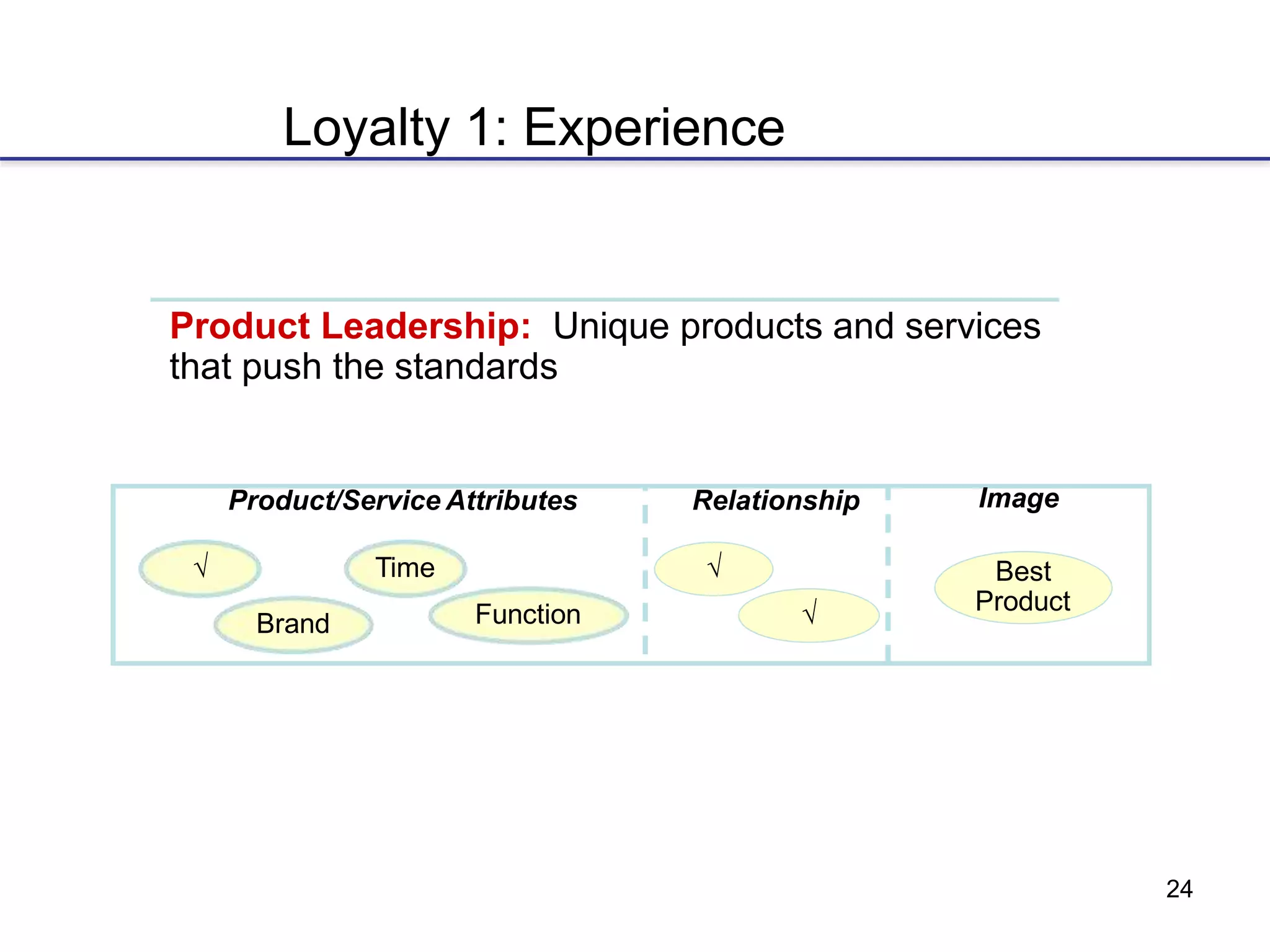
Loyalty 1: Experience
Product Leadership: Unique products and services
that push the standards
Product/Service Attributes
√
Brand
Time
Function
√
√
Best
Product
Relationship Image
25
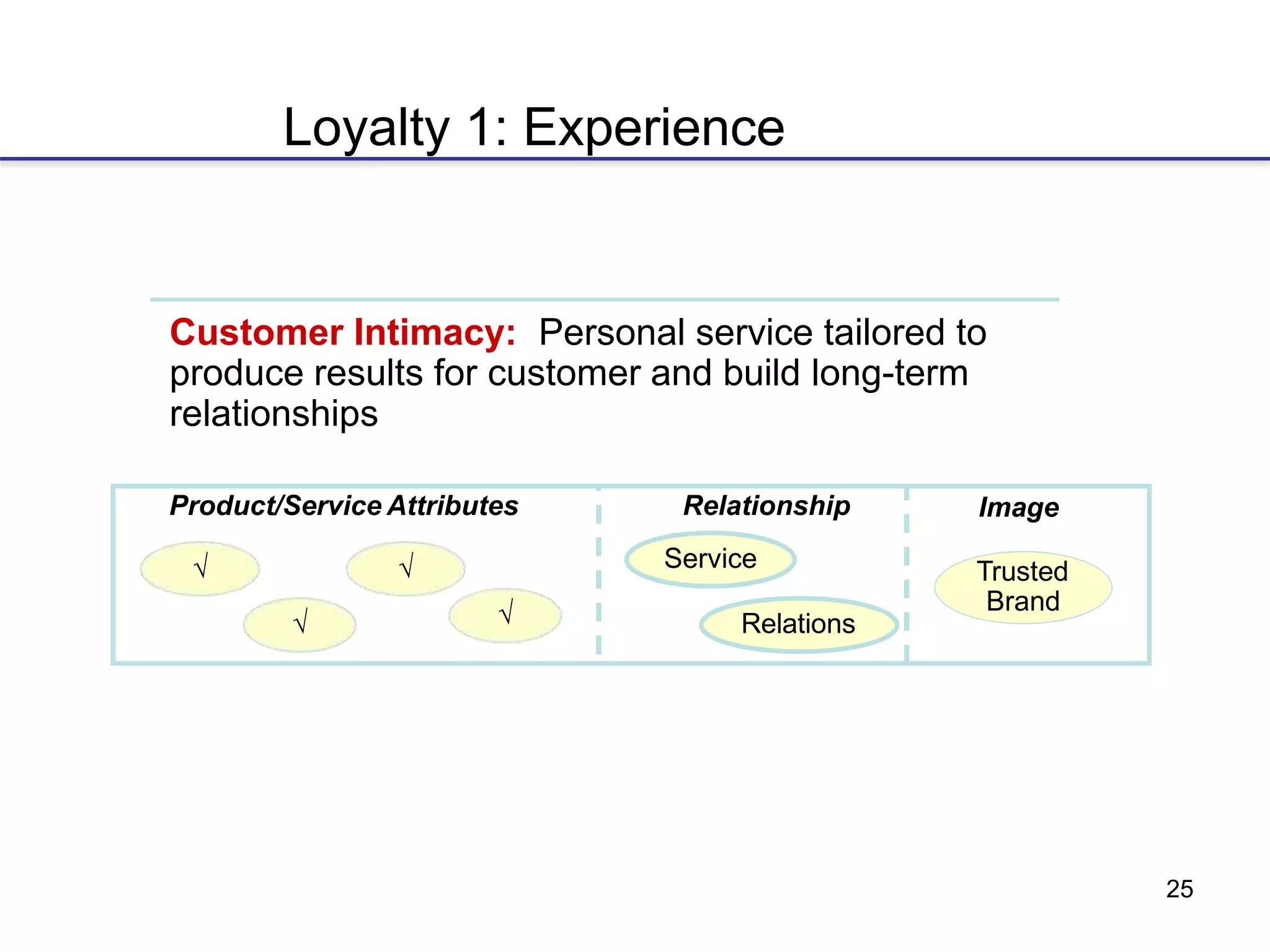
Loyalty 1: Experience
Customer Intimacy: Personal service tailored to
produce results for customer and build long-term
relationships
√
Product/Service Attributes
√ √
√
Trusted
Brand
Relationship
Service
Image
Relations
26
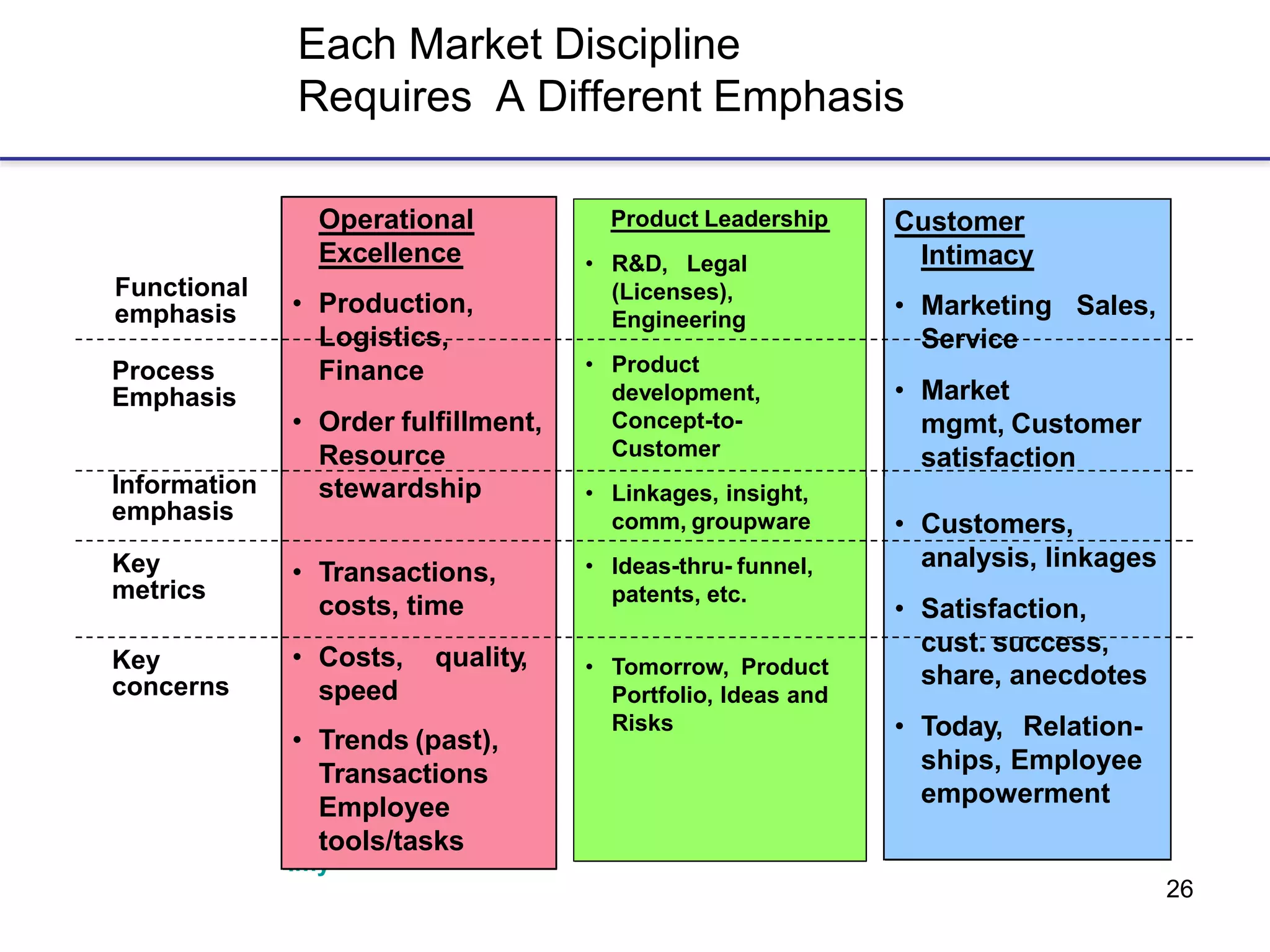
Each Market Discipline
Requires A Different Emphasis
Operational
Excellence
• Production,
Logistics,
Finance
• Order fulfillment,
Resource
Customer
Intimacy
• Marketing Sales,
Service
• Market
mgmt, Customer
satisfaction
Product Leadership
• R&D, Legal
(Licenses),
Engineering
• Product
development,
Concept-to-
Customer
Functional
emphasis
Process
Emphasis
.my
stewardship
• Transactions,
costs, time
• Costs, quality,
speed
• Trends (past),
Transactions
Employee
tools/tasks
• Customers,
analysis, linkages
• Satisfaction,
cust. success,
share, anecdotes
• Today, Relation-
ships, Employee
empowerment
• Linkages, insight,
comm, groupware
• Ideas-thru- funnel,
patents, etc.
• Tomorrow, Product
Portfolio, Ideas and
Risks
Information
emphasis
Key
metrics
Key
concerns
CX1.0: PROTECTING YOUR BASE
Do the right things, then do the right things efficiently
28
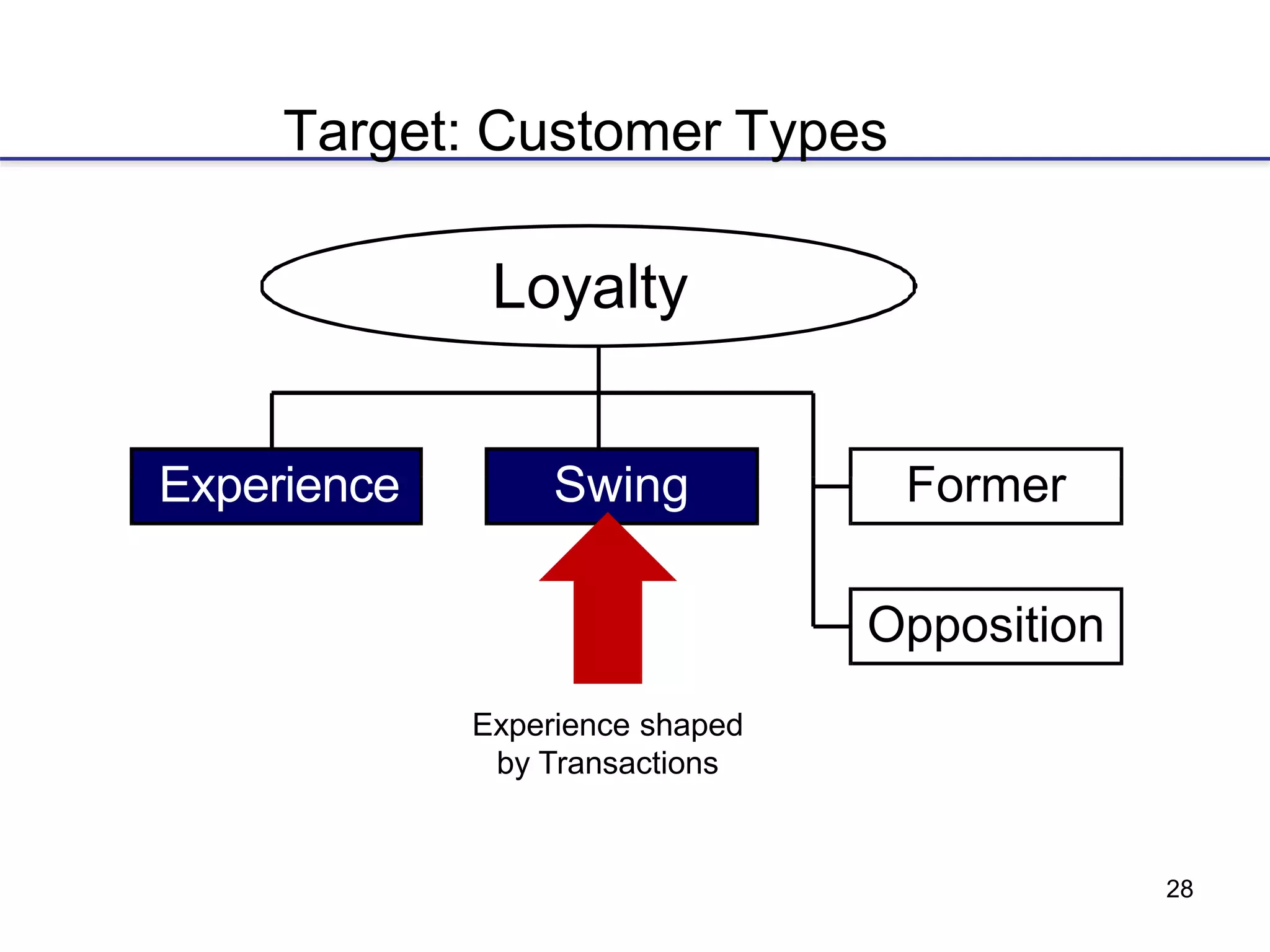
Target: Customer Types
Loyalty
Experience Swing Former
Opposition
Experience shaped
by Transactions
29
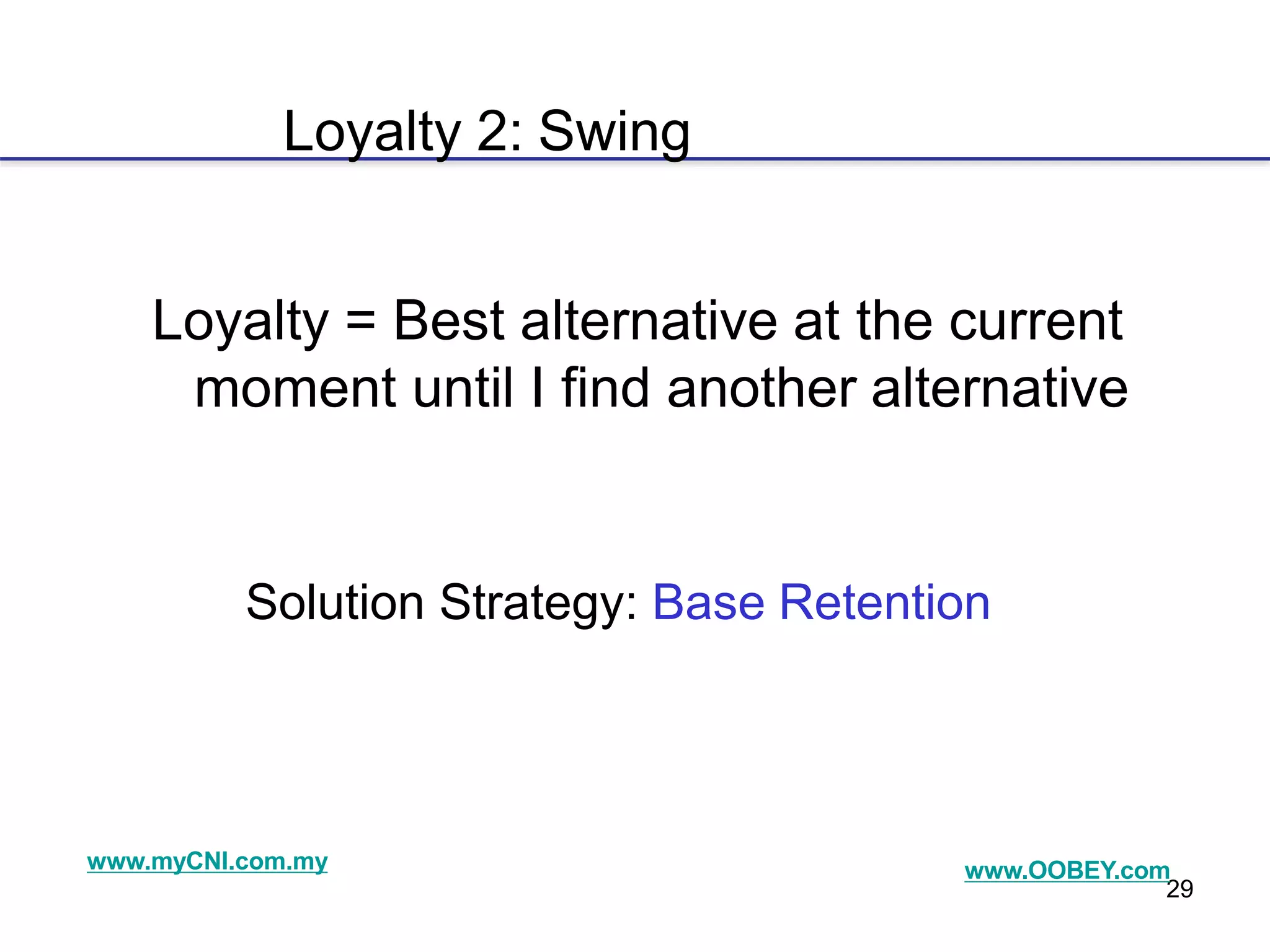
Loyalty 2: Swing
www.myCNI.com.my www.OOBEY.com
Loyalty = Best alternative at the current
moment until I find another alternative
Solution Strategy: Base Retention
30
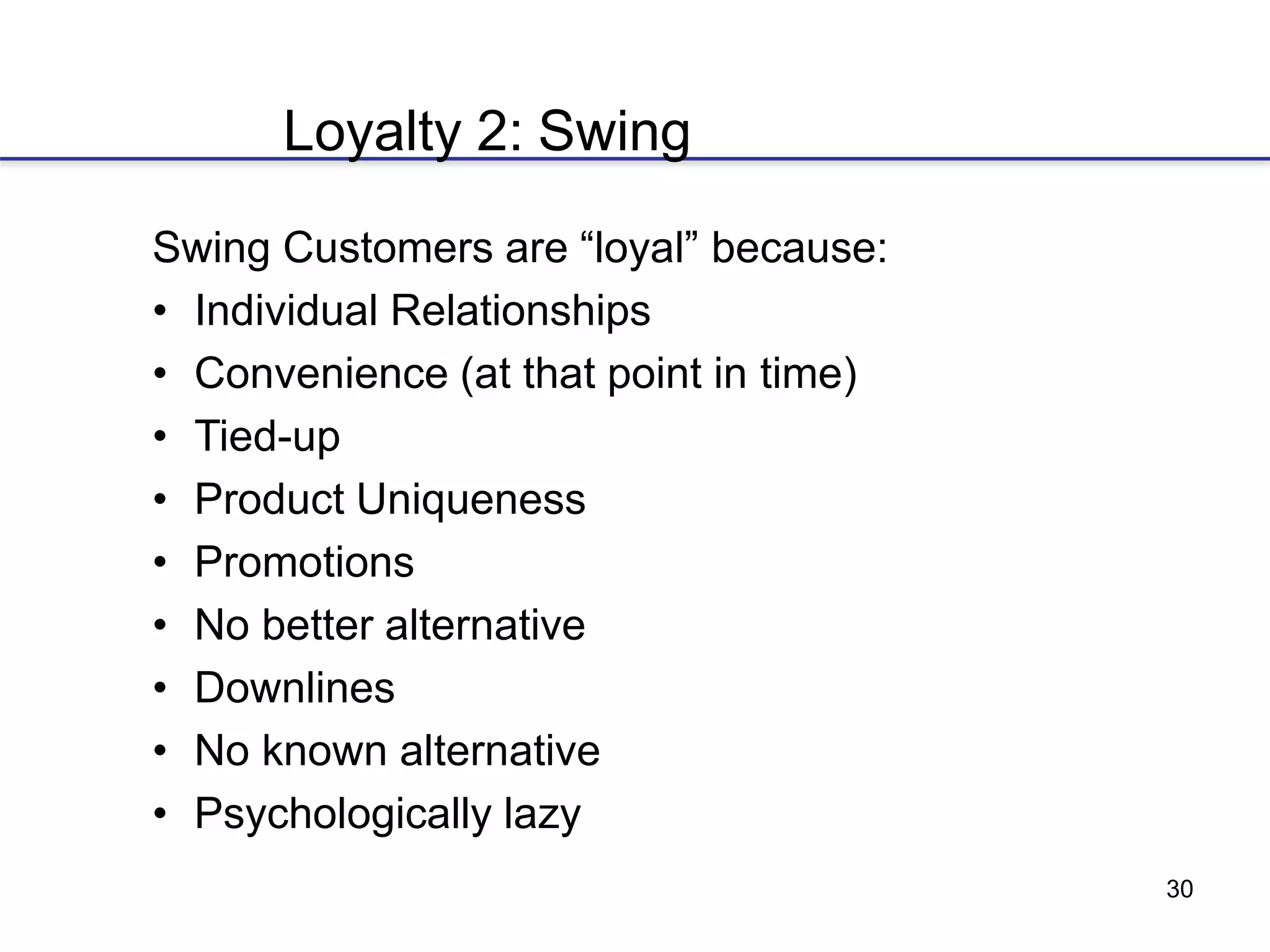
Loyalty 2: Swing
Swing Customers are “loyal” because:
• Individual Relationships
• Convenience (at that point in time)
• Tied-up
• Product Uniqueness
• Promotions
• No better alternative
• Downlines
• No known alternative
• Psychologically lazy
31
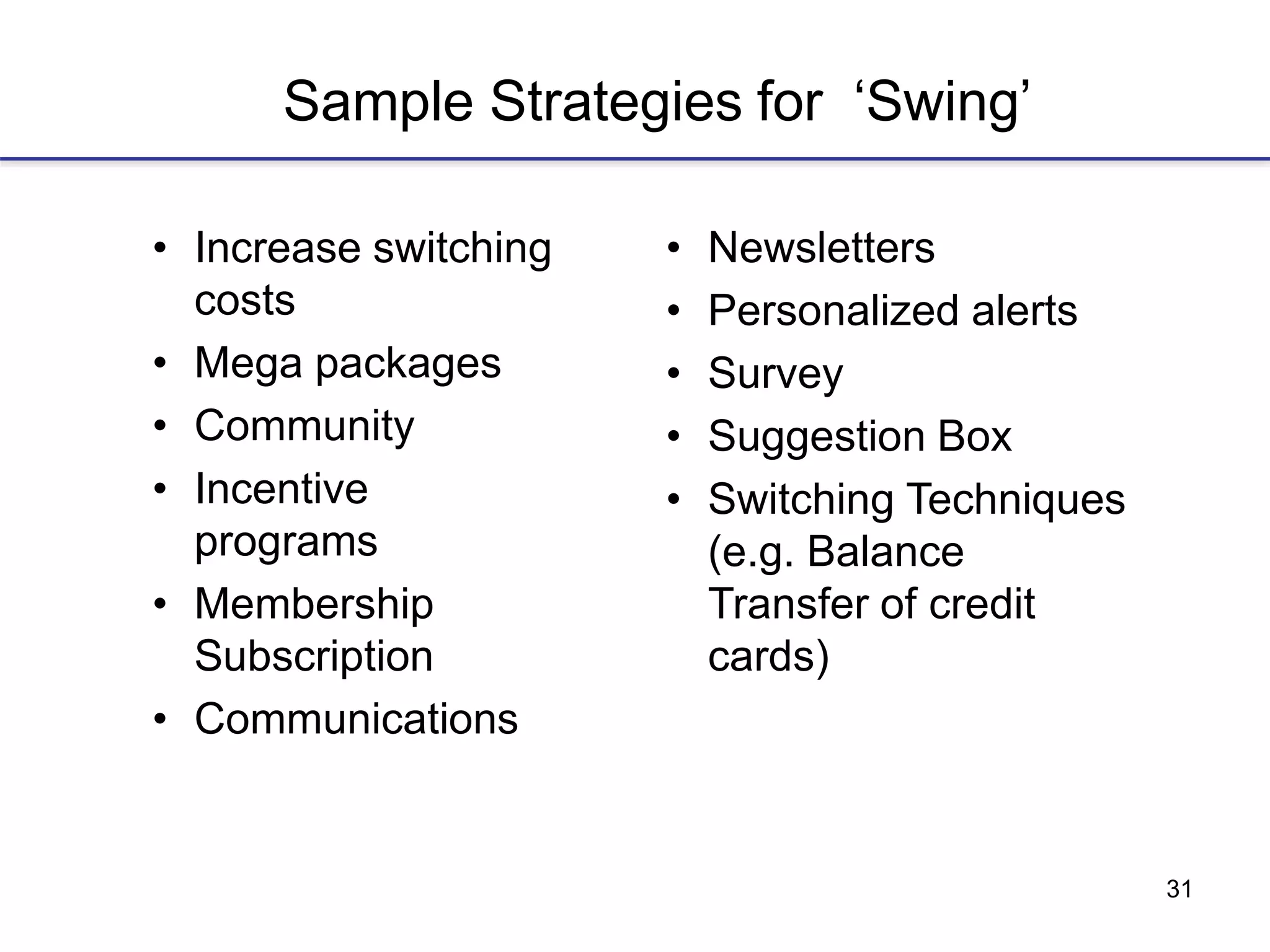
Sample Strategies for ‘Swing’
• Increase switching
costs
• Mega packages
• Community
• Incentive
programs
• Membership
Subscription
• Communications
• Newsletters
• Personalized alerts
• Survey
• Suggestion Box
• Switching Techniques
(e.g. Balance
Transfer of credit
cards)
32
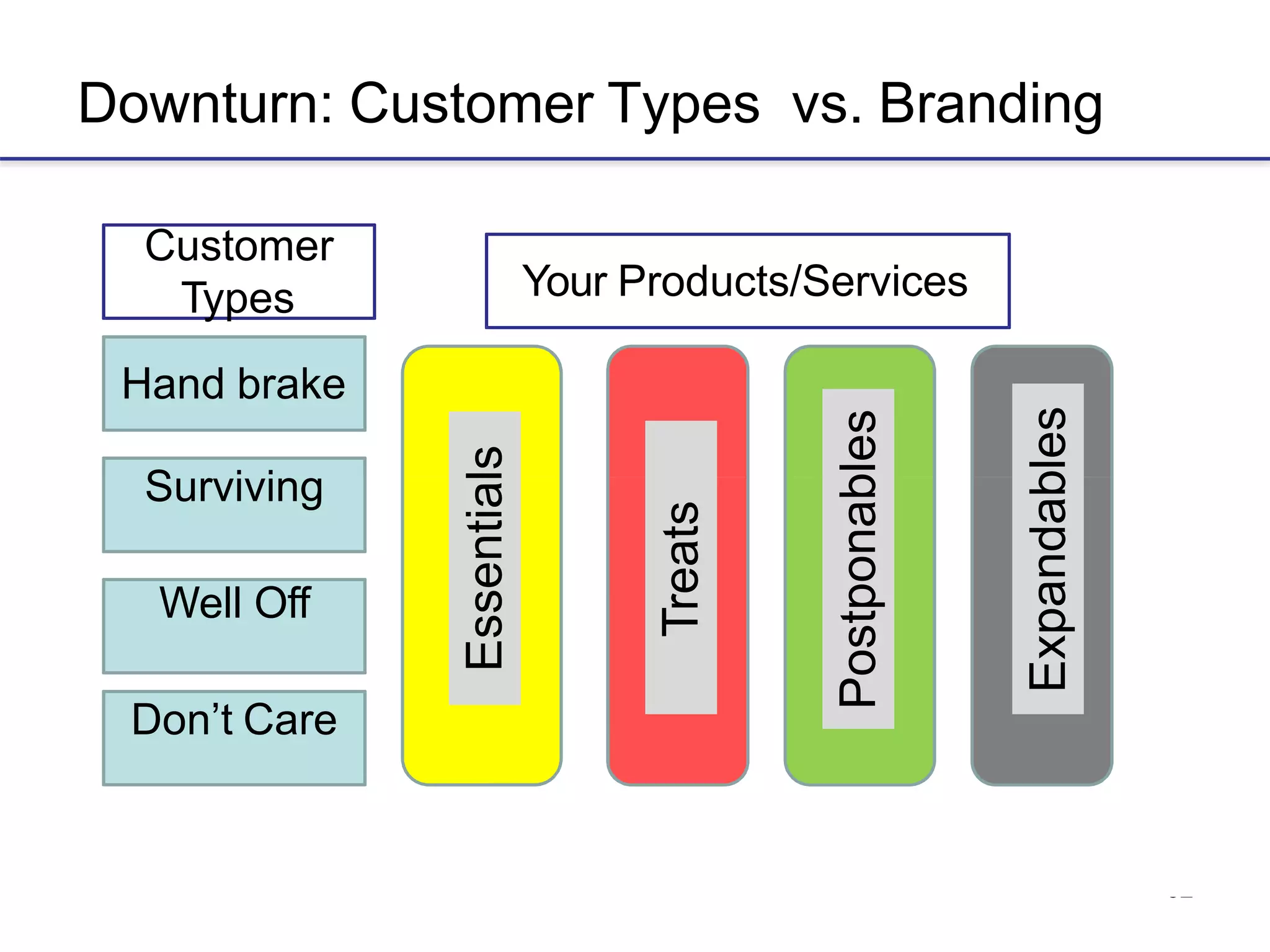
Downturn: Customer Types vs. Branding
Customer
Types Your Products/Services
Hand brake
Surviving
Well Off
Don’t Care
Essentials
Treats
Postponables
Expandables
33
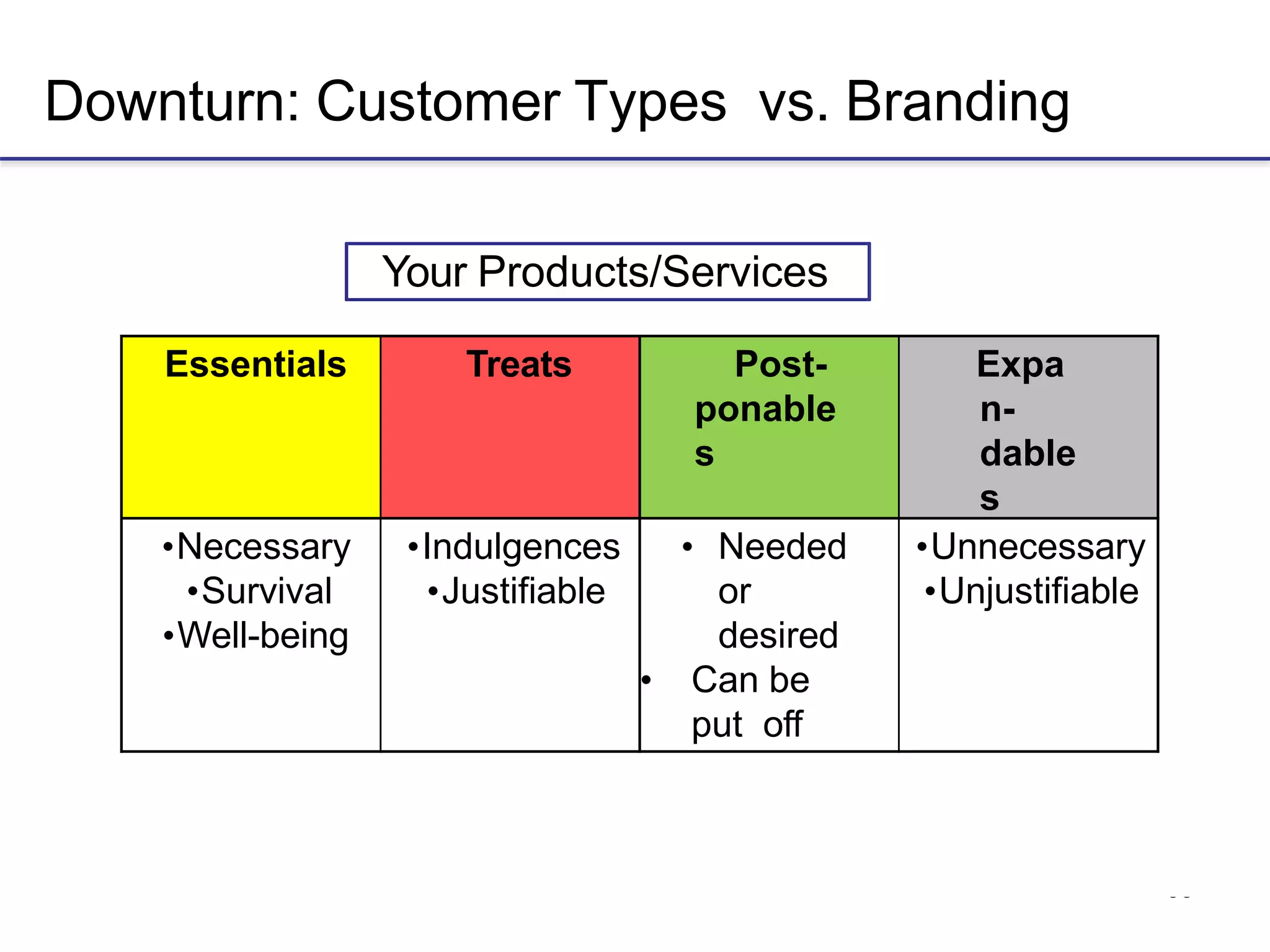
Downturn: Customer Types vs. Branding
Your Products/Services
Essentials Treats Post-
ponable
s
Expa
n-
dable
s
•Necessary
•Survival
•Well-being
•Indulgences
•Justifiable
• Needed
or
desired
• Can be
put off
•Unnecessary
•Unjustifiable
34
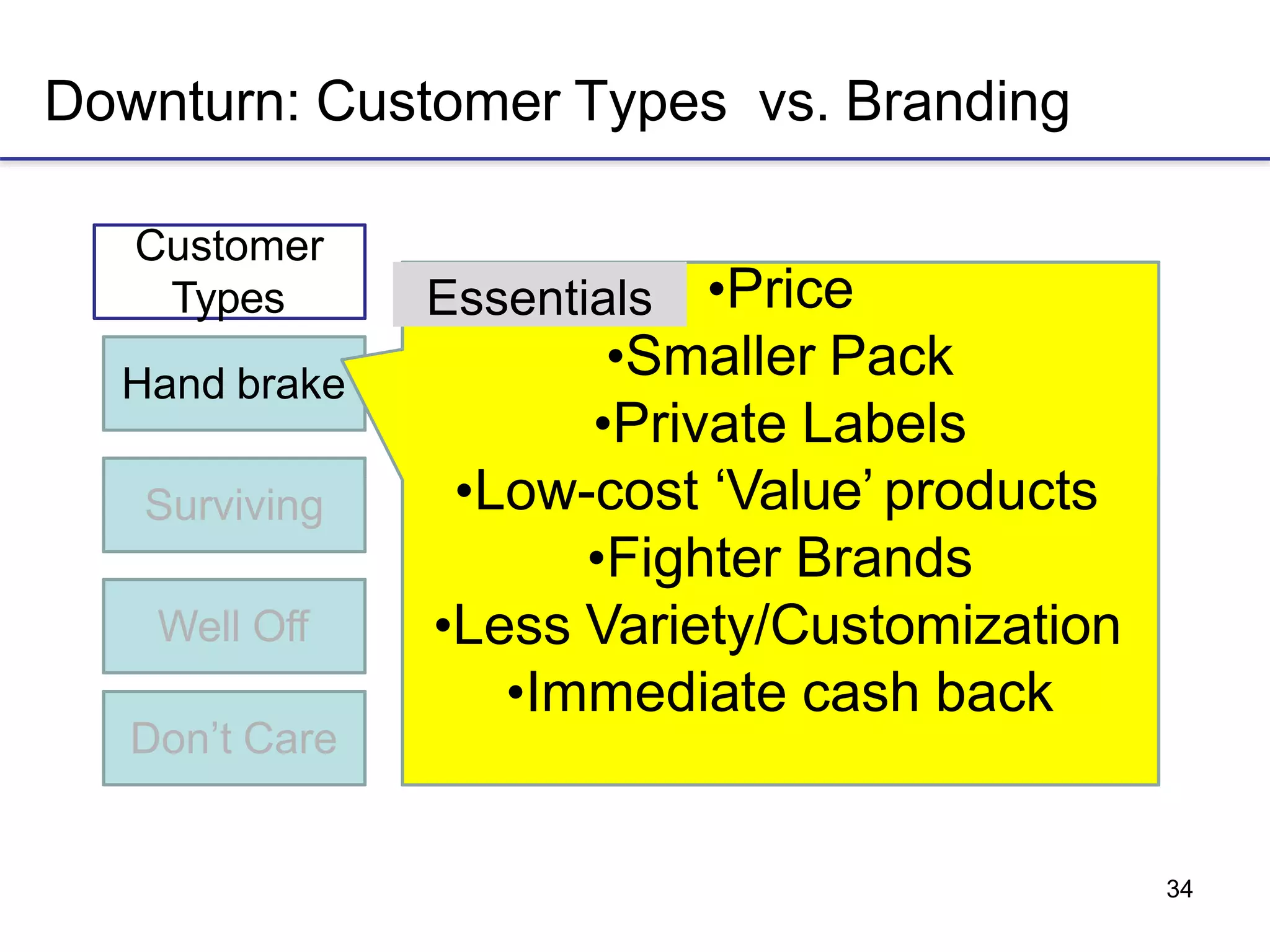
Downturn: Customer Types vs. Branding
Hand brake
Customer
Types •Price
•Smaller Pack
Essentials
Surviving
Well Off
Don’t Care
•Private Labels
•Low-cost ‘Value’ products
•Fighter Brands
•Less Variety/Customization
•Immediate cash back
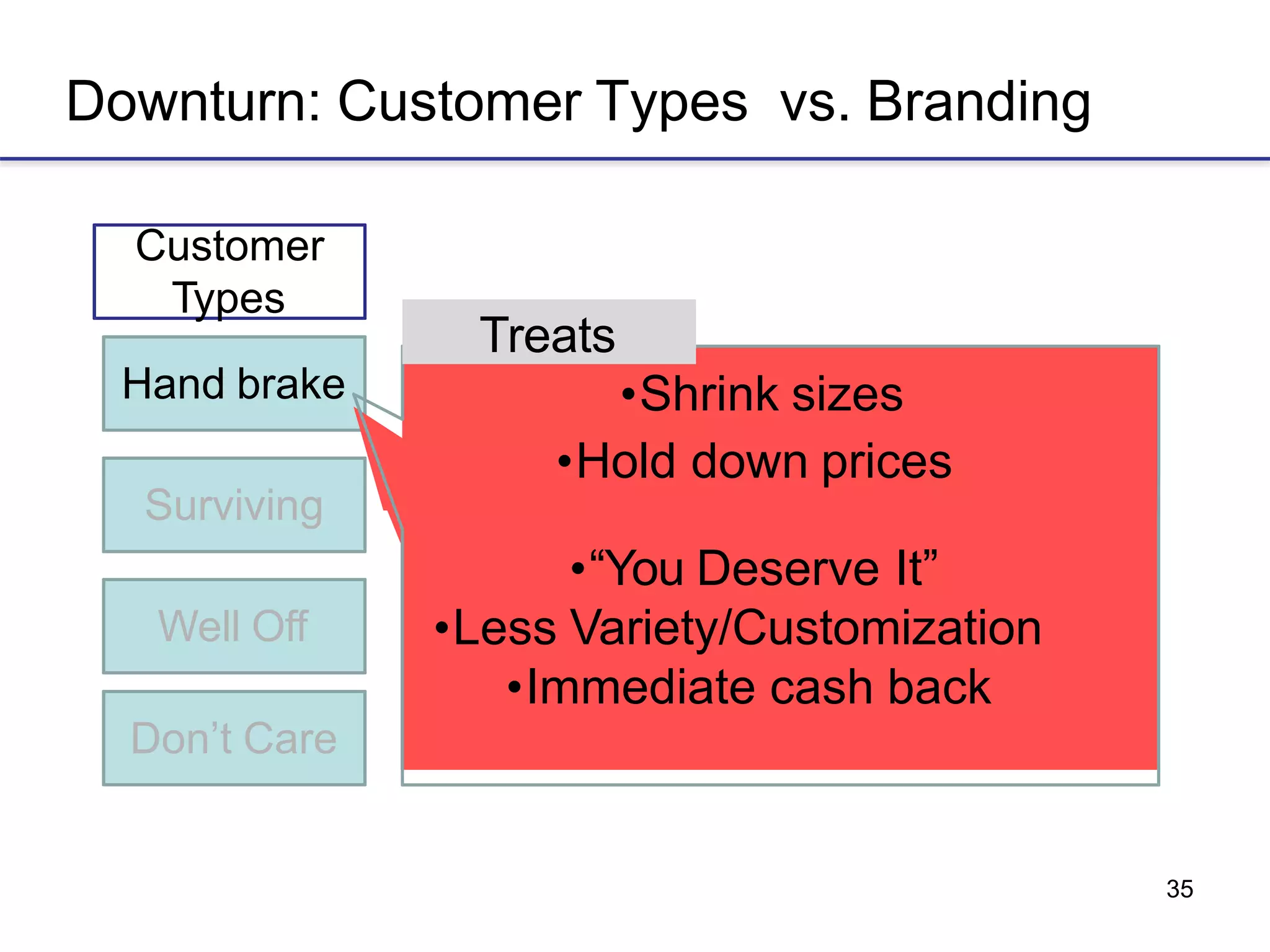
35
Downturn: Customer Types vs. Branding
Hand brake
Customer
Types
•Shrink sizes
•Hold down prices
Treats
Surviving
Well Off
Don’t Care
•“You Deserve It”
•Less Variety/Customization
•Immediate cash back
36
Downturn: Customer Types vs. Branding
Hand brake
Customer
Types
Postponables
Surviving
Well Off
Don’t Care
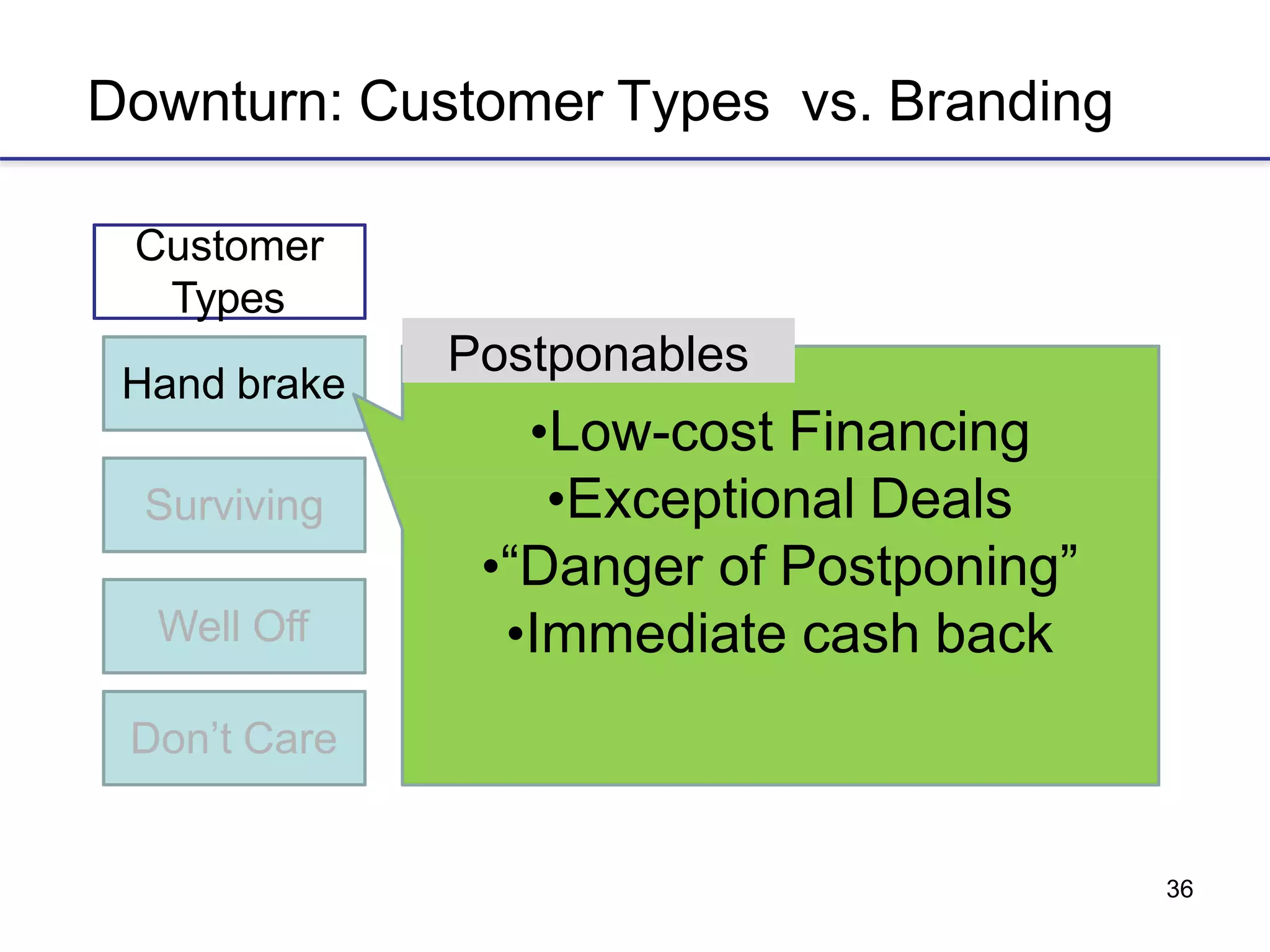
•Low-cost Financing
•Exceptional Deals
•“Danger of Postponing”
•Immediate cash back
37
Downturn: Customer Types vs. Branding
Hand brake
Customer
Types
Expandables
Surviving
Well Off
Don’t Care
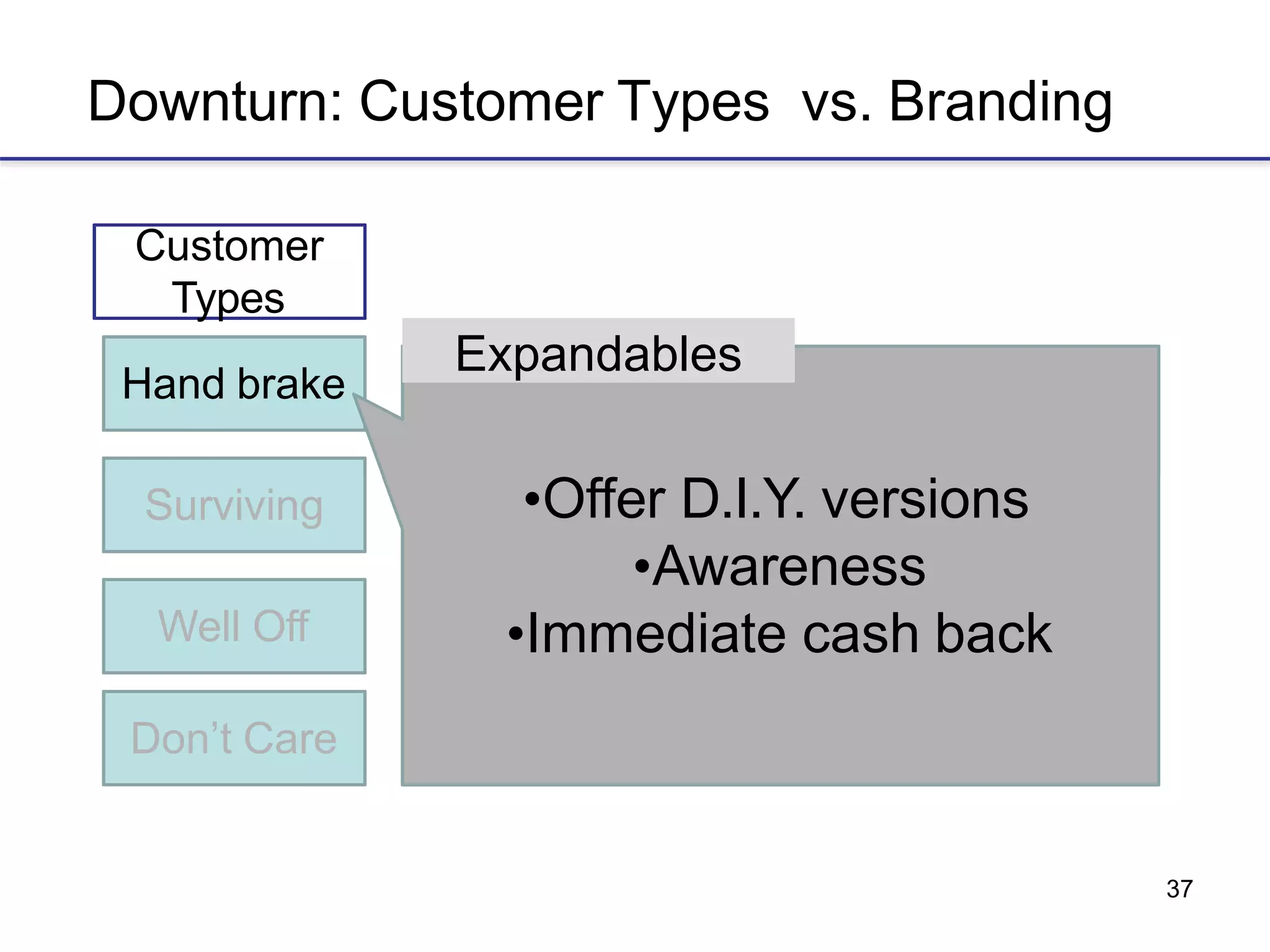
•Offer D.I.Y. versions
•Awareness
•Immediate cash back
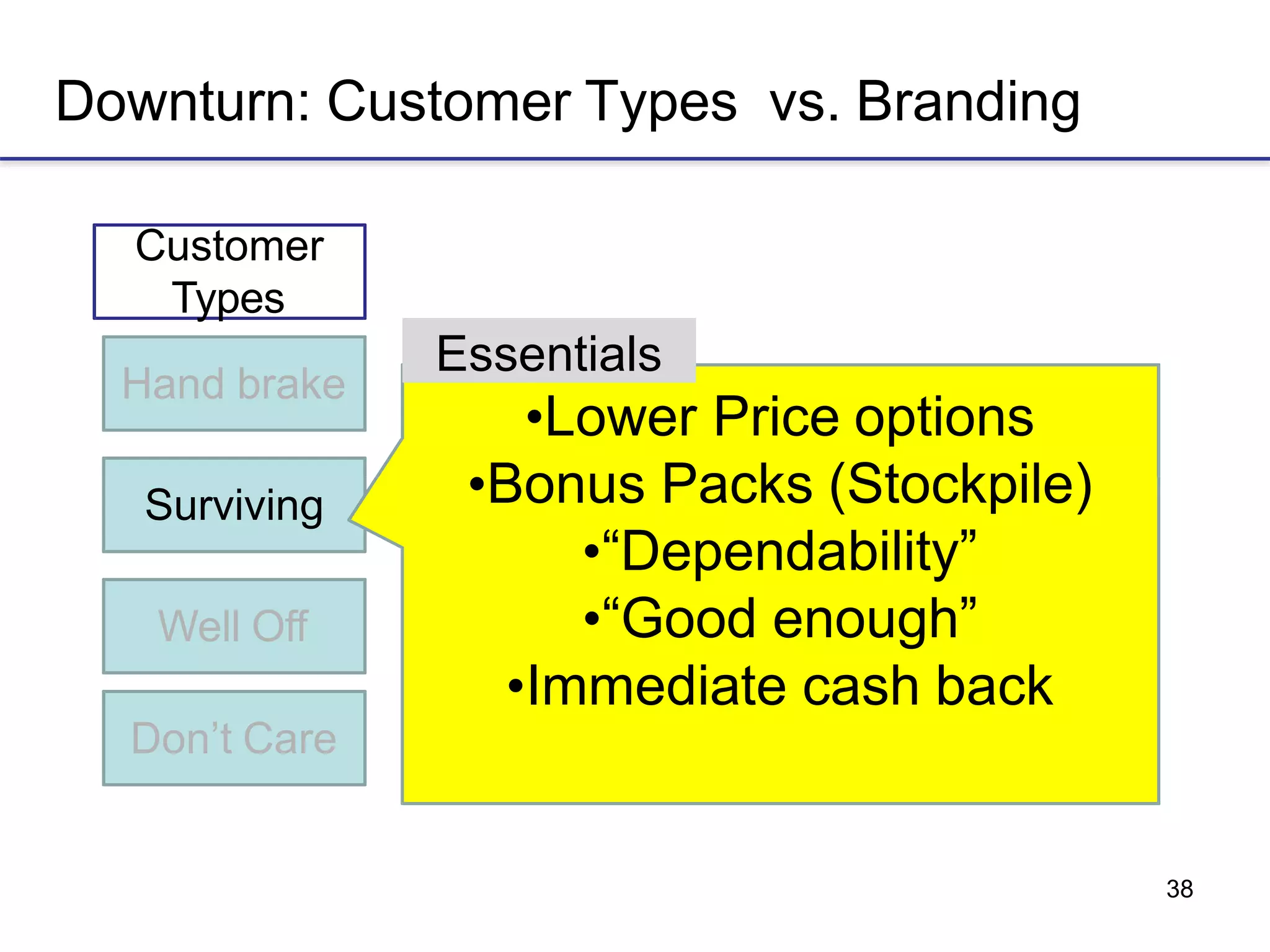
38
Downturn: Customer Types vs. Branding
Hand brake
Customer
Types
•Lower Price options
Essentials
Surviving
Well Off
Don’t Care
•Bonus Packs (Stockpile)
•“Dependability”
•“Good enough”
•Immediate cash back
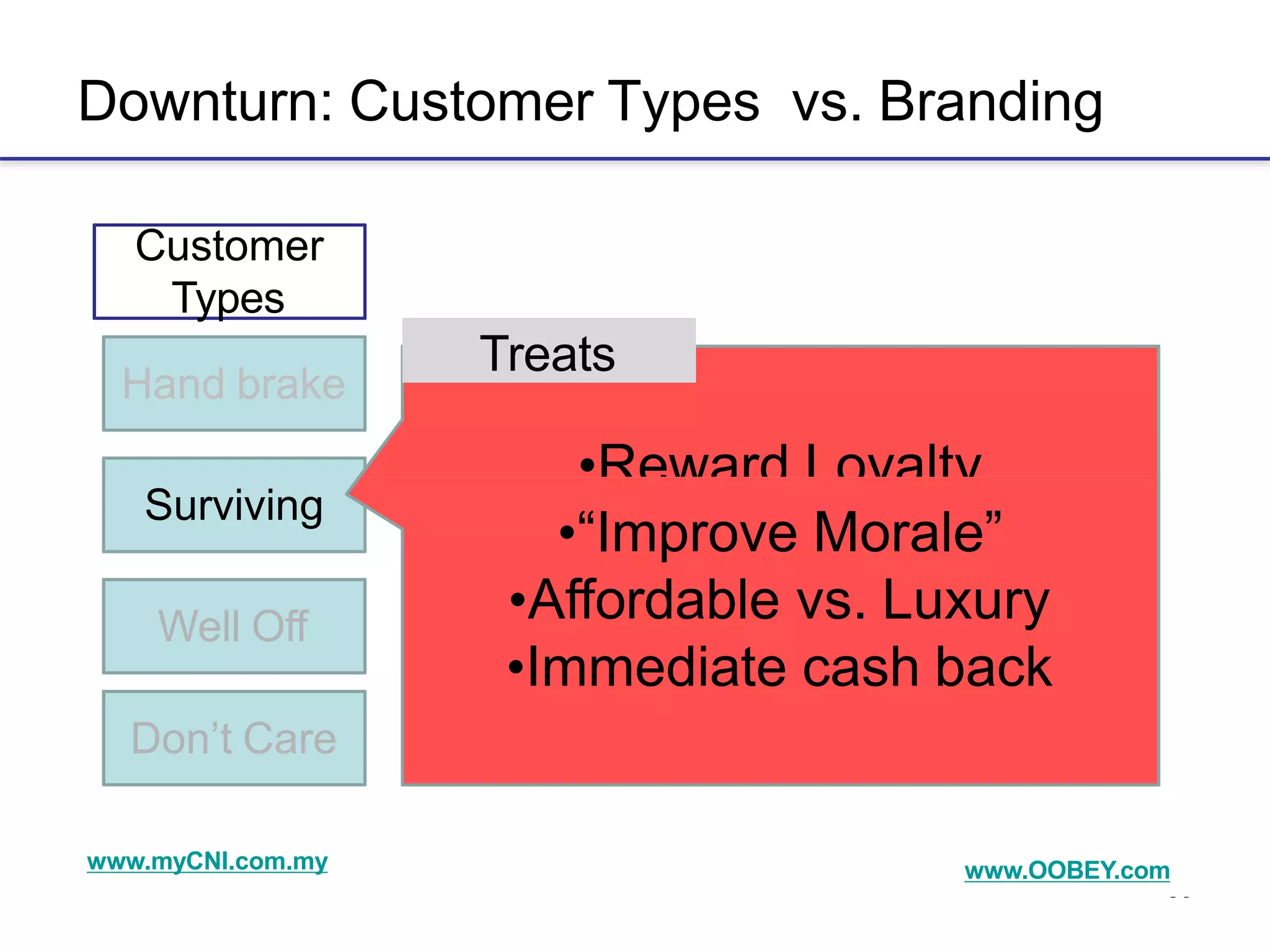
39
Downturn: Customer Types vs. Branding
Hand brake
Customer
Types
•Reward Loyalty
Treats
Surviving
Well Off
Don’t Care
•“Improve Morale”
•Affordable vs. Luxury
•Immediate cash back
www.myCNI.com.my www.OOBEY.com
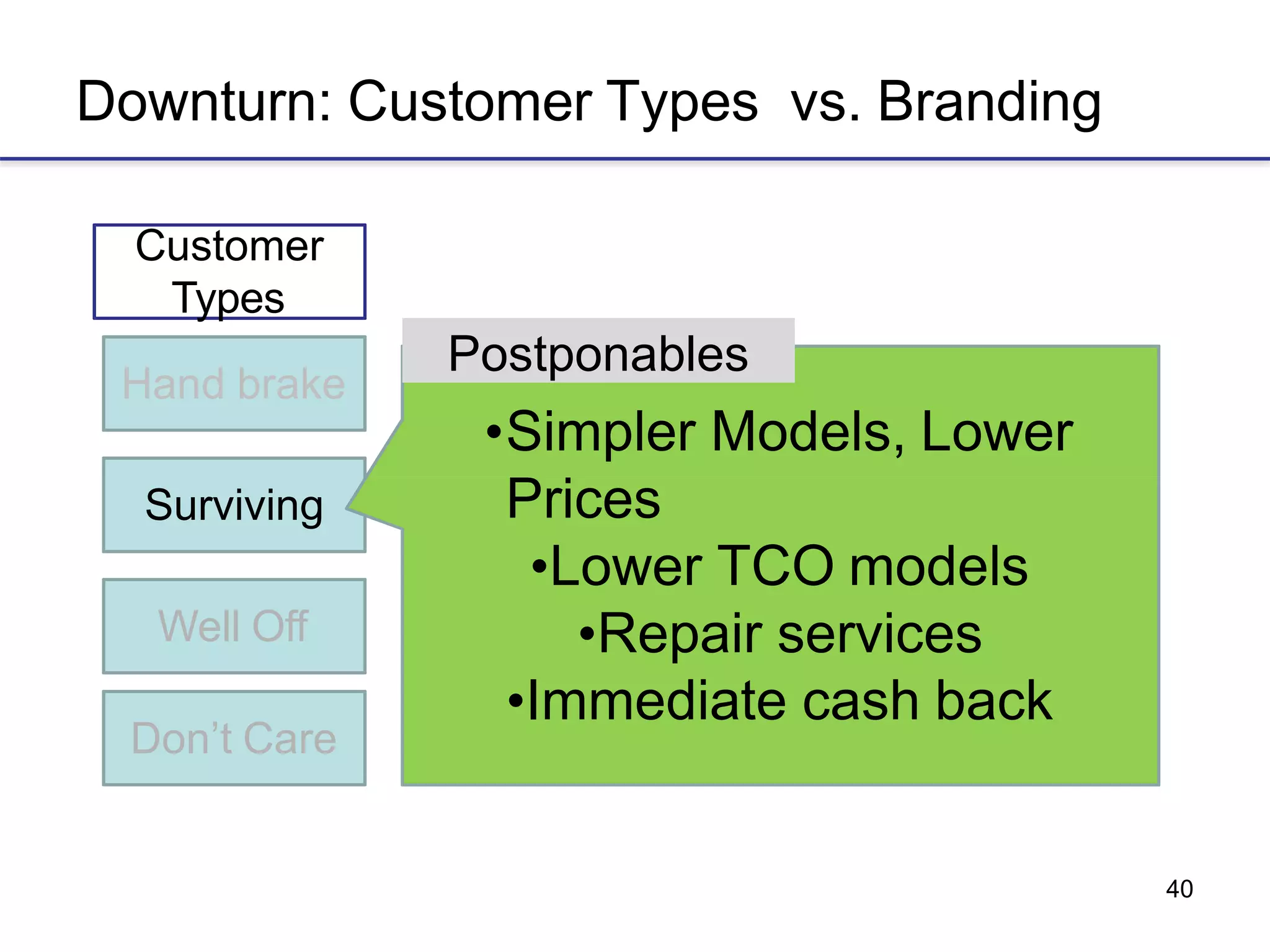
40
Downturn: Customer Types vs. Branding
Hand brake
Customer
Types
Postponables
Surviving
Well Off
Don’t Care
•Simpler Models, Lower
Prices
•Lower TCO models
•Repair services
•Immediate cash back
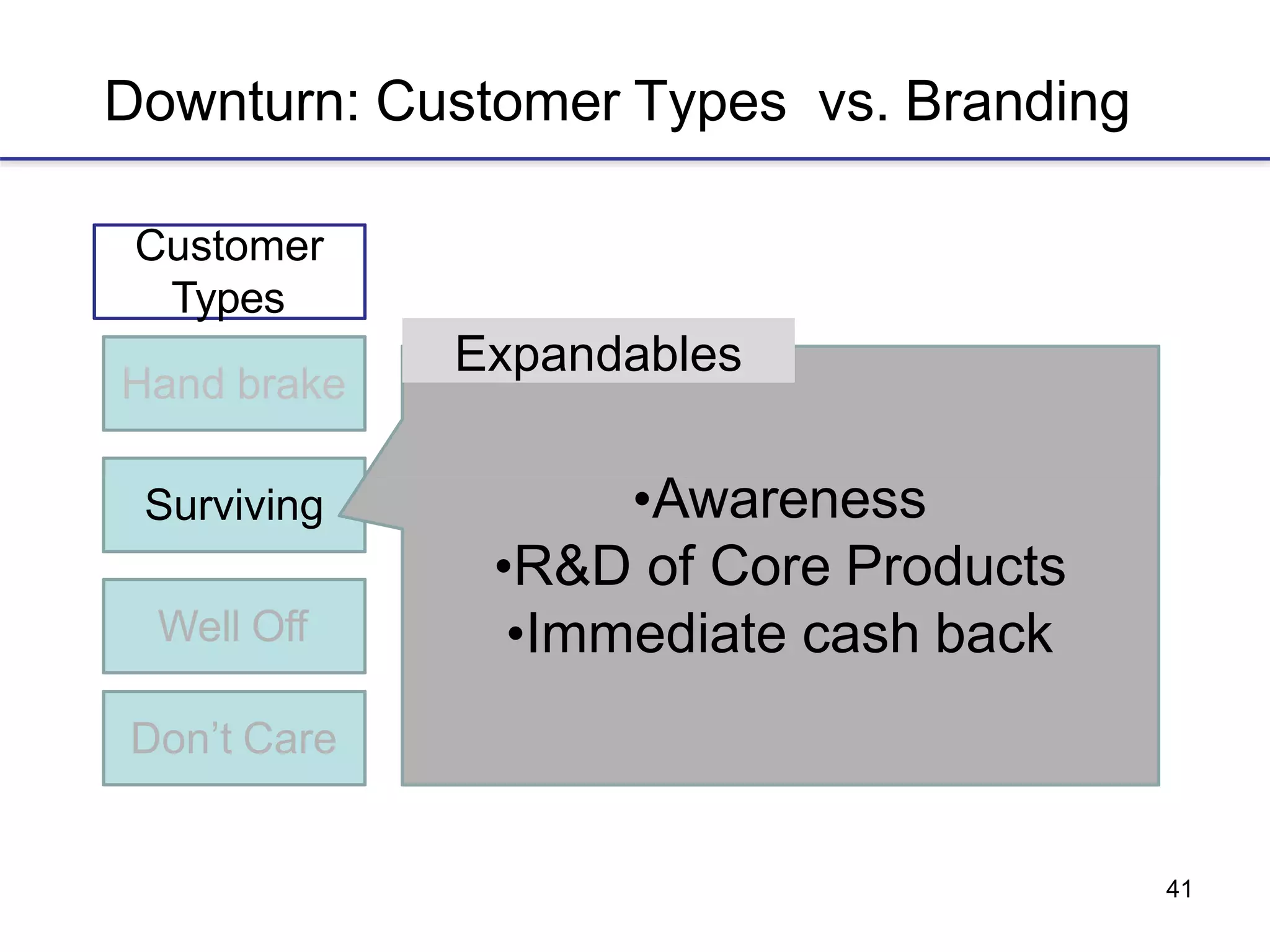
41
Downturn: Customer Types vs. Branding
Hand brake
Customer
Types
Expandables
Surviving
Well Off
Don’t Care
•Awareness
•R&D of Core Products
•Immediate cash back
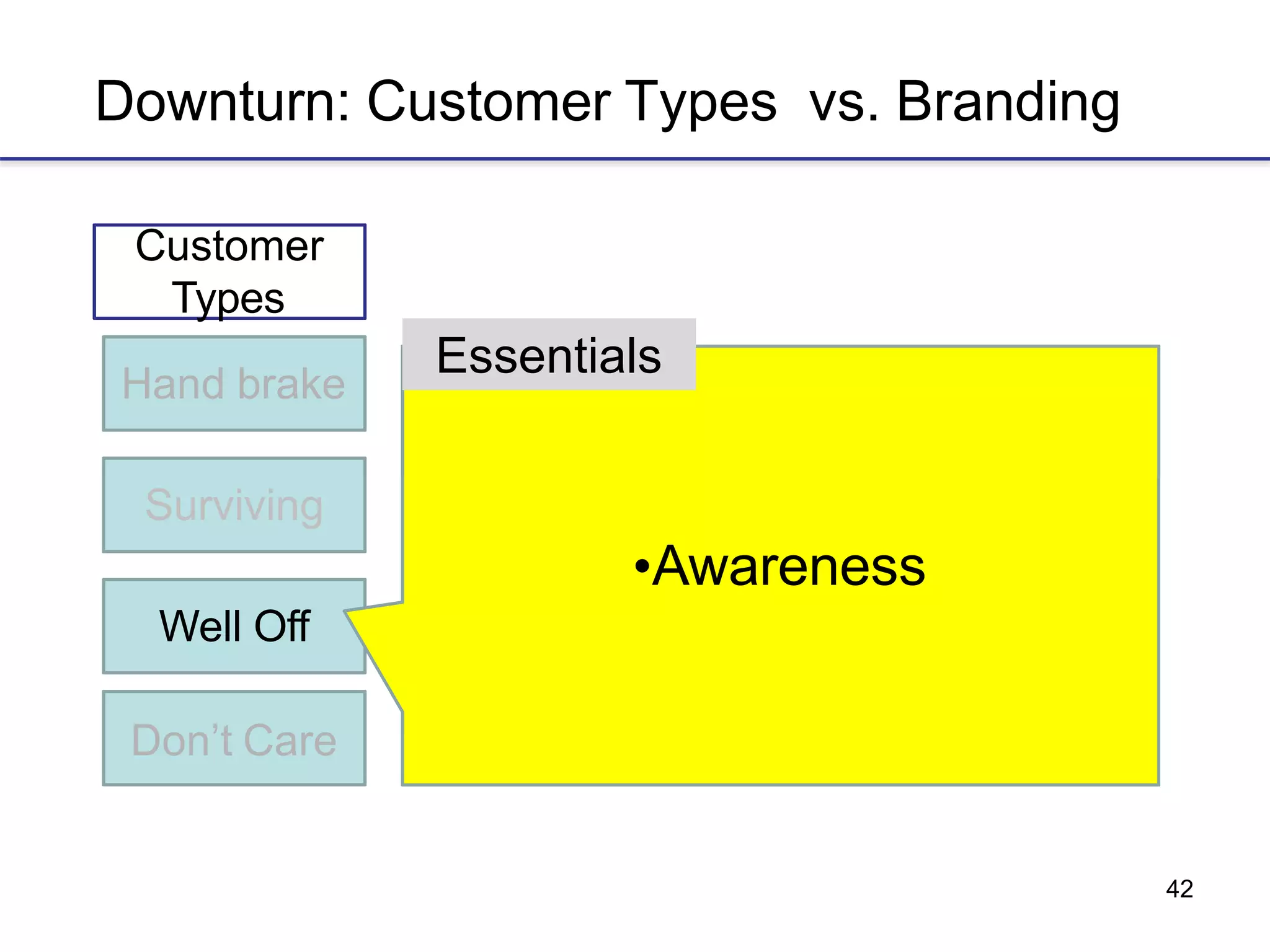
42
Downturn: Customer Types vs. Branding
Hand brake
Customer
Types
Essentials
Surviving
Well Off
Don’t Care
•Awareness
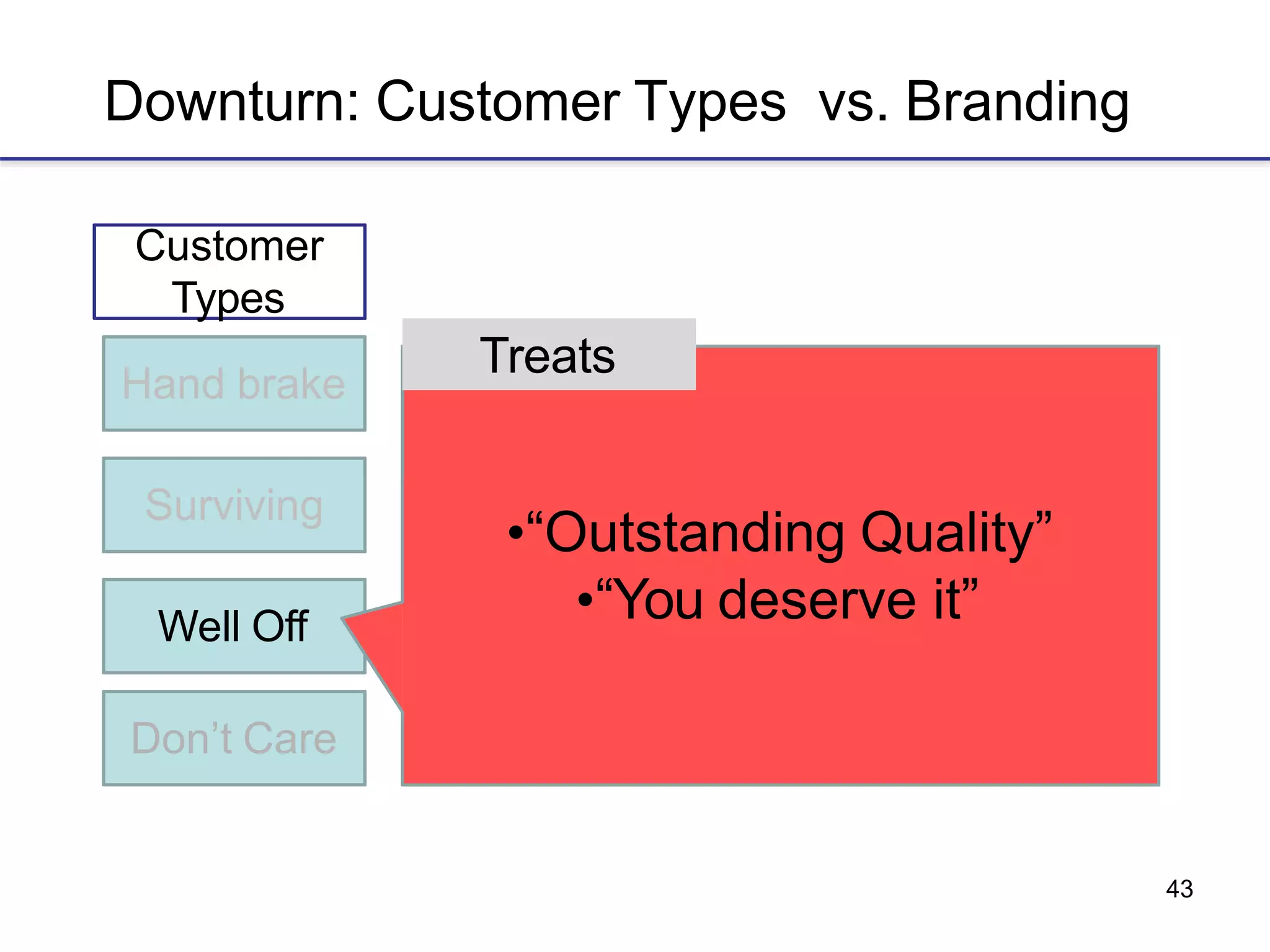
43
Downturn: Customer Types vs. Branding
Hand brake
Customer
Types
Treats
Surviving
Well Off
Don’t Care
•“Outstanding Quality”
•“You deserve it”
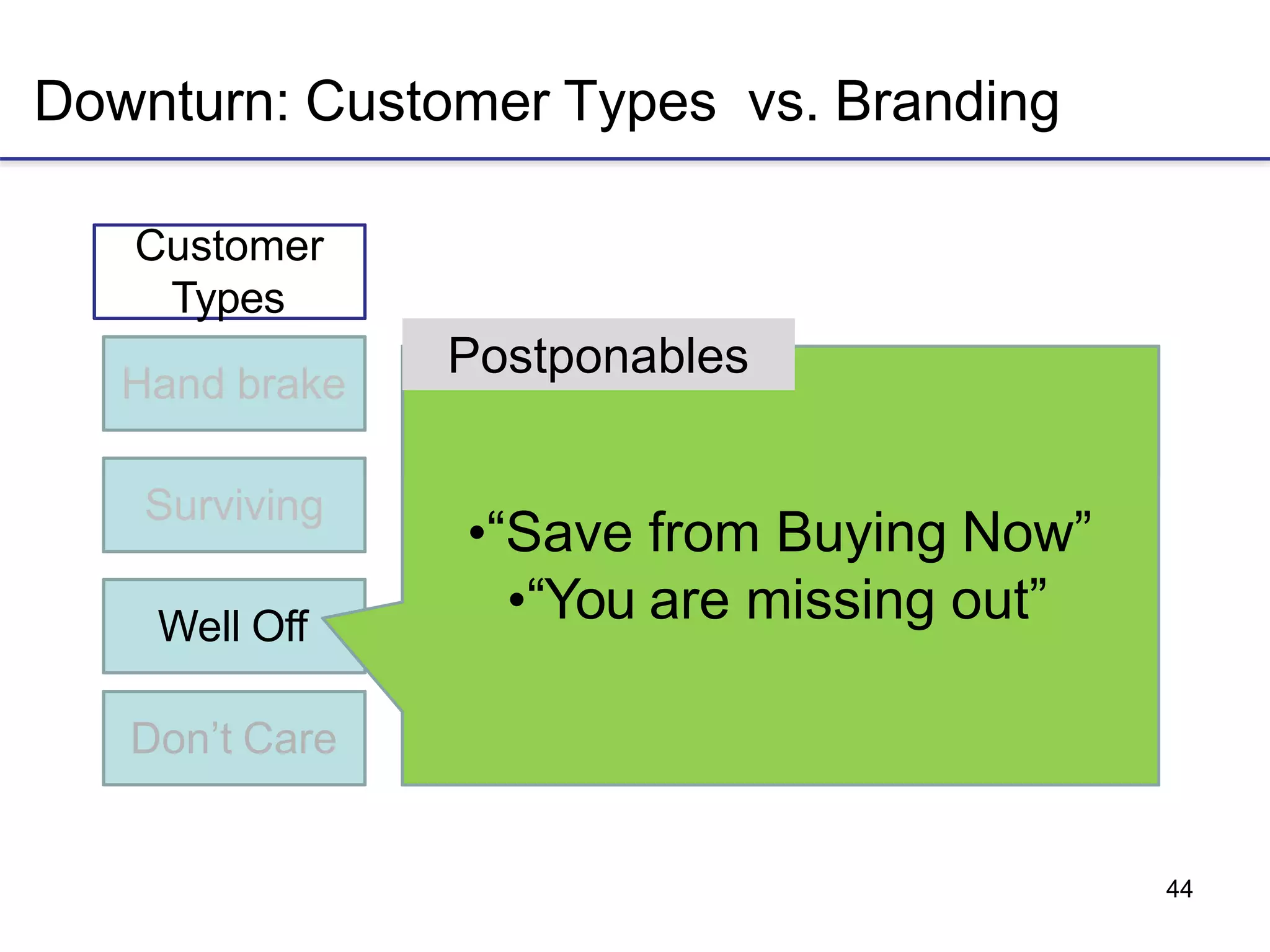
44
Downturn: Customer Types vs. Branding
Hand brake
Customer
Types
Postponables
Surviving
Well Off
Don’t Care
•“Save from Buying Now”
•“You are missing out”
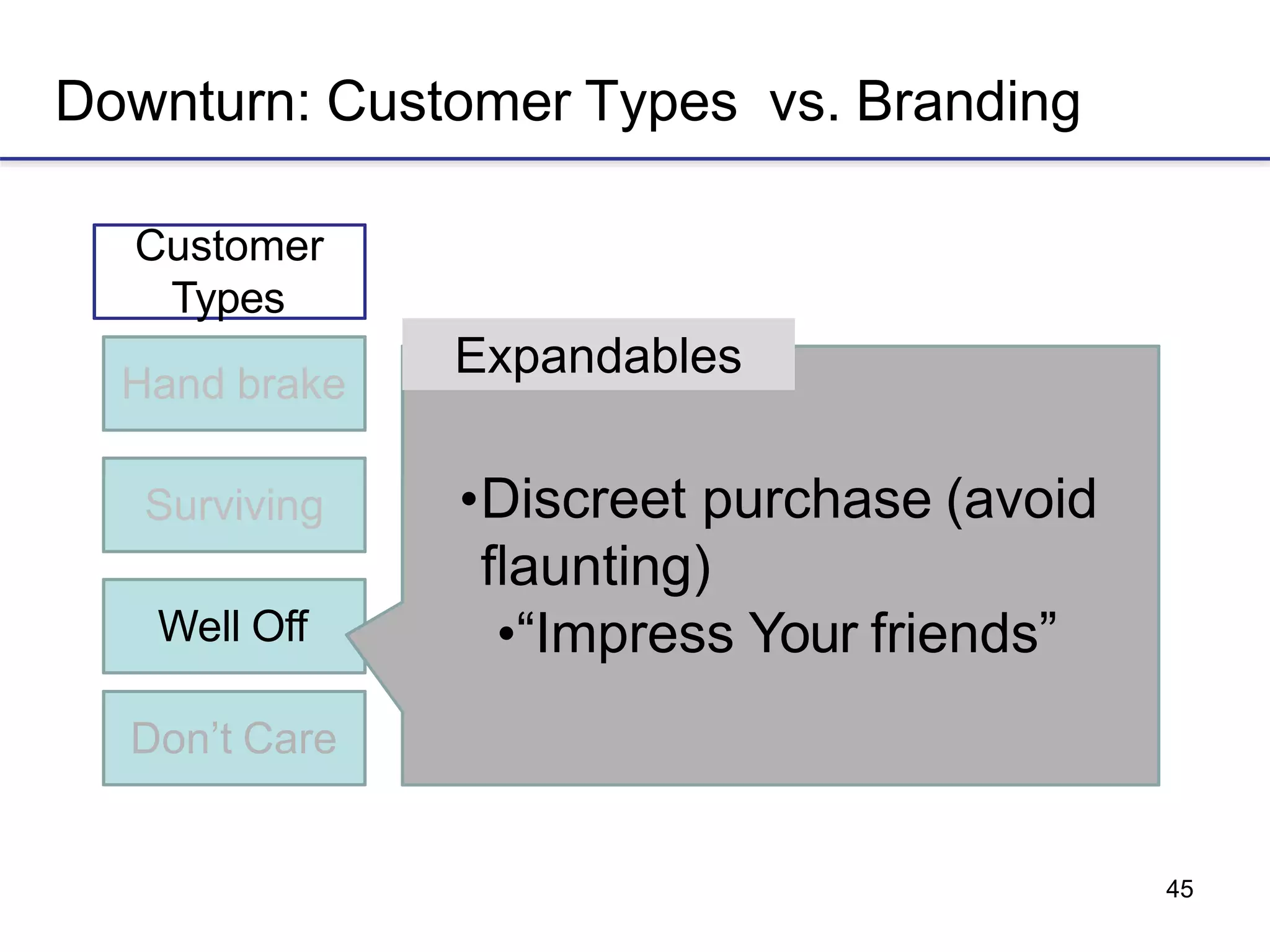
45
Downturn: Customer Types vs. Branding
Hand brake
Customer
Types
Expandables
Surviving
Well Off
Don’t Care
•Discreet purchase (avoid
flaunting)
•“Impress Your friends”
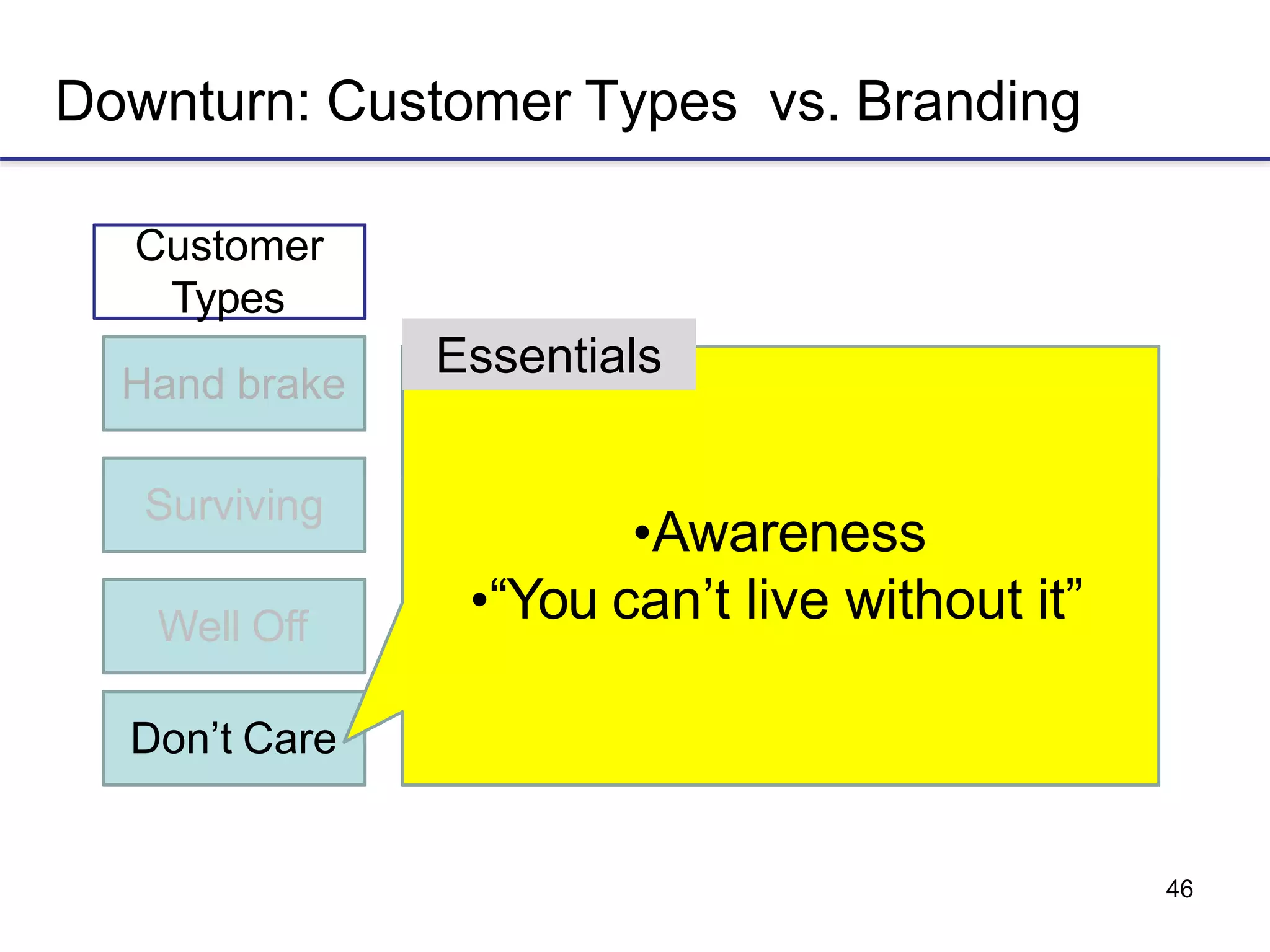
46
Downturn: Customer Types vs. Branding
Hand brake
Customer
Types
Essentials
Surviving
Well Off
Don’t Care
•Awareness
•“You can’t live without it”
47
Downturn: Customer Types vs. Branding
Hand brake
Customer
Types
Treats
Surviving
Well Off
Don’t Care
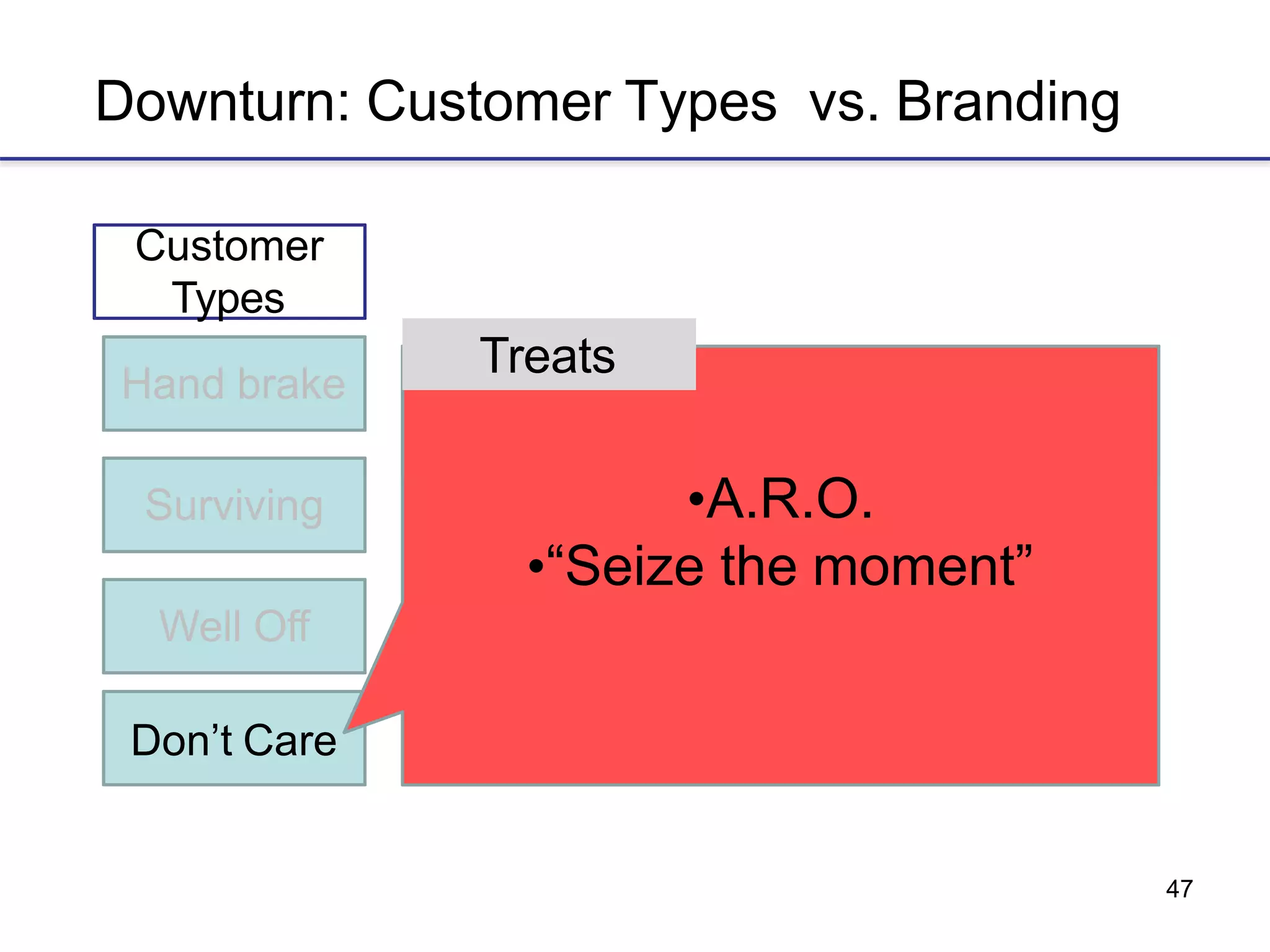
•A.R.O.
•“Seize the moment”
48
Downturn: Customer Types vs. Branding
Hand brake
Customer
Types
Postponables
Surviving
Well Off
Don’t Care
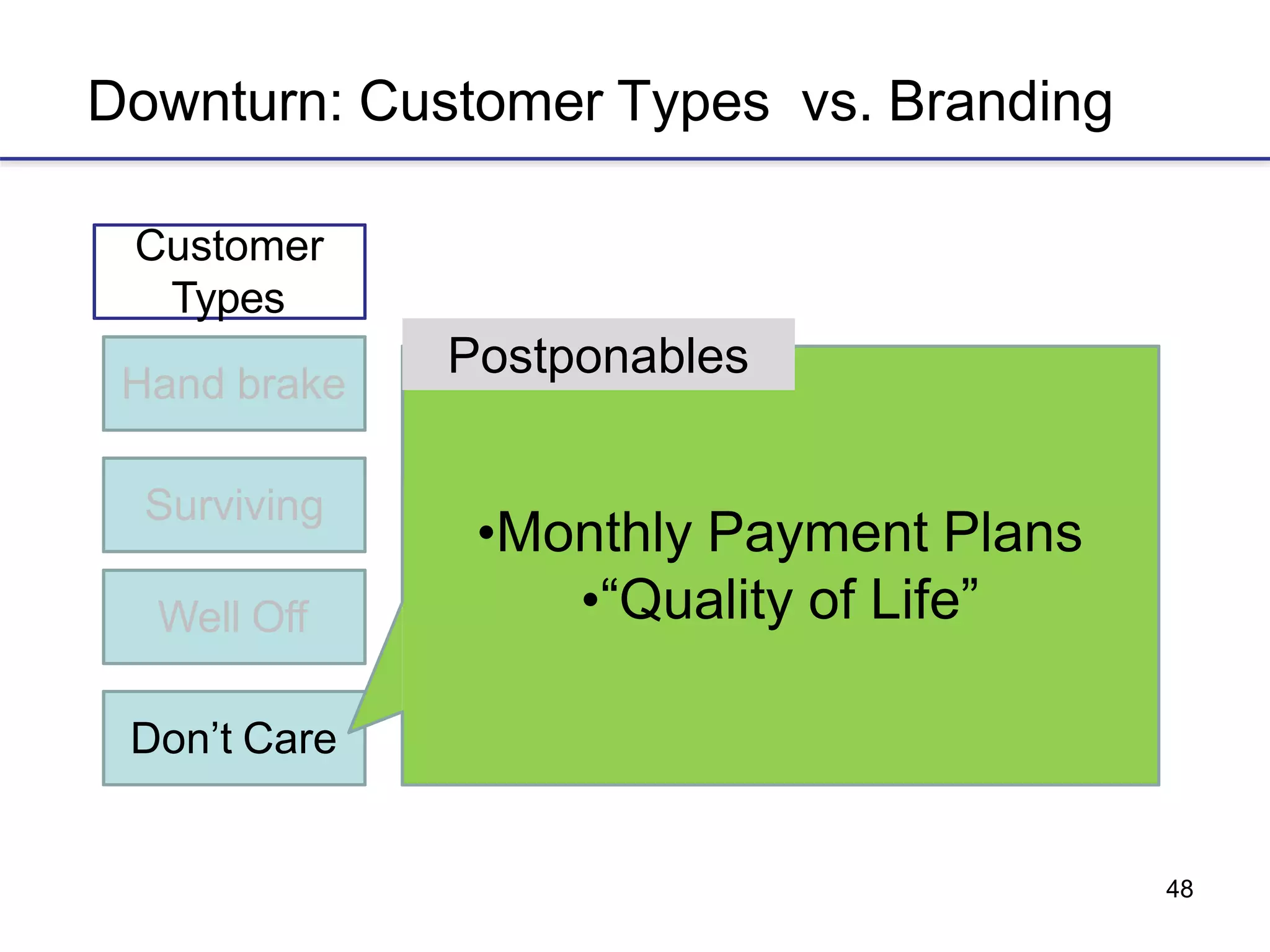
•Monthly Payment Plans
•“Quality of Life”
49
Downturn: Customer Types vs. Branding
Hand brake
Customer
Types
Expandables
Surviving
Well Off
Don’t Care
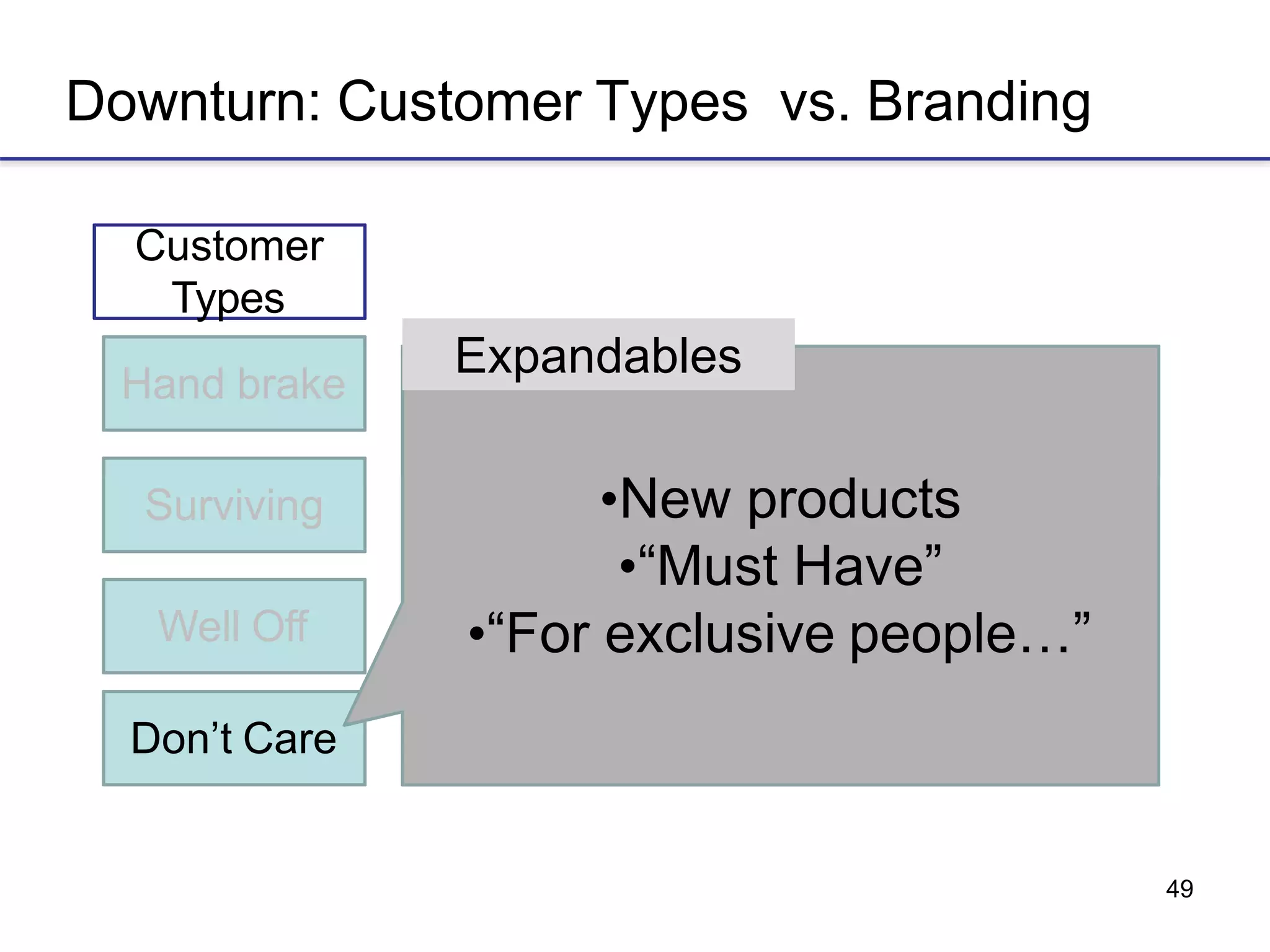
•New products
•“Must Have”
•“For exclusive people…”
54
End Notes
END NOTES
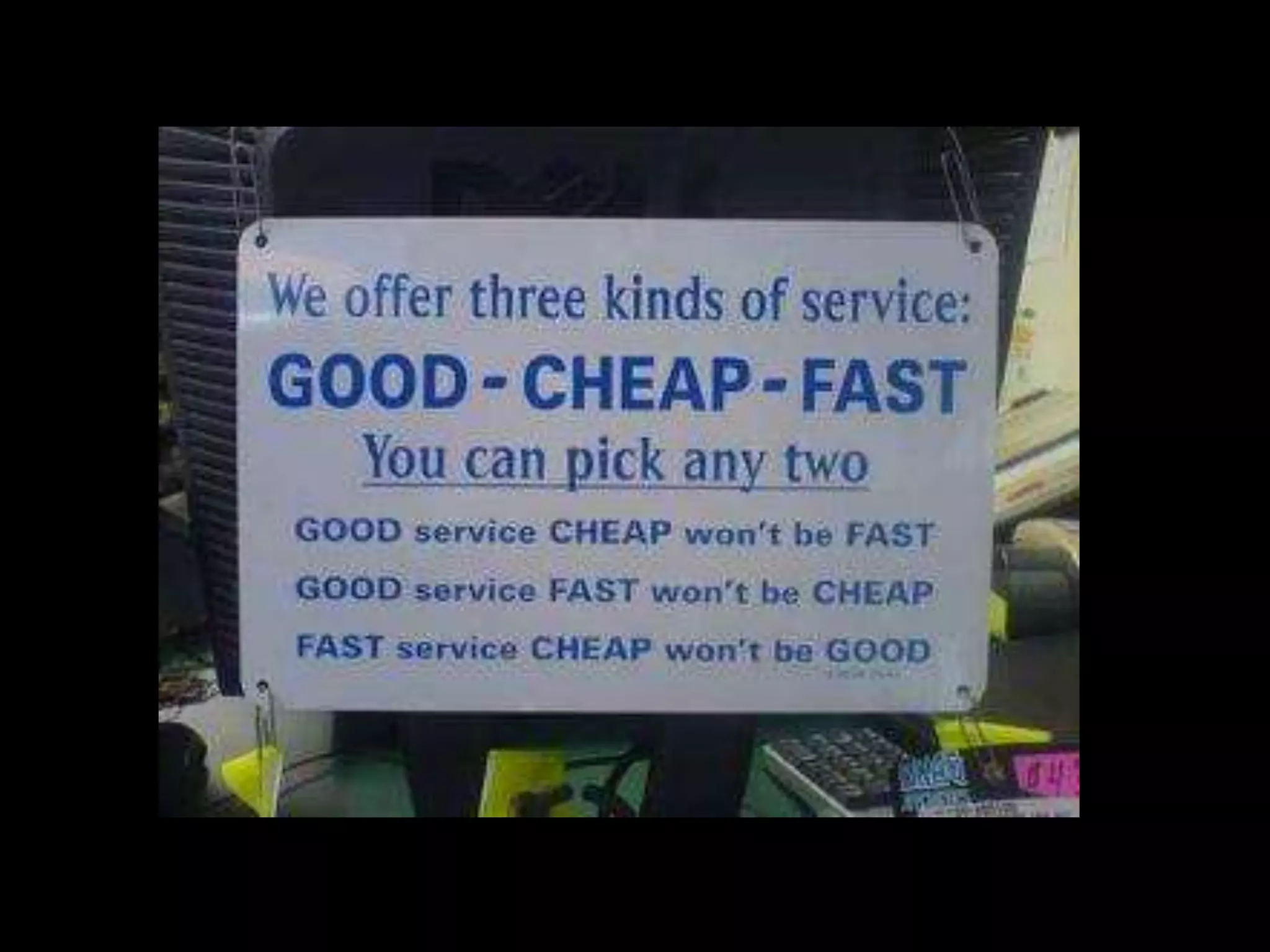
Good. Cheap. Fast.
56
Which Company?
American Customer Satisfaction Index (ACSI)
• 64 out of100-point scale: lower than IRS (Tax)
• 2nd last among 30 companies surveyed
• Lowest 5% among 223 companies surveyed
• Bottom 5% of all measured private sector
companies
• 500 million customers
2010 American Customer Satisfaction Index
(ACSI) E-Business Report
57
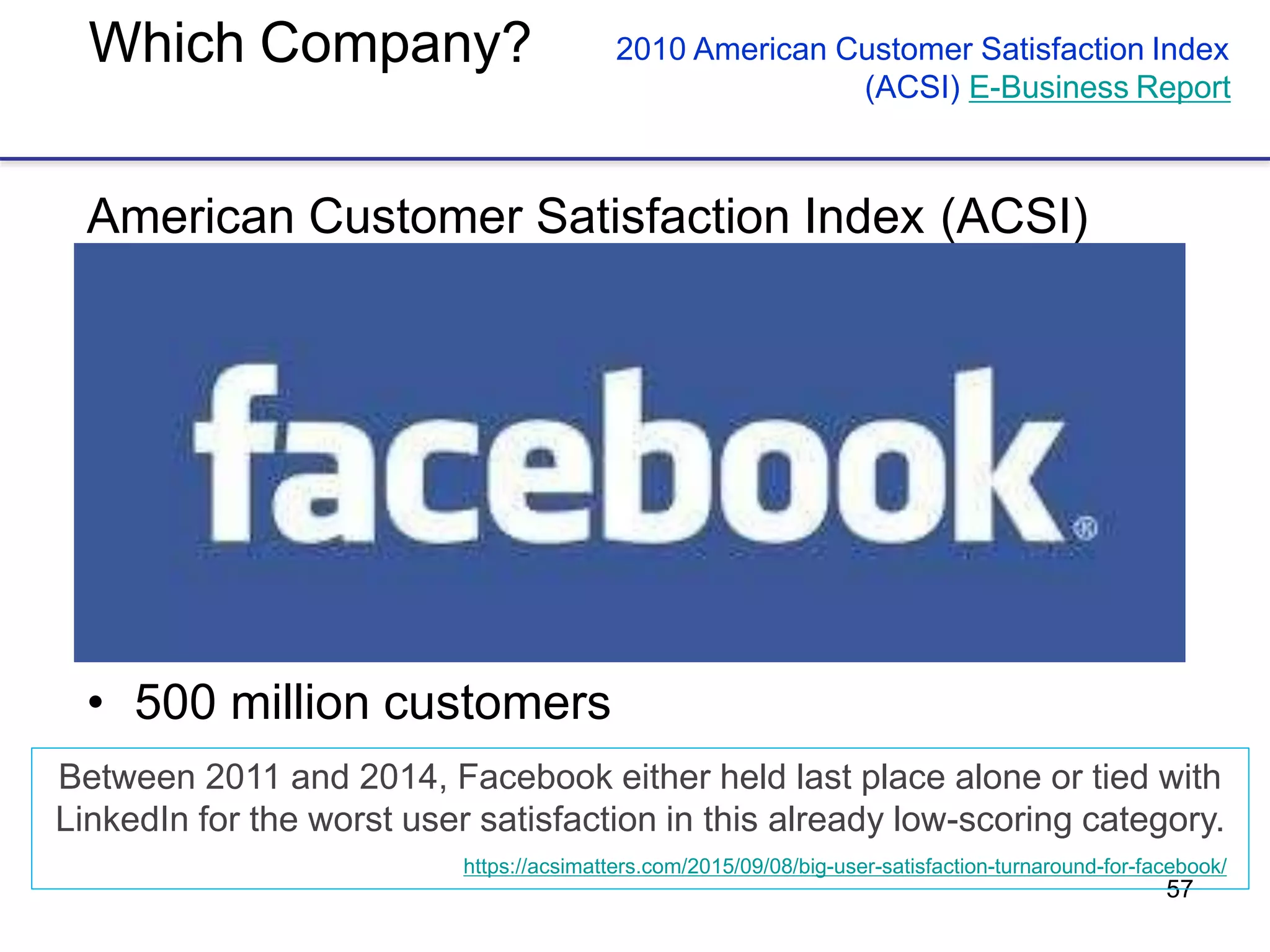
Which Company?
American Customer Satisfaction Index (ACSI)
• 64 out of100-point scale: lower than IRS (Tax)
• 2nd last among 30 companies surveyed
• Lowest 5% among 223 companies surveyed
• Bottom 5% of all measured private sector
companies
• 500 million customers
2010 American Customer Satisfaction Index
(ACSI) E-Business Report
Between 2011 and 2014, Facebook either held last place alone or tied with
LinkedIn for the worst user satisfaction in this already low-scoring category.
https://acsimatters.com/2015/09/08/big-user-satisfaction-turnaround-for-facebook/
58
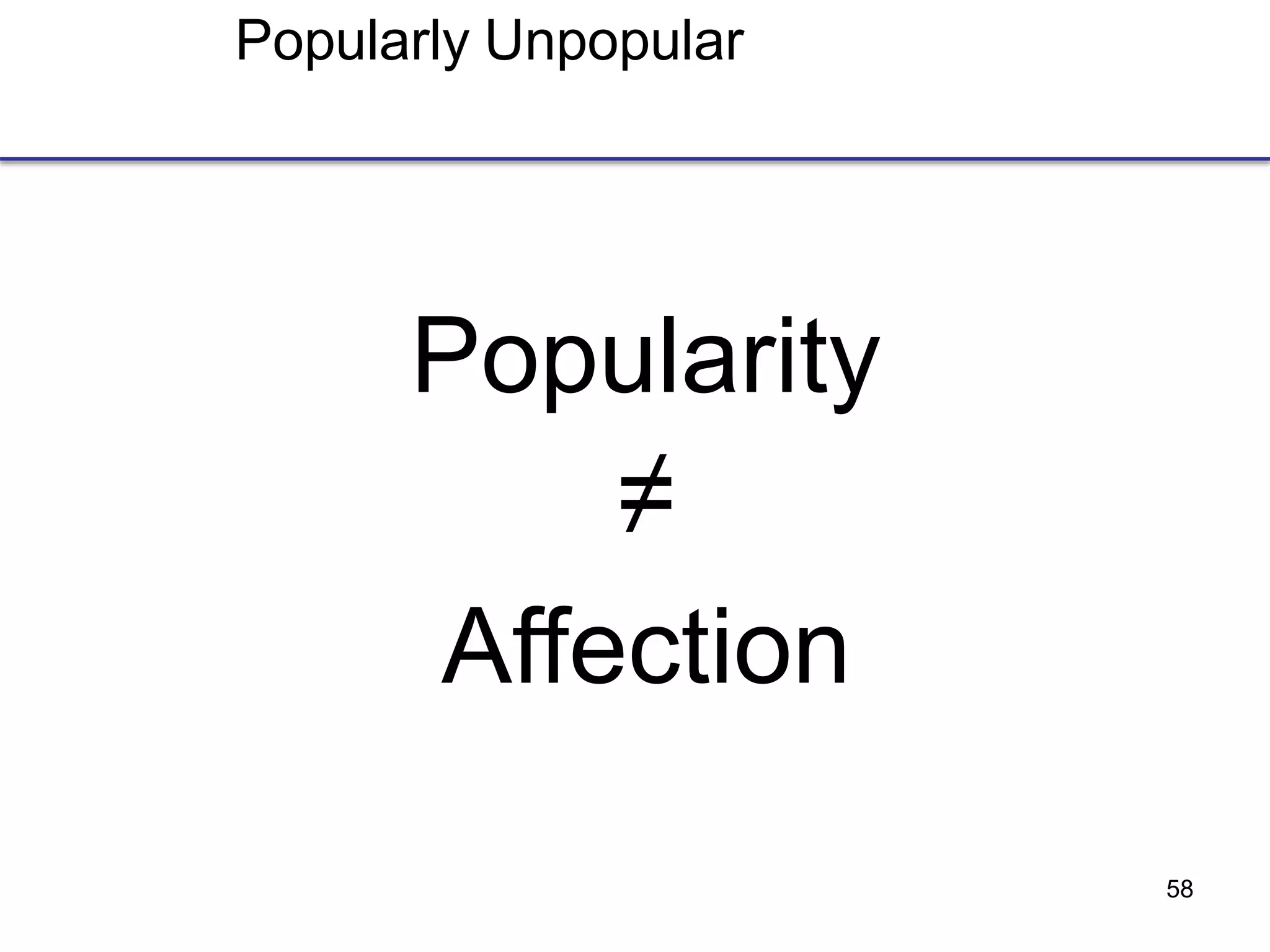
Popularly Unpopular
Popularity
≠
Affection
Thank You.
soft copy of slides:
https://www.slideshare.net/kennyong

BACK TO ZERO - Understanding who our customers really are and what to do with them

  • 1.
    BACK TO ZERO Understandingwho our Customers really are and what to do with them Kenny Ong
  • 2.
  • 4.
    BACK TO ZERO:CX 0.0 EDITION Understanding our role in the whole scheme of things
  • 5.
    5 Philosophy “In business afterbusiness, 60% to 80% of lost customers reported on a survey just prior to defecting that they were satisfied or very satisfied.” HBR March/April 1996
  • 6.
    6 What is thepurpose? Ultimate Objective : “Get more people, to buy more things, more frequently, at higher prices.” Sergio Zyman “Retention and Loyalty are useless if No Conversion is happening.”
  • 7.
    7 What is theObjective? 1.Obj = Relationship (something like Dating) 2.Obj ≠ Media glitz 3.Obj ≠ ATL/BTL/BwTL/ArTL/FTL 4.Obj ≠ CSR 5.Obj ≠ Social Media 6.Obj = Get more people, to buy more, more frequently, at higher prices
  • 8.
    8 1.Loyalty = Relationship(something like Dating) 2.Loyalty ≠ Points 3.Loyalty ≠ Redemption 4.Loyalty = Get more people, to buy more, more frequently, at higher prices
  • 9.
    KNOW WHO YOUARE TALKING TO Loyalty and Experience mean different things to different people http://totallyunrelatedrandomanddebatable.blogspot.com/
  • 10.
    10 Target: Customer Types Loyalty ExperienceSwing Former Opposition Experience shaped by “Product” Experience shaped by Transactions
  • 11.
    11 Target: Customer Types Loyalty ExperienceSwing Former Opposition Experience shaped by “Product”
  • 12.
    12 Zig Ziglar “Most prospectsthat don’t buy are confused about the offer”
  • 13.
    13 Loyalty 1: Experience Loyalty= Experience vs. Expectations Solution Strategy: Business Model
  • 15.
    15 What is theBusiness Model? USP Market Discipline Profit Model •Google •Tata Nano
  • 16.
    16 What is theProduct? Core Buying Purpose/ Customer Value Proposition/ Job To Be Done (JBTD)
  • 17.
    17 “The Product isNot the Product” • What is the customer really buying? • What is the “Core Buying Purpose”?
  • 18.
    18 Business Model: USP •Unique Selling Proposition (USP) • = • Targeted Customer • = • Core Buying Purpose/ Customer Value Proposition/ Job To Be Done (JBTD)
  • 19.
    19 Business Model: USP Obstaclesto JBTD: 1. Insufficient WEALTH 2. Insufficient ACCESS 3. Insufficient SKILL 4. Insufficient TIME
  • 20.
    20 Market Discipline "They arethe most innovative" "Constantly renewing and creative" "Always on the leading edge" "A great deal!" Excellent/attractive price Minimal acquisition cost and hassle Lowest overall cost of ownership "A no-hassles firm" Convenience and speed Reliable product and service "Exactly what I need" Customized products Personalized communications "They're very responsive" Preferential service and flexibility Recommends what I need "I'm very loyal to them" Helps us to be a success Product Leadership Operational Excellence Customer Intimacy • Cost • Convenience • TCO • Features, Benefits • Limited Range • Solutions • Customization • Breadth & Depth
  • 21.
    21 Market Discipline "They arethe most innovative" "Constantly renewing and creative" "Always on the leading edge" "A great deal!" Excellent/attractive price Minimal acquisition cost and hassle Lowest overall cost of ownership "A no-hassles firm" Convenience and speed Reliable product and service "Exactly what I need" Customized products Personalized communications "They're very responsive" Preferential service and flexibility Recommends what I need "I'm very loyal to them" Helps us to be a success Product Leadership Operational Excellence Customer Intimacy•Air Asia •LV •Ramly
  • 22.
    22 Operational Excellence • Competitive price •Error free, reliable • Fast (on demand) • Simple • Responsive • Consistent information for all • Transactional • 'Once and Done' Customer Intimacy • Management by Fact • Easy to do business with • Have it your way (customization) • Market segments of one • Proactive, flexible • Relationship and consultative selling • Cross selling Product Leadership • New, state of the art products or services • Risk takers • Meet volatile customer needs • Fast concept-to- counter • Never satisfied - obsolete own and competitors' products • Learning organization Alignment & Consistency: Disciplines, Priorities, and KPIs
  • 23.
    23 Loyalty 1: Experience OperationalExcellence: Quality and selection in key categories with unbeatable prices * Treacy & Wiersema, The Discipline of Market Leaders, 1995 Quality Product/Service Attributes Price Time Selection √ √ Smart Shopper Relationship Image
  • 24.
    24 Loyalty 1: Experience ProductLeadership: Unique products and services that push the standards Product/Service Attributes √ Brand Time Function √ √ Best Product Relationship Image
  • 25.
    25 Loyalty 1: Experience CustomerIntimacy: Personal service tailored to produce results for customer and build long-term relationships √ Product/Service Attributes √ √ √ Trusted Brand Relationship Service Image Relations
  • 26.
    26 Each Market Discipline RequiresA Different Emphasis Operational Excellence • Production, Logistics, Finance • Order fulfillment, Resource Customer Intimacy • Marketing Sales, Service • Market mgmt, Customer satisfaction Product Leadership • R&D, Legal (Licenses), Engineering • Product development, Concept-to- Customer Functional emphasis Process Emphasis .my stewardship • Transactions, costs, time • Costs, quality, speed • Trends (past), Transactions Employee tools/tasks • Customers, analysis, linkages • Satisfaction, cust. success, share, anecdotes • Today, Relation- ships, Employee empowerment • Linkages, insight, comm, groupware • Ideas-thru- funnel, patents, etc. • Tomorrow, Product Portfolio, Ideas and Risks Information emphasis Key metrics Key concerns
  • 27.
    CX1.0: PROTECTING YOURBASE Do the right things, then do the right things efficiently
  • 28.
    28 Target: Customer Types Loyalty ExperienceSwing Former Opposition Experience shaped by Transactions
  • 29.
    29 Loyalty 2: Swing www.myCNI.com.mywww.OOBEY.com Loyalty = Best alternative at the current moment until I find another alternative Solution Strategy: Base Retention
  • 30.
    30 Loyalty 2: Swing SwingCustomers are “loyal” because: • Individual Relationships • Convenience (at that point in time) • Tied-up • Product Uniqueness • Promotions • No better alternative • Downlines • No known alternative • Psychologically lazy
  • 31.
    31 Sample Strategies for‘Swing’ • Increase switching costs • Mega packages • Community • Incentive programs • Membership Subscription • Communications • Newsletters • Personalized alerts • Survey • Suggestion Box • Switching Techniques (e.g. Balance Transfer of credit cards)
  • 32.
    32 Downturn: Customer Typesvs. Branding Customer Types Your Products/Services Hand brake Surviving Well Off Don’t Care Essentials Treats Postponables Expandables
  • 33.
    33 Downturn: Customer Typesvs. Branding Your Products/Services Essentials Treats Post- ponable s Expa n- dable s •Necessary •Survival •Well-being •Indulgences •Justifiable • Needed or desired • Can be put off •Unnecessary •Unjustifiable
  • 34.
    34 Downturn: Customer Typesvs. Branding Hand brake Customer Types •Price •Smaller Pack Essentials Surviving Well Off Don’t Care •Private Labels •Low-cost ‘Value’ products •Fighter Brands •Less Variety/Customization •Immediate cash back
  • 35.
    35 Downturn: Customer Typesvs. Branding Hand brake Customer Types •Shrink sizes •Hold down prices Treats Surviving Well Off Don’t Care •“You Deserve It” •Less Variety/Customization •Immediate cash back
  • 36.
    36 Downturn: Customer Typesvs. Branding Hand brake Customer Types Postponables Surviving Well Off Don’t Care •Low-cost Financing •Exceptional Deals •“Danger of Postponing” •Immediate cash back
  • 37.
    37 Downturn: Customer Typesvs. Branding Hand brake Customer Types Expandables Surviving Well Off Don’t Care •Offer D.I.Y. versions •Awareness •Immediate cash back
  • 38.
    38 Downturn: Customer Typesvs. Branding Hand brake Customer Types •Lower Price options Essentials Surviving Well Off Don’t Care •Bonus Packs (Stockpile) •“Dependability” •“Good enough” •Immediate cash back
  • 39.
    39 Downturn: Customer Typesvs. Branding Hand brake Customer Types •Reward Loyalty Treats Surviving Well Off Don’t Care •“Improve Morale” •Affordable vs. Luxury •Immediate cash back www.myCNI.com.my www.OOBEY.com
  • 40.
    40 Downturn: Customer Typesvs. Branding Hand brake Customer Types Postponables Surviving Well Off Don’t Care •Simpler Models, Lower Prices •Lower TCO models •Repair services •Immediate cash back
  • 41.
    41 Downturn: Customer Typesvs. Branding Hand brake Customer Types Expandables Surviving Well Off Don’t Care •Awareness •R&D of Core Products •Immediate cash back
  • 42.
    42 Downturn: Customer Typesvs. Branding Hand brake Customer Types Essentials Surviving Well Off Don’t Care •Awareness
  • 43.
    43 Downturn: Customer Typesvs. Branding Hand brake Customer Types Treats Surviving Well Off Don’t Care •“Outstanding Quality” •“You deserve it”
  • 44.
    44 Downturn: Customer Typesvs. Branding Hand brake Customer Types Postponables Surviving Well Off Don’t Care •“Save from Buying Now” •“You are missing out”
  • 45.
    45 Downturn: Customer Typesvs. Branding Hand brake Customer Types Expandables Surviving Well Off Don’t Care •Discreet purchase (avoid flaunting) •“Impress Your friends”
  • 46.
    46 Downturn: Customer Typesvs. Branding Hand brake Customer Types Essentials Surviving Well Off Don’t Care •Awareness •“You can’t live without it”
  • 47.
    47 Downturn: Customer Typesvs. Branding Hand brake Customer Types Treats Surviving Well Off Don’t Care •A.R.O. •“Seize the moment”
  • 48.
    48 Downturn: Customer Typesvs. Branding Hand brake Customer Types Postponables Surviving Well Off Don’t Care •Monthly Payment Plans •“Quality of Life”
  • 49.
    49 Downturn: Customer Typesvs. Branding Hand brake Customer Types Expandables Surviving Well Off Don’t Care •New products •“Must Have” •“For exclusive people…”
  • 50.
  • 51.
  • 52.
    56 Which Company? American CustomerSatisfaction Index (ACSI) • 64 out of100-point scale: lower than IRS (Tax) • 2nd last among 30 companies surveyed • Lowest 5% among 223 companies surveyed • Bottom 5% of all measured private sector companies • 500 million customers 2010 American Customer Satisfaction Index (ACSI) E-Business Report
  • 53.
    57 Which Company? American CustomerSatisfaction Index (ACSI) • 64 out of100-point scale: lower than IRS (Tax) • 2nd last among 30 companies surveyed • Lowest 5% among 223 companies surveyed • Bottom 5% of all measured private sector companies • 500 million customers 2010 American Customer Satisfaction Index (ACSI) E-Business Report Between 2011 and 2014, Facebook either held last place alone or tied with LinkedIn for the worst user satisfaction in this already low-scoring category. https://acsimatters.com/2015/09/08/big-user-satisfaction-turnaround-for-facebook/
  • 54.
  • 56.
    Thank You. soft copyof slides: https://www.slideshare.net/kennyong