THE BABADOOK
MICRO-ANALYSIS
UNIT 10
0:47:08
• Night lamp
• The window
• Ceiling lamp
• Cupboard
• Door
• Blanket
• Bed
• The book
Props
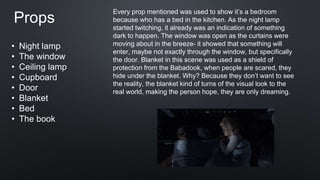
Every prop mentioned was used to show it’s a bedroom
because who has a bed in the kitchen. As the night lamp
started twitching, it already was an indication of something
dark to happen. The window was open as the curtains were
moving about in the breeze- it showed that something will
enter, maybe not exactly through the window, but specifically
the door. Blanket in this scene was used as a shield of
protection from the Babadook, when people are scared, they
hide under the blanket. Why? Because they don’t want to see
the reality, the blanket kind of turns of the visual look to the
real world, making the person hope, they are only dreaming.
Setting
• Shot of the
weather
(Outdoor tree)
• Bedroom
(where most
action happens)
• The
corridor/stairs
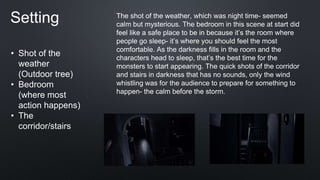
The shot of the weather, which was night time- seemed
calm but mysterious. The bedroom in this scene at start did
feel like a safe place to be in because it’s the room where
people go sleep- it’s where you should feel the most
comfortable. As the darkness fills in the room and the
characters head to sleep, that’s the best time for the
monsters to start appearing. The quick shots of the corridor
and stairs in darkness that has no sounds, only the wind
whistling was for the audience to prepare for something to
happen- the calm before the storm.
• A moonlight that lays on the tree
branches
• Night lamp when the mother is
reading the book
• Dark lighting shots of the stairs
• A dark moonlight shot of the
window
• Rest of the scenes are dark
(seems like a natural darkness)
Lighting
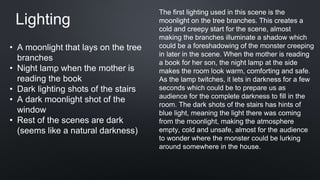
The first lighting used in this scene is the
moonlight on the tree branches. This creates a
cold and creepy start for the scene, almost
making the branches illuminate a shadow which
could be a foreshadowing of the monster creeping
in later in the scene. When the mother is reading
a book for her son, the night lamp at the side
makes the room look warm, comforting and safe.
As the lamp twitches, it lets in darkness for a few
seconds which could be to prepare us as
audience for the complete darkness to fill in the
room. The dark shots of the stairs has hints of
blue light, meaning the light there was coming
from the moonlight, making the atmosphere
empty, cold and unsafe, almost for the audience
to wonder where the monster could be lurking
around somewhere in the house.
Costume
• A white
night dress
• Fleece
jackets
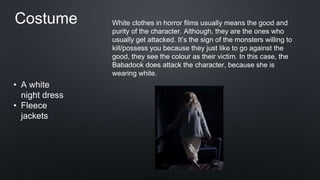
White clothes in horror films usually means the good and
purity of the character. Although, they are the ones who
usually get attacked. It’s the sign of the monsters willing to
kill/possess you because they just like to go against the
good, they see the colour as their victim. In this case, the
Babadook does attack the character, because she is
wearing white.
• FAST WALK UP TO THE
DOOR
• SLOW SITTING UP IN BED
• HIDING UNDER THE
BLANKET
• SCREAMING WHEN THE
BABADOOK ATTACKS HER
When the character hears scratching noises by the door,
her face already shows that she is shook, but later as her
dog barks, she gets out of the bed to open the door, but the
walk is really quick, meaning that deep down she is scared
or even is expecting something else. When the doors open
up by themselves and the Babadook walks in, she sits up
very slowly, the body language shows the shock and maybe
even confusion. As the noises are getting louder and she is
conscious of having a monster in her bedroom, she hides
under the blanket. This is used as a protection against what
she is afraid of, because it’s our natural instinct- to hide.
When the Babadook attack her, she screams. Screaming
definitely shows the fear but it also signals the cry for help.
Acting
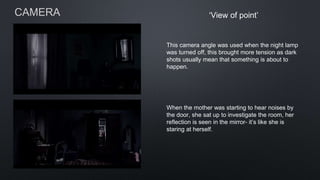
CAMERA ‘View of point’
This camera angle was used when the night lamp
was turned off, this brought more tension as dark
shots usually mean that something is about to
happen.
When the mother was starting to hear noises by
the door, she sat up to investigate the room, her
reflection is seen in the mirror- it’s like she is
staring at herself.
‘Wide shot’
As the characters are going sleep, there are some
wide shots of the house, in the darkness. It builds up
the tension due to audience not knowing where the
Babadook could be.
This shot is not straight but is slightly slanted, this
could have been taken to intrigue the audience of
that there might be someone in the corridor.
‘Tracking’ angle
When the Babadook attacks her, this camera shot is like
the view point of the Babadook as it zooms into her
mouth. This shot creates like a ‘possessing’ scene as
now it seems like the Babadook is inside of her, making
the audience wonder what it will do next.
Tilt/View of point angle
This shot is taken for the audience to see what the
character sees. Everything is dark and the Babadook
is almost shown as a shadow, hiding it’s identity,
making the shot more scarier than it is because it’s
still a mystery of how the Babadook actually looks
like.
SOUND
Diegetic Sound
Non- Diegetic Sound
Apart from the characters speaking, there
were diegetic sounds of the dog barking
and scratching the door. When the lamp
was twitching, there was a sound of
electricity.
There was a lot of non diegetic sounds that were
obvious. The sound of the wind whistling inside the
house was one of them. This made the scene more
mysterious and creepy. The most obvious was the
noise of the Babadook when he walked in the room,
this made us aware of what the monster sounds like,
giving a little identity of it as we haven’t seen the
monster, yet.
CGI- EDITING
Apart from the Babadook, nothing else was
edited. Due to the weird, fast movements of
the monster when it’s moving around the
ceiling, it’s clear that it was computer
generated. The face of the Babadook does
seem like it’s been made on the computer but
due to the good details of a human face, it
was mostly done with make-up. The fast
movements of the monster made it look like
it’s not something from this world, making the
audience much more scared of the creature
invading the characters home.

Babadook

  • 1.
  • 2.
    • Night lamp •The window • Ceiling lamp • Cupboard • Door • Blanket • Bed • The book Props Every prop mentioned was used to show it’s a bedroom because who has a bed in the kitchen. As the night lamp started twitching, it already was an indication of something dark to happen. The window was open as the curtains were moving about in the breeze- it showed that something will enter, maybe not exactly through the window, but specifically the door. Blanket in this scene was used as a shield of protection from the Babadook, when people are scared, they hide under the blanket. Why? Because they don’t want to see the reality, the blanket kind of turns of the visual look to the real world, making the person hope, they are only dreaming.
  • 3.
    Setting • Shot ofthe weather (Outdoor tree) • Bedroom (where most action happens) • The corridor/stairs The shot of the weather, which was night time- seemed calm but mysterious. The bedroom in this scene at start did feel like a safe place to be in because it’s the room where people go sleep- it’s where you should feel the most comfortable. As the darkness fills in the room and the characters head to sleep, that’s the best time for the monsters to start appearing. The quick shots of the corridor and stairs in darkness that has no sounds, only the wind whistling was for the audience to prepare for something to happen- the calm before the storm.
  • 4.
    • A moonlightthat lays on the tree branches • Night lamp when the mother is reading the book • Dark lighting shots of the stairs • A dark moonlight shot of the window • Rest of the scenes are dark (seems like a natural darkness) Lighting The first lighting used in this scene is the moonlight on the tree branches. This creates a cold and creepy start for the scene, almost making the branches illuminate a shadow which could be a foreshadowing of the monster creeping in later in the scene. When the mother is reading a book for her son, the night lamp at the side makes the room look warm, comforting and safe. As the lamp twitches, it lets in darkness for a few seconds which could be to prepare us as audience for the complete darkness to fill in the room. The dark shots of the stairs has hints of blue light, meaning the light there was coming from the moonlight, making the atmosphere empty, cold and unsafe, almost for the audience to wonder where the monster could be lurking around somewhere in the house.
  • 5.
    Costume • A white nightdress • Fleece jackets White clothes in horror films usually means the good and purity of the character. Although, they are the ones who usually get attacked. It’s the sign of the monsters willing to kill/possess you because they just like to go against the good, they see the colour as their victim. In this case, the Babadook does attack the character, because she is wearing white.
  • 6.
    • FAST WALKUP TO THE DOOR • SLOW SITTING UP IN BED • HIDING UNDER THE BLANKET • SCREAMING WHEN THE BABADOOK ATTACKS HER When the character hears scratching noises by the door, her face already shows that she is shook, but later as her dog barks, she gets out of the bed to open the door, but the walk is really quick, meaning that deep down she is scared or even is expecting something else. When the doors open up by themselves and the Babadook walks in, she sits up very slowly, the body language shows the shock and maybe even confusion. As the noises are getting louder and she is conscious of having a monster in her bedroom, she hides under the blanket. This is used as a protection against what she is afraid of, because it’s our natural instinct- to hide. When the Babadook attack her, she screams. Screaming definitely shows the fear but it also signals the cry for help. Acting
  • 7.
    CAMERA ‘View ofpoint’ This camera angle was used when the night lamp was turned off, this brought more tension as dark shots usually mean that something is about to happen. When the mother was starting to hear noises by the door, she sat up to investigate the room, her reflection is seen in the mirror- it’s like she is staring at herself.
  • 8.
    ‘Wide shot’ As thecharacters are going sleep, there are some wide shots of the house, in the darkness. It builds up the tension due to audience not knowing where the Babadook could be. This shot is not straight but is slightly slanted, this could have been taken to intrigue the audience of that there might be someone in the corridor.
  • 9.
    ‘Tracking’ angle When theBabadook attacks her, this camera shot is like the view point of the Babadook as it zooms into her mouth. This shot creates like a ‘possessing’ scene as now it seems like the Babadook is inside of her, making the audience wonder what it will do next. Tilt/View of point angle This shot is taken for the audience to see what the character sees. Everything is dark and the Babadook is almost shown as a shadow, hiding it’s identity, making the shot more scarier than it is because it’s still a mystery of how the Babadook actually looks like.
  • 10.
    SOUND Diegetic Sound Non- DiegeticSound Apart from the characters speaking, there were diegetic sounds of the dog barking and scratching the door. When the lamp was twitching, there was a sound of electricity. There was a lot of non diegetic sounds that were obvious. The sound of the wind whistling inside the house was one of them. This made the scene more mysterious and creepy. The most obvious was the noise of the Babadook when he walked in the room, this made us aware of what the monster sounds like, giving a little identity of it as we haven’t seen the monster, yet.
  • 11.
    CGI- EDITING Apart fromthe Babadook, nothing else was edited. Due to the weird, fast movements of the monster when it’s moving around the ceiling, it’s clear that it was computer generated. The face of the Babadook does seem like it’s been made on the computer but due to the good details of a human face, it was mostly done with make-up. The fast movements of the monster made it look like it’s not something from this world, making the audience much more scared of the creature invading the characters home.