Azure Data Analysis
Prasenjit Samanta
Oroprise Solution PVT.
Azure Data Warehouse vs Azure Database
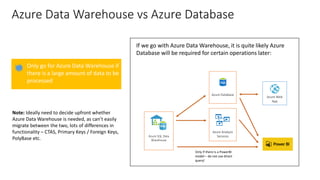
Note: Ideally need to decide upfront whether
Azure Data Warehouse is needed, as can’t easily
migrate between the two, lots of differences in
functionality – CTAS, Primary Keys / Foreign Keys,
PolyBase etc.
Only go for Azure Data Warehouse if
there is a large amount of data to be
processed
Azure SQL Data
Warehouse
Azure Database
Azure Analysis
Services
Only if there is a PowerBI
model – do not use direct
query!
If we go with Azure Data Warehouse, it is quite likely Azure
Database will be required for certain operations later:
Azure Web
App
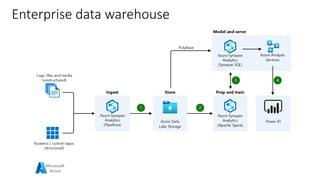
Enterprise data warehouse
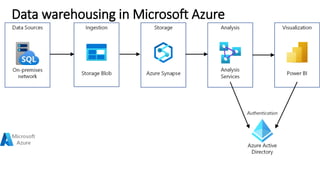
Data warehousing in Microsoft Azure
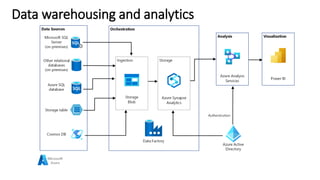
Data warehousing and analytics
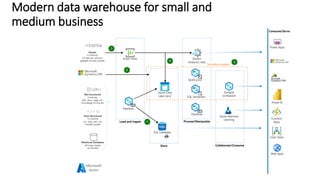
Modern data warehouse for small and
medium business
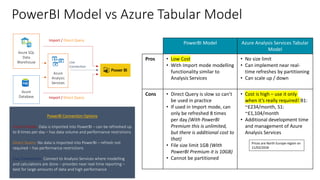
PowerBI Model vs Azure Tabular Model
Azure SQL
Data
Warehouse
Azure
Analysis
Services
Azure
Database
Import / Direct Query
Live
Connection
PowerBI Model Azure Analysis Services Tabular
Model
Pros • Low Cost
• With Import mode modelling
functionality similar to
Analysis Services
• No size limit
• Can implement near real-
time refreshes by partitioning
• Can scale up / down
Cons • Direct Query is slow so can’t
be used in practice
• If used in Import mode, can
only be refreshed 8 times
per day (With PowerBI
Premium this is unlimited,
but there is additional cost to
that)
• File size limit 1GB (With
PowerBI Premium it is 10GB)
• Cannot be partitioned
• Cost is high – use it only
when it’s really required! B1:
~£234/month, S1:
~£1,104/month
• Additional development time
and management of Azure
Analysis Services
PowerBI Connection Options
Import Mode: Data is imported into PowerBI – can be refreshed up
to 8 times per day – has data volume and performance restrictions
Direct Query: No data is imported into PowerBI – refresh not
required – has performance restrictions
Live Connection: Connect to Analysis Services where modelling
and calculations are done – provides near real-time reporting –
best for large amounts of data and high performance
Prices are North Europe region on
11/02/2018
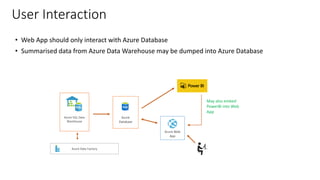
• Web App should only interact with Azure Database
• Summarised data from Azure Data Warehouse may be dumped into Azure Database
User Interaction
May also embed
PowerBI into Web
App
Azure
Database
Azure Web
App
Azure SQL Data
Warehouse
Azure Data Factory
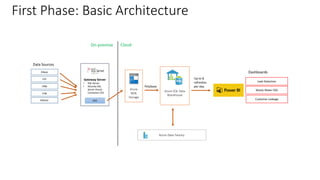
First Phase: Basic Architecture
Azure Data Factory
Azure
Blob
Storage
On-premise Cloud
Up to 8
refreshes
per day
Data Sources
Gateway Server
• SQL Server
• Attunity SQL
Server Oracle
Connector CDC
SSIS
Polybase
Dashboards
Ellipse
FFP
CRM
CAB
GWater
Leak Detection
Waste Water ODI
Customer Leakage
Azure SQL Data
Warehouse
Second Phase
Azure Data Factories
Azure
Blob
Storage
On-premise Cloud
Up to 8
refreshes
per day
Azure Web
App (.NET)
C#
Near real-time
refreshes
Major Development:
• Near real-time IoT analytics
using Azure Analysis Services
• Azure Web App / Azure
Database for ODI reporting
• 3 environments: Dev, UAT,
Prod
Azure
Database
Performance
Commitments
Data Sources
Custom component
Gateway Server
• SQL Server
• Attunity SQL
Server Oracle
Connector CDC
SSIS
Polybase
Dashboards
Leak Detection
Waste Water ODI
Customer Leakage
Waste Water Treatment
Works IoT
Pollution Insights IoT v1
ODI Performance
Commitments v1
Data Entry
Azure Analysis
Services
Tabular Model
Ellipse
FFP
CRM
CAB
GWater
SCADA IoT Signal
Azure SQL Data
Warehouse
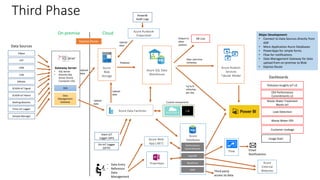
Third Phase
Azure SQL Data
Warehouse
Azure Data Factories
Azure
Blob
Storage
On-premise Cloud
Ellipse
FFP
CRM
CAB
GWater
Leak Detection
Waste Water ODI
Customer Leakage
Up to 8
refreshes
per day
SCADA IoT Signal
Waste Water Treatment
Works IoT
Pollution Insights IoT v3
ODI Performance
Commitments v3
Azure Web
App (.NET)
Azure Analysis
Services
Tabular Model
Near real-time
refreshes
SCADA IoT Alarm
Sample Manager
Pmac IoT Logger
Hwm IoT
Logger (API)
i2o IoT Logger
(SFTP)
Upload
data
PowerApps
Flow Email
Notifications
IW Live
Express Route
Major Development:
• Connect to Data Sources directly from
ADF
• More Application Azure Databases
• PowerApps for simple forms
• Flow for notifications
• Data Management Gateway for data
upload from on-premise to Blob
• Express Route
C#
Gateway Server
• SQL Server
• Attunity SQL
Server Oracle
Connector CDC
Data
Management
Gateway
SSIS
• Data Entry
• Reference
Data
Management
Third party
access to data
Azure
Databases
Performance
Commitments
AppsDB
BeachLive
DMZ
Azure Runbook
Powershell
PowerBI
Audit Logs
Usage Stats
Data Sources
Custom components
Dashboards
Azure
External
Websites
Output to
other
systems
Upload
data
Bathing Beaches
Polybase
Upload
data
Upload
data

Azure Data Analysis.pdf

  • 1.
    Azure Data Analysis PrasenjitSamanta Oroprise Solution PVT.
  • 2.
    Azure Data Warehousevs Azure Database Note: Ideally need to decide upfront whether Azure Data Warehouse is needed, as can’t easily migrate between the two, lots of differences in functionality – CTAS, Primary Keys / Foreign Keys, PolyBase etc. Only go for Azure Data Warehouse if there is a large amount of data to be processed Azure SQL Data Warehouse Azure Database Azure Analysis Services Only if there is a PowerBI model – do not use direct query! If we go with Azure Data Warehouse, it is quite likely Azure Database will be required for certain operations later: Azure Web App
  • 3.
  • 4.
    Data warehousing inMicrosoft Azure
  • 5.
  • 6.
    Modern data warehousefor small and medium business
  • 7.
    PowerBI Model vsAzure Tabular Model Azure SQL Data Warehouse Azure Analysis Services Azure Database Import / Direct Query Import / Direct Query Live Connection PowerBI Model Azure Analysis Services Tabular Model Pros • Low Cost • With Import mode modelling functionality similar to Analysis Services • No size limit • Can implement near real- time refreshes by partitioning • Can scale up / down Cons • Direct Query is slow so can’t be used in practice • If used in Import mode, can only be refreshed 8 times per day (With PowerBI Premium this is unlimited, but there is additional cost to that) • File size limit 1GB (With PowerBI Premium it is 10GB) • Cannot be partitioned • Cost is high – use it only when it’s really required! B1: ~£234/month, S1: ~£1,104/month • Additional development time and management of Azure Analysis Services PowerBI Connection Options Import Mode: Data is imported into PowerBI – can be refreshed up to 8 times per day – has data volume and performance restrictions Direct Query: No data is imported into PowerBI – refresh not required – has performance restrictions Live Connection: Connect to Analysis Services where modelling and calculations are done – provides near real-time reporting – best for large amounts of data and high performance Prices are North Europe region on 11/02/2018
  • 8.
    • Web Appshould only interact with Azure Database • Summarised data from Azure Data Warehouse may be dumped into Azure Database User Interaction May also embed PowerBI into Web App Azure Database Azure Web App Azure SQL Data Warehouse Azure Data Factory
  • 9.
    First Phase: BasicArchitecture Azure Data Factory Azure Blob Storage On-premise Cloud Up to 8 refreshes per day Data Sources Gateway Server • SQL Server • Attunity SQL Server Oracle Connector CDC SSIS Polybase Dashboards Ellipse FFP CRM CAB GWater Leak Detection Waste Water ODI Customer Leakage Azure SQL Data Warehouse
  • 10.
    Second Phase Azure DataFactories Azure Blob Storage On-premise Cloud Up to 8 refreshes per day Azure Web App (.NET) C# Near real-time refreshes Major Development: • Near real-time IoT analytics using Azure Analysis Services • Azure Web App / Azure Database for ODI reporting • 3 environments: Dev, UAT, Prod Azure Database Performance Commitments Data Sources Custom component Gateway Server • SQL Server • Attunity SQL Server Oracle Connector CDC SSIS Polybase Dashboards Leak Detection Waste Water ODI Customer Leakage Waste Water Treatment Works IoT Pollution Insights IoT v1 ODI Performance Commitments v1 Data Entry Azure Analysis Services Tabular Model Ellipse FFP CRM CAB GWater SCADA IoT Signal Azure SQL Data Warehouse
  • 11.
    Third Phase Azure SQLData Warehouse Azure Data Factories Azure Blob Storage On-premise Cloud Ellipse FFP CRM CAB GWater Leak Detection Waste Water ODI Customer Leakage Up to 8 refreshes per day SCADA IoT Signal Waste Water Treatment Works IoT Pollution Insights IoT v3 ODI Performance Commitments v3 Azure Web App (.NET) Azure Analysis Services Tabular Model Near real-time refreshes SCADA IoT Alarm Sample Manager Pmac IoT Logger Hwm IoT Logger (API) i2o IoT Logger (SFTP) Upload data PowerApps Flow Email Notifications IW Live Express Route Major Development: • Connect to Data Sources directly from ADF • More Application Azure Databases • PowerApps for simple forms • Flow for notifications • Data Management Gateway for data upload from on-premise to Blob • Express Route C# Gateway Server • SQL Server • Attunity SQL Server Oracle Connector CDC Data Management Gateway SSIS • Data Entry • Reference Data Management Third party access to data Azure Databases Performance Commitments AppsDB BeachLive DMZ Azure Runbook Powershell PowerBI Audit Logs Usage Stats Data Sources Custom components Dashboards Azure External Websites Output to other systems Upload data Bathing Beaches Polybase Upload data Upload data