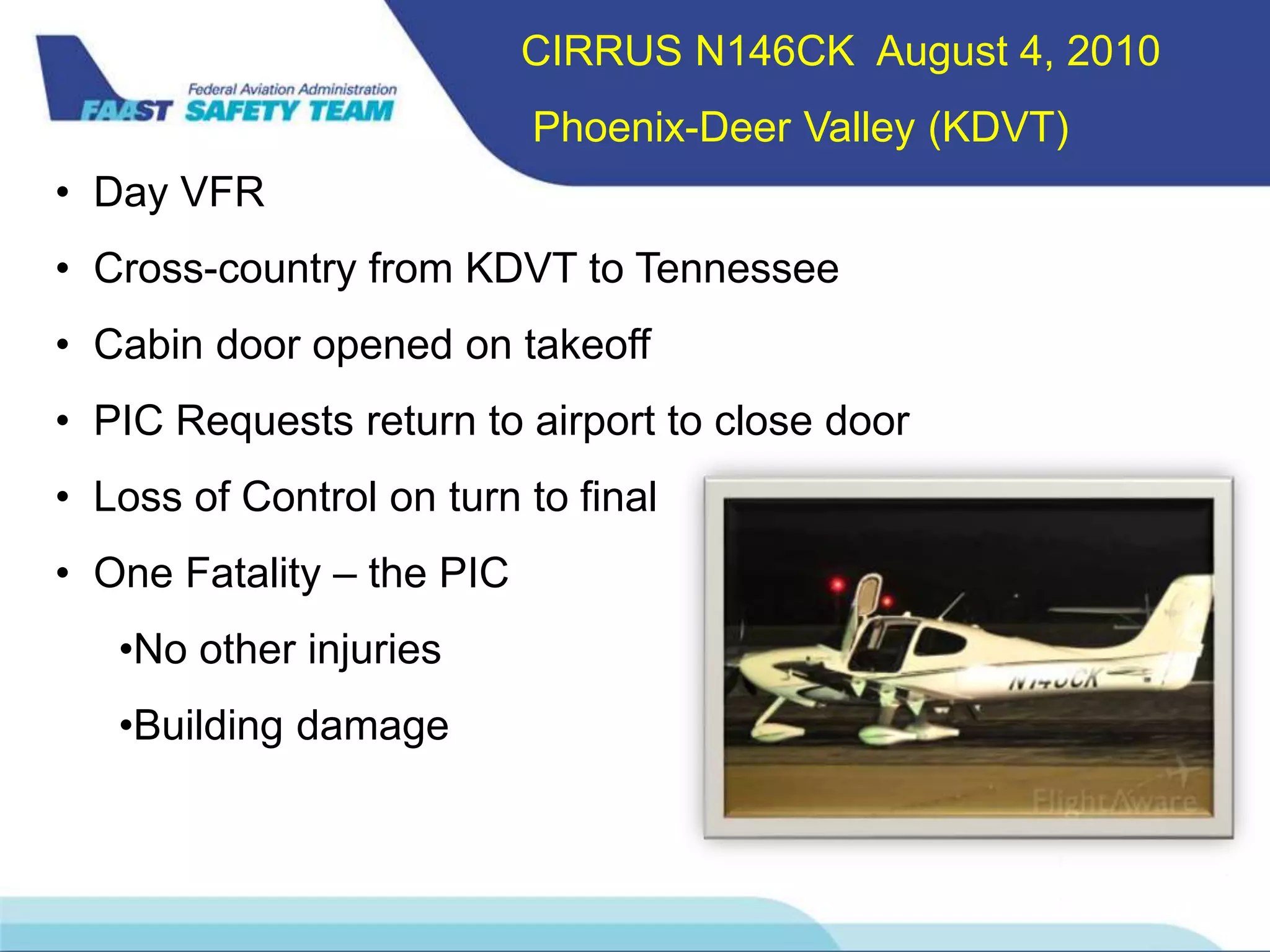
This document discusses managing unexpected events in aviation. It begins with an overview of the human startle response and how it is not useful in emergencies. It then presents a case study of an accident caused when a door opened during takeoff. It describes characteristics of unexpected emergencies, such as occurring during transitions, leaving no time to think. It relates the five stages of grief to aviation emergencies and stresses the importance of immediately taking action. The document provides examples of unexpected events and emphasizes practicing responses to be prepared. It encourages regular flying, proficiency, and thinking through plans of action ahead of time to best manage unexpected situations.