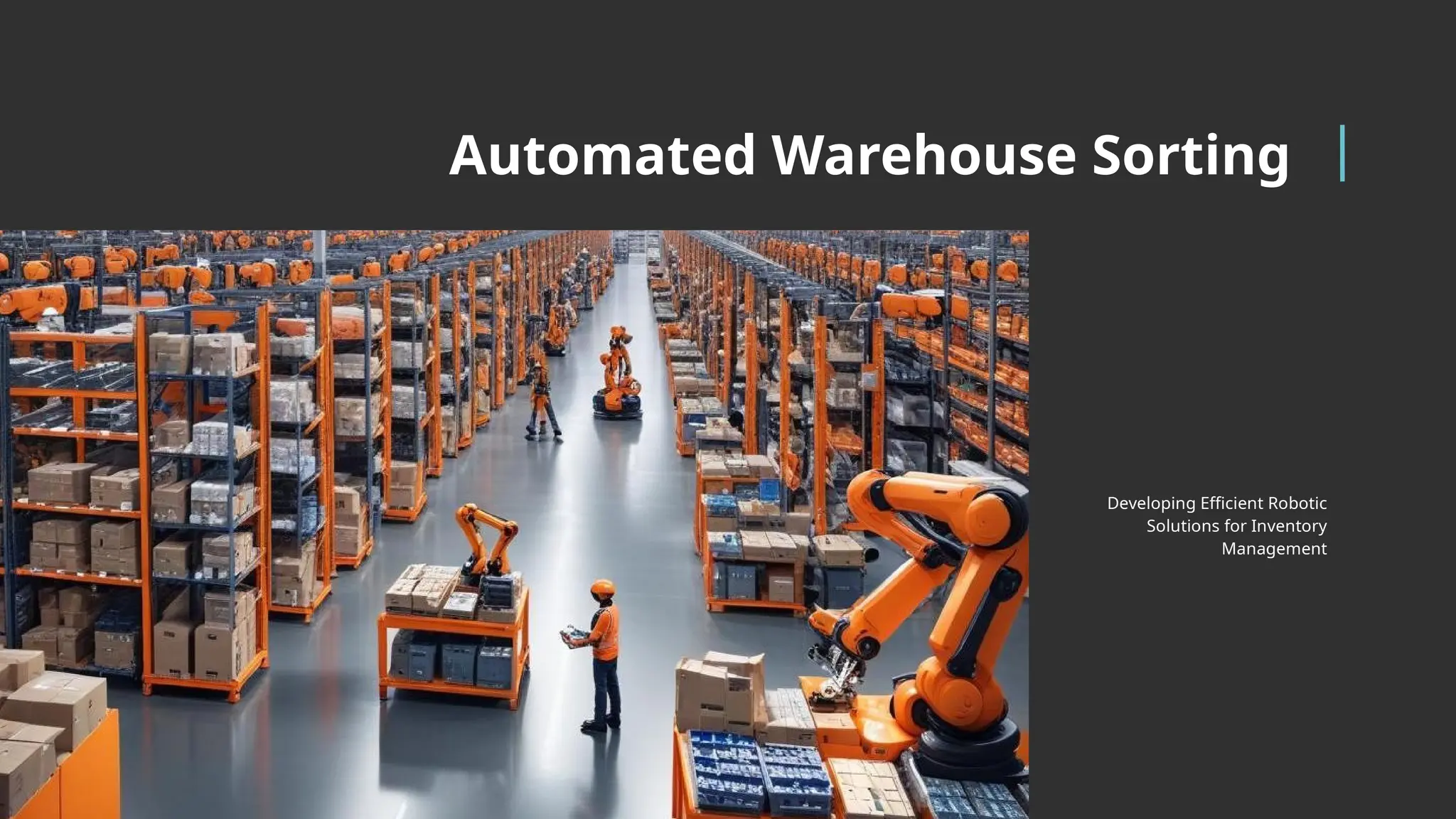
Automated Warehouse Sorting
Developing Efficient Robotic
Solutions for Inventory
Management
Introduction
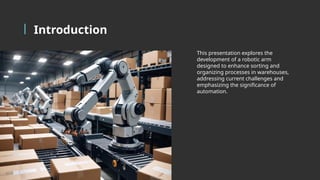
This presentation explores the
development of a robotic arm
designed to enhance sorting and
organizing processes in warehouses,
addressing current challenges and
emphasizing the significance of
automation.
System
Overview
01
Current Warehouse Challenges
Warehouses today face numerous challenges, including labor
shortages, inefficiencies in sorting and handling diverse items, and
difficulties in inventory management. These issues lead to increased
operational costs and reduced customer satisfaction. Efficient sorting
systems are essential to streamline operations and meet growing
demand.
Importance of Automation
Automation plays a critical role in modern warehouses by enhancing
operational efficiency, reducing human error, and improving accuracy
in item sorting and inventory tracking. Implementing automated
systems allows companies to better manage resources, optimize
workflows, and ultimately increase profitability.
Overview of Robotic Solutions
Robotic solutions in warehouses provide
advanced handling capabilities that optimize
the sorting and organization of items. These
systems can identify, classify, and manage a
variety of products while working alongside
human operators. By leveraging AI and
machine learning technologies, these robots
are continuously learning and improving
their performance, which can significantly
reduce operational costs and improve cycle
times.
Robotic Arm
Development
02
Design Specifications
The design of the robotic arm focuses on versatility and adaptability in
handling diverse items. Key specifications include a multi-axis
configuration for flexible movement, an array of sensors for object
detection and classification, and end effector customizations to handle
various shapes and materials. Emphasis is placed on ensuring safety
and compliance with industry standards.
Integration with Warehouse Systems
Successful integration of the robotic arm with existing warehouse
systems is crucial. This includes compatibility with inventory
management software and alignment with logistics workflows.
Collaborative robots (cobots) can work alongside human workers to
enhance productivity, requiring effective programming for seamless
communication and operation within automated processes.
Performance Metrics and Optimization
To measure the effectiveness of the
robotic arm, performance metrics such
as sorting speed, accuracy rates, and
downtime must be analyzed. Continuous
optimization through data analytics
allows for real-time adjustments to
improve efficiency. By assessing
operational data, businesses can refine
the algorithms that drive these robots,
maximizing their reliability and impact.
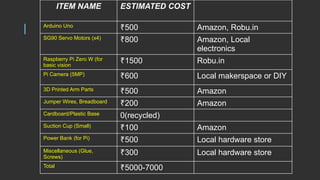
ITEM NAME ESTIMATED COST
Arduino Uno ₹500 Amazon, Robu.in
SG90 Servo Motors (x4) ₹800 Amazon, Local
electronics
Raspberry Pi Zero W (for
basic vision
₹1500 Robu.in
Pi Camera (5MP) ₹600 Local makerspace or DIY
3D Printed Arm Parts ₹500 Amazon
Jumper Wires, Breadboard ₹200 Amazon
Cardboard/Plastic Base 0(recycled)
Suction Cup (Small) ₹100 Amazon
Power Bank (for Pi) ₹500 Local hardware store
Miscellaneous (Glue,
Screws)
₹300 Local hardware store
Total ₹5000-7000
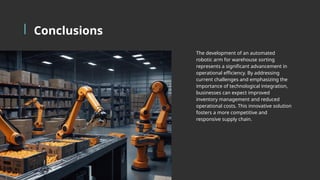
Conclusions
The development of an automated
robotic arm for warehouse sorting
represents a significant advancement in
operational efficiency. By addressing
current challenges and emphasizing the
importance of technological integration,
businesses can expect improved
inventory management and reduced
operational costs. This innovative solution
fosters a more competitive and
responsive supply chain.

Automated_Warehouse_Sorting_robotic_hand

  • 1.
    Automated Warehouse Sorting DevelopingEfficient Robotic Solutions for Inventory Management
  • 2.
    Introduction This presentation exploresthe development of a robotic arm designed to enhance sorting and organizing processes in warehouses, addressing current challenges and emphasizing the significance of automation.
  • 3.
  • 4.
    Current Warehouse Challenges Warehousestoday face numerous challenges, including labor shortages, inefficiencies in sorting and handling diverse items, and difficulties in inventory management. These issues lead to increased operational costs and reduced customer satisfaction. Efficient sorting systems are essential to streamline operations and meet growing demand.
  • 5.
    Importance of Automation Automationplays a critical role in modern warehouses by enhancing operational efficiency, reducing human error, and improving accuracy in item sorting and inventory tracking. Implementing automated systems allows companies to better manage resources, optimize workflows, and ultimately increase profitability.
  • 6.
    Overview of RoboticSolutions Robotic solutions in warehouses provide advanced handling capabilities that optimize the sorting and organization of items. These systems can identify, classify, and manage a variety of products while working alongside human operators. By leveraging AI and machine learning technologies, these robots are continuously learning and improving their performance, which can significantly reduce operational costs and improve cycle times.
  • 7.
  • 8.
    Design Specifications The designof the robotic arm focuses on versatility and adaptability in handling diverse items. Key specifications include a multi-axis configuration for flexible movement, an array of sensors for object detection and classification, and end effector customizations to handle various shapes and materials. Emphasis is placed on ensuring safety and compliance with industry standards.
  • 9.
    Integration with WarehouseSystems Successful integration of the robotic arm with existing warehouse systems is crucial. This includes compatibility with inventory management software and alignment with logistics workflows. Collaborative robots (cobots) can work alongside human workers to enhance productivity, requiring effective programming for seamless communication and operation within automated processes.
  • 10.
    Performance Metrics andOptimization To measure the effectiveness of the robotic arm, performance metrics such as sorting speed, accuracy rates, and downtime must be analyzed. Continuous optimization through data analytics allows for real-time adjustments to improve efficiency. By assessing operational data, businesses can refine the algorithms that drive these robots, maximizing their reliability and impact.
  • 11.
    ITEM NAME ESTIMATEDCOST Arduino Uno ₹500 Amazon, Robu.in SG90 Servo Motors (x4) ₹800 Amazon, Local electronics Raspberry Pi Zero W (for basic vision ₹1500 Robu.in Pi Camera (5MP) ₹600 Local makerspace or DIY 3D Printed Arm Parts ₹500 Amazon Jumper Wires, Breadboard ₹200 Amazon Cardboard/Plastic Base 0(recycled) Suction Cup (Small) ₹100 Amazon Power Bank (for Pi) ₹500 Local hardware store Miscellaneous (Glue, Screws) ₹300 Local hardware store Total ₹5000-7000
  • 12.
    Conclusions The development ofan automated robotic arm for warehouse sorting represents a significant advancement in operational efficiency. By addressing current challenges and emphasizing the importance of technological integration, businesses can expect improved inventory management and reduced operational costs. This innovative solution fosters a more competitive and responsive supply chain.