Learning Intentions
• To use the suffixes –ing, -ed, -er and –est.
What Is a Suffix?
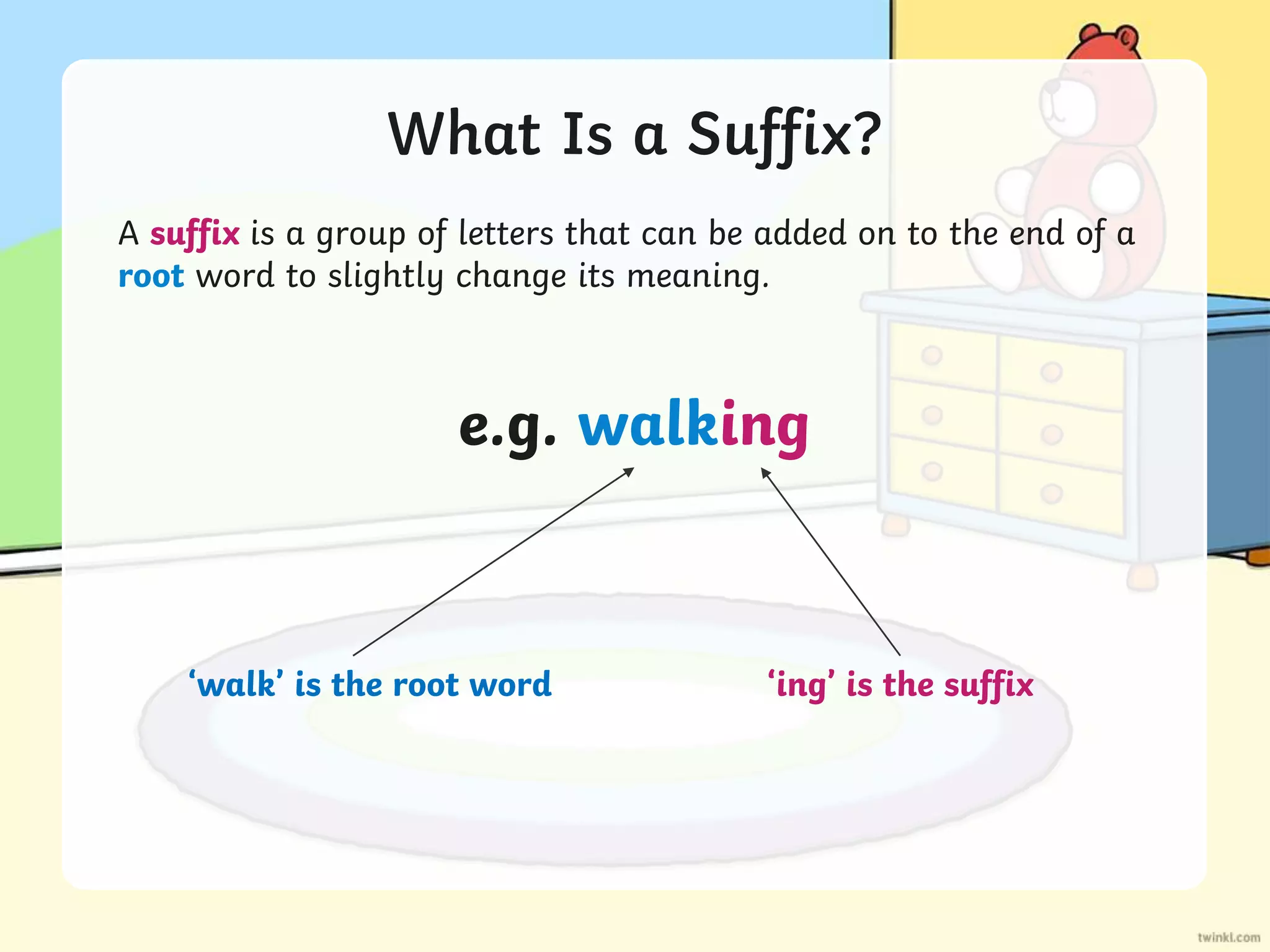
A suffix is a group of letters that can be added on to the end of a
root word to slightly change its meaning.
e.g. walking
‘walk’ is the root word ‘ing’ is the suffix
The Suffix ‘ing’
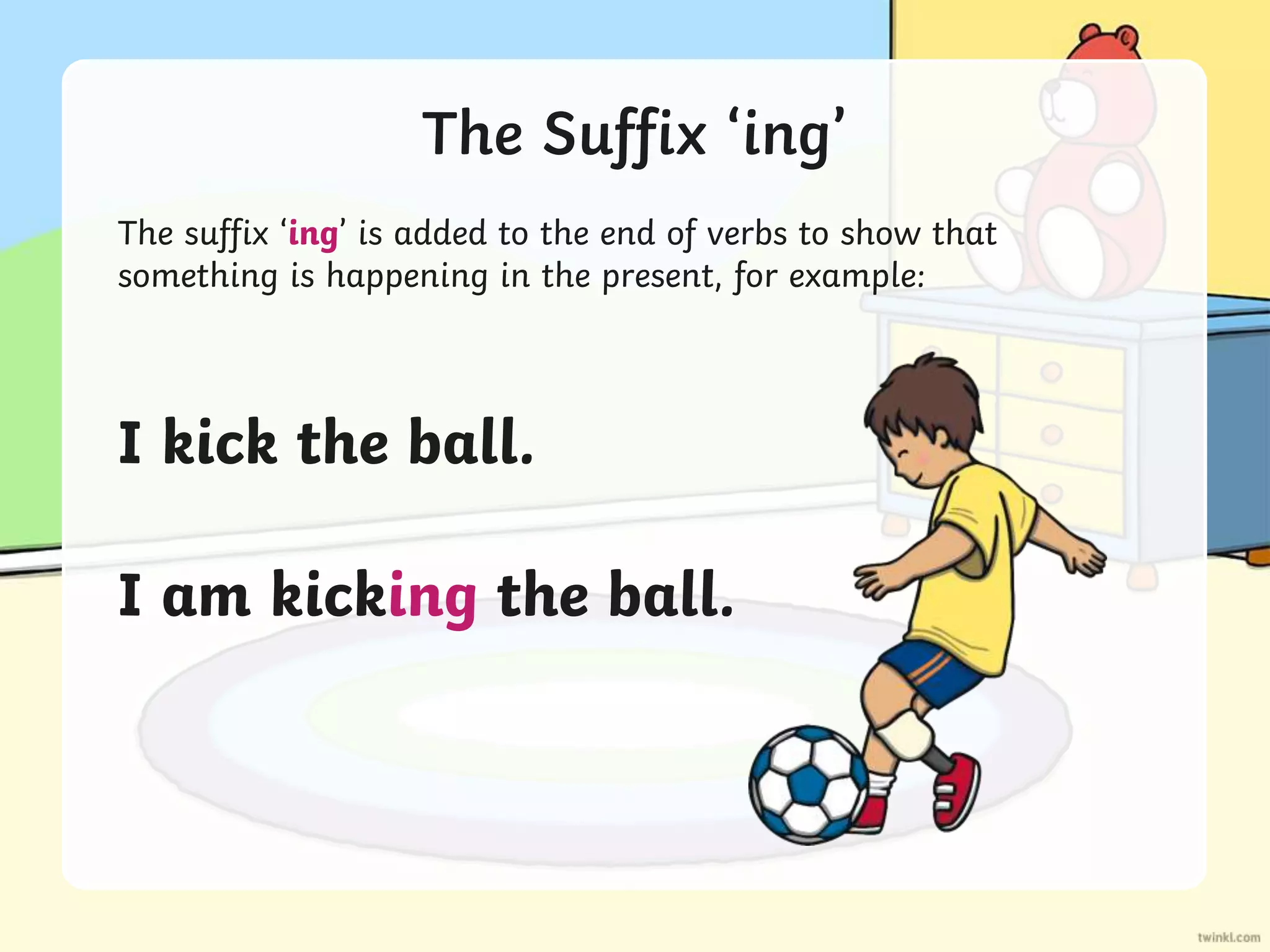
The suffix ‘ing’ is added to the end of verbs to show that
something is happening in the present, for example:
I kick the ball.
I am kicking the ball.
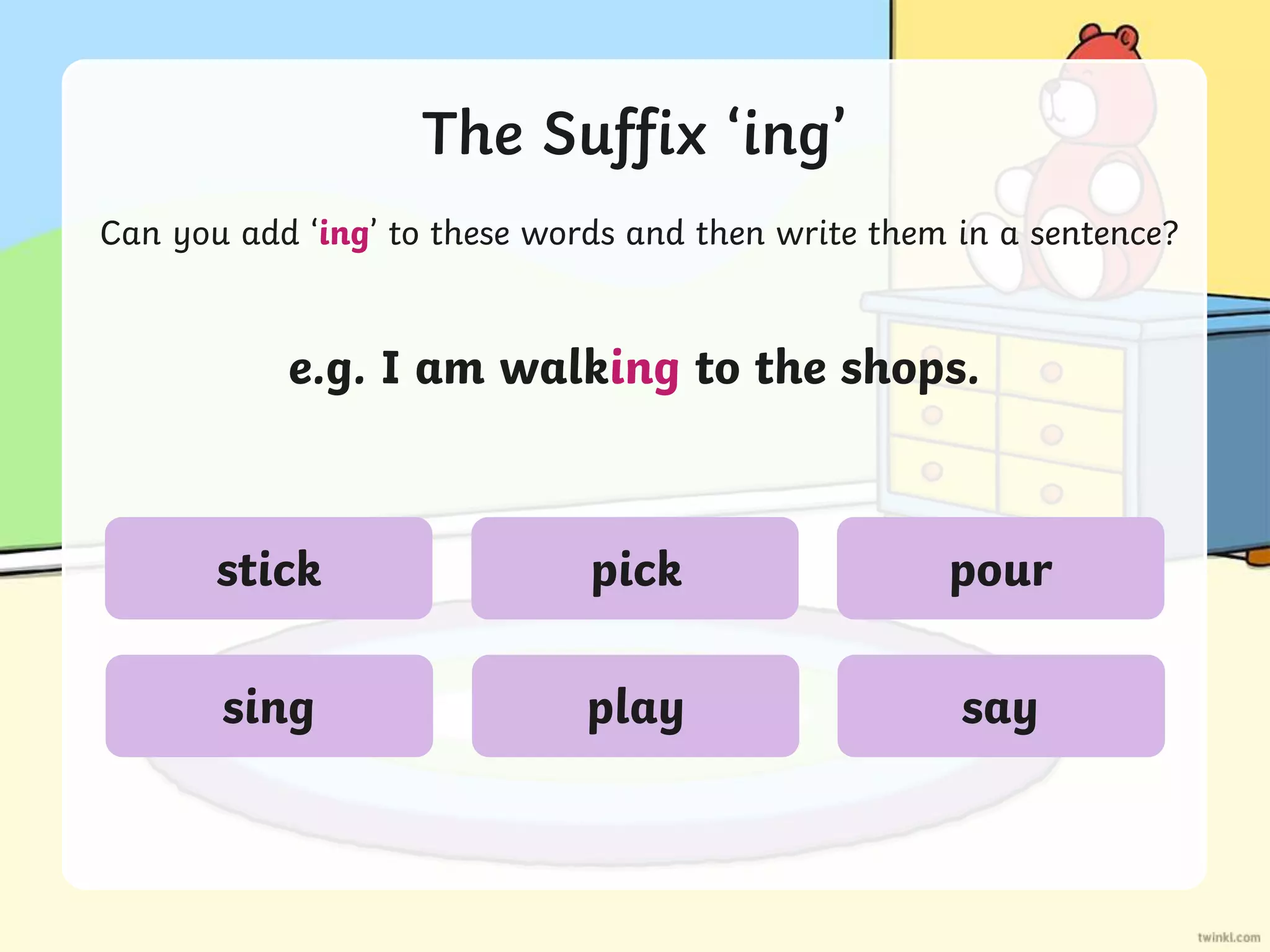
The Suffix ‘ing’
Can you add ‘ing’ to these words and then write them in a sentence?
e.g. I am walking to the shops.
stick
sing
pick
play
pour
say
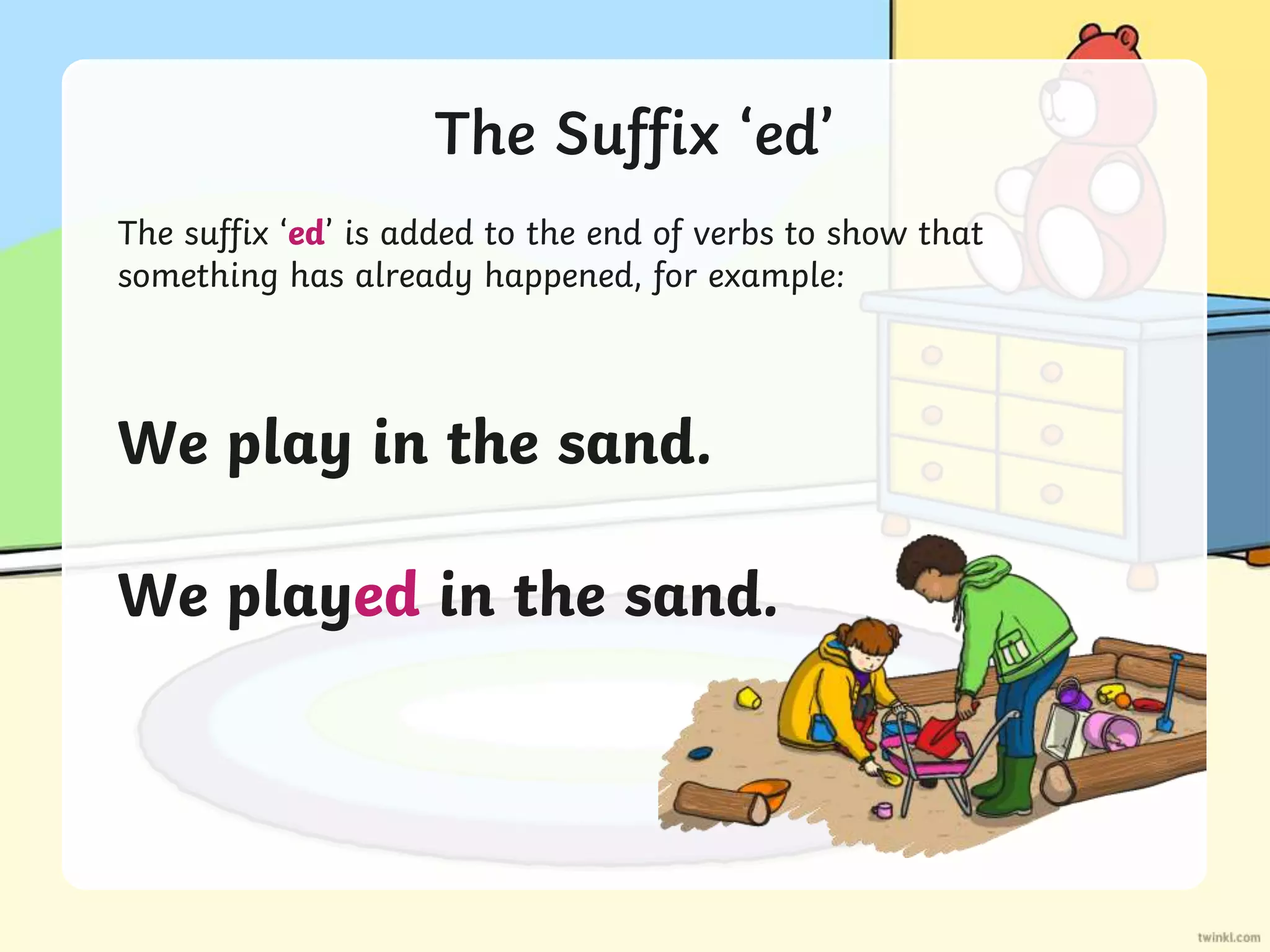
The Suffix ‘ed’
The suffix ‘ed’ is added to the end of verbs to show that
something has already happened, for example:
We play in the sand.
We played in the sand.
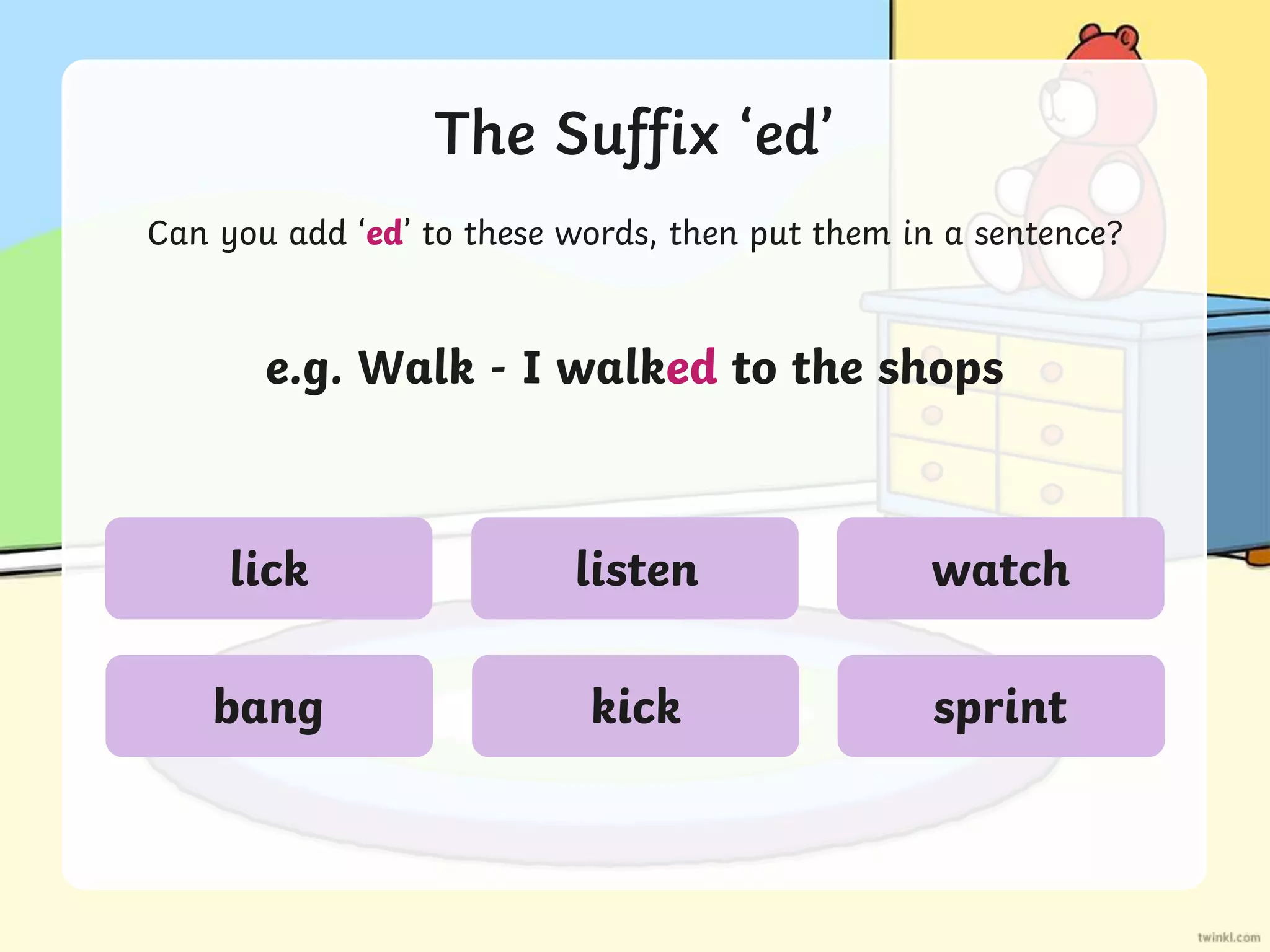
The Suffix ‘ed’
Can you add ‘ed’ to these words, then put them in a sentence?
e.g. Walk - I walked to the shops
lick
bang
listen
kick
watch
sprint
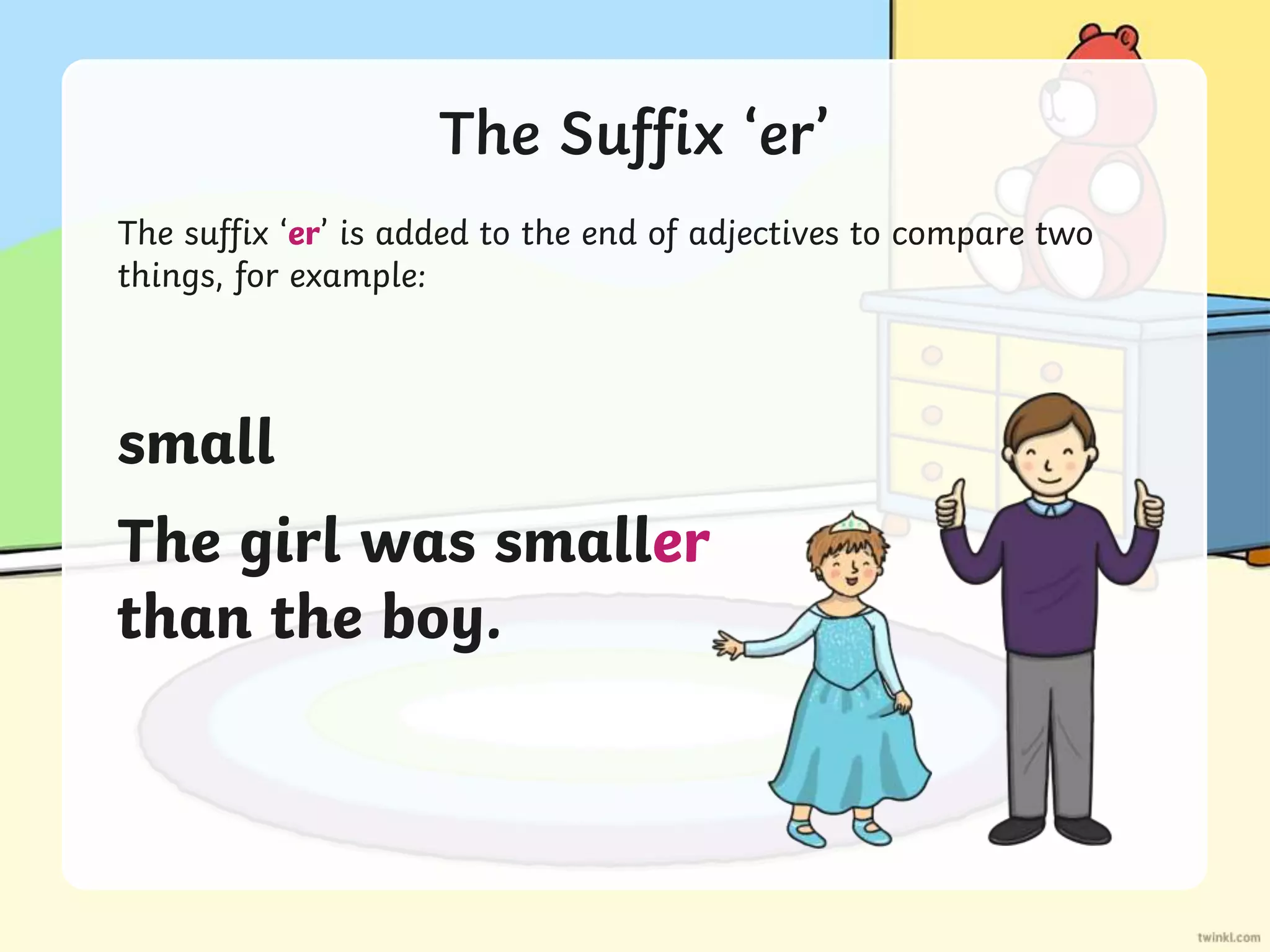
The Suffix ‘er’
The suffix ‘er’ is added to the end of adjectives to compare two
things, for example:
small
The girl was smaller
than the boy.
The Suffix ‘er’
Can you add ‘er’ to these words and then write them in a sentence?
e.g. loud – The children were louder than
their teacher.
hard
dark
quick
high
bright
deep
The Suffix ‘est’
The suffix ‘est’ can be added to the end of adjectives to compare
three or more things, for example:
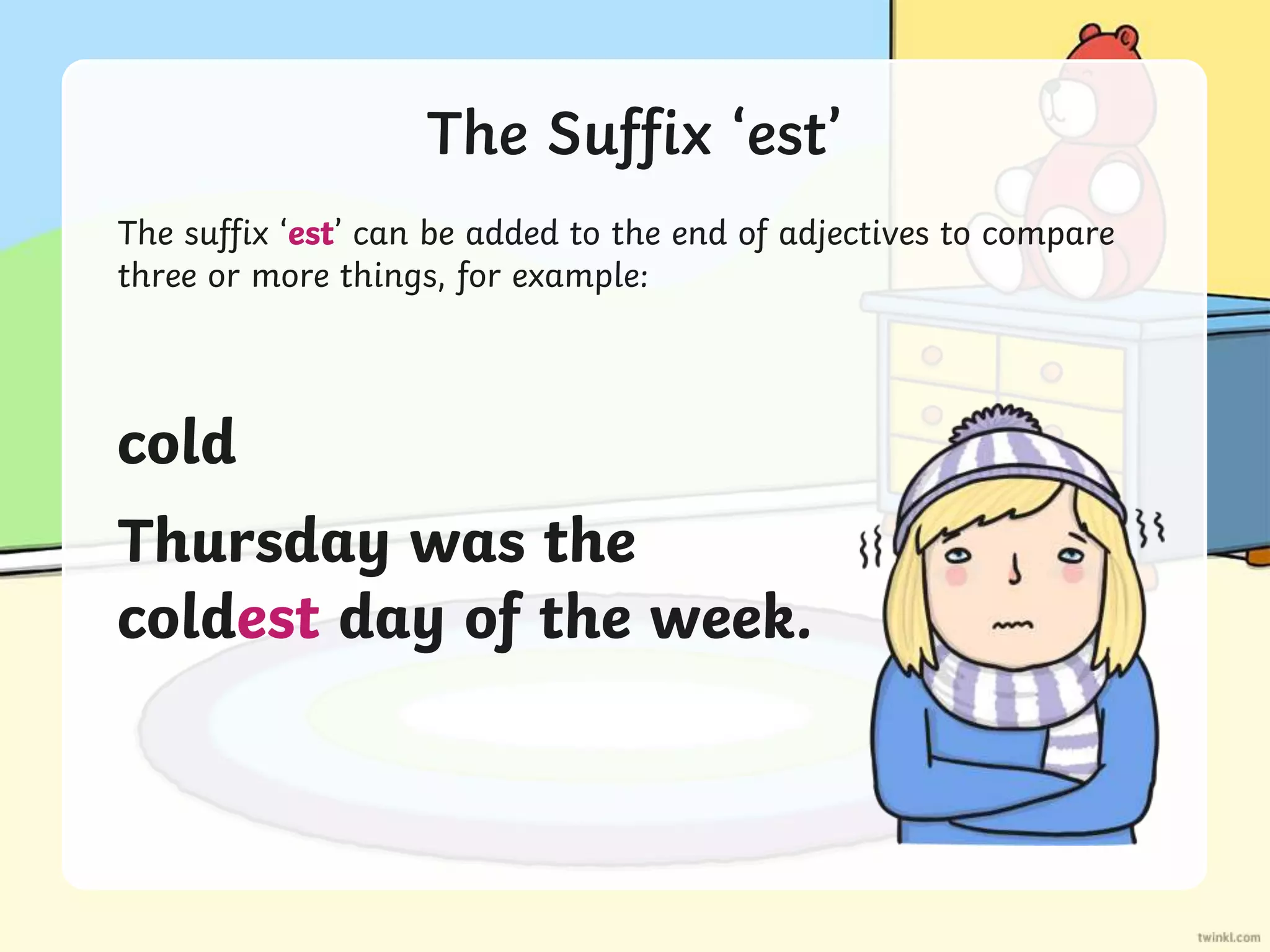
cold
Thursday was the
coldest day of the week.
The Suffix ‘est’
Can you add ‘est’ to these words and then write them in a sentence?
e.g. loud – Simon was the loudest in the
class.
hard
dark
quick
high
bright
deep
au-l-581-using-the-suffixes-ing-er-est-and-ed-teaching-powerpoint-australian_ver_4.ppt

au-l-581-using-the-suffixes-ing-er-est-and-ed-teaching-powerpoint-australian_ver_4.ppt

  • 2.
    Learning Intentions • Touse the suffixes –ing, -ed, -er and –est.
  • 3.
    What Is aSuffix? A suffix is a group of letters that can be added on to the end of a root word to slightly change its meaning. e.g. walking ‘walk’ is the root word ‘ing’ is the suffix
  • 4.
    The Suffix ‘ing’ Thesuffix ‘ing’ is added to the end of verbs to show that something is happening in the present, for example: I kick the ball. I am kicking the ball.
  • 5.
    The Suffix ‘ing’ Canyou add ‘ing’ to these words and then write them in a sentence? e.g. I am walking to the shops. stick sing pick play pour say
  • 6.
    The Suffix ‘ed’ Thesuffix ‘ed’ is added to the end of verbs to show that something has already happened, for example: We play in the sand. We played in the sand.
  • 7.
    The Suffix ‘ed’ Canyou add ‘ed’ to these words, then put them in a sentence? e.g. Walk - I walked to the shops lick bang listen kick watch sprint
  • 8.
    The Suffix ‘er’ Thesuffix ‘er’ is added to the end of adjectives to compare two things, for example: small The girl was smaller than the boy.
  • 9.
    The Suffix ‘er’ Canyou add ‘er’ to these words and then write them in a sentence? e.g. loud – The children were louder than their teacher. hard dark quick high bright deep
  • 10.
    The Suffix ‘est’ Thesuffix ‘est’ can be added to the end of adjectives to compare three or more things, for example: cold Thursday was the coldest day of the week.
  • 11.
    The Suffix ‘est’ Canyou add ‘est’ to these words and then write them in a sentence? e.g. loud – Simon was the loudest in the class. hard dark quick high bright deep