AUDITORY OBJECT
                   COGNITION IN
                           DEMENTIA
         Johanna C. Golla, Lois G. Kimb, Julia C.
 Hailstonea, Manja Lehmanna, Aisling Buckleya,
Sebastian J. Crutcha, Jason D. Warrena (2011)
                                                      Presented by
                                                    Diana Cordeiro
                                                               and
                                                             Laura
                                                         Gwilliams
BACKGROUND

 Deficits people with dementia face have been widely
  studied

 Visual object processing deficits are well established

 But the cognition of nonverbal sounds (i.e., auditory
  objects) in dementia has been relatively little
  explored

 Similarities exist between the two domains, but a
  ‘visual object’ is much more concrete and easily
  defined than an ‘auditory object’
AUDITORY OBJECT?


 Auditory objects are made up of acoustic properties
  which are processed by the hearer
   Recognise sound characteristics
   And, properties of the object that created the sound


 Unclear how the brain processes an object in the
  auditory domain, especially for people with dementia
  syndromes
WHY STUDY THE AUDITORY DOMAIN?


 1) Clinical Perspective
   Disorders of auditory processing gives rise to a diverse host of
    symptoms and deficits

 2) Cognitive Neuropsychological Perspective
   Determine cognitive components required to process an
    auditory object
   Relation between these essential components and the study of
    damaged brains
AIMS


 Build upon previous study:
     1) Extend investigation to include patients diagnosed with
      Alzheimer’s disease (AD) and Primary Progressive
      Aphasias (PPA)


     2) Assess auditory object cognition while taking working
      memory into consideration


     3) Extend analysis of auditory object cognition to include
      a wider range of processes including early perceptual
      mechanisms
Goll, J. C., Crutch, S. J., Loo, J. H., Rohrer, J. D., Frost, C., Bamiou, D. E., et al. (2010). Non-verbal sound
processing in the primary progressive aphasias. Brain, 133, 272–285.
METHOD


 Participants
   20 healthy age-matched controls
   34 patients fulfilling clinical diagnostic criteria for AD or PPA

 Clinically diagnosed with:
     Amnestic Alzheimer’s disease (AD; n-21)
     Progressive non-fluent aphasia (PNFA; n-5)
     Logopenic progressive aphasia (LPA; n-7)
     Aphasia associated with granulin gene mutation (GAA; n-1)

 Pre-experimental assessment
   Peripheral hearing assessment
   General neurological function assessment
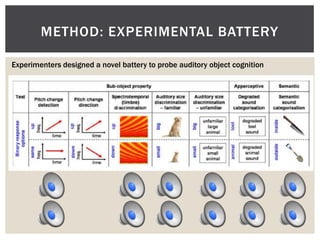
DESIGN: EXPERIMENTAL BATTERY


 The battery allows assessment of three levels of
  cognitive auditory processing:

   1) Early perceptual coding at subcortical level (sub -object)
     i.e., pitch, timbre, auditory size


   2) Perceptual representations (whole object)
     i.e., combined sub-object properties


   3) Recognition of auditory objects (semantics)
     i.e., object -> meaning
METHOD: EXPERIMENTAL BATTERY

Experimenters designed a novel battery to probe auditory object cognition
RESULTS

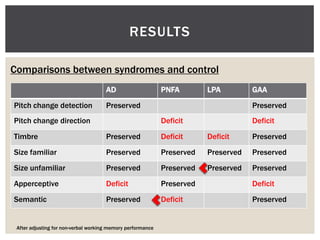
Comparisons between syndromes and control
                                      AD                     PNFA        LPA         GAA
Pitch change detection                Preserved                                      Preserved
Pitch change direction                                       Deficit                 Deficit
Timbre                                Preserved              Deficit     Deficit     Preserved
Size familiar                         Preserved              Preserved   Preserved   Preserved
Size unfamiliar                       Preserved              Preserved   Preserved   Preserved
Apperceptive                          Deficit                Preserved               Deficit
Semantic                              Preserved              Deficit                 Preserved


 After adjusting for non-verbal working memory performance
CONCLUSIONS


 Dementia syndromes are associated with impaired
  processing of auditory objects
 Separable stages of auditory object analysis
 Separable profiles of impaired auditory object cognition in
  dif ferent dementia syndromes
 Working memory was an important aspect of auditory
  recognition


 Taken together, results suggest dementia syndromes
  are associated with distinctive profiles of auditory
  object processing
LIMITATIONS


 Small case numbers

 Deficits occurred in context of general auditory
  dysfunction and widespread cognitive impairment
   Cannot make direct anatomical and pathological link to
    deficits observed


 None of the deficits were restricted to a
  particular dementia syndrome
FUTURE RESEARCH


 Larger patient cohorts and additional
  neurodegenerative diseases
 Clinical perspective:
   Core symptoms of disorders could be better understood with
    further study into auditory dysfunction
 Cognitive Neuropsychological perspective:
   Establish relationship between different elements of auditory
    object perception
   Explore processes for object segregation in embedded complex
    auditory scenes
   Compare mechanisms of object analysis across different
    modalities, using appropriate matched tasks in each modality
THANKS!

… Questions?

Auditory Object Recognition: Evidence from Aphasia

  • 1.
    AUDITORY OBJECT COGNITION IN DEMENTIA Johanna C. Golla, Lois G. Kimb, Julia C. Hailstonea, Manja Lehmanna, Aisling Buckleya, Sebastian J. Crutcha, Jason D. Warrena (2011) Presented by Diana Cordeiro and Laura Gwilliams
  • 2.
    BACKGROUND  Deficits peoplewith dementia face have been widely studied  Visual object processing deficits are well established  But the cognition of nonverbal sounds (i.e., auditory objects) in dementia has been relatively little explored  Similarities exist between the two domains, but a ‘visual object’ is much more concrete and easily defined than an ‘auditory object’
  • 3.
    AUDITORY OBJECT?  Auditoryobjects are made up of acoustic properties which are processed by the hearer  Recognise sound characteristics  And, properties of the object that created the sound  Unclear how the brain processes an object in the auditory domain, especially for people with dementia syndromes
  • 4.
    WHY STUDY THEAUDITORY DOMAIN?  1) Clinical Perspective  Disorders of auditory processing gives rise to a diverse host of symptoms and deficits  2) Cognitive Neuropsychological Perspective  Determine cognitive components required to process an auditory object  Relation between these essential components and the study of damaged brains
  • 5.
    AIMS  Build uponprevious study:  1) Extend investigation to include patients diagnosed with Alzheimer’s disease (AD) and Primary Progressive Aphasias (PPA)  2) Assess auditory object cognition while taking working memory into consideration  3) Extend analysis of auditory object cognition to include a wider range of processes including early perceptual mechanisms Goll, J. C., Crutch, S. J., Loo, J. H., Rohrer, J. D., Frost, C., Bamiou, D. E., et al. (2010). Non-verbal sound processing in the primary progressive aphasias. Brain, 133, 272–285.
  • 6.
    METHOD  Participants  20 healthy age-matched controls  34 patients fulfilling clinical diagnostic criteria for AD or PPA  Clinically diagnosed with:  Amnestic Alzheimer’s disease (AD; n-21)  Progressive non-fluent aphasia (PNFA; n-5)  Logopenic progressive aphasia (LPA; n-7)  Aphasia associated with granulin gene mutation (GAA; n-1)  Pre-experimental assessment  Peripheral hearing assessment  General neurological function assessment
  • 7.
    DESIGN: EXPERIMENTAL BATTERY The battery allows assessment of three levels of cognitive auditory processing:  1) Early perceptual coding at subcortical level (sub -object)  i.e., pitch, timbre, auditory size  2) Perceptual representations (whole object)  i.e., combined sub-object properties  3) Recognition of auditory objects (semantics)  i.e., object -> meaning
  • 8.
    METHOD: EXPERIMENTAL BATTERY Experimentersdesigned a novel battery to probe auditory object cognition
  • 9.
    RESULTS Comparisons between syndromesand control AD PNFA LPA GAA Pitch change detection Preserved Preserved Pitch change direction Deficit Deficit Timbre Preserved Deficit Deficit Preserved Size familiar Preserved Preserved Preserved Preserved Size unfamiliar Preserved Preserved Preserved Preserved Apperceptive Deficit Preserved Deficit Semantic Preserved Deficit Preserved After adjusting for non-verbal working memory performance
  • 10.
    CONCLUSIONS  Dementia syndromesare associated with impaired processing of auditory objects  Separable stages of auditory object analysis  Separable profiles of impaired auditory object cognition in dif ferent dementia syndromes  Working memory was an important aspect of auditory recognition  Taken together, results suggest dementia syndromes are associated with distinctive profiles of auditory object processing
  • 11.
    LIMITATIONS  Small casenumbers  Deficits occurred in context of general auditory dysfunction and widespread cognitive impairment  Cannot make direct anatomical and pathological link to deficits observed  None of the deficits were restricted to a particular dementia syndrome
  • 12.
    FUTURE RESEARCH  Largerpatient cohorts and additional neurodegenerative diseases  Clinical perspective:  Core symptoms of disorders could be better understood with further study into auditory dysfunction  Cognitive Neuropsychological perspective:  Establish relationship between different elements of auditory object perception  Explore processes for object segregation in embedded complex auditory scenes  Compare mechanisms of object analysis across different modalities, using appropriate matched tasks in each modality
  • 13.

Editor's Notes

  • #3 laura
  • #4 Laura
  • #5 diana
  • #6 dianaPrior study into PNFA and SDPrevious study was into Primarynonfluent aphasia.. Previous study didn’t take WM into consideration
  • #7 DianaPrimary progressive aphasia
  • #8 dianaEarly stage of perceptual coding at the subcortical level, pitch and pitch change
  • #9 Laura - experimental design was forced choice, uni-modal and single auditory object at a time to reduce STM demands - 7 elements to investigate the three levels of cognitive auditory processing - early perceptual was studied through sub-object sounds which corresponded to a single sound characteristic - perceptual representations investigated through apperceptive task where the sound was computationally degraded and the participants were asked to say wherther the sound was created by a particular object category, in this instance ‘tool’ or ‘animal’ - semantic recognition of objects looked at a further level where the participants had to say whether the particular function that the object served was outside or inside.Subcortical // perceptual (combo of sub-object) // semantic, the meaning of these objectsVisual diagrams: Familiarise subjects with each testPitch and timbre tests – directional arrowsAuditory size test – words ‘big’ and ‘small’Apperceptive test – canonical examples of tools and animalsSemantic test – photographs of interior and exterior scenes
  • #10 diana
  • #11 diana
  • #12 Laura - small case nubers, especially in the granulin gene mutation who had one participant, but this is inherent in studies of this kind - cannot make correlational claims to link the audiotry deficits to the anatomical and pathological observations because general auditory dysfunction was found as well as widespread cognitive impairment - none of the deficits were completely restricted to a particular syndrome, suggesting there is a level of overlap between the auditory processing of these elements
  • #13 Laura – make within and across dementia generalisations - study auditory dysfunction further to better understand the core symptoms of the disorder - relationship between different elements of auditory object perception - object segregation within context; maybe context helps some people not others - look at cross-modal perception because the combination of domains is how the world is experieneed in reality, so should look at how they interact