Atheism What EveryoneNeeds To Know Michael Ruse
download
https://ebookbell.com/product/atheism-what-everyone-needs-to-
know-michael-ruse-33352226
Explore and download more ebooks at ebookbell.com
2.
Here are somerecommended products that we believe you will be
interested in. You can click the link to download.
Atheist Overreach What Atheism Cant Deliver Smith Christian
https://ebookbell.com/product/atheist-overreach-what-atheism-cant-
deliver-smith-christian-10012532
What Your Atheist Professor Doesnt Know But Should Stephen Joseph
Williams Williams
https://ebookbell.com/product/what-your-atheist-professor-doesnt-know-
but-should-stephen-joseph-williams-williams-33551280
What If Im An Atheist A Teens Guide To Exploring A Life Without
Religion David Seidman
https://ebookbell.com/product/what-if-im-an-atheist-a-teens-guide-to-
exploring-a-life-without-religion-david-seidman-51277260
Hi Im An Atheist What That Means And How To Talk About It With Others
David G Mcafee
https://ebookbell.com/product/hi-im-an-atheist-what-that-means-and-
how-to-talk-about-it-with-others-david-g-mcafee-48912036
3.
Atheism And TheGoddess Crosscultural Approaches With A Focus On South
Asia Anway Mukhopadhyay
https://ebookbell.com/product/atheism-and-the-goddess-crosscultural-
approaches-with-a-focus-on-south-asia-anway-mukhopadhyay-49433966
Atheism At The Agora A History Of Unbelief In Ancient Greek Polytheism
1st Edition James C Ford
https://ebookbell.com/product/atheism-at-the-agora-a-history-of-
unbelief-in-ancient-greek-polytheism-1st-edition-james-c-ford-50795800
Atheism Morality And The Kingdom Of God A Philosophical And Literary
Investigation 1st Edition David K Clark
https://ebookbell.com/product/atheism-morality-and-the-kingdom-of-god-
a-philosophical-and-literary-investigation-1st-edition-david-k-
clark-51644474
Atheism Alexandre Kojve Jeff Love
https://ebookbell.com/product/atheism-alexandre-kojve-jeff-
love-51905630
Atheism In France 16501729 Volume I The Orthodox Sources Of Disbelief
Course Book Alan Charles Kors
https://ebookbell.com/product/atheism-in-france-16501729-volume-i-the-
orthodox-sources-of-disbelief-course-book-alan-charles-kors-51944852
To the memoryof my parents and the other loving Quakers
of my childhood
12.
ACKNOWLEDGMENTS IX
Prologue 1
1.From the Greeks to the Enlightenment 7
2. From the Enlightenment to the Present 25
3. Statistics 53
4. God and Humans 67
5. Belief 83
6. The Matter of Science 100
7. Questions for the Christian 122
8. Are There Good Reasons to Believe? 148
9. Alternative Religions 169
10. Naturalistic Explanations 188
11. Is Religion Evil? 211
CONTENTS
13.
viii Atheism: WhatEveryone Needs to Know
12. The Meaningful Life 228
Envoi 253
REFERENCES 255
INDEX 273
14.
First and foremost,I am very grateful to my editor, Peter
Ohlin, at Oxford University Press for asking me to write
this book. You will soon see that it has become something of
a personal journey, and I feel humbled that Peter could see
that I was the person to write it. I have just finished co-editing
The Oxford Handbook of Atheism. It will be no surprise to find
that I have made heavy and unapologetic use of the contribu-
tions; I wouldn’t be much of an editor if I didn’t think they
were at the cutting edge of the topic. Stephen Bullivant, with
whom I worked on this collection, was the Platonic form of
collaborator—knowledgeable, hardworking, and never irri-
table. I simply could not have written this book without this
earlier project or without Stephen’s ever-helpful advice. I am
hugely in the debt of my friend Brian Davies OP. He is one
of the world’s experts on the thought of St. Thomas Aquinas,
and he took time out from his heavy schedule of teaching and
research to go over my manuscript with a very careful and crit-
ical eye. He is the best of teachers. I count myself privileged to
be numbered among his students. I still don’t think the God of
the great philosophers—Augustine, Anselm, Aquinas—holds
water, but Brian has given me a much better understanding of
why I don’t think it works, and how very much I am giving up
by rejecting it.
ACKNOWLEDGMENTS
15.
x Atheism: WhatEveryone Needs to Know
I never met William and Lucyle Werkmeister, who left
monies to fund my professorship and to support my research.
Colleagues who did know them tell me with some glee that
Lucyle, after whom my professorship is named, was very reli-
gious and would not at all agree with the contents of this book.
They tell me also that the Werkmeisters would be delighted
that their gift is being so used, and I would like to think that
this book, and the others that I have written since I have been
at Florida State University, are a way of showing my grati-
tude. Included in the funds is support to run workshops and
conferences. I was therefore able to bring together a group
of friends (as I would now like to count them) to discuss my
manuscript. They included John Kelsay, David McNaughton,
Jeffery O’Connell, John Schneider, Kimberly Blessing, Michael
Peterson, and Stephen Bullivant. I am very appreciative of their
reading and help and also am in debt to Sarah Buck Kachaluba
for organizing the workshop. As always, I am incredibly grate-
ful to my wife, Lizzie. As you will see, she is a pretty good
sport to put up with me. She is just praying (in an entirely sec-
ular way) that I don’t follow this book on religion with another
on opera.
16.
Why Should IWrite—Why Should You Read—a Book
on Atheism?
On September 11, 2001 (9/11), Muslim fanatics hijacked
four planes. Two were flown into the World Trade Center in
New York, one into the Pentagon in Washington, D.C., and
the fourth failed to find its destination, probably the White
House, only because of the incredible bravery of the passen-
gers on board. The next morning, a young graduate student in
California took up his pen and began a fiery polemic against
what he saw as the root cause of the vile attacks: religion. Sam
Harris, now a neurobiologist, was the to-be author of The End
of Faith: Religion, Terror, and the Future of Reason (published in
2004). In fairly short order, the biologist and popular science
writer Richard Dawkins produced The God Delusion (2006), the
philosopher Daniel Dennett wrote Breaking the Spell: Religion
as a Natural Phenomenon (2006), and the journalist Christopher
Hitchens authored God Is Not Great: How Religion Poisons
Everything (2007). Christened the “New Atheists,” their books
were bestsellers, and their ideas were avidly consumed by
countless people looking for a solution to something that
seemed so mystifying: meaningless attacks on innocent peo-
ple simply going about their business. Expectedly, this assault
soon occasioned a counterresponse, and before long a flood of
PROLOGUE
17.
2 Atheism: WhatEveryone Needs to Know
works argued that the New Atheists were entirely mistaken
both about religion and its connection to social unrest and
upheaval. The Dawkins Delusion: Atheist Fundamentalism and
the Denial of the Divine (2007) by Anglican theologian Alister
McGrath and his wife, Joanna Collicutt McGrath, and God
and the New Atheism: A Critical Response to Dawkins, Harris, and
Hitchens (2007) by Catholic theologian John Haught are typi-
cal. Matters moved from the serious to the farcical when first
the religious paid for advertisements on the sides of buses—
“Jesus said I am the way and the life”—and then the atheists
responded with advertisements of their own: “There probably
is no god, so stop worrying and get on with your life.”
Without this controversy, I very much doubt that Oxford
University Press would have asked me to write this book.
Without this controversy, I very much doubt—unless you
have the misfortune to be stuck in an undergraduate course
in philosophy or religion—you would be reading this book.
But there is a controversy. I have written it. You are reading
it. Truly, no apologies or misgivings are needed. Although
perhaps some explanations and directives are needed. One
could write a book just on the New Atheism, and indeed as
we have just seen, several have done just this. But one senses
that broader issues are at play here. Dreadful as were the
events of 9/11, it is clear that the books sparked in response
were successful because in some vague sense society was
waiting for such works. In other words, there were broader,
already existing worries and dissatisfactions with religion,
and the New Atheism cashed in on these. After all, it is worth
remembering that although The God Delusion was a runaway
bestseller, selling more than 2 million copies in its first two
years, its sales were dwarfed by the thriller of the decade—The
Da Vinci Code (2003), which sold 40 million copies in its first
three years—and that this latter book had as its central plot
the conceit that Jesus was not the son of God, that the Catholic
Church knows this and conceals the information, and that its
sinister organization Opus Dei will stop at no tactics, including
18.
Prologue 3
murder, tokeep the status quo. Hardly a testament to the glo-
ries of the faith!
More broadly, survey after survey has shown—we shall
look at some in detail—that people, particularly the young,
are losing interest in and commitment to religion, particu-
larly organized religion (Bullivant 2010). This is obviously far
from a universal trend, but it is true and widespread. Reasons
for the withdrawal are easy to find. On the one hand, there is
universal disgust at the hypocrisy of so many in positions of
religious authority. One thinks not just of the predation on the
young by Catholic priests, but the extent to which the hierar-
chy covered up and to this day fights tooth and nail to avoid
acknowledging responsibility. Balancing this have been the
sexual and fiscal shenanigans of Protestant so-called televan-
gelists. On the other hand—as Christians (especially evan-
gelicals) are themselves now starting to realize (Kinnaman
2011)—so much claimed and demanded in the name of reli-
gion seems out of date and irrelevant, distracting from really
significant problems: Pope Paul VI reaffirming the ban on arti-
ficial methods of contraception; the refusal to accept gay peo-
ple as fully functioning and worthwhile members of society;
and while insisting on various social doctrines about liberty
(including rights about guns), adamant refusal to accept that
a woman’s body is her body and not the property of the state
or the church—and most certainly not of a group of old men
who supposedly have never had sex in their lives, nor equally
Protestant pastors with a tendentious reading of the suppos-
edly pertinent biblical passages. At the same time, Africans
die in hordes from HIV, children the world over go to bed hun-
gry because there is no food, and our fields face drought and
our cities face flooding.
This is not to say that everyone is now rushing to nonbelief,
to a denial of the existence of God or of gods, to (as I shall
understand it in this book) atheism in some sense. In fact, much
suggests that this is not so. Catholic novelist J. R. R. Tolkien’s
The Lord of the Rings has sold 150 million copies worldwide,
19.
4 Atheism: WhatEveryone Needs to Know
and obviously a major factor in its continuing success (not to
mention the film adaptations) is the religious underpinning
to the work (Bud 2013). But atheism in some sense is becom-
ing more of a possible option. Hence, this book—one that tries
to lay out dispassionately the issues surrounding atheism, the
arguments against it and the arguments for it, its critics and its
supporters. We need to move beyond the polemics and look at
the underlying issues. We need to know the facts, the history,
the merits and demerits, the prospects, and hopes and fears.
We need, in other words, a balanced look at the question of
atheism. Which in itself raises worries, for too often balanced
means “bland and boring,” something that in itself would
be very regrettable, for, whatever else one might say about
New Atheism and the reactions to it, boring is very much not
a predicate that jumps at once to mind. I will try to keep this
point constantly in view, because I can assure you that if you
find this book boring, then that is my problem and not that of
the topic. The subject is interesting, and the implications are
important. If on finishing this book you do not agree with this,
I have failed in what I set out to do.
Who Am I to Presume to Write Such a Book?
Because of the intended scope of such a book as this, truly
only God himself is qualified as a potential author. It must be
part historical, part sociological, part theological, part philo-
sophical, part anthropological, and more. As the late social
psychologist Donald Campbell used to say, any human author
must be willing to be inadequate in many fields at once. I have
the credentials. My daytime job is as a philosopher, particu-
larly a philosopher of science. I specialize in evolutionary biol-
ogy, and this has led me back to work on Charles Darwin, to
such an extent that I think of myself now as much historian
as philosopher of science. In recent years, partly because of
the ways in which Darwinian thinking impinges on religion,
partly because of the outside threat to biology by the so-called
20.
Prologue 5
Creationist movement—morerecently, the Intelligent Design
theorists—I have been much engaged in work on the relation-
ship between science and religion. A while back, I (along with
such luminaries as the late Stephen Jay Gould) was an expert
witness for the American Civil Liberties Union in a court case
defending evolution against biblical literalism. I am not a reli-
gious studies expert, nor am I a theologian, but my work has
taken me into those fields, and I have tried to learn from the
professionals about the various issues and topics. I was raised
as a Quaker, and although it is long since I was a practicing
member of the Religious Society of Friends, it would not sur-
prise me if at times you discerned this background in what
I write. One tries to be impartial and objective, but childhood
training particularly does have a way of showing through. In a
real sense, I hope that it does, because the genuine love shown
by my parents and their coreligionists to me and other children
in our group has infused my whole life with joy and gratitude.
Part of that love was the insistence that no one but me can
make decisions about who I am and what I believe. This was
not intended to be nor has it proven easy. In the just-mentioned
court case, I was asked about my present religious beliefs, and
I had to confess that although I may be an expert witness on
many things, that is one area where my expertise does not
extend. This is still true. I know I don’t believe in most religious
claims, so I suppose in this sense I am an atheist. Whether
there is something more, I simply don’t know, and in a way
I am glad I don’t know. I am nevertheless intensely religious,
in the sense that these questions about God and the ultimate
meaning of life are very important to me. I wouldn’t be writ-
ing books like this if I weren’t. The first reader of everything
I write is myself. In this respect, therefore, I am very different
from my beloved wife, Lizzie, who is very much part of the
newer generation I was talking about. She simply doesn’t care
about religion. She doesn’t know about it and doesn’t want to
know about it. She is not prejudiced against religion. Her best
friend is director of Christian education at a local church. But
21.
6 Atheism: WhatEveryone Needs to Know
it is simply not for her. It is for me and it is primarily for those
like me, whatever the content of their beliefs, that this book is
written.
Is There a Theme?
One final point and we can begin. This book is an overview, an
introduction, packed with information. For all that, is there a
connecting theme? Binding all together into a whole, do we see
the emergence of some particular viewpoint or finding? Most
certainly we do. It is that atheism for both supporters and crit-
ics is an intensely moral issue. It is not just a matter of the facts,
does God exist or not? It is rather whether morally we should
believe in God or the gods. The nineteenth-century English
mathematician and philosopher William Kingdom Clifford
(1845–1879) wrote on the “ethics of belief” (1879), claiming that
it is immoral to believe something without sufficient evidence.
It is this insight that morality is the key to proper belief that
underlies the debate about atheism.
22.
How Do WeGo about Our Task?
In a perfect world, no doubt, we would consider belief and
nonbelief equally for every society, for every inhabitant of
Planet Earth. Christianity would count no more than, say,
the cargo cult of the Melanesians. The denial of Christianity
would be on a par with the denial of the cargo cult. We do not
live in a perfect world, thank goodness, and so we are going to
have to make decisions about what to consider and what not
to consider. At the risk of seeming narrow and blinkered—
Eurocentric or some such thing—I am going to focus on the
atheism debate as it has occurred and continues to occur in
the West and those areas of the globe influenced by or set-
tled by the West: Europe, America, other parts of the First
World, and places where Western culture predominates. In
other words, while recognizing fully and explicitly the debt
to Jewish thought, my discussion of atheism is going to be
framed within the Christian context. I can show that this is
not just prejudice or laziness, but that in major respects athe-
ism is a Western issue and certainly inasmuch as it is a prob-
lem, it is a Western issue. Many indeed would argue that in
trying to avoid the Scylla of Eurocentrism one runs the risk
of getting caught in the Charybdis of “mental colonialism,”
where one illicitly assumes that concepts and problems of the
1
FROM THE GREEKS
TO THE ENLIGHTENMENT
23.
8 Atheism: WhatEveryone Needs to Know
West are mirrored in the rest of the world (Quack 2013). There
is truth in this. But it would be wrong to ignore other religions
entirely, and so apart from the occasional in-context remark
about Judaism and Islam considered as religions in their own
right, a separate chapter is devoted to non-Christian religions
and the question of atheism. It is just that normally they will
not be the focus of discussion.
The battle is about God and whether such an entity exists,
and if so, what is this deity’s nature and how does it all affect
us humans. In the Western context, someone who subscribes
to the God of Abraham—that is, someone who is a Jew, a
Christian, or a Muslim—is known as a theist. This term comes
from the Greek word for god, theos, and so strictly it ought to
apply to anyone who believes in a god or gods. But the tradi-
tion is to preserve it for believers from these three religions,
and that is how we shall use it. The word atheist (a theos), there-
fore, strictly speaking, is already defined in the Western con-
text because it is someone who does not believe in such a God.
Somewhat illogically, however, perhaps because it is a deriva-
tive word and because its use does go back to Greek times,
the term is applied not just to those who deny the Abrahamic
God, but to those who deny any and all gods, and this is the
usage of this book. Of course, though, if you really want to
understand the nature and functioning today of a notion like
atheism, you need to dig into its history. Let us therefore turn
at once to the past. (Introductions to the topic include Buckley
1987, Bremmer 2007, and Hyman 2010.)
Were There Atheists in Ancient Greece?
In the West, there are two major influences from the past—the
Greeks and the Jews. Athens and Jerusalem, head and heart,
reason and faith. Let’s kick off with the Greeks, and the first
thing we can say with some confidence is that if there was any
atheism (understanding this, obviously, in the sense of denial
of any gods), it was not a major factor in Greek culture (Sedley
24.
From the Greeksto the Enlightenment 9
2013). The five hundred years or so from the time of Homer
(eighth century bc) was the age of the Greek gods that fill the
pictures of art galleries—Zeus and his fellow inhabitants of
Mount Olympus, the various sea gods (Nereids) and river gods
(Nymphs) and spring gods (Naiads) and tree gods (Dryads)
and more. This was a world as real as the one we inhabit.
The great philosophers—Socrates (469–399), Plato (427–347),
Aristotle (384–322)—started the break from all of this, but they
were no less committed to an unseen world, a world of deities
or at least of deity, for it is thanks to them we start to see the
significant move (by the Greeks) from polytheism, many gods,
to monotheism, one god. In the Republic, Plato famously pos-
ited that there are unseen archetypes, the Forms (or the Ideas),
and that it is on these that our world is modeled (Cooper 1997).
A horse is a horse and not a cow because it “participates” in the
Form of Horse. The Forms come hierarchically, and the ultimate
is the Form of the Good. As all life here on Earth owes its being
to the sun, so all Forms in some sense owe their being to the
Form of the Good. In the Timaeus, Plato introduced the notion
of the Demiurge, something that molded existing material into
the universe (Ruse 2013). Whatever the relationship between the
Demiurge and the Form of the Good, they are intimately related
(if not identical), with the former working according to the lat-
ter. Plato’s student Aristotle worried that the Forms omitted
the link that makes them meaningful for us, and his Supreme
Being explicitly stressed this connection. Invoking the notion of
a final cause—something we shall see much of in this book—he
argued that things must be understood in terms of ends as well
as of proximate causes (Ruse 2003). The eye not only had physi-
ological causes making it but it exists for the end, the purpose,
of seeing. Ends can influence people and their actions, even
though they themselves do nothing. I strive to finish my doc-
toral dissertation. It is me, not the completed, accepted disserta-
tion that is doing the work, but in some sense it is that goal that
is affecting me right now. The Supreme Being, the Unmoved
Mover, affects me as I strive to its perfection. It does nothing for
25.
10 Atheism: WhatEveryone Needs to Know
me in return and indeed is probably ignorant of my existence,
as it does the only thing a perfect thing could do, namely, con-
template its own perfection!
Against this, what price atheism? We can say a number of
things. First, in this time and on down to the Romans and the
coming of Christianity, atheism was not going to be a domi-
nant position. The idea was certainly known. The term athe-
ism was used against Plato’s teacher Socrates when he was put
on trial for corrupting the youth of Athens with radical and
dangerous ideas. Regardless of whether it was corruption,
Socrates was certainly filling young ears with radical ideas.
Atheism was not among them, although it is true that he had
little time for the traditional gods. Second, many of the figures
that you might think atheistic were probably more accurately
described as at best weak atheists and more likely agnostic,
meaning unsure or skeptical about all of the positions, or
even believers in a god or gods of some perhaps weird kind.
Sophists were teachers who specialized in philosophy and
rhetoric. One of the best known, Protagoras (490–420), was
notoriously a nonbeliever. But he was certainly more agnostic
than atheist. “As regards gods, I am unable to know either that
they exist or that they do not, or what form they have. For there
are many obstacles to knowing: the obscurity of the matter,
and the shortness of human life” (Protagoras fragment 4, in
Diels and Kranz 1952, 265). The same is probably true of the
members of the school of thinkers known as atomists. On the
surface, they seem prime candidates for atheism, believing as
they did that everything is simply a matter of random motions
of particles in space, sometimes coming together and form-
ing complex entities. But they believed in gods that were, like
us, the result of chance happenings among the atoms! One of
the later atomists, Epicurus (341–270), stressed that these gods
have no interest in us, neither rewarding nor punishing; that
there is no soul and death is the end of things; and that as a
result, one should aim for tranquility and happiness in this
life, because there is and will be nothing more.
26.
From the Greeksto the Enlightenment 11
Third, all of this notwithstanding, there were almost cer-
tainly some full-blooded atheists, although prudently they
generally kept silent because the authorities disapproved
so strongly of the position. In the Laws, Plato criticizes them
severely. Already starting the confirmation of the point I made
at the end of the Prologue, the philosopher’s main worry was
that without belief in a deity or deities, societal norms crum-
ble. God belief is needed for proper behavior. Thus, as was the
case in the charge against Socrates, there was a moral compo-
nent. Atheism is not just wrong but dangerous. Not that this
stopped people from toying with the idea or related notions;
by the time Greek culture was coming to an end, many, if not
most, of the subsequent arguments about atheism had had
an airing. Carneades (214–129), the head of Plato’s Academy
two centuries after the founder, lit into the subject with a
zest that would be much admired in certain quarters today.
Does one really believe that every last stream or spring has its
own deity? And if one doubts these, why believe in the big-
ger gods? Do the gods have personalities, and do they act in
various ways? If so, how can they be eternal and unchanging?
(We shall see this one again.) Do the gods have the virtue of
courage, and if so, does this mean that they experience fear?
Having one important feature seems to imply having another
very inappropriate feature. Carneades was probably not an
atheist himself, perhaps an agnostic, but the arguments had
been let out of the box.
Do We Find Atheism in the Bible?
In the earliest writings, twelfth and eleventh centuries bc, the
god of the Old Testament—Yahweh or, in the Latinized form,
Jehovah—is but one god among many. He is the god of the
Israelites, and so it is not such a very great surprise that he
acted as a bit of an ethnic cleanser toward others. Let their
gods defend the peoples of other races and tribes if they can.
Monotheism only starts to come to the fore as the Israelites
27.
12 Atheism: WhatEveryone Needs to Know
developed a more sophisticated theology (sixth century bc,
around the time of the author of the second half of the book of
Isaiah, toward the end of the Babylonian exile). But agreed that
it was possible to believe in other gods rather than Yahweh—
even to the extent of putting other gods before Yahweh—was
believing in no god at all an option? One does not have to be
a biblical scholar to see that even if it was an option, it was
simply not an option that people were going to take. For the
Jews (and others at that time), one rather believed in God by
default. Notice, however, that by and large, unlike the Greeks,
argumentation does not play a large role. There is of course
Psalm 19: 1: “The heavens are telling the glory of God; and the
firmament proclaims his handiwork.” But this is atypical. For
the Jews, up to and including Jesus and his followers, it was
faith that mattered, not reason, meaning a strong conviction
without necessarily having any physical or other direct proof.
“Now faith is the assurance of things hoped for, the convic-
tion of things not seen” (Hebrews 11: 1). Moreover, it is made
pretty clear throughout that having faith is not a neutral mat-
ter. Again thinking of Jesus, remember the story of Thomas,
who gets berated for wanting evidence that the man before
him was indeed the Risen Christ. “Jesus said to him, ‘Have
you believed because you have seen me? Blessed are those
who have not seen and yet have come to believe’” (John 20: 29).
But let’s persist with the question. Was it even conceiv-
able to be an atheist? There is the famous passage from the
Psalms: “Fools say in their hearts, ‘There is no God’” (14: 1).
General opinion among scholars, however, is that this is not so
much a denial of the existence of God but a resolve to live with-
out God. The rest of the psalm is about the awful behavior of
people who turn from God—more a matter of ethics (morality)
than of epistemology (knowledge). Perhaps it is all a question
of reason as opposed to faith. With reason, you can get some
counterarguments, and they can have real bite. With faith, it is
more nebulous and really goes from full conviction to nothing
much. One suspects that in biblical times there must have been
28.
From the Greeksto the Enlightenment 13
people who were much like my wife, not really bothered one
way or the other. But religion would have been a much more
insistent presence back then, and going all the way to posi-
tive nonbelief would have been a bit strange. When you don’t
believe something—that is, you believe in its nonexistence—it
is usually because you have a good reason to believe as you do.
Did the Coming of Christianity Make Atheism Less or More
Probable?
Christianity set the scene for the next two thousand years. It
inherited the God of the Old Testament. By now, one is firmly
in the world where one has moved from the one-among-many
tribal god Yahweh to a single all-powerful creative deity:
“Sovereign Lord, who made the heaven and the earth, the
sea, and everything in them” (Acts 4: 24). This, monotheism,
is the background against which the discussions are going
to be framed, especially when the theologians started to
draw on the Greek philosophers to articulate their notion of
God. As we shall see, the influence of Plato (more precisely,
Neo-Platonism) on Augustine (354–430), the most important of
them all, was immeasurable (Brown 1967). Yet, the tradition
of Jewish thought persisted. First, there was the total commit-
ment to God as Creator God: “In the beginning when God
created the heavens and the earth” (Genesis 1: 1). There is no
nonsense about the universe being eternal or a designer god
coming along and making a world out of preexisting mate-
rial. First there was nothing. Then there was something. God
was responsible. The second break with Greek thought was in
the emphasis on the way that God is, on occasion, prepared
to intervene in his creation. He is not a Platonic Form, sim-
ply existing as a kind of model for this world of ours, or an
Aristotelian Unmoved Mover, unaware of our existence and
unable to partake in the doings of daily life. Above all, in the
incarnation (the coming of God in a human form) and the sub-
sequent atonement (our forgiveness through God’s suffering
29.
14 Atheism: WhatEveryone Needs to Know
on the cross), we have a God of miracles. We have what is
known as an immanent God. We have a providential God who
is intimately concerned in our destiny. “Am I a God near by,
says the Lord, and not a God far off? Who can hide in secret
places so that I cannot see them? says the Lord. Do I not fill
heaven and earth? says the Lord” (Jeremiah 23: 23–24).
In the early part of the new millennium, especially in Roman
society, charges of atheism were rife, both by Christians and
by critics of Christianity (Edwards 2013). The former thought
that beliefs in the traditional gods were wrong and dangerous,
and the latter thought that Christianity was both mistaken
and a threat to the good order of the state. Note, therefore, that
as before, atheism was never just a frame of mind, but some-
thing with strong social and moral connotations. But were
there any real atheists? If there were, they were few and far
between. However, there were some movements that were to
have repercussions and influence in centuries far distant in
the future. Above all, there were the Skeptics—folks who took
agnosticism into all areas of inquiry, refusing to admit certain
truths and thus suspending judgment. Particularly important
was the school known as Pyrrhonism, the best-known expo-
nent of which was the Roman philosopher Sextus Empiricus
(160–210). In respects echoing Carneades, he served up a series
of devastating arguments focusing on the tensions between a
God of the Jews who is actively involved in the affairs of the
world and a God of the Greeks who was eternal and unchang-
ing—a God, that is, that the great Christian philosophers and
theologians were trying to forge out of the two traditions. Does
God have a body or is he incorporeal? If the former, then he
seems subject to decay and change. If the latter, then it is hard
to see how he can act and have any effect: “the incorporeal is
inanimate and insensitive and incapable of any action” (Sextus
Empiricus 1953, 151). Along the same lines, suppose God is a
person, that is, a creature or, not to put too fine a point on it,
an animal. If so, then he is going to have animal-like features,
including emotions. Hence, there are going to be things that
30.
From the Greeksto the Enlightenment 15
vex him, like certain sights and sounds, and so in a sense he
is liable to being worsened by them. He will be put in some-
thing less than a divine mood. And that seems incompatible
with an unchanging God. Even more problematic are certain
virtues. Take continence. This is the ability to show restraint.
But not any kind of restraint. “For a man, they say, is continent
not when he abstains from an old woman with one foot in the
grave, but when he has the power of enjoying Lais or Phyrne
[two notorious Greek courtesans famed for their beauty] or
some such charmer and then abstains” (153). So even if God
is continent, it means that he has to struggle and is open to
change for the worse. “And if there are some things which are
hard for God to abstain from and hard to endure, then there
are some things which are able to change him for the worse
and to cause him vexation” (157). Courage, too, implies that
God has to be scared of something and that he overcomes his
emotions.
Sextus was not an atheist. But he was certainly planting
seeds that would germinate and fruit, if long after his time.
Is Medieval Europe Important to Our Story?
Well, it is and it isn’t (Weltecke 2013)! In some respects, it is
perhaps the most relevant of all, for it was then that great
philosophers—notably St. Anselm (1033–1109) and St. Thomas
Aquinas (1225–1274)—were developing and elaborating their
arguments for the existence of God. These are obviously going
to be the subjects of much discussion, for and against, before
we have finished. In other respects, it isn’t really that relevant,
at least when it comes to the case for atheism. Right through
the time, there were surely people who were basically indiffer-
ent to religion, willing indeed to break with its moral dictates.
That is true of any age. There were also people, sometimes
groups, who were willing and perhaps determined to coun-
ter fundamental aspects of belief—Christian, Jewish, and,
of course, of growing importance, Muslim. You find people
31.
16 Atheism: WhatEveryone Needs to Know
who asserted that the Greek philosophers were right and that
matter is eternal. Others denied the immortality of the soul.
Generally speaking, these were dangerous things to do and
laid one open to charges of heresy and subsequent punish-
ment. But outright denying the existence of God was another
matter. A case can be made for saying really no one went there.
It wasn’t so much considered wrong and dangerous as simply
absurd. The sort of thing philosophers could and did posit,
because everyone knew that they did not mean to be taken
seriously. Thinking in contemporary terms, suppose a philoso-
pher today posited that President John Kennedy was really an
alien from Andromeda and that he was assassinated to cover
up this fact. No one would take this seriously. Indeed, every-
one would think such a hypothesis showed that its inventor
was one of those barmy, rather creepy conspiracy fanatics who
simply cannot accept that two plus two always equals four. It
is just plain crazy, and if its promoter is sane, then he or she is
probably a philosopher, only putting forward this hypothesis
to make a point—for instance, that even really nutty scenarios
are logically possible. The same was true of the denial of God’s
existence in the Middle Ages.
What Was the Scientific Revolution?
So, let us fast-forward to the middle of the last millennium
and to the three big Rs (Robichaud 2013). First, there is the
Renaissance with the discovery of the glories of the past
and the growth of intellectual humanism as represented by
people like Erasmus of Rotterdam (1466–1536), who learned
the languages of antiquity and used this knowledge to reig-
nite the intellectual achievements of the great thinkers of
Greece particularly, but also of other societies. Then there is
the Reformation, the break by many Christians from the rule
of Rome and the development (or sometimes refurbishing) of
alternative claims and doctrines. One of the biggest moves was
the repudiation of the Catholic emphasis on tradition, that the
32.
From the Greeksto the Enlightenment 17
church is authoritative in the handing on of the truth and that
salvation can be gained as much as anything through good
works. Now the emphasis is on the individual and his or her
direct relationship to God. The Bible takes the authoritative
role of the church. And salvation is to be purchased through
faith, not works. “For by grace you have been saved through
faith, and this is not your own doing; it is the gift of God”
(Ephesians 2: 8). That was why Protestants condemned the
purchase of indulgences—prayers for the dead and that sort
of thing and a major spark of all of the trouble. You cannot buy
your way into the Kingdom of Heaven.
Third, there is what is known as the Scientific Revolution.
This is the growth and development of science, from the Polish
astronomer Nicolaus Copernicus (1473–1543) at the beginning
of the sixteenth century to the English physicist Isaac Newton
(1642–1727) at the end of the seventeenth century. It is the
period that sees Copernicus put the sun at the center of the
universe and the Earth as one of the planets circling it; that
sees Tycho Brahe (1546–1601) map the heavens with incredible
accuracy, and then his assistant Johannes Kepler (1571–1630)
propose his laws that captured the motions of the planets;
that sees Galileo Galilei (1564–1642) do the same for terrestrial
motion and giving its laws; and that sees Isaac Newton bring-
ing everything together in one unifying theory, with his force
of gravitational attraction at the explanatory heart. There is
much else, of course, including William Harvey (1578–1657)
working on the mechanism of the heart, William Gilbert’s
(1544–1603) seminal inquiries into magnetism, and the growth
of chemistry from alchemy, as represented by the labors of the
Irish aristocrat Robert Boyle (1627–1691).
The Scientific Revolution is many things to many people,
then and now. Above all, it was a change of metaphors (Hall
1954; Dijksterhuis 1961). Until that time, very much under the
influence of Aristotle, the world was seen in terms of organ-
isms. Unlike Plato, Aristotle did not believe in one unify-
ing world soul, but he did think that everything should be
33.
18 Atheism: WhatEveryone Needs to Know
understood organically (Sedley 2008). That is why, for inan-
imate objects as well as living things, talk of final causes
is appropriate. Everything is to be understood in terms of
ends (purposes, goals) as well as proximate factors—what
made it, how it came to be. After the Scientific Revolution,
everything was to be understood in terms of machines,
mechanisms. How does it work? What are the laws govern-
ing its functioning? But is this such a big deal? You might
say, truly, that just as the organic model has some kind of
intentionality at play—for Plato the Demiurge, for Aristotle
special vital forces—so the machine model has some kind of
intentionality at play. Who made the machine and for what
purpose? The answer for the Christian is that God is the
machine maker. But fairly soon scientists found that talk of
God in science really added nothing to the discussion, so it
was dropped (Ruse 2010). God became a “retired engineer”
(Dijksterhuis 1961, 491).
The scientist-mathematician-philosopher René Descartes
(1596–1650) is the key figure here. He divided all things into
two different substances—res extensa, extended or material
things, and res cogitans, thinking or conscious things. Humans
uniquely link the two, but otherwise it is all one or the other.
Science deals with the material, and so it is all a question of
finding the unbroken laws governing dead matter, or rather—
Descartes was an enthusiastic corpuscular theorist—particles
of it. Robert Boyle, as important as a philosopher of the revolu-
tion as a contributor to it, made explicit the machine metaphor.
Making specific reference to a device built in the late sixteenth
century, he argued that the world is “like a rare clock, such
as may be that at Strasbourg, where all things are so skill-
fully contrived that the engine being once set a-moving, all
things proceed according to the artificer’s first design, and the
motions of the little statues that at such hours perform these
or those motions do not require (like those of puppets) the
peculiar interposing of the artificer or any intelligent agent
employed by him, but perform their functions on particular
34.
From the Greeksto the Enlightenment 19
occasions by virtue of the general and primitive contrivance of
the whole engine” (Boyle 1996, 12–13).
Did the Scientific Revolution Spell the Death of God?
Most assuredly, it did not. Copernicus was a cleric. (He was
not ordained but technically was a kind of clerk working for
the Catholic hierarchy. This supported what was a very pro-
fessional pursuit of astronomy.) Subsequent major figures
in the revolution were all committed to Christianity in one
way or another. Descartes upset many authorities with his
philosophizing—he was quickly put on the Index—but
he died as he lived, a sincere Christian. In the Discourse on
Method, he wrote that we should think of our body “as a
machine created by the hand of God, and in consequence
incomparably better designed and with more admirable
movements than any machine that can be invented by man”
(Descartes 1964, 41). Newton privately doubted the divinity
of Christ but famously (or notoriously) spent as much time
studying the Bible as studying nature. Boyle was explicit that
the machine metaphor said nothing against God: “And those
things which the school philosophers [followers of Aristotle]
ascribe to the agency of nature interposing according to emer-
gencies, I ascribe to the wisdom of God in the first fabric of the
universe” (Boyle 1996, 12).
Of course, there is the Galileo episode, without which no
account of the Scientific Revolution—no account of the rela-
tionship of science to religion in the Scientific Revolution—
would be complete (McMullin 2005). That Galileo ran into
problems with the church because he endorsed Copernicus’s
heliocentric (sun-centered) worldview does show that there
were significant tensions. But the clash was never quite what
later antireligious zealots made it out to be. It occurred a hun-
dred years after Copernicus, during the Counter-Reformation,
when the Catholics were firmly shutting the stable door after
the fleeing of the Protestants. It should never have happened,
35.
20 Atheism: WhatEveryone Needs to Know
but students of the episode all stress that much of the problem
was brought on Galileo by himself. To say he was tactless is a
bit like saying Hitler had a thing about the Jews. He set out to
rub the authorities the wrong way, and having been parodied
as a near-moron in Galileo’s writings—writings in the vernac-
ular so everyone could read them—it is hardly surprising that
the pope reacted badly and strongly.
Are We Now on the Road to Atheism?
Obviously,theScientificRevolution—aswellastheRenaissance
and the Reformation—had major aftereffects (Kors 2013). You
don’t have that kind of earthquake without some follow-up tsu-
nami. The Reformation had a significant, if somewhat indirect,
effect on the issue. Luther and Calvin and the others were not
themselves in any way moving toward nonbelief. Rather, they
were setting out what they thought were the proper conditions
for Christian thinking and behavior, especially over the mat-
ter of belief versus action, with Protestants favoring the former
and Catholics the latter. However, once you allow through the
door the idea that there are alternative positions from which
to choose, it proves to be the thin end of a very large wedge. If
there are two forms of (Western) Christianity, why not three
or four? Once you take away the idea that there is one and
only one form of true belief, you start people thinking up their
own forms of such belief that may not be as Christian-centered
or friendly as either Protestantism or Catholicism. Add to this
that by the time of the seventeenth century, the way to the
East has been opened right up and travelers there are finding
very sophisticated forms of what seem to be religious belief—
Buddhism, Hinduism, Confucianism—that make no mention
of Christian themes whatsoever, and there seems to be a veri-
table smorgasbord of options.
And then there was science. As the triumphs continued,
more and more it seemed that the world could be explained
without any direct reference to the deity. It was not a question
36.
From the Greeksto the Enlightenment 21
of rejecting God, but of reconceiving his relationship to his
creation. If God was a retired engineer, then acknowledge this
fully. Make him do all of the work at the beginning, and then
once he had got his machine (the world) up and running, let
him sit back and admire his handiwork. This is not atheism,
but it is certainly not theism. We have a hands-off god rather
than a hands-on god. Introducing another term, it is usual to
speak of this kind of god as the God of deism, a term derived
this time from the Latin word for God (deus). In a broad sense,
people like Plato and Aristotle could be described as deists, but
it is usual to reserve the term for modern times. Lord Herbert
of Cherbury (1583–1648) is often known as the father of English
deism. As you might expect, the articulation and growth of
deism was not necessarily a simple and smooth phenomenon.
Lord Herbert actually believed that God would send signs and
intervene after prayer! Isaac Newton, for all that he privately
denied the divinity of Christ—which in itself takes out a lot of
miracles—nevertheless thought that God had to intervene to
keep the solar system functioning efficiently. So this one can
say: For the deists, the thought that they were simply on the
way to atheism would have been totally shocking. Of course,
their opponents and critics took the time-honored move of
labeling them atheists, and of course, given the opprobrium
and sometimes real danger of being labeled an atheist, there
were good prudential grounds for not admitting to total non-
belief. But generally one can say that if one thought of oneself
as a deist in the seventeenth and eighteenth centuries, with
reason one could think of oneself as deeply religious—just not
a conventional Christian.
But whatever the believers of the moment might think, ideas
have their own momentum. With hindsight, surely one can
see that deism is just a stopping place on the road to atheism.
Methodologically, God is now retired. It is but one more step
to make him metaphysically retired also. Yet, interestingly,
this did not happen, at least in any straightforward way. For
a start, there was somewhat of a backlash. If not consciously,
37.
22 Atheism: WhatEveryone Needs to Know
there were those who saw that the rot had set in and tradi-
tional Christianity was under threat. They drew a line in the
sand and refused to cross it. They saw that the head, the power
of reason, was leading to new modes of thinking, and so they
declared themselves for the heart, the emotions, and ultimately
faith. Pietism in Germany, from which Immanuel Kant (1724–
1804) emerged, was one such group reacting against the forces
of change. In Britain and then in America, the Methodists were
the great counterrevolutionaries. Of course, in a way one can
say that these movements were as modern and revolutionary
as the groups and ideas they opposed, and certainly no one
would say that education and understanding was lacking or
despised. John Wesley (1703–1791), the founder of Methodism,
was an Oxford graduate. But when he had his conversion expe-
rience, it was not reason that led him. He wrote of going to
church and of reading Luther on Paul’s Epistle to the Romans.
Suddenly, “I felt my heart strangely warmed. I felt I did trust in
Christ, Christ alone, for salvation; and an assurance was given
me that He had taken away my sins, even mine, and saved me
from the law of sin and death” (John Wesley’s journal entry,
May 24, 1738).
But what of those who did go the way of reason? The eigh-
teenth century, the age of the Enlightenment, saw some great
skeptics and revolutionaries, but in the end, they remained
deists and did not make the move to atheism. This is true
of the French writer and wit Voltaire (1694–1778). His novel
Candide is a withering attack on attempts to defend God in the
face of evil, but still he remained a believer. This is almost cer-
tainly true of David Hume (1711–1776), the great philosopher.
His posthumously published Dialogues Concerning Natural
Religion (1779) contains some of the most powerful critiques
of religious claims—critiques we shall be considering in some
detail later—but in the end he hedged about total rejection of
the deity, and a case can certainly be made for deism. This
is undoubtedly true of Erasmus Darwin (1731–1802), grandfa-
ther of Charles Darwin and in his own right an evolutionist.
38.
From the Greeksto the Enlightenment 23
Darwin’s God—the God of the deist—has preprogrammed the
world so that he did not have to intervene further. Evolution,
therefore, can be seen as the greatest triumph of God. It is the
strongest proof of his existence. It is certainly not something
that disproves the need for or existence of a creator or designer.
In Darwin’s own words, “What a magnificent idea of the infi-
nite power of The Great Architect! The Cause of Causes! Parent of
Parents! Ens Entium!” (Darwin 1794, 509). Across the Atlantic,
it is true also of the American revolutionaries. Shortly before
he died, Benjamin Franklin (1706–1790) responded to the presi-
dent of Yale that he certainly believed in a God who was wor-
thy of worship. However, when it comes to Jesus, although the
morality preached is the best we have or shall ever have, “I
have, with most of the present Dissenters in England, some
Doubts as to his Divinity” (Van Doren 1938, 778).
Why Not Go All of the Way?
Why did deism persist? There are probably as many answers
as there were deists. For someone like Franklin, religion was
entwined with humans functioning in groups, and he saw
religion in some form or another as essential for a healthy soci-
ety. If Christianity is not the answer, then some other answer
must be sought. But without generalizing wildly, it is clear that
one major factor kept people from total nonbelief: the prob-
lem of organisms. Boyle was explicit on this. The world may
be machinelike, but organisms demand final-cause thinking!
You cannot get away from intention when looking at them,
and this implies designing intelligence. “For there are some
things in nature so curiously contrived, and so exquisitely fit-
ted for certain operations and uses, . . . that, though they may
have been designed for other (and perhaps higher) uses, yet
they were designed for this use” (Boyle 1966, 397).
Not everyone bought into this. In the spirit of the atom-
ists and other ancients, there were always those who argued
that given enough time, even random motions would create
39.
24 Atheism: WhatEveryone Needs to Know
the illusion of design. This convinced no one. Somewhat more
enterprising were those who argued that people like Boyle
had it backward. It was not so much that the eye was designed
for seeing, but that things having come together as they are,
nature takes advantage of them and uses them. As it happens,
we have eyes, and so use them to see. But if we didn’t have
eyes, then presumably we would have something else, and
we could use that. The neo-Epicurean Guillaume Lamy (1644–
1683) argued that to think otherwise, claiming that organisms
show design, which can then be used for intended purposes,
commits God to having created the clitoris so that women
could masturbate (Lamy 1679, 81–82). Apparently no one back
then picked up the challenge and explored in full the rather
interesting theological implications of this line of thought.
It is debatable as to whether Immanuel Kant was a deist and
ultimately not that profitable to speculate on his tortured theo-
logical thinking. But he was adamant that organisms are spe-
cial and that in explanation they seem to require some kind
of designing intelligence, even if one may not bring this into
science (Kant 1951). For this reason if for no other, many would
not have seen deism as a stopping place on the way to atheism.
Was this about to change? Let us see.
40.
Were There ThenNo Atheists in the Enlightenment?
In 1762, David Hume left his native Edinburgh, the capital
of Calvinist Scotland, and moved to the more open climes of
Paris, the capital of freethinking France. Invited to dinner by
the notorious Paul-Henri Thiry, Baron d’Holbach (1723–1789),
Hume remarked that he had never met an atheist and doubted
that such existed. His host laughed and invited the Scot to look
around the room at the other dinner guests. “I can show you
fifteen atheists right off. The other three haven’t yet made up
their minds” (Mossner 1954, 483). The baron may have been
exaggerating, but he was certainly speaking truly of him-
self and some others, notably the philosopher and early evo-
lutionist Denis Diderot (1713–1784). D’Holbach, very much a
post-Renaissance man, was much influenced by the writings
of the Ancients, most particularly the poem On the Nature of
Things by the Roman poet Lucretius (99–55 bc), himself in turn
a follower of the philosophy of Epicurus, the Greek atomist
who advocated control of the passions and a simple life free of
superstition and fear—wherein lies true happiness. Lucretius
did not deny the existence of gods but thought they are irrel-
evant to us and that all, including humans and their think-
ing, can be explained naturalistically by the motions of the
atoms. D’Holbach—who also knew and appreciated the work
2
FROM THE ENLIGHTENMENT
TO THE PRESENT
41.
26 Atheism: WhatEveryone Needs to Know
of Lamy—took these ideas further and in his System of Nature
(that may have been partly penned by his friend Diderot)
dropped the idea of God entirely and argued for a purely nat-
uralistic account of the whole of existence.
One asks why D’Holbach and the others like Diderot
embraced atheism. The answer is simple, namely, that they
saw themselves engaged in a moral quest. Religion produces
ignorance, superstition, hatred, violence, and much more. In
the Epicurean tradition, the Enlightenment atheists wanted
people to break with all of this, to accept and rejoice in the
natural world that exists and functions without purpose
or end or reason, simply as a result of atoms going blindly
about their paths. “Many persons acknowledge, that the
extravagances to which superstition lends activity, are real
evils; many complain of the abuse of superstition, but there
are very few who feel that this abuse, together with the
evils, are the necessary consequences of the fundamental
principles of all superstition; which are founded upon the
most grievous notions, which rest themselves on the most
tormenting opinions” (D’Holbach 2007, 2: 205). As always,
atheism is not just a matter of facts but also of morals and
social policy.
Was Christianity Becoming Irrelevant?
By now you will be realizing that it is not just a matter of athe-
ism in isolation, but of atheism in relation to its doppelgänger,
theism. When I was a kid, many homes had on their walls a
model of a house with two front doors. In one stood a model
of a little woman in summer clothing, and in the other stood a
little man shivering under an umbrella. I suppose it worked by
catgut or something like that, for when it was sunny, the little
woman came out of the door, and when it was raining, she was
pulled back in and the little man came out. Atheism and the-
ism are a bit like that. As one gains the upper hand, the other
sinks and despairs, and conversely. In Europe, the nineteenth
42.
From the Enlightenmentto the Present 27
century was a pretty rainy time for theism, and conversely,
atheism found lots of sunshine (Nash 2013).
In a way, the most important thing is outside our story. In
the second half of the eighteenth century and the first half of
the nineteenth century, Britain became industrialized, with
other major countries following in later years. This meant
that folk left the structured society of rural Britain, where the
church had a long and important role, moving to cities and
working in anonymous factories, where the church found it
difficult to follow and keep contact. Increasingly, there were
large numbers of people for whom religion meant less and
less. From a broader perspective, this is all something that
goes back to the Scientific Revolution and the other major
upheavals of that time. We see four hundred years or more of
a changing world making possible a life without God (Taylor
2007). But things did intensify as we move from the eighteenth
to the nineteenth century. Incidental changes are revealing.
Rather than religion, secular things like professional sports
started to catch people’s attention and occupy their time. Of
course, this was not true of everyone, and the nonconformist
churches—Methodism particularly—started to make major
inroads, as did Catholicism, especially where there were large
Irish settlements. This does not mean that people declared
themselves atheist or even nonreligious, and the state schools
did sterling work in keeping alive the flame of Christianity,
but the fact is that in Britain and increasingly in large parts of
Europe, religion simply ceased to have the magic and the hold
that it once had.
Why Was America Different?
This was not the case across the Atlantic. It is difficult to gen-
eralize. Excluding the French-speaking, Catholic province
of Quebec, which will get special mention later in this chap-
ter, British North America—namely, Canada—has always
reflected the mother country in important ways. This was
43.
28 Atheism: WhatEveryone Needs to Know
not so in the United States, particularly in the southern part
of the country and the west as the young country expanded
outward. There, if anything, religion, specifically a strong
form of evangelical Christianity, deeply Bible-based, grew at
great speed and with much effect (Noll 2002; Porterfield 2012).
It was in the first half of the nineteenth century that we see
the beginnings and growth of what today is known as biblical
literalism, Fundamentalism, or, more recently, Creationism or
Creation Science (Numbers 2006). It was also the time when
we start to see the beginnings of distinctively American forms
of religion, like the Seventh-day Adventists and (most notably)
the Church of Jesus Christ of Latter-day Saints, better known
as the Mormons.
There were many reasons for this growth, truly remarkable
when you think that almost to a person the founders of the
country in the late eighteenth century—men like Benjamin
Franklin—were deists. The simple and true answer is that
deism is no religion to build a new country—work that is dan-
gerous, back-breaking, and yet with hope for the future. People
needed rules for the present—how to treat servants, how to
bring up children, what to say to strangers—and the preach-
ers gave them those. Read your Bible! The answers are there.
And don’t be worried by your lack of education. Did not St.
Paul say that the words of the wise are foolish (1 Corinthians
3: 18)? This was a religion for the times and even more so as the
country rushed toward the tragedy of the Civil War. Although
the abolitionists were much given to quoting Scripture—it is
hard to justify owning another human being in the face of
the Beatitudes—the slave owners and those who accepted the
practice were no less given to quoting the Holy Word. Hagar,
Sarah’s handmaiden, is given to Abraham, who impregnates
her with as little moral concern for the young woman’s desires
or integrity as the worst kind of plantation owner. No wonder
that, when it came to the slave question, Christianity was cher-
ished at least as much by the South as by the North. After the
war, Christianity came even more into service in the South.
44.
From the Enlightenmentto the Present 29
Sermon after sermon was preached likening the Southerners
to the Israelites in captivity. God chastises most those whom
he loves the most.
What Is Higher Criticism?
Back in Europe, in the first half of the nineteenth century, there
were more than just social factors leading to—shall we say—a
recasting of traditional Christianity. If, like Protestants, you
make the Bible all important, then you are asking for people to
start looking carefully at the text, and as scholars develop skills
and techniques for reading and assessing ancient writings—
from Greece or Egypt or increasingly from the Far East—they
are going to turn these powers on the Holy Writ (Rogerson
2000). As they did—lower criticism is the study of the texts as
texts, and higher criticism is the interpretation of such texts—
very quickly they started to find that the Bible reads less like
something handed down by the deity from on high and more
like a collection of manuscripts telling of ancient peoples and
their fables and beliefs and practices, all rather cobbled together
into one book. The creation stories of Genesis were soon seen
to be mythological accounts of origins, not literal but intended
to express great truths about our relationship to the deity. The
much-loved stories of the patriarchs and the kings and the
prophets were analyzed for their symbolic meanings and less
as true happenings in an ancient land, far away and long ago.
And even more dramatically, the stories of the Gospels and the
rest of the New Testament were now seen to be constructions
bolstering the claim of Jesus as Messiah rather than eyewitness
testimonies of events that really occurred. Particularly scandal-
ous was The Life of Jesus by the young German scholar David
Strauss (1808–1874), who saw the accounts of the miracles as
storytelling designed to cement the special status of the Savior.
One cannot say that the results of this scholarship were
always welcomed. When Marian Evans, later transformed
into the novelist George Eliot (1819–1880), translated Strauss
45.
30 Atheism: WhatEveryone Needs to Know
into English, the evangelical reformer the Seventh Earl of
Shaftesbury (1801–1885) referred to it as “the most pestilential
book ever vomited out of the jaws of hell.” But higher criticism
had a lasting effect, not the least in forcing people to rethink
their views on traditional Christian beliefs about such things
as eternal damnation for nonbelievers. If the Resurrection was
a product of human imagination, would one not want to say
much the same about many of the prescriptions that one finds
associated with Christianity? John Stuart Mill (1806–1873)
wrote of his father James Mill (1773–1836) that he rejected the
God of Christianity because he wanted no truck with “a being
who would make a Hell—who would create the human race
with the infallible foreknowledge, and therefore the intention,
that the great majority of them were to be consigned to hor-
rible and everlasting torment” (Hyman 2010, 127). Many felt
this way. In the autobiographies of Victorian worthies, again
and again one finds that things like this started to tip people
toward nonbelief (Budd 1977). The role of science was very
much secondary (Ruse 2005).
But Wasn’t Science the Death Knell?
Perhaps secondary in a temporal sense, but surely overall
it was science that demolished traditional theism. Geology
was hacking away at the age of the Earth. Physiology and
chemistry were showing that life is no more than material
processes. Physics was making implausible a host of beliefs
from transubstantiation to the afterlife. Thanks to thermody-
namics, we know we are headed for heat death rather than
Paradise. And above all, there was Darwin. In his great work,
On the Origin of Species (1859), he argued that all organisms
are the end result of a long, slow, natural process of develop-
ment, evolution. Moreover, giving a full exposition of an idea
hinted by Diderot, he offered a mechanism that provided a
naturalistic—law-bound—explanation of final causes in biol-
ogy. Starting with the propensity of all organisms to explode
46.
From the Enlightenmentto the Present 31
upward in population numbers, Darwin followed others—
particularly the clergyman Robert Malthus (1766–1834)—in
thinking that life is an ongoing struggle for existence. Pointing
out that the winners in the struggle will tend on average to
be different from the losers, Darwin argued that this leads
not just to change but to change in the direction of “adaptive
advantage”—organisms with eyelike features and handlike
features do better than organisms without such features, and
so, without the need of divine intervention, the organic world
becomes ever-more designlike. Final causes without an imme-
diately intervening creative intelligence. Then, in a later work,
the Descent of Man (1871), Darwin extended all of this thinking
to our own species. Not only are final causes explained but so
are those thus shaped, up to and including us. Biology had
been brought into the fold with physics. “There is grandeur
in this view of life, with its several powers, having been origi-
nally breathed into a few forms or into one; and that, whilst
this planet has gone cycling on according to the fixed law of
gravity, from so simple a beginning endless forms most beau-
tiful and most wonderful have been, and are being, evolved”
(Darwin 1859, 489–490).
After Darwin, wasn’t Christianity on life support? Perhaps
so. These are some of the issues we are going to be raising
and discussing later in this book. What we can say is that as
the nineteenth century moved along, it became possible to
be a respectable nonbeliever. This was the final position of
Darwin, although it is interesting to note that he did not jump
straight to this after discovering natural selection. Right up
through the writing of the Origin, he continued to believe that
God designed organisms; it was just that he did this at a dis-
tance, through unbroken law. “I see no necessity in the belief
that the eye was expressly designed. On the other hand I can-
not anyhow be contented to view this wonderful universe &
especially the nature of man, & to conclude that everything is
the result of brute force. I am inclined to look at everything as
resulting from designed laws, with the details, whether good
47.
32 Atheism: WhatEveryone Needs to Know
or bad, left to the working out of what we may call chance”
(Darwin 1985–, 8: 224, letter to Asa Gray, May 22, 1860). When
Darwin did move to nonbelief, confirming the pattern just
noted, it was because he hated the theological idea of eternal
damnation for nonbelievers (who included both his father and
his brother) rather than the science.
Starting in antiquity, we have already met the idea of what
came to be known as agnosticism, but it was Thomas Henry
Huxley (1825–1895), Darwin’s great supporter and the grandfa-
ther of the novelist Aldous Huxley (1894–1963), who invented
the term to cover the position of people like him, not believers
but at the same time not outright atheists—folk who simply
didn’t know and were not ashamed to admit this. Huxley tells
how he ran through the gamut of possible beliefs—theism,
atheism, pantheism (the belief that God and the physical world
are one and the same, often ascribed to the Dutch philosopher
Baruch Spinoza [1632–1677], who spoke of deus sive natura, God
or nature)—and decided that none of these categories really
applied to his own thinking. He just didn’t know. This wasn’t
indifference—anything but. He felt he didn’t have the tools or
the facts to give an answer. “So I took thought, and invented
what I conceived to be the appropriate title of “agnostic.” It
came into my head as suggestively antithetic to the “gnostic”
of Church history, who professed to know so much about the
very things of which I was ignorant; and I took the earliest
opportunity of parading it at our Society [a debating club to
which he belonged], to show that I, too, had a tail, like the
other foxes” (Huxley 1894, 239).
Was Agnosticism a Cop-out?
I used the word respectable, and this was intentional. For
someone like Huxley, as always, being an agnostic was not
simply a matter of epistemology. It was a moral issue. He did
not become an agnostic through ignorance or indifference
or a desire to stir things up. He became an agnostic because
48.
From the Enlightenmentto the Present 33
he was driven to such a position. “The one thing in which
most of these good people were agreed was the one thing in
which I differed from them. They were quite sure that they
had attained a certain ‘gnosis’—had more or less successfully
solved the problem of existence; while I was quite sure I had
not, and had a pretty strong conviction that the problem was
insoluble. And, with Hume and Kant on my side, I could not
think myself presumptuous in holding fast by that opinion”
(238). But giving up on God did not mean giving up on moral-
ity or one’s massive sense of social duty. People like Huxley
were deeply involved in the reformation of Victorian Britain,
trying to bring modern science (including social science) and
technology to the running of a huge, urbanized society. They
may not have been Christians, but they took the parable of the
talents tremendously seriously. And to succeed at what they
were doing, they had to be above reproach. They had to be
purer than pure. They could not afford the notoriety of some-
one like Baron d’Holbach. So even had they been in sympathy
with his extreme radicalism, they would have recognized its
political liabilities, and they stayed far away. Victorian agnos-
ticism was earnest and sincere. It was also very respectable.
What about the Atheists?
But what about those for whom respectability was very much
a secondary issue? Those for whom nonbelief was a burning
passion, and that in itself was what counted, not the ways in
which it could be fitted into a larger overall agenda? Going into
the nineteenth century, it was the French Revolution that set
the agenda, both of those who reacted against it and of those
who welcomed its meaning and significance, if not the violence
into which it degenerated. This second group was the one that
might be expected to move in the direction of nonbelief, espe-
cially given that so much of the revolution’s causal motivation
was rejection of the old patterns of belief and behavior—not the
least, that represented by established Christianity. In Britain
49.
34 Atheism: WhatEveryone Needs to Know
and America, the key work was Thomas Paine’s Age of Reason,
the first part of which was published in 1794. Paradoxically, it
was written while Paine (1737–1809) was imprisoned in France,
and it was an attempt to prevent the French from sinking into a
slough of despair and atheism! Paine himself was openly and
flatly a deist. “I believe in one God, and no more; and I hope
for happiness beyond this life” (Paine 1907, 21). What made his
work controversial, however, was the extent to which he paral-
leled the more sophisticated higher criticism in taking apart
the tales of the Bible and showing them to be myths, fabrica-
tions, stories to make a point regardless of the facts. Moreover,
so much of the material is about as morally degenerate as it is
possible for stories to be. “Whenever we read the obscene sto-
ries, the voluptuous debaucheries, the cruel and torturous exe-
cutions, the unrelenting vindictiveness, with which more than
half the Bible [OT] is filled, it would be more consistent that
we called it the word of a demon, than the Word of God. It is a
history of wickedness, that has served to corrupt and brutalize
mankind; and, for my own part, I sincerely detest it, as I detest
everything that is cruel” (34). Yet as always we see that Paine
was not arguing as he did just for fun or to make philosophi-
cal points. His was a moral crusade, to turn people from mis-
taken and degenerate ways to the paths to true understanding
and happiness. “I believe in the equality of man; and I believe
that religious duties consist in doing justice, loving mercy, and
endeavouring to make our fellow-creatures happy” (21–22).
Paine had little effect in France, but his influence in Britain
and in the early years of the American republic was immense,
not the least because his Quaker roots had instilled in him the
virtues of plain speaking, and this was evident in his writ-
ings through and through, thereby making them that much
more dangerous because they appealed to so general an audi-
ence. From now on, nonbelief in traditional Christianity was
part of the public discourse, even though in Britain there
were savage prosecutions for the publication of Paine’s work,
and in America the religious growth at the beginning of the
50.
From the Enlightenmentto the Present 35
nineteenth century turned popular opinion from enthusiastic
endorsement of Paine to rejection and revilement. As the cen-
tury went on, despite the criticisms, increasingly there were
attempts to put society on a nonreligious basis—noteworthy
were the efforts of the early socialist, the Scottish mill owner
Robert Owen (1771–1858), who tried to found his own utopian
societies, although without lasting success. One of his disci-
ples, George Jacob Holyoake (1817–1906), who was also influ-
enced by the French philosopher August Comte’s (1798–1859)
idea of society passing through three phases—the religious,
the metaphysical, and the positivist—managed to be the last
person in Britain sent to prison (in 1842) for blasphemy. He
was much involved in the nascent cooperative societies in
Britain—the “Co-op”—places where the working classes
could purchase goods without being burdened by the profits
of the capitalists. Holyoake preferred the name secularist to the
more provocative atheist, although in later life he was happy to
refer to himself as an agnostic. He was a great founder of secu-
lar societies where, through lectures and the like, the working
classes could find the means of moral improvement.
Alternatives to Religion?
A question that will be discussed in detail later is the extent
to which atheists try to find a substitute for conventional
religion and to which they simply try to eliminate conven-
tional religion. The answer, of course, is that there are both
kinds. Holyoake is more the former kind. The same is true
of the followers of Comte, who set up a full-blown religion
with its own saints. This “religion of humanity”—which had
its Anglophone equivalents like the American ethical societ-
ies—finds echoes today in so-called humanism, something
also to be discussed later in this book. It is hard at times not
to smile at the earnestness of some of these movements and
the almost pompous silliness with which they performed rit-
uals intended to substitute for traditional religious practices.
51.
36 Atheism: WhatEveryone Needs to Know
Always good with a phrase, Thomas Henry Huxley spoke of
the positivists as having Catholicism without Christianity!
But one should never underestimate the lasting effects. John
Stuart Mill spent some time under the influence of positiv-
ism, and to the end of his life, he promoted a kind of secu-
lar alternative to Christianity—anticipating another eminent
Victorian we shall meet later in wanting a “real, though purely
human, religion, which sometimes calls itself the Religion of
Humanity, and sometimes that of Duty” (Mill 1985, 10: 486–
487). Mill’s thinking, far more than that of Karl Marx (1818–
1883), had incredible influence on the distinctively British
form of socialism—a kind of liberal democracy—that played
such an important role in the twentieth century. Likewise, the
Co-op played a major role in British lower-middle-class and
working-class life. Somewhat amusingly, it became the largest
chain of undertakers (funeral directors) in the country—actu-
ally, not so surprising when you reflect on the obsession of
the decent poor not to fall on the parish and end in a pauper’s
grave, an emotion captured brilliantly by Charles Dickens
(1812–1870) in his portrayal of Betty Higden in Our Mutual
Friend. My grandmother found it very comforting that she
had made full arrangements with the Co-op to do the honors
at her death. And it did, at a fair price, with much dignity. The
Vicar of Walsall (in Staffordshire) read the funeral service.
You did not have to be a nonbeliever to benefit.
Who Were the Militant Atheists?
What about representatives of those whose main motiva-
tion was to eliminate conventional religion? There were
well-known, notorious examples, although one should note
that they had much in common with the more accommodat-
ing atheists, particularly inasmuch as everyone was driven by
moral and social urges. In England, the key figure was Charles
Bradlaugh (1833–1891). Helped on his way by Holyoake,
Bradlaugh got himself in hot water for publishing in England
52.
From the Enlightenmentto the Present 37
the American pamphlet The Fruits of Philosophy, or the Private
Companion of Young Married People. Philosophy, Socrates
would have told us, has many fruits, but one doubts that even
he thought they extended to birth control, the subject of the
pamphlet. It is interesting although expectable that the very
respectable Charles Darwin, who was now openly admitting
to being an agnostic, refused to testify on behalf of such a scan-
dalous cause. Saved from prison on a technicality and elected
as member of Parliament for Northampton, Bradlaugh then
pursued a decade-long, ultimately successful attempt to take
his seat without taking a religious oath of allegiance. Probably
for reasons of style as much as substance, the Holyoake wing
of the secularists did not always favorably view Bradlaugh’s
open defiance of established authority.
In America, the point man was Colonel (he served in the
Civil War) Robert Ingersoll (1833–1899). Like Bradlaugh, he
was much given to turning to the law to promote his causes.
He called himself “agnostic,” but when it came to Christianity,
there was not much skepticism or profession of ignorance.
“The doctrine that future happiness depends upon belief is
monstrous. It is the infamy of infamies. The notion that faith in
Christ is to be rewarded by an eternity of bliss, while a depen-
dence upon reason, observation and experience merits ever-
lasting pain, is too absurd for refutation, and can be relieved
only by that unhappy mixture of insanity and ignorance,
called ‘faith’” (Ingersoll 1874). The dilemma is stark. Either we
go the way of the heart, of blind faith and conviction, or we go
the way of the head, of reason and evidence. “Our ignorance
is God; what we know is science.” And so on and so forth—at
great length.
What Did the Philosophers Say?
As we move into the twentieth century, we prepare our-
selves for some of the biggest and worst conflicts the world
has ever known. At the same time, there is the rise of godless
53.
38 Atheism: WhatEveryone Needs to Know
societies like the Soviet Union and the People’s Republic of
China (Communist China). The roots of these and much else
in the century lie in the nineteenth century and particularly
in the writings of Marx. Notoriously, he was against religion,
thinking it a tool of oppression by those in charge over those
beneath and powerless. Much influenced by the thinking of
the philosopher Ludwig Feuerbach (1804–1872), who saw God
as something made by humans in their own image, Marx
located the problem in the socioeconomic conditions in which
most people find themselves. “Religious suffering is, at one
and the same time, the expression of real suffering and a pro-
test against real suffering. Religion is the sigh of the oppressed
creature, the heart of a heartless world, and the soul of soulless
conditions. It is the opium of the people” (Marx 1844). Human
beings are thus “alienated” from their true nature, and hence
religion is an illusion to be cast off as people become more
self-aware and conscious that their very existence is chained
by illusions—illusions designed to profit others, not the
deluded. This was written in 1843, and that Marx in significant
respects spoke truly is underlined by the popular children’s
hymn written in 1848 by Mrs. Cecil F. Alexander (1823–1895). It
is explicit in its use of Christianity to support the status quo,
with those in control staying that way.
The rich man in his castle,
The poor man at his gate,
God made them high and lowly,
And ordered their estate.
Later in the century, there was the ever-polemical Friedrich
Nietzsche (1844–1900). Raging against everything, not the least
of which was Charles Darwin and his ideas—a critique that
Nietzsche managed to extract from a general hostility to any-
thing British—he balanced Marx’s cracks about religion and
its opiate qualities with his own declaration that God is dead.
54.
From the Enlightenmentto the Present 39
Noteworthy is how Nietzsche echoes Feuerbach’s claim that
God is our construction, as well as the way Nietzsche seems
to regard the prospect with existential angst and despair, as
contrasted to the nigh sunny prospects of nonbelief for people
like Huxley. For them, it was simply a matter of relief to have
rid themselves of that dreadful stone around their necks. Not
so the tortured author of the Gay Science: “God is dead. God
remains dead. And we have killed him” (Nietzsche 1974, sec-
tion 125; the title has nothing to do with happiness or sexual
orientation, being the translation of a Provençal term referring
to the art of poetry).
Was the Twentieth Century More of the Same?
Well, yes, in one sense—much of the century does seem to
have been unpacking and consolidating the moves of the years
before—but no in another sense, given the social movements
of the era. One thinks of the just-mentioned regimes of Stalin
and Mao and, of course, of Hitler and National Socialism. In
fact, although atheism in one sense was set to flourish as never
before, things are a little more complex than you might think.
The figures to be given in the next chapter suggest that it is
one thing for a state like Russia (the USSR) or China to declare
itself atheist; it is quite another to get people in their hearts
to go along with this, especially in vast countries like Russia
and China with so many different ethnic groups and different
religions or variants, and where religion plays so great a social
and cultural role apart from any theological implications.
Mao Zedong (1893–1976) had no love of religion, remark-
ing to the Dalai Lama in 1959 that “religion is poison.” During
the Cultural Revolution (1966–1976), the Red Guards smashed
up or took over religious buildings. The Constitution of 1978,
however, guarantees freedom of religion—within limits,
for instance Catholics cannot acknowledge the suzerainty
of Rome—although Communist party members are not
Imádva istent, hogyboldog legyen
A kor, mely a kedves szülőkre jő.
S örvend előre a jövő felett:
Midőn az alkotó székéből int,
S a drága magzat s a kedves szülők
Egymást vigadva ölelik megint.
Erdő szélén.
Erdő szélén puszta csárda,
Hejh mért sietsz oda, sárga?
Fordulj vissza, szép paripám,
Nincs benne már kedves babám.
Csárda, csárda, gonosz csárda,
Sülyedj fenékig a sárba!
Befogadtad a rossz legényt,
Megölte kincsemet, szegényt!
Pórnak esti dala.
(Claudius után németből.)
Az ékes nappali csillagzat
Pályáját végezé.
Jer, és törüld le izzadásom,
S teríts fel, drága nő.
Csak itt a földön is teríthetsz,
Gyümölcsfánkhoz közel:
Itt jóizű az étel este,
S legtágasabb a hely.
57.
Aprócska vendéginket ishídd,
Mert ugy kiéhezém;
A legkisebb is hagyja fészkét,
Ha álom nincs szemén.
Sokat tálalnak a királynak,
Ő, a mint hírlelik,
Mindennap sültet, meg lepényt, meg
Pástétomot eszik.
S egy ember van mellé rendelve,
Más dolga nincs neki,
Asztalneműjét rendezi csak,
S szolgálatát teszi.
Adj’ isten ő egészségére!
Mert mennyi dolga van:
Hogy minket békében tarthasson,
Éj- s nappal nyugtalan.
Ha úri mód nem élhetünk is,
Van mégis kenyerünk,
Van tiszta, szép, és fris tej és vaj;
S hát kell-e több nekünk?
Elég ez untig póri népnek,
Vedd hálánk érte, ég!
S ma estelink szabadban tartjuk,
Hol annyi csillag ég.
A hold ezüstlő sugarakkal
Leszen velünk jelen,
És áldást hintve tálainkba
Fog tündökölni fen.
Nos, gyermekink, együnk vidáman,
S a mennyek áldjanak!
58.
Oh én irigylendő,szegény és
Mégis gazdag vagyok!
(Pápa.)
Kuruttyó.
I.
»Hogy fejedre pusztaságot hozzon
Isten átka, csalfa, bűnös asszony!
A ki által oly sötét gyalázat
Vonta éjbe a Kuruttyóházat.
Hittem asszony esküvő szavának
De hiszek már inkább karcsu nádnak,
Hogy kerengő forgószél viharja
Lenge szálát földre nem csavarja.
Szűzeséged a manó elhordta,
Nem köllesz már, hűtelen rosz borda!
Nem köllesz, maradj magadra, s engem –
Vagy látsz többé vagy sem életemben.«
Dörg Kuruttyó s üllőt, kalapácsot
És szöget, mit izzadván kovácsolt,
Hány a sátor minden szögletébe,
S nagy szitokkal ajakán kilépe.
Útnak indul, úgy ragadja lába,
Hogy fejér ló sem jutna nyomába.
Sír az asszony, a szegény ártatlan.
Messze a férj bujdos már távolban.
II.
59.
Barna csapszékben Kuruttyó
Űlsötéten,
Űzni vágyván szíve kínját,
Bor kezében.
S korty után korty, hajh, de kínja
Végtelen hív,
Semmikép sem szabadulhat
Tőle a szív.
S jő toborzó víg legények
Czifra serge,
S énekelnek sarkantyújok
Összeverve:
»Jöszte, pajtás, közénk, csapj föl
Katonának,
Szép szolgálni a királynak
És hazának.
Életünk vidor, mosolygó
Szép halálunk,
Ha riadtán trombitának
Harczra szállunk.
Itt a markunk, csapj belé, jer
Katonának,
Szép szolgálni a királynak
És hazának!«
S űzi ének, táncz Kuruttyó
Nagy bánatját.
A garatra önt néhányszor,
S – parolát ád.
III.
60.
Zajos órák mámora
Hogyhaszéjjellebben,
Dúl a régi fájdalom
Annál dühösebben.
Nyugszik a táncz, hallgat a víg zeneszó,
És buvában újra sorvad Kuruttyó.
Tarka, foltos fegyvere,
Rajt virít a rozsda,
S fényesítni oly nehéz
Az istenátkozta.
»Hejh, jobb volna most koholni vasszeget,
Vagy heverve nyujtózkodni zug megett.«
Nézd, Kuruttyó, nézd, ki jő
Látogatni téged?
Isten engem, oly alak,
Mint a feleséged.
Ő az, ő! az ártatlan férjhagyta nő,
Karján mosolyg nyájas barna csecsemő.
»Ez Kuruttyóivadék!«
Mond a kisded apja,
És a rajkót és a nőt
Kebelére kapja,
S vége nélkül, hossza nélkül pityereg.
Jókat kaczag rajt a víg ujonczsereg.
(Pápa.)
Bucsú.
Irígyen a sors boldogságom ellen,
Pozsony! körödből ismét messze hí;
Megyek – de dúlva van bucsúzó mellem,
Miként váradnak puszta termei.
61.
Utánam intesz mégDunád ködébül,
S arczomra keserű köny árja gördül.
Nem hosszu volt tebenned múlatásom,
S az órák mint a nyíl röpűltenek,
De ily órákat a nagy mennyországon
Angyalnak adnak csak az istenek.
Édenben éltem üdvözűlöttképen
Barátaimnak nyájas, hű körében.
A messze távol kéklő fátyolába
Takarja már szép képedet, Pozsony,
Nem lágyul a vad végezet, hiába
Nyögel panasz kesergő ajkamon:
Mennem kell! – s tán örökre szakadátok
Már tőlem el, ti szeretett barátok?
Vegyétek hát a bujdosó kebelnek
A zúgó szélben hangzó végszavát:
Szerencse kényei akár emelnek,
Akár nyomor s inségbe döntnek át,
Mig a koporsó nyugtomat nem adja,
Érettetek gyúl szívem indulatja.
(Pozsony, január 21.)
Elegia.
Meddig dúlsz, szerelem pusztító lángja, szümön, mint
A mennyverte Prometh keblin az éhes ölyü?
Meddig nyűgöz Amor kínos láncza? Endymionnal
Meddig jajgat hurom búskeseregve panaszt?
Féktelen érzetnek vad hevű szikrája, lohadj el,
Hullj le bilincs, szünjön, lant, szomoru, árva jajod.
Végihez ér nagy fáradozása a Danaidáknak,
Fölteszi a sziklát hegy tetejére Sysiph,
62.
Nem forog Ixion,Tantalnak szomja csilapszik:
De hidegen marad a lánynak örökre szive.
S érette ah boldogtalan én, mindegyre hevűlök,
Keblem Vestatüzét nincsen eloltni erőm.
Égj, szivem, hát égj, mint forró Hyperiona nyárnak,
Melynek ölő sugarán gyönge virágcsa fonyad.
Hervadok én is majd, s hervadván, enyhre találok,
Ha tova szállt lelkem Lethe özönébe merűl.
(Duna-Vecse, junius 22.)
Galgapartihoz.
Üdvözöllek messze bércztetőkről,
Szent helyek!
Hol a Galga lassu andalgással
Hempelyeg.
Hol pályája éden volt a gyermek-
Ifjunak,
Hol az életüdv örömvirági
Nyíltanak.
Lángszerelmem szép viszonozója,
Barna lány,
Emlékezve küldsz-e még sóhajt a
Szív után,
Melyet annyi kéjnek bölcsejében
Ringatál,
Melynek első éneket lantjára
Te csalál?
Ah, rád vissza bús könyhullatással
Néz szemem:
Vesztve téged, vésze boldogságom,
63.
Mindenem!
(Grécz, május 1.)
Hazatérés.
(Heineután németből.)
Te szép halász leányka,
Hajtsd partra csolnakod;
Jőj, s ülj le oldalamhoz,
És nyujtsd nekem karod.
Fejecskéd tedd szivemre,
S ne félj, ne oly igen,
Hisz gondtalan naponként
Jársz a vad tengeren.
Tengerhez szűm hasonló,
Van rajt vész, ár, apály;
És mélyen fenekében
Nem egy szép gyöngy is áll.
(Pápa.)
Boszú.
Kecses tavasz virúla;
Vidám tekintete
Berkemnek kebelébe
Rózsákat űltete.
Mosolygtak a tavasznak
Bájgyermeki felém,
S én a bibor bimbókat
Enyelgve tördelém.
64.
De látta aleányka
Könnyelmü tettemet,
S testvéreit boszúlva –
Kitépte szívemet.
Azóta létem árva,
Kietlen pusztaság,
Mint, melynek elraboltam
Diszét, a rózsaág.
Elválás.
Vert az óra,
Halnak a remények,
Kik szivembe
Hajnalfényt hintének;
Szebb jövendő
Tiszta hajnalfényét,
Mely keblemnek
Éjjelét üzé szét.
Vert az óra!
A szörnyű itélet:
»Elszakadni
Mindörökre tőled,
Lány! szerelmem
Nyájas tavaszában!«
Zúga hozzám
Rémes kongásában.
Szűm nyugalmát
Ismét hol találja,
Messze tőled
Keblem ideálja?
65.
Honnan int a
Csendesbéke réve,
Honnan int a
Bujdosó elébe?
A mosolygva
Kedvező szerencse
Pályád édes
Örömekkel hintse,
Míg én búban
A széles világot
Átfutom, nem
Lelve boldogságot.
Vendég.
Kerepel a szarka
Házam tetején:
Vendég jön. Vendégnek
Vajh, kit várjak én?
Messze föld határán
Jár a szerető,
Csalfa volt szerelme,
Vissza nem jön ő.
Tán te lész vendégem,
Óhajtott halál;
Úgy siess, ne késsél,
Ajtóm nyitva áll.
(Duna-Vecse, jun. 5.)
Csal.
66.
Völgy homályán, fákhüsében,
Kert megett,
Zeng a lantos hév szerelmi
Éneket.
Zeng, ha gyúl a rózsahajnal
Keleten,
Ha nyugodni bércz megé a
Nap megyen.
S szép tavaszszal, nyár hevén hüs
Őszön át
Pengeti a szerelemnek
Hév dalát.
S édes díja zengzetének,
A leány
Ha kacsingat által a kert,
Ajtaján.
Jő a tél, és megnyil a kert
És ragad
Kebelére a leány – más
Boldogot.
A csalódott megy kinok bús
Éjjelén,
S hallgat a dal lantja néma
Idegén.
(Duna-Vecse, máj. 27.)
Álom.
Kór valék, fájdalmaimnak
Szenvedém nagy kínjait;
67.
Jött az éjszelíden végre,
S könyörűlve békességre
Álmaim karába vitt.
És láttam ott
A szőke lányt,
Nem hidegen
Már szűm iránt;
Hozzám voná
A szerelem,
S eget lele
E kebelen,
S én piruló
Lángajakán,
Mézcsókjait
Lecsókolván.
És ujra csók,
S meg annyi csók,
S oly édesek!
S oly lángolók!
Ily álmakat adjatok, isteneim,
És marhat a fájdalom, a fene kín;
Én tűrni fogok, valahára talán
Majd égi való jön az álmok után.
Örök bú.
Tódúl a felleg; barna éjbe vonja
A látkört, búsul a sötét vidék.
Sötét e szív is, hű szerelmem honja,
Reá a bú gyászfátyla szöveték.
68.
Nem bírva terhét,a felhő könyekre
Fakadt, s a rózsa gyüjti gyöngyeit.
Megtelt e szív is, könyeim peregve
Áztatják arczom hervadt díszeit.
Színekkel tarkaékesen szivárvány
Ragyog keletről, szép derű jele.
Borúm örök, hajh, lánykám nem mosolyg rám
Szivárványként, hogy földerítene.
(Duna-Vecse, április 24.)
Ujság.
Figyeljetek, derék história!
»Halljuk! Tovább! Na s aztán!« A minap
Szent elragadtatás tüzével egy
Költő merészen mászta Helikon
Bérczét, öröklétű hírkoszorút
Tüzendő fürtibe a fénytetőn.
Mármár magos czéljához ért, midőn
Réműletes mennydörgés hallatik.
»»Védj, szent Apollo!«« Ujra mennydörög.
Megborzad a költő, s uramfia!
A mélybe henterűl. »Hahahaha!«
S ugyan mi dörge? »A boszús Olymp.«
Nem. »Halljuk! Halljuk!« Hát a Múzsafi
Nem legbővebben abrakolt – hasa.
(Vadas, május 16.)
Vándordalok.
I.
69.
Távol szeretteimtől
S tőled,te drága hon!
Vándorlom a világot
Végetlen útakon.
És lábam a nagy úton
Fáradva lépdegel,
Mert vállaim tetézvék
Butornak terhivel.
Eldobtam én a terhet,
Nincs többé vállamon;
És mégis vajh mi csüggeszt?
És mégis vajh mi nyom?
Boldogtalan fiú te!
Mely tégedet lever,
Nem válladon… szivedben
Az óriás teher.
II.
Hová, hová az égi úton,
Darusereg?
Azért hagyjátok-é a tájat,
Mert nem meleg?
Vándorlok én is, ámde pályám
Ellenkező:
A szerelem forró honából
Jégsír felé.
(Pápa.)
Változás.
70.
Míg a földetgyász temette,
Dúlván förgeteg felette
Pusztaságnak vad telén,
Mért virúla bájos éden
Kebelemnek belsejében?
Mert rózsámat ölelém.
Most, midőn a szép tavasznak
Uj virányi illatoznak
A mosolygó téreken,
Mért vagyon tél kebelemben,
Puszta, gyászos, véghetetlen?
Mert rózsám nem ölelem.
(Vadas, május 23.)
Epigrammok.
1.
Szende szerény ibolyák völgyén füzögetve bokrétát,
Szökdele berkének kedvesem árnyai alatt,
Jött és látta Eos bájait; irigyelve pirúla,
S a fák lombi fölé könnyeket ejtve futott.
(Ostfi-Asszonyfa, május 29.)
2.
Hasztalanúl vágyasz, vad sors, kínozni. Nem érzem:
Nincs szivem. A haza s a lyányka s barátnak adám.
(Ostfi-Asszonyfa, junius 4.)
3.
71.
Ujra mosolyg atáj aranyos sugarakba fürödve,
A hanyatló Phoebus ha nyugalomra megyen.
Engemet, hajh, szeretőm búcsúzó pillanatával
Holdtalan éjfélként bánat homálya takar.
(Duna-Vecse, junius 23.)
4.
(Martial után.)
Pompej magzatjait Ázsia és Európa temette,
Őt pedig Afrika; hant ha bizonyára födi.
Hogy szanaszét ekkép hever elszóródva, mit ámulsz?
Hogy birhatott volna a föld egy helye annyi romot?
(Duna-Vecse, junius 23.)
5.
(Martial után.)
Zápor zápor után, a szüret szűnetlenűl ázik.
Bár akarod, nem jő szűz bor iczédbe, csaplár.
(Duna-Vecse, junius 23.)
6.
Rákosnak szomorú mezején járván, magyar, hallod
Fái között a szél mily keseregve nyögel?
Oh nem szél nyögel ott, ősid félisteni lelke
Sír unokáinak elkorcsosodása fölött!
(Rákos, április 30.)
7.
72.
A szerelem jelené;multé s jövőé a barátság.
(Duna-Vecse, junius 23.)
Az őrágyhoz.
Égig emeljen bár a játszi szerencse kegyelme,
És legyen első rang rangom az isten után;
S bár csak azért szűljön két India kincset özönnel,
Hogy büszkén ajakam mondani tudja: enyém!
Durva faalkotmány! emléked nem leszen irtva
Szűmből s akkoron is hajlik öledbe fejem;
Hisz te az inségnek mikor éje boronga körűlem,
S hervasztott a bú: balzsamos enyhet adál.
Enyhet adál! az ölő vad kínok örömtelen ifja
Leggyönyörűbb álmit kebleden álmodozá.
Zivatar.
Mit nekem hab? mit nekem vész?
Én nem félem haragát;
Kebelemnek pusztaságán
Száz sirokkó rohan át?
Rajta, gyorsan evezőhöz,
Talpra reszkető legény,
Bár toronynyá nő a hullám,
A túlpartra szállok én.
Köd borong ott, sűrü ködnek
Kétségbarna éjjele,
Lány, temetve mindörökre
Légyen emléked bele,
73.
Mely az égőszerelemmel
Enyelegve játszhatál,
Mely hűséget esküvél, és
Ah mely még is megcsalál.
Rajta, bajtárs, csüggedetlen!
Nincsen messze már a part;
Bár izzadva férfiszívvel
Mi kiálljuk a vihart.
Im, mi kép leng a ködéjben?
Bájoló, mint a tavasz,
Szőke fürttel – kék szemekkel –
Hűtelen lány! képed az.
Hajh, nélkűle nincsen élet!
Vissza, izzadó legény,
Bár Mátrává nő a hullám,
Vissza – hozzá – szállok én.
(Duna-Vecse, május 8.)
Fürge méh…
Fürge méh, te bejárod a ligetet,
Hogy szedhessed virágokrul mézedet;
Az én babám nem jár fűre s virágra,
Hejh mézednél mégis édesebb csókja.
1842.
* *
74.
Dalforrás.
Költőnek lenni isteni,
Énis költő leszek!
Varázserővel szívemet
E vágy szállotta meg.
S e vágy nem szűnő lángiban
Mindegyre égtem én;
Ragadtam végre a kobozt
Nagy tűzzel, hevenyén.
S hogy énekem röpűlete
Fellengezőbb legyen,
Telt hordóhoz vevém magam,
Pinczének mélyiben.
Mig fejtörés között időm
Itt lassan mendegelt:
A – nem mondhatnám szűk – torok
S a csap nem vesztegelt.
De bár mint törjem fejemet,
S levék borral tele:
Hiába! a csigázott ész
Egy kukkot sem szüle.
Vég pontra szállt a türelem!
Még egyszer jót iszom,
S manó vigye, ha éneket
Úgy sem zeng kobozom.
S a csapnak estem nagy mohón,
Gondolva ezeket;
De oh hallatlan bosszu! a
75.
Csap már nemcsepegett.
Zajló kebellel álltam ott,
Bennem harag gyuladt,
És megragadtam s vágtam a
Hordóhoz lantomat.
Felhangozott a kiürűlt
Hordónak kebele,
S oh üdv, oh kéj! a fejtörő
Titok kulcsot lele.
Belőlem – végre rá jövék –
Költő miként leszen:
Im, telve hallgatott, s konog
A hordó üresen.
Éhezni kell, éhezni hát,
Ki költő lenni vágy;
Éheztem én is, s folyt a dal
S enyém a myrtuság.
(Pápa.)
Változó izlés.
Mint szerettem a cseresznyét
Gyermekéveimben én!
Csak cseresznye kelle nékem,
Nem volt szebb szín, édesebb nem
Terme a föld kerekén.
Nem kellett cseresznye többé,
Gyermekéveim után:
Mert az ajak édesebb volt,
Mert az ajkon szebb pír lángolt,
76.
Melyet nyujta szépleány.
És az évek ballagának,
És fejembe ért az ész,
S jóra jöttem valahára!
Most szemem a lyány ajkára
Szinte egykedvűleg néz.
Mert a rózsanedvhez képest,
Mely Ménesnek bérczfokán
Omlik kéjes kedvet adva,
A lyány édes bájos ajka
Keserű és halavány!
(Pápa.)
Tünődés.
Ifjú koromnak ébredése
Ah! oly tündéri szép vala,
Miként a koszorus tavasznak
Varázst mosolygó hajnala.
Hű lyányka dűle karjaimba
Hű lyányka csókja égete,
S mennynek röpíté képzeményim
Hespertüzű tekintete.
S az érzemény, mely lelkesítve
Dagasztá e meleg kebelt,
Rózsás berek lombsátorában
Szelíden ömlő dalra kelt.
Lejárt az év, s a fáradatlan
Idő uj évet alkota;
A kellemgazdag ifjuságnak
77.
Elhulla báj virúlata.
Snincs már a lyányka karjaimban,
És hervadt a phantasia;
Az istenítő boldogságnak
Ekkép ki kelle halnia!
Ti fönn a menny kék tengerében
Mosolygva fürdő csillagok,
Trónjához a szent végezetnek
Olyan közel kik állotok,
Melyik ragyog reményt szivembe,
Melyik ragyog közűletek?
Hogy egykor még örömre kelni
Nem lészen tiltva véletek,
Akár a lyányka hű ajkáról
Szedvén uj édes csókokat,
Akár ha szárnya képzetemnek
Dicsőbb világokhoz ragad.
(Pápa.)
Ifju a pataknál.
(Schiller után.)
Forrás mellett űlt a gyermek,
Koszorúkat kötözött,
S látta őket elragadtan
Tűnni a habtáncz között.
Éltem így röpűl miként a
Forrás fáradatlanul,
S mint a koszorúk sietve,
Ifjuságom elvirul.
78.
Ne kérdjetek, mértbusongok
Éltem rózsa-idején;
Minden örvend és reményel
A tavasznak jövetén;
Ámde, az uj természetnek
Ébredő hangezrede
Kebelemnek rejtekében
Csak nehéz bút költhete.
Nem vidítnak a vigalmak,
Melyeket nyujt szép tavasz;
Egy köt engem csak: közel van
S mégis messze tőlem az.
A kedvelt árnykép elébe
Vágyva nyujtom karomat,
Hajh! nem érem el s ez érzet
Csillapítatlan marad.
Jőj le, jőj, oh szép leányka!
Hagyd kevély lakod falát,
Majd virágit a tavasznak
Kebeledre hintem át;
Ime dal zeng a berekben
S tiszta zajjal jár az ér:
Egy boldog szerelmi szívpár
Kis kunyhóban is megfér.
(Pápa.)
Szín és való.
I.
Némúl a hangszerek zenéje,
A függöny fölrepűl,
79.
S az arczokonkiváncsiságnak
Csendes figyelme űl.
És ékes színpadon a múzsa
Kegyelt papnéja áll,
Bájlóbb a kikelet kertének
Minden viráginál.
És oh, midőn szavak születnek
Az ajkak bíborán! –
Nem, így nem énekel tavaszszal
Pacsírta s csalogány.
S mit benne látsz megtestesülve:
Erény és szerelem;
S a néptömeg varázslatánál
Kéjtengerré leszen.
Hódolva a dicső müvészet
Magasb hatalminak,
Éljen-zaj és örömkiáltás
És tapsok hangzanak.
De a zajongó nép között áll
Az ifju mereven.
Ah! érzeményi zavarának
Nyelvet, szót hol vegyen?
Egy új világ nyilik szivében,
Egy új édenvilág,
És benne lángoló szerelme
Az illatos virág.
II.
A barna leples éj
80.
Nyugalmat osztogat,
De ah!az ifjunak
Nyugalmat az nem ad.
Zajló küzdés szivén,
Szerelmi, égető,
Mely tarka gondolat-
Füzért tünődve sző.
»El, el! meglátni őt,
Az égi szép szemet,
A melynek e kebel
Imádó rabja lett;
Meglátni a szelíd
Angyalvonásokat,
Melyeknek bájain
Sziv és ész elakad;
S a tündér-termetet,
S a hullámzó kebelt,
Hol a kecs istene
Két rózsatrónt emelt;
Meglátni, asszonyok
Legszebbje, tégedet,
Minőt az ég csupán
Egyszer teremthetett!«
S az ifju elsiet,
Szerelme vágyiban,
A kedves hely felé,
Hol istennője van.
»Ti ablakai fölött
Irígy őr-kárpitok!
Pillantanom reá,
81.
Oh kérlek, hagyjatok!«
Rejtséteka szobát
Hiven, oh kárpitok!
Szivszaggató, miket
Az ifju látni fog:
Csók és édes szavak,
S szerelmi jelenet.
Oh bűn, oh förtelem!
Szerelmet pénzt vehet!
III.
Szinházba sergesen tódúl a nép,
Csodálni a müvésznő érdemét;
S mig hangja lelkesült szivekbe hat,
Uj és uj érdemkoszorút arat.
S az ifju?… az ifjú tetszés-zaja
Fel-felzeng bájoló játékira;
De ah! titkon folyó könyűiben
Kihalt a néma kínos szerelem!
(Pápa.)
82.
Ideál.
Küzdő gerjedelmek, fény,homály, csapongó
Vágyak és remények tarka serege!
Melyek majd borongva, majd derengve kelnek,
Indulat-csatáit a zajló kebelnek
Ah ki festi le?
Mért e láng, e hullám dagadó eremben?
Honnan e feszítő érzet keblemen?
S szomjazó hevökben a zajongó vágyak
Lenge képzeletnek karján merre szállnak,
Merre szüntelen?
Mely varázserőnek bűvös ihletése,
Ah, mi készti zengő dalra lantomat?
És a dal ha fölzeng, ujra vaj’ mi némit?
Mert a hur beszélni szívem érzeményit
Nem lel hangokat.
Messze, messze szállnak érzeményim innen,
Oh, a puszta föld, ez nem az én hazám;
Itt a bús valónak hervatag körében
Bájoló alakkal édesen, szelíden
Mi mosolygna rám?
Fenn, elérhetetlen égmagas tetőkön
Isten-szép alakkal rózsafényben áll,
Mely után epedve küzd a hév indúlat,
Mely után e szívnek dobbanása gyúlad.
Ott az ideál.
Ott lebegsz előttem tündér fátyolodban
A hajnal biborszin leplén, szép alak!
Ott lebegsz az alkony elhaló tüzénél,
83.
S szende félhomályána merengő éjfél
Holdsugárinak.
És ha zúg a szélvész romboló csatája,
És ha nyögve sír a berki csalogány,
És te lengsz előmbe, hogyha sújt a bánat,
S hogyha keblem éjén kéj koránya támad
Kíncsaták után.
Lelkesült idegről száll feléd az ének,
Forró érzeményim szállanak vele;
Oh, ki élsz ragyogva túl a földhomályon,
Halld meg a sóvár szűt, égi ideálom
Tiszta kebele.
Jőj le bájaidnak szép gazdagságában,
Jőj egy pillanatra, túlvilági lény!
Jőj, ez árva lét hogy elfeledve légyen,
Hogy szelíd ölednek enyhe édenében
Üdvezűljek én.
Hervadok, te érted hullanak virágim,
Mint a gyenge rózsa nyári hév alatt;
Légy keserveimnek édes égi bére,
Hintsd e sorvadó ajk égető tüzére
Szellemcsókodat!
Vagy ha zárva tőled e világ határa,
Oh ha karjaimba jőnöd nem szabad:
Ints, ragadj fel hozzád egy varázserővel!
Ints, hagyj összeforrni fényed szépségével!
Nélküled hajh éltem kín és kárhozat!
(Pápa.)
Kolmár József emlékkönyvébe.
84.
Magas trónján asors ül, titkos könyv kezében,
Az életkönyv ez, benne két lap a mienk,
Az egyiken borongó gyász vonul sötéten,
A másik hajnalodva rózsaként dereng.
Ohajtom én: legyen hű kedveződ a végzet,
Hogy általolvasnod ne kelljen a sötétet.
(Pápa.)
85.
Welcome to ourwebsite – the perfect destination for book lovers and
knowledge seekers. We believe that every book holds a new world,
offering opportunities for learning, discovery, and personal growth.
That’s why we are dedicated to bringing you a diverse collection of
books, ranging from classic literature and specialized publications to
self-development guides and children's books.
More than just a book-buying platform, we strive to be a bridge
connecting you with timeless cultural and intellectual values. With an
elegant, user-friendly interface and a smart search system, you can
quickly find the books that best suit your interests. Additionally,
our special promotions and home delivery services help you save time
and fully enjoy the joy of reading.
Join us on a journey of knowledge exploration, passion nurturing, and
personal growth every day!
ebookbell.com





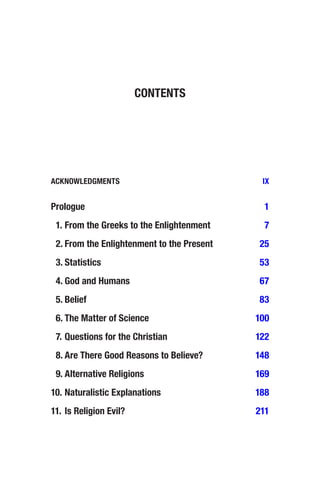
![From the Greeks to the Enlightenment 15
vex him, like certain sights and sounds, and so in a sense he
is liable to being worsened by them. He will be put in some-
thing less than a divine mood. And that seems incompatible
with an unchanging God. Even more problematic are certain
virtues. Take continence. This is the ability to show restraint.
But not any kind of restraint. “For a man, they say, is continent
not when he abstains from an old woman with one foot in the
grave, but when he has the power of enjoying Lais or Phyrne
[two notorious Greek courtesans famed for their beauty] or
some such charmer and then abstains” (153). So even if God
is continent, it means that he has to struggle and is open to
change for the worse. “And if there are some things which are
hard for God to abstain from and hard to endure, then there
are some things which are able to change him for the worse
and to cause him vexation” (157). Courage, too, implies that
God has to be scared of something and that he overcomes his
emotions.
Sextus was not an atheist. But he was certainly planting
seeds that would germinate and fruit, if long after his time.
Is Medieval Europe Important to Our Story?
Well, it is and it isn’t (Weltecke 2013)! In some respects, it is
perhaps the most relevant of all, for it was then that great
philosophers—notably St. Anselm (1033–1109) and St. Thomas
Aquinas (1225–1274)—were developing and elaborating their
arguments for the existence of God. These are obviously going
to be the subjects of much discussion, for and against, before
we have finished. In other respects, it isn’t really that relevant,
at least when it comes to the case for atheism. Right through
the time, there were surely people who were basically indiffer-
ent to religion, willing indeed to break with its moral dictates.
That is true of any age. There were also people, sometimes
groups, who were willing and perhaps determined to coun-
ter fundamental aspects of belief—Christian, Jewish, and,
of course, of growing importance, Muslim. You find people](https://image.slidesharecdn.com/16676113-250601152908-626306aa/85/Atheism-What-Everyone-Needs-To-Know-Michael-Ruse-30-320.jpg)
![From the Greeks to the Enlightenment 19
occasions by virtue of the general and primitive contrivance of
the whole engine” (Boyle 1996, 12–13).
Did the Scientific Revolution Spell the Death of God?
Most assuredly, it did not. Copernicus was a cleric. (He was
not ordained but technically was a kind of clerk working for
the Catholic hierarchy. This supported what was a very pro-
fessional pursuit of astronomy.) Subsequent major figures
in the revolution were all committed to Christianity in one
way or another. Descartes upset many authorities with his
philosophizing—he was quickly put on the Index—but
he died as he lived, a sincere Christian. In the Discourse on
Method, he wrote that we should think of our body “as a
machine created by the hand of God, and in consequence
incomparably better designed and with more admirable
movements than any machine that can be invented by man”
(Descartes 1964, 41). Newton privately doubted the divinity
of Christ but famously (or notoriously) spent as much time
studying the Bible as studying nature. Boyle was explicit that
the machine metaphor said nothing against God: “And those
things which the school philosophers [followers of Aristotle]
ascribe to the agency of nature interposing according to emer-
gencies, I ascribe to the wisdom of God in the first fabric of the
universe” (Boyle 1996, 12).
Of course, there is the Galileo episode, without which no
account of the Scientific Revolution—no account of the rela-
tionship of science to religion in the Scientific Revolution—
would be complete (McMullin 2005). That Galileo ran into
problems with the church because he endorsed Copernicus’s
heliocentric (sun-centered) worldview does show that there
were significant tensions. But the clash was never quite what
later antireligious zealots made it out to be. It occurred a hun-
dred years after Copernicus, during the Counter-Reformation,
when the Catholics were firmly shutting the stable door after
the fleeing of the Protestants. It should never have happened,](https://image.slidesharecdn.com/16676113-250601152908-626306aa/85/Atheism-What-Everyone-Needs-To-Know-Michael-Ruse-34-320.jpg)
![32 Atheism: What Everyone Needs to Know
or bad, left to the working out of what we may call chance”
(Darwin 1985–, 8: 224, letter to Asa Gray, May 22, 1860). When
Darwin did move to nonbelief, confirming the pattern just
noted, it was because he hated the theological idea of eternal
damnation for nonbelievers (who included both his father and
his brother) rather than the science.
Starting in antiquity, we have already met the idea of what
came to be known as agnosticism, but it was Thomas Henry
Huxley (1825–1895), Darwin’s great supporter and the grandfa-
ther of the novelist Aldous Huxley (1894–1963), who invented
the term to cover the position of people like him, not believers
but at the same time not outright atheists—folk who simply
didn’t know and were not ashamed to admit this. Huxley tells
how he ran through the gamut of possible beliefs—theism,
atheism, pantheism (the belief that God and the physical world
are one and the same, often ascribed to the Dutch philosopher
Baruch Spinoza [1632–1677], who spoke of deus sive natura, God
or nature)—and decided that none of these categories really
applied to his own thinking. He just didn’t know. This wasn’t
indifference—anything but. He felt he didn’t have the tools or
the facts to give an answer. “So I took thought, and invented
what I conceived to be the appropriate title of “agnostic.” It
came into my head as suggestively antithetic to the “gnostic”
of Church history, who professed to know so much about the
very things of which I was ignorant; and I took the earliest
opportunity of parading it at our Society [a debating club to
which he belonged], to show that I, too, had a tail, like the
other foxes” (Huxley 1894, 239).
Was Agnosticism a Cop-out?
I used the word respectable, and this was intentional. For
someone like Huxley, as always, being an agnostic was not
simply a matter of epistemology. It was a moral issue. He did
not become an agnostic through ignorance or indifference
or a desire to stir things up. He became an agnostic because](https://image.slidesharecdn.com/16676113-250601152908-626306aa/85/Atheism-What-Everyone-Needs-To-Know-Michael-Ruse-47-320.jpg)
![34 Atheism: What Everyone Needs to Know
and America, the key work was Thomas Paine’s Age of Reason,
the first part of which was published in 1794. Paradoxically, it
was written while Paine (1737–1809) was imprisoned in France,
and it was an attempt to prevent the French from sinking into a
slough of despair and atheism! Paine himself was openly and
flatly a deist. “I believe in one God, and no more; and I hope
for happiness beyond this life” (Paine 1907, 21). What made his
work controversial, however, was the extent to which he paral-
leled the more sophisticated higher criticism in taking apart
the tales of the Bible and showing them to be myths, fabrica-
tions, stories to make a point regardless of the facts. Moreover,
so much of the material is about as morally degenerate as it is
possible for stories to be. “Whenever we read the obscene sto-
ries, the voluptuous debaucheries, the cruel and torturous exe-
cutions, the unrelenting vindictiveness, with which more than
half the Bible [OT] is filled, it would be more consistent that
we called it the word of a demon, than the Word of God. It is a
history of wickedness, that has served to corrupt and brutalize
mankind; and, for my own part, I sincerely detest it, as I detest
everything that is cruel” (34). Yet as always we see that Paine
was not arguing as he did just for fun or to make philosophi-
cal points. His was a moral crusade, to turn people from mis-
taken and degenerate ways to the paths to true understanding
and happiness. “I believe in the equality of man; and I believe
that religious duties consist in doing justice, loving mercy, and
endeavouring to make our fellow-creatures happy” (21–22).
Paine had little effect in France, but his influence in Britain
and in the early years of the American republic was immense,
not the least because his Quaker roots had instilled in him the
virtues of plain speaking, and this was evident in his writ-
ings through and through, thereby making them that much
more dangerous because they appealed to so general an audi-
ence. From now on, nonbelief in traditional Christianity was
part of the public discourse, even though in Britain there
were savage prosecutions for the publication of Paine’s work,
and in America the religious growth at the beginning of the](https://image.slidesharecdn.com/16676113-250601152908-626306aa/85/Atheism-What-Everyone-Needs-To-Know-Michael-Ruse-49-320.jpg)