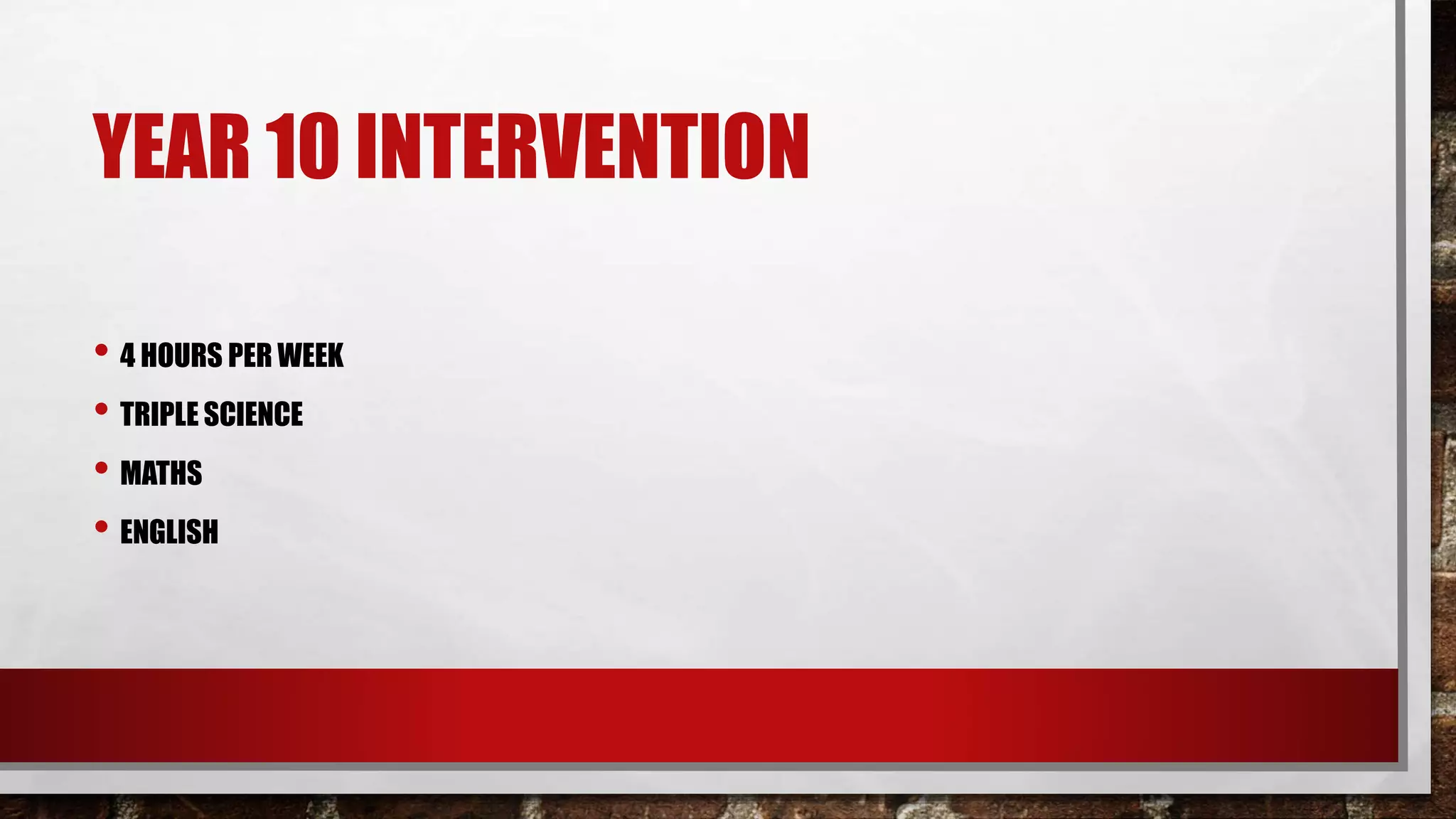
YEAR 10 INTERVENTION
• 4 HOURS PER WEEK
• TRIPLE SCIENCE
• MATHS
• ENGLISH
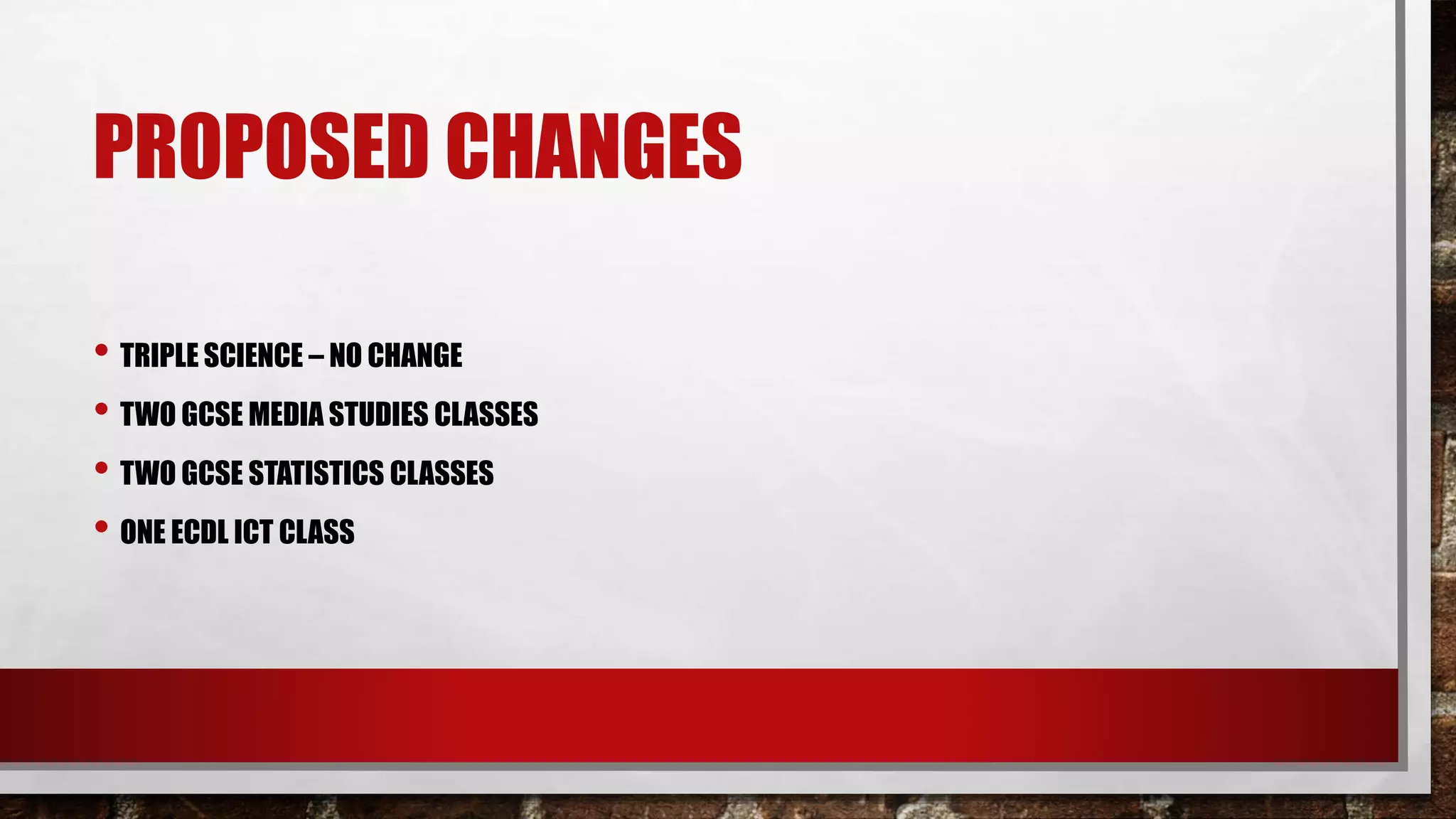
PROPOSED CHANGES
• TRIPLE SCIENCE – NO CHANGE
• TWO GCSE MEDIA STUDIES CLASSES
• TWO GCSE STATISTICS CLASSES
• ONE ECDL ICT CLASS
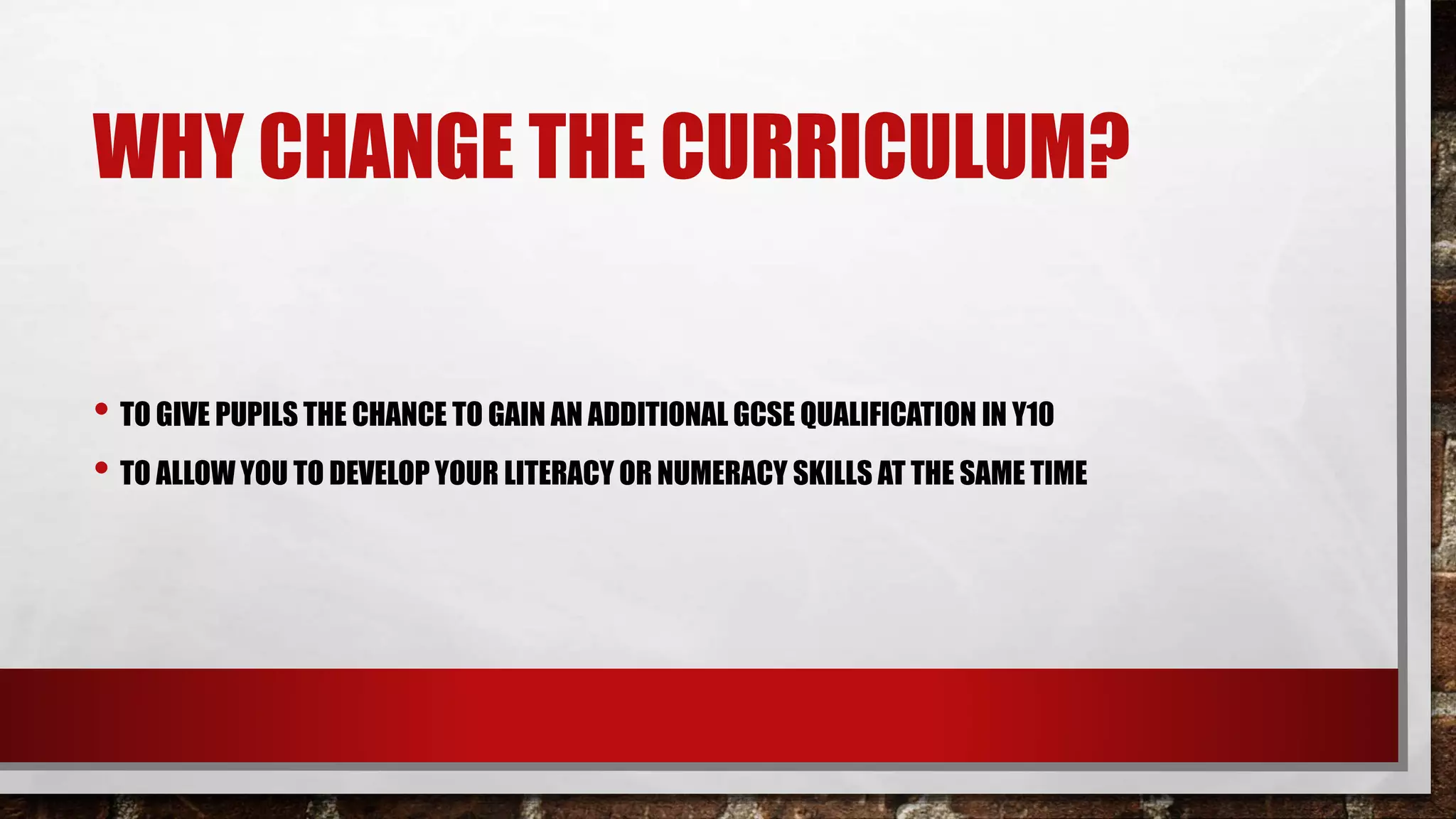
WHY CHANGE THE CURRICULUM?
• TO GIVE PUPILS THE CHANCE TO GAIN AN ADDITIONAL GCSE QUALIFICATION IN Y10
• TO ALLOW YOU TO DEVELOP YOUR LITERACY OR NUMERACY SKILLS AT THE SAME TIME
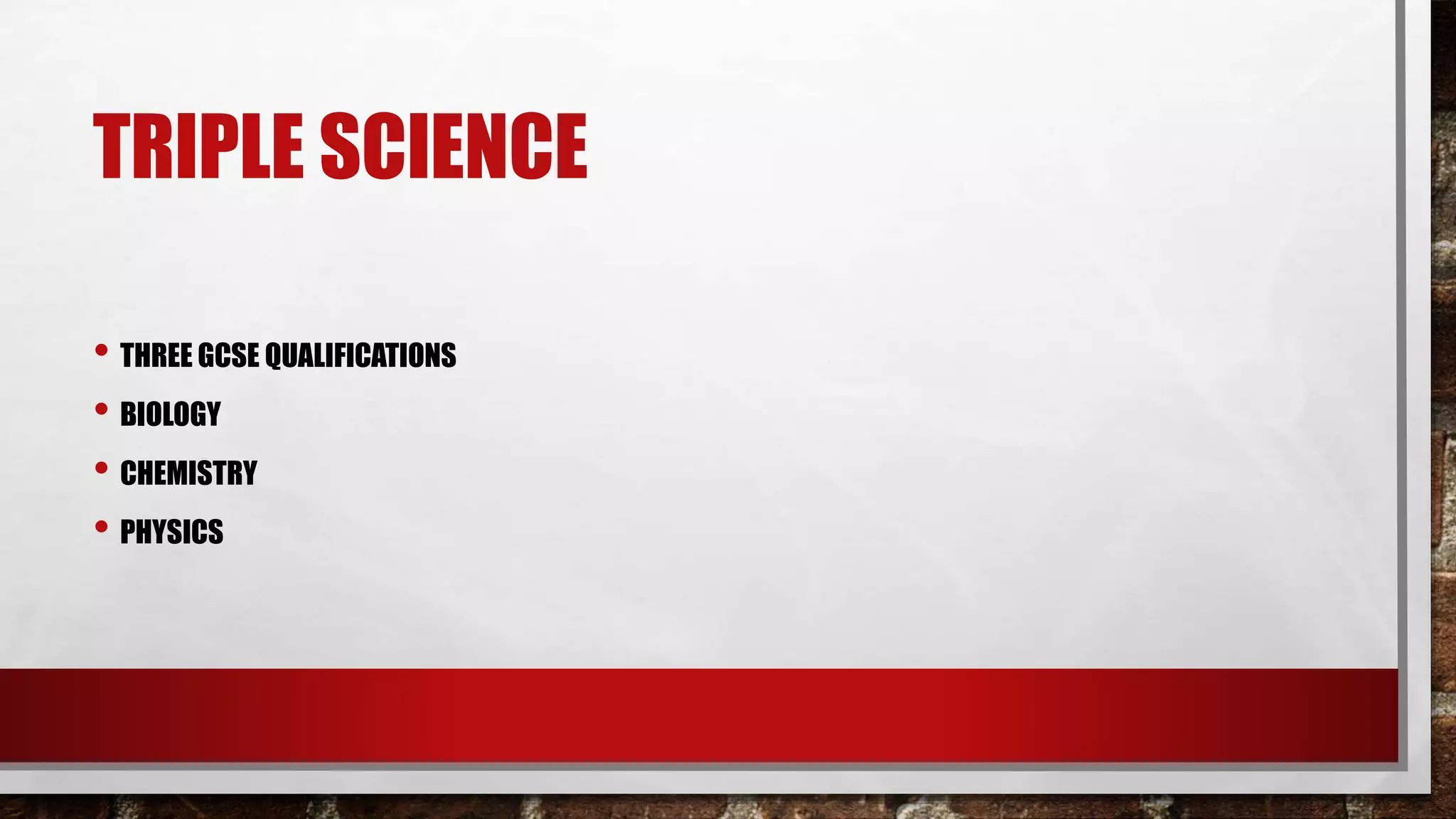
TRIPLE SCIENCE
• THREE GCSE QUALIFICATIONS
• BIOLOGY
• CHEMISTRY
• PHYSICS
GCSE MEDIA STUDIES
• WJEC EXAM BOARD
• 60% COURSEWORK
• 40% EXAM – 2.5 HOURS (FOUNDATION & HIGHER TIER)
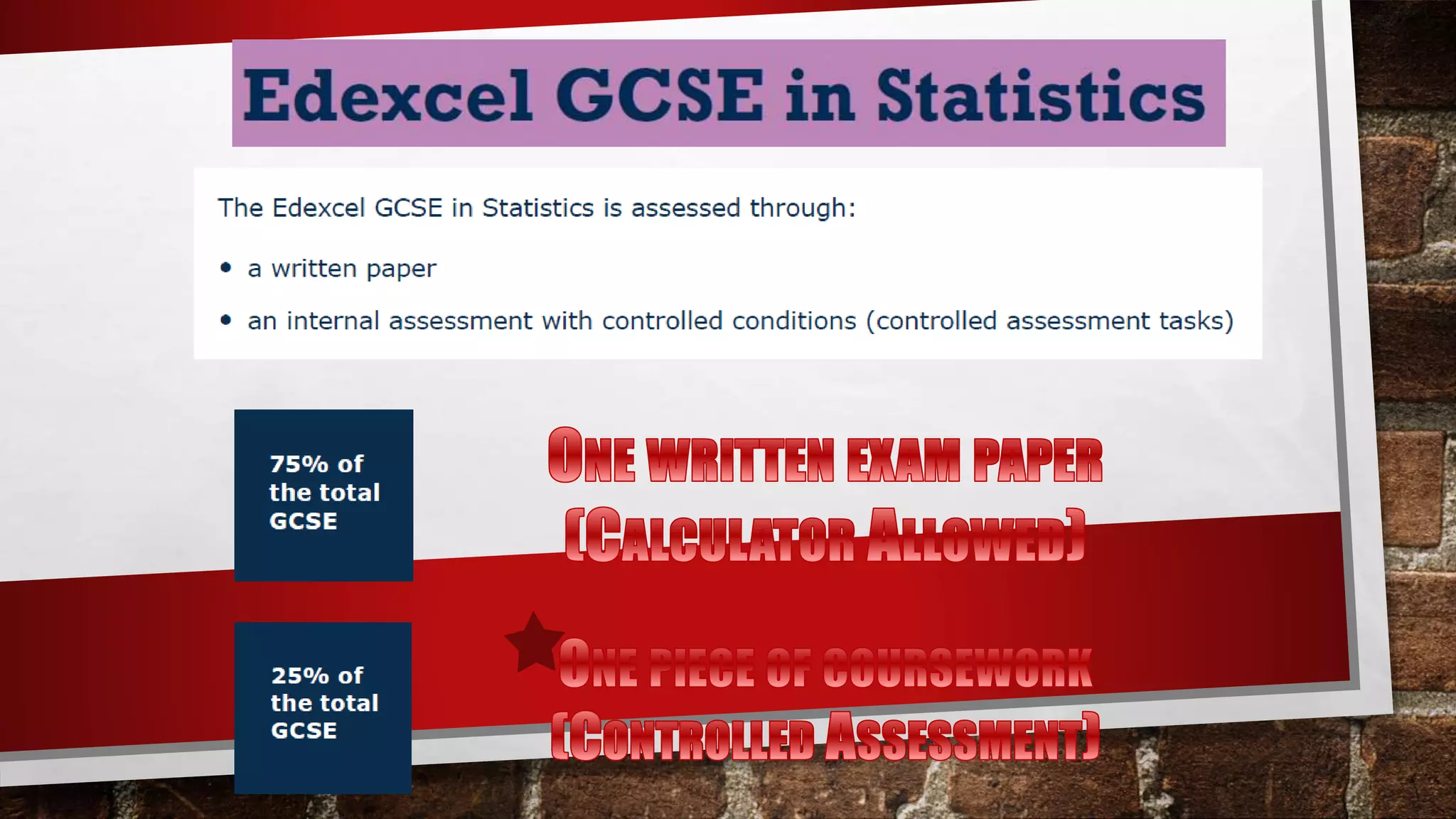
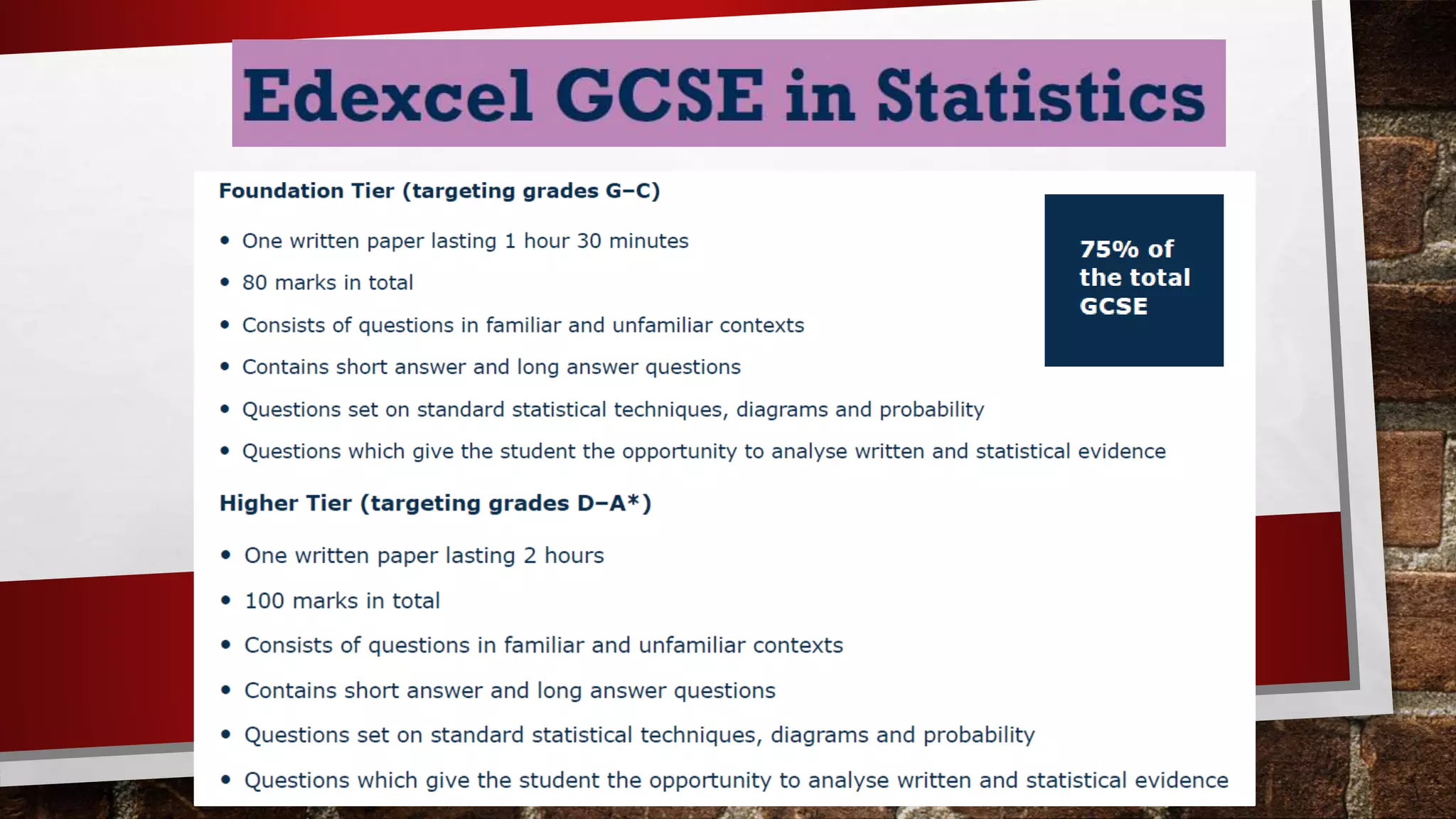
GCSE STATISTICS
• 25% COURSEWORK
• 75% EXAM – 1.5 OR 2 HOURS (FOUNDATION OR HIGHER TIER)
ECDL - ICT
• WORD
• POWERPOINT
• EXCEL SPREADSHEETS
• FOUR ONLINE TESTS
• WORTH A GCSE GRADE C+
• How do you make sense of them all?
• How do you know what they are trying to
communicate — both on an obvious and a less
obvious level?
• How do you know how much you have been
influenced — consciously or subconsciously — by
these media messages?
• Does the media reflect your reality, or control the
way you view it?
We live in a media-saturated world. From video clips on your phone, to TV ads
to blockbuster movies, to posters at the bus stop, to the music in your earbuds,
you are surrounded by media messages for most of your waking hours.
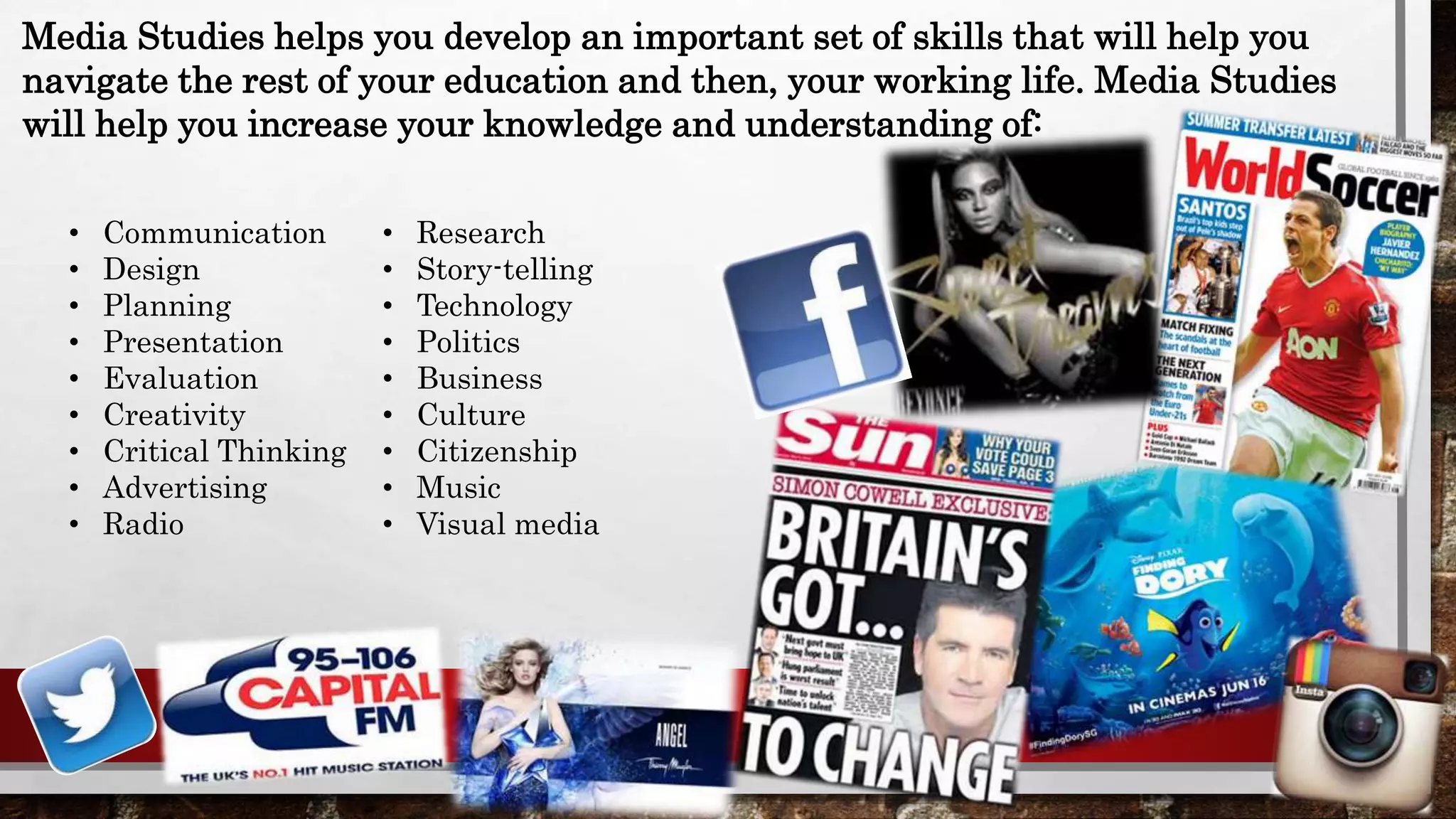
Media Studies helps you develop an important set of skills that will help you
navigate the rest of your education and then, your working life. Media Studies
will help you increase your knowledge and understanding of:
• Communication
• Design
• Planning
• Presentation
• Evaluation
• Creativity
• Critical Thinking
• Advertising
• Radio
• Research
• Story-telling
• Technology
• Politics
• Business
• Culture
• Citizenship
• Music
• Visual media
GCSE Media Studies helps to
develop your independent
learner skills; this means less
time listening to us, stood at
the front of the classroom and
more of you exploring
questions, which you have set
for yourself and interest YOU,
with US guiding you in that
process.
Any questions?
Ask after this
Assembly pp y10
Assembly pp y10
Assembly pp y10
Assembly pp y10
Assembly pp y10
Assembly pp y10
Assembly pp y10

Assembly pp y10

  • 1.
    YEAR 10 INTERVENTION •4 HOURS PER WEEK • TRIPLE SCIENCE • MATHS • ENGLISH
  • 2.
    PROPOSED CHANGES • TRIPLESCIENCE – NO CHANGE • TWO GCSE MEDIA STUDIES CLASSES • TWO GCSE STATISTICS CLASSES • ONE ECDL ICT CLASS
  • 3.
    WHY CHANGE THECURRICULUM? • TO GIVE PUPILS THE CHANCE TO GAIN AN ADDITIONAL GCSE QUALIFICATION IN Y10 • TO ALLOW YOU TO DEVELOP YOUR LITERACY OR NUMERACY SKILLS AT THE SAME TIME
  • 4.
    TRIPLE SCIENCE • THREEGCSE QUALIFICATIONS • BIOLOGY • CHEMISTRY • PHYSICS
  • 5.
    GCSE MEDIA STUDIES •WJEC EXAM BOARD • 60% COURSEWORK • 40% EXAM – 2.5 HOURS (FOUNDATION & HIGHER TIER)
  • 6.
    GCSE STATISTICS • 25%COURSEWORK • 75% EXAM – 1.5 OR 2 HOURS (FOUNDATION OR HIGHER TIER)
  • 7.
    ECDL - ICT •WORD • POWERPOINT • EXCEL SPREADSHEETS • FOUR ONLINE TESTS • WORTH A GCSE GRADE C+
  • 9.
    • How doyou make sense of them all? • How do you know what they are trying to communicate — both on an obvious and a less obvious level? • How do you know how much you have been influenced — consciously or subconsciously — by these media messages? • Does the media reflect your reality, or control the way you view it? We live in a media-saturated world. From video clips on your phone, to TV ads to blockbuster movies, to posters at the bus stop, to the music in your earbuds, you are surrounded by media messages for most of your waking hours.
  • 10.
    Media Studies helpsyou develop an important set of skills that will help you navigate the rest of your education and then, your working life. Media Studies will help you increase your knowledge and understanding of: • Communication • Design • Planning • Presentation • Evaluation • Creativity • Critical Thinking • Advertising • Radio • Research • Story-telling • Technology • Politics • Business • Culture • Citizenship • Music • Visual media
  • 11.
    GCSE Media Studieshelps to develop your independent learner skills; this means less time listening to us, stood at the front of the classroom and more of you exploring questions, which you have set for yourself and interest YOU, with US guiding you in that process.
  • 13.