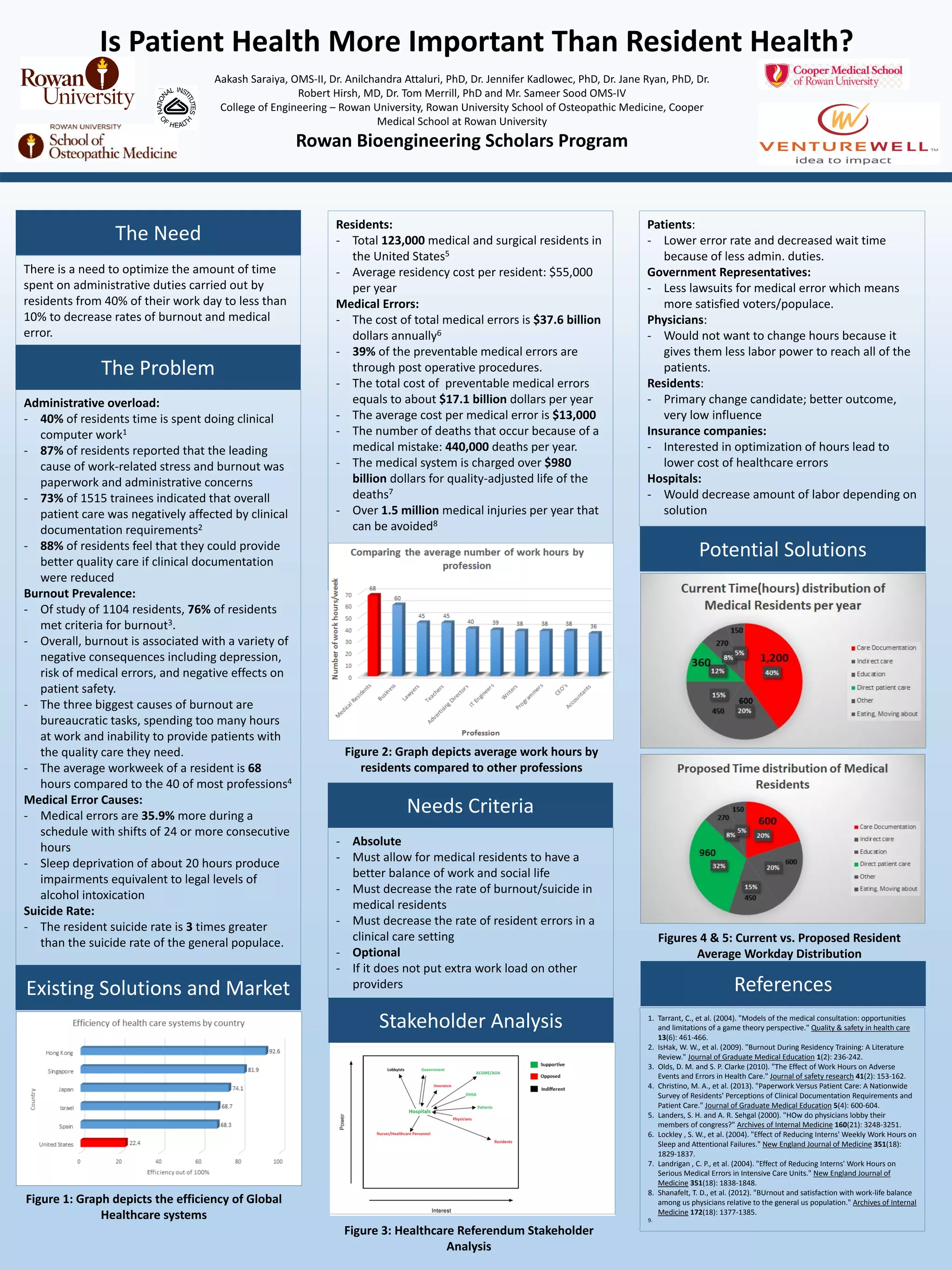
Is Patient Health More Important Than Resident Health?
Aakash Saraiya, OMS-II, Dr. Anilchandra Attaluri, PhD, Dr. Jennifer Kadlowec, PhD, Dr. Jane Ryan, PhD, Dr.
Robert Hirsh, MD, Dr. Tom Merrill, PhD and Mr. Sameer Sood OMS-IV
College of Engineering – Rowan University, Rowan University School of Osteopathic Medicine, Cooper
Medical School at Rowan University
Rowan Bioengineering Scholars Program
The Need
There is a need to optimize the amount of time
spent on administrative duties carried out by
residents from 40% of their work day to less than
10% to decrease rates of burnout and medical
error.
The Problem
Existing Solutions and Market
Administrative overload:
- 40% of residents time is spent doing clinical
computer work1
- 87% of residents reported that the leading
cause of work-related stress and burnout was
paperwork and administrative concerns
- 73% of 1515 trainees indicated that overall
patient care was negatively affected by clinical
documentation requirements2
- 88% of residents feel that they could provide
better quality care if clinical documentation
were reduced
Burnout Prevalence:
- Of study of 1104 residents, 76% of residents
met criteria for burnout3.
- Overall, burnout is associated with a variety of
negative consequences including depression,
risk of medical errors, and negative effects on
patient safety.
- The three biggest causes of burnout are
bureaucratic tasks, spending too many hours
at work and inability to provide patients with
the quality care they need.
- The average workweek of a resident is 68
hours compared to the 40 of most professions4
Medical Error Causes:
- Medical errors are 35.9% more during a
schedule with shifts of 24 or more consecutive
hours
- Sleep deprivation of about 20 hours produce
impairments equivalent to legal levels of
alcohol intoxication
Suicide Rate:
- The resident suicide rate is 3 times greater
than the suicide rate of the general populace.
Needs Criteria
References
Residents:
- Total 123,000 medical and surgical residents in
the United States5
- Average residency cost per resident: $55,000
per year
Medical Errors:
- The cost of total medical errors is $37.6 billion
dollars annually6
- 39% of the preventable medical errors are
through post operative procedures.
- The total cost of preventable medical errors
equals to about $17.1 billion dollars per year
- The average cost per medical error is $13,000
- The number of deaths that occur because of a
medical mistake: 440,000 deaths per year.
- The medical system is charged over $980
billion dollars for quality-adjusted life of the
deaths7
- Over 1.5 million medical injuries per year that
can be avoided8
- Absolute
- Must allow for medical residents to have a
better balance of work and social life
- Must decrease the rate of burnout/suicide in
medical residents
- Must decrease the rate of resident errors in a
clinical care setting
- Optional
- If it does not put extra work load on other
providers
Figure 3: Healthcare Referendum Stakeholder
Analysis
Stakeholder Analysis
Figure 1: Graph depicts the efficiency of Global
Healthcare systems
Potential Solutions
Figures 4 & 5: Current vs. Proposed Resident
Average Workday Distribution
1. Tarrant, C., et al. (2004). "Models of the medical consultation: opportunities
and limitations of a game theory perspective." Quality & safety in health care
13(6): 461-466.
2. IsHak, W. W., et al. (2009). "Burnout During Residency Training: A Literature
Review." Journal of Graduate Medical Education 1(2): 236-242.
3. Olds, D. M. and S. P. Clarke (2010). "The Effect of Work Hours on Adverse
Events and Errors in Health Care." Journal of safety research 41(2): 153-162.
4. Christino, M. A., et al. (2013). "Paperwork Versus Patient Care: A Nationwide
Survey of Residents' Perceptions of Clinical Documentation Requirements and
Patient Care." Journal of Graduate Medical Education 5(4): 600-604.
5. Landers, S. H. and A. R. Sehgal (2000). "HOw do physicians lobby their
members of congress?" Archives of Internal Medicine 160(21): 3248-3251.
6. Lockley , S. W., et al. (2004). "Effect of Reducing Interns' Weekly Work Hours on
Sleep and Attentional Failures." New England Journal of Medicine 351(18):
1829-1837.
7. Landrigan , C. P., et al. (2004). "Effect of Reducing Interns' Work Hours on
Serious Medical Errors in Intensive Care Units." New England Journal of
Medicine 351(18): 1838-1848.
8. Shanafelt, T. D., et al. (2012). "BUrnout and satisfaction with work-life balance
among us physicians relative to the general us population." Archives of Internal
Medicine 172(18): 1377-1385.
9.
Figure 2: Graph depicts average work hours by
residents compared to other professions
Patients:
- Lower error rate and decreased wait time
because of less admin. duties.
Government Representatives:
- Less lawsuits for medical error which means
more satisfied voters/populace.
Physicians:
- Would not want to change hours because it
gives them less labor power to reach all of the
patients.
Residents:
- Primary change candidate; better outcome,
very low influence
Insurance companies:
- Interested in optimization of hours lead to
lower cost of healthcare errors
Hospitals:
- Would decrease amount of labor depending on
solution

AS_Poster_WorkHours

  • 1.
    Is Patient HealthMore Important Than Resident Health? Aakash Saraiya, OMS-II, Dr. Anilchandra Attaluri, PhD, Dr. Jennifer Kadlowec, PhD, Dr. Jane Ryan, PhD, Dr. Robert Hirsh, MD, Dr. Tom Merrill, PhD and Mr. Sameer Sood OMS-IV College of Engineering – Rowan University, Rowan University School of Osteopathic Medicine, Cooper Medical School at Rowan University Rowan Bioengineering Scholars Program The Need There is a need to optimize the amount of time spent on administrative duties carried out by residents from 40% of their work day to less than 10% to decrease rates of burnout and medical error. The Problem Existing Solutions and Market Administrative overload: - 40% of residents time is spent doing clinical computer work1 - 87% of residents reported that the leading cause of work-related stress and burnout was paperwork and administrative concerns - 73% of 1515 trainees indicated that overall patient care was negatively affected by clinical documentation requirements2 - 88% of residents feel that they could provide better quality care if clinical documentation were reduced Burnout Prevalence: - Of study of 1104 residents, 76% of residents met criteria for burnout3. - Overall, burnout is associated with a variety of negative consequences including depression, risk of medical errors, and negative effects on patient safety. - The three biggest causes of burnout are bureaucratic tasks, spending too many hours at work and inability to provide patients with the quality care they need. - The average workweek of a resident is 68 hours compared to the 40 of most professions4 Medical Error Causes: - Medical errors are 35.9% more during a schedule with shifts of 24 or more consecutive hours - Sleep deprivation of about 20 hours produce impairments equivalent to legal levels of alcohol intoxication Suicide Rate: - The resident suicide rate is 3 times greater than the suicide rate of the general populace. Needs Criteria References Residents: - Total 123,000 medical and surgical residents in the United States5 - Average residency cost per resident: $55,000 per year Medical Errors: - The cost of total medical errors is $37.6 billion dollars annually6 - 39% of the preventable medical errors are through post operative procedures. - The total cost of preventable medical errors equals to about $17.1 billion dollars per year - The average cost per medical error is $13,000 - The number of deaths that occur because of a medical mistake: 440,000 deaths per year. - The medical system is charged over $980 billion dollars for quality-adjusted life of the deaths7 - Over 1.5 million medical injuries per year that can be avoided8 - Absolute - Must allow for medical residents to have a better balance of work and social life - Must decrease the rate of burnout/suicide in medical residents - Must decrease the rate of resident errors in a clinical care setting - Optional - If it does not put extra work load on other providers Figure 3: Healthcare Referendum Stakeholder Analysis Stakeholder Analysis Figure 1: Graph depicts the efficiency of Global Healthcare systems Potential Solutions Figures 4 & 5: Current vs. Proposed Resident Average Workday Distribution 1. Tarrant, C., et al. (2004). "Models of the medical consultation: opportunities and limitations of a game theory perspective." Quality & safety in health care 13(6): 461-466. 2. IsHak, W. W., et al. (2009). "Burnout During Residency Training: A Literature Review." Journal of Graduate Medical Education 1(2): 236-242. 3. Olds, D. M. and S. P. Clarke (2010). "The Effect of Work Hours on Adverse Events and Errors in Health Care." Journal of safety research 41(2): 153-162. 4. Christino, M. A., et al. (2013). "Paperwork Versus Patient Care: A Nationwide Survey of Residents' Perceptions of Clinical Documentation Requirements and Patient Care." Journal of Graduate Medical Education 5(4): 600-604. 5. Landers, S. H. and A. R. Sehgal (2000). "HOw do physicians lobby their members of congress?" Archives of Internal Medicine 160(21): 3248-3251. 6. Lockley , S. W., et al. (2004). "Effect of Reducing Interns' Weekly Work Hours on Sleep and Attentional Failures." New England Journal of Medicine 351(18): 1829-1837. 7. Landrigan , C. P., et al. (2004). "Effect of Reducing Interns' Work Hours on Serious Medical Errors in Intensive Care Units." New England Journal of Medicine 351(18): 1838-1848. 8. Shanafelt, T. D., et al. (2012). "BUrnout and satisfaction with work-life balance among us physicians relative to the general us population." Archives of Internal Medicine 172(18): 1377-1385. 9. Figure 2: Graph depicts average work hours by residents compared to other professions Patients: - Lower error rate and decreased wait time because of less admin. duties. Government Representatives: - Less lawsuits for medical error which means more satisfied voters/populace. Physicians: - Would not want to change hours because it gives them less labor power to reach all of the patients. Residents: - Primary change candidate; better outcome, very low influence Insurance companies: - Interested in optimization of hours lead to lower cost of healthcare errors Hospitals: - Would decrease amount of labor depending on solution