Optimal Management
of Anticoagulation Therapy
An Educational Slide Set
American Society of Hematology 2018 Guidelines
for Management of Venous Thromboembolism
Slide set authors:
Eric Tseng MD MScCH, University of Toronto
Daniel Witt PharmD, University of Utah
Clinical Guidelines
American Society of Hematology 2018 guidelines for
management of venous thromboembolism: optimal
management of anticoagulation therapy
Daniel M. Witt, Robby Nieuwlaat, Nathan P. Clark, Jack Ansell, Anne
Holbrook, Jane Skov, Nadine Shehab, Juliet Mock, Tarra Myers,
Francesco Dentali, Mark A. Crowther, Arnav Agarwal, Meha Bhatt,
Rasha Khatib, John J. Riva, Yuan Zhang, and Gordon Guyatt
ASH Clinical Practice Guidelines on VTE
1. Prevention of VTE in Surgical Hospitalized Patients
2. Prevention of VTE in Medical Hospitalized Patients
3. Treatment of Acute VTE (DVT and PE)
4. Optimal Management of Anticoagulation Therapy
5. Prevention and Treatment of VTE in Patients with Cancer
6. Heparin-Induced Thrombocytopenia (HIT)
7. Thrombophilia
8. Pediatric VTE
9. VTE in the Context of Pregnancy
10. Diagnosis of VTE
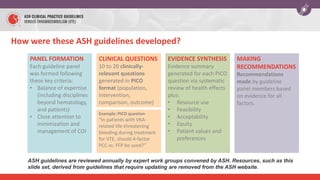
How were these ASH guidelines developed?
PANEL FORMATION
Each guideline panel
was formed following
these key criteria:
• Balance of expertise
(including disciplines
beyond hematology,
and patients)
• Close attention to
minimization and
management of COI
CLINICAL QUESTIONS
10 to 20 clinically-
relevant questions
generated in PICO
format (population,
intervention,
comparison, outcome)
EVIDENCE SYNTHESIS
Evidence summary
generated for each PICO
question via systematic
review of health effects
plus:
• Resource use
• Feasibility
• Acceptability
• Equity
• Patient values and
preferences
Example: PICO question
“In patients with VKA-
related life-threatening
bleeding during treatment
for VTE, should 4-factor
PCC vs. FFP be used?”
MAKING
RECOMMENDATIONS
Recommendations
made by guideline
panel members based
on evidence for all
factors.
ASH guidelines are reviewed annually by expert work groups convened by ASH. Resources, such as this
slide set, derived from guidelines that require updating are removed from the ASH website.
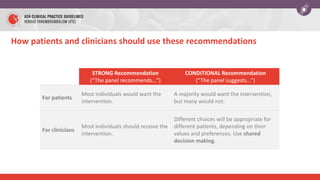
How patients and clinicians should use these recommendations
STRONG Recommendation
(“The panel recommends…”)
CONDITIONAL Recommendation
(“The panel suggests…”)
For patients
Most individuals would want the
intervention.
A majority would want the intervention,
but many would not.
For clinicians
Most individuals should receive the
intervention.
Different choices will be appropriate for
different patients, depending on their
values and preferences. Use shared
decision making.
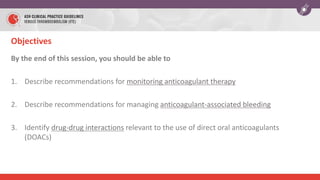
Objectives
By the end of this session, you should be able to
1. Describe recommendations for monitoring anticoagulant therapy
2. Describe recommendations for managing anticoagulant-associated bleeding
3. Identify drug-drug interactions relevant to the use of direct oral anticoagulants
(DOACs)
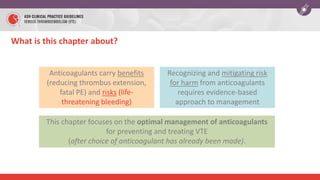
Anticoagulants carry benefits
(reducing thrombus extension,
fatal PE) and risks (life-
threatening bleeding)
This chapter focuses on the optimal management of anticoagulants
for preventing and treating VTE
(after choice of anticoagulant has already been made).
Recognizing and mitigating risk
for harm from anticoagulants
requires evidence-based
approach to management
What is this chapter about?
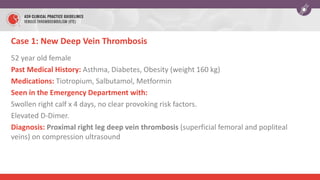
Case 1: New Deep Vein Thrombosis
52 year old female
Past Medical History: Asthma, Diabetes, Obesity (weight 160 kg)
Medications: Tiotropium, Salbutamol, Metformin
Seen in the Emergency Department with:
Swollen right calf x 4 days, no clear provoking risk factors.
Elevated D-Dimer.
Diagnosis: Proximal right leg deep vein thrombosis (superficial femoral and popliteal
veins) on compression ultrasound
You decide to treat this patient with low molecular weight heparin (LMWH), bridging to a
Vitamin K antagonist (VKA).
Considering her high body mass (160 kg), how would you select her initial dose of LMWH?
A. Dose should be capped at the highest available syringe size
B. Dose should be based on actual body weight
C. Dose should be based on calculated “ideal body weight” (based on age, gender, and height)
D. Dose should be adjusted by peak anti-factor Xa levels
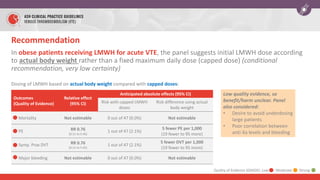
Recommendation
In obese patients receiving LMWH for acute VTE, the panel suggests initial LMWH dose according
to actual body weight rather than a fixed maximum daily dose (capped dose) (conditional
recommendation, very low certainty)
Outcomes
(Quality of Evidence)
Relative effect
(95% CI)
Anticipated absolute effects (95% CI)
Risk with capped LMWH
doses
Risk difference using actual
body weight
Mortality Not estimable 0 out of 47 (0.0%) Not estimable
PE RR 0.76
(0.11 to 5.45)
1 out of 47 (2.1%)
5 fewer PE per 1,000
(19 fewer to 95 more)
Symp. Prox DVT RR 0.76
(0.11 to 5.45)
1 out of 47 (2.1%)
5 fewer DVT per 1,000
(19 fewer to 95 more)
Major bleeding Not estimable 0 out of 47 (0.0%) Not estimable
Dosing of LMWH based on actual body weight compared with capped doses:
Low quality evidence, so
benefit/harm unclear. Panel
also considered:
• Desire to avoid underdosing
large patients
• Poor correlation between
anti-Xa levels and bleeding
Quality of Evidence (GRADE): Low Moderate Strong
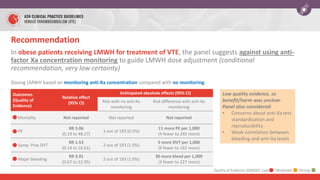
Recommendation
In obese patients receiving LMWH for treatment of VTE, the panel suggests against using anti-
factor Xa concentration monitoring to guide LMWH dose adjustment (conditional
recommendation, very low certainty)
Outcomes
(Quality of
Evidence)
Relative effect
(95% CI)
Anticipated absolute effects (95% CI)
Risk with no anti-Xa
monitoring
Risk difference with anti-Xa
monitoring
Mortality Not reported Not reported Not reported
PE
RR 3.06
(0.19 to 48.27)
1 out of 193 (0.5%)
11 more PE per 1,000
(4 fewer to 245 more)
Symp. Prox DVT
RR 1.53
(0.14 to 16.61)
2 out of 193 (1.0%)
5 more DVT per 1,000
(9 fewer to 162 more)
Major bleeding
RR 3.91
(0.67 to 22.95)
2 out of 193 (1.0%)
30 more bleed per 1,000
(3 fewer to 227 more)
Dosing LMWH based on monitoring anti-Xa concentration compared with no monitoring:
Low quality evidence, so
benefit/harm was unclear.
Panel also considered:
• Concerns about anti-Xa test
standardization and
reproducibility
• Weak correlation between
bleeding and anti-Xa levels
Quality of Evidence (GRADE): Low Moderate Strong
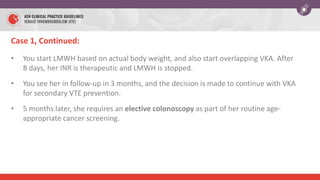
Case 1, Continued:
• You start LMWH based on actual body weight, and also start overlapping VKA. After
8 days, her INR is therapeutic and LMWH is stopped.
• You see her in follow-up in 3 months, and the decision is made to continue with VKA
for secondary VTE prevention.
• 5 months later, she requires an elective colonoscopy as part of her routine age-
appropriate cancer screening.
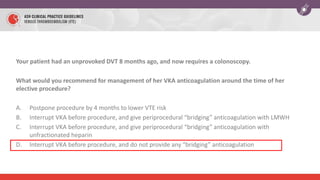
Your patient had an unprovoked DVT 8 months ago, and now requires a colonoscopy.
What would you recommend for management of her VKA anticoagulation around the time of her
elective procedure?
A. Postpone procedure by 4 months to lower VTE risk
B. Interrupt VKA before procedure, and give periprocedural “bridging” anticoagulation with LMWH
C. Interrupt VKA before procedure, and give periprocedural “bridging” anticoagulation with
unfractionated heparin
D. Interrupt VKA before procedure, and do not provide any “bridging” anticoagulation
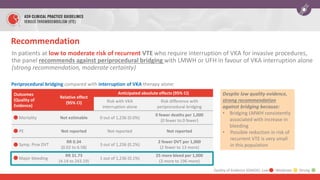
In patients at low to moderate risk of recurrent VTE who require interruption of VKA for invasive procedures,
the panel recommends against periprocedural bridging with LMWH or UFH in favour of VKA interruption alone
(strong recommendation, moderate certainty)
Outcomes
(Quality of
Evidence)
Relative effect
(95% CI)
Anticipated absolute effects (95% CI)
Risk with VKA
interruption alone
Risk difference with
periprocedural bridging
Mortality Not estimable 0 out of 1,236 (0.0%)
0 fewer deaths per 1,000
(0 fewer to 0 fewer)
PE Not reported Not reported Not reported
Symp. Prox DVT
RR 0.34
(0.02 to 6.58)
3 out of 1,236 (0.2%)
2 fewer DVT per 1,000
(2 fewer to 13 more)
Major bleeding
RR 31.73
(4.14 to 243.19)
1 out of 1,236 (0.1%)
25 more bleed per 1,000
(3 more to 196 more)
Periprocedural bridging compared with interruption of VKA therapy alone:
Despite low quality evidence,
strong recommendation
against bridging because:
• Bridging LMWH consistently
associated with increase in
bleeding
• Possible reduction in risk of
recurrent VTE is very small
in this population
Quality of Evidence (GRADE): Low Moderate Strong
Recommendation
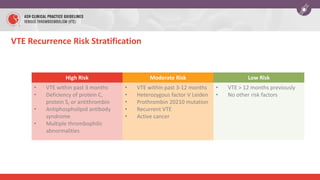
VTE Recurrence Risk Stratification
High Risk Moderate Risk Low Risk
• VTE within past 3 months
• Deficiency of protein C,
protein S, or antithrombin
• Antiphospholipid antibody
syndrome
• Multiple thrombophilic
abnormalities
• VTE within past 3-12 months
• Heterozygous factor V Leiden
• Prothrombin 20210 mutation
• Recurrent VTE
• Active cancer
• VTE > 12 months previously
• No other risk factors
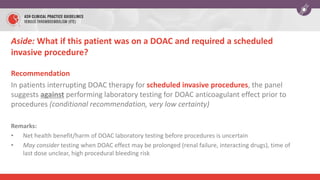
Aside: What if this patient was on a DOAC and required a scheduled
invasive procedure?
Recommendation
In patients interrupting DOAC therapy for scheduled invasive procedures, the panel
suggests against performing laboratory testing for DOAC anticoagulant effect prior to
procedures (conditional recommendation, very low certainty)
Remarks:
• Net health benefit/harm of DOAC laboratory testing before procedures is uncertain
• May consider testing when DOAC effect may be prolonged (renal failure, interacting drugs), time of
last dose unclear, high procedural bleeding risk
Back to Case 1:
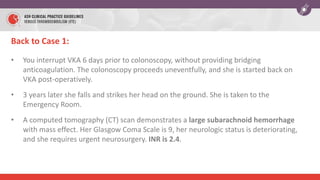
• You interrupt VKA 6 days prior to colonoscopy, without providing bridging
anticoagulation. The colonoscopy proceeds uneventfully, and she is started back on
VKA post-operatively.
• 3 years later she falls and strikes her head on the ground. She is taken to the
Emergency Room.
• A computed tomography (CT) scan demonstrates a large subarachnoid hemorrhage
with mass effect. Her Glasgow Coma Scale is 9, her neurologic status is deteriorating,
and she requires urgent neurosurgery. INR is 2.4.
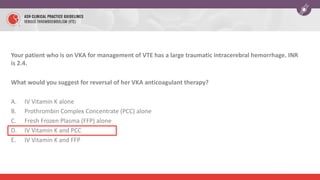
Your patient who is on VKA for management of VTE has a large traumatic intracerebral hemorrhage. INR
is 2.4.
What would you suggest for reversal of her VKA anticoagulant therapy?
A. IV Vitamin K alone
B. Prothrombin Complex Concentrate (PCC) alone
C. Fresh Frozen Plasma (FFP) alone
D. IV Vitamin K and PCC
E. IV Vitamin K and FFP
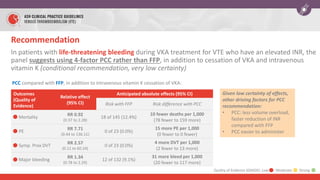
Recommendation
In patients with life-threatening bleeding during VKA treatment for VTE who have an elevated INR, the
panel suggests using 4-factor PCC rather than FFP, in addition to cessation of VKA and intravenous
vitamin K (conditional recommendation, very low certainty)
Outcomes
(Quality of
Evidence)
Relative effect
(95% CI)
Anticipated absolute effects (95% CI)
Risk with FFP Risk difference with PCC
Mortality
RR 0.92
(0.37 to 2.28)
18 of 145 (12.4%)
10 fewer deaths per 1,000
(78 fewer to 159 more)
PE
RR 7.71
(0.44 to 136.11)
0 of 23 (0.0%)
15 more PE per 1,000
(0 fewer to 0 fewer)
Symp. Prox DVT
RR 2.57
(0.11 to 60.24)
0 of 23 (0.0%)
4 more DVT per 1,000
(2 fewer to 13 more)
Major bleeding
RR 1.34
(0.78 to 2.29)
12 of 132 (9.1%)
31 more bleed per 1,000
(20 fewer to 117 more)
PCC compared with FFP, in addition to intravenous vitamin K cessation of VKA:
Given low certainty of effects,
other driving factors for PCC
recommendation:
• PCC: less volume overload,
faster reduction of INR
compared with FFP
• PCC easier to administer
Quality of Evidence (GRADE): Low Moderate Strong
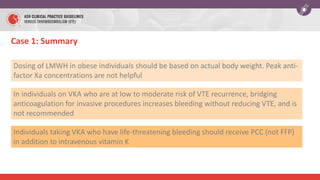
Case 1: Summary
Dosing of LMWH in obese individuals should be based on actual body weight. Peak anti-
factor Xa concentrations are not helpful
In individuals on VKA who are at low to moderate risk of VTE recurrence, bridging
anticoagulation for invasive procedures increases bleeding without reducing VTE, and is
not recommended
Individuals taking VKA who have life-threatening bleeding should receive PCC (not FFP)
in addition to intravenous vitamin K
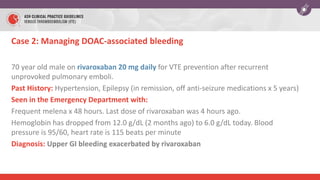
Case 2: Managing DOAC-associated bleeding
70 year old male on rivaroxaban 20 mg daily for VTE prevention after recurrent
unprovoked pulmonary emboli.
Past History: Hypertension, Epilepsy (in remission, off anti-seizure medications x 5 years)
Seen in the Emergency Department with:
Frequent melena x 48 hours. Last dose of rivaroxaban was 4 hours ago.
Hemoglobin has dropped from 12.0 g/dL (2 months ago) to 6.0 g/dL today. Blood
pressure is 95/60, heart rate is 115 beats per minute
Diagnosis: Upper GI bleeding exacerbated by rivaroxaban
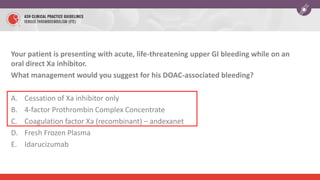
Your patient is presenting with acute, life-threatening upper GI bleeding while on an
oral direct Xa inhibitor.
What management would you suggest for his DOAC-associated bleeding?
A. Cessation of Xa inhibitor only
B. 4-factor Prothrombin Complex Concentrate
C. Coagulation factor Xa (recombinant) – andexanet
D. Fresh Frozen Plasma
E. Idarucizumab
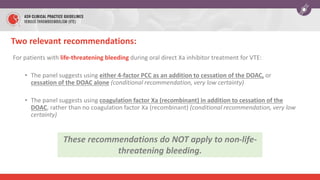
For patients with life-threatening bleeding during oral direct Xa inhibitor treatment for VTE:
• The panel suggests using either 4-factor PCC as an addition to cessation of the DOAC, or
cessation of the DOAC alone (conditional recommendation, very low certainty)
• The panel suggests using coagulation factor Xa (recombinant) in addition to cessation of the
DOAC, rather than no coagulation factor Xa (recombinant) (conditional recommendation, very low
certainty)
Two relevant recommendations:
These recommendations do NOT apply to non-life-
threatening bleeding.
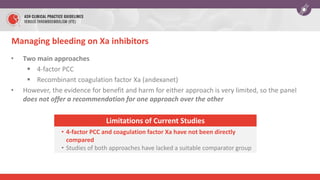
Managing bleeding on Xa inhibitors
• Two main approaches
 4-factor PCC
 Recombinant coagulation factor Xa (andexanet)
• However, the evidence for benefit and harm for either approach is very limited, so the panel
does not offer a recommendation for one approach over the other
Limitations of Current Studies
• 4-factor PCC and coagulation factor Xa have not been directly
compared
• Studies of both approaches have lacked a suitable comparator group
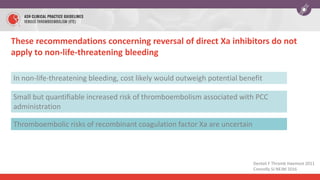
These recommendations concerning reversal of direct Xa inhibitors do not
apply to non-life-threatening bleeding
In non-life-threatening bleeding, cost likely would outweigh potential benefit
Small but quantifiable increased risk of thromboembolism associated with PCC
administration
Dentali F Thromb Haemost 2011
Connolly SJ NEJM 2016
Thromboembolic risks of recombinant coagulation factor Xa are uncertain
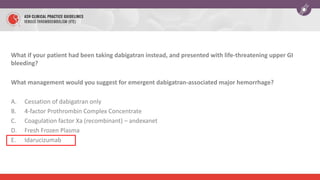
What if your patient had been taking dabigatran instead, and presented with life-threatening upper GI
bleeding?
What management would you suggest for emergent dabigatran-associated major hemorrhage?
A. Cessation of dabigatran only
B. 4-factor Prothrombin Complex Concentrate
C. Coagulation factor Xa (recombinant) – andexanet
D. Fresh Frozen Plasma
E. Idarucizumab
Recommendation
In patients with life-threatening bleeding during dabigatran treatment for VTE, the
panel suggests using idarucizumab in addition to cessation of dabigatran rather than no
idarucizumab (conditional recommendation, very low certainty)
Remarks:
• Compared with non-idarucizumab control group, patients receiving idarucizumab may have had less
worsening or recurrence of bleeding (RR 0.12 [95% CI, 0.03 to 0.43])
• In one cohort study, 6.3% of patients who received idarucizumab for uncontrolled bleeding developed
arterial or venous thrombosis within 90 days
CV Pollack NEJM 2017
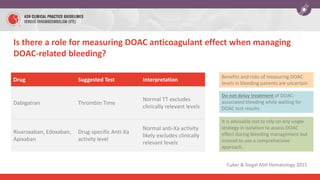
Is there a role for measuring DOAC anticoagulant effect when managing
DOAC-related bleeding?
Cuker & Siegal ASH Hematology 2015
Drug Suggested Test Interpretation
Dabigatran Thrombin Time
Normal TT excludes
clinically relevant levels
Rivaroxaban, Edoxaban,
Apixaban
Drug-specific Anti-Xa
activity level
Normal anti-Xa activity
likely excludes clinically
relevant levels
Do not delay treatment of DOAC-
associated bleeding while waiting for
DOAC test results
Benefits and risks of measuring DOAC
levels in bleeding patients are uncertain
It is advisable not to rely on any single
strategy in isolation to assess DOAC
effect during bleeding management but
instead to use a comprehensive
approach.
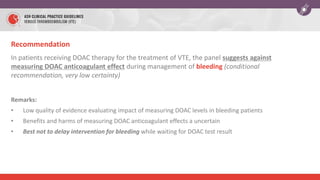
Recommendation
In patients receiving DOAC therapy for the treatment of VTE, the panel suggests against
measuring DOAC anticoagulant effect during management of bleeding (conditional
recommendation, very low certainty)
Remarks:
• Low quality of evidence evaluating impact of measuring DOAC levels in bleeding patients
• Benefits and harms of measuring DOAC anticoagulant effects a uncertain
• Best not to delay intervention for bleeding while waiting for DOAC test result
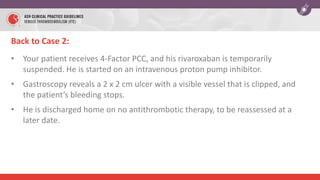
Back to Case 2:
• Your patient receives 4-Factor PCC, and his rivaroxaban is temporarily
suspended. He is started on an intravenous proton pump inhibitor.
• Gastroscopy reveals a 2 x 2 cm ulcer with a visible vessel that is clipped, and
the patient’s bleeding stops.
• He is discharged home on no antithrombotic therapy, to be reassessed at a
later date.
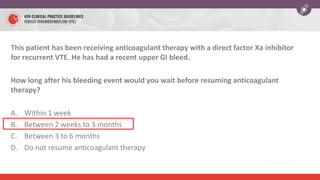
This patient has been receiving anticoagulant therapy with a direct factor Xa inhibitor
for recurrent VTE. He has had a recent upper GI bleed.
How long after his bleeding event would you wait before resuming anticoagulant
therapy?
A. Within 1 week
B. Between 2 weeks to 3 months
C. Between 3 to 6 months
D. Do not resume anticoagulant therapy
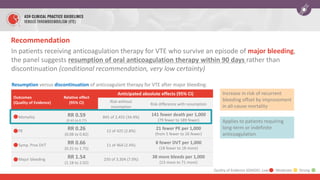
Outcomes
(Quality of Evidence)
Relative effect
(95% CI)
Anticipated absolute effects (95% CI)
Risk without
resumption
Risk difference with resumption
Mortality RR 0.59
(0.45 to 0.77)
845 of 2,455 (34.4%)
141 fewer death per 1,000
(79 fewer to 189 fewer)
PE RR 0.26
(0.08 to 0.82)
12 of 425 (2.8%)
21 fewer PE per 1,000
(from 5 fewer to 26 fewer)
Symp. Prox DVT RR 0.66
(0.25 to 1.75)
11 of 464 (2.4%)
8 fewer DVT per 1,000
(18 fewer to 18 more)
Major bleeding RR 1.54
(1.18 to 2.02)
230 of 3,304 (7.0%)
38 more bleeds per 1,000
(13 more to 71 more)
Resumption versus discontinuation of anticoagulant therapy for VTE after major bleeding:
Increase in risk of recurrent
bleeding offset by improvement
in all-cause mortality
Applies to patients requiring
long-term or indefinite
anticoagulation
Quality of Evidence (GRADE): Low Moderate Strong
Recommendation
In patients receiving anticoagulation therapy for VTE who survive an episode of major bleeding,
the panel suggests resumption of oral anticoagulation therapy within 90 days rather than
discontinuation (conditional recommendation, very low certainty)
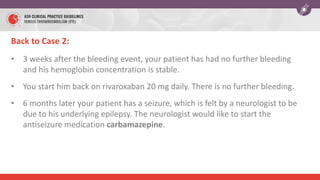
Back to Case 2:
• 3 weeks after the bleeding event, your patient has had no further bleeding
and his hemoglobin concentration is stable.
• You start him back on rivaroxaban 20 mg daily. There is no further bleeding.
• 6 months later your patient has a seizure, which is felt by a neurologist to be
due to his underlying epilepsy. The neurologist would like to start the
antiseizure medication carbamazepine.
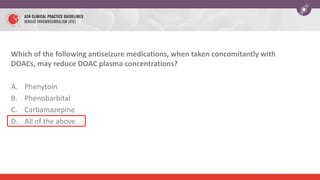
Which of the following antiseizure medications, when taken concomitantly with
DOACs, may reduce DOAC plasma concentrations?
A. Phenytoin
B. Phenobarbital
C. Carbamazepine
D. All of the above
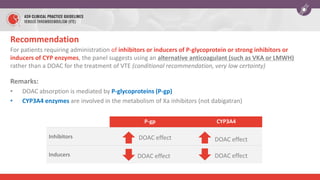
For patients requiring administration of inhibitors or inducers of P-glycoprotein or strong inhibitors or
inducers of CYP enzymes, the panel suggests using an alternative anticoagulant (such as VKA or LMWH)
rather than a DOAC for the treatment of VTE (conditional recommendation, very low certainty)
Remarks:
• DOAC absorption is mediated by P-glycoproteins (P-gp)
• CYP3A4 enzymes are involved in the metabolism of Xa inhibitors (not dabigatran)
P-gp CYP3A4
Inhibitors
Inducers
DOAC effect
DOAC effect DOAC effect
DOAC effect
Recommendation
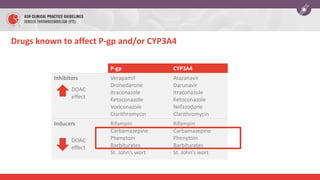
Drugs known to affect P-gp and/or CYP3A4
P-gp CYP3A4
Inhibitors Verapamil
Dronedarone
Itraconazole
Ketoconazole
Voriconazole
Clarithromycin
Atazanavir
Darunavir
Itraconazole
Ketoconazole
Nefazodone
Clarithromycin
Inducers Rifampin
Carbamazepine
Phenytoin
Barbiturates
St. John’s wort
Rifampin
Carbamazepine
Phenytoin
Barbiturates
St. John’s wort
DOAC
effect
DOAC
effect
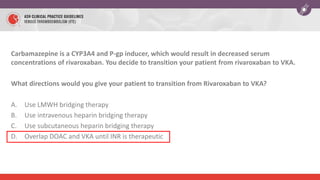
Carbamazepine is a CYP3A4 and P-gp inducer, which would result in decreased serum
concentrations of rivaroxaban. You decide to transition your patient from rivaroxaban to VKA.
What directions would you give your patient to transition from Rivaroxaban to VKA?
A. Use LMWH bridging therapy
B. Use intravenous heparin bridging therapy
C. Use subcutaneous heparin bridging therapy
D. Overlap DOAC and VKA until INR is therapeutic
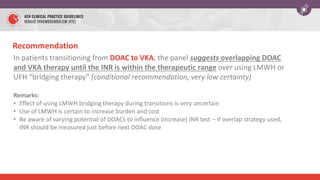
In patients transitioning from DOAC to VKA, the panel suggests overlapping DOAC
and VKA therapy until the INR is within the therapeutic range over using LMWH or
UFH “bridging therapy” (conditional recommendation, very low certainty)
Remarks:
• Effect of using LMWH bridging therapy during transitions is very uncertain
• Use of LMWH is certain to increase burden and cost
• Be aware of varying potential of DOACs to influence (increase) INR test – if overlap strategy used,
INR should be measured just before next DOAC dose
Recommendation
Case 2: Summary
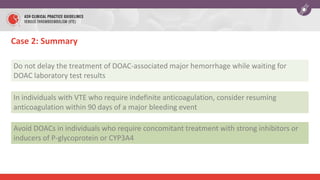
Do not delay the treatment of DOAC-associated major hemorrhage while waiting for
DOAC laboratory test results
In individuals with VTE who require indefinite anticoagulation, consider resuming
anticoagulation within 90 days of a major bleeding event
Avoid DOACs in individuals who require concomitant treatment with strong inhibitors or
inducers of P-glycoprotein or CYP3A4
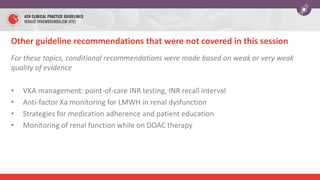
Other guideline recommendations that were not covered in this session
For these topics, conditional recommendations were made based on weak or very weak
quality of evidence
• VKA management: point-of-care INR testing, INR recall interval
• Anti-factor Xa monitoring for LMWH in renal dysfunction
• Strategies for medication adherence and patient education
• Monitoring of renal function while on DOAC therapy
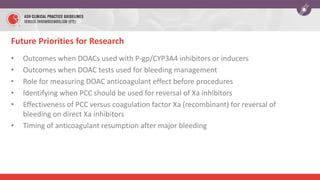
Future Priorities for Research
• Outcomes when DOACs used with P-gp/CYP3A4 inhibitors or inducers
• Outcomes when DOAC tests used for bleeding management
• Role for measuring DOAC anticoagulant effect before procedures
• Identifying when PCC should be used for reversal of Xa inhibitors
• Effectiveness of PCC versus coagulation factor Xa (recombinant) for reversal of
bleeding on direct Xa inhibitors
• Timing of anticoagulant resumption after major bleeding
In Summary: Back to our Objectives
1. Describe recommendations for monitoring anticoagulant therapy
• Monitoring of DOAC anticoagulant effect is not necessary
2. Describe recommendations for managing anticoagulant-associated bleeding
• PCC and intravenous Vitamin K for VKA reversal
• Consider PCC or coagulation factor Xa for reversal of Xa inhibitors
• Idarucizumab for dabigatran reversal
3. Identify drug-drug interactions relevant to the use of direct oral anticoagulants (DOACs)
• Certain antiseizure, antifungal, antibiotic, HIV medications
Acknowledgements
• ASH Guideline Panel team members
• Knowledge Synthesis team members
• McMaster University GRADE Centre
• Author of ASH VTE Slide Sets: Eric Tseng MD MScCH, University of Toronto and
Daniel Witt PharmD, University of Utah
See more about the ASH VTE guidelines at http://www.hematology.org/VTEguidelines

ASH Teaching Slide SetVTEAnticoagulationTherapyPowerpointFINAL71923.pptx

  • 1.
    Optimal Management of AnticoagulationTherapy An Educational Slide Set American Society of Hematology 2018 Guidelines for Management of Venous Thromboembolism Slide set authors: Eric Tseng MD MScCH, University of Toronto Daniel Witt PharmD, University of Utah
  • 2.
    Clinical Guidelines American Societyof Hematology 2018 guidelines for management of venous thromboembolism: optimal management of anticoagulation therapy Daniel M. Witt, Robby Nieuwlaat, Nathan P. Clark, Jack Ansell, Anne Holbrook, Jane Skov, Nadine Shehab, Juliet Mock, Tarra Myers, Francesco Dentali, Mark A. Crowther, Arnav Agarwal, Meha Bhatt, Rasha Khatib, John J. Riva, Yuan Zhang, and Gordon Guyatt
  • 3.
    ASH Clinical PracticeGuidelines on VTE 1. Prevention of VTE in Surgical Hospitalized Patients 2. Prevention of VTE in Medical Hospitalized Patients 3. Treatment of Acute VTE (DVT and PE) 4. Optimal Management of Anticoagulation Therapy 5. Prevention and Treatment of VTE in Patients with Cancer 6. Heparin-Induced Thrombocytopenia (HIT) 7. Thrombophilia 8. Pediatric VTE 9. VTE in the Context of Pregnancy 10. Diagnosis of VTE
  • 4.
    How were theseASH guidelines developed? PANEL FORMATION Each guideline panel was formed following these key criteria: • Balance of expertise (including disciplines beyond hematology, and patients) • Close attention to minimization and management of COI CLINICAL QUESTIONS 10 to 20 clinically- relevant questions generated in PICO format (population, intervention, comparison, outcome) EVIDENCE SYNTHESIS Evidence summary generated for each PICO question via systematic review of health effects plus: • Resource use • Feasibility • Acceptability • Equity • Patient values and preferences Example: PICO question “In patients with VKA- related life-threatening bleeding during treatment for VTE, should 4-factor PCC vs. FFP be used?” MAKING RECOMMENDATIONS Recommendations made by guideline panel members based on evidence for all factors. ASH guidelines are reviewed annually by expert work groups convened by ASH. Resources, such as this slide set, derived from guidelines that require updating are removed from the ASH website.
  • 5.
    How patients andclinicians should use these recommendations STRONG Recommendation (“The panel recommends…”) CONDITIONAL Recommendation (“The panel suggests…”) For patients Most individuals would want the intervention. A majority would want the intervention, but many would not. For clinicians Most individuals should receive the intervention. Different choices will be appropriate for different patients, depending on their values and preferences. Use shared decision making.
  • 6.
    Objectives By the endof this session, you should be able to 1. Describe recommendations for monitoring anticoagulant therapy 2. Describe recommendations for managing anticoagulant-associated bleeding 3. Identify drug-drug interactions relevant to the use of direct oral anticoagulants (DOACs)
  • 7.
    Anticoagulants carry benefits (reducingthrombus extension, fatal PE) and risks (life- threatening bleeding) This chapter focuses on the optimal management of anticoagulants for preventing and treating VTE (after choice of anticoagulant has already been made). Recognizing and mitigating risk for harm from anticoagulants requires evidence-based approach to management What is this chapter about?
  • 8.
    Case 1: NewDeep Vein Thrombosis 52 year old female Past Medical History: Asthma, Diabetes, Obesity (weight 160 kg) Medications: Tiotropium, Salbutamol, Metformin Seen in the Emergency Department with: Swollen right calf x 4 days, no clear provoking risk factors. Elevated D-Dimer. Diagnosis: Proximal right leg deep vein thrombosis (superficial femoral and popliteal veins) on compression ultrasound
  • 9.
    You decide totreat this patient with low molecular weight heparin (LMWH), bridging to a Vitamin K antagonist (VKA). Considering her high body mass (160 kg), how would you select her initial dose of LMWH? A. Dose should be capped at the highest available syringe size B. Dose should be based on actual body weight C. Dose should be based on calculated “ideal body weight” (based on age, gender, and height) D. Dose should be adjusted by peak anti-factor Xa levels
  • 10.
    Recommendation In obese patientsreceiving LMWH for acute VTE, the panel suggests initial LMWH dose according to actual body weight rather than a fixed maximum daily dose (capped dose) (conditional recommendation, very low certainty) Outcomes (Quality of Evidence) Relative effect (95% CI) Anticipated absolute effects (95% CI) Risk with capped LMWH doses Risk difference using actual body weight Mortality Not estimable 0 out of 47 (0.0%) Not estimable PE RR 0.76 (0.11 to 5.45) 1 out of 47 (2.1%) 5 fewer PE per 1,000 (19 fewer to 95 more) Symp. Prox DVT RR 0.76 (0.11 to 5.45) 1 out of 47 (2.1%) 5 fewer DVT per 1,000 (19 fewer to 95 more) Major bleeding Not estimable 0 out of 47 (0.0%) Not estimable Dosing of LMWH based on actual body weight compared with capped doses: Low quality evidence, so benefit/harm unclear. Panel also considered: • Desire to avoid underdosing large patients • Poor correlation between anti-Xa levels and bleeding Quality of Evidence (GRADE): Low Moderate Strong
  • 11.
    Recommendation In obese patientsreceiving LMWH for treatment of VTE, the panel suggests against using anti- factor Xa concentration monitoring to guide LMWH dose adjustment (conditional recommendation, very low certainty) Outcomes (Quality of Evidence) Relative effect (95% CI) Anticipated absolute effects (95% CI) Risk with no anti-Xa monitoring Risk difference with anti-Xa monitoring Mortality Not reported Not reported Not reported PE RR 3.06 (0.19 to 48.27) 1 out of 193 (0.5%) 11 more PE per 1,000 (4 fewer to 245 more) Symp. Prox DVT RR 1.53 (0.14 to 16.61) 2 out of 193 (1.0%) 5 more DVT per 1,000 (9 fewer to 162 more) Major bleeding RR 3.91 (0.67 to 22.95) 2 out of 193 (1.0%) 30 more bleed per 1,000 (3 fewer to 227 more) Dosing LMWH based on monitoring anti-Xa concentration compared with no monitoring: Low quality evidence, so benefit/harm was unclear. Panel also considered: • Concerns about anti-Xa test standardization and reproducibility • Weak correlation between bleeding and anti-Xa levels Quality of Evidence (GRADE): Low Moderate Strong
  • 12.
    Case 1, Continued: •You start LMWH based on actual body weight, and also start overlapping VKA. After 8 days, her INR is therapeutic and LMWH is stopped. • You see her in follow-up in 3 months, and the decision is made to continue with VKA for secondary VTE prevention. • 5 months later, she requires an elective colonoscopy as part of her routine age- appropriate cancer screening.
  • 13.
    Your patient hadan unprovoked DVT 8 months ago, and now requires a colonoscopy. What would you recommend for management of her VKA anticoagulation around the time of her elective procedure? A. Postpone procedure by 4 months to lower VTE risk B. Interrupt VKA before procedure, and give periprocedural “bridging” anticoagulation with LMWH C. Interrupt VKA before procedure, and give periprocedural “bridging” anticoagulation with unfractionated heparin D. Interrupt VKA before procedure, and do not provide any “bridging” anticoagulation
  • 14.
    In patients atlow to moderate risk of recurrent VTE who require interruption of VKA for invasive procedures, the panel recommends against periprocedural bridging with LMWH or UFH in favour of VKA interruption alone (strong recommendation, moderate certainty) Outcomes (Quality of Evidence) Relative effect (95% CI) Anticipated absolute effects (95% CI) Risk with VKA interruption alone Risk difference with periprocedural bridging Mortality Not estimable 0 out of 1,236 (0.0%) 0 fewer deaths per 1,000 (0 fewer to 0 fewer) PE Not reported Not reported Not reported Symp. Prox DVT RR 0.34 (0.02 to 6.58) 3 out of 1,236 (0.2%) 2 fewer DVT per 1,000 (2 fewer to 13 more) Major bleeding RR 31.73 (4.14 to 243.19) 1 out of 1,236 (0.1%) 25 more bleed per 1,000 (3 more to 196 more) Periprocedural bridging compared with interruption of VKA therapy alone: Despite low quality evidence, strong recommendation against bridging because: • Bridging LMWH consistently associated with increase in bleeding • Possible reduction in risk of recurrent VTE is very small in this population Quality of Evidence (GRADE): Low Moderate Strong Recommendation
  • 15.
    VTE Recurrence RiskStratification High Risk Moderate Risk Low Risk • VTE within past 3 months • Deficiency of protein C, protein S, or antithrombin • Antiphospholipid antibody syndrome • Multiple thrombophilic abnormalities • VTE within past 3-12 months • Heterozygous factor V Leiden • Prothrombin 20210 mutation • Recurrent VTE • Active cancer • VTE > 12 months previously • No other risk factors
  • 16.
    Aside: What ifthis patient was on a DOAC and required a scheduled invasive procedure? Recommendation In patients interrupting DOAC therapy for scheduled invasive procedures, the panel suggests against performing laboratory testing for DOAC anticoagulant effect prior to procedures (conditional recommendation, very low certainty) Remarks: • Net health benefit/harm of DOAC laboratory testing before procedures is uncertain • May consider testing when DOAC effect may be prolonged (renal failure, interacting drugs), time of last dose unclear, high procedural bleeding risk
  • 17.
    Back to Case1: • You interrupt VKA 6 days prior to colonoscopy, without providing bridging anticoagulation. The colonoscopy proceeds uneventfully, and she is started back on VKA post-operatively. • 3 years later she falls and strikes her head on the ground. She is taken to the Emergency Room. • A computed tomography (CT) scan demonstrates a large subarachnoid hemorrhage with mass effect. Her Glasgow Coma Scale is 9, her neurologic status is deteriorating, and she requires urgent neurosurgery. INR is 2.4.
  • 18.
    Your patient whois on VKA for management of VTE has a large traumatic intracerebral hemorrhage. INR is 2.4. What would you suggest for reversal of her VKA anticoagulant therapy? A. IV Vitamin K alone B. Prothrombin Complex Concentrate (PCC) alone C. Fresh Frozen Plasma (FFP) alone D. IV Vitamin K and PCC E. IV Vitamin K and FFP
  • 19.
    Recommendation In patients withlife-threatening bleeding during VKA treatment for VTE who have an elevated INR, the panel suggests using 4-factor PCC rather than FFP, in addition to cessation of VKA and intravenous vitamin K (conditional recommendation, very low certainty) Outcomes (Quality of Evidence) Relative effect (95% CI) Anticipated absolute effects (95% CI) Risk with FFP Risk difference with PCC Mortality RR 0.92 (0.37 to 2.28) 18 of 145 (12.4%) 10 fewer deaths per 1,000 (78 fewer to 159 more) PE RR 7.71 (0.44 to 136.11) 0 of 23 (0.0%) 15 more PE per 1,000 (0 fewer to 0 fewer) Symp. Prox DVT RR 2.57 (0.11 to 60.24) 0 of 23 (0.0%) 4 more DVT per 1,000 (2 fewer to 13 more) Major bleeding RR 1.34 (0.78 to 2.29) 12 of 132 (9.1%) 31 more bleed per 1,000 (20 fewer to 117 more) PCC compared with FFP, in addition to intravenous vitamin K cessation of VKA: Given low certainty of effects, other driving factors for PCC recommendation: • PCC: less volume overload, faster reduction of INR compared with FFP • PCC easier to administer Quality of Evidence (GRADE): Low Moderate Strong
  • 20.
    Case 1: Summary Dosingof LMWH in obese individuals should be based on actual body weight. Peak anti- factor Xa concentrations are not helpful In individuals on VKA who are at low to moderate risk of VTE recurrence, bridging anticoagulation for invasive procedures increases bleeding without reducing VTE, and is not recommended Individuals taking VKA who have life-threatening bleeding should receive PCC (not FFP) in addition to intravenous vitamin K
  • 21.
    Case 2: ManagingDOAC-associated bleeding 70 year old male on rivaroxaban 20 mg daily for VTE prevention after recurrent unprovoked pulmonary emboli. Past History: Hypertension, Epilepsy (in remission, off anti-seizure medications x 5 years) Seen in the Emergency Department with: Frequent melena x 48 hours. Last dose of rivaroxaban was 4 hours ago. Hemoglobin has dropped from 12.0 g/dL (2 months ago) to 6.0 g/dL today. Blood pressure is 95/60, heart rate is 115 beats per minute Diagnosis: Upper GI bleeding exacerbated by rivaroxaban
  • 22.
    Your patient ispresenting with acute, life-threatening upper GI bleeding while on an oral direct Xa inhibitor. What management would you suggest for his DOAC-associated bleeding? A. Cessation of Xa inhibitor only B. 4-factor Prothrombin Complex Concentrate C. Coagulation factor Xa (recombinant) – andexanet D. Fresh Frozen Plasma E. Idarucizumab
  • 23.
    For patients withlife-threatening bleeding during oral direct Xa inhibitor treatment for VTE: • The panel suggests using either 4-factor PCC as an addition to cessation of the DOAC, or cessation of the DOAC alone (conditional recommendation, very low certainty) • The panel suggests using coagulation factor Xa (recombinant) in addition to cessation of the DOAC, rather than no coagulation factor Xa (recombinant) (conditional recommendation, very low certainty) Two relevant recommendations: These recommendations do NOT apply to non-life- threatening bleeding.
  • 24.
    Managing bleeding onXa inhibitors • Two main approaches  4-factor PCC  Recombinant coagulation factor Xa (andexanet) • However, the evidence for benefit and harm for either approach is very limited, so the panel does not offer a recommendation for one approach over the other Limitations of Current Studies • 4-factor PCC and coagulation factor Xa have not been directly compared • Studies of both approaches have lacked a suitable comparator group
  • 25.
    These recommendations concerningreversal of direct Xa inhibitors do not apply to non-life-threatening bleeding In non-life-threatening bleeding, cost likely would outweigh potential benefit Small but quantifiable increased risk of thromboembolism associated with PCC administration Dentali F Thromb Haemost 2011 Connolly SJ NEJM 2016 Thromboembolic risks of recombinant coagulation factor Xa are uncertain
  • 26.
    What if yourpatient had been taking dabigatran instead, and presented with life-threatening upper GI bleeding? What management would you suggest for emergent dabigatran-associated major hemorrhage? A. Cessation of dabigatran only B. 4-factor Prothrombin Complex Concentrate C. Coagulation factor Xa (recombinant) – andexanet D. Fresh Frozen Plasma E. Idarucizumab
  • 27.
    Recommendation In patients withlife-threatening bleeding during dabigatran treatment for VTE, the panel suggests using idarucizumab in addition to cessation of dabigatran rather than no idarucizumab (conditional recommendation, very low certainty) Remarks: • Compared with non-idarucizumab control group, patients receiving idarucizumab may have had less worsening or recurrence of bleeding (RR 0.12 [95% CI, 0.03 to 0.43]) • In one cohort study, 6.3% of patients who received idarucizumab for uncontrolled bleeding developed arterial or venous thrombosis within 90 days CV Pollack NEJM 2017
  • 28.
    Is there arole for measuring DOAC anticoagulant effect when managing DOAC-related bleeding? Cuker & Siegal ASH Hematology 2015 Drug Suggested Test Interpretation Dabigatran Thrombin Time Normal TT excludes clinically relevant levels Rivaroxaban, Edoxaban, Apixaban Drug-specific Anti-Xa activity level Normal anti-Xa activity likely excludes clinically relevant levels Do not delay treatment of DOAC- associated bleeding while waiting for DOAC test results Benefits and risks of measuring DOAC levels in bleeding patients are uncertain It is advisable not to rely on any single strategy in isolation to assess DOAC effect during bleeding management but instead to use a comprehensive approach.
  • 29.
    Recommendation In patients receivingDOAC therapy for the treatment of VTE, the panel suggests against measuring DOAC anticoagulant effect during management of bleeding (conditional recommendation, very low certainty) Remarks: • Low quality of evidence evaluating impact of measuring DOAC levels in bleeding patients • Benefits and harms of measuring DOAC anticoagulant effects a uncertain • Best not to delay intervention for bleeding while waiting for DOAC test result
  • 30.
    Back to Case2: • Your patient receives 4-Factor PCC, and his rivaroxaban is temporarily suspended. He is started on an intravenous proton pump inhibitor. • Gastroscopy reveals a 2 x 2 cm ulcer with a visible vessel that is clipped, and the patient’s bleeding stops. • He is discharged home on no antithrombotic therapy, to be reassessed at a later date.
  • 31.
    This patient hasbeen receiving anticoagulant therapy with a direct factor Xa inhibitor for recurrent VTE. He has had a recent upper GI bleed. How long after his bleeding event would you wait before resuming anticoagulant therapy? A. Within 1 week B. Between 2 weeks to 3 months C. Between 3 to 6 months D. Do not resume anticoagulant therapy
  • 32.
    Outcomes (Quality of Evidence) Relativeeffect (95% CI) Anticipated absolute effects (95% CI) Risk without resumption Risk difference with resumption Mortality RR 0.59 (0.45 to 0.77) 845 of 2,455 (34.4%) 141 fewer death per 1,000 (79 fewer to 189 fewer) PE RR 0.26 (0.08 to 0.82) 12 of 425 (2.8%) 21 fewer PE per 1,000 (from 5 fewer to 26 fewer) Symp. Prox DVT RR 0.66 (0.25 to 1.75) 11 of 464 (2.4%) 8 fewer DVT per 1,000 (18 fewer to 18 more) Major bleeding RR 1.54 (1.18 to 2.02) 230 of 3,304 (7.0%) 38 more bleeds per 1,000 (13 more to 71 more) Resumption versus discontinuation of anticoagulant therapy for VTE after major bleeding: Increase in risk of recurrent bleeding offset by improvement in all-cause mortality Applies to patients requiring long-term or indefinite anticoagulation Quality of Evidence (GRADE): Low Moderate Strong Recommendation In patients receiving anticoagulation therapy for VTE who survive an episode of major bleeding, the panel suggests resumption of oral anticoagulation therapy within 90 days rather than discontinuation (conditional recommendation, very low certainty)
  • 33.
    Back to Case2: • 3 weeks after the bleeding event, your patient has had no further bleeding and his hemoglobin concentration is stable. • You start him back on rivaroxaban 20 mg daily. There is no further bleeding. • 6 months later your patient has a seizure, which is felt by a neurologist to be due to his underlying epilepsy. The neurologist would like to start the antiseizure medication carbamazepine.
  • 34.
    Which of thefollowing antiseizure medications, when taken concomitantly with DOACs, may reduce DOAC plasma concentrations? A. Phenytoin B. Phenobarbital C. Carbamazepine D. All of the above
  • 35.
    For patients requiringadministration of inhibitors or inducers of P-glycoprotein or strong inhibitors or inducers of CYP enzymes, the panel suggests using an alternative anticoagulant (such as VKA or LMWH) rather than a DOAC for the treatment of VTE (conditional recommendation, very low certainty) Remarks: • DOAC absorption is mediated by P-glycoproteins (P-gp) • CYP3A4 enzymes are involved in the metabolism of Xa inhibitors (not dabigatran) P-gp CYP3A4 Inhibitors Inducers DOAC effect DOAC effect DOAC effect DOAC effect Recommendation
  • 36.
    Drugs known toaffect P-gp and/or CYP3A4 P-gp CYP3A4 Inhibitors Verapamil Dronedarone Itraconazole Ketoconazole Voriconazole Clarithromycin Atazanavir Darunavir Itraconazole Ketoconazole Nefazodone Clarithromycin Inducers Rifampin Carbamazepine Phenytoin Barbiturates St. John’s wort Rifampin Carbamazepine Phenytoin Barbiturates St. John’s wort DOAC effect DOAC effect
  • 37.
    Carbamazepine is aCYP3A4 and P-gp inducer, which would result in decreased serum concentrations of rivaroxaban. You decide to transition your patient from rivaroxaban to VKA. What directions would you give your patient to transition from Rivaroxaban to VKA? A. Use LMWH bridging therapy B. Use intravenous heparin bridging therapy C. Use subcutaneous heparin bridging therapy D. Overlap DOAC and VKA until INR is therapeutic
  • 38.
    In patients transitioningfrom DOAC to VKA, the panel suggests overlapping DOAC and VKA therapy until the INR is within the therapeutic range over using LMWH or UFH “bridging therapy” (conditional recommendation, very low certainty) Remarks: • Effect of using LMWH bridging therapy during transitions is very uncertain • Use of LMWH is certain to increase burden and cost • Be aware of varying potential of DOACs to influence (increase) INR test – if overlap strategy used, INR should be measured just before next DOAC dose Recommendation
  • 39.
    Case 2: Summary Donot delay the treatment of DOAC-associated major hemorrhage while waiting for DOAC laboratory test results In individuals with VTE who require indefinite anticoagulation, consider resuming anticoagulation within 90 days of a major bleeding event Avoid DOACs in individuals who require concomitant treatment with strong inhibitors or inducers of P-glycoprotein or CYP3A4
  • 40.
    Other guideline recommendationsthat were not covered in this session For these topics, conditional recommendations were made based on weak or very weak quality of evidence • VKA management: point-of-care INR testing, INR recall interval • Anti-factor Xa monitoring for LMWH in renal dysfunction • Strategies for medication adherence and patient education • Monitoring of renal function while on DOAC therapy
  • 41.
    Future Priorities forResearch • Outcomes when DOACs used with P-gp/CYP3A4 inhibitors or inducers • Outcomes when DOAC tests used for bleeding management • Role for measuring DOAC anticoagulant effect before procedures • Identifying when PCC should be used for reversal of Xa inhibitors • Effectiveness of PCC versus coagulation factor Xa (recombinant) for reversal of bleeding on direct Xa inhibitors • Timing of anticoagulant resumption after major bleeding
  • 42.
    In Summary: Backto our Objectives 1. Describe recommendations for monitoring anticoagulant therapy • Monitoring of DOAC anticoagulant effect is not necessary 2. Describe recommendations for managing anticoagulant-associated bleeding • PCC and intravenous Vitamin K for VKA reversal • Consider PCC or coagulation factor Xa for reversal of Xa inhibitors • Idarucizumab for dabigatran reversal 3. Identify drug-drug interactions relevant to the use of direct oral anticoagulants (DOACs) • Certain antiseizure, antifungal, antibiotic, HIV medications
  • 43.
    Acknowledgements • ASH GuidelinePanel team members • Knowledge Synthesis team members • McMaster University GRADE Centre • Author of ASH VTE Slide Sets: Eric Tseng MD MScCH, University of Toronto and Daniel Witt PharmD, University of Utah See more about the ASH VTE guidelines at http://www.hematology.org/VTEguidelines

Editor's Notes

  • #11 Recommendation 1 NOTES: Because of the very low quality evidence, the net health benefit/harm associated with using initial LMWH doses based on actual body weight compared to capped dosing is very uncertain, though it is acceptable and feasible. Due to concerns for potentially underdosing very large patients, the potentially serious consequences of therapeutic failure, and the lack of correlation between supratherapeutic anti-factor Xa concentrations and bleeding, the panel chose to make a conditional recommendation in favor of LMWH doses based on actual body weight over capped dosing. Link to Evidence-to-Decision framework: https://dbep.gradepro.org/profile/18c9f7b9-df8a-45ec-a63a-4f517a3a23d6
  • #12 Recommendation 8 REMARK: Providers should consider LMWH using doses based on actual body weight (see recommendation 1 and not monitoring anti-factor Xa concentrations, similar to the approach used in non-obese patients. NOTES: The guideline panel determined that there is very low certainty evidence for net harm from adjusting LMWH doses based on anti-factor Xa concentration monitoring over no such monitoring in patients with obesity on LMWH therapy for treatment of VTE. In addition, there were concerns relating to anti-factor Xa test standardization and reproducibility, weak correlation between bleeding events and anti-factor Xa concentrations (102), and no evidence that anti-factor Xa testing is needed in patients with obesity. Providers should consider LMWH using doses based on actual body weight (see recommendation 1) and not monitoring anti-factor Xa concentrations, similar to the approach used in non-obese patients. Link to Evidence-to-Decision framework: https://dbep.gradepro.org/profile/dcf00058-0d87-40b3-9ebc-4dec32706a8b
  • #15 Recommendation 14 NOTES: The resource requirements associated with LMWH bridging are likely to be large, driven by the LMWH cost, complexity of teaching patients the intervention, and management of bleeding events. When the evidence for this question was weighed, a much higher value was placed on the risk for bleeding, which has been consistently associated with LMWH bridging in available studies, than on the possible reduction in the risk of recurrent VTE, which in this patient population is very small. The panel was confident that that the desirable effects of LMWH bridging are outweighed by the undesirable effects and that a strong recommendation against LMWH bridging was warranted. This recommendation does not apply to patients requiring VKA therapy for indications in addition to VTE (ex. mechanical heart valves) Link to Evidence-to-Decision framework: https://dbep.gradepro.org/profile/510d8142-f0d4-47f4-8998-e153cec6018f
  • #17 Recommendation 15 NOTES: The net health benefit/harm from laboratory testing to assess DOAC effect prior to scheduled invasive procedures compared to interrupting DOAC therapy remains very uncertain. Further, the clinical use of DOAC tests is not well established, and there is no evidence to support a beneficial effect. Therefore, the panel made a conditional suggestion against confirming the absence of DOAC effect prior to proceeding with scheduled invasive procedures It is advisable not to rely on any single (either pharmacokinetic or laboratory) strategy in isolation to assess DOAC effect prior to procedures but instead to use a comprehensive approach to assessing, confirming, and communicating DOAC cessation of therapy among the patient and all providers involved. Link to Evidence-to-Decision framework: https://dbep.gradepro.org/profile/ee27563e-0db8-464d-ae48-0e72bec3da3b
  • #20 Recommendation 17 NOTES: While benefits and harms with 4-factor PCC versus FFP were balanced based on very low certainty evidence, the panel favored 4-factor PCC over FFP because of ease of administration, the increased probability of achieving a near-normalized INR, and the lower risk of volume overload. The panel determined that this recommendation most directly applies to intracranial bleeding, where speed of reversal is likely to be a particularly important consideration. Link to Evidence-to-Decision framework: https://dbep.gradepro.org/profile/e58f8d6b-8fd6-4164-b9da-2c62605e845c
  • #23 NOTES: As will be discussed subsequently, there is poor quality evidence with no studies directly comparing strategies A, B, or C to each other. As such the panel cannot make suggestions for one strategy over the other, and in life-threatening situations, the experience and judgment of the prescriber weighing individual benefits and risks would be the deciding factors.
  • #24 REMARKS: These recommendations do NOT apply to non-life-threatening bleeding. No data are available comparing the efficacy of 4-factor PCC and coagulation factor Xa (recombinant), and the panel offers no recommendation for one approach over the other. Recommendation 18a Link to Evidence-to-Decision framework: https://dbep.gradepro.org/profile/2ec6099d-9b00-4bac-bc31-34653ee10737 Recommendation 18b Link to Evidence-to-Decision framework: https://dbep.gradepro.org/profile/8FD0D118-359D-B5A1-A933-FB225270E86A
  • #28 Recommendation 19 NOTES: There is very low certainty evidence for a net health benefit from using idarucizumab to manage life-threatening bleeding in patients receiving dabigatran therapy for VTE, mandating a conditional recommendation. Some panel members were concerned about the possibility of VTE following idarucizumab administration. Link to Evidence-to-Decision framework: https://dbep.gradepro.org/profile/b1deb68f-2ed2-4734-bb86-0a66117969cd
  • #30 Recommendation 9 NOTES: Considering that only very low quality evidence is available regarding the net health benefit/harm from measuring the DOAC anticoagulant effect during management of DOAC-related bleeding, clinical use of DOAC tests is not well established, and no evidence supports a beneficial effect, the panel judged that it is better not to delay intervention for bleeding while waiting for a DOAC test result. Link to Evidence-to-Decision framework: https://dbep.gradepro.org/profile/9e7da133-8251-461a-9a11-7b08b197a77e
  • #33 Recommendation 21 This recommendation specifically applies to patients who require long-term or indefinite anticoagulation (are at moderate to high risk for recurrent VTE, are not at high risk for recurrent bleeding, and are willing to continue anticoagulation therapy) NOTES: Resuming anticoagulation following GIB or ICH was associated with reduced risk of all-cause mortality (RR, 0.62 [95% CI, 0.43 to 0.89]; ARR, 165 fewer deaths per 1,000 [95% CI, 247 fewer to 48 fewer per 1,000]; very low certainty) and reduced risk of thromboembolism (RR, 0.45 [95% CI, 0.25 to 0.83]; ARR, 58 fewer per 1,000 [95% CI, 80 fewer to 18 fewer per 1,000]; low certainty). Resuming anticoagulation following GIB or ICH was associated with increased risk of major bleeding (RR, 1.57 [95% CI, 1.12 to 2.21; ARR, 43 more bleeding events per 1,000 [95% CI, 9 more to 92 more per 1,000]; very low certainty). The available evidence was insufficient to allow the panel to state with certainty the optimal timing of anticoagulation therapy resumption. However, the panel determined that waiting at least 2 weeks but not more than 90 days after the bleeding event is reasonable based on the intervals for restarting anticoagulation therapy examined in clinical studies and depending on the patient-specific risk factors for thrombosis and bleeding Link to Evidence-to-Decision framework: https://dbep.gradepro.org/profile/098f8dae-062b-41b2-a51e-f7cc74379f3a
  • #36 Recommendation 2 NOTES: There were no randomized trials that addressed the outcomes prioritized for this question. Available evidence was very limited and consisted of pharmacokinetic studies with small sample sizes, subgroup analysis of clinical trials, information from product labeling, and drug interaction reference texts. Available evidence reported the effects of various drugs that inhibit or induce P-gp or CYP3A4 on DOAC pharmacokinetic parameters, such as area under the plasma concentration-time curve, maximal plasma DOAC concentration, and DOAC half-life. In general, these parameters are increased by P-gp or CYP3A4 inhibitors and decreased by inducers. No studies have reported different rates of bleeding, thromboembolism, or mortality between DOACs and a comparator (e.g., VKA). Link to Evidence-to-Decision framework: https://dbep.gradepro.org/profile/2664de1d-4462-4fe9-b675-03ff16ff4bbb
  • #37 Recommendation 2 NOTES: There were no randomized trials that addressed the outcomes prioritized for this question. Available evidence was very limited and consisted of pharmacokinetic studies with small sample sizes, subgroup analysis of clinical trials, information from product labeling, and drug interaction reference texts. Available evidence reported the effects of various drugs that inhibit or induce P-gp or CYP3A4 on DOAC pharmacokinetic parameters, such as area under the plasma concentration-time curve, maximal plasma DOAC concentration, and DOAC half-life. In general, these parameters are increased by P-gp or CYP3A4 inhibitors and decreased by inducers. No studies have reported different rates of bleeding, thromboembolism, or mortality between DOACs and a comparator (e.g., VKA). Link to Evidence-to-Decision framework: https://dbep.gradepro.org/profile/2664de1d-4462-4fe9-b675-03ff16ff4bbb
  • #39 Recommendation 10 NOTES: The net health benefit/harm associated with using LMWH bridging therapy during transitions from DOAC to VKA compared to overlapping DOAC with VKA alone remains very uncertain, but use of LMWH is certain to increase burden and cost Link to Evidence-to-Decision framework: https://dbep.gradepro.org/profile/b1889d83-5875-453f-b047-fb742c25e43e