Definition of ARVI
Acuterespiratory viral infections (ARVI) are infectious diseases caused by
various viruses that primarily affect the respiratory tract. These infections
can present with sudden onset symptoms and vary in severity, impacting
individuals across all age groups. Understanding ARVI is essential for
healthcare professionals, medical students, and public health officials to
effectively manage and prevent these infections.
3.
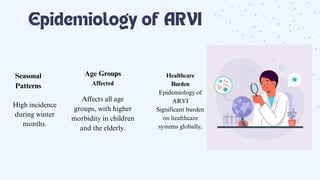
Epidemiology of ARVI
AgeGroups
Affected
Seasonal
Patterns
High incidence
during winter
months.
Healthcare
Burden
Epidemiology of
ARVI
Significant burden
on healthcare
systems globally.
Affects all age
groups, with higher
morbidity in children
and the elderly.
4.
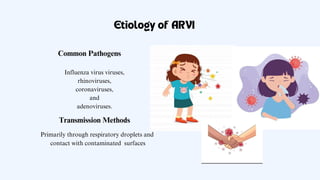
Etiology of ARVI
CommonPathogens
Influenza virus viruses,
rhinoviruses,
coronaviruses,
and
adenoviruses.
Transmission Methods
Primarily through respiratory droplets and
contact with contaminated surfaces
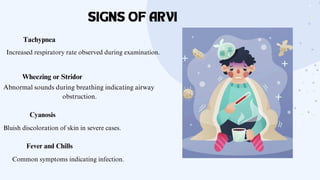
SIGNS OF ARVI
Wheezingor Stridor
Abnormal sounds during breathing indicating airway
obstruction.
Tachypnea
Increased respiratory rate observed during examination.
Cyanosis
Bluish discoloration of skin in severe cases.
Fever and Chills
Common symptoms indicating infection.
7.
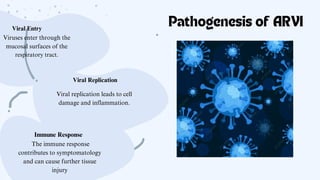
Viral replication leadsto cell
damage and inflammation.
Pathogenesis of ARVI
Viral Entry
Viruses enter through the
mucosal surfaces of the
respiratory tract.
Viral Replication
Immune Response
The immune response
contributes to symptomatology
and can cause further tissue
injury
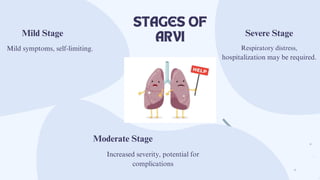
STAGES OF
ARVI
Mild Stage
ModerateStage
Severe Stage
Mild symptoms, self-limiting.
Increased severity, potential for
complications
Respiratory distress,
hospitalization may be required.
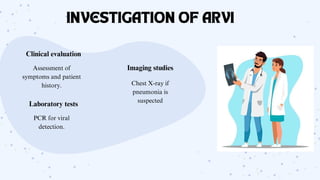
INVESTIGATION OF ARVI
Clinicalevaluation
Assessment of
symptoms and patient
history.
Laboratory tests
PCR for viral
detection.
Imaging studies
Chest X-ray if
pneumonia is
suspected
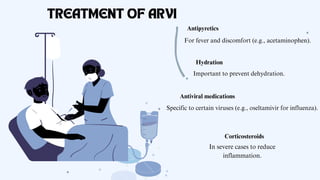
TREATMENT OF ARVI
Antipyretics
Forfever and discomfort (e.g., acetaminophen).
Hydration
Important to prevent dehydration.
Antiviral medications
Specific to certain viruses (e.g., oseltamivir for influenza).
Corticosteroids
In severe cases to reduce
inflammation.
14.
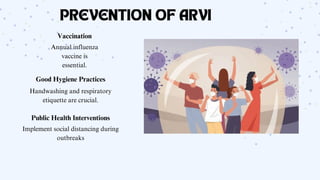
PREVENTION OF ARVI
Vaccination
Annualinfluenza
vaccine is
essential.
Good Hygiene Practices
Handwashing and respiratory
etiquette are crucial.
Public Health Interventions
Implement social distancing during
outbreaks
15.
Conclusion
Public Health
Challenge
Acute respiratory
viralinfections are a
major concern.
Essential
Knowledge
Understanding ARVI
is crucial for
healthcare
professionals.
Need for Reasearch
Continuous efforts are necessary for better
prevention.




![Acute Respiratory Infections(ARI)__PRESENTATION[1].pptx](https://cdn.slidesharecdn.com/ss_thumbnails/aripresentation1-241020112302-e350d353-thumbnail.jpg?width=640&height=640&fit=bounds)


![Acute Respiratory Infection Guidelines(ARI)__PRESENTATION[1].pptx](https://cdn.slidesharecdn.com/ss_thumbnails/aripresentation1-241114171345-63d1411f-thumbnail.jpg?width=640&height=640&fit=bounds)


