Prepared by: 
Ella Mae B. Camorongan
Artificial contraception, also known as birth 
control, are medications used to prevent 
pregnancy. 
Birth control methods have been used since 
ancient times, but effective and safe methods 
only became available in the 20th century. 
Some cultures limit or discourage access to 
birth control because they consider it to be 
morally or politically undesirable.
Three distinct parts of birth 
control pills 
May suppress ovulation 
May impede sperm migration 
May inhibit implantation
Three Bad Common Effects 
1. They cause your blood to clot 
2. They make it easier to get potentially lethal 
infections 
3. They cause cancer
Different types of Artificial 
Contraception
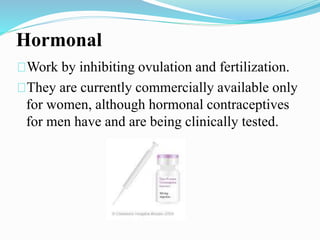
Hormonal 
Work by inhibiting ovulation and fertilization. 
They are currently commercially available only 
for women, although hormonal contraceptives 
for men have and are being clinically tested.
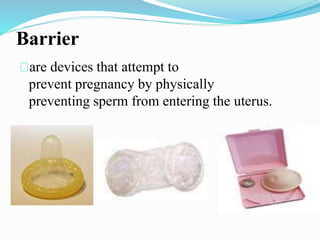
Barrier 
are devices that attempt to 
prevent pregnancy by physically 
preventing sperm from entering the uterus.
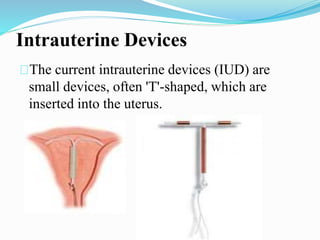
Intrauterine Devices 
The current intrauterine devices (IUD) are 
small devices, often 'T'-shaped, which are 
inserted into the uterus.
Behavioral 
It involve regulating the timing or method of 
intercourse to prevent introduction of sperm 
into the female reproductive tract, either 
altogether or when an egg may be present.
Three Methods of Behavioral 
Fertility awareness 
Withdrawal 
Behavioral
REFERENCES: 
https://www.familyplanning.net/en/artificial-methods- 
birth-control 
http://en.wikipedia.org/wiki/Birth_control 
"Interventions to reduce unintended pregnancies 
among adolescents: systematic review of randomised 
controlled trials". BMJ 324 (7351): 
1426. doi10.1136/bmj.324.7351.1426. PMC 
115855.PMID 12065267
THANK YOU FOR 
LISTENING

Artificial methods of birth control

  • 1.
    Prepared by: EllaMae B. Camorongan
  • 2.
    Artificial contraception, alsoknown as birth control, are medications used to prevent pregnancy. Birth control methods have been used since ancient times, but effective and safe methods only became available in the 20th century. Some cultures limit or discourage access to birth control because they consider it to be morally or politically undesirable.
  • 3.
    Three distinct partsof birth control pills May suppress ovulation May impede sperm migration May inhibit implantation
  • 4.
    Three Bad CommonEffects 1. They cause your blood to clot 2. They make it easier to get potentially lethal infections 3. They cause cancer
  • 5.
    Different types ofArtificial Contraception
  • 6.
    Hormonal Work byinhibiting ovulation and fertilization. They are currently commercially available only for women, although hormonal contraceptives for men have and are being clinically tested.
  • 7.
    Barrier are devicesthat attempt to prevent pregnancy by physically preventing sperm from entering the uterus.
  • 8.
    Intrauterine Devices Thecurrent intrauterine devices (IUD) are small devices, often 'T'-shaped, which are inserted into the uterus.
  • 9.
    Behavioral It involveregulating the timing or method of intercourse to prevent introduction of sperm into the female reproductive tract, either altogether or when an egg may be present.
  • 10.
    Three Methods ofBehavioral Fertility awareness Withdrawal Behavioral
  • 12.
    REFERENCES: https://www.familyplanning.net/en/artificial-methods- birth-control http://en.wikipedia.org/wiki/Birth_control "Interventions to reduce unintended pregnancies among adolescents: systematic review of randomised controlled trials". BMJ 324 (7351): 1426. doi10.1136/bmj.324.7351.1426. PMC 115855.PMID 12065267
  • 13.
    THANK YOU FOR LISTENING