ARTICLES
OF
ASSOCIATION
Yash nahata
INTRODUCTION TO ARTICLES OF
ASSOCIATION
 Contain the rules relating to the management of
internal affairs of a company & are basically for the
benefit of the shareholders
 Play a part subsidiary to the memorandum of
association(MOA)
 Cannot extend the objects as defined in the
memorandum
OBLIGATION TO REGISTER
ARTICLES
 PUBLIC COMPANY LIMITED BY SHARES- may
register articles (in case does not, TABLE “A” shall
apply)
 COMPANY LIMITED BY GUARANTEE/
UNLIMITED COMPANY/PRIVATE COMPANY
LIMITED BY SHARES-must register articles along
with the memorandum at the time of registration
FORMALITIES
Articles of association shall be:
 Printed
 Divided into paragraphs numbered consecutively
 Signed by each signatory of the memorandum in the
presence of atleast one attesting witness
Also articles should not contain anything which is
against:
LAW OF THE LAND
THE COMPANIES ACT
THE PUBLIC POLICY
ULTRAVIRES THE MEMORANDUM
Any such clauses shall be inoperative and void.
CONTENTS OF ARTICLES
Articles usually deal with the rules & bye-laws on
matters like:
1.Extent to which “TABLE A” is applicable
2.Different classes of shares & their rights
3.Procedure of issuing share certificates & share
warrants
4.Alteration of share capital
5.Borrowing powers of directors
6.Voting rights of members
7.Payment of dividends & creation of reserves
8.Use of common seal of the company
9.Board meetings & proceedings thereof
10.Rules as to resolutions
11.Arbitration provision,if any
12.Winding up, ETC..
ALTERATION OF ARTICLES
 Right to alter or add to articles-expressly conferred
by SECTION 31
 Statutory power & cannot be negatived in any way
 Done by passing a SPECIAL RESOLUTION
 Copy must be filed with Registrar within 30 days of
passing the said resolution
 Copy of altered articles also be filed with Registrar
within 3 months of passing the resolution
Limitations Regarding Alteration of
Articles
 The alteration must not be inconsistent with the
provisions of the companies act or any other statue
- The alteration cannot be made so as to increase the
liability of any member without his written
consent
- However, the articles may impose on company
conditions stricter than those provided under the law
 The articles must not be inconsistent with the conditions
contained in the memorandum
 The alteration must not be inconsistent with the alteration
ordered by the company law board
- Permission of company law board is required to make
alterations to articles of association
 Approval of Central Government is also required in
certain cases
- Conversion of public company into a private
company
- Appointment or re-appointment of a director
- Increase in remuneration of a director
 The alteration must not deprive any person of his rights
under a contract
 The alteration must not constitute a fraud on the
minority
 The alteration must be a bona fide for the benefit of the
company as a whole
BINDING FORCE OF
MEMORANDUM AND ARTICLES
 Company is bound to its members
 Each member is bound to the company
 Each member is bound to other members in exceptional case
only
 Neither the company nor the members are bound to outsiders
DOCTRINE OF CONSTRUCTIVE
NOTICE
A person is expected to inspect the basic public document of
the company (memorandum and articles) available at roc
office before any transaction with the company
He should have knowledge what action is not authorized to
director or the agent of the company
Even if he has not inspected these documents he would be
assumed to have done so
Doctrine of constructive notice is not feasible for practical
businesspersons
DOCTRINE OF INDOOR
MANAGEMENT
 An exception to doctrine of constructive notice
 Offers protection to outsider dealing with a company
 Gives outsider confidence in dealing with company with limited liability
 Doctrine has been applied to make companies liable in case where deals
were made by the directors:
1. Whose appointment was defective
2. Who were appointed properly but were yet to be delegated necessary
authority
3. Who had not yet been appointed as director
4. Who have been delegated authority in a meeting which had lacked
quorum
EXCEPTIONS TO THE DOCTRINE
OF INDOOR MANAGEMENT
Though the doctrine provides outsiders, protection while dealing
with registerd companies,court did not find it proper to apply the
doctrine in following cases and protection was denied:
 Knowledge of irregularity
 Sufficient ground for suspicion
 Forgery
 Acts outside apparent authority
 Non existence of agency
 Acts ultra vires the company
DIFFERENCES
BETWEEN
MEMORANDUM OF
ASSOCIATION(MOA) &
ARTICLES OF
ASSOCIATION(AOA)
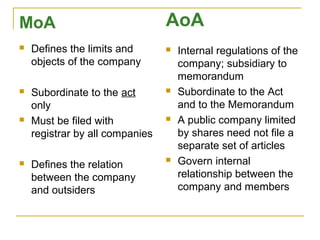
MoA
 Defines the limits and
objects of the company
 Subordinate to the act
only
 Must be filed with
registrar by all companies
 Defines the relation
between the company
and outsiders
 Internal regulations of the
company; subsidiary to
memorandum
 Subordinate to the Act
and to the Memorandum
 A public company limited
by shares need not file a
separate set of articles
 Govern internal
relationship between the
company and members
AoA
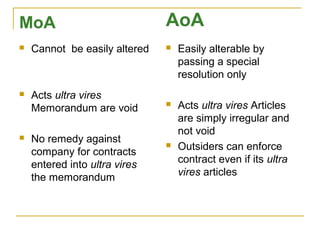
MoA
 Cannot be easily altered
 Acts ultra vires
Memorandum are void
 No remedy against
company for contracts
entered into ultra vires
the memorandum
 Easily alterable by
passing a special
resolution only
 Acts ultra vires Articles
are simply irregular and
not void
 Outsiders can enforce
contract even if its ultra
vires articles
AoA

ARTICLES OF ASSOCIATION

  • 1.
  • 2.
    INTRODUCTION TO ARTICLESOF ASSOCIATION  Contain the rules relating to the management of internal affairs of a company & are basically for the benefit of the shareholders  Play a part subsidiary to the memorandum of association(MOA)  Cannot extend the objects as defined in the memorandum
  • 3.
    OBLIGATION TO REGISTER ARTICLES PUBLIC COMPANY LIMITED BY SHARES- may register articles (in case does not, TABLE “A” shall apply)  COMPANY LIMITED BY GUARANTEE/ UNLIMITED COMPANY/PRIVATE COMPANY LIMITED BY SHARES-must register articles along with the memorandum at the time of registration
  • 4.
    FORMALITIES Articles of associationshall be:  Printed  Divided into paragraphs numbered consecutively  Signed by each signatory of the memorandum in the presence of atleast one attesting witness
  • 5.
    Also articles shouldnot contain anything which is against: LAW OF THE LAND THE COMPANIES ACT THE PUBLIC POLICY ULTRAVIRES THE MEMORANDUM Any such clauses shall be inoperative and void.
  • 6.
    CONTENTS OF ARTICLES Articlesusually deal with the rules & bye-laws on matters like: 1.Extent to which “TABLE A” is applicable 2.Different classes of shares & their rights 3.Procedure of issuing share certificates & share warrants 4.Alteration of share capital 5.Borrowing powers of directors 6.Voting rights of members
  • 7.
    7.Payment of dividends& creation of reserves 8.Use of common seal of the company 9.Board meetings & proceedings thereof 10.Rules as to resolutions 11.Arbitration provision,if any 12.Winding up, ETC..
  • 8.
    ALTERATION OF ARTICLES Right to alter or add to articles-expressly conferred by SECTION 31  Statutory power & cannot be negatived in any way  Done by passing a SPECIAL RESOLUTION  Copy must be filed with Registrar within 30 days of passing the said resolution  Copy of altered articles also be filed with Registrar within 3 months of passing the resolution
  • 9.
    Limitations Regarding Alterationof Articles  The alteration must not be inconsistent with the provisions of the companies act or any other statue - The alteration cannot be made so as to increase the liability of any member without his written consent - However, the articles may impose on company conditions stricter than those provided under the law
  • 10.
     The articlesmust not be inconsistent with the conditions contained in the memorandum  The alteration must not be inconsistent with the alteration ordered by the company law board - Permission of company law board is required to make alterations to articles of association
  • 11.
     Approval ofCentral Government is also required in certain cases - Conversion of public company into a private company - Appointment or re-appointment of a director - Increase in remuneration of a director
  • 12.
     The alterationmust not deprive any person of his rights under a contract  The alteration must not constitute a fraud on the minority  The alteration must be a bona fide for the benefit of the company as a whole
  • 13.
    BINDING FORCE OF MEMORANDUMAND ARTICLES  Company is bound to its members  Each member is bound to the company  Each member is bound to other members in exceptional case only  Neither the company nor the members are bound to outsiders
  • 14.
    DOCTRINE OF CONSTRUCTIVE NOTICE Aperson is expected to inspect the basic public document of the company (memorandum and articles) available at roc office before any transaction with the company He should have knowledge what action is not authorized to director or the agent of the company Even if he has not inspected these documents he would be assumed to have done so Doctrine of constructive notice is not feasible for practical businesspersons
  • 15.
    DOCTRINE OF INDOOR MANAGEMENT An exception to doctrine of constructive notice  Offers protection to outsider dealing with a company  Gives outsider confidence in dealing with company with limited liability  Doctrine has been applied to make companies liable in case where deals were made by the directors: 1. Whose appointment was defective 2. Who were appointed properly but were yet to be delegated necessary authority 3. Who had not yet been appointed as director 4. Who have been delegated authority in a meeting which had lacked quorum
  • 16.
    EXCEPTIONS TO THEDOCTRINE OF INDOOR MANAGEMENT Though the doctrine provides outsiders, protection while dealing with registerd companies,court did not find it proper to apply the doctrine in following cases and protection was denied:  Knowledge of irregularity  Sufficient ground for suspicion  Forgery  Acts outside apparent authority  Non existence of agency  Acts ultra vires the company
  • 17.
  • 18.
    MoA  Defines thelimits and objects of the company  Subordinate to the act only  Must be filed with registrar by all companies  Defines the relation between the company and outsiders  Internal regulations of the company; subsidiary to memorandum  Subordinate to the Act and to the Memorandum  A public company limited by shares need not file a separate set of articles  Govern internal relationship between the company and members AoA
  • 19.
    MoA  Cannot beeasily altered  Acts ultra vires Memorandum are void  No remedy against company for contracts entered into ultra vires the memorandum  Easily alterable by passing a special resolution only  Acts ultra vires Articles are simply irregular and not void  Outsiders can enforce contract even if its ultra vires articles AoA