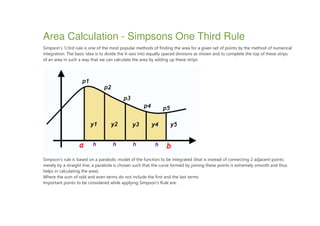
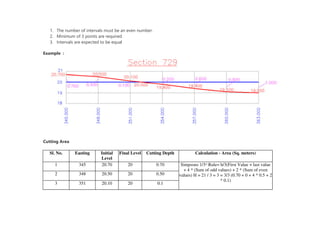
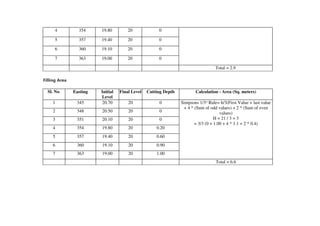
Simpson's 1/3 rule is a numerical integration method that divides the area under a curve into strips. It assumes the curve within each strip is parabolic rather than linear. The area is calculated by adding the areas of each strip, weighing the middle terms by 4 and outside terms by 1. It requires an even number of intervals with a minimum of 3 points, and equal spacing between intervals. An example shows how to apply the rule to calculate cut and fill areas from elevation data by summing the weighted height values within each interval.