
Group :B
kazi Manna Yeasmin Rishu
Imran Ahsan
Jhuyena Akter
Amir Hossain
Outline
1.
2.
3.
4.

5.
6.

Term analysis
Opening speech
Background of Arab Spring
Political debates in social media during Arab Spring
Spread democratic ideas across international boarder
Power of social media
i.
ii.
iii.
iv.
v.

Young people’s role in Arab spring by social media
Women’s role
Tunisia
Statistics of blogs and tweets during revolution in Tunisia
Egypt
Term analysis

 The

Arab spring is a revolutionary wave of
demonstrations, protests, and wars occurring in the Arab
world that began on 18 December 2010 in Tunisia

 Social media refers to the means of interactions among

people in which they create, share, and exchange information
and ideas in virtual communities and networks.[1 Andreas K
aplin and Michael Haenlein define social media as "a group of
Internet-based applications that build on the ideological and
technological foundations of Web 2.o, and that allow the
creation and exchange of user-generated content.
0pening speech
 The Arab Spring had many causes. One of these

sources was social media and its power to put a
human face on political oppression. Bouazizis self
immolation was one of several stories told and retold
on Facebook, Twitter, and YouTube in ways that
inspired dissidents to organize protests, criticize their
governments, and spread ideas about democracy. Until
now, most of what we have known about the role of
social media in the Arab Spring has been anecdotal.
Background
1. Acceleration

of protests
through social media
2. Thought of inventors about
their social media
3. Social media ,the platform
of sharing views
Social media played a
central role in shaping
political debates in The
Arab Spring
I.

II.

Social Media plays an
integral part in the

revolution
 Preceding mass protests

by blogs and tweets
 Resignation of Ben Ali
Demographic conversation in
political debate through social  Statistics of primary blogs
and rally………
media.
Social media & creating
pressure on governments.
 Young people take key

leadership
Spring

in

Arab

Women’ role in Arab
Spring
 Women’s participation

in

political conversations.
 66

percent of the
Internet
savvy  41 % of Tunisia’s Facebook
population
in population is female and 36
Tunisia, and 70 percent percent of Egypt’s Facebook
in Egypt, is under the age population is female.
of 34.
 Women made up 33 percent

of the people actively
Tweeting
inside Egypt
during the revolution.
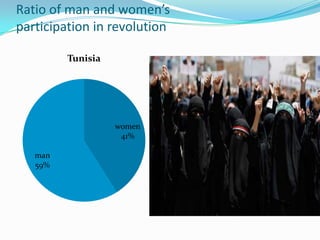
Ratio of man and women’s
participation in revolution
Tunisia

women
41%
man
59%
Tunisia – From Oppression
to Resistance to Spark for
the Region
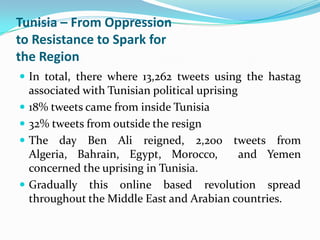
 In total, there where 13,262 tweets using the hastag







associated with Tunisian political uprising
18% tweets came from inside Tunisia
32% tweets from outside the resign
The day Ben Ali reigned, 2,200 tweets from
Algeria, Bahrain, Egypt, Morocco,
and Yemen
concerned the uprising in Tunisia.
Gradually this online based revolution spread
throughout the Middle East and Arabian countries.
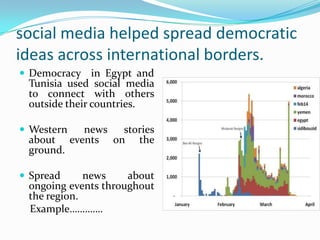
social media helped spread democratic
ideas across international borders.
 Democracy in Egypt and

Tunisia used social media
to connect with others
outside their countries.

 Western

about
ground.

 Spread

news
stories
events on the

news
about
ongoing events throughout
the region.
Example………….
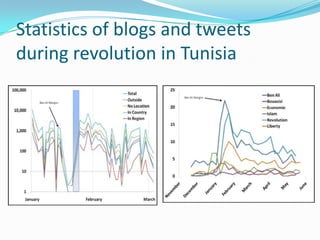
Statistics of blogs and tweets
during revolution in Tunisia
Egypt – The Freedom Meme
Spreads Through Social
Networks
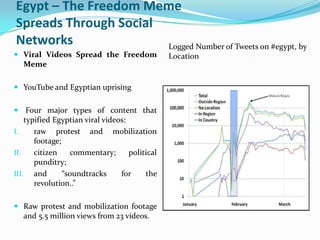
Logged Number of Tweets on #egypt, by

 Viral Videos Spread the Freedom
Meme
 YouTube and Egyptian uprising

 Four major types of content that
typified Egyptian viral videos:
I.
II.
III.

raw protest and mobilization
footage;
citizen
commentary;
political
punditry;
and
“soundtracks
for
the
revolution..”

 Raw protest and mobilization footage
and 5.5 million views from 23 videos.

Location
Finally …
 Revolution in revolution
 Bangladesh perspective
 Malala Yousafzai
References
1.

N. Howard, Philip, opening closed regimes, University of Washington.

2. http://www.readwriteweb.com/archives/how_recent

_changes_to_twitters_terms_of_service_mi.php
3.

4.
5.

Demographic data from the CIA World Factbook and World Bank.’s
World Development Indicators database. Technology use data from
the International Telecommunications Union.
http://en.wikipedia.org/wiki/Arab_Spring
http://www.somewhereinblog.net/blog/fahmidulhaqblog
Thank you all

Arab spring and media group 2

  • 1.
    Group :B kazi MannaYeasmin Rishu Imran Ahsan Jhuyena Akter Amir Hossain
  • 2.
    Outline 1. 2. 3. 4. 5. 6. Term analysis Opening speech Backgroundof Arab Spring Political debates in social media during Arab Spring Spread democratic ideas across international boarder Power of social media i. ii. iii. iv. v. Young people’s role in Arab spring by social media Women’s role Tunisia Statistics of blogs and tweets during revolution in Tunisia Egypt
  • 3.
    Term analysis  The Arabspring is a revolutionary wave of demonstrations, protests, and wars occurring in the Arab world that began on 18 December 2010 in Tunisia  Social media refers to the means of interactions among people in which they create, share, and exchange information and ideas in virtual communities and networks.[1 Andreas K aplin and Michael Haenlein define social media as "a group of Internet-based applications that build on the ideological and technological foundations of Web 2.o, and that allow the creation and exchange of user-generated content.
  • 4.
    0pening speech  TheArab Spring had many causes. One of these sources was social media and its power to put a human face on political oppression. Bouazizis self immolation was one of several stories told and retold on Facebook, Twitter, and YouTube in ways that inspired dissidents to organize protests, criticize their governments, and spread ideas about democracy. Until now, most of what we have known about the role of social media in the Arab Spring has been anecdotal.
  • 5.
    Background 1. Acceleration of protests throughsocial media 2. Thought of inventors about their social media 3. Social media ,the platform of sharing views
  • 6.
    Social media playeda central role in shaping political debates in The Arab Spring I. II. Social Media plays an integral part in the revolution  Preceding mass protests by blogs and tweets  Resignation of Ben Ali Demographic conversation in political debate through social  Statistics of primary blogs and rally……… media. Social media & creating pressure on governments.
  • 7.
     Young peopletake key leadership Spring in Arab Women’ role in Arab Spring  Women’s participation in political conversations.  66 percent of the Internet savvy  41 % of Tunisia’s Facebook population in population is female and 36 Tunisia, and 70 percent percent of Egypt’s Facebook in Egypt, is under the age population is female. of 34.  Women made up 33 percent of the people actively Tweeting inside Egypt during the revolution.
  • 8.
    Ratio of manand women’s participation in revolution Tunisia women 41% man 59%
  • 9.
    Tunisia – FromOppression to Resistance to Spark for the Region  In total, there where 13,262 tweets using the hastag     associated with Tunisian political uprising 18% tweets came from inside Tunisia 32% tweets from outside the resign The day Ben Ali reigned, 2,200 tweets from Algeria, Bahrain, Egypt, Morocco, and Yemen concerned the uprising in Tunisia. Gradually this online based revolution spread throughout the Middle East and Arabian countries.
  • 10.
    social media helpedspread democratic ideas across international borders.  Democracy in Egypt and Tunisia used social media to connect with others outside their countries.  Western about ground.  Spread news stories events on the news about ongoing events throughout the region. Example………….
  • 11.
    Statistics of blogsand tweets during revolution in Tunisia
  • 12.
    Egypt – TheFreedom Meme Spreads Through Social Networks Logged Number of Tweets on #egypt, by  Viral Videos Spread the Freedom Meme  YouTube and Egyptian uprising  Four major types of content that typified Egyptian viral videos: I. II. III. raw protest and mobilization footage; citizen commentary; political punditry; and “soundtracks for the revolution..”  Raw protest and mobilization footage and 5.5 million views from 23 videos. Location
  • 13.
    Finally …  Revolutionin revolution  Bangladesh perspective  Malala Yousafzai
  • 14.
    References 1. N. Howard, Philip,opening closed regimes, University of Washington. 2. http://www.readwriteweb.com/archives/how_recent _changes_to_twitters_terms_of_service_mi.php 3. 4. 5. Demographic data from the CIA World Factbook and World Bank.’s World Development Indicators database. Technology use data from the International Telecommunications Union. http://en.wikipedia.org/wiki/Arab_Spring http://www.somewhereinblog.net/blog/fahmidulhaqblog
  • 15.