Energy, Tools &
Appropriate Technology
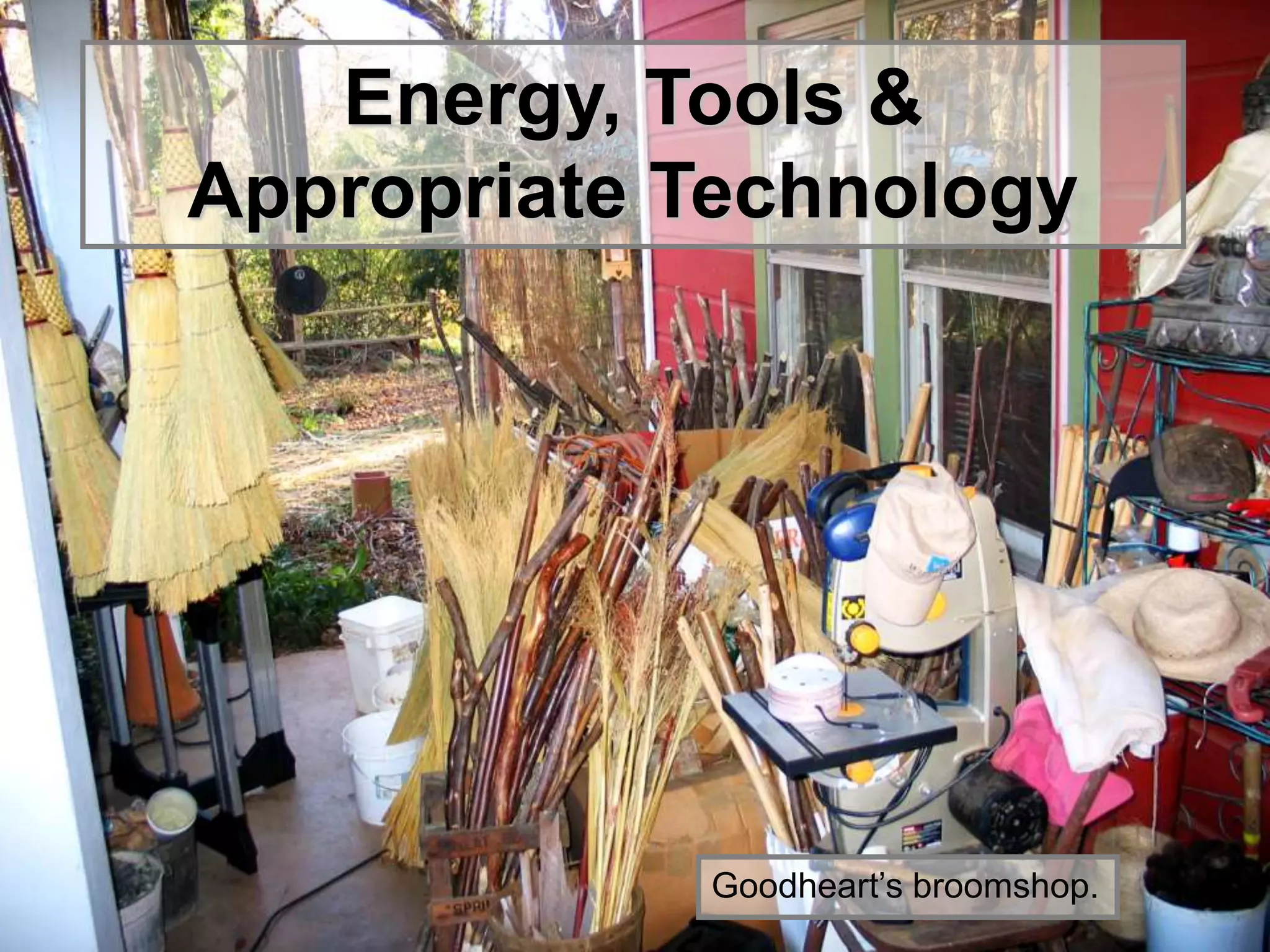
Goodheart’s broomshop.
Appropriate:
What we can appropriate for ourselves
that :
• is culturally relevant & meets real needs.
• Is frugal & equitable to use & fosters
diversity & self-reliance.
• produces a surplus and avoids waste of
resources.
Technology:
Application of knowledge derived from
observation of nature & the materials &
methods applied.
Work where it counts:
• Right tools at the right time
• Work is more effective when based in
cooperativeness, honesty, & a common
land base (bioregion).
• Foster an ethic of innovation,
experimentation, & adaptation.
Requirements for success:
• Widely applicable, flexibly useful, self-
taught, commonly available, generates
enthusiasm for participation, overcomes
cultural inertia.
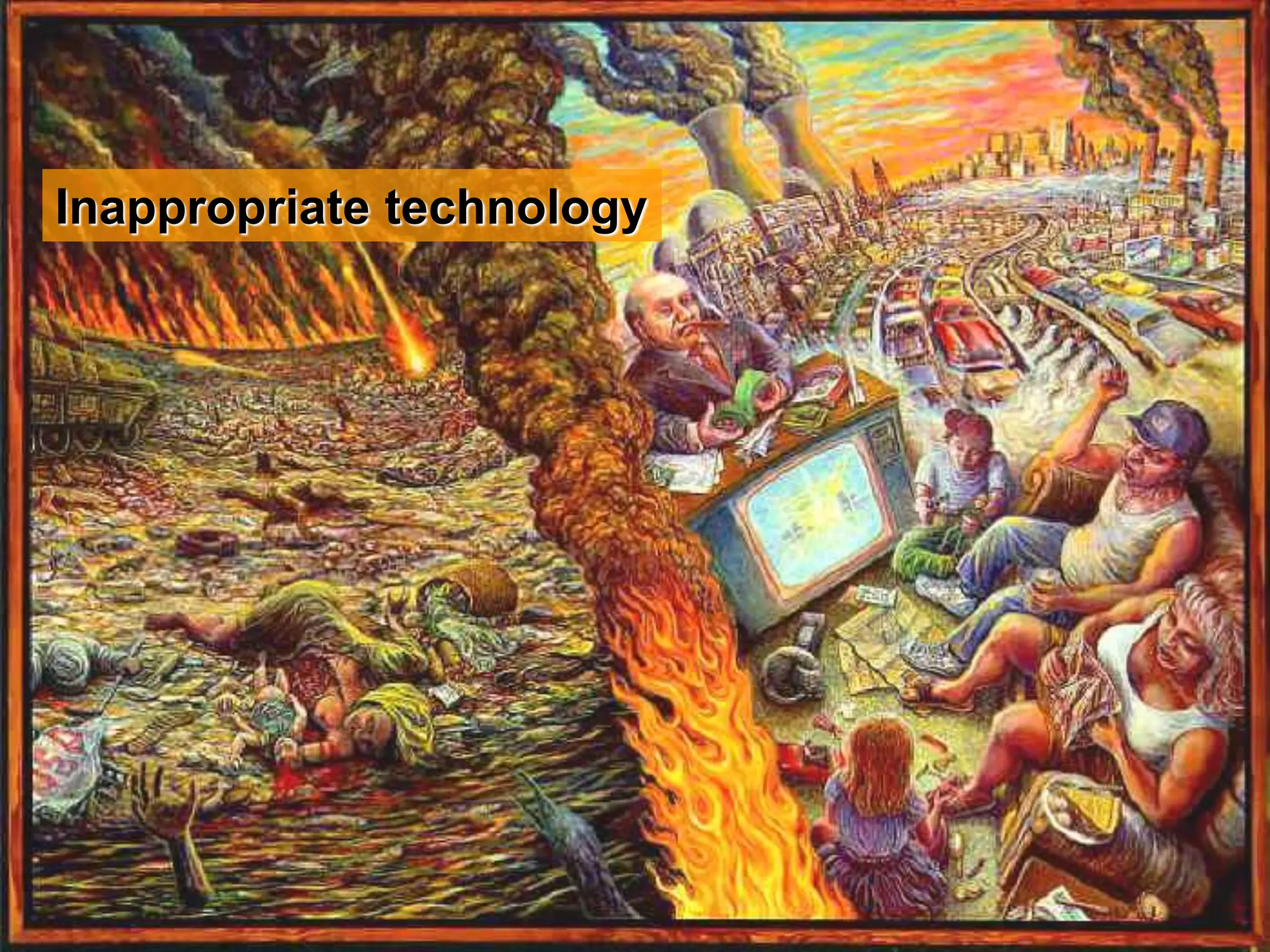
Inappropriate technology
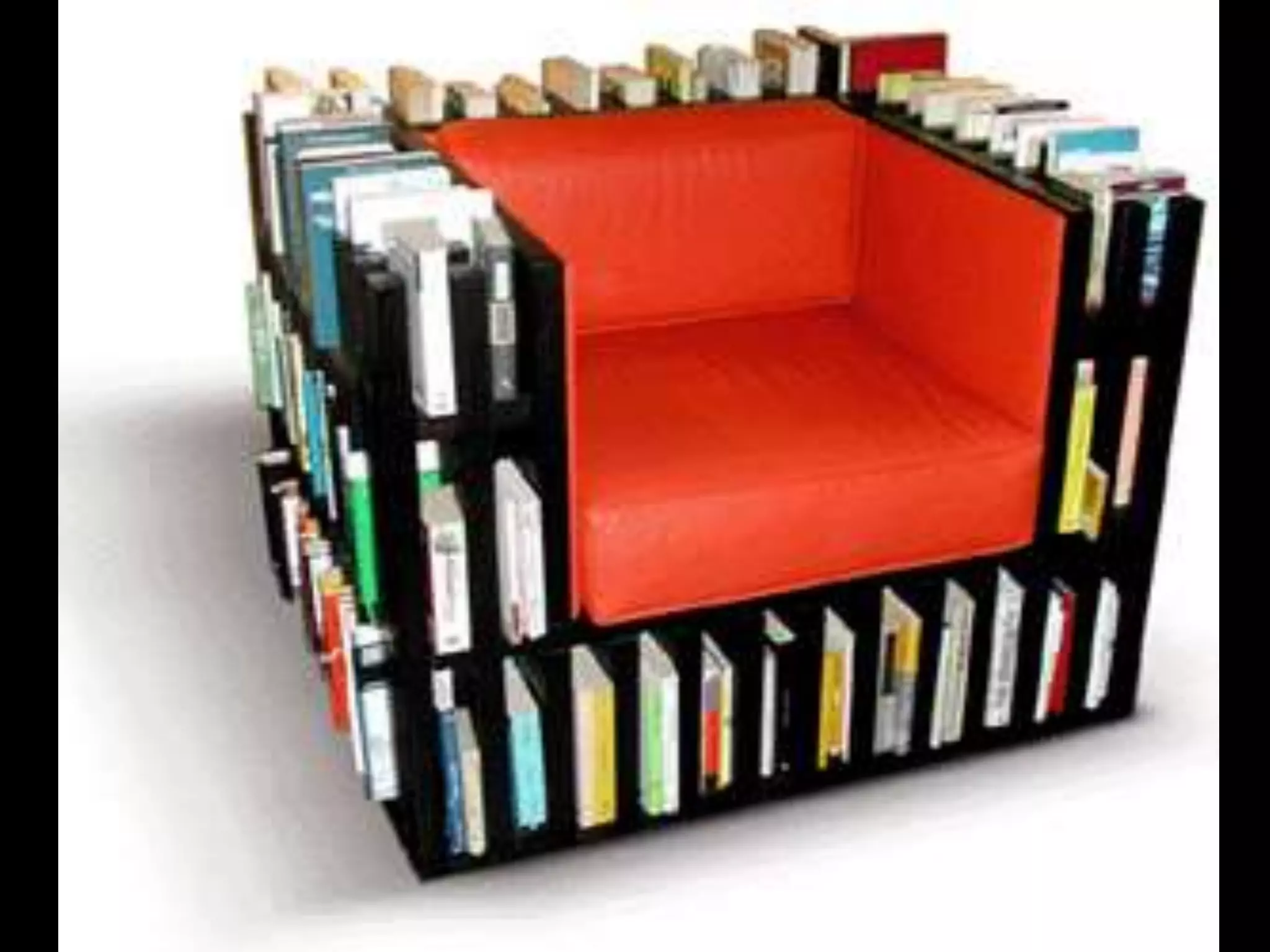
Scrapture (Sculpture + [S]Crap)
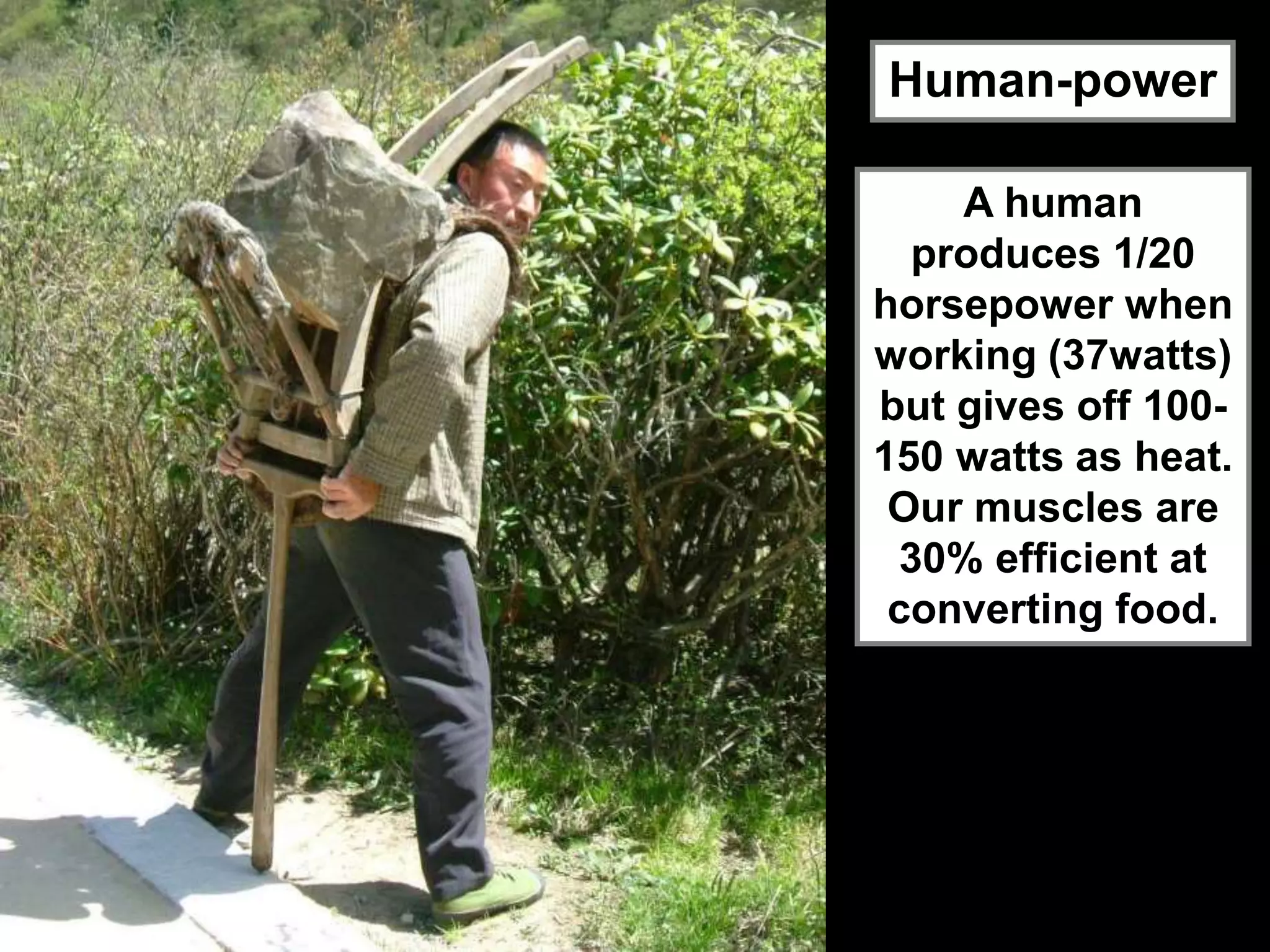
Human-power
A human
produces 1/20
horsepower when
working (37watts)
but gives off 100-
150 watts as heat.
Our muscles are
30% efficient at
converting food.
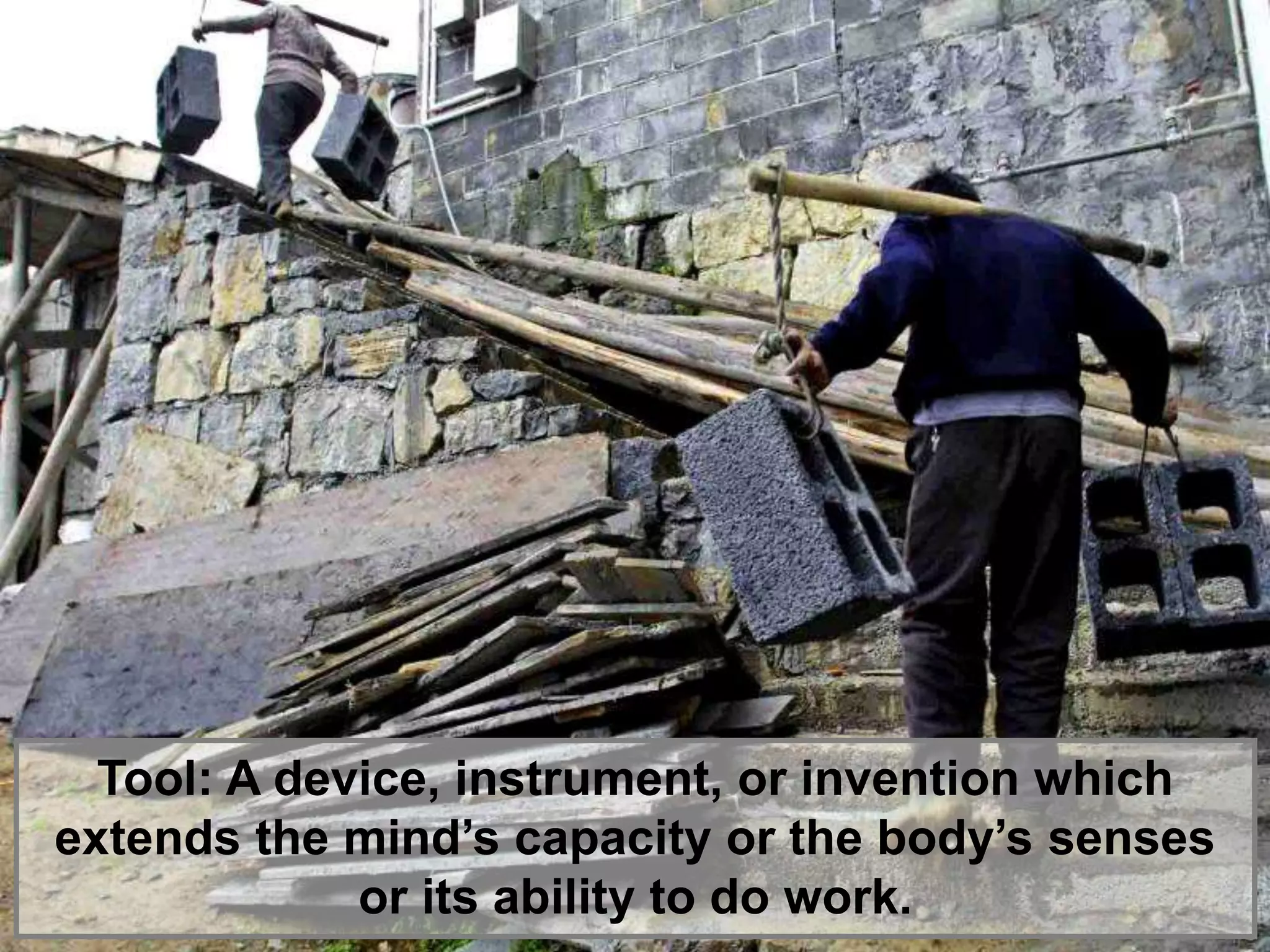
Tool: A device, instrument, or invention which
extends the mind’s capacity or the body’s senses
or its ability to do work.
Agriculture & forestry yield 5-6 times
the energy as all industrial sources.
Convivial tools enhance our standard of living without
reducing our quality of life. They also increase our
freedom of choice, connectedness to community & let us
identify with our tasks & work.
Types of tools:
•Conceptual: Permaculture designer’s toolkit.
•Organizational: Indexes, calendars, file cabinets,
databases.
•Measuring: Rules, tapes, levels, squares, transit…etc.
•Manipulative: Hammers, shovels, pruners, levers.
•Storages: Tanks, canning jars.
Well-designed tools are:
•Low-cost, durable, repairable
•High in embedded information (quality, experience)
•Capable of generating economic yield
•Able to produce more energy over their lifetime than used
to create & care for them.
•Sufficient to task, not excessive, & adaptable to many tasks
Bamboo fiber for fabrics
Bark Bags from Bolivia – a renewable resource
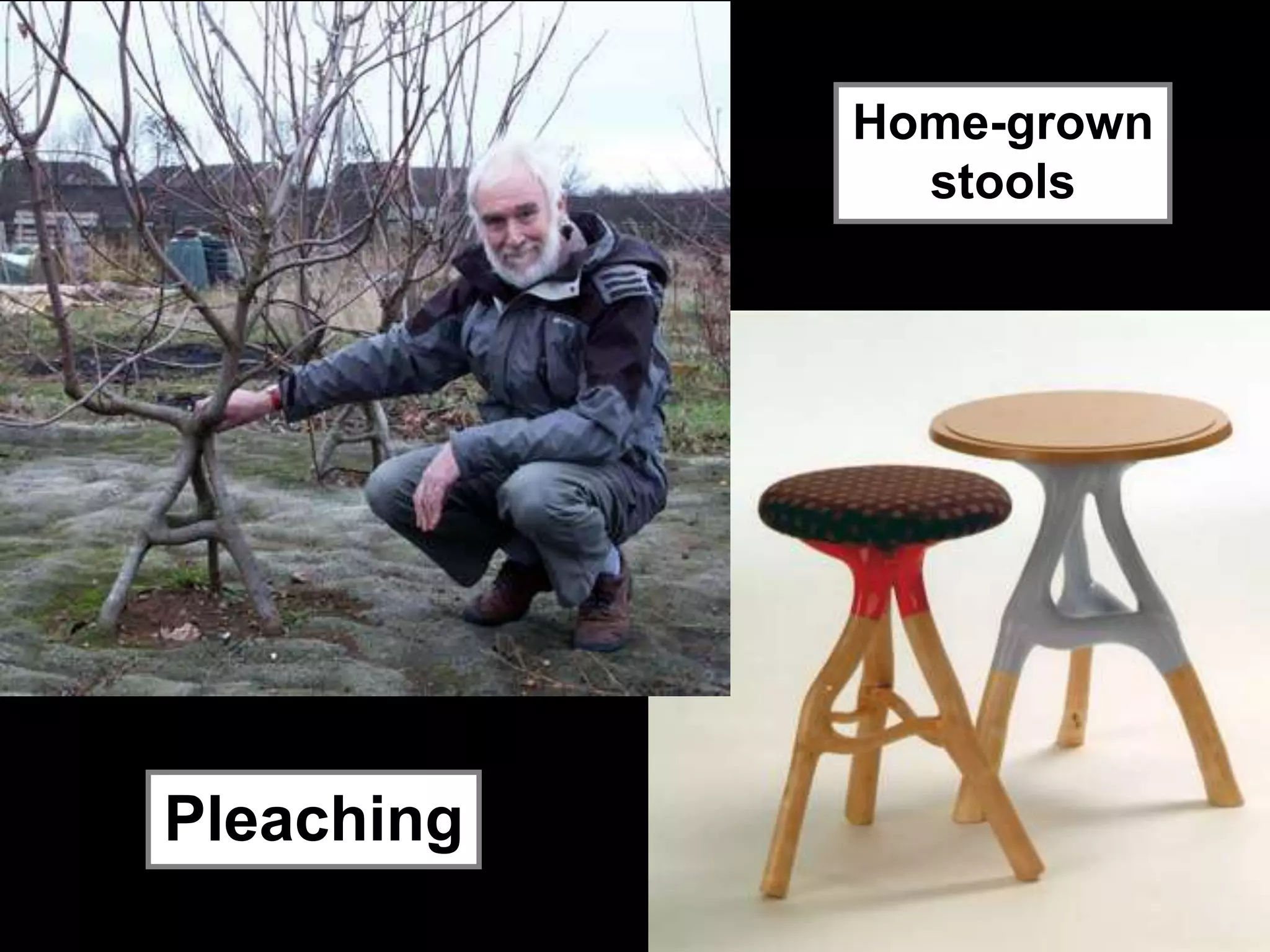
Pleaching
Home-grown
stools
Pleached bio-
architecture
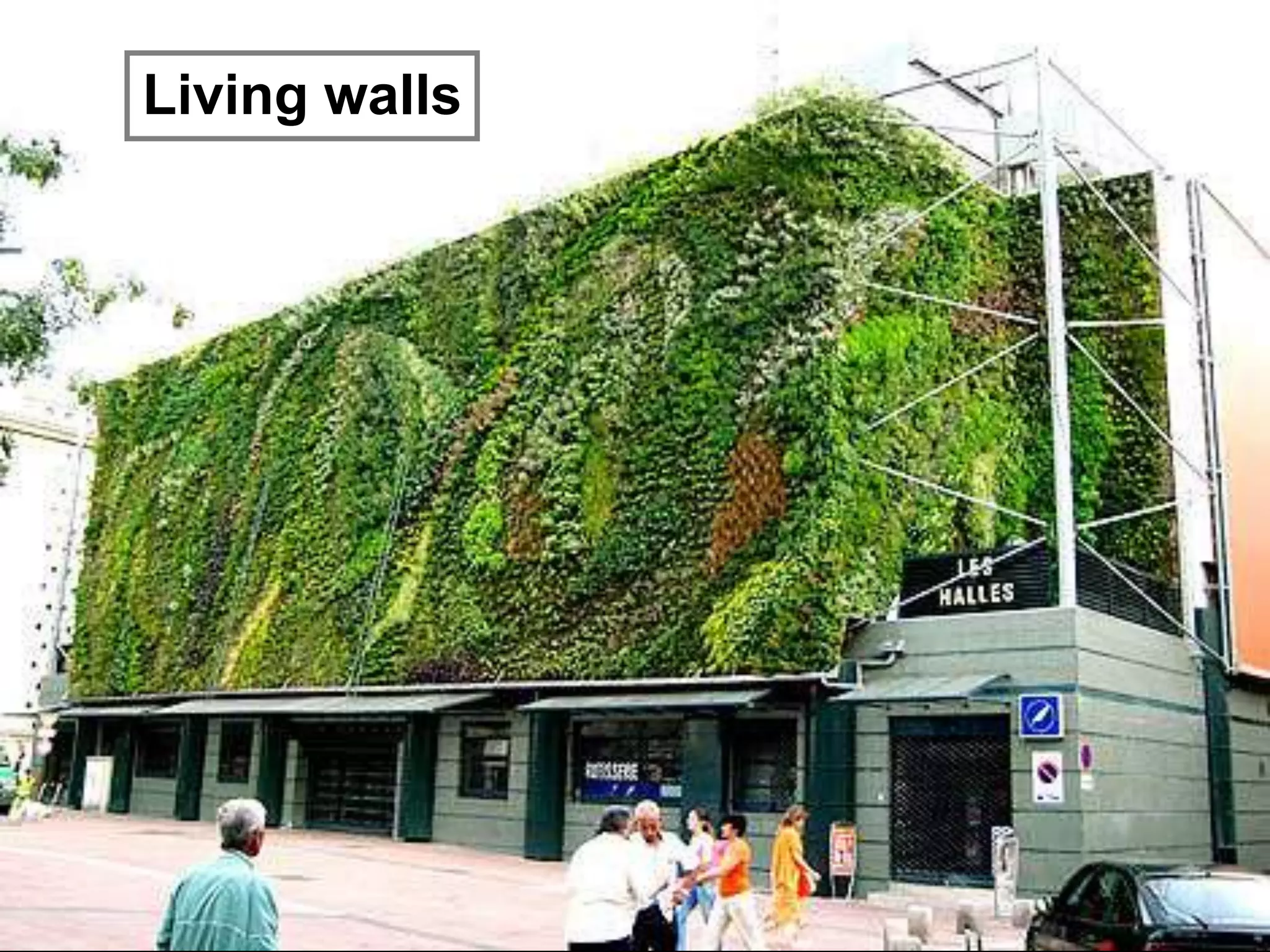
Living walls
Well sweep - Croatia
AppropriateTech. in Development…
Meets REAL needs & is culturally relevant.
Works where it counts with right tools at right time.
Encourages cooperation, honesty, curiosity,
flexibility, & adaptability.
Teaches innovation
& experimentation
Essentials for Success:
Widely applicable
Self-taught
Flexible use
Generates enthusiasm
Achievable / Credible /
Empowering / Liberating
Build on early successes
Supportive
Educative
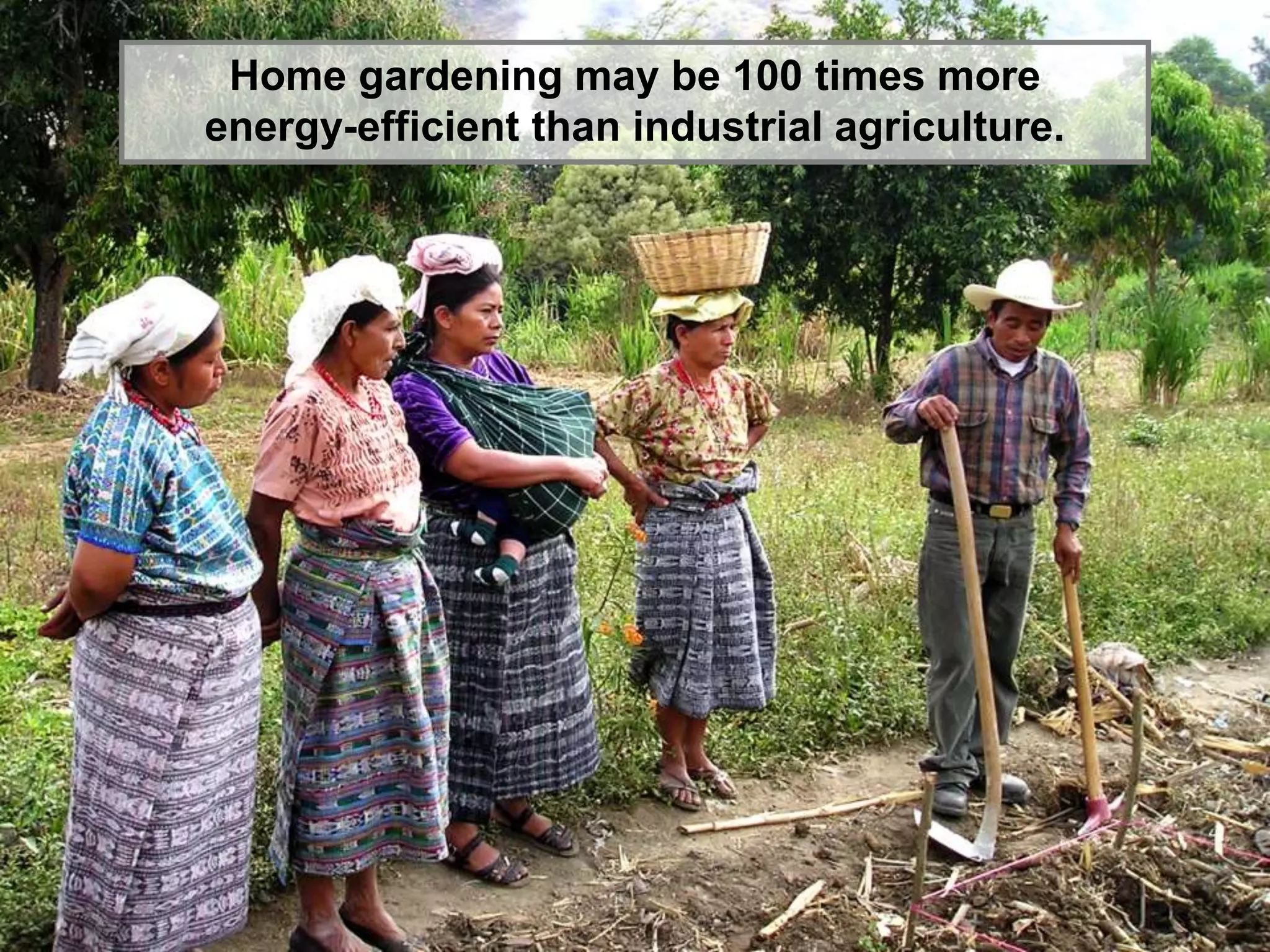
Home gardening may be 100 times more
energy-efficient than industrial agriculture.
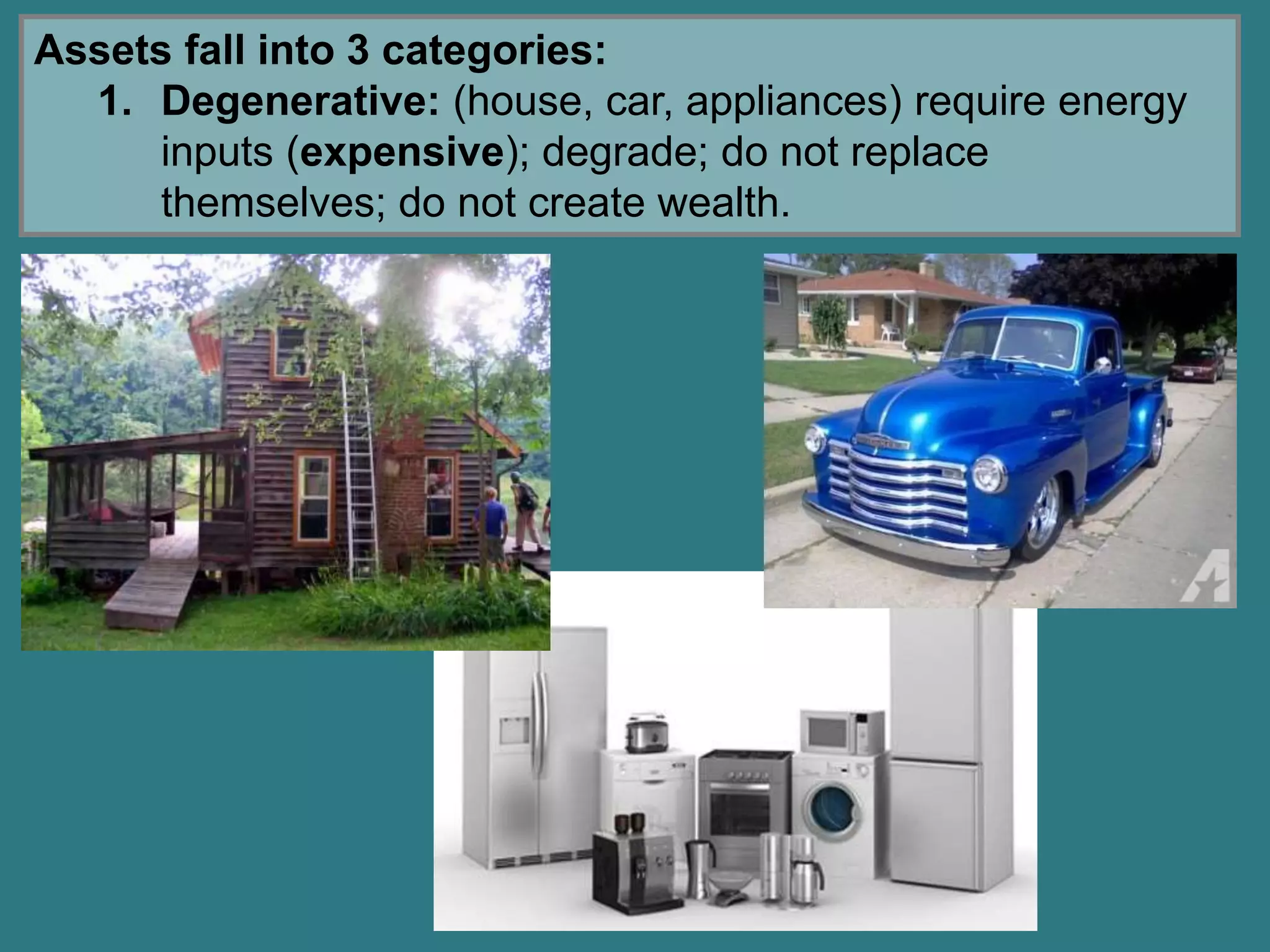
Assets fall into 3 categories:
1. Degenerative: (house, car, appliances) require energy
inputs (expensive); degrade; do not replace
themselves; do not create wealth.
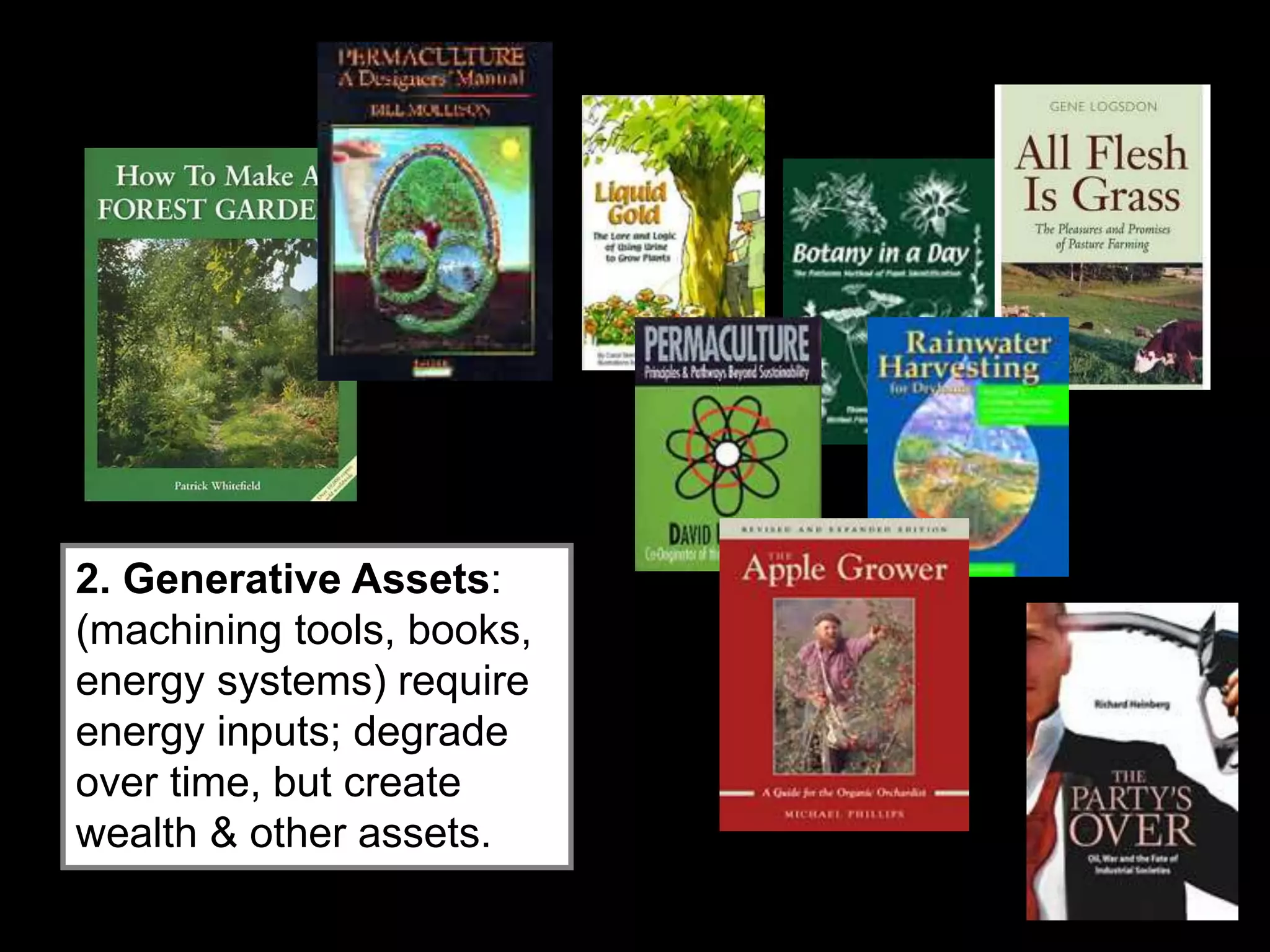
2. Generative Assets:
(machining tools, books,
energy systems) require
energy inputs; degrade
over time, but create
wealth & other assets.
3. Regenerative Assets:
(plants, animals, human health & education) require initial
energy inputs, but become self-maintaining, self-propagating.
Hand-powered
bow lathe.
Appropriate
tools reduce
drudgery,
enhance
strength & skill,
& are essential
to effective self-
government /
personal /
community
power while
increasing real
wealth.
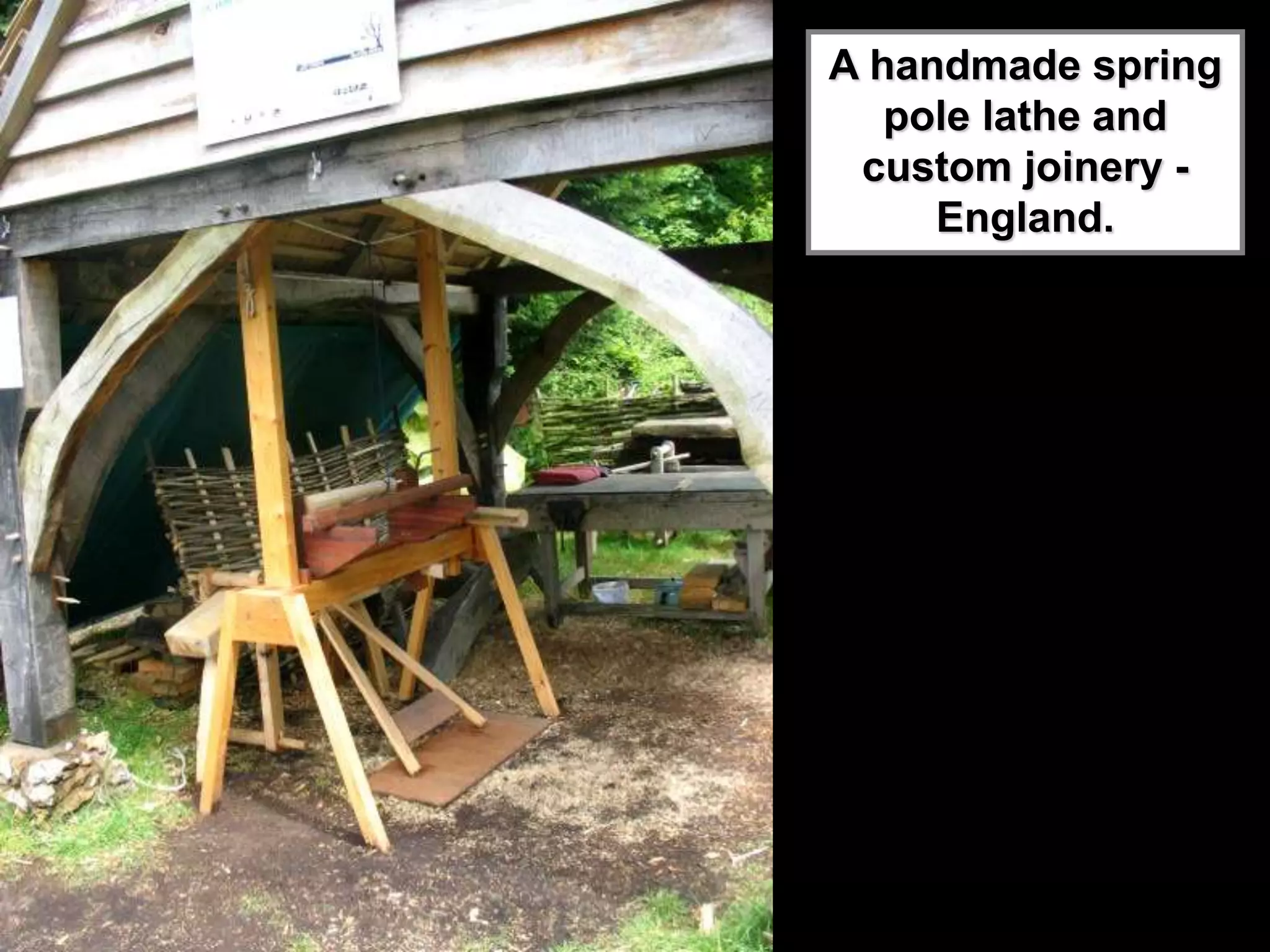
A handmade spring
pole lathe and
custom joinery -
England.
Hydraulic
Herb Press
Technology evolves from
low to intermediate to
high (e.g. mortar & pestle
to hand grinder, food
processor; hoe,
wheelhoe, harrow).
Concentration of wealth
causes the intermediate
level to drop out.
Much low & intermediate
tech has already been
invented.
Use & share historical
tools.
Choose biological
strategies over
mechanical
(mulch not dig,
graze not mow,
wood not steel,
earth not
wood…etc).
Design to
minimize labor
(elevations,
placement,
zonation).
Learn & share
knowledge.
The two-wheeled cart is used to move a reusable
casket for natural burials in Devon, England.
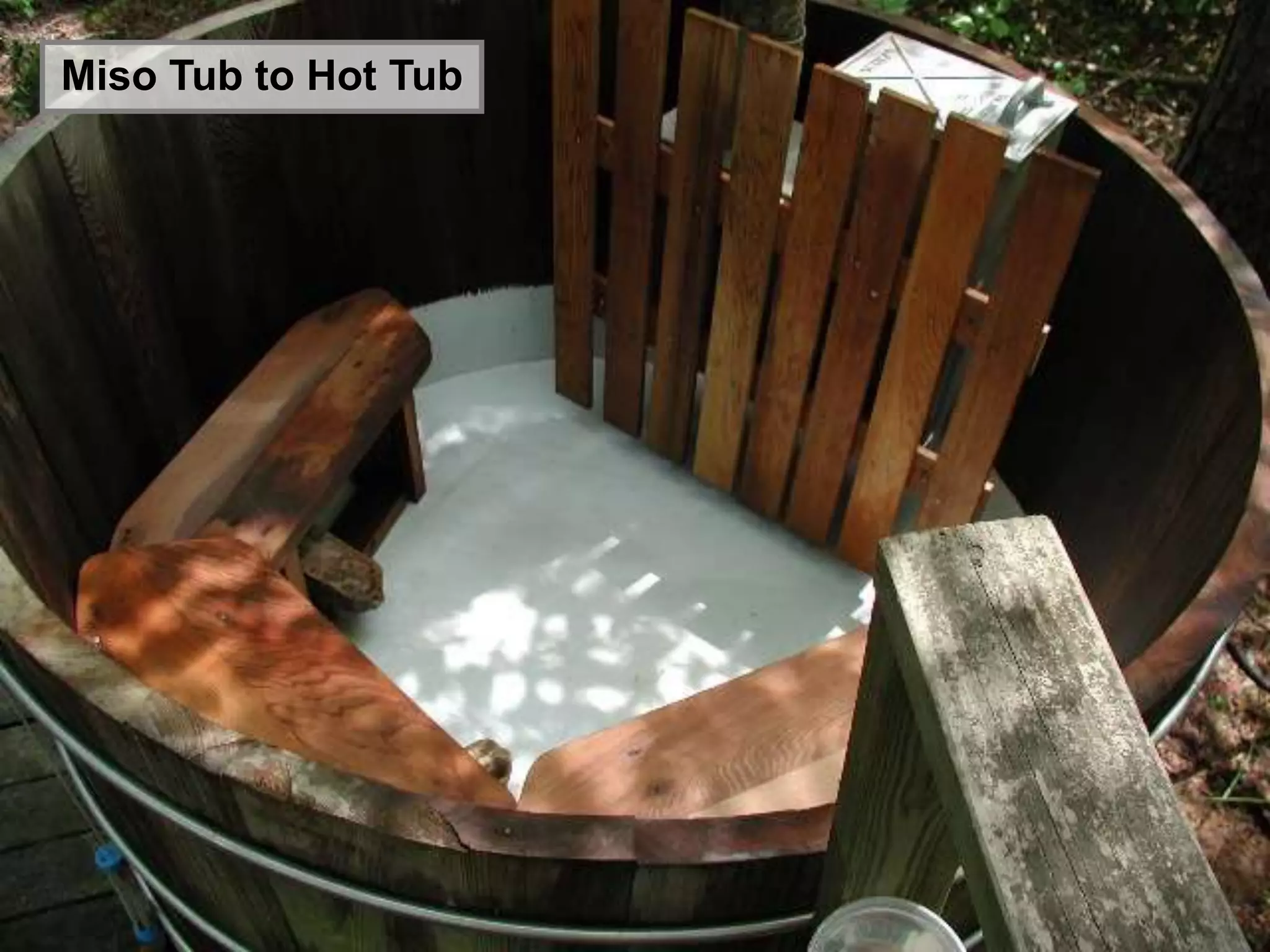
Miso Tub to Hot Tub
Concrete culvert
sections are joined to
create a 30 ft deep
irrigation well in
Croatia.
A cyclist generates 3/10
h.p. (225 watts) at 6X
normal body output.
Pedal-power
flour mill
Variations
on a theme.
Water wheel at Sepp
Holzer’s in Austria.
Hydro-electric Turbine
Sunlight reaching the earth’s surface has 10,000 times
as much energy as all industrial uses combined.
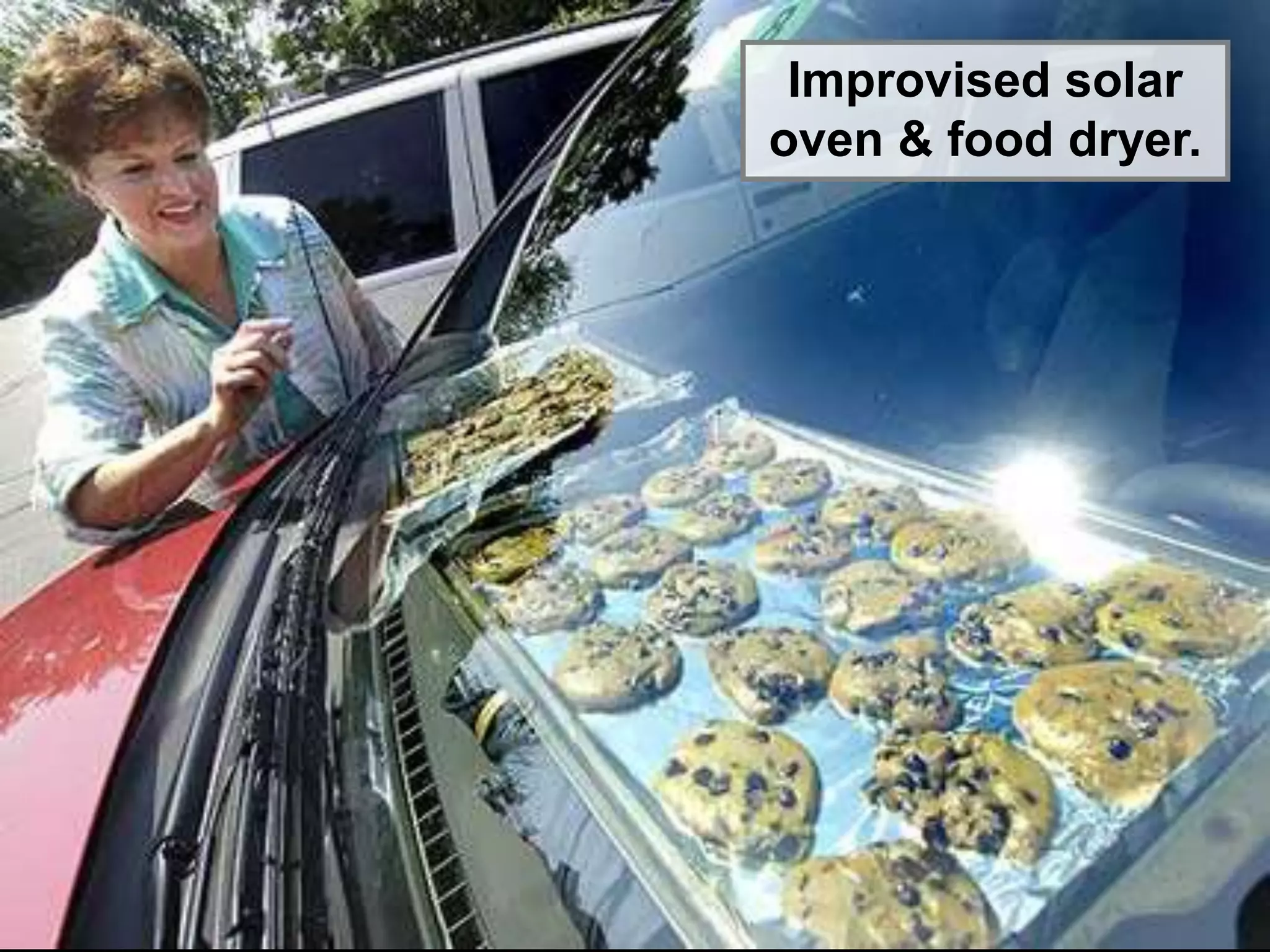
Improvised solar
oven & food dryer.
19 percent of global electricity
generation is used for lighting.
If every U.S. household in replaced one light bulb with a compact
fluorescent it would prevent pollution equal to removing one million cars
from the road. Also a new power plant will not need to be built!
Replacing a 100-watt
incandescent with a 32-
watt CFL can save $30-
$36 in energy costs
over the life of the bulb.
Dispose of as
hazardous
waste.
Each 13-watt CFL, over the expected 10,000 hour
life of the bulb, will save 470 kilowatt hours of
electricity compared to a 60-watt incandescent. If
electricity comes from coal-fired powered plants,
this means a reduction of:
• over 730 pounds of carbon dioxide
• 1.6 pounds of nitrogen oxides (contributes to
health problems, ozone & acid rain), &
• 4.3 pounds of sulfur dioxide (contributes to
haze & acid rain).
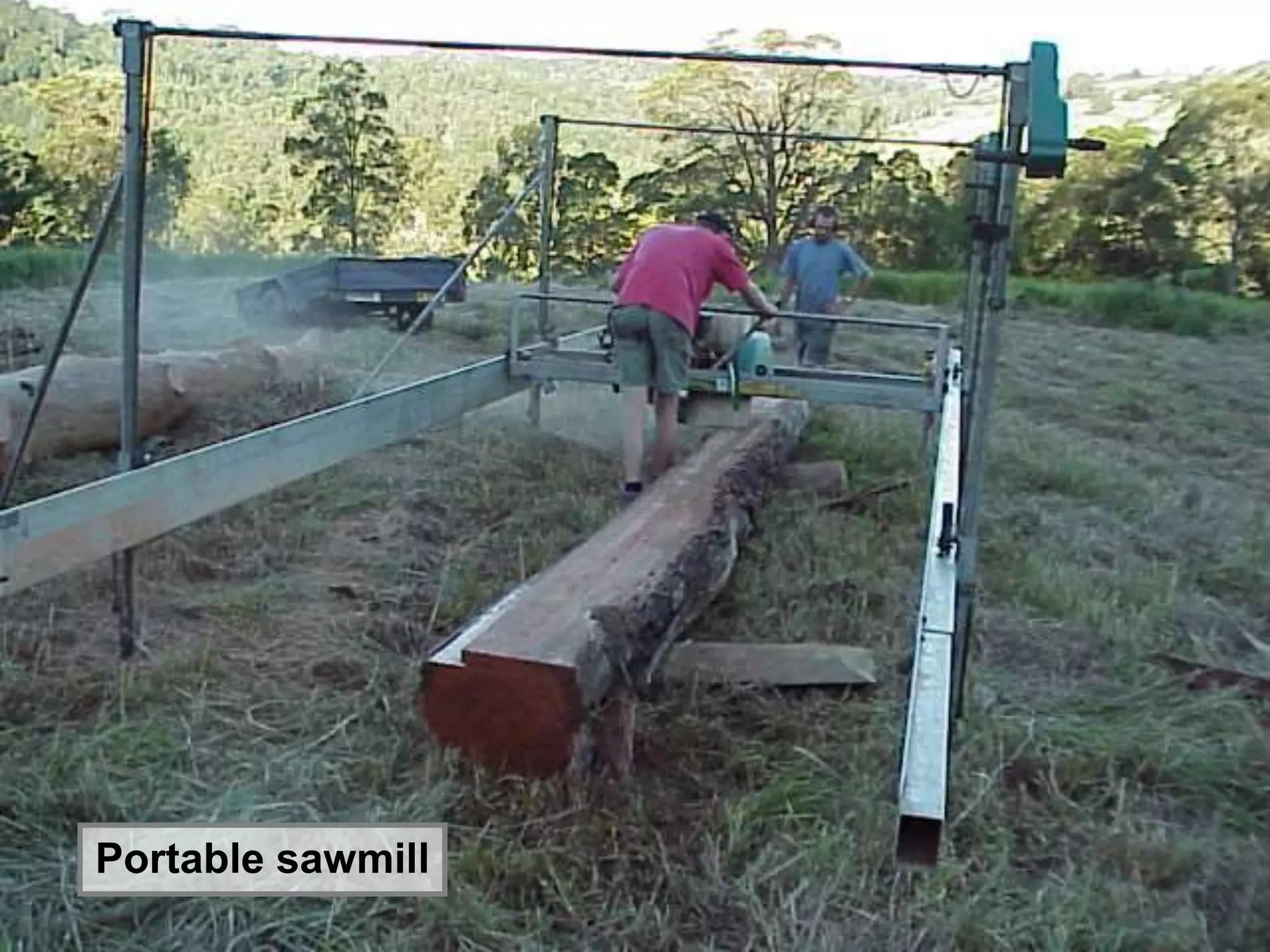
Portable sawmill
Stucco-coated gravel- or sand-filled
polyethylene bags for retaining walls…
…or steps.
This homemade
ferrocement greywater
wood chip filter box is
habitat for 3 principle
decomposers – worms,
millipedes and pill bugs.
Mark Lakeman,
City Repair,
Portland,
Ore.
Old factory flooring will find new life in School
for Natural Building at Earthaven Ecovillage.
Urbanite
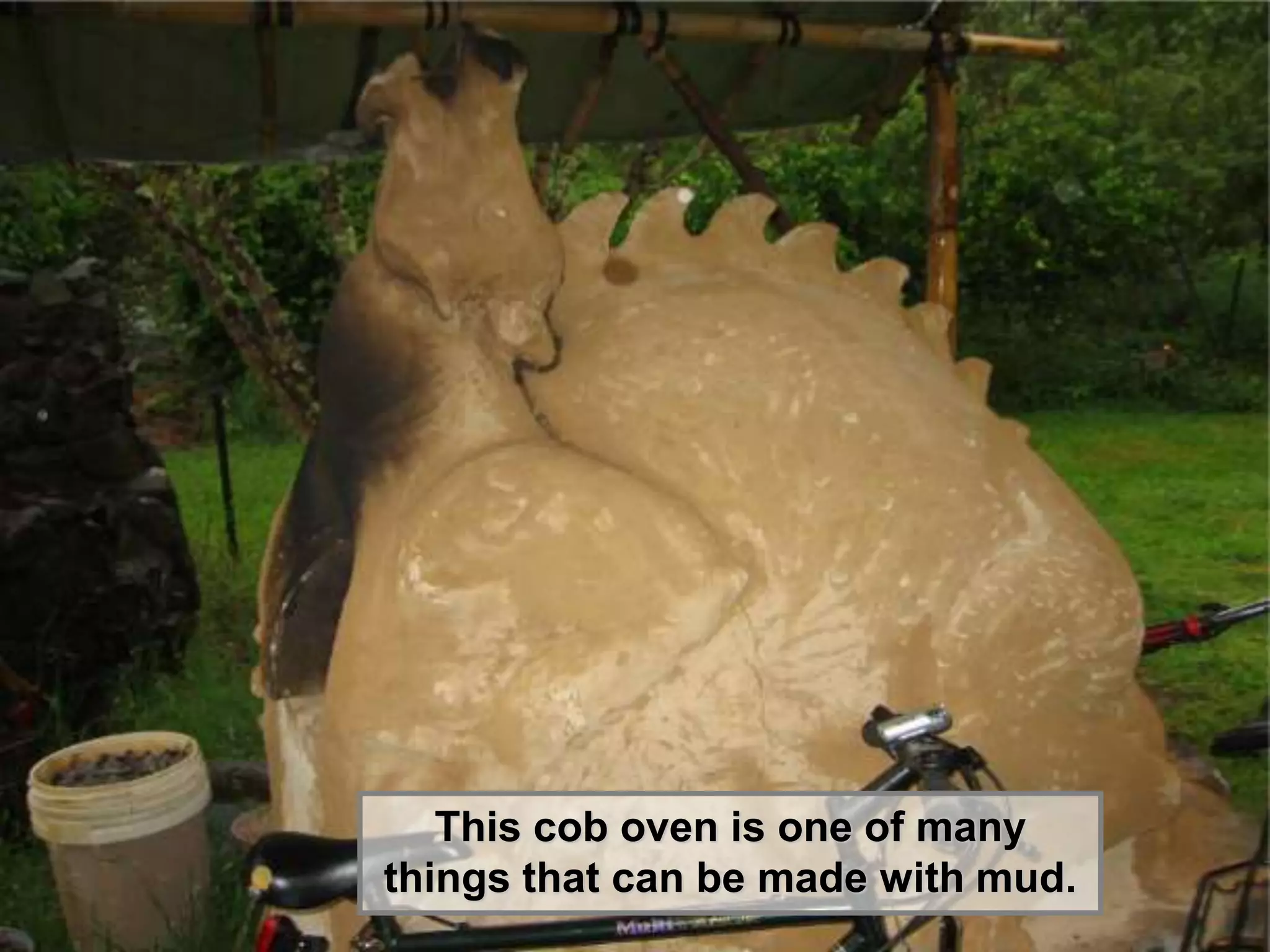
This cob oven is one of many
things that can be made with mud.
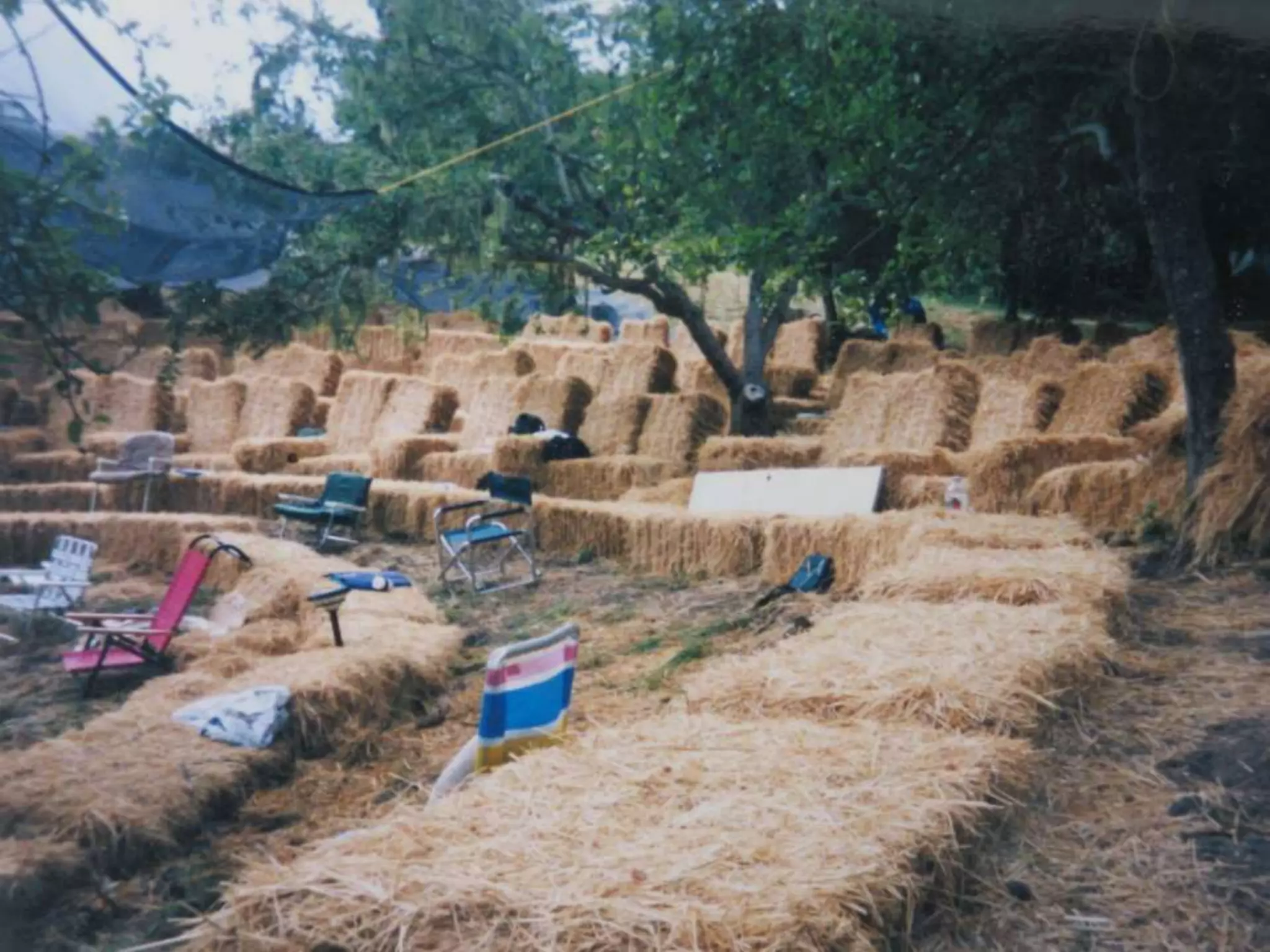
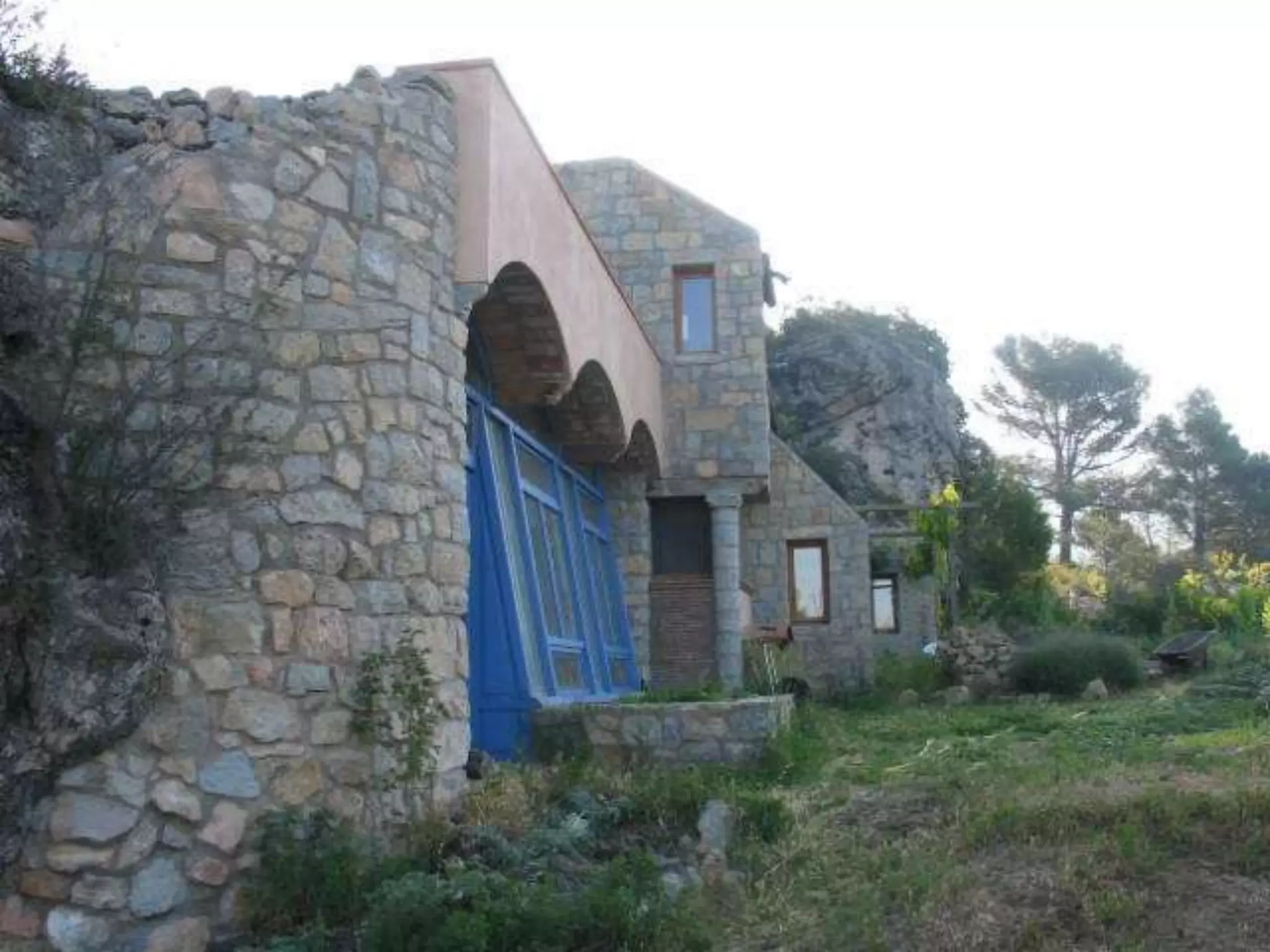
Vaulted strawbale
“dormitories for
Permaculture design
course, Ca
A simple, easy-to-
make beehive.
Habitat &
shelter for
masonry
bees,
Croatia
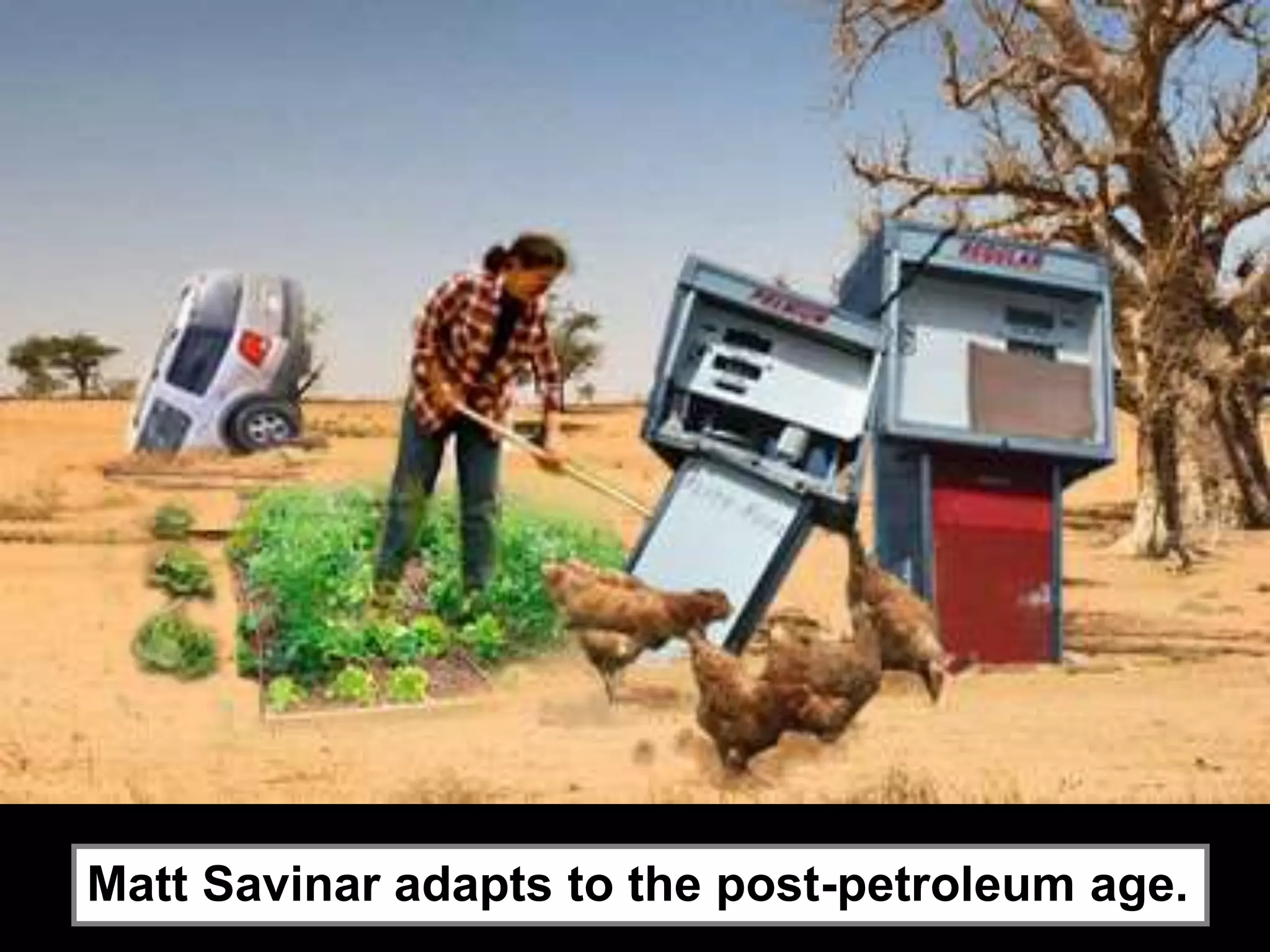
Matt Savinar adapts to the post-petroleum age.
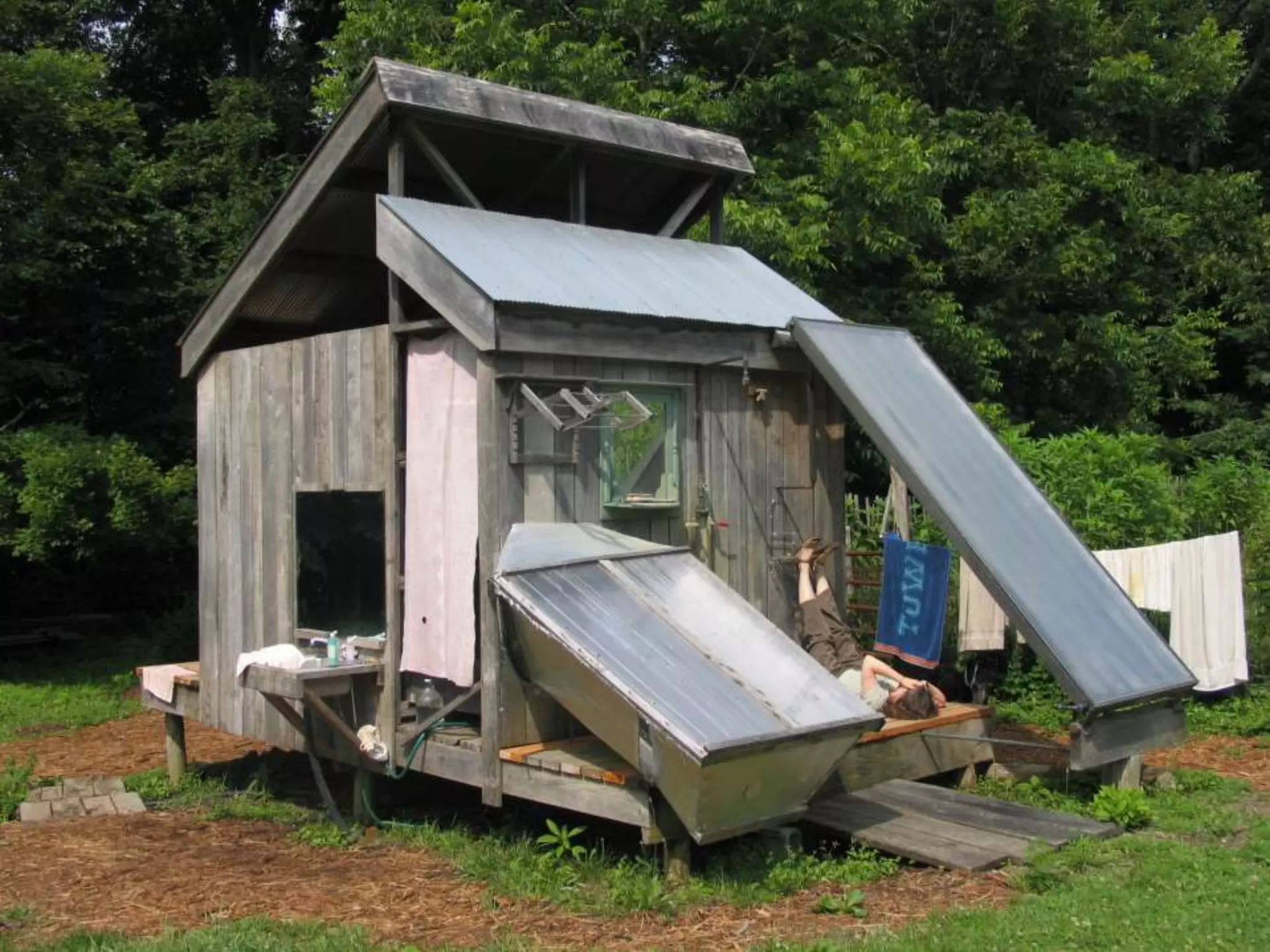
A one-sq-meter collector can heat 50-80 liters (12-19 gal.)
from earth temps to 140 degrees F (60C) with 3-4 hours /
day of maximum solar gain.
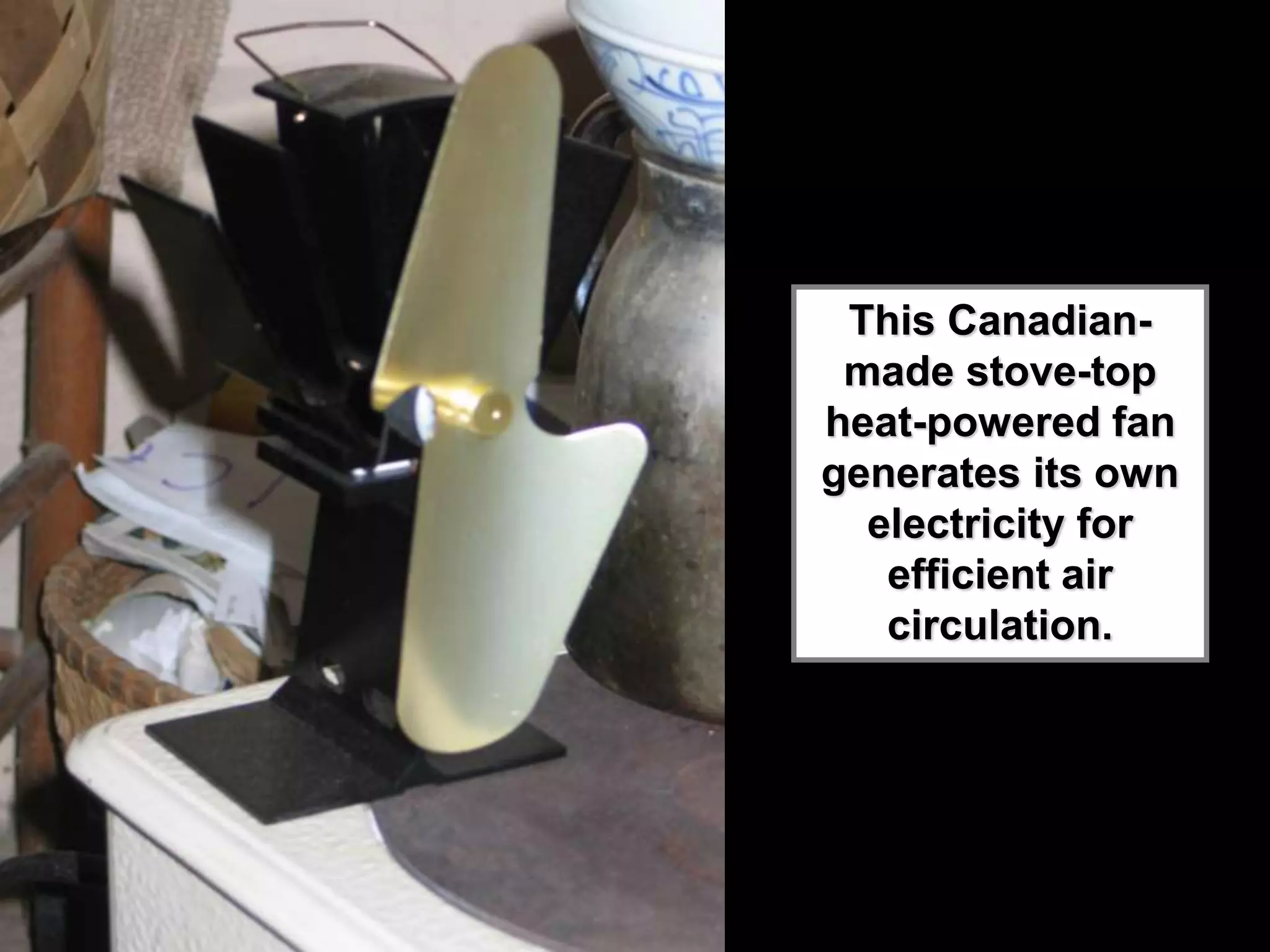
This Canadian-
made stove-top
heat-powered fan
generates its own
electricity for
efficient air
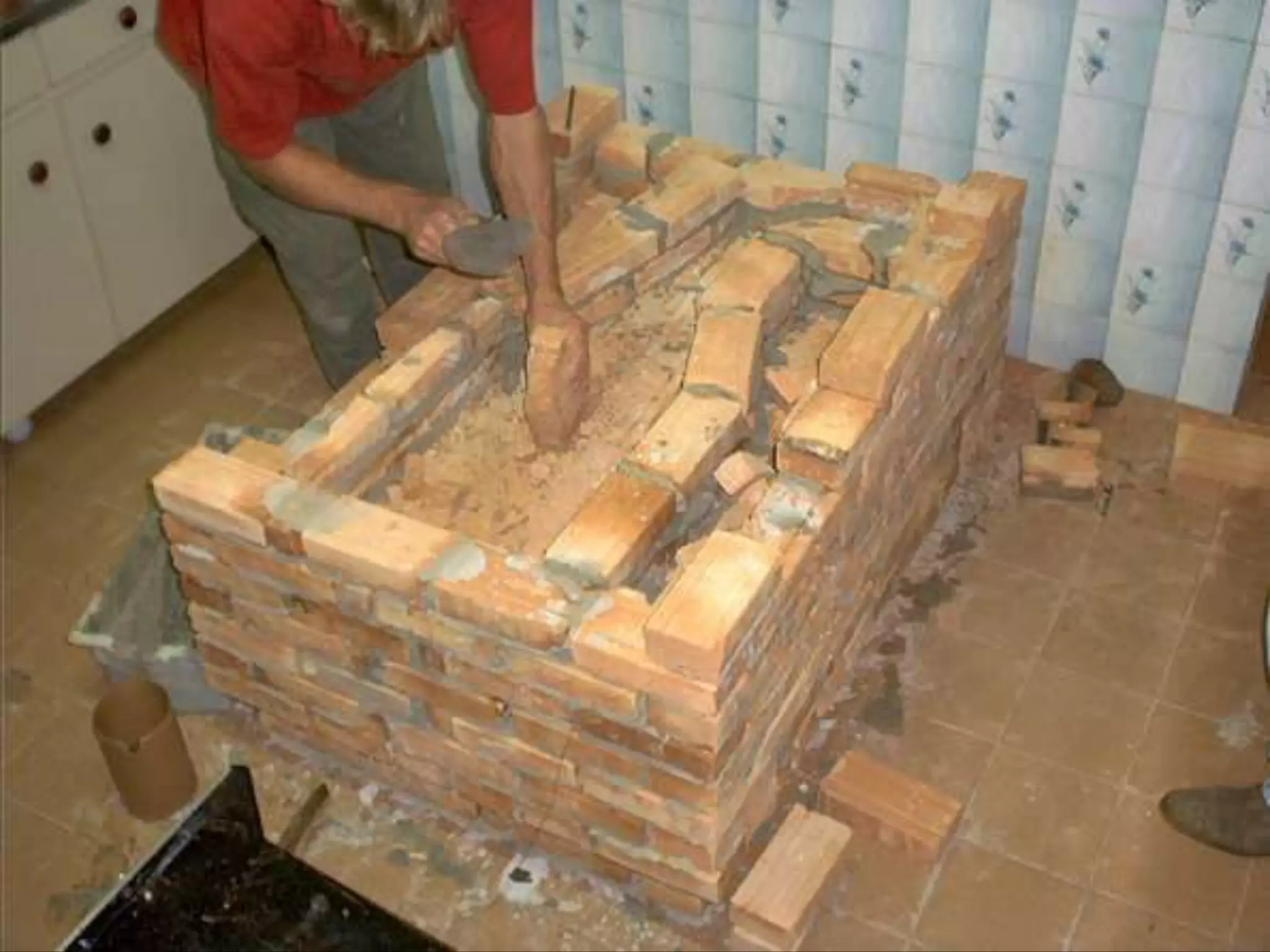
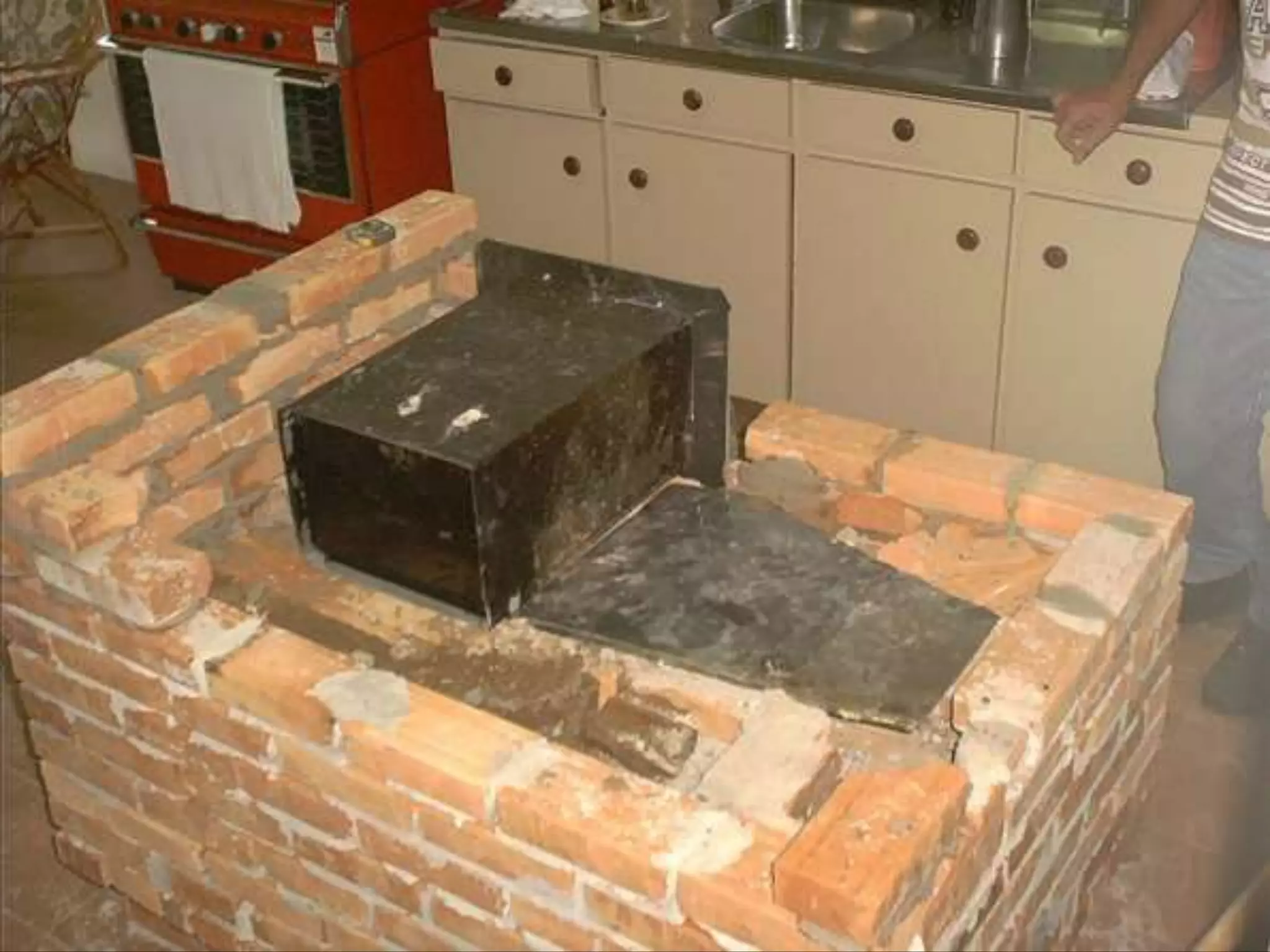
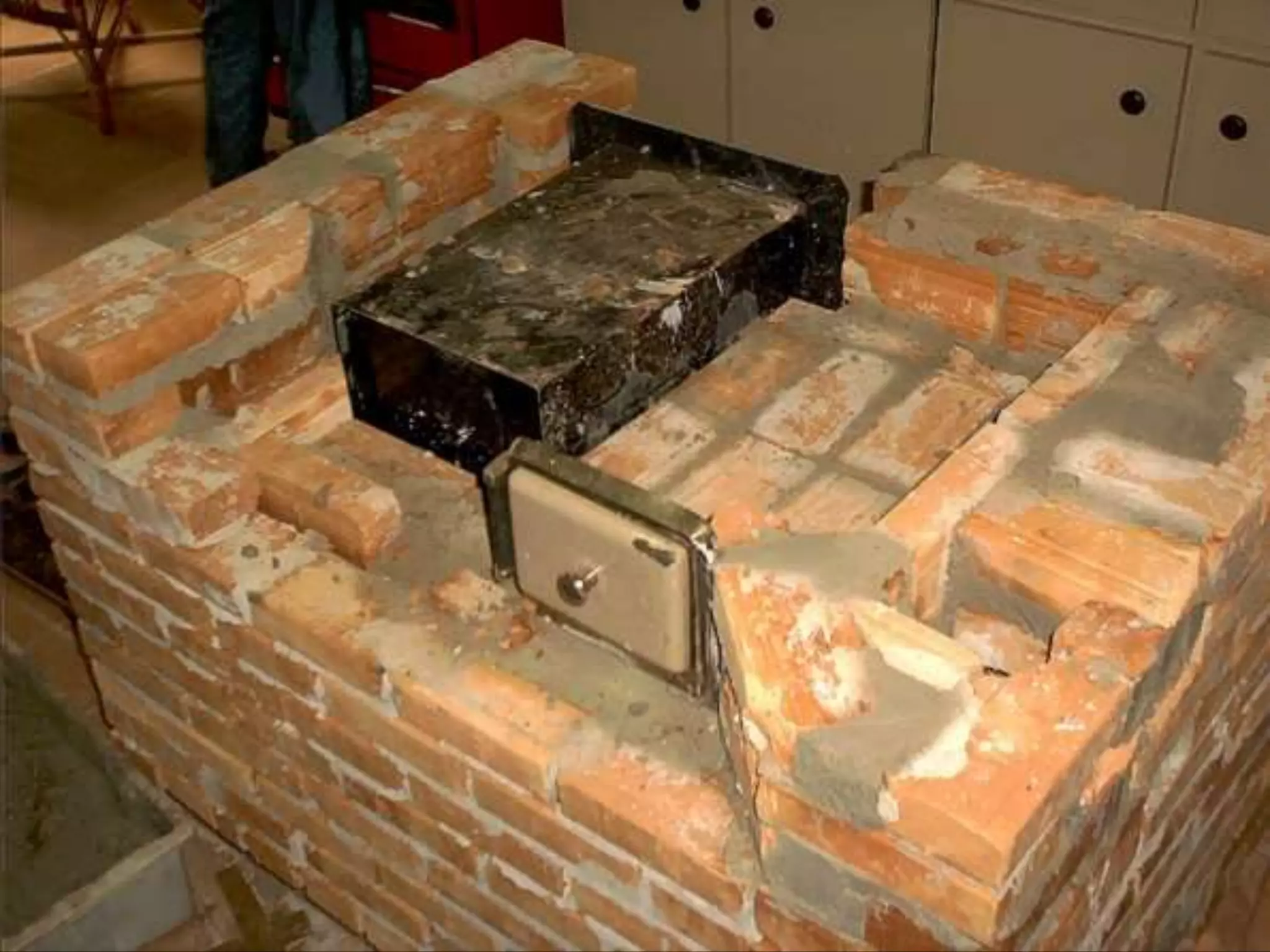
circulation.
Home-made
heat-exchange
water-heating
system &
outdoor air
source.
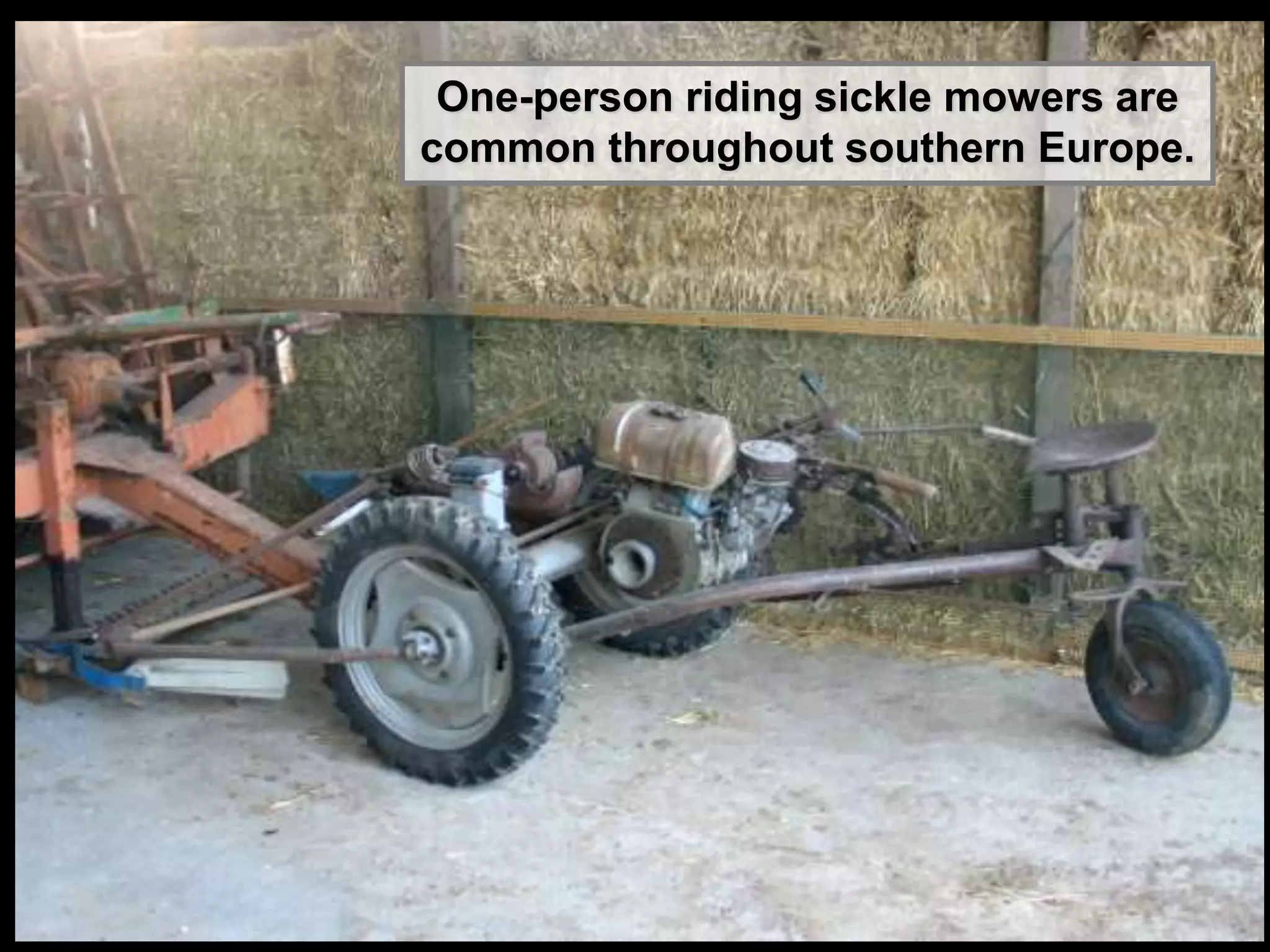
One-person riding sickle mowers are
common throughout southern Europe.
Biodiesel
Processing
Wood burning tractor: “Eddy”
Home-made Savonius Rotor
85 foot
ferrocement
research vessel
Heraclitus
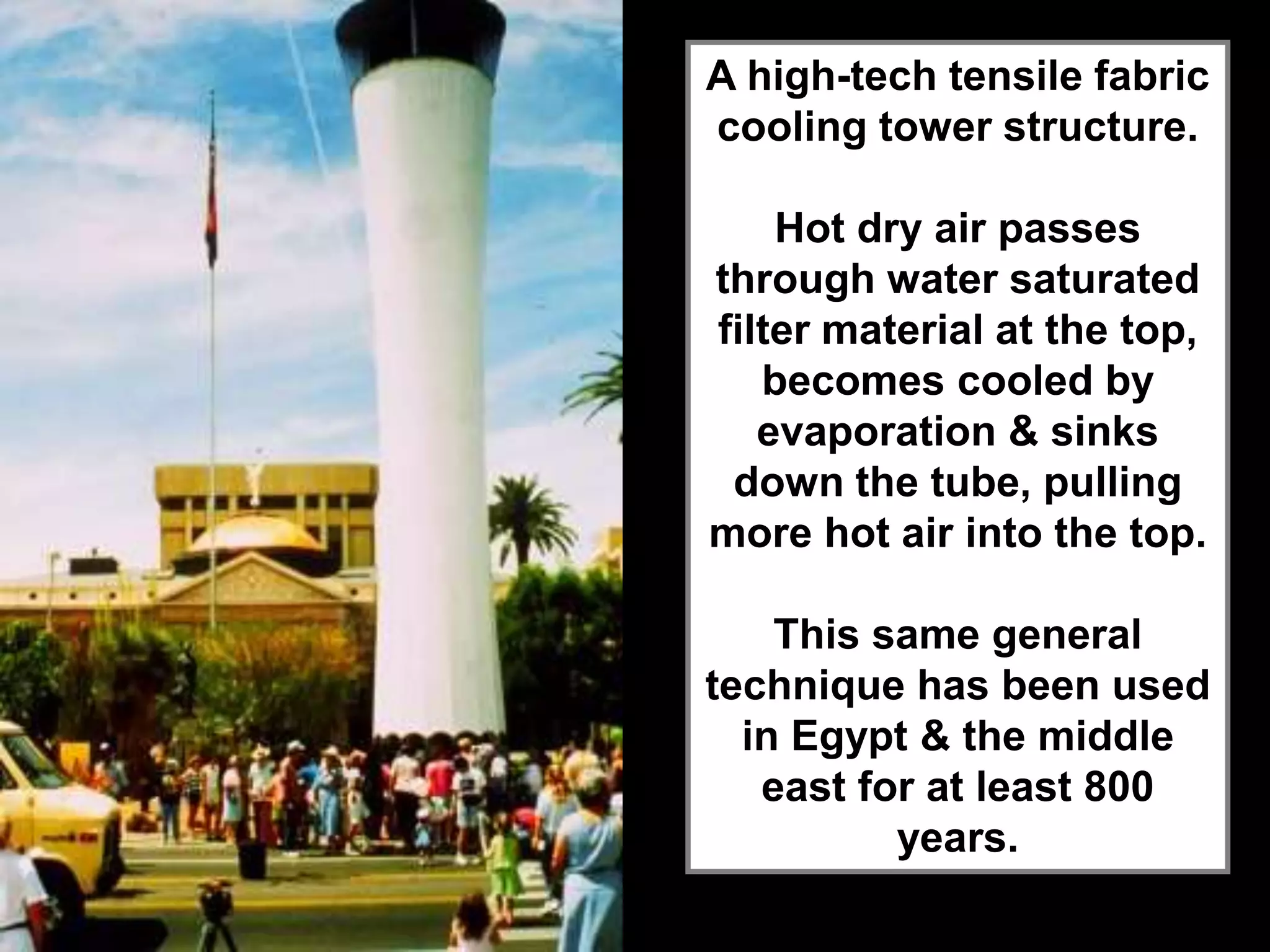
A high-tech tensile fabric
cooling tower structure.
Hot dry air passes
through water saturated
filter material at the top,
becomes cooled by
evaporation & sinks
down the tube, pulling
more hot air into the top.
This same general
technique has been used
in Egypt & the middle
east for at least 800
years.
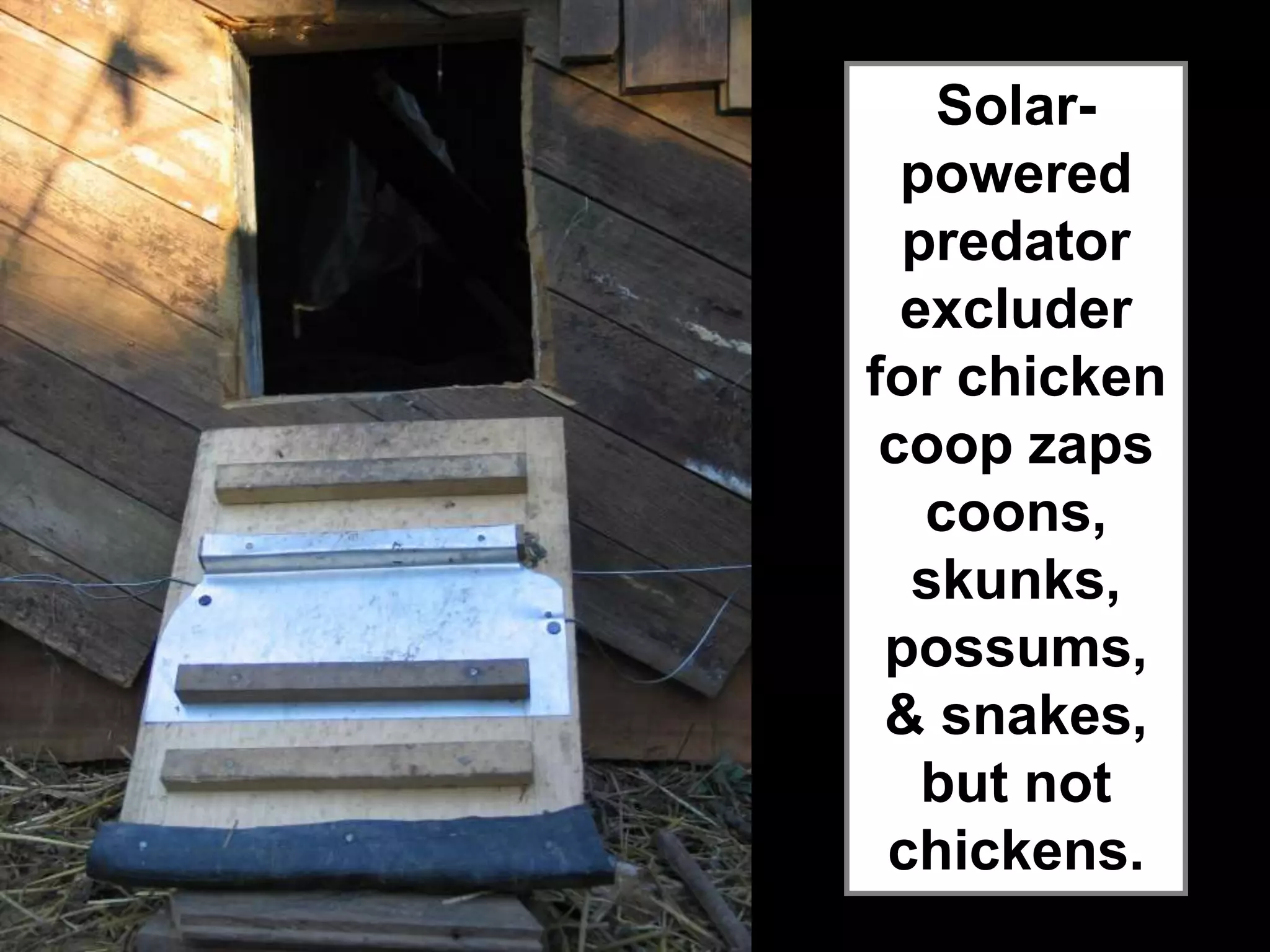
Solar-
powered
predator
excluder
for chicken
coop zaps
coons,
skunks,
possums,
& snakes,
but not
chickens.
References:
•Intermediate Technology Devel. Group
•ATTRA (Appropriate Technology Transfer to Rural
Areas)
•National Center for Appropriate Tech.
•Lehman’s Non-electric Catalogue
•Approvecho Institute
•Institute for Appropriate Tech. Online Library
•U.S. Dept. of Energy
•Journey to Forever Appropriate Tech.
•Development Center for Appropriate Tech.
Books:
•The New Independent Home by Michael Potts
•The Passive Solar House by James Kachadorian
•Alternative Energy Sourcebook (Real Goods)
•Early American Tools by Eric Sloane
•“Handcarts” & “Scythes” by David Tresemer
•Imagined Communities by Benedict Anderson
•Appropriate Technology Sourcebook by Ken Darrow
•Good Work by E.F.Schumacher
•‘Tools for Conviviality’ & ‘Energy & Equity’ by Ivan
Illich

Appropriate technology