APPROACH TO ACID-BASE
DISORDERS
(PART II)
Dr Rajashekhar Mulimani
Consultant physician
Intensivist
TRUST YOUR JUDGEMENT
DON’T BE AN ABG WANKER…….
METABOLIC
ALKALOSIS
• Approved metabolic alkalosis
 pH > 7.45
 HCO3 > 26 mEq/L
 PCO2 > 45 mmHg (compensation)
•Expected Compensation
for each 1 increase in HCO3 – 0.7 increase in pCo2
Or
For every 10 increase in HCO3 – 7 increase in pCO2
Net gain of HCO3
Or
Loss of non-volatile
acid from the body
TWO STEPS ARE REQUIRED FOR METABOLIC ALKALOSIS TO PERSIST
First – generation of metabolic alkalosis
Second – maintenance of alkalosis
In other words
When faced with metabolic alkalosis, one has to answer two
questions
1.What is the source of excess HCO3….????
2.Why is the excess HCO3 is not excreted by kidney…????
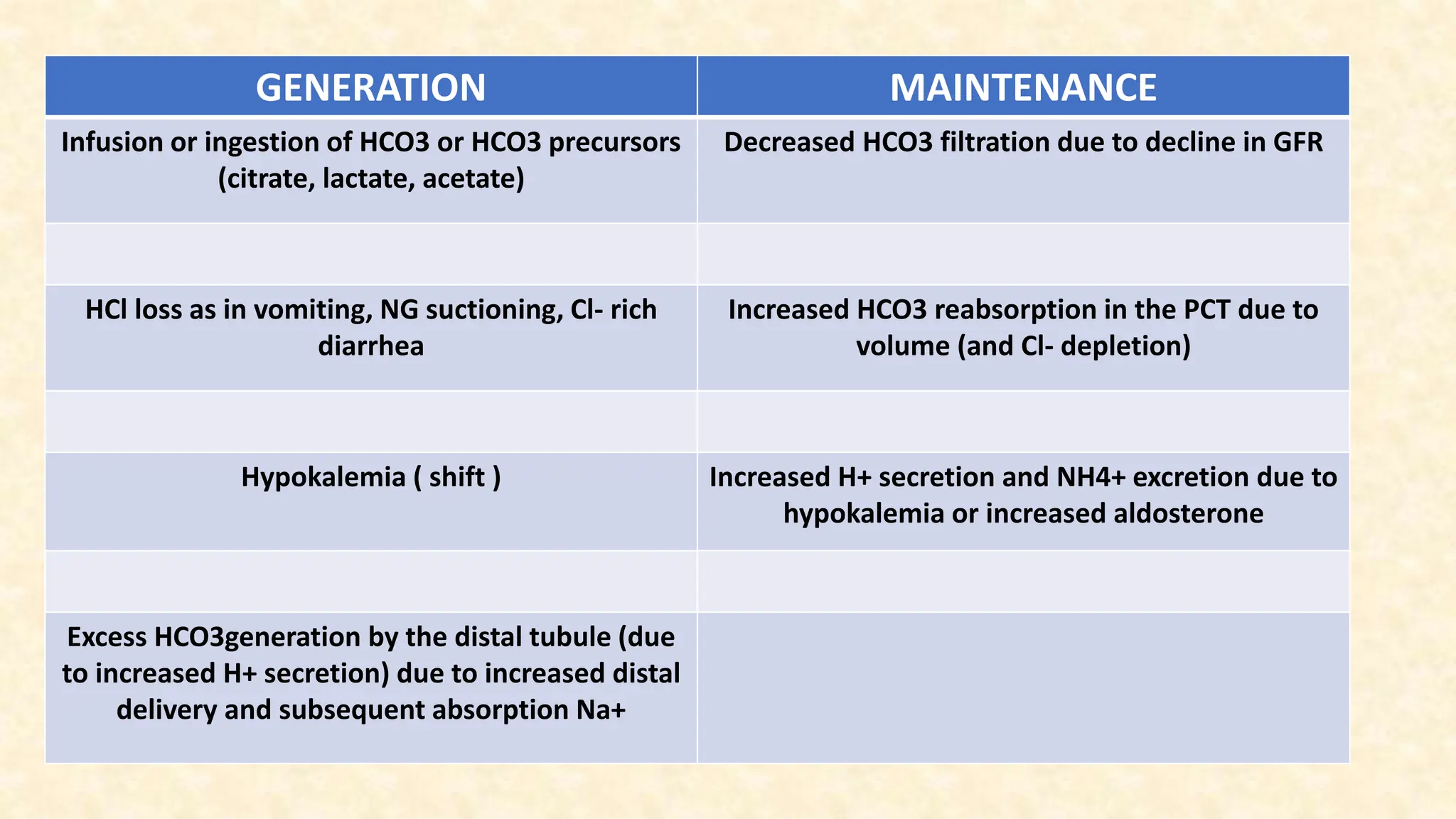
GENERATION MAINTENANCE
Infusion or ingestion of HCO3 or HCO3 precursors
(citrate, lactate, acetate)
Decreased HCO3 filtration due to decline in GFR
HCl loss as in vomiting, NG suctioning, Cl- rich
diarrhea
Increased HCO3 reabsorption in the PCT due to
volume (and Cl- depletion)
Hypokalemia ( shift ) Increased H+ secretion and NH4+ excretion due to
hypokalemia or increased aldosterone
Excess HCO3generation by the distal tubule (due
to increased H+ secretion) due to increased distal
delivery and subsequent absorption Na+
Mechanisms
1. Intracellular shift of H+ ions.
2. GI loss of H+ ions.
3. Renal loss of H+ ions (excessive)
4. Administration and Retention of bicarbonate ions.
5. Volume contraction around a constant amount of ECF
HCO3. (contraction alkalosis)
Usually accompanied by the
1. Loss of chloride
2. Loss of K
Resulting in hypochloremia
and hypokalemia
Intracellular H+ shift
• Shift of hydrogen into cells generates alkalosis.
• Most often occurs with hypokalemia (initiation + maintenance)
• Hypokalemia ------------- metabolic alkalosis….. HOW..????
Many causes of metabolic alkalosis directly or indirectly induce renal
potassium loss (vomiting, diuretics, mineralocorticoid excess)
Potassium depletion causes potassium to move into ECF, this causes ECF
hydrogen ions to move into cells to maintain electroneutrality.
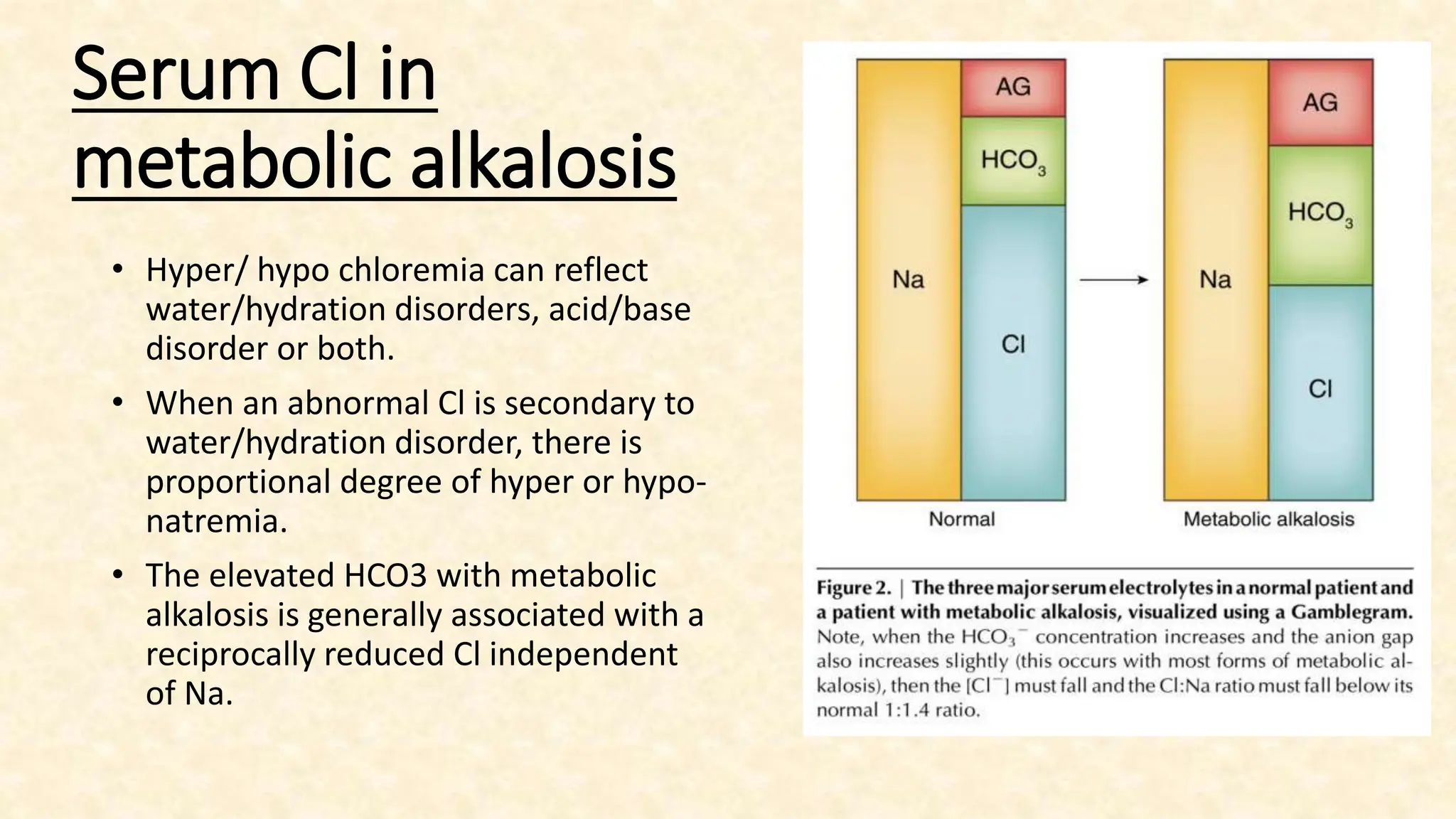
Serum Cl in
metabolic alkalosis
• Hyper/ hypo chloremia can reflect
water/hydration disorders, acid/base
disorder or both.
• When an abnormal Cl is secondary to
water/hydration disorder, there is
proportional degree of hyper or hypo-
natremia.
• The elevated HCO3 with metabolic
alkalosis is generally associated with a
reciprocally reduced Cl independent
of Na.
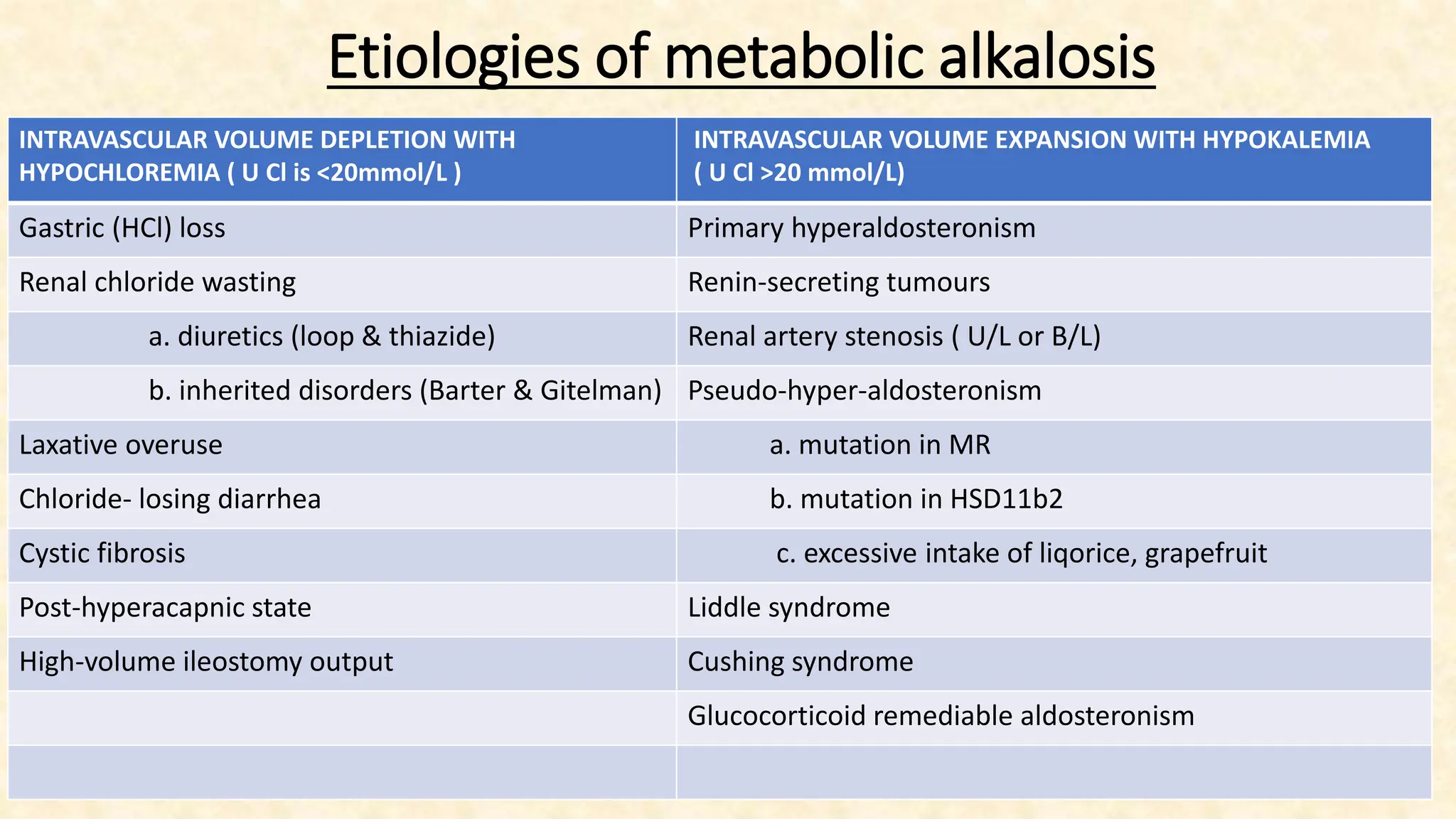
Etiologies of metabolic alkalosis
INTRAVASCULAR VOLUME DEPLETION WITH
HYPOCHLOREMIA ( U Cl is <20mmol/L )
INTRAVASCULAR VOLUME EXPANSION WITH HYPOKALEMIA
( U Cl >20 mmol/L)
Gastric (HCl) loss Primary hyperaldosteronism
Renal chloride wasting Renin-secreting tumours
a. diuretics (loop & thiazide) Renal artery stenosis ( U/L or B/L)
b. inherited disorders (Barter & Gitelman) Pseudo-hyper-aldosteronism
Laxative overuse a. mutation in MR
Chloride- losing diarrhea b. mutation in HSD11b2
Cystic fibrosis c. excessive intake of liqorice, grapefruit
Post-hyperacapnic state Liddle syndrome
High-volume ileostomy output Cushing syndrome
Glucocorticoid remediable aldosteronism
Case 1: A 47-year-old man is brought to the emergency department with altered mental state
after being found unresponsive at home by his neighbors. Little is known about his medical
history except for a few medications found in his home, including over-the-counter antacids
and ibuprofen. His neighbors indicated the patient had a history of heavy smoking and noticed
some weight loss over the last 6 months. On arrival, his blood pressure was 95/57 mm Hg,
pulse rate was 96 beats/min, and he was afebrile. The oxygen saturation by pulse oximetry was
92%. Basic chemistry laboratory testing showed Na+, 142 mEq/L; K+, 2.9 mEq/L; Cl−, 90 mEq/L;
HCO3
−, 45 mEq/L; total calcium, 9.1 mg/dL; serum urea nitrogen (SUN), 38 mg/dL; and serum
creatinine (Scr), 1.7 mg/dL. An arterial blood gas (ABG) revealed pH, 7.48; PaCO2, 52 mm Hg; and
PaO2, 70 mm Hg. The nephrology service was consulted for the workup and management of the
acid-base and electrolyte abnormalities.
•The differential diagnosis of metabolic alkalosis and hypokalemia in this patient should include
•a)Excessive use of the carbonic anhydrase inhibitor acetazolamide
•b)Ectopic corticotropin production due to possible lung malignancy
•c)Intake of HCO3
−-containing antacid for heartburn in the setting of pre-existing chronic kidney disease (CKD)
•d)Gastric outlet obstruction with vomiting
Gastric alkalosis
• Vomiting or Nasogastric
suctioning
• Loss of HCl
• Equal gain of HCO3 in the blood.
• Usually short-lived.
• Maintained only if
 Pt becomes hypovolemic
 ECF contraction and hypochloremia
 RAAS activation causing K+ loss
Diuretic induced metabolic alkalosis
THIAZIDE DIURETICS LOOP DIURETICS
Inhibits Na/Cl cotransporter (NCC) Inhibits Na-K-2Cl (NKCC2) channel
In distal tubule In loop of henle
Mild metabolic alkalosis Severe metabolic alkalosis
a. salt wasting – activation of RAAS
b. increases distal Na delivery
c. Na is reabsosrbed in exchange of H+ & K+
BARTTER LIKE GITELMAN LIKE
Case 1: A 47-year-old man is brought to the emergency department with altered mental state
after being found unresponsive at home by his neighbors. Little is known about his medical
history except for a few medications found in his home, including over-the-counter antacids
and ibuprofen. His neighbors indicated the patient had a history of heavy smoking and noticed
some weight loss over the last 6 months. On arrival, his blood pressure was 95/57 mm Hg,
pulse rate was 96 beats/min, and he was afebrile. The oxygen saturation by pulse oximetry was
92%. Basic chemistry laboratory testing showed Na+, 142 mEq/L; K+, 2.9 mEq/L; Cl−, 90 mEq/L;
HCO3
−, 45 mEq/L; total calcium, 9.1 mg/dL; serum urea nitrogen (SUN), 38 mg/dL; and serum
creatinine (Scr), 1.7 mg/dL. An arterial blood gas (ABG) revealed pH, 7.48; PaCO2, 52 mm Hg; and
PaO2, 70 mm Hg. The nephrology service was consulted for the workup and management of the
acid-base and electrolyte abnormalities.
•The differential diagnosis of metabolic alkalosis and hypokalemia in this patient should include
•a)Excessive use of the carbonic anhydrase inhibitor acetazolamide
•b)Ectopic corticotropin production due to possible lung malignancy
•c)Intake of HCO3
−-containing antacid for heartburn in the setting of pre-existing chronic kidney disease (CKD)
•d)Gastric outlet obstruction with vomiting
Question 2: Match each diagnosis with the correct clinical and laboratory presentation:
•Clinical diagnosis
•a)Overuse of the loop diuretic furosemide
•b)Ectopic corticotropin due to a lung malignancy
•c)Gastric outlet obstruction with vomiting
•Presentation:
•1)Blood pressure, 160/100 mm Hg; serum K+, 2.9 mEq/L; serum HCO3
−, 45 mEq/L; urine Na+, 40
mEq/L; Cl−, 45 mEq/L; and urine K+, 38 mEq/L
•2)Blood pressure, 95/57 mm Hg; serum K+, 2.9 mEq/L; serum HCO3
−, 45 mEq/L; urine Na+, 40
mEq/L; urine Cl−, 45 mEq/L; and urine K+, 38 mEq/L
•3)Blood pressure, 95/57 mm Hg; serum K+, 2.9 mEq/L; serum HCO3
−, 45 mEq/L; urine Na+, <10
mEq/L; urine Cl−, <20 mEq/L; and urine K+, 23 mEq/L
MINERALOCORTICOID EXCESS & METABOLIC
ALKALOSIS
• Almost all cases of metabolic alkalosis present with an excess of
mineralocorticoids.
In most – reduced IV volume – RAAS activation.
In others – increased mineralocorticoid secretion and/or action.
A 65-year-old woman with a history of hypertension, coronary artery disease, osteoporosis, and gastroesophageal reflux
disease was brought to the emergency department with altered mental status. Her son reported that she started to
experience decreased appetite several weeks ago. She had been reporting epigastric pain for the past several months. The
patient’s home medications include antihypertensives and over-the-counter medications for pain and heartburn. Her vital
signs showed temperature, 37.3°C; blood pressure, 108/62 mm Hg; pulse rate, 96 beats/min; and oxygen saturation of 93%
on room air. The patient is somnolent but arousable on examination. Her laboratory tests are significant for Na+, 144 mEq/L;
K+, 3.4 mEq/L; Cl−, 92 mEq/L; HCO3
−, 37 mEq/L, SUN, 28 mg/dL; and Scr, 2.7 mg/dL. Her serum calcium is 15.1 mEq/L;
phosphorus, 3.0 mEq/L; and glucose, 130 mg/dL. Albumin is 3.8 g/dL. Venous blood gas (VBG) shows a pH of 7.47. You are
asked to evaluate the patient for the acid-base abnormalities, hypercalcemia, and kidney failure. Further workup on blood
drawn on admission showed parathyroid hormone (PTH) level of 10 pg/mL; undetectable PTH-related peptide; 1,25-
dihydroxyvitamin D, 20 pg/mL.
•Which one of the following conditions is the best explanation for the development of hypercalcemia and
metabolic alkalosis in this patient?
•a)Thiazide diuretic use for hypertension
•b)Primary hyperparathyroidism
•c)Sarcoidosis
•d)Calcium-alkali (milk alkali) syndrome
•e)Hypercalcemia of malignancy
continued: The patient’s urinalysis demonstrated no protein, glucose, red blood cells, or white blood cells. Her
urine osmolality is 180 mOsm/L.
•Question 5: What would be the best first-line treatment in order to correct this patient’s hypercalcemia
and metabolic alkalosis?
•a)Intravenous loop diuretics alone
•b)The carbonic anhydrase inhibitor acetazolamide
•c)Aggressive volume resuscitation
•d)The bisphosphonate pamidronate
•e)Calcitonin
RESPIRATORY
ACIDOSIS
• APPROVED RESPIRATORY ACIDOSIS
pH < 7.35
pCO2 > 45 mmHg
HCO3 > 26 mEq/L
• EXPECTED COMPENSATION
Acute respiratory acidosis : HCO3 rises 1 mEq/L for each 10 mmHg increase
in pCO2
Chronic respiratory acidosis : HCO3 rises 3.5 mEq/L for each 10 mmHg
increase in pCO2
RESPIRATORY
ALKALOSIS
• APPROVED RESPIRATORY ACIDOSIS
pH > 7.45
pCO2 < 35 mmHg
HCO3 < 22 mEq/L
• EXPECTED COMPENSATION
Acute respiratory alkalosis : HCO3 falls 2 mEq/L for each 10 mmHg increase
in pCO2
Chronic respiratory alkalosis : HCO3 rises 5 mEq/L for each 10 mmHg
increase in pCO2
• Respiratory alkalosis per se is rarely dangerous, and the clinical
approach is directed towards the diagnosis of underlying cause.
• It is usually a sign of pulmonary or CNS disease
CENTRAL CONDITION
Voluntary hyperventilation
Psychogenic Pain, panic attacks, hysteria
Central neurogenic hypoventilation Brainstem injuries. Invasive brain tumors, brain infarcts
Hormonal Increased progesterone level in pregnancy and liver cirrhosis
Infectious Meningitis, encephalitis
Thermal hyperpnea Fever, hyperthermia
Intoxications Salicylates, topiramate
PERIPHERAL
Chemoreceptors Hypoxic pulmonary disease, high altitude.
Lung receptors Pulmonary edema, pneumonia, ARDS, asthma, PE, ILD.
IATROGENIC
Mechanical Ventilation Excessive
Extracorporeal C02 removal Excessive removal
Let’s solve some
questions………..
• A 2 year old child is being evaluated for persistent metabolic acidosis.
Blood tests show Na – 140, K- 3, Ca – 8, mg – 2, phosphate – 3, Cl –
112, HCO3 – 13. The plasma anion gap is
a) 9
b) 15
c) 22
d) 25
• Causes of metabolic alkalosis included all of the following except:
a) Mineralocorticoid deficiency
b) Bartter syndrome
c) Thiazide diuretic therapy
d) Recurrent vomiting
• A normal anion gap metabolic acidosis occurs in a patient with:
a) Diarrhea
b) Diabetic ketoacidosis
c) Methyl alcohol poisoning
d) Acute renal failure
• Metabolic alkalosis is seen in all except
a) Thiazides
b) Furosemide
c) Meropenem
d) acetazolamide
• A patient with salicylic acid poisoning has the following ABG reports;
pH: 7.12, pCO2: 18mmHg, HCO3: 12mEq/L
a) Metabolic acidosis + respiratory alkalosis
b) Metabolic acidosis + respiratory acidosis
c) Metabolic acidosis
d) Metabolic alkalosis
• Normal anion gap metabolic acidosis is caused by
a) Cholera
b) Starvation
c) Ethylene glycol poisoning
d) Lactic acidosis
• In a patient with k/c/o COPD p/w AE, pO2 is 85mmHg, pCO2 is
50mmHg, pH is 7.3, HCO3 is 36mEq/L. he is suffering from
a) Respiratory acidosis with compensatory respiratory alkalosis
b) Respiratory acidosis
c) Respiratory acidosis with metabolic alkalosis
d) Metabolic alkalosis
• A 50kg man with severe metabolic acidosis has the following parameters:
pH:7.02, pCO2:12, pO2: 108, HCO3: 5. the approximate quantity of sodium
bicarbonate that should receive in half hour is:
a) 250 mEq
b) 350 mEq
c) 500 mEq
d) 700 mEq
A young woman is found comatose, having taken an unknown number of
sleeping pills an unknown time before. An arterial blood sample yields the
following values: pH – 6.90, HCO3 - 13 mEq/L, PaCO2 68 mmHg. This
patient’s acid-base status is most accurately described as
a) Uncompensated metabolic acidosis
b) uncompensated respiratory acidosis
c) simultaneous respiratory and metabolic acidosis
d) respiratory acidosis with partial renal compensation
A student is nervous for a big exam and is breathing rapidly, what do you
expect out of the followings
a) Metabolic Acidosis
b) Metabolic Alkalosis
c) Respiratory Acidosis
d) Respiratory Alkalosis
Which out of the following conditions will not cause respiratory
alkalosis?
a) Fever
b) Anxiety
c) Laryngeal obstruction
d) Salicylate toxicity
TOPICS YOU WANT
ME TO DISCUSS……….
LET ME KNOW………

APPROACH TO ACID-BASE DISORDERS II.pptx

  • 1.
    APPROACH TO ACID-BASE DISORDERS (PARTII) Dr Rajashekhar Mulimani Consultant physician Intensivist TRUST YOUR JUDGEMENT DON’T BE AN ABG WANKER…….
  • 2.
  • 3.
    • Approved metabolicalkalosis  pH > 7.45  HCO3 > 26 mEq/L  PCO2 > 45 mmHg (compensation) •Expected Compensation for each 1 increase in HCO3 – 0.7 increase in pCo2 Or For every 10 increase in HCO3 – 7 increase in pCO2 Net gain of HCO3 Or Loss of non-volatile acid from the body
  • 6.
    TWO STEPS AREREQUIRED FOR METABOLIC ALKALOSIS TO PERSIST First – generation of metabolic alkalosis Second – maintenance of alkalosis In other words When faced with metabolic alkalosis, one has to answer two questions 1.What is the source of excess HCO3….???? 2.Why is the excess HCO3 is not excreted by kidney…????
  • 7.
    GENERATION MAINTENANCE Infusion oringestion of HCO3 or HCO3 precursors (citrate, lactate, acetate) Decreased HCO3 filtration due to decline in GFR HCl loss as in vomiting, NG suctioning, Cl- rich diarrhea Increased HCO3 reabsorption in the PCT due to volume (and Cl- depletion) Hypokalemia ( shift ) Increased H+ secretion and NH4+ excretion due to hypokalemia or increased aldosterone Excess HCO3generation by the distal tubule (due to increased H+ secretion) due to increased distal delivery and subsequent absorption Na+
  • 8.
    Mechanisms 1. Intracellular shiftof H+ ions. 2. GI loss of H+ ions. 3. Renal loss of H+ ions (excessive) 4. Administration and Retention of bicarbonate ions. 5. Volume contraction around a constant amount of ECF HCO3. (contraction alkalosis) Usually accompanied by the 1. Loss of chloride 2. Loss of K Resulting in hypochloremia and hypokalemia
  • 9.
    Intracellular H+ shift •Shift of hydrogen into cells generates alkalosis. • Most often occurs with hypokalemia (initiation + maintenance) • Hypokalemia ------------- metabolic alkalosis….. HOW..???? Many causes of metabolic alkalosis directly or indirectly induce renal potassium loss (vomiting, diuretics, mineralocorticoid excess) Potassium depletion causes potassium to move into ECF, this causes ECF hydrogen ions to move into cells to maintain electroneutrality.
  • 10.
    Serum Cl in metabolicalkalosis • Hyper/ hypo chloremia can reflect water/hydration disorders, acid/base disorder or both. • When an abnormal Cl is secondary to water/hydration disorder, there is proportional degree of hyper or hypo- natremia. • The elevated HCO3 with metabolic alkalosis is generally associated with a reciprocally reduced Cl independent of Na.
  • 11.
    Etiologies of metabolicalkalosis INTRAVASCULAR VOLUME DEPLETION WITH HYPOCHLOREMIA ( U Cl is <20mmol/L ) INTRAVASCULAR VOLUME EXPANSION WITH HYPOKALEMIA ( U Cl >20 mmol/L) Gastric (HCl) loss Primary hyperaldosteronism Renal chloride wasting Renin-secreting tumours a. diuretics (loop & thiazide) Renal artery stenosis ( U/L or B/L) b. inherited disorders (Barter & Gitelman) Pseudo-hyper-aldosteronism Laxative overuse a. mutation in MR Chloride- losing diarrhea b. mutation in HSD11b2 Cystic fibrosis c. excessive intake of liqorice, grapefruit Post-hyperacapnic state Liddle syndrome High-volume ileostomy output Cushing syndrome Glucocorticoid remediable aldosteronism
  • 12.
    Case 1: A47-year-old man is brought to the emergency department with altered mental state after being found unresponsive at home by his neighbors. Little is known about his medical history except for a few medications found in his home, including over-the-counter antacids and ibuprofen. His neighbors indicated the patient had a history of heavy smoking and noticed some weight loss over the last 6 months. On arrival, his blood pressure was 95/57 mm Hg, pulse rate was 96 beats/min, and he was afebrile. The oxygen saturation by pulse oximetry was 92%. Basic chemistry laboratory testing showed Na+, 142 mEq/L; K+, 2.9 mEq/L; Cl−, 90 mEq/L; HCO3 −, 45 mEq/L; total calcium, 9.1 mg/dL; serum urea nitrogen (SUN), 38 mg/dL; and serum creatinine (Scr), 1.7 mg/dL. An arterial blood gas (ABG) revealed pH, 7.48; PaCO2, 52 mm Hg; and PaO2, 70 mm Hg. The nephrology service was consulted for the workup and management of the acid-base and electrolyte abnormalities. •The differential diagnosis of metabolic alkalosis and hypokalemia in this patient should include •a)Excessive use of the carbonic anhydrase inhibitor acetazolamide •b)Ectopic corticotropin production due to possible lung malignancy •c)Intake of HCO3 −-containing antacid for heartburn in the setting of pre-existing chronic kidney disease (CKD) •d)Gastric outlet obstruction with vomiting
  • 13.
    Gastric alkalosis • Vomitingor Nasogastric suctioning • Loss of HCl • Equal gain of HCO3 in the blood. • Usually short-lived. • Maintained only if  Pt becomes hypovolemic  ECF contraction and hypochloremia  RAAS activation causing K+ loss
  • 14.
    Diuretic induced metabolicalkalosis THIAZIDE DIURETICS LOOP DIURETICS Inhibits Na/Cl cotransporter (NCC) Inhibits Na-K-2Cl (NKCC2) channel In distal tubule In loop of henle Mild metabolic alkalosis Severe metabolic alkalosis a. salt wasting – activation of RAAS b. increases distal Na delivery c. Na is reabsosrbed in exchange of H+ & K+ BARTTER LIKE GITELMAN LIKE
  • 16.
    Case 1: A47-year-old man is brought to the emergency department with altered mental state after being found unresponsive at home by his neighbors. Little is known about his medical history except for a few medications found in his home, including over-the-counter antacids and ibuprofen. His neighbors indicated the patient had a history of heavy smoking and noticed some weight loss over the last 6 months. On arrival, his blood pressure was 95/57 mm Hg, pulse rate was 96 beats/min, and he was afebrile. The oxygen saturation by pulse oximetry was 92%. Basic chemistry laboratory testing showed Na+, 142 mEq/L; K+, 2.9 mEq/L; Cl−, 90 mEq/L; HCO3 −, 45 mEq/L; total calcium, 9.1 mg/dL; serum urea nitrogen (SUN), 38 mg/dL; and serum creatinine (Scr), 1.7 mg/dL. An arterial blood gas (ABG) revealed pH, 7.48; PaCO2, 52 mm Hg; and PaO2, 70 mm Hg. The nephrology service was consulted for the workup and management of the acid-base and electrolyte abnormalities. •The differential diagnosis of metabolic alkalosis and hypokalemia in this patient should include •a)Excessive use of the carbonic anhydrase inhibitor acetazolamide •b)Ectopic corticotropin production due to possible lung malignancy •c)Intake of HCO3 −-containing antacid for heartburn in the setting of pre-existing chronic kidney disease (CKD) •d)Gastric outlet obstruction with vomiting
  • 17.
    Question 2: Matcheach diagnosis with the correct clinical and laboratory presentation: •Clinical diagnosis •a)Overuse of the loop diuretic furosemide •b)Ectopic corticotropin due to a lung malignancy •c)Gastric outlet obstruction with vomiting •Presentation: •1)Blood pressure, 160/100 mm Hg; serum K+, 2.9 mEq/L; serum HCO3 −, 45 mEq/L; urine Na+, 40 mEq/L; Cl−, 45 mEq/L; and urine K+, 38 mEq/L •2)Blood pressure, 95/57 mm Hg; serum K+, 2.9 mEq/L; serum HCO3 −, 45 mEq/L; urine Na+, 40 mEq/L; urine Cl−, 45 mEq/L; and urine K+, 38 mEq/L •3)Blood pressure, 95/57 mm Hg; serum K+, 2.9 mEq/L; serum HCO3 −, 45 mEq/L; urine Na+, <10 mEq/L; urine Cl−, <20 mEq/L; and urine K+, 23 mEq/L
  • 18.
    MINERALOCORTICOID EXCESS &METABOLIC ALKALOSIS • Almost all cases of metabolic alkalosis present with an excess of mineralocorticoids. In most – reduced IV volume – RAAS activation. In others – increased mineralocorticoid secretion and/or action.
  • 19.
    A 65-year-old womanwith a history of hypertension, coronary artery disease, osteoporosis, and gastroesophageal reflux disease was brought to the emergency department with altered mental status. Her son reported that she started to experience decreased appetite several weeks ago. She had been reporting epigastric pain for the past several months. The patient’s home medications include antihypertensives and over-the-counter medications for pain and heartburn. Her vital signs showed temperature, 37.3°C; blood pressure, 108/62 mm Hg; pulse rate, 96 beats/min; and oxygen saturation of 93% on room air. The patient is somnolent but arousable on examination. Her laboratory tests are significant for Na+, 144 mEq/L; K+, 3.4 mEq/L; Cl−, 92 mEq/L; HCO3 −, 37 mEq/L, SUN, 28 mg/dL; and Scr, 2.7 mg/dL. Her serum calcium is 15.1 mEq/L; phosphorus, 3.0 mEq/L; and glucose, 130 mg/dL. Albumin is 3.8 g/dL. Venous blood gas (VBG) shows a pH of 7.47. You are asked to evaluate the patient for the acid-base abnormalities, hypercalcemia, and kidney failure. Further workup on blood drawn on admission showed parathyroid hormone (PTH) level of 10 pg/mL; undetectable PTH-related peptide; 1,25- dihydroxyvitamin D, 20 pg/mL. •Which one of the following conditions is the best explanation for the development of hypercalcemia and metabolic alkalosis in this patient? •a)Thiazide diuretic use for hypertension •b)Primary hyperparathyroidism •c)Sarcoidosis •d)Calcium-alkali (milk alkali) syndrome •e)Hypercalcemia of malignancy
  • 20.
    continued: The patient’surinalysis demonstrated no protein, glucose, red blood cells, or white blood cells. Her urine osmolality is 180 mOsm/L. •Question 5: What would be the best first-line treatment in order to correct this patient’s hypercalcemia and metabolic alkalosis? •a)Intravenous loop diuretics alone •b)The carbonic anhydrase inhibitor acetazolamide •c)Aggressive volume resuscitation •d)The bisphosphonate pamidronate •e)Calcitonin
  • 23.
  • 24.
    • APPROVED RESPIRATORYACIDOSIS pH < 7.35 pCO2 > 45 mmHg HCO3 > 26 mEq/L • EXPECTED COMPENSATION Acute respiratory acidosis : HCO3 rises 1 mEq/L for each 10 mmHg increase in pCO2 Chronic respiratory acidosis : HCO3 rises 3.5 mEq/L for each 10 mmHg increase in pCO2
  • 26.
  • 27.
    • APPROVED RESPIRATORYACIDOSIS pH > 7.45 pCO2 < 35 mmHg HCO3 < 22 mEq/L • EXPECTED COMPENSATION Acute respiratory alkalosis : HCO3 falls 2 mEq/L for each 10 mmHg increase in pCO2 Chronic respiratory alkalosis : HCO3 rises 5 mEq/L for each 10 mmHg increase in pCO2
  • 28.
    • Respiratory alkalosisper se is rarely dangerous, and the clinical approach is directed towards the diagnosis of underlying cause. • It is usually a sign of pulmonary or CNS disease
  • 29.
    CENTRAL CONDITION Voluntary hyperventilation PsychogenicPain, panic attacks, hysteria Central neurogenic hypoventilation Brainstem injuries. Invasive brain tumors, brain infarcts Hormonal Increased progesterone level in pregnancy and liver cirrhosis Infectious Meningitis, encephalitis Thermal hyperpnea Fever, hyperthermia Intoxications Salicylates, topiramate PERIPHERAL Chemoreceptors Hypoxic pulmonary disease, high altitude. Lung receptors Pulmonary edema, pneumonia, ARDS, asthma, PE, ILD. IATROGENIC Mechanical Ventilation Excessive Extracorporeal C02 removal Excessive removal
  • 30.
  • 31.
    • A 2year old child is being evaluated for persistent metabolic acidosis. Blood tests show Na – 140, K- 3, Ca – 8, mg – 2, phosphate – 3, Cl – 112, HCO3 – 13. The plasma anion gap is a) 9 b) 15 c) 22 d) 25
  • 32.
    • Causes ofmetabolic alkalosis included all of the following except: a) Mineralocorticoid deficiency b) Bartter syndrome c) Thiazide diuretic therapy d) Recurrent vomiting
  • 33.
    • A normalanion gap metabolic acidosis occurs in a patient with: a) Diarrhea b) Diabetic ketoacidosis c) Methyl alcohol poisoning d) Acute renal failure
  • 34.
    • Metabolic alkalosisis seen in all except a) Thiazides b) Furosemide c) Meropenem d) acetazolamide
  • 35.
    • A patientwith salicylic acid poisoning has the following ABG reports; pH: 7.12, pCO2: 18mmHg, HCO3: 12mEq/L a) Metabolic acidosis + respiratory alkalosis b) Metabolic acidosis + respiratory acidosis c) Metabolic acidosis d) Metabolic alkalosis
  • 36.
    • Normal aniongap metabolic acidosis is caused by a) Cholera b) Starvation c) Ethylene glycol poisoning d) Lactic acidosis
  • 37.
    • In apatient with k/c/o COPD p/w AE, pO2 is 85mmHg, pCO2 is 50mmHg, pH is 7.3, HCO3 is 36mEq/L. he is suffering from a) Respiratory acidosis with compensatory respiratory alkalosis b) Respiratory acidosis c) Respiratory acidosis with metabolic alkalosis d) Metabolic alkalosis
  • 38.
    • A 50kgman with severe metabolic acidosis has the following parameters: pH:7.02, pCO2:12, pO2: 108, HCO3: 5. the approximate quantity of sodium bicarbonate that should receive in half hour is: a) 250 mEq b) 350 mEq c) 500 mEq d) 700 mEq
  • 39.
    A young womanis found comatose, having taken an unknown number of sleeping pills an unknown time before. An arterial blood sample yields the following values: pH – 6.90, HCO3 - 13 mEq/L, PaCO2 68 mmHg. This patient’s acid-base status is most accurately described as a) Uncompensated metabolic acidosis b) uncompensated respiratory acidosis c) simultaneous respiratory and metabolic acidosis d) respiratory acidosis with partial renal compensation
  • 40.
    A student isnervous for a big exam and is breathing rapidly, what do you expect out of the followings a) Metabolic Acidosis b) Metabolic Alkalosis c) Respiratory Acidosis d) Respiratory Alkalosis
  • 41.
    Which out ofthe following conditions will not cause respiratory alkalosis? a) Fever b) Anxiety c) Laryngeal obstruction d) Salicylate toxicity
  • 43.
    TOPICS YOU WANT METO DISCUSS………. LET ME KNOW………