KWAME NKRUMAH UNIVERSITY OF
SCIENCE AND TECHNOLOGY
KSB
APPLIED FOOD SERVICES AND SANITATION GROUP
WORK
PRESENTATION OUTLINE
 WHAT IS FOOD STORAGE
 CLASSIFICATION OF STORING FOOD
 WHAT ARE THE TYPES
 STORAGE EQUIPMENT
 METHODS OF FOOD STORAGE
 PRINCIPLES OF FOOD STORAGE
LABELLING AND DATE MARKING
ROTATION AND CORRECT TEMPERATURES
 PREVENTION OF CROSS CONTAMINATION
 BENEFITS OF FOOD STORSGE
 END OF PRESENTATION
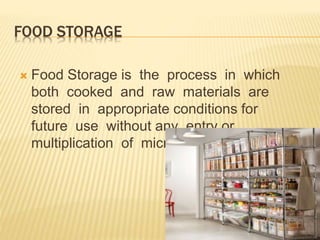
FOOD STORAGE
 Food Storage is the process in which
both cooked and raw materials are
stored in appropriate conditions for
future use without any entry or
multiplication of microorganisms.
CLASSIFICATION OF FOOD STORAGE
 Perishable Food: These are foods that are likely
to spoil, decay or becomes unsafe to consume if
not kept refrigerated. Examples of such food are;
meat ,dairy product, fish , all cooked and
leftovers.
 Semi Perishable Food: These are foods that do
not require immediate refrigeration but spoils
quickly than the Non Perishable items. Example
of such foods are; bread, onions , yam and
apples.
 Non Perishable Food: These are foods that has
the ability to last long without spoiling. Example of
such foods are; rice, beans, millet and corn.
SOME TYPES OF FOOD STORAGE
 Dry staples: These are the types of food which
doesn’t require a definite climate temperature
for keeping storage. They are mostly in
powdered form, Eg. Flour, pancake mix, tom
brown, powdered spices etc…
 Refrigerated food staples: These types of food
items require a relatively cool temperature in
order to sustain and preserve the nutrient
contents. Eg. Fruits and vegetables.
 Frozen food staples: These are food staples that
require extremely low temperatures to maintain
freshness. Eg. fresh foods[chicken,cow,fish etc
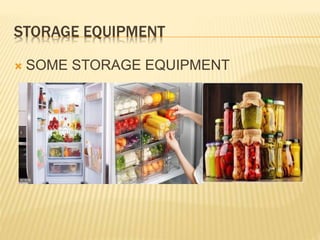
STORAGE EQUIPMENT
 SOME STORAGE EQUIPMENT
METHODS OF STORING SOME
FOOD STUFFS
 Packing cases and cartons can be used for making shelves for
storage.
 A simple rack made from wood or bamboo can be made for
storing starchy root vegetables and plantains.
 A collection of tins and bottles of different sizes can be
painted and labelled for storing items like beans, rice, gari,
and spices.
 Basket can be lined and spread with plantain leaves and saw
dust to store foodstuffs like cocoyam, yam and cassava.
 Refrigerator – fresh foods like cabbage, garden eggs and
pepper can be stored in a refrigerator and used later.
PRINCIPLES OF STORING FOODS
 LABELING
 A food labeling is any tag, brand, mark, pictorial or other
descriptive matter, written , printed, embossed or impressed
on, or attached to, a container of food or food product. It
include items like ingredients, quantity, the manufacturing
date and when it expires.
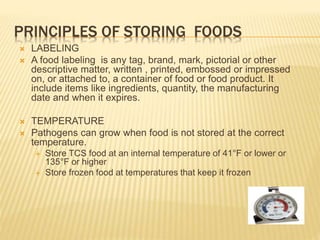
 TEMPERATURE
 Pathogens can grow when food is not stored at the correct
temperature.
 Store TCS food at an internal temperature of 41°F or lower or
135°F or higher
 Store frozen food at temperatures that keep it frozen
PRINCIPLES CONTD.
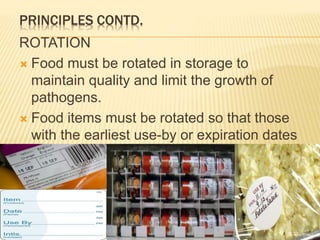
ROTATION
 Food must be rotated in storage to
maintain quality and limit the growth of
pathogens.
 Food items must be rotated so that those
with the earliest use-by or expiration dates
are used before items with later dates.
Many operations use FIFO method which
is first in, first out to rotate their
refrigerated food staffs.
CROSS CONTAMINATION
 Cross contamination is what happens when
bacteria or other micro-organisms are
unintentionally transferred from one object to
another.
 The most common example is the transfer of
bacteria between raw and cook food.
 Food to food
 Equipment to food
 People to food
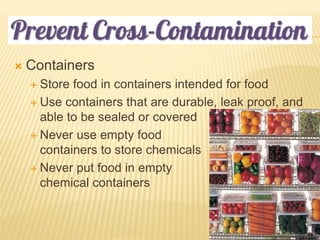
 Containers
 Store food in containers intended for food
 Use containers that are durable, leak proof, and
able to be sealed or covered
 Never use empty food
containers to store chemicals
 Never put food in empty
chemical containers
BENEFITS OF FOOD STORAGE
 It reduces food waste which saves money and
is better for the environment.
 Fruits and vegetable stays fresh and lasts
longer.
 You can buy things in bulk or in season which
will save you more money and time.
 Disease causing micro-organisms become
scarce when food is stored under safe
conditions.
 Proper food storage helps to preserve the
quality and nutritional value of the food you
purchases.
MERCI BEAUCOUP

applied food storage 2.pptx

  • 1.
    KWAME NKRUMAH UNIVERSITYOF SCIENCE AND TECHNOLOGY KSB APPLIED FOOD SERVICES AND SANITATION GROUP WORK
  • 2.
    PRESENTATION OUTLINE  WHATIS FOOD STORAGE  CLASSIFICATION OF STORING FOOD  WHAT ARE THE TYPES  STORAGE EQUIPMENT  METHODS OF FOOD STORAGE  PRINCIPLES OF FOOD STORAGE LABELLING AND DATE MARKING ROTATION AND CORRECT TEMPERATURES  PREVENTION OF CROSS CONTAMINATION  BENEFITS OF FOOD STORSGE  END OF PRESENTATION
  • 3.
    FOOD STORAGE  FoodStorage is the process in which both cooked and raw materials are stored in appropriate conditions for future use without any entry or multiplication of microorganisms.
  • 4.
    CLASSIFICATION OF FOODSTORAGE  Perishable Food: These are foods that are likely to spoil, decay or becomes unsafe to consume if not kept refrigerated. Examples of such food are; meat ,dairy product, fish , all cooked and leftovers.  Semi Perishable Food: These are foods that do not require immediate refrigeration but spoils quickly than the Non Perishable items. Example of such foods are; bread, onions , yam and apples.  Non Perishable Food: These are foods that has the ability to last long without spoiling. Example of such foods are; rice, beans, millet and corn.
  • 5.
    SOME TYPES OFFOOD STORAGE  Dry staples: These are the types of food which doesn’t require a definite climate temperature for keeping storage. They are mostly in powdered form, Eg. Flour, pancake mix, tom brown, powdered spices etc…  Refrigerated food staples: These types of food items require a relatively cool temperature in order to sustain and preserve the nutrient contents. Eg. Fruits and vegetables.  Frozen food staples: These are food staples that require extremely low temperatures to maintain freshness. Eg. fresh foods[chicken,cow,fish etc
  • 6.
    STORAGE EQUIPMENT  SOMESTORAGE EQUIPMENT
  • 7.
    METHODS OF STORINGSOME FOOD STUFFS  Packing cases and cartons can be used for making shelves for storage.  A simple rack made from wood or bamboo can be made for storing starchy root vegetables and plantains.  A collection of tins and bottles of different sizes can be painted and labelled for storing items like beans, rice, gari, and spices.  Basket can be lined and spread with plantain leaves and saw dust to store foodstuffs like cocoyam, yam and cassava.  Refrigerator – fresh foods like cabbage, garden eggs and pepper can be stored in a refrigerator and used later.
  • 8.
    PRINCIPLES OF STORINGFOODS  LABELING  A food labeling is any tag, brand, mark, pictorial or other descriptive matter, written , printed, embossed or impressed on, or attached to, a container of food or food product. It include items like ingredients, quantity, the manufacturing date and when it expires.  TEMPERATURE  Pathogens can grow when food is not stored at the correct temperature.  Store TCS food at an internal temperature of 41°F or lower or 135°F or higher  Store frozen food at temperatures that keep it frozen
  • 9.
    PRINCIPLES CONTD. ROTATION  Foodmust be rotated in storage to maintain quality and limit the growth of pathogens.  Food items must be rotated so that those with the earliest use-by or expiration dates are used before items with later dates. Many operations use FIFO method which is first in, first out to rotate their refrigerated food staffs.
  • 10.
    CROSS CONTAMINATION  Crosscontamination is what happens when bacteria or other micro-organisms are unintentionally transferred from one object to another.  The most common example is the transfer of bacteria between raw and cook food.  Food to food  Equipment to food  People to food
  • 11.
     Containers  Storefood in containers intended for food  Use containers that are durable, leak proof, and able to be sealed or covered  Never use empty food containers to store chemicals  Never put food in empty chemical containers
  • 12.
    BENEFITS OF FOODSTORAGE  It reduces food waste which saves money and is better for the environment.  Fruits and vegetable stays fresh and lasts longer.  You can buy things in bulk or in season which will save you more money and time.  Disease causing micro-organisms become scarce when food is stored under safe conditions.  Proper food storage helps to preserve the quality and nutritional value of the food you purchases.
  • 13.