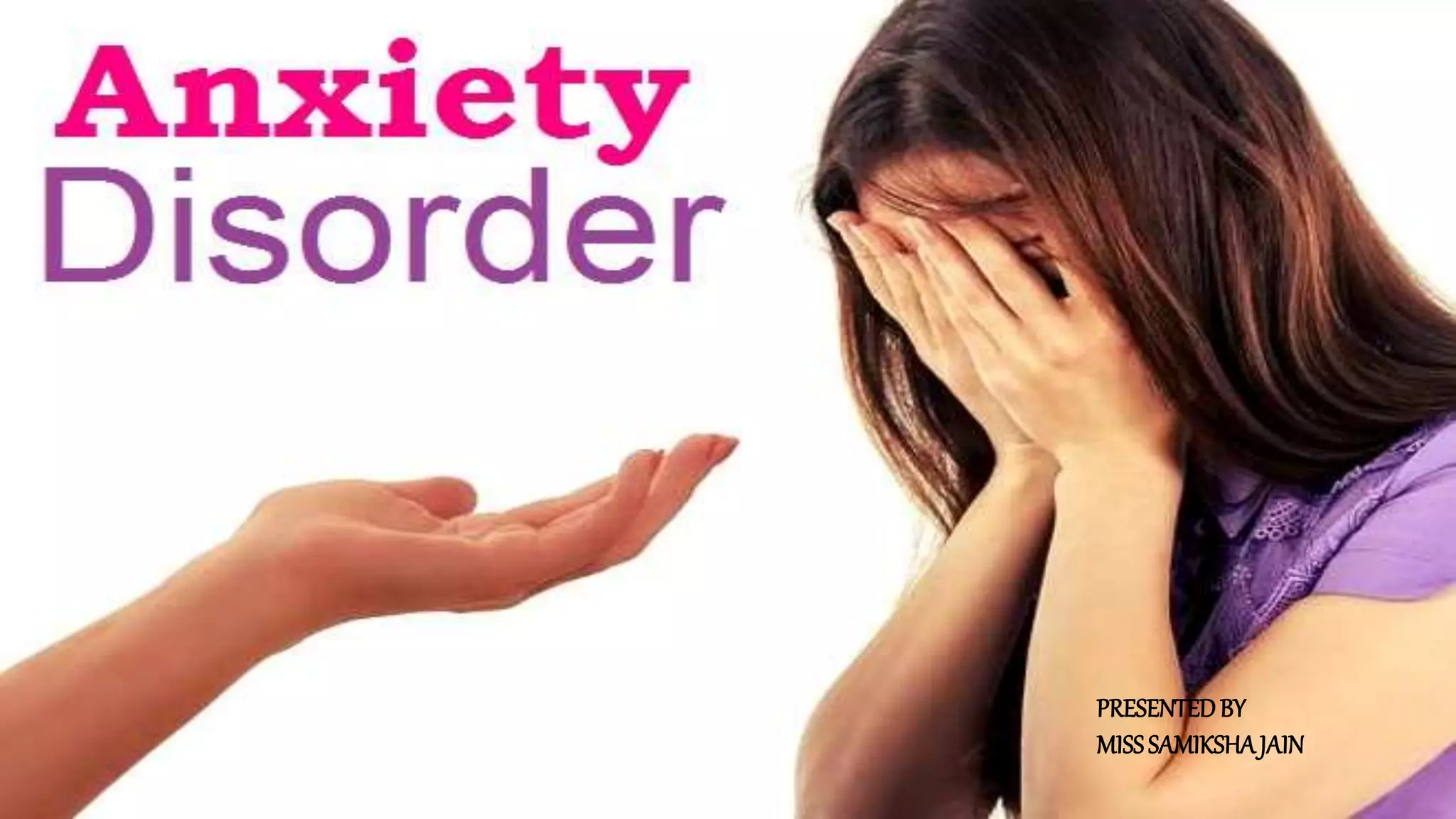
PRESENTEDBY
MISSSAMIKSHAJAIN
INTRODUCTION
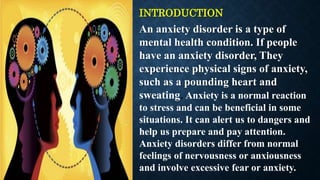
An anxiety disorder is a type of
mental health condition. If people
have an anxiety disorder, They
experience physical signs of anxiety,
such as a pounding heart and
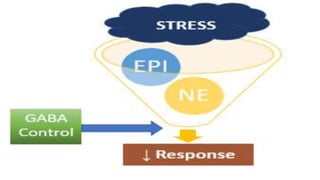
sweating. Anxiety is a normal reaction

to stress and can be beneficial in some
situations. It can alert us to dangers and

help us prepare and pay attention.
Anxiety disorders differ from normal
feelings of nervousness or anxiousness
and involve excessive fear or anxiety.
DEFINITION-
ACC TO AMERICAN
PSYCHOLOGIAL ASSOCIATION-
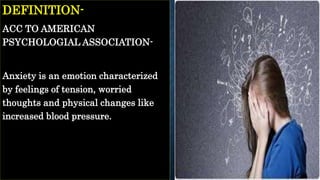
Anxiety is an emotion characterized
by feelings of tension, worried
thoughts and physical changes like
increased blood pressure.
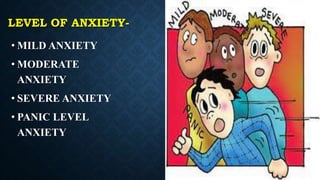
LEVEL OF ANXIETY-
• MILD ANXIETY
• MODERATE
ANXIETY
• SEVERE ANXIETY
• PANIC LEVEL
ANXIETY
THEORIES
OF
ANXIETY
PSYCHODYNAMIC THEORY
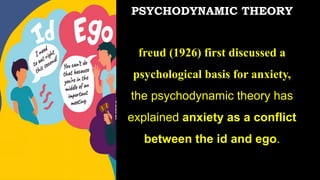
freud (1926) first discussed a
psychological basis for anxiety,
the psychodynamic theory has
explained anxiety as a conflict
between the id and ego.
LEARNING
THEORY
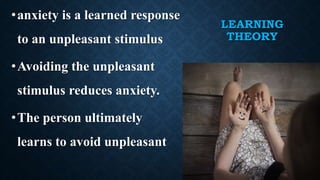
•anxiety is a learned response
to an unpleasant stimulus
•Avoiding the unpleasant
stimulus reduces anxiety.
•The person ultimately
learns to avoid unpleasant
BIOCHEMICAL THEORY
high anxiety levels correlate with
increases in heart rate, blood lactase
levels and oxygen use during moderate
exercises.
GENETIC
THEORY
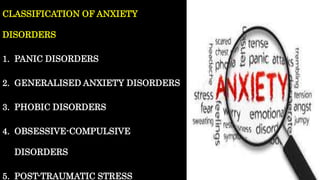
CLASSIFICATION OF ANXIETY
DISORDERS
1. PANIC DISORDERS
2. GENERALISED ANXIETY DISORDERS
3. PHOBIC DISORDERS
4. OBSESSIVE-COMPULSIVE
DISORDERS
5. POST-TRAUMATIC STRESS
PANIC DISORDERS
THE DSM-5 DEFINES PANIC ATTACKS
AS ABRUPT SURGES OF INTENSE
FEAR OR DISCOMFORT THAT PEAK
WITHIN MINUTES. PEOPLE WITH THE
DISORDER LIVE IN FEAR OF HAVING
A PANIC ATTACK.
CAUSES
• IT'S NOT KNOWN WHAT CAUSES PANIC ATTACKS OR PANIC DISORDER,
BUT THESE FACTORS MAY PLAY A ROLE:
• GENETICS
• MAJOR STRESS
• TEMPERAMENT THAT IS MORE SENSITIVE TO STRESS OR PRONE TO
NEGATIVE EMOTIONS
• CERTAIN CHANGES IN THE WAY PARTS OF YOUR BRAIN FUNCTION
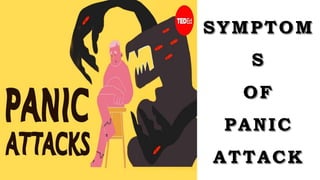
SYMPTOM
S
OF
PANIC
ATTACK
RACING
HEARTBEAT
OR
PALPITATIONS
DIZZINESS
(VERTIGO)
LIGHT-HEADEDNESS
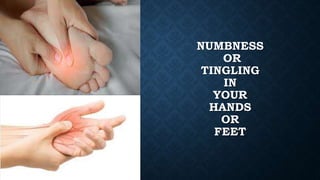
NUMBNESS
OR
TINGLING
IN
YOUR
HANDS
OR
FEET
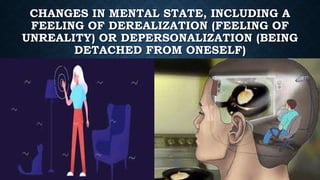
CHANGES IN MENTAL STATE, INCLUDING A
FEELING OF DEREALIZATION (FEELING OF
UNREALITY) OR DEPERSONALIZATION (BEING
DETACHED FROM ONESELF)
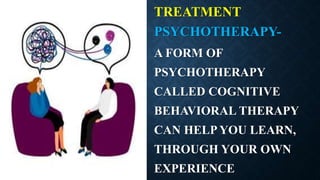
TREATMENT
PSYCHOTHERAPY-
A FORM OF
PSYCHOTHERAPY
CALLED COGNITIVE
BEHAVIORAL THERAPY
CAN HELP YOU LEARN,
THROUGH YOUR OWN
EXPERIENCE
MEDICATION
•Selective serotonin
reuptake inhibitors
(SSRIs).
•Benzodiazepines
LIFESTYLE AND HOME REMEDIES
Join a support group
Get sufficient sleep.
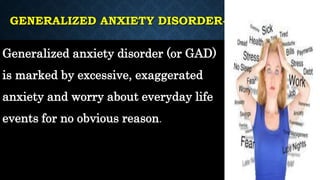
GENERALIZED ANXIETY DISORDER-
Generalized anxiety disorder (or GAD)
is marked by excessive, exaggerated
anxiety and worry about everyday life
events for no obvious reason.
CAUSES
SYMPTOM
OF
GAD
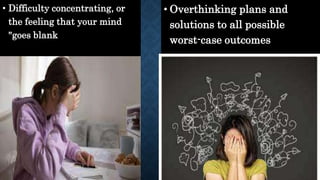
• Difficulty concentrating, or
the feeling that your mind
"goes blank
• Overthinking plans and
solutions to all possible
worst-case outcomes
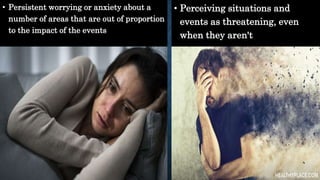
• Persistent worrying or anxiety about a
number of areas that are out of proportion
to the impact of the events
• Perceiving situations and
events as threatening, even
when they aren't
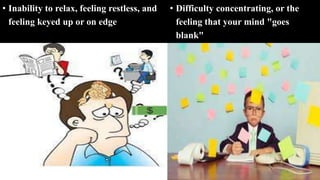
• Inability to relax, feeling restless, and
feeling keyed up or on edge
• Difficulty concentrating, or the
feeling that your mind "goes
blank"
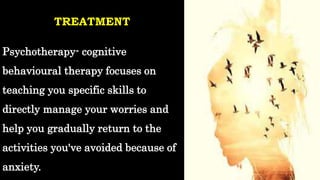
TREATMENT
Psychotherapy- cognitive
behavioural therapy focuses on
teaching you specific skills to
directly manage your worries and
help you gradually return to the
activities you've avoided because of
anxiety.
M
E
D
I
C
A
T
I
O
N
S
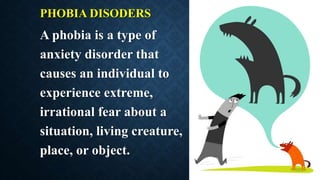
PHOBIA DISODERS
A phobia is a type of
anxiety disorder that
causes an individual to
experience extreme,
irrational fear about a
situation, living creature,
place, or object.
SPECIFIC PHOBIA
THIS IS AN
INTENSE,
IRRATIONAL
FEAR OF A
SPECIFIC
TRIGGER.
CLASTPPHOBIA AERO PHOBIA
ARACHNOPHOBIA: FEAR OF SPIDERS
DRIVING PHOBIA: FEAR OF DRIVING A CAR
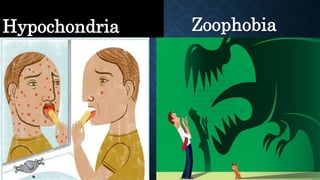
Emetophobia Erythrophobia
Hypochondria Zoophobia
Aquaphobia: Acrophobia
BLOOD, INJURY, AND INJECTION
(BII) PHOBIA
ESCALAPHOBIA
TUNNEL PHOBIA
SOCIAL PHOBIA,
OR SOCIAL
ANXIETY
This is a profound fear
of public humiliation
and being singled out
or judged by others in
a social situation
AGORAPHOBIA
THIS IS A FEAR OF
SITUATIONS FROM WHICH IT
WOULD BE DIFFICULT TO
ESCAPE IF A PERSON WERE
TO EXPERIENCE EXTREME
PANIC, SUCH BEING IN A
LIFT OR BEING OUTSIDE OF
THE HOME.
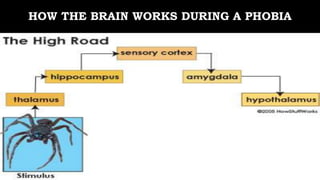
HOW THE BRAIN WORKS DURING A PHOBIA
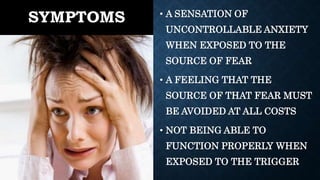
SYMPTOMS • A SENSATION OF
UNCONTROLLABLE ANXIETY
WHEN EXPOSED TO THE
SOURCE OF FEAR
• A FEELING THAT THE
SOURCE OF THAT FEAR MUST
BE AVOIDED AT ALL COSTS
• NOT BEING ABLE TO
FUNCTION PROPERLY WHEN
EXPOSED TO THE TRIGGER
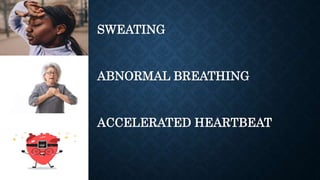
SWEATING
ABNORMAL BREATHING
ACCELERATED HEARTBEAT
TREATMENT
MEDICATIONS
Beta blockers
Antidepressants
Tranquilizers
BEHAVIOURAL
THERAPY
•DESENSITIZATIO
N, OR EXPOSURE
THERAPY
•COGNITIVE
BEHAVIOURAL
THERAPY (CBT)
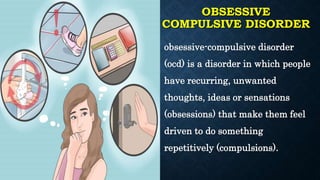
OBSESSIVE
COMPULSIVE DISORDER
obsessive-compulsive disorder
(ocd) is a disorder in which people
have recurring, unwanted
thoughts, ideas or sensations
(obsessions) that make them feel
driven to do something
repetitively (compulsions).
CAUSES
•Biology
•Genetics
•learning
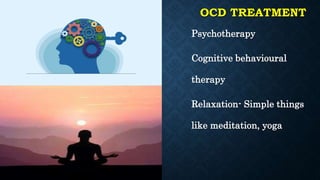
OCD TREATMENT
Psychotherapy
Cognitive behavioural
therapy
Relaxation- Simple things
like meditation, yoga
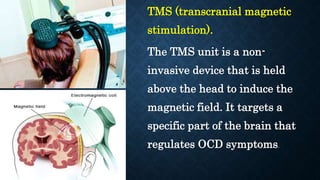
TMS (transcranial magnetic
stimulation).
The TMS unit is a non-
invasive device that is held
above the head to induce the
magnetic field. It targets a
specific part of the brain that
regulates OCD symptoms.
MEDICATION.
PSYCHIATRIC DRUGS CALLED SELECTIVE
SEROTONIN REUPTAKE INHIBITORS HELP
MANY PEOPLE CONTROL OBSESSIONS AND
COMPULSIONS.
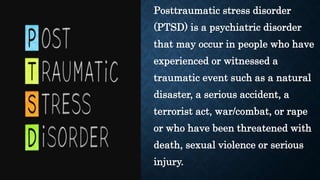
Posttraumatic stress disorder
(PTSD) is a psychiatric disorder
that may occur in people who have
experienced or witnessed a
traumatic event such as a natural
disaster, a serious accident, a
terrorist act, war/combat, or rape
or who have been threatened with
death, sexual violence or serious
injury.
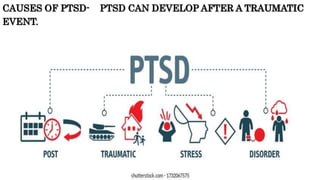
CAUSES OF PTSD- PTSD CAN DEVELOP AFTER A TRAUMATIC
EVENT.
NATURAL DISASTERS
TERRORIST ATTACKS
RAPE OR OTHER TYPES OF ABUSE
PERSONAL ASSAULT
RECEIVING A LIFE-THREATENING DIAGNOSIS
RISK FACTORS
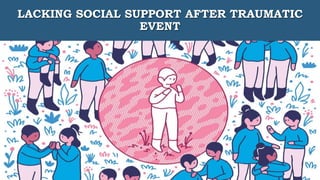
LACKING SOCIAL SUPPORT AFTER TRAUMATIC
EVENT
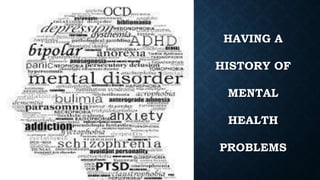
HAVING A
HISTORY OF
MENTAL
HEALTH
PROBLEMS
PAST EXPERIENCE
OF ABUSE, FOR
EXAMPLE, DURING
CHILDHOOD
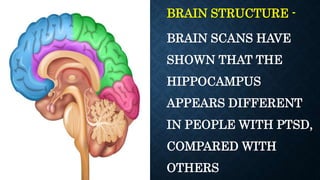
BRAIN STRUCTURE -
BRAIN SCANS HAVE
SHOWN THAT THE
HIPPOCAMPUS
APPEARS DIFFERENT
IN PEOPLE WITH PTSD,
COMPARED WITH
OTHERS
GENDER
THIS MAY PLAY A ROLE.
STUDIES SUGGEST THAT,
WHILE MEN ARE MORE
LIKELY TO EXPERIENCE
VIOLENCE, WOMEN HAVE A
HIGHER CHANCE OF
HAVING PTSD
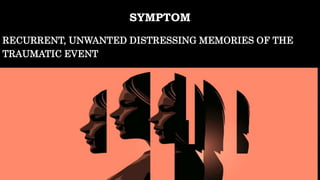
SYMPTOM
RECURRENT, UNWANTED DISTRESSING MEMORIES OF THE
TRAUMATIC EVENT
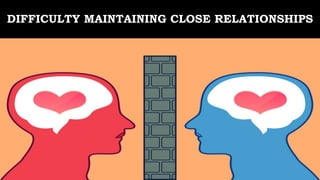
DIFFICULTY MAINTAINING CLOSE RELATIONSHIPS
UPSETTING DREAMS OR NIGHTMARES ABOUT THE
TRAUMATIC EVENT
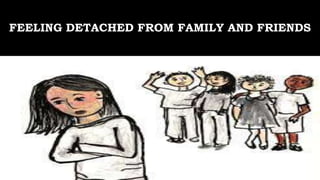
FEELING DETACHED FROM FAMILY AND FRIENDS
LACK OF INTEREST
IN ACTIVITIES YOU
ONCE ENJOYED
DIFFICULTY EXPERIENCING POSITIVE EMOTIONS
SELF-
DESTRUCTIVE
BEHAVIOR,
SUCH AS
DRINKING
TOO MUCH
OR DRIVING
TOO FAST
T
R
E
A
T
M
E
N
T
Cognitive processing therapy
(CPT): Also known as
cognitive restructuring, the
individual learns how to
think about things in a new
way. Mental imagery of the
traumatic event may help
them work through the
trauma, to gain control of the
fear and distress.
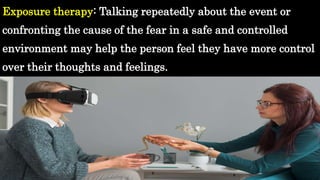
Exposure therapy: Talking repeatedly about the event or
confronting the cause of the fear in a safe and controlled
environment may help the person feel they have more control
over their thoughts and feelings.
M E D I C A T I O N
selective serotonin
reuptake inhibitors
benzodiazepines
COMPLICATIONS
• Depression (which often occurs with an anxiety disorder) OR other
mental health disorders
• Substance misuse
• Trouble sleeping (insomnia)
• Digestive or bowel problems
• Headaches and chronic pain
• Social isolation
• Problems functioning at school or work
• Poor quality of life
• Suicide
ANXIETY DISORDER.pptx

ANXIETY DISORDER.pptx