COMPLIMENTARY TEACHING MATERIALS
Antimicrobial Stewardship
for Nursing Practice
Edited by Molly Courtenay and Enrique Castro-Sánchez
COMPLIMENTARY TEACHING MATERIALS
Chapter 3 Antimicrobials and Antimicrobial
Resistance
Maria Clara Padoveze, Ligia Maria Abraão and Rosely Moralez de Figueiredo
COMPLIMENTARY TEACHING MATERIALS
LEARNING OBJECTIVES
•Understand the core knowledge
underpinning the concept of
antimicrobial resistance
•Apply this knowledge to nursing
practice to prevent antimicrobial
resistance
COMPLIMENTARY TEACHING MATERIALS
SECTION 1: Introduction
COMPLIMENTARY TEACHING MATERIALS
INTRODUCTION
• Antimicrobials: treatment of infections
• reduce mortality
• increase life expectancy
• Multidrug resistant bacteria: limitations
for therapeutic options
COMPLIMENTARY TEACHING MATERIALS
INTRODUCTION
COMPLIMENTARY TEACHING MATERIALS
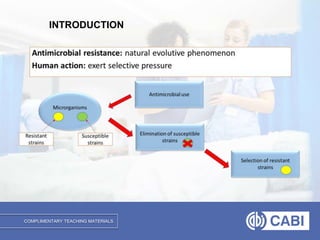
INTRODUCTION
• Human contribution factors to antimicrobial
resistance as public health problem
• Overuse of antibiotics in:
• Medicine
• Livestock farming
• Agriculture
• Poultry production
• Lack of development of new antibiotics
COMPLIMENTARY TEACHING MATERIALS
SECTION 2: Infection
COMPLIMENTARY TEACHING MATERIALS
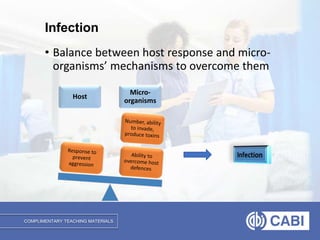
• Balance between host response and micro-
organisms’ mechanisms to overcome them
Infection
Host
Micro-
organisms
COMPLIMENTARY TEACHING MATERIALS
• Colonization: process by which micro-
organisms are present in the host,with a
certain level of multiplication, but without
producing clinical disease.
• Infection: involves the invasion of micro-
organisms in the host’s body tissues, with
the generation of an inflamatory and
immunological response, leading to clinical
disease and resulting in signs and
symptoms.
Colonization versus Infection
COMPLIMENTARY TEACHING MATERIALS
• Not all colonization results in infection
• Colonization => temporarily or permanently
colonized OR development of infection
• Colonization is a complex process:
• Sometimes involves changes in the
colonizing species
• Sometimes quick progress to infection
Signs and symptoms of infection
COMPLIMENTARY TEACHING MATERIALS
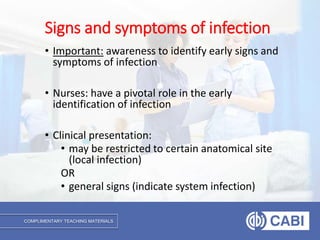
• Important: awareness to identify early signs and
symptoms of infection
• Nurses: have a pivotal role in the early
identification of infection
• Clinical presentation:
• may be restricted to certain anatomical site
(local infection)
OR
• general signs (indicate system infection)
Signs and symptoms of infection
COMPLIMENTARY TEACHING MATERIALS
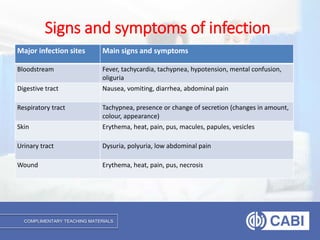
Signs and symptoms of infection
Major infection sites Main signs and symptoms
Bloodstream Fever, tachycardia, tachypnea, hypotension, mental confusion,
oliguria
Digestive tract Nausea, vomiting, diarrhea, abdominal pain
Respiratory tract Tachypnea, presence or change of secretion (changes in amount,
colour, appearance)
Skin Erythema, heat, pain, pus, macules, papules, vesicles
Urinary tract Dysuria, polyuria, low abdominal pain
Wound Erythema, heat, pain, pus, necrosis
COMPLIMENTARY TEACHING MATERIALS
Opportunities for nurse to contribute to early
identification of infection (examples):
• Measurement of vital signs
• Physical examination
• Administration of medication: observation of catheter
site
• Wound care: observation of characteristics of
secretion or necrosis
• Bathing patients: observation of erythema, heat or
macules and papules in the skin
• Emptying a urinary catheter bag: observation of
changes in urine characteristics.
Signs and symptoms of infection
COMPLIMENTARY TEACHING MATERIALS
Importance of adequate specimen collection during
relevant stages of infection
– Ideally before antibiotics administration
The optimal time for specimen collection varies
according to the type of infection
– Early stages of an infection is more profitable
Correlate the signs and symptoms of infection and the
optimal time for specimen collection.
Adequate conservation of samples and timely delivery to
laboratory
Specimen collection
COMPLIMENTARY TEACHING MATERIALS
SECTION 3: How Antimicrobials work
COMPLIMENTARY TEACHING MATERIALS
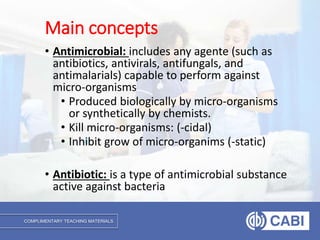
• Antimicrobial: includes any agente (such as
antibiotics, antivirals, antifungals, and
antimalarials) capable to perform against
micro-organisms
• Produced biologically by micro-organisms
or synthetically by chemists.
• Kill micro-organisms: (-cidal)
• Inhibit grow of micro-organims (-static)
• Antibiotic: is a type of antimicrobial substance
active against bacteria
Main concepts
COMPLIMENTARY TEACHING MATERIALS
• Broad-spectrum drug: has activity against gram-
positive as well gram-negatives species
• Narrow-spectrum drug: has activity against only
one group of micro-organisms or only one species.
• Therapeutic index: refers to the level of selective
toxicity of a given drug comparing to the blood
concentration at which a drug causes a
therapeutic effect to the amount of toxicity
produced in humans.
Main concepts
COMPLIMENTARY TEACHING MATERIALS
Classification of antimicrobials
Inhibitors of cell
wall synthesis
Inhibitors of
cytoplasmic
membrane
function
Inhibitors of
protein syntheses
Inhibitors of
nucleic acid
synthesis
Antimetabolites
COMPLIMENTARY TEACHING MATERIALS
May vary according to:
• The targeted micro-organisms: antibiotics,
antivirals, antifungals, antimalarials
• Their molecular structure
• Their antimicrobial mechanisms
Obs.: the examples showed in the following tables are not
exhaustive
Classification of antimicrobials
COMPLIMENTARY TEACHING MATERIALS
• Target the bacterial cell wall
• Interfer with the building of the peptidoglican
chain
• Interact with proteins to the synthesis of
peptidoglycan chain
• Lysis of bacteria occurs due to disruption of
the peptidoglycan layer
Inhibitors of cell wall synthesis
COMPLIMENTARY TEACHING MATERIALS
Class compound Antimicrobial drug
Beta-lactams Penicillins, ampicillin, amoxicillin, carbenicilin,
methicilin
Beta-lactams Cephalosporins (cephalothin, cefamandole,
cefotaxime, cefoxitin, cefazolin, cefoperazone,
cefixime, cefprozil, cefpodoxime, ceftaroline,
ceftolozane-tazobactam, ceftazidime-avibactam
Beta-lactams Carbapenems (imipenem, meropenem, doripenem,
ertapenem)
Glycopeptides Vancomycin, teicoplanin
Inhibitors of cell wall synthesis
COMPLIMENTARY TEACHING MATERIALS
• Affinity for lipids bind irreversibly to
cytoplasmic membrane sterols
• Interfere with lipid byosynthesis
• Lead to alterations in permeability, resulting in
loss of nutrientes and other essential
compounds
Inhibitors of cytoplasmic membrane
function
COMPLIMENTARY TEACHING MATERIALS
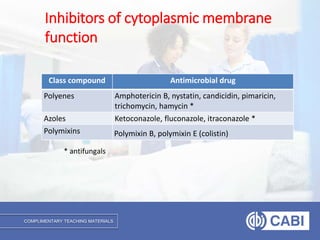
Class compound Antimicrobial drug
Polyenes Amphotericin B, nystatin, candicidin, pimaricin,
trichomycin, hamycin *
Azoles Ketoconazole, fluconazole, itraconazole *
Polymixins Polymixin B, polymixin E (colistin)
Inhibitors of cytoplasmic membrane
function
* antifungals
COMPLIMENTARY TEACHING MATERIALS
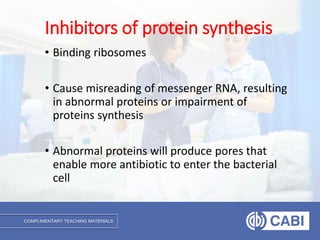
• Binding ribosomes
• Cause misreading of messenger RNA, resulting
in abnormal proteins or impairment of
proteins synthesis
• Abnormal proteins will produce pores that
enable more antibiotic to enter the bacterial
cell
Inhibitors of protein synthesis
COMPLIMENTARY TEACHING MATERIALS
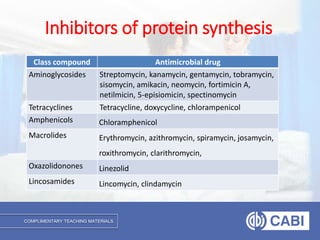
Class compound Antimicrobial drug
Aminoglycosides Streptomycin, kanamycin, gentamycin, tobramycin,
sisomycin, amikacin, neomycin, fortimicin A,
netilmicin, 5-episiomicin, spectinomycin
Tetracyclines Tetracycline, doxycycline, chlorampenicol
Amphenicols Chloramphenicol
Macrolides Erythromycin, azithromycin, spiramycin, josamycin,
roxithromycin, clarithromycin,
Oxazolidonones Linezolid
Lincosamides Lincomycin, clindamycin
Inhibitors of protein synthesis
COMPLIMENTARY TEACHING MATERIALS
• Disrupture of DNA synthesis causing lethal
DNA breaks during the replication process
• Several mechanisms:
• Binding to a subunit of RNA polymerase
• Inhibition of topoisomerases
• Phosphorylation of componentes
• Inhibition of viral primary transcription process
• Inhibiton of viral replication process
• Blocking the pathway for folic acid synthesis
Inhibitors of nucleic acid synthesis
COMPLIMENTARY TEACHING MATERIALS
Class compound Antimicrobial drug
Ansamycins Rifampicin, Rifamycin B
Quinolones Nalidixic acid, fluorquinolones (norfloxacin, ciprofloxacin,
ofloxacin)
Pyrimidine Flucytosine
Amines Amantadine, rimantadine
Virazole Ribavirin**
Nucleoside analog Idoxuridine, thymidine, acyclovir, zidovudine (azidothymidine
or AZT), vidarabine**
Inhibitors of nucleic acid synthesis
** antivirals
COMPLIMENTARY TEACHING MATERIALS
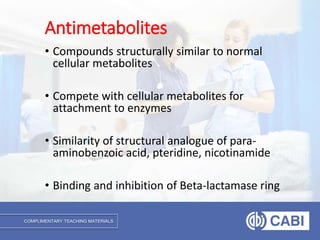
• Compounds structurally similar to normal
cellular metabolites
• Compete with cellular metabolites for
attachment to enzymes
• Similarity of structural analogue of para-
aminobenzoic acid, pteridine, nicotinamide
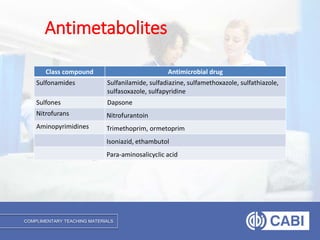
• Binding and inhibition of Beta-lactamase ring
Antimetabolites
COMPLIMENTARY TEACHING MATERIALS
Class compound Antimicrobial drug
Sulfonamides Sulfanilamide, sulfadiazine, sulfamethoxazole, sulfathiazole,
sulfasoxazole, sulfapyridine
Sulfones Dapsone
Nitrofurans Nitrofurantoin
Aminopyrimidines Trimethoprim, ormetoprim
Isoniazid, ethambutol
Para-aminosalicyclic acid
Antimetabolites
COMPLIMENTARY TEACHING MATERIALS
SECTION 4: Appropriate antimicrobial
use
COMPLIMENTARY TEACHING MATERIALS
To impair the action of antimicrobials:
a) Reduction of bacterial membrane permeability
b) Increases in expression and activity of efflux
pump systems
c) Synthesis of enzymes able to destroy or modify
the drug
d) Modification, substitution or disruption of
antibiotic bacterial targets
e) Biofilm formation
Mechanisms of resistance
COMPLIMENTARY TEACHING MATERIALS
• Bacterial cellular membrane:
• intrinsic permeability that allows nutrients
intake
• acts as a first barrier to external agents
• Low permeability on the cell surface:
• antibiotic blocking => drugs cannot achieve
their targets
a) Reduction of bacterial membrane
permeability
COMPLIMENTARY TEACHING MATERIALS
• Enzymes can degrade and modify antibiotics
• Enzymes can degrade different antibiotics
belonging to the same class:
Examples:
• beta-lactamases: destroy beta-lactams (penicillin,
cephalosporins, clavams, and monobactams)
• carbapenemases: destroy carbapenems
b) Synthesis of enzymes to destroy
a drug
COMPLIMENTARY TEACHING MATERIALS
• Very frequent mechanism
• Antibiotics bind to the bacterial target in a specific
way, preventing their normal role
• Example: penicillin = bind to penicillin binding protein
(PBP) = rupture of cell wall
• Small mutations on these targets = prevent
antibiotic binding
• Example: altered PBP (PBPa) will not bind to penicillin
c) Modification of antibiotic
targets
DNA PBP penicillin
Bacterial cel
DNA PBPa pen
Bacterial cel
COMPLIMENTARY TEACHING MATERIALS
• Efflux pump:
• proteins that constitutes all bacterial
plasma membrane
• mechanism that actively transport
antibiotics out of the bacterial cells
• Over expression of these proteins:
• increase expression and activity of efflux
pump system
d) Increases in expression and activity of
efflux pump
COMPLIMENTARY TEACHING MATERIALS
SECTION 5: Implications for nursing
practice
COMPLIMENTARY TEACHING MATERIALS
• Nurses should recognize:
• the mechanisms that lead to antimicrobial
resistance
• selective pressure exerted by antimicrobials
• how antimicrobials work
• Nurses: pro-active attitude regarding antibiotic
therapy
Implications for nursing practice
COMPLIMENTARY TEACHING MATERIALS
• Obtain allergy history from the patient to
support optimal prescribing of antimicrobials
• Proper choice of catheter according to the
therapy and clinical conditions of the patient
• Monitor adverse events of antimicrobial
therapy
• Review daily condition of patients
• Actively take part in multidisciplinar team
discusssions regarding antibiotic treatment,
indication and duration
Implications for nursing practice
COMPLIMENTARY TEACHING MATERIALS
• Proper and timely specimens collection
• Avoid unnecessary specimens collection
• Example: avoid urine collection of
asymptomatic patients to prevent
unnecessary treatment
• Timely examination of antibiograms to support
therapy adjustment and de-escalation
Implications for nursing practice
COMPLIMENTARY TEACHING MATERIALS
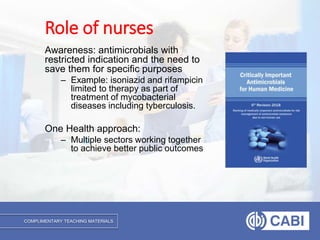
Awareness: antimicrobials with
restricted indication and the need to
save them for specific purposes
– Example: isoniazid and rifampicin
limited to therapy as part of
treatment of mycobacterial
diseases including tyberculosis.
One Health approach:
– Multiple sectors working together
to achieve better public outcomes
Role of nurses
COMPLIMENTARY TEACHING MATERIALS
Nurses are frontline professionals
engaged in the fight against
antimicrobial resistance
COMPLIMENTARY TEACHING MATERIALS
Thank You

Antimicrobial_Stewardship_for_Nursing_Practice_presentation-chapter3.pptx

  • 1.
    COMPLIMENTARY TEACHING MATERIALS AntimicrobialStewardship for Nursing Practice Edited by Molly Courtenay and Enrique Castro-Sánchez
  • 2.
    COMPLIMENTARY TEACHING MATERIALS Chapter3 Antimicrobials and Antimicrobial Resistance Maria Clara Padoveze, Ligia Maria Abraão and Rosely Moralez de Figueiredo
  • 3.
    COMPLIMENTARY TEACHING MATERIALS LEARNINGOBJECTIVES •Understand the core knowledge underpinning the concept of antimicrobial resistance •Apply this knowledge to nursing practice to prevent antimicrobial resistance
  • 4.
  • 5.
    COMPLIMENTARY TEACHING MATERIALS INTRODUCTION •Antimicrobials: treatment of infections • reduce mortality • increase life expectancy • Multidrug resistant bacteria: limitations for therapeutic options
  • 6.
  • 7.
    COMPLIMENTARY TEACHING MATERIALS INTRODUCTION •Human contribution factors to antimicrobial resistance as public health problem • Overuse of antibiotics in: • Medicine • Livestock farming • Agriculture • Poultry production • Lack of development of new antibiotics
  • 8.
  • 9.
    COMPLIMENTARY TEACHING MATERIALS •Balance between host response and micro- organisms’ mechanisms to overcome them Infection Host Micro- organisms
  • 10.
    COMPLIMENTARY TEACHING MATERIALS •Colonization: process by which micro- organisms are present in the host,with a certain level of multiplication, but without producing clinical disease. • Infection: involves the invasion of micro- organisms in the host’s body tissues, with the generation of an inflamatory and immunological response, leading to clinical disease and resulting in signs and symptoms. Colonization versus Infection
  • 11.
    COMPLIMENTARY TEACHING MATERIALS •Not all colonization results in infection • Colonization => temporarily or permanently colonized OR development of infection • Colonization is a complex process: • Sometimes involves changes in the colonizing species • Sometimes quick progress to infection Signs and symptoms of infection
  • 12.
    COMPLIMENTARY TEACHING MATERIALS •Important: awareness to identify early signs and symptoms of infection • Nurses: have a pivotal role in the early identification of infection • Clinical presentation: • may be restricted to certain anatomical site (local infection) OR • general signs (indicate system infection) Signs and symptoms of infection
  • 13.
    COMPLIMENTARY TEACHING MATERIALS Signsand symptoms of infection Major infection sites Main signs and symptoms Bloodstream Fever, tachycardia, tachypnea, hypotension, mental confusion, oliguria Digestive tract Nausea, vomiting, diarrhea, abdominal pain Respiratory tract Tachypnea, presence or change of secretion (changes in amount, colour, appearance) Skin Erythema, heat, pain, pus, macules, papules, vesicles Urinary tract Dysuria, polyuria, low abdominal pain Wound Erythema, heat, pain, pus, necrosis
  • 14.
    COMPLIMENTARY TEACHING MATERIALS Opportunitiesfor nurse to contribute to early identification of infection (examples): • Measurement of vital signs • Physical examination • Administration of medication: observation of catheter site • Wound care: observation of characteristics of secretion or necrosis • Bathing patients: observation of erythema, heat or macules and papules in the skin • Emptying a urinary catheter bag: observation of changes in urine characteristics. Signs and symptoms of infection
  • 15.
    COMPLIMENTARY TEACHING MATERIALS Importanceof adequate specimen collection during relevant stages of infection – Ideally before antibiotics administration The optimal time for specimen collection varies according to the type of infection – Early stages of an infection is more profitable Correlate the signs and symptoms of infection and the optimal time for specimen collection. Adequate conservation of samples and timely delivery to laboratory Specimen collection
  • 16.
    COMPLIMENTARY TEACHING MATERIALS SECTION3: How Antimicrobials work
  • 17.
    COMPLIMENTARY TEACHING MATERIALS •Antimicrobial: includes any agente (such as antibiotics, antivirals, antifungals, and antimalarials) capable to perform against micro-organisms • Produced biologically by micro-organisms or synthetically by chemists. • Kill micro-organisms: (-cidal) • Inhibit grow of micro-organims (-static) • Antibiotic: is a type of antimicrobial substance active against bacteria Main concepts
  • 18.
    COMPLIMENTARY TEACHING MATERIALS •Broad-spectrum drug: has activity against gram- positive as well gram-negatives species • Narrow-spectrum drug: has activity against only one group of micro-organisms or only one species. • Therapeutic index: refers to the level of selective toxicity of a given drug comparing to the blood concentration at which a drug causes a therapeutic effect to the amount of toxicity produced in humans. Main concepts
  • 19.
    COMPLIMENTARY TEACHING MATERIALS Classificationof antimicrobials Inhibitors of cell wall synthesis Inhibitors of cytoplasmic membrane function Inhibitors of protein syntheses Inhibitors of nucleic acid synthesis Antimetabolites
  • 20.
    COMPLIMENTARY TEACHING MATERIALS Mayvary according to: • The targeted micro-organisms: antibiotics, antivirals, antifungals, antimalarials • Their molecular structure • Their antimicrobial mechanisms Obs.: the examples showed in the following tables are not exhaustive Classification of antimicrobials
  • 21.
    COMPLIMENTARY TEACHING MATERIALS •Target the bacterial cell wall • Interfer with the building of the peptidoglican chain • Interact with proteins to the synthesis of peptidoglycan chain • Lysis of bacteria occurs due to disruption of the peptidoglycan layer Inhibitors of cell wall synthesis
  • 22.
    COMPLIMENTARY TEACHING MATERIALS Classcompound Antimicrobial drug Beta-lactams Penicillins, ampicillin, amoxicillin, carbenicilin, methicilin Beta-lactams Cephalosporins (cephalothin, cefamandole, cefotaxime, cefoxitin, cefazolin, cefoperazone, cefixime, cefprozil, cefpodoxime, ceftaroline, ceftolozane-tazobactam, ceftazidime-avibactam Beta-lactams Carbapenems (imipenem, meropenem, doripenem, ertapenem) Glycopeptides Vancomycin, teicoplanin Inhibitors of cell wall synthesis
  • 23.
    COMPLIMENTARY TEACHING MATERIALS •Affinity for lipids bind irreversibly to cytoplasmic membrane sterols • Interfere with lipid byosynthesis • Lead to alterations in permeability, resulting in loss of nutrientes and other essential compounds Inhibitors of cytoplasmic membrane function
  • 24.
    COMPLIMENTARY TEACHING MATERIALS Classcompound Antimicrobial drug Polyenes Amphotericin B, nystatin, candicidin, pimaricin, trichomycin, hamycin * Azoles Ketoconazole, fluconazole, itraconazole * Polymixins Polymixin B, polymixin E (colistin) Inhibitors of cytoplasmic membrane function * antifungals
  • 25.
    COMPLIMENTARY TEACHING MATERIALS •Binding ribosomes • Cause misreading of messenger RNA, resulting in abnormal proteins or impairment of proteins synthesis • Abnormal proteins will produce pores that enable more antibiotic to enter the bacterial cell Inhibitors of protein synthesis
  • 26.
    COMPLIMENTARY TEACHING MATERIALS Classcompound Antimicrobial drug Aminoglycosides Streptomycin, kanamycin, gentamycin, tobramycin, sisomycin, amikacin, neomycin, fortimicin A, netilmicin, 5-episiomicin, spectinomycin Tetracyclines Tetracycline, doxycycline, chlorampenicol Amphenicols Chloramphenicol Macrolides Erythromycin, azithromycin, spiramycin, josamycin, roxithromycin, clarithromycin, Oxazolidonones Linezolid Lincosamides Lincomycin, clindamycin Inhibitors of protein synthesis
  • 27.
    COMPLIMENTARY TEACHING MATERIALS •Disrupture of DNA synthesis causing lethal DNA breaks during the replication process • Several mechanisms: • Binding to a subunit of RNA polymerase • Inhibition of topoisomerases • Phosphorylation of componentes • Inhibition of viral primary transcription process • Inhibiton of viral replication process • Blocking the pathway for folic acid synthesis Inhibitors of nucleic acid synthesis
  • 28.
    COMPLIMENTARY TEACHING MATERIALS Classcompound Antimicrobial drug Ansamycins Rifampicin, Rifamycin B Quinolones Nalidixic acid, fluorquinolones (norfloxacin, ciprofloxacin, ofloxacin) Pyrimidine Flucytosine Amines Amantadine, rimantadine Virazole Ribavirin** Nucleoside analog Idoxuridine, thymidine, acyclovir, zidovudine (azidothymidine or AZT), vidarabine** Inhibitors of nucleic acid synthesis ** antivirals
  • 29.
    COMPLIMENTARY TEACHING MATERIALS •Compounds structurally similar to normal cellular metabolites • Compete with cellular metabolites for attachment to enzymes • Similarity of structural analogue of para- aminobenzoic acid, pteridine, nicotinamide • Binding and inhibition of Beta-lactamase ring Antimetabolites
  • 30.
    COMPLIMENTARY TEACHING MATERIALS Classcompound Antimicrobial drug Sulfonamides Sulfanilamide, sulfadiazine, sulfamethoxazole, sulfathiazole, sulfasoxazole, sulfapyridine Sulfones Dapsone Nitrofurans Nitrofurantoin Aminopyrimidines Trimethoprim, ormetoprim Isoniazid, ethambutol Para-aminosalicyclic acid Antimetabolites
  • 31.
    COMPLIMENTARY TEACHING MATERIALS SECTION4: Appropriate antimicrobial use
  • 32.
  • 33.
    COMPLIMENTARY TEACHING MATERIALS Toimpair the action of antimicrobials: a) Reduction of bacterial membrane permeability b) Increases in expression and activity of efflux pump systems c) Synthesis of enzymes able to destroy or modify the drug d) Modification, substitution or disruption of antibiotic bacterial targets e) Biofilm formation Mechanisms of resistance
  • 34.
    COMPLIMENTARY TEACHING MATERIALS •Bacterial cellular membrane: • intrinsic permeability that allows nutrients intake • acts as a first barrier to external agents • Low permeability on the cell surface: • antibiotic blocking => drugs cannot achieve their targets a) Reduction of bacterial membrane permeability
  • 35.
    COMPLIMENTARY TEACHING MATERIALS •Enzymes can degrade and modify antibiotics • Enzymes can degrade different antibiotics belonging to the same class: Examples: • beta-lactamases: destroy beta-lactams (penicillin, cephalosporins, clavams, and monobactams) • carbapenemases: destroy carbapenems b) Synthesis of enzymes to destroy a drug
  • 36.
    COMPLIMENTARY TEACHING MATERIALS •Very frequent mechanism • Antibiotics bind to the bacterial target in a specific way, preventing their normal role • Example: penicillin = bind to penicillin binding protein (PBP) = rupture of cell wall • Small mutations on these targets = prevent antibiotic binding • Example: altered PBP (PBPa) will not bind to penicillin c) Modification of antibiotic targets DNA PBP penicillin Bacterial cel DNA PBPa pen Bacterial cel
  • 37.
    COMPLIMENTARY TEACHING MATERIALS •Efflux pump: • proteins that constitutes all bacterial plasma membrane • mechanism that actively transport antibiotics out of the bacterial cells • Over expression of these proteins: • increase expression and activity of efflux pump system d) Increases in expression and activity of efflux pump
  • 38.
    COMPLIMENTARY TEACHING MATERIALS SECTION5: Implications for nursing practice
  • 39.
    COMPLIMENTARY TEACHING MATERIALS •Nurses should recognize: • the mechanisms that lead to antimicrobial resistance • selective pressure exerted by antimicrobials • how antimicrobials work • Nurses: pro-active attitude regarding antibiotic therapy Implications for nursing practice
  • 40.
    COMPLIMENTARY TEACHING MATERIALS •Obtain allergy history from the patient to support optimal prescribing of antimicrobials • Proper choice of catheter according to the therapy and clinical conditions of the patient • Monitor adverse events of antimicrobial therapy • Review daily condition of patients • Actively take part in multidisciplinar team discusssions regarding antibiotic treatment, indication and duration Implications for nursing practice
  • 41.
    COMPLIMENTARY TEACHING MATERIALS •Proper and timely specimens collection • Avoid unnecessary specimens collection • Example: avoid urine collection of asymptomatic patients to prevent unnecessary treatment • Timely examination of antibiograms to support therapy adjustment and de-escalation Implications for nursing practice
  • 42.
    COMPLIMENTARY TEACHING MATERIALS Awareness:antimicrobials with restricted indication and the need to save them for specific purposes – Example: isoniazid and rifampicin limited to therapy as part of treatment of mycobacterial diseases including tyberculosis. One Health approach: – Multiple sectors working together to achieve better public outcomes Role of nurses
  • 43.
    COMPLIMENTARY TEACHING MATERIALS Nursesare frontline professionals engaged in the fight against antimicrobial resistance
  • 44.