ANTHELMINTIC DRUGS
ANTHELMINTIC DRUGS
1
DR.ABDUL LATIF MAHESAR
Department of Medical Pharmacology
KSU
‫تنبيه‬
‫تنبيه‬
2
:‫يلي‬ ‫بما‬ ‫قمنا‬ ‫الساليدات‬ ‫هذه‬ ‫في‬
•
‫فقط‬ ‫واالكتفاء‬ ‫واشكالها‬ ‫العدوى‬ ‫انتقال‬ ‫كيفية‬ ‫في‬ ‫المقدمة‬ ‫حذف‬
‫وأصنافها‬ ‫الديدان‬ ‫بأسماء‬
•
‫استخدامها‬ ‫ة‬0
‫ر‬‫وفت‬ ‫الكمية‬ ‫ناحية‬ ‫من‬ ‫الجرعات‬ ‫حذف‬
‫السالفة‬ ‫المعلومات‬ ‫على‬ ‫للحصول‬ ‫الدكتور‬ ‫لساليدات‬ ‫العودة‬ ‫يمكنكم‬
‫الذكر‬
3
Nematodes
Nematodes
A) INTESTINAL ROUND WORMS
 Ascaris lmubricoides (common round worm)
 Enterobius vermicularis (pinworm)
 Trichuris trichuria (whipworm)
 Strongyloids stercoralis (threadworm)  Strongyloidiasis
 Ancylostoma duodenale & Necator americanus
(hookworm)
4
B) TISSUE ROUND WORMS
Trichinella spiralis. (Trichinosis)
Dracunculus medinensis (guineaworm)  Dracunculiasis
Other round worms
Other round worms
FILARIAE, includes:
1.Wuchereria bancrofti (filariasis)
2. Loa loa (loiasis)
3. Onchocerca volvulus (onchocerciasis)
River blindness.
4. Brugia malayi and B. timori
5
Cestodes (tape worms)
1. Tenia saginata (Beef tapeworm)
2. Tenia solium (Pork tapeworm),
3. Cysticercosis (Pork tapeworm larval stage)
4. Hymenolepis nana (Dwarf tapeworm)
5. Diphyllobothrium latum (Fish tapeworm)
6
Hydatid tape worm
Hydatid tape worm
 Echinococcus species
7
TREMATODES/FLUKES (leaf-
like)
like)
 Schistosoma mansoni
 Schistosoma hematobium
 Schistosoma Japonicum
 Paragonimus species  Paragonimiasis
 Fasciolopsis buski
 Fasciola hepatica
 Clonorchis sinensis
8
ANTIHELMINTIC DRUGS
ANTIHELMINTIC DRUGS
BENZIMIDAZOLEs
1.ALBENDAZOLE:
 It possess broad-spectrum activity . It is the drug of
choice for treatment of
1. Hydatid disease and
2. Neurocysticercosis.
 It is also a major drug the treatment of (intestinal
nematodes) :
1. Ascariasis,
2. Trichuriasis,
3. Strongyloidiasis,
4. Enterobius vermicularis (pinworm),
5. Nector americanus, & Ancylostoma duodenale
(Hookworms) infections.
9
Albendazole cont’d
Albendazole cont’d
Mechanism of action:
 Inhibits microtubule synthesis and glucose uptake
 It has larvicidal effects on hydatid disease, cysticercosis,
ascariasis, and hookworm infection.
 Also, ovicidal in ascariasis , ancylostomiasis
(hookworm), trichuriasis
10
Pharmacokinetics of Albendazole:
 It is a benzimidazole carbamate
 It is administered orally, and absorbed
erratically (unpredictable), absorption can be
increased with fatty meal.
 It is metabolized in the liver rapidly to its
active metabolite albendazole sulphoxide. (1st
pass metabolism)
11
Contnued
Contnued
 It has a plasma half life of 8-12 hours
 Sulphoxide is mostly (80%) protein bound ,
distributed to the tissues and enters the bile,
cerebrospinal fluid, and the hydatid cyst.
 urinary excretion
12
Clinical uses
Clinical uses of albendazole:
of albendazole:
 It is administered on empty stomach when used
against intraluminal parasites but with fatty meal
when against tissue parasites.
1. Ascariasis, trichuriasis, hookworm, pin worm
infection (intestinal):
Acheives 100% cure in pinworm infection and high
cure rates for others or marked reduction in eggs
counts.
13
2. Hydatid diseases:
Drug of choice, with meals.
Bone cyst may require treatment for 1 year.
 If patients are to be treated surgically, both
albendazole and praziquantel are used
preoperatively for one month to reduce cyst fluid
leakage. After surgery albandazole should be
continued for a whole month.
14
Albendazole cont’d
Albendazole cont’d
3. Neurocysticercosis: It is the drug of choice.
It is effective for symptomatic parenchymal and
interventricular cysts. Less effective in arachnoid cyst.
 It is superior to Praziquantel for neurocysticercosis for the
following:
1. Shorter course of treatment.
2. It is cheaper
3. It is co-administeration with steroid increases its absorption
4. It is better in penetration arachnoid space..
5. It is also effective for ocular cysts.
4. Other infections: Drug of choice in cutaneous and visceral
larvea migrans , intestinal cappillariasis, microsporidial
infections, gnathostomiasis, trichinosis, clonorchiasis,
opisthorchiasis, toxocariasis, and loiasis.
15
 It is used along with cotricosteroid to decrease the
inflammation caused by dying organism, and it also
reduces the duration of course
 During the acute phase of cysticercotic
encephalitis, albandazole is contraindicated and
corticosteroid is indicated instead.
N.B:In intestinal nematodes, treatment in days
But in hydatid disease & Neurocysticercosis, the
treatment take longer duration
16
Albendazole con’d
Albendazole con’d
Adverse effects:
 In short term use there is no significant adverse
effects.
 In long term use: abdominal distress, headache,
fever, fatigue, alopecia , increased liver enzymes ,
pancytopenia. Blood counts and LFT should be
carried out regularly.
 Not given during pregnancy and in hypersensitive
people.
 Safety in children is not established in children
below 2 years of age.
17
MEBENDAZOLE (Vermox)
 it is a synthetic benzimidazole
 it has wider spectrum and is safe
Mechanism of action: Similar to albendazole
Effecacy influenced by: GI transit time, intensity
of infection, and strain of parasite.
It is also used to kill hook worm, pin worm , ascaris
and trichuris eggs.
18
Mebendazole con’t
Mebendazole con’t
Pharmacokinetics:
1. Less than 10% of orally administered drug is absorbed
2. Absorption increases with fatty meals
3. Absorbed drug is 90% protein bound
4. It is converted to inactive metabolites rapidly in liver.
5. It has half life of 2-6 hours
6. It is primarily excreted in bile.
19
Mebendazole con’t
Mebendazole con’t
Clinical uses:
 It is taken orally before or after meal, tablets should be
chewed before swallowing.
 Ascaris lumricoides , trichuris trichura , hookworm and
trichstrongylus; It is useful drug in case of mixed infection
by these parasites.
 in adults and children over 2 years cure rate is 90-100 %
except hookworm but a marked reduction in worm burden
occurs
20
Mebendazole cont’d
Mebendazole cont’d
 Intestinal cappilliaris
 Trichinosis: It has limited efficacy against adult
worm.
 Corticosteroids coadministered in sever infection.
21
Mebendazole con’d
Mebendazole con’d
Adverse effects and precautions:
1. No adverse effects in short term therapy except for mild GI
disturbances.
2. With high dose hypersensitivity reactions, agranulocytosis ,
alopecia, elevation of liver enzymes.
3. Contraindicated in pregnancy.
4. Used with caution under 2 years of age may cause convulsion in this
group.
5. carbamazepine or phneytoin  ↓ conc. Cimetidine  ↑ conc.
6. used with caution in cirrhosis
22
Thiabendazole
Thiabendazole
 It is benzimidazole. It is tasteless and insoluble in water.
 It is a chelating agent and forms stable complexes with
metals including iron but does not bind with calcium.
 It is rapidly absorbed orally
 It has half life of 1.2 hrs
 It is completely metabolized in liver and 90% is excreted in
urine
 It can also get absorbed through the skin. Thus, could be
applied in creams.
23
Thiabendazole con’d:
 Mechanism of action: similar to other benzimidazoles.
 It is ovicidal for some parasites.
 It also possesses immunosuppressive, antipyretic, and mild
antifungal and scabicidal (destroying the itch mite causing
scabies ) effects.
24
Clinical uses:
Clinical uses:
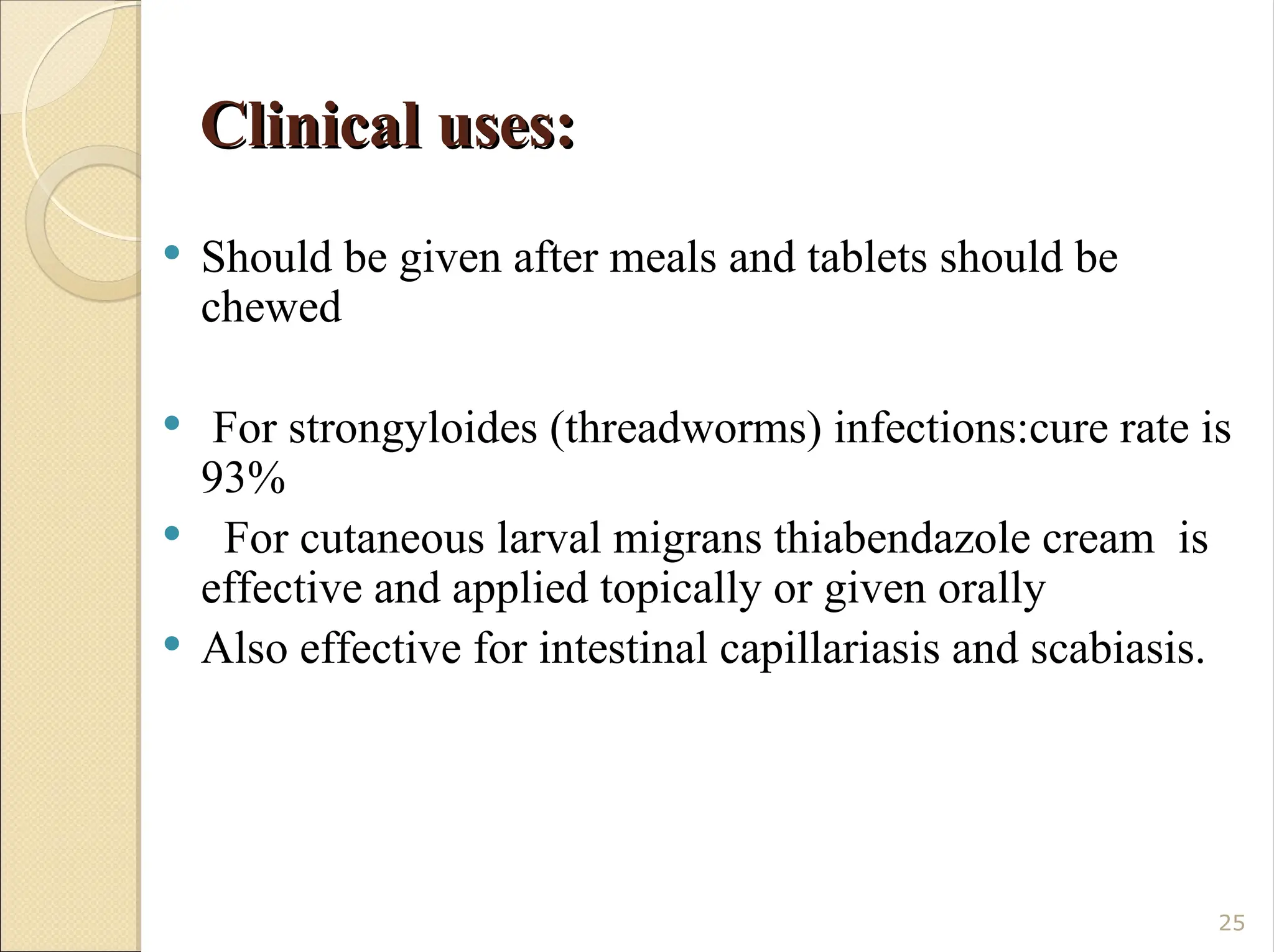
 Should be given after meals and tablets should be
chewed
 For strongyloides (threadworms) infections:cure rate is
93%
 For cutaneous larval migrans thiabendazole cream is
effective and applied topically or given orally
 Also effective for intestinal capillariasis and scabiasis.
25
Thiabendazole cont’d
 Adverse reactions and contraindications:
1. It is more toxic than other benzamidazoles
2. GI disturbances
3. Pruritus, headache, drowsiness, neuropsychiatric symptoms
rarely may cause tinnitus, bradycardia, hypotension,
hyperglycemia, convulsions, neutropenia and other adverse
effects may occur.
4. Irreversible live failure.
5. Fatal Stevens–Johnson syndrome (inflammation of the skin)
6. Not used in children below the weight of 15 kg, during
pregnancy, hepatic and renal diseases.
26
PYRANTEL PAMOATE
PYRANTEL PAMOATE
 It is a broad-specturm antihelminthic
 It is not effective against trichuriasis (whipworms) and
trichostrongylus orientalis infections, yet oxantel pamoate
is considered effective against trichuriasis. Both drugs can
be combined for their synergistic effect.
 Pharmacokinetics:
 It is poorly absorbed orally. Active mainly against
luminal organisms.
 Half of the drug is excreted unchanged in the feces.
 Mechanism of action:
 It is a depolarizing neuromuscular blocking agent that
causes release of acetylcholine and inhibition of
cholinesterase leading to the paralysis of worms followed
by their expulsion from the GIT.
27
Pyrantel pamoate (cont’d)
Efficacy and clinical uses:
 it is very effective against mature and immature luminal
organisms, but not effective against migratory stages in
the tissues or against ova
 Enterobius vermicularis (pinworm).
 Ascaris lumbricoids (common roundworm)
 Ancylostoma duodenale (hookworm) single dose for
light infection but a 3-day course is necessary for heavy
infection especially N americanus infection.
28
Pyrantel pamoate
Pyrantel pamoate cont’d:
cont’d:
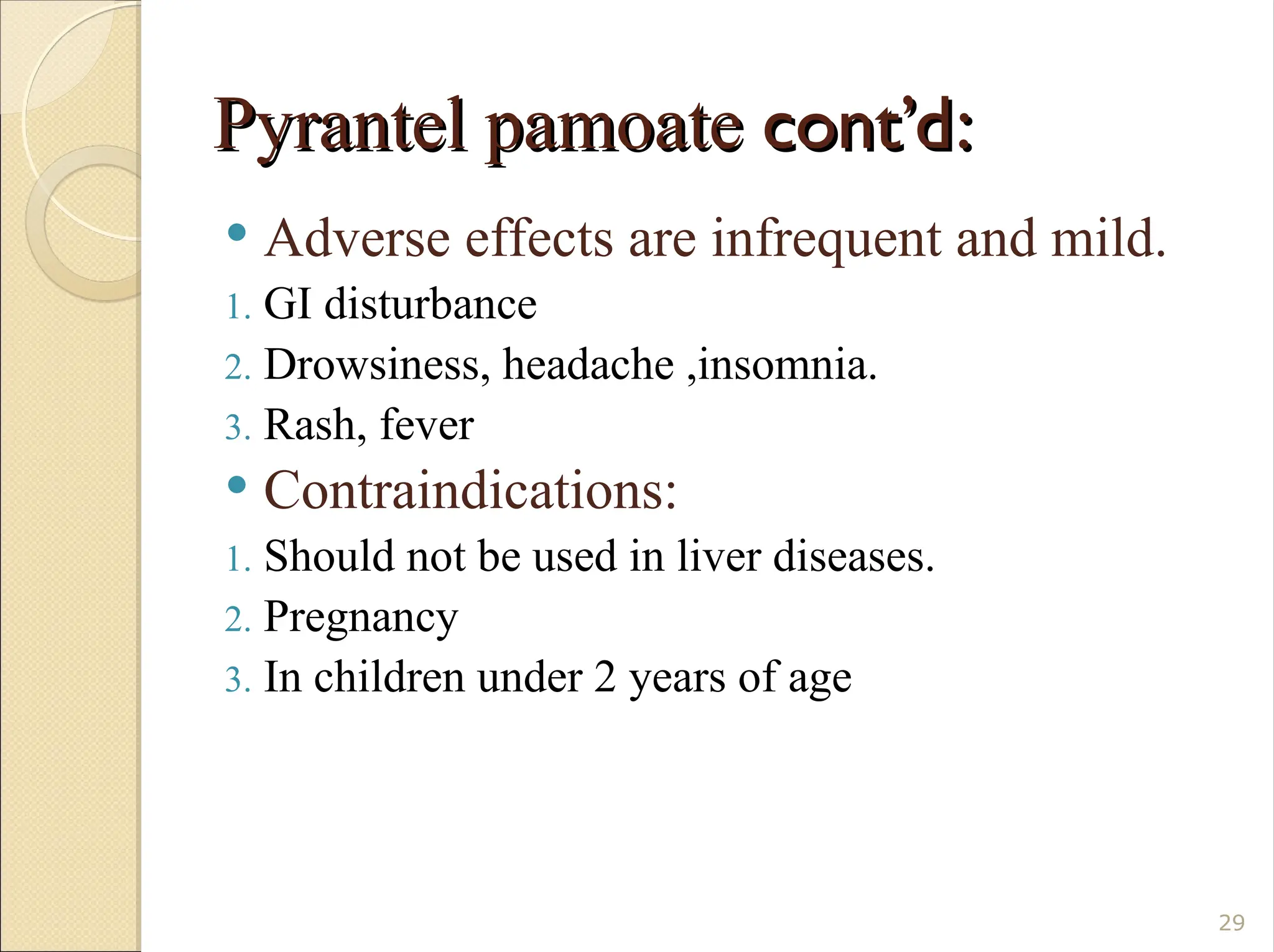
 Adverse effects are infrequent and mild.
1. GI disturbance
2. Drowsiness, headache ,insomnia.
3. Rash, fever
 Contraindications:
1. Should not be used in liver diseases.
2. Pregnancy
3. In children under 2 years of age
29
PIPERAZINE
PIPERAZINE
 Only used for the treatment of ascariasis.
 It is readily absorbed orally and excreted in urine
 Mechanism of action:
It causes paralysis of ascaris by blocking
acetylcholine at the myoneural junction, expelling
the live worm by normal peristalsis.
30
Piperazine cont’d
Piperazine cont’d
 Treatment is continued for 3-4 days or
repeated after one week in case of heavy
infections.
31
Piperazine cont’d
Piperazine cont’d
 Adverse effects:
1. GI disturbances
2. Neurotoxicity, allergic reactions serum sickness
like syndrome
 Contraindications
1. Epilepsy or chronic neurologic disease
2. Impaired liver or kidney functions
3. Pregnancy
4. Malnutrition
32
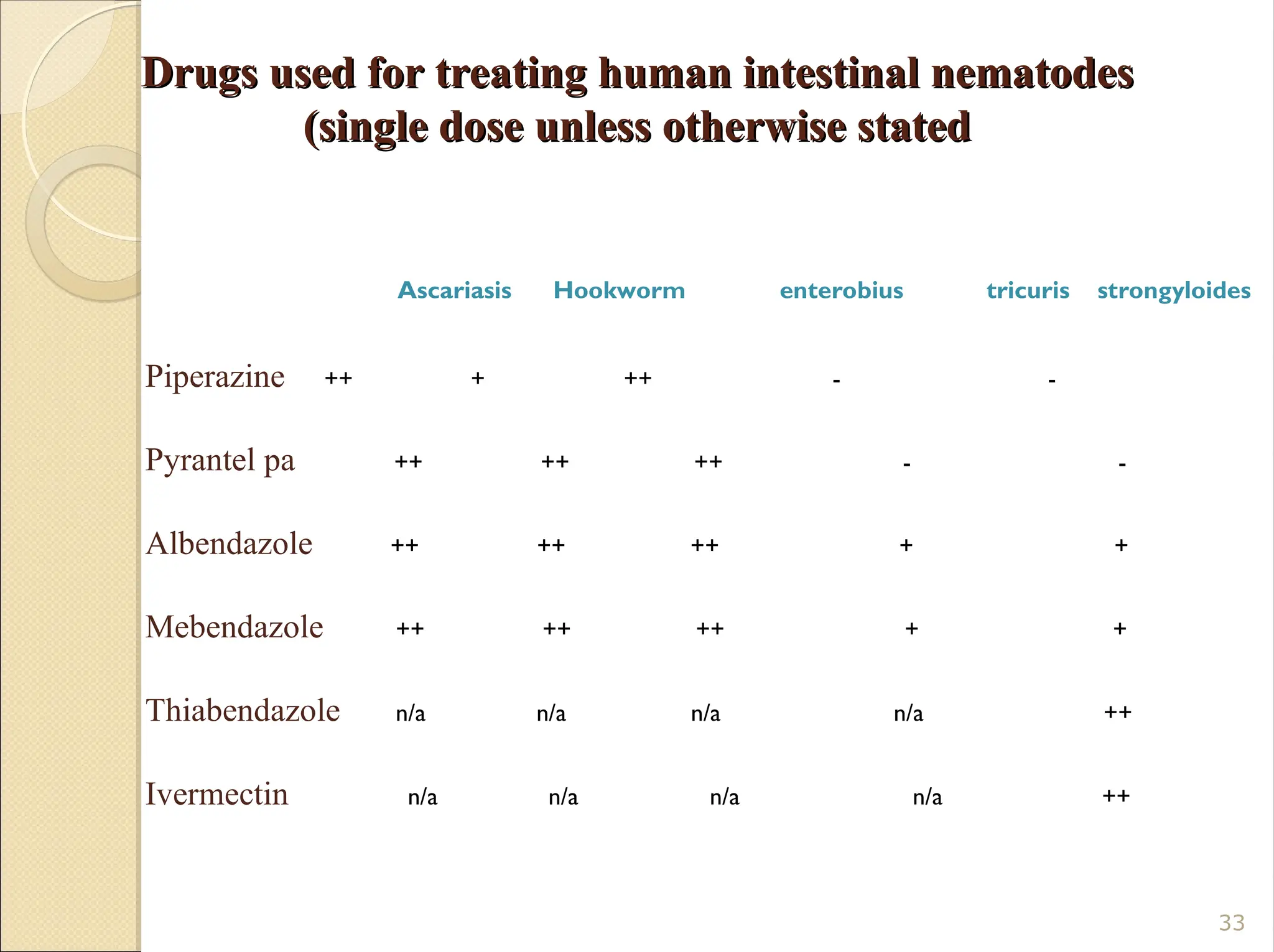
Drugs used for treating human intestinal nematodes
(single dose unless otherwise stated
Ascariasis Hookworm enterobius tricuris strongyloides
Piperazine ++ + ++ - -
Pyrantel pa ++ ++ ++ - -
Albendazole ++ ++ ++ + +
Mebendazole ++ ++ ++ + +
Thiabendazole n/a n/a n/a n/a ++
Ivermectin n/a n/a n/a n/a ++
33
Drug treatment for tape worm(cestodes)
infection
infection
 Niclosamide
 Praziquantel
 Albendazole
34
NICLOSAMIDE
NICLOSAMIDE
 It is useful for the treatment of adult tape worm
(cestodes) infestation
 Mechanism of action:
 Adult worm is rapidly killed by inhibition of the
oxidative phosphorylation or stimulation of ATPase
activity.
 has no effect on ova
 Pharmacokinetics:
 It is not absorbed from the gut
 Neither drug nor its metabolites are found in the
blood or urine.
35
Niclosamide cont’d
Niclosamide cont’d
 Clinical uses:
A. T. Saginata (Beef tape worm),T. solium (pork tapeworm), Diphyllobothrium
latum (fish tapeworm)
 In case of T. solium after 2 hrs of treatment, purge of magnesium sulphate should
be given to eliminate all
mature segments.
 Not effective against cysticercosis or hydatid disease. b/c
it’s not absorbed from the gut
 Hymenolepis nana
 H diminuta and Dipylidium caninum
 Alternative for Fasciolopsis buski, Heterophyes heterophyes, Metagonimus
yokogawi.
36
Niclosamide cont’d
Niclosamide cont’d
 Adverse effects:
 Mild, infrequent and transitory GI
disturbances
 Alcohol consumption should be avoided
 Not indicated in children under 2 years of
age or pregnancy.
37
Diethylcarbamazine
Diethylcarbamazine
 The drug of choice for the treatment of filariasis,
loiasis and tropical eosinophilia.
 Pharmacokinetics:
 It is a synthetic derivative of piperazine
 Rapidly absorbed from the gut
 It has a half life of 2-3 hours which increases in
alkaline urine up to 10 hours.
 Equilibrates with all tissues except fat
 It is excreted in urine unchanged.
 Dosage is reduced in urinary alkalosis and renal
impairment.
38
DIETHYLCARBAMAZINE con’d
 Mechanism of action:
 It immobilizes microfilariae in tissues and alters its
surface structure, making them more susceptible to
destruction by host defense mechanism
 Unknown mechanism against adult worms
 It also possesses an immunosuppressive effects
 It has no teratogenic effects on experiment animals
39
DIETHYLCARBAMAZINE con’d
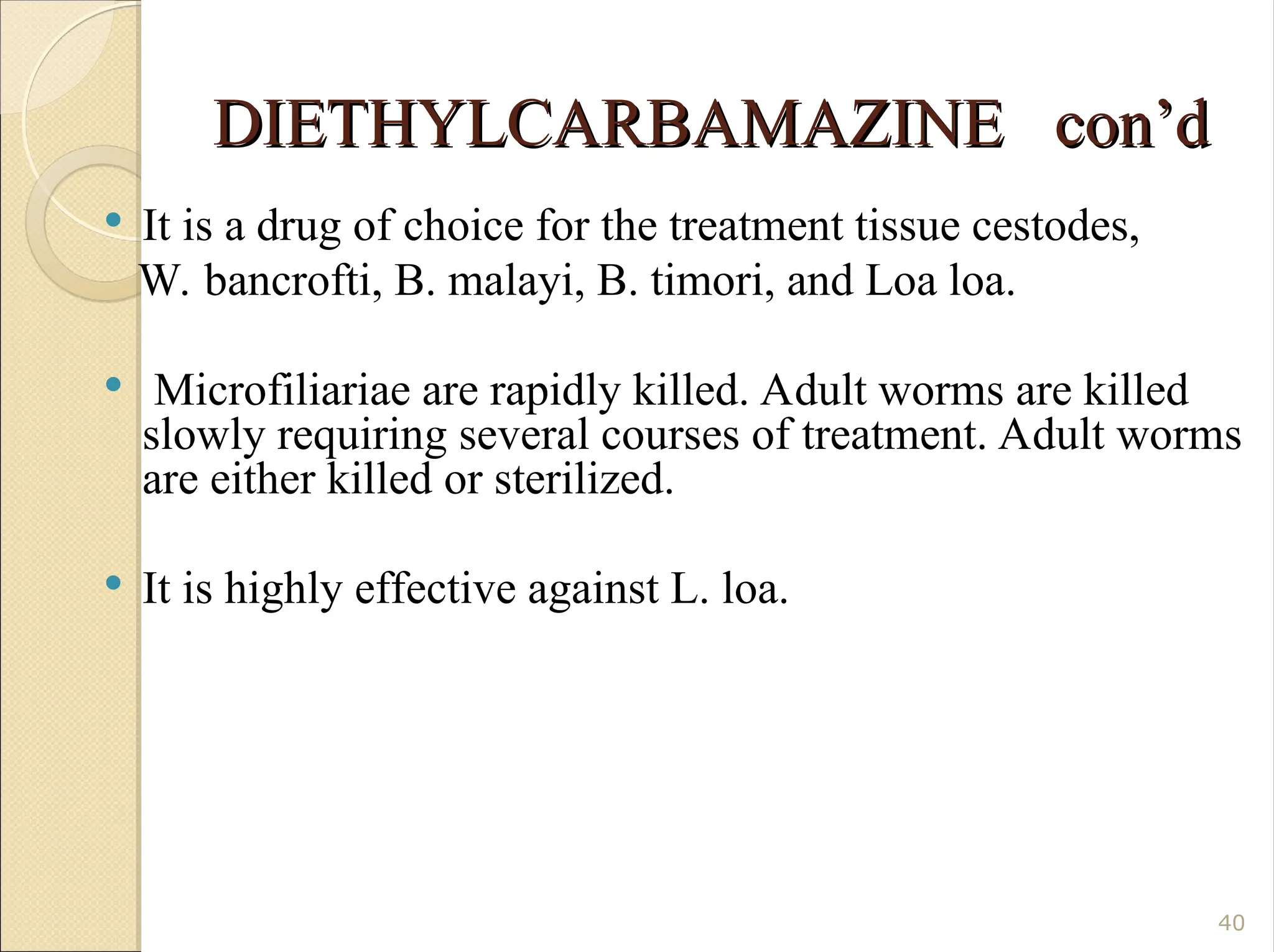
 It is a drug of choice for the treatment tissue cestodes,
W. bancrofti, B. malayi, B. timori, and Loa loa.
 Microfiliariae are rapidly killed. Adult worms are killed
slowly requiring several courses of treatment. Adult worms
are either killed or sterilized.
 It is highly effective against L. loa.
40
DIETHYLCARBAMAZINE con’d
 Anti histamines and corticosteroids are given in allergic
manifestations.
 Complete Cure may be require several courses of treatment over 1-2
years.
 The drug may be used in prophylaxis for loiasis, bancroftian, and
Malayan filariasis
 Tropical (pulmonary) eosinophilia
 Mansonella streptocerca
41
DIETHYLCARBAMAZINE con’d
 Drug induced/ Reactions induced by
Dying parasites:
 Fever , malaise, papular rash, headache,
GI disturbance, cough, chest, muscle, joint
pain
 Leukocytosis, proteinurea, ↑ eosinophilia
 Retinal hemorrhage
 Encephalopathy
 Lymphangitis and lymphadenopathy.
42
DIETHYLCARBAMAZINE con’d
 Contraindications and cautions
1. Hypertension
2. Renal disease
3. Patient suspected of having malaria
4. Patients with lymphangitis
43
IVERMECTIN
IVERMECTIN
 It is the drug of choice for treatment of
strongyloidasis and onchocerciasis
 It is a macrocyclic lactone
 It is used orally and is rapidly absrobed,
possesses wide volume of distribution
about 50 L.
 It has a half-life of 16 hrs
 It is exclusively excreted in feces
44
IVERMECTIN cont’d
IVERMECTIN cont’d
 Mechanism of action:
 It intensifies GABA –mediated
transmission of signals in peripheral
nerves  paralyzing the worm.
 In onchocerciasis it is microfilaricidal. It
does not kill the adult worm
45
IVERMECTIN cont’d
IVERMECTIN cont’d
 Clinical uses:
 Onchocerciasis: with the 1st
treatment,
patients with microfilariae in the cornea or
anterior chamber may be treated with
corticosteroid.
46
IVERMECTIN cont’d
IVERMECTIN cont’d
 Strongyloidiasis: in immunosuppresed
patient, repeated treatment is often needed.
 Bancrofti filaricidal: as it is mirofilaricidal
 It is also used for scabies, lice, and
cutaneous larva migrans.
 Eliminates adcarid worms
 Reduces microfilariae in Brugia malayi
and M ozzardi.
47
IVERMECTIN cont’d
IVERMECTIN cont’d
 Adverse effects:
1. Fatigue
2. dizziness,
3. GI disturbance
 In Onchocerciasis:
1. Mazotti reaction: fever, headache, dizziness,
somnolence (state of being drowsy), weekness, rash
,diarrhea, arthralagia, hypotension, lymphadenitis,
peripheral edema due to killing of microfiliariae,
for this steroids may be necessary for several days
2. Swelling and abscess at site of adult worm
3. Punctuate corneal opacities.
48
IVERMECTIN con’d
IVERMECTIN con’d
 Contraindication:
1.other drugs that enhance GABA activity
e.g Barbiturates, bnezodiazepines,
valproic acid.
2. pregnancy
3.Impaired blood brain barrier
4.Children under 5 years of age.
49
BITHIONOL
BITHIONOL
 It is the drug of choice for the treatment of
fascioliasis (sheep liver fluke)
 It is also used as an alternative for praziquantel
in treating pulmonary paragonimiasis
 Repeat doses in case of cerebral
paragonimiasis.
 Pharmacokinetics:
 It is orally administered and excreted in urine.
50
BITHIONOL
BITHIONOL
 Adverse effects:
1. GI disturbance
2. Dizziness,headache
3. Pruriuts ,urticaria,Leucopenia
 Contraindications and precautions:
1. hepatitis,
2. leucopenia
3. Used with caution under 8 years of age.
51

Antihelminth drug of choice ppt with pic.ppt

  • 1.
    ANTHELMINTIC DRUGS ANTHELMINTIC DRUGS 1 DR.ABDULLATIF MAHESAR Department of Medical Pharmacology KSU
  • 2.
    ‫تنبيه‬ ‫تنبيه‬ 2 :‫يلي‬ ‫بما‬ ‫قمنا‬‫الساليدات‬ ‫هذه‬ ‫في‬ • ‫فقط‬ ‫واالكتفاء‬ ‫واشكالها‬ ‫العدوى‬ ‫انتقال‬ ‫كيفية‬ ‫في‬ ‫المقدمة‬ ‫حذف‬ ‫وأصنافها‬ ‫الديدان‬ ‫بأسماء‬ • ‫استخدامها‬ ‫ة‬0 ‫ر‬‫وفت‬ ‫الكمية‬ ‫ناحية‬ ‫من‬ ‫الجرعات‬ ‫حذف‬ ‫السالفة‬ ‫المعلومات‬ ‫على‬ ‫للحصول‬ ‫الدكتور‬ ‫لساليدات‬ ‫العودة‬ ‫يمكنكم‬ ‫الذكر‬
  • 3.
  • 4.
    Nematodes Nematodes A) INTESTINAL ROUNDWORMS  Ascaris lmubricoides (common round worm)  Enterobius vermicularis (pinworm)  Trichuris trichuria (whipworm)  Strongyloids stercoralis (threadworm)  Strongyloidiasis  Ancylostoma duodenale & Necator americanus (hookworm) 4 B) TISSUE ROUND WORMS Trichinella spiralis. (Trichinosis) Dracunculus medinensis (guineaworm)  Dracunculiasis
  • 5.
    Other round worms Otherround worms FILARIAE, includes: 1.Wuchereria bancrofti (filariasis) 2. Loa loa (loiasis) 3. Onchocerca volvulus (onchocerciasis) River blindness. 4. Brugia malayi and B. timori 5
  • 6.
    Cestodes (tape worms) 1.Tenia saginata (Beef tapeworm) 2. Tenia solium (Pork tapeworm), 3. Cysticercosis (Pork tapeworm larval stage) 4. Hymenolepis nana (Dwarf tapeworm) 5. Diphyllobothrium latum (Fish tapeworm) 6
  • 7.
    Hydatid tape worm Hydatidtape worm  Echinococcus species 7
  • 8.
    TREMATODES/FLUKES (leaf- TREMATODES/FLUKES (leaf- like) like) Schistosoma mansoni  Schistosoma hematobium  Schistosoma Japonicum  Paragonimus species  Paragonimiasis  Fasciolopsis buski  Fasciola hepatica  Clonorchis sinensis 8
  • 9.
    ANTIHELMINTIC DRUGS ANTIHELMINTIC DRUGS BENZIMIDAZOLEs 1.ALBENDAZOLE: It possess broad-spectrum activity . It is the drug of choice for treatment of 1. Hydatid disease and 2. Neurocysticercosis.  It is also a major drug the treatment of (intestinal nematodes) : 1. Ascariasis, 2. Trichuriasis, 3. Strongyloidiasis, 4. Enterobius vermicularis (pinworm), 5. Nector americanus, & Ancylostoma duodenale (Hookworms) infections. 9
  • 10.
    Albendazole cont’d Albendazole cont’d Mechanismof action:  Inhibits microtubule synthesis and glucose uptake  It has larvicidal effects on hydatid disease, cysticercosis, ascariasis, and hookworm infection.  Also, ovicidal in ascariasis , ancylostomiasis (hookworm), trichuriasis 10
  • 11.
    Pharmacokinetics of Albendazole: Pharmacokineticsof Albendazole:  It is a benzimidazole carbamate  It is administered orally, and absorbed erratically (unpredictable), absorption can be increased with fatty meal.  It is metabolized in the liver rapidly to its active metabolite albendazole sulphoxide. (1st pass metabolism) 11
  • 12.
    Contnued Contnued  It hasa plasma half life of 8-12 hours  Sulphoxide is mostly (80%) protein bound , distributed to the tissues and enters the bile, cerebrospinal fluid, and the hydatid cyst.  urinary excretion 12
  • 13.
    Clinical uses Clinical usesof albendazole: of albendazole:  It is administered on empty stomach when used against intraluminal parasites but with fatty meal when against tissue parasites. 1. Ascariasis, trichuriasis, hookworm, pin worm infection (intestinal): Acheives 100% cure in pinworm infection and high cure rates for others or marked reduction in eggs counts. 13
  • 14.
    2. Hydatid diseases: Drugof choice, with meals. Bone cyst may require treatment for 1 year.  If patients are to be treated surgically, both albendazole and praziquantel are used preoperatively for one month to reduce cyst fluid leakage. After surgery albandazole should be continued for a whole month. 14
  • 15.
    Albendazole cont’d Albendazole cont’d 3.Neurocysticercosis: It is the drug of choice. It is effective for symptomatic parenchymal and interventricular cysts. Less effective in arachnoid cyst.  It is superior to Praziquantel for neurocysticercosis for the following: 1. Shorter course of treatment. 2. It is cheaper 3. It is co-administeration with steroid increases its absorption 4. It is better in penetration arachnoid space.. 5. It is also effective for ocular cysts. 4. Other infections: Drug of choice in cutaneous and visceral larvea migrans , intestinal cappillariasis, microsporidial infections, gnathostomiasis, trichinosis, clonorchiasis, opisthorchiasis, toxocariasis, and loiasis. 15
  • 16.
     It isused along with cotricosteroid to decrease the inflammation caused by dying organism, and it also reduces the duration of course  During the acute phase of cysticercotic encephalitis, albandazole is contraindicated and corticosteroid is indicated instead. N.B:In intestinal nematodes, treatment in days But in hydatid disease & Neurocysticercosis, the treatment take longer duration 16
  • 17.
    Albendazole con’d Albendazole con’d Adverseeffects:  In short term use there is no significant adverse effects.  In long term use: abdominal distress, headache, fever, fatigue, alopecia , increased liver enzymes , pancytopenia. Blood counts and LFT should be carried out regularly.  Not given during pregnancy and in hypersensitive people.  Safety in children is not established in children below 2 years of age. 17
  • 18.
    MEBENDAZOLE (Vermox) MEBENDAZOLE (Vermox) it is a synthetic benzimidazole  it has wider spectrum and is safe Mechanism of action: Similar to albendazole Effecacy influenced by: GI transit time, intensity of infection, and strain of parasite. It is also used to kill hook worm, pin worm , ascaris and trichuris eggs. 18
  • 19.
    Mebendazole con’t Mebendazole con’t Pharmacokinetics: 1.Less than 10% of orally administered drug is absorbed 2. Absorption increases with fatty meals 3. Absorbed drug is 90% protein bound 4. It is converted to inactive metabolites rapidly in liver. 5. It has half life of 2-6 hours 6. It is primarily excreted in bile. 19
  • 20.
    Mebendazole con’t Mebendazole con’t Clinicaluses:  It is taken orally before or after meal, tablets should be chewed before swallowing.  Ascaris lumricoides , trichuris trichura , hookworm and trichstrongylus; It is useful drug in case of mixed infection by these parasites.  in adults and children over 2 years cure rate is 90-100 % except hookworm but a marked reduction in worm burden occurs 20
  • 21.
    Mebendazole cont’d Mebendazole cont’d Intestinal cappilliaris  Trichinosis: It has limited efficacy against adult worm.  Corticosteroids coadministered in sever infection. 21
  • 22.
    Mebendazole con’d Mebendazole con’d Adverseeffects and precautions: 1. No adverse effects in short term therapy except for mild GI disturbances. 2. With high dose hypersensitivity reactions, agranulocytosis , alopecia, elevation of liver enzymes. 3. Contraindicated in pregnancy. 4. Used with caution under 2 years of age may cause convulsion in this group. 5. carbamazepine or phneytoin  ↓ conc. Cimetidine  ↑ conc. 6. used with caution in cirrhosis 22
  • 23.
    Thiabendazole Thiabendazole  It isbenzimidazole. It is tasteless and insoluble in water.  It is a chelating agent and forms stable complexes with metals including iron but does not bind with calcium.  It is rapidly absorbed orally  It has half life of 1.2 hrs  It is completely metabolized in liver and 90% is excreted in urine  It can also get absorbed through the skin. Thus, could be applied in creams. 23
  • 24.
    Thiabendazole con’d: Thiabendazole con’d: Mechanism of action: similar to other benzimidazoles.  It is ovicidal for some parasites.  It also possesses immunosuppressive, antipyretic, and mild antifungal and scabicidal (destroying the itch mite causing scabies ) effects. 24
  • 25.
    Clinical uses: Clinical uses: Should be given after meals and tablets should be chewed  For strongyloides (threadworms) infections:cure rate is 93%  For cutaneous larval migrans thiabendazole cream is effective and applied topically or given orally  Also effective for intestinal capillariasis and scabiasis. 25
  • 26.
    Thiabendazole cont’d Thiabendazole cont’d Adverse reactions and contraindications: 1. It is more toxic than other benzamidazoles 2. GI disturbances 3. Pruritus, headache, drowsiness, neuropsychiatric symptoms rarely may cause tinnitus, bradycardia, hypotension, hyperglycemia, convulsions, neutropenia and other adverse effects may occur. 4. Irreversible live failure. 5. Fatal Stevens–Johnson syndrome (inflammation of the skin) 6. Not used in children below the weight of 15 kg, during pregnancy, hepatic and renal diseases. 26
  • 27.
    PYRANTEL PAMOATE PYRANTEL PAMOATE It is a broad-specturm antihelminthic  It is not effective against trichuriasis (whipworms) and trichostrongylus orientalis infections, yet oxantel pamoate is considered effective against trichuriasis. Both drugs can be combined for their synergistic effect.  Pharmacokinetics:  It is poorly absorbed orally. Active mainly against luminal organisms.  Half of the drug is excreted unchanged in the feces.  Mechanism of action:  It is a depolarizing neuromuscular blocking agent that causes release of acetylcholine and inhibition of cholinesterase leading to the paralysis of worms followed by their expulsion from the GIT. 27
  • 28.
    Pyrantel pamoate (cont’d) Pyrantelpamoate (cont’d) Efficacy and clinical uses:  it is very effective against mature and immature luminal organisms, but not effective against migratory stages in the tissues or against ova  Enterobius vermicularis (pinworm).  Ascaris lumbricoids (common roundworm)  Ancylostoma duodenale (hookworm) single dose for light infection but a 3-day course is necessary for heavy infection especially N americanus infection. 28
  • 29.
    Pyrantel pamoate Pyrantel pamoatecont’d: cont’d:  Adverse effects are infrequent and mild. 1. GI disturbance 2. Drowsiness, headache ,insomnia. 3. Rash, fever  Contraindications: 1. Should not be used in liver diseases. 2. Pregnancy 3. In children under 2 years of age 29
  • 30.
    PIPERAZINE PIPERAZINE  Only usedfor the treatment of ascariasis.  It is readily absorbed orally and excreted in urine  Mechanism of action: It causes paralysis of ascaris by blocking acetylcholine at the myoneural junction, expelling the live worm by normal peristalsis. 30
  • 31.
    Piperazine cont’d Piperazine cont’d Treatment is continued for 3-4 days or repeated after one week in case of heavy infections. 31
  • 32.
    Piperazine cont’d Piperazine cont’d Adverse effects: 1. GI disturbances 2. Neurotoxicity, allergic reactions serum sickness like syndrome  Contraindications 1. Epilepsy or chronic neurologic disease 2. Impaired liver or kidney functions 3. Pregnancy 4. Malnutrition 32
  • 33.
    Drugs used fortreating human intestinal nematodes Drugs used for treating human intestinal nematodes (single dose unless otherwise stated (single dose unless otherwise stated Ascariasis Hookworm enterobius tricuris strongyloides Piperazine ++ + ++ - - Pyrantel pa ++ ++ ++ - - Albendazole ++ ++ ++ + + Mebendazole ++ ++ ++ + + Thiabendazole n/a n/a n/a n/a ++ Ivermectin n/a n/a n/a n/a ++ 33
  • 34.
    Drug treatment fortape worm(cestodes) Drug treatment for tape worm(cestodes) infection infection  Niclosamide  Praziquantel  Albendazole 34
  • 35.
    NICLOSAMIDE NICLOSAMIDE  It isuseful for the treatment of adult tape worm (cestodes) infestation  Mechanism of action:  Adult worm is rapidly killed by inhibition of the oxidative phosphorylation or stimulation of ATPase activity.  has no effect on ova  Pharmacokinetics:  It is not absorbed from the gut  Neither drug nor its metabolites are found in the blood or urine. 35
  • 36.
    Niclosamide cont’d Niclosamide cont’d Clinical uses: A. T. Saginata (Beef tape worm),T. solium (pork tapeworm), Diphyllobothrium latum (fish tapeworm)  In case of T. solium after 2 hrs of treatment, purge of magnesium sulphate should be given to eliminate all mature segments.  Not effective against cysticercosis or hydatid disease. b/c it’s not absorbed from the gut  Hymenolepis nana  H diminuta and Dipylidium caninum  Alternative for Fasciolopsis buski, Heterophyes heterophyes, Metagonimus yokogawi. 36
  • 37.
    Niclosamide cont’d Niclosamide cont’d Adverse effects:  Mild, infrequent and transitory GI disturbances  Alcohol consumption should be avoided  Not indicated in children under 2 years of age or pregnancy. 37
  • 38.
    Diethylcarbamazine Diethylcarbamazine  The drugof choice for the treatment of filariasis, loiasis and tropical eosinophilia.  Pharmacokinetics:  It is a synthetic derivative of piperazine  Rapidly absorbed from the gut  It has a half life of 2-3 hours which increases in alkaline urine up to 10 hours.  Equilibrates with all tissues except fat  It is excreted in urine unchanged.  Dosage is reduced in urinary alkalosis and renal impairment. 38
  • 39.
    DIETHYLCARBAMAZINE con’d DIETHYLCARBAMAZINE con’d Mechanism of action:  It immobilizes microfilariae in tissues and alters its surface structure, making them more susceptible to destruction by host defense mechanism  Unknown mechanism against adult worms  It also possesses an immunosuppressive effects  It has no teratogenic effects on experiment animals 39
  • 40.
    DIETHYLCARBAMAZINE con’d DIETHYLCARBAMAZINE con’d It is a drug of choice for the treatment tissue cestodes, W. bancrofti, B. malayi, B. timori, and Loa loa.  Microfiliariae are rapidly killed. Adult worms are killed slowly requiring several courses of treatment. Adult worms are either killed or sterilized.  It is highly effective against L. loa. 40
  • 41.
    DIETHYLCARBAMAZINE con’d DIETHYLCARBAMAZINE con’d Anti histamines and corticosteroids are given in allergic manifestations.  Complete Cure may be require several courses of treatment over 1-2 years.  The drug may be used in prophylaxis for loiasis, bancroftian, and Malayan filariasis  Tropical (pulmonary) eosinophilia  Mansonella streptocerca 41
  • 42.
    DIETHYLCARBAMAZINE con’d DIETHYLCARBAMAZINE con’d Drug induced/ Reactions induced by Dying parasites:  Fever , malaise, papular rash, headache, GI disturbance, cough, chest, muscle, joint pain  Leukocytosis, proteinurea, ↑ eosinophilia  Retinal hemorrhage  Encephalopathy  Lymphangitis and lymphadenopathy. 42
  • 43.
    DIETHYLCARBAMAZINE con’d DIETHYLCARBAMAZINE con’d Contraindications and cautions 1. Hypertension 2. Renal disease 3. Patient suspected of having malaria 4. Patients with lymphangitis 43
  • 44.
    IVERMECTIN IVERMECTIN  It isthe drug of choice for treatment of strongyloidasis and onchocerciasis  It is a macrocyclic lactone  It is used orally and is rapidly absrobed, possesses wide volume of distribution about 50 L.  It has a half-life of 16 hrs  It is exclusively excreted in feces 44
  • 45.
    IVERMECTIN cont’d IVERMECTIN cont’d Mechanism of action:  It intensifies GABA –mediated transmission of signals in peripheral nerves  paralyzing the worm.  In onchocerciasis it is microfilaricidal. It does not kill the adult worm 45
  • 46.
    IVERMECTIN cont’d IVERMECTIN cont’d Clinical uses:  Onchocerciasis: with the 1st treatment, patients with microfilariae in the cornea or anterior chamber may be treated with corticosteroid. 46
  • 47.
    IVERMECTIN cont’d IVERMECTIN cont’d Strongyloidiasis: in immunosuppresed patient, repeated treatment is often needed.  Bancrofti filaricidal: as it is mirofilaricidal  It is also used for scabies, lice, and cutaneous larva migrans.  Eliminates adcarid worms  Reduces microfilariae in Brugia malayi and M ozzardi. 47
  • 48.
    IVERMECTIN cont’d IVERMECTIN cont’d Adverse effects: 1. Fatigue 2. dizziness, 3. GI disturbance  In Onchocerciasis: 1. Mazotti reaction: fever, headache, dizziness, somnolence (state of being drowsy), weekness, rash ,diarrhea, arthralagia, hypotension, lymphadenitis, peripheral edema due to killing of microfiliariae, for this steroids may be necessary for several days 2. Swelling and abscess at site of adult worm 3. Punctuate corneal opacities. 48
  • 49.
    IVERMECTIN con’d IVERMECTIN con’d Contraindication: 1.other drugs that enhance GABA activity e.g Barbiturates, bnezodiazepines, valproic acid. 2. pregnancy 3.Impaired blood brain barrier 4.Children under 5 years of age. 49
  • 50.
    BITHIONOL BITHIONOL  It isthe drug of choice for the treatment of fascioliasis (sheep liver fluke)  It is also used as an alternative for praziquantel in treating pulmonary paragonimiasis  Repeat doses in case of cerebral paragonimiasis.  Pharmacokinetics:  It is orally administered and excreted in urine. 50
  • 51.
    BITHIONOL BITHIONOL  Adverse effects: 1.GI disturbance 2. Dizziness,headache 3. Pruriuts ,urticaria,Leucopenia  Contraindications and precautions: 1. hepatitis, 2. leucopenia 3. Used with caution under 8 years of age. 51