Annual Report 2015
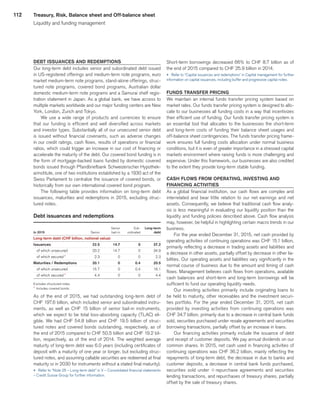
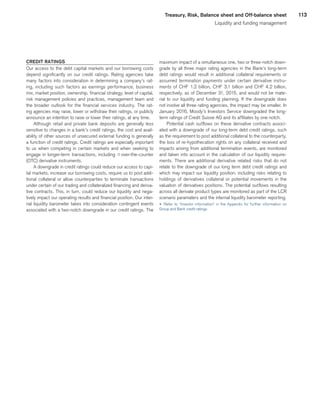
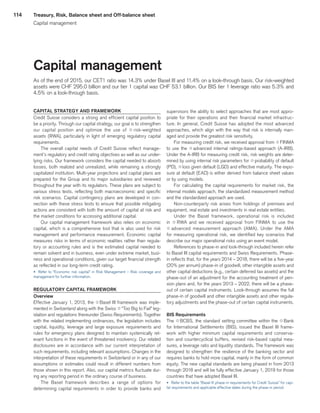
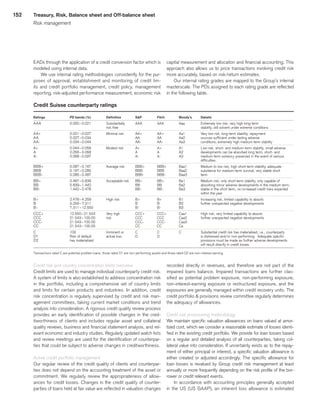
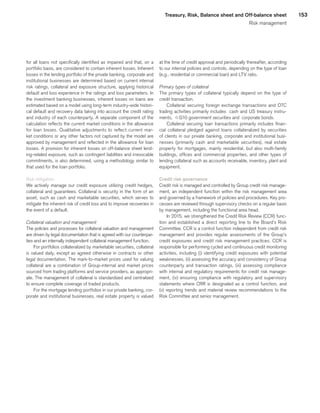
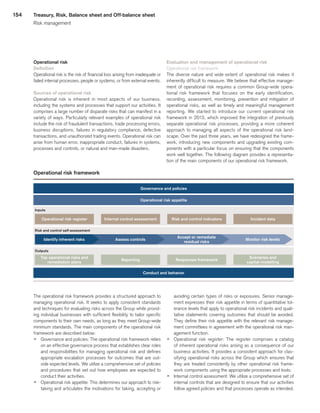
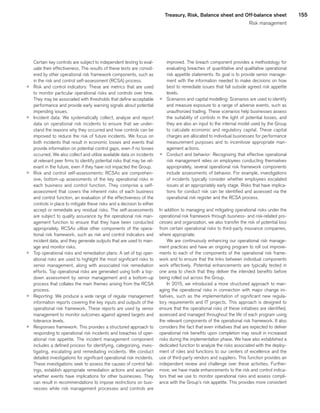
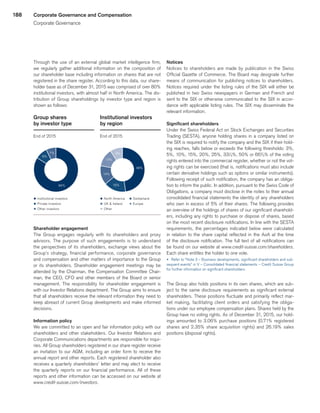
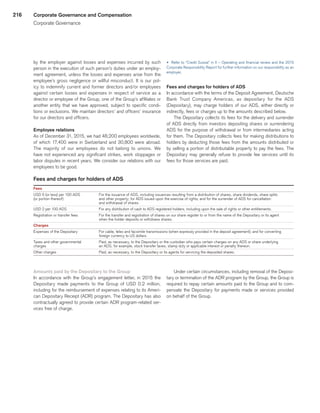
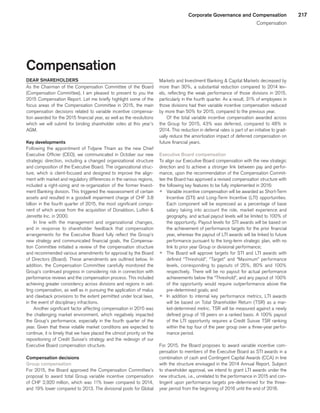
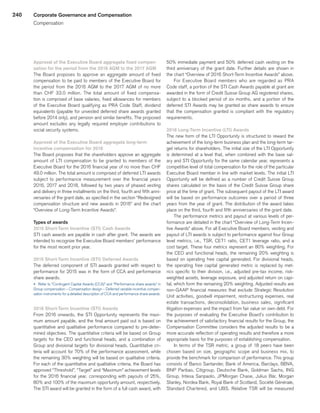
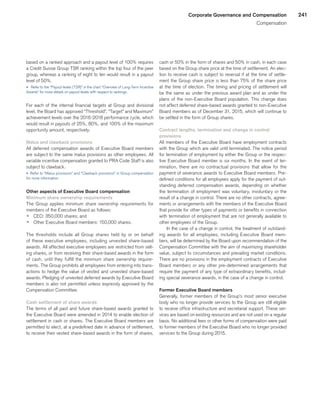
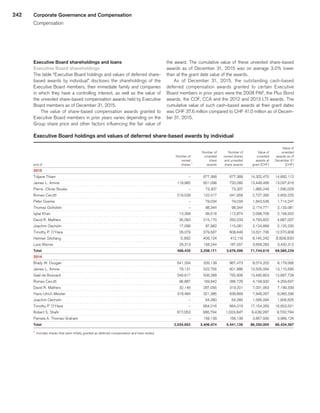
Credit Suisse Group AG


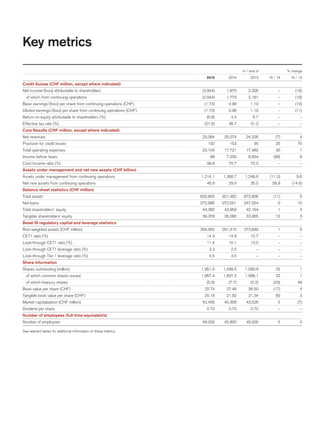
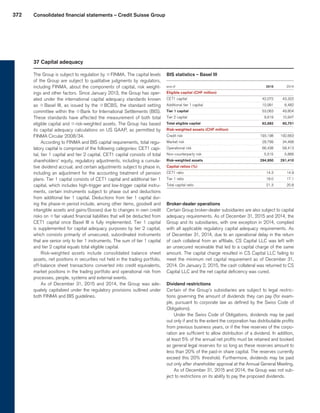
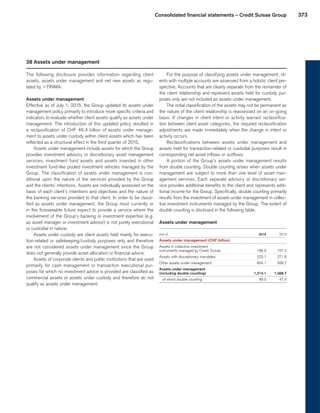
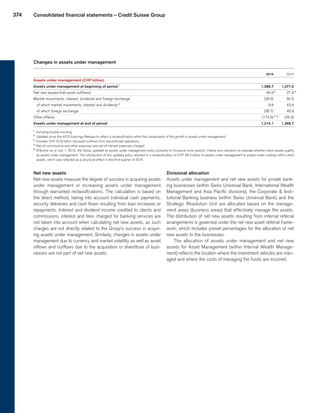
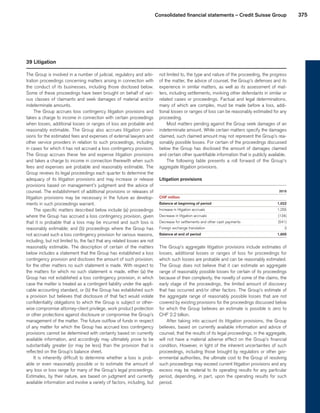
Key metrics           
 
					 in / end of	
			 % change	
 
	2015	
	2014	
	2013	
	 15 / 14	
	 14 / 13	
Credit Suisse (CHF million, except where indicated) 


Net income/(loss) attributable to shareholders 
	(2,944)	
	1,875	
	2,326	
	–	
	(19)	
   of which from continuing operations 
	(2,944)	
	1,773	
	2,181	
	–	
	(19)	
Basic earnings/(loss) per share from continuing operations (CHF) 
	(1.73)	
	0.99	
	1.10	
	–	
	(10)	
Diluted earnings/(loss) per share from continuing operations (CHF) 
	(1.73)	
	0.98	
	1.10	
	–	
	(11)	
Return on equity attributable to shareholders (%) 
	(6.8)	
	4.4	
	5.7	
	–	
	–	
Effective tax rate (%) 
	(21.6)	
	38.7	
	31.2	
	–	
	–	
Core Results (CHF million, except where indicated) 


Net revenues 
	23,384	
	25,074	
	24,226	
	(7)	
	4	
Provision for credit losses 
	192	
	153	
	90	
	25	
	70	
Total operating expenses 
	23,104	
	17,721	
	17,482	
	30	
	1	
Income before taxes 
	88	
	7,200	
	6,654	
	(99)	
	8	
Cost/income ratio (%) 
	98.8	
	70.7	
	72.2	
	–	
	–	
Assets under management and net new assets (CHF billion) 


Assets under management from continuing operations 
	1,214.1	
	1,368.7	
	1,248.6	
	(11.3)	
	9.6	
Net new assets from continuing operations 
	46.9	
	29.9	
	35.0	
	56.9	
	(14.6)	
Balance sheet statistics (CHF million) 


Total assets 
	820,805	
	921,462	
	872,806	
	(11)	
	6	
Net loans 
	272,995	
	272,551	
	247,054	
	0	
	10	
Total shareholders’ equity 
	44,382	
	43,959	
	42,164	
	1	
	4	
Tangible shareholders’ equity 
	39,378	
	35,066	
	33,955	
	12	
	3	
Basel III regulatory capital and leverage statistics 


Risk-weighted assets (CHF million) 
	294,950	
	291,410	
	273,846	
	1	
	6	
CET1 ratio (%) 
	14.3	
	14.9	
	15.7	
	–	
	–	
Look-through CET1 ratio (%) 
	11.4	
	10.1	
	10.0	
	–	
	–	
Look-through CET1 leverage ratio (%) 
	3.3	
	2.5	
	–	
	–	
	–	
Look-through Tier 1 leverage ratio (%) 
	4.5	
	3.5	
	–	
	–	
	–	
Share information 


Shares outstanding (million) 
	1,951.5	
	1,599.5	
	1,590.9	
	22	
	1	
   of which common shares issued 
	1,957.4	
	1,607.2	
	1,596.1	
	22	
	1	
   of which treasury shares 
	(5.9)	
	(7.7)	
	(5.2)	
	(23)	
	48	
Book value per share (CHF) 
	22.74	
	27.48	
	26.50	
	(17)	
	4	
Tangible book value per share (CHF) 
	20.18	
	21.92	
	21.34	
	(8)	
	3	
Market capitalization (CHF million) 
	42,456	
	40,308	
	43,526	
	5	
	(7)	
Dividend per share 
	0.70	
	0.70	
	0.70	
	–	
	–	
Number of employees (full-time equivalents) 


Number of employees 
	48,200	
	45,800	
	46,000	
	5	
	0	
See relevant tables for additional information on these metrics.


Annual Report
The Annual Report is a detailed presentation of
Credit Suisse Group’s company structure, corporate
governance, compensation practices and treasury
and risk management framework, and it includes
a review of Credit Suisse Group’s operating and
financial results accompanied by its annual financial
statements.
credit-suisse.com/ar
CreditSuisseAnnual
ReportingSuite
Annual Report 2015
Credit Suisse Group AG
Company Profile
The Company Profile contains a summary
of Credit Suisse Group’s new strategic direction
and organization structure.
credit-suisse.com/cp
Corporate Responsibility Report
The Corporate Responsibility Report describes
how Credit Suisse Group assumes its various
responsibilities as a bank towards society and
the environment. This publication is complemented
by the Responsibility Chronicle, which adds a
multimedia dimension to our reporting.
credit-suisse.com/crr
Company
Profile 2015
Corporate Responsibility
Report 2015
Annual Report 2015
Credit Suisse Group AG


For the purposes of this report, unless the context otherwise requires, the terms “Credit Suisse Group”, “Credit Suisse”, “the Group”, “we”, “us” and “our” mean Credit
Suisse Group AG and its consolidated subsidiaries. The business of Credit Suisse AG, the Swiss bank subsidiary of the Group, is substantially similar to the Group,
and we use these terms to refer to both when the subject is the same or substantially similar. We use the term “the Bank” when we are referring only to Credit Suisse
AG, the Swiss bank subsidiary of the Group, and its consolidated subsidiaries. Abbreviations and selected qterms are explained in the List of abbreviations and the
Glossary in the back of this report. Publications referenced in this report, whether via website links or otherwise, are not incorporated into this report. The English
language version of this report is the controlling version. In various tables, use of “–” indicates not meaningful or not applicable.
Investor Relations and Media
allows investors, analysts, media and other interested
parties to remain up to date with relevant online and
offline financial information on Credit Suisse.
Facts & Figures
provides an overview of the activities performed by
Credit Suisse in Switzerland and the bank’s multi-
faceted commitment to the Swiss financial center
and economy.
Private Banking Switzerland
places all the advantages at your fingertips – anytime,
anywhere – on tablets and smartphones. Use your
mobile device to scan your payment slips with one
click and pay bills, catch up on financial information
and much more. Credit Suisse gives top priority
to security in Online & Mobile Banking. SecureSign
provides a convenient login method for signing in
to your Online and Mobile Banking service.
Credit Suisse Apps
Available in the App Store and
Google Play Store

Interview with the Chairman
and the Chief Executive Officer	 4
Message from the Chairman
and the Chief Executive Officer	 6
I – Information on
the company	 11
Credit Suisse at a glance	 12
Strategy	13
Divisions	18
Regulation and supervision	 25
Risk factors	 40
II – Operating and
financial review	 49
Operating environment	 50
Credit Suisse	 53
Swiss Universal Bank	 64
International Wealth Management	 71
Asia Pacific	 78
Global Markets	 85
Investment Banking &
Capital Markets	 88
Strategic Resolution Unit	 91
Corporate Center	 93
Assets under management	 95
Critical accounting estimates	 99
III – Treasury, Risk,
Balance sheet and
Off-balance sheet	 105
Liquidity and funding management	 106
Capital management	 114
Risk management	 136
Balance sheet, off-balance sheet
and other contractual obligations	 179
IV – Corporate
Governance and
Compensation	183
Corporate Governance	 184
Compensation	 217
V – Consolidated
financial statements –
Credit Suisse Group	 249
Report of the Statutory Auditor	 251
Consolidated financial statements	 253
Notes to the consolidated
financial statements 	 260
Controls and procedures	 397
Report of the Independent
Registered Public Accounting Firm	 398
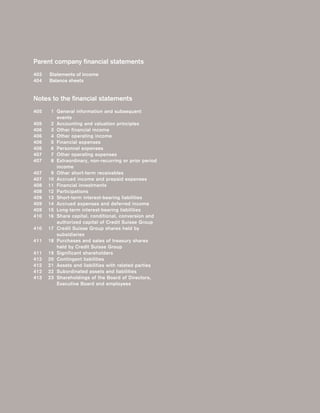
VI – Parent company
financial statements –
Credit Suisse Group	 399
Report of the Statutory Auditor	 401
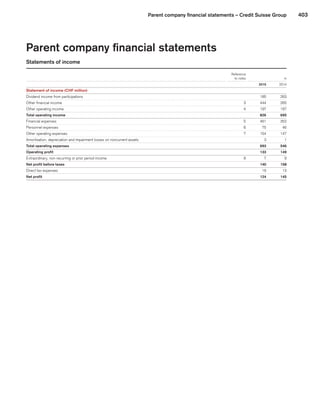
Parent company
financial statements	 403
Notes to the financial statements	 405
Proposed appropriation of retained
earnings and capital distribution	 415
Appendix	A-1
Selected five-year information	 A-2
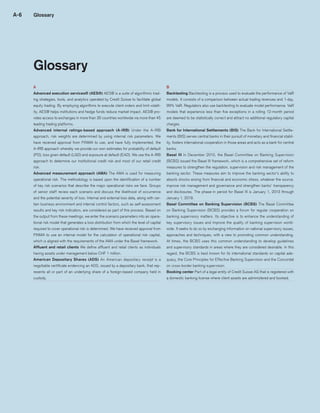
List of abbreviations	 A-4
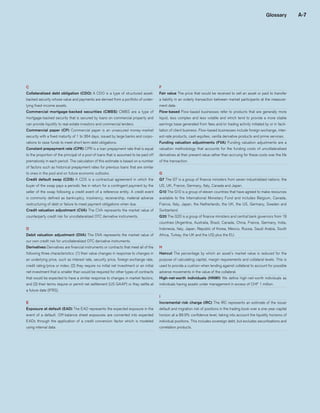
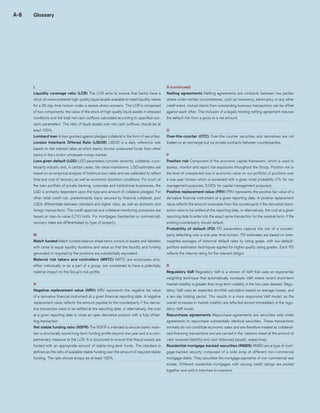
Glossary	 A-6
Investor information	 A-10
Financial calendar and contacts	 A-12


4
INTERVIEW WITH THE CHAIRMAN AND THE CHIEF EXECUTIVE OFFICER
again. We are also strong in terms of liquid-
ity. While internationally we may not be on
the absolute top of the rankings, we are
without any doubt well capitalized. With
a strengthened balance sheet, I am con-
fident that we can deliver on our commit-
ments. Our capital allocation process going
forward will ensure that we focus on busi-
nesses that offer the best risk-adjusted
returns, particularly in our three geographi-
cally focused divisions.
Urs Rohner: Moreover, we continue to fur-
ther strengthen our capital base. We aim to
operate the bank at a look-through CET1
capital ratio between 11-12% during 2016,
while managing through the changes to our
strategy. We are targeting a look-through
CET1 capital ratio of approximately 13%
and a Tier 1 leverage ratio between 5% and
6% with a look-through CET1 component
of 3.5% to 4% by the end of 2018. Building
up a strong capital base is the right choice
from the business perspective. I also believe
that capital will remain a key regulatory
topic. Therefore, we will remain very much
focused on growing in the right businesses,
which are capital accretive and which gen-
erate the necessary returns under the ever
stricter regulatory capital requirements.
The goodwill impairment of CHF 3.8
billion in the investment banking busi-
nesses was subject to significant atten-
tion. Notably, the decision was consid-
ered long overdue – would you agree?
Rohner: The goodwill impairment charge,
mostly related to the acquisition of Don-
aldson, Lufkin & Jenrette (DLJ) in 2000,
needed to be taken in the fourth quarter of
2015 as a direct consequence of the imple-
mentation of our new strategy and organi-
zational structure. This resulted in changes
to the former Investment Banking division,
leading to a reassessment of certain assets
and consequential goodwill impairment
charge. Since the DLJ acquisition, the good-
will impairment test was conducted annually
and verified by external experts. The rules
are clear: as long as the goodwill is covered
under the applicable methodology, no impair-
ment charge is to be booked. Once this is
no longer applicable, however, such charge
must be booked, as was the case in 2015.
In October of last year, you have intro-
duced the new strategy for the Group.
Is the execution on schedule and can
the ambitious timeline be met?
Thiam: We have made a good start in
implementing the strategy we presented
In relation to the 2015 results, there
have been several unfavorable reac-
tions from the markets and analysts.
What is your view of the current sen-
timent towards Credit Suisse and its
annual results?
Tidjane Thiam: I believe one should not
get sidetracked by immediate market reac-
tions. There is no point denying it: the
fourth quarter was a significant disap-
pointment. Some of the losses incurred
in our investment bank surprised inves-
tors as they came from activities that were
not consistent with our new strategy. The
losses and the impact on the capital posi-
tion as well as the goodwill write-down in
the fourth quarter made market partici-
pants nervous, especially in the context of
a decline in the price of oil, worries about
growth in China and the asynchronous
nature of central bank policies. We have
been explained on the difficulties encoun-
tered and what we are doing to address
them and this is increasingly better under-
stood by the market. Beyond these issues,
it is important to measure the progress
made by looking at our underlying business
performance. Between now and 2018, the
bank’s restructuring will make the analy-
sis of our performance more complex. We
have therefore introduced a definition of
adjusted results, which by correcting for
the most visible impacts of the restruc-
turing, will make it easier to monitor our
progress on the implementation of our new
strategy. Our adjusted results in the last
quarter of 2015 contained some encour-
aging trends despite volatile market condi-
tions. The performance of the Asia Pacific
division in particular highlighted the growth
potential in the region and our strong mar-
ket position. In addition, net new asset
generation was strong for both Asia Pacific
and the Swiss Universal Bank, and we con-
tinued to increase our mandates penetra-
tion in all three geographical divisions. One
of the direct outcomes of the changes we
have made is the fact that Credit Suisse
as of the end of 2015 has a stronger look-
through CET1 capital position than before.
You mention the Group’s capital level,
which is deemed insufficient by some
observers and thus remains a target for
criticism. How strong is Credit Suisse’s
capital base?
Thiam: In fact, with 11.4% at the end of
2015, we now have the strongest look-
through CET1 ratio that Credit Suisse
has ever had. I feel that needs to be said
in October 2015. Before year-end, the
important milestone of the capital raise was
completed. Our capital ratios have been
strengthened, allowing us to start imple-
menting important restructuring measures,
which consume capital. The new structure,
which impacted all of our almost 50,000
staff, was fully in place by end-2015. In
parallel, we have been strengthening the
Group’s control functions and making sub-
stantial investments in our risk manage-
ment and control capabilities. The pro-
cess of right-sizing our investment banking
activities is well under way and have fur-
ther been accelerated in Global Mar-
kets, reflecting the persistently challeng-
ing market environment. We have already
exited many activities. Our look-through
CET1 capital position as of end-2015 is
the strongest it has ever been and we are
implementing the announced changes with
determination. Once completed, this com-
prehensive change program will position us
well to deliver profitable growth and returns
for our shareholders in 2018 and beyond.
In this new strategy, is Credit Suisse
predominantly implementing actions
that other banks have taken already?
How can Credit Suisse differentiate
itself from its peers?
Rohner: The strategy is tailored to Credit
Suisse and reflects three important ele-
ments: the Group’s cultural and historical
heritage, its strengths as an integrated bank
and current external demands, such as key
regulatory and market developments. In
terms of regulation and markets, we face
similar conditions as our peers but in other
regards, our strategy is unique. Accordingly,
our Swiss roots as a “Bank for Entrepre-
neurs” remain at the core of our strategy.
That combines with our global presence
and ultimately, our unique capability to pro-
vide both private banking and investment
banking services to our clients. This offer-
ing is absolutely crucial for our differentia-
tion in the highly competitive ultra-high-net-
worth individual client segment.
In the course of this year, which are the
most important steps in the execution
of your new strategy?
Thiam: We will continue to restructure
the bank to ensure that we can react to
the changing market environment. In light
of the challenging environment in the first
few months of 2016, we have accelerated
the right-sizing of our investment banking
activities, particularly in the Global Markets


5

division. These efforts aim at improving our
ability to serve our clients and generate
over time compliant, well controlled, profit-
able growth. We will continue to focus on
growing our wealth management business
and on the reduction of our investment
banking activities so that they consume
less capital, generate more stable earnings
and better support the development of our
wealth management offering. Our strategy
is focused on deploying all of our capabili-
ties and expertise to best service our cli-
ents. We will continue to implement it with
determination.
You often mention innovation. Which
areas does Credit Suisse prioritize in
terms of innovation and how will your
clients benefit from the innovative
process?
Rohner: Credit Suisse was one of the
first banks to introduce an innovation-
focused think-tank as early as in 2012.
We have launched Digital Private Bank-
ing in 2013 and now continue to roll out
its various offerings to our clients across
different markets. As in any innovation pro-
cess, clients are the ultimate beneficiaries,
as service quality improves and prices tend
to decline. Particularly in banking, clients
today receive a much broader online and
mobile offering and a more powerful advi-
sory support which uses intelligent com-
puting and big data. Ultimately, digitization
allows banks to deliver more tailored, better
accessible and user-friendly service than
ever before. In terms of next focus areas,
innovation in compliance and risk manage-
ment areas will be crucial – here as well,
we are already actively engaged.
Thiam: Technology-driven innovation
has disrupted several areas of bank-
ing, although the innovators have so far
focused on the retail segment. With the fin-
tech trend slowing down gradually, I think
we will see more fintech exits – often as
acquisitions by established banks – and we
will also see business collaborations. I also
believe the back office space offers a much
greater disruption potential than has been
captured so far. Ultimately, I am convinced
that innovation will remain one of the key
drivers of competitiveness in banking and
our strategy will continue to consider that.
What role does compliance and risk
culture play in the new strategy?
Rohner: To ensure the future success of
our business, it is important that we place
our clients at the center of all that we do.
We have to encourage an entrepreneur-
ial mindset and constantly ask ourselves
whether we are doing the right thing.
Openness, integrity and principled behavior
are key in this context. We are committed
to promoting a strong risk culture and to
providing our businesses with sophisticated
and independent risk management, compli-
ance and control processes. The Board of
Directors and the Executive Board expect
all employees at all levels of our organiza-
tion to adhere to the very highest compli-
ance standards. We clearly communicate
these expectations and have implemented
appropriate internal regulations and train-
ing courses to support employees in this
area. We do not tolerate any breaches of
these rules, regulations or laws. To further
strengthen our efforts to protect our repu-
tation, we have created the new Compli-
ance & Regulatory Affairs function, which
oversees the bank’s activities at all lev-
els. The high level of professionalism and
dedication demonstrated by our employees
when implementing our strategy inspires
me with confidence that we will also be
able to meet our ambitious goals in this
area.
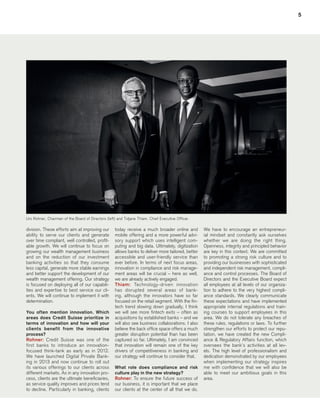
Urs Rohner, Chairman of the Board of Directors (left) and Tidjane Thiam, Chief Executive Officer.


6
MESSAGE FROM THE CHAIRMAN AND THE CHIEF EXECUTIVE OFFICER
Dear shareholders, clients and colleagues
2015 was a year of transition for Credit Suisse. Following the
change in Chief Executive Officer in July 2015, we conducted an
in-depth review of our businesses and long-term objectives and
subsequently announced a new strategic direction for our Group
on October 21, 2015. Our ambition is to be a leading private bank
and wealth manager with distinctive investment banking capabili-
ties that is able to grow profitably and generate capital through the
economic cycle.
In line with our new strategy, we announced a simplified orga-
nizational structure with three geographically focused divisions –
the Swiss Universal Bank (Swiss UB), Asia Pacific (APAC) and
International Wealth Management (IWM). They are supported by
two divisions focusing on our investment banking capabilities –
Global Markets (GM) and Investment Banking & Capital Markets
(IBCM). With this new structure, we can respond more flexibly to
our clients’ needs through enabling our geographical divisions to
leverage our combined expertise and resources in wealth manage-
ment and investment banking. This new organization also gives our
business heads clearer accountability both in terms of managing
client relationships and the resources they require to maximize
value creation. In parallel, we have strengthened the Group’s con-
trol and compliance functions with significant investments in our
risk management, control and information capabilities. The refo-
cusing of the Group necessitated changes to the leadership struc-
ture resulting in a new composition of the executive team to drive
the new business units and the central functions forward.
To ensure that Credit Suisse has a strong capital position
to deliver on its strategy and capture attractive opportunities for
growth, we announced a capital increase by way of a private place-
ment and a rights offering in October 2015. The capital increase
was approved by shareholders at our Extraordinary General Meet-
ing in November and was concluded in December 2015. With this
capital raise completed, our look-through CET1 capital ratio as of
the end of 2015 has never been stronger, allowing us to imple-
ment important restructuring measures aimed at delivering profit-
able growth for our shareholders through the economic cycle. With
the strengthened balance sheet, we are confident that we can
deliver on our commitments and our capital allocation strategy is
focused on businesses that offer returns in excess of their cost of
capital. We believe that this will lead to increased investment in our
three geographically focused divisions, notably our home market
of Switzerland, where we have a strong franchise and capabilities,
and to our growth markets in the emerging economies, particularly
in the Asia Pacific region, where we also have a strong franchise.
Our IWM division unifies the teams serving clients in other parts
of the world.
In addition, we continue to reduce the size of our investment
bank to ensure that it supports our wealth management activi-
ties, consumes less capital and generates less volatile earnings. In
particular, we continue to right-size our operations in GM and are
exiting or reducing selected activities consistent with the desire for
higher return on capital and a lower risk profile. We have already
substantially reduced risk-weighted assets and leverage exposure,
exceeding our end-2015 targets, and are now targeting further
significant reductions within the GM division until end-2016. In
particular, we intend to reduce GM’s risk-weighted assets target
of USD 83-85 billion to approximately USD 60 billion, and lower
the division’s leverage exposure target from USD 380 billion to
USD 290 billion by year-end. We are accelerating the right-sizing
of our GM division and plan to further invest in our leading equi-
ties franchise and reduce our fixed income activities to operate on
a substantially lower cost base and generate more stable earn-
ings through the economic cycle. In our IBCM division, we are
rebalancing our activities towards advisory and equity underwriting
and towards investment grade corporates, which should help us to
generate higher-quality earnings.
Cost competitiveness and flexibility are imperatives for our bank
in today’s rapidly evolving operating environment. We are there-
fore applying a rigorous, disciplined approach to cost management
across the Group to reduce our cost base and lower the bank’s
break-even point, thus enhancing our ability to generate capital
through the economic cycle. In February 2016, we announced
plans to accelerate our cost savings program and in March we
announced further savings and increased our gross cost reduction
target for end-2018 from CHF 3.0-3.5 to CHF 4.0 – 4.5 billion
and announced an operating cost base target of CHF 19.5 – 20.0
billion by end-2016. The majority of these cost savings will largely
be driven by the accelerated reduction of the GM division. Com-
bined with the measures already implemented in 4Q15 (includ-
ing the transfer of our US Private Banking operations), we have
already made considerable progress on reducing our cost base
and thanks to the better cross divisional collaboration, we are able
to further accelerate the pace of targeted cost savings. We believe
that this will provide us with the flexibility we need to successfully
navigate periods of market uncertainty and to fund the investments
we intend to make to deliver profitable growth through the eco-
nomic cycle for our shareholders.
Economic and political trends that shaped the market
2015 was a challenging period for the entire industry. Central bank
actions remained a prominent topic during the year, with interest
rates at historically low levels. On January 15, 2015, the Swiss
National Bank announced the discontinuation of the minimum
exchange rate of CHF 1.20 per euro – a move that caused a sharp
appreciation of the Swiss franc and had a significant impact on the
Swiss economy and the domestic banking sector for the remainder
of the year. Thanks to the mitigating actions that we implemented,
we were able to limit the impact on Credit Suisse.


7

Also in January 2015, the European Central Bank announced
its plans to begin purchasing eurozone government bonds as a
means of lowering bond yields and pushing the rate of inflation
back towards its medium-term target of 2%. While the conflicts in
parts of the Middle East continued to intensify – heightening the
global climate of uncertainty – the Greek debt crisis and discus-
sions about a potential UK exit from the EU added to concerns
about a destabilization of Europe’s monetary union. With worries
about a growth slowdown in China and the emerging markets ris-
ing in the second half of 2015, the European Central Bank cut the
deposit rate again in December 2015 and decided to extend its
bond purchase program until at least the end of March 2017. At its
meeting on March 10, 2016, the European Central Bank yet again
cut all of its key interest rates in a further attempt to boost inflation
and growth rates, given the persisting volatile market environment.
In contrast, the question about when the US Federal Reserve
would tighten its own monetary policy remained a subject of
intense public speculation during 2015. Following the decision by
the People’s Bank of China to devalue the renminbi against the
US dollar – partly to offset decelerating growth – the US Fed-
eral Reserve postponed its first interest rate increase in almost
a decade at its September meeting. The increase that finally
occurred in December 2015 was largely motivated by strong US
employment data and robust economic growth. While financial
markets barely reacted to the actual announcement, which had
widely been expected, discussions since the beginning of 2016
have focused on the question of the pace at which the US Fed-
eral Reserve is likely to raise interest rates going forward, espe-
cially following its decision to hold off on a further rate rise at the
March meeting. Moreover, the global effects of the divergent mon-
etary policies of the US Federal Reserve and the European Central
Bank remain a prominent topic of discussion.
The divergence in monetary policy, uncertainty about economic
growth in China, the decline in oil prices, lower market liquidity, wid-
ening credit spreads and the renewed strength of the Swiss franc
have all led to a challenging market environment for Credit Suisse,
particularly during the fourth quarter of 2015. All of these factors
have contributed to lower levels of client activity and issuances,
and large fund redemptions by market participants affecting asset
prices. Market conditions have also remained challenging during
the initial months of 2016, however, it is too early to determine how
these challenges will evolve over the remainder of 2016.
Regulatory Issues
Regulatory requirements continued to evolve throughout 2015. In
February 2015, the Swiss Federal Council presented its evalua-
tion report on Switzerland’s “Too Big to Fail” (TBTF) regime, which
proposed the implementation of the new global standard for Total
Loss-Absorbing Capacity (TLAC). The implementation of TLAC is
largely seen as the last building block to end TBTF. The new Swiss
capital rules are more strict than the TLAC standard issued by the
Financial Stability Board. In fact, the Swiss requirements will be
stronger than those of other financial centers. Based on the end
2015 balance sheet, Credit Suisse would be subject to a going
and gone concern requirement of 28.6% of risk-weighted assets.
Throughout 2015, Credit Suisse issued CHF 15 billion of senior
bail-in instruments, which we expect to be TLAC eligible, marking
an important step towards achieving our total requirement in accor-
dance with the proposed amendments to the Swiss TBTF regime.
In addition to these new TLAC requirements, the new draft
Swiss TBTF regime will increase the going concern capital and
leverage requirements. Under these new going concern require-
ments, Credit Suisse would need to fulfill a 14.3% Tier 1 capital
ratio with a minimum CET1 component of 10% and a minimum
Swiss leverage ratio of 5%, of which the minimum CET1 compo-
nent is 3.5%, by end-2019. The new requirements are expected to
become effective on July 1, 2016, subject to phase-in.
The continued tightening of regulatory requirements for
banks is likely to remain a dominant topic. Although the new rules
announced by the Swiss Federal Council are yet to be finalized,
we believe that the completion of our capital increase in Decem-
ber 2015 and our success in improving our leverage exposure will
enable us to meet these requirements on a look-through basis
ahead of the 2019 deadline. We also aim to further strengthen our
capital base through operating profitably and focusing on maxi-
mizing the free capital generation. We aim at maintaining a CET1
capital ratio of between 11-12% during 2016 and are targeting
a CET1 capital ratio of approximately 13% and a Tier 1 leverage
ratio between 5-6% with a CET1 component of 3.5-4.0% by end-
2018. Over the next three years, through a disciplined capital allo-
cation process, we intend to release capital from those parts of the
Group that are being wound down in the Strategic Resolution Unit
(SRU) and to fund further growth in our APAC and IWM divisions.
2015 Results
Against the challenging backdrop of 2015, we reported a net loss
attributable to shareholders of CHF 2.9 billion and a pre-tax loss
of CHF 2.4 billion. Our results for the full year 2015 were mainly
affected by a significant goodwill impairment charge of CHF 3.8
billion that we recognized primarily in respect of the acquisition of
Donaldson, Lufkin & Jenrette in 2000. In addition, restructuring
costs of CHF 355 million were taken in 4Q15 across all the divi-
sions in connection with the implementation of our new strategy
and our results were further impacted by charges relating to sig-
nificant litigation items and a pre-tax loss in the SRU as we wind
down businesses that no longer fit with our strategic direction. The
losses we incurred, especially during the fourth quarter, the impact
of the losses on our capital position, as well as the goodwill write-
down, in combination with the challenging market conditions, have
led to negative reactions by market participants.


8
a result of the low liquidity and poor market conditions in the fourth
quarter of 2015. While these positions have already been reduced
aggressively since we announced the new strategy, we believe that
it will be essential for us to continue to restructure our GM activi-
ties to lower our risk profile. We will maintain our focus on lowering
the fixed-cost base of all our businesses.
Changes to the Executive Board
The refocusing of the Group and its structural reorganiza-
tion necessitated changes to the leadership structure, resulting
in a new composition of the executive team, which was further
enriched by six new members in order to drive forward the new
business units and the central functions: Pierre-Olivier Bouée,
Peter Goerke, Thomas Gottstein, Iqbal Khan, Helman Sitohang
and Lara Warner. In October 2015, Gaël de Boissard, Hans-Ulrich
Meister, Robert Shafir and Pamela Thomas-Graham stepped
down from the Executive Board, and we thank them for their con-
siderable contributions to our bank’s progress over the years.
Positioned for Growth
Given the persisting challenges in the operating environment for
banks, we have taken decisive measures to further accelerate the
implementation of our strategy by increasing the pace with which
our GM division will be right-sized in order to substantially lower our
cost base and break-even point and thus decrease the volatility of
our earnings going forward. With these changes in place, we are
confident that with our strategy, our regionally and client-focused
structure and our new management team, we are positioned to
deliver over time compliant, well-controlled and profitable growth
and returns for our shareholders. Thanks to our clients’ and share-
holders’ continued trust in Credit Suisse, as well as our employees’
dedication, we will continue to remain focused on deploying all our
capabilities and expertise to best service our clients. We will imple-
ment our strategy with determination and are confident to deliver
on the targets we have set for end-2018.
Best regards
Urs Rohner                    	 Tidjane Thiam
Chairman of the             	 Chief Executive Officer
Board of Directors
March 2016
Beyond these issues, as we move ahead with the implementa-
tion of our strategy and work towards our 2018 targets, we con-
sider it important to measure the progress made in terms of our
underlying business performance. Between now and 2018, the
bank’s restructuring will make the analysis of our performance
more complex. Hence, we are focusing on adjusted Core results,
which are measured excluding SRU activities, goodwill impairment,
restructuring expenses, real estate transactions, deconsolidation,
business sales, significant litigation expenses and the impact from
fair value of own debt. Until 2018, we plan to report on this same
adjusted basis at Group, Core and business level, as we believe
that this will allow investors to most effectively monitor our prog-
ress on the implementation of our new strategy, given the material
restructuring charges and other one-off items we expect to be
borne in the interim period.
Our adjusted results reflect a positive start in the implementa-
tion of the new strategy and contained some encouraging trends
despite volatile market conditions in 4Q15. The Group delivered
adjusted* Core pre-tax income of CHF 4.2 billion for 2015 and
the underlying performance of our three newly created geographic
divisions – Swiss UB, IWM and APAC – highlights the long-term
attractiveness of the opportunities that exist for wealth managers.
The performance of the APAC division in particular highlighted
the growth potential in the region and our strong market posi-
tion: at over CHF 1.1 billion, APAC delivered the highest full-year
adjusted* pre-tax income in five years and generated CHF 17.8
billion of net new assets. The Swiss Universal Bank increased its
2015 adjusted* pre-tax income by 4% to CHF 1.6 billion and is on
track for a partial IPO (20-30%) planned by year-end 2017, mar-
ket conditions permitting1
. IWM’s Private Banking business grew
its 2015 adjusted* pre-tax income by 6% to CHF 0.8 billion.
Net new asset generation was particularly strong in APAC and
Swiss UB, which generated CHF 17.8 billion and CHF 13.8 billion
of net new assets, respectively, in 2015. Additionally, we increased
mandates penetration from 15% to 26% in Swiss UB and from
23% to 30% in IWM.
Our full year performance, particularly in the geographic divi-
sions, was obscured to a degree by poorer results during the fourth
quarter, particularly from our investment banking divisions. We
have continued to rebalance our investment banking businesses
and to rebuild our IBCM division through targeted investments
and by shifting activity towards advisory, equity underwriting and
investment grade corporates in order to reduce the volatility of our
earnings in this attractive, capital-light activity. In the GM division,
our full-year performance was additionally adversely impacted by
certain legacy inventory positions, which had to be written down as
* Adjusted results are non-GAAP financial measures. For a reconciliation of the adjusted results to the most directly comparable US GAAP measures, see the “Reconciliation
of adjusted results” part of this letter.
1
Any such IPO would involve the sale of a minority stake and would be subject to, among other things, all necessary approvals and would be intended to generate / raise
additional capital for Credit Suisse AG or Credit Suisse (Schweiz) AG.


9

International Wealth Management
 
			 in	
CHF million 
	2015	
	 2014	
Income before taxes reported 
	709	
	1,212	
Gains on business sales 
	(11)	
	(77)	
Adjustments to net revenues 
	(11)	
	(77)	
Restructuring expenses 
	33	
	–	
Major litigation provisions 
	 268	
	 51	
Adjustments to total operating expenses 
	301	
	 51	
Total adjustments 
	 290	
	(26)	
Adjusted income before taxes 
	999	
	1,186	
Asia Pacific
 
			 in	
CHF million 
	2015	
	 2014	
Income before taxes reported 
	377	
	900	
Goodwill impairment 
	 756	
	–	
Restructuring expenses 
	3	
	–	
Major litigation provisions 
	6	
	–	
Adjustments to total operating expenses 
	 765	
	–	
Total adjustments 
	 765	
	–	
Adjusted income before taxes 
	1,142	
	900	
Investment Banking  Capital Markets
 
			 in	
CHF million 
	2015	
	 2014	
Income/(loss) before taxes reported 
	(353)	
	508	
Goodwill impairment 
	 380	
	–	
Restructuring expenses 
	22	
	–	
Adjustments to total operating expenses 
	 402	
	–	
Total adjustments 
	 402	
	–	
Adjusted income before taxes 
	49	
	508	
Swiss Universal Bank
 
			 in	
CHF million 
	2015	
	 2014	
Income before taxes reported 
	1,659	
	1,976	
Real estate gains 
	 (95)	
	 (414)	
Gains on business sales 
	(23)	
	 (24)	
Adjustments to net revenues 
	 (118)	
	 (438)	
Restructuring expenses 
	 39	
	–	
Major litigation provisions 
	 25	
	–	
Adjustments to total operating expenses 
	 64	
	–	
Total adjustments 
	 (54)	
	 (438)	
Adjusted income before taxes 
	1,605	
	1,538	
International Wealth Management – Private Banking
 
			 in	
CHF million 
	2015	
	 2014	
Income before taxes reported 
	526	
	795	
Gains on business sales 
	(11)	
	(77)	
Adjustments to net revenues 
	(11)	
	(77)	
Restructuring expenses 
	30	
	–	
Major litigation provisions 
	 268	
	 51	
Adjustments to total operating expenses 
	 298	
	 51	
Total adjustments 
	 287	
	(26)	
Adjusted income before taxes 
	813	
	769	
Global Markets
 
			 in	
CHF million 
	2015	
	 2014	
Income/(loss) before taxes reported 
	(1,944)	
	2,657	
Goodwill impairment 
	2,661	
	–	
Restructuring expenses 
	 105	
	–	
Major litigation provisions 
	231	
	60	
Adjustments to total operating expenses 
	 2,997	
	60	
Total adjustments 
	 2,997	
	60	
Adjusted income before taxes 
	1,053	
	2,717	
Core Results
 
			 in	
CHF million 
	2015	
	 2014	
Income before taxes reported 
	88	
	7,200	
Fair value gains on own debt 
	 (298)	
	 (543)	
Real estate gains 
	 (95)	
	 (414)	
Gains on business sales 
	 (34)	
	(101)	
Adjustments to net revenues 
	 (427)	
	 (1,058)	
Goodwill impairment 
	 3,797	
	–	
Restructuring expenses 
	202	
	–	
Major litigation provisions 
	 530	
	111	
Adjustments to total operating expenses 
	 4,529	
	111	
Total adjustments 
	 4,102	
	 (947)	
Adjusted income before taxes 
	4,190	
	6,253	
Reconciliation of adjusted results
Adjusted results are non-GAAP financial measures that exclude
goodwill impairment and certain other items included in our
reported results. Management believes that adjusted results pro-
vide a useful presentation of our operating results for purposes
of assessing our Group and divisional performance over time, on
a basis that excludes items that management does not consider
representative of our underlying performance. Provided below is a
reconciliation of our adjusted results to the most directly compa-
rable US GAAP measures.


10
We may not achieve all of the expected benefits of our strategic initiatives. Factors
beyond our control, including but not limited to the market and economic conditions,
changes in laws, rules or regulations and other challenges discussed in our public fil-
ings, could limit our ability to achieve some or all of the expected benefits of these
initiatives.
This document contains forward-looking statements that involve inherent risks and
uncertainties, and we might not be able to achieve the predictions, forecasts, pro-
jections and other outcomes we describe or imply in forward-looking statements. A
number of important factors could cause results to differ materially from the plans,
objectives, expectations, estimates and intentions we express in these forward-looking
statements, including those we identify in “Risk Factors” in our Annual Report on Form
20-F for the fiscal year ended December 31, 2015, and in other public filings and
press releases. We do not intend to update these forward-looking statements except
as may be required by applicable law.
Mandates penetration means advisory and discretionary mandates in private banking
businesses as a percentage of the related assets under management, excluding those
from the external asset manager business.
As of January 1, 2013, Basel III was implemented in Switzerland along with the Swiss
“Too Big to Fail” legislation and regulations thereunder. As of January 1, 2015, the
BIS leverage ratio framework, as issued by BCBS, was implemented in Switzerland by
FINMA. The related disclosures are in accordance with Credit Suisse’s interpretation
of such requirements, including relevant assumptions. Changes in the interpretation
of these requirements in Switzerland or in any of Credit Suisse’s assumptions or esti-
mates could result in different numbers from those shown herein.
References to phase-in and look-through included herein refer to Basel III require-
ments. Phase-in under the Basel III capital framework reflects that for the years 2014
– 2018, there will be a five-year (20% per annum) phase in of goodwill and other
intangible assets and other capital deductions (e.g., certain deferred tax assets) and
for the years 2013 – 2022, there will be a phase out of certain capital instruments.
Look-through assumes the full phase-in of goodwill and other intangible assets and
other regulatory adjustments and the full phase out of certain capital instruments.
Unless otherwise noted, leverage exposure is based on the BIS leverage ratio frame-
work and consists of period-end balance sheet assets and prescribed regulatory
adjustments.
Cost reduction program measured on constant FX rates and based on expense run
rate excluding major litigation expenses, restructuring costs and goodwill impairment
taken in 4Q15, but including other costs to achieve savings.


11
Information on
the company
	 12	 Credit Suisse at a glance
	 13	Strategy
	 18	Divisions
	 25	 Regulation and supervision
	 40	 Risk factors
I


12
Credit Suisse at a glance
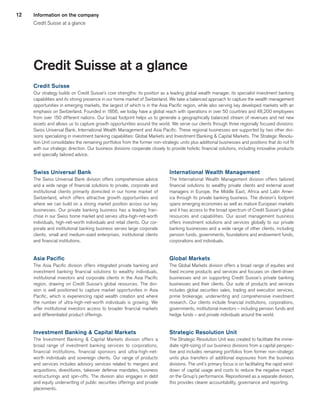
Swiss Universal Bank
The Swiss Universal Bank division offers comprehensive advice
and a wide range of financial solutions to private, corporate and
institutional clients primarily domiciled in our home market of
Switzerland, which offers attractive growth opportunities and
where we can build on a strong market position across our key
businesses. Our private banking business has a leading fran-
chise in our Swiss home market and serves ultra-high-net-worth
individuals, high-net-worth individuals and retail clients. Our cor-
porate and institutional banking business serves large corporate
clients, small and medium-sized enterprises, institutional clients
and financial institutions.
International Wealth Management
The International Wealth Management division offers tailored
financial solutions to wealthy private clients and external asset
managers in Europe, the Middle East, Africa and Latin Amer-
ica through its private banking business. The division’s footprint
spans emerging economies as well as mature European markets
and it has access to the broad spectrum of Credit Suisse’s global
resources and capabilities. Our asset management business
offers investment solutions and services globally to our private
banking businesses and a wide range of other clients, including
pension funds, governments, foundations and endowment funds,
­corporations and individuals.
Asia Pacific
The Asia Pacific division offers integrated private banking and
investment banking financial solutions to wealthy individuals,
institutional investors and corporate clients in the Asia Pacific
region, drawing on Credit Suisse’s global resources. The divi-
sion is well positioned to capture market opportunities in Asia
Pacific, which is experiencing rapid wealth creation and where
the number of ultra-high-net-worth individuals is growing. We
offer institutional investors access to broader financial markets
and differentiated product offerings.
Global Markets
The Global Markets division offers a broad range of equities and
fixed income products and services and focuses on client-driven
businesses and on supporting Credit Suisse’s private banking
businesses and their clients. Our suite of products and services
includes global securities sales, trading and execution services,
prime brokerage, underwriting and comprehensive investment
research. Our clients include financial institutions, corporations,
governments, institutional investors – including pension funds and
hedge funds – and private individuals around the world.
Investment Banking  Capital Markets
The Investment Banking  Capital Markets division offers a
broad range of investment banking services to corporations,
financial institutions, financial sponsors and ultra-high-net-
worth individuals and sovereign clients. Our range of products
and services includes advisory services related to mergers and
acquisitions, divestitures, takeover defense mandates, business
restructurings and spin-offs. The division also engages in debt
and equity underwriting of public securities offerings and private
placements.
Strategic Resolution Unit
The Strategic Resolution Unit was created to facilitate the imme-
diate right-sizing of our business divisions from a capital perspec-
tive and includes remaining portfolios from former non-strategic
units plus transfers of additional exposures from the business
divisions. The unit’s primary focus is on facilitating the rapid wind-
down of capital usage and costs to reduce the negative impact
on the Group’s performance. Repositioned as a separate division,
this provides clearer accountability, governance and reporting.
Credit Suisse
Our strategy builds on Credit Suisse’s core strengths: its position as a leading global wealth manager, its specialist investment banking
capabilities and its strong presence in our home market of Switzerland. We take a balanced approach to capture the wealth management
opportunities in emerging markets, the largest of which is in the Asia Pacific region, while also serving key developed markets with an
emphasis on Switzerland. Founded in 1856, we today have a global reach with operations in over 50 countries and 48,200 employees
from over 150 different nations. Our broad footprint helps us to generate a ­geographically ­balanced stream of revenues and net new
assets and allows us to capture growth opportunities around the world. We serve our clients through three regionally focused divisions:
Swiss Universal Bank, International Wealth Management and Asia Pacific. These regional businesses are supported by two other divi-
sions specializing in investment banking capabilities: Global Markets and ­Investment ­Banking  Capital Markets. The Strategic Resolu-
tion Unit consolidates the remaining portfolios from the former non-­strategic units plus additional businesses and positions that do not fit
with our strategic direction. Our business divisions cooperate closely to provide holistic financial solutions, including innovative products
and specially tailored advice.
Information on the company
Credit Suisse at a glance


13Information on the company
Strategy
Strategy
A NEW STRATEGY TO REPOSITION CREDIT SUISSE
FOR THE FUTURE
In 2015, Credit Suisse embarked on a new chapter of its 160 year
history. Under the leadership of our new CEO, Tidjane Thiam, and
the Board of Directors, we conducted an in-depth strategy review
that has resulted in a new strategic direction, structure and orga-
nization of the Group.
Credit Suisse strategy
Our new strategy aims to strengthen our position as a leading pri-
vate bank and wealth manager, with strong and distinctive invest-
ment banking capabilities, to achieve our goal of profitable growth
while generating significant capital through the cycle. We are
accelerating the rebalancing of capital towards our private bank-
ing businesses to optimize its allocation and focus on the highest-
returning, most scalable opportunities.
We are focused on growing in Asia Pacific and other emerg-
ing markets in order to capture the significant wealth management
prospects in those markets. We expect that emerging markets will
account for approximately 60% of the growth in global wealth in
the coming years, with first generation entrepreneurs driving much
of the wealth opportunity. We believe that positioning ourselves as
the “Bank for Entrepreneurs” by leveraging our strengths in wealth
management and investment banking will provide us with key com-
petitive advantages to succeed in these markets as we provide
clients with a range of services to protect and grow their wealth.
Despite slower growth, mature markets are still expected to
remain important and account for more than half of wealth distri-
bution by 2019. As a result, we plan to take a balanced approach
to resource allocation with the goal of capitalizing on opportuni-
ties in markets such as Western Europe and Japan. In Western
Europe, we also plan to accelerate efficiencies by consolidating
booking centers and developing a hub and spoke service model.
In the US, we have exited private banking investment advisory
but plan to continue to cover the corporate and complex personal
wealth needs of qultra-high-net-worth individuals (UHNWI) from
our Investment Banking  Capital Markets business.
Switzerland, as our home market, provides compelling oppor-
tunities for Credit Suisse. To further expand our position with
Swiss private, corporate and institutional clients and take advan-
tage of consolidation opportunities, we have created a dedicated
Swiss Universal Bank. Management focus and accountability will
be enhanced, simplifying the prior structure and allowing the bank
to build on its entrepreneurial heritage and further leveraging its
brand. We provide a full range of services to private, corporate and
institutional clients with a specific focus on becoming the “Bank for
Entrepreneurs.” We intend to pursue an initial public offering (IPO)
by the end of 2017, market conditions permitting, of between
20% and 30% of the legal entity Credit Suisse (Schweiz) AG. Any
such IPO would be subject to, among other things, all necessary
approvals and would be intended to generate/raise additional capi-
tal for Credit Suisse AG or Credit Suisse (Schweiz) AG.
Our intention is to focus on the investment banking businesses
that support our wealth management clients, and businesses that
deliver returns in excess of their cost of capital and have lead-
ing market positions. Within our Global Markets division, we con-
tinue to right-size our operations by exiting or downsizing selected
businesses consistent with our lower risk profile and higher return
on capital objectives. In Global Markets, we have reduced risk-
weighted assets and leverage exposures to below the targets we
had set for the end of 2015. We plan to further invest in our lead-
ing equities franchise and restructure our fixed income activities
to generate more stable earnings through the cycle. In our Invest-
ment Banking  Capital Markets division, we are rebalancing our
activities towards advisory and equity underwriting and towards
investment grade corporates, which should help us to generate
higher-quality earnings.
We have formed a new Strategic Resolution Unit intended
to oversee the effective wind-down of businesses and positions
that do not fit our strategic direction in the most efficient manner
possible. The Strategic Resolution Unit consolidates the remain-
ing portfolios from our former non-strategic units plus additional
activities and businesses from the investment banking and private
banking businesses that are no longer considered strategic. We
aim to reduce the Strategic Resolution Unit’s risk-weighted assets
and leverage exposure by approximately 80% by 2020, excluding
operational risk.
We intend to rigorously execute a disciplined approach to cost
management across the Group to reduce our fixed cost base and
lower our break-even point. In February 2016, we announced
plans to further accelerate our cost savings program and have
identified and initiated measures, including an accelerated work-
force reduction, that are expected to result in cost savings of CHF
500 million per annum on a full-year run-rate basis. Combined
with the measures already implemented in the fourth quarter of
2015 (including the transfer of our US Private Banking operations),
the cost savings measures identified and initiated by end-January
2016 represent CHF 1.2 billion per annum, or 34%, of the CHF
3.5 billion of gross savings we are targeting by end-2018. Cost
savings are expected to be achieved through a combination of
simplifying mid- and back-office platforms, right-sizing the bank’s
footprint, substantial completion of several Corporate Center pro-
grams and making a number of disposals and closures, includ-
ing in the run-down of the Strategic Resolution Unit. In parallel to
these cost reductions, we plan to invest CHF 1.5 billion to sup-
port growth initiatives in Asia Pacific, Swiss Universal Bank and
International Wealth Management. The cost reduction program
is measured on constant foreign exchange rates and is based on
expense run rate excluding major litigation expenses, restructuring
costs and goodwill impairment taken in the fourth quarter of 2015,
but including other costs to achieve savings.


14
To ensure that we have a strong capital position to implement
our strategy, capture the most promising growth opportunities and
be prepared for future regulatory changes, we have completed a
capital increase by way of a private placement and a rights offer-
ing as approved by the shareholders at the Extraordinary General
Meeting of November 19, 2015. The aggregate gross proceeds
of the capital increases amounted to a total of CHF 6.0 billion,
resulting in a look-through common equity tier 1 (CET1) ratio of
11.4% and look-through CET1 leverage ratio of 3.3% as of year-
end 2015.
As our strategy is executed, we intend to generate approxi-
mately CHF 23–25 billion of operating free capital by 2020. Oper-
ating free capital focuses on those components of shareholders’
equity that are regulatory capital relevant, specifically income
before taxes (excluding fair value on own debt) net of cash taxes,
as well as deferred tax asset threshold impacts, additional costs
relating to share awards and net impact of defined benefit pension
funds.
Organizational structure and management changes
To support the execution of the new strategy, we have simplified
our organization and created three new, regionally focused divi-
sions: Swiss Universal Bank, International Wealth Management
and Asia Pacific serving Western Europe, Central and Eastern
Europe, Latin America and Africa. These regional businesses are
supported by two other divisions specialized in investment bank-
ing capabilities: Global Markets and Investment Banking  Capital
Markets. Our new organization is designed to drive stronger client
focus and provide better alignment with regulatory requirements.
We believe that decentralization will increase the speed of decision
making, accountability and cost competiveness across the Group.
Our operating businesses are supported by focused corporate
functions at the Group Executive Board level. Our newly estab-
lished position of Chief Operating Officer focuses on driving the
transformation of Credit Suisse and oversees, among other things,
global operations, information technology and our centers of excel-
lence. To further strengthen our focus on compliance and reg-
ulatory matters, we have created the position of Chief Compli-
ance and Regulatory Affairs Officer that focuses on monitoring
bank activities and coordinating regulatory interactions. The Chief
Financial Officer manages the Group’s capital, funding, liquid-
ity and expenses to ensure we are well capitalized and have a
strong balance sheet. The Chief Risk Officer governs the Group’s
risk management framework and provides independent risk over-
sight. Our General Counsel provides legal, policy and regulatory
advice, especially in the context of potential or actual legal mat-
ters and investigations. It drives strategic legal risk management
and manages our relationship with policymakers and other political
stakeholders. Our Head of Human Resources, Communications 
Branding is responsible for attracting, retaining and developing our
employees, driving our global communications strategy and devel-
oping and strengthening the Credit Suisse brand.
As of October 21, 2015, the Board of Directors appointed
six new members of the Executive Board of Credit Suisse
– Pierre-Olivier Bouée, Peter Goerke, Thomas Gottstein, Iqbal
Khan, Helman Sitohang and Lara Warner. In October 2015, Gaël
de Boissard, Hans-Ulrich Meister, Robert Shafir and Pamela
Thomas-Graham stepped down from the Executive Board.
The composition of the Executive Board is as follows:
Tidjane Thiam 
	 Chief Executive Officer 
Thomas Gottstein 
	 Swiss Universal Bank 
Iqbal Khan 
	 International Wealth Management 
Helman Sitohang 
	 Asia Pacific 
Timothy O’Hara 
	 Global Markets 
James L. Amine 
	 Investment Banking  Capital Markets 
David Mathers 
	 Chief Financial Officer 
Pierre-Olivier Bouée 
	 Chief Operating Officer 
Joachim Oechslin 
	 Chief Risk Officer 
Lara Warner 
	 Chief Compliance and Regulatory Affairs Officer 
Romeo Cerutti 
	 General Counsel 
Peter Goerke 
	 Human Resources, Communications  Branding 
Financial objectives
On October 21, 2015, we announced the following financial objec-
tives and management actions in order to track progress in imple-
menting our new strategy:
p	 increase income before taxes for Asia Pacific to CHF 2.1 bil-
lion in 2018;
p	 increase income before taxes in International Wealth Manage-
ment to CHF 2.1 billion in 2018;
p	 grow income before taxes for the Swiss Universal Bank to
CHF 2.3 billion in 2018;
p	 reduce our absolute cost base by CHF 2.0 billion to between
approximately CHF 18.5–19.0 billion by year-end 2018. These
cost savings are expected to be achieved through CHF 3.5
billion in gross cost savings by year-end 2018 through a com-
bination of optimizations to make our business more efficient.
In parallel to these cost reductions, CHF 1.5 billion will be
invested to support growth initiatives in Asia Pacific, Swiss
Universal Bank and International Wealth Management;
p	 achieve a look-through CET1 ratio of approximately 13% and a
look-through CET1 leverage ratio of above 3.5% by year-end
2018 before future regulatory recalibration;
p	 maintain Global Markets risk-weighted assets stable at approx-
imately USD 83–85 billion between year-end 2015 and year-
end 2018;
p	 reduce Global Markets leverage exposure from approximately
USD 380 billion at year-end 2015 to approximately USD 370
billion by year-end 2018;
p	 wind down the Strategic Resolution Unit risk-weighted assets
(excluding operational risk) to CHF 12 billion by year-end 2018
and reduce leverage exposure to CHF 40 billion by year-end
2018 to support growth initiatives, mainly in Asia Pacific, Swiss
Universal Bank and International Wealth Management;
p	 measure our performance by generating approximately
CHF 23-25 billion of operating free capital by 2020; and
Information on the company
Strategy


15Information on the company
Strategy
p	 plan to continue our existing policy of recommending a dividend
of CHF 0.70 per share with a scrip alternative until we reach
our 2015–2018 look-through CET1 and leverage ratio targets
and have greater clarity on potential regulatory changes and lit-
igation risks. However, our intention would be to end the scrip
alternative and recommend a move to a full cash dividend no
later than 2017. Furthermore, in the longer term, we would aim
to distribute a minimum of 40% of our operating free capital.
The Board of Directors will consider setting a higher payout
ratio as appropriate in due course.
Acceleration of the announced strategy
On March 23, 2016, we announced a number of additional mea-
sures and adjusted financial objectives beyond those announced
on October 21, 2015 to further lower our cost base, accelerate
the risk-weighted assets and leverage reduction initiatives in the
reshaping of our Global Markets business and further strengthen
our capital position. The additional measures and new financial
objectives include:
p	 increasing our gross savings target of CHF 3.5 billion by year-
end 2018 to CHF 4.3 billion. The net cost savings target in
the same time period has increased from CHF 2.0 billion to at
least CHF 3.0 billion. These measures are expected to lead to
an absolute cost base of CHF 18.0 billion or less by year-end
2018;
p	 setting a gross cost savings target for the Group of CHF 1.7
billion by year-end 2016;
p	 reducing the risk-weighted assets target in the Global Markets
division from approximately USD 83 – 85 billion to USD 60
billion and the leverage exposure target from approximately
USD 380 billion to USD 290 billion by year-end 2016;
p	 exiting the Distressed Credit, European Securitized Products
trading and Long-Term Illiquid Financing businesses in Global
Markets;
p	 the assets from businesses we are exiting and other business
reductions in Global Markets will predominantly be transferred
to the Strategic Resolution Unit over the course of 2016 and
we are consolidating foreign exchange trading into our trading
operations within Swiss Universal Bank; and
p	 disposals of real estate and non-core businesses and other
actions to increase CET1 capital by at least CHF 1 billion dur-
ing 2016.
The cost reduction program is based on the 2015 cost base and
measured on constant foreign exchange rates and based on an
expense run rate excluding major litigation expenses, goodwill
impairment charges and estimated restructuring costs of CHF 2.0
billion (previously announced CHF 1.3 billion), but including other
costs to achieve the savings, which do not meet the accounting
definition of restructuring costs. Implementation of these strategy
measures will lead to a recasting of prior period segment results,
principally in respect of the Global Markets business and the Stra-
tegic Resolution Unit, and an assessment of certain balance sheet
items.
PRODUCTS AND SERVICES
Private banking offerings and wealth management
solutions
We offer a wide range of private banking and wealth management
solutions tailored for our clients in our Swiss Universal Bank, Inter-
national Wealth Management and Asia Pacific divisions.
Structured advisory process
We apply a structured approach based on a thorough understand-
ing of our clients’ needs, personal situation, product knowledge,
investment objectives and a comprehensive analysis of their finan-
cial situation to define individual client risk profiles. On this basis
we define together with our clients an individual investment strat-
egy. This strategy is implemented ensuring that portfolio quality
standards are adhered to and that all investment instruments are
compliant with suitability and appropriateness standards. Respon-
sible for the implementation are either the portfolio managers or
our relationship managers working together with their advisory cli-
ents. Our UHNWI relationship managers are supported by dedi-
cated portfolio managers.
Client segment specific value propositions
We offer a wide range of wealth management solutions tailored to
specific client segments. The distinct value proposition of our inte-
grated bank remains a key strength in our client offerings. Close
collaboration with our investment banking businesses enables us
to offer customized and innovative solutions to our clients, espe-
cially in the UHNWI segment, and we have specialized teams
offering bespoke and complex solutions predominantly for our
sophisticated clients. In addition, we offer solutions for a range of
private and corporate wealth management needs, including suc-
cession planning, tax advisory and financial planning.
Comprehensive investment services
We offer a comprehensive range of investment advice and discre-
tionary asset management services based on the outcome of our
structured advisory process and the guidelines of the Investment
Solutions  Products Group and the Credit Suisse Investment
Committee. We base our advice and services on the analysis and
recommendations of our research and investment strategy teams,
which provide a wide range of investment expertise, including mac-
roeconomic, equity, bond, commodity and foreign-exchange anal-
ysis, as well as research on the economy. Our investment advice
covers a range of services from portfolio consulting to advising
on individual investments. We offer our clients portfolio and risk
management solutions, including managed investment products.
These are products actively managed and structured by our spe-
cialists or third parties, providing private investors with access to
investment opportunities that otherwise would not be available
to them. For clients with more complex requirements, we offer
investment portfolio structuring and the implementation of individ-
ual strategies, including a wide range of structured products and
alternative investments. Discretionary asset management services
are available to clients who wish to delegate the responsibility for


16
investment decisions to Credit Suisse. We are an industry leader
in alternative investments and, in close collaboration with our asset
management business and investment banking businesses, we
offer innovative products with limited correlation to equities and
bonds, such as hedge funds, private equity, commodities and real
estate investments.
Multi-shore platform
With global operations comprising 14 international booking centers
in addition to our operations in Switzerland, we are able to offer our
clients booking capabilities locally as well as through our interna-
tional hubs. Our multi-shore offering is designed to serve clients
who are focused on geographical risk diversification, have multiple
domiciles, seek access to global execution services or are inter-
ested in a wider range of products than is available to them locally.
Corporate client and institutional client offerings
In accordance with our ambition to position ourselves as the “Bank
for Entrepreneurs,” we provide corporate and institutional clients,
predominantly in Switzerland, with a broad range of financial solu-
tions. To meet our clients’ evolving needs, we deliver our offering
through an integrated franchise and international presence. Based
on this model, we are able to assist our clients in virtually every
stage of their business life cycle to cover their banking needs. For
corporate clients, we provide a wide spectrum of banking prod-
ucts such as traditional and structured lending, payment services,
foreign exchange, capital goods leasing and investment solutions.
In addition, we apply our investment banking capabilities to sup-
ply customized services in the areas of mergers and acquisitions
(MA), syndications and structured finance. For corporations with
specific needs for global finance and transaction banking, we pro-
vide services in commodity trade finance, trade finance, structured
trade finance, export finance and factoring. For our Swiss institu-
tional clients, including pension funds, insurances, public sector
and UHNWI clients, we offer a wide range of fund solutions and
fund-linked services, including fund management and administra-
tion, fund design and comprehensive global custody solutions. Our
offering also includes ship and aviation finance and a competitive
range of services and products for financial institutions such as
securities, cash and treasury services.
Asset management offerings
Our traditional investment products include multi-asset class solu-
tions, which provide clients with innovative strategies and com-
prehensive management across asset classes to optimize client
portfolios with services that range from funds to fully custom-
ized solutions. Other core investment strategies include a suite
of fixed income, equity and real estate funds, and our indexed
solutions business which provides institutions and individual cli-
ents access to a wide variety of asset classes in a cost-effective
manner. Stressing investment principles such as risk management
and asset allocation, we take an active and disciplined approach
to investing.
We also offer institutional and individual clients a range of
alternative investment products, including hedge fund strategies,
commodities and credit investments. We offer access to various
asset classes and markets through strategic alliances and key joint
ventures with external managers and have a strong footprint in
emerging markets.
Investment banking financial solutions
Equity underwriting
Equity capital markets originates, syndicates and underwrites
equity in IPOs, common and convertible stock issues, acquisition
financing and other equity issues.
Debt underwriting
Debt capital markets originates, syndicates and underwrites cor-
porate and sovereign debt.
Advisory services
Advisory services advises clients on all aspects of MA, corporate
sales, restructurings, divestitures, spin-offs and takeover defense
strategies.
Fixed income
p	 Credit products offers a full range of fixed income products
and instruments to clients across investment grade and high
yield credits, ranging from standard debt issues and credit
research to fund-linked products, derivatives instruments and
structured solutions that address specific client needs. We are
a leading dealer in flow trading of single-name qcredit default
swap (CDS) on individual credits, credit-linked notes and index
swaps. Investment grade trades domestic corporate and sov-
ereign debt, non-convertible preferred stock and short-term
securities such as floating rate notes and qcommercial paper.
Leveraged finance provides capital raising and advisory ser-
vices and core leveraged credit products such as bank loans,
bridge loans and high yield debt for non-investment grade cor-
porate and financial sponsor-backed companies.
p	 Securitized products trades, securitizes, syndicates, under-
writes and provides research for various forms of securities,
primarily q residential mortgage-backed securities (RMBS)
and asset-backed securities (ABS). Both RMBS and ABS are
based on underlying pools of assets, and include both gov-
ernment- and agency-backed, as well as private label loans.
Core to the securitized products franchise is its asset financing
business, which focuses on providing asset and portfolio advi-
sory services, and financing solutions to clients across asset
classes.
Information on the company
Strategy


17Information on the company
Strategy
p	 Emerging markets offers a full range of fixed income prod-
ucts and instruments, including sovereign and corporate secu-
rities, local currency derivative instruments and tailored emerg-
ing market investment products. The business is organized
around financing, structured credit, trading, capital markets
and strategic transactions, with a focus on supporting emerg-
ing markets through its onshore and offshore service models.
p	 Global macro products includes our restructured rates and
foreign exchange businesses. Our rates business includes the
full spectrum of cash and derivatives, including select non-
cleared and structured solutions. Foreign exchange provides
market making in products such as spot and options for cur-
rencies in developed markets. The foreign exchange product
suite also includes proprietary market leading technology to
provide clients with electronic trading solutions.
Equity
p	 Cash equities provides a comprehensive suite of offerings:
(i) research, analytics and other content-driven products and
services, to meet the needs of clients including mutual funds,
investment advisors, banks, pension funds, hedge funds, insur-
ance companies and other global financial institutions; (ii) sales
trading, responsible for managing the order flow between our
clients and the marketplace and providing clients with trading
ideas and capital commitments, identifying trends and deliver-
ing the most effective execution; (iii) trading, which executes
client orders and makes markets in listed and qover-the-coun-
ter (OTC) cash securities, exchange-traded funds and pro-
grams, providing liquidity to the market through both capital
commitments and risk management; and (iv) Credit Suisse’s
qadvanced execution services (AES), a sophisticated suite of
algorithmic trading strategies, tools and analytics to facilitate
global equity trading. By employing algorithms to execute cli-
ent orders and limit volatility, AES helps institutions and hedge
funds reduce market impact. AES is a recognized leader in its
field and provides access to hundreds of trading destinations in
over 40 countries and six continents.
p	 Equity derivatives provides a full range of equity-related
products, investment options and financing solutions, as well
as sophisticated hedging and risk management expertise and
comprehensive execution capabilities to financial institutions,
hedge funds, asset managers and corporations. Convertibles
involves both secondary trading and market making and the trad-
ing of credit default and asset swaps and the distribution of mar-
ket information and research. The global convertibles business is
a leading originator of new issues throughout the world.
p	 Prime services offers hedge funds and institutional cli-
ents execution, financing, clearing and reporting capabilities
across various asset classes through prime brokerage, syn-
thetic financing and listed and OTC derivatives. In addition,
prime services is a leading provider of advisory services across
capital services and consulting for both start-ups and existing
clients.
p	 Systematic market-making group operates a range of
liquidity-providing and market-making strategies in liquid
markets.
Other
Other products and activities include lending, certain real estate
investments and the distressed asset portfolios. Lending includes
senior bank debt in the form of syndicated loans and commitments
to extend credit to investment grade and non-investment grade
borrowers.
Research and HOLT
Our equity and fixed income businesses are enhanced by the
research and HOLT functions. HOLT offers a framework for
objectively assessing the performance of 20,000 companies in
over 60 countries, with interactive tools and consulting services
that clients use to make informed investment decisions.
Equity and fixed income research uses in-depth analytical
frameworks, proprietary methodologies and data sources to ana-
lyze approximately 3,000 companies worldwide and provide mac-
roeconomic insights into this constantly changing environment.


18
Divisions
SWISS UNIVERSAL BANK
Business profile
Within Swiss Universal Bank, we offer comprehensive advice
and a broad range of financial solutions to private, corporate and
institutional clients primarily domiciled in Switzerland. The division
comprises the Private Banking and Corporate  Institutional Bank-
ing businesses.
Our Private Banking business has a leading client franchise
in Switzerland, serving over 1.6 million clients, including UHNWI,
high-net-worth individual (HNWI), qaffluent and retail clients. Our
service offering is based on our structured advisory process, dis-
tinct client segment specific value propositions and coverage mod-
els as well as access to a broad range of comprehensive prod-
ucts and services. We also have a specialized consumer finance
business branded BANK-now. In addition, we offer best-in-class
service, platform and technology support to external asset manag-
ers in Switzerland. Our Swiss network includes 1,570 relationship
managers in 184 branches, including 33 branches of the bank’s
affiliate, Neue Aargauer Bank.
Our Corporate  Institutional Banking business offers
expert advice and high-quality services to a wide range of clients,
serving the needs of over 100,000 corporations and institutions,
including large corporate clients, small and medium-size enter-
prises, institutional clients, financial institutions and commodity
traders. This business also includes our Swiss investment bank-
ing business serving corporate clients and financial institutions on
financing transactions in the debt and equity capital markets and
advising on MA transactions. Our business includes 490 relation-
ship managers who serve our clients out of 48 locations.
Key data – Swiss Universal Bank
 
					 in / end of	
 
	2015	
	 2014	
	 2013	
Key data			
		
		
Net revenues (CHF million) 
	 5,563	
	 5,721	
	 5,612	
Income before taxes (CHF million) 
	 1,659	
	 1,976	
	 1,740	
Assets under management (CHF billion) 


– Private Banking 
	 241.0	
	 258.6	
	 244.2	
– Corporate  Institutional Banking 
	 275.8	
	 275.9	
	 250.0	
Number of employees 
	 14,200	
	 13,200	
	 13,200	
Business environment
The Swiss private banking and wealth management industry is
very attractive and continues to have positive growth prospects.
Switzerland has the highest millionaire density worldwide and is
expected to continue to have the highest average wealth per adult.
Assets of UHNWI and HNWI are projected to grow approximately
4% and 3%, respectively, annually from 2014 through 2018. We
are well positioned in the Swiss market with strong market shares
across client segments.
The corporate and institutional banking business continues to
offer attractive opportunities, supported by the expected steady
growth of the Swiss economy. In a continued low interest rate
environment, key trends in equity capital markets are expected to
include an increase in IPOs, acquisition-related financing and mon-
etization of equity holdings. We believe that the environment in the
Swiss MA market should remain supportive through 2016. We
are a leading provider of banking services to corporate and institu-
tional clients in Switzerland, utilizing our market leading investment
banking capabilities in Switzerland for local execution while lever-
aging Investment Banking  Capital Markets’ international reach
and Global Markets’ placing power.
Structurally, the industry continues to undergo significant
change. Regulatory requirements for investment advisory services
continue to increase, including in the areas of suitability and appro-
priateness of advice, client information and documentation. This
is expected to drive further consolidation of smaller banks due
to higher critical size. We believe that we are well positioned to
opportunistically take advantage of the potential market consoli-
dation. We are well advanced in adapting to the new environment
as we have and are continuing to dedicate significant resources to
ensure our business is compliant with regulatory standards.
Business strategy
Switzerland, our home market, has always been and is expected
to remain a key pillar of success for our bank and is core to our
overall strategy. Within Swiss Universal Bank, we combine all the
strengths and critical mass of our retail, wealth management, cor-
porate, institutional and investment banking activities. The division
is well positioned to meet the needs of our clients, both individual
and corporate, with a broad suite of customized products and ser-
vices. We announced in October 2015 plans to conduct a partial
IPO of up to 30% of Credit Suisse (Schweiz) AG by end of 2017,
underscoring its unique identity and value within Switzerland and
within the Group. Any such IPO would involve the sale of a minority
stake and would be subject to, among other things, all necessary
approvals and would be intended to generate/raise additional capi-
tal for Credit Suisse AG or Credit Suisse (Schweiz) AG.
We expect to advance our business by focusing on the follow-
ing four key priorities:
Focus to simplify
The Swiss Universal Bank division continues to serve the entire
spectrum of clients from retail to UHNWI and from small to large
corporate and institutional clients as well as external asset man-
agers. In order to move closer to our Swiss client base and their
needs, we have realigned our organization and have transferred
business not originated in Switzerland to where it is originated.
Information on the company
Divisions


19Information on the company
Divisions
Empower to grow
We are focusing our growth efforts and resources towards the
most attractive client segments and we have developed client spe-
cific initiatives to realize profitable growth opportunities. The big-
gest untapped potential for us lies in the HNWI business, which is
significantly growing and highly attractive. We expect to grow at
a higher rate than the anticipated 3% annual market growth rate
until 2018. In the HNWI business, we plan to hire approximately
80 additional relationship managers and further enhance and pro-
mote our mandates offering. In 2015, we were successful with our
newly launched range of advisory mandates called Credit Suisse
Invest. The conversion rate of our clients into this new offering was
significantly above our expectations. With Credit Suisse Invest, we
offer investment solutions based on client needs and their prefer-
ences for frequency and type of advice. It is also our ambition to
be recognized as the “Bank for Entrepreneurs”. We are not only
aiming to strengthen our businesses serving HNWI, but also those
serving small and medium-size enterprises and UHNWI, two client
segments for which we have high growth ambitions. A dedicated
organizational unit was established to support the development
of joint client coverage plans between our HNWI business and
small and medium-size enterprises teams and the development
of a more focused value proposition catered to entrepreneurs. For
the UHNWI business, we aim to double our lending book, increase
our relationship manager population by 30% and gain market
share in French and Italian speaking Switzerland. In the external
asset managers business, we plan to build on our leading market
position and are well positioned to exploit the opportunities from
the ongoing consolidation of smaller banks by supporting them
in becoming external asset managers or providing them exter-
nal asset manager solutions to address their increased regulatory
requirements and pressure on gross margins.
Drive efficiency agenda
We have significantly increased end-to-end accountability over
Swiss costs and investments by moving Swiss-specific or Swiss
platform-related corporate functions to Swiss Universal Bank.
This should allow for a more business-oriented priority setting
and faster decision making for investments. We also believe that
efficiency can be strengthened by digital initiatives and increased
automation. For instance, we launched an innovative new mobile
banking application that has received positive client feedback.
Going forward, we plan to continue to invest in our digital appli-
cations to enhance self-service capabilities for clients, improve
productivity of client-facing employees and automate front-to-back
processes.
Invest in brand
As part of the commitment to our Swiss businesses, we also strive
to strengthen our brand and reputation by investing in targeted
marketing activities, deepening our community involvement and
contributing to the sustained development of our home market as
an employer, lender, sponsor and member of economic, social and
cultural society.
Awards and market share momentum
Credit Suisse was highly placed in a number of key industry awards
in 2015:
p	 Best Investment Bank in Switzerland – 2015 Awards for Excel-
lence – Euromoney
p	 Best Trade Finance Bank in Switzerland – Global Finance
p	 Best Sub-Custodian Bank in Switzerland – Global Finance
p	 Best Swiss Global Custodian – RM Consultants (London)
p	 Best European Global Custodian – RM Consultants (London)
INTERNATIONAL WEALTH MANAGEMENT
Business profile
In International Wealth Management we offer comprehensive
advice and a broad range of financial solutions to our private, cor-
porate and institutional clients.
Our Private Banking business offers tailored and compre-
hensive advice and financial solutions to wealthy private clients and
external asset managers in the regions of Europe, Middle East,
Africa and Latin America. We serve our clients through 1,190 rela-
tionship managers in 46 locations in 28 countries, utilizing com-
prehensive access to the broad spectrum of our global resources
and capabilities as well as access to a wide range of services and
products from third-party providers.
Our Asset Management business offers investment solutions
and services globally to a wide range of clients, including pension
funds, governments, foundations and endowments, corporations
and individuals, along with our private banking businesses. Our
capabilities span across a diversified range of asset classes with a
focus on traditional and alternative strategies.
Key data – International Wealth Management
 
					 in / end of	
 
	2015	
	 2014	
	 2013	
Key data			
		
		
Net revenues (CHF million) 
	 4,394	
	 4,751	
	 4,929	
Income before taxes (CHF million) 
	 709	
	 1,212	
	 1,217	
Assets under management (CHF billion) 


– Private Banking 
	 289.6	
	 323.7	
	 297.8	
– Asset Management 
	 321.3	
	 305.2	
	 270.1	
Number of employees 
	 9,100	
	 8,700	
	 8,700	
Business environment
We believe that the private banking industry continues to have
attractive growth prospects in mature markets and the emerg-
ing markets covered by International Wealth Management. Assets
of HNWI and UHNWI clients within these markets are expected
to grow by approximately 6% annually from 2015 through 2018.
Wealth creation continues to be strong in Russia and Central 
Eastern Europe (10%), Middle East (10%) and Latin America (7%)
as wealth growth in these economies is fueled by an increase
in population, entrepreneurial wealth creation and technological
development. Although wealth is expected to grow at lower rates
in developed economies such as the ones of Europe (3%), these


20
markets continue to be of crucial importance, holding around 20%
of the world’s wealth.
The asset management industry continued to experience
growth in 2015, despite volatility and weaker performance of
financial markets worldwide. Developed markets rebounded as
the major drivers of net inflows, while momentum slowed in some
emerging markets. Within the asset management industry, inves-
tors continued to shift from active traditional strategies to pas-
sive, multi-asset class and alternative investment strategies. The
alternative investment industry had a continued increase in assets
under management in 2015. Within alternative investments, hedge
funds recorded inflows for 2015, despite concerns over perfor-
mance due to volatility, especially in emerging markets. The larg-
est hedge funds continued to attract the majority of new assets.
Private equity funds distributed a significant amount of capital and
continued to raise additional funds.
Over the past years, European markets have been under sig-
nificant structural pressure from regulatory changes and tax regu-
larization, a trend that continued into 2015.
Profitability has come under pressure in a prolonged environ-
ment of low interest rates and reduced fee-based margins, the
need to upgrade information technology platforms, cost of compli-
ance to new regulatory demands and adjustments to the product
offerings in response to changes in client behaviors.
Business strategy
Our private banking and asset management businesses are
among the leaders by size and reputation in our target markets and
regions. International Wealth Management is expected to contrib-
ute significantly to the Group’s strategic and financial ambitions.
The following three strategic priorities will guide our decisions:
Deliver client value
We are establishing integrated coverage teams across our private
banking, investment banking and asset management businesses
in order to provide clients with holistic coverage and access to the
bank’s wide range of capabilities. We plan to leverage our invest-
ment and research capabilities, deploying solutions and products
tailored to our clients’ needs in key markets. We also intend to
address our clients’ sophisticated financing needs by investing in
additional resources and broadening our lending activities.
Enhance client proximity
Our focus on enhancing client proximity intends to capture mar-
ket share by increasing the number of our relationship manag-
ers, targeting a net increase of approximately 300 relationship
managers across our regions by the end of 2018. In addition,
we are strengthening and adapting our footprint with technology
investments at our key hubs, establishing new advisory offices and
transforming unprofitable locations towards a sustainable business
model. For lower wealth band HNWI, we plan to digitize our ser-
vice model, combining an ease of use service delivery with our
distinctive international investment offering, supported by digitally
enabled client to relationship manager interactions with a focus on
furnishing comprehensive investment advice.
Increase client time
We are making significant investments in processes and orga-
nizational changes to allow faster decision-making and shorter
time-to-market of our solutions. We are also increasing the local
market management’s accountability to empower decision making.
In addition, we plan to make investments in information technology
and automation to reduce our relationship managers’ administra-
tive tasks so that they can spend more time with their clients.
ASIA PACIFIC
Business profile
Within the Asia Pacific division we offer a wide range of financial
products and services, focusing on our UHNWI, HNWI, entre-
preneur, corporate and institutional clients. We deliver integrated
client coverage to provide connectivity and access to broader
financial markets, differentiated product offerings, and tailored
financing solutions.
Our Private Banking business combines its global reach
through other divisions with a structured advisory process, offering
a broad range of comprehensive and bespoke solutions and ser-
vices that are tailored to our clients’ complex needs. We offer our
clients digital private banking access and serve them through 590
relationship managers in 13 locations across 7 countries.
Our Investment Banking business supports our key clients
by advising on all aspects of MA transactions, corporate sales
and restructurings, divestitures and takeover defense strategies
and provides equity and debt underwriting capabilities for entre-
preneur, corporate and institutional clients. In addition, our invest-
ment banking business includes equity and fixed income sales
and trading services, and provides access to a range of debt and
equity securities, derivative products, and financing opportunities
across the capital spectrum for corporate, sovereign and institu-
tional clients.
Key data – Asia Pacific
 
					 in / end of	
 
	2015	
	 2014	
	 2013	
Key data			
		
		
Net revenues (CHF million) 
	 3,839	
	 3,335	
	 3,018	
Income before taxes (CHF million) 
	 377	
	 900	
	 752	
Assets under management (CHF billion) 


– Private Banking 
	 150.4	
	 150.5	
	 121.3	
Number of employees 
	 6,700	
	 5,900	
	 5,500	
Business environment
While equity markets in Asia Pacific were robust in 2015, particu-
larly in Hong Kong, China and India, capital markets origination in
developing Asia was subdued. Markets were driven by pronounced
volatility, particularly in China, and expectations of a US interest
Information on the company
Divisions


21Information on the company
Divisions
rate increase, which impacted yield products, local currencies and
primary issuance levels and activity.
Financial markets in Asia Pacific continue to undergo structural
change. Industry initiatives, such as the Shanghai – Hong Kong
Stock Connect, provided increasing investor access to the onshore
market and will continue to drive investor flows. The inclusion of
China’s equity markets into worldwide indices is more probable as
such equity markets become increasingly liberalized.
Wealth management in Asia Pacific continues to offer positive
growth prospects compared to other regions. Increased entrepre-
neurial activity and a faster pace of economic growth and inno-
vation has fueled development, and wealth creation in emerging
markets is growing at a higher rate than more mature markets,
with approximately 57% of new wealth in the region being driven
by first generation entrepreneurs.
Regulatory requirements for investment advisory services in
Asia Pacific also continued to increase, including in the areas
of suitability and appropriateness of advice and anti-money
laundering.
Business strategy
Through a leading franchise in Asia Pacific, we pursue a client-
centric, capital efficient business model, allocating resources to
those parts of the business that are essential to increasing our
activities with existing and new clients. Our strategy to be rec-
ognized as the “Trusted Entrepreneurs Bank of Asia Pacific” is
rooted in multi-generational client relationships with some of the
most significant business owners in the region. Our long-term view
on ensuring consistency of coverage and business diversity sup-
ports revenue stability and attractive returns. Together with our
capacity to withstand fluctuating market conditions, this has been
critical to our ability to attract the right talent to our platform and
to foster a partnership culture with a long-term ambition. Looking
ahead, our strategic focus is on growing revenues and enhancing
the delivery of our integrated model to deliver strong returns to our
shareholders.
As such, we continue to focus our attention and resources on
the following business areas and opportunities:
Focus on Ultra-High-Net-Worth activity
Asia Pacific has a highly dynamic client base. Our integrated plat-
form, which spans industries and geographies, positions us to
address the wealth and corporate needs of the growing base of
UHNWI and entrepreneurs in the region. We have been recog-
nized as a top private bank in Asia Pacific, and as a leader in advi-
sory and capital markets activity. Our business platform connects
wealthy individuals and institutional investors where, for example,
investment banking mandates provide a source of attractive invest-
ment opportunities for UHNWI clients. We expect favorable long-
term trends in wealth creation and the opening up of financial mar-
kets which offer associated growth opportunities to accelerate our
pace of client acquisition and become an increasingly important
provider of capital and liquidity solutions to key clients.
Deliver client critical equities and financing capabilities
We benefit from having leading positions in equities and certain
fixed income markets, such as Asian rates trading. We have a top-
ranked pan-Asia equities franchise and strong structured financ-
ing capabilities. Our competitiveness is supported by our ability
to structure complex solutions across wealth and business inter-
ests and offer new products to our key clients. Continuous prod-
uct innovation and a disciplined approach to risk help to form a
baseline of profitability through market cycles. We continue to see
opportunities to deliver new investment products and services from
our investment banking platform. For example, we deliver institu-
tionalized services to the growing family office client segment from
our prime brokerage platform. We also expect financing growth to
play a positive role in supporting the long-term economic develop-
ment of Asian businesses and economies. Our financing business
benefits from our exposure to UHNWI clients, who generally are
high quality borrowers, meet strong collateral standards and are
owners of large businesses. One of our financing businesses is our
market-leading Emerging Markets Finance Group which services
a range of borrowers with structured finance solutions. We expect
to prudently build out quality credit and equity strategic financing to
our clients, while remaining mindful of market volatility.
Grow broad base of business profitability
We plan to continue to invest and grow our existing business fran-
chises where we have deep client relationships and strong, prof-
itable market positions. Having a diversified business mix of cli-
ents, countries and product areas generally provides for a stable
performance, especially in a region as dynamic as Asia Pacific,
with its variety of economic characteristics. We believe that there
is opportunity to grow our recurring fee-income base across the
region, leveraging our integrated, advisory-led model. As a number
of our peers reassess their Asia Pacific strategy and footprint, and
as competition remains fierce, we intend to continue to adjust and
innovate our business model and approach for new market entry or
business acquisition to drive incremental growth. We believe that it
is important to have a targeted client and coverage strategy cou-
pled with comprehensive client-centric capabilities to effectively
compete in Asia Pacific.
Significant transactions
We executed a number of noteworthy transactions in 2015,
reflecting the diversity of our franchise across countries, sectors
and clients.
p	 We advised on a number of key deals in Southeast Asia; in
Malaysia, we executed Malakoff Corporation Berhad’s IPO
(water and power producer), which was the third largest IPO
in Southeast Asia over the past two years; in Indonesia, we
advised on PT Hanjaya Mandala Sampoerna’s (tobacco) fol-
low-on offering and on Taiwan’s Cathay Life Insurance Com-
pany’s acquisition of a stake in Bank Mayapada Internasional
Tbk (financial services); in the Philippines, we advised on Rizal
Commercial Banking Corporation’s sale of shares to Cathay
Life Insurance Company (insurance).


22
p	 In China, we arranged Tsinghua Unigroup Company’s debut
international bond offering (construction and engineering), in
which we were sole global coordinator, book runner and lead
manager. The transaction was the largest unrated US dollar
bond offering issued by a Chinese state-owned enterprise
issuer. We also arranged financings for clients including China
National Offshore Oil Corporation (oil and gas exploration and
development), China Huarong Asset Management (financial
services) and Tencent Holdings (media and internet), and we
also advised on a private equity placement for Alibaba Pictures
Group (film and media).
p	 In Korea, we advised on Samsung CT Corporation’s merger
with Cheil Industries (textiles). In Australia and New Zealand,
we advised GE Capital (financial services) on the sale of its
consumer finance business. In Pakistan, we were involved in
the government’s sale of shares in Habib Bank.
Awards and market share momentum
We were highly placed in a number of key industry awards in 2015:
p	 Best Private Bank – Asia for 2015 – Asian Private Banker
p	 Best Provider of Asia Equity-linked Flow Structured Products
for 2015 – Asian Private Banker
p	 Best Equity Derivatives House – Asia for the second consecu-
tive year from The Asset
p	 Best Regional Technology, Media and Telecommunications
House for the second consecutive year from The Asset
p	 Ranked #1 in in Overall Penetration in Asian Equity Trading
and Equity Research, Sales and Corporate Access according
to the 2015 Greenwich Survey
GLOBAL MARKETS
Business profile
Global Markets brings together our equity sales and trading and
fixed income sales and trading businesses into one division to cre-
ate a fully integrated franchise for our clients. Global Markets pro-
vides a broad range of financial products and services to client-
driven businesses and also supports the Group’s private banking
businesses and their clients, most notably UHNWI. Our suite of
equity and fixed income products and services includes global
securities sales, trading and execution, prime brokerage and com-
prehensive investment research. Our clients include financial insti-
tutions, corporations, governments, institutional investors, such as
pension funds and hedge funds, and private individuals around the
world. We deliver our global markets capabilities through regional
and local teams based in both major developed and emerging mar-
ket centers. Our integrated business model enables us to gain
a deeper understanding of our clients and deliver creative, high-
value, customized solutions based on expertise from across Credit
Suisse.
Key data – Global Markets
 
					 in / end of	
 
	2015	
	 2014	
	 2013	
Key data			
		
		
Net revenues (CHF million) 
	 7,391	
	 8,613	
	 8,974	
Income/(loss) before taxes (CHF million) 
	 (1,944)	
	 2,657	
	 3,012	
Number of employees 
	 13,000	
	 11,900	
	 12,100	
Business environment
Operating conditions in 2015 were challenging, particularly for our
fixed income businesses, in light of high levels of market volatil-
ity, lower client activity, continued uncertainty over interest rates
in the major economies, a collapse in energy prices and a sub-
dued global investment climate, particularly in the second half of
the year. Uncertainty in the interest rate and credit environment
resulted in significantly reduced issuance levels across many asset
classes, particularly high yield. In addition, given an evolving regu-
latory environment, we announced plans to right-size fixed income
businesses such as global macro products, with the aim of deliv-
ering higher profitability, lower capital usage and lower volatility
in earnings across market cycles. Market conditions were more
favorable for equity sales and trading businesses as higher vola-
tility resulted in higher trading volumes and strong client activity.
Given quantitative easing in many markets and modest increases
in gross domestic product in developed economies, we believe
equity markets should grow in the medium to long-term, thus ben-
efitting our market-leading franchises.
Business strategy
The Global Markets division combines our equities and fixed
income sales and trading platforms in the Americas and EMEA.
The division will be focused on three primary strategic goals: pri-
oritizing businesses with connectivity to our private banking clients,
optimizing capital usage and increasing profitability by ensuring
businesses deliver returns in excess of their cost of capital. We
believe that this strategy will enable us to reduce earnings volatility,
inherent in our results historically, and deliver consistent pre-tax
income from our leading franchises across market cycles.
In line with the Group strategy, Global Markets will primarily
refocus its product portfolio to enhance our private banking busi-
nesses. To achieve this, we will continue to invest in franchises
that are important to private banking clients, such as cash equities,
equity derivatives and the emerging markets group. We intend to
grow our structured notes, share-backed lending and structured
financing products while also shifting to more stable products that
generate recurring revenues. Our goal is to optimize prime ser-
vices, a key franchise for cash equities, by continuing to reduce
capital usage and increase returns and to also refocus offerings to
Information on the company
Divisions


23Information on the company
Divisions
support UHNWI clients. We believe the repositioned Global Mar-
kets division will provide a differentiated platform to our private
banking clients by offering simplified access to markets in differ-
ent geographies, enhanced execution and clearing services and
access to structured solutions products. We will also continue to
defend and optimize our market-leading securitized products and
credit franchises, despite their limited connectivity to the private
banking businesses, given that they are expected to continue to
drive profits for the Global Markets division.
We also expect to continue downsizing our macro business,
primarily by building a capital-efficient and niche franchise in the
Americas comprised of foreign exchange and non-cleared swap
products. As a result, we have relinquished our European primary
dealership and transferred the European rates options and sec-
ondary market making in European government bonds into the
Strategic Resolution Unit.
Looking forward, we plan to holistically manage our leverage
exposures across products with a focus on allocating capital to cli-
ents and businesses that are aligned with our objectives. In 2015,
we have met both our year-end 2015 targets for risk-weighted
assets and leverage exposure, with reported risk-weighted
assets of USD 75 billion, compared to a target of approximately
USD 83-85 billion, and leverage exposure of USD 317 billion,
compared to a target of approximately USD 380 billion. We remain
committed to maintaining our announced year-end 2018 capital
targets for risk-weighted assets of approximately USD 83-85 bil-
lion and leverage exposure of approximately USD 370 billion.
Lastly, we will focus on building a profitable Global Markets
franchise by investing in and optimizing our key businesses, with
the goal of reducing earnings volatility. We plan to invest exclu-
sively in businesses that exceed their cost of capital by evaluating
them using the lower of return on risk-weighted assets or lever-
age exposure. Additionally, by combining historically separately run
equity and fixed income businesses, we are repositioning the divi-
sion to systematically create synergies across products, which is
expected to further increase profitability and returns.
INVESTMENT BANKING  CAPITAL MARKETS
Business profile
The Investment Banking  Capital Markets division offers a broad
range of investment banking products and services which include
advisory services related to MA, divestitures, takeover defense,
restructurings and spin-offs, as well as debt and equity underwrit-
ing of public offerings and private placements. We also offer deriv-
ative transactions related to these activities. Our clients include
leading corporations, financial institutions, financial sponsors,
UHNWI and sovereign clients.
We deliver our investment banking capabilities through regional
and local teams based in both major developed and emerging mar-
ket centers. Our integrated business model enables us to deliver
high value, customized solutions that leverage the expertise offered
across Credit Suisse and that help our clients unlock capital and
value in order to achieve their strategic goals.
Key data – Investment Banking  Capital Markets
 
					 in / end of	
 
	2015	
	 2014	
	 2013	
Key data			
		
		
Net revenues (CHF million) 
	 1,752	
	 2,106	
	 2,014	
Income/(loss) before taxes (CHF million) 
	 (353)	
	 508	
	 581	
Number of employees 
	 2,800	
	 2,400	
	 2,400	
Business environment
2015 was a challenging year, with volatile market conditions,
reflecting increased concerns regarding the pace of global growth,
falling energy prices, currency pressures in certain markets and
uncertainty in the interest rate and credit environment. The impact
of increased volatility was felt industry-wide, reducing our clients’
risk appetite and driving declines in debt and equity underwriting
activity and fee pools. Our investment banking businesses were
affected by the sharp decline in client activity levels in line with the
industry.
Despite the slowdown in capital markets activity, MA
remained robust, supported by low financing costs and limited
alternatives to drive earnings growth. Large deals were announced
across many active sectors as companies sought consolidation
and strategic acquisitions, particularly in healthcare, technology,
insurance, aerospace  defense, and consumer products. Indus-
try-wide announced MA activity increased significantly compared
to 2014, with volumes outpacing the previous record set in 2007.
Credit Suisse advised on USD 795 billion of announced MA
transaction volume in 2015, up from USD 385 billion in 2014.
Business strategy
Our strategy focuses on leveraging our global structuring and exe-
cution expertise to develop innovative financing and advisory solu-
tions for our clients. In October 2015, we announced a new strat-
egy to grow the division through a targeted plan that is designed
to generate sustainable, profitable growth and continue delivering
returns in excess of our cost of capital. Our growth plan is based
on the following key strategic priorities: rebalancing the product
mix towards MA advisory and equity underwriting, optimizing the
client coverage footprint and launching a new initiative for UHNWI
in the US.
In 2015, we observed market activity begin to pivot away from
leveraged finance and towards advisory and equity underwriting
as the credit cycle turned. Our goal is to rebalance our product
mix to be consistent with this shift in the market by increasing our
focus on MA advisory and equity underwriting with our clients.
We expect that refocusing our efforts on these solutions will not
only allow us to better support our clients’ strategic goals, but will
also contribute to a revenue mix that is more diversified and less
volatile through the market cycle.
We have tailored our client strategy while optimizing our head-
count and capital resources in order to deliver efficient and effective
client coverage. Our strategic objective is to expand our coverage in
high growth areas where our franchise is well-positioned. We expect


24
to do this with targeted plans for investment grade corporates, non-
investment grade corporates and financial sponsors. In addition, to
support our clients looking for opportunities in developing econo-
mies, we have launched an emerging markets team that will inte-
grate this geographical coverage across all industries and products.
Lastly, as part of the effort to further differentiate and diversify
our offerings, we announced a new dedicated coverage group within
Investment Banking  Capital Markets to cover UHNWI in the US.
We believe this effort targets a meaningful untapped opportunity to
cover UHNWI who are decision-makers over an average of USD 1.6
billion in industry-wide investment banking fees each year.
Significant transactions
We executed a number of noteworthy transactions in 2015,
reflecting the diversity of our franchise.
p	 In debt capital markets we arranged key financings for a
diverse set of clients including Charter Communications
(cable), International Game Technology (gaming), Pharmaceu-
tical Product Development (health care services), Spectrum
Brands Holdings (consumer), Chemours Company (chemicals),
Altice (cable), Berry Plastics (packaging) and The Coca-Cola
Company (beverage).
p	 In equity capital markets we executed the IPO for Scout 24
Holding (digital marketplace), follow-on and convertible offer-
ings for Teva Pharmaceutical Industries (pharmaceuticals), fol-
low-on offering for Piraeus Bank Group (financial and banking
services), equity convertible offering for Anthem (health insur-
ance services), follow-on offering for Columbia Pipeline Group
(natural gas pipelines), follow-on offering for Aramark Corpo-
ration (food, hospitality and facilities services) and follow-on
offering for Newfield Exploration Company (oil and gas explo-
ration and production).
p	 In MA we advised on a number of transformational transac-
tions throughout the year, including Dell’s acquisition of EMC
Corporation (technology), the sale of Precision Castparts
Corp. to Berkshire Hathaway (industrials), NXP Semiconduc-
tors’ merger with Freescale Semiconductor (semiconductors),
Solvay’s acquisition of Cytec Industries (chemicals), the sale
of Cameron International Corporation to Schlumberger (oilfield
services), PartnerRe’s sale to EXOR. (reinsurance), Anthem’s
acquisition of Cigna Corporation (health insurance services),
Lockheed Martin’s acquisition of Sikorsky Aircraft (aerospace)
and Canada Pension Plan Investment Board’s acquisition of
Antares Capital from GE Capital (financial services).
STRATEGIC RESOLUTION UNIT
Business profile
The Strategic Resolution Unit was created to facilitate the immedi-
ate right-sizing of our business divisions from a capital perspective
and includes remaining portfolios from the former non-strategic
units plus transfers of additional exposures from the business divi-
sions. The primary focus of the Strategic Resolution Unit is to facil-
itate the rapid wind-down of capital and costs in order to reduce
the negative impact on the overall Group performance. From a
risk-weighted assets (excluding operational risk) and leverage
exposure perspective, the Strategic Resolution Unit is expected to
wind-down by approximately 70% by year-end 2018. Repositioned
as a separate division of the Group, the Strategic Resolution Unit
provides clearer accountability, governance and reporting.
Key data – Strategic Resolution Unit
 
					 in / end of	
 
	2015	
	 2014	
	 2013	
Key data			
		
		
Net revenues (CHF million) 
	 413	
	 1,168	
	 1,630	
Loss before taxes (CHF million) 
	 (2,510)	
	 (3,573)	
	 (2,558)	
Number of employees 
	 2,100	
	 3,400	
	 3,800	
Composition
Our Strategic Resolution Unit contains specific wind-down activi-
ties and positions previously reported in the non-strategic units that
were part of the former Private Banking  Wealth Management and
Investment Banking divisions. These units included activities relating
to the repositioning of select onshore private banking businesses,
legacy cross-border private banking businesses, activities relating to
the restructuring of the former Asset Management division, legacy
fixed income portfolios, legacy litigation and legacy funding costs.
Additional transfers from the former Investment Banking divi-
sion to the Strategic Resolution Unit included certain business exits
and selected portfolios to resize our business divisions to our new
strategic direction. Specifically, we have effected transfers from our
macro, credit, securitized products, emerging markets and equity
derivatives businesses to the Strategic Resolution Unit. From the
former Private Banking  Wealth Management division, additional
transfers include the US private banking business, select Western
European branches and legacy asset management positions.
In addition, the Strategic Resolution Unit now includes an allo-
cation of operational risk capital to establish a clear alignment of
operational risk with underlying activities.
The Strategic Resolution Unit, for reporting purposes, is split
into the following categories: restructuring of select onshore busi-
nesses which contains the onshore repositioning in select Western
European countries and the US; legacy cross-border businesses
and small markets which include the repositioning of cross-border
businesses; restructuring of the former Asset Management divi-
sion which includes portfolio divestitures and discontinued opera-
tions; legacy investment banking portfolios; and legacy funding
costs relating to non-Basel III compliant debt instruments.
Noncontrolling interests without significant economic interest
are reflected in the Strategic Resolution Unit and include reve-
nues and expenses from the consolidation of certain private equity
funds and other entities in which we have non-controlling interests
without significant economic interest.
Information on the company
Divisions


25Information on the company
Regulation and supervision
OVERVIEW
Our operations are regulated by authorities in each of the jurisdic-
tions in which we have offices, branches and subsidiaries.
Central banks and other bank regulators, financial services
agencies, securities agencies and exchanges and self-regulatory
organizations are among the regulatory authorities that oversee
our businesses. There is coordination among many of our regula-
tors, in particular among our primary regulators in Switzerland, the
US, the EU and the UK as well as in the Asia Pacific region.
The supervisory and regulatory regimes of the countries in which
we operate determine to some degree our ability to expand into new
markets, the services and products that we are able to offer in those
markets and how we structure specific operations. We are in compli-
ance with our regulatory requirements in all material respects and in
compliance with regulatory capital requirements.
Governments and regulatory authorities around the world have
responded to the challenging market conditions beginning in 2007
by proposing and enacting numerous reforms of the regulatory
framework for financial services firms such as the Group. In par-
ticular, a number of reforms have been proposed and enacted by
regulators, including our primary regulators, which could potentially
have a material effect on our business. These regulatory develop-
ments could result in additional costs or limit or restrict the way
we conduct our business. Although we expect regulatory-related
costs and capital requirements for all major financial services firms
(including the Group) to continue to be high, we cannot predict the
likely impact of proposed regulations on our businesses or results.
We believe, however, that overall we are well positioned for regula-
tory reform, as we have reduced risk and maintained strong capi-
tal, funding and liquidity.
u 	Refer to “Risk factors” for further information on risks that may arise relating to
regulation.
RECENT REGULATORY DEVELOPMENTS AND
PROPOSALS
Some of the most significant regulations proposed or enacted dur-
ing 2015 and early 2016 are discussed below.
Global initiatives
Certain regulatory developments and standards are being coordi-
nated on a global basis and implemented under local law, such as
those discussed below.
Total Loss-Absorbing Capacity
On November 9, 2015, the Financial Stability Board (FSB) issued
the final total loss-absorbing capacity (TLAC) standard for global
systemically important banks (G-SIBs), which will become effec-
tive on January 1, 2019, subject to a phase-in until January 1,
2022. In order for this new standard to become effective, it must
be implemented under local law in relevant jurisdictions. The
purpose of the standard is to enhance the ability of regulators
to recapitalize a G-SIB at the point of non-viability in a manner
that minimizes systemic disruption, preserves critical functions and
limits the exposure of public sector funds. TLAC-eligible instru-
ments will include instruments that count towards satisfying mini-
mum regulatory capital requirements, as well as long-term unse-
cured debt instruments that have remaining maturities of no less
than one year, are subordinated by statute, corporate structure or
contract to certain excluded liabilities, including deposits, are held
by unaffiliated third parties and meet certain other requirements.
Excluding any applicable regulatory capital buffers that are oth-
erwise required, the minimum TLAC requirement will be at least
16% of a G-SIB’s RWA as of January 1, 2019, and increase to
at least 18% as of January 1, 2022. In addition, the minimum
TLAC requirement must be at least 6% of the Basel III leverage
ratio denominator as of January 1, 2019, and at least 6.75% as of
January 1, 2022.
In Switzerland, on December 22, 2015, the Swiss Federal
Council published its proposed revisions to the Capital Adequacy
Ordinance and the Swiss Federal Ordinance on Banks and Sav-
ings Banks (Banking Ordinance). The proposal includes require-
ments for the Swiss G-SIB to hold TLAC of 18.0 – 22.3% of their
RWA and of 6.75 – 8.0% of their leverage ratio denominator. The
newly recalibrated system leads to total loss-absorbing capacity
(including bail-in instruments and including all buffers, except the
countercyclical buffer) of 10% of total exposure and of 28.6%
of risk-weighted assess for Swiss G-SIBs, subject to rebates. It
is expected that the new requirements will become effective as
of July 1, 2016. The requirements would be phased-in until the
end of 2019, with certain grandfathering rules for existing capital
instruments (high-trigger tier 2 and low-trigger tier 1 and tier 2
instruments).
In the US, the Board of Governors of the Federal Reserve Sys-
tem published proposed rules on November 30, 2015 that would
implement in the US the FSB’s TLAC standard. The proposed
rules would require, among other things, the US intermediate hold-
ing companies (IHC) of non-US G-SIBs, such as Credit Suisse’s
US IHC, to maintain minimum amounts of “internal” TLAC, which
would include minimum levels of tier 1 capital and long-term debt
satisfying certain eligibility criteria, and a related TLAC buffer
commencing January 1, 2019. Credit Suisse’s US IHC would be
required to issue all such TLAC instruments to a foreign parent
entity (a non-US entity that controls the intermediate holding com-
pany). The proposed rules would also impose limitations on the
types of financial transactions that Credit Suisse’s US IHC could
engage in.
In the UK, on December 11, 2015, the Bank of England pub-
lished for consultation a draft statement of policy on its approach
to establishing the requirement under the EU Bank Recovery
and Resolution Directive (BRRD) for certain UK entities, includ-
ing Credit Suisse International (CSI) and Credit Suisse Securities
(Europe) Limited (CSSEL), to maintain a minimum requirement


26
for own funds and eligible liabilities (MREL). Similar to the FSB’s
TLAC standard, the MREL requirement obliges firms within the
scope of the BRRD to maintain a minimum level of own funds
and liabilities that can be bailed in. The draft statement of policy
reflects both the TLAC standards and the requirements of the
European Banking Authority’s (EBA) Regulatory Technical Stan-
dards on MREL. It does not propose to set TLAC requirements
in addition to MREL. Also on December 11, 2015, the Prudential
Regulation Authority (PRA) published a consultation on its super-
visory statement on MREL and its relationship to both capital and
leverage ratio buffers. Both consultation periods ended on March
11, 2016.
It is expected that other relevant jurisdictions in which Credit
Suisse maintains material operations may also implement the inter-
nal TLAC aspect of the FSB‘s TLAC standard.
ISDA Resolution Stay Protocols
On November 12, 2015, the International Swaps and Derivatives
Association, Inc. (ISDA) launched a new version of the ISDA Res-
olution Stay Protocol (Protocol) that expands coverage to certain
securities financing transactions (SFT). Twenty-one major global
banks, including Credit Suisse, voluntarily adhered to the Proto-
col at the time of its launch. By adhering to the Protocol, parties
agree to be bound by, or “opt in,” to certain existing and forthcom-
ing special resolution regimes to ensure that cross-border deriva-
tives and SFT are subject to statutory stays on cross-default and
early termination rights in the event a bank counterparty enters
into resolution, regardless of their governing law. These stays are
intended to facilitate an orderly resolution of a troubled bank. Stat-
utory resolution regimes have been implemented in several juris-
dictions, including Switzerland, the US and the EU. These regimes
provide resolution authorities with a broad set of tools and pow-
ers to resolve a troubled bank, including the ability to temporar-
ily stay, and under certain circumstances permanently override,
the termination rights of counterparties of a bank and its affiliates
in the event the bank enters into resolution. The Protocol intro-
duces similar stays and overrides in the event that an affiliate of
an adhering party becomes subject to proceedings under the US
Bankruptcy Code, under which no such stays or overrides cur-
rently exist. However, these provisions are not effective until cer-
tain regulations are introduced in the US.
Although other large banking groups may also adhere to the
Protocol, it is anticipated that buy-side or end-user counterpar-
ties of Credit Suisse will not voluntarily give up early termination
rights and will therefore not adhere to the Protocol. In order to
expand the scope of parties and transactions covered by the Pro-
tocol or similar contractual arrangements, the G-20 committed to
introducing regulations requiring large banking groups to include
Protocol-like provisions in certain financial contracts when facing
counterparties under foreign laws. Certain G-20 member nations
introduced such requirements in 2015, and more are expected to
do so in the coming years.
In Switzerland, the Swiss Federal Council introduced amend-
ments to the Banking Ordinance that will require banks, including
Credit Suisse, to include terms in their contracts (and in contracts
entered into by their subsidiaries) that are not governed by Swiss
law or that provide for jurisdiction outside of Switzerland that
ensure that FINMA’s stay powers under the Swiss Federal Act
on Banks and Savings Banks of November 8, 1934, as amended
(Bank Law) would be enforceable with respect to such contracts.
These requirements are set forth in the Banking Ordinance since
January 1, 2016. The Swiss Financial Market Supervisory Author-
ity FINMA (FINMA) is responsible for determining the appropriate
time for complying with this requirement in line with international
standards.
In the UK, the PRA published final rules in November 2015
requiring UK entities, including CSI and CSSEL, to ensure that
their counterparties under a broad range of financial arrangements
are subject to the stays on early termination rights under the UK
Banking Act of 2009 (UK Banking Act) that would be applicable
upon their resolution. UK entities must comply with these rules
from June 2016.
Similar requirements are expected to be introduced in the US
in 2016.
ISDA is currently in the process of developing another protocol, the
ISDA Jurisdictional Modular Protocol that is expected to facilitate
market-wide compliance with these newly introduced requirements
by both dealers, such as Credit Suisse, and their counterparties.
Supervision
On March 18, 2015, the Basel Committee on Banking Supervision
(BCBS) and the International Organization of Securities Commis-
sions (IOSCO) announced a nine-month delay (from December 1,
2015 to September 1, 2016) in the start date for margin require-
ments for non-centrally cleared derivatives, subject to a specified
phase-in schedule. These changes have been reflected in the final
margin rules in certain key jurisdictions (such as Switzerland, the
US, the EU and Canada), although the timing for the publication of
those final rules and the ensuing length of time between final rule
publication and the new September 1, 2016 effective date of the
margin requirements remain unclear for other jurisdictions. Further
delay or a lack of coordination in national rulemaking processes in
these other jurisdictions could result in disruption to the derivatives
markets and Credit Suisse’s derivatives businesses.
Switzerland
As of January 1, 2013, the q Basel III framework was imple-
mented in Switzerland along with the Swiss q ”Too Big to Fail”
legislation and regulations thereunder. Together with the related
implementing ordinances, the legislation includes capital, liquidity,
leverage and large exposure requirements, and rules for emer-
gency plans designed to maintain systemically relevant functions
in the event of threatened insolvency. Certain requirements under
the legislation, including those regarding capital, are to be phased
in through year-end 2018.
u 	Refer to “Liquidity and funding management” and “Capital management” in
III – Treasury, Risk, Balance sheet and Off-balance sheet for information regard-
ing our current regulatory framework and expected changes to this framework
affecting capital and liquidity standards.
Information on the company
Regulation and supervision


27Information on the company
Regulation and supervision
Supervision
On April 29, 2015, the Swiss Federal Council decided to bring the
Federal Act on Implementing the Revised Recommendations of
2012 of the Financial Action Task Force into force in two stages.
First, the provisions on the transparency of legal entities and bearer
shares entered into force on July 1, 2015, introducing new report-
ing obligations for shareholders of non-listed companies. Second,
other provisions, such as expanding the term “politically exposed
person”, amending the rules on the freezing of assets and intro-
ducing new predicate offenses for money laundering, entered into
force on January 1, 2016, as they required further implementation.
On June 19, 2015, the Swiss Parliament passed an amend-
ment to the Swiss Federal Act on the Swiss Financial Market
Supervisory Authority of June 22, 2007. The amendment provides
for an enhanced direct cooperation between entities supervised by
FINMA and foreign supervisors as well as foreign agencies per-
forming supervisory functions, and the participation of FINMA in
this process to restrict the transfer of information in certain cases.
The amendment entered into effect on January 1, 2016.
On June 19, 2015, the Swiss Parliament passed the Finan-
cial Market Infrastructure Act (FMIA), which became effective on
January 1, 2016. The FMIA contains supervisory law requirements
for the operation of financial market infrastructures and provides
rules applicable to trading in securities and derivatives for all finan-
cial market participants, in particular new derivatives trading rules.
The core purpose of the FMIA is to adjust Swiss regulation of
financial market infrastructure and derivatives trading to market
developments and international requirements, in particular the EU
regulation on over-the-counter (OTC) derivatives, central counter-
parties and trade repositories (also known as the European Market
Infrastructure Regulation, or EMIR).
On November 4, 2015, the Swiss Federal Council adopted the dis-
patch on, and drafts of, the Federal Financial Services Act (FFSA)
and the Financial Institutions Act (FinIA) and submitted them to
the Swiss Parliament. The FFSA will govern the prerequisites for
offering financial instruments and providing financial services,
including the provision of financial services to Swiss clients from
abroad on a cross-border basis. Moreover, the draft FFSA con-
tains uniform rules on prospectus requirements and introduces
the requirement to prepare a basic information document for offer-
ings of financial instruments other than shares to retail customers.
The draft FinIA provides for a differentiated supervisory regime for
financial institutions and introduces supervision of certain catego-
ries of asset managers that have previously not been subject to
supervision.
On September 25, 2015, the Swiss Parliament adopted
amendments to the anti-corruption laws related to public officials.
The scope of offenses of granting or accepting an undue advan-
tage will be expanded to include advantages that are granted to a
third party related to public officials instead of only to public officials
themselves. Additionally, the Swiss Parliament adopted amend-
ments regarding bribery in the private sector which will become a
statutory offense under the Swiss Criminal Code instead of being
addressed only under unfair competition law.
On December 18, 2015, the Swiss Parliament adopted a federal
act on the freezing and restitution of illicitly acquired assets of
foreign politically exposed persons. This act reflects Switzerland’s
current practice in this area. It is subject to a referendum until
April 9, 2016. If a referendum is not requested, the Swiss Federal
Council will determine the date on which the act will enter into
effect.
On January 1, 2016, the Swiss Bankers Association’s revised
agreement governing the banks’ code of conduct with regard to
the exercise of due diligence entered into effect. Among other
things, the beneficial owner (controlling owner) of operative legal
entities and private companies must be identified, subject to cer-
tain exceptions.
On January 1, 2016, the revised Anti-Money Laundering Ordi-
nance entered into effect. Among other things, the revised Anti-
Money Laundering Ordinance contains more detailed provisions on
the new due diligence obligations and reporting duties for traders
set out in the Anti-Money Laundering Act.
Tax
Swiss Tax Administrative Assistance Act
On February 1, 2013, the Swiss Tax Administrative Assistance Act
entered into force. The act governs administrative assistance in
double taxation and international agreements that Switzerland has
entered into, which provide for the exchange of information relat-
ing to tax matters consistent with Article 26 of the Organization
for Economic Cooperation and Development (OECD) Model Tax
Convention. Under the act, administrative assistance is no longer
prohibited for group requests based on a behavioral pattern, but
so-called “fishing expeditions” are expressly prohibited. However,
group requests are only permissible with respect to information
relating to tax periods from February 1, 2013. On August 1, 2014
an amendment of the Swiss Tax Administrative Act entered into
force. The amendment allows in certain cases that the affected
taxpayer be informed after the information has been communi-
cated to the authorities of the requesting country, and the estab-
lishment of a special procedure for informing parties affected by
a group request. In September 2015, the Swiss Federal Council
initiated consultation proceedings on the revision of the Swiss Tax
Administrative Assistance Act. The revision provides for an eas-
ing of Swiss practices with regard to stolen data. The revised law
would allow, under certain circumstances, to respond to requests
if a foreign country has obtained the stolen data via normal admin-
istrative assistance channels or from public sources. The proposed
revision has not yet been approved by the Swiss Parliament.
On January 1, 2016, a new provision of the Swiss Tax Admin-
istrative Assistance Ordinance entered into force. The new pro-
vision defines the possibility of passing on the costs of interna-
tional administrative assistance to the person or financial institution
concerned.


28
Swiss-EU savings tax agreement
The European Commission has revoked the EU Savings Directive
on the taxation of savings income in the form of interest payments,
with effect from January 1, 2017 in the case of Austria, and with
effect from January 1, 2016 in the case of all other EU member
states. The revocation is subject to on-going requirements to fulfill
administrative obligations such as the reporting and exchange of
information relating to, and accounting for withholding taxes on,
payments made before those dates. The purpose of the revocation
is to prevent overlap between the EU Savings Directive and the
new automatic exchange of information (AEOI) regime to be imple-
mented under the Council Directive on Administrative Cooperation
in the field of Taxation, as amended by the Amending Cooperation
Directive.
Under the Amending Cooperation Directive, member states
are required, as of January 1, 2016 (January 1, 2017 in the case
of Austria), to provide to the tax authorities of other member states
information concerning all relevant financial income including inter-
est, dividends and other similar types of income. Information on
account balances, sale proceeds from financial assets and income
from certain insurance products is also part of the scope. Member
states will start exchanging information automatically for the first
time by September 30, 2017 (September 30, 2018 in the case of
Austria). The new regime is consistent with the Standard for Auto-
matic Exchange of Financial Account Information in Tax Matters
released by the OECD in July 2014 (Global Standard), meaning
that tax authorities of member states should be able to use one
single format for exchanging information both within and outside
the EU.
On May 27, 2015, in connection with the Amending Coop-
eration Directive, Switzerland and the EU signed an amendment
protocol to the 2004 agreement between the EU and Switzer-
land. If ratified, the amendment protocol would replace the current
withholding system implemented by Switzerland and introduce an
extended AEOI regime in accordance with the Global Standard
beginning in 2018, as well as expand the range of payments cov-
ered. The amendment is pending approval by the Swiss Parliament
and, subject to approval and an optional referendum, is expected
to enter into force on January 1, 2017. Subject to these conditions,
the EU and Switzerland intend to collect account data from 2017
and exchange it from 2018 once the necessary Swiss implement-
ing legislation enters into effect.
FATCA
On June 2, 2014, the agreement on cooperation to simplify the
implementation of the Foreign Account Tax Compliance Act
(FATCA) between Switzerland and the US entered into force. The
corresponding implementing act entered into force on June 30,
2014. FATCA implementation in Switzerland is based on Model
2, which means that Swiss financial institutions disclose account
details directly to the US tax authority with the consent of the US
clients concerned, and that the US has to request data on recal-
citrant clients through normal administrative assistance channels.
The agreement is expected to reduce the administrative burden for
Swiss financial institutions associated with the implementation of
FATCA. FATCA requirements entered into force on July 1, 2014.
The Swiss Federal Council announced on October 8, 2014 that
it intends to negotiate a Model 1 intergovernmental agreement
that would replace the existing agreement, and that would instead
require Foreign Financial Institutions (FFIs) in Switzerland to report
US accounts to the Swiss authorities, with an AEOI between
Swiss and US authorities. Complying with the required identifi-
cation, withholding and reporting obligations requires significant
investment in an FFI’s compliance and reporting framework. We
are continuing to follow developments regarding FATCA closely
and are coordinating with all relevant authorities.
Amendment protocol to the Swiss/Italian tax treaty
On February 23, 2015, Switzerland and Italy signed a protocol
of amendment to the double taxation agreement between Swit-
zerland and Italy providing for an exchange of information upon
request according to the Global Standard, applicable from the date
of signing of the protocol. The protocol also includes a roadmap
to enable Italian taxpayers with untaxed accounts in Switzerland
to take part in the Italian voluntary disclosure program under the
same conditions as those in Italy or other countries before intro-
duction of AEOI. The Swiss Parliament is expected to approve the
amendment in the first half of 2016. The amendment is then sub-
ject to an optional referendum.
Automatic exchange of information in tax matters
On December 18, 2015, the Swiss Parliament adopted the Federal
Act on the International Automatic Exchange of Information in Tax
Matters to enable the AEOI and approved the Multilateral Compe-
tent Authority Agreement on the Automatic Exchange of Financial
Account Information (MCAA). The Federal Act on the International
Automatic Exchange of Information in Tax Matters and the MCAA
are subject to an optional referendum until April 9, 2016. Provided
that no referendum takes place or that the outcome of the referen-
dum is positive, Switzerland will ratify the MCAA and the Federal
Act on the International Automatic Exchange of Information in Tax
Matters will enter into force. Subject to the laws entering into force
on January 1, 2017, first data will be collected from January 1,
2017 and be exchanged from January 1, 2018.
To date, in addition to the May 27, 2015 amendment protocol
between Switzerland and the EU, Switzerland signed joint declara-
tions with Australia, Jersey, Guernsey, Isle of Man, Iceland, Nor-
way, Japan, Canada and South Korea on the introduction of the
AEOI in tax matters on a reciprocal basis. Switzerland is negotiat-
ing the introduction of the AEOI with other countries with which it
has close economic contacts.
On December 18, 2015, the Swiss Parliament approved the
Convention on the Mutual Administrative Assistance in Tax Matters
signed by Switzerland on October 15, 2013, which is subject to an
optional referendum until April 9, 2016.
Information on the company
Regulation and supervision


29Information on the company
Regulation and supervision
Final foreign withholding taxes with UK and Austria
Since January 1, 2013, bilateral tax agreements between Swit-
zerland and each of the UK and Austria are in force. The agree-
ments, among other things, require a Swiss paying agent to levy a
non-refundable (final) tax at specified rates on interest, dividends
and capital gains deriving from assets, including shares of Credit
Suisse Group AG, held in accounts or deposits with a Swiss paying
agent in respect of individuals residing in the UK or Austria who
did not opt for voluntary disclosure of the interest, dividends or
capital gains to the tax authority of the country of their residence.
The final withholding tax substitutes the UK or Austrian income
tax and capital gains tax on such interest, dividends or capital
gains, unless the individuals elect for the flat-rate tax withheld to
be treated as if it were a credit allowable against the income tax or
capital gains tax due for the relevant tax year in the UK or Austria.
Subject to the new law on AEOI entering into force on January 1,
2017, Swiss paying agents will not have to apply the final withhold-
ing tax regimes from January 1, 2017, as they will have to process
the AEOI from that time also for UK and Austrian residents.
Withholding tax reforms
On September 11, 2015, the Swiss Federal Council submitted
a legislative bill to the Swiss Parliament proposing to extend the
current withholding tax exemption of interest paid on contingent
convertible bonds and write-down bonds approved by FINMA and
issued between January 1, 2013 and December 31, 2016, to
issuances through December 31, 2021, and to also exempt inter-
est paid on TLAC-instruments approved by FINMA and issued
between January 1, 2017 and December 31, 2021. The proposal
has been adopted by the Swiss Parliament. Subject to a subse-
quent optional referendum, the new law is expected to enter into
effect on January 1, 2017.
On November 4, 2015, the Swiss Federal Council announced
that it had mandated the Swiss Federal Finance Department to
appoint a group of experts to prepare a proposal for a reform of the
Swiss withholding tax system. The proposal is expected to, among
other things, replace the current debtor-based regime applicable
to interest payments with a paying agent-based regime for Swiss
withholding tax. This paying agent-based regime is expected to be
similar to the one contained in the draft legislation published by the
Swiss Federal Council on December 17, 2014, which was with-
drawn on June 24, 2015.
Corporate Tax Reform Act III
On June 5, 2015, the Swiss Federal Council submitted the Cor-
porate Tax Reform Act III to the Swiss Parliament. The act aims at
strengthening the Swiss tax system in light of the abolition of can-
tonal tax privileges for holding companies, mixed companies and
domicile companies by, among other things, introducing a patent
box, increased deductions for research and development expen-
ditures, step-up of assets, reduced capital taxes and abolition of
issue stamp tax on equity capital. Additional measures by certain
cantons include lowering the corporate income tax rates to 12.5%
or a similar range. The act is currently being deliberated by the
Swiss Parliament. In the deliberations it was proposed to addi-
tionally introduce a notional interest deduction. The new rules are
expected to enter into force in 2019.
Resolution regime
On January 1, 2016, the amendment to the Bank Law entered
into effect. The amendment extends FINMA’s existing bank reso-
lution powers to Swiss domiciled parent companies of financial
groups and certain other unregulated Swiss-domiciled companies
belonging to financial groups, and extends FINMA’s power to stay
termination or termination rights, among others, linked to resolu-
tion measures to cover all contracts. The Bank Law is currently
subject to proposed amendments by the annex to the FinIA. These
amendments would introduce a new notification requirement prior
to a Swiss bank’s acquisition of a qualified participation in a for-
eign entity and revise the bank resolution regime. The proposed
revisions to the bank resolution regime include (i) eliminating the
requirement for a bail-in to be a means of last resort to avoid insol-
vency, providing for subordination of TLAC instruments to senior
bonds and other unsubordinated claims in restructuring proceed-
ings (including any related bail-in), and (ii) an automatic suspension
of voting rights of shares in a Swiss bank or bank holding company
acquired in connection with the conversion of debt into shares as
a result of a bail-in if those shares exceed 10% of such bank or
bank holding company’s total voting rights, with such suspension
continuing until FINMA has decided that such a participation is not
to the detriment of the bank or bank holding company.
US
In July 2010, the US enacted the Dodd-Frank Wall Street Reform
and Consumer Protection Act (Dodd-Frank Act), which provides
a broad framework for regulatory changes. Although rulemaking
in respect of many of the provisions of the Dodd-Frank Act has
already taken place, implementation will require further detailed
rulemaking by different regulators, including the US Department
of the Treasury (US Treasury), the US Federal Reserve (Fed), the
US Securities and Exchange Commission (SEC), the Office of the
Comptroller of the Currency (OCC), the Federal Deposit Insurance
Corporation (FDIC), the Commodity Futures Trading Commission
(CFTC) and the Financial Stability Oversight Council (FSOC), and
uncertainty remains about the final details.
Supervision
On August 5, 2014, the Fed and the FDIC announced the comple-
tion of their review of our 2013 US resolution plan and the 2013
plans of the 10 other “first wave” filers. The Fed and FDIC released
a joint statement indicating that the Fed and FDIC had identified
shortcomings in the plans and that the Fed and FDIC expect “first
wave” filers, including us, to demonstrate that they are making
significant progress to address those shortcomings in their 2015
resolution plans. We reviewed the specific comments the Fed and
FDIC provided and sought to address their comments in our most
recent resolution plan, which was submitted by the July 1, 2015
deadline.


30
On March 4, 2016, the Fed proposed rules that would impose
single-counterparty credit limits on large bank holding companies
and foreign banking organizations. The proposed rule would limit
the credit exposure of our IHC and of our combined US opera-
tions (including Credit Suisse AG’s New York Branch (New York
Branch)) to any single counterparty, based on eligible capital held
at the IHC or the Group, respectively. The proposed rule would
apply a more stringent standard for credit exposures to major
counterparties, including other G-SIBs.
u 	Refer to “Liquidity and funding management” and “Capital management” in
III – Treasury, Risk, Balance sheet and Off-balance sheet for further information
regarding our current regulatory framework and expected changes to this frame-
work affecting capital and liquidity standards.
Derivative regulation
Security-based swap regulation
On February 11, 2015, the SEC published two final rules and one
proposed rule relating to the reporting and public dissemination of
security-based swap (SBS) transaction data. These rules create a
reporting regime for SBS that is generally similar to the reporting
regime that the CFTC has already created for swaps pursuant to
requirements in the Dodd-Frank Act. In certain areas, however,
differences between the SEC’s and CFTC’s reporting rules could
result in additional implementation costs. Also, the SEC has not
yet finalized key aspects of its SBS reporting regime, such as the
treatment of block trades, cleared transactions and certain cross-
border issues. Compliance with the SBS reporting rules by Credit
Suisse will not be required until after the SEC adopts final compli-
ance dates and the first SBS data repositories are registered with
the SEC, which may occur later in 2016.
On April 29, 2015, the SEC proposed rules that would apply
certain SEC registration, reporting and business conduct require-
ments to a SBS between a non-US SBS dealer, such as CSI or
CSSEL, and another non-US person if the SBS was arranged,
negotiated or executed by US personnel acting on behalf of the
non-US SBS dealer. On February 10, 2016, the SEC finalized the
aspect of this proposal relating to registration requirements, but it
has not yet finalized aspects of the proposal relating to reporting
or business conduct. These final rules could expand the scope of
non-US Credit Suisse entities potentially subject to registration
with the SEC beyond CSI and CSSEL. In addition, if the SEC
adopts similar final rules for reporting and business conduct, these
rules could deter non-US counterparties from interacting with our
US personnel. Mitigating these issues could require us to reor-
ganize our front office functions accordingly, which could impede
effective risk management and market making activities in SBS
based on US companies. These rules also could cause us to incur
significant additional costs in order to modify our compliance infra-
structure and controls.
On August 5, 2015, the SEC adopted final rules relating to the
process for SBS dealers and major SBS participants to register
with the SEC. In addition to addressing the registration process,
the final rules contain additional requirements for non-US SBS
dealers, such as CSI or CSSEL, and major SBS participants that
are intended to promote the ability of the SEC to obtain access to
books and records and conduct examinations. We are reviewing
these requirements to determine whether they will necessitate any
changes in how Credit Suisse conducts its SBS business with US
persons or involving US-located Credit Suisse personnel. Compli-
ance with the final rules will not be required until after the SEC
completes several other rulemakings relating to SBS dealers and
major SBS participants.
Margin requirements
On October 22 and 30, 2015, US banking regulators adopted final
margin rules for non-cleared swaps and security-based swaps
entered into by swap dealers, SBS dealers, major swap partici-
pants and major SBS participants that are banks, which include
CSI. Likewise, on December 16, 2015, the CFTC adopted final
margin rules for non-cleared swaps (but not security-based
swaps) entered into by swap dealers and major swap participants
that are not banks, which include CSSEL. Under these rules, CSI
and CSSEL will be required to collect and post initial and varia-
tion margin for the relevant types of swaps and prohibited from
re-using initial margin. These margin requirements will be signifi-
cantly higher than current market practice, which could adversely
affect CSI’s and CSSEL’s derivatives sales and trading busi-
nesses by increasing the cost of and reducing demand for non-
cleared swaps and SBS. Moreover, calculation of initial margin
by use of margin models is available only if the applicable regula-
tors have approved CSI and CSSEL’s margin models. Any delay
in receiving margin model approval following the effective date
of the margin requirement will mean that CSI and CSSEL will be
required to calculate initial margin using the standardized method,
which will significantly increase the cost of initial margin on such
uncleared swaps and make CSI and CSSEL less competitive in
the uncleared swaps market against other swap dealers who have
received initial margin model approval. Further, the application of
these new margin requirements will apply not only to new swaps
executed after the effective date of the rules, but also to amend-
ments and transfers of existing swaps, that would otherwise be
grandfathered. The fact that amendments and transfers of existing
swaps may subject our counterparties to higher margin require-
ments may cause such counterparties to not consent to amend-
ments and transfers that we may request, which may have adverse
impacts on Credit Suisse.
Although the US margin rules are generally consistent with
margin rules proposed in the EU, differences in the scope of prod-
ucts and entities covered by the rules, and limits on the eligibility
of CSI and CSSEL to satisfy US rules through “substituted compli-
ance” with EU rules, could impair the ability of CSI and CSSEL to
engage effectively in cross-border derivatives activities, especially
in the inter-dealer market. Availability of substituted compliance
(whether partially or in full) will depend on a further rulemaking
by the CFTC to implement a June 29, 2015 proposal address-
ing cross‑border application of the CFTC margin requirements for
non‑cleared swaps, as well as future comparability determinations
by the CFTC and US banking regulators. These determinations
Information on the company
Regulation and supervision


31Information on the company
Regulation and supervision
may impose limits on the extent to which non‑US swap dealers,
including CSI and CSSEL, could rely on comparable EU rules in
lieu of US rules.
The US rules will follow a phased implementation schedule,
with (i) variation margin requirements coming into effect on Sep-
tember 1, 2016 for trading among the most significant market
participants and March 1, 2017 for other covered entities, and
(ii) initial margin requirements phasing in annually for different
counterparties from September 1, 2016 until September 1, 2020,
depending on the notional derivatives exposure of the counterparty
and its affiliates during the preceding March, April and May and
applying first to trading among the most significant market par-
ticipants. As a result, these rules will begin to apply to CSI and
CSSEL on September 1, 2016 for our trading with other large,
globally active swap dealers, and then will phase-in over 2016-
2020 for our trading with less active counterparties.
CFTC no-action relief
On August 13, 2015, the CFTC issued a no-action letter that
extends from September 30, 2015 until September 30, 2016 the
expiration date for relief from a staff advisory stating that CFTC
“transaction-level” requirements, such as mandatory clearing,
mandatory exchange trading, real-time public reporting and exter-
nal business conduct, apply to a swap between a non-US swap
dealer, such as CSI or CSSEL, and another non-US person if
the swap is arranged, negotiated or executed by US personnel or
agents of the non-US swap dealer.
On November 9, 2015, the CFTC issued a no-action letter
that extends from December 1, 2015 until December 1, 2016 the
expiration date for relief from a requirement that certain non-US
swap dealers, including CSI and CSSEL, report information about
their swaps with non-US counterparties to a US data repository.
Expiration of either of these letters without modifications to the
CFTC’s guidance or permitting substituted compliance with the
EU rules could reduce the willingness of non-US counterparties
to trade with CSI and CSSEL, which could negatively affect our
swap trading revenue or necessitate changes to how we organize
our swap business. We continue to monitor these developments
and prepare contingency plans to comply with the final guidance
once effective.
EU
The EU, the UK and other national European jurisdictions have
also proposed and enacted a wide range of prudential, securities
and governance regulations to address systemic risk and to further
regulate financial institutions, products and markets. These pro-
posals are at various stages of the EU pre-legislative, legislative
and rule making processes, and their final form and cumulative
impact remain uncertain.
Supervision
On August 30, 2015, the European Securities and Markets
Authority (ESMA) concluded that there are no obstacles to
extending the passporting regime under the Alternative Investment
Fund Managers Directive to jurisdictions such as Guernsey, Jer-
sey or Switzerland provided that, in relation to Switzerland, cer-
tain amendments are made to the Swiss Federal Act on Stock
Exchanges and Securities Trading (SESTA). Such passporting
regime allows authorized alternative investment fund managers
to market alternative investment funds to professional investors
throughout the EU. The ESMA reached no definitive views on
extending such passport regime in relation to Hong Kong, Singa-
pore and the US.
On December 9, 2015, the European Commission approved
a compromise agreed with the European Parliament on new rules
aimed at ensuring greater accuracy and integrity of benchmarks in
financial instruments. The new benchmark regulation will govern
the activities of benchmark administrators and submitters, includ-
ing by means of a legally-binding code of conduct for contributors
of data. Stricter rules will apply to critical benchmarks, such as
those used as a reference for financial instruments or financial
contracts or for the determination of the performance of certain
investment funds. Certain restrictions and rules introduced by the
benchmark regulation will apply to Credit Suisse in its capacity as
benchmark user and contributor. It is expected that the benchmark
regulation will officially enter into force during the course of 2016
and will become applicable from 2017 onwards.
On December 14, 2015, the EBA published its final guidelines
on limits on exposures to shadow banking entities that carry out
banking activities outside the regulated framework of the Capital
Requirements Regulation. The guidelines will apply from January
1, 2017 and, along with a new definition for shadow banking, they
explain the methodology that should be used by institutions, as
part of their internal policies and procedures, for managing con-
centration risk arising from exposure to shadow banking entities.
On December 16, 2015, the Financial Conduct Authority
(FCA) and the PRA published policy statements relating to the
new accountability regime for UK branches of foreign banks,
which consists of the senior managers regime, the certification
regime and the conduct rules. Final rules are introduced to create
the new accountability framework for individuals working in UK
branches of overseas banks that are authorized to accept deposits
or deal in investments as principal in the UK. The new regime is
aimed at ensuring greater individual accountability in the banking
sector.
On January 12, 2016, the revised Payment Services Directive
(PSD2) came into force. PSD2 updates the current framework on
payment services, extending its scope to payment service provid-
ers that were previously unregulated, and improving the transpar-
ency and security of payment services. PSD2 will apply to pay-
ment services provided in the EU either where (i) both the payer’s
and the payee’s payment service provider are located in the EU, or
(ii) where only one payment service provider is located in the EU.
The PSD2 will also regulate two new payment services relating
to the provision of payment initiation and account information ser-
vices. EU member states must transpose PSD2 into their national
legislation by January 13, 2018.


32
Derivative regulation
On November 13, 2015, the European Commission announced
that it had determined five countries to have the equivalent regula-
tory regimes for central counterparties as the EU, namely Switzer-
land, Canada, Mexico, South Africa and South Korea. On Febru-
ary 10, 2016, the European Commission published a statement
setting out the agreed approach with the CFTC regarding the
requirements for transatlantic central counterparties (CCPs). The
agreement reached between the European Commission and the
CFTC is intended to facilitate the EU CCPs’ ability to operate in
the US, as well as the US CCPs’ ability to provide services to
EU companies. The European Commission’s equivalence deci-
sion under EMIR with respect to CFTC requirements for US CCPs
was adopted on March 15, 2016 and published in the EU Official
Journal on March 16, 2016. The equivalence decision will enter
into force on April 5, 2016 paving the way for the recognition by
ESMA of CFTC-registered US CCPs whose internal rules and
procedures meet the conditions set out in the decision. The CFTC
has adopted on March 16, 2016 a substituted compliance frame-
work for dually-registered EU CCPs, together with a comparabil-
ity determination with respect to certain EU CCP requirements
and a no-action letter providing limited relief from the application
of CFTC requirements to certain aspects of a derivatives clear-
ing organization (DCO)/CCP’s non-US clearing activities, which
became effective immediately upon the determination’s publication
in the Federal Register on March 22, 2016.
On December 21, 2015, the European Commission Delegated
Regulation concerning the regulatory technical standards on the
clearing obligation for certain classes of interest rate OTC deriva-
tives under EMIR entered into force. The regulation governs cer-
tain interest rate swaps such as basis swaps, fixed-to-float interest
rate swaps, forward rate agreements and overnight index swaps. It
recognizes the fact that different types of counterparties need dif-
ferent periods of time for making arrangements to clear the inter-
est rate OTC derivatives subject to the clearing obligation. Accord-
ingly, the implementation dates for these clearing obligations range
from June 21, 2016 to December 21, 2018 with the frontloading
obligation coming into effect for the largest market participants in
respect of contracts entered into or novated on or after February
21, 2016. EMIR margin requirements for non-cleared OTC deriva-
tives will come into effect on September 1, 2016.
On March 8, 2016 the EBA, the ESMA and the European
Insurance and Occupational Pensions Authority (EIOPA) published
draft final implementing rules requiring the two-way exchange of
initial and variation margin for non-centrally cleared OTC deriva-
tives, which are consistent with the international standards adopted
by the BCBS and the IOSCO. Other third country jurisdictions (e.g.
U.S, Japan, Hong Kong, Singapore) are also implementing the
BCBS/IOSCO international standards, and the extent to which the
EU and other third country regulators will recognize each other’s
rules remains unclear. The resulting potential for conflicting and/
or duplicative rules may increase the cost of trading non-centrally
cleared OTC derivative contracts. Once finalized through adop-
tion by the European Commission and referral to the European
Parliament and the European Council, the rules will come into
effect following a phased implementation schedule that is consis-
tent with the BCBS/IOSCO schedule. Accordingly, the application
of the final EU margin rules will become effective on September
1, 2016 for our trading of in-scope non-cleared OTC derivative
contracts with other large, globally active swap dealers, and will
be phased-in over 2016-2020 for our trading with other affected
smaller derivatives market participants.
On January 12, 2016, the regulation on transparency of secu-
rities financing transactions entered into force with certain provi-
sions applying from that date and other provisions being phased-in.
The regulation requires that counterparties to securities financing
transactions report the details of any securities financing trans-
actions to a trade repository and allows them to reuse financial
instruments received as collateral subject to certain conditions.
Market abuse
On January 7, 2016, the European Commission Implementing
Directive on reporting to competent authorities actual or potential
infringements of the EU Market Abuse Regulation (MAR) entered
into force and must be transposed by EU member states into
national law by July 3, 2016. MAR requires EU member states to
ensure that competent authorities establish mechanisms to enable
infringements of MAR to be reported to the authorities. Different
communication channels will be implemented by the competent
authorities and adequate protection will be provided to whistle-
blowers against retaliation, discrimination or any other type of
unfair treatment from their employers.
Tax
11 EU member states have taken forward a proposal for a com-
mon financial transaction tax (FTT) in Austria, Belgium, Estonia,
France, Germany, Greece, Italy, Portugal, Slovakia, Slovenia and
Spain (participating member states). If approved in the proposed
form, the tax would apply to a wide range of financial transactions,
including minimum rates of 0.01% for derivative products and 0.1%
for other financial instruments. Generally, the proposed tax would
apply to certain financial transactions where at least one party is
a financial institution, and at least one party is established in a
participating member state. The FTT proposal remains subject to
negotiation among the participating member states and the legality
of the proposal is uncertain (it will require unanimous agreement
of at least nine member states to become effective). Additional
EU member states may decide to participate and/or certain of
the participating member states may decide to withdraw. Where a
participating member state already has a financial transaction tax
in place, such as France and Italy, the FTT would be expected to
replace those existing national FTT regimes. In December 2015,
a joint statement was issued by the participating member states
(other than Estonia), indicating an intention to make decisions on
the remaining open issues by the end of June 2016. If the FTT
is implemented as proposed, certain transactions carried out by
Credit Suisse institutions in participating member states, or by
Information on the company
Regulation and supervision


33Information on the company
Regulation and supervision
Credit Suisse entities with a party established in a participating
member state, will be subject to the tax.
UK
Resolution regime
With effect from January 1, 2015, changes have been made pri-
marily to the UK Banking Act, the Financial Services and Markets
Act 2000 (FSMA) and the Insolvency Act 1986 in order to reflect
the BRRD requirements in relation to the recovery and resolu-
tion regime. Extensive changes were made to the special resolu-
tion regime (SRR) through the UK Banking Act to cover matters
related to the special resolution objectives, the conditions for trig-
gering the SRR, the asset separation tool, the government’s stabi-
lization options and the write down of capital instruments, as well
as the implementation of the bail-in tool. Furthermore, as a result
of the changes introduced by the BRRD, the Bank of England, the
PRA and the FCA have been granted additional powers to manage
the recovery and resolution process of the relevant credit institu-
tions subject to this regime.
On November 13, 2015, the PRA set out final rules on con-
tractual stays in financial contracts governed by third-country law.
The purpose of the rules is to ensure that resolution action taken
in relation to a relevant firm would not immediately lead to the
early termination of those of its financial arrangements governed
by third-country law, while similar financial arrangements governed
by the laws of the UK or another EU jurisdiction are stayed. These
rules apply to counterparties of UK firms, PRA-authorized banks,
and to credit institutions and financial institutions that are subsid-
iaries of PRA-authorized banks. The rules will come into effect on
June 1, 2016.
REGULATORY FRAMEWORK
The principal regulatory structures that apply to our operations are
discussed below.
Switzerland
Banking regulation and supervision
Although Credit Suisse Group is not a bank according to the Bank
Law and the Banking Ordinance, the Group is required, pursuant
to the provisions on consolidated supervision of financial groups
and conglomerates of the Bank Law, to comply with certain
requirements for banks. Such requirements include capital ade-
quacy, solvency and risk concentration on a consolidated basis,
and certain reporting obligations. Our banks in Switzerland are
regulated by qFINMA on a legal entity basis and, if applicable, on
a consolidated basis.
Our banks in Switzerland operate under banking licenses
granted by FINMA pursuant to the Bank Law and the Banking
Ordinance. In addition, certain of these banks hold securities
dealer licenses granted by FINMA pursuant to the SESTA.
FINMA is the sole bank supervisory authority in Switzerland
and is independent from the Swiss National Bank (SNB). Under
the Bank Law, FINMA is responsible for the supervision of the
Swiss banking system. The SNB is responsible for implementing
the government’s monetary policy relating to banks and securities
dealers and for ensuring the stability of the financial system. Under
the q”Too Big to Fail” legislation, the SNB is also responsible for
determining which banks in Switzerland are systemically relevant
banks and which functions are systemically relevant in Switzerland.
The SNB has identified the Group as a systemically relevant bank.
Our banks in Switzerland are subject to close and continu-
ous prudential supervision and direct audits by FINMA. Under
the Bank Law, our banks are subject to inspection and supervi-
sion by an independent auditing firm recognized by FINMA, which
is appointed by the bank’s shareholder meeting and required to
perform annual audits of the bank’s financial statements and to
assess whether the bank is in compliance with laws and regula-
tions, including the Bank Law, the Banking Ordinance and FINMA
regulations.
Swiss banks are subject to the q Basel III framework and
the Swiss “Too Big to Fail” legislation and regulations thereun-
der, which include capital, liquidity, leverage and large exposure
requirements, and rules for emergency plans designed to main-
tain systemically relevant functions in the event of threatened
insolvency.
Our regulatory capital is calculated on the basis of accounting
principles generally accepted in the US, with certain adjustments
required by, or agreed with, FINMA.
u 	Refer to “Liquidity and funding management” and “Capital management” in
III – Treasury, Risk, Balance sheet and Off-balance sheet for further information
regarding our current regulatory framework and expected changes to this frame-
work affecting capital and liquidity standards.
Under Swiss banking law, banks and securities dealers are
required to manage risk concentration within specific limits. Aggre-
gated credit exposure to any single counterparty or a group of
related counterparties must bear an adequate relationship to the
bank’s adjusted eligible capital (for systemically relevant banks like
us, to their core tier 1 capital) taking into account counterparty
risks and qrisk mitigation instruments.
Under the Bank Law and SESTA, Swiss banks and securities
dealers are obligated to keep confidential the existence and all
aspects of their relationships with customers. These customer con-
fidentiality laws do not, however, provide protection with respect to
criminal offenses such as insider trading, money laundering, terror-
ist financing activities, tax fraud or evasion or prevent the disclo-
sure of information to courts and administrative authorities.
Swiss rules and regulations to combat money laundering and
terrorist financing are comprehensive and require banks and other
financial intermediaries to thoroughly verify and document cus-
tomer identity before commencing business. In addition, these
rules and regulations include obligations to maintain appropriate
policies for dealings with politically exposed persons and proce-
dures and controls to detect and prevent money laundering and
terrorist financing activities, including reporting suspicious activities
to authorities.
Since January 1, 2010, compensation design and its imple-
mentation and disclosure must comply with standards promulgated
by FINMA under its Circular on Remuneration Schemes.


34
Securities dealer and asset management regulation and
supervision
Our securities dealer activities in Switzerland are conducted
primarily through the Bank and are subject to regulation under
SESTA, which regulates all aspects of the securities dealer busi-
ness in Switzerland, including regulatory capital, risk concentra-
tion, sales and trading practices, record-keeping requirements and
procedures and periodic reporting procedures. Securities dealers
are supervised by FINMA.
Our asset management activities in Switzerland, which include
the establishment and administration of mutual funds registered for
public distribution, are conducted under the supervision of FINMA.
Resolution regime
The Banking Insolvency Ordinance-FINMA (the Banking Insol-
vency Ordinance) governs resolution (i.e., restructuring or liquida-
tion) procedures of Swiss banks and securities dealers, such as
Credit Suisse AG, and of Swiss domiciled parent companies of
financial groups, such as Credit Suisse Group AG, and certain
other unregulated Swiss-domiciled companies belonging to finan-
cial groups. Instead of prescribing a particular resolution concept,
the Banking Insolvency Ordinance provides FINMA with a sig-
nificant amount of authority and discretion in the case of resolu-
tion, as well as various restructuring tools from which FINMA may
choose.
FINMA may open resolution proceedings if there is justified
concern that the relevant Swiss bank (or Swiss domiciled par-
ent companies of financial groups and certain other unregulated
Swiss-domiciled companies belonging to financial groups) is over-
indebted, has serious liquidity problems or no longer fulfills capital
adequacy requirements. Resolution proceedings may only take the
form of restructuring (rather than liquidation) proceedings if (i) the
recovery of, or the continued provision of individual banking ser-
vices by, the relevant bank appears likely and (ii) the creditors of
the relevant bank are likely better off in restructuring proceedings
than in liquidation proceedings. All realizable assets in the relevant
entity’s possession will be subject to such proceedings, regardless
of where they are located.
If FINMA were to open restructuring proceedings with respect
to Credit Suisse AG or since January 1, 2016 Credit Suisse Group
AG, it would have discretion to take decisive actions, including (i)
transferring the assets of the bank or Credit Suisse Group AG, as
applicable, or a portion thereof, together with its debt and other
liabilities, or a portion thereof, and contracts, to another entity,
(ii) staying (for a maximum of two working days) the termination
of, and the exercise of rights to terminate netting rights, rights to
enforce or dispose of certain types of collateral or rights to trans-
fer claims, liabilities or certain collateral, under contracts to which
the bank or Credit Suisse Group AG, as applicable, is a party, (iii)
converting the debt of the bank or Credit Suisse Group AG, as
applicable, into equity (debt-to-equity swap), and/or (iv) partially or
fully writing off the obligations of the bank or Credit Suisse Group
AG, as applicable (haircut).
Prior to any debt-to equity swap or haircut, outstanding equity
capital and debt instruments issued by Credit Suisse AG or Credit
Suisse Group AG that are part of its regulatory capital (including
outstanding high trigger capital instruments and low trigger capital
instruments) must be converted or written-off (as applicable) and
cancelled. Any debt-to-equity swap, (but not any haircut) would
have to follow the hierarchy of claims to the extent such debt is not
excluded from such conversion by the Banking Insolvency Ordi-
nance. Contingent liabilities of Credit Suisse AG or Credit Suisse
Group AG such as guarantees could also be subjected to a debt-
to-equity swap or a haircut, to the extent amounts are due and
payable thereunder at any time during restructuring proceedings.
For systemically relevant institutions such as Credit Suisse AG
and Credit Suisse Group AG, creditors have no right to reject the
restructuring plan approved by FINMA.
US
Banking regulation and supervision
Our banking operations are subject to extensive federal and state
regulation and supervision in the US. Our direct US offices are
composed of our New York Branch and representative offices in
California. Each of these offices is licensed with, and subject to
examination and regulation by, the state banking authority in the
state in which it is located.
Our New York Branch is licensed by the New York Superinten-
dent of Financial Services (Superintendent), examined by the New
York State Department of Financial Services, and subject to laws
and regulations applicable to a foreign bank operating a New York
branch. Under the New York Banking Law, our New York Branch
must maintain eligible assets with banks in the state of New York.
The amount of eligible assets required, which is expressed as a
percentage of third-party liabilities, would increase if our New York
Branch is no longer designated well rated by the Superintendent.
The New York Banking Law authorizes the Superintendent to
seize our New York Branch and all of Credit Suisse AG’s business
and property in New York State (which includes property of our
New York Branch, wherever it may be located, and all of Credit
Suisse AG’s property situated in New York State) under circum-
stances generally including violations of law, unsafe or unsound
practices or insolvency. In liquidating or dealing with our New York
Branch’s business after taking possession, the Superintendent
would only accept for payment the claims of depositors and other
creditors (unaffiliated with us) that arose out of transactions with
our New York Branch. After the claims of those creditors were
paid out of the business and property of the Bank in New York, the
Superintendent would turn over the remaining assets, if any, to us
or our liquidator or receiver.
Under New York Banking Law and US federal banking laws,
our New York Branch is generally subject to single borrower
lending limits expressed as a percentage of the worldwide capi-
tal of the Bank. Under the Dodd-Frank Act, lending limits take
into account credit exposure arising from derivative transactions,
securities borrowing and lending transactions and repurchase and
reverse repurchase agreements with counterparties.
Information on the company
Regulation and supervision


35Information on the company
Regulation and supervision
Our operations are also subject to reporting and examination
requirements under US federal banking laws. Our US non-banking
operations are subject to examination by the Fed in its capacity as
our US umbrella supervisor. The New York Branch is also subject
to examination by the Fed and is subject to federal banking law
requirements and limitations on the acceptance and maintenance
of deposits. Because the New York Branch does not engage in
retail deposit taking, it is not a member of, and its deposits are not
insured by, the FDIC.
US federal banking laws provide that a state-licensed branch
(such as the New York Branch) or agency of a foreign bank may
not, as a general matter, engage as principal in any type of activ-
ity that is not permissible for a federally licensed branch or agency
of a foreign bank unless the Fed has determined that such activity
is consistent with sound banking practice. In addition, regulations
which the FSOC and the Fed may adopt could affect the nature
of the activities which the Bank (including the New York Branch)
may conduct, and may impose restrictions and limitations on the
conduct of such activities.
The Fed may terminate the activities of a US branch or agency
of a foreign bank if it finds that the foreign bank: (i) is not subject
to comprehensive supervision in its home country; (ii) has violated
the law or engaged in an unsafe or unsound banking practice in
the US; or (iii) for a foreign bank that presents a risk to the stability
of the US financial system, the home country of the foreign bank
has not adopted, or made demonstrable progress toward adopting,
an appropriate system of financial regulation to mitigate such risk.
Credit Suisse Group and the Bank became financial holding
companies for purposes of US federal banking law in 2000 and,
as a result, may engage in a broad range of non-banking activities
in the US, including insurance, securities, private equity and other
financial activities, in each case subject to regulatory requirements
and limitations. Credit Suisse Group is still required to obtain the
prior approval of the Fed (and potentially other US banking regula-
tors) before acquiring, directly or indirectly, the ownership or con-
trol of more than 5% of any class of voting shares of (or otherwise
controlling) any US bank, bank holding company or many other
US depositary institutions and their holding companies, and as a
result of the Dodd-Frank Act, before making certain acquisitions
involving large non-bank companies. The New York Branch is also
restricted from engaging in certain tying arrangements involving
products and services, and in certain transactions with certain of
its affiliates. If Credit Suisse Group or the Bank ceases to be well-
capitalized or well-managed under applicable Fed rules, or oth-
erwise fails to meet any of the requirements for financial holding
company status, it may be required to discontinue certain financial
activities or terminate its New York Branch. Credit Suisse Group’s
ability to undertake acquisitions permitted by financial holding
companies could also be adversely affected.
Credit Suisse is also subject to the so-called “Volcker Rule”,
which limits the ability of banking entities to sponsor or invest in cer-
tain private equity or hedge funds, broadly defined, and to engage
in certain types of proprietary trading for their own account. These
restrictions are subject to certain exclusions and exemptions,
including with respect to underwriting, market-making, risk-miti-
gating hedging and certain asset and fund management activities,
and with respect to certain transactions and investments occurring
solely outside of the US. The Volcker Rule requires banking enti-
ties to establish an extensive array of compliance policies, proce-
dures and quantitative metrics reporting designed to ensure and
monitor compliance with restrictions under the Volcker Rule. It also
requires an annual attestation either by the CEO of the top-tier for-
eign banking organization or the senior management officer in the
US as to the implementation of a compliance program reasonably
designed to achieve compliance with the Volcker Rule. The Volcker
Rule’s implementing regulations became effective in April 2014
and Credit Suisse was generally required to come into compliance
with the Volcker Rule by July 2015, with the exception of certain
investments and relationships with private equity funds and hedge
funds that were in place prior to December 31, 2013, for which
the Fed has extended the compliance deadline to July 21, 2016
and indicated its intention to grant a further one-year extension to
July 21, 2017. Credit Suisse implemented a Volcker Rule compli-
ance program reasonably designed to satisfy the requirements of
the Volcker Rule by the July 21, 2015 deadline. The Volcker Rule’s
implementing regulations are highly complex and may be subject
to further regulatory interpretation and guidance, and its full impact
will not be known with certainty for some time.
Fed regulations implementing the Dodd-Frank Act require
Credit Suisse to create a single US IHC to hold substantially all
of its US subsidiaries with limited exceptions by July 1, 2016. The
IHC requirement does not apply to the New York Branch. The IHC
will be subject to US risk-based capital and leverage requirements
that are largely consistent with the Basel III framework published
by the BCBS, though they diverge in several important respects
due to the requirements of the Dodd-Frank Act. The IHC may
become subject to additional requirements under the Fed’s pro-
posed TLAC framework for IHCs, described above. In addition,
both the IHC itself and the combined US operations of Credit
Suisse (including the IHC and the New York Branch) are subject
to other new prudential requirements, including with respect to
liquidity risk management, separate liquidity buffers for each of the
IHC and the New York Branch, and stress testing. Under propos-
als that remain under consideration, the IHC and the combined
US operations of Credit Suisse may become subject to limits on
credit exposures to any single counterparty, and the combined
US operations of Credit Suisse may also become subject to an
early remediation regime which could be triggered by risk-based
capital, leverage, stress tests, liquidity, risk management and mar-
ket indicators. The Fed has also indicated that it is considering
future rulemakings that could apply the US rules implementing the
Basel III LCR to the US operations of certain large foreign banking
organizations.
A major focus of US policy and regulation relating to financial
institutions has been to combat money laundering and terrorist
financing. These laws and regulations impose obligations to main-
tain appropriate policies, procedures and controls to detect, pre-
vent and report money laundering and terrorist financing, verify the


36
identity of customers and comply with economic sanctions. Any
failure to maintain and implement adequate programs to combat
money laundering and terrorist financing, and violations of such
economic sanctions, laws and regulations, could have serious legal
and reputational consequences. We take our obligations to prevent
money laundering and terrorist financing in the US and globally
very seriously, while appropriately respecting and protecting the
confidentiality of clients. We have policies, procedures and train-
ing intended to ensure that our employees comply with “know your
customer” regulations and understand when a client relationship or
business should be evaluated as higher risk for us.
The Dodd-Frank Act requires issuers with listed securities to
establish a claw-back policy to recoup erroneously awarded com-
pensation in the event of an accounting restatement.
Broker-dealer and asset management regulation and
supervision
Our US broker-dealers are subject to extensive regulation by US
regulatory authorities. The SEC is the federal agency primarily
responsible for the regulation of broker-dealers, investment advis-
ers and investment companies. In addition, the US Treasury has
the authority to promulgate rules relating to US Treasury and gov-
ernment agency securities, the Municipal Securities Rulemaking
Board (MSRB) has the authority to promulgate rules relating to
municipal securities, and the MSRB also promulgates regulations
applicable to certain securities credit transactions. In addition, bro-
ker-dealers are subject to regulation by securities industry self-
regulatory organizations, including the Financial Industry Regula-
tory Authority (FINRA), and by state securities authorities.
Our US broker-dealers are registered with the SEC and our
primary US broker-dealer is registered in all 50 states, the District
of Columbia, Puerto Rico and the US Virgin Islands. Our US reg-
istered entities are subject to extensive regulatory requirements
that apply to all aspects of their business activity, including where
applicable: capital requirements; the use and safekeeping of cus-
tomer funds and securities; the suitability of customer investments;
record-keeping and reporting requirements; employee-related
matters; limitations on extensions of credit in securities transac-
tions; prevention and detection of money laundering and terrorist
financing; procedures relating to research analyst independence;
procedures for the clearance and settlement of trades; and com-
munications with the public.
Our US broker-dealers are also subject to the SEC’s net capi-
tal rule, which requires broker-dealers to maintain a specified level
of minimum net capital in relatively liquid form. Compliance with
the net capital rule could limit operations that require intensive
use of capital, such as underwriting and trading activities and the
financing of customer account balances and also could restrict our
ability to withdraw capital from our broker-dealers. Our US broker-
dealers are also subject to the net capital requirements of FINRA
and, in some cases, other self-regulatory organizations.
Our securities and asset management businesses include legal
entities registered and regulated as a broker-dealer and invest-
ment adviser by the SEC. The SEC-registered mutual funds that
we advise are subject to the Investment Company Act of 1940.
For pension fund customers, we are subject to the Employee
Retirement Income Security Act of 1974 and similar state statutes.
The Dodd-Frank Act grants the SEC discretionary rule-making
authority to impose a new fiduciary standard on brokers, dealers
and investment advisers and expands the extraterritorial jurisdic-
tion of US courts over actions brought by the SEC or the US with
respect to violations of the antifraud provisions in the Securities
Act of 1933, Securities Exchange Act of 1934 and Investment
Advisers Act of 1940. It also requires broader regulation of hedge
funds and private equity funds, as well as credit rating agencies.
Derivative regulation and supervision
The CFTC is the federal agency primarily responsible for the regu-
lation of futures commission merchants, commodity pool opera-
tors and commodity trading advisors. With the effectiveness of
the Dodd-Frank Act, these CFTC registration categories have
been expanded to include persons engaging in a relevant activity
with respect to swaps, and new registration categories have been
added for swap dealers and major swap participants. For futures
and swap activities, these CFTC registrants are subject to futures
industry self-regulatory organizations such as the National Futures
Association (NFA).
Each of CSI and CSSEL is registered with the CFTC as a
swap dealer as a result of its swap activities with US persons and
is therefore subject to requirements relating to reporting, record-
keeping, swap confirmation, swap portfolio reconciliation and com-
pression, mandatory clearing, mandatory exchange-trading, swap
trading relationship documentation, external business conduct, risk
management, chief compliance officer duties and reports, internal
controls, and margin requirements. It is anticipated that the CFTC
will in 2016 or 2017 finalize rules related to capital requirements
and position limits, as well as potentially expand the scope of its
mandatory clearing and exchange-trading requirements to cover
certain types of foreign exchange transactions.
One of our US broker-dealers, Credit Suisse Securities (USA)
LLC, is also registered as a futures commission merchant and
subject to the capital, segregation and other requirements of the
CFTC and the NFA.
Our asset management businesses include legal entities regis-
tered and regulated as commodity pool operators and commodity
trading advisors by the CFTC and the NFA.
In addition, we expect the SEC to finalize some of its rules
implementing the derivatives provisions of the Dodd-Frank Act
during 2016. While the SEC’s proposals have largely paralleled
many of the CFTC’s rules, significant differences between the final
CFTC and SEC rules could materially increase the compliance
costs associated with, and hinder the efficiency of, our equity and
credit derivatives businesses with US persons. In particular, sig-
nificant differences between the SEC rules regarding capital, mar-
gin and segregation requirements for OTC derivatives and related
CFTC rules, as well as the cross-border application of SEC and
CFTC rules, could have such effects.
Information on the company
Regulation and supervision


37Information on the company
Regulation and supervision
FATCA
FATCA became law in the US on March 18, 2010. The legis-
lation requires FFIs (such as Credit Suisse) to enter into an FFI
agreement and agree to identify and provide the US Internal Rev-
enue Service (IRS) with information on accounts held by US per-
sons and certain US-owned foreign entities, or otherwise face
30% withholding tax on withholdable payments. In addition, FFIs
that have entered into an FFI agreement will be required to with-
hold on such payments made to FFIs that have not entered into
an FFI agreement, account holders who fail to provide sufficient
information to classify an account as a US or non-US account,
and US account holders who do not agree to the FFI reporting
their account to the IRS. Switzerland and the US entered into a
“Model 2” intergovernmental agreement to implement the report-
ing and withholding tax provisions of FATCA that became effective
on June 2, 2014. FATCA requirements entered into force on July
1, 2014. The intergovernmental agreement enables FFIs in Swit-
zerland to comply with FATCA while remaining in compliance with
Swiss law. Under the agreement, US authorities may ask Swiss
authorities for administrative assistance in connection with group
requests where consent to provide information regarding poten-
tial US accounts is not provided to the FFI. The Swiss Federal
Council announced on October 8, 2014 that it intends to negotiate
a Model 1 intergovernmental agreement that would replace the
existing agreement, and that would instead require FFIs in Switzer-
land to report US accounts to the Swiss authorities, with an AEOI
between Swiss and US authorities. Complying with the required
identification, withholding and reporting obligations requires sig-
nificant investment in an FFI’s compliance and reporting frame-
work. We are continuing to follow developments regarding FATCA
closely and are coordinating with all relevant authorities.
Resolution regime
The Dodd-Frank Act also establishes an “Orderly Liquidation
Authority”, a new regime for the orderly liquidation of systemi-
cally significant non-bank financial companies, which could poten-
tially apply to certain of our US entities. The Secretary of the US
Treasury may under certain circumstances appoint the FDIC as
receiver for a failing financial company in order to prevent risks
to US financial stability. The FDIC would then have the author-
ity to charter a “bridge” company to which it can transfer assets
and liabilities of the financial company, including swaps and other
qualified financial contracts, in order to preserve the continuity of
critical functions of the financial company. The FDIC has indicated
that it prefers a single-point-of-entry strategy, although it retains
the ability to resolve individual financial companies. On February
17, 2016, the FDIC and SEC proposed rules that would clarify the
application of the Securities Investor Protection Act in a receiver-
ship for a systemically significant broker-dealer under the Dodd-
Frank Act’s Orderly Liquidation Authority. In addition, the Dodd-
Frank Act and related rules promulgated by Fed and the FDIC
require bank holding companies with total consolidated assets of
USD 50 billion or more, such as us, and certain designated non-
bank financial firms to submit annually to the Fed and the FDIC
resolution plans describing the strategy for rapid and orderly reso-
lution under the US Bankruptcy Code or other applicable insol-
vency regimes, though such plans may not rely on the Orderly
Liquidation Authority.
EU
Financial services regulation and supervision
Since it was announced in 1999, the EU’s Financial Services
Action Plan has given rise to numerous measures (both directives
and regulations) aimed at increasing integration and harmonization
in the European market for financial services. While regulations
have immediate and direct effect in EU member states, directives
must be implemented through national legislation. As a result, the
terms of implementation of directives are not always consistent
from country to country. In response to the financial crisis and
in order to strengthen European supervisory arrangements, the
EU established the European Systemic Risk Board, which has
macro-prudential oversight of the financial system. The EU has
also established three supervisory authorities responsible for pro-
moting greater harmonization and consistent application of EU leg-
islation by national regulators: the EBA, the ESMA and the EIOPA.
The Capital Requirements Directive IV and Capital Require-
ments Regulation (CRD IV) came into force on January 1, 2014.
The CRD IV package implemented in various EU countries, includ-
ing the UK, the Basel III capital framework for banking groups
operating in the EU. CRD IV wholly replaced the current Capi-
tal Requirements Directive, which implemented the Basel II capi-
tal framework. CRD IV creates a single prudential rule book for
banks, introduces new corporate governance and certain new
remuneration requirements, including a cap on variable remunera-
tion, and enhances the powers of regulators.
The existing Markets in Financial Instruments Directive (MiFID
I) establishes high-level organizational and business conduct stan-
dards that apply to all investment firms. These include standards
for managing conflicts of interest, best execution, enhanced inves-
tor protection, including client classification, and the requirement
to assess suitability and appropriateness in providing investment
services to clients. MiFID I sets standards for regulated markets
(i.e., exchanges) and multilateral trading facilities, and sets out pre-
trade and post-trade price transparency requirements for equity
trading. MiFID I also sets standards for the disclosure of fees and
other payments received from or paid to third parties in relation
to investment advice and services and regulates investment ser-
vices relating to commodity derivatives. In relation to these and
other EU-based investment services and activities, MiFID I intro-
duced a “passport” for investment firms, enabling them to con-
duct cross-border activities and establish branches throughout the
EU on the basis of authorization from their home state regula-
tor. MiFID I will be significantly reformed by the Revised Markets
in Financial Instruments Directive (MiFID II) and the Markets in
Financial Instruments Regulation (MIFIR), which entered into force
on July 2, 2014. The European Commission has recently pro-
posed a one-year extension to the application date of MiFID II and
MiFIR from January 3, 2017 to January 3, 2018. Such changes


38
include the creation of a new category of trading venue, that is,
the organized trading facility; measures to direct more trading onto
regulated trading venues such as regulated markets, multilateral
trading facilities and organized trading facilities; and an extension
of pre and post-trade transparency requirements to equity-like
fixed income and derivative financial instruments. There will also
be new safeguards introduced for high frequency and algorithmic
trading activities, requiring the authorization of firms engaging in
such trading activities and the proper supervision of high frequency
and algorithmic traders. These safeguards are intended to guard
against the possible market distortion that high frequency and
algorithmic trading could bring about. ESMA provided technical
advice to the European Commission on the possible content of the
delegated acts required by several provisions of MiFID II and MIFIR
in December 2014. The final report on the draft implementing
technical standards under MiFID II was published on December
11, 2015. The final report on the draft regulatory and implementing
technical standards MiFID II/MiFIR was published on September
28, 2015.
The Single Supervisory Mechanism Framework Regulation has
entered into force and it empowers the European Central Bank
(ECB) to act as a single supervisor for banks in the 17 Eurozone
countries and for certain non-Eurozone countries which may
choose to participate in the Single Supervisory Mechanism. The
ECB assumed its prudential supervisory duties on November 4,
2014.
The Fourth EU Anti-Money Laundering Directive entered into
force on June 25, 2015 and must be transposed by member states
by June 26, 2017. The forthcoming regime introduces a series of
reforms, including updated and refined requirements relating to the
information that a financial institution must obtain and hold relating
to the beneficial ownership of its customers. The information on
beneficial ownership must also be held in a central register, acces-
sible to firms conducting due diligence on their clients, member
states’ national competent authorities, financial intelligence units,
and other bodies which can demonstrate a “legitimate interest” in
relation to money laundering and terrorist financing.
Resolution regime
The BRRD establishes a framework for the recovery and resolu-
tion of credit institutions and investment firms. The BRRD intro-
duces requirements for recovery and resolution plans, sets out
a new suite of bank resolution tools, including bail-in, and estab-
lishes country specific bank resolution financing arrangements. In
addition, resolution authorities are empowered to replace a bank’s
senior management, transfer a bank’s rights, assets and liabilities
to another person, take a bank into public ownership, and close
out and terminate a bank’s financial contracts or derivatives con-
tracts. Banks are required to produce recovery plans, describing
proposed arrangements to permit it to restore its viability, while
resolution authorities are empowered to produce resolution plans
which describe how a bank may be resolved in an orderly manner,
were it to fail.
Under the BRRD, the resolution authority can increase the
capital of a failing or failed bank through bail-in: i.e., the write-
down, reduction or cancellation of liabilities held by unsecured
creditors, or their conversion to equity or other securities. All of
a bank’s liabilities are subject to bail-in, unless explicitly excluded
by the BRRD because they are, for example, covered deposits,
secured liabilities, or liabilities arising from holding client assets or
client money.
The BRRD also requires banks to hold a certain amount of
bail-inable loss absorbing capacity at both individual and con-
solidated levels from 2016, although these requirements will be
phased in with fully loaded requirements from 2019/20 onwards
This requirement is known as the Minimum Requirement for Own
Funds and Eligible Liabilities (MREL), and is conceptually similar
to the TLAC framework. The deadline for transposing the direc-
tive into member states’ law and regulation was December 31,
2014 and national authorities were obligated to apply the provi-
sions of the BRRD (with the exception of the bail-in tool) by Janu-
ary 1, 2015. The European Commission is considering whether
the MREL framework can be used to apply TLAC in the EU, or
whether new primary legislation is needed.
The BRRD applies to all Credit Suisse EU entities, including
branches of the Bank. The Single Resolution Mechanism Regula-
tion, which came into force on August 19, 2014, establishes the
Single Resolution Board as the resolution authority in charge of
Banks in the eurozone. Since January 1, 2016, the Single Resolu-
tion Board has had full resolution powers, including bail-in.
UK
Banking regulation and supervision
The Financial Services Authority (FSA) was the principal statutory
regulator of financial services activity in the UK, deriving its pow-
ers from the FSMA. In April 2013, the FSA was replaced by: the
PRA, a subsidiary of the Bank of England, which is responsible
for the micro-prudential regulation of banks and larger investment
firms and the FCA, which regulates markets, the conduct of busi-
ness of all financial firms, and the prudential regulation of firms not
regulated by the PRA. In addition, the Financial Policy Committee
of the Bank of England was established as responsible for macro-
prudential regulation.
As a member state of the EU, the UK is required to implement
EU directives into national law. The regulatory regime for banks
operating in the UK conforms to required EU standards including
compliance with capital adequacy standards, customer protection
requirements, conduct of business rules and anti-money launder-
ing rules. These standards, requirements and rules are similarly
implemented, under the same directives, throughout the other
member states of the EU in which we operate.
CSI, Credit Suisse (UK) Limited and Credit Suisse AG, London
Branch are authorized to take deposits. We also have a number
of entities authorized to conduct investment business and asset
management activities. In deciding whether to grant authorization,
the PRA must first determine whether a firm satisfies the thresh-
old conditions for authorization, which includes suitability and the
Information on the company
Regulation and supervision


39Information on the company
Regulation and supervision
requirement for the firm to be fit and proper. In addition to regula-
tion by the PRA, certain wholesale money markets activities are
subject to the Non-Investment Products Code, a voluntary code of
conduct published by the Bank of England which PRA-regulated
firms are expected to follow when conducting wholesale money
market business.
Our London Branch will be required to continue to comply
principally with Swiss home country regulation. However, as a
response to the global financial crisis, the PRA made changes
to its prudential supervision rules in its Handbook of Rules and
Guidance, applying a principle of “self-sufficiency”, such that CSI,
CSSEL and Credit Suisse (UK) Limited are required to maintain
adequate liquidity resources, under the day-to-day supervision of
the entity’s senior management, held in a custodian account in the
name of the entity, unencumbered and attributed to the entity bal-
ance sheet. In addition, the PRA requires CSI, CSSEL and Credit
Suisse (UK) Limited to maintain a minimum capital ratio and to
monitor and report large exposures in accordance with the rules
implementing the CRD.
With effect from January 1, 2014, CRD IV has replaced the
previous CRD with new measures implementing Basel III and other
requirements. Compliance with these requirements will include
receiving approval by the PRA of certain models with respect to
regulatory capital requirements of our UK subsidiaries.
The PRA has implemented the requirements of CRD IV and
imposed a 1:1 cap on variable remuneration which can rise to 1:2
with explicit shareholder approval.
The UK Financial Services Act 2013 (Banking Reform Act),
enacted in December 2013, provides for the creation of a “retail
ring-fence” that will prohibit large retail deposit banks from carry-
ing out a broad range of investment and other banking activities in
the same entity. The Banking Reform Act has been implemented
by secondary legislation. Banks are expected to be required to
comply with the ring-fencing requirements by 2019. However, it
is expected that our private banking businesses in the UK may
benefit from the de minimis exemption from the retail ring-fence
requirements which is anticipated to exclude certain banks that
hold core deposits of below GBP 25 billion. The Banking Reform
Act also introduces certain other reforms, including requirements
for primary loss absorbing capacity in order to facilitate the use
of the new bail-in tool, which is itself introduced by the Banking
Reform Act. The Banking Reform Act will also establish a more
stringent regulatory regime for senior managers and specified risk
takers in a bank or PRA authorized investment firm, as well as cre-
ate a new criminal offense for reckless mismanagement leading to
the failure of a firm. The governance rules and the bail-in tool will
impact our UK entities, such as CSI and CSSEL.
Broker-dealer and asset management regulation and
supervision
Our London bank and broker-dealer subsidiaries are authorized
under the FSMA and are subject to regulation by the PRA and
FCA. In addition, our asset management companies are autho-
rized under the FSMA and are subject to regulation by the FCA.
In deciding whether to authorize an investment firm in the UK,
the PRA and FCA will consider the threshold conditions, which
include suitability and the general requirement for a firm to be fit
and proper. The PRA and FCA are responsible for regulating most
aspects of an investment firm’s business, including its regulatory
capital, sales and trading practices, use and safekeeping of cus-
tomer funds and securities, record-keeping, margin practices and
procedures, registration standards for individuals carrying on cer-
tain functions, anti-money laundering systems and periodic report-
ing and settlement procedures.
Tax
The UK has recently introduced changes to the taxation regime
applicable to companies carrying on banking activities. In the
Finance Act 2015, the UK introduced a restriction on the extent to
which certain banking companies can use historic losses (meaning
losses incurred prior to April 1, 2015) to offset profits for tax pur-
poses. This loss relief restriction may be relevant to certain Credit
Suisse UK entities, or to Credit Suisse entities with UK branches.
Pursuant to the Finance (No. 2) Act 2015, a new tax “sur-
charge” of 8% now applies to the taxable profits of certain banking
companies for UK corporation tax purposes, where such profits
arise on or after January 1, 2016. For the purposes of the sur-
charge, no relief is given for historic losses (meaning, in this case,
losses incurred prior to January 1, 2016). As part of the same
package of legislative measures, the rate of the UK’s existing bank
levy attributable to the UK operations of large banks was reduced
on January 1, 2016 and will be reduced further in each of the next
five years.
The new tax surcharge and changes to the bank levy may be
relevant to certain Credit Suisse UK entities, or to Credit Suisse
entities with UK branches.
Resolution regime
The UK legislation related to the recovery and resolution of credit
institutions such as Credit Suisse consists of the SRR, the PRA
recovery and resolution framework and the FCA recovery and
resolution requirements. The UK Banking Act and the related
secondary legislation govern the application of the SRR, which
grants the UK authorities powers to handle systemically impor-
tant firms, such as banks, in case of highly likely failure. The UK
resolution authority is the Bank of England which is empowered,
among other things, to direct firms and their parent undertakings
to address or remove barriers to resolvability, to enforce resolution
actions and to carry out resolvability assessments of credit institu-
tions. Separately, the PRA and the FCA have the power to require
parent undertakings of firms subject to this regime to take actions
such as the preparation and submission of group recovery plans or
the facilitation of the use of resolution powers.


40
Risk factors
Our businesses are exposed to a variety of risks that could adversely affect our results of operations and financial
­condition, including, among others, those described below.
LIQUIDITY RISK
Liquidity, or ready access to funds, is essential to our business,
particularly our investment banking businesses. We seek to main-
tain available liquidity to meet our obligations in a stressed liquidity
environment.
u 	Refer to “Liquidity and funding management” in III – Treasury, Risk, Balance
sheet and Off-balance sheet for information on our liquidity management.
Our liquidity could be impaired if we were unable to access
the capital markets or sell our assets, and we expect our
liquidity costs to increase
Our ability to borrow on a secured or unsecured basis and the cost
of doing so can be affected by increases in interest rates or credit
spreads, the availability of credit, regulatory requirements relat-
ing to liquidity or the market perceptions of risk relating to us or
the banking sector, including our perceived or actual creditworthi-
ness. An inability to obtain financing in the unsecured long-term or
short-term debt capital markets, or to access the secured lending
markets, could have a substantial adverse effect on our liquidity.
In challenging credit markets, our funding costs may increase or
we may be unable to raise funds to support or expand our busi-
nesses, adversely affecting our results of operations. Following
the financial crisis in 2008 and 2009, our costs of liquidity have
been significant, and we expect to incur additional costs as a result
of regulatory requirements for increased liquidity and the contin-
ued challenging economic environment in Europe, the US and
elsewhere.
If we are unable to raise needed funds in the capital markets
(including through offerings of equity and regulatory capital securi-
ties), we may need to liquidate unencumbered assets to meet our
liabilities. In a time of reduced liquidity, we may be unable to sell
some of our assets, or we may need to sell assets at depressed
prices, which in either case could adversely affect our results of
operations and financial condition.
Our businesses rely significantly on our deposit base for
funding
Our businesses benefit from short-term funding sources, includ-
ing primarily demand deposits, inter-bank loans, time deposits
and cash bonds. Although deposits have been, over time, a stable
source of funding, this may not continue. In that case, our liquid-
ity position could be adversely affected and we might be unable
to meet deposit withdrawals on demand or at their contractual
maturity, to repay borrowings as they mature or to fund new loans,
investments and businesses.
Changes in our ratings may adversely affect our business
Ratings are assigned by rating agencies. They may lower, indicate
their intention to lower or withdraw their ratings at any time. The
major rating agencies remain focused on the financial services
industry, particularly on uncertainties as to whether firms that pose
systemic risk would receive government or central bank support in
a financial or credit crisis, and on such firms’ potential vulnerability
to market sentiment and confidence, particularly during periods
of severe economic stress. For example, in February 2015 Stan-
dard  Poor’s lowered its long-term credit ratings of several Euro-
pean banks, including Credit Suisse Group AG, by one notch, and
in January 2016 Moody’s lowered its long-term credit ratings of
Credit Suisse AG by one notch. Any downgrades in our assigned
ratings, including in particular our credit ratings, could increase our
borrowing costs, limit our access to capital markets, increase our
cost of capital and adversely affect the ability of our businesses to
sell or market their products, engage in business transactions –
particularly longer-term and qderivatives transactions – and retain
our clients.
MARKET RISK
We may incur significant losses on our trading and
investment activities due to market fluctuations and volatility
Although we continued to strive to reduce our balance sheet and
made significant progress in implementing our new strategy in
2015, we continue to maintain large trading and investment posi-
tions and hedges in the debt, currency and equity markets, and in
private equity, hedge funds, real estate and other assets. These
positions could be adversely affected by volatility in financial and
other markets, that is, the degree to which prices fluctuate over a
particular period in a particular market, regardless of market levels.
To the extent that we own assets, or have net long positions, in
any of those markets, a downturn in those markets could result in
losses from a decline in the value of our net long positions. Con-
versely, to the extent that we have sold assets that we do not own
or have net short positions in any of those markets, an upturn in
those markets could expose us to potentially significant losses as
we attempt to cover our net short positions by acquiring assets in
a rising market. Market fluctuations, downturns and volatility can
adversely affect the qfair value of our positions and our results of
operations. Adverse market or economic conditions or trends have
caused, and in the future may cause, a significant decline in our
net revenues and profitability.
Information on the company
Risk factors


41Information on the company
Risk factors
Our businesses are subject to the risk of loss from adverse
market conditions and unfavorable economic, monetary,
political, legal and other developments in the countries we
operate in around the world
As a global financial services company, our businesses are materi-
ally affected by conditions in the financial markets and economic
conditions generally in Europe, the US, Asia and elsewhere around
the world. The recovery from the economic crisis of 2008 and
2009 continues to be sluggish in several key developed markets.
The European sovereign debt crisis as well as US debt levels and
the federal budget process have not been permanently resolved.
In addition, significantly higher market volatility, low commodity
prices, particularly the recent significant decrease in energy prices,
and concerns over emerging markets, in particular slower eco-
nomic growth in China, have recently affected financial markets.
Our financial condition and results of operations could be materi-
ally adversely affected if these conditions do not improve, or if they
stagnate or worsen. Further, various countries in which we operate
or invest have experienced severe economic disruptions particular
to that country or region, including extreme currency fluctuations,
high inflation, or low or negative growth, among other negative
conditions. Concerns about weaknesses in the economic and fis-
cal condition of certain European countries continued, especially
with regard to how such weaknesses might affect other econo-
mies as well as financial institutions (including us) which lent funds
to or did business with or in those countries. For example, sanc-
tions have been imposed on certain individuals and companies
in Russia due to the conflict in the Ukraine. In addition, events
in Greece have led to concerns about its economic and financial
stability and the effects that it could have on the eurozone. Con-
tinued concern about European economies, including the refugee
crisis and uncertainty related to the upcoming UK referendum on
withdrawal from the EU, could cause disruptions in market condi-
tions in Europe and around the world. Economic disruption in other
countries, even in countries in which we do not currently conduct
business or have operations, could adversely affect our businesses
and results.
Adverse market and economic conditions continue to create
a challenging operating environment for financial services compa-
nies. In particular, the impact of interest and currency exchange
rates, the risk of geopolitical events, fluctuations in commod-
ity prices and concerns over European stagnation and Greece’s
position in the eurozone have affected financial markets and
the economy. In recent years, the low interest rate environment
has adversely affected our net interest income and the value of
our trading and non-trading fixed income portfolios, and future
changes in interest rates, including changes in the current nega-
tive short-term interest rates in our home market, could adversely
affect our businesses and results. In addition, movements in equity
markets have affected the value of our trading and non-trading
equity portfolios, while the historical strength of the Swiss franc
has adversely affected our revenues and net income. Further,
diverging monetary policies among the major economies in which
we operate, in particular among the Fed, ECB and SNB, may
adversely affect our results.
Such adverse market or economic conditions may reduce the
number and size of investment banking transactions in which we
provide underwriting, mergers and acquisitions advice or other ser-
vices and, therefore, may adversely affect our financial advisory
and underwriting fees. Such conditions may adversely affect the
types and volumes of securities trades that we execute for cus-
tomers and may adversely affect the net revenues we receive from
commissions and spreads. In addition, several of our businesses
engage in transactions with, or trade in obligations of, govern-
mental entities, including super-national, national, state, provincial,
municipal and local authorities. These activities can expose us to
enhanced sovereign, credit-related, operational and reputational
risks, including the risks that a governmental entity may default
on or restructure its obligations or may claim that actions taken
by government officials were beyond the legal authority of those
officials, which could adversely affect our financial condition and
results of operations.
Unfavorable market or economic conditions have affected
our businesses over the last years, including the low interest rate
environment, continued cautious investor behavior and changes
in market structure, particularly in our macro businesses. These
negative factors have been reflected in lower commissions and
fees from our client-flow sales and trading and asset manage-
ment activities, including commissions and fees that are based on
the value of our clients’ portfolios. Investment performance that is
below that of competitors or asset management benchmarks could
result in a decline in assets under management and related fees
and make it harder to attract new clients. There has been a fun-
damental shift in client demand away from more complex products
and significant client deleveraging, and our results of operations
related to private banking and asset management activities have
been and could continue to be adversely affected as long as this
continues.
Adverse market or economic conditions have also negatively
affected our private equity investments since, if a private equity
investment substantially declines in value, we may not receive any
increased share of the income and gains from such investment (to
which we are entitled in certain cases when the return on such
investment exceeds certain threshold returns), may be obligated
to return to investors previously received excess carried interest
payments and may lose our pro rata share of the capital invested.
In addition, it could become more difficult to dispose of the invest-
ment, as even investments that are performing well may prove
difficult to exit.
In addition to the macroeconomic factors discussed above,
other events beyond our control, including terrorist attacks, mili-
tary conflicts, economic or political sanctions, disease pandemics,
political unrest or natural disasters could have a material adverse
effect on economic and market conditions, market volatility and
financial activity, with a potential related effect on our businesses
and results.


42
We may incur significant losses in the real estate sector
We finance and acquire principal positions in a number of real
estate and real estate-related products, primarily for clients, and
originate loans secured by commercial and residential properties.
As of December 31, 2015, our real estate loans as reported to
the SNB totaled approximately CHF 143 billion. We also secu-
ritize and trade in commercial and residential real estate and real
estate-related whole loans, mortgages, and other real estate and
commercial assets and products, including q commercial mort-
gage-backed securities and q RMBS. Our real estate-related
businesses and risk exposures could be adversely affected by any
downturn in real estate markets, other sectors and the economy
as a whole. In particular, the risk of potential price corrections in
the real estate market in certain areas of Switzerland could have
a material adverse effect on our real estate-related businesses.
Holding large and concentrated positions may expose us to
large losses
Concentrations of risk could increase losses, given that we have
sizeable loans to, and securities holdings in, certain customers,
industries or countries. Decreasing economic growth in any sector
in which we make significant commitments, for example, through
underwriting, lending or advisory services, could also negatively
affect our net revenues.
We have significant risk concentration in the financial services
industry as a result of the large volume of transactions we routinely
conduct with broker-dealers, banks, funds and other financial insti-
tutions, and in the ordinary conduct of our business we may be
subject to risk concentration with a particular counterparty. We,
like other financial institutions, continue to adapt our practices and
operations in consultation with our regulators to better address an
evolving understanding of our exposure to, and management of,
systemic risk and risk concentration to financial institutions. Regu-
lators continue to focus on these risks, and there are numerous
new regulations and government proposals, and significant ongo-
ing regulatory uncertainty, about how best to address them. There
can be no assurance that the changes in our industry, operations,
practices and regulation will be effective in managing this risk.
u 	Refer to “Regulation and supervision” for further information.
Risk concentration may cause us to suffer losses even when eco-
nomic and market conditions are generally favorable for others in
our industry.
Our hedging strategies may not prevent losses
If any of the variety of instruments and strategies we use to hedge
our exposure to various types of risk in our businesses is not effec-
tive, we may incur losses. We may be unable to purchase hedges
or be only partially hedged, or our hedging strategies may not be
fully effective in mitigating our risk exposure in all market environ-
ments or against all types of risk.
Market risk may increase the other risks that we face
In addition to the potentially adverse effects on our businesses
described above, market risk could exacerbate the other risks
that we face. For example, if we were to incur substantial trading
losses, our need for liquidity could rise sharply while our access
to liquidity could be impaired. In conjunction with another mar-
ket downturn, our customers and counterparties could also incur
substantial losses of their own, thereby weakening their financial
condition and increasing our credit and counterparty risk exposure
to them.
CREDIT RISK
We may suffer significant losses from our credit exposures
Our businesses are subject to the fundamental risk that borrowers
and other counterparties will be unable to perform their obliga-
tions. Our credit exposures exist across a wide range of transac-
tions that we engage in with a large number of clients and coun-
terparties, including lending relationships, commitments and letters
of credit, as well as q derivative, currency exchange and other
transactions. Our exposure to credit risk can be exacerbated by
adverse economic or market trends, as well as increased volatil-
ity in relevant markets or instruments. In addition, disruptions in
the liquidity or transparency of the financial markets may result
in our inability to sell, syndicate or realize the value of our posi-
tions, thereby leading to increased concentrations. Any inability to
reduce these positions may not only increase the market and credit
risks associated with such positions, but also increase the level of
qrisk-weighted assets on our balance sheet, thereby increasing
our capital requirements, all of which could adversely affect our
businesses.
u 	Refer to “Credit risk” in III – Treasury, Risk, Balance sheet and Off-balance
sheet – Risk management – Risk coverage and management for information on
management of credit risk.
Our regular review of the creditworthiness of clients and counter-
parties for credit losses does not depend on the accounting treat-
ment of the asset or commitment. Changes in creditworthiness of
loans and loan commitments that are qfair valued are reflected in
trading revenues.
Management’s determination of the provision for loan losses is
subject to significant judgment. Our banking businesses may need
to increase their provisions for loan losses or may record losses
in excess of the previously determined provisions if our original
estimates of loss prove inadequate, which could have a material
adverse effect on our results of operations.
u 	Refer to “Credit risk” in III – Treasury, Risk, Balance sheet and Off-balance
sheet – Risk management and “Note 1 – Summary of significant accounting poli-
cies”, “Note 10 – Provision for credit losses” and “Note 19 – Loans, allowance
for loan losses and credit quality” in V – Consolidated financial statements –
Credit Suisse Group for information on provisions for loan losses and related risk
mitigation.
Under certain circumstances, we may assume long-term credit
risk, extend credit against illiquid collateral and price derivative
instruments aggressively based on the credit risks that we take. As
Information on the company
Risk factors


43Information on the company
Risk factors
a result of these risks, our capital and liquidity requirements may
continue to increase.
Defaults by a large financial institution could adversely
affect financial markets generally and us specifically
Concerns or even rumors about or a default by one institution could
lead to significant liquidity problems, losses or defaults by other
institutions because the commercial soundness of many financial
institutions may be closely related as a result of credit, trading,
clearing or other relationships between institutions. This risk is
sometimes referred to as systemic risk. Concerns about defaults
by and failures of many financial institutions, particularly those with
significant exposure to the eurozone, continued in 2015 and could
continue to lead to losses or defaults by financial institutions and
financial intermediaries with which we interact on a daily basis,
such as clearing agencies, clearing houses, banks, securities firms
and exchanges. Our credit risk exposure will also increase if the
collateral we hold cannot be realized upon or can only be liquidated
at prices insufficient to cover the full amount of exposure.
The information that we use to manage our credit risk may
be inaccurate or incomplete
Although we regularly review our credit exposure to specific cli-
ents and counterparties and to specific industries, countries and
regions that we believe may present credit concerns, default risk
may arise from events or circumstances that are difficult to foresee
or detect, such as fraud. We may also fail to receive full informa-
tion with respect to the credit or trading risks of a counterparty.
RISKS RELATING TO OUR STRATEGY
We may not achieve all of the expected benefits of our
strategic initiatives
In October 2015, we announced a comprehensive new strate-
gic direction, structure and organization of the Group. Our ability
to implement our new strategic direction, structure and organi-
zation is based on a number of key assumptions regarding the
future economic environment, the economic growth of certain
geographic regions, the regulatory landscape, our ability to meet
certain targets, anticipated interest rates and central bank action.
If any of these assumptions (including but not limited to our ability
to meet certain targets) prove inaccurate in whole or in part, our
ability to achieve some or all of the expected benefits of this strat-
egy could be limited, including our ability to meet our stated finan-
cial objectives, keep related restructuring charges within the limits
currently expected and retain key employees. Factors beyond our
control, including but not limited to the market and economic con-
ditions, changes in laws, rules or regulations, execution risk related
to the implementation of our new strategy and other challenges
and risk factors discussed in this report, could limit our ability to
achieve some or all of the expected benefits of this strategy. The
breadth of the changes that we announced increases the execu-
tion risk of our new strategy as we seek to change the strategic
direction of the Group while also embarking on a reorganization of
the Group’s business divisions. If we are unable to implement this
strategy successfully in whole or in part or should the components
of the strategy that are implemented fail to produce the expected
benefits, our financial results and our share price may be materially
and adversely affected.
u 	Refer to “Information on the Company” for further information on our new stra-
tegic direction.
Additionally, part of our strategy involves a change in focus within
certain areas of our business, which may have unanticipated nega-
tive effects in other areas of the business and may result in an
adverse effect on our business as a whole.
The implementation of our strategy may increase our expo-
sure to certain risks, including but not limited to, credit risks, mar-
ket risks, operational risks and regulatory risks. We also seek to
achieve certain cost savings, which may or may not be successful.
We have announced our intention to conduct an initial public offer-
ing by the end of 2017 currently estimated to be between 20%
and 30% of the legal entity Credit Suisse (Schweiz) AG. There is
no guarantee that we will be able to conduct such an initial public
offering by such time, in such form or at all. Finally, changes to
the organizational structure of our business, as well as changes in
personnel and management, may lead to temporary instability of
our operations.
In addition, acquisitions and other similar transactions we
undertake as part of our strategy subject us to certain risks. Even
though we review the records of companies we plan to acquire, it
is generally not feasible for us to review all such records in detail.
Even an in-depth review of records may not reveal existing or
potential problems or permit us to become familiar enough with
a business to assess fully its capabilities and deficiencies. As a
result, we may assume unanticipated liabilities (including legal and
compliance issues), or an acquired business may not perform as
well as expected. We also face the risk that we will not be able to
integrate acquisitions into our existing operations effectively as a
result of, among other things, differing procedures, business prac-
tices and technology systems, as well as difficulties in adapting an
acquired company into our organizational structure. We face the
risk that the returns on acquisitions will not support the expendi-
tures or indebtedness incurred to acquire such businesses or the
capital expenditures needed to develop such businesses. We also
face the risk that unsuccessful acquisitions will ultimately result
in our having to write down or write off any goodwill associated
with such transactions. Our results for the fourth quarter of 2015
included a goodwill impairment charge of CHF 3,797 million, the
most significant component of which arose from the acquisition of
Donaldson, Lufkin  Jenrette Inc. in 2000. We continue to have
a significant amount of goodwill relating to this and other transac-
tions recorded on our balance sheet that could result in additional
goodwill impairment charges.
We may also seek to engage in new joint ventures and stra-
tegic alliances. Although we endeavor to identify appropriate part-
ners, our joint venture efforts may prove unsuccessful or may not
justify our investment and other commitments.


44
We have announced a program to evolve our legal entity
structure and cannot predict its final form or potential effects
In 2013, we announced key components of our program to evolve
our legal entity structure. The execution of the program evolving
the Group’s legal entity structure to meet developing and future
regulatory requirements has continued to progress and we have
reached a number of significant milestones over the course of the
year. This program remains subject to a number of uncertainties
that may affect its feasibility, scope and timing. In addition, signifi-
cant legal and regulatory changes affecting us and our operations
may require us to make further changes in our legal structure. The
implementation of these changes will require significant time and
resources and may potentially increase operational, capital, fund-
ing and tax costs as well as our counterparties’ credit risk.
u 	Refer to “Evolution of legal entity structure” in II – Operating and financial
review – Credit Suisse for further information on our legal entity structure.
RISKS FROM ESTIMATES AND VALUATIONS
We make estimates and valuations that affect our reported results,
including measuring the qfair value of certain assets and liabili-
ties, establishing provisions for contingencies and losses for loans,
litigation and regulatory proceedings, accounting for goodwill
and intangible asset impairments, evaluating our ability to realize
deferred tax assets, valuing equity-based compensation awards,
modeling our risk exposure and calculating expenses and liabilities
associated with our pension plans. These estimates are based
upon judgment and available information, and our actual results
may differ materially from these estimates.
u 	Refer to “Critical accounting estimates” in II – Operating and financial review
and “Note 1 – Summary of significant accounting policies” in V – Consolidated
financial statements – Credit Suisse Group for information on these estimates
and valuations.
Our estimates and valuations rely on models and processes to
predict economic conditions and market or other events that might
affect the ability of counterparties to perform their obligations to
us or impact the value of assets. To the extent our models and
processes become less predictive due to unforeseen market con-
ditions, illiquidity or volatility, our ability to make accurate estimates
and valuations could be adversely affected.
RISKS RELATING TO OFF-BALANCE SHEET ENTITIES
We enter into transactions with special purpose entities (SPEs) in
our normal course of business, and certain SPEs with which we
transact business are not consolidated and their assets and liabili-
ties are off-balance sheet. We may have to exercise significant
management judgment in applying relevant accounting consolida-
tion standards, either initially or after the occurrence of certain
events that may require us to reassess whether consolidation is
required. Accounting standards relating to consolidation, and their
interpretation, have changed and may continue to change. If we
are required to consolidate an SPE, its assets and liabilities would
be recorded on our consolidated balance sheets and we would
recognize related gains and losses in our consolidated statements
of operations, and this could have an adverse impact on our results
of operations and capital and leverage ratios.
u 	Refer to “Off-balance sheet” in III – Treasury, Risk, Balance sheet and Off-
balance sheet – Balance sheet, off-balance sheet and other contractual obliga-
tions for information on our transactions with and commitments to SPEs.
COUNTRY AND CURRENCY EXCHANGE RISK
Country risks may increase market and credit risks we face
Country, regional and political risks are components of market and
credit risk. Financial markets and economic conditions generally
have been and may in the future be materially affected by such
risks. Economic or political pressures in a country or region, includ-
ing those arising from local market disruptions, currency crises,
monetary controls or other factors, may adversely affect the abil-
ity of clients or counterparties located in that country or region to
obtain foreign currency or credit and, therefore, to perform their
obligations to us, which in turn may have an adverse impact on our
results of operations.
We may face significant losses in emerging markets
A key element of our new strategy is to scale up our private bank-
ing businesses in emerging market countries. Our implementa-
tion of that strategy will necessarily increase our already existing
exposure to economic instability in those countries. We monitor
these risks, seek diversity in the sectors in which we invest and
emphasize client-driven business. Our efforts at limiting emerging
market risk, however, may not always succeed. In addition, various
emerging market countries, in particular China and Brazil during
2015, have experienced and may continue to experience severe
economic and financial disruptions or slower economic growth
than in prior years. The possible effects of any such disruptions
may include an adverse impact on our businesses and increased
volatility in financial markets generally.
Currency fluctuations may adversely affect our results of
operations
We are exposed to risk from fluctuations in exchange rates for
currencies, particularly the US dollar. In particular, a substantial
portion of our assets and liabilities are denominated in currencies
other than the Swiss franc, which is the primary currency of our
financial reporting. Our capital is also stated in Swiss francs and
we do not fully hedge our capital position against changes in cur-
rency exchange rates. Despite some weakening, the Swiss franc
remained strong against the US dollar and euro in 2015.
In addition, on January 15, 2015, the SNB decided to dis-
continue the minimum exchange rate of CHF 1.20 per euro. As
we incur a significant part of our expenses in Swiss francs while
we generate a large proportion of our revenues in other curren-
cies, our earnings are sensitive to changes in the exchange rates
between the Swiss franc and other major currencies. Although we
have implemented a number of measures designed to offset the
impact of exchange rate fluctuations on our results of operations,
the appreciation of the Swiss franc in particular and exchange rate
Information on the company
Risk factors


45Information on the company
Risk factors
volatility in general have had an adverse impact on our results of
operations and capital position in recent years and may have such
an effect in the future.
OPERATIONAL RISK
We are exposed to a wide variety of operational risks,
including information technology risk
Operational risk is the risk of loss resulting from inadequate or
failed internal processes, people and systems or from external
events. In general, although we have business continuity plans,
our businesses face a wide variety of operational risks, includ-
ing technology risk that stems from dependencies on informa-
tion technology, third-party suppliers and the telecommunications
infrastructure as well as from the interconnectivity of multiple
financial institutions with central agents, exchanges and clearing
houses. As a global financial services company, we rely heavily
on our financial, accounting and other data processing systems,
which are varied and complex. Our business depends on our abil-
ity to process a large volume of diverse and complex transactions,
including qderivatives transactions, which have increased in vol-
ume and complexity. We are exposed to operational risk arising
from errors made in the execution, confirmation or settlement
of transactions or in transactions not being properly recorded or
accounted for. Regulatory requirements in this area have increased
and are expected to increase further.
Information security, data confidentiality and integrity are of
critical importance to our businesses. Despite our wide array of
security measures to protect the confidentiality, integrity and avail-
ability of our systems and information, it is not always possible to
anticipate the evolving threat landscape and mitigate all risks to
our systems and information. We could also be affected by risks
to the systems and information of clients, vendors, service provid-
ers, counterparties and other third parties. In addition, we may
introduce new products or services or change processes, resulting
in new operational risk that we may not fully appreciate or identify.
These threats may derive from human error, fraud or malice,
or may result from accidental technological failure. There may also
be attempts to fraudulently induce employees, clients, third parties
or other users of our systems to disclose sensitive information in
order to gain access to our data or that of our clients.
Given our global footprint and the high volume of transactions
we process, the large number of clients, partners and counterpar-
ties with which we do business, and the increasing sophistication
of cyber-attacks, a cyber-attack could occur without detection for
an extended period of time. In addition, we expect that any investi-
gation of a cyber-attack will be inherently unpredictable and it may
take time before any investigation is complete. During such time,
we may not know the extent of the harm or how best to remediate
it and certain errors or actions may be repeated or compounded
before they are discovered and rectified, all or any of which would
further increase the costs and consequences of a cyber-attack.
If any of our systems do not operate properly or are compro-
mised as a result of cyber-attacks, security breaches, unauthor-
ized access, loss or destruction of data, unavailability of service,
computer viruses or other events that could have an adverse secu-
rity impact, we could be subject to litigation or suffer financial loss
not covered by insurance, a disruption of our businesses, liability
to our clients, regulatory intervention or reputational damage. Any
such event could also require us to expend significant additional
resources to modify our protective measures or to investigate and
remediate vulnerabilities or other exposures.
We may suffer losses due to employee misconduct
Our businesses are exposed to risk from potential non-compliance
with policies, employee misconduct or negligence and fraud, which
could result in regulatory sanctions and serious reputational or
financial harm. In recent years, a number of multinational financial
institutions have suffered material losses due to the actions of
traders performing unauthorized trades or other employees. It is
not always possible to deter employee misconduct and the precau-
tions we take to prevent and detect this activity may not always be
effective.
RISK MANAGEMENT
We have risk management procedures and policies designed to
manage our risk. These techniques and policies, however, may
not always be effective, particularly in highly volatile markets. We
continue to adapt our risk management techniques, in particular
qvalue-at-risk and economic capital, which rely on historical data,
to reflect changes in the financial and credit markets. No risk man-
agement procedures can anticipate every market development or
event, and our risk management procedures and hedging strate-
gies, and the judgments behind them, may not fully mitigate our
risk exposure in all markets or against all types of risk.
u 	Refer to “Risk management” in III – Treasury, Risk, Balance sheet and Off-
balance sheet for information on our risk management.
LEGAL AND REGULATORY RISKS
Our exposure to legal liability is significant
We face significant legal risks in our businesses, and the volume
and amount of damages claimed in litigation, regulatory proceed-
ings and other adversarial proceedings against financial services
firms continue to increase in many of the principal markets in which
we operate.
We and our subsidiaries are subject to a number of material
legal proceedings, regulatory actions and investigations, and an
adverse result in one or more of these proceedings could have a
material adverse effect on our operating results for any particular
period, depending, in part, upon our results for such period.
u 	Refer to “Note 39 – Litigation” in V – Consolidated financial statements –
Credit Suisse Group for information relating to these and other legal and regula-
tory proceedings involving our investment banking and other businesses.
It is inherently difficult to predict the outcome of many of the legal,
regulatory and other adversarial proceedings involving our busi-
nesses, particularly those cases in which the matters are brought
on behalf of various classes of claimants, seek damages of
unspecified or indeterminate amounts or involve novel legal claims.
Management is required to establish, increase or release reserves


46
for losses that are probable and reasonably estimable in connec-
tion with these matters.
u 	Refer to “Critical accounting estimates” in II – Operating and financial review
and “Note 1 – Summary of significant accounting policies” in V – Consolidated
financial statements – Credit Suisse Group for more information.
Regulatory changes may adversely affect our business and
ability to execute our strategic plans
As a participant in the financial services industry, we are subject
to extensive regulation by governmental agencies, supervisory
authorities and self-regulatory organizations in Switzerland, the
EU, the UK, the US and other jurisdictions in which we operate
around the world. Such regulation is increasingly more extensive
and complex and, in recent years, costs related to our compliance
with these requirements and the penalties and fines sought and
imposed on the financial services industry by regulatory authorities
have all increased significantly and may increase further. These
regulations often serve to limit our activities, including through
the application of increased capital, leverage and liquidity require-
ments, customer protection and market conduct regulations and
direct or indirect restrictions on the businesses in which we may
operate or invest. Such limitations can have a negative effect on
our business and our ability to implement strategic initiatives. To
the extent we are required to divest certain businesses, we could
incur losses, as we may be forced to sell such businesses at a dis-
count, which in certain instances could be substantial, as a result
of both the constrained timing of such sales and the possibility that
other financial institutions are liquidating similar investments at the
same time.
Since 2008, regulators and governments have focused on
the reform of the financial services industry, including enhanced
capital, leverage and liquidity requirements, changes in compen-
sation practices (including tax levies) and measures to address
systemic risk, including potentially ring-fencing certain activities
and operations within specific legal entities. We are already subject
to extensive regulation in many areas of our business and expect
to face increased regulation and regulatory scrutiny and enforce-
ment. These various regulations and requirements could require us
to reduce assets held in certain subsidiaries, inject capital into or
otherwise change our operations or the structure of our subsidiar-
ies and Group. We expect such increased regulation to continue
to increase our costs, including, but not limited to, costs related to
compliance, systems and operations, as well as affecting our abil-
ity to conduct certain businesses, which could adversely affect our
profitability and competitive position. Variations in the details and
implementation of such regulations may further negatively affect
us, as certain requirements currently are not expected to apply
equally to all of our competitors or to be implemented uniformly
across jurisdictions.
For example, the additional requirements related to minimum
regulatory capital, leverage ratios and liquidity measures imposed
by qBasel III, together with more stringent requirements imposed
by the Swiss q“Too Big To Fail” legislation and its implementing
ordinances and related actions by our regulators, have contributed
to our decision to reduce qrisk-weighted assets and the size of
our balance sheet, and could potentially impact our access to
capital markets and increase our funding costs. In addition, the
ongoing implementation in the US of the provisions of the Dodd-
Frank Act, including the “Volcker Rule”, q derivatives regulation,
and other regulatory developments described in “Regulation and
supervision”, have imposed, and will continue to impose, new regu-
latory burdens on certain of our operations. These requirements
have contributed to our decision to exit certain businesses (includ-
ing a number of our private equity businesses) and may lead us to
exit other businesses. New CFTC and SEC rules could materially
increase the operating costs, including compliance, information
technology and related costs, associated with our derivatives busi-
nesses with US persons, while at the same time making it more
difficult for us to transact derivatives business outside the US. Fur-
ther, in 2014, the Fed adopted a final rule under the Dodd-Frank
Act that created a new framework for regulation of the US opera-
tions of foreign banking organizations such as ours. Although the
final impact of the new rule cannot be fully predicted at this time, it
is expected to result in our incurring additional costs and to affect
the way we conduct our business in the US, including by requiring
us to create a single US intermediate holding company. Similarly,
already enacted and possible future cross-border tax regulation
with extraterritorial effect, such as the US Foreign Account Tax
Compliance Act, bilateral tax treaties, such as Switzerland’s trea-
ties with the UK and Austria, and agreements on the automatic
exchange of information in tax matters, impose detailed reporting
obligations and increased compliance and systems-related costs
on our businesses. Additionally, implementation of EMIR and its
Swiss equivalent, FMIA, CRD IV and the proposed revisions to
MiFID II may negatively affect our business activities. If Switzer-
land does not pass legislation that is deemed equivalent to MiFID
II in a timely manner or if Swiss regulation already passed is not
deemed equivalent to EMIR, Swiss banks, including us, may be
limited from participating in businesses regulated by such laws.
Finally, we expect that new or expected TLAC requirements,
which are being finalized in many jurisdictions including Switzer-
land, the UK and the US, may increase our cost of funding and
may restrict our ability to deploy capital and liquidity on a global
basis as needed.
We expect the financial services industry, including us, to con-
tinue to be affected by the significant uncertainty over the scope
and content of regulatory reform in 2016 and beyond. Changes
in laws, rules or regulations, or in their interpretation or enforce-
ment, or the implementation of new laws, rules or regulations, may
adversely affect our results of operations.
Despite our best efforts to comply with applicable regulations,
a number of risks remain, particularly in areas where applicable
regulations may be unclear or inconsistent among jurisdictions or
where regulators revise their previous guidance or courts overturn
previous rulings. Authorities in many jurisdictions have the power
to bring administrative or judicial proceedings against us, which
could result in, among other things, suspension or revocation of
Information on the company
Risk factors


47Information on the company
Risk factors
our licenses, cease and desist orders, fines, civil penalties, crim-
inal penalties or other disciplinary action which could materially
adversely affect our results of operations and seriously harm our
reputation.
u 	Refer to “Regulation and supervision” for a description of our regulatory
regime and a summary of some of the significant regulatory and government
reform proposals affecting the financial services industry as well as to “Liquidity
and funding management” and “Capital management” in III – Treasury, Risk, Bal-
ance sheet and Off-balance sheet for information regarding our current regula-
tory framework and expected changes to this framework affecting capital and
liquidity standards.
Swiss resolution proceedings and resolution planning
requirements may affect our shareholders and creditors
Pursuant to Swiss banking laws, qFINMA has broad powers and
discretion in the case of resolution proceedings with respect to
a Swiss bank, such as Credit Suisse AG, and, since January 1,
2016, to a Swiss parent company of a financial group, such as
Credit Suisse Group AG. These broad powers include the power to
cancel Credit Suisse AG’s or Credit Suisse Group AG’s outstand-
ing equity, convert debt instruments and other liabilities of Credit
Suisse AG or Credit Suisse Group AG into equity and cancel such
liabilities in whole or in part, and stay (for a maximum of two busi-
ness days) certain rights under contracts, as well as order protec-
tive measures, including the deferment of payments, and institute
liquidation proceedings. The scope of such powers and discretion
and the legal mechanisms that would be utilized are subject to
development and interpretation.
We are currently subject to resolution planning requirements in
Switzerland, the US and the UK and may face similar requirements
in other jurisdictions. If a resolution plan is determined by the rele-
vant authority to be inadequate, relevant regulations may allow the
authority to place limitations on the scope or size of our business
in that jurisdiction, require us to hold higher amounts of capital or
liquidity, require us to divest assets or subsidiaries or to change our
legal structure or business to remove the relevant impediments to
resolution.
u 	Refer to “Recent regulatory developments and proposals – Switzerland” and
“Regulatory framework – Switzerland – Resolution regime” in Regulation and
supervision for a description of the current resolution regime under Swiss bank-
ing laws as it applies to Credit Suisse AG and Credit Suisse Group AG.
Changes in monetary policy are beyond our control and
difficult to predict
We are affected by the monetary policies adopted by the cen-
tral banks and regulatory authorities of Switzerland, the US and
other countries. The actions of the SNB and other central bank-
ing authorities directly impact our cost of funds for lending, capi-
tal raising and investment activities and may impact the value of
financial instruments we hold and the competitive and operating
environment for the financial services industry. Many central banks
have implemented significant changes to their monetary policy
and may implement further changes. We cannot predict whether
these changes will have a material adverse effect on us or our
operations. In addition, changes in monetary policy may affect the
credit quality of our customers. Any changes in monetary policy
are beyond our control and difficult to predict.
Legal restrictions on our clients may reduce the demand
for our services
We may be materially affected not only by regulations applicable
to us as a financial services company, but also by regulations and
changes in enforcement practices applicable to our clients. Our
business could be affected by, among other things, existing and
proposed tax legislation, antitrust and competition policies, cor-
porate governance initiatives and other governmental regulations
and policies, and changes in the interpretation or enforcement
of existing laws and rules that affect business and the financial
markets. For example, focus on tax compliance and changes in
enforcement practices could lead to further asset outflows from
our private banking businesses.
Any conversion of our convertible capital instruments will
dilute the ownership interests of existing shareholders
Under Swiss regulatory capital rules, we are required to issue a sig-
nificant amount of contingent capital instruments, certain of which
will convert into common equity upon the occurrence of specified
triggering events, including our CET1 ratio falling below prescribed
thresholds, or a determination by FINMA that conversion is neces-
sary, or that we require extraordinary public sector capital support,
to prevent us from becoming insolvent. As of December 31, 2015,
we had 1,951,469,020 common shares outstanding and we had
already issued in the aggregate an equivalent of CHF 8.6 billion
in principal amount of such convertible contingent capital, and we
may issue more such convertible contingent capital in the future.
The conversion of some or all of our convertible contingent capital
due to the occurrence of a triggering event will result in the dilu-
tion of the ownership interests of our then existing shareholders,
which dilution could be substantial. Additionally, any conversion, or
the anticipation of the possibility of a conversion, could depress the
market price of our ordinary shares.
u 	Refer to “Banking relationships with Board and Executive Board members
and related party transactions” in IV – Corporate Governance and Compensation
– Corporate Governance for more information on the triggering events related to
our convertible contingent capital instruments.
COMPETITION
We face intense competition
We face intense competition in all financial services markets and
for the products and services we offer. Consolidation through
mergers, acquisitions, alliances and cooperation, including as a
result of financial distress, has increased competitive pressures.
Competition is based on many factors, including the products and
services offered, pricing, distribution systems, customer service,
brand recognition, perceived financial strength and the willingness
to use capital to serve client needs. Consolidation has created
a number of firms that, like us, have the ability to offer a wide
range of products, from loans and deposit-taking to brokerage,
investment banking and asset management services. Some of
these firms may be able to offer a broader range of products than
we do, or offer such products at more competitive prices. Cur-
rent market conditions have resulted in significant changes in the


48
competitive landscape in our industry as many institutions have
merged, altered the scope of their business, declared bankruptcy,
received government assistance or changed their regulatory sta-
tus, which will affect how they conduct their business. In addition,
current market conditions have had a fundamental impact on client
demand for products and services. We can give no assurance that
our results of operations will not be adversely affected.
Our competitive position could be harmed if our reputation
is damaged
In the highly competitive environment arising from globalization
and convergence in the financial services industry, a reputation
for financial strength and integrity is critical to our performance,
including our ability to attract and maintain clients and employees.
Our reputation could be harmed if our comprehensive procedures
and controls fail, or appear to fail, to address conflicts of interest,
prevent employee misconduct, produce materially accurate and
complete financial and other information or prevent adverse legal
or regulatory actions.
u 	Refer to “Reputational risk” in III – Treasury, Risk, Balance sheet and Off-
balance sheet – Risk management – Risk coverage and management for more
information.
We must recruit and retain highly skilled employees
Our performance is largely dependent on the talents and efforts
of highly skilled individuals. Competition for qualified employees
is intense. We have devoted considerable resources to recruiting,
training and compensating employees. Our continued ability to
compete effectively in our businesses depends on our ability to
attract new employees and to retain and motivate our existing
employees. The continued public focus on compensation practices
in the financial services industry, and related regulatory changes,
may have an adverse impact on our ability to attract and retain
highly skilled employees. In particular, limits on the amount and
form of executive compensation imposed by regulatory initiatives,
including the Compensation Ordinance in Switzerland and the
implementation of CRD IV in the UK, could potentially have an
adverse impact on our ability to retain certain of our most highly
skilled employees and hire new qualified employees in certain
businesses.
We face competition from new trading technologies
Our businesses face competitive challenges from new trading
technologies, including trends towards direct access to automated
and electronic markets, and the move to more automated trading
platforms. Such technologies and trends may adversely affect our
commission and trading revenues, exclude our businesses from
certain transaction flows, reduce our participation in the trading
markets and the associated access to market information and lead
to the creation of new and stronger competitors. We have made,
and may continue to be required to make, significant additional
expenditures to develop and support new trading systems or oth-
erwise invest in technology to maintain our competitive position.
Information on the company
Risk factors


49
Operating and
financial review
	 50	 Operating environment
	 53	 Credit Suisse
	 64	 Swiss Universal Bank
	 71	 International Wealth
Management
	 78	 Asia Pacific
	 85	 Global Markets
	 88	 Investment Banking 
Capital Markets
	 91	 Strategic Resolution Unit
	 93	 Corporate Center
	 95	 Assets under management
	 99	 Critical accounting estimates
II


50 Operating and financial review
Operating environment
Yield curves
Yield curves remained at low levels in all major currencies.
%
USD
0 5 10 15 20 25
(1)
0
1
2
3
4
Years
%
EUR
0 5 10 15 20 25Years
%
CHF
0 5 10 15 20 25
(1)
0
1
2
3
4
Years
(1)
0
1
2
3
4
p December 31, 2014 p December 31, 2015
Source: Datastream, Credit Suisse
Operating environment
Economic activity was generally resilient in developed economies in 2015. There were growth concerns in major emerg-
ing economies as some areas saw only marginal growth and others fell into recession. Global equity markets increased
slightly in 2015, but with significant divergence across regions. Government bond yields remained at low levels. The US
dollar strengthened against all other major currencies.
ECONOMIC ENVIRONMENT
During 2015, the US economy continued to grow, driven mostly by
the services sector and increased private consumption. The recov-
ery of the residential housing and employment markets continued.
Inflation remained low, driven by lower energy prices and the US
dollar strength. Economic recovery in the eurozone continued in
2015, despite the political and financial uncertainty relating to the
Greek debt negotiations. Eurozone inflation rose slightly during
the year, but remained at historically low levels. Among emerging
markets, China’s economic growth rate stabilized, supported by
monetary and fiscal stimulus measures. Indian economic growth
accelerated slightly, while the Russian and Brazilian economies
experienced recessionary pressures.
In January 2015, the Swiss National Bank (SNB) decided to
discontinue the minimum exchange rate of CHF 1.20 per euro and
to lower the interest rate by 50 basis points to (0.75)% on sight
deposits that exceed a certain threshold. The SNB also decreased
the target range for the three-month Swiss franc qLondon Inter-
bank Offered Rate. These decisions led to a significant strength-
ening of the Swiss franc against the euro and other major curren-
cies and a decrease in Swiss franc interest rates. It subsequently
continued to intervene in foreign exchange markets to stabilize
the Swiss franc, while maintaining negative short-term interest
rates. In December 2015, the US Federal Reserve (Fed) raised
its target range for the federal funds rate by 25 basis points, its
first increase since 2006. In contrast, the European Central Bank
(ECB) expanded its asset purchase program and extended it until
March 2017. Among major emerging markets, the People’s Bank
of China as well as the central banks of Russia and India eased
monetary policy, whereas Brazil’s central bank raised interest rates
several times during the year.
In 2015, global equity markets were impacted by actions taken
by major central banks, geopolitical tensions and sharp move-
ments in currency and commodity markets. Among developed
markets, Japanese and eurozone equities outperformed, mainly
backed by expansionary monetary policies and the resulting cur-
rency depreciation. US equities were subdued as strength in mac-
roeconomic data was more than offset by the anticipation of the
interest rate increase by the Fed. Commodity-exposed equity mar-
kets such as emerging markets, Canada, Australia and the UK
underperformed, impacted by a broad-based weakness in com-
modity prices. Emerging markets were also pressured by contin-
ued growth concerns, particularly in China and Brazil (refer to the
charts “Equity markets”). Healthcare and consumer staples sec-
tors outperformed, driven by relatively good earnings growth, while
the energy and materials sectors were the weakest.


51Operating and financial review
Operating environment
Equity markets
Equity markets closed slightly higher in 2015 with significant divergence across regions. Volatility increased especially in the third quarter. World
banks underperformed global equity markets.
p Emerging markets Asia	 p Europe	 p MSCI World banks	 p MSCI European banks	 p VDAX
p Emerging markets Latin America	 p North America	 p MSCI World		 p VIX Index
Source: Datastream, MSCI Barra, Credit Suisse	 Source: Datastream, MSCI Barra, Credit Suisse	 Source: Datastream, Credit Suisse
Index (December 31, 2014 = 100)
Performance by region
1Q 2Q 4Q3Q 1Q 2Q 4Q3Q 1Q 2Q 4Q3Q
80
90
100
110
120
130
2015
Index (December 31, 2014 = 100)
Performance world banks
80
90
100
110
120
130
2015 2015
%
Volatility
7
14
21
28
35
42
Credit spreads
Credit spreads widened throughout the year.
p European CDS (iTraxx) p North American CDS (CDX) bp: basis points
Source: Bloomberg, Credit Suisse
1Q 2Q 3Q 4Q
bp
30
40
50
60
70
80
90
100
110
2015
Equity market volatility, as measured by the Chicago Board Options
Exchange Market Volatility Index (VIX), was moderate during the
first half of the year, but increased substantially towards the middle
of the third quarter when a series of weak economic data led to an
increase in global economic growth concerns (refer to the charts
“Equity markets”). Risk appetite, as measured by the Credit Suisse
Equity Risk Appetite Index, had a rising trajectory during the first
half of the year, but declined towards the middle of the third quar-
ter and remained weak for the rest of the year. The Credit Suisse
Hedge Fund Index decreased 0.7% in 2015.
The performance of government bonds was generally positive
in 2015 and yields remained at low levels (refer to the charts “Yield
curves”). In local currency terms, Canadian, Italian and Swiss sov-
ereign bonds posted the best returns. Inflation-linked government
bonds experienced slightly negative total returns in 2015, mainly
due to the drop in commodity prices. Corporate bonds also had a
challenging year (refer to the charts “Credit spreads”), with credit
spreads widening more significantly for high yield issuers. US high
yield bonds were most affected by the commodities downturn,
with their total returns ending the year in negative territory. While
emerging markets hard currency bonds posted positive returns,
local currency-denominated bonds had a negative performance,
particularly in US dollar terms, as emerging markets currencies
sold off significantly in the first three quarters of the year.
The US dollar appreciated against all other major currencies
in 2015, mainly due to diverging monetary policies. Expectations
that the Fed would begin raising interest rates, while other cen-
tral banks such as the ECB and SNB eased monetary policy,
weighed in favor of the US dollar. The Swiss franc appreciated
strongly against the euro after the SNB discontinued the mini-
mum exchange rate in January 2015. Currencies of commodity-
exporting countries such as the Australian dollar, and the majority
of emerging markets currencies, weakened considerably against
the US dollar, mainly due to declining commodity prices in 2015.
The Credit Suisse Commodities Benchmark lost 29% amid
sector divergences. Precious metals gained at the beginning of the
year before the strengthening of the US dollar weighed on perfor-
mance. Energy markets were especially weak in the second half of
the year and were the weakest commodity segment by year-end.
The ongoing slowdown in Chinese industrial activity also drove
base metals prices lower. The performance of agricultural markets
was mixed and less correlated with other commodities.


52 Operating and financial review
Operating environment
Market volumes (growth in % year on year)
2015 
	 Global	
	 Europe	
Equity trading volume 1
	 13	
	 14	
Announced mergers and acquisitions 2
	 42	
	 13	
Completed mergers and acquisitions 2
	 29	
	 5	
Equity underwriting 2
	 (12)	
	 (22)	
Debt underwriting 2
	 (8)	
	 (24)	
Syndicated lending – investment grade 2
	 (5)	
	 –	
1
	 London Stock Exchange, Borsa Italiana, Deutsche Börse and BME. Global also includes
ICE and NASDAQ.
2
	 Dealogic.
SECTOR ENVIRONMENT
World bank stocks underperformed global equity markets in 2015
and ended the year 1% lower. European bank stocks underper-
formed world bank stocks by approximately 3.5% (refer to the
charts “Equity markets”).
In private banking, the low interest rate environment contin-
ued to provide challenging market conditions. The SNB decision
to discontinue the minimum exchange rate of CHF 1.20 per euro
and to further lower short-term interest rates impacted corporate
businesses. While negative interest rates have not generally been
applied to retail deposits in Switzerland, certain institutional client
deposits were affected. Clients maintained a cautious investment
stance, with cash deposits remaining high despite ongoing low
or falling interest rates. Overall, the wealth management sector
continued to adapt to further industry-specific regulatory changes.
In investment banking, US and European equity trading vol-
umes increased compared to 2014. Compared to 2014, global
announced mergers  acquisitions (MA) volumes rose strongly
by 42%. Global completed MA volumes also increased, mainly
driven by higher volumes in the US. Global equity and debt under-
writing volumes decreased 12% and 8% compared to 2014,
driven by a 22% and 24% decrease in Europe, respectively. US
fixed income volumes increased slightly compared to 2014, driven
by stronger mortgage-backed volumes.


53Operating and financial review
Credit Suisse
Credit Suisse
In 2015, we recorded a net loss attributable to sharehold-
ers of CHF  2,944 million. Diluted loss per share from
continuing operations was CHF 1.73 and return on equity
attributable to shareholders was (6.8)%.
As of the end of 2015, our Basel III CET1 ratio was
14.3% and 11.4% on a look-through basis. Our risk-
weighted assets were CHF 295.0 billion.
Results
 
					 in / end of	
			 % change	
 
	2015	
	 2014	
	 2013	
	 15 / 14	
	 14 / 13	
Statements of operations (CHF million) 


Net interest income 
	 9,299	
	 9,034	
	 8,115	
	 3	
	 11	
Commissions and fees 
	 12,044	
	 13,051	
	 13,226	
	 (8)	
	 (1)	
Trading revenues 
	 1,340	
	 2,026	
	 2,739	
	 (34)	
	 (26)	
Other revenues 
	 1,114	
	 2,131	
	 1,776	
	 (48)	
	 20	
Net revenues 
	23,797	
	26,242	
	25,856	
	 (9)	
	 1	
Provision for credit losses 
	324	
	186	
	167	
	 74	
	 11	
Compensation and benefits 
	 11,546	
	 11,334	
	 11,256	
	 2	
	 1	
General and administrative expenses 
	 8,574	
	 9,534	
	 8,587	
	 (10)	
	 11	
Commission expenses 
	 1,623	
	 1,561	
	 1,738	
	 4	
	 (10)	
Goodwill impairment 
	 3,797	
	 0	
	 12	
	 –	
	 (100)	
Restructuring expenses 
	 355	
	 –	
	 –	
	 –	
	 –	
Total other operating expenses 
	 14,349	
	 11,095	
	 10,337	
	 29	
	 7	
Total operating expenses 
	25,895	
	22,429	
	21,593	
	 15	
	 4	
Income/(loss) from continuing operations before taxes 
	 (2,422)	
	3,627	
	4,096	
	 –	
	 (11)	
Income tax expense 
	 523	
	 1,405	
	 1,276	
	 (63)	
	 10	
Income/(loss) from continuing operations 
	 (2,945)	
	2,222	
	2,820	
	 –	
	 (21)	
Income from discontinued operations 
	 0	
	 102	
	 145	
	 (100)	
	 (30)	
Net income/(loss) 
	 (2,945)	
	2,324	
	2,965	
	 –	
	 (22)	
Net income/(loss) attributable to noncontrolling interests 
	 (1)	
	 449	
	 639	
	 –	
	 (30)	
Net income/(loss) attributable to shareholders 
	 (2,944)	
	1,875	
	2,326	
	 –	
	 (19)	
   of which from continuing operations 
	 (2,944)	
	 1,773	
	 2,181	
	 –	
	 (19)	
   of which from discontinued operations 
	 0	
	 102	
	 145	
	 (100)	
	 (30)	
Statement of operations metrics (%) 


Return on regulatory capital 
	 (4.5)	
	 6.3	
	 –	
	 –	
	 –	
Cost/income ratio 
	 108.8	
	 85.5	
	 83.5	
	 –	
	 –	
Effective tax rate 
	 (21.6)	
	 38.7	
	 31.2	
	 –	
	 –	
Earnings per share (CHF) 


Basic earnings/(loss) per share from continuing operations 
	 (1.73)	
	 0.99	
	 1.10	
	 –	
	 (10)	
Diluted earnings/(loss) per share from continuing operations 
	 (1.73)	
	 0.98	
	 1.10	
	 –	
	 (11)	
Return on equity (%) 


Return on equity attributable to shareholders 
	 (6.8)	
	 4.4	
	 5.7	
	 –	
	 –	
Return on tangible equity attributable to shareholders 1
	 (8.4)	
	 5.4	
	 7.2	
	 –	
	 –	
Balance sheet statistics (CHF million) 


Total assets 
	 820,805	
	 921,462	
	 872,806	
	 (11)	
	 6	
Risk-weighted assets 2
	 289,946	
	 284,248	
	 266,103	
	 2	
	 7	
Leverage exposure 2
	 987,628	
	 1,149,656	
	 –	
	 (14)	
	 –	
Number of employees (full-time equivalents) 


Number of employees 
	 48,200	
	 45,800	
	 46,000	
	 5	
	 0	
1
	 Based on tangible shareholders’ equity attributable to shareholders, a non-GAAP financial measure, which is calculated by deducting goodwill and other intangible assets from total share-
holders’ equity attributable to shareholders. Management believes that the return on tangible shareholders’ equity attributable to shareholders is meaningful as it allows consistent measure-
ment of the performance of businesses without regard to whether the businesses were acquired.
2
	 Disclosed on a look-through basis.


54 Operating and financial review
Credit Suisse
Credit Suisse
Core Results
Credit Suisse reporting structure
Credit Suisse includes the results of our six reporting segments, including the Strategic Resolution Unit, and the Corporate Center. Core Results do
not include revenues and expenses from our Strategic Resolution Unit.
Swiss
Universal
Bank
International
Wealth
Management
Asia
Pacific
Global
Markets
Investment
Banking 
Capital
Markets
Corporate
Center
Strategic
Resolution
Unit
Private
Banking
Private
Banking
Private
Banking
Corporate 
Institutional Banking
Asset
Management
Investment
Banking
STRATEGY UPDATE
On October 21, 2015, we announced that the Board of Directors
had resolved to introduce a comprehensive package of measures
setting the new strategic direction, structure and organization of
the Group. We serve our clients through three regionally focused
divisions: Swiss Universal Bank, International Wealth Manage-
ment and Asia Pacific. These regional businesses are supported
by two other divisions specialized in investment banking capabili-
ties: Global Markets and Investment Banking  Capital Markets.
The Strategic Resolution Unit consolidates the remaining portfolios
from the former non-strategic units plus additional businesses and
positions that do not fit with our strategic direction. With the intro-
duction of the Strategic Resolution Unit, the concept of strategic
and non-strategic results was retired. A simplified Corporate Cen-
ter includes overall costs of corporate functions, providing trans-
parency of the pre- and post-allocated view of these costs.
u 	Refer to “Strategy” in I – Information on the company for further information on
the new strategy and the organizational structure.
RESULTS SUMMARY
Full-year 2015 results
In 2015, Credit Suisse reported a net loss attributable to share-
holders of CHF 2,944 million, including a goodwill impairment
charge of CHF 3,797 million, compared to net income attributable
to shareholders of CHF 1,875 million in 2014.
Net revenues of CHF 23,797 million decreased 9% com-
pared to 2014, primarily reflecting lower net revenues in Global
Markets, the Strategic Resolution Unit, International Wealth Man-
agement, Investment Banking  Capital Markets and Swiss Uni-
versal Bank, partially offset by higher net revenues in Asia Pacific.
Net revenues in Global Markets declined due to challenging trad-
ing conditions, low levels of client activity and decreased issuance
activity. Net revenues in the Strategic Resolution Unit decreased
primarily due to lower noncontrolling interests without significant
economic interests (SEI) and losses relating to the restructuring
of the former Asset Management division in 2015. Net revenues
in International Wealth Management decreased with lower asset
management fees following the change in fund management from
Hedging-Griffo to a new venture in Brazil, Verde Asset Manage-
ment, in which we have a significant investment, significantly lower
performance fees and carried interest and lower other revenues,
partially offset by higher net interest income. Lower net revenues
in Investment Banking  Capital Markets reflected lower debt
and equity underwriting revenues, partially offset by higher advi-
sory revenues. Net revenues in Swiss Universal Bank decreased
slightly, mainly driven by larger gains from the sale of real estate in
2014, the impact of the deconsolidation of the credit and charge
cards issuing business following its transfer to Swisscard AECS
GmbH, an entity in which we hold a significant equity interest, and
lower transaction-based revenues, partially offset by higher net
interest income. Net revenues in Asia Pacific were higher, reflect-
ing a strong performance in 2015, particularly in equity sales and
trading and from q ultra-high-net-worth individual (UHNWI) and
qhigh-net-worth individual (HNWI) client business.
Provision for credit losses of CHF  324 million primar-
ily reflected net provisions of CHF 138 million in Swiss Universal
Bank and net provisions of CHF 132 million in the Strategic Reso-
lution Unit.
Total operating expenses of CHF 25,895 million were up
15% compared to 2014, primarily reflecting the goodwill impair-
ment charge in the fourth quarter of 2015. In addition, we incurred
CHF 355 million of restructuring expenses in the fourth quarter of
2015 in connection with the new strategy, of which CHF 309 mil-
lion related to severance and other compensation expenses.
Goodwill: The new strategic direction, structure and organiza-
tion that we announced on October 21, 2015 required an impair-
ment assessment of the carrying value of our goodwill position
in the fourth quarter of 2015, the most significant component of


55Operating and financial review
Credit Suisse
which arose from the acquisition of Donaldson, Lufkin  Jenrette
Inc. in 2000. Upon performance of that assessment, we recorded
a goodwill impairment charge of CHF 3,797 million in the fourth
quarter of 2015, which was recognized across three business
divisions in relation to our investment banking activities: Global
Markets (CHF 2,661 million), Asia Pacific (CHF 756 million) and
Investment Banking  Capital Markets (CHF 380 million). The
goodwill impairment charge did not impact CET1 capital and lever-
age ratios on a look-through basis.
The Credit Suisse effective tax rate was (21.6)% in 2015,
compared to 38.7% in 2014. The effective tax rate for 2015
mainly reflected the non-deductible goodwill impairment and addi-
tional tax charges from changes in tax law and rates in the UK and
New York City. These impacts were partially offset by tax benefits
from the geographical mix of results and reassessment of deferred
tax balances, mainly in Hong Kong. It also reflected changes in
valuation allowances against deferred tax assets, mainly in the
UK and Switzerland. Overall, net deferred tax assets increased
CHF 95 million to CHF 6,125 million during 2015.
u 	Refer to “Note 28 – Tax” in V – Consolidated financial statements – Credit
Suisse Group for further information.
Full-year 2014 results
In 2014, Credit Suisse reported net income attributable to share-
holders of CHF 1,875 million compared to CHF 2,326 million in
2013.
Net revenues of CHF 26,242 million were stable compared
to 2013, primarily reflecting higher net revenues in Asia Pacific,
Swiss Universal Bank and Corporate Center, partially offset by
lower net revenues in the Strategic Resolution Unit, Global Mar-
kets and International Wealth Management. Higher net revenues
in Asia Pacific were due to strong performance in 2014 in fixed
income and equity sales and trading as well as from UHNWI and
HNWI client business. Net revenues in Swiss Universal Bank
increased slightly, mainly driven by larger gains from the sale in
real estate and a gain related to the partial sale of our investment
in Euroclear, partially offset by lower net interest income and lower
transaction-based revenues. The improved results in Corporate
Center mainly reflected fair value gains from movements in own
credit spreads of CHF 543 million in 2014 compared to fair value
losses from movements in own credit spreads of CHF 296 million
in 2013. Net revenues in the Strategic Resolution Unit decreased,
primarily driven by lower net revenues relating to the restructur-
ing of the former Asset Management division and losses from
the legacy investment banking portfolio in 2014. Net revenues in
Global Markets were down, reflecting lower results in equity sales
and trading that offset stable performance in fixed income sales
and trading. Net revenues in International Wealth Management
decreased with significantly lower performance fees and carried
interest and lower net interest income, partially offset by higher
other revenues.
Provision for credit losses of CHF 186 million primarily
reflected net provisions of CHF 94 million in Swiss Universal Bank,
net provisions of CHF 40 million in Asia Pacific and net provisions
of CHF 33 million in the Strategic Resolution Unit.
Total operating expenses of CHF 22,429 million were up
4% compared to 2013, mainly reflecting an 11% increase in gen-
eral and administrative expenses, primarily driven by the litigation
settlement charge of CHF 1,618 million relating to the final settle-
ment of all outstanding US cross-border matters in 2014.
The Credit Suisse effective tax rate was 38.7% in 2014,
compared to 31.2% in 2013. The effective tax rate for 2014 was
mainly impacted by the geographical mix of results, the tax bene-
fits for audit closures and tax settlements, the recognition of addi-
tional deferred tax assets relating to timing differences following
certain changes in Swiss GAAP as well as the reassessment of
deferred tax balances in Switzerland following the annual busi-
ness plan process. It also reflected changes in valuation allow-
ances against deferred tax assets mainly in the UK. In addition,
the tax rate was negatively affected by the impact of a change
in New York state tax law and reflected the impact relating to the
non-deductible portion for litigation provisions and litigation settle-
ments. Overall, net deferred tax assets increased CHF 239 million
to CHF 6,030 million during 2014.
EMPLOYEES
As of December 31, 2015, we had 48,200 employees worldwide,
of which 17,400 were in Switzerland and 30,800 were abroad.
The number of employees increased by 2,400 compared to the
end of 2014. The increase reflected graduate hiring and contractor
employee conversion, partially offset by a decrease in headcount
resulting from our cost efficiency initiatives. Our corporate titles
include managing director, director, vice president, assistant vice
president and non-officer staff. The majority of our employees
do not belong to unions. We have not experienced any significant
strikes, work stoppages or labor disputes in recent years. We con-
sider our relations with our employees to be good.
Number of employees
end of 
	2015	
	 2014	
	 % change	
Number of employees (full-time equivalents)							
Swiss Universal Bank 
	 14,200	
	 13,200	
	 8	
International Wealth Management 
	 9,100	
	 8,700	
	 5	
Asia Pacific 
	 6,700	
	 5,900	
	 14	
Global Markets 
	 13,000	
	 11,900	
	 9	
Investment Banking  Capital Markets 
	 2,800	
	 2,400	
	 17	
Strategic Resolution Unit 
	 2,100	
	 3,400	
	 (38)	
Corporate Center 
	 300	
	 300	
	 0	
Number of employees 
	48,200	
	45,800	
	 5	
   of which Switzerland 
	 17,400	
	 17,100	
	 2	
   of which all other regions 
	 30,800	
	 28,700	
	 7	


56 Operating and financial review
Credit Suisse
Overview of Results 									


	Investment	


	 Swiss	
	International	
	 	
	 	
	 Banking  	
	 	
	 	
	 Strategic	
	 	
 
	 Universal	
	 Wealth	
	 	
	 Global	
	 Capital	
	 Corporate	
	 Core	
	 Resolution	
	Credit	
in / end of 
	 Bank	
	Management	
	 Asia Pacific	
	 Markets	
	 Markets	
	 Center	
	 Results	
	 Unit	
	Suisse	
2015 (CHF million) 


Net revenues 
	5,563	
	4,394	
	3,839	
	7,391	
	1,752	
	445	
	23,384	
	413	
	23,797	
Provision for credit losses 
	138	
	3	
	35	
	13	
	3	
	0	
	192	
	132	
	324	
Compensation and benefits 
	 1,915	
	 2,044	
	 1,557	
	 3,418	
	 1,266	
	 329	
	 10,529	
	 1,017	
	 11,546	
Total other operating expenses 
	 1,851	
	 1,638	
	 1,870	
	 5,904	
	 836	
	 476	
	 12,575	
	 1,774	
	 14,349	
   of which goodwill impairment 
	 0	
	 0	
	 756	
	 2,661	
	 380	
	 0	
	 3,797	
	 0	
	 3,797	
   of which restructuring expenses 
	 39	
	 33	
	 3	
	 105	
	 22	
	 –	
	 202	
	 153	
	 355	
Total operating expenses 
	3,766	
	3,682	
	3,427	
	9,322	
	2,102	
	805	
	23,104	
	2,791	
	25,895	
Income/(loss) before taxes 
	1,659	
	709	
	377	
	 (1,944)	
	 (353)	
	 (360)	
	88	
	 (2,510)	
	 (2,422)	
Return on regulatory capital 
	 13.8	
	 15.5	
	 6.7	
	 (10.0)	
	 (15.0)	
	 –	
	 0.2	
	 (28.2)	
	 (4.5)	
Cost/income ratio 
	 67.7	
	 83.8	
	 89.3	
	 126.1	
	 120.0	
	 –	
	 98.8	
	 –	
	 108.8	
Total assets 
	 218,306	
	 94,033	
	 85,929	
	 262,201	
	 19,800	
	 62,872	
	 743,141	
	 77,664	
	 820,805	
Goodwill 
	 567	
	 1,549	
	 1,522	
	 531	
	 639	
	 0	
	 4,808	
	 0	
	 4,808	
Risk-weighted assets 1
	 59,869	
	 32,407	
	 27,624	
	 73,706	
	 17,824	
	 16,878	
	 228,308	
	 61,638	
	 289,946	
Leverage exposure 1
	 235,700	
	 99,112	
	 98,698	
	 313,315	
	 42,861	
	 59,723	
	 849,409	
	 138,219	
	 987,628	
2014 (CHF million) 


Net revenues 
	5,721	
	4,751	
	3,335	
	8,613	
	2,106	
	548	
	25,074	
	1,168	
	26,242	
Provision for credit losses 
	94	
	12	
	40	
	7	
	 (2)	
	2	
	153	
	33	
	186	
Compensation and benefits 
	 1,835	
	 2,138	
	 1,425	
	 3,332	
	 1,188	
	 334	
	 10,252	
	 1,082	
	 11,334	
Total other operating expenses 
	 1,816	
	 1,389	
	 970	
	 2,617	
	 412	
	 265	
	 7,469	
	 3,626	
	 11,095	
Total operating expenses 
	3,651	
	3,527	
	2,395	
	5,949	
	1,600	
	599	
	17,721	
	4,708	
	22,429	
Income/(loss) before taxes 
	1,976	
	1,212	
	900	
	2,657	
	508	
	 (53)	
	7,200	
	 (3,573)	
	3,627	
Return on regulatory capital 
	 16.5	
	 27.0	
	 13.1	
	 14.0	
	 26.2	
	 –	
	 15.5	
	 (32.6)	
	 6.3	
Cost/income ratio 
	 63.8	
	 74.2	
	 71.8	
	 69.1	
	 76.0	
	 –	
	 70.7	
	 –	
	 85.5	
Total assets 
	 213,888	
	 92,466	
	 105,574	
	 365,580	
	 14,928	
	 21,562	
	 813,998	
	 107,464	
	 921,462	
Goodwill 
	 570	
	 1,557	
	 2,290	
	 3,205	
	 1,022	
	 0	
	 8,644	
	 0	
	 8,644	
Risk-weighted assets 1
	 57,291	
	 31,471	
	 27,139	
	 73,280	
	 13,870	
	 16,125	
	 219,176	
	 65,072	
	 284,248	
Leverage exposure 1
	 238,856	
	 84,369	
	 137,843	
	 412,316	
	 42,017	
	 15,180	
	 930,581	
	 219,075	
	 1,149,656	
2013 (CHF million) 


Net revenues 
	5,612	
	4,929	
	3,018	
	8,974	
	2,014	
	 (321)	
	24,226	
	1,630	
	25,856	
Provision for credit losses 
	71	
	8	
	 (7)	
	17	
	0	
	1	
	90	
	77	
	167	
Compensation and benefits 
	 2,066	
	 2,149	
	 1,326	
	 3,271	
	 1,056	
	 238	
	 10,106	
	 1,150	
	 11,256	
Total other operating expenses 
	 1,735	
	 1,555	
	 947	
	 2,674	
	 377	
	 88	
	 7,376	
	 2,961	
	 10,337	
Total operating expenses 
	3,801	
	3,704	
	2,273	
	5,945	
	1,433	
	326	
	17,482	
	4,111	
	21,593	
Income/(loss) before taxes 
	1,740	
	1,217	
	752	
	3,012	
	581	
	 (648)	
	6,654	
	 (2,558)	
	4,096	
Cost/income ratio 
	 67.7	
	 75.1	
	 75.3	
	 66.2	
	 71.2	
	 –	
	 72.2	
	 –	
	 83.5	
Total assets 
	 186,122	
	 80,336	
	 98,672	
	 359,563	
	 6,662	
	 32,979	
	 764,334	
	 108,472	
	 872,806	
Goodwill 
	 541	
	 1,443	
	 2,118	
	 2,953	
	 944	
	 0	
	 7,999	
	 0	
	 7,999	
Risk-weighted assets 1
	 51,777	
	 26,302	
	 22,349	
	 73,300	
	 11,210	
	 15,298	
	 200,236	
	 65,867	
	 266,103	
1
	 Disclosed on a look-through basis.


57Operating and financial review
Credit Suisse
INFORMATION AND DEVELOPMENTS
Format of presentation
In managing the business, revenues are evaluated in the aggre-
gate, including an assessment of trading gains and losses and the
related interest income and expense from financing and hedging
positions. For this reason, individual revenue categories may not
be indicative of performance.
As of January 1, 2013, qBasel III was implemented in Switzer-
land along with the Swiss q“Too Big to Fail” legislation and regu-
lations thereunder. As of January 1, 2015, the qBank for Interna-
tional Settlements (BIS) leverage ratio framework, as issued by the
qBasel Committee on Banking Supervision (BCBS), was imple-
mented in Switzerland by the q Swiss Financial Market Super-
visory Authority FINMA (FINMA). Our related disclosures are in
accordance with our interpretation of such requirements, including
relevant assumptions and estimates. Changes in the interpretation
of these requirements in Switzerland or in any of our interpreta-
tions, assumptions or estimates could result in different numbers
from those shown herein.
As used herein, leverage exposure is based on the BIS lever-
age ratio framework and consists of period-end balance sheet
assets and prescribed regulatory adjustments. Leverage amounts
as of the end of 2014, which are presented in order to show mean-
ingful comparative information, are based on estimates which are
calculated as if the BIS leverage ratio framework had been imple-
mented in Switzerland at such time.
Return on regulatory capital is calculated using income after
tax and assumes a tax rate of 30% and capital allocated based on
the worst of 10% of average qrisk-weighted assets and 3.5% of
average leverage exposure. For 2014 calculations, end of period
risk-weighted assets and leverage exposure were used.
The calculation of divisional economic risk capital metrics
and associated ratios under the new organization required cer-
tain additional assumptions and allocation methods which may not
be required for future periods given the level of information then
available.
u 	Refer to “Leverage metrics” and “Economic risk capital” in III – Treasury, Risk,
Balance sheet and Off-balance sheet – Capital management and Risk manage-
ment – Risk coverage and management, respectively, for further information on
leverage exposure, ratios and economic risk capital.
Capital increase
At an Extraordinary General Meeting on November 19, 2015, the
Group’s shareholders approved two capital increases. We com-
pleted the first capital increase by way of a private placement of
58,000,000 newly issued shares to a number of qualified inves-
tors. We completed the second capital increase by way of a rights
offering. By the end of the rights exercise period on December 3,
2015, 99.0% of the rights had been exercised and 258,445,328
newly issued shares were subscribed. We sold in the market the
2,538,570 newly issued shares that were not subscribed. The
gross proceeds for the Group from these capital increases totaled
CHF 6.0 billion.
Capital distribution proposal
Our Board of Directors will propose to the shareholders at the
Annual General Meeting (AGM) on April 29, 2016 a distribution
of CHF 0.70 per share out of capital contribution reserves for the
financial year 2015. The distribution will be free of Swiss withhold-
ing tax and will not be subject to income tax for Swiss resident
individuals holding the shares as a private investment. The distri-
bution will be payable in cash or, subject to any legal restrictions
applicable in shareholders’ home jurisdictions, in new shares of
Credit Suisse Group at the option of the shareholder. The Board
proposes to increase the authorized capital to a maximum of
CHF 9.2 million (equivalent to 230,000,000 registered shares),
of which CHF 5.2 million (equivalent to 130,000,000 registered
shares) are exclusively reserved for servicing a stock dividend or a
scrip dividend. In case the AGM does not support the increase of
authorized capital for stock or scrip dividend, no dividend distribu-
tion will take place.
Compensation and benefits
Compensation and benefits for a given year reflect the strength
and breadth of the business results and staffing levels and include
fixed components, such as salaries, benefits and the amortization
of share-based and other deferred compensation from prior-year
awards, and a discretionary variable component. The variable com-
ponent reflects the performance-based variable compensation for
the current year. The portion of the performance-based compen-
sation for the current year deferred through share-based and other
awards is expensed in future periods and is subject to vesting and
other conditions.
Our shareholders’ equity reflects the effect of share-based
compensation. Share-based compensation expense (which is gen-
erally based on qfair value at the time of grant) reduces equity;
however, the recognition of the obligation to deliver the shares
increases equity by a corresponding amount. Equity is generally
unaffected by the granting and vesting of share-based awards and
by the settlement of these awards through the issuance of shares
from approved conditional capital. The Group issues shares from
conditional capital to meet its obligations to deliver share-based
compensation awards. If Credit Suisse purchases shares from the
market to meet its obligation to employees, these purchased trea-
sury shares reduce equity by the amount of the purchase price.
Shareholders’ equity also includes, as additional paid-in capital,
the excess tax benefits/charges that arise at settlement of share-
based awards.
The economic value of variable incentive compensation
awarded for 2015 for the Group was 11% lower than in 2014,
reflecting compensation discipline and the lower results.
u 	Refer to “Compensation” in IV – Corporate Governance and Compensation for
further information.
u 	Refer to “Consolidated statements of changes in equity” and “Note 29 –
Employee deferred compensation” in V – Consolidated financial statements –
Credit Suisse Group for further information.
u 	Refer to “Tax benefits associated with share-based compensation” in Note 28
– Tax in V – Consolidated financial statements – Credit Suisse Group for further
information.


58 Operating and financial review
Credit Suisse
Allocations and funding
Revenue sharing and cost allocation
Responsibility for each product is allocated to a segment, which
records all related revenues and expenses. Revenue-sharing and
service level agreements govern the compensation received by
one segment for generating revenue or providing services on
behalf of another. These agreements are negotiated periodically
by the relevant segments on a product-by-product basis.
The aim of revenue-sharing and service level agreements is to
reflect the pricing structure of unrelated third-party transactions.
Corporate services and business support in finance, opera-
tions, human resources, legal, compliance, risk management and
IT are provided by corporate functions. Such costs are allocated to
the segments and Corporate Center based on their requirements
and other relevant measures.
Funding
We centrally manage our funding activities. New securities for
funding and capital purposes are issued primarily by the Bank.
u 	Refer to “Funding” in V – Consolidated financial statements – Credit Suisse
Group – Note 5 – Segment information for further information.
Fair valuations
Fair value can be a relevant measurement for financial instruments
when it aligns the accounting for these instruments with how we
manage our business. The levels of the fair value hierarchy as
defined by the relevant accounting guidance are not a measure-
ment of economic risk, but rather an indication of the observability
of prices or valuation inputs.
u 	Refer to “Note 1 – Summary of significant accounting policies” and “Note 35
– Financial instruments” in V – Consolidated financial statements – Credit Suisse
Group for further information.
The fair value of the majority of the Group’s financial instruments
is based on quoted prices in active markets (level 1) or observable
inputs (level 2). These instruments include government and agency
securities, certain q commercial paper, most investment grade
corporate debt, certain high yield debt securities, exchange-traded
and certain qover-the-counter (OTC) derivative instruments and
most listed equity securities.
In addition, the Group holds financial instruments for which
no prices are available and which have little or no observable
inputs (level 3). For these instruments, the determination of fair
value requires subjective assessment and judgment depending on
liquidity, pricing assumptions, the current economic and competi-
tive environment and the risks affecting the specific instrument.
In such circumstances, valuation is determined based on man-
agement’s own judgments about the assumptions that market
participants would use in pricing the asset or liability (including
assumptions about risk). These instruments include certain OTC
derivatives, including equity and credit derivatives, certain corpo-
rate equity-linked securities, mortgage-related and qcollateralized
debt obligation (CDO) securities, private equity investments, cer-
tain loans and credit products, including leveraged finance, certain
syndicated loans and certain high yield bonds, and life finance
instruments.
Models were used to value financial instruments for which no
prices are available and which have little or no observable inputs
(level 3). Models are developed internally and are reviewed by
functions independent of the front office to ensure they are appro-
priate for current market conditions. The models require subjec-
tive assessment and varying degrees of judgment depending on
liquidity, concentration, pricing assumptions and risks affecting the
specific instrument. The models consider observable and unob-
servable parameters in calculating the value of these products,
including certain indices relating to these products. Consideration
of these indices is more significant in periods of lower market
activity.
As of the end of 2015, 43% and 27% of our total assets and
total liabilities, respectively, were measured at fair value.
While the majority of our level 3 assets are recorded in our
investment banking businesses, some are recorded in Interna-
tional Wealth Management’s Asset Management business, spe-
cifically certain private equity investments. Total assets at fair value
recorded as level 3 decreased CHF 3.8 billion to CHF 35.7 billion
as of the end of 2015, primarily reflecting net settlements, mainly
in trading assets, and the foreign exchange translation impact,
mainly in trading assets and loans held-for-sale, partially offset by
net transfers into level 3 assets, mainly in trading assets.
Our level 3 assets, excluding assets attributable to noncontrol-
ling interests and assets of consolidated variable interest entities
(VIEs) that are not risk-weighted assets under the Basel frame-
work, were CHF 31.5 billion, compared to CHF 35.5 billion as
of the end of 2014. As of the end of 2015, these assets com-
prised 4% of total assets and 9% of total assets measured at fair
value, both adjusted on the same basis, compared to 4% and 8%,
respectively, as of the end of 2014.
We believe that the range of any valuation uncertainty, in the
aggregate, would not be material to our financial condition, however,
it may be material to our operating results for any particular period,
depending, in part, upon the operating results for such period.


59Operating and financial review
Credit Suisse
End of / in 2015 (CHF billion, except where indicated)
1
	 Excludes impact from fair value on own debt (FVoD) of CHF 298 million.
Shareholders’ equity				 44.4
Return on equity – excluding FVoD1
	 (8)%
Return on equity	 (7)%
Tangible shareholders’ equity			 39.4
Return on tangible shareholders’ equity – excluding FVoD1
	 (9)%
Return on tangible shareholders’ equity	 (8)%
Regulatory capital		 34.6
Return on regulatory capital 	 (5)%
4.8
5.0
EVOLUTION OF LEGAL ENTITY STRUCTURE
The execution of the program evolving the Group’s legal entity
structure to meet developing and future regulatory requirements
has continued to progress and we have reached a number of sig-
nificant milestones over the course of the year.
p 	In April 2015, we incorporated a new Swiss legal entity, Credit
Suisse (Schweiz) AG, a wholly-owned subsidiary of Credit
Suisse AG and registered it in the Commercial Register of the
Canton of Zurich. We have applied for a Swiss banking license
and expect that this entity, which will largely include the busi-
ness of the Swiss Universal Bank division, will become opera-
tional in the second half of 2016, pending regulatory approval,
including q FINMA. The new legal entity structure in Swit-
zerland is not expected to significantly impact either our cur-
rent business proposition nor our client servicing model. Credit
Suisse (Schweiz) AG will provide clients with access to high-
quality services, the entire product offering and the compre-
hensive expertise of our global bank. Both Credit Suisse AG
and Credit Suisse (Schweiz) AG are expected to be licensed
Swiss banks and subject to the specific Swiss requirements for
systemically relevant banks with respect to capital adequacy,
liquidity and risk diversification. The same rules on depositor
protection and segregation of custody assets will apply to both;
p 	In 2015, USD 15 billion of senior unsecured bail-in instruments
were issued that we expect will be eligible for future capital
treatment under qtotal loss-absorbing capacity (TLAC) rules
proposed by the Financial Stability Board to facilitate a Sin-
gle Point of Entry bail-in resolution strategy. To comply with
the current Swiss tax withholding regime, this bail-in debt was
issued by a wholly-owned subsidiary of the Group and is guar-
anteed by the Group;
p 	In December 2015, we received regulatory approval from the
Central Bank of Ireland to operate a branch of Credit Suisse
AG in Dublin. The newly established branch will become our
primary hub for prime services business in Europe.
The legal entity program has been prepared in discussion with
FINMA, our primary regulator, and other regulators and will address
regulations in Switzerland, the US and the UK with respect to
future requirements for global recovery and resolution planning by
systemically relevant banks, such as Credit Suisse, that will facili-
tate resolution of an institution in the event of a failure. We expect
these changes will result in a less complex entity structure for the
Group. The program has been approved by the Board of Directors
of the Group, but it remains subject to final approval by FINMA and
other regulators.
Relationship between total shareholders’ equity, tangible shareholders’ equity and regulatory capital
Credit Suisse measures firm-wide returns against total shareholders’ equity and tangible shareholders’ equity. In addition, it also mea-
sures the efficiency of the firm and its divisions with regards to the usage of capital as determined by the minimum requirements set by
regulators. This regulatory capital is calculated as the worst of 10% of qrisk-weighted assets and 3.5% of the leverage exposure. These
percentages are used in the calculation in order to reflect the 2019 fully phased in Swiss regulatory minimum requirements for qBasel
III CET1 capital and leverage ratio.


60 Operating and financial review
Credit Suisse
CORE RESULTS
Full-year 2015 results
In 2015, Core Results net revenues of CHF  23,384 million
decreased 7% compared to 2014, primarily reflecting lower net
revenues in Global Markets, International Wealth Management,
Investment Banking  Capital Markets and Swiss Universal Bank,
partially offset by higher net revenues in Asia Pacific. Provision for
credit losses was CHF 192 million, primarily reflecting net provi-
sions of CHF 138 million in Swiss Universal Bank and CHF 35
million in Asia Pacific. Total operating expenses of CHF 23,104
million were up 30% compared to 2014, primarily reflecting the
goodwill impairment charge of CHF 3,797 million in 2015 and a
17% increase in general and administrative expenses.
Full-year 2014 results
In 2014, Core Results net revenues of CHF  25,074 million
increased 4% compared to 2013, primarily reflecting higher net
revenues in Asia Pacific and Corporate Center, partially offset by
lower net revenues in Global Markets and International Wealth
Management. Provision for credit losses was CHF 153 million,
mainly reflecting net provisions of CHF 94 million in Swiss Uni-
versal Bank and CHF 40 million in Asia Pacific. Total operating
expenses of CHF 17,721 million were stable compared to 2013,
reflecting a 4% increase in general and administrative expenses,
offset by a 9% decrease in commission expenses, and stable
compensation and benefits.
Credit Suisse and Core Results 									
 
					 Core Results	
					 Strategic Resolution Unit	
					 Credit Suisse	
in / end of 
	2015	
	 2014	
	 2013	
	2015	
	 2014	
	 2013	
	2015	
	 2014	
	 2013	
Statements of operations (CHF million) 


Net revenues 
	23,384	
	25,074	
	24,226	
	413	
	1,168	
	1,630	
	23,797	
	26,242	
	25,856	
Provision for credit losses 
	192	
	153	
	90	
	132	
	33	
	77	
	324	
	186	
	167	
Compensation and benefits 
	 10,529	
	 10,252	
	 10,106	
	 1,017	
	 1,082	
	 1,150	
	 11,546	
	 11,334	
	 11,256	
General and administrative expenses 
	 7,112	
	 6,086	
	 5,849	
	 1,462	
	 3,448	
	 2,738	
	 8,574	
	 9,534	
	 8,587	
Commission expenses 
	 1,464	
	 1,383	
	 1,527	
	 159	
	 178	
	 211	
	 1,623	
	 1,561	
	 1,738	
Goodwill impairment 
	 3,797	
	 0	
	 0	
	 0	
	 0	
	 12	
	 3,797	
	 0	
	 12	
Restructuring expenses 
	 202	
	 –	
	 –	
	 153	
	 –	
	 –	
	 355	
	 –	
	 –	
Total other operating expenses 
	 12,575	
	 7,469	
	 7,376	
	 1,774	
	 3,626	
	 2,961	
	 14,349	
	 11,095	
	 10,337	
Total operating expenses 
	23,104	
	17,721	
	17,482	
	2,791	
	4,708	
	4,111	
	25,895	
	22,429	
	21,593	
Income/(loss) before taxes 
	88	
	7,200	
	6,654	
	 (2,510)	
	 (3,573)	
	 (2,558)	
	 (2,422)	
	3,627	
	4,096	
Statement of operations metrics (%) 


Return on regulatory capital 
	 0.2	
	 15.5	
	 –	
	 (28.2)	
	 (32.6)	
	 –	
	 (4.5)	
	 6.3	
	 –	
Balance sheet statistics (CHF million) 


Total assets 
	 743,141	
	 813,998	
	 764,334	
	 77,664	
	 107,464	
	 108,472	
	 820,805	
	 921,462	
	 872,806	
Risk-weighted assets 1
	 228,308	
	 219,176	
	 200,236	
	 61,638	
	 65,072	
	 65,867	
	 289,946	
	 284,248	
	 266,103	
Leverage exposure 1
	 849,409	
	 930,581	
	 –	
	 138,219	
	 219,075	
	 –	
	 987,628	
	 1,149,656	
	 –	
1
	 Disclosed on a look-through basis.


61Operating and financial review
Credit Suisse
Core Results by business activity


	Investment	


	 Swiss	
	International	
	 	
	 	
	 Banking  	


	 Universal	
	 Wealth	
	 	
	 Global	
	 Capital	
	 Corporate	
	 Core	
in 2015 
	 Bank	
	Management	
	 Asia Pacific	
	 Markets	
	 Markets	
	 Center	
	 Results	
Related to private banking (CHF million) 


Net revenues 
	 3,633	
	 3,066	
	 1,178	
	 –	
	 –	
	–	
	 7,877	
   of which net interest income 
	 1,770	
	 1,006	
	 445	
	 –	
	 –	
	–		 3,221	
   of which recurring 
	 1,102	
	 1,161	
	 260	
	 –	
	 –	
	–		 2,523	
   of which transaction-based 
	 657	
	 891	
	 456	
	 –	
	 –	
	–		 2,004	
Provision for credit losses 
	 49	
	 3	
	 18	
	 –	
	 –	
	–		 70	
Total operating expenses 
	 2,715	
	 2,537	
	 816	
	 –	
	 –	
	–		 6,068	
Income before taxes 
	869	
	526	
	344	
	–	
	–	
	 –		 1,739	
Related to corporate  institutional banking (CHF million) 


Net revenues 
	 1,930	
	 –	
	 –	
	 –	
	 –	
	 –	
	 1,930	
   of which net interest income 
	 987	
	 –	
	 –	
	 –	
	 –	
	 –		 987	
   of which recurring 
	 467	
	 –	
	 –	
	 –	
	 –	
	 –		 467	
   of which transaction-based 
	 498	
	 –	
	 –	
	 –	
	 –	
	 –		 498	
Provision for credit losses 
	 89	
	 –	
	 –	
	 –	
	 –	
	 –		 89	
Total operating expenses 
	 1,051	
	 –	
	 –	
	 –	
	 –	
	 –		 1,051	
Income before taxes 
	790	
	–	
	–	
	–	
	–	
	 –		 790	
Related to investment banking (CHF million) 


Net revenues 
	 –	
	 –	
	 2,661	
	 7,391	
	 1,752	
	 –	
	 11,804	
   of which fixed income sales and trading 
	 –	
	 –	
	 608	
	 3,815	
	 –	
	 –		 4,423	
   of which equity sales and trading 
	 –	
	 –	
	 1,872	
	 2,787	
	 –	
	 –		 4,659	
   of which underwriting and advisory 
	 –	
	 –	
	 292	
	 994	
	 1,933	
	 –		 3,219	
Provision for credit losses 
	 –	
	 –	
	 17	
	 13	
	 3	
	 –	
	 33	
Total operating expenses 
	 –	
	 –	
	 2,611	
	 9,322	
	 2,102	
	 –	
	 14,035	
Income/(loss) before taxes 
	–	
	–	
	33	
	 (1,944)	
	 (353)	
	–	
	 (2,264)	
Related to asset management (CHF million) 


Net revenues 
	 –	
	 1,328	
	 –	
	 –	
	 –	
	–	
	 1,328	
Provision for credit losses 
	 –	
	 0	
	 –	
	 –	
	 –	
	–	
	 0	
Total operating expenses 
	 –	
	 1,145	
	 –	
	 –	
	 –	
	–	
	 1,145	
Income before taxes 
	–	
	183	
	–	
	–	
	–	
	–	
	183	
Related to corporate center (CHF million) 


Net revenues 
	 –	
	 –	
	 –	
	 –	
	 –	
	 445	
	 445	
Provision for credit losses 
	 –	
	 –	
	 –	
	 –	
	 –	
	 0	
	 0	
Total operating expenses 
	 –	
	 –	
	 –	
	 –	
	 –	
	 805	
	 805	
Loss before taxes 
	–	
	–	
	–	
	–	
	–	
	 (360)	
	 (360)	
Total (CHF million) 


Net revenues 
	 5,563	
	 4,394	
	 3,839	
	 7,391	
	 1,752	
	 445	
	 23,384	
Provision for credit losses 
	 138	
	 3	
	 35	
	 13	
	 3	
	 0	
	 192	
Total operating expenses 
	 3,766	
	 3,682	
	 3,427	
	 9,322	
	 2,102	
	 805	
	 23,104	
Income/(loss) before taxes 
	1,659	
	709	
	377	
	 (1,944)	
	 (353)	
	 (360)	
	88	


62 Operating and financial review
Credit Suisse
DIFFERENCES BETWEEN GROUP AND BANK
Except where noted, the business of the Bank is substantially the
same as the business of Credit Suisse Group, and substantially all
of the Bank’s operations are conducted through the Swiss Univer-
sal Bank, International Wealth Management, Asia Pacific, Global
Markets, Investment Banking  Capital Markets and the Strategic
Resolution Unit segments. These segment results are included in
Core Results, except for the Strategic Resolution Unit, which is
part of the Credit Suisse Results. Certain other assets, liabilities
and results of operations are managed as part of the activities of
the six segments. However, since they are legally owned by the
Group, they are not included in the Bank’s consolidated financial
statements. These relate principally to the activities of Neue Aar-
gauer Bank and BANK-now, which are managed as part of Swiss
Universal Bank, financing vehicles of the Group and hedging activ-
ities relating to share-based compensation awards. Core Results
also include certain Corporate Center activities of the Group that
are not applicable to the Bank.
These operations and activities vary from period to period and
give rise to differences between the Bank’s assets, liabilities, rev-
enues and expenses, including pensions and taxes, and those of
the Group.
u 	Refer to “Note 41 – Subsidiary guarantee information” in V – Consolidated
financial statements – Credit Suisse Group for further information on the Bank.
Differences between Group and Bank businesses
Entity 
	 Principal business activity	
Neue Aargauer Bank AG 
	 Banking (in the Swiss canton of Aargau)	
BANK-now AG 
	 Private credit and car leasing (in Switzerland)	
 
	 Special purpose vehicles for various funding activities of the Group,	
Financing vehicles of the Group 
	 including for purposes of raising capital	
Comparison of consolidated statements of operations
 
					 Group	
					 Bank	
in 
	2015	
	 2014	
	 2013	
	2015	
	 2014	
	 2013	
Statements of operations (CHF million) 


Net revenues 
	23,797	
	26,242	
	25,856	
	23,211	
	25,589	
	25,314	
Total operating expenses 
	25,895	
	22,429	
	21,593	
	25,873	
	22,503	
	21,567	
Income/(loss) from continuing operations before taxes 
	 (2,422)	
	3,627	
	4,096	
	 (2,938)	
	2,961	
	3,654	
Income tax expense 
	 523	
	 1,405	
	 1,276	
	 439	
	 1,299	
	 1,170	
Income/(loss) from continuing operations 
	 (2,945)	
	2,222	
	2,820	
	 (3,377)	
	1,662	
	2,484	
Income from discontinued operations 
	 0	
	 102	
	 145	
	 0	
	 102	
	 145	
Net income/(loss) 
	 (2,945)	
	2,324	
	2,965	
	 (3,377)	
	1,764	
	2,629	
Net income/(loss) attributable to noncontrolling interests 
	 (1)	
	 449	
	 639	
	 (7)	
	 445	
	 669	
Net income/(loss) attributable to shareholders 
	 (2,944)	
	1,875	
	2,326	
	 (3,370)	
	1,319	
	1,960	
Comparison of consolidated balance sheets
 
	 Group	
			 Bank	
end of 
	2015	
	 2014	
	2015	
	 2014	
Balance sheet statistics (CHF million) 


Total assets 
	 820,805	
	 921,462	
	 803,931	
	 904,849	
Total liabilities 
	 775,787	
	 876,461	
	 759,241	
	 860,208	


63Operating and financial review
Credit Suisse
Capitalization and indebtedness
 
	 Group	
			 Bank	
end of 
	2015	
	 2014	
	2015	
	 2014	
Capitalization and indebtedness (CHF million) 


Due to banks 
	 21,054	
	 26,009	
	 21,460	
	 26,506	
Customer deposits 
	 342,705	
	 369,058	
	 331,700	
	 357,569	
Central bank funds purchased, securities sold under 


repurchase agreements and securities lending transactions 
	 46,598	
	 70,119	
	 46,598	
	 70,119	
Long-term debt 
	 197,608	
	 177,898	
	 192,094	
	 172,947	
Other liabilities 
	 167,822	
	 233,377	
	 167,389	
	 233,067	
Total liabilities 
	775,787	
	876,461	
	759,241	
	860,208	
Total equity 
	45,018	
	45,001	
	44,690	
	44,641	
Total capitalization and indebtedness 
	820,805	
	921,462	
	803,931	
	904,849	
BIS capital metrics
 
	 	
	 Group	
	 	
	 Bank	
end of 
	2015	
	 2014	
	2015	
	 2014	
Capital and risk-weighted assets (CHF million) 


Common equity tier 1 (CET1) capital 
	 42,072	
	 43,322	
	 40,013	
	 40,853	
Tier 1 capital 
	 53,063	
	 49,804	
	 50,570	
	 47,114	
Total eligible capital 
	 62,682	
	 60,751	
	 60,242	
	 58,111	
Risk-weighted assets 
	 294,950	
	 291,410	
	 286,947	
	 282,994	
Capital ratios (%) 


CET1 ratio 
	 14.3	
	 14.9	
	 13.9	
	 14.4	
Tier 1 ratio 
	 18.0	
	 17.1	
	 17.6	
	 16.6	
Total capital ratio 
	 21.3	
	 20.8	
	 21.0	
	 20.5	
Dividends of the Bank to the Group
end of 
	2015	
	 2014	
Per share issued (CHF) 
	 	
	 	
Dividend 1, 2
	 0.00	3
	 0.00	
The Bank’s total share capital is fully paid and consisted of 4,399,680,200 registered shares as of December 31, 2015 and 2014, respectively.
1
	 Dividends are determined in accordance with Swiss law and the Bank’s articles of incorporation.
2
	 In 2013, 2012 and 2011, dividends per share issued were CHF 0.00, CHF 0.23 and CHF 0.23, respectively.
3
	 Proposal of the Board of Directors to the annual general meeting of the Bank for a dividend of CHF 10 million.


64 Operating and financial review
Swiss Universal Bank
In 2015, we reported income before taxes of CHF 1,659
million and net revenues of CHF 5,563 million.
Income before taxes decreased 16% compared to
2014, reflecting slightly lower net revenues, slightly higher
total operating expenses and higher provision for credit
losses.
Divisional results
 
					 in / end of	
			 % change	
 
	2015	
	 2014	
	 2013	
	 15 / 14	
	 14 / 13	
Statements of operations (CHF million) 


Net revenues 
	5,563	
	5,721	
	5,612	
	 (3)	
	 2	
Provision for credit losses 
	138	
	94	
	71	
	 47	
	 32	
Compensation and benefits 
	 1,915	
	 1,835	
	 2,066	
	 4	
	 (11)	
General and administrative expenses 
	 1,540	
	 1,526	
	 1,397	
	 1	
	 9	
Commission expenses 
	 272	
	 290	
	 338	
	 (6)	
	 (14)	
Restructuring expenses 
	 39	
	 –	
	 –	
	 –	
	 –	
Total other operating expenses 
	 1,851	
	 1,816	
	 1,735	
	 2	
	 5	
Total operating expenses 
	3,766	
	3,651	
	3,801	
	 3	
	 (4)	
Income before taxes 
	1,659	
	1,976	
	1,740	
	 (16)	
	 14	
Statement of operations metrics (%) 


Return on regulatory capital 
	 13.8	
	 16.5	
	 –	
	 –	
	 –	
Cost/income ratio 
	 67.7	
	 63.8	
	 67.7	
	 –	
	 –	
Economic risk capital and return 


Average economic risk capital (CHF million) 
	 4,791	
	 4,905	
	 5,137	
	 (2)	
	 (5)	
Pre-tax return on average economic risk capital (%) 1
	 34.8	
	 40.5	
	 34.1	
	 –	
	 –	
Number of employees and relationship managers 


Number of employees (full-time equivalents) 
	 14,200	
	 13,200	
	 13,200	
	 8	
	 0	
Number of relationship managers 
	 2,060	
	 2,070	
	 2,040	
	 0	
	 1	
1
	 Calculated using a return excluding interest costs for allocated goodwill.


65Operating and financial review
Swiss Universal Bank
Divisional results (continued)
 
					 in / end of	
			 % change	
 
	2015	
	 2014	
	 2013	
	 15 / 14	
	 14 / 13	
Net revenues (CHF million) 


Private Banking 
	 3,633	
	 3,914	
	 3,692	
	 (7)	
	 6	
Corporate  Institutional Banking 
	 1,930	
	 1,807	
	 1,920	
	 7	
	 (6)	
Net revenues 
	5,563	
	5,721		5,612	
	 (3)	
	 2	
Net revenue detail (CHF million) 


Net interest income 
	 2,757	
	 2,377	
	 2,562	
	 16	
	 (7)	
Recurring commissions and fees 
	 1,569	
	 1,671	
	 1,660	
	 (6)	
	 1	
Transaction-based revenues 
	 1,155	
	 1,271	
	 1,345	
	 (9)	
	 (6)	
Other revenues 
	 82	
	 402	
	 45	
	 (80)	
	 –	
Net revenues 
	5,563	
	5,721		5,612	
	 (3)	
	 2	
Provision for credit losses (CHF million) 


New provisions 
	 205	
	 163	
	 179	
	 26	
	 (9)	
Releases of provisions 
	 (67)	
	 (69)	
	 (108)	
	 (3)	
	 (36)	
Provision for credit losses 
	138	
	94		71	
	 47	
	 32	
Balance sheet statistics (CHF million) 


Total assets 
	 218,306	
	 213,888	
	 186,122	
	 2	
	 15	
Net loans 
	 163,912	
	 164,755	
	 –	
	 (1)	
	 –	
Risk-weighted assets 
	 59,869	
	 57,291	
	 51,777	
	 4	
	 11	
Leverage exposure 
	 235,700	
	 238,856	
	 –	
	 (1)	
	 –	
Net interest income includes a term spread credit on stable deposit funding and a term spread charge on loans. Recurring commissions and fees includes investment product management,
discretionary mandate and other asset management-related fees, fees for general banking products and services and revenues from wealth structuring solutions. Transaction-based revenues
arise primarily from brokerage and product issuing fees, fees from foreign exchange client transactions, trading and sales income, equity participations income and other transaction-based
income. Other revenues include fair value gains/(losses) on the Clock Finance transaction and other gains and losses.
RESULTS SUMMARY
Full-year 2015 results
In 2015, Swiss Universal Bank reported income before taxes of
CHF 1,659 million and net revenues of CHF 5,563 million. Com-
pared to 2014, net revenues decreased slightly, mainly driven
by larger gains from the sale of real estate in 2014, the impact
of the deconsolidation of the cards issuing business and lower
transaction-based revenues, partially offset by higher net interest
income. The decrease in transaction-based revenues reflected
lower brokerage and product issuing fees and lower fees from for-
eign exchange client business, partially offset by an extraordinary
dividend from our ownership interest in SIX Group AG and higher
sales and trading revenues. Net interest income increased, reflect-
ing improved loan margins on stable average loan volumes, partially
offset by lower deposit margins on slightly higher average deposit
volumes. Excluding the net impact from the real estate gains of
CHF 319 million and the deconsolidation of the cards issuing busi-
ness of CHF 165 million, net revenues increased 7%. Provision for
credit losses was CHF 138 million in 2015 on a net loan portfolio
of CHF 163.9 billion. Total operating expenses increased slightly,
reflecting higher salary expenses due to a recalibration of Swiss
holiday accruals, restructuring expenses in connection with the
implementation of the new strategy, higher professional expenses
and litigation provisions, partially offset by lower expenses due to
the deconsolidation of the cards issuing business in the third quar-
ter of 2015.
Full-year 2014 results
In 2014, Swiss Universal Bank reported income before taxes of
CHF 1,976 million and net revenues of CHF 5,721 million. Com-
pared to 2013, net revenues increased slightly, mainly driven
by larger gains from the sale of real estate and a gain related
to the partial sale of our investment in Euroclear, partially offset
by lower net interest income and lower transaction-based reve-
nues. The decrease in net interest income reflected significantly
lower deposit margins on higher average deposit volumes, par-
tially offset by stable loan margins on slightly higher average loan
volumes. The decrease in transaction-based revenues reflected
lower brokerage and product issuing fees and lower fees from
foreign exchange client business, partially offset by higher cor-
porate advisory fees related to integrated solutions. Provision for
credit losses was CHF 94 million in 2014 on a net loan portfolio of
CHF 164.8 billion. Total operating expenses decreased with lower
compensation expenses reflecting lower salary expenses and pen-
sion expenses, partially offset by higher general and administrative
expenses reflecting higher professional expenses and contractor
services fees.


66 Operating and financial review
Swiss Universal Bank
Capital and leverage metrics
At the end of 2015, Swiss Universal Bank reported risk-weighted
assets of CHF 59.9 billion, an increase of CHF 2.6 billion com-
pared to the end of 2014. This increase was driven by the phase-in
of the Swiss mortgage multipliers, partially offset by various opti-
mization measures. Leverage exposure was CHF 235.7 billion,
reflecting a decrease of 1.3% compared to the end of 2014.
Business developments
On July 1, 2015, the Group transferred the credit and charge cards
issuing business (cards issuing business) to Swisscard AECS
GmbH, an entity in which the Group holds a significant equity
interest. As a result of the transfer, the cards issuing business
was deconsolidated as of July 1, 2015, including the pre-existing
noncontrolling interest in the cards issuing business. Consequently,
income/revenues and expenses from the cards issuing business
are no longer fully reflected in the Group’s consolidated financial
statements, in the Private Banking results within the Swiss Univer-
sal Bank segment or in the Swiss Universal Bank segment, but the
Group’s share of net income from the equity method investment
in Swisscard AECS GmbH is recorded within net revenues in all
three presentations. At the same time, the Group’s net income
attributable to noncontrolling interests is reduced as a result of
the deconsolidation. Given that Swisscard AECS GmbH continues
to be an equity method investment of the Group, the aggregate
impact of the deconsolidation on the Group’s net income/(loss)
attributable to shareholders is not material.
PRIVATE BANKING
Results – Private Banking
 
					 in	
			 % change	
 
	2015	
	 2014	
	 2013	
	 15 / 14	
	 14 / 13	
Statements of operations (CHF million) 


Net revenues 
	3,633	
	3,914	
	3,692	
	 (7)	
	 6	
Provision for credit losses 
	49	
	60	
	75	
	 (18)	
	 (20)	
Compensation and benefits 
	 1,299	
	 1,228	
	 1,428	
	 6	
	 (14)	
General and administrative expenses 
	 1,198	
	 1,193	
	 1,080	
	 0	
	 10	
Commission expenses 
	 186	
	 205	
	 256	
	 (9)	
	 (20)	
Restructuring expenses 
	 32	
	 –	
	 –	
	 –	
	 –	
Total other operating expenses 
	 1,416	
	 1,398	
	 1,336	
	 1	
	 5	
Total operating expenses 
	2,715	
	2,626	
	2,764	
	 3	
	 (5)	
Income before taxes 
	869	
	1,228	
	853	
	 (29)	
	 44	
Statement of operations metrics (%) 


Cost/income ratio 
	 74.7	
	 67.1	
	 74.9	
	 –	
	 –	
Net revenue detail (CHF million) 


Net interest income 
	 1,770	
	 1,493	
	 1,561	
	 19	
	 (4)	
Recurring commissions and fees 
	 1,102	
	 1,219	
	 1,224	
	 (10)	
	 0	
Transaction-based revenues 
	 657	
	 774	
	 846	
	 (15)	
	 (9)	
Other revenues 
	 104	
	 428	
	 61	
	 (76)	
	 –	
Net revenues 
	3,633	
	3,914		3,692	
	 (7)	
	 6	
Margins on assets under management (bp) 


Gross margin 1
	 146	
	 153		 153	
	 –	
	 –	
Net margin 2
	 35	
	 48		 35	
	 –	
	 –	
Number of relationship managers 


Number of relationship managers 
	 1,570	
	 1,590		 1,530	
	 (1)	
	 4	
1
	 Net revenues divided by average assets under management.
2
	 Income before taxes divided by average assets under management.


67Operating and financial review
Swiss Universal Bank
RESULTS
The following provides a comparison of our 2015 results versus
2014 and our 2014 results versus 2013.
Net interest income
2015 vs 2014: Up 19% from CHF 1,493 million to CHF 1,770 million
The increase in net interest income reflected improved loan mar-
gins on stable average loan volumes, partially offset by lower
deposit margins on slightly higher average deposit volumes.
2014 vs 2013: Down 4% from CHF 1,561 million to CHF 1,493 million
The decrease in net interest income reflected significantly lower
deposit margins on higher average deposit volumes, partially offset
by stable loan margins on slightly higher average loan volumes.
Recurring commissions and fees
2015 vs 2014: Down 10% from CHF 1,219 million to CHF 1,102 million
The decrease primarily reflected the deconsolidation of the cards
issuing business. Excluding the related net impact of CHF 113 mil-
lion, recurring commissions and fees were stable reflecting higher
investment advisory fees, offset by lower security account and
custody services fees.
2014 vs 2013: Stable at CHF 1,219 million
Recurring commissions and fees were stable with lower invest-
ment product management fees and lower asset management
fees, offset by higher banking services fees and higher discretion-
ary mandate management fees.
Transaction-based revenues
2015 vs 2014: Down 15% from CHF 774 million to CHF 657 million
Lower transaction-based revenues reflected lower brokerage and
product issuing fees and lower fees from foreign exchange client
business, partially offset by the extraordinary dividend from SIX
Group.
2014 vs 2013: Down 9% from CHF 846 million to CHF 774 million
Transaction-based revenues decreased with lower brokerage and
product issuing fees and lower fees from foreign exchange client
business, partially offset by higher corporate advisory fees related
to integrated solutions.
Other revenues
2015 vs 2014: Down 76% from CHF 428 million to CHF 104 million
The decrease in other revenues reflected larger gains from the
sale of real estate in 2014.
2014 vs 2013: Up from CHF 61 million to CHF 428 million
The increase in other revenues reflected larger gains from the sale
of real estate and a gain related to the partial sale of our invest-
ment in Euroclear.
Provision for credit losses
The Private Banking loan portfolio is substantially comprised of
residential mortgages in Switzerland and loans collateralized by
securities and to a lesser extent of consumer finance loans.
2015 vs 2014: Down 18% from CHF 60 million to CHF 49 million
The decrease in provision for credit losses was primarily related to
our consumer finance business.
2014 vs 2013: Down 20% from CHF 75 million to CHF 60 million
The decrease in provision for credit losses was primarily related to
our consumer finance business.
Compensation and benefits
2015 vs 2014: Up 6% from CHF 1,228 million to CHF 1,299 million
Compensation and benefits increased, reflecting higher salary
expenses due to the holiday accrual recalibration and higher dis-
cretionary compensation expenses.
2014 vs 2013: Down 14% from CHF 1,428 million to CHF 1,228 million
Compensation and benefits decreased reflecting lower salary
expenses and lower pension expenses.
General and administrative expenses
2015 vs 2014: Stable at CHF 1,198 million
General and administrative expenses were stable with higher liti-
gation provisions and professional services fees, offset by lower
expenses due to the deconsolidation of the cards issuing business.
2014 vs 2013: Up 10% from CHF 1,080 million to CHF 1,193 million
General and administrative expenses increased with higher profes-
sional services fees and higher contractor services fees, partially
offset by lower occupancy expenses.
MARGINS
Gross margin
Our gross margin was 146 basis points in 2015, seven basis points
lower compared to 2014, mainly reflecting larger gains from the
sale of real estate in 2014, the impact of the deconsolidation of
the cards issuing business and lower transaction-based revenues,
partially offset by higher net interest income and a 2.5% decrease
in average assets under management.
u 	Refer to “Assets under management” for further information.
Net margin
Our net margin was 35 basis points in 2015, 13 basis points lower
compared to 2014, reflecting larger gains from the sale of real
estate in 2014, the impact of the deconsolidation of the cards issu-
ing business, lower transaction-based revenues and higher total
operating expenses, partially offset by higher net interest income
and a 2.5% decrease in average assets under management.


68 Operating and financial review
Swiss Universal Bank
ASSETS UNDER MANAGEMENT
As of the end of 2015, assets under management of CHF 241.0
billion were CHF 17.6 billion lower compared to the end of 2014,
reflecting a reclassification of CHF 15.8 billion of assets under
management to assets under custody within client assets due to
the introduction of an updated assets under management policy in
the third quarter of 2015 and unfavorable foreign exchange-related
movements, partially offset by net new assets of CHF 3.2 billion
and favorable market movements. The net new assets reflected
inflows primarily from q UHNWI, q HNWI, q affluent and retail
clients.
u 	Refer to “Assets under management” in Assets under management for further
information on the updated assets under management policy.
As of the end of 2014, assets under management of CHF 258.6
billion were CHF 14.4 billion higher compared to the end of 2013,
reflecting favorable market movements, net new assets of CHF 3.8
billion and favorable foreign exchange-related movements. The net
new assets reflected inflows across all client segments.
Assets under management – Private Banking
 
					 in / end of	
			 % change	
 
	2015	
	 2014	
	 2013	
	 15 / 14	
	 14 / 13	
Assets under management (CHF billion) 


Assets under management 
	 241.0	
	 258.6	
	 244.2	
	 (6.8)	
	 5.9	
Average assets under management (CHF billion) 


Average assets under management 
	 249.0	
	 255.4	
	 240.6	
	 (2.5)	
	 6.2	
Assets under management by currency (CHF billion) 


USD 
	 40.8	
	 41.1	
	 33.3	
	 (0.7)	
	 23.4	
EUR 
	 35.8	
	 40.7	
	 40.6	
	 (12.0)	
	 0.2	
CHF 
	 153.0	
	 164.1	
	 156.0	
	 (6.8)	
	 5.2	
Other 
	 11.4	
	 12.7	
	 14.3	
	 (10.2)	
	 (11.2)	
Assets under management 
	 241.0	
	 258.6	
	 244.2	
	 (6.8)	
	 5.9	
Growth in assets under management (CHF billion) 


Net new assets 
	 3.2	
	 3.8	
	 (2.5)	
	 –	
	 –	
Other effects 
	 (20.8)	
	 10.6	
	 23.4	
	 –	
	 –	
   of which market movements 
	 1.7	
	 6.1	
	 13.4	
	 –	
	 –	
   of which foreign exchange 
	 (4.9)	
	 3.7	
	 (0.8)	
	 –	
	 –	
   of which other 
	 (17.6)	
	 0.8	
	 10.8	
	 –	
	 –	
Growth in assets under management 
	 (17.6)	
	 14.4	
	 20.9	
	 –	
	 –	
Growth in assets under management (%) 


Net new assets 
	 1.2	
	 1.6	
	 (1.1)	
	 –	
	 –	
Other effects 
	 (8.0)	
	 4.3	
	 10.5	
	 –	
	 –	
Growth in assets under management 
	 (6.8)		 5.9		 9.4	
	 –	
	 –	


69Operating and financial review
Swiss Universal Bank
CORPORATE  INSTITUTIONAL BANKING
Results – Corporate  Institutional Banking
 
					 in	
			 % change	
 
	2015	
	 2014	
	 2013	
	 15 / 14	
	 14 / 13	
Statements of operations (CHF million) 


Net revenues 
	1,930	
	1,807	
	1,920	
	 7	
	 (6)	
Provision for credit losses 
	89	
	34	
	 (4)	
	 162	
	 –	
Compensation and benefits 
	 616	
	 607	
	 638	
	 1	
	 (5)	
General and administrative expenses 
	 342	
	 333	
	 317	
	 3	
	 5	
Commission expenses 
	 86	
	 85	
	 82	
	 1	
	 4	
Restructuring expenses 
	 7	
	 –	
	 –	
	 –	
	 –	
Total other operating expenses 
	 435	
	 418	
	 399	
	 4	
	 5	
Total operating expenses 
	1,051	
	1,025	
	1,037	
	 3	
	 (1)	
Income before taxes 
	790	
	748	
	887	
	 6	
	 (16)	
Statement of operations metrics (%) 


Cost/income ratio 
	 54.5	
	 56.7	
	 54.0	
	 –	
	 –	
Net revenue detail (CHF million) 


Net interest income 
	 987	
	 884	
	 1,001	
	 12	
	 (12)	
Recurring commissions and fees 
	 467	
	 452	
	 436	
	 3	
	 4	
Transaction-based revenues 
	 498	
	 497	
	 499	
	 0	
	 0	
Other revenues 
	 (22)	
	 (26)	
	 (16)	
	 (15)	
	 63	
Net revenues 
	1,930	
	1,807		1,920	
	 7	
	 (6)	
Number of relationship managers 


Number of relationship managers 
	 490	
	 480		 510	
	 2	
	 (6)	
RESULTS
The following provides a comparison of our 2015 results versus
2014 and our 2014 results versus 2013.
Net interest income
2015 vs 2014: Up 12% from CHF 884 million to CHF 987 million
The increase in net interest income reflected improved loan mar-
gins on stable average loan volumes, partially offset by lower
deposit margins on slightly higher average deposit volumes.
2014 vs 2013: Down 12% from CHF 1,001 million to CHF 884 million
The decrease in net interest income reflected significantly lower
deposit margins on higher average deposit volumes, partially offset
by slightly higher loan margins on higher average loan volumes.
Recurring commissions and fees
2015 vs 2014: Up 3% from CHF 452 million to CHF 467 million
Recurring commissions and fees were slightly higher, reflecting
higher investment product management fees and higher security
account and custody services fees, partially offset by lower rev-
enues from wealth structuring solutions.
2014 vs 2013: Up 4% from CHF 436 million to CHF 452 million
The increase reflected higher fees from lending activities, higher
discretionary mandate management fees and higher asset man-
agement fees, partially offset by lower investment product man-
agement fees.
Transaction-based revenues
2015 vs 2014: Stable at CHF 498 million
Transaction-based revenues were stable with higher sales and
trading revenues offset by lower corporate advisory fees related to
integrated solutions and lower brokerage and product issuing fees.
2014 vs 2013: Stable CHF 497 million
Stable transaction-based revenues reflected lower sales and trad-
ing revenues, offset by higher corporate advisory fees related to
integrated solutions.
Provision for credit losses
The Corporate  Institutional Banking loan portfolio has relatively
low concentrations and is mainly secured by mortgages, securities
and other financial collateral.
2015 vs 2014: Up 162% from CHF 34 million to CHF 89 million
The increase in provision for credit losses reflected a small number
of individual cases.
2014 vs 2013: Up from CHF (4) million to CHF 34 million
Higher provision for credit losses reflected a small number of indi-
vidual cases.


70 Operating and financial review
Swiss Universal Bank
Compensation and benefits
2015 vs 2014: Stable at CHF 616 million
Compensation and benefits were stable, with higher salary
expenses due to the holiday accrual recalibration offset by lower
discretionary compensation expenses.
2014 vs 2013: Down 5% from CHF 638 million to CHF 607 million
Lower compensation and benefits mainly reflected lower salary
expenses, partially offset by higher discretionary compensation
expenses.
General and administrative expenses
2015 vs 2014: Up 3% from CHF 333 million to CHF 342 million
Slightly higher general and administrative expenses primarily
reflected higher professional services fees.
2014 vs 2013: Up 5% from CHF 317 million to CHF 333 million
General and administrative expenses increased with higher infra-
structure expenses, partially offset by lower professional services
fees and contractor services fees.
ASSETS UNDER MANAGEMENT
As of the end of 2015, assets under management of CHF 275.8
billion remained stable as net new assets primarily from Swiss
pension funds of CHF 10.6 billion and favorable market move-
ments were offset by a reclassification of CHF 8.3 billion of assets
under management to assets under custody within client assets
due to the introduction of the updated assets under manage-
ment policy in the third quarter of 2015 and unfavorable foreign
exchange-related movements.
u 	Refer to “Assets under management” in Assets under management for further
information on the updated assets under management policy.
As of the end of 2014, assets under management of CHF 275.9
billion were CHF  25.9 billion higher compared to the end of
2013, reflecting favorable market movements, net new assets
of CHF 5.5 billion and favorable foreign exchange-related move-
ments. Net new assets reflected inflows from Swiss pension funds
and insurance companies, partially offset by outflows from corpo-
rate clients.


71Operating and financial review
International Wealth Management
In 2015, we reported income before taxes of CHF 709
million and net revenues of CHF 4,394 million.
Income before taxes decreased 42% compared
to 2014, reflecting lower revenues primarily in Asset
Management and higher total operating expenses primarily
in Private Banking due to higher litigation provisions and
restructuring expenses in connection with the implementa-
tion of the new strategy.
Divisional results
 
					 in / end of	
			 % change	
 
	2015	
	 2014	
	 2013	
	 15 / 14	
	 14 / 13	
Statements of operations (CHF million) 


Net revenues 
	4,394	
	4,751	
	4,929	
	 (8)	
	 (4)	
Provision for credit losses 
	3	
	12	
	8	
	 (75)	
	 50	
Compensation and benefits 
	 2,044	
	 2,138	
	 2,149	
	 (4)	
	 (1)	
General and administrative expenses 
	 1,373	
	 1,107	
	 1,214	
	 24	
	 (9)	
Commission expenses 
	 232	
	 282	
	 341	
	 (18)	
	 (17)	
Restructuring expenses 
	 33	
	 –	
	 –	
	 –	
	 –	
Total other operating expenses 
	 1,638	
	 1,389	
	 1,555	
	 18	
	 (11)	
Total operating expenses 
	3,682	
	3,527	
	3,704	
	 4	
	 (5)	
Income before taxes 
	709	
	1,212	
	1,217	
	 (42)	
	 0	
Statement of operations metrics (%) 


Return on regulatory capital 
	 15.5	
	 27.0	
	 –	
	 –	
	 –	
Cost/income ratio 
	 83.8	
	 74.2	
	 75.1	
	 –	
	 –	
Economic risk capital and return 


Average economic risk capital (CHF million) 
	 4,076	
	 3,930	
	 4,099	
	 4	
	 (4)	
Pre-tax return on average economic risk capital (%) 1
	 18.1	
	 31.7	
	 30.6	
	 –	
	 –	
Number of employees (full-time equivalents) 


Number of employees 
	 9,100	
	 8,700	
	 8,700	
	 5	
	 0	
1
	 Calculated using a return excluding interest costs for allocated goodwill.


72 Operating and financial review
International Wealth Management
Divisional results (continued)
 
					 in / end of	
			 % change	
 
	2015	
	 2014	
	 2013	
	 15 / 14	
	 14 / 13	
Net revenues (CHF million) 


Private Banking 
	 3,066	
	 3,127	
	 3,129	
	 (2)	
	 0	
Asset Management 
	 1,328	
	 1,624	
	 1,800	
	 (18)	
	 (10)	
Net revenues 
	4,394	
	4,751		4,929	
	 (8)	
	 (4)	
Net revenue detail (CHF million) 


Net interest income 
	 1,006	
	 904	
	 960	
	 11	
	 (6)	
Recurring commissions and fees 
	 1,965	
	 2,232	
	 2,222	
	 (12)	
	 0	
Transaction- and performance-based revenues 
	 1,449	
	 1,554	
	 1,764	
	 (7)	
	 (12)	
Other revenues 
	 (26)	
	 61	
	 (17)	
	 –	
	 –	
Net revenues 
	4,394	
	4,751		4,929	
	 (8)	
	 (4)	
Provision for credit losses (CHF million) 


New provisions 
	 37	
	 18	
	 27	
	 106	
	 (33)	
Releases of provisions 
	 (34)	
	 (6)	
	 (19)	
	 467	
	 (68)	
Provision for credit losses 
	3	
	 12		 8	
	 (75)	
	 50	
Balance sheet statistics (CHF million) 


Total assets 
	 94,033	
	 92,466	
	 80,336	
	 2	
	 15	
Net loans 
	 39,464	
	 38,702	
	 –	
	 2	
	 –	
Risk-weighted assets 
	 32,407	
	 31,471	
	 26,302	
	 3	
	 20	
Leverage exposure 
	 99,112	
	 84,369	
	 –	
	 17	
	 –	
RESULTS SUMMARY
Full-year 2015 results
In 2015, International Wealth Management reported income before
taxes of CHF 709 million and net revenues of CHF 4,394 mil-
lion. Compared to 2014, net revenues decreased, with lower asset
management fees following the change in fund management from
Hedging-Griffo to a new venture in Brazil, Verde Asset Manage-
ment, in which we have a significant investment, significantly lower
performance fees and carried interest and lower other revenues,
partially offset by higher net interest income. The decrease in other
revenues primarily reflected a gain on the sale of the local affluent
and upper affluent business in Italy recognized in the fourth quarter
of 2014. Higher net interest income reflected slightly higher loan
margins on higher average loan volumes, partially offset by lower
deposit margins on higher average deposit volumes. Provision for
credit losses was CHF 3 million in 2015 on a net loan portfolio of
CHF 39.5 billion. Total operating expenses increased, reflecting
higher litigation provisions and restructuring expenses, partially
offset by lower discretionary compensation expenses.
Full-year 2014 results
In 2014, International Wealth Management reported income before
taxes of CHF 1,212 million and net revenues of CHF 4,751 mil-
lion. Compared to 2013, net revenues decreased with significantly
lower performance fees and carried interest and lower net interest
income, partially offset by higher other revenues. Lower net inter-
est income reflected significantly lower deposit margins on sta-
ble average deposit volumes, partially offset by slightly lower loan
margins on higher average loan volumes. The increase in other
revenues reflected the gain on the sale of the local affluent and
upper affluent business in Italy, the partial sale of an investment
in Euroclear and a lower impairment related to Asset Manage-
ment Finance LLC (AMF). Provision for credit losses was CHF 12
million on a net loan portfolio of CHF 38.7 billion. Total operating
expenses decreased primarily due to lower general and administra-
tive expenses.
Capital and leverage metrics
At the end of 2015, International Wealth Management reported
risk-weighted assets of CHF 32.4 billion, an increase of CHF 0.9
billion compared to the end of 2014. Leverage exposure was
CHF 99.1 billion, an increase of 17% compared to the end of 2014,
mainly due to a change in the regulatory scope of consolidation.


73Operating and financial review
International Wealth Management
PRIVATE BANKING
Results – Private Banking
 
					 in / end of	
			 % change	
 
	2015	
	 2014	
	 2013	
	 15 / 14	
	 14 / 13	
Statements of operations (CHF million) 


Net revenues 
	3,066	
	3,127	
	3,129	
	 (2)	
	 0	
Provision for credit losses 
	3	
	12	
	8	
	 (75)	
	 50	
Compensation and benefits 
	 1,343	
	 1,373	
	 1,385	
	 (2)	
	 (1)	
General and administrative expenses 
	 996	
	 755	
	 857	
	 32	
	 (12)	
Commission expenses 
	 168	
	 192	
	 205	
	 (13)	
	 (6)	
Restructuring expenses 
	 30	
	 –	
	 –	
	 –	
	 –	
Total other operating expenses 
	 1,194	
	 947	
	 1,062	
	 26	
	 (11)	
Total operating expenses 
	2,537	
	2,320	
	2,447	
	 9	
	 (5)	
Income before taxes 
	526	
	795	
	674	
	 (34)	
	 18	
Statement of operations metrics (%) 


Cost/income ratio 
	 82.7	
	 74.2	
	 78.2	
	 –	
	 –	
Net revenue detail (CHF million) 


Net interest income 
	 1,006	
	 904	
	 960	
	 11	
	 (6)	
Recurring commissions and fees 
	 1,161	
	 1,276	
	 1,322	
	 (9)	
	 (3)	
Transaction- and performance-based revenues 
	 891	
	 871	
	 849	
	 2	
	 3	
Other revenues 
	 8	
	 76	
	 (2)	
	 (89)	
	 –	
Net revenues 
	3,066	
	3,127		3,129	
	 (2)	
	 0	
Margins on assets under management (bp) 


Gross margin 1
	 102	
	 101		 103	
	 –	
	 –	
Net margin 2
	 17	
	 26		 22	
	 –	
	 –	
Number of relationship managers 


Number of relationship managers 
	 1,190	
	 1,200		 1,280	
	 (1)	
	 (6)	
Net interest income includes a term spread credit on stable deposit funding and a term spread charge on loans. Recurring commissions and fees includes investment product manage-
ment, discretionary mandate and other asset management-related fees, fees for general banking products and services and revenues from wealth structuring solutions. Transaction- and
performance-based revenues arise primarily from brokerage and product issuing fees, fees from foreign exchange client transactions, trading and sales income, equity participations income
and other transaction- and performance-based income.
1
	 Net revenues divided by average assets under management.
2
	 Income before taxes divided by average assets under management.
RESULTS
The following provides a comparison of our 2015 results versus
2014 and our 2014 results versus 2013.
Net interest income
2015 vs 2014: Up 11% from CHF 904 million to CHF 1,006 million
Higher net interest income reflected slightly higher loan margins
on higher average loan volumes, partially offset by lower deposit
margins on higher average deposit volumes.
2014 vs 2013: Down 6% from CHF 960 million to CHF 904 million
Lower net interest income reflected significantly lower deposit
margins on stable average deposit volumes, partially offset by
slightly lower loan margins on higher average loan volumes.
Recurring commissions and fees
2015 vs 2014: Down 9% from CHF 1,276 million to CHF 1,161 million
Recurring commissions and fees decreased, reflecting lower
investment product management fees primarily from Hedging-
Griffo, lower security account and custody services fees, a decline
in banking services fees and included the impact of lower assets
under management, partially offset by higher revenues from wealth
structuring solutions.
2014 vs 2013: Down 3% from CHF 1,322 million to CHF 1,276 million
Recurring commissions and fees were slightly lower, reflecting
lower investment product management fees and lower asset man-
agement fees, partially offset by increases in investment advisory
fees and discretionary mandate management fees.


74 Operating and financial review
International Wealth Management
Transaction- and performance-based revenues
2015 vs 2014: Up 2% from CHF 871 million to CHF 891 million
Transaction- and performance-based revenues increased slightly
due to the extraordinary dividend from SIX Group and higher per-
formance fees and sales and trading revenues, partially offset by
lower brokerage and product issuing fees and lower corporate
advisory fees related to integrated solutions.
2014 vs 2013: Up 3% from CHF 849 million to CHF 871 million
Transaction- and performance-based revenues increased slightly
with higher corporate advisory fees related to integrated solutions
and higher brokerage and product issuing fees, partially offset by
lower performance fees and lower fees from foreign exchange cli-
ent business.
Other revenues
2015 vs 2014: Down 89% from CHF 76 million to CHF 8 million
The decrease in other revenues primarily reflected the gain of
CHF 55 million on the sale of the local affluent and upper affluent
business in Italy and a gain of CHF 22 million related to the partial
sale of our investment in Euroclear in 2014. 2015 included a gain
of CHF 11 million on the partial sale of our investment in Euroclear.
2014 vs 2013: Up from CHF (2) million to CHF 76 million
Higher other revenues in 2014 reflected the gain on the sale of
the local affluent and upper affluent business in Italy and the gain
related to the partial sale of our investment in Euroclear.
Compensation and benefits
2015 vs 2014: Down 2% from CHF 1,373 million to CHF 1,343 million
Compensation and benefits were slightly lower, reflecting lower
discretionary compensation expenses, partially offset by higher
salary expenses due to a recalibration of Swiss holiday accruals.
2014 vs 2013: Stable at CHF 1,373 million
Compensation and benefits were stable, reflecting lower salary
expenses, offset by higher deferred compensation expenses from
prior-year awards.
General and administrative expenses
2015 vs 2014: Up 32% from CHF 755 million to CHF 996 million
General and administrative expenses increased mainly driven by
higher litigation provisions. Excluding significant litigation provi-
sions of CHF 268 million in 2015 compared to CHF 51 million in
2014, general and administrative expenses increased slightly.
2014 vs 2013: Down 12% from CHF 857 million to CHF 755 million
Lower general and administrative expenses included lower travel
and entertainment and lower occupancy expenses.
MARGINS
Gross margin
Our gross margin was 102 basis points in 2015, one basis point
higher compared to 2014, mainly reflecting higher net interest
income and a 2.6% decrease in average assets under manage-
ment, partially offset by lower recurring commissions and fees and
lower other revenues.
u 	Refer to “Assets under management” for further information.
Net margin
Our net margin was 17 basis points in 2015, nine basis points
lower compared to 2014, reflecting higher total operating
expenses, lower recurring commissions and fees and lower other
revenues, partially offset by higher net interest income and a 2.6%
decrease in average assets under management. Excluding the
gain on the sale of the local affluent and upper affluent business
in Italy in 2014, the significant litigation provisions and the gains
related to the partial sale of our investment in Euroclear in 2015
and 2014, our net margin was 27 basis points in 2015, two basis
points higher compared to 2014.
ASSETS UNDER MANAGEMENT
As of the end of 2015, assets under management of CHF 289.6
billion were CHF 34.1 billion lower compared to the end of 2014,
reflecting unfavorable foreign exchange-related movements, a
reclassification of CHF 11.1 billion of assets under management to
assets under custody within client assets due to the introduction of
the updated assets under management policy in the third quarter
of 2015 and net asset outflows of CHF 3.0 billion, partially offset
by favorable market movements. The net asset outflows mainly
reflected the impact of regularization and pricing changes on cash
deposits.
u 	Refer to “Assets under management” in Assets under management for further
information on the updated assets under management policy.
As of the end of 2014, assets under management of CHF 323.7
billion were CHF 25.9 billion higher compared to the end of 2013,
reflecting favorable foreign exchange-related and market move-
ments and net new assets of CHF 7.3 billion. The net new assets
reflected inflows across all our business regions.


75Operating and financial review
International Wealth Management
Assets under management – Private Banking
 
					 in / end of	
			 % change	
 
	2015	
	 2014	
	 2013	
	 15 / 14	
	 14 / 13	
Assets under management (CHF billion) 


Assets under management 
	 289.6	
	 323.7	
	 297.8	
	 (10.5)	
	 8.7	
Average assets under management (CHF billion) 


Average assets under management 
	 301.3	
	 309.4	
	 303.5	
	 (2.6)	
	 1.9	
Assets under management by currency (CHF billion) 


USD 
	 137.4	
	 148.8	
	 128.8	
	 (7.7)	
	 15.5	
EUR 
	 88.5	
	 99.2	
	 97.6	
	 (10.8)	
	 1.6	
CHF 
	 22.4	
	 23.2	
	 22.8	
	 (3.4)	
	 1.8	
Other 
	 41.3	
	 52.5	
	 48.6	
	 (21.3)	
	 8.0	
Assets under management 
	 289.6	
	 323.7	
	 297.8	
	 (10.5)	
	 8.7	
Growth in assets under management (CHF billion) 


Net new assets 
	 (3.0)	
	 7.3	
	 10.3	
	 –	
	 –	
Other effects 
	 (31.1)	
	 18.6	
	 (16.9)	
	 –	
	 –	
   of which market movements 
	 2.7	
	 9.2	
	 5.1	
	 –	
	 –	
   of which foreign exchange 
	 (18.9)	
	 13.5	
	 (6.8)	
	 –	
	 –	
   of which other 
	 (14.9)	
	 (4.1)	
	 (15.2)	
	 –	
	 –	
Growth in assets under management 
	 (34.1)	
	 25.9	
	 (6.6)	
	 –	
	 –	
Growth in assets under management (%) 


Net new assets 
	 (0.9)	
	 2.5	
	 3.4	
	 –	
	 –	
Other effects 
	 (9.6)	
	 6.2	
	 (5.6)	
	 –	
	 –	
Growth in assets under management 
	 (10.5)		 8.7		 (2.2)	
	 –	
	 –	


76 Operating and financial review
International Wealth Management
ASSET MANAGEMENT
Results – Asset Management
 
					 in / end of	
			 % change	
 
	2015	
	 2014	
	 2013	
	 15 / 14	
	 14 / 13	
Statements of operations (CHF million) 


Net revenues 
	1,328	
	1,624	
	1,800	
	 (18)	
	 (10)	
Provision for credit losses 
	0	
	0	
	0	
	 –	
	 –	
Compensation and benefits 
	 701	
	 765	
	 764	
	 (8)	
	 0	
General and administrative expenses 
	 377	
	 352	
	 357	
	 7	
	 (1)	
Commission expenses 
	 64	
	 90	
	 136	
	 (29)	
	 (34)	
Restructuring expenses 
	 3	
	 –	
	 –	
	 –	
	 –	
Total other operating expenses 
	 444	
	 442	
	 493	
	 0	
	 (10)	
Total operating expenses 
	1,145	
	1,207	
	1,257	
	 (5)	
	 (4)	
Income before taxes 
	183	
	417	
	543	
	 (56)	
	 (23)	
Statement of operations metrics (%) 


Cost/income ratio 
	 86.2	
	 74.3	
	 69.8	
	 –	
	 –	
Net revenue detail (CHF million) 


Recurring commissions and fees 
	 804	
	 956	
	 900	
	 (16)	
	 6	
Transaction- and performance-based revenues 
	 558	
	 683	
	 915	
	 (18)	
	 (25)	
Other revenues 
	 (34)	
	 (15)	
	 (15)	
	 127	
	 0	
Net revenues 
	1,328	
	1,624		1,800	
	 (18)	
	 (10)	
Net revenue detail by type (CHF million) 


Traditional investments 
	 537	
	 543	
	 579	
	 (1)	
	 (6)	
Alternative investments 
	 791	
	 1,081	
	 1,221	
	 (27)	
	 (11)	
Net revenues 
	1,328	
	1,624	
	1,800	
	 (18)	
	 (10)	
Recurring commissions and fees includes asset management-related fees. Transaction- and performance-based revenues arise primarily from performance-based fees related to assets
under management and custody assets, placement fees, equity participations income, trading and sales income and other transaction- and performance-based income. Other revenues
include investment-related gains and losses and equity participations and other gains and losses.
RESULTS
The following provides a comparison of our 2015 results versus
2014 and our 2014 results versus 2013.
Recurring commissions and fees
2015 vs 2014: Down 16% from CHF 956 million to CHF 804 million
Recurring commissions and fees decreased, reflecting the
absence of asset management fees from Hedging-Griffo follow-
ing the change in fund management from Hedging-Griffo to Verde
Asset Management.
2014 vs 2013: Up 6% from CHF 900 million to CHF 956 million
Recurring commissions and fees increased, reflecting an increase
in asset management fees mainly from alternative investments.
Transaction- and performance-based revenues
2015 vs 2014: Down 18% from CHF 683 million to CHF 558 million
Transaction- and performance-based revenues decreased, with
significantly lower performance fees and carried interest and lower
placement fees, partially offset by a significant increase in equity
participations income.
2014 vs 2013: Down 25% from CHF 915 million to CHF 683 million
Transaction- and performance-based revenues decreased, with
significantly lower performance fees, partially offset by a signifi-
cant increase in equity participations income.
Other revenues
2015 vs 2014: Down from CHF (15) million to CHF (34) million
In 2015, we recognized investment-related losses in hedge fund
investments, partially offset by an equity participation gain related
to AMF.
2014 vs 2013: Stable at CHF (15) million
In 2014, we recognized a lower impairment related to AMF, offset
by lower investment-related gains.


77Operating and financial review
International Wealth Management
Compensation and benefits
2015 vs 2014: Down 8% from CHF 765 million to CHF 701 million
Lower compensation and benefits reflected lower salary expenses,
mainly driven by the change in fund management from Hedging-
Griffo to Verde Asset Management and lower discretionary com-
pensation expenses, partially offset by higher deferred compensa-
tion expenses from prior-year awards.
2014 vs 2013: Stable at CHF 765 million
Compensation and benefits were stable reflecting higher salary
expenses, offset by lower deferred compensation expenses from
prior-year awards.
General and administrative expenses
2015 vs 2014: Up 7% from CHF 352 million to CHF 377 million
General and administrative expenses increased with higher profes-
sional services fees.
2014 vs 2013: Stable at CHF 352 million
General and administrative expenses were stable across most
expense categories.
ASSETS UNDER MANAGEMENT
As of the end of 2015, assets under management of CHF 321.3
billion were CHF 16.1 billion higher compared to the end of 2014,
reflecting net new assets of CHF 26.5 billion partially offset by
unfavorable foreign exchange-related movements. Net new assets
reflected inflows primarily from traditional products, including
inflows from a joint venture in emerging markets and in index solu-
tions and credit products.
As of the end of 2014, assets under management of
CHF 305.2 billion were CHF 35.1 billion higher compared to the
end of 2013, reflecting favorable market and foreign exchange-
related movements and net new assets of CHF 6.5 billion. The
net new assets reflected inflows primarily from traditional products,
including inflows from a joint venture in emerging markets and in
index solutions and credit products, partially offset by outflows
that resulted from the change in fund management from Hedging-
Griffo to Verde Asset Management.
Assets under management – Asset Management
 
					 in / end of	
			 % change	
 
	2015	
	 2014	
	 2013	
	 15 / 14	
	 14 / 13	
Assets under management (CHF billion) 


Traditional investments 
	 239.9	
	 223.8	
	 193.5	
	 7.2	
	 15.7	
Alternative investments 
	 81.4	
	 81.4	
	 76.6	
	 –	
	 6.3	
Assets under management 
	 321.3	
	 305.2	
	 270.1	
	 5.3	
	 13.0	
Average assets under management (CHF billion) 


Average assets under management 
	 312.4	
	 292.8	
	 261.6	
	 6.7	
	 11.9	
Assets under management by currency (CHF billion) 


USD 
	 88.1	
	 89.0	
	 75.5	
	 (1.0)	
	 17.9	
EUR 
	 42.1	
	 42.2	
	 52.4	
	 (0.2)	
	 (19.5)	
CHF 
	 148.9	
	 140.7	
	 111.7	
	 5.8	
	 26.0	
Other 
	 42.2	
	 33.3	
	 30.5	
	 26.7	
	 9.2	
Assets under management 
	 321.3	
	 305.2	
	 270.1	
	 5.3	
	 13.0	
Growth in assets under management (CHF billion) 


Net new assets 1
	 26.5	
	 6.5	
	 15.9	
	 –	
	 –	
Other effects 
	 (10.4)	
	 28.6	
	 8.6	
	 –	
	 –	
   of which market movements 
	 0.7	
	 16.1	
	 13.6	
	 –	
	 –	
   of which foreign exchange 
	 (8.0)	
	 9.3	
	 (5.5)	
	 –	
	 –	
   of which other 
	 (3.1)	
	 3.2	
	 0.5	
	 –	
	 –	
Growth in assets under management 
	 16.1	
	 35.1	
	 24.5	
	 –	
	 –	
Growth in assets under management (%) 


Net new assets 
	 8.7	
	 2.4	
	 6.5	
	 –	
	 –	
Other effects 
	 (3.4)	
	 10.6	
	 3.5	
	 –	
	 –	
Growth in assets under management 
	 5.3	
	 13.0	
	 10.0	
	 –	
	 –	
1
	 Includes outflows for private equity assets reflecting realizations at cost and unfunded commitments on which a fee is no longer earned.


78 Operating and financial review
Asia Pacific
Asia Pacific
In 2015, we reported income before taxes of CHF 377
million, including a goodwill impairment charge of CHF 756
million in Investment Banking, and net revenues of
CHF 3,839 million.
Income before taxes decreased 58% compared to
2014, mainly reflecting higher total operating expenses,
partially offset by higher net revenues reflecting a strong
performance in 2015. Excluding the goodwill impairment
charge, income before taxes was CHF 1,133 million in
2015.
Divisional results
 
					 in / end of	
			 % change	
 
	2015	
	 2014	
	 2013	
	 15 / 14	
	 14 / 13	
Statements of operations (CHF million) 


Net revenues 
	3,839	
	3,335	
	3,018	
	 15	
	 11	
Provision for credit losses 
	35	
	40	
	 (7)	
	 (13)	
	 –	
Compensation and benefits 
	 1,557	
	 1,425	
	 1,326	
	 9	
	 7	
General and administrative expenses 
	 790	
	 721	
	 710	
	 10	
	 2	
Commission expenses 
	 321	
	 249	
	 237	
	 29	
	 5	
Goodwill impairment 
	 756	
	 –	
	 –	
	 –	
	 –	
Restructuring expenses 
	 3	
	 –	
	 –	
	 –	
	 –	
Total other operating expenses 
	 1,870	
	 970	
	 947	
	 93	
	 2	
Total operating expenses 
	3,427	
	2,395	
	2,273	
	 43	
	 5	
Income before taxes 
	377	
	900	
	752	
	 (58)	
	 20	
Statement of operations metrics (%) 


Return on regulatory capital 
	 6.7	
	 13.1	
	 –	
	 –	
	 –	
Cost/income ratio 
	 89.3	
	 71.8	
	 75.3	
	 –	
	 –	
Economic risk capital and return 


Average economic risk capital (CHF million) 
	 3,366	
	 2,974	
	 2,361	
	 13	
	 26	
Pre-tax return on average economic risk capital (%) 1
	 11.2	
	 30.3	
	 31.9	
	 –	
	 –	
Number of employees (full-time equivalents) 


Number of employees 
	 6,700	
	 5,900	
	 5,500	
	 14	
	 7	
1
	 Calculated using a return excluding interest costs for allocated goodwill.


79Operating and financial review
Asia Pacific
Divisional results (continued)
 
					 in / end of	
			 % change	
 
	2015	
	 2014	
	 2013	
	 15 / 14	
	 14 / 13	
Net revenues (CHF million) 


Private Banking 
	 1,178	
	 1,037	
	 964	
	 14	
	 8	
Investment Banking 
	 2,661	
	 2,298	
	 2,054	
	 16	
	 12	
Net revenues 
	3,839	
	3,335		3,018	
	 15	
	 11	
Provision for credit losses (CHF million) 


New provisions 
	 74	
	 50	
	 11	
	 48	
	 355	
Releases of provisions 
	 (39)	
	 (10)	
	 (18)	
	 290	
	 (44)	
Provision for credit losses 
	35	
	 40		 (7)	
	 (13)	
	 –	
Balance sheet statistics (CHF million) 


Total assets 
	 85,929	
	 105,574	
	 98,672	
	 (19)	
	 7	
Net loans 
	 35,913	
	 32,952	
	 –	
	 9	
	 –	
Risk-weighted assets 
	 27,624	
	 27,139	
	 22,349	
	 2	
	 21	
Leverage exposure 
	 98,698	
	 137,843	
	 –	
	 (28)	
	 –	
RESULTS SUMMARY
Full-year 2015 results
In 2015, we reported income before taxes of CHF 377 million and
net revenues of CHF 3,839 million. Compared to 2014, income
before taxes decreased, reflecting higher total operating expenses,
partially offset by higher net revenues reflecting a strong perfor-
mance in 2015, particularly in equity sales and trading and from
the q UHNWI and q HNWI client business. Higher revenues in
equity sales and trading were driven by increased client activity
and favorable trading conditions. Private Banking revenues were
higher, reflecting increases in net interest income, transaction-
based revenues and recurring commissions and fees. Lower fixed
income sales and trading revenues were primarily driven by emerg-
ing markets, partially offset by an increase in global macro prod-
ucts. Underwriting and advisory revenues declined compared to
strong 2014 results, which included a significant client transaction,
driven by a slowdown in underwriting activity due to unfavorable
market conditions. Compared to 2014, total operating expenses of
CHF 3,427 million increased 43% reflecting the goodwill impair-
ment charge in Investment Banking, increased compensation
expenses driven by growth-related higher headcount, higher com-
mission expenses and higher general and administrative expenses.
Excluding the goodwill impairment charge, income before taxes
was CHF 1,133 million in 2015.
Full-year 2014 results
In 2014, we reported income before taxes of CHF 900 million and
net revenues of CHF 3,335 million. Compared to 2013, income
before taxes increased 20% due to higher net revenues reflect-
ing strong performance in 2014 in fixed income and equity sales
and trading as well as from the UHNWI and HNWI client busi-
ness, partially offset by higher operating expenses. Higher fixed
income sales and trading revenues were primarily driven by emerg-
ing markets mainly from financing activities. Higher revenues in
equity sales and trading were driven by high levels of client activity
in derivatives, partially offset by lower revenues from systematic
market making. Private Banking revenues were higher reflecting
increases in transaction-based revenues and recurring commis-
sions and fees, partially offset by lower net interest income. Com-
pared to 2013, total operating expenses of CHF 2,395 million
increased 5%, reflecting increased compensation expenses, par-
tially related to growth-related higher headcount, higher commis-
sion expenses and higher general and administrative expenses.
Capital and leverage metrics
At the end of 2015, we reported risk-weighted assets of CHF 27.6
billion, an increase of CHF 0.5 billion compared to the end of 2014.
Leverage exposure was CHF 98.7 billion, reflecting a decrease of
28% compared to the end of 2014. This decrease was primarily
driven by business optimizations of the balance sheet during 2015,
primarily in global macro and prime services products.


80 Operating and financial review
Asia Pacific
PRIVATE BANKING
Results – Private Banking
 
					 in / end of	
			 % change	
 
	2015	
	 2014	
	 2013	
	 15 / 14	
	 14 / 13	
Statements of operations (CHF million) 


Net revenues 
	1,178	
	1,037	
	964	
	 14	
	 8	
Provision for credit losses 
	18	
	4	
	1	
	 350	
	 300	
Compensation and benefits 
	 522	
	 455	
	 420	
	 15	
	 8	
General and administrative expenses 
	 244	
	 228	
	 244	
	 7	
	 (7)	
Commission expenses 
	 49	
	 40	
	 40	
	 23	
	 –	
Restructuring expenses 
	 1	
	 –	
	 –	
	 –	
	 –	
Total other operating expenses 
	 294	
	 268	
	 284	
	 10	
	 (6)	
Total operating expenses 
	816	
	723	
	704	
	 13	
	 3	
Income before taxes 
	344	
	310	
	259	
	 11	
	 20	
Statement of operations metrics (%) 


Cost/income ratio 
	 69.3	
	 69.7	
	 73.0	
	 –	
	 –	
Net revenue detail (CHF million) 


Net interest income 
	 445	
	 389	
	 402	
	 14	
	 (3)	
Recurring commissions and fees 
	 260	
	 237	
	 199	
	 10	
	 19	
Transaction-based revenues 
	 456	
	 411	
	 363	
	 11	
	 13	
Other revenues 
	 17	
	 0	
	 0	
	 –	
	 –	
Net revenues 
	1,178	
	 1,037		 964	
	 14	
	 8	
Margins on assets under management (bp) 


Gross margin 1
	 79	
	 76		 –	
	 –	
	 –	
Net margin 2
	 23	
	 23		 –	
	 –	
	 –	
Number of relationship managers 


Number of relationship managers 
	 590	
	 520		 470	
	 13	
	 11	
Net interest income includes a term spread credit on deposit funding and a term spread charge on loans. Recurring commissions and fees includes investment product management and
discretionary mandate fees. Transaction-based revenues arise mainly from brokerage and product issuing fees, foreign exchange fees from client transactions and corporate advisory fees.
Other revenues primarily include gains and losses on credit hedges that generally offset corresponding increases or releases of provision for credit losses.
1
	 Net revenues divided by average assets under management.
2
	 Income before taxes divided by average assets under management.
RESULTS
The following provides a comparison of our 2015 results versus
2014 and our 2014 results versus 2013.
Net interest income
2015 vs 2014: Up 14% from CHF 389 million to CHF 445 million
The increase in net interest income reflected higher loan and
deposit margins on higher average volumes.
2014 vs 2013: Down 3% from CHF 402 million to CHF 389 million
The decrease in net interest income reflected lower loan and
deposit margins on higher average volumes.
Recurring commissions and fees
2015 vs 2014: Up 10% from CHF 237 million to CHF 260 million
The increase in recurring commissions and fees reflected higher
discretionary mandate management fees, wealth structuring solu-
tion fees and investment product management fees.
2014 vs 2013: Up 19% from CHF 199 million to CHF 237 million
The increase in recurring commissions and fees reflected higher
investment advisory fees, discretionary mandate management fees
and wealth structuring solution fees.
Transaction-based revenues
2015 vs 2014: Up 11% from CHF 411 million to CHF 456 million
Higher transaction-based revenues reflected higher fees from the
foreign exchange client business and higher brokerage and prod-
uct issuing fees, partially offset by lower corporate advisory fees
arising from integrated solutions.


81Operating and financial review
Asia Pacific
2014 vs 2013: Up 13% from CHF 363 million to CHF 411 million
Higher transaction-based revenues reflected higher brokerage and
product issuing fees and corporate advisory fees arising from inte-
grated solutions, partially offset by lower fees from the foreign
exchange client business.
Provision for credit losses
The Private Banking loan portfolio is primarily comprised of
qlombard loans, mainly backed by listed securities.
2015 vs 2014: Up 350% from CHF 4 million to CHF 18 million
The increase in provision for credit losses reflected a small num-
ber of individual cases and was offset by gains from related credit
hedges recorded in other revenues.
2014 vs 2013: Up 300% from CHF 1 million to CHF 4 million
Provision for credit losses in 2014 remained at a low level.
Compensation and benefits
2015 vs 2014: Up 15% from CHF 455 million to CHF 522 million
Compensation and benefits increased driven by higher salaries
and discretionary compensation reflecting growth-related higher
headcount.
2014 vs 2013: Up 8% from CHF 420 million to CHF 455 million
Compensation and benefits increased driven by higher salaries and
discretionary compensation reflecting growth-related higher head-
count, and higher deferred compensation expenses from prior-year
awards.
General and administrative expenses
2015 vs 2014: Up 7% from CHF 228 million to CHF 244 million
General and administrative expenses increased mainly due to
higher litigation provisions and other administrative and infrastruc-
ture expenses.
2014 vs 2013: Down 7% from CHF 244 million to CHF 228 million
General and administrative expenses decreased mainly due to
lower litigation provisions.
MARGINS
Gross margin
Our gross margin was 79 basis points in 2015, three basis points
higher compared to 2014, mainly reflecting higher net interest
income, higher transaction-based revenues and higher recurring
commissions and fees, partially offset by a 9.5% increase in aver-
age assets under management.
u 	Refer to “Assets under management” for further information.
Net margin
Our net margin was 23 basis points in 2015, stable compared to
2014, mainly reflecting higher net interest income, higher transac-
tion-based revenues and higher recurring commissions and fees,
partially offset by higher total operating expenses and the 9.5%
increase in average assets under management.
ASSETS UNDER MANAGEMENT
As of the end of 2015, assets under management remained stable
at CHF 150.4 billion compared to the end of 2014 as net new
assets of CHF 17.8 billion were offset by a reclassification of
CHF 9.1 billion assets under management to assets under custody
within client assets due to the introduction of an updated assets
under management policy in the third quarter of 2015 as well as
unfavorable market and foreign exchange-related movements. Net
new assets reflected inflows primarily from the Greater China and
South East Asia markets.
u 	Refer to “Assets under management” in Assets under management for further
information on the updated assets under management policy.
As of the end of 2014, assets under management of CHF 150.5
billion were CHF 29.2 billion higher compared to the end of 2013,
reflecting net new assets of CHF 17.5 billion, favorable foreign
exchange-related movements and positive market movements.
Net new assets reflected inflows primarily from the Greater China
and South East Asia markets.


82 Operating and financial review
Asia Pacific
Assets under management – Private Banking
 
					 in / end of	
			 % change	
 
	2015	
	 2014	
	 2013	
	 15 / 14	
	 14 / 13	
Assets under management (CHF billion) 


Assets under management 
	 150.4	
	 150.5	
	 121.3	
	 (0.1)	
	 24.1	
Average assets under management (CHF billion) 


Average assets under management 
	 150.0	
	 137.0	
	 –	
	 9.5	
	 –	
Assets under management by currency (CHF billion) 


USD 
	 66.5	
	 57.9	
	 44.1	
	 14.9	
	 31.3	
EUR 
	 4.7	
	 5.4	
	 4.8	
	 (13.0)	
	 12.5	
CHF 
	 2.3	
	 2.0	
	 2.2	
	 15.0	
	 (9.1)	
Other 
	 76.9	
	 85.2	
	 70.2	
	 (9.7)	
	 21.4	
Assets under management 
	 150.4	
	 150.5	
	 121.3	
	 (0.1)	
	 24.1	
Growth in assets under management (CHF billion) 


Net new assets 
	 17.8	
	 17.5	
	 11.8	
	 –	
	 –	
Other effects 
	 (17.9)	
	 11.7	
	 (2.4)	
	 –	
	 –	
   of which market movements 
	 (4.9)	
	 2.4	
	 8.9	
	 –	
	 –	
   of which currency 
	 (3.4)	
	 10.4	
	 (7.0)	
	 –	
	 –	
   of which other 
	 (9.6)	
	 (1.1)	
	 (4.3)	
	 –	
	 –	
Growth in assets under management 
	 (0.1)	
	 29.2	
	 9.4	
	 –	
	 –	
Growth in assets under management (%) 


Net new assets 
	 11.8	
	 14.4	
	 –	
	 –	
	 –	
Other effects 
	 (11.9)	
	 9.7	
	 –	
	 –	
	 –	
Growth in assets under management 
	 (0.1)		 24.1		 –	
	 –	
	 –	


83Operating and financial review
Asia Pacific
INVESTMENT BANKING
Results – Investment Banking
 
					 in / end of	
			 % change	
 
	2015	
	 2014	
	 2013	
	 15 / 14	
	 14 / 13	
Statements of operations (CHF million) 


Net revenues 
	2,661	
	2,298	
	2,054	
	 16	
	 12	
Provision for credit losses 
	17	
	36	
	 (8)	
	 (53)	
	 –	
Compensation and benefits 
	 1,035	
	 970	
	 906	
	 7	
	 7	
General and administrative expenses 
	 546	
	 493	
	 466	
	 11	
	 6	
Commission expenses 
	 272	
	 209	
	 197	
	 30	
	 6	
Goodwill impairment 
	 756	
	 –	
	 –	
	 –	
	 –	
Restructuring expenses 
	 2	
	 –	
	 –	
	 –	
	 –	
Total other operating expenses 
	 1,576	
	 702	
	 663	
	 125	
	 6	
Total operating expenses 
	2,611	
	1,672	
	1,569	
	 56	
	 7	
Income before taxes 
	33	
	590	
	493	
	 (94)	
	 20	
Statement of operations metrics (%) 


Cost/income ratio 
	 98.1	
	 72.8	
	 76.4	
	 –	
	 –	
Net revenue detail (CHF million) 


Fixed income sales and trading 
	 608	
	 653	
	 473	
	 (7)	
	 38	
Equity sales and trading 
	 1,872	
	 1,383	
	 1,295	
	 35	
	 7	
Underwriting and advisory 
	 292	
	 397	
	 394	
	 (26)	
	 1	
Other revenues 
	 (111)	
	 (135)	
	 (108)	
	 (18)	
	 25	
Net revenues 
	2,661	
	2,298		2,054	
	 16	
	 12	
Fixed income sales and trading includes global macro products, emerging markets trading and financing and credit. Equity sales and trading includes cash equities, derivatives, prime services
and systematic market making. Underwriting and advisory includes debt and equity underwriting and advisory and other fees. Other revenues primarily include integrated solutions revenues
paid to other businesses.
RESULTS
The following provides a comparison of our 2015 results versus
2014 and our 2014 results versus 2013.
Fixed income sales and trading
2015 vs 2014: Down 7% from CHF 653 million to CHF 608 million
Lower fixed income sales and trading revenues were primar-
ily driven by emerging markets mainly from financing activities,
partially offset by an increase in global macro products driven by
increased client activity.
2014 vs 2013: Up 38% from CHF 473 million to CHF 653 million
Higher fixed income sales and trading revenues were primarily
driven by emerging markets mainly from financing activities driven
by increased client activity.
Equity sales and trading
2015 vs 2014: Up 35% from CHF 1,383 million to CHF 1,872 million
Higher equity sales and trading revenues reflected increased client
activity and favorable trading conditions, primarily in derivatives and
systematic market making.
2014 vs 2013: Up 7% from CHF 1,295 million to CHF 1,383 million
Higher equity sales and trading revenues reflected high levels of
client activity, primarily in derivatives, partially offset by lower rev-
enues from systematic market making.
Underwriting and advisory
2015 vs 2014: Down 26% from CHF 397 million to CHF 292 million
Underwriting and advisory revenues decreased, reflecting declines
in IPO and related follow-on activities, MA transactions and the
impact of a significant client transaction in 2014.
2014 vs 2013: Stable at CHF 397 million
Underwriting and advisory revenues were stable as revenues from
a significant client transaction in 2014 were offset by lower debt
underwriting revenues.
Provision for credit losses
The Investment Banking loan portfolio is primarily comprised of
secured and unsecured corporate loans.
2015 vs 2014: Down 53% from CHF 36 million to CHF 17 million
Provision for credit losses decreased mainly reflecting additional
provisions on existing impaired loans in 2015 compared to new
impaired loans in 2014.
2014 vs 2013: Up from CHF (8) million to CHF 36 million
The increase in provision for credit losses reflected a small number
of individual cases.


84 Operating and financial review
Asia Pacific
Compensation and benefits
2015 vs 2014: Up 7% from CHF 970 million to CHF 1,035 million
Compensation and benefits increased driven by higher deferred
compensation expenses from prior-year awards and higher sal-
aries and discretionary compensation reflecting growth-related
higher headcount.
2014 vs 2013: Up 7% from CHF 906 million to CHF 970 million
Compensation and benefits increased driven by higher discretion-
ary compensation and higher deferred compensation expenses
from prior-year awards.
General and administrative expenses
2015 vs 2014: Up 11% from CHF 493 million to CHF 546 million
General and administrative expenses increased, mainly due to
higher litigation provisions, higher other administrative expenses
and increased training and consulting expenses.
2014 vs 2013: Up 6% from CHF 466 million to CHF 493 million
General and administrative expenses increased, mainly due to
higher other administrative expenses, partially offset by lower liti-
gation provisions and lower occupancy expenses.


85Operating and financial review
Global Markets
Global Markets
In 2015, Global Markets reported a loss before taxes of
CHF 1,944 million, including a goodwill impairment charge
of CHF 2,661 million, and net revenues of CHF 7,391
million. Net revenues declined 14% compared to 2014,
reflecting challenging trading conditions, low levels of client
activity and decreased issuance activity.
Divisional results
 
					 in / end of	
			 % change	
 
	2015	
	 2014	
	 2013	
	 15 / 14	
	 14 / 13	
Statements of operations (CHF million) 


Net revenues 
	7,391	
	8,613	
	8,974	
	 (14)	
	 (4)	
Provision for credit losses 
	13	
	7	
	17	
	 86	
	 (59)	
Compensation and benefits 
	 3,418	
	 3,332	
	 3,271	
	 3	
	 2	
General and administrative expenses 
	 2,546	
	 2,063	
	 2,090	
	 23	
	 (1)	
Commission expenses 
	 592	
	 554	
	 584	
	 7	
	 (5)	
Goodwill impairment 
	 2,661	
	 0	
	 0	
	 –	
	 –	
Restructuring expenses 
	 105	
	 –	
	 –	
	 –	
	 –	
Total other operating expenses 
	 5,904	
	 2,617		 2,674	
	 126	
	 (2)	
Total operating expenses 
	9,322	
	5,949		5,945	
	 57	
	 –	
Income/(loss) before taxes 
	 (1,944)	
	2,657		3,012	
	 –	
	 (12)	
Statement of operations metrics (%) 


Return on regulatory capital 
	 (10.0)	
	 14.0	
	 –	
	 –	
	 –	
Cost/income ratio 
	 126.1	
	 69.1	
	 66.2	
	 –	
	 –	
Economic risk capital and return 


Average economic risk capital (CHF million) 
	 13,248	
	 12,146	
	 10,705	
	 9	
	 13	
Pre-tax return on average economic risk capital (%) 1
	 (14.0)	
	 22.7	
	 29.1	
	 –	
	 –	
Balance sheet statistics (CHF million, except where indicated) 


Total assets 
	 262,201	
	 365,580	
	 359,563	
	 (28)	
	 2	
Risk-weighted assets 
	 73,706	
	 73,280	
	 73,300	
	 1	
	 0	
Risk-weighted assets (USD) 
	 74,514	
	 74,048	
	 82,373	
	 1	
	 (10)	
Leverage exposure 
	 313,315	
	 412,316	
	 –	
	 (24)	
	 –	
Leverage exposure (USD) 
	 316,752	
	 416,639	
	 –	
	 (24)	
	 –	
Number of employees (full-time equivalents) 


Number of employees 
	 13,000	
	 11,900	
	 12,100	
	 9	
	 (2)	
1
	 Calculated using a return excluding interest costs for allocated goodwill.


86 Operating and financial review
Global Markets
Divisional results (continued)
 
					 in	
			 % change	
 
	2015	
	 2014	
	 2013	
	 15 / 14	
	 14 / 13	
Net revenue detail (CHF million) 


Fixed income sales and trading 
	 3,815	
	 4,743	
	 4,692	
	 (20)	
	 1	
Equity sales and trading 
	 2,787	
	 2,969	
	 3,288	
	 (6)	
	 (10)	
Underwriting 
	 994	
	 1,098	
	 1,108	
	 (9)	
	 (1)	
Other 
	 (205)	
	 (197)	
	 (114)	
	 4	
	 73	
Net revenues 
	7,391	
	8,613		8,974	
	 (14)	
	 (4)	
RESULTS SUMMARY
Full-year 2015 results	
In 2015, we reported a loss before taxes of CHF 1,944 million,
including the goodwill impairment charge of CHF 2,661 million,
and net revenues of CHF 7,391 million. Net revenues declined
14% compared to 2014, reflecting challenging trading conditions,
low levels of client activity and decreased issuance activity. Fixed
income sales and trading revenues declined 20%, driven by mark-
to-market losses across our yield businesses. Global credit prod-
ucts revenues declined, primarily due to mark-to-market losses on
client inventory reflecting a significant deterioration in US high yield
markets, particularly in the second half of the year. In addition,
securitized products revenues declined compared to strong perfor-
mance in 2014 as weakness in non-agency and agency results, in
part due to mark-to-market losses on client inventory, offset sig-
nificant revenue growth in our asset finance franchise. Emerging
markets revenues declined, primarily due to lower client financing
activity and weaker trading performance across all regions. These
declines were partially offset by higher global macro products rev-
enues as increased volatility led to improved client activity. Equity
sales and trading revenues declined 6%, primarily due to lower
cash equities results that reflected less favorable market condi-
tions, particularly in Latin America where we have a strong market
position. In addition, derivatives revenues declined slightly, reflect-
ing lower fund-linked products performance. These declines were
partially offset by higher systematic market making revenues, albeit
from subdued levels in 2014. Prime services results increased
slightly despite significantly reduced leverage exposure, reflecting
continued progress on our client portfolio optimization strategy.
Underwriting revenues declined 9%, primarily due to weak debt
underwriting revenues, reflecting lower leveraged finance activity
in the US. Equity underwriting results were stable compared to
2014. Total operating expenses were CHF 9,322 million, up 57%
compared to 2014, and included the goodwill impairment charge
of CHF 2,661 million. Compensation and benefits increased 3%
to CHF 3,418 million, reflecting the foreign exchange impact of the
strengthening of the US dollar against the Swiss Franc and higher
salaries. In US dollars, compensation and benefits declined 3%,
reflecting lower deferred compensation from prior year awards and
lower discretionary compensation expenses.
Full-year 2014 results
In 2014, revenues reflected the recognition of funding valuation
adjustments of CHF 108 million. Net revenues were down 4%,
reflecting lower results in equity sales and trading that offset stable
performance in fixed income sales and trading. Fixed income sales
and trading revenues were stable compared to 2013 as contin-
ued momentum in our securitized products franchise offset lower
global macro products and global credit products revenues. Equity
sales and trading revenues declined 10%, across most products
reflecting low volumes and volatility in the year and compared to a
strong 2013 performance. Underwriting revenues were stable as
strong equity underwriting issuance offset lower debt underwrit-
ing results. Total operating expenses of CHF 5,945 million were
stable compared to 2013. Compensation and benefits increased
2% to CHF 3,332 million, reflecting higher deferred compensa-
tion expense from prior-year awards and higher salary expenses.
Total other operating expenses were down 2% compared to 2013
reflecting lower commission expenses.
Capital and leverage metrics
At the end of 2015, Global Markets reported risk-weighted assets
of USD 74.5 billion, an increase of USD 0.5 billion compared to
the end of 2014. This increase was driven by uplifts from method-
ology and higher operational risk RWA partially offset by business
reductions of USD 2 billion. Leverage exposure was USD 316.8
billion, reflecting a decrease of USD 99.9 billion compared to the
end of 2014, due to our balance sheet reduction initiative.


87Operating and financial review
Global Markets
RESULTS DETAIL
The following provides a comparison of our 2015 results versus
2014 and our 2014 results versus 2013. Share of wallet refers to
our share of the overall fee pool for the respective products.
Fixed income sales and trading
2015 vs 2014: Down 20% from CHF 4,743 million to CHF 3,815 million
Fixed income sales and trading revenues declined significantly,
primarily driven by weak performance in our yield businesses, par-
ticularly global credit products and securitized products. During
the second half of 2015, a significant widening in US high yield
spreads, comparable to peak 2011 levels, resulted in reduced cli-
ent activity and low levels of market liquidity. As a result, global
credit products significantly declined primarily due to mark-to-mar-
ket losses on client inventory, particularly in our US distressed high
yield trading portfolio, as fund redemptions resulted in an accel-
erated market sell-off. In addition, securitized products revenues
decreased significantly, driven by mark-to-market losses in non-
agency collateralized loan obligations (CLO) and non-agency com-
mercial mortgage-backed securities (CMBS). We also incurred
mark-to-market losses in agency CMBS as swaps tightened in a
difficult macro environment. Emerging markets revenues declined,
reflecting weak performance across all regions, particularly in
Latin America, and our financing business. Global macro products
results increased, primarily due to improved US rates performance
from increased client activity following the US Federal Reserve
rate hike.
2014 vs 2013: Stable at CHF 4,743 million
Fixed income sales and trading revenues were stable, primarily
driven by strong performance in securitized products, reflecting
growth across trading and origination from our efforts to diversify
the franchise. This increase was partially offset by lower revenues
in global macro products as subdued client activity and low volatil-
ity in the first half of the year offset improved trading conditions
in the second half of the year. We also had lower revenues in our
credit franchise as lower leveraged finance origination activity, due
to increased market volatility, resulted in weaker trading perfor-
mance. Emerging markets revenues declined, reflecting weak per-
formance in Latin America. Our results also include the adverse
impact of the recognition of funding valuation adjustments (FVA)
of CHF 95 million in the fourth quarter of 2014.
Equity sales and trading
2015 vs 2014: Down 6% from CHF 2,969 million to CHF 2,787 million
Equity sales and trading revenues declined, primarily driven by
weak cash equities performance due to difficult trading conditions
in Latin America, where we have a strong market position. Deriva-
tives results declined slightly, reflecting lower fund-linked prod-
ucts performance. These declines were partially offset by higher
systematic market making revenues reflecting increased market
volatility. We also had slightly increased prime services revenues
despite significantly reduced leverage exposure, reflecting contin-
ued progress on our client portfolio optimization strategy.
2014 vs 2013: Down 10% from CHF 3,288 million to CHF 2,969 million
The lower revenues results reflected less favorable trading condi-
tions, such as low volumes and low levels of volatility in the year.
We had significantly weaker results in systematic market making
following a strong performance in 2013. We also had lower cash
equities results, reflecting difficult market conditions and subdued
activity in Brazil. Derivatives revenues declined, reflecting weak
performance across the Americas and EMEA. The decline was
partially offset by increased revenues in prime services, reflect-
ing a strong market share, continued portfolio optimization and
increased trading and clearing activity.
Underwriting
2015 vs 2014: Down 9% from CHF 1,098 million to CHF 994 million
Underwriting revenues declined, primarily due to weak debt under-
writing revenues, reflecting lower leveraged finance activity in
the US, but partially offset by higher investment grade revenues.
Equity underwriting results were stable compared to 2014.
2014 vs 2013: Stable at CHF 1,098 million
Underwriting revenues were stable as higher equity underwriting
results from higher industry-wide issuance activity across products
were offset by lower debt underwriting revenues as a result of a
decline in our investment grade business.
Compensation and benefits
2015 vs 2014: Up 3% from CHF 3,332 million to CHF 3,418 million
Compensation and benefits increased, reflecting the foreign
exchange impact of the strengthening of the US dollar against
the Swiss Franc and higher salaries. In US dollars, compensation
and benefits declined 3%, reflecting lower deferred compensation
expenses from prior-year awards and lower discretionary compen-
sation expenses.
2014 vs 2013: Up 2% from CHF 3,271 million to CHF 3,332 million
The increase was primarily driven by higher deferred compensa-
tion expenses from prior-year awards and higher salary expenses.
General and administrative expenses
2015 vs 2014: Up 23% from CHF 2,063 million to CHF 2,546 million
Expenses increased significantly, reflecting increased investments
in our risk, regulatory and compliance infrastructure and higher
litigation provisions.
2014 vs 2013: Stable at CHF 2,063 million
Expenses were stable as lower infrastructure costs and lower UK
bank levy expenses, partially offset by higher litigation provisions.


88 Operating and financial review
Investment Banking  Capital Markets
In 2015, Investment Banking  Capital Markets reported
a loss before taxes of CHF 353 million, including a good-
will impairment charge of CHF 380 million, and net rev-
enues of CHF 1,752 million. Volatile markets made for a
challenging year compared to 2014. Profitability was nega-
tively impacted by lower underwriting revenues and mark-
to-market losses in the underwriting and lending portfolio.
Divisional results
 
					 in / end of	
			 % change	
 
	2015	
	 2014	
	 2013	
	 15 / 14	
	 14 / 13	
Statements of operations (CHF million) 


Net revenues 
	1,752	
	2,106	
	2,014	
	 (17)	
	 5	
Provision for credit losses 
	3	
	 (2)	
	0	
	 –	
	 –	
Compensation and benefits 
	 1,266	
	 1,188	
	 1,056	
	 7	
	 13	
General and administrative expenses 
	 432	
	 409	
	 376	
	 6	
	 9	
Commission expenses 
	 2	
	 3	
	 1	
	 (33)	
	 200	
Goodwill impairment 
	 380	
	 0	
	 0	
	 –	
	 –	
Restructuring expenses 
	 22	
	 –	
	 –	
	 –	
	 –	
Total other operating expenses 
	 836	
	 412		 377	
	 103	
	 9	
Total operating expenses 
	2,102	
	1,600		1,433	
	 31	
	 12	
Income/(loss) before taxes 
	 (353)	
	508		581	
	 –	
	 (13)	
Statement of operations metrics (%) 


Return on regulatory capital 
	 (15.0)	
	 26.2	
	 –	
	 –	
	 –	
Cost/income ratio 
	 120.0	
	 76.0	
	 71.2	
	 –	
	 –	
Economic risk capital and return 


Average economic risk capital (CHF million) 
	 4,358	
	 3,893	
	 3,248	
	 12	
	 20	
Pre-tax return on average economic risk capital (%) 1
	 (8.1)	
	 13.0	
	 17.9	
	 –	
	 –	
Balance sheet statistics (CHF million, except where indicated) 


Total assets 
	 19,800	
	 14,928	
	 6,662	
	 33	
	 124	
Risk-weighted assets 
	 17,824	
	 13,870	
	 11,210	
	 29	
	 24	
Risk-weighted assets (USD) 
	 18,020	
	 14,015	
	 12,598	
	 29	
	 11	
Leverage exposure 
	 42,861	
	 42,017	
	 –	
	 2	
	 –	
Leverage exposure (USD) 
	 43,331	
	 42,457	
	 –	
	 2	
	 –	
Number of employees (full-time equivalents) 


Number of employees 
	 2,800	
	 2,400	
	 2,400	
	 17	
	 –	
2
	 Calculated using a return excluding interest costs for allocated goodwill.


89Operating and financial review
Investment Banking  Capital Markets
Divisional results (continued)
 
					 in	
			 % change	
 
	2015	
	 2014	
	 2013	
	 15 / 14	
	 14 / 13	
Net revenue detail (CHF million) 


Debt underwriting 
	 852	
	 1,064	
	 1,055	
	 (20)	
	 1	
Equity underwriting 
	 376	
	 494	
	 402	
	 (24)	
	 23	
Advisory and other fees 
	 705	
	 584	
	 553	
	 21	
	 6	
Other 
	 (181)	
	 (36)	
	 4	
	 403	
	 –	
Net revenues 
	1,752	
	2,106		2,014	
	 (17)	
	 5	
RESULTS SUMMARY
Full-year 2015 results
In 2015, Investment Banking  Capital Markets reported a loss
before taxes of CHF 353 million, including the goodwill impairment
charge of CHF 380 million, and net revenues of CHF 1,752 mil-
lion. Net revenues declined 17% compared to 2014. Debt under-
writing revenues of CHF 852 million were down 20% on lower
leveraged finance revenues and significant mark-to-market losses
related to our underwriting commitments and lending portfolio.
Equity underwriting revenues of CHF 376 million were down 24%,
primarily reflecting a decrease in the overall fee pool for IPOs.
Advisory revenues of CHF 705 million were up 21%, driven by an
increase in the overall fee pool. Total operating expenses of CHF
2,102 million were up 31%, compared to 2014, primarily reflecting
the goodwill impairment charge. Total operating expenses were
also impacted by market-based salary increases, investment in
strategic hires for the growth plan and restructuring expenses rec-
ognized in 4Q15 in connection with the implementation of the new
strategy. These increases were partially offset by a decrease in
discretionary compensation.
Full-year 2014 results
In 2014, we reported net revenues of CHF 2,106 million, an
increase of 5% compared to 2013. The results reflected higher
advisory and equity underwriting revenues, driven by increased
activity in IPOs and MA. Total operating expenses of CHF 1,600
million were up 12% compared to 2013, reflecting higher compen-
sation and benefits.
Capital and leverage metrics
At the end of 2015, risk-weighted assets were USD 18.0 billion,
an increase of USD 4.0 billion compared to the end of 2014. This
increase was driven by higher investment grade and non-invest-
ment grade underwriting commitments, as well as methodology
changes. We reported leverage exposure of USD 43.3 billion, a
reduction of USD 0.9 billion compared to the end of 2014.
RESULTS DETAIL
The following provides a comparison of our 2015 results versus
2014 and our 2014 results versus 2013. Share of wallet refers to
our share of the overall fee pool for the respective products.
Debt underwriting
2015 vs 2014: Down 20% from CHF 1,064 million to CHF 852 million
The decrease was primarily driven by lower leveraged finance rev-
enues and significant mark-to-market losses related to our under-
writing commitments and lending portfolio. Leveraged finance
revenues were lower on reduced leveraged loan activity amid sig-
nificant market volatility.
2014 vs 2013: Stable at CHF 1,064 million
Growth in our investment grade businesses offset lower leveraged
finance revenues, which declined versus a strong 2013, consistent
with the overall fee pool.
Equity underwriting
2015 vs 2014: Down 24% from CHF 494 million to CHF 376 million
The decrease was driven by lower revenues from IPOs, reflecting
declines in industry-wide issuance activity. We had higher rev-
enues from follow-on offerings despite a decrease in industry-wide
activity, driven by share of wallet gains.
2014 vs 2013: Up 23% from CHF 402 million to CHF 494 million
The increase was driven by higher revenues from IPOs, in line
with higher industry-wide issuance activity. We also had higher
revenues from follow-on offerings as an increase in the related fee
pool offset a decrease in our share of wallet.
Advisory and other fees
2015 vs 2014: Up 21% from CHF 584 million to CHF 705 million
The increase in revenues was driven by a higher number of com-
pleted MA transactions, reflecting an increase in the overall fee
pool.
2014 vs 2013: Up 6% from CHF 553 million to CHF 584 million
The increase in revenues reflected the growth in the overall fee
pool and more favorable market conditions.


90 Operating and financial review
Investment Banking  Capital Markets
Compensation and benefits
2015 vs 2014: Up 7% from CHF 1,188 million to CHF 1,266 million
Compensation and benefits increased as a result of market-based
salary increases and investment in strategic hires as part of the
Investment Banking  Capital Markets growth strategy.
2014 vs 2013: Up 13% from CHF 1,056 million to CHF 1,188 million
The increase was primarily driven by higher deferred compensation
expenses from prior-year awards and higher discretionary com-
pensation expenses.
General and administrative expenses
2015 vs 2014: Up 6% from CHF 409 million to CHF 432 million
The increase was primarily driven by investments in our risk and
compliance infrastructure.
2014 vs 2013: Up 9% from CHF 376 million to CHF 409 million
The increase was primarily driven by higher litigation provisions.


91Operating and financial review
Strategic Resolution Unit
In 2015, the Strategic Resolution Unit reported a loss
before taxes of CHF 2,510 million and net revenues of
CHF 413 million. Net revenues declined compared to 2014.
In 2015, we reduced risk-weighted assets and leverage
exposure. As of the end of 2015, we had risk-weighted
assets of CHF 61.6 billion, a decrease of CHF 3.4 billion
compared to the end of 2014. Leverage exposure was
CHF  138.2 billion as of the end of 2015, reflecting a
decrease of CHF 80.9 billion compared to the end of 2014.
Divisional results
 
					 in / end of	
			 % change	
 
	2015	
	 2014	
	 2013	
	 15 / 14	
	 14 / 13	
Statements of operations (CHF million) 


Net revenues 
	413	
	1,168	
	1,630	
	 (65)	
	 (28)	
   of which from noncontrolling interests without significant economic interest 
	 11	
	 427	
	 639	
	 (97)	
	 (33)	
Provision for credit losses 
	132	
	33	
	77	
	 300	
	 (57)	
Compensation and benefits 
	 1,017	
	 1,082	
	 1,150	
	 (6)	
	 (6)	
General and administrative expenses 
	 1,462	
	 3,448	
	 2,738	
	 (58)	
	 26	
   of which litigation expenses 
	 414	
	 2,535	
	 1,938	
	 (84)	
	 31	
Commission expenses 
	 159	
	 178	
	 211	
	 (11)	
	 (16)	
Goodwill impairment 
	 0	
	 0	
	 12	
	 –	
	 (100)	
Restructuring expenses 
	 153	
	 –	
	 –	
	 –	
	 –	
Total other operating expenses 
	 1,774	
	 3,626		 2,961	
	 (51)	
	 22	
Total operating expenses 
	2,791	
	4,708		4,111	
	 (41)	
	 15	
   of which from noncontrolling interests without significant economic interest 
	 22	
	 32		 47	
	 (31)	
	 (32)	
Loss before taxes 
	 (2,510)	
	 (3,573)		 (2,558)	
	 (30)	
	 40	
   of which from noncontrolling interests without significant economic interest 
	 (11)	
	 395		 592	
	 –	
	 (33)	
Statement of operations metrics (%) 


Return on regulatory capital 
	 (28.2)	
	 (32.6)	
	 –	
	 –	
	 –	
Balance sheet statistics (CHF million) 


Total assets 
	 77,664	
	 107,464	
	 108,472	
	 (28)	
	 (1)	
Risk-weighted assets 
	 61,638	
	 65,072	
	 65,867	
	 (5)	
	 (1)	
Leverage exposure 
	 138,219	
	 219,075	
	 –	
	 (37)	
	 –	
Number of employees (full-time equivalents) 


Number of employees 
	 2,100	
	 3,400	
	 3,800	
	 (38)	
	 (11)	


92 Operating and financial review
Strategic Resolution Unit
Divisional results (continued)
 
					 in	
			 % change	
 
	2015	
	 2014	
	 2013	
	 15 / 14	
	 14 / 13	
Net revenue detail (CHF million) 


Restructuring of select onshore businesses 
	 758	
	 910	
	 856	
	 (17)	
	 6	
Legacy cross-border business and small markets 
	 292	
	 403	
	 513	
	 (28)	
	 (21)	
Restructuring of former Asset Management division 
	 (108)	
	 167	
	 483	
	 –	
	 (65)	
Legacy investment banking portfolio 
	 (380)	
	 (388)	
	 (104)	
	 (2)	
	 273	
Legacy funding costs 
	 (250)	
	 (219)	
	 (481)	
	 14	
	 (54)	
Other 
	 90	
	 (132)	
	 (276)	
	 –	
	 (52)	
Noncontrolling interests without significant economic interest 
	 11	
	 427	
	 639	
	 (97)	
	 (33)	
Net revenues 
	413	
	1,168	
	1,630	
	 (65)	
	 (28)	
RESULTS SUMMARY
Full-year 2015 results
In 2015, the Strategic Resolution Unit reported a loss before
taxes of CHF 2,510 million compared to a loss before taxes of
CHF 3,573 million in 2014. Net revenues decreased CHF 755
million compared to 2014, primarily driven by lower revenues from
noncontrolling interests without significant economic interest and
losses relating to the restructuring of the former Asset Manage-
ment division in 2015. Provision for credit losses was CHF 132
million in 2015 compared to CHF 33 million in 2014, primarily
relating to the restructuring of select onshore businesses. Total
operating expenses decreased from CHF 4,708 million in 2014 to
CHF 2,791 million in 2015, mainly due to lower litigation expenses.
Full-year 2014 results
In 2014, the Strategic Resolution Unit reported a loss before
taxes of CHF 3,573 million compared to a loss before taxes of
CHF 2,558 million in 2013. Net revenues decreased CHF 462
million compared to 2013, primarily driven by lower net revenues
relating to the restructuring of the former Asset Management divi-
sion and losses from the legacy investment banking portfolio in
2014. Provision for credit losses decreased from CHF 77 mil-
lion in 2013 to CHF 33 million in 2014. Total operating expenses
increased from CHF 4,111 million in 2013 to CHF 4,708 million in
2014, mainly due to higher litigation expenses.
Capital and leverage metrics
In 2015, we reduced risk-weighted assets and leverage exposure.
As of the end of 2015, we had risk-weighted assets of CHF 61.6
billion, a decrease of CHF 3.4 billion compared to the end of 2014.
The decrease was mainly driven by various initiatives in the legacy
investment banking portfolio. Leverage exposure was CHF 138.2
billion as of the end of 2015, reflecting a decrease of CHF 80.9
billion compared to the end of 2014, driven by various initiatives in
the legacy investment banking portfolio including sales, clearing
and compression and other mitigating measures.
RESULTS DETAIL
The following provides a comparison of our 2015 results versus
2014 and our 2014 results versus 2013.
Net revenues
2015 vs 2014: Down 65% from CHF 1,168 million to CHF 413 million
The decrease in net revenues was driven by lower revenues from
noncontrolling interests without significant economic interest and
losses relating to the restructuring of the former Asset Manage-
ment division.
2014 vs 2013: Down 28% from CHF 1,630 million to CHF 1,168 million
The decrease in net revenues was primarily driven by lower reve-
nues relating to the restructuring of the former Asset Management
division, higher losses relating to the legacy investment banking
portfolio and lower revenues from noncontrolling interest without
significant economic interest, partially offset by lower losses relat-
ing to legacy funding costs.
Total operating expenses
2015 vs 2014: Down 41% from CHF 4,708 million to CHF 2,791 million
Total operating expenses decreased mainly due to lower litigation
expenses. Litigation expenses decreased from CHF 2,535 million
in 2014 to CHF 414 million in 2015. Litigation expenses in 2014
included CHF 1,618 million relating to the final settlement of all
outstanding US cross-border matters and CHF 841 million primar-
ily in connection with mortgage-related matters.
2014 vs 2013: Up 15% from CHF 4,111 million to CHF 4,708 million
Total operating expenses increased mainly due to higher litigation
expenses. Litigation expenses increased from CHF 1,938 mil-
lion in 2013 to CHF 2,535 million in 2014. Litigation expenses in
2013 included provisions of CHF 1,117 million in connection with
mortgage-related matters, including in connection with the settle-
ment with the Federal Housing Finance Agency in March 2014,
and CHF 600 million in connection with US cross-border matters.


93Operating and financial review
Corporate Center
Corporate Center
Corporate Center includes parent company operations such as Group financing, expenses for projects sponsored by the
Group and certain expenses and revenues that have not been allocated to the segments. It also includes consolidation
and elimination adjustments required to eliminate intercompany revenues and expenses.
Corporate Center results
 
					 in / end of	
			 % change	
 
	2015	
	 2014	
	 2013	
	 15 / 14	
	 14 / 13	
Statements of operations (CHF million) 


Net revenues 
	445	
	548	
	 (321)	
	 (19)	
	 –	
Provision for credit losses 
	0	
	2	
	1	
	 (100)	
	 100	
Compensation and benefits 
	 329	
	 334	
	 238	
	 (1)	
	 40	
General and administrative expenses 
	 431	
	 260	
	 62	
	 66	
	 319	
Commission expenses 
	 45	
	 5	
	 26	
	 –	
	 (81)	
Total other operating expenses 
	 476	
	 265	
	 88	
	 80	
	 201	
Total operating expenses 
	805	
	599	
	326	
	 34	
	 84	
Loss before taxes 
	 (360)	
	 (53)	
	 (648)	
	 –	
	 (92)	
Balance sheet statistics (CHF million) 


Total assets 
	 62,872	
	 21,562	
	 32,979	
	 192	
	 (35)	
Risk-weighted assets 1
	 16,878	
	 16,125	
	 15,298	
	 5	
	 5	
Leverage exposure 1
	 59,723	
	 15,180	
	 –	
	 293	
	 –	
1
	 Disclosed on a look-through basis.


94 Operating and financial review
Corporate Center
RESULTS SUMMARY
Full-year 2015 results
In 2015, Corporate Center recorded a loss before taxes of
CHF 360 million compared to a loss before taxes of CHF 53 mil-
lion in 2014, primarily reflecting lower fair value gains from move-
ments in own credit spreads of CHF 298 million in 2015, com-
pared to fair value gains from movements in own credit spreads of
CHF 543 million in 2014, and higher expenses in connection with
the legal entity program in 2015.
Full-year 2014 results
In 2014, Corporate Center recorded a loss before taxes of
CHF 53 million compared to a loss before taxes of CHF 648 mil-
lion in 2013, primarily reflecting fair value gains from movements in
own credit spreads of CHF 543 million in 2014, compared to fair
value losses from movements in own credit spreads of CHF 296
million in 2013. The improved results were partially offset by higher
expenses in connection with the legal entity program in 2014.
Corporate Center results (continued)
 
					 in	
			 % change	
 
	2015	
	 2014	
	 2013	
	 15 / 14	
	 14 / 13	
Net revenue detail (CHF million) 


Treasury results 
	 69	
	 (78)	
	 (40)	
	 –	
	 95	
Fair value impact from movements in own credit spreads 
	 298	
	 543	
	 (296)	
	 (45)	
	 –	
Other 
	 78	
	 83	
	 15	
	 (6)	
	 453	
Net revenues 
	445	
	548	
	 (321)	
	 (19)	
	 –	
Corporate Center – expenses before and after service allocation to divisions
 
					 in	
			 % change	
 
	2015	
	 2014	
	 2013	
	 15 / 14	
	 14 / 13	
Statements of expenses (CHF million) 


Compensation and benefits 
	 3,020	
	 3,030	
	 3,095	
	 0	
	 (2)	
General and administrative expenses 
	 3,915	
	 3,531	
	 3,312	
	 11	
	 7	
Commission expenses 
	 45	
	 5	
	 26	
	 –	
	 (81)	
Restructuring expenses 
	 106	
	 –	
	 –	
	 –	
	 –	
Total other operating expenses 
	 4,066	
	 3,536	
	 3,338	
	 15	
	 6	
Total operating expenses before allocations to divisions 
	7,086	
	6,566	
	6,433	
	 8	
	 2	
Net allocation to divisions 
	 6,281	
	 5,967	
	 6,107	
	 5	
	 (2)	
   of which Swiss Universal Bank 
	 1,531	
	 1,468	
	 1,472	
	 4	
	 0	
   of which International Wealth Management 
	 967	
	 930	
	 1,055	
	 4	
	 (12)	
   of which Asia Pacific 
	 756	
	 724	
	 678	
	 4	
	 7	
   of which Global Markets 
	 2,090	
	 1,946	
	 1,988	
	 7	
	 (2)	
   of which Investment Banking  Capital Markets 
	 289	
	 252	
	 234	
	 15	
	 8	
   of which Strategic Resolution Unit 
	 648	
	 647	
	 680	
	 0	
	 (5)	
Total operating expenses 
	805	
	599	
	326	
	 34	
	 84	


95Operating and financial review
Assets under management
As of December 31, 2015, assets under management were CHF 1,214.1 billion, down 11.3% compared to December
31, 2014, primarily reflecting the transfer of our US domestic private banking business and a reclassification of assets
under management to assets under custody within client assets, partially offset by net new assets of CHF 46.9 billion.
Assets under management
Effective as of July 1, 2015, the Group updated its assets under
management policy primarily to introduce more specific criteria and
indicators to evaluate whether client assets qualify as assets under
management. The introduction of this updated policy resulted in
a reclassification of CHF 46.4 billion of assets under manage-
ment to assets under custody within client assets which has been
reflected as a structural effect in the third quarter of 2015.
Assets under management comprise assets that are placed
with us for investment purposes and include discretionary and advi-
sory counterparty assets.
Discretionary assets are assets for which the client fully trans-
fers the discretionary power to a Credit Suisse entity with a man-
agement mandate. Discretionary assets are reported in the busi-
ness in which the advice is provided as well as in the business in
which the investment decisions take place. Assets managed by the
Asset Management business of International Wealth Management
for other businesses are reported in each applicable business and
eliminated at the Group level.
Assets under management and client assets
 
					 end of	
			 % change	
 
	2015	
	 2014		 2013	
	 15 / 14	
	 14 / 13	
Assets under management (CHF billion) 


Swiss Universal Bank – Private Banking 
	 241.0	
	 258.6	
	 244.2	
	 (6.8)	
	 5.9	
Swiss Universal Bank – Corporate  Institutional Banking 
	 275.8	
	 275.9	
	 250.0	
	 0.0	
	 10.4	
International Wealth Management – Private Banking 
	 289.6	
	 323.7	
	 297.8	
	 (10.5)	
	 8.7	
International Wealth Management – Asset Management 
	 321.3	
	 305.2	
	 270.1	
	 5.3	
	 13.0	
Asia Pacific – Private Banking 
	 150.4	
	 150.5	
	 121.3	
	 (0.1)	
	 24.1	
Strategic Resolution Unit 
	 27.3	
	 144.0	
	 167.0	
	 (81.0)	
	 (13.8)	
Assets managed across businesses 1
	 (91.3)	
	 (89.2)	
	 (72.8)	
	 2.4	
	 22.5	
Assets under management 
	 1,214.1	
	 1,368.7	
	 1,277.6	
	 (11.3)	
	 7.1	
   of which continuing operations 
	 1,214.1	
	 1,368.7	
	 1,248.6	
	 (11.3)	
	 9.6	
   of which discontinued operations 
	 0.0	
	 0.0	
	 29.0	
	 –	
	 (100.0)	
Assets under management from continuing operations 
	 1,214.1	
	 1,368.7	
	 1,248.6	
	 (11.3)	
	 9.6	
   of which discretionary assets 
	 410.1	
	 429.1	
	 417.8	
	 (4.4)	
	 2.7	
   of which advisory assets 
	 804.0	
	 939.6	
	 830.8	
	 (14.4)	
	 13.1	
Client assets (CHF billion) 2


Swiss Universal Bank – Private Banking 
	 266.2	
	 266.5	
	 251.9	
	 (0.1)	
	 5.8	
Swiss Universal Bank – Corporate  Institutional Banking 
	 377.1	
	 375.5	
	 352.7	
	 0.4	
	 6.5	
International Wealth Management – Private Banking 
	 400.0	
	 429.2	
	 391.8	
	 (6.8)	
	 9.5	
International Wealth Management – Asset Management 
	 321.3	
	 305.2	
	 270.1	
	 5.3	
	 13.0	
Asia Pacific – Private Banking 
	 169.8	
	 157.1	
	 129.6	
	 8.1	
	 21.2	
Strategic Resolution Unit 
	 110.4	
	 159.8	
	 179.1	
	 (30.9)	
	 (10.8)	
Assets managed across businesses 1
	 (91.3)	
	 (89.2)	
	 (72.8)	
	 2.4	
	 22.5	
Client assets 2
	 1,553.5	
	 1,604.1	
	 1,502.4	
	 (3.2)	
	 6.8	
   of which continuing operations 
	 1,553.5	
	 1,604.1	
	 1,473.0	
	 (3.2)	
	 8.9	
   of which discontinued operations 
	 0.0	
	 0.0	
	 29.4	
	 –	
	 (100.0)	
1
	 Represents assets managed by Asset Management within International Wealth Management for the other businesses.
2
	 Client assets is a broader measure than assets under management as it includes transactional accounts and assets under custody (assets held solely for transaction-related or safekeeping/
custody purposes) and assets of corporate clients and public institutions used primarily for cash management or transaction-related purposes.


96 Operating and financial review
Assets under management
Growth in assets under management
in 
	2015	
	 2014	
	 2013	
Growth in assets under management (CHF billion) 


Net new assets from continuing operations 
	 46.9	
	 29.9	
	 35.0	
Net new assets from discontinued operations 
	 0.0	
	 (2.0)	
	 (4.0)	
Net new assets 
	 46.9	1
	 27.9	
	 31.0	
   of which Swiss Universal Bank – Private Banking 
	 3.2	
	 3.8	
	 (2.5)	
   of which Swiss Universal Bank – Corporate  Institutional Banking 
	 10.6	
	 5.5	
	 8.8	
   of which International Wealth Management – Private Banking 
	 (3.0)	
	 7.3	
	 10.3	
   of which International Wealth Management – Asset Management 2
	 26.5	
	 6.5	
	 15.9	
   of which Asia Pacific – Private Banking 
	 17.8	
	 17.5	
	 11.8	
   of which Strategic Resolution Unit 
	 (4.0)	1
	 (9.6)	
	 (7.8)	
   of which assets managed across businesses 3
	 (4.2)	
	 (3.1)	
	 (5.5)	
Other effects from continuing operations 
	 (201.5)	
	 90.2	
	 18.6	
Other effects from discontinued operations 
	 0.0	
	 (27.0)	
	 (20.0)	
Other effects 
	 (201.5)	1
	 63.2	
	 (1.4)	
   of which Swiss Universal Bank – Private Banking 
	 (20.8)	
	 10.6	
	 23.4	
   of which Swiss Universal Bank – Corporate  Institutional Banking 
	 (10.7)	
	 20.4	
	 17.4	
   of which International Wealth Management – Private Banking 
	 (31.1)	
	 18.6	
	 (16.9)	
   of which International Wealth Management – Asset Management 
	 (10.4)	
	 28.6	
	 8.6	
   of which Asia Pacific – Private Banking 
	 (17.9)	
	 11.7	
	 (2.4)	
   of which Strategic Resolution Unit 
	 (112.7)	1
	 (13.4)	
	 (25.7)	
   of which assets managed across businesses 3
	 2.1	
	 (13.3)	
	 (5.8)	
Growth in assets under management from continuing operations 
	 (154.6)	
	 120.1	
	 53.6	
Growth in assets under management from discontinued operations 
	 0.0	
	 (29.0)	
	 (24.0)	
Growth in assets under management 
	 (154.6)	
	 91.1	
	 29.6	
   of which Swiss Universal Bank – Private Banking 
	 (17.6)	
	 14.4	
	 20.9	
   of which Swiss Universal Bank – Corporate  Institutional Banking 
	 (0.1)	
	 25.9	
	 26.2	
   of which International Wealth Management – Private Banking 
	 (34.1)	
	 25.9	
	 (6.6)	
   of which International Wealth Management – Asset Management 2
	 16.1	
	 35.1	
	 24.5	
   of which Asia Pacific – Private Banking 
	 (0.1)	
	 29.2	
	 9.4	
   of which Strategic Resolution Unit 
	 (116.7)	
	 (23.0)	
	 (33.5)	
   of which assets managed across businesses 3
	 (2.1)	
	 (16.4)	
	 (11.3)	
1
	 Updated since the 4Q15 Earnings Release to reflect a reclassification within the components of the growth in assets under management.
2
	 Includes outflows for private equity assets reflecting realizations at cost and unfunded commitments on which a fee is no longer earned.
3
	 Represents assets managed by Asset Management within International Wealth Management for the other businesses.
Advisory assets include assets placed with us where the client is
provided access to investment advice but retains discretion over
investment decisions.
Assets under management and net new assets include assets
managed by consolidated entities, joint ventures and strategic
participations. Assets from joint ventures and participations are
counted in proportion to our share in the respective entity.
As of December 31, 2015, assets under management of
CHF 1,214.1 billion decreased CHF 154.6 billion compared to the
end of 2014, reflecting the transfer of our US domestic private
banking business, the CHF 46.4 billion reclassification of assets
under management to assets under custody due to the introduc-
tion of the updated assets under management policy and unfavor-
able foreign exchange-related movements, partially offset by net
new assets of CHF 46.9 billion and favorable market movements.
The Private Banking business of Swiss Universal Bank had
assets under management of CHF 241.0 billion as of the end
of 2015, a decrease of CHF 17.6 billion compared to the end of
2014, primarily reflecting a reclassification of CHF 15.8 billion of
assets under management to assets under custody and unfavor-
able foreign exchange-related movements, partially offset by net
new assets of CHF 3.2 billion and favorable market movements.
The Corporate  Institutional Banking business of Swiss Uni-
versal Bank had assets under management of CHF 275.8 bil-
lion as of the end of 2015, stable compared to the end of 2014,
reflecting net new assets of CHF 10.6 billion and favorable market
movements, offset by a reclassification of CHF 8.3 billion of assets
under management to assets under custody and unfavorable for-
eign exchange-related movements.


97Operating and financial review
Assets under management
Growth in assets under management (continued)
in 
	2015	
	 2014	
	 2013	
Growth in assets under management (%) 


Net new assets from continuing operations 
	 3.4	
	 2.4	
	 2.9	
Net new assets from discontinued operations 
	 0.0	
	 (6.9)	
	 (7.5)	
Net new assets 
	 3.4	
	 2.2	
	 2.5	
   of which Swiss Universal Bank – Private Banking 
	 1.2	
	 1.6	
	 (1.1)	
   of which Swiss Universal Bank – Corporate  Institutional Banking 
	 3.8	
	 2.2	
	 3.9	
   of which International Wealth Management – Private Banking 
	 (0.9)	
	 2.5	
	 3.4	
   of which International Wealth Management – Asset Management 1
	 8.7	
	 2.4	
	 6.5	
   of which Asia Pacific – Private Banking 
	 11.8	
	 14.4	
	 10.5	
   of which Strategic Resolution Unit 
	 (2.8)	
	 (5.7)	
	 (3.9)	
   of which assets managed across businesses 2
	 4.7	
	 4.3	
	 8.9	
Other effects from continuing operations 
	 (14.7)	
	 7.2	
	 1.6	
Other effects from discontinued operations 
	 0.0	
	 (93.1)	
	 (37.8)	
Other effects 
	 (14.7)	
	 4.9	
	 (0.1)	
   of which Swiss Universal Bank – Private Banking 
	 (8.0)	
	 4.3	
	 10.5	
   of which Swiss Universal Bank – Corporate  Institutional Banking 
	 (3.8)	
	 8.2	
	 7.8	
   of which International Wealth Management – Private Banking 
	 (9.6)	
	 6.2	
	 (5.6)	
   of which International Wealth Management – Asset Management 
	 (3.4)	
	 10.6	
	 3.5	
   of which Asia Pacific – Private Banking 
	 (11.9)	
	 9.7	
	 (2.1)	
   of which Strategic Resolution Unit 
	 (78.2)	
	 (8.1)	
	 (12.8)	
   of which assets managed across businesses 2
	 (2.3)	
	 18.2	
	 9.5	
Growth in assets under management from continuing operations 
	 (11.3)	
	 9.6	
	 4.5	
Growth in assets under management from discontinued operations 
	 0.0	
	 (100.0)	
	 (45.3)	
Growth in assets under management 
	 (11.3)	
	 7.1	
	 2.4	
   of which Swiss Universal Bank – Private Banking 
	 (6.8)	
	 5.9	
	 9.4	
   of which Swiss Universal Bank – Corporate  Institutional Banking 
	 0.0	
	 10.4	
	 11.7	
   of which International Wealth Management – Private Banking 
	 (10.5)	
	 8.7	
	 (2.2)	
   of which International Wealth Management – Asset Management 1
	 5.3	
	 13.0	
	 10.0	
   of which Asia Pacific – Private Banking 
	 (0.1)	
	 24.1	
	 8.4	
   of which Strategic Resolution Unit 
	 (81.0)	
	 (13.8)	
	 (16.7)	
   of which assets managed across businesses 2
	 2.4	
	 22.5	
	 18.4	
1
	 Includes outflows for private equity assets reflecting realizations at cost and unfunded commitments on which a fee is no longer earned.
2
	 Represents assets managed by Asset Management within International Wealth Management for the other businesses.
The Private Banking business of International Wealth Manage-
ment had assets under management of CHF 289.6 billion as of
the end of 2015, a decrease of CHF 34.1 billion compared to the
end of 2014, primarily due to unfavorable foreign exchange-related
movements, a reclassification of CHF 11.1 billion of assets under
management to assets under custody and net asset outflows of
CHF 3.0 billion, partially offset by favorable market movements.
The Asset Management business of International Wealth Man-
agement had assets under management of CHF 321.3 billion as
of the end of 2015, an increase of CHF 16.1 billion compared to
the end of 2014, primarily due to net new assets of CHF 26.5
billion, partially offset by unfavorable foreign exchange-related
movements.
The Private Banking business of Asia Pacific had assets
under management of CHF 150.4 billion as of the end of 2015,
stable compared to the end of 2014, reflecting net new assets
of CHF 17.8 billion, offset by a reclassification of CHF 9.1 billion
of assets under management to assets under custody, unfavor-
able market movements and unfavorable foreign exchange-related
movements.
The Strategic Resolution Unit had CHF 27.3 billion assets
under management as of the end of 2015, a decrease of
CHF 116.7 billion compared to the end of 2014, primarily reflecting
the transfer of our US domestic private banking business to Wells
Fargo and net asset outflows of CHF 4.0 billion, partially offset by
favorable market movements.
u 	Refer to “Swiss Universal Bank”, “International Wealth Management”, “Asia
Pacific” and “Strategic Resolution Unit” in II – Operating and financial review and
“Note 38 – Assets under management” in V – Consolidated financial statements
– Credit Suisse Group for further information.


98 Operating and financial review
Assets under management
Net new assets
Net new assets include individual cash payments, delivery of secu-
rities and cash flows resulting from loan increases or repayments.
Interest and dividend income credited to clients, commissions,
interest and fees charged for banking services are not included as
they do not reflect success in acquiring assets under management.
Furthermore, changes due to foreign exchange-related and
market movements as well as asset inflows and outflows due to
the acquisition or divestiture of businesses are not part of net new
assets.
We recorded net new assets of CHF 46.9 billion in 2015.
Swiss Universal Bank contributed net new assets of CHF 3.2
billion in its Private Banking business, with solid contributions
from q UHNWI, q HNWI and q affluent and retail clients, and
CHF 10.6 billion in its Corporate  Institutional Banking business,
primarily from Swiss pension funds.
International Wealth Management reported net asset outflows
of CHF 3.0 billion in its Private Banking business, mainly reflecting
the impact of regularization and pricing changes on cash deposits,
and strong net new assets of CHF 26.5 billion in its Asset Man-
agement business, with inflows primarily from traditional products,
including inflows from a joint venture in emerging markets, index
solutions and credit products.
Asia Pacific reported strong net new assets of CHF 17.8 bil-
lion, reflecting inflows primarily from the Greater China and South
East Asia markets.
The Strategic Resolution Unit had net asset outflows of
CHF 4.0 billion due to the wind-down of operations.
Net new assets
in 
	2015	
	 2014	
	 2013	
Net new assets (CHF billion) 


Swiss Universal Bank – Private Banking 
	 3.2	
	 3.8	
	 (2.5)	
Swiss Universal Bank – Corporate  Institutional Banking 
	 10.6	
	 5.5	
	 8.8	
International Wealth Management – Private Banking 
	 (3.0)	
	 7.3	
	 10.3	
International Wealth Management – Asset Management 
	 26.5	
	 6.5	
	 15.9	
Asia Pacific – Private Banking 
	 17.8	
	 17.5	
	 11.8	
Strategic Resolution Unit 
	 (4.0)	1
	 (9.6)	
	 (7.8)	
Assets managed across businesses 2
	 (4.2)	
	 (3.1)	
	 (5.5)	
Net new assets 
	 46.9	1
	 27.9	
	 31.0	
   of which continuing operations 
	 46.9	
	 29.9	
	 35.0	
   of which discontinued operations 
	 0.0	
	 (2.0)	
	 (4.0)	
1
	 Updated since the 4Q15 Earnings Release to reflect a reclassification within the components of the growth in assets under management.
2
	 Represents assets managed by Asset Management within International Wealth Management for the other businesses.


99Operating and financial review
Critical accounting estimates
In order to prepare the consolidated financial statements in accor-
dance with US GAAP, management is required to make certain
accounting estimates to ascertain the value of assets and liabili-
ties. These estimates are based upon judgment and the informa-
tion available at the time, and actual results may differ materially
from these estimates. Management believes that the estimates
and assumptions used in the preparation of the consolidated finan-
cial statements are prudent, reasonable and consistently applied.
We believe that the critical accounting estimates discussed
below involve the most complex judgments and assessments.
u 	Refer to “Note 1 – Summary of significant accounting policies” and “Note 2 –
Recently issued accounting standards” in V – Consolidated financial statements –
Credit Suisse Group for further information on significant accounting policies and
new accounting pronouncements. For financial information relating to the Bank,
refer to the corresponding notes in the consolidated financial statements of the
Bank.
FAIR VALUE
A significant portion of our assets and liabilities are carried at qfair
value. The fair value of the majority of these financial instruments
is based on quoted prices in active markets or observable inputs.
In addition, we hold financial instruments for which no prices
are available and which have little or no observable inputs. For
these instruments, the determination of fair value requires sub-
jective assessment and judgment depending on liquidity, pricing
assumptions, the current economic and competitive environment
and the risks affecting the specific instrument. In such circum-
stances, valuation is determined based on management’s own
judgments about the assumptions that market participants would
use in pricing the asset or liability (including assumptions about
risk). These instruments include certain qOTC derivatives includ-
ing interest rate, foreign exchange, equity and credit derivatives,
certain corporate equity-linked securities, mortgage-related and
q collateralized debt obligation (CDO) securities, private equity
investments, certain loans and credit products (including leveraged
finance, certain syndicated loans and certain high yield bonds) and
life finance instruments.
We have availed ourselves of the simplification in account-
ing offered under the fair value option guidance in Accounting
Standards Codification (ASC) Topic 825 – Financial Instruments,
primarily in the divisions Global Markets, Investment Banking 
Capital Markets, International Wealth Management, Asia Pacific
and Strategic Resolution Unit. This has been accomplished gen-
erally by electing the fair value option, both at initial adoption and
for subsequent transactions, on items impacted by the hedge
accounting requirements of US GAAP. For instruments for which
hedge accounting could not be achieved and for which we are
economically hedged, we have elected the fair value option. Where
we manage an activity on a fair value basis but previously have
been unable to achieve fair value accounting, we have utilized the
fair value option to align our financial accounting to our risk man-
agement reporting.
Control processes are applied to ensure that the fair values
of the financial instruments reported in the consolidated finan-
cial statements, including those derived from pricing models, are
appropriate and determined on a reasonable basis.
u 	Refer to “Note 35 – Financial instruments” in V – Consolidated financial state-
ments – Credit Suisse Group for further information on fair value and related
control processes of the Group.
VARIABLE INTEREST ENTITIES
As a normal part of our business, we engage in various transac-
tions that include entities which are considered variable interest
entities (VIEs). VIEs are special purpose entities that typically lack
sufficient equity to finance their activities without additional subor-
dinated financial support or are structured such that the holders of
the voting rights do not substantively participate in the gains and
losses of the entity. Such entities are required to be assessed for
consolidation under US GAAP, compelling the primary beneficiary
to consolidate the VIE. The primary beneficiary is the party that
has the power to direct the activities that most significantly affect
the economics of the VIE and potentially has significant benefits
or losses in the VIE. We consolidate all VIEs where we are the
primary beneficiary. VIEs may be sponsored by us, unrelated third
parties or clients. Application of the accounting requirements for
consolidation of VIEs, including ongoing reassessment of VIEs
for possible consolidation, may require the exercise of significant
management judgment.
u 	Refer to “Note 1 – Summary of significant accounting policies” and “Note 34
– Transfers of financial assets and variable interest entities” in V – Consolidated
financial statements – Credit Suisse Group for further information on VIEs.
CONTINGENCIES AND LOSS PROVISIONS
A contingency is an existing condition that involves a degree of
uncertainty that will ultimately be resolved upon the occurrence or
non-occurrence of future events.
Litigation contingencies
We are involved in a number of judicial, regulatory and arbitra-
tion proceedings concerning matters arising in connection with
the conduct of our businesses. Some of these proceedings have
been brought on behalf of various classes of claimants and seek
damages of material and/or indeterminate amounts. We accrue
loss contingency litigation provisions and take a charge to income
in connection with certain proceedings when losses, additional
losses or ranges of loss are probable and reasonably estimable.
We also accrue litigation provisions for the estimated fees and
expenses of external lawyers and other service providers in rela-
tion to such proceedings, including in cases for which we have
not accrued a loss contingency provision. We accrue these fee
and expense litigation provisions and take a charge to income in
connection therewith when such fees and expenses are probable
and reasonably estimable. We review our legal proceedings each


100 Operating and financial review
Critical accounting estimates
quarter to determine the adequacy of our litigation provisions and
may increase or release provisions based on management’s judg-
ment and the advice of counsel. The establishment of additional
provisions or releases of litigation provisions may be necessary in
the future as developments in such proceedings warrant.
It is inherently difficult to determine whether a loss is probable
or even reasonably possible or to estimate the amount of any loss
or loss range for many of our legal proceedings. Estimates, by their
nature, are based on judgment and currently available information
and involve a variety of factors, including, but not limited to, the
type and nature of the proceeding, the progress of the matter,
the advice of counsel, our defenses and our experience in similar
matters, as well as our assessment of matters, including settle-
ments, involving other defendants in similar or related cases or
proceedings. Factual and legal determinations, many of which are
complex, must be made before a loss, additional losses or ranges
of loss can be reasonably estimated for any proceeding. We do
not believe that we can estimate an aggregate range of reason-
ably possible losses for certain of our proceedings because of their
complexity, the novelty of some of the claims, the early stage of
the proceedings, the limited amount of discovery that has occurred
and/or other factors. Most matters pending against us seek dam-
ages of an indeterminate amount. While certain matters specify
the damages claimed, such claimed amount may not represent our
reasonably possible losses.
u 	Refer to “Note 39 – Litigation” in V – Consolidated financial statements –
Credit Suisse Group for further information on legal proceedings.
Allowance and provision for credit losses
As a normal part of our business, we are exposed to credit risk
through our lending relationships, commitments and letters
of credit as well as counterparty risk on q derivatives, foreign
exchange and other transactions. Credit risk is the possibility of a
loss being incurred as a result of a borrower or counterparty fail-
ing to meet its financial obligations or as a result of deterioration in
the credit quality of the borrower or counterparty. In the event of a
default, we generally incur a loss equal to the amount owed by the
debtor, less any recoveries resulting from foreclosure, liquidation
of collateral or the restructuring of the debtor company. The allow-
ance for loan losses is considered a reasonable estimate of credit
losses existing at the dates of the consolidated balance sheets.
This allowance is for probable credit losses inherent in existing
exposures and credit exposures specifically identified as impaired.
u 	Refer to “Note 1 – Summary of significant accounting policies” and “Note 19 –
Loans, allowance for loan losses and credit quality” in V – Consolidated financial
statements – Credit Suisse Group for further information on allowance for loan
losses.
Inherent loan loss allowance
The inherent loan loss allowance is for all credit exposures not
specifically identified as impaired and that, on a portfolio basis,
are considered to contain probable inherent loss. The estimate
of this component of the allowance for the consumer loans port-
folio involves applying historical and current default probabilities,
historical recovery experience and related current assumptions to
homogenous loans based on internal risk rating and product type.
To estimate this component of the allowance for the corporate
and institutional loans portfolio, the Group segregates loans by
risk, industry or country rating. The methodology for loan portfolios
in our investment banking businesses adjusts the rating-specific
default probabilities to incorporate not only historic third-party data
but also those implied from current quoted credit spreads.
Many factors are evaluated in estimating probable credit losses
inherent in existing exposures. These factors include: the volatil-
ity of default probabilities; rating changes; the magnitude of the
potential loss; internal risk ratings; geographic, industry and other
economic factors; and imprecision in the methodologies and mod-
els used to estimate credit risk. Overall credit risk indicators are
also considered, such as trends in internal risk-rated exposures,
classified exposures, cash-basis loans, recent loss experience and
forecasted write-offs, as well as industry and geographic concen-
trations and current developments within those segments or loca-
tions. Our current business strategy and credit process, including
credit approvals and limits, underwriting criteria and workout pro-
cedures, are also important factors.
Significant judgment is exercised in the evaluation of these fac-
tors. For example, estimating the amount of potential loss requires
an assessment of the period of the underlying data. Data that
does not capture a complete credit cycle may compromise the
accuracy of loss estimates. Determining which external data relat-
ing to default probabilities should be used and when it should be
used also requires judgment. The use of market indices and rat-
ings that do not sufficiently correlate to our specific exposure char-
acteristics could also affect the accuracy of loss estimates. Evalu-
ating the impact of uncertainties regarding macroeconomic and
political conditions, currency devaluations on cross-border expo-
sures, changes in underwriting criteria, unexpected correlations
among exposures and other factors all require significant judg-
ment. Changes in our estimates of probable loan losses inherent in
the portfolio could have an impact on the provision and result in a
change in the allowance.
Specific loan loss allowances
We make provisions for specific loan losses on impaired loans
based on regular and detailed analysis of each loan in the portfolio.
This analysis includes an estimate of the realizable value of any
collateral, the costs associated with obtaining repayment and real-
ization of any such collateral, the counterparty’s overall financial
condition, resources and payment record, the extent of our other
commitments to the same counterparty and prospects for support
from any financially responsible guarantors.
The methodology for calculating specific allowances involves
judgments at many levels. First, it involves the early identification
of deteriorating credit. Extensive judgment is required in order to
properly evaluate the various indicators of the financial condition of
a counterparty and likelihood of repayment. The failure to identify
certain indicators or give them proper weight could lead to a differ-
ent conclusion about the credit risk. The assessment of credit risk
is subject to inherent limitations with respect to the completeness


101Operating and financial review
Critical accounting estimates
and accuracy of relevant information (for example, relating to the
counterparty, collateral or guarantee) that is available at the time
of the assessment. Significant judgment is exercised in determin-
ing the amount of the allowance. Whenever possible, indepen-
dent, verifiable data or our own historical loss experience is used
in models for estimating loan losses. However, a significant degree
of uncertainty remains when applying such valuation techniques.
Under our loan policy, the classification of loan status also has
a significant impact on the subsequent accounting for interest
accruals.
u 	Refer to “Risk Management” in III – Treasury, Risk, Balance sheet and Off-
balance sheet and “Note 19 – Loans, allowance for loan losses and credit qual-
ity” in V – Consolidated financial statements – Credit Suisse Group for loan port-
folio disclosures, valuation adjustment disclosures and certain other information
relevant to the evaluation of credit risk and credit risk management.
GOODWILL IMPAIRMENT
Under US GAAP, goodwill is not amortized, but is reviewed for
potential impairment on an annual basis as of December 31 and at
any other time that events or circumstances indicate that the car-
rying value of goodwill may not be recoverable.
For the purpose of testing goodwill for impairment, each report-
ing unit is assessed individually. A reporting unit is an operating
segment or one level below an operating segment, also referred to
as a component. A component of an operating segment is deemed
to be a reporting unit if the component constitutes a business for
which discrete financial information is available and management
regularly reviews the operating results of that component.
On October 21, 2015, we announced the new strategy and
organization, which included the introduction of a new segment
structure. Under the prior structure, the reporting units for Pri-
vate Banking  Wealth Management were Wealth Management
Clients, Corporate  Institutional Clients, Asset Management and
Private Banking  Wealth Management’s non-strategic unit, and
Investment Banking was considered to be one reporting unit.
With an effective date of November 1, 2015, the reporting units
under the new structure were redefined as follows: Swiss Univer-
sal Bank – Private Banking, Swiss Universal Bank – Corporate 
Institutional Banking, International Wealth Management – Private
Banking, International Wealth Management – Asset Management,
Asia Pacific – Private Banking, Asia Pacific – Investment Banking,
Global Markets, Investment Banking  Capital Markets and the
Strategic Resolution Unit.
Under Accounting Standards Update 2011-08, “Testing Good-
will for Impairment” (ASU 2011-08), a qualitative assessment is
permitted to evaluate whether a reporting unit’s qfair value is less
than its carrying value. If on the basis of the qualitative assess-
ment it is more likely than not that the reporting unit’s fair value is
higher than its carrying value, no quantitative goodwill impairment
test is required. If on the basis of the qualitative assessment it is
more likely than not that the reporting unit’s fair value is lower than
its carrying value, the first step of the quantitative goodwill impair-
ment test must be performed, by calculating the fair value of the
reporting unit and comparing that amount to its carrying value. If
the fair value of a reporting unit exceeds its carrying value, there
is no goodwill impairment. If the carrying value exceeds the fair
value, the second step of the quantitative goodwill impairment test,
measuring the amount of an impairment loss, if any, has to be
performed.
The qualitative assessment is intended to be a simplification of
the annual impairment test and can be bypassed for any reporting
unit and any period to proceed directly to performing the first step
of the quantitative goodwill impairment test. When bypassing the
qualitative assessment in any period as per the current practice
of the Group, the preparation of a qualitative assessment can be
resumed in any subsequent period.
Circumstances that could trigger an initial qualitative assess-
ment or the first step of the goodwill impairment test include, but
are not limited to: (i) macroeconomic conditions such as a dete-
rioration in general economic conditions or other developments in
equity and credit markets; (ii) industry and market considerations
such as a deterioration in the environment in which the entity oper-
ates, an increased competitive environment, a decline in market-
dependent multiples or metrics (considered in both absolute terms
and relative to peers), and regulatory or political developments; (iii)
other relevant entity-specific events such as changes in manage-
ment, key personnel or strategy; (iv) a more-likely-than-not expec-
tation of selling or disposing of all, or a portion, of a reporting unit;
(v) results of testing for recoverability of a significant asset group
within a reporting unit; (vi) recognition of a goodwill impairment in
the financial statements of a subsidiary that is a component of a
reporting unit; and (vii) a sustained decrease in share price (con-
sidered in both absolute terms and relative to peers).
The carrying value of each reporting unit for the purpose of the
goodwill impairment test is determined by considering the report-
ing units’ qrisk-weighted assets usage, leverage ratio exposure,
deferred tax assets, goodwill and intangible assets. Any residual
equity, after considering the total of these elements, is allocated to
the reporting units on a pro-rata basis. As of December 31, 2015,
such residual equity was equal to CHF (4,725) million.
Factors considered in determining the fair value of reporting
units include, among other things: an evaluation of recent acquisi-
tions of similar entities in the market place; current share values in
the market place for similar publicly traded entities, including price
multiples; recent trends in our share price and those of competi-
tors; estimates of our future earnings potential based on our five-
year strategic business plan; and the level of interest rates.
Estimates of our future earnings potential, and that of the
reporting units, involve considerable judgment, including manage-
ment’s view on future changes in market cycles, the regulatory
environment, the anti­cipated result of the implementation of busi-
ness strategies, competitive factors and assumptions concerning
the retention of key employees. Adverse changes in the estimates
and assumptions used to determine the fair value of the Group’s
reporting units may result in a goodwill impairment in the future.
An estimated balance sheet for each reporting unit is prepared
on a quarterly basis. If the second step of the goodwill impair-
ment test is required, the implied fair value of the relevant report-
ing unit’s goodwill is compared with the carrying value of that


102 Operating and financial review
Critical accounting estimates
goodwill. If the carrying value exceeds the implied fair value of the
goodwill, an impairment loss is recognized in an amount equal to
that excess. The loss recognized as a goodwill impairment cannot
exceed the carrying value of that goodwill. The implied fair value of
goodwill is calculated in the same manner as the amount of good-
will recognized in a business combination and, as such, the current
fair value of a reporting unit is assigned to all of the assets and
liabilities of that unit (including any unrecognized intangible assets,
but excluding goodwill) as if the reporting unit had been acquired
in a business combination. An independent valuation expert would
likely be engaged to assist in the valuation of the reporting unit’s
unrecognized intangible assets.
Under US GAAP, goodwill has to be tested for impairment
before and immediately after a reorganization of reporting units.
As a result, the goodwill impairment test was performed as of
November 1, 2015 under the prior reporting units and then again
under the newly defined reporting units. In addition, the remaining
goodwill after considering the impairment as of November 1, 2015
was tested for impairment as of December 31, 2015.
The total goodwill impairment for Credit Suisse Group as of
November 1, 2015 was CHF 3,797 million. Prior to the reorgani-
zation, the goodwill for the Investment Banking reporting unit was
impaired by CHF 2,324 million, which was recognized and allo-
cated across the three new reporting units with investment bank-
ing activities, Global Markets, Asia Pacific – Investment Banking
and Investment Banking  Capital Markets, based on their relative
fair values. Immediately after the reorganization, the Global Mar-
kets reporting unit was further impaired by CHF 1,473 million. In
total, the goodwill impairment of CHF 3,797 million was recog-
nized as follows: CHF 2,661 million in Global Markets, CHF 756
million in Asia Pacific – Investment Banking and CHF 380 million
in Investment Banking  Capital Markets.
Based on our goodwill impairment analysis performed as of
December 31, 2015, we concluded that the estimated fair value
for all of the reporting units with goodwill substantially exceeded
their related carrying values and no further impairment was neces-
sary as of December 31, 2015.
The Group engaged the services of an independent valu-
ation specialist to assist in the valuation of the Global Markets
and Investment Banking  Capital Markets reporting units as of
November 1, 2015 and December 31, 2015 and in the valuation
of the former Investment Banking reporting unit as of Novem-
ber 1, 2015. The valuations were performed using a combination
of the market approach and income approach. Under the market
approach, consideration is given to price to projected earnings
multiples or price to book value multiples for similarly traded com-
panies and prices paid in recent transactions that have occurred
in its industry or in related industries. Under the income approach,
a discount rate was applied that reflects the risk and uncertainty
related to the reporting unit’s projected cash flows which are
determined from the Group’s financial plan as approved by the
Board of Directors.
The results of the impairment evaluation of each reporting
unit’s goodwill would be significantly impacted by adverse changes
in the underlying parameters used in the valuation process. If
actual outcomes adversely differ by a significant margin from our
best estimates of the key economic assumptions and associated
cash flows applied in the valuation of the reporting unit, we could
potentially incur material impairment charges in the future.
u 	Refer to “Note 21 – Goodwill” in V – Consolidated financial statements –
Credit Suisse Group for further information on goodwill.
TAXES
Uncertainty of income tax positions
We follow the guidance in ASC Topic 740 – Income Taxes, which
sets out a consistent framework to determine the appropriate level
of tax reserves to maintain for uncertain income tax positions.
Significant judgment is required in determining whether it is
more likely than not that an income tax position will be sustained
upon examination, including resolution of any related appeals or
litigation processes, based on the technical merits of the position.
Further judgment is required to determine the amount of benefit
eligible for recognition in the consolidated financial statements.
u 	Refer to “Note 28 – Tax” in V – Consolidated financial statements – Credit
Suisse Group for further information on income tax positions.
Deferred tax valuation allowances
Deferred tax assets and liabilities are recognized for the estimated
future tax effects of operating loss carry-forwards and temporary
differences between the carrying values of existing assets and
liabilities and their respective tax bases at the dates of the consoli-
dated balance sheets.
The realization of deferred tax assets on temporary differences
is dependent upon the generation of taxable income during the
periods in which those temporary differences become deductible.
The realization of deferred tax assets on net operating losses is
dependent upon the generation of taxable income during the peri-
ods prior to their expiration, if applicable. Management regularly
evaluates whether deferred tax assets will be realized. If manage-
ment considers it more likely than not that all or a portion of a
deferred tax asset will not be realized, a corresponding valuation
allowance is established. In evaluating whether deferred tax assets
will be realized, management considers both positive and negative
evidence, including projected future taxable income, the reversal
of deferred tax liabilities which can be scheduled and tax planning
strategies.
This evaluation requires significant management judgment, pri-
marily with respect to projected taxable income. Future taxable
income can never be predicted with certainty. It is derived from
budgets and strategic business plans but is dependent on numer-
ous factors, some of which are beyond management’s control.
Substantial variance of actual results from estimated future tax-
able profits, or changes in our estimate of future taxable profits
and potential restructurings, could lead to changes in deferred tax
assets being realizable, or considered realizable, and would require
a corresponding adjustment to the valuation allowance.
As part of its normal practice, management has conducted
a detailed evaluation of its expected future results and also


103Operating and financial review
Critical accounting estimates
considered stress scenarios. This evaluation has indicated the
expected future results that are likely to be earned in jurisdictions
where the Group has significant gross deferred tax assets, such
as the US and Switzerland. Management then compared those
expected future results with the applicable law governing utilization
of deferred tax assets. US tax law allows for a 20-year carry-for-
ward period for net operating losses and Swiss tax law allows for a
seven-year carry-forward period for net operating losses.
u 	Refer to “Note 28 – Tax” in V – Consolidated financial statements – Credit
Suisse Group for further information on deferred tax assets.
PENSION PLANS
The Group
The Group covers pension requirements, in both Swiss and non-
Swiss locations, through various defined benefit pension plans and
defined contribution pension plans.
Our funding policy with respect to these pension plans is con-
sistent with local government and tax requirements.
The calculation of the expense and liability associated with
the defined benefit pension plans requires an extensive use of
assumptions, which include the discount rate, expected return on
plan assets and rate of future compensation increases. Manage-
ment determines these assumptions based upon currently avail-
able market and industry data and historical experience of the
plans. Management also consults with an independent actuarial
firm to assist in selecting appropriate assumptions and valuing
its related liabilities. The actuarial assumptions used by us may
differ materially from actual results due to changing market and
economic conditions and specific experience of the plans (such
as investment management over- or underperformance, higher or
lower withdrawal rates and longer or shorter life spans of the par-
ticipants). Any such differences could have a significant impact on
the amount of pension expense recorded in future years.
The funded status of our defined benefit pension and other
post-retirement defined benefit plans are recorded in the consoli-
dated balance sheets. The impacts from re-measuring the funded
status (reflected in actuarial gains or losses) and from amending
the plan (reflected in prior service cost or credits) are recognized
in equity as a component of accumulated other comprehensive
income/(loss) (AOCI).
The projected benefit obligation (PBO) of our total defined ben-
efit pension plans as of December 31, 2015 included an amount
related to our assumption for future salary increases of CHF 979
million, compared to CHF 621 million as of December 31, 2014.
The accumulated benefit obligation (ABO) is defined as the PBO
less the amount related to estimated future salary increases. The
difference between the qfair value of plan assets and the ABO
was an overfunding of CHF 839 million for 2015, compared to an
overfunding of CHF 932 million for 2014.
We are required to estimate the expected long-term rate of
return on plan assets, which is then used to compute benefit costs
recorded in the consolidated statements of operations. Estimat-
ing future returns on plan assets is particularly subjective, as the
estimate requires an assessment of possible future market returns
based on the plan asset mix. In calculating pension expense and
in determining the expected long-term rate of return, we use the
market-related value of assets. The assumptions used to deter-
mine the benefit obligation as of the measurement date are also
used to calculate the net periodic benefit costs for the 12-month
period following this date.
The expected weighted-average long-term rate of return
used to determine the expected return on plan assets as a com-
ponent of the net periodic benefit costs in 2015 and 2014 was
4.00% and 3.75%, respectively, for the Swiss plans and 6.00%
and 6.16%, respectively, for the international plans. In 2015, if the
expected long-term rate of return had been increased/decreased
one percentage point, net pension expense for the Swiss plans
would have decreased/increased CHF 148 million and net pen-
sion expense for the international plans would have decreased/
increased CHF 32 million.
The discount rate used in determining the benefit obligation
is based either upon high-quality corporate bond rates or govern-
ment bond rates plus a premium in order to approximate high-qual-
ity corporate bond rates. In estimating the discount rate, we take
into consideration the relationship between the corporate bonds
and the timing and amount of the future cash outflows from ben-
efit payments. The discount rate used for Swiss plans decreased
0.35 percentage points from 1.25% as of December 31, 2014,
to 0.90% as of December 31, 2015, mainly due to a decrease in
Swiss bond market rates. The average discount rate used for inter-
national plans increased 0.23 percentage points from 3.82% as of
December 31, 2014, to 4.05% as of December 31, 2015, mainly
due to an increase in bond market rates in the US and the UK.
The discount rate affects both the pension expense and the PBO.
For the year ended December 31, 2015, a one percentage point
decline in the discount rate for the Swiss plans would have resulted
in an increase in the PBO of CHF 2,257 million and an increase in
pension expense of CHF 133 million, and a one percentage point
increase in the discount rate would have resulted in a decrease
in the PBO of CHF 1,961 million and a decrease in the pension
expense of CHF 149 million. A one percentage point decline in the
discount rate for the international plans as of December 31, 2015
would have resulted in an increase in the PBO of CHF 686 million
and an increase in pension expense of CHF 59 million, and a one
percentage point increase in the discount rate would have resulted
in a decrease in the PBO of CHF 557 million and a decrease in the
pension expense of CHF 53 million.
Actuarial losses and prior service cost are amortized over the
average remaining service period of active employees expected
to receive benefits under the plan, which, as of December 31,
2015, was approximately 10 years for the Swiss plans and 3 to
24 years for the international plans. The pre-tax expense associ-
ated with the amortization of net actuarial losses and prior service
cost for defined benefit pension plans for the years ended Decem-
ber 31, 2015, 2014 and 2013 was CHF 350 million, CHF 102
million and CHF 245 million, respectively. The amortization of rec-
ognized actuarial losses and prior service cost for defined benefit
pension plans for the year ending December 31, 2016, which is


104 Operating and financial review
Critical accounting estimates
assessed at the beginning of the year, is expected to be CHF 231
million, net of tax. The impact from deviations between our actu-
arial assumptions and the actual developments of such parameters
observed for our pension plans further impacts the amount of net
actuarial losses or gains recognized in equity, resulting in a higher
or lower amount of amortization expense in periods after 2016.
u 	Refer to “Note 31 – Pension and other post-retirement benefits” in V – Con-
solidated financial statements – Credit Suisse Group for further information on
pension benefits.
The Bank
The Bank covers pension requirements for its employees in Swit-
zerland through participation in a defined benefit pension plan
sponsored by the Group (Group plan). Various legal entities within
the Group participate in the Group plan, which is set up as an
independent trust domiciled in Zurich. The Group accounts for the
Group plan as a single-employer defined benefit pension plan and
uses the projected unit credit actuarial method to determine the
net periodic pension expense, PBO, ABO and the related amounts
recognized in the consolidated balance sheets. The funded status
of the Group plan is recorded in the consolidated balance sheets.
The actuarial gains and losses and prior service costs or credits
are recognized in equity as a component of AOCI.
The Bank accounts for the Group plan on a defined contribu-
tion basis whereby it only recognizes the amounts required to be
contributed to the Group plan during the period as net periodic
pension expense and only recognizes a liability for any contribu-
tions due and unpaid. No other expense or balance sheet amounts
related to the Group plan are recognized by the Bank.
The Bank covers pension requirements for its employees in
international locations through participation in various pension
plans, which are accounted for as single-employer defined benefit
pension plans or defined contribution pension plans.
In 2015, if the Bank had accounted for the Group plan as a
defined benefit plan, the expected long-term rate of return used to
determine the expected return on plan assets as a component of
the net periodic benefit costs would have been 4.00%. In 2015,
the weighted-average expected long-term rate of return used to
calculate the expected return on plan assets as a component of
the net periodic benefit costs for the international single-employer
defined benefit pension plans was 6.00%.
The discount rate used in determining the benefit obligation
is based either upon high-quality corporate bond rates or govern-
ment bond rates plus a premium in order to approximate high-qual-
ity corporate bond rates. For the year ended December 31, 2015,
if the Bank had accounted for the Group plan as a defined benefit
plan, the discount rate used in the measurement of the benefit
obligation and net periodic benefit costs would have been 0.90%
and 1.25%, respectively. For the year ended December 31, 2015,
the weighted-average discount rates used in the measurement
of the benefit obligation and the net periodic benefit costs for the
international single-employer defined benefit pension plans were
4.05% and 3.82%, respectively. A one percentage point decline in
the discount rate for the international single-employer plans would
have resulted in an increase in PBO of CHF 686 million and an
increase in pension expense of CHF 59 million, and a one per-
centage point increase in the discount rate would have resulted in
a decrease in PBO of CHF 557 million and a decrease in pension
expense by CHF 53 million.
The Bank does not recognize any amortization of actuarial
losses and prior service cost for the Group pension plan. Actuarial
losses and prior service cost related to the international single-
employer defined benefit pension plans are amortized over the
average remaining service period of active employees expected to
receive benefits under the plan. The pre-tax expense associated
with the amortization of recognized net actuarial losses and prior
service cost for the years ended December 31, 2015, 2014 and
2013 was CHF 84 million, CHF 52 million and CHF 79 million,
respectively. The amortization of recognized actuarial losses and
prior service cost for the year ending December 31, 2016, which is
assessed at the beginning of the year, is expected to be CHF 33
million, net of tax.


105
IIITreasury, Risk,
Balance sheet and
Off-balance sheet
	106	 Liquidity and funding management
	114	 Capital management
	136	 Risk management
	179	 Balance sheet, off-balance sheet
and other contractual obligations


106
Liquidity and funding management
During 2015, we maintained a strong liquidity and funding position. The majority of our unsecured funding was generated
from core customer deposits and long-term debt.
OVERVIEW
Securities for funding and capital purposes have historically been
issued primarily by the Bank, our principal operating subsidiary and
a US registrant. In response to regulatory reform, we have started
pursuing a dual track funding strategy with issuances at the Group
level. Proceeds from issuances are lent to operating subsidiaries
and affiliates on both a senior and subordinated basis, as needed;
the latter typically to meet capital requirements and the former as
desired by management to support business initiatives.
Our liquidity and funding strategy is approved by the Capital
Allocation and Risk Management Committee (CARMC) and over-
seen by the Board of Directors. The implementation and execu-
tion of the liquidity and funding strategy is managed by Treasury.
Treasury ensures adherence to our funding policy and the effi-
cient coordination of the secured funding desks. This approach
enhances our ability to manage potential liquidity and funding
risks and to promptly adjust our liquidity and funding levels to
meet stress situations. Our liquidity and funding profile is regularly
reported to CARMC and the Board of Directors, who define our
risk tolerance, including liquidity risk, and set parameters for the
balance sheet and funding usage of our businesses. The Board of
Directors is responsible for defining our overall tolerance for risk in
the form of a risk appetite statement.
Our liquidity and funding profile reflects our strategy and risk
appetite and is driven by business activity levels and the overall
operating environment. We have adapted our liquidity and funding
profile to reflect lessons learned from the financial crisis, the sub-
sequent changes in our business strategy and regulatory devel-
opments. We have been an active participant in regulatory and
industry forums to promote best practice standards on quantita-
tive and qualitative liquidity management. Our internal liquidity risk
management framework is subject to review and monitoring by the
qSwiss Financial Market Supervisory Authority FINMA (FINMA),
other regulators and rating agencies.
REGULATORY FRAMEWORK
Basel III liquidity framework
In December 2010, the BCBS issued the Basel III international
framework for liquidity risk measurement, standards and moni-
toring. The Basel III framework includes a liquidity coverage ratio
(LCR) and a net stable funding ratio (NSFR). As of January 1,
2013, Basel III was implemented in Switzerland along with the
Swiss “Too Big to Fail” legislation and regulations thereunder. Our
related disclosures are in accordance with our interpretation of
such requirements, including relevant assumptions and estimates.
Changes in the interpretation of these requirements in Switzerland
or in any of our interpretations, assumptions or estimates could
result in different numbers from those shown in this report.
In January 2014, the BCBS issued final LCR rules and dis-
closure requirements to be implemented as part of banks’ regu-
lar disclosures beginning in January 1, 2015. The LCR, which is
being phased in from January 1, 2015 through January 1, 2019,
addresses liquidity risk over a 30-day period. The LCR aims to
ensure that banks have unencumbered high-quality liquid assets
available to meet short-term liquidity needs under a severe stress
scenario. The LCR is comprised of two components, the value of
high-quality liquid assets in stressed conditions and the total net
cash outflows calculated according to specified scenario param-
eters. Under the BCBS requirements, the ratio of liquid assets
over net cash outflows is subject to an initial minimum requirement
of 60% as of January 1, 2015, increasing by 10% each year and
reaching 100% by January 1, 2019.
In October 2014, the BCBS issued final NSFR rules, requir-
ing banks to maintain a stable funding profile in relation to their
on- and off-balance sheet activities. The NSFR establishes criteria
for a minimum amount of stable funding based on the liquidity of a
bank’s assets and activities over a one-year horizon. The NSFR is
a complementary measure to the LCR and is structured to ensure
that illiquid assets are funded with an appropriate amount of sta-
ble long-term funds. The NSFR is defined as the ratio of avail-
able stable funding over the amount of required stable funding
and, once in effect, should always be at least 100%. Following an
observation period which began in 2012, the NSFR will become a
minimum standard on January 1, 2018. In June 2015, the BCBS
finalized the NSFR disclosure standards, which require internation-
ally active banks in all Basel Committee member jurisdictions to
publish their NSFR information according to a common template
that includes the major categories of sources and uses of stable
funding. In parallel with the implementation of the NSFR standard,
national regulators must give effect to these disclosure require-
ments and banks will be required to comply with them from the
date of the first reporting period after January 1, 2018.
Swiss liquidity requirements
In November 2012, the Swiss Federal Council adopted a liquidity
ordinance (Liquidity Ordinance) that implements Basel III liquid-
ity requirements into Swiss law subject, in part, to further rule-
making. The Liquidity Ordinance entered into force on January
1, 2013. It requires appropriate management and monitoring of
liquidity risks, and applies to all banks, but is tiered according to
the type, complexity and degree of risk of a bank’s activities. It also
contains supplementary quantitative and qualitative requirements
Treasury, Risk, Balance sheet and Off-balance sheet
Liquidity and funding management


107Treasury, Risk, Balance sheet and Off-balance sheet
Liquidity and funding management
for systemically relevant banks, including us, which are generally
consistent with existing FINMA liquidity requirements.
In January 2014, the Swiss Federal Council and FINMA pro-
posed revisions to the Liquidity Ordinance, to reflect the final Basel
III LCR rules. These revisions were adopted by the Swiss Federal
Council on June 25, 2014 and entered into effect on January 1,
2015. As a result, all Swiss banks are subject to an LCR require-
ment. Systemically relevant banks like Credit Suisse became sub-
ject to an initial minimum LCR requirement of 100% beginning on
January 1, 2015, while other banks are subject to an initial 60%
LCR requirement, with incremental increases by 10% per year
until January 1, 2019. Further, beginning in May 2015, FINMA
required us to maintain a minimum LCR of 110% at all times. In
accordance with the new disclosure requirements, we started to
report the LCR publicly on a quarterly basis in 2015.
In October 2014, FINMA issued a revised circular related to the
LCR disclosure requirements for banks, which included require-
ments for banks to disclose quantitative and qualitative information
related to the LCR beginning in the first quarter of 2015.
In November 2014, FINMA published new reporting instruc-
tions for the NSFR that required us to report to FINMA our NSFR
on a quarterly basis for the fourth quarter of 2014, first quarter
of 2015 and second quarter of 2015 and then monthly thereaf-
ter. The reporting instructions are generally aligned with the final
BCBS NSFR requirements.
In January 2015, FINMA’s revised circular on qualita-
tive requirements for liquidity risk management and quantitative
requirements for liquidity maintenance, which was issued in July
2014, entered into effect.
Our liquidity principles and our liquidity risk management
framework as agreed with FINMA are in line with the Basel III
liquidity framework.
u 	Refer to “Recent regulatory developments and proposals” in I – Information on
the company – Regulation and supervision for further information.
LIQUIDITY RISK MANAGEMENT FRAMEWORK
Our approach to liquidity risk management
Our liquidity and funding policy is designed to ensure that fund-
ing is available to meet all obligations in times of stress, whether
caused by market events or issues specific to Credit Suisse. We
achieve this through a conservative asset/liability management
strategy aimed at maintaining long-term funding, including stable
deposits, in excess of illiquid assets. To address short-term liquid-
ity stress, we maintain a liquidity pool, described below, that covers
unexpected outflows in the event of severe market and idiosyn-
cratic stress. Our liquidity risk parameters reflect various liquidity
stress assumptions that we believe are conservative. We manage
our liquidity profile at a sufficient level such that, in the event we
are unable to access unsecured funding, we expect to have suf-
ficient liquidity to sustain operations for a period of time in excess
of our minimum limit. This includes potential currency mismatches,
which are not deemed to be a major risk but are monitored and
subject to limits, particularly in the significant currencies of euro,
Japanese yen, pound sterling, Swiss franc and US dollar.
Although the q NSFR is not effective until 2018, we began
using the NSFR in 2012 as one of our primary tools, in paral-
lel with the internal liquidity barometer, and in 2014 the LCR, to
monitor our structural liquidity position and plan funding. We use
the NSFR and the internal liquidity barometer as the basis for our
funds transfer pricing policy.
We use our internal liquidity barometer to manage liquidity to
internal targets and as a basis to model both Credit Suisse-specific
and systemic market stress scenarios and their impact on liquidity
and funding. Our internal barometer framework supports the man-
agement of our funding structure. It allows us to manage the time
horizon over which the stressed market value of unencumbered
assets (including cash) exceeds the aggregate value of contrac-
tual outflows of unsecured liabilities plus a conservative forecast
of anticipated contingent commitments. This internal barometer
framework allows us to manage liquidity to a desired profile under
stress in order to be able to continue to pursue activities for a
period of time (also known as a liquidity horizon) without changing
business plans during times of Credit Suisse-specific or market-
specific stress. Under this framework, we also have short-term tar-
gets based on additional stress scenarios to ensure uninterrupted
liquidity for short time frames.
In the second quarter of 2014, we started to allocate the
majority of the balance sheet usage related to a portfolio of high-
quality liquid assets managed by our Treasury function to the busi-
ness divisions to allow for a more efficient management of their
business activities from an overall Group perspective with respect
to LCR and Swiss leverage requirements arising from the portfolio
of assets.
Our overall liquidity management framework allows us to run
stress analyses on our balance sheet and off-balance sheet posi-
tions, which include, but are not limited to, the following:
p	 A multiple-notch downgrade in the Bank’s long-term debt
credit ratings, which would require additional funding as a
result of certain contingent off-balance sheet obligations;
p	 Significant withdrawals from private banking client deposits;
p	 Potential cash outflows associated with the prime brokerage
business;
p	 Availability of secured funding becomes subject to significant
over-collateralization;
p	 Capital markets, certificates of deposit and q commercial
paper markets will not be available;
p	 Other money market access will be significantly reduced;
p	 A loss in funding value of unencumbered assets;
p	 The inaccessibility of assets held by subsidiaries due to regula-
tory, operational and other constraints;
p	 The possibility of providing non-contractual liquidity support in
times of market stress, including purchasing our unsecured debt;
p	 Monitoring the concentration in sources of wholesale funding
and thus encourage funding diversification;
p	 Monitoring the composition and analysis of the unencumbered
assets;
p	 Restricted availability of foreign currency swap markets; and
p	 Other scenarios as deemed necessary from time to time.


108
Governance
Funding, liquidity, capital and our foreign exchange exposures in
the banking book are managed centrally by Treasury. Oversight of
these activities is provided by CARMC, a committee that includes
the chief executive officers (CEOs) of the Group and the divisions,
the Chief Financial Officer, the Chief Risk Officer (CRO), the Chief
Compliance and Regulatory Officer and the Treasurer.
It is CARMC’s responsibility to review the capital position, bal-
ance sheet development, current and prospective funding, interest
rate risk and foreign exchange exposure and to define and moni-
tor adherence to internal risk limits. CARMC regularly reviews the
methodology and assumptions of our liquidity risk management
framework and determines the liquidity horizon to be maintained.
All liquidity stress tests are coordinated and overseen by the
CRO to ensure a consistent and coordinated approach across all
risk disciplines.
Contingency planning
In the event of a liquidity crisis, our Contingency Funding Plan pro-
vides for specific actions to be taken depending on the nature of
the crisis. Our plan is designed to address ever-increasing liquidity
and funding stresses and has pre-defined escalation levels aimed
at maximizing the likelihood that we can take certain measures
to address liquidity or funding shortfalls. In order to identify a
deteriorating liquidity situation, we monitor a set of regulatory and
economic liquidity metrics while also seeking the views of our sub-
ject matter experts as well as senior management, who retain at
all times the authority and responsibility to ensure that any required
remedial actions are taken promptly. In all cases, the plan’s primary
objectives are to strengthen liquidity (immediate), reduce funding
needs (medium term) and assess recovery options (longer term).
LIQUIDITY METRICS
Liquidity pool
Treasury manages a sizeable portfolio of liquid assets, comprised
of high quality liquid assets (HQLA) as defined by FINMA. A por-
tion of the liquidity pool is generated through qreverse repurchase
agreements with top-rated counterparties. We are mindful of
potential credit risk and therefore focus our liquidity holdings strat-
egy on cash held at central banks and highly rated government
bonds, and on short-term reverse repurchase agreements. These
bonds are eligible as collateral for liquidity facilities with various
central banks including the Swiss National Bank (SNB), the US
Federal Reserve (Fed), the European Central Bank (ECB) and the
Bank of England. Our direct exposure on these bonds is limited to
highly liquid, top-rated sovereign entities or fully guaranteed agen-
cies of sovereign entities. These securities may also serve to meet
liquidity requirements in major operating subsidiaries.
Liquidity coverage ratio – Group
 
	Swiss 	
	US 	
	 	
	Other 	
	Unweighted	
	Weighted	
End of 2015 
	franc	
	dollar	
	 Euro	
	currencies	
	value	1
	value	2
High Quality Liquid Assets (HQLA) (CHF million)			
Cash held at central banks 
	44,198	
	27,611	
	11,887	
	3,044	
	–	
	86,740	
Securities 
	1,462	
	62,186	
	6,286	
	18,632	
	–	
	88,566	
High quality liquid assets 3
	45,660	
	89,797	
	18,173	
	21,676	
	–	
	175,306	
Cash outflows (CHF million)			
Retail deposits and deposits from small business customers 


	153,091	
	19,362	
Unsecured wholesale funding 


	206,113	
	86,619	
Secured wholesale funding 


	–	
	86,778	
Additional requirements 


	229,017	
	60,988	
Other contractual funding obligations 


	49,946	
	49,946	
Other contingent funding obligations 


	258,478	
	3,313	
Total cash outflows 


	–	
	307,006	
Cash inflows (CHF million)			
Secured lending 


	149,105	
	95,418	
Inflows from fully performing exposures 


	59,332	
	31,104	
Other cash inflows 


	52,011	
	52,011	
Total cash inflows 


	–	
	178,533	
Liquidity coverage ratio (CHF million), except where indicated			
High quality liquid assets 


	–	
	175,306	
Net cash outflows 


	–	
	128,473	
Liquidity coverage ratio (%) 


	–	
	136	
Calculated using a three-month average.
1
	 Calculated as outstanding balances maturing or callable within 30 days.
2
	 Calculated after the application of haircuts for high quality liquid assets or inflow and outflow rates.
3
	 Consists of cash and eligible securities as prescribed by FINMA.
Treasury, Risk, Balance sheet and Off-balance sheet
Liquidity and funding management


109Treasury, Risk, Balance sheet and Off-balance sheet
Liquidity and funding management
All securities, including those obtained from reverse repur-
chase agreements, are subject to a stress level qhaircut in our
barometer to reflect the risk that emergency funding may not be
available at market value in a stress scenario. During the course
of 2015 we aligned our internal stress level haircut calculation for
the Treasury-managed liquidity pool to the HQLA definition used
in the LCR framework.
We centrally manage this liquidity pool and hold it at our main
operating entities. Holding securities in these entities ensures that
we can make liquidity and funding available to local entities in need
without delay.
For the purpose of the LCR disclosure as of December 31,
2015, our liquidity pool managed by Treasury had an HQLA value
of CHF 175.3 billion. The liquidity pool consisted of CHF 86.7 bil-
lion of cash held at major central banks, primarily the SNB, the
Fed and the ECB, and CHF 88.6 billion market value of securi-
ties issued by governments and government agencies, primarily
from the US, UK, France and Germany. In addition to the liquidity
portfolio managed by Treasury, there is also a portfolio of unen-
cumbered liquid assets managed by various businesses, primarily
in the Global Markets and Investment Banking and Capital Mar-
kets divisions. These assets generally include high-grade bonds
and highly liquid equity securities that form part of major indices.
Through coordination with the businesses, Treasury can access
these assets to generate liquidity if required. As of December 31,
2015, the portfolio that is not managed by Treasury had a market
value of CHF 23.8 billion, consisting of CHF 2.4 billion of high-
grade bonds and CHF 21.4 billion of highly liquid equity securities.
Under our internal model, an average stress-level haircut of 21%
is applied to these assets. The haircuts applied to these portfo-
lios reflect our assessment of overall market risk at the time of
measurement, potential monetization capacity taking into account
increased haircuts, market volatility and the quality of the relevant
securities.
Developments in the Liquidity Coverage Ratio
As of the end of 2015, our LCR was 136.5%, representing high
quality liquid assets of CHF 175.3 billion and net cash outflows of
CHF 128.5 billion.
The movement in the LCR was primarily driven by the increase
in high quality liquid assets, which remained stable in the sec-
ond half of 2015 after increases in the first half of 2015 in both
cash held at central banks and eligible securities under the LCR
framework.
The decrease in net cash outflows mainly reflected lower
unsecured wholesale deposits with an offsetting increase in retail
deposits. However, the weighting under the LCR framework for
wholesale deposits is greater than that for retail deposits, resulting
in a net decrease of deposit outflows.
Other movements included a parallel increase in overall secured
lending and secured borrowing during 2015. A reduction in inflows
from fully performing exposures between 2Q15 and 4Q15 reflected
a decrease in loans to other banks. The decrease in other con-
tingent funding obligations between 1Q15 and 2Q15 reflected a
change in methodology for the treatment of secured funding cus-
tomer short positions as well as changes in client activity.
Although the LCR has been subject to minimum requirements
since January 2015, there continue to be certain refinements in
the methodologies applied, which had an impact on certain met-
rics. In particular, outflows from other contractual funding obli-
gations and other cash inflows increased significantly between
2Q15 and 3Q15 due to the implementation of regulatory guid-
ance with respect to the calculation and disclosure of amounts
on a gross basis rather than net basis for certain open and failed
trades. However, the impact was minimal due to the symmetrical
weighting of these trades for cash inflows and outflows. Other
areas have been subject to rule clarification with an overall impact
that was not significant. These include additional requirements
where the unweighted balance of undrawn credit and liquidity facil-
ities increased in the second half of 2015, but the corresponding
weighting factor decreased as a result of the business mix of facili-
ties and clients as well as enhancements to the dataset.
In connection with the implementation of qBasel III, certain
regulatory LCR disclosures for the Group, the Bank, the Bank par-
ent company and Credit Suisse International are required. Further
details on our LCR can be found on our website.
u 	Refer to www.credit-suisse.com/regulatorydisclosures for additional
information.
Liquidity coverage ratio – Group
end of 
	4Q15	
	3Q15	
	2Q15	
	1Q15	
CHF billion, except where indicated 


High quality liquid assets 
	175.3	
	175.5	
	166.4	
	152.2	
Net cash outflows 
	128.5	
	126.1	
	133.3	
	147.5	
Liquidity coverage ratio (%) 
	136.5	
	139.1	
	124.8	
	103.2	
Calculated using a three-month average.


110
Match
funded
Balance sheet funding structure
as of December 31, 2015 (CHF billion)
Reverse repurchase
agreements38 Repurchase
76agreements
Encumbered
trading assets 63 25 Short positions
Funding-neutral
assets1
84
Cash  due from banks 93
21 Other short-term liabilities2
58 Due to banks
9 Short-term borrowings
198 Long-term debt
45 Total equity
305 Deposits5
time78
demand140
savings63
fiduciary 24
Unencumbered
liquid assets3
143
Loans4
270
Other illiquid assets 130
Assets821 821 Liabilities and Equity
Funding-neutral
84liabilities1
113%
coverage
1
	 Primarily includes brokerage receivables/payables, positive/negative replacement ­values
and cash collateral.
2
	 Primarily includes excess of funding neutral liabilities ­(brokerage payables) over corre-
sponding assets.
3
	 Primarily includes unencumbered trading assets, unencumbered investment securities and
excess reverse repurchase agreements, after haircuts.
4
	 Excludes loans with banks.
5
	 Excludes due to banks and ­certificates of deposit.
FUNDING SOURCES AND USES
We fund our balance sheet primarily through core customer depos-
its, long-term debt, including structured notes, and shareholders’
equity. We monitor the funding sources, including their concen-
trations against certain limits, according to their counterparty,
currency, tenor, geography and maturity, and whether they are
secured or unsecured. A substantial portion of our balance sheet is
qmatch funded and requires no unsecured funding. Match funded
balance sheet items consist of assets and liabilities with close to
equal liquidity durations and values so that the liquidity and funding
generated or required by the positions are substantially equivalent.
Cash and due from banks and q reverse repurchase agree-
ments are highly liquid. A significant part of our assets, principally
unencumbered trading assets that support the securities business,
is comprised of securities inventories and collateralized receivables
that fluctuate and are generally liquid. These liquid assets are
available to settle short-term liabilities.
Loans, which comprise the largest component of our illiquid
assets, are funded by our core customer deposits, with an excess
coverage of 13% as of the end of 2015, compared to 18% as of
the end of 2014, reflecting stable loans and a small decrease in
deposits. We fund other illiquid assets, including real estate, private
equity and other long-term investments as well as the qhaircut for
the illiquid portion of securities, with long-term debt and equity, in
which we try to maintain a substantial funding buffer.
Our core customer deposits totaled CHF 305 billion as of
the end of 2015, a decrease of 4% compared to CHF 317 bil-
lion as of the end of 2014 and an increase of 3% compared to
CHF 297 billion as of the end of 2013, reflecting a small decrease
in the customer deposit base in the private banking and corporate
 institutional banking businesses in 2015. Core customer depos-
its are from clients with whom we have a broad and longstanding
relationship. Core customer deposits exclude deposits from banks
and certificates of deposit. We place a priority on maintaining and
growing customer deposits, as they have proven to be a stable and
resilient source of funding even in difficult market conditions. Our
core customer deposit funding is supplemented by the issuance of
long-term debt.
u 	Refer to the chart “Balance sheet funding structure” and “Balance sheet” in
Balance sheet, off-balance sheet and other contractual obligations for further
information.
Funding management
Treasury is responsible for the development, execution and regular
updating of our funding plan. The plan reflects projected business
growth, development of the balance sheet, future funding needs
and maturity profiles as well as the effects of changing market and
regulatory conditions.
Interest expense on long-term debt, excluding structured notes,
is monitored and managed relative to certain indices, such as
the qLondon Interbank Offered Rate (LIBOR), that are relevant
to the financial services industry. This approach to term funding
best reflects the sensitivity of both our liabilities and our assets to
changes in interest rates. We expect our funding cost, which is
allocated to the divisions, to increase as a result of Swiss “Too Big
to Fail” requirements, as well as other banking industry regulatory
requirements.
Treasury, Risk, Balance sheet and Off-balance sheet
Liquidity and funding management


111Treasury, Risk, Balance sheet and Off-balance sheet
Liquidity and funding management
We continually manage the impact of funding spreads through
careful management of our liability maturity mix and opportunis-
tic issuance of debt. The effect of funding spreads on interest
expense depends on many factors, including the absolute level of
the indices on which our funding is based.
We diversify our long-term funding sources by issuing struc-
tured notes, which are debt securities on which the return is linked
to commodities, stocks, indices or currencies or other assets. We
generally hedge structured notes with positions in the underlying
assets or qderivatives.
We also use other collateralized financings, including
qrepurchase agreements and securities lending agreements. The
level of our repurchase agreements fluctuates, reflecting market
opportunities, client needs for highly liquid collateral, such as US
treasuries and agency securities, and the impact of balance sheet
and qrisk-weighted asset limits. In addition, matched book trades,
under which securities are purchased under agreements to resell
and are simultaneously sold under agreements to repurchase with
comparable maturities, earn spreads, are relatively risk free and
are generally related to client activity.
Our primary source of liquidity is funding through consolidated
entities.
CONTRACTUAL MATURITY OF ASSETS AND LIABILITIES
The following table provides contractual maturities of the assets and
liabilities specified as of the end of 2015. The contractual maturities
are an important source of information for liquidity risk management.
However, liquidity risk is also managed based on an expected
maturity that considers counterparty behavior and in addition takes
into account certain off-balance sheet items such as qderivatives.
Liquidity risk management performs extensive analysis of counter-
party behavioral assumptions under various stress scenarios.
Contractual maturity of assets and liabilities


	Between	
	Between	
	Between	
	Greater	


	 Less than	
	 1 to 3	
	 3 to 12	
	 1 to 5	
	than	
	 	
end of 2015 
	 On demand	
	 1 month	
	months	
	months	
	years	
	 5 years	
	Total	
Assets (CHF million) 


Cash and due from banks 
	86,437	
	1,031	
	1,481	
	185	
	0	
	3,194	
	92,328	
Interest-bearing deposits with banks 
	0	
	353	
	282	
	199	
	16	
	17	
	867	
Central bank funds sold, securities purchased under 


resale agreements and securities borrowing transactions 
	42,431	
	52,823	
	15,549	
	5,729	
	6,232	
	285	
	123,049	
Securities received as collateral, at fair value 
	26,193	
	2,318	
	0	
	0	
	0	
	0	
	28,511	
Trading assets, at fair value 
	190,737	
	0	
	0	
	0	
	0	
	0	
	190,737	
Investment securities 
	12	
	83	
	20	
	346	
	1,450	
	1,179	
	3,090	
Other investments 
	901	
	0	
	25	
	0	
	303	
	5,792	
	7,021	
Net loans 
	10,493	
	50,936	
	25,842	
	46,212	
	89,544	
	49,968	
	272,995	
Premises and equipment 
	0	
	0	
	0	
	0	
	0	
	4,644	
	4,644	
Goodwill 
	0	
	0	
	0	
	0	
	0	
	4,808	
	4,808	
Other intangible assets 
	0	
	0	
	0	
	0	
	0	
	196	
	196	
Brokerage receivables 
	34,542	
	0	
	0	
	0	
	0	
	0	
	34,542	
Other assets 
	19,781	
	4,118	
	5,472	
	6,454	
	12,692	
	9,500	
	58,017	
Total assets 
	411,527	
	111,662	
	48,671	
	59,125	
	110,237	
	79,583	
	820,805	
Liabilities (CHF million) 


Due to banks 
	10,907	
	2,833	
	3,655	
	1,902	
	1,482	
	275	
	21,054	
Customer deposits 
	235,079	
	31,405	
	46,516	
	27,315	
	1,604	
	786	
	342,705	
Central bank funds purchased, securities sold under 


repurchase agreements and securities lending transactions 
	13,744	
	14,085	
	9,655	
	8,778	
	113	
	223	
	46,598	
Obligation to return securities received as collateral, at fair value 
	26,193	
	2,318	
	0	
	0	
	0	
	0	
	28,511	
Trading liabilities, at fair value 
	48,971	
	0	
	0	
	0	
	0	
	0	
	48,971	
Short-term borrowings 
	0	
	3,138	
	2,511	
	3,008	
	0	
	0	
	8,657	
Long-term debt 
	0	
	745	
	5,005	
	16,588	
	101,714	
	73,556	
	197,608	
Brokerage payables 
	39,452	
	0	
	0	
	0	
	0	
	0	
	39,452	
Other liabilities 
	28,813	
	7,530	
	577	
	1,339	
	2,915	
	1,057	
	42,231	
Total liabilities 
	403,159	
	62,054	
	67,919	
	58,930	
	107,828	
	75,897	
	775,787	
u 	Refer to “Contractual obligations and other commercial commitments” in III
– Treasury, Risk, Balance sheet and Off-balance sheet – Balance sheet, off-
balance sheet and other contractual obligations and “Note 33 – Guarantees and
commitments” in V – Consolidated financial statements – Credit Suisse Group for
further information on contractual maturities of guarantees and commitments.


112
DEBT ISSUANCES AND REDEMPTIONS
Our long-term debt includes senior and subordinated debt issued
in US-registered offerings and medium-term note programs, euro
market medium-term note programs, stand-alone offerings, struc-
tured note programs, covered bond programs, Australian dollar
domestic medium-term note programs and a Samurai shelf regis-
tration statement in Japan. As a global bank, we have access to
multiple markets worldwide and our major funding centers are New
York, London, Zurich and Tokyo.
We use a wide range of products and currencies to ensure
that our funding is efficient and well diversified across markets
and investor types. Substantially all of our unsecured senior debt
is issued without financial covenants, such as adverse changes
in our credit ratings, cash flows, results of operations or financial
ratios, which could trigger an increase in our cost of financing or
accelerate the maturity of the debt. Our covered bond funding is in
the form of mortgage-backed loans funded by domestic covered
bonds issued through Pfandbriefbank Schweizerischer Hypothek-
arinstitute, one of two institutions established by a 1930 act of the
Swiss Parliament to centralize the issuance of covered bonds, or
historically from our own international covered bond program.
The following table provides information on long-term debt
issuances, maturities and redemptions in 2015, excluding struc-
tured notes.
Debt issuances and redemptions
 
	 	
	Senior	
	Sub-	
	Long-term	
in 2015 
	Senior	
	bail-in	
	ordinated	
	debt	
Long-term debt (CHF billion, notional value) 


Issuances 
	22.5	
	14.7	
	0	
	37.2	
   of which unsecured 
	20.2	
	14.7	
	0	
	34.9	
   of which secured 1
	2.3	
	0	
	0	
	2.3	
Maturities / Redemptions 
	20.1	
	0	
	0.4	
	20.5	
   of which unsecured 
	15.7	
	0	
	0.4	
	16.1	
   of which secured 1
	4.4	
	0	
	0	
	4.4	
Excludes structured notes.
1
	 Includes covered bonds.
As of the end of 2015, we had outstanding long-term debt of
CHF 197.6 billion, which included senior and subordinated instru-
ments, as well as CHF 15 billion of senior bail-in instruments,
which we expect to be total loss-absorbing capacity (TLAC) eli-
gible. We had CHF 54.8 billion and CHF 19.5 billion of struc-
tured notes and covered bonds outstanding, respectively, as of
the end of 2015 compared to CHF 50.5 billion and CHF 19.2 bil-
lion, respectively, as of the end of 2014. The weighted average
maturity of long-term debt was 6.0 years (including certificates of
deposit with a maturity of one year or longer, but excluding struc-
tured notes, and assuming callable securities are redeemed at final
maturity or in 2030 for instruments without a stated final maturity).
u 	Refer to “Note 25 – Long-term debt” in V – Consolidated financial statements
– Credit Suisse Group for further information.
Short-term borrowings decreased 66% to CHF 8.7 billion as of
the end of 2015 compared to CHF 25.9 billion in 2014.
u 	Refer to “Capital issuances and redemptions” in Capital management for further
information on capital issuances, including buffer and progressive capital notes.
FUNDS TRANSFER PRICING
We maintain an internal funds transfer pricing system based on
market rates. Our funds transfer pricing system is designed to allo-
cate to our businesses all funding costs in a way that incentivizes
their efficient use of funding. Our funds transfer pricing system is
an essential tool that allocates to the businesses the short-term
and long-term costs of funding their balance sheet usages and
off-balance sheet contingencies. The funds transfer pricing frame-
work ensures full funding costs allocation under normal business
conditions, but it is even of greater importance in a stressed capital
markets environment where raising funds is more challenging and
expensive. Under this framework, our businesses are also credited
to the extent they provide long-term stable funding.
CASH FLOWS FROM OPERATING, INVESTING AND
FINANCING ACTIVITIES
As a global financial institution, our cash flows are complex and
interrelated and bear little relation to our net earnings and net
assets. Consequently, we believe that traditional cash flow analy-
sis is less meaningful in evaluating our liquidity position than the
liquidity and funding policies described above. Cash flow analysis
may, however, be helpful in highlighting certain macro trends in our
business.
For the year ended December 31, 2015, net cash provided by
operating activities of continuing operations was CHF 15.1 billion,
primarily reflecting a decrease in trading assets and liabilities and
a decrease in other assets, partially offset by decrease in other lia-
bilities. Our operating assets and liabilities vary significantly in the
normal course of business due to the amount and timing of cash
flows. Management believes cash flows from operations, available
cash balances and short-term and long-term borrowings will be
sufficient to fund our operating liquidity needs.
Our investing activities primarily include originating loans to
be held to maturity, other receivables and the investment securi-
ties portfolio. For the year ended December 31, 2015, net cash
provided by investing activities from continuing operations was
CHF 34.7 billion, primarily due to a decrease in central bank funds
sold, securities purchased under resale agreements and securities
borrowing transactions, partially offset by an increase in loans.
Our financing activities primarily include the issuance of debt
and receipt of customer deposits. We pay annual dividends on our
common shares. In 2015, net cash used in financing activities of
continuing operations was CHF 36.2 billion, mainly reflecting the
repayments of long-term debt, the decrease in due to banks and
customer deposits, a decrease in central bank funds purchased,
securities sold under q repurchase agreements and securities
lending transactions, and repurchases of treasury shares, partially
offset by the sale of treasury shares.
Treasury, Risk, Balance sheet and Off-balance sheet
Liquidity and funding management


113Treasury, Risk, Balance sheet and Off-balance sheet
Liquidity and funding management
CREDIT RATINGS
Our access to the debt capital markets and our borrowing costs
depend significantly on our credit ratings. Rating agencies take
many factors into consideration in determining a company’s rat-
ing, including such factors as earnings performance, business
mix, market position, ownership, financial strategy, level of capital,
risk management policies and practices, management team and
the broader outlook for the financial services industry. The rat-
ing agencies may raise, lower or withdraw their ratings, or publicly
announce an intention to raise or lower their ratings, at any time.
Although retail and private bank deposits are generally less
sensitive to changes in a bank’s credit ratings, the cost and avail-
ability of other sources of unsecured external funding is generally
a function of credit ratings. Credit ratings are especially important
to us when competing in certain markets and when seeking to
engage in longer-term transactions, including qover-the-counter
(OTC) derivative instruments.
A downgrade in credit ratings could reduce our access to capi-
tal markets, increase our borrowing costs, require us to post addi-
tional collateral or allow counterparties to terminate transactions
under certain of our trading and collateralized financing and deriva-
tive contracts. This, in turn, could reduce our liquidity and nega-
tively impact our operating results and financial position. Our inter-
nal liquidity barometer takes into consideration contingent events
associated with a two-notch downgrade in our credit ratings. The
maximum impact of a simultaneous one, two or three-notch down-
grade by all three major rating agencies in the Bank’s long-term
debt ratings would result in additional collateral requirements or
assumed termination payments under certain derivative instru-
ments of CHF 1.2 billion, CHF 3.1 billion and CHF 4.2 billion,
respectively, as of December 31, 2015, and would not be mate-
rial to our liquidity and funding planning. If the downgrade does
not involve all three rating agencies, the impact may be smaller. In
January 2016, Moody’s Investors Service downgraded the long-
term ratings of Credit Suisse AG and its affiliates by one notch.
Potential cash outflows on these derivative contracts associ-
ated with a downgrade of our long-term debt credit ratings, such
as the requirement to post additional collateral to the counterparty,
the loss of re-hypothecation rights on any collateral received and
impacts arising from additional termination events, are monitored
and taken into account in the calculation of our liquidity require-
ments. There are additional derivative related risks that do not
relate to the downgrade of our long term debt credit ratings and
which may impact our liquidity position, including risks relating to
holdings of derivatives collateral or potential movements in the
valuation of derivatives positions. The potential outflows resulting
across all derivate product types are monitored as part of the LCR
scenario paramaters and the internal liquidity barometer reporting.
u 	Refer to “Investor information” in the Appendix for further information on
Group and Bank credit ratings.


114
Capital management
As of the end of 2015, our CET1 ratio was 14.3% under Basel III and 11.4% on a look-through basis. Our risk-weighted
assets were CHF 295.0 billion and our tier 1 capital was CHF 53.1 billion. Our BIS tier 1 leverage ratio was 5.3% and
4.5% on a look-through basis.
CAPITAL STRATEGY AND FRAMEWORK
Credit Suisse considers a strong and efficient capital position to
be a priority. Through our capital strategy, our goal is to strengthen
our capital position and optimize the use of q risk-weighted
assets (RWA), particularly in light of emerging regulatory capital
requirements.
The overall capital needs of Credit Suisse reflect manage-
ment’s regulatory and credit rating objectives as well as our under-
lying risks. Our framework considers the capital needed to absorb
losses, both realized and unrealized, while remaining a strongly
capitalized institution. Multi-year projections and capital plans are
prepared for the Group and its major subsidiaries and reviewed
throughout the year with its regulators. These plans are subject to
various stress tests, reflecting both macroeconomic and specific
risk scenarios. Capital contingency plans are developed in con-
nection with these stress tests to ensure that possible mitigating
actions are consistent with both the amount of capital at risk and
the market conditions for accessing additional capital.
Our capital management framework also relies on economic
capital, which is a comprehensive tool that is also used for risk
management and performance measurement. Economic capital
measures risks in terms of economic realities rather than regula-
tory or accounting rules and is the estimated capital needed to
remain solvent and in business, even under extreme market, busi-
ness and operational conditions, given our target financial strength
as reflected in our long-term credit rating.
u 	Refer to “Economic risk capital” in Risk Management – Risk coverage and
management for further information.
REGULATORY CAPITAL FRAMEWORK
Overview
Effective January 1, 2013, the qBasel III framework was imple-
mented in Switzerland along with the Swiss q“Too Big to Fail” leg-
islation and regulations thereunder (Swiss Requirements). Together
with the related implementing ordinances, the legislation includes
capital, liquidity, leverage and large exposure requirements and
rules for emergency plans designed to maintain systemically rel-
evant functions in the event of threatened insolvency. Our related
disclosures are in accordance with our current interpretation of
such requirements, including relevant assumptions. Changes in the
interpretation of these requirements in Switzerland or in any of our
assumptions or estimates could result in different numbers from
those shown in this report. Also, our capital metrics fluctuate dur-
ing any reporting period in the ordinary course of business.
The Basel framework describes a range of options for
determining capital requirements in order to provide banks and
supervisors the ability to select approaches that are most appro-
priate for their operations and their financial market infrastruc-
ture. In general, Credit Suisse has adopted the most advanced
approaches, which align with the way that risk is internally man-
aged and provide the greatest risk sensitivity.
For measuring credit risk, we received approval from qFINMA
to use the q advanced internal ratings-based approach (A-IRB).
Under the A-IRB for measuring credit risk, risk weights are deter-
mined by using internal risk parameters for qprobability of default
(PD), qloss given default (LGD) and effective maturity. The expo-
sure at default (EAD) is either derived from balance sheet values
or by using models.
For calculating the capital requirements for market risk, the
internal models approach, the standardized measurement method
and the standardized approach are used.
Non-counterparty risk arises from holdings of premises and
equipment, real estate and investments in real estate entities.
Under the Basel framework, operational risk is included
in q RWA and we received approval from FINMA to use the
q advanced measurement approach (AMA). Under the AMA
for measuring operational risk, we identified key scenarios that
describe our major operational risks using an event model.
References to phase-in and look-through included herein refer
to Basel III capital requirements and Swiss Requirements. Phase-
in reflects that, for the years 2014 – 2018, there will be a five-year
(20% per annum) phase-in of goodwill, other intangible assets and
other capital deductions (e.g., certain deferred tax assets) and the
phase-out of an adjustment for the accounting treatment of pen-
sion plans and, for the years 2013 – 2022, there will be a phase-
out of certain capital instruments. Look-through assumes the full
phase-in of goodwill and other intangible assets and other regula-
tory adjustments and the phase-out of certain capital instruments.
BIS Requirements
The qBCBS, the standard setting committee within the qBank
for International Settlements (BIS), issued the Basel III frame-
work with higher minimum capital requirements and conserva-
tion and countercyclical buffers, revised risk-based capital mea-
sures, a leverage ratio and liquidity standards. The framework was
designed to strengthen the resilience of the banking sector and
requires banks to hold more capital, mainly in the form of common
equity. The new capital standards are being phased in from 2013
through 2018 and will be fully effective January 1, 2019 for those
countries that have adopted Basel III.
u 	Refer to the table “Basel III phase-in requirements for Credit Suisse” for capi-
tal requirements and applicable effective dates during the phase-in period.
Treasury, Risk, Balance sheet and Off-balance sheet
Capital management


115Treasury, Risk, Balance sheet and Off-balance sheet
Capital management
Basel III capital frameworks for Credit Suisse
BIS Requirements	 Swiss Requirements
4.05%2,3
Low-trigger
capital instruments
Countercyclical buffer
up to 2.5%1
CET1
Countercyclical buffer
up to 2.5%1
CET1
17.05%
Progressive
component
1
	 As of June 30, 2014, banks must hold, pursuant to both BIS and FINMA requirements,
CET1 capital in the amount of 2% of RWA pertaining to mortgage loans that finance
residential property in Switzerland.
2
	 The progressive component requirement is dependent on our size (leverage exposure) and
the market share of our domestic systemically relevant business and is subject to potential
capital rebates that may be granted by FINMA. For 2016, FINMA increased our 2019
progressive component requirement from 4.05% to 5.07% due to the latest assessment of
relevant market shares.
3
	 Counts towards Basel III minimum requirements as tier 1 or tier 2 capital, depending on the
quality of the underlying instruments.
4
	 Additional tier 1 instruments must provide for principal loss absorption through a conver-
sion into common equity or write-down feature. The trigger for such a conversion or write-
down must include a CET1 ratio of at least 5.125%.
4.5% CET1 4.5% CET1
3%3
High-trigger
capital instruments
Capital conservation
buffer 2.5% CET1
Additional CET1
buffer
5.5% CET1
Progressive buffer
for G-SIB 1.5% CET1
Additional tier 1
1.5%4
Tier 2
2%
12%
10%
8.5%
10%
Buffer
component
Minimum
component
Under Basel III, the minimum common equity tier 1 (CET1) require-
ment is 4.5% of RWA. In addition, a 2.5% CET1 capital conserva-
tion buffer is required to absorb losses in periods of financial and
economic stress. Banks that do not maintain this buffer will be
limited in their ability to pay dividends or make discretionary bonus
payments or other earnings distributions.
A progressive buffer between 1% and 2.5% (with a possible
additional 1% surcharge) of CET1, depending on a bank’s systemic
importance, is an additional capital requirement for global systemi-
cally important banks (G-SIB). The Financial Stability Board (FSB)
has identified us as a G-SIB and requires us to maintain a 1.5%
progressive buffer.
CET1 capital is subject to certain regulatory deductions and
other adjustments to common equity, including the deduction of
deferred tax assets for tax-loss carry-forwards, goodwill and other
intangible assets and investments in banking and finance entities.
In addition to the CET1 requirements, there is also a require-
ment for 1.5% additional tier 1 capital and 2% tier 2 capital. These
requirements may also be met with CET1 capital. To qualify as
additional tier 1 under Basel III, capital instruments must provide
for principal loss absorption through a conversion into common
equity or a write-down of principal feature. The trigger for such
conversion or write-down must include a CET1 ratio of at least
5.125%.
Basel III further provides for a countercyclical buffer that could
require banks to hold up to 2.5% of CET1 or other capital that
would be available to fully absorb losses. This requirement is
expected to be imposed by national regulators where credit growth
is deemed to be excessive and leading to the build-up of system-
wide risk.
Capital instruments that do not meet the strict criteria for inclu-
sion in CET1 are excluded. Capital instruments that would no lon-
ger qualify as tier 1 or tier 2 capital are phased out. In addition,
instruments with an incentive to redeem prior to their stated matu-
rity, if any, are phased out at their effective maturity date, generally
the date of the first step-up coupon.
Banks are required to maintain a tier 1 leverage ratio of 3%
starting on January 1, 2018.


116
Basel III phase-in requirements for Credit Suisse
Effective January 1, for the applicable year 
	2015	
	2016	
	2017	
	2018	
	2019	
Capital ratios 


CET1 
	4.5%	
	4.5%	
	4.5%	
	4.5%	
	4.5%	
Capital conservation buffer 
	 	
	0.625%	1
	1.250%	1
	1.875%	1
	2.5%	
Progressive buffer for G-SIB 
	 	
	0.375%	1
	0.750%	1
	1.125%	1
	1.5%	
Total CET1 
	4.5%	
	5.5%	
	6.5%	
	7.5%	
	8.5%	
Additional tier 1 
	1.5%	
	1.5%	
	1.5%	
	1.5%	
	1.5%	
Tier 1 
	6.0%	
	7.0%	
	8.0%	
	9.0%	
	10.0%	
Tier 2 
	2.0%	
	2.0%	
	2.0%	
	2.0%	
	2.0%	
Total capital 
	8.0%	
	9.0%	
	10.0%	
	11.0%	
	12.0%	
Phase-in deductions from CET1 2
	40.0%	1
	60.0%	1
	80.0%	1
	100.0%	
	100.0%	
Capital instruments subject to phase-out 
	 Phased out over a 10-year horizon beginning 2013 through 2022
1
	 Indicates phase-in period.
2
	 Includes goodwill, other intangible assets and certain deferred tax assets.
Swiss Requirements
The legislation implementing the Basel III framework in Switzerland
in respect of capital requirements for systemically relevant banks
goes beyond Basel III’s minimum standards, including requiring us,
as a systemically relevant bank, to have the following minimum,
buffer and progressive components.
u 	Refer to the chart “Swiss capital and leverage ratio phase-in requirements for
Credit Suisse” for Swiss capital requirements and applicable effective dates dur-
ing the phase-in period.
The minimum requirement of CET1 capital is 4.5% of RWA.
The buffer requirement is 8.5% and can be met with additional
CET1 capital of 5.5% of RWA and a maximum of 3% of high-
trigger capital instruments. High-trigger capital instruments must
convert into common equity or be written off if the CET1 ratio falls
below 7%.
The progressive component requirement is dependent on our
size (leverage exposure) and the market share of our domestic
systemically relevant business. Effective in 2015, FINMA set our
progressive component requirement at 4.05% for 2019. In June
2015, FINMA notified us that, effective in 2016, the progressive
component requirement for 2019 will be increased from 4.05% to
5.07% due to the latest assessment of relevant market shares.
The progressive component requirement may be met with CET1
capital or low-trigger capital instruments. In order to qualify, low-
trigger capital instruments must convert into common equity or be
written off if the CET1 ratio falls below a specified percentage,
the lowest of which may be 5%. In addition, until the end of 2017,
the progressive component requirement may also be met with
high-trigger capital instruments. Both high- and low-trigger capital
instruments must comply with the Basel III minimum requirements
for tier 2 capital (including subordination, point-of-non-viability loss
absorption and minimum maturity).
Similar to Basel III, the Swiss Requirements include a supple-
mental countercyclical buffer of up to 2.5% of RWA that can be
activated during periods of excess credit growth. Effective Sep-
tember 30, 2013, the buffer was activated and initially required
banks to hold CET1 capital in the amount of 1% of their RWA
pertaining to mortgages that finance residential property in Swit-
zerland. In January 2014, upon the request of the SNB, the Swiss
Federal Council increased this countercyclical buffer from 1% to
2%, effective June 30, 2014.
In 2013, FINMA introduced increased capital charges for
mortgages that finance owner occupied residential property in
Switzerland (mortgage multiplier) to be phased in through January
1, 2019. The mortgage multiplier applies for purposes of both BIS
and FINMA requirements.
In December 2013, FINMA issued a decree (FINMA Decree)
specifying capital adequacy requirements for the Bank on a stand-
alone basis (Bank parent company), and the Bank and the Group,
each on a consolidated basis, as systemically relevant institutions.
We must also comply with a leverage ratio applicable to Swiss
systemically relevant banks (Swiss leverage ratio). This leverage
ratio must be at least 24% of each of the respective minimum,
buffer and progressive component requirements. Since the ratio
is defined by reference to capital requirements subject to phase-in
arrangements, the ratio will also be phased in.
Treasury, Risk, Balance sheet and Off-balance sheet
Capital management


117Treasury, Risk, Balance sheet and Off-balance sheet
Capital management
p Swiss CET1 capital p High-trigger capital instruments p Low-trigger capital instruments
Excludes countercyclical buffer that was required as of September 30, 2013.
1
	 The progressive component requirement is dependent on our size (leverage exposure) and the market share of our domestic systemically relevant business and is subject to potential capital
rebates that may be granted by FINMA. For 2016, FINMA increased our 2019 progressive component requirement from 4.05% to 5.07% due to the latest assessment of relevant market
shares, which leads to a total capital ratio requirement of 18.07% and a Swiss leverage ratio requirement of 4.34%.
Swiss capital and leverage ratio phase-in requirements for Credit Suisse
For 2015
Capital ratio requirements
Leverage ratio requirements
7.37%
1.77%
8.12%
1.95%
8.75%
2.10%
9.38%
2.25%
10.00%
2.40%
2.25%
0.54%
2.63%
0.63%
2.87%
0.69%
3.00%
0.72%
3.00%
0.72%
2.54%
0.61%
3.04%
0.73%
3.46%
0.83%
3.79%
0.91%
4.05%1
0.97%
12.16%
2.92%
13.79%
3.31%
15.08%
3.62%
16.17%
3.88%
17.05%
4.09%
2015 2016 2017 20192018
Respective
capital ratio
requirements
multiplied
by 24%
Progressive component1
	 2.54%	 3.04%	 3.46%	 3.79%	4.05%
Buffer component	 5.12%	 6.25%	 7.12%	 7.88%	8.50%
Minimum component	 4.50%	4.50%	 4.50%	4.50%	4.50%
Effective as of January 1,
for the applicable year
Risk measurement models
Within the Basel framework for FINMA regulatory capital pur-
poses, we implemented risk measurement models, including an
qincremental risk charge (IRC), qstressed Value-at-Risk (VaR),
qrisks not in VaR (RNIV) and advanced qcredit valuation adjust-
ment (CVA).
The IRC is a regulatory capital charge for default and migra-
tion risk on positions in the trading books and is intended to com-
plement additional standards being applied to the qVaR model-
ing framework, including stressed VaR. Stressed VaR replicates
a VaR calculation on the Group’s current portfolio taking into
account a one-year observation period relating to significant finan-
cial stress and helps reduce the pro-cyclicality of the minimum
capital requirements for market risk. RNIV and stressed RNIV are
risks that are not currently implemented within the Group’s VaR
model, such as certain basis risks, higher order risks and cross
risks. Advanced CVA covers the risk of mark-to-market losses on
the expected counterparty risk arising from changes in a counter-
party’s credit spreads.
For capital purposes, FINMA, in line with BIS requirements,
uses a multiplier to impose an increase in market risk capital for
every q regulatory VaR q backtesting exception over four in the
prior rolling 12-month period. In 2015, our market risk capital mul-
tiplier remained at FINMA and BIS minimum levels and we did not
experience an increase in market risk capital.
u 	Refer to “Market risk” in Risk management – Risk coverage and management
for further information.


118
2.40%
1.44%
0.72%
Proposed “Too Big to Fail” requirements
for Swiss G-SIBs
Leverage ratio requirements	 Capital ratio requirements
current currentamended amended
p CET 1 p High-trigger contingent convertible/write-down instruments (tier 1/tier 2)
p Low-trigger contingent convertible/write-down instruments (tier 1/tier 2)
p High-trigger contingent convertible/write-down instruments (tier 1)
p Bail-in Instruments
Gone concern can include low-trigger tier 1/tier 2 and high-trigger tier 2 instruments.
Goingconcern
Goingconcern
Goneconcern
Goneconcern
10.00%
3.50%
10.00%
6.00%
5.00%
14.30%
3.00%
1.50%
4.30%
4.56%
19.00%
10.00%
28.60%
REGULATORY DEVELOPMENTS AND PROPOSALS
In February 2015, the Swiss Federal Council adopted the report
prepared by a group of experts (Brunetti Commission) regard-
ing the further development of the financial market strategy. The
report consisted of recommendations with respect to, among other
things, safeguarding systemic stability and strengthening of the
Swiss q “Too Big to Fail” regime through measures such as a
review of the qRWA calculation method, a recalibration of capital
requirements, adjustments to capital quality and supplementing
the “Too Big to Fail” regime with qTLAC requirements so that suf-
ficient regulatory capital and other loss-absorbing instruments are
available to make recovery or orderly resolution possible.
In March 2015, q FINMA announced the introduction of a
1.6 multiplier on B/CCC/CC-rated investment banking corporate
exposures. The phase-in of the multiplier was effective in the sec-
ond quarter of 2015 and will be applied quarterly from the second
quarter of 2015 through the first quarter of 2019, with a retroac-
tive adjustment for the first quarter of 2015 in the second quarter
of 2015.
In March 2015, FINMA introduced a 2.0 multiplier on residen-
tial income producing real estate (IPRE) and commercial IPRE
held by retail clients, as well as a 1.5 multiplier on commercial
IPRE held by non-retail clients. The phase-in of the IPRE multipli-
ers started in the first quarter of 2015 and will continue through
the first quarter of 2019.
In November 2015, the FSB issued the final TLAC standard
for G-SIBs, such as Credit Suisse, which will become effective as
of January 1, 2019, subject to a phase-in until January 1, 2022.
The purpose of the standard is to enhance the ability of regulators
to recapitalize a G-SIB at the point of non-viability in a manner
that minimizes systemic disruption, preserves critical functions and
limits the exposure of public sector funds. TLAC-eligible instru-
ments will include instruments that count towards satisfying mini-
mum regulatory capital requirements, as well as long-term unse-
cured debt instruments that have remaining maturities of no less
than one year, are subordinated by statute, corporate structure or
contract to certain excluded liabilities, including deposits, are held
by unaffiliated third parties and meet certain other requirements.
Excluding any applicable regulatory capital buffers that are oth-
erwise required, the minimum TLAC requirement will be at least
16% of a G-SIB’s RWA as of January 1, 2019 and increase to at
least 18% as of January 1, 2022. In addition, the minimum TLAC
requirement must also be at least 6% of the Basel III leverage
ratio denominator as of January 1, 2019, and at least 6.75% as of
January 1, 2022.
In December 2015, the Swiss Federal Department of Finance
issued its proposal for an amendment to the Swiss “Too Big to
Fail” regime, including the new TLAC requirements, for consulta-
tion. The new requirements are expected to become effective July
1, 2016, subject to phase-in. The detailed requirements confirm
certain proposals in the “Too Big to Fail” legislation review that
was announced by the Swiss Federal Council in October 2015 and
provide additional clarity on the planned changes to the regime.
There were also changes to the Swiss “Too Big to Fail” regime
as discussed in the Brunetti Commission and the formalization
of TLAC requirements to implement the FSB’s TLAC standard.
According to the proposal, systemically important banks operating
internationally, such as Credit Suisse, will be subject to minimum
requirements for two differing types of loss-absorbing capital: cap-
ital to absorb current operating losses (going concern capital) and
capital to fund an orderly resolution (gone concern capital). Under
the going concern requirement, the Swiss leverage ratio must be
5%, of which the minimum CET1 component is 3.5%, with the
remainder to be met with a maximum of 1.5% of high-trigger tier 1
capital instruments that would be converted into common equity or
written down if the CET1 ratio falls below 7%. The capital require-
ment will be set at 14.3% of RWA, of which the minimum CET1
component is 10%, with the remainder to be met with a maximum
of 4.3% of high-trigger tier 1 capital instruments. In addition, a
gone concern requirement of 5% for the Swiss leverage ratio and
a capital requirement of 14.3% of RWA will be introduced, which
can be met with bail-in debt instruments.
Treasury, Risk, Balance sheet and Off-balance sheet
Capital management


119Treasury, Risk, Balance sheet and Off-balance sheet
Capital management
In January 2016, the BCBS issued its final paper on the funda-
mental review of the trading book. The paper comprises a detailed
set of principles for a comprehensive revision of the market risk
framework, which becomes effective January 1, 2019.
FINMA Decree
The SNB has designated the Group as a financial group of sys-
temic importance under applicable Swiss law. Following that desig-
nation, FINMA issued the FINMA Decree, effective since February
2, 2014, which requires the Group to fully comply with the spe-
cial requirements for systemically important banks set out in the
Capital Adequacy Ordinance. In addition to the capital adequacy
requirements, it also specifies liquidity, risk diversification and dis-
closure requirements for the Bank parent company. To facilitate
the application of these requirements within the Group and to allow
Credit Suisse to continue its central treasury policy, the FINMA
Decree also references forms of relief granted by FINMA within
its stated authority that are designed to prevent the application
of requirements at the Bank parent company level from effec-
tively increasing the regulatory capital requirements applicable to
the Group, notwithstanding all reasonable efforts by the Group to
avoid such a situation.
FINMA also requires certain capital disclosures at the Bank
parent company level, which can be found on our website. In addi-
tion, the FINMA Decree requires the disclosure of the following
forms of relief:
p	 New approach to stand-alone capital requirements: With-
drawal of the previously granted form of relief for funding that the
Bank parent company provides to Group subsidiaries. The new
approach results in an increase in RWA at the Bank parent com-
pany level.
p 	Reduction of regulatory capital requirement: Risk-
weighted capital requirement reduced to 14% from the cur-
rent 17.05%, of which at least 10% must be held in the form
of CET1 capital. This measure is a form of relief at the Bank
parent company level in comparison with the minimum require-
ments set out by FINMA at the Group level.
p	 Equal treatment of direct and indirect investments:
Direct and indirect investments in Group subsidiaries that are
active in the financial sector and are held by the Bank parent
company are treated equally. Directly and indirectly held invest-
ments in Group subsidiaries up to a bank-specific threshold
set by FINMA are risk-weighted at 200%. Amounts above the
threshold are deducted 50% from CET1 capital and 50% from
total eligible capital. The deduction approach is similar to the
treatment of capital instruments under Basel III and contin-
ues the previously applicable treatment under Swiss regula-
tions. This measure may have the effect of changing RWA
and/or total eligible capital. Depending on the calibration of
the threshold, investments in Group subsidiaries require total
eligible capital in a range between 28% (if all investments are
risk-weighted) and 100% (if all investments are deducted from
total eligible capital).
Overall, withdrawal of previous forms of relief, the introduction of
stricter requirements and the provision of new forms of relief avoid
a situation in which requirements at the Bank parent company
would effectively dictate requirements at the Group level and, as
such, effectively lead to higher capital ratios at the Bank parent
company level.
CAPITAL ISSUANCES AND REDEMPTIONS
Issuances
On November 19, 2015, the Group held an Extraordinary General
Meeting, at which shareholders approved two capital increases.
We completed the first capital increase on November 23, 2015 by
way of a private placement of 58,000,000 newly issued shares to
a number of qualified investors.
We completed the second capital increase by way of a rights
offering. A syndicate of major international banks (Managers),
including Citigroup Global Markets Limited, HSBC Bank plc and
Société Générale (Joint Lead Managers), committed to firmly
underwrite the new shares issued under the rights offering, with
the exception of the new shares for which investors committed
to exercise preemptive subscription rights in connection with the
new shares they acquired in the first capital increase. The Group,
the Bank and the Joint Lead Managers also entered into condi-
tional purchase arrangements with a number of qualified investors,
including certain shareholders, whereby such parties agreed, in
return for a fee, at the Managers’ option, to purchase a specified
number of shares in respect of which pre-emptive rights were not
validly exercised during the rights exercise period (rump shares).
By the end of the rights exercise period on December 3, 2015,
99.0% of the rights had been exercised and 258,445,328 newly
issued shares were subscribed. The remaining 2,538,570 rump
shares were sold in the market.
The two capital increases resulted in 318,983,898 newly
issued shares and gross proceeds to the Group of CHF 6.0 billion.
Redemptions
In the second quarter of 2015, we redeemed the remaining out-
standing perpetual preferred securities of GBP 20 million of addi-
tional tier 1 capital instruments subject to phase-out.
In the third quarter of 2015, we called the remaining out-
standing principal balances of tier 2 capital instruments subject to
phase-out in the amounts of EUR 293 million and GBP 37 million.
Contingent convertible capital instruments
We have issued high-trigger and low-trigger capital instruments to
meet our capital requirements. Our high-trigger instruments (with
the exception of Contingent Capital Awards (CCA)) mandatorily
convert into our ordinary shares upon the occurrence of certain
specified triggering events. These events include our CET1 ratio
falling below 7% (or any lower applicable minimum threshold), or a
determination by qFINMA that conversion is necessary, or that we
require public sector capital support, to prevent us from becom-
ing insolvent, bankrupt or unable to pay a material amount of our
debts, or other similar circumstances. Conversion can only be


120
prevented if FINMA, at our request, is satisfied that certain condi-
tions exist and conversion is not required. High-trigger instruments
are designed to absorb losses before our other capital instru-
ments, including the low-trigger capital instruments. The features
of low-trigger capital instruments are described below. CCA would
not convert into common equity, but would be written down to zero
upon a trigger event.
Higher Trigger Capital Amount
The capital ratio write-down triggers for certain of our outstanding
capital instruments take into account the fact that other outstand-
ing capital instruments that contain relatively higher capital ratios
as part of their trigger feature are expected to convert or be writ-
ten down prior to the write-down of such capital instruments. The
amount of additional capital that is expected to be contributed by
such conversion or write-down is referred to as the Higher Trigger
Capital Amount.
The following tier 1 capital notes (collectively, Tier 1 Capital
Notes), which have a trigger amount of 5.125% and qualify as low
trigger capital instruments, were outstanding as of December 31,
2015:
p	 USD 2.5 billion 6.25% tier 1 capital notes;
p	 USD 2.25 billion 7.5% tier 1 capital notes; and
p	 CHF 290 million 6.0% tier 1 capital notes.
The following tier 2 capital notes (collectively, Tier 2 Capital Notes),
which have a trigger amount of 5% and qualify as low trigger capi-
tal instruments, were outstanding as of December 31, 2015:
p	 USD 2.5 billion 6.5% tier 2 capital notes; and
p	 EUR 1.25 billion 5.75% tier 2 capital notes.
Each of the series of Tier 1 Capital Notes and Tier 2 Capital Notes
qualify as low-trigger capital instruments and have a write-down
feature, which means that the full principal amount of the notes
will be permanently written down to zero upon the occurrence of
specified triggering events. These events occur when the amount
of our CET1 ratio, together with an additional ratio described below
that takes into account other outstanding capital instruments, falls
below 5.125% for the Tier 1 Capital Notes and 5% for the Tier 2
Capital Notes. The write-down can only be prevented if FINMA,
at our request, is satisfied that certain conditions exist and deter-
mines a write-down is not required. The capital notes will also
be written down upon a non-viability event, which occurs when
FINMA determines that a write-down is necessary, or that we
require extraordinary public sector capital support, to prevent us
from becoming insolvent, bankrupt or unable to pay a material
amount of our debts, or other similar circumstances.
With respect to the capital instruments that specify a trigger
event if the CET1 ratio were to fall below 5.125%, the Higher Trig-
ger Capital Amount was CHF 9.2 billion and the Higher Trigger
Capital Ratio (i.e., the ratio of the Higher Trigger Capital Amount
to the aggregate of all qRWA of the Group) was 3.1%, both as of
the end of 2015.
With respect to the capital instruments that specify a trigger
event if the CET1 ratio were to fall below 5%, the Higher Trigger
Capital Amount was CHF 14.3 billion and the Higher Trigger Capi-
tal Ratio was 4.9%, both as of the end of 2015.
u 	Refer to the table “BIS capital metrics – Group” for further information on the
BIS metrics used to calculate such measures.
BIS CAPITAL METRICS
Regulatory capital and ratios
Our CET1 ratio was 14.3% as of the end of 2015 compared to
14.9% as of the end of 2014, reflecting lower CET1 capital and
slightly higher qRWA. Our tier 1 ratio was 18.0% as of the end of
2015 compared to 17.1% as of the end of 2014. Our total capital
ratio was 21.3% as of the end of 2015 compared to 20.8% as of
the end of 2014.
CET1 capital was CHF 42.1 billion as of the end of 2015 com-
pared to CHF 43.3 billion as of the end of 2014, mainly reflect-
ing an additional annual 20% phase-in of regulatory deductions
from CET1 (from 20% to 40%), including goodwill, other intan-
gible assets and certain deferred tax assets, and an additional
annual 20% decrease in the adjustment for the accounting treat-
ment of pension plans (from 80% to 60%), pursuant to phase-in
requirements, a net loss attributable to shareholders, adjusted for
a regulatory reversal of the goodwill impairment, a negative foreign
exchange impact, the cash component of a dividend accrual and
the net effect of share-based compensation. These decreases
were partially offset by the capital increase.
BIS capital metrics – Group
 
					 Phase-in	
					 Look-through	
end of 
	2015	
	2014	
	 % change	
	2015	
	2014	
	 % change	
Capital and risk-weighted assets (CHF million)			
CET1 capital 
	42,072	
	43,322	
	(3)	
	32,938	
	28,576	
	15	
Tier 1 capital 
	53,063	
	49,804	
	7	
	44,601	
	39,892	
	12	
Total eligible capital 
	62,682	
	60,751	
	3	
	51,425	
	46,876	
	10	
Risk-weighted assets 
	294,950	
	291,410	
	1	
	289,946	
	284,248	
	2	
Capital ratios (%)			
CET1 ratio 
	14.3	
	14.9	
	–	
	11.4	
	10.1	
	–	
Tier 1 ratio 
	18.0	
	17.1	
	–	
	15.4	
	14.0	
	–	
Total capital ratio 
	21.3	
	20.8	
	–	
	17.7	
	16.5	
	–	
Treasury, Risk, Balance sheet and Off-balance sheet
Capital management


121Treasury, Risk, Balance sheet and Off-balance sheet
Capital management
Eligible capital – Group
 
					 Phase-in	
					 Look-through	
end of 
	2015	
	2014	
	 % change	
	2015	
	2014	
	 % change	
Eligible capital (CHF million)			
Total shareholders’ equity 
	44,382	
	43,959	
	1	
	44,382	
	43,959	
	1	
Regulatory adjustments 1
	(459)	
	(375)	
	22	
	(459)	
	(375)	
	22	
Adjustments subject to phase-in 


   Accounting treatment of defined benefit pension plans 
	2,132	
	2,423	
	(12)	
	–	
	–	
	–	
   Common share capital issued by subsidiaries and held by third parties 
	89	
	52	
	71	
	–	
	–	
	–	
   Goodwill 2
	(1,906)	
	(1,714)	
	11	
	(4,765)	
	(8,571)	
	(44)	
   Other intangible assets 2
	(28)	
	(28)	
	0	
	(71)	
	(138)	
	(49)	
   Deferred tax assets that rely on future profitability 
	(1,262)	
	(650)	
	94	
	(3,155)	
	(3,250)	
	(3)	
   Shortfall of provisions to expected losses 
	(234)	
	(114)	
	105	
	(584)	
	(569)	
	3	
   Gains/(losses) due to changes in own credit on fair-valued liabilities 
	(185)	
	(53)	
	249	
	(463)	
	(266)	
	74	
   Defined benefit pension assets 2
	(244)	
	(131)	
	86	
	(611)	
	(657)	
	(7)	
   Investments in own shares 
	(8)	
	(1)	
	–	
	(21)	
	(7)	
	200	
   Other adjustments 3
	(2)	
	1	
	–	
	(5)	
	7	
	–	
   Deferred tax assets from temporary differences (threshold-based) 
	(203)	
	(47)	
	332	
	(1,310)	
	(1,557)	
	(16)	
Adjustments subject to phase-in 
	(1,851)	4
	(262)	
	–	
	(10,985)	
	(15,008)	
	(27)	
CET1 capital 
	42,072	
	43,322	
	(3)	
	32,938	
	28,576	
	15	
High-trigger capital instruments (7% trigger) 
	6,562	
	6,205	
	6	
	6,562	
	6,205	
	6	
Low-trigger capital instruments (5.125% trigger) 
	5,101	
	5,111	
	0	
	5,101	
	5,111	
	0	
Additional tier 1 instruments 
	11,663	
	11,316	
	3	
	11,663	
	11,316	
	3	
Additional tier 1 instruments subject to phase-out 5
	2,616	
	2,473	
	6	
	–	
	–	
	–	
Deductions from additional tier 1 capital 
	(3,288)	6
	(7,307)	
	(55)	
	–	
	–	
	–	
Additional tier 1 capital 
	10,991	
	6,482	
	70	
	11,663	
	11,316	
	3	
Tier 1 capital 
	53,063	
	49,804	
	7	
	44,601	
	39,892	
	12	
High-trigger capital instruments (7% trigger) 
	2,682	
	2,689	
	0	
	2,682	
	2,689	
	0	
Low-trigger capital instruments (5% trigger) 
	4,142	
	4,295	
	(4)	
	4,142	
	4,295	
	(4)	
Tier 2 instruments 
	6,824	
	6,984	
	(2)	
	6,824	
	6,984	
	(2)	
Tier 2 instruments subject to phase-out 
	2,970	
	4,190	
	(29)	
	–	
	–	
	–	
Deductions from tier 2 capital 
	(175)	
	(227)	
	(23)	
	–	
	–	
	–	
Tier 2 capital 
	9,619	
	10,947	
	(12)	
	6,824	
	6,984	
	(2)	
Total eligible capital 
	62,682	
	60,751	
	3	
	51,425	
	46,876	
	10	
1
	 Includes regulatory adjustments not subject to phase-in, including a cumulative dividend accrual.
2
	 Net of deferred tax liability.
3
	 Includes cash flow hedge reserve.
4
	 Reflects 40% phase-in deductions, including goodwill, other intangible assets and certain deferred tax assets, and 60% of an adjustment primarily for the accounting treatment of pension
plans pursuant to phase-in requirements.
5
	 Includes hybrid capital instruments that are subject to phase-out.
6
	 Includes 60% of goodwill and other intangible assets (CHF 3.0 billion) and other capital deductions, including gains/(losses) due to changes in own credit risk on fair-valued financial liabili-
ties, that will be deducted from CET1 once Basel III is fully implemented.
Additional tier 1 capital increased to CHF 11.0 billion as of the end
of 2015 compared to CHF 6.5 billion as of the end of 2014, mainly
due to the regulatory adjustment for the goodwill impairment, an
additional annual 20% phase-in of regulatory deductions (from
80% to 60%), including goodwill, other intangible assets and other
capital deductions, and the impact of an accrual relating to CCA
granted as part of deferred compensation.
Tier 2 capital was CHF 9.6 billion as of the end of 2015 com-
pared to CHF 10.9 billion as of the end of 2014, mainly due to the
impact of the prescribed amortization requirement as instruments
move closer to their maturity date, the redemptions and the nega-
tive foreign exchange impact.
Total eligible capital as of the end of 2015 was CHF 62.7 bil-
lion compared to CHF 60.8 billion as of the end of 2014, primarily
reflecting the increase in additional tier 1 capital, partially offset by
decreases in CET1 capital and tier 2 capital.


122
Capital movement – Group
 
			 Phase-in	
			 Look-through	
end of 
	2015	
	2014	
	2015	
	2014	
CET1 capital (CHF million) 	 	
Balance at beginning of period 
	43,322	
	42,989	
	28,576	
	26,480	
Net income/(loss) attributable to shareholders 
	(2,944)	
	1,875	
	(2,944)	
	1,875	
Foreign exchange impact 
	(1,127)	1
	1,967	
	(1,111)	
	989	
Impact of deductions relating to phase-in requirements 
	(3,356)	
	(3,015)	
	0	
	0	
Issuances 
	5,832	2
	0	
	5,832	
	0	
Regulatory adjustment of goodwill and intangible assets, net of deferred tax liability 
	1,536	
	14	
	3,840	
	71	
Regulatory adjustment of own credit on fair-valued financial liabilities 
	(69)	
	(108)	
	(173)	
	(542)	
Other 
	(1,122)	3
	(400)	
	(1,082)	
	(297)	
Balance at end of period 
	42,072	
	43,322	
	32,938	
	28,576	
Additional tier 1 capital (CHF million) 	 	
Balance at beginning of period 
	6,482	
	3,072	
	11,316	
	7,484	
Foreign exchange impact 
	9	
	554	
	6	
	856	
Impact of deductions relating to phase-in requirements 
	1,827	
	1,607	
	0	
	0	
Issuances 
	0	
	2,721	
	0	
	2,721	
Redemptions 
	(29)	
	(1,590)	
	0	
	0	
Regulatory adjustment of goodwill and intangible assets, net of deferred tax liability 
	2,304	
	57	
	0	
	0	
Regulatory adjustment of own credit on fair-valued financial liabilities 
	(97)	
	(442)	
	0	
	0	
Other 
	495	4
	503	
	341	
	255	
Balance at end of period 
	10,991	
	6,482	
	11,663	
	11,316	
Tier 2 capital (CHF million) 	 	
Balance at beginning of period 
	10,947	
	10,227	
	6,984	
	6,245	
Foreign exchange impact 
	(272)	
	699	
	(167)	
	427	
Impact of deductions relating to phase-in requirements 
	57	
	62	
	0	
	0	
Redemptions 
	(338)	
	0	
	0	
	0	
Other 
	(775)	5
	(41)	
	7	
	312	
Balance at end of period 
	9,619	
	10,947	
	6,824	
	6,984	
Eligible capital (CHF million) 	 	
Balance at end of period 
	62,682	
	60,751	
	51,425	
	46,876	
1
	 Includes US GAAP cumulative translation adjustments and the foreign exchange impact on regulatory CET1 adjustments.
2
	 Represents the issuance of common shares in the amount of CHF 6.0 billion, net of related fees and taxes, recorded in additional paid-in-capital.
3
	Includes the net effect of share-based compensation and pensions, the impact of a dividend accrual, which includes the assumption that 60% of the proposed dividend is distributed in
shares and a change in other regulatory adjustments (e.g., certain deferred tax assets).
4
	 Reflects a change in regulatory adjustments and other movements on additional tier 1 instruments, including the positive impact of an accrual relating to Contingent Capital Awards granted
as part of deferred compensation.
5
	 Primarily reflects the impact of the prescribed amortization requirement as instruments move closer to their maturity date.
As of the end of 2015, the look-through CET1 ratio was 11.4%
compared to 10.1% as of the end of 2014. As of the end of 2015,
the look-through total capital ratio was 17.7%, compared to 16.5%
as of the end of 2014.
Treasury, Risk, Balance sheet and Off-balance sheet
Capital management


123Treasury, Risk, Balance sheet and Off-balance sheet
Capital management
Risk-weighted assets – Group
 
														 	Phase-in	


	Investment 	


	Swiss 	
	International	
	 	
	 	
	 Banking 	
	Strategic	


	Universal 	
	Wealth	
	Asia	
	Global 	
	Capital	
	Resolution	
	Corporate 	
	 	
 
	Bank	
	Management	
	Pacific	
	Markets	
	Markets	
	Unit	
	Center	
	Group	
2015 (CHF million)			
Credit risk 
	47,833	
	18,496	
	15,577	
	41,195	
	14,559	
	38,335	
	17,203	
	193,198	
Market risk 
	658	
	725	
	5,170	
	19,247	
	83	
	3,747	
	169	
	29,799	
Operational risk 
	11,056	
	12,932	
	6,812	
	13,206	
	3,182	
	19,250	
	0	
	66,438	
Non-counterparty risk 
	322	
	254	
	65	
	58	
	0	
	306	
	4,510	
	5,515	
Risk-weighted assets 
	59,869	
	32,407	
	27,624	
	73,706	
	17,824	
	61,638	
	21,882	
	294,950	
2014 (CHF million)			
Credit risk 
	46,789	
	19,557	
	14,372	
	39,728	
	12,284	
	41,553	
	18,380	
	192,663	
Market risk 
	871	
	789	
	6,951	
	21,280	
	0	
	4,406	
	171	
	34,468	
Operational risk 
	9,316	
	10,897	
	5,740	
	12,222	
	1,586	
	18,652	
	0	
	58,413	
Non-counterparty risk 
	315	
	228	
	76	
	50	
	0	
	461	
	4,736	
	5,866	
Risk-weighted assets 
	57,291	
	31,471	
	27,139	
	73,280	
	13,870	
	65,072	
	23,287	
	291,410	
 
														 	Look-through	


	Investment 	


	Swiss 	
	International	
	 	
	 	
	 Banking 	
	Strategic	


	Universal 	
	Wealth	
	Asia	
	Global 	
	Capital	
	Resolution	
	Corporate 	
	 	
 
	Bank	
	Management	
	Pacific	
	Markets	
	Markets	
	Unit	
	Center	
	Group	
2015 (CHF million)			
Credit risk 
	47,833	
	18,496	
	15,577	
	41,195	
	14,559	
	38,335	
	12,199	
	188,194	
Market risk 
	658	
	725	
	5,170	
	19,247	
	83	
	3,747	
	169	
	29,799	
Operational risk 
	11,056	
	12,932	
	6,812	
	13,206	
	3,182	
	19,250	
	0	
	66,438	
Non-counterparty risk 
	322	
	254	
	65	
	58	
	0	
	306	
	4,510	
	5,515	
Risk-weighted assets 
	59,869	
	32,407	
	27,624	
	73,706	
	17,824	
	61,638	
	16,878	
	289,946	
2014 (CHF million)			
Credit risk 
	46,789	
	19,557	
	14,372	
	39,728	
	12,284	
	41,553	
	11,218	
	185,501	
Market risk 
	871	
	789	
	6,951	
	21,280	
	0	
	4,406	
	171	
	34,468	
Operational risk 
	9,316	
	10,897	
	5,740	
	12,222	
	1,586	
	18,652	
	0	
	58,413	
Non-counterparty risk 
	315	
	228	
	76	
	50	
	0	
	461	
	4,736	
	5,866	
Risk-weighted assets 
	57,291	
	31,471	
	27,139	
	73,280	
	13,870	
	65,072	
	16,125	
	284,248	


124
Risk-weighted assets
295
Risk-weighted assets – Group
as of December 31, 2015 (CHF billion)
Market risk 30
Operational risk 66
Non-counterparty risk 6
Credit risk 193
Balance sheet
positions
Off-balance sheet
exposures
Off-balance sheet
derivatives
Guarantees, commitments
Trading assets 
investments1
Loans, receivables
and other assets
Premises
and equipment
Securities financing
transactions2
Trading liabilities,
short positions
Securities financing
transactions2
Processes,
people,
systems,
external
events
30
55
6
132
66
6
1
Includes primarily trading assets, investment securities and other investments.
2
Includes central bank funds sold, securities purchased under resale agreements and central bank funds purchased, securities sold under repurchase agreements and securities ­lending transactions.
2013 2014 2015
300
250
100
150
200
50
0
273.8
291.4 295.0
16.8 17.1
18.0
14.9
14.3
15.7
Risk-weighted assets and capital ratios – Group
p Risk-weighted assets (in CHF billion) p CET1 ratio (in %) p Tier 1 ratio (in %)
RISK-WEIGHTED ASSETS
Our balance sheet positions and off-balance sheet exposures
translate into qRWA that are categorized as credit, market, opera-
tional and non-counterparty-risk RWA. When assessing RWA, it
is not the nominal size, but the nature (including qrisk mitigation
such as collateral or hedges) of the balance sheet positions or
off-balance sheet exposures that determines the RWA. Credit risk
RWA reflect the capital requirements for the possibility of a loss
being incurred as the result of a borrower or counterparty failing to
meet its financial obligations or as a result of a deterioration in the
credit quality of the borrower or counterparty. Under qBasel III,
certain regulatory capital adjustments are dependent on the level
of CET1 capital (thresholds). The amount above the threshold is
deducted from CET1 capital and the amount below the threshold
is risk weighted. RWA subject to such threshold adjustments are
included in credit risk RWA. Market risk RWA reflect the capital
requirements of potential changes in the qfair values of financial
instruments in response to market movements inherent in both
balance sheet and off-balance sheet items. Operational risk RWA
reflect the capital requirements for the risk of loss resulting from
inadequate or failed internal processes, people and systems or
from external events. Non-counterparty-risk RWA primarily reflect
the capital requirements for our premises and equipment.
RWA increased 1% to CHF 295.0 billion as of the end of 2015
from CHF 291.4 billion as of the end of 2014, primarily driven
by internal methodology and policy changes in operational risk
and credit risk. There were also increases in external methodol-
ogy and policy changes in credit risk and model and parameter
updates, primarily in operational risk. This was partially offset by
movements in risk levels, primarily in credit risk, and the foreign
exchange impact.
Excluding the foreign exchange impact, the increase in credit
risk was primarily driven by internal and external methodology and
policy changes, partially offset by movements in risk levels. Exter-
nal methodology and policy changes related to the introduction of
a multiplier on certain investment banking corporate exposures
and the impact of calculating RWA for certain banking book secu-
ritizations under the standardized approach, previously calculated
under the q A-IRB approach. External methodology and policy
changes also reflected the phase-in of the multipliers on residen-
tial and commercial IPRE and new regulatory requirements relating
to collateral eligibility criteria. The increase in internal methodology
Treasury, Risk, Balance sheet and Off-balance sheet
Capital management


125Treasury, Risk, Balance sheet and Off-balance sheet
Capital management
and policy changes mainly resulted from model adjustments in
response to the SNB’s decision to discontinue the minimum
exchange rate of the Swiss franc against the euro, an improvement
in the calculation of derivative risk and a change in the calculation
methodology for lombard lending. Increases in model and param-
eter updates were primarily driven by a time series update of the
data set related to CVA and an annual qPD update. Movements
in risk levels were attributable to book size and book quality. The
decrease attributable to book size primarily resulted from reduc-
tions in derivative exposures, the impact of the Basel III phase-in
requirements at the beginning of 2015 and a new loan securitiza-
tion, partially offset by an increase in commercial lending expo-
sures. The decrease attributable to book quality primarily resulted
from lower risk weightings of lending exposures.
Excluding the foreign exchange impact, the decrease in mar-
ket risk was primarily driven by decreases in model and parameter
updates and internal methodology and policy changes, partially
offset by movements in risk levels. The decrease in model and
parameter updates related to changes in market data and stressed
spreads and the decrease in internal methodology and policy
changes was mainly due to refinements of certain risk models. The
movements in risk levels relating to market volatility were partially
offset by reductions in trading book securitizations.
The movement in operational risk was driven by methodol-
ogy and policy changes and model and parameter updates. The
internal methodology and policy changes primarily included cer-
tain qAMA model enhancements, including the introduction of an
analytical approach to capture the aggregate range of reasonably
possible litigation losses that are not covered by existing provi-
sions. These reasonably possible litigation losses were previously
captured through an add-on component under external method-
ology and policy changes. The add-on component was removed
with qFINMA approval in connection with the introduction of the
new analytical approach. The increase in model and parameter
updates resulted from revised scenarios relating to litigation mat-
ters in 2015.
Risk-weighted asset movement by risk type – Group


	Non-	
	 Total risk-	


	Operational	
	counterparty	
	weighted	
2015 (CHF million) 
	 Credit risk	
	 Market risk	
	risk	
	risk	
	assets	
Group	
Balance at beginning of period 
	192,663	
	34,468	
	58,413	
	5,866	
	291,410	
Foreign exchange impact 
	(3,139)	
	(874)	
	0	
	0	
	(4,013)	
Movements in risk levels 
	(11,036)	
	2,122	
	0	
	(351)	
	(9,265)	
   of which credit risk – book size 1
	(6,643)	
	–	
	–	
	–	
	–	
   of which credit risk – book quality 2
	(4,393)	
	–	
	–	
	–	
	–	
Model and parameter updates 3
	958	
	(3,327)	
	3,600	
	0	
	1,231	
Methodology and policy – internal 4
	5,314	
	(2,590)	
	11,300	
	0	
	14,024	
Methodology and policy – external 5
	8,438	
	0	
	(6,875)	
	0	
	1,563	
Balance at end of period – phase-in 
	193,198	
	29,799	
	66,438	
	5,515	
	294,950	
Look-through adjustment 6
	(5,004)	
	–	
	–	
	–	
	(5,004)	
Balance at end of period – look-through 
	188,194	
	29,799	
	66,438	
	5,515	
	289,946	
1
	 Represents changes in portfolio size.
2
	 Represents changes in average risk weighting across credit risk classes.
3
	 Represents movements arising from updates to models and recalibrations of parameters.
4
	 Represents internal changes impacting how exposures are treated.
5
	 Represents externally prescribed regulatory changes impacting how exposures are treated.
6
	 The look-through adjustment impacts only credit risk within the Corporate Center. The difference between phase-in and look-through risk-weighted assets relates to transitional arrange-
ments such as the impact from pension assets and deferred tax assets not deducted from CET1 during the phase-in period and the transitional impact from threshold-related risk-weighted
assets.
LEVERAGE METRICS
Beginning in the first quarter of 2015, Credit Suisse adopted the
q BIS leverage ratio framework, as issued by the q BCBS and
implemented in Switzerland by q FINMA. Under the BIS frame-
work, the leverage ratio measures tier 1 capital against the end-
of-period exposure. BIS leverage amounts are calculated based
on our interpretation of, and assumptions and estimates related to,
the BIS requirements as implemented in Switzerland by FINMA.
Changes in the interpretation of these requirements in Switzerland
or in any of our interpretations, assumptions or estimates could
result in different numbers from those shown here. As used herein,
leverage exposure is based on the BIS leverage ratio framework
and consists of period-end balance sheet assets and prescribed
regulatory adjustments.
Leverage amounts as of the end of 2014, which are presented
to show meaningful comparative information, are based on esti-
mates which are calculated as if the BIS leverage ratio framework
had been effective in Switzerland at such time.


126
Leverage exposure components – Group
 
					 Phase-in	
					 Look-through	
end of 
	2015	
	2014	
	 % change	
	2015	
	2014	
	 % change	
Leverage exposure (CHF million) 
	 	
	 	
Balance sheet assets 
	820,805	
	921,462	
	(11)	
	820,805	
	921,462	
	(11)	
Adjustments 


   Difference in scope of consolidation and tier 1 capital deductions 1
	(10,553)	
	(18,896)	
	(44)	
	(16,431)	
	(26,797)	
	(39)	
   Derivative financial instruments 
	104,353	
	171,087	
	(39)	
	104,353	
	171,087	
	(39)	
   Securities financing transactions 
	(16,214)	
	(13,965)	
	16	
	(16,214)	
	(13,965)	
	16	
   Off-balance sheet 
	95,115	
	97,869	
	(3)	
	95,115	
	97,869	
	(3)	
Total adjustments 
	172,701	
	236,095	
	(27)	
	166,823	
	228,194	
	(27)	
Leverage exposure 
	993,506	
	1,157,557	
	(14)	
	987,628	
	1,149,656	
	(14)	
1
	 Includes adjustments for investments in banking, financial, insurance or commercial entities that are consolidated for accounting purposes but outside the scope of regulatory consolidation
and tier 1 capital deductions related to balance sheet assets.
Look-through leverage exposure – Group
 
	2015	
	2014	
Look-through leverage exposure (CHF million)			
Swiss Universal Bank 
	235,700	
	238,856	
International Wealth Management 
	99,112	
	84,369	
Asia Pacific 
	98,698	
	137,843	
Global Markets 
	313,315	
	412,316	
Investment Banking  Capital Markets 
	42,861	
	42,017	
Strategic Resolution Unit 
	138,219	
	219,075	
Corporate Center 
	59,723	
	15,180	
Leverage exposure 
	987,628	
	1,149,656	
BIS leverage metrics – Group
 
					 Phase-in	
					 Look-through	
end of 
	2015	
	2014	
	 % change	
	2015	
	2014	
	 % change	
Capital (CHF million) 
	 	
	 	
CET1 capital 
	42,072	
	43,322	
	(3)	
	32,938	
	28,576	
	15	
Tier 1 capital 
	53,063	
	49,804	
	7	
	44,601	
	39,892	
	12	
Leverage exposure (CHF million) 
	 	
	 	
Leverage exposure 
	993,506	
	1,157,557	
	(14)	
	987,628	
	1,149,656	
	(14)	
Leverage ratios (%) 


CET1 leverage ratio 
	4.2	
	3.7	
	–	
	3.3	
	2.5	
	–	
Tier 1 leverage ratio 
	5.3	
	4.3	
	–	
	4.5	
	3.5	
	–	
The leverage exposure was CHF 993.5 billion as of the end of
2015 a decrease of 14% compared to the end of 2014. The
decrease is primarily due to a reduction in the Group’s consolidated
balance sheet, reflecting a decrease in operating activities and the
foreign exchange translation impact. The leverage exposure was
also impacted by a decrease in adjustments for derivative financial
instruments, reflecting a reduction in derivative transactions.
u 	Refer to “Balance sheet, off-balance sheet and other contractual obligations”
for further information on the reduction in the Group’s consolidated balance
sheet.
Treasury, Risk, Balance sheet and Off-balance sheet
Capital management


127Treasury, Risk, Balance sheet and Off-balance sheet
Capital management
BIS leverage ratios – Group
The tier 1 leverage ratio was 5.3% as of the end of 2015, with
a CET1 component of 4.2%. On a look-through basis, the tier 1
leverage ratio was 4.5%, with a CET1 component of 3.3%.
The tier 1 leverage ratio increased from 4.3% as of the end
of 2014, reflecting the decrease in leverage exposure and the
increase in tier 1 capital. The CET1 leverage ratio increased from
3.7% as of the end of 2014, reflecting the decrease in leverage
exposure, partially offset by lower CET1 capital.
u 	Refer to “BIS capital metrics” for further information on the movements in
CET1 and tier 1 capital.
SWISS CAPITAL METRICS
Swiss regulatory capital and ratios
u 	Refer to “Swiss Requirements” in Regulatory capital framework for further
information on Swiss regulatory requirements.
Swiss CET1 capital consists of q BIS CET1 capital and certain
Swiss regulatory adjustments. Swiss total eligible capital consists
of Swiss CET1 capital, high-trigger capital instruments, low-trigger
capital instruments, additional tier 1 instruments and tier 2 instru-
ments subject to phase-out and deductions from additional tier 1
and tier 2 capital.
As of the end of 2015, our Swiss CET1 capital and Swiss
total capital ratios were 14.2% and 21.1%, respectively, compared
to the Swiss capital ratio phase-in requirements of 7.37% and
12.16%, respectively.
On a look-through basis, our Swiss CET1 capital was
CHF 32.8 billion and our Swiss CET1 ratio was 11.3% as of the
end of 2015. Our Swiss total eligible capital was CHF 51.3 billion
and our Swiss total capital ratio was 17.6% as of the end of 2015,
each on a look-through basis.
Swiss capital metrics – Group
 
					 Phase-in	
					 Look-through	
end of 
	2015	
	2014	
	 % change	
	2015	
	2014	
	 % change	
Capital development (CHF million) 
CET1 capital 
	42,072	
	43,322	
	(3)	
	32,938	
	28,576	
	15	
Swiss regulatory adjustments 1
	(143)	
	(133)	
	8	
	(151)	
	(143)	
	6	
Swiss CET1 capital 
	41,929	
	43,189	
	(3)	
	32,787	
	28,433	
	15	
Additional tier 1 instruments 
	6,562	
	6,204	
	6	
	6,562	
	6,204	
	6	
Tier 2 instruments 
	2,682	
	2,689	
	0	
	2,682	
	2,689	
	0	
High-trigger capital instruments 
	9,244	
	8,893	
	4	
	9,244	
	8,893	
	4	
Additional tier 1 instruments 
	5,101	
	5,111	
	0	
	5,101	
	5,111	
	0	
Tier 2 instruments 
	4,142	
	4,295	
	(4)	
	4,142	
	4,295	
	(4)	
Low-trigger capital instruments 
	9,243	
	9,406	
	(2)	
	9,243	
	9,406	
	(2)	
Additional tier 1 and tier 2 instruments subject to phase-out 
	5,586	
	6,663	
	(16)	
	–	
	–	
	–	
Deductions from additional tier 1 and tier 2 capital 
	(3,463)	
	(7,533)	
	(54)	
	–	
	–	
	–	
Swiss total eligible capital 
	62,539	
	60,618	
	3	
	51,274	
	46,732	
	10	
Risk-weighted assets (CHF million) 


Risk-weighted assets – Basel III 
	294,950	
	291,410	
	1	
	289,946	
	284,248	
	2	
Swiss regulatory adjustments 2
	908	
	1,058	
	(14)	
	907	
	1,057	
	(14)	
Swiss risk-weighted assets 
	295,858	
	292,468	
	1	
	290,853	
	285,305	
	2	
Swiss capital ratios (%) 


Swiss CET1 ratio 
	14.2	
	14.8	
	–	
	11.3	
	10.0	
	–	
Swiss total capital ratio 
	21.1	
	20.7	
	–	
	17.6	
	16.4	
	–	
1
	 Includes adjustments for certain unrealized gains outside the trading book.
2
	 Primarily includes differences in the credit risk multiplier.


128
The following table presents the Swiss Requirements for each of
the relevant capital components and discloses our current capital
metrics against those requirements.
Swiss capital requirements and coverage – Group
 
									 Group	
 
					 Capital requirements	
			 	
 
	Minimum	
	Buffer	
	Progressive	
	 	
	 	
end of 
	component	
	component	
	component	
	 Excess	
	2015	
Risk-weighted assets (CHF billion) 
Swiss risk-weighted assets 
	–	
	–	
	–	
	–	
	295.9	
2015 Swiss capital requirements 1
Minimum Swiss capital ratio 
	4.50%	
	5.12%	2
	2.54%	
	–	
	12.16%	
Minimum Swiss capital (CHF billion) 
	13.3	
	15.2	
	7.5	
	–	
	36.0	
Swiss capital coverage (CHF billion) 
Swiss CET1 capital 
	13.3	
	8.5	
	–	
	20.1	
	41.9	
High-trigger capital instruments 
	–	
	6.7	
	–	
	2.6	
	9.2	
Low-trigger capital instruments 
	–	
	–	
	7.5	
	1.8	
	9.2	
Additional tier 1 and tier 2 instruments subject to phase-out 
	–	
	–	
	–	
	5.6	
	5.6	
Deductions from additional tier 1 and tier 2 capital 
	–	
	–	
	–	
	(3.5)	
	(3.5)	
Swiss total eligible capital 
	13.3	
	15.2	
	7.5	
	26.6	
	62.5	
Swiss capital ratios (%) 
Swiss total capital ratio 
	4.50%	
	5.12%	
	2.54%	
	8.98%	
	21.14%	
Rounding differences may occur.
1
	 The Swiss capital requirements are based on a percentage of RWA.
2
	 Excludes countercyclical buffer that was required as of September 30, 2013. As of the end of 2015, the countercyclical buffer, which applies pursuant to both BIS and FINMA require-
ments, was CHF 351 million, which is equivalent to an additional requirement of 0.1% of CET1 capital.
SWISS LEVERAGE METRICS
The leverage exposure used in the Swiss leverage ratio is mea-
sured on the same period-end basis as the leverage exposure for
the qBIS leverage ratio.
Swiss leverage metrics – Group
 
					Phase-in	
					Look-through	
end of 
	2015	
	2014	
	 % change	
	2015	
	2014	
	 % change	
Swiss leverage metrics (CHF million, except where indicated)			
Swiss total eligible capital 
	62,539	
	60,618	
	3	
	51,274	
	46,732	
	10	
Leverage exposure 
	993,506	
	1,157,557	
	(14)	
	987,628	
	1,149,656	
	(14)	
Swiss leverage ratio (%) 
	6.3	
	5.2	
	–	
	5.2	
	4.1	
	–	
The Swiss leverage ratio is calculated as Swiss total eligible capi-
tal, including high- and low-trigger capital instruments, divided by
leverage exposure.
As of the end of 2015, our Swiss leverage ratio was 6.3%
compared to a requirement of 2.92%.
The Group’s look-through Swiss leverage ratio was 5.2% as
of the end of 2015, compared to the current 4.09% requirement
effective 2019, reflecting our progressive component requirement
for 2015. For 2016, the Swiss leverage ratio requirement effective
2019 will be 4.34%.
Treasury, Risk, Balance sheet and Off-balance sheet
Capital management


129Treasury, Risk, Balance sheet and Off-balance sheet
Capital management
The following table presents the Swiss Requirements relating to
each of the relevant capital components and discloses our current
leverage metrics against those requirements.
Swiss leverage requirements and coverage – Group
 
									 Group	
 
					 Capital requirements	
			 	
 
	Minimum	
	Buffer	
	Progressive	
	 	
	 	
end of 
	component	
	component	
	component	
	 Excess	
	2015	
Exposure (CHF billion)			
Leverage exposure 
	–	
	–	
	–	
	–	
	993.5	
2015 Swiss leverage requirements 
Minimum Swiss leverage ratio 
	1.08%	
	1.23%	
	0.61%	
	–	
	2.92%	
Minimum Swiss capital (CHF billion) 
	10.7	
	12.2	
	6.0	
	–	
	29.0	
Swiss capital coverage (CHF billion)			
Swiss CET1 capital 
	10.7	
	6.9	
	–	
	24.3	
	41.9	
High-trigger capital instruments 
	–	
	5.4	
	–	
	3.9	
	9.2	
Low-trigger capital instruments 
	–	
	–	
	6.0	
	3.2	
	9.2	
Additional tier 1 and tier 2 instruments subject to phase-out 
	–	
	–	
	–	
	5.6	
	5.6	
Deductions from additional tier 1 and tier 2 capital 
	–	
	–	
	–	
	(3.5)	
	(3.5)	
Swiss total eligible capital 
	10.7	
	12.2	
	6.0	
	33.6	
	62.5	
Swiss leverage ratio (%)			
Swiss leverage ratio 
	1.08%	
	1.23%	
	0.61%	
	3.38%	
	6.29%	
Rounding differences may occur.
BANK REGULATORY DISCLOSURES
The following capital, q RWA and leverage disclosures apply to
the Bank. The business of the Bank is substantially the same as
that of the Group, including business drivers and trends relating to
capital, RWA and leverage metrics.
Regulatory capital and ratios – Bank
u 	Refer to “BIS capital metrics”, “Risk-weighted assets” and “Leverage metrics”
for further information.
BIS capital metrics – Bank
 
					 Phase-in	
end of 
	2015	
	2014	
	 % change	
Capital and risk-weighted assets (CHF million)			
CET1 capital 
	40,013	
	40,853	
	(2)	
Tier 1 capital 
	50,570	
	47,114	
	7	
Total eligible capital 
	60,242	
	58,111	
	4	
Risk-weighted assets 
	286,947	
	282,994	
	1	
Capital ratios (%)			
CET1 ratio 
	13.9	
	14.4	
	–	
Tier 1 ratio 
	17.6	
	16.6	
	–	
Total capital ratio 
	21.0	
	20.5	
	–	


130
Eligible capital and risk-weighted assets – Bank
 
					 Phase-in	
end of 
	2015	
	2014	
	 % change	
Eligible capital (CHF million)			
Total shareholder’s equity 
	43,406	
	42,895	
	1	
Regulatory adjustments 1
	(5)	
	(66)	
	(92)	
Adjustments subject to phase-in 
	(3,388)	2
	(1,976)	
	71	
CET1 capital 
	40,013	
	40,853	
	(2)	
Additional tier 1 instruments 
	10,805	3
	10,410	
	4	
Additional tier 1 instruments subject to phase-out 4
	2,616	
	2,473	
	6	
Deductions from additional tier 1 capital 
	(2,864)	5
	(6,622)	
	(57)	
Additional tier 1 capital 
	10,557	
	6,261	
	69	
Tier 1 capital 
	50,570	
	47,114	
	7	
Tier 2 instruments 
	6,865	6
	7,014	
	(2)	
Tier 2 instruments subject to phase-out 
	2,970	
	4,196	
	(29)	
Deductions from tier 2 capital 
	(163)	
	(213)	
	(23)	
Tier 2 capital 
	9,672	
	10,997	
	(12)	
Total eligible capital 
	60,242	
	58,111	
	4	
Risk-weighted assets by risk type (CHF million)			
Credit risk 
	185,574	
	184,531	
	1	
Market risk 
	29,755	
	34,439	
	(14)	
Operational risk 
	66,438	
	58,413	
	14	
Non-counterparty risk 
	5,180	
	5,611	
	(8)	
Risk-weighted assets 
	286,947	
	282,994	
	1	
1
	 Includes regulatory adjustments not subject to phase-in, including a cumulative dividend accrual.
2
	 Primarily reflects 40% phase-in deductions, including goodwill, other intangible assets and certain deferred tax assets.
3
	 Consists of high-trigger and low-trigger capital instruments. Of this amount, CHF 6.6 billion consists of capital instruments with a capital ratio write-down trigger of 7% and CHF 4.2 billion
consists of capital instruments with a capital ratio write-down trigger of 5.125%.
4
	 Includes hybrid capital instruments that are subject to phase-out.
5
	 Includes 60% of goodwill and other intangible assets (CHF 2.4 billion) and other capital deductions, including gains/(losses) due to changes in own credit risk on fair-valued financial liabili-
ties, that will be deducted from CET1 once Basel III is fully implemented.
6
	 Consists of high-trigger and low-trigger capital instruments. Of this amount, CHF 2.7 billion consists of capital instruments with a capital ratio write-down trigger of 7% and CHF 4.1 billion
consists of capital instruments with a capital ratio write-down trigger of 5%.
The Bank’s CET1 ratio was 13.9% as of the end of 2015 com-
pared to 14.4% as of the end of 2014, reflecting lower CET1 capi-
tal and slightly higher RWA. The Bank’s tier 1 ratio was 17.6% as
of the end of 2015 compared to 16.6% as of the end of 2014. The
Bank’s total capital ratio was 21.0% as of the end of 2015 com-
pared to 20.5% as of the end of 2014.
CET1 capital was CHF 40.0 billion as of the end of 2015 com-
pared to CHF 40.9 billion as of the end of 2014, mainly reflecting
a net loss attributable to shareholders, adjusted for the regula-
tory reversal of the goodwill impairment, an additional annual 20%
phase-in of regulatory deductions from CET1 (from 20% to 40%),
including goodwill, other intangible assets and certain deferred tax
assets, a negative foreign exchange impact and the net effect of
share-based compensation. These decreases were partially off-
set by the capital contribution from the Group following its capital
increase.
Additional tier 1 capital was CHF 10.6 billion as of the end of
2015 compared to CHF 6.3 billion as of the end of 2014, mainly
due to the regulatory adjustment for the goodwill impairment, an
additional annual 20% phase-in of regulatory deductions (from
80% to 60%), including goodwill, other intangible assets and other
capital deductions, and the impact of an accrual relating to CCA
granted as part of deferred compensation.
Tier 2 capital was CHF 9.7 billion as of the end of 2015 com-
pared to CHF 11.0 billion as of the end of 2014, mainly due to the
impact of the prescribed amortization requirement as instruments
move closer to their maturity date, the redemptions and the nega-
tive foreign exchange impact.
The Bank’s total eligible capital was CHF 60.2 billion as of the
end of 2015 compared to CHF 58.1 billion as of the end of 2014.
RWA increased CHF 4.0 billion to CHF 286.9 billion as of
the end of 2015 compared to CHF 283.0 billion as of the end of
2014.
Treasury, Risk, Balance sheet and Off-balance sheet
Capital management


131Treasury, Risk, Balance sheet and Off-balance sheet
Capital management
Leverage exposure components – Bank
 
					 Phase-in	
end of 
	2015	
	2014	
	 % change	
Leverage exposure (CHF million) 
	 	
Balance sheet assets 
	803,931	
	904,849	
	(11)	
Adjustments 


   Difference in scope of consolidation and tier 1 capital deductions 1
	(13,059)	
	(21,049)	
	(38)	
   Derivative financial instruments 
	104,604	
	171,711	
	(39)	
   Securities financing transactions 
	(16,215)	
	(13,955)	
	16	
   Off-balance sheet 
	94,312	
	97,142	
	(3)	
Total adjustments 
	169,642	
	233,849	
	(27)	
Leverage exposure 
	973,573	
	1,138,698	
	(15)	
1
	 Includes adjustments for investments in banking, financial, insurance or commercial entities that are consolidated for accounting purposes but outside the scope of regulatory consolidation
and tier 1 capital deductions related to balance sheet assets.
BIS leverage metrics – Bank
 
					 Phase-in	
end of 
	2015	
	2014	
	 % change	
Capital (CHF million) 
	 	
CET1 capital 
	40,013	
	40,853	
	(2)	
Tier 1 capital 
	50,570	
	47,114	
	7	
Leverage exposure (CHF million) 
	 	
Leverage exposure 
	973,573	
	1,138,698	
	(15)	
Leverage ratios (%) 


CET1 leverage ratio 
	4.1	
	3.6	
	–	
Tier 1 leverage ratio 
	5.2	
	4.1	
	–	
Swiss capital and leverage metrics – Bank
u 	Refer to “Swiss capital metrics” and “Swiss leverage metrics” for further
information.


132
Swiss capital and leverage metrics – Bank
 
					 Phase-in	
end of 
	2015	
	2014	
	 % change	
Capital development (CHF million) 
CET1 capital 
	40,013	
	40,853	
	(2)	
Swiss regulatory adjustments 1
	(117)	
	(111)	
	5	
Swiss CET1 capital 
	39,896	
	40,742	
	(2)	
High-trigger capital instruments 
	9,350	2
	8,944	
	5	
Low-trigger capital instruments 
	8,320	3
	8,480	
	(2)	
Additional tier 1 and tier 2 instruments subject to phase-out 
	5,586	
	6,669	
	(16)	
Deductions from additional tier 1 and tier 2 capital 
	(3,027)	
	(6,835)	
	(56)	
Swiss total eligible capital 
	60,125	
	58,000	
	4	
Risk-weighted assets (CHF million) 


Risk-weighted assets – Basel III 
	286,947	
	282,994	
	1	
Swiss regulatory adjustments 4
	909	
	1,048	
	(13)	
Swiss risk-weighted assets 
	287,856	
	284,042	
	1	
Leverage exposure (CHF million) 


Leverage exposure 
	973,573	
	1,138,698	
	 	
Swiss capital and leverage ratios (%) 


Swiss CET1 ratio 
	13.9	
	14.3	
	–	
Swiss total capital ratio 
	20.9	
	20.4	
	 	
Swiss leverage ratio 
	6.2	
	5.1	
	–	
1
	 Includes adjustments for certain unrealized gains outside the trading book.
2
	 Consists of CHF 6.6 billion additional tier 1 instruments and CHF 2.7 billion tier 2 instruments.
3
	 Consists of CHF 4.2 billion additional tier 1 instruments and CHF 4.1 billion tier 2 instruments.
4
	 Primarily includes differences in the credit risk multiplier.
Swiss capital requirements and coverage – Bank
 
									 Bank	
 
					 Capital requirements	
			 	
 
	Minimum	
	Buffer	
	Progressive	
	 	
	 	
end of 
	component	
	component	
	component	
	 Excess	
	2015	
Risk-weighted assets (CHF billion) 
Swiss risk-weighted assets 
	–	
	–	
	–	
	–	
	287.9	
2015 Swiss capital requirements 1
Minimum Swiss capital ratio 
	4.50%	
	5.12%	2
	2.54%	
	–	
	12.16%	
Minimum Swiss capital (CHF billion) 
	13.0	
	14.8	
	7.3	
	–	
	35.0	
Swiss capital coverage (CHF billion) 
Swiss CET1 capital 
	13.0	
	8.3	
	–	
	18.7	
	39.9	
High-trigger capital instruments 
	–	
	6.5	
	–	
	2.9	
	9.4	
Low-trigger capital instruments 
	–	
	–	
	7.3	
	1.0	
	8.3	
Additional tier 1 and tier 2 instruments subject to phase-out 
	–	
	–	
	–	
	5.6	
	5.6	
Deductions from additional tier 1 and tier 2 capital 
	–	
	–	
	–	
	(3.0)	
	(3.0)	
Swiss total eligible capital 
	13.0	
	14.8	
	7.3	
	25.1	
	60.1	
Swiss capital ratio (%) 
Swiss total capital ratio 
	4.50%	
	5.12%	
	2.54%	
	8.73%	
	20.89%	
Rounding differences may occur.
1
	 The Swiss capital requirements are based on a percentage of RWA.
2
	 Excludes countercyclical buffer that was required as of September 30, 2013. As of the end of 2015, the countercyclical buffer, which applies pursuant to both BIS and FINMA require-
ments, was CHF 286 million, which is equivalent to an additional requirement of 0.1% of CET1 capital.
Treasury, Risk, Balance sheet and Off-balance sheet
Capital management


133Treasury, Risk, Balance sheet and Off-balance sheet
Capital management
Swiss leverage requirements and coverage – Bank
 
									 Bank	
 
					 Capital requirements	
			 	
 
	Minimum	
	Buffer	
	Progressive	
	 	
	 	
end of 
	component	
	component	
	component	
	 Excess	
	2015	
Exposure (CHF billion)			
Leverage exposure 
	–	
	–	
	–	
	–	
	973.6	
2015 Swiss leverage requirements 
Minimum Swiss leverage ratio 
	1.08%	
	1.23%	
	0.61%	
	–	
	2.92%	
Minimum Swiss capital (CHF billion) 
	10.5	
	12.0	
	5.9	
	–	
	28.4	
Swiss capital coverage (CHF billion)			
Swiss CET1 capital 
	10.5	
	6.7	
	–	
	22.7	
	39.9	
High-trigger capital instruments 
	–	
	5.3	
	–	
	4.1	
	9.4	
Low-trigger capital instruments 
	–	
	–	
	5.9	
	2.4	
	8.3	
Additional tier 1 and tier 2 instruments subject to phase-out 
	–	
	–	
	–	
	5.6	
	5.6	
Deductions from additional tier 1 and tier 2 capital 
	–	
	–	
	–	
	(3.0)	
	(3.0)	
Swiss total eligible capital 
	10.5	
	12.0	
	5.9	
	31.7	
	60.1	
Swiss leverage ratio (%)			
Swiss leverage ratio 
	1.08%	
	1.23%	
	0.61%	
	3.26%	
	6.18%	
Rounding differences may occur.
OTHER REGULATORY DISCLOSURES
In connection with the implementation of qBasel III, certain regu-
latory disclosures for the Group, the Bank, the Bank parent com-
pany and Credit Suisse International are required. Additional infor-
mation on capital instruments, including the main features and
terms and conditions of regulatory capital instruments that form
part of the eligible capital base of the Group, G-SIB financial indi-
cators, subsidiary regulatory reporting, reconciliation requirements,
Pillar 3 disclosures, leverage ratios and certain liquidity disclosures
can be found on our website.
u 	Refer to www.credit-suisse.com/regulatorydisclosures for additional
information.
SHAREHOLDERS’ EQUITY AND SHARE METRICS
Total shareholders’ equity
Group
Our total shareholders’ equity was CHF 44.4 billion as of the end
of 2015 compared to CHF 44.0 billion as of the end of 2014. Total
shareholders’ equity was positively impacted by the CHF 6.0 bil-
lion increase in capital from the issuance of common shares and
an increase in the share-based compensation obligation. These
increases were mostly offset by a net loss attributable to share-
holders, transactions relating to the settlement of share-based
compensation awards, foreign exchange-related movements on
cumulative translation adjustments, an actuarial loss from the re-
measurement of the Group’s defined benefit pension assets and
liabilities as of the end of 2015 and dividends paid.
u 	Refer to the “Consolidated statements of changes in equity” in V – Consoli-
dated financial statements – Credit Suisse Group for further information on the
Group’s total shareholders’ equity.
Bank
The Bank’s total shareholder’s equity was CHF 43.4 billion as
of the end of 2015 compared to CHF 42.9 billion as of the end
of 2014. Total shareholder’s equity was positively impacted by a
capital contribution from the Group. This increase was partially
offset by a net loss attributable to shareholder, transactions relat-
ing to the settlement of share-based compensation awards and
foreign exchange-related movements on cumulative translation
adjustments.
u 	Refer to the “Consolidated statements of changes in equity” in VII – Consoli-
dated financial statements – Credit Suisse (Bank) for further information on the
Bank’s total shareholder’s equity.


134
Shareholders’ equity and share metrics
 
					 Group	
					 Bank	
end of 
	2015	
	2014	
	 % change	
	2015	
	2014	
	 % change	
Shareholders’ equity (CHF million) 


Common shares 
	78	
	64	
	22	
	4,400	
	4,400	
	0	
Additional paid-in capital 
	31,925	
	27,007	
	18	
	39,883	
	34,842	
	14	
Retained earnings 
	29,139	
	32,083	
	(9)	
	12,427	
	15,877	
	(22)	
Treasury shares, at cost 
	(125)	
	(192)	
	(35)	
	–	
	–	
	–	
Accumulated other comprehensive income/(loss) 
	(16,635)	
	(15,003)	
	11	
	(13,304)	
	(12,224)	
	9	
Total shareholders’ equity 
	44,382	
	43,959	
	1	
	43,406	
	42,895	
	1	
Goodwill 
	(4,808)	
	(8,644)	
	(44)	
	(3,929)	
	(7,766)	
	(49)	
Other intangible assets 
	(196)	
	(249)	
	(21)	
	(196)	
	(249)	
	(21)	
Tangible shareholders’ equity 1
	39,378	
	35,066	
	12	
	39,281	
	34,880	
	13	
Shares outstanding (million) 


Common shares issued 
	1,957.4	
	1,607.2	
	22	
	4,399.7	
	4,399.7	
	0	
Treasury shares 
	(5.9)	
	(7.7)	
	(23)	
	–	
	–	
	–	
Shares outstanding 
	1,951.5	
	1,599.5	
	22	
	4,399.7	
	4,399.7	
	0	
Par value (CHF) 


Par value 
	0.04	
	0.04	
	0	
	1.00	
	1.00	
	0	
Book value per share (CHF) 


Total book value per share 
	22.74	
	27.48	
	(17)	
	9.87	
	9.75	
	1	
Goodwill per share 
	(2.46)	
	(5.40)	
	(54)	
	(0.90)	
	(1.76)	
	(49)	
Other intangible assets per share 
	(0.10)	
	(0.16)	
	(38)	
	(0.04)	
	(0.06)	
	(33)	
Tangible book value per share 1
	20.18	
	21.92	
	(8)	
	8.93	
	7.93	
	13	
1
	 Management believes that tangible shareholders’ equity and tangible book value per share, both non-GAAP financial measures, are meaningful as they are measures used and relied upon
by industry analysts and investors to assess valuations and capital adequacy.
Share repurchases
The Swiss Code of Obligations limits a corporation’s ability to hold
or repurchase its own shares. We may only repurchase shares if
we have sufficient free reserves to pay the purchase price, and if
the aggregate nominal value of the repurchased shares does not
exceed 10% of our nominal share capital. Furthermore, we must
create a special reserve in our parent company financial state-
ments in the amount of the purchase price of the acquired shares.
In our consolidated financial statements, own shares are recorded
at cost and reported as treasury shares, resulting in a reduction in
total shareholders’ equity. Shares repurchased by us do not carry
any voting rights at shareholders’ meetings.
We purchased 808.7 million treasury shares and sold or re-
issued 766.1 million treasury shares in 2015, predominantly for
market-making purposes and facilitating customer orders. As of
December 31, 2015, the Group held 5.9 million treasury shares.
u 	Refer to “Impact of share-based compensation on shareholders’ equity” in IV
– Corporate Governance and Compensation – Compensation – Group compen-
sation for further information.
Purchases and sales of treasury shares
 
	 	
	Average	
 
	 	
	price	
 
	Number	
	 per share	
In million, except where indicated 
	 of shares	
	 in CHF	
2015 
		
		
January 
	35.0	
	20.97	
February 
	52.3	
	22.57	
March 
	30.0	
	25.05	
April 
	89.7	
	25.66	
May 
	56.8	
	24.63	
June 
	78.3	
	25.77	
July 
	57.5	
	27.41	
August 
	59.0	
	27.10	
September 
	65.1	
	25.02	
October 
	89.9	
	23.99	
November 
	121.0	
	23.22	
December 
	74.1	
	21.65	
Total purchase of treasury shares 
	808.7	
	–	
Total sale of treasury shares 
	766.1	
	–	
Treasury, Risk, Balance sheet and Off-balance sheet
Capital management


135Treasury, Risk, Balance sheet and Off-balance sheet
Capital management
Dividends and dividend policy
Under the Swiss Code of Obligations, dividends may be paid out
only if and to the extent the corporation has distributable profits
from previous business years, or if the free reserves of the corpo-
ration are sufficient to allow distribution of a dividend. In addition,
at least 5% of the annual net profits must be retained and booked
as general legal reserves for so long as these reserves amount
to less than 20% of the paid-in share capital. Our reserves cur-
rently exceed this 20% threshold. Furthermore, dividends may be
paid out only after shareholder approval at the Annual General
Meeting (AGM). The Board of Directors may propose that a divi-
dend be paid out, but cannot itself set the dividend. In Switzerland,
the auditors have to confirm whether the appropriation of retained
earnings is in accordance with Swiss law and articles of incorpo-
ration. In practice, the shareholders usually approve the dividend
proposal of the Board of Directors. Dividends are usually due and
payable after the shareholders’ resolution relating to the allocation
of profits has been passed. Under the Swiss Code of Obligations,
the statute of limitations in respect of claiming the payment of divi-
dends that have been declared is five years.
Our dividend payment policy seeks to provide investors with a
stable and efficient form of capital distribution relative to earnings.
The dividend payment made in 2015 for the financial year 2014
was comprised of a distribution of CHF 0.70 per share payable
out of capital contribution reserves in cash or, upon shareholder
election and subject to legal restrictions applicable in sharehold-
ers’ home jurisdictions, a scrip dividend or a combination thereof.
The distribution was free of Swiss withholding tax and was not
subject to income tax for Swiss resident individuals holding the
shares as a private investment. Our Board of Directors will pro-
pose to the shareholders at the AGM on April 29, 2016 a distri-
bution of CHF 0.70 per share out of capital contribution reserves
for the financial year 2015. The distribution will be free of Swiss
withholding tax and will not be subject to income tax for Swiss
resident individuals holding the shares as a private investment. The
distribution will be payable in cash or, subject to any legal restric-
tions applicable in shareholders’ home jurisdictions, in new Group
shares at the option of the shareholder. The Board proposes to
increase the authorized capital to a maximum of CHF 9.2 million
(equivalent to 230,000,000 registered shares), of which CHF 5.2
million (equivalent to 130,000,000 registered shares) are exclu-
sively reserved for servicing a stock dividend or a scrip dividend. In
case the AGM does not support the increase of authorized capital
for stock or scrip dividend, no dividend distribution will take place.
The ex-dividend date has been set to May 19, 2016.
Reflecting our holding company structure, the Group is not
an operating company and holds investments in subsidiaries. It is
therefore reliant on the dividends of its subsidiaries to pay share-
holder dividends and service its long-term debt. The subsidiaries of
the Group are generally subject to legal restrictions on the amount
of dividends they can pay. The amount of dividends paid by operat-
ing subsidiaries is determined after consideration of the expecta-
tions for future results and growth of the operating businesses.
u 	Refer to “Proposed distribution out of capital contribution reserves” in VI –
Parent company financial statements – Credit Suisse Group – Proposed appro-
priation of retained earnings and capital distribution for further information on
dividends.
Dividend per ordinary share
 
	USD	1
	CHF	
Dividend per ordinary share for the financial year 
		
		
2014 
	0.75	
	0.70	
2013 
	0.79	
	0.70	
2012 2
	0.80	
	0.75	
2011 
	0.78	
	0.75	
2010 
	1.48	
	1.30	
1
	Represents the distribution on each American Depositary Share. For further information,
refer to www.credit-suisse.com/dividend.
2
	Distribution consisted of CHF 0.10 (USD 0.11) per share in cash and a stock dividend
with a theoretical value of approximately CHF 0.65 (USD 0.69) per subscription right as
approved at the AGM on April 26, 2013 for the financial year 2012.
Foreign exchange exposure and interest rate management
Foreign exchange risk associated with investments in branches,
subsidiaries and affiliates is managed within defined parameters
that create a balance between the interests of stability of capital
adequacy ratios and the preservation of Swiss franc shareholders’
equity. The decisions regarding these parameters are made by
CARMC and are regularly reviewed. Foreign exchange risk associ-
ated with the nonfunctional currency net assets of branches and
subsidiaries is managed through a combination of forward-looking
and concurrent backward-looking hedging activity, which is aimed
at reducing the foreign exchange rate induced volatility of reported
earnings.
Interest rate risk inherent in banking book activities, such as
lending and deposit taking, is managed through the use of rep-
lication portfolios. Treasury develops and maintains the models
needed to determine the interest rate risks of products that do not
have a defined maturity, such as demand and savings accounts.
For this purpose, a replicating methodology is applied in close
coordination with Risk Management to maximize the stability and
sustainability of spread revenues at the divisions. Further, Treasury
manages the interest exposure of the Bank’s equity to targets
agreed with senior management.


136
Risk management
The prudent taking of risk in line with our strategic priorities is fundamental to our business as a leading global bank
and continued to be a key focus area in 2015. During the year, we took additional steps to adapt our business and risk
management practices to reflect changes in our operating environment. In addition, our risk organization has been further
restructured to support our strategic direction and enhance the interconnection of legal entity oversight responsibilities
and global risk functions. We continue to adapt our risk management frameworks to the new Group strategy and struc-
ture announced on October 21, 2015.
KEY RISK DEVELOPMENTS
2015 was a year marked by continued concerns over slowing
global economic growth. While some economies strengthened,
others, particularly emerging economies, were pressured by falling
commodity prices, depreciating currencies and rising geopolitical
tensions.
China slowdown
During 2015, the slowdown in economic growth in China intensi-
fied, although it stabilized towards the end of the year supported
by monetary and fiscal stimulus measures. A sharp decline in the
Chinese stock market coupled with volatility in international equity
markets had an impact on foreign exchange and commodity mar-
kets. The effects of the slowdown in China spread rapidly to other
emerging market economies, with currency depreciation and high
inflation in certain countries dampening growth. We closely moni-
tor conditions in China for impacts on our exposures, with particu-
lar emphasis on evaluating the effects of an ongoing slowdown in
the Chinese economy on global markets.
Falling commodity prices
Global commodity markets declined throughout 2015, led by
declining demand from China. The slowing Chinese economy led
to reduced imports of key industrial commodities such as iron ore
and copper, resulting in lower prices for these commodities glob-
ally. Energy prices were weakened by an increase in crude oil sup-
ply, accompanied by record high oil storage volumes. Slowing Chi-
nese and emerging market growth also led to decreased demand
for oil and gas, with accelerating energy price declines during the
fourth quarter of 2015. We continue to closely monitor our com-
modity exposures, with particular emphasis on lending exposures
to oil and gas exploration and production companies. The majority
of our loans to these companies are collateralized by oil and gas
reserves.
Emerging markets
Emerging market economies worldwide declined during 2015, as
depreciating currencies and rapidly declining energy prices drove
large-scale oil producers into recession. Russia’s economy con-
tracted markedly, driven by a combination of oil price declines and
tight monetary policy. Brazil suffered from rising unemployment
and a surge in inflation, with the government response constrained
by escalating social unrest. We closely monitor and manage our
exposure to emerging markets and remain vigilant in assessing the
impact of geopolitical risks on our businesses.
High yield credit (leveraged finance)
High yield credit markets weakened during 2015, against a back-
drop of slowing economic growth and volatile equity markets.
Credit spreads widened sharply during the second half of the year,
with plunging oil prices leading to deteriorating credit profiles for
energy firms. With declining investor demand for high yield prod-
ucts, market liquidity for high yield bonds and loans decreased. We
continue to closely monitor our leveraged finance exposures amid
challenging market conditions.
Cyber-attacks
Cyber threats are continuously evolving, becoming more sophis-
ticated, targeted and sustained. In anticipation of heightened
regulatory expectations and scrutiny, we strengthened our gov-
ernance in 2015 to ensure that top operational and IT risks are
timely identified and addressed in alignment with our risk appetite.
We regularly assess the effectiveness of our key controls and con-
duct training and awareness activities to mitigate risk. Incidents
with a significant financial or reputational impact or control failure
are reported to the Board and examined in depth to identify root
causes and propose remediation.
Swiss macroeconomic trends
Swiss corporate defaults merited additional scrutiny in 2015 due
to the impact of the SNB’s decision to discontinue the minimum
exchange rate of CHF 1.20 per euro and lower the interest rate
by 50 basis points to (0.75)% on sight deposits that exceed a
certain threshold. The Swiss economy slowed considerably during
2015, as the strengthening of the Swiss franc led to a reduction
in Swiss exports, decreased domestic consumer spending and
retail sales, and an increase in unemployment. The leisure and
hospitality sector suffered a moderate downturn. The quality of our
credit portfolio remains high, with any impact from the economic
distress mitigated by a large percentage of collateralized loans. We
closely monitor our Swiss loan book in sectors with the highest
expected impact, such as the retail and export industries, in light
of continuing high market volatility and the negative interest rate
environment.
Treasury, Risk, Balance sheet and Off-balance sheet
Risk management


137Treasury, Risk, Balance sheet and Off-balance sheet
Risk management
Key management bodies and committees covering risk management matters
Group / Bank
Divisional risk management committees1
Legal entities
p	Risk boards and management committees for certain significant legal
entities with independent governance and oversight
p	Responsible for assuring local regulatory compliance as well
as defining local risk appetite
Board of Directors
Audit Committee Risk Committee
Swiss
Universal Bank
International
Wealth Management
Global Markets
and
Investment Banking 
Capital Markets
Asia
Pacific
Strategic
Resolution Unit
Chief Executive Officer
Executive Board
Capital Allocation  Risk
Management Committee
(CARMC)
Valuation Risk
Management Committee
(VARMC)
Risk Processes 
Standards Committee
(RPSC)
Reputational Risk 
Sustainability Committee
(RRSC)
1
Divisional risks may be covered by the respective legal entity risk management committees.
RISK MANAGEMENT OVERSIGHT
Fundamental to our business is the prudent taking of risk in line
with our strategic priorities. The primary objectives of risk man-
agement are to protect our financial strength and reputation, while
ensuring that capital is well deployed to support business activi-
ties. Our risk management framework is based on transparency,
management accountability and independent oversight. Risk man-
agement is an integral part of our business planning process with
strong involvement of senior management and the Board of Direc-
tors (Board).
To meet the challenges of a volatile market environment
and changing regulatory frameworks, we work to continuously
strengthen risk management throughout the Group. We have com-
prehensive risk management processes and sophisticated control
systems. We work to limit the impact of negative developments
that may arise by carefully managing risk concentrations.
Risk governance
Effective risk management begins with effective risk governance.
Our risk governance framework is based on a “three lines of
defense” governance model, where each line has a specific role
and defined responsibilities and works in close collaboration to
identify, assess and mitigate risks.
The first line of defense is the front office, which is responsible
for pursuing suitable business opportunities within the strategic
risk objectives and compliance requirements of the Group, includ-
ing primary responsibility for compliance with relevant legal and
regulatory requirements and internal controls.
The second line of defense includes functions such as risk
management, legal, compliance and product control. It articulates
standards and expectations for the management of risk and effec-
tiveness of controls, including advising on applicable legal and reg-
ulatory requirements and publishing related policies, and monitors
compliance with the same. The second line of defense is separate
from the front office and acts as an independent control function,
responsible for reviewing and challenging front office activities and
producing independent management information and risk manage-
ment reporting for senior management and regulatory authorities.
The third line of defense is the internal audit function, which
monitors the effectiveness of controls across various functions and
operations, including risk management and governance practices.
Our operations are regulated by authorities in each of the juris-
dictions in which we conduct business. Central banks and other
bank regulators, financial services agencies, securities agencies
and exchanges and self-regulatory organizations are among the
regulatory authorities that oversee our businesses. The q Swiss
Financial Market Supervisory Authority FINMA (FINMA) is our pri-
mary regulator providing global supervision.
u 	Refer to “Regulation and supervision” in I – Information on the company for
further information.


138
Our governance includes a committee structure and a compre-
hensive set of corporate policies which are developed, reviewed
and approved by the Board, the Executive Board, their respective
committees and the Group Chief Risk Officer (CRO) in accordance
with their respective authority.
u 	Refer to “Board of Directors” and “Board Committees” in IV – Corporate Gov-
ernance and Compensation – Corporate Governance for further information.
Board of Directors
The Board is responsible for our strategic direction, supervision
and control, and for defining our overall tolerance for risk in the
form of a risk appetite statement and overall risk limits. Overall risk
limits are set by the Board in consultation with its Risk Committee.
The Risk Committee is responsible for assisting the Board in
fulfilling its oversight responsibilities by providing guidance regard-
ing risk governance and the development of our risk profile and
capital adequacy, including the regular review of major risk expo-
sures and overall risk limits.
The Audit Committee is responsible for assisting the Board in
fulfilling its oversight responsibilities by monitoring management’s
approach with respect to financial reporting, internal controls,
accounting and legal and regulatory compliance. Additionally, the
Audit Committee is responsible for monitoring the independence
and performance of internal and external auditors.
Executive Board
The Executive Board is responsible for developing and implement-
ing our strategic business plans, subject to approval by the Board.
It further reviews and coordinates significant initiatives for the risk
management function and establishes Group-wide risk policies.
The Group CRO is a member of the Executive Board and repre-
sents the risk management function.
Executive Board committees
The Capital Allocation  Risk Management Committee (CARMC)
is responsible for supervising and directing our risk profile, rec-
ommending risk limits at the Group level to the Risk Committee
and the Board, establishing and allocating risk limits among the
various businesses, and for developing measures, methodologies
and tools to monitor and manage the risk portfolio. CARMC oper-
ates in three cycles with monthly meetings on a rotating basis.
The asset  liability management cycle reviews the funding and
balance sheet trends and activities, plans and monitors regula-
tory and business liquidity requirements and internal and regu-
latory capital adequacy. The market  credit risks cycle reviews
risk exposures and concentrations, defines and implements risk
management strategies for the Group businesses and sets and
approves risk limits within approved Board limits and other appro-
priate measures to monitor and manage the risk portfolio within
the various Group businesses. In the market  credit risk cycle, the
credit portfolio  provisions review committee, a sub-committee of
CARMC, reviews the quality of the credit portfolio with a focus on
the development of impaired assets and the assessment of related
provisions and valuation allowances. The internal control systems
cycle monitors and analyzes significant legal and compliance risks,
reviews and approves the business continuity program’s alignment
with the corporate strategy on an annual basis, sets limits, caps
and triggers on specific businesses to control significant opera-
tional risk exposure, and reviews and assesses the appropriate-
ness and efficiency of the internal control systems, particularly with
regards to valuation risks and the new business approval process.
The Valuation Risk Management Committee (VARMC) is
responsible for establishing policies regarding the valuation of cer-
tain material assets and the policies and calculation methodologies
applied in the valuation process.
The Risk Processes  Standards Committee (RPSC) reviews
major risk management processes, issues general instructions,
standards and processes concerning risk management, approves
material changes in market, credit and operational risk manage-
ment standards, policies and related methodologies, and approves
the standards of our internal models used for calculating regulatory
capital requirements.
The Reputational Risk  Sustainability Committee (RRSC) sets
policies and reviews processes and significant cases relating to
reputational risks and sustainability issues. It also ensures compli-
ance with our reputational and sustainability policies and oversees
their implementation.
Divisional and legal entity risk management committees
Divisional and legal entity risk management committees review
risk, legal, compliance and internal control matters specific to the
divisions and individual legal entities, respectively.
Risk organization
The risk management function is responsible for providing risk
management oversight and establishing an organizational basis to
manage risk matters.
Our risk organization has been further restructured to support
our new strategic direction and enhance the interconnection of
legal entity risk oversight responsibilities and global risk functions.
We will continue to review our risk management priorities so that
they remain aligned to the Group’s new business priorities.
Treasury, Risk, Balance sheet and Off-balance sheet
Risk management


139Treasury, Risk, Balance sheet and Off-balance sheet
Risk management
Risk organization
Central functions
Central functions
Group
Chief Risk Officer
Enterprise Risk
Management
CRO
Change
Switzerland2
USA3
APAC4
UK5
Market  Liquidity
Risk Management
Credit
Risk Management
Operational
Risk Management
Fiduciary
Risk Management
Risk  Finance Data
Analytics and Reporting
CRO
Chief Operating Officer
Global functions1
Legal entity chief risk officers1
1
	 The role of a divisional chief risk officer is covered either by a legal entity chief risk officer or the head of a global function.
2
	 Represents chief risk officer of Credit Suisse (Schweiz) AG.
3
	 Represents chief risk officer of Credit Suisse Holdings (USA) Inc. and other US entities.
4
	 Represents chief risk officer of Credit Suisse Singapore Branch.
5
	 Represents chief risk officer of Credit Suisse International and Credit Suisse Securities (Europe) Limited.
We have strengthened the legal entity chief risk officers organiza-
tion taking into account local regulatory requirements and ascer-
taining that our legal entity oversight approach is accepted by key
regulators. In addition, while maintaining the matrix structure from
a people and business management perspective, the restructur-
ing is expected to improve the Group’s cost transparency along
our legal entities and divisions. The global risk functions continue
to drive our risk appetite, ensure globally harmonized models and
methodologies, execute global regulatory deliverables, provide
global limit frameworks and ensure risk conflict remediation.
The key elements of the risk organization include:
Matrix structure
Our matrix structure reflects the Group’s business strategy and
emphasizes the Group’s legal entity considerations.
The global functions comprise market  liquidity, credit, opera-
tional and fiduciary risk management, and they are accountable
for functional risk oversight and the limit framework at global and
local legal entity level. They are also responsible for functional
models, methodologies and policies and function-related regula-
tory change.
The legal entity chief risk officers provide risk oversight for cer-
tain significant legal entities in the locations of our main operations.
They define the local risk management and risk appetite frame-
works and are responsible for meeting the legal-entity-specific
regulatory requirements.
The divisional chief risk officer roles for Swiss Universal Bank,
International Wealth Management, Asia Pacific, Global Markets,
Investment Banking  Capital Markets and the Strategic Resolu-
tions Unit are intended to ensure alignment of the risk manage-
ment function within our divisions and are undertaken by legal
entity chief risk officers and heads of global functions.
The global functions and the legal entity chief risk officers
jointly manage the functional teams.
Enterprise Risk Management
The Enterprise Risk Management central function, with its head
directly reporting to the Group CRO, strengthens holistic risk cov-
erage. By consolidating our cross-functional and cross-business
risk initiatives in Enterprise Risk Management, we enhance effec-
tiveness and harmonize our overarching risk framework and con-
cepts. The Enterprise Risk Management mandate is focused on
the overarching risk framework including risk appetite and stress
testing, Group risk reporting, model risk management, risk-related
regulatory management and coordination of our reputational risk-
related activities.


140
Other central functions
Risk  Finance Data Analytics and Reporting provides consistent
reporting production, analytics and data management shared with
finance functions. CRO Change is responsible for the portfolio of
strategic change programs across the risk management function.
The CRO’s chief operating officer facilitates business manage-
ment within the risk management function.
Risk culture
We base our business operations on conscious and disciplined
risk-taking. We believe that independent risk management, com-
pliance and audit processes with proper management accountabil-
ity are critical to the interests and concerns of our stakeholders.
Our risk culture is supported by the following principles:
p 	Our risk management policies set out authorities and responsi-
bilities for taking and managing risks;
p 	We establish a clear risk appetite that sets out the types and
levels of risk we are prepared to take;
p 	We actively monitor risks and take mitigating actions where
they fall outside accepted levels;
p 	Breaches of risk limits are identified, analyzed and escalated,
and large, repeated or unauthorized exceptions may lead to
terminations, adverse adjustments to compensation or other
disciplinary action; and
p 	We seek to establish resilient risk controls that promote mul-
tiple perspectives on risk and reduce the reliance on single risk
measures.
We actively promote a strong risk culture where employees are
encouraged to take accountability for identifying and escalating
risks and for challenging inappropriate actions. The businesses
are held accountable for managing all of the risks they generate,
including those relating to employee behavior and conduct, in line
with our risk appetite. Expectations on risk culture are regularly
communicated by senior management, reinforced through policies
and training, and considered in the performance assessment and
compensation processes and, with respect to employee conduct,
assessed by formal disciplinary review committees. We have
established across the Group a set of business conduct behav-
iors that support our desired risk culture. They are designed to
encourage employees to act in ways that reduce the frequency
and impact of operational risk incidents, address the root causes
of past operational risk incidents in the financial services sector
and other relevant industries, and touch on our ability to learn from
past events. Recent initiatives in this area have provided employ-
ees with practical guidance on careful and considered behavior as
well as acting ethically and learning from mistakes.
u 	Refer to “Conduct risk” in Risk coverage and management for further
information.
RISK APPETITE FRAMEWORK
Overview
We maintain a comprehensive Group-wide risk appetite frame-
work, which is governed by a global policy and provides a robust
foundation for risk appetite setting and management across the
Group. A key element of the framework is a detailed statement
of the Board-approved risk appetite which is aligned to our finan-
cial and capital plans. The framework also encompasses the pro-
cesses and systems for assessing the appropriate level of risk
appetite required to constrain our overall risk profile.
Risk capacity is the maximum level of risk that we can assume
given our current level of resources before breaching any con-
straints determined by capital and liquidity needs, the operational
environment and our responsibilities to depositors, policyholders,
shareholders, investors and other stakeholders. Risk appetite
expresses the aggregate level and types of risk we are willing to
assume within our risk capacity to achieve our strategic objectives
and business plan. Risk profile is a point-in-time assessment of
our net risk exposures aggregated within and across each relevant
risk category and is expressed in a variety of different quantitative
risk metrics and qualitative risk observations. The size of our risk
profile is restricted to the planned level of our risk appetite through
the use of risk controls, such as limits, guidelines, tolerances and
targets.
Treasury, Risk, Balance sheet and Off-balance sheet
Risk management


141Treasury, Risk, Balance sheet and Off-balance sheet
Risk management
Risk appetite framework – key definitions
Risk capacity Maximum level of risk that we can assume given our current level of
resources before breaching any constraints determined by ­capital and liquidity needs,
the operational environment and our responsibilities to depositors, policyholders, share-
holders, investors and other stakeholders.
Risk appetite Aggregate level and types of risk we are willing to assume within our risk
capacity to achieve our strategic objectives and business plan.
Risk profile Point-in-time assessment of our net risk exposures aggregated within and
across each ­relevant risk category and expressed in a variety of different quantitative risk
metrics and qualitative risk observations.
Risk controls Quantitative and qualitative measures based on forward-looking assump-
tions that allocate our aggregate risk appetite to businesses, legal entities, risk categories,
concentrations and, as appropriate, other levels.
Risk controls
(limits, guidelines,
tolerances and targets)
Risk capacity
Risk appetite
Risk profile
Risk appetite framework
The Group risk appetite framework is governed by an overarching
global policy that encompasses the suite of specific policies, pro-
cesses and systems with which the risk controls are calibrated and
the risk profile is managed. The framework was updated in 2015
and is guided by the following strategic risk objectives:
p 	maintaining Group-wide capital adequacy above minimum
regulatory requirements under both normal and stressed
conditions;
p 	promoting stability of earnings to support performance in line
with financial objectives;
p 	ensuring sound management of liquidity and funding risk in
normal and stressed conditions;
p 	proactively controlling concentration risks;
p 	managing operational risk to ensure sustainable performance;
p 	minimizing reputational risk; and
p 	managing and controlling business conduct risk.
Group-wide risk appetite is determined in partnership with the
financial and capital planning process on an annual basis, based
on bottom-up forecasts that reflect planned risk usage by the busi-
nesses and top-down, Board-driven strategic risk objectives and
risk appetite. Scenario stress testing of financial and capital plans
is an essential element in the risk appetite calibration process as
a key means through which our strategic risk objectives, financial
resources and business plans are aligned. The capital plans are
also analyzed using our economic capital coverage ratio, which
provides a further means of assessing bottom-up risk plans with
respect to available capital resources. The risk appetite is approved
through a number of internal governance forums, including joint
approval by both the Group CRO and the CFO, CARMC, the Risk
Committee and subsequently by the Board.
The risk appetite statement is the formal plan, approved by
the Board, for our Group-wide risk appetite. Key divisional alloca-
tions are cascaded from the Group and approved in divisional risk
management committees. Legal entity risk appetites are allocated
from the Group and are approved by the local legal entity board of
directors.
The top-down and bottom-up risk appetite calibration process
includes the following key steps:
Top-down:
p 	Group-level strategic risk objectives are agreed by the Board in
line with our financial and capital objectives.
p 	Top-down risk capacities and risk appetites are determined
with reference to available resources and key thresholds, such
as minimum regulatory requirements.


142
Risk appetite framework – key aspects
Selected
quantitative
aspects
Selected
qualitative
aspects
p	Economic risk capital limits
p	Liquidity ratios
p	Leverage ratios
p	Scenario loss limits
p	Risk-weighted assets
p	Balance sheet size
p	Compliance with international and local laws and
regulations
p	Reputational risk
p	Operational risk tolerance statements
Division-specificGroup-wide
p	Economic risk capital limits
p	Market risk limits
p	Credit risk limits
p	Operational risk tolerance levels
p	Avoidance of concentration risks
p	Adherence to suitability and appropriateness requirements
p	Compliance with industry guidelines and
internal policies
p 	A risk appetite statement is determined and approved annually
by the Board, and is based on the strategic risk objectives, the
comprehensive scenario stress testing of our forecasted finan-
cial results and capital requirements, and our economic capi-
tal framework. A semi-annual review of the risk appetite and
capacity levels is performed. The risk appetite statement com-
prises quantitative and qualitative risk measures necessary for
adequate control of the risk appetite across the organization.
The review of the top-down and bottom-up risk appetite levels
and their allocation between divisions and legal entities is per-
formed in the risk appetite review committee, a sub-committee
of the CARMC market  credit risks cycle.
p 	Separate legal entity risk appetite frameworks aligned to local
regulatory requirements are in place for material subsidiaries.
An integrated year-end planning process ensures that individ-
ual legal entity risk appetites are consistent with Group levels.
p 	Divisional risk committees are responsible for allocating risk
appetite within their area based on individual business line
reviews and requirements.
Bottom-up:
p 	Planned risk levels and their risk appetite requirements are
provided by the front office business experts in conjunction
with financial and capital plans in order to ensure they are con-
sistent with the business strategy. Risk plans are reviewed by
the relevant risk management committees.
p 	Bottom-up risk forecasts are aggregated across businesses
to assess divisional and Group-wide risk plans and to support
management decisions on variations to existing risk appetite
levels or the possible need for new risk appetite measures.
p 	The effectiveness of risk appetite in support of business
strategy execution and delivery against financial objectives is
assessed via a risk appetite effectiveness framework. This
framework assists senior management and the Board in ensur-
ing that appropriate levels of risk appetite are set and that the
subsequent risk controls are appropriately calibrated.
p 	Risk, financial and capital plans are jointly reviewed and
approved by the Executive Board and the Board.
The following chart provides an overview of key Group-wide quan-
titative and qualitative aspects covered in our risk appetite state-
ment for the Group and their connection to the division-specific
risk appetite statements.
Risk controls
A core aspect of our risk appetite framework is a sound system of
integrated risk controls to maintain our risk profile within our overall
risk appetite. Controls are classified according to type and author-
ity, with the principal control types comprising limits, guidelines
and tolerances. The risk controls restrict our maximum balance
sheet and off-balance sheet exposure given the market environ-
ment, business strategy and financial resources available to absorb
losses.
Limits are binding thresholds that require discussion to avoid
a breach and trigger immediate remediating action if a breach
occurs. Guidelines are thresholds which, if breached, require an
action plan to reduce risk below the guideline or to propose, jus-
tify and agree to adjust the guideline. Tolerances are designed
as management thresholds to initiate discussion, and breach of
a tolerance level triggers review by the relevant control authority.
Authority is determined by the approving body and controls are
currently in effect from all key risk governance bodies and com-
mittees including the Board, its Risk Committee and the Executive
Board through CARMC.
Treasury, Risk, Balance sheet and Off-balance sheet
Risk management


143Treasury, Risk, Balance sheet and Off-balance sheet
Risk management
We have established a control structure which manages the
Group’s risk profile using multiple metrics, including economic risk
capital, qvalue-at-risk (VaR), scenario analysis and various expo-
sure limits at Group level. The overall risk limits for the Group are
set by the Board in consultation with its Risk Committee and are
binding. In the rare circumstances where a breach of these limits
would occur, it would result in an immediate notification to the
Chairman of the Board’s Risk Committee and the Group CEO, and
written notification to the full Board at its next meeting. Following
notification, the Group CRO may approve positions that exceed
the Board limits up to a predefined level and any such approval is
reported to the full Board. Positions that exceed the Board limits
by more than the predefined level may only be approved by the
Group CRO and the full Board acting jointly. In 2015 and 2014, no
Board limits were exceeded.
Dedicated controls are also in place to cover the specific risk
profiles of individual businesses and legal entities. In the context
of the overall risk appetite of the Group, as defined by the limits
set by the Board and its Risk Committee, CARMC is responsible
for allocating divisional risk limits and more specific limits deemed
necessary to control the concentration of risk within individual lines
of business. The divisional risk management committees and the
divisional and legal entity chief risk officers are responsible for allo-
cating risk appetite further into the organization. For this purpose,
they use a detailed framework of individual risk limits designed to
control risk-taking at a granular level by individual businesses and
in the aggregate. The risk controls are intended to:
p 	limit overall risk-taking to the Group’s risk appetite;
p 	trigger senior management discussions with the businesses
involved, risk management and governance committees in
case of substantial change in the overall risk profile;
p 	ensure consistent risk measurement across businesses;
p 	provide a common framework for the allocation of resources to
businesses; and
p 	provide a basis for protecting the Group’s capital base and
meet strategic risk objectives.
The limit framework encompasses specific limits on a large
number of different products and risk type concentrations. For
example, there are controls over consolidated trading exposures,
the mismatch of interest-earning assets and interest-bearing liabil-
ities, private equity and seed capital. Risk limits allocated to lower
organizational levels within the businesses also include a system of
individual counterparty credit limits. CARMC limits are binding and
generally set close to the planned risk profile to ensure that any
meaningful increase in risk exposures is promptly escalated. The
divisional chief risk officers and certain other members of senior
management have the authority to temporarily increase the divi-
sional risk committee limits by an approved percentage for a period
not to exceed 90 days. A divisional risk committee limit excess is
subject to a formal escalation procedure and the incremental risk
associated with the excess must be approved by the responsible
senior management. The majority of these limits are monitored
on a daily basis. Limits for which the inherent calculation time is
longer are monitored on a weekly basis. A smaller subset of limits
relating to exposures for which the risk profile changes more infre-
quently (for example, those relating to illiquid investments) is moni-
tored on a monthly basis. In 2015, we strengthened the controls
for market risk limit excesses by mandating that the front office
remediate limit excesses within three days upon notification and
by establishing an out-of-policy remediation process with senior
management escalation for exceptions where limit excesses can-
not be remediated within this time frame. Over the course of 2015,
all limit excesses were resolved within the approved period.
While the primary purpose is risk management, risk limits are
also useful tools in the identification of trading misconduct and
unauthorized trading activities. The limit owners are responsible
for reviewing warning triggers for risk limits. They may set warn-
ing triggers for potential limit excesses at any level lower than the
approved limits as deemed appropriate after taking into account
the nature of the underlying business. Strict escalation proce-
dures apply to any limit breaches and depending on the severity
of the excess, the Group CRO or divisional chief executive offi-
cer’s approval may be required. Serious excesses are highlighted
in periodic Risk Committee meeting management summaries. An
assessment by the disciplinary review committee and any disciplin-
ary actions that may be taken are considered in the regular perfor-
mance assessment and compensation processes.


144
Key risk types overview
Fiduciary risk: The risk of financial loss arising when the Group or its employees, acting in a fiduciary
capacity as trustee, investment manager or as mandated by law, do not act in the best interest of the ­client
in connection with the advice and management of our client’s assets including from a product-related
­market, credit, liquidity and operational risk perspective.
Strategic risk: The risk of financial loss or reputational damage arising from inappropriate strategic
­decisions, ineffective implementation of business strategies or an inability to adapt business strategies in
response to changes in the business environment.
Key risk types and definition
Liquidity and funding risks: The risk that we do not have the appropriate amount of funding and liquidity
to meet our obligations.
Market risk: The risk of financial loss from adverse changes in market prices, including interest rates,
credit spreads, foreign exchange, equity and commodity prices, and other factors such as market volatility
and the correlation of market prices.
Credit risk: The risk of financial loss arising as a result of a borrower or counterparty failing to meet its
financial obligations or as a result of deterioration in the credit quality of the borrower or counterparty.
Operational risk: The risk of financial loss arising from inadequate or failed internal processes, people or
systems, or from external events.
Reputational risk: The risk that negative perception by our stakeholders may adversely impact client
acquisition and damage our business relationships with clients and counterparties, affecting staff morale
and reducing access to funding sources.
Technology risk: The risk of financial loss from failure, exploitation of vulnerabilities or other deficien-
cies in the platforms that support our daily operations and the system applications and infrastructure on
which they reside.
Conduct risk: The risk that poor conduct by the Group, its employees or representatives could result in
­clients not receiving fair treatment or fair outcomes from the transactions, damage to the integrity of the
financial markets or the wider financial system, or ineffective competition that disadvantages clients.
Legal, compliance and regulatory risks: Legal and compliance risks are the risk of loss arising from
the failure to comply with legal obligations, applicable regulations and other related circumstances.
­Regulatory risk is the risk that changes in laws may affect our activities.
Key risk evaluation methods
Liquidity coverage ratio, net stable funding ratio, liquidity
barometer, stress testing
Value-at-risk, sensitivities, economic risk capital, stress
testing
Gross and net loan exposures, commitments, probability
of default, loss given default, exposure at default, poten-
tial future exposure, country exposures, economic risk
capital, stress testing
Risk and control self-assessments, risk and control indi-
cators, internal and external incident data, economic risk
capital, stress testing
p	 A comprehensive assessment for these risk types is
performed both periodically and event-driven.
p	The results of the analysis impact management actions
such as strategy adjustments, tactical measures,
policy adjustments, event-driven crisis guidelines, staff
training and individual performance measurement.
p	 The risk management actions include both precau-
tionary activities to manage risk and issue resolution
activities to recover from adverse developments.
RISK COVERAGE AND MANAGEMENT
Overview
We use a wide range of risk management practices to address
the variety of risks that arise from our business activities. Poli-
cies, limits, guidelines, processes, standards, risk assessment and
measurement methodologies, and risk monitoring and reporting
are key components of our risk management practices. Our risk
management practices complement each other in our analysis of
potential loss, support the identification of interdependencies and
interactions of risks across the organization and provide a compre-
hensive view of our exposures. We regularly review and update our
risk management practices to ensure consistency with our busi-
ness activities and relevance to our business and financial strate-
gies. Risk management practices have evolved over time without a
standardized approach within the industry, therefore comparisons
across firms may not be meaningful.
The key risk types, their definitions and key risk evaluation
methods are summarized in the following table.
It is important to both evaluate each risk type separately and
assess their combined impact on the Group, which helps ensure
that our overall risk profile remains within the Group-wide risk
appetite.
The primary evaluation methods used to assess Group-wide
quantifiable risks include economic risk capital and stress testing.
Economic risk capital captures market, credit, operational and cer-
tain other risks and is a key component in our risk appetite frame-
work with limits determined to control aggregate risk. Stress test-
ing captures market, credit and operational risks and provides an
evaluation method capable of capturing both historic and forward-
looking scenarios to ensure that aggregate risks are managed within
the Group-wide risk appetite also under stressed conditions.
The description of our economic risk capital methodology and
our stress testing framework below is followed by a more detailed
description of our key risk types.
u 	Refer to “Liquidity and funding management” for further information on liquid-
ity and funding risks-related evaluation methods used in our liquidity risk manage-
ment framework and for funding management.
Treasury, Risk, Balance sheet and Off-balance sheet
Risk management


145Treasury, Risk, Balance sheet and Off-balance sheet
Risk management
Economic risk capital
Overview
Economic risk capital is used as a consistent and comprehensive
tool for capital management, limit monitoring and performance
management. Economic risk capital is our core Group-wide risk
management tool for measuring and reporting the combined
impact from quantifiable risks such as market, credit, operational,
pension, expense and model risks, each of which has an impact on
our capital position.
Under the Basel framework, we are required to maintain a
robust and comprehensive framework for assessing capital ade-
quacy, defining internal capital targets and ensuring that these capi-
tal targets are consistent with our overall risk profile and the current
operating environment. Our economic risk capital model represents
our internal view of the amount of capital required to support our
business activities.
u 	Refer to “Capital strategy and framework” and “Regulatory capital frame-
work” in Capital management for further information on our capital management
framework.
During 2015, as part of our economic risk capital strategic devel-
opment program to further embed economic risk capital into our
risk appetite framework, we introduced a “gone concern” cover-
age ratio to assess the capital adequacy of our financial plans.
Upon completion of the program, we plan to use the economic
risk capital coverage ratio in our assessment process under two
scenarios: (i) a “going concern” basis, which means that we hold
sufficient capital to absorb losses while remaining in business, and
(ii) a “gone concern” basis, which means that we hold sufficient
capital to fund an orderly resolution.
The gone concern coverage ratio introduced in 2015 strength-
ened our risk capital assessment process by further integrating it
into our risk appetite and risk management frameworks. In order
to implement this, we (i) aligned the definition of loss absorbing
available economic capital with the gone concern concept, (ii) reca-
librated the gone concern economic risk capital coverage ratio
bands to require monitoring and potential action according to cer-
tain thresholds (refer to chart “Economic risk capital coverage ratio
bands”) and (iii) introduced strategic buffers to reflect an estimate of
the impact of planned model changes. We updated our economic
risk capital model definitions to reflect the changes implemented
in 2015, and restated the available economic capital and the eco-
nomic risk capital coverage ratio for prior periods to show meaning-
ful trends. We further plan to incorporate the going concern eco-
nomic risk capital coverage ratio into our assessment process and
expand its use across our legal entities.
u 	Refer to “Methodology and model developments” in Risk review and results –
Economic risk capital review for further information.
Methodology and scope
Economic risk capital measures risks in terms of economic realities
rather than regulatory or accounting rules and estimates the amount
of capital needed to remain solvent and in business under extreme
market, business and operating conditions over the period of one
year, given our target financial strength (our long-term credit rating).
Economic risk capital is set to a level needed to absorb unexpected
losses at a confidence level of 99.97%. Our economic risk capital
model is a set of methodologies used for measuring quantifiable
risks associated with our business activities on a consistent basis. It
is calculated separately for position risk (reflecting our exposure to
market and credit risks), operational risk and other risks. Within each
of these risk categories, risks are further divided into subcategories,
for which economic risk capital is calculated using the appropriate
specific methodology. Some of these methodologies are common to
a number of risk subcategories, while others are tailored to the par-
ticular features of single, specific risk types included in position risk,
operational risk and other risks. Economic risk capital is calculated
as the sum of position risk, operational risk and other risks.
Position risk and diversification benefit
Position risk is the level of unexpected loss from our portfolio of
balance sheet and off-balance sheet positions over a one-year
holding period and includes market and credit risks. Position
risk is calculated at a 99% confidence level for risk manage-
ment purposes and converted to a 99.97% confidence level for
capital management purposes. Our position risks categories are
described in the table “Position risk categories”.
To determine our overall position risk, we consider the diversi-
fication benefit across risk types. Diversification benefit represents
the reduction in risk that occurs when combining different, not per-
fectly correlated risk types in the same portfolio and is measured
as the difference between the sum of position risk for the individual
risk types and the position risk calculated for the combined portfo-
lio. Hence, position risk for the combined portfolio is non-additive
across risk types and is lower than the sum of position risk of its
individual risk types due to risk reduction (or benefit) caused by port-
folio diversification. When analyzing position risk for risk manage-
ment purposes, we look at individual risk types before and after
diversification benefit.
Operational risk
Operational risk is the risk of financial loss arising from inadequate
or failed internal processes, people and systems or from exter-
nal events. We use an internal model to calculate the economic
capital requirement for operational risk at a 99.97% confidence
level and a one-year holding period. A loss distribution approach
based on historical data on internal and relevant external losses of
peers is used to generate a loss distribution for a range of potential
operational risk loss scenarios, such as unauthorized trading inci-
dents, business interruption, fraud or other material business dis-
ruptions. The parameters estimated through the quantitative model
are reviewed by business experts and senior management in order
to take account of the business environment and internal control
factors and to reflect a forward-looking view in the estimate. The
capital calculation also includes a component to reflect litigation
events and insurance mitigation. The overall approach is based on
the same principles and methodology of the qAMA model used
for regulatory capital requirements.


146
Position risk categories 
	 Risks captured
Fixed income trading 
	  Foreign exchange rates and volatilities
 
	  Interest rate levels and volatilities
 
	  Commodity prices and volatilities
 
	  Credit spreads and the risk of corporate bond defaults
 
	  Life finance and litigation business activities
Equity trading  investments 
	  Equity prices and volatilities
 
	  Non-recourse share-backed financing transactions
 
	  Liquid hedge funds exposures and fund-linked products
 
	  Equity risk arbitrage activities, in particular the risk that an announced merger may not
be completed
 
	  Private equity, illiquid hedge funds and other illiquid equity investment exposures
Private banking corporate  retail lending 
	  Potential changes in the creditworthiness of counterparty exposures, mainly in the
Swiss Universal Bank and International Wealth Management divisions and to a lesser
extent in the Asia Pacific division and the Strategic Resolution Unit, and the risk of
counterparty defaults
International lending  counterparty exposures 
	  Potential changes in the creditworthiness of counterparty exposures, mainly in the
Investment Banking  Capital Markets division and to a lesser extent in the Global
Markets division and the Strategic Resolution Unit, and the risk of counterparty defaults
Emerging markets country event risk 
	  Country events in emerging markets
Real estate  structured assets 
	  Commercial real estate activities and structured assets
	  Residential real estate activities and positions in asset-backed securities
Other risks
The other risks category includes the following:
p 	Our expense risk measures the potential difference between
expenses and revenues in a severe market event, excluding
the elements captured by position risk and operational risk,
using conservative assumptions regarding the earnings capac-
ity and the ability to reduce the cost base in a crisis situation.
p 	Pension risk is the risk that we, as a plan sponsor, are required
to fund a deficit in employee pension schemes in an extreme
event. It covers fluctuations in our pension plan assets and
liabilities which can lead to potential funding shortfalls. Funding
shortfalls can arise from a decline in asset values and/or an
increase in the present value of liabilities. The shortfall would
need to be funded using available resources. In order to recog-
nize the potential for a funding shortfall, we apply an economic
risk capital charge.
p 	Owned real estate risk is defined as the capital at risk which
arises from fluctuations in the value of buildings owned by the
Group.
p 	Foreign exchange risk is the risk arising from a currency mis-
match between available economic capital and economic risk
capital required.
p 	Corporate interest rate risk is the interest rate risk on our trea-
sury positions.
p 	The impact from deferred share-based compensation awards
captures the economic benefit that may result from covering
our structural short obligations to deliver own shares through
market purchases during times of falling market prices.
p 	Model uncertainty add-on addresses other potential low-prob-
ability events with potential high impact for which limited mar-
ket data exists. It also reflects an estimate of the impacts of
certain planned methodology changes.
Available economic capital
Available economic capital is an internal view of the capital avail-
able to absorb losses based on the reported BIS look-through
CET1 capital under qBasel III, with economic adjustments applied
to provide consistency with our economic risk capital. It enables
a comparison between capital needs (economic risk capital) and
capital resources (available economic capital).
Economic risk capital coverage ratio
Economic risk capital coverage ratio is defined as the ratio of capi-
tal available to absorb losses in a gone concern scenario (available
economic capital) to capital needs (economic risk capital). The eco-
nomic risk capital coverage ratio is primarily meant to provide an
assessment of our solvency and reflects our best internal assess-
ment of risk and loss absorbing capacity in an extreme scenario.
Furthermore, the economic risk capital coverage ratio is embed-
ded in our risk appetite framework through our capital adequacy
objective.
The economic risk capital coverage ratio operates with a num-
ber of distinct bands that serve as key control for monitoring and
managing our operational solvency. An economic risk capital cover-
age ratio lower than 125% requires senior management review, fol-
lowed by an action plan at a coverage ratio lower than 110%. Imme-
diate actions such as risk reductions or capital measures would be
Treasury, Risk, Balance sheet and Off-balance sheet
Risk management


147Treasury, Risk, Balance sheet and Off-balance sheet
Risk management
triggered at a coverage ratio lower than 100%. The Board has set
the minimum level for this coverage ratio at 80%.
Governance
Our economic risk capital framework is governed and maintained by
a dedicated steering committee, which regularly reviews, assesses
and updates the economic risk capital methodology in light of market
and regulatory developments, risk management practice and organi-
zational changes. In addition, the steering committee approves new
methodologies and prioritizes the implementation for its three com-
ponents (position risk, operational risk and other risks).
Stress testing framework
Overview
Stress testing or scenario analysis provides an additional approach
to risk management and formulates hypothetical questions, includ-
ing what would happen to our portfolio if, for example, historic or
adverse forward-looking events were to occur. A well-developed
stress testing framework provides a powerful tool for senior man-
agement to identify these risks and also take corrective actions to
protect the earnings and capital from undesired impacts.
Stress testing is a fundamental element of our Group-wide
risk appetite framework included in overall risk management to
ensure that our financial position and risk profile provide sufficient
resilience to withstand the impact of severe economic conditions.
Stress testing results are monitored against limits, used in risk
appetite discussions and strategic business planning, and to sup-
port our internal capital adequacy assessment. Within the risk
appetite framework, CARMC sets Group-wide stressed position
loss limits to correspond to minimum post-stress capital ratios.
Currently, limits are set on the basis of BIS CET1 capital ratios
on a phase-in and look-through basis. Stress tests also form an
integral part of the Group’s recovery and resolution plan (RRP).
Within the RRP, stress tests provide the indicative scenario sever-
ity required to reach recovery and resolution capital levels.
Stress testing provides key inputs for managing the following
objectives of the risk appetite framework:
p 	Ensuring Group-wide capital adequacy on both a regula-
tory basis and under stressed conditions: We run a suite of
scenarios on forecasted financial metrics such as revenues,
expenses, pre-tax income and q risk-weighted assets. The
post-stress capital ratios are assessed against the risk appe-
tite of the Group.
p 	Maintaining stable earnings: We mainly use stress testing to
quantitatively assess earnings stability risk. Earnings-loss-trig-
gers are established and monitored to contain excessive risk-
taking which could compromise our earnings stability.
We also conduct externally defined stress tests that meet the spe-
cific requirements of regulators. For example, as part of various
regular stress tests and analysis, qFINMA requires a semi-annual
loss potential analysis that includes an extreme scenario that sees
European countries experience a severe recession resulting from
the worsening of the European debt crisis.
Methodology and scope of Group-wide stress testing
Stress tests are carried out to determine stressed position losses,
earnings volatility and stressed capital ratios using historical, for-
ward-looking and reverse stress testing scenarios. The scope of
stress testing includes market, credit default, operational, business
and pension risk. Stress tests also include the scenario impact on
risk-weighted assets through changes to market, credit and opera-
tional components.
We use historical stress testing scenarios to consider the
impact of market shocks from relevant periods of extreme market
disturbance. Standardized severity levels allow comparability of
severity across differing risk types. The calibration of bad day, bad
week, severe event and extreme event scenarios involves the iden-
tification of the worst moves that have occurred in recent history.
Severe flight to quality is our main scenario used for Group-wide
stress testing and risk appetite setting. It is a combination of mar-
ket shocks and defaults that reflects conditions similar to what fol-
lowed the Lehman collapse during the fourth quarter of 2008. The
severe flight to quality scenario assumes a severe market crash
in equity and commodity markets, along with a widening of credit
spreads and stressed default rates.
We use forward-looking stress testing scenarios to comple-
ment historical scenarios. The forward-looking scenarios are cen-
tered on potential macroeconomic, geopolitical or policy threats. A
risk council comprised of internal economists, front office and rep-
resentatives of the risk management function discusses the back-
drop to several forward-looking scenarios. The risk council reviews
a wide range of scenarios and selects those that are most relevant
to the analysis of key macroeconomic shocks. Some examples
of forward-looking scenarios include US and European country
recessions, Middle East conflict and the impact of monetary policy
changes by central banks. Various scenarios are also used to miti-
gate concentration risks across the entire firm, such as the credit
concentration scenario. During 2015, the Group focused on the
following forward-looking scenarios:
p 	Ending of credit cycle: there is a tightening in credit markets
originating in the US following abrupt interest rate increases,
and the US economy slides into a deep and prolonged reces-
sion with a substantial increase in default rates that then
spreads globally.
p 	Greece exit scenarios: two scenarios reflected with differing
degrees of severity resulting from an exit from the eurozone
by Greece. In the first scenario, the exit by Greece is disor-
derly resulting from strict disciplinary actions by the authori-
ties within the EU, leading markets to consider the eurozone
as a conditionally (rather than irrevocably) fixed exchange rate
regime, with credit spreads for selected eurozone countries
permanently widening. By contrast, a second scenario of a
managed exit of Greece results in efforts to bolster risk shar-
ing and deepen integration among the remaining eurozone
countries, leading to narrower credit spreads and lower risk
premiums over the medium term after an initial spike.
p 	Emerging markets hard landing scenario: a slowdown in a
major Asian economy, driven by defaults in the non-regulated


148
part of its finance industry, exacerbates falling investor confi-
dence. Massive capital flight from emerging markets causes
overall emerging markets gross domestic product growth to
decline significantly, impacting growth in the eurozone and US
economies.
The scenarios are reviewed and updated regularly as markets and
business strategies evolve.
We use reverse stress testing scenarios to complement tradi-
tional stress testing and enhance our understanding of business
model vulnerabilities. Reverse stress testing scenarios define a
range of severe adverse outcomes and identify what could lead to
these outcomes. The more severe scenarios include large counter-
party failures, sudden shifts in market conditions, operational risk
events, credit rating downgrades and the shutdown of wholesale
funding markets.
Governance
Our stress testing framework is comprehensive and governed by
a dedicated steering committee. The scenario steering commit-
tee reviews the scenario methodology and approves changes to
the scenario framework. Stress tests are conducted on a regular
basis and the results, trend information and supporting analysis are
reported to the Board, senior management, the business divisions
and regulators.
Market risk
Definition
Market risk is the risk of financial loss arising from movements
in market prices. The movements in market prices that generate
financial losses are considered to be adverse changes in interest
rates, credit spreads, foreign exchange rates, equity and commod-
ity prices and other factors, such as market volatility and the corre-
lation of market prices. A typical transaction or position in financial
instruments may be exposed to a number of different market risks.
Our trading portfolios (trading book) and non-trading portfolios
(banking book) have different sources of market risk.
Sources of market risk
Market risks arise from both our trading and non-trading business
activities. The classification of assets into trading book and bank-
ing book portfolios determines the approach for analyzing our mar-
ket risk exposure. This classification reflects the business and risk
management perspective and may be different from the classifica-
tion of these assets for financial reporting purposes.
Trading book
Market risks from our trading book relate to our trading activities
primarily in Global Markets. Our trading book, as determined for
risk management purposes, typically includes fair-valued positions
only, primarily of the following balance sheet items: trading assets
and trading liabilities, investment securities, other investments,
other assets (mainly derivatives used for hedging, loans and real
estate held-for-sale), short-term borrowings, long-term debt and
other liabilities (mainly derivatives used for hedging).
We are active in most of the principal trading markets of the
world, using the majority of common trading and hedging prod-
ucts, including derivatives such as swaps, futures, options and
structured products. Some of the structured products are cus-
tomized transactions using combinations of derivatives and are
executed to meet specific client or proprietary needs. As a result
of our broad participation in products and markets, our trading
strategies are correspondingly diverse and exposures are generally
spread across a range of risks and locations.
The market risks associated with the embedded derivative ele-
ments of our structured products are actively monitored and man-
aged on a portfolio basis as part of our overall trading book and
are reflected in our qVaR measures.
Banking book
Market risks from our banking book primarily relate to asset and
liability mismatch exposures, equity participations and investments
in bonds and money market instruments. Our businesses and
the treasury function have non-trading portfolios that carry mar-
ket risks, mainly related to changes in interest rates but also to
changes in foreign exchange rates, equity prices and, to a lesser
extent, commodity prices. Our banking book, as determined for
risk management purposes, includes a majority of the following
balance sheet items: loans, central bank funds sold, securities pur-
chased under resale agreements and securities borrowing trans-
actions, cash and due from banks, brokerage receivables, due to
banks, customer deposits, central bank funds purchased, securi-
ties sold under q repurchase agreements and securities lending
transactions, brokerage payables, selected positions of short-term
borrowings and long-term debt, and other assets and liabilities not
included in the trading portfolio.
We assume interest rate risks in our banking book through
lending and deposit taking, money market and funding activities,
and the deployment of our consolidated equity as well as other
activities, including market making and trading activities involv-
ing banking book positions at the divisions. Savings accounts and
many other retail banking products have no contractual maturity
date or direct market-linked interest rate and are risk-managed
on a pooled basis using replication portfolios on behalf of our pri-
vate banking, corporate and institutional businesses. The replica-
tion portfolios approximate the interest rate characteristics of the
underlying products. This particular source of market risk is moni-
tored on a daily basis. The treasury function is responsible for the
modeling and monitoring of the replication portfolios.
Evaluation and management of market risk
We use market risk measurement and management methods
capable of calculating comparable exposures across our many
activities and focused tools that can model unique characteristics
of certain instruments or portfolios. The tools are used for inter-
nal market risk management, internal market risk reporting and
Treasury, Risk, Balance sheet and Off-balance sheet
Risk management


149Treasury, Risk, Balance sheet and Off-balance sheet
Risk management
external disclosure purposes. Our principal market risk measure-
ment is VaR. In addition, our market risk exposures are reflected
in scenario analysis, as included in our stress testing framework,
position risk, as included in our economic risk capital, and sensitiv-
ity analysis. Each evaluation method aims to estimate the potential
loss that we can incur due to an adverse market movement over
a defined holding period with a specified confidence level. VaR,
scenario analysis, position risk and sensitivity analysis complement
each other in our market risk assessment and are used to measure
market risk at the Group level. Our risk management practices are
regularly reviewed to ensure they remain appropriate.
For the purpose of this disclosure, market risk in the trading
book is measured using VaR and market risk in our banking book
is measured using sensitivity analysis on related market factors.
Value-at-Risk
VaR is a risk measure which quantifies the potential loss on a given
portfolio of financial instruments over a certain holding period that
is expected to occur at a certain confidence level. VaR can be
applied for all financial instruments with sufficient price histories.
Positions are aggregated by risk category rather than by product.
For example, interest rate risk VaR includes the risk of fluctua-
tions in interest rates arising from interest rate, foreign exchange,
equity and commodity options, money market and swap transac-
tions and bonds. The use of VaR allows the comparison of risk in
different businesses, such as fixed income and equity, and also
provides a means of aggregating and netting a variety of posi-
tions within a portfolio to reflect actual correlations between differ-
ent assets, applying the concept of portfolio diversification benefit
described above for position risk. Our VaR model is designed to
take into account a comprehensive set of risk factors across all
asset classes.
VaR is an important tool in risk management and is used for
measuring quantifiable risks from our activities exposed to market
risk on a daily basis. In addition, VaR is one of the main risk mea-
sures for limit monitoring, financial reporting, calculation of regula-
tory capital and regulatory qbacktesting.
Our VaR model is predominantly based on historical simula-
tion which derives plausible future trading losses from the analysis
of historic market prices. The model is responsive to changes in
volatility through the use of exponential weighting, which applies
a greater weight to more recent events, and the use of expected
shortfall equivalent measures to ensure all significant events are
included in the model. We use the same VaR model for risk man-
agement (including limit monitoring and financial reporting), reg-
ulatory capital calculation and regulatory backtesting purposes,
except for the confidence level and holding period used and the
scope of financial instruments considered.
For our qrisk management VaR, we use a two-year historical
dataset, a one-day holding period and a 98% confidence level.
This means that we would expect daily mark-to-market trading
losses to exceed the reported VaR not more than twice in 100
trading days over a multi-year observation period. This measure
captures risks in trading books only and includes securitization
positions. It is more closely aligned to the way we consider the
risks associated with our trading activities. Our VaR used for limit
monitoring purposes also uses a two-year historical dataset, a
one-day holding period and a 98% confidence level. This measure
includes positions from both the trading book and the banking
book and also includes securitization positions.
For regulatory capital purposes, we operate under the
q Basel III market risk framework which includes the following
components for the calculation of regulatory capital: qregulatory
VaR, regulatory VaR for backtesting purposes, q stressed VaR,
q IRC and the impact of changes in a counterparty’s credit
spreads (also known as q CVA). The regulatory VaR for capital
purposes uses a two-year historical dataset, a ten-day holding
period and a 99% confidence level. This measure captures risks
in the trading book only and excludes securitization positions as
these are treated under the securitization approach for regulatory
purposes. The regulatory VaR for backtesting purposes uses a
two-year historical dataset, a one-day holding period and a 99%
confidence level. This measure captures risks in the trading book
and includes securitization positions. Stressed VaR replicates the
regulatory VaR calculation on the Group’s current portfolio over a
continuous one-year observation period that results in the highest
VaR. The continuous one-year observation period on a historical
dataset starting in 2006 avoids the smoothing effect of the two-
year dataset used for our risk management and regulatory VaR,
allows for a longer history of potential loss events and helps reduce
the pro-cyclicality of the minimum capital requirements for market
risk. IRC is a regulatory capital charge for default and migration
risk on positions in the trading books and intended to complement
additional standards being applied to the VaR modeling frame-
work, including stressed VaR.
Assumptions used in our market risk measurement methods
for regulatory capital purposes are compliant with the standards
published by the BCBS and other related international standards
for market risk management. We have approval from qFINMA, as
well as from certain other regulators of our subsidiaries, to use our
regulatory VaR model in the calculation of trading book market risk
capital requirements. We continue to receive regulatory approval
for ongoing enhancements to the methodology, and the model is
subject to regular reviews by regulators.
Information required under Pillar 3 of the Basel framework
related to risk is available on our website at www.credit-suisse.
com/pillar3.
u 	Refer to “Risk measurement models” in Capital management – Regulatory
capital framework for further information on the use of our regulatory VaR model
in the calculation of trading book market risk capital requirements.
VaR limitations
The VaR model uses assumptions and estimates that we believe
are reasonable, but VaR only quantifies the potential loss on a
portfolio based on the behavior of historical market conditions. The
main assumptions and limitations of VaR as a risk measure are:
p 	VaR relies on historical data to estimate future changes in
market conditions, which may not capture all potential future


150
outcomes, particularly where there are significant changes in
market conditions, such as increases in volatilities;
p 	Although VaR captures the relationships between risk fac-
tors, these relationships may be affected by stressed market
conditions;
p 	VaR provides an estimate of losses at a specified confidence
level, which means that it does not provide any information
on the size of losses that could occur beyond that confidence
level;
p 	VaR is based on either a one-day (for internal risk manage-
ment, backtesting and disclosure purposes) or a ten-day (for
regulatory capital purposes) holding period. This assumes that
risks can be either sold or hedged over the holding period,
which may not be possible for all types of exposure, particularly
during periods of market illiquidity or turbulence; and
p 	VaR is calculated using positions held at the end of each busi-
ness day and does not include intra-day exposures.
To mitigate some of the VaR limitations and estimate losses asso-
ciated with unusually severe market movements, we use other
metrics designed for risk management purposes and described
above, including stressed VaR, position risk and scenario analysis.
For some risk types there can be insufficient historical data for
a calculation within the Group’s VaR model. This often happens
because underlying instruments may have traded only for a limited
time. Where we do not have sufficient market data, either mar-
ket data proxies or extreme parameter moves for these risk types
are used. Market data proxies are selected to be as close to the
underlying instrument as possible. Where neither a suitable market
dataset nor a close proxy is available, extreme parameter moves
are used which are aggregated assuming a zero correlation.
Risks that are not currently implemented within the Group’s
VaR model such as certain basis risks, higher order risks and cross
risks between asset classes are captured through q risk not in
VaR (RNIV) calculations. RNIV is also used if accurate sensitivity
analysis cannot be performed for the respective risks.
We use a risk factor identification process to ensure that risks
are identified and measured correctly. There are two parts to this
process. First, the market data dependency approach systemati-
cally determines the risk requirements based on data inputs used
by front-office pricing models and compares this with the risk
types that are captured by the Group’s VaR model and the RNIV
framework. Second, the product-based approach is a qualitative
analysis of product types to identify the risk types that those prod-
uct types would be exposed to. A comparison is again made with
the risk types that are captured in the VaR and RNIV frameworks.
Through this process, risks that are not yet captured in the VaR
model or the RNIV framework are identified. A plan for including
these risks in one or the other framework can then be devised.
RNIV is captured in our economic risk capital framework.
VaR backtesting
Various techniques are used to assess the accuracy of the VaR
methodology used for risk management and regulatory purposes.
Backtesting is used to assess the accuracy of the regulatory VaR
model. The purpose of the VaR backtesting process is to assess
the accuracy and performance of our regulatory VaR model, to
assess if our regulatory capital is sufficient to absorb actual losses,
and to encourage developments to our VaR model. Backtesting
involves comparing the results produced by the VaR model with
the actual daily trading revenue. Actual daily trading revenues for
the purpose of this backtesting are defined as gains and losses
arising from our trading activities, including mark-to-market gains
and losses, the net cost of funding, and fees and commissions.
Actual daily trading revenues do not include gains and losses
resulting from valuation adjustments associated with counterparty
and own credit exposures. A backtesting exception occurs when
a trading loss exceeds the daily VaR estimate. Statistically, at the
overall Group level, given the 99% confidence level and the one-
day holding period used in the regulatory VaR model for backtest-
ing purposes, we would expect daily trading losses to exceed the
calculated daily VaR not more than once in 100 trading days over a
multi-year observation period.
For capital purposes, FINMA, in line with BIS requirements,
uses a multiplier to impose an increase in market risk capital
for every regulatory VaR exception over four in the prior rolling
12-month period calculated using a subset of actual daily trading
revenues. The subset of actual daily trading revenues is defined on
a consistent basis as the gains and losses for the regulatory VaR
model but excludes non-market elements such as fees, commis-
sions, non-market-related provisions, gains and losses from intra-
day trading, cancellations and terminations.
VaR governance
Like other sophisticated models, our VaR model is subject to inter-
nal governance including validation by a team of modeling experts
independent from the model developers. Validation includes iden-
tifying and testing the model’s assumptions and limitations, inves-
tigating its performance through historical and potential future
stress events, and testing that the live implementation of the
model behaves as intended. We employ a range of different con-
trol processes to help ensure that the models used for market risk
remain appropriate over time. As part of these control processes,
a dedicated VaR governance steering committee meets regularly
to review model performance and approve any new or amended
models.
Sensitivity analysis
Market risks associated with our banking book positions are
measured, monitored and limited using several tools, including
economic risk capital, scenario analysis, sensitivity analysis and
VaR. For the purpose of this disclosure, the aggregated market
risks associated with our banking book positions are measured
using sensitivity analysis. Sensitivity analysis is a technique used
to determine how different values of an independent variable
will impact a particular dependent variable under a given set of
assumptions. The sensitivity analysis for the banking book posi-
tions measures the potential change in economic value resulting
Treasury, Risk, Balance sheet and Off-balance sheet
Risk management


151Treasury, Risk, Balance sheet and Off-balance sheet
Risk management
from specified hypothetical shocks to market factors. It is not a
measure of the potential impact on reported earnings in the cur-
rent period, since the banking book positions generally are not
marked to market through earnings.
Credit and debit valuation adjustments
qCredit valuation adjustments are modifications to the measure-
ment of derivative assets used to reflect the credit risk of coun-
terparties. qDebit valuation adjustments are modifications to the
measurement of derivative liabilities used to reflect an entity’s own
credit risk. VaR excludes the impact of changes in both counter-
party and our own credit spreads on derivative products.
Credit risk
Definition
Credit risk is the risk of financial loss arising as a result of a bor-
rower or counterparty failing to meet its financial obligations or
as a result of deterioration in the credit quality of the borrower or
counterparty. In the event of a counterparty default, a bank gener-
ally incurs a loss equal to the amount owed by the debtor, less any
recoveries from foreclosure, liquidation of collateral, or the restruc-
turing of the debtor company. A change in the credit quality of a
counterparty has an impact on the valuation of assets measured at
qfair value, with valuation changes recorded in the consolidated
statements of operations.
Sources of credit risk
The majority of our credit risk is concentrated in our private bank-
ing, corporate and institutional as well as investment banking busi-
nesses. Credit risk arises from lending products, irrevocable loan
commitments, credit guarantees and letters of credit, and results
from counterparty exposure arising from q derivatives, foreign
exchange and other transactions.
Evaluation and management of credit risk
Effective credit risk management is a structured process to assess,
measure, monitor and manage risk on a consistent basis. This
requires careful consideration of proposed extensions of credit, the
setting of specific limits, monitoring during the life of the exposure,
active use of credit mitigation tools and a disciplined approach to
recognizing credit impairment.
Our credit risk management framework covers virtually all
of the Group’s credit exposure and includes the following core
components:
p 	individual counterparty rating systems;
p 	transaction rating systems;
p 	a counterparty credit limit system;
p 	country concentration limits;
p 	industry concentration limits;
p 	product limits;
p 	risk-based pricing methodologies;
p 	active credit portfolio management; and
p 	a credit risk provisioning methodology.
Counterparty and transaction rating systems
We employ a set of credit ratings for the purpose of internally rat-
ing counterparties to whom we are exposed to credit risk as the
contractual party, including with respect to loans, loan commit-
ments, securities financings or qOTC derivative contracts. Credit
ratings are intended to reflect the risk of default of each counter-
party. Ratings are assigned based on internally developed rating
models and processes, which are subject to governance and inter-
nally independent validation procedures.
Our internal ratings may differ from a counterparty’s exter-
nal ratings, if one is available. Internal ratings for consumer loans
and for corporates managed on the Swiss platform are regularly
reviewed depending on loan type, client segment, collateral or
event-driven developments. Internal ratings for all other corpo-
rate and institutional credit facilities are reviewed at least annu-
ally. For the calculation of internal risk estimates (e.g., an esti-
mate of expected loss in the event of a counterparty default) and
risk-weighted assets, a qprobability of default (PD), qloss given
default (LGD) and q exposure at default (EAD) are assigned to
each facility. These three parameters are primarily derived from
internally developed statistical models that have been backtested
against internal experience, validated by a function independent
of the model owners on a regular basis and approved by our main
regulators for application in the regulatory capital calculation in the
qA-IRB approach under the Basel framework.
For corporates managed on the Swiss platform, consumer
loans, and since 2015 the majority of all other corporate and insti-
tutional counterparties, an internal rating or a PD is calculated
directly by proprietary statistical rating models. These models are
based on internally compiled data comprising both quantitative (pri-
marily balance sheet information for corporates and loan-to-value
(LTV) ratio and the borrower’s income level for mortgage lending)
and qualitative factors (e.g., credit histories from credit reporting
bureaus). For models calculating a PD, an equivalent rating based
on the Standard  Poor’s rating scale is assigned based on the
PD band associated with each rating, which is used for disclosure
purposes.
For the remaining corporate and institutional facilities not
yet using a statistical rating model, a PD is determined through
an internal rating assigned on the basis of a structured expert
approach. Internal credit ratings are based on an analysis and eval-
uation of both quantitative and qualitative factors concentrating on
economic trends and financial fundamentals. Credit officers make
use of peer analysis, industry comparisons, external ratings and
research as well as the judgment of credit experts for the purpose
of their analysis. The PD for each internal rating is calibrated to
historical default experience using internal data and external data
from Standard  Poor’s.
LGD represents the expected loss on a transaction should a
default occur, and our LGD models consider the structure, col-
lateral, seniority of the claim, counterparty industry, recovery costs
and downturn conditions.
EAD represents the expected exposure in the event of a
default. Off-balance sheet exposures are converted into expected


152
EADs through the application of a credit conversion factor which is
modeled using internal data.
We use internal rating methodologies consistently for the pur-
poses of approval, establishment and monitoring of credit lim-
its and credit portfolio management, credit policy, management
reporting, risk-adjusted performance measurement, economic risk
capital measurement and allocation and financial accounting. This
approach also allows us to price transactions involving credit risk
more accurately, based on risk/return estimates.
Our internal rating grades are mapped to the Group’s internal
masterscale. The PDs assigned to each rating grade are reflected
in the following table.
Credit Suisse counterparty ratings
Ratings 
	 PD bands (%) 
	Definition 
	SP 
	Fitch 
	Moody’s 
	Details 
AAA 
	 0.000 – 0.021 
	Substantially  
	AAA 
	AAA 
	Aaa 
	 Extremely low risk, very high long-term 
 
	  
	 risk free 


	 stability, still solvent under extreme conditions 
AA+ 
	 0.021 – 0.027 
	 Minimal risk 
	AA+ 
	AA+ 
	Aa1 
	 Very low risk, long-term stability, repayment 
AA 
	 0.027 – 0.034 
	  
	AA 
	AA 
	Aa2 
	 sources sufficient under lasting adverse 
AA- 
	 0.034 – 0.044 
	  
	AA- 
	AA- 
	Aa3 
	 conditions, extremely high medium-term stability 
A+ 
	 0.044 – 0.056 
	 Modest risk 
	A+ 
	A+ 
	A1 
	 Low risk, short- and medium-term stability, small adverse  
A 
	 0.056 – 0.068 
	  
	A 
	A 
	A2 
	 developments can be absorbed long term, short- and  
A- 
	 0.068 – 0.097 
	  
	A- 
	A- 
	A3 
	 medium-term solvency preserved in the event of serious  


	difficulties 
BBB+ 
	 0.097 – 0.167 
	 Average risk 
	BBB+ 
	BBB+ 
	Baa1 
	 Medium to low risk, high short-term stability, adequate  
BBB 
	 0.167 – 0.285 
	  
	BBB 
	BBB 
	Baa2 
	 substance for medium-term survival, very stable short  
BBB- 
	 0.285 – 0.487 
	  
	BBB- 
	BBB- 
	Baa3 
	term 
BB+ 
	 0.487 – 0.839 
	 Acceptable risk 
	BB+ 
	BB+ 
	Ba1 
	 Medium risk, only short-term stability, only capable of  
BB  
	 0.839 – 1.442 
	  
	BB 
	BB 
	Ba2 
	 absorbing minor adverse developments in the medium term,  
BB- 
	 1.442 – 2.478 
	  
	BB- 
	BB- 
	Ba3 
	 stable in the short term, no increased credit risks expected  


	 within the year 
B+ 
	 2.478 – 4.259 
	 High risk 
	B+ 
	B+ 
	B1 
	 Increasing risk, limited capability to absorb 
B 
	 4.259 – 7.311 
	  
	B 
	B 
	B2 
	 further unexpected negative developments 
B- 
	 7.311 – 12.550 
	  
	B- 
	B- 
	B3 
	  
CCC+ 
	 12.550 – 21.543 
	 Very high 
	CCC+ 
	CCC+ 
	Caa1 
	 High risk, very limited capability to absorb 
CCC  
	 21.543 – 100.00 
	risk 
	CCC  
	CCC  
	Caa2 
	 further unexpected negative developments 
CCC- 
	 21.543 – 100.00 
	  
	CCC- 
	CCC- 
	Caa3 
	  
CC 
	 21.543 – 100.00 
	  
	CC 
	CC 
	Ca 
	  
C 
	100 
	 Imminent or 
	C 
	C 
	C 
	 Substantial credit risk has materialized, i.e., counterparty  
D1 
	 Risk of default 
	 actual loss 
	D 
	D 
	  
	 is distressed and/or non-performing. Adequate specific  
D2 
	 has materialized 


	 provisions must be made as further adverse developments  


	 will result directly in credit losses. 
Transactions rated C are potential problem loans; those rated D1 are non-performing assets and those rated D2 are non-interest earning.
Credit risk and country concentration limits overview
Credit limits are used to manage individual counterparty credit risk.
A system of limits is also established to address concentration risk
in the portfolio, including a comprehensive set of country limits
and limits for certain products and industries. In addition, credit
risk concentration is regularly supervised by credit and risk man-
agement committees, taking current market conditions and trend
analysis into consideration. A rigorous credit quality review process
provides an early identification of possible changes in the cred-
itworthiness of clients and includes regular asset and collateral
quality reviews, business and financial statement analysis, and rel-
evant economic and industry studies. Regularly updated watch lists
and review meetings are used for the identification of counterpar-
ties that could be subject to adverse changes in creditworthiness.
Active credit portfolio management
Our regular review of the credit quality of clients and counterpar-
ties does not depend on the accounting treatment of the asset or
commitment. We regularly review the appropriateness of allow-
ances for credit losses. Changes in the credit quality of counter-
parties of loans held at fair value are reflected in valuation changes
recorded directly in revenues, and therefore are not part of the
impaired loans balance. Impaired transactions are further clas-
sified as potential problem exposure, non-performing exposure,
non-interest-earning exposure or restructured exposure, and the
exposures are generally managed within credit recovery units. The
credit portfolio  provisions review committee regularly determines
the adequacy of allowances.
Credit risk provisioning methodology
We maintain specific valuation allowances on loans valued at amor-
tized cost, which we consider a reasonable estimate of losses identi-
fied in the existing credit portfolio. We provide for loan losses based
on a regular and detailed analysis of all counterparties, taking col-
lateral value into consideration. If uncertainty exists as to the repay-
ment of either principal or interest, a specific valuation allowance is
either created or adjusted accordingly. The specific allowance for
loan losses is revalued by Group credit risk management at least
annually or more frequently depending on the risk profile of the bor-
rower or credit relevant events.
In accordance with accounting principles generally accepted
in the US (US GAAP), an inherent loss allowance is estimated
Treasury, Risk, Balance sheet and Off-balance sheet
Risk management


153Treasury, Risk, Balance sheet and Off-balance sheet
Risk management
for all loans not specifically identified as impaired and that, on a
portfolio basis, are considered to contain inherent losses. Inherent
losses in the lending portfolio of the private banking, corporate and
institutional businesses are determined based on current internal
risk ratings, collateral and exposure structure, applying historical
default and loss experience in the ratings and loss parameters. In
the investment banking businesses, inherent losses on loans are
estimated based on a model using long-term industry-wide histori-
cal default and recovery data taking into account the credit rating
and industry of each counterparty. A separate component of the
calculation reflects the current market conditions in the allowance
for loan losses. Qualitative adjustments to reflect current mar-
ket conditions or any other factors not captured by the model are
approved by management and reflected in the allowance for loan
losses. A provision for inherent losses on off-balance sheet lend-
ing-related exposure, such as contingent liabilities and irrevocable
commitments, is also determined, using a methodology similar to
that used for the loan portfolio.
Risk mitigation
We actively manage our credit exposure utilizing credit hedges,
collateral and guarantees. Collateral is security in the form of an
asset, such as cash and marketable securities, which serves to
mitigate the inherent risk of credit loss and to improve recoveries in
the event of a default.
Collateral valuation and management
The policies and processes for collateral valuation and management
are driven by legal documentation that is agreed with our counterpar-
ties and an internally independent collateral management function.
For portfolios collateralized by marketable securities, collateral
is valued daily, except as agreed otherwise in contracts or other
legal documentation. The mark-to-market prices used for valuing
collateral are a combination of Group-internal and market prices
sourced from trading platforms and service providers, as appropri-
ate. The management of collateral is standardized and centralized
to ensure complete coverage of traded products.
For the mortgage lending portfolios in our private banking, cor-
porate and institutional businesses, real estate property is valued
at the time of credit approval and periodically thereafter, according
to our internal policies and controls, depending on the type of loan
(e.g., residential or commercial loan) and LTV ratio.
Primary types of collateral
The primary types of collateral typically depend on the type of
credit transaction.
Collateral securing foreign exchange transactions and OTC
trading activities primarily includes cash and US treasury instru-
ments, qG10 government securities and corporate bonds.
Collateral securing loan transactions primarily includes finan-
cial collateral pledged against loans collateralized by securities
of clients in our private banking, corporate and institutional busi-
nesses (primarily cash and marketable securities), real estate
property for mortgages, mainly residential, but also multi-family
buildings, offices and commercial properties, and other types of
lending collateral such as accounts receivable, inventory, plant and
equipment.
Credit risk governance
Credit risk is managed and controlled by Group credit risk manage-
ment, an independent function within the risk management area
and governed by a framework of policies and procedures. Key pro-
cesses are reviewed through supervisory checks on a regular basis
by management, including the functional area head.
In 2015, we strengthened the Credit Risk Review (CCR) func-
tion and established a direct reporting line to the Board’s Risk
Committee. CCR is a control function independent from credit risk
management and provides regular assessments of the Group’s
credit exposures and credit risk management practices. CCR is
responsible for performing cycled and continuous credit monitoring
activities, including (i) identifying credit exposures with potential
weaknesses, (ii) assessing the accuracy and consistency of Group
counterparty and transaction ratings, (iii) assessing compliance
with internal and regulatory requirements for credit risk manage-
ment, (iv) ensuring compliance with regulatory and supervisory
statements where CRR is designated as a control function, and
(v) reporting trends and material review recommendations to the
Risk Committee and senior management.


154
Operational risk framework
Inputs
Outputs
Risk and control self-assessment
Governance and policies
Operational risk appetite
Conduct and behavior
Operational risk register
Top operational risks and
remediation plans
Internal control assessment
Reporting
Risk and control indicators
Responses framework
Incident data
Scenarios and
capital modelling
Identify inherent risks Assess controls
Accept or remediate
residual risks
Monitor risk levels
Operational risk
Definition
Operational risk is the risk of financial loss arising from inadequate or
failed internal processes, people or systems, or from external events.
Sources of operational risk
Operational risk is inherent in most aspects of our business,
including the systems and processes that support our activities. It
comprises a large number of disparate risks that can manifest in a
variety of ways. Particularly relevant examples of operational risk
include the risk of fraudulent transactions, trade processing errors,
business disruptions, failures in regulatory compliance, defective
transactions, and unauthorized trading events. Operational risk can
arise from human error, inappropriate conduct, failures in systems,
processes and controls, or natural and man-made disasters.
Evaluation and management of operational risk
Operational risk framework
The diverse nature and wide extent of operational risk makes it
inherently difficult to measure. We believe that effective manage-
ment of operational risk requires a common Group-wide opera-
tional risk framework that focuses on the early identification,
recording, assessment, monitoring, prevention and mitigation of
operational risks, as well as timely and meaningful management
reporting. We started to introduce our current operational risk
framework in 2013, which improved the integration of previously
separate operational risk processes, providing a more coherent
approach to managing all aspects of the operational risk land-
scape. Over the past three years, we have redesigned the frame-
work, introducing new components and upgrading existing com-
ponents with a particular focus on ensuring that the components
work well together. The following diagram provides a representa-
tion of the main components of our operational risk framework.
The operational risk framework provides a structured approach to
managing operational risk. It seeks to apply consistent standards
and techniques for evaluating risks across the Group while provid-
ing individual businesses with sufficient flexibility to tailor specific
components to their own needs, as long as they meet Group-wide
minimum standards. The main components of the operational risk
framework are described below:
p 	Governance and policies: The operational risk framework relies
on an effective governance process that establishes clear roles
and responsibilities for managing operational risk and defines
appropriate escalation processes for outcomes that are out-
side expected levels. We utilize a comprehensive set of policies
and procedures that set out how employees are expected to
conduct their activities.
p 	Operational risk appetite: This determines our approach to risk-
taking and articulates the motivations for taking, accepting or
avoiding certain types of risks or exposures. Senior manage-
ment expresses their risk appetite in terms of quantitative tol-
erance levels that apply to operational risk incidents and quali-
tative statements covering outcomes that should be avoided.
They define their risk appetite with the relevant risk manage-
ment committees in agreement with the operational risk man-
agement function.
p 	Operational risk register: The register comprises a catalog
of inherent operational risks arising as a consequence of our
business activities. It provides a consistent approach for clas-
sifying operational risks across the Group which ensures that
they are treated consistently by other operational risk frame-
work components using the appropriate processes and tools.
p 	Internal control assessment: We utilize a comprehensive set of
internal controls that are designed to ensure that our activities
follow agreed policies and that processes operate as intended.
Treasury, Risk, Balance sheet and Off-balance sheet
Risk management


155Treasury, Risk, Balance sheet and Off-balance sheet
Risk management
Certain key controls are subject to independent testing to eval-
uate their effectiveness. The results of these tests are consid-
ered by other operational risk framework components, such as
in the risk and control self-assessment (RCSA) process.
p 	Risk and control indicators: These are metrics that are used
to monitor particular operational risks and controls over time.
They may be associated with thresholds that define acceptable
performance and provide early warning signals about potential
impending issues.
p 	Incident data: We systematically collect, analyze and report
data on operational risk incidents to ensure that we under-
stand the reasons why they occurred and how controls can be
improved to reduce the risk of future incidents. We focus on
both incidents that result in economic losses and events that
provide information on potential control gaps, even if no losses
occurred. We also collect and utilize available data on incidents
at relevant peer firms to identify potential risks that may be rel-
evant in the future, even if they have not impacted the Group.
p 	Risk and control self-assessments: RCSAs are comprehen-
sive, bottom-up assessments of the key operational risks in
each business and control function. They comprise a self-
assessment that covers the inherent risks of each business
and control function, an evaluation of the effectiveness of the
controls in place to mitigate these risks and a decision to either
accept or remediate any residual risks. The self-assessments
are subject to quality assurance by the operational risk man-
agement function to ensure that they have been conducted
appropriately. RCSAs utilize other components of the opera-
tional risk framework, such as risk and control indicators and
incident data, and they generate outputs that are used to man-
age and monitor risks.
p 	Top operational risks and remediation plans: A set of top oper-
ational risks are used to highlight the most significant risks to
senior management, along with associated risk remediation
efforts. Top operational risks are generated using both a top-
down assessment by senior management and a bottom-up
process that collates the main themes arising from the RCSA
process.
p 	Reporting: We produce a wide range of regular management
information reports covering the key inputs and outputs of the
operational risk framework. These reports are used by senior
management to monitor outcomes against agreed targets and
tolerance levels.
p 	Responses framework: This provides a structured approach to
responding to operational risk incidents and breaches of oper-
ational risk appetite. The incident management component
includes a defined process for identifying, categorizing, inves-
tigating, escalating and remediating incidents. We conduct
detailed investigations for significant operational risk incidents.
These investigations seek to assess the causes of control fail-
ings, establish appropriate remediation actions and ascertain
whether events have implications for other businesses. They
can result in recommendations to impose restrictions on busi-
nesses while risk management processes and controls are
improved. The breach component provides a methodology for
evaluating breaches of quantitative and qualitative operational
risk appetite statements. Its goal is to provide senior manage-
ment with the information needed to make decisions on how
best to remediate issues that fall outside agreed risk appetite
levels.
p 	Scenarios and capital modelling: Scenarios are used to identify
and measure exposure to a range of adverse events, such as
unauthorized trading. These scenarios help businesses assess
the suitability of controls in the light of potential losses, and
they are also an input to the internal model used by the Group
to calculate economic and regulatory capital. These capital
charges are allocated to individual businesses for performance
measurement purposes and to incentivize appropriate man-
agement actions.
p 	Conduct and behavior: Recognizing that effective operational
risk management relies on employees conducting themselves
appropriately, several operational risk framework components
include assessments of behavior. For example, investigations
of incidents typically consider whether employees escalated
issues at an appropriately early stage. Risks that have implica-
tions for conduct risk can be identified and assessed via the
operational risk register and the RCSA process.
In addition to managing and mitigating operational risks under the
operational risk framework through business- and risk-related pro-
cesses and organization, we also transfer the risk of potential loss
from certain operational risks to third-party insurance companies,
where appropriate.
We are continuously enhancing our operational risk manage-
ment practices and have an ongoing program to roll out improve-
ments to each of the components of the operational risk frame-
work and to ensure that the links between individual components
work effectively. Potential enhancements are typically tested in
one area to check that they deliver the intended benefits before
being rolled out across the Group.
In 2015, we introduced a more structured approach to man-
aging the operational risks in connection with major change ini-
tiatives, such as the implementation of significant new regula-
tory requirements and IT projects. This approach is designed to
ensure that the operational risks of these initiatives are identified,
assessed and managed throughout the life of each program using
the relevant components of the operational risk framework. It also
considers the fact that even initiatives that are expected to deliver
operational risk benefits upon completion may result in increased
risks during the implementation phase. We have also established a
dedicated function to analyze the risks associated with the deploy-
ment of roles and functions to our centers of excellence and the
use of third-party vendors and suppliers. This function provides an
independent review and challenge over these activities. Further-
more, we have made enhancements to the risk and control indica-
tors that we use to monitor operational risks and assess compli-
ance with the Group’s risk appetite. This provides more consistent


156
and comprehensive risk reporting and clearer triggers for manage-
ment action.
Maintaining the effectiveness of the Group’s control envi-
ronment is critical to ensuring that operational risks remain
within acceptable levels. In 2015, we made improvements to our
approaches to cataloging, documenting and evaluating key con-
trols, which should provide more robust and supportable con-
trol assessments for use in the RCSA process. This remains an
important area of management focus and we plan to make further
enhancements in 2016 by introducing a systematic control activi-
ties framework that applies consistent standards and approaches
to relevant control activities across the Group. This will be a multi-
year initiative that starts with the most significant controls and rolls
out new processes using a phased approach.
We have continued to make progress in embedding assess-
ments of employee behavior in the risk assessment framework.
In 2015, the set of business conduct behaviors were incorporated
into a number of human capital management processes, including
recruitment, induction, performance assessment, promotion and
compensation. We have also introduced enhanced risk indicators
covering behavior- and conduct-related matters.
Operational risk regulatory capital measurement
We have used an internal model to calculate the regulatory capital
requirement for operational risk under the qAMA approach since
2008. In 2014, we introduced an enhanced internal model that
incorporated recent developments regarding operational risk mea-
surement methodology and associated regulatory guidance. The
revised model for calculating the regulatory capital requirement for
operational risk was approved by qFINMA with effect from Janu-
ary 1, 2014. We view the revised model as a significant enhance-
ment to our capability to measure and understand the operational
risk profile of the Group that is also more conservative than the
previous approach.
The model is based on a loss distribution approach that uses
historical data on internal and relevant external losses of peers
to generate frequency and severity distributions for a range of
potential operational risk loss scenarios, such as an unauthorized
trading incident or a material business disruption. Business experts
and senior management review, and may adjust, the parameters
of these scenarios to take account of business environment and
internal control factors, such as RCSA results and risk and con-
trol indicators, to provide a forward-looking assessment of each
scenario. Insurance mitigation is included in the regulatory capital
requirement for operational risk where appropriate, by considering
the level of insurance coverage for each scenario and incorporat-
ing q haircuts as appropriate. The internal model then uses the
adjusted parameters to generate an overall loss distribution for the
Group over a one-year time horizon. The AMA capital requirement
represents the 99.9th percentile of this overall loss distribution.
We use a risk-sensitive approach to allocating the AMA capital
requirement to businesses that is designed to be forward-looking
and incentivize appropriate risk management behaviors.
In 2015, we made improvements to the model’s treatment
of litigation-related losses. Although past litigation losses and
litigation-related provisions were incorporated in the model, for
FINMA regulatory capital purposes an add-on was previously used
to capture the aggregate range of reasonably possible litigation-
related losses that are disclosed in our financial statements but
are not covered by existing provisions. These reasonably possible
losses are now fully captured within the model using an analytical
approach and the add-on has therefore been removed with FINMA
approval. We also made enhancements to further align the opera-
tional risk scenarios with other key components of the operational
risk framework and to ensure consistency with the stress sce-
nario framework developed for enterprise-wide risk management
purposes.
Operational risk governance
Each individual business area takes responsibility for its opera-
tional risks and the provision of adequate resources and proce-
dures for the management of those risks. Businesses are sup-
ported by designated operational risk teams that are responsible
for the implementation of the operational risk management frame-
work, methodologies, tools and reporting within their areas as well
as working with management on any operational risk issues that
arise. Businesses and relevant control functions meet regularly
to discuss operational risk issues and identify required actions to
mitigate risks.
The operational risk management function is responsible for
the overall design of the operational risk management framework,
for operational risk capital modeling and for providing assistance
and challenge to business line operational risk teams. It ensures
the cohesiveness of policies, tools and practices throughout the
Group for operational risk management, specifically with regard to
the identification, evaluation, mitigation, monitoring and reporting
of relevant operational risks.
Operational risk exposures, metrics, issues and remediation
efforts are discussed at the quarterly CARMC meetings cover-
ing operational risk and at divisional risk management commit-
tees, which have senior staff representatives from all the relevant
functions.
Conduct risk
Conduct risk is the risk that poor conduct by the Group, its
employees or representatives could result in clients not receiving
fair treatment or fair outcomes from the transactions they under-
take, damage to the integrity of the financial markets or the wider
financial system, or ineffective competition in the markets in which
we operate that disadvantages clients.
Conduct risk may arise from a variety of sources, including
unauthorized trading, the potential unsuitability of products sold
or advice provided to clients, inadequate disclosure, failure to
manage conflicts of interest, trade processing errors, inaccurate
benchmark submissions, failure to provide best execution where
required, acting in an anti-competitive manner, failure to safeguard
Treasury, Risk, Balance sheet and Off-balance sheet
Risk management


157Treasury, Risk, Balance sheet and Off-balance sheet
Risk management
client data or assets and breaches of regulatory rules or laws by
individual employees or the Group’s market conduct.
Conduct risk is being further embedded into the RCSA pro-
cess within the operational risk framework, which considers the
risks generated by each business and the strength of the associ-
ated mitigating controls. Conduct risk is also assessed by review-
ing and learning from past incidents within the Group and at other
firms in the financial services sector.
Conduct risk is primarily addressed through specific supervi-
sory controls implemented across the Group and targeted training
activities. We seek to promote good behavior and conduct through
the Group’s Code of Conduct, which provides a clear statement of
the ethical values and professional standards as a basis for main-
taining and strengthening our reputation for integrity, fair dealing
and measured risk-taking, and the set of business conduct behav-
iors. Our employee performance assessment and compensation
processes are linked to the Code of Conduct and the set of busi-
ness conduct behaviors.
Technology risk
Technology risk is the risk of financial loss arising from failure,
exploitation of vulnerabilities or other deficiencies in the electronic
platforms that support our daily operations and the system appli-
cations and infrastructure on which they reside. As a component
of operational risk, technology risk is inherent not only in our IT
assets, but also in the people and processes that interact with
them.
Cyber risk, which is part of technology risk, is the risk that
our systems will not operate properly or will be compromised as a
result of cyber-attacks, security breaches, unauthorized access,
loss or destruction of data, unavailability of service, computer
viruses or other events that could have an adverse security impact.
Any such event could subject us to litigation or cause us to suffer a
financial loss, a disruption of our businesses, liability to our clients,
regulatory intervention or reputational damage. We could also be
required to expend significant additional resources to modify our
protective measures or to investigate and remediate vulnerabilities
or other exposures.
Service and infrastructure disruption risks are managed
through our business continuity management plan, our technology
risk management program and other contingency and resiliency
plans. Although we have business continuity plans, our businesses
face a wide variety of operational risks, including technology risk
arising from dependencies on IT, third-party suppliers and the
worldwide telecommunications infrastructure. As a global financial
services company, we operate in a complex technological land-
scape covering our diverse business model. Ensuring that the con-
fidentiality, integrity and availability of information assets are pro-
tected is critical to our operations.
Legal, compliance and regulatory risks
Legal risk is the risk of loss or imposition of damages, fines, pen-
alties or other liability or any other material adverse impact aris-
ing from circumstances including the failure to comply with legal
obligations, whether contractual, statutory or otherwise, changes
in enforcement practices, the making of a legal challenge or claim
against us, our inability to enforce legal rights or the failure to take
measures to protect our rights.
Compliance risk is the risk of legal or regulatory sanctions or
financial loss that may result from the failure to comply with laws,
regulations, rules or market standards.
Regulatory risk is the risk that changes in laws, regulations,
rules or market standards may limit our activities and have a nega-
tive effect on our business or our ability to implement strategic
initiatives, or can result in an increase in operating costs for the
business or make our products and services more expensive for
clients.
As part of our risk framework, legal, compliance and regulatory
risks fall within the definition of operational risk. Management of
these risks is the responsibility of all our employees.
Reputational risk
Reputational risk is the risk that negative perception by our stake-
holders may adversely impact client acquisition and damage our
business relationships with clients and counterparties, affecting
staff morale and reducing access to funding sources.
Reputational risk may arise from a variety of sources, includ-
ing the nature or purpose of a proposed transaction or service, the
identity or activity of a controversial client, the regulatory or political
climate in which the business will be transacted, and the potentially
controversial environmental or social impacts of a transaction or
significant public attention surrounding the transaction itself.
Our policy is to avoid any transaction or service that brings
with it the risk of a potentially unacceptable level of damage to our
reputation. We have a number of measures to mitigate potential
reputational risk.
Reputational risk potentially arising from proposed business
transactions and client activity is assessed in the reputational risk
review process. The policy requires employees to be conservative
when assessing potential reputational impact and, where certain
indicators give rise to potential reputational risk, the relevant busi-
ness proposal or service must be submitted through the reputa-
tional risk review process. This involves a submission by an origi-
nator (any employee), endorsement by a business area head or
designee, and its subsequent referral to one of the regional repu-
tational risk approvers, each of whom is an experienced and high-
ranking senior manager, independent of the business divisions,
who has authority to approve, reject or impose conditions on our
participation in the transaction or service.
The RRSC, on a global level, and the regional reputational risk
committees, on a regional level, are the governing bodies respon-
sible for the oversight and active discussion of reputational risk
and sustainability issues. At the Board level, the Risk Committee
and Audit Committee jointly assist the Board in fulfilling its reputa-
tional risk oversight responsibilities by reviewing and assessing the
adequacy of the management of reputational risks.
In order to inform our stakeholders about how we manage
some of the environmental and social risks inherent to the banking


158
business, we publish our Corporate Responsibility Report, in which
we also describe our efforts to conduct our operations in a manner
that is environmentally and socially responsible and broadly contrib-
utes to society.
Fiduciary risk
Fiduciary risk is the risk of financial loss arising when the Group
or its employees, acting in a fiduciary capacity as trustee, invest-
ment manager or as mandated by law, do not act in the best inter-
est of the client in connection with the advice and management of
our client’s assets including from a product-related market, credit,
liquidity and operational risk perspective.
Monitoring investment performance and measuring risks
across discretionary client portfolios is central to our oversight pro-
gram. Areas of focus include:
p 	Monitoring client investment guidelines or breaches of invest-
ment fund obligations to investors. In certain cases, internal
limits or guidelines are also established and monitored.
p 	Ensuring discretionary portfolio managers’ investment
approach is in line with client expectations and in accordance
with written sales and marketing materials.
p 	Measuring investment performance of client investments and
comparing the returns against benchmarks to understand
sources and drivers of the returns.
p 	Assessing risk measures such as exposure, sensitivities, stress
scenarios, expected volatility and liquidity across our portfolios
to ensure that we are managing the assets in line with the cli-
ents’ expectations and risk tolerance.
p 	Treating clients with a prudent standard of care, which includes
information disclosure, subscriptions and redemptions pro-
cesses, trade execution and the highest ethical conduct.
Sound governance is essential for all discretionary management
activities including trade execution and investment process. Our
program targets daily, monthly or quarterly monitoring of all port-
folio management activities with independent analysis provided
to senior management. Formal review meetings are in place to
ensure that investment performance and risks are in line with
expectations and adequately supervised.
Strategic risk
Strategic risk is the risk of financial loss or reputational damage
arising from inappropriate strategic decisions, ineffective imple-
mentation of business strategies or an inability to adapt business
strategies in response to changes in the business environment.
Strategic risk may arise from a variety of sources, including:
p 	inadequate or inaccurate understanding of our existing capa-
bilities and competitive positioning;
p 	inadequate or inaccurate analysis of current and prospective
operating conditions in our markets including macroeconomic
environment, client and competitor behaviors and actions, reg-
ulatory developments and technological impacts;
p 	inappropriate strategic decisions, such as those pertaining
to which activities we will undertake, which markets and cli-
ent segments we will serve, which organizational structure
we will adopt and how we will position ourselves relative to
competitors;
p 	ineffective implementation and execution of chosen business
strategies and related organizational changes;
p 	inability to properly identify and analyze key changes in our
operating environment, and to adapt strategies accordingly;
and
p 	inability to properly monitor progress against strategic
objectives.
A wide variety of financial, risk, client and market analyses are
used to monitor the effectiveness of our strategies and the perfor-
mance of our businesses against their strategic objectives. These
include analysis of current and expected operating conditions,
analysis of current and target market positioning, and detailed sce-
nario planning.
Strategic plans are developed by each division annually and
aggregated into a Group plan, which is reviewed by the CRO, CFO
and CEO before presentation to the Executive Board. Following
approval by the Executive Board, the Group plan is submitted for
review and approval to the Board. In addition, there is an annual
strategic review at which the Board evaluates the Group’s per-
formance against strategic objectives and sets the overall strate-
gic direction for the Group. From time to time, the Board and the
Executive Board conduct more fundamental in-depth reviews of
the Group’s strategy. This type of review was undertaken follow-
ing the appointment of the new CEO in 2015 and leading to the
announcement of our new strategy on October 21, 2015.
u 	Refer to “Strategy” in I – Information on the company for further information.
To complement the annual cycle, each division presents a more
detailed individual analysis to review key dimensions of its strategy
at various points during the year. Additionally, the CEO, the Execu-
tive Board and individual business heads regularly assess the per-
formance of each business against strategic objectives through
a series of strategic business reviews conducted throughout the
year. The reviews include assessments of business strategy, over-
all operating environment, including competitive position, financial
performance and key business risks.
RISK REVIEW AND RESULTS
Economic risk capital review
Methodology and model developments
We regularly review and update our economic risk capital meth-
odology to ensure consistency with our business activities and rel-
evance to our business and financial strategies. In 2015, we have
enhanced our position risk, economic risk capital and available
economic capital methodology, datasets and model parameters
and have restated the respective prior-period balances for these
updates in order to show meaningful trends.
Treasury, Risk, Balance sheet and Off-balance sheet
Risk management


159Treasury, Risk, Balance sheet and Off-balance sheet
Risk management
Position risk
In 2015, we made the following enhancements to the position risk
methodology for risk management purposes: for private banking
corporate  retail lending exposures, we enhanced the captur-
ing of credit rating change risk, credit spread risk and exposure
concentration risk. For real estate  structured assets, we reca-
librated the correlation between q residential mortgage-backed
securities (RMBS) and qcommercial mortgage-backed securities
(CMBS). For international lending and counterparty exposures, we
enhanced the capturing of counterparty risk by improving the rela-
tionship between rating and qloss given default. We also made an
enhancement to the position risk dataset for risk management pur-
poses: for fixed income trading, the dataset now includes higher
order risks in certain credit derivatives used to hedge traded credit
spread risk. The enhancement also helps to standardize the risk
capture of these products across the businesses.
The net impact of the 2015 changes and updates on position
risk for the Group as of December 31, 2014 was a decrease of
CHF 203 million, or 1.7%.
Economic risk capital
For economic risk capital used for capital management pur-
poses, in addition to adopting the above position risk changes and
updates, we made the following enhancements:
p	 for operational risk, we enhanced the connection between the
economic risk capital model and our internal approach for the
regulatory capital calculation under the q AMA approach fol-
lowing the annual recalibration of the operational risk model.
Furthermore, we recalibrated the correlation between opera-
tional risk and position risk; and
p	 for other risks, we further increased our other risks charge
to reflect a recalibration of our economic risk capital model
reserve component to account for planned methodology
changes. In addition, we amended our deferred share-based
compensation awards model to implement a more dynamic
assessment of the economic benefit that may result from cov-
ering our structural short obligations to deliver own shares
through market purchases during times of falling market prices.
The net impact of the 2015 changes and updates on economic risk
capital for the Group as of December 31, 2014 was an increase of
CHF 638 million, or 1.9%.
Available economic capital
For available economic capital, we made the following enhance-
ments to reflect the adoption of the gone concern approach:
p 	including low-trigger capital instruments in addition to high-
trigger capital instruments, which were already included;
p 	excluding deferred tax assets, as they do not absorb losses in
a gone concern scenario;
p 	excluding any dividend accruals to reflect that in the event of
an orderly wind-down, no dividend will be paid; and
p 	taking an economic view of the funded status of our pension
plans, such that any unfunded pension obligations in accor-
dance with US GAAP are excluded from CET1 capital to align
with the economic funding view captured in the economic risk
capital model.
The net impact of this methodology change on available economic
capital for the Group as of December 31, 2014 was an increase of
CHF 6.7 billion, or 17.1%.
Economic risk capital
 
					Group	
					Bank	1
end of 
	2015	
	2014	
	 % change	
	2015	
	2014	
	 % change	
Available economic capital (CHF million) 


BIS look-through CET1 capital (Basel III) 
	32,938	
	28,576	
	15	
	33,275	
	28,720	
	16	
Economic adjustments 2
	16,577	
	17,135	
	(3)	
	15,164	
	16,211	
	(6)	
Available economic capital 
	49,515	
	45,711	
	8	
	48,439	
	44,931	
	8	
Economic risk capital (CHF million) 


Position risk (99.97% confidence level) 
	22,695	
	21,038	
	8	
	22,538	
	20,883	
	8	
Operational risk 
	7,501	
	7,084	
	6	
	7,501	
	7,084	
	6	
Other risks 3
	6,018	
	6,746	
	(11)	
	5,814	
	6,534	
	(11)	
Economic risk capital 
	36,214	
	34,868	
	4	
	35,853	
	34,501	
	4	
Economic risk capital coverage ratio (%) 


Economic risk capital coverage ratio 4
	137	
	131	
	–	
	135	
	130	
	–	
Prior-period balances are restated for methodology changes and dataset and model parameter updates in order to show meaningful trends.
1
	The major difference between economic risk capital of the Group and the Bank relates to the risks within Neue Aargauer Bank AG, BANK-now AG and Corporate Center. These risks
include position risk, operational risk and other risks.
2
	 Includes primarily high-trigger capital instruments, adjustments to unrealized gains on owned real estate, reduced recognition of deferred tax assets and adjustments to treatment of pen-
sions. Economic adjustments are made to BIS look-through CET1 capital to enable comparison between economic risk capital and available economic capital under the Basel III framework.
3
	Includes owned real estate risk, expense risk, pension risk, foreign exchange risk between available economic capital and economic risk capital, interest rate risk on treasury positions,
diversification benefits, the impact from deferred share-based compensation awards and an estimate for the impacts of certain planned methodology changes.
4
	 Ratio of available economic capital to economic risk capital.


160
Available economic capital trends
As of the end of 2015, our available economic capital for the
Group was CHF 49.5 billion, up CHF 3.8 billion from the end of
2014. BIS look-through CET1 capital increased CHF 4.4 billion,
primarily due to the capital increases in the fourth quarter of 2015.
Economic adjustments decreased CHF 0.6 billion, mainly due to
reduced recognition of deferred tax assets and lower adjustments
to unrealized gains on owned real estate.
Economic risk capital by division
in / end of 
	2015	
	2014	
	 % change	
Economic risk capital by division (CHF million) 


Swiss Universal Bank 
	4,924	
	4,971	
	(1)	
International Wealth Management 
	4,207	
	4,224	
	0	
Asia Pacific 
	3,744	
	3,208	
	17	
Global Markets 
	13,333	
	13,024	
	2	
Investment Banking  Capital Markets 
	4,732	
	4,376	
	8	
Strategic Resolution Unit 
	4,913	
	4,698	
	5	
Corporate Center 1
	383	
	388	
	(1)	
Economic risk capital – Group 2
	36,214	
	34,868	
	4	
Economic risk capital – Bank 3
	35,853	
	34,501	
	4	
Average economic risk capital by division (CHF million) 


Swiss Universal Bank 
	4,791	
	4,905	
	(2)	
International Wealth Management 
	4,076	
	3,930	
	4	
Asia Pacific 
	3,366	
	2,974	
	13	
Global Markets 
	13,248	
	12,146	
	9	
Investment Banking  Capital Markets 
	4,358	
	3,893	
	12	
Strategic Resolution Unit 
	4,833	
	4,573	
	6	
Corporate Center 1
	387	
	379	
	2	
Average economic risk capital – Group 4
	35,038	
	32,778	
	7	
Average economic risk capital – Bank 3
	34,673	
	32,421	
	7	
Prior-period balances are restated for methodology changes and dataset and model parameter updates in order to show meaningful trends. The calculation of divisional economic risk capital
under the new organization required certain additional assumptions and allocation methods, which may not be required for future periods given the level of information then available.
1
	 Includes primarily expense risk, diversification benefits from the divisions and foreign exchange risk between available economic capital and economic risk capital.
2
	 Includes a diversification benefit of CHF 22 million and CHF 21 million as of December 31, 2015 and 2014, respectively.
3
	The major difference between economic risk capital of the Group and the Bank relates to the risks within Neue Aargauer Bank AG, BANK-now AG and Corporate Center. These risks
include position risk, operational risk and other risks.
4
	 Includes a diversification benefit of CHF 21 million and CHF 22 million as of December 31, 2015 and 2014, respectively.
Economic risk capital trends
Over the course of 2015, our economic risk capital increased
4% to CHF 36.2 billion, mainly due to increased position risk and
higher operational risk, partially offset by a net decrease in other
risks. The increase in position risk primarily reflected higher private
banking corporate  retail lending exposures, higher emerging
markets country event risk, higher international lending  counter-
party exposures, higher risk in fixed income trading and increased
risk in equity trading  investments, partially offset by lower risk in
real estate  structured assets. The decrease in other risks was
mainly due to a reduction in credit concentration and expense risk
model reserves and a decrease in risks not included in the posi-
tion risk framework, partially offset by lower benefit from deferred
share-based compensation awards.
For Swiss Universal Bank, economic risk capital decreased
1% to CHF 4.9 billion, mainly due to lower owned real estate risk
and lower pension risk driven by the change in discount rates in
the Swiss pension plan, partially offset by higher operational risk.
For International Wealth Management, economic risk capital
was stable at CHF 4.2 billion, mainly reflecting lower risk in equity
trading  investments and the reduction in pension risk driven by
the change in discount rates in the Swiss pension plan, offset by
higher private banking corporate  retail lending exposures and
higher operational risk.
For Asia Pacific, economic risk capital increased 17% to
CHF 3.7 billion, mainly due to higher private banking corporate
 retail lending exposures and higher risk in fixed income trading,
partially offset by a decrease in risks not included in the position
risk framework.
For Global Markets, economic risk capital increased 2% to
CHF 13.3 billion, primarily reflecting higher international lending
 counterparty exposures, higher risk in fixed income trading,
increased risk in equity trading  investments, decreased benefit
from deferred share-based compensation awards, higher pension
risk related to revised market data used for measuring US pension
plan liabilities and higher operational risk. These increases were
partially offset by lower risk in real estate  structured assets, a
decrease in risks not included in the position risk framework and a
reduction in expense risk model reserves.
Treasury, Risk, Balance sheet and Off-balance sheet
Risk management


161Treasury, Risk, Balance sheet and Off-balance sheet
Risk management
For Investment Banking  Capital Markets, economic risk cap-
ital increased 8% to CHF 4.7 billion, mainly due to higher inter-
national lending  counterparty exposures, higher pension risk
related to revised market data used for measuring US pension plan
liabilities and decreased benefit from deferred share-based com-
pensation awards, partially offset by a reduction in credit concen-
tration risk model reserves.
For the Strategic Resolution Unit, economic risk capital
increased 5% to CHF 4.9 billion, mainly due to increases in inter-
national lending  counterparty exposures and emerging markets
country event risk that occurred prior to the announcement of our
new strategy and the related formation of the Strategic Resolution
Unit. These increases were partially offset by a decrease in risks
not included in the position risk framework.
Group position risk
end of 
	2015	
	2014	
	 % change	
Position risk (CHF million) 


Fixed income trading 1
	1,230	
	958	
	28	
Equity trading  investments 
	1,872	
	1,680	
	11	
Private banking corporate  retail lending 
	2,751	
	2,268	
	21	
International lending  counterparty exposures 
	6,306	
	5,979	
	5	
Emerging markets country event risk 
	1,544	
	1,141	
	35	
Real estate  structured assets 2
	1,917	
	2,487	
	(23)	
Simple sum across risk categories 
	15,620	
	14,513	
	8	
Diversification benefit 3
	(2,776)	
	(2,459)	
	13	
Position risk (99% confidence level for risk management purposes) 
	12,844	
	12,054	
	7	


Position risk (99.97% confidence level for capital management purposes) 
	22,695	
	21,038	
	8	
Prior-period balances are restated for methodology changes and dataset and model parameter updates in order to show meaningful trends.
1
	 This category comprises fixed income trading, foreign exchange and commodity exposures.
2
	 This category comprises commercial and residential real estate (including RMBS and CMBS), ABS exposure, real estate acquired at auction and real estate fund investments.
3
	 Reflects the net difference between the sum of the position risk categories and the position risk on the total portfolio.
Key position risk trends
Compared to the end of 2014, position risk for risk manage-
ment purposes increased 7% to CHF 12.8 billion, mainly due to
higher private banking corporate  retail lending exposures in Asia,
increased exposures in Latin America in emerging markets country
event risk, new loan commitments in international lending  coun-
terparty exposures, higher credit spread risk from loan-backed
financing in the US and higher interest rate risk from qderivatives
in Europe in fixed income trading, and higher traded equity risk in
equity trading  investments, primarily from US equity derivatives.
These increases were partially offset by decreased risk in real
estate  structured assets, mainly related to reduced CMBS and
RMBS exposures.
As part of our overall risk management, we hold a portfolio of
hedges. Hedges are impacted by market movements, similar to
other trading securities, and may result in gains or losses which
offset losses or gains on the portfolios they were designated to
hedge. Due to the varying nature and structure of hedges, these
gains or losses may not wholly offset the losses or gains on the
portfolios.
Market risk review
Trading book
Development of trading book risks
The tables entitled “One-day, 98% risk management VaR” show
our trading-related market risk exposure, as measured by one-
day, 98% risk management qVaR in Swiss francs and US dollars.
As we measure trading book VaR for internal risk management
purposes using the US dollar as the base currency, the VaR fig-
ures were translated into Swiss francs using daily foreign exchange
translation rates. VaR estimates are computed separately for each
risk type and for the whole portfolio using the historical simulation
methodology. The different risk types are grouped into five catego-
ries including interest rate, credit spread, foreign exchange, com-
modities and equity.
We regularly review our VaR model to ensure that it remains
appropriate given evolving market conditions and the composi-
tion of our trading portfolio. In 2015, we updated our VaR model
to capture certain higher order risks in foreign exchange deriva-
tives and we improved how we capture risk between government
bonds and government bond futures. These risks were previously
included in our qrisk not in VaR. We also enhanced our VaR model
so that the dataset used to calculate VaR is updated on a weekly
rather than a monthly basis. The more frequent updates to the VaR
dataset make VaR more responsive to recent market events. Fur-
thermore, we enhanced the capturing of interest rate movements
under a negative interest rate environment.


162
One-day, 98% risk management VaR (CHF)


	Diversi-	
	 	
 
	Interest	
	Credit	
	Foreign	
	 	
	 	
	fication	
	 	
in / end of 
	rate	
	spread	
	exchange	
	Commodity	
	 Equity	
	benefit	
	Total	
2015 (CHF million) 


Average 
	20	
	36	
	11	
	2	
	23	
	(43)	
	49	
Minimum 
	6	
	31	
	5	
	1	
	16	
	–	1
	34	
Maximum 
	35	
	42	
	22	
	4	
	35	
	–	1
	63	
End of period 
	17	
	40	
	9	
	1	
	31	
	(42)	
	56	
2014 (CHF million) 


Average 
	12	
	32	
	9	
	2	
	18	
	(31)	
	42	
Minimum 
	7	
	28	
	5	
	0	
	13	
	–	1
	35	
Maximum 
	17	
	39	
	17	
	4	
	25	
	–	1
	56	
End of period 
	9	
	39	
	7	
	1	
	20	
	(29)	
	47	
2013 (CHF million) 


Average 
	18	
	35	
	9	
	2	
	16	
	(40)	
	40	
Minimum 
	8	
	30	
	3	
	1	
	11	
	–	1
	33	
Maximum 
	45	
	41	
	24	
	4	
	36	
	–	1
	55	
End of period 
	10	
	32	
	6	
	3	
	24	
	(30)	
	45	
Excludes risks associated with counterparty and own credit exposures.
1
	 As the maximum and minimum occur on different days for different risk types, it is not meaningful to calculate a portfolio diversification benefit.
Average one-day, 98% risk management VaR by division (CHF)
 
	Swiss	
	International	
	 	
	 	
	Strategic	
	Diversi-	
	 	
 
	Universal	
	Wealth	
	Asia	
	Global	
	Resolution	
	fication	
	Credit	
in 
	Bank	
	Management	
	Pacific	
	Markets	
	Unit	
	benefit	1
	Suisse	
2015 (CHF million) 


Total average VaR 
	6	
	1	
	17	
	53	
	17	
	(45)	
	49	
2014 (CHF million) 


Total average VaR 
	2	
	0	
	11	
	45	
	13	
	(29)	
	42	
2013 (CHF million) 


Total average VaR 
	2	
	0	
	11	
	41	
	16	
	(30)	
	40	
Excludes risks associated with counterparty and own credit exposures. Investment Banking  Capital Markets has only banking book positions. The calculation of divisional average risk
management VaR under the new organization required certain additional assumptions and allocation methods, which may not be required for future periods given the level of information then
available.
1
	 Difference between the sum of the standalone VaR for each division and the VaR for the Group.
We measure VaR in US dollars, as a majority of our trading activi-
ties are conducted in US dollars.
Average q risk management VaR in 2015 increased 11%
from 2014 to USD 51 million. The increase was primarily driven
by increased interest rate exposures related to a change in the
Swiss franc interest rate risk profile and increased equity expo-
sures driven by US and Asian derivatives exposures and higher
market volatility. These increases were partially offset by increased
diversification benefit.
For Global Markets, average risk management VaR in 2015
increased mainly driven by higher market volatility. For Asia Pacific,
the increase in average risk management VaR was primarily driven
by increased equity derivatives exposures and higher market vola-
tility. For Swiss Universal Bank, the increase in average risk man-
agement VaR was mainly driven by increased interest rate expo-
sures related to a change in the Swiss franc interest rate risk
profile. For the Strategic Resolution Unit, higher average risk man-
agement VaR was primarily driven by higher exposures from for-
eign exchange options across currencies.
Period-end risk management VaR as of December 31, 2015
increased 21% to USD 57 million compared to December 31,
2014, mainly reflecting the increased interest rate and equity expo-
sures, partially offset by increased diversification benefit.
Treasury, Risk, Balance sheet and Off-balance sheet
Risk management


163Treasury, Risk, Balance sheet and Off-balance sheet
Risk management
One-day, 98% risk management VaR (USD)


	Diversi-	
	 	
 
	Interest	
	Credit	
	Foreign	
	 	
	 	
	fication	
	 	
in / end of 
	rate	
	spread	
	exchange	
	Commodity	
	 Equity	
	benefit	
	Total	
2015 (USD million) 


Average 
	20	
	37	
	11	
	2	
	24	
	(43)	
	51	
Minimum 
	6	
	32	
	5	
	1	
	17	
	–	1
	40	
Maximum 
	35	
	42	
	23	
	4	
	35	
	–	1
	64	
End of period 
	17	
	40	
	9	
	1	
	32	
	(42)	
	57	
2014 (USD million) 


Average 
	13	
	35	
	10	
	2	
	20	
	(34)	
	46	
Minimum 
	7	
	31	
	6	
	0	
	15	
	–	1
	39	
Maximum 
	19	
	41	
	19	
	5	
	27	
	–	1
	59	
End of period 
	9	
	40	
	7	
	1	
	20	
	(30)	
	47	
2013 (USD million) 


Average 
	19	
	38	
	10	
	2	
	17	
	(43)	
	43	
Minimum 
	9	
	32	
	3	
	1	
	12	
	–	1
	34	
Maximum 
	49	
	44	
	25	
	4	
	38	
	–	1
	58	
End of period 
	11	
	36	
	7	
	3	
	27	
	(33)	
	51	
Excludes risks associated with counterparty and own credit exposures.
1
	 As the maximum and minimum occur on different days for different risk types, it is not meaningful to calculate a portfolio diversification benefit.
Average one-day, 98% risk management VaR by division (USD)
 
	Swiss	
	International	
	 	
	 	
	Strategic	
	Diversi-	
	 	
 
	Universal	
	Wealth	
	Asia	
	Global	
	Resolution	
	fication	
	Credit	
in 
	Bank	
	Management	
	Pacific	
	Markets	
	Unit	
	benefit	1
	Suisse	
2015 (CHF million) 


Total average VaR 
	6	
	1	
	17	
	55	
	17	
	(45)	
	51	
2014 (CHF million) 


Total average VaR 
	2	
	0	
	13	
	50	
	14	
	(33)	
	46	
2013 (CHF million) 


Total average VaR 
	3	
	0	
	12	
	44	
	17	
	(33)	
	43	
Excludes risks associated with counterparty and own credit exposures. Investment Banking  Capital Markets has only banking book positions. The calculation of divisional average risk
management VaR under the new organization required certain additional assumptions and allocation methods, which may not be required for future periods given the level of information then
available.
1
	 Difference between the sum of the standalone VaR for each division and the VaR for the Group.
In the 12-month period ending December 31, 2015, we had one
q backtesting exception in our q regulatory VaR model. In the
12-month periods ending December 31, 2014 and 2013, we had
no backtesting exceptions in our regulatory VaR model. Since
there were fewer than five backtesting exceptions in the rolling
12-month periods ending December 31, 2015, 2014 and 2013, in
line with qBIS industry guidelines, the VaR model is deemed to be
statistically valid.
For capital purposes, q FINMA, in line with BIS require-
ments, uses a multiplier to impose an increase in market risk capi-
tal for every regulatory VaR exception over four in the prior rolling
12-month period calculated using a subset of actual daily trading
revenues.
u 	Refer to “Regulatory capital framework” in Capital management for further
information on the use of our regulatory VaR model in the calculation of trading
book market risk capital requirements.
The histogram entitled “Actual daily trading revenues” compares
the actual daily trading revenues for 2015 with those for 2014 and
2013. The dispersion of trading revenues indicates the day-to-day
volatility in our trading activities. In 2015, we had nine trading loss
days, seven of them with a trading loss not exceeding CHF 25 mil-
lion, compared to four trading loss days in 2014, each of them with
a trading loss not exceeding CHF 25 million.


164
Daily risk management VaR
j One-day risk management VaR (98%)
Excludes risks associated with counterparty and own credit exposures.
CHF million
1Q15 2Q15 3Q15 4Q15
0
20
40
60
80
Actual daily trading revenues
Excludes Neue Aargauer Bank.
Trading revenues do not include valuation adjustments associated with counterparty and own credit exposures.
0
25
50
75
100
125
(100)
(100)–(75)
(75)–(50)
(50)–(25)
(25)–0
0–25
25–50
50–75
75–100
100–125
125–150
Days
150
(100)
(100)–(75)
(75)–(50)
(50)–(25)
(25)–0
0–25
25–50
50–75
75–100
100–125
125–150
150
(100)
(100)–(75)
(75)–(50)
(50)–(25)
(25)–0
0–25
25–50
50–75
75–100
100–125
125–150
150
CHF
million
2015 2014 2013
030 400 00 0 2 0 20
100
74
120
85
16
33
48
0 10 10 0 0
39
122
22
73
12
7
4
24
Banking book
Development of banking book interest rate risks
Interest rate risk on banking book positions is measured by esti-
mating the impact resulting from a one basis point parallel increase
in yield curves on the qfair value of interest rate-sensitive banking
book positions. The impact of a one basis point parallel increase
in yield curves on the fair value of interest rate-sensitive banking
book positions would have been an increase of CHF 3.3 million
as of December 31, 2015, compared to an increase of CHF 4.6
million as of December 31, 2014. The decrease from 2014 was
primarily due to an overall risk reduction in the portfolio of the
treasury function, mainly reflecting new money market hedges and
the ageing of capital instruments. The decrease in the portfolio of
the treasury function was partially offset by increased interest rate
sensitivity from changes in securitized loans and the retail banking
portfolio across the divisions.
Treasury, Risk, Balance sheet and Off-balance sheet
Risk management


165Treasury, Risk, Balance sheet and Off-balance sheet
Risk management
One basis point parallel increase in yield curves by currency – banking book positions
end of 
	CHF	
	USD	
	 EUR	
	GBP	
	Other	
	Total	
2015 (CHF million) 


Fair value impact of a one basis point parallel increase in yield curves 
	(1.3)	
	3.2	
	0.7	
	0.0	
	0.7	
	3.3	
2014 (CHF million) 


Fair value impact of a one basis point parallel increase in yield curves 
	(2.4)	
	4.6	
	1.9	
	(0.1)	
	0.6	
	4.6	
Interest rate risk on banking book positions is also assessed using
other measures including the potential value change resulting from
a significant change in yield curves. The following table shows the
impact of immediate 100 basis point and 200 basis point moves
in the yield curves. In 2015, we revised the calculation method by
removing the cap on downward changes and now apply the full
-100 basis point and -200 basis point moves in the yield curves.
We have restated prior-period balances for this change in the cal-
culation method. The net impact of this change on the -200 basis
point move in total sensitivity was an increase of CHF 175 million
as of December 31, 2014.
Interest rate sensitivity – banking book positions
end of 
	CHF	
	USD	
	 EUR	
	GBP	
	Other	
	Total	
2015 (CHF million) 


Increase (+)/decrease (–) in interest rates 


   +200 basis points 
	(241)	
	599	
	110	
	18	
	128	
	614	
   +100 basis points 
	(124)	
	309	
	58	
	5	
	65	
	313	
   – 100 basis points 
	130	
	(327)	
	(64)	
	3	
	(69)	
	(327)	
   – 200 basis points 
	266	
	(674)	
	(133)	
	13	
	(138)	
	(666)	
2014 (CHF million) 


Increase (+)/decrease (–) in interest rates 


   +200 basis points 
	(431)	
	906	
	380	
	(181)	
	112	
	786	
   +100 basis points 
	(239)	
	457	
	189	
	(49)	
	57	
	415	
   – 100 basis points 
	264	
	(466)	
	(193)	
	(35)	
	(60)	
	(490)	
   – 200 basis points 
	542	
	(943)	
	(396)	
	(152)	
	(121)	
	(1,070)	
Prior-period balances have been restated for a change in the calculation method in order to show meaningful trends.
As of December 31, 2015, the fair value impact of an adverse 200
basis point move in yield curves was a loss of CHF 0.7 billion com-
pared to a loss of CHF 1.1 billion as of December 31, 2014. The
monthly analysis of the potential impact resulting from a significant
change in yield curves indicated that as of the end of 2015 and
2014, the fair value impact of an adverse 200 basis point move in
yield curves and adverse interest rate moves, calibrated to a one-
year holding period at a 99% confidence level in relation to the
total eligible regulatory capital, was significantly below the 20%
threshold used by regulators to identify banks that potentially run
excessive levels of interest rate risk in the banking book.
Development of banking book equity risks
Our equity portfolios of the banking book include positions in pri-
vate equity, hedge funds, strategic investments and other instru-
ments. These positions may not be strongly correlated with general
equity markets. Equity risk on banking book positions is measured
using sensitivity analysis that estimates the potential change in
value resulting from a 10% decline in the equity markets of devel-
oped nations and a 20% decline in the equity markets of emerging
market nations. The estimated impact of this scenario would have
been a decrease of CHF 464 million in the value of the banking
book portfolio as of December 31, 2015, compared to a decrease
of CHF 498 million as of December 31, 2014.
Development of banking book commodity risks
Our commodity portfolios of the banking book include mainly pre-
cious metals such as gold, platinum and silver. Commodity risk
on banking book positions is measured using sensitivity analysis
that estimates the potential change in value resulting from a 20%
weakening in commodity prices. The estimated impact of this sce-
nario would have been a decrease of CHF 0.1 million and CHF 0.2
million in the value of the banking book portfolio as of Decem-
ber 31, 2015 and 2014, respectively.
Credit and debit valuation adjustments
VaR excludes the impact of changes in both counterparty and
our own credit spreads on derivative products. As of December
31, 2015, the estimated sensitivity implies that a one basis point
increase in credit spreads, both counterparty and our own, would


166
have resulted in a CHF 1.1 million gain on the overall derivatives
position in the investment banking businesses. In addition, a one
basis point increase in our own credit spread on our fair valued
structured notes portfolio (including the impact of hedges) would
have resulted in a CHF 16.9 million gain as of December 31, 2015.
Credit risk review
Credit risk overview
All transactions that are exposed to potential losses due to a
counterparty failing to meet an obligation are subject to credit
risk exposure measurement and management. For regulatory
capital purposes, credit risk comprises several regulatory catego-
ries where credit risk measurement and related regulatory capital
requirements are subject to different measurement approaches
under the Basel framework. The majority of our credit risk expo-
sure is included in the regulatory category “credit risk by asset
class”. Other regulatory credit risk categories include credit
valuation adjustment risk, securitization risk in the banking book
and equity type securities in the banking book. Further details
on these regulatory credit risk categories are available in our dis-
closures required under Pillar 3 of the Basel framework related to
risk, which is available on our website at www.credit-suisse.com/
pillar3.
Credit risk by asset class – gross credit exposure
For regulatory purposes, we categorize our exposures into asset
classes with different underlying risk characteristics such as type
of counterparty, size of exposure and type of collateral. This asset
class categorization is driven by the Basel framework.
The following table presents the description of credit risk
by asset class under the Basel framework (grouped as either
institutional or retail) and the related regulatory measurement
approaches applied.
Credit risk – asset classes
Asset class 
	Description 
	 Regulatory measurement approaches	


Institutional credit risk 
	 	
	 	
Sovereigns 
	 Exposures to central governments, central banks, BIS, the International  
	 PD/LGD for most portfolios 
 
	 Monetary Fund, the European Central Bank and eligible Multilateral  
	 Standardized for banking book treasury liquidity positions 
 
	 Development Banks (MDB). 
	 and other assets 
Other institutions 
	 Exposures to public bodies with the right to raise taxes or whose  
	 PD/LGD for most portfolios 
 
	 liabilities are guaranteed by a public sector entity. 
	 Standardized for banking book treasury liquidity positions 
 
	  
	 and other assets 
Banks 
	 Exposures to banks, securities firms, stock exchanges and those MDB  
	 PD/LGD for most portfolios 
 
	 that do not qualify for sovereign treatment. 
	 Supervisory risk weights for unsettled trades 
 
	  
	 Standardized for banking book treasury liquidity positions 
 
	  
	 and other assets 
Corporates 
	 Exposures to corporations (except small businesses) and public sector 
	 PD/LGD for most portfolios 
 
	 entities with no right to raise taxes and whose liabilities are not  
	 Supervisory risk weights for investment  
 
	 guaranteed by a public entity. The Corporate asset class also includes  
	 banking specialized lending exposures 
 
	 specialized lending, in which the lender looks primarily to a single source  
	 Standardized for banking book treasury liquidity positions 
 
	 of revenues to cover the repayment obligations and where only the  
	 and other assets 
 
	 financed asset serves as security for the exposure (e.g., income-producing  
	  
 
	 real estate or commodities finance). 


Retail credit risk 
	 	
	 	
Residential mortgages 
	 Includes exposures secured by residential real estate collateral occupied  
	PD/LGD 
 
	 or let by the borrower. 
	  
Qualifying revolving retail 
	 Includes credit card receivables and overdrafts. 
	PD/LGD 
Other retail 
	 Includes loans collateralized by securities, consumer loans,  
	PD/LGD 
 
	 leasing and small business exposures. 
	 Standardized for other assets 


Other credit risk 
	 	
	 	
Other exposures 
	 Includes exposures with insufficient information to treat under the  
	Standardized 
 
	 A-IRB approach or to allocate under the standardized approach into  
	  
 
	 any other asset class. 
	  
Treasury, Risk, Balance sheet and Off-balance sheet
Risk management


167Treasury, Risk, Balance sheet and Off-balance sheet
Risk management
The following table presents our gross credit exposure for “credit
risk by asset class”, our most significant regulatory credit risk
category under the Basel framework, broken down by major types
of exposure.
Gross credit exposures by type
end of 
	2015	
	2014	
Gross credit exposure (CHF million) 
	 	
	 	
Loans, deposits with banks and other assets 1
	376,594	
	361,177	
Guarantees and commitments 
	69,432	
	61,297	
Securities financing transactions 
	31,046	
	35,131	
Derivatives 
	53,735	
	63,968	
Total gross credit exposure 
	530,807	
	521,573	
   of which measured under the PD/LGD approach 
	503,065	
	502,228	
1
	 Includes interest bearing deposits with banks, banking book loans, available-for-sale debt securities and other receivables.
For the regulatory credit risk category “credit risk by asset class”
under the Basel framework, the following table presents gross
credit exposure for portfolios that are measured under the regula-
tory qPD/qLGD approach.
Gross credit exposure by asset class – portfolios measured under the PD/LGD approach
end of 
	2015	
	2014	
Gross credit exposure (CHF million) 1
	 	
Sovereigns 
	88,206	
	77,037	
Other institutions 
	1,752	
	2,381	
Banks 
	35,579	
	38,062	
Corporates 
	195,117	
	204,277	
Total institutional 
	320,654	
	321,757	
Residential mortgage 
	102,020	
	101,350	
Qualifying revolving retail 
	876	
	672	
Other retail 
	79,515	
	78,449	
Total retail 
	182,411	
	180,471	
Total gross credit exposure 
	503,065	
	502,228	
1
	 Gross credit exposures are shown post-substitution as, in certain circumstances, credit risk mitigation is reflected by shifting the counterparty exposure from the underlying obligor to the
protection provider.


168
The following tables presents the credit quality of institutional
and retail credit portfolios that are measured under the PD/LGD
approach.
Institutional credit exposure by counterparty rating under the PD/LGD approach
end of 
					2015	
					 2014	
 
	 	
	 Exposure-	
	Undrawn	
	 	
	 Exposure-	
	Undrawn	
 
	Total	
	weighted	
	commit-	
	Total	
	weighted	
	commit-	
 
	exposure	
	average	
	ments	
	exposure	
	average	
	ments	
 
	 (CHF million)	
	 LGD (%)	
	(CHF million)	
	(CHF million)	
	 LGD (%)	
	(CHF million)	
Sovereigns 


AAA 
	46,768	
	3.22	
	22	
	33,353	
	5.56	
	21	
AA 
	33,718	
	6.33	
	221	
	36,154	
	6.36	
	137	
A 
	3,063	
	10.84	
	–	
	1,185	
	38.52	
	–	
BBB 
	3,065	
	41.51	
	–	
	5,349	
	44.82	
	2	
BB 
	1,257	
	48.79	
	–	
	711	
	26.91	
	–	
B or lower 
	335	
	41.40	
	2	
	281	
	42.48	
	–	
Default (net of specific provisions) 
	–	
	–	
	–	
	4	
	–	
	–	
Total credit exposure 
	88,206	
	–	
	245	
	77,037	
	–	
	160	
Other institutions 


AAA 
	–	
	–	
	–	
	–	
	–	
	–	
AA 
	973	
	44.02	
	204	
	1,538	
	45.21	
	227	
A 
	259	
	42.50	
	44	
	174	
	40.42	
	39	
BBB 
	482	
	44.86	
	96	
	536	
	43.41	
	101	
BB 
	5	
	42.28	
	–	
	47	
	43.73	
	6	
B or lower 
	33	
	12.19	
	4	
	86	
	27.37	
	4	
Default (net of specific provisions) 
	0	
	–	
	–	
	–	
	–	
	–	
Total credit exposure 
	1,752	
	–	
	348	
	2,381	
	–	
	377	
Banks 


AAA 
	–	
	–	
	–	
	–	
	–	
	–	
AA 
	7,543	
	51.68	
	761	
	7,577	
	51.00	
	930	
A 
	19,850	
	53.16	
	2,578	
	20,779	
	51.76	
	2,599	
BBB 
	5,079	
	46.30	
	312	
	6,603	
	45.39	
	278	
BB 
	2,641	
	51.47	
	50	
	2,364	
	49.70	
	74	
B or lower 
	397	
	50.94	
	19	
	587	
	40.17	
	46	
Default (net of specific provisions) 
	69	
	–	
	11	
	152	
	–	
	–	
Total credit exposure 
	35,579	
	–	
	3,731	
	38,062	
	–	
	3,927	
Corporates 


AAA 
	–	
	–	
	–	
	–	
	–	
	–	
AA 
	39,447	
	46.01	
	7,993	
	46,771	
	48.29	
	8,522	
A 
	38,437	
	46.28	
	11,804	
	46,692	
	38.79	
	10,783	
BBB 
	49,490	
	37.12	
	12,196	
	49,069	
	35.93	
	10,280	
BB 
	48,931	
	32.73	
	10,620	
	43,584	
	33.60	
	6,515	
B or lower 
	17,015	
	27.17	
	5,625	
	17,312	
	30.47	
	6,181	
Default (net of specific provisions) 
	1,797	
	–	
	81	
	849	
	–	
	20	
Total credit exposure 
	195,117	
	–	
	48,319	
	204,277	
	–	
	42,301	
Total institutional credit exposure 
	320,654	
	–	
	52,643	
	321,757	
	–	
	46,765	
Treasury, Risk, Balance sheet and Off-balance sheet
Risk management


169Treasury, Risk, Balance sheet and Off-balance sheet
Risk management
Retail credit exposure by expected loss band under the PD/LGD approach
end of 
					2015	
					 2014	
 
	 	
	 Exposure-	
	Undrawn	
	 	
	 Exposure-	
	Undrawn	
 
	Total	
	weighted	
	commit-	
	Total	
	weighted	
	commit-	
 
	exposure	
	average	
	ments	
	exposure	
	average	
	ments	
 
	 (CHF million)	
	 LGD (%)	
	(CHF million)	
	(CHF million)	
	 LGD (%)	
	(CHF million)	
Residential mortgages 


0.00%– 0.15% 
	96,708	
	15.30	
	1,222	
	95,468	
	15.74	
	1,298	
0.15%– 0.30% 
	3,232	
	23.28	
	77	
	3,695	
	28.75	
	102	
0.30%– 1.00% 
	1,728	
	23.56	
	15	
	1,820	
	28.97	
	26	
1.00% and above 
	129	
	22.45	
	–	
	148	
	24.98	
	–	
Defaulted (net of specific provisions) 
	223	
	–	
	3	
	219	
	–	
	1	
Total credit exposure 
	102,020	
	–	
	1,317	
	101,350	
	–	
	1,427	
Qualifying revolving retail 


0.00%– 0.15% 
	–	
	–	
	–	
	–	
	–	
	–	
0.15%– 0.30% 
	–	
	–	
	–	
	–	
	–	
	–	
0.30%– 1.00% 
	769	
	50.00	
	–	
	491	
	50.00	
	–	
1.00% and above 
	106	
	20.00	
	–	
	180	
	20.00	
	–	
Defaulted (net of specific provisions) 
	1	
	–	
	–	
	1	
	–	
	–	
Total credit exposure 
	876	
	–	
	–	
	672	
	–	
	–	
Other retail 


0.00%– 0.15% 
	68,647	
	55.15	
	1,239	
	72,559	
	53.58	
	1,192	
0.15%– 0.30% 
	2,271	
	62.87	
	45	
	924	
	60.79	
	73	
0.30%– 1.00% 
	3,786	
	46.27	
	90	
	2,406	
	44.30	
	73	
1.00% and above 
	4,444	
	57.99	
	45	
	2,407	
	46.39	
	48	
Defaulted (net of specific provisions) 
	367	
	–	
	2	
	153	
	–	
	3	
Total credit exposure 
	79,515	
	–	
	1,421	
	78,449	
	–	
	1,389	
Total retail credit exposure 
	182,411	
	–	
	2,738	
	180,471	
	–	
	2,816	
Loans and irrevocable loan commitments
The following table provides an overview of loans and irrevoca-
ble loan commitments by division in accordance with generally
accepted accounting standards in the US and are not comparable
with the regulatory credit risk exposures presented in the tables
above.
Loans and irrevocable loan commitments
end of 
	2015	
	2014	
	 % change	
Loans and irrevocable loan commitments (CHF million) 


Gross loans 
	274,006	
	273,421	
	0	
Irrevocable loan commitments 
	137,653	
	120,290	
	14	
Total loans and irrevocable loan commitments 
	411,659	
	393,711	
	5	
   of which Swiss Universal Bank 
	173,317	
	173,798	
	0	
   of which International Wealth Management 
	43,592	
	42,291	
	3	
   of which Asia Pacific 
	39,101	
	35,558	
	10	
   of which Global Markets 
	66,721	
	51,722	
	29	
   of which Investment Banking  Capital Markets 
	72,529	
	71,852	
	1	
   of which Strategic Resolution Unit 
	16,399	
	18,490	
	(11)	
Loans held-for-sale and traded loans
As of December 31, 2015 and 2014, loans held-for-sale included
CHF 258 million and CHF 343 million, respectively, of US sub-
prime residential mortgages from consolidated variable inter-
est entities (VIE) and CHF 91 million and CHF 1,282 million,
respectively, of low-grade European residential mortgages from
consolidated VIEs. Traded loans included US subprime residen-
tial mortgages of CHF 1,118 million and CHF 1,299 million as of
December 31, 2015 and 2014, respectively.


170
Loans
The following table provides an overview of our loans by loan
classes, impaired loans, the related allowance for loan losses and
selected loan metrics by business division. The carrying values of
loans and related allowance for loan losses are presented in accor-
dance with generally accepted accounting standards in the US
and are not comparable with the regulatory credit risk exposures
presented above.
Loans


	Investment	


	Swiss	
	International	
	 	
	 	
	 Banking 	
	Strategic	
	 	
 
	Universal	
	Wealth	
	Asia	
	Global	
	Capital	
	Resolution	
	Credit	
end of 
	Bank	
	Management	
	Pacific	
	Markets	
	Markets	
	Unit	
	Suisse	
2015 (CHF million) 


Mortgages 
	97,529	
	3,994	
	1,039	
	0	
	0	
	602	
	103,164	
Loans collateralized by securities 
	7,775	
	16,762	
	11,167	
	0	
	554	
	1,688	
	37,946	
Consumer finance 
	2,971	
	433	
	29	
	28	
	1	
	304	
	3,766	
Consumer 
	108,275	
	21,189	
	12,235	
	28	
	555	
	2,594	
	144,876	
Real estate 
	23,510	
	858	
	329	
	385	
	779	
	590	
	26,451	
Commercial and industrial loans 
	27,670	
	16,262	
	21,189	
	2,597	
	6,979	
	3,070	
	77,767	
Financial institutions 
	4,097	
	1,279	
	1,654	
	9,743	
	1,835	
	2,726	
	21,334	
Governments and public institutions 
	842	
	63	
	593	
	694	
	0	
	1,386	
	3,578	
Corporate  institutional 
	56,119	1
	18,462	2
	23,765	
	13,419	
	9,593	
	7,772	
	129,130	
Gross loans 
	164,394	
	39,651	
	36,000	
	13,447	
	10,148	
	10,366	
	274,006	
   of which held at fair value 
	81	
	202	
	4,724	
	5,237	
	4,832	
	5,744	
	20,820	
Net (unearned income) / deferred expenses 
	0	
	(78)	
	(26)	
	(29)	
	(12)	
	0	
	(145)	
Allowance for loan losses 3
	(482)	
	(109)	
	(61)	
	(33)	
	(29)	
	(152)	
	(866)	
Net loans 
	163,912	
	39,464	
	35,913	
	13,385	
	10,107	
	10,214	
	272,995	
2014 (CHF million) 


Mortgages 
	93,499	
	3,571	
	849	
	0	
	0	
	883	
	98,802	
Loans collateralized by securities 
	7,842	
	17,654	
	10,485	
	0	
	701	
	3,136	
	39,818	
Consumer finance 
	3,406	
	433	
	20	
	39	
	0	
	425	
	4,323	
Consumer 
	104,747	
	21,658	
	11,354	
	39	
	701	
	4,444	
	142,943	
Real estate 
	25,497	
	803	
	423	
	677	
	685	
	1,113	
	29,198	
Commercial and industrial loans 
	27,928	
	14,747	
	18,861	
	2,106	
	6,708	
	4,696	
	75,046	
Financial institutions 
	6,053	
	1,546	
	2,050	
	8,437	
	1,415	
	2,842	
	22,343	
Governments and public institutions 
	1,031	
	100	
	312	
	581	
	247	
	1,620	
	3,891	
Corporate  institutional 
	60,509	1
	17,196	2
	21,646	
	11,801	
	9,055	
	10,271	
	130,478	
Gross loans 
	165,256	
	38,854	
	33,000	
	11,840	
	9,756	
	14,715	
	273,421	
   of which held at fair value 
	202	
	206	
	4,609	
	7,010	
	4,859	
	6,027	
	22,913	
Net (unearned income) / deferred expenses 
	22	
	(91)	
	(27)	
	(7)	
	(8)	
	(1)	
	(112)	
Allowance for loan losses 3
	(523)	
	(61)	
	(21)	
	(34)	
	(25)	
	(94)	
	(758)	
Net loans 
	164,755	
	38,702	
	32,952	
	11,799	
	9,723	
	14,620	
	272,551	
1
	 Includes loans secured by financial collateral and mortgages. The value of financial collateral and mortgages, considered up to the amount of the related loans, was CHF 44,007 million
and CHF 45,358 million as of December 31, 2015 and 2014, respectively.
2
	 Includes loans secured by financial collateral and mortgages. The value of financial collateral and mortgages, considered up to the amount of the related loans, was CHF 15,763 million and
CHF 14,766 million as of December 31, 2015 and 2014, respectively.
3
	 Allowance for loan losses are only based on loans which are not carried at fair value.
Treasury, Risk, Balance sheet and Off-balance sheet
Risk management


171Treasury, Risk, Balance sheet and Off-balance sheet
Risk management
Compared to December 31, 2014, gross loans were stable at
CHF  274.0 billion, as higher residential mortgages and com-
mercial and industrial loans were offset by lower loans to the real
estate sector, loans collateralized by securities and loans to finan-
cial institutions. The net increase of CHF 4.4 billion in residential
mortgages was largely driven by higher lending in Swiss Universal
Bank. Commercial and industrial loans increased CHF 2.7 billion
primarily in Asia Pacific and International Wealth Management,
partially offset by a decrease in the Strategic Resolution Unit.
Loans to the real estate sector decreased CHF 2.7 billion, driven
by decreases in Swiss Universal Bank and the Strategic Resolu-
tion Unit. A net decrease of CHF 1.9 billion in loans collateral-
ized by securities was mainly driven by decreases in the Strategic
Resolution Unit and International Wealth Management, partially
offset by increased lending in Asia Pacific. Loans to financial insti-
tutions decreased CHF 1.0 billion, primarily reflecting a decrease
in Swiss Universal Bank, partially offset by an increase in Global
Markets. The euro translation impact on gross loans was slightly
negative, mainly in our private banking, corporate and institutional
businesses based in Switzerland and Europe. On a divisional level,
increases in gross loans of CHF 3.0 billion and CHF 1.6 billion in
Asia Pacific and Global Markets, respectively, were largely offset
by a decrease of CHF 4.3 billion in the Strategic Resolution Unit.
All other divisions were stable compared to December 31, 2014.
u 	Refer to “Note 19 – Loans, allowance for loan losses and credit quality” in V –
Consolidated financial statements – Credit Suisse Group.
As of December 31, 2015, 97% of the aggregate Swiss residen-
tial mortgage loan portfolio of CHF 102.3 billion had an LTV ratio
equal or lower than 80%. As of December 31, 2014, 96% of the
corresponding loan portfolio of CHF 99.6 billion had an LTV ratio
equal or lower than 80%. For substantially all Swiss residential
mortgage loans originated in 2015 and 2014, the average LTV
ratio was equal or lower than 80% at origination. Our LTV ratios
are based on the most recent appraised value of the collateral.
Impaired loans


	Investment	


	Swiss	
	International	
	 	
	 	
	 Banking 	
	Strategic	
	 	
 
	Universal	
	Wealth	
	Asia	
	Global	
	Capital	
	Resolution	
	Credit	
end of 
	Bank	
	Management	
	Pacific	
	Markets	
	Markets	
	Unit	
	Suisse	
2015 (CHF million) 


Non-performing loans 
	414	
	92	
	207	
	55	
	87	
	128	
	983	
Non-interest-earning loans 
	201	
	33	
	3	
	0	
	0	
	35	
	272	
Total non-performing and non-interest-earning loans 
	615	
	125	
	210	
	55	
	87	
	163	
	1,255	
Restructured loans 
	50	
	59	
	10	
	0	
	11	
	152	
	282	
Potential problem loans 
	155	
	125	
	23	
	9	
	30	
	94	
	436	
Total other impaired loans 
	205	
	184	
	33	
	9	
	41	
	246	
	718	
Gross impaired loans 1
	820	
	309	
	243	
	64	
	128	
	409	
	1,973	
   of which loans with a specific allowance 
	753	
	206	
	241	
	64	
	21	
	325	
	1,610	
   of which loans without a specific allowance 
	67	
	103	
	2	
	0	
	107	
	84	
	363	
2014 (CHF million) 


Non-performing loans 
	446	
	83	
	11	
	66	
	0	
	147	
	753	
Non-interest-earning loans 
	227	
	27	
	1	
	0	
	0	
	24	
	279	
Total non-performing and non-interest-earning loans 
	673	
	110	
	12	
	66	
	0	
	171	
	1,032	
Restructured loans 
	33	
	1	
	1	
	0	
	3	
	133	
	171	
Potential problem loans 
	104	
	29	
	7	
	9	
	0	
	38	
	187	
Total other impaired loans 
	137	
	30	
	8	
	9	
	3	
	171	
	358	
Gross impaired loans 1
	810	
	140	
	20	
	75	
	3	
	342	
	1,390	
   of which loans with a specific allowance 
	762	
	102	
	20	
	69	
	3	
	341	
	1,297	
   of which loans without a specific allowance 
	48	
	38	
	0	
	6	
	0	
	1	
	93	
1
	 Impaired loans are only based on loans which are not carried at fair value.
Impaired loans and allowance for loan losses
Compared to December 31, 2014, gross impaired loans increased
CHF 0.6 billion to CHF 2.0 billion as of December 31, 2015,
mainly driven by new potential problem loans, primarily in Interna-
tional Wealth Management, Swiss Universal Bank and the Strate-
gic Resolution Unit and higher non-performing loans in Asia Pacific
and Investment Banking  Capital Markets. These increases were
partially offset by repayments, upgrades to performing loans,
write-offs and the restructuring of non-performing and non-inter-
est earning loans.
On a divisional level, the increase in gross impaired loans com-
pared to December 31, 2014 was primarily driven by Asia Pacific,
International Wealth Management and Investment Banking  Cap-
ital Markets. The increase in Asia Pacific reflected the weakness


172
in Asian economies with share-backed loans adversely impacted
as equity market volatility increased and stock prices dropped.
In International Wealth Management, higher impaired loans were
mainly related to new individual cases in ship finance and finan-
cial services. In Investment Banking  Capital Markets, higher
impaired loans reflected the continuing decline of oil and natural
gas prices during 2015, which caused borrowers in these indus-
tries to experience declines in revenue, hindering their ability to
repay loans.
u 	Refer to “Impaired loans” in V – Consolidated financial statements – Credit
Suisse Group – Note 19 – Loans, allowance for loan losses and credit quality for
information on categories of impaired loans.
Allowance for loan losses


	Investment	


	Swiss	
	International	
	 	
	 	
	 Banking 	
	Strategic	
	 	
 
	Universal	
	Wealth	
	Asia	
	Global	
	Capital	
	Resolution	
	Credit	
end of 
	Bank	
	Management	
	Pacific	
	Markets	
	Markets	
	Unit	
	Suisse	
2015 (CHF million) 


Allowance for loan losses at beginning of period 1
	523	
	61	
	21	
	34	
	25	
	94	
	758	
Net movements recognized in statements of operations 
	111	
	51	
	34	
	(3)	
	2	
	100	
	295	
Gross write-offs 
	(169)	
	(5)	
	(1)	
	(1)	
	(2)	
	(51)	
	(229)	
Recoveries 
	16	
	2	
	1	
	3	
	3	
	3	
	28	
Net write-offs 
	(153)	
	(3)	
	0	
	2	
	1	
	(48)	
	(201)	
Provisions for interest 
	3	
	1	
	5	
	0	
	1	
	8	
	18	
Foreign currency translation impact 


and other adjustments, net 
	(2)	
	(1)	
	1	
	0	
	0	
	(2)	
	(4)	
Allowance for loan losses at end of period 1
	482	
	109	
	61	
	33	
	29	
	152	
	866	
   of which individually evaluated for impairment 
	349	
	77	
	49	
	21	
	7	
	147	
	650	
   of which collectively evaluated for impairment 
	133	
	32	
	12	
	12	
	22	
	5	
	216	
2014 (CHF million) 


Allowance for loan losses at beginning of period 1
	551	
	54	
	64	
	50	
	18	
	132	
	869	
Net movements recognized in statements of operations 
	100	
	12	
	9	
	(5)	
	1	
	28	
	145	
Gross write-offs 
	(152)	
	(8)	
	(64)	
	(19)	
	(1)	
	(105)	
	(349)	
Recoveries 
	15	
	1	
	0	
	3	
	2	
	20	
	41	
Net write-offs 
	(137)	
	(7)	
	(64)	
	(16)	
	1	
	(85)	
	(308)	
Provisions for interest 
	(3)	
	1	
	10	
	0	
	1	
	11	
	20	
Foreign currency translation impact 


and other adjustments, net 
	12	
	1	
	2	
	5	
	4	
	8	
	32	
Allowance for loan losses at end of period 1
	523	
	61	
	21	
	34	
	25	
	94	
	758	
   of which individually evaluated for impairment 
	388	
	32	
	7	
	20	
	1	
	92	
	540	
   of which collectively evaluated for impairment 
	135	
	29	
	14	
	14	
	24	
	2	
	218	
1
	 Allowance for loan losses are only based on loans which are not carried at fair value.
Treasury, Risk, Balance sheet and Off-balance sheet
Risk management


173Treasury, Risk, Balance sheet and Off-balance sheet
Risk management
The following tables provide an overview of changes in impaired
loans and related allowance for loan losses by loan portfolio seg-
ment for 2015 and 2014.
Gross impaired loans by loan portfolio segment
 
					2015	
					 2014	
 
	 	
	 Corporate 	
	 	
	 	
	 Corporate 	
	 	
 
	Consumer	
	institutional	
	Total	
	Consumer	
	institutional	
	Total	
Gross impaired loans (CHF million) 


Balance at beginning of period 
	582	
	808	
	1,390	
	569	
	920	
	1,489	
New impaired loans 
	493	
	1,093	
	1,586	
	359	
	331	
	690	
Increase in existing impaired loans 
	21	
	41	
	62	
	32	
	69	
	101	
Reclassifications to performing loans 
	(167)	
	(127)	
	(294)	
	(93)	
	(4)	
	(97)	
Repayments 1
	(79)	
	(317)	
	(396)	
	(170)	
	(224)	
	(394)	
Liquidation of collateral, insurance or guarantee payments 
	(86)	
	(46)	
	(132)	
	(37)	
	(85)	
	(122)	
Sales 2
	0	
	(4)	
	(4)	
	(11)	
	(3)	
	(14)	
Write-offs 
	(113)	
	(111)	
	(224)	
	(81)	
	(238)	
	(319)	
Foreign currency translation impact and other adjustments, net 
	(4)	
	(11)	
	(15)	
	14	
	42	
	56	
Balance at end of period 
	647	
	1,326	
	1,973	
	582	
	808	
	1,390	
1
	 Full or partial principal repayments.			
2
	 Includes transfers to loans held-for-sale for intended sales of held-to-maturity loans.			
Allowance for loan losses by loan portfolio segment
 
					2015	
					 2014	
 
	 	
	 Corporate 	
	 	
	 	
	 Corporate 	
	 	
 
	Consumer	
	institutional	
	Total	
	Consumer	
	institutional	
	Total	
Allowance for loan losses (CHF million) 


Balance at beginning of period 
	251	
	507	
	758	
	267	
	602	
	869	
Net movements recognized in statements of operations 
	66	
	229	
	295	
	66	
	79	
	145	
Gross write-offs 
	(118)	
	(111)	
	(229)	
	(108)	
	(241)	
	(349)	
Recoveries 
	12	
	16	
	28	
	17	
	24	
	41	
Net write-offs 
	(106)	
	(95)	
	(201)	
	(91)	
	(217)	
	(308)	
Provisions for interest 
	6	
	12	
	18	
	1	
	19	
	20	
Foreign currency translation impact and other adjustments, net 
	(1)	
	(3)	
	(4)	
	8	
	24	
	32	
Balance at end of period 
	216	
	650	
	866	
	251	
	507	
	758	
   of which individually evaluated for impairment 
	170	
	480	
	650	
	202	
	338	
	540	
   of which collectively evaluated for impairment 
	46	
	170	
	216	
	49	
	169	
	218	


174
Loan metrics


	Investment	


	Swiss	
	International	
	 	
	 	
	 Banking 	
	Strategic	
	 	
 
	Universal	
	Wealth	
	Asia	
	Global	
	Capital	
	Resolution	
	Credit	
end of 
	Bank	
	Management	
	Pacific	
	Markets	
	Markets	
	Unit	
	Suisse	
2015 (%) 


Total non-performing and 


non-interest-earning loans / Gross loans 1
	0.4	
	0.3	
	0.7	
	0.7	
	1.6	
	3.5	
	0.5	
Gross impaired loans / Gross loans 1
	0.5	
	0.8	
	0.8	
	0.8	
	2.4	
	8.8	
	0.8	
Allowance for loan losses / Gross loans 1, 2
	0.3	
	0.3	
	0.2	
	0.4	
	0.5	
	3.3	
	0.3	
Specific allowance for loan losses / Gross impaired loans 1, 2
	42.6	
	24.9	
	20.2	
	32.8	
	5.5	
	35.9	
	32.9	
2014 (%) 


Total non-performing and 


non-interest-earning loans / Gross loans 1
	0.4	
	0.3	
	0.0	
	1.4	
	0.0	
	2.0	
	0.4	
Gross impaired loans / Gross loans 1
	0.5	
	0.4	
	0.1	
	1.6	
	0.1	
	3.9	
	0.6	
Allowance for loan losses / Gross loans 1, 2
	0.3	
	0.2	
	0.1	
	0.7	
	0.5	
	1.1	
	0.3	
Specific allowance for loan losses / Gross impaired loans 1, 2
	47.9	
	22.9	
	35.0	
	26.7	
	33.3	
	26.9	
	38.8	
1
	 Excludes loans carried at fair value.
2
	 Impaired loans and allowance for loan losses are only based on loans which are not carried at fair value.
Provision for credit losses
Net provision for credit losses charged to the consolidated state-
ments of operations in 2015 was CHF  324 million, of which
CHF 138 million was reported by Swiss Universal Bank, CHF 132
million by the Strategic Resolution Unit and CHF 35 million by Asia
Pacific. The overall net increase in provision for credit losses of
CHF 138 million from CHF 186 million in 2014 was mainly related
to increases of CHF 99 million in the Strategic Resolution Unit and
CHF 44 million in Swiss Universal Bank.
Derivative instruments
We enter into derivative contracts in the normal course of business
for market making, positioning and arbitrage purposes, as well as
for our own risk management needs, including mitigation of inter-
est rate, foreign exchange and credit risk.
qDerivatives are either privately negotiated qOTC contracts
or standard contracts transacted through regulated exchanges.
The most frequently used derivative products include interest rate,
cross-currency swaps and qcredit default swaps (CDS), interest
rate and foreign exchange options, foreign exchange forward con-
tracts, and foreign exchange and interest rate futures.
The replacement values of derivative instruments correspond
to their q fair values at the dates of the consolidated balance
sheets and arise from transactions for the account of customers
and for our own account. q Positive replacement values (PRV)
constitute an asset, while q negative replacement values (NRV)
constitute a liability. Fair value does not indicate future gains or
losses, but rather premiums paid or received for a derivative instru-
ment at inception, if applicable, and unrealized gains and losses
from marking to market all derivatives at a particular point in time.
The fair values of derivatives are determined using various method-
ologies, primarily observable market prices where available and, in
their absence, observable market parameters for instruments with
similar characteristics and maturities, net present value analysis or
other pricing models as appropriate.
The following table illustrates how credit risk on derivatives
receivables is reduced by the use of legally enforceable qnetting
agreements and collateral agreements. Netting agreements allow
us to net balances from derivative assets and liabilities transacted
with the same counterparty when the netting agreements are
legally enforceable. Replacement values are disclosed net of such
agreements in the consolidated balance sheets. Collateral agree-
ments are entered into with certain counterparties based upon the
nature of the counterparty and/or the transaction and require the
placement of cash or securities with us. The carrying values of
derivatives are presented in accordance with generally accepted
accounting standards in the US and are not comparable with the
derivatives metrics presented in the regulatory credit risk exposure
table “Credit risk by asset class – gross credit exposures by type”.
Treasury, Risk, Balance sheet and Off-balance sheet
Risk management


175Treasury, Risk, Balance sheet and Off-balance sheet
Risk management
Derivative instruments by maturity
end of 
							2015	
							 2014	


	Positive	


	Positive	
 
	Less	
	 	
	More	
	replace-	
	Less	
	 	
	More	
	replace-	
 
	than	
	 1 to 5	
	than	
	ment	
	than	
	 1 to 5	
	than	
	ment	
due within 
	 1 year	
	years	
	 5 years	
	value	
	 1 year	
	years	
	 5 years	
	value	
Derivative instruments (CHF billion) 


Interest rate products 
	15.0	
	60.7	
	94.1	
	169.8	
	30.1	
	132.0	
	310.6	
	472.7	
Foreign exchange products 
	30.6	
	18.9	
	10.4	
	59.9	
	52.6	
	24.8	
	12.0	
	89.4	
Equity/index-related products 
	6.6	
	5.6	
	1.3	
	13.5	
	9.2	
	6.7	
	1.8	
	17.7	
Credit derivatives 
	2.7	
	12.4	
	2.7	
	17.8	
	2.3	
	21.3	
	3.4	
	27.0	
Other products 1
	0.8	
	0.9	
	1.4	
	3.1	
	4.0	
	3.6	
	1.7	
	9.3	
OTC derivative instruments 
	55.7	
	98.5	
	109.9	
	264.1	
	98.2	
	188.4	
	329.5	
	616.1	
Exchange-traded derivative instruments 


	9.6	


	13.4	
Netting agreements 2


	(245.1)	


	(590.0)	
Total derivative instruments 


	28.6	


	39.5	
   of which recorded in trading assets 


	28.4	


	38.0	
   of which recorded in other assets 


	0.2	


	1.5	
1
	 Primarily precious metals, commodity, energy and emission products.
2
	 Taking into account legally enforceable netting agreements.
Derivative transactions exposed to credit risk are subject to a
credit request and approval process, ongoing credit and counter-
party monitoring and a credit quality review process. The following
table represents the rating split of our credit exposure from deriva-
tive instruments.
Derivative instruments by counterparty credit rating
end of 
	2015	
	2014	
Derivative instruments (CHF billion) 				
AAA 
	1.7	
	2.5	
AA 
	6.4	
	9.1	
A 
	7.5	
	9.2	
BBB 
	8.8	
	11.8	
BB or lower 
	3.6	
	5.1	
OTC derivative instruments 
	28.0	
	37.7	
Exchange-traded derivative instruments 1
	0.6	
	1.8	
Total derivative instruments 1
	28.6	
	39.5	
1
	 Taking into account legally enforceable netting agreements.
Derivative instruments by maturity and by counterparty credit rat-
ing for the Bank are not materially different, neither in absolute
amounts nor in terms of movements, from the information for the
Group presented above.
Derivative instruments are categorized as exposures from trad-
ing activities (trading) and those qualifying for hedge accounting
(hedging). Trading includes activities relating to market making,
positioning and arbitrage. It also includes economic hedges where
the Group enters into derivative contracts for its own risk manage-
ment purposes, but where the contracts do not qualify for hedge
accounting under US GAAP. Hedging includes contracts that
qualify for hedge accounting under US GAAP, such as fair value
hedges, cash flow hedges and net investment hedges.
u 	Refer to “Note 27 – Offsetting of financial assets and financial liabilities” in V
– Consolidated financial statements – Credit Suisse Group for further information
on offsetting of derivatives.
u 	Refer to “Note 32 – Derivatives and hedging activities” in V – Consolidated
financial statements – Credit Suisse Group for further information on derivatives,
including an overview of derivatives by products categorized for trading and hedg-
ing purposes.
Forwards and futures
We enter into forward purchase and sale contracts for mortgage-
backed securities, foreign currencies and commitments to buy or
sell commercial and residential mortgages. In addition, we enter
into futures contracts on equity-based indices and other financial
instruments, as well as options on futures contracts. These con-
tracts are typically entered into to meet the needs of customers,
for trading and for hedging purposes.
On forward contracts, we are exposed to counterparty credit
risk. To mitigate this credit risk, we limit transactions by counter-
party, regularly review credit limits and adhere to internally estab-
lished credit extension policies.
For futures contracts and options on futures contracts, the
change in the market value is settled with a clearing broker in cash
each day. As a result, our credit risk with the clearing broker is lim-
ited to the net positive change in the market value for a single day.
Swaps
Our swap agreements consist primarily of interest rate swaps,
CDS, currency and equity swaps. We enter into swap agreements
for trading and risk management purposes. Interest rate swaps


176
are contractual agreements to exchange interest rate payments
based on agreed upon notional amounts and maturities. CDS are
contractual agreements in which the buyer of the swap pays a
periodic fee in return for a contingent payment by the seller of
the swap following a credit event of a reference entity. A credit
event is commonly defined as bankruptcy, insolvency, receiver-
ship, material adverse restructuring of debt, or failure to meet
payment obligations when due. Currency swaps are contractual
agreements to exchange payments in different currencies based
on agreed notional amounts and currency pairs. Equity swaps are
contractual agreements to receive the appreciation or depreciation
in value based on a specific strike price on an equity instrument
in exchange for paying another rate, which is usually based on an
index or interest rate movements.
Options
We write options specifically designed to meet the needs of cus-
tomers and for trading purposes. These written options do not
expose us to the credit risk of the customer because, if exercised,
we and not our counterparty are obligated to perform. At the
beginning of the contract period, we receive a cash premium. Dur-
ing the contract period, we bear the risk of unfavorable changes
in the value of the financial instruments underlying the options. To
manage this market risk, we purchase or sell cash or derivative
financial instruments. Such purchases and sales may include debt
and equity securities, forward and futures contracts, swaps and
options.
We also purchase options to meet customer needs, for trading
purposes and for hedging purposes. For purchased options, we
obtain the right to buy or sell the underlying instrument at a fixed
price on or before a specified date. During the contract period, our
risk is limited to the premium paid. The underlying instruments for
these options typically include fixed income and equity securities,
foreign currencies and interest rate instruments or indices. Coun-
terparties to these option contracts are regularly reviewed in order
to assess creditworthiness.
Selected European credit risk exposures
The scope of our disclosure of European credit risk exposure
includes all countries of the EU which are rated below AA or its
equivalent by at least one of the three major rating agencies and
where our gross exposure exceeds our quantitative threshold of
EUR 0.5 billion. We believe this external rating is a useful mea-
sure in determining the financial ability of countries to meet their
financial obligations, including giving an indication of vulnerability to
adverse business, financial and economic conditions.
Monitoring of selected European credit risk exposures
Our credit risk exposure to these European countries is managed
as part of our overall risk management process. The Group makes
use of country limits and performs scenario analyses on a regular
basis, which include analyses of our indirect sovereign credit risk
exposures from our exposures to selected European financial insti-
tutions. This assessment of indirect sovereign credit risk exposures
includes analysis of publicly available disclosures of counterparties’
exposures to the European countries within the defined scope of
our disclosure. We monitor the concentration of collateral under-
pinning our qOTC derivative and qreverse repurchase agreement
exposures through monthly reporting. We also monitor the impact
of sovereign rating downgrades on collateral eligibility. Strict limits
on sovereign collateral from qG7 and non-G7 countries are moni-
tored monthly. Similar disclosure is part of our regular risk report-
ing to regulators.
As part of our global scenario framework, the counterparty
credit risk stress testing framework measures counterparty expo-
sure under scenarios calibrated to the 99th percentile for the worst
one month and one year moves observed in the available history,
as well as the absolutely worst weekly move observed in the same
dataset. The scenario results are aggregated at the counterparty
level for all our counterparties, including all European countries to
which we have exposure. Furthermore, counterparty default sce-
narios are run where specific entities are set to default. In one
of these scenarios, a European sovereign default is investigated.
This scenario determines the maximum exposure that we have to
this country in the event of its default and serves to identify those
counterparties where exposure will rise substantially as a result of
the modeled country defaulting.
The scenario framework also considers a range of other severe
scenarios, including a specific eurozone crisis scenario which
assumes the default of selected European countries, currently
modeled to include Greece, Ireland, Italy, Portugal and Spain. It is
assumed that the sovereigns, financial institutions and corporates
within these countries default, with a 100% loss of sovereign and
financial institutions exposures and a 0% to 100% loss of corpo-
rates depending on their credit ratings. As part of this scenario,
we additionally assume a severe market sell-off involving an equity
market crash, widening credit spreads, a rally in the price of gold
and a devaluation of the euro. In addition, the eurozone crisis sce-
nario assumes the default of a small number of our market coun-
terparties that we believe would be severely affected by a default
across the selected European countries. These counterparties are
assumed to default as we believe that they would be the most
affected institutions because of their direct presence in the rel-
evant countries and their direct exposures. Through these pro-
cesses, revaluation and redenomination risks on our exposures are
considered on a regular basis by our risk management function.
Treasury, Risk, Balance sheet and Off-balance sheet
Risk management


177Treasury, Risk, Balance sheet and Off-balance sheet
Risk management
Presentation of selected European credit risk exposures
The basis for the presentation of the country exposure is our inter-
nal risk domicile view. The risk domicile view is based on the domi-
cile of the legal counterparty, i.e., it may include exposure to a
legal entity domiciled in the reported country even if its parent is
located outside of the country.
The credit risk exposure in the table is presented on a risk-
based view before deduction of any related allowance for loan
losses. We present our credit risk exposure and related qrisk miti-
gation for the following distinct categories:
p 	Gross credit risk exposure includes the principal amount of
loans drawn, letters of credit issued and undrawn portions of
committed facilities, the qPRV of derivative instruments after
consideration of legally enforceable qnetting agreements, the
notional value of investments in money market funds and the
market values of securities financing transactions and the debt
cash trading portfolio (short-term securities) netted at issuer
level.
p 	Risk mitigation includes qCDS and other hedges, at their net
notional amount, guarantees, insurance and collateral (primar-
ily cash, securities and, to a lesser extent, real estate, mainly
for exposures of our private banking, corporate and institutional
businesses to corporates  other). Collateral values applied for
the calculation of the net exposure are determined in accor-
dance with our risk management policies and reflect applicable
margining considerations.
p 	Net credit risk exposure represents gross credit risk exposure
net of risk mitigation.
p 	Inventory represents the long inventory positions in trading and
non-trading physical debt and synthetic positions, each at mar-
ket value, all netted at issuer level. Physical debt is non-deriv-
ative debt positions (e.g., bonds), and synthetic positions are
created through OTC contracts (e.g., CDS purchased and/or
sold and qtotal return swaps).
CDS presented in the risk mitigation column are purchased as a
direct hedge to our OTC exposure and the risk mitigation impact
is considered to be the notional amount of the contract for risk
purposes, with the mark-to-market qfair value of CDS risk-man-
aged against the protection provider. Net notional amounts of CDS
reflect the notional amount of CDS protection purchased less the
notional amount of CDS protection sold and are based on the ori-
gin of the CDS reference credit, rather than that of the CDS coun-
terparty. CDS included in the inventory column represent contracts
recorded in our trading books that are hedging the credit risk of
the instruments included in the inventory column and are disclosed
on the same basis as the value of the fixed income instrument they
are hedging.
We do not have any tranched CDS positions on these Euro-
pean countries and only an insignificant amount of indexed credit
derivatives is included in inventory.
The credit risk of CDS contracts themselves, i.e., the risk that
the CDS counterparty will not perform in the event of a default, is
managed separately from the credit risk of the reference credit. To
mitigate such credit risk, all CDS contracts are collateralized and
executed with counterparties with whom we have an enforceable
International Swaps and Derivatives Association (ISDA) master
agreement that provides for daily margining.
Development of selected European credit risk exposures
On a gross basis, before taking into account risk mitigation, our
risk-based sovereign credit risk exposure to Cyprus, Croatia,
Greece, Ireland, Italy, Portugal and Spain as of December 31,
2015 was EUR 3.7 billion, down from EUR 4.7 billion as of Decem-
ber 31, 2014. Our net exposure to these sovereigns was EUR 0.8
billion, up from EUR 0.5 billion as of December 31, 2014. Our non-
sovereign risk-based credit risk exposure in these countries as of
December 31, 2015 included net exposure to financial institutions
of EUR 3.7 billion and to corporates and other counterparties of
EUR 1.3 billion, compared to EUR 2.9 billion and EUR 1.2 billion,
respectively, as of December 31, 2014. In the second quarter of
2015, our gross credit risk exposure to Malta exceeded our quanti-
tative reporting threshold of EUR 0.5 billion. On a gross basis, our
risk-based credit risk exposure to Malta as of December 31, 2015
was EUR 0.5 billion, mostly related to corporates and other coun-
terparties. On a net basis, our credit risk exposure to this country
was EUR 4 million.
A significant majority of the purchased credit protection is
transacted with banks outside of the disclosed countries. For
credit protection purchased from banks in the disclosed countries,
such credit risk is reflected in the gross and net exposure to each
respective country.
Sovereign debt rating developments
From year-end 2014 through February 29, 2016, the sovereign
debt ratings of the countries listed in the table changed as follows:
Standard  Poor’s increased Cyprus’ rating from B+ to BB-, low-
ered Greece’s rating from B to B-, increased Ireland’s rating from A
to A+, increased Portugal’s rating from BB to BB+ and increased
Spain’s rating from BBB to BBB+. Fitch increased Cyprus’ rat-
ing from B- to B+, lowered Greece’s rating from B to CCC and
increased Ireland’s rating from A- to A. Moody’s increased Cyprus’
rating from B3 to B1 and lowered Greece’s rating from CAA1 to
CAA3. These rating changes did not have a significant impact on
the Group’s financial position, result of operations, liquidity or capi-
tal resources.


178
Selected European credit risk exposures
 
	Gross	
			 	
	Net	
	 	
	 	
			Total	
 
	 credit risk	
			 	
	 credit risk	
	 	
	 	
			 credit risk	
 
	exposure	
			 Risk mitigation	
	exposure	
	Inventory	2
	 	
			exposure	


	Net	


	synthetic	
	 	
	 	
December 31, 2015 
	 	
	CDS	
	Other	1
	 	
	 	
	inventory	3
	Gross	
	Net	
Croatia (EUR million)			
Sovereign 
	304	
	1	
	271	
	32	
	0	
	(102)	
	304	
	32	
Corporates  other 
	102	
	0	
	2	
	100	
	0	
	0	
	102	
	100	
Total 
	406	
	1	
	273	
	132	
	0	
	(102)	
	406	
	132	
Cyprus (EUR million)			
Sovereign 
	0	
	0	
	0	
	0	
	4	
	0	
	4	
	4	
Financial institutions 
	8	
	0	
	8	
	0	
	0	
	0	
	8	
	0	
Corporates  other 
	1,013	
	0	
	1,004	
	9	
	0	
	0	
	1,013	
	9	
Total 
	1,021	
	0	
	1,012	
	9	
	4	
	0	
	1,025	
	13	
Greece (EUR million)			
Sovereign 
	0	
	0	
	0	
	0	
	19	
	18	
	19	
	19	
Financial institutions 
	128	
	0	
	118	
	10	
	9	
	0	
	137	
	19	
Corporates  other 
	1,375	
	0	
	1,355	
	20	
	26	
	(50)	
	1,401	
	46	
Total 
	1,503	
	0	
	1,473	
	30	
	54	
	(32)	
	1,557	
	84	
Ireland (EUR million)			
Sovereign 
	0	
	0	
	0	
	0	
	8	
	11	
	8	
	8	
Financial institutions 
	1,769	
	19	
	376	
	1,374	
	327	
	(76)	
	2,096	
	1,701	
Corporates  other 
	1,111	
	112	
	852	
	147	
	11	
	(69)	
	1,122	
	158	
Total 
	2,880	
	131	
	1,228	
	1,521	
	346	
	(134)	
	3,226	
	1,867	
Italy (EUR million)			
Sovereign 
	3,249	
	2,442	
	138	
	669	
	48	
	45	
	3,297	
	717	
Financial institutions 
	1,458	
	0	
	836	
	622	
	73	
	(45)	
	1,531	
	695	
Corporates  other 
	2,939	
	71	
	2,417	
	451	
	71	
	(166)	
	3,010	
	522	
Total 
	7,646	
	2,513	
	3,391	
	1,742	
	192	
	(166)	
	7,838	
	1,934	
Malta (EUR million)			
Financial institutions 
	3	
	0	
	0	
	3	
	0	
	0	
	3	
	3	
Corporates  other 
	542	
	0	
	541	
	1	
	0	
	0	
	542	
	1	
Total 
	545	
	0	
	541	
	4	
	0	
	0	
	545	
	4	
Portugal (EUR million)			
Sovereign 
	0	
	0	
	0	
	0	
	19	
	25	
	19	
	19	
Financial institutions 
	123	
	0	
	117	
	6	
	108	
	(7)	
	231	
	114	
Corporates  other 
	192	
	0	
	108	
	84	
	16	
	(30)	
	208	
	100	
Total 
	315	
	0	
	225	
	90	
	143	
	(12)	
	458	
	233	
Spain (EUR million)			
Sovereign 
	16	
	0	
	0	
	16	
	7	
	(38)	
	23	
	23	
Financial institutions 
	1,629	
	3	
	750	
	876	
	246	
	(218)	
	1,875	
	1,122	
Corporates  other 
	1,677	
	20	
	1,348	
	309	
	37	
	(173)	
	1,714	
	346	
Total 
	3,322	
	23	
	2,098	
	1,201	
	290	
	(429)	
	3,612	
	1,491	
Total (EUR million)			
Sovereign 
	3,569	
	2,443	
	409	
	717	
	105	
	(41)	
	3,674	
	822	
Financial institutions 
	5,118	
	22	
	2,205	
	2,891	
	763	
	(346)	
	5,881	
	3,654	
Corporates  other 
	8,951	
	203	
	7,627	
	1,121	
	161	
	(488)	
	9,112	
	1,282	
Total 
	17,638	
	2,668	
	10,241	
	4,729	
	1,029	
	(875)	
	18,667	
	5,758	
1
	 Includes other hedges (derivative instruments), guarantees, insurance and collateral.
2
	 Represents long inventory positions netted at issuer level.
3
	 Substantially all of which results from CDS; represents long positions net of short positions.
Treasury, Risk, Balance sheet and Off-balance sheet
Risk management


179Treasury, Risk, Balance sheet and Off-balance sheet
Balance sheet, off-balance sheet and other contractual obligations
Balance sheet, off-balance sheet
and other contractual obligations
During 2015, we decreased total assets and total liabilities by 11%, reflecting a decrease in operating activities and the
foreign exchange translation impact. As of the end of 2015, total assets were CHF 820.8 billion, total liabilities were
CHF 775.8 billion and total equity was CHF 45.0 billion.
Balance sheet summary
 
					 end of	
			 % change	
 
	2015	
	2014	
	2013	
	 15 / 14	
	 14 / 13	
Assets (CHF million) 


Cash and due from banks 
	92,328	
	79,349	
	68,692	
	16	
	16	
Central bank funds sold, securities purchased under 


resale agreements and securities borrowing transactions 
	123,049	
	163,208	
	160,022	
	(25)	
	2	
Trading assets 
	190,737	
	241,131	
	229,413	
	(21)	
	5	
Net loans 
	272,995	
	272,551	
	247,054	
	0	
	10	
Brokerage receivables 
	34,542	
	41,629	
	52,045	
	(17)	
	(20)	
All other assets 
	107,154	
	123,594	
	115,580	
	(13)	
	7	
Total assets 
	820,805	
	921,462	
	872,806	
	(11)	
	6	
Liabilities and equity (CHF million) 


Due to banks 
	21,054	
	26,009	
	23,108	
	(19)	
	13	
Customer deposits 
	342,705	
	369,058	
	333,089	
	(7)	
	11	
Central bank funds purchased, securities sold under 


repurchase agreements and securities lending transactions 
	46,598	
	70,119	
	94,032	
	(34)	
	(25)	
Trading liabilities 
	48,971	
	72,655	
	76,635	
	(33)	
	(5)	
Long-term debt 
	197,608	
	177,898	
	130,042	
	11	
	37	
Brokerage payables 
	39,452	
	56,977	
	73,154	
	(31)	
	(22)	
All other liabilities 
	79,399	
	103,745	
	95,580	
	(23)	
	9	
Total liabilities 
	775,787	
	876,461	
	825,640	
	(11)	
	6	
Total shareholders’ equity 
	44,382	
	43,959	
	42,164	
	1	
	4	
Noncontrolling interests 
	636	
	1,042	
	5,002	
	(39)	
	(79)	
Total equity 
	45,018	
	45,001	
	47,166	
	0	
	(5)	
Total liabilities and equity 
	820,805	
	921,462	
	872,806	
	(11)	
	6	


180
The majority of our transactions are recorded on our balance
sheet, however, we also enter into transactions that give rise to
both on and off-balance sheet exposure.
BALANCE SHEET
Total assets were CHF 820.8 billion as of the end of 2015, down
CHF 100.7 billion, or 11%, from the end of 2014. Excluding the
foreign exchange translation impact, total assets decreased CHF
93.8 billion.
In Swiss francs, trading assets decreased CHF 50.4 billion,
or 21%, reflecting decreases in equity securities, debt securities,
derivative instruments and foreign exchange translation impact.
Central bank funds sold, securities purchased under resale agree-
ments and securities borrowing transactions decreased CHF 40.2
billion, or 25%, mainly driven by a decrease in reverse repurchase
balances with customers, a decrease in cash collateral to custom-
ers and banks as well as the foreign exchange translation impact.
A decrease of CHF 7.1 billion, or 17%, in brokerage receivables
was mainly due to lower margin lending balances, decrease in
open trade receivables balances with bank and customer coun-
terparties and a decrease in futures margin receivables balances.
Cash and due from banks increased CHF 13.0 billion, or 16%,
driven mainly by higher cash balances with the Fed and the SNB.
Net loans were stable. All other assets decreased CHF 16.4 bil-
lion, or 13%, including decreases of CHF 12.5 billion, or 18%, in
other assets, decreases of CHF 3.8 billion, or 44%, in goodwill
and decreases of CHF 1.6 billion, or 18%, in other investments,
partially offset by an increase of CHF 1.7 billion, or 6%, in securi-
ties received as collateral.
Total liabilities were CHF 775.8 billion as of the end of 2015,
down CHF 100.7 billion, or 11%, from the end of 2014. Excluding
the foreign exchange translation impact, total liabilities decreased
CHF 96.2 billion.
In Swiss francs, customer deposits decreased CHF 26.4 bil-
lion, or 7%, primarily due to a decrease in certificates of deposits,
lower current and corporate accounts with international institu-
tional, corporate and private clients, lower custody accounts and
cash deposits related to Swiss institutional and public clients as
well as the foreign exchange translation impact. Trading liabili-
ties decreased CHF 23.7 billion, or 33%, reflecting a decrease
in derivative instruments, short trading positions and the foreign
exchange translation impact. A decrease of CHF 23.5 billion,
or 34%, in central bank funds purchased, securities sold under
repurchase agreements and securities lending transactions mainly
reflected decreases in qrepurchase transactions with customers
and banks. Brokerage payables decreased CHF 17.5 billion, or
31%, mainly due to lower margin lending customer counterparty
balances, lower open cash trades and a decrease in futures mar-
gin lending payables. Due to banks decreased CHF 5.0 billion,
or 19%, primarily due to a decrease in time and demand depos-
its. Long-term debt increased CHF 19.7 billion, or 11%, primarily
reflecting issuances of senior debt, partially offset by maturities of
senior debt and the foreign exchange translation impact. All other
liabilities decreased CHF 24.3 billion, or 23%, including decreases
of CHF 17.3 billion, or 67%, in short-term borrowings and CHF 8.7
billion, or 17%, in other liabilities, partially offset by an increase of
CHF 1.7 billion, or 6%, in obligation to return securities received
as collateral.
u 	Refer to “Liquidity and funding management” and “Capital management” for
more information, including our funding of the balance sheet and the leverage ratio.
OFF-BALANCE SHEET
We enter into off-balance sheet arrangements in the normal
course of business. Off-balance sheet arrangements are transac-
tions or other contractual arrangements with, or for the benefit of,
an entity that is not consolidated. These transactions include deriv-
ative instruments, guarantees and similar arrangements, retained
or contingent interests in assets transferred to an unconsolidated
entity in connection with our involvement with special purpose enti-
ties (SPEs), and obligations and liabilities (including contingent
obligations and liabilities) under variable interests in unconsolidated
entities that provide financing, liquidity, credit and other support.
Derivative instruments
We enter into derivative contracts in the normal course of business
for market making, positioning and arbitrage purposes, as well as
for our own risk management needs, including mitigation of inter-
est rate, foreign exchange and credit risk.
qDerivatives are either privately negotiated qOTC contracts
or standard contracts transacted through regulated exchanges.
The most frequently used derivative products include interest
rate, cross-currency swaps and qCDS, interest rate and foreign
exchange options, foreign exchange forward contracts, and foreign
exchange and interest rate futures.
The replacement values of derivative instruments correspond
to their q fair values at the dates of the consolidated balance
sheets and arise from transactions for the account of custom-
ers and for our own account. q PRV constitute an asset, while
qnegative replacement values constitute a liability. Fair value does
not indicate future gains or losses, but rather premiums paid or
received for a derivative instrument at inception, if applicable, and
unrealized gains and losses from marking to market all deriva-
tives at a particular point in time. The fair values of derivatives
are determined using various methodologies, primarily observable
market prices where available and, in their absence, observable
market parameters for instruments with similar characteristics and
maturities, net present value analysis or other pricing models as
appropriate.
u 	Refer to “Derivative instruments” in Risk management – Risk review and
results – Credit risk review for further information.
u 	Refer to “Note 32 – Derivatives and hedging activities” in V – Consolidated
financial statements – Credit Suisse Group for further information.
u 	Refer to “Note 35 – Financial instruments” in V – Consolidated financial state-
ments – Credit Suisse Group for further information.
Treasury, Risk, Balance sheet and Off-balance sheet
Balance sheet, off-balance sheet and other contractual obligations


181Treasury, Risk, Balance sheet and Off-balance sheet
Balance sheet, off-balance sheet and other contractual obligations
Guarantees and similar arrangements
In the ordinary course of business, guarantees and indemnifica-
tions are provided that contingently obligate us to make payments
to a guaranteed or indemnified party based on changes in an
asset, liability or equity security of the guaranteed or indemnified
party. We may be contingently obligated to make payments to a
guaranteed party based on another entity’s failure to perform, or
we may have an indirect guarantee of the indebtedness of oth-
ers. Guarantees provided include, but are not limited to, custom-
ary indemnifications to purchasers in connection with the sale of
assets or businesses; to investors in private equity funds spon-
sored by us regarding potential obligations of their employees
to return amounts previously paid as carried interest; to inves-
tors in our securities and other arrangements to provide gross-up
payments if there is a withholding or deduction because of a tax
assessment or other governmental charge; and to counterparties
in connection with securities lending arrangements.
In connection with the sale of assets or businesses, we some-
times provide the acquirer with certain indemnification provisions.
These indemnification provisions vary by counterparty in scope and
duration and depend upon the type of assets or businesses sold.
They are designed to transfer the potential risk of certain unquan-
tifiable and unknowable loss contingencies, such as litigation, tax
and intellectual property matters, from the acquirer to the seller.
We closely monitor all such contractual agreements in order to
ensure that indemnification provisions are adequately provided for
in our consolidated financial statements.
US GAAP requires disclosure of our maximum potential pay-
ment obligations under certain guarantees to the extent that it is
possible to estimate them and requires recognition of a liability for
the fair value of obligations undertaken for guarantees issued or
amended after December 31, 2002.
u 	Refer to “Note 33 – Guarantees and commitments” in V – Consolidated finan-
cial statements – Credit Suisse Group for disclosure of our estimated maximum
payment obligations under certain guarantees and related information.
Representations and warranties on residential mortgage
loans sold
In connection with Investment Banking’s sale of US residential
mortgage loans, we have provided certain representations and
warranties relating to the loans sold. We have provided these rep-
resentations and warranties relating to sales of loans to: the US
government-sponsored enterprises Fannie Mae and Freddie Mac;
institutional investors, primarily banks; and non-agency, or pri-
vate label, securitizations. The loans sold are primarily loans that
we have purchased from other parties. The scope of representa-
tions and warranties, if any, depends on the transaction, but can
include: ownership of the mortgage loans and legal capacity to
sell the loans; LTV ratios and other characteristics of the prop-
erty, the borrower and the loan; validity of the liens securing the
loans and absence of delinquent taxes or related liens; confor-
mity to underwriting standards and completeness of documen-
tation; and origination in compliance with law. If it is determined
that representations and warranties were breached, we may be
required to repurchase the related loans or indemnify the inves-
tors to make them whole for losses. Whether we will incur a loss in
connection with repurchases and make whole payments depends
on: the extent to which claims are made; the validity of such claims
(including the likelihood and ability to enforce claims); whether
we can successfully claim against parties that sold loans to us
and made representations and warranties to us; the residential
real estate market, including the number of defaults; and whether
the obligations of the securitization vehicles were guaranteed or
insured by third parties.
u 	Refer to “Representations and warranties on residential mortgage loans sold”
in Note 33 – Guarantees and commitments in V – Consolidated financial state-
ments – Credit Suisse Group for further information.
Involvement with special purpose entities
In the normal course of business, we enter into transactions with,
and make use of, SPEs. An SPE is an entity in the form of a trust
or other legal structure designed to fulfill a specific limited need of
the company that organized it and is generally structured to isolate
the SPE’s assets from creditors of other entities, including the
Group. The principal uses of SPEs are to assist us and our clients
in securitizing financial assets and creating investment products.
We also use SPEs for other client-driven activity, such as to facili-
tate financings, and for Group tax or regulatory purposes.
As a normal part of our business, we engage in various trans-
actions that include entities that are considered VIEs and are
grouped into three primary categories: qcollateralized debt obliga-
tions, qCP conduits and financial intermediation. VIEs are SPEs
that typically either lack sufficient equity to finance their activities
without additional subordinated financial support or are structured
such that the holders of the voting rights do not substantively par-
ticipate in the gains and losses of the entity. Such entities are
required to be assessed for consolidation under US GAAP, com-
pelling the primary beneficiary to consolidate the VIE. The primary
beneficiary is the party that has the power to direct the activities
that most significantly affect the economics of the VIE and poten-
tially has significant benefits or losses in the VIE. We consolidate
all VIEs where we are the primary beneficiary. VIEs may be spon-
sored by us, unrelated third parties or clients. Application of the
accounting requirements for consolidation of VIEs, including ongo-
ing reassessment of VIEs for possible consolidation, may require
the exercise of significant management judgment.
Transactions with VIEs are generally executed to facilitate
securitization activities or to meet specific client needs, such as
providing liquidity or investing opportunities, and, as part of these
activities, we may hold interests in the VIEs.
u 	Refer to “Note 34 – Transfers of financial assets and variable interest enti-
ties” in V – Consolidated financial statements – Credit Suisse Group for further
information.
We issue subordinated and senior securities through SPEs that
lend the proceeds to the Group.


182
CONTRACTUAL OBLIGATIONS AND OTHER
COMMERCIAL COMMITMENTS
In connection with our operating activities, we enter into certain
contractual obligations and commitments to fund certain assets.
Our contractual obligations and commitments include short and
long-term on-balance sheet obligations as well as future contrac-
tual interest payments and off-balance sheet obligations. Total
obligations decreased CHF 71.4 billion in 2015 to CHF 669.8
billion, primarily reflecting the decrease in customer deposits of
CHF 26.4 billion to CHF 342.7 billion, the decrease in trading
liabilities of CHF 23.7 billion to CHF 49.0 billion, the decrease
in brokerage payables of CHF 17.5 billion to CHF 39.5 billion,
the decrease in short-term borrowings of CHF  17.3 billion to
CHF 8.7 billion, the decrease in due to banks of CHF 5.0 billion
to CHF 21.1 billion, the decrease in contractual interest payments
of CHF 0.8 billion to CHF 4.6 billion and the decrease in operat-
ing lease obligations CHF 0.4 billion to CHF 6.0 billion, partially
offset by the increase in long-term debt of CHF 19.7 billion to
CHF 197.6 billion.
u 	Refer to “Note 25 – Long-term debt” in V – Consolidated financial statements
– Credit Suisse Group for further information on long-term debt and the related
interest commitments.
u 	Refer to “Note 33 – Guarantees and commitments” in V – Consolidated finan-
cial statements – Credit Suisse Group for further information on commitments.
Contractual obligations and other commercial commitments
 
									2015	
	2014	
 
	Less	
	 	
	 	
	More	


	than	
	 1 to 3	
	 3 to 5	
	than	
	 	
	 	
Payments due within 
	 1 year	
	years	
	years	
	 5 years	
	Total	
	Total	
On- and off-balance sheet obligations (CHF million) 


Due to banks 
	19,297	
	1,455	
	27	
	275	
	21,054	
	26,009	
Customer deposits 
	340,315	
	1,484	
	120	
	786	
	342,705	
	369,058	
Short-term borrowings 
	8,657	
	0	
	0	
	0	
	8,657	
	25,921	
Long-term debt 1
	22,338	
	60,557	
	41,157	
	73,556	
	197,608	2
	177,898	2
Contractual interest payments 3
	1,345	
	2,027	
	262	
	925	
	4,559	4
	5,346	
Trading liabilities 
	48,971	
	0	
	0	
	0	
	48,971	
	72,655	
Brokerage payables 
	39,452	
	0	
	0	
	0	
	39,452	
	56,977	
Capital lease obligations 
	0	
	0	
	0	
	0	
	0	
	0	
Operating lease obligations 
	564	
	1,065	
	941	
	3,461	
	6,031	
	6,476	
Purchase obligations 
	422	
	300	
	62	
	4	
	788	
	840	
Total obligations 5
	481,361	
	66,888	
	42,569	
	79,007	
	669,825	
	741,180	
1
	 Refer to “Debt issuances and redemptions” in Liquidity and funding management and “Note 25 – Long-term debt” in V – Consolidated financial statements – Credit Suisse Group for further
information on long-term debt.
2
	 Includes non-recourse liabilities from consolidated VIEs of CHF 14,826 million and CHF 13,452 million as of December 31, 2015 and 2014, respectively.
3
	 Includes interest payments on fixed rate long-term debt, fixed rate interest-bearing deposits (excluding demand deposits) and fixed rate short-term borrowings, which have not been effec-
tively converted to variable rate on an individual instrument level through the use of swaps.
4
	 Due to the non-determinable nature of interest payments, the following notional amounts have been excluded from the table: variable rate long-term debt of CHF 99,125 million, variable
rate short-term borrowings of CHF 7,135 million, variable rate interest-bearing deposits and demand deposits of CHF 259,109 million, fixed rate long-term debt and fixed rate interest-
bearing deposits converted to variable rate on an individual instrument level through the use of swaps of CHF 84,903 million and CHF 398 million, respectively.
5
	 Excludes total accrued benefit liability for pension and other post-retirement benefit plans of CHF 1,145 million and CHF 689 million as of December 31, 2015 and 2014, respectively,
recorded in other liabilities in the consolidated balance sheets, as the accrued liability does not represent expected liquidity needs. Refer to “Note 31 – Pension and other post-retirement
benefits” in V – Consolidated financial statements – Credit Suisse Group for further information on pension and other post-retirement benefits.
Treasury, Risk, Balance sheet and Off-balance sheet
Balance sheet, off-balance sheet and other contractual obligations


183
Corporate Governance
and Compensation
	184	 Corporate Governance
	217	 Compensation
IV


184
Corporate Governance
The Group’s corporate governance complies with internationally accepted standards. We are committed to safeguarding
the interests of our stakeholders and recognize the importance of good corporate governance. We know that transpar-
ent disclosure of our governance helps stakeholders assess the quality of the Group’s corporate governance and assists
investors in their investment decisions.
CORPORATE GOVERNANCE DEVELOPMENTS
The Group’s corporate governance underwent a number of impor-
tant changes during 2015, the most significant being the appoint-
ment of new management and the restructuring of the Group’s
businesses to align with the new strategy announced in October
2015. The key corporate governance developments for the Group
in 2015 include:
p	 The appointment of new Chief Executive Officer (CEO) Tidjane
Thiam effective July 1, 2015, followed by senior leadership
changes within the Executive Board effective October 21,
2015;
p	 The establishment of five new business divisions (Swiss Uni-
versal Bank, International Wealth Management, Asia Pacific,
Global Markets and Investment Banking  Capital Markets)
and the Strategic Resolution Unit to align with the new strategy
announced in October 2015;
p	 The establishment of two new Executive Board roles: the role
of Chief Operating Officer (responsibilities to include some of
which were formerly within the Chief Financial Officer func-
tion) and the role of Chief Compliance and Regulatory Affairs
Officer (responsibilities to include some of which were formerly
integrated within the General Counsel function);
p	 The Extraordinary General Meeting (EGM) held on November
19, 2015, at which shareholders approved two capital raises
resulting in combined gross proceeds of CHF 6 billion;
p	 The implementation of binding votes on compensation for the
Board of Directors (Board) and the Executive Board at the
2015 Annual General Meeting (AGM) held on April 24, 2015,
in compliance with the Swiss Ordinance Against Excessive
Compensation with respect to Listed Corporations (Compen-
sation Ordinance); shareholders approved the compensation of
the Board and Executive Board at the AGM;
p	 The election of new Board member Seraina Maag at the 2015
AGM; with the election of Ms. Maag, three of the Group’s
twelve Board members are female;
p	 The launch of a new Board advisory committee, the Innovation
 Technology Committee, to advise on and further the Group’s
ambitions to promote innovation and successfully leverage
technological change;
p	 A change to the tenure limits for members of the Board to 12
years of service, from the previous tenure limit of 15 years; and
p	 Further progress on the implementation of the Group’s legal
entity governance structure, including the formal incorporation
of Credit Suisse (Schweiz) AG and the appointment of a newly
constituted board for Credit Suisse Holdings (USA), Inc., the
company which will serve as the Group’s intermediate holding
company in the US, in line with regulatory requirements; the
board now includes several non-executive board members and
is chaired by Group Board member Richard E. Thornburgh.
u 	Refer to “Evolution of legal entity structure” in II – Operating and financial
review – Credit Suisse for further information on our legal entity structure.
We regularly monitor developments in corporate governance
guidelines, regulations and best practice standards in all jurisdic-
tions relevant to our business operations. A key development dur-
ing 2015 was the revised guidance of the qBasel Committee on
Banking Supervision (BCBS) on the corporate governance prin-
ciples for banks. The revised guidance emphasizes the importance
of sound corporate governance and reinforces the collective over-
sight and risk governance responsibilities of the board of directors.
u 	Refer to “Risk management” in III – Treasury, Risk, Balance sheet and Off-
balance sheet for further information on risk governance.
CORPORATE GOVERNANCE FRAMEWORK
The Group’s corporate governance framework consists of its gov-
erning bodies and its corporate governance policies and proce-
dures, which define the competencies of the governing bodies
and other corporate governance rules, as well as the practices
to be followed throughout the Group, in line with Swiss corporate
law and international best practice standards for corporate gover-
nance. The governing bodies of the Group are:
p	 The General Meeting of Shareholders;
p	 The Board of Directors;
p	 The Executive Board; and
p	 The independent auditors.
The shareholders elect the members of the Board and the inde-
pendent auditors on an annual basis and approve required resolu-
tions at the AGM, such as the consolidated financial statements,
capital increases and Board and Executive Board compensation.
The Board is responsible for the overall strategic direction, super-
vision and control of the Group and appoints the Executive Board.
The Executive Board is responsible for the day-to-day operational
management of the Group’s business and for developing and
implementing business plans. The Group is engaged in the bank-
ing business and is structured into five business divisions – Swiss
Universal Bank; International Wealth Management; Asia Pacific;
Global Markets; and Investment Banking  Capital Markets – as
well as the Strategic Resolution Unit. The divisions are supported
Corporate Governance and Compensation
Corporate Governance


185Corporate Governance and Compensation
Corporate Governance
Corporate Governance Framework
Divisions Corporate Functions
Board of Directors
Shareholders
Executive Board
Capital Allocation 
Risk Committee
(CARMC)
Chairman’s  Governance
Committee
Innovation  Technology
Committee (advisory)1
Compensation
Committee
Risk
Committee
Audit
Committee
Valuation Risk
Management Committee
(VARMC)
Risk Processes 
Standards Committee
(RPSC)
Reputational Risk 
Sustainability Committee
(RRSC)
InternalAudit
Subsidiaries
ExternalAudit
Swiss Universal Bank Finance
International Wealth Management Operations, Technology  Services2
Asia Pacific Risk
Global Markets Compliance and Regulatory Affairs
Investment Banking  Capital Markets General Counsel
Strategic Resolution Unit Human Resources, Communications  Branding
1
	 The Innovation  Technology Committee is a new advisory committee currently being established to advise the Board on matters of technology and innovation.
2
	 The Chief Operating Officer (COO) oversees, among others, global operations, information technology and our centers of excellence.
by corporate functions that provide infrastructure and services and
have internal control responsibilities.
The Group’s banking business is carried out through its legal
entities, which are operational in various jurisdictions and subject
to the governance rules and supervision of the regulators in those
jurisdictions.
The corporate governance framework is depicted in the chart
below. The duties and responsibilities of the governing bodies are
described in further detail in the sections below.
The Group’s corporate governance policies and procedures,
adopted by the Board, are defined in a series of documents, all
of which are available on our website at www.credit-suisse.com/
governance, and include:
p	 Articles of Association (AoA): define the purpose of the busi-
ness, the capital structure and the basic organizational frame-
work. The AoA of Credit Suisse Group AG (Group) are dated
December 2, 2015, and the AoA of Credit Suisse AG (Bank)
are dated September 4, 2014.
p	 Code of Conduct: defines the Group’s ethical values and
professional standards that the Board and all employees are
required to follow, including adherence to all relevant laws, reg-
ulations and policies in order to maintain and strengthen our
reputation for integrity, fair dealing and measured risk taking.
The Code of Conduct also implements requirements stipulated
under the US Sarbanes-Oxley Act of 2002 (SOX) by including
provisions on ethics for our CEO and our principal financial and
accounting officers and other persons performing similar func-
tions. No waivers or exceptions are permissible under our Code
of Conduct. Our Code of Conduct is available on our website at
www.credit-suisse.com/code in ten languages.
p	 Organizational Guidelines and Regulations (OGR): define the
organizational structure of the Group and the responsibilities
and sphere of authority of the Board, its committees and the
various senior management bodies within the Group, as well as
the relevant reporting procedures.
p	 Board charter: outlines the organization and responsibilities of
the Board. The Board charter is available on our website at:
www.credit-suisse.com/boardcharter.
p	 Board committee charters: define the organization and respon-
sibilities of the committees.
p	 Compensation policy: provides a foundation for the develop-
ment of sound compensation plans and practices.


186
The summaries herein of the material provisions of our AoA and
the Swiss Code of Obligations do not purport to be complete and
are qualified in their entirety by reference to the Swiss Code of
Obligations and the AoA. The Group’s and the Bank’s AoAs are
available on our website at www.credit-suisse.com/articles.
Credit Suisse Group AG and Credit Suisse AG are regis-
tered companies in Switzerland. The Group’s shares are listed on
the Swiss Exchange (SIX) stock exchange and – in the form of
qAmerican Depositary Shares (ADS) – on the New York Stock
Exchange (NYSE). The business purpose of the Group, as set
forth in Article 2 of its AoA, is to hold direct or indirect interests
in all types of businesses in Switzerland and abroad, in particular
in the areas of banking, finance, asset management and insur-
ance. The business purpose of the Bank, as set forth in Article
2 of its AoA, is to operate as a bank, with all related banking,
finance, consultancy, service and trading activities in Switzerland
and abroad. The AoA of the Group and the Bank set forth their
powers to establish new businesses, acquire a majority or minority
interest in existing businesses and provide related financing and to
acquire, mortgage and sell real estate properties both in Switzer-
land and abroad. These and other company details are shown in
the table below.
Company details
 
	Group 
	Bank 
Legal name 
	 Credit Suisse Group AG 
	 Credit Suisse AG 
Business  
	 Operate as a  
	 Operate as a bank 
purpose 
	 holding company 
	  
Registration 
	 Commercial register  
	 Commercial register  
details 
	 of the Canton of Zurich  
	 of the Canton of Zurich  
 
	 as of March 3, 1982;  
	 as of April 27, 1883;  
 
	 No. CHE-105.884.494 
	 No. CHE-106.831.974 
Date incorporated,  
	 March 3, 1982 
	 July 5, 1856 
with unlimited duration 
	  
	  
Registered office 
	 Paradeplatz 8 
	 Paradeplatz 8 
 
	 8001 Zurich 
	 8001 Zurich 
 
	 Switzerland 
	 Switzerland 
Equity listing 
	 Swiss Exchange (SIX)  
	 – 
 
	 SIX number 1213853 
	  
 
	 NYSE 
	  
 
	 in the form of ADS 
	  
Authorized  
	 Credit Suisse (USA), Inc.,  
	 Credit Suisse (USA), Inc.,  
representative 
	 11 Madison Avenue,  
	 11 Madison Avenue,  
in the US 
	 New York,  
	 New York,  
 
	 New York, 10010 
	 New York, 10010 
u 	Refer to “II – Operating and financial review” for a detailed review of our oper-
ating results.
u 	Refer to “Note 40 – Significant subsidiaries and equity method investments” in
V – Consolidated financial statements – Credit Suisse Group for a list of signifi-
cant subsidiaries and associated entities.
Code of Conduct
At Credit Suisse, we are convinced that our responsible approach
to business is a decisive factor determining our long-term suc-
cess. We therefore expect all of our employees and members of
the Board to observe the professional standards and ethical values
set out in our Code of Conduct, including our commitment to com-
plying with all applicable laws, regulations and policies in order to
safeguard our reputation for integrity, fair dealing and measured
risk-taking.
u 	Refer to “www.credit-suisse.com/code” for our Code of Conduct.
Corporate Responsibility
A responsible approach to business is a key factor determining
our long-term success. For Credit Suisse, corporate responsibil-
ity is about creating sustainable value for clients, shareholders,
employees and other stakeholders. We strive to assume these
responsibilities and to comply with the ethical values and profes-
sional standards set out in our Code of Conduct in every aspect
of our work, including in our relationship with stakeholders. Our
approach is based on a broad understanding of our duties as a
financial services provider and employer and as an integral part of
the economy and society. This approach also reflects our commit-
ment to protecting the environment. To ensure that we supply the
full breadth of information required by our stakeholders, we publish
a Corporate Responsibility Report each year.
u 	Refer to “www.credit-suisse.com/responsibility” for our Corporate Responsibly
Report.
Corporate Governance and Compensation
Corporate Governance


187Corporate Governance and Compensation
Corporate Governance
SHAREHOLDERS
Capital structure
Our total issued share capital as of December 31, 2015 was
CHF 78,295,170 divided into 1,957,379,244 shares, with a nomi-
nal value of CHF 0.04 per share. On November 19, 2015, the
Group held an EGM, at which shareholders approved two capital
increases: a first capital increase by way of a private placement
of newly issued shares to a number of qualified investors; and a
second capital increase by way of a rights offering. The capital
increases together resulted in 318,983,898 newly issued shares
and gross proceeds of CHF 6.0 billion.
u 	Refer to “Note 16 – Share capital, conditional, conversion and authorized
capital of Credit Suisse Group” in VI – Parent company financial statements –
Credit Suisse Group and our AoA (Articles 26, 26b-c and 27) for information on
changes to our capital structure during the year.
Shareholder base
We have a broad shareholder base, with the majority of shares
owned directly or indirectly by institutional investors outside Swit-
zerland. As of December 31, 2015, 112,938 shareholders were
registered in our share register with 1,145,776,989 shares, rep-
resenting 59% of the total shares issued. The remaining 41% of
shares are not registered in our share register. As of December 31,
2015, 47.8 million or 2.44%, of the issued shares were in the form
of qADS. The information provided in the following tables reflects
the distribution of Group shares as registered in our share register
as of December 31, 2015.
Distribution of Group shares
end of 
							2015	
							 2014	
 
	 Number of	
	 	
	 Number of	
	 	
	 Number of	
	 	
	 Number of	
	 	
 
	shareholders	
	%	
	shares	
	%	
	shareholders	
	%	
	shares	
	%	
Distribution of Group shares 


Private investors 
	109,269	
	97	
	130,897,618	
	7	
	 114,934	
	97	
	116,681,122	
	7	
   of which Switzerland 
	99,598	
	88	
	 115,974,393	
	6	
	 104,750	
	88	
	103,656,285	
	6	
   of which foreign 
	9,671	
	9	
	 14,923,225	
	1	
	 10,184	
	9	
	 13,024,837	
	1	
Institutional investors 
	3,669	
	3	
	 1,014,879,371	
	52	
	3,825	
	3	
	 865,210,954	
	 54	
   of which Switzerland 
	3,160	
	3	
	208,903,959	
	11	
	3,332	
	3	
	 156,025,204	
	10	
   of which foreign 1
	509	
	0	
	 805,975,412	
	 41	
	 493	
	0	
	709,185,750	
	 44	
Shares registered in share register 
	112,938	
	100	
	1,145,776,989	
	59	
	118,759	
	100	
	981,892,076	
	61	
   of which Switzerland 
	102,758	
	91	
	 324,878,352	
	17	
	108,082	
	91	
	 259,681,489	
	16	
   of which Europe 
	9,169	
	8	
	552,781,065	
	28	
	 9,664	
	8	
	 494,318,812	
	31	
   of which US 1
	173	
	0	
	 244,415,078	
	12	1
	151	
	0	
	205,229,688	
	13	
   of which other 
	838	
	1	
	 23,702,494	
	1	
	862	
	1	
	22,662,087	
	1	
Shares not registered in share register 
	–	
	 –	
	811,602,255	
	 41	
	–	
	 –	
	625,276,871	
	39	
Total shares issued 
	–	
	 –	
	1,957,379,244	
	100	
	–	
	 –	
	1,607,168,947	
	100	
1
	 Includes shares issued in the form of ADS.
Distribution of institutional investors in share register by industry
end of 
							2015	
							 2014	
 
	 Number of	
	 	
	 Number of	
	 	
	 Number of	
	 	
	 Number of	
	 	
 
	shareholders	
	%	
	shares	
	%	
	shareholders	
	%	
	shares	
	%	
Institutional investors by industry 


Banks 
	25	
	0	
	 1,547,448	
	0	
	28	
	0	
	1,560,911	
	0	
Insurance companies 
	93	
	0	
	10,273,200	
	1	
	100	
	0	
	 7,475,049	
	0	
Pension funds 
	568	
	1	
	 46,680,254	
	2	
	602	
	1	
	39,265,226	
	2	
Investment trusts 
	399	
	0	
	 161,850,174	
	8	
	353	
	0	
	 119,401,124	
	7	
Other trusts 
	 646	
	1	
	6,883,152	
	0	
	671	
	1	
	5,920,253	
	0	
Governmental institutions 
	 34	
	0	
	 636,040	
	0	
	32	
	0	
	 7,176,248	
	0	
Other 1
	1,755	
	2	
	121,339,051	
	6	
	1,880	
	2	
	 103,333,438	
	6	
Direct entries 
	3,520	
	3	
	349,209,319	
	18	
	3,666	
	3	
	284,132,249	
	18	
Fiduciary holdings 
	149	
	0	
	665,670,052	
	 34	
	159	
	0	
	581,078,705	
	36	
Total institutional investors 
	3,669	
	3	
	1,014,879,371	
	52	
	3,825	
	3	
	865,210,954	
	 54	
Rounding differences may occur.
1
	 Includes various other institutional investors for which a breakdown by industry type was not available.


188
9%
7%
84%
Group shares
by investor type
End of 2015
Institutional investors
by region
End of 2015
p Institutional investors
p Private investors
p Other investors
p North America	 p Switzerland
p UK  Ireland	 p Europe
p Other
13%
14%
16%
9%
48%
Through the use of an external global market intelligence firm,
we regularly gather additional information on the composition of
our shareholder base including information on shares that are not
registered in the share register. According to this data, our share-
holder base as of December 31, 2015 was comprised of over 80%
institutional investors, with almost half in North America. The dis-
tribution of Group shareholdings by investor type and region is
shown as follows:
Shareholder engagement
The Group engages regularly with its shareholders and proxy
advisors. The purpose of such engagements is to understand
the perspectives of its shareholders, exchange views about the
Group’s strategy, financial performance, corporate governance
and compensation and other matters of importance to the Group
or its shareholders. Shareholder engagement meetings may be
attended by the Chairman, the Compensation Committee Chair-
man, the CEO, CFO and other members of the Board or senior
management. The responsibility for shareholder engagement is
with our Investor Relations department. The Group aims to ensure
that all shareholders receive the relevant information they need to
keep abreast of current Group developments and make informed
decisions.
Information policy
We are committed to an open and fair information policy with our
shareholders and other stakeholders. Our Investor Relations and
Corporate Communications departments are responsible for inqui-
ries. All Group shareholders registered in our share register receive
an invitation to our AGM, including an order form to receive the
annual report and other reports. Each registered shareholder also
receives a quarterly shareholders’ letter and may elect to receive
the quarterly reports on our financial performance. All of these
reports and other information can be accessed on our website at
www.credit-suisse.com/investors.
Notices
Notices to shareholders are made by publication in the Swiss
Official Gazette of Commerce. The Board may designate further
means of communication for publishing notices to shareholders.
Notices required under the listing rules of the SIX will either be
published in two Swiss newspapers in German and French and
sent to the SIX or otherwise communicated to the SIX in accor-
dance with applicable listing rules. The SIX may disseminate the
relevant information.
Significant shareholders
Under the Swiss Federal Act on Stock Exchanges and Securities
Trading (SESTA), anyone holding shares in a company listed on
the SIX is required to notify the company and the SIX if their hold-
ing reaches, falls below or exceeds the following thresholds: 3%,
5%, 10%, 15%, 20%, 25%, 331
⁄3%, 50% or 662
⁄3% of the voting
rights entered into the commercial register, whether or not the vot-
ing rights can be exercised (that is, notifications must also include
certain derivative holdings such as options or similar instruments).
Following receipt of such notification, the company has an obliga-
tion to inform the public. In addition, pursuant to the Swiss Code of
Obligations, a company must disclose in the notes to their annual
consolidated financial statements the identity of any shareholders
who own in excess of 5% of their shares. The following provides
an overview of the holdings of shares of our significant sharehold-
ers, including any rights to purchase or dispose of shares, based
on the most recent disclosure notifications. In line with the SESTA
requirements, the percentages indicated below were calculated
in relation to the share capital reflected in the AoA at the time
of the disclosure notification. The full text of all notifications can
be found on our website at www.credit-suisse.com/shareholders.
Each share entitles the holder to one vote.
u 	Refer to “Note 3 – Business developments, significant shareholders and sub-
sequent events” in V – Consolidated financial statements – Credit Suisse Group
for further information on significant shareholders.
The Group also holds positions in its own shares, which are sub-
ject to the same disclosure requirements as significant external
shareholders. These positions fluctuate and primarily reflect mar-
ket making, facilitating client orders and satisfying the obliga-
tions under our employee compensation plans. Shares held by the
Group have no voting rights. As of December 31, 2015, our hold-
ings amounted to 3.06% purchase positions (0.71% registered
shares and 2.35% share acquisition rights) and 26.19% sales
positions (disposal rights).
Corporate Governance and Compensation
Corporate Governance


189Corporate Governance and Compensation
Corporate Governance
Cross shareholdings
The Group has no cross shareholdings in excess of 5% of capital
or voting rights with any other company.
Significant shareholders
 
	 Group publication	
	 Number of	
	Approximate	
	 Purchase rights	
 
	 of notification	
	 shares (million)	
	 shareholding %	1
	%	
December 31, 2015 or the most recent notification date 
								
Norges Bank 
	 February 12, 2016	
	98.5	
	5.03	
	 –	
Qatar Investment Authority (registered entity – Qatar Holding LLC) 
	 December 10, 2015	
	97.5	
	 4.98	
	13.59	2
The Olayan Group (registered entity – Crescent Holding GmbH) 
	 December 2, 2015	
	 84.0	
	 4.95	
	 6.40	3
Harris Associates L.P. 
	 November 9, 2013	4
	81.5	
	5.17	
	 –	
Franklin Resources, Inc. 
	 February 25, 2016	
	69.0	
	3.52	
	 –	
Dodge  Cox 
	 December 19, 2012	5
	63.5	
	 4.96	
	 –	
Capital Group Companies, Inc. 
	 April 21, 2015	
	 48.4	
	3.01	
	 –	
BlackRock Inc. 
	 January 25, 2013	
	38.6	
	3.01	
	 –	
December 31, 2014 or the most recent notification date 
								
The Olayan Group (registered entity – Crescent Holding GmbH) 
	 April 6, 2013	
	88.5	
	6.70	
	7.99	
Qatar Investment Authority (registered entity – Qatar Holding LLC) 
	 October 31, 2013	
	82.0	
	5.20	
	16.53	
Harris Associates L.P. 
	 November 9, 2013	
	81.5	
	5.17	
	 –	
Norges Bank 
	 June 19, 2014	
	80.0	
	5.01	
	 –	
Franklin Resources, Inc. 
	 February 25, 2015	
	67.5	
	 4.20	
	 –	
Dodge  Cox 
	 December 19, 2012	
	63.5	
	 4.96	
	 –	
Capital Group Companies, Inc. 
	 January 14, 2015	
	 47.8	
	2.98	
	 –	
BlackRock Inc. 
	 January 25, 2013	
	38.6	
	3.01	
	 –	
December 31, 2013 or the most recent notification date 
								
The Olayan Group (registered entity – Crescent Holding GmbH) 
	 April 6, 2013	
	88.5	
	6.70	
	7.99	
Qatar Investment Authority (registered entity – Qatar Holding LLC) 
	 October 31, 2013	
	82.0	
	5.20	
	16.53	
Harris Associates L.P. 
	 November 9, 2013	
	81.5	
	5.17	
	 –	
Dodge  Cox 
	 December 19, 2012	
	63.5	
	 4.96	
	 –	
Franklin Resources, Inc. 
	 March 12, 2014	
	57.6	
	3.61	
	 –	
Norges Bank 
	 April 5, 2013	
	39.8	
	3.01	
	 1.64	
Capital Group Companies, Inc. 
	 January 22, 2013	
	 39.4	
	3.07	
	0.96	
BlackRock Inc. 
	 January 25, 2013	
	38.6	
	3.01	
	 –	
1
	 The approximate shareholding percentages were calculated in relation to the share capital at the time of the relevant disclosure notification. They therefore do not reflect changes in such
percentages that would result from changes in the number of outstanding shares following the date of the disclosure notification, such as the issuance of 318,983,898 new shares in con-
nection with the 2015 capital increases.
2
	 Consists of 13.59% purchase rights relating to Qatar Holding LLC’s holdings of USD 1.72 billion 9.5% tier 1 capital instruments and CHF 2.5 billion 9.0% tier 1 capital instruments
(perpetual security with mandatory contingent conversion into shares), which will be converted into shares only in situations where the Group no longer meets specific regulatory capital
requirements.
3
	 Consists of 6.34% purchase rights relating to The Olayan Group’s holdings of USD 1.725 billion 9.5% tier 1 capital instruments (perpetual security with mandatory contingent conversion
into shares), which will be converted into shares only in situations where the Group no longer meets specific regulatory capital requirements, and 0.06% from short put options.
4
	 Harris Associates L.P.’s position includes the reportable position (4.21% shareholding) of Harris Associates Investment Trust, which is managed by Harris Associates L.P., as published by
the SIX on November 26, 2014.
5
	 Dodge  Cox’s position includes the reportable position (3.03% shareholding) of Dodge  Cox International Stock Fund, which is managed by Dodge  Cox, as published by the SIX on
June 11, 2014.
Shareholder rights
We are fully committed to the principle of equal treatment of all
shareholders. The following information summarizes certain share-
holder rights at the Group.
Voting rights and transfer of shares
There is no limitation under Swiss law or the AoA on the right to
own Group shares.
In principle, each share represents one vote at the AGM.
Shares held by the Group have no voting rights. Shares for which a
single shareholder or shareholder group can exercise voting rights
may not exceed 2% of the total outstanding share capital, unless
one of the exemptions discussed below applies. The restrictions
on voting rights do not apply to:
p	 the exercise of voting rights by the independent proxy as
elected by the AGM;


190
p	 shares in respect of which the shareholder confirms to us that the
shareholder has acquired the shares in the shareholder’s name
for the shareholder’s own account and in respect of which the
disclosure requirements in accordance with the SESTA and the
relevant ordinances and regulations have been fulfilled; or
p	 shares that are registered in the name of a nominee, provided
that this nominee is willing to furnish us on request the name,
address and shareholding of the person(s) for whose account
the nominee holds 0.5% or more of the total share capital
and confirms to us that any applicable disclosure requirements
under the SESTA have been fulfilled.
To execute voting rights, shares need to be registered in the share
register directly or in the name of a nominee. In order to be reg-
istered in the share register, the purchaser must file a share reg-
istration form with the depository bank. The registration of shares
in the share register may be requested at any time. Failing such
registration, the purchaser may not vote or participate in share-
holders’ meetings. However, each shareholder, whether registered
in the share register or not, receives dividends or other distributions
approved at the AGM. Transfer restrictions apply regardless of the
way and the form in which the registered shares are kept in the
accounts and regardless of the provisions applicable to transfers.
The transfer of intermediated securities based on Group shares, and
the pledging of these intermediated securities as collateral, is based
on the provisions of the Swiss Federal Intermediated Securities Act.
Transfer or pledging as collateral by means of written assignment are
not permitted.
Annual General Meeting
We encourage shareholders to participate at our AGM. Under
Swiss law, the AGM must be held within six months of the end
of the fiscal year. Notice of an AGM, including agenda items and
proposals submitted by the Board and by shareholders, must be
published in the Swiss Official Gazette of Commerce at least 20
days prior to the AGM.
Shares only qualify for voting at an AGM if they are registered
in the share register with voting rights no later than three days prior
to the AGM.
Convocation of shareholder meetings
The AGM is convened by the Board or, if necessary, by the stat-
utory auditors, with 20 days’ prior notice. The Board is further
required to convene an EGM if so resolved at a shareholders’
meeting or if so requested by shareholders holding in aggregate
at least 10% of the nominal share capital. The request to call an
EGM must be submitted in writing to the Board, and, at the same
time, Group shares representing at least 10% of the nominal share
capital must be deposited for safekeeping. The shares remain in
safekeeping until the day after the EGM.
Request to place an item on the agenda
Shareholders holding shares with an aggregate nominal value of at
least CHF 40,000 have the right to request that a specific item be
placed on the agenda and voted upon at the AGM. The request to
include a particular item on the agenda, together with a relevant
proposal, must be submitted in writing to the Board no later than
45 days before the meeting and, at the same time, Group shares
with an aggregate nominal value of at least CHF 40,000 must be
deposited for safekeeping. The shares remain in safekeeping until
the day after the AGM.
Quorum requirements
The AGM may, in principle, pass resolutions without regard to the
number of shareholders present at the meeting or represented by
proxy, except as discussed below. Resolutions and elections gen-
erally require the approval of a majority of the votes represented
at the meeting, except as otherwise provided by mandatory provi-
sions of law or by the AoA.
Shareholders’ resolutions that require a vote by a majority of
the votes represented include:
p	 amendments to the AoA, unless a supermajority is required;
p	 election of members of the Board, the Chairman of the Board
(Chairman), the members of the Compensation Committee,
the independent proxy and statutory auditors;
p	 approval of the compensation of the members of the Board
and the Executive Board;
p	 approval of the annual report and the statutory and consoli-
dated accounts;
p	 discharge of the acts of the members of the Board and Execu-
tive Board; and
p	 determination of the appropriation of retained earnings.
A quorum of at least two-thirds of the votes represented is required
for resolutions on:
p	 change of the purpose of the company;
p	 creation of shares with increased voting powers;
p	 implementation of transfer restrictions on shares;
p	 increase in conditional and authorized capital;
p	 increase of capital by way of conversion of capital surplus or by
contribution in kind;
p	 restriction or suspension of pre-emptive rights;
p	 change of location of the principal office; and
p	 dissolution of the company without liquidation.
A quorum of at least half of the total share capital and approval
by at least three-quarters of the votes represented is required for
resolutions on:
p	 the conversion of registered shares into bearer shares;
p	 amendments to the AoA relating to registration and voting
rights of nominee holders; and
p	 the dissolution of the company.
A quorum of at least half of the total share capital and the approval
of at least seven-eighths of the votes cast is required for amend-
ments to provisions of the AoA relating to voting rights.
Corporate Governance and Compensation
Corporate Governance


191Corporate Governance and Compensation
Corporate Governance
Say on pay
In accordance with the Swiss Code of Best Practice for Corporate
Governance, the Group submitted the compensation report (con-
tained in the Corporate Governance and Compensation section of
the Annual Report) for a consultative vote by shareholders at the
2015 AGM. In accordance with the Compensation Ordinance, the
Group will submit the following Board and Executive Board com-
pensation recommendations for binding votes by shareholders at
the 2016 AGM:
p	 For the Board: a maximum aggregate amount of compensation
to be paid to members of the Board for the period from the
2016 to the 2017 AGM;
p	 For the Executive Board: an aggregate amount of variable
compensation in the form of short-term incentive awards to be
awarded to Executive Board members for the 2015 financial
year;
p	 For the Executive Board: a maximum aggregate amount of
fixed compensation to be paid to members of the Executive
Board for the period from the 2016 to the 2017 AGM; and
p	 For the Executive Board: a maximum aggregate amount of
variable compensation in the form of long-term incentive
awards to be granted to Executive Board members for the
2016 financial year.
In line with current practice, the Group will continue to submit the
compensation report for a consultative vote by shareholders.
u 	Refer to “Board compensation proposed for approval at the 2016 AGM” and
“Executive Board compensation proposed for approval at the 2016 AGM” in
Compensation – Board of Directors Compensation and – Executive Board Com-
pensation, respectively, for further information on the binding vote.
Discharge of the acts of the Board and the Executive Board
According to Swiss law, the AGM has the power to discharge the
actions of the members of the Board and the Executive Board.
The 2015 AGM granted discharge to the members of the Board
and the Executive Board for the 2014 financial year.
Pre-emptive rights
Under Swiss law, any share issue, whether for cash or non-cash
consideration or no consideration, is subject to the prior approval of
the shareholders. Shareholders of a Swiss corporation have certain
pre-emptive rights to subscribe for new issues of shares in propor-
tion to the nominal amount of shares held. A resolution adopted at
a shareholders’ meeting with a supermajority may, however, limit or
suspend pre-emptive rights in certain limited circumstances.
Duty to make an offer
Swiss law provides that anyone who, directly or indirectly or acting
in concert with third parties, acquires 331
⁄3% or more of the voting
rights of a listed Swiss company, whether or not such rights are
exercisable, must make an offer to acquire all of the listed equity
securities of such company, unless the AoA of the company pro-
vides otherwise. Our AoA does not include a contrary provision.
This mandatory offer obligation may be waived under certain cir-
cumstances by the Swiss Takeover Board or the qSwiss Finan-
cial Market Supervisory Authority FINMA (FINMA). If no waiver is
granted, the mandatory offer must be made pursuant to procedural
rules set forth in the SESTA and the implementing ordinances.
Clauses on changes in control
To the best of our knowledge, there are no agreements in place
that could lead to a change in control of the Group. Subject to cer-
tain provisions in the Group’s employee compensation plans, which
allow for the Compensation Committee or Board to determine the
treatment of outstanding awards for all employees, including the
Executive Board members, in the case of a change in control,
there are no provisions that require the payment of extraordinary
benefits in the agreements and plans benefiting members of the
Board and the Executive Board or any other members of senior
management. Specifically, there are no contractually agreed sev-
erance payments in the case of a change in control of the Group.
u 	Refer to “Contract lengths, termination and change in control provision” in
Compensation – Executive Board compensation for further information on the
clauses on changes in control.
Borrowing and raising funds
Neither Swiss law nor our AoA restrict our power to borrow and
raise funds in any way. The decision to borrow funds is passed by
or under the direction of our Board, with no shareholders’ resolu-
tion required.
Liquidation
Under Swiss law and our AoA, the Group may be dissolved at any
time by a shareholders’ resolution which must be passed by:
p	 a supermajority of at least three-quarters of the votes cast at
the meeting in the event the Group were to be dissolved by
way of liquidation; and
p 	 a supermajority of at least two-thirds of the votes represented
and an absolute majority of the par value of the shares repre-
sented at the meeting in other cases.
Dissolution by court order is possible if we become bankrupt.
Under Swiss law, any surplus arising out of liquidation (after the
settlement of all claims of all creditors) is distributed to sharehold-
ers in proportion to the paid-up par value of shares held.


192
BOARD OF DIRECTORS
Membership and qualifications
The AoA provide that the Board shall consist of a minimum of seven
members. The Board currently consists of 12 members. We believe
that the size of the Board must be such that the committees can be
staffed with qualified members. At the same time, the Board must
be small enough to ensure an effective and rapid decision-making
process. Board members are elected at the AGM by our sharehold-
ers individually for a period of one year and are eligible for re-election.
Shareholders will also elect a member of the Board as the Chairman
and each of the members of the Compensation Committee for a
period of one year. One year of office is understood to be the period
of time from one AGM to the close of the next AGM. Members of the
Board shall generally retire after having served on the Board for 12
years (previously 15 years).
An overview of the Board and the committee membership is
shown in the following table. The composition of the Boards of the
Group and the Bank is identical.
Members of the Board and Board committees
 
	Board 	
	 	
	 Chairman’s and 	


	member	
	 	
	Governance	
	Audit	
	Compensation	
	 Risk	
 
	since	
	Independence	
	Committee	
	Committee	
	Committee	
	Committee	
December 31, 2015 


Urs Rohner, Chairman 
	2009	
	Independent	
	Chairman	
	 –	
	 –	
	 –	
Jassim Bin Hamad J.J. Al Thani 
	2010	
	 Not independent	
	 –	
	 –	
	 –	
	 –	
Iris Bohnet 
	2012	
	Independent	
	 –	
	 –	
	Member	
	 –	
Noreen Doyle, Vice-Chair,  


Lead Independent Director 
	 2004	
	Independent	
	Member	
	Member	
	 –	
	 –	
Andreas N. Koopmann 
	2009	
	Independent	
	 –	
	 –	
	Member	
	Member	
Jean Lanier 
	2005	
	Independent	
	Member	
	 	
	Chairman	
	 –	
Seraina Maag 
	2015	
	Independent	
	 –	
	Member	
	 –	
	 –	
Kai S. Nargolwala 
	2013	
	Independent	
	 –	
	 –	
	Member	
	Member	
Severin Schwan 
	 2014	
	Independent	
	 –	
	 –	
	 –	
	Member	
Richard E. Thornburgh, Vice-Chair 
	2006	
	Independent	
	Member	
	Member	
	 –	
	Chairman	
Sebastian Thrun 
	 2014	
	Independent	
	 –	
	 –	
	 –	
	Member	
John Tiner 
	2009	
	Independent	
	Member	
	Chairman	
	 –	
	Member	
Board changes
Jean-Daniel Gerber and Anton van Rossum stepped down from
the Board at the 2015 AGM and Seraina Maag was elected as a
new member of the Board. At the 2016 AGM on April 29, 2016,
Sebastian Thrun will not stand for re-election to the Board. Mr.
Thrun has been appointed as a senior advisor to the newly estab-
lished fintech innovation factory “Credit Suisse Labs” and will con-
tinue to chair the new Innovation  Technology Committee. The
Board proposes that all other current members of the Board be re-
elected to the Board at the 2016 AGM, proposes the re-election
of Urs Rohner as Chairman and proposes Iris Bohnet, Andreas
N. Koopmann, Jean Lanier and Kai S. Nargolwala as members
of the Compensation Committee. The Board also proposes the
election of Alexander Gut and Joaquin J. Ribeiro to the Board. Mr.
Gut is the managing partner at his own corporate finance advisory
firm and a director at several Swiss companies. Mr. Ribeiro is cur-
rently the vice-chairman of Deloitte LLP (USA) and chairman of
Deloitte’s Global Financial Services Industry practice.
Board composition and succession planning
The Chairman’s and Governance Committee regularly considers
the composition of the Board as a whole and in light of staffing
requirements for the committees. The Chairman’s and Governance
Committee recruits and evaluates candidates for Board member-
ship based on criteria as set forth by the OGR. The Chairman’s
and Governance Committee may also retain outside consultants
with respect to the identification and recruitment of potential new
Board members. In assessing candidates, the Chairman’s and
Governance Committee considers the requisite skills and char-
acteristics of Board members as well as the composition of the
Board as a whole. Among other considerations, the Chairman’s
and Governance Committee takes into account independence,
diversity, skills and management experience in the context of the
needs of the Board to fulfill its responsibilities. The Chairman’s and
Governance Committee also considers other activities and com-
mitments of an individual in order to be satisfied that a proposed
member of the Board can devote enough time to a Board position
at the Group.
u 	Refer to “Mandates” for further information.
The background, skills and experience of our Board members are
diverse and broad and include holding top management positions
at financial services and industrial companies in Switzerland and
abroad or having held leading positions in government, academia
and international organizations. The Board is composed of indi-
viduals with diverse experience, geographical origin and tenure.
Corporate Governance and Compensation
Corporate Governance


193Corporate Governance and Compensation
Corporate Governance
Board composition
Industry experience Geographical origin Length of tenure
3
2
7
1
4
4
3
4
3
5
p Financial services
p Manufacturing 
technology
p Law, government 
academia
p Switzerland
p Americas
p EMEA
p Asia Pacific
p 4 years and less
p Between 5 and 8 years
p Between 9 and 12 years
To maintain a high degree of diversity and independence in the
future, we have a succession planning process in place to identify
potential candidates for the Board at an early stage. With this,
we are well prepared when Board members rotate off the Board.
Besides more formal criteria consistent with legal and regulatory
requirements and the Swiss Code of Best Practice for Corporate
Governance, we believe that other aspects including team dynam-
ics and personal reputation of Board members play a critical role
in ensuring the effective functioning of the Board. This is why we
place the utmost importance on the right mix of personalities who
are also fully committed to making their blend of specific skills and
experience available to the Board.
New members
Any newly appointed member is required to participate in an orien-
tation program to become familiar with our organizational structure,
strategic plans, significant financial, accounting and risk issues and
other important matters relating to the governance of the Group.
The orientation program is designed to take into account the new
Board member’s individual background and level of experience
in each specific area. Moreover, the program’s focus is aligned
with any committee memberships of the person concerned. Board
members are encouraged to engage in continuing training. The
Board and the committees of the Board regularly ask a specialist
within the Group to speak about a specific topic to enhance the
Board members’ understanding of issues that already are, or may
become, of particular importance to our business.
Meetings
In 2015, the Board held six meetings in person and four additional
meetings. In addition, the Board held a two-day strategy session.
All members of the Board are expected to spend the neces-
sary time outside of these meetings needed to discharge their
responsibilities appropriately. The Chairman calls the meeting with
sufficient notice and prepares an agenda for each meeting. How-
ever, any other Board member has the right to call an extraordinary
meeting, if deemed necessary. The Chairman has the discretion to
invite members of management or others to attend the meetings.
Generally, the members of the Executive Board attend part of the
meetings to ensure effective interaction with the Board. The Board
also holds separate private sessions without management present.
Minutes are kept of the proceedings and resolutions of the Board.
From time to time, the Board may take certain decisions via
circular resolution, unless a member asks that the matter be
discussed in a meeting and not decided upon by way of written
consent.


194
Meeting attendance
The members of the Board are encouraged to attend all meetings
of the Board and the committees on which they serve.
Meeting attendance
 
	 	
	 Chairman’s and	


	 Board of	
	Governance	
	Audit	
	Compensation	
	 Risk	
 
	Directors	1
	Committee	2
	Committee	3
	Committee	4
	Committee	5
in 2015 


Total number of meetings held 
	10	
	22	
	18	
	 14	
	6	
   Number of members who missed no meetings 
	10	
	 4	
	3	
	2	
	6	
   Number of members who missed one meeting 
	2	
	1	
	2	
	1	
	1	
   Number of members who missed two or more meetings 
	1	
	0	
	1	
	1	
	0	
Meeting attendance, in % 
	93	
	98	
	92	
	95	
	97	
1
	 The Board consisted of 13 and 12 members as of the beginning of the year and the end of the year, respectively, with 1 member joining the Board and 2 members leaving the Board as of
the 2015 AGM.
2
	 The Chairman’s and Governance Committee consisted of five members as of the beginning and the end of the year. Meeting attendance was approximated in this case, due to some meet-
ings of the Chairman’s and Governance Committee being called on an ad hoc basis, for which no attendance was taken.
3
	 The Audit Committee consisted of five members as of the beginning of the year and four members at the end of the year.
4
	 The Compensation Committee consisted of four members as of the beginning and the end of the year.
5
	 The Risk Committee consisted of seven members as of the beginning of the year and six members at the end of the year.
Mandates
Our Board members and Executive Board members may assume
board or executive level or other roles in companies and organi-
zations outside of the Group, which are collectively referred to
as mandates. The Compensation Ordinance sets out that com-
panies must include provisions in their articles of association to
define the activities that fall within the scope of a mandate and
set limits on the number of mandates that board members and
executive management may hold. According to the Group’s AoA,
mandates include activities in the most senior executive and man-
agement bodies of listed companies and all other legal entities that
are obliged to obtain an entry in the Swiss commercial register or a
corresponding foreign register.
Board mandates are limited as follows:
p	 Each member of the Board may assume no more than four
other mandates in listed companies; and
p	 Each member of the Board may assume no more than five
mandates in other legal entities, including private non-listed
companies.
Executive Board mandates are limited as follows:
p	 Each member of the Executive Board may assume no more
than one other mandate in a listed company; and
p	 Each member of the Executive Board may assume no more
than two other mandates in other legal entities.
The following mandates are exempt from this restriction:
p	 mandates in legal entities controlled by the Group, such as
subsidiary boards;
p	 mandates in legal entities that are exercised on behalf of the
Group, such as business and industry associations; and
p	 honorary mandates in charitable legal entities.
Board and Executive Board members are each permitted to exer-
cise a maximum of ten mandates on behalf of the Group and a
maximum of ten honorary mandates in charitable legal entities.
No Board or Executive Board member holds mandates in
excess of the restrictions described above.
u 	Refer to “Audit Committee” in Board committees for further information on
limits on Audit Committee service.
Independence
The Board consists solely of non-executive directors within the
Group, of which at least the majority must be determined to be
independent. In its independence determination, the Board takes
into account the factors set forth in the OGR, the committee char-
ters and applicable laws and listing standards. Our independence
standards are also periodically measured against other emerging
best practice standards.
The Chairman’s and Governance Committee performs an
annual assessment of the independence of each Board member
and reports its findings to the Board for the final determination of
independence of each individual member. The Board has applied
the independence criteria of the Swiss Code of Best Practice for
Corporate Governance, qFINMA and the rules of the NYSE and
Nasdaq in determining the definition of independence. In general,
a director is considered independent if the director:
p	 is not, and has not been for the prior three years, employed as
an executive officer of the Group or any of its subsidiaries;
p	 is not, and has not been for the prior three years, an employee
or affiliate of our external auditor; and
p	 does not maintain a material direct or indirect business rela-
tionship with the Group or any of its subsidiaries.
Corporate Governance and Compensation
Corporate Governance


195Corporate Governance and Compensation
Corporate Governance
Whether or not a relationship between the Group or any of its
subsidiaries and a member of the Board is considered material
depends in particular on the following factors:
p	 the volume and size of any transactions concluded in relation to
the financial status and credit standing of the Board member
concerned or the organization in which he or she is a partner,
significant shareholder or executive officer;
p	 the terms and conditions applied to such transactions in com-
parison to those applied to transactions with counterparties of
a similar credit standing;
p	 whether the transactions are subject to the same internal
approval processes and procedures as transactions that are
concluded with other counterparties;
p	 whether the transactions are performed in the ordinary course
of business; and
p	 whether the transactions are structured in such a way and on
such terms and conditions that the transaction could be con-
cluded with a third party on comparable terms and conditions.
Moreover, a Board member is not considered independent if the
Board member is, or has been at any time during the prior three
years, part of an interlocking directorate in which a member of
the Executive Board serves on the compensation committee of
another company that employs the Board member. The length of
tenure a Board member has served is not a criterion for indepen-
dence. Significant shareholder status is also not considered a cri-
terion for independence unless the shareholding exceeds 10% of
the Group’s share capital. Board members with immediate family
members who would not qualify as independent are also not con-
sidered independent.
Board members serving on the Audit Committee are subject to
independence requirements in addition to those required of other
Board members. None of the Audit Committee members may
be an affiliated person of the Group or may, directly or indirectly,
accept any consulting, advisory or other compensatory fees from
us other than their regular compensation as members of the Board
and its committees.
For Board members serving on the Compensation Committee,
the independence determination considers all factors relevant to
determining whether a director has a relationship with the Group
that is material to that director’s ability to be independent from
management in connection with the duties of a Compensation
Committee member, including, but not limited to:
p	 the source of any compensation of the Compensation Commit-
tee member, including any consulting, advisory or other com-
pensatory fees paid by the Group to such director; and
p	 whether the Compensation Committee member is affiliated
with the Group, any of its subsidiaries or any affiliates of any of
its subsidiaries.
While the Group is not subject to such standards, the Board
acknowledges that some proxy advisors apply different standards
for assessing the independence of our Board members, including
the length of tenure a Board member has served, annual com-
pensation levels of Board members within a comparable range to
executive pay or a Board member’s former executive status further
back than three years.
Independence determination
As of December 31, 2015, 11 members of the Board were deter-
mined by the Board to be independent.
At the time of his election to the Board in 2010, Mr. Bin
Hamad J.J. Al Thani was determined not to be independent due
to the scope of various business relationships between the Group
and Qatar Investment Authority (QIA), a state-owned company
that has close ties to the Al Thani family, and between the Group
and the Al Thani family. The Group has determined that these
various business relationships could constitute a material business
relationship.
Board leadership
Chairman of the Board
The Chairman is a non-executive member of the Board, in accor-
dance with Swiss banking law, and performs his role on a full-time
basis, in line with the practice expected by FINMA, our main regu-
lator. The Chairman:
p	 coordinates the work within the Board;
p	 works with the committee chairmen to coordinate the tasks of
the committees;
p	 ensures that the Board members are provided with the infor-
mation relevant for performing their duties;
p	 drives the Board agenda;
p	 drives key Board topics, especially regarding the strategic
development of the Group, succession planning, the structure
and organization of the Group, corporate governance, as well
as compensation and compensation structure, including the
performance evaluation and compensation of the CEO and the
Executive Board;
p	 chairs the Board, the Chairman’s and Governance Committee
and the Shareholder Meetings;
p	 takes an active role in representing the Group to key share-
holders, investors, regulators and supervisors, industry asso-
ciations and other stakeholders;
p	 has no executive function within the Group;
p	 with the exception of the Chairman’s and Governance Commit-
tee, is not a member of any of the Board’s standing commit-
tees; and
p	 may attend all or parts of selected committee meetings as a
guest without voting power.


196
Vice-Chair
The Vice-Chair:
p	 is a member of the Board;
p	 is a designated deputy to the Chairman;
p	 assists the Chairman by providing support and advice to the
Chairman, assuming the Chairman’s role in the event of the
Chairman’s absence or indisposition and leading the Board
accordingly; and
p	 there may be one or more Vice-Chairs.
As of the date of the 2014 AGM, Noreen Doyle and Richard E.
Thornburgh were appointed as Vice-Chairs.
Lead Independent Director
According to the Group’s OGR, the Board may appoint a Lead
Independent Director. If the Chairman is determined not to be
independent by the Board, the Board must appoint a Lead Inde-
pendent Director. The Lead Independent Director:
p	 may convene meetings without the Chairman being present;
p	 takes a leading role among the Board members, particularly
when issues between a non-independent Chairman and the
independent Board members arise (for example, when the
non-independent Chairman has a conflict of interest);
p	 leads the Board’s annual assessment of the Chairman; and
p	 ensures that the work of the Board and Board-related pro-
cesses continue to run smoothly.
As of the date of the 2014 AGM, Noreen Doyle was appointed as
the Lead Independent Director.
Segregation of duties
In accordance with Swiss banking law, the Group operates under a
dual board structure, which strictly segregates the duties of super-
vision, which are the responsibility of the Board, from the duties of
management, which are the responsibility of the Executive Board.
The roles of the Chairman (non-executive) and the CEO (execu-
tive) are separate and carried out by two different people.
Board responsibilities
In accordance with the OGR, the Board delegates certain tasks
to Board committees and delegates the management of the com-
pany and the preparation and implementation of Board resolutions
to certain management bodies or executive officers to the extent
permitted by law, in particular Article 716a and 716b of the Swiss
Code of Obligations, and the AoA.
With responsibility for the overall direction, supervision and
control of the company, the Board:
p	 regularly assesses our competitive position and approves our
strategic and financial plans;
p	 receives a status report at each ordinary meeting on our finan-
cial results, capital, funding and liquidity situation;
p	 receives, on a monthly basis, management information pack-
ages, which provide detailed information on our performance
and financial status, as well as quarterly risk reports outlining
recent developments and outlook scenarios;
p	 is provided by management with regular updates on key issues
and significant events, as deemed appropriate or requested;
p	 has access to all information concerning the Group in order to
appropriately discharge its responsibilities;
p	 reviews and approves significant changes in our structure and
organization;
p	 is actively involved in significant projects including acquisitions,
divestitures, investments and other major projects; and
p	 along with its committees, is entitled, without consulting with
management and at the Group’s expense, to engage external
legal, financial or other advisors, as they deem appropriate,
with respect to any matters within its authority.
Governance of Group subsidiaries
The Board assumes oversight responsibility for establishing appro-
priate governance for Group subsidiaries. The governance of the
Group is based on the principles of an integrated oversight and
management structure with global scope. The Group sets cor-
porate governance standards to allow for an efficient and har-
monized steering of the Group. In accordance with the OGR, the
Board appoints or dismisses the chairperson and the members of
the board of directors of the major subsidiaries of the Group and
approves their compensation. A policy naming the subsidiaries in
scope and providing guidelines for the nomination and compensa-
tion process is reviewed by the Board on an annual basis. The
governance of the major subsidiaries, subject to compliance with
all applicable local laws and regulations, should be consistent with
the corporate governance principles of the Group, as reflected in
the OGR and other corporate governance documents. Directors
and officers of the Group and its major subsidiaries are committed
to ensuring transparency and collaboration throughout the Group.
Board evaluation
The Board performs a self-assessment once a year, where it
reviews its own performance against the responsibilities listed in
its charter and the Board’s objectives and determines future objec-
tives, including any special focus objectives for the coming year.
The Chairman does not participate in the discussion of his own
performance. As part of the self-assessment, the Board evaluates
its effectiveness with respect to a number of different aspects,
including board structure and composition, communication and
reporting, agenda setting and continuous improvement. From time
to time, the Board may also mandate an external advisor to facili-
tate the evaluation process.
Corporate Governance and Compensation
Corporate Governance


197Corporate Governance and Compensation
Corporate Governance
BOARD COMMITTEES
The Board has four standing committees: the Chairman’s and
Governance Committee, the Audit Committee, the Compensa-
tion Committee and the Risk Committee as well as one advisory
committee, the Innovation  Technology Committee, which is cur-
rently being established. Except for the Compensation Committee
members who are elected by the shareholders on an annual basis,
the committee members are appointed by the Board for a term of
one year.
At each Board meeting, the committee chairmen report to the
Board about the activities of the respective committees. In addi-
tion, the minutes and documentation of the committee meetings
are accessible to all Board members.
Each committee has its own charter, which has been approved
by the Board. Each standing committee performs a self-assess-
ment once a year, where it reviews its own performance against
the responsibilities listed in its charter and the committee’s objec-
tives and determines any special focus objectives for the coming
year.
Chairman’s and Governance Committee
The Chairman’s and Governance Committee consists of the Chair-
man, the Vice-Chairs and the chairmen of the committees of the
Board and other members appointed by the Board. It may include
non-independent Board members. Our Chairman’s and Gover-
nance Committee currently consists of five members, all of whom
are independent.
The Chairman’s and Governance Committee generally meets
on a monthly basis and the meetings are also attended by the
CEO. It is at the Chairman’s discretion to ask other members of
management or specialists to attend a meeting.
The Chairman’s and Governance Committee:
p	 acts as an advisor to the Chairman and supports him in the
preparation of the Board meetings;
p	 is responsible for the development and review of corporate
governance guidelines, which are then recommended to the
Board for approval;
p	 at least once annually, evaluates the independence of the
Board members and reports its findings to the Board for final
determination;
p	 is responsible for identifying, evaluating, recruiting and nomi-
nating new Board members in accordance with the Group’s
internal criteria, subject to applicable laws and regulations;
p	 guides the Board’s annual performance assessment of the
Chairman, the CEO and the members of the Executive Board;
p	 proposes to the Board the appointment, promotion, dismissal
or replacement of members of the Executive Board; and
p	 reviews succession plans for senior executive positions in the
Group with the Chairman and the CEO.
2015 activities
During 2015, the activities of the Chairman’s and Governance
Committee were particularly focused on the CEO succession pro-
cess and facilitating a smooth transition from former CEO Brady
Dougan to the new CEO Tidjane Thiam. The Chairman’s and
Governance Committee provided guidance to and supported the
Chairman in setting the priorities for the Board’s annual strategy
session in 2015. Furthermore, the Chairman’s and Governance
Committee initiated some changes with respect to the corporate
governance for the Group’s main subsidiaries, including recom-
mending that Board member Richard E. Thornburgh serve as the
non-executive chair of Credit Suisse Holdings (USA) Inc. The
Chairman’s and Governance Committee also assessed potential
new Board Member candidates during 2015 and recommended
that Alexander Gut and Joaquin J. Ribeiro be proposed as new
Board Members for election at the 2016 AGM.
Audit Committee
The Audit Committee consists of at least three members, all of
whom must be independent. The chairman of the Risk Committee
is generally appointed as one of the members of the Audit Com-
mittee. Our Audit Committee currently consists of four members,
all of whom are independent.
The Audit Committee charter stipulates that all Audit Commit-
tee members must be financially literate. In addition, they may not
serve on the Audit Committee of more than two other companies,
unless the Board deems that such membership would not impair
their ability to serve on our Audit Committee.
Furthermore, the US Securities and Exchange Commission
(SEC) requires disclosure about whether a member of the Audit
Committee is an audit committee financial expert within the mean-
ing of SOX. The Board has determined that John Tiner is an audit
committee financial expert.
Pursuant to its charter, the Audit Committee holds meetings at
least once each quarter, prior to the publication of our consolidated
financial statements. Typically, the Audit Committee convenes for
a number of additional meetings and workshops throughout the
year. The meetings are attended by management representatives,
as appropriate, the Head of Internal Audit and senior representa-
tives of the external auditor. A private session with Internal Audit
and the external auditors is regularly scheduled to provide them
with an opportunity to discuss issues with the Audit Committee
without management being present. The Head of Internal Audit
reports directly to the Audit Committee chairman.
The primary function of the Audit Committee is to assist the
Board in fulfilling its oversight role by:
p	 monitoring and assessing the integrity of the consolidated
financial statements as well as disclosures of the financial con-
dition, results of operations and cash flows;
p	 monitoring the adequacy of the financial accounting and
reporting processes and the effectiveness of internal controls
over financial reporting;
p	 monitoring processes designed to ensure compliance by the
Group in all significant respects with legal and regulatory
requirements, including disclosure controls and procedures;
p	 monitoring the adequacy of the management of operational
risks jointly with the Risk Committee, including assessing the


198
effectiveness of internal controls that go beyond the area of
financial reporting;
p	 monitoring the adequacy of the management of reputational
risks, jointly with the Risk Committee; and
p	 monitoring the qualifications, independence and performance
of the external auditors and of Internal Audit.
The Audit Committee is regularly informed about significant proj-
ects aimed at further improving processes and receives regular
updates on major litigation matters as well as significant regula-
tory and compliance matters. The Audit Committee also oversees
the work of our external auditor and pre-approves the retention of,
and fees paid to, the external auditor for all audit and non-audit
services. For this purpose, it has developed and approved a policy
that is designed to help ensure that the independence of the exter-
nal auditor is maintained at all times. The policy limits the scope of
services that the external auditor may provide to us or any of our
subsidiaries in connection with its audit and stipulates certain per-
missible types of non-audit services, including audit-related ser-
vices, tax services and other services that have been pre-approved
by the Audit Committee. The Audit Committee pre-approves all
other services on a case-by-case basis. The external auditor is
required to report periodically to the Audit Committee about the
scope of the services it has provided and the fees for the services
it has performed to date. Furthermore, the Audit Committee has
established procedures for the receipt, retention and treatment
of complaints regarding accounting, internal controls or auditing
matters, including a whistleblower hotline to provide the option to
report complaints on a confidential, anonymous basis.
2015 activities
In addition to its regular review of the quarterly and annual financial
results and related accounting and reporting matters, the Audit
Committee focused on a number of other topics during 2015.
These included monitoring progress on key compliance and inter-
nal control topics, such as our US compliance program, global
client tax compliance programs, control measures implemented
to reduce unauthorized trading risk and the processes in place for
addressing disciplinary issues. The Audit Committee also received
a detailed briefing by management on the litigation provisioning
process. Two key areas that the Audit Committee reviewed jointly
with the Risk Committee in 2015 were the implementation of the
Group’s Operational Risk framework and the effectiveness of the
programs in place to address IT security threats, including cyber
security readiness. The Audit Committee was updated regularly
by the Head of Internal Audit on key audit findings and held a
dedicated workshop with the Internal Audit senior leadership team
in order to engage with Internal Audit in a more in-depth manner
about their risk assessments for the organization and emerging
risk and control themes. In the fourth quarter of 2015, the Audit
Committee particularly focused on changes to the Group’s finan-
cial reporting structure and consequences resulting from the new
strategy, as well as the set-up and priorities for the newly estab-
lished Compliance and Regulatory Affairs function.
Compensation Committee
The Compensation Committee consists of at least three members
of the Board, all of whom must be independent. Our Compensa-
tion Committee currently consists of four members, all of whom
are independent.
Pursuant to its charter, the Compensation Committee holds at
least four meetings per year. Additional meetings may be sched-
uled at any time. The meetings are attended by management rep-
resentatives, as appropriate.
The Compensation Committee’s duties and responsibilities
include:
p	 reviewing the Group’s compensation policy;
p	 establishing new compensation plans or amending existing
plans and recommending them to the Board for approval;
p	 reviewing the performance of the businesses and the respec-
tive management teams and determining and/or recommend-
ing to the Board for approval the overall variable compensation
pools;
p	 proposing individual compensation for the Board members to
the Board;
p	 recommending to the Board a proposal for the CEO’s
compensation;
p	 based on proposals by the CEO, discussing and recommend-
ing to the Board the Executive Board members’ compensation;
and
p	 reviewing and recommending to the Board the compensa-
tion for individuals being considered for an Executive Board
position.
In accordance with the Compensation Ordinance, all compensa-
tion proposals for members of the Board and the Executive Board
are subject to AGM approval.
The Compensation Committee is authorized to retain out-
side advisors, at the Group’s expense, for the purpose of provid-
ing guidance to the Compensation Committee as it carries out
its responsibilities. Prior to their appointment, the Compensation
Committee conducts an independence assessment of the advisors
pursuant to the rules of the SEC and the listing standards of the
NYSE and the Nasdaq.
2015 activities
In light of the changes in the Group’s organizational and leader-
ship structure, one of the main focus areas for the Compensation
Committee during 2015 was reviewing the level and form of com-
pensation for the Executive Board and recommending appropriate
amendments to ensure alignment with the Group’s new strategic
direction. Another important topic for the Compensation Commit-
tee was the preparation for the binding shareholder votes on Board
and Executive Board compensation, which were conducted for
the first time at the 2015 AGM. The Compensation Committee
also reviewed the involvement of the risk management function in
the compensation process, in line with regulatory guidance. Other
focus areas for the Compensation Committee in 2015 included
regularly monitoring global regulatory and market trends with
Corporate Governance and Compensation
Corporate Governance


199Corporate Governance and Compensation
Corporate Governance
respect to compensation at financial institutions and reviewing the
approach for compensating employees subject to specific regula-
tions, such as Capital Requirements Directive (CRD) IV. Further-
more, the Compensation Committee monitored the link between
employee behavior and compensation levels, including any impact
of employee misconduct on compensation and the application of
clawback and malus provisions.
u 	Refer to “Compensation Committee” in Compensation – Group compensation
for information on our compensation approach, principles and objectives and out-
side advisors.
Risk Committee
The Risk Committee consists of at least three members. It may
include non-independent members. The chairman of the Audit
Committee is generally appointed as one of the members of the
Risk Committee. Our Risk Committee currently consists of six
members, all of whom are independent.
Pursuant to its charter, the Risk Committee holds at least four
meetings a year. In addition, the Risk Committee usually convenes
for additional meetings throughout the year in order to appropri-
ately discharge its responsibilities. The meetings are attended by
management representatives, as appropriate.
The Risk Committee is responsible for assisting the Board in
fulfilling its oversight responsibilities by providing guidance regard-
ing risk governance and the development of the risk profile and
capital adequacy, including the regular review of major risk expo-
sures and overall risk limits. The main duties and responsibilities of
the Risk Committee include:
p	 reviewing and assessing the integrity and adequacy of the risk
management function of the Group, in particular as it relates to
market, credit and liquidity and funding risks;
p	 reviewing the adequacy of the Group’s capital and its allocation
to the Group’s businesses;
p	 reviewing certain risk limits and regular risk reports and making
recommendations to the Board;
p	 reviewing and assessing the Group’s risk appetite framework;
p	 reviewing and assessing the adequacy of the management of
reputational risks, jointly with the Audit Committee;
p	 reviewing and assessing the adequacy of the management of
operational risks, including the adequacy of the internal control
system jointly with the Audit Committee; and
p	 reviewing the Group’s policy in respect of corporate responsi-
bility and sustainable development.
The Risk Committee is regularly informed about major initiatives
aimed at responding to regulatory change and further improv-
ing risk management across the Group, including organizational
changes, changes to risk measurement methods and upgrades to
risk systems infrastructure.
2015 activities
In addition to its regular review of the Group’s risk framework and
risk appetite, the Risk Committee conducted risk reviews dur-
ing 2015 in a number of different business and risk management
areas, including capital and liquidity risk management, model risk
management and selected business reviews. The Risk Committee
also reviewed changes being implemented in the Group’s legal
entity structure, including funding plans for subsidiaries and, jointly
with the Audit Committee, the status of the supporting technology
and operations infrastructure. Throughout 2015, the Risk Com-
mittee was regularly updated on the bank’s risk infrastructure pro-
gram and monitored progress towards complying with the Basel
Committee on Banking Supervision 239 – Principles for effective
risk data aggregation and risk reporting. Furthermore, the Risk
Committee oversaw various regulatory change programs being
implemented in line with regulatory expectations.
Innovation  Technology Committee
The Innovation  Technology Committee is a new Board advi-
sory committee that is currently being established. In its advisory
capacity, the Innovation  Technology Committee is to assist the
Board in monitoring and promoting innovation. It further advises
the Board with respect to leveraging technological change and
innovative digital technologies as key drivers of business growth.
The Innovation  Technology Committee may engage with man-
agement and external experts, as appropriate, about major innova-
tion and technology-related initiatives. The Innovation  Technol-
ogy Committee is chaired by Sebastian Thrun.


200
BIOGRAPHIES OF THE BOARD MEMBERS
Urs Rohner
Born 1959
Swiss Citizen
Board member since 2009
Chairman of the Board
Professional history
2004–present	 Credit Suisse
	 Chairman of the Board and the Chairman‘s and Governance
Committee (2011–present)
	 Vice-Chair of the Board and member of the Chairman‘s and
Governance Committee (2009 – 2011)
	 Member of the Risk Committee (2009 – 2011)
	 Chief Operating Officer (2006 – 2009)
	 General Counsel (2004 – 2009)
	 Member of the Executive Board (2004 – 2009)
2000 – 2004	 ProSiebenSat.1 Media AG,
Chairman of the Executive Board and CEO
1983 – 1999	 Lenz  Staehelin
	 Partner (1992 – 1999)
	 Attorney (1983 – 1988; 1990 – 1992)
1988 – 1989	 Sullivan  Cromwell LLP, New York, attorney
Education
1990	 Admission to the bar of the State of New York
1986	 Admission to the bar of the Canton of Zurich
1983	 Master in Law (lic.iur.), University of Zurich, Switzerland
Other activities and functions
GlaxoSmithKline plc, board member
Swiss Bankers Association, governing board member
Swiss Finance Council, board member
Institute of International Finance, board member
European Banking Group, member
European Financial Services Roundtable, member
University of Zurich Department of Economics, chairman of the advisory board
Lucerne Festival, board of trustees member
Mr. Rohner also serves as a board, advisory board or board of trustees member
in other Swiss and international organizations, including: Economiesuisse,
Avenir Suisse, Alfred Escher Foundation, International Institute for Management
Development (IMD), Swiss University Sports Foundation, Institute International
d’Etudes Bancaire and the International Business Leaders Advisory Council of
the Mayor of Beijing.
Jassim Bin Hamad J.J. Al Thani
Born 1982
Qatari Citizen
Board member since 2010
Professional history
2010–present	 Credit Suisse
	 Member of the Board
2004–present	 Qatar Islamic Bank
	 Chairman of the board (2005–present)
	 Member of the board (2004–present)
1998–present	 Al Mirqab Capital LLC
	 CEO (2007–present)
	 Member of senior management (1998 – 2007)
Education
1998	 Graduated as an Officer Cadet from the
Royal Military Academy in England
Other activities and functions
Q-RE LLC, chairman
Damaan Islamic Insurance Co. (BEEMA), chairman
QInvest, chairman
Qatar Insurance Company, board member
Qatar Navigation (Milaha), board member
Corporate Governance and Compensation
Corporate Governance


201Corporate Governance and Compensation
Corporate Governance
Iris Bohnet
Born 1966
Swiss Citizen
Board member since 2012
Professional history
2012–present	 Credit Suisse
	 Member of the Compensation Committee (2012–present)
1998–present	 Harvard Kennedy School
	 Director of the Women and Public Policy Program
(2008–present)
	 Professor of public policy (2006–present)
	 Academic dean (2011 – 2014)
	 Associate professor of public policy (2003 – 2006)
	 Assistant professor of public policy (1998 – 2003)
1997 – 1998	 Haas School of Business, University of California at Berkeley,
visiting scholar
Education
1997	 Doctorate in Economics, University of Zurich, Switzerland
1992	 Master’s degree in Economic History, Economics and Political
Science, University of Zurich, Switzerland
Other activities and functions
Economic Dividends for Gender Equality (EDGE), advisory board member
Global Agenda Council on Behavior, member
University of Lucerne, board member
Negotiations Center, University of Texas at Dallas, board member
Decision Making and Negotiations Journal, advisory board member
Vienna University of Economics and Business Administration,
advisory board member
Noreen Doyle
Born 1949
Irish and US Citizen
Board member since 2004
Vice-Chair of the Board
Lead Independent Director
Professional history
2004–present	 Credit Suisse
	 Vice-Chair and Lead Independent Director of the Board
(2014–present)
	 Member of the Chairman’s and Governance Committee
(2014–present)
	 Member of the Audit Committee (2014–present; 2007 – 2009)
	 Non-executive director of Credit Suisse International and
Credit Suisse Securities (Europe) Limited (UK subsidiaries,
2011–present); chair of the boards (2013–present); and chair
of the audit committees (2011 – 2012)
	 Member of the Risk Committee (2009 – 2014; 2004 – 2007)
1992 – 2005	 European Bank for Reconstruction and Development (EBRD)
	 First vice president and head of banking (2001 – 2005)
	 Deputy vice president finance and director of risk management
(1997 – 2001)
	 Chief credit officer and director of syndications (1994 – 1997)
	 Head of syndications (1992 – 1994)
Prior to 1992	 Bankers Trust Company, Houston, New York and London
	 Managing director, European Structured Sales (1990 – 1992)
	 Various positions at management level
Education
1974	 MBA in Finance, Tuck at Dartmouth College, New Hampshire
1971	 BA in Mathematics, The College of Mount Saint Vincent,
New York
Other activities and functions
Newmont Mining Corporation, vice-chair
British Bankers’ Association (BBA), chair
UK Panel on Takeovers and Mergers, member
Tuck European Advisory Board, member
Women in Banking and Finance in London, patron
Marymount International School, London, chair of the board of governors
Sarita Kenedy East Foundation, trustee


202
Andreas N. Koopmann
Born 1951
Swiss and French Citizen
Board member since 2009
Professional history
2009–present	 Credit Suisse
	 Member of the Compensation Committee (2013–present)
	 Member of the Risk Committee (2009–present)
1982 – 2009	 Bobst Group S.A., Lausanne
	 Group CEO (1995 – 2009)
	 Member of the board (1998 – 2002)
	 Executive Vice President (1994 – 1995)
	 Member of the Group Executive Committee,
head of manufacturing (1991 – 1994)
	 Management positions in engineering and manufacturing
(1982 – 1991)
Prior to 1982	 Bruno Piatti AG and Motor Columbus AG, various positions
Education
1978	 MBA, International Institute for Management Development,
Switzerland
1976	 Master’s degree in Mechanical Engineering,
Swiss Federal Institute of Technology, Switzerland
Other activities and functions
Nestlé SA, board member and vice-chairman
Georg Fischer AG, chairman of the board
CSD Group, board member
Sonceboz SA, board member
Economiesuisse, board member
EPFL, Lausanne, Switzerland, strategic advisory board member
EPFL+ Foundation, member of the board of trustees
Jean Lanier
Born 1946
French Citizen
Board member since 2005
Professional history
2005–present	 Credit Suisse
	 Chairman of the Compensation Committee (2013–present)
	 Member of the Chairman’s and Governance Committee
(2013–present)
	 Member of the Compensation Committee (2011–present)
	 Member of the Audit Committee (2005 – 2015)
1990 – 2004	 Euler Hermes Group, Paris
	 Chairman of the managing board and group CEO
(1998 – 2004)
	 Chairman of the boards of principal subsidiaries (1998 – 2004)
	 Managing director of Euler Group (1997 – 1998)
	 COO and managing director of SFAC
(subsequently Euler Hermes SFAC) (1990 – 1997)
Prior to 1990	 Pargesa Group, Paris and Geneva, managing director
	 Lambert Brussells Capital Corporation, New York, president
	 Paribas Group, various positions, among others:
senior vice president of the finance division and senior
executive for North America
Education
1970	 Master of Science in Operations Research and Finance,
Cornell University, New York
1969	 Master’s degree in Engineering,
Ecole Centrale des Arts et Manufactures, Paris
Other activities and functions
Swiss RE Europe SA, Swiss RE International SE and Swiss RE Europe
Holdings SA (subsidiaries of Swiss Re AG), chairman of the board
La Fondation Internationale de l’Arche, chairman of the board
Friends of l’Arche Long Island, chairman of the board
Association Jean Vanier, board member
Corporate Governance and Compensation
Corporate Governance


203Corporate Governance and Compensation
Corporate Governance
Seraina Maag
Born 1968
Australian and Swiss Citizen
Board member since 2015
Professional history
2015–present	 Credit Suisse
	 Member of the Audit Committee (2015–present)
2013 – 2016	 AIG Corporation
	 CEO and President of AIG EMEA (2013 – 2016)
2010 – 2013	 XL Insurance North America, chief executive
2002 – 2010	 Zurich Financial Services
	 CFO Specialties Unit (2007 – 2010);
	 Various positions, among others: head of the joint investor
relations and rating agencies management departments; head
of rating agencies management; senior investor relations officer
(2002 – 2008)
2000 – 2002	 NZB Neue Zuercher Bank,
founding partner and financial analyst
1990 – 2000	 Swiss Re
	 Rating agency coordinator, Swiss Re Group (2000)
	 Senior underwriter and deputy head of financial products
(1996 – 1999)
	 Various senior positions in Zurich and Melbourne (1990 – 1996)
Education
2001	 Chartered Financial Analyst (CFA), CFA Institute, US
1999	 MBA, Monash Mt Eliza Business School, Australia
1997	 Post-graduate certificate in Management, Deakin University,
Australia
Other activities and functions
Association of Professional Insurance Women, member
Food Bank for New York City, board member
Kai S. Nargolwala
Born 1950
Singapore Citizen
Board member since 2013
Professional history
2008–present	 Credit Suisse
	 Member of the Compensation Committee (2014–present)
	 Member of the Risk Committee (2013–present)
	 Non-executive chairman of Credit Suisse’s Asia-Pacific region
(2010 – 2011)
	 Member of the Executive Board (2008 – 2010)
	 CEO of Credit Suisse Asia Pacific region (2008 – 2010)
1998 – 2007	 Standard Chartered plc, main board executive director
Prior to 1998	 Bank of America
	 Group executive vice president and head of Asia Wholesale
Banking group in Hong Kong (1990 – 1995)
	 Head of High Technology Industry group in San Francisco and
New York (1984 – 1990)
	 Various management and other positions in the UK, the US and
Asia (1976 – 1984)
	 Peat Marwick Mitchell  Co., London, accountant
(1970 – 1976)
Education
1974	 Fellow of the Institute of Chartered Accountants (FCA),
England and Wales
1969	 BA in Economics, University of Delhi
Other activities and functions
Prudential plc, member of the board
Prudential Corporation Asia Limited, director and non-executive chairman
PSA International Pte. Ltd. Singapore, board member
Clifford Capital Pte. Ltd., director and non-executive chairman
Monetary Authority of Singapore,
Singapore Capital Markets Committee member
Casino Regulatory Authority in Singapore, board member
Duke-NUS Graduate Medical School, Singapore,
chairman of the governing board


204
Severin Schwan
Born 1967
Austrian and German Citizen
Board member since 2014
Professional history
2014–present	 Credit Suisse
	 Member of the Risk Committee (2014–present)
1993–present	 Roche Group
	 CEO (2008–present)
	 CEO, Division Roche Diagnostics (2006 – 2008)
	 Head Asia Pacific Region, Roche Diagnostics Singapore
(2004 – 2006)
	 Head Global Finance  Services, Roche Diagnostics Basel
(2000 – 2004)
	 Various management and other positions with Roche Germany,
Belgium and Switzerland (1993 – 2000)
Education
1993	 Doctor of Law, University of Innsbruck, Austria
1991	 Master’s degrees in Economics and Law,
University of Innsbruck, Austria
Other activities and functions
Roche Holding Ltd., board member
International Business Leaders Advisory Council for the
Mayor of Shanghai, member
Richard E. Thornburgh
Born 1952
US Citizen
Board member since 2006
Vice-Chair of the Board
Professional history
2006–present	 Credit Suisse
	 Vice-Chair (2014–present)
	 Member of the Audit Committee (2011–present)
	 Chairman of the Risk Committee (2009–present)
	 Member of the Chairman’s and Governance Committee
(2009–present)
	 Member of the Risk Committee (2006–present)
	 Non-executive director and chair of Credit Suisse Holdings
(USA), Inc. (US subsidiary) (2015–present)
	 Non-executive director of Credit Suisse International and
Credit Suisse Securities (Europe) Limited (UK subsidiaries)
(2013–present)
2006 – 2015	 Corsair Capital LLC, New York, vice-chairman
Prior to 2006	 Credit Suisse
	 Member of the Group Executive Board in various executive
roles including Group CRO, Group CFO and CFO Investment
Banking (1997 – 2005)
	 Chief financial and administrative officer and member of the
executive board of Credit Suisse First Boston (1995 – 1996)
	 Began investment banking career in New York with
The First Boston Corporation
(predecessor firm of Credit Suisse First Boston)
Education
2009	 Honorary Doctorate, Commercial Sciences,
University of Cincinnati, Ohio
1976	 MBA in Finance, Harvard University,
Cambridge, Massachusetts
1974	 BBA in Finance, University of Cincinnati, Ohio
Other activities and functions
Corsair Capital LLC, investment committee member
McGraw Hill Financial Inc., board member
CapStar Bank, board member
New Star Financial Inc., board member and lead director
St. Xavier High School, trustee and finance committee chair
University of Cincinnati, investment committee member
Corporate Governance and Compensation
Corporate Governance


205Corporate Governance and Compensation
Corporate Governance
Sebastian Thrun
Born 1967
German and US Citizen
Board member since 2014
Professional history
2014–present	 Credit Suisse
	 Member of the Risk Committee (2014–present)
2012–present	 Udacity, co-founder and CEO
2007 – 2014	 Google Corporation, Google Fellow and vice president
2003–present	 Stanford University
	 Research Professor (2011–present)
	 Professor (2003 – 2011)
1995 – 2003	 Carnegie Mellon University, Associate Professor
Education
2015	 Honorary Doctorate, Delft University of Technology,
Netherlands
1995	 Doctorate in Computer Science and Statistics,
University of Bonn, Germany
1993	 Masters in Computer Science, University of Bonn, Germany
1988	 Degree in Computer Science, University of Hildesheim,
Germany
Other activities and functions
Veritas Technologies LLC, director
Snitch, Inc., director
Robotics Science and Systems Foundation, member and treasurer
John Tiner
Born 1957
British Citizen
Board member since 2009
Professional history
2009–present	 Credit Suisse
	 Chairman of the Audit Committee (2011–present)
	 Member of the Chairman’s and Governance Committee
(2011–present)
	 Member of the Risk Committee (2011–present)
	 Member of the Audit Committee (2009–present)
	 Non-executive director of Credit Suisse Holdings (USA), Inc.
(US subsidiary) (2015–present)
2008 – 2013	 Resolution Operations LLP, CEO
2001 – 2007	 Financial Services Authority (FSA)
	 CEO (2003 – 2007)
	 Managing director of the investment, insurance and consumer
directorate (2001 – 2003)
Prior to 2001	 Arthur Andersen, UK
	 Managing partner, UK Business Consulting (1997 – 2001)
	 Managing partner, Worldwide Financial Services practice
(1997 – 2001)
	 Head of UK Financial Services practice (1993 – 1997)
	 Partner in banking and capital markets (1988 – 1997)
	 Auditor and consultant, Tansley Witt
(later Arthur Andersen UK) (1976 – 1988)
Education
2010	 Honorary Doctor of Letters, Kingston University, London
1980	 UK Chartered Accountant, Institute of Chartered Accountants
in England and Wales
Other activities and functions
Towergate Insurance, chairman
Tilney Bestinvest, board member
Corsair Capital LLC, advisory board member
The Urology Foundation, chairman


206
Honorary Chairman of Credit Suisse Group AG
Rainer E. Gut Born 1932, Swiss Citizen
Rainer E. Gut was appointed Honorary Chairman of the Group in
2000 after he retired as Chairman, a position he had held from
1986 to 2000. Mr. Gut was a member of the board of Nestlé SA,
Vevey, from 1981 to 2005, where he was vice-chairman from
1991 to 2000 and chairman from 2000 to 2005.
As Honorary Chairman, Mr. Gut does not have any function in
the governance of the Group and does not attend the meetings of
the Board.
Secretaries of the Board
Pierre Schreiber
Joan E. Belzer
EXECUTIVE BOARD
The Executive Board is responsible for the day-to-day operational
management of the Group. It develops and implements the strate-
gic business plans for the Group overall as well as for the principal
businesses, subject to approval by the Board. It further reviews
and coordinates significant initiatives, projects and business devel-
opments in the divisions and the corporate functions and estab-
lishes Group-wide policies.
The composition of the Executive Board of the Group and the
Bank is identical.
Recent developments
On March 10, 2015, we announced the Board’s appointment of
Tidjane Thiam as the new CEO of the Group. He took over this
position from Brady W. Dougan, who stepped down at the end of
June 2015, after eight years as the CEO of the Group.
Effective October 21, 2015, the Board appointed six new
members of the Executive Board: Pierre-Olivier Bouée as Chief
Operating Officer; Peter Goerke as Head of Human Resources,
Communications  Branding; Thomas P. Gottstein as CEO Swiss
Universal Bank; Iqbal Khan as CEO International Wealth Manage-
ment; Helman Sitohang as CEO Asia Pacific; and Lara J. Warner
as Chief Compliance and Regulatory Affairs Officer. Also effective
October 21, 2015, the following individuals stepped down from the
Executive Board: Gaël de Boissard, Hans-Ulrich Meister, Robert
S. Shafir and Pamela A. Thomas-Graham.
The size of the Executive Board increased from ten to twelve
members during 2015.
Members of the Executive Board
 
	 Executive Board	
	 	
 
	 member since	
	 Role	
December 31, 2015 
	 	
	 	
Tidjane Thiam, Chief Executive Officer 1
	2015	
	 Group CEO	
James L. Amine, CEO Investment Banking  Capital Markets 
	 2014	
	 Divisional Head	
Pierre-Olivier Bouée, COO 2
	2015	
	 Corporate Function Head	
Romeo Cerutti, General Counsel 
	2009	
	 Corporate Function Head	
Peter Goerke, Head of Human Resources, Communications  Branding 2
	2015	
	 Corporate Function Head	
Thomas P. Gottstein, CEO Swiss Universal Bank 2
	2015	
	 Divisional Head	
Iqbal Khan, CEO International Wealth Management 2
	2015	
	 Divisional Head	
David R. Mathers, Chief Financial Officer 
	2010	
	 Corporate Function Head	
Joachim Oechslin, Chief Risk Officer 
	 2014	
	 Corporate Function Head	
Timothy P. O’Hara, CEO Global Markets 
	 2014	
	 Divisional Head	
Helman Sitohang, CEO Asia Pacific 2
	2015	
	 Divisional Head	
Lara J. Warner, Chief Compliance and Regulatory Affairs Officer 2
	2015	
	 Corporate Function Head	
1
	 New CEO appointment announced on March 10, 2015, effective on July 1, 2015.
2
	 Appointed on October 21, 2015 as a new Executive Board member with immediate effect.
Executive Board mandates
Our Executive Board members may, similar to our Board members,
assume board or executive level or other roles in companies and
organizations outside of the Group, which are collectively referred
to as mandates. According to the Group’s AoA, the number of
mandates Executive Board members may hold in listed companies
and other organizations outside of the Group is subject to certain
restrictions, in order to comply with the Compensation Ordinance
and to ensure that our Executive Board members dedicate suffi-
cient time to fulfil their executive roles.
No Executive Board member holds mandates in excess of the
restrictions as set forth in our AoA.
u 	Refer to “Mandates” in Board of Directors for further information.
Corporate Governance and Compensation
Corporate Governance


207Corporate Governance and Compensation
Corporate Governance
BIOGRAPHIES OF THE EXECUTIVE BOARD MEMBERS
Tidjane Thiam
Born 1962
French and Ivorian Citizen
Member since 2015
Chief Executive Officer
Professional history
2015–present	 Credit Suisse
	 Chief Executive Officer of the Group (2015–present)
2008 – 2015	 Prudential plc
	 Group Chief Executive (2009 – 2015)
	 Chief Financial Officer (2008 – 2009)
2002 – 2008	 Aviva
	 Chief Executive (2006 – 2008)
	 Managing director, International (2004 – 2006)
	 Group strategy  development director (2002 – 2004)
2000 – 2002	 McKinsey  Co, partner, Paris
1998 – 1999	 Minister of planning and development, Côte d’Ivoire
1994 – 1998	 National Bureau for Technical Studies  Development,
Côte d’Ivoire, Chairman and Chief Executive
Prior to 1994	 McKinsey  Co, partner, consultant,
Paris, London and New York
Education
1988	 MBA, INSEAD
1986	 Advanced Mathematics and Physics,
Ecole Nationale Supérieure des Mines de Paris
1984	 Ecole Polytechnique, Paris
Other activities and functions
World Economic Forum 2016 in Davos, co-chair
Group of Thirty (G30), member
21st Century Fox, board member
James L. Amine
Born 1959
US Citizen
Member since 2014
CEO Investment Banking  Capital
Markets
Professional history
1997–present	 Credit Suisse
	 CEO Investment Banking  Capital Markets (2015–present)
	 Joint Head of Investment Banking, responsible for the
Investment Banking Department (2014 – 2015)
	 Head of Investment Banking Department (2012–present)
	 Co-Head of Investment Banking Department, responsible for
the Americas and Asia Pacific (2010 – 2012)
	 Co-Head of Investment Banking Department, responsible for
EMEA and Asia Pacific and Head of Global Market Solutions
Group (2008 – 2010)
	 Head of European Global Markets Solutions Group and
Co-Head of Global Leveraged Finance (2005 – 2008)
	 Head of European Leveraged Finance (1999 – 2000;
2003 – 2005), Co-Head (2000 – 2003)
	 Various functions within High-Yield Capital Markets of Credit
Suisse First Boston (1997 – 1999)
Prior to 1997	 Cravath, Swaine  Moore, attorney
Education
1984	 JD, Harvard Law School
1981	 BA, Brown University
Other activities and functions
New York Cares, board member
Americas Diversity Council, member
Leadership Committee of Lincoln Center Corporate Fund, member
Caramoor Center for Music and the Arts, board member
Harvard Law School, dean’s advisory board member
Credit Suisse Americas Foundation, board member


208
Pierre-Olivier Bouée
Born 1971
French Citizen
Member since 2015
Chief Operating Officer
Professional history
2015–present	 Credit Suisse
	 Chief Operating Officer (2015–present)
	 Chief of Staff (2015)
2008 – 2015	 Prudential plc
	 Group Risk Officer (2013 – 2015)
	 Managing director, CEO office (2009 – 2013)
	 Business representative Asia (2008 – 2013)
2004 – 2008	 Aviva
	 Director, Central  Eastern Europe (2006 – 2008)
	 Director, Group strategy (2004 – 2006)
2000 – 2004	 McKinsey  Co
	 Associate principal (2004)
	 Engagement manager (2002 – 2004)
	 Associate (2000 – 2002)
1997 – 2000	 French Government Ministry of Economy and Finance,
Treasury Department
	 Deputy General Secretary of the Paris Club
	 Deputy Head, International Debt office (F1)
Education
1997	 Master in Public Administration,
Ecole Nationale d’Administration (ENA)
1991	 Master in Business and Finance,
Hautes Etudes Commerciales (HEC)
1991	 Master in Corporate Law,
Faculté de Droit Paris XI, Jean Monnet
Romeo Cerutti
Born 1962
Swiss and Italian Citizen
Member since 2009
General Counsel
Professional history
2006–present	 Credit Suisse
	 General Counsel (2009–present)
	 Global Co-Head of Compliance (2008 – 2009)
	 General Counsel, Private Banking (2006 – 2009)
1999 – 2006	 Lombard Odier Darier Hentsch  Cie
	 Partner of the Group Holding (2004 – 2006)
	 Head of Corporate Finance (1999 – 2004)
1995 – 1999	 Homburger Rechtsanwälte, Zurich, attorney-at-law
Prior to 1995	 Latham and Watkins, Los Angeles, attorney-at-law
Education
1998	 Post-doctorate degree in Law (Habilitation),
University of Fribourg
1992	 Admission to the bar of the State of California
1992	 Master of Law (LLM), University of California, Los Angeles
1990	 Doctorate in Law, University of Fribourg
1989	 Admission to the bar of the Canton of Zurich
1986	 Master in Law (lic.iur.), University of Fribourg
Other activities and functions
Galenica Ltd, board member
American-Swiss Chamber of Commerce, legal group member
Association Friends of the Zurich Art Museum, board member
University of Fribourg, board of trustees member
Corporate Governance and Compensation
Corporate Governance


209Corporate Governance and Compensation
Corporate Governance
Peter Goerke
Born 1962
Swiss Citizen
Member since 2015
Head of Human Resources,
Communications  Branding
Professional history
2015–present	 Credit Suisse
	 Head of Human Resources, Communications  Branding
2011 – 2015	 Prudential Plc, Group Human Resources director
2005 – 2011	 Zurich Financial Services, Group Head of Human Resources
2000 – 2005	 Egon Zehnder, consultant
1997 – 2000	 McKinsey  Company, Zurich and Chicago, consultant
Education
2002	 Advanced Management Program (AMP),
University of Pennsylvania – The Wharton School
1998	 lic. oec., University of St. Gallen
Thomas P. Gottstein
Born 1964
Swiss Citizen
Member since 2015
CEO Swiss Universal Bank
Professional history
1999–present	 Credit Suisse
	 CEO Swiss Universal Bank (2015–present)
	 Head of Premium Clients Switzerland  Global External
Asset Managers, Private Banking  Wealth Management
(2013 – 2015)
	 Head of Investment Banking Coverage Switzerland
(2009 – 2013)
	 Co-Head of Equity Capital Markets EMEA (2007 – 2009)
	 Head Equity Capital Markets Switzerland, Austria and
Scandinavia, London (2005 – 2007)
	 Head Equity Capital Markets Switzerland, Zurich (2002 – 2005)
	 Investment Banking Department Switzerland (1999 – 2002)
Prior to 1999	 UBS, Telecoms Investment Banking and
Equity Capital Markets
Education
1996	 PhD in Finance and Accounting, University of Zurich
1989	 Degree in Business Administration and Economics,
University of Zurich
Other activities and functions
Pension Fund CS Group (Schweiz), member of the foundation board
Private Banking STC of the Swiss Banking Association, member
FINMA Private Banking Panel, member


210
Iqbal Khan
Born 1976
Swiss Citizen
Member since 2015
CEO International Wealth Management
Professional history
2013–present	 Credit Suisse
	 CEO International Wealth Management (2015–present)
	 CFO Private Banking  Wealth Management (2013 – 2015)
2001 – 2013	 Ernst  Young, Switzerland
	 Managing Partner Assurance and Advisory Services –
Financial Services (2011-2013)
	 Member of Swiss Management Committee (2011 – 2013)
	 Industry Lead Partner Banking and Capital Markets,
Switzerland and EMEA Private Banking (2009-2011)
Education
2012	 Advanced Master of International Business Law (LLM),
University of Zurich
2004	 Certified Financial Analyst
2002	 Swiss Certified Public Accountant
1999	 Swiss Certified Trustee
David R. Mathers
Born 1965
British Citizen
Member since 2010
Chief Financial Officer
Professional history
1998–present	 Credit Suisse
	 Chief Financial Officer (2010–present)
	 CEO of Credit Suisse International and Credit Suisse Securities
(Europe) Limited (UK subsidiaries) (2016–present)
	 Head of Strategic Resolution Unit (2015–present)
	 Head of IT and Operations (2012 – 2015)
	 Head of Finance and COO of Investment Banking
(2007 – 2010)
	 Senior positions in Credit Suisse’s Equity business, including
Director of European Research and Co-Head of European
Equities (1998 – 2007)
Prior to 1998	 HSBC
	 Global head of equity research (1997 – 1998)
	 Research analyst, HSBC James Capel (1987 – 1997)
Education
1991	 MA in Natural Sciences, University of Cambridge, England
1987	 BA in Natural Sciences, University of Cambridge, England
Other activities and functions
European CFO Network, member
Women in Science  Engineering (WISE) program and academic awards and
grants at Robinson College, Cambridge, sponsor
Corporate Governance and Compensation
Corporate Governance


211Corporate Governance and Compensation
Corporate Governance
Joachim Oechslin
Born 1970
Swiss Citizen
Member since 2014
Chief Risk Officer
Professional history
2014–present	 Credit Suisse
	 Chief Risk Officer (2014–present)
2007 – 2013	 Munich Re Group, Chief Risk Officer
2007	 AXA Group, deputy Chief Risk Officer
2001 – 2006	 Winterthur
	 Member of the executive board (2006)
	 Chief Risk Officer (2003 – 2006)
	 Head of risk management (2001 – 2003)
1998 – 2001	 McKinsey  Company, consultant
Education
1998	 Licentiate/Master of Science in Mathematics,
Swiss Federal Institute of Technology (ETH), Zurich
1994	 Engineering degree, Higher Technical Institute (HTL),
Winterthur
Other activities and functions
International Financial Risk Institute, member
Timothy P. O’Hara
Born 1964
US Citizen
Member since 2014
CEO Global Markets
Professional history
1986–present	 Credit Suisse
	 CEO Global Markets (2015–present)
	 Joint Head of Investment Banking, responsible for the
Equities business (2014 – 2015)
	 President and CEO of Credit Suisse Securities (USA) LLC
(2012–present)
	 Head of Global Equities (2012 – 2014)
	 Co-Head of Global Securities (2011 – 2012)
	 Head of Fixed Income, North America (2009 – 2011)
	 Head of Global Credit Products (2008 – 2011)
	 Co-Head of Global Leveraged Finance (2005 – 2008)
	 Head of Global High Yield Capital Markets and Head of US
High Yield Capital Markets (2000 – 2005)
	 Managing Director, Head of Global High Yield Capital Markets
and Co-Head of Global Debt Capital Markets (1998 – 2000)
	 Various senior management and other positions in
Investment Banking (1986 – 1998)
Education
1990	 MBA in Finance, Wharton School, University of Pennsylvania
1986	 BA in Economics, University of Virginia
Other activities and functions
Securities Industry and Financial Markets Association, board member
(Credit Suisse representative) and executive committee member
University of Virginia College Foundation, board of trustees member
Project Morry, board member


212
Helman Sitohang
Born 1965
Indonesian Citizen
Member since 2015
CEO Asia Pacific
Professional history
1999–present	 Credit Suisse
	 CEO Asia Pacific (2015–present)
	 Regional CEO APAC (2014 – 2015)
	 Head of Investment Banking Asia Pacific (2012 – 2015)
	 Co-Head of the Emerging Markets Council (2012 – 2015)
	 CEO of South East Asia (2010 – 2015)
	 Co-Head of the Investment Banking Department – Asia Pacific
(2009 – 2012)
	 Co-Head of the Global Markets Solutions Group – Asia Pacific
(2009 – 2012)
	 Country CEO, Indonesia (1999 – 2010)
Prior to 1999	 Bankers Trust, derivatives group
Education
1989	 BS in Engineering, Bandung Institute of Technology
Lara J. Warner
Born 1967
Australian and US Citizen
Member since 2015
Chief Compliance and Regulatory
Affairs Officer
Professional history
2002–present	 Credit Suisse
	 Chief Compliance and Regulatory Affairs Officer
(2015–present)
	 Chief Operating Officer, Investment Banking (2013 – 2015)
	 Chief Financial Officer, Investment Banking (2010 – 2015)
	 Head of Global Fixed Income Research (2009 – 2010)
	 Head of US Equity Research (2004 – 2009)
	 Senior Equity Research Analyst (2002 – 2004)
1999 – 2001	 Lehman Brothers, equity research analyst
Prior to 1999	 ATT
	 Director of Investor Relations (1997 – 1999)
	 Chief Financial Officer, Competitive Local Exchange Business
(1995-1997)
	 Various finance and operating roles (1988-1995)
Education
1988	 BS, Pennsylvania State University
Other activities and functions
Women’s Leadership Board of Harvard University’s John F. Kennedy
School of Government, executive committee chair
Aspen Institute’s Business and Society Program, board member
Corporate Governance and Compensation
Corporate Governance


213Corporate Governance and Compensation
Corporate Governance
BANKING RELATIONSHIPS WITH BOARD AND
EXECUTIVE BOARD MEMBERS AND RELATED PARTY
TRANSACTIONS
The Group is a global financial services provider. Many of the mem-
bers of the Board and the Executive Board or companies associ-
ated with them maintain banking relationships with us. The Group
or any of its banking subsidiaries may from time to time enter into
financing and other banking agreements with companies in which
current members of the Board or the Executive Board have a sig-
nificant influence as defined by the SEC, such as holding executive
and/or board level roles in these companies. With the exception
of the transactions described below, relationships with members
of the Board or the Executive Board and such companies are in
the ordinary course of business and are entered into on an arm’s
length basis. Also, unless otherwise noted, all loans to members of
the Board, members of the Executive Board or companies asso-
ciated with them were made in the ordinary course of business,
were made on substantially the same terms, including interest
rates and collateral, as those prevailing at the time for comparable
transactions with other persons, and did not involve more than the
normal risk of collectability or present other unfavorable features.
As of December 31, 2015, 2014 and 2013, there were no loan
exposures to such related parties that were not made in the ordi-
nary course of business and at prevailing market conditions.
u 	Refer to “Board shareholdings and loans” and “Executive Board shareholdings
and loans” in Compensation – Board of Directors Compensation and – Executive
Board Compensation, respectively, for a list of the outstanding loans to members
of the Board and the Executive Board.
Related party transactions
Tier 1 capital instruments
Beginning in February 2011, the Group entered into agreements
with entities affiliated with QIA and The Olayan Group, each of
which has significant holdings of Group shares and other Group
financial products. The agreements were amended in 2012 and
2013 and, as a result, QIA and The Olayan Group agreed to pur-
chase new tier 1 high-trigger capital instruments (new Tier 1 Capi-
tal Notes) in exchange for their holdings of previously issued notes.
The following new Tier 1 Capital Notes were outstanding as of
December 31, 2015:
p	 USD 1.725 billion, 9.5%, held by an affiliate of The Olayan
Group;
p	 USD 1.72 billion, 9.5%, held by an affiliate of QIA; and
p	 CHF 2.5 billion, 9.0%, held by an affiliate of QIA.
Under their terms, the new Tier 1 Capital Notes will be converted
into our ordinary shares if our reported common equity tier 1
(CET1) ratio, as determined under qBCBS regulations as of the
end of any calendar quarter, falls below 7% (or any lower applicable
minimum threshold), unless qFINMA, at our request, has agreed
on or prior to the publication of our quarterly results that actions,
circumstances or events have restored, or will imminently restore,
the ratio to above the applicable threshold. The new Tier 1 Capital
Notes will also be converted if FINMA determines that conversion
is necessary, or that we require public sector capital support, to
prevent us from becoming insolvent, bankrupt or unable to pay a
material amount of our debts, or other similar circumstances. In
addition, conversion of the new Tier 1 Capital Notes issued to the
entities affiliated with The Olayan Group will be triggered if, in the
event of a request by FINMA for an interim report prior to the end
of any calendar quarter, our reported CET1 ratio, as of the end of
any such interim period, falls below 5%. The conversion price will
be the higher of a given floor price per share (subject to customary
adjustments) or the daily volume weighted average sales price of
our ordinary shares over a five-day period preceding the notice of
conversion. The new Tier 1 Capital Notes are deeply subordinated,
perpetual and callable by us no earlier than 2018 and in certain
other circumstances with FINMA approval. Interest, which is pay-
able on the USD 1.725 billion and the USD 1.72 billion new Tier 1
Capital Notes at a fixed rate of 9.5% and on the CHF 2.5 billion
new Tier 1 Capital Notes at a fixed rate of 9.0%, will reset after
the first call date. Interest payments will generally be discretionary
(unless triggered), subject to suspension in certain circumstances
and non-cumulative.
At the time of the original transaction, the Group determined
that this was a material transaction and deemed QIA and The
Olayan Group to be related parties of our current Board member
Jassim Bin Hamad J.J. Al Thani and our then Board member Aziz
R.D. Syriani, respectively, for purposes of evaluating the terms and
corporate governance of the original transaction. At that time, the
Board (except for Mr. Bin Hamad J.J. Al Thani and Mr. Syriani,
who abstained from participating in the determination process)
determined that the terms of the original transaction, given its size,
the nature of the contingent capital instrument, for which there
was no established market, and the terms of the notes issued
and held by QIA and The Olayan Group, were fair. As of April 26,
2013, Mr. Syriani retired from the Board and no other person affili-
ated with The Olayan Group has been elected as a Board member.
u 	Refer to “Note 30 – Related parties” in V – Consolidated financial statements
– Credit Suisse Group for further information on related party transactions.


214
AUDIT
u 	Refer to “Audit Committee” in Board committees for further information on the
responsibilities of the audit committee.
Auditing forms an integral part of corporate governance at the
Group. Both internal and external auditors have a key role to play
by providing an independent assessment of our operations and
internal controls.
Internal Audit
Our Internal Audit function comprises a team of around 300 pro-
fessionals, substantially all of whom are directly involved in auditing
activities. The Head of Internal Audit, Martyn Scrivens, reports
directly to the Audit Committee chairman.
Internal Audit performs an independent and objective assur-
ance function that is designed to add value to our operations.
Using a systematic and disciplined approach, the Internal Audit
team evaluates and enhances the effectiveness of our risk man-
agement, control and governance processes.
Internal Audit is responsible for carrying out periodic audits
in line with the Charter for Internal Audit approved by the Audit
Committee. It regularly and independently assesses the risk expo-
sure of our various business activities, taking into account industry
trends, strategic and organizational decisions, best practice and
regulatory matters. Based on the results of its assessment, Inter-
nal Audit develops detailed annual audit objectives, defining key
risk themes and specifying resource requirements for approval by
the Audit Committee.
As part of its efforts to achieve best practice, Internal Audit
regularly benchmarks its methods and tools against those of its
peers. In addition, it submits periodic internal reports and sum-
maries thereof to the management teams as well as the Chairman
and the Audit Committee chairman. The Head of Internal Audit
reports to the Audit Committee at least quarterly and more fre-
quently as appropriate. Internal Audit coordinates its operations
with the activities of the external auditor for maximum effect.
External auditors
Our statutory auditor is KPMG AG (KPMG), Badenerstrasse 172,
8004 Zurich, Switzerland. The mandate was first given to KPMG
for the business year 1989/1990. The lead Group engagement
partners are Anthony Anzevino, Global Lead Partner (since 2012)
and Simon Ryder, Group Engagement Partner (since 2010).
In addition, we have mandated BDO AG, Fabrikstrasse 50,
8031 Zurich, Switzerland, as special auditor for the purposes of
issuing the legally required report for capital increases in accor-
dance with Article 652f of the Swiss Code of Obligations, mainly
relating to the valuation of companies in consideration of the quali-
fied capital increases involving contributions in kind.
Audit committee pre-approval policy
The Audit Committee monitors and pre-approves the fees to be
paid to KPMG for its services.
Fees paid to external auditors
in 
	2015	
	 2014	
	 % change	
Fees paid to external auditors (CHF million) 


Audit services 1
	 45.3	
	39.8	
	 14	
Audit-related services 2
	10.0	
	6.7	
	 49	
Tax services 3
	2.2	
	 2.4	
	 (8)	
1
	 Audit services include the integrated audit of the Group’s consolidated and statutory finan-
cial statements, interim reviews and comfort and consent letters. Additionally they include
all assurance and attestation services related to the regulatory filings of the Group and its
subsidiaries. Audit fees exclude value-added taxes.
2
	 Audit-related services are primarily in respect of: (i) reports related to the Group’s compli-
ance with provisions of agreements or calculations required by agreements; (ii) accounting
advice; (iii) audits of private equity funds and employee benefit plans; and (iv) regulatory
advisory services.
3
	Tax services are in respect of tax compliance and consultation services, includ-
ing: (i) preparation and/or review of tax returns of the Group and its subsidiaries;
(ii) assistance with tax audits and appeals; and (iii) confirmations relating to the Qualified
Intermediary status of Group entities.
KPMG attends all meetings of the Audit Committee and reports
on the findings of its audit and/or interim review work. The Audit
Committee reviews on an annual basis KPMG’s audit plan and
evaluates the performance of KPMG and its senior representa-
tives in fulfilling its responsibilities. Moreover, the Audit Committee
recommends to the Board the appointment or replacement of the
external auditor, subject to shareholder approval as required by
Swiss law.
KPMG provides a report as to its independence to the Audit
Committee at least once a year. In addition, our policy on the
engagement of public accounting firms, which has been approved
by the Audit Committee, strives to further ensure an appropriate
degree of independence of our external auditor. The policy limits
the scope of services that the external auditor may provide to us or
any of our subsidiaries in connection with its audit and stipulates
certain permissible types of non-audit services, including audit-
related services, tax services and other services that have been
pre-approved by the Audit Committee. The Audit Committee pre-
approves all other services on a case-by-case basis. In accor-
dance with this policy and as in prior years, all KPMG non-audit
services provided in 2015 were pre-approved. KPMG is required
to report to the Audit Committee periodically regarding the extent
of services provided by KPMG and the fees for the services per-
formed to date.
Corporate Governance and Compensation
Corporate Governance


215Corporate Governance and Compensation
Corporate Governance
ADDITIONAL INFORMATION
Complying with rules and regulations
We fully adhere to the principles set out in the Swiss Code of
Best Practice for Corporate Governance, dated August 28, 2014,
including its appendix stipulating recommendations on the process
for setting compensation for the Board and the Executive Board.
In connection with our primary listing on the SIX, we are sub-
ject to the SIX Directive on Information Relating to Corporate Gov-
ernance, dated September 1, 2014. Our shares are also listed on
the NYSE in the form of q American Depositary Shares (ADS)
and certain of the Group’s exchange traded notes are listed on
the Nasdaq Stock Market (Nasdaq). As a result, we are subject to
certain US rules and regulations. We adhere to the NYSE’s and
the Nasdaq’s corporate governance listing standards (NYSE and
Nasdaq standards), with a few exceptions where the rules are not
applicable to foreign private issuers.
The following are the significant differences between our cor-
porate governance standards and the corporate governance stan-
dards applicable to US domestic issuers listed on the NYSE and
Nasdaq:
p	 Approval of employee benefit plans: NYSE and Nasdaq stan-
dards require shareholder approval of the establishment of,
and material revisions to, certain equity compensation plans.
We comply with Swiss law, which requires that shareholders
approve the creation of conditional capital used to set aside
shares for employee benefit plans and other equity compensa-
tion plans, but does not require shareholders to approve the
terms of those plans.
p	 Risk assessment and risk management: NYSE standards
allocate to the Audit Committee responsibility for the discus-
sion of guidelines and policies governing the process by which
risk assessment and risk management is undertaken, while at
the Group these duties are assumed by the Risk Committee.
Whereas our Audit Committee members satisfy the NYSE as
well as Nasdaq independence requirements, our Risk Commit-
tee may include non-independent members.
p	 Independence of nominating and corporate governance com-
mittee: NYSE and Nasdaq standards require that all members
of the nominating and corporate governance committee be
independent. The Group’s Chairman’s and Governance Com-
mittee is currently comprised entirely of independent members,
but according to its charter, may include non-independent
members.
p	 Reporting: NYSE standards require that certain board com-
mittees report specified information directly to shareholders,
while under Swiss law only the Board reports directly to the
shareholders and the committees submit their reports to the
full Board.
p	 Appointment of the external auditor: NYSE and Nasdaq stan-
dards require that an Audit Committee of a listed company
comply with and have the authority necessary to comply with
the requirements of Rule 10A-3 of the Securities Exchange
Act of 1934. Rule 10A-3 requires the Audit Committee to
be directly responsible for the appointment, compensation,
retention and oversight of the external auditor unless there is a
conflicting requirement under home country law. Under Swiss
law, the appointment of the external auditor must be approved
by the shareholders at the AGM based on the proposal of the
Board, which receives the advice and recommendation of the
Audit Committee.
p	 Audit Committee charter: Nasdaq standards require the Audit
Committee to review and assess the adequacy of its charter
on an annual basis, while our Audit Committee’s charter only
requires review and assessment from time to time.
p	 Executive sessions: NYSE and Nasdaq standards require the
board of directors to meet regularly in executive sessions com-
prised solely of independent directors. Our Board meets regu-
larly in executive sessions comprised of all directors, including
any directors determined to be not independent. If any item
discussed at the meeting raises a conflict of interest for any
of our directors, however, such director does not participate in
the related decision making. The Board does not include any
directors who are also members of management.
p	 Quorums: Nasdaq standards require that the company’s by-
laws provide for a quorum of at least 331
⁄3% of the outstanding
shares of the company’s common stock for any meeting of the
holders of common stock. The Group’s AoA call for a quorum
in certain instances, but do not require a quorum of 331
⁄3% or
greater of the holders of the outstanding shares of common
stock for any meeting of shareholders.
p	 Independence: NYSE and Nasdaq independence standards
specify thresholds for the maximum permissible amount of (i)
direct compensation that can be paid by the company to a
director or an immediate family member thereof, outside of
such director’s directorship fees and other permitted pay-
ments; and (ii) payments between the company and another
company at which such director or an immediate family mem-
ber thereof is an executive officer, controlling shareholder,
partner or employee. Our independence standards do not
specify thresholds for direct compensation or cross-company
revenues, but consider these facts in the overall materiality
of the business relationship determination for independence
purposes.
Fiduciary duties and indemnification
The Swiss Code of Obligations requires directors and members of
senior management to safeguard the interests of the corporation
and, in connection with this requirement, imposes the duties of
care and loyalty on directors and members of senior management.
While Swiss law does not have a general provision on conflicts of
interest, the duties of care and loyalty are generally understood
to disqualify directors and members of senior management from
participating in decisions that could directly affect them. Directors
and members of senior management are personally liable to the
corporation for any breach of these provisions.
The Group’s AoA and the Bank’s AoA do not contain provisions
regarding the indemnification of directors and officers. According
to Swiss statutory law, an employee has a right to be indemnified


216
by the employer against losses and expenses incurred by such
person in the execution of such person’s duties under an employ-
ment agreement, unless the losses and expenses arise from the
employee’s gross negligence or willful misconduct. It is our pol-
icy to indemnify current and former directors and/or employees
against certain losses and expenses in respect of service as a
director or employee of the Group, one of the Group’s affiliates or
another entity that we have approved, subject to specific condi-
tions or exclusions. We maintain directors’ and officers’ insurance
for our directors and officers.
Employee relations
As of December 31, 2015, we had 48,200 employees worldwide,
of which 17,400 were in Switzerland and 30,800 were abroad.
The majority of our employees do not belong to unions. We
have not experienced any significant strikes, work stoppages or
labor disputes in recent years. We consider our relations with our
employees to be good.
u 	Refer to “Credit Suisse” in II – Operating and financial review and the 2015
Corporate Responsibility Report for further information on our responsibility as an
employer,
Fees and charges for holders of ADS
In accordance with the terms of the Deposit Agreement, Deutsche
Bank Trust Company Americas, as depositary for the ADS
(Depositary), may charge holders of our ADS, either directly or
indirectly, fees or charges up to the amounts described below.
The Depositary collects its fees for the delivery and surrender
of ADS directly from investors depositing shares or surrendering
ADS for the purpose of withdrawal or from intermediaries acting
for them. The Depositary collects fees for making distributions to
holders by deducting those fees from the amounts distributed or
by selling a portion of distributable property to pay the fees. The
Depositary may generally refuse to provide fee services until its
fees for those services are paid.
Fees and charges for holders of ADS
Fees 
	  
USD 5 (or less) per 100 ADS  
	 For the issuance of ADS, including issuances resulting from a distribution of shares, share dividends, share splits  
(or portion thereof) 
	 and other property; for ADS issued upon the exercise of rights; and for the surrender of ADS for cancellation  
 
	 and withdrawal of shares. 
USD 2 per 100 ADS 
	 For any distribution of cash to ADS registered holders, including upon the sale of rights or other entitlements. 
Registration or transfer fees 
	 For the transfer and registration of shares on our share register to or from the name of the Depositary or its agent  
 
	 when the holder deposits or withdraws shares. 
Charges 
	  
Expenses of the Depositary 
	 For cable, telex and facsimile transmissions (when expressly provided in the deposit agreement); and for converting  
 
	 foreign currency to US dollars. 
Taxes and other governmental  
	 Paid, as necessary, to the Depositary or the custodian who pays certain charges on any ADS or share underlying  
charges 
	 an ADS, for example, stock transfer taxes, stamp duty or applicable interest or penalty thereon. 
Other charges 
	 Paid, as necessary, to the Depositary or its agents for servicing the deposited shares. 
Amounts paid by the Depositary to the Group
In accordance with the Group’s engagement letter, in 2015 the
Depositary made payments to the Group of USD  0.2 million,
including for the reimbursement of expenses relating to its Ameri-
can Depositary Receipt (ADR) program. The Depositary has also
contractually agreed to provide certain ADR program-related ser-
vices free of charge.
Under certain circumstances, including removal of the Deposi-
tary or termination of the ADR program by the Group, the Group is
required to repay certain amounts paid to the Group and to com-
pensate the Depositary for payments made or services provided
on behalf of the Group.
Corporate Governance and Compensation
Corporate Governance


217Corporate Governance and Compensation
Compensation
Compensation
DEAR SHAREHOLDERS
As the Chairman of the Compensation Committee of the Board
(Compensation Committee), I am pleased to present to you the
2015 Compensation Report. Let me briefly highlight some of the
focus areas of the Compensation Committee in 2015, the main
compensation decisions related to variable incentive compensa-
tion awarded for the 2015 financial year, as well as the resolutions
which we will submit for binding shareholder votes at this year’s
AGM.
Key developments
Following the appointment of Tidjane Thiam as the new Chief
Executive Officier (CEO), we communicated in October our new
strategic direction, including a changed organizational structure
and composition of the Executive Board. The organizational struc-
ture, which is client-focused and designed to improve the align-
ment with market and regulatory differences in the various regions,
included a right-sizing and re-organization of the former Invest-
ment Banking division. This triggered the reassessment of certain
assets and resulted in a goodwill impairment charge of CHF 3.8
billion in the fourth quarter of 2015, the most significant compo-
nent of which arose from the acquisition of Donaldson, Lufkin 
Jenrette Inc. in 2000.
In line with the management and organizational changes,
and in response to shareholder feedback that compensation
arrangements for the Executive Board fully reflect the Group’s
new strategy and communicated financial goals, the Compensa-
tion Committee initiated a review of the compensation structure
and recommended various amendments for approval by the Board
of Directors (Board). These amendments are outlined below. In
addition, the Compensation Committee carefully monitored the
Group’s continued progress in considering risk in connection with
performance reviews and the compensation process. This included
achieving greater consistency across divisions and regions in set-
ting compensation, as well as in pursuing the application of malus
and clawback provisions to the extent permitted under local laws,
in the event of disciplinary infractions.
Another significant factor affecting compensation in 2015 was
the challenging market environment, which negatively impacted
the Group’s performance, especially in the fourth quarter of the
year. Given that these volatile market conditions are expected to
continue, it is timely that we have placed the utmost priority on the
repositioning of Credit Suisse’s strategy and the redesign of our
Executive Board compensation structure.
Compensation decisions
Group compensation
For 2015, the Board approved the Compensation Committee’s
proposal to award total Group variable incentive compensation
of CHF 2,920 million, which was 11% lower compared to 2014,
and 19% lower compared to 2013. The divisional pools for Global
Markets and Investment Banking  Capital Markets decreased by
more than 30%, a substantial reduction compared to 2014 lev-
els, reflecting the weak performance of those divisions in 2015,
particularly in the fourth quarter. As a result, 31% of employees in
those divisions had their variable incentive compensation reduced
by more than 50% for 2015, compared to the previous year.
Of the total variable incentive compensation awarded across
the Group for 2015, 43% was deferred, compared to 48% in
2014. This reduction in deferral rates is part of an initiative to grad-
ually reduce the amortization impact of deferred compensation on
future financial years.
Executive Board compensation
To align our Executive Board compensation with the new strategic
direction and to achieve a stronger link between pay and perfor-
mance, upon the recommendation of the Compensation Commit-
tee the Board has approved a revised compensation structure with
the following key features to be fully implemented in 2016:
p	 Variable incentive compensation will be awarded as Short-Term
Incentive (STI) and Long-Term Incentive (LTI) opportunities.
Each component will be expressed as a percentage of base
salary taking into account the role, market experience and
geography, and actual payout levels will be limited to 100% of
the opportunity. Payout levels for STI awards will be based on
the achievement of performance targets for the prior financial
year, whereas the payout of LTI awards will be linked to future
performance pursuant to the long-term strategic plan, with no
link to prior year Group or divisional performance;
p	 The Board will approve targets for STI and LTI awards with
defined “Threshold”, “Target” and “Maximum” performance
levels, corresponding to payouts of 25%, 80% and 100%
respectively. There will be no payout for actual performance
achievements below the “Threshold”, and any payout of 100%
of the opportunity would require outperformance above the
pre-determined goals; and
p	 In addition to internal key performance metrics, LTI awards
will be based on Total Shareholder Return (TSR) as a mar-
ket-determined metric. TSR will be measured against a newly
defined group of 18 peers on a ranked basis. A 100% payout
of the LTI opportunity requires a Credit Suisse TSR ranking
within the top four of the peer group over a three-year perfor-
mance period.
For 2015, the Board proposes to award variable incentive com-
pensation to members of the Executive Board as STI awards in a
combination of cash and Contingent Capital Awards (CCA) in line
with the structure envisaged in the 2014 Annual Report. Subject
to shareholder approval, we intend to grant LTI awards under the
new structure, i.e., unrelated to the performance in 2015 and con-
tingent upon performance targets pre-determined for the three-
year period from the beginning of 2016 until the end of 2018.


218
Given the significant changes in the composition of the Execu-
tive Board and the new organizational structure, modifications to
the basis for determining variable incentive compensation were
required, and different approaches were applied depending on the
length of service of each Executive Board member during 2015.
The overall Group financial results were taken into account under
each approach:
p	 For the five individuals who were members of the Executive
Board during the entire year of 2015, variable incentive com-
pensation awarded in the form of STI awards (including cash
and deferred STI awards) was on average 40% below the
value of STI awards granted with respect to the prior year;
p	 For the three individuals who joined Credit Suisse during 2015
and were appointed to the Executive Board during 2015,
including the CEO, variable incentive compensation was deter-
mined by taking into account individual contributions to the
implementation of the changed organizational structure and
strategy, the weaker financial performance in the fourth quar-
ter of 2015, and the CEO’s voluntary request for a 40% reduc-
tion in the amount of variable incentive compensation that
would have been otherwise awarded to him;
p	 For the four existing employees who were promoted to the
Executive Board during 2015, variable incentive compensation
awarded was based on an assessment against pre-existing
performance objectives for the first nine months of the year,
and an assessment of performance in the fourth quarter of
2015, taking into account individual contributions and the busi-
ness performance during that period, as applicable; and
p	 For the five individuals who ceased to be Executive Board
members during 2015, variable incentive compensation
awarded was negotiated on a case by case basis through sep-
aration agreements.
Board of Directors compensation
The fee structure for members of the Board remained unchanged
compared to the previous year. In consideration of the Group’s
weaker financial performance in 2015 and the reported full year
loss, the Chairman proposed to voluntarily waive his chair fee of
CHF 1.5 million for the period from the 2015 AGM to the 2016
AGM, and this proposal was approved by the Board in the context
of determining compensation.
Annual General Meeting of Shareholders 2016
In line with the Swiss Ordinance Against Excessive Compensation
with respect to Listed Stock Corporations (Compensation Ordi-
nance) and the Group’s Articles of Association (AoA), the com-
pensation of the Board and the Executive Board will be submitted
for binding shareholder votes at the 2016 Annual General Meeting
of Shareholders (AGM). Accordingly, shareholders will be asked to
approve the following:
p	 maximum aggregate compensation for the Board for the period
2016 AGM to 2017 AGM (prospective vote);
p	 Executive Board aggregate variable incentive compensation for
the 2015 financial year (retrospective vote);
p	 maximum aggregate fixed compensation for the Executive
Board for the period 2016 AGM to 2017 AGM (prospective
vote); and
p	 maximum aggregate amount of LTI compensation to be
awarded to members of the Executive Board for the finan-
cial year 2016, subject to performance measurement over
the three-year period from 2016 to 2018, followed by vesting
and delivery in three installments over two years on the third,
fourth, and fifth anniversaries of the grant date (prospective
vote).
The actual fixed compensation paid to the Board and the Execu-
tive Board for the period 2015 AGM to 2016 AGM was in line with
the amounts approved by the shareholders at last year’s AGM.
We will continue to submit the entire Compensation Report for
a consultative vote as was our practice in the past.
The Compensation Committee is satisfied that this Compensa-
tion Report reflects the review process and determination of com-
pensation for 2015. This Compensation Report is in line with the
specific remuneration disclosure requirements issued by the Swiss
Financial Market Supervisory Authority FINMA (FINMA). In the
context of compensation for the Board and the Executive Board,
the Compensation Report is in compliance with the respective pro-
visions of the Compensation Ordinance, as confirmed by our audi-
tors KPMG. The activities of the Compensation Committee were
executed in accordance with its mandate under the Credit Suisse
Organizational Guidelines and Regulations (OGR) and the Com-
pensation Committee charter.
On behalf of the Compensation Committee, I would like to
thank you for your support and feedback, which we will continue
to solicit in the context of reviewing and refining our compensation
practices to ensure both full compliance with all regulatory require-
ments as well as alignment with the interests of our shareholders.
Jean Lanier
Chairman of the Compensation Committee
Member of the Board of Directors
March 2016
Corporate Governance and Compensation
Compensation


219Corporate Governance and Compensation
Compensation


220
GROUP COMPENSATION
Compensation policy and objectives
The objectives of the Group’s compensation policy include attract-
ing and retaining employees, and motivating employees to achieve
results with integrity and fairness. The compensation policy is
designed to support a performance culture which fosters teamwork
and collaboration. Furthermore, it aims to promote effective risk
management practices consistent with the Group’s compliance and
control framework. The compensation policy takes into account the
capital position and long-term performance of the Group and bal-
ances the fixed and variable incentive compensation components
to reflect the value and responsibility of the roles that employees
perform. The objectives of the compensation policy are framed to
achieve an appropriate balance between the interests of employees
and shareholders in order to create sustainable value for the Group.
The compensation policy applies to all employees and com-
pensation plans of the Group. It contains a detailed description
of the Group’s compensation principles and objectives as well as
the compensation programs. It also sets out the standards and
processes relating to the development, management, implementa-
tion and governance of compensation. The compensation policy
adheres to the compensation principles set out by the Group’s
regulator in Switzerland, the qFINMA, and the Group’s other main
regulators.
The compensation policy is reviewed regularly and endorsed
by the independent Compensation Committee. The compensation
policy, as well as periodic updates and revisions, is approved by the
Board. The compensation policy is accessible to all employees and
is published at www.credit-suisse.com/compensation.
Compensation Committee
The Compensation Committee is the supervisory and governing
body for compensation policy, practices and plans. It is responsible
for determining, reviewing and proposing compensation for the
Group and Executive Board for approval by the Board. In accor-
dance with the Compensation Ordinance and the AoA, the share-
holders vote annually to approve the compensation of the Board
and the Executive Board based on the proposals set forth by the
Board. The Compensation Committee consists of at least three
members of the Board, all of whom must be independent. The
current members are Jean Lanier (chairman), Iris Bohnet, Andreas
N. Koopmann and Kai S. Nargolwala. The Board has applied the
independence criteria of the Swiss Code of Best Practice for Cor-
porate Governance and the FINMA, and the rules of the New York
Stock Exchange (NYSE) and the Nasdaq Stock Market (Nasdaq)
in determining that all of these individuals are independent.
u 	Refer to “Independence” in Corporate Governance – Board of Directors for
more information on how the Group determines the independence of its Board
members.
Advisers to the Compensation Committee
The Compensation Committee is authorized to retain outside
advisers, at the Group’s expense, for the purposes of providing
guidance to the Compensation Committee as it carries out its
responsibilities. McLagan, a management consulting firm special-
izing in the benchmarking of performance and reward data for the
financial services industry, assists the Compensation Committee
in ensuring that the Group’s compensation program remains com-
petitive, responsive to regulatory developments and in line with the
compensation policy. McLagan has appointed a senior consultant
to advise the Compensation Committee. This individual does not
provide other services to the Group other than assisting the Com-
pensation Committee. The law firm Nobel  Hug acts as exter-
nal legal counsel to the Compensation Committee. Prior to their
appointments, the Compensation Committee conducted an inde-
pendence assessment of these advisers pursuant to the rules of
the US Securities and Exchange Commission (SEC) and the listing
standards of the NYSE and the Nasdaq.
Compensation Committee meetings and annual
performance review
The Chairman of the Board (Chairman) and the CEO may attend
the Compensation Committee meetings, and the Compensation
Committee chairman determines the attendance of other Board
members, Executive Board members, senior management, com-
pensation advisers and external legal counsel, as appropriate.
In January of each year, the Compensation Committee meets,
with the Chairman and the CEO present, for the primary purpose
of reviewing the performance of the Group, businesses and their
respective management teams for the previous year. This provides
the basis for a recommendation of the overall variable incentive
compensation pools (pools) for the business divisions and corpo-
rate functions for approval by the Board. During its annual perfor-
mance review, the Compensation Committee considers input from
the chairmen of the Risk and Audit Committees, who may also
attend the Compensation Committee meeting in January. The Risk
Committee provides input to the Compensation Committee with
respect to risk considerations and the Audit Committee provides
input with respect to internal control considerations. The Com-
pensation Committee approves the compensation for the Head of
Internal Audit after consulting with the Audit Committee chairman.
The Compensation Committee also considers input from the
Group’s internal control functions. Specifically this includes con-
tributions from Risk Management, General Counsel, Compliance
and Regulatory Affairs, and Internal Audit, regarding control and
compliance issues and any breaches of relevant rules and regula-
tions or the Group’s Code of Conduct. The Compensation Com-
mittee reviews the impact on the recommended amount of variable
incentive compensation of individuals who have been subject to
the Group’s disciplinary processes.
To meet regulatory guidelines regarding employees engaged
in risk-taking activities, the Compensation Committee reviews and
approves the compensation for employees identified as qMaterial
Risk Takers and Controllers (MRTC). The Risk Committee is
involved in the review process for MRTC.
u 	Refer to “Material Risk Takers and Controllers” in Focus on risk and control –
Covered employees (including Material Risk Takers and Controllers) for further
information.
Corporate Governance and Compensation
Compensation


221Corporate Governance and Compensation
Compensation
During 2015, the Compensation Committee held 14 meetings
(including telephone conferences), with the following focus areas:
p	 reviewing the level and form of compensation for Executive
Board members in light of the changes in the Group’s organi-
zational and leadership structure;
p 	reviewing the level of compensation and timing of payment
for members of the Board, taking into account the key issues
raised by shareholders in 2014 and 2015;
p 	assessing the performance of the Group and determining the
pools under the former and revised divisional structures;
p	 monitoring global regulatory and market trends with respect to
compensation at financial institutions and assessing the obliga-
tions imposed by the Compensation Ordinance;
p	 reviewing the approach for compensating employees subject
to the ongoing developments in regulations, such as CRD IV
regulations;
p	 overseeing management’s actions relating to the involve-
ment of the risk management function within the performance
assessment and compensation process, in particular regarding
Covered Employees and MRTC, in line with regulatory guid-
ance; and
p	 monitoring the link between employee behavior and compen-
sation levels, including any impact of employee misconduct on
compensation and the application of malus provisions.
The Compensation Committee chairman maintains an active dia-
logue with the Group’s principal regulators about compensation gov-
ernance and plans. In addition, he engages with shareholders and
their representatives regarding the compensation policy and plans.
Approval authority
The approval authorities for setting compensation policy and com-
pensation for different groups of employees are defined in the
Group’s OGR and the Compensation Committee charter available
at www.credit-suisse.com/governance.
Board approval, based on the recommendation of the Com-
pensation Committee, is required to:
p	 establish or amend the Group’s compensation policy;
p 	establish or amend the compensation plans;
p	 determine the pools for the Group and divisions;
p	 determine compensation for the Executive Board members,
including the CEO, subject to the shareholder approval require-
ment pursuant to the Compensation Ordinance; and
p	 determine compensation of the Board, including the Chairman,
subject to the shareholder approval requirement pursuant to
the Compensation Ordinance.
Compensation Committee approval is required for compensation
decisions with respect to:
p	 the Head of Internal Audit (in consultation with the Audit Com-
mittee chairman);
p 	MRTC; and
p	 other selected members of management.
Impact of regulation on compensation
Many of the Group’s regulators, including FINMA, focus on com-
pensation. The requirements of FINMA are set out in FINMA’s
Circular on Remuneration Schemes (Circular). Additionally, several
regulators, including those in the US, the EU and the UK, impose
requirements that differ from, or supplement, the FINMA require-
ments. Therefore, the Group’s plans comply globally with the Circu-
lar and, to the extent local requirements differ from or supplement
those standards, plans are adapted locally in the relevant jurisdiction.
This generally results in additional terms, conditions and processes
being implemented in the relevant locations. The Group continu-
ously monitors regulatory and legislative developments in all appli-
cable jurisdictions, as well as industry best practices in compensa-
tion and guidance issued by various regulatory bodies.
Determination of variable incentive compensation pools
In determining the pools, the Compensation Committee aims to
balance the distribution of the Group’s profits between share-
holders and employees. The primary measure of performance for
determining the pools of the Group and business divisions is eco-
nomic contribution. The methodology to determine the Group and
divisional pools also takes into account key performance metrics
and certain non-financial criteria, including risk and control, com-
pliance and ethical considerations and relative performance com-
pared to peers, as well as the market and regulatory environment.
Economic contribution is measured at both the Group and divi-
sional levels as income before taxes and variable incentive com-
pensation expense, after deducting a capital usage charge that is
calculated based on regulatory capital. For 2015, regulatory capital
was defined for each division as the average of 10% of average
divisional qBasel III qrisk-weighted assets and 2.7% of average
divisional leverage exposure, reflecting assumptions of increased
regulatory requirements. At the beginning of 2015, the leverage
exposure requirement stood at 2.4% and was then expected to
increase to a minimum of 3.0% by year-end, resulting in the transi-
tional assumption of 2.7% for the full year 2015. Regulatory capi-
tal is defined for the Group as the sum of its divisional compo-
nents. For economic contribution, the Group and divisional results
exclude significant litigation provisions and settlements, restructur-
ing expenses, funding valuation adjustments and other significant
items as approved by the Compensation Committee. For 2015,
the goodwill impairment charge of CHF 3.8 billion, the most sig-
nificant component of which arose from the acquisition of Don-
aldson, Lufkin  Jenrette Inc. in 2000, was excluded from the
economic contribution calculation on the basis that this impairment
charge was not relevant to operating performance for the purposes
of determining the pools. The economic contribution calculation for
the Group also excludes fair value gains and losses from move-
ments in own credit spreads. This measure of economic contribu-
tion considers the profitability of the divisions and the Group and
the capital utilized to achieve this profitability. The Compensation
Committee intends to achieve a more balanced distribution of eco-
nomic contribution between employees and shareholders over the
long term, subject to Group performance and market conditions.


222
The pools are determined on an annual basis, and accruals for
the divisional and Group-wide pools are made throughout the year.
The Compensation Committee regularly reviews the accruals and
related financial information and applies adjustments in exceptional
circumstances to ensure that the overall size of the pools is consis-
tent with the Group’s compensation objectives. Divisional pools for
2015 were determined based on the revised divisional structure
announced on October 21, 2015.
The total amount of the pool for the corporate functions is not
linked to the performance of the particular divisions that employ-
ees of the corporate functions support, but takes into account
the Group-wide financial performance, measured in the form of
Group economic contribution and qualitative measures. Therefore,
employees working in the corporate functions, including those per-
forming control functions, are remunerated independently from the
performance of the businesses they oversee and support. As with
the business divisions, risk, control, compliance and ethical con-
siderations and relative performance compared to peers, as well
as the market and regulatory environment, are taken into account.
After the pool has been determined for the corporate functions, a
deduction is applied to the pool of each business division, following
a consistent allocation approach, to fund the pool for the employ-
ees of the corporate functions.
Once the pools have been set at the Group and divisional lev-
els, each business division allocates its pool to its business areas,
based on the same or similar factors as used to determine the divi-
sional pool. Capital usage and risk are factored into the pools as they
are allocated within business areas. Through this process, business
area managers recognize that capital usage is a significant factor in
determining the pool for the business area under their responsibility.
The pools are allocated to line managers who award variable incen-
tive compensation to employees based on individual and business
area performance, subject to the constraints of the pool size. The
corporate functions pool is allocated to the various functions within
the corporate functions based on factors such as the achievement of
performance objectives, compliance with policies and regulations, and
market conditions.
Competitive benchmarking
The assessment of the economic and competitive environment is
another important element of the compensation process as the
Group strives for market-informed, competitive compensation lev-
els. Internal expertise and the services of compensation consulting
firms are used to benchmark compensation levels against relevant
peers, taking into account geographical variations. The Compensa-
tion Committee is provided with regular reports from the compen-
sation adviser, McLagan, on industry and market trends, including
competitor performance and pay trends, throughout the year.
Focus on risk and control
Risk and control considerations are an integral part of the perfor-
mance assessment and compensation processes. This ensures
that the Group’s approach to compensation includes a focus on risk
and internal control matters and discourages excessive risk taking.
Role of control functions
In order to align profitability and risk when determining annual per-
formance objectives and results, all employees are assessed on
a set of business conduct behaviors that include adherence to
the Code of Conduct, challenge and escalation, incident report-
ing, quality assurance and work prioritization. In addition to the
annual performance assessment conducted by their line manag-
ers, employees who have breached Group policies or procedures
are subject to a review process by the Group’s control functions,
which impacts decisions regarding individual variable incentive
compensation awards. The control functions are independent
from the businesses and include General Counsel, Compliance
and Regulatory Affairs, Risk Management, Finance, Internal Audit,
and Human Resources, Communications  Branding. Disciplin-
ary review committees include the input of the Group’s control
functions and make recommendations on disciplinary measures,
as necessary. Such measures can include dismissal, as well as
the reduction or elimination of the employee’s variable incentive
compensation award for the current year and deferred compen-
sation awards from prior years, in line with the applicable malus
provisions. The Board’s Audit and Risk Committees are periodi-
cally provided with information on the disciplinary cases and may
give directional input regarding the appropriateness of disciplin-
ary outcomes. The results of the disciplinary review committees’
assessment and any disciplinary measures are communicated to
the Compensation Committee, together with details of any impact
on variable incentive compensation.
Covered Employees (including Material Risk Takers and
Controllers)
Material Risk Takers and Controllers
MRTC include employees who, either individually or as a part of a
group, are considered to have a potentially material impact on the
Group’s risk profile. The criteria for classifying individuals as MRTC
for the Group are approved by the Board upon recommendation by
the Compensation and Risk Committees.
Employees meeting one or more of the following criteria are
identified as MRTC:
p	 members of the Executive Board;
p	 employees who report directly to a member of the Executive
Board: i) in the business divisions, these include employees
responsible for managing significant lines of business of the
Group and members of divisional management committees;
and ii) in the corporate functions of Internal Audit, Finance,
Risk Management, General Counsel, Compliance and Regula-
tory Affairs, and Human Resources, Communications  Brand-
ing, these include senior control personnel who are responsible
for monitoring individuals or groups of individuals who manage
material amounts of risk for the Group;
p	 employees, either individually or as part of a group, with the
ability to put material amounts of the Group’s capital at risk
(these include traders, and others who are authorized to man-
age, supervise or approve risk exposure that could have a
material or significant effect on the Group’s financial results);
Corporate Governance and Compensation
Compensation


223Corporate Governance and Compensation
Compensation
p	 the top 150 paid employees across the Group (based on total
compensation), regardless of seniority or function;
p	 all UK managing directors and other employees, who based on
the significance of their functions in the UK and the potential
impact of their risk-taking activities on the UK entities meet the
“PRA Code Staff” definition of the Group’s UK regulator, the
Prudential Regulation Authority (PRA); and
p	 other individuals, whose roles, individually or as part of a group,
have been identified as having a potential impact on the mar-
ket, reputational or operational risk of the Group.
Compensation process for Covered Employees
A broader group of employees collectively known as Covered
Employees are also subject to the compensation processes that
apply to MRTC. This population includes all MRTC and all US-
based revenue producers in the Global Markets and Investment
Banking  Capital Markets divisions. In addition, all branch man-
agers of the US domestic private banking business were included
in this population, but they were not eligible for variable incentive
compensation for 2015 following the exclusive recruiting agree-
ment with Wells Fargo announced in October 2015.
Covered Employees are subject to heightened levels of scrutiny
over the alignment of their performance and compensation. Covered
Employees and their managers are required to incorporate risk consid-
erations in their performance objectives and evaluations. This includes
specifying the types of risk applicable to the individual employee when
setting annual risk objectives, assessing risk performance and sub-
sequently setting risk-adjusted variable incentive compensation. The
types of risk considered vary by role and include reputational, credit,
market, operational, liquidity, and legal and compliance risks. Risk is
assessed in the context of both realized and potential risk outcomes.
Malus provisions
All deferred compensation awards contain provisions that enable
the Group to reduce or cancel the awards prior to settlement if the
conduct of the individual has a materially detrimental impact on the
Group, evidences serious misbehavior or error or is reviewed by the
Group’s relevant disciplinary committee.
Additional malus provisions are triggered where the behavior or
performance of the individual causes, or could cause:
p	 a material downturn in the financial performance or regulatory
capital base of the Group, or any of its divisions or regions;
p	 a material failure of risk management, reputational harm, or
other similar events; or
p	 a combination of the above, as determined by the Board at its
sole discretion.
Performance share awards contain further provisions that can
result in a downward adjustment or cancellation of the full bal-
ance of deferred awards, in the event of future negative business
performance. These additional provisions can apply regardless of
whether the individual employee in question contributed to that
performance.
u 	Refer to “Compensation design” for further information on deferred
compensation.
u 	Refer to “Performance share awards” in Compensation design – Deferred
variable incentive compensation instruments for details of these awards and
the performance-based malus provisions and to the table “Potential downward
adjustments of performance share and STI awards” for specific downward adjust-
ments that may be applied.
Clawback provisions
While malus provisions referenced above only affect deferred
awards prior to settlement, regulations enacted by the PRA require
additional “clawback” provisions enabling the Group, subject to
conditions, to claim back variable incentive compensation even
after vesting and distribution to PRA Code Staff.
The clawback provision applies to all variable incentive com-
pensation (including deferred and non-deferred items such as the
cash component of variable incentive compensation) granted to
PRA Code Staff. The clawback may be enforced by the Group
at any time up to seven years from the grant date of the variable
incentive compensation in the event that:
p	 the individual participated in or was responsible for conduct
which resulted in significant losses to the Group;
p	 the individual failed to meet appropriate standards of fitness
and propriety, assessed by reference to factors including i)
honesty, integrity and reputation; ii) competence and capability
and iii) financial soundness;
p	 there is reasonable evidence of misbehavior by the individual or
material error made by the individual; or
p	 the Group or the relevant business unit suffers a material fail-
ure of risk management.
For PRA Code Staff in jurisdictions other than the UK, the Group
will, as circumstances deem necessary, pursue the application of
the above clawback provisions to the extent permitted under local
laws.
Compensation design
The Group’s total compensation approach is comprised of fixed
and variable incentive compensation. Fixed compensation includes
base salary, which reflects seniority, experience, skills and mar-
ket practice, and fixed allowances for certain employees. Variable
incentive compensation is awarded annually and is dependent on
Group, divisional and individual performance. The percentage mix
between fixed and variable incentive compensation varies accord-
ing to the employee’s seniority, business and location.
Variable incentive compensation for 2015 was awarded pri-
marily in the form of cash, share-based awards and CCA. Share-
based awards and CCA are deferred variable incentive compen-
sation instruments that vest and settle in the future as described
further below.


224
1 
Deferred compensation is applicable to employees with total compensation of CHF/USD 250,000 or higher.
Employee categories and components of total compensation for 2015
Total compensation
Fixed
compensation
Employee category
Managing directors and
directors who are MRTC
Other directors
Other MRTC
Other employees with total compen­sation
above CHF/USD 250,000
Employees with total compensation below
CHF/USD 250,000
Base
salary
Cash
Share
awards
30%
80%
50%
100%
Performance
share awards
50%
50%
Contingent
Capital Awards
20%
20%
Variable compensation
Deferred compensation1
Base salaries
All employees are paid a base salary. Salary levels are based on
the skills, qualifications and relevant experience of the individual,
the responsibilities required by the role and external market factors.
Fixed Allowances
Fixed allowances are a component of fixed compensation awarded
to certain PRA Code Staff and other employees identified as risk-
takers under EU regulatory requirements. These fixed allowances
are determined based on the role and organizational responsibility
of the individuals. Subject to certain conditions, fixed allowances
are deemed to be fixed compensation for the purposes of calculat-
ing the cap of variable incentive compensation as required by the
CRD IV. Fixed allowances for 2015 were paid entirely in cash on a
non-deferred basis.
Variable incentive compensation and deferral rates
For 2015, variable incentive compensation was paid in cash unless
the total compensation awarded to an employee for 2015 was
greater than or equal to CHF 250,000 or the local currency equiv-
alent or USD 250,000 for employees whose total compensation
is denominated in US dollars, in which case a portion was paid in
cash and the balance was deferred, vesting at a later date. The
deferred portion was defined by a deferral table whereby the por-
tion of deferred compensation increased with higher levels of total
compensation. To enable closer alignment with market practice
and local variations, in 2015 two deferral tables were applied: one
for the Americas and another for the rest of the world. The defer-
ral rates for 2015 (other than for employees with fixed allowances)
ranged from 17.5% to 60% of variable incentive compensation for
employees located in the Americas, and 17.5% to 85% of vari-
able incentive compensation for employees located elsewhere.
Consequently, the overall level of variable incentive compensa-
tion deferred was lower than in 2014, which reduces the financial
deferral of expenses for future years and facilitates a more flexible
cost base. Consistent with 2014, the amount of variable incentive
compensation paid in cash for 2015 was capped at CHF 2 mil-
lion or the local currency equivalent (or USD 2 million for employ-
ees whose total compensation is denominated in US dollars) per
employee. For 2015, 43,225 employees received variable incen-
tive compensation, representing 89.7% of total employees, of
which 835 were classified as MRTC.
u 	Refer to the table “Number of employees awarded variable incentive and other
compensation” for further information.
Cash
Generally, employees receive the cash portion of their variable
incentive compensation at a regular payroll settlement date close
to the grant date.
Blocked share awards
To comply with CRD IV requirements, employees who hold key
roles in respect of certain Group subsidiaries in the EU receive
shares that are subject to transfer restrictions for 50% of the
amount that would have been paid to them as cash. These shares
are vested at the time of grant but remain blocked, that is, subject
to transfer restrictions, for six months to three years from the date
of grant, depending on location.
Corporate Governance and Compensation
Compensation


225Corporate Governance and Compensation
Compensation
Deferred variable incentive compensation instruments
Share awards
Each share award entitles the holder of the award to receive one
Group share at the delivery date. Share awards are designed to
align the interests of employees and shareholders, as well as com-
ply with the expectations of regulators that a substantial portion
of variable incentive compensation should be granted in this form.
Share awards vest over three years with one third of the award
vesting on each of the three anniversaries of the grant date (rat-
able vesting). The number of share awards granted was deter-
mined by dividing the value of the deferred component of the
variable incentive compensation to be granted as share awards
by the applicable share price of CHF 19.93, as approved by the
Compensation Committee in January 2016. The final value of the
share awards is solely dependent on the share price at the time of
delivery. While share awards granted between January 1, 2014
and December 31, 2015 do not include the right to receive divi-
dend equivalents, share awards granted after January 1, 2016
include the right to receive dividend equivalents upon vesting. This
change in approach is aligned with market practice and ensures
that deferred share awards granted to employees carry the same
rights and are priced in the same manner as actual Credit Suisse
Group AG registered shares. A total of 7,125 employees were
granted share awards for 2015.
Performance share awards
Performance share awards are similar to share awards, except
that the full balance of outstanding performance share awards,
including those awarded in prior years, are subject to explicit per-
formance-based malus provisions. Performance share awards
granted for 2015 are subject to a negative adjustment in the event
of a divisional loss by the division in which the employees worked
as of December 31, 2015, or a negative return on equity attribut-
able to shareholders (ROE) of the Group, whichever results in a
larger adjustment. For employees in the corporate functions and
the Strategic Resolution Unit, the negative adjustment only applies
in the event of a negative ROE of the Group and is not linked to
the performance of the divisions. The basis for the ROE calcula-
tion may vary from year to year, depending on the Compensation
Committee’s determination for the year in which the performance
shares are granted. Outstanding performance share awards
granted in previous years are subject to a negative adjustment in
the event of a negative strategic ROE of the Group, which is calcu-
lated based on Credit Suisse Core Results, adjusted for the good-
will impairment charge related to the re-organization of the former
Investment Banking division. For 2015, the strategic ROE was
positive and all divisions achieved positive pre-tax income results.
Therefore, there was no negative adjustment applied to the perfor-
mance share awards in 2015.
The amount of the potential negative adjustment for a loss at
the divisional level, which is applicable to all outstanding perfor-
mance share awards (including the STI awards of Executive Board
members who lead business divisions), is shown in the following
table.
Potential downward adjustments of performance
share and STI awards
Downward adjustment if division incurs a loss			
Division pre-tax loss 
	 Adjustment on 
(in CHF billion) 
	 award balance (in %) 
(1.00) 
	 (15%) 
(2.00) 
	 (30%) 
(3.00) 
	 (45%) 
(4.00) 
	 (60%) 
(5.00) 
	 (75%) 
(6.00) 
	 (90%) 
(6.67) 
	 (100%) 
As in the case of share awards, performance share awards granted
between January 1, 2014 and December 31, 2015 do not include
the right to receive dividend equivalents, while performance share
awards granted after January 1, 2016 include the right to receive
dividend equivalents upon vesting. A total of 1,760 employees
were granted performance share awards for 2015. Managing
directors and almost all employees classified as MRTC received at
least 50% of their deferred variable incentive compensation in the
form of performance share awards.
Contingent Capital Awards (CCA)
CCA are a form of deferred award that have rights and risks similar
to those of certain contingent capital instruments issued by the
Group in the market, such as the high-trigger contingent convert-
ible capital instruments. CCA provide a conditional right to receive
semi-annual cash payments of interest equivalents; for CCA
granted in January 2016, interest rate equivalents are paid until
settlement at a rate of 4.23% per annum over the six-month Swiss
franc qLondon Interbank Offered Rate (LIBOR) for Swiss franc-
denominated awards or 5.41% per annum over the six-month US
dollar LIBOR for US dollar-denominated awards. This rate was
set in line with market conditions at the time of grant and with
existing high-trigger and low-trigger contingent capital instruments
that the Group has issued. CCA are not traded in the debt mar-
kets. Employees who were awarded compensation in Swiss francs
received CCA denominated in Swiss francs, while employees who
were awarded compensation in currencies other than Swiss francs
received CCA denominated in US dollars.
CCA are scheduled to vest on the third anniversary of the grant
date and will be expensed over three years from grant. However,
because CCA qualify as going-concern loss-absorbing capital of
the Group, the timing and form of distribution upon settlement
is subject to approval by FINMA. At settlement, employees will
receive either a contingent capital instrument or a cash payment
based on the qfair value of the CCA. The fair value will be deter-
mined by the Group. In the case of a cash settlement, the CCA
award currency denomination will be converted into the local cur-
rency of each respective employee.


226
CCA have loss-absorbing features such that prior to settlement,
the principal amount of the CCA would be written down to zero and
canceled if any of the following trigger events were to occur:
p	 the Group’s reported common equity tier 1 (CET1) ratio falls
below 7%; or
p	 FINMA determines that cancellation of the CCA and other
similar contingent capital instruments is necessary, or that the
Group requires public sector capital support, in either case to
prevent it from becoming insolvent or otherwise failing.
These terms are similar to those of the outstanding tier 1 high-
trigger capital instruments that the Group has issued since 2011.
However, unlike the Group’s outstanding tier 1 high-trigger instru-
ments, the CCA would not convert into common equity, but would
be written down to zero upon a trigger event.
The total CCA awarded for 2015 was CHF 226 million and a
total of 5,789 employees received CCA for 2015.
Other awards
The Group may employ other compensation plans or programs to
facilitate competitive hiring practices and to support the retention
of talent. These variations from the standard approach apply to a
small population of employees where specific circumstances jus-
tify special compensation arrangements. For 2015, this applied to
approximately 236 employees. These variations from the standard
approach must be approved by the Compensation Committee.
The Group also pays commissions to employees operating in
specific areas of the business, in line with market practice. These
commissions are calculated based on formulas, and are reviewed
regularly to ensure that they remain at competitive levels.
Limitations on share-based awards
The Group prohibits employees from entering into transactions to
hedge the value of outstanding share-based awards but allows
employees to hedge awards that have already vested. Employee
pledging of vested and unvested share-based awards is also pro-
hibited, except with the express approval of the Compensation
Committee. The Group generally applies minimum share owner-
ship requirements, inclusive of unvested awards, as follows:
p	 Employees in divisional management committees: 50,000
shares; and
p	 Employees in functional management committees: 20,000
shares.
u 	Refer to “Minimum share ownership requirements” in Executive Board Com-
pensation – Other aspects of Executive Board compensation for further informa-
tion on minimum share ownership requirements for Executive Board members.
Total compensation awarded
The following table shows the value of total compensation awarded
to employees for 2015 and 2014.
Total compensation awarded
For					2015	
					 2014	
 
	 Unrestricted	
	Deferred	
	Total	
	 Unrestricted	
	Deferred	
	Total	
Fixed compensation (CHF million) 


Salaries 
	 5,714	
	 	
	 5,714	
	 5,417	
	89	
	5,506	
Social security 
	788	
	 –	
	788	
	793	
	 –	
	793	
Other 
	707	1
	 –	
	707	
	657	1
	 –	
	657	
Total fixed compensation 
	7,209	
	–	
	7,209	
	6,867	
	89	
	6,956	
Variable incentive compensation (CHF million) 


Cash 
	1,662	
	 	
	1,662	
	1,653	
	 	
	1,653	
Share awards 
	12	
	 549	
	561	
	36	
	 642	
	678	
Performance share awards 
	 –	
	 429	
	 429	
	 –	
	529	
	529	
Contingent Capital Awards 
	 –	
	226	
	226	
	 –	
	360	
	360	
Other cash awards 
	 –	
	 42	
	 42	
	 –	
	 54	
	 54	
Total variable incentive compensation 
	1,674	
	1,246	
	2,920	
	1,689	
	1,585	
	3,274	
Other variable compensation (CHF million) 


Cash severance awards 
	35	
	 –	
	35	
	176	
	 –	
	176	
Cash-based commissions 
	222	
	 –	
	222	
	220	
	 –	
	220	
Other 2
	27	
	195	
	222	
	13	
	58	
	71	
Total other variable compensation 
	284	
	195	
	479	
	409	
	58	
	467	
Total compensation awarded (CHF million) 


Total compensation awarded 
	9,167	
	1,441	
	10,608	
	8,965	
	1,732	
	10,697	
   of which guaranteed bonuses 3
	 –	
	 –	
	83	
	 –	
	 –	
	51	
1
	 Includes pension and other post-retirement expense of CHF 359 million and CHF 361 million in 2015 and 2014, respectively.
2
	 Includes replacement awards to compensate employees for the equivalent fair value of deferred awards cancelled by previous employers, as well as retention awards and sign-on payments.
3
	 Guaranteed bonuses may be awarded as variable incentive compensation or sign-on awards.
Corporate Governance and Compensation
Compensation


227Corporate Governance and Compensation
Compensation
Total compensation awarded for 2015 was CHF 10,608 million,
down 1% compared to 2014, with lower variable incentive and
other compensation partially offset by higher fixed compensa-
tion. Total variable incentive compensation awarded for 2015 was
CHF 2,920 million, down 11% compared to 2014. The divisional
pools for Global Markets and Investment Banking  Capital Mar-
kets decreased by more than 30%, a substantial reduction com-
pared to 2014 levels, reflecting the weaker financial performance
of these divisions for 2015 compared to 2014. Of the total vari-
able incentive compensation awarded across the Group for 2015,
43% was deferred, compared to 48% in 2014, and subject to
certain conditions including future service, performance, market
and malus criteria. This reduction in deferral rates is part of an
initiative to gradually reduce the amortization impact of deferred
compensation on future financial years.
Cash severance awards relating to terminations of employment
of CHF 106 million and CHF 189 million were paid in 2015 and
2014 to 760 and 1,552 employees, respectively. Other awards,
including replacement awards, sign-on payments and retention
awards, of CHF 222 million and CHF 71 million were paid to 925
and 216 employees in 2015 and 2014, respectively.
Number of employees awarded variable incentive and other compensation
 
	 	
	Other	
	2015	
	 	
	Other	
	 2014	
 
	 MRTC	1
	employees	
	Total	
	 MRTC	1
	employees	
	Total	
Number of employees awarded variable compensation													
Variable compensation 
	835	
	42,390	
	43,225	
	801	
	41,008	
	41,809	
   of which cash 
	602	
	 42,346	
	 42,948	
	801	
	 41,008	
	 41,809	
   of which share awards 
	802	
	6,323	
	7,125	
	789	
	 6,794	
	7,583	
   of which performance share awards 
	783	
	977	
	1,760	
	 764	
	988	
	1,752	
   of which Contingent Capital Awards 
	782	
	5,007	
	5,789	
	767	
	 5,124	
	5,891	
   of which other cash awards 
	61	
	175	
	236	
	63	
	230	
	293	
Number of employees awarded other variable compensation													
Cash severance awards 
	10	
	750	
	760	
	6	
	 1,546	
	1,552	2
Cash-based commissions 
	 –	
	396	
	396	
	 –	
	357	
	357	
Guaranteed bonuses 
	7	
	177	
	 184	
	9	
	129	
	138	
Other 3
	50	
	875	
	925	
	13	
	203	
	216	
1
	 Excludes individuals who may have been classified as MRTC according to regulatory requirements of jurisdictions outside of Switzerland, particularly US-based revenue producers in Global
Markets and Investment Banking  Capital Markets, who were classified as Covered Employees by the US Federal Reserve, and PRA Code Staff.
2
	 Includes employees who received cash severance awards for termination of employment as of December 31, 2014.
3
	 Includes replacement awards to compensate employees for the equivalent fair value of deferred awards cancelled by previous employers, as well as retention awards and sign-on payments.


228
Compensation awarded to Material Risk Takers
and Controllers
The 835 employees classified as MRTC were awarded total
compensation of CHF 1,396 million for 2015 and total variable
incentive compensation of CHF 835 million for 2015, of which
CHF 587 million, or 70%, was deferred. MRTC received 50% of
their deferred compensation for 2015 in the form of performance
share awards or other awards which are subject to performance-
based malus provisions.
Compensation awarded to Material Risk Takers and Controllers


	2015	
	 	
	 	
	 2014	
For 
	 Unrestricted	
	Deferred	
	Total	
	 Unrestricted	
	Deferred	
	Total	
Fixed compensation (CHF million) 


Total fixed compensation 
	470	
	–	
	470	
	492	
	–	
	492	
Variable incentive compensation (CHF million) 


Cash 
	 248	
	 –	
	 248	
	191	
	 –	
	191	
Share awards 
	 –	
	176	
	176	
	 –	
	278	
	278	
Performance share awards 
	 –	
	 254	
	 254	
	 –	
	 426	
	 426	
Contingent Capital Awards 
	 –	
	 104	
	 104	
	 –	
	191	
	191	
Other cash awards 
	 –	
	53	
	53	
	 –	
	 48	
	 48	
Total variable incentive compensation 
	248	
	587	
	835	
	191	
	943	
	1,134	
Other variable compensation (CHF million) 


Cash severance awards 
	8	
	 –	
	8	
	5	
	 –	
	5	
Cash-based commissions 
	 –	
	 –	
	 –	
	 –	
	 –	
	 –	
Other 1
	2	
	81	
	83	
	 –	
	13	
	13	
Total other variable compensation 
	10	
	81	
	91	
	5	
	13	
	18	
Total compensation (CHF million) 


Total compensation 
	728	
	668	
	1,396	
	688	
	956	
	1,644	
   of which guaranteed bonuses 2
	2	
	9	
	11	
	2	
	5	
	7	
1
	 Includes replacement awards to compensate employees for the equivalent fair value of deferred awards cancelled by previous employers, as well as retention awards and sign-on payments.
2
	 Guaranteed bonuses may be awarded as variable incentive compensation or sign-on awards.
Corporate Governance and Compensation
Compensation


229Corporate Governance and Compensation
Compensation
Group compensation and benefits expense
Compensation and benefits expenses recognized in the current
year income statement include salaries, fixed allowances, vari-
able incentive compensation, benefits and employer taxes on
compensation. Variable incentive compensation expense mainly
reflects the cash compensation for the current year, amortiza-
tion of deferred compensation awards granted in prior years, and
severance, sign-on and commission payments. Deferred variable
incentive compensation granted for the current year is expensed in
future periods during which it is subject to future service, perfor-
mance, malus criteria and other restrictive covenants.
In 2015, total compensation and benefits expenses were 2%
higher compared to 2014, mainly driven by higher fixed compensa-
tion expenses. Although variable incentive compensation awarded
in 2015 decreased 11% compared to 2014, variable incentive
compensation expense decreased by 1% compared to 2014 due
to the impact of lower deferral rates in 2015.
Group compensation and benefits expense
in					2015	
					 2014	
 
	Current	
	Deferred	
	 	
	Current	
	Deferred	
	 	
 
	compen-	
	compen-	
	 	
	compen-	
	compen-	
	 	
December 31 
	sation	
	sation	
	Total	
	sation	
	sation	
	Total	
Fixed compensation expense (CHF million) 


Salaries 
	 5,714	
	37	
	5,751	
	 5,417	
	18	
	 5,435	
Social security 1
	788	
	 –	
	788	
	793	
	 –	
	793	
Other 
	707	2
	 –	
	707	
	657	2
	 –	
	657	
Total fixed compensation expense 
	7,209	
	37	
	7,246	
	6,867	
	18	
	6,885	
Variable incentive compensation expense (CHF million) 


Cash 
	1,662	
	 	
	1,662	
	1,653	
	 –	
	1,653	
Share awards 
	12	
	819	3
	831	
	36	
	921	3
	957	
Performance share awards 
	 –	
	563	
	563	
	 –	
	611	
	611	
Contigent Capital Awards 
	 –	
	 430	
	 430	
	 –	
	 214	
	 214	
Capital Opportunity Facility Awards 
	 –	
	16	
	16	
	 –	
	13	
	13	
Plus Bond awards 
	 –	
	22	
	22	
	 –	
	36	
	36	
2011 Partner Asset Facility awards 4
	 –	
	2	
	2	
	 –	
	7	
	7	
Restricted Cash Awards 
	 –	
	39	
	39	
	 –	
	92	
	92	
Scaled Incentive Share Units 5
	 –	
	 –	
	 –	
	 –	
	 (3)	
	 (3)	
2008 Partner Asset Facility awards 4
	 –	
	 34	
	 34	
	 –	
	87	
	87	
Other cash awards 
	6	
	 410	
	 416	
	 –	
	 404	
	 404	
Discontinued operations 
	 –	
	 –	
	 –	
	 –	
	 (8)	
	 (8)	
Total variable incentive compensation expense 
	1,680	
	2,335	
	4,015	
	1,689	
	2,374	
	4,063	
Other variable compensation expense (CHF million) 


Severance payments 
	35	
	 –	
	35	
	152	
	 –	
	152	
Commissions 
	222	
	 –	
	222	
	221	
	 –	
	221	
Other 
	28	
	 –	
	28	
	13	
	 –	
	13	
Total other variable compensation expense 
	285	
	–	
	285	
	386	
	–	
	386	
Total compensation expense (CHF million) 


Total compensation expense 
	9,174	
	2,372	
	11,546	6
	8,942	
	2,392	
	11,334	6
1
	 Represents the Group’s portion of employees’ mandatory social security.
2
	 Includes pension and other post-retirement expense of CHF 359 million and CHF 361 million in 2015 and 2014, respectively.
3
	 Includes CHF 25 million and CHF 19 million of compensation expense associated with replacement share awards granted in 2015 and 2014, respectively.
4
	 Includes the change in the underlying fair value of the indexed assets during the period.
5
	 Includes forfeitures.
6
	 Includes severance and other compensation expense relating to headcount reductions of CHF 89 million and CHF 275 million in 2015 and 2014, respectively.


230
Group estimated unrecognized compensation expense
The following table shows the estimated compensation expense
that has not yet been recognized through the income statement for
deferred compensation awards granted for 2015 and prior years
that were outstanding as of December 31, 2015, with comparative
information for 2014. These estimates were based on the fair
value of each award on the grant date, taking into account the cur-
rent estimated outcome of relevant performance criteria and esti-
mated future forfeitures. No estimate has been included for future
mark-to-market adjustments.
Group estimated unrecognized compensation expense
in			 Deferred compensation	
	2015	
			 Deferred compensation	
	 2014	
 
	 	
	For	
	 	
	 	
	For	
	 	
 
	For	
	prior-year	
	 	
	For	
	prior-year	
	 	
 
	2015	
	awards	
	Total	
	 2014	
	awards	
	Total	
Estimated unrecognized compensation expense (CHF million) 


Share awards 
	521	
	573	1
	 1,094	
	 643	
	762	1
	 1,405	
Performance share awards 
	386	
	165	
	551	
	533	
	231	
	 764	
Contingent Capital Awards 
	259	
	230	
	 489	
	 418	
	210	
	628	
Capital Opportunity Facility awards 
	 –	
	 –	
	 –	
	 –	
	5	
	5	
Plus Bond awards 2
	 –	
	 –	
	 –	
	 –	
	 4	
	 4	
Adjustable Performance Plan share awards 
	 –	
	 –	
	 –	
	 –	
	 –	
	 –	
Adjustable Performance Plan cash awards 
	 –	
	 –	
	 –	
	 –	
	 –	
	 –	
Restricted Cash Awards 
	 –	
	 –	
	 –	
	 –	
	 41	
	 41	
Other cash awards 
	 42	
	176	
	218	
	55	
	166	
	221	
Estimated unrecognized compensation expense 
	1,208	
	1,144	
	2,352	
	1,649	
	1,419	
	3,068	
1
	 Includes CHF 59 million and CHF 39 million of estimated unrecognized compensation expense associated with replacement share awards granted to new employees in 2015 and 2014,
respectively, not related to prior years.
2
	 Represents share awards reallocated to Plus Bond awards through the employee voluntary reallocation offer, with vesting in 2016, after consideration of estimated future forfeitures.
u 	Refer to “Discontinued compensation plans” for descriptions of the awards
granted in years prior to 2014.
Impact of share-based compensation on shareholders’
equity
In general, the income statement expense recognition of share-
based awards on a pre-tax basis has a neutral impact on share-
holders’ equity because the reduction to shareholders’ equity
from the expense recognition is offset by the obligation to deliver
shares, which is recognized as an increase to equity by a cor-
responding amount. Shareholders’ equity includes, as additional
paid-in capital, the tax benefits associated with the expensing and
subsequent settlement of share-based awards.
Prior to 2011, the Group covered its share delivery obligations
to employees primarily by purchasing shares in the market. When
the Group purchases shares from the market to meet its share
delivery obligations, these purchased shares reduce equity by the
amount of the purchase price.
For the period 2011-2013, share delivery obligations were cov-
ered mainly through issuances of shares from conditional capital.
In the second half of 2013, the Group resumed purchasing shares
in the market to cover a portion of its share delivery obligations.
In 2014 the majority of the Group’s share delivery obligations was
covered through market purchases and in 2015 share delivery obli-
gations were fully covered through market purchases. Currently,
the Group intends to cover its future share delivery obligations
through market purchases or through the utilization of available
conditional capital.
Share-based awards outstanding
At the end of 2015, there were 136.2 million share-based awards
outstanding, including 80.3 million share awards and 55.9 million
performance share awards.
Holders of all forms of outstanding and unsettled share-
based awards were not eligible to participate in the rights offer-
ing approved on November 19, 2015, since the rights were only
issued in connection with Credit Suisse Group AG registered
shares. Consistent with the terms of the Credit Suisse Group AG
Master Share Plan, the number of outstanding deferred share-
based awards held by each individual was increased by 2.89% to
compensate for the proportionate dilution of Credit Suisse Group
AG registered shares resulting from the rights offering. The terms
and conditions of the adjusted shares were the same as the exist-
ing share-based awards.
Corporate Governance and Compensation
Compensation


231Corporate Governance and Compensation
Compensation
Subsequent activity
In early 2016, the Group granted approximately 28.8 million new
share awards and 21.3 million new performance share awards
with respect to performance in 2015. Further, the Group awarded
CHF 226 million of deferred variable incentive compensation in the
form of CCA pursuant to the Group’s compensation policy.
In the first half of 2016, the Group plans to settle 62.2 mil-
lion deferred awards from prior years, including 35.3 million share
awards and 25.6 million performance share awards. The Group
plans to meet this delivery obligation through market purchases or
through the utilization of available conditional capital.
u 	Refer to “Regulatory capital and ratios” in III – Treasury, Risk, Balance sheet
and Off-balance sheet – Capital management – BIS Capital Metrics for more
information.
Value changes of outstanding deferred awards
Employees experience changes to the value of their deferred com-
pensation awards during the vesting period due to both implicit
and explicit value changes. Implicit value changes primarily reflect
market driven effects, such as changes in the Group share price,
changes in the value of the Capital Opportunity Facility (COF),
the 2008 Partner Asset Facility (PAF), CCA and underlying Plus
Bond assets or foreign exchange rate movements. Explicit value
changes reflect risk adjustments triggered by malus provisions
related to negative performance in the performance share awards
or the malus provisions in all deferred awards. The final value of an
award will only be determined at settlement.
u 	Refer to “Discontinued compensation plans” for further information on COF,
CCA, Plus Bond and PAF.
The following table provides a comparison of the fair values of out-
standing deferred compensation awards at the end of 2014 and
2015, indicating the value of changes due to implicit and explicit
adjustments. For 2015, the change in fair value for the outstand-
ing deferred compensation awards was due to implicit adjustments
driven primarily by changes in the Group share price, foreign
exchange rate movements and changes in the value of CCA and
Plus Bond assets.
Fair value of outstanding deferred compensation awards
 
	 	
			 Change in value	
	 	
in / end 
	 2014	
	Implicit	
	Explicit	
	2015	
Share-based awards (CHF per unit)		 	


Share awards granted for 2012 1
	25.1	
	 (3.4)	
	0.0	
	21.7	
Share awards granted for 2013 2
	25.1	
	 (3.4)	
	0.0	
	21.7	
Share awards granted for 2014 3
	16.9	
	 4.8	
	0.0	
	21.7	
Performance share awards granted for 2012 1
	25.1	
	 (3.4)	
	0.0	
	21.7	
Performance share awards granted for 2013 2
	25.1	
	 (3.4)	
	0.0	
	21.7	
Performance share awards granted for 2014 3
	16.9	
	 4.8	
	0.0	
	21.7	
Cash-based awards (CHF per unit)		 	


2008 Partner Asset Facility awards (PAF) 
	 2.40	
	0.06	
	0.00	
	 2.46	
Plus Bond awards granted for 2012 1
	 1.42	
	0.18	
	0.00	
	1.60	
Contingent Capital Award for 2013 2
	1.11	
	0.08	
	0.00	
	1.19	
Contingent Capital Award for 2014 3
	1.00	
	0.26	
	0.00	
	1.26	
Contingent Capital Award from converted PAF2 award 
	1.13	
	0.05	
	0.00	
	1.18	
Capital Opportunity Facility from converted PAF2 award 
	1.16	
	0.07	
	0.00	
	1.23	
1
	 Represents awards granted in January 2013 for 2012.
2
	 Represents awards granted in January 2014 for 2013.
3
	 Represents awards granted in January 2015 for 2014.


232
Overview of approaches to variable incentive compensation determination in 2015
Full year
Executive Board
members
New joiners
appointed to the
Executive Board
during 2015
Existing employees
promoted to the
Executive Board
during 2015
Individuals who
ceased to be
Executive Board
members during 2015
p	James L. Amine
p	Romeo Cerutti
p	David R. Mathers
p	Joachim Oechslin
p	Timothy P. O’Hara
p	Tidjane Thiam (CEO)1
p	Pierre-Olivier Bouée2
p	Peter Goerke2
p	Thomas P. Gottstein2
p	Iqbal Khan2
p	Helman Sitohang2
p	Lara J. Warner2
p	Brady W. Dougan3
p	Gaël de Boissard4
p	Hans-Ulrich Meister4
p	Robert S. Shafir4
p	Pamela A. Thomas-Graham4
Approach to determination of variable incentive compensation in 2015Category
p	Financial and quantitative targets for the first nine months of 2015 as envisaged in the 2014 Annual
Report (under the former organizational structure)
p	Financial performance in the fourth quarter of 2015
p	Qualitative assessment by the Compensation Committee based on input provided by the CEO, tak-
ing into account the performance of the business and individual contributions
p	Case by case assessment by the Compensation Committee, based on input provided by the CEO
and taking into account the financial performance in the fourth quarter of 2015 and individual
contributions
p	In the case of the CEO, assessment by the Chairman of the Board (Chairman) and the Compensa-
tion Committee taking into account the financial performance in the second half of 2015 as well as
individual contribution
p	Pre-existing performance objectives for the first nine months of 2015, assessment of financial per-
formance for the fourth quarter of 2015 and/or individual contributions, as applicable
p	Level of awards subject to individually negotiated separation agreements, taking into consideration
performance of the firm and contributions by the individuals
1
	 Effective from July 1, 2015.
2
	 Appointed on October 21, 2015 with immediate effect.
3
	 Ceased to be a member on June 30, 2015.
4
	 Ceased to be a member on October 21, 2015.
EXECUTIVE BOARD COMPENSATION
During 2015 there were significant changes to the composition of
the Executive Board, with five individuals stepping down and seven
individuals becoming Executive Board members. Moreover, in pur-
suit of a rebalanced business strategy, Credit Suisse announced
on October 21, 2015 a substantially revised management and
financial reporting structure. Consequently, the previous basis for
determining Executive Board compensation, which was based
largely on Group and divisional performance against pre-deter-
mined targets, could not be applied for the full year. Modifications
to the basis for determining variable incentive compensation for
2015 were required, and different approaches were applied to dif-
ferent Executive Board members depending on the amount of time
they served on the Executive Board during 2015. This resulted in
four categories of Executive Board members and the approaches
to determining their respective variable incentive compensation
levels are summarized in the table below “Overview of approaches
to variable incentive compensation determination in 2015”.
In response to shareholder requests that the Group’s new stra-
tegic direction and communicated financial goals be fully reflected
in compensation arrangements for the Executive Board, the Com-
pensation Committee initiated a review of the existing compen-
sation design and agreed upon appropriate amendments. Con-
sequently, 2015 also represents a transition period between the
compensation structure envisaged in the 2014 Annual Report and
the new compensation structure that will be fully implemented for
the 2016 performance year. The awards granted for 2015 will
include the previous form of STI awards based on the performance
during 2015. No LTI awards will be granted for the 2015 transi-
tion year. LTI awards are being granted in 2016 in a new form
that is not determined by past performance, rather, the amounts
ultimately payable will be based on future performance outcomes
measured against pre-determined targets over a period of three
years from the date of grant, followed by vesting and delivery in
three installments over two years on the third, fourth and fifth anni-
versaries of the grant date. This is to ensure that long-term incen-
tive opportunities of the Executive Board are closely tied to the
realization of the new strategic plan and the achievement of the
communicated financial goals. The new LTI award is described in
more detail in a later section.
u Refer to the chart “Overview of Long-Term Incentive Awards” and “Types of
awards” for more details on LTI awards.
All variable incentive compensation recommendations are subject
to approval of the Board and are submitted to shareholders as
aggregate numbers per proposal for their binding votes at the AGM
in April 2016.
Corporate Governance and Compensation
Compensation


233Corporate Governance and Compensation
Compensation
Performance evaluation and compensation decisions
for 2015
In January 2016, the Compensation Committee completed its per-
formance evaluation for 2015 for the Group, and the individual
assessments of the Executive Board members. Depending on
the Executive Board member’s length of service on the Executive
Board, the overall Group financial results were taken into account
either by means of the financial performance evaluation against
pre-determined targets, or a qualitative assessment in light of
business performance, or both.
Individuals who were Executive Board members during the
entire year of 2015
Financial performance evaluation under the previous divisional
structure for the first nine months of 2015
For the five individuals who were Executive Board members dur-
ing the entire year of 2015, variable incentive compensation was
determined based on pre-determined financial targets under the
previous organizational structure until the end of the third quarter
of 2015, as well as a qualitative assessment of performance. At
the Group level, ROE for the strategic businesses was 10.8%,
above the target of 10.5%, while the Group’s strategic cost/
income ratio for the nine-month period was 75.7% compared to
the target of 73.3%. Excluding the impact of revenue gains from
movements in the fair value on own debt of CHF 995 million, the
non-strategic businesses recorded a pre-tax loss of CHF 1.9 bil-
lion on an annualized basis, compared to the target pre-tax loss of
CHF 2.2 billion. In terms of capital reduction targets for the non-
strategic businesses, the Group achieved a 28% reduction in risk-
weighted assets and a 47% reduction in leverage exposure on an
annualized basis, compared to the average year-on-year reduction
target of 50%.
In the former Private Banking  Wealth Management division,
the cost/income ratio for the nine-month period was 71.6% com-
pared to a target of 69.2%. The non-strategic unit within the Pri-
vate Banking  Wealth Management division recorded a pre-tax
loss of CHF 0.4 billion on an annualized basis, compared to the
breakeven pre-tax income target. In terms of capital, the non-stra-
tegic unit within Private Banking  Wealth Management reduced
risk-weighted assets by 33% and leverage exposure by 27% on
an annualized basis, compared to the average year-on-year reduc-
tion target of 50%.
The former Investment Banking division achieved a return on
regulatory capital of 7.7% for the nine-month period compared to
a target of 9.1%, reflecting lower fixed income and underwriting
revenues and the challenging market conditions. The non-stra-
tegic unit within Investment Banking recorded a pre-tax loss for
the period of USD 1.2 billion on an annualized basis, which was
a better result than the pre-tax loss target of USD 1.3 billion. In
terms of capital reduction targets, the Investment Banking’s non-
strategic unit ended the third quarter with a 23% reduction in risk-
weighted assets and a 48% reduction in leverage exposure on an
annualized basis, compared to the average year-on-year reduction
target of 50%.
Overall, the corporate functions were in line with their expense
targets for the period.
Overall financial performance and qualitative assessment
The fourth quarter results were impacted by extremely challenging
market conditions, as well as significant items such as the goodwill
impairment charge triggered by the organizational changes affect-
ing the former Investment Banking division, restructuring costs
and litigation provisions. As a result, the financial performance for
the full year 2015 was below expectations. Notwithstanding the
foregoing, the new Asia Pacific division achieved strong underly-
ing performance as well as net new assets of CHF 17.8 billion. In
the Private Banking business within the International Wealth Man-
agement division, mandates penetration (i.e., advisory and discre-
tionary mandates as a percentage of assets under management,
excluding assets under management from the external asset man-
ager business), increased to 30% for 2015, up from 23% in 2014,
driven by the successful execution of key strategic initiatives. The
Swiss Universal Bank delivered solid results for 2015, with strong
net new assets of CHF 13.8 billion and mandates penetration of
26%, up from 15% in 2014. In terms of the qualitative assess-
ment, the Compensation Committee acknowledged, in particular,
the significant individual contributions during the strategic review
process and subsequently during the implementation of the new
strategic direction. This included the timely alignment of finan-
cial reporting to the new management structure as the basis for
the fourth quarter of 2015 earnings release and the 2015 Annual
Report, as well as preventing undue staff attrition by diligently han-
dling employee relations issues which typically arise during transi-
tion periods that involve considerable organizational and manage-
ment change.
Taking into account the financial performance and qualita-
tive assessment for the full year, the Compensation Committee
recommended for this group of Executive Board members, vari-
able incentive compensation for 2015 granted in the form of STI
awards (including cash and deferred awards) that was on aver-
age 40% below the value of STI awards granted with respect to
the prior year. This reflected the weaker profitability indicators for
2015 overall, which were substantially impacted by underperfor-
mance in the fourth quarter of 2015.


234
9M15 performance against targets (applicable to full year members)
   
			 Divisional	
			 Shared	
			
	Targets under the previous divisional structure   
			 head	
			Services head	
			9M15 Performance against targets
	 
	  
	PBWM	
	IB	
	CFO	
	Other	
	 Below	Target	 Above
Financial performance criteria		 	Weightings 1
						  
			
Group 


																	 1 		ROE (after tax) –  
	10.5% 
	30%	
	30%	
	25%	
	25%	
				strategic results 2


																	 1 		Cost/income ratio –  
	73.3% 
	 –	
	 –	
	15%	
	20%	
				strategic results 2


																	 1 		Wind-down of 
	 50.0% year-on-year reduction of risk-weighted assets  
	 –	
	 –	
	10%	
	 –	
				non-strategic units 
	 and leverage exposure (2.5% weighting for each metric) and  


	 achievement of budgeted non-strategic pre-tax income (5% weighting) 3


				Divisional 


																	 1 		Wind-down of  
	 50.0% year-on-year reduction of risk-weighted assets  
	 –	
	30%	
	 –	
	 –	
				non-strategic  
	 and leverage exposure (2.5% weighting for each metric) and  


				units (IB) 4
	 achievement of budgeted non-strategic pre-tax income (5% weighting) 


																	 1 		Return on regulatory  
	9.1% 
	 –	
	20%	
	 –	
	 –	
				capital (IB) 5


																 1 			Wind-down  
	 50.0% year-on-year reduction of risk-weighted assets  
	10%	
	 –	
	 –	
	 –	
				of non-strategic 
	 and leverage exposure (2.5% weighting for each metric) and  


				units (PBWM) 
	 achievement of budgeted non-strategic pre-tax income (5% weighting) 


																	 1 		Cost/income  
	69.2% 
	20%	
	 –	
	 –	
	 –	
				ratio (PBWM) 


																	 1 		Divisional total  
	 2015 budget expenses on a foreign exchange neutral basis 
	 –	
	 –	
	10%	
	15%	
				operating expenses 


				PBWM – Private Banking  Wealth Management; IB – Investment Banking	
	
1
	 The remaining 40% weighting for the 9M15 performance assessment was based on non-financial criteria.
2
	 Refer to “Core Results” in II – Operating and financial review in the Credit Suisse Financial Report 3Q15 for further information on strategic results.
3
	 Non-strategic pre-tax income is based on reported results, excluding the net revenue gains from the fair value on own debt of CHF 995 million.
4
	 Based on reported results in US dollars.
5
	 Calculated using income after tax denominated in US dollars; assumes tax rate of 30% and capital allocated based on average of 10% of average risk-weighted assets and 3.0% of average
leverage exposure.
Individuals who joined Credit Suisse during 2015 and were
appointed to the Executive Board during 2015
For the three individuals who joined Credit Suisse as new employ-
ees and were appointed to the Executive Board in 2015, vari-
able incentive compensation was determined by the Compensa-
tion Committee, based on performance assessments provided by
the CEO which took into account individual contributions and the
performance of the overall Group during 2015. The variable incen-
tive compensation recommendation for the CEO with respect to
his period in office during 2015 was determined by the Compen-
sation Committee, based on an assessment of his performance
conducted by the Chairman of the Board. Notwithstanding the
successful implementation of the new management structure that
was announced on October 21, 2015, the variable incentive com-
pensation awarded to the Executive Board members who joined
Credit Suisse during 2015 was, in aggregate, below target levels,
in consideration of the weaker performance of the Group overall in
the fourth quarter of 2015.
In addition, Mr. Thiam and Mr. Goerke were granted replace-
ment awards with an aggregate value of CHF 16.2 million as of the
date of grant, in the form of deferred share awards to compensate
them for the fair value of their deferred awards that were cancelled
by their previous employer as a consequence of them joining Credit
Suisse during 2015. Deferral periods for the replacement awards
mirror the respective terms at the previous employer. In the case
of Mr. Thiam, the vesting will take place in 2016, 2017 and 2018.
Individuals who were already employees prior to 2015 and
were promoted to the Executive Board during 2015
For existing employees who were promoted to the Executive Board
during 2015, the performance assessment of the individual mem-
bers and determination of variable incentive compensation for the
first nine months of the year was based on pre-existing objec-
tives, pursuant to the annual performance appraisal process for
employees who do not hold Executive Board positions. For the
fourth quarter period, the CEO proposed a level of variable incen-
tive compensation based on a qualitative assessment of each indi-
vidual’s performance, with due consideration to the financial perfor-
mance of the business for the fourth quarter of 2015 and individual
contributions as applicable. The variable incentive compensation
awarded to these Executive Board members for 2015 was lower
than their own prior year awards, reflecting the lower performance
of all divisions and the Group during 2015 compared to 2014.
Individuals who ceased to be Executive Board members
during 2015
The variable incentive compensation paid to the individuals who left
the Executive Board during 2015 was negotiated on a case by case
basis in separation agreements, taking into account the performance
Corporate Governance and Compensation
Compensation


235Corporate Governance and Compensation
Compensation
of the business and individual contributions. The variable incentive
compensation paid to the five departing members, including the
former CEO, was determined at the time the individuals ceased to
be members of the Executive Board, and totaled CHF 21.0 mil-
lion, awarded in the form of deferred cash, CCA and deferred share
awards. In addition to the amounts disclosed in the table below, indi-
viduals who stepped down from the Executive Board during 2015
and subsequently assumed a new role within the Group received
in 2015 aggregate compensation of CHF 4.5 million for the period
from the time they ceased to be Executive Board members until
December 31, 2015. The Group plans to continue to disclose subse-
quent payments to former Executive Board members, including those
related to non-compete arrangements pursuant to the Group’s AoA.
2015 total compensation of the CEO and highest paid
Executive Board member
In its recommendation to the Board regarding variable incentive
compensation for the CEO Mr. Thiam, the Compensation Com-
mittee, in consultation with the Chairman, considered his excellent
contribution since joining the firm, including the design and imple-
mentation of a new management structure, strengthening of the
capital base of the Group and the design of a new strategy with
the goals of further increasing the capital base, rebalancing the
businesses and returning capital to shareholders. Notwithstanding
these achievements, Mr. Thiam requested that his target level of
compensation discussed at the time he joined Credit Suisse be
reduced by 40%, given the weaker financial performance of the
Group during 2015. The Board approved the recommendation
of the Compensation Committee to reduce the variable incentive
compensation award to Mr. Thiam per his request and despite his
excellent performance. A total STI award of CHF 2.86 million,
composed of 40% cash and 60% CCA vesting on the third anni-
versary of the grant date, was awarded to Mr. Thiam for his time of
employment from June 22, 2015 to December 31, 2015.
The highest paid Executive Board member in 2015 was Robert
Shafir, who was a member of the Executive Board from January
1, 2015 to October 21, 2015. For 2015, Mr. Shafir was awarded
a total STI award of CHF 6.3 million, composed of 50% cash
and 50% CCA vesting on the third anniversary of the grant date.
In determining this level of award, the Compensation Committee
took into account the contribution made by Mr. Shafir to the Group
during his roles as both Co-Head of the former Private Banking 
Wealth Management division and CEO for the Americas region.
The Compensation Committee also recognized the support that
he provided to establish the new strategy for the Group and the
execution of an agreement to transfer the US domestic private
banking business to Wells Fargo.
Executive Board compensation for 2015 (audited)
 
					 Variable compensation	
							 Fixed compensation	


	Pension	


	Total 	
	 	
	 	
	 and similar	
	Total	


	variable	
	 Salaries	
	 	
	benefits	
	fixed	
	Total	
 
	 STI awards	
	 STI awards	
	compen-	
	 and fixed	
	Dividend	
	 and other	
	compen-	
	compen-	
in 
	 (Cash)	
	 (Deferred)	1
	sation	
	allowances	
	equivalents	2
	benefits	3
	sation	
	sation	4, 5
2015 (CHF million, except where indicated; 


does not include replacement awards) 


17 members 
	13.93	
	20.65	
	34.58	
	27.87	
	0.51	
	1.23	
	29.62	
	64.20	
   % of total compensation 
	22%	
	32%	
	 	
	 43%	


of which joiners  


and leavers during 2015 


(12 individuals) 
	 11.41	
	 16.42	
	27.83	
	15.27	
	0.28	
	 0.64	
	16.19	
	44.02	
   % of total compensation 
	26%	
	37%	
	 	
	35%	


of which highest paid: 


Rob Shafir 
	3.15	
	3.15	
	6.30	
	 1.54	
	0.03	
	0.01	
	1.58	
	7.88	
   % of total compensation 
	 40%	
	 40%	
	 	
	20%	


of which CEO: 


Tidjane Thiam 
	 1.14	
	1.71	
	2.86	
	1.58	
	 –	
	0.13	
	1.71	
	4.57	
   % of total compensation 
	25%	
	38%	
	 	
	35%	


1
	 STI awards for 2015 comprise CHF 11.4 million Contingent Capital Awards, CHF 8.7 million performance shares as well as CHF 0.55 million granted as blocked shares and performance
shares to the Executive Board members who were categorized as PRA Code Staff, including an Executive Board member who is no longer on the Executive Board. The applicable Group
share price for all share awards was CHF 19.93.
2
	 Share awards granted prior to January 1, 2014 carry the right to an annual payment equal to the dividend payable on each Group share. The dividend equivalents were paid in respect of
awards granted in prior years and were delivered in cash, consistent with dividends paid on actual shares.
3
	 Other benefits consist of housing allowances, expense allowances and relocation allowances. For the total compensation awarded to members of the Executive Board, the Group made
payments of CHF 5.8 million in 2015 and CHF 4.3 million in 2014 to cover the mandatory employer social security contributions as required under the social security laws applicable to the
individual Executive Board members based on their domicile and employment status. These contributions do not form part of the Executive Board members’ compensation.
4
	 For the individuals who joined the Executive Board and the individuals who left the Executive Board during 2015, compensation relating to the period during which they were members of
the Executive Board is included in the table above. Compensation for Mr. Thiam includes compensation relating to the period from June 22, 2015 to December 31, 2015; compensation for
Mr. Shafir relates to the period from January 1, 2015 to October 21, 2015.
5
	 Replacement awards in the form of share awards were granted to Mr. Thiam and Mr. Goerke with the value at grant of CHF 14.3 million and CHF 1.9 million, respectively, to compensate
them for the cancellation of deferred awards by their previous employer. Valued at the closing share price of CHF 14.21 on March 17, 2016, the replacement awards amount to CHF 9.6
million and CHF 1.1 million, respectively. These one-time replacement awards do not form part of the compensation in the table above. Considering these payments with their value at grant,
the total compensation of the Executive Board and the CEO in 2015 amounted to CHF 80.4 million and CHF 18.9 million, respectively.


236
Executive Board compensation for 2014 (audited)
 
							 Variable compensation	
							 Fixed compensation	


	Pension	


	Total 	
	 	
	 	
	 and similar	
	Total	


	variable	
	 Salaries	
	 	
	benefits	
	fixed	
	Total	
 
	 	
	 Value of	
	 Value of	
	compen-	
	 and fixed	
	Dividend	
	 and other	
	compen-	
	compen-	
in 
	Cash	
	 STI awards	
	 LTI awards	1
	sation	
	allowances	
	equivalents	2
	benefits	3
	sation	
	sation	4
2014 (CHF million,  


except where indicated) 


11 members 
	 7.94	
	13.98	5
	17.18	
	39.10	
	 19.45	
	2.98	
	2.53	
	24.96	
	64.06	
   % of total compensation 
	12%	
	22%	
	27%	
	 	
	30%	


of which CEO: 


Brady W. Dougan 
	1.52	
	2.28	
	3.05	
	6.85	
	2.50	
	0.32	
	0.03	
	2.85	
	9.70	
   % of total compensation 
	16%	
	 24%	
	31%	
	 	
	26%	


1
	 The LTI awards are net of CHF 4.7 million as part of the voluntary downward adjustment to the Executive Board compensation awards for 2014 resulting from the final settlement of all US
cross-border matters. These awards vest over a five-year period, payable on the third, fourth and fifth anniversaries of the grant date. The final value at settlement depends on the achieve-
ment of pre-defined performance criteria linked to the average relative total shareholder return and average strategic return on equity.
2
	 Share awards granted prior to January 1, 2014 carry the right to an annual payment equal to the dividend payable on each Group share. The dividend equivalents were paid in respect of
awards granted in prior years and were delivered in cash, consistent with dividends paid on actual shares.
3
	 Other benefits consist of housing allowances, expense allowances, child allowances and a carried interest award in certain alternative investment funds with a fair value at the time of grant
of CHF 1.8 million awarded to Robert S. Shafir. The initial value of this award is determined by making assumptions about the return that will be realized on the funds over their lifetime of
up to fifteen years. For the total compensation awarded to members of the Executive Board, the Group made payments of CHF 4.3 million in 2014 and CHF 4.7 million in 2013 to cover the
mandatory employer social security contributions as required under the social security laws applicable to the individual Executive Board members based on their domicile and employment
status. These contributions do not form part of the Executive Board members’ compensation.
4
	Does not include CHF 8.6 million of charitable contributions made by the Group for the allocation of which the CEO and three other Executive Board members were able to make
recommendations.
5
	 STI awards for 2014 comprise CHF 13.15 million performance shares as well as CHF 0.83 million granted as blocked shares and performance shares to the Executive Board members
who were categorized as PRA Code Staff, including an Executive Board member who is no longer on the Executive Board. The applicable Group share price for all share awards was CHF
20.21.
Compensation structure in 2015
The annual 2015 base salary was CHF 3.0 million for the CEO,
CHF 2.0 million or the equivalent amount in local currency for Exec-
utive Board members based in Switzerland and Singapore, and
USD 2.0 million for Executive Board members based in the US and
the UK. Individuals who were appointed to the Executive Board dur-
ing 2015 received a base salary at these levels on a pro-rata basis
with effect from the time of appointment to the Executive Board.
Base salaries and fixed allowances paid in 2015 are fully in line with
the overall amount of fixed compensation approved by the share-
holders for members of the Executive Board at the 2015 AGM.
Three of the individuals who served on the Executive Board
during part or all of 2015 were PRA Code Staff for 2015. A por-
tion of their compensation was awarded as a fixed allowance,
which was taken into consideration when variable incentive com-
pensation was determined.
Under the compensation structure envisaged in the 2014
Annual Report, variable incentive compensation for Executive
Board members was to be awarded in the following components:
p	 50% as STI awards in the form of immediate cash as well as
CCA vesting on the third anniversary of the grant date;
p	 50% as LTI awards in the form of share awards, vesting on the
third, fourth and fifth anniversaries of the grant date, subject to
pre-determined performance vesting conditions.
However, under the redesigned compensation structure as out-
lined below, only the STI award will be linked to the performance of
the preceding financial year. Accordingly, 50% of variable incen-
tive compensation that would have been otherwise awarded based
on the financial and non-financial performance assessment for
2015 was granted as STI awards for the Executive Board mem-
bers serving in 2015. The components of the STI awards are 40%
immediate cash awards and 60% CCA awards vesting on the third
anniversary of the grant date. For PRA Code Staff and individuals
who ceased to be members of the Executive Board during 2015,
a portion of their STI awards was granted in the form of deferred
performance share awards. Unrelated to the financial perfor-
mance in 2015, it is proposed to grant members of the Executive
Board serving in 2016 LTI awards in the new form aligned with
the Group’s new strategic direction and subject to future perfor-
mance metrics as defined for the three full year period from 2016
to 2018, followed by phased vesting and delivery in three install-
ments over two years on the third, fourth, and fifth anniversaries
of the grant date.
u 	Refer to the chart “Overview of Long-Term Incentive Awards” and “Types of
awards” for more details.
Although the overall cap on total Executive Board incentive com-
pensation of 2.5% of strategic Group net income envisaged in the
2014 Annual Report was not a constraint in 2015, this cap was not
applied given the changes to the Group’s organizational structure.
Under the redesigned compensation structure, the overall cap will
no longer be applicable.
Corporate Governance and Compensation
Compensation


237Corporate Governance and Compensation
Compensation
Redesigned compensation structure and new awards
in 2016
As indicated above, material amendments have been made to the
Executive Board compensation design in order to reflect the new
organizational structure of Credit Suisse, the revised objectives set
by the new management and shareholders’ feedback. For 2016,
base salaries will be kept at the same levels as set in the previous
year, however the method of determining variable incentive com-
pensation levels and the form of the awards to be granted have
been redesigned to provide a more direct link between pay and
performance, with compensation awarded based on the achieve-
ment of strategic targets. Previously, the total level of variable
incentive compensation was first determined by the preceding
year’s performance assessment, subject to caps expressed as a
multiple of base salary, and the amount determined would then
be divided and granted in the form of various awards. Under the
new structure, the variable incentive compensation opportunity with
respect to each individual Executive Board member will be clearly
pre-defined and communicated based on market competitive com-
pensation for the role. The variable incentive compensation will
be awarded in the form of a short-term incentive opportunity (STI
Opportunity) and a long-term incentive opportunity (LTI Opportu-
nity). Each component is expressed as a percentage of base salary,
and the maximum payout in each case may not exceed 100%
of the opportunity. Due to the importance of achieving the firm’s
long-term business objectives, approximately two-thirds of total
variable incentive compensation will be granted as LTI awards in
the form of deferred share awards as described further below.
The combined maximum opportunity of the STI and LTI will be
below the maximum payout levels that were achievable under the
previous structure. Under the 2016 structure, the combined STI
Opportunity and LTI Opportunity for the CEO is a multiple of four
times base salary, and the maximum variable incentive compensa-
tion plus base salary is CHF 15.0 million, as shown in the table
“2016 Executive Board compensation structure”. Under the previ-
ous structure, the maximum aggregate cap on variable incentive
compensation for the CEO was a multiple of six times base sal-
ary, equivalent to a maximum variable incentive compensation plus
base salary of CHF 17.5 million, as shown in the table “Executive
Board compensation under the previous organizational structure
(as envisaged in the 2014 Annual Report)”. Similarly for Execu-
tive Board members, the combined STI and LTI opportunity levels
range from two to five and a half times base salary depending on
the member’s role and function, and the maximum variable incen-
tive compensation plus base salary is CHF 13.0 million, compared
to CHF 15.9 million under the previous structure.
2016 Executive Board compensation structure
 
							 Executive Board members	
							CEO	


	Maximum	


	Maximum	
	 	
 
	 Range of	
	 	
	variable	
	Maximum	
	 	
	 	
	variable	
	Maximum	
 
	opportunity	
	 	
	incentive	
	total	
	Max	
	 	
	incentive	
	total	
 
	levels	
	Base	
	compen-	
	compen-	
	opportunity	
	Base 	
	compen-	
	compen-	
 
	 (multiple of	
	salary	
	sation	
	sation	
	 (multiple of	
	salary	
	sation	
	sation	
 
	 base salary)	
	(CHF million)	
	(CHF million)	
	(CHF million)	
	 base salary)	
	(CHF million)	
	(CHF million)	
	(CHF million)	
Short-term incentive award (includes cash salary) 
	 0.75 – 2.25	
	2.00	
	 4.50	
	6.50	
	1.50	
	3.00	
	 4.50	
	7.50	
Long-term incentive award 
	 1.25 – 3.25	
	 –	
	6.50	
	6.50	
	2.50	
	 –	
	7.50	
	7.50	
Total 
	 2.00 – 5.50	
	2.00	
	11.00	
	13.00	
	4.00	
	3.00	
	12.00	
	15.00	
Executive Board compensation under the p
Annual Report 2015
Annual Report 2015
Annual Report 2015
Annual Report 2015
Annual Report 2015
Annual Report 2015
Annual Report 2015
Annual Report 2015
Annual Report 2015
Annual Report 2015
Annual Report 2015
Annual Report 2015
Annual Report 2015
Annual Report 2015
Annual Report 2015
Annual Report 2015
Annual Report 2015
Annual Report 2015
Annual Report 2015
Annual Report 2015
Annual Report 2015
Annual Report 2015
Annual Report 2015
Annual Report 2015
Annual Report 2015
Annual Report 2015
Annual Report 2015
Annual Report 2015
Annual Report 2015
Annual Report 2015
Annual Report 2015
Annual Report 2015
Annual Report 2015
Annual Report 2015
Annual Report 2015
Annual Report 2015
Annual Report 2015
Annual Report 2015
Annual Report 2015
Annual Report 2015
Annual Report 2015
Annual Report 2015
Annual Report 2015
Annual Report 2015
Annual Report 2015
Annual Report 2015
Annual Report 2015
Annual Report 2015
Annual Report 2015
Annual Report 2015
Annual Report 2015
Annual Report 2015
Annual Report 2015
Annual Report 2015
Annual Report 2015
Annual Report 2015
Annual Report 2015
Annual Report 2015
Annual Report 2015
Annual Report 2015
Annual Report 2015
Annual Report 2015
Annual Report 2015
Annual Report 2015
Annual Report 2015
Annual Report 2015
Annual Report 2015
Annual Report 2015
Annual Report 2015
Annual Report 2015
Annual Report 2015
Annual Report 2015
Annual Report 2015
Annual Report 2015
Annual Report 2015
Annual Report 2015
Annual Report 2015
Annual Report 2015
Annual Report 2015
Annual Report 2015
Annual Report 2015
Annual Report 2015
Annual Report 2015
Annual Report 2015
Annual Report 2015
Annual Report 2015
Annual Report 2015
Annual Report 2015
Annual Report 2015
Annual Report 2015
Annual Report 2015
Annual Report 2015
Annual Report 2015
Annual Report 2015
Annual Report 2015
Annual Report 2015
Annual Report 2015
Annual Report 2015
Annual Report 2015
Annual Report 2015
Annual Report 2015
Annual Report 2015
Annual Report 2015
Annual Report 2015
Annual Report 2015
Annual Report 2015
Annual Report 2015
Annual Report 2015
Annual Report 2015
Annual Report 2015
Annual Report 2015
Annual Report 2015
Annual Report 2015
Annual Report 2015
Annual Report 2015
Annual Report 2015
Annual Report 2015
Annual Report 2015
Annual Report 2015
Annual Report 2015
Annual Report 2015
Annual Report 2015
Annual Report 2015
Annual Report 2015
Annual Report 2015
Annual Report 2015
Annual Report 2015
Annual Report 2015
Annual Report 2015
Annual Report 2015
Annual Report 2015
Annual Report 2015
Annual Report 2015
Annual Report 2015
Annual Report 2015
Annual Report 2015
Annual Report 2015
Annual Report 2015
Annual Report 2015
Annual Report 2015
Annual Report 2015
Annual Report 2015
Annual Report 2015
Annual Report 2015
Annual Report 2015
Annual Report 2015
Annual Report 2015
Annual Report 2015
Annual Report 2015
Annual Report 2015
Annual Report 2015
Annual Report 2015
Annual Report 2015
Annual Report 2015
Annual Report 2015
Annual Report 2015
Annual Report 2015
Annual Report 2015
Annual Report 2015
Annual Report 2015
Annual Report 2015
Annual Report 2015
Annual Report 2015
Annual Report 2015
Annual Report 2015
Annual Report 2015
Annual Report 2015
Annual Report 2015
Annual Report 2015
Annual Report 2015
Annual Report 2015
Annual Report 2015
Annual Report 2015
Annual Report 2015
Annual Report 2015
Annual Report 2015
Annual Report 2015
Annual Report 2015
Annual Report 2015
Annual Report 2015
Annual Report 2015
Annual Report 2015
Annual Report 2015
Annual Report 2015
Annual Report 2015
Annual Report 2015
Annual Report 2015
Annual Report 2015
Annual Report 2015
Annual Report 2015
Annual Report 2015
Annual Report 2015
Annual Report 2015

Annual Report 2015

  • 1.
    Annual Report 2015 CreditSuisse Group AG  
  • 2.
     Key metrics              in/ end of % change   2015 2014 2013 15 / 14 14 / 13 Credit Suisse (CHF million, except where indicated)  Net income/(loss) attributable to shareholders  (2,944) 1,875 2,326 – (19)    of which from continuing operations  (2,944) 1,773 2,181 – (19) Basic earnings/(loss) per share from continuing operations (CHF)  (1.73) 0.99 1.10 – (10) Diluted earnings/(loss) per share from continuing operations (CHF)  (1.73) 0.98 1.10 – (11) Return on equity attributable to shareholders (%)  (6.8) 4.4 5.7 – – Effective tax rate (%)  (21.6) 38.7 31.2 – – Core Results (CHF million, except where indicated)  Net revenues  23,384 25,074 24,226 (7) 4 Provision for credit losses  192 153 90 25 70 Total operating expenses  23,104 17,721 17,482 30 1 Income before taxes  88 7,200 6,654 (99) 8 Cost/income ratio (%)  98.8 70.7 72.2 – – Assets under management and net new assets (CHF billion)  Assets under management from continuing operations  1,214.1 1,368.7 1,248.6 (11.3) 9.6 Net new assets from continuing operations  46.9 29.9 35.0 56.9 (14.6) Balance sheet statistics (CHF million)  Total assets  820,805 921,462 872,806 (11) 6 Net loans  272,995 272,551 247,054 0 10 Total shareholders’ equity  44,382 43,959 42,164 1 4 Tangible shareholders’ equity  39,378 35,066 33,955 12 3 Basel III regulatory capital and leverage statistics  Risk-weighted assets (CHF million)  294,950 291,410 273,846 1 6 CET1 ratio (%)  14.3 14.9 15.7 – – Look-through CET1 ratio (%)  11.4 10.1 10.0 – – Look-through CET1 leverage ratio (%)  3.3 2.5 – – – Look-through Tier 1 leverage ratio (%)  4.5 3.5 – – – Share information  Shares outstanding (million)  1,951.5 1,599.5 1,590.9 22 1    of which common shares issued  1,957.4 1,607.2 1,596.1 22 1    of which treasury shares  (5.9) (7.7) (5.2) (23) 48 Book value per share (CHF)  22.74 27.48 26.50 (17) 4 Tangible book value per share (CHF)  20.18 21.92 21.34 (8) 3 Market capitalization (CHF million)  42,456 40,308 43,526 5 (7) Dividend per share  0.70 0.70 0.70 – – Number of employees (full-time equivalents)  Number of employees  48,200 45,800 46,000 5 0 See relevant tables for additional information on these metrics.  
  • 3.
    Annual Report The AnnualReport is a detailed presentation of Credit Suisse Group’s company structure, corporate governance, compensation practices and treasury and risk management framework, and it includes a review of Credit Suisse Group’s operating and financial results accompanied by its annual financial statements. credit-suisse.com/ar CreditSuisseAnnual ReportingSuite Annual Report 2015 Credit Suisse Group AG
  • 4.
    Company Profile The CompanyProfile contains a summary of Credit Suisse Group’s new strategic direction and organization structure. credit-suisse.com/cp Corporate Responsibility Report The Corporate Responsibility Report describes how Credit Suisse Group assumes its various responsibilities as a bank towards society and the environment. This publication is complemented by the Responsibility Chronicle, which adds a multimedia dimension to our reporting. credit-suisse.com/crr Company Profile 2015 Corporate Responsibility Report 2015
  • 5.
    Annual Report 2015 CreditSuisse Group AG  
  • 6.
    For the purposesof this report, unless the context otherwise requires, the terms “Credit Suisse Group”, “Credit Suisse”, “the Group”, “we”, “us” and “our” mean Credit Suisse Group AG and its consolidated subsidiaries. The business of Credit Suisse AG, the Swiss bank subsidiary of the Group, is substantially similar to the Group, and we use these terms to refer to both when the subject is the same or substantially similar. We use the term “the Bank” when we are referring only to Credit Suisse AG, the Swiss bank subsidiary of the Group, and its consolidated subsidiaries. Abbreviations and selected qterms are explained in the List of abbreviations and the Glossary in the back of this report. Publications referenced in this report, whether via website links or otherwise, are not incorporated into this report. The English language version of this report is the controlling version. In various tables, use of “–” indicates not meaningful or not applicable. Investor Relations and Media allows investors, analysts, media and other interested parties to remain up to date with relevant online and offline financial information on Credit Suisse. Facts & Figures provides an overview of the activities performed by Credit Suisse in Switzerland and the bank’s multi- faceted commitment to the Swiss financial center and economy. Private Banking Switzerland places all the advantages at your fingertips – anytime, anywhere – on tablets and smartphones. Use your mobile device to scan your payment slips with one click and pay bills, catch up on financial information and much more. Credit Suisse gives top priority to security in Online & Mobile Banking. SecureSign provides a convenient login method for signing in to your Online and Mobile Banking service. Credit Suisse Apps Available in the App Store and Google Play Store
  • 7.
     Interview with theChairman and the Chief Executive Officer 4 Message from the Chairman and the Chief Executive Officer 6 I – Information on the company 11 Credit Suisse at a glance 12 Strategy 13 Divisions 18 Regulation and supervision 25 Risk factors 40 II – Operating and financial review 49 Operating environment 50 Credit Suisse 53 Swiss Universal Bank 64 International Wealth Management 71 Asia Pacific 78 Global Markets 85 Investment Banking & Capital Markets 88 Strategic Resolution Unit 91 Corporate Center 93 Assets under management 95 Critical accounting estimates 99 III – Treasury, Risk, Balance sheet and Off-balance sheet 105 Liquidity and funding management 106 Capital management 114 Risk management 136 Balance sheet, off-balance sheet and other contractual obligations 179 IV – Corporate Governance and Compensation 183 Corporate Governance 184 Compensation 217 V – Consolidated financial statements – Credit Suisse Group 249 Report of the Statutory Auditor 251 Consolidated financial statements 253 Notes to the consolidated financial statements 260 Controls and procedures 397 Report of the Independent Registered Public Accounting Firm 398 VI – Parent company financial statements – Credit Suisse Group 399 Report of the Statutory Auditor 401 Parent company financial statements 403 Notes to the financial statements 405 Proposed appropriation of retained earnings and capital distribution 415 Appendix A-1 Selected five-year information A-2 List of abbreviations A-4 Glossary A-6 Investor information A-10 Financial calendar and contacts A-12  
  • 8.
    4 INTERVIEW WITH THECHAIRMAN AND THE CHIEF EXECUTIVE OFFICER again. We are also strong in terms of liquid- ity. While internationally we may not be on the absolute top of the rankings, we are without any doubt well capitalized. With a strengthened balance sheet, I am con- fident that we can deliver on our commit- ments. Our capital allocation process going forward will ensure that we focus on busi- nesses that offer the best risk-adjusted returns, particularly in our three geographi- cally focused divisions. Urs Rohner: Moreover, we continue to fur- ther strengthen our capital base. We aim to operate the bank at a look-through CET1 capital ratio between 11-12% during 2016, while managing through the changes to our strategy. We are targeting a look-through CET1 capital ratio of approximately 13% and a Tier 1 leverage ratio between 5% and 6% with a look-through CET1 component of 3.5% to 4% by the end of 2018. Building up a strong capital base is the right choice from the business perspective. I also believe that capital will remain a key regulatory topic. Therefore, we will remain very much focused on growing in the right businesses, which are capital accretive and which gen- erate the necessary returns under the ever stricter regulatory capital requirements. The goodwill impairment of CHF 3.8 billion in the investment banking busi- nesses was subject to significant atten- tion. Notably, the decision was consid- ered long overdue – would you agree? Rohner: The goodwill impairment charge, mostly related to the acquisition of Don- aldson, Lufkin & Jenrette (DLJ) in 2000, needed to be taken in the fourth quarter of 2015 as a direct consequence of the imple- mentation of our new strategy and organi- zational structure. This resulted in changes to the former Investment Banking division, leading to a reassessment of certain assets and consequential goodwill impairment charge. Since the DLJ acquisition, the good- will impairment test was conducted annually and verified by external experts. The rules are clear: as long as the goodwill is covered under the applicable methodology, no impair- ment charge is to be booked. Once this is no longer applicable, however, such charge must be booked, as was the case in 2015. In October of last year, you have intro- duced the new strategy for the Group. Is the execution on schedule and can the ambitious timeline be met? Thiam: We have made a good start in implementing the strategy we presented In relation to the 2015 results, there have been several unfavorable reac- tions from the markets and analysts. What is your view of the current sen- timent towards Credit Suisse and its annual results? Tidjane Thiam: I believe one should not get sidetracked by immediate market reac- tions. There is no point denying it: the fourth quarter was a significant disap- pointment. Some of the losses incurred in our investment bank surprised inves- tors as they came from activities that were not consistent with our new strategy. The losses and the impact on the capital posi- tion as well as the goodwill write-down in the fourth quarter made market partici- pants nervous, especially in the context of a decline in the price of oil, worries about growth in China and the asynchronous nature of central bank policies. We have been explained on the difficulties encoun- tered and what we are doing to address them and this is increasingly better under- stood by the market. Beyond these issues, it is important to measure the progress made by looking at our underlying business performance. Between now and 2018, the bank’s restructuring will make the analy- sis of our performance more complex. We have therefore introduced a definition of adjusted results, which by correcting for the most visible impacts of the restruc- turing, will make it easier to monitor our progress on the implementation of our new strategy. Our adjusted results in the last quarter of 2015 contained some encour- aging trends despite volatile market condi- tions. The performance of the Asia Pacific division in particular highlighted the growth potential in the region and our strong mar- ket position. In addition, net new asset generation was strong for both Asia Pacific and the Swiss Universal Bank, and we con- tinued to increase our mandates penetra- tion in all three geographical divisions. One of the direct outcomes of the changes we have made is the fact that Credit Suisse as of the end of 2015 has a stronger look- through CET1 capital position than before. You mention the Group’s capital level, which is deemed insufficient by some observers and thus remains a target for criticism. How strong is Credit Suisse’s capital base? Thiam: In fact, with 11.4% at the end of 2015, we now have the strongest look- through CET1 ratio that Credit Suisse has ever had. I feel that needs to be said in October 2015. Before year-end, the important milestone of the capital raise was completed. Our capital ratios have been strengthened, allowing us to start imple- menting important restructuring measures, which consume capital. The new structure, which impacted all of our almost 50,000 staff, was fully in place by end-2015. In parallel, we have been strengthening the Group’s control functions and making sub- stantial investments in our risk manage- ment and control capabilities. The pro- cess of right-sizing our investment banking activities is well under way and have fur- ther been accelerated in Global Mar- kets, reflecting the persistently challeng- ing market environment. We have already exited many activities. Our look-through CET1 capital position as of end-2015 is the strongest it has ever been and we are implementing the announced changes with determination. Once completed, this com- prehensive change program will position us well to deliver profitable growth and returns for our shareholders in 2018 and beyond. In this new strategy, is Credit Suisse predominantly implementing actions that other banks have taken already? How can Credit Suisse differentiate itself from its peers? Rohner: The strategy is tailored to Credit Suisse and reflects three important ele- ments: the Group’s cultural and historical heritage, its strengths as an integrated bank and current external demands, such as key regulatory and market developments. In terms of regulation and markets, we face similar conditions as our peers but in other regards, our strategy is unique. Accordingly, our Swiss roots as a “Bank for Entrepre- neurs” remain at the core of our strategy. That combines with our global presence and ultimately, our unique capability to pro- vide both private banking and investment banking services to our clients. This offer- ing is absolutely crucial for our differentia- tion in the highly competitive ultra-high-net- worth individual client segment. In the course of this year, which are the most important steps in the execution of your new strategy? Thiam: We will continue to restructure the bank to ensure that we can react to the changing market environment. In light of the challenging environment in the first few months of 2016, we have accelerated the right-sizing of our investment banking activities, particularly in the Global Markets   
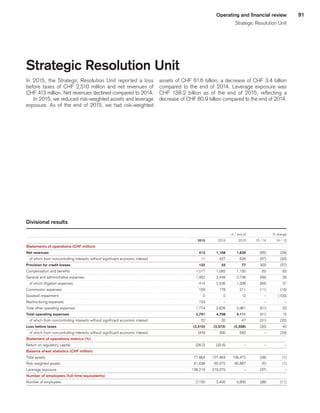
  • 9.
    5  division. These effortsaim at improving our ability to serve our clients and generate over time compliant, well controlled, profit- able growth. We will continue to focus on growing our wealth management business and on the reduction of our investment banking activities so that they consume less capital, generate more stable earnings and better support the development of our wealth management offering. Our strategy is focused on deploying all of our capabili- ties and expertise to best service our cli- ents. We will continue to implement it with determination. You often mention innovation. Which areas does Credit Suisse prioritize in terms of innovation and how will your clients benefit from the innovative process? Rohner: Credit Suisse was one of the first banks to introduce an innovation- focused think-tank as early as in 2012. We have launched Digital Private Bank- ing in 2013 and now continue to roll out its various offerings to our clients across different markets. As in any innovation pro- cess, clients are the ultimate beneficiaries, as service quality improves and prices tend to decline. Particularly in banking, clients today receive a much broader online and mobile offering and a more powerful advi- sory support which uses intelligent com- puting and big data. Ultimately, digitization allows banks to deliver more tailored, better accessible and user-friendly service than ever before. In terms of next focus areas, innovation in compliance and risk manage- ment areas will be crucial – here as well, we are already actively engaged. Thiam: Technology-driven innovation has disrupted several areas of bank- ing, although the innovators have so far focused on the retail segment. With the fin- tech trend slowing down gradually, I think we will see more fintech exits – often as acquisitions by established banks – and we will also see business collaborations. I also believe the back office space offers a much greater disruption potential than has been captured so far. Ultimately, I am convinced that innovation will remain one of the key drivers of competitiveness in banking and our strategy will continue to consider that. What role does compliance and risk culture play in the new strategy? Rohner: To ensure the future success of our business, it is important that we place our clients at the center of all that we do. We have to encourage an entrepreneur- ial mindset and constantly ask ourselves whether we are doing the right thing. Openness, integrity and principled behavior are key in this context. We are committed to promoting a strong risk culture and to providing our businesses with sophisticated and independent risk management, compli- ance and control processes. The Board of Directors and the Executive Board expect all employees at all levels of our organiza- tion to adhere to the very highest compli- ance standards. We clearly communicate these expectations and have implemented appropriate internal regulations and train- ing courses to support employees in this area. We do not tolerate any breaches of these rules, regulations or laws. To further strengthen our efforts to protect our repu- tation, we have created the new Compli- ance & Regulatory Affairs function, which oversees the bank’s activities at all lev- els. The high level of professionalism and dedication demonstrated by our employees when implementing our strategy inspires me with confidence that we will also be able to meet our ambitious goals in this area. Urs Rohner, Chairman of the Board of Directors (left) and Tidjane Thiam, Chief Executive Officer.  
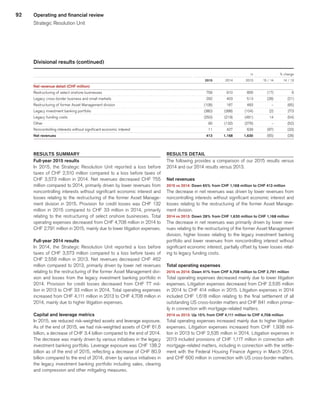
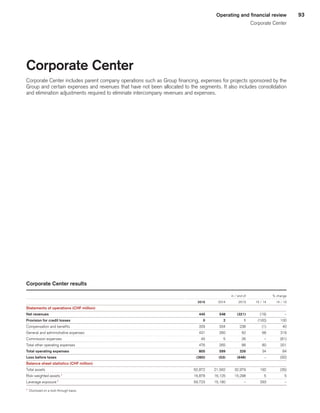
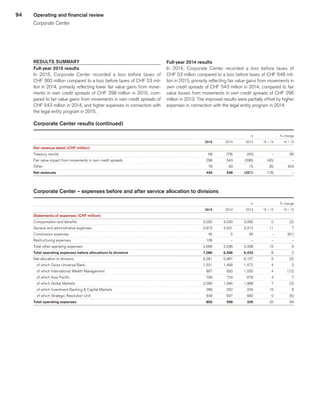
  • 10.
    6 MESSAGE FROM THECHAIRMAN AND THE CHIEF EXECUTIVE OFFICER Dear shareholders, clients and colleagues 2015 was a year of transition for Credit Suisse. Following the change in Chief Executive Officer in July 2015, we conducted an in-depth review of our businesses and long-term objectives and subsequently announced a new strategic direction for our Group on October 21, 2015. Our ambition is to be a leading private bank and wealth manager with distinctive investment banking capabili- ties that is able to grow profitably and generate capital through the economic cycle. In line with our new strategy, we announced a simplified orga- nizational structure with three geographically focused divisions – the Swiss Universal Bank (Swiss UB), Asia Pacific (APAC) and International Wealth Management (IWM). They are supported by two divisions focusing on our investment banking capabilities – Global Markets (GM) and Investment Banking & Capital Markets (IBCM). With this new structure, we can respond more flexibly to our clients’ needs through enabling our geographical divisions to leverage our combined expertise and resources in wealth manage- ment and investment banking. This new organization also gives our business heads clearer accountability both in terms of managing client relationships and the resources they require to maximize value creation. In parallel, we have strengthened the Group’s con- trol and compliance functions with significant investments in our risk management, control and information capabilities. The refo- cusing of the Group necessitated changes to the leadership struc- ture resulting in a new composition of the executive team to drive the new business units and the central functions forward. To ensure that Credit Suisse has a strong capital position to deliver on its strategy and capture attractive opportunities for growth, we announced a capital increase by way of a private place- ment and a rights offering in October 2015. The capital increase was approved by shareholders at our Extraordinary General Meet- ing in November and was concluded in December 2015. With this capital raise completed, our look-through CET1 capital ratio as of the end of 2015 has never been stronger, allowing us to imple- ment important restructuring measures aimed at delivering profit- able growth for our shareholders through the economic cycle. With the strengthened balance sheet, we are confident that we can deliver on our commitments and our capital allocation strategy is focused on businesses that offer returns in excess of their cost of capital. We believe that this will lead to increased investment in our three geographically focused divisions, notably our home market of Switzerland, where we have a strong franchise and capabilities, and to our growth markets in the emerging economies, particularly in the Asia Pacific region, where we also have a strong franchise. Our IWM division unifies the teams serving clients in other parts of the world. In addition, we continue to reduce the size of our investment bank to ensure that it supports our wealth management activi- ties, consumes less capital and generates less volatile earnings. In particular, we continue to right-size our operations in GM and are exiting or reducing selected activities consistent with the desire for higher return on capital and a lower risk profile. We have already substantially reduced risk-weighted assets and leverage exposure, exceeding our end-2015 targets, and are now targeting further significant reductions within the GM division until end-2016. In particular, we intend to reduce GM’s risk-weighted assets target of USD 83-85 billion to approximately USD 60 billion, and lower the division’s leverage exposure target from USD 380 billion to USD 290 billion by year-end. We are accelerating the right-sizing of our GM division and plan to further invest in our leading equi- ties franchise and reduce our fixed income activities to operate on a substantially lower cost base and generate more stable earn- ings through the economic cycle. In our IBCM division, we are rebalancing our activities towards advisory and equity underwriting and towards investment grade corporates, which should help us to generate higher-quality earnings. Cost competitiveness and flexibility are imperatives for our bank in today’s rapidly evolving operating environment. We are there- fore applying a rigorous, disciplined approach to cost management across the Group to reduce our cost base and lower the bank’s break-even point, thus enhancing our ability to generate capital through the economic cycle. In February 2016, we announced plans to accelerate our cost savings program and in March we announced further savings and increased our gross cost reduction target for end-2018 from CHF 3.0-3.5 to CHF 4.0 – 4.5 billion and announced an operating cost base target of CHF 19.5 – 20.0 billion by end-2016. The majority of these cost savings will largely be driven by the accelerated reduction of the GM division. Com- bined with the measures already implemented in 4Q15 (includ- ing the transfer of our US Private Banking operations), we have already made considerable progress on reducing our cost base and thanks to the better cross divisional collaboration, we are able to further accelerate the pace of targeted cost savings. We believe that this will provide us with the flexibility we need to successfully navigate periods of market uncertainty and to fund the investments we intend to make to deliver profitable growth through the eco- nomic cycle for our shareholders. Economic and political trends that shaped the market 2015 was a challenging period for the entire industry. Central bank actions remained a prominent topic during the year, with interest rates at historically low levels. On January 15, 2015, the Swiss National Bank announced the discontinuation of the minimum exchange rate of CHF 1.20 per euro – a move that caused a sharp appreciation of the Swiss franc and had a significant impact on the Swiss economy and the domestic banking sector for the remainder of the year. Thanks to the mitigating actions that we implemented, we were able to limit the impact on Credit Suisse.   
  • 11.
    7  Also in January2015, the European Central Bank announced its plans to begin purchasing eurozone government bonds as a means of lowering bond yields and pushing the rate of inflation back towards its medium-term target of 2%. While the conflicts in parts of the Middle East continued to intensify – heightening the global climate of uncertainty – the Greek debt crisis and discus- sions about a potential UK exit from the EU added to concerns about a destabilization of Europe’s monetary union. With worries about a growth slowdown in China and the emerging markets ris- ing in the second half of 2015, the European Central Bank cut the deposit rate again in December 2015 and decided to extend its bond purchase program until at least the end of March 2017. At its meeting on March 10, 2016, the European Central Bank yet again cut all of its key interest rates in a further attempt to boost inflation and growth rates, given the persisting volatile market environment. In contrast, the question about when the US Federal Reserve would tighten its own monetary policy remained a subject of intense public speculation during 2015. Following the decision by the People’s Bank of China to devalue the renminbi against the US dollar – partly to offset decelerating growth – the US Fed- eral Reserve postponed its first interest rate increase in almost a decade at its September meeting. The increase that finally occurred in December 2015 was largely motivated by strong US employment data and robust economic growth. While financial markets barely reacted to the actual announcement, which had widely been expected, discussions since the beginning of 2016 have focused on the question of the pace at which the US Fed- eral Reserve is likely to raise interest rates going forward, espe- cially following its decision to hold off on a further rate rise at the March meeting. Moreover, the global effects of the divergent mon- etary policies of the US Federal Reserve and the European Central Bank remain a prominent topic of discussion. The divergence in monetary policy, uncertainty about economic growth in China, the decline in oil prices, lower market liquidity, wid- ening credit spreads and the renewed strength of the Swiss franc have all led to a challenging market environment for Credit Suisse, particularly during the fourth quarter of 2015. All of these factors have contributed to lower levels of client activity and issuances, and large fund redemptions by market participants affecting asset prices. Market conditions have also remained challenging during the initial months of 2016, however, it is too early to determine how these challenges will evolve over the remainder of 2016. Regulatory Issues Regulatory requirements continued to evolve throughout 2015. In February 2015, the Swiss Federal Council presented its evalua- tion report on Switzerland’s “Too Big to Fail” (TBTF) regime, which proposed the implementation of the new global standard for Total Loss-Absorbing Capacity (TLAC). The implementation of TLAC is largely seen as the last building block to end TBTF. The new Swiss capital rules are more strict than the TLAC standard issued by the Financial Stability Board. In fact, the Swiss requirements will be stronger than those of other financial centers. Based on the end 2015 balance sheet, Credit Suisse would be subject to a going and gone concern requirement of 28.6% of risk-weighted assets. Throughout 2015, Credit Suisse issued CHF 15 billion of senior bail-in instruments, which we expect to be TLAC eligible, marking an important step towards achieving our total requirement in accor- dance with the proposed amendments to the Swiss TBTF regime. In addition to these new TLAC requirements, the new draft Swiss TBTF regime will increase the going concern capital and leverage requirements. Under these new going concern require- ments, Credit Suisse would need to fulfill a 14.3% Tier 1 capital ratio with a minimum CET1 component of 10% and a minimum Swiss leverage ratio of 5%, of which the minimum CET1 compo- nent is 3.5%, by end-2019. The new requirements are expected to become effective on July 1, 2016, subject to phase-in. The continued tightening of regulatory requirements for banks is likely to remain a dominant topic. Although the new rules announced by the Swiss Federal Council are yet to be finalized, we believe that the completion of our capital increase in Decem- ber 2015 and our success in improving our leverage exposure will enable us to meet these requirements on a look-through basis ahead of the 2019 deadline. We also aim to further strengthen our capital base through operating profitably and focusing on maxi- mizing the free capital generation. We aim at maintaining a CET1 capital ratio of between 11-12% during 2016 and are targeting a CET1 capital ratio of approximately 13% and a Tier 1 leverage ratio between 5-6% with a CET1 component of 3.5-4.0% by end- 2018. Over the next three years, through a disciplined capital allo- cation process, we intend to release capital from those parts of the Group that are being wound down in the Strategic Resolution Unit (SRU) and to fund further growth in our APAC and IWM divisions. 2015 Results Against the challenging backdrop of 2015, we reported a net loss attributable to shareholders of CHF 2.9 billion and a pre-tax loss of CHF 2.4 billion. Our results for the full year 2015 were mainly affected by a significant goodwill impairment charge of CHF 3.8 billion that we recognized primarily in respect of the acquisition of Donaldson, Lufkin & Jenrette in 2000. In addition, restructuring costs of CHF 355 million were taken in 4Q15 across all the divi- sions in connection with the implementation of our new strategy and our results were further impacted by charges relating to sig- nificant litigation items and a pre-tax loss in the SRU as we wind down businesses that no longer fit with our strategic direction. The losses we incurred, especially during the fourth quarter, the impact of the losses on our capital position, as well as the goodwill write- down, in combination with the challenging market conditions, have led to negative reactions by market participants.  
  • 12.
    8 a result ofthe low liquidity and poor market conditions in the fourth quarter of 2015. While these positions have already been reduced aggressively since we announced the new strategy, we believe that it will be essential for us to continue to restructure our GM activi- ties to lower our risk profile. We will maintain our focus on lowering the fixed-cost base of all our businesses. Changes to the Executive Board The refocusing of the Group and its structural reorganiza- tion necessitated changes to the leadership structure, resulting in a new composition of the executive team, which was further enriched by six new members in order to drive forward the new business units and the central functions: Pierre-Olivier Bouée, Peter Goerke, Thomas Gottstein, Iqbal Khan, Helman Sitohang and Lara Warner. In October 2015, Gaël de Boissard, Hans-Ulrich Meister, Robert Shafir and Pamela Thomas-Graham stepped down from the Executive Board, and we thank them for their con- siderable contributions to our bank’s progress over the years. Positioned for Growth Given the persisting challenges in the operating environment for banks, we have taken decisive measures to further accelerate the implementation of our strategy by increasing the pace with which our GM division will be right-sized in order to substantially lower our cost base and break-even point and thus decrease the volatility of our earnings going forward. With these changes in place, we are confident that with our strategy, our regionally and client-focused structure and our new management team, we are positioned to deliver over time compliant, well-controlled and profitable growth and returns for our shareholders. Thanks to our clients’ and share- holders’ continued trust in Credit Suisse, as well as our employees’ dedication, we will continue to remain focused on deploying all our capabilities and expertise to best service our clients. We will imple- ment our strategy with determination and are confident to deliver on the targets we have set for end-2018. Best regards Urs Rohner                     Tidjane Thiam Chairman of the              Chief Executive Officer Board of Directors March 2016 Beyond these issues, as we move ahead with the implementa- tion of our strategy and work towards our 2018 targets, we con- sider it important to measure the progress made in terms of our underlying business performance. Between now and 2018, the bank’s restructuring will make the analysis of our performance more complex. Hence, we are focusing on adjusted Core results, which are measured excluding SRU activities, goodwill impairment, restructuring expenses, real estate transactions, deconsolidation, business sales, significant litigation expenses and the impact from fair value of own debt. Until 2018, we plan to report on this same adjusted basis at Group, Core and business level, as we believe that this will allow investors to most effectively monitor our prog- ress on the implementation of our new strategy, given the material restructuring charges and other one-off items we expect to be borne in the interim period. Our adjusted results reflect a positive start in the implementa- tion of the new strategy and contained some encouraging trends despite volatile market conditions in 4Q15. The Group delivered adjusted* Core pre-tax income of CHF 4.2 billion for 2015 and the underlying performance of our three newly created geographic divisions – Swiss UB, IWM and APAC – highlights the long-term attractiveness of the opportunities that exist for wealth managers. The performance of the APAC division in particular highlighted the growth potential in the region and our strong market posi- tion: at over CHF 1.1 billion, APAC delivered the highest full-year adjusted* pre-tax income in five years and generated CHF 17.8 billion of net new assets. The Swiss Universal Bank increased its 2015 adjusted* pre-tax income by 4% to CHF 1.6 billion and is on track for a partial IPO (20-30%) planned by year-end 2017, mar- ket conditions permitting1 . IWM’s Private Banking business grew its 2015 adjusted* pre-tax income by 6% to CHF 0.8 billion. Net new asset generation was particularly strong in APAC and Swiss UB, which generated CHF 17.8 billion and CHF 13.8 billion of net new assets, respectively, in 2015. Additionally, we increased mandates penetration from 15% to 26% in Swiss UB and from 23% to 30% in IWM. Our full year performance, particularly in the geographic divi- sions, was obscured to a degree by poorer results during the fourth quarter, particularly from our investment banking divisions. We have continued to rebalance our investment banking businesses and to rebuild our IBCM division through targeted investments and by shifting activity towards advisory, equity underwriting and investment grade corporates in order to reduce the volatility of our earnings in this attractive, capital-light activity. In the GM division, our full-year performance was additionally adversely impacted by certain legacy inventory positions, which had to be written down as * Adjusted results are non-GAAP financial measures. For a reconciliation of the adjusted results to the most directly comparable US GAAP measures, see the “Reconciliation of adjusted results” part of this letter. 1 Any such IPO would involve the sale of a minority stake and would be subject to, among other things, all necessary approvals and would be intended to generate / raise additional capital for Credit Suisse AG or Credit Suisse (Schweiz) AG.   
  • 13.
    9  International Wealth Management   in CHF million  2015 2014 Income before taxes reported  709 1,212 Gains on business sales  (11) (77) Adjustments to net revenues  (11) (77) Restructuring expenses  33 – Major litigation provisions  268 51 Adjustments to total operating expenses  301 51 Total adjustments  290 (26) Adjusted income before taxes  999 1,186 Asia Pacific   in CHF million  2015 2014 Income before taxes reported  377 900 Goodwill impairment  756 – Restructuring expenses  3 – Major litigation provisions  6 – Adjustments to total operating expenses  765 – Total adjustments  765 – Adjusted income before taxes  1,142 900 Investment Banking Capital Markets   in CHF million  2015 2014 Income/(loss) before taxes reported  (353) 508 Goodwill impairment  380 – Restructuring expenses  22 – Adjustments to total operating expenses  402 – Total adjustments  402 – Adjusted income before taxes  49 508 Swiss Universal Bank   in CHF million  2015 2014 Income before taxes reported  1,659 1,976 Real estate gains  (95) (414) Gains on business sales  (23) (24) Adjustments to net revenues  (118) (438) Restructuring expenses  39 – Major litigation provisions  25 – Adjustments to total operating expenses  64 – Total adjustments  (54) (438) Adjusted income before taxes  1,605 1,538 International Wealth Management – Private Banking   in CHF million  2015 2014 Income before taxes reported  526 795 Gains on business sales  (11) (77) Adjustments to net revenues  (11) (77) Restructuring expenses  30 – Major litigation provisions  268 51 Adjustments to total operating expenses  298 51 Total adjustments  287 (26) Adjusted income before taxes  813 769 Global Markets   in CHF million  2015 2014 Income/(loss) before taxes reported  (1,944) 2,657 Goodwill impairment  2,661 – Restructuring expenses  105 – Major litigation provisions  231 60 Adjustments to total operating expenses  2,997 60 Total adjustments  2,997 60 Adjusted income before taxes  1,053 2,717 Core Results   in CHF million  2015 2014 Income before taxes reported  88 7,200 Fair value gains on own debt  (298) (543) Real estate gains  (95) (414) Gains on business sales  (34) (101) Adjustments to net revenues  (427) (1,058) Goodwill impairment  3,797 – Restructuring expenses  202 – Major litigation provisions  530 111 Adjustments to total operating expenses  4,529 111 Total adjustments  4,102 (947) Adjusted income before taxes  4,190 6,253 Reconciliation of adjusted results Adjusted results are non-GAAP financial measures that exclude goodwill impairment and certain other items included in our reported results. Management believes that adjusted results pro- vide a useful presentation of our operating results for purposes of assessing our Group and divisional performance over time, on a basis that excludes items that management does not consider representative of our underlying performance. Provided below is a reconciliation of our adjusted results to the most directly compa- rable US GAAP measures.  
  • 14.
    10 We may notachieve all of the expected benefits of our strategic initiatives. Factors beyond our control, including but not limited to the market and economic conditions, changes in laws, rules or regulations and other challenges discussed in our public fil- ings, could limit our ability to achieve some or all of the expected benefits of these initiatives. This document contains forward-looking statements that involve inherent risks and uncertainties, and we might not be able to achieve the predictions, forecasts, pro- jections and other outcomes we describe or imply in forward-looking statements. A number of important factors could cause results to differ materially from the plans, objectives, expectations, estimates and intentions we express in these forward-looking statements, including those we identify in “Risk Factors” in our Annual Report on Form 20-F for the fiscal year ended December 31, 2015, and in other public filings and press releases. We do not intend to update these forward-looking statements except as may be required by applicable law. Mandates penetration means advisory and discretionary mandates in private banking businesses as a percentage of the related assets under management, excluding those from the external asset manager business. As of January 1, 2013, Basel III was implemented in Switzerland along with the Swiss “Too Big to Fail” legislation and regulations thereunder. As of January 1, 2015, the BIS leverage ratio framework, as issued by BCBS, was implemented in Switzerland by FINMA. The related disclosures are in accordance with Credit Suisse’s interpretation of such requirements, including relevant assumptions. Changes in the interpretation of these requirements in Switzerland or in any of Credit Suisse’s assumptions or esti- mates could result in different numbers from those shown herein. References to phase-in and look-through included herein refer to Basel III require- ments. Phase-in under the Basel III capital framework reflects that for the years 2014 – 2018, there will be a five-year (20% per annum) phase in of goodwill and other intangible assets and other capital deductions (e.g., certain deferred tax assets) and for the years 2013 – 2022, there will be a phase out of certain capital instruments. Look-through assumes the full phase-in of goodwill and other intangible assets and other regulatory adjustments and the full phase out of certain capital instruments. Unless otherwise noted, leverage exposure is based on the BIS leverage ratio frame- work and consists of period-end balance sheet assets and prescribed regulatory adjustments. Cost reduction program measured on constant FX rates and based on expense run rate excluding major litigation expenses, restructuring costs and goodwill impairment taken in 4Q15, but including other costs to achieve savings.   
  • 15.
    11 Information on the company 12 Credit Suisse at a glance 13 Strategy 18 Divisions 25 Regulation and supervision 40 Risk factors I  
  • 16.
    12 Credit Suisse ata glance Swiss Universal Bank The Swiss Universal Bank division offers comprehensive advice and a wide range of financial solutions to private, corporate and institutional clients primarily domiciled in our home market of Switzerland, which offers attractive growth opportunities and where we can build on a strong market position across our key businesses. Our private banking business has a leading fran- chise in our Swiss home market and serves ultra-high-net-worth individuals, high-net-worth individuals and retail clients. Our cor- porate and institutional banking business serves large corporate clients, small and medium-sized enterprises, institutional clients and financial institutions. International Wealth Management The International Wealth Management division offers tailored financial solutions to wealthy private clients and external asset managers in Europe, the Middle East, Africa and Latin Amer- ica through its private banking business. The division’s footprint spans emerging economies as well as mature European markets and it has access to the broad spectrum of Credit Suisse’s global resources and capabilities. Our asset management business offers investment solutions and services globally to our private banking businesses and a wide range of other clients, including pension funds, governments, foundations and endowment funds, ­corporations and individuals. Asia Pacific The Asia Pacific division offers integrated private banking and investment banking financial solutions to wealthy individuals, institutional investors and corporate clients in the Asia Pacific region, drawing on Credit Suisse’s global resources. The divi- sion is well positioned to capture market opportunities in Asia Pacific, which is experiencing rapid wealth creation and where the number of ultra-high-net-worth individuals is growing. We offer institutional investors access to broader financial markets and differentiated product offerings. Global Markets The Global Markets division offers a broad range of equities and fixed income products and services and focuses on client-driven businesses and on supporting Credit Suisse’s private banking businesses and their clients. Our suite of products and services includes global securities sales, trading and execution services, prime brokerage, underwriting and comprehensive investment research. Our clients include financial institutions, corporations, governments, institutional investors – including pension funds and hedge funds – and private individuals around the world. Investment Banking Capital Markets The Investment Banking Capital Markets division offers a broad range of investment banking services to corporations, financial institutions, financial sponsors and ultra-high-net- worth individuals and sovereign clients. Our range of products and services includes advisory services related to mergers and acquisitions, divestitures, takeover defense mandates, business restructurings and spin-offs. The division also engages in debt and equity underwriting of public securities offerings and private placements. Strategic Resolution Unit The Strategic Resolution Unit was created to facilitate the imme- diate right-sizing of our business divisions from a capital perspec- tive and includes remaining portfolios from former non-strategic units plus transfers of additional exposures from the business divisions. The unit’s primary focus is on facilitating the rapid wind- down of capital usage and costs to reduce the negative impact on the Group’s performance. Repositioned as a separate division, this provides clearer accountability, governance and reporting. Credit Suisse Our strategy builds on Credit Suisse’s core strengths: its position as a leading global wealth manager, its specialist investment banking capabilities and its strong presence in our home market of Switzerland. We take a balanced approach to capture the wealth management opportunities in emerging markets, the largest of which is in the Asia Pacific region, while also serving key developed markets with an emphasis on Switzerland. Founded in 1856, we today have a global reach with operations in over 50 countries and 48,200 employees from over 150 different nations. Our broad footprint helps us to generate a ­geographically ­balanced stream of revenues and net new assets and allows us to capture growth opportunities around the world. We serve our clients through three regionally focused divisions: Swiss Universal Bank, International Wealth Management and Asia Pacific. These regional businesses are supported by two other divi- sions specializing in investment banking capabilities: Global Markets and ­Investment ­Banking Capital Markets. The Strategic Resolu- tion Unit consolidates the remaining portfolios from the former non-­strategic units plus additional businesses and positions that do not fit with our strategic direction. Our business divisions cooperate closely to provide holistic financial solutions, including innovative products and specially tailored advice. Information on the company Credit Suisse at a glance  
  • 17.
    13Information on thecompany Strategy Strategy A NEW STRATEGY TO REPOSITION CREDIT SUISSE FOR THE FUTURE In 2015, Credit Suisse embarked on a new chapter of its 160 year history. Under the leadership of our new CEO, Tidjane Thiam, and the Board of Directors, we conducted an in-depth strategy review that has resulted in a new strategic direction, structure and orga- nization of the Group. Credit Suisse strategy Our new strategy aims to strengthen our position as a leading pri- vate bank and wealth manager, with strong and distinctive invest- ment banking capabilities, to achieve our goal of profitable growth while generating significant capital through the cycle. We are accelerating the rebalancing of capital towards our private bank- ing businesses to optimize its allocation and focus on the highest- returning, most scalable opportunities. We are focused on growing in Asia Pacific and other emerg- ing markets in order to capture the significant wealth management prospects in those markets. We expect that emerging markets will account for approximately 60% of the growth in global wealth in the coming years, with first generation entrepreneurs driving much of the wealth opportunity. We believe that positioning ourselves as the “Bank for Entrepreneurs” by leveraging our strengths in wealth management and investment banking will provide us with key com- petitive advantages to succeed in these markets as we provide clients with a range of services to protect and grow their wealth. Despite slower growth, mature markets are still expected to remain important and account for more than half of wealth distri- bution by 2019. As a result, we plan to take a balanced approach to resource allocation with the goal of capitalizing on opportuni- ties in markets such as Western Europe and Japan. In Western Europe, we also plan to accelerate efficiencies by consolidating booking centers and developing a hub and spoke service model. In the US, we have exited private banking investment advisory but plan to continue to cover the corporate and complex personal wealth needs of qultra-high-net-worth individuals (UHNWI) from our Investment Banking Capital Markets business. Switzerland, as our home market, provides compelling oppor- tunities for Credit Suisse. To further expand our position with Swiss private, corporate and institutional clients and take advan- tage of consolidation opportunities, we have created a dedicated Swiss Universal Bank. Management focus and accountability will be enhanced, simplifying the prior structure and allowing the bank to build on its entrepreneurial heritage and further leveraging its brand. We provide a full range of services to private, corporate and institutional clients with a specific focus on becoming the “Bank for Entrepreneurs.” We intend to pursue an initial public offering (IPO) by the end of 2017, market conditions permitting, of between 20% and 30% of the legal entity Credit Suisse (Schweiz) AG. Any such IPO would be subject to, among other things, all necessary approvals and would be intended to generate/raise additional capi- tal for Credit Suisse AG or Credit Suisse (Schweiz) AG. Our intention is to focus on the investment banking businesses that support our wealth management clients, and businesses that deliver returns in excess of their cost of capital and have lead- ing market positions. Within our Global Markets division, we con- tinue to right-size our operations by exiting or downsizing selected businesses consistent with our lower risk profile and higher return on capital objectives. In Global Markets, we have reduced risk- weighted assets and leverage exposures to below the targets we had set for the end of 2015. We plan to further invest in our lead- ing equities franchise and restructure our fixed income activities to generate more stable earnings through the cycle. In our Invest- ment Banking Capital Markets division, we are rebalancing our activities towards advisory and equity underwriting and towards investment grade corporates, which should help us to generate higher-quality earnings. We have formed a new Strategic Resolution Unit intended to oversee the effective wind-down of businesses and positions that do not fit our strategic direction in the most efficient manner possible. The Strategic Resolution Unit consolidates the remain- ing portfolios from our former non-strategic units plus additional activities and businesses from the investment banking and private banking businesses that are no longer considered strategic. We aim to reduce the Strategic Resolution Unit’s risk-weighted assets and leverage exposure by approximately 80% by 2020, excluding operational risk. We intend to rigorously execute a disciplined approach to cost management across the Group to reduce our fixed cost base and lower our break-even point. In February 2016, we announced plans to further accelerate our cost savings program and have identified and initiated measures, including an accelerated work- force reduction, that are expected to result in cost savings of CHF 500 million per annum on a full-year run-rate basis. Combined with the measures already implemented in the fourth quarter of 2015 (including the transfer of our US Private Banking operations), the cost savings measures identified and initiated by end-January 2016 represent CHF 1.2 billion per annum, or 34%, of the CHF 3.5 billion of gross savings we are targeting by end-2018. Cost savings are expected to be achieved through a combination of simplifying mid- and back-office platforms, right-sizing the bank’s footprint, substantial completion of several Corporate Center pro- grams and making a number of disposals and closures, includ- ing in the run-down of the Strategic Resolution Unit. In parallel to these cost reductions, we plan to invest CHF 1.5 billion to sup- port growth initiatives in Asia Pacific, Swiss Universal Bank and International Wealth Management. The cost reduction program is measured on constant foreign exchange rates and is based on expense run rate excluding major litigation expenses, restructuring costs and goodwill impairment taken in the fourth quarter of 2015, but including other costs to achieve savings.  
  • 18.
    14 To ensure thatwe have a strong capital position to implement our strategy, capture the most promising growth opportunities and be prepared for future regulatory changes, we have completed a capital increase by way of a private placement and a rights offer- ing as approved by the shareholders at the Extraordinary General Meeting of November 19, 2015. The aggregate gross proceeds of the capital increases amounted to a total of CHF 6.0 billion, resulting in a look-through common equity tier 1 (CET1) ratio of 11.4% and look-through CET1 leverage ratio of 3.3% as of year- end 2015. As our strategy is executed, we intend to generate approxi- mately CHF 23–25 billion of operating free capital by 2020. Oper- ating free capital focuses on those components of shareholders’ equity that are regulatory capital relevant, specifically income before taxes (excluding fair value on own debt) net of cash taxes, as well as deferred tax asset threshold impacts, additional costs relating to share awards and net impact of defined benefit pension funds. Organizational structure and management changes To support the execution of the new strategy, we have simplified our organization and created three new, regionally focused divi- sions: Swiss Universal Bank, International Wealth Management and Asia Pacific serving Western Europe, Central and Eastern Europe, Latin America and Africa. These regional businesses are supported by two other divisions specialized in investment bank- ing capabilities: Global Markets and Investment Banking Capital Markets. Our new organization is designed to drive stronger client focus and provide better alignment with regulatory requirements. We believe that decentralization will increase the speed of decision making, accountability and cost competiveness across the Group. Our operating businesses are supported by focused corporate functions at the Group Executive Board level. Our newly estab- lished position of Chief Operating Officer focuses on driving the transformation of Credit Suisse and oversees, among other things, global operations, information technology and our centers of excel- lence. To further strengthen our focus on compliance and reg- ulatory matters, we have created the position of Chief Compli- ance and Regulatory Affairs Officer that focuses on monitoring bank activities and coordinating regulatory interactions. The Chief Financial Officer manages the Group’s capital, funding, liquid- ity and expenses to ensure we are well capitalized and have a strong balance sheet. The Chief Risk Officer governs the Group’s risk management framework and provides independent risk over- sight. Our General Counsel provides legal, policy and regulatory advice, especially in the context of potential or actual legal mat- ters and investigations. It drives strategic legal risk management and manages our relationship with policymakers and other political stakeholders. Our Head of Human Resources, Communications Branding is responsible for attracting, retaining and developing our employees, driving our global communications strategy and devel- oping and strengthening the Credit Suisse brand. As of October 21, 2015, the Board of Directors appointed six new members of the Executive Board of Credit Suisse – Pierre-Olivier Bouée, Peter Goerke, Thomas Gottstein, Iqbal Khan, Helman Sitohang and Lara Warner. In October 2015, Gaël de Boissard, Hans-Ulrich Meister, Robert Shafir and Pamela Thomas-Graham stepped down from the Executive Board. The composition of the Executive Board is as follows: Tidjane Thiam  Chief Executive Officer  Thomas Gottstein  Swiss Universal Bank  Iqbal Khan  International Wealth Management  Helman Sitohang  Asia Pacific  Timothy O’Hara  Global Markets  James L. Amine  Investment Banking Capital Markets  David Mathers  Chief Financial Officer  Pierre-Olivier Bouée  Chief Operating Officer  Joachim Oechslin  Chief Risk Officer  Lara Warner  Chief Compliance and Regulatory Affairs Officer  Romeo Cerutti  General Counsel  Peter Goerke  Human Resources, Communications Branding  Financial objectives On October 21, 2015, we announced the following financial objec- tives and management actions in order to track progress in imple- menting our new strategy: p increase income before taxes for Asia Pacific to CHF 2.1 bil- lion in 2018; p increase income before taxes in International Wealth Manage- ment to CHF 2.1 billion in 2018; p grow income before taxes for the Swiss Universal Bank to CHF 2.3 billion in 2018; p reduce our absolute cost base by CHF 2.0 billion to between approximately CHF 18.5–19.0 billion by year-end 2018. These cost savings are expected to be achieved through CHF 3.5 billion in gross cost savings by year-end 2018 through a com- bination of optimizations to make our business more efficient. In parallel to these cost reductions, CHF 1.5 billion will be invested to support growth initiatives in Asia Pacific, Swiss Universal Bank and International Wealth Management; p achieve a look-through CET1 ratio of approximately 13% and a look-through CET1 leverage ratio of above 3.5% by year-end 2018 before future regulatory recalibration; p maintain Global Markets risk-weighted assets stable at approx- imately USD 83–85 billion between year-end 2015 and year- end 2018; p reduce Global Markets leverage exposure from approximately USD 380 billion at year-end 2015 to approximately USD 370 billion by year-end 2018; p wind down the Strategic Resolution Unit risk-weighted assets (excluding operational risk) to CHF 12 billion by year-end 2018 and reduce leverage exposure to CHF 40 billion by year-end 2018 to support growth initiatives, mainly in Asia Pacific, Swiss Universal Bank and International Wealth Management; p measure our performance by generating approximately CHF 23-25 billion of operating free capital by 2020; and Information on the company Strategy  
  • 19.
    15Information on thecompany Strategy p plan to continue our existing policy of recommending a dividend of CHF 0.70 per share with a scrip alternative until we reach our 2015–2018 look-through CET1 and leverage ratio targets and have greater clarity on potential regulatory changes and lit- igation risks. However, our intention would be to end the scrip alternative and recommend a move to a full cash dividend no later than 2017. Furthermore, in the longer term, we would aim to distribute a minimum of 40% of our operating free capital. The Board of Directors will consider setting a higher payout ratio as appropriate in due course. Acceleration of the announced strategy On March 23, 2016, we announced a number of additional mea- sures and adjusted financial objectives beyond those announced on October 21, 2015 to further lower our cost base, accelerate the risk-weighted assets and leverage reduction initiatives in the reshaping of our Global Markets business and further strengthen our capital position. The additional measures and new financial objectives include: p increasing our gross savings target of CHF 3.5 billion by year- end 2018 to CHF 4.3 billion. The net cost savings target in the same time period has increased from CHF 2.0 billion to at least CHF 3.0 billion. These measures are expected to lead to an absolute cost base of CHF 18.0 billion or less by year-end 2018; p setting a gross cost savings target for the Group of CHF 1.7 billion by year-end 2016; p reducing the risk-weighted assets target in the Global Markets division from approximately USD 83 – 85 billion to USD 60 billion and the leverage exposure target from approximately USD 380 billion to USD 290 billion by year-end 2016; p exiting the Distressed Credit, European Securitized Products trading and Long-Term Illiquid Financing businesses in Global Markets; p the assets from businesses we are exiting and other business reductions in Global Markets will predominantly be transferred to the Strategic Resolution Unit over the course of 2016 and we are consolidating foreign exchange trading into our trading operations within Swiss Universal Bank; and p disposals of real estate and non-core businesses and other actions to increase CET1 capital by at least CHF 1 billion dur- ing 2016. The cost reduction program is based on the 2015 cost base and measured on constant foreign exchange rates and based on an expense run rate excluding major litigation expenses, goodwill impairment charges and estimated restructuring costs of CHF 2.0 billion (previously announced CHF 1.3 billion), but including other costs to achieve the savings, which do not meet the accounting definition of restructuring costs. Implementation of these strategy measures will lead to a recasting of prior period segment results, principally in respect of the Global Markets business and the Stra- tegic Resolution Unit, and an assessment of certain balance sheet items. PRODUCTS AND SERVICES Private banking offerings and wealth management solutions We offer a wide range of private banking and wealth management solutions tailored for our clients in our Swiss Universal Bank, Inter- national Wealth Management and Asia Pacific divisions. Structured advisory process We apply a structured approach based on a thorough understand- ing of our clients’ needs, personal situation, product knowledge, investment objectives and a comprehensive analysis of their finan- cial situation to define individual client risk profiles. On this basis we define together with our clients an individual investment strat- egy. This strategy is implemented ensuring that portfolio quality standards are adhered to and that all investment instruments are compliant with suitability and appropriateness standards. Respon- sible for the implementation are either the portfolio managers or our relationship managers working together with their advisory cli- ents. Our UHNWI relationship managers are supported by dedi- cated portfolio managers. Client segment specific value propositions We offer a wide range of wealth management solutions tailored to specific client segments. The distinct value proposition of our inte- grated bank remains a key strength in our client offerings. Close collaboration with our investment banking businesses enables us to offer customized and innovative solutions to our clients, espe- cially in the UHNWI segment, and we have specialized teams offering bespoke and complex solutions predominantly for our sophisticated clients. In addition, we offer solutions for a range of private and corporate wealth management needs, including suc- cession planning, tax advisory and financial planning. Comprehensive investment services We offer a comprehensive range of investment advice and discre- tionary asset management services based on the outcome of our structured advisory process and the guidelines of the Investment Solutions Products Group and the Credit Suisse Investment Committee. We base our advice and services on the analysis and recommendations of our research and investment strategy teams, which provide a wide range of investment expertise, including mac- roeconomic, equity, bond, commodity and foreign-exchange anal- ysis, as well as research on the economy. Our investment advice covers a range of services from portfolio consulting to advising on individual investments. We offer our clients portfolio and risk management solutions, including managed investment products. These are products actively managed and structured by our spe- cialists or third parties, providing private investors with access to investment opportunities that otherwise would not be available to them. For clients with more complex requirements, we offer investment portfolio structuring and the implementation of individ- ual strategies, including a wide range of structured products and alternative investments. Discretionary asset management services are available to clients who wish to delegate the responsibility for  
  • 20.
    16 investment decisions toCredit Suisse. We are an industry leader in alternative investments and, in close collaboration with our asset management business and investment banking businesses, we offer innovative products with limited correlation to equities and bonds, such as hedge funds, private equity, commodities and real estate investments. Multi-shore platform With global operations comprising 14 international booking centers in addition to our operations in Switzerland, we are able to offer our clients booking capabilities locally as well as through our interna- tional hubs. Our multi-shore offering is designed to serve clients who are focused on geographical risk diversification, have multiple domiciles, seek access to global execution services or are inter- ested in a wider range of products than is available to them locally. Corporate client and institutional client offerings In accordance with our ambition to position ourselves as the “Bank for Entrepreneurs,” we provide corporate and institutional clients, predominantly in Switzerland, with a broad range of financial solu- tions. To meet our clients’ evolving needs, we deliver our offering through an integrated franchise and international presence. Based on this model, we are able to assist our clients in virtually every stage of their business life cycle to cover their banking needs. For corporate clients, we provide a wide spectrum of banking prod- ucts such as traditional and structured lending, payment services, foreign exchange, capital goods leasing and investment solutions. In addition, we apply our investment banking capabilities to sup- ply customized services in the areas of mergers and acquisitions (MA), syndications and structured finance. For corporations with specific needs for global finance and transaction banking, we pro- vide services in commodity trade finance, trade finance, structured trade finance, export finance and factoring. For our Swiss institu- tional clients, including pension funds, insurances, public sector and UHNWI clients, we offer a wide range of fund solutions and fund-linked services, including fund management and administra- tion, fund design and comprehensive global custody solutions. Our offering also includes ship and aviation finance and a competitive range of services and products for financial institutions such as securities, cash and treasury services. Asset management offerings Our traditional investment products include multi-asset class solu- tions, which provide clients with innovative strategies and com- prehensive management across asset classes to optimize client portfolios with services that range from funds to fully custom- ized solutions. Other core investment strategies include a suite of fixed income, equity and real estate funds, and our indexed solutions business which provides institutions and individual cli- ents access to a wide variety of asset classes in a cost-effective manner. Stressing investment principles such as risk management and asset allocation, we take an active and disciplined approach to investing. We also offer institutional and individual clients a range of alternative investment products, including hedge fund strategies, commodities and credit investments. We offer access to various asset classes and markets through strategic alliances and key joint ventures with external managers and have a strong footprint in emerging markets. Investment banking financial solutions Equity underwriting Equity capital markets originates, syndicates and underwrites equity in IPOs, common and convertible stock issues, acquisition financing and other equity issues. Debt underwriting Debt capital markets originates, syndicates and underwrites cor- porate and sovereign debt. Advisory services Advisory services advises clients on all aspects of MA, corporate sales, restructurings, divestitures, spin-offs and takeover defense strategies. Fixed income p Credit products offers a full range of fixed income products and instruments to clients across investment grade and high yield credits, ranging from standard debt issues and credit research to fund-linked products, derivatives instruments and structured solutions that address specific client needs. We are a leading dealer in flow trading of single-name qcredit default swap (CDS) on individual credits, credit-linked notes and index swaps. Investment grade trades domestic corporate and sov- ereign debt, non-convertible preferred stock and short-term securities such as floating rate notes and qcommercial paper. Leveraged finance provides capital raising and advisory ser- vices and core leveraged credit products such as bank loans, bridge loans and high yield debt for non-investment grade cor- porate and financial sponsor-backed companies. p Securitized products trades, securitizes, syndicates, under- writes and provides research for various forms of securities, primarily q residential mortgage-backed securities (RMBS) and asset-backed securities (ABS). Both RMBS and ABS are based on underlying pools of assets, and include both gov- ernment- and agency-backed, as well as private label loans. Core to the securitized products franchise is its asset financing business, which focuses on providing asset and portfolio advi- sory services, and financing solutions to clients across asset classes. Information on the company Strategy  
  • 21.
    17Information on thecompany Strategy p Emerging markets offers a full range of fixed income prod- ucts and instruments, including sovereign and corporate secu- rities, local currency derivative instruments and tailored emerg- ing market investment products. The business is organized around financing, structured credit, trading, capital markets and strategic transactions, with a focus on supporting emerg- ing markets through its onshore and offshore service models. p Global macro products includes our restructured rates and foreign exchange businesses. Our rates business includes the full spectrum of cash and derivatives, including select non- cleared and structured solutions. Foreign exchange provides market making in products such as spot and options for cur- rencies in developed markets. The foreign exchange product suite also includes proprietary market leading technology to provide clients with electronic trading solutions. Equity p Cash equities provides a comprehensive suite of offerings: (i) research, analytics and other content-driven products and services, to meet the needs of clients including mutual funds, investment advisors, banks, pension funds, hedge funds, insur- ance companies and other global financial institutions; (ii) sales trading, responsible for managing the order flow between our clients and the marketplace and providing clients with trading ideas and capital commitments, identifying trends and deliver- ing the most effective execution; (iii) trading, which executes client orders and makes markets in listed and qover-the-coun- ter (OTC) cash securities, exchange-traded funds and pro- grams, providing liquidity to the market through both capital commitments and risk management; and (iv) Credit Suisse’s qadvanced execution services (AES), a sophisticated suite of algorithmic trading strategies, tools and analytics to facilitate global equity trading. By employing algorithms to execute cli- ent orders and limit volatility, AES helps institutions and hedge funds reduce market impact. AES is a recognized leader in its field and provides access to hundreds of trading destinations in over 40 countries and six continents. p Equity derivatives provides a full range of equity-related products, investment options and financing solutions, as well as sophisticated hedging and risk management expertise and comprehensive execution capabilities to financial institutions, hedge funds, asset managers and corporations. Convertibles involves both secondary trading and market making and the trad- ing of credit default and asset swaps and the distribution of mar- ket information and research. The global convertibles business is a leading originator of new issues throughout the world. p Prime services offers hedge funds and institutional cli- ents execution, financing, clearing and reporting capabilities across various asset classes through prime brokerage, syn- thetic financing and listed and OTC derivatives. In addition, prime services is a leading provider of advisory services across capital services and consulting for both start-ups and existing clients. p Systematic market-making group operates a range of liquidity-providing and market-making strategies in liquid markets. Other Other products and activities include lending, certain real estate investments and the distressed asset portfolios. Lending includes senior bank debt in the form of syndicated loans and commitments to extend credit to investment grade and non-investment grade borrowers. Research and HOLT Our equity and fixed income businesses are enhanced by the research and HOLT functions. HOLT offers a framework for objectively assessing the performance of 20,000 companies in over 60 countries, with interactive tools and consulting services that clients use to make informed investment decisions. Equity and fixed income research uses in-depth analytical frameworks, proprietary methodologies and data sources to ana- lyze approximately 3,000 companies worldwide and provide mac- roeconomic insights into this constantly changing environment.  
  • 22.
    18 Divisions SWISS UNIVERSAL BANK Businessprofile Within Swiss Universal Bank, we offer comprehensive advice and a broad range of financial solutions to private, corporate and institutional clients primarily domiciled in Switzerland. The division comprises the Private Banking and Corporate Institutional Bank- ing businesses. Our Private Banking business has a leading client franchise in Switzerland, serving over 1.6 million clients, including UHNWI, high-net-worth individual (HNWI), qaffluent and retail clients. Our service offering is based on our structured advisory process, dis- tinct client segment specific value propositions and coverage mod- els as well as access to a broad range of comprehensive prod- ucts and services. We also have a specialized consumer finance business branded BANK-now. In addition, we offer best-in-class service, platform and technology support to external asset manag- ers in Switzerland. Our Swiss network includes 1,570 relationship managers in 184 branches, including 33 branches of the bank’s affiliate, Neue Aargauer Bank. Our Corporate Institutional Banking business offers expert advice and high-quality services to a wide range of clients, serving the needs of over 100,000 corporations and institutions, including large corporate clients, small and medium-size enter- prises, institutional clients, financial institutions and commodity traders. This business also includes our Swiss investment bank- ing business serving corporate clients and financial institutions on financing transactions in the debt and equity capital markets and advising on MA transactions. Our business includes 490 relation- ship managers who serve our clients out of 48 locations. Key data – Swiss Universal Bank   in / end of   2015 2014 2013 Key data Net revenues (CHF million)  5,563 5,721 5,612 Income before taxes (CHF million)  1,659 1,976 1,740 Assets under management (CHF billion)  – Private Banking  241.0 258.6 244.2 – Corporate Institutional Banking  275.8 275.9 250.0 Number of employees  14,200 13,200 13,200 Business environment The Swiss private banking and wealth management industry is very attractive and continues to have positive growth prospects. Switzerland has the highest millionaire density worldwide and is expected to continue to have the highest average wealth per adult. Assets of UHNWI and HNWI are projected to grow approximately 4% and 3%, respectively, annually from 2014 through 2018. We are well positioned in the Swiss market with strong market shares across client segments. The corporate and institutional banking business continues to offer attractive opportunities, supported by the expected steady growth of the Swiss economy. In a continued low interest rate environment, key trends in equity capital markets are expected to include an increase in IPOs, acquisition-related financing and mon- etization of equity holdings. We believe that the environment in the Swiss MA market should remain supportive through 2016. We are a leading provider of banking services to corporate and institu- tional clients in Switzerland, utilizing our market leading investment banking capabilities in Switzerland for local execution while lever- aging Investment Banking Capital Markets’ international reach and Global Markets’ placing power. Structurally, the industry continues to undergo significant change. Regulatory requirements for investment advisory services continue to increase, including in the areas of suitability and appro- priateness of advice, client information and documentation. This is expected to drive further consolidation of smaller banks due to higher critical size. We believe that we are well positioned to opportunistically take advantage of the potential market consoli- dation. We are well advanced in adapting to the new environment as we have and are continuing to dedicate significant resources to ensure our business is compliant with regulatory standards. Business strategy Switzerland, our home market, has always been and is expected to remain a key pillar of success for our bank and is core to our overall strategy. Within Swiss Universal Bank, we combine all the strengths and critical mass of our retail, wealth management, cor- porate, institutional and investment banking activities. The division is well positioned to meet the needs of our clients, both individual and corporate, with a broad suite of customized products and ser- vices. We announced in October 2015 plans to conduct a partial IPO of up to 30% of Credit Suisse (Schweiz) AG by end of 2017, underscoring its unique identity and value within Switzerland and within the Group. Any such IPO would involve the sale of a minority stake and would be subject to, among other things, all necessary approvals and would be intended to generate/raise additional capi- tal for Credit Suisse AG or Credit Suisse (Schweiz) AG. We expect to advance our business by focusing on the follow- ing four key priorities: Focus to simplify The Swiss Universal Bank division continues to serve the entire spectrum of clients from retail to UHNWI and from small to large corporate and institutional clients as well as external asset man- agers. In order to move closer to our Swiss client base and their needs, we have realigned our organization and have transferred business not originated in Switzerland to where it is originated. Information on the company Divisions  
  • 23.
    19Information on thecompany Divisions Empower to grow We are focusing our growth efforts and resources towards the most attractive client segments and we have developed client spe- cific initiatives to realize profitable growth opportunities. The big- gest untapped potential for us lies in the HNWI business, which is significantly growing and highly attractive. We expect to grow at a higher rate than the anticipated 3% annual market growth rate until 2018. In the HNWI business, we plan to hire approximately 80 additional relationship managers and further enhance and pro- mote our mandates offering. In 2015, we were successful with our newly launched range of advisory mandates called Credit Suisse Invest. The conversion rate of our clients into this new offering was significantly above our expectations. With Credit Suisse Invest, we offer investment solutions based on client needs and their prefer- ences for frequency and type of advice. It is also our ambition to be recognized as the “Bank for Entrepreneurs”. We are not only aiming to strengthen our businesses serving HNWI, but also those serving small and medium-size enterprises and UHNWI, two client segments for which we have high growth ambitions. A dedicated organizational unit was established to support the development of joint client coverage plans between our HNWI business and small and medium-size enterprises teams and the development of a more focused value proposition catered to entrepreneurs. For the UHNWI business, we aim to double our lending book, increase our relationship manager population by 30% and gain market share in French and Italian speaking Switzerland. In the external asset managers business, we plan to build on our leading market position and are well positioned to exploit the opportunities from the ongoing consolidation of smaller banks by supporting them in becoming external asset managers or providing them exter- nal asset manager solutions to address their increased regulatory requirements and pressure on gross margins. Drive efficiency agenda We have significantly increased end-to-end accountability over Swiss costs and investments by moving Swiss-specific or Swiss platform-related corporate functions to Swiss Universal Bank. This should allow for a more business-oriented priority setting and faster decision making for investments. We also believe that efficiency can be strengthened by digital initiatives and increased automation. For instance, we launched an innovative new mobile banking application that has received positive client feedback. Going forward, we plan to continue to invest in our digital appli- cations to enhance self-service capabilities for clients, improve productivity of client-facing employees and automate front-to-back processes. Invest in brand As part of the commitment to our Swiss businesses, we also strive to strengthen our brand and reputation by investing in targeted marketing activities, deepening our community involvement and contributing to the sustained development of our home market as an employer, lender, sponsor and member of economic, social and cultural society. Awards and market share momentum Credit Suisse was highly placed in a number of key industry awards in 2015: p Best Investment Bank in Switzerland – 2015 Awards for Excel- lence – Euromoney p Best Trade Finance Bank in Switzerland – Global Finance p Best Sub-Custodian Bank in Switzerland – Global Finance p Best Swiss Global Custodian – RM Consultants (London) p Best European Global Custodian – RM Consultants (London) INTERNATIONAL WEALTH MANAGEMENT Business profile In International Wealth Management we offer comprehensive advice and a broad range of financial solutions to our private, cor- porate and institutional clients. Our Private Banking business offers tailored and compre- hensive advice and financial solutions to wealthy private clients and external asset managers in the regions of Europe, Middle East, Africa and Latin America. We serve our clients through 1,190 rela- tionship managers in 46 locations in 28 countries, utilizing com- prehensive access to the broad spectrum of our global resources and capabilities as well as access to a wide range of services and products from third-party providers. Our Asset Management business offers investment solutions and services globally to a wide range of clients, including pension funds, governments, foundations and endowments, corporations and individuals, along with our private banking businesses. Our capabilities span across a diversified range of asset classes with a focus on traditional and alternative strategies. Key data – International Wealth Management   in / end of   2015 2014 2013 Key data Net revenues (CHF million)  4,394 4,751 4,929 Income before taxes (CHF million)  709 1,212 1,217 Assets under management (CHF billion)  – Private Banking  289.6 323.7 297.8 – Asset Management  321.3 305.2 270.1 Number of employees  9,100 8,700 8,700 Business environment We believe that the private banking industry continues to have attractive growth prospects in mature markets and the emerg- ing markets covered by International Wealth Management. Assets of HNWI and UHNWI clients within these markets are expected to grow by approximately 6% annually from 2015 through 2018. Wealth creation continues to be strong in Russia and Central Eastern Europe (10%), Middle East (10%) and Latin America (7%) as wealth growth in these economies is fueled by an increase in population, entrepreneurial wealth creation and technological development. Although wealth is expected to grow at lower rates in developed economies such as the ones of Europe (3%), these  
  • 24.
    20 markets continue tobe of crucial importance, holding around 20% of the world’s wealth. The asset management industry continued to experience growth in 2015, despite volatility and weaker performance of financial markets worldwide. Developed markets rebounded as the major drivers of net inflows, while momentum slowed in some emerging markets. Within the asset management industry, inves- tors continued to shift from active traditional strategies to pas- sive, multi-asset class and alternative investment strategies. The alternative investment industry had a continued increase in assets under management in 2015. Within alternative investments, hedge funds recorded inflows for 2015, despite concerns over perfor- mance due to volatility, especially in emerging markets. The larg- est hedge funds continued to attract the majority of new assets. Private equity funds distributed a significant amount of capital and continued to raise additional funds. Over the past years, European markets have been under sig- nificant structural pressure from regulatory changes and tax regu- larization, a trend that continued into 2015. Profitability has come under pressure in a prolonged environ- ment of low interest rates and reduced fee-based margins, the need to upgrade information technology platforms, cost of compli- ance to new regulatory demands and adjustments to the product offerings in response to changes in client behaviors. Business strategy Our private banking and asset management businesses are among the leaders by size and reputation in our target markets and regions. International Wealth Management is expected to contrib- ute significantly to the Group’s strategic and financial ambitions. The following three strategic priorities will guide our decisions: Deliver client value We are establishing integrated coverage teams across our private banking, investment banking and asset management businesses in order to provide clients with holistic coverage and access to the bank’s wide range of capabilities. We plan to leverage our invest- ment and research capabilities, deploying solutions and products tailored to our clients’ needs in key markets. We also intend to address our clients’ sophisticated financing needs by investing in additional resources and broadening our lending activities. Enhance client proximity Our focus on enhancing client proximity intends to capture mar- ket share by increasing the number of our relationship manag- ers, targeting a net increase of approximately 300 relationship managers across our regions by the end of 2018. In addition, we are strengthening and adapting our footprint with technology investments at our key hubs, establishing new advisory offices and transforming unprofitable locations towards a sustainable business model. For lower wealth band HNWI, we plan to digitize our ser- vice model, combining an ease of use service delivery with our distinctive international investment offering, supported by digitally enabled client to relationship manager interactions with a focus on furnishing comprehensive investment advice. Increase client time We are making significant investments in processes and orga- nizational changes to allow faster decision-making and shorter time-to-market of our solutions. We are also increasing the local market management’s accountability to empower decision making. In addition, we plan to make investments in information technology and automation to reduce our relationship managers’ administra- tive tasks so that they can spend more time with their clients. ASIA PACIFIC Business profile Within the Asia Pacific division we offer a wide range of financial products and services, focusing on our UHNWI, HNWI, entre- preneur, corporate and institutional clients. We deliver integrated client coverage to provide connectivity and access to broader financial markets, differentiated product offerings, and tailored financing solutions. Our Private Banking business combines its global reach through other divisions with a structured advisory process, offering a broad range of comprehensive and bespoke solutions and ser- vices that are tailored to our clients’ complex needs. We offer our clients digital private banking access and serve them through 590 relationship managers in 13 locations across 7 countries. Our Investment Banking business supports our key clients by advising on all aspects of MA transactions, corporate sales and restructurings, divestitures and takeover defense strategies and provides equity and debt underwriting capabilities for entre- preneur, corporate and institutional clients. In addition, our invest- ment banking business includes equity and fixed income sales and trading services, and provides access to a range of debt and equity securities, derivative products, and financing opportunities across the capital spectrum for corporate, sovereign and institu- tional clients. Key data – Asia Pacific   in / end of   2015 2014 2013 Key data Net revenues (CHF million)  3,839 3,335 3,018 Income before taxes (CHF million)  377 900 752 Assets under management (CHF billion)  – Private Banking  150.4 150.5 121.3 Number of employees  6,700 5,900 5,500 Business environment While equity markets in Asia Pacific were robust in 2015, particu- larly in Hong Kong, China and India, capital markets origination in developing Asia was subdued. Markets were driven by pronounced volatility, particularly in China, and expectations of a US interest Information on the company Divisions  
  • 25.
    21Information on thecompany Divisions rate increase, which impacted yield products, local currencies and primary issuance levels and activity. Financial markets in Asia Pacific continue to undergo structural change. Industry initiatives, such as the Shanghai – Hong Kong Stock Connect, provided increasing investor access to the onshore market and will continue to drive investor flows. The inclusion of China’s equity markets into worldwide indices is more probable as such equity markets become increasingly liberalized. Wealth management in Asia Pacific continues to offer positive growth prospects compared to other regions. Increased entrepre- neurial activity and a faster pace of economic growth and inno- vation has fueled development, and wealth creation in emerging markets is growing at a higher rate than more mature markets, with approximately 57% of new wealth in the region being driven by first generation entrepreneurs. Regulatory requirements for investment advisory services in Asia Pacific also continued to increase, including in the areas of suitability and appropriateness of advice and anti-money laundering. Business strategy Through a leading franchise in Asia Pacific, we pursue a client- centric, capital efficient business model, allocating resources to those parts of the business that are essential to increasing our activities with existing and new clients. Our strategy to be rec- ognized as the “Trusted Entrepreneurs Bank of Asia Pacific” is rooted in multi-generational client relationships with some of the most significant business owners in the region. Our long-term view on ensuring consistency of coverage and business diversity sup- ports revenue stability and attractive returns. Together with our capacity to withstand fluctuating market conditions, this has been critical to our ability to attract the right talent to our platform and to foster a partnership culture with a long-term ambition. Looking ahead, our strategic focus is on growing revenues and enhancing the delivery of our integrated model to deliver strong returns to our shareholders. As such, we continue to focus our attention and resources on the following business areas and opportunities: Focus on Ultra-High-Net-Worth activity Asia Pacific has a highly dynamic client base. Our integrated plat- form, which spans industries and geographies, positions us to address the wealth and corporate needs of the growing base of UHNWI and entrepreneurs in the region. We have been recog- nized as a top private bank in Asia Pacific, and as a leader in advi- sory and capital markets activity. Our business platform connects wealthy individuals and institutional investors where, for example, investment banking mandates provide a source of attractive invest- ment opportunities for UHNWI clients. We expect favorable long- term trends in wealth creation and the opening up of financial mar- kets which offer associated growth opportunities to accelerate our pace of client acquisition and become an increasingly important provider of capital and liquidity solutions to key clients. Deliver client critical equities and financing capabilities We benefit from having leading positions in equities and certain fixed income markets, such as Asian rates trading. We have a top- ranked pan-Asia equities franchise and strong structured financ- ing capabilities. Our competitiveness is supported by our ability to structure complex solutions across wealth and business inter- ests and offer new products to our key clients. Continuous prod- uct innovation and a disciplined approach to risk help to form a baseline of profitability through market cycles. We continue to see opportunities to deliver new investment products and services from our investment banking platform. For example, we deliver institu- tionalized services to the growing family office client segment from our prime brokerage platform. We also expect financing growth to play a positive role in supporting the long-term economic develop- ment of Asian businesses and economies. Our financing business benefits from our exposure to UHNWI clients, who generally are high quality borrowers, meet strong collateral standards and are owners of large businesses. One of our financing businesses is our market-leading Emerging Markets Finance Group which services a range of borrowers with structured finance solutions. We expect to prudently build out quality credit and equity strategic financing to our clients, while remaining mindful of market volatility. Grow broad base of business profitability We plan to continue to invest and grow our existing business fran- chises where we have deep client relationships and strong, prof- itable market positions. Having a diversified business mix of cli- ents, countries and product areas generally provides for a stable performance, especially in a region as dynamic as Asia Pacific, with its variety of economic characteristics. We believe that there is opportunity to grow our recurring fee-income base across the region, leveraging our integrated, advisory-led model. As a number of our peers reassess their Asia Pacific strategy and footprint, and as competition remains fierce, we intend to continue to adjust and innovate our business model and approach for new market entry or business acquisition to drive incremental growth. We believe that it is important to have a targeted client and coverage strategy cou- pled with comprehensive client-centric capabilities to effectively compete in Asia Pacific. Significant transactions We executed a number of noteworthy transactions in 2015, reflecting the diversity of our franchise across countries, sectors and clients. p We advised on a number of key deals in Southeast Asia; in Malaysia, we executed Malakoff Corporation Berhad’s IPO (water and power producer), which was the third largest IPO in Southeast Asia over the past two years; in Indonesia, we advised on PT Hanjaya Mandala Sampoerna’s (tobacco) fol- low-on offering and on Taiwan’s Cathay Life Insurance Com- pany’s acquisition of a stake in Bank Mayapada Internasional Tbk (financial services); in the Philippines, we advised on Rizal Commercial Banking Corporation’s sale of shares to Cathay Life Insurance Company (insurance).  
  • 26.
    22 p In China,we arranged Tsinghua Unigroup Company’s debut international bond offering (construction and engineering), in which we were sole global coordinator, book runner and lead manager. The transaction was the largest unrated US dollar bond offering issued by a Chinese state-owned enterprise issuer. We also arranged financings for clients including China National Offshore Oil Corporation (oil and gas exploration and development), China Huarong Asset Management (financial services) and Tencent Holdings (media and internet), and we also advised on a private equity placement for Alibaba Pictures Group (film and media). p In Korea, we advised on Samsung CT Corporation’s merger with Cheil Industries (textiles). In Australia and New Zealand, we advised GE Capital (financial services) on the sale of its consumer finance business. In Pakistan, we were involved in the government’s sale of shares in Habib Bank. Awards and market share momentum We were highly placed in a number of key industry awards in 2015: p Best Private Bank – Asia for 2015 – Asian Private Banker p Best Provider of Asia Equity-linked Flow Structured Products for 2015 – Asian Private Banker p Best Equity Derivatives House – Asia for the second consecu- tive year from The Asset p Best Regional Technology, Media and Telecommunications House for the second consecutive year from The Asset p Ranked #1 in in Overall Penetration in Asian Equity Trading and Equity Research, Sales and Corporate Access according to the 2015 Greenwich Survey GLOBAL MARKETS Business profile Global Markets brings together our equity sales and trading and fixed income sales and trading businesses into one division to cre- ate a fully integrated franchise for our clients. Global Markets pro- vides a broad range of financial products and services to client- driven businesses and also supports the Group’s private banking businesses and their clients, most notably UHNWI. Our suite of equity and fixed income products and services includes global securities sales, trading and execution, prime brokerage and com- prehensive investment research. Our clients include financial insti- tutions, corporations, governments, institutional investors, such as pension funds and hedge funds, and private individuals around the world. We deliver our global markets capabilities through regional and local teams based in both major developed and emerging mar- ket centers. Our integrated business model enables us to gain a deeper understanding of our clients and deliver creative, high- value, customized solutions based on expertise from across Credit Suisse. Key data – Global Markets   in / end of   2015 2014 2013 Key data Net revenues (CHF million)  7,391 8,613 8,974 Income/(loss) before taxes (CHF million)  (1,944) 2,657 3,012 Number of employees  13,000 11,900 12,100 Business environment Operating conditions in 2015 were challenging, particularly for our fixed income businesses, in light of high levels of market volatil- ity, lower client activity, continued uncertainty over interest rates in the major economies, a collapse in energy prices and a sub- dued global investment climate, particularly in the second half of the year. Uncertainty in the interest rate and credit environment resulted in significantly reduced issuance levels across many asset classes, particularly high yield. In addition, given an evolving regu- latory environment, we announced plans to right-size fixed income businesses such as global macro products, with the aim of deliv- ering higher profitability, lower capital usage and lower volatility in earnings across market cycles. Market conditions were more favorable for equity sales and trading businesses as higher vola- tility resulted in higher trading volumes and strong client activity. Given quantitative easing in many markets and modest increases in gross domestic product in developed economies, we believe equity markets should grow in the medium to long-term, thus ben- efitting our market-leading franchises. Business strategy The Global Markets division combines our equities and fixed income sales and trading platforms in the Americas and EMEA. The division will be focused on three primary strategic goals: pri- oritizing businesses with connectivity to our private banking clients, optimizing capital usage and increasing profitability by ensuring businesses deliver returns in excess of their cost of capital. We believe that this strategy will enable us to reduce earnings volatility, inherent in our results historically, and deliver consistent pre-tax income from our leading franchises across market cycles. In line with the Group strategy, Global Markets will primarily refocus its product portfolio to enhance our private banking busi- nesses. To achieve this, we will continue to invest in franchises that are important to private banking clients, such as cash equities, equity derivatives and the emerging markets group. We intend to grow our structured notes, share-backed lending and structured financing products while also shifting to more stable products that generate recurring revenues. Our goal is to optimize prime ser- vices, a key franchise for cash equities, by continuing to reduce capital usage and increase returns and to also refocus offerings to Information on the company Divisions  
  • 27.
    23Information on thecompany Divisions support UHNWI clients. We believe the repositioned Global Mar- kets division will provide a differentiated platform to our private banking clients by offering simplified access to markets in differ- ent geographies, enhanced execution and clearing services and access to structured solutions products. We will also continue to defend and optimize our market-leading securitized products and credit franchises, despite their limited connectivity to the private banking businesses, given that they are expected to continue to drive profits for the Global Markets division. We also expect to continue downsizing our macro business, primarily by building a capital-efficient and niche franchise in the Americas comprised of foreign exchange and non-cleared swap products. As a result, we have relinquished our European primary dealership and transferred the European rates options and sec- ondary market making in European government bonds into the Strategic Resolution Unit. Looking forward, we plan to holistically manage our leverage exposures across products with a focus on allocating capital to cli- ents and businesses that are aligned with our objectives. In 2015, we have met both our year-end 2015 targets for risk-weighted assets and leverage exposure, with reported risk-weighted assets of USD 75 billion, compared to a target of approximately USD 83-85 billion, and leverage exposure of USD 317 billion, compared to a target of approximately USD 380 billion. We remain committed to maintaining our announced year-end 2018 capital targets for risk-weighted assets of approximately USD 83-85 bil- lion and leverage exposure of approximately USD 370 billion. Lastly, we will focus on building a profitable Global Markets franchise by investing in and optimizing our key businesses, with the goal of reducing earnings volatility. We plan to invest exclu- sively in businesses that exceed their cost of capital by evaluating them using the lower of return on risk-weighted assets or lever- age exposure. Additionally, by combining historically separately run equity and fixed income businesses, we are repositioning the divi- sion to systematically create synergies across products, which is expected to further increase profitability and returns. INVESTMENT BANKING CAPITAL MARKETS Business profile The Investment Banking Capital Markets division offers a broad range of investment banking products and services which include advisory services related to MA, divestitures, takeover defense, restructurings and spin-offs, as well as debt and equity underwrit- ing of public offerings and private placements. We also offer deriv- ative transactions related to these activities. Our clients include leading corporations, financial institutions, financial sponsors, UHNWI and sovereign clients. We deliver our investment banking capabilities through regional and local teams based in both major developed and emerging mar- ket centers. Our integrated business model enables us to deliver high value, customized solutions that leverage the expertise offered across Credit Suisse and that help our clients unlock capital and value in order to achieve their strategic goals. Key data – Investment Banking Capital Markets   in / end of   2015 2014 2013 Key data Net revenues (CHF million)  1,752 2,106 2,014 Income/(loss) before taxes (CHF million)  (353) 508 581 Number of employees  2,800 2,400 2,400 Business environment 2015 was a challenging year, with volatile market conditions, reflecting increased concerns regarding the pace of global growth, falling energy prices, currency pressures in certain markets and uncertainty in the interest rate and credit environment. The impact of increased volatility was felt industry-wide, reducing our clients’ risk appetite and driving declines in debt and equity underwriting activity and fee pools. Our investment banking businesses were affected by the sharp decline in client activity levels in line with the industry. Despite the slowdown in capital markets activity, MA remained robust, supported by low financing costs and limited alternatives to drive earnings growth. Large deals were announced across many active sectors as companies sought consolidation and strategic acquisitions, particularly in healthcare, technology, insurance, aerospace defense, and consumer products. Indus- try-wide announced MA activity increased significantly compared to 2014, with volumes outpacing the previous record set in 2007. Credit Suisse advised on USD 795 billion of announced MA transaction volume in 2015, up from USD 385 billion in 2014. Business strategy Our strategy focuses on leveraging our global structuring and exe- cution expertise to develop innovative financing and advisory solu- tions for our clients. In October 2015, we announced a new strat- egy to grow the division through a targeted plan that is designed to generate sustainable, profitable growth and continue delivering returns in excess of our cost of capital. Our growth plan is based on the following key strategic priorities: rebalancing the product mix towards MA advisory and equity underwriting, optimizing the client coverage footprint and launching a new initiative for UHNWI in the US. In 2015, we observed market activity begin to pivot away from leveraged finance and towards advisory and equity underwriting as the credit cycle turned. Our goal is to rebalance our product mix to be consistent with this shift in the market by increasing our focus on MA advisory and equity underwriting with our clients. We expect that refocusing our efforts on these solutions will not only allow us to better support our clients’ strategic goals, but will also contribute to a revenue mix that is more diversified and less volatile through the market cycle. We have tailored our client strategy while optimizing our head- count and capital resources in order to deliver efficient and effective client coverage. Our strategic objective is to expand our coverage in high growth areas where our franchise is well-positioned. We expect  
  • 28.
    24 to do thiswith targeted plans for investment grade corporates, non- investment grade corporates and financial sponsors. In addition, to support our clients looking for opportunities in developing econo- mies, we have launched an emerging markets team that will inte- grate this geographical coverage across all industries and products. Lastly, as part of the effort to further differentiate and diversify our offerings, we announced a new dedicated coverage group within Investment Banking Capital Markets to cover UHNWI in the US. We believe this effort targets a meaningful untapped opportunity to cover UHNWI who are decision-makers over an average of USD 1.6 billion in industry-wide investment banking fees each year. Significant transactions We executed a number of noteworthy transactions in 2015, reflecting the diversity of our franchise. p In debt capital markets we arranged key financings for a diverse set of clients including Charter Communications (cable), International Game Technology (gaming), Pharmaceu- tical Product Development (health care services), Spectrum Brands Holdings (consumer), Chemours Company (chemicals), Altice (cable), Berry Plastics (packaging) and The Coca-Cola Company (beverage). p In equity capital markets we executed the IPO for Scout 24 Holding (digital marketplace), follow-on and convertible offer- ings for Teva Pharmaceutical Industries (pharmaceuticals), fol- low-on offering for Piraeus Bank Group (financial and banking services), equity convertible offering for Anthem (health insur- ance services), follow-on offering for Columbia Pipeline Group (natural gas pipelines), follow-on offering for Aramark Corpo- ration (food, hospitality and facilities services) and follow-on offering for Newfield Exploration Company (oil and gas explo- ration and production). p In MA we advised on a number of transformational transac- tions throughout the year, including Dell’s acquisition of EMC Corporation (technology), the sale of Precision Castparts Corp. to Berkshire Hathaway (industrials), NXP Semiconduc- tors’ merger with Freescale Semiconductor (semiconductors), Solvay’s acquisition of Cytec Industries (chemicals), the sale of Cameron International Corporation to Schlumberger (oilfield services), PartnerRe’s sale to EXOR. (reinsurance), Anthem’s acquisition of Cigna Corporation (health insurance services), Lockheed Martin’s acquisition of Sikorsky Aircraft (aerospace) and Canada Pension Plan Investment Board’s acquisition of Antares Capital from GE Capital (financial services). STRATEGIC RESOLUTION UNIT Business profile The Strategic Resolution Unit was created to facilitate the immedi- ate right-sizing of our business divisions from a capital perspective and includes remaining portfolios from the former non-strategic units plus transfers of additional exposures from the business divi- sions. The primary focus of the Strategic Resolution Unit is to facil- itate the rapid wind-down of capital and costs in order to reduce the negative impact on the overall Group performance. From a risk-weighted assets (excluding operational risk) and leverage exposure perspective, the Strategic Resolution Unit is expected to wind-down by approximately 70% by year-end 2018. Repositioned as a separate division of the Group, the Strategic Resolution Unit provides clearer accountability, governance and reporting. Key data – Strategic Resolution Unit   in / end of   2015 2014 2013 Key data Net revenues (CHF million)  413 1,168 1,630 Loss before taxes (CHF million)  (2,510) (3,573) (2,558) Number of employees  2,100 3,400 3,800 Composition Our Strategic Resolution Unit contains specific wind-down activi- ties and positions previously reported in the non-strategic units that were part of the former Private Banking Wealth Management and Investment Banking divisions. These units included activities relating to the repositioning of select onshore private banking businesses, legacy cross-border private banking businesses, activities relating to the restructuring of the former Asset Management division, legacy fixed income portfolios, legacy litigation and legacy funding costs. Additional transfers from the former Investment Banking divi- sion to the Strategic Resolution Unit included certain business exits and selected portfolios to resize our business divisions to our new strategic direction. Specifically, we have effected transfers from our macro, credit, securitized products, emerging markets and equity derivatives businesses to the Strategic Resolution Unit. From the former Private Banking Wealth Management division, additional transfers include the US private banking business, select Western European branches and legacy asset management positions. In addition, the Strategic Resolution Unit now includes an allo- cation of operational risk capital to establish a clear alignment of operational risk with underlying activities. The Strategic Resolution Unit, for reporting purposes, is split into the following categories: restructuring of select onshore busi- nesses which contains the onshore repositioning in select Western European countries and the US; legacy cross-border businesses and small markets which include the repositioning of cross-border businesses; restructuring of the former Asset Management divi- sion which includes portfolio divestitures and discontinued opera- tions; legacy investment banking portfolios; and legacy funding costs relating to non-Basel III compliant debt instruments. Noncontrolling interests without significant economic interest are reflected in the Strategic Resolution Unit and include reve- nues and expenses from the consolidation of certain private equity funds and other entities in which we have non-controlling interests without significant economic interest. Information on the company Divisions  
  • 29.
    25Information on thecompany Regulation and supervision Regulation and supervision OVERVIEW Our operations are regulated by authorities in each of the jurisdic- tions in which we have offices, branches and subsidiaries. Central banks and other bank regulators, financial services agencies, securities agencies and exchanges and self-regulatory organizations are among the regulatory authorities that oversee our businesses. There is coordination among many of our regula- tors, in particular among our primary regulators in Switzerland, the US, the EU and the UK as well as in the Asia Pacific region. The supervisory and regulatory regimes of the countries in which we operate determine to some degree our ability to expand into new markets, the services and products that we are able to offer in those markets and how we structure specific operations. We are in compli- ance with our regulatory requirements in all material respects and in compliance with regulatory capital requirements. Governments and regulatory authorities around the world have responded to the challenging market conditions beginning in 2007 by proposing and enacting numerous reforms of the regulatory framework for financial services firms such as the Group. In par- ticular, a number of reforms have been proposed and enacted by regulators, including our primary regulators, which could potentially have a material effect on our business. These regulatory develop- ments could result in additional costs or limit or restrict the way we conduct our business. Although we expect regulatory-related costs and capital requirements for all major financial services firms (including the Group) to continue to be high, we cannot predict the likely impact of proposed regulations on our businesses or results. We believe, however, that overall we are well positioned for regula- tory reform, as we have reduced risk and maintained strong capi- tal, funding and liquidity. u Refer to “Risk factors” for further information on risks that may arise relating to regulation. RECENT REGULATORY DEVELOPMENTS AND PROPOSALS Some of the most significant regulations proposed or enacted dur- ing 2015 and early 2016 are discussed below. Global initiatives Certain regulatory developments and standards are being coordi- nated on a global basis and implemented under local law, such as those discussed below. Total Loss-Absorbing Capacity On November 9, 2015, the Financial Stability Board (FSB) issued the final total loss-absorbing capacity (TLAC) standard for global systemically important banks (G-SIBs), which will become effec- tive on January 1, 2019, subject to a phase-in until January 1, 2022. In order for this new standard to become effective, it must be implemented under local law in relevant jurisdictions. The purpose of the standard is to enhance the ability of regulators to recapitalize a G-SIB at the point of non-viability in a manner that minimizes systemic disruption, preserves critical functions and limits the exposure of public sector funds. TLAC-eligible instru- ments will include instruments that count towards satisfying mini- mum regulatory capital requirements, as well as long-term unse- cured debt instruments that have remaining maturities of no less than one year, are subordinated by statute, corporate structure or contract to certain excluded liabilities, including deposits, are held by unaffiliated third parties and meet certain other requirements. Excluding any applicable regulatory capital buffers that are oth- erwise required, the minimum TLAC requirement will be at least 16% of a G-SIB’s RWA as of January 1, 2019, and increase to at least 18% as of January 1, 2022. In addition, the minimum TLAC requirement must be at least 6% of the Basel III leverage ratio denominator as of January 1, 2019, and at least 6.75% as of January 1, 2022. In Switzerland, on December 22, 2015, the Swiss Federal Council published its proposed revisions to the Capital Adequacy Ordinance and the Swiss Federal Ordinance on Banks and Sav- ings Banks (Banking Ordinance). The proposal includes require- ments for the Swiss G-SIB to hold TLAC of 18.0 – 22.3% of their RWA and of 6.75 – 8.0% of their leverage ratio denominator. The newly recalibrated system leads to total loss-absorbing capacity (including bail-in instruments and including all buffers, except the countercyclical buffer) of 10% of total exposure and of 28.6% of risk-weighted assess for Swiss G-SIBs, subject to rebates. It is expected that the new requirements will become effective as of July 1, 2016. The requirements would be phased-in until the end of 2019, with certain grandfathering rules for existing capital instruments (high-trigger tier 2 and low-trigger tier 1 and tier 2 instruments). In the US, the Board of Governors of the Federal Reserve Sys- tem published proposed rules on November 30, 2015 that would implement in the US the FSB’s TLAC standard. The proposed rules would require, among other things, the US intermediate hold- ing companies (IHC) of non-US G-SIBs, such as Credit Suisse’s US IHC, to maintain minimum amounts of “internal” TLAC, which would include minimum levels of tier 1 capital and long-term debt satisfying certain eligibility criteria, and a related TLAC buffer commencing January 1, 2019. Credit Suisse’s US IHC would be required to issue all such TLAC instruments to a foreign parent entity (a non-US entity that controls the intermediate holding com- pany). The proposed rules would also impose limitations on the types of financial transactions that Credit Suisse’s US IHC could engage in. In the UK, on December 11, 2015, the Bank of England pub- lished for consultation a draft statement of policy on its approach to establishing the requirement under the EU Bank Recovery and Resolution Directive (BRRD) for certain UK entities, includ- ing Credit Suisse International (CSI) and Credit Suisse Securities (Europe) Limited (CSSEL), to maintain a minimum requirement  
  • 30.
    26 for own fundsand eligible liabilities (MREL). Similar to the FSB’s TLAC standard, the MREL requirement obliges firms within the scope of the BRRD to maintain a minimum level of own funds and liabilities that can be bailed in. The draft statement of policy reflects both the TLAC standards and the requirements of the European Banking Authority’s (EBA) Regulatory Technical Stan- dards on MREL. It does not propose to set TLAC requirements in addition to MREL. Also on December 11, 2015, the Prudential Regulation Authority (PRA) published a consultation on its super- visory statement on MREL and its relationship to both capital and leverage ratio buffers. Both consultation periods ended on March 11, 2016. It is expected that other relevant jurisdictions in which Credit Suisse maintains material operations may also implement the inter- nal TLAC aspect of the FSB‘s TLAC standard. ISDA Resolution Stay Protocols On November 12, 2015, the International Swaps and Derivatives Association, Inc. (ISDA) launched a new version of the ISDA Res- olution Stay Protocol (Protocol) that expands coverage to certain securities financing transactions (SFT). Twenty-one major global banks, including Credit Suisse, voluntarily adhered to the Proto- col at the time of its launch. By adhering to the Protocol, parties agree to be bound by, or “opt in,” to certain existing and forthcom- ing special resolution regimes to ensure that cross-border deriva- tives and SFT are subject to statutory stays on cross-default and early termination rights in the event a bank counterparty enters into resolution, regardless of their governing law. These stays are intended to facilitate an orderly resolution of a troubled bank. Stat- utory resolution regimes have been implemented in several juris- dictions, including Switzerland, the US and the EU. These regimes provide resolution authorities with a broad set of tools and pow- ers to resolve a troubled bank, including the ability to temporar- ily stay, and under certain circumstances permanently override, the termination rights of counterparties of a bank and its affiliates in the event the bank enters into resolution. The Protocol intro- duces similar stays and overrides in the event that an affiliate of an adhering party becomes subject to proceedings under the US Bankruptcy Code, under which no such stays or overrides cur- rently exist. However, these provisions are not effective until cer- tain regulations are introduced in the US. Although other large banking groups may also adhere to the Protocol, it is anticipated that buy-side or end-user counterpar- ties of Credit Suisse will not voluntarily give up early termination rights and will therefore not adhere to the Protocol. In order to expand the scope of parties and transactions covered by the Pro- tocol or similar contractual arrangements, the G-20 committed to introducing regulations requiring large banking groups to include Protocol-like provisions in certain financial contracts when facing counterparties under foreign laws. Certain G-20 member nations introduced such requirements in 2015, and more are expected to do so in the coming years. In Switzerland, the Swiss Federal Council introduced amend- ments to the Banking Ordinance that will require banks, including Credit Suisse, to include terms in their contracts (and in contracts entered into by their subsidiaries) that are not governed by Swiss law or that provide for jurisdiction outside of Switzerland that ensure that FINMA’s stay powers under the Swiss Federal Act on Banks and Savings Banks of November 8, 1934, as amended (Bank Law) would be enforceable with respect to such contracts. These requirements are set forth in the Banking Ordinance since January 1, 2016. The Swiss Financial Market Supervisory Author- ity FINMA (FINMA) is responsible for determining the appropriate time for complying with this requirement in line with international standards. In the UK, the PRA published final rules in November 2015 requiring UK entities, including CSI and CSSEL, to ensure that their counterparties under a broad range of financial arrangements are subject to the stays on early termination rights under the UK Banking Act of 2009 (UK Banking Act) that would be applicable upon their resolution. UK entities must comply with these rules from June 2016. Similar requirements are expected to be introduced in the US in 2016. ISDA is currently in the process of developing another protocol, the ISDA Jurisdictional Modular Protocol that is expected to facilitate market-wide compliance with these newly introduced requirements by both dealers, such as Credit Suisse, and their counterparties. Supervision On March 18, 2015, the Basel Committee on Banking Supervision (BCBS) and the International Organization of Securities Commis- sions (IOSCO) announced a nine-month delay (from December 1, 2015 to September 1, 2016) in the start date for margin require- ments for non-centrally cleared derivatives, subject to a specified phase-in schedule. These changes have been reflected in the final margin rules in certain key jurisdictions (such as Switzerland, the US, the EU and Canada), although the timing for the publication of those final rules and the ensuing length of time between final rule publication and the new September 1, 2016 effective date of the margin requirements remain unclear for other jurisdictions. Further delay or a lack of coordination in national rulemaking processes in these other jurisdictions could result in disruption to the derivatives markets and Credit Suisse’s derivatives businesses. Switzerland As of January 1, 2013, the q Basel III framework was imple- mented in Switzerland along with the Swiss q ”Too Big to Fail” legislation and regulations thereunder. Together with the related implementing ordinances, the legislation includes capital, liquidity, leverage and large exposure requirements, and rules for emer- gency plans designed to maintain systemically relevant functions in the event of threatened insolvency. Certain requirements under the legislation, including those regarding capital, are to be phased in through year-end 2018. u Refer to “Liquidity and funding management” and “Capital management” in III – Treasury, Risk, Balance sheet and Off-balance sheet for information regard- ing our current regulatory framework and expected changes to this framework affecting capital and liquidity standards. Information on the company Regulation and supervision  
  • 31.
    27Information on thecompany Regulation and supervision Supervision On April 29, 2015, the Swiss Federal Council decided to bring the Federal Act on Implementing the Revised Recommendations of 2012 of the Financial Action Task Force into force in two stages. First, the provisions on the transparency of legal entities and bearer shares entered into force on July 1, 2015, introducing new report- ing obligations for shareholders of non-listed companies. Second, other provisions, such as expanding the term “politically exposed person”, amending the rules on the freezing of assets and intro- ducing new predicate offenses for money laundering, entered into force on January 1, 2016, as they required further implementation. On June 19, 2015, the Swiss Parliament passed an amend- ment to the Swiss Federal Act on the Swiss Financial Market Supervisory Authority of June 22, 2007. The amendment provides for an enhanced direct cooperation between entities supervised by FINMA and foreign supervisors as well as foreign agencies per- forming supervisory functions, and the participation of FINMA in this process to restrict the transfer of information in certain cases. The amendment entered into effect on January 1, 2016. On June 19, 2015, the Swiss Parliament passed the Finan- cial Market Infrastructure Act (FMIA), which became effective on January 1, 2016. The FMIA contains supervisory law requirements for the operation of financial market infrastructures and provides rules applicable to trading in securities and derivatives for all finan- cial market participants, in particular new derivatives trading rules. The core purpose of the FMIA is to adjust Swiss regulation of financial market infrastructure and derivatives trading to market developments and international requirements, in particular the EU regulation on over-the-counter (OTC) derivatives, central counter- parties and trade repositories (also known as the European Market Infrastructure Regulation, or EMIR). On November 4, 2015, the Swiss Federal Council adopted the dis- patch on, and drafts of, the Federal Financial Services Act (FFSA) and the Financial Institutions Act (FinIA) and submitted them to the Swiss Parliament. The FFSA will govern the prerequisites for offering financial instruments and providing financial services, including the provision of financial services to Swiss clients from abroad on a cross-border basis. Moreover, the draft FFSA con- tains uniform rules on prospectus requirements and introduces the requirement to prepare a basic information document for offer- ings of financial instruments other than shares to retail customers. The draft FinIA provides for a differentiated supervisory regime for financial institutions and introduces supervision of certain catego- ries of asset managers that have previously not been subject to supervision. On September 25, 2015, the Swiss Parliament adopted amendments to the anti-corruption laws related to public officials. The scope of offenses of granting or accepting an undue advan- tage will be expanded to include advantages that are granted to a third party related to public officials instead of only to public officials themselves. Additionally, the Swiss Parliament adopted amend- ments regarding bribery in the private sector which will become a statutory offense under the Swiss Criminal Code instead of being addressed only under unfair competition law. On December 18, 2015, the Swiss Parliament adopted a federal act on the freezing and restitution of illicitly acquired assets of foreign politically exposed persons. This act reflects Switzerland’s current practice in this area. It is subject to a referendum until April 9, 2016. If a referendum is not requested, the Swiss Federal Council will determine the date on which the act will enter into effect. On January 1, 2016, the Swiss Bankers Association’s revised agreement governing the banks’ code of conduct with regard to the exercise of due diligence entered into effect. Among other things, the beneficial owner (controlling owner) of operative legal entities and private companies must be identified, subject to cer- tain exceptions. On January 1, 2016, the revised Anti-Money Laundering Ordi- nance entered into effect. Among other things, the revised Anti- Money Laundering Ordinance contains more detailed provisions on the new due diligence obligations and reporting duties for traders set out in the Anti-Money Laundering Act. Tax Swiss Tax Administrative Assistance Act On February 1, 2013, the Swiss Tax Administrative Assistance Act entered into force. The act governs administrative assistance in double taxation and international agreements that Switzerland has entered into, which provide for the exchange of information relat- ing to tax matters consistent with Article 26 of the Organization for Economic Cooperation and Development (OECD) Model Tax Convention. Under the act, administrative assistance is no longer prohibited for group requests based on a behavioral pattern, but so-called “fishing expeditions” are expressly prohibited. However, group requests are only permissible with respect to information relating to tax periods from February 1, 2013. On August 1, 2014 an amendment of the Swiss Tax Administrative Act entered into force. The amendment allows in certain cases that the affected taxpayer be informed after the information has been communi- cated to the authorities of the requesting country, and the estab- lishment of a special procedure for informing parties affected by a group request. In September 2015, the Swiss Federal Council initiated consultation proceedings on the revision of the Swiss Tax Administrative Assistance Act. The revision provides for an eas- ing of Swiss practices with regard to stolen data. The revised law would allow, under certain circumstances, to respond to requests if a foreign country has obtained the stolen data via normal admin- istrative assistance channels or from public sources. The proposed revision has not yet been approved by the Swiss Parliament. On January 1, 2016, a new provision of the Swiss Tax Admin- istrative Assistance Ordinance entered into force. The new pro- vision defines the possibility of passing on the costs of interna- tional administrative assistance to the person or financial institution concerned.  
  • 32.
    28 Swiss-EU savings taxagreement The European Commission has revoked the EU Savings Directive on the taxation of savings income in the form of interest payments, with effect from January 1, 2017 in the case of Austria, and with effect from January 1, 2016 in the case of all other EU member states. The revocation is subject to on-going requirements to fulfill administrative obligations such as the reporting and exchange of information relating to, and accounting for withholding taxes on, payments made before those dates. The purpose of the revocation is to prevent overlap between the EU Savings Directive and the new automatic exchange of information (AEOI) regime to be imple- mented under the Council Directive on Administrative Cooperation in the field of Taxation, as amended by the Amending Cooperation Directive. Under the Amending Cooperation Directive, member states are required, as of January 1, 2016 (January 1, 2017 in the case of Austria), to provide to the tax authorities of other member states information concerning all relevant financial income including inter- est, dividends and other similar types of income. Information on account balances, sale proceeds from financial assets and income from certain insurance products is also part of the scope. Member states will start exchanging information automatically for the first time by September 30, 2017 (September 30, 2018 in the case of Austria). The new regime is consistent with the Standard for Auto- matic Exchange of Financial Account Information in Tax Matters released by the OECD in July 2014 (Global Standard), meaning that tax authorities of member states should be able to use one single format for exchanging information both within and outside the EU. On May 27, 2015, in connection with the Amending Coop- eration Directive, Switzerland and the EU signed an amendment protocol to the 2004 agreement between the EU and Switzer- land. If ratified, the amendment protocol would replace the current withholding system implemented by Switzerland and introduce an extended AEOI regime in accordance with the Global Standard beginning in 2018, as well as expand the range of payments cov- ered. The amendment is pending approval by the Swiss Parliament and, subject to approval and an optional referendum, is expected to enter into force on January 1, 2017. Subject to these conditions, the EU and Switzerland intend to collect account data from 2017 and exchange it from 2018 once the necessary Swiss implement- ing legislation enters into effect. FATCA On June 2, 2014, the agreement on cooperation to simplify the implementation of the Foreign Account Tax Compliance Act (FATCA) between Switzerland and the US entered into force. The corresponding implementing act entered into force on June 30, 2014. FATCA implementation in Switzerland is based on Model 2, which means that Swiss financial institutions disclose account details directly to the US tax authority with the consent of the US clients concerned, and that the US has to request data on recal- citrant clients through normal administrative assistance channels. The agreement is expected to reduce the administrative burden for Swiss financial institutions associated with the implementation of FATCA. FATCA requirements entered into force on July 1, 2014. The Swiss Federal Council announced on October 8, 2014 that it intends to negotiate a Model 1 intergovernmental agreement that would replace the existing agreement, and that would instead require Foreign Financial Institutions (FFIs) in Switzerland to report US accounts to the Swiss authorities, with an AEOI between Swiss and US authorities. Complying with the required identifi- cation, withholding and reporting obligations requires significant investment in an FFI’s compliance and reporting framework. We are continuing to follow developments regarding FATCA closely and are coordinating with all relevant authorities. Amendment protocol to the Swiss/Italian tax treaty On February 23, 2015, Switzerland and Italy signed a protocol of amendment to the double taxation agreement between Swit- zerland and Italy providing for an exchange of information upon request according to the Global Standard, applicable from the date of signing of the protocol. The protocol also includes a roadmap to enable Italian taxpayers with untaxed accounts in Switzerland to take part in the Italian voluntary disclosure program under the same conditions as those in Italy or other countries before intro- duction of AEOI. The Swiss Parliament is expected to approve the amendment in the first half of 2016. The amendment is then sub- ject to an optional referendum. Automatic exchange of information in tax matters On December 18, 2015, the Swiss Parliament adopted the Federal Act on the International Automatic Exchange of Information in Tax Matters to enable the AEOI and approved the Multilateral Compe- tent Authority Agreement on the Automatic Exchange of Financial Account Information (MCAA). The Federal Act on the International Automatic Exchange of Information in Tax Matters and the MCAA are subject to an optional referendum until April 9, 2016. Provided that no referendum takes place or that the outcome of the referen- dum is positive, Switzerland will ratify the MCAA and the Federal Act on the International Automatic Exchange of Information in Tax Matters will enter into force. Subject to the laws entering into force on January 1, 2017, first data will be collected from January 1, 2017 and be exchanged from January 1, 2018. To date, in addition to the May 27, 2015 amendment protocol between Switzerland and the EU, Switzerland signed joint declara- tions with Australia, Jersey, Guernsey, Isle of Man, Iceland, Nor- way, Japan, Canada and South Korea on the introduction of the AEOI in tax matters on a reciprocal basis. Switzerland is negotiat- ing the introduction of the AEOI with other countries with which it has close economic contacts. On December 18, 2015, the Swiss Parliament approved the Convention on the Mutual Administrative Assistance in Tax Matters signed by Switzerland on October 15, 2013, which is subject to an optional referendum until April 9, 2016. Information on the company Regulation and supervision  
  • 33.
    29Information on thecompany Regulation and supervision Final foreign withholding taxes with UK and Austria Since January 1, 2013, bilateral tax agreements between Swit- zerland and each of the UK and Austria are in force. The agree- ments, among other things, require a Swiss paying agent to levy a non-refundable (final) tax at specified rates on interest, dividends and capital gains deriving from assets, including shares of Credit Suisse Group AG, held in accounts or deposits with a Swiss paying agent in respect of individuals residing in the UK or Austria who did not opt for voluntary disclosure of the interest, dividends or capital gains to the tax authority of the country of their residence. The final withholding tax substitutes the UK or Austrian income tax and capital gains tax on such interest, dividends or capital gains, unless the individuals elect for the flat-rate tax withheld to be treated as if it were a credit allowable against the income tax or capital gains tax due for the relevant tax year in the UK or Austria. Subject to the new law on AEOI entering into force on January 1, 2017, Swiss paying agents will not have to apply the final withhold- ing tax regimes from January 1, 2017, as they will have to process the AEOI from that time also for UK and Austrian residents. Withholding tax reforms On September 11, 2015, the Swiss Federal Council submitted a legislative bill to the Swiss Parliament proposing to extend the current withholding tax exemption of interest paid on contingent convertible bonds and write-down bonds approved by FINMA and issued between January 1, 2013 and December 31, 2016, to issuances through December 31, 2021, and to also exempt inter- est paid on TLAC-instruments approved by FINMA and issued between January 1, 2017 and December 31, 2021. The proposal has been adopted by the Swiss Parliament. Subject to a subse- quent optional referendum, the new law is expected to enter into effect on January 1, 2017. On November 4, 2015, the Swiss Federal Council announced that it had mandated the Swiss Federal Finance Department to appoint a group of experts to prepare a proposal for a reform of the Swiss withholding tax system. The proposal is expected to, among other things, replace the current debtor-based regime applicable to interest payments with a paying agent-based regime for Swiss withholding tax. This paying agent-based regime is expected to be similar to the one contained in the draft legislation published by the Swiss Federal Council on December 17, 2014, which was with- drawn on June 24, 2015. Corporate Tax Reform Act III On June 5, 2015, the Swiss Federal Council submitted the Cor- porate Tax Reform Act III to the Swiss Parliament. The act aims at strengthening the Swiss tax system in light of the abolition of can- tonal tax privileges for holding companies, mixed companies and domicile companies by, among other things, introducing a patent box, increased deductions for research and development expen- ditures, step-up of assets, reduced capital taxes and abolition of issue stamp tax on equity capital. Additional measures by certain cantons include lowering the corporate income tax rates to 12.5% or a similar range. The act is currently being deliberated by the Swiss Parliament. In the deliberations it was proposed to addi- tionally introduce a notional interest deduction. The new rules are expected to enter into force in 2019. Resolution regime On January 1, 2016, the amendment to the Bank Law entered into effect. The amendment extends FINMA’s existing bank reso- lution powers to Swiss domiciled parent companies of financial groups and certain other unregulated Swiss-domiciled companies belonging to financial groups, and extends FINMA’s power to stay termination or termination rights, among others, linked to resolu- tion measures to cover all contracts. The Bank Law is currently subject to proposed amendments by the annex to the FinIA. These amendments would introduce a new notification requirement prior to a Swiss bank’s acquisition of a qualified participation in a for- eign entity and revise the bank resolution regime. The proposed revisions to the bank resolution regime include (i) eliminating the requirement for a bail-in to be a means of last resort to avoid insol- vency, providing for subordination of TLAC instruments to senior bonds and other unsubordinated claims in restructuring proceed- ings (including any related bail-in), and (ii) an automatic suspension of voting rights of shares in a Swiss bank or bank holding company acquired in connection with the conversion of debt into shares as a result of a bail-in if those shares exceed 10% of such bank or bank holding company’s total voting rights, with such suspension continuing until FINMA has decided that such a participation is not to the detriment of the bank or bank holding company. US In July 2010, the US enacted the Dodd-Frank Wall Street Reform and Consumer Protection Act (Dodd-Frank Act), which provides a broad framework for regulatory changes. Although rulemaking in respect of many of the provisions of the Dodd-Frank Act has already taken place, implementation will require further detailed rulemaking by different regulators, including the US Department of the Treasury (US Treasury), the US Federal Reserve (Fed), the US Securities and Exchange Commission (SEC), the Office of the Comptroller of the Currency (OCC), the Federal Deposit Insurance Corporation (FDIC), the Commodity Futures Trading Commission (CFTC) and the Financial Stability Oversight Council (FSOC), and uncertainty remains about the final details. Supervision On August 5, 2014, the Fed and the FDIC announced the comple- tion of their review of our 2013 US resolution plan and the 2013 plans of the 10 other “first wave” filers. The Fed and FDIC released a joint statement indicating that the Fed and FDIC had identified shortcomings in the plans and that the Fed and FDIC expect “first wave” filers, including us, to demonstrate that they are making significant progress to address those shortcomings in their 2015 resolution plans. We reviewed the specific comments the Fed and FDIC provided and sought to address their comments in our most recent resolution plan, which was submitted by the July 1, 2015 deadline.  
  • 34.
    30 On March 4,2016, the Fed proposed rules that would impose single-counterparty credit limits on large bank holding companies and foreign banking organizations. The proposed rule would limit the credit exposure of our IHC and of our combined US opera- tions (including Credit Suisse AG’s New York Branch (New York Branch)) to any single counterparty, based on eligible capital held at the IHC or the Group, respectively. The proposed rule would apply a more stringent standard for credit exposures to major counterparties, including other G-SIBs. u Refer to “Liquidity and funding management” and “Capital management” in III – Treasury, Risk, Balance sheet and Off-balance sheet for further information regarding our current regulatory framework and expected changes to this frame- work affecting capital and liquidity standards. Derivative regulation Security-based swap regulation On February 11, 2015, the SEC published two final rules and one proposed rule relating to the reporting and public dissemination of security-based swap (SBS) transaction data. These rules create a reporting regime for SBS that is generally similar to the reporting regime that the CFTC has already created for swaps pursuant to requirements in the Dodd-Frank Act. In certain areas, however, differences between the SEC’s and CFTC’s reporting rules could result in additional implementation costs. Also, the SEC has not yet finalized key aspects of its SBS reporting regime, such as the treatment of block trades, cleared transactions and certain cross- border issues. Compliance with the SBS reporting rules by Credit Suisse will not be required until after the SEC adopts final compli- ance dates and the first SBS data repositories are registered with the SEC, which may occur later in 2016. On April 29, 2015, the SEC proposed rules that would apply certain SEC registration, reporting and business conduct require- ments to a SBS between a non-US SBS dealer, such as CSI or CSSEL, and another non-US person if the SBS was arranged, negotiated or executed by US personnel acting on behalf of the non-US SBS dealer. On February 10, 2016, the SEC finalized the aspect of this proposal relating to registration requirements, but it has not yet finalized aspects of the proposal relating to reporting or business conduct. These final rules could expand the scope of non-US Credit Suisse entities potentially subject to registration with the SEC beyond CSI and CSSEL. In addition, if the SEC adopts similar final rules for reporting and business conduct, these rules could deter non-US counterparties from interacting with our US personnel. Mitigating these issues could require us to reor- ganize our front office functions accordingly, which could impede effective risk management and market making activities in SBS based on US companies. These rules also could cause us to incur significant additional costs in order to modify our compliance infra- structure and controls. On August 5, 2015, the SEC adopted final rules relating to the process for SBS dealers and major SBS participants to register with the SEC. In addition to addressing the registration process, the final rules contain additional requirements for non-US SBS dealers, such as CSI or CSSEL, and major SBS participants that are intended to promote the ability of the SEC to obtain access to books and records and conduct examinations. We are reviewing these requirements to determine whether they will necessitate any changes in how Credit Suisse conducts its SBS business with US persons or involving US-located Credit Suisse personnel. Compli- ance with the final rules will not be required until after the SEC completes several other rulemakings relating to SBS dealers and major SBS participants. Margin requirements On October 22 and 30, 2015, US banking regulators adopted final margin rules for non-cleared swaps and security-based swaps entered into by swap dealers, SBS dealers, major swap partici- pants and major SBS participants that are banks, which include CSI. Likewise, on December 16, 2015, the CFTC adopted final margin rules for non-cleared swaps (but not security-based swaps) entered into by swap dealers and major swap participants that are not banks, which include CSSEL. Under these rules, CSI and CSSEL will be required to collect and post initial and varia- tion margin for the relevant types of swaps and prohibited from re-using initial margin. These margin requirements will be signifi- cantly higher than current market practice, which could adversely affect CSI’s and CSSEL’s derivatives sales and trading busi- nesses by increasing the cost of and reducing demand for non- cleared swaps and SBS. Moreover, calculation of initial margin by use of margin models is available only if the applicable regula- tors have approved CSI and CSSEL’s margin models. Any delay in receiving margin model approval following the effective date of the margin requirement will mean that CSI and CSSEL will be required to calculate initial margin using the standardized method, which will significantly increase the cost of initial margin on such uncleared swaps and make CSI and CSSEL less competitive in the uncleared swaps market against other swap dealers who have received initial margin model approval. Further, the application of these new margin requirements will apply not only to new swaps executed after the effective date of the rules, but also to amend- ments and transfers of existing swaps, that would otherwise be grandfathered. The fact that amendments and transfers of existing swaps may subject our counterparties to higher margin require- ments may cause such counterparties to not consent to amend- ments and transfers that we may request, which may have adverse impacts on Credit Suisse. Although the US margin rules are generally consistent with margin rules proposed in the EU, differences in the scope of prod- ucts and entities covered by the rules, and limits on the eligibility of CSI and CSSEL to satisfy US rules through “substituted compli- ance” with EU rules, could impair the ability of CSI and CSSEL to engage effectively in cross-border derivatives activities, especially in the inter-dealer market. Availability of substituted compliance (whether partially or in full) will depend on a further rulemaking by the CFTC to implement a June 29, 2015 proposal address- ing cross‑border application of the CFTC margin requirements for non‑cleared swaps, as well as future comparability determinations by the CFTC and US banking regulators. These determinations Information on the company Regulation and supervision  
  • 35.
    31Information on thecompany Regulation and supervision may impose limits on the extent to which non‑US swap dealers, including CSI and CSSEL, could rely on comparable EU rules in lieu of US rules. The US rules will follow a phased implementation schedule, with (i) variation margin requirements coming into effect on Sep- tember 1, 2016 for trading among the most significant market participants and March 1, 2017 for other covered entities, and (ii) initial margin requirements phasing in annually for different counterparties from September 1, 2016 until September 1, 2020, depending on the notional derivatives exposure of the counterparty and its affiliates during the preceding March, April and May and applying first to trading among the most significant market par- ticipants. As a result, these rules will begin to apply to CSI and CSSEL on September 1, 2016 for our trading with other large, globally active swap dealers, and then will phase-in over 2016- 2020 for our trading with less active counterparties. CFTC no-action relief On August 13, 2015, the CFTC issued a no-action letter that extends from September 30, 2015 until September 30, 2016 the expiration date for relief from a staff advisory stating that CFTC “transaction-level” requirements, such as mandatory clearing, mandatory exchange trading, real-time public reporting and exter- nal business conduct, apply to a swap between a non-US swap dealer, such as CSI or CSSEL, and another non-US person if the swap is arranged, negotiated or executed by US personnel or agents of the non-US swap dealer. On November 9, 2015, the CFTC issued a no-action letter that extends from December 1, 2015 until December 1, 2016 the expiration date for relief from a requirement that certain non-US swap dealers, including CSI and CSSEL, report information about their swaps with non-US counterparties to a US data repository. Expiration of either of these letters without modifications to the CFTC’s guidance or permitting substituted compliance with the EU rules could reduce the willingness of non-US counterparties to trade with CSI and CSSEL, which could negatively affect our swap trading revenue or necessitate changes to how we organize our swap business. We continue to monitor these developments and prepare contingency plans to comply with the final guidance once effective. EU The EU, the UK and other national European jurisdictions have also proposed and enacted a wide range of prudential, securities and governance regulations to address systemic risk and to further regulate financial institutions, products and markets. These pro- posals are at various stages of the EU pre-legislative, legislative and rule making processes, and their final form and cumulative impact remain uncertain. Supervision On August 30, 2015, the European Securities and Markets Authority (ESMA) concluded that there are no obstacles to extending the passporting regime under the Alternative Investment Fund Managers Directive to jurisdictions such as Guernsey, Jer- sey or Switzerland provided that, in relation to Switzerland, cer- tain amendments are made to the Swiss Federal Act on Stock Exchanges and Securities Trading (SESTA). Such passporting regime allows authorized alternative investment fund managers to market alternative investment funds to professional investors throughout the EU. The ESMA reached no definitive views on extending such passport regime in relation to Hong Kong, Singa- pore and the US. On December 9, 2015, the European Commission approved a compromise agreed with the European Parliament on new rules aimed at ensuring greater accuracy and integrity of benchmarks in financial instruments. The new benchmark regulation will govern the activities of benchmark administrators and submitters, includ- ing by means of a legally-binding code of conduct for contributors of data. Stricter rules will apply to critical benchmarks, such as those used as a reference for financial instruments or financial contracts or for the determination of the performance of certain investment funds. Certain restrictions and rules introduced by the benchmark regulation will apply to Credit Suisse in its capacity as benchmark user and contributor. It is expected that the benchmark regulation will officially enter into force during the course of 2016 and will become applicable from 2017 onwards. On December 14, 2015, the EBA published its final guidelines on limits on exposures to shadow banking entities that carry out banking activities outside the regulated framework of the Capital Requirements Regulation. The guidelines will apply from January 1, 2017 and, along with a new definition for shadow banking, they explain the methodology that should be used by institutions, as part of their internal policies and procedures, for managing con- centration risk arising from exposure to shadow banking entities. On December 16, 2015, the Financial Conduct Authority (FCA) and the PRA published policy statements relating to the new accountability regime for UK branches of foreign banks, which consists of the senior managers regime, the certification regime and the conduct rules. Final rules are introduced to create the new accountability framework for individuals working in UK branches of overseas banks that are authorized to accept deposits or deal in investments as principal in the UK. The new regime is aimed at ensuring greater individual accountability in the banking sector. On January 12, 2016, the revised Payment Services Directive (PSD2) came into force. PSD2 updates the current framework on payment services, extending its scope to payment service provid- ers that were previously unregulated, and improving the transpar- ency and security of payment services. PSD2 will apply to pay- ment services provided in the EU either where (i) both the payer’s and the payee’s payment service provider are located in the EU, or (ii) where only one payment service provider is located in the EU. The PSD2 will also regulate two new payment services relating to the provision of payment initiation and account information ser- vices. EU member states must transpose PSD2 into their national legislation by January 13, 2018.  
  • 36.
    32 Derivative regulation On November13, 2015, the European Commission announced that it had determined five countries to have the equivalent regula- tory regimes for central counterparties as the EU, namely Switzer- land, Canada, Mexico, South Africa and South Korea. On Febru- ary 10, 2016, the European Commission published a statement setting out the agreed approach with the CFTC regarding the requirements for transatlantic central counterparties (CCPs). The agreement reached between the European Commission and the CFTC is intended to facilitate the EU CCPs’ ability to operate in the US, as well as the US CCPs’ ability to provide services to EU companies. The European Commission’s equivalence deci- sion under EMIR with respect to CFTC requirements for US CCPs was adopted on March 15, 2016 and published in the EU Official Journal on March 16, 2016. The equivalence decision will enter into force on April 5, 2016 paving the way for the recognition by ESMA of CFTC-registered US CCPs whose internal rules and procedures meet the conditions set out in the decision. The CFTC has adopted on March 16, 2016 a substituted compliance frame- work for dually-registered EU CCPs, together with a comparabil- ity determination with respect to certain EU CCP requirements and a no-action letter providing limited relief from the application of CFTC requirements to certain aspects of a derivatives clear- ing organization (DCO)/CCP’s non-US clearing activities, which became effective immediately upon the determination’s publication in the Federal Register on March 22, 2016. On December 21, 2015, the European Commission Delegated Regulation concerning the regulatory technical standards on the clearing obligation for certain classes of interest rate OTC deriva- tives under EMIR entered into force. The regulation governs cer- tain interest rate swaps such as basis swaps, fixed-to-float interest rate swaps, forward rate agreements and overnight index swaps. It recognizes the fact that different types of counterparties need dif- ferent periods of time for making arrangements to clear the inter- est rate OTC derivatives subject to the clearing obligation. Accord- ingly, the implementation dates for these clearing obligations range from June 21, 2016 to December 21, 2018 with the frontloading obligation coming into effect for the largest market participants in respect of contracts entered into or novated on or after February 21, 2016. EMIR margin requirements for non-cleared OTC deriva- tives will come into effect on September 1, 2016. On March 8, 2016 the EBA, the ESMA and the European Insurance and Occupational Pensions Authority (EIOPA) published draft final implementing rules requiring the two-way exchange of initial and variation margin for non-centrally cleared OTC deriva- tives, which are consistent with the international standards adopted by the BCBS and the IOSCO. Other third country jurisdictions (e.g. U.S, Japan, Hong Kong, Singapore) are also implementing the BCBS/IOSCO international standards, and the extent to which the EU and other third country regulators will recognize each other’s rules remains unclear. The resulting potential for conflicting and/ or duplicative rules may increase the cost of trading non-centrally cleared OTC derivative contracts. Once finalized through adop- tion by the European Commission and referral to the European Parliament and the European Council, the rules will come into effect following a phased implementation schedule that is consis- tent with the BCBS/IOSCO schedule. Accordingly, the application of the final EU margin rules will become effective on September 1, 2016 for our trading of in-scope non-cleared OTC derivative contracts with other large, globally active swap dealers, and will be phased-in over 2016-2020 for our trading with other affected smaller derivatives market participants. On January 12, 2016, the regulation on transparency of secu- rities financing transactions entered into force with certain provi- sions applying from that date and other provisions being phased-in. The regulation requires that counterparties to securities financing transactions report the details of any securities financing trans- actions to a trade repository and allows them to reuse financial instruments received as collateral subject to certain conditions. Market abuse On January 7, 2016, the European Commission Implementing Directive on reporting to competent authorities actual or potential infringements of the EU Market Abuse Regulation (MAR) entered into force and must be transposed by EU member states into national law by July 3, 2016. MAR requires EU member states to ensure that competent authorities establish mechanisms to enable infringements of MAR to be reported to the authorities. Different communication channels will be implemented by the competent authorities and adequate protection will be provided to whistle- blowers against retaliation, discrimination or any other type of unfair treatment from their employers. Tax 11 EU member states have taken forward a proposal for a com- mon financial transaction tax (FTT) in Austria, Belgium, Estonia, France, Germany, Greece, Italy, Portugal, Slovakia, Slovenia and Spain (participating member states). If approved in the proposed form, the tax would apply to a wide range of financial transactions, including minimum rates of 0.01% for derivative products and 0.1% for other financial instruments. Generally, the proposed tax would apply to certain financial transactions where at least one party is a financial institution, and at least one party is established in a participating member state. The FTT proposal remains subject to negotiation among the participating member states and the legality of the proposal is uncertain (it will require unanimous agreement of at least nine member states to become effective). Additional EU member states may decide to participate and/or certain of the participating member states may decide to withdraw. Where a participating member state already has a financial transaction tax in place, such as France and Italy, the FTT would be expected to replace those existing national FTT regimes. In December 2015, a joint statement was issued by the participating member states (other than Estonia), indicating an intention to make decisions on the remaining open issues by the end of June 2016. If the FTT is implemented as proposed, certain transactions carried out by Credit Suisse institutions in participating member states, or by Information on the company Regulation and supervision  
  • 37.
    33Information on thecompany Regulation and supervision Credit Suisse entities with a party established in a participating member state, will be subject to the tax. UK Resolution regime With effect from January 1, 2015, changes have been made pri- marily to the UK Banking Act, the Financial Services and Markets Act 2000 (FSMA) and the Insolvency Act 1986 in order to reflect the BRRD requirements in relation to the recovery and resolu- tion regime. Extensive changes were made to the special resolu- tion regime (SRR) through the UK Banking Act to cover matters related to the special resolution objectives, the conditions for trig- gering the SRR, the asset separation tool, the government’s stabi- lization options and the write down of capital instruments, as well as the implementation of the bail-in tool. Furthermore, as a result of the changes introduced by the BRRD, the Bank of England, the PRA and the FCA have been granted additional powers to manage the recovery and resolution process of the relevant credit institu- tions subject to this regime. On November 13, 2015, the PRA set out final rules on con- tractual stays in financial contracts governed by third-country law. The purpose of the rules is to ensure that resolution action taken in relation to a relevant firm would not immediately lead to the early termination of those of its financial arrangements governed by third-country law, while similar financial arrangements governed by the laws of the UK or another EU jurisdiction are stayed. These rules apply to counterparties of UK firms, PRA-authorized banks, and to credit institutions and financial institutions that are subsid- iaries of PRA-authorized banks. The rules will come into effect on June 1, 2016. REGULATORY FRAMEWORK The principal regulatory structures that apply to our operations are discussed below. Switzerland Banking regulation and supervision Although Credit Suisse Group is not a bank according to the Bank Law and the Banking Ordinance, the Group is required, pursuant to the provisions on consolidated supervision of financial groups and conglomerates of the Bank Law, to comply with certain requirements for banks. Such requirements include capital ade- quacy, solvency and risk concentration on a consolidated basis, and certain reporting obligations. Our banks in Switzerland are regulated by qFINMA on a legal entity basis and, if applicable, on a consolidated basis. Our banks in Switzerland operate under banking licenses granted by FINMA pursuant to the Bank Law and the Banking Ordinance. In addition, certain of these banks hold securities dealer licenses granted by FINMA pursuant to the SESTA. FINMA is the sole bank supervisory authority in Switzerland and is independent from the Swiss National Bank (SNB). Under the Bank Law, FINMA is responsible for the supervision of the Swiss banking system. The SNB is responsible for implementing the government’s monetary policy relating to banks and securities dealers and for ensuring the stability of the financial system. Under the q”Too Big to Fail” legislation, the SNB is also responsible for determining which banks in Switzerland are systemically relevant banks and which functions are systemically relevant in Switzerland. The SNB has identified the Group as a systemically relevant bank. Our banks in Switzerland are subject to close and continu- ous prudential supervision and direct audits by FINMA. Under the Bank Law, our banks are subject to inspection and supervi- sion by an independent auditing firm recognized by FINMA, which is appointed by the bank’s shareholder meeting and required to perform annual audits of the bank’s financial statements and to assess whether the bank is in compliance with laws and regula- tions, including the Bank Law, the Banking Ordinance and FINMA regulations. Swiss banks are subject to the q Basel III framework and the Swiss “Too Big to Fail” legislation and regulations thereun- der, which include capital, liquidity, leverage and large exposure requirements, and rules for emergency plans designed to main- tain systemically relevant functions in the event of threatened insolvency. Our regulatory capital is calculated on the basis of accounting principles generally accepted in the US, with certain adjustments required by, or agreed with, FINMA. u Refer to “Liquidity and funding management” and “Capital management” in III – Treasury, Risk, Balance sheet and Off-balance sheet for further information regarding our current regulatory framework and expected changes to this frame- work affecting capital and liquidity standards. Under Swiss banking law, banks and securities dealers are required to manage risk concentration within specific limits. Aggre- gated credit exposure to any single counterparty or a group of related counterparties must bear an adequate relationship to the bank’s adjusted eligible capital (for systemically relevant banks like us, to their core tier 1 capital) taking into account counterparty risks and qrisk mitigation instruments. Under the Bank Law and SESTA, Swiss banks and securities dealers are obligated to keep confidential the existence and all aspects of their relationships with customers. These customer con- fidentiality laws do not, however, provide protection with respect to criminal offenses such as insider trading, money laundering, terror- ist financing activities, tax fraud or evasion or prevent the disclo- sure of information to courts and administrative authorities. Swiss rules and regulations to combat money laundering and terrorist financing are comprehensive and require banks and other financial intermediaries to thoroughly verify and document cus- tomer identity before commencing business. In addition, these rules and regulations include obligations to maintain appropriate policies for dealings with politically exposed persons and proce- dures and controls to detect and prevent money laundering and terrorist financing activities, including reporting suspicious activities to authorities. Since January 1, 2010, compensation design and its imple- mentation and disclosure must comply with standards promulgated by FINMA under its Circular on Remuneration Schemes.  
  • 38.
    34 Securities dealer andasset management regulation and supervision Our securities dealer activities in Switzerland are conducted primarily through the Bank and are subject to regulation under SESTA, which regulates all aspects of the securities dealer busi- ness in Switzerland, including regulatory capital, risk concentra- tion, sales and trading practices, record-keeping requirements and procedures and periodic reporting procedures. Securities dealers are supervised by FINMA. Our asset management activities in Switzerland, which include the establishment and administration of mutual funds registered for public distribution, are conducted under the supervision of FINMA. Resolution regime The Banking Insolvency Ordinance-FINMA (the Banking Insol- vency Ordinance) governs resolution (i.e., restructuring or liquida- tion) procedures of Swiss banks and securities dealers, such as Credit Suisse AG, and of Swiss domiciled parent companies of financial groups, such as Credit Suisse Group AG, and certain other unregulated Swiss-domiciled companies belonging to finan- cial groups. Instead of prescribing a particular resolution concept, the Banking Insolvency Ordinance provides FINMA with a sig- nificant amount of authority and discretion in the case of resolu- tion, as well as various restructuring tools from which FINMA may choose. FINMA may open resolution proceedings if there is justified concern that the relevant Swiss bank (or Swiss domiciled par- ent companies of financial groups and certain other unregulated Swiss-domiciled companies belonging to financial groups) is over- indebted, has serious liquidity problems or no longer fulfills capital adequacy requirements. Resolution proceedings may only take the form of restructuring (rather than liquidation) proceedings if (i) the recovery of, or the continued provision of individual banking ser- vices by, the relevant bank appears likely and (ii) the creditors of the relevant bank are likely better off in restructuring proceedings than in liquidation proceedings. All realizable assets in the relevant entity’s possession will be subject to such proceedings, regardless of where they are located. If FINMA were to open restructuring proceedings with respect to Credit Suisse AG or since January 1, 2016 Credit Suisse Group AG, it would have discretion to take decisive actions, including (i) transferring the assets of the bank or Credit Suisse Group AG, as applicable, or a portion thereof, together with its debt and other liabilities, or a portion thereof, and contracts, to another entity, (ii) staying (for a maximum of two working days) the termination of, and the exercise of rights to terminate netting rights, rights to enforce or dispose of certain types of collateral or rights to trans- fer claims, liabilities or certain collateral, under contracts to which the bank or Credit Suisse Group AG, as applicable, is a party, (iii) converting the debt of the bank or Credit Suisse Group AG, as applicable, into equity (debt-to-equity swap), and/or (iv) partially or fully writing off the obligations of the bank or Credit Suisse Group AG, as applicable (haircut). Prior to any debt-to equity swap or haircut, outstanding equity capital and debt instruments issued by Credit Suisse AG or Credit Suisse Group AG that are part of its regulatory capital (including outstanding high trigger capital instruments and low trigger capital instruments) must be converted or written-off (as applicable) and cancelled. Any debt-to-equity swap, (but not any haircut) would have to follow the hierarchy of claims to the extent such debt is not excluded from such conversion by the Banking Insolvency Ordi- nance. Contingent liabilities of Credit Suisse AG or Credit Suisse Group AG such as guarantees could also be subjected to a debt- to-equity swap or a haircut, to the extent amounts are due and payable thereunder at any time during restructuring proceedings. For systemically relevant institutions such as Credit Suisse AG and Credit Suisse Group AG, creditors have no right to reject the restructuring plan approved by FINMA. US Banking regulation and supervision Our banking operations are subject to extensive federal and state regulation and supervision in the US. Our direct US offices are composed of our New York Branch and representative offices in California. Each of these offices is licensed with, and subject to examination and regulation by, the state banking authority in the state in which it is located. Our New York Branch is licensed by the New York Superinten- dent of Financial Services (Superintendent), examined by the New York State Department of Financial Services, and subject to laws and regulations applicable to a foreign bank operating a New York branch. Under the New York Banking Law, our New York Branch must maintain eligible assets with banks in the state of New York. The amount of eligible assets required, which is expressed as a percentage of third-party liabilities, would increase if our New York Branch is no longer designated well rated by the Superintendent. The New York Banking Law authorizes the Superintendent to seize our New York Branch and all of Credit Suisse AG’s business and property in New York State (which includes property of our New York Branch, wherever it may be located, and all of Credit Suisse AG’s property situated in New York State) under circum- stances generally including violations of law, unsafe or unsound practices or insolvency. In liquidating or dealing with our New York Branch’s business after taking possession, the Superintendent would only accept for payment the claims of depositors and other creditors (unaffiliated with us) that arose out of transactions with our New York Branch. After the claims of those creditors were paid out of the business and property of the Bank in New York, the Superintendent would turn over the remaining assets, if any, to us or our liquidator or receiver. Under New York Banking Law and US federal banking laws, our New York Branch is generally subject to single borrower lending limits expressed as a percentage of the worldwide capi- tal of the Bank. Under the Dodd-Frank Act, lending limits take into account credit exposure arising from derivative transactions, securities borrowing and lending transactions and repurchase and reverse repurchase agreements with counterparties. Information on the company Regulation and supervision  
  • 39.
    35Information on thecompany Regulation and supervision Our operations are also subject to reporting and examination requirements under US federal banking laws. Our US non-banking operations are subject to examination by the Fed in its capacity as our US umbrella supervisor. The New York Branch is also subject to examination by the Fed and is subject to federal banking law requirements and limitations on the acceptance and maintenance of deposits. Because the New York Branch does not engage in retail deposit taking, it is not a member of, and its deposits are not insured by, the FDIC. US federal banking laws provide that a state-licensed branch (such as the New York Branch) or agency of a foreign bank may not, as a general matter, engage as principal in any type of activ- ity that is not permissible for a federally licensed branch or agency of a foreign bank unless the Fed has determined that such activity is consistent with sound banking practice. In addition, regulations which the FSOC and the Fed may adopt could affect the nature of the activities which the Bank (including the New York Branch) may conduct, and may impose restrictions and limitations on the conduct of such activities. The Fed may terminate the activities of a US branch or agency of a foreign bank if it finds that the foreign bank: (i) is not subject to comprehensive supervision in its home country; (ii) has violated the law or engaged in an unsafe or unsound banking practice in the US; or (iii) for a foreign bank that presents a risk to the stability of the US financial system, the home country of the foreign bank has not adopted, or made demonstrable progress toward adopting, an appropriate system of financial regulation to mitigate such risk. Credit Suisse Group and the Bank became financial holding companies for purposes of US federal banking law in 2000 and, as a result, may engage in a broad range of non-banking activities in the US, including insurance, securities, private equity and other financial activities, in each case subject to regulatory requirements and limitations. Credit Suisse Group is still required to obtain the prior approval of the Fed (and potentially other US banking regula- tors) before acquiring, directly or indirectly, the ownership or con- trol of more than 5% of any class of voting shares of (or otherwise controlling) any US bank, bank holding company or many other US depositary institutions and their holding companies, and as a result of the Dodd-Frank Act, before making certain acquisitions involving large non-bank companies. The New York Branch is also restricted from engaging in certain tying arrangements involving products and services, and in certain transactions with certain of its affiliates. If Credit Suisse Group or the Bank ceases to be well- capitalized or well-managed under applicable Fed rules, or oth- erwise fails to meet any of the requirements for financial holding company status, it may be required to discontinue certain financial activities or terminate its New York Branch. Credit Suisse Group’s ability to undertake acquisitions permitted by financial holding companies could also be adversely affected. Credit Suisse is also subject to the so-called “Volcker Rule”, which limits the ability of banking entities to sponsor or invest in cer- tain private equity or hedge funds, broadly defined, and to engage in certain types of proprietary trading for their own account. These restrictions are subject to certain exclusions and exemptions, including with respect to underwriting, market-making, risk-miti- gating hedging and certain asset and fund management activities, and with respect to certain transactions and investments occurring solely outside of the US. The Volcker Rule requires banking enti- ties to establish an extensive array of compliance policies, proce- dures and quantitative metrics reporting designed to ensure and monitor compliance with restrictions under the Volcker Rule. It also requires an annual attestation either by the CEO of the top-tier for- eign banking organization or the senior management officer in the US as to the implementation of a compliance program reasonably designed to achieve compliance with the Volcker Rule. The Volcker Rule’s implementing regulations became effective in April 2014 and Credit Suisse was generally required to come into compliance with the Volcker Rule by July 2015, with the exception of certain investments and relationships with private equity funds and hedge funds that were in place prior to December 31, 2013, for which the Fed has extended the compliance deadline to July 21, 2016 and indicated its intention to grant a further one-year extension to July 21, 2017. Credit Suisse implemented a Volcker Rule compli- ance program reasonably designed to satisfy the requirements of the Volcker Rule by the July 21, 2015 deadline. The Volcker Rule’s implementing regulations are highly complex and may be subject to further regulatory interpretation and guidance, and its full impact will not be known with certainty for some time. Fed regulations implementing the Dodd-Frank Act require Credit Suisse to create a single US IHC to hold substantially all of its US subsidiaries with limited exceptions by July 1, 2016. The IHC requirement does not apply to the New York Branch. The IHC will be subject to US risk-based capital and leverage requirements that are largely consistent with the Basel III framework published by the BCBS, though they diverge in several important respects due to the requirements of the Dodd-Frank Act. The IHC may become subject to additional requirements under the Fed’s pro- posed TLAC framework for IHCs, described above. In addition, both the IHC itself and the combined US operations of Credit Suisse (including the IHC and the New York Branch) are subject to other new prudential requirements, including with respect to liquidity risk management, separate liquidity buffers for each of the IHC and the New York Branch, and stress testing. Under propos- als that remain under consideration, the IHC and the combined US operations of Credit Suisse may become subject to limits on credit exposures to any single counterparty, and the combined US operations of Credit Suisse may also become subject to an early remediation regime which could be triggered by risk-based capital, leverage, stress tests, liquidity, risk management and mar- ket indicators. The Fed has also indicated that it is considering future rulemakings that could apply the US rules implementing the Basel III LCR to the US operations of certain large foreign banking organizations. A major focus of US policy and regulation relating to financial institutions has been to combat money laundering and terrorist financing. These laws and regulations impose obligations to main- tain appropriate policies, procedures and controls to detect, pre- vent and report money laundering and terrorist financing, verify the  
  • 40.
    36 identity of customersand comply with economic sanctions. Any failure to maintain and implement adequate programs to combat money laundering and terrorist financing, and violations of such economic sanctions, laws and regulations, could have serious legal and reputational consequences. We take our obligations to prevent money laundering and terrorist financing in the US and globally very seriously, while appropriately respecting and protecting the confidentiality of clients. We have policies, procedures and train- ing intended to ensure that our employees comply with “know your customer” regulations and understand when a client relationship or business should be evaluated as higher risk for us. The Dodd-Frank Act requires issuers with listed securities to establish a claw-back policy to recoup erroneously awarded com- pensation in the event of an accounting restatement. Broker-dealer and asset management regulation and supervision Our US broker-dealers are subject to extensive regulation by US regulatory authorities. The SEC is the federal agency primarily responsible for the regulation of broker-dealers, investment advis- ers and investment companies. In addition, the US Treasury has the authority to promulgate rules relating to US Treasury and gov- ernment agency securities, the Municipal Securities Rulemaking Board (MSRB) has the authority to promulgate rules relating to municipal securities, and the MSRB also promulgates regulations applicable to certain securities credit transactions. In addition, bro- ker-dealers are subject to regulation by securities industry self- regulatory organizations, including the Financial Industry Regula- tory Authority (FINRA), and by state securities authorities. Our US broker-dealers are registered with the SEC and our primary US broker-dealer is registered in all 50 states, the District of Columbia, Puerto Rico and the US Virgin Islands. Our US reg- istered entities are subject to extensive regulatory requirements that apply to all aspects of their business activity, including where applicable: capital requirements; the use and safekeeping of cus- tomer funds and securities; the suitability of customer investments; record-keeping and reporting requirements; employee-related matters; limitations on extensions of credit in securities transac- tions; prevention and detection of money laundering and terrorist financing; procedures relating to research analyst independence; procedures for the clearance and settlement of trades; and com- munications with the public. Our US broker-dealers are also subject to the SEC’s net capi- tal rule, which requires broker-dealers to maintain a specified level of minimum net capital in relatively liquid form. Compliance with the net capital rule could limit operations that require intensive use of capital, such as underwriting and trading activities and the financing of customer account balances and also could restrict our ability to withdraw capital from our broker-dealers. Our US broker- dealers are also subject to the net capital requirements of FINRA and, in some cases, other self-regulatory organizations. Our securities and asset management businesses include legal entities registered and regulated as a broker-dealer and invest- ment adviser by the SEC. The SEC-registered mutual funds that we advise are subject to the Investment Company Act of 1940. For pension fund customers, we are subject to the Employee Retirement Income Security Act of 1974 and similar state statutes. The Dodd-Frank Act grants the SEC discretionary rule-making authority to impose a new fiduciary standard on brokers, dealers and investment advisers and expands the extraterritorial jurisdic- tion of US courts over actions brought by the SEC or the US with respect to violations of the antifraud provisions in the Securities Act of 1933, Securities Exchange Act of 1934 and Investment Advisers Act of 1940. It also requires broader regulation of hedge funds and private equity funds, as well as credit rating agencies. Derivative regulation and supervision The CFTC is the federal agency primarily responsible for the regu- lation of futures commission merchants, commodity pool opera- tors and commodity trading advisors. With the effectiveness of the Dodd-Frank Act, these CFTC registration categories have been expanded to include persons engaging in a relevant activity with respect to swaps, and new registration categories have been added for swap dealers and major swap participants. For futures and swap activities, these CFTC registrants are subject to futures industry self-regulatory organizations such as the National Futures Association (NFA). Each of CSI and CSSEL is registered with the CFTC as a swap dealer as a result of its swap activities with US persons and is therefore subject to requirements relating to reporting, record- keeping, swap confirmation, swap portfolio reconciliation and com- pression, mandatory clearing, mandatory exchange-trading, swap trading relationship documentation, external business conduct, risk management, chief compliance officer duties and reports, internal controls, and margin requirements. It is anticipated that the CFTC will in 2016 or 2017 finalize rules related to capital requirements and position limits, as well as potentially expand the scope of its mandatory clearing and exchange-trading requirements to cover certain types of foreign exchange transactions. One of our US broker-dealers, Credit Suisse Securities (USA) LLC, is also registered as a futures commission merchant and subject to the capital, segregation and other requirements of the CFTC and the NFA. Our asset management businesses include legal entities regis- tered and regulated as commodity pool operators and commodity trading advisors by the CFTC and the NFA. In addition, we expect the SEC to finalize some of its rules implementing the derivatives provisions of the Dodd-Frank Act during 2016. While the SEC’s proposals have largely paralleled many of the CFTC’s rules, significant differences between the final CFTC and SEC rules could materially increase the compliance costs associated with, and hinder the efficiency of, our equity and credit derivatives businesses with US persons. In particular, sig- nificant differences between the SEC rules regarding capital, mar- gin and segregation requirements for OTC derivatives and related CFTC rules, as well as the cross-border application of SEC and CFTC rules, could have such effects. Information on the company Regulation and supervision  
  • 41.
    37Information on thecompany Regulation and supervision FATCA FATCA became law in the US on March 18, 2010. The legis- lation requires FFIs (such as Credit Suisse) to enter into an FFI agreement and agree to identify and provide the US Internal Rev- enue Service (IRS) with information on accounts held by US per- sons and certain US-owned foreign entities, or otherwise face 30% withholding tax on withholdable payments. In addition, FFIs that have entered into an FFI agreement will be required to with- hold on such payments made to FFIs that have not entered into an FFI agreement, account holders who fail to provide sufficient information to classify an account as a US or non-US account, and US account holders who do not agree to the FFI reporting their account to the IRS. Switzerland and the US entered into a “Model 2” intergovernmental agreement to implement the report- ing and withholding tax provisions of FATCA that became effective on June 2, 2014. FATCA requirements entered into force on July 1, 2014. The intergovernmental agreement enables FFIs in Swit- zerland to comply with FATCA while remaining in compliance with Swiss law. Under the agreement, US authorities may ask Swiss authorities for administrative assistance in connection with group requests where consent to provide information regarding poten- tial US accounts is not provided to the FFI. The Swiss Federal Council announced on October 8, 2014 that it intends to negotiate a Model 1 intergovernmental agreement that would replace the existing agreement, and that would instead require FFIs in Switzer- land to report US accounts to the Swiss authorities, with an AEOI between Swiss and US authorities. Complying with the required identification, withholding and reporting obligations requires sig- nificant investment in an FFI’s compliance and reporting frame- work. We are continuing to follow developments regarding FATCA closely and are coordinating with all relevant authorities. Resolution regime The Dodd-Frank Act also establishes an “Orderly Liquidation Authority”, a new regime for the orderly liquidation of systemi- cally significant non-bank financial companies, which could poten- tially apply to certain of our US entities. The Secretary of the US Treasury may under certain circumstances appoint the FDIC as receiver for a failing financial company in order to prevent risks to US financial stability. The FDIC would then have the author- ity to charter a “bridge” company to which it can transfer assets and liabilities of the financial company, including swaps and other qualified financial contracts, in order to preserve the continuity of critical functions of the financial company. The FDIC has indicated that it prefers a single-point-of-entry strategy, although it retains the ability to resolve individual financial companies. On February 17, 2016, the FDIC and SEC proposed rules that would clarify the application of the Securities Investor Protection Act in a receiver- ship for a systemically significant broker-dealer under the Dodd- Frank Act’s Orderly Liquidation Authority. In addition, the Dodd- Frank Act and related rules promulgated by Fed and the FDIC require bank holding companies with total consolidated assets of USD 50 billion or more, such as us, and certain designated non- bank financial firms to submit annually to the Fed and the FDIC resolution plans describing the strategy for rapid and orderly reso- lution under the US Bankruptcy Code or other applicable insol- vency regimes, though such plans may not rely on the Orderly Liquidation Authority. EU Financial services regulation and supervision Since it was announced in 1999, the EU’s Financial Services Action Plan has given rise to numerous measures (both directives and regulations) aimed at increasing integration and harmonization in the European market for financial services. While regulations have immediate and direct effect in EU member states, directives must be implemented through national legislation. As a result, the terms of implementation of directives are not always consistent from country to country. In response to the financial crisis and in order to strengthen European supervisory arrangements, the EU established the European Systemic Risk Board, which has macro-prudential oversight of the financial system. The EU has also established three supervisory authorities responsible for pro- moting greater harmonization and consistent application of EU leg- islation by national regulators: the EBA, the ESMA and the EIOPA. The Capital Requirements Directive IV and Capital Require- ments Regulation (CRD IV) came into force on January 1, 2014. The CRD IV package implemented in various EU countries, includ- ing the UK, the Basel III capital framework for banking groups operating in the EU. CRD IV wholly replaced the current Capi- tal Requirements Directive, which implemented the Basel II capi- tal framework. CRD IV creates a single prudential rule book for banks, introduces new corporate governance and certain new remuneration requirements, including a cap on variable remunera- tion, and enhances the powers of regulators. The existing Markets in Financial Instruments Directive (MiFID I) establishes high-level organizational and business conduct stan- dards that apply to all investment firms. These include standards for managing conflicts of interest, best execution, enhanced inves- tor protection, including client classification, and the requirement to assess suitability and appropriateness in providing investment services to clients. MiFID I sets standards for regulated markets (i.e., exchanges) and multilateral trading facilities, and sets out pre- trade and post-trade price transparency requirements for equity trading. MiFID I also sets standards for the disclosure of fees and other payments received from or paid to third parties in relation to investment advice and services and regulates investment ser- vices relating to commodity derivatives. In relation to these and other EU-based investment services and activities, MiFID I intro- duced a “passport” for investment firms, enabling them to con- duct cross-border activities and establish branches throughout the EU on the basis of authorization from their home state regula- tor. MiFID I will be significantly reformed by the Revised Markets in Financial Instruments Directive (MiFID II) and the Markets in Financial Instruments Regulation (MIFIR), which entered into force on July 2, 2014. The European Commission has recently pro- posed a one-year extension to the application date of MiFID II and MiFIR from January 3, 2017 to January 3, 2018. Such changes  
  • 42.
    38 include the creationof a new category of trading venue, that is, the organized trading facility; measures to direct more trading onto regulated trading venues such as regulated markets, multilateral trading facilities and organized trading facilities; and an extension of pre and post-trade transparency requirements to equity-like fixed income and derivative financial instruments. There will also be new safeguards introduced for high frequency and algorithmic trading activities, requiring the authorization of firms engaging in such trading activities and the proper supervision of high frequency and algorithmic traders. These safeguards are intended to guard against the possible market distortion that high frequency and algorithmic trading could bring about. ESMA provided technical advice to the European Commission on the possible content of the delegated acts required by several provisions of MiFID II and MIFIR in December 2014. The final report on the draft implementing technical standards under MiFID II was published on December 11, 2015. The final report on the draft regulatory and implementing technical standards MiFID II/MiFIR was published on September 28, 2015. The Single Supervisory Mechanism Framework Regulation has entered into force and it empowers the European Central Bank (ECB) to act as a single supervisor for banks in the 17 Eurozone countries and for certain non-Eurozone countries which may choose to participate in the Single Supervisory Mechanism. The ECB assumed its prudential supervisory duties on November 4, 2014. The Fourth EU Anti-Money Laundering Directive entered into force on June 25, 2015 and must be transposed by member states by June 26, 2017. The forthcoming regime introduces a series of reforms, including updated and refined requirements relating to the information that a financial institution must obtain and hold relating to the beneficial ownership of its customers. The information on beneficial ownership must also be held in a central register, acces- sible to firms conducting due diligence on their clients, member states’ national competent authorities, financial intelligence units, and other bodies which can demonstrate a “legitimate interest” in relation to money laundering and terrorist financing. Resolution regime The BRRD establishes a framework for the recovery and resolu- tion of credit institutions and investment firms. The BRRD intro- duces requirements for recovery and resolution plans, sets out a new suite of bank resolution tools, including bail-in, and estab- lishes country specific bank resolution financing arrangements. In addition, resolution authorities are empowered to replace a bank’s senior management, transfer a bank’s rights, assets and liabilities to another person, take a bank into public ownership, and close out and terminate a bank’s financial contracts or derivatives con- tracts. Banks are required to produce recovery plans, describing proposed arrangements to permit it to restore its viability, while resolution authorities are empowered to produce resolution plans which describe how a bank may be resolved in an orderly manner, were it to fail. Under the BRRD, the resolution authority can increase the capital of a failing or failed bank through bail-in: i.e., the write- down, reduction or cancellation of liabilities held by unsecured creditors, or their conversion to equity or other securities. All of a bank’s liabilities are subject to bail-in, unless explicitly excluded by the BRRD because they are, for example, covered deposits, secured liabilities, or liabilities arising from holding client assets or client money. The BRRD also requires banks to hold a certain amount of bail-inable loss absorbing capacity at both individual and con- solidated levels from 2016, although these requirements will be phased in with fully loaded requirements from 2019/20 onwards This requirement is known as the Minimum Requirement for Own Funds and Eligible Liabilities (MREL), and is conceptually similar to the TLAC framework. The deadline for transposing the direc- tive into member states’ law and regulation was December 31, 2014 and national authorities were obligated to apply the provi- sions of the BRRD (with the exception of the bail-in tool) by Janu- ary 1, 2015. The European Commission is considering whether the MREL framework can be used to apply TLAC in the EU, or whether new primary legislation is needed. The BRRD applies to all Credit Suisse EU entities, including branches of the Bank. The Single Resolution Mechanism Regula- tion, which came into force on August 19, 2014, establishes the Single Resolution Board as the resolution authority in charge of Banks in the eurozone. Since January 1, 2016, the Single Resolu- tion Board has had full resolution powers, including bail-in. UK Banking regulation and supervision The Financial Services Authority (FSA) was the principal statutory regulator of financial services activity in the UK, deriving its pow- ers from the FSMA. In April 2013, the FSA was replaced by: the PRA, a subsidiary of the Bank of England, which is responsible for the micro-prudential regulation of banks and larger investment firms and the FCA, which regulates markets, the conduct of busi- ness of all financial firms, and the prudential regulation of firms not regulated by the PRA. In addition, the Financial Policy Committee of the Bank of England was established as responsible for macro- prudential regulation. As a member state of the EU, the UK is required to implement EU directives into national law. The regulatory regime for banks operating in the UK conforms to required EU standards including compliance with capital adequacy standards, customer protection requirements, conduct of business rules and anti-money launder- ing rules. These standards, requirements and rules are similarly implemented, under the same directives, throughout the other member states of the EU in which we operate. CSI, Credit Suisse (UK) Limited and Credit Suisse AG, London Branch are authorized to take deposits. We also have a number of entities authorized to conduct investment business and asset management activities. In deciding whether to grant authorization, the PRA must first determine whether a firm satisfies the thresh- old conditions for authorization, which includes suitability and the Information on the company Regulation and supervision  
  • 43.
    39Information on thecompany Regulation and supervision requirement for the firm to be fit and proper. In addition to regula- tion by the PRA, certain wholesale money markets activities are subject to the Non-Investment Products Code, a voluntary code of conduct published by the Bank of England which PRA-regulated firms are expected to follow when conducting wholesale money market business. Our London Branch will be required to continue to comply principally with Swiss home country regulation. However, as a response to the global financial crisis, the PRA made changes to its prudential supervision rules in its Handbook of Rules and Guidance, applying a principle of “self-sufficiency”, such that CSI, CSSEL and Credit Suisse (UK) Limited are required to maintain adequate liquidity resources, under the day-to-day supervision of the entity’s senior management, held in a custodian account in the name of the entity, unencumbered and attributed to the entity bal- ance sheet. In addition, the PRA requires CSI, CSSEL and Credit Suisse (UK) Limited to maintain a minimum capital ratio and to monitor and report large exposures in accordance with the rules implementing the CRD. With effect from January 1, 2014, CRD IV has replaced the previous CRD with new measures implementing Basel III and other requirements. Compliance with these requirements will include receiving approval by the PRA of certain models with respect to regulatory capital requirements of our UK subsidiaries. The PRA has implemented the requirements of CRD IV and imposed a 1:1 cap on variable remuneration which can rise to 1:2 with explicit shareholder approval. The UK Financial Services Act 2013 (Banking Reform Act), enacted in December 2013, provides for the creation of a “retail ring-fence” that will prohibit large retail deposit banks from carry- ing out a broad range of investment and other banking activities in the same entity. The Banking Reform Act has been implemented by secondary legislation. Banks are expected to be required to comply with the ring-fencing requirements by 2019. However, it is expected that our private banking businesses in the UK may benefit from the de minimis exemption from the retail ring-fence requirements which is anticipated to exclude certain banks that hold core deposits of below GBP 25 billion. The Banking Reform Act also introduces certain other reforms, including requirements for primary loss absorbing capacity in order to facilitate the use of the new bail-in tool, which is itself introduced by the Banking Reform Act. The Banking Reform Act will also establish a more stringent regulatory regime for senior managers and specified risk takers in a bank or PRA authorized investment firm, as well as cre- ate a new criminal offense for reckless mismanagement leading to the failure of a firm. The governance rules and the bail-in tool will impact our UK entities, such as CSI and CSSEL. Broker-dealer and asset management regulation and supervision Our London bank and broker-dealer subsidiaries are authorized under the FSMA and are subject to regulation by the PRA and FCA. In addition, our asset management companies are autho- rized under the FSMA and are subject to regulation by the FCA. In deciding whether to authorize an investment firm in the UK, the PRA and FCA will consider the threshold conditions, which include suitability and the general requirement for a firm to be fit and proper. The PRA and FCA are responsible for regulating most aspects of an investment firm’s business, including its regulatory capital, sales and trading practices, use and safekeeping of cus- tomer funds and securities, record-keeping, margin practices and procedures, registration standards for individuals carrying on cer- tain functions, anti-money laundering systems and periodic report- ing and settlement procedures. Tax The UK has recently introduced changes to the taxation regime applicable to companies carrying on banking activities. In the Finance Act 2015, the UK introduced a restriction on the extent to which certain banking companies can use historic losses (meaning losses incurred prior to April 1, 2015) to offset profits for tax pur- poses. This loss relief restriction may be relevant to certain Credit Suisse UK entities, or to Credit Suisse entities with UK branches. Pursuant to the Finance (No. 2) Act 2015, a new tax “sur- charge” of 8% now applies to the taxable profits of certain banking companies for UK corporation tax purposes, where such profits arise on or after January 1, 2016. For the purposes of the sur- charge, no relief is given for historic losses (meaning, in this case, losses incurred prior to January 1, 2016). As part of the same package of legislative measures, the rate of the UK’s existing bank levy attributable to the UK operations of large banks was reduced on January 1, 2016 and will be reduced further in each of the next five years. The new tax surcharge and changes to the bank levy may be relevant to certain Credit Suisse UK entities, or to Credit Suisse entities with UK branches. Resolution regime The UK legislation related to the recovery and resolution of credit institutions such as Credit Suisse consists of the SRR, the PRA recovery and resolution framework and the FCA recovery and resolution requirements. The UK Banking Act and the related secondary legislation govern the application of the SRR, which grants the UK authorities powers to handle systemically impor- tant firms, such as banks, in case of highly likely failure. The UK resolution authority is the Bank of England which is empowered, among other things, to direct firms and their parent undertakings to address or remove barriers to resolvability, to enforce resolution actions and to carry out resolvability assessments of credit institu- tions. Separately, the PRA and the FCA have the power to require parent undertakings of firms subject to this regime to take actions such as the preparation and submission of group recovery plans or the facilitation of the use of resolution powers.  
  • 44.
    40 Risk factors Our businessesare exposed to a variety of risks that could adversely affect our results of operations and financial ­condition, including, among others, those described below. LIQUIDITY RISK Liquidity, or ready access to funds, is essential to our business, particularly our investment banking businesses. We seek to main- tain available liquidity to meet our obligations in a stressed liquidity environment. u Refer to “Liquidity and funding management” in III – Treasury, Risk, Balance sheet and Off-balance sheet for information on our liquidity management. Our liquidity could be impaired if we were unable to access the capital markets or sell our assets, and we expect our liquidity costs to increase Our ability to borrow on a secured or unsecured basis and the cost of doing so can be affected by increases in interest rates or credit spreads, the availability of credit, regulatory requirements relat- ing to liquidity or the market perceptions of risk relating to us or the banking sector, including our perceived or actual creditworthi- ness. An inability to obtain financing in the unsecured long-term or short-term debt capital markets, or to access the secured lending markets, could have a substantial adverse effect on our liquidity. In challenging credit markets, our funding costs may increase or we may be unable to raise funds to support or expand our busi- nesses, adversely affecting our results of operations. Following the financial crisis in 2008 and 2009, our costs of liquidity have been significant, and we expect to incur additional costs as a result of regulatory requirements for increased liquidity and the contin- ued challenging economic environment in Europe, the US and elsewhere. If we are unable to raise needed funds in the capital markets (including through offerings of equity and regulatory capital securi- ties), we may need to liquidate unencumbered assets to meet our liabilities. In a time of reduced liquidity, we may be unable to sell some of our assets, or we may need to sell assets at depressed prices, which in either case could adversely affect our results of operations and financial condition. Our businesses rely significantly on our deposit base for funding Our businesses benefit from short-term funding sources, includ- ing primarily demand deposits, inter-bank loans, time deposits and cash bonds. Although deposits have been, over time, a stable source of funding, this may not continue. In that case, our liquid- ity position could be adversely affected and we might be unable to meet deposit withdrawals on demand or at their contractual maturity, to repay borrowings as they mature or to fund new loans, investments and businesses. Changes in our ratings may adversely affect our business Ratings are assigned by rating agencies. They may lower, indicate their intention to lower or withdraw their ratings at any time. The major rating agencies remain focused on the financial services industry, particularly on uncertainties as to whether firms that pose systemic risk would receive government or central bank support in a financial or credit crisis, and on such firms’ potential vulnerability to market sentiment and confidence, particularly during periods of severe economic stress. For example, in February 2015 Stan- dard Poor’s lowered its long-term credit ratings of several Euro- pean banks, including Credit Suisse Group AG, by one notch, and in January 2016 Moody’s lowered its long-term credit ratings of Credit Suisse AG by one notch. Any downgrades in our assigned ratings, including in particular our credit ratings, could increase our borrowing costs, limit our access to capital markets, increase our cost of capital and adversely affect the ability of our businesses to sell or market their products, engage in business transactions – particularly longer-term and qderivatives transactions – and retain our clients. MARKET RISK We may incur significant losses on our trading and investment activities due to market fluctuations and volatility Although we continued to strive to reduce our balance sheet and made significant progress in implementing our new strategy in 2015, we continue to maintain large trading and investment posi- tions and hedges in the debt, currency and equity markets, and in private equity, hedge funds, real estate and other assets. These positions could be adversely affected by volatility in financial and other markets, that is, the degree to which prices fluctuate over a particular period in a particular market, regardless of market levels. To the extent that we own assets, or have net long positions, in any of those markets, a downturn in those markets could result in losses from a decline in the value of our net long positions. Con- versely, to the extent that we have sold assets that we do not own or have net short positions in any of those markets, an upturn in those markets could expose us to potentially significant losses as we attempt to cover our net short positions by acquiring assets in a rising market. Market fluctuations, downturns and volatility can adversely affect the qfair value of our positions and our results of operations. Adverse market or economic conditions or trends have caused, and in the future may cause, a significant decline in our net revenues and profitability. Information on the company Risk factors  
  • 45.
    41Information on thecompany Risk factors Our businesses are subject to the risk of loss from adverse market conditions and unfavorable economic, monetary, political, legal and other developments in the countries we operate in around the world As a global financial services company, our businesses are materi- ally affected by conditions in the financial markets and economic conditions generally in Europe, the US, Asia and elsewhere around the world. The recovery from the economic crisis of 2008 and 2009 continues to be sluggish in several key developed markets. The European sovereign debt crisis as well as US debt levels and the federal budget process have not been permanently resolved. In addition, significantly higher market volatility, low commodity prices, particularly the recent significant decrease in energy prices, and concerns over emerging markets, in particular slower eco- nomic growth in China, have recently affected financial markets. Our financial condition and results of operations could be materi- ally adversely affected if these conditions do not improve, or if they stagnate or worsen. Further, various countries in which we operate or invest have experienced severe economic disruptions particular to that country or region, including extreme currency fluctuations, high inflation, or low or negative growth, among other negative conditions. Concerns about weaknesses in the economic and fis- cal condition of certain European countries continued, especially with regard to how such weaknesses might affect other econo- mies as well as financial institutions (including us) which lent funds to or did business with or in those countries. For example, sanc- tions have been imposed on certain individuals and companies in Russia due to the conflict in the Ukraine. In addition, events in Greece have led to concerns about its economic and financial stability and the effects that it could have on the eurozone. Con- tinued concern about European economies, including the refugee crisis and uncertainty related to the upcoming UK referendum on withdrawal from the EU, could cause disruptions in market condi- tions in Europe and around the world. Economic disruption in other countries, even in countries in which we do not currently conduct business or have operations, could adversely affect our businesses and results. Adverse market and economic conditions continue to create a challenging operating environment for financial services compa- nies. In particular, the impact of interest and currency exchange rates, the risk of geopolitical events, fluctuations in commod- ity prices and concerns over European stagnation and Greece’s position in the eurozone have affected financial markets and the economy. In recent years, the low interest rate environment has adversely affected our net interest income and the value of our trading and non-trading fixed income portfolios, and future changes in interest rates, including changes in the current nega- tive short-term interest rates in our home market, could adversely affect our businesses and results. In addition, movements in equity markets have affected the value of our trading and non-trading equity portfolios, while the historical strength of the Swiss franc has adversely affected our revenues and net income. Further, diverging monetary policies among the major economies in which we operate, in particular among the Fed, ECB and SNB, may adversely affect our results. Such adverse market or economic conditions may reduce the number and size of investment banking transactions in which we provide underwriting, mergers and acquisitions advice or other ser- vices and, therefore, may adversely affect our financial advisory and underwriting fees. Such conditions may adversely affect the types and volumes of securities trades that we execute for cus- tomers and may adversely affect the net revenues we receive from commissions and spreads. In addition, several of our businesses engage in transactions with, or trade in obligations of, govern- mental entities, including super-national, national, state, provincial, municipal and local authorities. These activities can expose us to enhanced sovereign, credit-related, operational and reputational risks, including the risks that a governmental entity may default on or restructure its obligations or may claim that actions taken by government officials were beyond the legal authority of those officials, which could adversely affect our financial condition and results of operations. Unfavorable market or economic conditions have affected our businesses over the last years, including the low interest rate environment, continued cautious investor behavior and changes in market structure, particularly in our macro businesses. These negative factors have been reflected in lower commissions and fees from our client-flow sales and trading and asset manage- ment activities, including commissions and fees that are based on the value of our clients’ portfolios. Investment performance that is below that of competitors or asset management benchmarks could result in a decline in assets under management and related fees and make it harder to attract new clients. There has been a fun- damental shift in client demand away from more complex products and significant client deleveraging, and our results of operations related to private banking and asset management activities have been and could continue to be adversely affected as long as this continues. Adverse market or economic conditions have also negatively affected our private equity investments since, if a private equity investment substantially declines in value, we may not receive any increased share of the income and gains from such investment (to which we are entitled in certain cases when the return on such investment exceeds certain threshold returns), may be obligated to return to investors previously received excess carried interest payments and may lose our pro rata share of the capital invested. In addition, it could become more difficult to dispose of the invest- ment, as even investments that are performing well may prove difficult to exit. In addition to the macroeconomic factors discussed above, other events beyond our control, including terrorist attacks, mili- tary conflicts, economic or political sanctions, disease pandemics, political unrest or natural disasters could have a material adverse effect on economic and market conditions, market volatility and financial activity, with a potential related effect on our businesses and results.  
  • 46.
    42 We may incursignificant losses in the real estate sector We finance and acquire principal positions in a number of real estate and real estate-related products, primarily for clients, and originate loans secured by commercial and residential properties. As of December 31, 2015, our real estate loans as reported to the SNB totaled approximately CHF 143 billion. We also secu- ritize and trade in commercial and residential real estate and real estate-related whole loans, mortgages, and other real estate and commercial assets and products, including q commercial mort- gage-backed securities and q RMBS. Our real estate-related businesses and risk exposures could be adversely affected by any downturn in real estate markets, other sectors and the economy as a whole. In particular, the risk of potential price corrections in the real estate market in certain areas of Switzerland could have a material adverse effect on our real estate-related businesses. Holding large and concentrated positions may expose us to large losses Concentrations of risk could increase losses, given that we have sizeable loans to, and securities holdings in, certain customers, industries or countries. Decreasing economic growth in any sector in which we make significant commitments, for example, through underwriting, lending or advisory services, could also negatively affect our net revenues. We have significant risk concentration in the financial services industry as a result of the large volume of transactions we routinely conduct with broker-dealers, banks, funds and other financial insti- tutions, and in the ordinary conduct of our business we may be subject to risk concentration with a particular counterparty. We, like other financial institutions, continue to adapt our practices and operations in consultation with our regulators to better address an evolving understanding of our exposure to, and management of, systemic risk and risk concentration to financial institutions. Regu- lators continue to focus on these risks, and there are numerous new regulations and government proposals, and significant ongo- ing regulatory uncertainty, about how best to address them. There can be no assurance that the changes in our industry, operations, practices and regulation will be effective in managing this risk. u Refer to “Regulation and supervision” for further information. Risk concentration may cause us to suffer losses even when eco- nomic and market conditions are generally favorable for others in our industry. Our hedging strategies may not prevent losses If any of the variety of instruments and strategies we use to hedge our exposure to various types of risk in our businesses is not effec- tive, we may incur losses. We may be unable to purchase hedges or be only partially hedged, or our hedging strategies may not be fully effective in mitigating our risk exposure in all market environ- ments or against all types of risk. Market risk may increase the other risks that we face In addition to the potentially adverse effects on our businesses described above, market risk could exacerbate the other risks that we face. For example, if we were to incur substantial trading losses, our need for liquidity could rise sharply while our access to liquidity could be impaired. In conjunction with another mar- ket downturn, our customers and counterparties could also incur substantial losses of their own, thereby weakening their financial condition and increasing our credit and counterparty risk exposure to them. CREDIT RISK We may suffer significant losses from our credit exposures Our businesses are subject to the fundamental risk that borrowers and other counterparties will be unable to perform their obliga- tions. Our credit exposures exist across a wide range of transac- tions that we engage in with a large number of clients and coun- terparties, including lending relationships, commitments and letters of credit, as well as q derivative, currency exchange and other transactions. Our exposure to credit risk can be exacerbated by adverse economic or market trends, as well as increased volatil- ity in relevant markets or instruments. In addition, disruptions in the liquidity or transparency of the financial markets may result in our inability to sell, syndicate or realize the value of our posi- tions, thereby leading to increased concentrations. Any inability to reduce these positions may not only increase the market and credit risks associated with such positions, but also increase the level of qrisk-weighted assets on our balance sheet, thereby increasing our capital requirements, all of which could adversely affect our businesses. u Refer to “Credit risk” in III – Treasury, Risk, Balance sheet and Off-balance sheet – Risk management – Risk coverage and management for information on management of credit risk. Our regular review of the creditworthiness of clients and counter- parties for credit losses does not depend on the accounting treat- ment of the asset or commitment. Changes in creditworthiness of loans and loan commitments that are qfair valued are reflected in trading revenues. Management’s determination of the provision for loan losses is subject to significant judgment. Our banking businesses may need to increase their provisions for loan losses or may record losses in excess of the previously determined provisions if our original estimates of loss prove inadequate, which could have a material adverse effect on our results of operations. u Refer to “Credit risk” in III – Treasury, Risk, Balance sheet and Off-balance sheet – Risk management and “Note 1 – Summary of significant accounting poli- cies”, “Note 10 – Provision for credit losses” and “Note 19 – Loans, allowance for loan losses and credit quality” in V – Consolidated financial statements – Credit Suisse Group for information on provisions for loan losses and related risk mitigation. Under certain circumstances, we may assume long-term credit risk, extend credit against illiquid collateral and price derivative instruments aggressively based on the credit risks that we take. As Information on the company Risk factors  
  • 47.
    43Information on thecompany Risk factors a result of these risks, our capital and liquidity requirements may continue to increase. Defaults by a large financial institution could adversely affect financial markets generally and us specifically Concerns or even rumors about or a default by one institution could lead to significant liquidity problems, losses or defaults by other institutions because the commercial soundness of many financial institutions may be closely related as a result of credit, trading, clearing or other relationships between institutions. This risk is sometimes referred to as systemic risk. Concerns about defaults by and failures of many financial institutions, particularly those with significant exposure to the eurozone, continued in 2015 and could continue to lead to losses or defaults by financial institutions and financial intermediaries with which we interact on a daily basis, such as clearing agencies, clearing houses, banks, securities firms and exchanges. Our credit risk exposure will also increase if the collateral we hold cannot be realized upon or can only be liquidated at prices insufficient to cover the full amount of exposure. The information that we use to manage our credit risk may be inaccurate or incomplete Although we regularly review our credit exposure to specific cli- ents and counterparties and to specific industries, countries and regions that we believe may present credit concerns, default risk may arise from events or circumstances that are difficult to foresee or detect, such as fraud. We may also fail to receive full informa- tion with respect to the credit or trading risks of a counterparty. RISKS RELATING TO OUR STRATEGY We may not achieve all of the expected benefits of our strategic initiatives In October 2015, we announced a comprehensive new strate- gic direction, structure and organization of the Group. Our ability to implement our new strategic direction, structure and organi- zation is based on a number of key assumptions regarding the future economic environment, the economic growth of certain geographic regions, the regulatory landscape, our ability to meet certain targets, anticipated interest rates and central bank action. If any of these assumptions (including but not limited to our ability to meet certain targets) prove inaccurate in whole or in part, our ability to achieve some or all of the expected benefits of this strat- egy could be limited, including our ability to meet our stated finan- cial objectives, keep related restructuring charges within the limits currently expected and retain key employees. Factors beyond our control, including but not limited to the market and economic con- ditions, changes in laws, rules or regulations, execution risk related to the implementation of our new strategy and other challenges and risk factors discussed in this report, could limit our ability to achieve some or all of the expected benefits of this strategy. The breadth of the changes that we announced increases the execu- tion risk of our new strategy as we seek to change the strategic direction of the Group while also embarking on a reorganization of the Group’s business divisions. If we are unable to implement this strategy successfully in whole or in part or should the components of the strategy that are implemented fail to produce the expected benefits, our financial results and our share price may be materially and adversely affected. u Refer to “Information on the Company” for further information on our new stra- tegic direction. Additionally, part of our strategy involves a change in focus within certain areas of our business, which may have unanticipated nega- tive effects in other areas of the business and may result in an adverse effect on our business as a whole. The implementation of our strategy may increase our expo- sure to certain risks, including but not limited to, credit risks, mar- ket risks, operational risks and regulatory risks. We also seek to achieve certain cost savings, which may or may not be successful. We have announced our intention to conduct an initial public offer- ing by the end of 2017 currently estimated to be between 20% and 30% of the legal entity Credit Suisse (Schweiz) AG. There is no guarantee that we will be able to conduct such an initial public offering by such time, in such form or at all. Finally, changes to the organizational structure of our business, as well as changes in personnel and management, may lead to temporary instability of our operations. In addition, acquisitions and other similar transactions we undertake as part of our strategy subject us to certain risks. Even though we review the records of companies we plan to acquire, it is generally not feasible for us to review all such records in detail. Even an in-depth review of records may not reveal existing or potential problems or permit us to become familiar enough with a business to assess fully its capabilities and deficiencies. As a result, we may assume unanticipated liabilities (including legal and compliance issues), or an acquired business may not perform as well as expected. We also face the risk that we will not be able to integrate acquisitions into our existing operations effectively as a result of, among other things, differing procedures, business prac- tices and technology systems, as well as difficulties in adapting an acquired company into our organizational structure. We face the risk that the returns on acquisitions will not support the expendi- tures or indebtedness incurred to acquire such businesses or the capital expenditures needed to develop such businesses. We also face the risk that unsuccessful acquisitions will ultimately result in our having to write down or write off any goodwill associated with such transactions. Our results for the fourth quarter of 2015 included a goodwill impairment charge of CHF 3,797 million, the most significant component of which arose from the acquisition of Donaldson, Lufkin Jenrette Inc. in 2000. We continue to have a significant amount of goodwill relating to this and other transac- tions recorded on our balance sheet that could result in additional goodwill impairment charges. We may also seek to engage in new joint ventures and stra- tegic alliances. Although we endeavor to identify appropriate part- ners, our joint venture efforts may prove unsuccessful or may not justify our investment and other commitments.  
  • 48.
    44 We have announceda program to evolve our legal entity structure and cannot predict its final form or potential effects In 2013, we announced key components of our program to evolve our legal entity structure. The execution of the program evolving the Group’s legal entity structure to meet developing and future regulatory requirements has continued to progress and we have reached a number of significant milestones over the course of the year. This program remains subject to a number of uncertainties that may affect its feasibility, scope and timing. In addition, signifi- cant legal and regulatory changes affecting us and our operations may require us to make further changes in our legal structure. The implementation of these changes will require significant time and resources and may potentially increase operational, capital, fund- ing and tax costs as well as our counterparties’ credit risk. u Refer to “Evolution of legal entity structure” in II – Operating and financial review – Credit Suisse for further information on our legal entity structure. RISKS FROM ESTIMATES AND VALUATIONS We make estimates and valuations that affect our reported results, including measuring the qfair value of certain assets and liabili- ties, establishing provisions for contingencies and losses for loans, litigation and regulatory proceedings, accounting for goodwill and intangible asset impairments, evaluating our ability to realize deferred tax assets, valuing equity-based compensation awards, modeling our risk exposure and calculating expenses and liabilities associated with our pension plans. These estimates are based upon judgment and available information, and our actual results may differ materially from these estimates. u Refer to “Critical accounting estimates” in II – Operating and financial review and “Note 1 – Summary of significant accounting policies” in V – Consolidated financial statements – Credit Suisse Group for information on these estimates and valuations. Our estimates and valuations rely on models and processes to predict economic conditions and market or other events that might affect the ability of counterparties to perform their obligations to us or impact the value of assets. To the extent our models and processes become less predictive due to unforeseen market con- ditions, illiquidity or volatility, our ability to make accurate estimates and valuations could be adversely affected. RISKS RELATING TO OFF-BALANCE SHEET ENTITIES We enter into transactions with special purpose entities (SPEs) in our normal course of business, and certain SPEs with which we transact business are not consolidated and their assets and liabili- ties are off-balance sheet. We may have to exercise significant management judgment in applying relevant accounting consolida- tion standards, either initially or after the occurrence of certain events that may require us to reassess whether consolidation is required. Accounting standards relating to consolidation, and their interpretation, have changed and may continue to change. If we are required to consolidate an SPE, its assets and liabilities would be recorded on our consolidated balance sheets and we would recognize related gains and losses in our consolidated statements of operations, and this could have an adverse impact on our results of operations and capital and leverage ratios. u Refer to “Off-balance sheet” in III – Treasury, Risk, Balance sheet and Off- balance sheet – Balance sheet, off-balance sheet and other contractual obliga- tions for information on our transactions with and commitments to SPEs. COUNTRY AND CURRENCY EXCHANGE RISK Country risks may increase market and credit risks we face Country, regional and political risks are components of market and credit risk. Financial markets and economic conditions generally have been and may in the future be materially affected by such risks. Economic or political pressures in a country or region, includ- ing those arising from local market disruptions, currency crises, monetary controls or other factors, may adversely affect the abil- ity of clients or counterparties located in that country or region to obtain foreign currency or credit and, therefore, to perform their obligations to us, which in turn may have an adverse impact on our results of operations. We may face significant losses in emerging markets A key element of our new strategy is to scale up our private bank- ing businesses in emerging market countries. Our implementa- tion of that strategy will necessarily increase our already existing exposure to economic instability in those countries. We monitor these risks, seek diversity in the sectors in which we invest and emphasize client-driven business. Our efforts at limiting emerging market risk, however, may not always succeed. In addition, various emerging market countries, in particular China and Brazil during 2015, have experienced and may continue to experience severe economic and financial disruptions or slower economic growth than in prior years. The possible effects of any such disruptions may include an adverse impact on our businesses and increased volatility in financial markets generally. Currency fluctuations may adversely affect our results of operations We are exposed to risk from fluctuations in exchange rates for currencies, particularly the US dollar. In particular, a substantial portion of our assets and liabilities are denominated in currencies other than the Swiss franc, which is the primary currency of our financial reporting. Our capital is also stated in Swiss francs and we do not fully hedge our capital position against changes in cur- rency exchange rates. Despite some weakening, the Swiss franc remained strong against the US dollar and euro in 2015. In addition, on January 15, 2015, the SNB decided to dis- continue the minimum exchange rate of CHF 1.20 per euro. As we incur a significant part of our expenses in Swiss francs while we generate a large proportion of our revenues in other curren- cies, our earnings are sensitive to changes in the exchange rates between the Swiss franc and other major currencies. Although we have implemented a number of measures designed to offset the impact of exchange rate fluctuations on our results of operations, the appreciation of the Swiss franc in particular and exchange rate Information on the company Risk factors  
  • 49.
    45Information on thecompany Risk factors volatility in general have had an adverse impact on our results of operations and capital position in recent years and may have such an effect in the future. OPERATIONAL RISK We are exposed to a wide variety of operational risks, including information technology risk Operational risk is the risk of loss resulting from inadequate or failed internal processes, people and systems or from external events. In general, although we have business continuity plans, our businesses face a wide variety of operational risks, includ- ing technology risk that stems from dependencies on informa- tion technology, third-party suppliers and the telecommunications infrastructure as well as from the interconnectivity of multiple financial institutions with central agents, exchanges and clearing houses. As a global financial services company, we rely heavily on our financial, accounting and other data processing systems, which are varied and complex. Our business depends on our abil- ity to process a large volume of diverse and complex transactions, including qderivatives transactions, which have increased in vol- ume and complexity. We are exposed to operational risk arising from errors made in the execution, confirmation or settlement of transactions or in transactions not being properly recorded or accounted for. Regulatory requirements in this area have increased and are expected to increase further. Information security, data confidentiality and integrity are of critical importance to our businesses. Despite our wide array of security measures to protect the confidentiality, integrity and avail- ability of our systems and information, it is not always possible to anticipate the evolving threat landscape and mitigate all risks to our systems and information. We could also be affected by risks to the systems and information of clients, vendors, service provid- ers, counterparties and other third parties. In addition, we may introduce new products or services or change processes, resulting in new operational risk that we may not fully appreciate or identify. These threats may derive from human error, fraud or malice, or may result from accidental technological failure. There may also be attempts to fraudulently induce employees, clients, third parties or other users of our systems to disclose sensitive information in order to gain access to our data or that of our clients. Given our global footprint and the high volume of transactions we process, the large number of clients, partners and counterpar- ties with which we do business, and the increasing sophistication of cyber-attacks, a cyber-attack could occur without detection for an extended period of time. In addition, we expect that any investi- gation of a cyber-attack will be inherently unpredictable and it may take time before any investigation is complete. During such time, we may not know the extent of the harm or how best to remediate it and certain errors or actions may be repeated or compounded before they are discovered and rectified, all or any of which would further increase the costs and consequences of a cyber-attack. If any of our systems do not operate properly or are compro- mised as a result of cyber-attacks, security breaches, unauthor- ized access, loss or destruction of data, unavailability of service, computer viruses or other events that could have an adverse secu- rity impact, we could be subject to litigation or suffer financial loss not covered by insurance, a disruption of our businesses, liability to our clients, regulatory intervention or reputational damage. Any such event could also require us to expend significant additional resources to modify our protective measures or to investigate and remediate vulnerabilities or other exposures. We may suffer losses due to employee misconduct Our businesses are exposed to risk from potential non-compliance with policies, employee misconduct or negligence and fraud, which could result in regulatory sanctions and serious reputational or financial harm. In recent years, a number of multinational financial institutions have suffered material losses due to the actions of traders performing unauthorized trades or other employees. It is not always possible to deter employee misconduct and the precau- tions we take to prevent and detect this activity may not always be effective. RISK MANAGEMENT We have risk management procedures and policies designed to manage our risk. These techniques and policies, however, may not always be effective, particularly in highly volatile markets. We continue to adapt our risk management techniques, in particular qvalue-at-risk and economic capital, which rely on historical data, to reflect changes in the financial and credit markets. No risk man- agement procedures can anticipate every market development or event, and our risk management procedures and hedging strate- gies, and the judgments behind them, may not fully mitigate our risk exposure in all markets or against all types of risk. u Refer to “Risk management” in III – Treasury, Risk, Balance sheet and Off- balance sheet for information on our risk management. LEGAL AND REGULATORY RISKS Our exposure to legal liability is significant We face significant legal risks in our businesses, and the volume and amount of damages claimed in litigation, regulatory proceed- ings and other adversarial proceedings against financial services firms continue to increase in many of the principal markets in which we operate. We and our subsidiaries are subject to a number of material legal proceedings, regulatory actions and investigations, and an adverse result in one or more of these proceedings could have a material adverse effect on our operating results for any particular period, depending, in part, upon our results for such period. u Refer to “Note 39 – Litigation” in V – Consolidated financial statements – Credit Suisse Group for information relating to these and other legal and regula- tory proceedings involving our investment banking and other businesses. It is inherently difficult to predict the outcome of many of the legal, regulatory and other adversarial proceedings involving our busi- nesses, particularly those cases in which the matters are brought on behalf of various classes of claimants, seek damages of unspecified or indeterminate amounts or involve novel legal claims. Management is required to establish, increase or release reserves  
  • 50.
    46 for losses thatare probable and reasonably estimable in connec- tion with these matters. u Refer to “Critical accounting estimates” in II – Operating and financial review and “Note 1 – Summary of significant accounting policies” in V – Consolidated financial statements – Credit Suisse Group for more information. Regulatory changes may adversely affect our business and ability to execute our strategic plans As a participant in the financial services industry, we are subject to extensive regulation by governmental agencies, supervisory authorities and self-regulatory organizations in Switzerland, the EU, the UK, the US and other jurisdictions in which we operate around the world. Such regulation is increasingly more extensive and complex and, in recent years, costs related to our compliance with these requirements and the penalties and fines sought and imposed on the financial services industry by regulatory authorities have all increased significantly and may increase further. These regulations often serve to limit our activities, including through the application of increased capital, leverage and liquidity require- ments, customer protection and market conduct regulations and direct or indirect restrictions on the businesses in which we may operate or invest. Such limitations can have a negative effect on our business and our ability to implement strategic initiatives. To the extent we are required to divest certain businesses, we could incur losses, as we may be forced to sell such businesses at a dis- count, which in certain instances could be substantial, as a result of both the constrained timing of such sales and the possibility that other financial institutions are liquidating similar investments at the same time. Since 2008, regulators and governments have focused on the reform of the financial services industry, including enhanced capital, leverage and liquidity requirements, changes in compen- sation practices (including tax levies) and measures to address systemic risk, including potentially ring-fencing certain activities and operations within specific legal entities. We are already subject to extensive regulation in many areas of our business and expect to face increased regulation and regulatory scrutiny and enforce- ment. These various regulations and requirements could require us to reduce assets held in certain subsidiaries, inject capital into or otherwise change our operations or the structure of our subsidiar- ies and Group. We expect such increased regulation to continue to increase our costs, including, but not limited to, costs related to compliance, systems and operations, as well as affecting our abil- ity to conduct certain businesses, which could adversely affect our profitability and competitive position. Variations in the details and implementation of such regulations may further negatively affect us, as certain requirements currently are not expected to apply equally to all of our competitors or to be implemented uniformly across jurisdictions. For example, the additional requirements related to minimum regulatory capital, leverage ratios and liquidity measures imposed by qBasel III, together with more stringent requirements imposed by the Swiss q“Too Big To Fail” legislation and its implementing ordinances and related actions by our regulators, have contributed to our decision to reduce qrisk-weighted assets and the size of our balance sheet, and could potentially impact our access to capital markets and increase our funding costs. In addition, the ongoing implementation in the US of the provisions of the Dodd- Frank Act, including the “Volcker Rule”, q derivatives regulation, and other regulatory developments described in “Regulation and supervision”, have imposed, and will continue to impose, new regu- latory burdens on certain of our operations. These requirements have contributed to our decision to exit certain businesses (includ- ing a number of our private equity businesses) and may lead us to exit other businesses. New CFTC and SEC rules could materially increase the operating costs, including compliance, information technology and related costs, associated with our derivatives busi- nesses with US persons, while at the same time making it more difficult for us to transact derivatives business outside the US. Fur- ther, in 2014, the Fed adopted a final rule under the Dodd-Frank Act that created a new framework for regulation of the US opera- tions of foreign banking organizations such as ours. Although the final impact of the new rule cannot be fully predicted at this time, it is expected to result in our incurring additional costs and to affect the way we conduct our business in the US, including by requiring us to create a single US intermediate holding company. Similarly, already enacted and possible future cross-border tax regulation with extraterritorial effect, such as the US Foreign Account Tax Compliance Act, bilateral tax treaties, such as Switzerland’s trea- ties with the UK and Austria, and agreements on the automatic exchange of information in tax matters, impose detailed reporting obligations and increased compliance and systems-related costs on our businesses. Additionally, implementation of EMIR and its Swiss equivalent, FMIA, CRD IV and the proposed revisions to MiFID II may negatively affect our business activities. If Switzer- land does not pass legislation that is deemed equivalent to MiFID II in a timely manner or if Swiss regulation already passed is not deemed equivalent to EMIR, Swiss banks, including us, may be limited from participating in businesses regulated by such laws. Finally, we expect that new or expected TLAC requirements, which are being finalized in many jurisdictions including Switzer- land, the UK and the US, may increase our cost of funding and may restrict our ability to deploy capital and liquidity on a global basis as needed. We expect the financial services industry, including us, to con- tinue to be affected by the significant uncertainty over the scope and content of regulatory reform in 2016 and beyond. Changes in laws, rules or regulations, or in their interpretation or enforce- ment, or the implementation of new laws, rules or regulations, may adversely affect our results of operations. Despite our best efforts to comply with applicable regulations, a number of risks remain, particularly in areas where applicable regulations may be unclear or inconsistent among jurisdictions or where regulators revise their previous guidance or courts overturn previous rulings. Authorities in many jurisdictions have the power to bring administrative or judicial proceedings against us, which could result in, among other things, suspension or revocation of Information on the company Risk factors  
  • 51.
    47Information on thecompany Risk factors our licenses, cease and desist orders, fines, civil penalties, crim- inal penalties or other disciplinary action which could materially adversely affect our results of operations and seriously harm our reputation. u Refer to “Regulation and supervision” for a description of our regulatory regime and a summary of some of the significant regulatory and government reform proposals affecting the financial services industry as well as to “Liquidity and funding management” and “Capital management” in III – Treasury, Risk, Bal- ance sheet and Off-balance sheet for information regarding our current regula- tory framework and expected changes to this framework affecting capital and liquidity standards. Swiss resolution proceedings and resolution planning requirements may affect our shareholders and creditors Pursuant to Swiss banking laws, qFINMA has broad powers and discretion in the case of resolution proceedings with respect to a Swiss bank, such as Credit Suisse AG, and, since January 1, 2016, to a Swiss parent company of a financial group, such as Credit Suisse Group AG. These broad powers include the power to cancel Credit Suisse AG’s or Credit Suisse Group AG’s outstand- ing equity, convert debt instruments and other liabilities of Credit Suisse AG or Credit Suisse Group AG into equity and cancel such liabilities in whole or in part, and stay (for a maximum of two busi- ness days) certain rights under contracts, as well as order protec- tive measures, including the deferment of payments, and institute liquidation proceedings. The scope of such powers and discretion and the legal mechanisms that would be utilized are subject to development and interpretation. We are currently subject to resolution planning requirements in Switzerland, the US and the UK and may face similar requirements in other jurisdictions. If a resolution plan is determined by the rele- vant authority to be inadequate, relevant regulations may allow the authority to place limitations on the scope or size of our business in that jurisdiction, require us to hold higher amounts of capital or liquidity, require us to divest assets or subsidiaries or to change our legal structure or business to remove the relevant impediments to resolution. u Refer to “Recent regulatory developments and proposals – Switzerland” and “Regulatory framework – Switzerland – Resolution regime” in Regulation and supervision for a description of the current resolution regime under Swiss bank- ing laws as it applies to Credit Suisse AG and Credit Suisse Group AG. Changes in monetary policy are beyond our control and difficult to predict We are affected by the monetary policies adopted by the cen- tral banks and regulatory authorities of Switzerland, the US and other countries. The actions of the SNB and other central bank- ing authorities directly impact our cost of funds for lending, capi- tal raising and investment activities and may impact the value of financial instruments we hold and the competitive and operating environment for the financial services industry. Many central banks have implemented significant changes to their monetary policy and may implement further changes. We cannot predict whether these changes will have a material adverse effect on us or our operations. In addition, changes in monetary policy may affect the credit quality of our customers. Any changes in monetary policy are beyond our control and difficult to predict. Legal restrictions on our clients may reduce the demand for our services We may be materially affected not only by regulations applicable to us as a financial services company, but also by regulations and changes in enforcement practices applicable to our clients. Our business could be affected by, among other things, existing and proposed tax legislation, antitrust and competition policies, cor- porate governance initiatives and other governmental regulations and policies, and changes in the interpretation or enforcement of existing laws and rules that affect business and the financial markets. For example, focus on tax compliance and changes in enforcement practices could lead to further asset outflows from our private banking businesses. Any conversion of our convertible capital instruments will dilute the ownership interests of existing shareholders Under Swiss regulatory capital rules, we are required to issue a sig- nificant amount of contingent capital instruments, certain of which will convert into common equity upon the occurrence of specified triggering events, including our CET1 ratio falling below prescribed thresholds, or a determination by FINMA that conversion is neces- sary, or that we require extraordinary public sector capital support, to prevent us from becoming insolvent. As of December 31, 2015, we had 1,951,469,020 common shares outstanding and we had already issued in the aggregate an equivalent of CHF 8.6 billion in principal amount of such convertible contingent capital, and we may issue more such convertible contingent capital in the future. The conversion of some or all of our convertible contingent capital due to the occurrence of a triggering event will result in the dilu- tion of the ownership interests of our then existing shareholders, which dilution could be substantial. Additionally, any conversion, or the anticipation of the possibility of a conversion, could depress the market price of our ordinary shares. u Refer to “Banking relationships with Board and Executive Board members and related party transactions” in IV – Corporate Governance and Compensation – Corporate Governance for more information on the triggering events related to our convertible contingent capital instruments. COMPETITION We face intense competition We face intense competition in all financial services markets and for the products and services we offer. Consolidation through mergers, acquisitions, alliances and cooperation, including as a result of financial distress, has increased competitive pressures. Competition is based on many factors, including the products and services offered, pricing, distribution systems, customer service, brand recognition, perceived financial strength and the willingness to use capital to serve client needs. Consolidation has created a number of firms that, like us, have the ability to offer a wide range of products, from loans and deposit-taking to brokerage, investment banking and asset management services. Some of these firms may be able to offer a broader range of products than we do, or offer such products at more competitive prices. Cur- rent market conditions have resulted in significant changes in the  
  • 52.
    48 competitive landscape inour industry as many institutions have merged, altered the scope of their business, declared bankruptcy, received government assistance or changed their regulatory sta- tus, which will affect how they conduct their business. In addition, current market conditions have had a fundamental impact on client demand for products and services. We can give no assurance that our results of operations will not be adversely affected. Our competitive position could be harmed if our reputation is damaged In the highly competitive environment arising from globalization and convergence in the financial services industry, a reputation for financial strength and integrity is critical to our performance, including our ability to attract and maintain clients and employees. Our reputation could be harmed if our comprehensive procedures and controls fail, or appear to fail, to address conflicts of interest, prevent employee misconduct, produce materially accurate and complete financial and other information or prevent adverse legal or regulatory actions. u Refer to “Reputational risk” in III – Treasury, Risk, Balance sheet and Off- balance sheet – Risk management – Risk coverage and management for more information. We must recruit and retain highly skilled employees Our performance is largely dependent on the talents and efforts of highly skilled individuals. Competition for qualified employees is intense. We have devoted considerable resources to recruiting, training and compensating employees. Our continued ability to compete effectively in our businesses depends on our ability to attract new employees and to retain and motivate our existing employees. The continued public focus on compensation practices in the financial services industry, and related regulatory changes, may have an adverse impact on our ability to attract and retain highly skilled employees. In particular, limits on the amount and form of executive compensation imposed by regulatory initiatives, including the Compensation Ordinance in Switzerland and the implementation of CRD IV in the UK, could potentially have an adverse impact on our ability to retain certain of our most highly skilled employees and hire new qualified employees in certain businesses. We face competition from new trading technologies Our businesses face competitive challenges from new trading technologies, including trends towards direct access to automated and electronic markets, and the move to more automated trading platforms. Such technologies and trends may adversely affect our commission and trading revenues, exclude our businesses from certain transaction flows, reduce our participation in the trading markets and the associated access to market information and lead to the creation of new and stronger competitors. We have made, and may continue to be required to make, significant additional expenditures to develop and support new trading systems or oth- erwise invest in technology to maintain our competitive position. Information on the company Risk factors  
  • 53.
    49 Operating and financial review 50 Operating environment 53 Credit Suisse 64 Swiss Universal Bank 71 International Wealth Management 78 Asia Pacific 85 Global Markets 88 Investment Banking Capital Markets 91 Strategic Resolution Unit 93 Corporate Center 95 Assets under management 99 Critical accounting estimates II  
  • 54.
    50 Operating andfinancial review Operating environment Yield curves Yield curves remained at low levels in all major currencies. % USD 0 5 10 15 20 25 (1) 0 1 2 3 4 Years % EUR 0 5 10 15 20 25Years % CHF 0 5 10 15 20 25 (1) 0 1 2 3 4 Years (1) 0 1 2 3 4 p December 31, 2014 p December 31, 2015 Source: Datastream, Credit Suisse Operating environment Economic activity was generally resilient in developed economies in 2015. There were growth concerns in major emerg- ing economies as some areas saw only marginal growth and others fell into recession. Global equity markets increased slightly in 2015, but with significant divergence across regions. Government bond yields remained at low levels. The US dollar strengthened against all other major currencies. ECONOMIC ENVIRONMENT During 2015, the US economy continued to grow, driven mostly by the services sector and increased private consumption. The recov- ery of the residential housing and employment markets continued. Inflation remained low, driven by lower energy prices and the US dollar strength. Economic recovery in the eurozone continued in 2015, despite the political and financial uncertainty relating to the Greek debt negotiations. Eurozone inflation rose slightly during the year, but remained at historically low levels. Among emerging markets, China’s economic growth rate stabilized, supported by monetary and fiscal stimulus measures. Indian economic growth accelerated slightly, while the Russian and Brazilian economies experienced recessionary pressures. In January 2015, the Swiss National Bank (SNB) decided to discontinue the minimum exchange rate of CHF 1.20 per euro and to lower the interest rate by 50 basis points to (0.75)% on sight deposits that exceed a certain threshold. The SNB also decreased the target range for the three-month Swiss franc qLondon Inter- bank Offered Rate. These decisions led to a significant strength- ening of the Swiss franc against the euro and other major curren- cies and a decrease in Swiss franc interest rates. It subsequently continued to intervene in foreign exchange markets to stabilize the Swiss franc, while maintaining negative short-term interest rates. In December 2015, the US Federal Reserve (Fed) raised its target range for the federal funds rate by 25 basis points, its first increase since 2006. In contrast, the European Central Bank (ECB) expanded its asset purchase program and extended it until March 2017. Among major emerging markets, the People’s Bank of China as well as the central banks of Russia and India eased monetary policy, whereas Brazil’s central bank raised interest rates several times during the year. In 2015, global equity markets were impacted by actions taken by major central banks, geopolitical tensions and sharp move- ments in currency and commodity markets. Among developed markets, Japanese and eurozone equities outperformed, mainly backed by expansionary monetary policies and the resulting cur- rency depreciation. US equities were subdued as strength in mac- roeconomic data was more than offset by the anticipation of the interest rate increase by the Fed. Commodity-exposed equity mar- kets such as emerging markets, Canada, Australia and the UK underperformed, impacted by a broad-based weakness in com- modity prices. Emerging markets were also pressured by contin- ued growth concerns, particularly in China and Brazil (refer to the charts “Equity markets”). Healthcare and consumer staples sec- tors outperformed, driven by relatively good earnings growth, while the energy and materials sectors were the weakest.  
  • 55.
    51Operating and financialreview Operating environment Equity markets Equity markets closed slightly higher in 2015 with significant divergence across regions. Volatility increased especially in the third quarter. World banks underperformed global equity markets. p Emerging markets Asia p Europe p MSCI World banks p MSCI European banks p VDAX p Emerging markets Latin America p North America p MSCI World p VIX Index Source: Datastream, MSCI Barra, Credit Suisse Source: Datastream, MSCI Barra, Credit Suisse Source: Datastream, Credit Suisse Index (December 31, 2014 = 100) Performance by region 1Q 2Q 4Q3Q 1Q 2Q 4Q3Q 1Q 2Q 4Q3Q 80 90 100 110 120 130 2015 Index (December 31, 2014 = 100) Performance world banks 80 90 100 110 120 130 2015 2015 % Volatility 7 14 21 28 35 42 Credit spreads Credit spreads widened throughout the year. p European CDS (iTraxx) p North American CDS (CDX) bp: basis points Source: Bloomberg, Credit Suisse 1Q 2Q 3Q 4Q bp 30 40 50 60 70 80 90 100 110 2015 Equity market volatility, as measured by the Chicago Board Options Exchange Market Volatility Index (VIX), was moderate during the first half of the year, but increased substantially towards the middle of the third quarter when a series of weak economic data led to an increase in global economic growth concerns (refer to the charts “Equity markets”). Risk appetite, as measured by the Credit Suisse Equity Risk Appetite Index, had a rising trajectory during the first half of the year, but declined towards the middle of the third quar- ter and remained weak for the rest of the year. The Credit Suisse Hedge Fund Index decreased 0.7% in 2015. The performance of government bonds was generally positive in 2015 and yields remained at low levels (refer to the charts “Yield curves”). In local currency terms, Canadian, Italian and Swiss sov- ereign bonds posted the best returns. Inflation-linked government bonds experienced slightly negative total returns in 2015, mainly due to the drop in commodity prices. Corporate bonds also had a challenging year (refer to the charts “Credit spreads”), with credit spreads widening more significantly for high yield issuers. US high yield bonds were most affected by the commodities downturn, with their total returns ending the year in negative territory. While emerging markets hard currency bonds posted positive returns, local currency-denominated bonds had a negative performance, particularly in US dollar terms, as emerging markets currencies sold off significantly in the first three quarters of the year. The US dollar appreciated against all other major currencies in 2015, mainly due to diverging monetary policies. Expectations that the Fed would begin raising interest rates, while other cen- tral banks such as the ECB and SNB eased monetary policy, weighed in favor of the US dollar. The Swiss franc appreciated strongly against the euro after the SNB discontinued the mini- mum exchange rate in January 2015. Currencies of commodity- exporting countries such as the Australian dollar, and the majority of emerging markets currencies, weakened considerably against the US dollar, mainly due to declining commodity prices in 2015. The Credit Suisse Commodities Benchmark lost 29% amid sector divergences. Precious metals gained at the beginning of the year before the strengthening of the US dollar weighed on perfor- mance. Energy markets were especially weak in the second half of the year and were the weakest commodity segment by year-end. The ongoing slowdown in Chinese industrial activity also drove base metals prices lower. The performance of agricultural markets was mixed and less correlated with other commodities.  
  • 56.
    52 Operating andfinancial review Operating environment Market volumes (growth in % year on year) 2015  Global Europe Equity trading volume 1 13 14 Announced mergers and acquisitions 2 42 13 Completed mergers and acquisitions 2 29 5 Equity underwriting 2 (12) (22) Debt underwriting 2 (8) (24) Syndicated lending – investment grade 2 (5) – 1 London Stock Exchange, Borsa Italiana, Deutsche Börse and BME. Global also includes ICE and NASDAQ. 2 Dealogic. SECTOR ENVIRONMENT World bank stocks underperformed global equity markets in 2015 and ended the year 1% lower. European bank stocks underper- formed world bank stocks by approximately 3.5% (refer to the charts “Equity markets”). In private banking, the low interest rate environment contin- ued to provide challenging market conditions. The SNB decision to discontinue the minimum exchange rate of CHF 1.20 per euro and to further lower short-term interest rates impacted corporate businesses. While negative interest rates have not generally been applied to retail deposits in Switzerland, certain institutional client deposits were affected. Clients maintained a cautious investment stance, with cash deposits remaining high despite ongoing low or falling interest rates. Overall, the wealth management sector continued to adapt to further industry-specific regulatory changes. In investment banking, US and European equity trading vol- umes increased compared to 2014. Compared to 2014, global announced mergers acquisitions (MA) volumes rose strongly by 42%. Global completed MA volumes also increased, mainly driven by higher volumes in the US. Global equity and debt under- writing volumes decreased 12% and 8% compared to 2014, driven by a 22% and 24% decrease in Europe, respectively. US fixed income volumes increased slightly compared to 2014, driven by stronger mortgage-backed volumes.  
  • 57.
    53Operating and financialreview Credit Suisse Credit Suisse In 2015, we recorded a net loss attributable to sharehold- ers of CHF  2,944 million. Diluted loss per share from continuing operations was CHF 1.73 and return on equity attributable to shareholders was (6.8)%. As of the end of 2015, our Basel III CET1 ratio was 14.3% and 11.4% on a look-through basis. Our risk- weighted assets were CHF 295.0 billion. Results   in / end of % change   2015 2014 2013 15 / 14 14 / 13 Statements of operations (CHF million)  Net interest income  9,299 9,034 8,115 3 11 Commissions and fees  12,044 13,051 13,226 (8) (1) Trading revenues  1,340 2,026 2,739 (34) (26) Other revenues  1,114 2,131 1,776 (48) 20 Net revenues  23,797 26,242 25,856 (9) 1 Provision for credit losses  324 186 167 74 11 Compensation and benefits  11,546 11,334 11,256 2 1 General and administrative expenses  8,574 9,534 8,587 (10) 11 Commission expenses  1,623 1,561 1,738 4 (10) Goodwill impairment  3,797 0 12 – (100) Restructuring expenses  355 – – – – Total other operating expenses  14,349 11,095 10,337 29 7 Total operating expenses  25,895 22,429 21,593 15 4 Income/(loss) from continuing operations before taxes  (2,422) 3,627 4,096 – (11) Income tax expense  523 1,405 1,276 (63) 10 Income/(loss) from continuing operations  (2,945) 2,222 2,820 – (21) Income from discontinued operations  0 102 145 (100) (30) Net income/(loss)  (2,945) 2,324 2,965 – (22) Net income/(loss) attributable to noncontrolling interests  (1) 449 639 – (30) Net income/(loss) attributable to shareholders  (2,944) 1,875 2,326 – (19)    of which from continuing operations  (2,944) 1,773 2,181 – (19)    of which from discontinued operations  0 102 145 (100) (30) Statement of operations metrics (%)  Return on regulatory capital  (4.5) 6.3 – – – Cost/income ratio  108.8 85.5 83.5 – – Effective tax rate  (21.6) 38.7 31.2 – – Earnings per share (CHF)  Basic earnings/(loss) per share from continuing operations  (1.73) 0.99 1.10 – (10) Diluted earnings/(loss) per share from continuing operations  (1.73) 0.98 1.10 – (11) Return on equity (%)  Return on equity attributable to shareholders  (6.8) 4.4 5.7 – – Return on tangible equity attributable to shareholders 1 (8.4) 5.4 7.2 – – Balance sheet statistics (CHF million)  Total assets  820,805 921,462 872,806 (11) 6 Risk-weighted assets 2 289,946 284,248 266,103 2 7 Leverage exposure 2 987,628 1,149,656 – (14) – Number of employees (full-time equivalents)  Number of employees  48,200 45,800 46,000 5 0 1 Based on tangible shareholders’ equity attributable to shareholders, a non-GAAP financial measure, which is calculated by deducting goodwill and other intangible assets from total share- holders’ equity attributable to shareholders. Management believes that the return on tangible shareholders’ equity attributable to shareholders is meaningful as it allows consistent measure- ment of the performance of businesses without regard to whether the businesses were acquired. 2 Disclosed on a look-through basis.  
  • 58.
    54 Operating andfinancial review Credit Suisse Credit Suisse Core Results Credit Suisse reporting structure Credit Suisse includes the results of our six reporting segments, including the Strategic Resolution Unit, and the Corporate Center. Core Results do not include revenues and expenses from our Strategic Resolution Unit. Swiss Universal Bank International Wealth Management Asia Pacific Global Markets Investment Banking Capital Markets Corporate Center Strategic Resolution Unit Private Banking Private Banking Private Banking Corporate Institutional Banking Asset Management Investment Banking STRATEGY UPDATE On October 21, 2015, we announced that the Board of Directors had resolved to introduce a comprehensive package of measures setting the new strategic direction, structure and organization of the Group. We serve our clients through three regionally focused divisions: Swiss Universal Bank, International Wealth Manage- ment and Asia Pacific. These regional businesses are supported by two other divisions specialized in investment banking capabili- ties: Global Markets and Investment Banking Capital Markets. The Strategic Resolution Unit consolidates the remaining portfolios from the former non-strategic units plus additional businesses and positions that do not fit with our strategic direction. With the intro- duction of the Strategic Resolution Unit, the concept of strategic and non-strategic results was retired. A simplified Corporate Cen- ter includes overall costs of corporate functions, providing trans- parency of the pre- and post-allocated view of these costs. u Refer to “Strategy” in I – Information on the company for further information on the new strategy and the organizational structure. RESULTS SUMMARY Full-year 2015 results In 2015, Credit Suisse reported a net loss attributable to share- holders of CHF 2,944 million, including a goodwill impairment charge of CHF 3,797 million, compared to net income attributable to shareholders of CHF 1,875 million in 2014. Net revenues of CHF 23,797 million decreased 9% com- pared to 2014, primarily reflecting lower net revenues in Global Markets, the Strategic Resolution Unit, International Wealth Man- agement, Investment Banking Capital Markets and Swiss Uni- versal Bank, partially offset by higher net revenues in Asia Pacific. Net revenues in Global Markets declined due to challenging trad- ing conditions, low levels of client activity and decreased issuance activity. Net revenues in the Strategic Resolution Unit decreased primarily due to lower noncontrolling interests without significant economic interests (SEI) and losses relating to the restructuring of the former Asset Management division in 2015. Net revenues in International Wealth Management decreased with lower asset management fees following the change in fund management from Hedging-Griffo to a new venture in Brazil, Verde Asset Manage- ment, in which we have a significant investment, significantly lower performance fees and carried interest and lower other revenues, partially offset by higher net interest income. Lower net revenues in Investment Banking Capital Markets reflected lower debt and equity underwriting revenues, partially offset by higher advi- sory revenues. Net revenues in Swiss Universal Bank decreased slightly, mainly driven by larger gains from the sale of real estate in 2014, the impact of the deconsolidation of the credit and charge cards issuing business following its transfer to Swisscard AECS GmbH, an entity in which we hold a significant equity interest, and lower transaction-based revenues, partially offset by higher net interest income. Net revenues in Asia Pacific were higher, reflect- ing a strong performance in 2015, particularly in equity sales and trading and from q ultra-high-net-worth individual (UHNWI) and qhigh-net-worth individual (HNWI) client business. Provision for credit losses of CHF  324 million primar- ily reflected net provisions of CHF 138 million in Swiss Universal Bank and net provisions of CHF 132 million in the Strategic Reso- lution Unit. Total operating expenses of CHF 25,895 million were up 15% compared to 2014, primarily reflecting the goodwill impair- ment charge in the fourth quarter of 2015. In addition, we incurred CHF 355 million of restructuring expenses in the fourth quarter of 2015 in connection with the new strategy, of which CHF 309 mil- lion related to severance and other compensation expenses. Goodwill: The new strategic direction, structure and organiza- tion that we announced on October 21, 2015 required an impair- ment assessment of the carrying value of our goodwill position in the fourth quarter of 2015, the most significant component of  
  • 59.
    55Operating and financialreview Credit Suisse which arose from the acquisition of Donaldson, Lufkin Jenrette Inc. in 2000. Upon performance of that assessment, we recorded a goodwill impairment charge of CHF 3,797 million in the fourth quarter of 2015, which was recognized across three business divisions in relation to our investment banking activities: Global Markets (CHF 2,661 million), Asia Pacific (CHF 756 million) and Investment Banking Capital Markets (CHF 380 million). The goodwill impairment charge did not impact CET1 capital and lever- age ratios on a look-through basis. The Credit Suisse effective tax rate was (21.6)% in 2015, compared to 38.7% in 2014. The effective tax rate for 2015 mainly reflected the non-deductible goodwill impairment and addi- tional tax charges from changes in tax law and rates in the UK and New York City. These impacts were partially offset by tax benefits from the geographical mix of results and reassessment of deferred tax balances, mainly in Hong Kong. It also reflected changes in valuation allowances against deferred tax assets, mainly in the UK and Switzerland. Overall, net deferred tax assets increased CHF 95 million to CHF 6,125 million during 2015. u Refer to “Note 28 – Tax” in V – Consolidated financial statements – Credit Suisse Group for further information. Full-year 2014 results In 2014, Credit Suisse reported net income attributable to share- holders of CHF 1,875 million compared to CHF 2,326 million in 2013. Net revenues of CHF 26,242 million were stable compared to 2013, primarily reflecting higher net revenues in Asia Pacific, Swiss Universal Bank and Corporate Center, partially offset by lower net revenues in the Strategic Resolution Unit, Global Mar- kets and International Wealth Management. Higher net revenues in Asia Pacific were due to strong performance in 2014 in fixed income and equity sales and trading as well as from UHNWI and HNWI client business. Net revenues in Swiss Universal Bank increased slightly, mainly driven by larger gains from the sale in real estate and a gain related to the partial sale of our investment in Euroclear, partially offset by lower net interest income and lower transaction-based revenues. The improved results in Corporate Center mainly reflected fair value gains from movements in own credit spreads of CHF 543 million in 2014 compared to fair value losses from movements in own credit spreads of CHF 296 million in 2013. Net revenues in the Strategic Resolution Unit decreased, primarily driven by lower net revenues relating to the restructur- ing of the former Asset Management division and losses from the legacy investment banking portfolio in 2014. Net revenues in Global Markets were down, reflecting lower results in equity sales and trading that offset stable performance in fixed income sales and trading. Net revenues in International Wealth Management decreased with significantly lower performance fees and carried interest and lower net interest income, partially offset by higher other revenues. Provision for credit losses of CHF 186 million primarily reflected net provisions of CHF 94 million in Swiss Universal Bank, net provisions of CHF 40 million in Asia Pacific and net provisions of CHF 33 million in the Strategic Resolution Unit. Total operating expenses of CHF 22,429 million were up 4% compared to 2013, mainly reflecting an 11% increase in gen- eral and administrative expenses, primarily driven by the litigation settlement charge of CHF 1,618 million relating to the final settle- ment of all outstanding US cross-border matters in 2014. The Credit Suisse effective tax rate was 38.7% in 2014, compared to 31.2% in 2013. The effective tax rate for 2014 was mainly impacted by the geographical mix of results, the tax bene- fits for audit closures and tax settlements, the recognition of addi- tional deferred tax assets relating to timing differences following certain changes in Swiss GAAP as well as the reassessment of deferred tax balances in Switzerland following the annual busi- ness plan process. It also reflected changes in valuation allow- ances against deferred tax assets mainly in the UK. In addition, the tax rate was negatively affected by the impact of a change in New York state tax law and reflected the impact relating to the non-deductible portion for litigation provisions and litigation settle- ments. Overall, net deferred tax assets increased CHF 239 million to CHF 6,030 million during 2014. EMPLOYEES As of December 31, 2015, we had 48,200 employees worldwide, of which 17,400 were in Switzerland and 30,800 were abroad. The number of employees increased by 2,400 compared to the end of 2014. The increase reflected graduate hiring and contractor employee conversion, partially offset by a decrease in headcount resulting from our cost efficiency initiatives. Our corporate titles include managing director, director, vice president, assistant vice president and non-officer staff. The majority of our employees do not belong to unions. We have not experienced any significant strikes, work stoppages or labor disputes in recent years. We con- sider our relations with our employees to be good. Number of employees end of  2015 2014 % change Number of employees (full-time equivalents) Swiss Universal Bank  14,200 13,200 8 International Wealth Management  9,100 8,700 5 Asia Pacific  6,700 5,900 14 Global Markets  13,000 11,900 9 Investment Banking Capital Markets  2,800 2,400 17 Strategic Resolution Unit  2,100 3,400 (38) Corporate Center  300 300 0 Number of employees  48,200 45,800 5    of which Switzerland  17,400 17,100 2    of which all other regions  30,800 28,700 7  
  • 60.
    56 Operating andfinancial review Credit Suisse Overview of Results    Investment   Swiss International Banking Strategic   Universal Wealth Global Capital Corporate Core Resolution Credit in / end of  Bank Management Asia Pacific Markets Markets Center Results Unit Suisse 2015 (CHF million)  Net revenues  5,563 4,394 3,839 7,391 1,752 445 23,384 413 23,797 Provision for credit losses  138 3 35 13 3 0 192 132 324 Compensation and benefits  1,915 2,044 1,557 3,418 1,266 329 10,529 1,017 11,546 Total other operating expenses  1,851 1,638 1,870 5,904 836 476 12,575 1,774 14,349    of which goodwill impairment  0 0 756 2,661 380 0 3,797 0 3,797    of which restructuring expenses  39 33 3 105 22 – 202 153 355 Total operating expenses  3,766 3,682 3,427 9,322 2,102 805 23,104 2,791 25,895 Income/(loss) before taxes  1,659 709 377 (1,944) (353) (360) 88 (2,510) (2,422) Return on regulatory capital  13.8 15.5 6.7 (10.0) (15.0) – 0.2 (28.2) (4.5) Cost/income ratio  67.7 83.8 89.3 126.1 120.0 – 98.8 – 108.8 Total assets  218,306 94,033 85,929 262,201 19,800 62,872 743,141 77,664 820,805 Goodwill  567 1,549 1,522 531 639 0 4,808 0 4,808 Risk-weighted assets 1 59,869 32,407 27,624 73,706 17,824 16,878 228,308 61,638 289,946 Leverage exposure 1 235,700 99,112 98,698 313,315 42,861 59,723 849,409 138,219 987,628 2014 (CHF million)  Net revenues  5,721 4,751 3,335 8,613 2,106 548 25,074 1,168 26,242 Provision for credit losses  94 12 40 7 (2) 2 153 33 186 Compensation and benefits  1,835 2,138 1,425 3,332 1,188 334 10,252 1,082 11,334 Total other operating expenses  1,816 1,389 970 2,617 412 265 7,469 3,626 11,095 Total operating expenses  3,651 3,527 2,395 5,949 1,600 599 17,721 4,708 22,429 Income/(loss) before taxes  1,976 1,212 900 2,657 508 (53) 7,200 (3,573) 3,627 Return on regulatory capital  16.5 27.0 13.1 14.0 26.2 – 15.5 (32.6) 6.3 Cost/income ratio  63.8 74.2 71.8 69.1 76.0 – 70.7 – 85.5 Total assets  213,888 92,466 105,574 365,580 14,928 21,562 813,998 107,464 921,462 Goodwill  570 1,557 2,290 3,205 1,022 0 8,644 0 8,644 Risk-weighted assets 1 57,291 31,471 27,139 73,280 13,870 16,125 219,176 65,072 284,248 Leverage exposure 1 238,856 84,369 137,843 412,316 42,017 15,180 930,581 219,075 1,149,656 2013 (CHF million)  Net revenues  5,612 4,929 3,018 8,974 2,014 (321) 24,226 1,630 25,856 Provision for credit losses  71 8 (7) 17 0 1 90 77 167 Compensation and benefits  2,066 2,149 1,326 3,271 1,056 238 10,106 1,150 11,256 Total other operating expenses  1,735 1,555 947 2,674 377 88 7,376 2,961 10,337 Total operating expenses  3,801 3,704 2,273 5,945 1,433 326 17,482 4,111 21,593 Income/(loss) before taxes  1,740 1,217 752 3,012 581 (648) 6,654 (2,558) 4,096 Cost/income ratio  67.7 75.1 75.3 66.2 71.2 – 72.2 – 83.5 Total assets  186,122 80,336 98,672 359,563 6,662 32,979 764,334 108,472 872,806 Goodwill  541 1,443 2,118 2,953 944 0 7,999 0 7,999 Risk-weighted assets 1 51,777 26,302 22,349 73,300 11,210 15,298 200,236 65,867 266,103 1 Disclosed on a look-through basis.  
  • 61.
    57Operating and financialreview Credit Suisse INFORMATION AND DEVELOPMENTS Format of presentation In managing the business, revenues are evaluated in the aggre- gate, including an assessment of trading gains and losses and the related interest income and expense from financing and hedging positions. For this reason, individual revenue categories may not be indicative of performance. As of January 1, 2013, qBasel III was implemented in Switzer- land along with the Swiss q“Too Big to Fail” legislation and regu- lations thereunder. As of January 1, 2015, the qBank for Interna- tional Settlements (BIS) leverage ratio framework, as issued by the qBasel Committee on Banking Supervision (BCBS), was imple- mented in Switzerland by the q Swiss Financial Market Super- visory Authority FINMA (FINMA). Our related disclosures are in accordance with our interpretation of such requirements, including relevant assumptions and estimates. Changes in the interpretation of these requirements in Switzerland or in any of our interpreta- tions, assumptions or estimates could result in different numbers from those shown herein. As used herein, leverage exposure is based on the BIS lever- age ratio framework and consists of period-end balance sheet assets and prescribed regulatory adjustments. Leverage amounts as of the end of 2014, which are presented in order to show mean- ingful comparative information, are based on estimates which are calculated as if the BIS leverage ratio framework had been imple- mented in Switzerland at such time. Return on regulatory capital is calculated using income after tax and assumes a tax rate of 30% and capital allocated based on the worst of 10% of average qrisk-weighted assets and 3.5% of average leverage exposure. For 2014 calculations, end of period risk-weighted assets and leverage exposure were used. The calculation of divisional economic risk capital metrics and associated ratios under the new organization required cer- tain additional assumptions and allocation methods which may not be required for future periods given the level of information then available. u Refer to “Leverage metrics” and “Economic risk capital” in III – Treasury, Risk, Balance sheet and Off-balance sheet – Capital management and Risk manage- ment – Risk coverage and management, respectively, for further information on leverage exposure, ratios and economic risk capital. Capital increase At an Extraordinary General Meeting on November 19, 2015, the Group’s shareholders approved two capital increases. We com- pleted the first capital increase by way of a private placement of 58,000,000 newly issued shares to a number of qualified inves- tors. We completed the second capital increase by way of a rights offering. By the end of the rights exercise period on December 3, 2015, 99.0% of the rights had been exercised and 258,445,328 newly issued shares were subscribed. We sold in the market the 2,538,570 newly issued shares that were not subscribed. The gross proceeds for the Group from these capital increases totaled CHF 6.0 billion. Capital distribution proposal Our Board of Directors will propose to the shareholders at the Annual General Meeting (AGM) on April 29, 2016 a distribution of CHF 0.70 per share out of capital contribution reserves for the financial year 2015. The distribution will be free of Swiss withhold- ing tax and will not be subject to income tax for Swiss resident individuals holding the shares as a private investment. The distri- bution will be payable in cash or, subject to any legal restrictions applicable in shareholders’ home jurisdictions, in new shares of Credit Suisse Group at the option of the shareholder. The Board proposes to increase the authorized capital to a maximum of CHF 9.2 million (equivalent to 230,000,000 registered shares), of which CHF 5.2 million (equivalent to 130,000,000 registered shares) are exclusively reserved for servicing a stock dividend or a scrip dividend. In case the AGM does not support the increase of authorized capital for stock or scrip dividend, no dividend distribu- tion will take place. Compensation and benefits Compensation and benefits for a given year reflect the strength and breadth of the business results and staffing levels and include fixed components, such as salaries, benefits and the amortization of share-based and other deferred compensation from prior-year awards, and a discretionary variable component. The variable com- ponent reflects the performance-based variable compensation for the current year. The portion of the performance-based compen- sation for the current year deferred through share-based and other awards is expensed in future periods and is subject to vesting and other conditions. Our shareholders’ equity reflects the effect of share-based compensation. Share-based compensation expense (which is gen- erally based on qfair value at the time of grant) reduces equity; however, the recognition of the obligation to deliver the shares increases equity by a corresponding amount. Equity is generally unaffected by the granting and vesting of share-based awards and by the settlement of these awards through the issuance of shares from approved conditional capital. The Group issues shares from conditional capital to meet its obligations to deliver share-based compensation awards. If Credit Suisse purchases shares from the market to meet its obligation to employees, these purchased trea- sury shares reduce equity by the amount of the purchase price. Shareholders’ equity also includes, as additional paid-in capital, the excess tax benefits/charges that arise at settlement of share- based awards. The economic value of variable incentive compensation awarded for 2015 for the Group was 11% lower than in 2014, reflecting compensation discipline and the lower results. u Refer to “Compensation” in IV – Corporate Governance and Compensation for further information. u Refer to “Consolidated statements of changes in equity” and “Note 29 – Employee deferred compensation” in V – Consolidated financial statements – Credit Suisse Group for further information. u Refer to “Tax benefits associated with share-based compensation” in Note 28 – Tax in V – Consolidated financial statements – Credit Suisse Group for further information.  
  • 62.
    58 Operating andfinancial review Credit Suisse Allocations and funding Revenue sharing and cost allocation Responsibility for each product is allocated to a segment, which records all related revenues and expenses. Revenue-sharing and service level agreements govern the compensation received by one segment for generating revenue or providing services on behalf of another. These agreements are negotiated periodically by the relevant segments on a product-by-product basis. The aim of revenue-sharing and service level agreements is to reflect the pricing structure of unrelated third-party transactions. Corporate services and business support in finance, opera- tions, human resources, legal, compliance, risk management and IT are provided by corporate functions. Such costs are allocated to the segments and Corporate Center based on their requirements and other relevant measures. Funding We centrally manage our funding activities. New securities for funding and capital purposes are issued primarily by the Bank. u Refer to “Funding” in V – Consolidated financial statements – Credit Suisse Group – Note 5 – Segment information for further information. Fair valuations Fair value can be a relevant measurement for financial instruments when it aligns the accounting for these instruments with how we manage our business. The levels of the fair value hierarchy as defined by the relevant accounting guidance are not a measure- ment of economic risk, but rather an indication of the observability of prices or valuation inputs. u Refer to “Note 1 – Summary of significant accounting policies” and “Note 35 – Financial instruments” in V – Consolidated financial statements – Credit Suisse Group for further information. The fair value of the majority of the Group’s financial instruments is based on quoted prices in active markets (level 1) or observable inputs (level 2). These instruments include government and agency securities, certain q commercial paper, most investment grade corporate debt, certain high yield debt securities, exchange-traded and certain qover-the-counter (OTC) derivative instruments and most listed equity securities. In addition, the Group holds financial instruments for which no prices are available and which have little or no observable inputs (level 3). For these instruments, the determination of fair value requires subjective assessment and judgment depending on liquidity, pricing assumptions, the current economic and competi- tive environment and the risks affecting the specific instrument. In such circumstances, valuation is determined based on man- agement’s own judgments about the assumptions that market participants would use in pricing the asset or liability (including assumptions about risk). These instruments include certain OTC derivatives, including equity and credit derivatives, certain corpo- rate equity-linked securities, mortgage-related and qcollateralized debt obligation (CDO) securities, private equity investments, cer- tain loans and credit products, including leveraged finance, certain syndicated loans and certain high yield bonds, and life finance instruments. Models were used to value financial instruments for which no prices are available and which have little or no observable inputs (level 3). Models are developed internally and are reviewed by functions independent of the front office to ensure they are appro- priate for current market conditions. The models require subjec- tive assessment and varying degrees of judgment depending on liquidity, concentration, pricing assumptions and risks affecting the specific instrument. The models consider observable and unob- servable parameters in calculating the value of these products, including certain indices relating to these products. Consideration of these indices is more significant in periods of lower market activity. As of the end of 2015, 43% and 27% of our total assets and total liabilities, respectively, were measured at fair value. While the majority of our level 3 assets are recorded in our investment banking businesses, some are recorded in Interna- tional Wealth Management’s Asset Management business, spe- cifically certain private equity investments. Total assets at fair value recorded as level 3 decreased CHF 3.8 billion to CHF 35.7 billion as of the end of 2015, primarily reflecting net settlements, mainly in trading assets, and the foreign exchange translation impact, mainly in trading assets and loans held-for-sale, partially offset by net transfers into level 3 assets, mainly in trading assets. Our level 3 assets, excluding assets attributable to noncontrol- ling interests and assets of consolidated variable interest entities (VIEs) that are not risk-weighted assets under the Basel frame- work, were CHF 31.5 billion, compared to CHF 35.5 billion as of the end of 2014. As of the end of 2015, these assets com- prised 4% of total assets and 9% of total assets measured at fair value, both adjusted on the same basis, compared to 4% and 8%, respectively, as of the end of 2014. We believe that the range of any valuation uncertainty, in the aggregate, would not be material to our financial condition, however, it may be material to our operating results for any particular period, depending, in part, upon the operating results for such period.  
  • 63.
    59Operating and financialreview Credit Suisse End of / in 2015 (CHF billion, except where indicated) 1 Excludes impact from fair value on own debt (FVoD) of CHF 298 million. Shareholders’ equity 44.4 Return on equity – excluding FVoD1 (8)% Return on equity (7)% Tangible shareholders’ equity 39.4 Return on tangible shareholders’ equity – excluding FVoD1 (9)% Return on tangible shareholders’ equity (8)% Regulatory capital 34.6 Return on regulatory capital (5)% 4.8 5.0 EVOLUTION OF LEGAL ENTITY STRUCTURE The execution of the program evolving the Group’s legal entity structure to meet developing and future regulatory requirements has continued to progress and we have reached a number of sig- nificant milestones over the course of the year. p In April 2015, we incorporated a new Swiss legal entity, Credit Suisse (Schweiz) AG, a wholly-owned subsidiary of Credit Suisse AG and registered it in the Commercial Register of the Canton of Zurich. We have applied for a Swiss banking license and expect that this entity, which will largely include the busi- ness of the Swiss Universal Bank division, will become opera- tional in the second half of 2016, pending regulatory approval, including q FINMA. The new legal entity structure in Swit- zerland is not expected to significantly impact either our cur- rent business proposition nor our client servicing model. Credit Suisse (Schweiz) AG will provide clients with access to high- quality services, the entire product offering and the compre- hensive expertise of our global bank. Both Credit Suisse AG and Credit Suisse (Schweiz) AG are expected to be licensed Swiss banks and subject to the specific Swiss requirements for systemically relevant banks with respect to capital adequacy, liquidity and risk diversification. The same rules on depositor protection and segregation of custody assets will apply to both; p In 2015, USD 15 billion of senior unsecured bail-in instruments were issued that we expect will be eligible for future capital treatment under qtotal loss-absorbing capacity (TLAC) rules proposed by the Financial Stability Board to facilitate a Sin- gle Point of Entry bail-in resolution strategy. To comply with the current Swiss tax withholding regime, this bail-in debt was issued by a wholly-owned subsidiary of the Group and is guar- anteed by the Group; p In December 2015, we received regulatory approval from the Central Bank of Ireland to operate a branch of Credit Suisse AG in Dublin. The newly established branch will become our primary hub for prime services business in Europe. The legal entity program has been prepared in discussion with FINMA, our primary regulator, and other regulators and will address regulations in Switzerland, the US and the UK with respect to future requirements for global recovery and resolution planning by systemically relevant banks, such as Credit Suisse, that will facili- tate resolution of an institution in the event of a failure. We expect these changes will result in a less complex entity structure for the Group. The program has been approved by the Board of Directors of the Group, but it remains subject to final approval by FINMA and other regulators. Relationship between total shareholders’ equity, tangible shareholders’ equity and regulatory capital Credit Suisse measures firm-wide returns against total shareholders’ equity and tangible shareholders’ equity. In addition, it also mea- sures the efficiency of the firm and its divisions with regards to the usage of capital as determined by the minimum requirements set by regulators. This regulatory capital is calculated as the worst of 10% of qrisk-weighted assets and 3.5% of the leverage exposure. These percentages are used in the calculation in order to reflect the 2019 fully phased in Swiss regulatory minimum requirements for qBasel III CET1 capital and leverage ratio.  
  • 64.
    60 Operating andfinancial review Credit Suisse CORE RESULTS Full-year 2015 results In 2015, Core Results net revenues of CHF  23,384 million decreased 7% compared to 2014, primarily reflecting lower net revenues in Global Markets, International Wealth Management, Investment Banking Capital Markets and Swiss Universal Bank, partially offset by higher net revenues in Asia Pacific. Provision for credit losses was CHF 192 million, primarily reflecting net provi- sions of CHF 138 million in Swiss Universal Bank and CHF 35 million in Asia Pacific. Total operating expenses of CHF 23,104 million were up 30% compared to 2014, primarily reflecting the goodwill impairment charge of CHF 3,797 million in 2015 and a 17% increase in general and administrative expenses. Full-year 2014 results In 2014, Core Results net revenues of CHF  25,074 million increased 4% compared to 2013, primarily reflecting higher net revenues in Asia Pacific and Corporate Center, partially offset by lower net revenues in Global Markets and International Wealth Management. Provision for credit losses was CHF 153 million, mainly reflecting net provisions of CHF 94 million in Swiss Uni- versal Bank and CHF 40 million in Asia Pacific. Total operating expenses of CHF 17,721 million were stable compared to 2013, reflecting a 4% increase in general and administrative expenses, offset by a 9% decrease in commission expenses, and stable compensation and benefits. Credit Suisse and Core Results    Core Results Strategic Resolution Unit Credit Suisse in / end of  2015 2014 2013 2015 2014 2013 2015 2014 2013 Statements of operations (CHF million)  Net revenues  23,384 25,074 24,226 413 1,168 1,630 23,797 26,242 25,856 Provision for credit losses  192 153 90 132 33 77 324 186 167 Compensation and benefits  10,529 10,252 10,106 1,017 1,082 1,150 11,546 11,334 11,256 General and administrative expenses  7,112 6,086 5,849 1,462 3,448 2,738 8,574 9,534 8,587 Commission expenses  1,464 1,383 1,527 159 178 211 1,623 1,561 1,738 Goodwill impairment  3,797 0 0 0 0 12 3,797 0 12 Restructuring expenses  202 – – 153 – – 355 – – Total other operating expenses  12,575 7,469 7,376 1,774 3,626 2,961 14,349 11,095 10,337 Total operating expenses  23,104 17,721 17,482 2,791 4,708 4,111 25,895 22,429 21,593 Income/(loss) before taxes  88 7,200 6,654 (2,510) (3,573) (2,558) (2,422) 3,627 4,096 Statement of operations metrics (%)  Return on regulatory capital  0.2 15.5 – (28.2) (32.6) – (4.5) 6.3 – Balance sheet statistics (CHF million)  Total assets  743,141 813,998 764,334 77,664 107,464 108,472 820,805 921,462 872,806 Risk-weighted assets 1 228,308 219,176 200,236 61,638 65,072 65,867 289,946 284,248 266,103 Leverage exposure 1 849,409 930,581 – 138,219 219,075 – 987,628 1,149,656 – 1 Disclosed on a look-through basis.  
  • 65.
    61Operating and financialreview Credit Suisse Core Results by business activity   Investment   Swiss International Banking   Universal Wealth Global Capital Corporate Core in 2015  Bank Management Asia Pacific Markets Markets Center Results Related to private banking (CHF million)  Net revenues  3,633 3,066 1,178 – – – 7,877    of which net interest income  1,770 1,006 445 – – – 3,221    of which recurring  1,102 1,161 260 – – – 2,523    of which transaction-based  657 891 456 – – – 2,004 Provision for credit losses  49 3 18 – – – 70 Total operating expenses  2,715 2,537 816 – – – 6,068 Income before taxes  869 526 344 – – – 1,739 Related to corporate institutional banking (CHF million)  Net revenues  1,930 – – – – – 1,930    of which net interest income  987 – – – – – 987    of which recurring  467 – – – – – 467    of which transaction-based  498 – – – – – 498 Provision for credit losses  89 – – – – – 89 Total operating expenses  1,051 – – – – – 1,051 Income before taxes  790 – – – – – 790 Related to investment banking (CHF million)  Net revenues  – – 2,661 7,391 1,752 – 11,804    of which fixed income sales and trading  – – 608 3,815 – – 4,423    of which equity sales and trading  – – 1,872 2,787 – – 4,659    of which underwriting and advisory  – – 292 994 1,933 – 3,219 Provision for credit losses  – – 17 13 3 – 33 Total operating expenses  – – 2,611 9,322 2,102 – 14,035 Income/(loss) before taxes  – – 33 (1,944) (353) – (2,264) Related to asset management (CHF million)  Net revenues  – 1,328 – – – – 1,328 Provision for credit losses  – 0 – – – – 0 Total operating expenses  – 1,145 – – – – 1,145 Income before taxes  – 183 – – – – 183 Related to corporate center (CHF million)  Net revenues  – – – – – 445 445 Provision for credit losses  – – – – – 0 0 Total operating expenses  – – – – – 805 805 Loss before taxes  – – – – – (360) (360) Total (CHF million)  Net revenues  5,563 4,394 3,839 7,391 1,752 445 23,384 Provision for credit losses  138 3 35 13 3 0 192 Total operating expenses  3,766 3,682 3,427 9,322 2,102 805 23,104 Income/(loss) before taxes  1,659 709 377 (1,944) (353) (360) 88  
  • 66.
    62 Operating andfinancial review Credit Suisse DIFFERENCES BETWEEN GROUP AND BANK Except where noted, the business of the Bank is substantially the same as the business of Credit Suisse Group, and substantially all of the Bank’s operations are conducted through the Swiss Univer- sal Bank, International Wealth Management, Asia Pacific, Global Markets, Investment Banking Capital Markets and the Strategic Resolution Unit segments. These segment results are included in Core Results, except for the Strategic Resolution Unit, which is part of the Credit Suisse Results. Certain other assets, liabilities and results of operations are managed as part of the activities of the six segments. However, since they are legally owned by the Group, they are not included in the Bank’s consolidated financial statements. These relate principally to the activities of Neue Aar- gauer Bank and BANK-now, which are managed as part of Swiss Universal Bank, financing vehicles of the Group and hedging activ- ities relating to share-based compensation awards. Core Results also include certain Corporate Center activities of the Group that are not applicable to the Bank. These operations and activities vary from period to period and give rise to differences between the Bank’s assets, liabilities, rev- enues and expenses, including pensions and taxes, and those of the Group. u Refer to “Note 41 – Subsidiary guarantee information” in V – Consolidated financial statements – Credit Suisse Group for further information on the Bank. Differences between Group and Bank businesses Entity  Principal business activity Neue Aargauer Bank AG  Banking (in the Swiss canton of Aargau) BANK-now AG  Private credit and car leasing (in Switzerland)   Special purpose vehicles for various funding activities of the Group, Financing vehicles of the Group  including for purposes of raising capital Comparison of consolidated statements of operations   Group Bank in  2015 2014 2013 2015 2014 2013 Statements of operations (CHF million)  Net revenues  23,797 26,242 25,856 23,211 25,589 25,314 Total operating expenses  25,895 22,429 21,593 25,873 22,503 21,567 Income/(loss) from continuing operations before taxes  (2,422) 3,627 4,096 (2,938) 2,961 3,654 Income tax expense  523 1,405 1,276 439 1,299 1,170 Income/(loss) from continuing operations  (2,945) 2,222 2,820 (3,377) 1,662 2,484 Income from discontinued operations  0 102 145 0 102 145 Net income/(loss)  (2,945) 2,324 2,965 (3,377) 1,764 2,629 Net income/(loss) attributable to noncontrolling interests  (1) 449 639 (7) 445 669 Net income/(loss) attributable to shareholders  (2,944) 1,875 2,326 (3,370) 1,319 1,960 Comparison of consolidated balance sheets   Group Bank end of  2015 2014 2015 2014 Balance sheet statistics (CHF million)  Total assets  820,805 921,462 803,931 904,849 Total liabilities  775,787 876,461 759,241 860,208  
  • 67.
    63Operating and financialreview Credit Suisse Capitalization and indebtedness   Group Bank end of  2015 2014 2015 2014 Capitalization and indebtedness (CHF million)  Due to banks  21,054 26,009 21,460 26,506 Customer deposits  342,705 369,058 331,700 357,569 Central bank funds purchased, securities sold under  repurchase agreements and securities lending transactions  46,598 70,119 46,598 70,119 Long-term debt  197,608 177,898 192,094 172,947 Other liabilities  167,822 233,377 167,389 233,067 Total liabilities  775,787 876,461 759,241 860,208 Total equity  45,018 45,001 44,690 44,641 Total capitalization and indebtedness  820,805 921,462 803,931 904,849 BIS capital metrics   Group Bank end of  2015 2014 2015 2014 Capital and risk-weighted assets (CHF million)  Common equity tier 1 (CET1) capital  42,072 43,322 40,013 40,853 Tier 1 capital  53,063 49,804 50,570 47,114 Total eligible capital  62,682 60,751 60,242 58,111 Risk-weighted assets  294,950 291,410 286,947 282,994 Capital ratios (%)  CET1 ratio  14.3 14.9 13.9 14.4 Tier 1 ratio  18.0 17.1 17.6 16.6 Total capital ratio  21.3 20.8 21.0 20.5 Dividends of the Bank to the Group end of  2015 2014 Per share issued (CHF)  Dividend 1, 2 0.00 3 0.00 The Bank’s total share capital is fully paid and consisted of 4,399,680,200 registered shares as of December 31, 2015 and 2014, respectively. 1 Dividends are determined in accordance with Swiss law and the Bank’s articles of incorporation. 2 In 2013, 2012 and 2011, dividends per share issued were CHF 0.00, CHF 0.23 and CHF 0.23, respectively. 3 Proposal of the Board of Directors to the annual general meeting of the Bank for a dividend of CHF 10 million.  
  • 68.
    64 Operating andfinancial review Swiss Universal Bank Swiss Universal Bank In 2015, we reported income before taxes of CHF 1,659 million and net revenues of CHF 5,563 million. Income before taxes decreased 16% compared to 2014, reflecting slightly lower net revenues, slightly higher total operating expenses and higher provision for credit losses. Divisional results   in / end of % change   2015 2014 2013 15 / 14 14 / 13 Statements of operations (CHF million)  Net revenues  5,563 5,721 5,612 (3) 2 Provision for credit losses  138 94 71 47 32 Compensation and benefits  1,915 1,835 2,066 4 (11) General and administrative expenses  1,540 1,526 1,397 1 9 Commission expenses  272 290 338 (6) (14) Restructuring expenses  39 – – – – Total other operating expenses  1,851 1,816 1,735 2 5 Total operating expenses  3,766 3,651 3,801 3 (4) Income before taxes  1,659 1,976 1,740 (16) 14 Statement of operations metrics (%)  Return on regulatory capital  13.8 16.5 – – – Cost/income ratio  67.7 63.8 67.7 – – Economic risk capital and return  Average economic risk capital (CHF million)  4,791 4,905 5,137 (2) (5) Pre-tax return on average economic risk capital (%) 1 34.8 40.5 34.1 – – Number of employees and relationship managers  Number of employees (full-time equivalents)  14,200 13,200 13,200 8 0 Number of relationship managers  2,060 2,070 2,040 0 1 1 Calculated using a return excluding interest costs for allocated goodwill.  
  • 69.
    65Operating and financialreview Swiss Universal Bank Divisional results (continued)   in / end of % change   2015 2014 2013 15 / 14 14 / 13 Net revenues (CHF million)  Private Banking  3,633 3,914 3,692 (7) 6 Corporate Institutional Banking  1,930 1,807 1,920 7 (6) Net revenues  5,563 5,721 5,612 (3) 2 Net revenue detail (CHF million)  Net interest income  2,757 2,377 2,562 16 (7) Recurring commissions and fees  1,569 1,671 1,660 (6) 1 Transaction-based revenues  1,155 1,271 1,345 (9) (6) Other revenues  82 402 45 (80) – Net revenues  5,563 5,721 5,612 (3) 2 Provision for credit losses (CHF million)  New provisions  205 163 179 26 (9) Releases of provisions  (67) (69) (108) (3) (36) Provision for credit losses  138 94 71 47 32 Balance sheet statistics (CHF million)  Total assets  218,306 213,888 186,122 2 15 Net loans  163,912 164,755 – (1) – Risk-weighted assets  59,869 57,291 51,777 4 11 Leverage exposure  235,700 238,856 – (1) – Net interest income includes a term spread credit on stable deposit funding and a term spread charge on loans. Recurring commissions and fees includes investment product management, discretionary mandate and other asset management-related fees, fees for general banking products and services and revenues from wealth structuring solutions. Transaction-based revenues arise primarily from brokerage and product issuing fees, fees from foreign exchange client transactions, trading and sales income, equity participations income and other transaction-based income. Other revenues include fair value gains/(losses) on the Clock Finance transaction and other gains and losses. RESULTS SUMMARY Full-year 2015 results In 2015, Swiss Universal Bank reported income before taxes of CHF 1,659 million and net revenues of CHF 5,563 million. Com- pared to 2014, net revenues decreased slightly, mainly driven by larger gains from the sale of real estate in 2014, the impact of the deconsolidation of the cards issuing business and lower transaction-based revenues, partially offset by higher net interest income. The decrease in transaction-based revenues reflected lower brokerage and product issuing fees and lower fees from for- eign exchange client business, partially offset by an extraordinary dividend from our ownership interest in SIX Group AG and higher sales and trading revenues. Net interest income increased, reflect- ing improved loan margins on stable average loan volumes, partially offset by lower deposit margins on slightly higher average deposit volumes. Excluding the net impact from the real estate gains of CHF 319 million and the deconsolidation of the cards issuing busi- ness of CHF 165 million, net revenues increased 7%. Provision for credit losses was CHF 138 million in 2015 on a net loan portfolio of CHF 163.9 billion. Total operating expenses increased slightly, reflecting higher salary expenses due to a recalibration of Swiss holiday accruals, restructuring expenses in connection with the implementation of the new strategy, higher professional expenses and litigation provisions, partially offset by lower expenses due to the deconsolidation of the cards issuing business in the third quar- ter of 2015. Full-year 2014 results In 2014, Swiss Universal Bank reported income before taxes of CHF 1,976 million and net revenues of CHF 5,721 million. Com- pared to 2013, net revenues increased slightly, mainly driven by larger gains from the sale of real estate and a gain related to the partial sale of our investment in Euroclear, partially offset by lower net interest income and lower transaction-based reve- nues. The decrease in net interest income reflected significantly lower deposit margins on higher average deposit volumes, par- tially offset by stable loan margins on slightly higher average loan volumes. The decrease in transaction-based revenues reflected lower brokerage and product issuing fees and lower fees from foreign exchange client business, partially offset by higher cor- porate advisory fees related to integrated solutions. Provision for credit losses was CHF 94 million in 2014 on a net loan portfolio of CHF 164.8 billion. Total operating expenses decreased with lower compensation expenses reflecting lower salary expenses and pen- sion expenses, partially offset by higher general and administrative expenses reflecting higher professional expenses and contractor services fees.  
  • 70.
    66 Operating andfinancial review Swiss Universal Bank Capital and leverage metrics At the end of 2015, Swiss Universal Bank reported risk-weighted assets of CHF 59.9 billion, an increase of CHF 2.6 billion com- pared to the end of 2014. This increase was driven by the phase-in of the Swiss mortgage multipliers, partially offset by various opti- mization measures. Leverage exposure was CHF 235.7 billion, reflecting a decrease of 1.3% compared to the end of 2014. Business developments On July 1, 2015, the Group transferred the credit and charge cards issuing business (cards issuing business) to Swisscard AECS GmbH, an entity in which the Group holds a significant equity interest. As a result of the transfer, the cards issuing business was deconsolidated as of July 1, 2015, including the pre-existing noncontrolling interest in the cards issuing business. Consequently, income/revenues and expenses from the cards issuing business are no longer fully reflected in the Group’s consolidated financial statements, in the Private Banking results within the Swiss Univer- sal Bank segment or in the Swiss Universal Bank segment, but the Group’s share of net income from the equity method investment in Swisscard AECS GmbH is recorded within net revenues in all three presentations. At the same time, the Group’s net income attributable to noncontrolling interests is reduced as a result of the deconsolidation. Given that Swisscard AECS GmbH continues to be an equity method investment of the Group, the aggregate impact of the deconsolidation on the Group’s net income/(loss) attributable to shareholders is not material. PRIVATE BANKING Results – Private Banking   in % change   2015 2014 2013 15 / 14 14 / 13 Statements of operations (CHF million)  Net revenues  3,633 3,914 3,692 (7) 6 Provision for credit losses  49 60 75 (18) (20) Compensation and benefits  1,299 1,228 1,428 6 (14) General and administrative expenses  1,198 1,193 1,080 0 10 Commission expenses  186 205 256 (9) (20) Restructuring expenses  32 – – – – Total other operating expenses  1,416 1,398 1,336 1 5 Total operating expenses  2,715 2,626 2,764 3 (5) Income before taxes  869 1,228 853 (29) 44 Statement of operations metrics (%)  Cost/income ratio  74.7 67.1 74.9 – – Net revenue detail (CHF million)  Net interest income  1,770 1,493 1,561 19 (4) Recurring commissions and fees  1,102 1,219 1,224 (10) 0 Transaction-based revenues  657 774 846 (15) (9) Other revenues  104 428 61 (76) – Net revenues  3,633 3,914 3,692 (7) 6 Margins on assets under management (bp)  Gross margin 1 146 153 153 – – Net margin 2 35 48 35 – – Number of relationship managers  Number of relationship managers  1,570 1,590 1,530 (1) 4 1 Net revenues divided by average assets under management. 2 Income before taxes divided by average assets under management.  
  • 71.
    67Operating and financialreview Swiss Universal Bank RESULTS The following provides a comparison of our 2015 results versus 2014 and our 2014 results versus 2013. Net interest income 2015 vs 2014: Up 19% from CHF 1,493 million to CHF 1,770 million The increase in net interest income reflected improved loan mar- gins on stable average loan volumes, partially offset by lower deposit margins on slightly higher average deposit volumes. 2014 vs 2013: Down 4% from CHF 1,561 million to CHF 1,493 million The decrease in net interest income reflected significantly lower deposit margins on higher average deposit volumes, partially offset by stable loan margins on slightly higher average loan volumes. Recurring commissions and fees 2015 vs 2014: Down 10% from CHF 1,219 million to CHF 1,102 million The decrease primarily reflected the deconsolidation of the cards issuing business. Excluding the related net impact of CHF 113 mil- lion, recurring commissions and fees were stable reflecting higher investment advisory fees, offset by lower security account and custody services fees. 2014 vs 2013: Stable at CHF 1,219 million Recurring commissions and fees were stable with lower invest- ment product management fees and lower asset management fees, offset by higher banking services fees and higher discretion- ary mandate management fees. Transaction-based revenues 2015 vs 2014: Down 15% from CHF 774 million to CHF 657 million Lower transaction-based revenues reflected lower brokerage and product issuing fees and lower fees from foreign exchange client business, partially offset by the extraordinary dividend from SIX Group. 2014 vs 2013: Down 9% from CHF 846 million to CHF 774 million Transaction-based revenues decreased with lower brokerage and product issuing fees and lower fees from foreign exchange client business, partially offset by higher corporate advisory fees related to integrated solutions. Other revenues 2015 vs 2014: Down 76% from CHF 428 million to CHF 104 million The decrease in other revenues reflected larger gains from the sale of real estate in 2014. 2014 vs 2013: Up from CHF 61 million to CHF 428 million The increase in other revenues reflected larger gains from the sale of real estate and a gain related to the partial sale of our invest- ment in Euroclear. Provision for credit losses The Private Banking loan portfolio is substantially comprised of residential mortgages in Switzerland and loans collateralized by securities and to a lesser extent of consumer finance loans. 2015 vs 2014: Down 18% from CHF 60 million to CHF 49 million The decrease in provision for credit losses was primarily related to our consumer finance business. 2014 vs 2013: Down 20% from CHF 75 million to CHF 60 million The decrease in provision for credit losses was primarily related to our consumer finance business. Compensation and benefits 2015 vs 2014: Up 6% from CHF 1,228 million to CHF 1,299 million Compensation and benefits increased, reflecting higher salary expenses due to the holiday accrual recalibration and higher dis- cretionary compensation expenses. 2014 vs 2013: Down 14% from CHF 1,428 million to CHF 1,228 million Compensation and benefits decreased reflecting lower salary expenses and lower pension expenses. General and administrative expenses 2015 vs 2014: Stable at CHF 1,198 million General and administrative expenses were stable with higher liti- gation provisions and professional services fees, offset by lower expenses due to the deconsolidation of the cards issuing business. 2014 vs 2013: Up 10% from CHF 1,080 million to CHF 1,193 million General and administrative expenses increased with higher profes- sional services fees and higher contractor services fees, partially offset by lower occupancy expenses. MARGINS Gross margin Our gross margin was 146 basis points in 2015, seven basis points lower compared to 2014, mainly reflecting larger gains from the sale of real estate in 2014, the impact of the deconsolidation of the cards issuing business and lower transaction-based revenues, partially offset by higher net interest income and a 2.5% decrease in average assets under management. u Refer to “Assets under management” for further information. Net margin Our net margin was 35 basis points in 2015, 13 basis points lower compared to 2014, reflecting larger gains from the sale of real estate in 2014, the impact of the deconsolidation of the cards issu- ing business, lower transaction-based revenues and higher total operating expenses, partially offset by higher net interest income and a 2.5% decrease in average assets under management.  
  • 72.
    68 Operating andfinancial review Swiss Universal Bank ASSETS UNDER MANAGEMENT As of the end of 2015, assets under management of CHF 241.0 billion were CHF 17.6 billion lower compared to the end of 2014, reflecting a reclassification of CHF 15.8 billion of assets under management to assets under custody within client assets due to the introduction of an updated assets under management policy in the third quarter of 2015 and unfavorable foreign exchange-related movements, partially offset by net new assets of CHF 3.2 billion and favorable market movements. The net new assets reflected inflows primarily from q UHNWI, q HNWI, q affluent and retail clients. u Refer to “Assets under management” in Assets under management for further information on the updated assets under management policy. As of the end of 2014, assets under management of CHF 258.6 billion were CHF 14.4 billion higher compared to the end of 2013, reflecting favorable market movements, net new assets of CHF 3.8 billion and favorable foreign exchange-related movements. The net new assets reflected inflows across all client segments. Assets under management – Private Banking   in / end of % change   2015 2014 2013 15 / 14 14 / 13 Assets under management (CHF billion)  Assets under management  241.0 258.6 244.2 (6.8) 5.9 Average assets under management (CHF billion)  Average assets under management  249.0 255.4 240.6 (2.5) 6.2 Assets under management by currency (CHF billion)  USD  40.8 41.1 33.3 (0.7) 23.4 EUR  35.8 40.7 40.6 (12.0) 0.2 CHF  153.0 164.1 156.0 (6.8) 5.2 Other  11.4 12.7 14.3 (10.2) (11.2) Assets under management  241.0 258.6 244.2 (6.8) 5.9 Growth in assets under management (CHF billion)  Net new assets  3.2 3.8 (2.5) – – Other effects  (20.8) 10.6 23.4 – –    of which market movements  1.7 6.1 13.4 – –    of which foreign exchange  (4.9) 3.7 (0.8) – –    of which other  (17.6) 0.8 10.8 – – Growth in assets under management  (17.6) 14.4 20.9 – – Growth in assets under management (%)  Net new assets  1.2 1.6 (1.1) – – Other effects  (8.0) 4.3 10.5 – – Growth in assets under management  (6.8) 5.9 9.4 – –  
  • 73.
    69Operating and financialreview Swiss Universal Bank CORPORATE INSTITUTIONAL BANKING Results – Corporate Institutional Banking   in % change   2015 2014 2013 15 / 14 14 / 13 Statements of operations (CHF million)  Net revenues  1,930 1,807 1,920 7 (6) Provision for credit losses  89 34 (4) 162 – Compensation and benefits  616 607 638 1 (5) General and administrative expenses  342 333 317 3 5 Commission expenses  86 85 82 1 4 Restructuring expenses  7 – – – – Total other operating expenses  435 418 399 4 5 Total operating expenses  1,051 1,025 1,037 3 (1) Income before taxes  790 748 887 6 (16) Statement of operations metrics (%)  Cost/income ratio  54.5 56.7 54.0 – – Net revenue detail (CHF million)  Net interest income  987 884 1,001 12 (12) Recurring commissions and fees  467 452 436 3 4 Transaction-based revenues  498 497 499 0 0 Other revenues  (22) (26) (16) (15) 63 Net revenues  1,930 1,807 1,920 7 (6) Number of relationship managers  Number of relationship managers  490 480 510 2 (6) RESULTS The following provides a comparison of our 2015 results versus 2014 and our 2014 results versus 2013. Net interest income 2015 vs 2014: Up 12% from CHF 884 million to CHF 987 million The increase in net interest income reflected improved loan mar- gins on stable average loan volumes, partially offset by lower deposit margins on slightly higher average deposit volumes. 2014 vs 2013: Down 12% from CHF 1,001 million to CHF 884 million The decrease in net interest income reflected significantly lower deposit margins on higher average deposit volumes, partially offset by slightly higher loan margins on higher average loan volumes. Recurring commissions and fees 2015 vs 2014: Up 3% from CHF 452 million to CHF 467 million Recurring commissions and fees were slightly higher, reflecting higher investment product management fees and higher security account and custody services fees, partially offset by lower rev- enues from wealth structuring solutions. 2014 vs 2013: Up 4% from CHF 436 million to CHF 452 million The increase reflected higher fees from lending activities, higher discretionary mandate management fees and higher asset man- agement fees, partially offset by lower investment product man- agement fees. Transaction-based revenues 2015 vs 2014: Stable at CHF 498 million Transaction-based revenues were stable with higher sales and trading revenues offset by lower corporate advisory fees related to integrated solutions and lower brokerage and product issuing fees. 2014 vs 2013: Stable CHF 497 million Stable transaction-based revenues reflected lower sales and trad- ing revenues, offset by higher corporate advisory fees related to integrated solutions. Provision for credit losses The Corporate Institutional Banking loan portfolio has relatively low concentrations and is mainly secured by mortgages, securities and other financial collateral. 2015 vs 2014: Up 162% from CHF 34 million to CHF 89 million The increase in provision for credit losses reflected a small number of individual cases. 2014 vs 2013: Up from CHF (4) million to CHF 34 million Higher provision for credit losses reflected a small number of indi- vidual cases.  
  • 74.
    70 Operating andfinancial review Swiss Universal Bank Compensation and benefits 2015 vs 2014: Stable at CHF 616 million Compensation and benefits were stable, with higher salary expenses due to the holiday accrual recalibration offset by lower discretionary compensation expenses. 2014 vs 2013: Down 5% from CHF 638 million to CHF 607 million Lower compensation and benefits mainly reflected lower salary expenses, partially offset by higher discretionary compensation expenses. General and administrative expenses 2015 vs 2014: Up 3% from CHF 333 million to CHF 342 million Slightly higher general and administrative expenses primarily reflected higher professional services fees. 2014 vs 2013: Up 5% from CHF 317 million to CHF 333 million General and administrative expenses increased with higher infra- structure expenses, partially offset by lower professional services fees and contractor services fees. ASSETS UNDER MANAGEMENT As of the end of 2015, assets under management of CHF 275.8 billion remained stable as net new assets primarily from Swiss pension funds of CHF 10.6 billion and favorable market move- ments were offset by a reclassification of CHF 8.3 billion of assets under management to assets under custody within client assets due to the introduction of the updated assets under manage- ment policy in the third quarter of 2015 and unfavorable foreign exchange-related movements. u Refer to “Assets under management” in Assets under management for further information on the updated assets under management policy. As of the end of 2014, assets under management of CHF 275.9 billion were CHF  25.9 billion higher compared to the end of 2013, reflecting favorable market movements, net new assets of CHF 5.5 billion and favorable foreign exchange-related move- ments. Net new assets reflected inflows from Swiss pension funds and insurance companies, partially offset by outflows from corpo- rate clients.  
  • 75.
    71Operating and financialreview International Wealth Management International Wealth Management In 2015, we reported income before taxes of CHF 709 million and net revenues of CHF 4,394 million. Income before taxes decreased 42% compared to 2014, reflecting lower revenues primarily in Asset Management and higher total operating expenses primarily in Private Banking due to higher litigation provisions and restructuring expenses in connection with the implementa- tion of the new strategy. Divisional results   in / end of % change   2015 2014 2013 15 / 14 14 / 13 Statements of operations (CHF million)  Net revenues  4,394 4,751 4,929 (8) (4) Provision for credit losses  3 12 8 (75) 50 Compensation and benefits  2,044 2,138 2,149 (4) (1) General and administrative expenses  1,373 1,107 1,214 24 (9) Commission expenses  232 282 341 (18) (17) Restructuring expenses  33 – – – – Total other operating expenses  1,638 1,389 1,555 18 (11) Total operating expenses  3,682 3,527 3,704 4 (5) Income before taxes  709 1,212 1,217 (42) 0 Statement of operations metrics (%)  Return on regulatory capital  15.5 27.0 – – – Cost/income ratio  83.8 74.2 75.1 – – Economic risk capital and return  Average economic risk capital (CHF million)  4,076 3,930 4,099 4 (4) Pre-tax return on average economic risk capital (%) 1 18.1 31.7 30.6 – – Number of employees (full-time equivalents)  Number of employees  9,100 8,700 8,700 5 0 1 Calculated using a return excluding interest costs for allocated goodwill.  
  • 76.
    72 Operating andfinancial review International Wealth Management Divisional results (continued)   in / end of % change   2015 2014 2013 15 / 14 14 / 13 Net revenues (CHF million)  Private Banking  3,066 3,127 3,129 (2) 0 Asset Management  1,328 1,624 1,800 (18) (10) Net revenues  4,394 4,751 4,929 (8) (4) Net revenue detail (CHF million)  Net interest income  1,006 904 960 11 (6) Recurring commissions and fees  1,965 2,232 2,222 (12) 0 Transaction- and performance-based revenues  1,449 1,554 1,764 (7) (12) Other revenues  (26) 61 (17) – – Net revenues  4,394 4,751 4,929 (8) (4) Provision for credit losses (CHF million)  New provisions  37 18 27 106 (33) Releases of provisions  (34) (6) (19) 467 (68) Provision for credit losses  3 12 8 (75) 50 Balance sheet statistics (CHF million)  Total assets  94,033 92,466 80,336 2 15 Net loans  39,464 38,702 – 2 – Risk-weighted assets  32,407 31,471 26,302 3 20 Leverage exposure  99,112 84,369 – 17 – RESULTS SUMMARY Full-year 2015 results In 2015, International Wealth Management reported income before taxes of CHF 709 million and net revenues of CHF 4,394 mil- lion. Compared to 2014, net revenues decreased, with lower asset management fees following the change in fund management from Hedging-Griffo to a new venture in Brazil, Verde Asset Manage- ment, in which we have a significant investment, significantly lower performance fees and carried interest and lower other revenues, partially offset by higher net interest income. The decrease in other revenues primarily reflected a gain on the sale of the local affluent and upper affluent business in Italy recognized in the fourth quarter of 2014. Higher net interest income reflected slightly higher loan margins on higher average loan volumes, partially offset by lower deposit margins on higher average deposit volumes. Provision for credit losses was CHF 3 million in 2015 on a net loan portfolio of CHF 39.5 billion. Total operating expenses increased, reflecting higher litigation provisions and restructuring expenses, partially offset by lower discretionary compensation expenses. Full-year 2014 results In 2014, International Wealth Management reported income before taxes of CHF 1,212 million and net revenues of CHF 4,751 mil- lion. Compared to 2013, net revenues decreased with significantly lower performance fees and carried interest and lower net interest income, partially offset by higher other revenues. Lower net inter- est income reflected significantly lower deposit margins on sta- ble average deposit volumes, partially offset by slightly lower loan margins on higher average loan volumes. The increase in other revenues reflected the gain on the sale of the local affluent and upper affluent business in Italy, the partial sale of an investment in Euroclear and a lower impairment related to Asset Manage- ment Finance LLC (AMF). Provision for credit losses was CHF 12 million on a net loan portfolio of CHF 38.7 billion. Total operating expenses decreased primarily due to lower general and administra- tive expenses. Capital and leverage metrics At the end of 2015, International Wealth Management reported risk-weighted assets of CHF 32.4 billion, an increase of CHF 0.9 billion compared to the end of 2014. Leverage exposure was CHF 99.1 billion, an increase of 17% compared to the end of 2014, mainly due to a change in the regulatory scope of consolidation.  
  • 77.
    73Operating and financialreview International Wealth Management PRIVATE BANKING Results – Private Banking   in / end of % change   2015 2014 2013 15 / 14 14 / 13 Statements of operations (CHF million)  Net revenues  3,066 3,127 3,129 (2) 0 Provision for credit losses  3 12 8 (75) 50 Compensation and benefits  1,343 1,373 1,385 (2) (1) General and administrative expenses  996 755 857 32 (12) Commission expenses  168 192 205 (13) (6) Restructuring expenses  30 – – – – Total other operating expenses  1,194 947 1,062 26 (11) Total operating expenses  2,537 2,320 2,447 9 (5) Income before taxes  526 795 674 (34) 18 Statement of operations metrics (%)  Cost/income ratio  82.7 74.2 78.2 – – Net revenue detail (CHF million)  Net interest income  1,006 904 960 11 (6) Recurring commissions and fees  1,161 1,276 1,322 (9) (3) Transaction- and performance-based revenues  891 871 849 2 3 Other revenues  8 76 (2) (89) – Net revenues  3,066 3,127 3,129 (2) 0 Margins on assets under management (bp)  Gross margin 1 102 101 103 – – Net margin 2 17 26 22 – – Number of relationship managers  Number of relationship managers  1,190 1,200 1,280 (1) (6) Net interest income includes a term spread credit on stable deposit funding and a term spread charge on loans. Recurring commissions and fees includes investment product manage- ment, discretionary mandate and other asset management-related fees, fees for general banking products and services and revenues from wealth structuring solutions. Transaction- and performance-based revenues arise primarily from brokerage and product issuing fees, fees from foreign exchange client transactions, trading and sales income, equity participations income and other transaction- and performance-based income. 1 Net revenues divided by average assets under management. 2 Income before taxes divided by average assets under management. RESULTS The following provides a comparison of our 2015 results versus 2014 and our 2014 results versus 2013. Net interest income 2015 vs 2014: Up 11% from CHF 904 million to CHF 1,006 million Higher net interest income reflected slightly higher loan margins on higher average loan volumes, partially offset by lower deposit margins on higher average deposit volumes. 2014 vs 2013: Down 6% from CHF 960 million to CHF 904 million Lower net interest income reflected significantly lower deposit margins on stable average deposit volumes, partially offset by slightly lower loan margins on higher average loan volumes. Recurring commissions and fees 2015 vs 2014: Down 9% from CHF 1,276 million to CHF 1,161 million Recurring commissions and fees decreased, reflecting lower investment product management fees primarily from Hedging- Griffo, lower security account and custody services fees, a decline in banking services fees and included the impact of lower assets under management, partially offset by higher revenues from wealth structuring solutions. 2014 vs 2013: Down 3% from CHF 1,322 million to CHF 1,276 million Recurring commissions and fees were slightly lower, reflecting lower investment product management fees and lower asset man- agement fees, partially offset by increases in investment advisory fees and discretionary mandate management fees.  
  • 78.
    74 Operating andfinancial review International Wealth Management Transaction- and performance-based revenues 2015 vs 2014: Up 2% from CHF 871 million to CHF 891 million Transaction- and performance-based revenues increased slightly due to the extraordinary dividend from SIX Group and higher per- formance fees and sales and trading revenues, partially offset by lower brokerage and product issuing fees and lower corporate advisory fees related to integrated solutions. 2014 vs 2013: Up 3% from CHF 849 million to CHF 871 million Transaction- and performance-based revenues increased slightly with higher corporate advisory fees related to integrated solutions and higher brokerage and product issuing fees, partially offset by lower performance fees and lower fees from foreign exchange cli- ent business. Other revenues 2015 vs 2014: Down 89% from CHF 76 million to CHF 8 million The decrease in other revenues primarily reflected the gain of CHF 55 million on the sale of the local affluent and upper affluent business in Italy and a gain of CHF 22 million related to the partial sale of our investment in Euroclear in 2014. 2015 included a gain of CHF 11 million on the partial sale of our investment in Euroclear. 2014 vs 2013: Up from CHF (2) million to CHF 76 million Higher other revenues in 2014 reflected the gain on the sale of the local affluent and upper affluent business in Italy and the gain related to the partial sale of our investment in Euroclear. Compensation and benefits 2015 vs 2014: Down 2% from CHF 1,373 million to CHF 1,343 million Compensation and benefits were slightly lower, reflecting lower discretionary compensation expenses, partially offset by higher salary expenses due to a recalibration of Swiss holiday accruals. 2014 vs 2013: Stable at CHF 1,373 million Compensation and benefits were stable, reflecting lower salary expenses, offset by higher deferred compensation expenses from prior-year awards. General and administrative expenses 2015 vs 2014: Up 32% from CHF 755 million to CHF 996 million General and administrative expenses increased mainly driven by higher litigation provisions. Excluding significant litigation provi- sions of CHF 268 million in 2015 compared to CHF 51 million in 2014, general and administrative expenses increased slightly. 2014 vs 2013: Down 12% from CHF 857 million to CHF 755 million Lower general and administrative expenses included lower travel and entertainment and lower occupancy expenses. MARGINS Gross margin Our gross margin was 102 basis points in 2015, one basis point higher compared to 2014, mainly reflecting higher net interest income and a 2.6% decrease in average assets under manage- ment, partially offset by lower recurring commissions and fees and lower other revenues. u Refer to “Assets under management” for further information. Net margin Our net margin was 17 basis points in 2015, nine basis points lower compared to 2014, reflecting higher total operating expenses, lower recurring commissions and fees and lower other revenues, partially offset by higher net interest income and a 2.6% decrease in average assets under management. Excluding the gain on the sale of the local affluent and upper affluent business in Italy in 2014, the significant litigation provisions and the gains related to the partial sale of our investment in Euroclear in 2015 and 2014, our net margin was 27 basis points in 2015, two basis points higher compared to 2014. ASSETS UNDER MANAGEMENT As of the end of 2015, assets under management of CHF 289.6 billion were CHF 34.1 billion lower compared to the end of 2014, reflecting unfavorable foreign exchange-related movements, a reclassification of CHF 11.1 billion of assets under management to assets under custody within client assets due to the introduction of the updated assets under management policy in the third quarter of 2015 and net asset outflows of CHF 3.0 billion, partially offset by favorable market movements. The net asset outflows mainly reflected the impact of regularization and pricing changes on cash deposits. u Refer to “Assets under management” in Assets under management for further information on the updated assets under management policy. As of the end of 2014, assets under management of CHF 323.7 billion were CHF 25.9 billion higher compared to the end of 2013, reflecting favorable foreign exchange-related and market move- ments and net new assets of CHF 7.3 billion. The net new assets reflected inflows across all our business regions.  
  • 79.
    75Operating and financialreview International Wealth Management Assets under management – Private Banking   in / end of % change   2015 2014 2013 15 / 14 14 / 13 Assets under management (CHF billion)  Assets under management  289.6 323.7 297.8 (10.5) 8.7 Average assets under management (CHF billion)  Average assets under management  301.3 309.4 303.5 (2.6) 1.9 Assets under management by currency (CHF billion)  USD  137.4 148.8 128.8 (7.7) 15.5 EUR  88.5 99.2 97.6 (10.8) 1.6 CHF  22.4 23.2 22.8 (3.4) 1.8 Other  41.3 52.5 48.6 (21.3) 8.0 Assets under management  289.6 323.7 297.8 (10.5) 8.7 Growth in assets under management (CHF billion)  Net new assets  (3.0) 7.3 10.3 – – Other effects  (31.1) 18.6 (16.9) – –    of which market movements  2.7 9.2 5.1 – –    of which foreign exchange  (18.9) 13.5 (6.8) – –    of which other  (14.9) (4.1) (15.2) – – Growth in assets under management  (34.1) 25.9 (6.6) – – Growth in assets under management (%)  Net new assets  (0.9) 2.5 3.4 – – Other effects  (9.6) 6.2 (5.6) – – Growth in assets under management  (10.5) 8.7 (2.2) – –  
  • 80.
    76 Operating andfinancial review International Wealth Management ASSET MANAGEMENT Results – Asset Management   in / end of % change   2015 2014 2013 15 / 14 14 / 13 Statements of operations (CHF million)  Net revenues  1,328 1,624 1,800 (18) (10) Provision for credit losses  0 0 0 – – Compensation and benefits  701 765 764 (8) 0 General and administrative expenses  377 352 357 7 (1) Commission expenses  64 90 136 (29) (34) Restructuring expenses  3 – – – – Total other operating expenses  444 442 493 0 (10) Total operating expenses  1,145 1,207 1,257 (5) (4) Income before taxes  183 417 543 (56) (23) Statement of operations metrics (%)  Cost/income ratio  86.2 74.3 69.8 – – Net revenue detail (CHF million)  Recurring commissions and fees  804 956 900 (16) 6 Transaction- and performance-based revenues  558 683 915 (18) (25) Other revenues  (34) (15) (15) 127 0 Net revenues  1,328 1,624 1,800 (18) (10) Net revenue detail by type (CHF million)  Traditional investments  537 543 579 (1) (6) Alternative investments  791 1,081 1,221 (27) (11) Net revenues  1,328 1,624 1,800 (18) (10) Recurring commissions and fees includes asset management-related fees. Transaction- and performance-based revenues arise primarily from performance-based fees related to assets under management and custody assets, placement fees, equity participations income, trading and sales income and other transaction- and performance-based income. Other revenues include investment-related gains and losses and equity participations and other gains and losses. RESULTS The following provides a comparison of our 2015 results versus 2014 and our 2014 results versus 2013. Recurring commissions and fees 2015 vs 2014: Down 16% from CHF 956 million to CHF 804 million Recurring commissions and fees decreased, reflecting the absence of asset management fees from Hedging-Griffo follow- ing the change in fund management from Hedging-Griffo to Verde Asset Management. 2014 vs 2013: Up 6% from CHF 900 million to CHF 956 million Recurring commissions and fees increased, reflecting an increase in asset management fees mainly from alternative investments. Transaction- and performance-based revenues 2015 vs 2014: Down 18% from CHF 683 million to CHF 558 million Transaction- and performance-based revenues decreased, with significantly lower performance fees and carried interest and lower placement fees, partially offset by a significant increase in equity participations income. 2014 vs 2013: Down 25% from CHF 915 million to CHF 683 million Transaction- and performance-based revenues decreased, with significantly lower performance fees, partially offset by a signifi- cant increase in equity participations income. Other revenues 2015 vs 2014: Down from CHF (15) million to CHF (34) million In 2015, we recognized investment-related losses in hedge fund investments, partially offset by an equity participation gain related to AMF. 2014 vs 2013: Stable at CHF (15) million In 2014, we recognized a lower impairment related to AMF, offset by lower investment-related gains.  
  • 81.
    77Operating and financialreview International Wealth Management Compensation and benefits 2015 vs 2014: Down 8% from CHF 765 million to CHF 701 million Lower compensation and benefits reflected lower salary expenses, mainly driven by the change in fund management from Hedging- Griffo to Verde Asset Management and lower discretionary com- pensation expenses, partially offset by higher deferred compensa- tion expenses from prior-year awards. 2014 vs 2013: Stable at CHF 765 million Compensation and benefits were stable reflecting higher salary expenses, offset by lower deferred compensation expenses from prior-year awards. General and administrative expenses 2015 vs 2014: Up 7% from CHF 352 million to CHF 377 million General and administrative expenses increased with higher profes- sional services fees. 2014 vs 2013: Stable at CHF 352 million General and administrative expenses were stable across most expense categories. ASSETS UNDER MANAGEMENT As of the end of 2015, assets under management of CHF 321.3 billion were CHF 16.1 billion higher compared to the end of 2014, reflecting net new assets of CHF 26.5 billion partially offset by unfavorable foreign exchange-related movements. Net new assets reflected inflows primarily from traditional products, including inflows from a joint venture in emerging markets and in index solu- tions and credit products. As of the end of 2014, assets under management of CHF 305.2 billion were CHF 35.1 billion higher compared to the end of 2013, reflecting favorable market and foreign exchange- related movements and net new assets of CHF 6.5 billion. The net new assets reflected inflows primarily from traditional products, including inflows from a joint venture in emerging markets and in index solutions and credit products, partially offset by outflows that resulted from the change in fund management from Hedging- Griffo to Verde Asset Management. Assets under management – Asset Management   in / end of % change   2015 2014 2013 15 / 14 14 / 13 Assets under management (CHF billion)  Traditional investments  239.9 223.8 193.5 7.2 15.7 Alternative investments  81.4 81.4 76.6 – 6.3 Assets under management  321.3 305.2 270.1 5.3 13.0 Average assets under management (CHF billion)  Average assets under management  312.4 292.8 261.6 6.7 11.9 Assets under management by currency (CHF billion)  USD  88.1 89.0 75.5 (1.0) 17.9 EUR  42.1 42.2 52.4 (0.2) (19.5) CHF  148.9 140.7 111.7 5.8 26.0 Other  42.2 33.3 30.5 26.7 9.2 Assets under management  321.3 305.2 270.1 5.3 13.0 Growth in assets under management (CHF billion)  Net new assets 1 26.5 6.5 15.9 – – Other effects  (10.4) 28.6 8.6 – –    of which market movements  0.7 16.1 13.6 – –    of which foreign exchange  (8.0) 9.3 (5.5) – –    of which other  (3.1) 3.2 0.5 – – Growth in assets under management  16.1 35.1 24.5 – – Growth in assets under management (%)  Net new assets  8.7 2.4 6.5 – – Other effects  (3.4) 10.6 3.5 – – Growth in assets under management  5.3 13.0 10.0 – – 1 Includes outflows for private equity assets reflecting realizations at cost and unfunded commitments on which a fee is no longer earned.  
  • 82.
    78 Operating andfinancial review Asia Pacific Asia Pacific In 2015, we reported income before taxes of CHF 377 million, including a goodwill impairment charge of CHF 756 million in Investment Banking, and net revenues of CHF 3,839 million. Income before taxes decreased 58% compared to 2014, mainly reflecting higher total operating expenses, partially offset by higher net revenues reflecting a strong performance in 2015. Excluding the goodwill impairment charge, income before taxes was CHF 1,133 million in 2015. Divisional results   in / end of % change   2015 2014 2013 15 / 14 14 / 13 Statements of operations (CHF million)  Net revenues  3,839 3,335 3,018 15 11 Provision for credit losses  35 40 (7) (13) – Compensation and benefits  1,557 1,425 1,326 9 7 General and administrative expenses  790 721 710 10 2 Commission expenses  321 249 237 29 5 Goodwill impairment  756 – – – – Restructuring expenses  3 – – – – Total other operating expenses  1,870 970 947 93 2 Total operating expenses  3,427 2,395 2,273 43 5 Income before taxes  377 900 752 (58) 20 Statement of operations metrics (%)  Return on regulatory capital  6.7 13.1 – – – Cost/income ratio  89.3 71.8 75.3 – – Economic risk capital and return  Average economic risk capital (CHF million)  3,366 2,974 2,361 13 26 Pre-tax return on average economic risk capital (%) 1 11.2 30.3 31.9 – – Number of employees (full-time equivalents)  Number of employees  6,700 5,900 5,500 14 7 1 Calculated using a return excluding interest costs for allocated goodwill.  
  • 83.
    79Operating and financialreview Asia Pacific Divisional results (continued)   in / end of % change   2015 2014 2013 15 / 14 14 / 13 Net revenues (CHF million)  Private Banking  1,178 1,037 964 14 8 Investment Banking  2,661 2,298 2,054 16 12 Net revenues  3,839 3,335 3,018 15 11 Provision for credit losses (CHF million)  New provisions  74 50 11 48 355 Releases of provisions  (39) (10) (18) 290 (44) Provision for credit losses  35 40 (7) (13) – Balance sheet statistics (CHF million)  Total assets  85,929 105,574 98,672 (19) 7 Net loans  35,913 32,952 – 9 – Risk-weighted assets  27,624 27,139 22,349 2 21 Leverage exposure  98,698 137,843 – (28) – RESULTS SUMMARY Full-year 2015 results In 2015, we reported income before taxes of CHF 377 million and net revenues of CHF 3,839 million. Compared to 2014, income before taxes decreased, reflecting higher total operating expenses, partially offset by higher net revenues reflecting a strong perfor- mance in 2015, particularly in equity sales and trading and from the q UHNWI and q HNWI client business. Higher revenues in equity sales and trading were driven by increased client activity and favorable trading conditions. Private Banking revenues were higher, reflecting increases in net interest income, transaction- based revenues and recurring commissions and fees. Lower fixed income sales and trading revenues were primarily driven by emerg- ing markets, partially offset by an increase in global macro prod- ucts. Underwriting and advisory revenues declined compared to strong 2014 results, which included a significant client transaction, driven by a slowdown in underwriting activity due to unfavorable market conditions. Compared to 2014, total operating expenses of CHF 3,427 million increased 43% reflecting the goodwill impair- ment charge in Investment Banking, increased compensation expenses driven by growth-related higher headcount, higher com- mission expenses and higher general and administrative expenses. Excluding the goodwill impairment charge, income before taxes was CHF 1,133 million in 2015. Full-year 2014 results In 2014, we reported income before taxes of CHF 900 million and net revenues of CHF 3,335 million. Compared to 2013, income before taxes increased 20% due to higher net revenues reflect- ing strong performance in 2014 in fixed income and equity sales and trading as well as from the UHNWI and HNWI client busi- ness, partially offset by higher operating expenses. Higher fixed income sales and trading revenues were primarily driven by emerg- ing markets mainly from financing activities. Higher revenues in equity sales and trading were driven by high levels of client activity in derivatives, partially offset by lower revenues from systematic market making. Private Banking revenues were higher reflecting increases in transaction-based revenues and recurring commis- sions and fees, partially offset by lower net interest income. Com- pared to 2013, total operating expenses of CHF 2,395 million increased 5%, reflecting increased compensation expenses, par- tially related to growth-related higher headcount, higher commis- sion expenses and higher general and administrative expenses. Capital and leverage metrics At the end of 2015, we reported risk-weighted assets of CHF 27.6 billion, an increase of CHF 0.5 billion compared to the end of 2014. Leverage exposure was CHF 98.7 billion, reflecting a decrease of 28% compared to the end of 2014. This decrease was primarily driven by business optimizations of the balance sheet during 2015, primarily in global macro and prime services products.  
  • 84.
    80 Operating andfinancial review Asia Pacific PRIVATE BANKING Results – Private Banking   in / end of % change   2015 2014 2013 15 / 14 14 / 13 Statements of operations (CHF million)  Net revenues  1,178 1,037 964 14 8 Provision for credit losses  18 4 1 350 300 Compensation and benefits  522 455 420 15 8 General and administrative expenses  244 228 244 7 (7) Commission expenses  49 40 40 23 – Restructuring expenses  1 – – – – Total other operating expenses  294 268 284 10 (6) Total operating expenses  816 723 704 13 3 Income before taxes  344 310 259 11 20 Statement of operations metrics (%)  Cost/income ratio  69.3 69.7 73.0 – – Net revenue detail (CHF million)  Net interest income  445 389 402 14 (3) Recurring commissions and fees  260 237 199 10 19 Transaction-based revenues  456 411 363 11 13 Other revenues  17 0 0 – – Net revenues  1,178 1,037 964 14 8 Margins on assets under management (bp)  Gross margin 1 79 76 – – – Net margin 2 23 23 – – – Number of relationship managers  Number of relationship managers  590 520 470 13 11 Net interest income includes a term spread credit on deposit funding and a term spread charge on loans. Recurring commissions and fees includes investment product management and discretionary mandate fees. Transaction-based revenues arise mainly from brokerage and product issuing fees, foreign exchange fees from client transactions and corporate advisory fees. Other revenues primarily include gains and losses on credit hedges that generally offset corresponding increases or releases of provision for credit losses. 1 Net revenues divided by average assets under management. 2 Income before taxes divided by average assets under management. RESULTS The following provides a comparison of our 2015 results versus 2014 and our 2014 results versus 2013. Net interest income 2015 vs 2014: Up 14% from CHF 389 million to CHF 445 million The increase in net interest income reflected higher loan and deposit margins on higher average volumes. 2014 vs 2013: Down 3% from CHF 402 million to CHF 389 million The decrease in net interest income reflected lower loan and deposit margins on higher average volumes. Recurring commissions and fees 2015 vs 2014: Up 10% from CHF 237 million to CHF 260 million The increase in recurring commissions and fees reflected higher discretionary mandate management fees, wealth structuring solu- tion fees and investment product management fees. 2014 vs 2013: Up 19% from CHF 199 million to CHF 237 million The increase in recurring commissions and fees reflected higher investment advisory fees, discretionary mandate management fees and wealth structuring solution fees. Transaction-based revenues 2015 vs 2014: Up 11% from CHF 411 million to CHF 456 million Higher transaction-based revenues reflected higher fees from the foreign exchange client business and higher brokerage and prod- uct issuing fees, partially offset by lower corporate advisory fees arising from integrated solutions.  
  • 85.
    81Operating and financialreview Asia Pacific 2014 vs 2013: Up 13% from CHF 363 million to CHF 411 million Higher transaction-based revenues reflected higher brokerage and product issuing fees and corporate advisory fees arising from inte- grated solutions, partially offset by lower fees from the foreign exchange client business. Provision for credit losses The Private Banking loan portfolio is primarily comprised of qlombard loans, mainly backed by listed securities. 2015 vs 2014: Up 350% from CHF 4 million to CHF 18 million The increase in provision for credit losses reflected a small num- ber of individual cases and was offset by gains from related credit hedges recorded in other revenues. 2014 vs 2013: Up 300% from CHF 1 million to CHF 4 million Provision for credit losses in 2014 remained at a low level. Compensation and benefits 2015 vs 2014: Up 15% from CHF 455 million to CHF 522 million Compensation and benefits increased driven by higher salaries and discretionary compensation reflecting growth-related higher headcount. 2014 vs 2013: Up 8% from CHF 420 million to CHF 455 million Compensation and benefits increased driven by higher salaries and discretionary compensation reflecting growth-related higher head- count, and higher deferred compensation expenses from prior-year awards. General and administrative expenses 2015 vs 2014: Up 7% from CHF 228 million to CHF 244 million General and administrative expenses increased mainly due to higher litigation provisions and other administrative and infrastruc- ture expenses. 2014 vs 2013: Down 7% from CHF 244 million to CHF 228 million General and administrative expenses decreased mainly due to lower litigation provisions. MARGINS Gross margin Our gross margin was 79 basis points in 2015, three basis points higher compared to 2014, mainly reflecting higher net interest income, higher transaction-based revenues and higher recurring commissions and fees, partially offset by a 9.5% increase in aver- age assets under management. u Refer to “Assets under management” for further information. Net margin Our net margin was 23 basis points in 2015, stable compared to 2014, mainly reflecting higher net interest income, higher transac- tion-based revenues and higher recurring commissions and fees, partially offset by higher total operating expenses and the 9.5% increase in average assets under management. ASSETS UNDER MANAGEMENT As of the end of 2015, assets under management remained stable at CHF 150.4 billion compared to the end of 2014 as net new assets of CHF 17.8 billion were offset by a reclassification of CHF 9.1 billion assets under management to assets under custody within client assets due to the introduction of an updated assets under management policy in the third quarter of 2015 as well as unfavorable market and foreign exchange-related movements. Net new assets reflected inflows primarily from the Greater China and South East Asia markets. u Refer to “Assets under management” in Assets under management for further information on the updated assets under management policy. As of the end of 2014, assets under management of CHF 150.5 billion were CHF 29.2 billion higher compared to the end of 2013, reflecting net new assets of CHF 17.5 billion, favorable foreign exchange-related movements and positive market movements. Net new assets reflected inflows primarily from the Greater China and South East Asia markets.  
  • 86.
    82 Operating andfinancial review Asia Pacific Assets under management – Private Banking   in / end of % change   2015 2014 2013 15 / 14 14 / 13 Assets under management (CHF billion)  Assets under management  150.4 150.5 121.3 (0.1) 24.1 Average assets under management (CHF billion)  Average assets under management  150.0 137.0 – 9.5 – Assets under management by currency (CHF billion)  USD  66.5 57.9 44.1 14.9 31.3 EUR  4.7 5.4 4.8 (13.0) 12.5 CHF  2.3 2.0 2.2 15.0 (9.1) Other  76.9 85.2 70.2 (9.7) 21.4 Assets under management  150.4 150.5 121.3 (0.1) 24.1 Growth in assets under management (CHF billion)  Net new assets  17.8 17.5 11.8 – – Other effects  (17.9) 11.7 (2.4) – –    of which market movements  (4.9) 2.4 8.9 – –    of which currency  (3.4) 10.4 (7.0) – –    of which other  (9.6) (1.1) (4.3) – – Growth in assets under management  (0.1) 29.2 9.4 – – Growth in assets under management (%)  Net new assets  11.8 14.4 – – – Other effects  (11.9) 9.7 – – – Growth in assets under management  (0.1) 24.1 – – –  
  • 87.
    83Operating and financialreview Asia Pacific INVESTMENT BANKING Results – Investment Banking   in / end of % change   2015 2014 2013 15 / 14 14 / 13 Statements of operations (CHF million)  Net revenues  2,661 2,298 2,054 16 12 Provision for credit losses  17 36 (8) (53) – Compensation and benefits  1,035 970 906 7 7 General and administrative expenses  546 493 466 11 6 Commission expenses  272 209 197 30 6 Goodwill impairment  756 – – – – Restructuring expenses  2 – – – – Total other operating expenses  1,576 702 663 125 6 Total operating expenses  2,611 1,672 1,569 56 7 Income before taxes  33 590 493 (94) 20 Statement of operations metrics (%)  Cost/income ratio  98.1 72.8 76.4 – – Net revenue detail (CHF million)  Fixed income sales and trading  608 653 473 (7) 38 Equity sales and trading  1,872 1,383 1,295 35 7 Underwriting and advisory  292 397 394 (26) 1 Other revenues  (111) (135) (108) (18) 25 Net revenues  2,661 2,298 2,054 16 12 Fixed income sales and trading includes global macro products, emerging markets trading and financing and credit. Equity sales and trading includes cash equities, derivatives, prime services and systematic market making. Underwriting and advisory includes debt and equity underwriting and advisory and other fees. Other revenues primarily include integrated solutions revenues paid to other businesses. RESULTS The following provides a comparison of our 2015 results versus 2014 and our 2014 results versus 2013. Fixed income sales and trading 2015 vs 2014: Down 7% from CHF 653 million to CHF 608 million Lower fixed income sales and trading revenues were primar- ily driven by emerging markets mainly from financing activities, partially offset by an increase in global macro products driven by increased client activity. 2014 vs 2013: Up 38% from CHF 473 million to CHF 653 million Higher fixed income sales and trading revenues were primarily driven by emerging markets mainly from financing activities driven by increased client activity. Equity sales and trading 2015 vs 2014: Up 35% from CHF 1,383 million to CHF 1,872 million Higher equity sales and trading revenues reflected increased client activity and favorable trading conditions, primarily in derivatives and systematic market making. 2014 vs 2013: Up 7% from CHF 1,295 million to CHF 1,383 million Higher equity sales and trading revenues reflected high levels of client activity, primarily in derivatives, partially offset by lower rev- enues from systematic market making. Underwriting and advisory 2015 vs 2014: Down 26% from CHF 397 million to CHF 292 million Underwriting and advisory revenues decreased, reflecting declines in IPO and related follow-on activities, MA transactions and the impact of a significant client transaction in 2014. 2014 vs 2013: Stable at CHF 397 million Underwriting and advisory revenues were stable as revenues from a significant client transaction in 2014 were offset by lower debt underwriting revenues. Provision for credit losses The Investment Banking loan portfolio is primarily comprised of secured and unsecured corporate loans. 2015 vs 2014: Down 53% from CHF 36 million to CHF 17 million Provision for credit losses decreased mainly reflecting additional provisions on existing impaired loans in 2015 compared to new impaired loans in 2014. 2014 vs 2013: Up from CHF (8) million to CHF 36 million The increase in provision for credit losses reflected a small number of individual cases.  
  • 88.
    84 Operating andfinancial review Asia Pacific Compensation and benefits 2015 vs 2014: Up 7% from CHF 970 million to CHF 1,035 million Compensation and benefits increased driven by higher deferred compensation expenses from prior-year awards and higher sal- aries and discretionary compensation reflecting growth-related higher headcount. 2014 vs 2013: Up 7% from CHF 906 million to CHF 970 million Compensation and benefits increased driven by higher discretion- ary compensation and higher deferred compensation expenses from prior-year awards. General and administrative expenses 2015 vs 2014: Up 11% from CHF 493 million to CHF 546 million General and administrative expenses increased, mainly due to higher litigation provisions, higher other administrative expenses and increased training and consulting expenses. 2014 vs 2013: Up 6% from CHF 466 million to CHF 493 million General and administrative expenses increased, mainly due to higher other administrative expenses, partially offset by lower liti- gation provisions and lower occupancy expenses.  
  • 89.
    85Operating and financialreview Global Markets Global Markets In 2015, Global Markets reported a loss before taxes of CHF 1,944 million, including a goodwill impairment charge of CHF 2,661 million, and net revenues of CHF 7,391 million. Net revenues declined 14% compared to 2014, reflecting challenging trading conditions, low levels of client activity and decreased issuance activity. Divisional results   in / end of % change   2015 2014 2013 15 / 14 14 / 13 Statements of operations (CHF million)  Net revenues  7,391 8,613 8,974 (14) (4) Provision for credit losses  13 7 17 86 (59) Compensation and benefits  3,418 3,332 3,271 3 2 General and administrative expenses  2,546 2,063 2,090 23 (1) Commission expenses  592 554 584 7 (5) Goodwill impairment  2,661 0 0 – – Restructuring expenses  105 – – – – Total other operating expenses  5,904 2,617 2,674 126 (2) Total operating expenses  9,322 5,949 5,945 57 – Income/(loss) before taxes  (1,944) 2,657 3,012 – (12) Statement of operations metrics (%)  Return on regulatory capital  (10.0) 14.0 – – – Cost/income ratio  126.1 69.1 66.2 – – Economic risk capital and return  Average economic risk capital (CHF million)  13,248 12,146 10,705 9 13 Pre-tax return on average economic risk capital (%) 1 (14.0) 22.7 29.1 – – Balance sheet statistics (CHF million, except where indicated)  Total assets  262,201 365,580 359,563 (28) 2 Risk-weighted assets  73,706 73,280 73,300 1 0 Risk-weighted assets (USD)  74,514 74,048 82,373 1 (10) Leverage exposure  313,315 412,316 – (24) – Leverage exposure (USD)  316,752 416,639 – (24) – Number of employees (full-time equivalents)  Number of employees  13,000 11,900 12,100 9 (2) 1 Calculated using a return excluding interest costs for allocated goodwill.  
  • 90.
    86 Operating andfinancial review Global Markets Divisional results (continued)   in % change   2015 2014 2013 15 / 14 14 / 13 Net revenue detail (CHF million)  Fixed income sales and trading  3,815 4,743 4,692 (20) 1 Equity sales and trading  2,787 2,969 3,288 (6) (10) Underwriting  994 1,098 1,108 (9) (1) Other  (205) (197) (114) 4 73 Net revenues  7,391 8,613 8,974 (14) (4) RESULTS SUMMARY Full-year 2015 results In 2015, we reported a loss before taxes of CHF 1,944 million, including the goodwill impairment charge of CHF 2,661 million, and net revenues of CHF 7,391 million. Net revenues declined 14% compared to 2014, reflecting challenging trading conditions, low levels of client activity and decreased issuance activity. Fixed income sales and trading revenues declined 20%, driven by mark- to-market losses across our yield businesses. Global credit prod- ucts revenues declined, primarily due to mark-to-market losses on client inventory reflecting a significant deterioration in US high yield markets, particularly in the second half of the year. In addition, securitized products revenues declined compared to strong perfor- mance in 2014 as weakness in non-agency and agency results, in part due to mark-to-market losses on client inventory, offset sig- nificant revenue growth in our asset finance franchise. Emerging markets revenues declined, primarily due to lower client financing activity and weaker trading performance across all regions. These declines were partially offset by higher global macro products rev- enues as increased volatility led to improved client activity. Equity sales and trading revenues declined 6%, primarily due to lower cash equities results that reflected less favorable market condi- tions, particularly in Latin America where we have a strong market position. In addition, derivatives revenues declined slightly, reflect- ing lower fund-linked products performance. These declines were partially offset by higher systematic market making revenues, albeit from subdued levels in 2014. Prime services results increased slightly despite significantly reduced leverage exposure, reflecting continued progress on our client portfolio optimization strategy. Underwriting revenues declined 9%, primarily due to weak debt underwriting revenues, reflecting lower leveraged finance activity in the US. Equity underwriting results were stable compared to 2014. Total operating expenses were CHF 9,322 million, up 57% compared to 2014, and included the goodwill impairment charge of CHF 2,661 million. Compensation and benefits increased 3% to CHF 3,418 million, reflecting the foreign exchange impact of the strengthening of the US dollar against the Swiss Franc and higher salaries. In US dollars, compensation and benefits declined 3%, reflecting lower deferred compensation from prior year awards and lower discretionary compensation expenses. Full-year 2014 results In 2014, revenues reflected the recognition of funding valuation adjustments of CHF 108 million. Net revenues were down 4%, reflecting lower results in equity sales and trading that offset stable performance in fixed income sales and trading. Fixed income sales and trading revenues were stable compared to 2013 as contin- ued momentum in our securitized products franchise offset lower global macro products and global credit products revenues. Equity sales and trading revenues declined 10%, across most products reflecting low volumes and volatility in the year and compared to a strong 2013 performance. Underwriting revenues were stable as strong equity underwriting issuance offset lower debt underwrit- ing results. Total operating expenses of CHF 5,945 million were stable compared to 2013. Compensation and benefits increased 2% to CHF 3,332 million, reflecting higher deferred compensa- tion expense from prior-year awards and higher salary expenses. Total other operating expenses were down 2% compared to 2013 reflecting lower commission expenses. Capital and leverage metrics At the end of 2015, Global Markets reported risk-weighted assets of USD 74.5 billion, an increase of USD 0.5 billion compared to the end of 2014. This increase was driven by uplifts from method- ology and higher operational risk RWA partially offset by business reductions of USD 2 billion. Leverage exposure was USD 316.8 billion, reflecting a decrease of USD 99.9 billion compared to the end of 2014, due to our balance sheet reduction initiative.  
  • 91.
    87Operating and financialreview Global Markets RESULTS DETAIL The following provides a comparison of our 2015 results versus 2014 and our 2014 results versus 2013. Share of wallet refers to our share of the overall fee pool for the respective products. Fixed income sales and trading 2015 vs 2014: Down 20% from CHF 4,743 million to CHF 3,815 million Fixed income sales and trading revenues declined significantly, primarily driven by weak performance in our yield businesses, par- ticularly global credit products and securitized products. During the second half of 2015, a significant widening in US high yield spreads, comparable to peak 2011 levels, resulted in reduced cli- ent activity and low levels of market liquidity. As a result, global credit products significantly declined primarily due to mark-to-mar- ket losses on client inventory, particularly in our US distressed high yield trading portfolio, as fund redemptions resulted in an accel- erated market sell-off. In addition, securitized products revenues decreased significantly, driven by mark-to-market losses in non- agency collateralized loan obligations (CLO) and non-agency com- mercial mortgage-backed securities (CMBS). We also incurred mark-to-market losses in agency CMBS as swaps tightened in a difficult macro environment. Emerging markets revenues declined, reflecting weak performance across all regions, particularly in Latin America, and our financing business. Global macro products results increased, primarily due to improved US rates performance from increased client activity following the US Federal Reserve rate hike. 2014 vs 2013: Stable at CHF 4,743 million Fixed income sales and trading revenues were stable, primarily driven by strong performance in securitized products, reflecting growth across trading and origination from our efforts to diversify the franchise. This increase was partially offset by lower revenues in global macro products as subdued client activity and low volatil- ity in the first half of the year offset improved trading conditions in the second half of the year. We also had lower revenues in our credit franchise as lower leveraged finance origination activity, due to increased market volatility, resulted in weaker trading perfor- mance. Emerging markets revenues declined, reflecting weak per- formance in Latin America. Our results also include the adverse impact of the recognition of funding valuation adjustments (FVA) of CHF 95 million in the fourth quarter of 2014. Equity sales and trading 2015 vs 2014: Down 6% from CHF 2,969 million to CHF 2,787 million Equity sales and trading revenues declined, primarily driven by weak cash equities performance due to difficult trading conditions in Latin America, where we have a strong market position. Deriva- tives results declined slightly, reflecting lower fund-linked prod- ucts performance. These declines were partially offset by higher systematic market making revenues reflecting increased market volatility. We also had slightly increased prime services revenues despite significantly reduced leverage exposure, reflecting contin- ued progress on our client portfolio optimization strategy. 2014 vs 2013: Down 10% from CHF 3,288 million to CHF 2,969 million The lower revenues results reflected less favorable trading condi- tions, such as low volumes and low levels of volatility in the year. We had significantly weaker results in systematic market making following a strong performance in 2013. We also had lower cash equities results, reflecting difficult market conditions and subdued activity in Brazil. Derivatives revenues declined, reflecting weak performance across the Americas and EMEA. The decline was partially offset by increased revenues in prime services, reflect- ing a strong market share, continued portfolio optimization and increased trading and clearing activity. Underwriting 2015 vs 2014: Down 9% from CHF 1,098 million to CHF 994 million Underwriting revenues declined, primarily due to weak debt under- writing revenues, reflecting lower leveraged finance activity in the US, but partially offset by higher investment grade revenues. Equity underwriting results were stable compared to 2014. 2014 vs 2013: Stable at CHF 1,098 million Underwriting revenues were stable as higher equity underwriting results from higher industry-wide issuance activity across products were offset by lower debt underwriting revenues as a result of a decline in our investment grade business. Compensation and benefits 2015 vs 2014: Up 3% from CHF 3,332 million to CHF 3,418 million Compensation and benefits increased, reflecting the foreign exchange impact of the strengthening of the US dollar against the Swiss Franc and higher salaries. In US dollars, compensation and benefits declined 3%, reflecting lower deferred compensation expenses from prior-year awards and lower discretionary compen- sation expenses. 2014 vs 2013: Up 2% from CHF 3,271 million to CHF 3,332 million The increase was primarily driven by higher deferred compensa- tion expenses from prior-year awards and higher salary expenses. General and administrative expenses 2015 vs 2014: Up 23% from CHF 2,063 million to CHF 2,546 million Expenses increased significantly, reflecting increased investments in our risk, regulatory and compliance infrastructure and higher litigation provisions. 2014 vs 2013: Stable at CHF 2,063 million Expenses were stable as lower infrastructure costs and lower UK bank levy expenses, partially offset by higher litigation provisions.  
  • 92.
    88 Operating andfinancial review Investment Banking Capital Markets Investment Banking Capital Markets In 2015, Investment Banking Capital Markets reported a loss before taxes of CHF 353 million, including a good- will impairment charge of CHF 380 million, and net rev- enues of CHF 1,752 million. Volatile markets made for a challenging year compared to 2014. Profitability was nega- tively impacted by lower underwriting revenues and mark- to-market losses in the underwriting and lending portfolio. Divisional results   in / end of % change   2015 2014 2013 15 / 14 14 / 13 Statements of operations (CHF million)  Net revenues  1,752 2,106 2,014 (17) 5 Provision for credit losses  3 (2) 0 – – Compensation and benefits  1,266 1,188 1,056 7 13 General and administrative expenses  432 409 376 6 9 Commission expenses  2 3 1 (33) 200 Goodwill impairment  380 0 0 – – Restructuring expenses  22 – – – – Total other operating expenses  836 412 377 103 9 Total operating expenses  2,102 1,600 1,433 31 12 Income/(loss) before taxes  (353) 508 581 – (13) Statement of operations metrics (%)  Return on regulatory capital  (15.0) 26.2 – – – Cost/income ratio  120.0 76.0 71.2 – – Economic risk capital and return  Average economic risk capital (CHF million)  4,358 3,893 3,248 12 20 Pre-tax return on average economic risk capital (%) 1 (8.1) 13.0 17.9 – – Balance sheet statistics (CHF million, except where indicated)  Total assets  19,800 14,928 6,662 33 124 Risk-weighted assets  17,824 13,870 11,210 29 24 Risk-weighted assets (USD)  18,020 14,015 12,598 29 11 Leverage exposure  42,861 42,017 – 2 – Leverage exposure (USD)  43,331 42,457 – 2 – Number of employees (full-time equivalents)  Number of employees  2,800 2,400 2,400 17 – 2 Calculated using a return excluding interest costs for allocated goodwill.  
  • 93.
    89Operating and financialreview Investment Banking Capital Markets Divisional results (continued)   in % change   2015 2014 2013 15 / 14 14 / 13 Net revenue detail (CHF million)  Debt underwriting  852 1,064 1,055 (20) 1 Equity underwriting  376 494 402 (24) 23 Advisory and other fees  705 584 553 21 6 Other  (181) (36) 4 403 – Net revenues  1,752 2,106 2,014 (17) 5 RESULTS SUMMARY Full-year 2015 results In 2015, Investment Banking Capital Markets reported a loss before taxes of CHF 353 million, including the goodwill impairment charge of CHF 380 million, and net revenues of CHF 1,752 mil- lion. Net revenues declined 17% compared to 2014. Debt under- writing revenues of CHF 852 million were down 20% on lower leveraged finance revenues and significant mark-to-market losses related to our underwriting commitments and lending portfolio. Equity underwriting revenues of CHF 376 million were down 24%, primarily reflecting a decrease in the overall fee pool for IPOs. Advisory revenues of CHF 705 million were up 21%, driven by an increase in the overall fee pool. Total operating expenses of CHF 2,102 million were up 31%, compared to 2014, primarily reflecting the goodwill impairment charge. Total operating expenses were also impacted by market-based salary increases, investment in strategic hires for the growth plan and restructuring expenses rec- ognized in 4Q15 in connection with the implementation of the new strategy. These increases were partially offset by a decrease in discretionary compensation. Full-year 2014 results In 2014, we reported net revenues of CHF 2,106 million, an increase of 5% compared to 2013. The results reflected higher advisory and equity underwriting revenues, driven by increased activity in IPOs and MA. Total operating expenses of CHF 1,600 million were up 12% compared to 2013, reflecting higher compen- sation and benefits. Capital and leverage metrics At the end of 2015, risk-weighted assets were USD 18.0 billion, an increase of USD 4.0 billion compared to the end of 2014. This increase was driven by higher investment grade and non-invest- ment grade underwriting commitments, as well as methodology changes. We reported leverage exposure of USD 43.3 billion, a reduction of USD 0.9 billion compared to the end of 2014. RESULTS DETAIL The following provides a comparison of our 2015 results versus 2014 and our 2014 results versus 2013. Share of wallet refers to our share of the overall fee pool for the respective products. Debt underwriting 2015 vs 2014: Down 20% from CHF 1,064 million to CHF 852 million The decrease was primarily driven by lower leveraged finance rev- enues and significant mark-to-market losses related to our under- writing commitments and lending portfolio. Leveraged finance revenues were lower on reduced leveraged loan activity amid sig- nificant market volatility. 2014 vs 2013: Stable at CHF 1,064 million Growth in our investment grade businesses offset lower leveraged finance revenues, which declined versus a strong 2013, consistent with the overall fee pool. Equity underwriting 2015 vs 2014: Down 24% from CHF 494 million to CHF 376 million The decrease was driven by lower revenues from IPOs, reflecting declines in industry-wide issuance activity. We had higher rev- enues from follow-on offerings despite a decrease in industry-wide activity, driven by share of wallet gains. 2014 vs 2013: Up 23% from CHF 402 million to CHF 494 million The increase was driven by higher revenues from IPOs, in line with higher industry-wide issuance activity. We also had higher revenues from follow-on offerings as an increase in the related fee pool offset a decrease in our share of wallet. Advisory and other fees 2015 vs 2014: Up 21% from CHF 584 million to CHF 705 million The increase in revenues was driven by a higher number of com- pleted MA transactions, reflecting an increase in the overall fee pool. 2014 vs 2013: Up 6% from CHF 553 million to CHF 584 million The increase in revenues reflected the growth in the overall fee pool and more favorable market conditions.  
  • 94.
    90 Operating andfinancial review Investment Banking Capital Markets Compensation and benefits 2015 vs 2014: Up 7% from CHF 1,188 million to CHF 1,266 million Compensation and benefits increased as a result of market-based salary increases and investment in strategic hires as part of the Investment Banking Capital Markets growth strategy. 2014 vs 2013: Up 13% from CHF 1,056 million to CHF 1,188 million The increase was primarily driven by higher deferred compensation expenses from prior-year awards and higher discretionary com- pensation expenses. General and administrative expenses 2015 vs 2014: Up 6% from CHF 409 million to CHF 432 million The increase was primarily driven by investments in our risk and compliance infrastructure. 2014 vs 2013: Up 9% from CHF 376 million to CHF 409 million The increase was primarily driven by higher litigation provisions.  
  • 95.
    91Operating and financialreview Strategic Resolution Unit Strategic Resolution Unit In 2015, the Strategic Resolution Unit reported a loss before taxes of CHF 2,510 million and net revenues of CHF 413 million. Net revenues declined compared to 2014. In 2015, we reduced risk-weighted assets and leverage exposure. As of the end of 2015, we had risk-weighted assets of CHF 61.6 billion, a decrease of CHF 3.4 billion compared to the end of 2014. Leverage exposure was CHF  138.2 billion as of the end of 2015, reflecting a decrease of CHF 80.9 billion compared to the end of 2014. Divisional results   in / end of % change   2015 2014 2013 15 / 14 14 / 13 Statements of operations (CHF million)  Net revenues  413 1,168 1,630 (65) (28)    of which from noncontrolling interests without significant economic interest  11 427 639 (97) (33) Provision for credit losses  132 33 77 300 (57) Compensation and benefits  1,017 1,082 1,150 (6) (6) General and administrative expenses  1,462 3,448 2,738 (58) 26    of which litigation expenses  414 2,535 1,938 (84) 31 Commission expenses  159 178 211 (11) (16) Goodwill impairment  0 0 12 – (100) Restructuring expenses  153 – – – – Total other operating expenses  1,774 3,626 2,961 (51) 22 Total operating expenses  2,791 4,708 4,111 (41) 15    of which from noncontrolling interests without significant economic interest  22 32 47 (31) (32) Loss before taxes  (2,510) (3,573) (2,558) (30) 40    of which from noncontrolling interests without significant economic interest  (11) 395 592 – (33) Statement of operations metrics (%)  Return on regulatory capital  (28.2) (32.6) – – – Balance sheet statistics (CHF million)  Total assets  77,664 107,464 108,472 (28) (1) Risk-weighted assets  61,638 65,072 65,867 (5) (1) Leverage exposure  138,219 219,075 – (37) – Number of employees (full-time equivalents)  Number of employees  2,100 3,400 3,800 (38) (11)  
  • 96.
    92 Operating andfinancial review Strategic Resolution Unit Divisional results (continued)   in % change   2015 2014 2013 15 / 14 14 / 13 Net revenue detail (CHF million)  Restructuring of select onshore businesses  758 910 856 (17) 6 Legacy cross-border business and small markets  292 403 513 (28) (21) Restructuring of former Asset Management division  (108) 167 483 – (65) Legacy investment banking portfolio  (380) (388) (104) (2) 273 Legacy funding costs  (250) (219) (481) 14 (54) Other  90 (132) (276) – (52) Noncontrolling interests without significant economic interest  11 427 639 (97) (33) Net revenues  413 1,168 1,630 (65) (28) RESULTS SUMMARY Full-year 2015 results In 2015, the Strategic Resolution Unit reported a loss before taxes of CHF 2,510 million compared to a loss before taxes of CHF 3,573 million in 2014. Net revenues decreased CHF 755 million compared to 2014, primarily driven by lower revenues from noncontrolling interests without significant economic interest and losses relating to the restructuring of the former Asset Manage- ment division in 2015. Provision for credit losses was CHF 132 million in 2015 compared to CHF 33 million in 2014, primarily relating to the restructuring of select onshore businesses. Total operating expenses decreased from CHF 4,708 million in 2014 to CHF 2,791 million in 2015, mainly due to lower litigation expenses. Full-year 2014 results In 2014, the Strategic Resolution Unit reported a loss before taxes of CHF 3,573 million compared to a loss before taxes of CHF 2,558 million in 2013. Net revenues decreased CHF 462 million compared to 2013, primarily driven by lower net revenues relating to the restructuring of the former Asset Management divi- sion and losses from the legacy investment banking portfolio in 2014. Provision for credit losses decreased from CHF 77 mil- lion in 2013 to CHF 33 million in 2014. Total operating expenses increased from CHF 4,111 million in 2013 to CHF 4,708 million in 2014, mainly due to higher litigation expenses. Capital and leverage metrics In 2015, we reduced risk-weighted assets and leverage exposure. As of the end of 2015, we had risk-weighted assets of CHF 61.6 billion, a decrease of CHF 3.4 billion compared to the end of 2014. The decrease was mainly driven by various initiatives in the legacy investment banking portfolio. Leverage exposure was CHF 138.2 billion as of the end of 2015, reflecting a decrease of CHF 80.9 billion compared to the end of 2014, driven by various initiatives in the legacy investment banking portfolio including sales, clearing and compression and other mitigating measures. RESULTS DETAIL The following provides a comparison of our 2015 results versus 2014 and our 2014 results versus 2013. Net revenues 2015 vs 2014: Down 65% from CHF 1,168 million to CHF 413 million The decrease in net revenues was driven by lower revenues from noncontrolling interests without significant economic interest and losses relating to the restructuring of the former Asset Manage- ment division. 2014 vs 2013: Down 28% from CHF 1,630 million to CHF 1,168 million The decrease in net revenues was primarily driven by lower reve- nues relating to the restructuring of the former Asset Management division, higher losses relating to the legacy investment banking portfolio and lower revenues from noncontrolling interest without significant economic interest, partially offset by lower losses relat- ing to legacy funding costs. Total operating expenses 2015 vs 2014: Down 41% from CHF 4,708 million to CHF 2,791 million Total operating expenses decreased mainly due to lower litigation expenses. Litigation expenses decreased from CHF 2,535 million in 2014 to CHF 414 million in 2015. Litigation expenses in 2014 included CHF 1,618 million relating to the final settlement of all outstanding US cross-border matters and CHF 841 million primar- ily in connection with mortgage-related matters. 2014 vs 2013: Up 15% from CHF 4,111 million to CHF 4,708 million Total operating expenses increased mainly due to higher litigation expenses. Litigation expenses increased from CHF 1,938 mil- lion in 2013 to CHF 2,535 million in 2014. Litigation expenses in 2013 included provisions of CHF 1,117 million in connection with mortgage-related matters, including in connection with the settle- ment with the Federal Housing Finance Agency in March 2014, and CHF 600 million in connection with US cross-border matters.  
  • 97.
    93Operating and financialreview Corporate Center Corporate Center Corporate Center includes parent company operations such as Group financing, expenses for projects sponsored by the Group and certain expenses and revenues that have not been allocated to the segments. It also includes consolidation and elimination adjustments required to eliminate intercompany revenues and expenses. Corporate Center results   in / end of % change   2015 2014 2013 15 / 14 14 / 13 Statements of operations (CHF million)  Net revenues  445 548 (321) (19) – Provision for credit losses  0 2 1 (100) 100 Compensation and benefits  329 334 238 (1) 40 General and administrative expenses  431 260 62 66 319 Commission expenses  45 5 26 – (81) Total other operating expenses  476 265 88 80 201 Total operating expenses  805 599 326 34 84 Loss before taxes  (360) (53) (648) – (92) Balance sheet statistics (CHF million)  Total assets  62,872 21,562 32,979 192 (35) Risk-weighted assets 1 16,878 16,125 15,298 5 5 Leverage exposure 1 59,723 15,180 – 293 – 1 Disclosed on a look-through basis.  
  • 98.
    94 Operating andfinancial review Corporate Center RESULTS SUMMARY Full-year 2015 results In 2015, Corporate Center recorded a loss before taxes of CHF 360 million compared to a loss before taxes of CHF 53 mil- lion in 2014, primarily reflecting lower fair value gains from move- ments in own credit spreads of CHF 298 million in 2015, com- pared to fair value gains from movements in own credit spreads of CHF 543 million in 2014, and higher expenses in connection with the legal entity program in 2015. Full-year 2014 results In 2014, Corporate Center recorded a loss before taxes of CHF 53 million compared to a loss before taxes of CHF 648 mil- lion in 2013, primarily reflecting fair value gains from movements in own credit spreads of CHF 543 million in 2014, compared to fair value losses from movements in own credit spreads of CHF 296 million in 2013. The improved results were partially offset by higher expenses in connection with the legal entity program in 2014. Corporate Center results (continued)   in % change   2015 2014 2013 15 / 14 14 / 13 Net revenue detail (CHF million)  Treasury results  69 (78) (40) – 95 Fair value impact from movements in own credit spreads  298 543 (296) (45) – Other  78 83 15 (6) 453 Net revenues  445 548 (321) (19) – Corporate Center – expenses before and after service allocation to divisions   in % change   2015 2014 2013 15 / 14 14 / 13 Statements of expenses (CHF million)  Compensation and benefits  3,020 3,030 3,095 0 (2) General and administrative expenses  3,915 3,531 3,312 11 7 Commission expenses  45 5 26 – (81) Restructuring expenses  106 – – – – Total other operating expenses  4,066 3,536 3,338 15 6 Total operating expenses before allocations to divisions  7,086 6,566 6,433 8 2 Net allocation to divisions  6,281 5,967 6,107 5 (2)    of which Swiss Universal Bank  1,531 1,468 1,472 4 0    of which International Wealth Management  967 930 1,055 4 (12)    of which Asia Pacific  756 724 678 4 7    of which Global Markets  2,090 1,946 1,988 7 (2)    of which Investment Banking Capital Markets  289 252 234 15 8    of which Strategic Resolution Unit  648 647 680 0 (5) Total operating expenses  805 599 326 34 84  
  • 99.
    95Operating and financialreview Assets under management Assets under management As of December 31, 2015, assets under management were CHF 1,214.1 billion, down 11.3% compared to December 31, 2014, primarily reflecting the transfer of our US domestic private banking business and a reclassification of assets under management to assets under custody within client assets, partially offset by net new assets of CHF 46.9 billion. Assets under management Effective as of July 1, 2015, the Group updated its assets under management policy primarily to introduce more specific criteria and indicators to evaluate whether client assets qualify as assets under management. The introduction of this updated policy resulted in a reclassification of CHF 46.4 billion of assets under manage- ment to assets under custody within client assets which has been reflected as a structural effect in the third quarter of 2015. Assets under management comprise assets that are placed with us for investment purposes and include discretionary and advi- sory counterparty assets. Discretionary assets are assets for which the client fully trans- fers the discretionary power to a Credit Suisse entity with a man- agement mandate. Discretionary assets are reported in the busi- ness in which the advice is provided as well as in the business in which the investment decisions take place. Assets managed by the Asset Management business of International Wealth Management for other businesses are reported in each applicable business and eliminated at the Group level. Assets under management and client assets   end of % change   2015 2014 2013 15 / 14 14 / 13 Assets under management (CHF billion)  Swiss Universal Bank – Private Banking  241.0 258.6 244.2 (6.8) 5.9 Swiss Universal Bank – Corporate Institutional Banking  275.8 275.9 250.0 0.0 10.4 International Wealth Management – Private Banking  289.6 323.7 297.8 (10.5) 8.7 International Wealth Management – Asset Management  321.3 305.2 270.1 5.3 13.0 Asia Pacific – Private Banking  150.4 150.5 121.3 (0.1) 24.1 Strategic Resolution Unit  27.3 144.0 167.0 (81.0) (13.8) Assets managed across businesses 1 (91.3) (89.2) (72.8) 2.4 22.5 Assets under management  1,214.1 1,368.7 1,277.6 (11.3) 7.1    of which continuing operations  1,214.1 1,368.7 1,248.6 (11.3) 9.6    of which discontinued operations  0.0 0.0 29.0 – (100.0) Assets under management from continuing operations  1,214.1 1,368.7 1,248.6 (11.3) 9.6    of which discretionary assets  410.1 429.1 417.8 (4.4) 2.7    of which advisory assets  804.0 939.6 830.8 (14.4) 13.1 Client assets (CHF billion) 2 Swiss Universal Bank – Private Banking  266.2 266.5 251.9 (0.1) 5.8 Swiss Universal Bank – Corporate Institutional Banking  377.1 375.5 352.7 0.4 6.5 International Wealth Management – Private Banking  400.0 429.2 391.8 (6.8) 9.5 International Wealth Management – Asset Management  321.3 305.2 270.1 5.3 13.0 Asia Pacific – Private Banking  169.8 157.1 129.6 8.1 21.2 Strategic Resolution Unit  110.4 159.8 179.1 (30.9) (10.8) Assets managed across businesses 1 (91.3) (89.2) (72.8) 2.4 22.5 Client assets 2 1,553.5 1,604.1 1,502.4 (3.2) 6.8    of which continuing operations  1,553.5 1,604.1 1,473.0 (3.2) 8.9    of which discontinued operations  0.0 0.0 29.4 – (100.0) 1 Represents assets managed by Asset Management within International Wealth Management for the other businesses. 2 Client assets is a broader measure than assets under management as it includes transactional accounts and assets under custody (assets held solely for transaction-related or safekeeping/ custody purposes) and assets of corporate clients and public institutions used primarily for cash management or transaction-related purposes.  
  • 100.
    96 Operating andfinancial review Assets under management Growth in assets under management in  2015 2014 2013 Growth in assets under management (CHF billion)  Net new assets from continuing operations  46.9 29.9 35.0 Net new assets from discontinued operations  0.0 (2.0) (4.0) Net new assets  46.9 1 27.9 31.0    of which Swiss Universal Bank – Private Banking  3.2 3.8 (2.5)    of which Swiss Universal Bank – Corporate Institutional Banking  10.6 5.5 8.8    of which International Wealth Management – Private Banking  (3.0) 7.3 10.3    of which International Wealth Management – Asset Management 2 26.5 6.5 15.9    of which Asia Pacific – Private Banking  17.8 17.5 11.8    of which Strategic Resolution Unit  (4.0) 1 (9.6) (7.8)    of which assets managed across businesses 3 (4.2) (3.1) (5.5) Other effects from continuing operations  (201.5) 90.2 18.6 Other effects from discontinued operations  0.0 (27.0) (20.0) Other effects  (201.5) 1 63.2 (1.4)    of which Swiss Universal Bank – Private Banking  (20.8) 10.6 23.4    of which Swiss Universal Bank – Corporate Institutional Banking  (10.7) 20.4 17.4    of which International Wealth Management – Private Banking  (31.1) 18.6 (16.9)    of which International Wealth Management – Asset Management  (10.4) 28.6 8.6    of which Asia Pacific – Private Banking  (17.9) 11.7 (2.4)    of which Strategic Resolution Unit  (112.7) 1 (13.4) (25.7)    of which assets managed across businesses 3 2.1 (13.3) (5.8) Growth in assets under management from continuing operations  (154.6) 120.1 53.6 Growth in assets under management from discontinued operations  0.0 (29.0) (24.0) Growth in assets under management  (154.6) 91.1 29.6    of which Swiss Universal Bank – Private Banking  (17.6) 14.4 20.9    of which Swiss Universal Bank – Corporate Institutional Banking  (0.1) 25.9 26.2    of which International Wealth Management – Private Banking  (34.1) 25.9 (6.6)    of which International Wealth Management – Asset Management 2 16.1 35.1 24.5    of which Asia Pacific – Private Banking  (0.1) 29.2 9.4    of which Strategic Resolution Unit  (116.7) (23.0) (33.5)    of which assets managed across businesses 3 (2.1) (16.4) (11.3) 1 Updated since the 4Q15 Earnings Release to reflect a reclassification within the components of the growth in assets under management. 2 Includes outflows for private equity assets reflecting realizations at cost and unfunded commitments on which a fee is no longer earned. 3 Represents assets managed by Asset Management within International Wealth Management for the other businesses. Advisory assets include assets placed with us where the client is provided access to investment advice but retains discretion over investment decisions. Assets under management and net new assets include assets managed by consolidated entities, joint ventures and strategic participations. Assets from joint ventures and participations are counted in proportion to our share in the respective entity. As of December 31, 2015, assets under management of CHF 1,214.1 billion decreased CHF 154.6 billion compared to the end of 2014, reflecting the transfer of our US domestic private banking business, the CHF 46.4 billion reclassification of assets under management to assets under custody due to the introduc- tion of the updated assets under management policy and unfavor- able foreign exchange-related movements, partially offset by net new assets of CHF 46.9 billion and favorable market movements. The Private Banking business of Swiss Universal Bank had assets under management of CHF 241.0 billion as of the end of 2015, a decrease of CHF 17.6 billion compared to the end of 2014, primarily reflecting a reclassification of CHF 15.8 billion of assets under management to assets under custody and unfavor- able foreign exchange-related movements, partially offset by net new assets of CHF 3.2 billion and favorable market movements. The Corporate Institutional Banking business of Swiss Uni- versal Bank had assets under management of CHF 275.8 bil- lion as of the end of 2015, stable compared to the end of 2014, reflecting net new assets of CHF 10.6 billion and favorable market movements, offset by a reclassification of CHF 8.3 billion of assets under management to assets under custody and unfavorable for- eign exchange-related movements.  
  • 101.
    97Operating and financialreview Assets under management Growth in assets under management (continued) in  2015 2014 2013 Growth in assets under management (%)  Net new assets from continuing operations  3.4 2.4 2.9 Net new assets from discontinued operations  0.0 (6.9) (7.5) Net new assets  3.4 2.2 2.5    of which Swiss Universal Bank – Private Banking  1.2 1.6 (1.1)    of which Swiss Universal Bank – Corporate Institutional Banking  3.8 2.2 3.9    of which International Wealth Management – Private Banking  (0.9) 2.5 3.4    of which International Wealth Management – Asset Management 1 8.7 2.4 6.5    of which Asia Pacific – Private Banking  11.8 14.4 10.5    of which Strategic Resolution Unit  (2.8) (5.7) (3.9)    of which assets managed across businesses 2 4.7 4.3 8.9 Other effects from continuing operations  (14.7) 7.2 1.6 Other effects from discontinued operations  0.0 (93.1) (37.8) Other effects  (14.7) 4.9 (0.1)    of which Swiss Universal Bank – Private Banking  (8.0) 4.3 10.5    of which Swiss Universal Bank – Corporate Institutional Banking  (3.8) 8.2 7.8    of which International Wealth Management – Private Banking  (9.6) 6.2 (5.6)    of which International Wealth Management – Asset Management  (3.4) 10.6 3.5    of which Asia Pacific – Private Banking  (11.9) 9.7 (2.1)    of which Strategic Resolution Unit  (78.2) (8.1) (12.8)    of which assets managed across businesses 2 (2.3) 18.2 9.5 Growth in assets under management from continuing operations  (11.3) 9.6 4.5 Growth in assets under management from discontinued operations  0.0 (100.0) (45.3) Growth in assets under management  (11.3) 7.1 2.4    of which Swiss Universal Bank – Private Banking  (6.8) 5.9 9.4    of which Swiss Universal Bank – Corporate Institutional Banking  0.0 10.4 11.7    of which International Wealth Management – Private Banking  (10.5) 8.7 (2.2)    of which International Wealth Management – Asset Management 1 5.3 13.0 10.0    of which Asia Pacific – Private Banking  (0.1) 24.1 8.4    of which Strategic Resolution Unit  (81.0) (13.8) (16.7)    of which assets managed across businesses 2 2.4 22.5 18.4 1 Includes outflows for private equity assets reflecting realizations at cost and unfunded commitments on which a fee is no longer earned. 2 Represents assets managed by Asset Management within International Wealth Management for the other businesses. The Private Banking business of International Wealth Manage- ment had assets under management of CHF 289.6 billion as of the end of 2015, a decrease of CHF 34.1 billion compared to the end of 2014, primarily due to unfavorable foreign exchange-related movements, a reclassification of CHF 11.1 billion of assets under management to assets under custody and net asset outflows of CHF 3.0 billion, partially offset by favorable market movements. The Asset Management business of International Wealth Man- agement had assets under management of CHF 321.3 billion as of the end of 2015, an increase of CHF 16.1 billion compared to the end of 2014, primarily due to net new assets of CHF 26.5 billion, partially offset by unfavorable foreign exchange-related movements. The Private Banking business of Asia Pacific had assets under management of CHF 150.4 billion as of the end of 2015, stable compared to the end of 2014, reflecting net new assets of CHF 17.8 billion, offset by a reclassification of CHF 9.1 billion of assets under management to assets under custody, unfavor- able market movements and unfavorable foreign exchange-related movements. The Strategic Resolution Unit had CHF 27.3 billion assets under management as of the end of 2015, a decrease of CHF 116.7 billion compared to the end of 2014, primarily reflecting the transfer of our US domestic private banking business to Wells Fargo and net asset outflows of CHF 4.0 billion, partially offset by favorable market movements. u Refer to “Swiss Universal Bank”, “International Wealth Management”, “Asia Pacific” and “Strategic Resolution Unit” in II – Operating and financial review and “Note 38 – Assets under management” in V – Consolidated financial statements – Credit Suisse Group for further information.  
  • 102.
    98 Operating andfinancial review Assets under management Net new assets Net new assets include individual cash payments, delivery of secu- rities and cash flows resulting from loan increases or repayments. Interest and dividend income credited to clients, commissions, interest and fees charged for banking services are not included as they do not reflect success in acquiring assets under management. Furthermore, changes due to foreign exchange-related and market movements as well as asset inflows and outflows due to the acquisition or divestiture of businesses are not part of net new assets. We recorded net new assets of CHF 46.9 billion in 2015. Swiss Universal Bank contributed net new assets of CHF 3.2 billion in its Private Banking business, with solid contributions from q UHNWI, q HNWI and q affluent and retail clients, and CHF 10.6 billion in its Corporate Institutional Banking business, primarily from Swiss pension funds. International Wealth Management reported net asset outflows of CHF 3.0 billion in its Private Banking business, mainly reflecting the impact of regularization and pricing changes on cash deposits, and strong net new assets of CHF 26.5 billion in its Asset Man- agement business, with inflows primarily from traditional products, including inflows from a joint venture in emerging markets, index solutions and credit products. Asia Pacific reported strong net new assets of CHF 17.8 bil- lion, reflecting inflows primarily from the Greater China and South East Asia markets. The Strategic Resolution Unit had net asset outflows of CHF 4.0 billion due to the wind-down of operations. Net new assets in  2015 2014 2013 Net new assets (CHF billion)  Swiss Universal Bank – Private Banking  3.2 3.8 (2.5) Swiss Universal Bank – Corporate Institutional Banking  10.6 5.5 8.8 International Wealth Management – Private Banking  (3.0) 7.3 10.3 International Wealth Management – Asset Management  26.5 6.5 15.9 Asia Pacific – Private Banking  17.8 17.5 11.8 Strategic Resolution Unit  (4.0) 1 (9.6) (7.8) Assets managed across businesses 2 (4.2) (3.1) (5.5) Net new assets  46.9 1 27.9 31.0    of which continuing operations  46.9 29.9 35.0    of which discontinued operations  0.0 (2.0) (4.0) 1 Updated since the 4Q15 Earnings Release to reflect a reclassification within the components of the growth in assets under management. 2 Represents assets managed by Asset Management within International Wealth Management for the other businesses.  
  • 103.
    99Operating and financialreview Critical accounting estimates Critical accounting estimates In order to prepare the consolidated financial statements in accor- dance with US GAAP, management is required to make certain accounting estimates to ascertain the value of assets and liabili- ties. These estimates are based upon judgment and the informa- tion available at the time, and actual results may differ materially from these estimates. Management believes that the estimates and assumptions used in the preparation of the consolidated finan- cial statements are prudent, reasonable and consistently applied. We believe that the critical accounting estimates discussed below involve the most complex judgments and assessments. u Refer to “Note 1 – Summary of significant accounting policies” and “Note 2 – Recently issued accounting standards” in V – Consolidated financial statements – Credit Suisse Group for further information on significant accounting policies and new accounting pronouncements. For financial information relating to the Bank, refer to the corresponding notes in the consolidated financial statements of the Bank. FAIR VALUE A significant portion of our assets and liabilities are carried at qfair value. The fair value of the majority of these financial instruments is based on quoted prices in active markets or observable inputs. In addition, we hold financial instruments for which no prices are available and which have little or no observable inputs. For these instruments, the determination of fair value requires sub- jective assessment and judgment depending on liquidity, pricing assumptions, the current economic and competitive environment and the risks affecting the specific instrument. In such circum- stances, valuation is determined based on management’s own judgments about the assumptions that market participants would use in pricing the asset or liability (including assumptions about risk). These instruments include certain qOTC derivatives includ- ing interest rate, foreign exchange, equity and credit derivatives, certain corporate equity-linked securities, mortgage-related and q collateralized debt obligation (CDO) securities, private equity investments, certain loans and credit products (including leveraged finance, certain syndicated loans and certain high yield bonds) and life finance instruments. We have availed ourselves of the simplification in account- ing offered under the fair value option guidance in Accounting Standards Codification (ASC) Topic 825 – Financial Instruments, primarily in the divisions Global Markets, Investment Banking Capital Markets, International Wealth Management, Asia Pacific and Strategic Resolution Unit. This has been accomplished gen- erally by electing the fair value option, both at initial adoption and for subsequent transactions, on items impacted by the hedge accounting requirements of US GAAP. For instruments for which hedge accounting could not be achieved and for which we are economically hedged, we have elected the fair value option. Where we manage an activity on a fair value basis but previously have been unable to achieve fair value accounting, we have utilized the fair value option to align our financial accounting to our risk man- agement reporting. Control processes are applied to ensure that the fair values of the financial instruments reported in the consolidated finan- cial statements, including those derived from pricing models, are appropriate and determined on a reasonable basis. u Refer to “Note 35 – Financial instruments” in V – Consolidated financial state- ments – Credit Suisse Group for further information on fair value and related control processes of the Group. VARIABLE INTEREST ENTITIES As a normal part of our business, we engage in various transac- tions that include entities which are considered variable interest entities (VIEs). VIEs are special purpose entities that typically lack sufficient equity to finance their activities without additional subor- dinated financial support or are structured such that the holders of the voting rights do not substantively participate in the gains and losses of the entity. Such entities are required to be assessed for consolidation under US GAAP, compelling the primary beneficiary to consolidate the VIE. The primary beneficiary is the party that has the power to direct the activities that most significantly affect the economics of the VIE and potentially has significant benefits or losses in the VIE. We consolidate all VIEs where we are the primary beneficiary. VIEs may be sponsored by us, unrelated third parties or clients. Application of the accounting requirements for consolidation of VIEs, including ongoing reassessment of VIEs for possible consolidation, may require the exercise of significant management judgment. u Refer to “Note 1 – Summary of significant accounting policies” and “Note 34 – Transfers of financial assets and variable interest entities” in V – Consolidated financial statements – Credit Suisse Group for further information on VIEs. CONTINGENCIES AND LOSS PROVISIONS A contingency is an existing condition that involves a degree of uncertainty that will ultimately be resolved upon the occurrence or non-occurrence of future events. Litigation contingencies We are involved in a number of judicial, regulatory and arbitra- tion proceedings concerning matters arising in connection with the conduct of our businesses. Some of these proceedings have been brought on behalf of various classes of claimants and seek damages of material and/or indeterminate amounts. We accrue loss contingency litigation provisions and take a charge to income in connection with certain proceedings when losses, additional losses or ranges of loss are probable and reasonably estimable. We also accrue litigation provisions for the estimated fees and expenses of external lawyers and other service providers in rela- tion to such proceedings, including in cases for which we have not accrued a loss contingency provision. We accrue these fee and expense litigation provisions and take a charge to income in connection therewith when such fees and expenses are probable and reasonably estimable. We review our legal proceedings each  
  • 104.
    100 Operating andfinancial review Critical accounting estimates quarter to determine the adequacy of our litigation provisions and may increase or release provisions based on management’s judg- ment and the advice of counsel. The establishment of additional provisions or releases of litigation provisions may be necessary in the future as developments in such proceedings warrant. It is inherently difficult to determine whether a loss is probable or even reasonably possible or to estimate the amount of any loss or loss range for many of our legal proceedings. Estimates, by their nature, are based on judgment and currently available information and involve a variety of factors, including, but not limited to, the type and nature of the proceeding, the progress of the matter, the advice of counsel, our defenses and our experience in similar matters, as well as our assessment of matters, including settle- ments, involving other defendants in similar or related cases or proceedings. Factual and legal determinations, many of which are complex, must be made before a loss, additional losses or ranges of loss can be reasonably estimated for any proceeding. We do not believe that we can estimate an aggregate range of reason- ably possible losses for certain of our proceedings because of their complexity, the novelty of some of the claims, the early stage of the proceedings, the limited amount of discovery that has occurred and/or other factors. Most matters pending against us seek dam- ages of an indeterminate amount. While certain matters specify the damages claimed, such claimed amount may not represent our reasonably possible losses. u Refer to “Note 39 – Litigation” in V – Consolidated financial statements – Credit Suisse Group for further information on legal proceedings. Allowance and provision for credit losses As a normal part of our business, we are exposed to credit risk through our lending relationships, commitments and letters of credit as well as counterparty risk on q derivatives, foreign exchange and other transactions. Credit risk is the possibility of a loss being incurred as a result of a borrower or counterparty fail- ing to meet its financial obligations or as a result of deterioration in the credit quality of the borrower or counterparty. In the event of a default, we generally incur a loss equal to the amount owed by the debtor, less any recoveries resulting from foreclosure, liquidation of collateral or the restructuring of the debtor company. The allow- ance for loan losses is considered a reasonable estimate of credit losses existing at the dates of the consolidated balance sheets. This allowance is for probable credit losses inherent in existing exposures and credit exposures specifically identified as impaired. u Refer to “Note 1 – Summary of significant accounting policies” and “Note 19 – Loans, allowance for loan losses and credit quality” in V – Consolidated financial statements – Credit Suisse Group for further information on allowance for loan losses. Inherent loan loss allowance The inherent loan loss allowance is for all credit exposures not specifically identified as impaired and that, on a portfolio basis, are considered to contain probable inherent loss. The estimate of this component of the allowance for the consumer loans port- folio involves applying historical and current default probabilities, historical recovery experience and related current assumptions to homogenous loans based on internal risk rating and product type. To estimate this component of the allowance for the corporate and institutional loans portfolio, the Group segregates loans by risk, industry or country rating. The methodology for loan portfolios in our investment banking businesses adjusts the rating-specific default probabilities to incorporate not only historic third-party data but also those implied from current quoted credit spreads. Many factors are evaluated in estimating probable credit losses inherent in existing exposures. These factors include: the volatil- ity of default probabilities; rating changes; the magnitude of the potential loss; internal risk ratings; geographic, industry and other economic factors; and imprecision in the methodologies and mod- els used to estimate credit risk. Overall credit risk indicators are also considered, such as trends in internal risk-rated exposures, classified exposures, cash-basis loans, recent loss experience and forecasted write-offs, as well as industry and geographic concen- trations and current developments within those segments or loca- tions. Our current business strategy and credit process, including credit approvals and limits, underwriting criteria and workout pro- cedures, are also important factors. Significant judgment is exercised in the evaluation of these fac- tors. For example, estimating the amount of potential loss requires an assessment of the period of the underlying data. Data that does not capture a complete credit cycle may compromise the accuracy of loss estimates. Determining which external data relat- ing to default probabilities should be used and when it should be used also requires judgment. The use of market indices and rat- ings that do not sufficiently correlate to our specific exposure char- acteristics could also affect the accuracy of loss estimates. Evalu- ating the impact of uncertainties regarding macroeconomic and political conditions, currency devaluations on cross-border expo- sures, changes in underwriting criteria, unexpected correlations among exposures and other factors all require significant judg- ment. Changes in our estimates of probable loan losses inherent in the portfolio could have an impact on the provision and result in a change in the allowance. Specific loan loss allowances We make provisions for specific loan losses on impaired loans based on regular and detailed analysis of each loan in the portfolio. This analysis includes an estimate of the realizable value of any collateral, the costs associated with obtaining repayment and real- ization of any such collateral, the counterparty’s overall financial condition, resources and payment record, the extent of our other commitments to the same counterparty and prospects for support from any financially responsible guarantors. The methodology for calculating specific allowances involves judgments at many levels. First, it involves the early identification of deteriorating credit. Extensive judgment is required in order to properly evaluate the various indicators of the financial condition of a counterparty and likelihood of repayment. The failure to identify certain indicators or give them proper weight could lead to a differ- ent conclusion about the credit risk. The assessment of credit risk is subject to inherent limitations with respect to the completeness  
  • 105.
    101Operating and financialreview Critical accounting estimates and accuracy of relevant information (for example, relating to the counterparty, collateral or guarantee) that is available at the time of the assessment. Significant judgment is exercised in determin- ing the amount of the allowance. Whenever possible, indepen- dent, verifiable data or our own historical loss experience is used in models for estimating loan losses. However, a significant degree of uncertainty remains when applying such valuation techniques. Under our loan policy, the classification of loan status also has a significant impact on the subsequent accounting for interest accruals. u Refer to “Risk Management” in III – Treasury, Risk, Balance sheet and Off- balance sheet and “Note 19 – Loans, allowance for loan losses and credit qual- ity” in V – Consolidated financial statements – Credit Suisse Group for loan port- folio disclosures, valuation adjustment disclosures and certain other information relevant to the evaluation of credit risk and credit risk management. GOODWILL IMPAIRMENT Under US GAAP, goodwill is not amortized, but is reviewed for potential impairment on an annual basis as of December 31 and at any other time that events or circumstances indicate that the car- rying value of goodwill may not be recoverable. For the purpose of testing goodwill for impairment, each report- ing unit is assessed individually. A reporting unit is an operating segment or one level below an operating segment, also referred to as a component. A component of an operating segment is deemed to be a reporting unit if the component constitutes a business for which discrete financial information is available and management regularly reviews the operating results of that component. On October 21, 2015, we announced the new strategy and organization, which included the introduction of a new segment structure. Under the prior structure, the reporting units for Pri- vate Banking Wealth Management were Wealth Management Clients, Corporate Institutional Clients, Asset Management and Private Banking Wealth Management’s non-strategic unit, and Investment Banking was considered to be one reporting unit. With an effective date of November 1, 2015, the reporting units under the new structure were redefined as follows: Swiss Univer- sal Bank – Private Banking, Swiss Universal Bank – Corporate Institutional Banking, International Wealth Management – Private Banking, International Wealth Management – Asset Management, Asia Pacific – Private Banking, Asia Pacific – Investment Banking, Global Markets, Investment Banking Capital Markets and the Strategic Resolution Unit. Under Accounting Standards Update 2011-08, “Testing Good- will for Impairment” (ASU 2011-08), a qualitative assessment is permitted to evaluate whether a reporting unit’s qfair value is less than its carrying value. If on the basis of the qualitative assess- ment it is more likely than not that the reporting unit’s fair value is higher than its carrying value, no quantitative goodwill impairment test is required. If on the basis of the qualitative assessment it is more likely than not that the reporting unit’s fair value is lower than its carrying value, the first step of the quantitative goodwill impair- ment test must be performed, by calculating the fair value of the reporting unit and comparing that amount to its carrying value. If the fair value of a reporting unit exceeds its carrying value, there is no goodwill impairment. If the carrying value exceeds the fair value, the second step of the quantitative goodwill impairment test, measuring the amount of an impairment loss, if any, has to be performed. The qualitative assessment is intended to be a simplification of the annual impairment test and can be bypassed for any reporting unit and any period to proceed directly to performing the first step of the quantitative goodwill impairment test. When bypassing the qualitative assessment in any period as per the current practice of the Group, the preparation of a qualitative assessment can be resumed in any subsequent period. Circumstances that could trigger an initial qualitative assess- ment or the first step of the goodwill impairment test include, but are not limited to: (i) macroeconomic conditions such as a dete- rioration in general economic conditions or other developments in equity and credit markets; (ii) industry and market considerations such as a deterioration in the environment in which the entity oper- ates, an increased competitive environment, a decline in market- dependent multiples or metrics (considered in both absolute terms and relative to peers), and regulatory or political developments; (iii) other relevant entity-specific events such as changes in manage- ment, key personnel or strategy; (iv) a more-likely-than-not expec- tation of selling or disposing of all, or a portion, of a reporting unit; (v) results of testing for recoverability of a significant asset group within a reporting unit; (vi) recognition of a goodwill impairment in the financial statements of a subsidiary that is a component of a reporting unit; and (vii) a sustained decrease in share price (con- sidered in both absolute terms and relative to peers). The carrying value of each reporting unit for the purpose of the goodwill impairment test is determined by considering the report- ing units’ qrisk-weighted assets usage, leverage ratio exposure, deferred tax assets, goodwill and intangible assets. Any residual equity, after considering the total of these elements, is allocated to the reporting units on a pro-rata basis. As of December 31, 2015, such residual equity was equal to CHF (4,725) million. Factors considered in determining the fair value of reporting units include, among other things: an evaluation of recent acquisi- tions of similar entities in the market place; current share values in the market place for similar publicly traded entities, including price multiples; recent trends in our share price and those of competi- tors; estimates of our future earnings potential based on our five- year strategic business plan; and the level of interest rates. Estimates of our future earnings potential, and that of the reporting units, involve considerable judgment, including manage- ment’s view on future changes in market cycles, the regulatory environment, the anti­cipated result of the implementation of busi- ness strategies, competitive factors and assumptions concerning the retention of key employees. Adverse changes in the estimates and assumptions used to determine the fair value of the Group’s reporting units may result in a goodwill impairment in the future. An estimated balance sheet for each reporting unit is prepared on a quarterly basis. If the second step of the goodwill impair- ment test is required, the implied fair value of the relevant report- ing unit’s goodwill is compared with the carrying value of that  
  • 106.
    102 Operating andfinancial review Critical accounting estimates goodwill. If the carrying value exceeds the implied fair value of the goodwill, an impairment loss is recognized in an amount equal to that excess. The loss recognized as a goodwill impairment cannot exceed the carrying value of that goodwill. The implied fair value of goodwill is calculated in the same manner as the amount of good- will recognized in a business combination and, as such, the current fair value of a reporting unit is assigned to all of the assets and liabilities of that unit (including any unrecognized intangible assets, but excluding goodwill) as if the reporting unit had been acquired in a business combination. An independent valuation expert would likely be engaged to assist in the valuation of the reporting unit’s unrecognized intangible assets. Under US GAAP, goodwill has to be tested for impairment before and immediately after a reorganization of reporting units. As a result, the goodwill impairment test was performed as of November 1, 2015 under the prior reporting units and then again under the newly defined reporting units. In addition, the remaining goodwill after considering the impairment as of November 1, 2015 was tested for impairment as of December 31, 2015. The total goodwill impairment for Credit Suisse Group as of November 1, 2015 was CHF 3,797 million. Prior to the reorgani- zation, the goodwill for the Investment Banking reporting unit was impaired by CHF 2,324 million, which was recognized and allo- cated across the three new reporting units with investment bank- ing activities, Global Markets, Asia Pacific – Investment Banking and Investment Banking Capital Markets, based on their relative fair values. Immediately after the reorganization, the Global Mar- kets reporting unit was further impaired by CHF 1,473 million. In total, the goodwill impairment of CHF 3,797 million was recog- nized as follows: CHF 2,661 million in Global Markets, CHF 756 million in Asia Pacific – Investment Banking and CHF 380 million in Investment Banking Capital Markets. Based on our goodwill impairment analysis performed as of December 31, 2015, we concluded that the estimated fair value for all of the reporting units with goodwill substantially exceeded their related carrying values and no further impairment was neces- sary as of December 31, 2015. The Group engaged the services of an independent valu- ation specialist to assist in the valuation of the Global Markets and Investment Banking Capital Markets reporting units as of November 1, 2015 and December 31, 2015 and in the valuation of the former Investment Banking reporting unit as of Novem- ber 1, 2015. The valuations were performed using a combination of the market approach and income approach. Under the market approach, consideration is given to price to projected earnings multiples or price to book value multiples for similarly traded com- panies and prices paid in recent transactions that have occurred in its industry or in related industries. Under the income approach, a discount rate was applied that reflects the risk and uncertainty related to the reporting unit’s projected cash flows which are determined from the Group’s financial plan as approved by the Board of Directors. The results of the impairment evaluation of each reporting unit’s goodwill would be significantly impacted by adverse changes in the underlying parameters used in the valuation process. If actual outcomes adversely differ by a significant margin from our best estimates of the key economic assumptions and associated cash flows applied in the valuation of the reporting unit, we could potentially incur material impairment charges in the future. u Refer to “Note 21 – Goodwill” in V – Consolidated financial statements – Credit Suisse Group for further information on goodwill. TAXES Uncertainty of income tax positions We follow the guidance in ASC Topic 740 – Income Taxes, which sets out a consistent framework to determine the appropriate level of tax reserves to maintain for uncertain income tax positions. Significant judgment is required in determining whether it is more likely than not that an income tax position will be sustained upon examination, including resolution of any related appeals or litigation processes, based on the technical merits of the position. Further judgment is required to determine the amount of benefit eligible for recognition in the consolidated financial statements. u Refer to “Note 28 – Tax” in V – Consolidated financial statements – Credit Suisse Group for further information on income tax positions. Deferred tax valuation allowances Deferred tax assets and liabilities are recognized for the estimated future tax effects of operating loss carry-forwards and temporary differences between the carrying values of existing assets and liabilities and their respective tax bases at the dates of the consoli- dated balance sheets. The realization of deferred tax assets on temporary differences is dependent upon the generation of taxable income during the periods in which those temporary differences become deductible. The realization of deferred tax assets on net operating losses is dependent upon the generation of taxable income during the peri- ods prior to their expiration, if applicable. Management regularly evaluates whether deferred tax assets will be realized. If manage- ment considers it more likely than not that all or a portion of a deferred tax asset will not be realized, a corresponding valuation allowance is established. In evaluating whether deferred tax assets will be realized, management considers both positive and negative evidence, including projected future taxable income, the reversal of deferred tax liabilities which can be scheduled and tax planning strategies. This evaluation requires significant management judgment, pri- marily with respect to projected taxable income. Future taxable income can never be predicted with certainty. It is derived from budgets and strategic business plans but is dependent on numer- ous factors, some of which are beyond management’s control. Substantial variance of actual results from estimated future tax- able profits, or changes in our estimate of future taxable profits and potential restructurings, could lead to changes in deferred tax assets being realizable, or considered realizable, and would require a corresponding adjustment to the valuation allowance. As part of its normal practice, management has conducted a detailed evaluation of its expected future results and also  
  • 107.
    103Operating and financialreview Critical accounting estimates considered stress scenarios. This evaluation has indicated the expected future results that are likely to be earned in jurisdictions where the Group has significant gross deferred tax assets, such as the US and Switzerland. Management then compared those expected future results with the applicable law governing utilization of deferred tax assets. US tax law allows for a 20-year carry-for- ward period for net operating losses and Swiss tax law allows for a seven-year carry-forward period for net operating losses. u Refer to “Note 28 – Tax” in V – Consolidated financial statements – Credit Suisse Group for further information on deferred tax assets. PENSION PLANS The Group The Group covers pension requirements, in both Swiss and non- Swiss locations, through various defined benefit pension plans and defined contribution pension plans. Our funding policy with respect to these pension plans is con- sistent with local government and tax requirements. The calculation of the expense and liability associated with the defined benefit pension plans requires an extensive use of assumptions, which include the discount rate, expected return on plan assets and rate of future compensation increases. Manage- ment determines these assumptions based upon currently avail- able market and industry data and historical experience of the plans. Management also consults with an independent actuarial firm to assist in selecting appropriate assumptions and valuing its related liabilities. The actuarial assumptions used by us may differ materially from actual results due to changing market and economic conditions and specific experience of the plans (such as investment management over- or underperformance, higher or lower withdrawal rates and longer or shorter life spans of the par- ticipants). Any such differences could have a significant impact on the amount of pension expense recorded in future years. The funded status of our defined benefit pension and other post-retirement defined benefit plans are recorded in the consoli- dated balance sheets. The impacts from re-measuring the funded status (reflected in actuarial gains or losses) and from amending the plan (reflected in prior service cost or credits) are recognized in equity as a component of accumulated other comprehensive income/(loss) (AOCI). The projected benefit obligation (PBO) of our total defined ben- efit pension plans as of December 31, 2015 included an amount related to our assumption for future salary increases of CHF 979 million, compared to CHF 621 million as of December 31, 2014. The accumulated benefit obligation (ABO) is defined as the PBO less the amount related to estimated future salary increases. The difference between the qfair value of plan assets and the ABO was an overfunding of CHF 839 million for 2015, compared to an overfunding of CHF 932 million for 2014. We are required to estimate the expected long-term rate of return on plan assets, which is then used to compute benefit costs recorded in the consolidated statements of operations. Estimat- ing future returns on plan assets is particularly subjective, as the estimate requires an assessment of possible future market returns based on the plan asset mix. In calculating pension expense and in determining the expected long-term rate of return, we use the market-related value of assets. The assumptions used to deter- mine the benefit obligation as of the measurement date are also used to calculate the net periodic benefit costs for the 12-month period following this date. The expected weighted-average long-term rate of return used to determine the expected return on plan assets as a com- ponent of the net periodic benefit costs in 2015 and 2014 was 4.00% and 3.75%, respectively, for the Swiss plans and 6.00% and 6.16%, respectively, for the international plans. In 2015, if the expected long-term rate of return had been increased/decreased one percentage point, net pension expense for the Swiss plans would have decreased/increased CHF 148 million and net pen- sion expense for the international plans would have decreased/ increased CHF 32 million. The discount rate used in determining the benefit obligation is based either upon high-quality corporate bond rates or govern- ment bond rates plus a premium in order to approximate high-qual- ity corporate bond rates. In estimating the discount rate, we take into consideration the relationship between the corporate bonds and the timing and amount of the future cash outflows from ben- efit payments. The discount rate used for Swiss plans decreased 0.35 percentage points from 1.25% as of December 31, 2014, to 0.90% as of December 31, 2015, mainly due to a decrease in Swiss bond market rates. The average discount rate used for inter- national plans increased 0.23 percentage points from 3.82% as of December 31, 2014, to 4.05% as of December 31, 2015, mainly due to an increase in bond market rates in the US and the UK. The discount rate affects both the pension expense and the PBO. For the year ended December 31, 2015, a one percentage point decline in the discount rate for the Swiss plans would have resulted in an increase in the PBO of CHF 2,257 million and an increase in pension expense of CHF 133 million, and a one percentage point increase in the discount rate would have resulted in a decrease in the PBO of CHF 1,961 million and a decrease in the pension expense of CHF 149 million. A one percentage point decline in the discount rate for the international plans as of December 31, 2015 would have resulted in an increase in the PBO of CHF 686 million and an increase in pension expense of CHF 59 million, and a one percentage point increase in the discount rate would have resulted in a decrease in the PBO of CHF 557 million and a decrease in the pension expense of CHF 53 million. Actuarial losses and prior service cost are amortized over the average remaining service period of active employees expected to receive benefits under the plan, which, as of December 31, 2015, was approximately 10 years for the Swiss plans and 3 to 24 years for the international plans. The pre-tax expense associ- ated with the amortization of net actuarial losses and prior service cost for defined benefit pension plans for the years ended Decem- ber 31, 2015, 2014 and 2013 was CHF 350 million, CHF 102 million and CHF 245 million, respectively. The amortization of rec- ognized actuarial losses and prior service cost for defined benefit pension plans for the year ending December 31, 2016, which is  
  • 108.
    104 Operating andfinancial review Critical accounting estimates assessed at the beginning of the year, is expected to be CHF 231 million, net of tax. The impact from deviations between our actu- arial assumptions and the actual developments of such parameters observed for our pension plans further impacts the amount of net actuarial losses or gains recognized in equity, resulting in a higher or lower amount of amortization expense in periods after 2016. u Refer to “Note 31 – Pension and other post-retirement benefits” in V – Con- solidated financial statements – Credit Suisse Group for further information on pension benefits. The Bank The Bank covers pension requirements for its employees in Swit- zerland through participation in a defined benefit pension plan sponsored by the Group (Group plan). Various legal entities within the Group participate in the Group plan, which is set up as an independent trust domiciled in Zurich. The Group accounts for the Group plan as a single-employer defined benefit pension plan and uses the projected unit credit actuarial method to determine the net periodic pension expense, PBO, ABO and the related amounts recognized in the consolidated balance sheets. The funded status of the Group plan is recorded in the consolidated balance sheets. The actuarial gains and losses and prior service costs or credits are recognized in equity as a component of AOCI. The Bank accounts for the Group plan on a defined contribu- tion basis whereby it only recognizes the amounts required to be contributed to the Group plan during the period as net periodic pension expense and only recognizes a liability for any contribu- tions due and unpaid. No other expense or balance sheet amounts related to the Group plan are recognized by the Bank. The Bank covers pension requirements for its employees in international locations through participation in various pension plans, which are accounted for as single-employer defined benefit pension plans or defined contribution pension plans. In 2015, if the Bank had accounted for the Group plan as a defined benefit plan, the expected long-term rate of return used to determine the expected return on plan assets as a component of the net periodic benefit costs would have been 4.00%. In 2015, the weighted-average expected long-term rate of return used to calculate the expected return on plan assets as a component of the net periodic benefit costs for the international single-employer defined benefit pension plans was 6.00%. The discount rate used in determining the benefit obligation is based either upon high-quality corporate bond rates or govern- ment bond rates plus a premium in order to approximate high-qual- ity corporate bond rates. For the year ended December 31, 2015, if the Bank had accounted for the Group plan as a defined benefit plan, the discount rate used in the measurement of the benefit obligation and net periodic benefit costs would have been 0.90% and 1.25%, respectively. For the year ended December 31, 2015, the weighted-average discount rates used in the measurement of the benefit obligation and the net periodic benefit costs for the international single-employer defined benefit pension plans were 4.05% and 3.82%, respectively. A one percentage point decline in the discount rate for the international single-employer plans would have resulted in an increase in PBO of CHF 686 million and an increase in pension expense of CHF 59 million, and a one per- centage point increase in the discount rate would have resulted in a decrease in PBO of CHF 557 million and a decrease in pension expense by CHF 53 million. The Bank does not recognize any amortization of actuarial losses and prior service cost for the Group pension plan. Actuarial losses and prior service cost related to the international single- employer defined benefit pension plans are amortized over the average remaining service period of active employees expected to receive benefits under the plan. The pre-tax expense associated with the amortization of recognized net actuarial losses and prior service cost for the years ended December 31, 2015, 2014 and 2013 was CHF 84 million, CHF 52 million and CHF 79 million, respectively. The amortization of recognized actuarial losses and prior service cost for the year ending December 31, 2016, which is assessed at the beginning of the year, is expected to be CHF 33 million, net of tax.  
  • 109.
    105 IIITreasury, Risk, Balance sheetand Off-balance sheet 106 Liquidity and funding management 114 Capital management 136 Risk management 179 Balance sheet, off-balance sheet and other contractual obligations  
  • 110.
    106 Liquidity and fundingmanagement During 2015, we maintained a strong liquidity and funding position. The majority of our unsecured funding was generated from core customer deposits and long-term debt. OVERVIEW Securities for funding and capital purposes have historically been issued primarily by the Bank, our principal operating subsidiary and a US registrant. In response to regulatory reform, we have started pursuing a dual track funding strategy with issuances at the Group level. Proceeds from issuances are lent to operating subsidiaries and affiliates on both a senior and subordinated basis, as needed; the latter typically to meet capital requirements and the former as desired by management to support business initiatives. Our liquidity and funding strategy is approved by the Capital Allocation and Risk Management Committee (CARMC) and over- seen by the Board of Directors. The implementation and execu- tion of the liquidity and funding strategy is managed by Treasury. Treasury ensures adherence to our funding policy and the effi- cient coordination of the secured funding desks. This approach enhances our ability to manage potential liquidity and funding risks and to promptly adjust our liquidity and funding levels to meet stress situations. Our liquidity and funding profile is regularly reported to CARMC and the Board of Directors, who define our risk tolerance, including liquidity risk, and set parameters for the balance sheet and funding usage of our businesses. The Board of Directors is responsible for defining our overall tolerance for risk in the form of a risk appetite statement. Our liquidity and funding profile reflects our strategy and risk appetite and is driven by business activity levels and the overall operating environment. We have adapted our liquidity and funding profile to reflect lessons learned from the financial crisis, the sub- sequent changes in our business strategy and regulatory devel- opments. We have been an active participant in regulatory and industry forums to promote best practice standards on quantita- tive and qualitative liquidity management. Our internal liquidity risk management framework is subject to review and monitoring by the qSwiss Financial Market Supervisory Authority FINMA (FINMA), other regulators and rating agencies. REGULATORY FRAMEWORK Basel III liquidity framework In December 2010, the BCBS issued the Basel III international framework for liquidity risk measurement, standards and moni- toring. The Basel III framework includes a liquidity coverage ratio (LCR) and a net stable funding ratio (NSFR). As of January 1, 2013, Basel III was implemented in Switzerland along with the Swiss “Too Big to Fail” legislation and regulations thereunder. Our related disclosures are in accordance with our interpretation of such requirements, including relevant assumptions and estimates. Changes in the interpretation of these requirements in Switzerland or in any of our interpretations, assumptions or estimates could result in different numbers from those shown in this report. In January 2014, the BCBS issued final LCR rules and dis- closure requirements to be implemented as part of banks’ regu- lar disclosures beginning in January 1, 2015. The LCR, which is being phased in from January 1, 2015 through January 1, 2019, addresses liquidity risk over a 30-day period. The LCR aims to ensure that banks have unencumbered high-quality liquid assets available to meet short-term liquidity needs under a severe stress scenario. The LCR is comprised of two components, the value of high-quality liquid assets in stressed conditions and the total net cash outflows calculated according to specified scenario param- eters. Under the BCBS requirements, the ratio of liquid assets over net cash outflows is subject to an initial minimum requirement of 60% as of January 1, 2015, increasing by 10% each year and reaching 100% by January 1, 2019. In October 2014, the BCBS issued final NSFR rules, requir- ing banks to maintain a stable funding profile in relation to their on- and off-balance sheet activities. The NSFR establishes criteria for a minimum amount of stable funding based on the liquidity of a bank’s assets and activities over a one-year horizon. The NSFR is a complementary measure to the LCR and is structured to ensure that illiquid assets are funded with an appropriate amount of sta- ble long-term funds. The NSFR is defined as the ratio of avail- able stable funding over the amount of required stable funding and, once in effect, should always be at least 100%. Following an observation period which began in 2012, the NSFR will become a minimum standard on January 1, 2018. In June 2015, the BCBS finalized the NSFR disclosure standards, which require internation- ally active banks in all Basel Committee member jurisdictions to publish their NSFR information according to a common template that includes the major categories of sources and uses of stable funding. In parallel with the implementation of the NSFR standard, national regulators must give effect to these disclosure require- ments and banks will be required to comply with them from the date of the first reporting period after January 1, 2018. Swiss liquidity requirements In November 2012, the Swiss Federal Council adopted a liquidity ordinance (Liquidity Ordinance) that implements Basel III liquid- ity requirements into Swiss law subject, in part, to further rule- making. The Liquidity Ordinance entered into force on January 1, 2013. It requires appropriate management and monitoring of liquidity risks, and applies to all banks, but is tiered according to the type, complexity and degree of risk of a bank’s activities. It also contains supplementary quantitative and qualitative requirements Treasury, Risk, Balance sheet and Off-balance sheet Liquidity and funding management  
  • 111.
    107Treasury, Risk, Balancesheet and Off-balance sheet Liquidity and funding management for systemically relevant banks, including us, which are generally consistent with existing FINMA liquidity requirements. In January 2014, the Swiss Federal Council and FINMA pro- posed revisions to the Liquidity Ordinance, to reflect the final Basel III LCR rules. These revisions were adopted by the Swiss Federal Council on June 25, 2014 and entered into effect on January 1, 2015. As a result, all Swiss banks are subject to an LCR require- ment. Systemically relevant banks like Credit Suisse became sub- ject to an initial minimum LCR requirement of 100% beginning on January 1, 2015, while other banks are subject to an initial 60% LCR requirement, with incremental increases by 10% per year until January 1, 2019. Further, beginning in May 2015, FINMA required us to maintain a minimum LCR of 110% at all times. In accordance with the new disclosure requirements, we started to report the LCR publicly on a quarterly basis in 2015. In October 2014, FINMA issued a revised circular related to the LCR disclosure requirements for banks, which included require- ments for banks to disclose quantitative and qualitative information related to the LCR beginning in the first quarter of 2015. In November 2014, FINMA published new reporting instruc- tions for the NSFR that required us to report to FINMA our NSFR on a quarterly basis for the fourth quarter of 2014, first quarter of 2015 and second quarter of 2015 and then monthly thereaf- ter. The reporting instructions are generally aligned with the final BCBS NSFR requirements. In January 2015, FINMA’s revised circular on qualita- tive requirements for liquidity risk management and quantitative requirements for liquidity maintenance, which was issued in July 2014, entered into effect. Our liquidity principles and our liquidity risk management framework as agreed with FINMA are in line with the Basel III liquidity framework. u Refer to “Recent regulatory developments and proposals” in I – Information on the company – Regulation and supervision for further information. LIQUIDITY RISK MANAGEMENT FRAMEWORK Our approach to liquidity risk management Our liquidity and funding policy is designed to ensure that fund- ing is available to meet all obligations in times of stress, whether caused by market events or issues specific to Credit Suisse. We achieve this through a conservative asset/liability management strategy aimed at maintaining long-term funding, including stable deposits, in excess of illiquid assets. To address short-term liquid- ity stress, we maintain a liquidity pool, described below, that covers unexpected outflows in the event of severe market and idiosyn- cratic stress. Our liquidity risk parameters reflect various liquidity stress assumptions that we believe are conservative. We manage our liquidity profile at a sufficient level such that, in the event we are unable to access unsecured funding, we expect to have suf- ficient liquidity to sustain operations for a period of time in excess of our minimum limit. This includes potential currency mismatches, which are not deemed to be a major risk but are monitored and subject to limits, particularly in the significant currencies of euro, Japanese yen, pound sterling, Swiss franc and US dollar. Although the q NSFR is not effective until 2018, we began using the NSFR in 2012 as one of our primary tools, in paral- lel with the internal liquidity barometer, and in 2014 the LCR, to monitor our structural liquidity position and plan funding. We use the NSFR and the internal liquidity barometer as the basis for our funds transfer pricing policy. We use our internal liquidity barometer to manage liquidity to internal targets and as a basis to model both Credit Suisse-specific and systemic market stress scenarios and their impact on liquidity and funding. Our internal barometer framework supports the man- agement of our funding structure. It allows us to manage the time horizon over which the stressed market value of unencumbered assets (including cash) exceeds the aggregate value of contrac- tual outflows of unsecured liabilities plus a conservative forecast of anticipated contingent commitments. This internal barometer framework allows us to manage liquidity to a desired profile under stress in order to be able to continue to pursue activities for a period of time (also known as a liquidity horizon) without changing business plans during times of Credit Suisse-specific or market- specific stress. Under this framework, we also have short-term tar- gets based on additional stress scenarios to ensure uninterrupted liquidity for short time frames. In the second quarter of 2014, we started to allocate the majority of the balance sheet usage related to a portfolio of high- quality liquid assets managed by our Treasury function to the busi- ness divisions to allow for a more efficient management of their business activities from an overall Group perspective with respect to LCR and Swiss leverage requirements arising from the portfolio of assets. Our overall liquidity management framework allows us to run stress analyses on our balance sheet and off-balance sheet posi- tions, which include, but are not limited to, the following: p A multiple-notch downgrade in the Bank’s long-term debt credit ratings, which would require additional funding as a result of certain contingent off-balance sheet obligations; p Significant withdrawals from private banking client deposits; p Potential cash outflows associated with the prime brokerage business; p Availability of secured funding becomes subject to significant over-collateralization; p Capital markets, certificates of deposit and q commercial paper markets will not be available; p Other money market access will be significantly reduced; p A loss in funding value of unencumbered assets; p The inaccessibility of assets held by subsidiaries due to regula- tory, operational and other constraints; p The possibility of providing non-contractual liquidity support in times of market stress, including purchasing our unsecured debt; p Monitoring the concentration in sources of wholesale funding and thus encourage funding diversification; p Monitoring the composition and analysis of the unencumbered assets; p Restricted availability of foreign currency swap markets; and p Other scenarios as deemed necessary from time to time.  
  • 112.
    108 Governance Funding, liquidity, capitaland our foreign exchange exposures in the banking book are managed centrally by Treasury. Oversight of these activities is provided by CARMC, a committee that includes the chief executive officers (CEOs) of the Group and the divisions, the Chief Financial Officer, the Chief Risk Officer (CRO), the Chief Compliance and Regulatory Officer and the Treasurer. It is CARMC’s responsibility to review the capital position, bal- ance sheet development, current and prospective funding, interest rate risk and foreign exchange exposure and to define and moni- tor adherence to internal risk limits. CARMC regularly reviews the methodology and assumptions of our liquidity risk management framework and determines the liquidity horizon to be maintained. All liquidity stress tests are coordinated and overseen by the CRO to ensure a consistent and coordinated approach across all risk disciplines. Contingency planning In the event of a liquidity crisis, our Contingency Funding Plan pro- vides for specific actions to be taken depending on the nature of the crisis. Our plan is designed to address ever-increasing liquidity and funding stresses and has pre-defined escalation levels aimed at maximizing the likelihood that we can take certain measures to address liquidity or funding shortfalls. In order to identify a deteriorating liquidity situation, we monitor a set of regulatory and economic liquidity metrics while also seeking the views of our sub- ject matter experts as well as senior management, who retain at all times the authority and responsibility to ensure that any required remedial actions are taken promptly. In all cases, the plan’s primary objectives are to strengthen liquidity (immediate), reduce funding needs (medium term) and assess recovery options (longer term). LIQUIDITY METRICS Liquidity pool Treasury manages a sizeable portfolio of liquid assets, comprised of high quality liquid assets (HQLA) as defined by FINMA. A por- tion of the liquidity pool is generated through qreverse repurchase agreements with top-rated counterparties. We are mindful of potential credit risk and therefore focus our liquidity holdings strat- egy on cash held at central banks and highly rated government bonds, and on short-term reverse repurchase agreements. These bonds are eligible as collateral for liquidity facilities with various central banks including the Swiss National Bank (SNB), the US Federal Reserve (Fed), the European Central Bank (ECB) and the Bank of England. Our direct exposure on these bonds is limited to highly liquid, top-rated sovereign entities or fully guaranteed agen- cies of sovereign entities. These securities may also serve to meet liquidity requirements in major operating subsidiaries. Liquidity coverage ratio – Group   Swiss US Other Unweighted Weighted End of 2015  franc dollar Euro currencies value 1 value 2 High Quality Liquid Assets (HQLA) (CHF million) Cash held at central banks  44,198 27,611 11,887 3,044 – 86,740 Securities  1,462 62,186 6,286 18,632 – 88,566 High quality liquid assets 3 45,660 89,797 18,173 21,676 – 175,306 Cash outflows (CHF million) Retail deposits and deposits from small business customers  153,091 19,362 Unsecured wholesale funding  206,113 86,619 Secured wholesale funding  – 86,778 Additional requirements  229,017 60,988 Other contractual funding obligations  49,946 49,946 Other contingent funding obligations  258,478 3,313 Total cash outflows  – 307,006 Cash inflows (CHF million) Secured lending  149,105 95,418 Inflows from fully performing exposures  59,332 31,104 Other cash inflows  52,011 52,011 Total cash inflows  – 178,533 Liquidity coverage ratio (CHF million), except where indicated High quality liquid assets  – 175,306 Net cash outflows  – 128,473 Liquidity coverage ratio (%)  – 136 Calculated using a three-month average. 1 Calculated as outstanding balances maturing or callable within 30 days. 2 Calculated after the application of haircuts for high quality liquid assets or inflow and outflow rates. 3 Consists of cash and eligible securities as prescribed by FINMA. Treasury, Risk, Balance sheet and Off-balance sheet Liquidity and funding management  
  • 113.
    109Treasury, Risk, Balancesheet and Off-balance sheet Liquidity and funding management All securities, including those obtained from reverse repur- chase agreements, are subject to a stress level qhaircut in our barometer to reflect the risk that emergency funding may not be available at market value in a stress scenario. During the course of 2015 we aligned our internal stress level haircut calculation for the Treasury-managed liquidity pool to the HQLA definition used in the LCR framework. We centrally manage this liquidity pool and hold it at our main operating entities. Holding securities in these entities ensures that we can make liquidity and funding available to local entities in need without delay. For the purpose of the LCR disclosure as of December 31, 2015, our liquidity pool managed by Treasury had an HQLA value of CHF 175.3 billion. The liquidity pool consisted of CHF 86.7 bil- lion of cash held at major central banks, primarily the SNB, the Fed and the ECB, and CHF 88.6 billion market value of securi- ties issued by governments and government agencies, primarily from the US, UK, France and Germany. In addition to the liquidity portfolio managed by Treasury, there is also a portfolio of unen- cumbered liquid assets managed by various businesses, primarily in the Global Markets and Investment Banking and Capital Mar- kets divisions. These assets generally include high-grade bonds and highly liquid equity securities that form part of major indices. Through coordination with the businesses, Treasury can access these assets to generate liquidity if required. As of December 31, 2015, the portfolio that is not managed by Treasury had a market value of CHF 23.8 billion, consisting of CHF 2.4 billion of high- grade bonds and CHF 21.4 billion of highly liquid equity securities. Under our internal model, an average stress-level haircut of 21% is applied to these assets. The haircuts applied to these portfo- lios reflect our assessment of overall market risk at the time of measurement, potential monetization capacity taking into account increased haircuts, market volatility and the quality of the relevant securities. Developments in the Liquidity Coverage Ratio As of the end of 2015, our LCR was 136.5%, representing high quality liquid assets of CHF 175.3 billion and net cash outflows of CHF 128.5 billion. The movement in the LCR was primarily driven by the increase in high quality liquid assets, which remained stable in the sec- ond half of 2015 after increases in the first half of 2015 in both cash held at central banks and eligible securities under the LCR framework. The decrease in net cash outflows mainly reflected lower unsecured wholesale deposits with an offsetting increase in retail deposits. However, the weighting under the LCR framework for wholesale deposits is greater than that for retail deposits, resulting in a net decrease of deposit outflows. Other movements included a parallel increase in overall secured lending and secured borrowing during 2015. A reduction in inflows from fully performing exposures between 2Q15 and 4Q15 reflected a decrease in loans to other banks. The decrease in other con- tingent funding obligations between 1Q15 and 2Q15 reflected a change in methodology for the treatment of secured funding cus- tomer short positions as well as changes in client activity. Although the LCR has been subject to minimum requirements since January 2015, there continue to be certain refinements in the methodologies applied, which had an impact on certain met- rics. In particular, outflows from other contractual funding obli- gations and other cash inflows increased significantly between 2Q15 and 3Q15 due to the implementation of regulatory guid- ance with respect to the calculation and disclosure of amounts on a gross basis rather than net basis for certain open and failed trades. However, the impact was minimal due to the symmetrical weighting of these trades for cash inflows and outflows. Other areas have been subject to rule clarification with an overall impact that was not significant. These include additional requirements where the unweighted balance of undrawn credit and liquidity facil- ities increased in the second half of 2015, but the corresponding weighting factor decreased as a result of the business mix of facili- ties and clients as well as enhancements to the dataset. In connection with the implementation of qBasel III, certain regulatory LCR disclosures for the Group, the Bank, the Bank par- ent company and Credit Suisse International are required. Further details on our LCR can be found on our website. u Refer to www.credit-suisse.com/regulatorydisclosures for additional information. Liquidity coverage ratio – Group end of  4Q15 3Q15 2Q15 1Q15 CHF billion, except where indicated  High quality liquid assets  175.3 175.5 166.4 152.2 Net cash outflows  128.5 126.1 133.3 147.5 Liquidity coverage ratio (%)  136.5 139.1 124.8 103.2 Calculated using a three-month average.  
  • 114.
    110 Match funded Balance sheet fundingstructure as of December 31, 2015 (CHF billion) Reverse repurchase agreements38 Repurchase 76agreements Encumbered trading assets 63 25 Short positions Funding-neutral assets1 84 Cash due from banks 93 21 Other short-term liabilities2 58 Due to banks 9 Short-term borrowings 198 Long-term debt 45 Total equity 305 Deposits5 time78 demand140 savings63 fiduciary 24 Unencumbered liquid assets3 143 Loans4 270 Other illiquid assets 130 Assets821 821 Liabilities and Equity Funding-neutral 84liabilities1 113% coverage 1 Primarily includes brokerage receivables/payables, positive/negative replacement ­values and cash collateral. 2 Primarily includes excess of funding neutral liabilities ­(brokerage payables) over corre- sponding assets. 3 Primarily includes unencumbered trading assets, unencumbered investment securities and excess reverse repurchase agreements, after haircuts. 4 Excludes loans with banks. 5 Excludes due to banks and ­certificates of deposit. FUNDING SOURCES AND USES We fund our balance sheet primarily through core customer depos- its, long-term debt, including structured notes, and shareholders’ equity. We monitor the funding sources, including their concen- trations against certain limits, according to their counterparty, currency, tenor, geography and maturity, and whether they are secured or unsecured. A substantial portion of our balance sheet is qmatch funded and requires no unsecured funding. Match funded balance sheet items consist of assets and liabilities with close to equal liquidity durations and values so that the liquidity and funding generated or required by the positions are substantially equivalent. Cash and due from banks and q reverse repurchase agree- ments are highly liquid. A significant part of our assets, principally unencumbered trading assets that support the securities business, is comprised of securities inventories and collateralized receivables that fluctuate and are generally liquid. These liquid assets are available to settle short-term liabilities. Loans, which comprise the largest component of our illiquid assets, are funded by our core customer deposits, with an excess coverage of 13% as of the end of 2015, compared to 18% as of the end of 2014, reflecting stable loans and a small decrease in deposits. We fund other illiquid assets, including real estate, private equity and other long-term investments as well as the qhaircut for the illiquid portion of securities, with long-term debt and equity, in which we try to maintain a substantial funding buffer. Our core customer deposits totaled CHF 305 billion as of the end of 2015, a decrease of 4% compared to CHF 317 bil- lion as of the end of 2014 and an increase of 3% compared to CHF 297 billion as of the end of 2013, reflecting a small decrease in the customer deposit base in the private banking and corporate institutional banking businesses in 2015. Core customer depos- its are from clients with whom we have a broad and longstanding relationship. Core customer deposits exclude deposits from banks and certificates of deposit. We place a priority on maintaining and growing customer deposits, as they have proven to be a stable and resilient source of funding even in difficult market conditions. Our core customer deposit funding is supplemented by the issuance of long-term debt. u Refer to the chart “Balance sheet funding structure” and “Balance sheet” in Balance sheet, off-balance sheet and other contractual obligations for further information. Funding management Treasury is responsible for the development, execution and regular updating of our funding plan. The plan reflects projected business growth, development of the balance sheet, future funding needs and maturity profiles as well as the effects of changing market and regulatory conditions. Interest expense on long-term debt, excluding structured notes, is monitored and managed relative to certain indices, such as the qLondon Interbank Offered Rate (LIBOR), that are relevant to the financial services industry. This approach to term funding best reflects the sensitivity of both our liabilities and our assets to changes in interest rates. We expect our funding cost, which is allocated to the divisions, to increase as a result of Swiss “Too Big to Fail” requirements, as well as other banking industry regulatory requirements. Treasury, Risk, Balance sheet and Off-balance sheet Liquidity and funding management  
  • 115.
    111Treasury, Risk, Balancesheet and Off-balance sheet Liquidity and funding management We continually manage the impact of funding spreads through careful management of our liability maturity mix and opportunis- tic issuance of debt. The effect of funding spreads on interest expense depends on many factors, including the absolute level of the indices on which our funding is based. We diversify our long-term funding sources by issuing struc- tured notes, which are debt securities on which the return is linked to commodities, stocks, indices or currencies or other assets. We generally hedge structured notes with positions in the underlying assets or qderivatives. We also use other collateralized financings, including qrepurchase agreements and securities lending agreements. The level of our repurchase agreements fluctuates, reflecting market opportunities, client needs for highly liquid collateral, such as US treasuries and agency securities, and the impact of balance sheet and qrisk-weighted asset limits. In addition, matched book trades, under which securities are purchased under agreements to resell and are simultaneously sold under agreements to repurchase with comparable maturities, earn spreads, are relatively risk free and are generally related to client activity. Our primary source of liquidity is funding through consolidated entities. CONTRACTUAL MATURITY OF ASSETS AND LIABILITIES The following table provides contractual maturities of the assets and liabilities specified as of the end of 2015. The contractual maturities are an important source of information for liquidity risk management. However, liquidity risk is also managed based on an expected maturity that considers counterparty behavior and in addition takes into account certain off-balance sheet items such as qderivatives. Liquidity risk management performs extensive analysis of counter- party behavioral assumptions under various stress scenarios. Contractual maturity of assets and liabilities   Between Between Between Greater   Less than 1 to 3 3 to 12 1 to 5 than end of 2015  On demand 1 month months months years 5 years Total Assets (CHF million)  Cash and due from banks  86,437 1,031 1,481 185 0 3,194 92,328 Interest-bearing deposits with banks  0 353 282 199 16 17 867 Central bank funds sold, securities purchased under  resale agreements and securities borrowing transactions  42,431 52,823 15,549 5,729 6,232 285 123,049 Securities received as collateral, at fair value  26,193 2,318 0 0 0 0 28,511 Trading assets, at fair value  190,737 0 0 0 0 0 190,737 Investment securities  12 83 20 346 1,450 1,179 3,090 Other investments  901 0 25 0 303 5,792 7,021 Net loans  10,493 50,936 25,842 46,212 89,544 49,968 272,995 Premises and equipment  0 0 0 0 0 4,644 4,644 Goodwill  0 0 0 0 0 4,808 4,808 Other intangible assets  0 0 0 0 0 196 196 Brokerage receivables  34,542 0 0 0 0 0 34,542 Other assets  19,781 4,118 5,472 6,454 12,692 9,500 58,017 Total assets  411,527 111,662 48,671 59,125 110,237 79,583 820,805 Liabilities (CHF million)  Due to banks  10,907 2,833 3,655 1,902 1,482 275 21,054 Customer deposits  235,079 31,405 46,516 27,315 1,604 786 342,705 Central bank funds purchased, securities sold under  repurchase agreements and securities lending transactions  13,744 14,085 9,655 8,778 113 223 46,598 Obligation to return securities received as collateral, at fair value  26,193 2,318 0 0 0 0 28,511 Trading liabilities, at fair value  48,971 0 0 0 0 0 48,971 Short-term borrowings  0 3,138 2,511 3,008 0 0 8,657 Long-term debt  0 745 5,005 16,588 101,714 73,556 197,608 Brokerage payables  39,452 0 0 0 0 0 39,452 Other liabilities  28,813 7,530 577 1,339 2,915 1,057 42,231 Total liabilities  403,159 62,054 67,919 58,930 107,828 75,897 775,787 u Refer to “Contractual obligations and other commercial commitments” in III – Treasury, Risk, Balance sheet and Off-balance sheet – Balance sheet, off- balance sheet and other contractual obligations and “Note 33 – Guarantees and commitments” in V – Consolidated financial statements – Credit Suisse Group for further information on contractual maturities of guarantees and commitments.  
  • 116.
    112 DEBT ISSUANCES ANDREDEMPTIONS Our long-term debt includes senior and subordinated debt issued in US-registered offerings and medium-term note programs, euro market medium-term note programs, stand-alone offerings, struc- tured note programs, covered bond programs, Australian dollar domestic medium-term note programs and a Samurai shelf regis- tration statement in Japan. As a global bank, we have access to multiple markets worldwide and our major funding centers are New York, London, Zurich and Tokyo. We use a wide range of products and currencies to ensure that our funding is efficient and well diversified across markets and investor types. Substantially all of our unsecured senior debt is issued without financial covenants, such as adverse changes in our credit ratings, cash flows, results of operations or financial ratios, which could trigger an increase in our cost of financing or accelerate the maturity of the debt. Our covered bond funding is in the form of mortgage-backed loans funded by domestic covered bonds issued through Pfandbriefbank Schweizerischer Hypothek- arinstitute, one of two institutions established by a 1930 act of the Swiss Parliament to centralize the issuance of covered bonds, or historically from our own international covered bond program. The following table provides information on long-term debt issuances, maturities and redemptions in 2015, excluding struc- tured notes. Debt issuances and redemptions   Senior Sub- Long-term in 2015  Senior bail-in ordinated debt Long-term debt (CHF billion, notional value)  Issuances  22.5 14.7 0 37.2    of which unsecured  20.2 14.7 0 34.9    of which secured 1 2.3 0 0 2.3 Maturities / Redemptions  20.1 0 0.4 20.5    of which unsecured  15.7 0 0.4 16.1    of which secured 1 4.4 0 0 4.4 Excludes structured notes. 1 Includes covered bonds. As of the end of 2015, we had outstanding long-term debt of CHF 197.6 billion, which included senior and subordinated instru- ments, as well as CHF 15 billion of senior bail-in instruments, which we expect to be total loss-absorbing capacity (TLAC) eli- gible. We had CHF 54.8 billion and CHF 19.5 billion of struc- tured notes and covered bonds outstanding, respectively, as of the end of 2015 compared to CHF 50.5 billion and CHF 19.2 bil- lion, respectively, as of the end of 2014. The weighted average maturity of long-term debt was 6.0 years (including certificates of deposit with a maturity of one year or longer, but excluding struc- tured notes, and assuming callable securities are redeemed at final maturity or in 2030 for instruments without a stated final maturity). u Refer to “Note 25 – Long-term debt” in V – Consolidated financial statements – Credit Suisse Group for further information. Short-term borrowings decreased 66% to CHF 8.7 billion as of the end of 2015 compared to CHF 25.9 billion in 2014. u Refer to “Capital issuances and redemptions” in Capital management for further information on capital issuances, including buffer and progressive capital notes. FUNDS TRANSFER PRICING We maintain an internal funds transfer pricing system based on market rates. Our funds transfer pricing system is designed to allo- cate to our businesses all funding costs in a way that incentivizes their efficient use of funding. Our funds transfer pricing system is an essential tool that allocates to the businesses the short-term and long-term costs of funding their balance sheet usages and off-balance sheet contingencies. The funds transfer pricing frame- work ensures full funding costs allocation under normal business conditions, but it is even of greater importance in a stressed capital markets environment where raising funds is more challenging and expensive. Under this framework, our businesses are also credited to the extent they provide long-term stable funding. CASH FLOWS FROM OPERATING, INVESTING AND FINANCING ACTIVITIES As a global financial institution, our cash flows are complex and interrelated and bear little relation to our net earnings and net assets. Consequently, we believe that traditional cash flow analy- sis is less meaningful in evaluating our liquidity position than the liquidity and funding policies described above. Cash flow analysis may, however, be helpful in highlighting certain macro trends in our business. For the year ended December 31, 2015, net cash provided by operating activities of continuing operations was CHF 15.1 billion, primarily reflecting a decrease in trading assets and liabilities and a decrease in other assets, partially offset by decrease in other lia- bilities. Our operating assets and liabilities vary significantly in the normal course of business due to the amount and timing of cash flows. Management believes cash flows from operations, available cash balances and short-term and long-term borrowings will be sufficient to fund our operating liquidity needs. Our investing activities primarily include originating loans to be held to maturity, other receivables and the investment securi- ties portfolio. For the year ended December 31, 2015, net cash provided by investing activities from continuing operations was CHF 34.7 billion, primarily due to a decrease in central bank funds sold, securities purchased under resale agreements and securities borrowing transactions, partially offset by an increase in loans. Our financing activities primarily include the issuance of debt and receipt of customer deposits. We pay annual dividends on our common shares. In 2015, net cash used in financing activities of continuing operations was CHF 36.2 billion, mainly reflecting the repayments of long-term debt, the decrease in due to banks and customer deposits, a decrease in central bank funds purchased, securities sold under q repurchase agreements and securities lending transactions, and repurchases of treasury shares, partially offset by the sale of treasury shares. Treasury, Risk, Balance sheet and Off-balance sheet Liquidity and funding management  
  • 117.
    113Treasury, Risk, Balancesheet and Off-balance sheet Liquidity and funding management CREDIT RATINGS Our access to the debt capital markets and our borrowing costs depend significantly on our credit ratings. Rating agencies take many factors into consideration in determining a company’s rat- ing, including such factors as earnings performance, business mix, market position, ownership, financial strategy, level of capital, risk management policies and practices, management team and the broader outlook for the financial services industry. The rat- ing agencies may raise, lower or withdraw their ratings, or publicly announce an intention to raise or lower their ratings, at any time. Although retail and private bank deposits are generally less sensitive to changes in a bank’s credit ratings, the cost and avail- ability of other sources of unsecured external funding is generally a function of credit ratings. Credit ratings are especially important to us when competing in certain markets and when seeking to engage in longer-term transactions, including qover-the-counter (OTC) derivative instruments. A downgrade in credit ratings could reduce our access to capi- tal markets, increase our borrowing costs, require us to post addi- tional collateral or allow counterparties to terminate transactions under certain of our trading and collateralized financing and deriva- tive contracts. This, in turn, could reduce our liquidity and nega- tively impact our operating results and financial position. Our inter- nal liquidity barometer takes into consideration contingent events associated with a two-notch downgrade in our credit ratings. The maximum impact of a simultaneous one, two or three-notch down- grade by all three major rating agencies in the Bank’s long-term debt ratings would result in additional collateral requirements or assumed termination payments under certain derivative instru- ments of CHF 1.2 billion, CHF 3.1 billion and CHF 4.2 billion, respectively, as of December 31, 2015, and would not be mate- rial to our liquidity and funding planning. If the downgrade does not involve all three rating agencies, the impact may be smaller. In January 2016, Moody’s Investors Service downgraded the long- term ratings of Credit Suisse AG and its affiliates by one notch. Potential cash outflows on these derivative contracts associ- ated with a downgrade of our long-term debt credit ratings, such as the requirement to post additional collateral to the counterparty, the loss of re-hypothecation rights on any collateral received and impacts arising from additional termination events, are monitored and taken into account in the calculation of our liquidity require- ments. There are additional derivative related risks that do not relate to the downgrade of our long term debt credit ratings and which may impact our liquidity position, including risks relating to holdings of derivatives collateral or potential movements in the valuation of derivatives positions. The potential outflows resulting across all derivate product types are monitored as part of the LCR scenario paramaters and the internal liquidity barometer reporting. u Refer to “Investor information” in the Appendix for further information on Group and Bank credit ratings.  
  • 118.
    114 Capital management As ofthe end of 2015, our CET1 ratio was 14.3% under Basel III and 11.4% on a look-through basis. Our risk-weighted assets were CHF 295.0 billion and our tier 1 capital was CHF 53.1 billion. Our BIS tier 1 leverage ratio was 5.3% and 4.5% on a look-through basis. CAPITAL STRATEGY AND FRAMEWORK Credit Suisse considers a strong and efficient capital position to be a priority. Through our capital strategy, our goal is to strengthen our capital position and optimize the use of q risk-weighted assets (RWA), particularly in light of emerging regulatory capital requirements. The overall capital needs of Credit Suisse reflect manage- ment’s regulatory and credit rating objectives as well as our under- lying risks. Our framework considers the capital needed to absorb losses, both realized and unrealized, while remaining a strongly capitalized institution. Multi-year projections and capital plans are prepared for the Group and its major subsidiaries and reviewed throughout the year with its regulators. These plans are subject to various stress tests, reflecting both macroeconomic and specific risk scenarios. Capital contingency plans are developed in con- nection with these stress tests to ensure that possible mitigating actions are consistent with both the amount of capital at risk and the market conditions for accessing additional capital. Our capital management framework also relies on economic capital, which is a comprehensive tool that is also used for risk management and performance measurement. Economic capital measures risks in terms of economic realities rather than regula- tory or accounting rules and is the estimated capital needed to remain solvent and in business, even under extreme market, busi- ness and operational conditions, given our target financial strength as reflected in our long-term credit rating. u Refer to “Economic risk capital” in Risk Management – Risk coverage and management for further information. REGULATORY CAPITAL FRAMEWORK Overview Effective January 1, 2013, the qBasel III framework was imple- mented in Switzerland along with the Swiss q“Too Big to Fail” leg- islation and regulations thereunder (Swiss Requirements). Together with the related implementing ordinances, the legislation includes capital, liquidity, leverage and large exposure requirements and rules for emergency plans designed to maintain systemically rel- evant functions in the event of threatened insolvency. Our related disclosures are in accordance with our current interpretation of such requirements, including relevant assumptions. Changes in the interpretation of these requirements in Switzerland or in any of our assumptions or estimates could result in different numbers from those shown in this report. Also, our capital metrics fluctuate dur- ing any reporting period in the ordinary course of business. The Basel framework describes a range of options for determining capital requirements in order to provide banks and supervisors the ability to select approaches that are most appro- priate for their operations and their financial market infrastruc- ture. In general, Credit Suisse has adopted the most advanced approaches, which align with the way that risk is internally man- aged and provide the greatest risk sensitivity. For measuring credit risk, we received approval from qFINMA to use the q advanced internal ratings-based approach (A-IRB). Under the A-IRB for measuring credit risk, risk weights are deter- mined by using internal risk parameters for qprobability of default (PD), qloss given default (LGD) and effective maturity. The expo- sure at default (EAD) is either derived from balance sheet values or by using models. For calculating the capital requirements for market risk, the internal models approach, the standardized measurement method and the standardized approach are used. Non-counterparty risk arises from holdings of premises and equipment, real estate and investments in real estate entities. Under the Basel framework, operational risk is included in q RWA and we received approval from FINMA to use the q advanced measurement approach (AMA). Under the AMA for measuring operational risk, we identified key scenarios that describe our major operational risks using an event model. References to phase-in and look-through included herein refer to Basel III capital requirements and Swiss Requirements. Phase- in reflects that, for the years 2014 – 2018, there will be a five-year (20% per annum) phase-in of goodwill, other intangible assets and other capital deductions (e.g., certain deferred tax assets) and the phase-out of an adjustment for the accounting treatment of pen- sion plans and, for the years 2013 – 2022, there will be a phase- out of certain capital instruments. Look-through assumes the full phase-in of goodwill and other intangible assets and other regula- tory adjustments and the phase-out of certain capital instruments. BIS Requirements The qBCBS, the standard setting committee within the qBank for International Settlements (BIS), issued the Basel III frame- work with higher minimum capital requirements and conserva- tion and countercyclical buffers, revised risk-based capital mea- sures, a leverage ratio and liquidity standards. The framework was designed to strengthen the resilience of the banking sector and requires banks to hold more capital, mainly in the form of common equity. The new capital standards are being phased in from 2013 through 2018 and will be fully effective January 1, 2019 for those countries that have adopted Basel III. u Refer to the table “Basel III phase-in requirements for Credit Suisse” for capi- tal requirements and applicable effective dates during the phase-in period. Treasury, Risk, Balance sheet and Off-balance sheet Capital management  
  • 119.
    115Treasury, Risk, Balancesheet and Off-balance sheet Capital management Basel III capital frameworks for Credit Suisse BIS Requirements Swiss Requirements 4.05%2,3 Low-trigger capital instruments Countercyclical buffer up to 2.5%1 CET1 Countercyclical buffer up to 2.5%1 CET1 17.05% Progressive component 1 As of June 30, 2014, banks must hold, pursuant to both BIS and FINMA requirements, CET1 capital in the amount of 2% of RWA pertaining to mortgage loans that finance residential property in Switzerland. 2 The progressive component requirement is dependent on our size (leverage exposure) and the market share of our domestic systemically relevant business and is subject to potential capital rebates that may be granted by FINMA. For 2016, FINMA increased our 2019 progressive component requirement from 4.05% to 5.07% due to the latest assessment of relevant market shares. 3 Counts towards Basel III minimum requirements as tier 1 or tier 2 capital, depending on the quality of the underlying instruments. 4 Additional tier 1 instruments must provide for principal loss absorption through a conver- sion into common equity or write-down feature. The trigger for such a conversion or write- down must include a CET1 ratio of at least 5.125%. 4.5% CET1 4.5% CET1 3%3 High-trigger capital instruments Capital conservation buffer 2.5% CET1 Additional CET1 buffer 5.5% CET1 Progressive buffer for G-SIB 1.5% CET1 Additional tier 1 1.5%4 Tier 2 2% 12% 10% 8.5% 10% Buffer component Minimum component Under Basel III, the minimum common equity tier 1 (CET1) require- ment is 4.5% of RWA. In addition, a 2.5% CET1 capital conserva- tion buffer is required to absorb losses in periods of financial and economic stress. Banks that do not maintain this buffer will be limited in their ability to pay dividends or make discretionary bonus payments or other earnings distributions. A progressive buffer between 1% and 2.5% (with a possible additional 1% surcharge) of CET1, depending on a bank’s systemic importance, is an additional capital requirement for global systemi- cally important banks (G-SIB). The Financial Stability Board (FSB) has identified us as a G-SIB and requires us to maintain a 1.5% progressive buffer. CET1 capital is subject to certain regulatory deductions and other adjustments to common equity, including the deduction of deferred tax assets for tax-loss carry-forwards, goodwill and other intangible assets and investments in banking and finance entities. In addition to the CET1 requirements, there is also a require- ment for 1.5% additional tier 1 capital and 2% tier 2 capital. These requirements may also be met with CET1 capital. To qualify as additional tier 1 under Basel III, capital instruments must provide for principal loss absorption through a conversion into common equity or a write-down of principal feature. The trigger for such conversion or write-down must include a CET1 ratio of at least 5.125%. Basel III further provides for a countercyclical buffer that could require banks to hold up to 2.5% of CET1 or other capital that would be available to fully absorb losses. This requirement is expected to be imposed by national regulators where credit growth is deemed to be excessive and leading to the build-up of system- wide risk. Capital instruments that do not meet the strict criteria for inclu- sion in CET1 are excluded. Capital instruments that would no lon- ger qualify as tier 1 or tier 2 capital are phased out. In addition, instruments with an incentive to redeem prior to their stated matu- rity, if any, are phased out at their effective maturity date, generally the date of the first step-up coupon. Banks are required to maintain a tier 1 leverage ratio of 3% starting on January 1, 2018.  
  • 120.
    116 Basel III phase-inrequirements for Credit Suisse Effective January 1, for the applicable year  2015 2016 2017 2018 2019 Capital ratios  CET1  4.5% 4.5% 4.5% 4.5% 4.5% Capital conservation buffer  0.625% 1 1.250% 1 1.875% 1 2.5% Progressive buffer for G-SIB  0.375% 1 0.750% 1 1.125% 1 1.5% Total CET1  4.5% 5.5% 6.5% 7.5% 8.5% Additional tier 1  1.5% 1.5% 1.5% 1.5% 1.5% Tier 1  6.0% 7.0% 8.0% 9.0% 10.0% Tier 2  2.0% 2.0% 2.0% 2.0% 2.0% Total capital  8.0% 9.0% 10.0% 11.0% 12.0% Phase-in deductions from CET1 2 40.0% 1 60.0% 1 80.0% 1 100.0% 100.0% Capital instruments subject to phase-out  Phased out over a 10-year horizon beginning 2013 through 2022 1 Indicates phase-in period. 2 Includes goodwill, other intangible assets and certain deferred tax assets. Swiss Requirements The legislation implementing the Basel III framework in Switzerland in respect of capital requirements for systemically relevant banks goes beyond Basel III’s minimum standards, including requiring us, as a systemically relevant bank, to have the following minimum, buffer and progressive components. u Refer to the chart “Swiss capital and leverage ratio phase-in requirements for Credit Suisse” for Swiss capital requirements and applicable effective dates dur- ing the phase-in period. The minimum requirement of CET1 capital is 4.5% of RWA. The buffer requirement is 8.5% and can be met with additional CET1 capital of 5.5% of RWA and a maximum of 3% of high- trigger capital instruments. High-trigger capital instruments must convert into common equity or be written off if the CET1 ratio falls below 7%. The progressive component requirement is dependent on our size (leverage exposure) and the market share of our domestic systemically relevant business. Effective in 2015, FINMA set our progressive component requirement at 4.05% for 2019. In June 2015, FINMA notified us that, effective in 2016, the progressive component requirement for 2019 will be increased from 4.05% to 5.07% due to the latest assessment of relevant market shares. The progressive component requirement may be met with CET1 capital or low-trigger capital instruments. In order to qualify, low- trigger capital instruments must convert into common equity or be written off if the CET1 ratio falls below a specified percentage, the lowest of which may be 5%. In addition, until the end of 2017, the progressive component requirement may also be met with high-trigger capital instruments. Both high- and low-trigger capital instruments must comply with the Basel III minimum requirements for tier 2 capital (including subordination, point-of-non-viability loss absorption and minimum maturity). Similar to Basel III, the Swiss Requirements include a supple- mental countercyclical buffer of up to 2.5% of RWA that can be activated during periods of excess credit growth. Effective Sep- tember 30, 2013, the buffer was activated and initially required banks to hold CET1 capital in the amount of 1% of their RWA pertaining to mortgages that finance residential property in Swit- zerland. In January 2014, upon the request of the SNB, the Swiss Federal Council increased this countercyclical buffer from 1% to 2%, effective June 30, 2014. In 2013, FINMA introduced increased capital charges for mortgages that finance owner occupied residential property in Switzerland (mortgage multiplier) to be phased in through January 1, 2019. The mortgage multiplier applies for purposes of both BIS and FINMA requirements. In December 2013, FINMA issued a decree (FINMA Decree) specifying capital adequacy requirements for the Bank on a stand- alone basis (Bank parent company), and the Bank and the Group, each on a consolidated basis, as systemically relevant institutions. We must also comply with a leverage ratio applicable to Swiss systemically relevant banks (Swiss leverage ratio). This leverage ratio must be at least 24% of each of the respective minimum, buffer and progressive component requirements. Since the ratio is defined by reference to capital requirements subject to phase-in arrangements, the ratio will also be phased in. Treasury, Risk, Balance sheet and Off-balance sheet Capital management  
  • 121.
    117Treasury, Risk, Balancesheet and Off-balance sheet Capital management p Swiss CET1 capital p High-trigger capital instruments p Low-trigger capital instruments Excludes countercyclical buffer that was required as of September 30, 2013. 1 The progressive component requirement is dependent on our size (leverage exposure) and the market share of our domestic systemically relevant business and is subject to potential capital rebates that may be granted by FINMA. For 2016, FINMA increased our 2019 progressive component requirement from 4.05% to 5.07% due to the latest assessment of relevant market shares, which leads to a total capital ratio requirement of 18.07% and a Swiss leverage ratio requirement of 4.34%. Swiss capital and leverage ratio phase-in requirements for Credit Suisse For 2015 Capital ratio requirements Leverage ratio requirements 7.37% 1.77% 8.12% 1.95% 8.75% 2.10% 9.38% 2.25% 10.00% 2.40% 2.25% 0.54% 2.63% 0.63% 2.87% 0.69% 3.00% 0.72% 3.00% 0.72% 2.54% 0.61% 3.04% 0.73% 3.46% 0.83% 3.79% 0.91% 4.05%1 0.97% 12.16% 2.92% 13.79% 3.31% 15.08% 3.62% 16.17% 3.88% 17.05% 4.09% 2015 2016 2017 20192018 Respective capital ratio requirements multiplied by 24% Progressive component1 2.54% 3.04% 3.46% 3.79% 4.05% Buffer component 5.12% 6.25% 7.12% 7.88% 8.50% Minimum component 4.50% 4.50% 4.50% 4.50% 4.50% Effective as of January 1, for the applicable year Risk measurement models Within the Basel framework for FINMA regulatory capital pur- poses, we implemented risk measurement models, including an qincremental risk charge (IRC), qstressed Value-at-Risk (VaR), qrisks not in VaR (RNIV) and advanced qcredit valuation adjust- ment (CVA). The IRC is a regulatory capital charge for default and migra- tion risk on positions in the trading books and is intended to com- plement additional standards being applied to the qVaR model- ing framework, including stressed VaR. Stressed VaR replicates a VaR calculation on the Group’s current portfolio taking into account a one-year observation period relating to significant finan- cial stress and helps reduce the pro-cyclicality of the minimum capital requirements for market risk. RNIV and stressed RNIV are risks that are not currently implemented within the Group’s VaR model, such as certain basis risks, higher order risks and cross risks. Advanced CVA covers the risk of mark-to-market losses on the expected counterparty risk arising from changes in a counter- party’s credit spreads. For capital purposes, FINMA, in line with BIS requirements, uses a multiplier to impose an increase in market risk capital for every q regulatory VaR q backtesting exception over four in the prior rolling 12-month period. In 2015, our market risk capital mul- tiplier remained at FINMA and BIS minimum levels and we did not experience an increase in market risk capital. u Refer to “Market risk” in Risk management – Risk coverage and management for further information.  
  • 122.
    118 2.40% 1.44% 0.72% Proposed “Too Bigto Fail” requirements for Swiss G-SIBs Leverage ratio requirements Capital ratio requirements current currentamended amended p CET 1 p High-trigger contingent convertible/write-down instruments (tier 1/tier 2) p Low-trigger contingent convertible/write-down instruments (tier 1/tier 2) p High-trigger contingent convertible/write-down instruments (tier 1) p Bail-in Instruments Gone concern can include low-trigger tier 1/tier 2 and high-trigger tier 2 instruments. Goingconcern Goingconcern Goneconcern Goneconcern 10.00% 3.50% 10.00% 6.00% 5.00% 14.30% 3.00% 1.50% 4.30% 4.56% 19.00% 10.00% 28.60% REGULATORY DEVELOPMENTS AND PROPOSALS In February 2015, the Swiss Federal Council adopted the report prepared by a group of experts (Brunetti Commission) regard- ing the further development of the financial market strategy. The report consisted of recommendations with respect to, among other things, safeguarding systemic stability and strengthening of the Swiss q “Too Big to Fail” regime through measures such as a review of the qRWA calculation method, a recalibration of capital requirements, adjustments to capital quality and supplementing the “Too Big to Fail” regime with qTLAC requirements so that suf- ficient regulatory capital and other loss-absorbing instruments are available to make recovery or orderly resolution possible. In March 2015, q FINMA announced the introduction of a 1.6 multiplier on B/CCC/CC-rated investment banking corporate exposures. The phase-in of the multiplier was effective in the sec- ond quarter of 2015 and will be applied quarterly from the second quarter of 2015 through the first quarter of 2019, with a retroac- tive adjustment for the first quarter of 2015 in the second quarter of 2015. In March 2015, FINMA introduced a 2.0 multiplier on residen- tial income producing real estate (IPRE) and commercial IPRE held by retail clients, as well as a 1.5 multiplier on commercial IPRE held by non-retail clients. The phase-in of the IPRE multipli- ers started in the first quarter of 2015 and will continue through the first quarter of 2019. In November 2015, the FSB issued the final TLAC standard for G-SIBs, such as Credit Suisse, which will become effective as of January 1, 2019, subject to a phase-in until January 1, 2022. The purpose of the standard is to enhance the ability of regulators to recapitalize a G-SIB at the point of non-viability in a manner that minimizes systemic disruption, preserves critical functions and limits the exposure of public sector funds. TLAC-eligible instru- ments will include instruments that count towards satisfying mini- mum regulatory capital requirements, as well as long-term unse- cured debt instruments that have remaining maturities of no less than one year, are subordinated by statute, corporate structure or contract to certain excluded liabilities, including deposits, are held by unaffiliated third parties and meet certain other requirements. Excluding any applicable regulatory capital buffers that are oth- erwise required, the minimum TLAC requirement will be at least 16% of a G-SIB’s RWA as of January 1, 2019 and increase to at least 18% as of January 1, 2022. In addition, the minimum TLAC requirement must also be at least 6% of the Basel III leverage ratio denominator as of January 1, 2019, and at least 6.75% as of January 1, 2022. In December 2015, the Swiss Federal Department of Finance issued its proposal for an amendment to the Swiss “Too Big to Fail” regime, including the new TLAC requirements, for consulta- tion. The new requirements are expected to become effective July 1, 2016, subject to phase-in. The detailed requirements confirm certain proposals in the “Too Big to Fail” legislation review that was announced by the Swiss Federal Council in October 2015 and provide additional clarity on the planned changes to the regime. There were also changes to the Swiss “Too Big to Fail” regime as discussed in the Brunetti Commission and the formalization of TLAC requirements to implement the FSB’s TLAC standard. According to the proposal, systemically important banks operating internationally, such as Credit Suisse, will be subject to minimum requirements for two differing types of loss-absorbing capital: cap- ital to absorb current operating losses (going concern capital) and capital to fund an orderly resolution (gone concern capital). Under the going concern requirement, the Swiss leverage ratio must be 5%, of which the minimum CET1 component is 3.5%, with the remainder to be met with a maximum of 1.5% of high-trigger tier 1 capital instruments that would be converted into common equity or written down if the CET1 ratio falls below 7%. The capital require- ment will be set at 14.3% of RWA, of which the minimum CET1 component is 10%, with the remainder to be met with a maximum of 4.3% of high-trigger tier 1 capital instruments. In addition, a gone concern requirement of 5% for the Swiss leverage ratio and a capital requirement of 14.3% of RWA will be introduced, which can be met with bail-in debt instruments. Treasury, Risk, Balance sheet and Off-balance sheet Capital management  
  • 123.
    119Treasury, Risk, Balancesheet and Off-balance sheet Capital management In January 2016, the BCBS issued its final paper on the funda- mental review of the trading book. The paper comprises a detailed set of principles for a comprehensive revision of the market risk framework, which becomes effective January 1, 2019. FINMA Decree The SNB has designated the Group as a financial group of sys- temic importance under applicable Swiss law. Following that desig- nation, FINMA issued the FINMA Decree, effective since February 2, 2014, which requires the Group to fully comply with the spe- cial requirements for systemically important banks set out in the Capital Adequacy Ordinance. In addition to the capital adequacy requirements, it also specifies liquidity, risk diversification and dis- closure requirements for the Bank parent company. To facilitate the application of these requirements within the Group and to allow Credit Suisse to continue its central treasury policy, the FINMA Decree also references forms of relief granted by FINMA within its stated authority that are designed to prevent the application of requirements at the Bank parent company level from effec- tively increasing the regulatory capital requirements applicable to the Group, notwithstanding all reasonable efforts by the Group to avoid such a situation. FINMA also requires certain capital disclosures at the Bank parent company level, which can be found on our website. In addi- tion, the FINMA Decree requires the disclosure of the following forms of relief: p New approach to stand-alone capital requirements: With- drawal of the previously granted form of relief for funding that the Bank parent company provides to Group subsidiaries. The new approach results in an increase in RWA at the Bank parent com- pany level. p Reduction of regulatory capital requirement: Risk- weighted capital requirement reduced to 14% from the cur- rent 17.05%, of which at least 10% must be held in the form of CET1 capital. This measure is a form of relief at the Bank parent company level in comparison with the minimum require- ments set out by FINMA at the Group level. p Equal treatment of direct and indirect investments: Direct and indirect investments in Group subsidiaries that are active in the financial sector and are held by the Bank parent company are treated equally. Directly and indirectly held invest- ments in Group subsidiaries up to a bank-specific threshold set by FINMA are risk-weighted at 200%. Amounts above the threshold are deducted 50% from CET1 capital and 50% from total eligible capital. The deduction approach is similar to the treatment of capital instruments under Basel III and contin- ues the previously applicable treatment under Swiss regula- tions. This measure may have the effect of changing RWA and/or total eligible capital. Depending on the calibration of the threshold, investments in Group subsidiaries require total eligible capital in a range between 28% (if all investments are risk-weighted) and 100% (if all investments are deducted from total eligible capital). Overall, withdrawal of previous forms of relief, the introduction of stricter requirements and the provision of new forms of relief avoid a situation in which requirements at the Bank parent company would effectively dictate requirements at the Group level and, as such, effectively lead to higher capital ratios at the Bank parent company level. CAPITAL ISSUANCES AND REDEMPTIONS Issuances On November 19, 2015, the Group held an Extraordinary General Meeting, at which shareholders approved two capital increases. We completed the first capital increase on November 23, 2015 by way of a private placement of 58,000,000 newly issued shares to a number of qualified investors. We completed the second capital increase by way of a rights offering. A syndicate of major international banks (Managers), including Citigroup Global Markets Limited, HSBC Bank plc and Société Générale (Joint Lead Managers), committed to firmly underwrite the new shares issued under the rights offering, with the exception of the new shares for which investors committed to exercise preemptive subscription rights in connection with the new shares they acquired in the first capital increase. The Group, the Bank and the Joint Lead Managers also entered into condi- tional purchase arrangements with a number of qualified investors, including certain shareholders, whereby such parties agreed, in return for a fee, at the Managers’ option, to purchase a specified number of shares in respect of which pre-emptive rights were not validly exercised during the rights exercise period (rump shares). By the end of the rights exercise period on December 3, 2015, 99.0% of the rights had been exercised and 258,445,328 newly issued shares were subscribed. The remaining 2,538,570 rump shares were sold in the market. The two capital increases resulted in 318,983,898 newly issued shares and gross proceeds to the Group of CHF 6.0 billion. Redemptions In the second quarter of 2015, we redeemed the remaining out- standing perpetual preferred securities of GBP 20 million of addi- tional tier 1 capital instruments subject to phase-out. In the third quarter of 2015, we called the remaining out- standing principal balances of tier 2 capital instruments subject to phase-out in the amounts of EUR 293 million and GBP 37 million. Contingent convertible capital instruments We have issued high-trigger and low-trigger capital instruments to meet our capital requirements. Our high-trigger instruments (with the exception of Contingent Capital Awards (CCA)) mandatorily convert into our ordinary shares upon the occurrence of certain specified triggering events. These events include our CET1 ratio falling below 7% (or any lower applicable minimum threshold), or a determination by qFINMA that conversion is necessary, or that we require public sector capital support, to prevent us from becom- ing insolvent, bankrupt or unable to pay a material amount of our debts, or other similar circumstances. Conversion can only be  
  • 124.
    120 prevented if FINMA,at our request, is satisfied that certain condi- tions exist and conversion is not required. High-trigger instruments are designed to absorb losses before our other capital instru- ments, including the low-trigger capital instruments. The features of low-trigger capital instruments are described below. CCA would not convert into common equity, but would be written down to zero upon a trigger event. Higher Trigger Capital Amount The capital ratio write-down triggers for certain of our outstanding capital instruments take into account the fact that other outstand- ing capital instruments that contain relatively higher capital ratios as part of their trigger feature are expected to convert or be writ- ten down prior to the write-down of such capital instruments. The amount of additional capital that is expected to be contributed by such conversion or write-down is referred to as the Higher Trigger Capital Amount. The following tier 1 capital notes (collectively, Tier 1 Capital Notes), which have a trigger amount of 5.125% and qualify as low trigger capital instruments, were outstanding as of December 31, 2015: p USD 2.5 billion 6.25% tier 1 capital notes; p USD 2.25 billion 7.5% tier 1 capital notes; and p CHF 290 million 6.0% tier 1 capital notes. The following tier 2 capital notes (collectively, Tier 2 Capital Notes), which have a trigger amount of 5% and qualify as low trigger capi- tal instruments, were outstanding as of December 31, 2015: p USD 2.5 billion 6.5% tier 2 capital notes; and p EUR 1.25 billion 5.75% tier 2 capital notes. Each of the series of Tier 1 Capital Notes and Tier 2 Capital Notes qualify as low-trigger capital instruments and have a write-down feature, which means that the full principal amount of the notes will be permanently written down to zero upon the occurrence of specified triggering events. These events occur when the amount of our CET1 ratio, together with an additional ratio described below that takes into account other outstanding capital instruments, falls below 5.125% for the Tier 1 Capital Notes and 5% for the Tier 2 Capital Notes. The write-down can only be prevented if FINMA, at our request, is satisfied that certain conditions exist and deter- mines a write-down is not required. The capital notes will also be written down upon a non-viability event, which occurs when FINMA determines that a write-down is necessary, or that we require extraordinary public sector capital support, to prevent us from becoming insolvent, bankrupt or unable to pay a material amount of our debts, or other similar circumstances. With respect to the capital instruments that specify a trigger event if the CET1 ratio were to fall below 5.125%, the Higher Trig- ger Capital Amount was CHF 9.2 billion and the Higher Trigger Capital Ratio (i.e., the ratio of the Higher Trigger Capital Amount to the aggregate of all qRWA of the Group) was 3.1%, both as of the end of 2015. With respect to the capital instruments that specify a trigger event if the CET1 ratio were to fall below 5%, the Higher Trigger Capital Amount was CHF 14.3 billion and the Higher Trigger Capi- tal Ratio was 4.9%, both as of the end of 2015. u Refer to the table “BIS capital metrics – Group” for further information on the BIS metrics used to calculate such measures. BIS CAPITAL METRICS Regulatory capital and ratios Our CET1 ratio was 14.3% as of the end of 2015 compared to 14.9% as of the end of 2014, reflecting lower CET1 capital and slightly higher qRWA. Our tier 1 ratio was 18.0% as of the end of 2015 compared to 17.1% as of the end of 2014. Our total capital ratio was 21.3% as of the end of 2015 compared to 20.8% as of the end of 2014. CET1 capital was CHF 42.1 billion as of the end of 2015 com- pared to CHF 43.3 billion as of the end of 2014, mainly reflect- ing an additional annual 20% phase-in of regulatory deductions from CET1 (from 20% to 40%), including goodwill, other intan- gible assets and certain deferred tax assets, and an additional annual 20% decrease in the adjustment for the accounting treat- ment of pension plans (from 80% to 60%), pursuant to phase-in requirements, a net loss attributable to shareholders, adjusted for a regulatory reversal of the goodwill impairment, a negative foreign exchange impact, the cash component of a dividend accrual and the net effect of share-based compensation. These decreases were partially offset by the capital increase. BIS capital metrics – Group   Phase-in Look-through end of  2015 2014 % change 2015 2014 % change Capital and risk-weighted assets (CHF million) CET1 capital  42,072 43,322 (3) 32,938 28,576 15 Tier 1 capital  53,063 49,804 7 44,601 39,892 12 Total eligible capital  62,682 60,751 3 51,425 46,876 10 Risk-weighted assets  294,950 291,410 1 289,946 284,248 2 Capital ratios (%) CET1 ratio  14.3 14.9 – 11.4 10.1 – Tier 1 ratio  18.0 17.1 – 15.4 14.0 – Total capital ratio  21.3 20.8 – 17.7 16.5 – Treasury, Risk, Balance sheet and Off-balance sheet Capital management  
  • 125.
    121Treasury, Risk, Balancesheet and Off-balance sheet Capital management Eligible capital – Group   Phase-in Look-through end of  2015 2014 % change 2015 2014 % change Eligible capital (CHF million) Total shareholders’ equity  44,382 43,959 1 44,382 43,959 1 Regulatory adjustments 1 (459) (375) 22 (459) (375) 22 Adjustments subject to phase-in     Accounting treatment of defined benefit pension plans  2,132 2,423 (12) – – –    Common share capital issued by subsidiaries and held by third parties  89 52 71 – – –    Goodwill 2 (1,906) (1,714) 11 (4,765) (8,571) (44)    Other intangible assets 2 (28) (28) 0 (71) (138) (49)    Deferred tax assets that rely on future profitability  (1,262) (650) 94 (3,155) (3,250) (3)    Shortfall of provisions to expected losses  (234) (114) 105 (584) (569) 3    Gains/(losses) due to changes in own credit on fair-valued liabilities  (185) (53) 249 (463) (266) 74    Defined benefit pension assets 2 (244) (131) 86 (611) (657) (7)    Investments in own shares  (8) (1) – (21) (7) 200    Other adjustments 3 (2) 1 – (5) 7 –    Deferred tax assets from temporary differences (threshold-based)  (203) (47) 332 (1,310) (1,557) (16) Adjustments subject to phase-in  (1,851) 4 (262) – (10,985) (15,008) (27) CET1 capital  42,072 43,322 (3) 32,938 28,576 15 High-trigger capital instruments (7% trigger)  6,562 6,205 6 6,562 6,205 6 Low-trigger capital instruments (5.125% trigger)  5,101 5,111 0 5,101 5,111 0 Additional tier 1 instruments  11,663 11,316 3 11,663 11,316 3 Additional tier 1 instruments subject to phase-out 5 2,616 2,473 6 – – – Deductions from additional tier 1 capital  (3,288) 6 (7,307) (55) – – – Additional tier 1 capital  10,991 6,482 70 11,663 11,316 3 Tier 1 capital  53,063 49,804 7 44,601 39,892 12 High-trigger capital instruments (7% trigger)  2,682 2,689 0 2,682 2,689 0 Low-trigger capital instruments (5% trigger)  4,142 4,295 (4) 4,142 4,295 (4) Tier 2 instruments  6,824 6,984 (2) 6,824 6,984 (2) Tier 2 instruments subject to phase-out  2,970 4,190 (29) – – – Deductions from tier 2 capital  (175) (227) (23) – – – Tier 2 capital  9,619 10,947 (12) 6,824 6,984 (2) Total eligible capital  62,682 60,751 3 51,425 46,876 10 1 Includes regulatory adjustments not subject to phase-in, including a cumulative dividend accrual. 2 Net of deferred tax liability. 3 Includes cash flow hedge reserve. 4 Reflects 40% phase-in deductions, including goodwill, other intangible assets and certain deferred tax assets, and 60% of an adjustment primarily for the accounting treatment of pension plans pursuant to phase-in requirements. 5 Includes hybrid capital instruments that are subject to phase-out. 6 Includes 60% of goodwill and other intangible assets (CHF 3.0 billion) and other capital deductions, including gains/(losses) due to changes in own credit risk on fair-valued financial liabili- ties, that will be deducted from CET1 once Basel III is fully implemented. Additional tier 1 capital increased to CHF 11.0 billion as of the end of 2015 compared to CHF 6.5 billion as of the end of 2014, mainly due to the regulatory adjustment for the goodwill impairment, an additional annual 20% phase-in of regulatory deductions (from 80% to 60%), including goodwill, other intangible assets and other capital deductions, and the impact of an accrual relating to CCA granted as part of deferred compensation. Tier 2 capital was CHF 9.6 billion as of the end of 2015 com- pared to CHF 10.9 billion as of the end of 2014, mainly due to the impact of the prescribed amortization requirement as instruments move closer to their maturity date, the redemptions and the nega- tive foreign exchange impact. Total eligible capital as of the end of 2015 was CHF 62.7 bil- lion compared to CHF 60.8 billion as of the end of 2014, primarily reflecting the increase in additional tier 1 capital, partially offset by decreases in CET1 capital and tier 2 capital.  
  • 126.
    122 Capital movement –Group   Phase-in Look-through end of  2015 2014 2015 2014 CET1 capital (CHF million)  Balance at beginning of period  43,322 42,989 28,576 26,480 Net income/(loss) attributable to shareholders  (2,944) 1,875 (2,944) 1,875 Foreign exchange impact  (1,127) 1 1,967 (1,111) 989 Impact of deductions relating to phase-in requirements  (3,356) (3,015) 0 0 Issuances  5,832 2 0 5,832 0 Regulatory adjustment of goodwill and intangible assets, net of deferred tax liability  1,536 14 3,840 71 Regulatory adjustment of own credit on fair-valued financial liabilities  (69) (108) (173) (542) Other  (1,122) 3 (400) (1,082) (297) Balance at end of period  42,072 43,322 32,938 28,576 Additional tier 1 capital (CHF million)  Balance at beginning of period  6,482 3,072 11,316 7,484 Foreign exchange impact  9 554 6 856 Impact of deductions relating to phase-in requirements  1,827 1,607 0 0 Issuances  0 2,721 0 2,721 Redemptions  (29) (1,590) 0 0 Regulatory adjustment of goodwill and intangible assets, net of deferred tax liability  2,304 57 0 0 Regulatory adjustment of own credit on fair-valued financial liabilities  (97) (442) 0 0 Other  495 4 503 341 255 Balance at end of period  10,991 6,482 11,663 11,316 Tier 2 capital (CHF million)  Balance at beginning of period  10,947 10,227 6,984 6,245 Foreign exchange impact  (272) 699 (167) 427 Impact of deductions relating to phase-in requirements  57 62 0 0 Redemptions  (338) 0 0 0 Other  (775) 5 (41) 7 312 Balance at end of period  9,619 10,947 6,824 6,984 Eligible capital (CHF million)  Balance at end of period  62,682 60,751 51,425 46,876 1 Includes US GAAP cumulative translation adjustments and the foreign exchange impact on regulatory CET1 adjustments. 2 Represents the issuance of common shares in the amount of CHF 6.0 billion, net of related fees and taxes, recorded in additional paid-in-capital. 3 Includes the net effect of share-based compensation and pensions, the impact of a dividend accrual, which includes the assumption that 60% of the proposed dividend is distributed in shares and a change in other regulatory adjustments (e.g., certain deferred tax assets). 4 Reflects a change in regulatory adjustments and other movements on additional tier 1 instruments, including the positive impact of an accrual relating to Contingent Capital Awards granted as part of deferred compensation. 5 Primarily reflects the impact of the prescribed amortization requirement as instruments move closer to their maturity date. As of the end of 2015, the look-through CET1 ratio was 11.4% compared to 10.1% as of the end of 2014. As of the end of 2015, the look-through total capital ratio was 17.7%, compared to 16.5% as of the end of 2014. Treasury, Risk, Balance sheet and Off-balance sheet Capital management  
  • 127.
    123Treasury, Risk, Balancesheet and Off-balance sheet Capital management Risk-weighted assets – Group   Phase-in   Investment   Swiss International Banking Strategic   Universal Wealth Asia Global Capital Resolution Corporate   Bank Management Pacific Markets Markets Unit Center Group 2015 (CHF million) Credit risk  47,833 18,496 15,577 41,195 14,559 38,335 17,203 193,198 Market risk  658 725 5,170 19,247 83 3,747 169 29,799 Operational risk  11,056 12,932 6,812 13,206 3,182 19,250 0 66,438 Non-counterparty risk  322 254 65 58 0 306 4,510 5,515 Risk-weighted assets  59,869 32,407 27,624 73,706 17,824 61,638 21,882 294,950 2014 (CHF million) Credit risk  46,789 19,557 14,372 39,728 12,284 41,553 18,380 192,663 Market risk  871 789 6,951 21,280 0 4,406 171 34,468 Operational risk  9,316 10,897 5,740 12,222 1,586 18,652 0 58,413 Non-counterparty risk  315 228 76 50 0 461 4,736 5,866 Risk-weighted assets  57,291 31,471 27,139 73,280 13,870 65,072 23,287 291,410   Look-through   Investment   Swiss International Banking Strategic   Universal Wealth Asia Global Capital Resolution Corporate   Bank Management Pacific Markets Markets Unit Center Group 2015 (CHF million) Credit risk  47,833 18,496 15,577 41,195 14,559 38,335 12,199 188,194 Market risk  658 725 5,170 19,247 83 3,747 169 29,799 Operational risk  11,056 12,932 6,812 13,206 3,182 19,250 0 66,438 Non-counterparty risk  322 254 65 58 0 306 4,510 5,515 Risk-weighted assets  59,869 32,407 27,624 73,706 17,824 61,638 16,878 289,946 2014 (CHF million) Credit risk  46,789 19,557 14,372 39,728 12,284 41,553 11,218 185,501 Market risk  871 789 6,951 21,280 0 4,406 171 34,468 Operational risk  9,316 10,897 5,740 12,222 1,586 18,652 0 58,413 Non-counterparty risk  315 228 76 50 0 461 4,736 5,866 Risk-weighted assets  57,291 31,471 27,139 73,280 13,870 65,072 16,125 284,248  
  • 128.
    124 Risk-weighted assets 295 Risk-weighted assets– Group as of December 31, 2015 (CHF billion) Market risk 30 Operational risk 66 Non-counterparty risk 6 Credit risk 193 Balance sheet positions Off-balance sheet exposures Off-balance sheet derivatives Guarantees, commitments Trading assets investments1 Loans, receivables and other assets Premises and equipment Securities financing transactions2 Trading liabilities, short positions Securities financing transactions2 Processes, people, systems, external events 30 55 6 132 66 6 1 Includes primarily trading assets, investment securities and other investments. 2 Includes central bank funds sold, securities purchased under resale agreements and central bank funds purchased, securities sold under repurchase agreements and securities ­lending transactions. 2013 2014 2015 300 250 100 150 200 50 0 273.8 291.4 295.0 16.8 17.1 18.0 14.9 14.3 15.7 Risk-weighted assets and capital ratios – Group p Risk-weighted assets (in CHF billion) p CET1 ratio (in %) p Tier 1 ratio (in %) RISK-WEIGHTED ASSETS Our balance sheet positions and off-balance sheet exposures translate into qRWA that are categorized as credit, market, opera- tional and non-counterparty-risk RWA. When assessing RWA, it is not the nominal size, but the nature (including qrisk mitigation such as collateral or hedges) of the balance sheet positions or off-balance sheet exposures that determines the RWA. Credit risk RWA reflect the capital requirements for the possibility of a loss being incurred as the result of a borrower or counterparty failing to meet its financial obligations or as a result of a deterioration in the credit quality of the borrower or counterparty. Under qBasel III, certain regulatory capital adjustments are dependent on the level of CET1 capital (thresholds). The amount above the threshold is deducted from CET1 capital and the amount below the threshold is risk weighted. RWA subject to such threshold adjustments are included in credit risk RWA. Market risk RWA reflect the capital requirements of potential changes in the qfair values of financial instruments in response to market movements inherent in both balance sheet and off-balance sheet items. Operational risk RWA reflect the capital requirements for the risk of loss resulting from inadequate or failed internal processes, people and systems or from external events. Non-counterparty-risk RWA primarily reflect the capital requirements for our premises and equipment. RWA increased 1% to CHF 295.0 billion as of the end of 2015 from CHF 291.4 billion as of the end of 2014, primarily driven by internal methodology and policy changes in operational risk and credit risk. There were also increases in external methodol- ogy and policy changes in credit risk and model and parameter updates, primarily in operational risk. This was partially offset by movements in risk levels, primarily in credit risk, and the foreign exchange impact. Excluding the foreign exchange impact, the increase in credit risk was primarily driven by internal and external methodology and policy changes, partially offset by movements in risk levels. Exter- nal methodology and policy changes related to the introduction of a multiplier on certain investment banking corporate exposures and the impact of calculating RWA for certain banking book secu- ritizations under the standardized approach, previously calculated under the q A-IRB approach. External methodology and policy changes also reflected the phase-in of the multipliers on residen- tial and commercial IPRE and new regulatory requirements relating to collateral eligibility criteria. The increase in internal methodology Treasury, Risk, Balance sheet and Off-balance sheet Capital management  
  • 129.
    125Treasury, Risk, Balancesheet and Off-balance sheet Capital management and policy changes mainly resulted from model adjustments in response to the SNB’s decision to discontinue the minimum exchange rate of the Swiss franc against the euro, an improvement in the calculation of derivative risk and a change in the calculation methodology for lombard lending. Increases in model and param- eter updates were primarily driven by a time series update of the data set related to CVA and an annual qPD update. Movements in risk levels were attributable to book size and book quality. The decrease attributable to book size primarily resulted from reduc- tions in derivative exposures, the impact of the Basel III phase-in requirements at the beginning of 2015 and a new loan securitiza- tion, partially offset by an increase in commercial lending expo- sures. The decrease attributable to book quality primarily resulted from lower risk weightings of lending exposures. Excluding the foreign exchange impact, the decrease in mar- ket risk was primarily driven by decreases in model and parameter updates and internal methodology and policy changes, partially offset by movements in risk levels. The decrease in model and parameter updates related to changes in market data and stressed spreads and the decrease in internal methodology and policy changes was mainly due to refinements of certain risk models. The movements in risk levels relating to market volatility were partially offset by reductions in trading book securitizations. The movement in operational risk was driven by methodol- ogy and policy changes and model and parameter updates. The internal methodology and policy changes primarily included cer- tain qAMA model enhancements, including the introduction of an analytical approach to capture the aggregate range of reasonably possible litigation losses that are not covered by existing provi- sions. These reasonably possible litigation losses were previously captured through an add-on component under external method- ology and policy changes. The add-on component was removed with qFINMA approval in connection with the introduction of the new analytical approach. The increase in model and parameter updates resulted from revised scenarios relating to litigation mat- ters in 2015. Risk-weighted asset movement by risk type – Group   Non- Total risk-   Operational counterparty weighted 2015 (CHF million)  Credit risk Market risk risk risk assets Group Balance at beginning of period  192,663 34,468 58,413 5,866 291,410 Foreign exchange impact  (3,139) (874) 0 0 (4,013) Movements in risk levels  (11,036) 2,122 0 (351) (9,265)    of which credit risk – book size 1 (6,643) – – – –    of which credit risk – book quality 2 (4,393) – – – – Model and parameter updates 3 958 (3,327) 3,600 0 1,231 Methodology and policy – internal 4 5,314 (2,590) 11,300 0 14,024 Methodology and policy – external 5 8,438 0 (6,875) 0 1,563 Balance at end of period – phase-in  193,198 29,799 66,438 5,515 294,950 Look-through adjustment 6 (5,004) – – – (5,004) Balance at end of period – look-through  188,194 29,799 66,438 5,515 289,946 1 Represents changes in portfolio size. 2 Represents changes in average risk weighting across credit risk classes. 3 Represents movements arising from updates to models and recalibrations of parameters. 4 Represents internal changes impacting how exposures are treated. 5 Represents externally prescribed regulatory changes impacting how exposures are treated. 6 The look-through adjustment impacts only credit risk within the Corporate Center. The difference between phase-in and look-through risk-weighted assets relates to transitional arrange- ments such as the impact from pension assets and deferred tax assets not deducted from CET1 during the phase-in period and the transitional impact from threshold-related risk-weighted assets. LEVERAGE METRICS Beginning in the first quarter of 2015, Credit Suisse adopted the q BIS leverage ratio framework, as issued by the q BCBS and implemented in Switzerland by q FINMA. Under the BIS frame- work, the leverage ratio measures tier 1 capital against the end- of-period exposure. BIS leverage amounts are calculated based on our interpretation of, and assumptions and estimates related to, the BIS requirements as implemented in Switzerland by FINMA. Changes in the interpretation of these requirements in Switzerland or in any of our interpretations, assumptions or estimates could result in different numbers from those shown here. As used herein, leverage exposure is based on the BIS leverage ratio framework and consists of period-end balance sheet assets and prescribed regulatory adjustments. Leverage amounts as of the end of 2014, which are presented to show meaningful comparative information, are based on esti- mates which are calculated as if the BIS leverage ratio framework had been effective in Switzerland at such time.  
  • 130.
    126 Leverage exposure components– Group   Phase-in Look-through end of  2015 2014 % change 2015 2014 % change Leverage exposure (CHF million)  Balance sheet assets  820,805 921,462 (11) 820,805 921,462 (11) Adjustments     Difference in scope of consolidation and tier 1 capital deductions 1 (10,553) (18,896) (44) (16,431) (26,797) (39)    Derivative financial instruments  104,353 171,087 (39) 104,353 171,087 (39)    Securities financing transactions  (16,214) (13,965) 16 (16,214) (13,965) 16    Off-balance sheet  95,115 97,869 (3) 95,115 97,869 (3) Total adjustments  172,701 236,095 (27) 166,823 228,194 (27) Leverage exposure  993,506 1,157,557 (14) 987,628 1,149,656 (14) 1 Includes adjustments for investments in banking, financial, insurance or commercial entities that are consolidated for accounting purposes but outside the scope of regulatory consolidation and tier 1 capital deductions related to balance sheet assets. Look-through leverage exposure – Group   2015 2014 Look-through leverage exposure (CHF million) Swiss Universal Bank  235,700 238,856 International Wealth Management  99,112 84,369 Asia Pacific  98,698 137,843 Global Markets  313,315 412,316 Investment Banking Capital Markets  42,861 42,017 Strategic Resolution Unit  138,219 219,075 Corporate Center  59,723 15,180 Leverage exposure  987,628 1,149,656 BIS leverage metrics – Group   Phase-in Look-through end of  2015 2014 % change 2015 2014 % change Capital (CHF million)  CET1 capital  42,072 43,322 (3) 32,938 28,576 15 Tier 1 capital  53,063 49,804 7 44,601 39,892 12 Leverage exposure (CHF million)  Leverage exposure  993,506 1,157,557 (14) 987,628 1,149,656 (14) Leverage ratios (%)  CET1 leverage ratio  4.2 3.7 – 3.3 2.5 – Tier 1 leverage ratio  5.3 4.3 – 4.5 3.5 – The leverage exposure was CHF 993.5 billion as of the end of 2015 a decrease of 14% compared to the end of 2014. The decrease is primarily due to a reduction in the Group’s consolidated balance sheet, reflecting a decrease in operating activities and the foreign exchange translation impact. The leverage exposure was also impacted by a decrease in adjustments for derivative financial instruments, reflecting a reduction in derivative transactions. u Refer to “Balance sheet, off-balance sheet and other contractual obligations” for further information on the reduction in the Group’s consolidated balance sheet. Treasury, Risk, Balance sheet and Off-balance sheet Capital management  
  • 131.
    127Treasury, Risk, Balancesheet and Off-balance sheet Capital management BIS leverage ratios – Group The tier 1 leverage ratio was 5.3% as of the end of 2015, with a CET1 component of 4.2%. On a look-through basis, the tier 1 leverage ratio was 4.5%, with a CET1 component of 3.3%. The tier 1 leverage ratio increased from 4.3% as of the end of 2014, reflecting the decrease in leverage exposure and the increase in tier 1 capital. The CET1 leverage ratio increased from 3.7% as of the end of 2014, reflecting the decrease in leverage exposure, partially offset by lower CET1 capital. u Refer to “BIS capital metrics” for further information on the movements in CET1 and tier 1 capital. SWISS CAPITAL METRICS Swiss regulatory capital and ratios u Refer to “Swiss Requirements” in Regulatory capital framework for further information on Swiss regulatory requirements. Swiss CET1 capital consists of q BIS CET1 capital and certain Swiss regulatory adjustments. Swiss total eligible capital consists of Swiss CET1 capital, high-trigger capital instruments, low-trigger capital instruments, additional tier 1 instruments and tier 2 instru- ments subject to phase-out and deductions from additional tier 1 and tier 2 capital. As of the end of 2015, our Swiss CET1 capital and Swiss total capital ratios were 14.2% and 21.1%, respectively, compared to the Swiss capital ratio phase-in requirements of 7.37% and 12.16%, respectively. On a look-through basis, our Swiss CET1 capital was CHF 32.8 billion and our Swiss CET1 ratio was 11.3% as of the end of 2015. Our Swiss total eligible capital was CHF 51.3 billion and our Swiss total capital ratio was 17.6% as of the end of 2015, each on a look-through basis. Swiss capital metrics – Group   Phase-in Look-through end of  2015 2014 % change 2015 2014 % change Capital development (CHF million)  CET1 capital  42,072 43,322 (3) 32,938 28,576 15 Swiss regulatory adjustments 1 (143) (133) 8 (151) (143) 6 Swiss CET1 capital  41,929 43,189 (3) 32,787 28,433 15 Additional tier 1 instruments  6,562 6,204 6 6,562 6,204 6 Tier 2 instruments  2,682 2,689 0 2,682 2,689 0 High-trigger capital instruments  9,244 8,893 4 9,244 8,893 4 Additional tier 1 instruments  5,101 5,111 0 5,101 5,111 0 Tier 2 instruments  4,142 4,295 (4) 4,142 4,295 (4) Low-trigger capital instruments  9,243 9,406 (2) 9,243 9,406 (2) Additional tier 1 and tier 2 instruments subject to phase-out  5,586 6,663 (16) – – – Deductions from additional tier 1 and tier 2 capital  (3,463) (7,533) (54) – – – Swiss total eligible capital  62,539 60,618 3 51,274 46,732 10 Risk-weighted assets (CHF million)  Risk-weighted assets – Basel III  294,950 291,410 1 289,946 284,248 2 Swiss regulatory adjustments 2 908 1,058 (14) 907 1,057 (14) Swiss risk-weighted assets  295,858 292,468 1 290,853 285,305 2 Swiss capital ratios (%)  Swiss CET1 ratio  14.2 14.8 – 11.3 10.0 – Swiss total capital ratio  21.1 20.7 – 17.6 16.4 – 1 Includes adjustments for certain unrealized gains outside the trading book. 2 Primarily includes differences in the credit risk multiplier.  
  • 132.
    128 The following tablepresents the Swiss Requirements for each of the relevant capital components and discloses our current capital metrics against those requirements. Swiss capital requirements and coverage – Group   Group   Capital requirements   Minimum Buffer Progressive end of  component component component Excess 2015 Risk-weighted assets (CHF billion)  Swiss risk-weighted assets  – – – – 295.9 2015 Swiss capital requirements 1 Minimum Swiss capital ratio  4.50% 5.12% 2 2.54% – 12.16% Minimum Swiss capital (CHF billion)  13.3 15.2 7.5 – 36.0 Swiss capital coverage (CHF billion)  Swiss CET1 capital  13.3 8.5 – 20.1 41.9 High-trigger capital instruments  – 6.7 – 2.6 9.2 Low-trigger capital instruments  – – 7.5 1.8 9.2 Additional tier 1 and tier 2 instruments subject to phase-out  – – – 5.6 5.6 Deductions from additional tier 1 and tier 2 capital  – – – (3.5) (3.5) Swiss total eligible capital  13.3 15.2 7.5 26.6 62.5 Swiss capital ratios (%)  Swiss total capital ratio  4.50% 5.12% 2.54% 8.98% 21.14% Rounding differences may occur. 1 The Swiss capital requirements are based on a percentage of RWA. 2 Excludes countercyclical buffer that was required as of September 30, 2013. As of the end of 2015, the countercyclical buffer, which applies pursuant to both BIS and FINMA require- ments, was CHF 351 million, which is equivalent to an additional requirement of 0.1% of CET1 capital. SWISS LEVERAGE METRICS The leverage exposure used in the Swiss leverage ratio is mea- sured on the same period-end basis as the leverage exposure for the qBIS leverage ratio. Swiss leverage metrics – Group   Phase-in Look-through end of  2015 2014 % change 2015 2014 % change Swiss leverage metrics (CHF million, except where indicated) Swiss total eligible capital  62,539 60,618 3 51,274 46,732 10 Leverage exposure  993,506 1,157,557 (14) 987,628 1,149,656 (14) Swiss leverage ratio (%)  6.3 5.2 – 5.2 4.1 – The Swiss leverage ratio is calculated as Swiss total eligible capi- tal, including high- and low-trigger capital instruments, divided by leverage exposure. As of the end of 2015, our Swiss leverage ratio was 6.3% compared to a requirement of 2.92%. The Group’s look-through Swiss leverage ratio was 5.2% as of the end of 2015, compared to the current 4.09% requirement effective 2019, reflecting our progressive component requirement for 2015. For 2016, the Swiss leverage ratio requirement effective 2019 will be 4.34%. Treasury, Risk, Balance sheet and Off-balance sheet Capital management  
  • 133.
    129Treasury, Risk, Balancesheet and Off-balance sheet Capital management The following table presents the Swiss Requirements relating to each of the relevant capital components and discloses our current leverage metrics against those requirements. Swiss leverage requirements and coverage – Group   Group   Capital requirements   Minimum Buffer Progressive end of  component component component Excess 2015 Exposure (CHF billion) Leverage exposure  – – – – 993.5 2015 Swiss leverage requirements  Minimum Swiss leverage ratio  1.08% 1.23% 0.61% – 2.92% Minimum Swiss capital (CHF billion)  10.7 12.2 6.0 – 29.0 Swiss capital coverage (CHF billion) Swiss CET1 capital  10.7 6.9 – 24.3 41.9 High-trigger capital instruments  – 5.4 – 3.9 9.2 Low-trigger capital instruments  – – 6.0 3.2 9.2 Additional tier 1 and tier 2 instruments subject to phase-out  – – – 5.6 5.6 Deductions from additional tier 1 and tier 2 capital  – – – (3.5) (3.5) Swiss total eligible capital  10.7 12.2 6.0 33.6 62.5 Swiss leverage ratio (%) Swiss leverage ratio  1.08% 1.23% 0.61% 3.38% 6.29% Rounding differences may occur. BANK REGULATORY DISCLOSURES The following capital, q RWA and leverage disclosures apply to the Bank. The business of the Bank is substantially the same as that of the Group, including business drivers and trends relating to capital, RWA and leverage metrics. Regulatory capital and ratios – Bank u Refer to “BIS capital metrics”, “Risk-weighted assets” and “Leverage metrics” for further information. BIS capital metrics – Bank   Phase-in end of  2015 2014 % change Capital and risk-weighted assets (CHF million) CET1 capital  40,013 40,853 (2) Tier 1 capital  50,570 47,114 7 Total eligible capital  60,242 58,111 4 Risk-weighted assets  286,947 282,994 1 Capital ratios (%) CET1 ratio  13.9 14.4 – Tier 1 ratio  17.6 16.6 – Total capital ratio  21.0 20.5 –  
  • 134.
    130 Eligible capital andrisk-weighted assets – Bank   Phase-in end of  2015 2014 % change Eligible capital (CHF million) Total shareholder’s equity  43,406 42,895 1 Regulatory adjustments 1 (5) (66) (92) Adjustments subject to phase-in  (3,388) 2 (1,976) 71 CET1 capital  40,013 40,853 (2) Additional tier 1 instruments  10,805 3 10,410 4 Additional tier 1 instruments subject to phase-out 4 2,616 2,473 6 Deductions from additional tier 1 capital  (2,864) 5 (6,622) (57) Additional tier 1 capital  10,557 6,261 69 Tier 1 capital  50,570 47,114 7 Tier 2 instruments  6,865 6 7,014 (2) Tier 2 instruments subject to phase-out  2,970 4,196 (29) Deductions from tier 2 capital  (163) (213) (23) Tier 2 capital  9,672 10,997 (12) Total eligible capital  60,242 58,111 4 Risk-weighted assets by risk type (CHF million) Credit risk  185,574 184,531 1 Market risk  29,755 34,439 (14) Operational risk  66,438 58,413 14 Non-counterparty risk  5,180 5,611 (8) Risk-weighted assets  286,947 282,994 1 1 Includes regulatory adjustments not subject to phase-in, including a cumulative dividend accrual. 2 Primarily reflects 40% phase-in deductions, including goodwill, other intangible assets and certain deferred tax assets. 3 Consists of high-trigger and low-trigger capital instruments. Of this amount, CHF 6.6 billion consists of capital instruments with a capital ratio write-down trigger of 7% and CHF 4.2 billion consists of capital instruments with a capital ratio write-down trigger of 5.125%. 4 Includes hybrid capital instruments that are subject to phase-out. 5 Includes 60% of goodwill and other intangible assets (CHF 2.4 billion) and other capital deductions, including gains/(losses) due to changes in own credit risk on fair-valued financial liabili- ties, that will be deducted from CET1 once Basel III is fully implemented. 6 Consists of high-trigger and low-trigger capital instruments. Of this amount, CHF 2.7 billion consists of capital instruments with a capital ratio write-down trigger of 7% and CHF 4.1 billion consists of capital instruments with a capital ratio write-down trigger of 5%. The Bank’s CET1 ratio was 13.9% as of the end of 2015 com- pared to 14.4% as of the end of 2014, reflecting lower CET1 capi- tal and slightly higher RWA. The Bank’s tier 1 ratio was 17.6% as of the end of 2015 compared to 16.6% as of the end of 2014. The Bank’s total capital ratio was 21.0% as of the end of 2015 com- pared to 20.5% as of the end of 2014. CET1 capital was CHF 40.0 billion as of the end of 2015 com- pared to CHF 40.9 billion as of the end of 2014, mainly reflecting a net loss attributable to shareholders, adjusted for the regula- tory reversal of the goodwill impairment, an additional annual 20% phase-in of regulatory deductions from CET1 (from 20% to 40%), including goodwill, other intangible assets and certain deferred tax assets, a negative foreign exchange impact and the net effect of share-based compensation. These decreases were partially off- set by the capital contribution from the Group following its capital increase. Additional tier 1 capital was CHF 10.6 billion as of the end of 2015 compared to CHF 6.3 billion as of the end of 2014, mainly due to the regulatory adjustment for the goodwill impairment, an additional annual 20% phase-in of regulatory deductions (from 80% to 60%), including goodwill, other intangible assets and other capital deductions, and the impact of an accrual relating to CCA granted as part of deferred compensation. Tier 2 capital was CHF 9.7 billion as of the end of 2015 com- pared to CHF 11.0 billion as of the end of 2014, mainly due to the impact of the prescribed amortization requirement as instruments move closer to their maturity date, the redemptions and the nega- tive foreign exchange impact. The Bank’s total eligible capital was CHF 60.2 billion as of the end of 2015 compared to CHF 58.1 billion as of the end of 2014. RWA increased CHF 4.0 billion to CHF 286.9 billion as of the end of 2015 compared to CHF 283.0 billion as of the end of 2014. Treasury, Risk, Balance sheet and Off-balance sheet Capital management  
  • 135.
    131Treasury, Risk, Balancesheet and Off-balance sheet Capital management Leverage exposure components – Bank   Phase-in end of  2015 2014 % change Leverage exposure (CHF million)  Balance sheet assets  803,931 904,849 (11) Adjustments     Difference in scope of consolidation and tier 1 capital deductions 1 (13,059) (21,049) (38)    Derivative financial instruments  104,604 171,711 (39)    Securities financing transactions  (16,215) (13,955) 16    Off-balance sheet  94,312 97,142 (3) Total adjustments  169,642 233,849 (27) Leverage exposure  973,573 1,138,698 (15) 1 Includes adjustments for investments in banking, financial, insurance or commercial entities that are consolidated for accounting purposes but outside the scope of regulatory consolidation and tier 1 capital deductions related to balance sheet assets. BIS leverage metrics – Bank   Phase-in end of  2015 2014 % change Capital (CHF million)  CET1 capital  40,013 40,853 (2) Tier 1 capital  50,570 47,114 7 Leverage exposure (CHF million)  Leverage exposure  973,573 1,138,698 (15) Leverage ratios (%)  CET1 leverage ratio  4.1 3.6 – Tier 1 leverage ratio  5.2 4.1 – Swiss capital and leverage metrics – Bank u Refer to “Swiss capital metrics” and “Swiss leverage metrics” for further information.  
  • 136.
    132 Swiss capital andleverage metrics – Bank   Phase-in end of  2015 2014 % change Capital development (CHF million)  CET1 capital  40,013 40,853 (2) Swiss regulatory adjustments 1 (117) (111) 5 Swiss CET1 capital  39,896 40,742 (2) High-trigger capital instruments  9,350 2 8,944 5 Low-trigger capital instruments  8,320 3 8,480 (2) Additional tier 1 and tier 2 instruments subject to phase-out  5,586 6,669 (16) Deductions from additional tier 1 and tier 2 capital  (3,027) (6,835) (56) Swiss total eligible capital  60,125 58,000 4 Risk-weighted assets (CHF million)  Risk-weighted assets – Basel III  286,947 282,994 1 Swiss regulatory adjustments 4 909 1,048 (13) Swiss risk-weighted assets  287,856 284,042 1 Leverage exposure (CHF million)  Leverage exposure  973,573 1,138,698 Swiss capital and leverage ratios (%)  Swiss CET1 ratio  13.9 14.3 – Swiss total capital ratio  20.9 20.4 Swiss leverage ratio  6.2 5.1 – 1 Includes adjustments for certain unrealized gains outside the trading book. 2 Consists of CHF 6.6 billion additional tier 1 instruments and CHF 2.7 billion tier 2 instruments. 3 Consists of CHF 4.2 billion additional tier 1 instruments and CHF 4.1 billion tier 2 instruments. 4 Primarily includes differences in the credit risk multiplier. Swiss capital requirements and coverage – Bank   Bank   Capital requirements   Minimum Buffer Progressive end of  component component component Excess 2015 Risk-weighted assets (CHF billion)  Swiss risk-weighted assets  – – – – 287.9 2015 Swiss capital requirements 1 Minimum Swiss capital ratio  4.50% 5.12% 2 2.54% – 12.16% Minimum Swiss capital (CHF billion)  13.0 14.8 7.3 – 35.0 Swiss capital coverage (CHF billion)  Swiss CET1 capital  13.0 8.3 – 18.7 39.9 High-trigger capital instruments  – 6.5 – 2.9 9.4 Low-trigger capital instruments  – – 7.3 1.0 8.3 Additional tier 1 and tier 2 instruments subject to phase-out  – – – 5.6 5.6 Deductions from additional tier 1 and tier 2 capital  – – – (3.0) (3.0) Swiss total eligible capital  13.0 14.8 7.3 25.1 60.1 Swiss capital ratio (%)  Swiss total capital ratio  4.50% 5.12% 2.54% 8.73% 20.89% Rounding differences may occur. 1 The Swiss capital requirements are based on a percentage of RWA. 2 Excludes countercyclical buffer that was required as of September 30, 2013. As of the end of 2015, the countercyclical buffer, which applies pursuant to both BIS and FINMA require- ments, was CHF 286 million, which is equivalent to an additional requirement of 0.1% of CET1 capital. Treasury, Risk, Balance sheet and Off-balance sheet Capital management  
  • 137.
    133Treasury, Risk, Balancesheet and Off-balance sheet Capital management Swiss leverage requirements and coverage – Bank   Bank   Capital requirements   Minimum Buffer Progressive end of  component component component Excess 2015 Exposure (CHF billion) Leverage exposure  – – – – 973.6 2015 Swiss leverage requirements  Minimum Swiss leverage ratio  1.08% 1.23% 0.61% – 2.92% Minimum Swiss capital (CHF billion)  10.5 12.0 5.9 – 28.4 Swiss capital coverage (CHF billion) Swiss CET1 capital  10.5 6.7 – 22.7 39.9 High-trigger capital instruments  – 5.3 – 4.1 9.4 Low-trigger capital instruments  – – 5.9 2.4 8.3 Additional tier 1 and tier 2 instruments subject to phase-out  – – – 5.6 5.6 Deductions from additional tier 1 and tier 2 capital  – – – (3.0) (3.0) Swiss total eligible capital  10.5 12.0 5.9 31.7 60.1 Swiss leverage ratio (%) Swiss leverage ratio  1.08% 1.23% 0.61% 3.26% 6.18% Rounding differences may occur. OTHER REGULATORY DISCLOSURES In connection with the implementation of qBasel III, certain regu- latory disclosures for the Group, the Bank, the Bank parent com- pany and Credit Suisse International are required. Additional infor- mation on capital instruments, including the main features and terms and conditions of regulatory capital instruments that form part of the eligible capital base of the Group, G-SIB financial indi- cators, subsidiary regulatory reporting, reconciliation requirements, Pillar 3 disclosures, leverage ratios and certain liquidity disclosures can be found on our website. u Refer to www.credit-suisse.com/regulatorydisclosures for additional information. SHAREHOLDERS’ EQUITY AND SHARE METRICS Total shareholders’ equity Group Our total shareholders’ equity was CHF 44.4 billion as of the end of 2015 compared to CHF 44.0 billion as of the end of 2014. Total shareholders’ equity was positively impacted by the CHF 6.0 bil- lion increase in capital from the issuance of common shares and an increase in the share-based compensation obligation. These increases were mostly offset by a net loss attributable to share- holders, transactions relating to the settlement of share-based compensation awards, foreign exchange-related movements on cumulative translation adjustments, an actuarial loss from the re- measurement of the Group’s defined benefit pension assets and liabilities as of the end of 2015 and dividends paid. u Refer to the “Consolidated statements of changes in equity” in V – Consoli- dated financial statements – Credit Suisse Group for further information on the Group’s total shareholders’ equity. Bank The Bank’s total shareholder’s equity was CHF 43.4 billion as of the end of 2015 compared to CHF 42.9 billion as of the end of 2014. Total shareholder’s equity was positively impacted by a capital contribution from the Group. This increase was partially offset by a net loss attributable to shareholder, transactions relat- ing to the settlement of share-based compensation awards and foreign exchange-related movements on cumulative translation adjustments. u Refer to the “Consolidated statements of changes in equity” in VII – Consoli- dated financial statements – Credit Suisse (Bank) for further information on the Bank’s total shareholder’s equity.  
  • 138.
    134 Shareholders’ equity andshare metrics   Group Bank end of  2015 2014 % change 2015 2014 % change Shareholders’ equity (CHF million)  Common shares  78 64 22 4,400 4,400 0 Additional paid-in capital  31,925 27,007 18 39,883 34,842 14 Retained earnings  29,139 32,083 (9) 12,427 15,877 (22) Treasury shares, at cost  (125) (192) (35) – – – Accumulated other comprehensive income/(loss)  (16,635) (15,003) 11 (13,304) (12,224) 9 Total shareholders’ equity  44,382 43,959 1 43,406 42,895 1 Goodwill  (4,808) (8,644) (44) (3,929) (7,766) (49) Other intangible assets  (196) (249) (21) (196) (249) (21) Tangible shareholders’ equity 1 39,378 35,066 12 39,281 34,880 13 Shares outstanding (million)  Common shares issued  1,957.4 1,607.2 22 4,399.7 4,399.7 0 Treasury shares  (5.9) (7.7) (23) – – – Shares outstanding  1,951.5 1,599.5 22 4,399.7 4,399.7 0 Par value (CHF)  Par value  0.04 0.04 0 1.00 1.00 0 Book value per share (CHF)  Total book value per share  22.74 27.48 (17) 9.87 9.75 1 Goodwill per share  (2.46) (5.40) (54) (0.90) (1.76) (49) Other intangible assets per share  (0.10) (0.16) (38) (0.04) (0.06) (33) Tangible book value per share 1 20.18 21.92 (8) 8.93 7.93 13 1 Management believes that tangible shareholders’ equity and tangible book value per share, both non-GAAP financial measures, are meaningful as they are measures used and relied upon by industry analysts and investors to assess valuations and capital adequacy. Share repurchases The Swiss Code of Obligations limits a corporation’s ability to hold or repurchase its own shares. We may only repurchase shares if we have sufficient free reserves to pay the purchase price, and if the aggregate nominal value of the repurchased shares does not exceed 10% of our nominal share capital. Furthermore, we must create a special reserve in our parent company financial state- ments in the amount of the purchase price of the acquired shares. In our consolidated financial statements, own shares are recorded at cost and reported as treasury shares, resulting in a reduction in total shareholders’ equity. Shares repurchased by us do not carry any voting rights at shareholders’ meetings. We purchased 808.7 million treasury shares and sold or re- issued 766.1 million treasury shares in 2015, predominantly for market-making purposes and facilitating customer orders. As of December 31, 2015, the Group held 5.9 million treasury shares. u Refer to “Impact of share-based compensation on shareholders’ equity” in IV – Corporate Governance and Compensation – Compensation – Group compen- sation for further information. Purchases and sales of treasury shares   Average   price   Number per share In million, except where indicated  of shares in CHF 2015  January  35.0 20.97 February  52.3 22.57 March  30.0 25.05 April  89.7 25.66 May  56.8 24.63 June  78.3 25.77 July  57.5 27.41 August  59.0 27.10 September  65.1 25.02 October  89.9 23.99 November  121.0 23.22 December  74.1 21.65 Total purchase of treasury shares  808.7 – Total sale of treasury shares  766.1 – Treasury, Risk, Balance sheet and Off-balance sheet Capital management  
  • 139.
    135Treasury, Risk, Balancesheet and Off-balance sheet Capital management Dividends and dividend policy Under the Swiss Code of Obligations, dividends may be paid out only if and to the extent the corporation has distributable profits from previous business years, or if the free reserves of the corpo- ration are sufficient to allow distribution of a dividend. In addition, at least 5% of the annual net profits must be retained and booked as general legal reserves for so long as these reserves amount to less than 20% of the paid-in share capital. Our reserves cur- rently exceed this 20% threshold. Furthermore, dividends may be paid out only after shareholder approval at the Annual General Meeting (AGM). The Board of Directors may propose that a divi- dend be paid out, but cannot itself set the dividend. In Switzerland, the auditors have to confirm whether the appropriation of retained earnings is in accordance with Swiss law and articles of incorpo- ration. In practice, the shareholders usually approve the dividend proposal of the Board of Directors. Dividends are usually due and payable after the shareholders’ resolution relating to the allocation of profits has been passed. Under the Swiss Code of Obligations, the statute of limitations in respect of claiming the payment of divi- dends that have been declared is five years. Our dividend payment policy seeks to provide investors with a stable and efficient form of capital distribution relative to earnings. The dividend payment made in 2015 for the financial year 2014 was comprised of a distribution of CHF 0.70 per share payable out of capital contribution reserves in cash or, upon shareholder election and subject to legal restrictions applicable in sharehold- ers’ home jurisdictions, a scrip dividend or a combination thereof. The distribution was free of Swiss withholding tax and was not subject to income tax for Swiss resident individuals holding the shares as a private investment. Our Board of Directors will pro- pose to the shareholders at the AGM on April 29, 2016 a distri- bution of CHF 0.70 per share out of capital contribution reserves for the financial year 2015. The distribution will be free of Swiss withholding tax and will not be subject to income tax for Swiss resident individuals holding the shares as a private investment. The distribution will be payable in cash or, subject to any legal restric- tions applicable in shareholders’ home jurisdictions, in new Group shares at the option of the shareholder. The Board proposes to increase the authorized capital to a maximum of CHF 9.2 million (equivalent to 230,000,000 registered shares), of which CHF 5.2 million (equivalent to 130,000,000 registered shares) are exclu- sively reserved for servicing a stock dividend or a scrip dividend. In case the AGM does not support the increase of authorized capital for stock or scrip dividend, no dividend distribution will take place. The ex-dividend date has been set to May 19, 2016. Reflecting our holding company structure, the Group is not an operating company and holds investments in subsidiaries. It is therefore reliant on the dividends of its subsidiaries to pay share- holder dividends and service its long-term debt. The subsidiaries of the Group are generally subject to legal restrictions on the amount of dividends they can pay. The amount of dividends paid by operat- ing subsidiaries is determined after consideration of the expecta- tions for future results and growth of the operating businesses. u Refer to “Proposed distribution out of capital contribution reserves” in VI – Parent company financial statements – Credit Suisse Group – Proposed appro- priation of retained earnings and capital distribution for further information on dividends. Dividend per ordinary share   USD 1 CHF Dividend per ordinary share for the financial year  2014  0.75 0.70 2013  0.79 0.70 2012 2 0.80 0.75 2011  0.78 0.75 2010  1.48 1.30 1 Represents the distribution on each American Depositary Share. For further information, refer to www.credit-suisse.com/dividend. 2 Distribution consisted of CHF 0.10 (USD 0.11) per share in cash and a stock dividend with a theoretical value of approximately CHF 0.65 (USD 0.69) per subscription right as approved at the AGM on April 26, 2013 for the financial year 2012. Foreign exchange exposure and interest rate management Foreign exchange risk associated with investments in branches, subsidiaries and affiliates is managed within defined parameters that create a balance between the interests of stability of capital adequacy ratios and the preservation of Swiss franc shareholders’ equity. The decisions regarding these parameters are made by CARMC and are regularly reviewed. Foreign exchange risk associ- ated with the nonfunctional currency net assets of branches and subsidiaries is managed through a combination of forward-looking and concurrent backward-looking hedging activity, which is aimed at reducing the foreign exchange rate induced volatility of reported earnings. Interest rate risk inherent in banking book activities, such as lending and deposit taking, is managed through the use of rep- lication portfolios. Treasury develops and maintains the models needed to determine the interest rate risks of products that do not have a defined maturity, such as demand and savings accounts. For this purpose, a replicating methodology is applied in close coordination with Risk Management to maximize the stability and sustainability of spread revenues at the divisions. Further, Treasury manages the interest exposure of the Bank’s equity to targets agreed with senior management.  
  • 140.
    136 Risk management The prudenttaking of risk in line with our strategic priorities is fundamental to our business as a leading global bank and continued to be a key focus area in 2015. During the year, we took additional steps to adapt our business and risk management practices to reflect changes in our operating environment. In addition, our risk organization has been further restructured to support our strategic direction and enhance the interconnection of legal entity oversight responsibilities and global risk functions. We continue to adapt our risk management frameworks to the new Group strategy and struc- ture announced on October 21, 2015. KEY RISK DEVELOPMENTS 2015 was a year marked by continued concerns over slowing global economic growth. While some economies strengthened, others, particularly emerging economies, were pressured by falling commodity prices, depreciating currencies and rising geopolitical tensions. China slowdown During 2015, the slowdown in economic growth in China intensi- fied, although it stabilized towards the end of the year supported by monetary and fiscal stimulus measures. A sharp decline in the Chinese stock market coupled with volatility in international equity markets had an impact on foreign exchange and commodity mar- kets. The effects of the slowdown in China spread rapidly to other emerging market economies, with currency depreciation and high inflation in certain countries dampening growth. We closely moni- tor conditions in China for impacts on our exposures, with particu- lar emphasis on evaluating the effects of an ongoing slowdown in the Chinese economy on global markets. Falling commodity prices Global commodity markets declined throughout 2015, led by declining demand from China. The slowing Chinese economy led to reduced imports of key industrial commodities such as iron ore and copper, resulting in lower prices for these commodities glob- ally. Energy prices were weakened by an increase in crude oil sup- ply, accompanied by record high oil storage volumes. Slowing Chi- nese and emerging market growth also led to decreased demand for oil and gas, with accelerating energy price declines during the fourth quarter of 2015. We continue to closely monitor our com- modity exposures, with particular emphasis on lending exposures to oil and gas exploration and production companies. The majority of our loans to these companies are collateralized by oil and gas reserves. Emerging markets Emerging market economies worldwide declined during 2015, as depreciating currencies and rapidly declining energy prices drove large-scale oil producers into recession. Russia’s economy con- tracted markedly, driven by a combination of oil price declines and tight monetary policy. Brazil suffered from rising unemployment and a surge in inflation, with the government response constrained by escalating social unrest. We closely monitor and manage our exposure to emerging markets and remain vigilant in assessing the impact of geopolitical risks on our businesses. High yield credit (leveraged finance) High yield credit markets weakened during 2015, against a back- drop of slowing economic growth and volatile equity markets. Credit spreads widened sharply during the second half of the year, with plunging oil prices leading to deteriorating credit profiles for energy firms. With declining investor demand for high yield prod- ucts, market liquidity for high yield bonds and loans decreased. We continue to closely monitor our leveraged finance exposures amid challenging market conditions. Cyber-attacks Cyber threats are continuously evolving, becoming more sophis- ticated, targeted and sustained. In anticipation of heightened regulatory expectations and scrutiny, we strengthened our gov- ernance in 2015 to ensure that top operational and IT risks are timely identified and addressed in alignment with our risk appetite. We regularly assess the effectiveness of our key controls and con- duct training and awareness activities to mitigate risk. Incidents with a significant financial or reputational impact or control failure are reported to the Board and examined in depth to identify root causes and propose remediation. Swiss macroeconomic trends Swiss corporate defaults merited additional scrutiny in 2015 due to the impact of the SNB’s decision to discontinue the minimum exchange rate of CHF 1.20 per euro and lower the interest rate by 50 basis points to (0.75)% on sight deposits that exceed a certain threshold. The Swiss economy slowed considerably during 2015, as the strengthening of the Swiss franc led to a reduction in Swiss exports, decreased domestic consumer spending and retail sales, and an increase in unemployment. The leisure and hospitality sector suffered a moderate downturn. The quality of our credit portfolio remains high, with any impact from the economic distress mitigated by a large percentage of collateralized loans. We closely monitor our Swiss loan book in sectors with the highest expected impact, such as the retail and export industries, in light of continuing high market volatility and the negative interest rate environment. Treasury, Risk, Balance sheet and Off-balance sheet Risk management  
  • 141.
    137Treasury, Risk, Balancesheet and Off-balance sheet Risk management Key management bodies and committees covering risk management matters Group / Bank Divisional risk management committees1 Legal entities p Risk boards and management committees for certain significant legal entities with independent governance and oversight p Responsible for assuring local regulatory compliance as well as defining local risk appetite Board of Directors Audit Committee Risk Committee Swiss Universal Bank International Wealth Management Global Markets and Investment Banking Capital Markets Asia Pacific Strategic Resolution Unit Chief Executive Officer Executive Board Capital Allocation Risk Management Committee (CARMC) Valuation Risk Management Committee (VARMC) Risk Processes Standards Committee (RPSC) Reputational Risk Sustainability Committee (RRSC) 1 Divisional risks may be covered by the respective legal entity risk management committees. RISK MANAGEMENT OVERSIGHT Fundamental to our business is the prudent taking of risk in line with our strategic priorities. The primary objectives of risk man- agement are to protect our financial strength and reputation, while ensuring that capital is well deployed to support business activi- ties. Our risk management framework is based on transparency, management accountability and independent oversight. Risk man- agement is an integral part of our business planning process with strong involvement of senior management and the Board of Direc- tors (Board). To meet the challenges of a volatile market environment and changing regulatory frameworks, we work to continuously strengthen risk management throughout the Group. We have com- prehensive risk management processes and sophisticated control systems. We work to limit the impact of negative developments that may arise by carefully managing risk concentrations. Risk governance Effective risk management begins with effective risk governance. Our risk governance framework is based on a “three lines of defense” governance model, where each line has a specific role and defined responsibilities and works in close collaboration to identify, assess and mitigate risks. The first line of defense is the front office, which is responsible for pursuing suitable business opportunities within the strategic risk objectives and compliance requirements of the Group, includ- ing primary responsibility for compliance with relevant legal and regulatory requirements and internal controls. The second line of defense includes functions such as risk management, legal, compliance and product control. It articulates standards and expectations for the management of risk and effec- tiveness of controls, including advising on applicable legal and reg- ulatory requirements and publishing related policies, and monitors compliance with the same. The second line of defense is separate from the front office and acts as an independent control function, responsible for reviewing and challenging front office activities and producing independent management information and risk manage- ment reporting for senior management and regulatory authorities. The third line of defense is the internal audit function, which monitors the effectiveness of controls across various functions and operations, including risk management and governance practices. Our operations are regulated by authorities in each of the juris- dictions in which we conduct business. Central banks and other bank regulators, financial services agencies, securities agencies and exchanges and self-regulatory organizations are among the regulatory authorities that oversee our businesses. The q Swiss Financial Market Supervisory Authority FINMA (FINMA) is our pri- mary regulator providing global supervision. u Refer to “Regulation and supervision” in I – Information on the company for further information.  
  • 142.
    138 Our governance includesa committee structure and a compre- hensive set of corporate policies which are developed, reviewed and approved by the Board, the Executive Board, their respective committees and the Group Chief Risk Officer (CRO) in accordance with their respective authority. u Refer to “Board of Directors” and “Board Committees” in IV – Corporate Gov- ernance and Compensation – Corporate Governance for further information. Board of Directors The Board is responsible for our strategic direction, supervision and control, and for defining our overall tolerance for risk in the form of a risk appetite statement and overall risk limits. Overall risk limits are set by the Board in consultation with its Risk Committee. The Risk Committee is responsible for assisting the Board in fulfilling its oversight responsibilities by providing guidance regard- ing risk governance and the development of our risk profile and capital adequacy, including the regular review of major risk expo- sures and overall risk limits. The Audit Committee is responsible for assisting the Board in fulfilling its oversight responsibilities by monitoring management’s approach with respect to financial reporting, internal controls, accounting and legal and regulatory compliance. Additionally, the Audit Committee is responsible for monitoring the independence and performance of internal and external auditors. Executive Board The Executive Board is responsible for developing and implement- ing our strategic business plans, subject to approval by the Board. It further reviews and coordinates significant initiatives for the risk management function and establishes Group-wide risk policies. The Group CRO is a member of the Executive Board and repre- sents the risk management function. Executive Board committees The Capital Allocation Risk Management Committee (CARMC) is responsible for supervising and directing our risk profile, rec- ommending risk limits at the Group level to the Risk Committee and the Board, establishing and allocating risk limits among the various businesses, and for developing measures, methodologies and tools to monitor and manage the risk portfolio. CARMC oper- ates in three cycles with monthly meetings on a rotating basis. The asset liability management cycle reviews the funding and balance sheet trends and activities, plans and monitors regula- tory and business liquidity requirements and internal and regu- latory capital adequacy. The market credit risks cycle reviews risk exposures and concentrations, defines and implements risk management strategies for the Group businesses and sets and approves risk limits within approved Board limits and other appro- priate measures to monitor and manage the risk portfolio within the various Group businesses. In the market credit risk cycle, the credit portfolio provisions review committee, a sub-committee of CARMC, reviews the quality of the credit portfolio with a focus on the development of impaired assets and the assessment of related provisions and valuation allowances. The internal control systems cycle monitors and analyzes significant legal and compliance risks, reviews and approves the business continuity program’s alignment with the corporate strategy on an annual basis, sets limits, caps and triggers on specific businesses to control significant opera- tional risk exposure, and reviews and assesses the appropriate- ness and efficiency of the internal control systems, particularly with regards to valuation risks and the new business approval process. The Valuation Risk Management Committee (VARMC) is responsible for establishing policies regarding the valuation of cer- tain material assets and the policies and calculation methodologies applied in the valuation process. The Risk Processes Standards Committee (RPSC) reviews major risk management processes, issues general instructions, standards and processes concerning risk management, approves material changes in market, credit and operational risk manage- ment standards, policies and related methodologies, and approves the standards of our internal models used for calculating regulatory capital requirements. The Reputational Risk Sustainability Committee (RRSC) sets policies and reviews processes and significant cases relating to reputational risks and sustainability issues. It also ensures compli- ance with our reputational and sustainability policies and oversees their implementation. Divisional and legal entity risk management committees Divisional and legal entity risk management committees review risk, legal, compliance and internal control matters specific to the divisions and individual legal entities, respectively. Risk organization The risk management function is responsible for providing risk management oversight and establishing an organizational basis to manage risk matters. Our risk organization has been further restructured to support our new strategic direction and enhance the interconnection of legal entity risk oversight responsibilities and global risk functions. We will continue to review our risk management priorities so that they remain aligned to the Group’s new business priorities. Treasury, Risk, Balance sheet and Off-balance sheet Risk management  
  • 143.
    139Treasury, Risk, Balancesheet and Off-balance sheet Risk management Risk organization Central functions Central functions Group Chief Risk Officer Enterprise Risk Management CRO Change Switzerland2 USA3 APAC4 UK5 Market Liquidity Risk Management Credit Risk Management Operational Risk Management Fiduciary Risk Management Risk Finance Data Analytics and Reporting CRO Chief Operating Officer Global functions1 Legal entity chief risk officers1 1 The role of a divisional chief risk officer is covered either by a legal entity chief risk officer or the head of a global function. 2 Represents chief risk officer of Credit Suisse (Schweiz) AG. 3 Represents chief risk officer of Credit Suisse Holdings (USA) Inc. and other US entities. 4 Represents chief risk officer of Credit Suisse Singapore Branch. 5 Represents chief risk officer of Credit Suisse International and Credit Suisse Securities (Europe) Limited. We have strengthened the legal entity chief risk officers organiza- tion taking into account local regulatory requirements and ascer- taining that our legal entity oversight approach is accepted by key regulators. In addition, while maintaining the matrix structure from a people and business management perspective, the restructur- ing is expected to improve the Group’s cost transparency along our legal entities and divisions. The global risk functions continue to drive our risk appetite, ensure globally harmonized models and methodologies, execute global regulatory deliverables, provide global limit frameworks and ensure risk conflict remediation. The key elements of the risk organization include: Matrix structure Our matrix structure reflects the Group’s business strategy and emphasizes the Group’s legal entity considerations. The global functions comprise market liquidity, credit, opera- tional and fiduciary risk management, and they are accountable for functional risk oversight and the limit framework at global and local legal entity level. They are also responsible for functional models, methodologies and policies and function-related regula- tory change. The legal entity chief risk officers provide risk oversight for cer- tain significant legal entities in the locations of our main operations. They define the local risk management and risk appetite frame- works and are responsible for meeting the legal-entity-specific regulatory requirements. The divisional chief risk officer roles for Swiss Universal Bank, International Wealth Management, Asia Pacific, Global Markets, Investment Banking Capital Markets and the Strategic Resolu- tions Unit are intended to ensure alignment of the risk manage- ment function within our divisions and are undertaken by legal entity chief risk officers and heads of global functions. The global functions and the legal entity chief risk officers jointly manage the functional teams. Enterprise Risk Management The Enterprise Risk Management central function, with its head directly reporting to the Group CRO, strengthens holistic risk cov- erage. By consolidating our cross-functional and cross-business risk initiatives in Enterprise Risk Management, we enhance effec- tiveness and harmonize our overarching risk framework and con- cepts. The Enterprise Risk Management mandate is focused on the overarching risk framework including risk appetite and stress testing, Group risk reporting, model risk management, risk-related regulatory management and coordination of our reputational risk- related activities.  
  • 144.
    140 Other central functions Risk Finance Data Analytics and Reporting provides consistent reporting production, analytics and data management shared with finance functions. CRO Change is responsible for the portfolio of strategic change programs across the risk management function. The CRO’s chief operating officer facilitates business manage- ment within the risk management function. Risk culture We base our business operations on conscious and disciplined risk-taking. We believe that independent risk management, com- pliance and audit processes with proper management accountabil- ity are critical to the interests and concerns of our stakeholders. Our risk culture is supported by the following principles: p Our risk management policies set out authorities and responsi- bilities for taking and managing risks; p We establish a clear risk appetite that sets out the types and levels of risk we are prepared to take; p We actively monitor risks and take mitigating actions where they fall outside accepted levels; p Breaches of risk limits are identified, analyzed and escalated, and large, repeated or unauthorized exceptions may lead to terminations, adverse adjustments to compensation or other disciplinary action; and p We seek to establish resilient risk controls that promote mul- tiple perspectives on risk and reduce the reliance on single risk measures. We actively promote a strong risk culture where employees are encouraged to take accountability for identifying and escalating risks and for challenging inappropriate actions. The businesses are held accountable for managing all of the risks they generate, including those relating to employee behavior and conduct, in line with our risk appetite. Expectations on risk culture are regularly communicated by senior management, reinforced through policies and training, and considered in the performance assessment and compensation processes and, with respect to employee conduct, assessed by formal disciplinary review committees. We have established across the Group a set of business conduct behav- iors that support our desired risk culture. They are designed to encourage employees to act in ways that reduce the frequency and impact of operational risk incidents, address the root causes of past operational risk incidents in the financial services sector and other relevant industries, and touch on our ability to learn from past events. Recent initiatives in this area have provided employ- ees with practical guidance on careful and considered behavior as well as acting ethically and learning from mistakes. u Refer to “Conduct risk” in Risk coverage and management for further information. RISK APPETITE FRAMEWORK Overview We maintain a comprehensive Group-wide risk appetite frame- work, which is governed by a global policy and provides a robust foundation for risk appetite setting and management across the Group. A key element of the framework is a detailed statement of the Board-approved risk appetite which is aligned to our finan- cial and capital plans. The framework also encompasses the pro- cesses and systems for assessing the appropriate level of risk appetite required to constrain our overall risk profile. Risk capacity is the maximum level of risk that we can assume given our current level of resources before breaching any con- straints determined by capital and liquidity needs, the operational environment and our responsibilities to depositors, policyholders, shareholders, investors and other stakeholders. Risk appetite expresses the aggregate level and types of risk we are willing to assume within our risk capacity to achieve our strategic objectives and business plan. Risk profile is a point-in-time assessment of our net risk exposures aggregated within and across each relevant risk category and is expressed in a variety of different quantitative risk metrics and qualitative risk observations. The size of our risk profile is restricted to the planned level of our risk appetite through the use of risk controls, such as limits, guidelines, tolerances and targets. Treasury, Risk, Balance sheet and Off-balance sheet Risk management  
  • 145.
    141Treasury, Risk, Balancesheet and Off-balance sheet Risk management Risk appetite framework – key definitions Risk capacity Maximum level of risk that we can assume given our current level of resources before breaching any constraints determined by ­capital and liquidity needs, the operational environment and our responsibilities to depositors, policyholders, share- holders, investors and other stakeholders. Risk appetite Aggregate level and types of risk we are willing to assume within our risk capacity to achieve our strategic objectives and business plan. Risk profile Point-in-time assessment of our net risk exposures aggregated within and across each ­relevant risk category and expressed in a variety of different quantitative risk metrics and qualitative risk observations. Risk controls Quantitative and qualitative measures based on forward-looking assump- tions that allocate our aggregate risk appetite to businesses, legal entities, risk categories, concentrations and, as appropriate, other levels. Risk controls (limits, guidelines, tolerances and targets) Risk capacity Risk appetite Risk profile Risk appetite framework The Group risk appetite framework is governed by an overarching global policy that encompasses the suite of specific policies, pro- cesses and systems with which the risk controls are calibrated and the risk profile is managed. The framework was updated in 2015 and is guided by the following strategic risk objectives: p maintaining Group-wide capital adequacy above minimum regulatory requirements under both normal and stressed conditions; p promoting stability of earnings to support performance in line with financial objectives; p ensuring sound management of liquidity and funding risk in normal and stressed conditions; p proactively controlling concentration risks; p managing operational risk to ensure sustainable performance; p minimizing reputational risk; and p managing and controlling business conduct risk. Group-wide risk appetite is determined in partnership with the financial and capital planning process on an annual basis, based on bottom-up forecasts that reflect planned risk usage by the busi- nesses and top-down, Board-driven strategic risk objectives and risk appetite. Scenario stress testing of financial and capital plans is an essential element in the risk appetite calibration process as a key means through which our strategic risk objectives, financial resources and business plans are aligned. The capital plans are also analyzed using our economic capital coverage ratio, which provides a further means of assessing bottom-up risk plans with respect to available capital resources. The risk appetite is approved through a number of internal governance forums, including joint approval by both the Group CRO and the CFO, CARMC, the Risk Committee and subsequently by the Board. The risk appetite statement is the formal plan, approved by the Board, for our Group-wide risk appetite. Key divisional alloca- tions are cascaded from the Group and approved in divisional risk management committees. Legal entity risk appetites are allocated from the Group and are approved by the local legal entity board of directors. The top-down and bottom-up risk appetite calibration process includes the following key steps: Top-down: p Group-level strategic risk objectives are agreed by the Board in line with our financial and capital objectives. p Top-down risk capacities and risk appetites are determined with reference to available resources and key thresholds, such as minimum regulatory requirements.  
  • 146.
    142 Risk appetite framework– key aspects Selected quantitative aspects Selected qualitative aspects p Economic risk capital limits p Liquidity ratios p Leverage ratios p Scenario loss limits p Risk-weighted assets p Balance sheet size p Compliance with international and local laws and regulations p Reputational risk p Operational risk tolerance statements Division-specificGroup-wide p Economic risk capital limits p Market risk limits p Credit risk limits p Operational risk tolerance levels p Avoidance of concentration risks p Adherence to suitability and appropriateness requirements p Compliance with industry guidelines and internal policies p A risk appetite statement is determined and approved annually by the Board, and is based on the strategic risk objectives, the comprehensive scenario stress testing of our forecasted finan- cial results and capital requirements, and our economic capi- tal framework. A semi-annual review of the risk appetite and capacity levels is performed. The risk appetite statement com- prises quantitative and qualitative risk measures necessary for adequate control of the risk appetite across the organization. The review of the top-down and bottom-up risk appetite levels and their allocation between divisions and legal entities is per- formed in the risk appetite review committee, a sub-committee of the CARMC market credit risks cycle. p Separate legal entity risk appetite frameworks aligned to local regulatory requirements are in place for material subsidiaries. An integrated year-end planning process ensures that individ- ual legal entity risk appetites are consistent with Group levels. p Divisional risk committees are responsible for allocating risk appetite within their area based on individual business line reviews and requirements. Bottom-up: p Planned risk levels and their risk appetite requirements are provided by the front office business experts in conjunction with financial and capital plans in order to ensure they are con- sistent with the business strategy. Risk plans are reviewed by the relevant risk management committees. p Bottom-up risk forecasts are aggregated across businesses to assess divisional and Group-wide risk plans and to support management decisions on variations to existing risk appetite levels or the possible need for new risk appetite measures. p The effectiveness of risk appetite in support of business strategy execution and delivery against financial objectives is assessed via a risk appetite effectiveness framework. This framework assists senior management and the Board in ensur- ing that appropriate levels of risk appetite are set and that the subsequent risk controls are appropriately calibrated. p Risk, financial and capital plans are jointly reviewed and approved by the Executive Board and the Board. The following chart provides an overview of key Group-wide quan- titative and qualitative aspects covered in our risk appetite state- ment for the Group and their connection to the division-specific risk appetite statements. Risk controls A core aspect of our risk appetite framework is a sound system of integrated risk controls to maintain our risk profile within our overall risk appetite. Controls are classified according to type and author- ity, with the principal control types comprising limits, guidelines and tolerances. The risk controls restrict our maximum balance sheet and off-balance sheet exposure given the market environ- ment, business strategy and financial resources available to absorb losses. Limits are binding thresholds that require discussion to avoid a breach and trigger immediate remediating action if a breach occurs. Guidelines are thresholds which, if breached, require an action plan to reduce risk below the guideline or to propose, jus- tify and agree to adjust the guideline. Tolerances are designed as management thresholds to initiate discussion, and breach of a tolerance level triggers review by the relevant control authority. Authority is determined by the approving body and controls are currently in effect from all key risk governance bodies and com- mittees including the Board, its Risk Committee and the Executive Board through CARMC. Treasury, Risk, Balance sheet and Off-balance sheet Risk management  
  • 147.
    143Treasury, Risk, Balancesheet and Off-balance sheet Risk management We have established a control structure which manages the Group’s risk profile using multiple metrics, including economic risk capital, qvalue-at-risk (VaR), scenario analysis and various expo- sure limits at Group level. The overall risk limits for the Group are set by the Board in consultation with its Risk Committee and are binding. In the rare circumstances where a breach of these limits would occur, it would result in an immediate notification to the Chairman of the Board’s Risk Committee and the Group CEO, and written notification to the full Board at its next meeting. Following notification, the Group CRO may approve positions that exceed the Board limits up to a predefined level and any such approval is reported to the full Board. Positions that exceed the Board limits by more than the predefined level may only be approved by the Group CRO and the full Board acting jointly. In 2015 and 2014, no Board limits were exceeded. Dedicated controls are also in place to cover the specific risk profiles of individual businesses and legal entities. In the context of the overall risk appetite of the Group, as defined by the limits set by the Board and its Risk Committee, CARMC is responsible for allocating divisional risk limits and more specific limits deemed necessary to control the concentration of risk within individual lines of business. The divisional risk management committees and the divisional and legal entity chief risk officers are responsible for allo- cating risk appetite further into the organization. For this purpose, they use a detailed framework of individual risk limits designed to control risk-taking at a granular level by individual businesses and in the aggregate. The risk controls are intended to: p limit overall risk-taking to the Group’s risk appetite; p trigger senior management discussions with the businesses involved, risk management and governance committees in case of substantial change in the overall risk profile; p ensure consistent risk measurement across businesses; p provide a common framework for the allocation of resources to businesses; and p provide a basis for protecting the Group’s capital base and meet strategic risk objectives. The limit framework encompasses specific limits on a large number of different products and risk type concentrations. For example, there are controls over consolidated trading exposures, the mismatch of interest-earning assets and interest-bearing liabil- ities, private equity and seed capital. Risk limits allocated to lower organizational levels within the businesses also include a system of individual counterparty credit limits. CARMC limits are binding and generally set close to the planned risk profile to ensure that any meaningful increase in risk exposures is promptly escalated. The divisional chief risk officers and certain other members of senior management have the authority to temporarily increase the divi- sional risk committee limits by an approved percentage for a period not to exceed 90 days. A divisional risk committee limit excess is subject to a formal escalation procedure and the incremental risk associated with the excess must be approved by the responsible senior management. The majority of these limits are monitored on a daily basis. Limits for which the inherent calculation time is longer are monitored on a weekly basis. A smaller subset of limits relating to exposures for which the risk profile changes more infre- quently (for example, those relating to illiquid investments) is moni- tored on a monthly basis. In 2015, we strengthened the controls for market risk limit excesses by mandating that the front office remediate limit excesses within three days upon notification and by establishing an out-of-policy remediation process with senior management escalation for exceptions where limit excesses can- not be remediated within this time frame. Over the course of 2015, all limit excesses were resolved within the approved period. While the primary purpose is risk management, risk limits are also useful tools in the identification of trading misconduct and unauthorized trading activities. The limit owners are responsible for reviewing warning triggers for risk limits. They may set warn- ing triggers for potential limit excesses at any level lower than the approved limits as deemed appropriate after taking into account the nature of the underlying business. Strict escalation proce- dures apply to any limit breaches and depending on the severity of the excess, the Group CRO or divisional chief executive offi- cer’s approval may be required. Serious excesses are highlighted in periodic Risk Committee meeting management summaries. An assessment by the disciplinary review committee and any disciplin- ary actions that may be taken are considered in the regular perfor- mance assessment and compensation processes.  
  • 148.
    144 Key risk typesoverview Fiduciary risk: The risk of financial loss arising when the Group or its employees, acting in a fiduciary capacity as trustee, investment manager or as mandated by law, do not act in the best interest of the ­client in connection with the advice and management of our client’s assets including from a product-related ­market, credit, liquidity and operational risk perspective. Strategic risk: The risk of financial loss or reputational damage arising from inappropriate strategic ­decisions, ineffective implementation of business strategies or an inability to adapt business strategies in response to changes in the business environment. Key risk types and definition Liquidity and funding risks: The risk that we do not have the appropriate amount of funding and liquidity to meet our obligations. Market risk: The risk of financial loss from adverse changes in market prices, including interest rates, credit spreads, foreign exchange, equity and commodity prices, and other factors such as market volatility and the correlation of market prices. Credit risk: The risk of financial loss arising as a result of a borrower or counterparty failing to meet its financial obligations or as a result of deterioration in the credit quality of the borrower or counterparty. Operational risk: The risk of financial loss arising from inadequate or failed internal processes, people or systems, or from external events. Reputational risk: The risk that negative perception by our stakeholders may adversely impact client acquisition and damage our business relationships with clients and counterparties, affecting staff morale and reducing access to funding sources. Technology risk: The risk of financial loss from failure, exploitation of vulnerabilities or other deficien- cies in the platforms that support our daily operations and the system applications and infrastructure on which they reside. Conduct risk: The risk that poor conduct by the Group, its employees or representatives could result in ­clients not receiving fair treatment or fair outcomes from the transactions, damage to the integrity of the financial markets or the wider financial system, or ineffective competition that disadvantages clients. Legal, compliance and regulatory risks: Legal and compliance risks are the risk of loss arising from the failure to comply with legal obligations, applicable regulations and other related circumstances. ­Regulatory risk is the risk that changes in laws may affect our activities. Key risk evaluation methods Liquidity coverage ratio, net stable funding ratio, liquidity barometer, stress testing Value-at-risk, sensitivities, economic risk capital, stress testing Gross and net loan exposures, commitments, probability of default, loss given default, exposure at default, poten- tial future exposure, country exposures, economic risk capital, stress testing Risk and control self-assessments, risk and control indi- cators, internal and external incident data, economic risk capital, stress testing p A comprehensive assessment for these risk types is performed both periodically and event-driven. p The results of the analysis impact management actions such as strategy adjustments, tactical measures, policy adjustments, event-driven crisis guidelines, staff training and individual performance measurement. p The risk management actions include both precau- tionary activities to manage risk and issue resolution activities to recover from adverse developments. RISK COVERAGE AND MANAGEMENT Overview We use a wide range of risk management practices to address the variety of risks that arise from our business activities. Poli- cies, limits, guidelines, processes, standards, risk assessment and measurement methodologies, and risk monitoring and reporting are key components of our risk management practices. Our risk management practices complement each other in our analysis of potential loss, support the identification of interdependencies and interactions of risks across the organization and provide a compre- hensive view of our exposures. We regularly review and update our risk management practices to ensure consistency with our busi- ness activities and relevance to our business and financial strate- gies. Risk management practices have evolved over time without a standardized approach within the industry, therefore comparisons across firms may not be meaningful. The key risk types, their definitions and key risk evaluation methods are summarized in the following table. It is important to both evaluate each risk type separately and assess their combined impact on the Group, which helps ensure that our overall risk profile remains within the Group-wide risk appetite. The primary evaluation methods used to assess Group-wide quantifiable risks include economic risk capital and stress testing. Economic risk capital captures market, credit, operational and cer- tain other risks and is a key component in our risk appetite frame- work with limits determined to control aggregate risk. Stress test- ing captures market, credit and operational risks and provides an evaluation method capable of capturing both historic and forward- looking scenarios to ensure that aggregate risks are managed within the Group-wide risk appetite also under stressed conditions. The description of our economic risk capital methodology and our stress testing framework below is followed by a more detailed description of our key risk types. u Refer to “Liquidity and funding management” for further information on liquid- ity and funding risks-related evaluation methods used in our liquidity risk manage- ment framework and for funding management. Treasury, Risk, Balance sheet and Off-balance sheet Risk management  
  • 149.
    145Treasury, Risk, Balancesheet and Off-balance sheet Risk management Economic risk capital Overview Economic risk capital is used as a consistent and comprehensive tool for capital management, limit monitoring and performance management. Economic risk capital is our core Group-wide risk management tool for measuring and reporting the combined impact from quantifiable risks such as market, credit, operational, pension, expense and model risks, each of which has an impact on our capital position. Under the Basel framework, we are required to maintain a robust and comprehensive framework for assessing capital ade- quacy, defining internal capital targets and ensuring that these capi- tal targets are consistent with our overall risk profile and the current operating environment. Our economic risk capital model represents our internal view of the amount of capital required to support our business activities. u Refer to “Capital strategy and framework” and “Regulatory capital frame- work” in Capital management for further information on our capital management framework. During 2015, as part of our economic risk capital strategic devel- opment program to further embed economic risk capital into our risk appetite framework, we introduced a “gone concern” cover- age ratio to assess the capital adequacy of our financial plans. Upon completion of the program, we plan to use the economic risk capital coverage ratio in our assessment process under two scenarios: (i) a “going concern” basis, which means that we hold sufficient capital to absorb losses while remaining in business, and (ii) a “gone concern” basis, which means that we hold sufficient capital to fund an orderly resolution. The gone concern coverage ratio introduced in 2015 strength- ened our risk capital assessment process by further integrating it into our risk appetite and risk management frameworks. In order to implement this, we (i) aligned the definition of loss absorbing available economic capital with the gone concern concept, (ii) reca- librated the gone concern economic risk capital coverage ratio bands to require monitoring and potential action according to cer- tain thresholds (refer to chart “Economic risk capital coverage ratio bands”) and (iii) introduced strategic buffers to reflect an estimate of the impact of planned model changes. We updated our economic risk capital model definitions to reflect the changes implemented in 2015, and restated the available economic capital and the eco- nomic risk capital coverage ratio for prior periods to show meaning- ful trends. We further plan to incorporate the going concern eco- nomic risk capital coverage ratio into our assessment process and expand its use across our legal entities. u Refer to “Methodology and model developments” in Risk review and results – Economic risk capital review for further information. Methodology and scope Economic risk capital measures risks in terms of economic realities rather than regulatory or accounting rules and estimates the amount of capital needed to remain solvent and in business under extreme market, business and operating conditions over the period of one year, given our target financial strength (our long-term credit rating). Economic risk capital is set to a level needed to absorb unexpected losses at a confidence level of 99.97%. Our economic risk capital model is a set of methodologies used for measuring quantifiable risks associated with our business activities on a consistent basis. It is calculated separately for position risk (reflecting our exposure to market and credit risks), operational risk and other risks. Within each of these risk categories, risks are further divided into subcategories, for which economic risk capital is calculated using the appropriate specific methodology. Some of these methodologies are common to a number of risk subcategories, while others are tailored to the par- ticular features of single, specific risk types included in position risk, operational risk and other risks. Economic risk capital is calculated as the sum of position risk, operational risk and other risks. Position risk and diversification benefit Position risk is the level of unexpected loss from our portfolio of balance sheet and off-balance sheet positions over a one-year holding period and includes market and credit risks. Position risk is calculated at a 99% confidence level for risk manage- ment purposes and converted to a 99.97% confidence level for capital management purposes. Our position risks categories are described in the table “Position risk categories”. To determine our overall position risk, we consider the diversi- fication benefit across risk types. Diversification benefit represents the reduction in risk that occurs when combining different, not per- fectly correlated risk types in the same portfolio and is measured as the difference between the sum of position risk for the individual risk types and the position risk calculated for the combined portfo- lio. Hence, position risk for the combined portfolio is non-additive across risk types and is lower than the sum of position risk of its individual risk types due to risk reduction (or benefit) caused by port- folio diversification. When analyzing position risk for risk manage- ment purposes, we look at individual risk types before and after diversification benefit. Operational risk Operational risk is the risk of financial loss arising from inadequate or failed internal processes, people and systems or from exter- nal events. We use an internal model to calculate the economic capital requirement for operational risk at a 99.97% confidence level and a one-year holding period. A loss distribution approach based on historical data on internal and relevant external losses of peers is used to generate a loss distribution for a range of potential operational risk loss scenarios, such as unauthorized trading inci- dents, business interruption, fraud or other material business dis- ruptions. The parameters estimated through the quantitative model are reviewed by business experts and senior management in order to take account of the business environment and internal control factors and to reflect a forward-looking view in the estimate. The capital calculation also includes a component to reflect litigation events and insurance mitigation. The overall approach is based on the same principles and methodology of the qAMA model used for regulatory capital requirements.  
  • 150.
    146 Position risk categories  Positionrisk categories  Risks captured Fixed income trading   Foreign exchange rates and volatilities    Interest rate levels and volatilities    Commodity prices and volatilities    Credit spreads and the risk of corporate bond defaults    Life finance and litigation business activities Equity trading investments   Equity prices and volatilities    Non-recourse share-backed financing transactions    Liquid hedge funds exposures and fund-linked products    Equity risk arbitrage activities, in particular the risk that an announced merger may not be completed    Private equity, illiquid hedge funds and other illiquid equity investment exposures Private banking corporate retail lending   Potential changes in the creditworthiness of counterparty exposures, mainly in the Swiss Universal Bank and International Wealth Management divisions and to a lesser extent in the Asia Pacific division and the Strategic Resolution Unit, and the risk of counterparty defaults International lending counterparty exposures   Potential changes in the creditworthiness of counterparty exposures, mainly in the Investment Banking Capital Markets division and to a lesser extent in the Global Markets division and the Strategic Resolution Unit, and the risk of counterparty defaults Emerging markets country event risk   Country events in emerging markets Real estate structured assets   Commercial real estate activities and structured assets  Residential real estate activities and positions in asset-backed securities Other risks The other risks category includes the following: p Our expense risk measures the potential difference between expenses and revenues in a severe market event, excluding the elements captured by position risk and operational risk, using conservative assumptions regarding the earnings capac- ity and the ability to reduce the cost base in a crisis situation. p Pension risk is the risk that we, as a plan sponsor, are required to fund a deficit in employee pension schemes in an extreme event. It covers fluctuations in our pension plan assets and liabilities which can lead to potential funding shortfalls. Funding shortfalls can arise from a decline in asset values and/or an increase in the present value of liabilities. The shortfall would need to be funded using available resources. In order to recog- nize the potential for a funding shortfall, we apply an economic risk capital charge. p Owned real estate risk is defined as the capital at risk which arises from fluctuations in the value of buildings owned by the Group. p Foreign exchange risk is the risk arising from a currency mis- match between available economic capital and economic risk capital required. p Corporate interest rate risk is the interest rate risk on our trea- sury positions. p The impact from deferred share-based compensation awards captures the economic benefit that may result from covering our structural short obligations to deliver own shares through market purchases during times of falling market prices. p Model uncertainty add-on addresses other potential low-prob- ability events with potential high impact for which limited mar- ket data exists. It also reflects an estimate of the impacts of certain planned methodology changes. Available economic capital Available economic capital is an internal view of the capital avail- able to absorb losses based on the reported BIS look-through CET1 capital under qBasel III, with economic adjustments applied to provide consistency with our economic risk capital. It enables a comparison between capital needs (economic risk capital) and capital resources (available economic capital). Economic risk capital coverage ratio Economic risk capital coverage ratio is defined as the ratio of capi- tal available to absorb losses in a gone concern scenario (available economic capital) to capital needs (economic risk capital). The eco- nomic risk capital coverage ratio is primarily meant to provide an assessment of our solvency and reflects our best internal assess- ment of risk and loss absorbing capacity in an extreme scenario. Furthermore, the economic risk capital coverage ratio is embed- ded in our risk appetite framework through our capital adequacy objective. The economic risk capital coverage ratio operates with a num- ber of distinct bands that serve as key control for monitoring and managing our operational solvency. An economic risk capital cover- age ratio lower than 125% requires senior management review, fol- lowed by an action plan at a coverage ratio lower than 110%. Imme- diate actions such as risk reductions or capital measures would be Treasury, Risk, Balance sheet and Off-balance sheet Risk management  
  • 151.
    147Treasury, Risk, Balancesheet and Off-balance sheet Risk management triggered at a coverage ratio lower than 100%. The Board has set the minimum level for this coverage ratio at 80%. Governance Our economic risk capital framework is governed and maintained by a dedicated steering committee, which regularly reviews, assesses and updates the economic risk capital methodology in light of market and regulatory developments, risk management practice and organi- zational changes. In addition, the steering committee approves new methodologies and prioritizes the implementation for its three com- ponents (position risk, operational risk and other risks). Stress testing framework Overview Stress testing or scenario analysis provides an additional approach to risk management and formulates hypothetical questions, includ- ing what would happen to our portfolio if, for example, historic or adverse forward-looking events were to occur. A well-developed stress testing framework provides a powerful tool for senior man- agement to identify these risks and also take corrective actions to protect the earnings and capital from undesired impacts. Stress testing is a fundamental element of our Group-wide risk appetite framework included in overall risk management to ensure that our financial position and risk profile provide sufficient resilience to withstand the impact of severe economic conditions. Stress testing results are monitored against limits, used in risk appetite discussions and strategic business planning, and to sup- port our internal capital adequacy assessment. Within the risk appetite framework, CARMC sets Group-wide stressed position loss limits to correspond to minimum post-stress capital ratios. Currently, limits are set on the basis of BIS CET1 capital ratios on a phase-in and look-through basis. Stress tests also form an integral part of the Group’s recovery and resolution plan (RRP). Within the RRP, stress tests provide the indicative scenario sever- ity required to reach recovery and resolution capital levels. Stress testing provides key inputs for managing the following objectives of the risk appetite framework: p Ensuring Group-wide capital adequacy on both a regula- tory basis and under stressed conditions: We run a suite of scenarios on forecasted financial metrics such as revenues, expenses, pre-tax income and q risk-weighted assets. The post-stress capital ratios are assessed against the risk appe- tite of the Group. p Maintaining stable earnings: We mainly use stress testing to quantitatively assess earnings stability risk. Earnings-loss-trig- gers are established and monitored to contain excessive risk- taking which could compromise our earnings stability. We also conduct externally defined stress tests that meet the spe- cific requirements of regulators. For example, as part of various regular stress tests and analysis, qFINMA requires a semi-annual loss potential analysis that includes an extreme scenario that sees European countries experience a severe recession resulting from the worsening of the European debt crisis. Methodology and scope of Group-wide stress testing Stress tests are carried out to determine stressed position losses, earnings volatility and stressed capital ratios using historical, for- ward-looking and reverse stress testing scenarios. The scope of stress testing includes market, credit default, operational, business and pension risk. Stress tests also include the scenario impact on risk-weighted assets through changes to market, credit and opera- tional components. We use historical stress testing scenarios to consider the impact of market shocks from relevant periods of extreme market disturbance. Standardized severity levels allow comparability of severity across differing risk types. The calibration of bad day, bad week, severe event and extreme event scenarios involves the iden- tification of the worst moves that have occurred in recent history. Severe flight to quality is our main scenario used for Group-wide stress testing and risk appetite setting. It is a combination of mar- ket shocks and defaults that reflects conditions similar to what fol- lowed the Lehman collapse during the fourth quarter of 2008. The severe flight to quality scenario assumes a severe market crash in equity and commodity markets, along with a widening of credit spreads and stressed default rates. We use forward-looking stress testing scenarios to comple- ment historical scenarios. The forward-looking scenarios are cen- tered on potential macroeconomic, geopolitical or policy threats. A risk council comprised of internal economists, front office and rep- resentatives of the risk management function discusses the back- drop to several forward-looking scenarios. The risk council reviews a wide range of scenarios and selects those that are most relevant to the analysis of key macroeconomic shocks. Some examples of forward-looking scenarios include US and European country recessions, Middle East conflict and the impact of monetary policy changes by central banks. Various scenarios are also used to miti- gate concentration risks across the entire firm, such as the credit concentration scenario. During 2015, the Group focused on the following forward-looking scenarios: p Ending of credit cycle: there is a tightening in credit markets originating in the US following abrupt interest rate increases, and the US economy slides into a deep and prolonged reces- sion with a substantial increase in default rates that then spreads globally. p Greece exit scenarios: two scenarios reflected with differing degrees of severity resulting from an exit from the eurozone by Greece. In the first scenario, the exit by Greece is disor- derly resulting from strict disciplinary actions by the authori- ties within the EU, leading markets to consider the eurozone as a conditionally (rather than irrevocably) fixed exchange rate regime, with credit spreads for selected eurozone countries permanently widening. By contrast, a second scenario of a managed exit of Greece results in efforts to bolster risk shar- ing and deepen integration among the remaining eurozone countries, leading to narrower credit spreads and lower risk premiums over the medium term after an initial spike. p Emerging markets hard landing scenario: a slowdown in a major Asian economy, driven by defaults in the non-regulated  
  • 152.
    148 part of itsfinance industry, exacerbates falling investor confi- dence. Massive capital flight from emerging markets causes overall emerging markets gross domestic product growth to decline significantly, impacting growth in the eurozone and US economies. The scenarios are reviewed and updated regularly as markets and business strategies evolve. We use reverse stress testing scenarios to complement tradi- tional stress testing and enhance our understanding of business model vulnerabilities. Reverse stress testing scenarios define a range of severe adverse outcomes and identify what could lead to these outcomes. The more severe scenarios include large counter- party failures, sudden shifts in market conditions, operational risk events, credit rating downgrades and the shutdown of wholesale funding markets. Governance Our stress testing framework is comprehensive and governed by a dedicated steering committee. The scenario steering commit- tee reviews the scenario methodology and approves changes to the scenario framework. Stress tests are conducted on a regular basis and the results, trend information and supporting analysis are reported to the Board, senior management, the business divisions and regulators. Market risk Definition Market risk is the risk of financial loss arising from movements in market prices. The movements in market prices that generate financial losses are considered to be adverse changes in interest rates, credit spreads, foreign exchange rates, equity and commod- ity prices and other factors, such as market volatility and the corre- lation of market prices. A typical transaction or position in financial instruments may be exposed to a number of different market risks. Our trading portfolios (trading book) and non-trading portfolios (banking book) have different sources of market risk. Sources of market risk Market risks arise from both our trading and non-trading business activities. The classification of assets into trading book and bank- ing book portfolios determines the approach for analyzing our mar- ket risk exposure. This classification reflects the business and risk management perspective and may be different from the classifica- tion of these assets for financial reporting purposes. Trading book Market risks from our trading book relate to our trading activities primarily in Global Markets. Our trading book, as determined for risk management purposes, typically includes fair-valued positions only, primarily of the following balance sheet items: trading assets and trading liabilities, investment securities, other investments, other assets (mainly derivatives used for hedging, loans and real estate held-for-sale), short-term borrowings, long-term debt and other liabilities (mainly derivatives used for hedging). We are active in most of the principal trading markets of the world, using the majority of common trading and hedging prod- ucts, including derivatives such as swaps, futures, options and structured products. Some of the structured products are cus- tomized transactions using combinations of derivatives and are executed to meet specific client or proprietary needs. As a result of our broad participation in products and markets, our trading strategies are correspondingly diverse and exposures are generally spread across a range of risks and locations. The market risks associated with the embedded derivative ele- ments of our structured products are actively monitored and man- aged on a portfolio basis as part of our overall trading book and are reflected in our qVaR measures. Banking book Market risks from our banking book primarily relate to asset and liability mismatch exposures, equity participations and investments in bonds and money market instruments. Our businesses and the treasury function have non-trading portfolios that carry mar- ket risks, mainly related to changes in interest rates but also to changes in foreign exchange rates, equity prices and, to a lesser extent, commodity prices. Our banking book, as determined for risk management purposes, includes a majority of the following balance sheet items: loans, central bank funds sold, securities pur- chased under resale agreements and securities borrowing trans- actions, cash and due from banks, brokerage receivables, due to banks, customer deposits, central bank funds purchased, securi- ties sold under q repurchase agreements and securities lending transactions, brokerage payables, selected positions of short-term borrowings and long-term debt, and other assets and liabilities not included in the trading portfolio. We assume interest rate risks in our banking book through lending and deposit taking, money market and funding activities, and the deployment of our consolidated equity as well as other activities, including market making and trading activities involv- ing banking book positions at the divisions. Savings accounts and many other retail banking products have no contractual maturity date or direct market-linked interest rate and are risk-managed on a pooled basis using replication portfolios on behalf of our pri- vate banking, corporate and institutional businesses. The replica- tion portfolios approximate the interest rate characteristics of the underlying products. This particular source of market risk is moni- tored on a daily basis. The treasury function is responsible for the modeling and monitoring of the replication portfolios. Evaluation and management of market risk We use market risk measurement and management methods capable of calculating comparable exposures across our many activities and focused tools that can model unique characteristics of certain instruments or portfolios. The tools are used for inter- nal market risk management, internal market risk reporting and Treasury, Risk, Balance sheet and Off-balance sheet Risk management  
  • 153.
    149Treasury, Risk, Balancesheet and Off-balance sheet Risk management external disclosure purposes. Our principal market risk measure- ment is VaR. In addition, our market risk exposures are reflected in scenario analysis, as included in our stress testing framework, position risk, as included in our economic risk capital, and sensitiv- ity analysis. Each evaluation method aims to estimate the potential loss that we can incur due to an adverse market movement over a defined holding period with a specified confidence level. VaR, scenario analysis, position risk and sensitivity analysis complement each other in our market risk assessment and are used to measure market risk at the Group level. Our risk management practices are regularly reviewed to ensure they remain appropriate. For the purpose of this disclosure, market risk in the trading book is measured using VaR and market risk in our banking book is measured using sensitivity analysis on related market factors. Value-at-Risk VaR is a risk measure which quantifies the potential loss on a given portfolio of financial instruments over a certain holding period that is expected to occur at a certain confidence level. VaR can be applied for all financial instruments with sufficient price histories. Positions are aggregated by risk category rather than by product. For example, interest rate risk VaR includes the risk of fluctua- tions in interest rates arising from interest rate, foreign exchange, equity and commodity options, money market and swap transac- tions and bonds. The use of VaR allows the comparison of risk in different businesses, such as fixed income and equity, and also provides a means of aggregating and netting a variety of posi- tions within a portfolio to reflect actual correlations between differ- ent assets, applying the concept of portfolio diversification benefit described above for position risk. Our VaR model is designed to take into account a comprehensive set of risk factors across all asset classes. VaR is an important tool in risk management and is used for measuring quantifiable risks from our activities exposed to market risk on a daily basis. In addition, VaR is one of the main risk mea- sures for limit monitoring, financial reporting, calculation of regula- tory capital and regulatory qbacktesting. Our VaR model is predominantly based on historical simula- tion which derives plausible future trading losses from the analysis of historic market prices. The model is responsive to changes in volatility through the use of exponential weighting, which applies a greater weight to more recent events, and the use of expected shortfall equivalent measures to ensure all significant events are included in the model. We use the same VaR model for risk man- agement (including limit monitoring and financial reporting), reg- ulatory capital calculation and regulatory backtesting purposes, except for the confidence level and holding period used and the scope of financial instruments considered. For our qrisk management VaR, we use a two-year historical dataset, a one-day holding period and a 98% confidence level. This means that we would expect daily mark-to-market trading losses to exceed the reported VaR not more than twice in 100 trading days over a multi-year observation period. This measure captures risks in trading books only and includes securitization positions. It is more closely aligned to the way we consider the risks associated with our trading activities. Our VaR used for limit monitoring purposes also uses a two-year historical dataset, a one-day holding period and a 98% confidence level. This measure includes positions from both the trading book and the banking book and also includes securitization positions. For regulatory capital purposes, we operate under the q Basel III market risk framework which includes the following components for the calculation of regulatory capital: qregulatory VaR, regulatory VaR for backtesting purposes, q stressed VaR, q IRC and the impact of changes in a counterparty’s credit spreads (also known as q CVA). The regulatory VaR for capital purposes uses a two-year historical dataset, a ten-day holding period and a 99% confidence level. This measure captures risks in the trading book only and excludes securitization positions as these are treated under the securitization approach for regulatory purposes. The regulatory VaR for backtesting purposes uses a two-year historical dataset, a one-day holding period and a 99% confidence level. This measure captures risks in the trading book and includes securitization positions. Stressed VaR replicates the regulatory VaR calculation on the Group’s current portfolio over a continuous one-year observation period that results in the highest VaR. The continuous one-year observation period on a historical dataset starting in 2006 avoids the smoothing effect of the two- year dataset used for our risk management and regulatory VaR, allows for a longer history of potential loss events and helps reduce the pro-cyclicality of the minimum capital requirements for market risk. IRC is a regulatory capital charge for default and migration risk on positions in the trading books and intended to complement additional standards being applied to the VaR modeling frame- work, including stressed VaR. Assumptions used in our market risk measurement methods for regulatory capital purposes are compliant with the standards published by the BCBS and other related international standards for market risk management. We have approval from qFINMA, as well as from certain other regulators of our subsidiaries, to use our regulatory VaR model in the calculation of trading book market risk capital requirements. We continue to receive regulatory approval for ongoing enhancements to the methodology, and the model is subject to regular reviews by regulators. Information required under Pillar 3 of the Basel framework related to risk is available on our website at www.credit-suisse. com/pillar3. u Refer to “Risk measurement models” in Capital management – Regulatory capital framework for further information on the use of our regulatory VaR model in the calculation of trading book market risk capital requirements. VaR limitations The VaR model uses assumptions and estimates that we believe are reasonable, but VaR only quantifies the potential loss on a portfolio based on the behavior of historical market conditions. The main assumptions and limitations of VaR as a risk measure are: p VaR relies on historical data to estimate future changes in market conditions, which may not capture all potential future  
  • 154.
    150 outcomes, particularly wherethere are significant changes in market conditions, such as increases in volatilities; p Although VaR captures the relationships between risk fac- tors, these relationships may be affected by stressed market conditions; p VaR provides an estimate of losses at a specified confidence level, which means that it does not provide any information on the size of losses that could occur beyond that confidence level; p VaR is based on either a one-day (for internal risk manage- ment, backtesting and disclosure purposes) or a ten-day (for regulatory capital purposes) holding period. This assumes that risks can be either sold or hedged over the holding period, which may not be possible for all types of exposure, particularly during periods of market illiquidity or turbulence; and p VaR is calculated using positions held at the end of each busi- ness day and does not include intra-day exposures. To mitigate some of the VaR limitations and estimate losses asso- ciated with unusually severe market movements, we use other metrics designed for risk management purposes and described above, including stressed VaR, position risk and scenario analysis. For some risk types there can be insufficient historical data for a calculation within the Group’s VaR model. This often happens because underlying instruments may have traded only for a limited time. Where we do not have sufficient market data, either mar- ket data proxies or extreme parameter moves for these risk types are used. Market data proxies are selected to be as close to the underlying instrument as possible. Where neither a suitable market dataset nor a close proxy is available, extreme parameter moves are used which are aggregated assuming a zero correlation. Risks that are not currently implemented within the Group’s VaR model such as certain basis risks, higher order risks and cross risks between asset classes are captured through q risk not in VaR (RNIV) calculations. RNIV is also used if accurate sensitivity analysis cannot be performed for the respective risks. We use a risk factor identification process to ensure that risks are identified and measured correctly. There are two parts to this process. First, the market data dependency approach systemati- cally determines the risk requirements based on data inputs used by front-office pricing models and compares this with the risk types that are captured by the Group’s VaR model and the RNIV framework. Second, the product-based approach is a qualitative analysis of product types to identify the risk types that those prod- uct types would be exposed to. A comparison is again made with the risk types that are captured in the VaR and RNIV frameworks. Through this process, risks that are not yet captured in the VaR model or the RNIV framework are identified. A plan for including these risks in one or the other framework can then be devised. RNIV is captured in our economic risk capital framework. VaR backtesting Various techniques are used to assess the accuracy of the VaR methodology used for risk management and regulatory purposes. Backtesting is used to assess the accuracy of the regulatory VaR model. The purpose of the VaR backtesting process is to assess the accuracy and performance of our regulatory VaR model, to assess if our regulatory capital is sufficient to absorb actual losses, and to encourage developments to our VaR model. Backtesting involves comparing the results produced by the VaR model with the actual daily trading revenue. Actual daily trading revenues for the purpose of this backtesting are defined as gains and losses arising from our trading activities, including mark-to-market gains and losses, the net cost of funding, and fees and commissions. Actual daily trading revenues do not include gains and losses resulting from valuation adjustments associated with counterparty and own credit exposures. A backtesting exception occurs when a trading loss exceeds the daily VaR estimate. Statistically, at the overall Group level, given the 99% confidence level and the one- day holding period used in the regulatory VaR model for backtest- ing purposes, we would expect daily trading losses to exceed the calculated daily VaR not more than once in 100 trading days over a multi-year observation period. For capital purposes, FINMA, in line with BIS requirements, uses a multiplier to impose an increase in market risk capital for every regulatory VaR exception over four in the prior rolling 12-month period calculated using a subset of actual daily trading revenues. The subset of actual daily trading revenues is defined on a consistent basis as the gains and losses for the regulatory VaR model but excludes non-market elements such as fees, commis- sions, non-market-related provisions, gains and losses from intra- day trading, cancellations and terminations. VaR governance Like other sophisticated models, our VaR model is subject to inter- nal governance including validation by a team of modeling experts independent from the model developers. Validation includes iden- tifying and testing the model’s assumptions and limitations, inves- tigating its performance through historical and potential future stress events, and testing that the live implementation of the model behaves as intended. We employ a range of different con- trol processes to help ensure that the models used for market risk remain appropriate over time. As part of these control processes, a dedicated VaR governance steering committee meets regularly to review model performance and approve any new or amended models. Sensitivity analysis Market risks associated with our banking book positions are measured, monitored and limited using several tools, including economic risk capital, scenario analysis, sensitivity analysis and VaR. For the purpose of this disclosure, the aggregated market risks associated with our banking book positions are measured using sensitivity analysis. Sensitivity analysis is a technique used to determine how different values of an independent variable will impact a particular dependent variable under a given set of assumptions. The sensitivity analysis for the banking book posi- tions measures the potential change in economic value resulting Treasury, Risk, Balance sheet and Off-balance sheet Risk management  
  • 155.
    151Treasury, Risk, Balancesheet and Off-balance sheet Risk management from specified hypothetical shocks to market factors. It is not a measure of the potential impact on reported earnings in the cur- rent period, since the banking book positions generally are not marked to market through earnings. Credit and debit valuation adjustments qCredit valuation adjustments are modifications to the measure- ment of derivative assets used to reflect the credit risk of coun- terparties. qDebit valuation adjustments are modifications to the measurement of derivative liabilities used to reflect an entity’s own credit risk. VaR excludes the impact of changes in both counter- party and our own credit spreads on derivative products. Credit risk Definition Credit risk is the risk of financial loss arising as a result of a bor- rower or counterparty failing to meet its financial obligations or as a result of deterioration in the credit quality of the borrower or counterparty. In the event of a counterparty default, a bank gener- ally incurs a loss equal to the amount owed by the debtor, less any recoveries from foreclosure, liquidation of collateral, or the restruc- turing of the debtor company. A change in the credit quality of a counterparty has an impact on the valuation of assets measured at qfair value, with valuation changes recorded in the consolidated statements of operations. Sources of credit risk The majority of our credit risk is concentrated in our private bank- ing, corporate and institutional as well as investment banking busi- nesses. Credit risk arises from lending products, irrevocable loan commitments, credit guarantees and letters of credit, and results from counterparty exposure arising from q derivatives, foreign exchange and other transactions. Evaluation and management of credit risk Effective credit risk management is a structured process to assess, measure, monitor and manage risk on a consistent basis. This requires careful consideration of proposed extensions of credit, the setting of specific limits, monitoring during the life of the exposure, active use of credit mitigation tools and a disciplined approach to recognizing credit impairment. Our credit risk management framework covers virtually all of the Group’s credit exposure and includes the following core components: p individual counterparty rating systems; p transaction rating systems; p a counterparty credit limit system; p country concentration limits; p industry concentration limits; p product limits; p risk-based pricing methodologies; p active credit portfolio management; and p a credit risk provisioning methodology. Counterparty and transaction rating systems We employ a set of credit ratings for the purpose of internally rat- ing counterparties to whom we are exposed to credit risk as the contractual party, including with respect to loans, loan commit- ments, securities financings or qOTC derivative contracts. Credit ratings are intended to reflect the risk of default of each counter- party. Ratings are assigned based on internally developed rating models and processes, which are subject to governance and inter- nally independent validation procedures. Our internal ratings may differ from a counterparty’s exter- nal ratings, if one is available. Internal ratings for consumer loans and for corporates managed on the Swiss platform are regularly reviewed depending on loan type, client segment, collateral or event-driven developments. Internal ratings for all other corpo- rate and institutional credit facilities are reviewed at least annu- ally. For the calculation of internal risk estimates (e.g., an esti- mate of expected loss in the event of a counterparty default) and risk-weighted assets, a qprobability of default (PD), qloss given default (LGD) and q exposure at default (EAD) are assigned to each facility. These three parameters are primarily derived from internally developed statistical models that have been backtested against internal experience, validated by a function independent of the model owners on a regular basis and approved by our main regulators for application in the regulatory capital calculation in the qA-IRB approach under the Basel framework. For corporates managed on the Swiss platform, consumer loans, and since 2015 the majority of all other corporate and insti- tutional counterparties, an internal rating or a PD is calculated directly by proprietary statistical rating models. These models are based on internally compiled data comprising both quantitative (pri- marily balance sheet information for corporates and loan-to-value (LTV) ratio and the borrower’s income level for mortgage lending) and qualitative factors (e.g., credit histories from credit reporting bureaus). For models calculating a PD, an equivalent rating based on the Standard  Poor’s rating scale is assigned based on the PD band associated with each rating, which is used for disclosure purposes. For the remaining corporate and institutional facilities not yet using a statistical rating model, a PD is determined through an internal rating assigned on the basis of a structured expert approach. Internal credit ratings are based on an analysis and eval- uation of both quantitative and qualitative factors concentrating on economic trends and financial fundamentals. Credit officers make use of peer analysis, industry comparisons, external ratings and research as well as the judgment of credit experts for the purpose of their analysis. The PD for each internal rating is calibrated to historical default experience using internal data and external data from Standard  Poor’s. LGD represents the expected loss on a transaction should a default occur, and our LGD models consider the structure, col- lateral, seniority of the claim, counterparty industry, recovery costs and downturn conditions. EAD represents the expected exposure in the event of a default. Off-balance sheet exposures are converted into expected  
  • 156.
    152 EADs through theapplication of a credit conversion factor which is modeled using internal data. We use internal rating methodologies consistently for the pur- poses of approval, establishment and monitoring of credit lim- its and credit portfolio management, credit policy, management reporting, risk-adjusted performance measurement, economic risk capital measurement and allocation and financial accounting. This approach also allows us to price transactions involving credit risk more accurately, based on risk/return estimates. Our internal rating grades are mapped to the Group’s internal masterscale. The PDs assigned to each rating grade are reflected in the following table. Credit Suisse counterparty ratings Ratings  PD bands (%)  Definition  SP  Fitch  Moody’s  Details  AAA  0.000 – 0.021  Substantially   AAA  AAA  Aaa  Extremely low risk, very high long-term      risk free        stability, still solvent under extreme conditions  AA+  0.021 – 0.027  Minimal risk  AA+  AA+  Aa1  Very low risk, long-term stability, repayment  AA  0.027 – 0.034    AA  AA  Aa2  sources sufficient under lasting adverse  AA-  0.034 – 0.044    AA-  AA-  Aa3  conditions, extremely high medium-term stability  A+  0.044 – 0.056  Modest risk  A+  A+  A1  Low risk, short- and medium-term stability, small adverse   A  0.056 – 0.068    A  A  A2  developments can be absorbed long term, short- and   A-  0.068 – 0.097    A-  A-  A3  medium-term solvency preserved in the event of serious               difficulties  BBB+  0.097 – 0.167  Average risk  BBB+  BBB+  Baa1  Medium to low risk, high short-term stability, adequate   BBB  0.167 – 0.285    BBB  BBB  Baa2  substance for medium-term survival, very stable short   BBB-  0.285 – 0.487    BBB-  BBB-  Baa3  term  BB+  0.487 – 0.839  Acceptable risk  BB+  BB+  Ba1  Medium risk, only short-term stability, only capable of   BB   0.839 – 1.442    BB  BB  Ba2  absorbing minor adverse developments in the medium term,   BB-  1.442 – 2.478    BB-  BB-  Ba3  stable in the short term, no increased credit risks expected               within the year  B+  2.478 – 4.259  High risk  B+  B+  B1  Increasing risk, limited capability to absorb  B  4.259 – 7.311    B  B  B2  further unexpected negative developments  B-  7.311 – 12.550    B-  B-  B3    CCC+  12.550 – 21.543  Very high  CCC+  CCC+  Caa1  High risk, very limited capability to absorb  CCC   21.543 – 100.00  risk  CCC   CCC   Caa2  further unexpected negative developments  CCC-  21.543 – 100.00    CCC-  CCC-  Caa3    CC  21.543 – 100.00    CC  CC  Ca    C  100  Imminent or  C  C  C  Substantial credit risk has materialized, i.e., counterparty   D1  Risk of default  actual loss  D  D    is distressed and/or non-performing. Adequate specific   D2  has materialized          provisions must be made as further adverse developments               will result directly in credit losses.  Transactions rated C are potential problem loans; those rated D1 are non-performing assets and those rated D2 are non-interest earning. Credit risk and country concentration limits overview Credit limits are used to manage individual counterparty credit risk. A system of limits is also established to address concentration risk in the portfolio, including a comprehensive set of country limits and limits for certain products and industries. In addition, credit risk concentration is regularly supervised by credit and risk man- agement committees, taking current market conditions and trend analysis into consideration. A rigorous credit quality review process provides an early identification of possible changes in the cred- itworthiness of clients and includes regular asset and collateral quality reviews, business and financial statement analysis, and rel- evant economic and industry studies. Regularly updated watch lists and review meetings are used for the identification of counterpar- ties that could be subject to adverse changes in creditworthiness. Active credit portfolio management Our regular review of the credit quality of clients and counterpar- ties does not depend on the accounting treatment of the asset or commitment. We regularly review the appropriateness of allow- ances for credit losses. Changes in the credit quality of counter- parties of loans held at fair value are reflected in valuation changes recorded directly in revenues, and therefore are not part of the impaired loans balance. Impaired transactions are further clas- sified as potential problem exposure, non-performing exposure, non-interest-earning exposure or restructured exposure, and the exposures are generally managed within credit recovery units. The credit portfolio provisions review committee regularly determines the adequacy of allowances. Credit risk provisioning methodology We maintain specific valuation allowances on loans valued at amor- tized cost, which we consider a reasonable estimate of losses identi- fied in the existing credit portfolio. We provide for loan losses based on a regular and detailed analysis of all counterparties, taking col- lateral value into consideration. If uncertainty exists as to the repay- ment of either principal or interest, a specific valuation allowance is either created or adjusted accordingly. The specific allowance for loan losses is revalued by Group credit risk management at least annually or more frequently depending on the risk profile of the bor- rower or credit relevant events. In accordance with accounting principles generally accepted in the US (US GAAP), an inherent loss allowance is estimated Treasury, Risk, Balance sheet and Off-balance sheet Risk management  
  • 157.
    153Treasury, Risk, Balancesheet and Off-balance sheet Risk management for all loans not specifically identified as impaired and that, on a portfolio basis, are considered to contain inherent losses. Inherent losses in the lending portfolio of the private banking, corporate and institutional businesses are determined based on current internal risk ratings, collateral and exposure structure, applying historical default and loss experience in the ratings and loss parameters. In the investment banking businesses, inherent losses on loans are estimated based on a model using long-term industry-wide histori- cal default and recovery data taking into account the credit rating and industry of each counterparty. A separate component of the calculation reflects the current market conditions in the allowance for loan losses. Qualitative adjustments to reflect current mar- ket conditions or any other factors not captured by the model are approved by management and reflected in the allowance for loan losses. A provision for inherent losses on off-balance sheet lend- ing-related exposure, such as contingent liabilities and irrevocable commitments, is also determined, using a methodology similar to that used for the loan portfolio. Risk mitigation We actively manage our credit exposure utilizing credit hedges, collateral and guarantees. Collateral is security in the form of an asset, such as cash and marketable securities, which serves to mitigate the inherent risk of credit loss and to improve recoveries in the event of a default. Collateral valuation and management The policies and processes for collateral valuation and management are driven by legal documentation that is agreed with our counterpar- ties and an internally independent collateral management function. For portfolios collateralized by marketable securities, collateral is valued daily, except as agreed otherwise in contracts or other legal documentation. The mark-to-market prices used for valuing collateral are a combination of Group-internal and market prices sourced from trading platforms and service providers, as appropri- ate. The management of collateral is standardized and centralized to ensure complete coverage of traded products. For the mortgage lending portfolios in our private banking, cor- porate and institutional businesses, real estate property is valued at the time of credit approval and periodically thereafter, according to our internal policies and controls, depending on the type of loan (e.g., residential or commercial loan) and LTV ratio. Primary types of collateral The primary types of collateral typically depend on the type of credit transaction. Collateral securing foreign exchange transactions and OTC trading activities primarily includes cash and US treasury instru- ments, qG10 government securities and corporate bonds. Collateral securing loan transactions primarily includes finan- cial collateral pledged against loans collateralized by securities of clients in our private banking, corporate and institutional busi- nesses (primarily cash and marketable securities), real estate property for mortgages, mainly residential, but also multi-family buildings, offices and commercial properties, and other types of lending collateral such as accounts receivable, inventory, plant and equipment. Credit risk governance Credit risk is managed and controlled by Group credit risk manage- ment, an independent function within the risk management area and governed by a framework of policies and procedures. Key pro- cesses are reviewed through supervisory checks on a regular basis by management, including the functional area head. In 2015, we strengthened the Credit Risk Review (CCR) func- tion and established a direct reporting line to the Board’s Risk Committee. CCR is a control function independent from credit risk management and provides regular assessments of the Group’s credit exposures and credit risk management practices. CCR is responsible for performing cycled and continuous credit monitoring activities, including (i) identifying credit exposures with potential weaknesses, (ii) assessing the accuracy and consistency of Group counterparty and transaction ratings, (iii) assessing compliance with internal and regulatory requirements for credit risk manage- ment, (iv) ensuring compliance with regulatory and supervisory statements where CRR is designated as a control function, and (v) reporting trends and material review recommendations to the Risk Committee and senior management.  
  • 158.
    154 Operational risk framework Inputs Outputs Riskand control self-assessment Governance and policies Operational risk appetite Conduct and behavior Operational risk register Top operational risks and remediation plans Internal control assessment Reporting Risk and control indicators Responses framework Incident data Scenarios and capital modelling Identify inherent risks Assess controls Accept or remediate residual risks Monitor risk levels Operational risk Definition Operational risk is the risk of financial loss arising from inadequate or failed internal processes, people or systems, or from external events. Sources of operational risk Operational risk is inherent in most aspects of our business, including the systems and processes that support our activities. It comprises a large number of disparate risks that can manifest in a variety of ways. Particularly relevant examples of operational risk include the risk of fraudulent transactions, trade processing errors, business disruptions, failures in regulatory compliance, defective transactions, and unauthorized trading events. Operational risk can arise from human error, inappropriate conduct, failures in systems, processes and controls, or natural and man-made disasters. Evaluation and management of operational risk Operational risk framework The diverse nature and wide extent of operational risk makes it inherently difficult to measure. We believe that effective manage- ment of operational risk requires a common Group-wide opera- tional risk framework that focuses on the early identification, recording, assessment, monitoring, prevention and mitigation of operational risks, as well as timely and meaningful management reporting. We started to introduce our current operational risk framework in 2013, which improved the integration of previously separate operational risk processes, providing a more coherent approach to managing all aspects of the operational risk land- scape. Over the past three years, we have redesigned the frame- work, introducing new components and upgrading existing com- ponents with a particular focus on ensuring that the components work well together. The following diagram provides a representa- tion of the main components of our operational risk framework. The operational risk framework provides a structured approach to managing operational risk. It seeks to apply consistent standards and techniques for evaluating risks across the Group while provid- ing individual businesses with sufficient flexibility to tailor specific components to their own needs, as long as they meet Group-wide minimum standards. The main components of the operational risk framework are described below: p Governance and policies: The operational risk framework relies on an effective governance process that establishes clear roles and responsibilities for managing operational risk and defines appropriate escalation processes for outcomes that are out- side expected levels. We utilize a comprehensive set of policies and procedures that set out how employees are expected to conduct their activities. p Operational risk appetite: This determines our approach to risk- taking and articulates the motivations for taking, accepting or avoiding certain types of risks or exposures. Senior manage- ment expresses their risk appetite in terms of quantitative tol- erance levels that apply to operational risk incidents and quali- tative statements covering outcomes that should be avoided. They define their risk appetite with the relevant risk manage- ment committees in agreement with the operational risk man- agement function. p Operational risk register: The register comprises a catalog of inherent operational risks arising as a consequence of our business activities. It provides a consistent approach for clas- sifying operational risks across the Group which ensures that they are treated consistently by other operational risk frame- work components using the appropriate processes and tools. p Internal control assessment: We utilize a comprehensive set of internal controls that are designed to ensure that our activities follow agreed policies and that processes operate as intended. Treasury, Risk, Balance sheet and Off-balance sheet Risk management  
  • 159.
    155Treasury, Risk, Balancesheet and Off-balance sheet Risk management Certain key controls are subject to independent testing to eval- uate their effectiveness. The results of these tests are consid- ered by other operational risk framework components, such as in the risk and control self-assessment (RCSA) process. p Risk and control indicators: These are metrics that are used to monitor particular operational risks and controls over time. They may be associated with thresholds that define acceptable performance and provide early warning signals about potential impending issues. p Incident data: We systematically collect, analyze and report data on operational risk incidents to ensure that we under- stand the reasons why they occurred and how controls can be improved to reduce the risk of future incidents. We focus on both incidents that result in economic losses and events that provide information on potential control gaps, even if no losses occurred. We also collect and utilize available data on incidents at relevant peer firms to identify potential risks that may be rel- evant in the future, even if they have not impacted the Group. p Risk and control self-assessments: RCSAs are comprehen- sive, bottom-up assessments of the key operational risks in each business and control function. They comprise a self- assessment that covers the inherent risks of each business and control function, an evaluation of the effectiveness of the controls in place to mitigate these risks and a decision to either accept or remediate any residual risks. The self-assessments are subject to quality assurance by the operational risk man- agement function to ensure that they have been conducted appropriately. RCSAs utilize other components of the opera- tional risk framework, such as risk and control indicators and incident data, and they generate outputs that are used to man- age and monitor risks. p Top operational risks and remediation plans: A set of top oper- ational risks are used to highlight the most significant risks to senior management, along with associated risk remediation efforts. Top operational risks are generated using both a top- down assessment by senior management and a bottom-up process that collates the main themes arising from the RCSA process. p Reporting: We produce a wide range of regular management information reports covering the key inputs and outputs of the operational risk framework. These reports are used by senior management to monitor outcomes against agreed targets and tolerance levels. p Responses framework: This provides a structured approach to responding to operational risk incidents and breaches of oper- ational risk appetite. The incident management component includes a defined process for identifying, categorizing, inves- tigating, escalating and remediating incidents. We conduct detailed investigations for significant operational risk incidents. These investigations seek to assess the causes of control fail- ings, establish appropriate remediation actions and ascertain whether events have implications for other businesses. They can result in recommendations to impose restrictions on busi- nesses while risk management processes and controls are improved. The breach component provides a methodology for evaluating breaches of quantitative and qualitative operational risk appetite statements. Its goal is to provide senior manage- ment with the information needed to make decisions on how best to remediate issues that fall outside agreed risk appetite levels. p Scenarios and capital modelling: Scenarios are used to identify and measure exposure to a range of adverse events, such as unauthorized trading. These scenarios help businesses assess the suitability of controls in the light of potential losses, and they are also an input to the internal model used by the Group to calculate economic and regulatory capital. These capital charges are allocated to individual businesses for performance measurement purposes and to incentivize appropriate man- agement actions. p Conduct and behavior: Recognizing that effective operational risk management relies on employees conducting themselves appropriately, several operational risk framework components include assessments of behavior. For example, investigations of incidents typically consider whether employees escalated issues at an appropriately early stage. Risks that have implica- tions for conduct risk can be identified and assessed via the operational risk register and the RCSA process. In addition to managing and mitigating operational risks under the operational risk framework through business- and risk-related pro- cesses and organization, we also transfer the risk of potential loss from certain operational risks to third-party insurance companies, where appropriate. We are continuously enhancing our operational risk manage- ment practices and have an ongoing program to roll out improve- ments to each of the components of the operational risk frame- work and to ensure that the links between individual components work effectively. Potential enhancements are typically tested in one area to check that they deliver the intended benefits before being rolled out across the Group. In 2015, we introduced a more structured approach to man- aging the operational risks in connection with major change ini- tiatives, such as the implementation of significant new regula- tory requirements and IT projects. This approach is designed to ensure that the operational risks of these initiatives are identified, assessed and managed throughout the life of each program using the relevant components of the operational risk framework. It also considers the fact that even initiatives that are expected to deliver operational risk benefits upon completion may result in increased risks during the implementation phase. We have also established a dedicated function to analyze the risks associated with the deploy- ment of roles and functions to our centers of excellence and the use of third-party vendors and suppliers. This function provides an independent review and challenge over these activities. Further- more, we have made enhancements to the risk and control indica- tors that we use to monitor operational risks and assess compli- ance with the Group’s risk appetite. This provides more consistent  
  • 160.
    156 and comprehensive riskreporting and clearer triggers for manage- ment action. Maintaining the effectiveness of the Group’s control envi- ronment is critical to ensuring that operational risks remain within acceptable levels. In 2015, we made improvements to our approaches to cataloging, documenting and evaluating key con- trols, which should provide more robust and supportable con- trol assessments for use in the RCSA process. This remains an important area of management focus and we plan to make further enhancements in 2016 by introducing a systematic control activi- ties framework that applies consistent standards and approaches to relevant control activities across the Group. This will be a multi- year initiative that starts with the most significant controls and rolls out new processes using a phased approach. We have continued to make progress in embedding assess- ments of employee behavior in the risk assessment framework. In 2015, the set of business conduct behaviors were incorporated into a number of human capital management processes, including recruitment, induction, performance assessment, promotion and compensation. We have also introduced enhanced risk indicators covering behavior- and conduct-related matters. Operational risk regulatory capital measurement We have used an internal model to calculate the regulatory capital requirement for operational risk under the qAMA approach since 2008. In 2014, we introduced an enhanced internal model that incorporated recent developments regarding operational risk mea- surement methodology and associated regulatory guidance. The revised model for calculating the regulatory capital requirement for operational risk was approved by qFINMA with effect from Janu- ary 1, 2014. We view the revised model as a significant enhance- ment to our capability to measure and understand the operational risk profile of the Group that is also more conservative than the previous approach. The model is based on a loss distribution approach that uses historical data on internal and relevant external losses of peers to generate frequency and severity distributions for a range of potential operational risk loss scenarios, such as an unauthorized trading incident or a material business disruption. Business experts and senior management review, and may adjust, the parameters of these scenarios to take account of business environment and internal control factors, such as RCSA results and risk and con- trol indicators, to provide a forward-looking assessment of each scenario. Insurance mitigation is included in the regulatory capital requirement for operational risk where appropriate, by considering the level of insurance coverage for each scenario and incorporat- ing q haircuts as appropriate. The internal model then uses the adjusted parameters to generate an overall loss distribution for the Group over a one-year time horizon. The AMA capital requirement represents the 99.9th percentile of this overall loss distribution. We use a risk-sensitive approach to allocating the AMA capital requirement to businesses that is designed to be forward-looking and incentivize appropriate risk management behaviors. In 2015, we made improvements to the model’s treatment of litigation-related losses. Although past litigation losses and litigation-related provisions were incorporated in the model, for FINMA regulatory capital purposes an add-on was previously used to capture the aggregate range of reasonably possible litigation- related losses that are disclosed in our financial statements but are not covered by existing provisions. These reasonably possible losses are now fully captured within the model using an analytical approach and the add-on has therefore been removed with FINMA approval. We also made enhancements to further align the opera- tional risk scenarios with other key components of the operational risk framework and to ensure consistency with the stress sce- nario framework developed for enterprise-wide risk management purposes. Operational risk governance Each individual business area takes responsibility for its opera- tional risks and the provision of adequate resources and proce- dures for the management of those risks. Businesses are sup- ported by designated operational risk teams that are responsible for the implementation of the operational risk management frame- work, methodologies, tools and reporting within their areas as well as working with management on any operational risk issues that arise. Businesses and relevant control functions meet regularly to discuss operational risk issues and identify required actions to mitigate risks. The operational risk management function is responsible for the overall design of the operational risk management framework, for operational risk capital modeling and for providing assistance and challenge to business line operational risk teams. It ensures the cohesiveness of policies, tools and practices throughout the Group for operational risk management, specifically with regard to the identification, evaluation, mitigation, monitoring and reporting of relevant operational risks. Operational risk exposures, metrics, issues and remediation efforts are discussed at the quarterly CARMC meetings cover- ing operational risk and at divisional risk management commit- tees, which have senior staff representatives from all the relevant functions. Conduct risk Conduct risk is the risk that poor conduct by the Group, its employees or representatives could result in clients not receiving fair treatment or fair outcomes from the transactions they under- take, damage to the integrity of the financial markets or the wider financial system, or ineffective competition in the markets in which we operate that disadvantages clients. Conduct risk may arise from a variety of sources, including unauthorized trading, the potential unsuitability of products sold or advice provided to clients, inadequate disclosure, failure to manage conflicts of interest, trade processing errors, inaccurate benchmark submissions, failure to provide best execution where required, acting in an anti-competitive manner, failure to safeguard Treasury, Risk, Balance sheet and Off-balance sheet Risk management  
  • 161.
    157Treasury, Risk, Balancesheet and Off-balance sheet Risk management client data or assets and breaches of regulatory rules or laws by individual employees or the Group’s market conduct. Conduct risk is being further embedded into the RCSA pro- cess within the operational risk framework, which considers the risks generated by each business and the strength of the associ- ated mitigating controls. Conduct risk is also assessed by review- ing and learning from past incidents within the Group and at other firms in the financial services sector. Conduct risk is primarily addressed through specific supervi- sory controls implemented across the Group and targeted training activities. We seek to promote good behavior and conduct through the Group’s Code of Conduct, which provides a clear statement of the ethical values and professional standards as a basis for main- taining and strengthening our reputation for integrity, fair dealing and measured risk-taking, and the set of business conduct behav- iors. Our employee performance assessment and compensation processes are linked to the Code of Conduct and the set of busi- ness conduct behaviors. Technology risk Technology risk is the risk of financial loss arising from failure, exploitation of vulnerabilities or other deficiencies in the electronic platforms that support our daily operations and the system appli- cations and infrastructure on which they reside. As a component of operational risk, technology risk is inherent not only in our IT assets, but also in the people and processes that interact with them. Cyber risk, which is part of technology risk, is the risk that our systems will not operate properly or will be compromised as a result of cyber-attacks, security breaches, unauthorized access, loss or destruction of data, unavailability of service, computer viruses or other events that could have an adverse security impact. Any such event could subject us to litigation or cause us to suffer a financial loss, a disruption of our businesses, liability to our clients, regulatory intervention or reputational damage. We could also be required to expend significant additional resources to modify our protective measures or to investigate and remediate vulnerabilities or other exposures. Service and infrastructure disruption risks are managed through our business continuity management plan, our technology risk management program and other contingency and resiliency plans. Although we have business continuity plans, our businesses face a wide variety of operational risks, including technology risk arising from dependencies on IT, third-party suppliers and the worldwide telecommunications infrastructure. As a global financial services company, we operate in a complex technological land- scape covering our diverse business model. Ensuring that the con- fidentiality, integrity and availability of information assets are pro- tected is critical to our operations. Legal, compliance and regulatory risks Legal risk is the risk of loss or imposition of damages, fines, pen- alties or other liability or any other material adverse impact aris- ing from circumstances including the failure to comply with legal obligations, whether contractual, statutory or otherwise, changes in enforcement practices, the making of a legal challenge or claim against us, our inability to enforce legal rights or the failure to take measures to protect our rights. Compliance risk is the risk of legal or regulatory sanctions or financial loss that may result from the failure to comply with laws, regulations, rules or market standards. Regulatory risk is the risk that changes in laws, regulations, rules or market standards may limit our activities and have a nega- tive effect on our business or our ability to implement strategic initiatives, or can result in an increase in operating costs for the business or make our products and services more expensive for clients. As part of our risk framework, legal, compliance and regulatory risks fall within the definition of operational risk. Management of these risks is the responsibility of all our employees. Reputational risk Reputational risk is the risk that negative perception by our stake- holders may adversely impact client acquisition and damage our business relationships with clients and counterparties, affecting staff morale and reducing access to funding sources. Reputational risk may arise from a variety of sources, includ- ing the nature or purpose of a proposed transaction or service, the identity or activity of a controversial client, the regulatory or political climate in which the business will be transacted, and the potentially controversial environmental or social impacts of a transaction or significant public attention surrounding the transaction itself. Our policy is to avoid any transaction or service that brings with it the risk of a potentially unacceptable level of damage to our reputation. We have a number of measures to mitigate potential reputational risk. Reputational risk potentially arising from proposed business transactions and client activity is assessed in the reputational risk review process. The policy requires employees to be conservative when assessing potential reputational impact and, where certain indicators give rise to potential reputational risk, the relevant busi- ness proposal or service must be submitted through the reputa- tional risk review process. This involves a submission by an origi- nator (any employee), endorsement by a business area head or designee, and its subsequent referral to one of the regional repu- tational risk approvers, each of whom is an experienced and high- ranking senior manager, independent of the business divisions, who has authority to approve, reject or impose conditions on our participation in the transaction or service. The RRSC, on a global level, and the regional reputational risk committees, on a regional level, are the governing bodies respon- sible for the oversight and active discussion of reputational risk and sustainability issues. At the Board level, the Risk Committee and Audit Committee jointly assist the Board in fulfilling its reputa- tional risk oversight responsibilities by reviewing and assessing the adequacy of the management of reputational risks. In order to inform our stakeholders about how we manage some of the environmental and social risks inherent to the banking  
  • 162.
    158 business, we publishour Corporate Responsibility Report, in which we also describe our efforts to conduct our operations in a manner that is environmentally and socially responsible and broadly contrib- utes to society. Fiduciary risk Fiduciary risk is the risk of financial loss arising when the Group or its employees, acting in a fiduciary capacity as trustee, invest- ment manager or as mandated by law, do not act in the best inter- est of the client in connection with the advice and management of our client’s assets including from a product-related market, credit, liquidity and operational risk perspective. Monitoring investment performance and measuring risks across discretionary client portfolios is central to our oversight pro- gram. Areas of focus include: p Monitoring client investment guidelines or breaches of invest- ment fund obligations to investors. In certain cases, internal limits or guidelines are also established and monitored. p Ensuring discretionary portfolio managers’ investment approach is in line with client expectations and in accordance with written sales and marketing materials. p Measuring investment performance of client investments and comparing the returns against benchmarks to understand sources and drivers of the returns. p Assessing risk measures such as exposure, sensitivities, stress scenarios, expected volatility and liquidity across our portfolios to ensure that we are managing the assets in line with the cli- ents’ expectations and risk tolerance. p Treating clients with a prudent standard of care, which includes information disclosure, subscriptions and redemptions pro- cesses, trade execution and the highest ethical conduct. Sound governance is essential for all discretionary management activities including trade execution and investment process. Our program targets daily, monthly or quarterly monitoring of all port- folio management activities with independent analysis provided to senior management. Formal review meetings are in place to ensure that investment performance and risks are in line with expectations and adequately supervised. Strategic risk Strategic risk is the risk of financial loss or reputational damage arising from inappropriate strategic decisions, ineffective imple- mentation of business strategies or an inability to adapt business strategies in response to changes in the business environment. Strategic risk may arise from a variety of sources, including: p inadequate or inaccurate understanding of our existing capa- bilities and competitive positioning; p inadequate or inaccurate analysis of current and prospective operating conditions in our markets including macroeconomic environment, client and competitor behaviors and actions, reg- ulatory developments and technological impacts; p inappropriate strategic decisions, such as those pertaining to which activities we will undertake, which markets and cli- ent segments we will serve, which organizational structure we will adopt and how we will position ourselves relative to competitors; p ineffective implementation and execution of chosen business strategies and related organizational changes; p inability to properly identify and analyze key changes in our operating environment, and to adapt strategies accordingly; and p inability to properly monitor progress against strategic objectives. A wide variety of financial, risk, client and market analyses are used to monitor the effectiveness of our strategies and the perfor- mance of our businesses against their strategic objectives. These include analysis of current and expected operating conditions, analysis of current and target market positioning, and detailed sce- nario planning. Strategic plans are developed by each division annually and aggregated into a Group plan, which is reviewed by the CRO, CFO and CEO before presentation to the Executive Board. Following approval by the Executive Board, the Group plan is submitted for review and approval to the Board. In addition, there is an annual strategic review at which the Board evaluates the Group’s per- formance against strategic objectives and sets the overall strate- gic direction for the Group. From time to time, the Board and the Executive Board conduct more fundamental in-depth reviews of the Group’s strategy. This type of review was undertaken follow- ing the appointment of the new CEO in 2015 and leading to the announcement of our new strategy on October 21, 2015. u Refer to “Strategy” in I – Information on the company for further information. To complement the annual cycle, each division presents a more detailed individual analysis to review key dimensions of its strategy at various points during the year. Additionally, the CEO, the Execu- tive Board and individual business heads regularly assess the per- formance of each business against strategic objectives through a series of strategic business reviews conducted throughout the year. The reviews include assessments of business strategy, over- all operating environment, including competitive position, financial performance and key business risks. RISK REVIEW AND RESULTS Economic risk capital review Methodology and model developments We regularly review and update our economic risk capital meth- odology to ensure consistency with our business activities and rel- evance to our business and financial strategies. In 2015, we have enhanced our position risk, economic risk capital and available economic capital methodology, datasets and model parameters and have restated the respective prior-period balances for these updates in order to show meaningful trends. Treasury, Risk, Balance sheet and Off-balance sheet Risk management  
  • 163.
    159Treasury, Risk, Balancesheet and Off-balance sheet Risk management Position risk In 2015, we made the following enhancements to the position risk methodology for risk management purposes: for private banking corporate retail lending exposures, we enhanced the captur- ing of credit rating change risk, credit spread risk and exposure concentration risk. For real estate structured assets, we reca- librated the correlation between q residential mortgage-backed securities (RMBS) and qcommercial mortgage-backed securities (CMBS). For international lending and counterparty exposures, we enhanced the capturing of counterparty risk by improving the rela- tionship between rating and qloss given default. We also made an enhancement to the position risk dataset for risk management pur- poses: for fixed income trading, the dataset now includes higher order risks in certain credit derivatives used to hedge traded credit spread risk. The enhancement also helps to standardize the risk capture of these products across the businesses. The net impact of the 2015 changes and updates on position risk for the Group as of December 31, 2014 was a decrease of CHF 203 million, or 1.7%. Economic risk capital For economic risk capital used for capital management pur- poses, in addition to adopting the above position risk changes and updates, we made the following enhancements: p for operational risk, we enhanced the connection between the economic risk capital model and our internal approach for the regulatory capital calculation under the q AMA approach fol- lowing the annual recalibration of the operational risk model. Furthermore, we recalibrated the correlation between opera- tional risk and position risk; and p for other risks, we further increased our other risks charge to reflect a recalibration of our economic risk capital model reserve component to account for planned methodology changes. In addition, we amended our deferred share-based compensation awards model to implement a more dynamic assessment of the economic benefit that may result from cov- ering our structural short obligations to deliver own shares through market purchases during times of falling market prices. The net impact of the 2015 changes and updates on economic risk capital for the Group as of December 31, 2014 was an increase of CHF 638 million, or 1.9%. Available economic capital For available economic capital, we made the following enhance- ments to reflect the adoption of the gone concern approach: p including low-trigger capital instruments in addition to high- trigger capital instruments, which were already included; p excluding deferred tax assets, as they do not absorb losses in a gone concern scenario; p excluding any dividend accruals to reflect that in the event of an orderly wind-down, no dividend will be paid; and p taking an economic view of the funded status of our pension plans, such that any unfunded pension obligations in accor- dance with US GAAP are excluded from CET1 capital to align with the economic funding view captured in the economic risk capital model. The net impact of this methodology change on available economic capital for the Group as of December 31, 2014 was an increase of CHF 6.7 billion, or 17.1%. Economic risk capital   Group Bank 1 end of  2015 2014 % change 2015 2014 % change Available economic capital (CHF million)  BIS look-through CET1 capital (Basel III)  32,938 28,576 15 33,275 28,720 16 Economic adjustments 2 16,577 17,135 (3) 15,164 16,211 (6) Available economic capital  49,515 45,711 8 48,439 44,931 8 Economic risk capital (CHF million)  Position risk (99.97% confidence level)  22,695 21,038 8 22,538 20,883 8 Operational risk  7,501 7,084 6 7,501 7,084 6 Other risks 3 6,018 6,746 (11) 5,814 6,534 (11) Economic risk capital  36,214 34,868 4 35,853 34,501 4 Economic risk capital coverage ratio (%)  Economic risk capital coverage ratio 4 137 131 – 135 130 – Prior-period balances are restated for methodology changes and dataset and model parameter updates in order to show meaningful trends. 1 The major difference between economic risk capital of the Group and the Bank relates to the risks within Neue Aargauer Bank AG, BANK-now AG and Corporate Center. These risks include position risk, operational risk and other risks. 2 Includes primarily high-trigger capital instruments, adjustments to unrealized gains on owned real estate, reduced recognition of deferred tax assets and adjustments to treatment of pen- sions. Economic adjustments are made to BIS look-through CET1 capital to enable comparison between economic risk capital and available economic capital under the Basel III framework. 3 Includes owned real estate risk, expense risk, pension risk, foreign exchange risk between available economic capital and economic risk capital, interest rate risk on treasury positions, diversification benefits, the impact from deferred share-based compensation awards and an estimate for the impacts of certain planned methodology changes. 4 Ratio of available economic capital to economic risk capital.  
  • 164.
    160 Available economic capitaltrends As of the end of 2015, our available economic capital for the Group was CHF 49.5 billion, up CHF 3.8 billion from the end of 2014. BIS look-through CET1 capital increased CHF 4.4 billion, primarily due to the capital increases in the fourth quarter of 2015. Economic adjustments decreased CHF 0.6 billion, mainly due to reduced recognition of deferred tax assets and lower adjustments to unrealized gains on owned real estate. Economic risk capital by division in / end of  2015 2014 % change Economic risk capital by division (CHF million)  Swiss Universal Bank  4,924 4,971 (1) International Wealth Management  4,207 4,224 0 Asia Pacific  3,744 3,208 17 Global Markets  13,333 13,024 2 Investment Banking Capital Markets  4,732 4,376 8 Strategic Resolution Unit  4,913 4,698 5 Corporate Center 1 383 388 (1) Economic risk capital – Group 2 36,214 34,868 4 Economic risk capital – Bank 3 35,853 34,501 4 Average economic risk capital by division (CHF million)  Swiss Universal Bank  4,791 4,905 (2) International Wealth Management  4,076 3,930 4 Asia Pacific  3,366 2,974 13 Global Markets  13,248 12,146 9 Investment Banking Capital Markets  4,358 3,893 12 Strategic Resolution Unit  4,833 4,573 6 Corporate Center 1 387 379 2 Average economic risk capital – Group 4 35,038 32,778 7 Average economic risk capital – Bank 3 34,673 32,421 7 Prior-period balances are restated for methodology changes and dataset and model parameter updates in order to show meaningful trends. The calculation of divisional economic risk capital under the new organization required certain additional assumptions and allocation methods, which may not be required for future periods given the level of information then available. 1 Includes primarily expense risk, diversification benefits from the divisions and foreign exchange risk between available economic capital and economic risk capital. 2 Includes a diversification benefit of CHF 22 million and CHF 21 million as of December 31, 2015 and 2014, respectively. 3 The major difference between economic risk capital of the Group and the Bank relates to the risks within Neue Aargauer Bank AG, BANK-now AG and Corporate Center. These risks include position risk, operational risk and other risks. 4 Includes a diversification benefit of CHF 21 million and CHF 22 million as of December 31, 2015 and 2014, respectively. Economic risk capital trends Over the course of 2015, our economic risk capital increased 4% to CHF 36.2 billion, mainly due to increased position risk and higher operational risk, partially offset by a net decrease in other risks. The increase in position risk primarily reflected higher private banking corporate retail lending exposures, higher emerging markets country event risk, higher international lending counter- party exposures, higher risk in fixed income trading and increased risk in equity trading investments, partially offset by lower risk in real estate structured assets. The decrease in other risks was mainly due to a reduction in credit concentration and expense risk model reserves and a decrease in risks not included in the posi- tion risk framework, partially offset by lower benefit from deferred share-based compensation awards. For Swiss Universal Bank, economic risk capital decreased 1% to CHF 4.9 billion, mainly due to lower owned real estate risk and lower pension risk driven by the change in discount rates in the Swiss pension plan, partially offset by higher operational risk. For International Wealth Management, economic risk capital was stable at CHF 4.2 billion, mainly reflecting lower risk in equity trading investments and the reduction in pension risk driven by the change in discount rates in the Swiss pension plan, offset by higher private banking corporate retail lending exposures and higher operational risk. For Asia Pacific, economic risk capital increased 17% to CHF 3.7 billion, mainly due to higher private banking corporate retail lending exposures and higher risk in fixed income trading, partially offset by a decrease in risks not included in the position risk framework. For Global Markets, economic risk capital increased 2% to CHF 13.3 billion, primarily reflecting higher international lending counterparty exposures, higher risk in fixed income trading, increased risk in equity trading investments, decreased benefit from deferred share-based compensation awards, higher pension risk related to revised market data used for measuring US pension plan liabilities and higher operational risk. These increases were partially offset by lower risk in real estate structured assets, a decrease in risks not included in the position risk framework and a reduction in expense risk model reserves. Treasury, Risk, Balance sheet and Off-balance sheet Risk management  
  • 165.
    161Treasury, Risk, Balancesheet and Off-balance sheet Risk management For Investment Banking Capital Markets, economic risk cap- ital increased 8% to CHF 4.7 billion, mainly due to higher inter- national lending counterparty exposures, higher pension risk related to revised market data used for measuring US pension plan liabilities and decreased benefit from deferred share-based com- pensation awards, partially offset by a reduction in credit concen- tration risk model reserves. For the Strategic Resolution Unit, economic risk capital increased 5% to CHF 4.9 billion, mainly due to increases in inter- national lending counterparty exposures and emerging markets country event risk that occurred prior to the announcement of our new strategy and the related formation of the Strategic Resolution Unit. These increases were partially offset by a decrease in risks not included in the position risk framework. Group position risk end of  2015 2014 % change Position risk (CHF million)  Fixed income trading 1 1,230 958 28 Equity trading investments  1,872 1,680 11 Private banking corporate retail lending  2,751 2,268 21 International lending counterparty exposures  6,306 5,979 5 Emerging markets country event risk  1,544 1,141 35 Real estate structured assets 2 1,917 2,487 (23) Simple sum across risk categories  15,620 14,513 8 Diversification benefit 3 (2,776) (2,459) 13 Position risk (99% confidence level for risk management purposes)  12,844 12,054 7   Position risk (99.97% confidence level for capital management purposes)  22,695 21,038 8 Prior-period balances are restated for methodology changes and dataset and model parameter updates in order to show meaningful trends. 1 This category comprises fixed income trading, foreign exchange and commodity exposures. 2 This category comprises commercial and residential real estate (including RMBS and CMBS), ABS exposure, real estate acquired at auction and real estate fund investments. 3 Reflects the net difference between the sum of the position risk categories and the position risk on the total portfolio. Key position risk trends Compared to the end of 2014, position risk for risk manage- ment purposes increased 7% to CHF 12.8 billion, mainly due to higher private banking corporate retail lending exposures in Asia, increased exposures in Latin America in emerging markets country event risk, new loan commitments in international lending coun- terparty exposures, higher credit spread risk from loan-backed financing in the US and higher interest rate risk from qderivatives in Europe in fixed income trading, and higher traded equity risk in equity trading investments, primarily from US equity derivatives. These increases were partially offset by decreased risk in real estate structured assets, mainly related to reduced CMBS and RMBS exposures. As part of our overall risk management, we hold a portfolio of hedges. Hedges are impacted by market movements, similar to other trading securities, and may result in gains or losses which offset losses or gains on the portfolios they were designated to hedge. Due to the varying nature and structure of hedges, these gains or losses may not wholly offset the losses or gains on the portfolios. Market risk review Trading book Development of trading book risks The tables entitled “One-day, 98% risk management VaR” show our trading-related market risk exposure, as measured by one- day, 98% risk management qVaR in Swiss francs and US dollars. As we measure trading book VaR for internal risk management purposes using the US dollar as the base currency, the VaR fig- ures were translated into Swiss francs using daily foreign exchange translation rates. VaR estimates are computed separately for each risk type and for the whole portfolio using the historical simulation methodology. The different risk types are grouped into five catego- ries including interest rate, credit spread, foreign exchange, com- modities and equity. We regularly review our VaR model to ensure that it remains appropriate given evolving market conditions and the composi- tion of our trading portfolio. In 2015, we updated our VaR model to capture certain higher order risks in foreign exchange deriva- tives and we improved how we capture risk between government bonds and government bond futures. These risks were previously included in our qrisk not in VaR. We also enhanced our VaR model so that the dataset used to calculate VaR is updated on a weekly rather than a monthly basis. The more frequent updates to the VaR dataset make VaR more responsive to recent market events. Fur- thermore, we enhanced the capturing of interest rate movements under a negative interest rate environment.  
  • 166.
    162 One-day, 98% riskmanagement VaR (CHF)   Diversi-   Interest Credit Foreign fication in / end of  rate spread exchange Commodity Equity benefit Total 2015 (CHF million)  Average  20 36 11 2 23 (43) 49 Minimum  6 31 5 1 16 – 1 34 Maximum  35 42 22 4 35 – 1 63 End of period  17 40 9 1 31 (42) 56 2014 (CHF million)  Average  12 32 9 2 18 (31) 42 Minimum  7 28 5 0 13 – 1 35 Maximum  17 39 17 4 25 – 1 56 End of period  9 39 7 1 20 (29) 47 2013 (CHF million)  Average  18 35 9 2 16 (40) 40 Minimum  8 30 3 1 11 – 1 33 Maximum  45 41 24 4 36 – 1 55 End of period  10 32 6 3 24 (30) 45 Excludes risks associated with counterparty and own credit exposures. 1 As the maximum and minimum occur on different days for different risk types, it is not meaningful to calculate a portfolio diversification benefit. Average one-day, 98% risk management VaR by division (CHF)   Swiss International Strategic Diversi-   Universal Wealth Asia Global Resolution fication Credit in  Bank Management Pacific Markets Unit benefit 1 Suisse 2015 (CHF million)  Total average VaR  6 1 17 53 17 (45) 49 2014 (CHF million)  Total average VaR  2 0 11 45 13 (29) 42 2013 (CHF million)  Total average VaR  2 0 11 41 16 (30) 40 Excludes risks associated with counterparty and own credit exposures. Investment Banking Capital Markets has only banking book positions. The calculation of divisional average risk management VaR under the new organization required certain additional assumptions and allocation methods, which may not be required for future periods given the level of information then available. 1 Difference between the sum of the standalone VaR for each division and the VaR for the Group. We measure VaR in US dollars, as a majority of our trading activi- ties are conducted in US dollars. Average q risk management VaR in 2015 increased 11% from 2014 to USD 51 million. The increase was primarily driven by increased interest rate exposures related to a change in the Swiss franc interest rate risk profile and increased equity expo- sures driven by US and Asian derivatives exposures and higher market volatility. These increases were partially offset by increased diversification benefit. For Global Markets, average risk management VaR in 2015 increased mainly driven by higher market volatility. For Asia Pacific, the increase in average risk management VaR was primarily driven by increased equity derivatives exposures and higher market vola- tility. For Swiss Universal Bank, the increase in average risk man- agement VaR was mainly driven by increased interest rate expo- sures related to a change in the Swiss franc interest rate risk profile. For the Strategic Resolution Unit, higher average risk man- agement VaR was primarily driven by higher exposures from for- eign exchange options across currencies. Period-end risk management VaR as of December 31, 2015 increased 21% to USD 57 million compared to December 31, 2014, mainly reflecting the increased interest rate and equity expo- sures, partially offset by increased diversification benefit. Treasury, Risk, Balance sheet and Off-balance sheet Risk management  
  • 167.
    163Treasury, Risk, Balancesheet and Off-balance sheet Risk management One-day, 98% risk management VaR (USD)   Diversi-   Interest Credit Foreign fication in / end of  rate spread exchange Commodity Equity benefit Total 2015 (USD million)  Average  20 37 11 2 24 (43) 51 Minimum  6 32 5 1 17 – 1 40 Maximum  35 42 23 4 35 – 1 64 End of period  17 40 9 1 32 (42) 57 2014 (USD million)  Average  13 35 10 2 20 (34) 46 Minimum  7 31 6 0 15 – 1 39 Maximum  19 41 19 5 27 – 1 59 End of period  9 40 7 1 20 (30) 47 2013 (USD million)  Average  19 38 10 2 17 (43) 43 Minimum  9 32 3 1 12 – 1 34 Maximum  49 44 25 4 38 – 1 58 End of period  11 36 7 3 27 (33) 51 Excludes risks associated with counterparty and own credit exposures. 1 As the maximum and minimum occur on different days for different risk types, it is not meaningful to calculate a portfolio diversification benefit. Average one-day, 98% risk management VaR by division (USD)   Swiss International Strategic Diversi-   Universal Wealth Asia Global Resolution fication Credit in  Bank Management Pacific Markets Unit benefit 1 Suisse 2015 (CHF million)  Total average VaR  6 1 17 55 17 (45) 51 2014 (CHF million)  Total average VaR  2 0 13 50 14 (33) 46 2013 (CHF million)  Total average VaR  3 0 12 44 17 (33) 43 Excludes risks associated with counterparty and own credit exposures. Investment Banking Capital Markets has only banking book positions. The calculation of divisional average risk management VaR under the new organization required certain additional assumptions and allocation methods, which may not be required for future periods given the level of information then available. 1 Difference between the sum of the standalone VaR for each division and the VaR for the Group. In the 12-month period ending December 31, 2015, we had one q backtesting exception in our q regulatory VaR model. In the 12-month periods ending December 31, 2014 and 2013, we had no backtesting exceptions in our regulatory VaR model. Since there were fewer than five backtesting exceptions in the rolling 12-month periods ending December 31, 2015, 2014 and 2013, in line with qBIS industry guidelines, the VaR model is deemed to be statistically valid. For capital purposes, q FINMA, in line with BIS require- ments, uses a multiplier to impose an increase in market risk capi- tal for every regulatory VaR exception over four in the prior rolling 12-month period calculated using a subset of actual daily trading revenues. u Refer to “Regulatory capital framework” in Capital management for further information on the use of our regulatory VaR model in the calculation of trading book market risk capital requirements. The histogram entitled “Actual daily trading revenues” compares the actual daily trading revenues for 2015 with those for 2014 and 2013. The dispersion of trading revenues indicates the day-to-day volatility in our trading activities. In 2015, we had nine trading loss days, seven of them with a trading loss not exceeding CHF 25 mil- lion, compared to four trading loss days in 2014, each of them with a trading loss not exceeding CHF 25 million.  
  • 168.
    164 Daily risk managementVaR j One-day risk management VaR (98%) Excludes risks associated with counterparty and own credit exposures. CHF million 1Q15 2Q15 3Q15 4Q15 0 20 40 60 80 Actual daily trading revenues Excludes Neue Aargauer Bank. Trading revenues do not include valuation adjustments associated with counterparty and own credit exposures. 0 25 50 75 100 125 (100) (100)–(75) (75)–(50) (50)–(25) (25)–0 0–25 25–50 50–75 75–100 100–125 125–150 Days 150 (100) (100)–(75) (75)–(50) (50)–(25) (25)–0 0–25 25–50 50–75 75–100 100–125 125–150 150 (100) (100)–(75) (75)–(50) (50)–(25) (25)–0 0–25 25–50 50–75 75–100 100–125 125–150 150 CHF million 2015 2014 2013 030 400 00 0 2 0 20 100 74 120 85 16 33 48 0 10 10 0 0 39 122 22 73 12 7 4 24 Banking book Development of banking book interest rate risks Interest rate risk on banking book positions is measured by esti- mating the impact resulting from a one basis point parallel increase in yield curves on the qfair value of interest rate-sensitive banking book positions. The impact of a one basis point parallel increase in yield curves on the fair value of interest rate-sensitive banking book positions would have been an increase of CHF 3.3 million as of December 31, 2015, compared to an increase of CHF 4.6 million as of December 31, 2014. The decrease from 2014 was primarily due to an overall risk reduction in the portfolio of the treasury function, mainly reflecting new money market hedges and the ageing of capital instruments. The decrease in the portfolio of the treasury function was partially offset by increased interest rate sensitivity from changes in securitized loans and the retail banking portfolio across the divisions. Treasury, Risk, Balance sheet and Off-balance sheet Risk management  
  • 169.
    165Treasury, Risk, Balancesheet and Off-balance sheet Risk management One basis point parallel increase in yield curves by currency – banking book positions end of  CHF USD EUR GBP Other Total 2015 (CHF million)  Fair value impact of a one basis point parallel increase in yield curves  (1.3) 3.2 0.7 0.0 0.7 3.3 2014 (CHF million)  Fair value impact of a one basis point parallel increase in yield curves  (2.4) 4.6 1.9 (0.1) 0.6 4.6 Interest rate risk on banking book positions is also assessed using other measures including the potential value change resulting from a significant change in yield curves. The following table shows the impact of immediate 100 basis point and 200 basis point moves in the yield curves. In 2015, we revised the calculation method by removing the cap on downward changes and now apply the full -100 basis point and -200 basis point moves in the yield curves. We have restated prior-period balances for this change in the cal- culation method. The net impact of this change on the -200 basis point move in total sensitivity was an increase of CHF 175 million as of December 31, 2014. Interest rate sensitivity – banking book positions end of  CHF USD EUR GBP Other Total 2015 (CHF million)  Increase (+)/decrease (–) in interest rates     +200 basis points  (241) 599 110 18 128 614    +100 basis points  (124) 309 58 5 65 313    – 100 basis points  130 (327) (64) 3 (69) (327)    – 200 basis points  266 (674) (133) 13 (138) (666) 2014 (CHF million)  Increase (+)/decrease (–) in interest rates     +200 basis points  (431) 906 380 (181) 112 786    +100 basis points  (239) 457 189 (49) 57 415    – 100 basis points  264 (466) (193) (35) (60) (490)    – 200 basis points  542 (943) (396) (152) (121) (1,070) Prior-period balances have been restated for a change in the calculation method in order to show meaningful trends. As of December 31, 2015, the fair value impact of an adverse 200 basis point move in yield curves was a loss of CHF 0.7 billion com- pared to a loss of CHF 1.1 billion as of December 31, 2014. The monthly analysis of the potential impact resulting from a significant change in yield curves indicated that as of the end of 2015 and 2014, the fair value impact of an adverse 200 basis point move in yield curves and adverse interest rate moves, calibrated to a one- year holding period at a 99% confidence level in relation to the total eligible regulatory capital, was significantly below the 20% threshold used by regulators to identify banks that potentially run excessive levels of interest rate risk in the banking book. Development of banking book equity risks Our equity portfolios of the banking book include positions in pri- vate equity, hedge funds, strategic investments and other instru- ments. These positions may not be strongly correlated with general equity markets. Equity risk on banking book positions is measured using sensitivity analysis that estimates the potential change in value resulting from a 10% decline in the equity markets of devel- oped nations and a 20% decline in the equity markets of emerging market nations. The estimated impact of this scenario would have been a decrease of CHF 464 million in the value of the banking book portfolio as of December 31, 2015, compared to a decrease of CHF 498 million as of December 31, 2014. Development of banking book commodity risks Our commodity portfolios of the banking book include mainly pre- cious metals such as gold, platinum and silver. Commodity risk on banking book positions is measured using sensitivity analysis that estimates the potential change in value resulting from a 20% weakening in commodity prices. The estimated impact of this sce- nario would have been a decrease of CHF 0.1 million and CHF 0.2 million in the value of the banking book portfolio as of Decem- ber 31, 2015 and 2014, respectively. Credit and debit valuation adjustments VaR excludes the impact of changes in both counterparty and our own credit spreads on derivative products. As of December 31, 2015, the estimated sensitivity implies that a one basis point increase in credit spreads, both counterparty and our own, would  
  • 170.
    166 have resulted ina CHF 1.1 million gain on the overall derivatives position in the investment banking businesses. In addition, a one basis point increase in our own credit spread on our fair valued structured notes portfolio (including the impact of hedges) would have resulted in a CHF 16.9 million gain as of December 31, 2015. Credit risk review Credit risk overview All transactions that are exposed to potential losses due to a counterparty failing to meet an obligation are subject to credit risk exposure measurement and management. For regulatory capital purposes, credit risk comprises several regulatory catego- ries where credit risk measurement and related regulatory capital requirements are subject to different measurement approaches under the Basel framework. The majority of our credit risk expo- sure is included in the regulatory category “credit risk by asset class”. Other regulatory credit risk categories include credit valuation adjustment risk, securitization risk in the banking book and equity type securities in the banking book. Further details on these regulatory credit risk categories are available in our dis- closures required under Pillar 3 of the Basel framework related to risk, which is available on our website at www.credit-suisse.com/ pillar3. Credit risk by asset class – gross credit exposure For regulatory purposes, we categorize our exposures into asset classes with different underlying risk characteristics such as type of counterparty, size of exposure and type of collateral. This asset class categorization is driven by the Basel framework. The following table presents the description of credit risk by asset class under the Basel framework (grouped as either institutional or retail) and the related regulatory measurement approaches applied. Credit risk – asset classes Asset class  Description  Regulatory measurement approaches       Institutional credit risk  Sovereigns  Exposures to central governments, central banks, BIS, the International   PD/LGD for most portfolios    Monetary Fund, the European Central Bank and eligible Multilateral   Standardized for banking book treasury liquidity positions    Development Banks (MDB).  and other assets  Other institutions  Exposures to public bodies with the right to raise taxes or whose   PD/LGD for most portfolios    liabilities are guaranteed by a public sector entity.  Standardized for banking book treasury liquidity positions      and other assets  Banks  Exposures to banks, securities firms, stock exchanges and those MDB   PD/LGD for most portfolios    that do not qualify for sovereign treatment.  Supervisory risk weights for unsettled trades      Standardized for banking book treasury liquidity positions      and other assets  Corporates  Exposures to corporations (except small businesses) and public sector  PD/LGD for most portfolios    entities with no right to raise taxes and whose liabilities are not   Supervisory risk weights for investment     guaranteed by a public entity. The Corporate asset class also includes   banking specialized lending exposures    specialized lending, in which the lender looks primarily to a single source   Standardized for banking book treasury liquidity positions    of revenues to cover the repayment obligations and where only the   and other assets    financed asset serves as security for the exposure (e.g., income-producing       real estate or commodities finance).          Retail credit risk  Residential mortgages  Includes exposures secured by residential real estate collateral occupied   PD/LGD    or let by the borrower.    Qualifying revolving retail  Includes credit card receivables and overdrafts.  PD/LGD  Other retail  Includes loans collateralized by securities, consumer loans,   PD/LGD    leasing and small business exposures.  Standardized for other assets        Other credit risk  Other exposures  Includes exposures with insufficient information to treat under the   Standardized    A-IRB approach or to allocate under the standardized approach into       any other asset class.    Treasury, Risk, Balance sheet and Off-balance sheet Risk management  
  • 171.
    167Treasury, Risk, Balancesheet and Off-balance sheet Risk management The following table presents our gross credit exposure for “credit risk by asset class”, our most significant regulatory credit risk category under the Basel framework, broken down by major types of exposure. Gross credit exposures by type end of  2015 2014 Gross credit exposure (CHF million)  Loans, deposits with banks and other assets 1 376,594 361,177 Guarantees and commitments  69,432 61,297 Securities financing transactions  31,046 35,131 Derivatives  53,735 63,968 Total gross credit exposure  530,807 521,573    of which measured under the PD/LGD approach  503,065 502,228 1 Includes interest bearing deposits with banks, banking book loans, available-for-sale debt securities and other receivables. For the regulatory credit risk category “credit risk by asset class” under the Basel framework, the following table presents gross credit exposure for portfolios that are measured under the regula- tory qPD/qLGD approach. Gross credit exposure by asset class – portfolios measured under the PD/LGD approach end of  2015 2014 Gross credit exposure (CHF million) 1 Sovereigns  88,206 77,037 Other institutions  1,752 2,381 Banks  35,579 38,062 Corporates  195,117 204,277 Total institutional  320,654 321,757 Residential mortgage  102,020 101,350 Qualifying revolving retail  876 672 Other retail  79,515 78,449 Total retail  182,411 180,471 Total gross credit exposure  503,065 502,228 1 Gross credit exposures are shown post-substitution as, in certain circumstances, credit risk mitigation is reflected by shifting the counterparty exposure from the underlying obligor to the protection provider.  
  • 172.
    168 The following tablespresents the credit quality of institutional and retail credit portfolios that are measured under the PD/LGD approach. Institutional credit exposure by counterparty rating under the PD/LGD approach end of  2015 2014   Exposure- Undrawn Exposure- Undrawn   Total weighted commit- Total weighted commit-   exposure average ments exposure average ments   (CHF million) LGD (%) (CHF million) (CHF million) LGD (%) (CHF million) Sovereigns  AAA  46,768 3.22 22 33,353 5.56 21 AA  33,718 6.33 221 36,154 6.36 137 A  3,063 10.84 – 1,185 38.52 – BBB  3,065 41.51 – 5,349 44.82 2 BB  1,257 48.79 – 711 26.91 – B or lower  335 41.40 2 281 42.48 – Default (net of specific provisions)  – – – 4 – – Total credit exposure  88,206 – 245 77,037 – 160 Other institutions  AAA  – – – – – – AA  973 44.02 204 1,538 45.21 227 A  259 42.50 44 174 40.42 39 BBB  482 44.86 96 536 43.41 101 BB  5 42.28 – 47 43.73 6 B or lower  33 12.19 4 86 27.37 4 Default (net of specific provisions)  0 – – – – – Total credit exposure  1,752 – 348 2,381 – 377 Banks  AAA  – – – – – – AA  7,543 51.68 761 7,577 51.00 930 A  19,850 53.16 2,578 20,779 51.76 2,599 BBB  5,079 46.30 312 6,603 45.39 278 BB  2,641 51.47 50 2,364 49.70 74 B or lower  397 50.94 19 587 40.17 46 Default (net of specific provisions)  69 – 11 152 – – Total credit exposure  35,579 – 3,731 38,062 – 3,927 Corporates  AAA  – – – – – – AA  39,447 46.01 7,993 46,771 48.29 8,522 A  38,437 46.28 11,804 46,692 38.79 10,783 BBB  49,490 37.12 12,196 49,069 35.93 10,280 BB  48,931 32.73 10,620 43,584 33.60 6,515 B or lower  17,015 27.17 5,625 17,312 30.47 6,181 Default (net of specific provisions)  1,797 – 81 849 – 20 Total credit exposure  195,117 – 48,319 204,277 – 42,301 Total institutional credit exposure  320,654 – 52,643 321,757 – 46,765 Treasury, Risk, Balance sheet and Off-balance sheet Risk management  
  • 173.
    169Treasury, Risk, Balancesheet and Off-balance sheet Risk management Retail credit exposure by expected loss band under the PD/LGD approach end of  2015 2014   Exposure- Undrawn Exposure- Undrawn   Total weighted commit- Total weighted commit-   exposure average ments exposure average ments   (CHF million) LGD (%) (CHF million) (CHF million) LGD (%) (CHF million) Residential mortgages  0.00%– 0.15%  96,708 15.30 1,222 95,468 15.74 1,298 0.15%– 0.30%  3,232 23.28 77 3,695 28.75 102 0.30%– 1.00%  1,728 23.56 15 1,820 28.97 26 1.00% and above  129 22.45 – 148 24.98 – Defaulted (net of specific provisions)  223 – 3 219 – 1 Total credit exposure  102,020 – 1,317 101,350 – 1,427 Qualifying revolving retail  0.00%– 0.15%  – – – – – – 0.15%– 0.30%  – – – – – – 0.30%– 1.00%  769 50.00 – 491 50.00 – 1.00% and above  106 20.00 – 180 20.00 – Defaulted (net of specific provisions)  1 – – 1 – – Total credit exposure  876 – – 672 – – Other retail  0.00%– 0.15%  68,647 55.15 1,239 72,559 53.58 1,192 0.15%– 0.30%  2,271 62.87 45 924 60.79 73 0.30%– 1.00%  3,786 46.27 90 2,406 44.30 73 1.00% and above  4,444 57.99 45 2,407 46.39 48 Defaulted (net of specific provisions)  367 – 2 153 – 3 Total credit exposure  79,515 – 1,421 78,449 – 1,389 Total retail credit exposure  182,411 – 2,738 180,471 – 2,816 Loans and irrevocable loan commitments The following table provides an overview of loans and irrevoca- ble loan commitments by division in accordance with generally accepted accounting standards in the US and are not comparable with the regulatory credit risk exposures presented in the tables above. Loans and irrevocable loan commitments end of  2015 2014 % change Loans and irrevocable loan commitments (CHF million)  Gross loans  274,006 273,421 0 Irrevocable loan commitments  137,653 120,290 14 Total loans and irrevocable loan commitments  411,659 393,711 5    of which Swiss Universal Bank  173,317 173,798 0    of which International Wealth Management  43,592 42,291 3    of which Asia Pacific  39,101 35,558 10    of which Global Markets  66,721 51,722 29    of which Investment Banking Capital Markets  72,529 71,852 1    of which Strategic Resolution Unit  16,399 18,490 (11) Loans held-for-sale and traded loans As of December 31, 2015 and 2014, loans held-for-sale included CHF 258 million and CHF 343 million, respectively, of US sub- prime residential mortgages from consolidated variable inter- est entities (VIE) and CHF 91 million and CHF 1,282 million, respectively, of low-grade European residential mortgages from consolidated VIEs. Traded loans included US subprime residen- tial mortgages of CHF 1,118 million and CHF 1,299 million as of December 31, 2015 and 2014, respectively.  
  • 174.
    170 Loans The following tableprovides an overview of our loans by loan classes, impaired loans, the related allowance for loan losses and selected loan metrics by business division. The carrying values of loans and related allowance for loan losses are presented in accor- dance with generally accepted accounting standards in the US and are not comparable with the regulatory credit risk exposures presented above. Loans   Investment   Swiss International Banking Strategic   Universal Wealth Asia Global Capital Resolution Credit end of  Bank Management Pacific Markets Markets Unit Suisse 2015 (CHF million)  Mortgages  97,529 3,994 1,039 0 0 602 103,164 Loans collateralized by securities  7,775 16,762 11,167 0 554 1,688 37,946 Consumer finance  2,971 433 29 28 1 304 3,766 Consumer  108,275 21,189 12,235 28 555 2,594 144,876 Real estate  23,510 858 329 385 779 590 26,451 Commercial and industrial loans  27,670 16,262 21,189 2,597 6,979 3,070 77,767 Financial institutions  4,097 1,279 1,654 9,743 1,835 2,726 21,334 Governments and public institutions  842 63 593 694 0 1,386 3,578 Corporate institutional  56,119 1 18,462 2 23,765 13,419 9,593 7,772 129,130 Gross loans  164,394 39,651 36,000 13,447 10,148 10,366 274,006    of which held at fair value  81 202 4,724 5,237 4,832 5,744 20,820 Net (unearned income) / deferred expenses  0 (78) (26) (29) (12) 0 (145) Allowance for loan losses 3 (482) (109) (61) (33) (29) (152) (866) Net loans  163,912 39,464 35,913 13,385 10,107 10,214 272,995 2014 (CHF million)  Mortgages  93,499 3,571 849 0 0 883 98,802 Loans collateralized by securities  7,842 17,654 10,485 0 701 3,136 39,818 Consumer finance  3,406 433 20 39 0 425 4,323 Consumer  104,747 21,658 11,354 39 701 4,444 142,943 Real estate  25,497 803 423 677 685 1,113 29,198 Commercial and industrial loans  27,928 14,747 18,861 2,106 6,708 4,696 75,046 Financial institutions  6,053 1,546 2,050 8,437 1,415 2,842 22,343 Governments and public institutions  1,031 100 312 581 247 1,620 3,891 Corporate institutional  60,509 1 17,196 2 21,646 11,801 9,055 10,271 130,478 Gross loans  165,256 38,854 33,000 11,840 9,756 14,715 273,421    of which held at fair value  202 206 4,609 7,010 4,859 6,027 22,913 Net (unearned income) / deferred expenses  22 (91) (27) (7) (8) (1) (112) Allowance for loan losses 3 (523) (61) (21) (34) (25) (94) (758) Net loans  164,755 38,702 32,952 11,799 9,723 14,620 272,551 1 Includes loans secured by financial collateral and mortgages. The value of financial collateral and mortgages, considered up to the amount of the related loans, was CHF 44,007 million and CHF 45,358 million as of December 31, 2015 and 2014, respectively. 2 Includes loans secured by financial collateral and mortgages. The value of financial collateral and mortgages, considered up to the amount of the related loans, was CHF 15,763 million and CHF 14,766 million as of December 31, 2015 and 2014, respectively. 3 Allowance for loan losses are only based on loans which are not carried at fair value. Treasury, Risk, Balance sheet and Off-balance sheet Risk management  
  • 175.
    171Treasury, Risk, Balancesheet and Off-balance sheet Risk management Compared to December 31, 2014, gross loans were stable at CHF  274.0 billion, as higher residential mortgages and com- mercial and industrial loans were offset by lower loans to the real estate sector, loans collateralized by securities and loans to finan- cial institutions. The net increase of CHF 4.4 billion in residential mortgages was largely driven by higher lending in Swiss Universal Bank. Commercial and industrial loans increased CHF 2.7 billion primarily in Asia Pacific and International Wealth Management, partially offset by a decrease in the Strategic Resolution Unit. Loans to the real estate sector decreased CHF 2.7 billion, driven by decreases in Swiss Universal Bank and the Strategic Resolu- tion Unit. A net decrease of CHF 1.9 billion in loans collateral- ized by securities was mainly driven by decreases in the Strategic Resolution Unit and International Wealth Management, partially offset by increased lending in Asia Pacific. Loans to financial insti- tutions decreased CHF 1.0 billion, primarily reflecting a decrease in Swiss Universal Bank, partially offset by an increase in Global Markets. The euro translation impact on gross loans was slightly negative, mainly in our private banking, corporate and institutional businesses based in Switzerland and Europe. On a divisional level, increases in gross loans of CHF 3.0 billion and CHF 1.6 billion in Asia Pacific and Global Markets, respectively, were largely offset by a decrease of CHF 4.3 billion in the Strategic Resolution Unit. All other divisions were stable compared to December 31, 2014. u Refer to “Note 19 – Loans, allowance for loan losses and credit quality” in V – Consolidated financial statements – Credit Suisse Group. As of December 31, 2015, 97% of the aggregate Swiss residen- tial mortgage loan portfolio of CHF 102.3 billion had an LTV ratio equal or lower than 80%. As of December 31, 2014, 96% of the corresponding loan portfolio of CHF 99.6 billion had an LTV ratio equal or lower than 80%. For substantially all Swiss residential mortgage loans originated in 2015 and 2014, the average LTV ratio was equal or lower than 80% at origination. Our LTV ratios are based on the most recent appraised value of the collateral. Impaired loans   Investment   Swiss International Banking Strategic   Universal Wealth Asia Global Capital Resolution Credit end of  Bank Management Pacific Markets Markets Unit Suisse 2015 (CHF million)  Non-performing loans  414 92 207 55 87 128 983 Non-interest-earning loans  201 33 3 0 0 35 272 Total non-performing and non-interest-earning loans  615 125 210 55 87 163 1,255 Restructured loans  50 59 10 0 11 152 282 Potential problem loans  155 125 23 9 30 94 436 Total other impaired loans  205 184 33 9 41 246 718 Gross impaired loans 1 820 309 243 64 128 409 1,973    of which loans with a specific allowance  753 206 241 64 21 325 1,610    of which loans without a specific allowance  67 103 2 0 107 84 363 2014 (CHF million)  Non-performing loans  446 83 11 66 0 147 753 Non-interest-earning loans  227 27 1 0 0 24 279 Total non-performing and non-interest-earning loans  673 110 12 66 0 171 1,032 Restructured loans  33 1 1 0 3 133 171 Potential problem loans  104 29 7 9 0 38 187 Total other impaired loans  137 30 8 9 3 171 358 Gross impaired loans 1 810 140 20 75 3 342 1,390    of which loans with a specific allowance  762 102 20 69 3 341 1,297    of which loans without a specific allowance  48 38 0 6 0 1 93 1 Impaired loans are only based on loans which are not carried at fair value. Impaired loans and allowance for loan losses Compared to December 31, 2014, gross impaired loans increased CHF 0.6 billion to CHF 2.0 billion as of December 31, 2015, mainly driven by new potential problem loans, primarily in Interna- tional Wealth Management, Swiss Universal Bank and the Strate- gic Resolution Unit and higher non-performing loans in Asia Pacific and Investment Banking Capital Markets. These increases were partially offset by repayments, upgrades to performing loans, write-offs and the restructuring of non-performing and non-inter- est earning loans. On a divisional level, the increase in gross impaired loans com- pared to December 31, 2014 was primarily driven by Asia Pacific, International Wealth Management and Investment Banking Cap- ital Markets. The increase in Asia Pacific reflected the weakness  
  • 176.
    172 in Asian economieswith share-backed loans adversely impacted as equity market volatility increased and stock prices dropped. In International Wealth Management, higher impaired loans were mainly related to new individual cases in ship finance and finan- cial services. In Investment Banking Capital Markets, higher impaired loans reflected the continuing decline of oil and natural gas prices during 2015, which caused borrowers in these indus- tries to experience declines in revenue, hindering their ability to repay loans. u Refer to “Impaired loans” in V – Consolidated financial statements – Credit Suisse Group – Note 19 – Loans, allowance for loan losses and credit quality for information on categories of impaired loans. Allowance for loan losses   Investment   Swiss International Banking Strategic   Universal Wealth Asia Global Capital Resolution Credit end of  Bank Management Pacific Markets Markets Unit Suisse 2015 (CHF million)  Allowance for loan losses at beginning of period 1 523 61 21 34 25 94 758 Net movements recognized in statements of operations  111 51 34 (3) 2 100 295 Gross write-offs  (169) (5) (1) (1) (2) (51) (229) Recoveries  16 2 1 3 3 3 28 Net write-offs  (153) (3) 0 2 1 (48) (201) Provisions for interest  3 1 5 0 1 8 18 Foreign currency translation impact  and other adjustments, net  (2) (1) 1 0 0 (2) (4) Allowance for loan losses at end of period 1 482 109 61 33 29 152 866    of which individually evaluated for impairment  349 77 49 21 7 147 650    of which collectively evaluated for impairment  133 32 12 12 22 5 216 2014 (CHF million)  Allowance for loan losses at beginning of period 1 551 54 64 50 18 132 869 Net movements recognized in statements of operations  100 12 9 (5) 1 28 145 Gross write-offs  (152) (8) (64) (19) (1) (105) (349) Recoveries  15 1 0 3 2 20 41 Net write-offs  (137) (7) (64) (16) 1 (85) (308) Provisions for interest  (3) 1 10 0 1 11 20 Foreign currency translation impact  and other adjustments, net  12 1 2 5 4 8 32 Allowance for loan losses at end of period 1 523 61 21 34 25 94 758    of which individually evaluated for impairment  388 32 7 20 1 92 540    of which collectively evaluated for impairment  135 29 14 14 24 2 218 1 Allowance for loan losses are only based on loans which are not carried at fair value. Treasury, Risk, Balance sheet and Off-balance sheet Risk management  
  • 177.
    173Treasury, Risk, Balancesheet and Off-balance sheet Risk management The following tables provide an overview of changes in impaired loans and related allowance for loan losses by loan portfolio seg- ment for 2015 and 2014. Gross impaired loans by loan portfolio segment   2015 2014   Corporate Corporate   Consumer institutional Total Consumer institutional Total Gross impaired loans (CHF million)  Balance at beginning of period  582 808 1,390 569 920 1,489 New impaired loans  493 1,093 1,586 359 331 690 Increase in existing impaired loans  21 41 62 32 69 101 Reclassifications to performing loans  (167) (127) (294) (93) (4) (97) Repayments 1 (79) (317) (396) (170) (224) (394) Liquidation of collateral, insurance or guarantee payments  (86) (46) (132) (37) (85) (122) Sales 2 0 (4) (4) (11) (3) (14) Write-offs  (113) (111) (224) (81) (238) (319) Foreign currency translation impact and other adjustments, net  (4) (11) (15) 14 42 56 Balance at end of period  647 1,326 1,973 582 808 1,390 1 Full or partial principal repayments. 2 Includes transfers to loans held-for-sale for intended sales of held-to-maturity loans. Allowance for loan losses by loan portfolio segment   2015 2014   Corporate Corporate   Consumer institutional Total Consumer institutional Total Allowance for loan losses (CHF million)  Balance at beginning of period  251 507 758 267 602 869 Net movements recognized in statements of operations  66 229 295 66 79 145 Gross write-offs  (118) (111) (229) (108) (241) (349) Recoveries  12 16 28 17 24 41 Net write-offs  (106) (95) (201) (91) (217) (308) Provisions for interest  6 12 18 1 19 20 Foreign currency translation impact and other adjustments, net  (1) (3) (4) 8 24 32 Balance at end of period  216 650 866 251 507 758    of which individually evaluated for impairment  170 480 650 202 338 540    of which collectively evaluated for impairment  46 170 216 49 169 218  
  • 178.
    174 Loan metrics   Investment   Swiss International Banking Strategic   Universal Wealth Asia Global Capital Resolution Credit end of  Bank Management Pacific Markets Markets Unit Suisse 2015 (%)  Total non-performing and  non-interest-earning loans / Gross loans 1 0.4 0.3 0.7 0.7 1.6 3.5 0.5 Gross impaired loans / Gross loans 1 0.5 0.8 0.8 0.8 2.4 8.8 0.8 Allowance for loan losses / Gross loans 1, 2 0.3 0.3 0.2 0.4 0.5 3.3 0.3 Specific allowance for loan losses / Gross impaired loans 1, 2 42.6 24.9 20.2 32.8 5.5 35.9 32.9 2014 (%)  Total non-performing and  non-interest-earning loans / Gross loans 1 0.4 0.3 0.0 1.4 0.0 2.0 0.4 Gross impaired loans / Gross loans 1 0.5 0.4 0.1 1.6 0.1 3.9 0.6 Allowance for loan losses / Gross loans 1, 2 0.3 0.2 0.1 0.7 0.5 1.1 0.3 Specific allowance for loan losses / Gross impaired loans 1, 2 47.9 22.9 35.0 26.7 33.3 26.9 38.8 1 Excludes loans carried at fair value. 2 Impaired loans and allowance for loan losses are only based on loans which are not carried at fair value. Provision for credit losses Net provision for credit losses charged to the consolidated state- ments of operations in 2015 was CHF  324 million, of which CHF 138 million was reported by Swiss Universal Bank, CHF 132 million by the Strategic Resolution Unit and CHF 35 million by Asia Pacific. The overall net increase in provision for credit losses of CHF 138 million from CHF 186 million in 2014 was mainly related to increases of CHF 99 million in the Strategic Resolution Unit and CHF 44 million in Swiss Universal Bank. Derivative instruments We enter into derivative contracts in the normal course of business for market making, positioning and arbitrage purposes, as well as for our own risk management needs, including mitigation of inter- est rate, foreign exchange and credit risk. qDerivatives are either privately negotiated qOTC contracts or standard contracts transacted through regulated exchanges. The most frequently used derivative products include interest rate, cross-currency swaps and qcredit default swaps (CDS), interest rate and foreign exchange options, foreign exchange forward con- tracts, and foreign exchange and interest rate futures. The replacement values of derivative instruments correspond to their q fair values at the dates of the consolidated balance sheets and arise from transactions for the account of customers and for our own account. q Positive replacement values (PRV) constitute an asset, while q negative replacement values (NRV) constitute a liability. Fair value does not indicate future gains or losses, but rather premiums paid or received for a derivative instru- ment at inception, if applicable, and unrealized gains and losses from marking to market all derivatives at a particular point in time. The fair values of derivatives are determined using various method- ologies, primarily observable market prices where available and, in their absence, observable market parameters for instruments with similar characteristics and maturities, net present value analysis or other pricing models as appropriate. The following table illustrates how credit risk on derivatives receivables is reduced by the use of legally enforceable qnetting agreements and collateral agreements. Netting agreements allow us to net balances from derivative assets and liabilities transacted with the same counterparty when the netting agreements are legally enforceable. Replacement values are disclosed net of such agreements in the consolidated balance sheets. Collateral agree- ments are entered into with certain counterparties based upon the nature of the counterparty and/or the transaction and require the placement of cash or securities with us. The carrying values of derivatives are presented in accordance with generally accepted accounting standards in the US and are not comparable with the derivatives metrics presented in the regulatory credit risk exposure table “Credit risk by asset class – gross credit exposures by type”. Treasury, Risk, Balance sheet and Off-balance sheet Risk management  
  • 179.
    175Treasury, Risk, Balancesheet and Off-balance sheet Risk management Derivative instruments by maturity end of  2015 2014   Positive Positive   Less More replace- Less More replace-   than 1 to 5 than ment than 1 to 5 than ment due within  1 year years 5 years value 1 year years 5 years value Derivative instruments (CHF billion)  Interest rate products  15.0 60.7 94.1 169.8 30.1 132.0 310.6 472.7 Foreign exchange products  30.6 18.9 10.4 59.9 52.6 24.8 12.0 89.4 Equity/index-related products  6.6 5.6 1.3 13.5 9.2 6.7 1.8 17.7 Credit derivatives  2.7 12.4 2.7 17.8 2.3 21.3 3.4 27.0 Other products 1 0.8 0.9 1.4 3.1 4.0 3.6 1.7 9.3 OTC derivative instruments  55.7 98.5 109.9 264.1 98.2 188.4 329.5 616.1 Exchange-traded derivative instruments  9.6 13.4 Netting agreements 2 (245.1) (590.0) Total derivative instruments  28.6 39.5    of which recorded in trading assets  28.4 38.0    of which recorded in other assets  0.2 1.5 1 Primarily precious metals, commodity, energy and emission products. 2 Taking into account legally enforceable netting agreements. Derivative transactions exposed to credit risk are subject to a credit request and approval process, ongoing credit and counter- party monitoring and a credit quality review process. The following table represents the rating split of our credit exposure from deriva- tive instruments. Derivative instruments by counterparty credit rating end of  2015 2014 Derivative instruments (CHF billion)  AAA  1.7 2.5 AA  6.4 9.1 A  7.5 9.2 BBB  8.8 11.8 BB or lower  3.6 5.1 OTC derivative instruments  28.0 37.7 Exchange-traded derivative instruments 1 0.6 1.8 Total derivative instruments 1 28.6 39.5 1 Taking into account legally enforceable netting agreements. Derivative instruments by maturity and by counterparty credit rat- ing for the Bank are not materially different, neither in absolute amounts nor in terms of movements, from the information for the Group presented above. Derivative instruments are categorized as exposures from trad- ing activities (trading) and those qualifying for hedge accounting (hedging). Trading includes activities relating to market making, positioning and arbitrage. It also includes economic hedges where the Group enters into derivative contracts for its own risk manage- ment purposes, but where the contracts do not qualify for hedge accounting under US GAAP. Hedging includes contracts that qualify for hedge accounting under US GAAP, such as fair value hedges, cash flow hedges and net investment hedges. u Refer to “Note 27 – Offsetting of financial assets and financial liabilities” in V – Consolidated financial statements – Credit Suisse Group for further information on offsetting of derivatives. u Refer to “Note 32 – Derivatives and hedging activities” in V – Consolidated financial statements – Credit Suisse Group for further information on derivatives, including an overview of derivatives by products categorized for trading and hedg- ing purposes. Forwards and futures We enter into forward purchase and sale contracts for mortgage- backed securities, foreign currencies and commitments to buy or sell commercial and residential mortgages. In addition, we enter into futures contracts on equity-based indices and other financial instruments, as well as options on futures contracts. These con- tracts are typically entered into to meet the needs of customers, for trading and for hedging purposes. On forward contracts, we are exposed to counterparty credit risk. To mitigate this credit risk, we limit transactions by counter- party, regularly review credit limits and adhere to internally estab- lished credit extension policies. For futures contracts and options on futures contracts, the change in the market value is settled with a clearing broker in cash each day. As a result, our credit risk with the clearing broker is lim- ited to the net positive change in the market value for a single day. Swaps Our swap agreements consist primarily of interest rate swaps, CDS, currency and equity swaps. We enter into swap agreements for trading and risk management purposes. Interest rate swaps  
  • 180.
    176 are contractual agreementsto exchange interest rate payments based on agreed upon notional amounts and maturities. CDS are contractual agreements in which the buyer of the swap pays a periodic fee in return for a contingent payment by the seller of the swap following a credit event of a reference entity. A credit event is commonly defined as bankruptcy, insolvency, receiver- ship, material adverse restructuring of debt, or failure to meet payment obligations when due. Currency swaps are contractual agreements to exchange payments in different currencies based on agreed notional amounts and currency pairs. Equity swaps are contractual agreements to receive the appreciation or depreciation in value based on a specific strike price on an equity instrument in exchange for paying another rate, which is usually based on an index or interest rate movements. Options We write options specifically designed to meet the needs of cus- tomers and for trading purposes. These written options do not expose us to the credit risk of the customer because, if exercised, we and not our counterparty are obligated to perform. At the beginning of the contract period, we receive a cash premium. Dur- ing the contract period, we bear the risk of unfavorable changes in the value of the financial instruments underlying the options. To manage this market risk, we purchase or sell cash or derivative financial instruments. Such purchases and sales may include debt and equity securities, forward and futures contracts, swaps and options. We also purchase options to meet customer needs, for trading purposes and for hedging purposes. For purchased options, we obtain the right to buy or sell the underlying instrument at a fixed price on or before a specified date. During the contract period, our risk is limited to the premium paid. The underlying instruments for these options typically include fixed income and equity securities, foreign currencies and interest rate instruments or indices. Coun- terparties to these option contracts are regularly reviewed in order to assess creditworthiness. Selected European credit risk exposures The scope of our disclosure of European credit risk exposure includes all countries of the EU which are rated below AA or its equivalent by at least one of the three major rating agencies and where our gross exposure exceeds our quantitative threshold of EUR 0.5 billion. We believe this external rating is a useful mea- sure in determining the financial ability of countries to meet their financial obligations, including giving an indication of vulnerability to adverse business, financial and economic conditions. Monitoring of selected European credit risk exposures Our credit risk exposure to these European countries is managed as part of our overall risk management process. The Group makes use of country limits and performs scenario analyses on a regular basis, which include analyses of our indirect sovereign credit risk exposures from our exposures to selected European financial insti- tutions. This assessment of indirect sovereign credit risk exposures includes analysis of publicly available disclosures of counterparties’ exposures to the European countries within the defined scope of our disclosure. We monitor the concentration of collateral under- pinning our qOTC derivative and qreverse repurchase agreement exposures through monthly reporting. We also monitor the impact of sovereign rating downgrades on collateral eligibility. Strict limits on sovereign collateral from qG7 and non-G7 countries are moni- tored monthly. Similar disclosure is part of our regular risk report- ing to regulators. As part of our global scenario framework, the counterparty credit risk stress testing framework measures counterparty expo- sure under scenarios calibrated to the 99th percentile for the worst one month and one year moves observed in the available history, as well as the absolutely worst weekly move observed in the same dataset. The scenario results are aggregated at the counterparty level for all our counterparties, including all European countries to which we have exposure. Furthermore, counterparty default sce- narios are run where specific entities are set to default. In one of these scenarios, a European sovereign default is investigated. This scenario determines the maximum exposure that we have to this country in the event of its default and serves to identify those counterparties where exposure will rise substantially as a result of the modeled country defaulting. The scenario framework also considers a range of other severe scenarios, including a specific eurozone crisis scenario which assumes the default of selected European countries, currently modeled to include Greece, Ireland, Italy, Portugal and Spain. It is assumed that the sovereigns, financial institutions and corporates within these countries default, with a 100% loss of sovereign and financial institutions exposures and a 0% to 100% loss of corpo- rates depending on their credit ratings. As part of this scenario, we additionally assume a severe market sell-off involving an equity market crash, widening credit spreads, a rally in the price of gold and a devaluation of the euro. In addition, the eurozone crisis sce- nario assumes the default of a small number of our market coun- terparties that we believe would be severely affected by a default across the selected European countries. These counterparties are assumed to default as we believe that they would be the most affected institutions because of their direct presence in the rel- evant countries and their direct exposures. Through these pro- cesses, revaluation and redenomination risks on our exposures are considered on a regular basis by our risk management function. Treasury, Risk, Balance sheet and Off-balance sheet Risk management  
  • 181.
    177Treasury, Risk, Balancesheet and Off-balance sheet Risk management Presentation of selected European credit risk exposures The basis for the presentation of the country exposure is our inter- nal risk domicile view. The risk domicile view is based on the domi- cile of the legal counterparty, i.e., it may include exposure to a legal entity domiciled in the reported country even if its parent is located outside of the country. The credit risk exposure in the table is presented on a risk- based view before deduction of any related allowance for loan losses. We present our credit risk exposure and related qrisk miti- gation for the following distinct categories: p Gross credit risk exposure includes the principal amount of loans drawn, letters of credit issued and undrawn portions of committed facilities, the qPRV of derivative instruments after consideration of legally enforceable qnetting agreements, the notional value of investments in money market funds and the market values of securities financing transactions and the debt cash trading portfolio (short-term securities) netted at issuer level. p Risk mitigation includes qCDS and other hedges, at their net notional amount, guarantees, insurance and collateral (primar- ily cash, securities and, to a lesser extent, real estate, mainly for exposures of our private banking, corporate and institutional businesses to corporates other). Collateral values applied for the calculation of the net exposure are determined in accor- dance with our risk management policies and reflect applicable margining considerations. p Net credit risk exposure represents gross credit risk exposure net of risk mitigation. p Inventory represents the long inventory positions in trading and non-trading physical debt and synthetic positions, each at mar- ket value, all netted at issuer level. Physical debt is non-deriv- ative debt positions (e.g., bonds), and synthetic positions are created through OTC contracts (e.g., CDS purchased and/or sold and qtotal return swaps). CDS presented in the risk mitigation column are purchased as a direct hedge to our OTC exposure and the risk mitigation impact is considered to be the notional amount of the contract for risk purposes, with the mark-to-market qfair value of CDS risk-man- aged against the protection provider. Net notional amounts of CDS reflect the notional amount of CDS protection purchased less the notional amount of CDS protection sold and are based on the ori- gin of the CDS reference credit, rather than that of the CDS coun- terparty. CDS included in the inventory column represent contracts recorded in our trading books that are hedging the credit risk of the instruments included in the inventory column and are disclosed on the same basis as the value of the fixed income instrument they are hedging. We do not have any tranched CDS positions on these Euro- pean countries and only an insignificant amount of indexed credit derivatives is included in inventory. The credit risk of CDS contracts themselves, i.e., the risk that the CDS counterparty will not perform in the event of a default, is managed separately from the credit risk of the reference credit. To mitigate such credit risk, all CDS contracts are collateralized and executed with counterparties with whom we have an enforceable International Swaps and Derivatives Association (ISDA) master agreement that provides for daily margining. Development of selected European credit risk exposures On a gross basis, before taking into account risk mitigation, our risk-based sovereign credit risk exposure to Cyprus, Croatia, Greece, Ireland, Italy, Portugal and Spain as of December 31, 2015 was EUR 3.7 billion, down from EUR 4.7 billion as of Decem- ber 31, 2014. Our net exposure to these sovereigns was EUR 0.8 billion, up from EUR 0.5 billion as of December 31, 2014. Our non- sovereign risk-based credit risk exposure in these countries as of December 31, 2015 included net exposure to financial institutions of EUR 3.7 billion and to corporates and other counterparties of EUR 1.3 billion, compared to EUR 2.9 billion and EUR 1.2 billion, respectively, as of December 31, 2014. In the second quarter of 2015, our gross credit risk exposure to Malta exceeded our quanti- tative reporting threshold of EUR 0.5 billion. On a gross basis, our risk-based credit risk exposure to Malta as of December 31, 2015 was EUR 0.5 billion, mostly related to corporates and other coun- terparties. On a net basis, our credit risk exposure to this country was EUR 4 million. A significant majority of the purchased credit protection is transacted with banks outside of the disclosed countries. For credit protection purchased from banks in the disclosed countries, such credit risk is reflected in the gross and net exposure to each respective country. Sovereign debt rating developments From year-end 2014 through February 29, 2016, the sovereign debt ratings of the countries listed in the table changed as follows: Standard  Poor’s increased Cyprus’ rating from B+ to BB-, low- ered Greece’s rating from B to B-, increased Ireland’s rating from A to A+, increased Portugal’s rating from BB to BB+ and increased Spain’s rating from BBB to BBB+. Fitch increased Cyprus’ rat- ing from B- to B+, lowered Greece’s rating from B to CCC and increased Ireland’s rating from A- to A. Moody’s increased Cyprus’ rating from B3 to B1 and lowered Greece’s rating from CAA1 to CAA3. These rating changes did not have a significant impact on the Group’s financial position, result of operations, liquidity or capi- tal resources.  
  • 182.
    178 Selected European creditrisk exposures   Gross Net Total   credit risk credit risk credit risk   exposure Risk mitigation exposure Inventory 2 exposure   Net   synthetic December 31, 2015  CDS Other 1 inventory 3 Gross Net Croatia (EUR million) Sovereign  304 1 271 32 0 (102) 304 32 Corporates other  102 0 2 100 0 0 102 100 Total  406 1 273 132 0 (102) 406 132 Cyprus (EUR million) Sovereign  0 0 0 0 4 0 4 4 Financial institutions  8 0 8 0 0 0 8 0 Corporates other  1,013 0 1,004 9 0 0 1,013 9 Total  1,021 0 1,012 9 4 0 1,025 13 Greece (EUR million) Sovereign  0 0 0 0 19 18 19 19 Financial institutions  128 0 118 10 9 0 137 19 Corporates other  1,375 0 1,355 20 26 (50) 1,401 46 Total  1,503 0 1,473 30 54 (32) 1,557 84 Ireland (EUR million) Sovereign  0 0 0 0 8 11 8 8 Financial institutions  1,769 19 376 1,374 327 (76) 2,096 1,701 Corporates other  1,111 112 852 147 11 (69) 1,122 158 Total  2,880 131 1,228 1,521 346 (134) 3,226 1,867 Italy (EUR million) Sovereign  3,249 2,442 138 669 48 45 3,297 717 Financial institutions  1,458 0 836 622 73 (45) 1,531 695 Corporates other  2,939 71 2,417 451 71 (166) 3,010 522 Total  7,646 2,513 3,391 1,742 192 (166) 7,838 1,934 Malta (EUR million) Financial institutions  3 0 0 3 0 0 3 3 Corporates other  542 0 541 1 0 0 542 1 Total  545 0 541 4 0 0 545 4 Portugal (EUR million) Sovereign  0 0 0 0 19 25 19 19 Financial institutions  123 0 117 6 108 (7) 231 114 Corporates other  192 0 108 84 16 (30) 208 100 Total  315 0 225 90 143 (12) 458 233 Spain (EUR million) Sovereign  16 0 0 16 7 (38) 23 23 Financial institutions  1,629 3 750 876 246 (218) 1,875 1,122 Corporates other  1,677 20 1,348 309 37 (173) 1,714 346 Total  3,322 23 2,098 1,201 290 (429) 3,612 1,491 Total (EUR million) Sovereign  3,569 2,443 409 717 105 (41) 3,674 822 Financial institutions  5,118 22 2,205 2,891 763 (346) 5,881 3,654 Corporates other  8,951 203 7,627 1,121 161 (488) 9,112 1,282 Total  17,638 2,668 10,241 4,729 1,029 (875) 18,667 5,758 1 Includes other hedges (derivative instruments), guarantees, insurance and collateral. 2 Represents long inventory positions netted at issuer level. 3 Substantially all of which results from CDS; represents long positions net of short positions. Treasury, Risk, Balance sheet and Off-balance sheet Risk management  
  • 183.
    179Treasury, Risk, Balancesheet and Off-balance sheet Balance sheet, off-balance sheet and other contractual obligations Balance sheet, off-balance sheet and other contractual obligations During 2015, we decreased total assets and total liabilities by 11%, reflecting a decrease in operating activities and the foreign exchange translation impact. As of the end of 2015, total assets were CHF 820.8 billion, total liabilities were CHF 775.8 billion and total equity was CHF 45.0 billion. Balance sheet summary   end of % change   2015 2014 2013 15 / 14 14 / 13 Assets (CHF million)  Cash and due from banks  92,328 79,349 68,692 16 16 Central bank funds sold, securities purchased under  resale agreements and securities borrowing transactions  123,049 163,208 160,022 (25) 2 Trading assets  190,737 241,131 229,413 (21) 5 Net loans  272,995 272,551 247,054 0 10 Brokerage receivables  34,542 41,629 52,045 (17) (20) All other assets  107,154 123,594 115,580 (13) 7 Total assets  820,805 921,462 872,806 (11) 6 Liabilities and equity (CHF million)  Due to banks  21,054 26,009 23,108 (19) 13 Customer deposits  342,705 369,058 333,089 (7) 11 Central bank funds purchased, securities sold under  repurchase agreements and securities lending transactions  46,598 70,119 94,032 (34) (25) Trading liabilities  48,971 72,655 76,635 (33) (5) Long-term debt  197,608 177,898 130,042 11 37 Brokerage payables  39,452 56,977 73,154 (31) (22) All other liabilities  79,399 103,745 95,580 (23) 9 Total liabilities  775,787 876,461 825,640 (11) 6 Total shareholders’ equity  44,382 43,959 42,164 1 4 Noncontrolling interests  636 1,042 5,002 (39) (79) Total equity  45,018 45,001 47,166 0 (5) Total liabilities and equity  820,805 921,462 872,806 (11) 6  
  • 184.
    180 The majority ofour transactions are recorded on our balance sheet, however, we also enter into transactions that give rise to both on and off-balance sheet exposure. BALANCE SHEET Total assets were CHF 820.8 billion as of the end of 2015, down CHF 100.7 billion, or 11%, from the end of 2014. Excluding the foreign exchange translation impact, total assets decreased CHF 93.8 billion. In Swiss francs, trading assets decreased CHF 50.4 billion, or 21%, reflecting decreases in equity securities, debt securities, derivative instruments and foreign exchange translation impact. Central bank funds sold, securities purchased under resale agree- ments and securities borrowing transactions decreased CHF 40.2 billion, or 25%, mainly driven by a decrease in reverse repurchase balances with customers, a decrease in cash collateral to custom- ers and banks as well as the foreign exchange translation impact. A decrease of CHF 7.1 billion, or 17%, in brokerage receivables was mainly due to lower margin lending balances, decrease in open trade receivables balances with bank and customer coun- terparties and a decrease in futures margin receivables balances. Cash and due from banks increased CHF 13.0 billion, or 16%, driven mainly by higher cash balances with the Fed and the SNB. Net loans were stable. All other assets decreased CHF 16.4 bil- lion, or 13%, including decreases of CHF 12.5 billion, or 18%, in other assets, decreases of CHF 3.8 billion, or 44%, in goodwill and decreases of CHF 1.6 billion, or 18%, in other investments, partially offset by an increase of CHF 1.7 billion, or 6%, in securi- ties received as collateral. Total liabilities were CHF 775.8 billion as of the end of 2015, down CHF 100.7 billion, or 11%, from the end of 2014. Excluding the foreign exchange translation impact, total liabilities decreased CHF 96.2 billion. In Swiss francs, customer deposits decreased CHF 26.4 bil- lion, or 7%, primarily due to a decrease in certificates of deposits, lower current and corporate accounts with international institu- tional, corporate and private clients, lower custody accounts and cash deposits related to Swiss institutional and public clients as well as the foreign exchange translation impact. Trading liabili- ties decreased CHF 23.7 billion, or 33%, reflecting a decrease in derivative instruments, short trading positions and the foreign exchange translation impact. A decrease of CHF 23.5 billion, or 34%, in central bank funds purchased, securities sold under repurchase agreements and securities lending transactions mainly reflected decreases in qrepurchase transactions with customers and banks. Brokerage payables decreased CHF 17.5 billion, or 31%, mainly due to lower margin lending customer counterparty balances, lower open cash trades and a decrease in futures mar- gin lending payables. Due to banks decreased CHF 5.0 billion, or 19%, primarily due to a decrease in time and demand depos- its. Long-term debt increased CHF 19.7 billion, or 11%, primarily reflecting issuances of senior debt, partially offset by maturities of senior debt and the foreign exchange translation impact. All other liabilities decreased CHF 24.3 billion, or 23%, including decreases of CHF 17.3 billion, or 67%, in short-term borrowings and CHF 8.7 billion, or 17%, in other liabilities, partially offset by an increase of CHF 1.7 billion, or 6%, in obligation to return securities received as collateral. u Refer to “Liquidity and funding management” and “Capital management” for more information, including our funding of the balance sheet and the leverage ratio. OFF-BALANCE SHEET We enter into off-balance sheet arrangements in the normal course of business. Off-balance sheet arrangements are transac- tions or other contractual arrangements with, or for the benefit of, an entity that is not consolidated. These transactions include deriv- ative instruments, guarantees and similar arrangements, retained or contingent interests in assets transferred to an unconsolidated entity in connection with our involvement with special purpose enti- ties (SPEs), and obligations and liabilities (including contingent obligations and liabilities) under variable interests in unconsolidated entities that provide financing, liquidity, credit and other support. Derivative instruments We enter into derivative contracts in the normal course of business for market making, positioning and arbitrage purposes, as well as for our own risk management needs, including mitigation of inter- est rate, foreign exchange and credit risk. qDerivatives are either privately negotiated qOTC contracts or standard contracts transacted through regulated exchanges. The most frequently used derivative products include interest rate, cross-currency swaps and qCDS, interest rate and foreign exchange options, foreign exchange forward contracts, and foreign exchange and interest rate futures. The replacement values of derivative instruments correspond to their q fair values at the dates of the consolidated balance sheets and arise from transactions for the account of custom- ers and for our own account. q PRV constitute an asset, while qnegative replacement values constitute a liability. Fair value does not indicate future gains or losses, but rather premiums paid or received for a derivative instrument at inception, if applicable, and unrealized gains and losses from marking to market all deriva- tives at a particular point in time. The fair values of derivatives are determined using various methodologies, primarily observable market prices where available and, in their absence, observable market parameters for instruments with similar characteristics and maturities, net present value analysis or other pricing models as appropriate. u Refer to “Derivative instruments” in Risk management – Risk review and results – Credit risk review for further information. u Refer to “Note 32 – Derivatives and hedging activities” in V – Consolidated financial statements – Credit Suisse Group for further information. u Refer to “Note 35 – Financial instruments” in V – Consolidated financial state- ments – Credit Suisse Group for further information. Treasury, Risk, Balance sheet and Off-balance sheet Balance sheet, off-balance sheet and other contractual obligations  
  • 185.
    181Treasury, Risk, Balancesheet and Off-balance sheet Balance sheet, off-balance sheet and other contractual obligations Guarantees and similar arrangements In the ordinary course of business, guarantees and indemnifica- tions are provided that contingently obligate us to make payments to a guaranteed or indemnified party based on changes in an asset, liability or equity security of the guaranteed or indemnified party. We may be contingently obligated to make payments to a guaranteed party based on another entity’s failure to perform, or we may have an indirect guarantee of the indebtedness of oth- ers. Guarantees provided include, but are not limited to, custom- ary indemnifications to purchasers in connection with the sale of assets or businesses; to investors in private equity funds spon- sored by us regarding potential obligations of their employees to return amounts previously paid as carried interest; to inves- tors in our securities and other arrangements to provide gross-up payments if there is a withholding or deduction because of a tax assessment or other governmental charge; and to counterparties in connection with securities lending arrangements. In connection with the sale of assets or businesses, we some- times provide the acquirer with certain indemnification provisions. These indemnification provisions vary by counterparty in scope and duration and depend upon the type of assets or businesses sold. They are designed to transfer the potential risk of certain unquan- tifiable and unknowable loss contingencies, such as litigation, tax and intellectual property matters, from the acquirer to the seller. We closely monitor all such contractual agreements in order to ensure that indemnification provisions are adequately provided for in our consolidated financial statements. US GAAP requires disclosure of our maximum potential pay- ment obligations under certain guarantees to the extent that it is possible to estimate them and requires recognition of a liability for the fair value of obligations undertaken for guarantees issued or amended after December 31, 2002. u Refer to “Note 33 – Guarantees and commitments” in V – Consolidated finan- cial statements – Credit Suisse Group for disclosure of our estimated maximum payment obligations under certain guarantees and related information. Representations and warranties on residential mortgage loans sold In connection with Investment Banking’s sale of US residential mortgage loans, we have provided certain representations and warranties relating to the loans sold. We have provided these rep- resentations and warranties relating to sales of loans to: the US government-sponsored enterprises Fannie Mae and Freddie Mac; institutional investors, primarily banks; and non-agency, or pri- vate label, securitizations. The loans sold are primarily loans that we have purchased from other parties. The scope of representa- tions and warranties, if any, depends on the transaction, but can include: ownership of the mortgage loans and legal capacity to sell the loans; LTV ratios and other characteristics of the prop- erty, the borrower and the loan; validity of the liens securing the loans and absence of delinquent taxes or related liens; confor- mity to underwriting standards and completeness of documen- tation; and origination in compliance with law. If it is determined that representations and warranties were breached, we may be required to repurchase the related loans or indemnify the inves- tors to make them whole for losses. Whether we will incur a loss in connection with repurchases and make whole payments depends on: the extent to which claims are made; the validity of such claims (including the likelihood and ability to enforce claims); whether we can successfully claim against parties that sold loans to us and made representations and warranties to us; the residential real estate market, including the number of defaults; and whether the obligations of the securitization vehicles were guaranteed or insured by third parties. u Refer to “Representations and warranties on residential mortgage loans sold” in Note 33 – Guarantees and commitments in V – Consolidated financial state- ments – Credit Suisse Group for further information. Involvement with special purpose entities In the normal course of business, we enter into transactions with, and make use of, SPEs. An SPE is an entity in the form of a trust or other legal structure designed to fulfill a specific limited need of the company that organized it and is generally structured to isolate the SPE’s assets from creditors of other entities, including the Group. The principal uses of SPEs are to assist us and our clients in securitizing financial assets and creating investment products. We also use SPEs for other client-driven activity, such as to facili- tate financings, and for Group tax or regulatory purposes. As a normal part of our business, we engage in various trans- actions that include entities that are considered VIEs and are grouped into three primary categories: qcollateralized debt obliga- tions, qCP conduits and financial intermediation. VIEs are SPEs that typically either lack sufficient equity to finance their activities without additional subordinated financial support or are structured such that the holders of the voting rights do not substantively par- ticipate in the gains and losses of the entity. Such entities are required to be assessed for consolidation under US GAAP, com- pelling the primary beneficiary to consolidate the VIE. The primary beneficiary is the party that has the power to direct the activities that most significantly affect the economics of the VIE and poten- tially has significant benefits or losses in the VIE. We consolidate all VIEs where we are the primary beneficiary. VIEs may be spon- sored by us, unrelated third parties or clients. Application of the accounting requirements for consolidation of VIEs, including ongo- ing reassessment of VIEs for possible consolidation, may require the exercise of significant management judgment. Transactions with VIEs are generally executed to facilitate securitization activities or to meet specific client needs, such as providing liquidity or investing opportunities, and, as part of these activities, we may hold interests in the VIEs. u Refer to “Note 34 – Transfers of financial assets and variable interest enti- ties” in V – Consolidated financial statements – Credit Suisse Group for further information. We issue subordinated and senior securities through SPEs that lend the proceeds to the Group.  
  • 186.
    182 CONTRACTUAL OBLIGATIONS ANDOTHER COMMERCIAL COMMITMENTS In connection with our operating activities, we enter into certain contractual obligations and commitments to fund certain assets. Our contractual obligations and commitments include short and long-term on-balance sheet obligations as well as future contrac- tual interest payments and off-balance sheet obligations. Total obligations decreased CHF 71.4 billion in 2015 to CHF 669.8 billion, primarily reflecting the decrease in customer deposits of CHF 26.4 billion to CHF 342.7 billion, the decrease in trading liabilities of CHF 23.7 billion to CHF 49.0 billion, the decrease in brokerage payables of CHF 17.5 billion to CHF 39.5 billion, the decrease in short-term borrowings of CHF  17.3 billion to CHF 8.7 billion, the decrease in due to banks of CHF 5.0 billion to CHF 21.1 billion, the decrease in contractual interest payments of CHF 0.8 billion to CHF 4.6 billion and the decrease in operat- ing lease obligations CHF 0.4 billion to CHF 6.0 billion, partially offset by the increase in long-term debt of CHF 19.7 billion to CHF 197.6 billion. u Refer to “Note 25 – Long-term debt” in V – Consolidated financial statements – Credit Suisse Group for further information on long-term debt and the related interest commitments. u Refer to “Note 33 – Guarantees and commitments” in V – Consolidated finan- cial statements – Credit Suisse Group for further information on commitments. Contractual obligations and other commercial commitments   2015 2014   Less More   than 1 to 3 3 to 5 than Payments due within  1 year years years 5 years Total Total On- and off-balance sheet obligations (CHF million)  Due to banks  19,297 1,455 27 275 21,054 26,009 Customer deposits  340,315 1,484 120 786 342,705 369,058 Short-term borrowings  8,657 0 0 0 8,657 25,921 Long-term debt 1 22,338 60,557 41,157 73,556 197,608 2 177,898 2 Contractual interest payments 3 1,345 2,027 262 925 4,559 4 5,346 Trading liabilities  48,971 0 0 0 48,971 72,655 Brokerage payables  39,452 0 0 0 39,452 56,977 Capital lease obligations  0 0 0 0 0 0 Operating lease obligations  564 1,065 941 3,461 6,031 6,476 Purchase obligations  422 300 62 4 788 840 Total obligations 5 481,361 66,888 42,569 79,007 669,825 741,180 1 Refer to “Debt issuances and redemptions” in Liquidity and funding management and “Note 25 – Long-term debt” in V – Consolidated financial statements – Credit Suisse Group for further information on long-term debt. 2 Includes non-recourse liabilities from consolidated VIEs of CHF 14,826 million and CHF 13,452 million as of December 31, 2015 and 2014, respectively. 3 Includes interest payments on fixed rate long-term debt, fixed rate interest-bearing deposits (excluding demand deposits) and fixed rate short-term borrowings, which have not been effec- tively converted to variable rate on an individual instrument level through the use of swaps. 4 Due to the non-determinable nature of interest payments, the following notional amounts have been excluded from the table: variable rate long-term debt of CHF 99,125 million, variable rate short-term borrowings of CHF 7,135 million, variable rate interest-bearing deposits and demand deposits of CHF 259,109 million, fixed rate long-term debt and fixed rate interest- bearing deposits converted to variable rate on an individual instrument level through the use of swaps of CHF 84,903 million and CHF 398 million, respectively. 5 Excludes total accrued benefit liability for pension and other post-retirement benefit plans of CHF 1,145 million and CHF 689 million as of December 31, 2015 and 2014, respectively, recorded in other liabilities in the consolidated balance sheets, as the accrued liability does not represent expected liquidity needs. Refer to “Note 31 – Pension and other post-retirement benefits” in V – Consolidated financial statements – Credit Suisse Group for further information on pension and other post-retirement benefits. Treasury, Risk, Balance sheet and Off-balance sheet Balance sheet, off-balance sheet and other contractual obligations  
  • 187.
    183 Corporate Governance and Compensation 184 Corporate Governance 217 Compensation IV  
  • 188.
    184 Corporate Governance The Group’scorporate governance complies with internationally accepted standards. We are committed to safeguarding the interests of our stakeholders and recognize the importance of good corporate governance. We know that transpar- ent disclosure of our governance helps stakeholders assess the quality of the Group’s corporate governance and assists investors in their investment decisions. CORPORATE GOVERNANCE DEVELOPMENTS The Group’s corporate governance underwent a number of impor- tant changes during 2015, the most significant being the appoint- ment of new management and the restructuring of the Group’s businesses to align with the new strategy announced in October 2015. The key corporate governance developments for the Group in 2015 include: p The appointment of new Chief Executive Officer (CEO) Tidjane Thiam effective July 1, 2015, followed by senior leadership changes within the Executive Board effective October 21, 2015; p The establishment of five new business divisions (Swiss Uni- versal Bank, International Wealth Management, Asia Pacific, Global Markets and Investment Banking Capital Markets) and the Strategic Resolution Unit to align with the new strategy announced in October 2015; p The establishment of two new Executive Board roles: the role of Chief Operating Officer (responsibilities to include some of which were formerly within the Chief Financial Officer func- tion) and the role of Chief Compliance and Regulatory Affairs Officer (responsibilities to include some of which were formerly integrated within the General Counsel function); p The Extraordinary General Meeting (EGM) held on November 19, 2015, at which shareholders approved two capital raises resulting in combined gross proceeds of CHF 6 billion; p The implementation of binding votes on compensation for the Board of Directors (Board) and the Executive Board at the 2015 Annual General Meeting (AGM) held on April 24, 2015, in compliance with the Swiss Ordinance Against Excessive Compensation with respect to Listed Corporations (Compen- sation Ordinance); shareholders approved the compensation of the Board and Executive Board at the AGM; p The election of new Board member Seraina Maag at the 2015 AGM; with the election of Ms. Maag, three of the Group’s twelve Board members are female; p The launch of a new Board advisory committee, the Innovation Technology Committee, to advise on and further the Group’s ambitions to promote innovation and successfully leverage technological change; p A change to the tenure limits for members of the Board to 12 years of service, from the previous tenure limit of 15 years; and p Further progress on the implementation of the Group’s legal entity governance structure, including the formal incorporation of Credit Suisse (Schweiz) AG and the appointment of a newly constituted board for Credit Suisse Holdings (USA), Inc., the company which will serve as the Group’s intermediate holding company in the US, in line with regulatory requirements; the board now includes several non-executive board members and is chaired by Group Board member Richard E. Thornburgh. u Refer to “Evolution of legal entity structure” in II – Operating and financial review – Credit Suisse for further information on our legal entity structure. We regularly monitor developments in corporate governance guidelines, regulations and best practice standards in all jurisdic- tions relevant to our business operations. A key development dur- ing 2015 was the revised guidance of the qBasel Committee on Banking Supervision (BCBS) on the corporate governance prin- ciples for banks. The revised guidance emphasizes the importance of sound corporate governance and reinforces the collective over- sight and risk governance responsibilities of the board of directors. u Refer to “Risk management” in III – Treasury, Risk, Balance sheet and Off- balance sheet for further information on risk governance. CORPORATE GOVERNANCE FRAMEWORK The Group’s corporate governance framework consists of its gov- erning bodies and its corporate governance policies and proce- dures, which define the competencies of the governing bodies and other corporate governance rules, as well as the practices to be followed throughout the Group, in line with Swiss corporate law and international best practice standards for corporate gover- nance. The governing bodies of the Group are: p The General Meeting of Shareholders; p The Board of Directors; p The Executive Board; and p The independent auditors. The shareholders elect the members of the Board and the inde- pendent auditors on an annual basis and approve required resolu- tions at the AGM, such as the consolidated financial statements, capital increases and Board and Executive Board compensation. The Board is responsible for the overall strategic direction, super- vision and control of the Group and appoints the Executive Board. The Executive Board is responsible for the day-to-day operational management of the Group’s business and for developing and implementing business plans. The Group is engaged in the bank- ing business and is structured into five business divisions – Swiss Universal Bank; International Wealth Management; Asia Pacific; Global Markets; and Investment Banking Capital Markets – as well as the Strategic Resolution Unit. The divisions are supported Corporate Governance and Compensation Corporate Governance  
  • 189.
    185Corporate Governance andCompensation Corporate Governance Corporate Governance Framework Divisions Corporate Functions Board of Directors Shareholders Executive Board Capital Allocation Risk Committee (CARMC) Chairman’s Governance Committee Innovation Technology Committee (advisory)1 Compensation Committee Risk Committee Audit Committee Valuation Risk Management Committee (VARMC) Risk Processes Standards Committee (RPSC) Reputational Risk Sustainability Committee (RRSC) InternalAudit Subsidiaries ExternalAudit Swiss Universal Bank Finance International Wealth Management Operations, Technology Services2 Asia Pacific Risk Global Markets Compliance and Regulatory Affairs Investment Banking Capital Markets General Counsel Strategic Resolution Unit Human Resources, Communications Branding 1 The Innovation Technology Committee is a new advisory committee currently being established to advise the Board on matters of technology and innovation. 2 The Chief Operating Officer (COO) oversees, among others, global operations, information technology and our centers of excellence. by corporate functions that provide infrastructure and services and have internal control responsibilities. The Group’s banking business is carried out through its legal entities, which are operational in various jurisdictions and subject to the governance rules and supervision of the regulators in those jurisdictions. The corporate governance framework is depicted in the chart below. The duties and responsibilities of the governing bodies are described in further detail in the sections below. The Group’s corporate governance policies and procedures, adopted by the Board, are defined in a series of documents, all of which are available on our website at www.credit-suisse.com/ governance, and include: p Articles of Association (AoA): define the purpose of the busi- ness, the capital structure and the basic organizational frame- work. The AoA of Credit Suisse Group AG (Group) are dated December 2, 2015, and the AoA of Credit Suisse AG (Bank) are dated September 4, 2014. p Code of Conduct: defines the Group’s ethical values and professional standards that the Board and all employees are required to follow, including adherence to all relevant laws, reg- ulations and policies in order to maintain and strengthen our reputation for integrity, fair dealing and measured risk taking. The Code of Conduct also implements requirements stipulated under the US Sarbanes-Oxley Act of 2002 (SOX) by including provisions on ethics for our CEO and our principal financial and accounting officers and other persons performing similar func- tions. No waivers or exceptions are permissible under our Code of Conduct. Our Code of Conduct is available on our website at www.credit-suisse.com/code in ten languages. p Organizational Guidelines and Regulations (OGR): define the organizational structure of the Group and the responsibilities and sphere of authority of the Board, its committees and the various senior management bodies within the Group, as well as the relevant reporting procedures. p Board charter: outlines the organization and responsibilities of the Board. The Board charter is available on our website at: www.credit-suisse.com/boardcharter. p Board committee charters: define the organization and respon- sibilities of the committees. p Compensation policy: provides a foundation for the develop- ment of sound compensation plans and practices.  
  • 190.
    186 The summaries hereinof the material provisions of our AoA and the Swiss Code of Obligations do not purport to be complete and are qualified in their entirety by reference to the Swiss Code of Obligations and the AoA. The Group’s and the Bank’s AoAs are available on our website at www.credit-suisse.com/articles. Credit Suisse Group AG and Credit Suisse AG are regis- tered companies in Switzerland. The Group’s shares are listed on the Swiss Exchange (SIX) stock exchange and – in the form of qAmerican Depositary Shares (ADS) – on the New York Stock Exchange (NYSE). The business purpose of the Group, as set forth in Article 2 of its AoA, is to hold direct or indirect interests in all types of businesses in Switzerland and abroad, in particular in the areas of banking, finance, asset management and insur- ance. The business purpose of the Bank, as set forth in Article 2 of its AoA, is to operate as a bank, with all related banking, finance, consultancy, service and trading activities in Switzerland and abroad. The AoA of the Group and the Bank set forth their powers to establish new businesses, acquire a majority or minority interest in existing businesses and provide related financing and to acquire, mortgage and sell real estate properties both in Switzer- land and abroad. These and other company details are shown in the table below. Company details   Group  Bank  Legal name  Credit Suisse Group AG  Credit Suisse AG  Business   Operate as a   Operate as a bank  purpose  holding company    Registration  Commercial register   Commercial register   details  of the Canton of Zurich   of the Canton of Zurich     as of March 3, 1982;   as of April 27, 1883;     No. CHE-105.884.494  No. CHE-106.831.974  Date incorporated,   March 3, 1982  July 5, 1856  with unlimited duration      Registered office  Paradeplatz 8  Paradeplatz 8    8001 Zurich  8001 Zurich    Switzerland  Switzerland  Equity listing  Swiss Exchange (SIX)   –    SIX number 1213853      NYSE      in the form of ADS    Authorized   Credit Suisse (USA), Inc.,   Credit Suisse (USA), Inc.,   representative  11 Madison Avenue,   11 Madison Avenue,   in the US  New York,   New York,     New York, 10010  New York, 10010  u Refer to “II – Operating and financial review” for a detailed review of our oper- ating results. u Refer to “Note 40 – Significant subsidiaries and equity method investments” in V – Consolidated financial statements – Credit Suisse Group for a list of signifi- cant subsidiaries and associated entities. Code of Conduct At Credit Suisse, we are convinced that our responsible approach to business is a decisive factor determining our long-term suc- cess. We therefore expect all of our employees and members of the Board to observe the professional standards and ethical values set out in our Code of Conduct, including our commitment to com- plying with all applicable laws, regulations and policies in order to safeguard our reputation for integrity, fair dealing and measured risk-taking. u Refer to “www.credit-suisse.com/code” for our Code of Conduct. Corporate Responsibility A responsible approach to business is a key factor determining our long-term success. For Credit Suisse, corporate responsibil- ity is about creating sustainable value for clients, shareholders, employees and other stakeholders. We strive to assume these responsibilities and to comply with the ethical values and profes- sional standards set out in our Code of Conduct in every aspect of our work, including in our relationship with stakeholders. Our approach is based on a broad understanding of our duties as a financial services provider and employer and as an integral part of the economy and society. This approach also reflects our commit- ment to protecting the environment. To ensure that we supply the full breadth of information required by our stakeholders, we publish a Corporate Responsibility Report each year. u Refer to “www.credit-suisse.com/responsibility” for our Corporate Responsibly Report. Corporate Governance and Compensation Corporate Governance  
  • 191.
    187Corporate Governance andCompensation Corporate Governance SHAREHOLDERS Capital structure Our total issued share capital as of December 31, 2015 was CHF 78,295,170 divided into 1,957,379,244 shares, with a nomi- nal value of CHF 0.04 per share. On November 19, 2015, the Group held an EGM, at which shareholders approved two capital increases: a first capital increase by way of a private placement of newly issued shares to a number of qualified investors; and a second capital increase by way of a rights offering. The capital increases together resulted in 318,983,898 newly issued shares and gross proceeds of CHF 6.0 billion. u Refer to “Note 16 – Share capital, conditional, conversion and authorized capital of Credit Suisse Group” in VI – Parent company financial statements – Credit Suisse Group and our AoA (Articles 26, 26b-c and 27) for information on changes to our capital structure during the year. Shareholder base We have a broad shareholder base, with the majority of shares owned directly or indirectly by institutional investors outside Swit- zerland. As of December 31, 2015, 112,938 shareholders were registered in our share register with 1,145,776,989 shares, rep- resenting 59% of the total shares issued. The remaining 41% of shares are not registered in our share register. As of December 31, 2015, 47.8 million or 2.44%, of the issued shares were in the form of qADS. The information provided in the following tables reflects the distribution of Group shares as registered in our share register as of December 31, 2015. Distribution of Group shares end of  2015 2014   Number of Number of Number of Number of   shareholders % shares % shareholders % shares % Distribution of Group shares  Private investors  109,269 97 130,897,618 7 114,934 97 116,681,122 7    of which Switzerland  99,598 88 115,974,393 6 104,750 88 103,656,285 6    of which foreign  9,671 9 14,923,225 1 10,184 9 13,024,837 1 Institutional investors  3,669 3 1,014,879,371 52 3,825 3 865,210,954 54    of which Switzerland  3,160 3 208,903,959 11 3,332 3 156,025,204 10    of which foreign 1 509 0 805,975,412 41 493 0 709,185,750 44 Shares registered in share register  112,938 100 1,145,776,989 59 118,759 100 981,892,076 61    of which Switzerland  102,758 91 324,878,352 17 108,082 91 259,681,489 16    of which Europe  9,169 8 552,781,065 28 9,664 8 494,318,812 31    of which US 1 173 0 244,415,078 12 1 151 0 205,229,688 13    of which other  838 1 23,702,494 1 862 1 22,662,087 1 Shares not registered in share register  – – 811,602,255 41 – – 625,276,871 39 Total shares issued  – – 1,957,379,244 100 – – 1,607,168,947 100 1 Includes shares issued in the form of ADS. Distribution of institutional investors in share register by industry end of  2015 2014   Number of Number of Number of Number of   shareholders % shares % shareholders % shares % Institutional investors by industry  Banks  25 0 1,547,448 0 28 0 1,560,911 0 Insurance companies  93 0 10,273,200 1 100 0 7,475,049 0 Pension funds  568 1 46,680,254 2 602 1 39,265,226 2 Investment trusts  399 0 161,850,174 8 353 0 119,401,124 7 Other trusts  646 1 6,883,152 0 671 1 5,920,253 0 Governmental institutions  34 0 636,040 0 32 0 7,176,248 0 Other 1 1,755 2 121,339,051 6 1,880 2 103,333,438 6 Direct entries  3,520 3 349,209,319 18 3,666 3 284,132,249 18 Fiduciary holdings  149 0 665,670,052 34 159 0 581,078,705 36 Total institutional investors  3,669 3 1,014,879,371 52 3,825 3 865,210,954 54 Rounding differences may occur. 1 Includes various other institutional investors for which a breakdown by industry type was not available.  
  • 192.
    188 9% 7% 84% Group shares by investortype End of 2015 Institutional investors by region End of 2015 p Institutional investors p Private investors p Other investors p North America p Switzerland p UK Ireland p Europe p Other 13% 14% 16% 9% 48% Through the use of an external global market intelligence firm, we regularly gather additional information on the composition of our shareholder base including information on shares that are not registered in the share register. According to this data, our share- holder base as of December 31, 2015 was comprised of over 80% institutional investors, with almost half in North America. The dis- tribution of Group shareholdings by investor type and region is shown as follows: Shareholder engagement The Group engages regularly with its shareholders and proxy advisors. The purpose of such engagements is to understand the perspectives of its shareholders, exchange views about the Group’s strategy, financial performance, corporate governance and compensation and other matters of importance to the Group or its shareholders. Shareholder engagement meetings may be attended by the Chairman, the Compensation Committee Chair- man, the CEO, CFO and other members of the Board or senior management. The responsibility for shareholder engagement is with our Investor Relations department. The Group aims to ensure that all shareholders receive the relevant information they need to keep abreast of current Group developments and make informed decisions. Information policy We are committed to an open and fair information policy with our shareholders and other stakeholders. Our Investor Relations and Corporate Communications departments are responsible for inqui- ries. All Group shareholders registered in our share register receive an invitation to our AGM, including an order form to receive the annual report and other reports. Each registered shareholder also receives a quarterly shareholders’ letter and may elect to receive the quarterly reports on our financial performance. All of these reports and other information can be accessed on our website at www.credit-suisse.com/investors. Notices Notices to shareholders are made by publication in the Swiss Official Gazette of Commerce. The Board may designate further means of communication for publishing notices to shareholders. Notices required under the listing rules of the SIX will either be published in two Swiss newspapers in German and French and sent to the SIX or otherwise communicated to the SIX in accor- dance with applicable listing rules. The SIX may disseminate the relevant information. Significant shareholders Under the Swiss Federal Act on Stock Exchanges and Securities Trading (SESTA), anyone holding shares in a company listed on the SIX is required to notify the company and the SIX if their hold- ing reaches, falls below or exceeds the following thresholds: 3%, 5%, 10%, 15%, 20%, 25%, 331 ⁄3%, 50% or 662 ⁄3% of the voting rights entered into the commercial register, whether or not the vot- ing rights can be exercised (that is, notifications must also include certain derivative holdings such as options or similar instruments). Following receipt of such notification, the company has an obliga- tion to inform the public. In addition, pursuant to the Swiss Code of Obligations, a company must disclose in the notes to their annual consolidated financial statements the identity of any shareholders who own in excess of 5% of their shares. The following provides an overview of the holdings of shares of our significant sharehold- ers, including any rights to purchase or dispose of shares, based on the most recent disclosure notifications. In line with the SESTA requirements, the percentages indicated below were calculated in relation to the share capital reflected in the AoA at the time of the disclosure notification. The full text of all notifications can be found on our website at www.credit-suisse.com/shareholders. Each share entitles the holder to one vote. u Refer to “Note 3 – Business developments, significant shareholders and sub- sequent events” in V – Consolidated financial statements – Credit Suisse Group for further information on significant shareholders. The Group also holds positions in its own shares, which are sub- ject to the same disclosure requirements as significant external shareholders. These positions fluctuate and primarily reflect mar- ket making, facilitating client orders and satisfying the obliga- tions under our employee compensation plans. Shares held by the Group have no voting rights. As of December 31, 2015, our hold- ings amounted to 3.06% purchase positions (0.71% registered shares and 2.35% share acquisition rights) and 26.19% sales positions (disposal rights). Corporate Governance and Compensation Corporate Governance  
  • 193.
    189Corporate Governance andCompensation Corporate Governance Cross shareholdings The Group has no cross shareholdings in excess of 5% of capital or voting rights with any other company. Significant shareholders   Group publication Number of Approximate Purchase rights   of notification shares (million) shareholding % 1 % December 31, 2015 or the most recent notification date  Norges Bank  February 12, 2016 98.5 5.03 – Qatar Investment Authority (registered entity – Qatar Holding LLC)  December 10, 2015 97.5 4.98 13.59 2 The Olayan Group (registered entity – Crescent Holding GmbH)  December 2, 2015 84.0 4.95 6.40 3 Harris Associates L.P.  November 9, 2013 4 81.5 5.17 – Franklin Resources, Inc.  February 25, 2016 69.0 3.52 – Dodge Cox  December 19, 2012 5 63.5 4.96 – Capital Group Companies, Inc.  April 21, 2015 48.4 3.01 – BlackRock Inc.  January 25, 2013 38.6 3.01 – December 31, 2014 or the most recent notification date  The Olayan Group (registered entity – Crescent Holding GmbH)  April 6, 2013 88.5 6.70 7.99 Qatar Investment Authority (registered entity – Qatar Holding LLC)  October 31, 2013 82.0 5.20 16.53 Harris Associates L.P.  November 9, 2013 81.5 5.17 – Norges Bank  June 19, 2014 80.0 5.01 – Franklin Resources, Inc.  February 25, 2015 67.5 4.20 – Dodge Cox  December 19, 2012 63.5 4.96 – Capital Group Companies, Inc.  January 14, 2015 47.8 2.98 – BlackRock Inc.  January 25, 2013 38.6 3.01 – December 31, 2013 or the most recent notification date  The Olayan Group (registered entity – Crescent Holding GmbH)  April 6, 2013 88.5 6.70 7.99 Qatar Investment Authority (registered entity – Qatar Holding LLC)  October 31, 2013 82.0 5.20 16.53 Harris Associates L.P.  November 9, 2013 81.5 5.17 – Dodge Cox  December 19, 2012 63.5 4.96 – Franklin Resources, Inc.  March 12, 2014 57.6 3.61 – Norges Bank  April 5, 2013 39.8 3.01 1.64 Capital Group Companies, Inc.  January 22, 2013 39.4 3.07 0.96 BlackRock Inc.  January 25, 2013 38.6 3.01 – 1 The approximate shareholding percentages were calculated in relation to the share capital at the time of the relevant disclosure notification. They therefore do not reflect changes in such percentages that would result from changes in the number of outstanding shares following the date of the disclosure notification, such as the issuance of 318,983,898 new shares in con- nection with the 2015 capital increases. 2 Consists of 13.59% purchase rights relating to Qatar Holding LLC’s holdings of USD 1.72 billion 9.5% tier 1 capital instruments and CHF 2.5 billion 9.0% tier 1 capital instruments (perpetual security with mandatory contingent conversion into shares), which will be converted into shares only in situations where the Group no longer meets specific regulatory capital requirements. 3 Consists of 6.34% purchase rights relating to The Olayan Group’s holdings of USD 1.725 billion 9.5% tier 1 capital instruments (perpetual security with mandatory contingent conversion into shares), which will be converted into shares only in situations where the Group no longer meets specific regulatory capital requirements, and 0.06% from short put options. 4 Harris Associates L.P.’s position includes the reportable position (4.21% shareholding) of Harris Associates Investment Trust, which is managed by Harris Associates L.P., as published by the SIX on November 26, 2014. 5 Dodge Cox’s position includes the reportable position (3.03% shareholding) of Dodge Cox International Stock Fund, which is managed by Dodge Cox, as published by the SIX on June 11, 2014. Shareholder rights We are fully committed to the principle of equal treatment of all shareholders. The following information summarizes certain share- holder rights at the Group. Voting rights and transfer of shares There is no limitation under Swiss law or the AoA on the right to own Group shares. In principle, each share represents one vote at the AGM. Shares held by the Group have no voting rights. Shares for which a single shareholder or shareholder group can exercise voting rights may not exceed 2% of the total outstanding share capital, unless one of the exemptions discussed below applies. The restrictions on voting rights do not apply to: p the exercise of voting rights by the independent proxy as elected by the AGM;  
  • 194.
    190 p shares inrespect of which the shareholder confirms to us that the shareholder has acquired the shares in the shareholder’s name for the shareholder’s own account and in respect of which the disclosure requirements in accordance with the SESTA and the relevant ordinances and regulations have been fulfilled; or p shares that are registered in the name of a nominee, provided that this nominee is willing to furnish us on request the name, address and shareholding of the person(s) for whose account the nominee holds 0.5% or more of the total share capital and confirms to us that any applicable disclosure requirements under the SESTA have been fulfilled. To execute voting rights, shares need to be registered in the share register directly or in the name of a nominee. In order to be reg- istered in the share register, the purchaser must file a share reg- istration form with the depository bank. The registration of shares in the share register may be requested at any time. Failing such registration, the purchaser may not vote or participate in share- holders’ meetings. However, each shareholder, whether registered in the share register or not, receives dividends or other distributions approved at the AGM. Transfer restrictions apply regardless of the way and the form in which the registered shares are kept in the accounts and regardless of the provisions applicable to transfers. The transfer of intermediated securities based on Group shares, and the pledging of these intermediated securities as collateral, is based on the provisions of the Swiss Federal Intermediated Securities Act. Transfer or pledging as collateral by means of written assignment are not permitted. Annual General Meeting We encourage shareholders to participate at our AGM. Under Swiss law, the AGM must be held within six months of the end of the fiscal year. Notice of an AGM, including agenda items and proposals submitted by the Board and by shareholders, must be published in the Swiss Official Gazette of Commerce at least 20 days prior to the AGM. Shares only qualify for voting at an AGM if they are registered in the share register with voting rights no later than three days prior to the AGM. Convocation of shareholder meetings The AGM is convened by the Board or, if necessary, by the stat- utory auditors, with 20 days’ prior notice. The Board is further required to convene an EGM if so resolved at a shareholders’ meeting or if so requested by shareholders holding in aggregate at least 10% of the nominal share capital. The request to call an EGM must be submitted in writing to the Board, and, at the same time, Group shares representing at least 10% of the nominal share capital must be deposited for safekeeping. The shares remain in safekeeping until the day after the EGM. Request to place an item on the agenda Shareholders holding shares with an aggregate nominal value of at least CHF 40,000 have the right to request that a specific item be placed on the agenda and voted upon at the AGM. The request to include a particular item on the agenda, together with a relevant proposal, must be submitted in writing to the Board no later than 45 days before the meeting and, at the same time, Group shares with an aggregate nominal value of at least CHF 40,000 must be deposited for safekeeping. The shares remain in safekeeping until the day after the AGM. Quorum requirements The AGM may, in principle, pass resolutions without regard to the number of shareholders present at the meeting or represented by proxy, except as discussed below. Resolutions and elections gen- erally require the approval of a majority of the votes represented at the meeting, except as otherwise provided by mandatory provi- sions of law or by the AoA. Shareholders’ resolutions that require a vote by a majority of the votes represented include: p amendments to the AoA, unless a supermajority is required; p election of members of the Board, the Chairman of the Board (Chairman), the members of the Compensation Committee, the independent proxy and statutory auditors; p approval of the compensation of the members of the Board and the Executive Board; p approval of the annual report and the statutory and consoli- dated accounts; p discharge of the acts of the members of the Board and Execu- tive Board; and p determination of the appropriation of retained earnings. A quorum of at least two-thirds of the votes represented is required for resolutions on: p change of the purpose of the company; p creation of shares with increased voting powers; p implementation of transfer restrictions on shares; p increase in conditional and authorized capital; p increase of capital by way of conversion of capital surplus or by contribution in kind; p restriction or suspension of pre-emptive rights; p change of location of the principal office; and p dissolution of the company without liquidation. A quorum of at least half of the total share capital and approval by at least three-quarters of the votes represented is required for resolutions on: p the conversion of registered shares into bearer shares; p amendments to the AoA relating to registration and voting rights of nominee holders; and p the dissolution of the company. A quorum of at least half of the total share capital and the approval of at least seven-eighths of the votes cast is required for amend- ments to provisions of the AoA relating to voting rights. Corporate Governance and Compensation Corporate Governance  
  • 195.
    191Corporate Governance andCompensation Corporate Governance Say on pay In accordance with the Swiss Code of Best Practice for Corporate Governance, the Group submitted the compensation report (con- tained in the Corporate Governance and Compensation section of the Annual Report) for a consultative vote by shareholders at the 2015 AGM. In accordance with the Compensation Ordinance, the Group will submit the following Board and Executive Board com- pensation recommendations for binding votes by shareholders at the 2016 AGM: p For the Board: a maximum aggregate amount of compensation to be paid to members of the Board for the period from the 2016 to the 2017 AGM; p For the Executive Board: an aggregate amount of variable compensation in the form of short-term incentive awards to be awarded to Executive Board members for the 2015 financial year; p For the Executive Board: a maximum aggregate amount of fixed compensation to be paid to members of the Executive Board for the period from the 2016 to the 2017 AGM; and p For the Executive Board: a maximum aggregate amount of variable compensation in the form of long-term incentive awards to be granted to Executive Board members for the 2016 financial year. In line with current practice, the Group will continue to submit the compensation report for a consultative vote by shareholders. u Refer to “Board compensation proposed for approval at the 2016 AGM” and “Executive Board compensation proposed for approval at the 2016 AGM” in Compensation – Board of Directors Compensation and – Executive Board Com- pensation, respectively, for further information on the binding vote. Discharge of the acts of the Board and the Executive Board According to Swiss law, the AGM has the power to discharge the actions of the members of the Board and the Executive Board. The 2015 AGM granted discharge to the members of the Board and the Executive Board for the 2014 financial year. Pre-emptive rights Under Swiss law, any share issue, whether for cash or non-cash consideration or no consideration, is subject to the prior approval of the shareholders. Shareholders of a Swiss corporation have certain pre-emptive rights to subscribe for new issues of shares in propor- tion to the nominal amount of shares held. A resolution adopted at a shareholders’ meeting with a supermajority may, however, limit or suspend pre-emptive rights in certain limited circumstances. Duty to make an offer Swiss law provides that anyone who, directly or indirectly or acting in concert with third parties, acquires 331 ⁄3% or more of the voting rights of a listed Swiss company, whether or not such rights are exercisable, must make an offer to acquire all of the listed equity securities of such company, unless the AoA of the company pro- vides otherwise. Our AoA does not include a contrary provision. This mandatory offer obligation may be waived under certain cir- cumstances by the Swiss Takeover Board or the qSwiss Finan- cial Market Supervisory Authority FINMA (FINMA). If no waiver is granted, the mandatory offer must be made pursuant to procedural rules set forth in the SESTA and the implementing ordinances. Clauses on changes in control To the best of our knowledge, there are no agreements in place that could lead to a change in control of the Group. Subject to cer- tain provisions in the Group’s employee compensation plans, which allow for the Compensation Committee or Board to determine the treatment of outstanding awards for all employees, including the Executive Board members, in the case of a change in control, there are no provisions that require the payment of extraordinary benefits in the agreements and plans benefiting members of the Board and the Executive Board or any other members of senior management. Specifically, there are no contractually agreed sev- erance payments in the case of a change in control of the Group. u Refer to “Contract lengths, termination and change in control provision” in Compensation – Executive Board compensation for further information on the clauses on changes in control. Borrowing and raising funds Neither Swiss law nor our AoA restrict our power to borrow and raise funds in any way. The decision to borrow funds is passed by or under the direction of our Board, with no shareholders’ resolu- tion required. Liquidation Under Swiss law and our AoA, the Group may be dissolved at any time by a shareholders’ resolution which must be passed by: p a supermajority of at least three-quarters of the votes cast at the meeting in the event the Group were to be dissolved by way of liquidation; and p a supermajority of at least two-thirds of the votes represented and an absolute majority of the par value of the shares repre- sented at the meeting in other cases. Dissolution by court order is possible if we become bankrupt. Under Swiss law, any surplus arising out of liquidation (after the settlement of all claims of all creditors) is distributed to sharehold- ers in proportion to the paid-up par value of shares held.  
  • 196.
    192 BOARD OF DIRECTORS Membershipand qualifications The AoA provide that the Board shall consist of a minimum of seven members. The Board currently consists of 12 members. We believe that the size of the Board must be such that the committees can be staffed with qualified members. At the same time, the Board must be small enough to ensure an effective and rapid decision-making process. Board members are elected at the AGM by our sharehold- ers individually for a period of one year and are eligible for re-election. Shareholders will also elect a member of the Board as the Chairman and each of the members of the Compensation Committee for a period of one year. One year of office is understood to be the period of time from one AGM to the close of the next AGM. Members of the Board shall generally retire after having served on the Board for 12 years (previously 15 years). An overview of the Board and the committee membership is shown in the following table. The composition of the Boards of the Group and the Bank is identical. Members of the Board and Board committees   Board Chairman’s and   member Governance Audit Compensation Risk   since Independence Committee Committee Committee Committee December 31, 2015  Urs Rohner, Chairman  2009 Independent Chairman – – – Jassim Bin Hamad J.J. Al Thani  2010 Not independent – – – – Iris Bohnet  2012 Independent – – Member – Noreen Doyle, Vice-Chair,   Lead Independent Director  2004 Independent Member Member – – Andreas N. Koopmann  2009 Independent – – Member Member Jean Lanier  2005 Independent Member Chairman – Seraina Maag  2015 Independent – Member – – Kai S. Nargolwala  2013 Independent – – Member Member Severin Schwan  2014 Independent – – – Member Richard E. Thornburgh, Vice-Chair  2006 Independent Member Member – Chairman Sebastian Thrun  2014 Independent – – – Member John Tiner  2009 Independent Member Chairman – Member Board changes Jean-Daniel Gerber and Anton van Rossum stepped down from the Board at the 2015 AGM and Seraina Maag was elected as a new member of the Board. At the 2016 AGM on April 29, 2016, Sebastian Thrun will not stand for re-election to the Board. Mr. Thrun has been appointed as a senior advisor to the newly estab- lished fintech innovation factory “Credit Suisse Labs” and will con- tinue to chair the new Innovation Technology Committee. The Board proposes that all other current members of the Board be re- elected to the Board at the 2016 AGM, proposes the re-election of Urs Rohner as Chairman and proposes Iris Bohnet, Andreas N. Koopmann, Jean Lanier and Kai S. Nargolwala as members of the Compensation Committee. The Board also proposes the election of Alexander Gut and Joaquin J. Ribeiro to the Board. Mr. Gut is the managing partner at his own corporate finance advisory firm and a director at several Swiss companies. Mr. Ribeiro is cur- rently the vice-chairman of Deloitte LLP (USA) and chairman of Deloitte’s Global Financial Services Industry practice. Board composition and succession planning The Chairman’s and Governance Committee regularly considers the composition of the Board as a whole and in light of staffing requirements for the committees. The Chairman’s and Governance Committee recruits and evaluates candidates for Board member- ship based on criteria as set forth by the OGR. The Chairman’s and Governance Committee may also retain outside consultants with respect to the identification and recruitment of potential new Board members. In assessing candidates, the Chairman’s and Governance Committee considers the requisite skills and char- acteristics of Board members as well as the composition of the Board as a whole. Among other considerations, the Chairman’s and Governance Committee takes into account independence, diversity, skills and management experience in the context of the needs of the Board to fulfill its responsibilities. The Chairman’s and Governance Committee also considers other activities and com- mitments of an individual in order to be satisfied that a proposed member of the Board can devote enough time to a Board position at the Group. u Refer to “Mandates” for further information. The background, skills and experience of our Board members are diverse and broad and include holding top management positions at financial services and industrial companies in Switzerland and abroad or having held leading positions in government, academia and international organizations. The Board is composed of indi- viduals with diverse experience, geographical origin and tenure. Corporate Governance and Compensation Corporate Governance  
  • 197.
    193Corporate Governance andCompensation Corporate Governance Board composition Industry experience Geographical origin Length of tenure 3 2 7 1 4 4 3 4 3 5 p Financial services p Manufacturing technology p Law, government academia p Switzerland p Americas p EMEA p Asia Pacific p 4 years and less p Between 5 and 8 years p Between 9 and 12 years To maintain a high degree of diversity and independence in the future, we have a succession planning process in place to identify potential candidates for the Board at an early stage. With this, we are well prepared when Board members rotate off the Board. Besides more formal criteria consistent with legal and regulatory requirements and the Swiss Code of Best Practice for Corporate Governance, we believe that other aspects including team dynam- ics and personal reputation of Board members play a critical role in ensuring the effective functioning of the Board. This is why we place the utmost importance on the right mix of personalities who are also fully committed to making their blend of specific skills and experience available to the Board. New members Any newly appointed member is required to participate in an orien- tation program to become familiar with our organizational structure, strategic plans, significant financial, accounting and risk issues and other important matters relating to the governance of the Group. The orientation program is designed to take into account the new Board member’s individual background and level of experience in each specific area. Moreover, the program’s focus is aligned with any committee memberships of the person concerned. Board members are encouraged to engage in continuing training. The Board and the committees of the Board regularly ask a specialist within the Group to speak about a specific topic to enhance the Board members’ understanding of issues that already are, or may become, of particular importance to our business. Meetings In 2015, the Board held six meetings in person and four additional meetings. In addition, the Board held a two-day strategy session. All members of the Board are expected to spend the neces- sary time outside of these meetings needed to discharge their responsibilities appropriately. The Chairman calls the meeting with sufficient notice and prepares an agenda for each meeting. How- ever, any other Board member has the right to call an extraordinary meeting, if deemed necessary. The Chairman has the discretion to invite members of management or others to attend the meetings. Generally, the members of the Executive Board attend part of the meetings to ensure effective interaction with the Board. The Board also holds separate private sessions without management present. Minutes are kept of the proceedings and resolutions of the Board. From time to time, the Board may take certain decisions via circular resolution, unless a member asks that the matter be discussed in a meeting and not decided upon by way of written consent.  
  • 198.
    194 Meeting attendance The membersof the Board are encouraged to attend all meetings of the Board and the committees on which they serve. Meeting attendance   Chairman’s and   Board of Governance Audit Compensation Risk   Directors 1 Committee 2 Committee 3 Committee 4 Committee 5 in 2015  Total number of meetings held  10 22 18 14 6    Number of members who missed no meetings  10 4 3 2 6    Number of members who missed one meeting  2 1 2 1 1    Number of members who missed two or more meetings  1 0 1 1 0 Meeting attendance, in %  93 98 92 95 97 1 The Board consisted of 13 and 12 members as of the beginning of the year and the end of the year, respectively, with 1 member joining the Board and 2 members leaving the Board as of the 2015 AGM. 2 The Chairman’s and Governance Committee consisted of five members as of the beginning and the end of the year. Meeting attendance was approximated in this case, due to some meet- ings of the Chairman’s and Governance Committee being called on an ad hoc basis, for which no attendance was taken. 3 The Audit Committee consisted of five members as of the beginning of the year and four members at the end of the year. 4 The Compensation Committee consisted of four members as of the beginning and the end of the year. 5 The Risk Committee consisted of seven members as of the beginning of the year and six members at the end of the year. Mandates Our Board members and Executive Board members may assume board or executive level or other roles in companies and organi- zations outside of the Group, which are collectively referred to as mandates. The Compensation Ordinance sets out that com- panies must include provisions in their articles of association to define the activities that fall within the scope of a mandate and set limits on the number of mandates that board members and executive management may hold. According to the Group’s AoA, mandates include activities in the most senior executive and man- agement bodies of listed companies and all other legal entities that are obliged to obtain an entry in the Swiss commercial register or a corresponding foreign register. Board mandates are limited as follows: p Each member of the Board may assume no more than four other mandates in listed companies; and p Each member of the Board may assume no more than five mandates in other legal entities, including private non-listed companies. Executive Board mandates are limited as follows: p Each member of the Executive Board may assume no more than one other mandate in a listed company; and p Each member of the Executive Board may assume no more than two other mandates in other legal entities. The following mandates are exempt from this restriction: p mandates in legal entities controlled by the Group, such as subsidiary boards; p mandates in legal entities that are exercised on behalf of the Group, such as business and industry associations; and p honorary mandates in charitable legal entities. Board and Executive Board members are each permitted to exer- cise a maximum of ten mandates on behalf of the Group and a maximum of ten honorary mandates in charitable legal entities. No Board or Executive Board member holds mandates in excess of the restrictions described above. u Refer to “Audit Committee” in Board committees for further information on limits on Audit Committee service. Independence The Board consists solely of non-executive directors within the Group, of which at least the majority must be determined to be independent. In its independence determination, the Board takes into account the factors set forth in the OGR, the committee char- ters and applicable laws and listing standards. Our independence standards are also periodically measured against other emerging best practice standards. The Chairman’s and Governance Committee performs an annual assessment of the independence of each Board member and reports its findings to the Board for the final determination of independence of each individual member. The Board has applied the independence criteria of the Swiss Code of Best Practice for Corporate Governance, qFINMA and the rules of the NYSE and Nasdaq in determining the definition of independence. In general, a director is considered independent if the director: p is not, and has not been for the prior three years, employed as an executive officer of the Group or any of its subsidiaries; p is not, and has not been for the prior three years, an employee or affiliate of our external auditor; and p does not maintain a material direct or indirect business rela- tionship with the Group or any of its subsidiaries. Corporate Governance and Compensation Corporate Governance  
  • 199.
    195Corporate Governance andCompensation Corporate Governance Whether or not a relationship between the Group or any of its subsidiaries and a member of the Board is considered material depends in particular on the following factors: p the volume and size of any transactions concluded in relation to the financial status and credit standing of the Board member concerned or the organization in which he or she is a partner, significant shareholder or executive officer; p the terms and conditions applied to such transactions in com- parison to those applied to transactions with counterparties of a similar credit standing; p whether the transactions are subject to the same internal approval processes and procedures as transactions that are concluded with other counterparties; p whether the transactions are performed in the ordinary course of business; and p whether the transactions are structured in such a way and on such terms and conditions that the transaction could be con- cluded with a third party on comparable terms and conditions. Moreover, a Board member is not considered independent if the Board member is, or has been at any time during the prior three years, part of an interlocking directorate in which a member of the Executive Board serves on the compensation committee of another company that employs the Board member. The length of tenure a Board member has served is not a criterion for indepen- dence. Significant shareholder status is also not considered a cri- terion for independence unless the shareholding exceeds 10% of the Group’s share capital. Board members with immediate family members who would not qualify as independent are also not con- sidered independent. Board members serving on the Audit Committee are subject to independence requirements in addition to those required of other Board members. None of the Audit Committee members may be an affiliated person of the Group or may, directly or indirectly, accept any consulting, advisory or other compensatory fees from us other than their regular compensation as members of the Board and its committees. For Board members serving on the Compensation Committee, the independence determination considers all factors relevant to determining whether a director has a relationship with the Group that is material to that director’s ability to be independent from management in connection with the duties of a Compensation Committee member, including, but not limited to: p the source of any compensation of the Compensation Commit- tee member, including any consulting, advisory or other com- pensatory fees paid by the Group to such director; and p whether the Compensation Committee member is affiliated with the Group, any of its subsidiaries or any affiliates of any of its subsidiaries. While the Group is not subject to such standards, the Board acknowledges that some proxy advisors apply different standards for assessing the independence of our Board members, including the length of tenure a Board member has served, annual com- pensation levels of Board members within a comparable range to executive pay or a Board member’s former executive status further back than three years. Independence determination As of December 31, 2015, 11 members of the Board were deter- mined by the Board to be independent. At the time of his election to the Board in 2010, Mr. Bin Hamad J.J. Al Thani was determined not to be independent due to the scope of various business relationships between the Group and Qatar Investment Authority (QIA), a state-owned company that has close ties to the Al Thani family, and between the Group and the Al Thani family. The Group has determined that these various business relationships could constitute a material business relationship. Board leadership Chairman of the Board The Chairman is a non-executive member of the Board, in accor- dance with Swiss banking law, and performs his role on a full-time basis, in line with the practice expected by FINMA, our main regu- lator. The Chairman: p coordinates the work within the Board; p works with the committee chairmen to coordinate the tasks of the committees; p ensures that the Board members are provided with the infor- mation relevant for performing their duties; p drives the Board agenda; p drives key Board topics, especially regarding the strategic development of the Group, succession planning, the structure and organization of the Group, corporate governance, as well as compensation and compensation structure, including the performance evaluation and compensation of the CEO and the Executive Board; p chairs the Board, the Chairman’s and Governance Committee and the Shareholder Meetings; p takes an active role in representing the Group to key share- holders, investors, regulators and supervisors, industry asso- ciations and other stakeholders; p has no executive function within the Group; p with the exception of the Chairman’s and Governance Commit- tee, is not a member of any of the Board’s standing commit- tees; and p may attend all or parts of selected committee meetings as a guest without voting power.  
  • 200.
    196 Vice-Chair The Vice-Chair: p isa member of the Board; p is a designated deputy to the Chairman; p assists the Chairman by providing support and advice to the Chairman, assuming the Chairman’s role in the event of the Chairman’s absence or indisposition and leading the Board accordingly; and p there may be one or more Vice-Chairs. As of the date of the 2014 AGM, Noreen Doyle and Richard E. Thornburgh were appointed as Vice-Chairs. Lead Independent Director According to the Group’s OGR, the Board may appoint a Lead Independent Director. If the Chairman is determined not to be independent by the Board, the Board must appoint a Lead Inde- pendent Director. The Lead Independent Director: p may convene meetings without the Chairman being present; p takes a leading role among the Board members, particularly when issues between a non-independent Chairman and the independent Board members arise (for example, when the non-independent Chairman has a conflict of interest); p leads the Board’s annual assessment of the Chairman; and p ensures that the work of the Board and Board-related pro- cesses continue to run smoothly. As of the date of the 2014 AGM, Noreen Doyle was appointed as the Lead Independent Director. Segregation of duties In accordance with Swiss banking law, the Group operates under a dual board structure, which strictly segregates the duties of super- vision, which are the responsibility of the Board, from the duties of management, which are the responsibility of the Executive Board. The roles of the Chairman (non-executive) and the CEO (execu- tive) are separate and carried out by two different people. Board responsibilities In accordance with the OGR, the Board delegates certain tasks to Board committees and delegates the management of the com- pany and the preparation and implementation of Board resolutions to certain management bodies or executive officers to the extent permitted by law, in particular Article 716a and 716b of the Swiss Code of Obligations, and the AoA. With responsibility for the overall direction, supervision and control of the company, the Board: p regularly assesses our competitive position and approves our strategic and financial plans; p receives a status report at each ordinary meeting on our finan- cial results, capital, funding and liquidity situation; p receives, on a monthly basis, management information pack- ages, which provide detailed information on our performance and financial status, as well as quarterly risk reports outlining recent developments and outlook scenarios; p is provided by management with regular updates on key issues and significant events, as deemed appropriate or requested; p has access to all information concerning the Group in order to appropriately discharge its responsibilities; p reviews and approves significant changes in our structure and organization; p is actively involved in significant projects including acquisitions, divestitures, investments and other major projects; and p along with its committees, is entitled, without consulting with management and at the Group’s expense, to engage external legal, financial or other advisors, as they deem appropriate, with respect to any matters within its authority. Governance of Group subsidiaries The Board assumes oversight responsibility for establishing appro- priate governance for Group subsidiaries. The governance of the Group is based on the principles of an integrated oversight and management structure with global scope. The Group sets cor- porate governance standards to allow for an efficient and har- monized steering of the Group. In accordance with the OGR, the Board appoints or dismisses the chairperson and the members of the board of directors of the major subsidiaries of the Group and approves their compensation. A policy naming the subsidiaries in scope and providing guidelines for the nomination and compensa- tion process is reviewed by the Board on an annual basis. The governance of the major subsidiaries, subject to compliance with all applicable local laws and regulations, should be consistent with the corporate governance principles of the Group, as reflected in the OGR and other corporate governance documents. Directors and officers of the Group and its major subsidiaries are committed to ensuring transparency and collaboration throughout the Group. Board evaluation The Board performs a self-assessment once a year, where it reviews its own performance against the responsibilities listed in its charter and the Board’s objectives and determines future objec- tives, including any special focus objectives for the coming year. The Chairman does not participate in the discussion of his own performance. As part of the self-assessment, the Board evaluates its effectiveness with respect to a number of different aspects, including board structure and composition, communication and reporting, agenda setting and continuous improvement. From time to time, the Board may also mandate an external advisor to facili- tate the evaluation process. Corporate Governance and Compensation Corporate Governance  
  • 201.
    197Corporate Governance andCompensation Corporate Governance BOARD COMMITTEES The Board has four standing committees: the Chairman’s and Governance Committee, the Audit Committee, the Compensa- tion Committee and the Risk Committee as well as one advisory committee, the Innovation Technology Committee, which is cur- rently being established. Except for the Compensation Committee members who are elected by the shareholders on an annual basis, the committee members are appointed by the Board for a term of one year. At each Board meeting, the committee chairmen report to the Board about the activities of the respective committees. In addi- tion, the minutes and documentation of the committee meetings are accessible to all Board members. Each committee has its own charter, which has been approved by the Board. Each standing committee performs a self-assess- ment once a year, where it reviews its own performance against the responsibilities listed in its charter and the committee’s objec- tives and determines any special focus objectives for the coming year. Chairman’s and Governance Committee The Chairman’s and Governance Committee consists of the Chair- man, the Vice-Chairs and the chairmen of the committees of the Board and other members appointed by the Board. It may include non-independent Board members. Our Chairman’s and Gover- nance Committee currently consists of five members, all of whom are independent. The Chairman’s and Governance Committee generally meets on a monthly basis and the meetings are also attended by the CEO. It is at the Chairman’s discretion to ask other members of management or specialists to attend a meeting. The Chairman’s and Governance Committee: p acts as an advisor to the Chairman and supports him in the preparation of the Board meetings; p is responsible for the development and review of corporate governance guidelines, which are then recommended to the Board for approval; p at least once annually, evaluates the independence of the Board members and reports its findings to the Board for final determination; p is responsible for identifying, evaluating, recruiting and nomi- nating new Board members in accordance with the Group’s internal criteria, subject to applicable laws and regulations; p guides the Board’s annual performance assessment of the Chairman, the CEO and the members of the Executive Board; p proposes to the Board the appointment, promotion, dismissal or replacement of members of the Executive Board; and p reviews succession plans for senior executive positions in the Group with the Chairman and the CEO. 2015 activities During 2015, the activities of the Chairman’s and Governance Committee were particularly focused on the CEO succession pro- cess and facilitating a smooth transition from former CEO Brady Dougan to the new CEO Tidjane Thiam. The Chairman’s and Governance Committee provided guidance to and supported the Chairman in setting the priorities for the Board’s annual strategy session in 2015. Furthermore, the Chairman’s and Governance Committee initiated some changes with respect to the corporate governance for the Group’s main subsidiaries, including recom- mending that Board member Richard E. Thornburgh serve as the non-executive chair of Credit Suisse Holdings (USA) Inc. The Chairman’s and Governance Committee also assessed potential new Board Member candidates during 2015 and recommended that Alexander Gut and Joaquin J. Ribeiro be proposed as new Board Members for election at the 2016 AGM. Audit Committee The Audit Committee consists of at least three members, all of whom must be independent. The chairman of the Risk Committee is generally appointed as one of the members of the Audit Com- mittee. Our Audit Committee currently consists of four members, all of whom are independent. The Audit Committee charter stipulates that all Audit Commit- tee members must be financially literate. In addition, they may not serve on the Audit Committee of more than two other companies, unless the Board deems that such membership would not impair their ability to serve on our Audit Committee. Furthermore, the US Securities and Exchange Commission (SEC) requires disclosure about whether a member of the Audit Committee is an audit committee financial expert within the mean- ing of SOX. The Board has determined that John Tiner is an audit committee financial expert. Pursuant to its charter, the Audit Committee holds meetings at least once each quarter, prior to the publication of our consolidated financial statements. Typically, the Audit Committee convenes for a number of additional meetings and workshops throughout the year. The meetings are attended by management representatives, as appropriate, the Head of Internal Audit and senior representa- tives of the external auditor. A private session with Internal Audit and the external auditors is regularly scheduled to provide them with an opportunity to discuss issues with the Audit Committee without management being present. The Head of Internal Audit reports directly to the Audit Committee chairman. The primary function of the Audit Committee is to assist the Board in fulfilling its oversight role by: p monitoring and assessing the integrity of the consolidated financial statements as well as disclosures of the financial con- dition, results of operations and cash flows; p monitoring the adequacy of the financial accounting and reporting processes and the effectiveness of internal controls over financial reporting; p monitoring processes designed to ensure compliance by the Group in all significant respects with legal and regulatory requirements, including disclosure controls and procedures; p monitoring the adequacy of the management of operational risks jointly with the Risk Committee, including assessing the  
  • 202.
    198 effectiveness of internalcontrols that go beyond the area of financial reporting; p monitoring the adequacy of the management of reputational risks, jointly with the Risk Committee; and p monitoring the qualifications, independence and performance of the external auditors and of Internal Audit. The Audit Committee is regularly informed about significant proj- ects aimed at further improving processes and receives regular updates on major litigation matters as well as significant regula- tory and compliance matters. The Audit Committee also oversees the work of our external auditor and pre-approves the retention of, and fees paid to, the external auditor for all audit and non-audit services. For this purpose, it has developed and approved a policy that is designed to help ensure that the independence of the exter- nal auditor is maintained at all times. The policy limits the scope of services that the external auditor may provide to us or any of our subsidiaries in connection with its audit and stipulates certain per- missible types of non-audit services, including audit-related ser- vices, tax services and other services that have been pre-approved by the Audit Committee. The Audit Committee pre-approves all other services on a case-by-case basis. The external auditor is required to report periodically to the Audit Committee about the scope of the services it has provided and the fees for the services it has performed to date. Furthermore, the Audit Committee has established procedures for the receipt, retention and treatment of complaints regarding accounting, internal controls or auditing matters, including a whistleblower hotline to provide the option to report complaints on a confidential, anonymous basis. 2015 activities In addition to its regular review of the quarterly and annual financial results and related accounting and reporting matters, the Audit Committee focused on a number of other topics during 2015. These included monitoring progress on key compliance and inter- nal control topics, such as our US compliance program, global client tax compliance programs, control measures implemented to reduce unauthorized trading risk and the processes in place for addressing disciplinary issues. The Audit Committee also received a detailed briefing by management on the litigation provisioning process. Two key areas that the Audit Committee reviewed jointly with the Risk Committee in 2015 were the implementation of the Group’s Operational Risk framework and the effectiveness of the programs in place to address IT security threats, including cyber security readiness. The Audit Committee was updated regularly by the Head of Internal Audit on key audit findings and held a dedicated workshop with the Internal Audit senior leadership team in order to engage with Internal Audit in a more in-depth manner about their risk assessments for the organization and emerging risk and control themes. In the fourth quarter of 2015, the Audit Committee particularly focused on changes to the Group’s finan- cial reporting structure and consequences resulting from the new strategy, as well as the set-up and priorities for the newly estab- lished Compliance and Regulatory Affairs function. Compensation Committee The Compensation Committee consists of at least three members of the Board, all of whom must be independent. Our Compensa- tion Committee currently consists of four members, all of whom are independent. Pursuant to its charter, the Compensation Committee holds at least four meetings per year. Additional meetings may be sched- uled at any time. The meetings are attended by management rep- resentatives, as appropriate. The Compensation Committee’s duties and responsibilities include: p reviewing the Group’s compensation policy; p establishing new compensation plans or amending existing plans and recommending them to the Board for approval; p reviewing the performance of the businesses and the respec- tive management teams and determining and/or recommend- ing to the Board for approval the overall variable compensation pools; p proposing individual compensation for the Board members to the Board; p recommending to the Board a proposal for the CEO’s compensation; p based on proposals by the CEO, discussing and recommend- ing to the Board the Executive Board members’ compensation; and p reviewing and recommending to the Board the compensa- tion for individuals being considered for an Executive Board position. In accordance with the Compensation Ordinance, all compensa- tion proposals for members of the Board and the Executive Board are subject to AGM approval. The Compensation Committee is authorized to retain out- side advisors, at the Group’s expense, for the purpose of provid- ing guidance to the Compensation Committee as it carries out its responsibilities. Prior to their appointment, the Compensation Committee conducts an independence assessment of the advisors pursuant to the rules of the SEC and the listing standards of the NYSE and the Nasdaq. 2015 activities In light of the changes in the Group’s organizational and leader- ship structure, one of the main focus areas for the Compensation Committee during 2015 was reviewing the level and form of com- pensation for the Executive Board and recommending appropriate amendments to ensure alignment with the Group’s new strategic direction. Another important topic for the Compensation Commit- tee was the preparation for the binding shareholder votes on Board and Executive Board compensation, which were conducted for the first time at the 2015 AGM. The Compensation Committee also reviewed the involvement of the risk management function in the compensation process, in line with regulatory guidance. Other focus areas for the Compensation Committee in 2015 included regularly monitoring global regulatory and market trends with Corporate Governance and Compensation Corporate Governance  
  • 203.
    199Corporate Governance andCompensation Corporate Governance respect to compensation at financial institutions and reviewing the approach for compensating employees subject to specific regula- tions, such as Capital Requirements Directive (CRD) IV. Further- more, the Compensation Committee monitored the link between employee behavior and compensation levels, including any impact of employee misconduct on compensation and the application of clawback and malus provisions. u Refer to “Compensation Committee” in Compensation – Group compensation for information on our compensation approach, principles and objectives and out- side advisors. Risk Committee The Risk Committee consists of at least three members. It may include non-independent members. The chairman of the Audit Committee is generally appointed as one of the members of the Risk Committee. Our Risk Committee currently consists of six members, all of whom are independent. Pursuant to its charter, the Risk Committee holds at least four meetings a year. In addition, the Risk Committee usually convenes for additional meetings throughout the year in order to appropri- ately discharge its responsibilities. The meetings are attended by management representatives, as appropriate. The Risk Committee is responsible for assisting the Board in fulfilling its oversight responsibilities by providing guidance regard- ing risk governance and the development of the risk profile and capital adequacy, including the regular review of major risk expo- sures and overall risk limits. The main duties and responsibilities of the Risk Committee include: p reviewing and assessing the integrity and adequacy of the risk management function of the Group, in particular as it relates to market, credit and liquidity and funding risks; p reviewing the adequacy of the Group’s capital and its allocation to the Group’s businesses; p reviewing certain risk limits and regular risk reports and making recommendations to the Board; p reviewing and assessing the Group’s risk appetite framework; p reviewing and assessing the adequacy of the management of reputational risks, jointly with the Audit Committee; p reviewing and assessing the adequacy of the management of operational risks, including the adequacy of the internal control system jointly with the Audit Committee; and p reviewing the Group’s policy in respect of corporate responsi- bility and sustainable development. The Risk Committee is regularly informed about major initiatives aimed at responding to regulatory change and further improv- ing risk management across the Group, including organizational changes, changes to risk measurement methods and upgrades to risk systems infrastructure. 2015 activities In addition to its regular review of the Group’s risk framework and risk appetite, the Risk Committee conducted risk reviews dur- ing 2015 in a number of different business and risk management areas, including capital and liquidity risk management, model risk management and selected business reviews. The Risk Committee also reviewed changes being implemented in the Group’s legal entity structure, including funding plans for subsidiaries and, jointly with the Audit Committee, the status of the supporting technology and operations infrastructure. Throughout 2015, the Risk Com- mittee was regularly updated on the bank’s risk infrastructure pro- gram and monitored progress towards complying with the Basel Committee on Banking Supervision 239 – Principles for effective risk data aggregation and risk reporting. Furthermore, the Risk Committee oversaw various regulatory change programs being implemented in line with regulatory expectations. Innovation Technology Committee The Innovation Technology Committee is a new Board advi- sory committee that is currently being established. In its advisory capacity, the Innovation Technology Committee is to assist the Board in monitoring and promoting innovation. It further advises the Board with respect to leveraging technological change and innovative digital technologies as key drivers of business growth. The Innovation Technology Committee may engage with man- agement and external experts, as appropriate, about major innova- tion and technology-related initiatives. The Innovation Technol- ogy Committee is chaired by Sebastian Thrun.  
  • 204.
    200 BIOGRAPHIES OF THEBOARD MEMBERS Urs Rohner Born 1959 Swiss Citizen Board member since 2009 Chairman of the Board Professional history 2004–present Credit Suisse Chairman of the Board and the Chairman‘s and Governance Committee (2011–present) Vice-Chair of the Board and member of the Chairman‘s and Governance Committee (2009 – 2011) Member of the Risk Committee (2009 – 2011) Chief Operating Officer (2006 – 2009) General Counsel (2004 – 2009) Member of the Executive Board (2004 – 2009) 2000 – 2004 ProSiebenSat.1 Media AG, Chairman of the Executive Board and CEO 1983 – 1999 Lenz Staehelin Partner (1992 – 1999) Attorney (1983 – 1988; 1990 – 1992) 1988 – 1989 Sullivan Cromwell LLP, New York, attorney Education 1990 Admission to the bar of the State of New York 1986 Admission to the bar of the Canton of Zurich 1983 Master in Law (lic.iur.), University of Zurich, Switzerland Other activities and functions GlaxoSmithKline plc, board member Swiss Bankers Association, governing board member Swiss Finance Council, board member Institute of International Finance, board member European Banking Group, member European Financial Services Roundtable, member University of Zurich Department of Economics, chairman of the advisory board Lucerne Festival, board of trustees member Mr. Rohner also serves as a board, advisory board or board of trustees member in other Swiss and international organizations, including: Economiesuisse, Avenir Suisse, Alfred Escher Foundation, International Institute for Management Development (IMD), Swiss University Sports Foundation, Institute International d’Etudes Bancaire and the International Business Leaders Advisory Council of the Mayor of Beijing. Jassim Bin Hamad J.J. Al Thani Born 1982 Qatari Citizen Board member since 2010 Professional history 2010–present Credit Suisse Member of the Board 2004–present Qatar Islamic Bank Chairman of the board (2005–present) Member of the board (2004–present) 1998–present Al Mirqab Capital LLC CEO (2007–present) Member of senior management (1998 – 2007) Education 1998 Graduated as an Officer Cadet from the Royal Military Academy in England Other activities and functions Q-RE LLC, chairman Damaan Islamic Insurance Co. (BEEMA), chairman QInvest, chairman Qatar Insurance Company, board member Qatar Navigation (Milaha), board member Corporate Governance and Compensation Corporate Governance  
  • 205.
    201Corporate Governance andCompensation Corporate Governance Iris Bohnet Born 1966 Swiss Citizen Board member since 2012 Professional history 2012–present Credit Suisse Member of the Compensation Committee (2012–present) 1998–present Harvard Kennedy School Director of the Women and Public Policy Program (2008–present) Professor of public policy (2006–present) Academic dean (2011 – 2014) Associate professor of public policy (2003 – 2006) Assistant professor of public policy (1998 – 2003) 1997 – 1998 Haas School of Business, University of California at Berkeley, visiting scholar Education 1997 Doctorate in Economics, University of Zurich, Switzerland 1992 Master’s degree in Economic History, Economics and Political Science, University of Zurich, Switzerland Other activities and functions Economic Dividends for Gender Equality (EDGE), advisory board member Global Agenda Council on Behavior, member University of Lucerne, board member Negotiations Center, University of Texas at Dallas, board member Decision Making and Negotiations Journal, advisory board member Vienna University of Economics and Business Administration, advisory board member Noreen Doyle Born 1949 Irish and US Citizen Board member since 2004 Vice-Chair of the Board Lead Independent Director Professional history 2004–present Credit Suisse Vice-Chair and Lead Independent Director of the Board (2014–present) Member of the Chairman’s and Governance Committee (2014–present) Member of the Audit Committee (2014–present; 2007 – 2009) Non-executive director of Credit Suisse International and Credit Suisse Securities (Europe) Limited (UK subsidiaries, 2011–present); chair of the boards (2013–present); and chair of the audit committees (2011 – 2012) Member of the Risk Committee (2009 – 2014; 2004 – 2007) 1992 – 2005 European Bank for Reconstruction and Development (EBRD) First vice president and head of banking (2001 – 2005) Deputy vice president finance and director of risk management (1997 – 2001) Chief credit officer and director of syndications (1994 – 1997) Head of syndications (1992 – 1994) Prior to 1992 Bankers Trust Company, Houston, New York and London Managing director, European Structured Sales (1990 – 1992) Various positions at management level Education 1974 MBA in Finance, Tuck at Dartmouth College, New Hampshire 1971 BA in Mathematics, The College of Mount Saint Vincent, New York Other activities and functions Newmont Mining Corporation, vice-chair British Bankers’ Association (BBA), chair UK Panel on Takeovers and Mergers, member Tuck European Advisory Board, member Women in Banking and Finance in London, patron Marymount International School, London, chair of the board of governors Sarita Kenedy East Foundation, trustee  
  • 206.
    202 Andreas N. Koopmann Born1951 Swiss and French Citizen Board member since 2009 Professional history 2009–present Credit Suisse Member of the Compensation Committee (2013–present) Member of the Risk Committee (2009–present) 1982 – 2009 Bobst Group S.A., Lausanne Group CEO (1995 – 2009) Member of the board (1998 – 2002) Executive Vice President (1994 – 1995) Member of the Group Executive Committee, head of manufacturing (1991 – 1994) Management positions in engineering and manufacturing (1982 – 1991) Prior to 1982 Bruno Piatti AG and Motor Columbus AG, various positions Education 1978 MBA, International Institute for Management Development, Switzerland 1976 Master’s degree in Mechanical Engineering, Swiss Federal Institute of Technology, Switzerland Other activities and functions Nestlé SA, board member and vice-chairman Georg Fischer AG, chairman of the board CSD Group, board member Sonceboz SA, board member Economiesuisse, board member EPFL, Lausanne, Switzerland, strategic advisory board member EPFL+ Foundation, member of the board of trustees Jean Lanier Born 1946 French Citizen Board member since 2005 Professional history 2005–present Credit Suisse Chairman of the Compensation Committee (2013–present) Member of the Chairman’s and Governance Committee (2013–present) Member of the Compensation Committee (2011–present) Member of the Audit Committee (2005 – 2015) 1990 – 2004 Euler Hermes Group, Paris Chairman of the managing board and group CEO (1998 – 2004) Chairman of the boards of principal subsidiaries (1998 – 2004) Managing director of Euler Group (1997 – 1998) COO and managing director of SFAC (subsequently Euler Hermes SFAC) (1990 – 1997) Prior to 1990 Pargesa Group, Paris and Geneva, managing director Lambert Brussells Capital Corporation, New York, president Paribas Group, various positions, among others: senior vice president of the finance division and senior executive for North America Education 1970 Master of Science in Operations Research and Finance, Cornell University, New York 1969 Master’s degree in Engineering, Ecole Centrale des Arts et Manufactures, Paris Other activities and functions Swiss RE Europe SA, Swiss RE International SE and Swiss RE Europe Holdings SA (subsidiaries of Swiss Re AG), chairman of the board La Fondation Internationale de l’Arche, chairman of the board Friends of l’Arche Long Island, chairman of the board Association Jean Vanier, board member Corporate Governance and Compensation Corporate Governance  
  • 207.
    203Corporate Governance andCompensation Corporate Governance Seraina Maag Born 1968 Australian and Swiss Citizen Board member since 2015 Professional history 2015–present Credit Suisse Member of the Audit Committee (2015–present) 2013 – 2016 AIG Corporation CEO and President of AIG EMEA (2013 – 2016) 2010 – 2013 XL Insurance North America, chief executive 2002 – 2010 Zurich Financial Services CFO Specialties Unit (2007 – 2010); Various positions, among others: head of the joint investor relations and rating agencies management departments; head of rating agencies management; senior investor relations officer (2002 – 2008) 2000 – 2002 NZB Neue Zuercher Bank, founding partner and financial analyst 1990 – 2000 Swiss Re Rating agency coordinator, Swiss Re Group (2000) Senior underwriter and deputy head of financial products (1996 – 1999) Various senior positions in Zurich and Melbourne (1990 – 1996) Education 2001 Chartered Financial Analyst (CFA), CFA Institute, US 1999 MBA, Monash Mt Eliza Business School, Australia 1997 Post-graduate certificate in Management, Deakin University, Australia Other activities and functions Association of Professional Insurance Women, member Food Bank for New York City, board member Kai S. Nargolwala Born 1950 Singapore Citizen Board member since 2013 Professional history 2008–present Credit Suisse Member of the Compensation Committee (2014–present) Member of the Risk Committee (2013–present) Non-executive chairman of Credit Suisse’s Asia-Pacific region (2010 – 2011) Member of the Executive Board (2008 – 2010) CEO of Credit Suisse Asia Pacific region (2008 – 2010) 1998 – 2007 Standard Chartered plc, main board executive director Prior to 1998 Bank of America Group executive vice president and head of Asia Wholesale Banking group in Hong Kong (1990 – 1995) Head of High Technology Industry group in San Francisco and New York (1984 – 1990) Various management and other positions in the UK, the US and Asia (1976 – 1984) Peat Marwick Mitchell Co., London, accountant (1970 – 1976) Education 1974 Fellow of the Institute of Chartered Accountants (FCA), England and Wales 1969 BA in Economics, University of Delhi Other activities and functions Prudential plc, member of the board Prudential Corporation Asia Limited, director and non-executive chairman PSA International Pte. Ltd. Singapore, board member Clifford Capital Pte. Ltd., director and non-executive chairman Monetary Authority of Singapore, Singapore Capital Markets Committee member Casino Regulatory Authority in Singapore, board member Duke-NUS Graduate Medical School, Singapore, chairman of the governing board  
  • 208.
    204 Severin Schwan Born 1967 Austrianand German Citizen Board member since 2014 Professional history 2014–present Credit Suisse Member of the Risk Committee (2014–present) 1993–present Roche Group CEO (2008–present) CEO, Division Roche Diagnostics (2006 – 2008) Head Asia Pacific Region, Roche Diagnostics Singapore (2004 – 2006) Head Global Finance Services, Roche Diagnostics Basel (2000 – 2004) Various management and other positions with Roche Germany, Belgium and Switzerland (1993 – 2000) Education 1993 Doctor of Law, University of Innsbruck, Austria 1991 Master’s degrees in Economics and Law, University of Innsbruck, Austria Other activities and functions Roche Holding Ltd., board member International Business Leaders Advisory Council for the Mayor of Shanghai, member Richard E. Thornburgh Born 1952 US Citizen Board member since 2006 Vice-Chair of the Board Professional history 2006–present Credit Suisse Vice-Chair (2014–present) Member of the Audit Committee (2011–present) Chairman of the Risk Committee (2009–present) Member of the Chairman’s and Governance Committee (2009–present) Member of the Risk Committee (2006–present) Non-executive director and chair of Credit Suisse Holdings (USA), Inc. (US subsidiary) (2015–present) Non-executive director of Credit Suisse International and Credit Suisse Securities (Europe) Limited (UK subsidiaries) (2013–present) 2006 – 2015 Corsair Capital LLC, New York, vice-chairman Prior to 2006 Credit Suisse Member of the Group Executive Board in various executive roles including Group CRO, Group CFO and CFO Investment Banking (1997 – 2005) Chief financial and administrative officer and member of the executive board of Credit Suisse First Boston (1995 – 1996) Began investment banking career in New York with The First Boston Corporation (predecessor firm of Credit Suisse First Boston) Education 2009 Honorary Doctorate, Commercial Sciences, University of Cincinnati, Ohio 1976 MBA in Finance, Harvard University, Cambridge, Massachusetts 1974 BBA in Finance, University of Cincinnati, Ohio Other activities and functions Corsair Capital LLC, investment committee member McGraw Hill Financial Inc., board member CapStar Bank, board member New Star Financial Inc., board member and lead director St. Xavier High School, trustee and finance committee chair University of Cincinnati, investment committee member Corporate Governance and Compensation Corporate Governance  
  • 209.
    205Corporate Governance andCompensation Corporate Governance Sebastian Thrun Born 1967 German and US Citizen Board member since 2014 Professional history 2014–present Credit Suisse Member of the Risk Committee (2014–present) 2012–present Udacity, co-founder and CEO 2007 – 2014 Google Corporation, Google Fellow and vice president 2003–present Stanford University Research Professor (2011–present) Professor (2003 – 2011) 1995 – 2003 Carnegie Mellon University, Associate Professor Education 2015 Honorary Doctorate, Delft University of Technology, Netherlands 1995 Doctorate in Computer Science and Statistics, University of Bonn, Germany 1993 Masters in Computer Science, University of Bonn, Germany 1988 Degree in Computer Science, University of Hildesheim, Germany Other activities and functions Veritas Technologies LLC, director Snitch, Inc., director Robotics Science and Systems Foundation, member and treasurer John Tiner Born 1957 British Citizen Board member since 2009 Professional history 2009–present Credit Suisse Chairman of the Audit Committee (2011–present) Member of the Chairman’s and Governance Committee (2011–present) Member of the Risk Committee (2011–present) Member of the Audit Committee (2009–present) Non-executive director of Credit Suisse Holdings (USA), Inc. (US subsidiary) (2015–present) 2008 – 2013 Resolution Operations LLP, CEO 2001 – 2007 Financial Services Authority (FSA) CEO (2003 – 2007) Managing director of the investment, insurance and consumer directorate (2001 – 2003) Prior to 2001 Arthur Andersen, UK Managing partner, UK Business Consulting (1997 – 2001) Managing partner, Worldwide Financial Services practice (1997 – 2001) Head of UK Financial Services practice (1993 – 1997) Partner in banking and capital markets (1988 – 1997) Auditor and consultant, Tansley Witt (later Arthur Andersen UK) (1976 – 1988) Education 2010 Honorary Doctor of Letters, Kingston University, London 1980 UK Chartered Accountant, Institute of Chartered Accountants in England and Wales Other activities and functions Towergate Insurance, chairman Tilney Bestinvest, board member Corsair Capital LLC, advisory board member The Urology Foundation, chairman  
  • 210.
    206 Honorary Chairman ofCredit Suisse Group AG Rainer E. Gut Born 1932, Swiss Citizen Rainer E. Gut was appointed Honorary Chairman of the Group in 2000 after he retired as Chairman, a position he had held from 1986 to 2000. Mr. Gut was a member of the board of Nestlé SA, Vevey, from 1981 to 2005, where he was vice-chairman from 1991 to 2000 and chairman from 2000 to 2005. As Honorary Chairman, Mr. Gut does not have any function in the governance of the Group and does not attend the meetings of the Board. Secretaries of the Board Pierre Schreiber Joan E. Belzer EXECUTIVE BOARD The Executive Board is responsible for the day-to-day operational management of the Group. It develops and implements the strate- gic business plans for the Group overall as well as for the principal businesses, subject to approval by the Board. It further reviews and coordinates significant initiatives, projects and business devel- opments in the divisions and the corporate functions and estab- lishes Group-wide policies. The composition of the Executive Board of the Group and the Bank is identical. Recent developments On March 10, 2015, we announced the Board’s appointment of Tidjane Thiam as the new CEO of the Group. He took over this position from Brady W. Dougan, who stepped down at the end of June 2015, after eight years as the CEO of the Group. Effective October 21, 2015, the Board appointed six new members of the Executive Board: Pierre-Olivier Bouée as Chief Operating Officer; Peter Goerke as Head of Human Resources, Communications Branding; Thomas P. Gottstein as CEO Swiss Universal Bank; Iqbal Khan as CEO International Wealth Manage- ment; Helman Sitohang as CEO Asia Pacific; and Lara J. Warner as Chief Compliance and Regulatory Affairs Officer. Also effective October 21, 2015, the following individuals stepped down from the Executive Board: Gaël de Boissard, Hans-Ulrich Meister, Robert S. Shafir and Pamela A. Thomas-Graham. The size of the Executive Board increased from ten to twelve members during 2015. Members of the Executive Board   Executive Board   member since Role December 31, 2015  Tidjane Thiam, Chief Executive Officer 1 2015 Group CEO James L. Amine, CEO Investment Banking Capital Markets  2014 Divisional Head Pierre-Olivier Bouée, COO 2 2015 Corporate Function Head Romeo Cerutti, General Counsel  2009 Corporate Function Head Peter Goerke, Head of Human Resources, Communications Branding 2 2015 Corporate Function Head Thomas P. Gottstein, CEO Swiss Universal Bank 2 2015 Divisional Head Iqbal Khan, CEO International Wealth Management 2 2015 Divisional Head David R. Mathers, Chief Financial Officer  2010 Corporate Function Head Joachim Oechslin, Chief Risk Officer  2014 Corporate Function Head Timothy P. O’Hara, CEO Global Markets  2014 Divisional Head Helman Sitohang, CEO Asia Pacific 2 2015 Divisional Head Lara J. Warner, Chief Compliance and Regulatory Affairs Officer 2 2015 Corporate Function Head 1 New CEO appointment announced on March 10, 2015, effective on July 1, 2015. 2 Appointed on October 21, 2015 as a new Executive Board member with immediate effect. Executive Board mandates Our Executive Board members may, similar to our Board members, assume board or executive level or other roles in companies and organizations outside of the Group, which are collectively referred to as mandates. According to the Group’s AoA, the number of mandates Executive Board members may hold in listed companies and other organizations outside of the Group is subject to certain restrictions, in order to comply with the Compensation Ordinance and to ensure that our Executive Board members dedicate suffi- cient time to fulfil their executive roles. No Executive Board member holds mandates in excess of the restrictions as set forth in our AoA. u Refer to “Mandates” in Board of Directors for further information. Corporate Governance and Compensation Corporate Governance  
  • 211.
    207Corporate Governance andCompensation Corporate Governance BIOGRAPHIES OF THE EXECUTIVE BOARD MEMBERS Tidjane Thiam Born 1962 French and Ivorian Citizen Member since 2015 Chief Executive Officer Professional history 2015–present Credit Suisse Chief Executive Officer of the Group (2015–present) 2008 – 2015 Prudential plc Group Chief Executive (2009 – 2015) Chief Financial Officer (2008 – 2009) 2002 – 2008 Aviva Chief Executive (2006 – 2008) Managing director, International (2004 – 2006) Group strategy development director (2002 – 2004) 2000 – 2002 McKinsey Co, partner, Paris 1998 – 1999 Minister of planning and development, Côte d’Ivoire 1994 – 1998 National Bureau for Technical Studies Development, Côte d’Ivoire, Chairman and Chief Executive Prior to 1994 McKinsey Co, partner, consultant, Paris, London and New York Education 1988 MBA, INSEAD 1986 Advanced Mathematics and Physics, Ecole Nationale Supérieure des Mines de Paris 1984 Ecole Polytechnique, Paris Other activities and functions World Economic Forum 2016 in Davos, co-chair Group of Thirty (G30), member 21st Century Fox, board member James L. Amine Born 1959 US Citizen Member since 2014 CEO Investment Banking Capital Markets Professional history 1997–present Credit Suisse CEO Investment Banking Capital Markets (2015–present) Joint Head of Investment Banking, responsible for the Investment Banking Department (2014 – 2015) Head of Investment Banking Department (2012–present) Co-Head of Investment Banking Department, responsible for the Americas and Asia Pacific (2010 – 2012) Co-Head of Investment Banking Department, responsible for EMEA and Asia Pacific and Head of Global Market Solutions Group (2008 – 2010) Head of European Global Markets Solutions Group and Co-Head of Global Leveraged Finance (2005 – 2008) Head of European Leveraged Finance (1999 – 2000; 2003 – 2005), Co-Head (2000 – 2003) Various functions within High-Yield Capital Markets of Credit Suisse First Boston (1997 – 1999) Prior to 1997 Cravath, Swaine Moore, attorney Education 1984 JD, Harvard Law School 1981 BA, Brown University Other activities and functions New York Cares, board member Americas Diversity Council, member Leadership Committee of Lincoln Center Corporate Fund, member Caramoor Center for Music and the Arts, board member Harvard Law School, dean’s advisory board member Credit Suisse Americas Foundation, board member  
  • 212.
    208 Pierre-Olivier Bouée Born 1971 FrenchCitizen Member since 2015 Chief Operating Officer Professional history 2015–present Credit Suisse Chief Operating Officer (2015–present) Chief of Staff (2015) 2008 – 2015 Prudential plc Group Risk Officer (2013 – 2015) Managing director, CEO office (2009 – 2013) Business representative Asia (2008 – 2013) 2004 – 2008 Aviva Director, Central Eastern Europe (2006 – 2008) Director, Group strategy (2004 – 2006) 2000 – 2004 McKinsey Co Associate principal (2004) Engagement manager (2002 – 2004) Associate (2000 – 2002) 1997 – 2000 French Government Ministry of Economy and Finance, Treasury Department Deputy General Secretary of the Paris Club Deputy Head, International Debt office (F1) Education 1997 Master in Public Administration, Ecole Nationale d’Administration (ENA) 1991 Master in Business and Finance, Hautes Etudes Commerciales (HEC) 1991 Master in Corporate Law, Faculté de Droit Paris XI, Jean Monnet Romeo Cerutti Born 1962 Swiss and Italian Citizen Member since 2009 General Counsel Professional history 2006–present Credit Suisse General Counsel (2009–present) Global Co-Head of Compliance (2008 – 2009) General Counsel, Private Banking (2006 – 2009) 1999 – 2006 Lombard Odier Darier Hentsch Cie Partner of the Group Holding (2004 – 2006) Head of Corporate Finance (1999 – 2004) 1995 – 1999 Homburger Rechtsanwälte, Zurich, attorney-at-law Prior to 1995 Latham and Watkins, Los Angeles, attorney-at-law Education 1998 Post-doctorate degree in Law (Habilitation), University of Fribourg 1992 Admission to the bar of the State of California 1992 Master of Law (LLM), University of California, Los Angeles 1990 Doctorate in Law, University of Fribourg 1989 Admission to the bar of the Canton of Zurich 1986 Master in Law (lic.iur.), University of Fribourg Other activities and functions Galenica Ltd, board member American-Swiss Chamber of Commerce, legal group member Association Friends of the Zurich Art Museum, board member University of Fribourg, board of trustees member Corporate Governance and Compensation Corporate Governance  
  • 213.
    209Corporate Governance andCompensation Corporate Governance Peter Goerke Born 1962 Swiss Citizen Member since 2015 Head of Human Resources, Communications Branding Professional history 2015–present Credit Suisse Head of Human Resources, Communications Branding 2011 – 2015 Prudential Plc, Group Human Resources director 2005 – 2011 Zurich Financial Services, Group Head of Human Resources 2000 – 2005 Egon Zehnder, consultant 1997 – 2000 McKinsey Company, Zurich and Chicago, consultant Education 2002 Advanced Management Program (AMP), University of Pennsylvania – The Wharton School 1998 lic. oec., University of St. Gallen Thomas P. Gottstein Born 1964 Swiss Citizen Member since 2015 CEO Swiss Universal Bank Professional history 1999–present Credit Suisse CEO Swiss Universal Bank (2015–present) Head of Premium Clients Switzerland Global External Asset Managers, Private Banking Wealth Management (2013 – 2015) Head of Investment Banking Coverage Switzerland (2009 – 2013) Co-Head of Equity Capital Markets EMEA (2007 – 2009) Head Equity Capital Markets Switzerland, Austria and Scandinavia, London (2005 – 2007) Head Equity Capital Markets Switzerland, Zurich (2002 – 2005) Investment Banking Department Switzerland (1999 – 2002) Prior to 1999 UBS, Telecoms Investment Banking and Equity Capital Markets Education 1996 PhD in Finance and Accounting, University of Zurich 1989 Degree in Business Administration and Economics, University of Zurich Other activities and functions Pension Fund CS Group (Schweiz), member of the foundation board Private Banking STC of the Swiss Banking Association, member FINMA Private Banking Panel, member  
  • 214.
    210 Iqbal Khan Born 1976 SwissCitizen Member since 2015 CEO International Wealth Management Professional history 2013–present Credit Suisse CEO International Wealth Management (2015–present) CFO Private Banking Wealth Management (2013 – 2015) 2001 – 2013 Ernst Young, Switzerland Managing Partner Assurance and Advisory Services – Financial Services (2011-2013) Member of Swiss Management Committee (2011 – 2013) Industry Lead Partner Banking and Capital Markets, Switzerland and EMEA Private Banking (2009-2011) Education 2012 Advanced Master of International Business Law (LLM), University of Zurich 2004 Certified Financial Analyst 2002 Swiss Certified Public Accountant 1999 Swiss Certified Trustee David R. Mathers Born 1965 British Citizen Member since 2010 Chief Financial Officer Professional history 1998–present Credit Suisse Chief Financial Officer (2010–present) CEO of Credit Suisse International and Credit Suisse Securities (Europe) Limited (UK subsidiaries) (2016–present) Head of Strategic Resolution Unit (2015–present) Head of IT and Operations (2012 – 2015) Head of Finance and COO of Investment Banking (2007 – 2010) Senior positions in Credit Suisse’s Equity business, including Director of European Research and Co-Head of European Equities (1998 – 2007) Prior to 1998 HSBC Global head of equity research (1997 – 1998) Research analyst, HSBC James Capel (1987 – 1997) Education 1991 MA in Natural Sciences, University of Cambridge, England 1987 BA in Natural Sciences, University of Cambridge, England Other activities and functions European CFO Network, member Women in Science Engineering (WISE) program and academic awards and grants at Robinson College, Cambridge, sponsor Corporate Governance and Compensation Corporate Governance  
  • 215.
    211Corporate Governance andCompensation Corporate Governance Joachim Oechslin Born 1970 Swiss Citizen Member since 2014 Chief Risk Officer Professional history 2014–present Credit Suisse Chief Risk Officer (2014–present) 2007 – 2013 Munich Re Group, Chief Risk Officer 2007 AXA Group, deputy Chief Risk Officer 2001 – 2006 Winterthur Member of the executive board (2006) Chief Risk Officer (2003 – 2006) Head of risk management (2001 – 2003) 1998 – 2001 McKinsey Company, consultant Education 1998 Licentiate/Master of Science in Mathematics, Swiss Federal Institute of Technology (ETH), Zurich 1994 Engineering degree, Higher Technical Institute (HTL), Winterthur Other activities and functions International Financial Risk Institute, member Timothy P. O’Hara Born 1964 US Citizen Member since 2014 CEO Global Markets Professional history 1986–present Credit Suisse CEO Global Markets (2015–present) Joint Head of Investment Banking, responsible for the Equities business (2014 – 2015) President and CEO of Credit Suisse Securities (USA) LLC (2012–present) Head of Global Equities (2012 – 2014) Co-Head of Global Securities (2011 – 2012) Head of Fixed Income, North America (2009 – 2011) Head of Global Credit Products (2008 – 2011) Co-Head of Global Leveraged Finance (2005 – 2008) Head of Global High Yield Capital Markets and Head of US High Yield Capital Markets (2000 – 2005) Managing Director, Head of Global High Yield Capital Markets and Co-Head of Global Debt Capital Markets (1998 – 2000) Various senior management and other positions in Investment Banking (1986 – 1998) Education 1990 MBA in Finance, Wharton School, University of Pennsylvania 1986 BA in Economics, University of Virginia Other activities and functions Securities Industry and Financial Markets Association, board member (Credit Suisse representative) and executive committee member University of Virginia College Foundation, board of trustees member Project Morry, board member  
  • 216.
    212 Helman Sitohang Born 1965 IndonesianCitizen Member since 2015 CEO Asia Pacific Professional history 1999–present Credit Suisse CEO Asia Pacific (2015–present) Regional CEO APAC (2014 – 2015) Head of Investment Banking Asia Pacific (2012 – 2015) Co-Head of the Emerging Markets Council (2012 – 2015) CEO of South East Asia (2010 – 2015) Co-Head of the Investment Banking Department – Asia Pacific (2009 – 2012) Co-Head of the Global Markets Solutions Group – Asia Pacific (2009 – 2012) Country CEO, Indonesia (1999 – 2010) Prior to 1999 Bankers Trust, derivatives group Education 1989 BS in Engineering, Bandung Institute of Technology Lara J. Warner Born 1967 Australian and US Citizen Member since 2015 Chief Compliance and Regulatory Affairs Officer Professional history 2002–present Credit Suisse Chief Compliance and Regulatory Affairs Officer (2015–present) Chief Operating Officer, Investment Banking (2013 – 2015) Chief Financial Officer, Investment Banking (2010 – 2015) Head of Global Fixed Income Research (2009 – 2010) Head of US Equity Research (2004 – 2009) Senior Equity Research Analyst (2002 – 2004) 1999 – 2001 Lehman Brothers, equity research analyst Prior to 1999 ATT Director of Investor Relations (1997 – 1999) Chief Financial Officer, Competitive Local Exchange Business (1995-1997) Various finance and operating roles (1988-1995) Education 1988 BS, Pennsylvania State University Other activities and functions Women’s Leadership Board of Harvard University’s John F. Kennedy School of Government, executive committee chair Aspen Institute’s Business and Society Program, board member Corporate Governance and Compensation Corporate Governance  
  • 217.
    213Corporate Governance andCompensation Corporate Governance BANKING RELATIONSHIPS WITH BOARD AND EXECUTIVE BOARD MEMBERS AND RELATED PARTY TRANSACTIONS The Group is a global financial services provider. Many of the mem- bers of the Board and the Executive Board or companies associ- ated with them maintain banking relationships with us. The Group or any of its banking subsidiaries may from time to time enter into financing and other banking agreements with companies in which current members of the Board or the Executive Board have a sig- nificant influence as defined by the SEC, such as holding executive and/or board level roles in these companies. With the exception of the transactions described below, relationships with members of the Board or the Executive Board and such companies are in the ordinary course of business and are entered into on an arm’s length basis. Also, unless otherwise noted, all loans to members of the Board, members of the Executive Board or companies asso- ciated with them were made in the ordinary course of business, were made on substantially the same terms, including interest rates and collateral, as those prevailing at the time for comparable transactions with other persons, and did not involve more than the normal risk of collectability or present other unfavorable features. As of December 31, 2015, 2014 and 2013, there were no loan exposures to such related parties that were not made in the ordi- nary course of business and at prevailing market conditions. u Refer to “Board shareholdings and loans” and “Executive Board shareholdings and loans” in Compensation – Board of Directors Compensation and – Executive Board Compensation, respectively, for a list of the outstanding loans to members of the Board and the Executive Board. Related party transactions Tier 1 capital instruments Beginning in February 2011, the Group entered into agreements with entities affiliated with QIA and The Olayan Group, each of which has significant holdings of Group shares and other Group financial products. The agreements were amended in 2012 and 2013 and, as a result, QIA and The Olayan Group agreed to pur- chase new tier 1 high-trigger capital instruments (new Tier 1 Capi- tal Notes) in exchange for their holdings of previously issued notes. The following new Tier 1 Capital Notes were outstanding as of December 31, 2015: p USD 1.725 billion, 9.5%, held by an affiliate of The Olayan Group; p USD 1.72 billion, 9.5%, held by an affiliate of QIA; and p CHF 2.5 billion, 9.0%, held by an affiliate of QIA. Under their terms, the new Tier 1 Capital Notes will be converted into our ordinary shares if our reported common equity tier 1 (CET1) ratio, as determined under qBCBS regulations as of the end of any calendar quarter, falls below 7% (or any lower applicable minimum threshold), unless qFINMA, at our request, has agreed on or prior to the publication of our quarterly results that actions, circumstances or events have restored, or will imminently restore, the ratio to above the applicable threshold. The new Tier 1 Capital Notes will also be converted if FINMA determines that conversion is necessary, or that we require public sector capital support, to prevent us from becoming insolvent, bankrupt or unable to pay a material amount of our debts, or other similar circumstances. In addition, conversion of the new Tier 1 Capital Notes issued to the entities affiliated with The Olayan Group will be triggered if, in the event of a request by FINMA for an interim report prior to the end of any calendar quarter, our reported CET1 ratio, as of the end of any such interim period, falls below 5%. The conversion price will be the higher of a given floor price per share (subject to customary adjustments) or the daily volume weighted average sales price of our ordinary shares over a five-day period preceding the notice of conversion. The new Tier 1 Capital Notes are deeply subordinated, perpetual and callable by us no earlier than 2018 and in certain other circumstances with FINMA approval. Interest, which is pay- able on the USD 1.725 billion and the USD 1.72 billion new Tier 1 Capital Notes at a fixed rate of 9.5% and on the CHF 2.5 billion new Tier 1 Capital Notes at a fixed rate of 9.0%, will reset after the first call date. Interest payments will generally be discretionary (unless triggered), subject to suspension in certain circumstances and non-cumulative. At the time of the original transaction, the Group determined that this was a material transaction and deemed QIA and The Olayan Group to be related parties of our current Board member Jassim Bin Hamad J.J. Al Thani and our then Board member Aziz R.D. Syriani, respectively, for purposes of evaluating the terms and corporate governance of the original transaction. At that time, the Board (except for Mr. Bin Hamad J.J. Al Thani and Mr. Syriani, who abstained from participating in the determination process) determined that the terms of the original transaction, given its size, the nature of the contingent capital instrument, for which there was no established market, and the terms of the notes issued and held by QIA and The Olayan Group, were fair. As of April 26, 2013, Mr. Syriani retired from the Board and no other person affili- ated with The Olayan Group has been elected as a Board member. u Refer to “Note 30 – Related parties” in V – Consolidated financial statements – Credit Suisse Group for further information on related party transactions.  
  • 218.
    214 AUDIT u Refer to“Audit Committee” in Board committees for further information on the responsibilities of the audit committee. Auditing forms an integral part of corporate governance at the Group. Both internal and external auditors have a key role to play by providing an independent assessment of our operations and internal controls. Internal Audit Our Internal Audit function comprises a team of around 300 pro- fessionals, substantially all of whom are directly involved in auditing activities. The Head of Internal Audit, Martyn Scrivens, reports directly to the Audit Committee chairman. Internal Audit performs an independent and objective assur- ance function that is designed to add value to our operations. Using a systematic and disciplined approach, the Internal Audit team evaluates and enhances the effectiveness of our risk man- agement, control and governance processes. Internal Audit is responsible for carrying out periodic audits in line with the Charter for Internal Audit approved by the Audit Committee. It regularly and independently assesses the risk expo- sure of our various business activities, taking into account industry trends, strategic and organizational decisions, best practice and regulatory matters. Based on the results of its assessment, Inter- nal Audit develops detailed annual audit objectives, defining key risk themes and specifying resource requirements for approval by the Audit Committee. As part of its efforts to achieve best practice, Internal Audit regularly benchmarks its methods and tools against those of its peers. In addition, it submits periodic internal reports and sum- maries thereof to the management teams as well as the Chairman and the Audit Committee chairman. The Head of Internal Audit reports to the Audit Committee at least quarterly and more fre- quently as appropriate. Internal Audit coordinates its operations with the activities of the external auditor for maximum effect. External auditors Our statutory auditor is KPMG AG (KPMG), Badenerstrasse 172, 8004 Zurich, Switzerland. The mandate was first given to KPMG for the business year 1989/1990. The lead Group engagement partners are Anthony Anzevino, Global Lead Partner (since 2012) and Simon Ryder, Group Engagement Partner (since 2010). In addition, we have mandated BDO AG, Fabrikstrasse 50, 8031 Zurich, Switzerland, as special auditor for the purposes of issuing the legally required report for capital increases in accor- dance with Article 652f of the Swiss Code of Obligations, mainly relating to the valuation of companies in consideration of the quali- fied capital increases involving contributions in kind. Audit committee pre-approval policy The Audit Committee monitors and pre-approves the fees to be paid to KPMG for its services. Fees paid to external auditors in  2015 2014 % change Fees paid to external auditors (CHF million)  Audit services 1 45.3 39.8 14 Audit-related services 2 10.0 6.7 49 Tax services 3 2.2 2.4 (8) 1 Audit services include the integrated audit of the Group’s consolidated and statutory finan- cial statements, interim reviews and comfort and consent letters. Additionally they include all assurance and attestation services related to the regulatory filings of the Group and its subsidiaries. Audit fees exclude value-added taxes. 2 Audit-related services are primarily in respect of: (i) reports related to the Group’s compli- ance with provisions of agreements or calculations required by agreements; (ii) accounting advice; (iii) audits of private equity funds and employee benefit plans; and (iv) regulatory advisory services. 3 Tax services are in respect of tax compliance and consultation services, includ- ing: (i) preparation and/or review of tax returns of the Group and its subsidiaries; (ii) assistance with tax audits and appeals; and (iii) confirmations relating to the Qualified Intermediary status of Group entities. KPMG attends all meetings of the Audit Committee and reports on the findings of its audit and/or interim review work. The Audit Committee reviews on an annual basis KPMG’s audit plan and evaluates the performance of KPMG and its senior representa- tives in fulfilling its responsibilities. Moreover, the Audit Committee recommends to the Board the appointment or replacement of the external auditor, subject to shareholder approval as required by Swiss law. KPMG provides a report as to its independence to the Audit Committee at least once a year. In addition, our policy on the engagement of public accounting firms, which has been approved by the Audit Committee, strives to further ensure an appropriate degree of independence of our external auditor. The policy limits the scope of services that the external auditor may provide to us or any of our subsidiaries in connection with its audit and stipulates certain permissible types of non-audit services, including audit- related services, tax services and other services that have been pre-approved by the Audit Committee. The Audit Committee pre- approves all other services on a case-by-case basis. In accor- dance with this policy and as in prior years, all KPMG non-audit services provided in 2015 were pre-approved. KPMG is required to report to the Audit Committee periodically regarding the extent of services provided by KPMG and the fees for the services per- formed to date. Corporate Governance and Compensation Corporate Governance  
  • 219.
    215Corporate Governance andCompensation Corporate Governance ADDITIONAL INFORMATION Complying with rules and regulations We fully adhere to the principles set out in the Swiss Code of Best Practice for Corporate Governance, dated August 28, 2014, including its appendix stipulating recommendations on the process for setting compensation for the Board and the Executive Board. In connection with our primary listing on the SIX, we are sub- ject to the SIX Directive on Information Relating to Corporate Gov- ernance, dated September 1, 2014. Our shares are also listed on the NYSE in the form of q American Depositary Shares (ADS) and certain of the Group’s exchange traded notes are listed on the Nasdaq Stock Market (Nasdaq). As a result, we are subject to certain US rules and regulations. We adhere to the NYSE’s and the Nasdaq’s corporate governance listing standards (NYSE and Nasdaq standards), with a few exceptions where the rules are not applicable to foreign private issuers. The following are the significant differences between our cor- porate governance standards and the corporate governance stan- dards applicable to US domestic issuers listed on the NYSE and Nasdaq: p Approval of employee benefit plans: NYSE and Nasdaq stan- dards require shareholder approval of the establishment of, and material revisions to, certain equity compensation plans. We comply with Swiss law, which requires that shareholders approve the creation of conditional capital used to set aside shares for employee benefit plans and other equity compensa- tion plans, but does not require shareholders to approve the terms of those plans. p Risk assessment and risk management: NYSE standards allocate to the Audit Committee responsibility for the discus- sion of guidelines and policies governing the process by which risk assessment and risk management is undertaken, while at the Group these duties are assumed by the Risk Committee. Whereas our Audit Committee members satisfy the NYSE as well as Nasdaq independence requirements, our Risk Commit- tee may include non-independent members. p Independence of nominating and corporate governance com- mittee: NYSE and Nasdaq standards require that all members of the nominating and corporate governance committee be independent. The Group’s Chairman’s and Governance Com- mittee is currently comprised entirely of independent members, but according to its charter, may include non-independent members. p Reporting: NYSE standards require that certain board com- mittees report specified information directly to shareholders, while under Swiss law only the Board reports directly to the shareholders and the committees submit their reports to the full Board. p Appointment of the external auditor: NYSE and Nasdaq stan- dards require that an Audit Committee of a listed company comply with and have the authority necessary to comply with the requirements of Rule 10A-3 of the Securities Exchange Act of 1934. Rule 10A-3 requires the Audit Committee to be directly responsible for the appointment, compensation, retention and oversight of the external auditor unless there is a conflicting requirement under home country law. Under Swiss law, the appointment of the external auditor must be approved by the shareholders at the AGM based on the proposal of the Board, which receives the advice and recommendation of the Audit Committee. p Audit Committee charter: Nasdaq standards require the Audit Committee to review and assess the adequacy of its charter on an annual basis, while our Audit Committee’s charter only requires review and assessment from time to time. p Executive sessions: NYSE and Nasdaq standards require the board of directors to meet regularly in executive sessions com- prised solely of independent directors. Our Board meets regu- larly in executive sessions comprised of all directors, including any directors determined to be not independent. If any item discussed at the meeting raises a conflict of interest for any of our directors, however, such director does not participate in the related decision making. The Board does not include any directors who are also members of management. p Quorums: Nasdaq standards require that the company’s by- laws provide for a quorum of at least 331 ⁄3% of the outstanding shares of the company’s common stock for any meeting of the holders of common stock. The Group’s AoA call for a quorum in certain instances, but do not require a quorum of 331 ⁄3% or greater of the holders of the outstanding shares of common stock for any meeting of shareholders. p Independence: NYSE and Nasdaq independence standards specify thresholds for the maximum permissible amount of (i) direct compensation that can be paid by the company to a director or an immediate family member thereof, outside of such director’s directorship fees and other permitted pay- ments; and (ii) payments between the company and another company at which such director or an immediate family mem- ber thereof is an executive officer, controlling shareholder, partner or employee. Our independence standards do not specify thresholds for direct compensation or cross-company revenues, but consider these facts in the overall materiality of the business relationship determination for independence purposes. Fiduciary duties and indemnification The Swiss Code of Obligations requires directors and members of senior management to safeguard the interests of the corporation and, in connection with this requirement, imposes the duties of care and loyalty on directors and members of senior management. While Swiss law does not have a general provision on conflicts of interest, the duties of care and loyalty are generally understood to disqualify directors and members of senior management from participating in decisions that could directly affect them. Directors and members of senior management are personally liable to the corporation for any breach of these provisions. The Group’s AoA and the Bank’s AoA do not contain provisions regarding the indemnification of directors and officers. According to Swiss statutory law, an employee has a right to be indemnified  
  • 220.
    216 by the employeragainst losses and expenses incurred by such person in the execution of such person’s duties under an employ- ment agreement, unless the losses and expenses arise from the employee’s gross negligence or willful misconduct. It is our pol- icy to indemnify current and former directors and/or employees against certain losses and expenses in respect of service as a director or employee of the Group, one of the Group’s affiliates or another entity that we have approved, subject to specific condi- tions or exclusions. We maintain directors’ and officers’ insurance for our directors and officers. Employee relations As of December 31, 2015, we had 48,200 employees worldwide, of which 17,400 were in Switzerland and 30,800 were abroad. The majority of our employees do not belong to unions. We have not experienced any significant strikes, work stoppages or labor disputes in recent years. We consider our relations with our employees to be good. u Refer to “Credit Suisse” in II – Operating and financial review and the 2015 Corporate Responsibility Report for further information on our responsibility as an employer, Fees and charges for holders of ADS In accordance with the terms of the Deposit Agreement, Deutsche Bank Trust Company Americas, as depositary for the ADS (Depositary), may charge holders of our ADS, either directly or indirectly, fees or charges up to the amounts described below. The Depositary collects its fees for the delivery and surrender of ADS directly from investors depositing shares or surrendering ADS for the purpose of withdrawal or from intermediaries acting for them. The Depositary collects fees for making distributions to holders by deducting those fees from the amounts distributed or by selling a portion of distributable property to pay the fees. The Depositary may generally refuse to provide fee services until its fees for those services are paid. Fees and charges for holders of ADS Fees    USD 5 (or less) per 100 ADS   For the issuance of ADS, including issuances resulting from a distribution of shares, share dividends, share splits   (or portion thereof)  and other property; for ADS issued upon the exercise of rights; and for the surrender of ADS for cancellation     and withdrawal of shares.  USD 2 per 100 ADS  For any distribution of cash to ADS registered holders, including upon the sale of rights or other entitlements.  Registration or transfer fees  For the transfer and registration of shares on our share register to or from the name of the Depositary or its agent     when the holder deposits or withdraws shares.  Charges    Expenses of the Depositary  For cable, telex and facsimile transmissions (when expressly provided in the deposit agreement); and for converting     foreign currency to US dollars.  Taxes and other governmental   Paid, as necessary, to the Depositary or the custodian who pays certain charges on any ADS or share underlying   charges  an ADS, for example, stock transfer taxes, stamp duty or applicable interest or penalty thereon.  Other charges  Paid, as necessary, to the Depositary or its agents for servicing the deposited shares.  Amounts paid by the Depositary to the Group In accordance with the Group’s engagement letter, in 2015 the Depositary made payments to the Group of USD  0.2 million, including for the reimbursement of expenses relating to its Ameri- can Depositary Receipt (ADR) program. The Depositary has also contractually agreed to provide certain ADR program-related ser- vices free of charge. Under certain circumstances, including removal of the Deposi- tary or termination of the ADR program by the Group, the Group is required to repay certain amounts paid to the Group and to com- pensate the Depositary for payments made or services provided on behalf of the Group. Corporate Governance and Compensation Corporate Governance  
  • 221.
    217Corporate Governance andCompensation Compensation Compensation DEAR SHAREHOLDERS As the Chairman of the Compensation Committee of the Board (Compensation Committee), I am pleased to present to you the 2015 Compensation Report. Let me briefly highlight some of the focus areas of the Compensation Committee in 2015, the main compensation decisions related to variable incentive compensa- tion awarded for the 2015 financial year, as well as the resolutions which we will submit for binding shareholder votes at this year’s AGM. Key developments Following the appointment of Tidjane Thiam as the new Chief Executive Officier (CEO), we communicated in October our new strategic direction, including a changed organizational structure and composition of the Executive Board. The organizational struc- ture, which is client-focused and designed to improve the align- ment with market and regulatory differences in the various regions, included a right-sizing and re-organization of the former Invest- ment Banking division. This triggered the reassessment of certain assets and resulted in a goodwill impairment charge of CHF 3.8 billion in the fourth quarter of 2015, the most significant compo- nent of which arose from the acquisition of Donaldson, Lufkin Jenrette Inc. in 2000. In line with the management and organizational changes, and in response to shareholder feedback that compensation arrangements for the Executive Board fully reflect the Group’s new strategy and communicated financial goals, the Compensa- tion Committee initiated a review of the compensation structure and recommended various amendments for approval by the Board of Directors (Board). These amendments are outlined below. In addition, the Compensation Committee carefully monitored the Group’s continued progress in considering risk in connection with performance reviews and the compensation process. This included achieving greater consistency across divisions and regions in set- ting compensation, as well as in pursuing the application of malus and clawback provisions to the extent permitted under local laws, in the event of disciplinary infractions. Another significant factor affecting compensation in 2015 was the challenging market environment, which negatively impacted the Group’s performance, especially in the fourth quarter of the year. Given that these volatile market conditions are expected to continue, it is timely that we have placed the utmost priority on the repositioning of Credit Suisse’s strategy and the redesign of our Executive Board compensation structure. Compensation decisions Group compensation For 2015, the Board approved the Compensation Committee’s proposal to award total Group variable incentive compensation of CHF 2,920 million, which was 11% lower compared to 2014, and 19% lower compared to 2013. The divisional pools for Global Markets and Investment Banking Capital Markets decreased by more than 30%, a substantial reduction compared to 2014 lev- els, reflecting the weak performance of those divisions in 2015, particularly in the fourth quarter. As a result, 31% of employees in those divisions had their variable incentive compensation reduced by more than 50% for 2015, compared to the previous year. Of the total variable incentive compensation awarded across the Group for 2015, 43% was deferred, compared to 48% in 2014. This reduction in deferral rates is part of an initiative to grad- ually reduce the amortization impact of deferred compensation on future financial years. Executive Board compensation To align our Executive Board compensation with the new strategic direction and to achieve a stronger link between pay and perfor- mance, upon the recommendation of the Compensation Commit- tee the Board has approved a revised compensation structure with the following key features to be fully implemented in 2016: p Variable incentive compensation will be awarded as Short-Term Incentive (STI) and Long-Term Incentive (LTI) opportunities. Each component will be expressed as a percentage of base salary taking into account the role, market experience and geography, and actual payout levels will be limited to 100% of the opportunity. Payout levels for STI awards will be based on the achievement of performance targets for the prior financial year, whereas the payout of LTI awards will be linked to future performance pursuant to the long-term strategic plan, with no link to prior year Group or divisional performance; p The Board will approve targets for STI and LTI awards with defined “Threshold”, “Target” and “Maximum” performance levels, corresponding to payouts of 25%, 80% and 100% respectively. There will be no payout for actual performance achievements below the “Threshold”, and any payout of 100% of the opportunity would require outperformance above the pre-determined goals; and p In addition to internal key performance metrics, LTI awards will be based on Total Shareholder Return (TSR) as a mar- ket-determined metric. TSR will be measured against a newly defined group of 18 peers on a ranked basis. A 100% payout of the LTI opportunity requires a Credit Suisse TSR ranking within the top four of the peer group over a three-year perfor- mance period. For 2015, the Board proposes to award variable incentive com- pensation to members of the Executive Board as STI awards in a combination of cash and Contingent Capital Awards (CCA) in line with the structure envisaged in the 2014 Annual Report. Subject to shareholder approval, we intend to grant LTI awards under the new structure, i.e., unrelated to the performance in 2015 and con- tingent upon performance targets pre-determined for the three- year period from the beginning of 2016 until the end of 2018.  
  • 222.
    218 Given the significantchanges in the composition of the Execu- tive Board and the new organizational structure, modifications to the basis for determining variable incentive compensation were required, and different approaches were applied depending on the length of service of each Executive Board member during 2015. The overall Group financial results were taken into account under each approach: p For the five individuals who were members of the Executive Board during the entire year of 2015, variable incentive com- pensation awarded in the form of STI awards (including cash and deferred STI awards) was on average 40% below the value of STI awards granted with respect to the prior year; p For the three individuals who joined Credit Suisse during 2015 and were appointed to the Executive Board during 2015, including the CEO, variable incentive compensation was deter- mined by taking into account individual contributions to the implementation of the changed organizational structure and strategy, the weaker financial performance in the fourth quar- ter of 2015, and the CEO’s voluntary request for a 40% reduc- tion in the amount of variable incentive compensation that would have been otherwise awarded to him; p For the four existing employees who were promoted to the Executive Board during 2015, variable incentive compensation awarded was based on an assessment against pre-existing performance objectives for the first nine months of the year, and an assessment of performance in the fourth quarter of 2015, taking into account individual contributions and the busi- ness performance during that period, as applicable; and p For the five individuals who ceased to be Executive Board members during 2015, variable incentive compensation awarded was negotiated on a case by case basis through sep- aration agreements. Board of Directors compensation The fee structure for members of the Board remained unchanged compared to the previous year. In consideration of the Group’s weaker financial performance in 2015 and the reported full year loss, the Chairman proposed to voluntarily waive his chair fee of CHF 1.5 million for the period from the 2015 AGM to the 2016 AGM, and this proposal was approved by the Board in the context of determining compensation. Annual General Meeting of Shareholders 2016 In line with the Swiss Ordinance Against Excessive Compensation with respect to Listed Stock Corporations (Compensation Ordi- nance) and the Group’s Articles of Association (AoA), the com- pensation of the Board and the Executive Board will be submitted for binding shareholder votes at the 2016 Annual General Meeting of Shareholders (AGM). Accordingly, shareholders will be asked to approve the following: p maximum aggregate compensation for the Board for the period 2016 AGM to 2017 AGM (prospective vote); p Executive Board aggregate variable incentive compensation for the 2015 financial year (retrospective vote); p maximum aggregate fixed compensation for the Executive Board for the period 2016 AGM to 2017 AGM (prospective vote); and p maximum aggregate amount of LTI compensation to be awarded to members of the Executive Board for the finan- cial year 2016, subject to performance measurement over the three-year period from 2016 to 2018, followed by vesting and delivery in three installments over two years on the third, fourth, and fifth anniversaries of the grant date (prospective vote). The actual fixed compensation paid to the Board and the Execu- tive Board for the period 2015 AGM to 2016 AGM was in line with the amounts approved by the shareholders at last year’s AGM. We will continue to submit the entire Compensation Report for a consultative vote as was our practice in the past. The Compensation Committee is satisfied that this Compensa- tion Report reflects the review process and determination of com- pensation for 2015. This Compensation Report is in line with the specific remuneration disclosure requirements issued by the Swiss Financial Market Supervisory Authority FINMA (FINMA). In the context of compensation for the Board and the Executive Board, the Compensation Report is in compliance with the respective pro- visions of the Compensation Ordinance, as confirmed by our audi- tors KPMG. The activities of the Compensation Committee were executed in accordance with its mandate under the Credit Suisse Organizational Guidelines and Regulations (OGR) and the Com- pensation Committee charter. On behalf of the Compensation Committee, I would like to thank you for your support and feedback, which we will continue to solicit in the context of reviewing and refining our compensation practices to ensure both full compliance with all regulatory require- ments as well as alignment with the interests of our shareholders. Jean Lanier Chairman of the Compensation Committee Member of the Board of Directors March 2016 Corporate Governance and Compensation Compensation  
  • 223.
    219Corporate Governance andCompensation Compensation  
  • 224.
    220 GROUP COMPENSATION Compensation policyand objectives The objectives of the Group’s compensation policy include attract- ing and retaining employees, and motivating employees to achieve results with integrity and fairness. The compensation policy is designed to support a performance culture which fosters teamwork and collaboration. Furthermore, it aims to promote effective risk management practices consistent with the Group’s compliance and control framework. The compensation policy takes into account the capital position and long-term performance of the Group and bal- ances the fixed and variable incentive compensation components to reflect the value and responsibility of the roles that employees perform. The objectives of the compensation policy are framed to achieve an appropriate balance between the interests of employees and shareholders in order to create sustainable value for the Group. The compensation policy applies to all employees and com- pensation plans of the Group. It contains a detailed description of the Group’s compensation principles and objectives as well as the compensation programs. It also sets out the standards and processes relating to the development, management, implementa- tion and governance of compensation. The compensation policy adheres to the compensation principles set out by the Group’s regulator in Switzerland, the qFINMA, and the Group’s other main regulators. The compensation policy is reviewed regularly and endorsed by the independent Compensation Committee. The compensation policy, as well as periodic updates and revisions, is approved by the Board. The compensation policy is accessible to all employees and is published at www.credit-suisse.com/compensation. Compensation Committee The Compensation Committee is the supervisory and governing body for compensation policy, practices and plans. It is responsible for determining, reviewing and proposing compensation for the Group and Executive Board for approval by the Board. In accor- dance with the Compensation Ordinance and the AoA, the share- holders vote annually to approve the compensation of the Board and the Executive Board based on the proposals set forth by the Board. The Compensation Committee consists of at least three members of the Board, all of whom must be independent. The current members are Jean Lanier (chairman), Iris Bohnet, Andreas N. Koopmann and Kai S. Nargolwala. The Board has applied the independence criteria of the Swiss Code of Best Practice for Cor- porate Governance and the FINMA, and the rules of the New York Stock Exchange (NYSE) and the Nasdaq Stock Market (Nasdaq) in determining that all of these individuals are independent. u Refer to “Independence” in Corporate Governance – Board of Directors for more information on how the Group determines the independence of its Board members. Advisers to the Compensation Committee The Compensation Committee is authorized to retain outside advisers, at the Group’s expense, for the purposes of providing guidance to the Compensation Committee as it carries out its responsibilities. McLagan, a management consulting firm special- izing in the benchmarking of performance and reward data for the financial services industry, assists the Compensation Committee in ensuring that the Group’s compensation program remains com- petitive, responsive to regulatory developments and in line with the compensation policy. McLagan has appointed a senior consultant to advise the Compensation Committee. This individual does not provide other services to the Group other than assisting the Com- pensation Committee. The law firm Nobel Hug acts as exter- nal legal counsel to the Compensation Committee. Prior to their appointments, the Compensation Committee conducted an inde- pendence assessment of these advisers pursuant to the rules of the US Securities and Exchange Commission (SEC) and the listing standards of the NYSE and the Nasdaq. Compensation Committee meetings and annual performance review The Chairman of the Board (Chairman) and the CEO may attend the Compensation Committee meetings, and the Compensation Committee chairman determines the attendance of other Board members, Executive Board members, senior management, com- pensation advisers and external legal counsel, as appropriate. In January of each year, the Compensation Committee meets, with the Chairman and the CEO present, for the primary purpose of reviewing the performance of the Group, businesses and their respective management teams for the previous year. This provides the basis for a recommendation of the overall variable incentive compensation pools (pools) for the business divisions and corpo- rate functions for approval by the Board. During its annual perfor- mance review, the Compensation Committee considers input from the chairmen of the Risk and Audit Committees, who may also attend the Compensation Committee meeting in January. The Risk Committee provides input to the Compensation Committee with respect to risk considerations and the Audit Committee provides input with respect to internal control considerations. The Com- pensation Committee approves the compensation for the Head of Internal Audit after consulting with the Audit Committee chairman. The Compensation Committee also considers input from the Group’s internal control functions. Specifically this includes con- tributions from Risk Management, General Counsel, Compliance and Regulatory Affairs, and Internal Audit, regarding control and compliance issues and any breaches of relevant rules and regula- tions or the Group’s Code of Conduct. The Compensation Com- mittee reviews the impact on the recommended amount of variable incentive compensation of individuals who have been subject to the Group’s disciplinary processes. To meet regulatory guidelines regarding employees engaged in risk-taking activities, the Compensation Committee reviews and approves the compensation for employees identified as qMaterial Risk Takers and Controllers (MRTC). The Risk Committee is involved in the review process for MRTC. u Refer to “Material Risk Takers and Controllers” in Focus on risk and control – Covered employees (including Material Risk Takers and Controllers) for further information. Corporate Governance and Compensation Compensation  
  • 225.
    221Corporate Governance andCompensation Compensation During 2015, the Compensation Committee held 14 meetings (including telephone conferences), with the following focus areas: p reviewing the level and form of compensation for Executive Board members in light of the changes in the Group’s organi- zational and leadership structure; p reviewing the level of compensation and timing of payment for members of the Board, taking into account the key issues raised by shareholders in 2014 and 2015; p assessing the performance of the Group and determining the pools under the former and revised divisional structures; p monitoring global regulatory and market trends with respect to compensation at financial institutions and assessing the obliga- tions imposed by the Compensation Ordinance; p reviewing the approach for compensating employees subject to the ongoing developments in regulations, such as CRD IV regulations; p overseeing management’s actions relating to the involve- ment of the risk management function within the performance assessment and compensation process, in particular regarding Covered Employees and MRTC, in line with regulatory guid- ance; and p monitoring the link between employee behavior and compen- sation levels, including any impact of employee misconduct on compensation and the application of malus provisions. The Compensation Committee chairman maintains an active dia- logue with the Group’s principal regulators about compensation gov- ernance and plans. In addition, he engages with shareholders and their representatives regarding the compensation policy and plans. Approval authority The approval authorities for setting compensation policy and com- pensation for different groups of employees are defined in the Group’s OGR and the Compensation Committee charter available at www.credit-suisse.com/governance. Board approval, based on the recommendation of the Com- pensation Committee, is required to: p establish or amend the Group’s compensation policy; p establish or amend the compensation plans; p determine the pools for the Group and divisions; p determine compensation for the Executive Board members, including the CEO, subject to the shareholder approval require- ment pursuant to the Compensation Ordinance; and p determine compensation of the Board, including the Chairman, subject to the shareholder approval requirement pursuant to the Compensation Ordinance. Compensation Committee approval is required for compensation decisions with respect to: p the Head of Internal Audit (in consultation with the Audit Com- mittee chairman); p MRTC; and p other selected members of management. Impact of regulation on compensation Many of the Group’s regulators, including FINMA, focus on com- pensation. The requirements of FINMA are set out in FINMA’s Circular on Remuneration Schemes (Circular). Additionally, several regulators, including those in the US, the EU and the UK, impose requirements that differ from, or supplement, the FINMA require- ments. Therefore, the Group’s plans comply globally with the Circu- lar and, to the extent local requirements differ from or supplement those standards, plans are adapted locally in the relevant jurisdiction. This generally results in additional terms, conditions and processes being implemented in the relevant locations. The Group continu- ously monitors regulatory and legislative developments in all appli- cable jurisdictions, as well as industry best practices in compensa- tion and guidance issued by various regulatory bodies. Determination of variable incentive compensation pools In determining the pools, the Compensation Committee aims to balance the distribution of the Group’s profits between share- holders and employees. The primary measure of performance for determining the pools of the Group and business divisions is eco- nomic contribution. The methodology to determine the Group and divisional pools also takes into account key performance metrics and certain non-financial criteria, including risk and control, com- pliance and ethical considerations and relative performance com- pared to peers, as well as the market and regulatory environment. Economic contribution is measured at both the Group and divi- sional levels as income before taxes and variable incentive com- pensation expense, after deducting a capital usage charge that is calculated based on regulatory capital. For 2015, regulatory capital was defined for each division as the average of 10% of average divisional qBasel III qrisk-weighted assets and 2.7% of average divisional leverage exposure, reflecting assumptions of increased regulatory requirements. At the beginning of 2015, the leverage exposure requirement stood at 2.4% and was then expected to increase to a minimum of 3.0% by year-end, resulting in the transi- tional assumption of 2.7% for the full year 2015. Regulatory capi- tal is defined for the Group as the sum of its divisional compo- nents. For economic contribution, the Group and divisional results exclude significant litigation provisions and settlements, restructur- ing expenses, funding valuation adjustments and other significant items as approved by the Compensation Committee. For 2015, the goodwill impairment charge of CHF 3.8 billion, the most sig- nificant component of which arose from the acquisition of Don- aldson, Lufkin Jenrette Inc. in 2000, was excluded from the economic contribution calculation on the basis that this impairment charge was not relevant to operating performance for the purposes of determining the pools. The economic contribution calculation for the Group also excludes fair value gains and losses from move- ments in own credit spreads. This measure of economic contribu- tion considers the profitability of the divisions and the Group and the capital utilized to achieve this profitability. The Compensation Committee intends to achieve a more balanced distribution of eco- nomic contribution between employees and shareholders over the long term, subject to Group performance and market conditions.  
  • 226.
    222 The pools aredetermined on an annual basis, and accruals for the divisional and Group-wide pools are made throughout the year. The Compensation Committee regularly reviews the accruals and related financial information and applies adjustments in exceptional circumstances to ensure that the overall size of the pools is consis- tent with the Group’s compensation objectives. Divisional pools for 2015 were determined based on the revised divisional structure announced on October 21, 2015. The total amount of the pool for the corporate functions is not linked to the performance of the particular divisions that employ- ees of the corporate functions support, but takes into account the Group-wide financial performance, measured in the form of Group economic contribution and qualitative measures. Therefore, employees working in the corporate functions, including those per- forming control functions, are remunerated independently from the performance of the businesses they oversee and support. As with the business divisions, risk, control, compliance and ethical con- siderations and relative performance compared to peers, as well as the market and regulatory environment, are taken into account. After the pool has been determined for the corporate functions, a deduction is applied to the pool of each business division, following a consistent allocation approach, to fund the pool for the employ- ees of the corporate functions. Once the pools have been set at the Group and divisional lev- els, each business division allocates its pool to its business areas, based on the same or similar factors as used to determine the divi- sional pool. Capital usage and risk are factored into the pools as they are allocated within business areas. Through this process, business area managers recognize that capital usage is a significant factor in determining the pool for the business area under their responsibility. The pools are allocated to line managers who award variable incen- tive compensation to employees based on individual and business area performance, subject to the constraints of the pool size. The corporate functions pool is allocated to the various functions within the corporate functions based on factors such as the achievement of performance objectives, compliance with policies and regulations, and market conditions. Competitive benchmarking The assessment of the economic and competitive environment is another important element of the compensation process as the Group strives for market-informed, competitive compensation lev- els. Internal expertise and the services of compensation consulting firms are used to benchmark compensation levels against relevant peers, taking into account geographical variations. The Compensa- tion Committee is provided with regular reports from the compen- sation adviser, McLagan, on industry and market trends, including competitor performance and pay trends, throughout the year. Focus on risk and control Risk and control considerations are an integral part of the perfor- mance assessment and compensation processes. This ensures that the Group’s approach to compensation includes a focus on risk and internal control matters and discourages excessive risk taking. Role of control functions In order to align profitability and risk when determining annual per- formance objectives and results, all employees are assessed on a set of business conduct behaviors that include adherence to the Code of Conduct, challenge and escalation, incident report- ing, quality assurance and work prioritization. In addition to the annual performance assessment conducted by their line manag- ers, employees who have breached Group policies or procedures are subject to a review process by the Group’s control functions, which impacts decisions regarding individual variable incentive compensation awards. The control functions are independent from the businesses and include General Counsel, Compliance and Regulatory Affairs, Risk Management, Finance, Internal Audit, and Human Resources, Communications Branding. Disciplin- ary review committees include the input of the Group’s control functions and make recommendations on disciplinary measures, as necessary. Such measures can include dismissal, as well as the reduction or elimination of the employee’s variable incentive compensation award for the current year and deferred compen- sation awards from prior years, in line with the applicable malus provisions. The Board’s Audit and Risk Committees are periodi- cally provided with information on the disciplinary cases and may give directional input regarding the appropriateness of disciplin- ary outcomes. The results of the disciplinary review committees’ assessment and any disciplinary measures are communicated to the Compensation Committee, together with details of any impact on variable incentive compensation. Covered Employees (including Material Risk Takers and Controllers) Material Risk Takers and Controllers MRTC include employees who, either individually or as a part of a group, are considered to have a potentially material impact on the Group’s risk profile. The criteria for classifying individuals as MRTC for the Group are approved by the Board upon recommendation by the Compensation and Risk Committees. Employees meeting one or more of the following criteria are identified as MRTC: p members of the Executive Board; p employees who report directly to a member of the Executive Board: i) in the business divisions, these include employees responsible for managing significant lines of business of the Group and members of divisional management committees; and ii) in the corporate functions of Internal Audit, Finance, Risk Management, General Counsel, Compliance and Regula- tory Affairs, and Human Resources, Communications Brand- ing, these include senior control personnel who are responsible for monitoring individuals or groups of individuals who manage material amounts of risk for the Group; p employees, either individually or as part of a group, with the ability to put material amounts of the Group’s capital at risk (these include traders, and others who are authorized to man- age, supervise or approve risk exposure that could have a material or significant effect on the Group’s financial results); Corporate Governance and Compensation Compensation  
  • 227.
    223Corporate Governance andCompensation Compensation p the top 150 paid employees across the Group (based on total compensation), regardless of seniority or function; p all UK managing directors and other employees, who based on the significance of their functions in the UK and the potential impact of their risk-taking activities on the UK entities meet the “PRA Code Staff” definition of the Group’s UK regulator, the Prudential Regulation Authority (PRA); and p other individuals, whose roles, individually or as part of a group, have been identified as having a potential impact on the mar- ket, reputational or operational risk of the Group. Compensation process for Covered Employees A broader group of employees collectively known as Covered Employees are also subject to the compensation processes that apply to MRTC. This population includes all MRTC and all US- based revenue producers in the Global Markets and Investment Banking Capital Markets divisions. In addition, all branch man- agers of the US domestic private banking business were included in this population, but they were not eligible for variable incentive compensation for 2015 following the exclusive recruiting agree- ment with Wells Fargo announced in October 2015. Covered Employees are subject to heightened levels of scrutiny over the alignment of their performance and compensation. Covered Employees and their managers are required to incorporate risk consid- erations in their performance objectives and evaluations. This includes specifying the types of risk applicable to the individual employee when setting annual risk objectives, assessing risk performance and sub- sequently setting risk-adjusted variable incentive compensation. The types of risk considered vary by role and include reputational, credit, market, operational, liquidity, and legal and compliance risks. Risk is assessed in the context of both realized and potential risk outcomes. Malus provisions All deferred compensation awards contain provisions that enable the Group to reduce or cancel the awards prior to settlement if the conduct of the individual has a materially detrimental impact on the Group, evidences serious misbehavior or error or is reviewed by the Group’s relevant disciplinary committee. Additional malus provisions are triggered where the behavior or performance of the individual causes, or could cause: p a material downturn in the financial performance or regulatory capital base of the Group, or any of its divisions or regions; p a material failure of risk management, reputational harm, or other similar events; or p a combination of the above, as determined by the Board at its sole discretion. Performance share awards contain further provisions that can result in a downward adjustment or cancellation of the full bal- ance of deferred awards, in the event of future negative business performance. These additional provisions can apply regardless of whether the individual employee in question contributed to that performance. u Refer to “Compensation design” for further information on deferred compensation. u Refer to “Performance share awards” in Compensation design – Deferred variable incentive compensation instruments for details of these awards and the performance-based malus provisions and to the table “Potential downward adjustments of performance share and STI awards” for specific downward adjust- ments that may be applied. Clawback provisions While malus provisions referenced above only affect deferred awards prior to settlement, regulations enacted by the PRA require additional “clawback” provisions enabling the Group, subject to conditions, to claim back variable incentive compensation even after vesting and distribution to PRA Code Staff. The clawback provision applies to all variable incentive com- pensation (including deferred and non-deferred items such as the cash component of variable incentive compensation) granted to PRA Code Staff. The clawback may be enforced by the Group at any time up to seven years from the grant date of the variable incentive compensation in the event that: p the individual participated in or was responsible for conduct which resulted in significant losses to the Group; p the individual failed to meet appropriate standards of fitness and propriety, assessed by reference to factors including i) honesty, integrity and reputation; ii) competence and capability and iii) financial soundness; p there is reasonable evidence of misbehavior by the individual or material error made by the individual; or p the Group or the relevant business unit suffers a material fail- ure of risk management. For PRA Code Staff in jurisdictions other than the UK, the Group will, as circumstances deem necessary, pursue the application of the above clawback provisions to the extent permitted under local laws. Compensation design The Group’s total compensation approach is comprised of fixed and variable incentive compensation. Fixed compensation includes base salary, which reflects seniority, experience, skills and mar- ket practice, and fixed allowances for certain employees. Variable incentive compensation is awarded annually and is dependent on Group, divisional and individual performance. The percentage mix between fixed and variable incentive compensation varies accord- ing to the employee’s seniority, business and location. Variable incentive compensation for 2015 was awarded pri- marily in the form of cash, share-based awards and CCA. Share- based awards and CCA are deferred variable incentive compen- sation instruments that vest and settle in the future as described further below.  
  • 228.
    224 1  Deferred compensation isapplicable to employees with total compensation of CHF/USD 250,000 or higher. Employee categories and components of total compensation for 2015 Total compensation Fixed compensation Employee category Managing directors and directors who are MRTC Other directors Other MRTC Other employees with total compen­sation above CHF/USD 250,000 Employees with total compensation below CHF/USD 250,000 Base salary Cash Share awards 30% 80% 50% 100% Performance share awards 50% 50% Contingent Capital Awards 20% 20% Variable compensation Deferred compensation1 Base salaries All employees are paid a base salary. Salary levels are based on the skills, qualifications and relevant experience of the individual, the responsibilities required by the role and external market factors. Fixed Allowances Fixed allowances are a component of fixed compensation awarded to certain PRA Code Staff and other employees identified as risk- takers under EU regulatory requirements. These fixed allowances are determined based on the role and organizational responsibility of the individuals. Subject to certain conditions, fixed allowances are deemed to be fixed compensation for the purposes of calculat- ing the cap of variable incentive compensation as required by the CRD IV. Fixed allowances for 2015 were paid entirely in cash on a non-deferred basis. Variable incentive compensation and deferral rates For 2015, variable incentive compensation was paid in cash unless the total compensation awarded to an employee for 2015 was greater than or equal to CHF 250,000 or the local currency equiv- alent or USD 250,000 for employees whose total compensation is denominated in US dollars, in which case a portion was paid in cash and the balance was deferred, vesting at a later date. The deferred portion was defined by a deferral table whereby the por- tion of deferred compensation increased with higher levels of total compensation. To enable closer alignment with market practice and local variations, in 2015 two deferral tables were applied: one for the Americas and another for the rest of the world. The defer- ral rates for 2015 (other than for employees with fixed allowances) ranged from 17.5% to 60% of variable incentive compensation for employees located in the Americas, and 17.5% to 85% of vari- able incentive compensation for employees located elsewhere. Consequently, the overall level of variable incentive compensa- tion deferred was lower than in 2014, which reduces the financial deferral of expenses for future years and facilitates a more flexible cost base. Consistent with 2014, the amount of variable incentive compensation paid in cash for 2015 was capped at CHF 2 mil- lion or the local currency equivalent (or USD 2 million for employ- ees whose total compensation is denominated in US dollars) per employee. For 2015, 43,225 employees received variable incen- tive compensation, representing 89.7% of total employees, of which 835 were classified as MRTC. u Refer to the table “Number of employees awarded variable incentive and other compensation” for further information. Cash Generally, employees receive the cash portion of their variable incentive compensation at a regular payroll settlement date close to the grant date. Blocked share awards To comply with CRD IV requirements, employees who hold key roles in respect of certain Group subsidiaries in the EU receive shares that are subject to transfer restrictions for 50% of the amount that would have been paid to them as cash. These shares are vested at the time of grant but remain blocked, that is, subject to transfer restrictions, for six months to three years from the date of grant, depending on location. Corporate Governance and Compensation Compensation  
  • 229.
    225Corporate Governance andCompensation Compensation Deferred variable incentive compensation instruments Share awards Each share award entitles the holder of the award to receive one Group share at the delivery date. Share awards are designed to align the interests of employees and shareholders, as well as com- ply with the expectations of regulators that a substantial portion of variable incentive compensation should be granted in this form. Share awards vest over three years with one third of the award vesting on each of the three anniversaries of the grant date (rat- able vesting). The number of share awards granted was deter- mined by dividing the value of the deferred component of the variable incentive compensation to be granted as share awards by the applicable share price of CHF 19.93, as approved by the Compensation Committee in January 2016. The final value of the share awards is solely dependent on the share price at the time of delivery. While share awards granted between January 1, 2014 and December 31, 2015 do not include the right to receive divi- dend equivalents, share awards granted after January 1, 2016 include the right to receive dividend equivalents upon vesting. This change in approach is aligned with market practice and ensures that deferred share awards granted to employees carry the same rights and are priced in the same manner as actual Credit Suisse Group AG registered shares. A total of 7,125 employees were granted share awards for 2015. Performance share awards Performance share awards are similar to share awards, except that the full balance of outstanding performance share awards, including those awarded in prior years, are subject to explicit per- formance-based malus provisions. Performance share awards granted for 2015 are subject to a negative adjustment in the event of a divisional loss by the division in which the employees worked as of December 31, 2015, or a negative return on equity attribut- able to shareholders (ROE) of the Group, whichever results in a larger adjustment. For employees in the corporate functions and the Strategic Resolution Unit, the negative adjustment only applies in the event of a negative ROE of the Group and is not linked to the performance of the divisions. The basis for the ROE calcula- tion may vary from year to year, depending on the Compensation Committee’s determination for the year in which the performance shares are granted. Outstanding performance share awards granted in previous years are subject to a negative adjustment in the event of a negative strategic ROE of the Group, which is calcu- lated based on Credit Suisse Core Results, adjusted for the good- will impairment charge related to the re-organization of the former Investment Banking division. For 2015, the strategic ROE was positive and all divisions achieved positive pre-tax income results. Therefore, there was no negative adjustment applied to the perfor- mance share awards in 2015. The amount of the potential negative adjustment for a loss at the divisional level, which is applicable to all outstanding perfor- mance share awards (including the STI awards of Executive Board members who lead business divisions), is shown in the following table. Potential downward adjustments of performance share and STI awards Downward adjustment if division incurs a loss Division pre-tax loss  Adjustment on  (in CHF billion)  award balance (in %)  (1.00)  (15%)  (2.00)  (30%)  (3.00)  (45%)  (4.00)  (60%)  (5.00)  (75%)  (6.00)  (90%)  (6.67)  (100%)  As in the case of share awards, performance share awards granted between January 1, 2014 and December 31, 2015 do not include the right to receive dividend equivalents, while performance share awards granted after January 1, 2016 include the right to receive dividend equivalents upon vesting. A total of 1,760 employees were granted performance share awards for 2015. Managing directors and almost all employees classified as MRTC received at least 50% of their deferred variable incentive compensation in the form of performance share awards. Contingent Capital Awards (CCA) CCA are a form of deferred award that have rights and risks similar to those of certain contingent capital instruments issued by the Group in the market, such as the high-trigger contingent convert- ible capital instruments. CCA provide a conditional right to receive semi-annual cash payments of interest equivalents; for CCA granted in January 2016, interest rate equivalents are paid until settlement at a rate of 4.23% per annum over the six-month Swiss franc qLondon Interbank Offered Rate (LIBOR) for Swiss franc- denominated awards or 5.41% per annum over the six-month US dollar LIBOR for US dollar-denominated awards. This rate was set in line with market conditions at the time of grant and with existing high-trigger and low-trigger contingent capital instruments that the Group has issued. CCA are not traded in the debt mar- kets. Employees who were awarded compensation in Swiss francs received CCA denominated in Swiss francs, while employees who were awarded compensation in currencies other than Swiss francs received CCA denominated in US dollars. CCA are scheduled to vest on the third anniversary of the grant date and will be expensed over three years from grant. However, because CCA qualify as going-concern loss-absorbing capital of the Group, the timing and form of distribution upon settlement is subject to approval by FINMA. At settlement, employees will receive either a contingent capital instrument or a cash payment based on the qfair value of the CCA. The fair value will be deter- mined by the Group. In the case of a cash settlement, the CCA award currency denomination will be converted into the local cur- rency of each respective employee.  
  • 230.
    226 CCA have loss-absorbingfeatures such that prior to settlement, the principal amount of the CCA would be written down to zero and canceled if any of the following trigger events were to occur: p the Group’s reported common equity tier 1 (CET1) ratio falls below 7%; or p FINMA determines that cancellation of the CCA and other similar contingent capital instruments is necessary, or that the Group requires public sector capital support, in either case to prevent it from becoming insolvent or otherwise failing. These terms are similar to those of the outstanding tier 1 high- trigger capital instruments that the Group has issued since 2011. However, unlike the Group’s outstanding tier 1 high-trigger instru- ments, the CCA would not convert into common equity, but would be written down to zero upon a trigger event. The total CCA awarded for 2015 was CHF 226 million and a total of 5,789 employees received CCA for 2015. Other awards The Group may employ other compensation plans or programs to facilitate competitive hiring practices and to support the retention of talent. These variations from the standard approach apply to a small population of employees where specific circumstances jus- tify special compensation arrangements. For 2015, this applied to approximately 236 employees. These variations from the standard approach must be approved by the Compensation Committee. The Group also pays commissions to employees operating in specific areas of the business, in line with market practice. These commissions are calculated based on formulas, and are reviewed regularly to ensure that they remain at competitive levels. Limitations on share-based awards The Group prohibits employees from entering into transactions to hedge the value of outstanding share-based awards but allows employees to hedge awards that have already vested. Employee pledging of vested and unvested share-based awards is also pro- hibited, except with the express approval of the Compensation Committee. The Group generally applies minimum share owner- ship requirements, inclusive of unvested awards, as follows: p Employees in divisional management committees: 50,000 shares; and p Employees in functional management committees: 20,000 shares. u Refer to “Minimum share ownership requirements” in Executive Board Com- pensation – Other aspects of Executive Board compensation for further informa- tion on minimum share ownership requirements for Executive Board members. Total compensation awarded The following table shows the value of total compensation awarded to employees for 2015 and 2014. Total compensation awarded For 2015 2014   Unrestricted Deferred Total Unrestricted Deferred Total Fixed compensation (CHF million)  Salaries  5,714 5,714 5,417 89 5,506 Social security  788 – 788 793 – 793 Other  707 1 – 707 657 1 – 657 Total fixed compensation  7,209 – 7,209 6,867 89 6,956 Variable incentive compensation (CHF million)  Cash  1,662 1,662 1,653 1,653 Share awards  12 549 561 36 642 678 Performance share awards  – 429 429 – 529 529 Contingent Capital Awards  – 226 226 – 360 360 Other cash awards  – 42 42 – 54 54 Total variable incentive compensation  1,674 1,246 2,920 1,689 1,585 3,274 Other variable compensation (CHF million)  Cash severance awards  35 – 35 176 – 176 Cash-based commissions  222 – 222 220 – 220 Other 2 27 195 222 13 58 71 Total other variable compensation  284 195 479 409 58 467 Total compensation awarded (CHF million)  Total compensation awarded  9,167 1,441 10,608 8,965 1,732 10,697    of which guaranteed bonuses 3 – – 83 – – 51 1 Includes pension and other post-retirement expense of CHF 359 million and CHF 361 million in 2015 and 2014, respectively. 2 Includes replacement awards to compensate employees for the equivalent fair value of deferred awards cancelled by previous employers, as well as retention awards and sign-on payments. 3 Guaranteed bonuses may be awarded as variable incentive compensation or sign-on awards. Corporate Governance and Compensation Compensation  
  • 231.
    227Corporate Governance andCompensation Compensation Total compensation awarded for 2015 was CHF 10,608 million, down 1% compared to 2014, with lower variable incentive and other compensation partially offset by higher fixed compensa- tion. Total variable incentive compensation awarded for 2015 was CHF 2,920 million, down 11% compared to 2014. The divisional pools for Global Markets and Investment Banking Capital Mar- kets decreased by more than 30%, a substantial reduction com- pared to 2014 levels, reflecting the weaker financial performance of these divisions for 2015 compared to 2014. Of the total vari- able incentive compensation awarded across the Group for 2015, 43% was deferred, compared to 48% in 2014, and subject to certain conditions including future service, performance, market and malus criteria. This reduction in deferral rates is part of an initiative to gradually reduce the amortization impact of deferred compensation on future financial years. Cash severance awards relating to terminations of employment of CHF 106 million and CHF 189 million were paid in 2015 and 2014 to 760 and 1,552 employees, respectively. Other awards, including replacement awards, sign-on payments and retention awards, of CHF 222 million and CHF 71 million were paid to 925 and 216 employees in 2015 and 2014, respectively. Number of employees awarded variable incentive and other compensation   Other 2015 Other 2014   MRTC 1 employees Total MRTC 1 employees Total Number of employees awarded variable compensation Variable compensation  835 42,390 43,225 801 41,008 41,809    of which cash  602 42,346 42,948 801 41,008 41,809    of which share awards  802 6,323 7,125 789 6,794 7,583    of which performance share awards  783 977 1,760 764 988 1,752    of which Contingent Capital Awards  782 5,007 5,789 767 5,124 5,891    of which other cash awards  61 175 236 63 230 293 Number of employees awarded other variable compensation Cash severance awards  10 750 760 6 1,546 1,552 2 Cash-based commissions  – 396 396 – 357 357 Guaranteed bonuses  7 177 184 9 129 138 Other 3 50 875 925 13 203 216 1 Excludes individuals who may have been classified as MRTC according to regulatory requirements of jurisdictions outside of Switzerland, particularly US-based revenue producers in Global Markets and Investment Banking Capital Markets, who were classified as Covered Employees by the US Federal Reserve, and PRA Code Staff. 2 Includes employees who received cash severance awards for termination of employment as of December 31, 2014. 3 Includes replacement awards to compensate employees for the equivalent fair value of deferred awards cancelled by previous employers, as well as retention awards and sign-on payments.  
  • 232.
    228 Compensation awarded toMaterial Risk Takers and Controllers The 835 employees classified as MRTC were awarded total compensation of CHF 1,396 million for 2015 and total variable incentive compensation of CHF 835 million for 2015, of which CHF 587 million, or 70%, was deferred. MRTC received 50% of their deferred compensation for 2015 in the form of performance share awards or other awards which are subject to performance- based malus provisions. Compensation awarded to Material Risk Takers and Controllers   2015 2014 For  Unrestricted Deferred Total Unrestricted Deferred Total Fixed compensation (CHF million)  Total fixed compensation  470 – 470 492 – 492 Variable incentive compensation (CHF million)  Cash  248 – 248 191 – 191 Share awards  – 176 176 – 278 278 Performance share awards  – 254 254 – 426 426 Contingent Capital Awards  – 104 104 – 191 191 Other cash awards  – 53 53 – 48 48 Total variable incentive compensation  248 587 835 191 943 1,134 Other variable compensation (CHF million)  Cash severance awards  8 – 8 5 – 5 Cash-based commissions  – – – – – – Other 1 2 81 83 – 13 13 Total other variable compensation  10 81 91 5 13 18 Total compensation (CHF million)  Total compensation  728 668 1,396 688 956 1,644    of which guaranteed bonuses 2 2 9 11 2 5 7 1 Includes replacement awards to compensate employees for the equivalent fair value of deferred awards cancelled by previous employers, as well as retention awards and sign-on payments. 2 Guaranteed bonuses may be awarded as variable incentive compensation or sign-on awards. Corporate Governance and Compensation Compensation  
  • 233.
    229Corporate Governance andCompensation Compensation Group compensation and benefits expense Compensation and benefits expenses recognized in the current year income statement include salaries, fixed allowances, vari- able incentive compensation, benefits and employer taxes on compensation. Variable incentive compensation expense mainly reflects the cash compensation for the current year, amortiza- tion of deferred compensation awards granted in prior years, and severance, sign-on and commission payments. Deferred variable incentive compensation granted for the current year is expensed in future periods during which it is subject to future service, perfor- mance, malus criteria and other restrictive covenants. In 2015, total compensation and benefits expenses were 2% higher compared to 2014, mainly driven by higher fixed compensa- tion expenses. Although variable incentive compensation awarded in 2015 decreased 11% compared to 2014, variable incentive compensation expense decreased by 1% compared to 2014 due to the impact of lower deferral rates in 2015. Group compensation and benefits expense in 2015 2014   Current Deferred Current Deferred   compen- compen- compen- compen- December 31  sation sation Total sation sation Total Fixed compensation expense (CHF million)  Salaries  5,714 37 5,751 5,417 18 5,435 Social security 1 788 – 788 793 – 793 Other  707 2 – 707 657 2 – 657 Total fixed compensation expense  7,209 37 7,246 6,867 18 6,885 Variable incentive compensation expense (CHF million)  Cash  1,662 1,662 1,653 – 1,653 Share awards  12 819 3 831 36 921 3 957 Performance share awards  – 563 563 – 611 611 Contigent Capital Awards  – 430 430 – 214 214 Capital Opportunity Facility Awards  – 16 16 – 13 13 Plus Bond awards  – 22 22 – 36 36 2011 Partner Asset Facility awards 4 – 2 2 – 7 7 Restricted Cash Awards  – 39 39 – 92 92 Scaled Incentive Share Units 5 – – – – (3) (3) 2008 Partner Asset Facility awards 4 – 34 34 – 87 87 Other cash awards  6 410 416 – 404 404 Discontinued operations  – – – – (8) (8) Total variable incentive compensation expense  1,680 2,335 4,015 1,689 2,374 4,063 Other variable compensation expense (CHF million)  Severance payments  35 – 35 152 – 152 Commissions  222 – 222 221 – 221 Other  28 – 28 13 – 13 Total other variable compensation expense  285 – 285 386 – 386 Total compensation expense (CHF million)  Total compensation expense  9,174 2,372 11,546 6 8,942 2,392 11,334 6 1 Represents the Group’s portion of employees’ mandatory social security. 2 Includes pension and other post-retirement expense of CHF 359 million and CHF 361 million in 2015 and 2014, respectively. 3 Includes CHF 25 million and CHF 19 million of compensation expense associated with replacement share awards granted in 2015 and 2014, respectively. 4 Includes the change in the underlying fair value of the indexed assets during the period. 5 Includes forfeitures. 6 Includes severance and other compensation expense relating to headcount reductions of CHF 89 million and CHF 275 million in 2015 and 2014, respectively.  
  • 234.
    230 Group estimated unrecognizedcompensation expense The following table shows the estimated compensation expense that has not yet been recognized through the income statement for deferred compensation awards granted for 2015 and prior years that were outstanding as of December 31, 2015, with comparative information for 2014. These estimates were based on the fair value of each award on the grant date, taking into account the cur- rent estimated outcome of relevant performance criteria and esti- mated future forfeitures. No estimate has been included for future mark-to-market adjustments. Group estimated unrecognized compensation expense in Deferred compensation 2015 Deferred compensation 2014   For For   For prior-year For prior-year   2015 awards Total 2014 awards Total Estimated unrecognized compensation expense (CHF million)  Share awards  521 573 1 1,094 643 762 1 1,405 Performance share awards  386 165 551 533 231 764 Contingent Capital Awards  259 230 489 418 210 628 Capital Opportunity Facility awards  – – – – 5 5 Plus Bond awards 2 – – – – 4 4 Adjustable Performance Plan share awards  – – – – – – Adjustable Performance Plan cash awards  – – – – – – Restricted Cash Awards  – – – – 41 41 Other cash awards  42 176 218 55 166 221 Estimated unrecognized compensation expense  1,208 1,144 2,352 1,649 1,419 3,068 1 Includes CHF 59 million and CHF 39 million of estimated unrecognized compensation expense associated with replacement share awards granted to new employees in 2015 and 2014, respectively, not related to prior years. 2 Represents share awards reallocated to Plus Bond awards through the employee voluntary reallocation offer, with vesting in 2016, after consideration of estimated future forfeitures. u Refer to “Discontinued compensation plans” for descriptions of the awards granted in years prior to 2014. Impact of share-based compensation on shareholders’ equity In general, the income statement expense recognition of share- based awards on a pre-tax basis has a neutral impact on share- holders’ equity because the reduction to shareholders’ equity from the expense recognition is offset by the obligation to deliver shares, which is recognized as an increase to equity by a cor- responding amount. Shareholders’ equity includes, as additional paid-in capital, the tax benefits associated with the expensing and subsequent settlement of share-based awards. Prior to 2011, the Group covered its share delivery obligations to employees primarily by purchasing shares in the market. When the Group purchases shares from the market to meet its share delivery obligations, these purchased shares reduce equity by the amount of the purchase price. For the period 2011-2013, share delivery obligations were cov- ered mainly through issuances of shares from conditional capital. In the second half of 2013, the Group resumed purchasing shares in the market to cover a portion of its share delivery obligations. In 2014 the majority of the Group’s share delivery obligations was covered through market purchases and in 2015 share delivery obli- gations were fully covered through market purchases. Currently, the Group intends to cover its future share delivery obligations through market purchases or through the utilization of available conditional capital. Share-based awards outstanding At the end of 2015, there were 136.2 million share-based awards outstanding, including 80.3 million share awards and 55.9 million performance share awards. Holders of all forms of outstanding and unsettled share- based awards were not eligible to participate in the rights offer- ing approved on November 19, 2015, since the rights were only issued in connection with Credit Suisse Group AG registered shares. Consistent with the terms of the Credit Suisse Group AG Master Share Plan, the number of outstanding deferred share- based awards held by each individual was increased by 2.89% to compensate for the proportionate dilution of Credit Suisse Group AG registered shares resulting from the rights offering. The terms and conditions of the adjusted shares were the same as the exist- ing share-based awards. Corporate Governance and Compensation Compensation  
  • 235.
    231Corporate Governance andCompensation Compensation Subsequent activity In early 2016, the Group granted approximately 28.8 million new share awards and 21.3 million new performance share awards with respect to performance in 2015. Further, the Group awarded CHF 226 million of deferred variable incentive compensation in the form of CCA pursuant to the Group’s compensation policy. In the first half of 2016, the Group plans to settle 62.2 mil- lion deferred awards from prior years, including 35.3 million share awards and 25.6 million performance share awards. The Group plans to meet this delivery obligation through market purchases or through the utilization of available conditional capital. u Refer to “Regulatory capital and ratios” in III – Treasury, Risk, Balance sheet and Off-balance sheet – Capital management – BIS Capital Metrics for more information. Value changes of outstanding deferred awards Employees experience changes to the value of their deferred com- pensation awards during the vesting period due to both implicit and explicit value changes. Implicit value changes primarily reflect market driven effects, such as changes in the Group share price, changes in the value of the Capital Opportunity Facility (COF), the 2008 Partner Asset Facility (PAF), CCA and underlying Plus Bond assets or foreign exchange rate movements. Explicit value changes reflect risk adjustments triggered by malus provisions related to negative performance in the performance share awards or the malus provisions in all deferred awards. The final value of an award will only be determined at settlement. u Refer to “Discontinued compensation plans” for further information on COF, CCA, Plus Bond and PAF. The following table provides a comparison of the fair values of out- standing deferred compensation awards at the end of 2014 and 2015, indicating the value of changes due to implicit and explicit adjustments. For 2015, the change in fair value for the outstand- ing deferred compensation awards was due to implicit adjustments driven primarily by changes in the Group share price, foreign exchange rate movements and changes in the value of CCA and Plus Bond assets. Fair value of outstanding deferred compensation awards   Change in value in / end  2014 Implicit Explicit 2015 Share-based awards (CHF per unit) Share awards granted for 2012 1 25.1 (3.4) 0.0 21.7 Share awards granted for 2013 2 25.1 (3.4) 0.0 21.7 Share awards granted for 2014 3 16.9 4.8 0.0 21.7 Performance share awards granted for 2012 1 25.1 (3.4) 0.0 21.7 Performance share awards granted for 2013 2 25.1 (3.4) 0.0 21.7 Performance share awards granted for 2014 3 16.9 4.8 0.0 21.7 Cash-based awards (CHF per unit) 2008 Partner Asset Facility awards (PAF)  2.40 0.06 0.00 2.46 Plus Bond awards granted for 2012 1 1.42 0.18 0.00 1.60 Contingent Capital Award for 2013 2 1.11 0.08 0.00 1.19 Contingent Capital Award for 2014 3 1.00 0.26 0.00 1.26 Contingent Capital Award from converted PAF2 award  1.13 0.05 0.00 1.18 Capital Opportunity Facility from converted PAF2 award  1.16 0.07 0.00 1.23 1 Represents awards granted in January 2013 for 2012. 2 Represents awards granted in January 2014 for 2013. 3 Represents awards granted in January 2015 for 2014.  
  • 236.
    232 Overview of approachesto variable incentive compensation determination in 2015 Full year Executive Board members New joiners appointed to the Executive Board during 2015 Existing employees promoted to the Executive Board during 2015 Individuals who ceased to be Executive Board members during 2015 p James L. Amine p Romeo Cerutti p David R. Mathers p Joachim Oechslin p Timothy P. O’Hara p Tidjane Thiam (CEO)1 p Pierre-Olivier Bouée2 p Peter Goerke2 p Thomas P. Gottstein2 p Iqbal Khan2 p Helman Sitohang2 p Lara J. Warner2 p Brady W. Dougan3 p Gaël de Boissard4 p Hans-Ulrich Meister4 p Robert S. Shafir4 p Pamela A. Thomas-Graham4 Approach to determination of variable incentive compensation in 2015Category p Financial and quantitative targets for the first nine months of 2015 as envisaged in the 2014 Annual Report (under the former organizational structure) p Financial performance in the fourth quarter of 2015 p Qualitative assessment by the Compensation Committee based on input provided by the CEO, tak- ing into account the performance of the business and individual contributions p Case by case assessment by the Compensation Committee, based on input provided by the CEO and taking into account the financial performance in the fourth quarter of 2015 and individual contributions p In the case of the CEO, assessment by the Chairman of the Board (Chairman) and the Compensa- tion Committee taking into account the financial performance in the second half of 2015 as well as individual contribution p Pre-existing performance objectives for the first nine months of 2015, assessment of financial per- formance for the fourth quarter of 2015 and/or individual contributions, as applicable p Level of awards subject to individually negotiated separation agreements, taking into consideration performance of the firm and contributions by the individuals 1 Effective from July 1, 2015. 2 Appointed on October 21, 2015 with immediate effect. 3 Ceased to be a member on June 30, 2015. 4 Ceased to be a member on October 21, 2015. EXECUTIVE BOARD COMPENSATION During 2015 there were significant changes to the composition of the Executive Board, with five individuals stepping down and seven individuals becoming Executive Board members. Moreover, in pur- suit of a rebalanced business strategy, Credit Suisse announced on October 21, 2015 a substantially revised management and financial reporting structure. Consequently, the previous basis for determining Executive Board compensation, which was based largely on Group and divisional performance against pre-deter- mined targets, could not be applied for the full year. Modifications to the basis for determining variable incentive compensation for 2015 were required, and different approaches were applied to dif- ferent Executive Board members depending on the amount of time they served on the Executive Board during 2015. This resulted in four categories of Executive Board members and the approaches to determining their respective variable incentive compensation levels are summarized in the table below “Overview of approaches to variable incentive compensation determination in 2015”. In response to shareholder requests that the Group’s new stra- tegic direction and communicated financial goals be fully reflected in compensation arrangements for the Executive Board, the Com- pensation Committee initiated a review of the existing compen- sation design and agreed upon appropriate amendments. Con- sequently, 2015 also represents a transition period between the compensation structure envisaged in the 2014 Annual Report and the new compensation structure that will be fully implemented for the 2016 performance year. The awards granted for 2015 will include the previous form of STI awards based on the performance during 2015. No LTI awards will be granted for the 2015 transi- tion year. LTI awards are being granted in 2016 in a new form that is not determined by past performance, rather, the amounts ultimately payable will be based on future performance outcomes measured against pre-determined targets over a period of three years from the date of grant, followed by vesting and delivery in three installments over two years on the third, fourth and fifth anni- versaries of the grant date. This is to ensure that long-term incen- tive opportunities of the Executive Board are closely tied to the realization of the new strategic plan and the achievement of the communicated financial goals. The new LTI award is described in more detail in a later section. u Refer to the chart “Overview of Long-Term Incentive Awards” and “Types of awards” for more details on LTI awards. All variable incentive compensation recommendations are subject to approval of the Board and are submitted to shareholders as aggregate numbers per proposal for their binding votes at the AGM in April 2016. Corporate Governance and Compensation Compensation  
  • 237.
    233Corporate Governance andCompensation Compensation Performance evaluation and compensation decisions for 2015 In January 2016, the Compensation Committee completed its per- formance evaluation for 2015 for the Group, and the individual assessments of the Executive Board members. Depending on the Executive Board member’s length of service on the Executive Board, the overall Group financial results were taken into account either by means of the financial performance evaluation against pre-determined targets, or a qualitative assessment in light of business performance, or both. Individuals who were Executive Board members during the entire year of 2015 Financial performance evaluation under the previous divisional structure for the first nine months of 2015 For the five individuals who were Executive Board members dur- ing the entire year of 2015, variable incentive compensation was determined based on pre-determined financial targets under the previous organizational structure until the end of the third quarter of 2015, as well as a qualitative assessment of performance. At the Group level, ROE for the strategic businesses was 10.8%, above the target of 10.5%, while the Group’s strategic cost/ income ratio for the nine-month period was 75.7% compared to the target of 73.3%. Excluding the impact of revenue gains from movements in the fair value on own debt of CHF 995 million, the non-strategic businesses recorded a pre-tax loss of CHF 1.9 bil- lion on an annualized basis, compared to the target pre-tax loss of CHF 2.2 billion. In terms of capital reduction targets for the non- strategic businesses, the Group achieved a 28% reduction in risk- weighted assets and a 47% reduction in leverage exposure on an annualized basis, compared to the average year-on-year reduction target of 50%. In the former Private Banking Wealth Management division, the cost/income ratio for the nine-month period was 71.6% com- pared to a target of 69.2%. The non-strategic unit within the Pri- vate Banking Wealth Management division recorded a pre-tax loss of CHF 0.4 billion on an annualized basis, compared to the breakeven pre-tax income target. In terms of capital, the non-stra- tegic unit within Private Banking Wealth Management reduced risk-weighted assets by 33% and leverage exposure by 27% on an annualized basis, compared to the average year-on-year reduc- tion target of 50%. The former Investment Banking division achieved a return on regulatory capital of 7.7% for the nine-month period compared to a target of 9.1%, reflecting lower fixed income and underwriting revenues and the challenging market conditions. The non-stra- tegic unit within Investment Banking recorded a pre-tax loss for the period of USD 1.2 billion on an annualized basis, which was a better result than the pre-tax loss target of USD 1.3 billion. In terms of capital reduction targets, the Investment Banking’s non- strategic unit ended the third quarter with a 23% reduction in risk- weighted assets and a 48% reduction in leverage exposure on an annualized basis, compared to the average year-on-year reduction target of 50%. Overall, the corporate functions were in line with their expense targets for the period. Overall financial performance and qualitative assessment The fourth quarter results were impacted by extremely challenging market conditions, as well as significant items such as the goodwill impairment charge triggered by the organizational changes affect- ing the former Investment Banking division, restructuring costs and litigation provisions. As a result, the financial performance for the full year 2015 was below expectations. Notwithstanding the foregoing, the new Asia Pacific division achieved strong underly- ing performance as well as net new assets of CHF 17.8 billion. In the Private Banking business within the International Wealth Man- agement division, mandates penetration (i.e., advisory and discre- tionary mandates as a percentage of assets under management, excluding assets under management from the external asset man- ager business), increased to 30% for 2015, up from 23% in 2014, driven by the successful execution of key strategic initiatives. The Swiss Universal Bank delivered solid results for 2015, with strong net new assets of CHF 13.8 billion and mandates penetration of 26%, up from 15% in 2014. In terms of the qualitative assess- ment, the Compensation Committee acknowledged, in particular, the significant individual contributions during the strategic review process and subsequently during the implementation of the new strategic direction. This included the timely alignment of finan- cial reporting to the new management structure as the basis for the fourth quarter of 2015 earnings release and the 2015 Annual Report, as well as preventing undue staff attrition by diligently han- dling employee relations issues which typically arise during transi- tion periods that involve considerable organizational and manage- ment change. Taking into account the financial performance and qualita- tive assessment for the full year, the Compensation Committee recommended for this group of Executive Board members, vari- able incentive compensation for 2015 granted in the form of STI awards (including cash and deferred awards) that was on aver- age 40% below the value of STI awards granted with respect to the prior year. This reflected the weaker profitability indicators for 2015 overall, which were substantially impacted by underperfor- mance in the fourth quarter of 2015.  
  • 238.
    234 9M15 performance againsttargets (applicable to full year members)     Divisional Shared Targets under the previous divisional structure    head Services head 9M15 Performance against targets     PBWM IB CFO Other Below Target Above Financial performance criteria Weightings 1   Group    1 ROE (after tax) –   10.5%  30% 30% 25% 25% strategic results 2   1 Cost/income ratio –   73.3%  – – 15% 20% strategic results 2   1 Wind-down of  50.0% year-on-year reduction of risk-weighted assets   – – 10% – non-strategic units  and leverage exposure (2.5% weighting for each metric) and     achievement of budgeted non-strategic pre-tax income (5% weighting) 3 Divisional    1 Wind-down of   50.0% year-on-year reduction of risk-weighted assets   – 30% – – non-strategic   and leverage exposure (2.5% weighting for each metric) and   units (IB) 4 achievement of budgeted non-strategic pre-tax income (5% weighting)  1 Return on regulatory   9.1%  – 20% – – capital (IB) 5   1 Wind-down   50.0% year-on-year reduction of risk-weighted assets   10% – – – of non-strategic  and leverage exposure (2.5% weighting for each metric) and   units (PBWM)  achievement of budgeted non-strategic pre-tax income (5% weighting)  1 Cost/income   69.2%  20% – – – ratio (PBWM)    1 Divisional total   2015 budget expenses on a foreign exchange neutral basis  – – 10% 15% operating expenses    PBWM – Private Banking Wealth Management; IB – Investment Banking 1 The remaining 40% weighting for the 9M15 performance assessment was based on non-financial criteria. 2 Refer to “Core Results” in II – Operating and financial review in the Credit Suisse Financial Report 3Q15 for further information on strategic results. 3 Non-strategic pre-tax income is based on reported results, excluding the net revenue gains from the fair value on own debt of CHF 995 million. 4 Based on reported results in US dollars. 5 Calculated using income after tax denominated in US dollars; assumes tax rate of 30% and capital allocated based on average of 10% of average risk-weighted assets and 3.0% of average leverage exposure. Individuals who joined Credit Suisse during 2015 and were appointed to the Executive Board during 2015 For the three individuals who joined Credit Suisse as new employ- ees and were appointed to the Executive Board in 2015, vari- able incentive compensation was determined by the Compensa- tion Committee, based on performance assessments provided by the CEO which took into account individual contributions and the performance of the overall Group during 2015. The variable incen- tive compensation recommendation for the CEO with respect to his period in office during 2015 was determined by the Compen- sation Committee, based on an assessment of his performance conducted by the Chairman of the Board. Notwithstanding the successful implementation of the new management structure that was announced on October 21, 2015, the variable incentive com- pensation awarded to the Executive Board members who joined Credit Suisse during 2015 was, in aggregate, below target levels, in consideration of the weaker performance of the Group overall in the fourth quarter of 2015. In addition, Mr. Thiam and Mr. Goerke were granted replace- ment awards with an aggregate value of CHF 16.2 million as of the date of grant, in the form of deferred share awards to compensate them for the fair value of their deferred awards that were cancelled by their previous employer as a consequence of them joining Credit Suisse during 2015. Deferral periods for the replacement awards mirror the respective terms at the previous employer. In the case of Mr. Thiam, the vesting will take place in 2016, 2017 and 2018. Individuals who were already employees prior to 2015 and were promoted to the Executive Board during 2015 For existing employees who were promoted to the Executive Board during 2015, the performance assessment of the individual mem- bers and determination of variable incentive compensation for the first nine months of the year was based on pre-existing objec- tives, pursuant to the annual performance appraisal process for employees who do not hold Executive Board positions. For the fourth quarter period, the CEO proposed a level of variable incen- tive compensation based on a qualitative assessment of each indi- vidual’s performance, with due consideration to the financial perfor- mance of the business for the fourth quarter of 2015 and individual contributions as applicable. The variable incentive compensation awarded to these Executive Board members for 2015 was lower than their own prior year awards, reflecting the lower performance of all divisions and the Group during 2015 compared to 2014. Individuals who ceased to be Executive Board members during 2015 The variable incentive compensation paid to the individuals who left the Executive Board during 2015 was negotiated on a case by case basis in separation agreements, taking into account the performance Corporate Governance and Compensation Compensation  
  • 239.
    235Corporate Governance andCompensation Compensation of the business and individual contributions. The variable incentive compensation paid to the five departing members, including the former CEO, was determined at the time the individuals ceased to be members of the Executive Board, and totaled CHF 21.0 mil- lion, awarded in the form of deferred cash, CCA and deferred share awards. In addition to the amounts disclosed in the table below, indi- viduals who stepped down from the Executive Board during 2015 and subsequently assumed a new role within the Group received in 2015 aggregate compensation of CHF 4.5 million for the period from the time they ceased to be Executive Board members until December 31, 2015. The Group plans to continue to disclose subse- quent payments to former Executive Board members, including those related to non-compete arrangements pursuant to the Group’s AoA. 2015 total compensation of the CEO and highest paid Executive Board member In its recommendation to the Board regarding variable incentive compensation for the CEO Mr. Thiam, the Compensation Com- mittee, in consultation with the Chairman, considered his excellent contribution since joining the firm, including the design and imple- mentation of a new management structure, strengthening of the capital base of the Group and the design of a new strategy with the goals of further increasing the capital base, rebalancing the businesses and returning capital to shareholders. Notwithstanding these achievements, Mr. Thiam requested that his target level of compensation discussed at the time he joined Credit Suisse be reduced by 40%, given the weaker financial performance of the Group during 2015. The Board approved the recommendation of the Compensation Committee to reduce the variable incentive compensation award to Mr. Thiam per his request and despite his excellent performance. A total STI award of CHF 2.86 million, composed of 40% cash and 60% CCA vesting on the third anni- versary of the grant date, was awarded to Mr. Thiam for his time of employment from June 22, 2015 to December 31, 2015. The highest paid Executive Board member in 2015 was Robert Shafir, who was a member of the Executive Board from January 1, 2015 to October 21, 2015. For 2015, Mr. Shafir was awarded a total STI award of CHF 6.3 million, composed of 50% cash and 50% CCA vesting on the third anniversary of the grant date. In determining this level of award, the Compensation Committee took into account the contribution made by Mr. Shafir to the Group during his roles as both Co-Head of the former Private Banking Wealth Management division and CEO for the Americas region. The Compensation Committee also recognized the support that he provided to establish the new strategy for the Group and the execution of an agreement to transfer the US domestic private banking business to Wells Fargo. Executive Board compensation for 2015 (audited)   Variable compensation Fixed compensation   Pension   Total and similar Total   variable Salaries benefits fixed Total   STI awards STI awards compen- and fixed Dividend and other compen- compen- in  (Cash) (Deferred) 1 sation allowances equivalents 2 benefits 3 sation sation 4, 5 2015 (CHF million, except where indicated;  does not include replacement awards)  17 members  13.93 20.65 34.58 27.87 0.51 1.23 29.62 64.20    % of total compensation  22% 32% 43% of which joiners   and leavers during 2015  (12 individuals)  11.41 16.42 27.83 15.27 0.28 0.64 16.19 44.02    % of total compensation  26% 37% 35% of which highest paid:  Rob Shafir  3.15 3.15 6.30 1.54 0.03 0.01 1.58 7.88    % of total compensation  40% 40% 20% of which CEO:  Tidjane Thiam  1.14 1.71 2.86 1.58 – 0.13 1.71 4.57    % of total compensation  25% 38% 35% 1 STI awards for 2015 comprise CHF 11.4 million Contingent Capital Awards, CHF 8.7 million performance shares as well as CHF 0.55 million granted as blocked shares and performance shares to the Executive Board members who were categorized as PRA Code Staff, including an Executive Board member who is no longer on the Executive Board. The applicable Group share price for all share awards was CHF 19.93. 2 Share awards granted prior to January 1, 2014 carry the right to an annual payment equal to the dividend payable on each Group share. The dividend equivalents were paid in respect of awards granted in prior years and were delivered in cash, consistent with dividends paid on actual shares. 3 Other benefits consist of housing allowances, expense allowances and relocation allowances. For the total compensation awarded to members of the Executive Board, the Group made payments of CHF 5.8 million in 2015 and CHF 4.3 million in 2014 to cover the mandatory employer social security contributions as required under the social security laws applicable to the individual Executive Board members based on their domicile and employment status. These contributions do not form part of the Executive Board members’ compensation. 4 For the individuals who joined the Executive Board and the individuals who left the Executive Board during 2015, compensation relating to the period during which they were members of the Executive Board is included in the table above. Compensation for Mr. Thiam includes compensation relating to the period from June 22, 2015 to December 31, 2015; compensation for Mr. Shafir relates to the period from January 1, 2015 to October 21, 2015. 5 Replacement awards in the form of share awards were granted to Mr. Thiam and Mr. Goerke with the value at grant of CHF 14.3 million and CHF 1.9 million, respectively, to compensate them for the cancellation of deferred awards by their previous employer. Valued at the closing share price of CHF 14.21 on March 17, 2016, the replacement awards amount to CHF 9.6 million and CHF 1.1 million, respectively. These one-time replacement awards do not form part of the compensation in the table above. Considering these payments with their value at grant, the total compensation of the Executive Board and the CEO in 2015 amounted to CHF 80.4 million and CHF 18.9 million, respectively.  
  • 240.
    236 Executive Board compensationfor 2014 (audited)   Variable compensation Fixed compensation   Pension   Total and similar Total   variable Salaries benefits fixed Total   Value of Value of compen- and fixed Dividend and other compen- compen- in  Cash STI awards LTI awards 1 sation allowances equivalents 2 benefits 3 sation sation 4 2014 (CHF million,   except where indicated)  11 members  7.94 13.98 5 17.18 39.10 19.45 2.98 2.53 24.96 64.06    % of total compensation  12% 22% 27% 30% of which CEO:  Brady W. Dougan  1.52 2.28 3.05 6.85 2.50 0.32 0.03 2.85 9.70    % of total compensation  16% 24% 31% 26% 1 The LTI awards are net of CHF 4.7 million as part of the voluntary downward adjustment to the Executive Board compensation awards for 2014 resulting from the final settlement of all US cross-border matters. These awards vest over a five-year period, payable on the third, fourth and fifth anniversaries of the grant date. The final value at settlement depends on the achieve- ment of pre-defined performance criteria linked to the average relative total shareholder return and average strategic return on equity. 2 Share awards granted prior to January 1, 2014 carry the right to an annual payment equal to the dividend payable on each Group share. The dividend equivalents were paid in respect of awards granted in prior years and were delivered in cash, consistent with dividends paid on actual shares. 3 Other benefits consist of housing allowances, expense allowances, child allowances and a carried interest award in certain alternative investment funds with a fair value at the time of grant of CHF 1.8 million awarded to Robert S. Shafir. The initial value of this award is determined by making assumptions about the return that will be realized on the funds over their lifetime of up to fifteen years. For the total compensation awarded to members of the Executive Board, the Group made payments of CHF 4.3 million in 2014 and CHF 4.7 million in 2013 to cover the mandatory employer social security contributions as required under the social security laws applicable to the individual Executive Board members based on their domicile and employment status. These contributions do not form part of the Executive Board members’ compensation. 4 Does not include CHF 8.6 million of charitable contributions made by the Group for the allocation of which the CEO and three other Executive Board members were able to make recommendations. 5 STI awards for 2014 comprise CHF 13.15 million performance shares as well as CHF 0.83 million granted as blocked shares and performance shares to the Executive Board members who were categorized as PRA Code Staff, including an Executive Board member who is no longer on the Executive Board. The applicable Group share price for all share awards was CHF 20.21. Compensation structure in 2015 The annual 2015 base salary was CHF 3.0 million for the CEO, CHF 2.0 million or the equivalent amount in local currency for Exec- utive Board members based in Switzerland and Singapore, and USD 2.0 million for Executive Board members based in the US and the UK. Individuals who were appointed to the Executive Board dur- ing 2015 received a base salary at these levels on a pro-rata basis with effect from the time of appointment to the Executive Board. Base salaries and fixed allowances paid in 2015 are fully in line with the overall amount of fixed compensation approved by the share- holders for members of the Executive Board at the 2015 AGM. Three of the individuals who served on the Executive Board during part or all of 2015 were PRA Code Staff for 2015. A por- tion of their compensation was awarded as a fixed allowance, which was taken into consideration when variable incentive com- pensation was determined. Under the compensation structure envisaged in the 2014 Annual Report, variable incentive compensation for Executive Board members was to be awarded in the following components: p 50% as STI awards in the form of immediate cash as well as CCA vesting on the third anniversary of the grant date; p 50% as LTI awards in the form of share awards, vesting on the third, fourth and fifth anniversaries of the grant date, subject to pre-determined performance vesting conditions. However, under the redesigned compensation structure as out- lined below, only the STI award will be linked to the performance of the preceding financial year. Accordingly, 50% of variable incen- tive compensation that would have been otherwise awarded based on the financial and non-financial performance assessment for 2015 was granted as STI awards for the Executive Board mem- bers serving in 2015. The components of the STI awards are 40% immediate cash awards and 60% CCA awards vesting on the third anniversary of the grant date. For PRA Code Staff and individuals who ceased to be members of the Executive Board during 2015, a portion of their STI awards was granted in the form of deferred performance share awards. Unrelated to the financial perfor- mance in 2015, it is proposed to grant members of the Executive Board serving in 2016 LTI awards in the new form aligned with the Group’s new strategic direction and subject to future perfor- mance metrics as defined for the three full year period from 2016 to 2018, followed by phased vesting and delivery in three install- ments over two years on the third, fourth, and fifth anniversaries of the grant date. u Refer to the chart “Overview of Long-Term Incentive Awards” and “Types of awards” for more details. Although the overall cap on total Executive Board incentive com- pensation of 2.5% of strategic Group net income envisaged in the 2014 Annual Report was not a constraint in 2015, this cap was not applied given the changes to the Group’s organizational structure. Under the redesigned compensation structure, the overall cap will no longer be applicable. Corporate Governance and Compensation Compensation  
  • 241.
    237Corporate Governance andCompensation Compensation Redesigned compensation structure and new awards in 2016 As indicated above, material amendments have been made to the Executive Board compensation design in order to reflect the new organizational structure of Credit Suisse, the revised objectives set by the new management and shareholders’ feedback. For 2016, base salaries will be kept at the same levels as set in the previous year, however the method of determining variable incentive com- pensation levels and the form of the awards to be granted have been redesigned to provide a more direct link between pay and performance, with compensation awarded based on the achieve- ment of strategic targets. Previously, the total level of variable incentive compensation was first determined by the preceding year’s performance assessment, subject to caps expressed as a multiple of base salary, and the amount determined would then be divided and granted in the form of various awards. Under the new structure, the variable incentive compensation opportunity with respect to each individual Executive Board member will be clearly pre-defined and communicated based on market competitive com- pensation for the role. The variable incentive compensation will be awarded in the form of a short-term incentive opportunity (STI Opportunity) and a long-term incentive opportunity (LTI Opportu- nity). Each component is expressed as a percentage of base salary, and the maximum payout in each case may not exceed 100% of the opportunity. Due to the importance of achieving the firm’s long-term business objectives, approximately two-thirds of total variable incentive compensation will be granted as LTI awards in the form of deferred share awards as described further below. The combined maximum opportunity of the STI and LTI will be below the maximum payout levels that were achievable under the previous structure. Under the 2016 structure, the combined STI Opportunity and LTI Opportunity for the CEO is a multiple of four times base salary, and the maximum variable incentive compensa- tion plus base salary is CHF 15.0 million, as shown in the table “2016 Executive Board compensation structure”. Under the previ- ous structure, the maximum aggregate cap on variable incentive compensation for the CEO was a multiple of six times base sal- ary, equivalent to a maximum variable incentive compensation plus base salary of CHF 17.5 million, as shown in the table “Executive Board compensation under the previous organizational structure (as envisaged in the 2014 Annual Report)”. Similarly for Execu- tive Board members, the combined STI and LTI opportunity levels range from two to five and a half times base salary depending on the member’s role and function, and the maximum variable incen- tive compensation plus base salary is CHF 13.0 million, compared to CHF 15.9 million under the previous structure. 2016 Executive Board compensation structure   Executive Board members CEO   Maximum Maximum   Range of variable Maximum variable Maximum   opportunity incentive total Max incentive total   levels Base compen- compen- opportunity Base compen- compen-   (multiple of salary sation sation (multiple of salary sation sation   base salary) (CHF million) (CHF million) (CHF million) base salary) (CHF million) (CHF million) (CHF million) Short-term incentive award (includes cash salary)  0.75 – 2.25 2.00 4.50 6.50 1.50 3.00 4.50 7.50 Long-term incentive award  1.25 – 3.25 – 6.50 6.50 2.50 – 7.50 7.50 Total  2.00 – 5.50 2.00 11.00 13.00 4.00 3.00 12.00 15.00 Executive Board compensation under the p