Ankle Fractures
Phong Tran
Orthopaedic Surgeon
Western Health
2
Ankle fractures
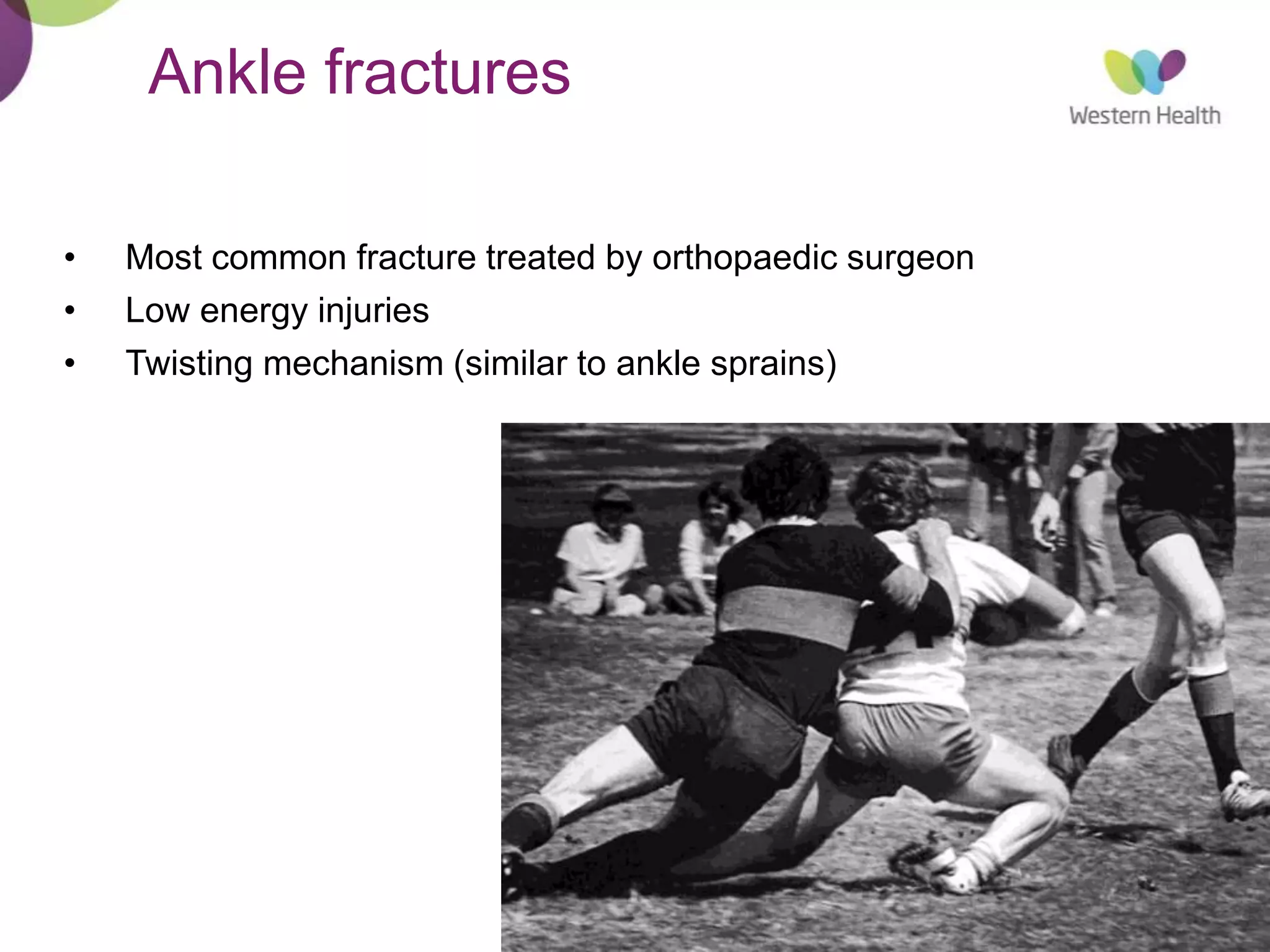
• Most common fracture treated by orthopaedic surgeon
• Low energy injuries
• Twisting mechanism (similar to ankle sprains)
3
History and Examination
• Mechanism of Injury – high vs low
• PMHx
• Diabetes, smoker, neuropathy
• Examination
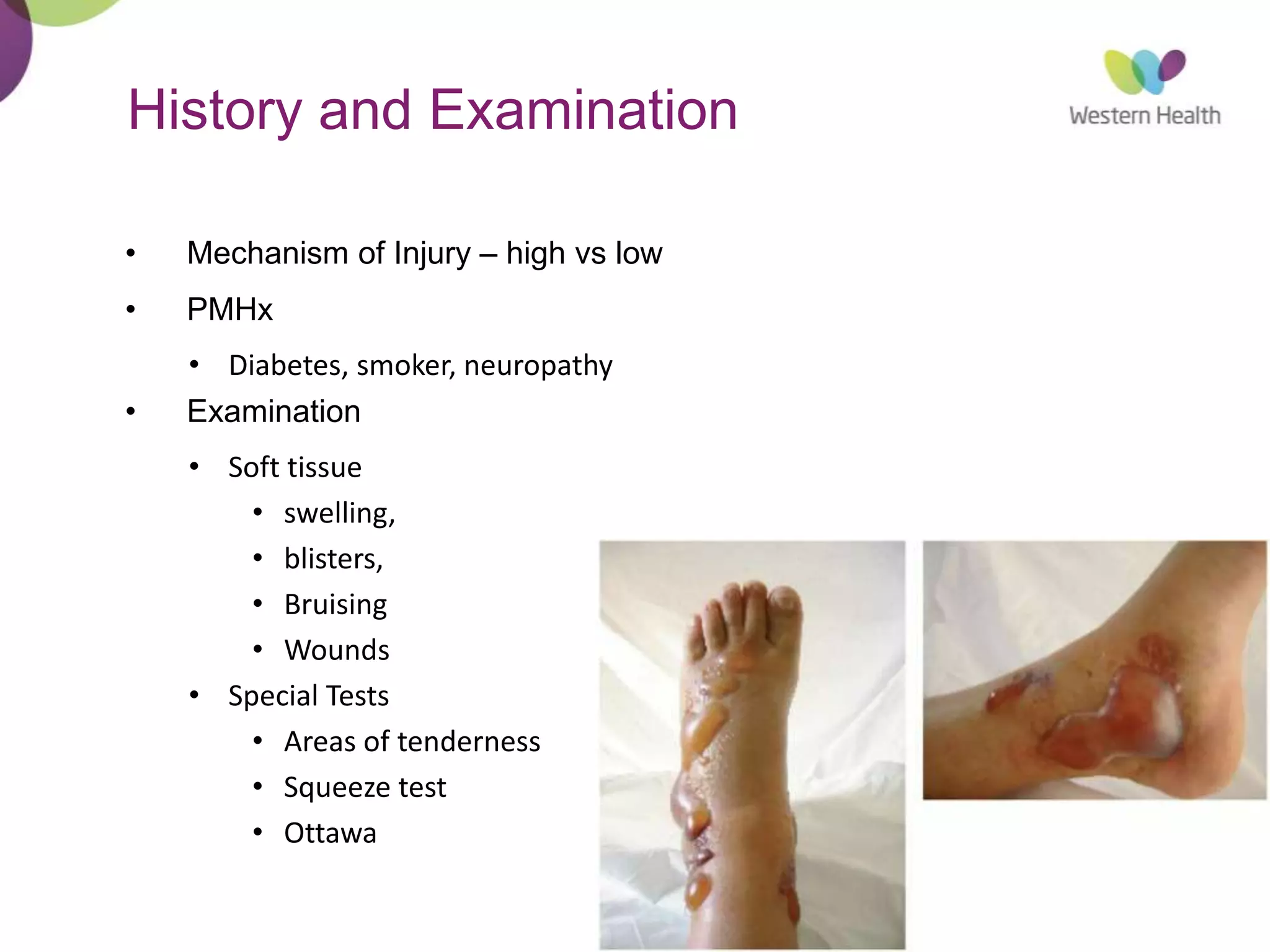
• Soft tissue
• swelling,
• blisters,
• Bruising
• Wounds
• Special Tests
• Areas of tenderness
• Squeeze test
• Ottawa
4
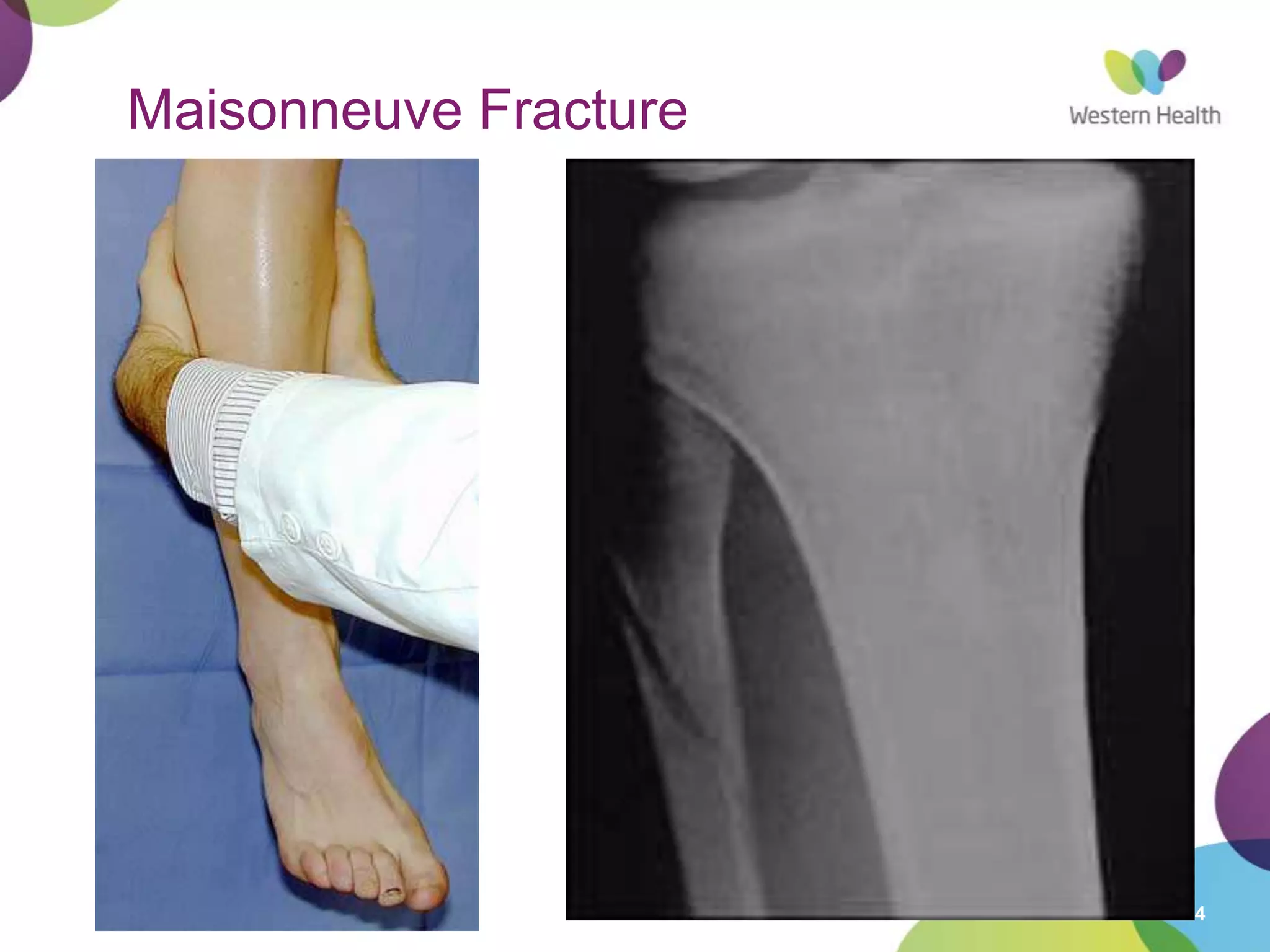
Maisonneuve Fracture
5
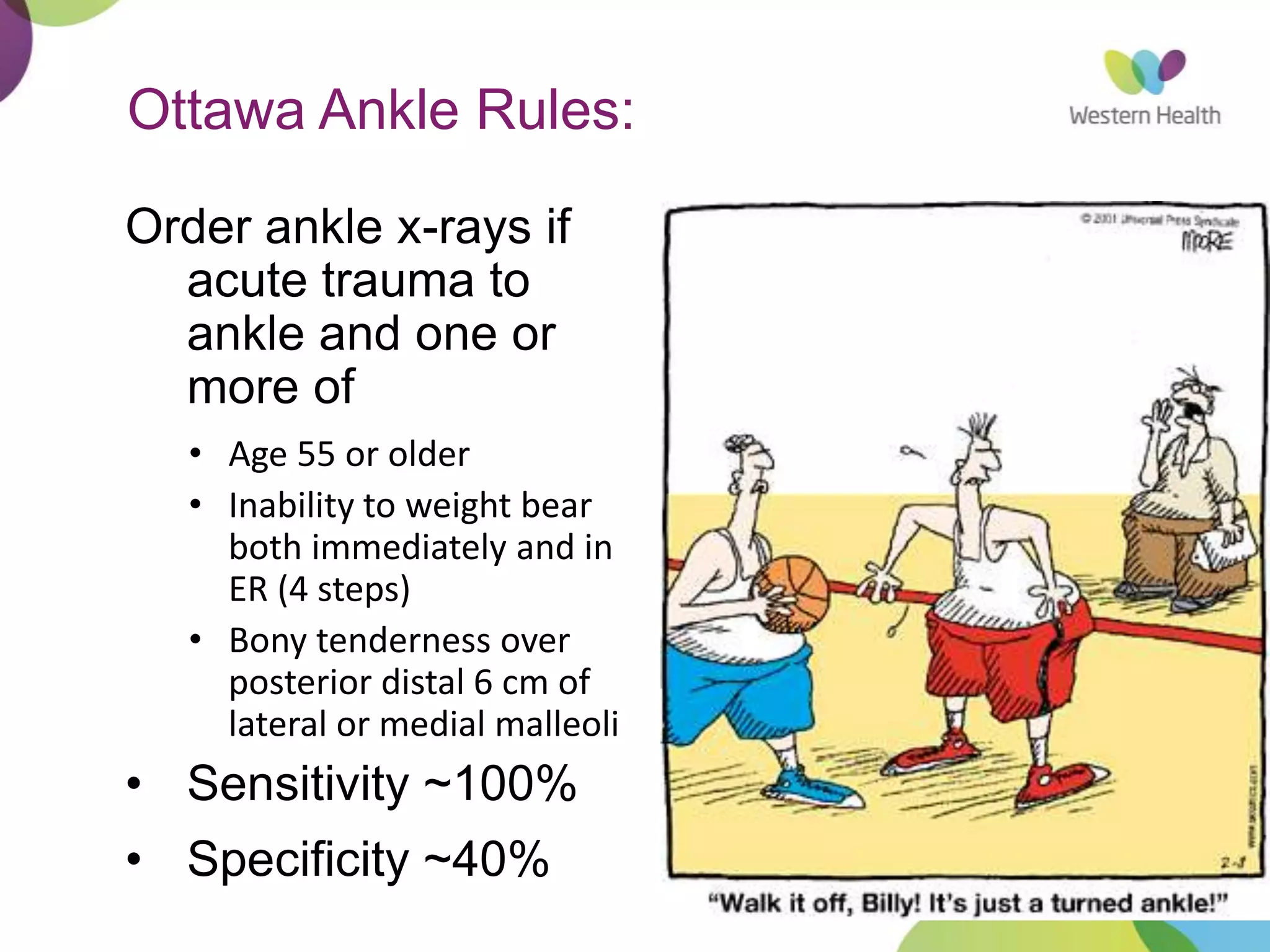
Ottawa Ankle Rules:
Order ankle x-rays if
acute trauma to
ankle and one or
more of
• Age 55 or older
• Inability to weight bear
both immediately and in
ER (4 steps)
• Bony tenderness over
posterior distal 6 cm of
lateral or medial malleoli
• Sensitivity ~100%
• Specificity ~40%
6
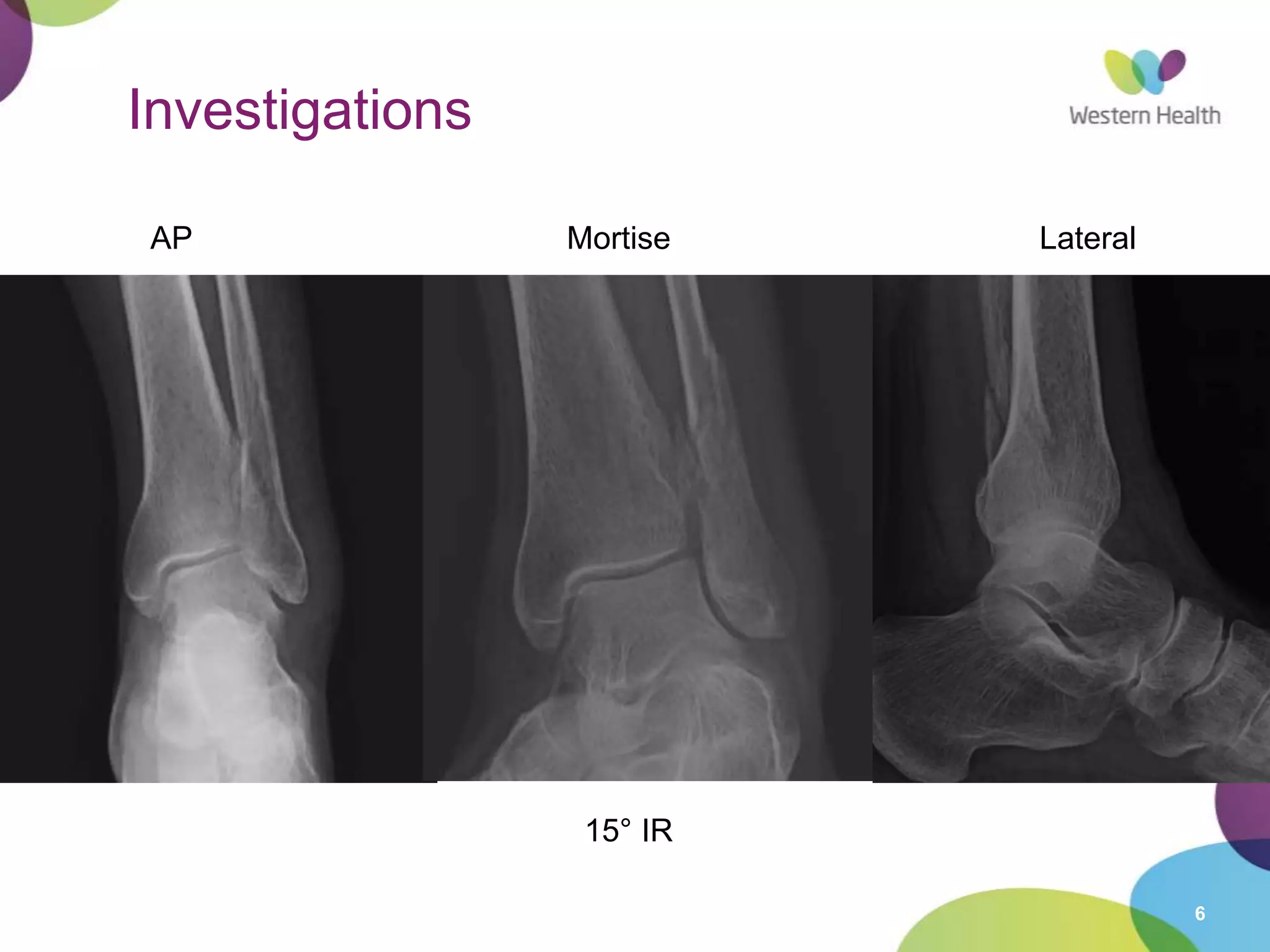
Investigations
AP Mortise Lateral
15° IR
7
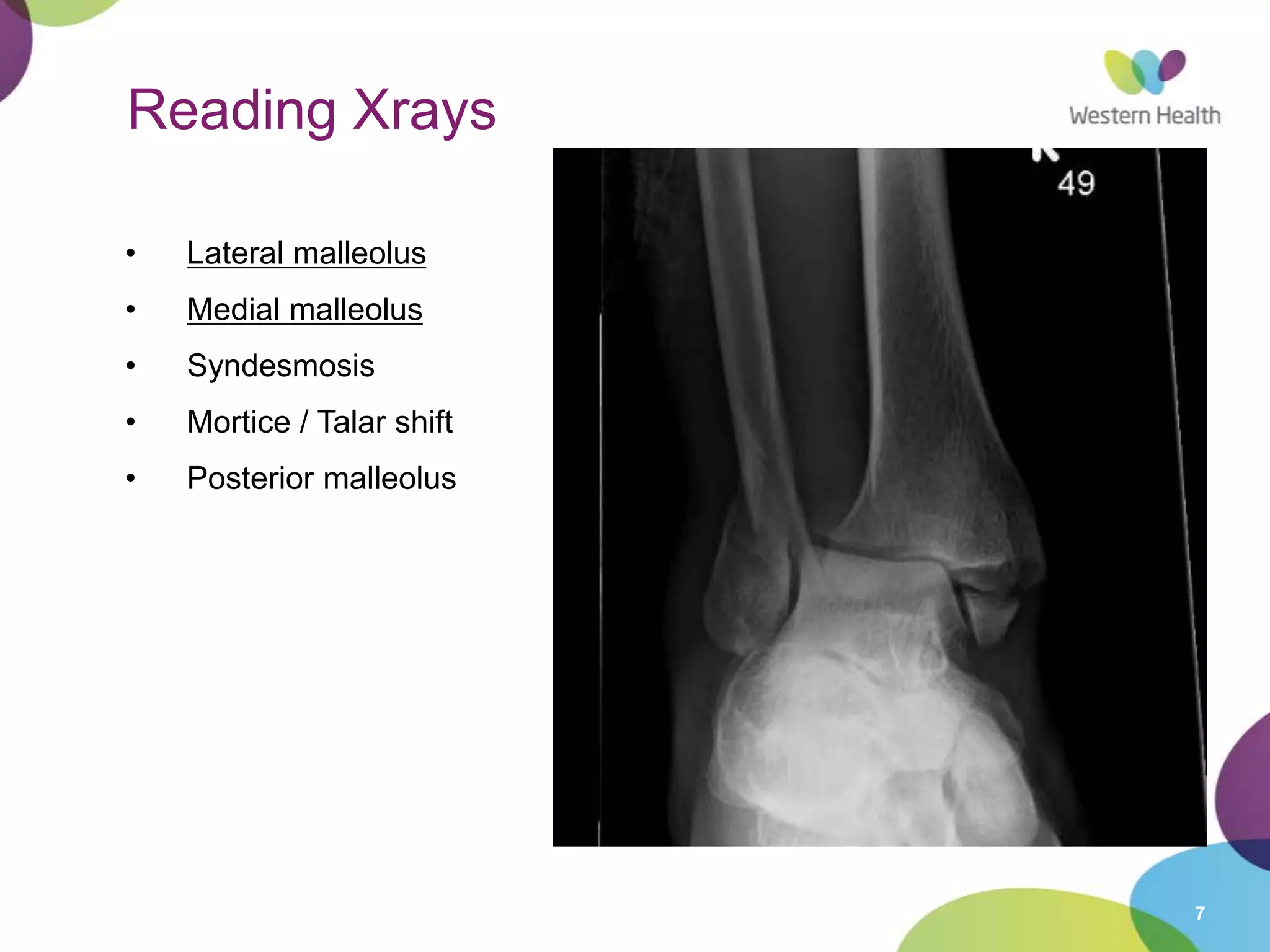
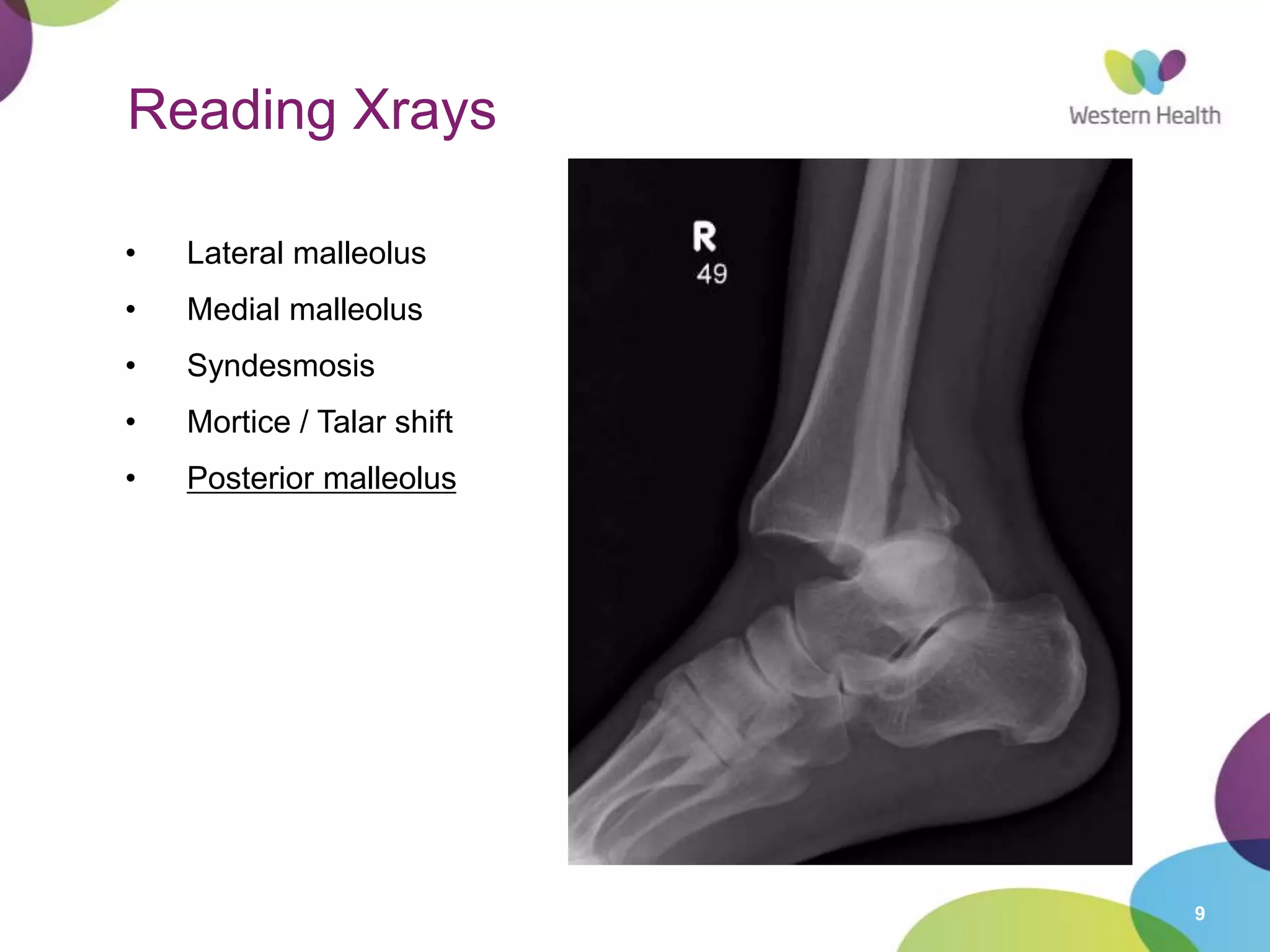
Reading Xrays
• Lateral malleolus
• Medial malleolus
• Syndesmosis
• Mortice / Talar shift
• Posterior malleolus
8
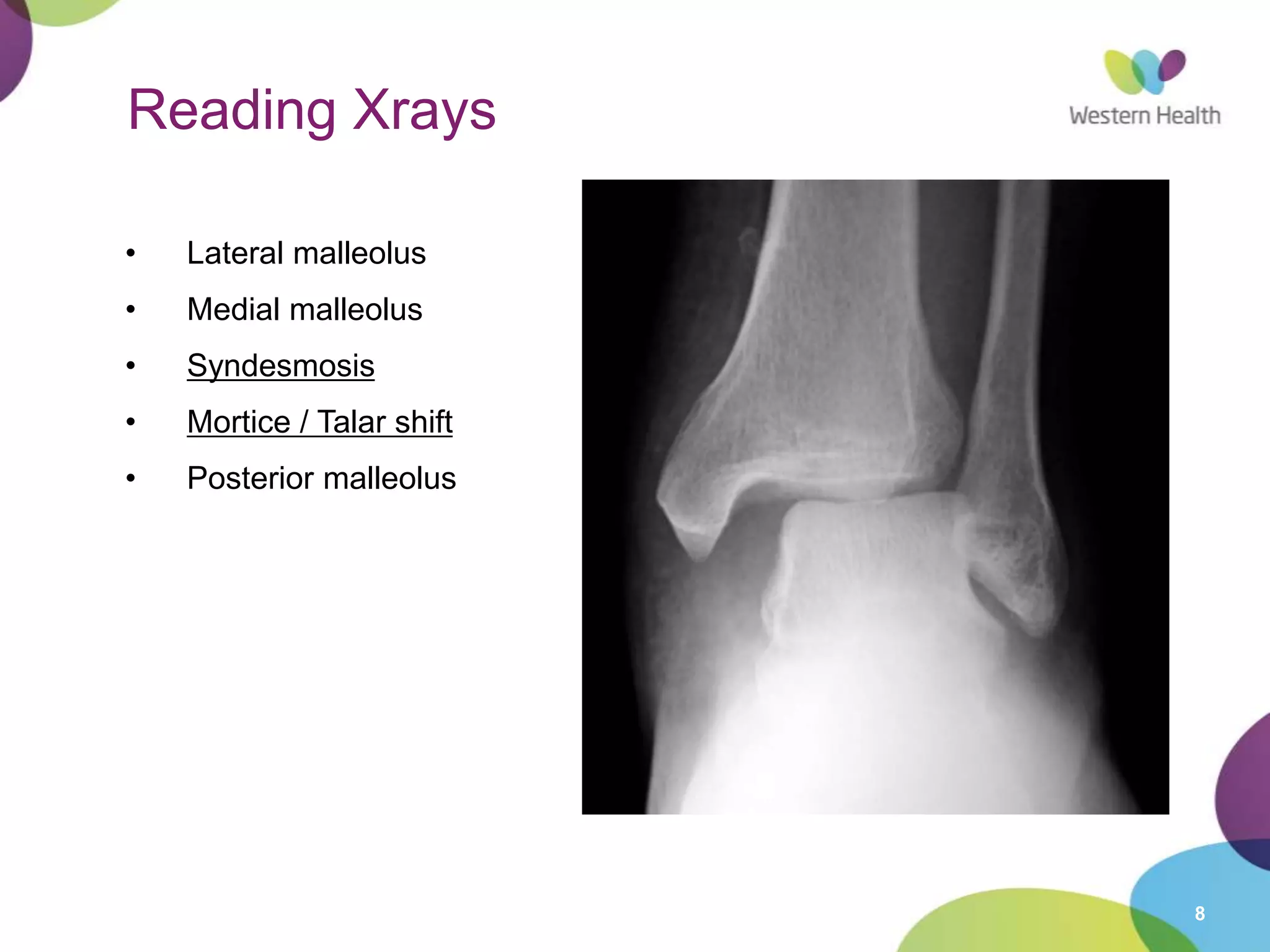
Reading Xrays
• Lateral malleolus
• Medial malleolus
• Syndesmosis
• Mortice / Talar shift
• Posterior malleolus
9
Reading Xrays
• Lateral malleolus
• Medial malleolus
• Syndesmosis
• Mortice / Talar shift
• Posterior malleolus
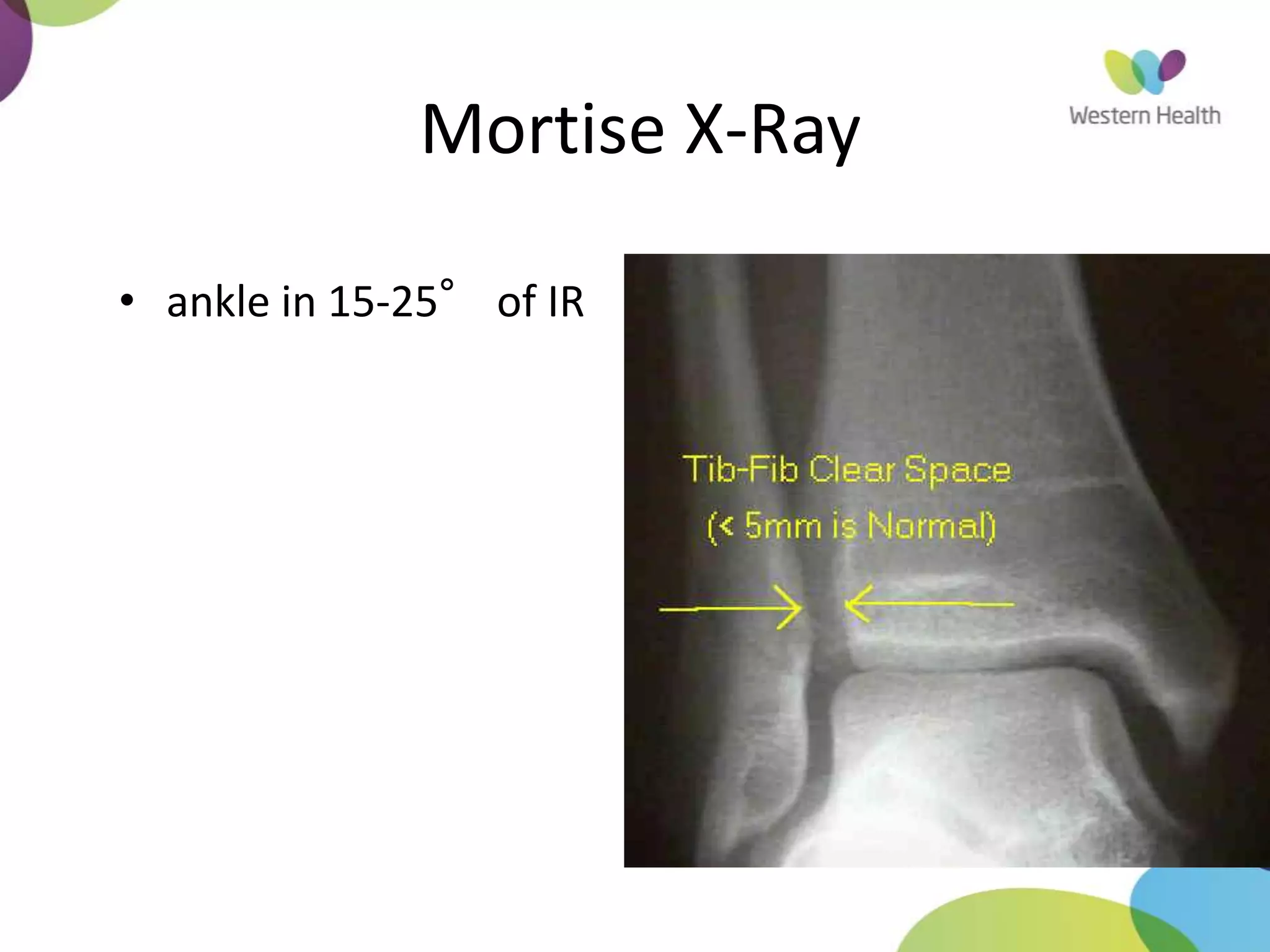
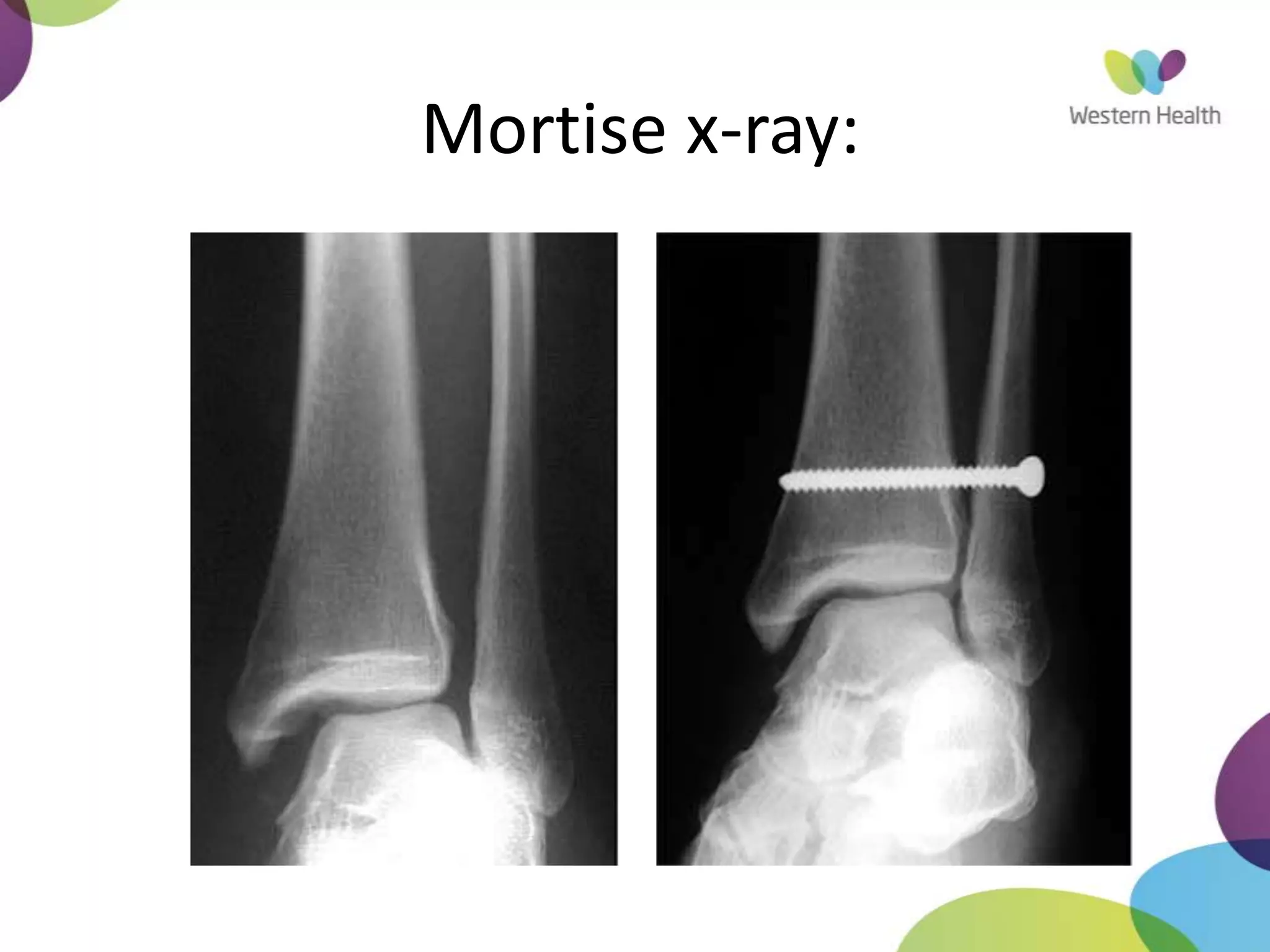
Mortise X-Ray
• ankle in 15-25° of IR
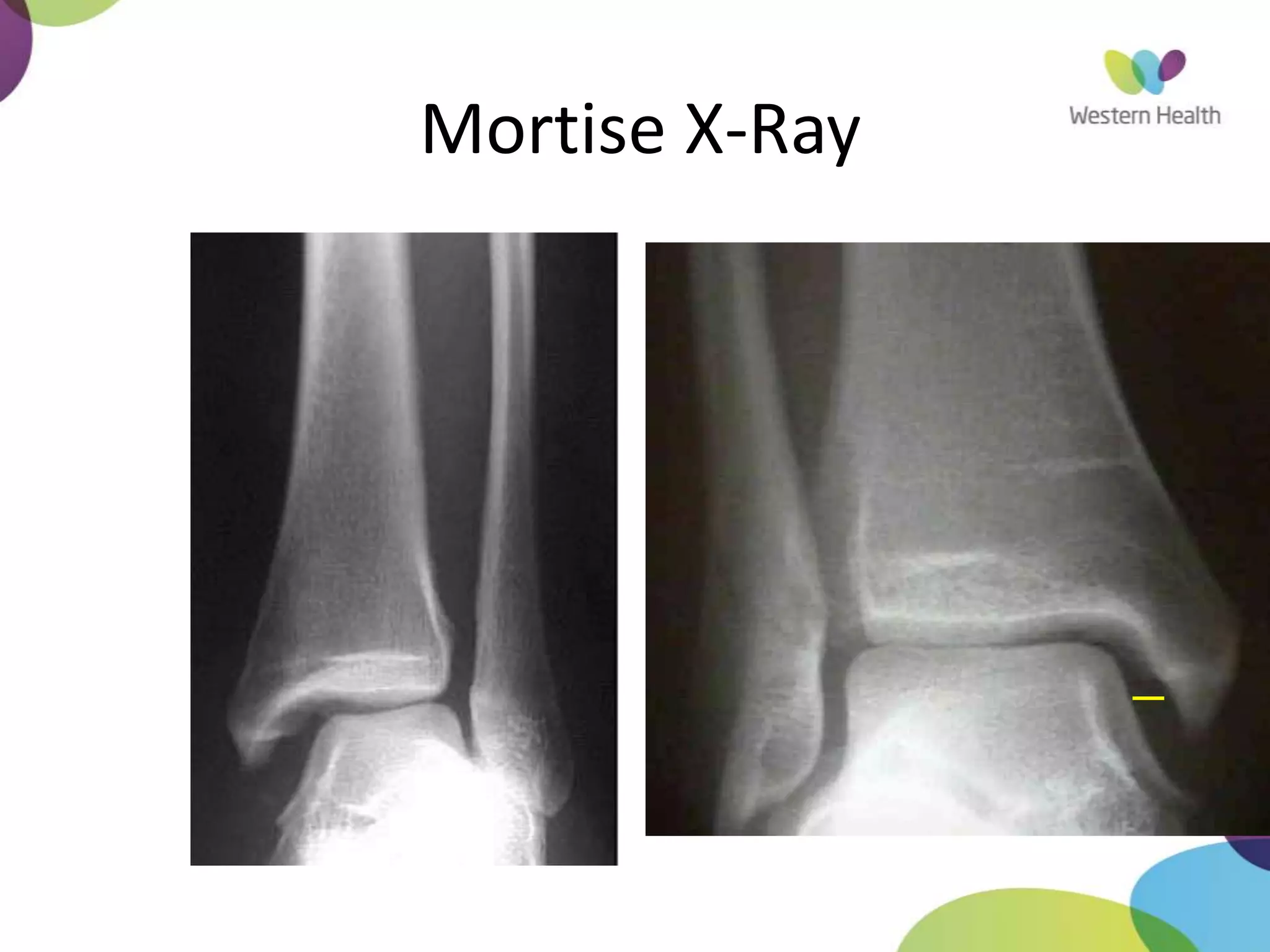
Mortise X-Ray
• Medial clear space
– Between lateral border of
medial malleous and medial
talus
– <4mm is normal
– >4mm suggests lateral shift
of talus
Mortise X-Ray
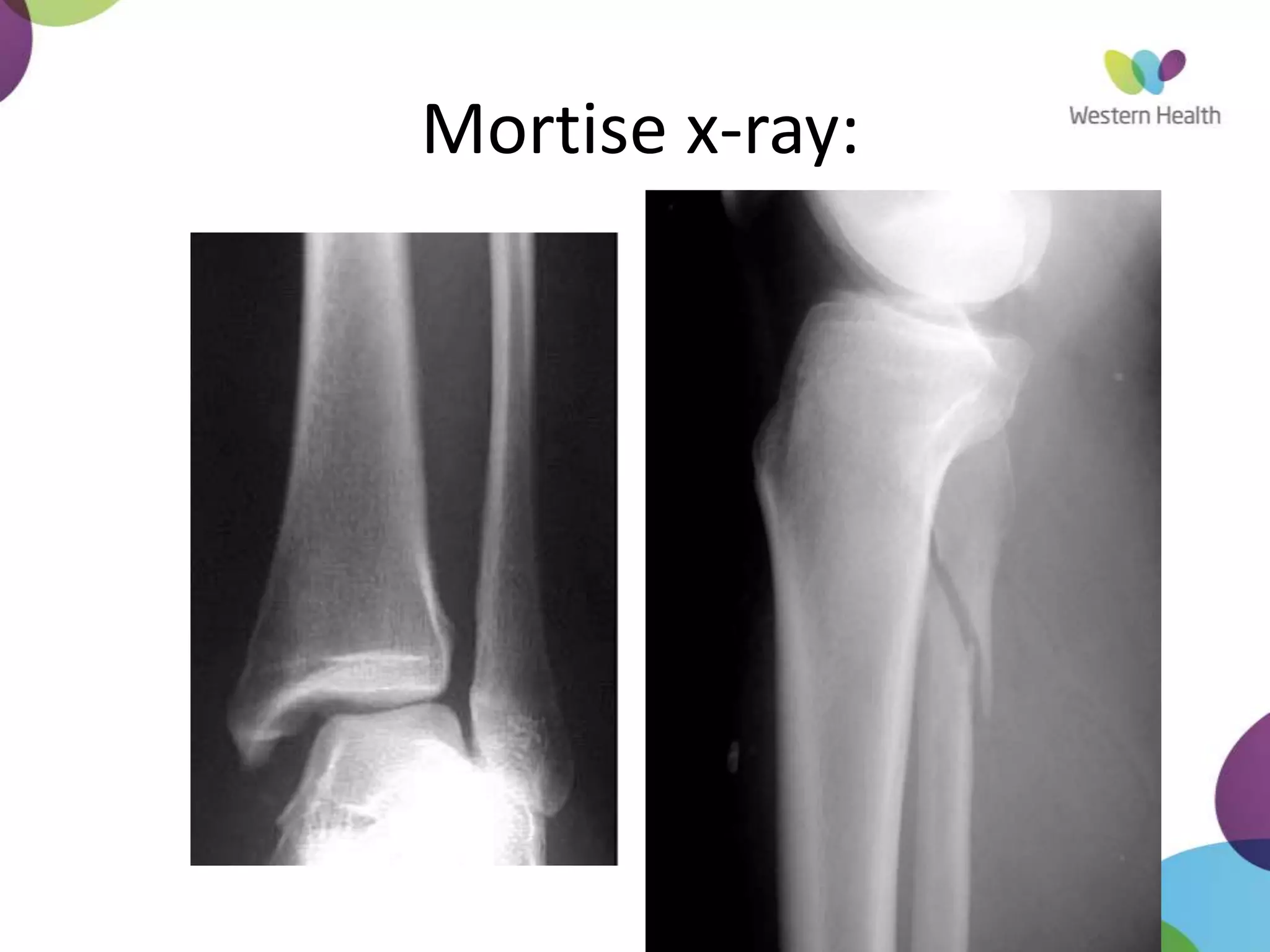
Mortise x-ray:
Mortise x-ray:
15
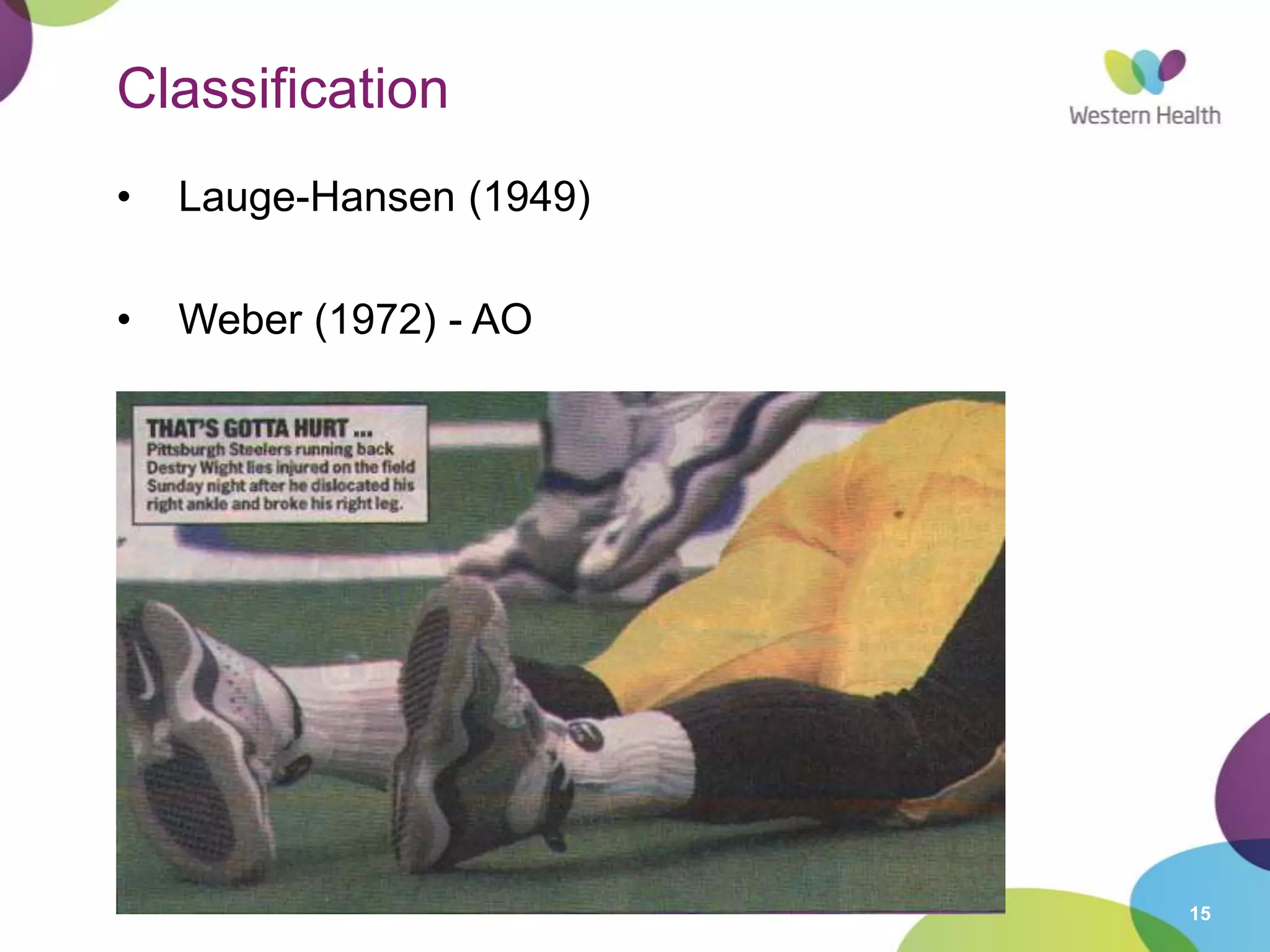
Classification
• Lauge-Hansen (1949)
• Weber (1972) - AO
16
Lauge - Hansen classification
• Mechanism of injury
• Supination Adduction
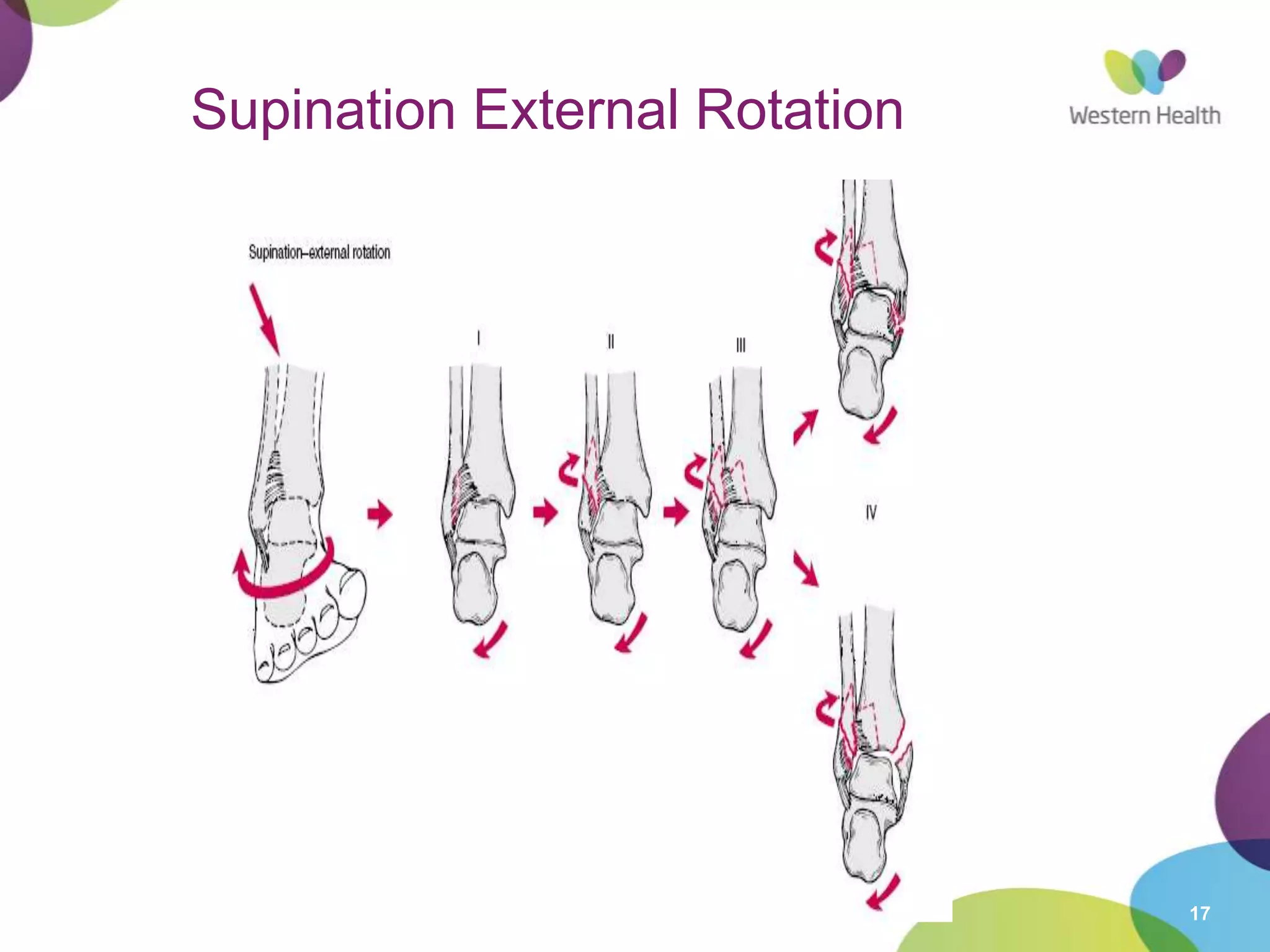
• Supination External rotation
• Pronation Adduction
• Pronation External rotation
• Complicated / Hard to Remember
17
Supination External Rotation
18
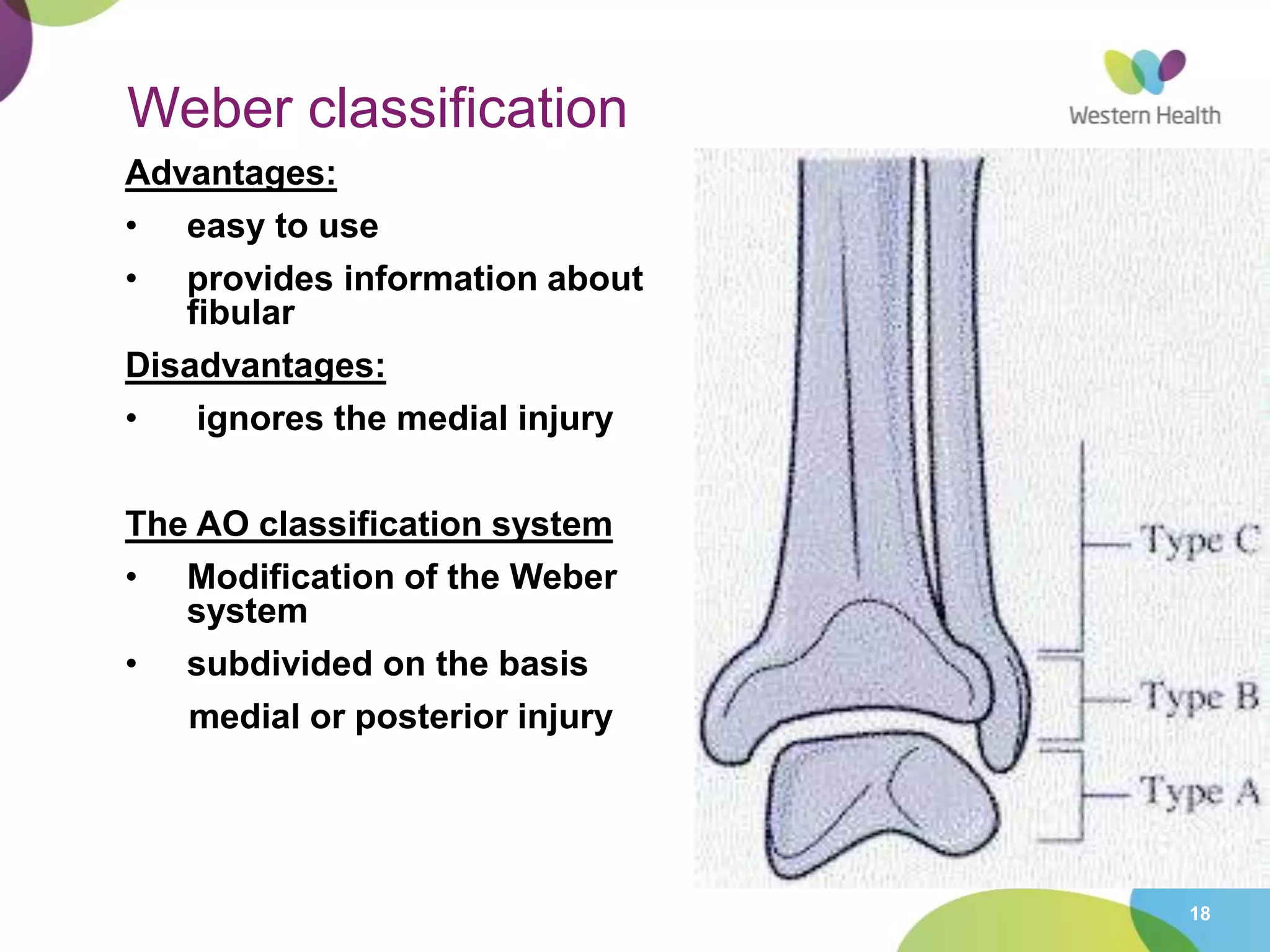
Weber classification
Advantages:
• easy to use
• provides information about
fibular
Disadvantages:
• ignores the medial injury
The AO classification system
• Modification of the Weber
system
• subdivided on the basis
medial or posterior injury
19
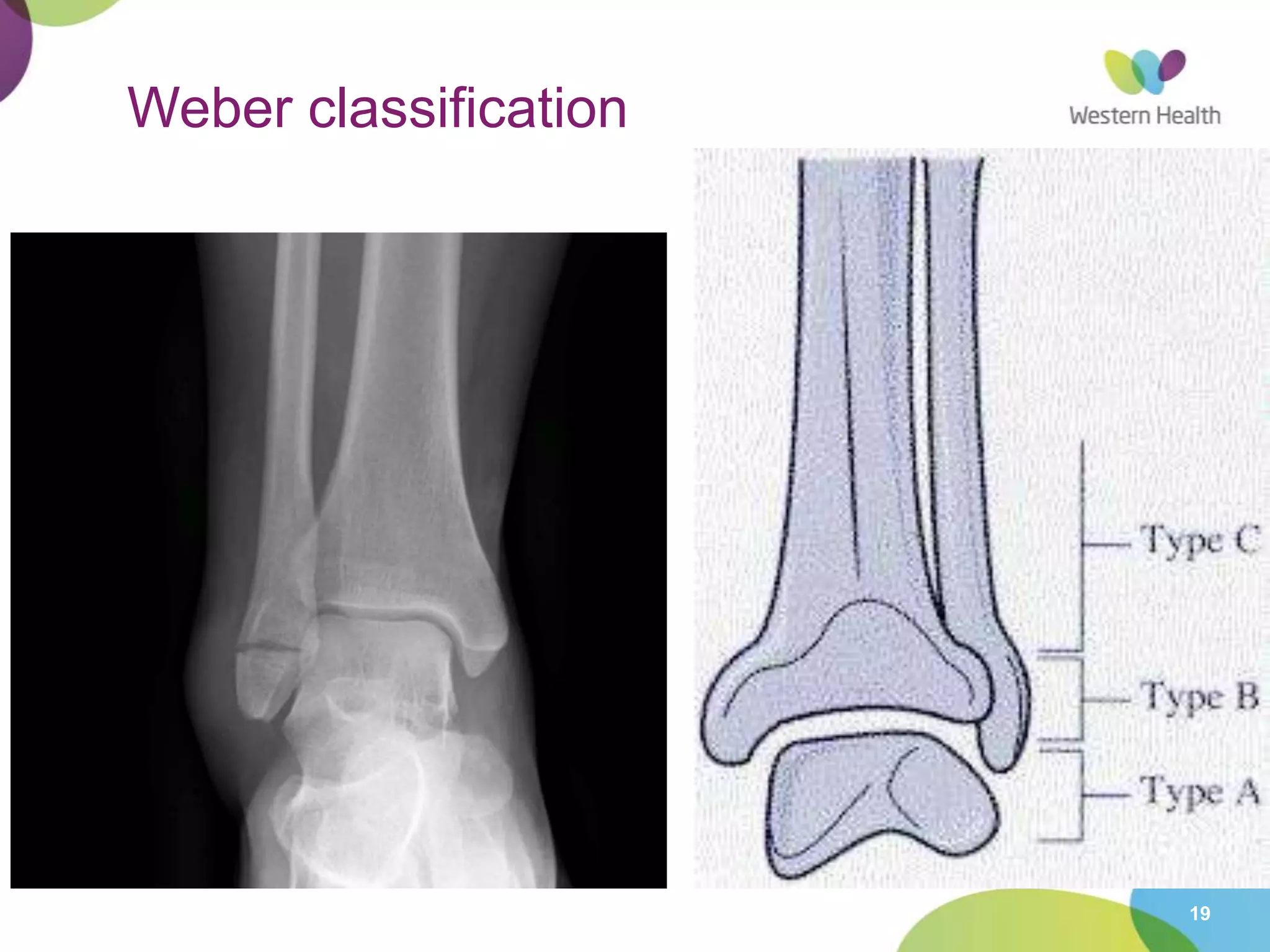
Weber classification
20
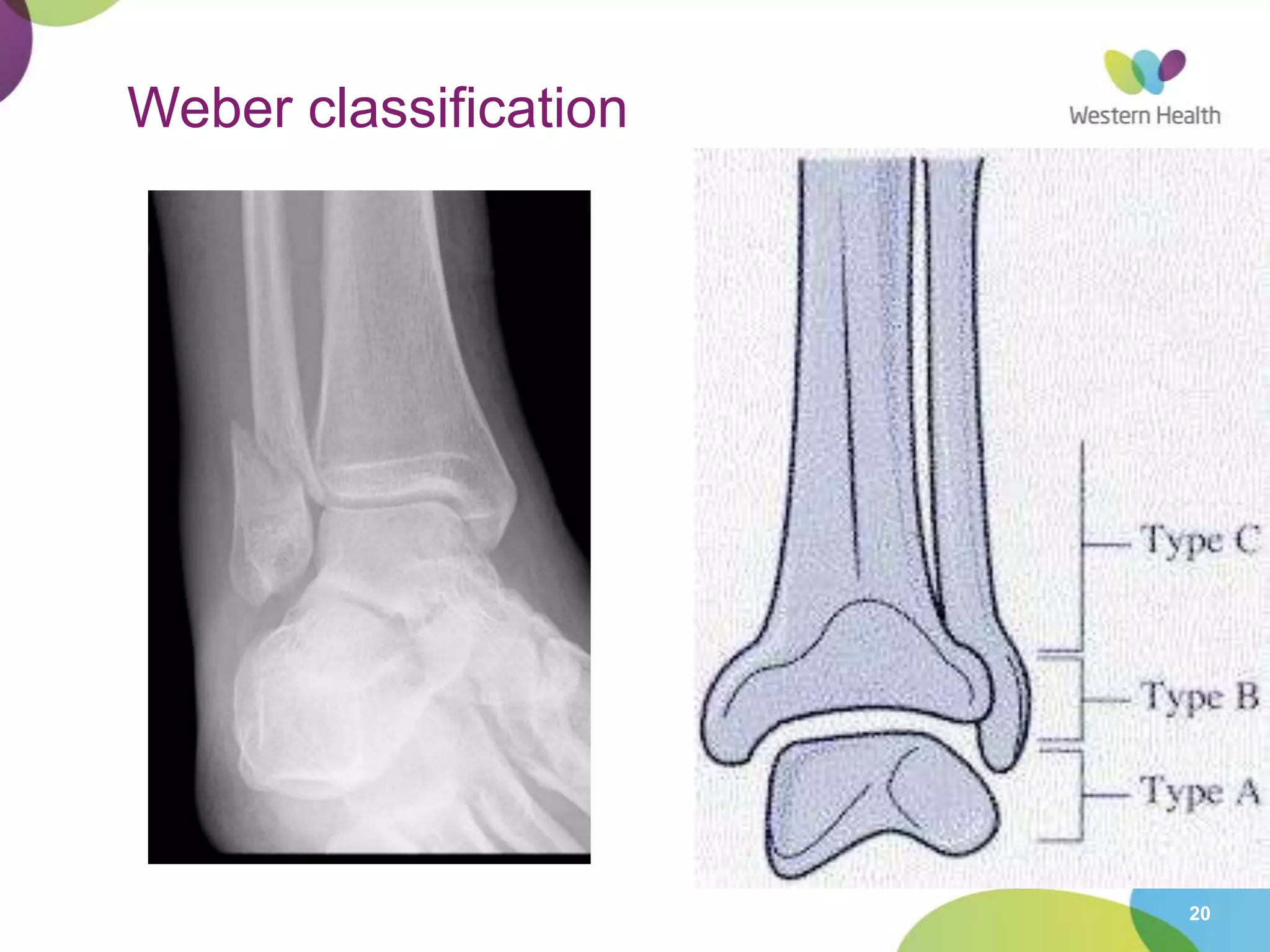
Weber classification
21
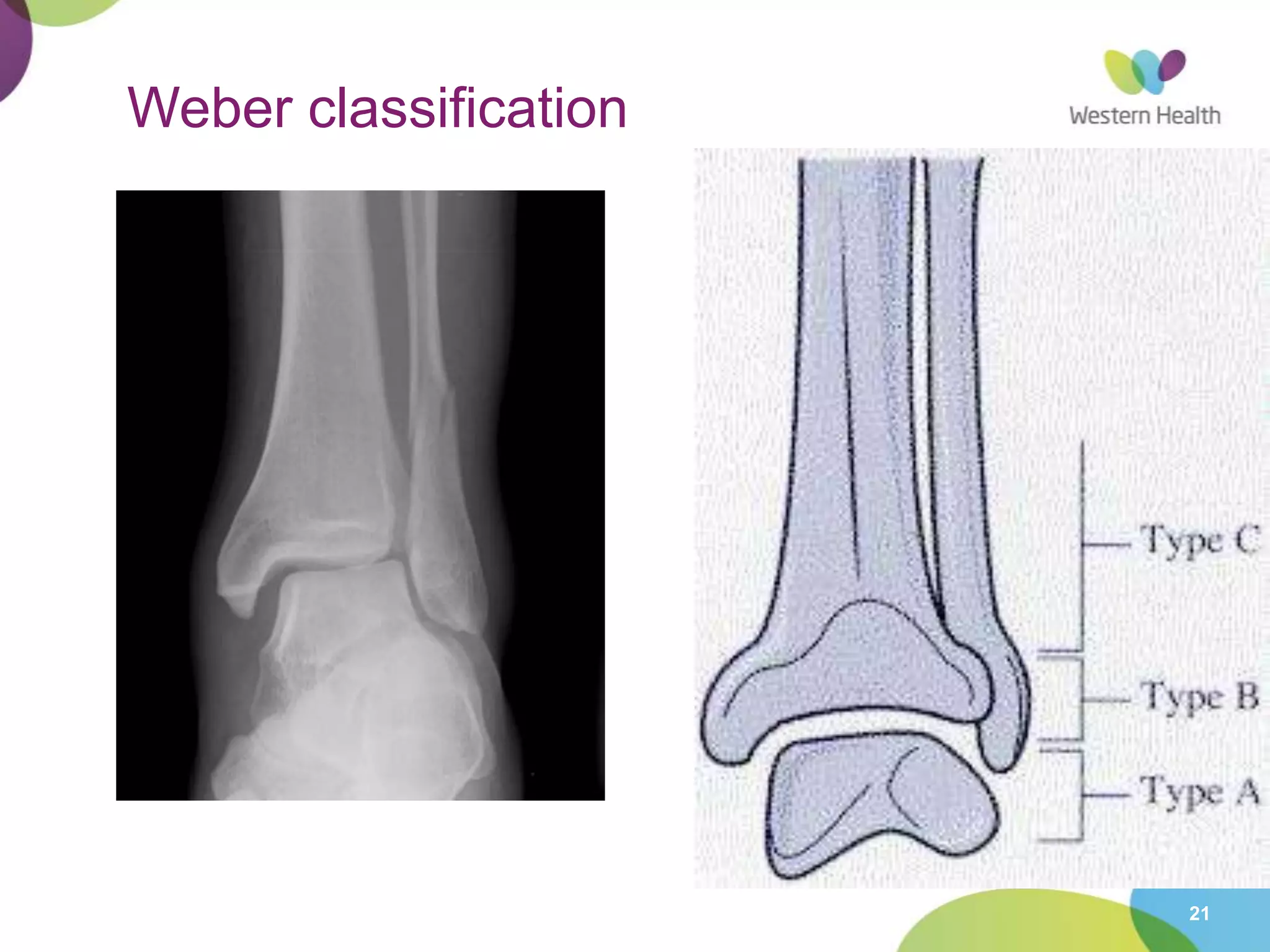
Weber classification
22
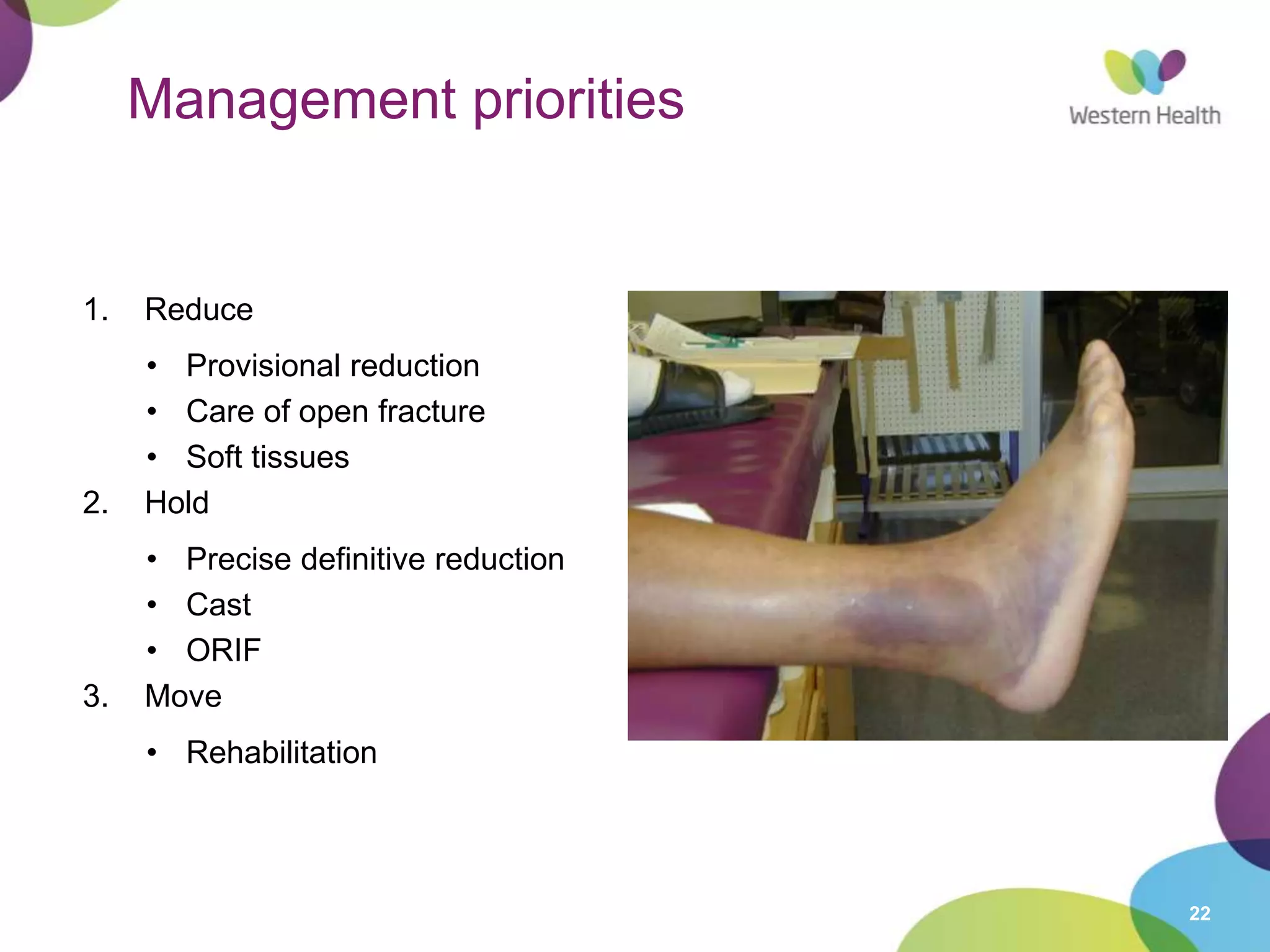
Management priorities
1. Reduce
• Provisional reduction
• Care of open fracture
• Soft tissues
2. Hold
• Precise definitive reduction
• Cast
• ORIF
3. Move
• Rehabilitation
23
Goals of Treatment
• Healed fracture
• Ankle that moves and functions
normally without pain
24
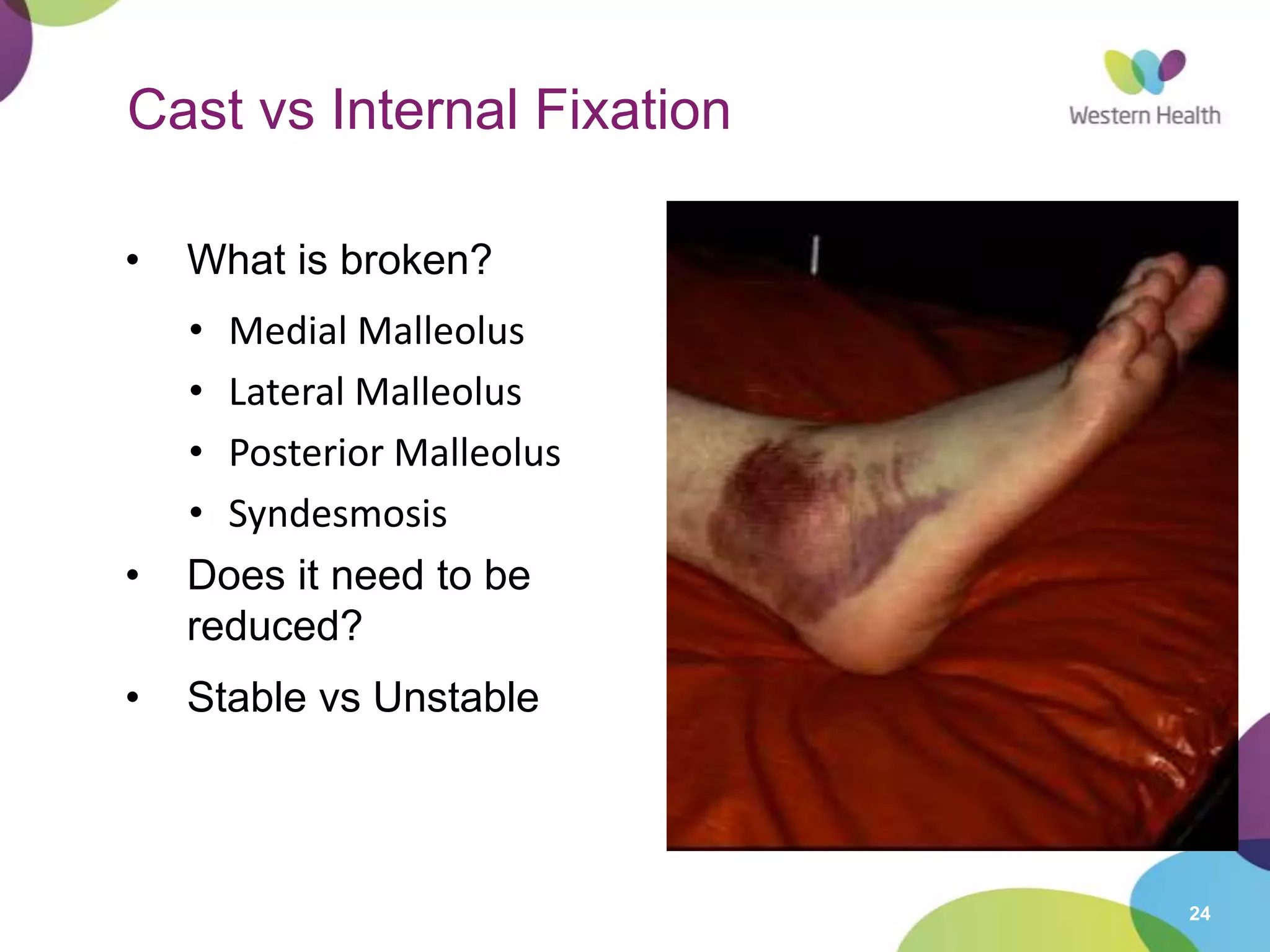
Cast vs Internal Fixation
• What is broken?
• Medial Malleolus
• Lateral Malleolus
• Posterior Malleolus
• Syndesmosis
• Does it need to be
reduced?
• Stable vs Unstable
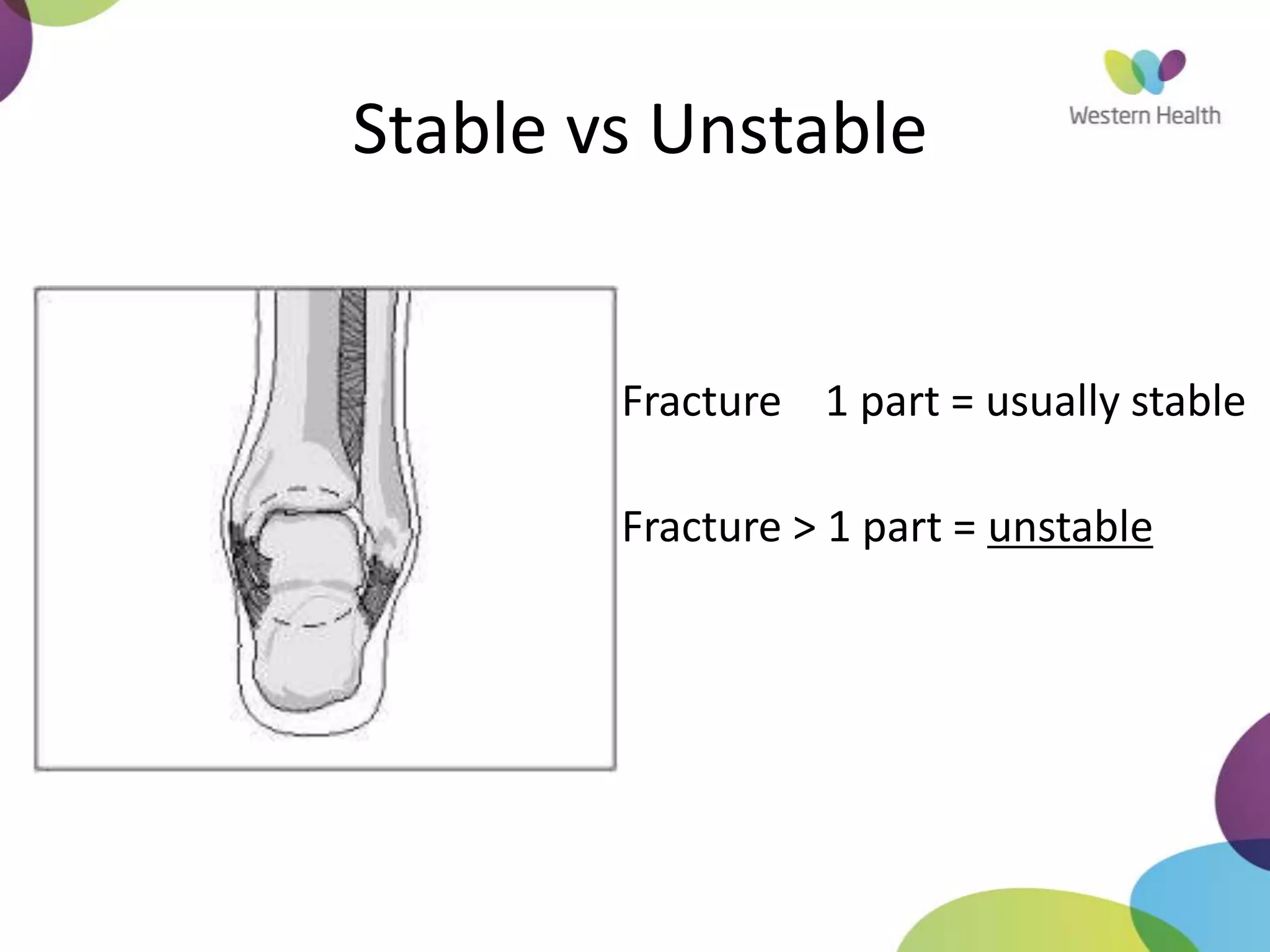
Stable vs Unstable
• The ankle is a ring
– Tibial plafond
– Medial malleolus
– Deltoid ligaments
– calcaneous
– Lateral collateral ligaments
– Lateral malleolus
– Syndesmosis
Source: Rosen
Stable vs Unstable
• Fracture 1 part = usually stable
• Fracture > 1 part = unstable
27
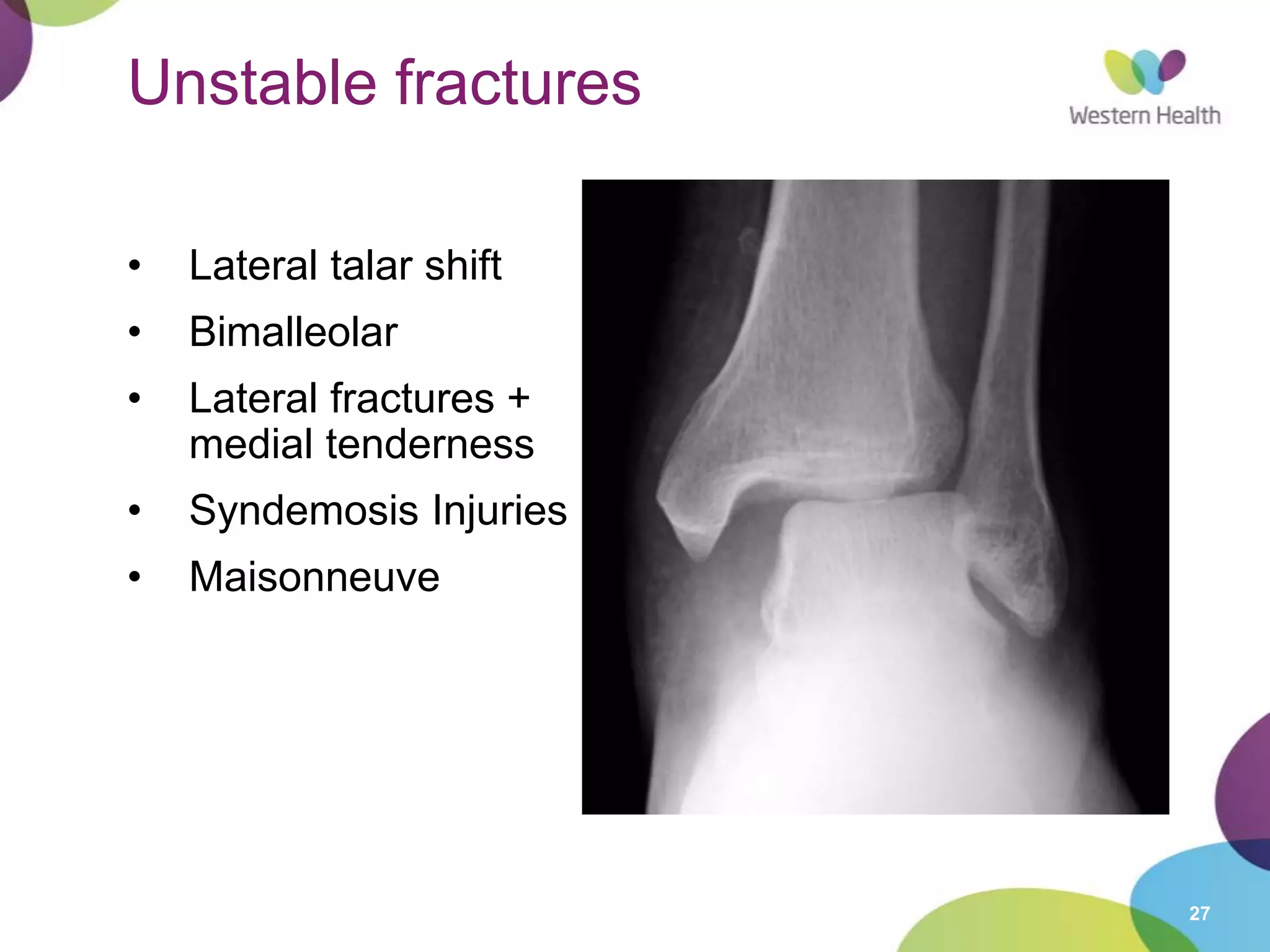
Unstable fractures
• Lateral talar shift
• Bimalleolar
• Lateral fractures +
medial tenderness
• Syndemosis Injuries
• Maisonneuve
28
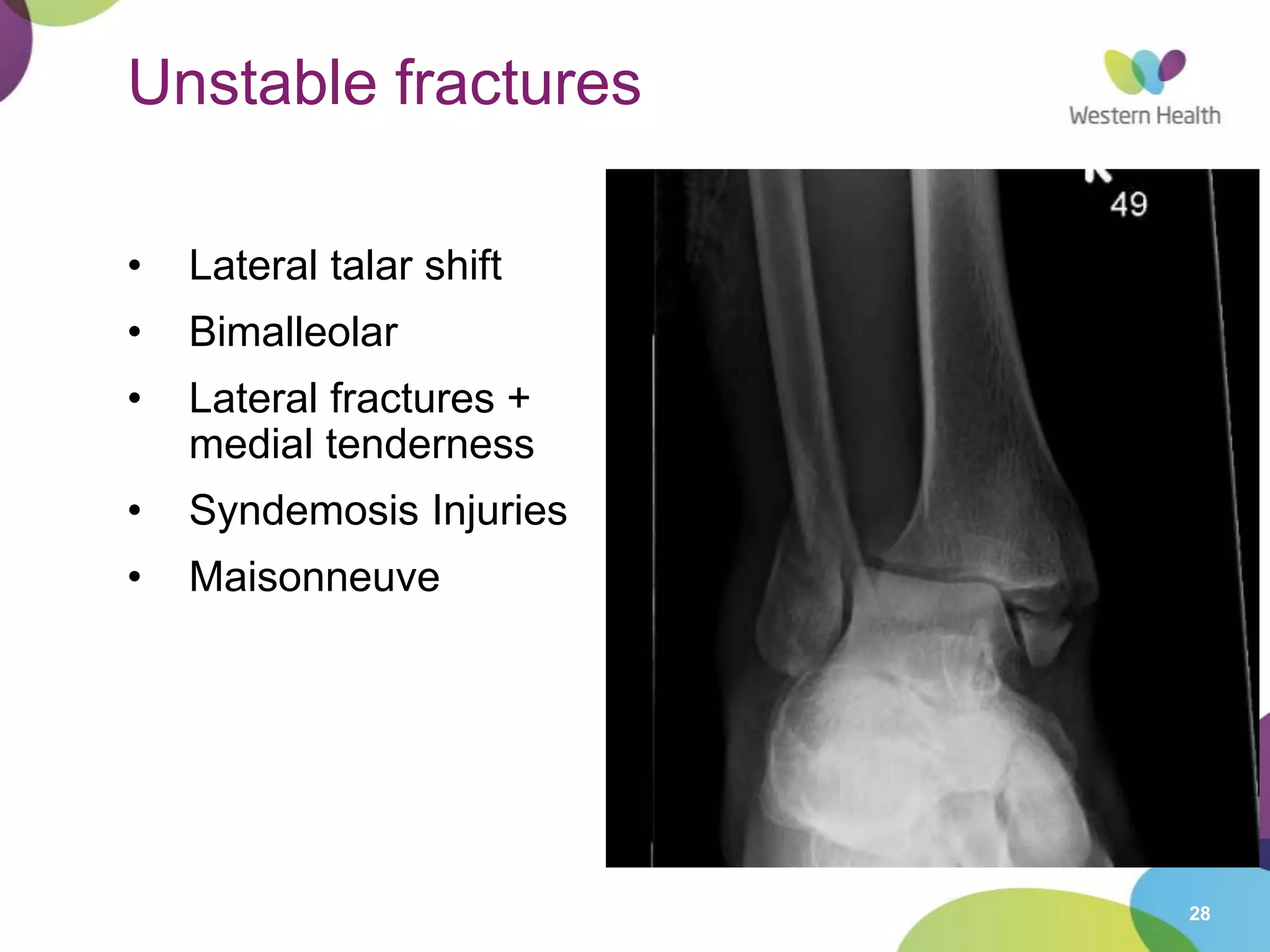
Unstable fractures
• Lateral talar shift
• Bimalleolar
• Lateral fractures +
medial tenderness
• Syndemosis Injuries
• Maisonneuve
29
Unstable fractures
• Lateral talar shift
• Bimalleolar
• Lateral fractures +
medial tenderness
• Syndemosis Injuries
• Maisonneuve
30
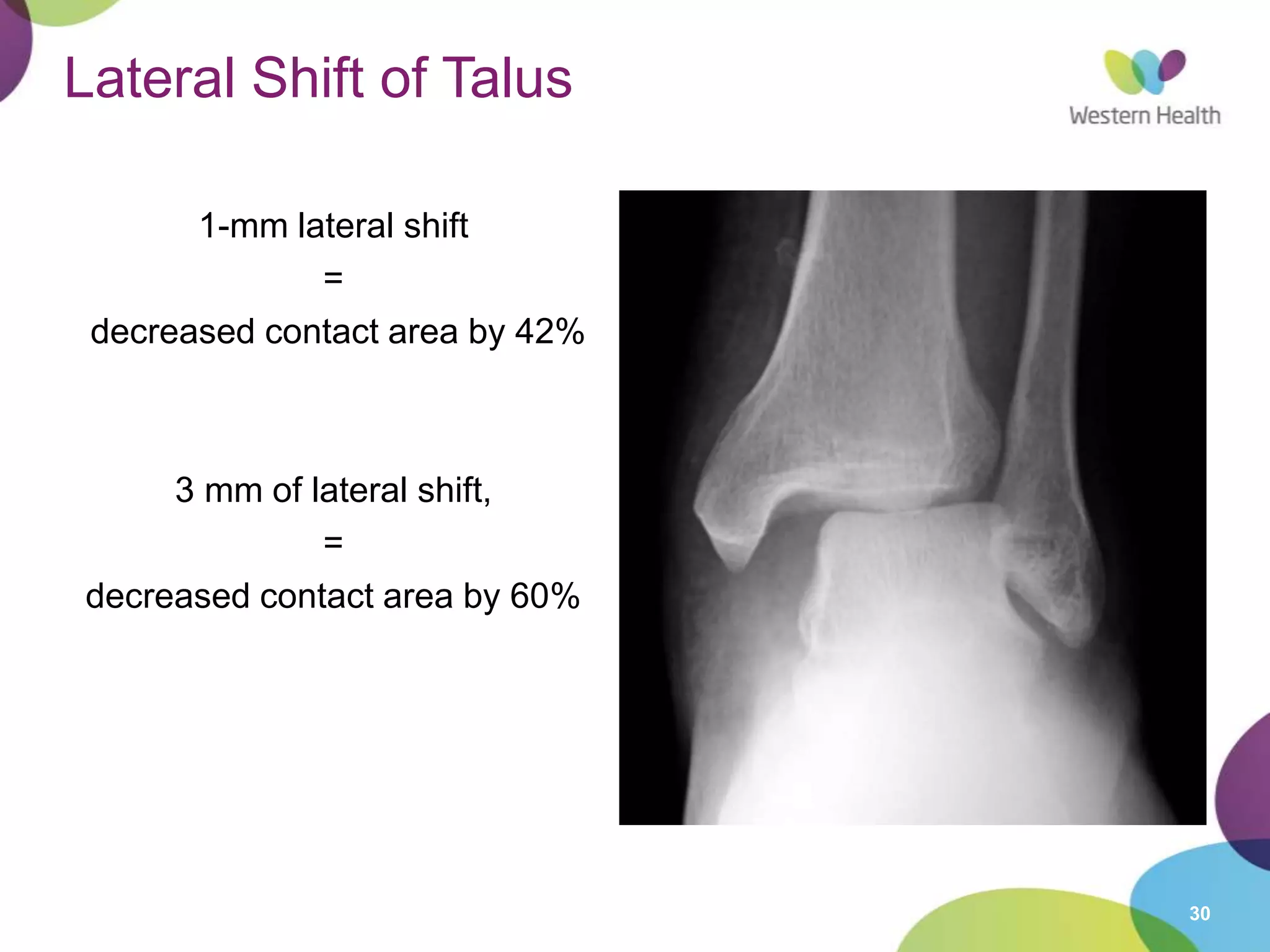
Lateral Shift of Talus
1-mm lateral shift
=
decreased contact area by 42%
3 mm of lateral shift,
=
decreased contact area by 60%
31
Lateral Shift of Talus
32
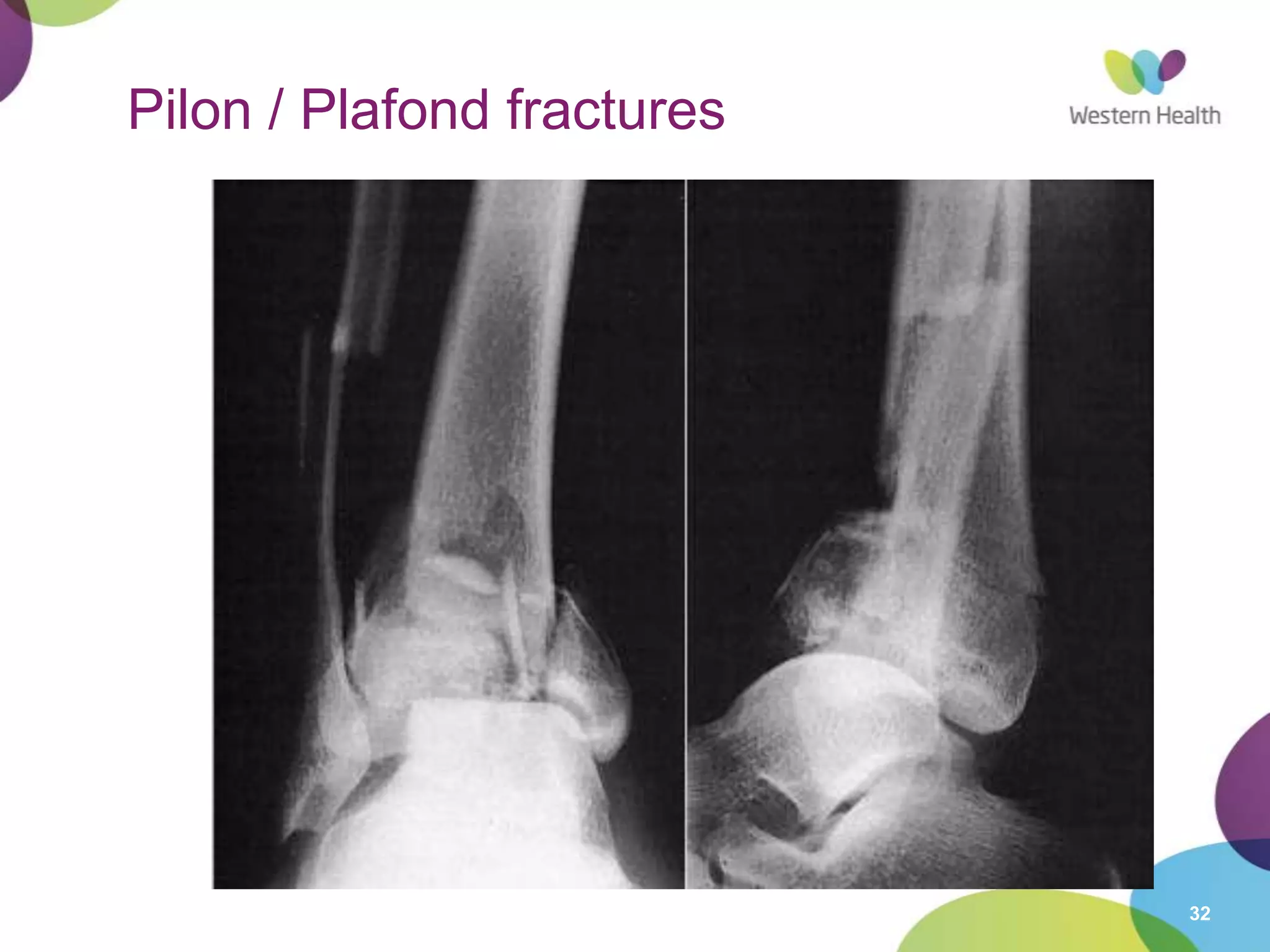
Pilon / Plafond fractures
33
Pilon / Plafond fractures
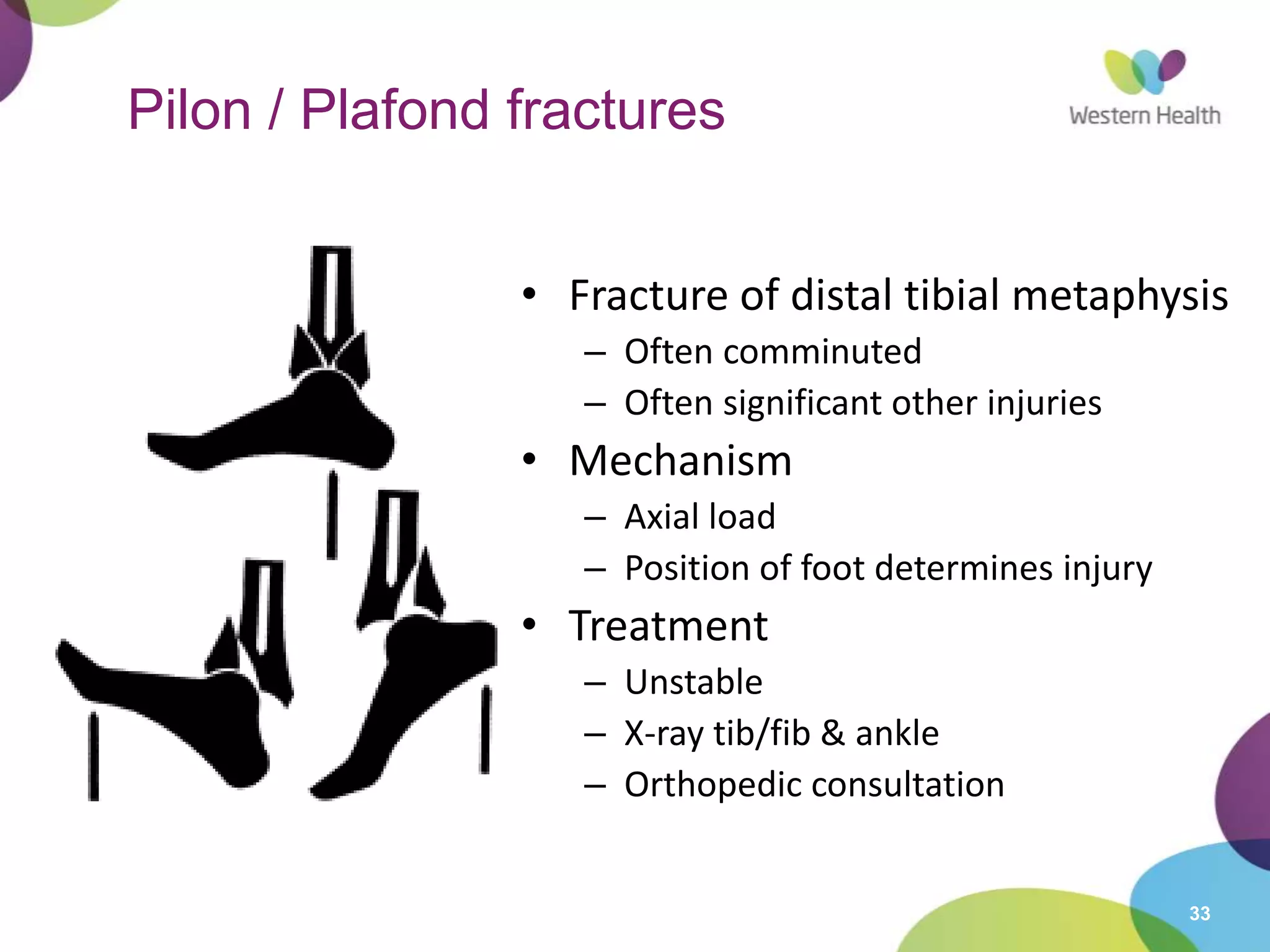
• Fracture of distal tibial metaphysis
– Often comminuted
– Often significant other injuries
• Mechanism
– Axial load
– Position of foot determines injury
• Treatment
– Unstable
– X-ray tib/fib & ankle
– Orthopedic consultation
34
Tillaux Fracture
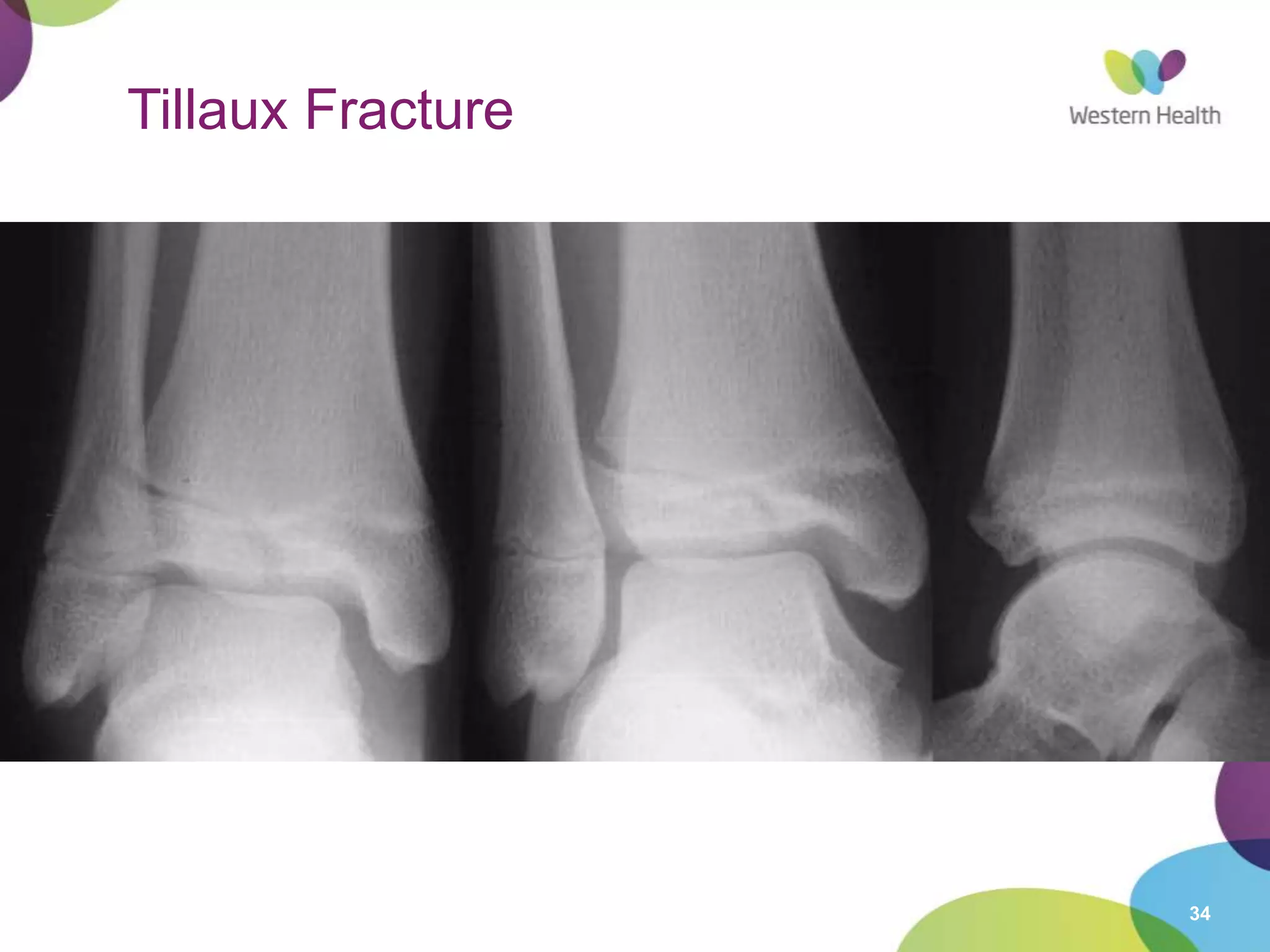
• Occurs in 12-14 year olds
18 month period when epiphysis is closing
• Salter-Harris 3 injury
Runs through anterolateral physis until reaches fused part, then
extends inferiorly through epiphysis into joint
Visible if x-ray parallel to plane of fracture (may require oblique)
• Mechanism
External rotation
Strenth of tibiofibular ligament > unfused epiphysis
35
Tillaux Fracture
• Occurs in 12-14 year olds
18 month period when epiphysis is closing
• Salter-Harris 3 injury
• Mechanism
External rotation
Strenth of tibiofibular ligament > unfused
epiphysis
36
Tillaux Fracture
• Management
Articular injury
Gap >2mm in articular surface
= ORIF
Non-displaced
• NWB below knee cast
Displaced
• surgery
Thank you

Ankle Fractures.ppt