AN INTRODUCTION TO F
ERMENTATION PROCES
S
• Conversion of sugar to alcohol using yeast.
• Chemical conversion of carbohydrates into
alcohols or acids.
• The process is often used to produce wine
and beer
• Also employed in preservation to create la
ctic acid in sour foods such as pickled cuc
umbers, kimchi and yogurt.
• The science of fermentation is known as zy
mology.
WHAT IS FERMENTATIO
N
Biochemistry perspective
• Process that is important in anaerobic conditions
when there is no oxidative phosphorylation to main
tain the production of ATP (Adenosine triphosphate
) by glycolysis.
• During fermentation pyruvate is metabolised to vari
ous different compounds.
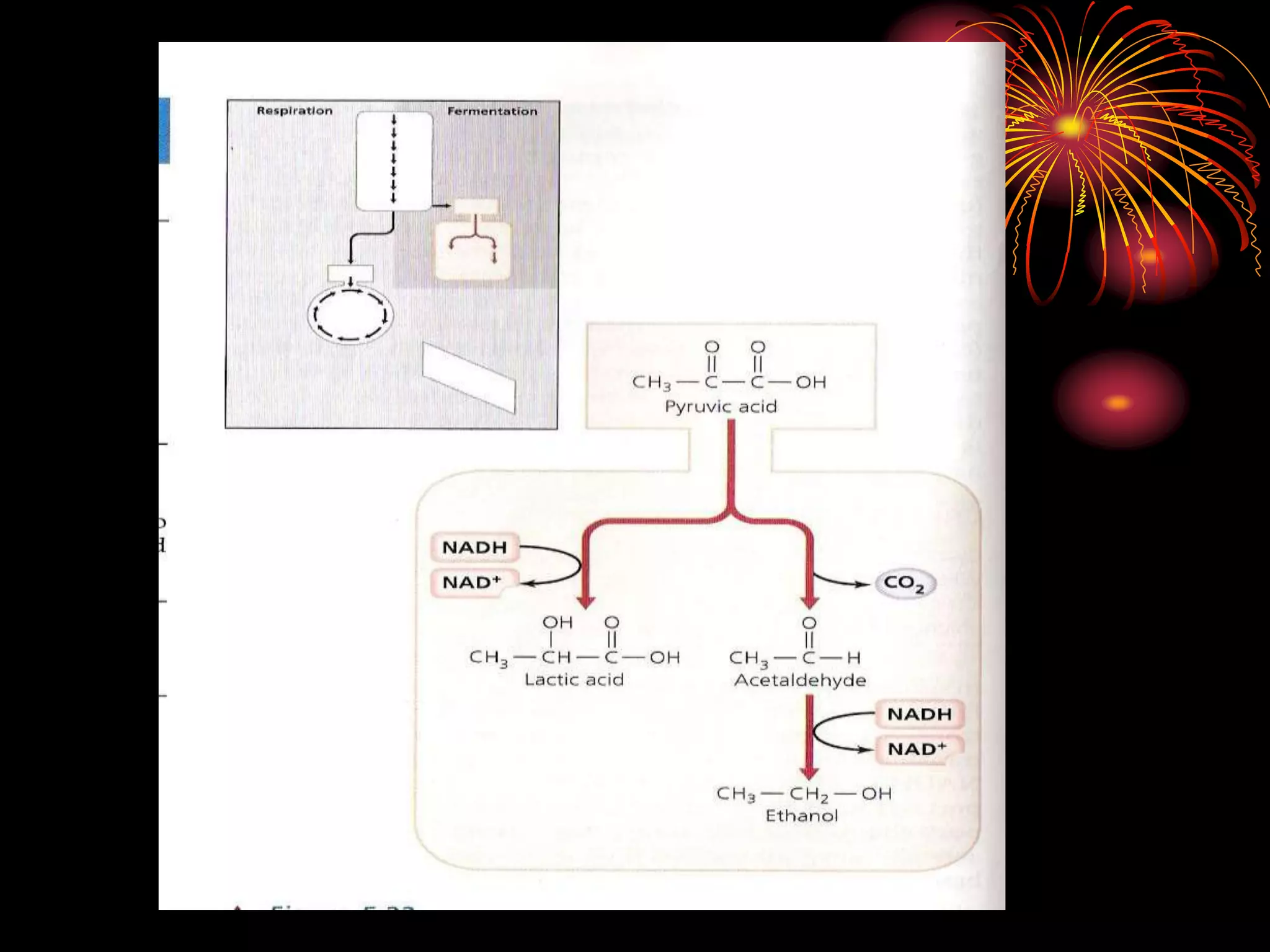
• Homolactic fermentation is the production of lactic
acid from pyruvate; alcoholic fermentation is the c
onversion of pyruvate into ethanol and carbon dioxi
de
• Heterolactic fermentation is the production of lacti
c acid as well as other acids and alcohols.
• Typical examples of fermentation pr
oducts are ethanol, lactic acid, and h
ydrogen.
• However, more exotic compounds ca
n be produced by fermentation, such
as butyric acid and acetone.
• Fermentation is derived from the Latin Verb - Fever
e - to boil
• Describing the appearance of the action of yeast on
extracts of fruit or malted grain.
• The boiling appearance is due to the production of
carbon dioxide bubbles caused by the anaerobic ca
tabolism of the sugars present in the extracts.
• Fermentation have different meaning to biochemist
ry and industrial microbiologists.
• Biochemical meaning relates to the generation of e
nergy by the catabolism of organic compounds
• Whereas meaning in industrial microbiology tends t
o be much broader.
• The catabolism of sugars is an oxidative process which results i
n the production of reduced pyridine nucleotides which must be
reoxidized for the process to continue.
• Under-aerobic conditions, reoxidation of reduced pyridine nucleo
tide occurs by electron transfer, via the cytochrome system, wit
h oxygen acting as the terminal electron acceptor.
• Under anaerobic conditions, reduced pyridine nucleotide oxidati
on is coupled with the reduction of an organic compound, which
is often a subsequent product of the catabolic pathway.
• In the case of the action of yeast on fruit or grain extracts, NAD
H is regenerated by the reduction of pyruvic acid to ethanol.
• Different microbial taxa are capable of reducing pyruvate to a wi
de range of end products.
• Thus, the term fermentation has been used in a strict biochemic
al sense to mean an energy-generation process in which organic
compounds act as both electron donors and terminal electron ac
ceptors.
• Industrial microbiologists have extended
the term - fermentation - to describe:
Any process for the production of product b
y the mass culture of microorganism.
Brewing and the production of organic solv
ents may be describes as fermentation in
both sense of the word.
• NADH reduces pyruvic acid to form lactic acid.
• Another simple fermentation pathway involved a de
carboxylation reaction to form ethanol.
• This is representative fermentation products and th
e organism that produce them.
• All of the organisms are bacteria except Saccharo
myces, which is yeast.
• Different organism will produced different end prod
ucts.
The range of fermentation
process.
There are five major groups of commercially importan
t fermentations:
• Those that produce microbial cells (or biomass) as
the product.
• Those that produce microbial enzymes
• Those that produce microbial metabolites.
• Those that produce recombinant products.
• Those that modify a compound which is added to th
e fermentation - the transformation
THE COMPONENT PARTS
OF A FERMENTATION PRO
CESS
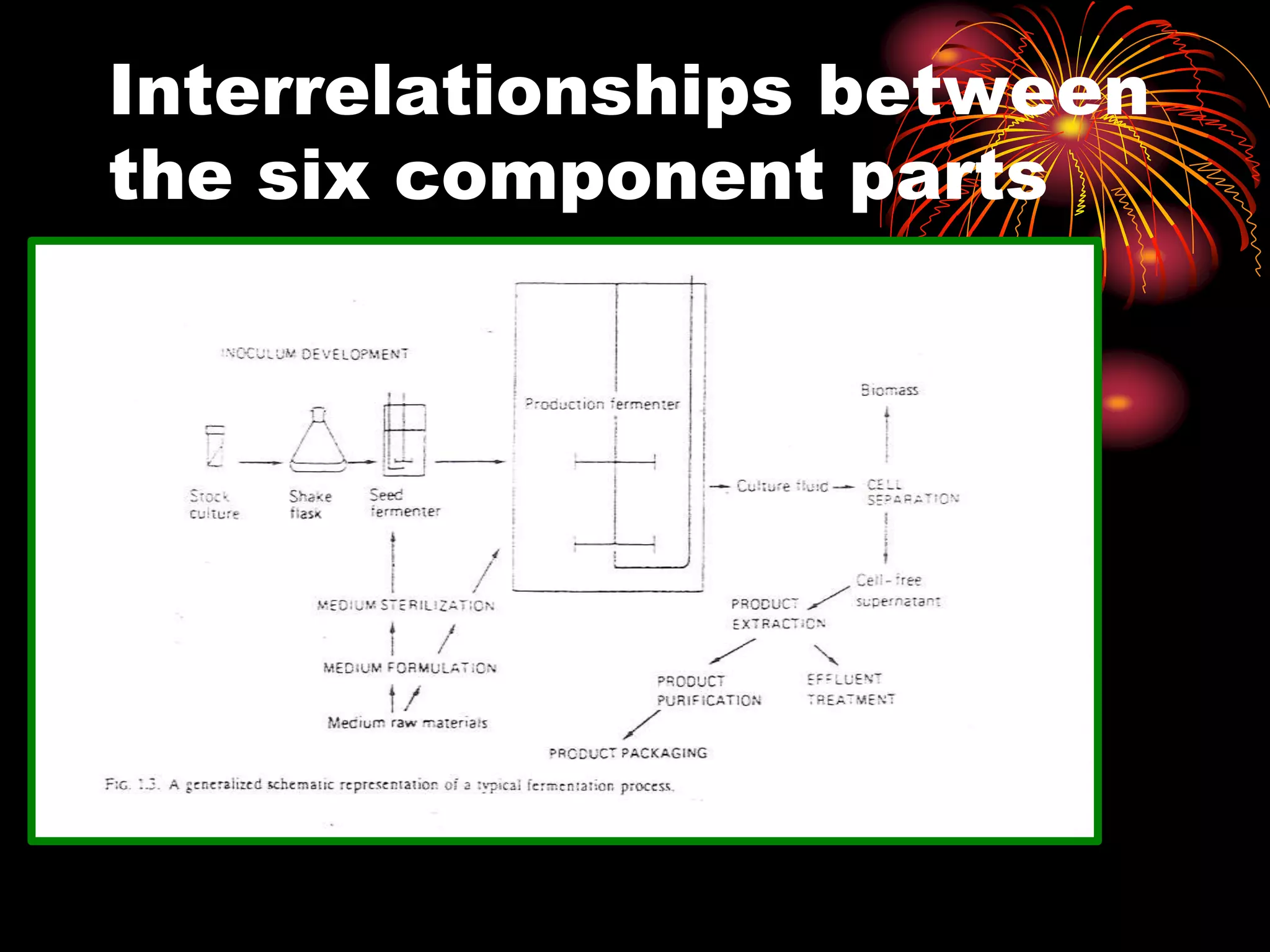
(1) The formulation of media to be used in cul
turing the process organism during the dev
elopment of the inoculums and in the produ
ction fermenter.
(2) The sterilization of the medium, fermenter
s and ancillary equipment.
(3) The production of an active, pure culture i
n sufficient quantity to inoculate the produ
ction vessel.
(4) The growth of the organism in the pro
duction fermenter under optimum cond
itions for product formation.
(5) The extraction of the product and its
purification.
(6) The disposal of effluents produced by
the process.
Interrelationships between
the six component parts

AN_INTRODUCTION_TO_FERMENTATION_PROCESS.pptx

  • 1.
    AN INTRODUCTION TOF ERMENTATION PROCES S
  • 2.
    • Conversion ofsugar to alcohol using yeast. • Chemical conversion of carbohydrates into alcohols or acids. • The process is often used to produce wine and beer • Also employed in preservation to create la ctic acid in sour foods such as pickled cuc umbers, kimchi and yogurt. • The science of fermentation is known as zy mology. WHAT IS FERMENTATIO N
  • 3.
    Biochemistry perspective • Processthat is important in anaerobic conditions when there is no oxidative phosphorylation to main tain the production of ATP (Adenosine triphosphate ) by glycolysis. • During fermentation pyruvate is metabolised to vari ous different compounds. • Homolactic fermentation is the production of lactic acid from pyruvate; alcoholic fermentation is the c onversion of pyruvate into ethanol and carbon dioxi de • Heterolactic fermentation is the production of lacti c acid as well as other acids and alcohols.
  • 4.
    • Typical examplesof fermentation pr oducts are ethanol, lactic acid, and h ydrogen. • However, more exotic compounds ca n be produced by fermentation, such as butyric acid and acetone.
  • 5.
    • Fermentation isderived from the Latin Verb - Fever e - to boil • Describing the appearance of the action of yeast on extracts of fruit or malted grain. • The boiling appearance is due to the production of carbon dioxide bubbles caused by the anaerobic ca tabolism of the sugars present in the extracts. • Fermentation have different meaning to biochemist ry and industrial microbiologists. • Biochemical meaning relates to the generation of e nergy by the catabolism of organic compounds • Whereas meaning in industrial microbiology tends t o be much broader.
  • 6.
    • The catabolismof sugars is an oxidative process which results i n the production of reduced pyridine nucleotides which must be reoxidized for the process to continue. • Under-aerobic conditions, reoxidation of reduced pyridine nucleo tide occurs by electron transfer, via the cytochrome system, wit h oxygen acting as the terminal electron acceptor. • Under anaerobic conditions, reduced pyridine nucleotide oxidati on is coupled with the reduction of an organic compound, which is often a subsequent product of the catabolic pathway. • In the case of the action of yeast on fruit or grain extracts, NAD H is regenerated by the reduction of pyruvic acid to ethanol. • Different microbial taxa are capable of reducing pyruvate to a wi de range of end products. • Thus, the term fermentation has been used in a strict biochemic al sense to mean an energy-generation process in which organic compounds act as both electron donors and terminal electron ac ceptors.
  • 7.
    • Industrial microbiologistshave extended the term - fermentation - to describe: Any process for the production of product b y the mass culture of microorganism. Brewing and the production of organic solv ents may be describes as fermentation in both sense of the word.
  • 10.
    • NADH reducespyruvic acid to form lactic acid. • Another simple fermentation pathway involved a de carboxylation reaction to form ethanol. • This is representative fermentation products and th e organism that produce them. • All of the organisms are bacteria except Saccharo myces, which is yeast. • Different organism will produced different end prod ucts.
  • 11.
    The range offermentation process. There are five major groups of commercially importan t fermentations: • Those that produce microbial cells (or biomass) as the product. • Those that produce microbial enzymes • Those that produce microbial metabolites. • Those that produce recombinant products. • Those that modify a compound which is added to th e fermentation - the transformation
  • 12.
    THE COMPONENT PARTS OFA FERMENTATION PRO CESS (1) The formulation of media to be used in cul turing the process organism during the dev elopment of the inoculums and in the produ ction fermenter. (2) The sterilization of the medium, fermenter s and ancillary equipment. (3) The production of an active, pure culture i n sufficient quantity to inoculate the produ ction vessel.
  • 13.
    (4) The growthof the organism in the pro duction fermenter under optimum cond itions for product formation. (5) The extraction of the product and its purification. (6) The disposal of effluents produced by the process.
  • 14.