Best Practices in Testing AI Powered SaMD
Anupama Ananthasairam
Synergy of SaMD and Agility
Agile Network India, Pune
11 May 2024
Disclaimer by Speaker
1. Views, thoughts, and opinions expressed in the session and presentation,
collectively referred as “the content”, belong solely to me in my personal
capacity, and not necessarily to my employer / organization / client, etc.
2. “The content” is based on my learning, experience as well as knowledge
gathered through material available publicly on the internet.
3. I do not endorse or promote any organization, committee, product or
person through this session.
4. I have agreed to the Code of Conduct, Privacy Policy, Speaker Engagement
Policy as referred in the Speaker Application Form submitted by me or on
my behalf on the Agile Network India website.
Anupama Ananthasairam | 11 May 2024
Agenda
● What are SaMDs?
● What are AI Powered SaMDs?
● Challenges in getting certification for AI based SaMD
● ISO 13485, IMDRF, FDA - Proposed Framework for SaMDs
● Key Concepts in testing AI powered SaMDs
● QMS for AI powered SaMD
● Case Study of an AI powered SaMD
● References
What are SaMDs?
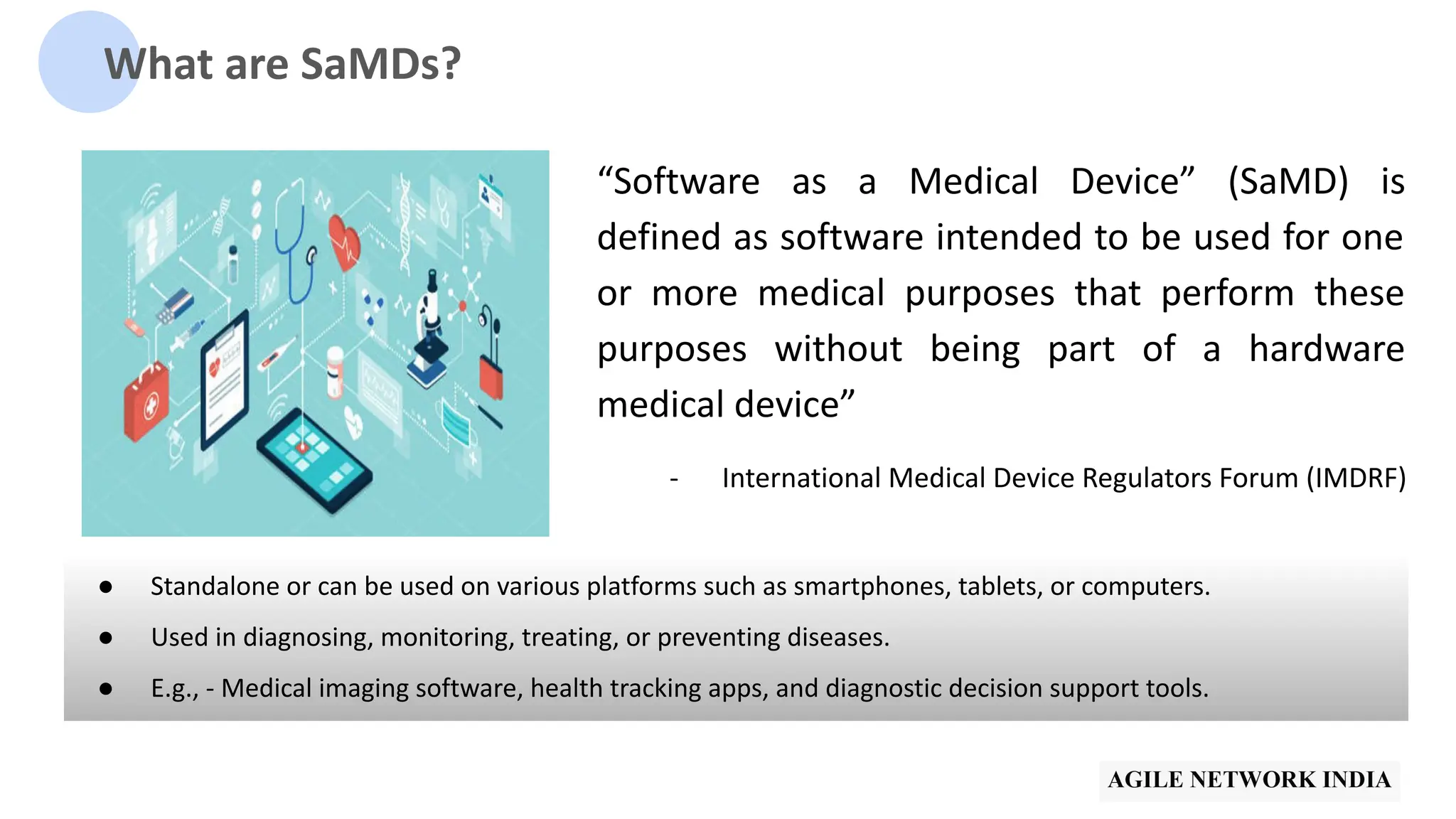
“Software as a Medical Device” (SaMD) is
defined as software intended to be used for one
or more medical purposes that perform these
purposes without being part of a hardware
medical device”
- International Medical Device Regulators Forum (IMDRF)
● Standalone or can be used on various platforms such as smartphones, tablets, or computers.
● Used in diagnosing, monitoring, treating, or preventing diseases.
● E.g., - Medical imaging software, health tracking apps, and diagnostic decision support tools.
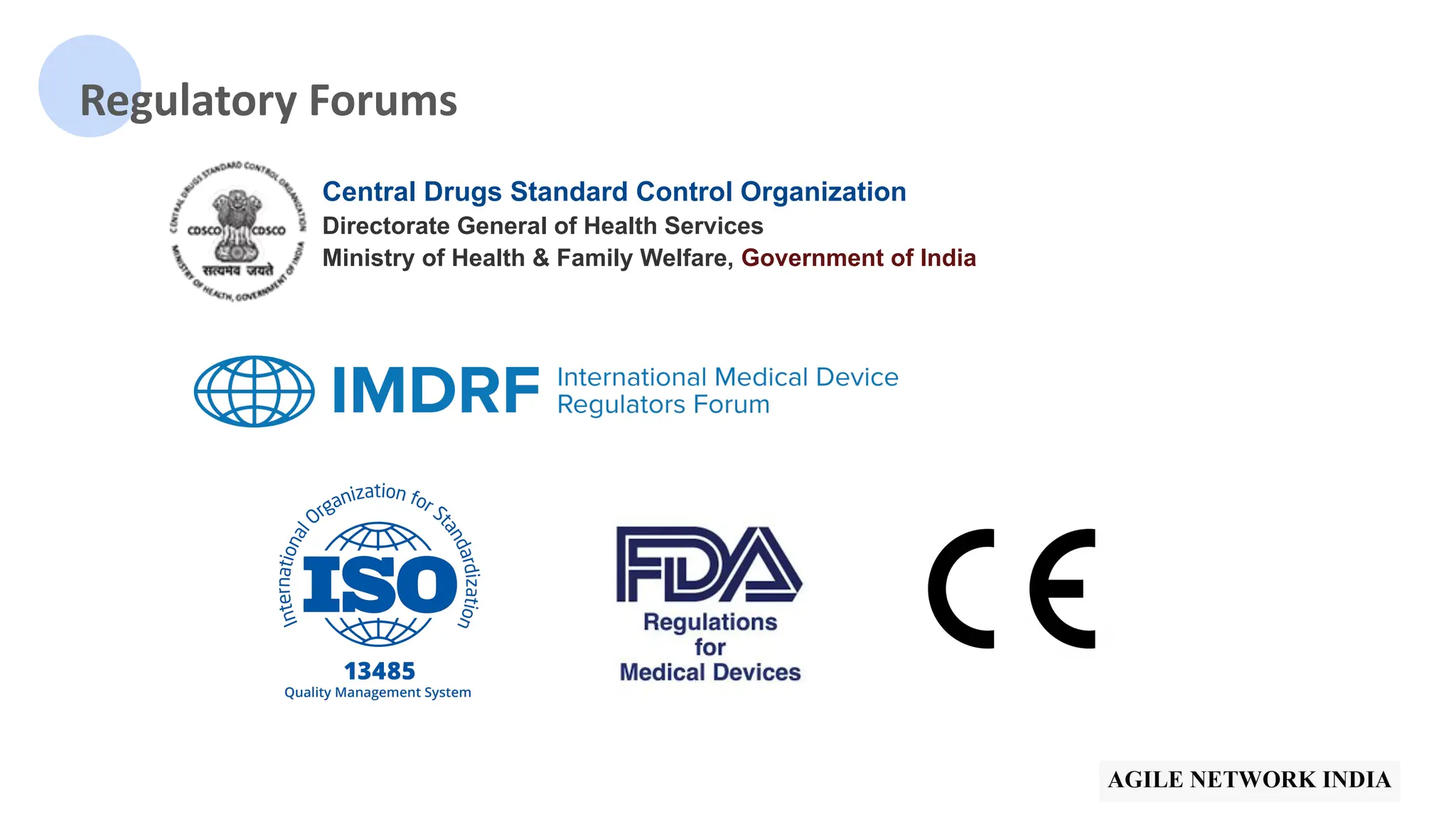
Regulatory Forums
Central Drugs Standard Control Organization
Directorate General of Health Services
Ministry of Health & Family Welfare, Government of India
1
2
3
4
5
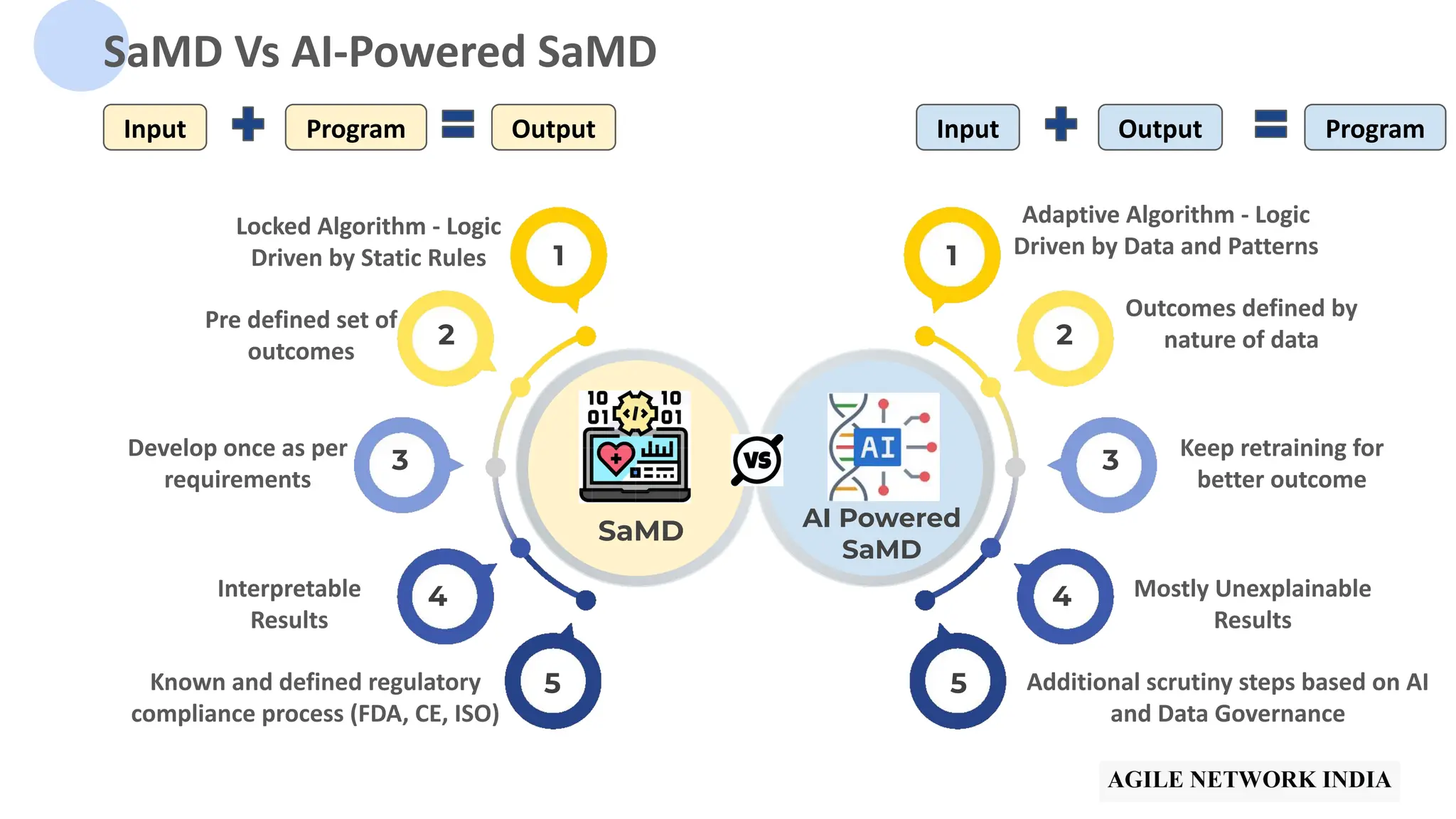
SaMD
1
2
3
4
5
AI Powered
SaMD
SaMD Vs AI-Powered SaMD
Locked Algorithm - Logic
Driven by Static Rules
Adaptive Algorithm - Logic
Driven by Data and Patterns
Pre defined set of
outcomes
Outcomes defined by
nature of data
Develop once as per
requirements
Keep retraining for
better outcome
Known and defined regulatory
compliance process (FDA, CE, ISO)
Additional scrutiny steps based on AI
and Data Governance
Interpretable
Results
Mostly Unexplainable
Results
Input Program Output Input Program
Output
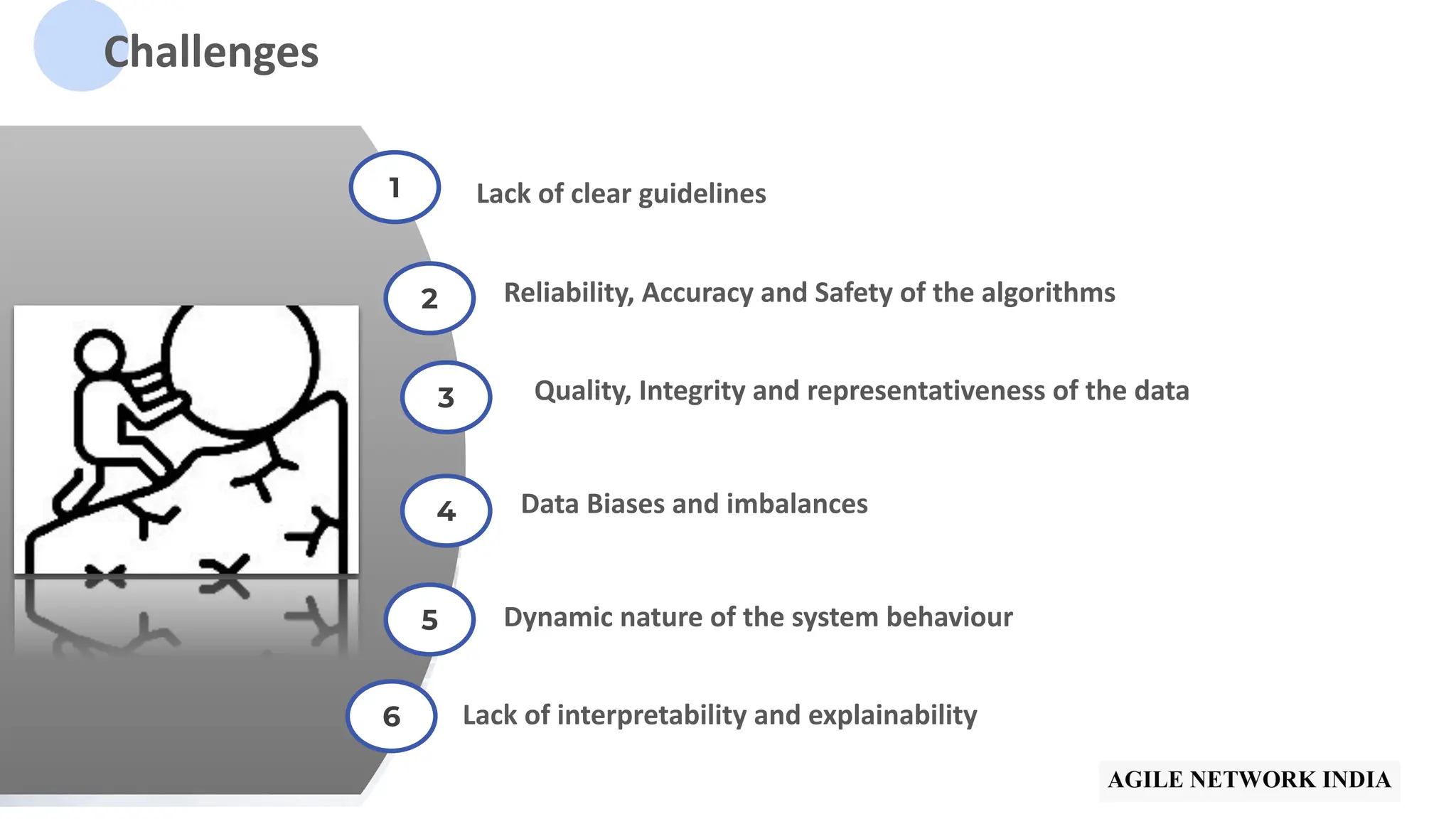
Challenges
1
5
4
2
3
Lack of clear guidelines
Reliability, Accuracy and Safety of the algorithms
Quality, Integrity and representativeness of the data
Data Biases and imbalances
Dynamic nature of the system behaviour
6 Lack of interpretability and explainability
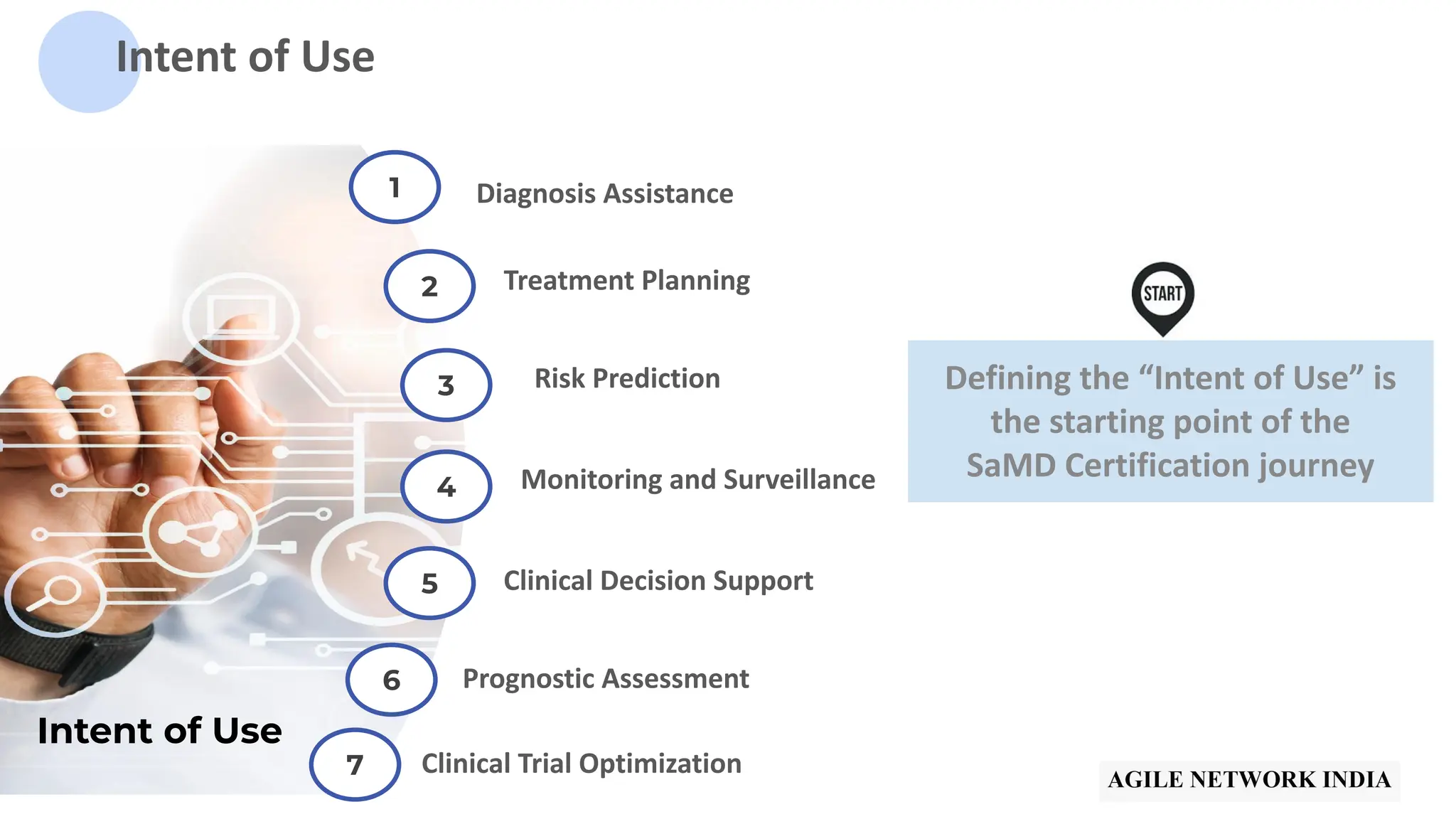
Intent of Use
Defining the “Intent of Use” is
the starting point of the
SaMD Certification journey
Intent of Use
1
5
4
2
3
Diagnosis Assistance
Treatment Planning
Risk Prediction
Monitoring and Surveillance
Clinical Decision Support
6 Prognostic Assessment
7 Clinical Trial Optimization
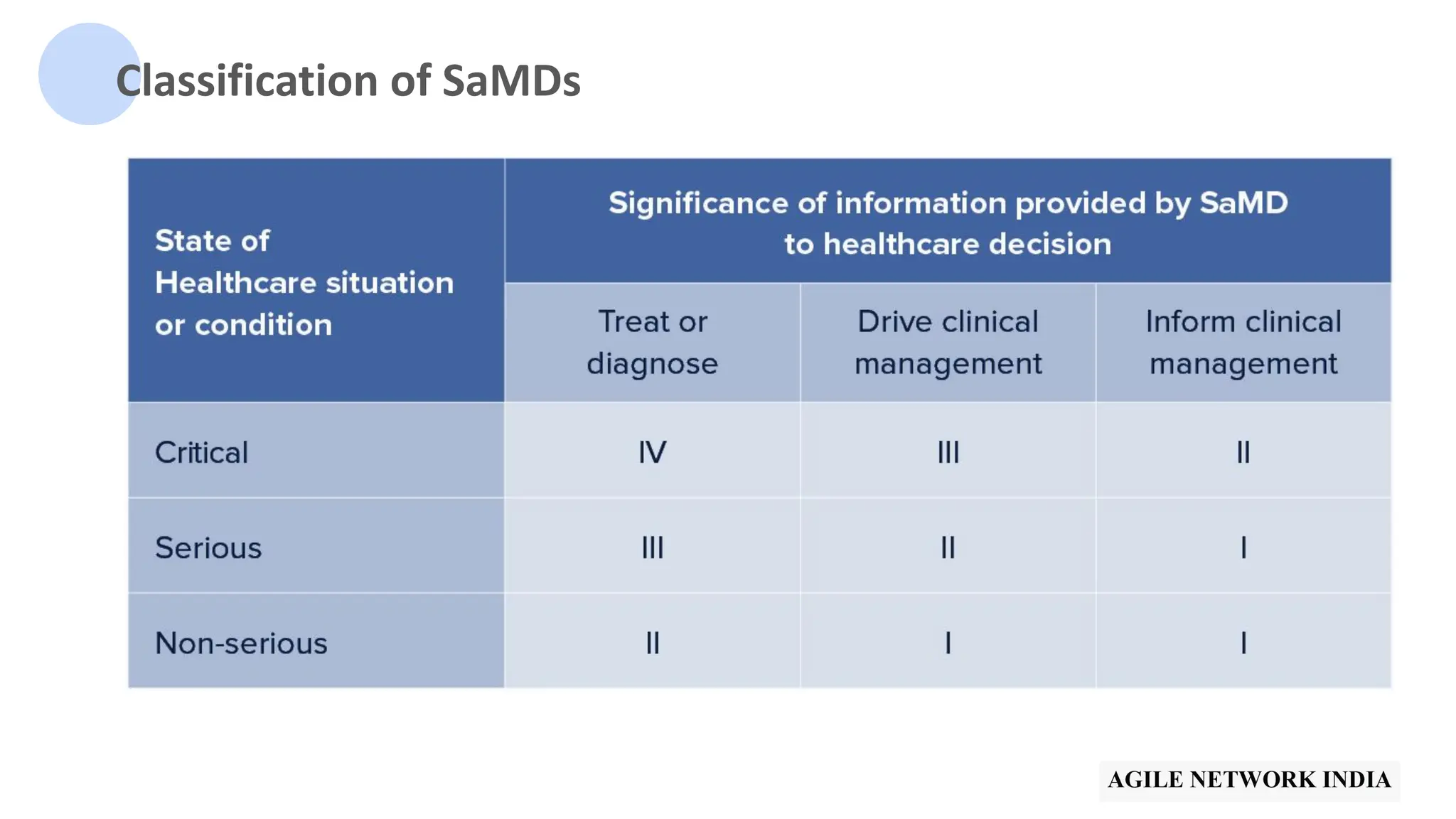
Classification of SaMDs
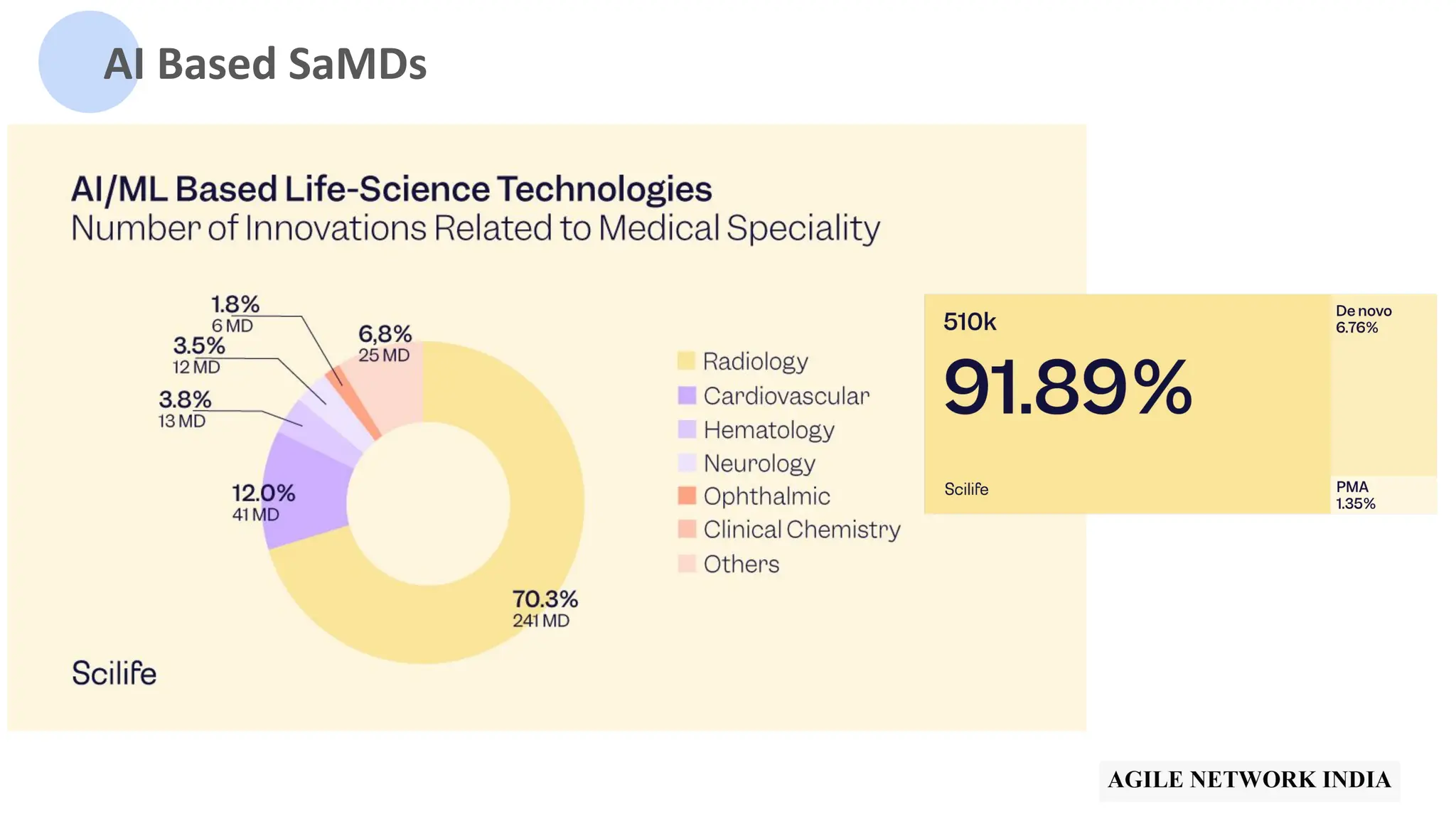
510(k) Vs PMA Vs De Novo
[Image from IMARC]
AI Based SaMDs
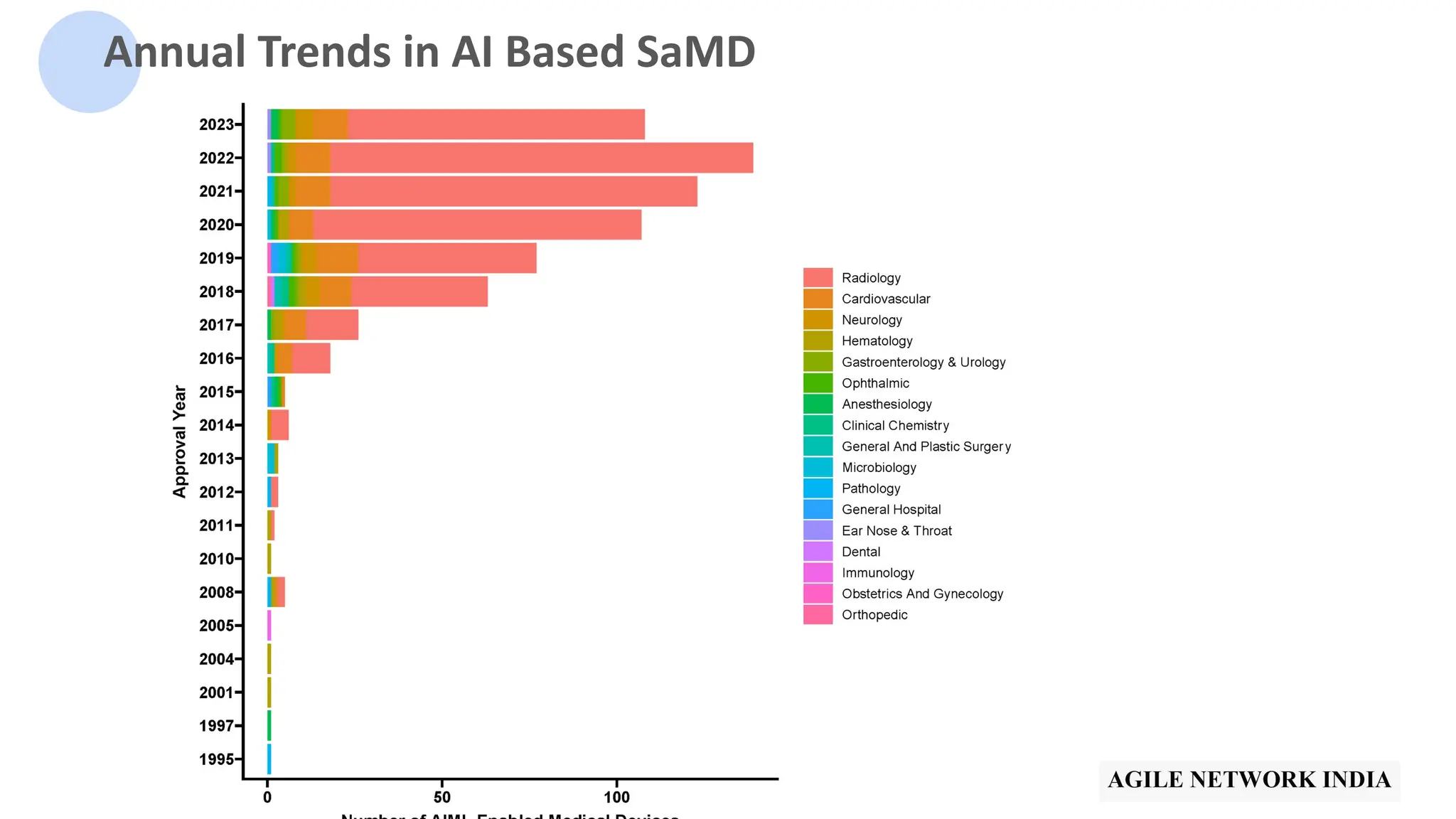
Annual Trends in AI Based SaMD
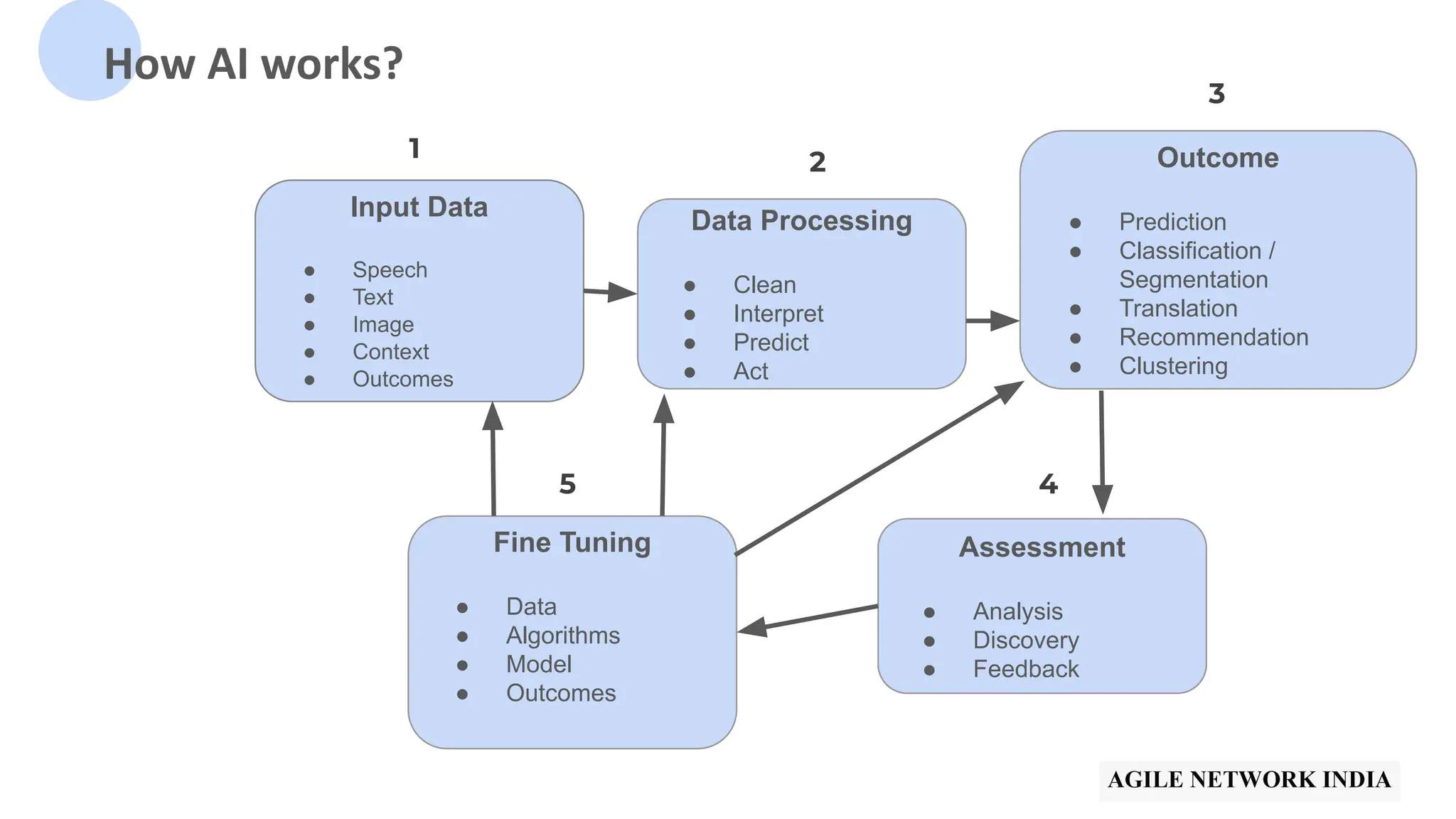
How AI works?
Input Data
● Speech
● Text
● Image
● Context
● Outcomes
Data Processing
● Clean
● Interpret
● Predict
● Act
Outcome
● Prediction
● Classification /
Segmentation
● Translation
● Recommendation
● Clustering
Fine Tuning
● Data
● Algorithms
● Model
● Outcomes
Assessment
● Analysis
● Discovery
● Feedback
1 2
3
4
5
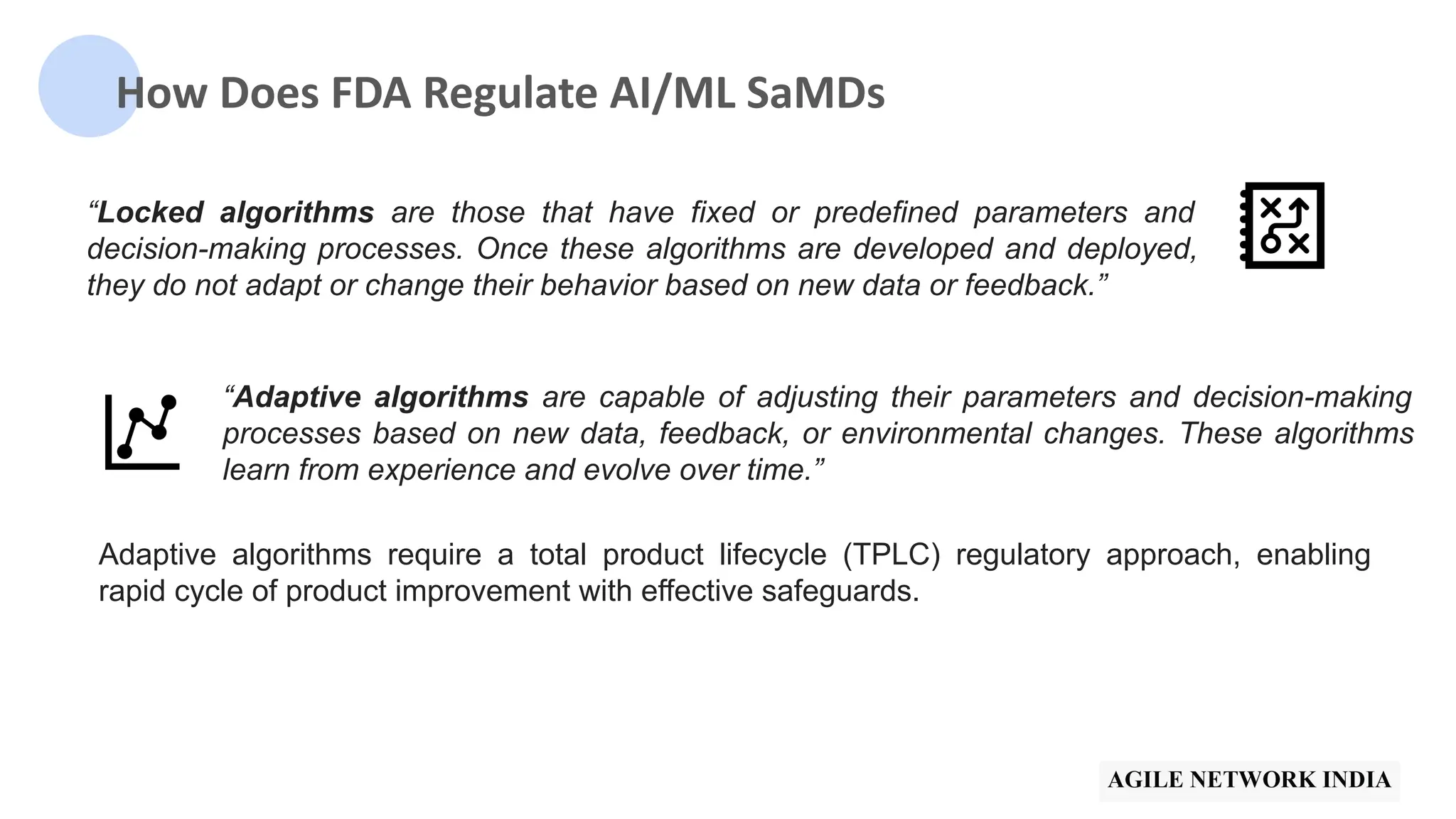
How Does FDA Regulate AI/ML SaMDs
“Locked algorithms are those that have fixed or predefined parameters and
decision-making processes. Once these algorithms are developed and deployed,
they do not adapt or change their behavior based on new data or feedback.”
“Adaptive algorithms are capable of adjusting their parameters and decision-making
processes based on new data, feedback, or environmental changes. These algorithms
learn from experience and evolve over time.”
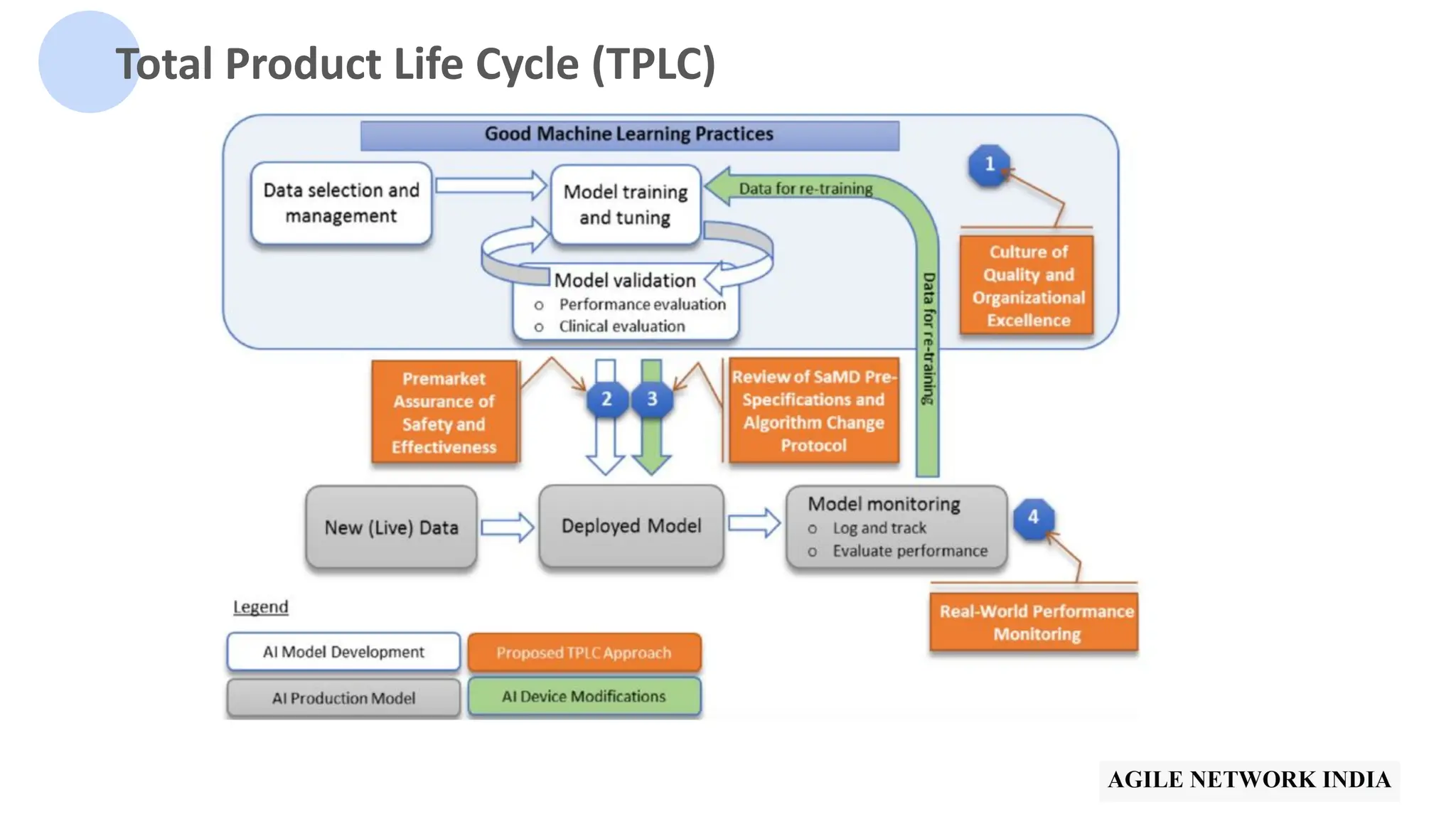
Adaptive algorithms require a total product lifecycle (TPLC) regulatory approach, enabling
rapid cycle of product improvement with effective safeguards.
Total Product Life Cycle (TPLC)
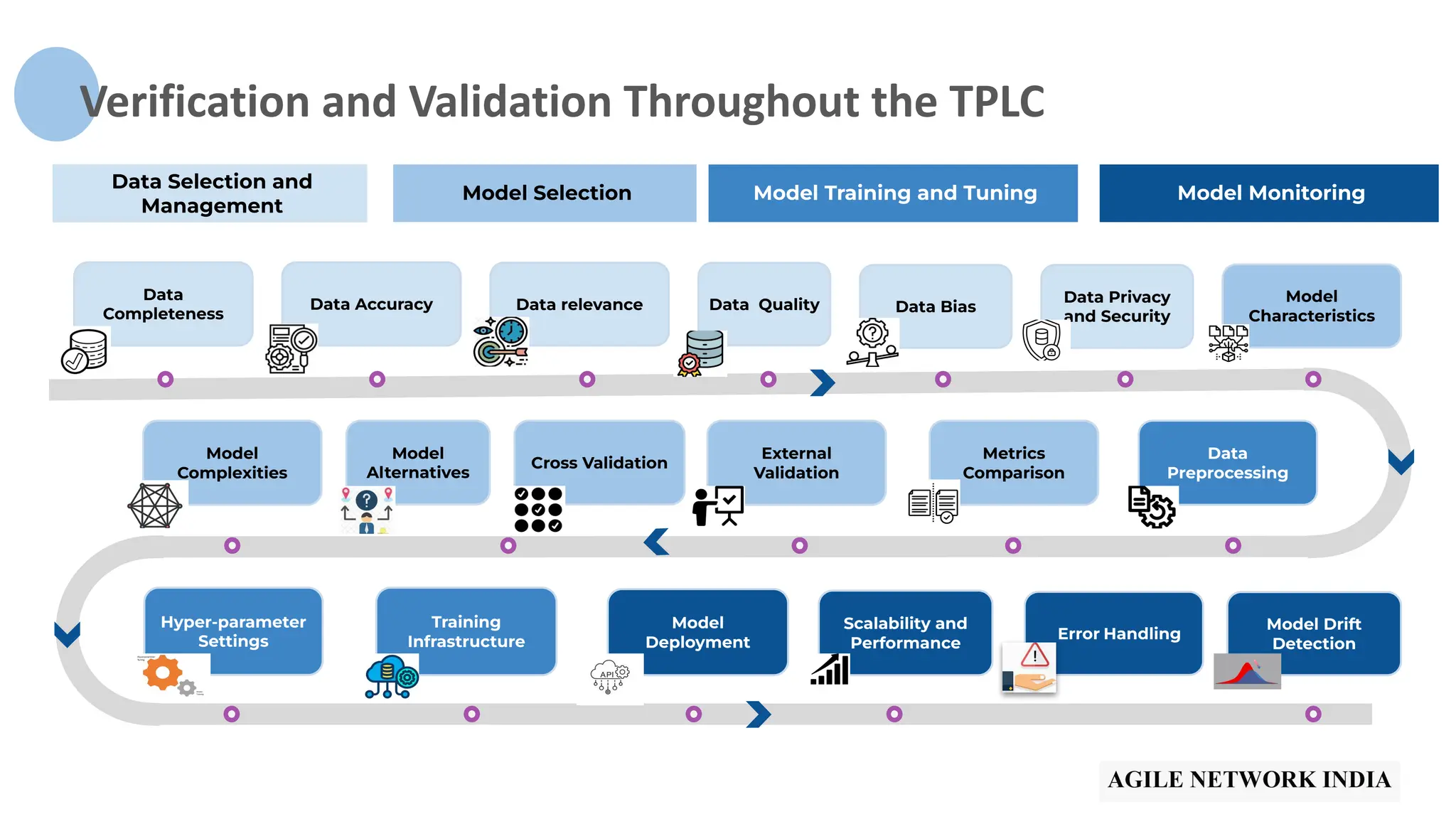
Verification and Validation Throughout the TPLC
External
Validation
Data relevance
Data
Completeness
Data Accuracy Data Bias
Data Privacy
and Security
Model
Characteristics
Data Quality
Data
Preprocessing
Metrics
Comparison
Cross Validation
Model
Alternatives
Model
Complexities
Hyper-parameter
Settings
Training
Infrastructure
Model
Deployment
Scalability and
Performance
Model Drift
Detection
Error Handling
Model Selection Model Monitoring
Data Selection and
Management
Model Training and Tuning
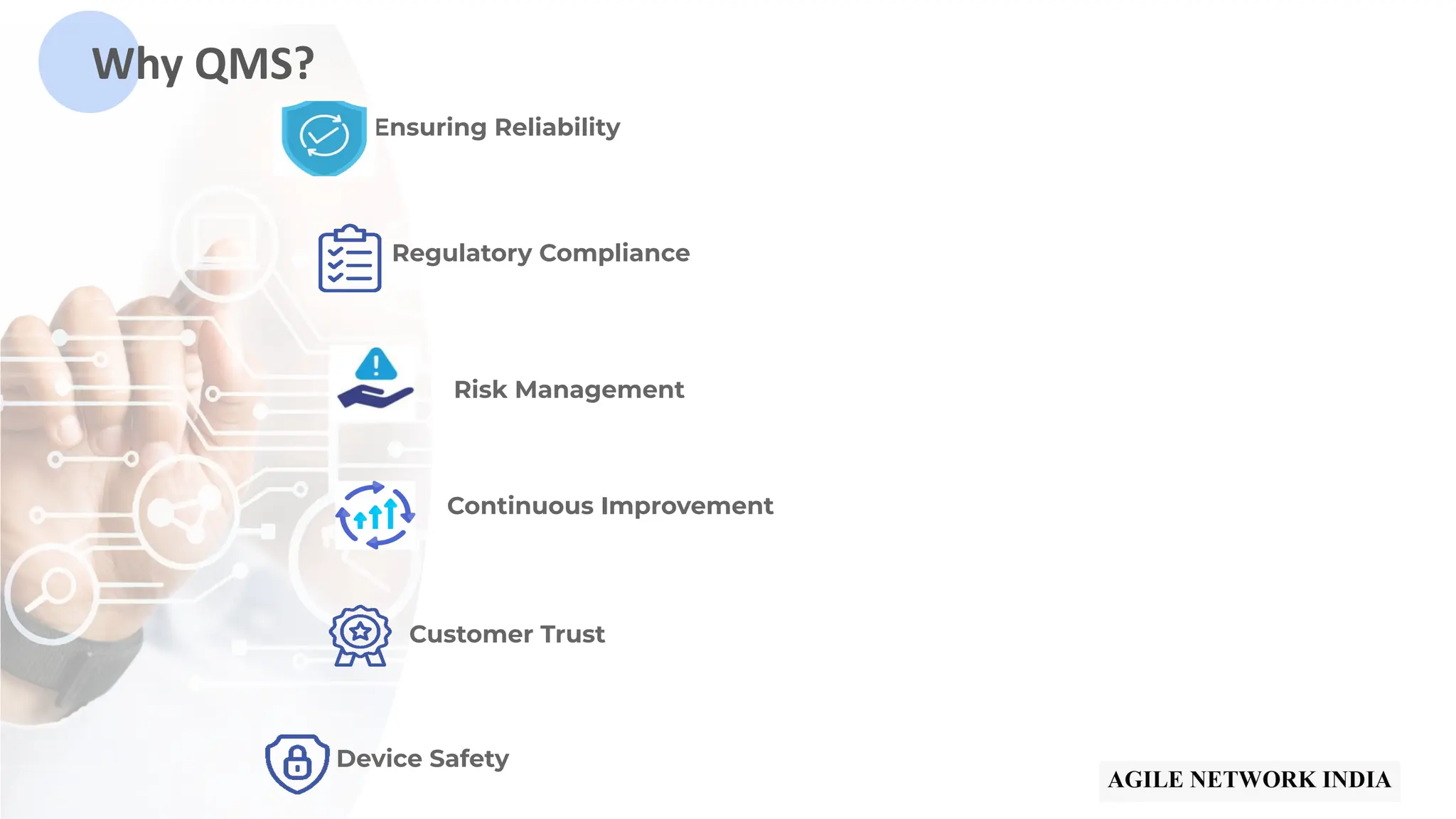
Ensuring Reliability
Regulatory Compliance
Risk Management
Continuous Improvement
Customer Trust
Device Safety
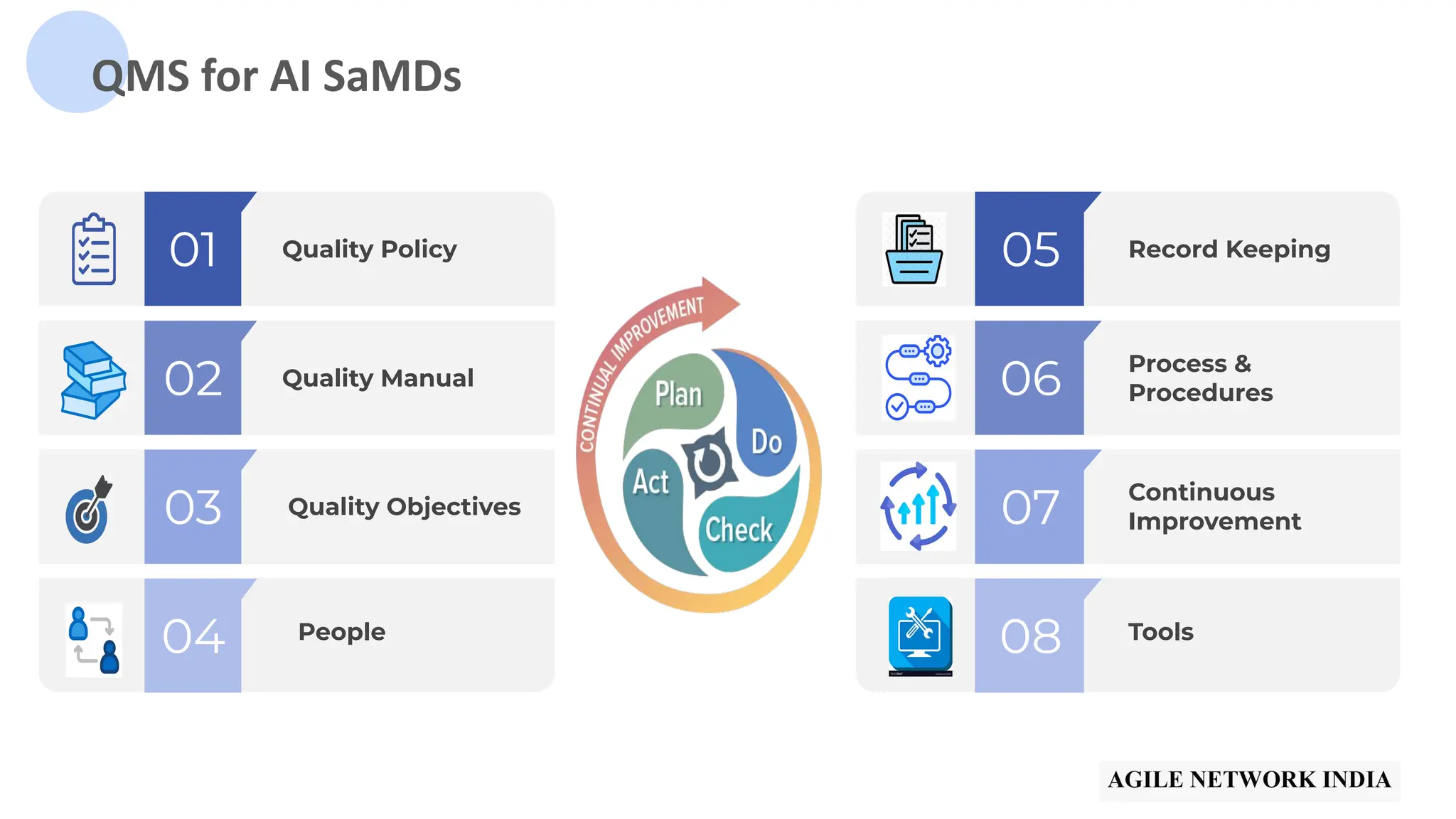
Why QMS?
04
03
02
01 Quality Policy
QMS for AI SaMDs
Quality Manual
Quality Objectives
People
08
07
06
05 Record Keeping
Process &
Procedures
Continuous
Improvement
Tools
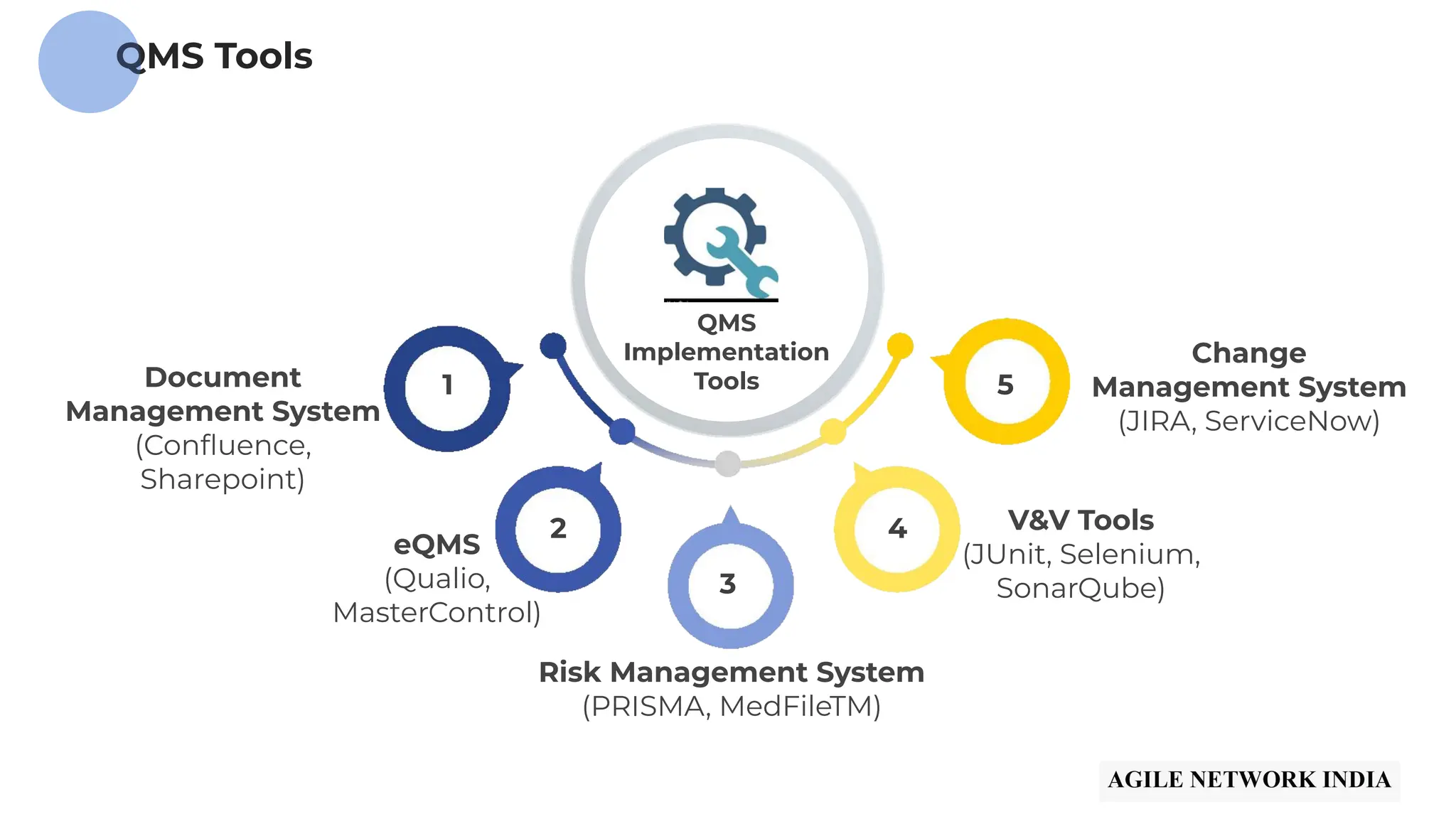
QMS Tools
1
2
3
4
5
Document
Management System
(Confluence,
Sharepoint)
eQMS
(Qualio,
MasterControl)
Risk Management System
(PRISMA, MedFileTM)
V&V Tools
(JUnit, Selenium,
SonarQube)
Change
Management System
(JIRA, ServiceNow)
QMS
Implementation
Tools
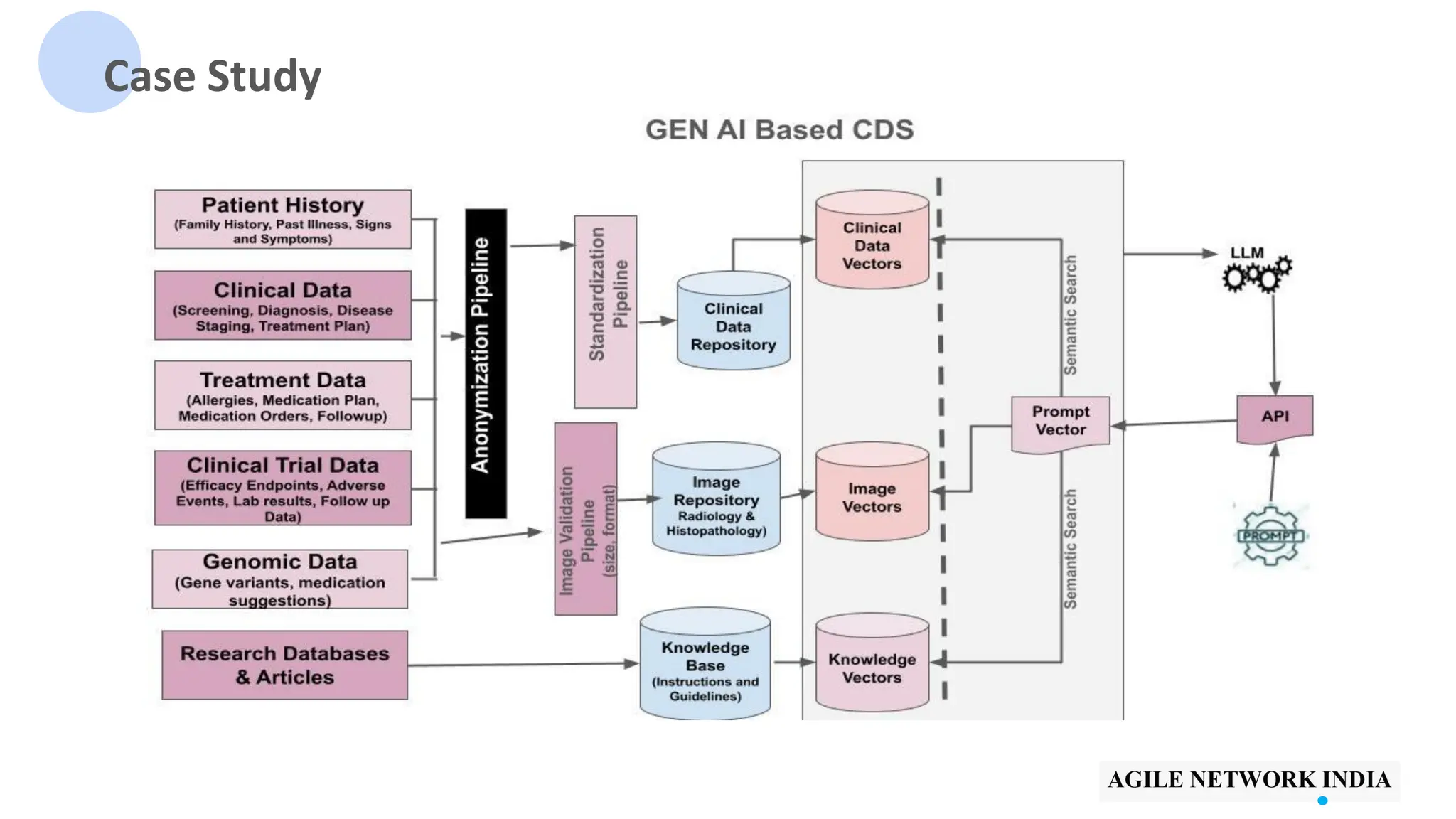
Case Study
Thanks!
References
[1] Brady, Adrian & Allen, Bibb & Chong, Jaron & Kotter, Elmar & Kottler, Nina & Mongan, John & Oakden-Rayner, Lauren & Pinto dos
Santos, Daniel & Tang, An & Wald, Christoph & Slavotinek, John. (2024). Developing, purchasing, implementing and monitoring AI
tools in radiology: practical considerations. A multi-society statement from the ACR, CAR, ESR, RANZCR & RSNA. Insights into imaging.
15. 16. 10.1186/s13244-023-01541-3.
[2] Proposed Regulatory Framework for Modifications to Artificial Intelligence/Machine Learning (AI/ML)-Based Software as a
Medical Device (SaMD) -Discussion Paper and Request for Feedback. (n.d.). Available at:
https://www.fda.gov/files/medical%20devices/published/US-FDA-Artificial-Intelligence-and-Machine-Learning-Discussion-Paper.pdf.
[3] Gilbert S, Fenech M, Hirsch M, Upadhyay S, Biasiucci A, Starlinger J. Algorithm Change Protocols in the Regulation of Adaptive
Machine Learning-Based Medical Devices. J Med Internet Res. 2021 Oct 26;23(10):e30545. doi: 10.2196/30545. PMID: 34697010;
PMCID: PMC8579211.
[4] www.scilife.io. (n.d.). FDA’s Regulatory Framework for AI/ML Technologies | Scilife. [online] Available at:
https://www.scilife.io/blog/fda-regulatory-framework-ai-ml [Accessed 6 May 2024].
[5] MATRIX, O.S.A. (2018). What is a Medical Device Quality Management System (QMS)? [online] Oriel STAT A MATRIX Blog. Available
at: https://www.orielstat.com/blog/medical-device-qms-overview/.
References (cont)
[6] Joshi, G., Jain, A., Shalini Reddy Araveeti, Adhikari, S., Garg, H. and Bhandari, M. (2024). FDA-Approved Artificial Intelligence and
Machine Learning (AI/ML)-Enabled Medical Devices: An Updated Landscape. Electronics, 13(3), pp.498–498.
doi:https://doi.org/10.3390/electronics13030498.

ANIn Pune May 2024 | Best practices in testing of AI based SaMD by Anupama Ananthasairam

  • 1.
    Best Practices inTesting AI Powered SaMD Anupama Ananthasairam Synergy of SaMD and Agility Agile Network India, Pune 11 May 2024
  • 2.
    Disclaimer by Speaker 1.Views, thoughts, and opinions expressed in the session and presentation, collectively referred as “the content”, belong solely to me in my personal capacity, and not necessarily to my employer / organization / client, etc. 2. “The content” is based on my learning, experience as well as knowledge gathered through material available publicly on the internet. 3. I do not endorse or promote any organization, committee, product or person through this session. 4. I have agreed to the Code of Conduct, Privacy Policy, Speaker Engagement Policy as referred in the Speaker Application Form submitted by me or on my behalf on the Agile Network India website. Anupama Ananthasairam | 11 May 2024
  • 3.
    Agenda ● What areSaMDs? ● What are AI Powered SaMDs? ● Challenges in getting certification for AI based SaMD ● ISO 13485, IMDRF, FDA - Proposed Framework for SaMDs ● Key Concepts in testing AI powered SaMDs ● QMS for AI powered SaMD ● Case Study of an AI powered SaMD ● References
  • 4.
    What are SaMDs? “Softwareas a Medical Device” (SaMD) is defined as software intended to be used for one or more medical purposes that perform these purposes without being part of a hardware medical device” - International Medical Device Regulators Forum (IMDRF) ● Standalone or can be used on various platforms such as smartphones, tablets, or computers. ● Used in diagnosing, monitoring, treating, or preventing diseases. ● E.g., - Medical imaging software, health tracking apps, and diagnostic decision support tools.
  • 5.
    Regulatory Forums Central DrugsStandard Control Organization Directorate General of Health Services Ministry of Health & Family Welfare, Government of India
  • 6.
    1 2 3 4 5 SaMD 1 2 3 4 5 AI Powered SaMD SaMD VsAI-Powered SaMD Locked Algorithm - Logic Driven by Static Rules Adaptive Algorithm - Logic Driven by Data and Patterns Pre defined set of outcomes Outcomes defined by nature of data Develop once as per requirements Keep retraining for better outcome Known and defined regulatory compliance process (FDA, CE, ISO) Additional scrutiny steps based on AI and Data Governance Interpretable Results Mostly Unexplainable Results Input Program Output Input Program Output
  • 7.
    Challenges 1 5 4 2 3 Lack of clearguidelines Reliability, Accuracy and Safety of the algorithms Quality, Integrity and representativeness of the data Data Biases and imbalances Dynamic nature of the system behaviour 6 Lack of interpretability and explainability
  • 9.
    Intent of Use Definingthe “Intent of Use” is the starting point of the SaMD Certification journey Intent of Use 1 5 4 2 3 Diagnosis Assistance Treatment Planning Risk Prediction Monitoring and Surveillance Clinical Decision Support 6 Prognostic Assessment 7 Clinical Trial Optimization
  • 10.
  • 11.
    510(k) Vs PMAVs De Novo [Image from IMARC]
  • 12.
  • 13.
    Annual Trends inAI Based SaMD
  • 14.
    How AI works? InputData ● Speech ● Text ● Image ● Context ● Outcomes Data Processing ● Clean ● Interpret ● Predict ● Act Outcome ● Prediction ● Classification / Segmentation ● Translation ● Recommendation ● Clustering Fine Tuning ● Data ● Algorithms ● Model ● Outcomes Assessment ● Analysis ● Discovery ● Feedback 1 2 3 4 5
  • 15.
    How Does FDARegulate AI/ML SaMDs “Locked algorithms are those that have fixed or predefined parameters and decision-making processes. Once these algorithms are developed and deployed, they do not adapt or change their behavior based on new data or feedback.” “Adaptive algorithms are capable of adjusting their parameters and decision-making processes based on new data, feedback, or environmental changes. These algorithms learn from experience and evolve over time.” Adaptive algorithms require a total product lifecycle (TPLC) regulatory approach, enabling rapid cycle of product improvement with effective safeguards.
  • 16.
    Total Product LifeCycle (TPLC)
  • 17.
    Verification and ValidationThroughout the TPLC External Validation Data relevance Data Completeness Data Accuracy Data Bias Data Privacy and Security Model Characteristics Data Quality Data Preprocessing Metrics Comparison Cross Validation Model Alternatives Model Complexities Hyper-parameter Settings Training Infrastructure Model Deployment Scalability and Performance Model Drift Detection Error Handling Model Selection Model Monitoring Data Selection and Management Model Training and Tuning
  • 18.
    Ensuring Reliability Regulatory Compliance RiskManagement Continuous Improvement Customer Trust Device Safety Why QMS?
  • 19.
    04 03 02 01 Quality Policy QMSfor AI SaMDs Quality Manual Quality Objectives People 08 07 06 05 Record Keeping Process & Procedures Continuous Improvement Tools
  • 20.
    QMS Tools 1 2 3 4 5 Document Management System (Confluence, Sharepoint) eQMS (Qualio, MasterControl) RiskManagement System (PRISMA, MedFileTM) V&V Tools (JUnit, Selenium, SonarQube) Change Management System (JIRA, ServiceNow) QMS Implementation Tools
  • 21.
  • 22.
  • 23.
    References [1] Brady, Adrian& Allen, Bibb & Chong, Jaron & Kotter, Elmar & Kottler, Nina & Mongan, John & Oakden-Rayner, Lauren & Pinto dos Santos, Daniel & Tang, An & Wald, Christoph & Slavotinek, John. (2024). Developing, purchasing, implementing and monitoring AI tools in radiology: practical considerations. A multi-society statement from the ACR, CAR, ESR, RANZCR & RSNA. Insights into imaging. 15. 16. 10.1186/s13244-023-01541-3. [2] Proposed Regulatory Framework for Modifications to Artificial Intelligence/Machine Learning (AI/ML)-Based Software as a Medical Device (SaMD) -Discussion Paper and Request for Feedback. (n.d.). Available at: https://www.fda.gov/files/medical%20devices/published/US-FDA-Artificial-Intelligence-and-Machine-Learning-Discussion-Paper.pdf. [3] Gilbert S, Fenech M, Hirsch M, Upadhyay S, Biasiucci A, Starlinger J. Algorithm Change Protocols in the Regulation of Adaptive Machine Learning-Based Medical Devices. J Med Internet Res. 2021 Oct 26;23(10):e30545. doi: 10.2196/30545. PMID: 34697010; PMCID: PMC8579211. [4] www.scilife.io. (n.d.). FDA’s Regulatory Framework for AI/ML Technologies | Scilife. [online] Available at: https://www.scilife.io/blog/fda-regulatory-framework-ai-ml [Accessed 6 May 2024]. [5] MATRIX, O.S.A. (2018). What is a Medical Device Quality Management System (QMS)? [online] Oriel STAT A MATRIX Blog. Available at: https://www.orielstat.com/blog/medical-device-qms-overview/.
  • 24.
    References (cont) [6] Joshi,G., Jain, A., Shalini Reddy Araveeti, Adhikari, S., Garg, H. and Bhandari, M. (2024). FDA-Approved Artificial Intelligence and Machine Learning (AI/ML)-Enabled Medical Devices: An Updated Landscape. Electronics, 13(3), pp.498–498. doi:https://doi.org/10.3390/electronics13030498.