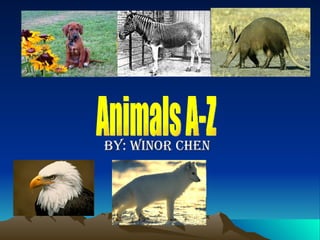
By: Winor Chen Animals A-Z
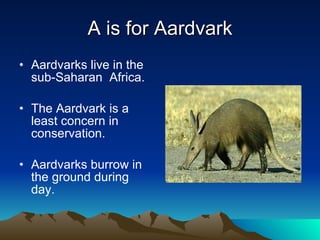
A is for Aardvark Aardvarks live in the sub-Saharan  Africa. The Aardvark is a least concern in conservation. Aardvarks burrow in the ground during day.
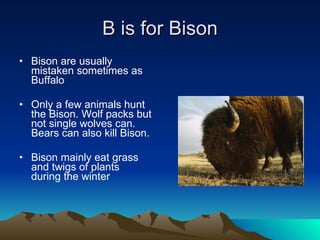
B is for Bison Bison are usually mistaken sometimes as Buffalo Only a few animals hunt the Bison. Wolf packs but not single wolves can. Bears can also kill Bison. Bison mainly eat grass and twigs of plants during the winter
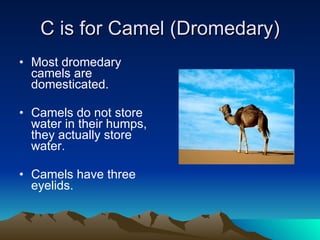
C is for Camel (Dromedary) Most dromedary camels are domesticated. Camels do not store water in their humps, they actually store water. Camels have three eyelids.
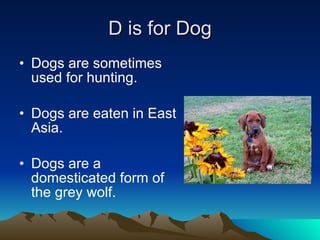
D is for Dog Dogs are sometimes used for hunting. Dogs are eaten in East Asia. Dogs are a domesticated form of the grey wolf.
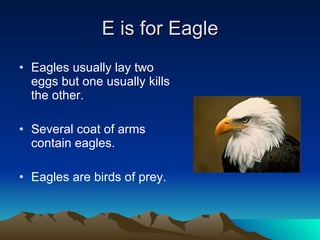
E is for Eagle Eagles usually lay two eggs but one usually kills the other. Several coat of arms contain eagles. Eagles are birds of prey.
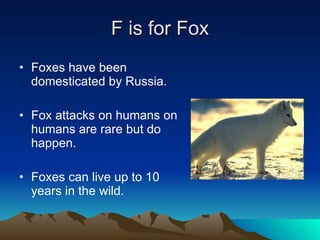
F is for Fox Foxes have been domesticated by Russia. Fox attacks on humans on humans are rare but do happen. Foxes can live up to 10 years in the wild.
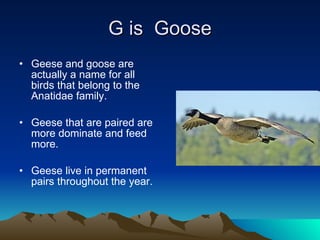
G is  Goose Geese and goose are actually a name for all birds that belong to the Anatidae family. Geese that are paired are more dominate and feed more. Geese live in permanent pairs throughout the year.
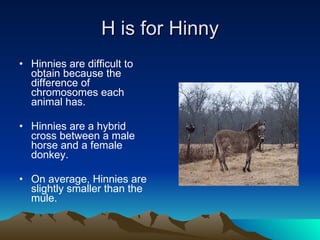
H is for Hinny Hinnies are difficult to obtain because the difference of chromosomes each animal has. Hinnies are a hybrid cross between a male horse and a female donkey. On average, Hinnies are slightly smaller than the mule.
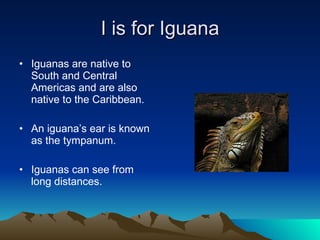
I is for Iguana Iguanas are native to South and Central Americas and are also native to the Caribbean.  An iguana’s ear is known as the tympanum. Iguanas can see from long distances.
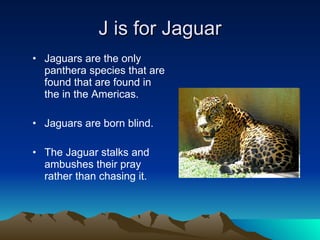
J is for Jaguar Jaguars are the only panthera species that are found that are found in the in the Americas. Jaguars are born blind. The Jaguar stalks and ambushes their pray rather than chasing it.
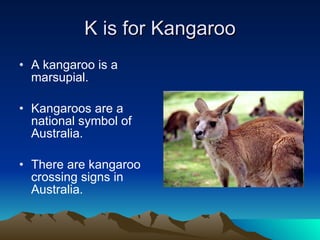
K is for Kangaroo A kangaroo is a marsupial. Kangaroos are a national symbol of Australia. There are kangaroo crossing signs in Australia.
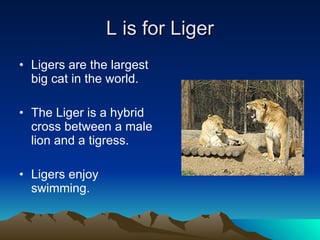
L is for Liger Ligers are the largest big cat in the world. The Liger is a hybrid cross between a male lion and a tigress. Ligers enjoy swimming.
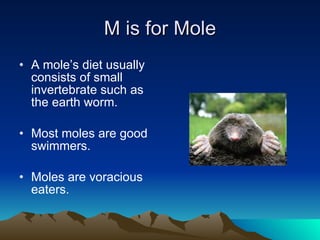
M is for Mole A mole’s diet usually consists of small invertebrate such as the earth worm. Most moles are good swimmers. Moles are voracious eaters.
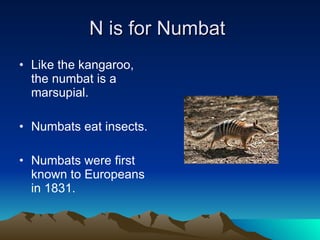
N is for Numbat  Like the kangaroo, the numbat is a marsupial. Numbats eat insects. Numbats were first known to Europeans in 1831.
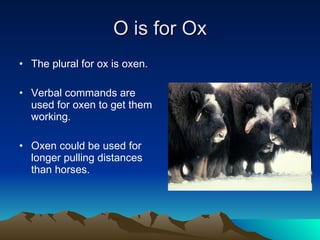
O is for Ox The plural for ox is oxen. Verbal commands are used for oxen to get them working. Oxen could be used for longer pulling distances than horses.
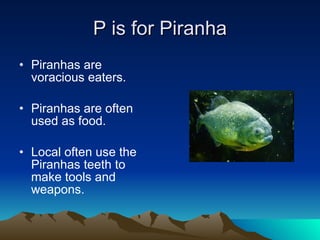
P is for Piranha Piranhas are voracious eaters. Piranhas are often used as food. Local often use the Piranhas teeth to make tools and weapons.
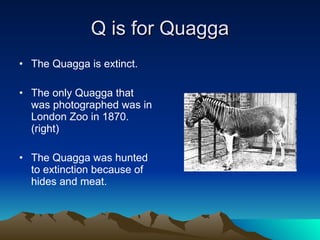
Q is for Quagga The Quagga is extinct. The only Quagga that was photographed was in London Zoo in 1870. (right) The Quagga was hunted to extinction because of hides and meat.
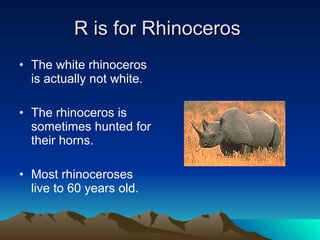
R is for Rhinoceros  The white rhinoceros is actually not white. The rhinoceros is sometimes hunted for their horns. Most rhinoceroses live to 60 years old.
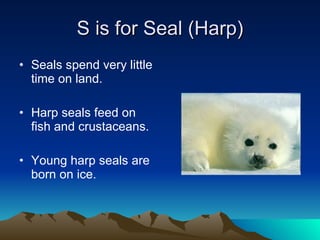
S is for Seal (Harp) Seals spend very little time on land. Harp seals feed on fish and crustaceans. Young harp seals are born on ice.
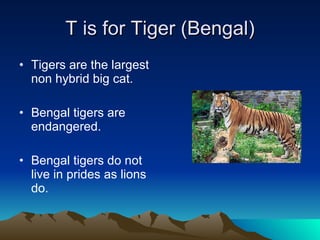
T is for Tiger (Bengal) Tigers are the largest non hybrid big cat. Bengal tigers are endangered. Bengal tigers do not live in prides as lions do.
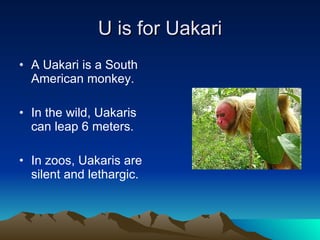
U is for Uakari A Uakari is a South American monkey. In the wild, Uakaris can leap 6 meters. In zoos, Uakaris are silent and lethargic.
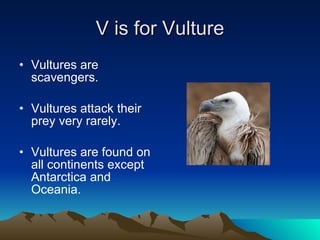
V is for Vulture Vultures are scavengers. Vultures attack their prey very rarely. Vultures are found on all continents except Antarctica and Oceania.
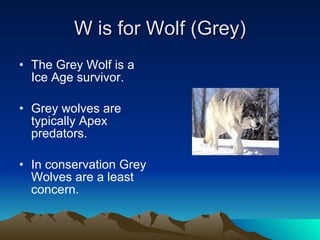
W is for Wolf (Grey) The Grey Wolf is a Ice Age survivor. Grey wolves are typically Apex predators.  In conservation Grey Wolves are a least concern.
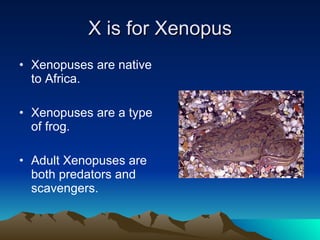
X is for Xenopus Xenopuses are native to Africa. Xenopuses are a type of frog. Adult Xenopuses are both predators and scavengers.
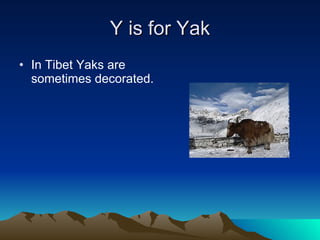
Y is for Yak In Tibet Yaks are sometimes decorated.
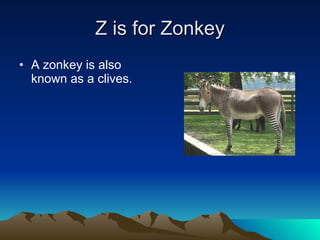
Z is for Zonkey A zonkey is also known as a clives.
Bibliography Acknowledgements to: wikipedia.org  for information about animals and few pictures wiki.answers.com  for unusual animal names nationalgeographic.com  for pictures and animal info

Animals From A Z (Winor Chen)

  • 1.
    By: Winor ChenAnimals A-Z
  • 2.
    A is forAardvark Aardvarks live in the sub-Saharan Africa. The Aardvark is a least concern in conservation. Aardvarks burrow in the ground during day.
  • 3.
    B is forBison Bison are usually mistaken sometimes as Buffalo Only a few animals hunt the Bison. Wolf packs but not single wolves can. Bears can also kill Bison. Bison mainly eat grass and twigs of plants during the winter
  • 4.
    C is forCamel (Dromedary) Most dromedary camels are domesticated. Camels do not store water in their humps, they actually store water. Camels have three eyelids.
  • 5.
    D is forDog Dogs are sometimes used for hunting. Dogs are eaten in East Asia. Dogs are a domesticated form of the grey wolf.
  • 6.
    E is forEagle Eagles usually lay two eggs but one usually kills the other. Several coat of arms contain eagles. Eagles are birds of prey.
  • 7.
    F is forFox Foxes have been domesticated by Russia. Fox attacks on humans on humans are rare but do happen. Foxes can live up to 10 years in the wild.
  • 8.
    G is Goose Geese and goose are actually a name for all birds that belong to the Anatidae family. Geese that are paired are more dominate and feed more. Geese live in permanent pairs throughout the year.
  • 9.
    H is forHinny Hinnies are difficult to obtain because the difference of chromosomes each animal has. Hinnies are a hybrid cross between a male horse and a female donkey. On average, Hinnies are slightly smaller than the mule.
  • 10.
    I is forIguana Iguanas are native to South and Central Americas and are also native to the Caribbean. An iguana’s ear is known as the tympanum. Iguanas can see from long distances.
  • 11.
    J is forJaguar Jaguars are the only panthera species that are found that are found in the in the Americas. Jaguars are born blind. The Jaguar stalks and ambushes their pray rather than chasing it.
  • 12.
    K is forKangaroo A kangaroo is a marsupial. Kangaroos are a national symbol of Australia. There are kangaroo crossing signs in Australia.
  • 13.
    L is forLiger Ligers are the largest big cat in the world. The Liger is a hybrid cross between a male lion and a tigress. Ligers enjoy swimming.
  • 14.
    M is forMole A mole’s diet usually consists of small invertebrate such as the earth worm. Most moles are good swimmers. Moles are voracious eaters.
  • 15.
    N is forNumbat Like the kangaroo, the numbat is a marsupial. Numbats eat insects. Numbats were first known to Europeans in 1831.
  • 16.
    O is forOx The plural for ox is oxen. Verbal commands are used for oxen to get them working. Oxen could be used for longer pulling distances than horses.
  • 17.
    P is forPiranha Piranhas are voracious eaters. Piranhas are often used as food. Local often use the Piranhas teeth to make tools and weapons.
  • 18.
    Q is forQuagga The Quagga is extinct. The only Quagga that was photographed was in London Zoo in 1870. (right) The Quagga was hunted to extinction because of hides and meat.
  • 19.
    R is forRhinoceros The white rhinoceros is actually not white. The rhinoceros is sometimes hunted for their horns. Most rhinoceroses live to 60 years old.
  • 20.
    S is forSeal (Harp) Seals spend very little time on land. Harp seals feed on fish and crustaceans. Young harp seals are born on ice.
  • 21.
    T is forTiger (Bengal) Tigers are the largest non hybrid big cat. Bengal tigers are endangered. Bengal tigers do not live in prides as lions do.
  • 22.
    U is forUakari A Uakari is a South American monkey. In the wild, Uakaris can leap 6 meters. In zoos, Uakaris are silent and lethargic.
  • 23.
    V is forVulture Vultures are scavengers. Vultures attack their prey very rarely. Vultures are found on all continents except Antarctica and Oceania.
  • 24.
    W is forWolf (Grey) The Grey Wolf is a Ice Age survivor. Grey wolves are typically Apex predators. In conservation Grey Wolves are a least concern.
  • 25.
    X is forXenopus Xenopuses are native to Africa. Xenopuses are a type of frog. Adult Xenopuses are both predators and scavengers.
  • 26.
    Y is forYak In Tibet Yaks are sometimes decorated.
  • 27.
    Z is forZonkey A zonkey is also known as a clives.
  • 28.
    Bibliography Acknowledgements to:wikipedia.org for information about animals and few pictures wiki.answers.com for unusual animal names nationalgeographic.com for pictures and animal info