ANATOMI
DAUN
ANATOMI DAUN
• FUNGSI UTAMA
– Fotosintesis
– Respirasi
– Transpirasi
• Bagian Daun Terdiri dari :
– Lamina
– Petiolus
– Vena
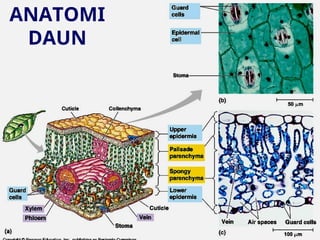
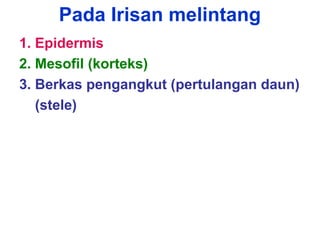
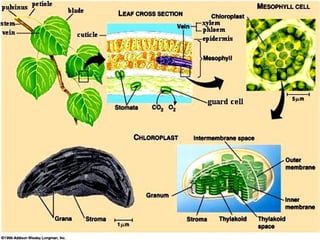
Pada Irisan melintang
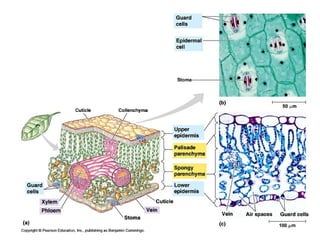
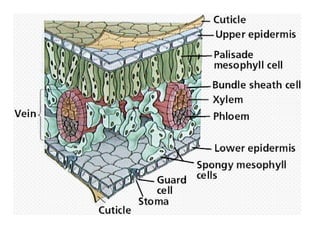
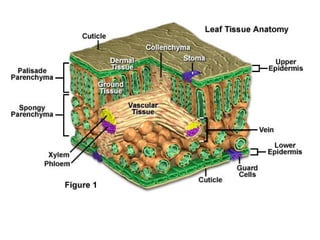
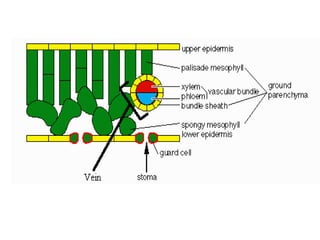
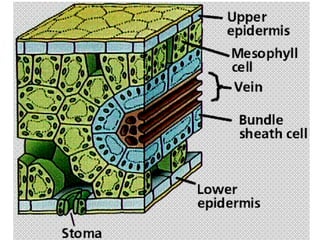
1. Epidermis
2. Mesofil (korteks)
3. Berkas pengangkut (pertulangan daun)
(stele)
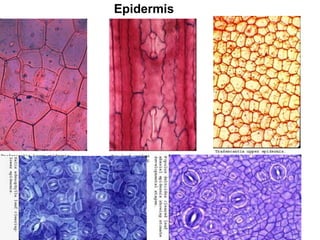
Epidermis
• Merupakan penutup permukaan atas dan bawah daun.
Tersusun oleh satu lapis sel-sel yang terangkai secara
rapat. Lapisan ini bersifat transparan dan dilapisi oleh
kutikula pada dinding luarnya. Pada bagian ini terdapat
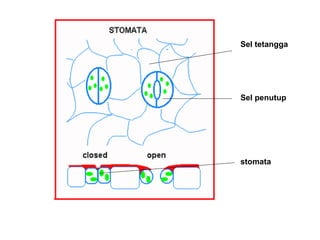
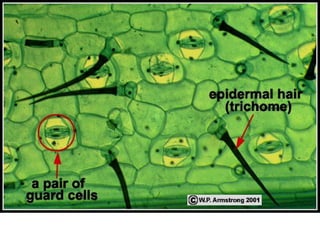
stomata yang dikelilingi oleh suatu set guard-cell (sel
penutup) yang mengandung klorofil.
• Dinding sel epidermis yang menghadap keluar umumnya
lebih tebal (kutin).
• Stomata di kedua permukaan (amfistomatik), di bawah
saja (hipostomatik), di atas saja (epistomatik).
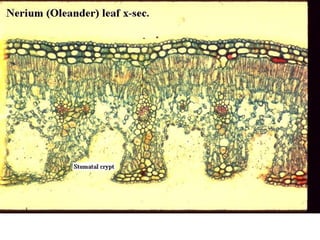
• Letak stomata sejajar (stomata paneropor), tenggelam
(kriptopor)
Fungsi
• The cuticle prevents water loss.
• The epidermis protects the internal tissues
from injury.
• The stomata allows for gaseous exchange
for photosynthesis and respiration.
• Since the epidermis is translucent it allows
light to reach the mesophyll tissue for
photosynthesis.
Sel tetangga
Sel penutup
stomata
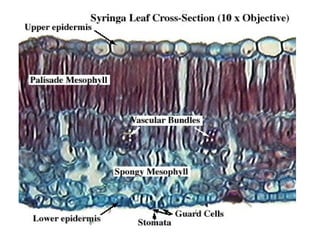
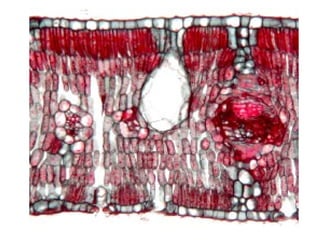
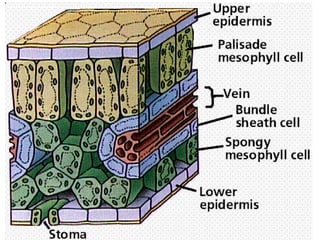
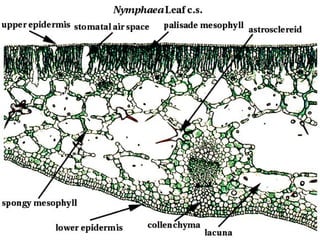
Mesofil
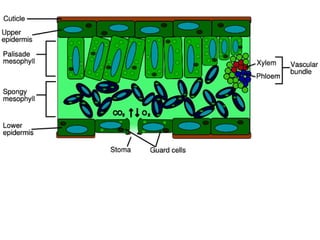
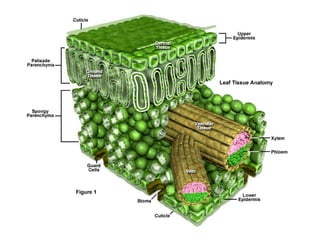
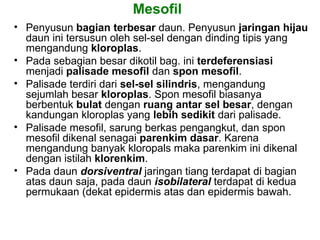
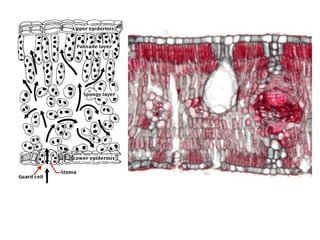
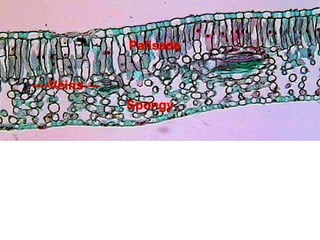
• Penyusun bagian terbesar daun. Penyusun jaringan hijau
daun ini tersusun oleh sel-sel dengan dinding tipis yang
mengandung kloroplas.
• Pada sebagian besar dikotil bag. ini terdeferensiasi
menjadi palisade mesofil dan spon mesofil.
• Palisade terdiri dari sel-sel silindris, mengandung
sejumlah besar kloroplas. Spon mesofil biasanya
berbentuk bulat dengan ruang antar sel besar, dengan
kandungan kloroplas yang lebih sedikit dari palisade.
• Palisade mesofil, sarung berkas pengangkut, dan spon
mesofil dikenal senagai parenkim dasar. Karena
mengandung banyak kloropals maka parenkim ini dikenal
dengan istilah klorenkim.
• Pada daun dorsiventral jaringan tiang terdapat di bagian
atas daun saja, pada daun isobilateral terdapat di kedua
permukaan (dekat epidermis atas dan epidermis bawah.
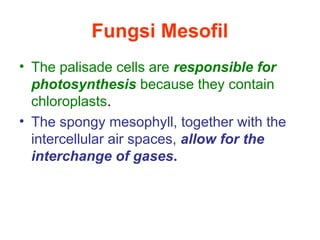
Fungsi Mesofil
• The palisade cells are responsible for
photosynthesis because they contain
chloroplasts.
• The spongy mesophyll, together with the
intercellular air spaces, allow for the
interchange of gases.
Pertulangan Daun
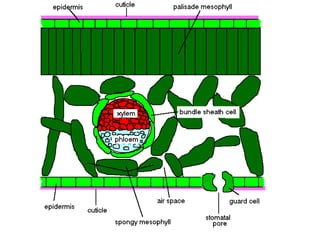
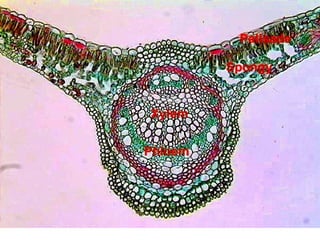
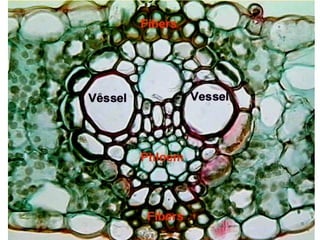
• Sistem pertulangan daun tersusun oleh berkas pengangkut
yang bersabang-cabang. Satu tulang daun mengandung
jaringan pembuluh yang terdiri dari xilem dan floem. Sel-sel
xilem yang terlignifikasi berada mengarah ke epidermis
atas, sedangkan floem mengarah ke epidermis bawah. Pada
berkas pengangkut yang besar biasanya dikelilingi oleh
sarung berkas pengangkut
• Di dalam berkas pengangkut, xilem selalu berada di atas
floem, karena merupakan kelanjutan dari tangkai daun yang
berasal dari batang, dimana xilem berada di sebl. dalam floem.
• Tipe berkas pengangkut bisa kolateral (Syringa), bikolateral
(Solanaceae, Cucurbitaceae) atau konsentris (amfikribral :
floem mengelilingi xilem) (kebanyakan dikotil).
Fungsi
• The veins strengthen the lamina.
• The xylem conducts water and
dissolved ions to the mesophyll tissue.
• The phloem conducts organic food such
as glucose from the mesophyll to other
parts of the plant.
Jaringan Penguat Daun
• Epidermis (+ kutikula)
• Kolenkim (tangkai daun, selubung berkas)
• Sklerenkim (Serabut/Sklereid)
• Xilem
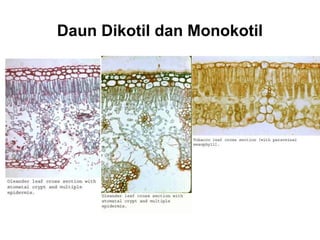
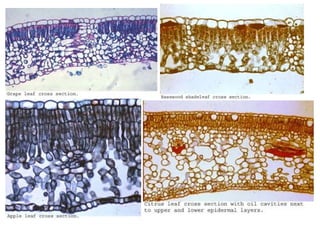
Daun Dikotil dan Monokotil
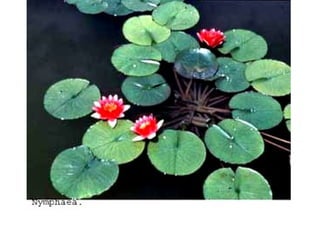
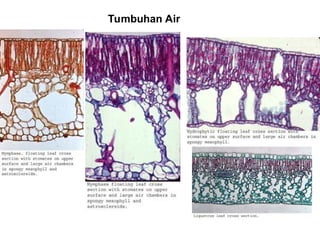
Tumbuhan Air
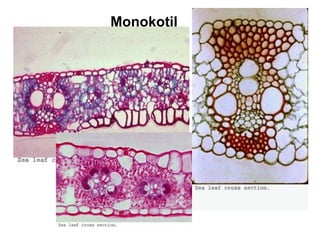
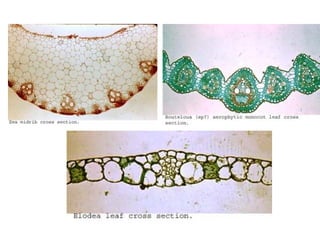
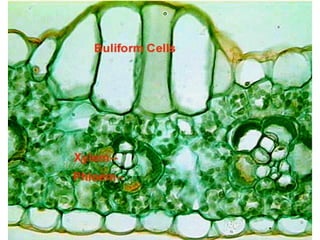
Monokotil
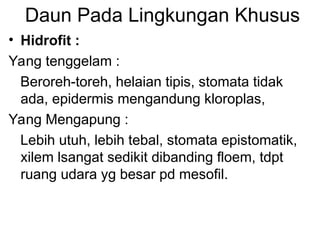
Daun Pada Lingkungan Khusus
• Hidrofit :
Yang tenggelam :
Beroreh-toreh, helaian tipis, stomata tidak
ada, epidermis mengandung kloroplas,
Yang Mengapung :
Lebih utuh, lebih tebal, stomata epistomatik,
xilem lsangat sedikit dibanding floem, tdpt
ruang udara yg besar pd mesofil.
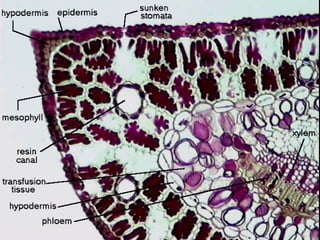
Xerofit :
• Bentuk daun silinder atau menggulung
• Daun agak tebal spt kulit, kutikula tebal &
banyak trikoma.
• Mesofil dpt tdr dr 2 jar tiang, ddg sel
epidermis atau hipodermis mengalami
penebalan lignin.
• Berkas pengangkut dg penguat serabut
sklerenkim atau sklereid.
• Memiliki jar parenkim penyimpan air
Epidermis
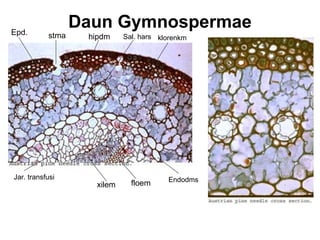
Daun Gymnospermae
Epd. stma hipdm Sal. hars klorenkm
Endodms
xilem floem
Jar. transfusi
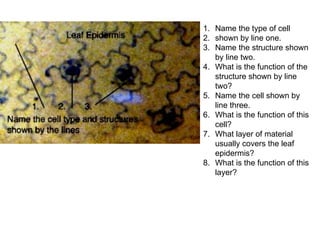
1. Name the type of cell
2. shown by line one.
3. Name the structure shown
by line two.
4. What is the function of the
structure shown by line
two?
5. Name the cell shown by
line three.
6. What is the function of this
cell?
7. What layer of material
usually covers the leaf
epidermis?
8. What is the function of this
layer?
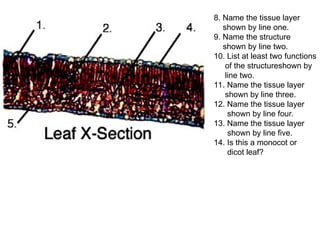
8. Name the tissue layer
shown by line one.
9. Name the structure
shown by line two.
10. List at least two functions
of the structureshown by
line two.
11. Name the tissue layer
shown by line three.
12. Name the tissue layer
shown by line four.
13. Name the tissue layer
shown by line five.
14. Is this a monocot or
dicot leaf?
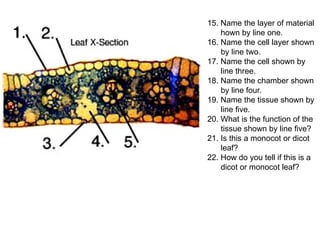
15. Name the layer of material
hown by line one.
16. Name the cell layer shown
by line two.
17. Name the cell shown by
line three.
18. Name the chamber shown
by line four.
19. Name the tissue shown by
line five.
20. What is the function of the
tissue shown by line five?
21. Is this a monocot or dicot
leaf?
22. How do you tell if this is a
dicot or monocot leaf?
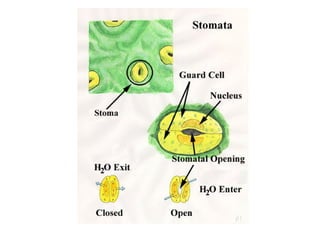
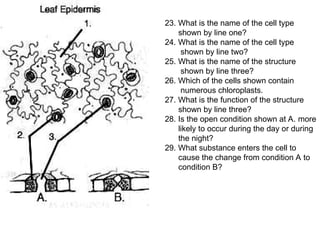
23. What is the name of the cell type
shown by line one?
24. What is the name of the cell type
shown by line two?
25. What is the name of the structure
shown by line three?
26. Which of the cells shown contain
numerous chloroplasts.
27. What is the function of the structure
shown by line three?
28. Is the open condition shown at A. more
likely to occur during the day or during
the night?
29. What substance enters the cell to
cause the change from condition A to
condition B?
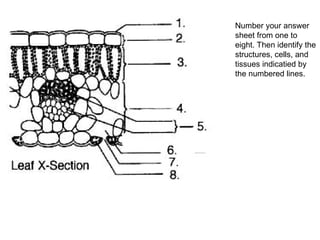
Number your answer
sheet from one to
eight. Then identify the
structures, cells, and
tissues indicatied by
the numbered lines.
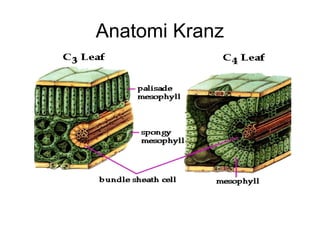
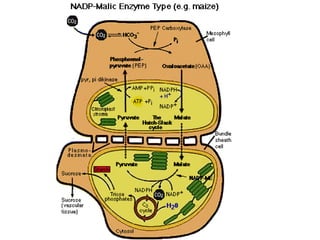
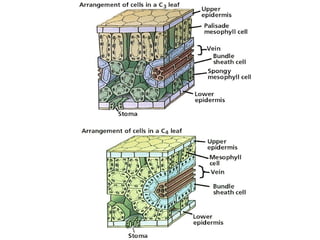
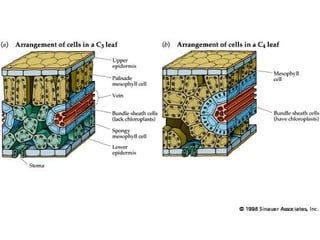
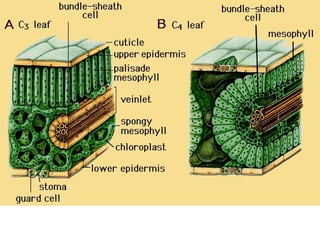
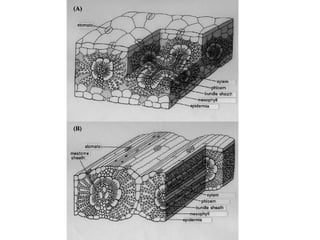
ANATOMI KRANZ
Suatu Bentuk Adaptasi Fisiologi
Spesifik yg Berpengaruh pada
Susunan Anatomi Daun
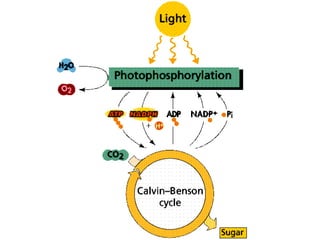
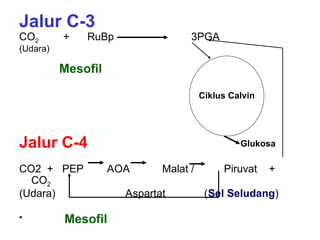
Jalur C-3
CO2 + RuBp 3PGA
(Udara)
Jalur C-4
CO2 + PEP AOA Malat / Piruvat +
CO2
(Udara) Aspartat (Sel Seludang)
•
Ciklus Calvin
Mesofil
Mesofil
Glukosa
Anatomi Kranz
anfistum terkait daun,,,,,,,,,,,,,,,,,,,

anfistum terkait daun,,,,,,,,,,,,,,,,,,,

  • 3.
  • 4.
    ANATOMI DAUN • FUNGSIUTAMA – Fotosintesis – Respirasi – Transpirasi • Bagian Daun Terdiri dari : – Lamina – Petiolus – Vena
  • 5.
    Pada Irisan melintang 1.Epidermis 2. Mesofil (korteks) 3. Berkas pengangkut (pertulangan daun) (stele)
  • 13.
    Epidermis • Merupakan penutuppermukaan atas dan bawah daun. Tersusun oleh satu lapis sel-sel yang terangkai secara rapat. Lapisan ini bersifat transparan dan dilapisi oleh kutikula pada dinding luarnya. Pada bagian ini terdapat stomata yang dikelilingi oleh suatu set guard-cell (sel penutup) yang mengandung klorofil. • Dinding sel epidermis yang menghadap keluar umumnya lebih tebal (kutin). • Stomata di kedua permukaan (amfistomatik), di bawah saja (hipostomatik), di atas saja (epistomatik). • Letak stomata sejajar (stomata paneropor), tenggelam (kriptopor)
  • 16.
    Fungsi • The cuticleprevents water loss. • The epidermis protects the internal tissues from injury. • The stomata allows for gaseous exchange for photosynthesis and respiration. • Since the epidermis is translucent it allows light to reach the mesophyll tissue for photosynthesis.
  • 17.
  • 22.
    Mesofil • Penyusun bagianterbesar daun. Penyusun jaringan hijau daun ini tersusun oleh sel-sel dengan dinding tipis yang mengandung kloroplas. • Pada sebagian besar dikotil bag. ini terdeferensiasi menjadi palisade mesofil dan spon mesofil. • Palisade terdiri dari sel-sel silindris, mengandung sejumlah besar kloroplas. Spon mesofil biasanya berbentuk bulat dengan ruang antar sel besar, dengan kandungan kloroplas yang lebih sedikit dari palisade. • Palisade mesofil, sarung berkas pengangkut, dan spon mesofil dikenal senagai parenkim dasar. Karena mengandung banyak kloropals maka parenkim ini dikenal dengan istilah klorenkim. • Pada daun dorsiventral jaringan tiang terdapat di bagian atas daun saja, pada daun isobilateral terdapat di kedua permukaan (dekat epidermis atas dan epidermis bawah.
  • 24.
    Fungsi Mesofil • Thepalisade cells are responsible for photosynthesis because they contain chloroplasts. • The spongy mesophyll, together with the intercellular air spaces, allow for the interchange of gases.
  • 25.
    Pertulangan Daun • Sistempertulangan daun tersusun oleh berkas pengangkut yang bersabang-cabang. Satu tulang daun mengandung jaringan pembuluh yang terdiri dari xilem dan floem. Sel-sel xilem yang terlignifikasi berada mengarah ke epidermis atas, sedangkan floem mengarah ke epidermis bawah. Pada berkas pengangkut yang besar biasanya dikelilingi oleh sarung berkas pengangkut • Di dalam berkas pengangkut, xilem selalu berada di atas floem, karena merupakan kelanjutan dari tangkai daun yang berasal dari batang, dimana xilem berada di sebl. dalam floem. • Tipe berkas pengangkut bisa kolateral (Syringa), bikolateral (Solanaceae, Cucurbitaceae) atau konsentris (amfikribral : floem mengelilingi xilem) (kebanyakan dikotil).
  • 26.
    Fungsi • The veinsstrengthen the lamina. • The xylem conducts water and dissolved ions to the mesophyll tissue. • The phloem conducts organic food such as glucose from the mesophyll to other parts of the plant.
  • 27.
    Jaringan Penguat Daun •Epidermis (+ kutikula) • Kolenkim (tangkai daun, selubung berkas) • Sklerenkim (Serabut/Sklereid) • Xilem
  • 31.
  • 33.
  • 34.
  • 37.
    Daun Pada LingkunganKhusus • Hidrofit : Yang tenggelam : Beroreh-toreh, helaian tipis, stomata tidak ada, epidermis mengandung kloroplas, Yang Mengapung : Lebih utuh, lebih tebal, stomata epistomatik, xilem lsangat sedikit dibanding floem, tdpt ruang udara yg besar pd mesofil.
  • 39.
    Xerofit : • Bentukdaun silinder atau menggulung • Daun agak tebal spt kulit, kutikula tebal & banyak trikoma. • Mesofil dpt tdr dr 2 jar tiang, ddg sel epidermis atau hipodermis mengalami penebalan lignin. • Berkas pengangkut dg penguat serabut sklerenkim atau sklereid. • Memiliki jar parenkim penyimpan air
  • 41.
  • 42.
    Daun Gymnospermae Epd. stmahipdm Sal. hars klorenkm Endodms xilem floem Jar. transfusi
  • 43.
    1. Name thetype of cell 2. shown by line one. 3. Name the structure shown by line two. 4. What is the function of the structure shown by line two? 5. Name the cell shown by line three. 6. What is the function of this cell? 7. What layer of material usually covers the leaf epidermis? 8. What is the function of this layer?
  • 44.
    8. Name thetissue layer shown by line one. 9. Name the structure shown by line two. 10. List at least two functions of the structureshown by line two. 11. Name the tissue layer shown by line three. 12. Name the tissue layer shown by line four. 13. Name the tissue layer shown by line five. 14. Is this a monocot or dicot leaf?
  • 45.
    15. Name thelayer of material hown by line one. 16. Name the cell layer shown by line two. 17. Name the cell shown by line three. 18. Name the chamber shown by line four. 19. Name the tissue shown by line five. 20. What is the function of the tissue shown by line five? 21. Is this a monocot or dicot leaf? 22. How do you tell if this is a dicot or monocot leaf?
  • 46.
    23. What isthe name of the cell type shown by line one? 24. What is the name of the cell type shown by line two? 25. What is the name of the structure shown by line three? 26. Which of the cells shown contain numerous chloroplasts. 27. What is the function of the structure shown by line three? 28. Is the open condition shown at A. more likely to occur during the day or during the night? 29. What substance enters the cell to cause the change from condition A to condition B?
  • 47.
    Number your answer sheetfrom one to eight. Then identify the structures, cells, and tissues indicatied by the numbered lines.
  • 48.
    ANATOMI KRANZ Suatu BentukAdaptasi Fisiologi Spesifik yg Berpengaruh pada Susunan Anatomi Daun
  • 52.
    Jalur C-3 CO2 +RuBp 3PGA (Udara) Jalur C-4 CO2 + PEP AOA Malat / Piruvat + CO2 (Udara) Aspartat (Sel Seludang) • Ciklus Calvin Mesofil Mesofil Glukosa
  • 54.