Download to read offline


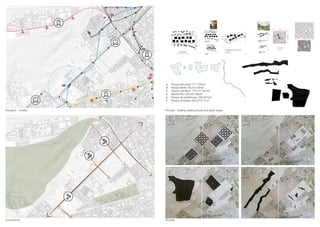
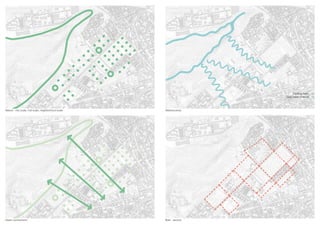
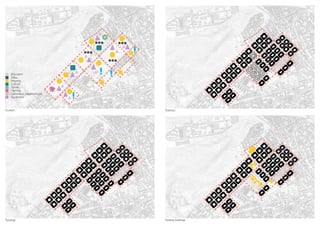
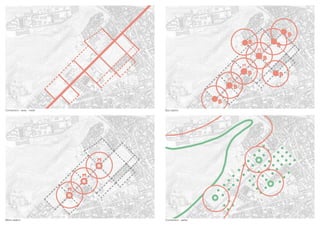
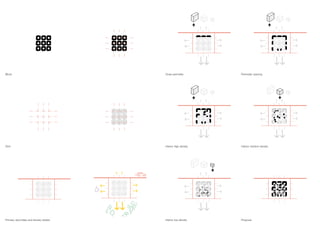
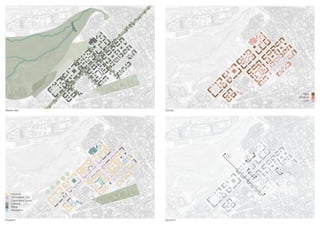

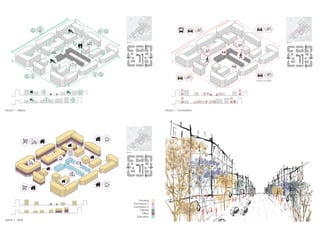
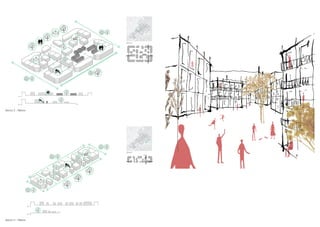


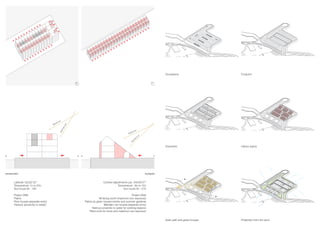


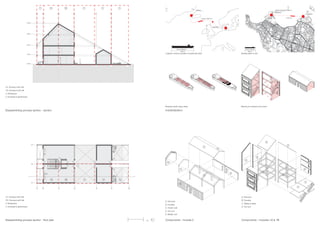
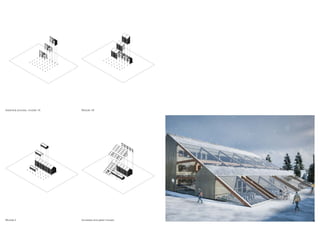
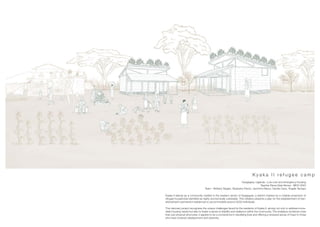
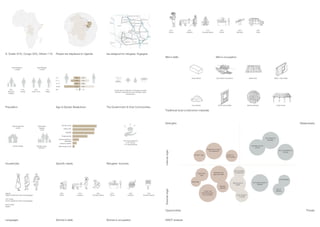
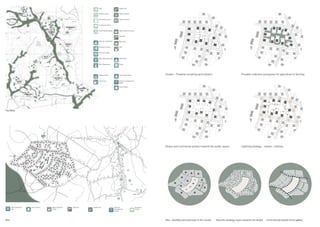
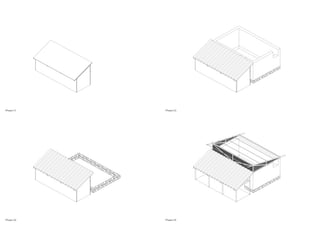

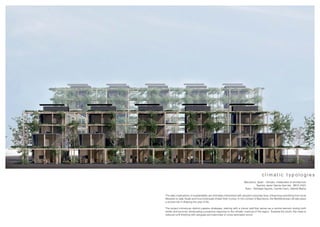
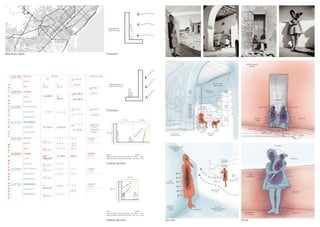
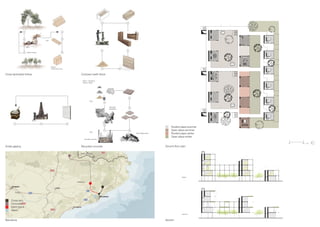
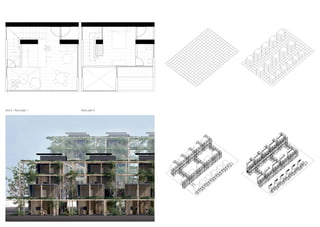


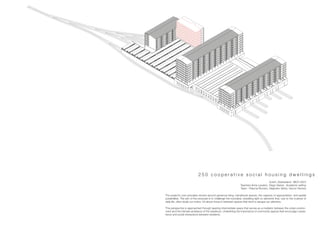

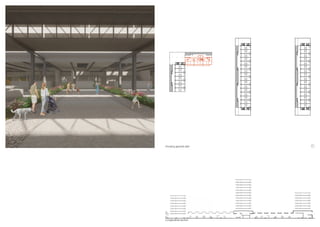
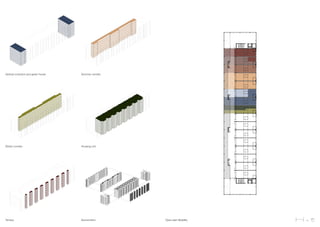
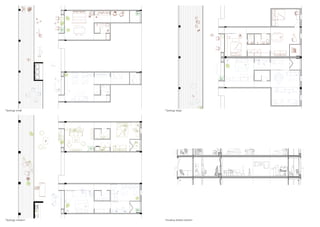
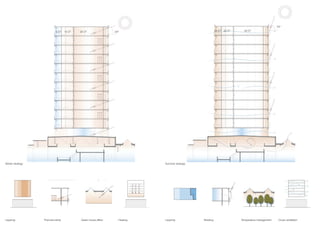

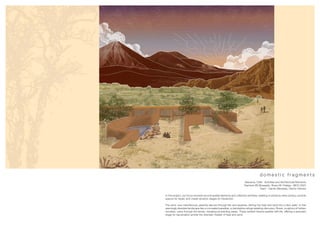

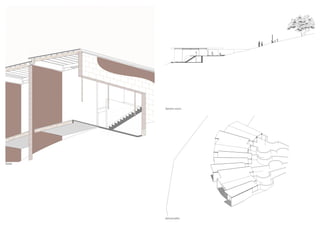


The project proposes housing for 2000 refugees in Kyaka II, Uganda. It aims to provide stability and resilience through transitional/semi-permanent residences using local materials. Facilities like schools, medical clinics and markets would be developed in phases centered around public spaces for security. Housing clusters are organized with gardens, shared workspaces and commercial streets for income generation. Sustainable features like rainwater collection, cross-ventilation and solar power address needs with minimal resources.


