ANDROID APP 
DEVELOPMENT JOURNEY 
From Idea to Product 
By Gerard Cordero 
11-13-2014 
http://goo.gl/Vrhm1W 
http://goo.gl/0HNqMb
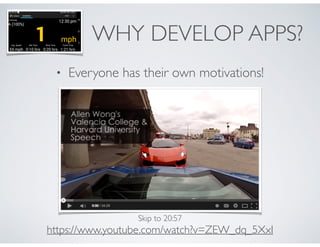
WHY DEVELOP APPS? 
• Everyone has their own motivations! 
Skip to 20:57 
https://www.youtube.com/watch?v=ZEW_dq_5XxI
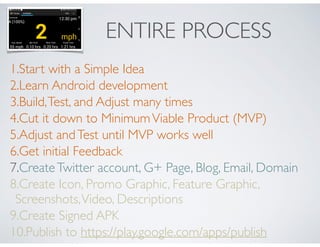
ENTIRE PROCESS 
1.Start with a Simple Idea 
2.Learn Android development 
3.Build, Test, and Adjust many times 
4.Cut it down to Minimum Viable Product (MVP) 
5.Adjust and Test until MVP works well 
6.Get initial Feedback 
7.Create Twitter account, G+ Page, Blog, Email, Domain 
8.Create Icon, Promo Graphic, Feature Graphic, 
Screenshots, Video, Descriptions 
9.Create Signed APK 
10.Publish to https://play.google.com/apps/publish
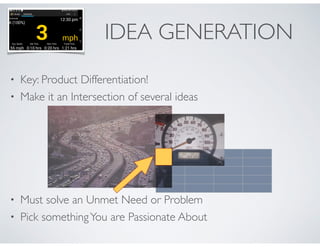
IDEA GENERATION 
• Key: Product Differentiation! 
• Make it an Intersection of several ideas 
! 
! 
! 
! 
! 
• Must solve an Unmet Need or Problem 
• Pick something You are Passionate About
DEVELOPMENT TIME 
• Budget 3 months @10-15 hrs/wk (nights, weekends) 
• Factor in time for: 
• Getting Stuck 
• Tidying up and Reworking your Code 
• Overbuilding to look ahead 
• Simple UI but tons of sophistication behind 
• Handle many subtle Scenarios 
• Perfection takes infinite time, do many releases!
REVENUE MODELS 
• Options: 
1.Paid App 
2.Free 
3.Free with Advertising 
4.Free + Paid App (2 apps) 
5.Free + One-Time In-App Purchase (IAP) 
6.Free + Subscription In-App Purchase (IAP) 
• Very difficult to start at higher than Free! 
• If you’re heavy on custom Cloud functionality, One-Time IAP 
will erode your profits over time (use Subscription IAP)
CUSTOM CLOUDS 
• Glue Logic + Persistence for Apps 
• For most apps, it’s inevitable! 
• Cloud Solutions: 
• Google App Engine - You manage Code only 
• Google Compute Engine, Amazon EC2, Microsoft 
Azure - You manage OS + Networking + Code 
• Use SSL for security 
• Cheap but not free (at a million users?)
MINIMUM VIABLE PRODUCT 
(MVP) 
• Definition: Product with the highest return on 
investment versus risk 
• Risk = Development Time 
• Basically, it’s the minimum set of features that makes the 
product acceptable to users 
• You want to see how Users react to your MVP, before 
you decide future features 
• If you have more features, shelf them, trim code to MVP
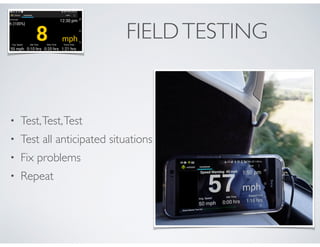
FIELD TESTING 
• Test, Test, Test 
• Test all anticipated situations 
• Fix problems 
• Repeat
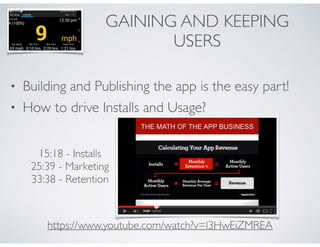
GAINING AND KEEPING 
USERS 
• Building and Publishing the app is the easy part! 
• How to drive Installs and Usage? 
15:18 - Installs 
25:39 - Marketing 
33:38 - Retention 
https://www.youtube.com/watch?v=l3HwEiZMREA
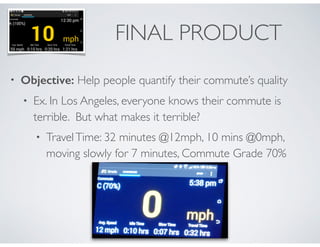
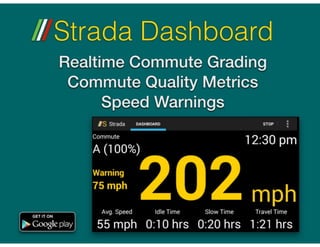
FINAL PRODUCT 
• Objective: Help people quantify their commute’s quality 
• Ex. In Los Angeles, everyone knows their commute is 
terrible. But what makes it terrible? 
• Travel Time: 38 minutes @15mph, 2 mins @0mph, 
moving slowly for 21 minutes, Commute Grade 74%, C 
http://goo.gl/0HNqMb
http://goo.gl/ 
0HNqMb

Android App Development Journey

  • 1.
    ANDROID APP DEVELOPMENTJOURNEY From Idea to Product By Gerard Cordero 11-13-2014 http://goo.gl/Vrhm1W http://goo.gl/0HNqMb
  • 2.
    WHY DEVELOP APPS? • Everyone has their own motivations! Skip to 20:57 https://www.youtube.com/watch?v=ZEW_dq_5XxI
  • 3.
    ENTIRE PROCESS 1.Startwith a Simple Idea 2.Learn Android development 3.Build, Test, and Adjust many times 4.Cut it down to Minimum Viable Product (MVP) 5.Adjust and Test until MVP works well 6.Get initial Feedback 7.Create Twitter account, G+ Page, Blog, Email, Domain 8.Create Icon, Promo Graphic, Feature Graphic, Screenshots, Video, Descriptions 9.Create Signed APK 10.Publish to https://play.google.com/apps/publish
  • 4.
    IDEA GENERATION •Key: Product Differentiation! • Make it an Intersection of several ideas ! ! ! ! ! • Must solve an Unmet Need or Problem • Pick something You are Passionate About
  • 5.
    DEVELOPMENT TIME •Budget 3 months @10-15 hrs/wk (nights, weekends) • Factor in time for: • Getting Stuck • Tidying up and Reworking your Code • Overbuilding to look ahead • Simple UI but tons of sophistication behind • Handle many subtle Scenarios • Perfection takes infinite time, do many releases!
  • 6.
    REVENUE MODELS •Options: 1.Paid App 2.Free 3.Free with Advertising 4.Free + Paid App (2 apps) 5.Free + One-Time In-App Purchase (IAP) 6.Free + Subscription In-App Purchase (IAP) • Very difficult to start at higher than Free! • If you’re heavy on custom Cloud functionality, One-Time IAP will erode your profits over time (use Subscription IAP)
  • 7.
    CUSTOM CLOUDS •Glue Logic + Persistence for Apps • For most apps, it’s inevitable! • Cloud Solutions: • Google App Engine - You manage Code only • Google Compute Engine, Amazon EC2, Microsoft Azure - You manage OS + Networking + Code • Use SSL for security • Cheap but not free (at a million users?)
  • 8.
    MINIMUM VIABLE PRODUCT (MVP) • Definition: Product with the highest return on investment versus risk • Risk = Development Time • Basically, it’s the minimum set of features that makes the product acceptable to users • You want to see how Users react to your MVP, before you decide future features • If you have more features, shelf them, trim code to MVP
  • 9.
    FIELD TESTING •Test, Test, Test • Test all anticipated situations • Fix problems • Repeat
  • 10.
    GAINING AND KEEPING USERS • Building and Publishing the app is the easy part! • How to drive Installs and Usage? 15:18 - Installs 25:39 - Marketing 33:38 - Retention https://www.youtube.com/watch?v=l3HwEiZMREA
  • 11.
    FINAL PRODUCT •Objective: Help people quantify their commute’s quality • Ex. In Los Angeles, everyone knows their commute is terrible. But what makes it terrible? • Travel Time: 38 minutes @15mph, 2 mins @0mph, moving slowly for 21 minutes, Commute Grade 74%, C http://goo.gl/0HNqMb
  • 12.