Analyzing Consumer MarketsInfluence, Psychology and the Buying Decision
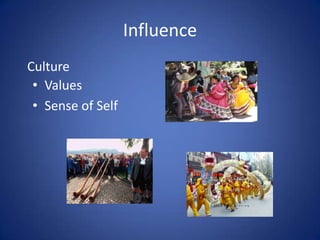
InfluenceCultureValues
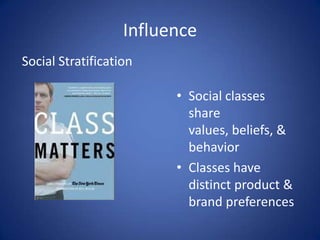
Sense of SelfInfluenceSocial StratificationSocial classes share values, beliefs, & behaviorClasses have distinct product & brand preferences
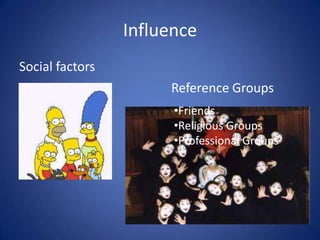
InfluenceSocial factorsReference GroupsFriends
Religious Groups
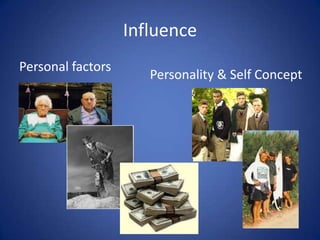
Professional GroupsInfluencePersonal factorsPersonality & Self Concept
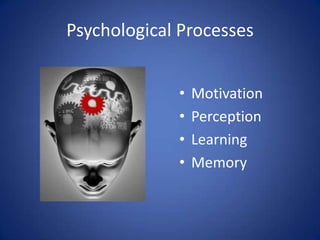
Psychological ProcessesMotivationPerceptionLearningMemory
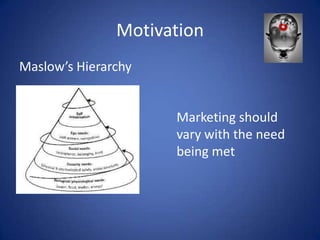
MotivationMaslow’s HierarchyMarketing should vary with the need being met
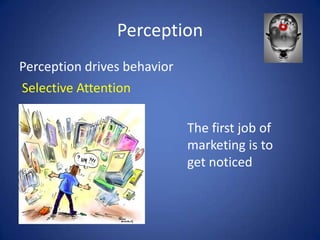
PerceptionPerception drives behaviorSelective AttentionThe first job of marketing is to get noticed
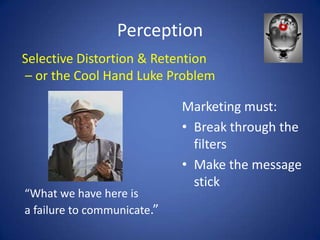
PerceptionSelective Distortion & Retention – or the Cool Hand Luke ProblemMarketing must:Break through the filtersMake the message stick“What we have here is a failure to communicate.”
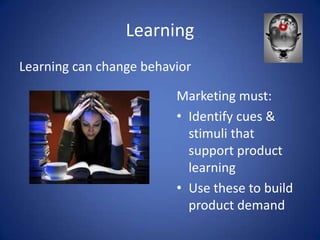
LearningLearning can change behaviorMarketing must:Identify cues & stimuli that support product learning
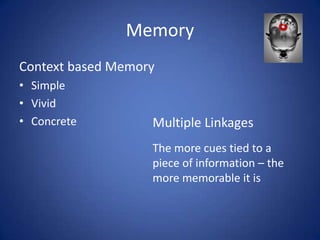
Use these to build product demandMemoryContext based MemorySimple VividConcreteMultiple LinkagesThe more cues tied to a piece of information – the more memorable it is
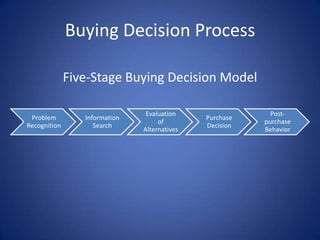
Buying Decision ProcessFive-Stage Buying Decision Model
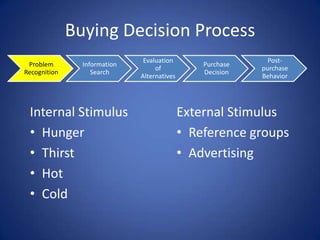
Buying Decision ProcessInternal StimulusHungerThirstHotColdExternal StimulusReference groups
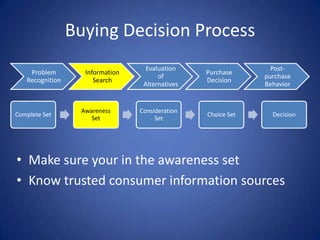
AdvertisingBuying Decision ProcessMake sure your in the awareness setKnow trusted consumer information sources
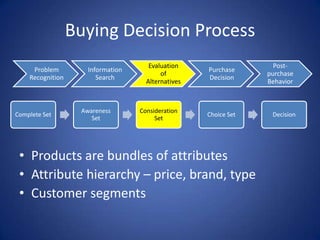
Buying Decision ProcessProducts are bundles of attributesAttribute hierarchy – price, brand, typeCustomer segments
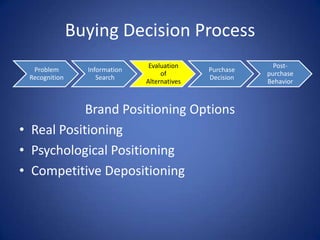
Buying Decision ProcessBrand Positioning OptionsReal PositioningPsychological PositioningCompetitive Depositioning
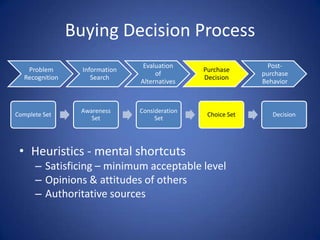
Buying Decision ProcessHeuristics - mental shortcutsSatisficing – minimum acceptable levelOpinions & attitudes of othersAuthoritative sources
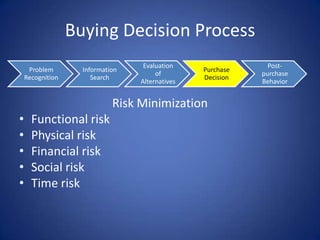
Buying Decision ProcessRisk MinimizationFunctional risk Physical riskFinancial riskSocial riskTime risk
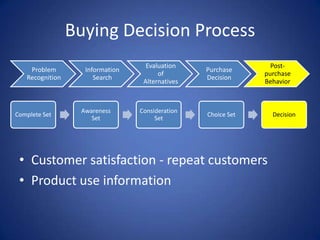
Buying Decision ProcessCustomer satisfaction - repeat customersProduct use information
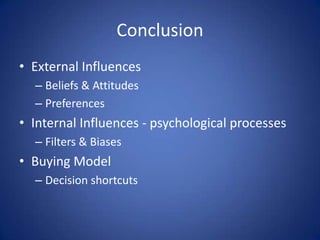
ConclusionExternal InfluencesBeliefs & AttitudesPreferencesInternal Influences - psychological processesFilters & BiasesBuying ModelDecision shortcuts
Questions?

Analyzing Consumer Markets

Editor's Notes

  • #2 Analyzing Consumer Markets -- what this really means is understanding the consumerThe forces that influence likes and dislikesThe psychology of consumer behaviorAnd – the mechanics of the buying decisionWith the goal of marketing the right products, to the right customers, in the right way
  • #3 So what factors Influence consumer behavior?Culture defines values and sense of self --- and is primary determinant of a persons behavior and wants If large enough, marketers may have greater success by focusing their efforts on specific subcultures
  • #4 Most societies are also stratified --- or broken into social classes Members of the same social class tend to have similar values, beliefs and behaviorsSocial classes also show distinct preferences when it comes to products and brands, which marketers should be aware of when positioning a product
  • #5 Social factors, such as Family play a big role in defining consumer identity and behaviorReference Groups are also importantThey create pressure that affects buying decisionsDecisions are also affected by the desire to be a member of a new group -- or not
  • #6 Personal factors such as age, occupation, and income all influence consumer behaviorPersonality and self-concept are also importantAnd consumers often choose brands that match their self-concept
  • #7 We have covered the external factors that influence consumer behavior, But, there are also internal psychological processes that impact behaviorThese are: Motivation -- Perception – Learning – and MemoryAnd successful marketing must understand and take these into account as well
  • #8 There are a number of theories and models about what motivates humans to actionThe most well known is Maslow’s Hierarchy – which orders needs from most to least urgentRegardless of the theory, what’s important to understand is that marketing and positioning should vary with the type of need a product is meeting
  • #9 Once motivated – it is perception that guides behavior, not realityThere are three processes that affect perceptionSelective Attention -- people are bombarded by information, but filter out most of itThe first job of marketers is to get noticed
  • #10 Selective Distortion & Retention – information is distorted and selectively retained to fit preconceptionsBoth can provide a halo effect to strong brandsSo, marketers have to figure how to break through the filters and make their message stick
  • #11 Most behavior is learned -- so it stands to reason that learning can change behavior.To create a successful marketing campaign one should identify the learning cues and stimuli that promote learning about a product, And use them to motivate customers and build product demand
  • #12 Humans have a context based memory systemwe tend to remember things better if they are simple, vivid and concreteThe more cues tied to a piece of information – the more memorable it isThis is why stories are such effective memory aids
  • #13 The external influences and internal psychology explain a lot about buying decisionsBut it is also beneficial to understand the stages consumers go through when making a purchase decisionEspecially since the process begins long before the actual purchase
  • #14 The process starts when a stimulus motivates actionAn internal stimulus – such as hunger motivates you to find foodAn external stimulus – such as a friend or commercial can impact the decision about where you go out to eat
  • #15 For non-trivial purchase decisions the next step is the information searchThe most important thing is the consumer knows about your productThat’s why it’s important for marketers to know the information sources consumers rely on at this step
  • #16 In the evaluation stage the product set gets narrowed for further considerationConsumers see products as a bundle of attributes that satisfy their needs to varying degreesMarketers should identify the hierarchy of attributes that affect the purchase decision in order to delineate customer segments
  • #17 Based on the customer evaluation of the product or brand there are three options to improve positionReal Positioning – change the productPsychological Positioning – alter beliefs about the productCompetitive Depositioning – alter beliefs about competitors products
  • #18 In the purchase decision stage the field of products gets narrowed even furtherMaking the decision often relies on mental shortcuts such as Satisficing – or setting minimum acceptable levelOpinions and Attitudes of others – particularly reference groups Authoritative sources – experts, Consumer Reports
  • #19 The purchase decision is impacted by the degree and type of risk the customer perceivesFunctional risk – it doesn’t performPhysical risk – its dangerousFinancial risk – its not a good valueSocial risk – cause embarrassmentTime risk – failure requires more search timeMarketers need to understand the sources of perceived risk for a product and provide information to alter these perceptions
  • #20 Finally, tracking post-purchase behavior is important for a number of reasonsKnowing whether a customer is satisfied or not is important feedback for product design, positioning and salesKnowing how a customer uses a product can provide similar feedback, and insight into how to increase product use.
  • #21 In order to better meet customer needs marketers must understand that Consumers are influenced by a host of external factors that shape who they are, what they believe, and what they prefer.And that internal processes impact the messages that get through and how buying decisions are made.