Optical Sensors
UST
Done by:
Shaima Al-Ahdal
Abrar Mohammed
Malak Nassar
Buthainah AL-Dubai
Nov 2021
Under supervision
of:
Dr.Zaid Alhajj
Content
What we are going to learn:
01 Definition of sensor
02 What are optical sensors
03 Operating Principle
04 Why optical sensors
05 Purposes of optical
sensor
06 Usage of optical sensor
07 Types of optical sensor
08 Applications
What is a
sensor ?
a device that responds to a physical stimulus
(such as heat, light, sound, pressure,
magnetism, or a particular motion) and
transmits a resulting impulse (as for
measurement or operating a control)
What is
Optical
sensor ?
It is a sensor that
converts light rays into
an electronic signal.
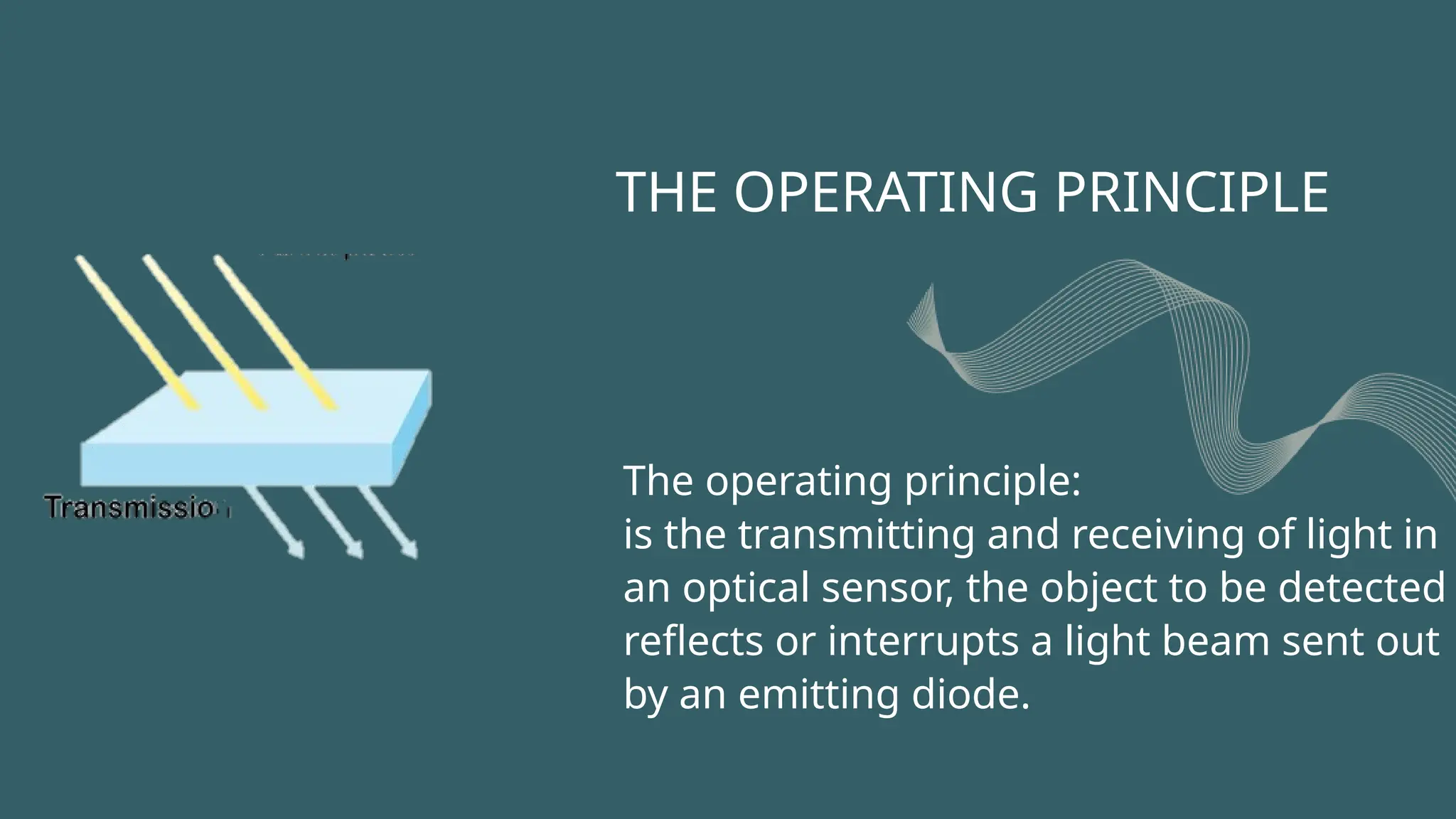
The operating principle:
is the transmitting and receiving of light in
an optical sensor, the object to be detected
reflects or interrupts a light beam sent out
by an emitting diode.
THE OPERATING PRINCIPLE
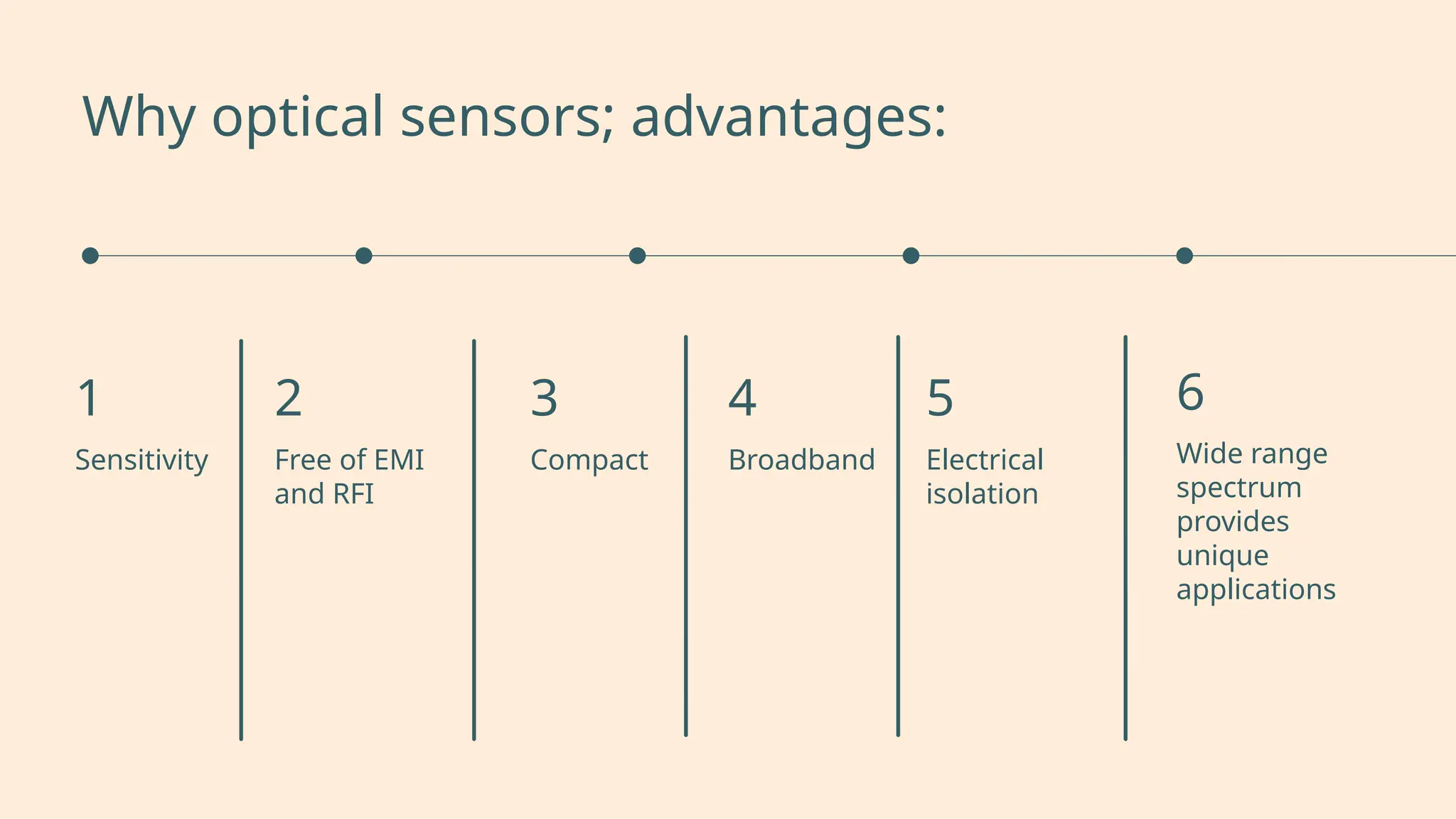
Why optical sensors; advantages:
1
Sensitivity
2
Free of EMI
and RFI
3
Compact
4
Broadband
5
Electrical
isolation
6
Wide range
spectrum
provides
unique
applications
Purpose
to measure a physical quantity of light and,
depending on the type of sensor, then translates it
into a form that is readable by an integrated
measuring device
Usage
• For contact-less detection
• counting
• positioning of parts.
Photoconductive devices used to measure the
resistance by converting a change of incident
light into a change of resistance.
The photovoltaic cell (solar cell) converts an
amount of incident light into an output
voltage.
The Photodiodes convert an amount
of incident light into an output
current.
Types of optical sensor
Phototransistors are a type of bipolar
transistor where the base-collector junction is
exposed to light. This results in the same
behavior of a photodiode, but with an internal
gain.
Types of optical sensors
Types of
optical
sensors’
system
1. Through-Beam Sensors
2. Retro-Reflective Sensors
3. Diffuse Reflection Sensors
1.
Through-
Beam
Sensors
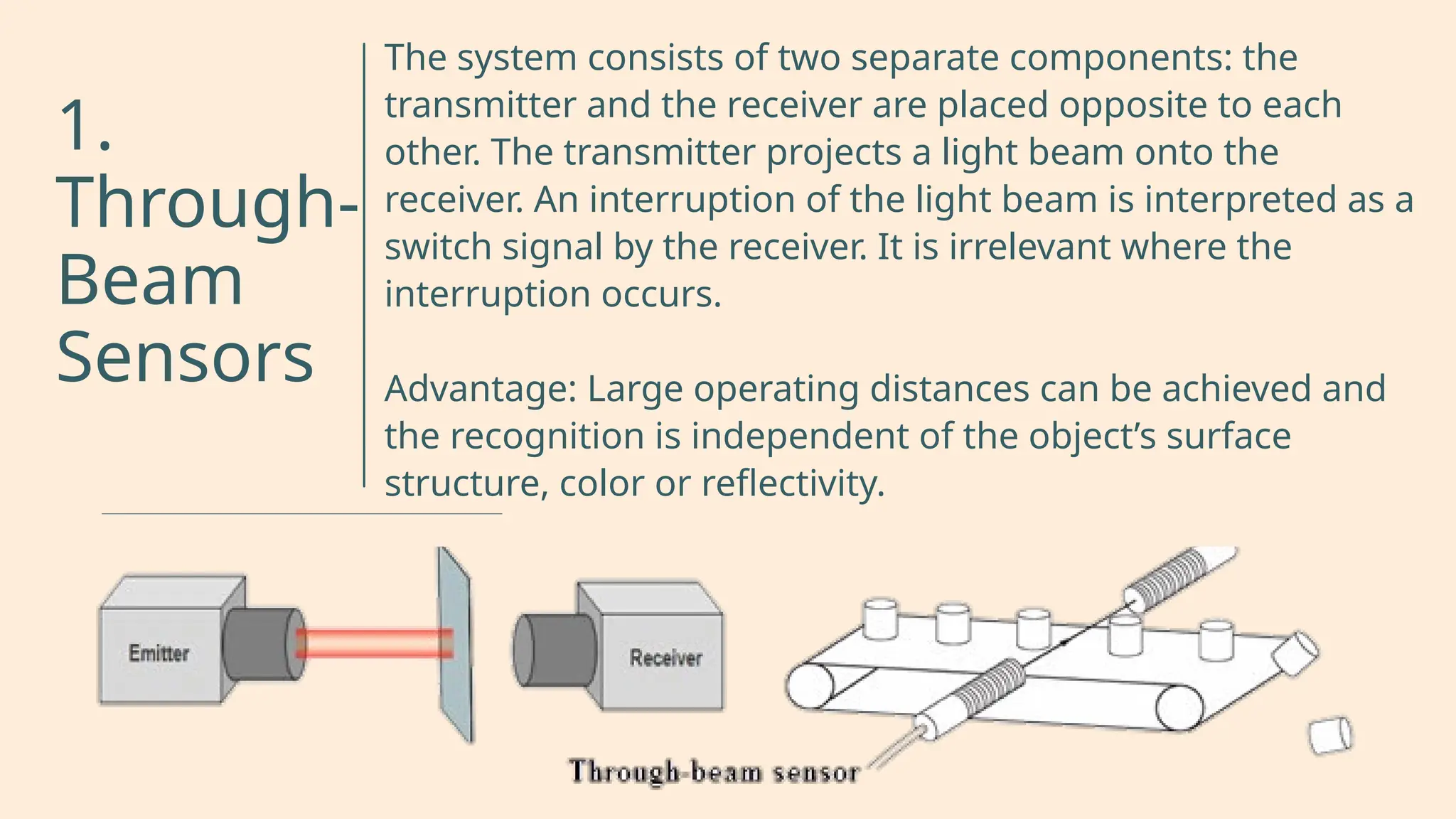
The system consists of two separate components: the
transmitter and the receiver are placed opposite to each
other. The transmitter projects a light beam onto the
receiver. An interruption of the light beam is interpreted as a
switch signal by the receiver. It is irrelevant where the
interruption occurs.
Advantage: Large operating distances can be achieved and
the recognition is independent of the object’s surface
structure, color or reflectivity.
2. Retro-
Reflective
Sensors
Transmitter and receiver are both in the
same house, through a reflector the
emitted light beam is directed back to the
receiver. An interruption of the light
beam initiates a switching operation.
Where the interruption occurs is of no
importance.
Advantage: Retro-reflective sensors
enable large operating distances with
switching points, which are exactly
reproducible requiring little mounting
effort. All objects interrupting the light
beam are accurately detected
independently of their surface structure
or color.
3. Diffuse
Reflectio
n
Sensors
Both transmitter and receiver are in one
housing. The transmitted light is reflected by the
object to be detected.
Advantage: The diffused light intensity at the
receiver serves as the switching condition.
Regardless of the sensitivity setting the rear part
always reflects better than the front part. This
leads to the consequence to erroneous
switching operations.
Medical
Applications
Biomedical Applications:
Optical sensors have robust applications in
the biomedical field. Some of the examples
are Breath analysis using tunable diode
laser, Optical heart-rate monitors an optical
heart-rate monitor measures your heart
rate using light. A LED shines through the
skin, and an optical sensor examines the
light that reflected back. Since blood
absorbs more light, fluctuations in light
level can be translated into heart rate. This
process is called as photoplethysmography
Any question ?
Thank for listening
Resourc
e
Page
• https://
www.elprocus.com/
optical-sensors-types-
basics-and-applications/
• https://
electricalgang.com/
optical-sensor/

an overview of optical sensor and its application .pptx

  • 1.
    Optical Sensors UST Done by: ShaimaAl-Ahdal Abrar Mohammed Malak Nassar Buthainah AL-Dubai Nov 2021 Under supervision of: Dr.Zaid Alhajj
  • 2.
    Content What we aregoing to learn: 01 Definition of sensor 02 What are optical sensors 03 Operating Principle 04 Why optical sensors 05 Purposes of optical sensor 06 Usage of optical sensor 07 Types of optical sensor 08 Applications
  • 3.
    What is a sensor? a device that responds to a physical stimulus (such as heat, light, sound, pressure, magnetism, or a particular motion) and transmits a resulting impulse (as for measurement or operating a control)
  • 4.
    What is Optical sensor ? Itis a sensor that converts light rays into an electronic signal.
  • 5.
    The operating principle: isthe transmitting and receiving of light in an optical sensor, the object to be detected reflects or interrupts a light beam sent out by an emitting diode. THE OPERATING PRINCIPLE
  • 6.
    Why optical sensors;advantages: 1 Sensitivity 2 Free of EMI and RFI 3 Compact 4 Broadband 5 Electrical isolation 6 Wide range spectrum provides unique applications
  • 7.
    Purpose to measure aphysical quantity of light and, depending on the type of sensor, then translates it into a form that is readable by an integrated measuring device
  • 8.
    Usage • For contact-lessdetection • counting • positioning of parts.
  • 9.
    Photoconductive devices usedto measure the resistance by converting a change of incident light into a change of resistance. The photovoltaic cell (solar cell) converts an amount of incident light into an output voltage. The Photodiodes convert an amount of incident light into an output current. Types of optical sensor Phototransistors are a type of bipolar transistor where the base-collector junction is exposed to light. This results in the same behavior of a photodiode, but with an internal gain.
  • 10.
  • 11.
    Types of optical sensors’ system 1. Through-BeamSensors 2. Retro-Reflective Sensors 3. Diffuse Reflection Sensors
  • 12.
    1. Through- Beam Sensors The system consistsof two separate components: the transmitter and the receiver are placed opposite to each other. The transmitter projects a light beam onto the receiver. An interruption of the light beam is interpreted as a switch signal by the receiver. It is irrelevant where the interruption occurs. Advantage: Large operating distances can be achieved and the recognition is independent of the object’s surface structure, color or reflectivity.
  • 13.
    2. Retro- Reflective Sensors Transmitter andreceiver are both in the same house, through a reflector the emitted light beam is directed back to the receiver. An interruption of the light beam initiates a switching operation. Where the interruption occurs is of no importance. Advantage: Retro-reflective sensors enable large operating distances with switching points, which are exactly reproducible requiring little mounting effort. All objects interrupting the light beam are accurately detected independently of their surface structure or color.
  • 14.
    3. Diffuse Reflectio n Sensors Both transmitterand receiver are in one housing. The transmitted light is reflected by the object to be detected. Advantage: The diffused light intensity at the receiver serves as the switching condition. Regardless of the sensitivity setting the rear part always reflects better than the front part. This leads to the consequence to erroneous switching operations.
  • 15.
    Medical Applications Biomedical Applications: Optical sensorshave robust applications in the biomedical field. Some of the examples are Breath analysis using tunable diode laser, Optical heart-rate monitors an optical heart-rate monitor measures your heart rate using light. A LED shines through the skin, and an optical sensor examines the light that reflected back. Since blood absorbs more light, fluctuations in light level can be translated into heart rate. This process is called as photoplethysmography
  • 16.
    Any question ? Thankfor listening
  • 17.