Foundations in Philanthropy:
Catalysts for Positive Change
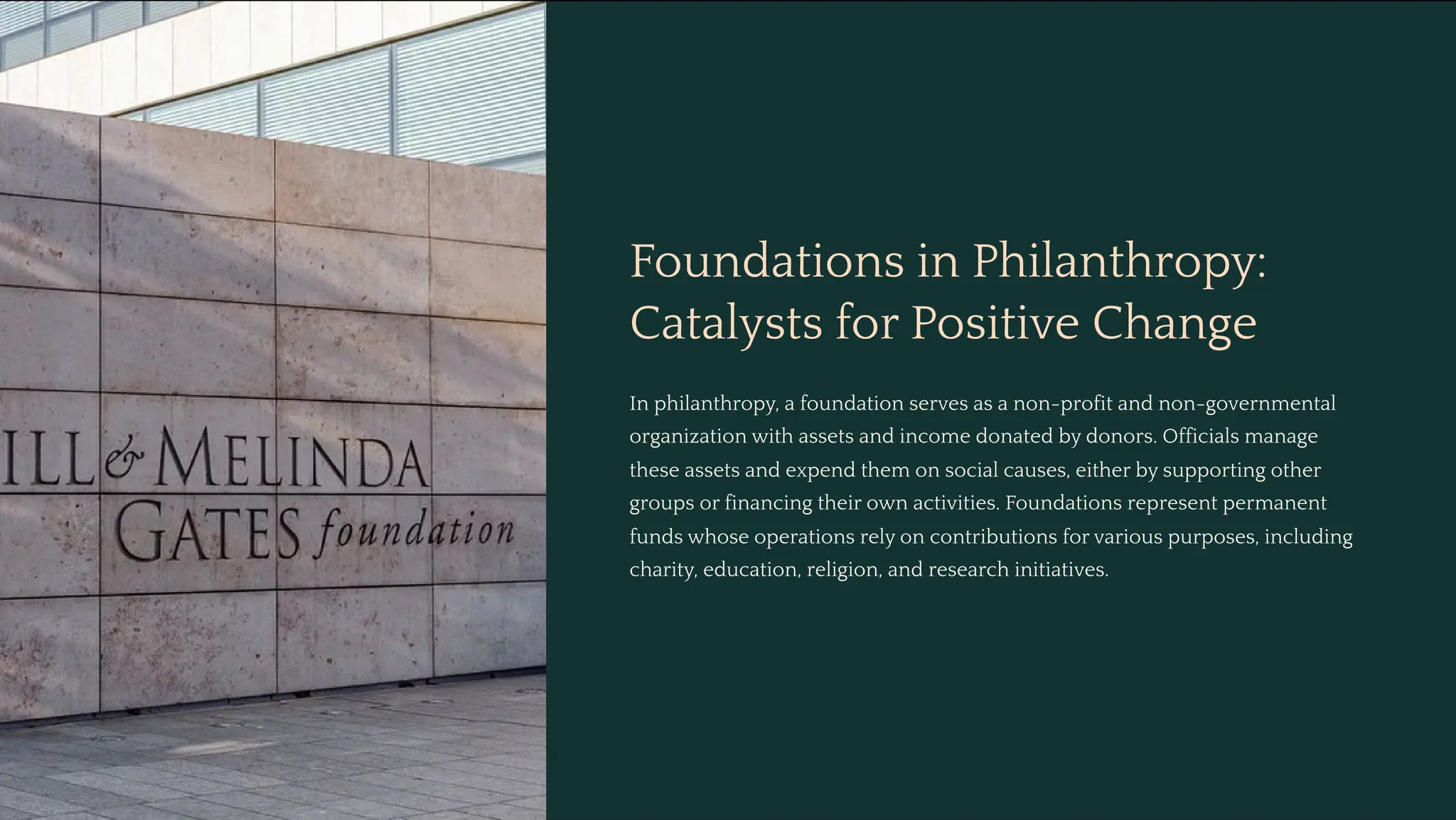
In philanthropy, a foundation serves as a non-profit and non-governmental
organization with assets and income donated by donors. Officials manage
these assets and expend them on social causes, either by supporting other
groups or financing their own activities. Foundations represent permanent
funds whose operations rely on contributions for various purposes, including
charity, education, religion, and research initiatives.
Understanding Foundations: Structure and History
Legal Structure
In civil law jurisdictions, a foundation is a distinct legal entity with
a legal personality and an entry in a public registry, similar to a
company. However, while companies have shareholders,
foundations have none (though they may have voting members). A
foundation owns assets for specific purposes outlined in its
founding documents and operates based on contracts rather than
fiduciary duties.
Historical Context
Foundations date back to ancient civilizations in Greece, the
Middle East, and Rome. Early models include Plato's Academy
(387 BCE). During the Middle Ages, the Christian church managed
trusts for society's benefit. In the 7th century CE, the Islamic world
established the "waqf," a philanthropic fund managed under a
trust. Western European merchants founded similar
organizations in the 17th and 18th centuries.
Foundations vs. Charities: Key Differences
Foundations
Corporation or trust that provides grants to support causes
Receives funding through donor funding or endowments
Can be established by individuals, families, or corporations
Focus on specific missions like education and healthcare
Assets are separate from those of its founders
Charities
Depends on continual donations and grants for operations
A third of contributions must come from the general
public
Often more directly involved in service delivery
May receive funding from foundations
Typically more focused on immediate needs
Both foundations and charities play vital roles in addressing societal challenges, but they operate differently in terms of funding structure,
sustainability, and focus areas.
The Power of Foundations: Key Strengths
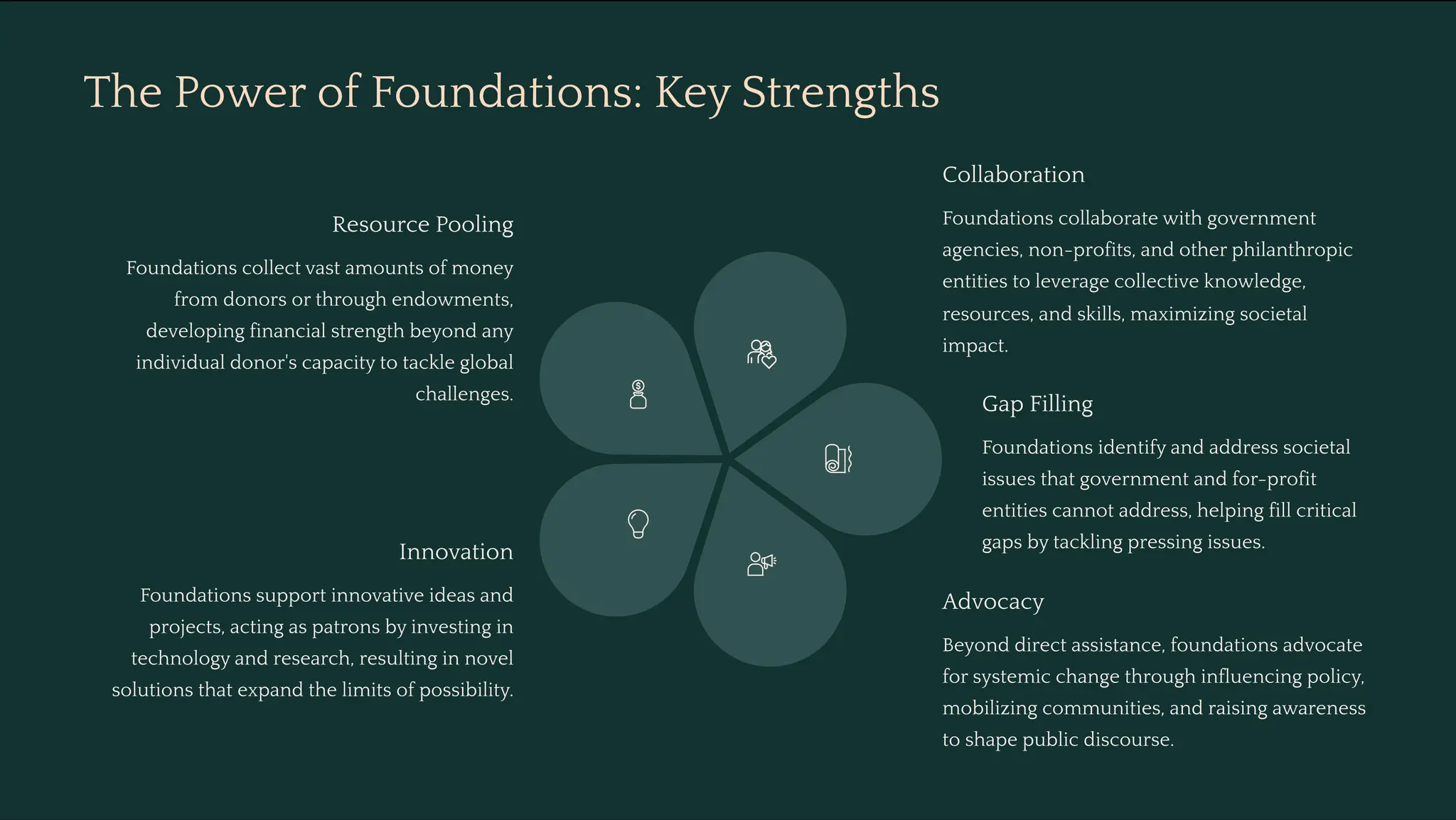
Resource Pooling
Foundations collect vast amounts of money
from donors or through endowments,
developing financial strength beyond any
individual donor's capacity to tackle global
challenges.
Collaboration
Foundations collaborate with government
agencies, non-profits, and other philanthropic
entities to leverage collective knowledge,
resources, and skills, maximizing societal
impact.
Gap Filling
Foundations identify and address societal
issues that government and for-profit
entities cannot address, helping fill critical
gaps by tackling pressing issues.
Advocacy
Beyond direct assistance, foundations advocate
for systemic change through influencing policy,
mobilizing communities, and raising awareness
to shape public discourse.
Innovation
Foundations support innovative ideas and
projects, acting as patrons by investing in
technology and research, resulting in novel
solutions that expand the limits of possibility.
Foundations as Catalysts for Lasting Change
Accountability and Transparency
Foundations distinguish themselves in the philanthropic space by embedding
accountability and transparency in their practices. Donors and other entities
trust foundations because of such mechanisms, ensuring the allocation of funds
to initiatives that align with the foundation's mission.
Creating Positive Change
By addressing problems related to education, environmental conservation,
healthcare, and poverty, foundations act as catalysts that create positive change.
Through pooling resources and channeling them to appropriate sectors,
foundations drive lasting and meaningful impact in communities facing varying
societal challenges.

An Overview of Foundations in Philanthropy

  • 1.
    Foundations in Philanthropy: Catalystsfor Positive Change In philanthropy, a foundation serves as a non-profit and non-governmental organization with assets and income donated by donors. Officials manage these assets and expend them on social causes, either by supporting other groups or financing their own activities. Foundations represent permanent funds whose operations rely on contributions for various purposes, including charity, education, religion, and research initiatives.
  • 2.
    Understanding Foundations: Structureand History Legal Structure In civil law jurisdictions, a foundation is a distinct legal entity with a legal personality and an entry in a public registry, similar to a company. However, while companies have shareholders, foundations have none (though they may have voting members). A foundation owns assets for specific purposes outlined in its founding documents and operates based on contracts rather than fiduciary duties. Historical Context Foundations date back to ancient civilizations in Greece, the Middle East, and Rome. Early models include Plato's Academy (387 BCE). During the Middle Ages, the Christian church managed trusts for society's benefit. In the 7th century CE, the Islamic world established the "waqf," a philanthropic fund managed under a trust. Western European merchants founded similar organizations in the 17th and 18th centuries.
  • 3.
    Foundations vs. Charities:Key Differences Foundations Corporation or trust that provides grants to support causes Receives funding through donor funding or endowments Can be established by individuals, families, or corporations Focus on specific missions like education and healthcare Assets are separate from those of its founders Charities Depends on continual donations and grants for operations A third of contributions must come from the general public Often more directly involved in service delivery May receive funding from foundations Typically more focused on immediate needs Both foundations and charities play vital roles in addressing societal challenges, but they operate differently in terms of funding structure, sustainability, and focus areas.
  • 4.
    The Power ofFoundations: Key Strengths Resource Pooling Foundations collect vast amounts of money from donors or through endowments, developing financial strength beyond any individual donor's capacity to tackle global challenges. Collaboration Foundations collaborate with government agencies, non-profits, and other philanthropic entities to leverage collective knowledge, resources, and skills, maximizing societal impact. Gap Filling Foundations identify and address societal issues that government and for-profit entities cannot address, helping fill critical gaps by tackling pressing issues. Advocacy Beyond direct assistance, foundations advocate for systemic change through influencing policy, mobilizing communities, and raising awareness to shape public discourse. Innovation Foundations support innovative ideas and projects, acting as patrons by investing in technology and research, resulting in novel solutions that expand the limits of possibility.
  • 5.
    Foundations as Catalystsfor Lasting Change Accountability and Transparency Foundations distinguish themselves in the philanthropic space by embedding accountability and transparency in their practices. Donors and other entities trust foundations because of such mechanisms, ensuring the allocation of funds to initiatives that align with the foundation's mission. Creating Positive Change By addressing problems related to education, environmental conservation, healthcare, and poverty, foundations act as catalysts that create positive change. Through pooling resources and channeling them to appropriate sectors, foundations drive lasting and meaningful impact in communities facing varying societal challenges.