Confidential – do not distribute
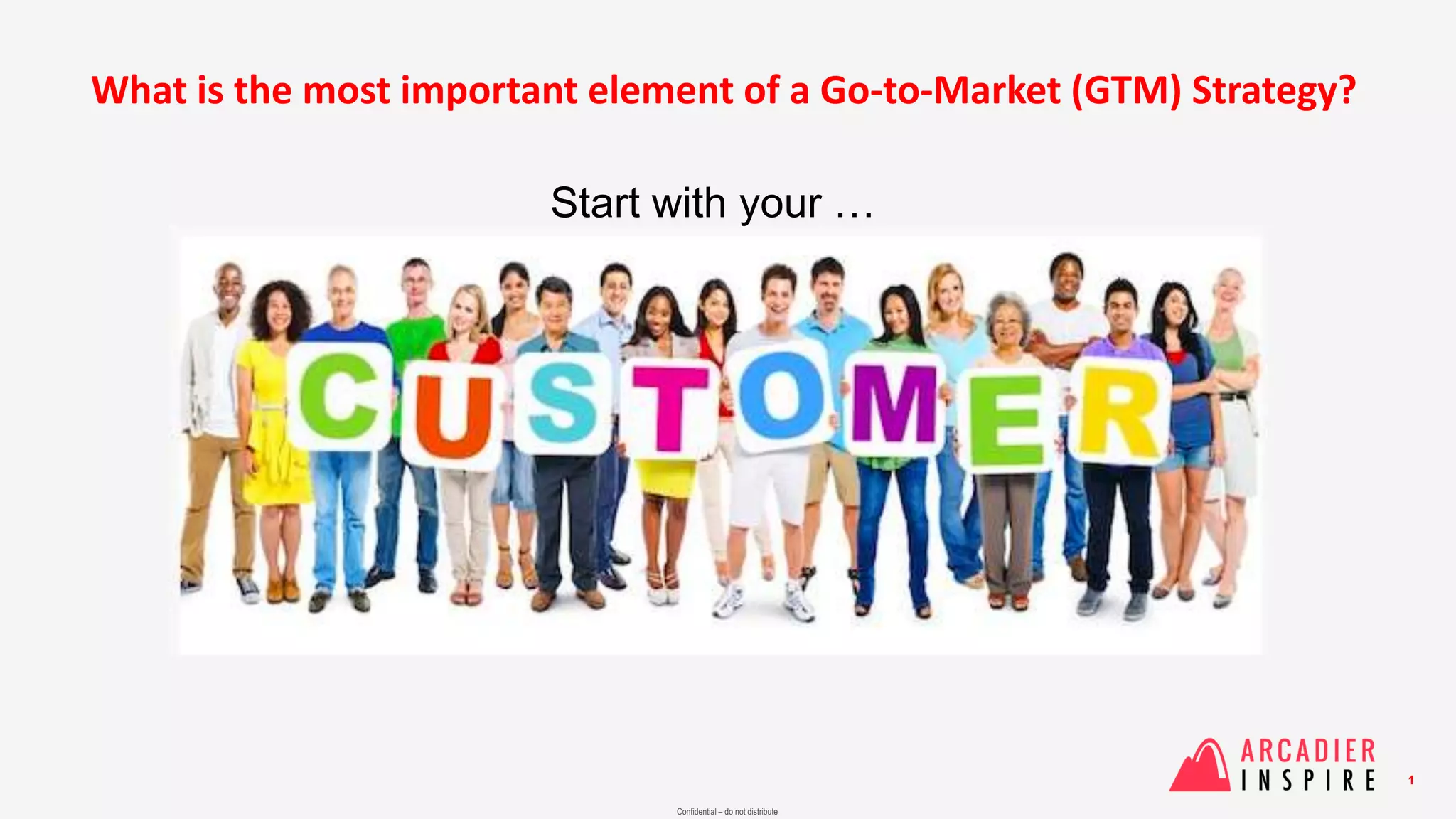
What is the most important element of a Go-to-Market (GTM) Strategy?
1
Start with your …
Confidential – do not distribute
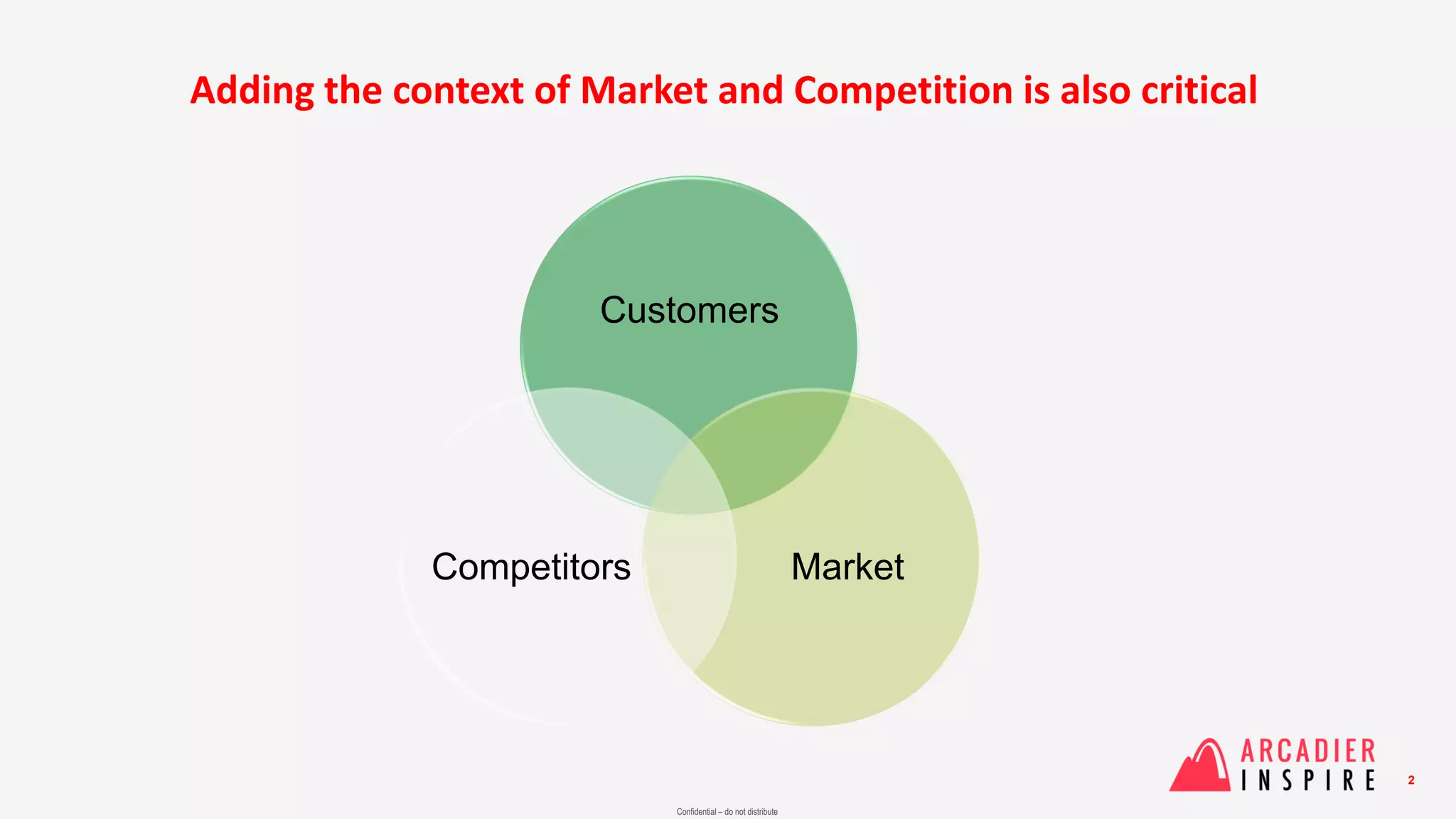
Adding the context of Market and Competition is also critical
2
Customers
MarketCompetitors
Confidential – do not distribute
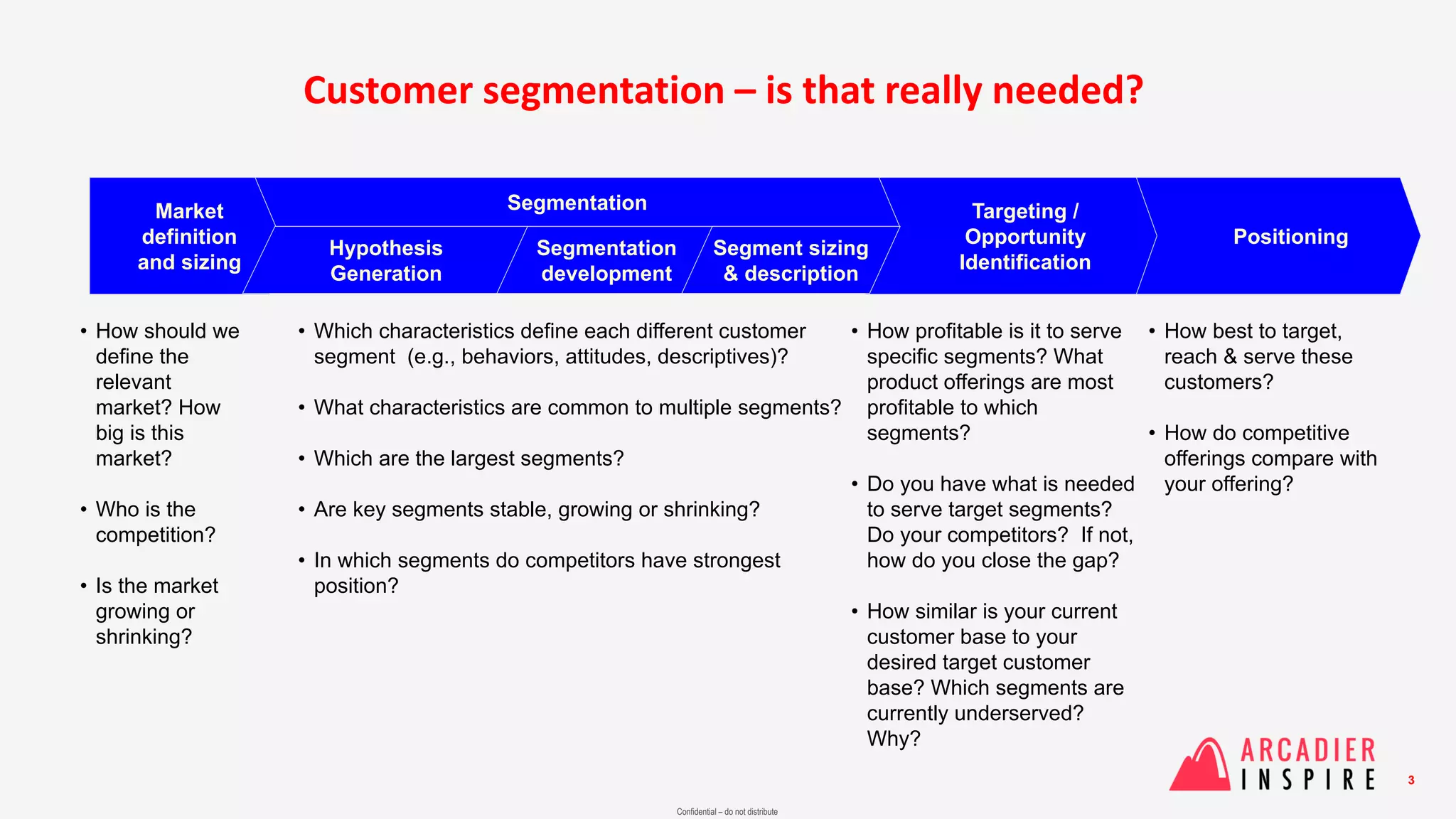
Customer segmentation – is that really needed?
3
• How should we
define the
relevant
market? How
big is this
market?
• Who is the
competition?
• Is the market
growing or
shrinking?
• Which characteristics define each different customer
segment (e.g., behaviors, attitudes, descriptives)?
• What characteristics are common to multiple segments?
• Which are the largest segments?
• Are key segments stable, growing or shrinking?
• In which segments do competitors have strongest
position?
• How profitable is it to serve
specific segments? What
product offerings are most
profitable to which
segments?
• Do you have what is needed
to serve target segments?
Do your competitors? If not,
how do you close the gap?
• How similar is your current
customer base to your
desired target customer
base? Which segments are
currently underserved?
Why?
• How best to target,
reach & serve these
customers?
• How do competitive
offerings compare with
your offering?
Market
definition
and sizing
Targeting /
Opportunity
Identification
Positioning
Segmentation
Hypothesis
Generation
Segmentation
development
Segment sizing
& description
Confidential – do not distribute
4
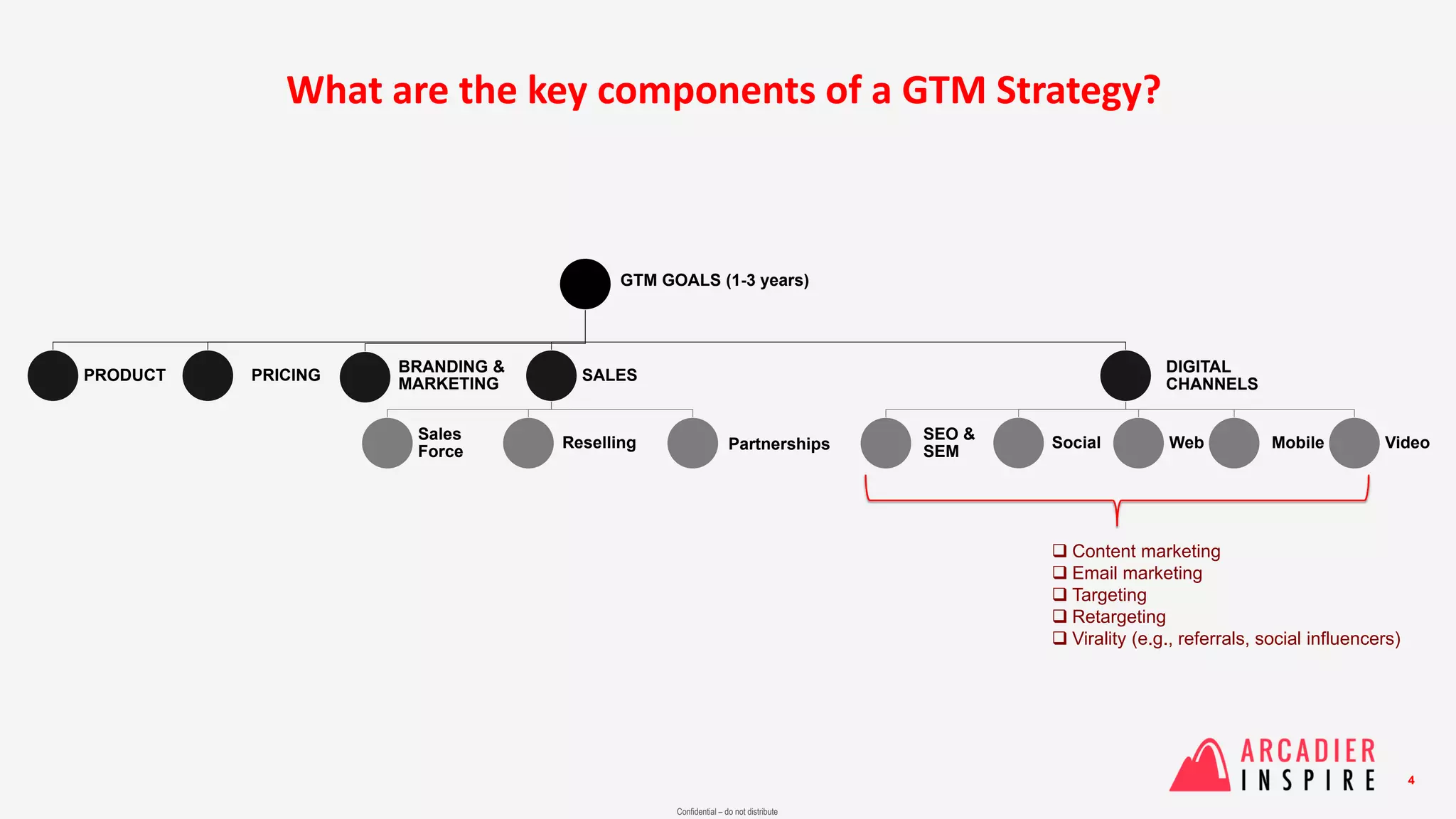
GTM GOALS (1-3 years)
PRODUCT PRICING
BRANDING &
MARKETING
SALES
Sales
Force
Reselling Partnerships
DIGITAL
CHANNELS
SEO &
SEM
Social Web Mobile Video
 Content marketing
 Email marketing
 Targeting
 Retargeting
 Virality (e.g., referrals, social influencers)
What are the key components of a GTM Strategy?
Confidential – do not distribute
5
Confidential – do not distribute
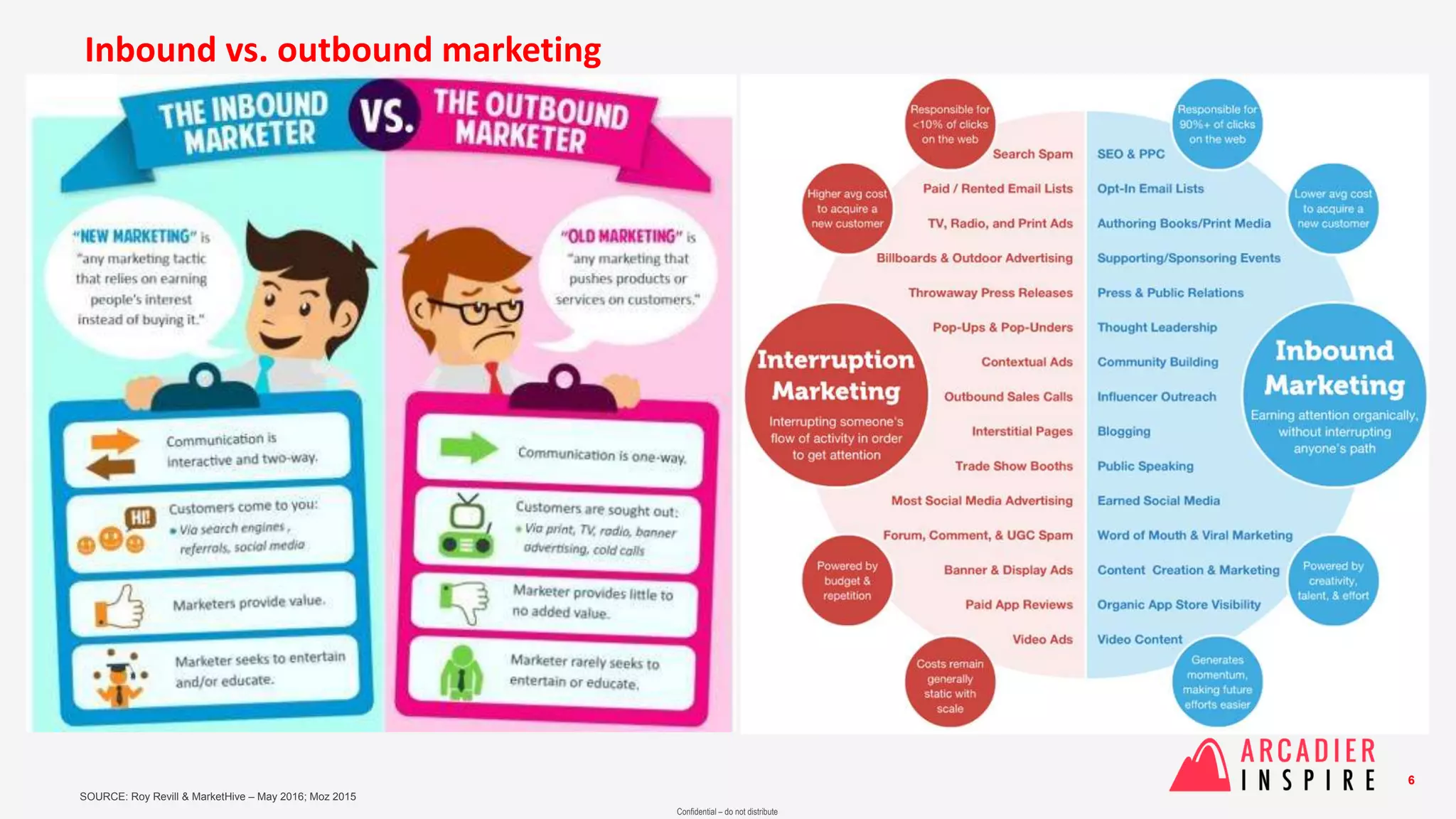
Inbound vs. outbound marketing
SOURCE: Roy Revill & MarketHive – May 2016; Moz 2015
6
Confidential – do not distribute
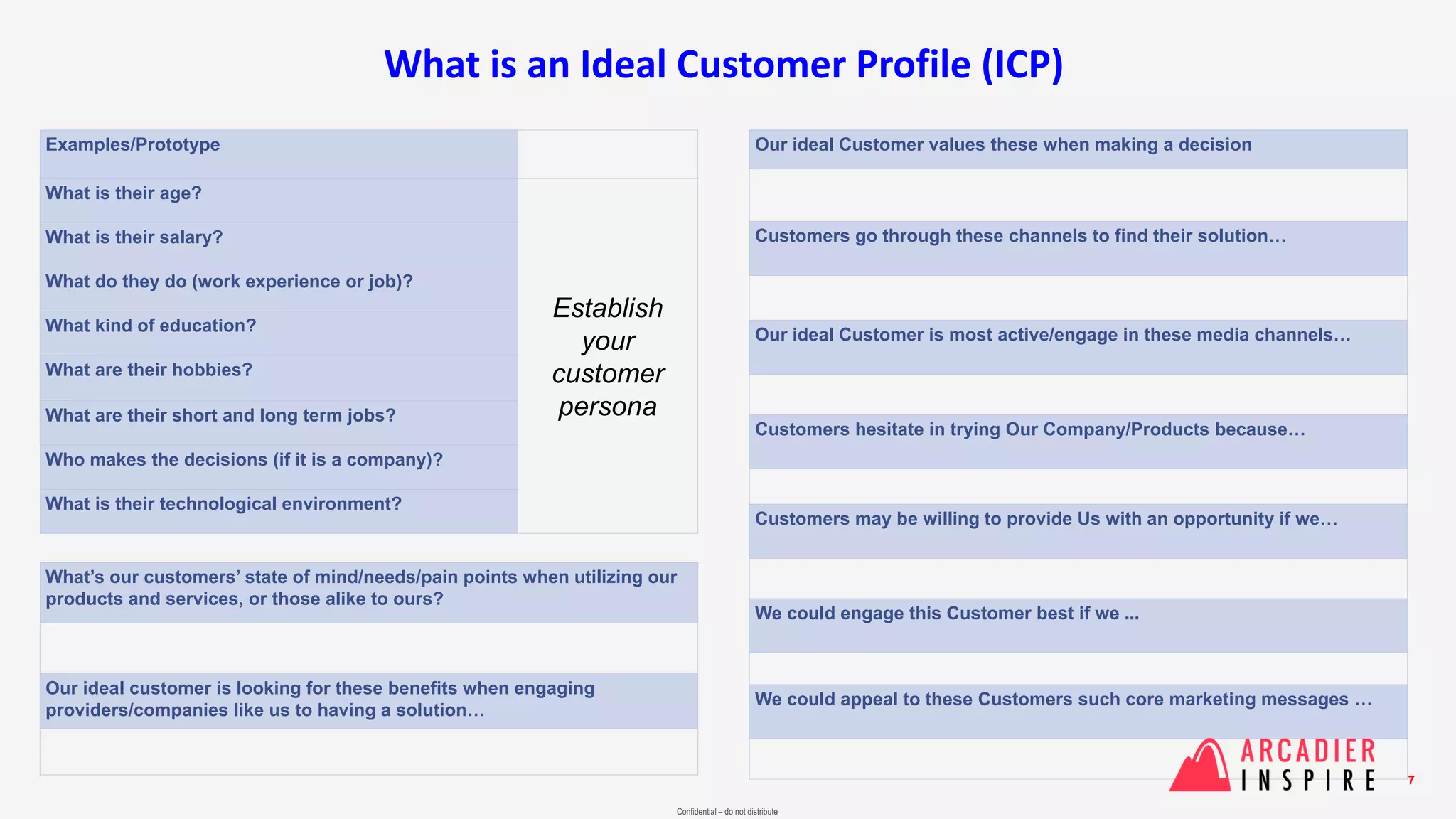
What is an Ideal Customer Profile (ICP)
7
Examples/Prototype
What is their age?
Establish
your
customer
persona
What is their salary?
What do they do (work experience or job)?
What kind of education?
What are their hobbies?
What are their short and long term jobs?
Who makes the decisions (if it is a company)?
What is their technological environment?
Our ideal Customer values these when making a decision
Customers go through these channels to find their solution…
Our ideal Customer is most active/engage in these media channels…
Customers hesitate in trying Our Company/Products because…
Customers may be willing to provide Us with an opportunity if we…
We could engage this Customer best if we ...
We could appeal to these Customers such core marketing messages …
What’s our customers’ state of mind/needs/pain points when utilizing our
products and services, or those alike to ours?
Our ideal customer is looking for these benefits when engaging
providers/companies like us to having a solution…

An Entrepreneurs Go-To-Market Guide

  • 1.
    Confidential – donot distribute What is the most important element of a Go-to-Market (GTM) Strategy? 1 Start with your …
  • 2.
    Confidential – donot distribute Adding the context of Market and Competition is also critical 2 Customers MarketCompetitors
  • 3.
    Confidential – donot distribute Customer segmentation – is that really needed? 3 • How should we define the relevant market? How big is this market? • Who is the competition? • Is the market growing or shrinking? • Which characteristics define each different customer segment (e.g., behaviors, attitudes, descriptives)? • What characteristics are common to multiple segments? • Which are the largest segments? • Are key segments stable, growing or shrinking? • In which segments do competitors have strongest position? • How profitable is it to serve specific segments? What product offerings are most profitable to which segments? • Do you have what is needed to serve target segments? Do your competitors? If not, how do you close the gap? • How similar is your current customer base to your desired target customer base? Which segments are currently underserved? Why? • How best to target, reach & serve these customers? • How do competitive offerings compare with your offering? Market definition and sizing Targeting / Opportunity Identification Positioning Segmentation Hypothesis Generation Segmentation development Segment sizing & description
  • 4.
    Confidential – donot distribute 4 GTM GOALS (1-3 years) PRODUCT PRICING BRANDING & MARKETING SALES Sales Force Reselling Partnerships DIGITAL CHANNELS SEO & SEM Social Web Mobile Video  Content marketing  Email marketing  Targeting  Retargeting  Virality (e.g., referrals, social influencers) What are the key components of a GTM Strategy?
  • 5.
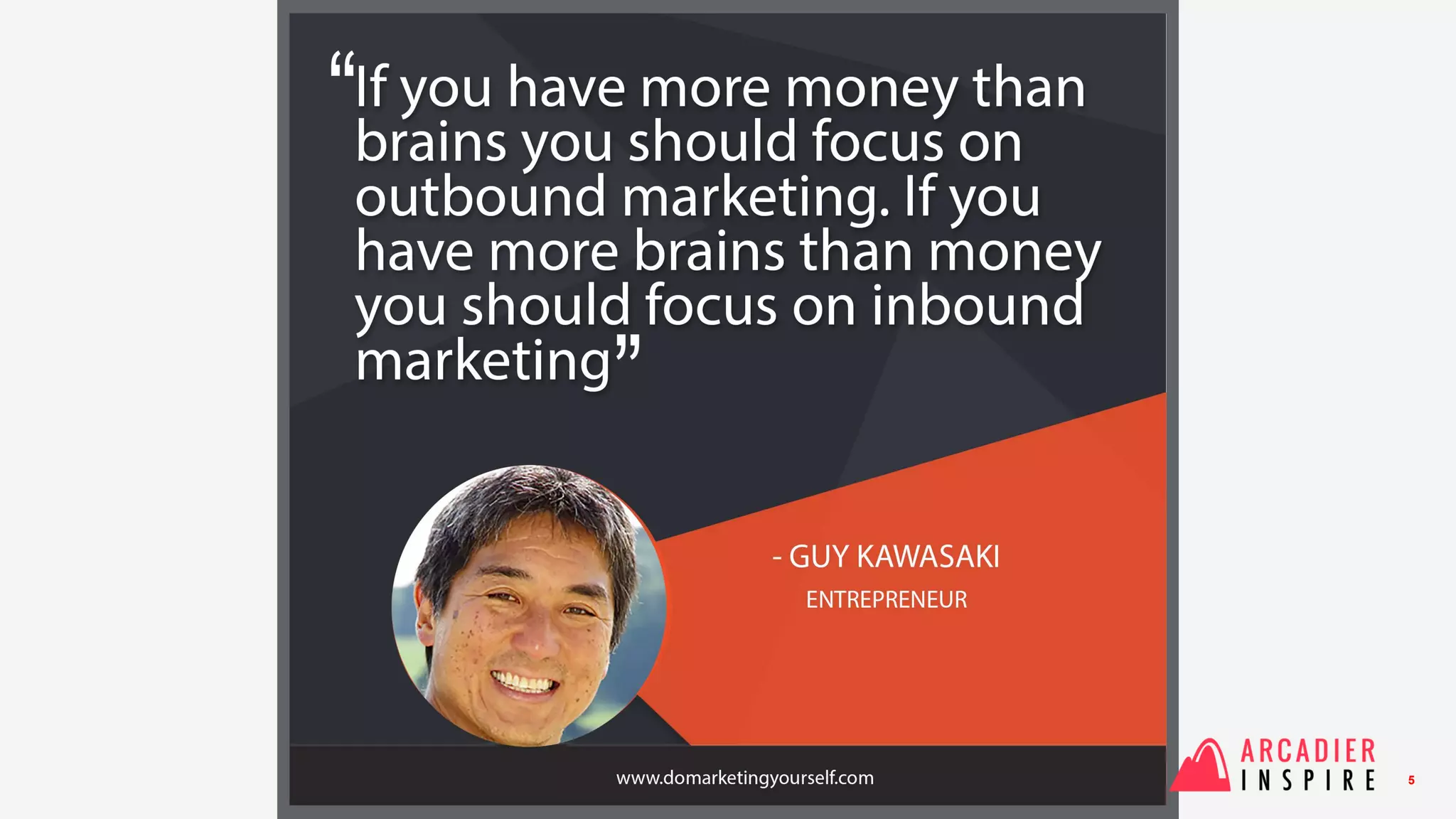
    Confidential – donot distribute 5
  • 6.
    Confidential – donot distribute Inbound vs. outbound marketing SOURCE: Roy Revill & MarketHive – May 2016; Moz 2015 6
  • 7.
    Confidential – donot distribute What is an Ideal Customer Profile (ICP) 7 Examples/Prototype What is their age? Establish your customer persona What is their salary? What do they do (work experience or job)? What kind of education? What are their hobbies? What are their short and long term jobs? Who makes the decisions (if it is a company)? What is their technological environment? Our ideal Customer values these when making a decision Customers go through these channels to find their solution… Our ideal Customer is most active/engage in these media channels… Customers hesitate in trying Our Company/Products because… Customers may be willing to provide Us with an opportunity if we… We could engage this Customer best if we ... We could appeal to these Customers such core marketing messages … What’s our customers’ state of mind/needs/pain points when utilizing our products and services, or those alike to ours? Our ideal customer is looking for these benefits when engaging providers/companies like us to having a solution…