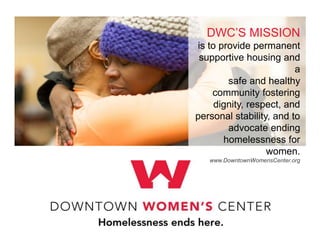
DWC’S MISSION
is to provide permanent
supportive housing and
a
safe and healthy
community fostering
dignity, respect, and
personal stability, and to
advocate ending
homelessness for
women.
www.DowntownWomensCenter.org
DWC is nationally recognized as a prototype for unique and effective programs serving
homeless women and ending homelessness. DWC served over 4000 women in 2014.
DWC Programs & Services
DROP-IN DAY CENTER
• 200 women each day
• Services: Meals (100,000+)
showers, phones & mail
• Trauma Recovery Center
HOUSING
• 119 units of permanent
supportive housing (2 locations)
• 75 housed inVeteran’s Programs
• 95% of the women stay housed
permanently—a high success rate
CLINICAL HEALTH SERVICES
• Case management, mental
health & medical services
• Over 1200 women served
PERSONAL & FINANCIAL
OPPORTUNITY
• Education, skill development,
on-the-job training
• Over 1200 women served
DowntownWomen’s
Trauma Recovery Center
• A partnership between Downtown Women’s Center and Peace Over
Violence
• The Trauma Recovery Center is supported by the California Victim
Compensation and Government Claims Board, and is the only one of its
kind in downtown Los Angeles
• In 2015, we will serve over 130 individuals who have experienced a life-
threatening situation in the past 3 years
• If you have experienced trauma related to sexual assault, domestic
violence, human trafficking, homicide of a loved one, community violence,
or accidents, please visit us at 442 S. San Pedro Street, Los Angeles
90013 or call 213-680-0600
Homelessness in Los Angeles
Total Unsheltered Sheltered
LA County 44,359 31,018 13,341
LA City 25,686 17,687 7,999
Total Unsheltered Sheltered
Individuals 33,389 25,818 7,571
Family
Members
7,505 2,898 4,607
Unaccompanied
Minors
280 232 48
LA Continuum of Care - Household Type
The Los Angeles Homeless Services Authority , 2015 Homeless Count
1-IN-4
ADULT
HOMELESS
INDIVIDUALS
ARE WOMEN
Unique & Key Cultural Aspects
• Female-specific focus
• Complex Trauma
• Older population with chronic health
conditions
• Primary focus is on basic needs
• Fear of reporting crimes
• Definition of crime may not be standardized
• Untreated mental illness
• Mental Health Needs
• Stigma related to homelessness
• Intimidated by the system
• Abuser could still be in the environment
• Timing after a crime
• Language needs
Considerations When
Providing Victim Services
and Benefits
• Collaboration between Victim Witness
Assistance Programs and Community Based
Organizations
• Opportunity to help with basic needs outside
of office
• Additional community outreach for increased
awareness about Trauma Recovery Centers
and other Victim Witness Assistance
Programs
• Making the Restraining Order process as
supportive as possible
• Building trusting effective relationships
Effective Service Delivery
TRAUMA-INFORMED CARE
• Trauma Awareness
• Emphasis on Safety
“Homelessness deprives
individuals of ... basic needs,
exposing them to risky,
unpredictable environments.
In short, homelessness is more
than the absence of physical
shelter, it is a stress-filled,
dehumanizing, dangerous
circumstance in which
individuals are at high risk of
being witness to or victims of a
wide range of violent events.”
• Opportunities to Rebuild Control
• Strengths-Based Approach
• Benefits could be more focused on access of new
resources
– Funding for hotels
– Subsidies for food
– Direct access to HUD housing through partnerships
– Easier access to vocational and education programs
– Better access to dental care
System
Improvement
Recommendations
THANK YOU!
www.DowntownWomensCenter.org
Presenter:
AmyTurk, LCSW
Chief Program Officer
AmyT@DowntownWomensCenter.org
(213) 680-0600

Amy Turk: Reaching Underserved Victims

  • 1.
    DWC’S MISSION is toprovide permanent supportive housing and a safe and healthy community fostering dignity, respect, and personal stability, and to advocate ending homelessness for women. www.DowntownWomensCenter.org
  • 2.
    DWC is nationallyrecognized as a prototype for unique and effective programs serving homeless women and ending homelessness. DWC served over 4000 women in 2014. DWC Programs & Services DROP-IN DAY CENTER • 200 women each day • Services: Meals (100,000+) showers, phones & mail • Trauma Recovery Center HOUSING • 119 units of permanent supportive housing (2 locations) • 75 housed inVeteran’s Programs • 95% of the women stay housed permanently—a high success rate CLINICAL HEALTH SERVICES • Case management, mental health & medical services • Over 1200 women served PERSONAL & FINANCIAL OPPORTUNITY • Education, skill development, on-the-job training • Over 1200 women served
  • 3.
    DowntownWomen’s Trauma Recovery Center •A partnership between Downtown Women’s Center and Peace Over Violence • The Trauma Recovery Center is supported by the California Victim Compensation and Government Claims Board, and is the only one of its kind in downtown Los Angeles • In 2015, we will serve over 130 individuals who have experienced a life- threatening situation in the past 3 years • If you have experienced trauma related to sexual assault, domestic violence, human trafficking, homicide of a loved one, community violence, or accidents, please visit us at 442 S. San Pedro Street, Los Angeles 90013 or call 213-680-0600
  • 4.
    Homelessness in LosAngeles Total Unsheltered Sheltered LA County 44,359 31,018 13,341 LA City 25,686 17,687 7,999 Total Unsheltered Sheltered Individuals 33,389 25,818 7,571 Family Members 7,505 2,898 4,607 Unaccompanied Minors 280 232 48 LA Continuum of Care - Household Type The Los Angeles Homeless Services Authority , 2015 Homeless Count
  • 5.
  • 7.
    Unique & KeyCultural Aspects • Female-specific focus • Complex Trauma • Older population with chronic health conditions • Primary focus is on basic needs • Fear of reporting crimes • Definition of crime may not be standardized • Untreated mental illness
  • 8.
    • Mental HealthNeeds • Stigma related to homelessness • Intimidated by the system • Abuser could still be in the environment • Timing after a crime • Language needs Considerations When Providing Victim Services and Benefits
  • 9.
    • Collaboration betweenVictim Witness Assistance Programs and Community Based Organizations • Opportunity to help with basic needs outside of office • Additional community outreach for increased awareness about Trauma Recovery Centers and other Victim Witness Assistance Programs • Making the Restraining Order process as supportive as possible • Building trusting effective relationships Effective Service Delivery
  • 10.
    TRAUMA-INFORMED CARE • TraumaAwareness • Emphasis on Safety “Homelessness deprives individuals of ... basic needs, exposing them to risky, unpredictable environments. In short, homelessness is more than the absence of physical shelter, it is a stress-filled, dehumanizing, dangerous circumstance in which individuals are at high risk of being witness to or victims of a wide range of violent events.” • Opportunities to Rebuild Control • Strengths-Based Approach
  • 11.
    • Benefits couldbe more focused on access of new resources – Funding for hotels – Subsidies for food – Direct access to HUD housing through partnerships – Easier access to vocational and education programs – Better access to dental care System Improvement Recommendations
  • 12.
    THANK YOU! www.DowntownWomensCenter.org Presenter: AmyTurk, LCSW ChiefProgram Officer AmyT@DowntownWomensCenter.org (213) 680-0600

Editor's Notes

  • #8 Because of the high percentage of women in our population who have experienced sexual abuse, dv, and other difficulties rooted in gender differences, a female-specific focus is essential to the effective delivery of services for this population
  • #11 Asking people not what is wrong with you, but what happened to you
  • #12 MH treatment is sometimes accessed, but not always formally. What happens in our Day Center Many medical expenses are now provided through Medi-Cal—expansion Moving/income loss assumes that they had a home or a job to loose.