• So you went out for a few drinks. You forgot to
eat dinner. Those 8% Belgian beers are
beginning to take their toll. What to do? The
answer is in the bitterballen. Delicious, deep
fried crispy meatballs traditionally served
with mustard for dipping – they’re the
ultimate in Dutch pub snacks and can be
found on the menu at most Amsterdam
drinking establishments.
• If you try one Dutch sweet treat, make it a
stroopwafel. Two thin waffles stuck together
with a layer of sweet syrup; these delectable
delicacies are best enjoyed hot and
gooey from a street market or bakery.
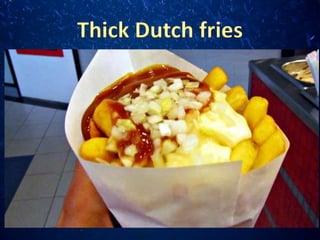
• Yes, but not just any fries. Trust us. You might
see these thick cut fries
called patat or frites on menus, and
traditionally they come served in a piping hot
paper cone slathered with any manner of
tasty toppings. Ask for 'patatje oorlog' for a
dollop of peanut satay sauce, mayo and
onions, or a 'patat speciaal' for a mix of curry
ketchup, mayonnaise and onions.
• Raw herring may sound a little scary to the
uninitiated, but every visitor to Netherlands
should give it a go. You’ll spot haringhandels
(herring carts) serving up this Dutch speciality
all over the city - ask for a ‘broodje haring’ to
get the fish served in a small sandwich with
pickles and onions. The best time to try raw
herring is between May and July when the
herring is said to be at its sweetest.
• If you’re not feeling quite brave enough to try
raw herring (see above), then you can still get
your fishy fix from kibbeling – battered and
deep fried morsels of white fish; usually cod.
They’re every bit as delicious as they look, and
usually served with a mayonaisey herb sauce
and lemon. Try it hot and fresh from a street
market or food truck for the best kibbeling
experience.
• The name literally means ‘oil balls’ - but don’t
let that put you off. Essentially they are deep
fried sweet dumplings (sometimes containing
fruit pieces) and dusted in powdered sugar,
and they’re so delicious that they only come
out around New Year’s Eve, just before the
January diet kicks in.
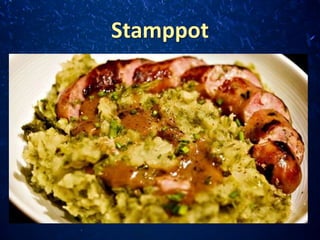
• One for cold winter evenings, stamppot is
the ultimate Dutch comfort food, not
dissimilar to British Bubble & Squeak.
Translated literally as ‘mash pot’, this
traditional dish involves potatoes mashed with
other vegetables – traditional stamppot
includes various combinations of sauerkraut,
carrot, onion or kale - and is usually served
with a big juicy sausage.
• Liquorice eating in Holland is something of a
national pastime – in fact the country boasts
the highest per-capita consumption of the
sweet in the whole world. But if anyone in
Holland offers you some licorice (and they
will). This is not liquorice as you know it, but
a more salty, black version known as ‘drop’.
Approach with caution, and don’t say we
didn’t warn you.
• Holland’s version of pea soup is a thick green
stew of split peas, pork, celery, onions and
leeks, and contrary to its name, it’s completely
delicious. Widely consumed all over the
Netherlands, snert makes for a hearty winter
snack traditionally served up by street vendors
to ice skaters on the frozen canals.

Dutch Cuisine

  • 2.
    • So youwent out for a few drinks. You forgot to eat dinner. Those 8% Belgian beers are beginning to take their toll. What to do? The answer is in the bitterballen. Delicious, deep fried crispy meatballs traditionally served with mustard for dipping – they’re the ultimate in Dutch pub snacks and can be found on the menu at most Amsterdam drinking establishments.
  • 3.
    • If youtry one Dutch sweet treat, make it a stroopwafel. Two thin waffles stuck together with a layer of sweet syrup; these delectable delicacies are best enjoyed hot and gooey from a street market or bakery.
  • 4.
    • Yes, butnot just any fries. Trust us. You might see these thick cut fries called patat or frites on menus, and traditionally they come served in a piping hot paper cone slathered with any manner of tasty toppings. Ask for 'patatje oorlog' for a dollop of peanut satay sauce, mayo and onions, or a 'patat speciaal' for a mix of curry ketchup, mayonnaise and onions.
  • 5.
    • Raw herringmay sound a little scary to the uninitiated, but every visitor to Netherlands should give it a go. You’ll spot haringhandels (herring carts) serving up this Dutch speciality all over the city - ask for a ‘broodje haring’ to get the fish served in a small sandwich with pickles and onions. The best time to try raw herring is between May and July when the herring is said to be at its sweetest.
  • 6.
    • If you’renot feeling quite brave enough to try raw herring (see above), then you can still get your fishy fix from kibbeling – battered and deep fried morsels of white fish; usually cod. They’re every bit as delicious as they look, and usually served with a mayonaisey herb sauce and lemon. Try it hot and fresh from a street market or food truck for the best kibbeling experience.
  • 7.
    • The nameliterally means ‘oil balls’ - but don’t let that put you off. Essentially they are deep fried sweet dumplings (sometimes containing fruit pieces) and dusted in powdered sugar, and they’re so delicious that they only come out around New Year’s Eve, just before the January diet kicks in.
  • 8.
    • One forcold winter evenings, stamppot is the ultimate Dutch comfort food, not dissimilar to British Bubble & Squeak. Translated literally as ‘mash pot’, this traditional dish involves potatoes mashed with other vegetables – traditional stamppot includes various combinations of sauerkraut, carrot, onion or kale - and is usually served with a big juicy sausage.
  • 9.
    • Liquorice eatingin Holland is something of a national pastime – in fact the country boasts the highest per-capita consumption of the sweet in the whole world. But if anyone in Holland offers you some licorice (and they will). This is not liquorice as you know it, but a more salty, black version known as ‘drop’. Approach with caution, and don’t say we didn’t warn you.
  • 10.
    • Holland’s versionof pea soup is a thick green stew of split peas, pork, celery, onions and leeks, and contrary to its name, it’s completely delicious. Widely consumed all over the Netherlands, snert makes for a hearty winter snack traditionally served up by street vendors to ice skaters on the frozen canals.