Amniotic Fluid Embolism
Definition
Amniotic Fluid Embolism (AFE)
● is a rare (1:20,000 deliveries) but often lethal
complication (86% mortality rate in some
series) that can occur during labor, delivery,
or cesarean section, or postpartum.
● Anaphylactoid syndrome of pregnancy, an
alternate term used has been suggested to
emphasize the systemic role of chemical
mediators.
Etiology
● AFE is considered an unpredictable and unpreventable event with an
unknown cause.
● Reported risk factors for development of AFE include multiparity,
advanced maternal age, male fetus, and trauma.
Epidemiology
● AFE is one of the leading causes of death resulting directly from childbirth,
accounting for 5% to 15% of cases worldwide.
● Incidence of amniotic fluid embolism (AFE) is estimated at 1 case per 8,000-
30,000 pregnancies.
● The true incidence is unknown because of inaccurate diagnoses and
inconsistent reporting of nonfatal cases.
● No racial or ethnic predilection has been thought to exist.
● According to statistics, it is the most common cause of maternal death in
Australia and the second-most common in the USA and the U.K.
Clinical Presentation
● Patients typically present with:
○ sudden tachypnea
○ cyanosis
○ shock
○ generalized bleeding
● Three major pathophysiological manifestations are responsible:
○ Acute pulmonary embolism
○ Disseminated Intravascular Coagulation (DIC)
○ Uterine atony
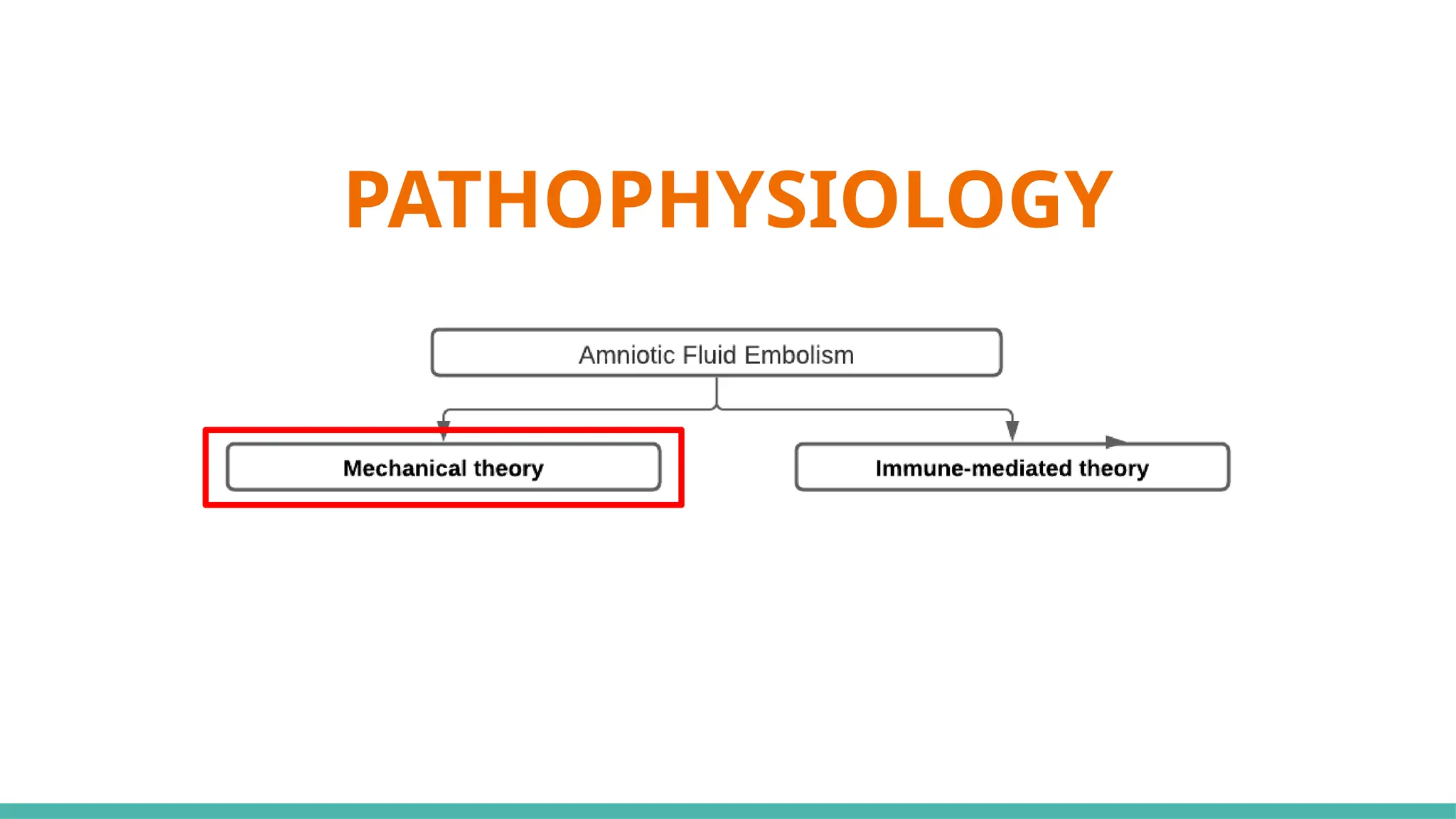
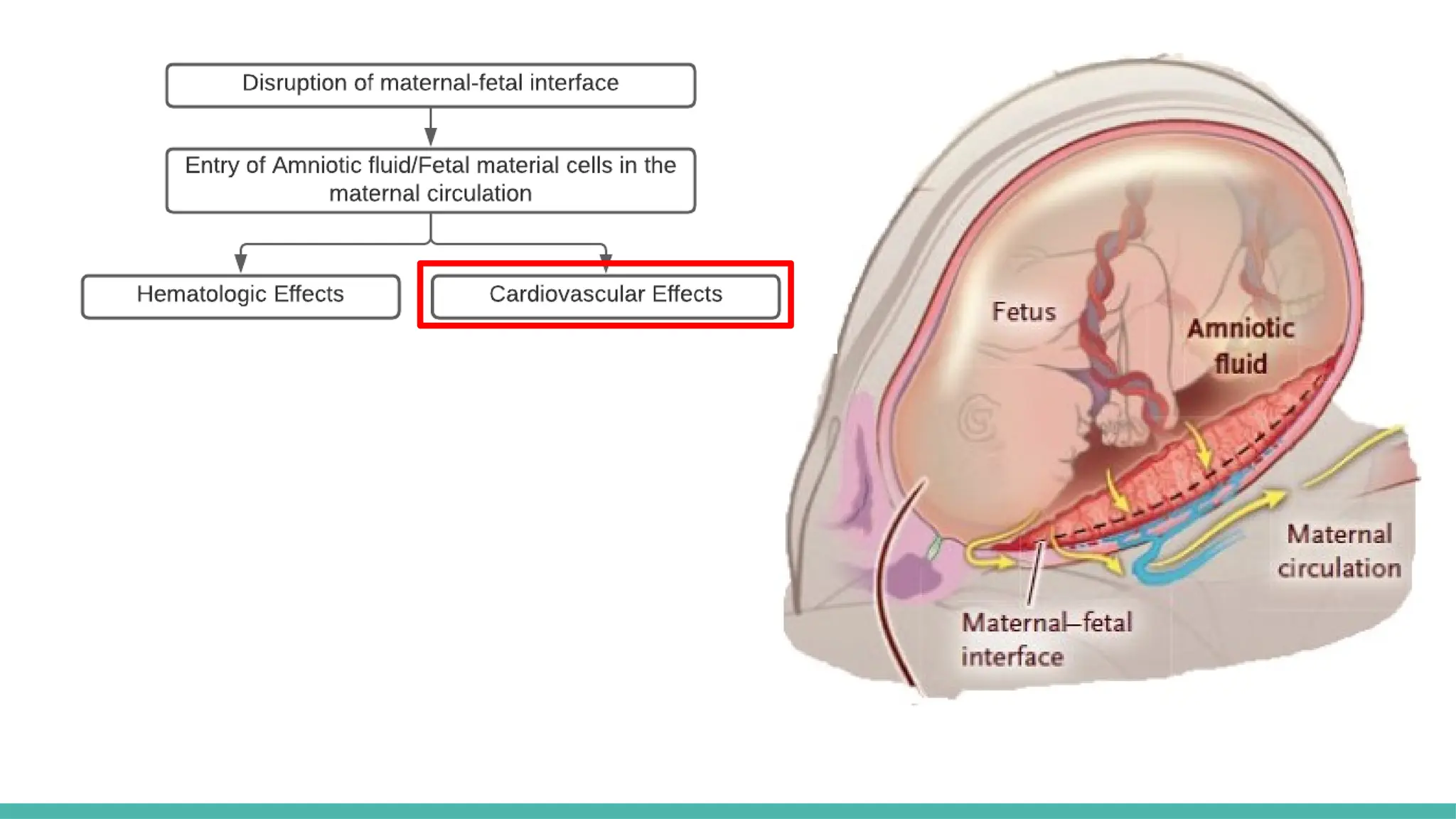
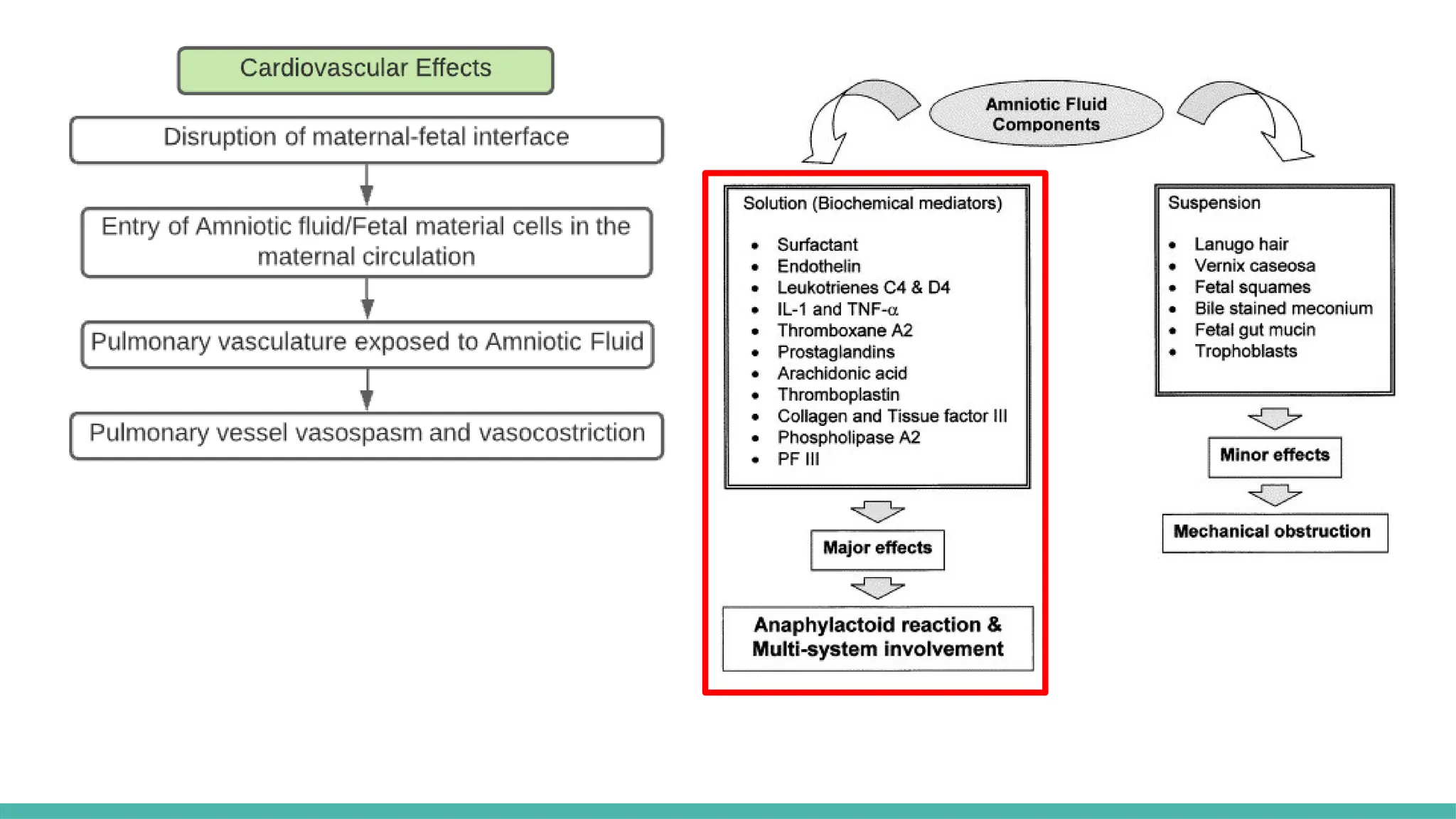
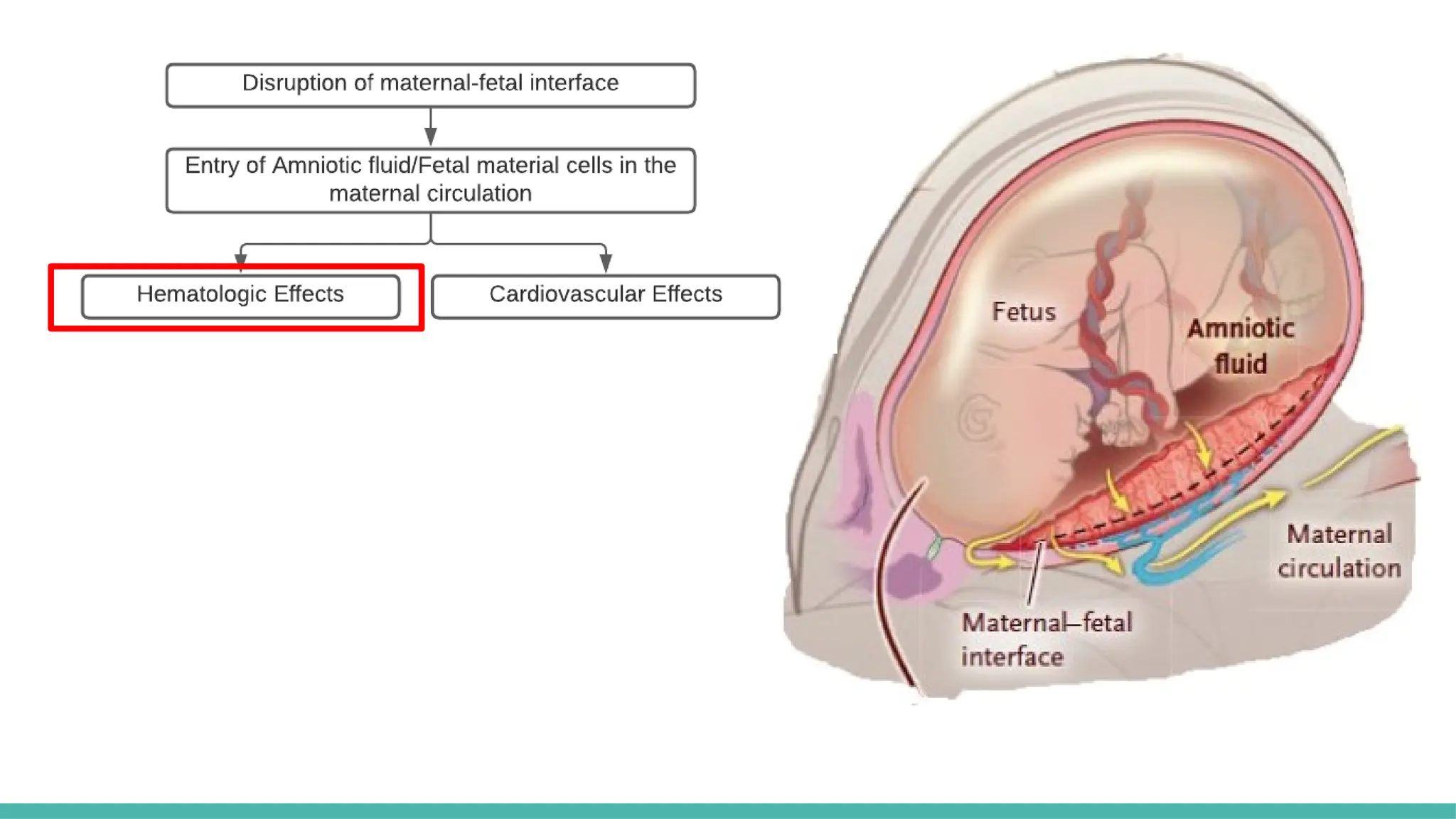
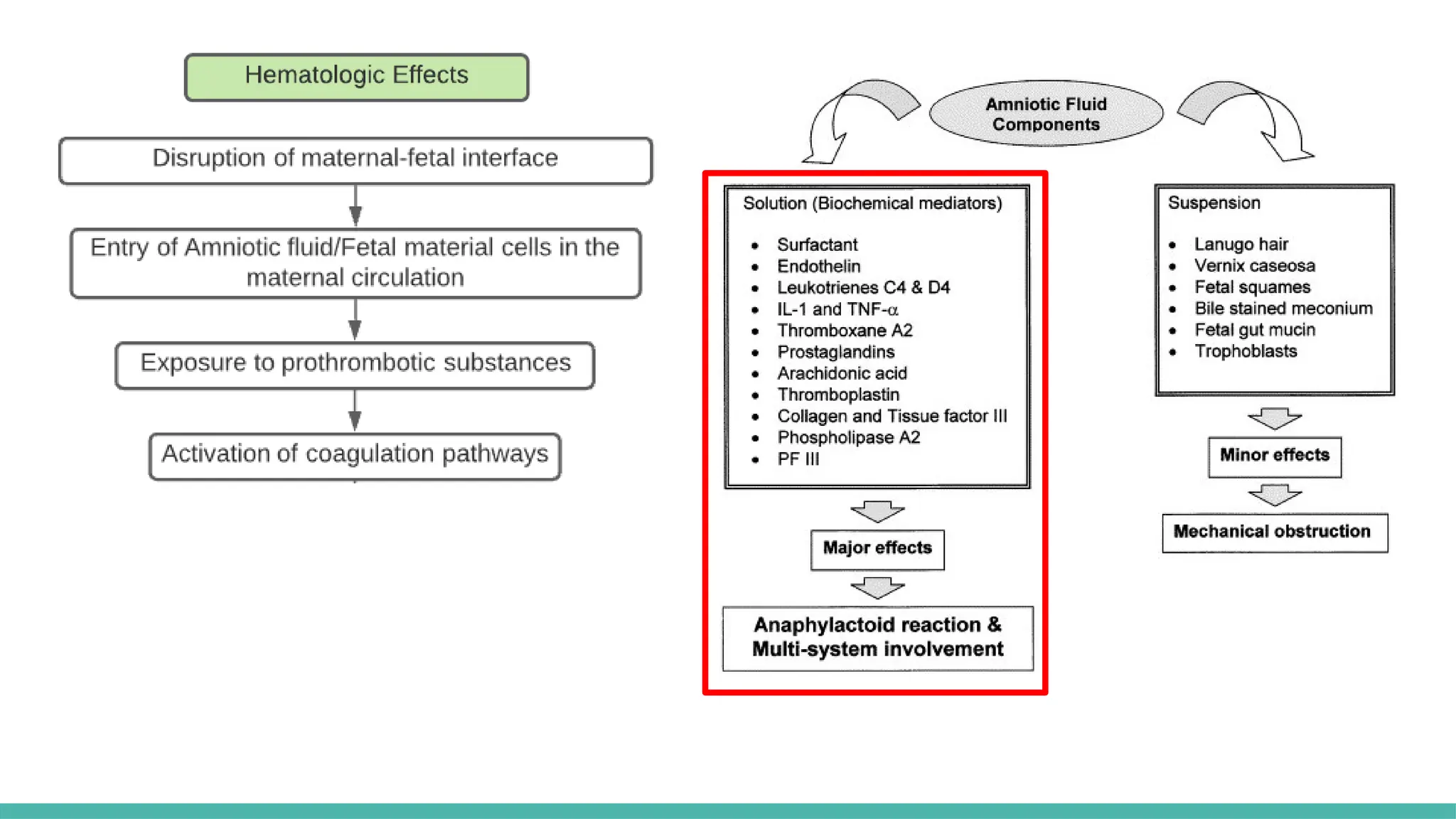
PATHOPHYSIOLOGY
PATHOPHYSIOLOGY
PATHOPHYSIOLOGY
Phase 1
Phase 1
Phase 2
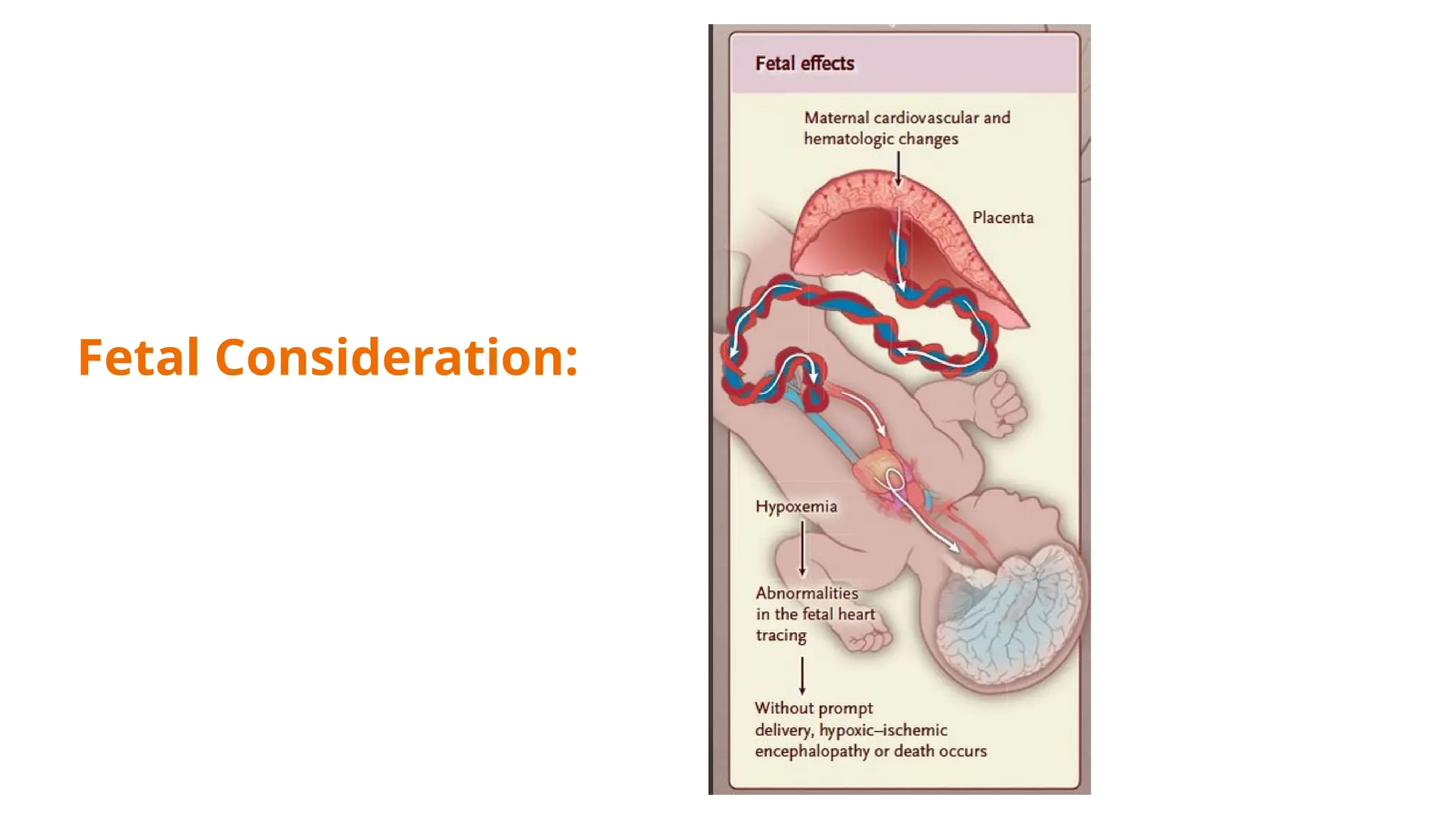
Fetal Consideration:
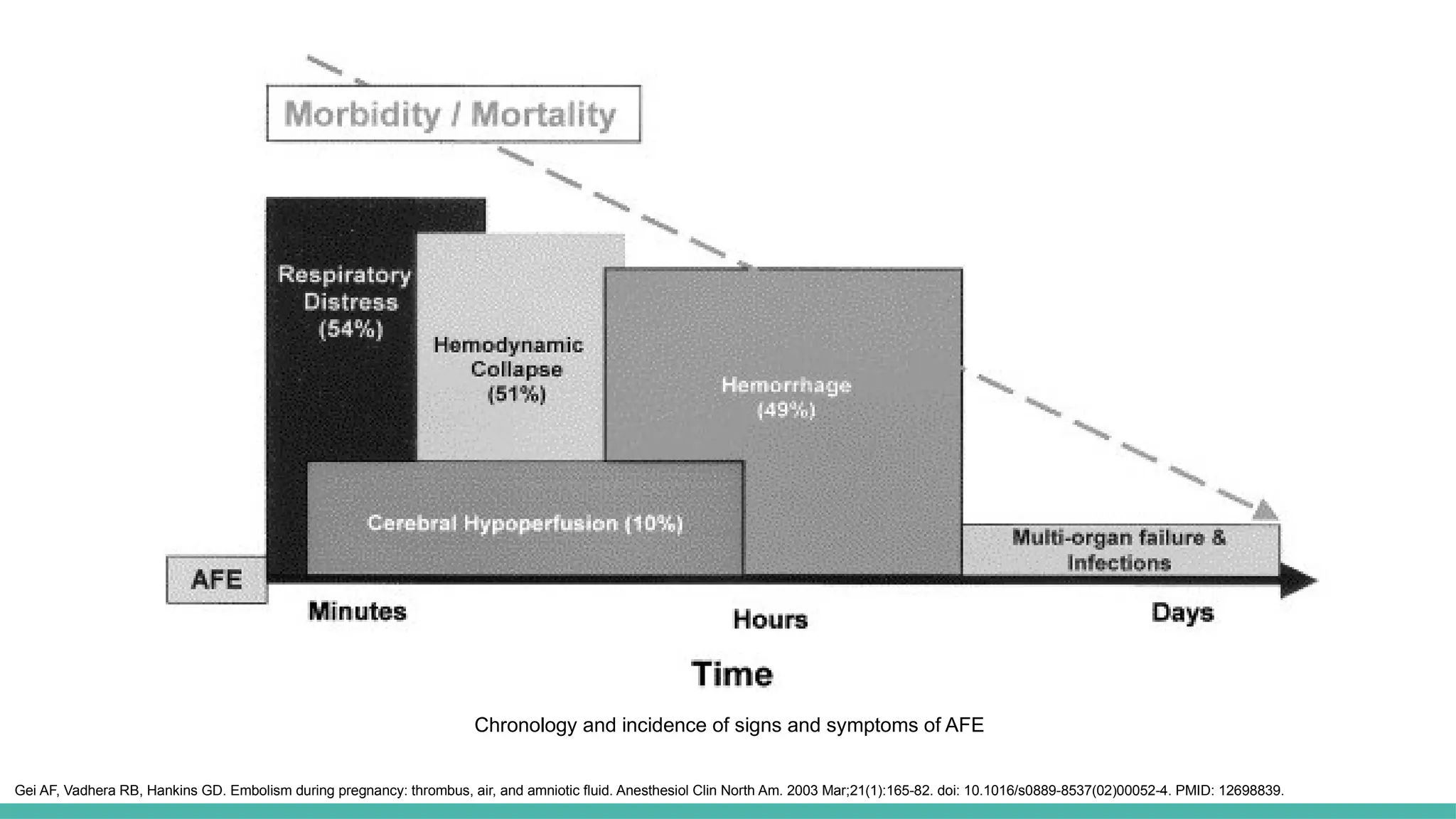
Chronology and incidence of signs and symptoms of AFE
Gei AF, Vadhera RB, Hankins GD. Embolism during pregnancy: thrombus, air, and amniotic fluid. Anesthesiol Clin North Am. 2003 Mar;21(1):165-82. doi: 10.1016/s0889-8537(02)00052-4. PMID: 12698839.
British Journal of Anesthesiology
Highest incidence:
● Hypotension
● Fetal Distress
● ARDs/Pulmonary Edema
● Cardiopulmonary Arrest
● Cyanosis
● Coagulopathy
Diagnostic Criteria:
Cunningham, F. G., et . al. (2014). Williams obstetrics (24th edition.). New York: McGraw-Hill Education.
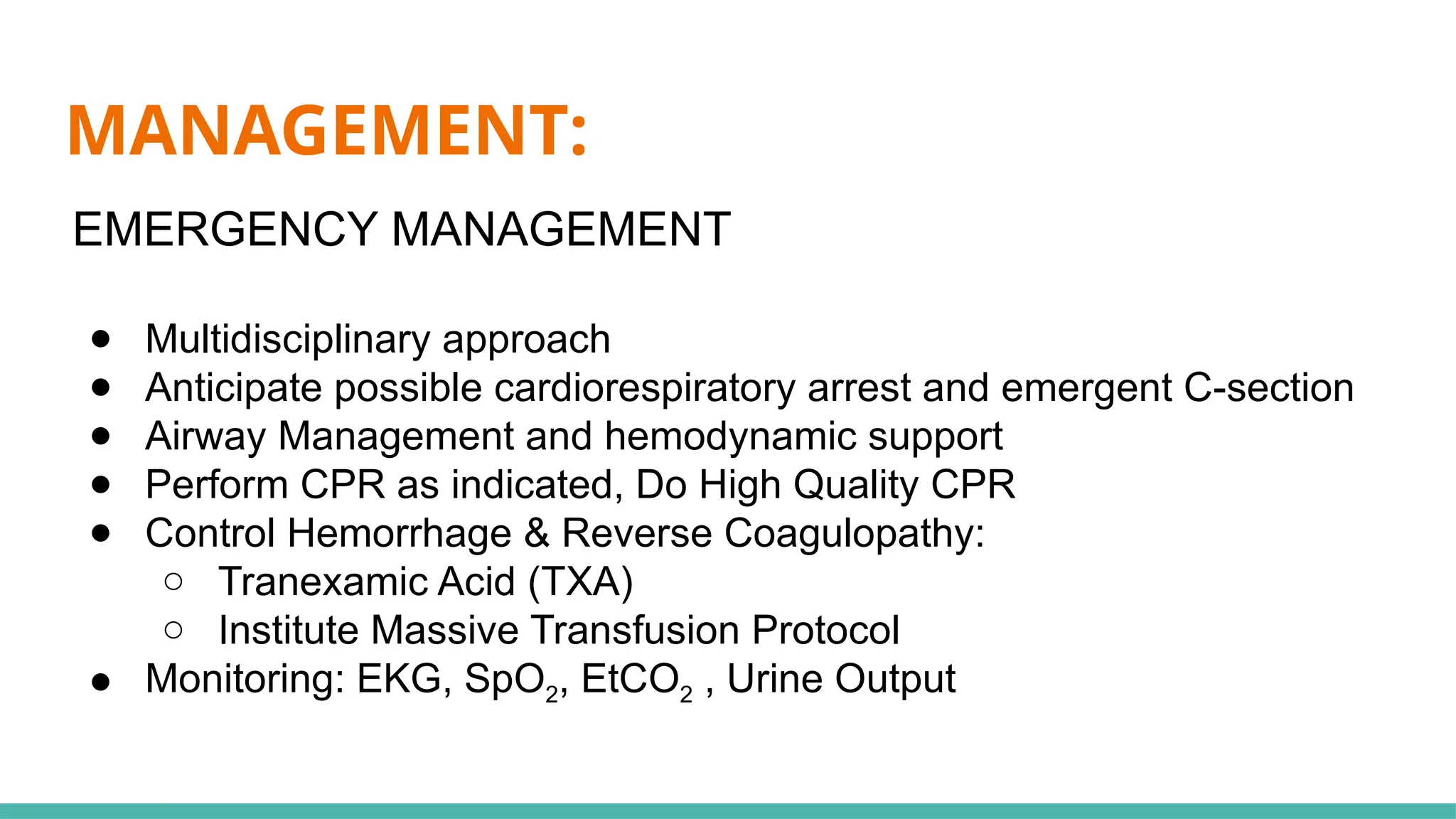
MANAGEMENT:
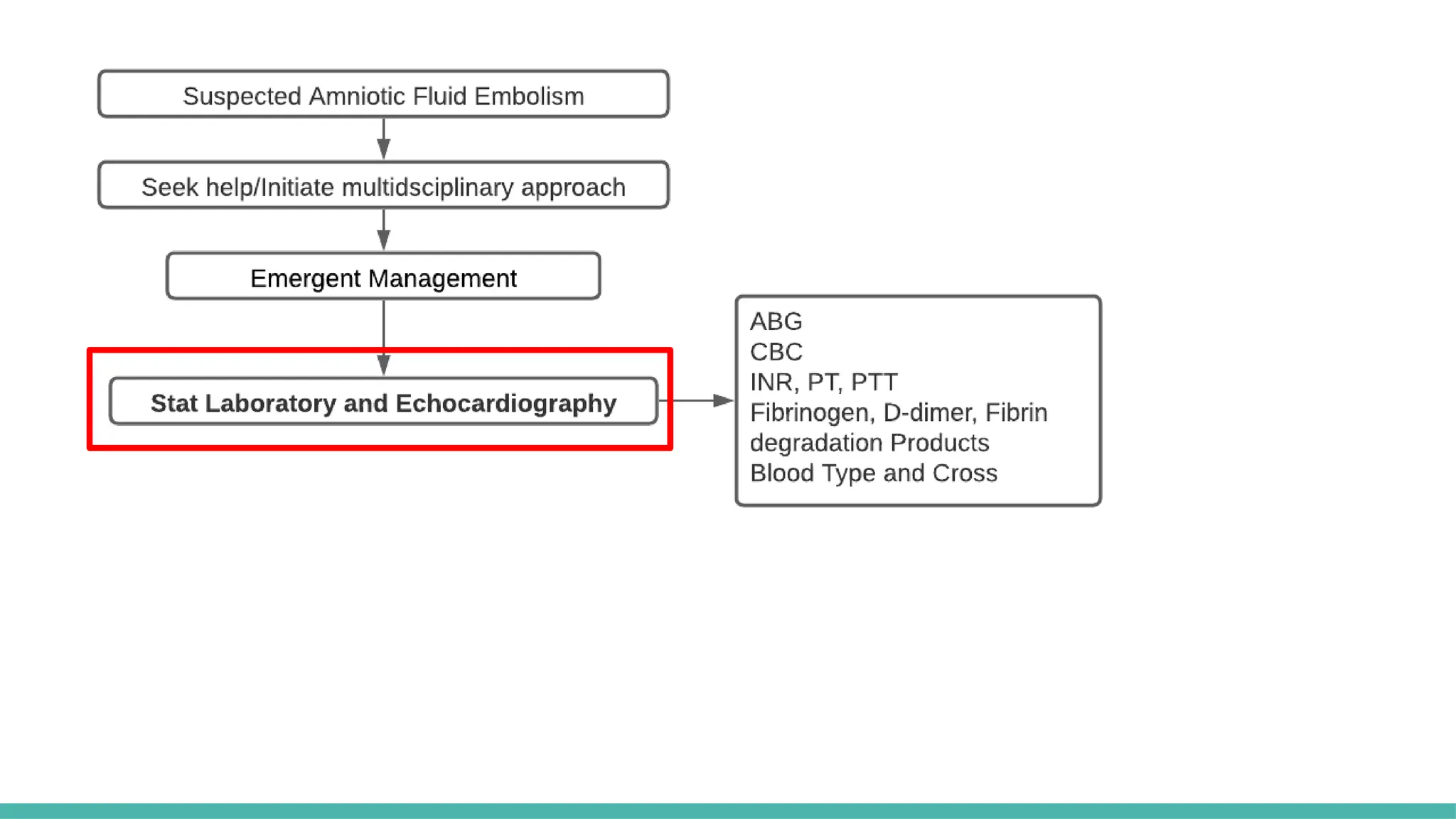
EMERGENCY MANAGEMENT
● Multidisciplinary approach
● Anticipate possible cardiorespiratory arrest and emergent C-section
● Airway Management and hemodynamic support
● Perform CPR as indicated, Do High Quality CPR
● Control Hemorrhage & Reverse Coagulopathy:
○ Tranexamic Acid (TXA)
○ Institute Massive Transfusion Protocol
● Monitoring: EKG, SpO2, EtCO2 , Urine Output
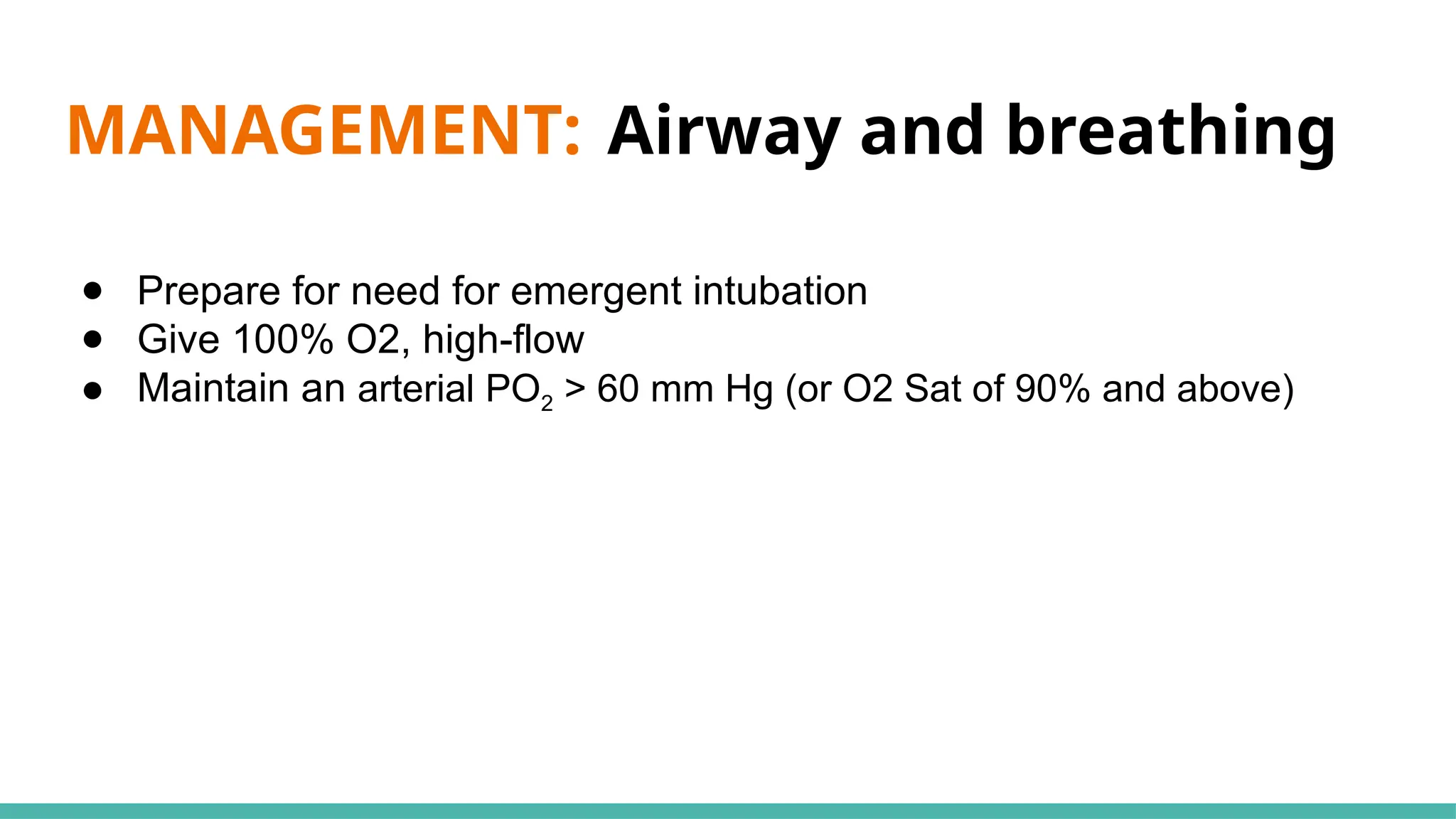
MANAGEMENT: Airway and breathing
● Prepare for need for emergent intubation
● Give 100% O2, high-flow
● Maintain an arterial PO2 > 60 mm Hg (or O2 Sat of 90% and above)
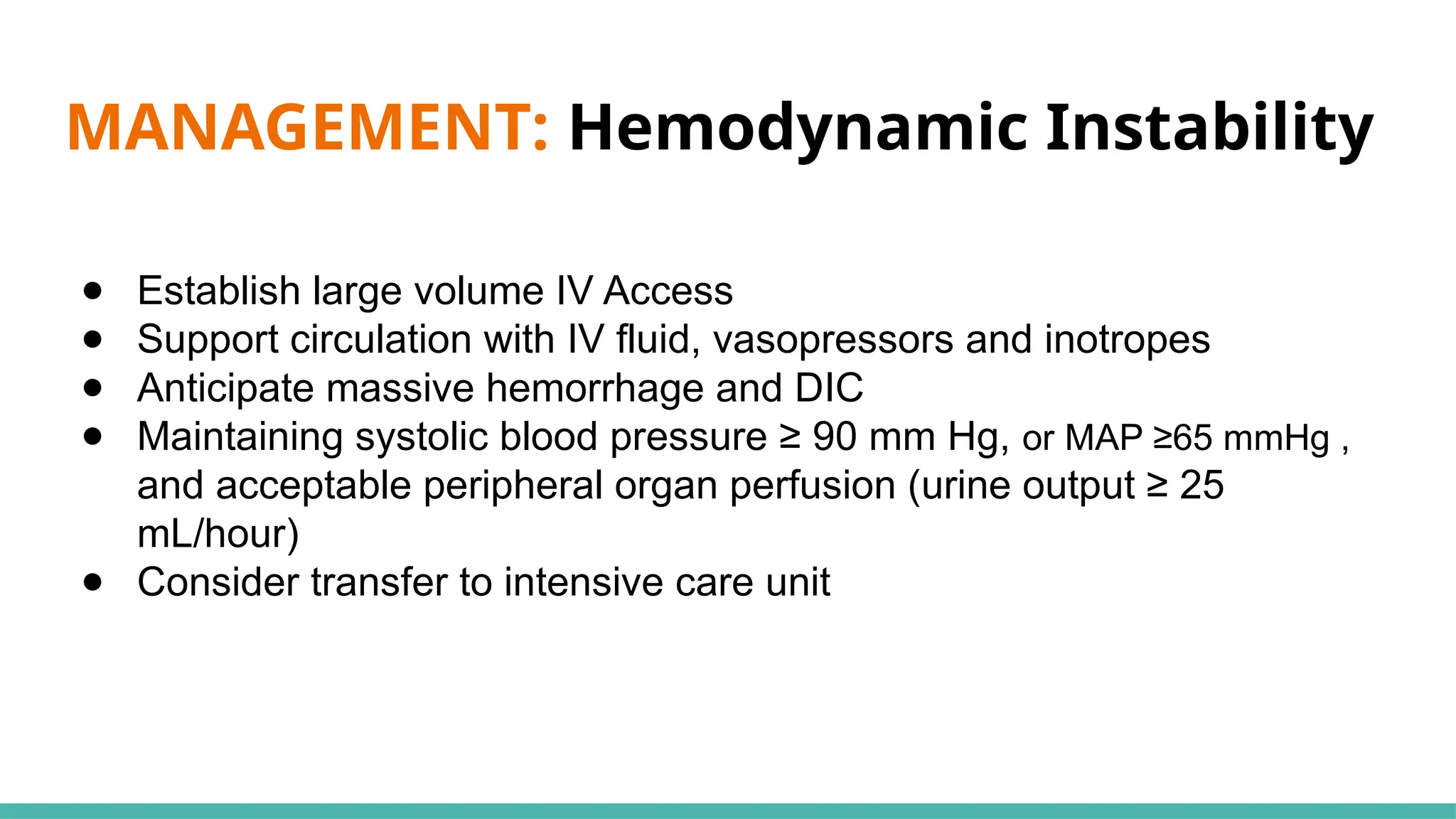
MANAGEMENT: Hemodynamic Instability
● Establish large volume IV Access
● Support circulation with IV fluid, vasopressors and inotropes
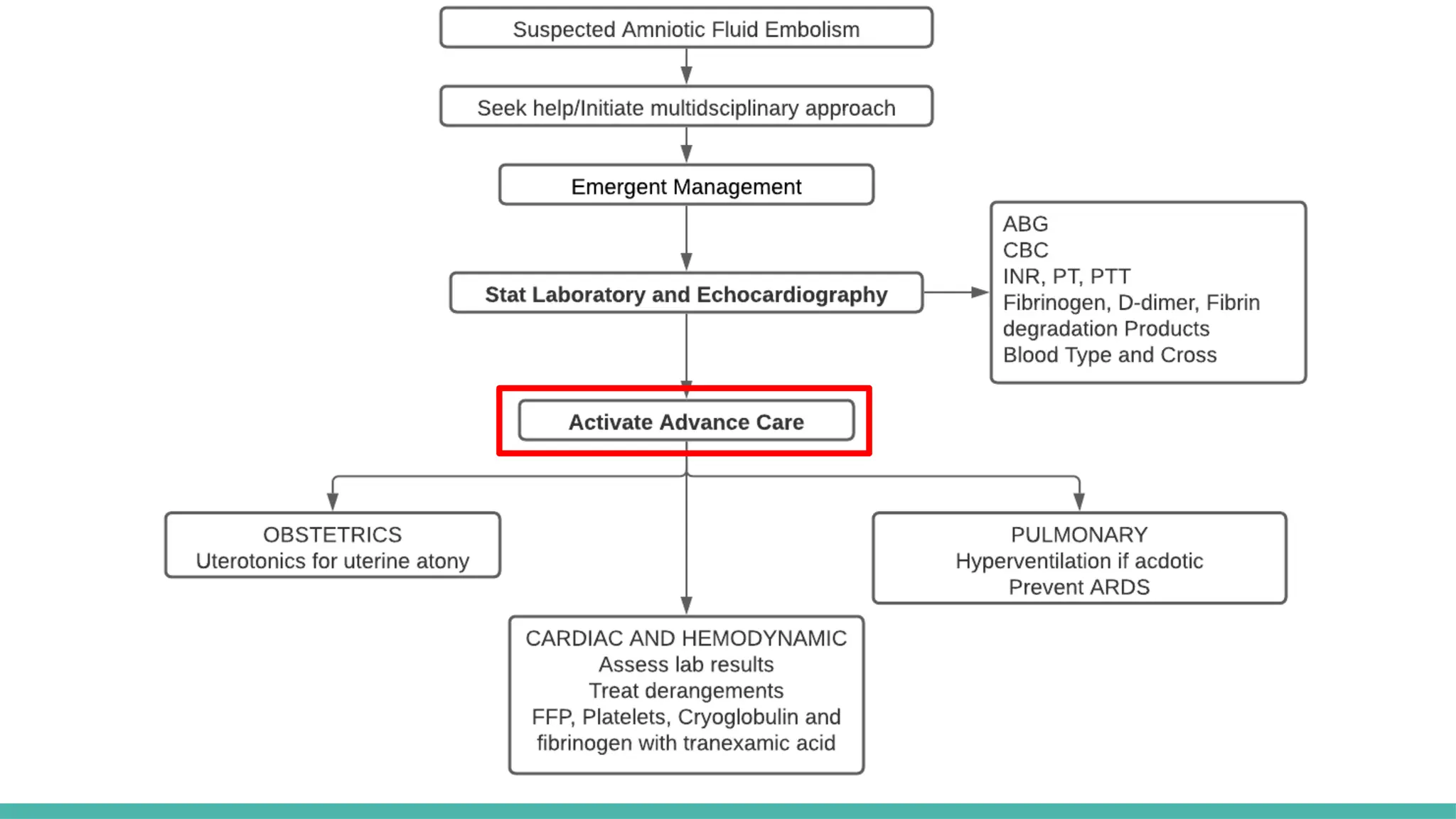
● Anticipate massive hemorrhage and DIC
● Maintaining systolic blood pressure ≥ 90 mm Hg, or MAP ≥65 mmHg ,
and acceptable peripheral organ perfusion (urine output ≥ 25
mL/hour)
● Consider transfer to intensive care unit
MANAGEMENT: Cardiopulmonary Resuscitation
MANAGEMENT: Novel Treatment: A-OK Protocol
● Atropine 1 mg
● Ondansetron 8 mg
● Ketorolac 30 mg
Rezai et al. (2017). Atypical Amniotic Fluid Embolism Managed with a Novel Therapeutic Regimen. Case Rep Obstet Gynecol.
Limitations
● Limited case studies
● Inaccurate diagnosis and inconsistent reporting
● No confirmatory laboratory tests
● Difficulty of obtaining human evidence
● Little value from animal studies
Morgan, G. E., Mikhail, M. S., & Murray, M. J. (2006). Clinical anesthesiology. New York: Lange Medical Books/McGraw Hill Medical
Pub. Division.
Cunningham, F. G., et . al. (2014). Williams obstetrics (24th edition.). New York: McGraw-Hill Education.
Gist, Richard S. MD*
; Stafford, Irene P. MD†
; Leibowitz, Andrew B. MD*
; Beilin, Yaakov MD*‡
Amniotic Fluid Embolism, Anesthesia &
Analgesia: May 2009 - Volume 108 - Issue 5 - p 1599-1602 doi: 10.1213/ane.0b013e31819e43a4
Gei AF, Vadhera RB, Hankins GD. Embolism during pregnancy: thrombus, air, and amniotic fluid. Anesthesiol Clin North Am. 2003
Mar;21(1):165-82. doi: 10.1016/s0889-8537(02)00052-4. PMID: 12698839.
Rezai et al. (2017). Atypical Amniotic Fluid Embolism Managed with a Novel Therapeutic Regimen. Case Rep Obstet Gynecol.
Stanford Anesthesia Emergency Manual (2016)
References:

Amniotic Fluid Embolism Amniotic Fluid Embolism

  • 1.
  • 2.
    Definition Amniotic Fluid Embolism(AFE) ● is a rare (1:20,000 deliveries) but often lethal complication (86% mortality rate in some series) that can occur during labor, delivery, or cesarean section, or postpartum. ● Anaphylactoid syndrome of pregnancy, an alternate term used has been suggested to emphasize the systemic role of chemical mediators.
  • 3.
    Etiology ● AFE isconsidered an unpredictable and unpreventable event with an unknown cause. ● Reported risk factors for development of AFE include multiparity, advanced maternal age, male fetus, and trauma.
  • 4.
    Epidemiology ● AFE isone of the leading causes of death resulting directly from childbirth, accounting for 5% to 15% of cases worldwide. ● Incidence of amniotic fluid embolism (AFE) is estimated at 1 case per 8,000- 30,000 pregnancies. ● The true incidence is unknown because of inaccurate diagnoses and inconsistent reporting of nonfatal cases. ● No racial or ethnic predilection has been thought to exist. ● According to statistics, it is the most common cause of maternal death in Australia and the second-most common in the USA and the U.K.
  • 5.
    Clinical Presentation ● Patientstypically present with: ○ sudden tachypnea ○ cyanosis ○ shock ○ generalized bleeding ● Three major pathophysiological manifestations are responsible: ○ Acute pulmonary embolism ○ Disseminated Intravascular Coagulation (DIC) ○ Uterine atony
  • 6.
  • 7.
  • 8.
  • 13.
  • 14.
  • 18.
  • 19.
    Chronology and incidenceof signs and symptoms of AFE Gei AF, Vadhera RB, Hankins GD. Embolism during pregnancy: thrombus, air, and amniotic fluid. Anesthesiol Clin North Am. 2003 Mar;21(1):165-82. doi: 10.1016/s0889-8537(02)00052-4. PMID: 12698839.
  • 20.
    British Journal ofAnesthesiology Highest incidence: ● Hypotension ● Fetal Distress ● ARDs/Pulmonary Edema ● Cardiopulmonary Arrest ● Cyanosis ● Coagulopathy
  • 21.
    Diagnostic Criteria: Cunningham, F.G., et . al. (2014). Williams obstetrics (24th edition.). New York: McGraw-Hill Education.
  • 22.
    MANAGEMENT: EMERGENCY MANAGEMENT ● Multidisciplinaryapproach ● Anticipate possible cardiorespiratory arrest and emergent C-section ● Airway Management and hemodynamic support ● Perform CPR as indicated, Do High Quality CPR ● Control Hemorrhage & Reverse Coagulopathy: ○ Tranexamic Acid (TXA) ○ Institute Massive Transfusion Protocol ● Monitoring: EKG, SpO2, EtCO2 , Urine Output
  • 24.
    MANAGEMENT: Airway andbreathing ● Prepare for need for emergent intubation ● Give 100% O2, high-flow ● Maintain an arterial PO2 > 60 mm Hg (or O2 Sat of 90% and above)
  • 25.
    MANAGEMENT: Hemodynamic Instability ●Establish large volume IV Access ● Support circulation with IV fluid, vasopressors and inotropes ● Anticipate massive hemorrhage and DIC ● Maintaining systolic blood pressure ≥ 90 mm Hg, or MAP ≥65 mmHg , and acceptable peripheral organ perfusion (urine output ≥ 25 mL/hour) ● Consider transfer to intensive care unit
  • 26.
  • 29.
    MANAGEMENT: Novel Treatment:A-OK Protocol ● Atropine 1 mg ● Ondansetron 8 mg ● Ketorolac 30 mg
  • 30.
    Rezai et al.(2017). Atypical Amniotic Fluid Embolism Managed with a Novel Therapeutic Regimen. Case Rep Obstet Gynecol.
  • 31.
    Limitations ● Limited casestudies ● Inaccurate diagnosis and inconsistent reporting ● No confirmatory laboratory tests ● Difficulty of obtaining human evidence ● Little value from animal studies
  • 32.
    Morgan, G. E.,Mikhail, M. S., & Murray, M. J. (2006). Clinical anesthesiology. New York: Lange Medical Books/McGraw Hill Medical Pub. Division. Cunningham, F. G., et . al. (2014). Williams obstetrics (24th edition.). New York: McGraw-Hill Education. Gist, Richard S. MD* ; Stafford, Irene P. MD† ; Leibowitz, Andrew B. MD* ; Beilin, Yaakov MD*‡ Amniotic Fluid Embolism, Anesthesia & Analgesia: May 2009 - Volume 108 - Issue 5 - p 1599-1602 doi: 10.1213/ane.0b013e31819e43a4 Gei AF, Vadhera RB, Hankins GD. Embolism during pregnancy: thrombus, air, and amniotic fluid. Anesthesiol Clin North Am. 2003 Mar;21(1):165-82. doi: 10.1016/s0889-8537(02)00052-4. PMID: 12698839. Rezai et al. (2017). Atypical Amniotic Fluid Embolism Managed with a Novel Therapeutic Regimen. Case Rep Obstet Gynecol. Stanford Anesthesia Emergency Manual (2016) References:

Editor's Notes

  • #2 Life threatening obstetric emergency characterized by sudden cardiorespiratory collapse and disseminated intravascular coagulation ASP is a rare but serious condition that causes a widespread, proinflammatory, anaphylactic-like reaction after amniotic fluid enters the maternal circulation