Cookery
NCII
All About Cooking
1
2
Cooking
3
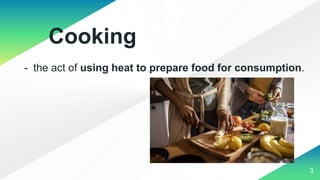
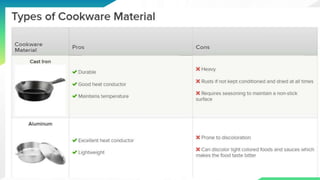
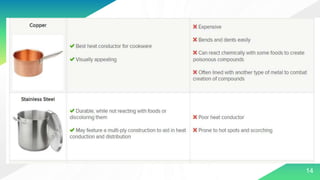
- the act of using heat to prepare food for consumption.
Purpose of Cooking:
1.To make its maximum value available in palatable form.
2. To develop and enhance flavor
3. To improve its digestibility
4. To increase palatability by improving its color, texture and flavor.
5. To destroy pathogenic organisms and substances found in raw foods
4
1. What cooking utensils to use?
2. What ingredients to use?
3. How much heat will we apply?
4. Which recipe guide to use?
5
Basic Cooking Principles
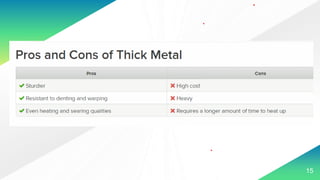
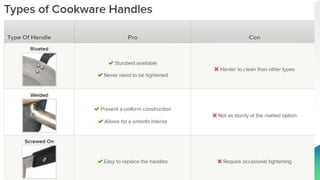
It is very difficult, if not impossible, to cook (well)
without good utensils, good equipment.
6
Cooking Utensils
7
8
9
10
11
12
13
14
15
16
Kitchen utensils
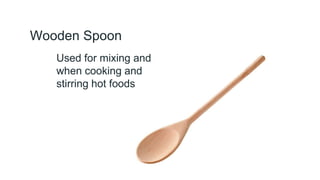
Wooden Spoon
Used for mixing and
when cooking and
stirring hot foods
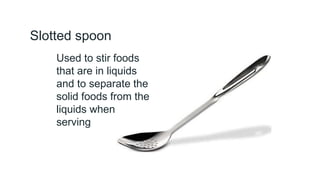
Slotted spoon
Used to stir foods
that are in liquids
and to separate the
solid foods from the
liquids when
serving
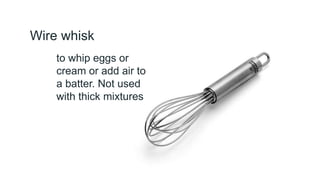
Wire whisk
to whip eggs or
cream or add air to
a batter. Not used
with thick mixtures
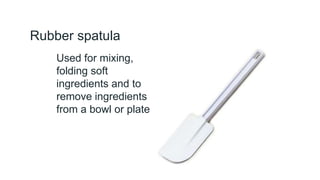
Rubber spatula
Used for mixing,
folding soft
ingredients and to
remove ingredients
from a bowl or plate
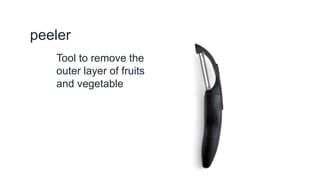
peeler
Tool to remove the
outer layer of fruits
and vegetable
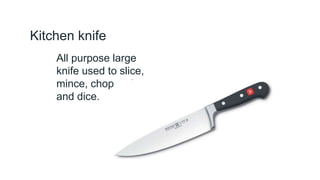
Kitchen knife
All purpose large
knife used to slice,
mince, chop, cube
and dice.
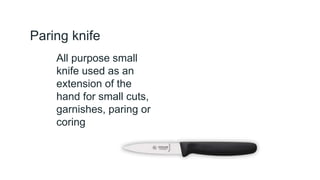
Paring knife
All purpose small
knife used as an
extension of the
hand for small cuts,
garnishes, paring or
coring
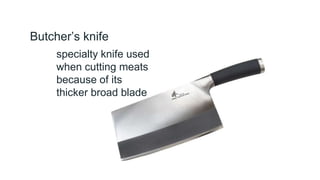
Butcher’s knife
specialty knife used
when cutting meats
because of its
thicker broad blade
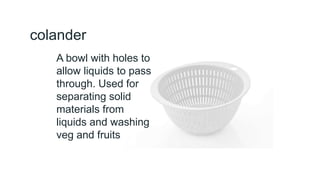
colander
A bowl with holes to
allow liquids to pass
through. Used for
separating solid
materials from
liquids and washing
veg and fruits
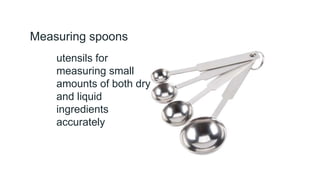
Measuring spoons
utensils for
measuring small
amounts of both dry
and liquid
ingredients
accurately
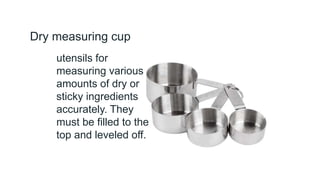
Dry measuring cup
utensils for
measuring various
amounts of dry or
sticky ingredients
accurately. They
must be filled to the
top and leveled off.
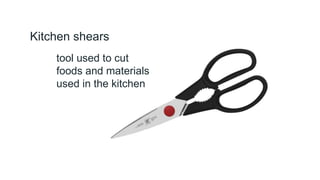
Kitchen shears
tool used to cut
foods and materials
used in the kitchen
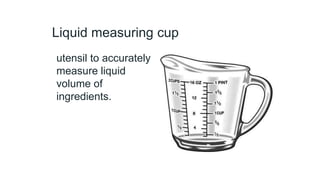
Liquid measuring cup
utensil to accurately
measure liquid
volume of
ingredients.
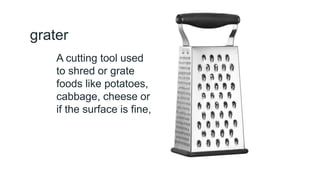
grater
A cutting tool used
to shred or grate
foods like potatoes,
cabbage, cheese or
if the surface is fine,
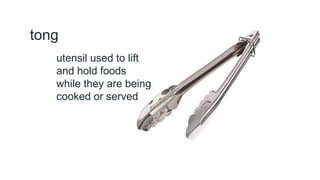
tong
utensil used to lift
and hold foods
while they are being
cooked or served
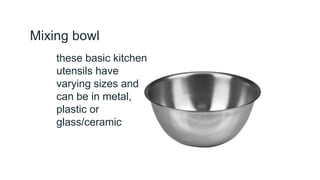
Mixing bowl
these basic kitchen
utensils have
varying sizes and
can be in metal,
plastic or
glass/ceramic
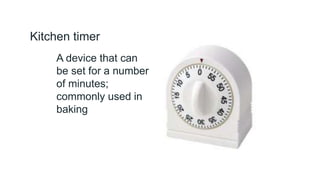
Kitchen timer
A device that can
be set for a number
of minutes;
commonly used in
baking
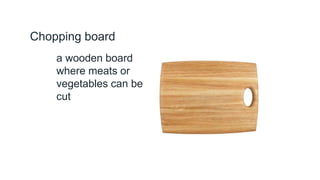
Chopping board
a wooden board
where meats or
vegetables can be
cut
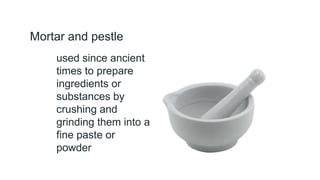
Mortar and pestle
used since ancient
times to prepare
ingredients or
substances by
crushing and
grinding them into a
fine paste or
powder
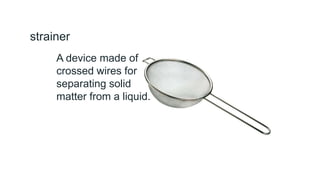
strainer
A device made of
crossed wires for
separating solid
matter from a liquid.
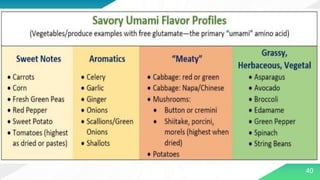
Vegetables
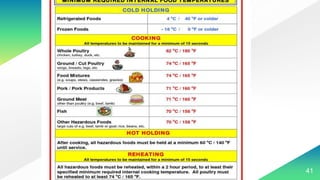
Meat
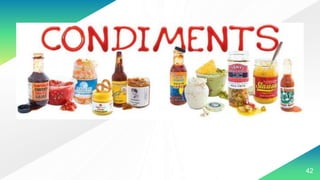
Condiments
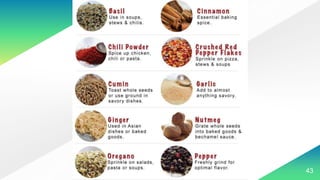
Spices
38
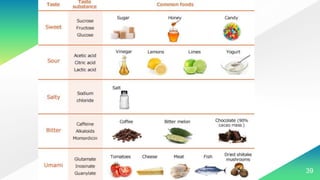
Ingredients for Cooking
39
40
41
42
43
METHODS OF COOKING
â–¸ Dry-Heat Cooking
â–ą Dry-heat cooking methods are those that utilize air or fat.
â–¸ Moist-Heat Cooking
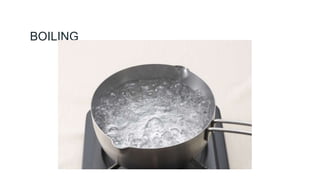
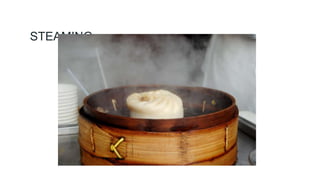
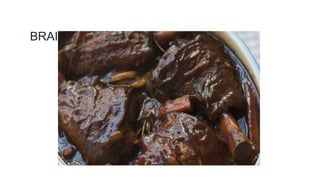
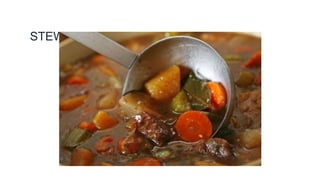
â–ą Moist-heat cooking uses water or steam.
DRY HEAT COOKING
â–¸ Dry heat cooking refers to any cooking technique where the heat is
transferred to the food item without using any moisture. Dry-heat
cooking typically involves high heat, with temperatures of 300°F or
hotter.
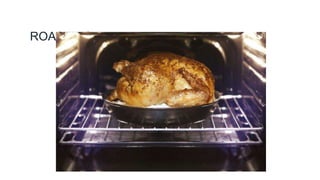
ROASTING
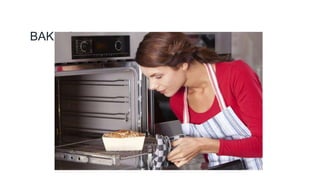
BAKING
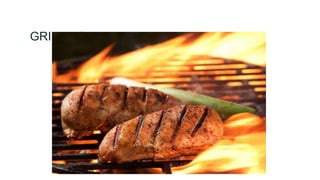
GRILLING
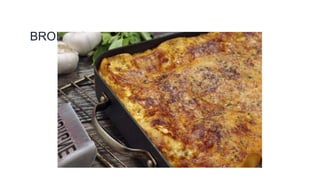
BROILING
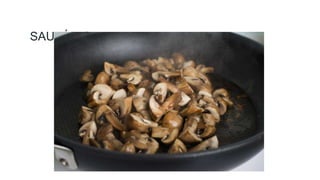
SAUTÉING
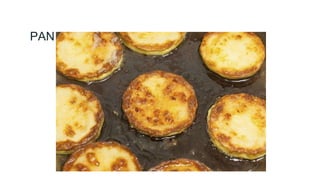
PAN FRYING
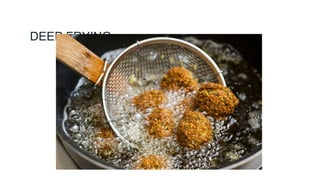
DEEP FRYING
MOIST HEAT COOKING
â–¸ Moist heat cooking methods include any techniques that involve
cooking with moisture — whether it's steam, water, stock, wine or
some other liquid. Cooking temperatures are much lower, anywhere
from 140°F to a maximum of 212°F, because water doesn't get any
hotter than that.
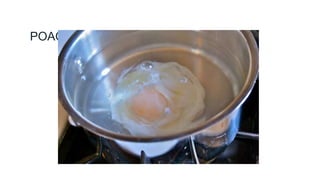
POACHING
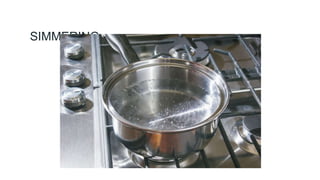
SIMMERING
BOILING
STEAMING
BRAISING
STEWING
The 5 Parts
of a Recipe
Obj. F2.01
Remember recipe parts & resources.
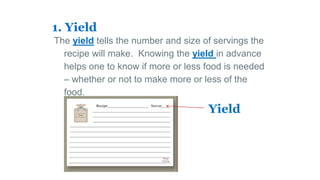
1. Yield
The yield tells the number and size of servings the
recipe will make. Knowing the yield in advance
helps one to know if more or less food is needed
– whether or not to make more or less of the
food.
Yield
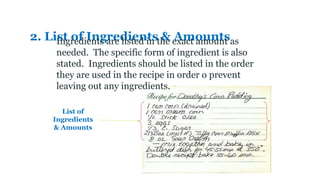
2. List of Ingredients & Amounts
List of
Ingredients
& Amounts
Ingredients are listed in the exact amount as
needed. The specific form of ingredient is also
stated. Ingredients should be listed in the order
they are used in the recipe in order o prevent
leaving out any ingredients.
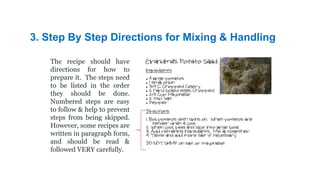
3. Step By Step Directions for Mixing & Handling
The recipe should have
directions for how to
prepare it. The steps need
to be listed in the order
they should be done.
Numbered steps are easy
to follow & help to prevent
steps from being skipped.
However, some recipes are
written in paragraph form,
and should be read &
followed VERY carefully.
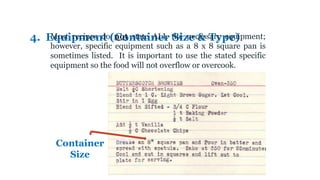
4. Equipment (Container Size & Type)
Most recipes do not state ALL the necessary equipment;
however, specific equipment such as a 8 x 8 square pan is
sometimes listed. It is important to use the stated specific
equipment so the food will not overflow or overcook.
Container
Size
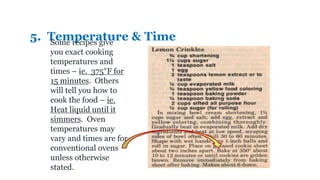
5. Temperature & Time
Some recipes give
you exact cooking
temperatures and
times – ie. 375°F for
15 minutes. Others
will tell you how to
cook the food – ie.
Heat liquid until it
simmers. Oven
temperatures may
vary and times are for
conventional ovens
unless otherwise
stated.
1. What cooking utensils to use?
2. What ingredients to use?
3. How much heat will we apply?
4. Which recipe guide to use?
66
Basic Cooking Principles
67

All about Cooking.pptx

  • 1.
  • 2.
  • 3.
    Cooking 3 - the actof using heat to prepare food for consumption.
  • 4.
    Purpose of Cooking: 1.Tomake its maximum value available in palatable form. 2. To develop and enhance flavor 3. To improve its digestibility 4. To increase palatability by improving its color, texture and flavor. 5. To destroy pathogenic organisms and substances found in raw foods 4
  • 5.
    1. What cookingutensils to use? 2. What ingredients to use? 3. How much heat will we apply? 4. Which recipe guide to use? 5 Basic Cooking Principles
  • 6.
    It is verydifficult, if not impossible, to cook (well) without good utensils, good equipment. 6 Cooking Utensils
  • 7.
  • 8.
  • 9.
  • 10.
  • 11.
  • 12.
  • 13.
  • 14.
  • 15.
  • 16.
  • 17.
  • 18.
    Wooden Spoon Used formixing and when cooking and stirring hot foods
  • 19.
    Slotted spoon Used tostir foods that are in liquids and to separate the solid foods from the liquids when serving
  • 20.
    Wire whisk to whipeggs or cream or add air to a batter. Not used with thick mixtures
  • 21.
    Rubber spatula Used formixing, folding soft ingredients and to remove ingredients from a bowl or plate
  • 22.
    peeler Tool to removethe outer layer of fruits and vegetable
  • 23.
    Kitchen knife All purposelarge knife used to slice, mince, chop, cube and dice.
  • 24.
    Paring knife All purposesmall knife used as an extension of the hand for small cuts, garnishes, paring or coring
  • 25.
    Butcher’s knife specialty knifeused when cutting meats because of its thicker broad blade
  • 26.
    colander A bowl withholes to allow liquids to pass through. Used for separating solid materials from liquids and washing veg and fruits
  • 27.
    Measuring spoons utensils for measuringsmall amounts of both dry and liquid ingredients accurately
  • 28.
    Dry measuring cup utensilsfor measuring various amounts of dry or sticky ingredients accurately. They must be filled to the top and leveled off.
  • 29.
    Kitchen shears tool usedto cut foods and materials used in the kitchen
  • 30.
    Liquid measuring cup utensilto accurately measure liquid volume of ingredients.
  • 31.
    grater A cutting toolused to shred or grate foods like potatoes, cabbage, cheese or if the surface is fine,
  • 32.
    tong utensil used tolift and hold foods while they are being cooked or served
  • 33.
    Mixing bowl these basickitchen utensils have varying sizes and can be in metal, plastic or glass/ceramic
  • 34.
    Kitchen timer A devicethat can be set for a number of minutes; commonly used in baking
  • 35.
    Chopping board a woodenboard where meats or vegetables can be cut
  • 36.
    Mortar and pestle usedsince ancient times to prepare ingredients or substances by crushing and grinding them into a fine paste or powder
  • 37.
    strainer A device madeof crossed wires for separating solid matter from a liquid.
  • 38.
  • 39.
  • 40.
  • 41.
  • 42.
  • 43.
  • 44.
    METHODS OF COOKING â–¸Dry-Heat Cooking â–ą Dry-heat cooking methods are those that utilize air or fat. â–¸ Moist-Heat Cooking â–ą Moist-heat cooking uses water or steam.
  • 45.
    DRY HEAT COOKING ▸Dry heat cooking refers to any cooking technique where the heat is transferred to the food item without using any moisture. Dry-heat cooking typically involves high heat, with temperatures of 300°F or hotter.
  • 46.
  • 47.
  • 48.
  • 49.
  • 50.
  • 51.
  • 52.
  • 53.
    MOIST HEAT COOKING ▸Moist heat cooking methods include any techniques that involve cooking with moisture — whether it's steam, water, stock, wine or some other liquid. Cooking temperatures are much lower, anywhere from 140°F to a maximum of 212°F, because water doesn't get any hotter than that.
  • 54.
  • 55.
  • 56.
  • 57.
  • 58.
  • 59.
  • 60.
    The 5 Parts ofa Recipe Obj. F2.01 Remember recipe parts & resources.
  • 61.
    1. Yield The yieldtells the number and size of servings the recipe will make. Knowing the yield in advance helps one to know if more or less food is needed – whether or not to make more or less of the food. Yield
  • 62.
    2. List ofIngredients & Amounts List of Ingredients & Amounts Ingredients are listed in the exact amount as needed. The specific form of ingredient is also stated. Ingredients should be listed in the order they are used in the recipe in order o prevent leaving out any ingredients.
  • 63.
    3. Step ByStep Directions for Mixing & Handling The recipe should have directions for how to prepare it. The steps need to be listed in the order they should be done. Numbered steps are easy to follow & help to prevent steps from being skipped. However, some recipes are written in paragraph form, and should be read & followed VERY carefully.
  • 64.
    4. Equipment (ContainerSize & Type) Most recipes do not state ALL the necessary equipment; however, specific equipment such as a 8 x 8 square pan is sometimes listed. It is important to use the stated specific equipment so the food will not overflow or overcook. Container Size
  • 65.
    5. Temperature &Time Some recipes give you exact cooking temperatures and times – ie. 375°F for 15 minutes. Others will tell you how to cook the food – ie. Heat liquid until it simmers. Oven temperatures may vary and times are for conventional ovens unless otherwise stated.
  • 66.
    1. What cookingutensils to use? 2. What ingredients to use? 3. How much heat will we apply? 4. Which recipe guide to use? 66 Basic Cooking Principles
  • 67.

Editor's Notes

  • #4 Cooking is a skill in preparing food ingredients into delicious dishes we all love. For some talented people, this skill is inborn within them. But good news, because Majority of us are able to LEARN this skill.
  • #6 There is no magic how to be the best in cooking. You just have to understand the basic principles one needs to know how to perform cooking properly.
  • #7 Good cooking cannot be achieved when we use the wrong cookware and utensils in order to cook a certain dish.
  • #67 There is no magic how to be the best in cooking. You just have to understand the basic principles one needs to know how to perform cooking properly.