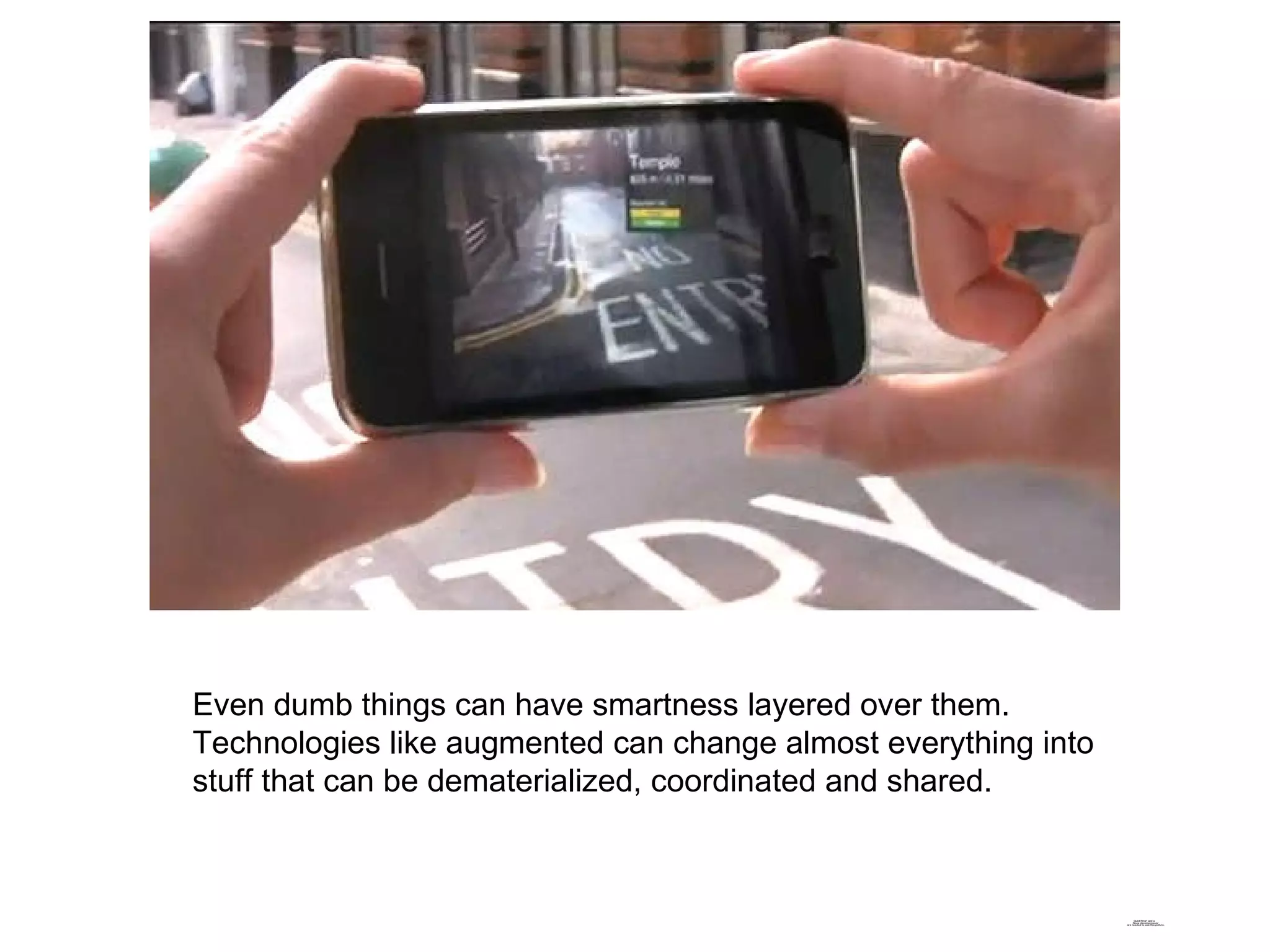
Even dumb things can have smartness layered over them. Technologies like augmented can change almost everything into stuff that can be dematerialized, coordinated and shared.
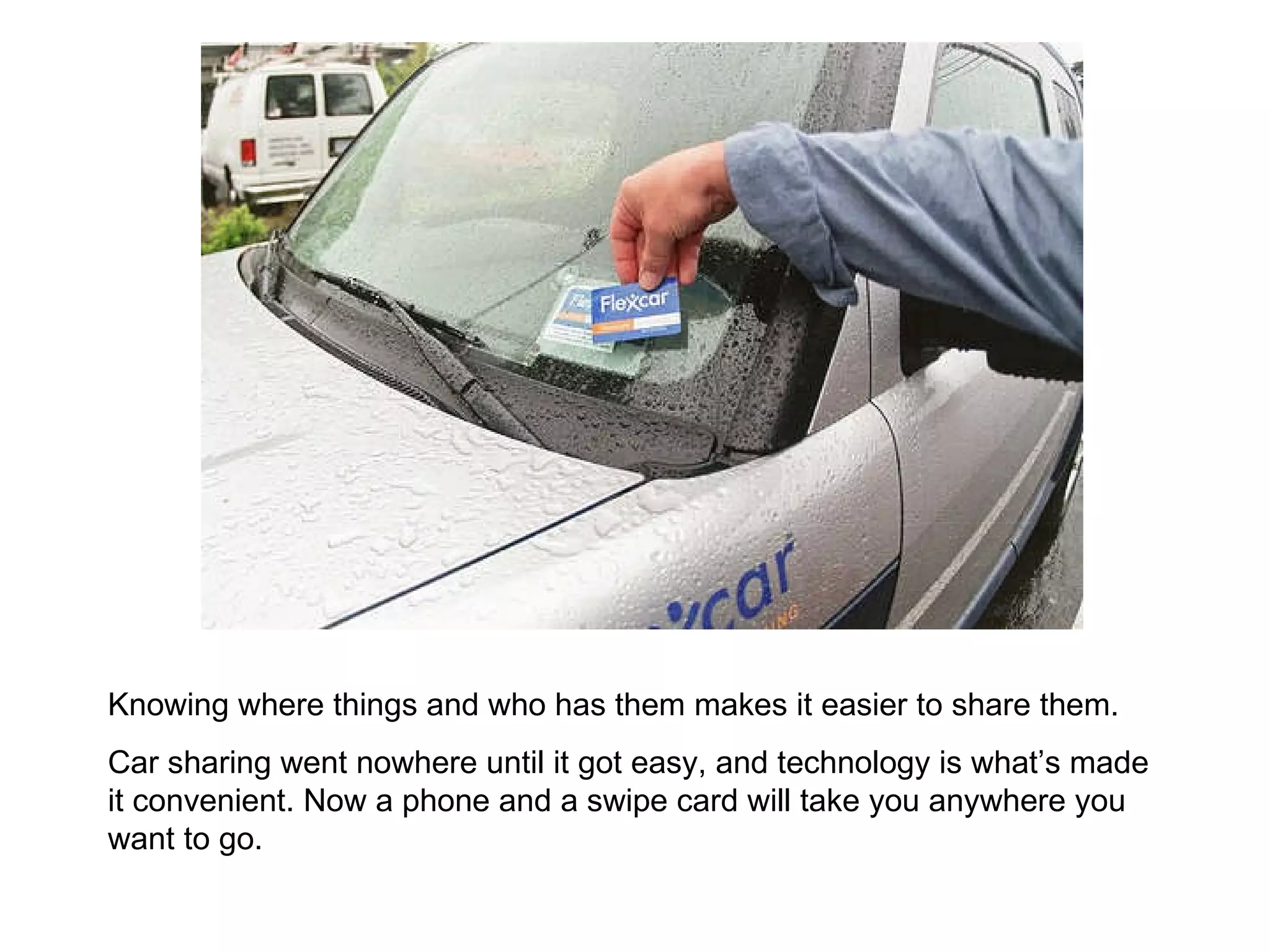
Knowing where things and who has them makes it easier to share them. Car sharing went nowhere until it got easy, and technology is what’s made it convenient. Now a phone and a swipe card will take you anywhere you want to go.
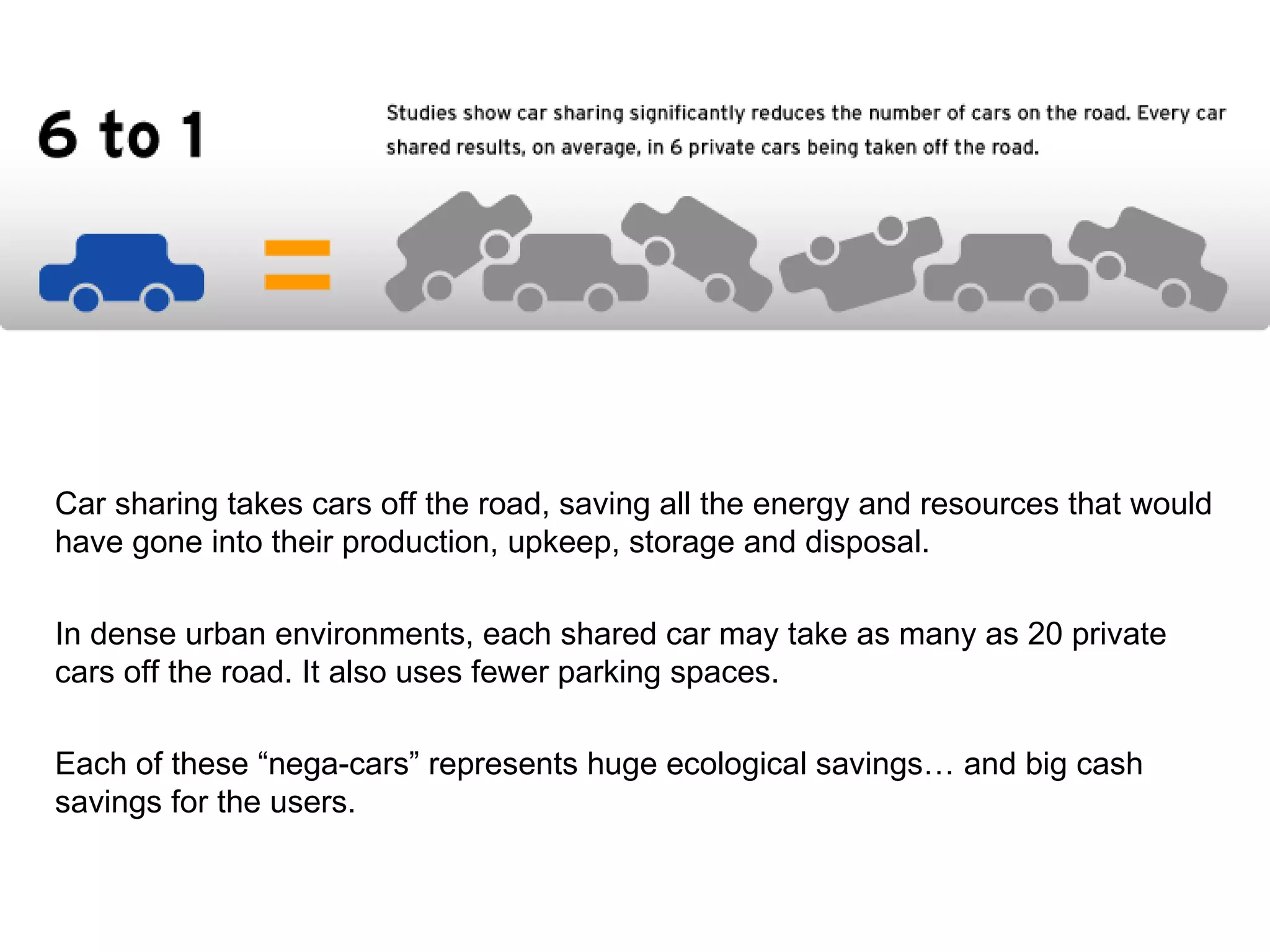
Car sharing takes cars off the road, saving all the energy and resources that would have gone into their production, upkeep, storage and disposal. In dense urban environments, each shared car may take as many as 20 private cars off the road. It also uses fewer parking spaces. Each of these “nega-cars” represents huge ecological savings… and big cash savings for the users.
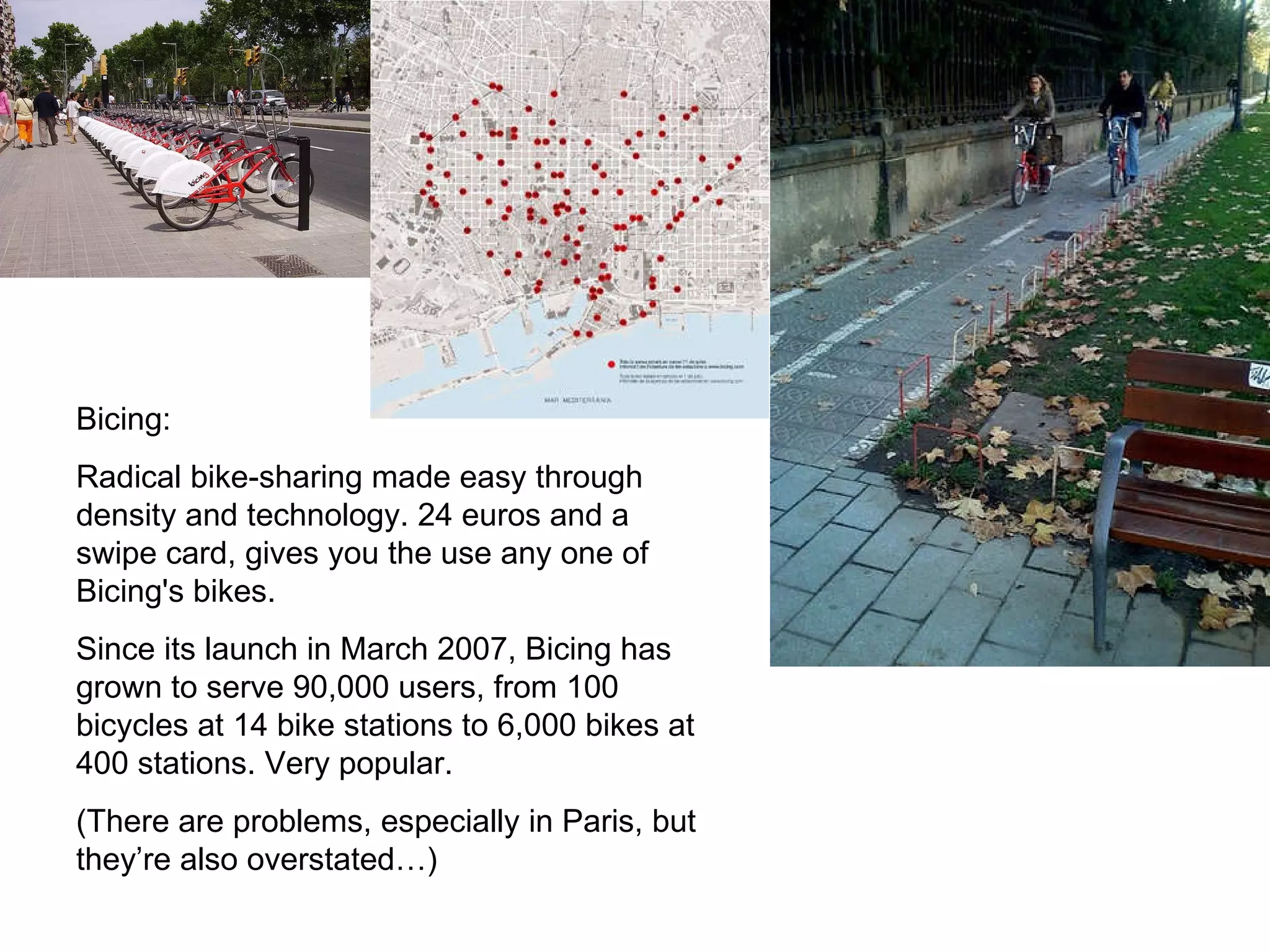
Bicing: Radical bike-sharing made easy through density and technology. 24 euros and a swipe card, gives you the use any one of Bicing's bikes. Since its launch in March 2007, Bicing has grown to serve 90,000 users, from 100 bicycles at 14 bike stations to 6,000 bikes at 400 stations. Very popular. (There are problems, especially in Paris, but they’re also overstated…)
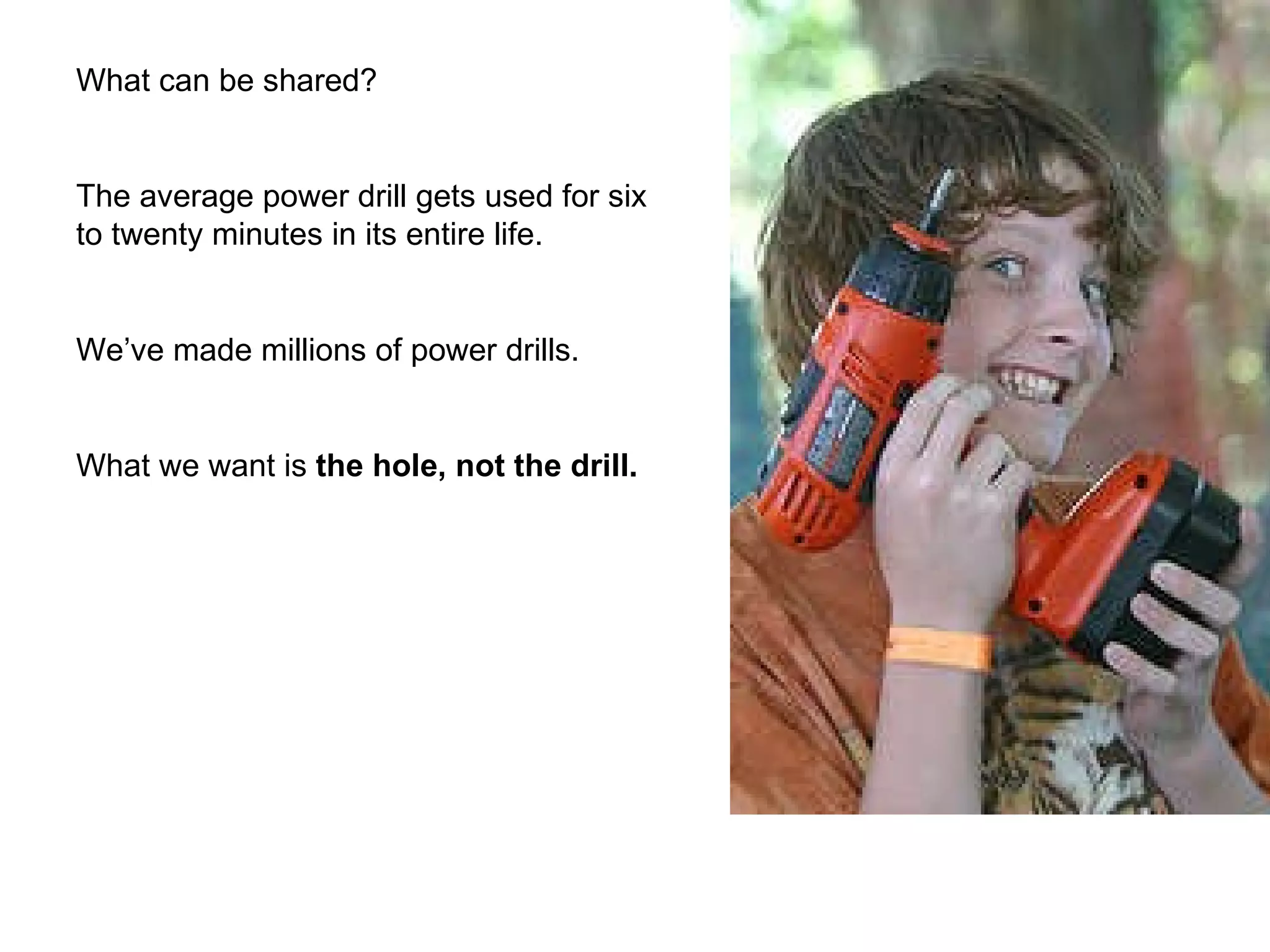
What can be shared? The average power drill gets used for six to twenty minutes in its entire life.  We’ve made millions of power drills. What we want is  the hole, not the drill.
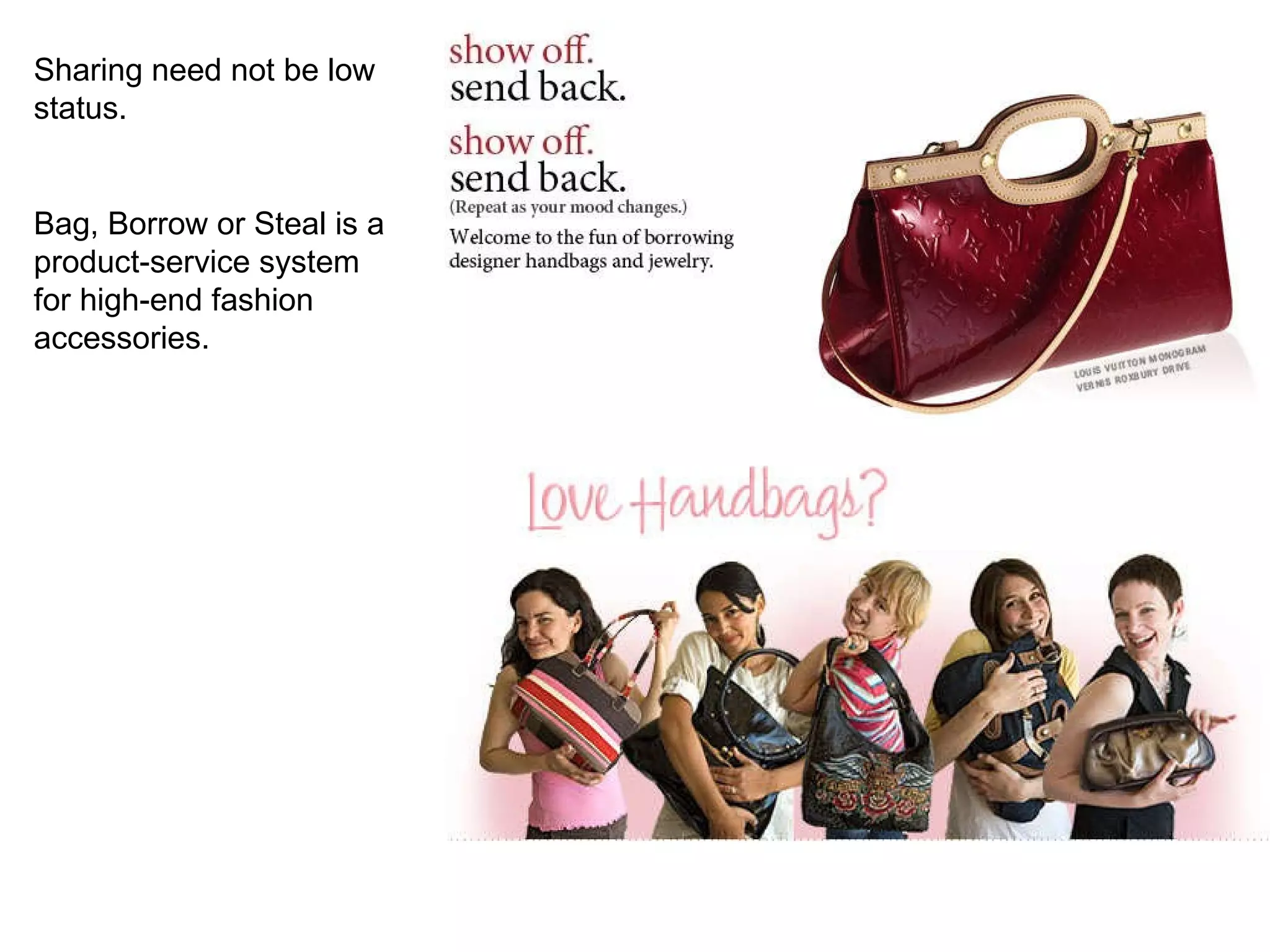
Sharing need not be low status. Bag, Borrow or Steal is a product-service system for high-end fashion accessories.
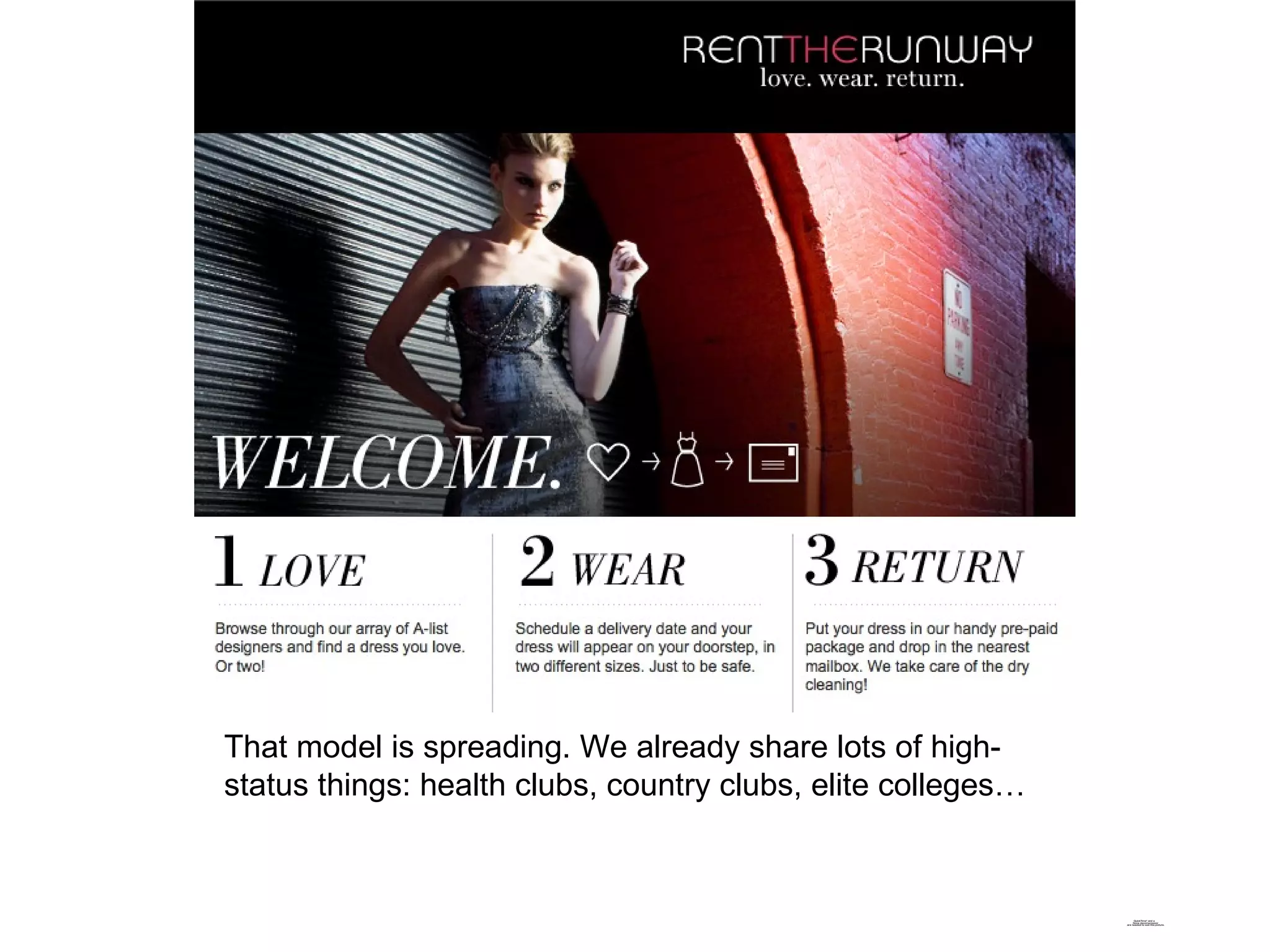
That model is spreading. We already share lots of high-status things: health clubs, country clubs, elite colleges…
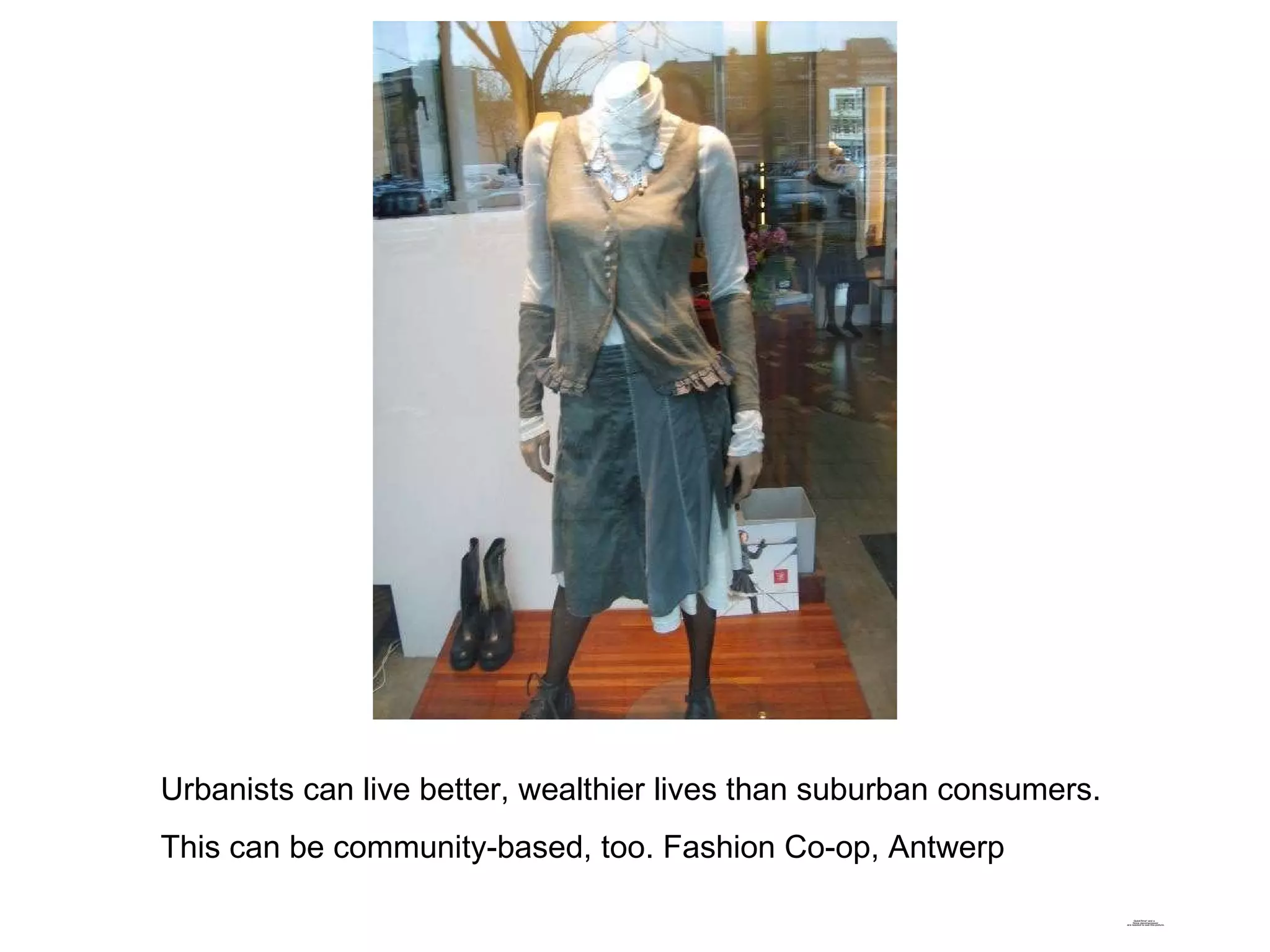
Urbanists can live better, wealthier lives than suburban consumers. This can be community-based, too. Fashion Co-op, Antwerp
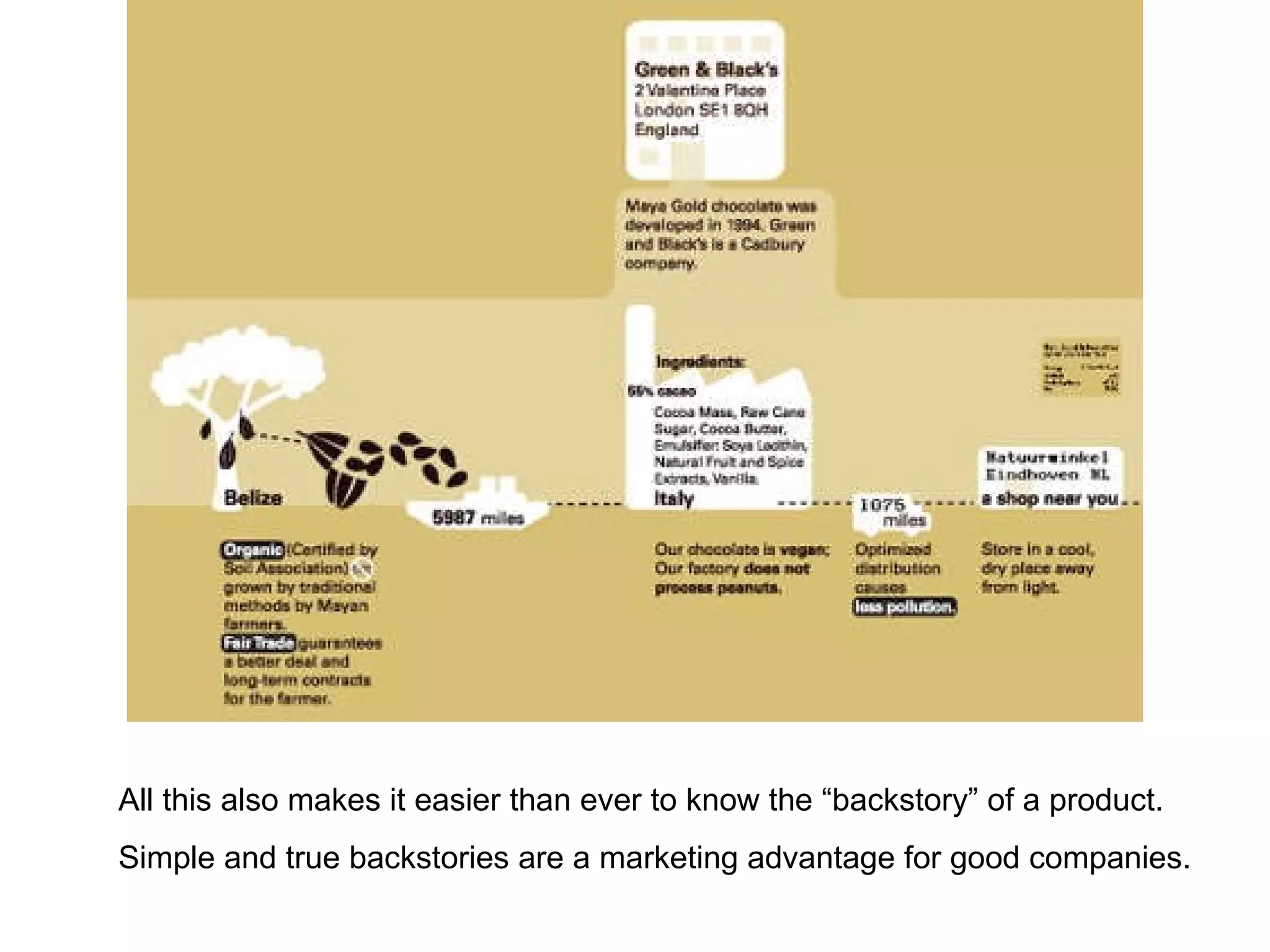
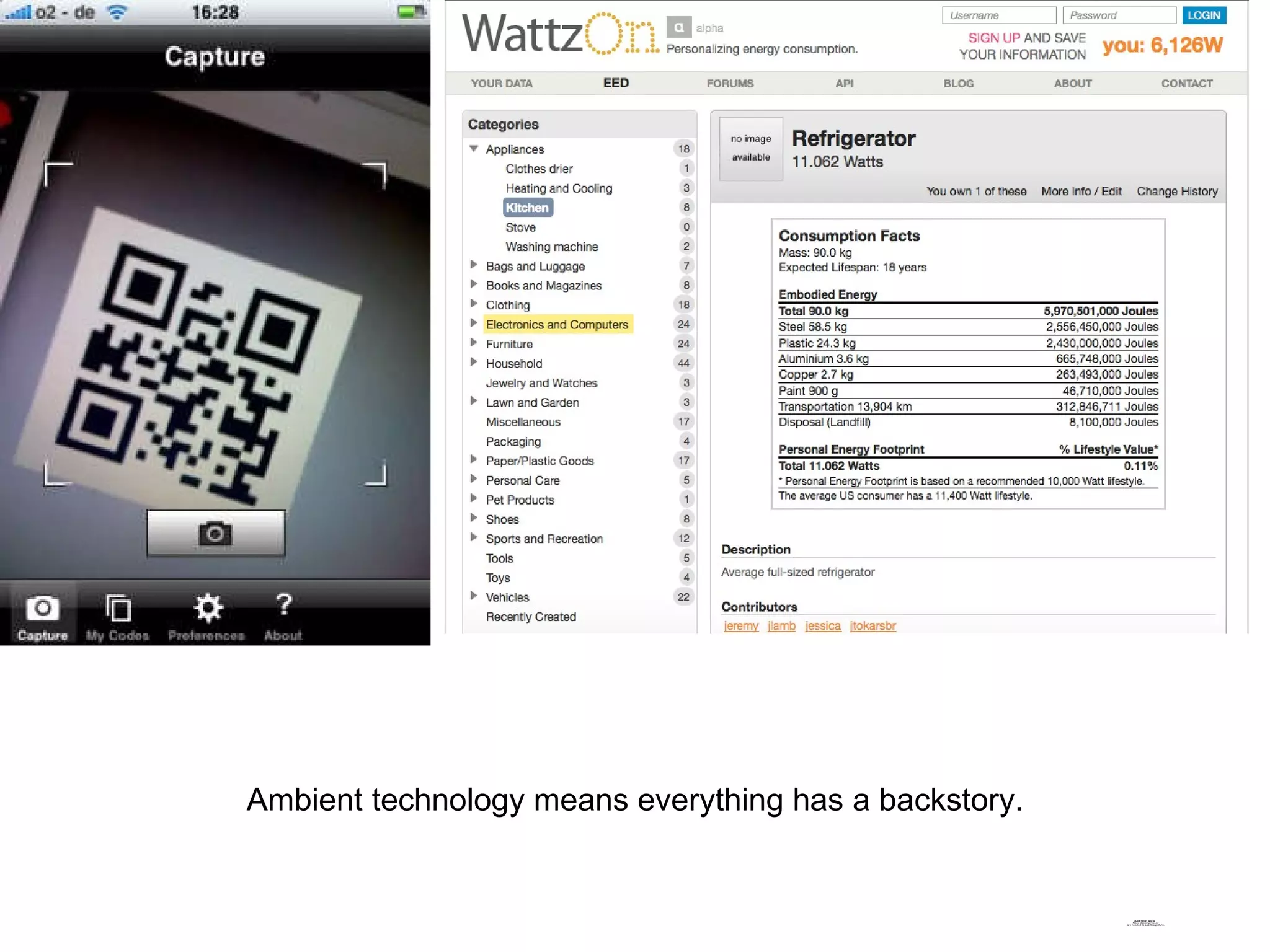
All this also makes it easier than ever to know the “backstory” of a product. Simple and true backstories are a marketing advantage for good companies.
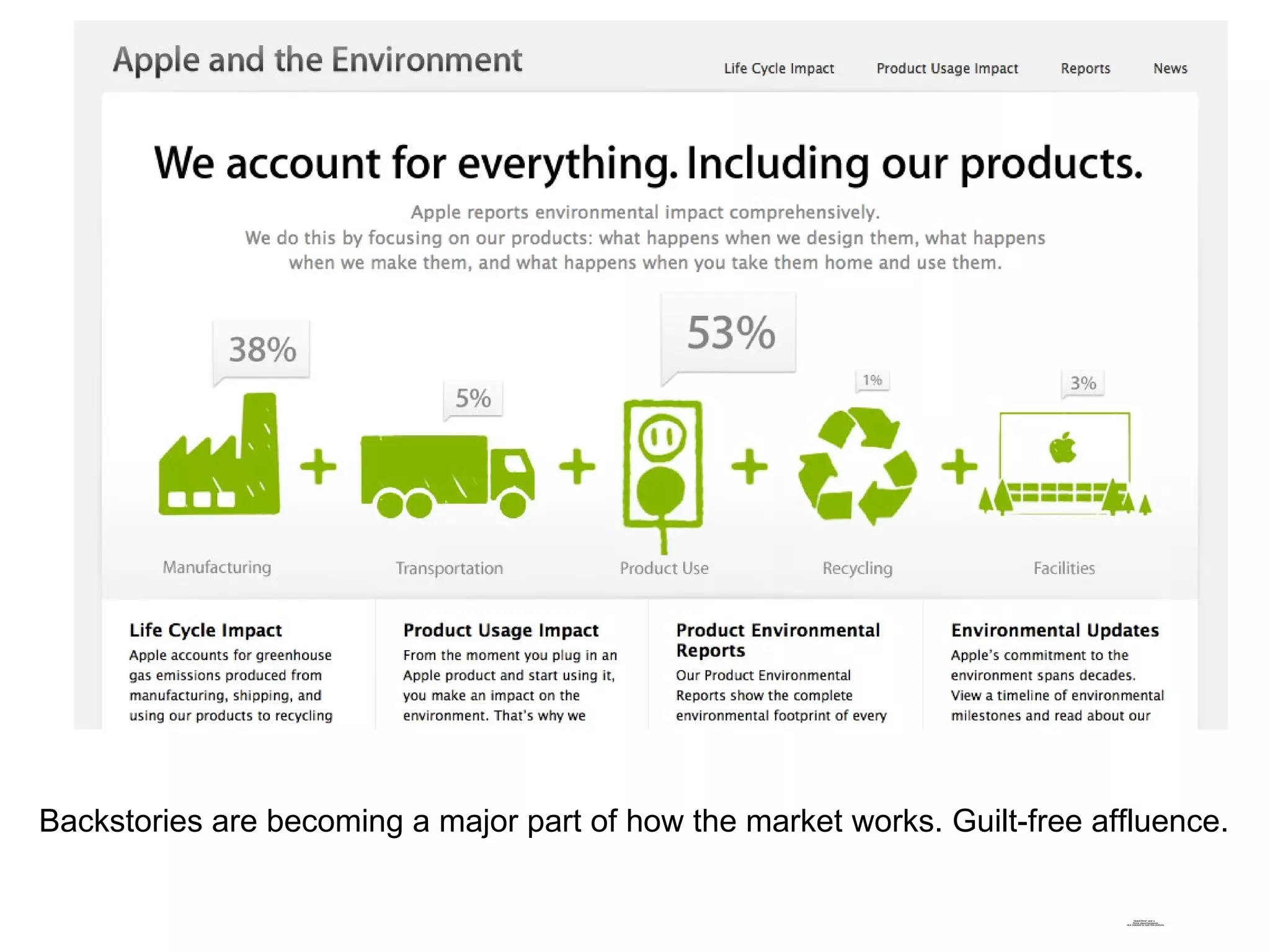
Backstories are becoming a major part of how the market works. Guilt-free affluence.
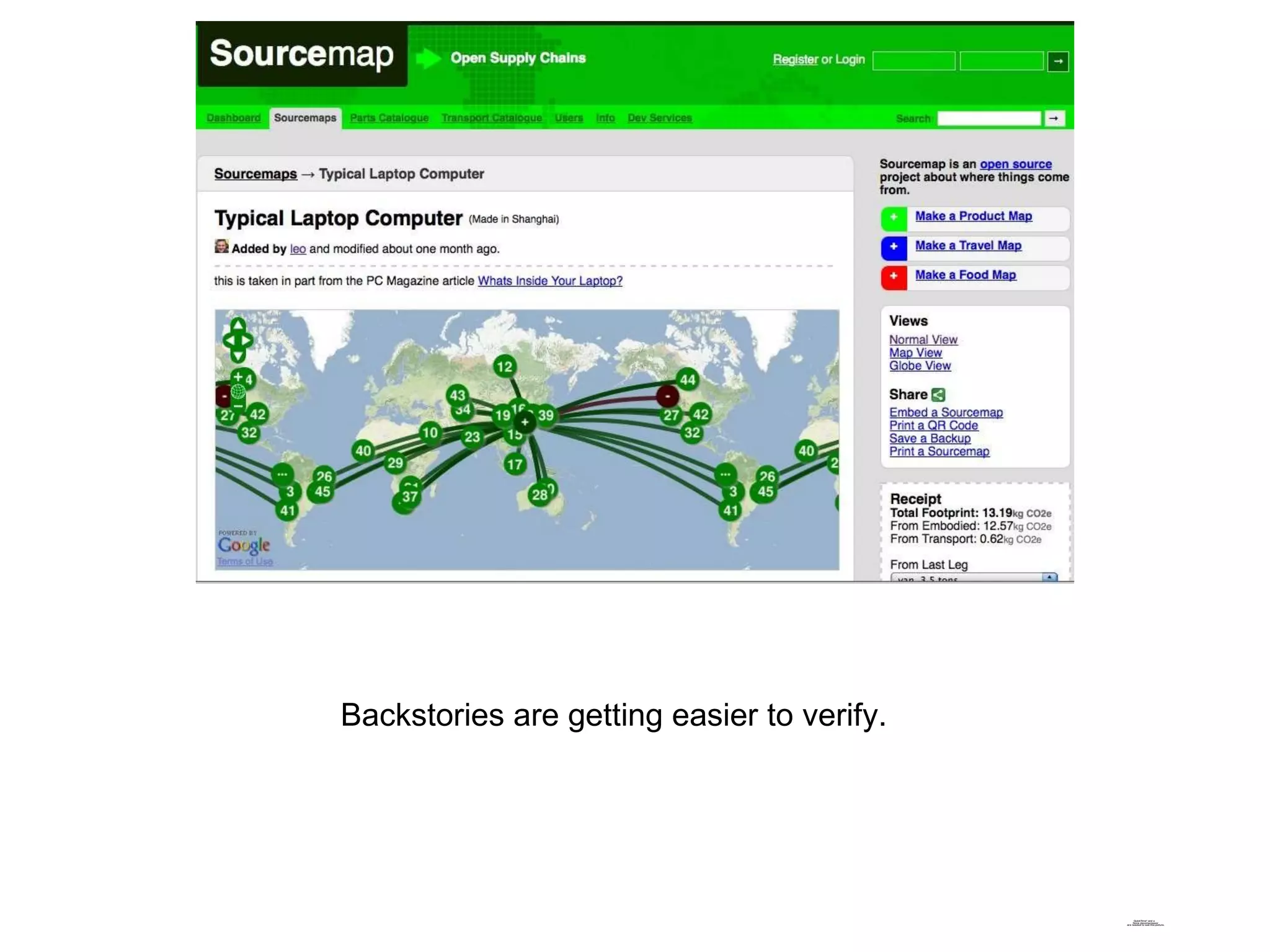
Backstories are getting easier to verify.
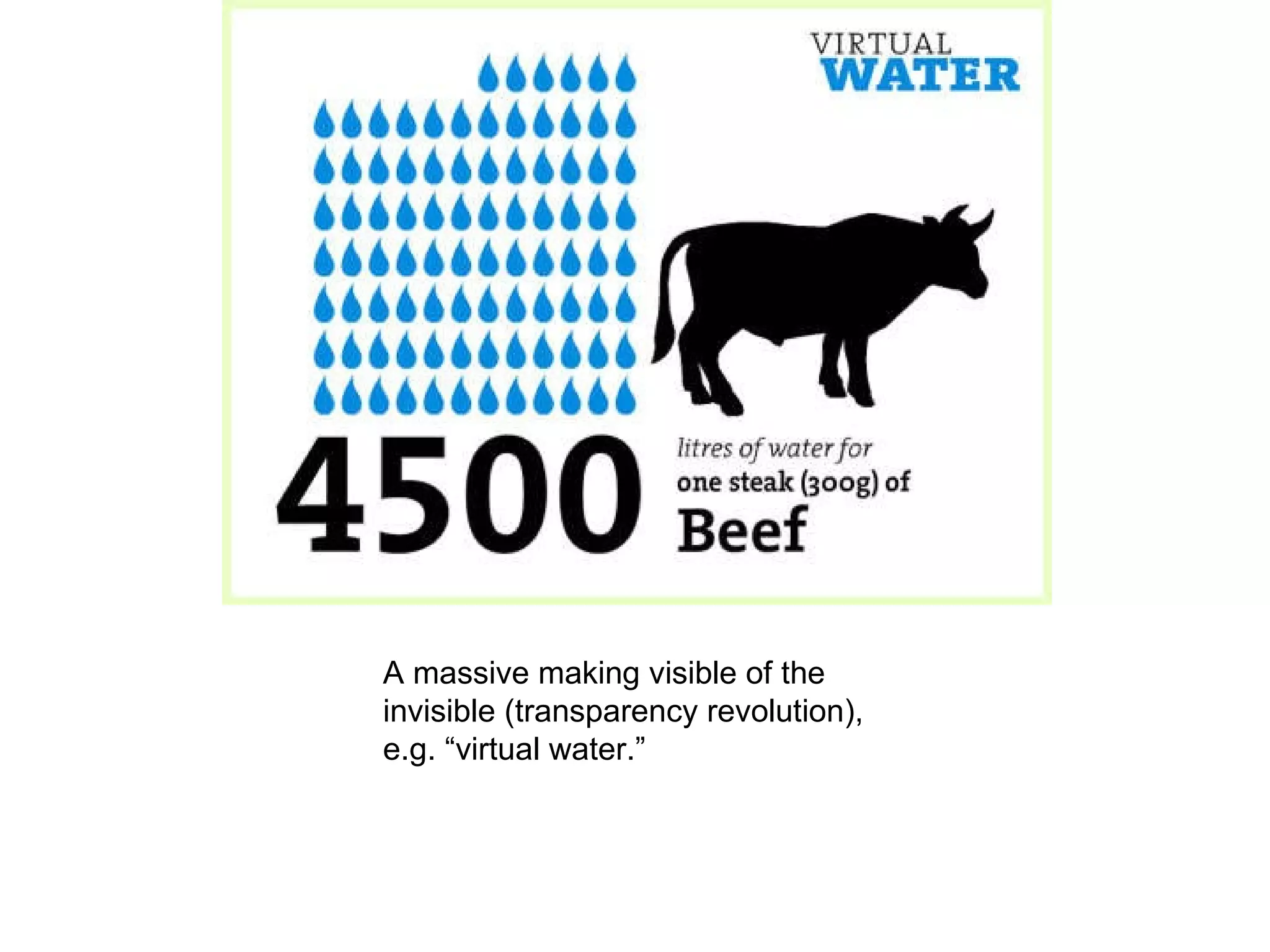
A massive making visible of the invisible (transparency revolution),  e.g. “virtual water.”
Ambient technology means everything has a backstory.
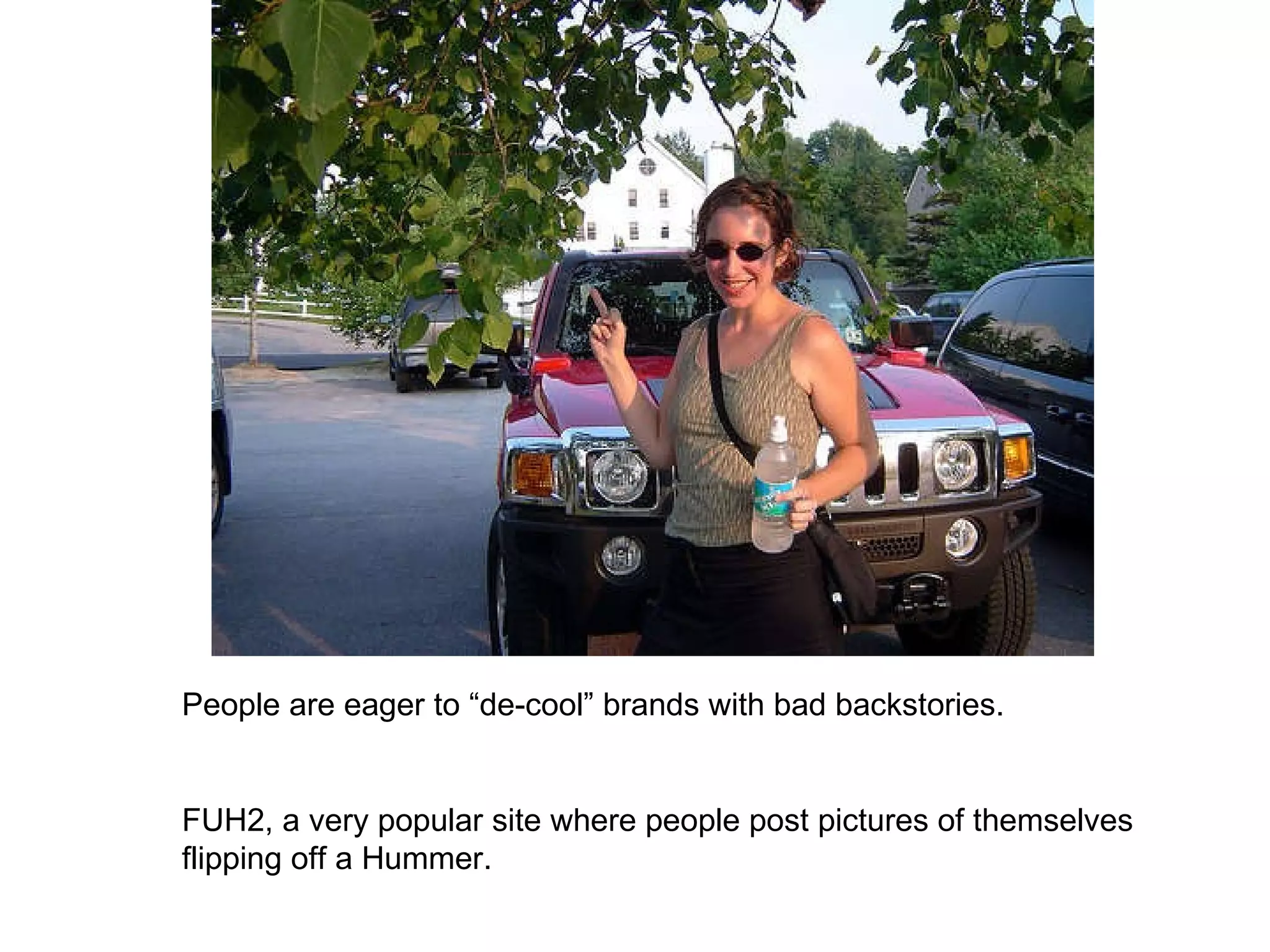
People are eager to “de-cool” brands with bad backstories. FUH2, a very popular site where people post pictures of themselves flipping off a Hummer.
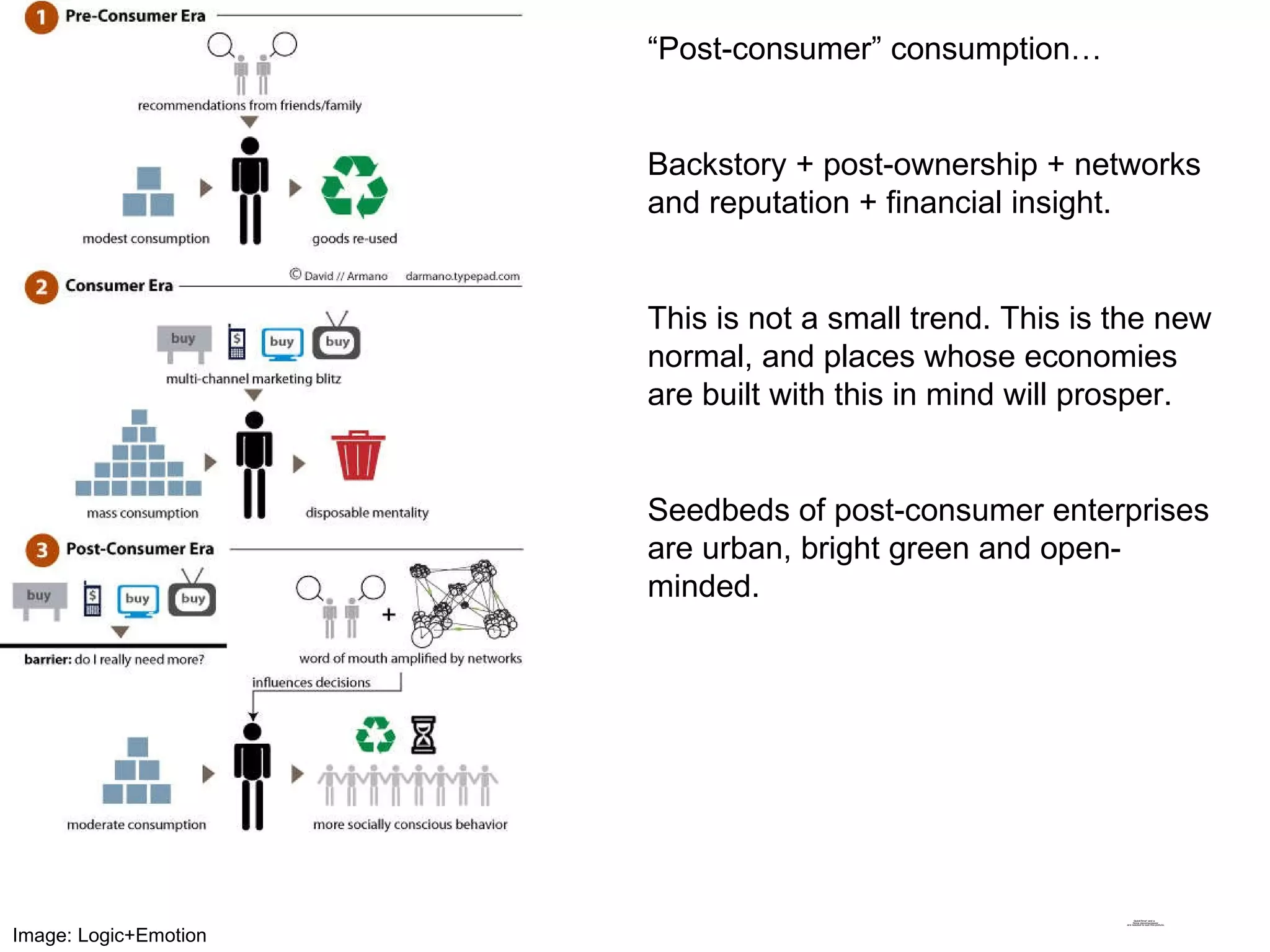
“ Post-consumer” consumption… Backstory + post-ownership + networks and reputation + financial insight. This is not a small trend. This is the new normal, and places whose economies are built with this in mind will prosper. Seedbeds of post-consumer enterprises are urban, bright green and open-minded. Image: Logic+Emotion
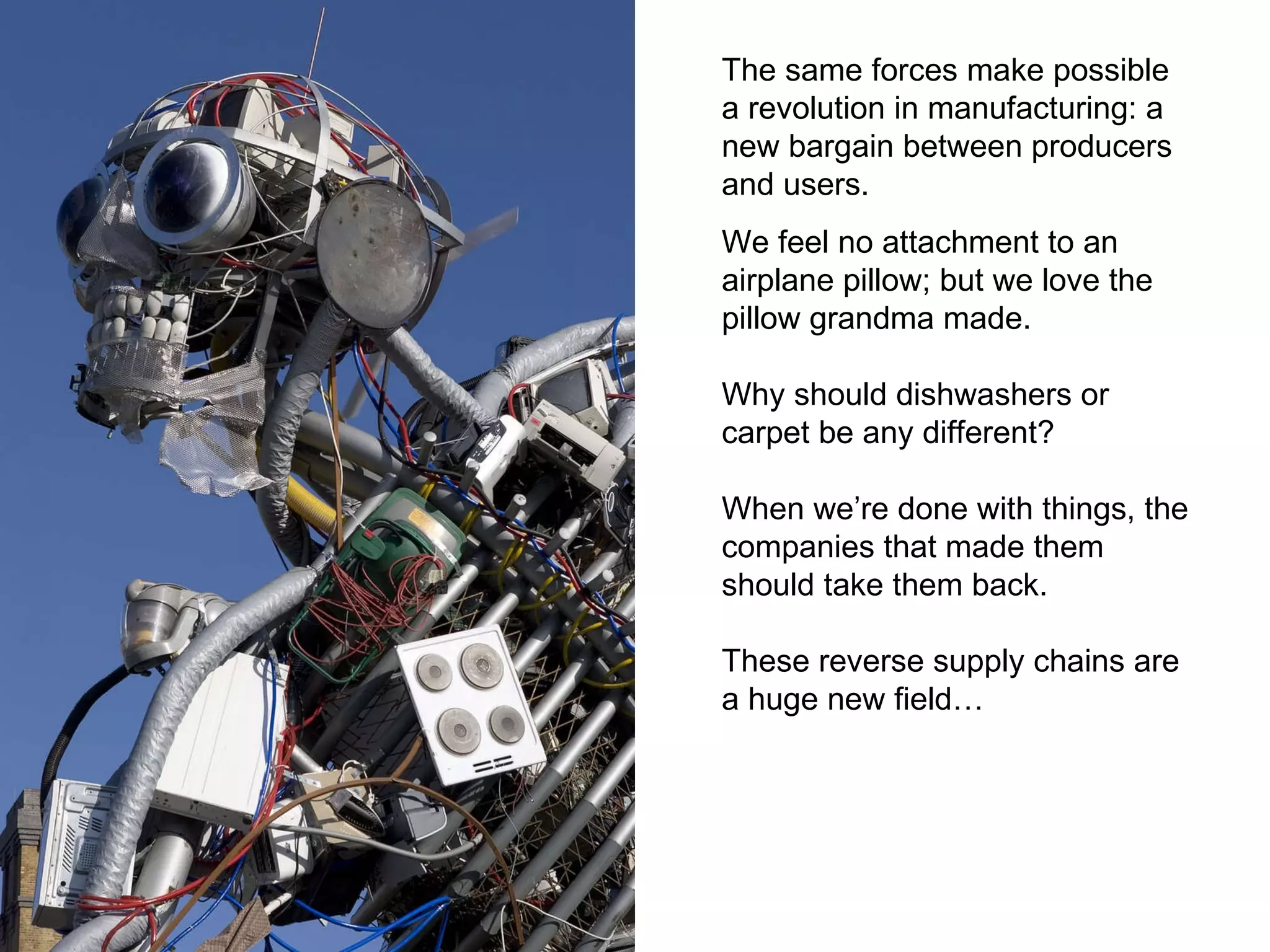
The same forces make possible a revolution in manufacturing: a new bargain between producers and users. We feel no attachment to an airplane pillow; but we love the pillow grandma made.  Why should dishwashers or carpet be any different? When we’re done with things, the companies that made them should take them back. These reverse supply chains are a huge new field…
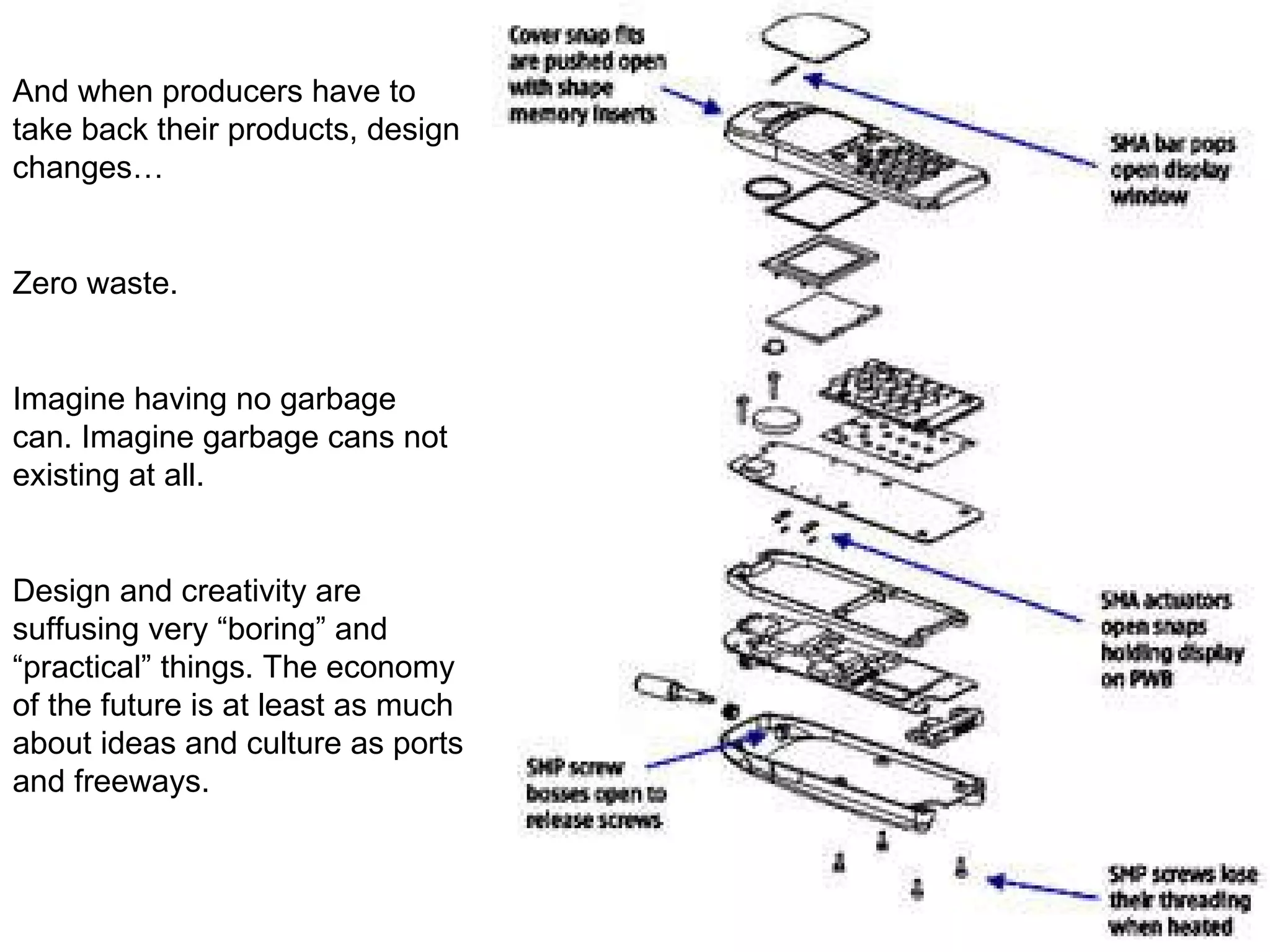
And when producers have to take back their products, design changes… Zero waste.  Imagine having no garbage can. Imagine garbage cans not existing at all. Design and creativity are suffusing very “boring” and “practical” things. The economy of the future is at least as much about ideas and culture as ports and freeways.
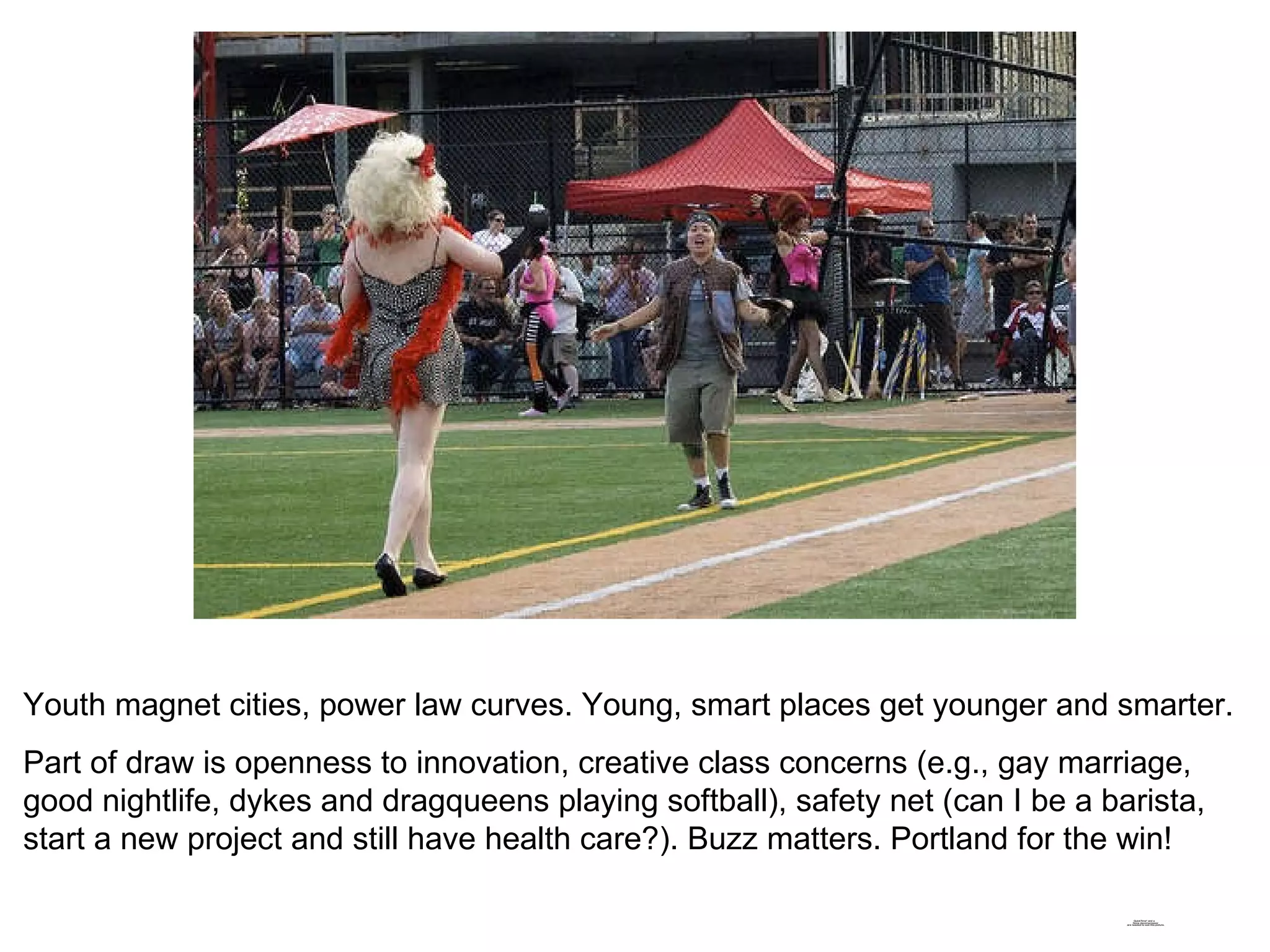
Youth magnet cities, power law curves. Young, smart places get younger and smarter. Part of draw is openness to innovation, creative class concerns (e.g., gay marriage, good nightlife, dykes and dragqueens playing softball), safety net (can I be a barista, start a new project and still have health care?). Buzz matters. Portland for the win!
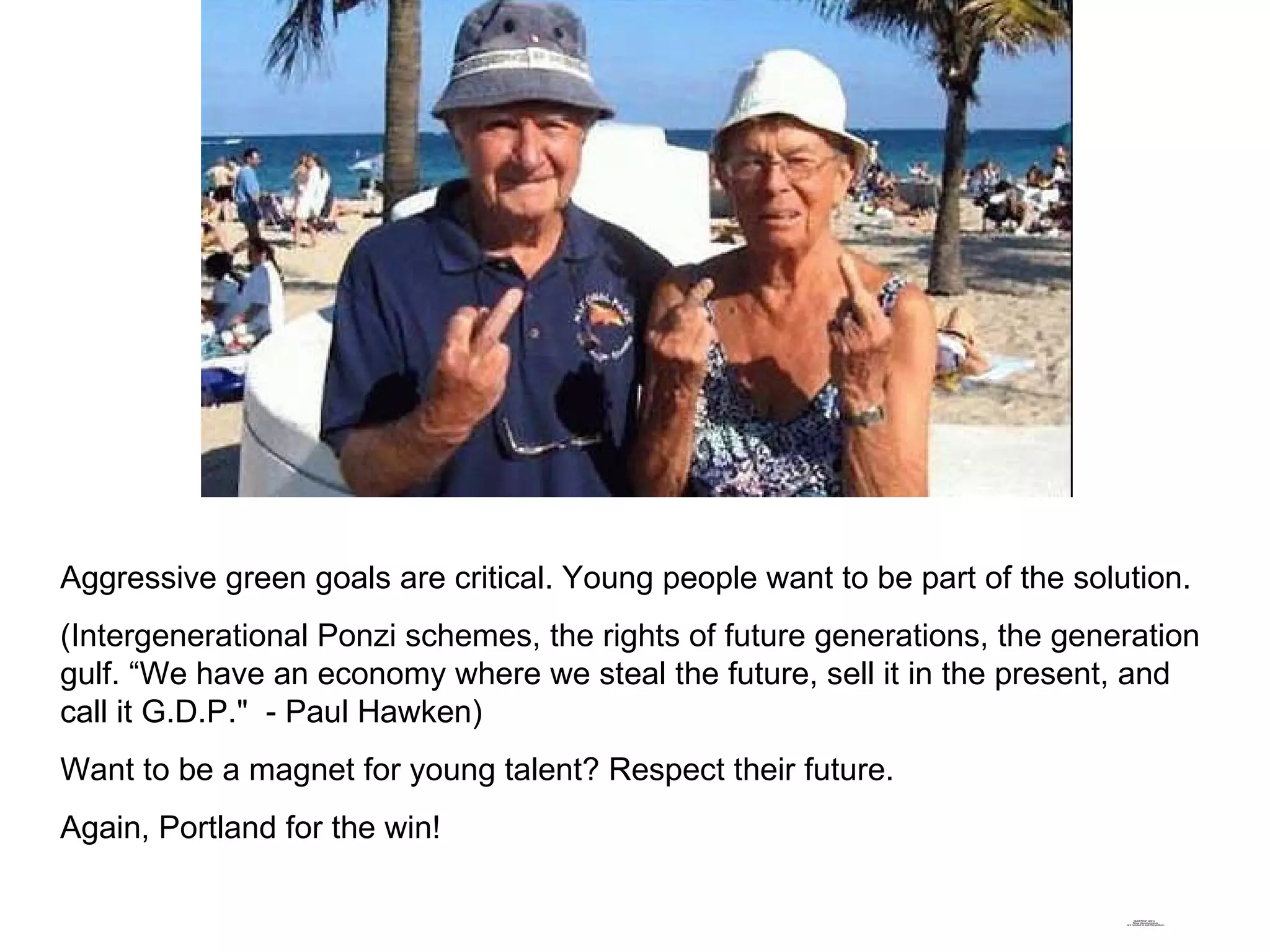
Aggressive green goals are critical. Young people want to be part of the solution. (Intergenerational Ponzi schemes, the rights of future generations, the generation gulf. “We have an economy where we steal the future, sell it in the present, and call it G.D.P."  - Paul Hawken) Want to be a magnet for young talent? Respect their future.  Again, Portland for the win!
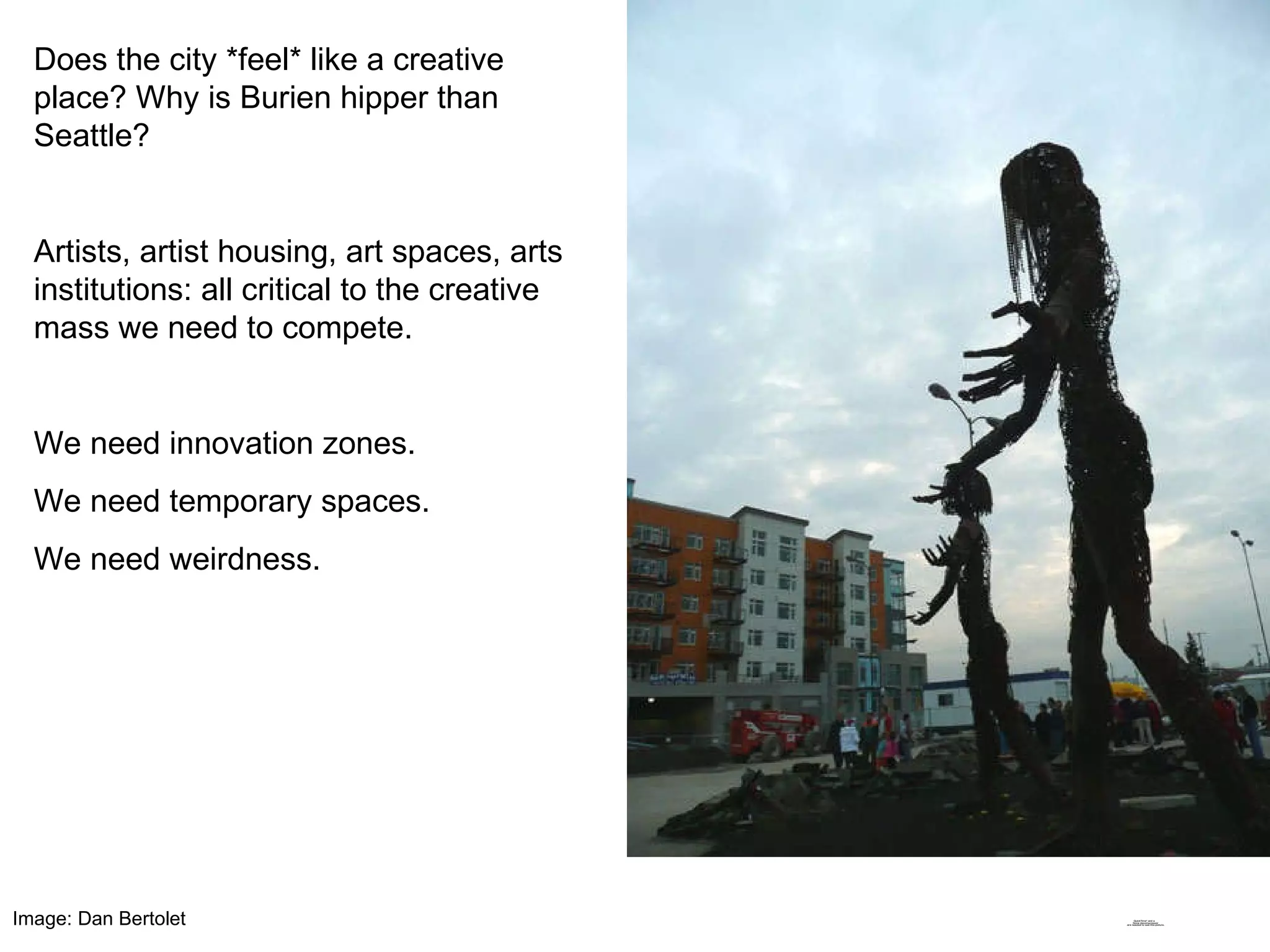
Does the city *feel* like a creative place? Why is Burien hipper than Seattle? Artists, artist housing, art spaces, arts institutions: all critical to the creative mass we need to compete. We need innovation zones.  We need temporary spaces.  We need weirdness. Image: Dan Bertolet
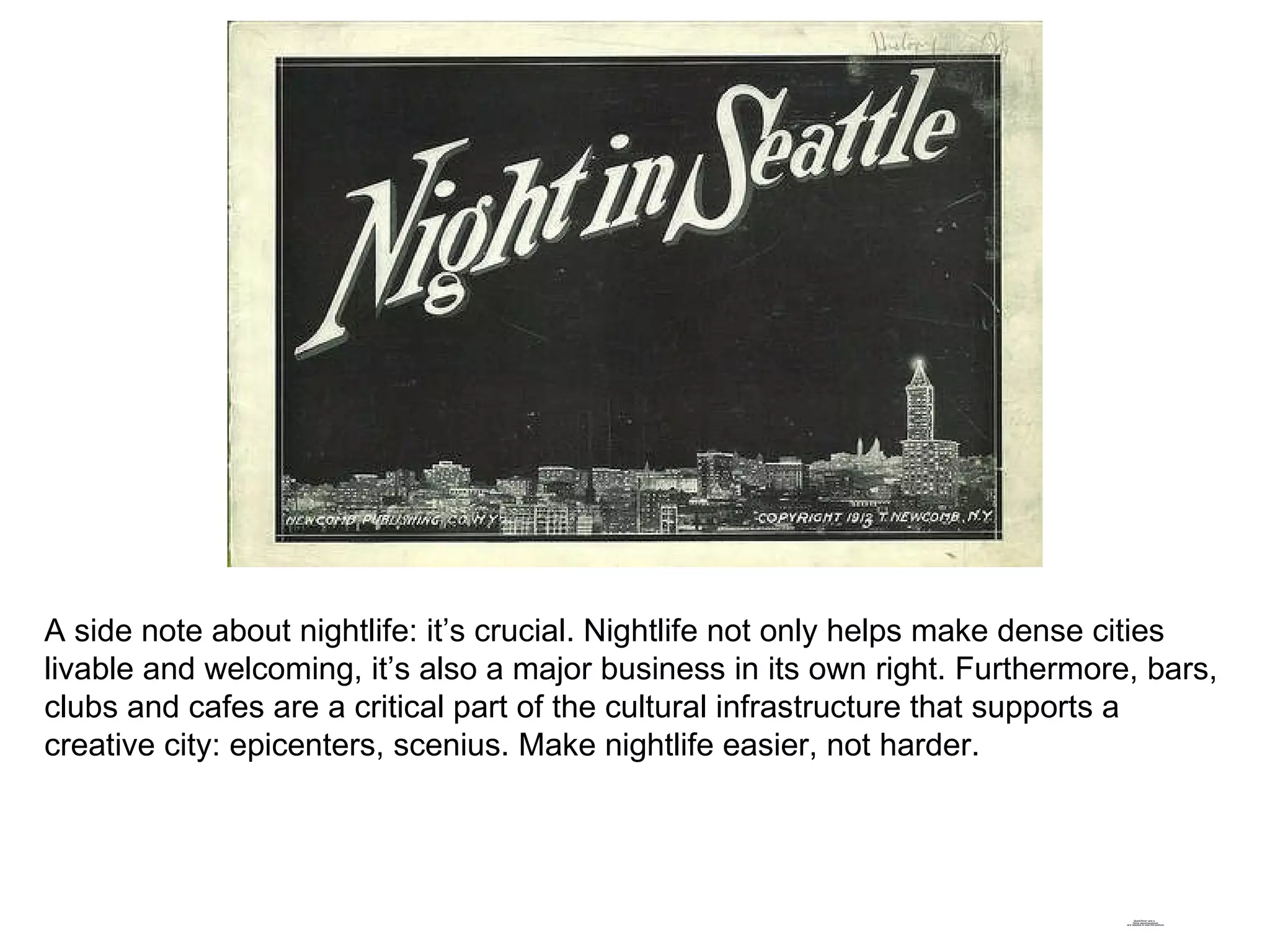
A side note about nightlife: it’s crucial. Nightlife not only helps make dense cities livable and welcoming, it’s also a major business in its own right. Furthermore, bars, clubs and cafes are a critical part of the cultural infrastructure that supports a creative city: epicenters, scenius. Make nightlife easier, not harder.
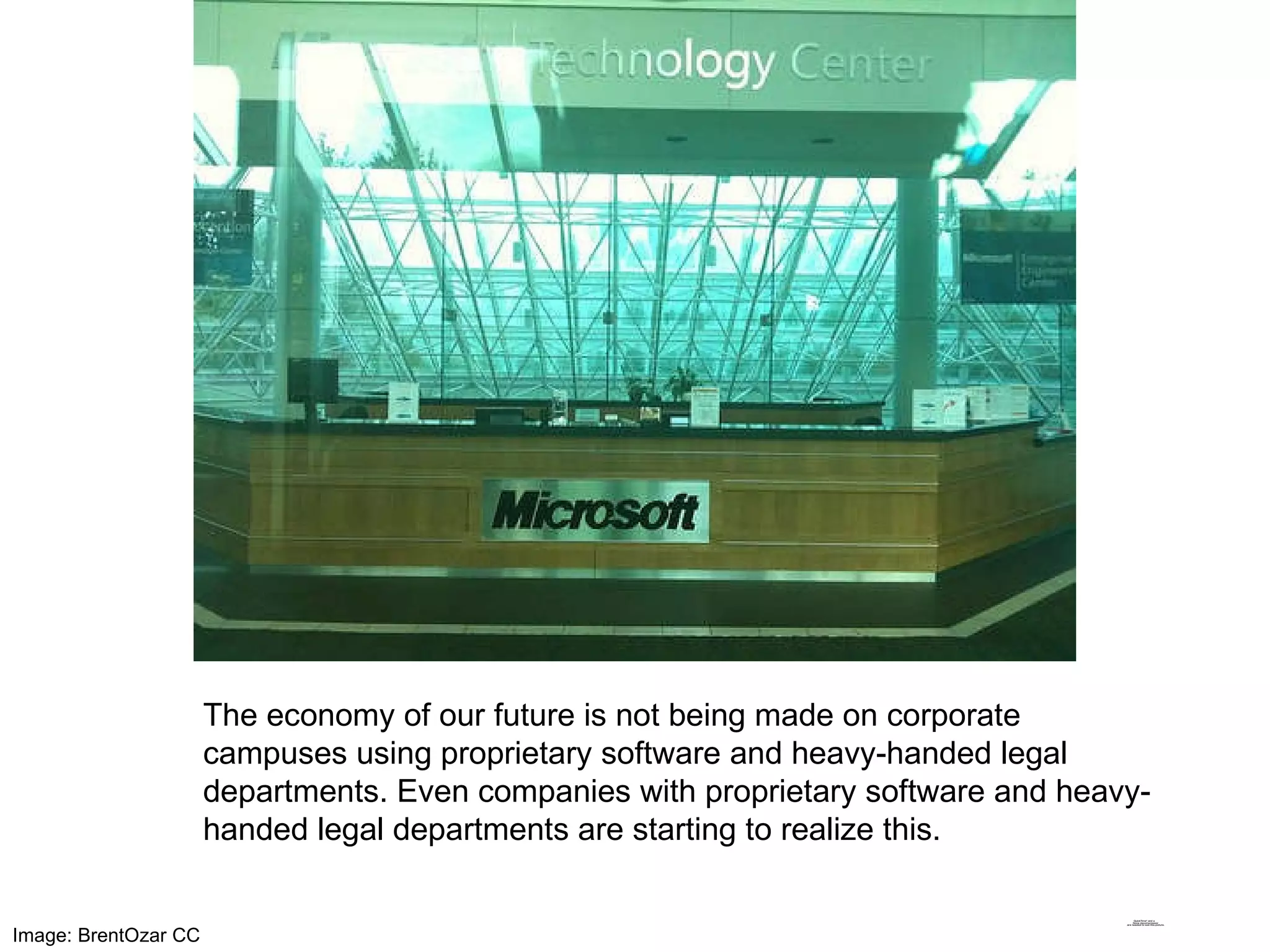
The economy of our future is not being made on corporate campuses using proprietary software and heavy-handed legal departments. Even companies with proprietary software and heavy-handed legal departments are starting to realize this. Image: BrentOzar CC
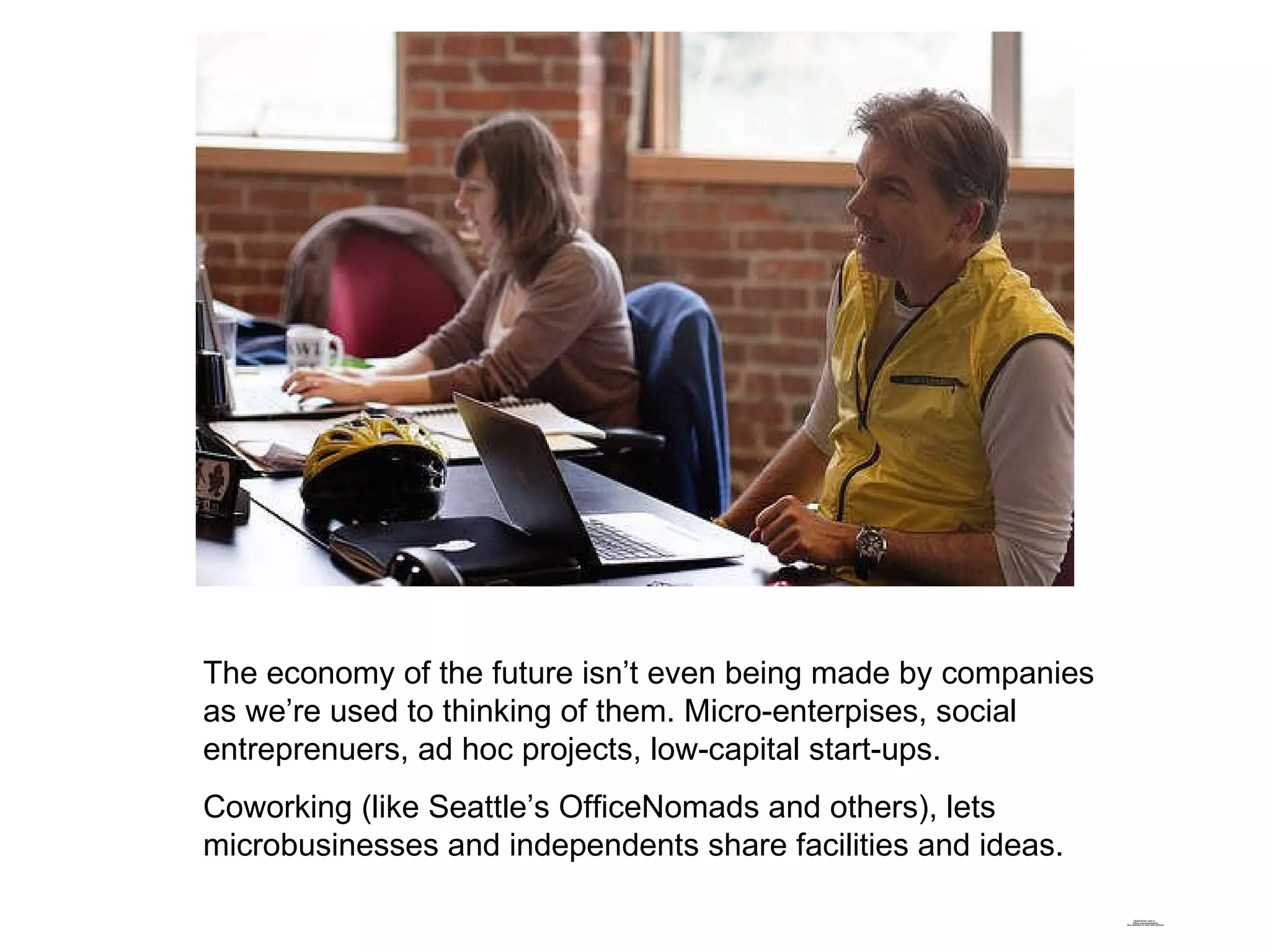
The economy of the future isn’t even being made by companies as we’re used to thinking of them. Micro-enterpises, social entreprenuers, ad hoc projects, low-capital start-ups. Coworking (like Seattle’s OfficeNomads and others), lets microbusinesses and independents share facilities and ideas.
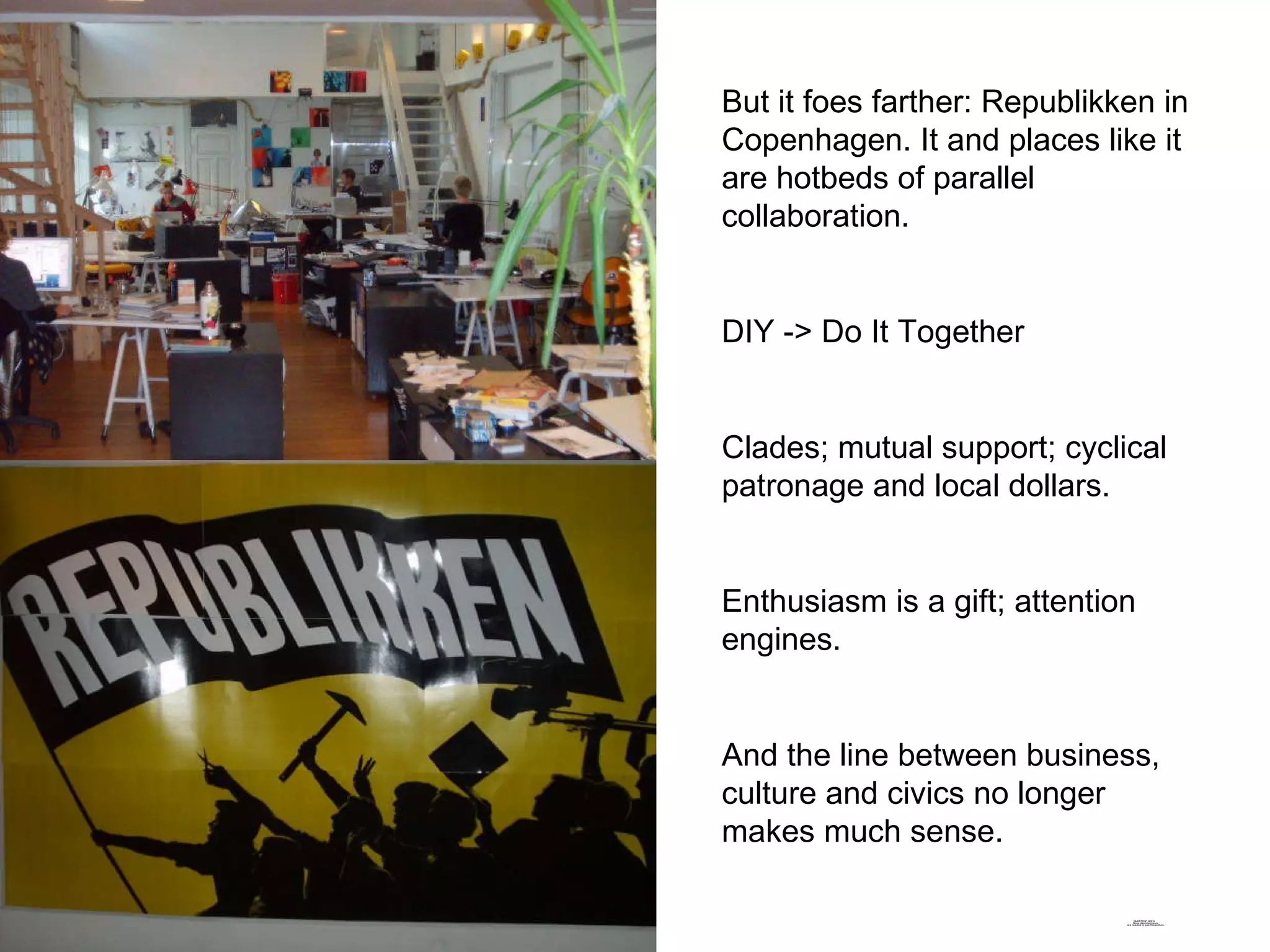
But it foes farther: Republikken in Copenhagen. It and places like it are hotbeds of parallel collaboration. DIY -> Do It Together Clades; mutual support; cyclical patronage and local dollars. Enthusiasm is a gift; attention engines. And the line between business, culture and civics no longer makes much sense.
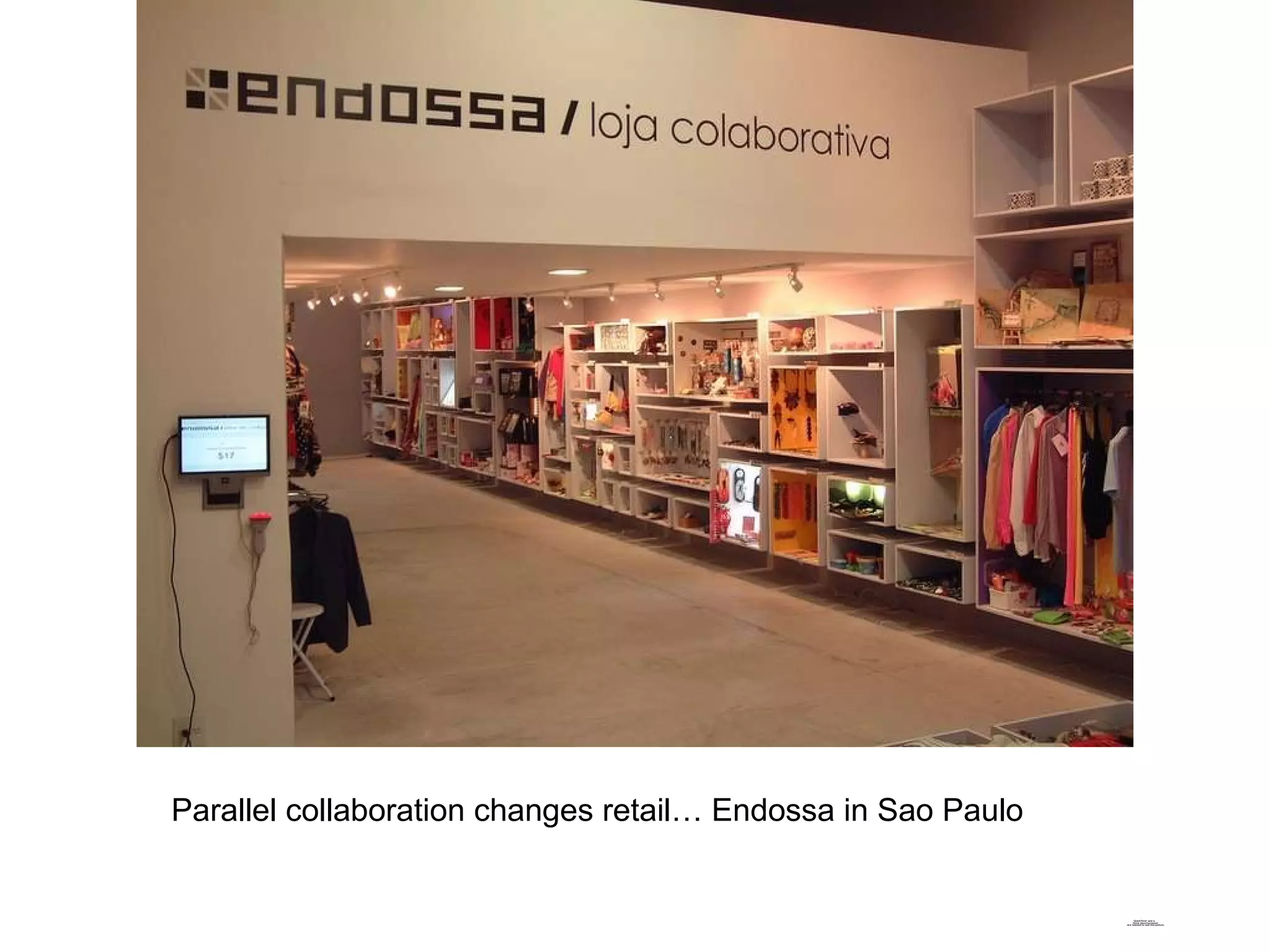
Parallel collaboration changes retail… Endossa in Sao Paulo
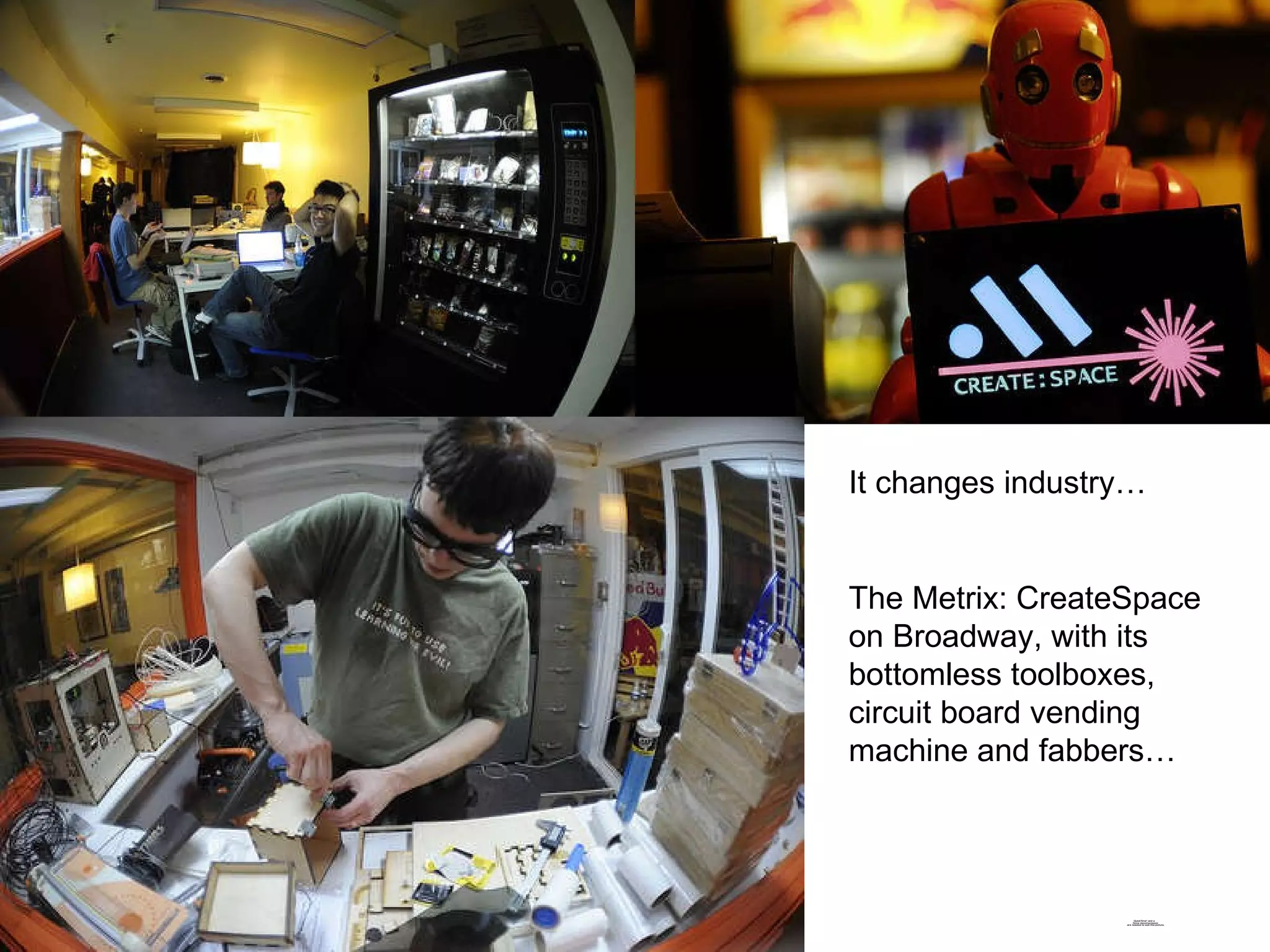
It changes industry… The Metrix: CreateSpace on Broadway, with its bottomless toolboxes, circuit board vending machine and fabbers…
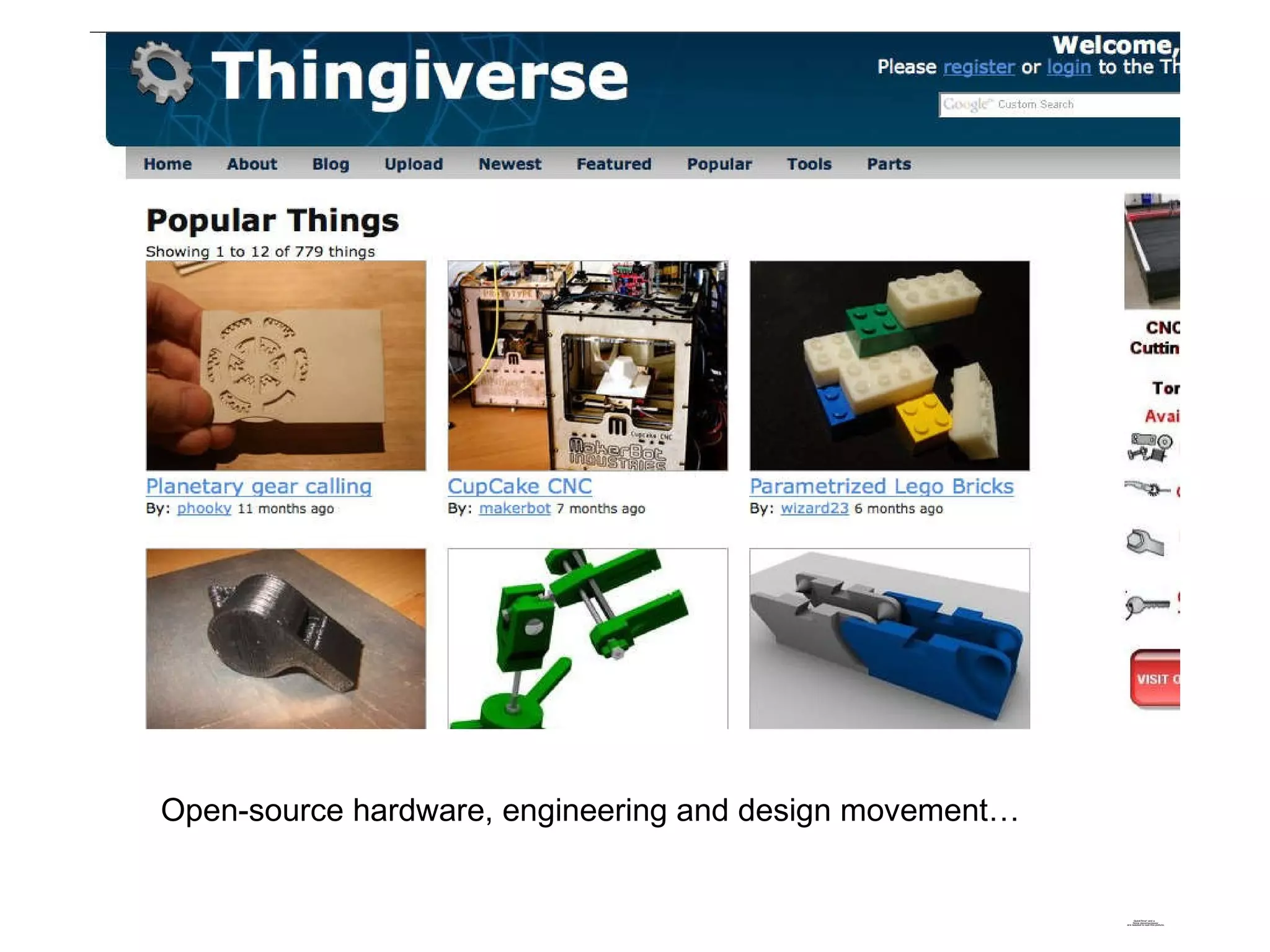
Open-source hardware, engineering and design movement…
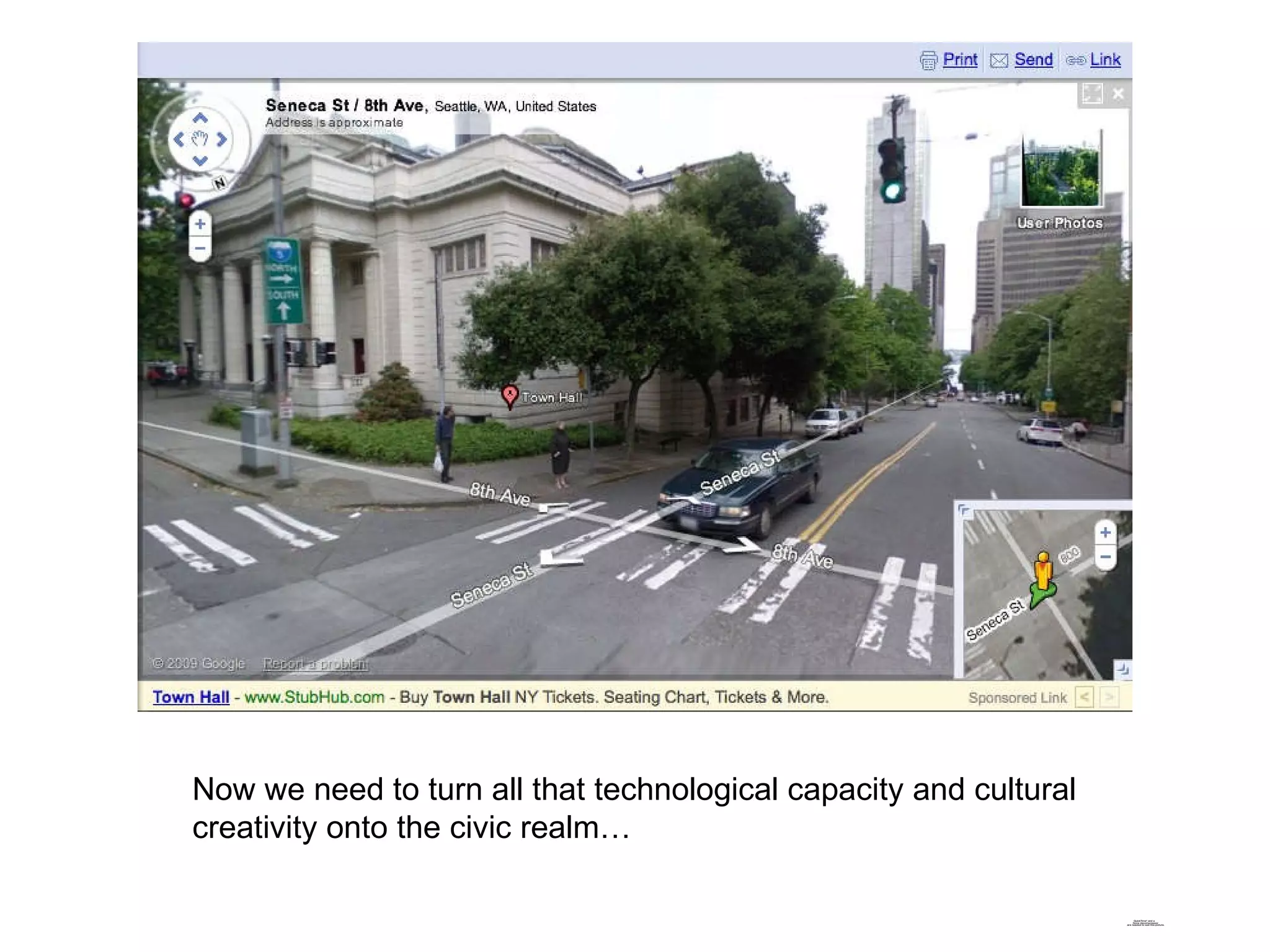
Now we need to turn all that technological capacity and cultural creativity onto the civic realm…
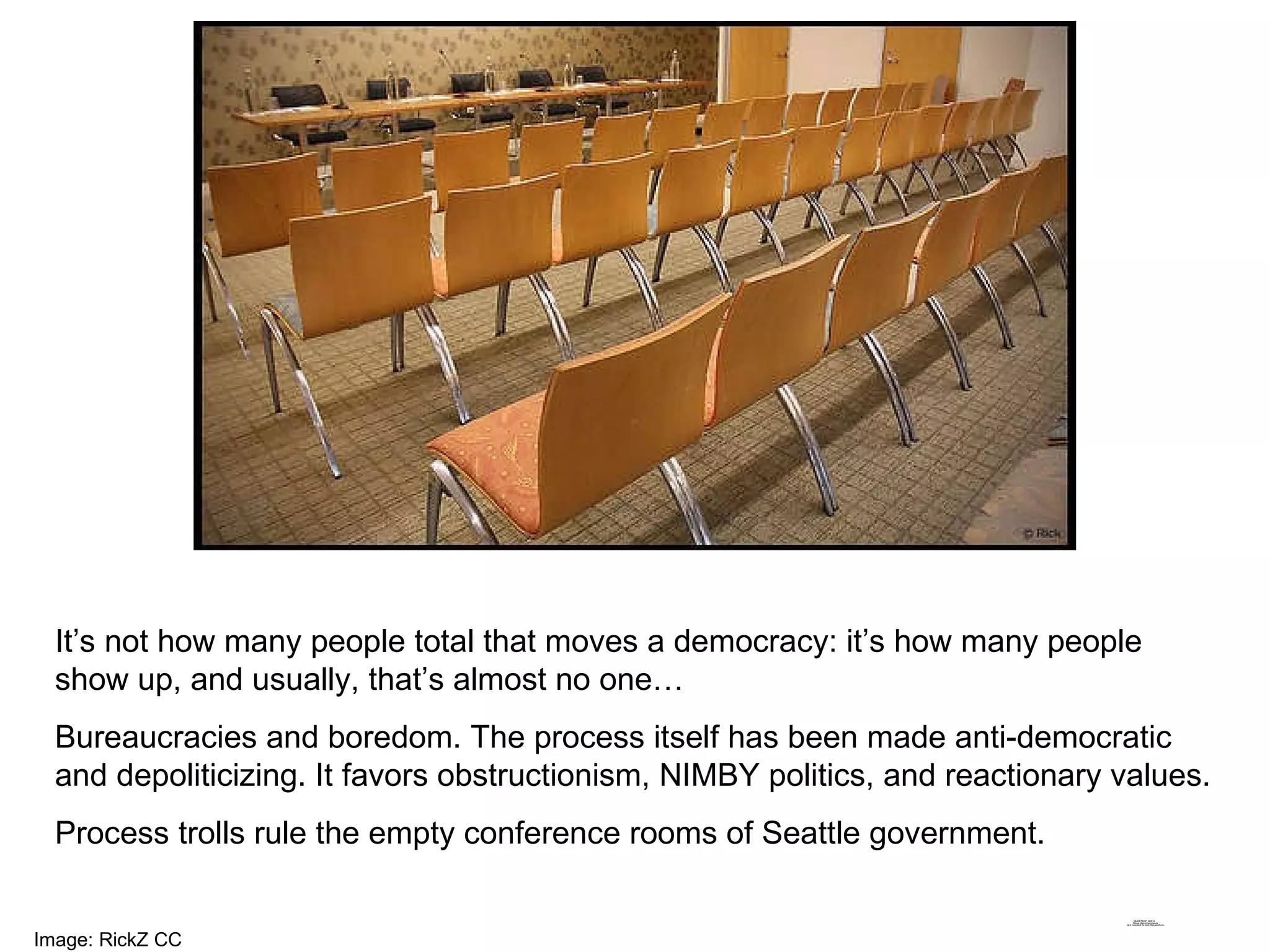
It’s not how many people total that moves a democracy: it’s how many people show up, and usually, that’s almost no one…  Bureaucracies and boredom. The process itself has been made anti-democratic and depoliticizing. It favors obstructionism, NIMBY politics, and reactionary values. Process trolls rule the empty conference rooms of Seattle government. Image: RickZ CC
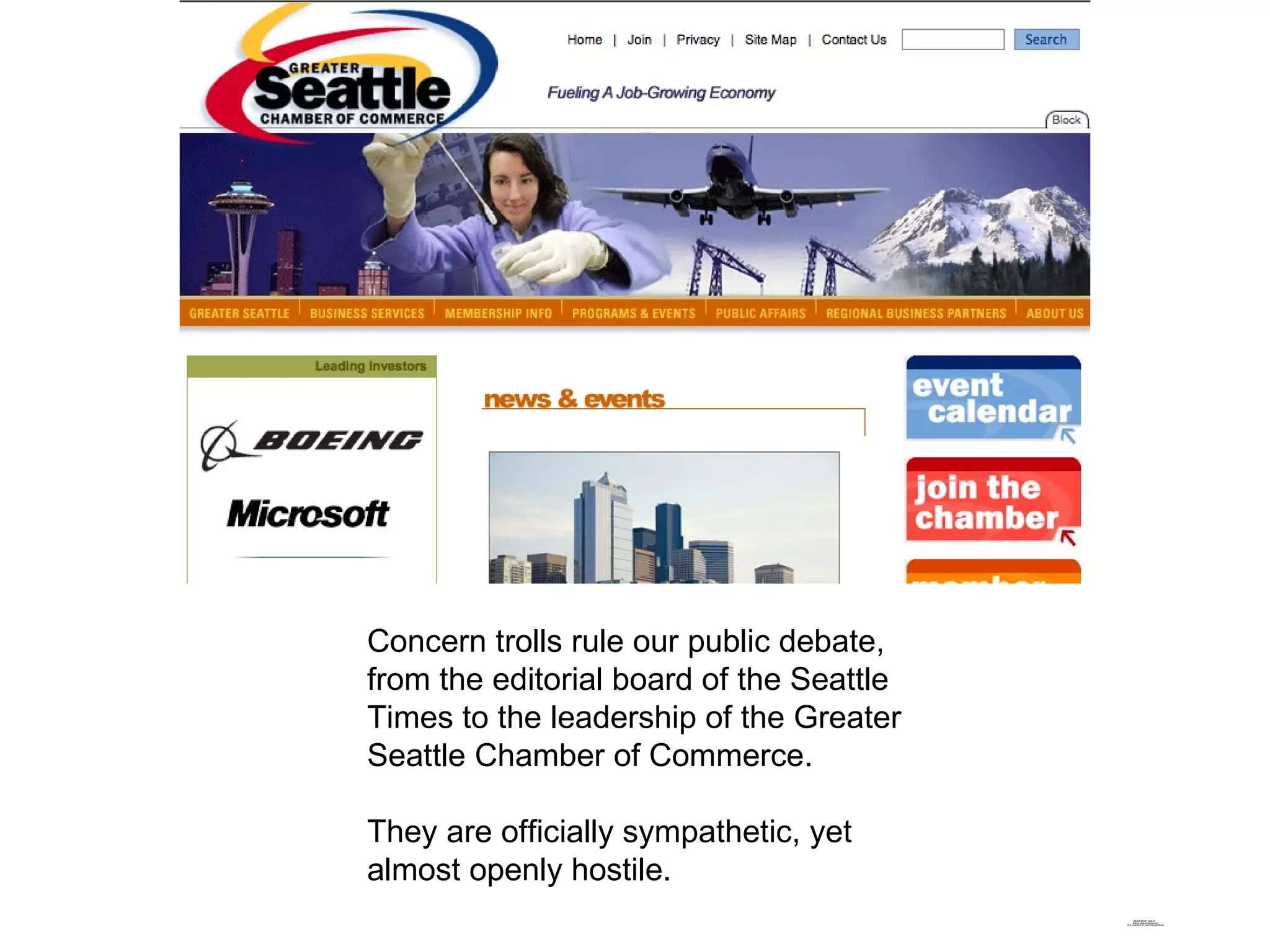
Concern trolls rule our public debate, from the editorial board of the Seattle Times to the leadership of the Greater Seattle Chamber of Commerce. They are officially sympathetic, yet almost openly hostile.
We need to make and deploy our own civic sphere and civic culture. It begins by connecting…
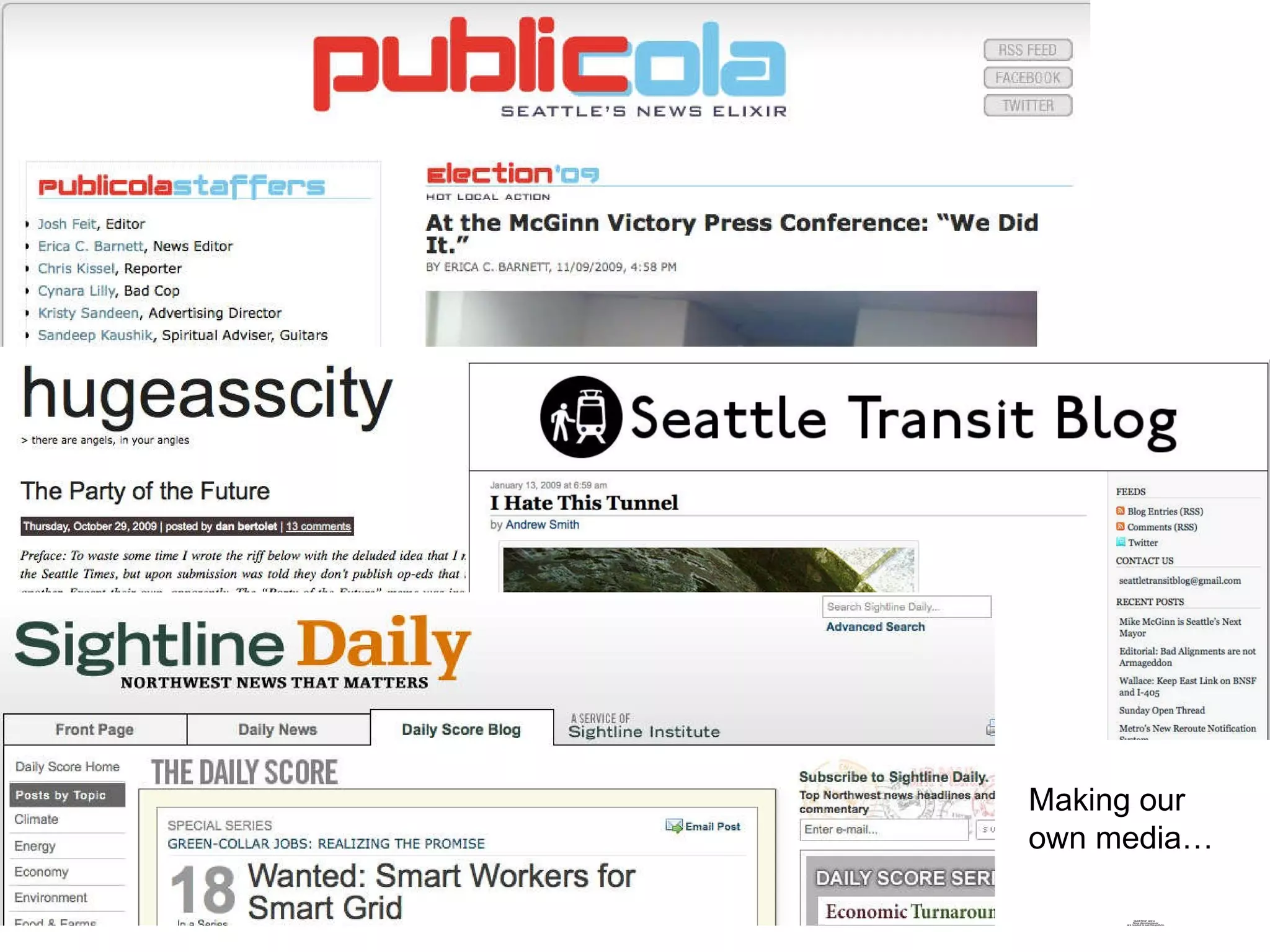
Making our own media…
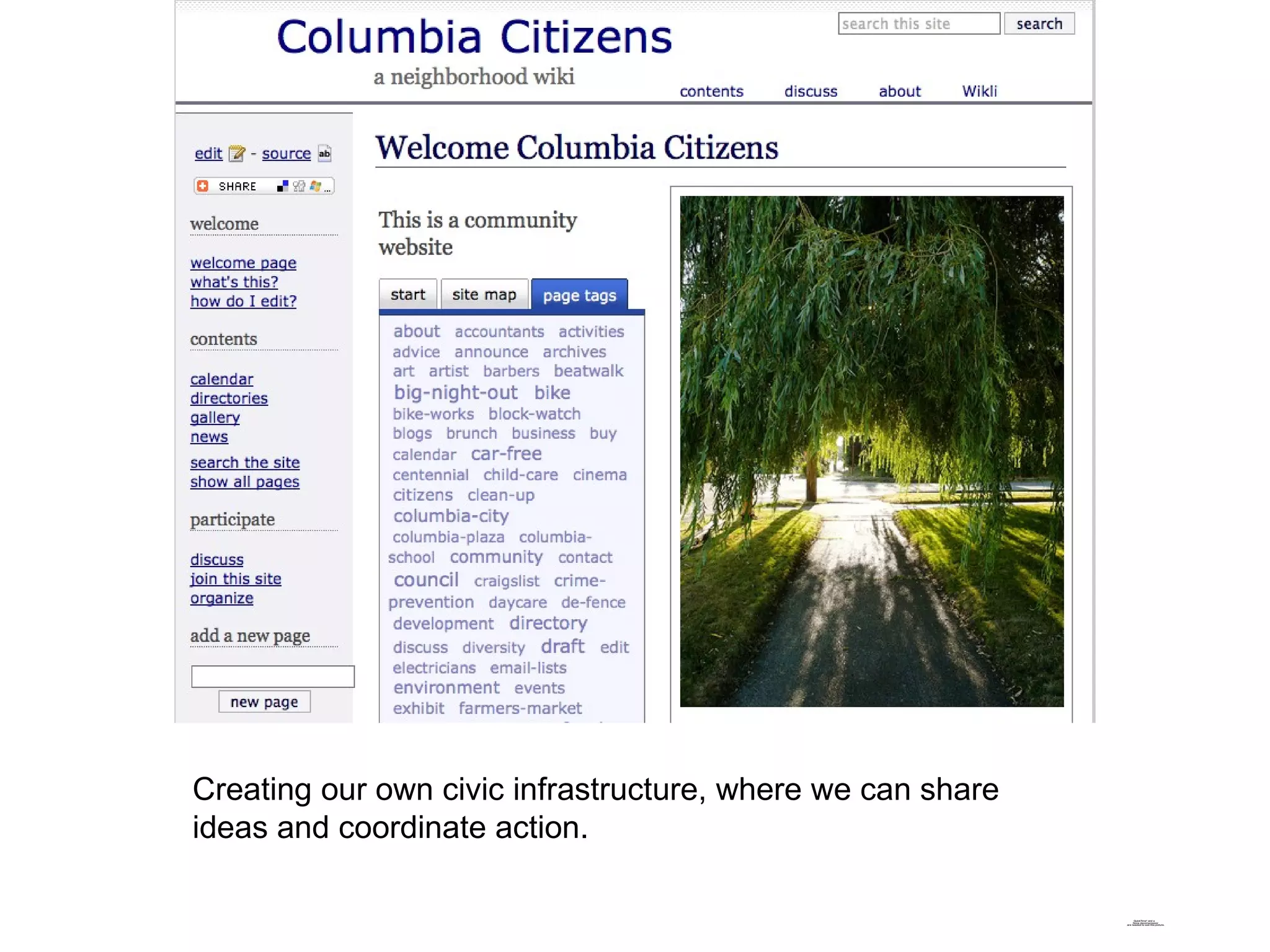
Creating our own civic infrastructure, where we can share ideas and coordinate action.
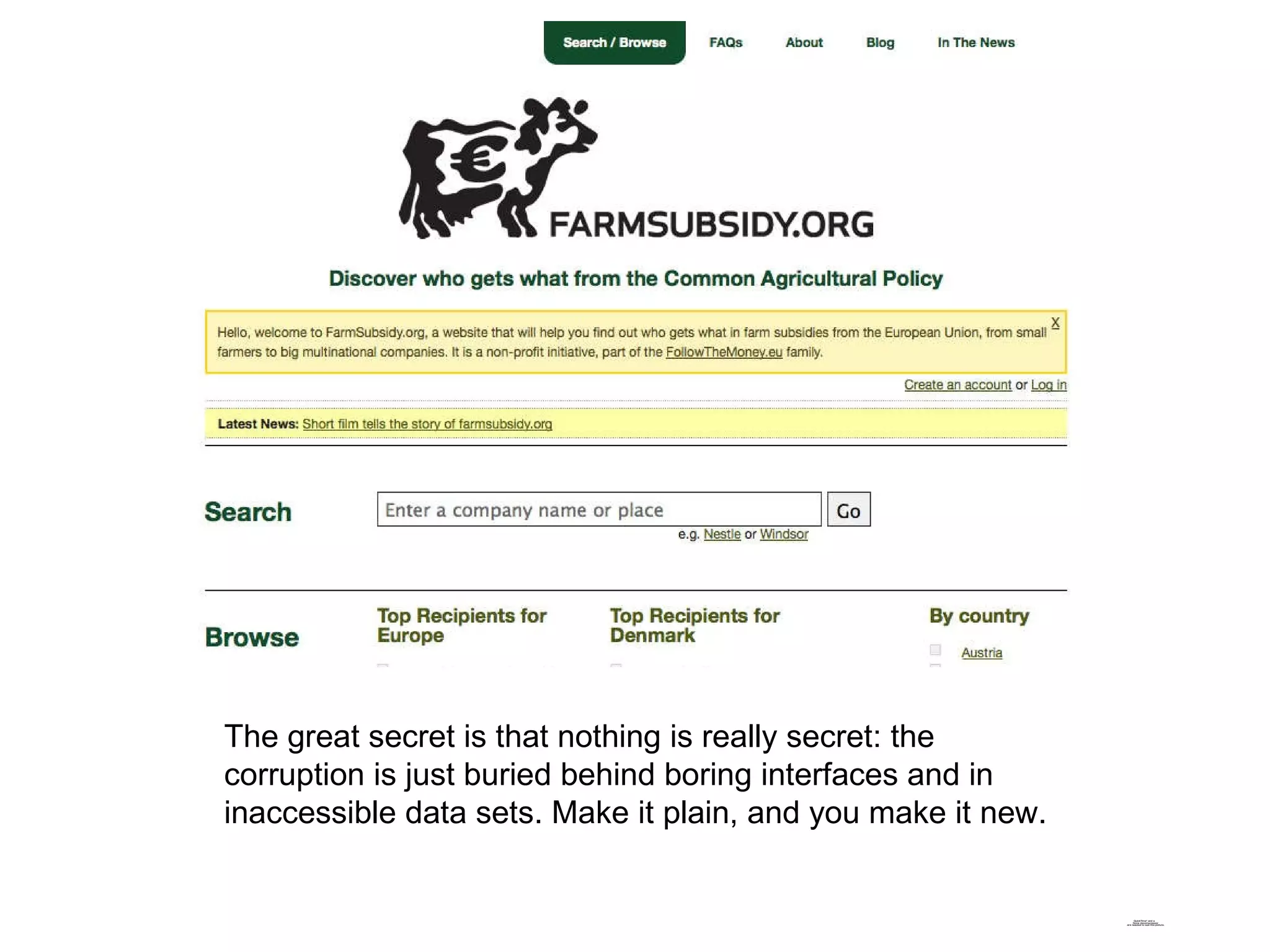
The great secret is that nothing is really secret: the corruption is just buried behind boring interfaces and in inaccessible data sets. Make it plain, and you make it new.
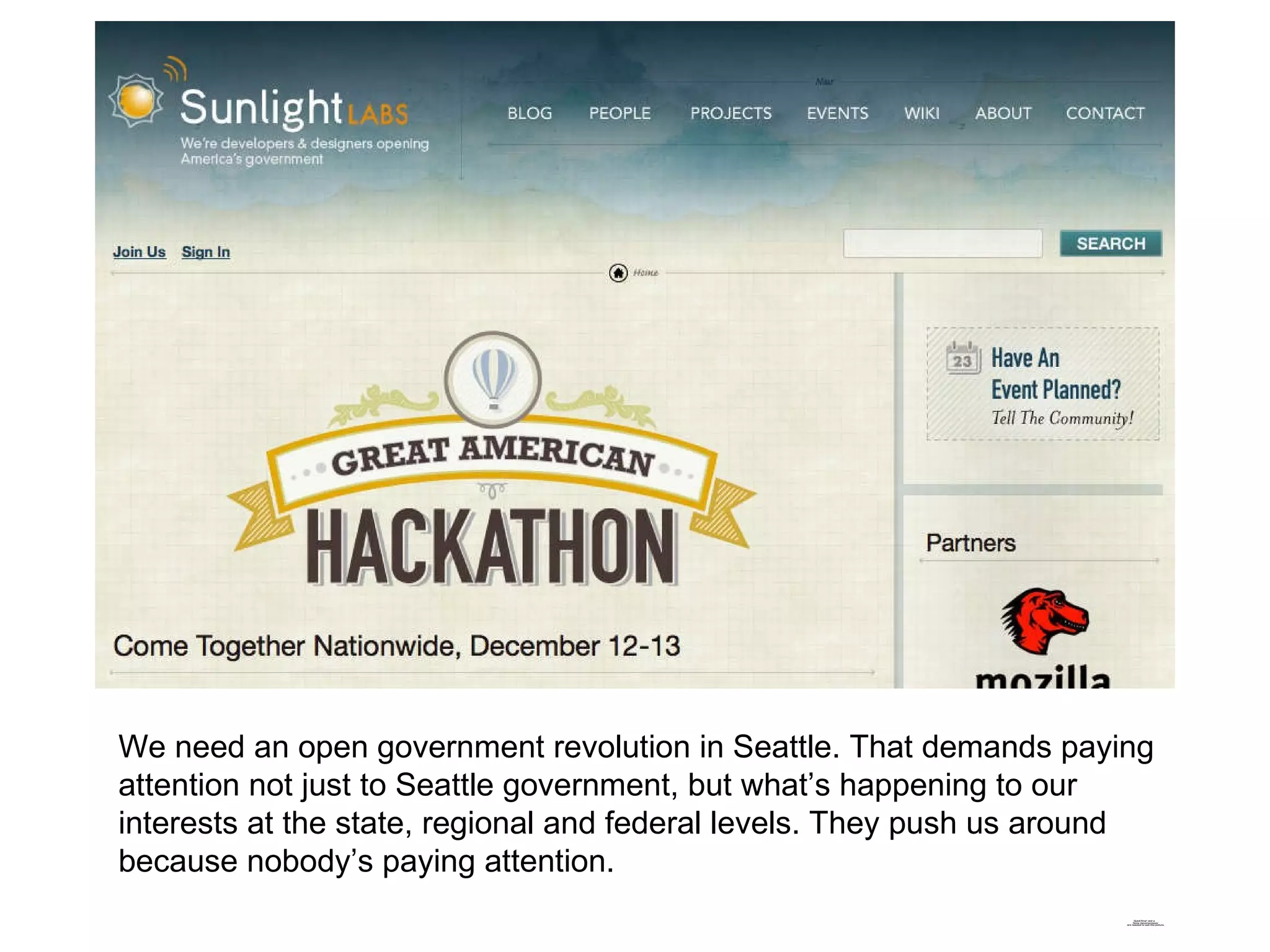
We need an open government revolution in Seattle. That demands paying attention not just to Seattle government, but what’s happening to our interests at the state, regional and federal levels. They push us around because nobody’s paying attention.
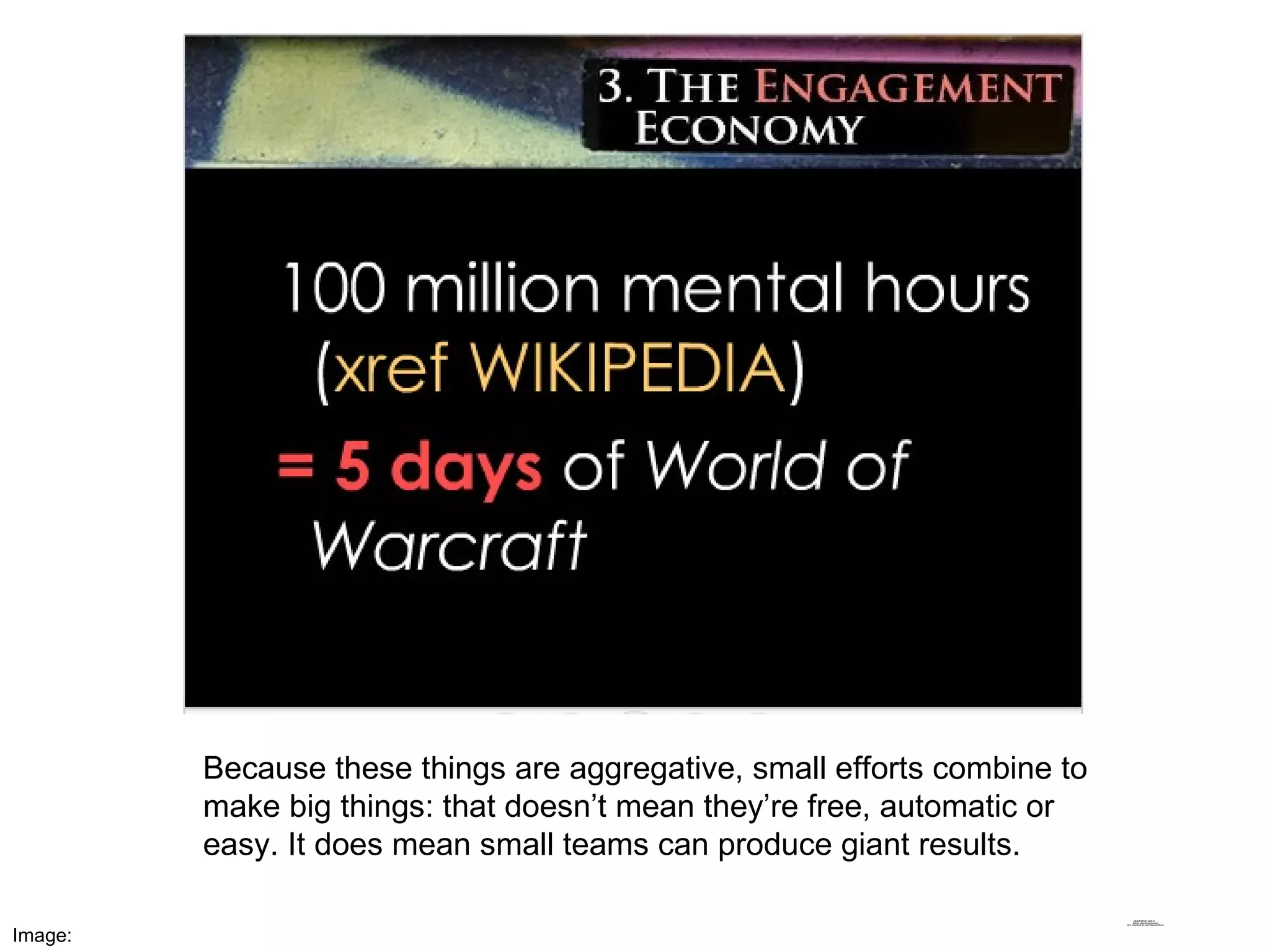
Image: Because these things are aggregative, small efforts combine to make big things: that doesn’t mean they’re free, automatic or easy. It does mean small teams can produce giant results.
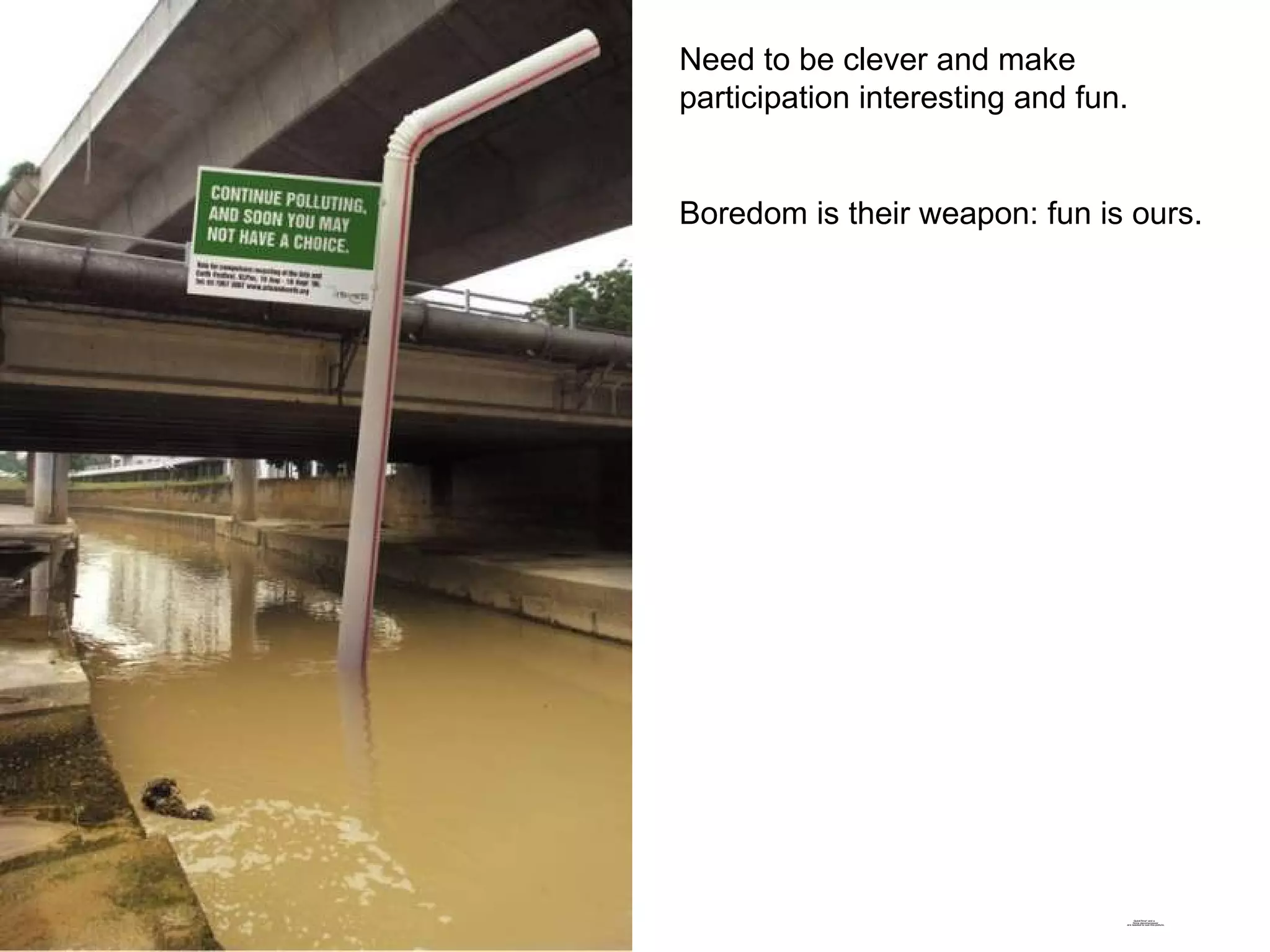
We can make the systems themselves easily understandable to our allies: at very least our allies should be able to express why they support us.
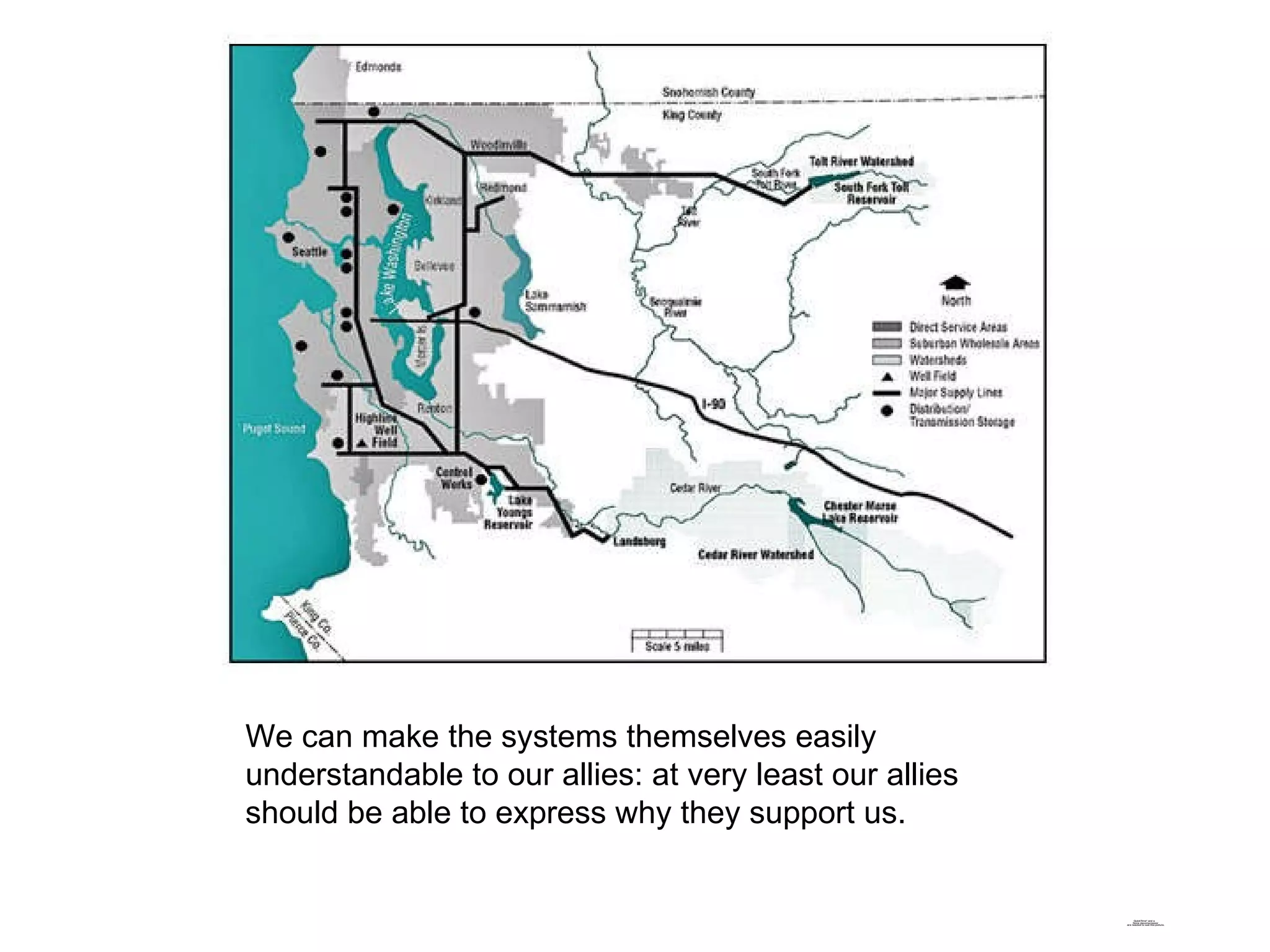
Need to be clever and make participation interesting and fun. Boredom is their weapon: fun is ours.
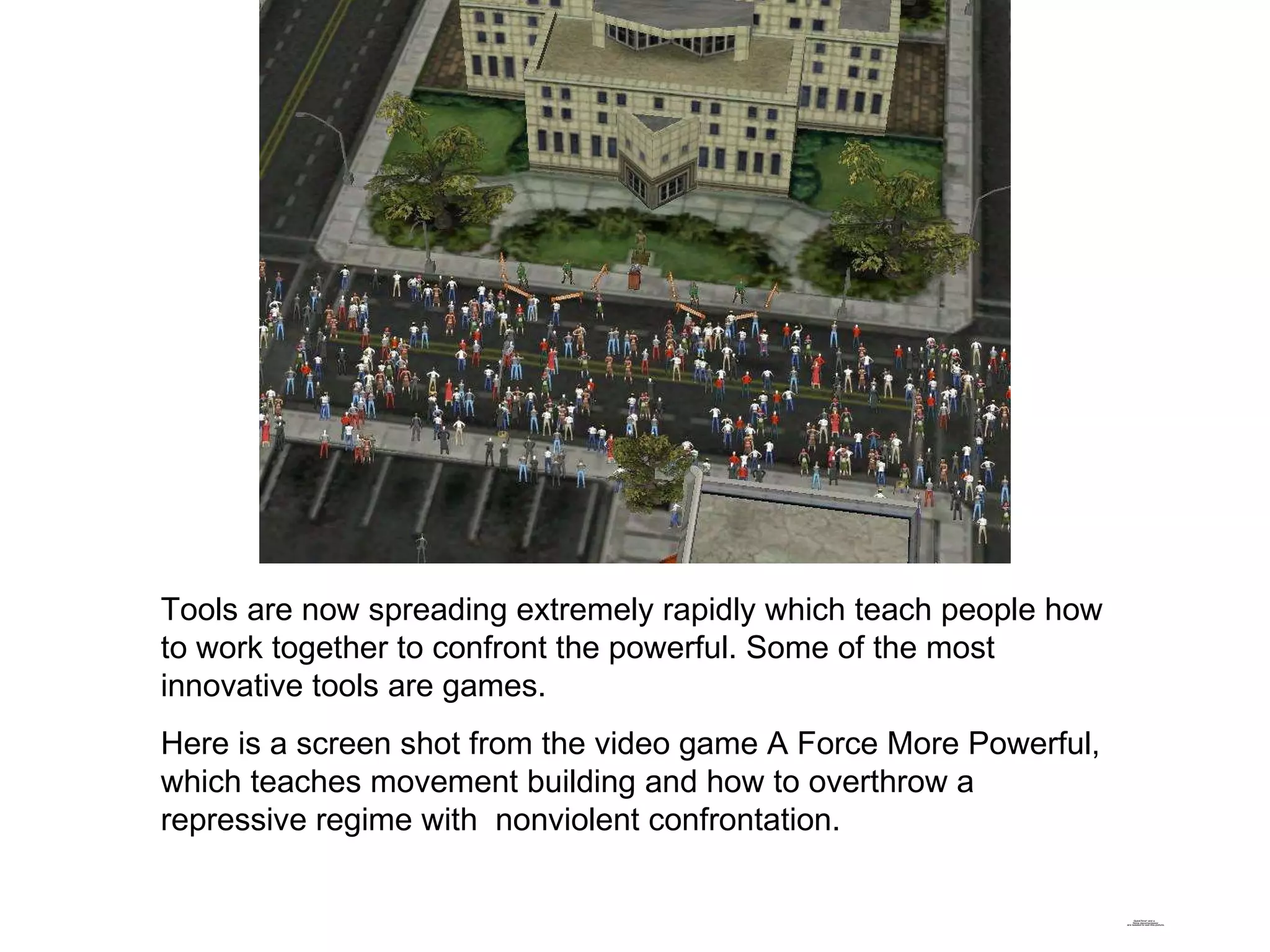
Tools are now spreading extremely rapidly which teach people how to work together to confront the powerful. Some of the most innovative tools are games. Here is a screen shot from the video game A Force More Powerful, which teaches movement building and how to overthrow a repressive regime with  nonviolent confrontation.
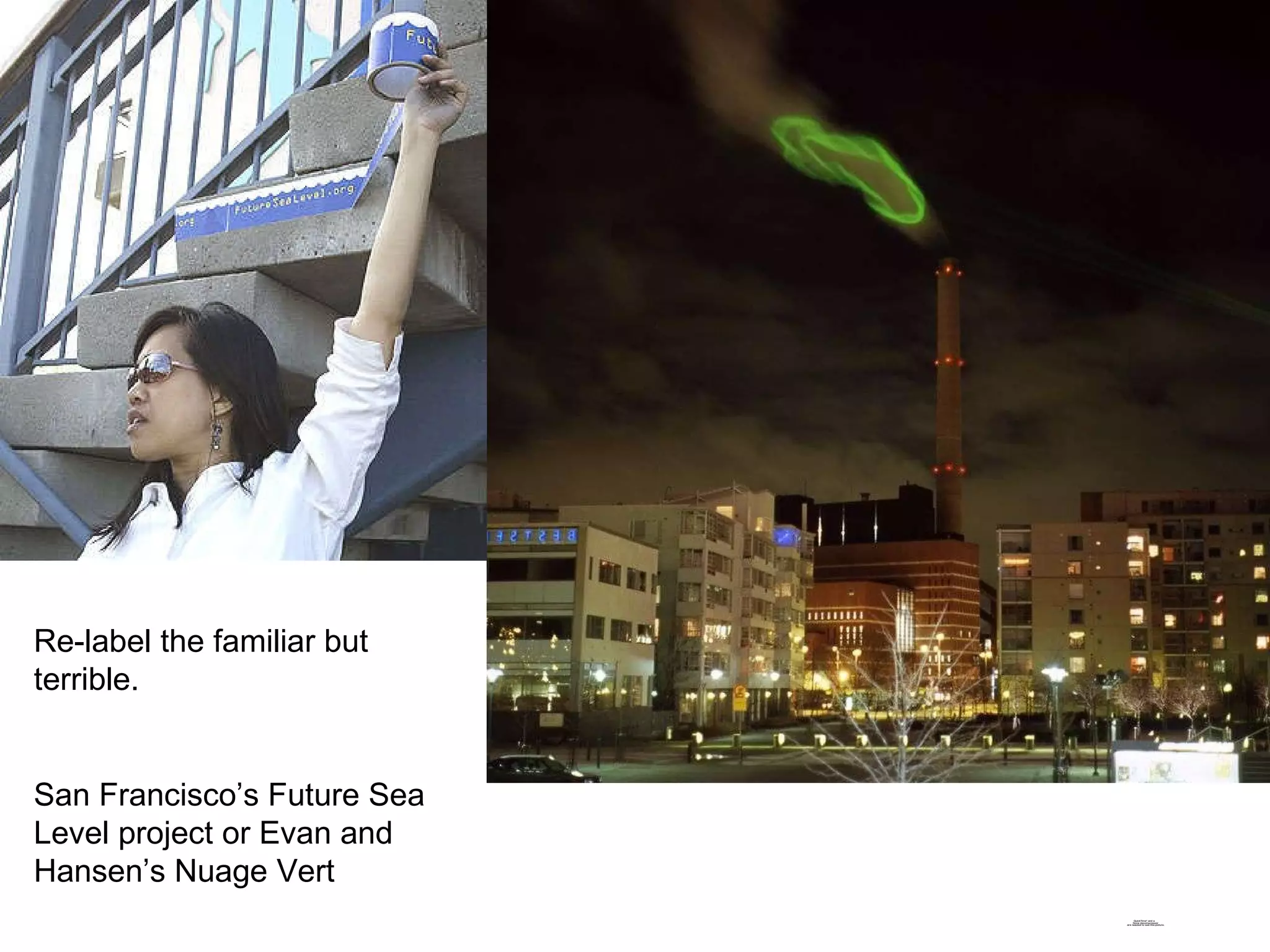
Re-label the familiar but terrible. San Francisco’s Future Sea Level project or Evan and Hansen’s Nuage Vert
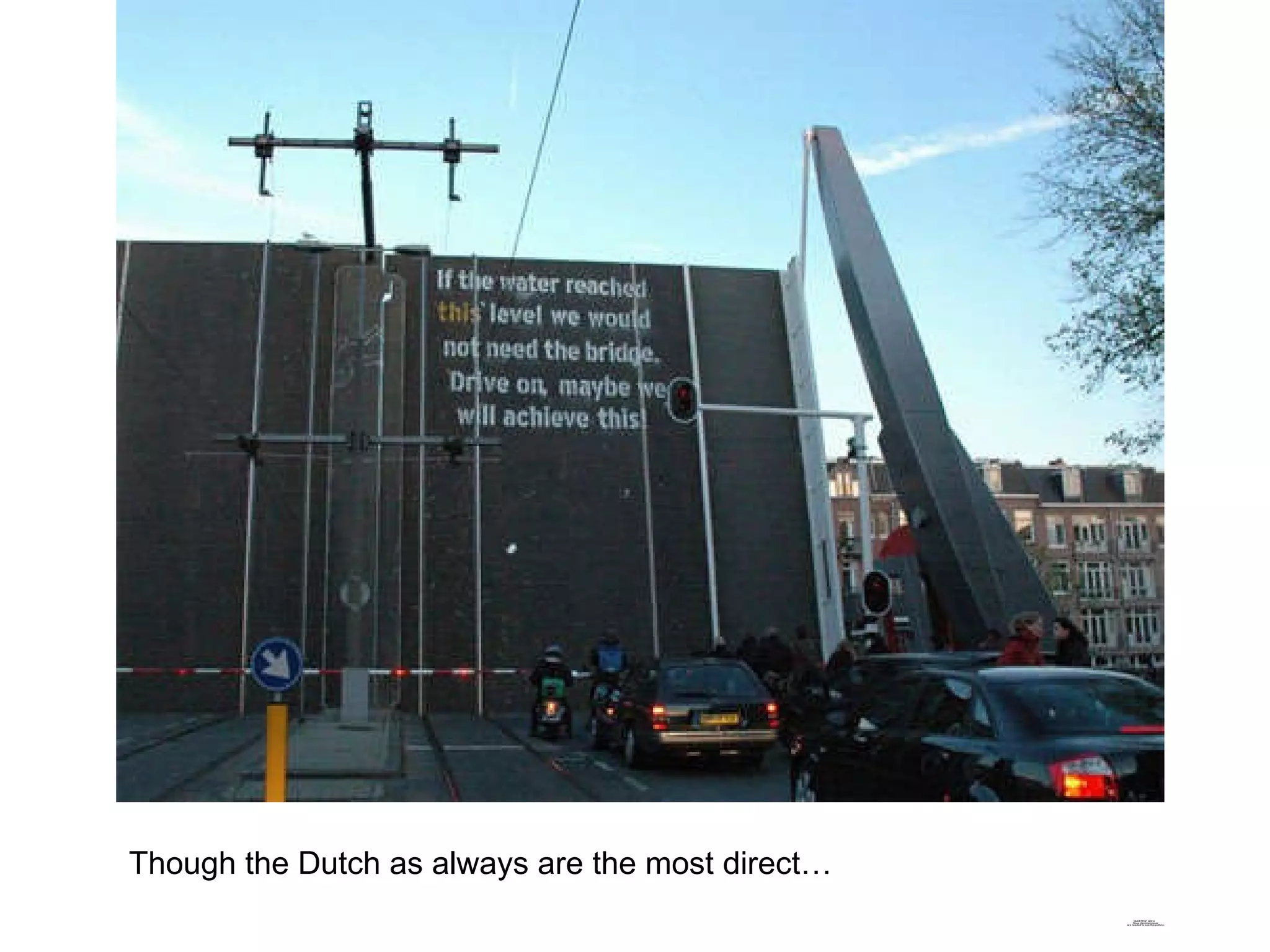
Though the Dutch as always are the most direct…
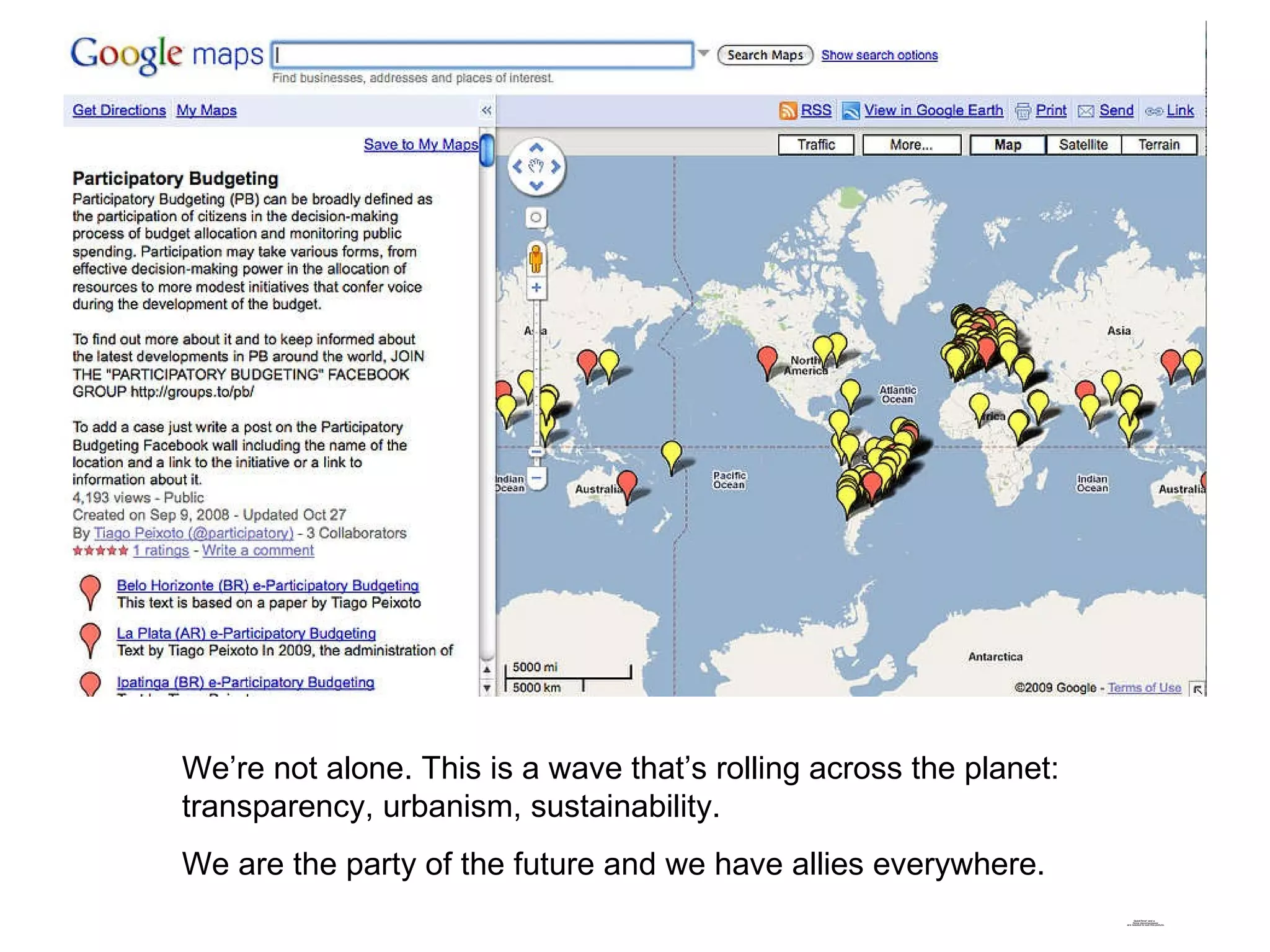
We’re not alone. This is a wave that’s rolling across the planet: transparency, urbanism, sustainability.  We are the party of the future and we have allies everywhere.
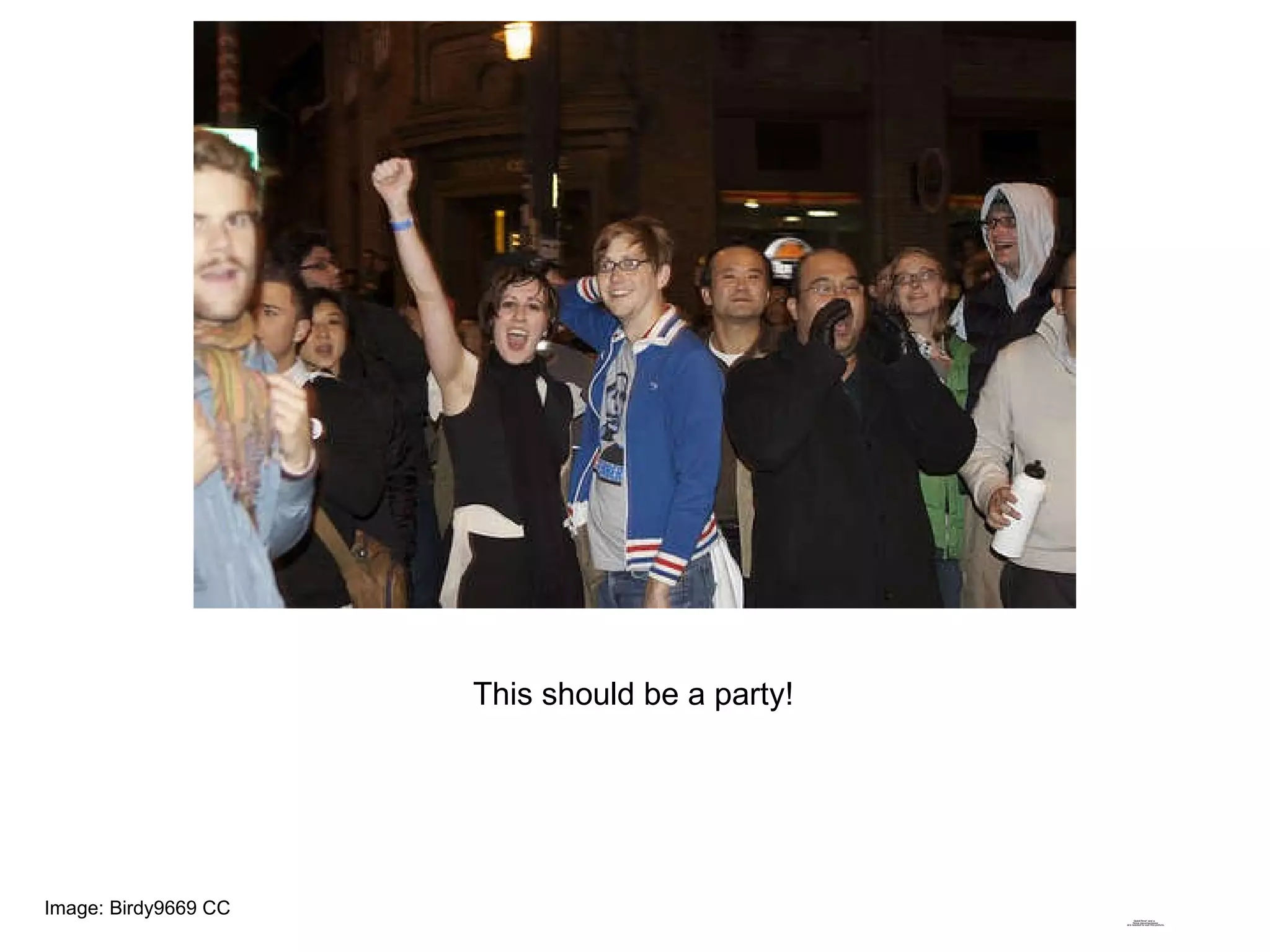
This should be a party! Image: Birdy9669 CC
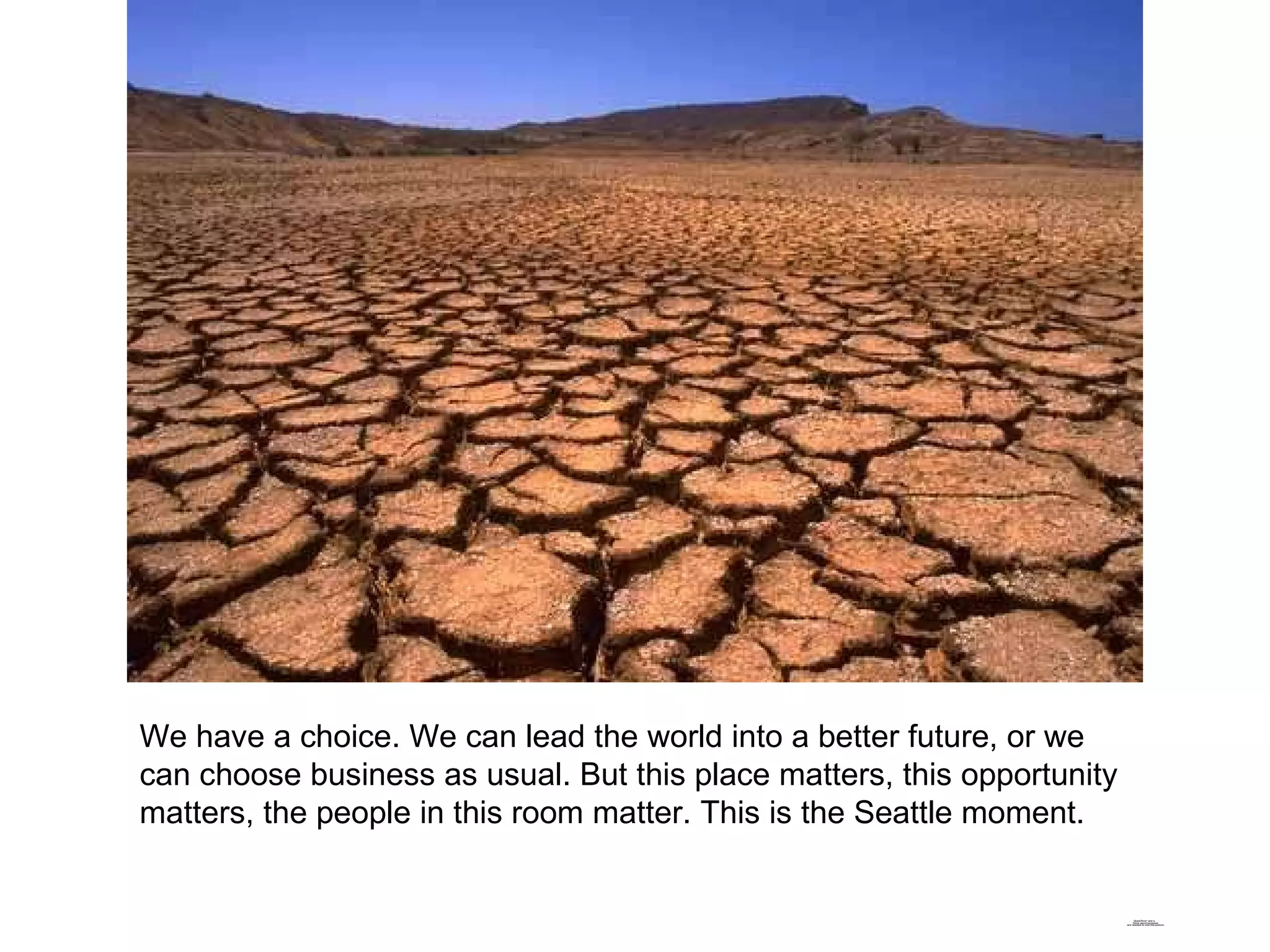
We have a choice. We can lead the world into a better future, or we can choose business as usual. But this place matters, this opportunity matters, the people in this room matter. This is the Seattle moment.
 

Alex Steffen of Worldchanging Night Two part 2

  • 1.
    Even dumb thingscan have smartness layered over them. Technologies like augmented can change almost everything into stuff that can be dematerialized, coordinated and shared.
  • 2.
    Knowing where thingsand who has them makes it easier to share them. Car sharing went nowhere until it got easy, and technology is what’s made it convenient. Now a phone and a swipe card will take you anywhere you want to go.
  • 3.
    Car sharing takescars off the road, saving all the energy and resources that would have gone into their production, upkeep, storage and disposal. In dense urban environments, each shared car may take as many as 20 private cars off the road. It also uses fewer parking spaces. Each of these “nega-cars” represents huge ecological savings… and big cash savings for the users.
  • 4.
    Bicing: Radical bike-sharingmade easy through density and technology. 24 euros and a swipe card, gives you the use any one of Bicing's bikes. Since its launch in March 2007, Bicing has grown to serve 90,000 users, from 100 bicycles at 14 bike stations to 6,000 bikes at 400 stations. Very popular. (There are problems, especially in Paris, but they’re also overstated…)
  • 5.
    What can beshared? The average power drill gets used for six to twenty minutes in its entire life. We’ve made millions of power drills. What we want is the hole, not the drill.
  • 6.
    Sharing need notbe low status. Bag, Borrow or Steal is a product-service system for high-end fashion accessories.
  • 7.
    That model isspreading. We already share lots of high-status things: health clubs, country clubs, elite colleges…
  • 8.
    Urbanists can livebetter, wealthier lives than suburban consumers. This can be community-based, too. Fashion Co-op, Antwerp
  • 9.
    All this alsomakes it easier than ever to know the “backstory” of a product. Simple and true backstories are a marketing advantage for good companies.
  • 10.
    Backstories are becominga major part of how the market works. Guilt-free affluence.
  • 11.
    Backstories are gettingeasier to verify.
  • 12.
    A massive makingvisible of the invisible (transparency revolution), e.g. “virtual water.”
  • 13.
    Ambient technology meanseverything has a backstory.
  • 14.
    People are eagerto “de-cool” brands with bad backstories. FUH2, a very popular site where people post pictures of themselves flipping off a Hummer.
  • 15.
    “ Post-consumer” consumption…Backstory + post-ownership + networks and reputation + financial insight. This is not a small trend. This is the new normal, and places whose economies are built with this in mind will prosper. Seedbeds of post-consumer enterprises are urban, bright green and open-minded. Image: Logic+Emotion
  • 16.
    The same forcesmake possible a revolution in manufacturing: a new bargain between producers and users. We feel no attachment to an airplane pillow; but we love the pillow grandma made. Why should dishwashers or carpet be any different? When we’re done with things, the companies that made them should take them back. These reverse supply chains are a huge new field…
  • 17.
    And when producershave to take back their products, design changes… Zero waste. Imagine having no garbage can. Imagine garbage cans not existing at all. Design and creativity are suffusing very “boring” and “practical” things. The economy of the future is at least as much about ideas and culture as ports and freeways.
  • 18.
    Youth magnet cities,power law curves. Young, smart places get younger and smarter. Part of draw is openness to innovation, creative class concerns (e.g., gay marriage, good nightlife, dykes and dragqueens playing softball), safety net (can I be a barista, start a new project and still have health care?). Buzz matters. Portland for the win!
  • 19.
    Aggressive green goalsare critical. Young people want to be part of the solution. (Intergenerational Ponzi schemes, the rights of future generations, the generation gulf. “We have an economy where we steal the future, sell it in the present, and call it G.D.P." - Paul Hawken) Want to be a magnet for young talent? Respect their future. Again, Portland for the win!
  • 20.
    Does the city*feel* like a creative place? Why is Burien hipper than Seattle? Artists, artist housing, art spaces, arts institutions: all critical to the creative mass we need to compete. We need innovation zones. We need temporary spaces. We need weirdness. Image: Dan Bertolet
  • 21.
    A side noteabout nightlife: it’s crucial. Nightlife not only helps make dense cities livable and welcoming, it’s also a major business in its own right. Furthermore, bars, clubs and cafes are a critical part of the cultural infrastructure that supports a creative city: epicenters, scenius. Make nightlife easier, not harder.
  • 22.
    The economy ofour future is not being made on corporate campuses using proprietary software and heavy-handed legal departments. Even companies with proprietary software and heavy-handed legal departments are starting to realize this. Image: BrentOzar CC
  • 23.
    The economy ofthe future isn’t even being made by companies as we’re used to thinking of them. Micro-enterpises, social entreprenuers, ad hoc projects, low-capital start-ups. Coworking (like Seattle’s OfficeNomads and others), lets microbusinesses and independents share facilities and ideas.
  • 24.
    But it foesfarther: Republikken in Copenhagen. It and places like it are hotbeds of parallel collaboration. DIY -> Do It Together Clades; mutual support; cyclical patronage and local dollars. Enthusiasm is a gift; attention engines. And the line between business, culture and civics no longer makes much sense.
  • 25.
    Parallel collaboration changesretail… Endossa in Sao Paulo
  • 26.
    It changes industry…The Metrix: CreateSpace on Broadway, with its bottomless toolboxes, circuit board vending machine and fabbers…
  • 27.
    Open-source hardware, engineeringand design movement…
  • 28.
    Now we needto turn all that technological capacity and cultural creativity onto the civic realm…
  • 29.
    It’s not howmany people total that moves a democracy: it’s how many people show up, and usually, that’s almost no one… Bureaucracies and boredom. The process itself has been made anti-democratic and depoliticizing. It favors obstructionism, NIMBY politics, and reactionary values. Process trolls rule the empty conference rooms of Seattle government. Image: RickZ CC
  • 30.
    Concern trolls ruleour public debate, from the editorial board of the Seattle Times to the leadership of the Greater Seattle Chamber of Commerce. They are officially sympathetic, yet almost openly hostile.
  • 31.
    We need tomake and deploy our own civic sphere and civic culture. It begins by connecting…
  • 32.
  • 33.
    Creating our owncivic infrastructure, where we can share ideas and coordinate action.
  • 34.
    The great secretis that nothing is really secret: the corruption is just buried behind boring interfaces and in inaccessible data sets. Make it plain, and you make it new.
  • 35.
    We need anopen government revolution in Seattle. That demands paying attention not just to Seattle government, but what’s happening to our interests at the state, regional and federal levels. They push us around because nobody’s paying attention.
  • 36.
    Image: Because thesethings are aggregative, small efforts combine to make big things: that doesn’t mean they’re free, automatic or easy. It does mean small teams can produce giant results.
  • 37.
    We can makethe systems themselves easily understandable to our allies: at very least our allies should be able to express why they support us.
  • 38.
    Need to beclever and make participation interesting and fun. Boredom is their weapon: fun is ours.
  • 39.
    Tools are nowspreading extremely rapidly which teach people how to work together to confront the powerful. Some of the most innovative tools are games. Here is a screen shot from the video game A Force More Powerful, which teaches movement building and how to overthrow a repressive regime with nonviolent confrontation.
  • 40.
    Re-label the familiarbut terrible. San Francisco’s Future Sea Level project or Evan and Hansen’s Nuage Vert
  • 41.
    Though the Dutchas always are the most direct…
  • 42.
    We’re not alone.This is a wave that’s rolling across the planet: transparency, urbanism, sustainability. We are the party of the future and we have allies everywhere.
  • 43.
    This should bea party! Image: Birdy9669 CC
  • 44.
    We have achoice. We can lead the world into a better future, or we can choose business as usual. But this place matters, this opportunity matters, the people in this room matter. This is the Seattle moment.
  • 45.

Editor's Notes

  • #46 Moment The ultimate limit turns out to be time Why people change -- better system unthinkable, unimaginable